Untargeted Metabolomics for Natural Product Discovery: A Comprehensive Guide from Exploration to Clinical Translation
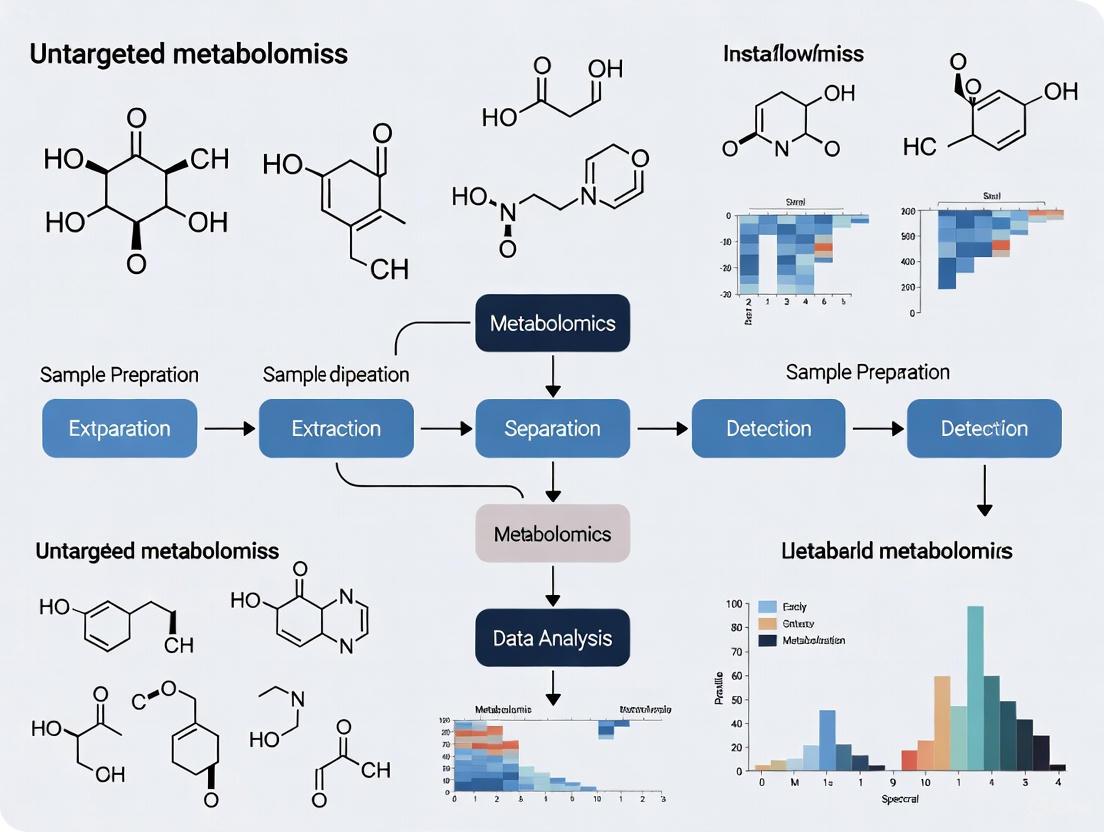
Untargeted metabolomics has emerged as a powerful, unbiased approach for discovering novel bioactive compounds from natural sources, directly linking metabolic profiles to phenotypic effects.
Untargeted Metabolomics for Natural Product Discovery: A Comprehensive Guide from Exploration to Clinical Translation
Abstract
Untargeted metabolomics has emerged as a powerful, unbiased approach for discovering novel bioactive compounds from natural sources, directly linking metabolic profiles to phenotypic effects. This article provides researchers and drug development professionals with a comprehensive framework covering foundational principles, advanced methodological applications using UPLC-MS/MS and FT-ICR-MS, strategies for overcoming analytical challenges like isomer separation and data complexity, and validation approaches through pathway analysis and biomarker identification. By integrating the latest technological advancements, including artificial intelligence and ion mobility spectrometry, we demonstrate how untargeted metabolomics accelerates natural product research from initial discovery through preclinical validation, offering transformative potential for drug development and precision medicine.
Foundations of Untargeted Metabolomics in Natural Product Research
Untargeted metabolomics has rapidly emerged as a pivotal profiling method in biological research, enabling the comprehensive analysis of small molecules within a biological system. Unlike genomics and proteomics, metabolomics directly surveys biochemical phenotypes, providing unique insights into health, disease, and natural product discovery [1]. This technical guide details the core principles, methodologies, and applications of untargeted metabolomics, with a specific focus on its utility in uncovering novel natural products. We present detailed experimental protocols, data analysis workflows, and visualization strategies essential for researchers and drug development professionals seeking to implement these techniques in their discovery pipelines.
Metabolomics is the quantitative study of endogenous and exogenous small molecules in a biological system [1]. Untargeted metabolomics aims to measure the entire complement of metabolites, providing a global, unbiased survey of biochemical activity. This approach is particularly valuable for hypothesis generation and biomarker discovery, as it can reveal unexpected metabolic alterations in response to disease, drug treatments, or environmental changes [1] [2]. In the context of natural product discovery, untargeted metabolomics serves as a powerful tool for characterizing the complex metabolic fingerprints of natural sources and identifying novel bioactive compounds with potential therapeutic applications.
The metabolome represents the downstream output of the genome, transcriptome, and proteome, making it the most proximal reflection of biological phenotype. Metabolites, typically defined as small molecules with molecular weights below 1,500 Da, include diverse classes such as amino acids, sugars, lipids, organic acids, and steroids [3]. Their comprehensive analysis can reveal disturbances in key metabolic pathways relevant to mitochondrial biology, cancer, diabetes, and other diseases, providing crucial insights for drug discovery [1] [3].
Core Principles and Analytical Platforms
Fundamental Principles
Untargeted metabolomics operates on several key principles that distinguish it from targeted approaches. First, it strives for comprehensive coverage of the metabolome, despite the profound physiochemical diversity of metabolites that makes complete coverage challenging in a single analytical run [1]. Second, it is a discovery-oriented approach, ideally suited for identifying novel metabolites and unexpected metabolic changes without prior hypothesis. Third, it requires high analytical sensitivity and resolution to detect and resolve thousands of metabolites across a wide dynamic range of concentrations [2].
There is an inherent tradeoff in metabolomics between molecular coverage and method optimization for specific compounds. While targeted methods excel at quantifying predefined metabolite sets, untargeted approaches sacrifice some precision for breadth of detection, making them ideal for exploratory research in natural product discovery [1].
Analytical Platform Selection
The two primary analytical platforms for untargeted metabolomics are mass spectrometry (MS) and nuclear magnetic resonance (NMR) spectroscopy, each with distinct advantages and limitations [3].
MS-based platforms are the most widely used for untargeted metabolomics due to their high sensitivity and ability to detect thousands of metabolites without chemical derivatization [1]. MS is typically coupled with separation techniques such as liquid chromatography (LC-MS) or gas chromatography (GC-MS) to reduce sample complexity [3]. LC-MS is particularly versatile, suitable for detecting moderately polar to highly polar compounds including fatty acids, lipids, nucleotides, polyphenols, and flavonoids [3]. The Orbitrap mass spectrometer provides high-resolution accurate mass (HRAM) capability, essential for separating isobaric species and performing structural elucidation [1] [2].
NMR spectroscopy offers advantages as a non-destructive technique with high reproducibility that requires minimal sample preparation [3]. It provides detailed structural information but has lower sensitivity compared to MS, potentially missing lower abundance metabolites [3]. NMR applications extend to intact tissue samples using high-resolution magic angle rotation (HRMAS) technology [3].
Table 1: Comparison of Major Analytical Platforms in Untargeted Metabolomics
| Platform | Key Advantages | Limitations | Ideal Applications |
|---|---|---|---|
| LC-MS | High sensitivity; broad metabolite coverage; no derivatization required for most compounds | High instrument cost; requires sample separation | Detection of moderately to highly polar compounds; natural product profiling |
| GC-MS | High separation efficiency; well-established libraries | Limited to volatile compounds or those that can be derivatized | Analysis of amino acids, organic acids, sugars, and fatty acids |
| NMR | Non-destructive; highly reproducible; provides structural information | Lower sensitivity; limited dynamic range | Intact tissue analysis; absolute quantification; structural elucidation |
Experimental Workflow and Methodologies
Sample Preparation and Extraction
Proper sample preparation is critical for success in untargeted metabolomics. For biofluids such as plasma, urine, and cerebral spinal fluid, protein precipitation using organic solvents is the standard approach. A typical extraction solvent formulation for hydrophilic polar metabolites is acetonitrile:methanol:formic acid (74.9:24.9:0.2, v/v/v) [1].
Quality control (QC) is incorporated through stable isotope-labeled internal standards. Commonly used compounds include l-Phenylalanine-d8 and l-Valine-d8 added to the extraction solvent at specific concentrations (e.g., 0.1 μg/mL and 0.2 μg/mL, respectively) to monitor extraction efficiency and instrument performance [1]. These internal standards help account for technical variability during sample processing and analysis.
Chromatographic Separation
Chromatographic separation prior to MS analysis reduces ion suppression and increases metabolite detection. Hydrophilic interaction liquid chromatography (HILIC) is often applied to assess energy pathways associated with mitochondrial metabolism, as it effectively retains polar metabolites [1]. The Waters Atlantis HILIC Silica column provides excellent separation for a wide range of polar compounds.
Mobile phase preparation follows strict protocols to ensure reproducibility. Mobile phase A typically consists of 0.1% formic acid and 10 mM ammonium formate in water, while mobile phase B is 0.1% formic acid in acetonitrile [1]. These solutions should be prepared fresh approximately every month to maintain optimal performance.
Mass Spectrometry Analysis
High-resolution mass spectrometers such as Orbitrap instruments are preferred for untargeted metabolomics due to their high mass accuracy and resolution [1] [2]. Key instrumental capabilities required include:
- Large dynamic range to analyze metabolites of varying abundances
- High sensitivity to detect low-abundance metabolites
- High resolution accurate mass (HRAM) capability to separate isobaric species
- MS^n capability for compound identification and structural elucidation [2]
Data acquisition typically involves full-scan MS analysis in both positive and negative ionization modes to maximize metabolite coverage. The workflow produces large, complex data files that require sophisticated bioinformatics tools for processing and interpretation [1].
Data Processing and Statistical Analysis
Data Preprocessing Workflow
Raw data from untargeted metabolomics experiments undergo extensive preprocessing before statistical analysis. The preprocessing pipeline includes noise reduction, retention time correction, peak detection and integration, and chromatographic alignment [3]. Several software platforms are available for these tasks, including XCMS, MAVEN, and MZmine3 [3].
Quality control samples are essential throughout the analysis. Pooled QC samples are used to balance analytical platform bias and correct for signal noise. Data from QC samples determine the variance of metabolite features, and features with excessively high variance are removed from subsequent analysis [3]. Data normalization is then applied to reduce systematic bias or technical variation, with methods ranging to total ion intensity normalization to probabilistic quotient normalization.
Statistical Analysis Methods
Untargeted metabolomics employs both univariate and multivariate statistical methods to identify significant metabolic differences between sample groups.
Univariate methods analyze metabolite features independently and include:
- Fold change analysis to determine magnitude of differences
- Student's t-test for comparing two groups
- ANOVA for comparing multiple groups
- Volcano plots to visualize both statistical significance and magnitude of change [4] [5]
Multivariate methods analyze multiple metabolite features simultaneously and include:
- Principal Component Analysis (PCA) for unsupervised pattern recognition and data quality assessment
- Partial Least Squares-Discriminant Analysis (PLS-DA) for supervised classification and biomarker discovery
- Orthogonal PLS-DA (OPLS-DA) to separate predictive from non-predictive variation [4] [5]
These statistical approaches help uncover meaningful biological patterns in the complex, high-dimensional data generated by untargeted metabolomics.
Compound Identification and Annotation
Metabolite identification follows a tiered system established by the Metabolomics Standards Initiative (MSI), which defines four levels of confidence:
- Level 1: Identified metabolites - confirmed using authentic standards
- Level 2: Presumptively annotated compounds - based on spectral similarity to libraries
- Level 3: Presumptively characterized compound classes - based on chemical class characteristics
- Level 4: Unknown compounds - detectable but unidentifiable features [3]
For LC-MS and IC-MS workflows, high-resolution accurate mass features are searched against MS databases or MS/MS spectral libraries such as mzCloud, METLIN, and HMDB [2]. GC-MS workflows utilize electron ionization (EI) fragment patterns matched against NIST and Wiley libraries [2].
Table 2: Key Bioinformatics Tools for Untargeted Metabolomics Data Analysis
| Tool Category | Software/Platform | Primary Function | Application Context |
|---|---|---|---|
| Spectral Processing | XCMS, MZmine3, MS-DIAL | Peak detection, alignment, normalization | Raw data processing from LC-MS/GС-MS |
| Statistical Analysis | MetaboAnalyst, sklearn | Univariate and multivariate statistics | Pattern recognition, biomarker discovery |
| Metabolite Identification | mzCloud, METLIN, HMDB | Compound annotation using spectral libraries | Structural elucidation and identity confirmation |
| Pathway Analysis | KEGG, MetaCyc, MSEA | Biological interpretation and pathway mapping | Functional analysis of metabolic alterations |
Applications in Natural Product Discovery
Untargeted metabolomics provides powerful capabilities for natural product discovery research by enabling comprehensive characterization of complex metabolite mixtures without prior knowledge of their composition. This approach is particularly valuable for:
- Metabolic profiling of medicinal plants and microbial sources
- Identification of novel bioactive compounds with potential therapeutic applications
- Dereplication to quickly identify known compounds and focus resources on novel discoveries
- Biosynthetic pathway elucidation for engineered production of valuable natural products
In natural product research, untargeted metabolomics can reveal subtle metabolic changes in response to environmental factors, growth conditions, or genetic modifications, guiding the discovery of new drug leads from natural sources.
The Scientist's Toolkit: Essential Research Reagents and Materials
Table 3: Essential Research Reagents and Materials for Untargeted Metabolomics
| Item | Specification | Function/Purpose |
|---|---|---|
| Extraction Solvent | Acetonitrile:methanol:formic acid (74.9:24.9:0.2, v/v/v) | Protein precipitation and metabolite extraction from biofluids, cells, or tissues |
| Internal Standards | Stable isotope-labeled compounds (e.g., l-Phenylalanine-d8, l-Valine-d8) | Quality control; monitoring extraction efficiency and instrument performance |
| HILIC Column | Waters Atlantis HILIC Silica column | Chromatographic separation of polar metabolites prior to mass spectrometry analysis |
| Mobile Phase A | 0.1% formic acid, 10 mM ammonium formate in water | Aqueous mobile phase for HILIC chromatography; enhances ionization in positive mode |
| Mobile Phase B | 0.1% formic acid in acetonitrile | Organic mobile phase for HILIC chromatography; sample loading and initial separation |
| Quality Control Pool | Pooled sample from all experimental groups | Monitoring instrument stability and performance throughout the analytical sequence |
Untargeted metabolomics represents a powerful approach for capturing comprehensive metabolic fingerprints that reflect the functional state of biological systems. The methodology provides unique insights into metabolic pathways relevant to disease mechanisms and natural product discovery. While technically challenging due to the complexity of the metabolome and the analytical demands, following established protocols for sample preparation, chromatographic separation, mass spectrometry analysis, and data processing enables robust characterization of metabolic alterations. As analytical technologies continue to advance and bioinformatics tools become more sophisticated, untargeted metabolomics will play an increasingly important role in drug discovery and natural product research, offering unprecedented opportunities to identify novel therapeutic compounds and understand their mechanisms of action.
The search for new bioactive molecules is a fundamental challenge that limits the development of new therapeutics and chemical probes for studying biological processes. Chemical space—the theoretical domain encompassing all possible organic molecules—is estimated to contain approximately 10³³ drug-like compounds, rendering exhaustive exploration through chemical synthesis alone completely unfeasible [6]. Historically, chemists have explored this space unevenly, often relying on a limited palette of established chemical transformations and focusing on target-oriented synthesis of specific complex molecules [6]. This approach has inadvertently left biologically relevant regions of chemical space largely unexplored, creating a critical bottleneck in molecular discovery.
Natural products (NPs) represent privileged starting points for navigating this vast chemical space. These molecules, evolved over millennia through biological selection processes, possess inherent biological relevance as they have evolved to interact with specific macromolecular targets and modulate biochemical pathways [6]. Their structural complexity, characterized by high sp³ carbon count, diverse stereochemistry, and molecular scaffolds optimized through evolution, makes them ideal guiding structures for exploring bioactive regions of chemical space. Within this context, untargeted metabolomics has emerged as an essential technological paradigm, enabling the comprehensive detection and characterization of natural products without prior knowledge of their chemical structures, thus providing an unbiased portal into nature's chemical repertoire.
Theoretical Frameworks for Natural Product-Informed Exploration
Several systematic frameworks have been developed to leverage natural products as guides for exploring biologically relevant chemical space. These approaches bridge the gap between the structural diversity of natural products and the practical constraints of synthetic exploration.
Biology-Oriented Synthesis (BIOS)
Biology-Oriented Synthesis (BIOS) utilizes computational approaches to systematically simplify complex natural product scaffolds into synthetically accessible core structures that retain biological relevance [6]. The strategy employs the SCONP algorithm (Structural Classification of Natural Products) to deconstruct natural products into hierarchical scaffold trees, identifying simplified yet biologically pertinent molecular architectures [6]. This approach effectively identifies gaps in chemical space coverage by existing natural product libraries and focuses synthetic efforts on these unexplored regions.
Notable Success Cases of BIOS:
- Wnt Pathway Modulators: Inspired by the natural product sodwanone S, researchers designed a bicyclic oxepane scaffold library, leading to the discovery of Wntepane—a novel modulator of the Wnt signaling pathway that acts through binding to Vangl1, a protein previously lacking small-molecule ligands [6].
- Hedgehog Pathway Inhibitors: Simplification of the natural product sominone yielded novel chemotypes that inhibit the Hedgehog pathway through modulation of Smoothened, with potential applications in treating associated birth defects and cancers [6].
- Anti-Tuberculosis Agents: BIOS-guided simplification of yohimbine led to tetracyclic indoloquinolizidine scaffolds exhibiting selective inhibition of MptpB, a key virulence factor in Mycobacterium tuberculosis, without affecting mammalian phosphatases [6].
Complexity-to-Diversity (CtD)
In contrast to BIOS, the Complexity-to-Diversity (CtD) approach utilizes natural products themselves as synthetic starting materials for generating diverse compound libraries through strategic structural diversification [6]. This methodology employs chemoselective reactions—including ring cleavage, expansion, fusion, and rearrangement—to dramatically transform natural product cores into unprecedented scaffolds while potentially retaining their biological relevance.
Exemplary CtD Implementations:
- Diterpene Diversification: Gibberellic acid, a readily available diterpene, has been transformed through ring rearrangement and cleavage reactions into novel scaffolds with enhanced three-dimensionality [6].
- Alkaloid Transformation: Yohimbine and quinine have served as platforms for generating structurally diverse libraries through strategic ring system modifications, with resulting compounds exhibiting diverse bioactivities in phenotypic screens [6].
Table 1: Comparative Analysis of Natural Product-Informed Exploration Strategies
| Approach | Core Principle | Key Advantages | Exemplary Output |
|---|---|---|---|
| Biology-Oriented Synthesis (BIOS) | Systematic simplification of NP scaffolds | Retains biological relevance while improving synthetic accessibility | Wntepane (Vangl1 modulator) [6] |
| Complexity-to-Diversity (CtD) | Direct structural diversification of NP cores | Leverages inherent NP complexity while generating unprecedented diversity | Novel anti-inflammatory compounds from yohimbine [6] |
| Untargeted Metabolomics | Comprehensive detection of NP repertoire without prior targeting | Unbiased discovery of novel chemotypes directly from biological systems | Putative terpenes from Suillus fungi [7] |
The Untargeted Metabolomics Revolution in Natural Product Discovery
Untargeted metabolomics represents a paradigm shift in natural product discovery, enabling comprehensive, data-driven exploration of chemical space without the constraints of hypothesis-driven or targeted approaches. This methodology has become particularly powerful with advances in liquid chromatography-high-resolution mass spectrometry (LC-HRMS), which provides the sensitive, broad-spectrum chemical coverage necessary for detecting novel natural products [8].
Core Technological Foundations
The untargeted metabolomics workflow rests on several key technological pillars:
High-Resolution Mass Spectrometry: Modern LC-HRMS platforms, particularly those based on Orbitrap technology, provide the mass accuracy and resolution necessary to distinguish between thousands of metabolic features in complex biological extracts [7]. The typical configuration for natural product discovery employs ultra-high-pressure liquid chromatography coupled to a Q-Exactive Plus mass spectrometer, capable of resolution up to 70,000 at m/z 200 and mass accuracy within 5 ppm [7].
Chromatographic Separation: Reversed-phase C18 chromatography using nanospray columns (e.g., 75 μm × 150 mm packed with 1.7-μm C18 Kinetex resin) enables separation of complex natural product mixtures with high resolution [7]. The typical mobile phase employs a gradient from aqueous to organic solvents (e.g., 5% acetonitrile to 100% organic solvent over 30 minutes) to resolve metabolites across a wide polarity range.
Bioprospecting and Induction Strategies: Silent biosynthetic gene clusters (BGCs) often require specific induction conditions for activation. The OSMAC (One Strain Many Compounds) approach systematically varies cultivation parameters to trigger secondary metabolite production [7]. More specifically, co-culture techniques have proven particularly effective, mimicking ecological interactions and activating BGCs that remain silent in axenic cultures [7].
Data Mining and Annotation Strategies
The complexity of untargeted LC-HRMS datasets demands sophisticated data mining approaches:
Isotopic Signature Enrichment (ISE): This strategy filters features based on valid carbon isotope patterns, significantly reducing dataset complexity—demonstrated to achieve a six-fold reduction in features while retaining chemically relevant metabolites [8].
Mass Defect Analysis: Plotting Kendrick mass defects enables identification of homologous series and specific chemical classes, such as halogenated compounds or terpene families [8].
Biotransformation-Informed Feature Selection: This approach identifies putative metabolites by searching for expected biotransformation products (e.g., phase I/II modifications), facilitating discovery of biologically relevant metabolic pathways [8].
Integrative Approaches: Case Studies in Fungal Natural Product Discovery
The combination of genomics and metabolomics has emerged as a particularly powerful paradigm for natural product discovery. A recent study on Suillus fungi—ectomycorrhizal symbionts of pine trees—exemplifies this integrative approach [7].
Genomic Foundations
Genome mining of three Suillus species (S. hirtellus EM16, S. decipiens EM49, and S. cothurnatus VC1858) using antiSMASH revealed a remarkable richness of biosynthetic gene clusters, with 62 unique terpene BGCs predicted across the three species [7]. This genomic potential suggested a extensive, largely unexplored chemical repertoire.
Metabolomic Activation and Detection
To activate these silent BGCs, researchers employed a co-culture strategy, growing the fungi in all pairwise combinations for 28 days on solid media [7]. Metabolomic analysis of the interaction zones revealed:
- 41 putative prenol lipids (including 37 terpenes) were detected across the three species [7].
- Significant upregulation in co-culture conditions was observed for specific terpenes, including metabolites matching isomers of isopimaric acid, sandaracopimaric acid, and abietic acid—compounds typically associated with host defense mechanisms in pine trees [7].
- The chemical diversity detected through metabolomics corresponded well with the genomic potential predicted by antiSMASH analysis, validating the integrated approach [7].
Figure 1: Integrated Genomics-Metabolomics Workflow for NP Discovery
Experimental Methodologies: Detailed Protocols for Untargeted Discovery
Fungal Co-culture and Metabolite Induction Protocol
Materials:
- Fungal strains: Suillus species (e.g., S. hirtellus EM16, S. decipiens EM49, S. cothurnatus VC1858)
- Growth medium: Solid high carbon Pachlewski's media in 100-mm Petri dishes
- Inoculation tools: Sterile brass core borer (4-mm diameter)
Procedure:
- Inoculate each Petri dish with two 4-mm fungal plugs placed exactly 2 cm apart, equidistant from a diameter line intersecting the plate.
- For co-culture treatments, use all pairwise combinations of species (n=5 biological replicates per combination).
- Include single-species controls inoculated with two plugs from the same species (n=5 biological replicates).
- Incubate cultures for 28 days in darkness at room temperature.
- Measure colony area twice weekly beginning at 7 days post-inoculation using background illumination and ImageJ analysis.
- After 28 days, collect three agar plugs along the interaction zone using a sterile brass borer, pool them, and immediately freeze in liquid nitrogen.
- Store samples at -80°C until processing [7].
Metabolite Extraction and LC-HRMS Analysis
Reagents and Equipment:
- Extraction solvents: LC-MS grade water, hydrated ethyl acetate
- Chromatography: Nanospray analytical column (75 μm × 150 mm) packed with 1.7-μm C18 Kinetex resin
- Mass spectrometer: ThermoFisher Q-Exactive Plus with Xcalibur software (v4.3)
Extraction Protocol:
- Lyophilize frozen agar plugs completely using a freeze dryer.
- Perform biphasic extraction by adding 0.5 mL cold LC-MS grade water and 0.5 mL cold hydrated ethyl acetate to dried samples.
- Vortex for 1 minute, then maintain at 4°C overnight for extraction.
- Separate ethyl acetate and aqueous fractions by aspiration.
- Filter aqueous fraction using 10-kDa filters (Sartorius Vivaspin) by centrifugation at 4,500 × g.
- Freeze-dry aqueous extract and resuspend in 5% acetonitrile, 0.1% formic acid.
- Air-dry ethyl acetate extract in a fume hood and resuspend in 70% acetonitrile, 0.1% formic acid.
- Store extracts at 4°C until LC-MS analysis [7].
LC-HRMS Parameters:
- Injection volume: 10 μL
- Flow rate: 250 nL/min
- Gradient: 30-minute linear gradient from 5% to 100% organic solvent
- MS resolution: 70,000 at m/z 200
- Mass range: 135-2,000 m/z
- Fragmentation: Stepped higher-energy C-trap dissociation (10, 20, 40 eV) [7]
Table 2: Essential Research Reagents and Platforms for Untargeted NP Discovery
| Category/Item | Specific Example/Platform | Function in NP Discovery |
|---|---|---|
| Chromatography | Nanospray C18 column (75 μm × 150 mm, 1.7-μm) | High-resolution separation of complex metabolite mixtures |
| Mass Spectrometry | ThermoFisher Q-Exactive Plus Orbitrap | High-resolution mass analysis for accurate metabolite identification |
| Genome Mining | antiSMASH v6.0.1 with fungal parameters | Prediction of biosynthetic gene clusters from genomic data |
| Bioinformatics | BiG-SCAPE, Scaffold Hunter | Analysis of BGC evolution and natural product scaffold relationships |
| Culture Induction | Co-culture on Pachlewski's medium | Activation of silent biosynthetic gene clusters through ecological interactions |
| Data Processing | Isotopic Signature Enrichment (ISE) algorithms | Reduction of feature complexity by filtering for valid isotopic patterns |
Figure 2: Untargeted Metabolomics Workflow for NP Discovery
The integration of natural product-informed exploration strategies with untargeted metabolomics technologies represents a transformative approach for navigating biologically relevant chemical space. Where traditional methods have provided uneven coverage of this space, the synergistic combination of BIOS and CtD frameworks with sensitive analytical platforms enables systematic identification of novel bioactive regions. The demonstrated success of these approaches—from discovering modulators of developmental signaling pathways to identifying novel chemical entities from fungal co-cultures—underscores their potential to revolutionize natural product discovery.
Looking forward, the continued advancement of untargeted metabolomics platforms, coupled with increasingly sophisticated data mining algorithms, promises to accelerate the exploration of nature's chemical repertoire. As these technologies become more accessible and integrated with synthetic methodologies, they will undoubtedly yield distinctive functional molecules that serve both as chemical probes for deciphering biological mechanisms and as starting points for therapeutic development. This systematic, data-driven approach to natural product discovery ultimately bridges the gap between the vastness of chemical space and our ability to explore it, unlocking nature's evolved chemical wisdom for fundamental biological insight and therapeutic innovation.
Untargeted metabolomics aims to comprehensively profile the complete set of small molecule metabolites (<1500 Da) within biological systems, providing critical insights into cellular metabolism, disease mechanisms, and biomarker discovery [9] [10]. This approach is particularly valuable for natural product discovery, where researchers seek to identify novel bioactive compounds from complex biological sources such as plants, microbes, and marine organisms [11] [12]. The field has gained significant traction in drug discovery workflows, with natural products comprising a substantial portion of our modern pharmacopeia due to their diverse biological relevance and structural complexity [11].
The analytical challenge in untargeted metabolomics lies in the vast chemical diversity and dynamic concentration range of metabolites present in biological samples. No single analytical platform can comprehensively cover the entire metabolome, making platform selection a critical consideration for research design [13]. Ultra-High Performance Liquid Chromatography-High Resolution Mass Spectrometry (UHPLC-HRMS) has emerged as one of the fastest-growing mass spectrometry methods in scientific fields including metabolomics, while Fourier Transform Ion Cyclotron Resonance Mass Spectrometry (FT-ICR-MS) offers unparalleled mass accuracy and resolving power, and Gas Chromatography-Mass Spectrometry (GC-MS) provides robust, reproducible analyses with extensive spectral libraries [14] [9] [13].
The fundamental goal in natural product discovery is to enhance the likelihood and improve the efficiency of discovering compounds with pharmaceutical potential while strategically harnessing data to reduce rediscovery and methodological redundancy [11]. This technical guide examines the comparative strengths of these three core analytical platforms within the context of untargeted metabolomics for natural product research, providing researchers with the information needed to select appropriate instrumentation for their specific investigations.
Platform Fundamentals and Technical Specifications
UHPLC-HRMS Platform
Ultra-High Performance Liquid Chromatography-High Resolution Mass Spectrometry (UHPLC-HRMS) couples advanced chromatographic separation with high-resolution mass detection, making it particularly suitable for analyzing semi-volatile and non-volatile compounds [14] [15]. The UHPLC component provides superior separation efficiency with sub-2μm particles operating at high pressures, resulting in sharper peaks, increased resolution, and shorter run times compared to conventional HPLC. When coupled with HRMS detectors such as Orbitrap or Q-TOF instruments, this platform delivers high mass accuracy (<5 ppm) and resolving power (typically 25,000-140,000 FWHM), enabling precise elemental composition determination [15].
The typical workflow involves liquid extraction of metabolites followed by UHPLC separation using reverse-phase or HILIC columns, with electrospray ionization (ESI) being the most common ionization technique. ESI efficiently ionizes a broad range of compounds, making it well-suited for diverse natural product analyses [15]. The major strengths of UHPLC-HRMS include its broad metabolome coverage, sensitivity for low-abundance metabolites, and ability to provide structural information through tandem MS experiments. These capabilities have made it a cornerstone technique in modern metabolomics research for natural product discovery [11] [14].
FT-ICR-MS Platform
Fourier Transform Ion Cyclotron Resonance Mass Spectrometry (FT-ICR-MS) represents the highest tier of mass analyzer in terms of resolution and mass accuracy [9]. This platform traps ions in a Penning trap under the influence of a strong magnetic field (typically 7T-15T for commercial instruments, up to 21T for research systems), where they undergo cyclotron motion at frequencies inversely proportional to their mass-to-charge ratios [9]. The detection system measures the free induction decay (FID) signal resulting from this ion motion, which is then Fourier transformed to produce a mass spectrum with unparalleled resolving power (10⁵-10⁶) and mass accuracy in the parts per billion (ppb) range [9].
The exceptional capabilities of FT-ICR-MS enable the separation of isobaric and isomeric species that would be indistinguishable on lower-resolution instruments. Additionally, the platform provides isotopic fine structure (IFS) analysis, which reveals the unique isotopic patterns of elements, allowing researchers to determine the exact number of atoms of specific elements (e.g., sulfur, oxygen) in unknown compounds [9]. This level of detailed molecular information is invaluable for characterizing novel natural products. The main limitations include longer acquisition times, higher instrumentation costs, complex data sets, and limited access, primarily through national mass spectrometry facilities [9].
GC-MS Platform
Gas Chromatography-Mass Spectrometry (GC-MS) has been a workhorse technique in metabolomics for decades, particularly for the analysis of volatile and thermally stable compounds [13]. The platform separates metabolites based on their volatility and interaction with the stationary phase in the GC column, followed by electron ionization (EI) which produces highly reproducible, characteristic fragmentation patterns [13]. The major advantage of GC-MS lies in its robust nature, with highly reproducible retention times and the availability of extensive spectral libraries such as the NIST Mass Spectral Library (containing over 250,000 spectra) and the Wiley Registry (over 700,000 spectra) [13].
For non-volatile metabolites, chemical derivatization (typically methoxylation and silylation) is required to increase volatility and thermal stability [13]. While this adds an extra step to sample preparation, it standardizes the analytical behavior of diverse metabolites and enhances detection sensitivity. Recent advancements include the introduction of Orbitrap GC-MS systems, which combine the separation power of GC with high-resolution mass detection, though computational tools for leveraging high-resolution GC-MS data remain underdeveloped compared to LC-MS platforms [13].
Comparative Performance Analysis
Table 1: Technical Specifications and Performance Metrics of Major Mass Analyzers
| Analyzer | Mass Accuracy | Resolution | m/z Range | Scan Speed | Key Strengths | Key Limitations |
|---|---|---|---|---|---|---|
| FT-ICR-MS | 100 ppb | 10⁵-10⁶ | 10,000 | 1-10 s | Highest accuracy and resolution; Isotopic fine structure analysis | Expensive; Large footprint; Complex data; Limited access |
| Orbitrap | 1-5 ppm | 10⁵-10⁶ | 10,000 | 1 s | High resolution and accuracy; Good sensitivity | Slower than TOF for some applications |
| Q-TOF | 5-10 ppm | 25,000-70,000 | >300,000 | ms | Fast acquisition; Good mass accuracy | Lower resolution than FT-ICR and Orbitrap |
| Quadrupole | 100 ppm | 4,000 | 4,000 | 1 s | Low cost; Robust; Quantitative capability | Unit mass resolution only |
| Ion Trap | 100 ppm | 4,000 | 1,000 | 1 s | MS^n capability; Good sensitivity | Limited resolution; Low mass accuracy |
Table 2: Analytical Performance Across Platforms in Metabolomics Applications
| Parameter | UHPLC-HRMS | FT-ICR-MS | GC-MS (Orbitrap) | GC-MS (Single Quad) |
|---|---|---|---|---|
| Typical Metabolic Coverage | 1,000-3,000 features | 3,000-5,000+ features | 300-500 compounds | 100-200 compounds |
| Mass Accuracy | 1-5 ppm | 100 ppb-1 ppm | 1-5 ppm | 100-500 ppm |
| Resolving Power | 25,000-140,000 | 100,000-1,000,000 | 60,000-120,000 | Unit resolution |
| Detection Sensitivity | fM-pM | fM-pM | pM-nM | nM-μM |
| Reproducibility | Moderate (retention time shift) | High | High (reproducible retention times) | High |
| Structural Elucidation | MS², MSⁿ capability | Isotopic fine structure; Ultra-high resolution | EI fragmentation libraries | EI fragmentation libraries |
Table 3: Application-Based Platform Selection Guide
| Application Need | Recommended Platform | Rationale | Example Use Cases |
|---|---|---|---|
| Comprehensive Metabolite Profiling | UHPLC-HRMS | Broad coverage of semi-polar metabolites; Good sensitivity and speed | Biomarker discovery; Metabolic pathway analysis [15] |
| Unknown Compound Characterization | FT-ICR-MS | Unparalleled resolution and mass accuracy for elemental composition | Natural product discovery; Metabolite identification [9] |
| Targeted Volatile Analysis | GC-MS (Quadrupole) | Robust quantification; Extensive libraries | Clinical diagnostics; Environmental analysis [13] |
| High-Throughput Screening | UHPLC-HRMS | Balance of speed, sensitivity, and information content | Drug discovery; Large cohort studies [11] [15] |
| Maximizing Metabolite Coverage | Multi-platform approach | Complementary coverage of different metabolite classes | Comprehensive metabolomics; Biomarker validation [13] |
The performance comparison reveals that each platform offers distinct advantages for specific applications in untargeted metabolomics. UHPLC-HRMS provides the best balance of metabolome coverage, sensitivity, and analytical throughput, making it suitable for most untargeted profiling studies [14] [15]. In a comparative study of critically ill patients, UHPLC-HRMS identified 13 metabolites predicting invasive mechanical ventilation and 8 associated with mortality, demonstrating its utility in biomarker discovery [16].
FT-ICR-MS delivers the highest quality data for structural elucidation, with sufficient resolution to separate isobaric compounds and perform isotopic fine structure analysis [9]. This capability is particularly valuable for natural product discovery, where researchers often encounter novel compounds not present in existing databases. The main constraint is practical accessibility, as these instruments are primarily available through core facilities and require significant expertise to operate and interpret data.
GC-MS platforms provide robust, reproducible analyses with the advantage of extensive spectral libraries [13]. The recent introduction of high-resolution Orbitrap GC-MS systems has improved metabolic coverage and sensitivity, with one study reporting 339 detected compounds compared to 114 with single-quadrupole systems using the same samples [13]. However, the requirement for derivatization limits the range of metabolites amenable to GC-MS analysis, particularly for unstable or non-volatile compounds.
Experimental Protocols and Methodologies
UHPLC-HRMS Protocol for Cell Metabolomics
The following protocol has been successfully applied to study the effects of anlotinib on glioma C6 cells using UHPLC-HRMS-based metabolomics and lipidomics [15]:
Sample Preparation:
- Cell Culture and Treatment: Seed C6 cells in 6-well plates at a density of 1 × 10⁷ cells/well. At 80% confluency, treat cells with the compound of interest (e.g., anlotinib) based on cell viability results for 24 hours. Include PBS-treated controls. Prepare six replicates per group.
- Metabolite Extraction: Wash cells twice with pre-chilled normal saline, trypsinize, and wash again with PBS. Count approximately 1 × 10⁷ cells per sample and centrifuge at 1500 rpm for 5 minutes. Remove supernatant and add five sample volumes of methanol/dichloromethane/water (3:3:2, v/v/v) previously stored at -40°C.
- Cell Disruption: Subject samples to three freeze-thaw (-80°C/room temperature) cycles and disrupt with an ultrasonic cell crusher under ice bath conditions. Vortex for 30 seconds, equilibrate for 10 minutes, and centrifuge at 13,000 rpm for 10 minutes.
- Sample Reconstitution: Collect the two-phase solutions separately and dry under N₂ gas. Reconstitute upper extracts in 80% methanol for metabolomic analysis and lower extracts in isopropanol for lipidomic analysis.
UHPLC Conditions:
- Column: ACQUITY UPLC BEH C18 (1.7 μm, 2.1 mm × 50 mm)
- Mobile Phase: A) water with 0.1% formic acid; B) acetonitrile
- Gradient: 0-2 min (5% B), 2-15 min (5-100% B), 15-18 min (100% B)
- Flow Rate: 0.3 mL/min
- Injection Volume: 5 μL
- Column Temperature: 40°C
HRMS Parameters (Q-Exactive Orbitrap):
- Ionization: ESI positive and negative modes
- Full MS Parameters: Resolution 70,000 FWHM; AGC target 3e6 ions; maximum IT 100 ms
- dd-MS² Parameters: Resolution 17,500 FWHM; AGC target 1e5 ions; loop count 5
- Mass Range: 80-1200 m/z
FT-ICR-MS Metabolomics Protocol
Sample Preparation for FT-ICR-MS:
- Extraction: Use appropriate extraction methods based on sample type (e.g., Bligh-Dyer for lipids, methanol/water for polar metabolites).
- Cleanup: Employ solid-phase extraction if necessary to remove salts and matrix interferents.
- Dilution: Optimize sample concentration to avoid space-charge effects in the ICR cell (typically 0.1-1 μg/μL).
FT-ICR-MS Data Acquisition:
- Calibration: Perform external calibration with a certified reference mixture or internal calibration using known ubiquitous compounds.
- Data Collection: Acquire data in broadband mode with sufficient transients to achieve desired signal-to-noise ratio (typically 64-256 scans).
- Ion Accumulation: Optimize ion accumulation time to maximize signal while avoiding overfilling the ICR cell.
Data Processing:
- Peak Picking: Use software with sophisticated algorithms to identify peaks with very high mass accuracy.
- Formula Assignment: Assign molecular formulas using the exact mass information with constraints such as element limits (e.g., C₀-₁₀₀, H₀-₂₀₀, O₀-₅₀, N₀-₁₀).
- Data Interpretation: Utilize visualization tools such as van Krevelen diagrams and Kendrick mass defect plots for compound classification.
GC-MS Metabolomics Protocol
Sample Derivatization:
- Methoximation: Add 20 μL of methoxyamine hydrochloride (20 mg/mL in pyridine) to the dried sample and incubate at 30°C for 90 minutes.
- Silylation: Add 80 μL of MSTFA (N-Methyl-N-(trimethylsilyl)trifluoroacetamide) and incubate at 37°C for 30 minutes.
GC-MS Conditions:
- Column: DB-5MS or similar (30 m × 0.25 mm ID, 0.25 μm film thickness)
- Inlet Temperature: 250°C
- Oven Program: 60°C (1 min), then 10°C/min to 325°C, hold 10 min
- Carrier Gas: Helium, constant flow 1.0 mL/min
- Injection Volume: 1 μL (split or splitless mode)
- Transfer Line Temperature: 280°C
MS Detection:
- Ionization: Electron ionization (70 eV)
- Ion Source Temperature: 230°C
- Scan Range: 50-600 m/z
Data Analysis and Bioinformatics
UHPLC-HRMS Data Processing Tools
The analysis of UHPLC-HRMS data requires sophisticated software tools for feature extraction, alignment, and annotation. A comprehensive evaluation of six advanced UHPLC-HRMS data analysis tools revealed significant differences in their feature detection capabilities [14] [17]. The study compared MS-DIAL, XCMS, MZmine, AntDAS, Progenesis QI, and Compound Discoverer using both targeted and untargeted plant datasets [14].
The results indicated that AntDAS provided the most acceptable feature extraction, compound identification, and quantification results in targeted compound analysis [14] [17]. For complex plant datasets, both MS-DIAL and AntDAS delivered more reliable results than the other tools [14]. The study also suggested that employing multiple data analysis tools may improve the quality of data analysis results, as different algorithms can complement each other in feature detection [14].
Advanced Annotation Strategies
Metabolite annotation remains a major challenge in untargeted metabolomics due to the vast chemical diversity of metabolites [10]. Traditional library-based matching is limited to known metabolites with available reference spectra. To address this limitation, novel computational approaches have emerged:
Two-Layer Interactive Networking: This approach integrates data-driven and knowledge-driven networks to enhance metabolite annotation [10]. The method involves:
- Curating a comprehensive metabolic reaction network using graph neural network-based prediction
- Pre-mapping experimental data onto this network via sequential MS1 matching
- Applying reaction relationship mapping and MS2 similarity constraints
- Enabling interactive annotation propagation with improved computational efficiency
This strategy has demonstrated the ability to annotate over 1,600 seed metabolites with chemical standards and more than 12,000 putatively annotated metabolites through network-based propagation [10]. Notably, it has led to the discovery of two previously uncharacterized endogenous metabolites absent from human metabolome databases [10].
Molecular Networking: This data-driven approach groups metabolites based on MS2 spectral similarity, allowing for the annotation of unknown compounds based on their structural relationship to known metabolites [10]. Molecular networking has proven particularly valuable in natural product discovery, where many compounds may be structurally related but not present in standard libraries.
Research Reagent Solutions and Materials
Table 4: Essential Research Reagents and Materials for Metabolomics
| Reagent/Material | Function | Application Notes |
|---|---|---|
| Methanol/Dichloromethane/Water (3:3:2) | Comprehensive metabolite extraction | Bligh-Dyer method; extracts both polar and non-polar metabolites [15] |
| Methoxyamine Hydrochloride | Methoximation of carbonyl groups | Stabilizes aldehydes and ketones for GC-MS analysis; reduces ring formation in sugars [13] |
| MSTFA | Silylation derivatizing agent | Adds trimethylsilyl groups to polar functional groups (-OH, -COOH, -NH) for GC-MS [13] |
| Retention Index Markers | Retention time standardization | Enables comparison of retention times across different GC-MS systems [13] |
| Internal Standards | Quality control and quantification | Correct for variations in extraction and analysis; use isotopically labeled analogs when possible |
| R2A/R2B Medium | Bacterial endophyte culture | Specific for maintaining bacterial endophytes for co-culture experiments [18] |
| Gamborg B5 Medium | Plant cell suspension culture | Used for maintaining Alkanna tinctoria cell suspensions [18] |
Applications in Natural Product Discovery
Plant-Microbe Interaction Studies
UHPLC-HRMS has proven invaluable for investigating plant-microbe interactions and their impact on secondary metabolite production. In a study examining the effects of bacterial endophytes on Alkanna tinctoria cell suspensions, UHPLC-HRMS-based untargeted metabolomics revealed significant modifications in secondary metabolite regulation patterns [18]. The approach led to the identification of 32 stimulated compounds in A. tinctoria cell suspensions, with four compounds putatively identified for the first time [18]. This research demonstrates how selected microbial inoculants under controlled conditions can effectively enhance or stimulate the production of specific high-value metabolites.
The experimental design involved co-culture experiments using cell suspensions of the medicinal plant A. tinctoria with eight of its bacterial endophytes [18]. Either bacterial homogenate (BaH) or bacterial endophyte culture supernatant (ECM) was inoculated into A. tinctoria cell suspensions, with metabolite extraction performed using a methanol/dichloromethane/water system [18]. The UHPLC-HRMS analysis employed a C18 column with water-formic acid and acetonitrile mobile phases, detecting metabolites across a mass range of 80-1200 m/z [18].
Drug Mechanism Elucidation
UHPLC-HRMS-based metabolomics and lipidomics have been successfully applied to investigate the mechanisms of action of potential therapeutic compounds. In a study of anlotinib, a multi-target tyrosine kinase inhibitor, in glioma C6 cells, the technique identified 24 disturbed metabolites in cells and 23 in cell culture medium responsible for the intervention effects [15]. Additionally, 17 differential lipids in cells were identified between anlotinib-exposed and untreated groups [15].
Pathway analysis revealed that anlotinib modulated several key metabolic pathways, including amino acid metabolism, energy metabolism, ceramide metabolism, and glycerophospholipid metabolism [15]. These findings provided insights into the anti-glioma mechanism of anlotinib from the perspective of metabolic reprogramming, suggesting that these affected pathways represent key molecular events in cells treated with this compound [15].
Integrated Workflow and Future Perspectives
Diagram 1: Integrated Workflow for Natural Product Discovery Using Multiple Analytical Platforms
The field of untargeted metabolomics continues to evolve with several emerging trends shaping future research directions. Open data initiatives are streamlining discovery workflows and facilitating data sharing across research groups [11]. Multi-platform approaches that combine the complementary strengths of UHPLC-HRMS, FT-ICR-MS, and GC-MS are increasingly being employed to maximize metabolome coverage [13]. Advanced computational tools that leverage artificial intelligence and machine learning are enhancing metabolite annotation and reducing reliance on spectral libraries [10].
For natural product discovery, the integration of metabolomics with other omics technologies (genomics, transcriptomics, proteomics) provides a more comprehensive understanding of biosynthetic pathways and regulation [12]. This systems biology approach is particularly powerful for studying microbiomes, where secondary metabolites mediate complex microbial interactions and impact host physiology [12]. As these technologies continue to advance and become more accessible, they will undoubtedly accelerate the discovery and development of novel natural products with therapeutic potential.
UHPLC-HRMS, FT-ICR-MS, and GC-MS each offer distinct strengths for untargeted metabolomics in natural product discovery research. UHPLC-HRMS provides the best balance of coverage, sensitivity, and throughput for most applications. FT-ICR-MS delivers unparalleled resolution and mass accuracy for characterizing novel compounds. GC-MS offers robust, reproducible analyses with extensive spectral libraries for volatile compounds. The choice of platform depends on specific research goals, sample types, and available resources. For comprehensive natural product discovery, a multi-platform approach that leverages the complementary strengths of these techniques often yields the most complete picture of the metabolome, ultimately enhancing the efficiency of discovering natural products with pharmaceutical potential.
In the field of natural product discovery, untargeted metabolomics serves as a powerful hypothesis-generating tool, capable of revealing the vast chemical diversity produced by biological systems. Unlike targeted analyses, exploratory studies aim to comprehensively profile small molecules without prior knowledge of the metabolome's composition. This unbiased approach is particularly valuable for discovering novel bioactive compounds from complex natural sources like plants, fungi, and marine organisms. However, the reliability of these discoveries hinges on rigorous experimental design, meticulous sample preparation, and robust quality control (QC) protocols. These foundational steps are critical for minimizing technical variability and ensuring that observed biological differences are genuine, thereby providing a solid foundation for downstream drug development pipelines.
The untargeted metabolomics workflow for natural products is a multi-stage process designed to transform raw biological samples into meaningful biochemical insights. Effective data visualization is crucial at every stage, serving not only for final presentation but also for real-time data inspection, evaluation, and sharing capabilities during analysis [19]. The overarching workflow, from sample collection to functional interpretation, can be visualized as follows:
Detailed Methodologies and Protocols
Sample Preparation for Natural Products
Proper sample preparation is the first critical step to ensure a comprehensive and unbiased extraction of metabolites. The protocol varies significantly based on the sample matrix.
3.1.1 Sample Collection and Storage
- Tissues and Microbial Cells: Snap-freeze in liquid nitrogen immediately after collection to quench metabolic activity. Store at -80°C until extraction.
- Plant Materials: Lyophilize (freeze-dry) tissues and homogenize to a fine powder using a ball mill or mortar and pestle under liquid nitrogen.
- Biofluids (e.g., fermentation broths): Centrifuge to remove cell debris. Aliquot supernatant and store at -80°C. Avoid repeated freeze-thaw cycles.
3.1.2 Metabolite Extraction A dual-phase extraction protocol is often recommended for natural products to capture both hydrophilic and lipophilic metabolites [1].
Materials:
- Extraction solvent: Acetonitrile:Methanol:Formic Acid (74.9:24.9:0.2, v/v/v) [1]
- Internal Standard Extraction Solution: Prepared in the extraction solvent (e.g., 0.1 μg/mL l-Phenylalanine-d8 and 0.2 μg/mL l-Valine-d8) [1]
- LC/MS-grade water
- Phosphate Buffered Saline (PBS)
Procedure:
- Weigh approximately 10 mg of lyophilized powder or 50 μL of liquid sample into a pre-chilled 2 mL microcentrifuge tube.
- Add 1 mL of the ice-cold Internal Standard Extraction Solution.
- Vortex vigorously for 30 seconds.
- Sonicate in an ice-water bath for 10 minutes.
- Incubate at -20°C for 1 hour to precipitate proteins.
- Centrifuge at 16,000 × g for 15 minutes at 4°C.
- Transfer the supernatant (the metabolite-containing extract) to a new LC/MS vial.
- Evaporate the extract to dryness under a gentle stream of nitrogen gas.
- Reconstitute the dried extract in 100 μL of a solvent compatible with the chosen LC method (e.g., 90% water, 10% acetonitrile for HILIC). Vortex thoroughly.
- Centrifuge again at 16,000 × g for 10 minutes before transferring the supernatant to an LC vial with insert for analysis.
Liquid Chromatography-Mass Spectrometry Data Collection
Liquid Chromatography tandem Mass Spectrometry (LC-MS/MS) is the cornerstone analytical platform for untargeted metabolomics due to its high sensitivity and ability to detect a wide range of compounds [20].
3.2.1 Liquid Chromatography (LC) Chromatography separates compounds to reduce sample complexity and ion suppression.
- Recommended Technique: Hydrophilic Interaction Liquid Chromatography (HILIC) is well-suited for separating polar metabolites central to energy pathways and primary metabolism [1].
- Column: Waters Atlantis HILIC Silica column (3 μm, 2.1 mm × 150 mm) or equivalent [1].
- Mobile Phase:
- Gradient:
- Start at 85% B.
- Ramp to 20% B over 20 minutes.
- Hold at 20% B for 5 minutes.
- Re-equilibrate to 85% B for 10 minutes.
- Flow Rate: 0.25 mL/min.
- Column Temperature: 40°C.
- Injection Volume: 5-10 μL.
3.2.2 Mass Spectrometry (MS) High-resolution accurate mass spectrometry is essential for determining elemental compositions.
- Recommended Instrumentation: Quadrupole Time-of-Flight (Q-TOF) or Orbitrap mass spectrometer [1] [20].
- Ionization Mode: Electrospray Ionization (ESI), in both positive and negative polarities.
- Scanning Mode:
- MS1: Full-scan mode (e.g., m/z 50-2000) for metabolite profiling.
- MS2: Data-Dependent Acquisition (DDA) to fragment the most intense ions from the MS1 scan for compound identification.
Comprehensive Quality Control Strategy
A multi-layered QC system is non-negotiable for generating high-quality, reliable data. The relationships and purposes of different QC elements are outlined below.
Table 1: Essential Research Reagent Solutions for Quality Control
| Reagent / Solution | Function / Purpose | Technical Specification / Preparation |
|---|---|---|
| Internal Standard Stock | Monitors extraction efficiency, instrument performance, and data quality [1]. | l-Phenylalanine-d8 and l-Valine-d8 at 1000 μg/mL in water:methanol [1]. |
| Internal Standard Extraction Solution | Incorporated into every sample for batch-normalization [1]. | Extraction solvent with 0.1 μg/mL l-Phenylalanine-d8 and 0.2 μg/mL l-Valine-d8 [1]. |
| Pooled QC Sample | Assesses analytical stability across the entire batch sequence. | A small aliquot of every experimental sample combined into a single, homogeneous pool. |
| Process Blank | Identifies background signals and contaminants from solvents and plasticware. | Extraction solvent processed identically to biological samples but without any biological material. |
| LC Mobile Phase A | Aqueous mobile phase for HILIC separation [1]. | 0.1% formic acid, 10 mM ammonium formate in LC/MS-grade water [1]. |
| LC Mobile Phase B | Organic mobile phase for HILIC separation [1]. | 0.1% formic acid in LC/MS-grade acetonitrile [1]. |
| Extraction Solvent | Precipitates proteins and extracts a broad range of metabolites [1]. | Acetonitrile:Methanol:Formic Acid (74.9:24.9:0.2, v/v/v) [1]. |
Data Processing and Functional Analysis
Following data acquisition, raw LC-MS/MS files require sophisticated processing to extract biological insights.
4.1 Data Preprocessing and Statistical Analysis
- Software Tools: Utilize platforms like MZmine or the LC-MS Spectral Processing module in MetaboAnalyst for peak picking, alignment, and normalization [20] [4].
- Multivariate Statistics: Apply Principal Component Analysis (PCA) to visualize overall data structure and detect outliers. Use Orthogonal Projections to Latent Structures-Discriminant Analysis (OPLS-DA) to maximize separation between predefined groups and identify biomarker candidates [4].
- Univariate Statistics: Perform t-tests or ANOVA, corrected for multiple testing (e.g., False Discovery Rate), and generate volcano plots to visualize significantly altered metabolites [4] [19].
4.2 Compound Annotation and Functional Interpretation Confidently identifying unknown natural products remains a key challenge.
- Annotation Confidence Levels:
- Level 1: Confident identification by matching standard's RT and MS/MS spectrum.
- Level 2: Probable structure based on MS/MS spectral similarity to libraries.
- Level 3: Putative characterization by compound class.
- Pathway Analysis: Input annotated metabolite lists into tools like MetaboAnalyst's "Pathway Analysis" or "Enrichment Analysis" modules to identify biologically relevant pathways (e.g., phenylpropanoid biosynthesis, terpenoid backbone biosynthesis) that are perturbed in the experimental condition [4].
A rigorously designed experimental framework for sample preparation and quality control is the bedrock of successful untargeted metabolomics in natural product discovery. By implementing the detailed protocols for sample extraction, chromatographic separation, and the multi-faceted QC strategy outlined in this guide, researchers can significantly enhance the reliability and biological relevance of their findings. This disciplined approach ensures that the novel chemical entities and biochemical insights generated are a true reflection of the biological system under study, thereby de-risking the subsequent stages of drug development and accelerating the translation of natural product discovery from the laboratory to the clinic.
Sanghuangporus spp. are medicinal macrofungi, traditionally referred to as "forest gold" in East Asia for their diverse pharmacological properties, which include the prevention and treatment of cancer, diabetes, and inflammatory diseases [21]. The significant therapeutic value of these fungi is primarily attributed to bioactive constituents such as polysaccharides, terpenoids, and flavonoids [21] [22]. However, taxonomic ambiguity and frequent market adulteration, stemming from historical reliance on morphological traits for identification, have hindered their standardized utilization [21] [22]. This case study employs untargeted metabolomics to systematically analyze the metabolic profiles of different Sanghuangporus species, providing a scientific basis for species authentication and quality control while demonstrating the power of metabolomics in natural product discovery [21] [11].
Methodology: Untargeted Metargeted Metabolomics Workflow
Sample Collection and Preparation
The study analyzed three representative species: Sanghuangporus sanghuang (SS), Sanghuangporus vaninii (SV), and Sanghuangporus baumii (SB), with six biological replicates each [21].
- Collection: Wild fruiting bodies were collected from specific host trees in Tibet, China [21].
- Preparation: Samples were vacuum freeze-dried, ground to powder, and extracted using 70% methanolic aqueous internal standard extract pre-cooled at -20°C. The extracts were vortexed, centrifuged, and filtered through a 0.22 μm microporous membrane for UPLC-MS/MS analysis [21].
UPLC-Q-TOF-MS Analysis
Chromatographic separation was performed using the following parameters [21]:
- Column: Waters ACQUITY UPLC HSS T3 (1.8 μm, 2.1 × 100 mm) at 40°C.
- Mobile Phase: Water with 0.1% formic acid (A) and acetonitrile with 0.1% formic acid (B).
- Gradient: 95% A to 35% A in 5 min, then to 1% A in 1 min, held for 1.5 min, returned to initial conditions in 0.1 min, and re-equilibrated for 2.4 min.
- Flow Rate and Injection Volume: 0.4 mL/min and 4 μL, respectively.
- Mass Spectrometry: Analysis was performed in both positive and negative electrospray ionization modes, with a TOF MS scan range of 50–1250 Da [21].
Data Processing and Metabolite Identification
- Raw Data Conversion: Raw data were converted to mzML format using ProteoWizard [21].
- Peak Processing: Peak extraction, alignment, and retention time correction were performed with the XCMS package in R. Peaks with a missing rate >50% were removed, and missing values were imputed [21].
- Metabolite Annotation: Processed peaks were annotated by MS/MS spectral matching against an integrated library (including in-house MVDB, HMDB, KEGG, Mona, and MassBank) with a mass accuracy threshold of ≤25 ppm [21].
- Statistical Analysis: Data were normalized and subjected to multivariate statistical analysis, including Principal Component Analysis (PCA) and Orthogonal Projections to Latent Structures-Discriminant Analysis (OPLS-DA) [21].
The Scientist's Toolkit: Essential Research Reagents and Materials
Table 1: Key research reagents, instruments, and software used in untargeted metabolomics of Sanghuangporus spp.
| Item Name | Function/Application | Specific Examples / Parameters |
|---|---|---|
| UPLC-Q-TOF-MS System | High-resolution separation and detection of metabolites. | Shimadzu LC-30A coupled with LCMS-8050 [21]. |
| Chromatography Column | Separation of metabolite compounds. | Waters ACQUITY UPLC HSS T3 (1.8 μm, 2.1 × 100 mm) [21]. |
| Extraction Solvent | Extraction of metabolites from fungal material. | 70% methanolic aqueous internal standard extract [21]. |
| Mobile Phase | Liquid chromatography solvent system. | Water + 0.1% formic acid (A); Acetonitrile + 0.1% formic acid (B) [21]. |
| Data Processing Software | Raw data conversion, peak picking, alignment. | ProteoWizard, XCMS package in R [21]. |
| Metabolite Databases | Annotation and identification of metabolites. | HMDB, KEGG, MassBank, in-house MVDB [21]. |
Results and Discussion
Metabolic Profile and Differential Analysis
A total of 788 metabolites were identified and classified into 16 categories [21]. Among these, 97 common differential metabolites were identified, including key bioactive compounds such as flavonoids, polysaccharides, and terpenoids [21]. Multivariate statistical analyses revealed distinct clustering and metabolic patterns among the three species, confirming substantial interspecies differences [21].
Table 2: Key differential bioactive compounds identified in Sanghuangporus species.
| Metabolite Name | Class | Significance / Bioactivity | Relative Abundance (SS/SV/SB) |
|---|---|---|---|
| Apigenin | Flavonoid | Anti-inflammatory, anticancer properties [22]. | Significantly higher in SV and SB vs. SS [21]. |
| D-glucuronolactone | Polysaccharide | Immunomodulatory, detoxification [22]. | Significantly higher in SV and SB vs. SS [21]. |
| Hispidin | Polyphenol | Antioxidant, anticancer, antiviral activities [22]. | Information not specified in search results. |
| Morin | Flavonoid | Cartilage protection, anti-inflammatory [22]. | Information not specified in search results. |
Pathway Analysis and Biological Interpretation
KEGG pathway enrichment analysis showed that the differential metabolites were predominantly involved in flavonoid and isoflavonoid biosynthesis [21]. This highlights the central role of these pathways in defining the pharmacological potential of Sanghuangporus species.
Implications for Natural Product Drug Discovery
This study exemplifies how untargeted metabolomics guides natural product discovery [11]. By rapidly characterizing metabolic profiles and identifying species-specific biomarkers, this approach efficiently prioritizes candidates like SV and SB for further pharmaceutical development. The methodology reduces the rediscovery of known compounds and helps link specific metabolites to biological activity, thereby streamlining the drug discovery pipeline from traditional medicinal sources [11] [12].
This untargeted metabolomics case study successfully delineated the distinct metabolic profiles of three Sanghuangporus species. The findings confirm significant interspecies differences in bioactive compound levels, with S. vaninii and S. baumii exhibiting higher abundances of key therapeutic metabolites. This work provides a robust scientific foundation for the authentication, quality control, and medicinal development of Sanghuangporus,
while firmly establishing the value of untargeted metabolomics as a powerful tool in modern natural product drug discovery research.
Advanced Methodologies and Real-World Applications in Natural Product Analysis
Fourier Transform Ion Cyclotron Resonance Mass Spectrometry (FT-ICR-MS) represents the pinnacle of mass resolution and accuracy in analytical chemistry, providing unprecedented capabilities for untargeted metabolomics and natural product discovery. This technical guide explores the core principles, advanced methodologies, and practical applications of FT-ICR-MS, framing them within the context of natural product research. We detail how its exceptional performance characteristics—including ultra-high mass resolution, parts-per-billion mass accuracy, and isotopic fine structure resolution—enable researchers to decipher complex metabolic mixtures, identify novel bioactive compounds, and expand the known chemical space of natural products. Through comprehensive protocols, data analysis workflows, and case studies, this whitepaper serves as an essential resource for scientists pursuing drug discovery from natural sources.
Untargeted metabolomics aims to provide a comprehensive, unbiased profile of all metabolites within a biological system, capturing dynamic biochemical processes that reflect physiological states and environmental influences [23]. For natural product discovery, this approach is invaluable for identifying novel bioactive compounds and understanding complex metabolic pathways in organisms. FT-ICR-MS has emerged as the highest performance mass spectrometry technology for this application, capable of simultaneously detecting thousands of compounds in a single analysis with extreme mass resolution and accuracy unmatched by other mass spectrometers [23] [24].
The technology's unparalleled capabilities make it particularly suited for natural product research, where researchers often encounter complex mixtures of unknown compounds with subtle structural differences. FT-ICR-MS enables precise identification and differentiation of metabolites within complex biological samples, providing highly accurate molecular formulas based on exact mass and isotopic distribution [23]. This technical guide explores the fundamental principles, methodologies, and applications of FT-ICR-MS, with specific emphasis on its transformative role in advancing natural product discovery through untargeted metabolomics.
Fundamental Advantages of FT-ICR-MS in Metabolomics
Unmatched Analytical Performance
FT-ICR-MS provides several key advantages that make it particularly valuable for untargeted metabolomics and natural product discovery:
Extreme Mass Resolution and Accuracy: FT-ICR-MS offers the highest resolving power (10⁵–10⁶) and mass accuracy (<1 ppm) among all mass analyzers, enabling separation of isobaric compounds and precise elemental composition determination [23] [24]. This allows researchers to distinguish between metabolites with minute mass differences—as small as a few electronvolts—that would be indistinguishable with other instruments.
Isotopic Fine Structure (IFS) Analysis: The exceptional resolution enables observation of isotopic fine structure, providing direct insight into the elemental composition of metabolites by resolving individual isotopic peaks [24]. For example, IFS can distinguish between ¹³C and ¹⁵N isotopes in metabolite identification, offering an additional dimension for molecular formula assignment.
High Dynamic Range: The technology enables simultaneous detection of both abundant and trace metabolites, providing a more comprehensive profile of the metabolome, which is crucial for identifying low-abundance bioactive natural products [23].
Comparative Technical Specifications
Table 1: Comparison of FT-ICR-MS with Other High-Resolution Mass Spectrometry Platforms
| Mass Analyzer | Mass Accuracy (ppm) | Resolving Power | Isotopic Fine Structure | Isobar Separation |
|---|---|---|---|---|
| FT-ICR-MS | <1 ppm | 10⁵–10⁶ | Yes | Excellent |
| Orbitrap | 1–5 ppm | 10⁴–5×10⁴ | Limited | Good |
| Q-TOF | 2–5 ppm | 10⁴–6×10⁴ | No | Moderate |
| Magnetic Sector | 1–10 ppm | 10⁴–10⁵ | Limited | Good |
Table 2: Key Performance Metrics of FT-ICR-MS Instruments by Magnetic Field Strength
| Magnetic Field (Tesla) | Typical Resolving Power | Mass Accuracy (ppb) | Transient Acquisition Time |
|---|---|---|---|
| 7 T | 500,000 | 100–500 ppb | 0.5–1 s |
| 12 T | 1,000,000 | 50–100 ppb | 1–2 s |
| 15 T | 1,500,000 | <50 ppb | 1–3 s |
| 21 T (custom) | >2,000,000 | <10 ppb | 2–4 s |
Experimental Workflows and Methodologies
Comprehensive FT-ICR-MS Workflow for Natural Product Discovery
The following diagram illustrates the integrated workflow for natural product discovery using FT-ICR-MS:
Sample Preparation and Extraction Protocols
Solid-Phase Extraction (SPE) Protocol for Natural Products:
- Sample Collection: Collect biological material (microbial cultures, plant tissues, marine organisms) and immediately freeze in liquid nitrogen to preserve metabolic profiles [25].
- Extraction: Homogenize material in appropriate solvents (methanol, ethanol, or dichloromethane-methanol mixtures) using a 10:1 solvent-to-biomass ratio [25] [26].
- Cleanup: Employ solid-phase extraction using PPL cartridges (1g Varian Bond Elut PPL) preconditioned with methanol followed by pH 2 Milli-Q water [26].
- Elution: Load acidified samples (pH 2 with HCl) onto cartridges, rinse with acidified Milli-Q water, and elute with 20 mL methanol [26].
- Concentration: Evaporate extracts under nitrogen gas and store at -20°C in pre-combusted glass vials until analysis [26].
Critical Considerations:
- For diverse natural product classes, implement sequential extraction with solvents of increasing polarity [25].
- For labile compounds, maintain low temperatures and minimize light exposure throughout the process.
- For complex environmental samples, additional purification steps may be necessary to remove interfering compounds [27].
Ionization Techniques for Diverse Natural Products
Table 3: Ionization Methods for Different Classes of Natural Products
| Ionization Technique | Mechanism | Optimal Compound Classes | Key Applications in Natural Products |
|---|---|---|---|
| Electrospray Ionization (ESI) | Proton transfer in solution | Polar compounds, acids, bases | Alkaloids, glycosides, polar secondary metabolites |
| Atmospheric Pressure Photoionization (APPI) | Gas-phase photon absorption | Non-polar, aromatic compounds | Terpenoids, polyketides, non-polar aromatics |
| Atmospheric Pressure Chemical Ionization (APCI) | Gas-phase chemical ionization | Medium polarity compounds | Lipids, fatty acids, medium polarity metabolites |
| Matrix-Assisted Laser Desorption/Ionization (MALDI) | Laser desorption with matrix | Broad range, imaging | Spatial metabolomics, tissue imaging |
Methodology Note: For comprehensive coverage, analyze samples in both positive and negative ionization modes, and consider combining data from multiple ionization techniques to overcome ionization suppression effects and achieve broader metabolome coverage [23].
Advanced Tandem MS Approaches
CASI-CID MS/MS Protocol for Structural Elucidation:
- Continuous Accumulation of Selected Ions (CASI): Implement m/z-selective accumulation to enhance sensitivity and dynamic range for targeted mass windows [26].
- Collision-Induced Dissociation (CID): Fragment selected precursors using optimized collision energies (typically 15-35 eV for natural products) [26].
- Data Acquisition: Collect both precursor and fragment molecular ions across defined m/z range (e.g., 261-477) [26].
- Structural Family Analysis: Identify connected precursors based on neutral mass loss patterns (Pn-1 + F1:n + C) across the 2D MS/MS space [26].
This approach has been shown to identify over 1900 structural families of compounds in complex natural organic matter samples, revealing a high degree of isomeric content not detectable through precursor ion analysis alone [26].
Data Processing and Molecular Formula Assignment
Computational Tools for FT-ICR-MS Data
Table 4: Software Tools for FT-ICR-MS Data Analysis in Natural Product Research
| Software Tool | Platform | Key Features | Natural Product Applications |
|---|---|---|---|
| MetaboDirect | Command-line, Python | Biochemical transformation networks, van Krevelen diagrams, statistical analysis | Microbial natural products, environmental metabolomics |
| ftmsRanalysis | R package | Statistical comparisons, interactive visualizations, group comparisons | Complex mixture analysis, metabolic profiling |
| CoreMS | Python framework | Molecular formula assignment, isotopic pattern analysis | General natural product discovery |
| FREDA | Web-based | Formula assignment, basic visualization | Rapid screening applications |
| PyKrev | Python | Van Krevelen diagrams, elemental ratios | Chemical space analysis |
Molecular Formula Assignment Workflow
The precise assignment of molecular formulas from FT-ICR-MS data involves a multi-step process:
Peak Picking and Calibration:
- Internal calibration using known homologous series or standard compounds
- Achieve mass accuracy < 0.1 ppm for reliable formula assignment [27]
Elemental Composition Constraints:
Isotopic Pattern Verification:
- Compare theoretical and observed isotopic distributions
- Utilize isotopic fine structure when resolution permits [24]
Chemical Intelligence Filtering:
- Apply rules for hydrogen deficiency, element ratios, and nitrogen rule
- Calculate aromaticity index (AI) and double bond equivalent (DBE) [27]
Database Matching:
- Query natural product databases (e.g., NPASS, COCONUT, MarinLit)
- Implement mass difference networks to identify related compounds
Advanced Structural Analysis Techniques
Van Krevelen Diagram Analysis: Van Krevelen diagrams plot hydrogen-to-carbon (H/C) versus oxygen-to-carbon (O/C) ratios, enabling visualization of compound class distributions and biochemical transformations. This approach allows researchers to identify clusters of compounds belonging to major biochemical classes (lipids, proteins, carbohydrates, lignin, tannins, and condensed aromatics) and track biochemical modifications such as oxidation, hydrogenation, and methylation [27] [26].
Mass Difference Network Analysis: Mass difference networks (MDiNs) reveal potential biochemical relationships between detected compounds by calculating mass differences corresponding to known biochemical transformations (e.g., methylation +14.01565 Da, oxidation +15.99491 Da, glycosylation +162.05282 Da). This approach has been successfully applied to identify structural families and potential biosynthetic pathways in complex natural product mixtures [28] [26].
Applications in Natural Product Discovery
Case Study: Potato Sprout Response to Fungal Infection
A landmark study by Aliferis and Jabaji (2012) demonstrated the power of FT-ICR-MS in natural product discovery by investigating potato sprout responses to Rhizoctonia solani infection [25]. The integrated approach combining FT-ICR/MS with GC-EI/MS revealed:
- Comprehensive Metabolic Profiling: Identification of 270 metabolites belonging to various chemical groups, with ions assigned to unique chemical formulae [25].
- Pathogen-Induced Changes: Substantial up-regulation of mevalonic acid and deoxy-xylulose pathways leading to biosynthesis of sesquiterpene alkaloids including phytoalexins phytuberin, rishitin, and solavetivone [25].
- Novel Biomarker Discovery: Identification of steroidal alkaloids with solasodine and solanidine as common aglycons, along with fluctuations in amino acids, carboxylic acids, and fatty acids [25].
- Defense Mechanism Elucidation: Detection of components of systemic acquired resistance (SAR) and hypersensitive reaction (HR) including azelaic and oxalic acids in increased levels in infected sprouts [25].
This study exemplifies how FT-ICR-MS can expand the multitude of metabolites previously reported in response to biological stress and enable identification of bioactive plant-derived metabolites with potential applications in drug discovery.
Structural Elucidation of Unknown Natural Products
FT-ICR-MS enables structural characterization of natural products through several complementary approaches:
Isomer Differentiation: While FT-ICR-MS alone cannot distinguish between isomers with identical molecular formulas, coupling with ion mobility separation (e.g., Trapped Ion Mobility Spectrometry - TIMS) or liquid chromatography enables separation of isomeric compounds [23]. Recent developments include:
- Gated TIMS-FT-ICR-MS for precise control over ion mobility separation, effectively separating isomers based on collisional cross-sections before mass analysis [23]
- Selected Accumulation-TIMS (SA-TIMS) combined with FT-ICR MS for baseline separation of isomeric glycan mixtures [23]
Tandem MS Structural Elucidation: Sequential ESI-FT-ICR MS/MS approaches enable extensive structural characterization through:
- Acquisition of both precursor and fragment molecular ions across targeted m/z ranges
- Identification of structural families based on neutral mass loss patterns
- Mapping of interconnected structural families to visualize potential biogeochemical processes [26]
The Scientist's Toolkit: Essential Research Reagents and Materials
Table 5: Essential Research Reagents and Materials for FT-ICR-MS Natural Product Studies
| Reagent/Material | Specification | Application Purpose | Key Considerations |
|---|---|---|---|
| PPL Solid-Phase Extraction Cartridges | 1g Varian Bond Elut PPL | DOM extraction and purification | Precondition with methanol then pH 2 Milli-Q water; elute with methanol [26] |
| LC-MS Grade Solvents | Methanol, Acetonitrile, Water | Sample preparation, mobile phases | Optima LC-MS grade or better to minimize contamination [26] |
| Internal Calibration Standards | Sodium formate, known homologous series | Mass calibration | External instrument calibration and internal spectrum recalibration [27] |
| Chemical Derivatization Reagents | MSTFA, BSTFA + 1% TMCS | GC/MS analysis after FT-ICR-MS | For complementary analysis of volatile compounds [25] |
| SPE Elution Solvents | Methanol, Dichloromethane, Hexane | Sequential extraction | Solvents of increasing polarity for comprehensive extraction [25] |
FT-ICR-MS continues to evolve as a cornerstone technology for untargeted metabolomics and natural product discovery. Emerging trends include:
- Integration with Ion Mobility: The combination of FT-ICR-MS with ion mobility separation enhances isomer resolution and provides additional structural dimensions for compound identification [23].
- Advanced Computational Approaches: Implementation of machine learning and molecular networking algorithms enables more efficient processing of complex datasets and reveals previously hidden structural relationships [26].
- Spatial Metabolomics: MALDI-FT-ICR-MS imaging enables direct mapping of metabolite distributions in biological tissues, providing spatial context to natural product biosynthesis [23] [24].
- Hybrid Approaches: Combining FT-ICR-MS with complementary techniques such as NMR spectroscopy and GC-MS provides comprehensive structural information that leverages the strengths of each analytical platform [29].
In conclusion, FT-ICR-MS provides unparalleled capabilities for untargeted metabolomics and natural product discovery, offering extreme mass resolution, exceptional mass accuracy, and sophisticated data analysis workflows. While challenges related to cost, accessibility, and data complexity remain, ongoing technological advancements and the development of shared resources such as the European FT-ICR-MS network are expanding access to this powerful technology. For researchers pursuing drug discovery from natural sources, FT-ICR-MS represents an indispensable tool for deciphering complex metabolic mixtures and expanding the known chemical space of bioactive natural products.
Ultra-Performance Liquid Chromatography (UPLC) represents a transformative advancement in chromatographic separation technology, offering significant improvements over traditional High-Performance Liquid Chromatography (HPLC) for analyzing complex natural mixtures. UPLC is defined as a chromatographic technique that utilizes columns packed with small particle sizes (typically 1.7-1.8µm) and operates under ultra-high pressures (exceeding 1500 psi or 1000 bar) to achieve superior separation efficiency [30]. This technological evolution has positioned UPLC as an indispensable tool in untargeted metabolomics for natural product discovery, where researchers face the challenge of detecting, identifying, and quantifying hundreds to thousands of metabolites in biological samples [11] [31].
The significance of UPLC in modern natural product research stems from its ability to address critical analytical challenges. Natural product extracts constitute some of the most chemically complex mixtures encountered in analytical science, containing innumerable compounds with diverse structural characteristics and concentration ranges [11]. Within the context of untargeted metabolomics, UPLC provides the necessary resolution, sensitivity, and speed to generate comprehensive metabolic profiles that can reveal novel pharmaceutical candidates [11] [31]. The enhanced performance of UPLC systems enables researchers to detect subtle metabolic changes in response to physiological stimuli, environmental factors, or disease states, thereby accelerating the identification of bioactive natural products with therapeutic potential [31].
Fundamental Principles and Advantages of UPLC
Theoretical Foundations of Enhanced Performance
The superior performance of UPLC technology is rooted in fundamental chromatographic principles, particularly the Van Deemter equation, which describes the relationship between linear velocity (flow rate) and plate height (HETP) [30]. The Van Deemter equation (H = A + B/µ + C × µ) accounts for three main band-broadening effects: eddy diffusion (A), longitudinal diffusion (B/µ), and mass transfer resistance (C × µ) [30]. The revolutionary aspect of UPLC lies in its use of stationary phases with significantly reduced particle sizes (1.7-1.8µm compared to 3-5µm for HPLC), which dramatically lowers the C term (resistance to mass transfer) in the Van Deemter equation [30].
This reduction in particle size has profound implications for chromatographic efficiency. As particle size decreases, the pathway for mass transfer of analytes between the mobile and stationary phases shortens, resulting in sharper peaks and higher resolution [30]. The efficiency gain is quantitatively expressed through the relationship between particle size and theoretical plates (N), where N = L/H (L = column length, H = plate height) [30]. Smaller particles enable the achievement of optimal efficiency at higher linear velocities, allowing for faster separations without compromising resolution [30]. Furthermore, the reduced particle size enhances peak capacity – the number of peaks that can be resolved in a specific time – which is particularly valuable when analyzing complex natural mixtures containing hundreds of compounds [30].
Comparative Advantages Over Traditional HPLC
UPLC offers multiple demonstrable advantages over conventional HPLC that directly benefit natural product research. The key comparative features are summarized in the table below:
Table 1: Comparison of HPLC and UPLC Characteristics
| Parameter | HPLC | UPLC |
|---|---|---|
| Particle Size | 3-10 µm | 0.75-1.8 µm [30] |
| Inlet Pressure | ~400 bar | >1000 bar [30] |
| Analysis Time | Longer (typically 15-60 min) | Shorter (typically 5-15 min) [30] |
| Solvent Consumption | Higher | Reduced by up to 80% [30] |
| Sensitivity | Lower comparative precision | Higher precision in sample introduction [30] |
| Peak Capacity | Lower | Significantly higher [30] |
The practical benefits of these technical improvements are substantial for metabolomics research. UPLC methods typically provide 3-5 times faster analysis and increased resolution compared to conventional HPLC methods, enabling higher throughput screening of natural product extracts [30]. The reduced solvent consumption lowers analytical costs and environmental impact, aligning with green chemistry principles [30]. Most importantly, the enhanced sensitivity allows detection of low-abundance metabolites that might be missed with conventional HPLC, expanding the detectable metabolome and increasing the probability of discovering novel bioactive compounds [30] [31].
UPLC Instrumentation and Method Development
Specialized Instrumentation Components
UPLC systems incorporate specialized components engineered to withstand the extreme operating pressures required for optimal performance. Unlike conventional HPLC systems designed for pressures up to approximately 400 bar, UPLC instrumentation is built to sustain pressures exceeding 1000 bar [30]. This robust pressure management system includes reinforced connection tubing, high-pressure pumping systems, and pressure-resistant injection valves [30]. The autosampler technology in UPLC systems provides higher precision in sample introduction with minimal carryover, which is critical for obtaining reproducible results in large-scale metabolomic studies [30].
UPLC columns represent one of the most significant technological advancements, featuring specialized packing materials with particle sizes of 1.7-1.8µm [30]. These columns typically utilize bridged ethylsiloxane/silica hybrid (BEH) chemistry, which provides exceptional stability under high pressures and across a wide pH range (1-12) [30]. The smaller particle size creates higher backpressure but enables superior separation efficiency, as demonstrated in various studies where UPLC achieved resolution equivalent to or better than HPLC in significantly shorter analysis times [30] [32]. The detection systems in UPLC instruments are also optimized for the narrow peak widths produced (often 2-5 seconds), requiring detectors with rapid acquisition rates and small flow cell volumes to maintain resolution and sensitivity [30].
Method Development and Scaling from HPLC
Systematic method development is essential for optimizing UPLC applications in natural product research. When transitioning from established HPLC methods to UPLC, specific scaling calculations ensure method transferability while leveraging UPLC advantages [30]. The gradient time scaling follows the formula: L₂/L₁ × tg₁ = tg₂, where L₁ and L₂ are the lengths of the HPLC and UPLC columns, and tg₁ and tg₂ are the gradient times, respectively [30]. Flow rate scaling accounts for differences in column diameter: (d₂)²/(d₁)² × F₁ = F₂, where d₁ and d₂ are the column diameters and F₁ and F₂ are the flow rates [30]. Similarly, injection volume scaling considers the column volume differences: (d₂)² × L₂/(d₁)² × L₁ × V₁ = V₂ [30].
For natural product analysis, method optimization typically begins with column selection (C18, C8, or specialized phases), followed by mobile phase optimization (often using water/acetonitrile or water/methanol mixtures with acidic or basic modifiers) [32] [33]. Gradient elution is generally preferred over isocratic methods due to the wide polarity range of metabolites in natural extracts [31]. Temperature optimization (typically 40-60°C) enhances efficiency without compromising stability [32]. The following workflow diagram illustrates the systematic approach to UPLC method development for complex natural mixtures:
UPLC-MS Hyphenation for Metabolomics Applications
Technical Considerations for UPLC-MS Integration
The combination of UPLC with mass spectrometry (UPLC-MS) has become the cornerstone of modern metabolomics due to the complementary strengths of both techniques [31]. UPLC provides high-resolution separation of complex mixtures, while MS offers selective detection and structural information [31]. Successful UPLC-MS hyphenation requires careful consideration of several technical factors. Interface selection is critical, with electrospray ionization (ESI) being most common for the diverse metabolite classes found in natural products [32] [33]. Mobile phase composition must be compatible with both separation efficiency and ionization efficiency, typically employing volatile additives such as ammonium acetate, ammonium formate, or formic acid [32] [34].
The high data density generated by UPLC-MS (with peak widths of 2-5 seconds) necessitates mass spectrometers with rapid acquisition capabilities to ensure sufficient data points across peaks for accurate quantification [31]. Time-of-flight (TOF) and Q-TOF mass analyzers are particularly well-suited for untargeted metabolomics because they combine fast acquisition rates with high mass resolution and accuracy [32]. For targeted analyses, triple quadrupole instruments operating in multiple reaction monitoring (MRM) mode provide exceptional sensitivity and selectivity [32] [33]. The following diagram illustrates the instrumental configuration and workflow of a typical UPLC-MS system for metabolomics:
Quantitative and Qualitative Applications
UPLC-MS methods can be designed for both quantitative targeted analysis and qualitative untargeted profiling, each with distinct implementation strategies. Targeted UPLC-MS methods focus on specific metabolites with known identities, utilizing optimized parameters for maximum sensitivity and reproducibility [32] [33]. For example, a validated UPLC/Q-TOF-MS method for quantifying vasicine in Adhatoda vasica achieved a linear range of 1-1000 ng/mL (r² = 0.999) with LOD and LOQ values of 0.68 and 1.0 ng/mL, respectively [32]. The analysis was completed in just 2.58 minutes, demonstrating the speed advantage of UPLC methods [32].
Untargeted UPLC-MS profiling aims to comprehensively detect as many metabolites as possible without prior knowledge of identity [31]. This approach typically employs high-resolution mass spectrometry with data-dependent acquisition (DDA) or data-independent acquisition (DIA) to collect fragmentation data for structural elucidation [31]. A representative application analyzed rat urine using a 2.1 × 150 mm, 1.7µm UPLC column with a 60-minute gradient, detecting numerous metabolites in a complex biological sample [30]. The key performance metrics of UPLC-MS applications in natural product research are summarized below:
Table 2: Performance Metrics of UPLC-MS in Natural Product Analysis
| Application | Analysis Time | Linear Range | Sensitivity (LOD) | Resolution | Reference |
|---|---|---|---|---|---|
| Vasicine Quantification | 2.58 min | 1-1000 ng/mL | 0.68 ng/mL | Baseline separation | [32] |
| Signaling Lipids Profiling | Not specified | 261 metabolites | Significant improvement for prostanoids, leukotrienes | Comprehensive coverage | [33] |
| Pharmaceutical Analysis (Ertugliflozin/Sitagliptin) | 2.5 min | 5-22.5 ng/mL and 10-150 ng/mL | High sensitivity | Precise simultaneous quantification | [34] |
| Proton Pump Inhibitors | <5 min | 0.75-200 µg/mL | 0.23-0.59 µg/mL | Good resolution in mixture | [35] |
Experimental Protocols for Natural Product Analysis
Sample Preparation Techniques
Proper sample preparation is critical for successful UPLC analysis of natural products, as it directly impacts metabolite coverage, reproducibility, and analytical system longevity [31]. The optimal preparation method must be as non-selective as possible to ensure comprehensive metabolite coverage while effectively removing interfering compounds [31]. For plant materials, common extraction protocols involve mechanical disruption (grinding in liquid nitrogen) followed by solvent extraction using methanol, acetonitrile, or mixtures with water [31] [32]. The choice of extraction solvent depends on the metabolite classes of interest; hydroalcoholic mixtures (e.g., methanol:water 80:20) typically provide good coverage of both polar and semi-polar metabolites [31].
For biological fluids such as plasma or serum, methanolic protein precipitation effectively removes proteins while extracting a broad range of metabolites [31]. Urine samples generally require minimal preparation, often just dilution and centrifugation to remove particulates [31]. In all cases, metabolic quenching is essential to preserve the metabolic profile at the time of sampling, typically achieved through rapid freezing, solvent denaturation, or enzyme inhibition [31]. The prepared samples should be compatible with the UPLC mobile phase to avoid chromatographic issues, and filtration (0.2µm) is recommended to protect UPLC columns from particulate matter [31] [32].
Detailed Protocol: Vasicine Quantification inAdhatoda vasica
The following validated protocol demonstrates the application of UPLC-MS for quantifying markers in natural products [32]:
Sample Preparation: Dried leaf powder (1.0 g) is extracted with 10 mL of methanol using ultrasonication for 30 minutes. The extract is centrifuged at 10,000 rpm for 10 minutes, and the supernatant is filtered through a 0.2µm membrane prior to analysis [32].
UPLC Conditions:
- Column: Waters ACQUITY UPLC BEH C8 (100.0 × 2.1 mm; 1.7 µm)
- Temperature: 40°C
- Mobile Phase: Acetonitrile: 20 mM ammonium acetate (90:10, v/v)
- Flow Rate: 0.50 mL/min
- Injection Volume: 10 µL
- Run Time: 5.50 minutes [32]
MS Conditions:
- Ionization: ESI positive mode
- MRM Transition: m/z 189.09 → 171.08
- Capillary Voltage: 3.0 kV
- Source Temperature: 100°C
- Nebulizer Gas: 500 L/h
- Cone Gas: 50 L/h [32]
Method Validation: The method was validated for linearity (r² = 0.999), precision (%RSD < 5%), accuracy (98-102%), LOD (0.68 ng/mL), and LOQ (1.0 ng/mL) [32].
Essential Research Reagents and Materials
Successful implementation of UPLC methods for natural product analysis requires specific reagents and materials optimized for high-performance separations. The following table summarizes essential solutions and their applications:
Table 3: Essential Research Reagent Solutions for UPLC Analysis of Natural Products
| Reagent/Material | Function/Application | Examples/Specifications |
|---|---|---|
| UPLC Columns | High-efficiency separation | BEH C18, C8, HILIC; 1.7-1.8µm particles; 2.1mm diameter [30] [32] |
| LC-MS Grade Solvents | Mobile phase preparation | Acetonitrile, methanol, water; low UV absorbance, minimal impurities [32] |
| Volatile Buffers/Additives | Mobile phase modification | Ammonium acetate, ammonium formate, formic acid (0.1%) [32] [33] |
| Reference Standards | Method development/validation | Vasicine, prostanoids, specialized metabolites [32] [33] |
| Solid Phase Extraction | Sample clean-up | C18, polymer-based cartridges for matrix removal [31] |
| Metabolite Databases | Compound identification | HMDB, Metlin, MassBank, LipidMaps [31] |
Applications in Natural Product Discovery and Metabolomics
UPLC-MS has demonstrated exceptional utility across various applications in natural product research and metabolomics. In the analysis of botanical natural products, UPLC has shown superior resolution and sensitivity compared to HPLC. For example, in the separation of caffeic acid derivatives from Echinacea Purpurea, UPLC provided faster analysis with better resolution than conventional HPLC [30]. Similarly, UPLC methods have enabled the detection of subtle metabolic differences in plant samples collected from different geographical locations, demonstrating its utility in chemotaxonomic studies and quality control of herbal medicines [32].
In biomedical research, UPLC-MS profiling of signaling lipids has emerged as a powerful approach for understanding inflammatory processes and identifying potential therapeutic targets [33]. A recently developed comprehensive UHPLC-MS/MS method simultaneously profiles 261 signaling lipids, including oxylipins, free fatty acids, lysophospholipids, endocannabinoids, and bile acids [33]. This method demonstrated significant sensitivity improvements for prostanoids, leukotrienes, and specialized pro-resolving mediators, enabling researchers to quantify 109-144 metabolites in human plasma samples [33]. Such comprehensive profiling provides unprecedented insights into metabolic pathways dysregulated in disease states and facilitates the discovery of novel lipid-based therapeutics from natural sources.
The integration of UPLC-MS with advanced data analysis approaches is particularly impactful for untargeted metabolomics in natural product drug discovery [11] [31]. Modern workflows incorporate computational tools that enable prioritization of samples based on structural novelty, cross-referencing of structural data with bioactivity information, and innovative annotation techniques that surpass common library matching methods [11]. These approaches enhance the likelihood and improve the efficiency of discovering natural products with pharmaceutical potential, while strategically harnessing data to reduce rediscovery and methodological redundancy [11].
UPLC has established itself as an indispensable analytical technology in the field of natural product research and metabolomics. Its superior separation efficiency, enhanced sensitivity, and reduced analysis time address critical challenges in the characterization of complex natural mixtures [30]. When hyphenated with mass spectrometry, UPLC-MS provides an unparalleled platform for both targeted quantification and untargeted discovery of bioactive natural products [31] [32].
The future evolution of UPLC in natural product research will likely focus on further improvements in separation efficiency through even smaller particle sizes or alternative stationary phase geometries, enhanced integration with multidimensional separation approaches, and greater automation of sample preparation and data analysis [11] [31]. As open data initiatives and computational tools continue to advance, UPLC-MS datasets will become increasingly valuable resources for mining structural and biological information from natural product libraries [11]. The ongoing development of more sustainable UPLC methods that reduce solvent consumption and waste generation will also align natural product research with green chemistry principles [34]. Through these advancements, UPLC will continue to drive innovation in natural product drug discovery, enabling researchers to more efficiently explore chemical diversity and identify novel therapeutic agents from natural sources.
In untargeted metabolomics for natural product discovery, the selection of an ionization source is a pivotal decision that directly determines the breadth and depth of metabolite coverage. Unlike targeted approaches, untargeted analysis aims to capture a comprehensive snapshot of the metabolome, which consists of a chemically diverse array of small molecules with vastly different physicochemical properties [36] [37]. No single ionization technique universally ionizes all compounds in a complex organic mixture [38]. The ionization source acts as a selective filter, determining which metabolites become visible to the mass spectrometer [38].
Within this context, Electrospray Ionization (ESI), Atmospheric Pressure Chemical Ionization (APCI), and Atmospheric Pressure Photoionization (APPI) represent three core atmospheric pressure ionization techniques with complementary strengths and weaknesses. ESI excels for polar and ionic compounds, including many secondary metabolites [39] [40]. APCI extends coverage to less polar, thermally stable, and low-to-medium molecular weight molecules [41] [42]. APPI provides a unique capability for non-polar compounds such as polyaromatic hydrocarbons and lipids that are challenging for both ESI and APCI [38] [40]. This technical guide provides an in-depth comparison of these three ionization sources, offering structured data, experimental protocols, and practical tools to inform their application in natural product research.
Ionization Source Fundamentals and Complementarity
Principles of Operation and Key Characteristics
The fundamental principles governing ESI, APCI, and APPI differ significantly, leading to their distinct application profiles.
Electrospray Ionization (ESI): ESI is an electrospray process where a sample solution is sprayed through a charged capillary to produce fine, charged droplets [39] [40]. As the solvent evaporates, the charge concentration increases until Coulombic forces lead to droplet fission and ultimately the release of gas-phase analyte ions, often via mechanisms described by the ion evaporation or charged residue models [39]. A key advantage of ESI is the production of multiply charged ions for large biomolecules, effectively extending the mass range of the mass spectrometer [39] [40]. Ionization occurs primarily in solution, making it highly dependent on the analyte's surface activity or inherent ionization capabilities, such as the presence of acidic or basic functional groups [41] [38].
Atmospheric Pressure Chemical Ionization (APCI): In APCI, the sample solution is first nebulized and vaporized in a heated chamber (typically up to 500°C) to create a gas-phase aerosol [41] [42]. A corona discharge needle (typically applying ~3 kV) then generates a reactive plasma containing primary ions (e.g., N₂⁺, O₂⁺, H₃O⁺ from trace water and nitrogen) [41]. These primary ions subsequently undergo gas-phase ion-molecule reactions, such as proton transfer, hydride abstraction, or charge exchange, with the vaporized analyte molecules to produce characteristic ions like [M+H]⁺ or [M-H]⁻ [41] [42]. Since ionization occurs in the gas phase, APCI does not require the analyte to have pre-existing ionization capabilities in solution, making it suitable for less polar compounds [41].
Atmospheric Pressure Photoionization (APPI): APPI uses high-energy photons from a krypton or xenon discharge lamp (typically emitting at 10 eV) to ionize molecules [38] [40]. The photon energy can directly ionize analytes with ionization energies below 10 eV via direct photoionization (M + hν → M⁺•). For analytes with higher ionization potentials, a dopant (e.g., toluene or acetone) is added; the dopant is first ionized and then transfers charge to the analyte through gas-phase reactions [40]. This mechanism makes APPI particularly effective for non-polar compounds such as polyaromatic hydrocarbons and steroids, which often ionize poorly by both ESI and APCI [38] [40].
Ionization Selectivity and Chemical Space Coverage
The complementarity of ESI, APCI, and APPI can be visualized based on analyte polarity and molecular weight, as shown in the diagram below. This conceptual map helps guide initial source selection for different classes of natural products.
Figure 1. Ionization Source Selectivity by Analyte Properties. The diagram illustrates the optimal application ranges for ESI, APCI, and APPI based on analyte polarity and molecular weight, highlighting their complementary nature in covering diverse chemical spaces within the metabolome. APPI covers non-polar compounds, APCI handles moderately polar molecules, ESI is ideal for polar compounds, and ESI with multi-charging enables the analysis of high molecular weight ionic species. [41] [38] [40]
Comparative Performance Analysis
Quantitative Performance Metrics for ESI and APCI
Direct performance comparisons between ESI and APCI have been systematically investigated in metabolomics studies. The following table summarizes key quantitative findings from a rigorous comparison study analyzing grapeberry metabolites, providing empirical data to guide source selection [43].
Table 1. Performance comparison of ESI and APCI for representative metabolite classes in LC-MS-based metabolomics. Data adapted from Commisso et al. (2017) [43].
| Performance Metric | Electrospray Ionization (ESI) | Atmospheric Pressure Chemical Ionization (APCI) |
|---|---|---|
| Strongly Polar Metabolites(e.g., Sucrose, Tartaric Acid) | Higher LODs and LOQs for some polar metabolites [43] | Particularly suitable; effective ionization of sugars and organic acids [43] |
| Moderately Polar Metabolites(e.g., Flavanols, Flavones, Anthocyanins) | More suitable; superior for flavanols, flavones, and glycosylated/acylated anthocyanins [43] | Less effective for this metabolite class [43] |
| Ionization Characteristics | Generates more adducts [43] | Generates more fragment ions [43] |
| Linear Dynamic Range | Narrower linear ranges [43] | Information not specified in search results |
| Matrix Effects | Greater matrix effects [43] | Lower susceptibility to matrix effects [43] |
Operational Characteristics and Application Fit
Beyond quantitative performance, several operational factors influence the suitability of each ionization source for specific applications in natural product discovery.
Table 2. Operational characteristics and application scope of ESI, APCI, and APPI.
| Characteristic | ESI | APCI | APPI |
|---|---|---|---|
| Ionization Mechanism | Charge separation at liquid surface, ion evaporation/charged residue [39] | Gas-phase chemical ionization via corona discharge [41] [42] | Gas-phase photoionization (direct or dopant-assisted) [40] |
| Optimal Polarity Range | Polar to ionic compounds [38] [40] | Low to moderately polar compounds [41] [42] | Non-polar compounds [38] [40] |
| Thermal Stability Requirement | Low (ionization occurs at ambient temperature) [39] | High (vaporization at ~400-500°C) [41] [42] | Moderate to high (vaporization required) [40] |
| Multi-Charging | Yes, enabling analysis of high MW molecules [39] [40] | No, primarily singly-charged ions [42] | No, primarily singly-charged ions [40] |
| Flow Rate Compatibility | Optimal at low flow rates (nL-μL/min) [40] | Tolerates higher flow rates (1-2 mL/min) [41] | Compatible with standard LC flow rates [40] |
| Adduct Formation | Pronounced ([M+H]⁺, [M+Na]⁺, [M+NH₄]⁺, etc.) [43] [39] | Less pronounced [43] | Primarily molecular ions M⁺• or [M+H]⁺ [40] |
| Dominant Application in Natural Products | Polar secondary metabolites, glycosides, peptides, alkaloids [43] [39] | Less polar terpenoids, steroids, fatty acids, lipophilic vitamins [41] [42] | Polyaromatic hydrocarbons, carotenoids, non-polar lipids, sterols [38] [40] |
Experimental Protocols for Ionization Source Evaluation
A Tiered Framework for Instrumental Setup Evaluation
Selecting an optimal ionization source for a specific natural product research project requires empirical evaluation. The following workflow outlines a systematic approach, from initial setup to comprehensive analysis, for comparing ionization sources in untargeted metabolomics.
Figure 2. Workflow for Systematic Ionization Source Evaluation. This tiered approach combines high-throughput nontargeted screening with rigorous targeted validation to provide a comprehensive assessment of ionization source performance for specific research applications. [43] [44]
Detailed Methodologies for Key Evaluation Steps
Step 1: Preliminary Nontargeted Analysis
- Sample Preparation: Extract natural product samples (e.g., plant, microbial) using methanol or methanol-water mixtures at appropriate solid-to-solvent ratios [43]. Include quality control (QC) samples prepared by pooling aliquots of all experimental samples.
- Instrumental Analysis: Analyze all samples with each ionization source (ESI, APCI, APPI) using both positive and negative ionization modes. Employ reversed-phase and HILIC chromatography to broaden metabolite coverage [44]. Maintain consistent LC and MS parameters across sources where possible.
- Data Processing: Process raw data using nontargeted processing software (e.g., XCMS, MS-DIAL) for feature detection, alignment, and integration. A "feature" is defined as a peak with a unique mass-to-charge (m/z) ratio and retention time (RT) pair [44].
Step 2: Dilution Series Analysis
- Sample Preparation: Prepare a sequential one-in-four dilution series of a representative sample (e.g., 1:1, 1:4, 1:16, ..., 1:16,384) to evaluate ionization efficiency across concentration ranges and avoid signal saturation effects [44].
- Data Analysis: For each feature, plot intensity versus dilution factor for each ionization source. Calculate robust fold-changes between sources by comparing intensities across the linear range of dilution [44].
Step 3: Statistical Feature Evaluation
- Perform principal component analysis (PCA) to visualize global differences in feature profiles between ionization sources [43].
- Calculate the percentage of features unique to each source and common across sources using Venn diagrams or similar approaches [44].
- Generate fold-change distributions to determine the percentage of features with higher response in each source [44].
Step 4: Targeted Standards Validation
- Standards Selection: Curate a panel of metabolite standards representing the chemical diversity of the natural product samples, including compounds from various biosynthetic pathways (e.g., alkaloids, flavonoids, terpenoids, fatty acids) [43] [44].
- Performance Metrics: For each standard, determine:
- Limit of Detection (LOD) and Limit of Quantification (LOQ) in appropriate biological matrix [43].
- Linear dynamic range using calibration curves across physiologically relevant concentrations [43].
- Matrix effects by comparing standard response in solvent versus spiked matrix extract, calculated as (response in matrix/response in solvent × 100%) [43] [44].
Step 5: Chemical Interpretation and Source Selection
- Compound Annotation: Annotate significant features using accurate mass, MS/MS spectral matching, and retention time alignment with standards when available [44].
- Chemical Class Mapping: Classify annotated compounds into biosynthetic classes and map their ionization efficiency across different sources [43] [38].
- In-Source Fragmentation Assessment: Use tools like findMAIN to identify related ions (adducts, fragments) and calculate relative fragment intensity for compounds across sources [44].
The Scientist's Toolkit: Essential Research Reagents and Materials
Successful implementation of ionization source evaluation and application requires specific chemical reagents and analytical materials. The following table details essential items for conducting metabolomics studies of natural products.
Table 3. Essential research reagents and materials for ionization source evaluation in natural product metabolomics.
| Item Category | Specific Examples | Function and Application Notes |
|---|---|---|
| Solvents & Additives | Methanol, Acetonitrile, Water (LC-MS grade) | Sample extraction and mobile phase preparation; minimal ion suppression [43] [44] |
| Formic Acid, Ammonium Hydroxide, Ammonium Acetate | Mobile phase modifiers to enhance ionization in ESI; typically used at 0.1-0.2% [38] | |
| Chemical Standards | Comprehensive Metabolite Library | Targeted validation of ionization efficiency; should cover diverse chemical classes [43] [44] |
| Internal Standards (e.g., Stable Isotope Labeled Compounds) | Signal normalization and quality control; correct for instrumental drift [44] | |
| APPI Dopants (Toluene, Acetone) | Enhance ionization of non-polar compounds in APPI; typically added post-column [40] | |
| Chromatography | C18, HILIC, Phenyl-Hexyl Columns | Complementary separation mechanisms to increase metabolite coverage [44] |
| Guard Columns | Protect analytical column from matrix components in natural extracts [44] | |
| Sample Preparation | Solid-Phase Extraction (SPE) Cartridges | Clean-up complex natural product extracts; reduce matrix effects [43] |
| Syringe Filters (Nylon, PTFE, 0.22/0.45 µm) | Particulate removal before LC-MS analysis; prevent system clogging [43] |
ESI, APCI, and APPI offer complementary strengths for uncovering different regions of the chemical space in untargeted metabolomics of natural products. ESI remains indispensable for polar metabolites, including many glycosylated secondary metabolites and high molecular weight compounds. APCI effectively covers moderately to low-polarity compounds with lower matrix effects, while APPI provides unique access to non-polar compounds like polyaromatic hydrocarbons and carotenoids. Rather than seeking a universal ionization source, researchers should leverage the inherent selectivity of each technique through strategic implementation of tiered evaluation protocols. Combining data from multiple ionization sources—either sequentially or through emerging dual/multi-source interfaces—enables more comprehensive coverage of the metabolome, ultimately accelerating the discovery of novel bioactive natural products in drug development research.
Information-Dependent Acquisition (IDA) represents a powerful mass spectrometry approach that enables comprehensive metabolite profiling by intelligently selecting precursor ions for fragmentation based on user-defined criteria. This technical guide examines IDA's role within untargeted metabolomics workflows for natural product discovery, where it facilitates the structural elucidation of novel bioactive compounds. We present a detailed analysis of IDA methodologies, comparative performance metrics against alternative acquisition strategies, and practical implementation protocols tailored for drug development professionals. The content emphasizes how IDA's capability to generate clean, interpretable MS/MS spectra accelerates the identification of metabolic soft spots and novel chemical entities from complex natural matrices, thereby supporting early-stage drug discovery pipelines.
Information-Dependent Acquisition (IDA), also referred to as Data-Dependent Acquisition (DDA), operates on a fundamental principle of real-time data evaluation during mass spectrometry analysis. In IDA, the instrument first performs a survey scan (typically MS1) to identify precursor ions that meet specific, user-defined criteria, then automatically selects the most intense or relevant of these ions for subsequent fragmentation and MS/MS analysis [45] [46]. This intelligent feedback mechanism allows for automated correlation of molecular ions with their fragment spectra within a single chromatographic run, making it particularly valuable for untargeted analyses where the chemical composition of samples is unknown or poorly characterized.
Within the context of natural product discovery, IDA has emerged as a pivotal analytical strategy that bridges the gap between comprehensive metabolite detection and structural characterization. Natural products represent an invaluable source of pharmaceutical agents, with diverse biological relevance and comprising a significant portion of our modern pharmacopeia [11]. The structural complexity and vast chemodiversity of natural products, crafted through millions of years of evolution, present both an opportunity and a challenge for analytical methodologies [45]. IDA addresses this challenge by providing a mechanism to obtain selective MS/MS spectra from complex biological matrices without prior knowledge of their chemical composition, thereby enabling the discovery of novel metabolic pathways and previously uncharacterized bioactive compounds [11] [47].
The positioning of IDA within the broader field of untargeted metabolomics has been strengthened by continuous advancements in mass spectrometry instrumentation, particularly with quadrupole-time-of-flight (Q-TOF) and Orbitrap platforms that combine sufficient resolution with fast acquisition frequencies necessary for comprehensive metabolomics analyses [45]. These technological improvements have enhanced IDA's capability to support natural product research by improving spectral quality, increasing metabolite annotation rates, and ultimately providing cleaner spectra for interpretation via in silico fragmentation tools [45].
IDA within the Untargeted Metabolomics Workflow
Untargeted metabolomics aims to provide a holistic analysis of the small molecule complement within biological systems, requiring sophisticated analytical workflows that maximize metabolite coverage while ensuring data quality. The typical untargeted metabolomics workflow encompasses sample preparation, chromatographic separation, mass spectrometric analysis, data processing, and biological interpretation [3] [48]. IDA operates at the critical junction of data acquisition, where it significantly enhances the informational content obtained during MS analysis.
The integration of IDA into this workflow begins with appropriate sample preparation techniques tailored to natural product matrices, which may include microbial cultures, plant extracts, or marine organisms. Following sample preparation, liquid chromatography separation reduces the complexity of the biological sample prior to mass spectrometry analysis [3]. During LC-MS analysis, IDA functions through a cyclic process where full scan MS data continuously informs the selection of precursors for fragmentation, thereby generating paired MS1 and MS/MS spectra throughout the chromatographic separation [45] [46].
A critical advantage of IDA in natural product discovery is its ability to provide direct physical relationships between precursor ions and their fragments without relying on computational reconstruction [45]. This capability proves particularly valuable when analyzing novel compounds not present in spectral libraries, as the clean, directly-associated fragmentation spectra facilitate structural elucidation through manual interpretation or in silico fragmentation approaches [11]. Furthermore, the implementation of advanced IDA techniques, such as time-staggered precursor lists or data set-dependent acquisition, can extend metabolome coverage and reduce the undersampling issues that sometimes plague traditional DDA approaches [45].
Figure 1: IDA Workflow. The process begins with an MS1 survey scan, followed by real-time data evaluation, precursor selection based on intensity and specific criteria, fragmentation, and MS/MS acquisition, resulting in paired datasets.
Following data acquisition, the processing of IDA-derived data incorporates specialized bioinformatics tools that leverage the paired MS1 and MS/MS spectra for metabolite identification and annotation. Tools such as XCMS, MZmine, and MS-DIAL facilitate peak detection, retention time alignment, and spectral processing [3] [48]. The resulting fragmentation spectra are then matched against spectral databases (e.g., HMDB, METLIN, GNPS) or interpreted through computational approaches to facilitate structural elucidation [11] [48]. This integrated workflow positions IDA as a powerful approach for connecting experimental observations with biological insights in natural product research, particularly when combined with pathway analysis tools such as MetaboAnalyst or KEGG to map metabolites onto biochemical pathways and understand their functional significance [48].
Comparative Analysis of Acquisition Techniques
The selection of appropriate acquisition techniques is critical for untargeted metabolomics studies, with each method offering distinct advantages and limitations. To contextualize IDA's capabilities, we compare its performance against two predominant alternative acquisition strategies: Data-Independent Acquisition (DIA, including SWATH) and MSAll (also known as MSE). Each approach employs fundamentally different mechanisms for obtaining fragmentation data, resulting in significant implications for data quality, metabolite coverage, and identification confidence.
Performance Comparison
A comparative study employing ultrahigh-performance liquid chromatography-quadrupole time-of-flight mass spectrometry evaluated IDA, SWATH (a DIA variant), and MSAll techniques in metabolite identification studies [49]. The research analyzed rat liver microsomal incubations from eight test compounds with four methods (IDA, multiple mass defect filters [MMDF]-IDA, SWATH, and MSAll), detecting a combined total of 227 drug-related materials across all incubations. The findings revealed critical differences in acquisition hit rates and spectral quality that directly impact their applicability for natural product discovery.
Table 1: Comparison of Acquisition Techniques Based on Zhu et al. [49]
| Acquisition Technique | MS² Acquisition Hit Rate | MS² Spectral Quality | Key Characteristics |
|---|---|---|---|
| IDA | 95-96% (Microsomal samples)71-82% (Urine samples) | High (10/10 most abundant ions were real product ions in microsomal samples) | Selective precursor selection; Cleaner spectra; Susceptible to undersampling |
| MMDF-IDA | 96% (Microsomal samples)82% (Urine samples) | High (Similar to IDA) | Enhanced selectivity through mass defect filtering; Reduced false triggers |
| SWATH (DIA) | 100% (All matrices) | Medium (9/10 most abundant ions were real product ions in microsomal samples) | Comprehensive fragmentation; Moderate spectral quality; No precursor selection bias |
| MSAll (DIA) | 100% (All matrices) | Low (6/10 most abundant ions were real product ions in microsomal samples) | Simplest implementation; Lowest spectral quality; Complex data deconvolution |
The performance disparities between these techniques become particularly pronounced in complex matrices. When the same samples were spiked into blank rat urine, the percentage of drug-related materials without MS² acquisition increased to 29% for IDA and 18% for MMDF-IDA, while SWATH and MSAll maintained 100% acquisition rates [49]. This matrix effect underscores a critical trade-off: while IDA-based methods acquire qualitatively superior MS² spectra, they exhibit lower MS² acquisition hit rates compared to DIA approaches, particularly in challenging biological matrices relevant to natural product discovery.
Strategic Implications for Natural Product Research
The choice between acquisition strategies must align with specific research objectives in natural product discovery. IDA excels in scenarios where high-quality spectral data is paramount for structural elucidation of novel compounds, particularly when investigating specific metabolite classes or conducting in-depth characterization of prioritized features [49] [45]. The cleaner spectra generated through IDA facilitate more confident metabolite annotation through spectral matching and support manual interpretation efforts for unknown compounds not represented in databases.
Conversely, DIA methods (including SWATH) provide advantages for comprehensive metabolite profiling studies aiming to maximize feature detection across diverse compound classes, especially when analyzing large sample sets where consistency in data acquisition is prioritized [49] [50]. A recent comparative study evaluating high-resolution accurate mass spectrometry found that DIA demonstrated superior reproducibility, with a coefficient of variance of 10% across detected compounds over three measurements, compared to 17% for DDA [50]. DIA further exhibited better compound identification consistency, with 61% overlap between two days, compared to DDA (43%) [50].
For natural product discovery applications, many researchers implement hybrid approaches that leverage the complementary strengths of multiple acquisition strategies. For instance, IDA may be employed for deep structural characterization of prioritized features detected through DIA-based screening, thereby maximizing both coverage and confidence in metabolite identification [11]. This strategic integration aligns with the evolving paradigm in metabolomics that emphasizes fit-for-purpose method selection rather than seeking a universal acquisition solution.
Figure 2: Acquisition Strategy Selection. Decision pathway for selecting appropriate acquisition strategies based on research objectives, highlighting the complementary strengths of different approaches.
Methodological Implementation of IDA
Successful implementation of IDA in untargeted metabolomics requires careful optimization of multiple interdependent parameters. These parameters collectively determine the balance between spectral quality, metabolome coverage, and analytical reproducibility. Based on established guidelines for DDA experiments in metabolomics applications [45], we present eight key rules for configuring IDA methods effectively.
Core Parameter Optimization
Rule 1: Optimize Cycle Time for Chromatographic Resolution The total cycle time (comprising one MS1 scan plus multiple MS/MS scans) must align with chromatographic peak characteristics. As a guideline, aim for 6-10 data points across each chromatographic peak width. For ultrahigh-performance liquid chromatography with peak widths of 2-5 seconds, total cycle times should typically not exceed 1-2 seconds to maintain adequate peak definition and quantitative accuracy [45].
Rule 2: Balance MS1 and MS/MS Acquisition Rates Allocate sufficient time for both MS1 and MS/MS acquisitions within each cycle. High-resolution MS1 scans are essential for accurate precursor selection and quantification, while MS/MS scans should be fast enough to fragment multiple precursors per cycle. On Q-TOF instruments, MS1 scan rates of 5-10 Hz typically provide adequate resolution while preserving speed [45].
Rule 3: Implement Dynamic Precursor Selection Configure intelligent precursor selection criteria that extend beyond simple intensity thresholds. Advanced IDA implementations should incorporate dynamic exclusion to prevent repeated fragmentation of abundant ions, thereby increasing coverage of lower-abundance metabolites. Typical dynamic exclusion settings range from 3-15 seconds, depending on chromatographic peak width [45] [46].
Rule 4: Optimize Collision Energy Parameters Apply appropriate collision energies that generate comprehensive fragment information without completely destroying precursor ions. Stepped collision energy protocols that acquire data at multiple energy levels in a single injection can significantly enhance structural information for unknown metabolites [45].
Advanced IDA Configurations
Rule 5: Utilize Inclusion and Exclusion Lists Incorporate predefined inclusion lists containing masses of expected metabolites or compounds of interest to prioritize their fragmentation. Conversely, exclusion lists can prevent time being wasted on background ions or known contaminants. For natural product discovery, inclusion lists can be populated with masses predicted from biosynthetic pathways or previously detected features in related samples [45].
Rule 6: Implement Intensity Thresholding Set appropriate intensity thresholds to trigger MS/MS acquisition, balancing sensitivity against data quality. Excessively low thresholds may trigger on noise, while very high thresholds may miss biologically relevant low-abundance metabolites. Thresholds typically range from 100-1,000 counts, instrument-dependent [45].
Rule 7: Employ Charge State and Isotope Pattern Recognition Configure the IDA method to recognize and prioritize specific charge states and isotope patterns relevant to the analyte class. For natural product analysis, where compounds often exist as singly-charged species, excluding higher charge states can improve selection efficiency [45].
Rule 8: Manage Sample Complexity Through Dilution or Fractionation For highly complex natural product extracts, consider preliminary fractionation or sample dilution to reduce simultaneous co-elution, thereby improving IDA selection efficiency. As sample complexity increases, the probability of missing low-abundance metabolites rises due to the preference for fragmenting intense ions [45] [46].
Table 2: Optimal IDA Parameter Ranges for Untargeted Metabolomics
| Parameter | Recommended Setting | Impact on Data Quality |
|---|---|---|
| MS1 Resolution | 60,000-120,000 (Orbitrap)40,000-60,000 (Q-TOF) | Higher resolution improves mass accuracy and precursor selection |
| MS/MS Resolution | 15,000-30,000 (Orbitrap)20,000-30,000 (Q-TOF) | Balance between spectral quality and acquisition speed |
| Cycle Time | 1-2 seconds | Must accommodate chromatography; shorter times increase points per peak |
| Dynamic Exclusion | 3-15 seconds | Prevents repeated fragmentation; duration depends on chromatographic peak width |
| Intensity Threshold | 100-1,000 counts | Instrument-specific; balances sensitivity and data quality |
| Collision Energy | Stepped (e.g., 20-40-60 eV) | Provides more comprehensive fragmentation patterns |
| Mass Range | 50-1500 m/z | Covers most metabolites while excluding irrelevant ions |
IDA Applications in Natural Product Drug Discovery
Information-Dependent Acquisition serves critical functions throughout the natural product drug discovery pipeline, from initial compound characterization to mechanism of action studies. Its capacity to provide high-quality structural information makes it particularly valuable for addressing key challenges in natural product research, including metabolic soft spot identification, reactive metabolite screening, and biomarker discovery.
Metabolic Soft Spot Analysis
In lead optimization stages, IDA enables the identification of metabolic "soft spots" - regions of a molecule particularly susceptible to metabolic modification that contribute to high pharmacokinetic clearance [46]. Through iterative optimization of lead structures informed by timely metabolism data, medicinal chemists can improve pharmacokinetic properties while maintaining therapeutic activity. The application of IDA in soft spot analysis requires high sensitivity to enable studies at physiologically relevant concentrations (typically 1-2 μM), avoiding the non-physiological concentrations (10-50 μM) traditionally used due to instrumental limitations [46].
The implementation of IDA for soft spot analysis benefits from specialized data processing workflows that streamline interpretation. Software platforms such as LightSight provide integrated processing environments that facilitate sample-to-control comparison, automatic correlation of MS/MS and survey scan data, and customizable tables of known biotransformations [46]. These tools significantly reduce the data analysis bottleneck that often impedes high-throughput metabolite profiling in early drug discovery.
Reactive Metabolite Screening
Natural product drug discovery programs increasingly prioritize the early identification of compounds that form reactive metabolites, which have been associated with idiosyncratic liver toxicity [46]. IDA-based approaches enable comprehensive screening for reactive metabolites using in vitro microsomal incubations in the presence of trapping reagents such as glutathione, followed by LC-MS-MS analysis.
Advanced IDA implementations for reactive metabolite screening employ dual survey scans combining positive neutral loss of 129 Da (characteristic of glutathione conjugates) with negative precursor ion of m/z 272 (another glutathione-specific fragment) [46]. This approach, coupled with fast positive-to-negative polarity switching, provides broad coverage across diverse compound classes in a single injection. The high sensitivity of modern linear ion trap systems enables detection of low-level reactive metabolite adducts that might be missed by less sensitive instrumentation, thereby improving early liability detection in lead selection.
Integrative Computational Approaches
The growing role of computational metabolomics in drug discovery enhances the value of IDA-derived data through integration with in silico approaches [47]. Molecular docking and machine learning algorithms leverage high-quality MS/MS spectra from IDA to predict metabolite-protein interactions and drug-metabolite relationships, facilitating target validation and mechanistic studies [47].
Computational approaches also address the challenge of structural elucidation for novel natural products not represented in standard spectral libraries. In silico fragmentation tools trained on IDA-generated spectra enable more confident annotation of unknown compounds, thereby accelerating the discovery of novel chemical entities from natural sources [11] [47]. This synergistic combination of experimental and computational methods represents a powerful paradigm for modern natural product research.
Research Reagent Solutions
Successful implementation of IDA methodologies requires specific reagents and materials tailored to natural product research. The following table details essential research reagent solutions and their applications in IDA-based metabolomics workflows.
Table 3: Essential Research Reagents for IDA-Based Metabolomics
| Reagent/Material | Function | Application Notes |
|---|---|---|
| Liver Microsomes | In vitro metabolic incubation system | Species-specific (human, rat) for metabolite generation; Used at 0.5-1 mg/mL protein concentration [49] [46] |
| NADPH Regenerating System | Cofactor for cytochrome P450 enzymes | Essential for Phase I metabolism studies; Typically 1 mM concentration in incubations [46] |
| Glutathione (GSH) | Trapping reagent for reactive metabolites | 5 mM concentration; Detects electrophilic intermediates via neutral loss of 129 Da [46] |
| Solid-Phase Extraction Cartridges | Sample cleanup and concentration | C18 or mixed-mode; Reduces matrix effects in complex natural product extracts [46] |
| HPLC/MS Grade Solvents | Mobile phase preparation | Low UV absorbance; Minimal chemical interference; Acetonitrile/methanol with 0.1% formic acid [3] [50] |
| Stable Isotope-Labeled Internal Standards | Quality control and quantification | Correct for matrix effects and recovery; e.g., 13C, 15N-labeled compounds [48] |
| Eicosanoid Standard Mixtures | System suitability testing | Monitor instrument performance; 14 eicosanoid standards at 0.01-10 ng/mL [50] |
Information-Dependent Acquisition remains a cornerstone technique for untargeted metabolomics in natural product drug discovery, offering an optimal balance between spectral quality and structural information content. While emerging data-independent acquisition methods provide advantages in terms of reproducibility and compound coverage, IDA maintains its position as the preferred approach for applications requiring high-confidence structural elucidation, particularly for novel compound characterization. The continued evolution of IDA methodologies, including more intelligent precursor selection algorithms and improved integration with computational approaches, will further enhance its utility in deciphering the complex chemistry of natural products. As metabolomics continues to integrate with other omics technologies, IDA-derived data will play an increasingly important role in understanding the mechanisms of action and metabolic fate of natural product-derived therapeutics, ultimately accelerating the drug discovery process.
Untargeted metabolomics, which aims to comprehensively profile the complete set of small-molecule metabolites in a biological system, is increasingly recognized as a powerful approach for natural product discovery. Metabolites serve as the building blocks of cellular function, and their profiles hold a wealth of information that is highly predictive of biological phenotype and bioactivity [51]. The field faces a fundamental challenge: the vast structural diversity of metabolites far exceeds the coverage of available chemical standards, making comprehensive annotation and bioactivity prediction a significant hurdle [52]. Recent advances in artificial intelligence (AI) and machine learning (ML) are now transforming how researchers extract meaningful biological insights from complex metabolomic data, enabling the prediction of bioactivity directly from metabolic profiles. These computational approaches are particularly valuable for prioritizing novel natural products with potential therapeutic applications, thereby accelerating the drug discovery pipeline.
AI and Machine Learning Methodologies in Metabolomics
Machine Learning for Predictive Modeling
Machine learning algorithms can learn complex patterns from metabolomic data to predict health outcomes, biological age, and disease states. A recent large-scale study utilizing UK Biobank data demonstrated the power of this approach, where researchers benchmarked 17 different machine learning algorithms to develop "metabolomic aging clocks" using plasma metabolite data from 225,212 participants [53]. The models were trained on 168 metabolites representing lipid profiles, amino acids, and glycolysis products measured via NMR spectroscopy. Among the algorithms tested, the Cubist rule-based regression model achieved the highest predictive accuracy for chronological age, with a mean absolute error (MAE) of 5.31 years, outperforming other models like multivariate adaptive regression splines (MAE = 6.36 years) [53]. This model also showed the strongest associations with health markers and mortality risk. The difference between the model-predicted age (termed "MileAge") and chronological age (the "MileAge delta") served as a biomarker of biological aging, with a positive delta indicating accelerated aging. Notably, a 1-year increase in the MileAge delta was associated with a 4% rise in all-cause mortality risk, demonstrating how metabolomic profiles processed through ML algorithms can predict clinically relevant outcomes [53].
Network-Based Approaches for Metabolite Annotation
Accurate metabolite annotation is a prerequisite for reliable bioactivity prediction. Network-based approaches have emerged as powerful strategies, particularly for annotating metabolites lacking chemical standards [52]. These can be categorized into:
- Data-Driven Networks: Nodes represent experimental MS features, while edges denote relationships such as MS2 spectral similarity, intensity correlation, and mass differences [52]. Molecular Networking (MN) within the GNPS ecosystem is a prominent example [52].
- Knowledge-Driven Networks: Nodes represent metabolites and edges define relationships such as metabolic reactions or structural similarities [52]. These leverage established biochemical knowledge for targeted annotation.
A groundbreaking approach, MetDNA3, has developed a two-layer interactive networking topology that integrates both data-driven and knowledge-driven networks [52]. This system uses a curated metabolic reaction network (MRN) of 765,755 metabolites and 2,437,884 potential reaction pairs, significantly expanding upon the limited coverage of existing knowledge bases like KEGG, MetaCyc, and HMDB [52]. The workflow involves pre-mapping experimental data onto the knowledge-based MRN through sequential MS1 m/z matching, reaction relationship mapping, and MS2 similarity constraints, establishing direct metabolite-feature relationships between the two layers [52]. This integration enables recursive metabolite annotation propagation, resulting in over 10-fold improved computational efficiency and the ability to annotate more than 12,000 metabolites through network-based propagation in common biological samples [52].
Graph Neural Networks for Relationship Prediction
The curation of comprehensive metabolic networks for tools like MetDNA3 relies on advanced AI techniques. Graph Neural Networks (GNNs) are particularly suited to this task, as they can learn complex relationships within graph-structured data. In MetDNA3, a GNN-based model was trained on known metabolite reaction pairs from multiple databases to predict potential reaction relationships between any two metabolites [52]. This model learns reaction rules from known pairs and extends them to structurally similar pairs, dramatically increasing network connectivity and enabling more extensive annotation propagation [52].
Experimental Protocols and Workflows
Two-Layer Interactive Networking for Metabolite Annotation
The following workflow details the implementation of the two-layer networking topology for enhanced metabolite annotation, as implemented in MetDNA3 [52]:
Step 1: Curate Comprehensive Metabolic Reaction Network (MRN)
- Integrate known metabolite reaction pairs from KEGG, MetaCyc, and HMDB
- Train a Graph Neural Network (GNN) model on known reaction relationships
- Use the trained model to predict potential reaction relationships between metabolites in the databases
- Generate additional unknown metabolites using BioTransformer tool to enhance coverage
- Apply a two-step pre-screening strategy to control potential false positives
- Validate predicted reaction pairs through structural similarity analysis (Tanimoto coefficient)
Step 2: Establish Two-Layer Network Topology through Pre-mapping
- Match experimental features to metabolites in the MRN based on MS1 m/z matching to create an MS1-constrained MRN
- Map reaction relationships within the MS1-constrained MRN onto the data layer to guide construction of the feature network
- Calculate MS2 similarity between features and apply as a filtering constraint to eliminate unwanted nodes
- Map topological connectivity of the knowledge-constrained feature network back to the knowledge layer, creating a data-constrained MRN
- Ensure consistent network topologies across both layers with direct metabolite-feature relationships
Step 3: Execute Recursive Metabolite Annotation Propagation
- Leverage cross-network interactions between data and knowledge layers
- Propagate annotations recursively through the connected network
- Utilize both known and predicted reaction relationships for annotation expansion
- Apply computational optimization strategies to handle network complexity
The following diagram illustrates the core architecture and data flow of this two-layer networking approach:
Machine Learning Pipeline for Metabolomic Age Prediction
The following protocol details the machine learning approach for developing metabolomic aging clocks, as demonstrated in the UK Biobank study [53]:
Step 1: Data Collection and Preprocessing
- Collect plasma samples from 225,212 participants aged 37-73 years
- Perform NMR spectroscopy to quantify 168 metabolites (lipids, amino acids, glycolysis products)
- Apply exclusion criteria: pregnancy, data inconsistencies, extreme metabolite values
- Handle outlier metabolite values through appropriate statistical methods
- Implement nested cross-validation to ensure robust model evaluation
Step 2: Model Training and Benchmarking
- Train 17 different machine learning algorithms including:
- Linear regression models
- Tree-based models (e.g., random forests, gradient boosting)
- Ensemble techniques
- Cubist rule-based regression
- Use chronological age as the prediction target
- Apply rigorous nested cross-validation to prevent overfitting
- Correct for age-prediction biases inherent to the models
Step 3: Model Evaluation and Validation
- Evaluate predictive accuracy using metrics: MAE, RMSE, correlation coefficients
- Calculate MileAge delta (difference between predicted and actual age)
- Statistically adjust predictions to remove systematic biases
- Validate against health outcomes: frailty, telomere length, morbidity, mortality
- Perform association analysis with all-cause mortality risk
Performance Metrics and Comparative Analysis
Quantitative Performance of Metabolite Annotation Systems
Table 1: Performance comparison of network-based metabolite annotation approaches
| Annotation System | Annotation Strategy | Metabolites Covered | Reaction Pairs | Reported Annotation Yield | Key Advantages |
|---|---|---|---|---|---|
| MetDNA3 [52] | Two-layer interactive networking | 765,755 metabolites | 2,437,884 pairs | >1,600 seed metabolites; >12,000 via propagation | 10x computational efficiency; discovers uncharacterized metabolites |
| Molecular Networking (GNPS) [52] | Data-driven MS2 similarity | Library-dependent | Not applicable | Variable, depends on spectral library | Excellent for known-unknown identification; community resources |
| Knowledge Database (KEGG) [52] | Reaction network-based | Limited coverage | Limited relationships | Limited by database coverage | High-confidence annotations; established biochemical context |
| Previous MetDNA2 [52] | Metabolic reaction network (KEGG-only) | KEGG metabolites | KEGG reaction pairs | Lower than MetDNA3 | Automated annotation propagation; recursive annotation |
Machine Learning Algorithm Performance for Age Prediction
Table 2: Performance comparison of machine learning algorithms for metabolomic age prediction
| Machine Learning Algorithm | Mean Absolute Error (Years) | Robustness | Association with Health Outcomes | Implementation Considerations |
|---|---|---|---|---|
| Cubist Rule-Based Regression [53] | 5.31 | High | Strongest associations with mortality and health markers | Complex interpretation; high computational requirements |
| Multivariate Adaptive Regression Splines [53] | 6.36 | Moderate | Moderate associations | Better interpretability than Cubist |
| Linear Regression Models [53] | Not specified (lower performance) | Variable | Weaker associations | High interpretability; fast training |
| Tree-Based Models [53] | Variable | Moderate to High | Good associations | Handles non-linear relationships well |
| Ensemble Methods [53] | Variable | High | Good associations | High computational requirements; robust performance |
Table 3: Key research reagents and computational tools for AI-driven metabolomic bioactivity prediction
| Resource Category | Specific Tool/Resource | Key Function | Application in Bioactivity Prediction |
|---|---|---|---|
| Metabolite Annotation Platforms | MetDNA3 [52] | Two-layer interactive networking for metabolite annotation | Recursive annotation propagation; discovery of novel bioactive metabolites |
| Molecular Networking Ecosystems | GNPS/FBMN/IIMN [52] | Data-driven molecular networking based on MS2 similarity | Structural elucidation of unknown metabolites; annotation of known-unknowns |
| Knowledge Databases | KEGG, MetaCyc, HMDB [52] | Curated metabolic pathways and metabolite information | Providing biochemical context for predicted bioactivities |
| Machine Learning Libraries | Cubist, Scikit-learn [53] | Implementation of ML algorithms for pattern recognition | Building predictive models from metabolic profiles |
| Metabolic Reaction Predictors | BioTransformer [52] | Generation of unknown metabolites and biotransformation products | Expanding coverage of potential bioactive metabolites beyond known databases |
| Graph Neural Network Frameworks | GNN Libraries [52] | Prediction of reaction relationships between metabolites | Enhancing metabolic network connectivity for improved annotation propagation |
Untargeted metabolomics has emerged as a powerful analytical strategy for comprehensively profiling the complex chemical landscapes of natural products. This approach enables researchers to simultaneously detect and identify a vast array of metabolites without prior selection, revealing novel bioactive compounds and mechanisms of action that underlie traditional therapeutic applications. The integration of advanced computational platforms and networking strategies has significantly accelerated the annotation of unknown metabolites, addressing a major bottleneck in natural product research [10]. This technical guide explores the application of untargeted metabolomics through two compelling case studies: the characterization of antioxidant properties in buckwheat honey and the elucidation of toxicity mechanisms in poisonous mushrooms, framing both within the context of modern drug discovery pipelines.
Case Study 1: Buckwheat Honey Antioxidant Properties
Phytochemical Composition and Bioactivity
Honey possesses a complex phytochemical profile encompassing over 200 bioactive compounds that contribute to its therapeutic potential. The antioxidant capacity is primarily attributed to phenolic acids (e.g., gallic acid, caffeic acid, p-coumaric acid, ferulic acid) and flavonoids (e.g., quercetin, kaempferol, chrysin, pinocembrin), which work synergistically to neutralize free radicals [54]. Enzymes including glucose oxidase and catalase, along with ascorbic acid, carotenoids, and amino acids further enhance its antioxidant activity. Recent research has demonstrated that honey can influence critical signaling pathways related to oxidative stress and inflammation, such as nuclear factor kappa B (NF-κB) and mitogen-activated protein kinases (MAPKs), offering mechanistic insight into its therapeutic actions [54].
Comparative Analysis of Antioxidant Capacity
A 2024 study compared the antioxidant properties and color parameters of selected Polish honeys with Manuka honey, revealing significant quantitative differences attributable to floral sources [55]. The research demonstrated that dark honeys, particularly buckwheat honey, exhibited superior antioxidant properties compared to Manuka honey, which is highly valued in the current market.
Table 1: Comparative Antioxidant Properties of Selected Honeys [55]
| Honey Type | Total Phenolic Content (mg GAE/100 g) | Total Phenolic Acids (mg CAE/100 g) | DPPH Scavenging Activity (% Inhibition) | ABTS Scavenging Activity (% Inhibition) | Color Intensity (Pfund Scale) |
|---|---|---|---|---|---|
| Buckwheat | 112.4 ± 4.2 | 42.7 ± 1.5 | 72.5 ± 2.1 | 85.3 ± 1.8 | 145.2 ± 3.7 |
| Manuka (MGO-250) | 85.7 ± 3.8 | 35.2 ± 1.2 | 65.8 ± 1.9 | 78.6 ± 2.3 | 132.8 ± 4.1 |
| Honeydew | 79.3 ± 2.9 | 30.8 ± 1.1 | 58.4 ± 2.5 | 70.2 ± 2.1 | 118.5 ± 3.2 |
| Multifloral | 65.2 ± 3.1 | 25.3 ± 0.9 | 45.7 ± 1.8 | 60.5 ± 1.9 | 95.7 ± 2.8 |
| Lime | 52.7 ± 2.5 | 20.1 ± 0.7 | 38.2 ± 1.5 | 48.3 ± 1.6 | 45.3 ± 1.9 |
| Acacia | 41.8 ± 1.9 | 15.6 ± 0.6 | 30.5 ± 1.2 | 39.7 ± 1.4 | 28.6 ± 1.2 |
The data reveals remarkable correlations between phenolic content, antioxidant capacity, and color intensity. Buckwheat honey demonstrated significantly higher values across all measured parameters, confirming that darker honeys generally possess enhanced bioactive properties [55]. The Pfund color scale values showed a strong positive correlation with antioxidant metrics, providing a potential visual indicator of honey's therapeutic potential.
Detailed Experimental Protocols
Total Phenolic Content (TPC) Determination
Principle: The Folin-Ciocalteu assay quantifies total phenolic content through redox reactions where phenols reduce phosphomolybdic/phosphotungstic acid complexes to form blue chromophores [55].
Procedure:
- Prepare 10% aqueous honey solution (0.5 mL)
- Mix with 2.5 mL of Folin-Ciocalteu reagent (0.2 N)
- After 5 minutes, add 2 mL of sodium carbonate (75 g/L)
- Incubate for 2 hours in darkness at room temperature
- Measure absorbance at 760 nm against water blank
- Quantify using gallic acid standard curve (0-300 mg/L, R² = 0.9942)
- Express results as mg gallic acid equivalents (GAE) per 100 g honey
DPPH Free Radical Scavenging Assay
Principle: This method evaluates antioxidant capacity by measuring the ability of honey compounds to donate hydrogen atoms to stabilize the purple-colored 1,1-diphenyl-2-picrylhydrazyl (DPPH) radical, converting it to yellow-colored diphenyl-picrylhydrazine [55].
Procedure:
- Dissolve 2 g honey samples in 10 mL distilled water and filter
- Combine 0.75 mL sample with 2.25 mL of 0.1 mmol/L DPPH in methanol
- Prepare control using distilled water instead of honey
- Incubate 60 minutes at room temperature protected from light
- Measure absorbance at 517 nm
- Calculate percentage inhibition using formula: % Inhibition = [(Abscontrol - Abssample) / Abs_control] × 100
ABTS Radical Cation Scavenging Assay
Principle: This method assesses the ability of antioxidants to quench the blue-green ABTS⁺ radical cation generated by oxidation, compared to Trolox as a standard [55].
Procedure:
- Generate ABTS⁺ by reacting 7 mM ABTS solution with 2.4 mM potassium persulfate
- Store solution in dark for 24 hours before use
- Dilute with methanol to absorbance of 0.7 at 734 nm
- Add 6 mL ABTS⁺ solution to 0.1 mL of 20% honey solution
- Mix thoroughly and incubate 15 minutes
- Measure absorbance at 734 nm
- Calculate percentage inhibition using standard formula
Antioxidant Mechanism Pathway
Case Study 2: Mushroom Toxicity Mechanisms
Mycotoxin Diversity and Pathophysiology
Poisonous mushrooms produce a diverse array of mycotoxins with complex mechanisms of action affecting various physiological systems. With over 140,000 mushroom varieties globally, approximately 5000 are considered toxic, and around 100 species account for the majority of reported poisoning cases [56]. These mycotoxins represent both significant public health risks and potential therapeutic opportunities when properly characterized and utilized.
Table 2: Major Mushroom Mycotoxins and Their Physiological Effects [56]
| Mycotoxin Class | Representative Species | Primary Target Organs | Onset of Symptoms | Mechanism of Action | Lethal Dose | Potential Medical Applications |
|---|---|---|---|---|---|---|
| Amatoxins | Amanita phalloides | Liver, Kidneys | 6-24 hours | Inhibition of RNA polymerase II | 0.1 mg/kg | Targeted cancer therapies, Antibody-drug conjugates |
| Gyromitrin | Gyromitra esculenta | Liver, CNS | 6-12 hours | Inhibition of GABA transaminase | 10-50 mg/kg | Metabolic disorder research |
| Orellanine | Cortinarius orellanus | Kidneys | 36 hours - 3 weeks | Generation of free radicals, Lipid peroxidation | 10-20 g | Renal pathophysiology studies |
| Muscarine | Inocybe, Clitocybe | Peripheral nervous system | 30 minutes - 2 hours | Muscarinic acetylcholine receptor agonist | 180-300 mg | Neurological disorder research |
| Coprine | Coprinus atramentarius | Multiple systems | 30 minutes with alcohol | Inhibition of aldehyde dehydrogenase | Not established | Alcohol dependence treatment |
| Ibotenic Acid | Amanita muscaria, pantherina | CNS | 30 minutes - 2 hours | Glutamate receptor agonist | Not established | Neuropharmacology studies |
| Psilocybin | Psilocybe species | CNS | 20-40 minutes | 5-HT2A serotonin receptor agonist | Not established | Psychiatric disorders, Depression |
The table illustrates the diverse pathophysiological effects of mushroom mycotoxins, which range from hepatotoxicity and nephrotoxicity to neurotoxicity. Understanding these precise molecular mechanisms is crucial for both developing antidotes and harnessing their therapeutic potential [56].
Mycotoxin Detection and Analysis Protocols
Metabolomic Profiling of Toxic Mushrooms
Principle: Untargeted metabolomics approaches enable comprehensive detection and identification of mycotoxins and related metabolites in mushroom samples, facilitating species identification and toxicity assessment [56].
Procedure:
- Sample Preparation:
- Lyophilize and homogenize mushroom tissue samples
- Extract metabolites using methanol:water:chloroform (4:2:1) mixture
- Centrifuge at 14,000 × g for 15 minutes
- Collect supernatant and evaporate under nitrogen stream
- Reconstitute in injection solvent for LC-MS analysis
LC-MS Analysis:
- Employ reversed-phase C18 column (100 × 2.1 mm, 1.8 μm)
- Use mobile phase A: 0.1% formic acid in water
- Use mobile phase B: 0.1% formic acid in acetonitrile
- Apply gradient elution: 5-95% B over 25 minutes
- Utilize high-resolution tandem mass spectrometry (HRMS/MS)
- Operate in both positive and negative electrospray ionization modes
Data Processing:
- Perform peak picking, alignment, and normalization
- Conduct feature identification using spectral libraries
- Apply multivariate statistical analysis (PCA, OPLS-DA)
- Implement network-based annotation strategies [10]
Two-Layer Networking for Mycotoxin Annotation
The integration of data-driven and knowledge-driven networking approaches has significantly advanced the annotation of mycotoxins and their metabolites in untargeted metabolomics.
Therapeutic Potential of Mycotoxins
While primarily known for their toxicity, many mushroom-derived compounds show significant promise as therapeutic agents when properly isolated, characterized, and dosed. Amatoxins, particularly α-amanitin, are being investigated as warheads in antibody-drug conjugates (ADCs) for targeted cancer therapy due to their potent inhibition of RNA polymerase II [56]. Psilocybin and related compounds have demonstrated breakthrough efficacy in treatment-resistant depression and psychiatric disorders. Muscarinic receptor agonists derived from muscarine analogs show potential for neurological conditions, while coprine is investigated for alcohol dependence treatment through its aldehyde dehydrogenase inhibition properties.
Integrated Workflow for Natural Product Discovery
The convergence of methodologies applied to both honey antioxidants and mushroom toxins demonstrates a powerful integrated approach for natural product discovery using untargeted metabolomics.
Table 3: Key Research Reagent Solutions for Natural Product Metabolomics
| Resource Category | Specific Tool/Platform | Application Function | Key Features |
|---|---|---|---|
| Metabolite Annotation | MetDNA3 [10] | Recursive metabolite annotation | Two-layer interactive networking, 1600+ seed metabolites, >12,000 putative annotations |
| Metabolic Pathway Analysis | MetPA | Pathway analysis and visualization | Quantitative metabolomic data interpretation, pathway enrichment |
| Spectral Identification | CFM-ID | Metabolite identification from MS/MS spectra | Competitive Fragmentation Modeling, probabilistic generative models |
| NMR Metabolite Identification | Bayesil | Automated 1H NMR metabolite identification | Meets/exceeds human expert performance, automated spectral processing |
| Data Processing & Statistics | MetaboAnalyst | Comprehensive metabolomic data analysis | Handles compound lists, spectral bins, peak lists, raw MS spectra |
| GC-MS Identification | GC-AutoFit | Automated GC-MS metabolite identification | Retention index calculation, reference library matching |
| 2D NMR Identification | MetaboMiner | Automatic 2D NMR metabolite identification | Handles TOCSY and HSQC data, >80% identification accuracy |
| Text Mining & Relationship Mapping | PolySearch 2.0 | Identifying biomolecular relationships | "Given X, find all associated Ys" queries across multiple entities |
| In Silico Metabolism Prediction | BioTransformer | Prediction of small molecule metabolism | Machine learning and knowledge-based approach, human and environmental metabolism |
The application of untargeted metabolomics to natural products such as buckwheat honey and poisonous mushrooms demonstrates the power of this approach in elucidating complex bioactive profiles and mechanisms of action. The integration of advanced computational platforms like MetDNA3 with rigorous experimental validation provides a robust framework for natural product discovery [10]. The strong correlation between chemical composition, bioactivity, and physical properties (such as honey color) offers valuable insights for preliminary screening of natural products for drug development. Furthermore, the dual nature of many natural compounds—exhibiting both toxicity and therapeutic potential—highlights the importance of precise characterization and dosing in pharmaceutical applications. As untargeted metabolomics technologies continue to evolve with improved annotation algorithms and more comprehensive databases, researchers are better equipped than ever to explore the vast chemical diversity of natural products for drug discovery and development.
Overcoming Analytical Challenges and Optimizing Workflow Performance
In untargeted metabolomics for natural product discovery, the primary goal is to achieve comprehensive and unbiased profiling of all small molecules in a biological sample. A significant obstacle to this goal is ion suppression, a phenomenon where the ionization efficiency of an analyte is reduced due to the presence of co-eluting matrix components [57]. This effect can dramatically decrease measurement accuracy, precision, and sensitivity, leading to missed discoveries and inaccurate data [58]. In natural product research, where samples range from microbial cultures to complex plant extracts, the diverse matrices introduce variable concentrations of salts, lipids, proteins, and other metabolites that actively compete for charge during ionization [59]. The problem is particularly acute in electrospray ionization (ESI), the most common ionization technique in LC-MS based metabolomics, where ion suppression can cause false negatives or inaccurate quantification of potentially valuable natural compounds [57] [60].
Understanding and addressing ion suppression is therefore not merely a technical consideration but a fundamental requirement for producing reliable, reproducible data in natural product research. This guide provides a comprehensive technical overview of practical strategies to overcome ion suppression through sample clean-up methodologies and the strategic selection of alternative ionization sources, specifically framed within the context of untargeted metabolomics workflows for natural product discovery.
Understanding the Mechanisms and Impact of Ion Suppression
Fundamental Mechanisms
Ion suppression occurs in the ion source of the mass spectrometer and manifests as a reduction in detector response for target analytes. The mechanisms differ between the two primary atmospheric pressure ionization techniques:
In Electrospray Ionization (ESI), the process relies on the formation of charged droplets and the subsequent release of gas-phase ions. Ion suppression in ESI is attributed to several factors: (1) Charge competition: Co-eluting compounds with high concentration, basicity, or surface activity compete for the limited excess charge available on ESI droplets [57] [60]; (2) Increased droplet viscosity/surface tension: High concentrations of interfering components can reduce the efficiency of droplet desolvation (solvent evaporation), impeding the release of gas-phase ions [57]; and (3) Precipitation with non-volatiles: Non-volatile materials can cause co-precipitation of the analyte or prevent droplets from reaching the critical radius required for ion emission [57] [60].
In Atmospheric Pressure Chemical Ionization (APCI), the sample is vaporized in a heated gas stream before chemical ionization via a corona discharge needle. APCI generally experiences less severe ion suppression than ESI because the ionization occurs in the gas phase, eliminating competition in charged droplets [57]. However, suppression can still occur due to changes in colligative properties during evaporation or through gas-phase proton transfer reactions with compounds of higher gas-phase basicity [57] [60].
Impact on Untargeted Metabolomics
The consequences of ion suppression are particularly detrimental to untargeted workflows in natural product discovery:
- Reduced Dynamic Range and Sensitivity: Low-abundance natural products, which often represent novel or potent bioactives, can be completely suppressed below the detection limit, leading to false negatives [59] [58].
- Compromised Quantification: Ion suppression introduces significant inaccuracies, making it difficult to accurately compare metabolite levels between different biological states—a core objective in discovery pipelines [58].
- Impaired Reproducibility: The extent of ion suppression can vary between sample matrices and even between different injections of the same matrix, leading to poor analytical precision and unreliable data [57] [61].
Detection and Evaluation of Ion Suppression
Before implementing corrective strategies, it is crucial to detect and evaluate the presence and extent of ion suppression. Two established experimental protocols are widely used.
Post-Column Infusion Method
This method, as illustrated in the workflow below, provides a real-time chromatographic profile of ionization suppression [57] [61].
Title: Post-Column Infusion Workflow for Ion Suppression Detection
Detailed Protocol:
- Prepare a standard solution containing one or more representative analytes at a concentration that produces a stable baseline signal.
- Set up a syringe pump for continuous post-column infusion of this standard solution at a constant flow rate (e.g., 5-10 µL/min).
- Connect the infusion line to the LC effluent stream just before the MS inlet using a zero-dead-volume T-connector.
- Inject a blank matrix extract (e.g., a processed sample without the analytes of interest) onto the LC column and run the chromatographic method while the standard is being infused.
- Monitor the signal of the infused standard(s). A constant signal should be observed in the absence of matrix effects. Any decrease in the baseline signal indicates a region where co-eluting matrix components are causing ion suppression [57].
Post-Extraction Spiking Method
This quantitative method assesses the absolute and relative matrix effects [61] [60].
Detailed Protocol:
- Prepare three sets of samples:
- Set A (Neat Standards): Analyze the target analytes in a pure solvent at known concentrations.
- Set B (Post-Extraction Spiked): Take several lots of blank matrix (e.g., from different sources), process them through the entire sample preparation protocol, and then spike the analytes into the resulting extracts at the same concentrations as Set A.
- Set C (Unprocessed Spiked): Spike the analytes into the untreated matrix and then process these samples to assess recovery.
- Analyze all sets using the developed LC-MS method.
- Calculate the Matrix Factor (MF) and Absolute Matrix Effect (AME):
- MF = Peak response in post-extraction spiked sample (Set B) / Peak response in neat solution (Set A).
- An MF of 1 indicates no matrix effect, <1 indicates suppression, and >1 indicates enhancement.
- Calculate the Relative Matrix Effect (RME) by determining the variability (e.g., %CV) of the MF across the different lots of blank matrix. A %CV < 15% is generally acceptable, indicating consistent matrix effects across samples [61].
Sample Clean-up Strategies to Mitigate Ion Suppression
Effective sample preparation is the first line of defense against ion suppression. The goal is to remove the interfering matrix components while maximizing the recovery of a broad range of metabolites—a critical requirement for untargeted workflows.
Table 1: Comparison of Sample Preparation Techniques for Mitigating Ion Suppression
| Technique | Mechanism | Advantages for Untargeted Workflows | Limitations | Optimal Use Cases |
|---|---|---|---|---|
| Protein Precipitation (PPT) | Uses organic solvents (ACN, MeOH) to denature and precipitate proteins. | - Simple and fast- High recovery for many metabolites- Amenable to automation | - Limited removal of phospholipids & salts- Can dilute the sample | Rapid pre-screening; high-throughput workflows [62]. |
| Liquid-Liquid Extraction (LLE) | Separates compounds based on solubility in two immiscible solvents. | - Excellent for lipid removal- Can be tuned for specific metabolite classes | - Potentially biased against polar metabolites- Emulsion formation risk | Samples rich in non-polar interferents (e.g., plant extracts) [62] [63]. |
| Solid-Phase Extraction (SPE) | Separates compounds based on interaction with a solid sorbent. | - High clean-up efficiency- Can be selective or comprehensive- Can concentrate analytes | - Method development can be complex- Risk of overloading | When a specific class of natural products is targeted [64] [62]. |
Advanced and Integrated Clean-up Approaches
- Hybrid SPE-PPT: For plasma samples, a hybrid technique using SPE plates with phospholipid removal sorbents followed by protein precipitation can effectively remove two major sources of ion suppression simultaneously [64].
- Miniaturization and Automation: Techniques like solid-phase microextraction (SPME) and automated liquid handling systems improve reproducibility and reduce variability in sample preparation, which is crucial for large-scale natural product studies [62].
- Sample Dilution: A simple yet often effective strategy. Diluting the final extract before injection reduces the absolute amount of matrix components entering the ion source, thereby mitigating their suppressive effect. This must be balanced against a potential loss in sensitivity for low-abundance metabolites [61] [64].
Selecting an appropriate ionization source is a powerful strategy to circumvent ion suppression. While ESI is dominant, alternative techniques can offer superior performance for certain classes of natural products.
Table 2: Comparison of Ionization Sources and Their Susceptibility to Ion Suppression
| Ionization Source | Ionization Mechanism | Susceptibility to Ion Suppression | Key Advantages | Ideal for Natural Product Classes |
|---|---|---|---|---|
| Electrospray Ionization (ESI) | Charge competition in liquid droplets; ion evaporation. | High [57] [60] | Excellent for polar and ionic compounds; easily coupled to LC. | Glycosides, polar alkaloids, saponins, peptides. |
| Atmospheric Pressure Chemical Ionization (APCI) | Thermal vaporization followed by gas-phase chemical ionization. | Moderate [57] [63] | Better for less polar, thermally stable molecules; less prone to matrix effects. | Terpenoids, less polar flavonoids, sterols, lipids. |
| Atmospheric Pressure Photoionization (APPI) | Vaporization followed by ionization by photon beam. | Low to Moderate [40] | Superior for non-polar compounds; can use dopants to enhance ionization. | Polyaromatic hydrocarbons, carotenoids, non-polar lipids, certain quinones. |
| Matrix-Assisted Laser Desorption/Ionization (MALDI) | Desorption/ionization from solid matrix via laser pulse. | Low (as analysis is from solid state) | Minimal sample clean-up; fast analysis; imaging capability. | High molecular weight compounds (peptides, oligosaccharides); direct tissue analysis [40]. |
The following decision workflow can guide the selection of an ionization source in a natural product discovery project:
Title: Ionization Source Selection Workflow
- Switching from ESI to APCI/APPI: A comparative study on levonorgestrel analysis demonstrated that while ESI provided superior sensitivity (LLOQ of 0.25 ng/mL vs. 1 ng/mL for APCI), the APCI source appeared less liable to matrix effects [63]. This trade-off between ultimate sensitivity and robustness is a key consideration. For natural products expected in high concentrations, or where accurate quantification is paramount, APCI may be the better choice.
- Utilizing Negative Ion Mode: Simply switching the polarity of the ESI source from positive to negative mode (or vice-versa) can be effective. Since fewer compounds ionize efficiently in negative mode, this can significantly reduce the number of potential interfering compounds, thereby reducing ion suppression for analytes that ionize well in that mode [60] [57].
Advanced and Emerging Methodologies
The field of metabolomics is developing sophisticated techniques to correct for ion suppression computationally and analytically.
- Stable Isotope-Labeled Internal Standards (SIL-IS): The use of a comprehensive library of SIL-IS, as in the IROA TruQuant Workflow, allows for direct measurement and correction of ion suppression for each detected metabolite [58]. The underlying principle is that the stable isotope-labeled standard experiences the same ion suppression as its endogenous counterpart, allowing for precise correction. This method has been shown to effectively null out ion suppression across diverse analytical conditions [58].
- Microflow and Nanoflow LC-MS: Reducing the LC flow rate from conventional ~0.3 mL/min to microflow (10-100 µL/min) or nanoflow (<10 µL/min) scales significantly enhances ionization efficiency by producing smaller initial droplets. This improves desolvation and makes the process more tolerant to the presence of non-volatile species, thereby reducing ion suppression and improving sensitivity [64].
The Scientist's Toolkit: Essential Reagents and Materials
Table 3: Key Research Reagent Solutions for Addressing Ion Suppression
| Item | Function/Benefit | Example Application |
|---|---|---|
| Phospholipid Removal SPE Plates | Selectively removes phospholipids, a major source of ion suppression in plasma/biofluids. | Clean-up of plasma samples prior to lipidomic or metabolomic analysis [64]. |
| Mixed-Mode SPE Sorbents | Provide multiple interaction modes (e.g., reversed-phase + ion-exchange) for superior clean-up. | Extracting a broad range of acidic, basic, and neutral metabolites from complex plant extracts [62]. |
| Stable Isotope-Labeled Internal Standards (SIL-IS) | Enables quantification and correction of ion suppression; accounts for losses during preparation. | IROA TruQuant workflow for normalization and suppression correction in untargeted metabolomics [58]. |
| Chemical Derivatization Reagents | Modifies analyte properties to improve chromatography, ionization efficiency, and switch to a less suppressive ionization mode. | Derivatization of levonorgestrel for enhanced ESI sensitivity; silylation for GC-MS analysis of metabolites [63] [62]. |
| High-Purity, MS-Grade Solvents & Buffers | Minimizes introduction of non-volatile contaminants that contribute to ion source contamination and suppression. | Preparation of mobile phases and sample reconstitution solutions for all LC-MS workflows [61] [62]. |
Ion suppression remains a significant challenge in untargeted metabolomics for natural product discovery, with the potential to obscure novel compounds and compromise data integrity. A systematic approach that combines effective sample clean-up (e.g., hybrid SPE, LLE) with the strategic selection of an ionization source (APCI or APPI for less polar compounds) provides a robust foundation for mitigating these effects. Furthermore, emerging strategies like the use of stable isotope-labeled standards and microflow LC-MS offer powerful avenues for either correcting or inherently reducing ion suppression. By integrating these methodologies into their workflows, researchers can significantly enhance the sensitivity, accuracy, and reliability of their natural product discovery pipelines, ultimately increasing the likelihood of identifying novel therapeutic agents.
In untargeted metabolomics for natural product discovery, a significant challenge is the comprehensive annotation of the metabolome, which is replete with isomeric metabolites. These isomers—compounds sharing the same molecular formula but differing in atomic connectivity or spatial orientation—often exhibit distinct biological activities. The ability to differentiate between them is therefore not merely an analytical exercise but a fundamental necessity for identifying true bioactive leads [65] [11]. Liquid Chromatography (LC) and Trapped Ion Mobility Spectrometry (TIMS) represent two powerful, yet fundamentally different, approaches to this challenge. LC separates isomers in the liquid phase based on their differential interaction with a stationary phase, while TIMS separates ions in the gas phase based on their size, shape, and charge [66]. This technical guide provides an in-depth comparison of these two strategies, framing them within the workflow of natural product research. It details experimental protocols, showcases applications, and offers a structured overview to empower researchers in selecting and implementing the optimal approach for their specific isomer differentiation needs.
Core Principle and Technical Comparison
The fundamental difference between LC and TIMS lies in their phase of operation and the physicochemical properties they exploit for separation.
Liquid Chromatography (LC) operates in the condensed phase. Analytes are dissolved in a solvent (mobile phase) and passed through a column packed with a solid material (stationary phase). Separation occurs based on the differential partitioning of analytes between the mobile and stationary phases. In metabolomics, the most common modes are Reversed-Phase (RP) chromatography, which separates molecules based on hydrophobicity, and Hydrophilic Interaction Liquid Chromatography (HILIC), which separates based on hydrophilicity [66]. The output is a chromatogram where compounds elute over a retention time (RT) scale, typically over several minutes to tens of minutes. The resolution of isomers is highly dependent on the column chemistry, mobile phase composition, and gradient [67].
Trapped Ion Mobility Spectrometry (TIMS) is a gas-phase electrophoretic technique. Ions are held in a trapping device by an electric field and exposed to a moving column of gas. Ions are separated based on their mobility (K), which is inversely related to their collision cross section (CCS)—a measurable physicochemical property that reflects the ion's average size and shape in the gas phase. In a TIMS device, ramping the electric field gradient releases ions in descending order of their mobility [66] [68]. A key advantage is that this separation occurs on a millisecond timescale, making it highly compatible with online LC-MS systems without drastically increasing total analysis time. The CCS value obtained provides an orthogonal identifier to mass and retention time [68].
Table 1: Technical Comparison of LC Separation and TIMS for Isomer Differentiation
| Feature | Liquid Chromatography (LC) | Trapped Ion Mobility Spectrometry (TIMS) |
|---|---|---|
| Separation Principle | Differential partitioning between liquid mobile phase and solid stationary phase. | Differential mobility of ions in a gas phase under an electric field. |
| Separation Phase | Condensed (Liquid) | Gas |
| Key Measurable | Retention Time (RT) | Collision Cross Section (CCS) |
| Primary Drivers of Separation | Hydrophobicity (RP), Hydrophilicity (HILIC), ion exchange, etc. | Ion size, shape, and charge. |
| Typical Timescale | Minutes | Milliseconds |
| Orthogonality to MS | Yes (based on chemical affinity) | Yes (based on structure and shape) |
| Peak Capacity | High (standalone) | High (when coupled with LC) |
| Suitability for Isomers | Effective for isomers with different chemical properties (e.g., polarity). | Effective for isomers with different 3D structures, including conformers. |
Experimental Protocols for Isomer Differentiation
LC-MS/MS with Post-Column Derivatization
This protocol uses a contained-electrospray (contained-ESI) platform to perform derivatization after LC separation but prior to mass spectrometry, enhancing sensitivity and generating diagnostic fragments for isomers [65].
Workflow Overview:
Detailed Methodology:
LC Separation:
- Column: Standard reversed-phase or HILIC column suitable for polar metabolites.
- Mobile Phase: Optimized gradient of water and acetonitrile, often with volatile buffers like ammonium formate or acetate.
- Sample: Honey samples were diluted in water. For standard solutions, individual disaccharide isomers (sucrose, turanose, palatinose, maltulose, maltose, lactose) were prepared at 10 µM each in 80:20 acetonitrile/water [65].
Contained-Electrospray Derivatization:
- Setup: A coaxial contained-ESI source is constructed using a stainless-steel tee. Separate fused silica capillaries (100 µm internal diameter) deliver the LC eluate and the derivatization reagent to converge at the ESI emitter [65].
- Derivatization Reagent: 4 mM phenylboronic acid (PBA) in 1:1 acetonitrile/water, with pH adjusted to ~10 using ammonium hydroxide. PBA selectively reacts with cis-diol groups present in saccharides [65].
- Reaction: The LC eluate and PBA reagent mix within the Taylor cone and ensuing electrosprayed microdroplets. The accelerated reaction kinetics in the microdroplets allow for on-the-fly derivatization [65].
MS/MS Analysis:
- Ionization: Positive or negative mode electrospray ionization.
- Data Acquisition: Data-Dependent Acquisition (DDA) or Multiple Reaction Monitoring (MRM) can be used.
- Fragmentation: Collision-Induced Dissociation (CID) is applied to the derivatized precursor ions. The resulting MS/MS spectra provide diagnostic fragment ions that enable differentiation of isomers that were inseparable or poorly separated by LC alone [65].
TIMS-PASEF for 4D Metabolomics
This protocol leverages the high speed and resolution of TIMS coupled with the Parallel Accumulation Serial Fragmentation (PASEF) acquisition mode to add a collision cross section (CCS) dimension to LC-MS/MS data [69] [68].
Workflow Overview:
Detailed Methodology:
LC Separation:
- A standard LC separation (e.g., RP or HILIC) is performed as the first dimension of separation, providing retention times (RT) for metabolites [68].
Ion Mobility Separation:
- Technology: A trapped ion mobility spectrometry (TIMS) device is used.
- Principle: Ions from the LC are accumulated in the TIMS tunnel and held by an electric field against a stream of gas. A ramp of the electric field then releases ions in order of their ion mobility (low mobility, high CCS ions released first) [66] [68].
- Output: Each ion is assigned a collision cross section (CCS) value, a reproducible, instrument-independent metric of its size and shape [68].
PASEF MS/MS Acquisition:
- The TIMS technology is coupled with a timeTOF or similar mass spectrometer capable of PASEF acquisition [68].
- Process: Ions are accumulated in the TIMS tunnel in parallel, and then packets of ions with specific mobility ranges are sequentially released into the quadrupole for isolation and then fragmented in the collision cell. This process maximizes the MS/MS acquisition speed and sensitivity, deeply sampling the chromatographic peak [68].
Data Processing:
- Software: Specialized software like Met4DX is designed to process the complex 4D data (m/z, RT, CCS, MS/MS) [68].
- Peak Detection: Advanced algorithms (e.g., bottom-up assembly) are used to detect 4D peaks, which are essential for differentiating co-eluting isomers that are separated in the IM dimension [68].
- Annotation: Metabolite identification is performed by matching all four dimensions against libraries containing m/z, RT, CCS, and MS/MS spectra [68].
The Scientist's Toolkit: Essential Reagents and Materials
Table 2: Key Research Reagent Solutions for Featured Experiments
| Item | Function / Application | Example from Protocol |
|---|---|---|
| Phenylboronic Acid (PBA) | Derivatization reagent that selectively reacts with cis-diol groups in saccharides, enhancing MS sensitivity and generating diagnostic fragments for isomer ID [65]. | Used at 4 mM in 1:1 ACN/H2O (pH ~10) for post-column derivatization of disaccharides [65]. |
| Location References (e.g., Isomaltose) | Low-cost, readily available disaccharide standards used to define structure-indicative elution segments in LC, reducing dependence on a full suite of isomer standards [67]. | Used in the CMTSES LC-MS strategy to calibrate the LC elution behavior of other hexose disaccharide isomers [67]. |
| HILIC & RP Chromatography Columns | Stationary phases for separating isomers based on hydrophilicity (HILIC) or hydrophobicity (RP). Choice depends on the chemical nature of the target isomers. | Ubiquitously used in both LC-derivatization and LC-TIMS-MS workflows as the primary separation step [66] [67]. |
| TIMS Calibration Kit | A set of standard ions with known CCS values used to calibrate the TIMS device, ensuring the accuracy and inter-laboratory reproducibility of CCS measurements [68]. | Essential for obtaining reliable CCS values for metabolite identification in TIMS-MS workflows. |
| Met4DX Software | An end-to-end computational framework for peak detection, quantification, and identification in 4D (LC-IM-MS) metabolomics data [68]. | Used to process complex TIMS-PASEF data, enabling detection of co-eluting isomers separated by IM [68]. |
Application in Natural Product Discovery
The integration of advanced isomer differentiation strategies is transforming natural product discovery. Researchers at Enveda Biosciences, for instance, employ a powerful workflow combining TIMS and MS/MS-based metabolomics to profile plant extracts containing tens of thousands of distinct molecules [69]. This approach is critical for deconvoluting complex mixtures of isobars and structural isomers that are common in nature. The additional TIMS separation step provides collisional cross-section (CCS) values for each ion, which serves as an orthogonal structural descriptor that increases confidence in annotations and helps distinguish previously unknown molecules [69]. Furthermore, machine learning models, particularly those based on transformer architectures, are now being trained to "learn" the language of MS/MS fragmentation patterns, enabling the prediction of compound structures and properties directly from TIMS-MS/MS data [69]. This synergy of high-resolution separation, multi-dimensional data, and artificial intelligence is essential for efficiently prioritizing the most promising bioactive natural products, including isomers, for further drug development, thereby unlocking the vast chemical potential of the natural world [69] [11].
In untargeted metabolomics for natural product discovery, the journey from raw mass spectrometry data to biologically meaningful discoveries is governed by the data processing parameters set by the researcher. Parameter tuning is not merely a technical pre-processing step but a fundamental determinant of the sensitivity, robustness, and ultimately, the biological fidelity of the resulting model. The primary challenge in natural product research lies in distinguishing true metabolite signals from complex biological noise, a task that hinges on optimal parameter configuration [20]. Inaccurate parameter selection can lead to either a high rate of false positives, swamping results with spurious signals, or false negatives, causing the omission of novel, potentially bioactive compounds [70]. This technical guide provides an in-depth framework for optimizing data processing parameters, specifically contextualized within the rigorous demands of natural product discovery research.
Foundational Concepts in Metabolomics Data Processing
The Untargeted Metabolomics Workflow
Untargeted metabolomics is a powerful strategy for discovering unknown small molecules (typically ≤ 2000 Da) from highly complex biological mixtures, such as plant extracts or microbial cultures, where many chemical species are unknown prior to the experiment [20]. The standard workflow for liquid chromatography tandem mass spectrometry (LC-MS/MS) involves multiple stages, each with its own critical parameters.
Table 1: Core Stages of the Untargeted Metabolomics Workflow
| Stage | Key Input | Primary Output | Critical Parameters |
|---|---|---|---|
| Sample Preparation | Biological tissue/environmental sample | Metabolite extract | Extraction solvent, metabolite recovery, internal standards |
| LC-MS/MS Data Collection | Metabolite extract | Raw spectral data (.raw, .mzML files) | Chromatography gradient, mass range, scan speed |
| Feature Detection & Peak Picking | Raw spectral data | Compound features (m/z, RT, intensity) | Mass tolerance, S/N threshold, peak width |
| Feature Alignment & Gap Filling | Detected features | Consolidated feature table | Retention time tolerance, m/z tolerance |
| Compound Annotation | Consolidated feature table | Annotated metabolites | MS/MS matching tolerance, database selection |
| Statistical Analysis & Modeling | Annotated metabolites | Biological insights | Normalization method, scaling, feature selection |
The data processing pipeline, particularly the feature detection and alignment stages, transforms raw instrument data into a structured feature table suitable for statistical modeling and biomarker discovery [20] [71]. The parameters set during these stages directly control which chemical features are detected, how they are quantified, and ultimately, which metabolic pathways are identified as significant.
The Parameter Sensitivity Challenge
The complexity of parameter tuning arises from the interconnected nature of processing parameters and their non-linear effects on downstream results. As demonstrated by the MassCube development team, the balance between sensitivity and robustness is particularly challenging. An overly sensitive algorithm may split a single peak into multiple features, while an insensitive algorithm may fail to distinguish isobaric species [70]. This challenge is exacerbated in natural product discovery, where samples often contain unknown isomers and novel chemical structures with unusual chromatographic behaviors.
Key Parameters for Optimization and Their Biological Impact
Core Peak Detection Parameters
Peak detection represents the most parameter-sensitive stage in metabolomics data processing. The following parameters directly influence the comprehensiveness of the detected metabolome:
- Mass Tolerance: This parameter defines the window within which mass-to-charge (m/z) values are considered the same ion across scans. For high-resolution instruments like Q-TOF, a tolerance of 0.001-0.01 Da is typically appropriate [20]. Tighter tolerances reduce false positives but may miss low-abundance metabolites.
- Signal-to-Noise (S/N) Threshold: This critical parameter distinguishes true chromatographic peaks from background noise. Benchmarking studies indicate that optimal S/N thresholds are matrix-dependent, with complex natural product extracts often requiring higher thresholds (≥5) to minimize false features [70].
- Peak Width Range: This defines the minimum and maximum time span for a legitimate chromatographic peak. For UHPLC systems, typical values range from 2-30 seconds [20]. Setting this correctly is essential for detecting both early-eluting polar compounds and late-eluting non-polar natural products.
- Peak Intensity Threshold: Absolute intensity cutoffs help filter noise but must be set carefully to avoid eliminating biologically relevant low-abundance specialized metabolites.
Advanced Processing Parameters
Beyond basic peak detection, several advanced parameters significantly impact data quality:
- Retention Time Alignment Tolerance: Corrects for analytical drift across samples. A tolerance of 0.05-0.2 minutes typically suffices for well-controlled UHPLC systems [70].
- Adduct and Fragment Grouping: Parameters controlling the aggregation of ions derived from the same metabolite (e.g., [M+H]+, [M+Na]+, [M-H]-). Proper configuration is essential for accurate compound quantification and annotation.
- Mass Trace Detection: Parameters for constructing ion chromatograms from raw data points, directly impacting the ability to detect low-abundance compounds in complex mixtures.
Table 2: Optimal Parameter Ranges for Natural Product Discovery
| Parameter | Typical Range (UHPLC-Q-TOF) | Impact on Model Performance | Natural Product Consideration |
|---|---|---|---|
| Mass Tolerance | 0.001-0.01 Da | Tight tolerances improve specificity but may reduce sensitivity for novel compounds | Novel natural products may have unusual masses outside expected ranges |
| S/N Threshold | 3-10 | Higher values reduce false positives but increase false negatives | Complex extracts may have higher chemical noise, requiring higher thresholds |
| Retention Time Tolerance | 0.05-0.2 min | Critical for cross-sample alignment in large batches | Secondary metabolites may exhibit retention time shifting due to matrix effects |
| Peak Intensity Threshold | 1000-5000 counts | Balances sensitivity with computational load | Bioactive natural products can be present at very low concentrations |
| MS/MS Matching Tolerance | 0.01-0.05 Da | Affects confidence of compound annotation | Novel natural products require fuzzy matching to related structures |
Methodologies for Systematic Parameter Optimization
Benchmarking with Synthetic Data
The most rigorous approach to parameter optimization involves using synthetic data with known true positives. The MassCube team demonstrated this methodology by generating 110,000 distinct MS signals for single peaks and another 110,000 for double-peak signals, systematically varying signal-to-noise ratios, peak resolution, and intensity ratios [70]. This approach allows for objective accuracy measurement by comparing detected features against known true positives.
Protocol: Synthetic Data Benchmarking
- Generate Synthetic Dataset: Insert known true single and double peaks into experimental mzML files at high m/z values (>1500 Da) where they won't interfere with experimental data [70].
- Vary Critical Conditions: Model signals with varying Gaussian noise fluctuations (0-10%) and peak height ratios (1-5) to simulate real-world challenges.
- Parameter Sweep: Systematically test parameter combinations across the defined ranges.
- Accuracy Calculation: Calculate accuracy as (True Positives + True Negatives) / Total Signals for each parameter set.
- Optimal Configuration: Select parameters that maximize average accuracy across all test conditions.
For MassCube, this process achieved an optimal configuration with an average accuracy of 96.4% using a Gaussian filter sigma (⌠) value of 1.2 and peak prominence ratio of 0.1 [70].
Quality Control-Based Optimization
When synthetic data is unavailable, quality control (QC) samples provide an alternative optimization framework. Pooled QC samples, analyzed repeatedly throughout the analytical batch, should yield consistent feature detection when parameters are properly optimized.
Protocol: QC-Based Optimization
- Prepare Master Mix QC: Create a "master mix" sample by combining equal aliquots from all experimental samples [20].
- Analyze Repeatedly: Inject the QC sample multiple times throughout the analytical sequence.
- Measure Feature Stability: Calculate the coefficient of variation (CV) for each detected feature across QC injections.
- Parameter Adjustment: Iteratively adjust parameters to maximize the number of features with CV < 20-30%.
- Signal Coverage Assessment: Ensure the method maintains 100% signal coverage—assigning every detected MS1 signal to a feature [70].
Biological Validation of Parameter Sets
Ultimately, parameter optimization must be validated against biological ground truths where available.
Protocol: Biological Validation
- Spike-In Experiments: Add known natural product standards at varying concentrations to representative matrices.
- Recovery Assessment: Measure the detection and accurate quantification of spiked compounds across parameter sets.
- Dilution Series Linearity: Test parameter performance across sample dilution series to ensure consistent feature detection.
- Cross-Platform Consistency: Validate that detected biomarkers remain consistent when using different parameter-optimized software platforms.
Software-Specific Implementation
Comparative Software Performance
Different software packages exhibit varying performance characteristics and optimal parameter configurations:
- MassCube: Demonstrates superior speed and accuracy in benchmark studies, capable of handling 105 GB of Astral MS data on a laptop within 64 minutes—8-24 times faster than comparable tools [70]. Its Gaussian filter-assisted edge detection algorithm provides robust peak detection without shape assumptions.
- MS-DIAL: Provides comprehensive workflow support but may show lower isomer detection accuracy compared to optimized tools [70] [71].
- MZmine 3 & XCMS: Established platforms with extensive user communities but potentially slower processing times for large-scale natural product studies [70].
Automated vs. Manual Parameter Optimization
The trade-off between automated processing and expert-guided optimization is particularly relevant for natural product discovery:
Parameter Optimization Strategy Selection
Automated processing provides consistency and efficiency for large-scale studies, while manual expert intervention is often necessary when investigating novel metabolite classes with unusual chromatographic behaviors [70] [72].
The Scientist's Toolkit: Essential Research Reagents and Software
Table 3: Essential Research Tools for Metabolomics Parameter Optimization
| Tool Category | Specific Tools | Primary Function | Parameter Relevance |
|---|---|---|---|
| Data Processing Software | MassCube, MS-DIAL, MZmine, XCMS | Feature detection, alignment, and annotation | Central to parameter implementation and optimization |
| MS Data Formats | .raw, .mzML, .mzXML | Standardized mass spectrometry data formats | Ensure parameter compatibility across platforms |
| Quality Control Materials | Pooled QC samples, internal standards | System performance monitoring | Provide benchmark for parameter validation |
| Synthetic Data Generators | Custom MATLAB/Python scripts | Algorithm validation | Enable objective parameter accuracy assessment |
| Compound Databases | GNPS, COSMOS, PlantCyc | Metabolite annotation | Inform mass and retention time tolerance parameters |
| Statistical Frameworks | R, Python Pandas | Result validation and visualization | Independent verification of parameter impact |
Impact on Downstream Modeling and Biological Interpretation
Proper parameter tuning fundamentally enhances the performance of statistical models and machine learning applications in natural product discovery. Well-optimized preprocessing:
- Improves Classifier Accuracy: In biomarker discovery studies, optimized preprocessing led to machine learning models achieving 86.6% accuracy, 89.1% sensitivity, and 84.2% specificity for distinguishing patient groups [73].
- Enables Robust Biomarker Detection: Multi-center validation studies demonstrate that properly processed metabolomic data yields classifiers with AUC values of 0.8375-0.9280 across geographically distinct cohorts [74].
- Reduces Batch Effects: Consistent parameter application across batches minimizes technical variance, allowing biological signals to dominate statistical models.
- Enhances Pathway Analysis: Accurate feature detection directly translates to more reliable metabolic pathway enrichment, crucial for understanding the biological significance of natural product extracts.
Parameter tuning for data processing represents both a challenge and opportunity in untargeted metabolomics for natural product discovery. As computational methods advance, several emerging trends promise to streamline this process:
- Machine Learning-Enhanced Optimization: Adaptive algorithms that learn optimal parameters from data characteristics rather than requiring manual specification.
- Cross-Platform Standardization: Efforts to establish consistent parameter defaults across major processing platforms.
- Integrated Visualization Tools: Enhanced visual analytics that enable researchers to intuitively understand parameter impacts on their specific data [72].
- Community-Wide Benchmarking: Collaborative initiatives to establish performance standards for different instrument types and sample matrices.
The integration of systematic parameter optimization into the untargeted metabolomics workflow will continue to pay substantial dividends in the form of more reliable discoveries, more reproducible results, and accelerated identification of novel bioactive natural products. By treating parameter tuning as a rigorous scientific process rather than an arbitrary configuration step, researchers can significantly enhance the value and impact of their metabolomic investigations.
In natural product discovery research, untargeted metabolomics provides a powerful, hypothesis-generating approach to uncover novel bioactive compounds from complex biological sources. The analytical process, however, generates massive, information-dense datasets that present significant computational challenges. Liquid chromatography coupled to high-resolution mass spectrometry (LC-HRMS) can detect thousands of metabolite features in a single sample, creating complex datasets where meaningful biological signals are often obscured by unwanted technical variations. These variations arise from discrepancies in sample preparation, instrumental noise, and matrix effects that inevitably occur during large-scale analyses. Effective data normalization is therefore not merely an optional preprocessing step but a critical computational foundation that determines the ultimate success of downstream analyses, including the identification of novel natural products with therapeutic potential.
The core challenge in normalizing untargeted metabolomics data lies in distinguishing true biological variation—which researchers seek to preserve—from systematic technical noise that must be removed. This is particularly crucial in natural product discovery, where novel metabolites of interest may be present in low abundances and could easily be obscured by technical artifacts. Furthermore, the vast chemical diversity of natural products presents unique normalization challenges, as these compounds exhibit tremendous variation in physicochemical properties, concentration ranges, and ionization efficiencies. Without appropriate normalization strategies, the reliability of metabolite annotation, statistical comparisons, and biological interpretation becomes questionable, potentially leading to both false positives and missed discoveries in natural product research.
Evaluating Normalization Performance
Comprehensive Evaluation Frameworks
Given the critical importance of proper normalization and the diversity of available methods, robust evaluation frameworks are essential for selecting the most appropriate normalization strategy for a given dataset. The NOREVA platform represents a significant advancement in this area by integrating five well-established criteria to ensure comprehensive evaluation from multiple perspectives [75]. This multi-criteria approach is necessary because no single metric can adequately capture all aspects of normalization performance, particularly for complex natural product datasets where the true biological state is often unknown.
The five criteria integrated into NOREVA include [75]:
- Reduction of intragroup variation: Assesses a method's capability to minimize technical variations within sample groups using measures like pooled coefficient of variation (PCV), pooled estimate of variance (PEV), and pooled median absolute deviation (PMAD)
- Impact on differential analysis: Evaluates how normalization affects the identification of statistically significant metabolites between conditions
- Consistency of identified markers: Measures the robustness of metabolic marker identification across different data partitions
- Influence on classification accuracy: Quantifies how normalization affects the performance of machine learning classifiers through metrics like area under the ROC curve (AUC)
- Correspondence with reference data: Assesses how well normalized data aligns with experimental reference data when available
This comprehensive evaluation framework is particularly valuable for natural product discovery, where researchers often work with complex samples containing thousands of unannotated features. By applying multiple evaluation criteria, researchers can select normalization methods that best preserve the subtle chemical signatures of potentially novel bioactive compounds while effectively removing technical noise.
Benchmarking Normalization Methods
Recent studies have systematically evaluated normalization performance across multiple omics domains, providing valuable insights for method selection in natural product research. A 2025 multi-omics study compared common normalization methods using datasets generated from the same biological samples, including metabolomics, lipidomics, and proteomics data from human cardiomyocytes and motor neurons [76]. This experimental design allowed for direct comparison of normalization effectiveness across different analytical platforms while controlling for biological variation.
Table 1: Performance of Normalization Methods Across Omics Types Based on Multi-Omics Evaluation
| Normalization Method | Metabolomics | Lipidomics | Proteomics | Key Assumptions |
|---|---|---|---|---|
| Probabilistic Quotient Normalization (PQN) | Optimal | Optimal | Top performer | Overall distribution of feature intensities is similar across samples |
| LOESS (QC-based) | Optimal | Optimal | Good performer | Balanced proportions of upregulated and downregulated features |
| Median | Variable | Variable | Top performer | Constant median feature intensity across samples |
| Quantile | Variable | Variable | Variable | Overall distribution of feature intensities is similar |
| Total Ion Current (TIC) | Not recommended | Not recommended | Variable | Total feature intensity is consistent across samples |
| SERRF (Machine Learning) | Mixed results | Not evaluated | Not evaluated | Correlated compounds in QC samples can correct systematic errors |
The study found that PQN and LOESS normalization utilizing quality control (QC) samples consistently performed well for metabolomics and lipidomics data [76]. These methods effectively enhanced QC feature consistency while preserving biological variation related to treatment and time-dependent effects—a crucial consideration for natural product discovery research where temporal dynamics of metabolite production are often of interest.
Industry perspectives from Metabolon further support these findings, with extensive analyses demonstrating that metabolite-specific normalization approaches (e.g., dividing each metabolite by its median intensity across samples) significantly outperform sample-based methods like Total Ion Count normalization [77]. In many cases, sample-based normalization methods performed worse than no normalization at all, highlighting the importance of selecting biologically appropriate normalization strategies [77].
Normalization Methods for Mass Spectrometry Data
Method Categories and Underlying Principles
Normalization methods for MS-based metabolomics data can be broadly categorized based on their underlying assumptions and mathematical approaches. Understanding these fundamental principles is essential for selecting appropriate methods for natural product research. Currently, at least 24 distinct normalization methods are utilized in MS-based metabolomics, each with specific strengths and limitations [75].
These methods can be grouped into two primary classes [75]:
- Heteroscedasticity-reducing methods: Techniques like Pareto scaling focus on reducing the unequal variance often observed in metabolomics data across different concentration ranges
- Sample variation-removing methods: Approaches such as Median Normalization (MSTUS) aim to remove unwanted sample-to-sample variations while preserving biological differences
Additionally, normalization strategies can be distinguished by their use of quality control samples or internal standards. Methods like CCMN, NOMIS, and SIS utilize single or multiple internal standards to remove unwanted experimental variations [75]. In contrast, RUV methods employ quality control metabolites to remove overall unwanted variations, including both experimental and biological fluctuations [75].
Table 2: Technical Specifications of Major Normalization Methods for Untargeted Metabolomics
| Method Name | Mathematical Basis | QC/Sample Usage | Implementation | Best For |
|---|---|---|---|---|
| Probabilistic Quotient Normalization (PQN) | Median spectrum reference for dilution factors | Reference spectrum (QC or all samples) | R (varEst package) | Multi-omics studies, temporal data |
| LOESS QC | Locally estimated scatterplot smoothing | QC samples | R (limma package) | Large-scale studies with batch effects |
| Median Normalization | Constant median assumption | All experimental samples | R (limma package) | General use, proteomics integration |
| Quantile Normalization | Distribution mapping to percentiles | All samples | R (limma package) | Datasets with similar distribution shapes |
| Total Ion Current (TIC) | Total intensity consistency | Individual samples | Various platforms | Not recommended for metabolomics |
| SERRF | Random Forest machine learning | QC samples | Compound Discoverer, R | Complex batch effects, large sample sets |
| Cyclic Loess | Intensity-dependent smoothing | Sample pairs | R (limma package) | Single-batch experiments |
| Variance Stabilizing Normalization (VSN) | Variance stabilization transformation | All samples | R (vsn package) | Proteomics data |
For natural product discovery, the selection of normalization method should consider several factors specific to these complex samples: the extensive chemical diversity of natural products, the presence of unknown compounds lacking standards, the wide dynamic range of metabolite concentrations, and the potential for novel compound discovery. Methods that preserve relative relationships between features while removing technical noise are particularly valuable in this context.
Quality Control-Based Strategies
The use of quality control samples has emerged as a particularly powerful approach for normalizing large-scale metabolomics studies, especially those relevant to natural product discovery where analytical batches may span extended time periods. Two primary QC-based strategies have been developed [75]:
Quality Control Sample (QCS) Strategies: Pooled QC samples are analyzed throughout the analytical sequence to monitor and correct for signal drift and batch effects. The QC-RLSC (quality control-based robust LOESS signal correction) method specifically addresses signal drift in large-scale studies by applying a univariate approach to correct temporal patterns across batches [75]. This is particularly important in natural product research where sample acquisition may occur over weeks or months due to the complexity of extracts.
Quality Control Metabolite (QCM) Approaches: Methods like RUV-2 and RUV-random utilize quality control metabolites to remove overall unwanted variations in one step [75]. These approaches can address both experimental and biological variations simultaneously, making them particularly suitable for natural product studies where biological variability in source organisms (e.g., plants, marine invertebrates, microbes) may be substantial.
The sequential application of QCS-based correction followed by data normalization has been shown to be particularly effective for comprehensive metabolomics studies [75]. This two-step approach first addresses technical variations related to instrument performance over time, then applies normalization to account for sample-specific variations, providing a robust framework for handling the complex datasets generated in natural product discovery research.
Computational Annotation of Metabolites
Advanced Annotation Workflows
The computational annotation of metabolites represents a critical bottleneck in untargeted metabolomics, with approximately 90% of detected molecules typically remaining unidentified [78]. For natural product discovery, this challenge is both a limitation and an opportunity, as many unannotated features may represent novel chemical entities with potential bioactivity. Recent advances in computational metabolomics have begun to transform this landscape through several innovative approaches:
Mass Spectral Similarity Scoring: Multiple algorithms have been developed to compute similarity scores between experimental MS/MS spectra and reference databases. These include classical measures like cosine similarity and more advanced metrics that account for differences in fragmentation patterns acquired under different experimental conditions [78]. The continuous development of improved similarity scores is essential for accurate annotation of natural products, which often exhibit fragmentation patterns not well-represented in standard databases.
Molecular Networking: This approach has revolutionized natural product discovery by grouping MS/MS spectra based on spectral similarity, creating networks where structurally related molecules cluster together [78]. Molecular networking enables "annotation propagation," where the identification of a single node within a cluster can facilitate the annotation of related compounds in the same molecular family [78]. This is particularly powerful for natural product research, where organisms often produce series of structurally related specialized metabolites.
Machine Learning-Based Annotation: Recent years have seen a bloom of machine learning and deep learning approaches for metabolite annotation [78]. These tools learn to recognize chemical structures from LC-HRMS/MS data and can predict chemical properties even for novel molecules not present in existing databases. While these methods currently achieve MSI level 2 or 3 annotations (putative characterization) rather than level 1 (confident identification), they provide invaluable starting points for subsequent experimental validation [78].
Benchmarking Computational Tools
The rapid development of computational annotation tools has created a new challenge: objectively evaluating and comparing their performance to select the most appropriate method for a given research question. Inconsistent benchmarking approaches across tools often hamper this selection process [78]. Several strategies have been proposed to address this limitation:
Standardized Performance Assessment: Tools should be evaluated using common metrics such as accuracy, false discovery rates, and the number of correct annotations appearing within the top ranked candidates [78]. For natural product discovery, particularly relevant metrics include annotation recall (the proportion of known compounds correctly identified) and precision (the proportion of correct identifications among all annotations made).
Dataset Reuse and Community Standards: The field would benefit greatly from standardized test datasets that are reused across different tool evaluations, enabling direct comparison of performance [78]. This is particularly important for natural product research, where specialized databases containing natural product spectra could serve as benchmark resources.
Application-Specific Validation: The performance of annotation tools should be assessed in contexts relevant to their intended use. For natural product discovery, this includes evaluating performance on diverse chemical classes, ability to identify novel scaffold structures, and effectiveness in detecting minor metabolites in complex mixtures.
Experimental Design and Protocols
Comprehensive Workflow for Natural Product Metabolomics
The following workflow diagram illustrates the integrated experimental and computational pipeline for untargeted metabolomics in natural product discovery:
Detailed Methodologies for Key Experiments
Multi-omics Normalization Evaluation Protocol [76]:
- Sample Preparation: Human iPSC-derived motor neurons and cardiomyocytes are exposed to experimental conditions and collected at multiple time points (5, 15, 30, 60, 120, 240, 480, 720, 1440 minutes post-exposure)
- Multi-omics Extraction: Metabolomics, lipidomics, and proteomics datasets are generated from the same cell lysates to enable direct comparison
- Data Acquisition:
- Metabolomics: Reverse-phase (RP) and hydrophilic interaction chromatography (HILIC) in both positive and negative ionization modes
- Lipidomics: Both positive and negative ionization modes
- Proteomics: RP chromatography in positive mode
- Data Processing:
- Metabolomics: Processed using Compound Discoverer 3.3
- Lipidomics: Processed using MS-DIAL 5.1
- Proteomics: Processed using Proteome Discoverer 3.0
- Normalization Application: Six common normalization methods (TIC, LOESS, Median, Quantile, PQN, VSN) plus machine learning-based SERRF are applied
- Evaluation Metrics:
- Improvement in QC feature consistency
- Preservation of treatment and time-related variance
- Impact on downstream biological interpretations
Quality Control-Based Normalization Protocol [75] [76]:
- QC Sample Preparation: Create pooled QC samples by combining equal aliquots from all experimental samples
- Injection Sequence: Analyze QC samples at the beginning of the sequence, after every 4-6 experimental samples, and at the end of the sequence
- Signal Drift Correction: Apply QC-RLSC (quality control-based robust LOESS signal correction) to correct for temporal drift in instrument response
- Batch Effect Correction: Use QC samples to align data across multiple analytical batches when studies span extended time periods
- Normalization Method Selection: Evaluate multiple normalization methods using criteria such as reduction of intragroup variation, impact on differential analysis, and classification accuracy
- Method Validation: Verify that normalization preserves biological variation while removing technical noise through statistical assessment and comparison with validated standards when available
Research Reagent Solutions for Metabolomics
Table 3: Essential Research Reagents and Materials for Untargeted Metabolomics
| Reagent/Material | Function/Purpose | Application Notes |
|---|---|---|
| Pooled QC Samples | Monitoring technical variance, signal drift correction | Created by combining equal aliquots of all experimental samples [75] |
| Internal Standards | Retention time alignment, signal correction | Added to all samples prior to extraction; should cover multiple chemical classes [75] |
| Quality Control Metabolites | Normalization reference | Stable, endogenous metabolites used for RUV normalization methods [75] |
| Reference Standard Libraries | Metabolite identification | Commercial or custom libraries for MSI level 1 identification [78] |
| Solvent Blanks | Contamination monitoring | Analyzed throughout sequence to identify background signals and carryover |
| Extraction Solvents | Metabolite extraction | Typically methanol:water or chloroform:methhenol:water mixtures for comprehensive coverage |
Implementation Recommendations for Natural Product Discovery
Based on current evidence and methodological evaluations, several specific recommendations emerge for handling massive datasets in natural product discovery research:
Normalization Method Selection: For most natural product metabolomics studies, Probabilistic Quotient Normalization (PQN) and LOESS normalization using quality control samples provide the most robust performance [76]. These methods effectively reduce technical variance while preserving biological variation essential for identifying differentially abundant natural products. Metabolite-specific normalization approaches (e.g., median normalization across samples) generally outperform sample-based methods like Total Ion Count normalization [77].
Multi-Method Evaluation: Employ multiple evaluation criteria when selecting normalization methods for natural product datasets. Tools like NOREVA that assess performance from multiple perspectives (reduction of intragroup variation, impact on differential analysis, consistency of markers, classification accuracy, and correspondence with reference data) provide more reliable method selection than single-criterion evaluations [75].
QC-Integrated Workflows: Implement comprehensive quality control strategies that include pooled QC samples throughout analytical sequences. The sequential application of QC-based signal correction followed by data normalization has been shown to be particularly effective for large-scale natural product studies that necessarily span multiple analytical batches [75].
Computational Annotation Pipelines: Combine multiple computational strategies for metabolite annotation, including mass spectral library matching, molecular networking, and machine learning-based approaches. Molecular networking is particularly valuable for natural product discovery as it facilitates annotation propagation within compound families [78]. For novel compound discovery, prioritize tools that can handle analogs and structurally related compounds not present in reference databases.
Method Documentation and Transparency: Comprehensively document all normalization procedures and parameters in publications, as the choice of normalization method can significantly impact downstream biological interpretations. This is particularly important in natural product discovery where researchers may be identifying previously uncharacterized metabolites with potential therapeutic relevance.
By implementing these robust data handling practices, natural product researchers can maximize the reliability and biological relevance of their findings, accelerating the discovery of novel bioactive compounds from nature's chemical diversity.
In the field of natural product discovery research, untargeted metabolomics serves as a powerful strategy for the initial screening of novel bioactive compounds. Gas Chromatography-Mass Spectrometry (GC-MS) is a cornerstone of this approach, prized for its robustness, high chromatographic resolution, and the availability of extensive, searchable spectral libraries [79]. However, a central challenge in designing a GC-MS metabolomics study lies in optimizing the chromatographic run time, a parameter that directly dictates the balance between analytical depth and practical throughput. This guide synthesizes recent research to provide a structured framework for making this critical decision, detailing the explicit trade-offs between metabolite coverage, analytical repeatability, and workflow feasibility within the context of a high-throughput natural product discovery pipeline.
Quantitative Trade-offs: Run Time vs. Analytical Performance
A seminal 2025 study systematically evaluated three GC-MS methods with different run times—Short (26.7 min), Standard (37.5 min, based on the established Fiehn protocol), and Long (60 min)—across three biological matrices: cell culture, plasma, and urine [80] [81] [82]. The findings provide a quantitative basis for understanding the impact of run time on key performance metrics. The table below summarizes the core results for the number of annotated metabolites and repeatability, measured as Relative Standard Deviation (RSD).
Table 1: Impact of GC-MS Run Time on Metabolite Annotation and Repeatability
| Method & Run Time | Cell Culture | Plasma | Urine | Repeatability (RSD) |
|---|---|---|---|---|
| Short (26.7 min) | 138 metabolites | 147 metabolites | 186 metabolites | ~23–30% RSD |
| Standard (37.5 min) | 156 metabolites | 168 metabolites | 198 metabolites | ~20–24% RSD |
| Long (60 min) | 196 metabolites | 175 metabolites | 244 metabolites | ~20–24% RSD |
The data reveals two key insights. First, while the Short and Standard methods yield a comparable number of annotations, the Long method consistently provides superior metabolite coverage, particularly in complex matrices like cell culture and urine [80]. This enhanced coverage is largely attributable to improved chromatographic resolution and more effective mass spectral deconvolution, which also increases the detection of unannotated features that may represent novel natural products [80]. Second, analytical repeatability is slightly compromised in the Short method. The Standard and Long methods both demonstrate better repeatability (RSD ~20-24%) compared to the Short method (RSD ~23-30%) [80] [81]. After filtering out metabolites with poor repeatability (RSD > 30%), the performance gap between the Short and Standard methods becomes even more negligible, though the Long method retains its advantage in depth [80].
Detailed Experimental Protocol for Run Time Comparison
The quantitative data presented above were generated using a rigorous and standardized experimental design. The following protocol outlines the key methodologies employed, which can be adapted for similar comparative studies in natural product research.
Sample Preparation and Derivatization
- Extraction: A ternary solvent system (water, isopropanol, acetonitrile) is recommended for comprehensive extraction of both hydrophilic and lipophilic compounds from biological samples. A lipid clean-up step is often incorporated post-extraction and desiccation to prevent the accumulation of non-volatile lipids in the GC system, which can cause background interference and carry-over [79].
- Derivatization: A standardized two-step derivatization protocol is critical.
- Methoximation: The dried sample is treated with methoxyamine hydrochloride in pyridine to protect carbonyl groups (aldehydes and ketones) and inhibit ring formation in reducing sugars. Incubation is typically at 30°C for 90 minutes [83].
- Silylation: Subsequently, the sample is derivatized with N-methyl-N-trimethylsilyltrifluoroacetamide (MSTFA) with 1% trimethylchlorosilane (TMCS) at 37°C for 30 minutes. This step replaces active hydrogens in groups like -OH, -COOH, and -NH2 with a trimethylsilyl group, enhancing volatility and thermal stability [79] [83].
- Critical Time Constraint: Derivatized samples, particularly those silylated, are chemically unstable and must be analyzed within 24 hours to prevent degradation from hydrolysis or oxidation, which would compromise data quality and reproducibility [80].
Instrumental GC-MS Analysis
The compared methods used identical injection volumes and derivatization protocols, with the GC oven temperature gradient being the primary variable for adjusting run time [80].
- Short Method (26.7 min): A rapid temperature ramp is used, suitable for completing a full batch analysis within the 24-hour post-derivatization window.
- Standard Method (37.5 min): This method is based on the well-established Fiehn protocol, providing a benchmark for performance [80] [81].
- Long Method (60 min): A shallower temperature gradient is employed to achieve maximum chromatographic separation of complex mixtures.
Data Processing and Metabolite Identification
- Deconvolution: Automated Mass Spectral Deconvolution and Identification System (AMDIS) software or similar tools (e.g., ChromaTOF) are used to deconvolute co-eluting peaks and purify mass spectra [79] [83]. The superior coverage of the Long method is partly due to more effective deconvolution.
- Spectral Matching: Deconvoluted mass spectra are matched against extensive commercial libraries such as the NIST Mass Spectral Library or the FiehnLib libraries using a combination of mass spectrum matching and retention index information for high-confidence annotations [79].
Decision Workflow for Method Selection
The choice of an optimal GC-MS run time is multi-factorial and depends on the specific goals of the natural product discovery project. The following diagram maps the logical decision process based on key project requirements.
The Scientist's Toolkit: Essential Research Reagents
Successful implementation of a GC-MS metabolomics workflow, regardless of run time, relies on a set of core reagents and materials. The following table details these essential components and their functions.
Table 2: Key Reagents and Materials for GC-MS Metabolomics
| Reagent / Material | Function / Purpose | Example from Literature |
|---|---|---|
| Methoxyamine Hydrochloride | First derivatization step: Protects carbonyl groups via methoximation. | Dissolved in pyridine for the oximation reaction [83]. |
| MSTFA + 1% TMCS | Second derivatization step: Silylation agent that enhances volatility of polar metabolites. | Used to trimethylsilylate acidic protons after methoximation [80] [83]. |
| Pyridine | Reaction solvent for derivatization; anhydrous and silylation-grade. | Serves as the solvent for preparing the methoxyamine solution [83]. |
| Retention Index Markers | Provides standardized retention times for improved metabolite identification. | Fatty Acid Methyl Ester (FAME) mixtures added to samples before GC-MS run [83]. |
| Internal Standards | Corrects for technical variation during sample preparation and analysis. | Compounds like 3-phenylbutyric acid are added prior to extraction [84]. |
| Quality Control (QC) Sample | Monitors instrument performance and data reproducibility throughout the batch. | A pooled sample from all study samples analyzed repeatedly within the batch [85]. |
Advanced Considerations for Natural Product Discovery
Beyond the core trade-offs, researchers in natural product discovery should consider several advanced factors.
- Enhanced Deconvolution for Complex Mixtures: Natural product extracts are exceptionally complex. Complementary deconvolution algorithms like Ratio Analysis of Mass Spectrometry (RAMSY) can be used alongside AMDIS to recover low-intensity, co-eluting ions that might be missed by standard processing, thereby uncovering novel metabolites [83].
- The Targeted vs. Untargeted Continuum: The strategy can evolve during a project. An initial untargeted profiling using a Long or Standard method can identify promising leads. Subsequent studies can then employ a targeted GC-MS/MS (e.g., GC-QQQ) method in Multiple Reaction Monitoring (MRM) mode for highly sensitive and specific quantification of these marker compounds across many samples, effectively increasing throughput without sacrificing focus [85].
- Sample Preparation Specifics: The optimal sample preparation can vary. For a broad, untargeted analysis of natural products, a "direct analysis" method involving deproteinization and derivatization may offer superior coverage and repeatability compared to methods that involve intensive liquid-liquid extraction, which can be biased toward specific compound classes [84].
Optimizing GC-MS run time is not a one-size-fits-all endeavor but a strategic choice that directly influences the success of a natural product discovery campaign. The Short method (26.7 min) is a powerful tool for high-throughput screening, maximizing the number of samples analyzed within the critical 24-hour post-derivatization window. The Standard method (37.5 min) offers a balanced compromise, delivering performance comparable to established protocols with robust repeatability. For projects where discovery depth is paramount, the Long method (60 min) is unparalleled, providing the chromatographic resolution necessary to deconvolve and detect a wider array of metabolites, including potentially novel natural products. By aligning the choice of method with the project's primary goal, as outlined in the provided decision workflow, researchers can effectively balance the competing demands of throughput and depth.
In untargeted mass spectrometry (MS)-based metabolomics, batch effects are almost unavoidable. These technical variations arise when samples are analyzed in separate, uninterrupted sequences on different machines, in different labs, or even on the same instrument over time [86]. For natural product discovery research, where the goal is to identify novel bioactive compounds from complex mixtures, these technical variations can obscure true biological signals and compromise the identification of biologically active constituents [87]. Quality assurance through proper implementation of quality control (QC) samples and batch correction techniques is therefore essential to generate reliable, comparable data across batches and studies [86] [88].
The fundamental goal of batch correction is to remove between-batch and within-batch effects so that measurements across all batches are directly comparable, allowing researchers to distinguish true biological variation from technical artifacts [86]. This is particularly crucial in natural product research where samples may be collected over extended periods or across multiple sites, and where the discovery of novel compounds depends on detecting subtle differences in complex metabolic profiles.
The Role and Implementation of Quality Control Samples
Types and Preparation of QC Samples
Quality control samples are essential tools for monitoring and correcting technical variation in untargeted metabolomics experiments. The most common approach uses pooled QC samples created by combining equal aliquots from all or most study samples, ensuring the QC matrix closely resembles the actual study samples [86]. This practice is particularly valuable in natural product discovery where sample matrices can be highly variable.
Table 1: Types of Quality Control Samples in Untargeted Metabolomics
| QC Type | Composition | Primary Function | Frequency of Injection |
|---|---|---|---|
| Pooled QC | Pooled aliquot from all study samples | Monitor technical variation, correct batch effects | Every 4-15 samples [86] |
| Processed Blank | Solvent without biological matrix | Identify contamination, background signals | Beginning and end of sequence |
| Standard Reference | Authenticated chemical standards | Quantify specific metabolites, assess sensitivity | Beginning of batch |
| Long-term Reference | Stable reference material | Inter-study comparability, method performance tracking | Each batch over long term |
Optimal QC Injection Strategies
The frequency of QC injection represents a balance between sufficient quality control and practical constraints. Applications ranging from injecting a QC every 4 to 15 samples have been suggested [86]. The optimal frequency depends on multiple factors:
- Sample matrix complexity: Natural product extracts often contain complex matrices requiring more frequent QC monitoring.
- Analytical system stability: Less stable systems require more frequent QC injections.
- Batch duration and size: Longer batches benefit from more frequent QC assessment.
- Compound stability: Unstable metabolites necessitate closer monitoring.
In practice, injecting a pooled QC sample every 4-6 samples provides robust monitoring for most natural product metabolomics studies, allowing for detection of both sudden shifts and gradual drifts in instrument response.
Batch Correction Methodologies
Fundamental Approaches to Batch Correction
Batch correction methods in untargeted metabolomics generally fall into two categories: those explicitly using batch information and injection sequence, and those relying on normalization without this metadata [86]. The choice between these approaches depends on available metadata, experimental design, and QC resources.
Explicit batch correction methods utilize information on batch labels and injection order, typically employing an Analysis of Covariance (ANCOVA) framework [86]. The general correction formula is:
[ x{c,i} = x{u,i} - \hat{x}_i + \bar{x} ]
where ( x{c,i} ) and ( x{u,i} ) are the corrected and uncorrected intensities for metabolite ( x ) in injection ( i ), ( \hat{x}_i ) is the predicted intensity from the batch effect model, and ( \bar{x} ) is the average intensity across all batches.
When injection order information (( Si )) is available alongside batch labels (( Bi )), the predicted intensity can be modeled as:
[ \hat{x}i = aSi + bB_i + \epsilon ]
where ( a ) and ( b ) are coefficients determined through regression, and ( \epsilon ) represents error.
QC-Based Versus Study Sample-Based Correction
The selection of samples for fitting batch correction models represents a critical decision point in the quality assurance pipeline:
QC-based correction (Q-strategies) fit correction models using only quality control samples, leveraging their known constant composition [86]. This approach is theoretically sound but requires sufficient QC samples for reliable model fitting, which can be challenging for less abundant metabolites.
Study sample-based correction (S-strategies) utilize the actual study samples under the assumption of proper randomization [86]. This approach has the advantage of correcting more metabolites but depends heavily on effective randomization to avoid confounding biological effects with technical batch effects.
For natural product discovery, where true biological variation is the focus, QC-based correction generally provides more reliable results when sufficient QCs are available. However, in studies with limited QCs, properly randomized study samples can provide an acceptable alternative.
Handling Non-Detects in Batch Correction
The Challenge of Non-Detects
Non-detects—features with intensities too low to be detected with certainty—are common in untargeted metabolomics and present particular challenges for batch correction [86]. In natural product research, where novel compounds may be present at very low concentrations, appropriate handling of non-detects is crucial to avoid losing valuable information or introducing bias.
Non-detects represent left-censored data: the intensity is below a certain threshold, but the exact value is unknown. Most data processing packages use intensity thresholds, signal-to-noise ratios, or other characteristics to define whether a feature is present, resulting in data tables with numerous non-detects [86].
Strategies for Managing Non-Detects
Table 2: Strategies for Handling Non-Detects in Batch Correction
| Strategy | Description | Advantages | Limitations |
|---|---|---|---|
| Ignore (Q) | Use only detected values for correction | Simple, avoids imputation uncertainty | Loses potentially valuable information |
| Zero imputation (Q0) | Replace non-detects with zero | Commonly used, straightforward | Can be too extreme, leading to poor corrections [86] |
| Half-detection limit (Q1) | Impute with half the detection limit | More reasonable estimate for unknown values | Requires estimation of detection limit |
| Detection limit (Q2) | Impute with detection limit itself | Conservative approach | May overestimate true values |
| Censored regression (Qc) | Use statistical methods for censored data | Uses all available information appropriately | Computationally intensive, complex implementation |
Research indicates that simply replacing non-detects with very small numbers such as zero seems to be the worst of the approaches considered, often leading to suboptimal batch corrections [86]. For natural product discovery, where rare compounds may be present near detection limits, more sophisticated approaches like censored regression or half-detection limit imputation generally yield better results.
Advanced Batch Correction Strategies
The PARSEC Workflow
Recent advances in batch correction include the PARSEC (Post-Acquisition Correction Strategy) workflow, a three-step approach that includes combined raw data extraction from different studies, standardization, and filtering of features based on analytical quality criteria [88]. This method addresses both batch effects and group effects while preserving biological variability, making it particularly valuable for natural product discovery where comparing across studies is often necessary.
The PARSEC strategy has demonstrated improved performance compared to classical methods like LOESS (Locally Estimated Scatterplot Smoothing), producing more homogeneous sample distributions and revealing biological information initially masked by technical variability [88]. This approach is especially beneficial when integrating data from multiple studies or cohorts without common long-term quality control samples.
Integration with Untargeted Workflows
Advanced batch correction should be integrated within a comprehensive untargeted metabolomics workflow. The typical workflow encompasses sample preparation, data acquisition using LC-MS or GC-MS platforms, data preprocessing (peak detection, alignment, normalization), statistical analysis, and biological interpretation [3].
For natural product applications, where the goal is identifying biologically active constituents, batch correction must be carefully implemented to preserve true biological variation while removing technical artifacts [87]. This balance is critical, as over-correction can remove genuine biological signals along with technical noise.
Quality Assessment of Batch Correction
Evaluation Metrics and Criteria
Effective quality assessment is crucial for validating batch correction performance. Two key quality criteria have been proposed for this purpose [86]:
Principal Component Analysis (PCA)-based assessment evaluates the separation of batches in PCA score plots before and after correction. Effective batch correction should eliminate batch clustering while preserving biological groupings.
Biological replicate variation examines the within-group variance of biological replicates before and after correction. Successful correction reduces technical variation without increasing biological variation unnecessarily.
For natural product discovery, additional assessment criteria may include:
- Preservation of known biological differences between sample groups
- Consistency of quality control sample clustering
- Improved statistical power for detecting significant features
Visualization Strategies for Quality Assessment
Data visualization plays a critical role in assessing batch correction effectiveness [19]. Useful visualization strategies include:
- PCA score plots showing batch and group relationships
- Heatmaps of feature intensities across samples
- Boxplots of quality control sample intensities across batches
- Volcano plots displaying significance versus magnitude of change
These visualizations help researchers identify residual batch effects, assess correction quality, and ensure that biological signals of interest have been preserved [19] [89].
The Scientist's Toolkit: Essential Research Reagents and Materials
Table 3: Essential Research Reagents and Materials for Quality Assurance in Untargeted Metabolomics
| Item | Function | Application Notes |
|---|---|---|
| Pooled QC Material | Monitor technical variation across batches | Prepare from study samples; ensure sufficient volume for entire study [86] |
| Internal Standards | Correction for injection volume variation, matrix effects | Use stable isotope-labeled compounds not expected in samples [86] |
| Reference Standards | Identification confirmation, retention time calibration | Select compounds representative of chemical classes in study |
| Quality Control Samples | Batch effect correction, data quality monitoring | Inject at regular intervals throughout sequence [86] |
| Solvent Blanks | Identify contamination, system carryover | Analyze between samples to monitor carryover [90] |
| Certified Reference Materials | Inter-laboratory comparability, method validation | Use established reference materials when available |
Implementation Protocol for Quality Assurance
Step-by-Step Batch Correction Protocol
Based on current best practices, the following protocol provides a robust framework for implementing quality assurance through QC samples and batch correction:
Experimental Design Phase
- Implement proper randomization of samples across batches
- Plan for sufficient QC injections (every 4-6 samples)
- Ensure adequate biological replicates per group
Sample Preparation
- Prepare pooled QC samples from study sample aliquots
- Include process blanks and reference standards
- Randomize sample extraction order when possible
Data Acquisition
- Inject QC samples regularly throughout sequence
- Include system suitability tests at beginning of batch
- Monitor instrument performance metrics continuously
Data Preprocessing
- Perform peak detection, alignment, and integration
- Address non-detects using appropriate method (not zero imputation)
- Apply initial normalization if required
Batch Effect Assessment
- Visualize data using PCA to identify batch effects
- Quantify within-batch and between-batch variation
- Determine appropriate correction strategy
Batch Correction Implementation
- Select correction model (QC-based or study sample-based)
- Apply chosen correction method
- Handle non-detects appropriately within correction framework
Quality Assessment
- Evaluate correction using PCA and biological replicate variance
- Verify preservation of biological signals
- Iterate if correction is inadequate
Integration with Natural Product Discovery Workflow
For natural product discovery research, batch correction should be integrated within a comprehensive workflow that includes:
- Sample collection from natural sources
- Extraction and preparation of complex mixtures
- Untargeted metabolomics analysis using LC-MS or GC-MS
- Batch correction and quality assurance
- Statistical analysis to identify significant features
- Compound annotation and identification
- Bioactivity assessment of significant compounds
This integrated approach ensures that technical variations do not obscure the discovery of novel bioactive compounds from natural sources [87] [90].
Effective quality assurance through proper implementation of QC samples and batch correction techniques is fundamental to success in untargeted metabolomics for natural product discovery. The strategies outlined in this technical guide provide a robust framework for managing technical variation while preserving biological signals of interest. As the field advances, continued development of sophisticated correction methods and quality assessment metrics will further enhance our ability to discover novel bioactive compounds from complex natural sources. By implementing these quality assurance practices, researchers can ensure their metabolomics data are reliable, reproducible, and capable of supporting meaningful biological discoveries.
Validation, Biomarker Identification, and Comparative Metabolic Profiling
Untargeted metabolomics aims to comprehensively profile the small molecule metabolites within a biological system, providing critical insights into cellular processes and biochemical phenotypes. Within the context of natural product discovery, it serves as a powerful tool for identifying novel compounds with pharmaceutical potential from complex biological sources such as microbiomes [11] [12]. The core challenge in this field lies not in data acquisition but in data interpretation—specifically, in accurately determining the chemical identity of the thousands of metabolic signals detected. Among the various identification strategies, MS/MS spectral matching stands as the cornerstone technique for transforming putative annotations into confirmed identifications. This process involves comparing experimentally acquired MS/MS fragmentation spectra against reference spectra in curated databases, providing a powerful method for structural elucidation. The reliability of any identification is formally categorized by the Metabolomics Standards Initiative (MSI) confidence levels, which range from level 1 (confirmed structure) to level 4 (unknown compound) [91]. This guide details the technical protocols, computational tools, and strategic frameworks for advancing metabolite annotations through MS/MS spectral matching, with a specific focus on applications in natural product research.
Foundational Concepts: Confidence Levels and Annotation Workflows
The Metabolomics Standards Initiative (MSI) Framework
The MSI framework provides a standardized system for reporting the confidence of metabolite annotations, ensuring consistency and reliability across studies [91].
- MSI Level 1 (Confirmed Structure): Annotation is confirmed using an authentic chemical standard analyzed under identical analytical conditions as the experimental samples. Confirmation requires matching two or more orthogonal properties, typically including precursor accurate mass (e.g., within 0.0001 Da tolerance), chromatographic retention time (e.g., within 0.1 min tolerance), and MS/MS fragmentation spectrum (with a defined matching tolerance, e.g., 0.05 Da) [91].
- MSI Level 2 (Putative Annotation): Annotation is based on similarity to spectral libraries without a matching authentic standard. This most commonly involves matching the precursor accurate mass and MS/MS spectrum from a public repository like MassBank or GNPS [91].
- MSI Level 3 (Putative Characteristic Compound Class): Annotation is based on characteristic physicochemical properties or spectral similarity to a defined compound class. This can be achieved through in silico fragmentation tools like CSI:FingerID, which compare experimental MS/MS spectra against predicted spectra of candidate structures [91].
- MSI Level 4 (Unknown Compound): The metabolite remains unidentified, though it can be distinguished as a unique chemical entity based on its MS and MS/MS data.
A Hierarchical Workflow for Annotation
The path from detection to confirmed identification follows a logical, hierarchical workflow. The diagram below illustrates the multi-stage process of moving from raw data to confident annotations, incorporating key decision points and the corresponding MSI levels.
Experimental Design for Confident MS/MS Matching
Choosing Data Acquisition Modes
The method of acquiring MS/MS spectra significantly impacts the quality and reproducibility of the data available for spectral matching. The table below provides a quantitative comparison of the three primary acquisition modes, highlighting their performance in detecting metabolic features.
Table 1: Quantitative Comparison of MS/MS Data Acquisition Modes. Data adapted from a reproducibility study across DDA, DIA, and AcquireX [50].
| Acquisition Mode | Average Metabolic Features Detected | Coefficient of Variance (Reproducibility) | 3-Measurement Overlap Consistency | Best Use Case |
|---|---|---|---|---|
| Data-Dependent Acquisition (DDA) | 18% fewer than DIA | 17% | 43% | Targeted identification of medium-abundance ions; classic natural product discovery. |
| Data-Independent Acquisition (DIA) | 1036 (highest) | 10% (most reproducible) | 61% (most consistent) | Comprehensive, reproducible profiling; complex microbiome samples. |
| AcquireX | 37% fewer than DIA | 15% | 50% | Specialized applications requiring deep coverage of specific sample sets. |
Data-Dependent Acquisition (DDA) is a common approach where the instrument first performs a full MS scan and then selects the most abundant precursor ions from that scan for subsequent fragmentation and MS/MS analysis. A typical protocol uses a Q Exactive HF mass spectrometer with the following parameters: full MS resolution at 60,000, an AGC target of 1e6, and a TopN setting of 4 to select the top 4 most intense ions for MS/MS. The MS/MS spectra are then acquired at a resolution of 15,000 with stepped normalized collision energies (e.g., 20, 30, 40) to capture a broader range of fragmentation patterns [91]. The primary limitation of DDA is its tendency to miss low-abundance ions in complex mixtures, as they may not trigger the intensity threshold for fragmentation.
Data-Independent Acquisition (DIA) overcomes this limitation by fragmenting all ions within a predefined, wide m/z window, thereby providing MS/MS data for every detectable ion. A standard DIA (or vDIA) method on an Orbitrap Exploris 480 instrument involves dividing the total m/z range (e.g., 120-1200) into consecutive isolation windows. The method has demonstrated superior performance in terms of the number of metabolic features detected, reproducibility (10% CV), and identification consistency (61% overlap) across multiple measurements [50]. This makes DIA particularly valuable for complex natural product extracts where comprehensive coverage is essential.
Chromatographic Separation and Sample Preparation
Robust annotation requires high-quality chromatography to separate isomers and reduce ion suppression.
- For Polar Metabolites (HILIC): Use a Waters Acquity UPLC BEH Amide column (150 × 2.1 mm; 1.7 μm). Mobile phase: (A) water with 10 mM ammonium formate and 0.125% formic acid, and (B) acetonitrile:water (95:5, v/v) with 10 mM ammonium formate and 0.125% formic acid. Employ a gradient from 100% B to 30% B over 10.25 minutes at a flow rate of 0.4 mL/min and a column temperature of 45°C [91].
- For Lipids and Non-Polar Metabolites (CSH-C18): Use a Waters Acquity UPLC CSH C18 column (100 × 2.1 mm; 1.7 μm). Mobile phase in positive mode: (A) acetonitrile:water (60:40) with 10 mM ammonium formate and 0.1% formic acid, and (B) 2-propanol:acetonitrile (90:10) with 10 mM ammonium formate and 0.1% formic acid. Use a gradient from 15% B to 99% B over 12 minutes at a flow rate of 0.6 mL/min and a column temperature of 65°C [91].
Sample preparation for a comprehensive analysis of a natural product extract (e.g., bacterial culture) can involve a dual-extraction method. Lipids are extracted with methanol and methyl tert-butyl ether, followed by phase separation with water. The polar phase is then collected and dried for HILIC-MS analysis, while the organic phase containing lipids is processed for CSH-MS analysis [91].
Computational and Statistical Tools for Annotation
From Spectral Matching to Network-Based Propagation
While direct library matching is the foundation, advanced computational strategies are required to annotate the vast number of metabolites that lack a reference standard.
Spectral Library Matching: The initial step involves software like MS-DIAL, which aligns peaks and matches experimental MS/MS spectra against reference libraries. For high-confidence (MSI Level 1) matching, strict tolerances are applied: 0.0001 Da for precursor mass, 0.1 min for retention time, and 0.05 Da for MS/MS fragment matching [91]. Freely available libraries such as MassBank of North America (http://massbank.us) are critical resources.
In Silico Fragmentation and Two-Layer Networking: For metabolites without a library match (the majority of signals), tools like CSI:FingerID and the NIST Hybrid Search are used. These tools predict fragmentation patterns for candidate structures and compare them to experimental spectra, providing MSI Level 3 annotations [91]. To enhance this process, a two-layer interactive networking topology has been developed, integrating data-driven and knowledge-driven networks. This method, implemented in MetDNA3, pre-maps experimental features onto a comprehensive, curated Metabolic Reaction Network (MRN). The MRN, constructed using a graph neural network model, contains 765,755 metabolites and 2,437,884 potential reaction pairs, vastly improving connectivity over traditional databases like KEGG or HMDB [10]. The workflow establishes a knowledge layer (the MRN) and a data layer (experimental features), allowing for recursive annotation propagation. This approach can annotate over 1,600 seed metabolites with standards and more than 12,000 metabolites via network propagation, dramatically increasing coverage [10].
Statistical Analysis of Metabolomics Data
Choosing the correct statistical method is paramount for reliably identifying metabolites associated with a biological phenotype, which guides the selection of candidates for in-depth MS/MS matching.
Table 2: Comparison of Statistical Methods for Analyzing Metabolomics Data. Based on a quantitative comparison across simulated and experimental datasets [92].
| Statistical Method | Best Performing Scenario | Key Strengths | Key Limitations |
|---|---|---|---|
| False Discovery Rate (FDR) | Small sample sizes (N < 200); Binary outcomes. | Simplicity and interpretability. | High false positive rate with large N due to metabolite correlations. |
| LASSO | Large sample sizes (N > 1000); Continuous outcomes. | Performs variable selection; handles correlated variables well. | Tuning parameter sensitivity in very small sample sizes. |
| Sparse PLS (SPLS) | Large number of metabolites (M ~2000); Large N. | High selectivity; reduces spurious relationships in high-dimensional data. | Can have higher false positive rates in very small samples (N=50-100). |
| Random Forest | - | Handles complex nonlinear relationships. | Does not naturally provide variable selection or confidence intervals. |
As evidenced by simulation studies, with an increasing number of study subjects, univariate methods (like FDR) result in a higher rate of spurious associations because they select metabolites highly correlated with the true positives. In contrast, sparse multivariate methods like SPLS and LASSO exhibit greater selectivity and lower potential for spurious relationships, especially in non-targeted datasets with thousands of metabolite measures [92].
The Scientist's Toolkit for MS/MS-Based Annotation
A successful MS/MS annotation pipeline relies on a suite of software, databases, and reagents. The following table details the essential components.
Table 3: Essential Research Reagents and Computational Tools for MS/MS Spectral Matching.
| Tool Name | Type/Category | Primary Function in Annotation | Key Feature |
|---|---|---|---|
| Q Exactive HF Series | Instrumentation (MS) | High-resolution accurate mass (HRAM) MS and MS/MS data acquisition. | Resolution up to 240,000; fast data-dependent acquisition. |
| MS-DIAL | Software | Data processing, peak alignment, and deconvolution of MS/MS data. | Supports DDA and DIA data; integrated spectral library search. |
| CSI:FingerID | Software (In Silico) | Predicts molecular fingerprints from MS/MS spectra for database search. | Web-based tool; integrates with SIRIUS for compound identification. |
| MetDNA3 | Software (Networking) | Recursive annotation propagation using a two-layer interactive network. | Annotates unknowns via metabolic reaction network; free and open source. |
| MassBank of North America | Database (Spectral) | Repository of curated, high-quality MS/MS reference spectra. | Provides freely available spectra for MSI Level 1 and 2 annotation. |
| CarniBlast | Database (Specialized) | Library specifically geared for annotation of acylcarnitines. | Example of a specialized library for a specific metabolite class. |
| Authentic Standards | Research Reagent | Provides reference retention time and MS/MS for MSI Level 1 ID. | Critical for definitive confirmation of metabolite structure. |
| Eicosanoid Standard Mix | Research Reagent | System suitability test (SST) for monitoring LC-MS performance. | Ensures sensitivity and reproducibility in untargeted analyses. |
Advancing putative annotations to confirmed identifications via MS/MS spectral matching is a multi-faceted process that integrates rigorous experimental design, sophisticated data acquisition, and advanced computational biology. The journey from an MS1 feature to an MSI Level 1 identification requires a strategic combination of high-resolution chromatography, reproducible MS/MS acquisition (with DIA emerging as a powerful platform), stringent spectral matching, and the growing power of knowledge-driven networking and in silico prediction tools. For natural product discovery, these methodologies are indispensable for prioritizing novel bioactive compounds and reducing the rediscovery of known entities. By adopting the integrated workflows and tools detailed in this guide—from the statistical prioritization of features using sparse multivariate methods to the recursive annotation power of platforms like MetDNA3—researchers can systematically illuminate the dark matter of the metabolome and accelerate the discovery of next-generation natural product-based therapeutics.
The discovery of novel bioactive compounds from natural sources represents a cornerstone in pharmaceutical development, yet it is fraught with the challenge of identifying biologically relevant molecules within complex matrices. Untargeted metabolomics has emerged as a powerful strategy for comprehensively analyzing the small molecule constituents of natural extracts [93]. Within this analytical framework, multivariate statistical analysis provides the computational foundation for differentiating metabolic profiles and pinpointing features of biological significance. Among these techniques, Orthogonal Partial Least Squares-Discriminant Analysis (OPLS-DA) has proven particularly valuable for enhancing model interpretability and isolating biologically relevant variation from complex metabolomic datasets [94] [95]. This technical guide explores the theoretical foundations, practical implementation, and application of OPLS-DA within natural product research, providing drug development professionals with a comprehensive resource for advancing their discovery pipelines.
Theoretical Foundations of OPLS-DA
Conceptual Framework and Algorithmic Differentiation
OPLS-DA represents a supervised multivariate statistical technique that extends the capabilities of Partial Least Squares-Discriminant Analysis (PLS-DA) through enhanced model interpretability. The fundamental innovation of OPLS-D lies in its orthogonal signal correction mechanism, which systematically separates variation in the metabolic data into two distinct components [94] [95]:
- Predictive variation: Component directly correlated with class membership or biological response
- Orthogonal variation: Component uncorrelated with class separation, representing systematic noise, biological variation unrelated to the study factor, or technical artifacts
This separation is achieved through a mathematical decomposition process that aligns the predictive component with maximum covariance between metabolic features and the class matrix, while simultaneously isolating orthogonal variance into separate components [94]. For researchers in natural product discovery, this capability is particularly valuable when working with complex extracts containing compounds with varying degrees of bioactivity, as it enables more precise identification of metabolites genuinely associated with observed biological effects.
Comparative Analysis with Related Multivariate Methods
Understanding the position of OPLS-DA within the landscape of multivariate statistical techniques is essential for appropriate method selection. The table below provides a comparative overview of key analytical approaches:
Table 1: Comparative Analysis of Multivariate Statistical Methods in Metabolomics
| Feature | PCA | PLS-DA | OPLS-DA |
|---|---|---|---|
| Analysis Type | Unsupervised | Supervised | Supervised |
| Primary Function | Exploratory data analysis, outlier detection | Classification, feature selection | Enhanced classification, noise reduction |
| Group Information Utilization | No | Yes | Yes |
| Variance Separation | Not applicable | Holistic model without structured separation | Predictive vs. orthogonal components |
| Model Interpretability | Moderate | Limited without orthogonal separation | High due to structured variance partitioning |
| Risk of Overfitting | Low | Medium | Medium-High (requires validation) |
| Ideal Application Context | Data quality assessment, pattern discovery | Preliminary biomarker screening | Precise differentiation of bioactive profiles |
PCA serves as an essential preliminary tool for data quality assessment and identifying inherent clustering patterns without incorporating prior knowledge of sample classes [95]. As a supervised method, PLS-DA incorporates class information to maximize separation between predefined groups, making it suitable for initial biomarker screening [96]. OPLS-DA builds upon this foundation by introducing orthogonal signal correction, which specifically addresses a key limitation of PLS-DA: the inability to explicitly separate class-related variations from unrelated ones [94]. This structured variance partitioning makes OPLS-DA particularly suited for natural product discovery, where distinguishing subtle bioactivity signatures from complex background variation is paramount.
OPLS-DA Workflow in Untargeted Metabolomics
Integrated Analytical Pipeline for Natural Product Discovery
The application of OPLS-DA within untargeted metabolomics follows a structured workflow that transforms raw analytical data into biologically interpretable results. The following diagram illustrates this comprehensive pipeline:
Critical Phases in OPLS-DA Implementation
Sample Preparation and Metabolite Extraction
The analytical pipeline begins with meticulous sample preparation, a critical phase that significantly impacts downstream data quality. For plant-derived natural products, this typically involves lyophilization to preserve labile metabolites, followed by homogenization using ball mills or similar devices to ensure representative sampling [97]. Metabolite extraction employs optimized solvent systems—frequently methanol/water or acetonitrile/water combinations—to capture diverse chemical classes while maintaining compatibility with subsequent UPLC-MS analysis [97]. The inclusion of internal standards such as DL-o-chlorophenylalanine at this stage enables monitoring of extraction efficiency and analytical performance [97].
Instrumental Analysis and Data Acquisition
Ultra-performance liquid chromatography coupled to tandem mass spectrometry (UPLC-MS/MS) represents the current gold standard for comprehensive metabolite profiling in untargeted metabolomics [97]. Reverse-phase chromatography using ACQUITY UPLC HSS T3 columns (100 × 2.1 mm, 1.8 μm) provides excellent separation of diverse metabolite classes, while gradient elution with mobile phases consisting of solvent A (0.05% formic acid in water) and solvent B (acetonitrile) effectively resolves compounds across a wide polarity range [97]. High-resolution mass spectrometry detection in both positive and negative electrospray ionization (ESI+ and ESI-) modes ensures broad coverage of molecular features, with specific instrument parameters (heater temperature: 300°C, sheath gas flow: 45 arb, spray voltage: 3.0 kV) optimized for sensitivity and reproducibility [97].
Data Preprocessing and Multivariate Analysis
Raw mass spectrometric data undergoes extensive preprocessing including peak detection, alignment, and normalization to correct for technical variation [96]. Following quality control procedures, the multivariate analysis phase typically begins with PCA to assess data structure, identify outliers, and evaluate group clustering trends in an unsupervised manner [95]. This exploratory analysis informs subsequent supervised approaches, with PLS-DA providing initial class separation and OPLS-DA refining this separation through orthogonal signal correction [94] [95]. The OPLS-DA model effectively distinguishes predictive variation related to bioactivity from orthogonal variation attributable to unrelated biological or technical factors, significantly enhancing the specificity of biomarker discovery.
Experimental Design and Methodological Protocols
Research Reagent Solutions for Metabolomic Studies
Table 2: Essential Research Reagents and Materials for Metabolomics Workflow
| Reagent/Material | Specification | Function in Protocol |
|---|---|---|
| Extraction Solvents | LC/MS grade methanol, acetonitrile, water | Metabolite extraction with minimal background interference |
| Acid Modifiers | Formic acid (0.05%) | Mobile phase modifier for improved chromatographic separation and ionization |
| Internal Standards | DL-o-Chlorophenylalanine (140 μg/mL) | Quality control for extraction efficiency and instrument performance |
| Chromatography Columns | ACQUITY UPLC HSS T3 (100 × 2.1 mm, 1.8 μm) | High-resolution separation of complex metabolite mixtures |
| Homogenization Materials | 5 mm metal balls, homogenizer tubes | Efficient tissue disruption for representative metabolite extraction |
| Lyophilization Equipment | Freeze dryer | Sample preservation and concentration without thermal degradation |
Detailed OPLS-DA Protocol for Bioactive Compound Discovery
Sample Preparation Protocol
- Lyophilization: Precisely weigh 50 mg of freeze-dried, homogenized plant material into a 5 mL homogenizer tube [97].
- Metabolite Extraction: Add 800 μL of 80% methanol extraction solvent, vortex for 30 seconds, and sonicate for 30 minutes at 4°C [97].
- Protein Precipitation: Incubate samples at -20°C for 1 hour, followed by centrifugation at 12,000 rpm for 15 minutes at 4°C [97].
- Sample Preparation for Analysis: Transfer 200 μL of supernatant to LC-MS vials, adding 5 μL of DL-o-chlorophenylalanine (140 μg/mL) as internal standard [97].
Instrumental Analysis Parameters
Chromatographic Conditions:
- Column: ACQUITY UPLC HSS T3 (100 × 2.1 mm, 1.8 μm)
- Mobile Phase: A: 0.05% formic acid in water; B: acetonitrile
- Gradient Program: 0-1 min (95% A), 1-12 min (95%→5% A), 12-13.5 min (5% A), 13.5-13.6 min (5%→95% A), 13.6-16 min (95% A)
- Flow Rate: 0.3 mL·min⁻¹
- Column Temperature: 40°C [97]
Mass Spectrometry Conditions:
- Ionization Mode: ESI+ and ESI-
- Heater Temperature: 300°C
- Sheath Gas Flow Rate: 45 arb
- Aux Gas Flow Rate: 15 arb
- Spray Voltage: 3.0 kV [97]
Data Processing and OPLS-DA Modeling
- Data Preprocessing: Perform peak picking, alignment, and retention time correction using platforms such as MZmine or R packages [98].
- Data Normalization: Apply appropriate normalization (e.g., probabilistic quotient normalization) and scaling (UV or Pareto scaling) to minimize technical variance.
- Model Training: Construct OPLS-DA model using training set samples, optimizing the number of predictive and orthogonal components through cross-validation.
- Model Validation: Assess model robustness using permutation testing (typically >100 iterations) and cross-validation metrics (Q² and R² values) [95].
- Feature Selection: Identify significant metabolites using Variable Importance in Projection (VIP) scores, with VIP >1.0 typically indicating biologically relevant features [95].
Interpretation and Validation of OPLS-DA Results
Analytical Framework for Model Outputs
The interpretation of OPLS-DA models requires a multifaceted approach that evaluates both statistical robustness and biological relevance. The following diagram illustrates the key components and their relationships in OPLS-DA results interpretation:
Key Interpretation Metrics and Biological Validation
Critical Statistical Metrics
- Score Plots: Visualize class separation along the predictive component, with tight clustering of biological replicates indicating good model stability [95].
- Variable Importance in Projection (VIP): Quantifies each metabolite's contribution to class separation, with VIP scores >1.0 typically considered biologically significant [95].
- S-Plots: Display the relationship between covariance and correlation structures, highlighting metabolites with both high influence and reliability [94].
- Model Validation Parameters: Cross-validated R² (goodness of fit) and Q² (predictive ability) values should demonstrate reasonable consistency, with Q² >0.5 generally indicating good predictive performance [95].
Validation Strategies in Natural Product Research
Robust validation of OPLS-DA models is particularly crucial in natural product discovery due to the complexity of biological matrices and the risk of identifying false positive biomarkers. Permutation testing represents a fundamental validation approach, wherein class labels are randomly shuffled multiple times (typically >100 iterations) to generate a null distribution of model performance metrics [95]. A statistically significant separation between the original model metrics and the permutation-based null distribution indicates model robustness. Additionally, external validation using independent sample sets provides the most compelling evidence for model utility in predicting bioactivity.
Biological validation remains the ultimate confirmation of OPLS-DA findings in natural product research. For example, in a study investigating the antiproliferative activity of a Penicillium chrysogenum extract, OPLS-DA analysis highlighted ergosterol as a potential bioactive metabolite, which was subsequently confirmed through targeted testing demonstrating an IC₅₀ of 0.10 μM on MCF-7 breast cancer cells [98]. This integration of computational prediction with experimental validation represents the gold standard for establishing genuine bioactivity in natural product discovery.
Applications in Natural Product Drug Discovery
Advanced Workflows for Bioactive Compound Identification
The integration of OPLS-DA within comprehensive discovery frameworks has demonstrated significant utility in accelerating natural product research. The biochemometrics approach represents a particularly powerful implementation, wherein multiple statistical models are combined to enhance the detection of bioactive compounds from complex mixtures [98]. In one advanced workflow, fractionated natural extracts were analyzed using HPLC-HRMS and subjected to biological evaluation, with OPLS-DA serving as a key component in a multi-algorithmic script that generated a "Super list" of potential bioactive compounds complete with predictive scores [98]. This methodology successfully identified ergosterol as the primary antiproliferative component in a marine-derived fungal extract, validating the approach for targeted bioactive compound discovery.
Case Study: Drought-Stress Activated Metabolites in Common Bean
OPLS-DA has proven particularly valuable in investigating environmentally-induced metabolic changes in medicinal plants. In a study examining terminal drought stress in common bean genotypes, OPLS-DA analysis revealed significant metabolic reprogramming in tolerant versus sensitive varieties [97]. The technique enabled identification of 26 potential biomarker metabolites and associated pathways, including flavone and flavonol biosynthesis, monobactam biosynthesis, and vitamin B6 metabolism [97]. Of particular note, the genotype comparison SB-DT2 vs. Stampede revealed more significant metabolites and metabolic pathways than other comparisons, demonstrating the ability of OPLS-DA to detect genotype-specific metabolic responses to environmental stress [97]. This application highlights the utility of OPLS-DA not only in direct bioactivity screening but also in understanding the environmental influences on medicinal plant composition.
OPLS-DA represents a sophisticated multivariate statistical approach that significantly enhances the interpretability and specificity of metabolic phenotype analysis in natural product research. Through its ability to separate predictive variation related to bioactivity from orthogonal variation attributable to unrelated factors, OPLS-DA provides natural product researchers with a powerful tool for identifying genuine bioactive constituents within complex extracts. When implemented within a rigorous workflow encompassing appropriate experimental design, robust analytical techniques, and thorough validation protocols, OPLS-DA serves as a cornerstone methodology in the modern natural product discovery pipeline. As the field continues to evolve, the integration of OPLS-DA with complementary omics technologies and bioactivity mapping approaches will further accelerate the identification and development of novel therapeutic agents from natural sources.
Pathway enrichment analysis is a powerful bioinformatics tool essential for interpreting complex metabolomics data within a meaningful biological context. In the field of untargeted metabolomics for natural product discovery, this methodology serves as a critical bridge between raw spectral data and biologically relevant mechanisms, enabling researchers to understand the complex interplay of metabolites, enzymes, and biochemical pathways. By analyzing these pathways, researchers can uncover how different biological processes operate and interact, leading to new insights into disease mechanisms, therapeutic targets, and novel natural product discovery [99]. The fundamental premise of pathway analysis is that meaningful biological changes often manifest as coordinated alterations in multiple metabolites within a specific pathway, rather than as isolated changes in individual metabolites. This approach is particularly valuable for natural product research because it can guide experimental design, ensure efficient resource utilization, and focus exploration on biologically relevant areas, ultimately accelerating the identification of bioactive compounds with pharmaceutical potential [99] [11].
Within the context of natural product discovery, pathway analysis provides a systems-level framework for understanding the biochemical activity of source organisms, whether they are microbial communities, plants, or marine organisms. The identification of significantly perturbed pathways can reveal novel biological hypotheses and highlight pathways involved in the biosynthesis of valuable natural products [99] [12]. Furthermore, understanding these pathways at the molecular level can guide the development of new therapeutic strategies derived from natural products, connecting traditional natural product research with modern precision medicine approaches [99]. As metabolomics technologies continue to advance, pathway enrichment analysis has become an indispensable component for extracting meaningful biological knowledge from intricate metabolite networks, contributing significantly to both basic science and translational research in the natural product domain [99] [100].
Core Concepts and Terminology
Metabolite Set Enrichment Analysis (MSEA)
Metabolite Set Enrichment Analysis (MSEA) operates on the principle that biologically significant phenomena produce coordinated changes in functionally related metabolites. Unlike individual metabolite significance testing, MSEA evaluates whether metabolites belonging to a predefined biological pathway show collective statistically significant changes that are unlikely to occur by random chance. This approach is analogous to gene set enrichment analysis in transcriptomics but adapted for metabolite-level data. The analysis begins with a list of metabolites identified as statistically significant from untargeted metabolomics experiments, typically ranked by their p-values or fold changes. This ranked list is then tested against predefined metabolite sets representing biological pathways to identify which pathways contain more significant metabolites than expected by random chance [4].
The statistical foundation of MSEA relies on enrichment algorithms that calculate probability values representing the likelihood of observing the overlap between significant metabolites and pathway members by random chance. Common statistical approaches include hypergeometric tests, which model the probability of drawing a specific number of significant metabolites from the pathway without replacement, and Kolmogorov-Smirnov-like running sum statistics, which assess whether metabolites in a pathway are randomly distributed throughout the ranked list or primarily found at the top. These methods account for multiple testing through false discovery rate (FDR) corrections to minimize false positive findings. The resulting enriched pathways provide a systems-level interpretation of metabolomic data, highlighting biological mechanisms that are perturbed in the experimental system [4].
Pathway Topology Analysis
Pathway topology analysis extends beyond simple enrichment by incorporating information about the structural organization and biochemical relationships within pathways. This approach recognizes that not all metabolites within a pathway have equal importance—some serve as key hubs, connectors, or regulatory points that disproportionately influence pathway function. Topology analysis assigns weights to metabolites based on their positional importance, typically using metrics such as betweenness centrality, closeness centrality, or degree centrality derived from graph theory. These metrics quantify how centrally located a metabolite is within its pathway network and how much it mediates connections between other metabolites [4].
The integration of topology information significantly enhances the biological relevance of pathway analysis results. For instance, a pathway might contain several significantly altered metabolites, but if these changes occur in peripheral branches rather than central trunk pathways, the functional impact may be less substantial. Conversely, even a single significant change in a high-centrality metabolite could substantially disrupt pathway flux and function. Modern pathway analysis tools increasingly incorporate topology measures to provide more nuanced biological interpretations, moving beyond mere statistical enrichment to address potential functional impact. This is particularly valuable in natural product discovery, where understanding the strategic disruption of key pathway nodes can reveal mechanisms of action and identify promising bioactive compounds [4] [10].
Workflow for Pathway Enrichment Analysis
Experimental Design and Sample Preparation
The foundation of robust pathway enrichment analysis begins with meticulous experimental design and sample preparation tailored to natural product discovery research. For studies investigating microbial communities, plant extracts, or marine organisms for novel natural products, careful consideration must be given to sample collection, quenching of metabolic activity, and extraction protocols that comprehensively cover diverse chemical classes. The experimental design should incorporate appropriate biological replicates (typically n ≥ 5-6 for untargeted metabolomics) and quality control measures, including pooled quality control (QC) samples, process blanks, and internal standards. These controls are essential for monitoring technical variance, correcting batch effects, and ensuring data quality throughout the analytical process [3].
Sample preparation protocols must be optimized based on the nature of the natural product source and the targeted metabolite classes. For comprehensive coverage of polar and semi-polar metabolites including many natural product classes, methanol:water:chloroform extraction systems are widely employed. Alternatively, solid-phase extraction (SPE) may be implemented for specific compound classes or to remove interfering matrices. The extraction process should efficiently quench enzymatic activity to preserve authentic metabolic profiles. For natural product discovery, consideration should be given to the diverse chemical properties of potential natural products, which may require multiple extraction protocols or compromise methods to capture both hydrophilic and lipophilic compounds. Detailed documentation of all sample handling procedures is essential for experimental reproducibility and accurate interpretation of resulting pathway analyses [3].
Data Acquisition and Preprocessing
Data acquisition for pathway enrichment in natural product discovery primarily utilizes mass spectrometry (MS) platforms, often coupled with liquid chromatography (LC-MS) or gas chromatography (GC-MS). High-resolution mass spectrometry (HRMS) instruments such as Orbitrap, TOF, or Q-TOF systems are preferred for untargeted analyses due to their high mass accuracy and resolution, which are critical for confident metabolite annotation. Both positive and negative ionization modes should be employed to maximize metabolite coverage. Nuclear magnetic resonance (NMR) spectroscopy represents a complementary platform that provides highly quantitative data and rich structural information, though with generally lower sensitivity compared to MS [3].
The raw data preprocessing workflow encompasses multiple critical steps: noise filtering, peak detection, retention time alignment, and peak integration. These procedures transform raw instrument data into a feature table containing mass-to-charge ratios (m/z), retention times, and intensities for all detected features. Sophisticated software platforms such as XCMS, MZmine, or MS-DIAL automate these preprocessing steps while allowing parameter optimization for specific experimental setups. Following initial preprocessing, quality assessment is performed using QC samples to evaluate signal drift, precision, and other technical variations. Features with high variance in QC samples (typically >20-30% RSD) are filtered out, and the remaining data are normalized to correct for systematic bias using methods such as probabilistic quotient normalization, total intensity normalization, or quality control-based robust LOESS signal correction [3].
Metabolite Annotation and Identification
Metabolite annotation represents perhaps the most critical challenge in pathway analysis for natural product discovery. The Metabolomics Standards Initiative (MSI) has established four levels of confidence for metabolite identification: Level 1 (identified compounds) confirmed using authentic chemical standards with multiple orthogonal parameters; Level 2 (putatively annotated compounds) based on spectral similarity to libraries without chemical standard confirmation; Level 3 (putatively characterized compound classes) assigned to chemical classes without specific metabolite identification; and Level 4 (unknown compounds) distinguished only by m/z and retention time [3].
For natural product discovery where many metabolites may be novel or not represented in standard databases, Level 2 and 3 annotations are common, necessitating complementary strategies for functional interpretation. Advanced annotation approaches incorporate in-silico fragmentation tools, molecular networking, and retention time prediction to improve annotation confidence. Recently, two-layer interactive networking strategies that integrate data-driven and knowledge-driven networks have demonstrated remarkable success in enhancing annotation coverage and accuracy. These approaches leverage metabolic reaction networks and MS2 spectral similarity to propagate annotations from known to unknown features, enabling annotation of thousands of metabolites beyond those with available standards [10]. This is particularly valuable for natural product discovery, where novel compounds often share structural similarities with known metabolites.
Statistical Analysis and Pathway Enrichment
Once metabolites are annotated and quantified, statistical analysis identifies metabolites that show significant differences between experimental conditions. Univariate statistical methods including t-tests, ANOVA, and volcano plots are commonly employed, complemented by multivariate approaches such as principal component analysis (PCA) and partial least squares-discriminant analysis (PLS-DA) to visualize group separations and identify discriminative features. The resulting list of significant metabolites, typically ranked by p-values and fold changes, serves as input for pathway enrichment analysis [3] [4].
Pathway enrichment analysis then evaluates whether certain biological pathways are overrepresented among the significant metabolites. This process involves mapping the significant metabolites to pathway databases such as KEGG, MetaCyc, or HMDB and applying statistical tests to identify pathways with more significant metabolites than expected by chance. The enrichment analysis typically generates p-values indicating statistical significance and impact scores that may incorporate pathway topology. Modern tools like MetaboAnalyst provide comprehensive pathway analysis capabilities, supporting over 120 species and integrating both enrichment analysis and pathway topology analysis to identify biologically relevant pathways perturbed in the experimental system [4].
Figure 1: Comprehensive workflow for pathway enrichment analysis in untargeted metabolomics, covering sample preparation to biological interpretation with platform selection options.
Advanced Network-Based Strategies
Two-Layer Interactive Networking for Enhanced Annotation
A groundbreaking advancement in metabolite annotation for pathway analysis is the development of two-layer interactive networking topology, which seamlessly integrates data-driven and knowledge-driven networks. This approach addresses the fundamental limitation of traditional annotation methods: their dependence on known metabolites with available reference spectra. The two-layer network consists of a knowledge layer comprising a comprehensive metabolic reaction network (MRN) and a data layer containing experimental MS features. The innovation lies in the sophisticated pre-mapping of experimental data onto the knowledge network through sequential MS1 matching, reaction relationship mapping, and MS2 similarity constraints, creating direct metabolite-feature relationships between the two layers [10].
The practical implementation of this strategy has demonstrated remarkable efficacy. In benchmark studies using common biological samples, this approach successfully annotated over 1,600 seed metabolites with chemical standards and more than 12,000 putatively annotated metabolites through network-based propagation. Notably, it enabled the discovery of previously uncharacterized endogenous metabolites absent from human metabolome databases, highlighting its exceptional value for natural product discovery where novel compound identification is paramount. The computational efficiency of this method represents another significant advantage, with recursive annotation propagation achieving over 10-fold improvement in computational efficiency compared to previous approaches. This integrated networking strategy substantially improves the coverage, accuracy, and efficiency of metabolite annotation, directly addressing critical bottlenecks in pathway analysis for natural product research [10].
Metabolic Reaction Network Curation
The effectiveness of network-based annotation strategies depends critically on the quality and comprehensiveness of the underlying metabolic reaction network (MRN). Traditional knowledge databases such as KEGG, MetaCyc, and HMDB suffer from limited reaction relationship coverage, resulting in sparse network structures with low topological connectivity. Advanced curation approaches now integrate multiple metabolite knowledge databases with network reconstruction and expansion using graph neural network (GNN)-based models. These models learn reaction rules from known metabolite reaction pairs and extend them to structurally similar pairs, dramatically expanding network connectivity [10].
The resulting curated MRNs demonstrate substantially enhanced coverage and topological properties compared to standard knowledge databases. For instance, a recently curated MRN comprised 765,755 metabolites and 2,437,884 potential reaction pairs, achieving significantly higher global clustering coefficient and improved degree distribution compared to traditional databases. This expanded connectivity is crucial for effective annotation propagation in pathway analysis, particularly for natural products which often exist as structural analogs within biosynthetic families. Importantly, these curated networks maintain biologically relevant properties, with both known and unknown metabolites showing high concordance in spatial distribution and chemical classification. This preservation of biological plausibility ensures that the annotation propagation remains grounded in realistic biochemistry rather than purely computational prediction [10].
Computational Tools and Platforms
MetaboAnalyst Comprehensive Analysis Suite
MetaboAnalyst represents one of the most comprehensive web-based platforms for metabolomics data analysis, offering extensive capabilities for pathway enrichment analysis. The platform supports the complete analytical workflow from raw data processing to biological interpretation, with specialized modules for statistical analysis, biomarker analysis, and pathway enrichment. For pathway analysis specifically, MetaboAnalyst supports metabolic pathway analysis that integrates both enrichment analysis and pathway topology analysis for over 120 species. The platform also offers unique capabilities such as joint pathway analysis that enables simultaneous analysis of both gene and metabolite lists for approximately 25 common model organisms, facilitating integrated multi-omics investigations [4].
A particularly valuable feature for natural product discovery is MetaboAnalyst's MS Peaks to Pathways module, which supports functional analysis of untargeted metabolomics data without complete metabolite identification. This module operates on the principle that approximate annotation at the individual compound level can accurately identify functional activity at the pathway level based on collective, non-random behaviors of metabolite features. The implementation of both mummichog and GSEA algorithms provides flexibility for different experimental designs and data types. Additionally, MetaboAnalyst recently introduced modules for tandem MS spectral processing and compound annotation, further strengthening its utility for natural product research where structural characterization is paramount. The continuous updating of pathway libraries, including recent additions of lipidomics functional analysis libraries, ensures that researchers have access to current biological knowledge for interpretation of their results [4].
Integrated Bioinformatics Platforms
Specialized integrated bioinformatics platforms offer curated pathway analysis capabilities specifically optimized for metabolomics data. These platforms typically provide access to meticulously curated pathways that result from extensive research and validation, ensuring researchers work with accurate and relevant biological information. A key feature of these platforms is sophisticated enrichment calculation that highlights the most statistically significant pathways in datasets, directing research focus to the most impactful areas. The implementation of comprehensive and interactive pathway diagrams, often utilizing WikiPathways, enables researchers to toggle different elements for tailored exploration of results [99].
These platforms frequently incorporate unique features for exploring disease-related pathways informed by scientific literature, which is particularly valuable for natural product discovery targeting specific disease mechanisms. Advanced visualization approaches include sunburst (circular) visualizations that categorize pathways such as 'Amino acids,' 'Lipids,' and 'Energy' with color gradients reflecting statistical significance. Additionally, Sankey diagrams effectively illustrate intricate relationships between metabolic pathways and diseases, conveying the magnitude of connections and allowing researchers to discern the relative significance of different pathways and their associations with various health conditions. These visualization strategies enhance the interpretability of complex pathway analysis results, facilitating communication across interdisciplinary research teams [99].
Table 1: Comparison of Major Computational Tools for Pathway Enrichment Analysis
| Tool/Platform | Primary Function | Pathway Databases | Unique Features | Best For |
|---|---|---|---|---|
| MetaboAnalyst | Comprehensive metabolomics analysis | KEGG, SMPDB, Reactome, & 15 custom libraries | MS Peaks to Pathways, joint pathway analysis with genes, dose-response analysis | General metabolomics, multi-omics integration |
| Metabolon Platform | Commercial pathway analysis | Highly curated proprietary pathways | Interactive Sankey diagrams, disease association exploration, sunburst visualization | Targeted analysis, clinical research |
| MetDNA3 | Network-based annotation | Integrated KEGG, MetaCyc, HMDB with expanded reactions | Two-layer interactive networking, annotation propagation, novel metabolite discovery | Natural product discovery, novel compound identification |
| GNPS | Molecular networking & annotation | Multiple public databases via molecular networking | Feature-based molecular networking, ion identity networking, community tools | Natural product discovery, antimicrobial compound research |
Experimental Protocols
Protocol for Untargeted Metabolomics with Pathway Analysis
Sample Preparation Protocol:
- Sample Collection and Quenching: Rapidly collect biological material (microbial culture, plant tissue, etc.) and immediately quench metabolic activity using liquid nitrogen or specialized quenching solutions (e.g., 60% methanol at -40°C for microbial cultures).
- Metabolite Extraction: Homogenize samples in extraction solvent (typically methanol:water:chloroform in ratio 2:1:2 for comprehensive coverage) using bead beating or probe sonication. Include internal standards for quality control.
- Phase Separation: Centrifuge at 14,000 × g for 15 minutes at 4°C to separate phases. Collect polar (upper) and non-polar (lower) phases separately.
- Sample Concentration: Evaporate solvents under nitrogen gas or vacuum centrifugation. Reconstitute in appropriate solvent compatible with subsequent LC-MS analysis.
- Quality Control Pool: Create pooled QC samples by combining equal aliquots from all experimental samples.
LC-MS Data Acquisition Protocol:
- Chromatographic Separation: Utilize reversed-phase chromatography (C18 column) for non-polar to semi-polar compounds or HILIC chromatography for polar compounds. Maintain column temperature at 40°C with flow rate of 0.3-0.4 mL/min.
- Mobile Phase Preparation: For reversed-phase: solvent A (water with 0.1% formic acid), solvent B (acetonitrile with 0.1% formic acid). For HILIC: solvent A (aqueous buffer with ammonium acetate/formate), solvent B (acetonitrile).
- Gradient Elution: Implement linear gradient from 5% B to 95% B over 15-20 minutes, followed by column re-equilibration.
- Mass Spectrometry Parameters: Operate in data-dependent acquisition (DDA) mode with full MS scan (m/z 70-1050) at resolution 70,000, followed by MS/MS scans of top 10 ions at resolution 17,500. Use stepped normalized collision energy (20, 40, 60 eV).
Data Processing and Pathway Analysis Protocol:
- Raw Data Conversion: Convert vendor files to open formats (mzML, mzXML) using ProteoWizard MSConvert.
- Peak Picking and Alignment: Process using MZmine or XCMS with parameters optimized for your instrument and separation.
- Metabolite Annotation: Perform initial annotation using in-house or public databases (HMDB, GNPS) with mass tolerance < 5 ppm. Apply two-layer networking approach for enhanced annotation.
- Statistical Analysis: Identify significant metabolites using t-test/ANOVA with FDR correction. Perform multivariate analysis (PCA, PLS-DA) to visualize group separations.
- Pathway Enrichment: Submit significant metabolites (p < 0.05, FC > 1.5) to MetaboAnalyst or similar platform. Use hypergeometric test with pathway topology analysis. Apply FDR correction (q < 0.1) for significant pathways.
Protocol for Network-Enhanced Annotation
Two-Layer Interactive Networking Protocol:
- Metabolic Reaction Network Curation:
- Retrieve metabolite reaction pairs from KEGG, MetaCyc, and HMDB databases
- Train graph neural network model on known reaction relationships
- Predict potential reaction relationships between structurally similar metabolite pairs
- Apply two-step pre-screening to control false positives
- Generate unknown metabolites using BioTransformer tool to enhance coverage
Experimental Data Pre-mapping:
- Match experimental features to MRN metabolites based on MS1 m/z (tolerance ± 5 ppm)
- Map reaction relationships within MS1-constrained MRN to data layer
- Calculate MS2 similarity between features and apply as filtering constraint
- Map topological connectivity back to knowledge layer to create data-constrained MRN
- Eliminate redundant nodes and edges while maintaining structural coherence
Recursive Annotation Propagation:
- Initiate with seed metabolites confidently identified with standards
- Propagate annotations to connected metabolites in network
- Apply MS2 similarity constraints to validate propagated annotations
- Iterate until no new annotations meet confidence thresholds
- Validate novel annotations through manual inspection of spectral evidence
The Scientist's Toolkit
Table 2: Essential Research Reagents and Computational Tools for Pathway Analysis
| Category | Item/Resource | Function/Application | Examples/Specifications |
|---|---|---|---|
| Chromatography | LC-MS Grade Solvents | Low UV absorbance for sensitive detection | Methanol, acetonitrile, water, isopropanol |
| Chromatography Columns | Compound separation | C18 (reversed-phase), HILIC (polar compounds) | |
| Mass Spectrometry | Internal Standards | Quality control, quantification | Stable isotope-labeled compounds |
| Calibration Solutions | Mass accuracy calibration | ESI Tuning Mix (Agilent) or Pierce Calibration Solution (Thermo) | |
| Sample Preparation | Extraction Solvents | Comprehensive metabolite extraction | Methanol:water:chloroform (2:1:2) |
| Derivatization Reagents | Volatilization for GC-MS analysis | MSTFA, BSTFA + 1% TMCS | |
| Computational Resources | Metabolite Databases | Metabolite annotation | HMDB, KEGG, GNPS, PubChem |
| Pathway Databases | Biological context interpretation | KEGG, Reactome, WikiPathways, SMPDB | |
| Statistical Software | Data analysis and visualization | MetaboAnalyst, XCMS, MZmine, R packages | |
| Reference Materials | Chemical Standards | Metabolite identification confirmation | Commercial metabolite libraries (IROA, Cambridge Isotopes) |
| Quality Control Materials | System suitability testing | NIST SRM 1950 (human plasma) |
Visualization and Interpretation of Results
Effective Color Strategies for Data Visualization
The visual representation of pathway analysis results requires careful consideration of color application to ensure clear communication without introducing bias or misinterpretation. Biological data visualization should follow established rules for colorization, beginning with identification of the nature of the data being presented. Quantitative data (interval or ratio levels) such as p-values or enrichment factors are best represented using sequential color palettes with light colors for low values and dark colors for high values. Categorical data (nominal or ordinal levels) such as pathway classes require qualitative palettes with distinct hues without implied ordering [101] [102].
Accessibility must be a primary consideration in color selection, with approximately 8% of male population having some form of color vision deficiency. Tools such as Viz Palette or Datawrapper's colorblind-check can verify that chosen color schemes remain distinguishable for all users. Effective implementation includes using both lightness and hue variations to build gradients, ensuring sufficient contrast between adjacent colors, and considering diverging color palettes when emphasizing deviations from a baseline value. The strategic use of grey for less important elements allows highlight colors to stand out, directing attention to the most significant findings. These principles are particularly important for pathway analysis results, which often combine multiple data types in complex visualizations [101] [102] [103].
Figure 2: Pathway enrichment analysis workflow showing the process from metabolite input to biological interpretation with key statistical measures.
Advanced Visualization Techniques
Sophisticated visualization approaches significantly enhance the interpretation and communication of pathway enrichment results. Sunburst (circular) visualizations effectively display hierarchical pathway relationships, with concentric rings representing different pathway levels and color gradients indicating statistical significance. Interactive pathway diagrams enable researchers to explore intricate metabolic networks, toggling different elements on or off for customized views. Sankey diagrams excel at illustrating quantitative relationships between metabolic pathways and associated phenotypes or diseases, with band widths proportional to association strength [99].
For natural product discovery, specialized visualizations can highlight connections between metabolic pathways and biosynthetic gene clusters, facilitating the identification of potential natural product producers. When creating these visualizations, adherence to established color conventions in biological disciplines is essential—for example, consistent use of red for up-regulated and blue for down-regulated metabolites. Additionally, all visualizations should be evaluated in grayscale to ensure interpretability without color, serving as a valuable check for both color deficiency accessibility and potential printing in black and white. The implementation of these advanced visualization strategies transforms complex analytical results into comprehensible biological narratives, enabling researchers to effectively communicate their findings and identify the most promising directions for further natural product investigation [99] [101] [102].
Applications in Natural Product Discovery
Pathway enrichment analysis has emerged as a transformative approach in natural product discovery, enabling researchers to move beyond simple compound identification to understanding the biological context and potential therapeutic relevance of metabolic changes. In microbial systems, pathway analysis can reveal the activation of specific biosynthetic gene clusters and their associated metabolic pathways in response to environmental cues or co-cultivation with other microorganisms. This approach is particularly valuable for connecting genomic potential with expressed chemistry, helping prioritize strains and growth conditions that maximize chemical diversity and target specific bioactivities. For example, analysis of microbiome metabolomics data has identified pathways involved in the production of RiPPs (Ribosomally synthesized and Post-translationally modified Peptides), a promising class of natural products with diverse bioactivities [12].
The integration of pathway analysis with other omics data significantly enhances natural product discovery efforts. Joint pathway analysis that combines metabolomic and transcriptomic data can identify coordinated changes in gene expression and metabolite abundance within the same biological pathway, providing stronger evidence of pathway activation than either dataset alone. This integrated approach is particularly powerful for linking biosynthetic gene cluster expression with the production of specific natural product classes. Furthermore, the application of network-based annotation strategies like the two-layer interactive networking has dramatically improved the ability to identify novel natural products that would remain undetected with conventional database matching approaches. These advanced bioinformatics strategies are accelerating the discovery of natural products with pharmaceutical potential, while strategically harnessing data to reduce rediscovery of known compounds and methodological redundancy [11] [100] [10].
Future Perspectives
The field of pathway enrichment analysis in metabolomics is rapidly evolving, with several emerging trends poised to significantly impact natural product discovery research. Artificial intelligence and machine learning approaches are being increasingly integrated into pathway analysis workflows, enabling more accurate prediction of metabolic reactions and annotation of unknown metabolites. The continued expansion and curation of metabolic reaction networks will further enhance annotation coverage, particularly for understudied organisms and specialized metabolism. Additionally, the development of real-time pathway analysis capabilities integrated directly with instrument data streams would enable dynamic experimental adjustments based on emerging metabolic insights [10].
The growing emphasis on multi-omics integration represents another significant frontier, with advanced algorithms for combining metabolomic, transcriptomic, proteomic, and genomic data within unified pathway contexts. For natural product discovery, this integration is particularly valuable for connecting biosynthetic gene clusters with their metabolic products and understanding the regulatory networks controlling their production. Furthermore, the increasing adoption of open data initiatives and community standards promotes data sharing and collaborative annotation efforts, accelerating the collective knowledge of natural product diversity. As these trends converge, pathway enrichment analysis will become increasingly predictive rather than descriptive, potentially guiding researchers toward previously unexplored chemical space and novel natural product structural classes with desirable bioactivities [11] [3] [100].
Metabolomics, the comprehensive study of small-molecule metabolites, has established itself as a crucial tool for identifying functional biomarkers and therapeutic targets in biomedical research. This field captures the dynamic metabolic responses of biological systems to pathophysiological stimuli or therapeutic interventions, providing a unique snapshot of health and disease status. As the final downstream product of genomic, transcriptomic, and proteomic activity, the metabolome offers the most proximal representation of an organism's phenotypic expression [104]. The proximity of metabolite signatures to the phenotypic dimension makes them particularly valuable for predicting diagnosis, prognosis, and treatment monitoring, especially in natural product discovery research where understanding mechanism of action is paramount [104] [105].
The value of metabolomics in biomarker discovery stems from its ability to reveal the functional outcomes of biological processes. Small-molecule metabolites serve as crucial links between genotype, environment, and phenotype, with molecular masses typically less than 1,500 Daltons, including nucleotides, carbohydrates, amino acids, fatty acids, and organic acids [104]. These metabolites act as signaling molecules, serve as cofactors for energy production and storage, and trigger regulatory processes that can illuminate the mechanistic basis of diseases and reveal potential therapeutic targets [104]. In the context of natural product research, metabolomics provides a powerful approach for elucidating complex mechanisms of action, identifying active compounds, and validating efficacy markers that bridge traditional knowledge with modern scientific validation.
Analytical Approaches in Metabolomics
Core Methodologies and Their Evolution
Metabolomics methodologies have evolved significantly, branching into distinct approaches that serve complementary roles in biomarker discovery. The field initially divided into targeted and untargeted approaches, each with characteristic strengths and limitations [106]. Targeted metabolomics focuses on precise quantification of a predefined set of metabolites (typically 10-100 compounds), offering excellent accuracy and reproducibility but minimal discovery potential [106]. This approach is ideal for clinical validation and quality control applications. In contrast, untargeted metabolomics provides a global analysis of metabolic profiles, detecting thousands of metabolic features without prior knowledge of targets, making it optimal for hypothesis generation but offering only relative quantification with variable reproducibility [107] [106].
The recognition of these limitations led to the development of semi-targeted metabolomics, which occupies a practical middle ground between discovery and validation [106]. This hybrid approach starts with a defined panel of metabolites of interest (typically 100-500 compounds) but maintains the flexibility to detect and identify additional metabolites beyond the predefined list during the same analytical run [106]. Semi-targeted methods have proven particularly valuable in translational studies where researchers need to validate known biomarker candidates while remaining open to unexpected metabolic discoveries that might reveal novel biology or explain patient variability [106].
Table 1: Comparison of Primary Metabolomics Approaches
| Feature | Targeted | Semi-Targeted | Untargeted |
|---|---|---|---|
| Coverage | Narrow (10-100 metabolites) | Balanced (100-500 targeted + discovery) | Very broad (1000-10,000+ features) |
| Quantification | Highest accuracy; absolute quantification with standards | Robust for core panel; semi-quantitative for discoveries | Relative quantification; variable reproducibility |
| Reproducibility | Excellent (CV <10%) | Excellent for targeted compounds (CV <10-20%); variable for discoveries | Variable (platform-dependent) |
| Discovery Potential | Minimal | High | Maximum |
| Best Use Cases | Clinical validation, regulatory submissions, quality control | Biomarker discovery/validation, mechanistic studies, patient stratification | Hypothesis generation, pathway mapping, exploratory biology |
| Regulatory Acceptance | High | Moderate | Low |
Advanced Analytical Platforms
The technological foundation of modern metabolomics rests primarily on two analytical pillars: mass spectrometry (MS) and nuclear magnetic resonance (NMR) spectroscopy [104] [107]. Mass spectrometry has become the most widely used technology in metabolomic analysis due to its exceptional sensitivity and ability to detect a diverse range of molecules [105] [107]. MS platforms are typically coupled with separation techniques such as liquid chromatography (LC-MS), gas chromatography (GC-MS), or capillary electrophoresis (CE-MS) to enhance compound separation prior to detection [105] [107]. The versatility of MS platforms allows researchers to select specific configurations optimized for their analytical needs, whether for comprehensive profiling or targeted quantification.
Nuclear magnetic resonance spectroscopy offers complementary advantages, particularly for structural elucidation and absolute quantification without extensive sample preparation [107]. Although generally less sensitive than MS techniques, NMR provides highly reproducible results and is non-destructive, allowing for additional analyses of valuable samples [107]. NMR has proven particularly valuable for characterizing known biomarkers and classifying various diseases, including kidney diseases, cancer, cardiovascular diseases, and Alzheimer's disease [104].
Recent technological innovations have expanded the capabilities of metabolomic analysis. High-resolution mass spectrometry (HRMS) has significantly improved mass accuracy and resolution, enabling more confident compound identification [106]. Mass spectrometry imaging (MSI) technologies now allow for simultaneous visualization of the spatial distribution of small metabolite molecules within tissue samples, providing critical insights into localized metabolic processes and tissue heterogeneity [104]. These advances have been particularly valuable in natural product research, where understanding the tissue distribution of both natural compounds and their metabolic effects is essential for elucidating mechanisms of action.
Diagram 1: Experimental workflow for untargeted metabolomics in biomarker discovery, covering sample preparation to validation
Experimental Design and Methodologies
Sample Preparation and Quality Control
Robust sample preparation is fundamental to generating reliable metabolomics data. The selection of biological matrices depends on the research question and may include blood (plasma/serum), urine, tissues, cell cultures, or fecal samples [106]. Each matrix requires specific preparation protocols to maintain metabolic integrity while removing potential interferents. For blood-derived samples, rapid processing is critical to prevent continued enzymatic activity and metabolic changes ex vivo [105]. Protein precipitation using organic solvents like methanol or acetonitrile is standard practice for plasma and serum samples, while tissue samples typically require homogenization followed by metabolite extraction [105].
Quality control (QC) strategies are essential throughout the metabolomics workflow. Pooled QC samples, created by combining small aliquots from all samples, are analyzed intermittently throughout the analytical sequence to monitor instrument stability and perform quality assurance [105]. Internal standards, including stable isotope-labeled compounds, are added to samples to correct for variations in extraction efficiency and instrument performance [106]. For untargeted analyses, QC samples also facilitate post-acquisition correction using statistical methods such as quality control-based robust LOESS signal correction to remove systematic errors [105].
Data Acquisition and Processing
Data acquisition strategies vary based on the chosen metabolomics approach. Untargeted analyses typically employ high-resolution mass spectrometry with data-dependent acquisition (DDA) or data-independent acquisition (DIA) to capture comprehensive metabolic profiles [104] [105]. Liquid chromatography separations are optimized to maximize metabolite coverage, with reversed-phase chromatography effectively separating medium to low polarity compounds, while hydrophilic interaction liquid chromatography (HILIC) extends coverage to polar metabolites [107].
Data processing converts raw instrument data into meaningful biological information through multiple steps. Peak detection and alignment algorithms identify metabolic features across sample sets, followed by compound identification using spectral libraries and databases [105]. Key resources for metabolite identification include METLIN, Human Metabolome Database (HMDB), and MassBank, which provide reference mass spectra and retention time information for annotation [105] [107]. The level of confidence in metabolite identification follows reporting standards ranging from level 1 (identified compounds confirmed with authentic standards) to level 4 (unknown compounds) [106].
Table 2: Essential Research Reagents and Platforms for Metabolomics
| Category | Specific Examples | Function/Application |
|---|---|---|
| Chromatography Systems | Reversed-phase LC, HILIC, GC | Metabolite separation prior to detection |
| Mass Spectrometers | Q-TOF, Orbitrap, QqQ | Metabolite detection and quantification |
| NMR Spectrometers | High-field NMR (500-800 MHz) | Structural elucidation and quantification |
| Ionization Sources | ESI, APCI, APP | Generation of ions for mass analysis |
| Isotope-labeled Standards | 13C, 15N labeled metabolites | Internal standards for quantification |
| Metabolite Databases | HMDB, METLIN, KEGG | Compound identification and pathway mapping |
| Bioinformatics Tools | MetaboAnalyst, XCMS, MS-DIAL | Data processing and statistical analysis |
| Sample Preparation Kits | Protein precipitation, lipid extraction | Metabolite extraction and cleanup |
Statistical Analysis and Bioinformatics
Statistical analysis in metabolomics progresses from unsupervised to supervised methods. Unsupervised methods like principal component analysis (PCA) provide an initial assessment of data structure, identifying natural clustering patterns and potential outliers without prior knowledge of sample classes [107]. Supervised methods including partial least squares-discriminant analysis (PLS-DA) and orthogonal PLS-DA (OPLS-DA) maximize separation between predefined sample groups while facilitating identification of discriminative features [105].
Following statistical analysis, bioinformatics tools enable biological interpretation of results. Pathway analysis platforms such as MetaboAnalyst incorporate functional enrichment and pathway topology analysis to identify biochemical pathways significantly perturbed in the experimental condition [105]. Integration with databases like KEGG and Reactome provides systems-level context for discrete metabolic changes, helping researchers move from individual biomarker candidates to mechanistic insights [105]. For natural product research, this step is particularly valuable for connecting metabolic perturbations to potential mechanisms of action and identifying novel therapeutic targets.
Biomarker Discovery and Validation
From Metabolic Signatures to Biomarker Candidates
The transition from raw metabolomic data to validated biomarkers requires a systematic approach. Initial metabolic signatures emerge from statistical comparisons between experimental groups, typically represented as lists of significantly altered metabolites with corresponding fold changes and p-values [104]. These signatures gain biological relevance when mapped onto metabolic pathways, revealing coordinated changes that reflect adaptive responses or pathological disruptions [104]. In natural product research, this approach can distinguish direct drug effects from secondary metabolic consequences, helping to elucidate complex mechanisms of action.
Successful biomarker discovery leverages the unique position of metabolites as functional readouts of physiological status. For example, branched-chain α-keto acids and glutamate/glutamine ratios have been identified as metabolic biomarker signatures of insulin resistance in childhood obesity, while specific ceramide species show association with cardiometabolic risk in acute myocardial infarction patients [105]. Similarly, tryptophan metabolism and the kynurenine/tryptophan ratio may serve as early biomarkers of peripheral artery disease [105]. These examples illustrate how metabolomics can reveal functional biomarkers that precede clinical manifestations, offering opportunities for early intervention.
Validation Strategies
Rigorous validation is essential to translate promising biomarker candidates into clinically useful tools. Technical validation establishes assay performance characteristics including precision, accuracy, sensitivity, and linearity, typically using a targeted approach with stable isotope-labeled internal standards for absolute quantification [106]. Biological validation confirms the association between the biomarker and the physiological or pathological state in independent sample sets, often extending to different populations or disease stages to establish generalizability [104].
For natural product research, additional validation steps strengthen the connection between metabolic biomarkers and therapeutic efficacy. Dose-response relationships establish correlation between natural product exposure, metabolic changes, and phenotypic outcomes [105]. Temporal studies track metabolic trajectories during intervention, distinguishing transient adaptations from sustained therapeutic effects [105]. Integration with other omics data (genomics, transcriptomics, proteomics) provides multilayered evidence for proposed mechanisms, creating a compelling case for both the biomarker and the underlying biological pathway [108].
Applications in Natural Product Research
Elucidating Mechanisms of Action
Metabolomics has become an indispensable tool for deciphering the complex mechanisms of action of natural products. Unlike single-target pharmaceuticals, natural products often exert therapeutic effects through multi-target mechanisms that involve subtle modulation of multiple metabolic pathways [105]. For example, metabolomic studies of herbal medicines have revealed coordinated effects on energy metabolism, amino acid homeostasis, and lipid metabolism that collectively contribute to efficacy [105]. These systems-level insights help bridge traditional knowledge with modern scientific understanding, providing mechanistic explanations for historical uses of natural products.
The ability of metabolomics to capture global metabolic responses makes it particularly valuable for natural product research, where incomplete characterization of active components can complicate mechanistic studies. By comparing metabolic profiles before and after intervention, researchers can identify specific pathway modulations that suggest potential mechanisms of action, even when all bioactive compounds haven't been fully characterized [105]. This approach has been successfully applied to various natural product studies, revealing effects on mitochondrial function, gut microbiota metabolism, inflammatory pathways, and oxidative stress responses [105].
Biomarkers for Efficacy and Safety Assessment
Well-validated metabolic biomarkers serve crucial roles in natural product development by providing objective measures of efficacy and safety. Efficacy biomarkers demonstrate biological activity at the molecular level, often preceding clinical manifestations of improvement [104]. For example, normalization of dysregulated metabolic pathways in disease states can provide early evidence of therapeutic effect, even before symptomatic improvement is apparent [104]. These biomarkers are particularly valuable in early-phase clinical trials of natural products, where they can provide proof-of-concept and inform dose selection.
Safety biomarkers detected through metabolomics can identify off-target effects or potential toxicity before they manifest clinically [47]. Specific metabolic patterns have been associated with organ-specific toxicity, including hepatotoxicity and nephrotoxicity, providing early warning systems during natural product development [47]. Additionally, pharmacometabolomics approaches can identify metabolic signatures predictive of individual responses to natural products, facilitating patient stratification and personalized approaches to natural product therapy [109] [47].
Advanced Integration and Future Perspectives
Multi-omics Integration
The integration of metabolomics with other omics technologies represents the cutting edge of biomarker discovery, particularly for complex natural product research. Multi-omics strategies combine genomics, transcriptomics, proteomics, and metabolomics to construct comprehensive molecular networks that capture the flow of biological information from genetic blueprint to functional phenotype [108]. This integrated approach reveals how natural products influence hierarchical biological regulation, from gene expression to metabolic flux, providing unprecedented insights into mechanisms of action.
Advanced computational methods enable meaningful integration across omics layers. Horizontal integration combines data from multiple analytical platforms within the same omics domain, such as combining LC-MS and GC-MS data to expand metabolomic coverage [108]. Vertical integration correlates changes across different biological layers, identifying causal relationships between genetic variants, protein expression, and metabolic alterations [108]. Machine learning and deep learning approaches are increasingly employed to extract biologically meaningful patterns from these complex multidimensional datasets, identifying biomarker panels with superior diagnostic or prognostic performance compared to single-analyte biomarkers [108].
Emerging Technologies and Future Directions
Several emerging technologies promise to further advance metabolomics in biomarker discovery. Single-cell metabolomics is overcoming technical challenges to enable metabolic profiling at cellular resolution, revealing metabolic heterogeneity within tissues and tumors that bulk analyses inevitably obscure [108]. Spatial metabolomics using MS imaging technologies preserves spatial context while measuring metabolite distributions, providing critical insights into metabolic compartmentalization and microenvironments [104]. These advances are particularly relevant for natural product research, where tissue-specific distribution and metabolism significantly influence efficacy.
Computational metabolomics represents another frontier, with in silico approaches complementing experimental methods. Molecular docking simulations predict interactions between natural compounds and protein targets, while metabolic network modeling reconstructs flux distributions from experimental data [109] [47]. These computational approaches generate testable hypotheses about mechanisms of action and potential therapeutic targets, guiding efficient experimental design for natural product characterization [109]. As these technologies mature, they will increasingly enable predictive modeling of natural product effects, accelerating the discovery of biomarkers and therapeutic targets.
Diagram 2: Multi-omics integration strategy for comprehensive biomarker discovery in natural product research
Metabolomics has transformed biomarker discovery by providing functional readouts of physiological status and therapeutic interventions. The strategic application of untargeted, semi-targeted, and targeted approaches creates an powerful pipeline for identifying and validating biomarkers relevant to natural product research. As metabolomic technologies continue to advance, with improvements in sensitivity, spatial resolution, and computational integration, their impact on understanding complex mechanisms of action and identifying efficacy markers for natural products will only increase. By adopting these methodologies and following established best practices, researchers can leverage metabolomics to bridge traditional knowledge with modern scientific validation, accelerating the development of evidence-based natural product therapies with well-characterized mechanisms and validated biomarkers of efficacy.
Cross-species comparative metabolomics has emerged as a powerful strategy for investigating the evolutionary conservation of metabolic pathways and identifying biologically active natural products with potential therapeutic value. This approach leverages the fact that metabolite structures are relatively similar across species, making metabolism an ideal area for investigating evolutionarily conserved biology [110]. Unlike proteins, which are biomacromolecules, metabolites represent more direct signatures of biochemical activity and can provide profound insights into functional biological relationships across diverse organisms. The primary goal of this methodology is to decipher the metabolic basis underlying phenotypic variation between species and to pinpoint metabolite effectors that drive differential bioactivities, particularly in the context of natural product discovery [111] [11].
The fundamental premise of cross-species metabolomics rests on the observation that species with shared functional characteristics, such as high regenerative capacity or specific bioactivities, often converge on similar metabolic programs despite evolutionary divergence [110]. For researchers in natural product discovery, this comparative approach offers a strategic framework to prioritize samples based on metabolic novelty and bioactivity potential, thereby reducing rediscovery rates and methodological redundancy [11]. By systematically comparing metabolic profiles across species, researchers can identify conserved bioactive compounds that have been maintained through evolutionary selection, suggesting fundamental biological importance. Furthermore, this approach can reveal species-specific adaptations reflected in unique metabolic signatures, which may represent novel chemical entities with specialized biological functions.
Experimental Design and Workflow
Sample Selection Strategy
Effective cross-species comparative studies require careful selection of biologically relevant samples that represent divergent evolutionary lineages with shared functional characteristics. A powerful approach involves comparing species with enhanced biological capabilities of interest—such as regenerative capacity, pathogenicity, or environmental adaptation—to their less capable counterparts [110]. For instance, a study investigating regenerative capacity included axolotl limb blastema, deer antler stem cells, young and aged non-human primate tissues, and young versus aged human stem cells [110]. This selection spanned evolutionarily distant species but focused on a shared phenotypic trait of enhanced regenerative potential.
Another strategic approach involves selecting phylogenetically related species with divergent bioactivities or ecological niches. Research on Aspergillus section Fumigati compared nine closely-related fungal species to understand how secondary metabolism differs between pathogens and non-pathogens [112]. Such comparisons can reveal metabolic adaptations associated with pathogenicity or other bioactivities. Similarly, studies comparing ten fruit species with varying nutritional profiles have revealed both shared and species-specific metabolites, providing insights into their differential nutritional values and health benefits [111].
Table 1: Sample Selection Strategies for Cross-Species Comparative Metabolomics
| Strategy Type | Key Principle | Example Application | Biological Question |
|---|---|---|---|
| Functional Convergence | Select evolutionarily distant species with shared enhanced capabilities | Compare regenerative models (axolotl, deer antler) with mammalian tissues [110] | What metabolic programs are conserved across species with enhanced regenerative capacity? |
| Phylogenetic Proximity | Select closely-related species with divergent bioactivities or ecological niches | Compare pathogenic and non-pathogenic Aspergillus species [112] | How has secondary metabolism evolved in relation to pathogenicity? |
| Trait Contrast | Select species with pronounced differences in specific traits of interest | Compare ten fruit species with varying nutritional profiles [111] | What metabolites differentiate nutritional value across species? |
Metabolomics Workflow and Technologies
The standard workflow for cross-species comparative metabolomics employs either mass spectrometry (MS)- or nuclear magnetic resonance (NMR)-based platforms, with LC-MS/MS being particularly prominent for its sensitivity and ability to characterize diverse chemical structures [3] [110]. The untargeted metabolomics workflow encompasses multiple critical stages: sample preparation, chromatographic separation, mass spectrometric detection, data preprocessing, statistical analysis, metabolite annotation, and biological interpretation [3] [19].
Liquid chromatography separation, especially ultrahigh performance liquid chromatography (UPLC), is typically employed prior to MS analysis to reduce sample complexity and enable detection of different metabolite classes across a wide dynamic range [3] [110]. Reversed-phase chromatography is commonly used for moderate to non-polar compounds, while hydrophilic interaction liquid chromatography (HILIC) may be employed for more polar metabolites. The mass spectrometry component provides high sensitivity detection and enables structural characterization through tandem MS fragmentation. After data acquisition, preprocessing steps including noise reduction, retention time correction, peak detection and integration, and chromatographic alignment are performed using specialized software such as XCMS, MAVEN, or MZmine [3].
The following workflow diagram illustrates the key stages in cross-species comparative metabolomics:
Data Analysis and Visualization Approaches
Statistical Analysis Methods
The analysis of cross-species metabolomics data employs both univariate and multivariate statistical approaches to identify significant metabolic variations. Principal Component Analysis (PCA) is typically used as an initial unsupervised method to visualize inherent clustering patterns and identify outliers [111] [113]. PCA reduces data dimensionality while preserving maximum variance, allowing researchers to observe whether samples cluster based on species, biological condition, or other experimental factors. For example, PCA analysis of ten fruit species revealed distinct clustering patterns, with components 1 and 2 explaining 21.16% and 14.42% of the variability, respectively, successfully separating most fruits and indicating significant metabolic diversity [111].
Supervised methods like Partial Least Squares-Discriminant Analysis (PLS-DA) are subsequently employed to maximize separation between predefined sample groups and identify metabolites most responsible for these distinctions [113] [110]. In regenerative capacity studies, PLS-DA demonstrated clear separation of metabolomes between samples with higher regenerative abilities and their control counterparts, indicating a strong correlation between metabolic features and regenerative capacities [110]. Differential abundance analysis is then performed using univariate statistical tests (e.g., t-tests, ANOVA) with multiple testing corrections to identify individual metabolites that significantly differ between groups. Volcano plots effectively visualize these results by displaying statistical significance versus magnitude of change [113].
Metabolic Pathway and Network Analysis
Following statistical analysis, pathway enrichment analysis identifies metabolic pathways significantly enriched with differentially abundant metabolites [113] [3]. This analysis places results in biological context by determining whether certain metabolic pathways are disproportionately represented among the significant metabolites. Pathway analysis graphs visualize these results, showing the significance and relevance of specific metabolic pathways to the experimental context [113]. Metabolic pathway diagrams with highlighted metabolites illustrate the flow of metabolites through biochemical pathways and facilitate data interpretation in a biological context [113].
Network analysis provides a complementary approach by visualizing interactions and relationships between metabolites [113] [19]. Metabolic network visualization represents metabolites as nodes connected by edges indicating metabolic reactions or interactions. This approach helps identify key regulatory metabolites and modules of co-regulated compounds that may function in coordinated biological processes. Network topology analyses further examine structural properties like connectivity, centrality, and modularity, revealing important metabolites that may serve as hubs in the metabolic network [113].
Cross-Species Data Integration and Visualization
Effective data visualization is crucial for interpreting complex cross-species metabolomics data. Hierarchical clustering heatmaps display similarity between samples or metabolites using color-coded intensity values, facilitating identification of sample clusters and metabolic patterns [113]. In cross-species studies, these visualizations can reveal conserved metabolic signatures across phylogenetically diverse species sharing functional traits.
The following diagram illustrates the core data analysis pipeline:
For large-scale cross-species comparisons, specialized databases like the Plant Comparative Metabolome Database (PCMD) provide platforms for comparing metabolite characteristics at various levels, including species, metabolites, pathways, and biological taxonomy [114]. Such resources enable researchers to perform comparisons and enrichment analyses of metabolites across different species using standardized metabolite numbering systems.
Key Research Findings and Applications
Conserved Metabolic Signatures in Regenerative Capacity
Cross-species metabolomic analysis has successfully identified conserved metabolic programs underlying enhanced regenerative capacity. A study comparing regenerative models including axolotl limb blastema, deer antler stem cells, young and old non-human primate tissues, and young versus aged human stem cells revealed that active pyrimidine metabolism and fatty acid metabolism consistently correlated with higher regenerative capacity across species [110]. At the super-pathway level, lipids, amino acids, and nucleotides accounted for approximately 60% of metabolic changes in all models, with nucleotide metabolism being particularly prominent in blastema and young NHP tissues [110].
Uridine, a pyrimidine nucleoside, was identified as a key regeneration-associated metabolite conserved across species [110]. This metabolite demonstrated functional efficacy by rejuvenating aged human stem cells and promoting tissue regeneration in various mammalian models. The study also found consistent enrichment of specific lipid metabolism sub-pathways, including fatty acid (dicarboxylate) and lysophospholipids, across species with enhanced regenerative capacity [110]. These findings illustrate how cross-species comparative metabolomics can identify evolutionarily conserved metabolite effectors with therapeutic potential.
Metabolic Diversity in Plant and Fungal Species
Comparative metabolomic studies of plant species have revealed both shared and species-specific metabolic features. An analysis of ten fruit species (passion fruit, mango, starfruit, mangosteen, guava, mandarin orange, grape, apple, blueberry, and strawberry) detected over 2500 compounds and identified more than 300 nutrients [111]. While the ten fruits shared 909 common compounds, each species accumulated various species-specific metabolites, with passion fruit, strawberry, and mandarin orange having the highest number of species-specific metabolites (44, 46, and 80 respectively) [111].
Table 2: Species-Specific Metabolite Distribution in Ten Fruit Species
| Fruit Species | Total Metabolic Signals Detected | Species-Specific Metabolites | Metabolites with Highest Relative Content |
|---|---|---|---|
| Mandarin Orange | 9,304 | 80 | 499 |
| Strawberry | 8,168 | 46 | 313 |
| Passion Fruit | 8,443 | 44 | 297 |
| Mangosteen | 6,403 | 86 | 273 |
| Starfruit | 7,981 | 55 | 262 |
| Guava | 7,088 | 22 | 170 |
| Blueberry | 6,358 | 10 | 154 |
| Apple | 7,829 | 2 | 109 |
| Mango | 5,701 | 6 | 106 |
| Grape | 5,642 | 4 | 46 |
In fungi, comparative genomics and transcriptomics of nine Aspergillus section Fumigati species revealed substantial interspecies variation in secondary metabolism-related genes [112]. Between 34 and 84 secondary metabolite backbone genes were identified across these species, with 8.7–51.2% being unique to each species [112]. Transcriptomic analysis showed that 32–83% of secondary metabolite backbone genes were not expressed under standard laboratory conditions, with species-unique genes being expressed at lower frequency (18.8%) compared to genes conserved across all five species (56%) [112]. This suggests that expression tendency correlates with interspecies distribution pattern, with conserved genes more likely to be expressed under standard conditions.
Interspecies Variation in Drug Metabolism
Comparative metabolomics also extends to understanding interspecies variation in drug metabolism, which has critical implications for drug development and translational research. Studies on the synthetic adenosine derivative YZG-331 revealed significant species-specific differences in metabolic stability and pathways [115]. The compound was reduced by 14%, 11%, 6%, 46%, and 11% within 120 minutes in human, monkey, dog, rat, and mouse liver microsomes, respectively, demonstrating substantial interspecies variation [115]. Furthermore, the study found that flavin-containing monooxygenases (FMOs) participated in YZG-331 metabolism in rat liver microsomes but not in human FMOs, highlighting important species differences in metabolic enzymes [115]. Such findings underscore the importance of cross-species metabolomic comparisons for predicting human drug metabolism and selecting appropriate animal models.
Experimental Protocols
LC-MS-Based Non-Targeted Metabolomic Analysis
The following protocol outlines the key steps for LC-MS-based non-targeted metabolomic analysis in cross-species studies, adapted from published methodologies [111] [110]:
Sample Preparation:
- Homogenize biological samples (tissues, cells, or biofluids) in appropriate extraction solvents (typically methanol:water or methanol:chloroform mixtures)
- Use a ball mill for tissue disruption followed by centrifugation at 12,000 rpm for 15 minutes at 4°C
- Transfer supernatants to new vials and evaporate under nitrogen stream
- Reconstitute dried extracts in appropriate mobile phase for LC-MS analysis
- Pool equal aliquots from all samples to create quality control (QC) samples for monitoring instrument performance
LC-MS Analysis:
- Employ UPLC system with reversed-phase column (e.g., C18 column) maintained at 40°C
- Use binary solvent system: (A) water with 0.1% formic acid and (B) acetonitrile with 0.1% formic acid
- Apply gradient elution: typically 5-100% solvent B over 20-30 minutes
- Set flow rate to 0.4 mL/min with injection volume of 5-10 μL
- Connect UPLC system to high-resolution mass spectrometer (e.g., Q-TOF or Orbitrap)
- Operate MS in both positive and negative ionization modes with mass range of 50-1000 m/z
- Include data-dependent acquisition (DDA) for MS/MS fragmentation of top ions
Data Preprocessing:
- Convert raw data to open formats (e.g., mzML)
- Perform peak detection, retention time correction, and chromatographic alignment using software such as XCMS or MZmine
- Annotate isotopes and adducts
- Generate feature table with mass-to-charge ratio, retention time, and intensity for each sample
Metabolite Identification and Annotation
Metabolite identification represents a critical challenge in untargeted metabolomics. The following protocol outlines a systematic approach:
Database Searching:
- Compare accurate mass (typically < 5 ppm error) against databases including HMDB, METLIN, MassBank, and KEGG
- Prioritize matches based on mass accuracy and biological relevance to sample type
MS/MS Fragmentation Analysis:
- Compare experimental MS/MS spectra with reference spectra in databases
- Apply spectral similarity measures (e.g., dot product scoring)
- Use computational tools (e.g., CSI:FingerID, CFM-ID) for in silico fragmentation matching
Annotation Confidence Levels:
- Apply Metabolomics Standards Initiative (MSI) guidelines for reporting confidence levels
- Level 1: Identified metabolites (matched to authentic standard using RT and MS/MS)
- Level 2: Putatively annotated compounds (characteristic MS/MS spectra or similar RT)
- Level 3: Putatively characterized compound classes (based on chemical class patterns)
- Level 4: Unknown compounds (distinguished by mass and RT only)
Cross-Species Comparison:
- Align metabolic features across species based on accurate mass and retention time
- Apply metabolic networking approaches (e.g., GNPS) to identify conserved metabolite families
- Utilize specialized platforms like PCMD for plant metabolite comparisons [114]
The Scientist's Toolkit: Essential Research Reagents and Materials
Table 3: Essential Research Reagents and Materials for Cross-Species Comparative Metabolomics
| Category | Specific Items | Function and Application |
|---|---|---|
| Chromatography | UPLC system with C18 column, binary solvent system, guard columns | Separation of complex metabolite mixtures prior to MS detection |
| Mass Spectrometry | High-resolution mass spectrometer (Q-TOF, Orbitrap), calibration solutions | Accurate mass measurement and structural characterization via fragmentation |
| Sample Preparation | Methanol, chloroform, water, ball mill homogenizer, centrifuges, nitrogen evaporator | Metabolite extraction, concentration, and preparation for analysis |
| Quality Control | Pooled QC samples, internal standards, reference materials | Monitoring instrument performance, normalization, and data quality assessment |
| Data Analysis | XCMS, MZmine, GNPS, MetaboAnalyst, PCMD database | Data preprocessing, statistical analysis, metabolite annotation, and cross-species comparison |
| Reference Materials | Authentic chemical standards, stable isotope-labeled internal standards | Metabolite identification and quantification |
| Laboratory Equipment | Ultra-low temperature freezers, pH meters, analytical balances, sonicators | Proper sample storage and preparation |
Cross-species comparative metabolomics represents a powerful approach for uncovering interspecies variation in bioactivity and identifying evolutionarily conserved metabolic programs. By integrating advanced analytical technologies with sophisticated data analysis and visualization strategies, this methodology enables researchers to decipher the metabolic basis of phenotypic differences across species and identify biologically active natural products with therapeutic potential. The continued development of specialized databases, standardized protocols, and integrative analysis platforms will further enhance our ability to extract meaningful biological insights from cross-species metabolomic comparisons, accelerating natural product discovery and deepening our understanding of metabolic evolution.
Pharmacometabolomics, defined as the application of metabolomics to study drug effects, represents a transformative approach for predicting inter-individual variability in drug response by analyzing endogenous metabolic profiles [116] [117]. This methodology integrates the combined influences of genetics, environment, gut microbiome, and current physiological status to characterize an individual's "metabotype" – a metabolic snapshot that informs treatment outcomes [118]. For natural product discovery research, pharmacometabolomics provides a powerful framework for elucidating the mechanisms of action of complex natural compounds and predicting their pharmacological behavior in different individuals [11] [12]. The integration of pharmacometabolomics into untargeted metabolomics workflows enables researchers to simultaneously discover novel bioactive natural products and identify metabolic biomarkers that can predict response variability, thereby bridging the gap between natural product discovery and clinical application [11] [119].
The foundational principle of pharmacometabolomics rests on understanding the dynamic interplay between drug pharmacology and the patient's pathophysiological status [116]. This interplay encompasses pharmacokinetic (PK) processes governing drug absorption, distribution, metabolism, and excretion, as well as pharmacodynamic (PD) processes determining drug effects on biological systems [116] [117]. By quantifying pre-dose metabolic profiles, researchers can stratify individuals according to their likely response patterns before drug administration, enabling truly personalized therapeutic approaches [120] [118]. For natural products with complex compositions and multi-target mechanisms, this approach is particularly valuable in deconvoluting their polypharmacology and identifying predictive biomarkers for clinical translation.
Technical Foundations and Methodological Frameworks
Analytical Platforms for Untargeted Pharmacometabolomics
The implementation of pharmacometabolomics in natural product research relies on advanced analytical platforms capable of comprehensively characterizing both exogenous natural products and endogenous metabolites. Mass spectrometry (MS) coupled with separation techniques like liquid chromatography (LC) and gas chromatography (GC) serves as the cornerstone technology, with different configurations optimized for specific analytical needs [120] [121].
Liquid Chromatography-Mass Spectrometry (LC-MS) provides exceptional coverage of semi-polar and polar metabolites, making it ideal for profiling most natural products and their endogenous metabolic effects. Ultra-high-performance liquid chromatography (UHPLC) systems coupled to high-resolution mass spectrometers (HRMS) such as Q-TOF (quadrupole time-of-flight) or Orbitrap instruments offer the sensitivity, resolution, and dynamic range required for untargeted analysis [119] [121]. Gas Chromatography-Mass Spectrometry (GC-MS) delivers highly reproducible compound separation and robust identification of volatile and thermally stable metabolites, particularly useful for primary metabolism analysis including organic acids, sugars, and amino acids [118]. Nuclear Magnetic Resonance (NMR) Spectroscopy, while less sensitive than MS, provides non-destructive analysis with minimal sample preparation and superior structural elucidation capabilities, making it valuable for orthogonal confirmation of metabolite identities [11].
The integration of multi-platform data provides a more comprehensive metabolic picture than any single analytical approach. For natural product discovery, LC-HRMS typically serves as the primary workhorse due to its sensitivity, versatility, and compatibility with most natural product classes [11] [119].
Computational and Bioinformatics Infrastructure
The massive datasets generated by untargeted metabolomics require sophisticated computational infrastructure and bioinformatics tools for meaningful biological interpretation. Several specialized computational approaches have been developed specifically for metabolite annotation and pathway analysis in pharmacometabolomics studies.
Table 1: Key Bioinformatics Tools for Pharmacometabolomics
| Tool Name | Primary Function | Application in Natural Product Research |
|---|---|---|
| MS-DIAL [120] | Comprehensive LC-MS data processing | Peak picking, alignment, and compound identification |
| MetDNA3 [10] | Two-layer interactive networking for metabolite annotation | Recursive annotation propagation using metabolic reaction networks |
| MS-FINDER [120] | In silico structure elucidation | Prediction of molecular structures from MS/MS spectra |
| GNPS/Molecular Networking [10] [119] | Data-driven metabolite annotation | Visualization of spectral similarity networks for compound discovery |
| Pathway Analysis Tools (e.g., PUMA [121]) | Metabolic pathway activity prediction | Identification of biologically relevant pathways from untargeted data |
Recent advances in network-based annotation strategies have significantly enhanced our ability to characterize unknown metabolites. The two-layer interactive networking topology implemented in MetDNA3 integrates data-driven networks (based on MS2 spectral similarity) with knowledge-driven networks (based on metabolic reaction databases) to enable recursive annotation propagation [10]. This approach has demonstrated capability to annotate over 1,600 seed metabolites with chemical standards and more than 12,000 putative metabolites through network-based propagation in common biological samples [10]. For natural product research, such computational strategies are invaluable for dereplication (early identification of known compounds) and prioritization of novel chemical entities for further investigation.
Experimental Design and Workflow Implementation
Integrated Workflow for Natural Product Pharmacometabolomics
The successful integration of pharmacometabolomics into natural product discovery requires a systematic workflow that connects compound discovery with response prediction. The following diagram illustrates this integrated approach:
This workflow initiates with comprehensive sample collection from appropriate biological matrices (plasma, urine, tissues, or cell cultures) before and after administration of natural product interventions [118] [119]. Simultaneously, the natural products themselves undergo rigorous chemical characterization using the same analytical platforms. Following data acquisition, computational pipelines process the raw data to extract metabolic features, align samples, and perform quality control. Advanced annotation tools then putatively identify metabolites, with particular attention to distinguishing endogenous metabolites from natural product-derived compounds and their metabolites [10] [121]. Multivariate statistical analysis identifies significant metabolic alterations correlated with treatment outcomes, enabling the construction of predictive models that connect baseline metabolic profiles with subsequent response phenotypes [118].
Key Experimental Protocols
Baseline Metabotyping for Response Prediction
Objective: To identify pre-dose metabolic signatures that predict individual variation in response to natural product interventions.
Sample Preparation:
- Collect pre-dose plasma samples after an overnight fast using standardized protocols
- Immediately process samples (centrifuge at 2,000 × g for 10 min at 4°C)
- Aliquot plasma and store at -80°C until analysis
- For LC-MS analysis: precipitate proteins with cold methanol (3:1 methanol:plasma ratio)
- Centrifuge at 14,000 × g for 15 min, collect supernatant for analysis [118]
Data Acquisition:
- Analyze samples using UHPLC-QTOF-MS with reverse-phase chromatography (C18 column)
- Employ both positive and negative ionization modes with mass range m/z 50-1200
- Include quality control samples (pooled reference plasma) every 10 injections
- Perform GC-TOF-MS analysis for central carbon metabolism profiling after methoximation and silylation [118] [119]
Data Analysis:
- Process raw data using MS-DIAL for peak picking, alignment, and normalization
- Annotate metabolites against reference databases (HMDB, KEGG, LipidMaps)
- Perform orthogonal partial least squares discriminant analysis (O-PLS-DA) to identify metabolites discriminating future responders vs. non-responders
- Validate model performance using cross-validation and receiver operating characteristic (ROC) curves [118]
This protocol successfully predicted simvastatin response with 74% accuracy (70% sensitivity, 79% specificity) and an area under the ROC curve of 0.84 using baseline metabolic profiles [118].
Untargeted Metabolomics for Natural Product Discovery
Objective: To comprehensively characterize natural product composition and identify novel bioactive compounds using OSMAC (One Strain Many Compounds) approaches.
Sample Preparation:
- Culture natural product sources (microorganisms, plants, marine organisms) under varied conditions (media composition, salinity, temperature)
- Extract secondary metabolites using appropriate solvents (methanol, ethyl acetate, dichloromethane)
- Concentrate extracts under reduced pressure and reconstitute in LC-MS compatible solvents [119]
Data Acquisition:
- Analyze extracts using UHPLC-QTOF-MS with reversed-phase and HILIC chromatography
- Acquire data-dependent MS/MS spectra for top 10 most intense ions per scan
- Include blank injections to identify background contaminants
- Perform molecular networking using GNPS platform [119]
Data Analysis:
- Process data using feature-based molecular networking (FBMN) in GNPS
- Cluster MS/MS spectra based on spectral similarity (cosine score >0.7)
- Annotate nodes using reference spectral libraries and in silico tools (MS-FINDER)
- Identify unique metabolites induced under specific culture conditions [119]
This approach revealed that increased salinity (10% NaCl) in Aspergillus terreus C21-1 cultures from stony corals significantly altered metabolic profiles and induced production of unique alkaloid compounds with acetylcholinesterase inhibitory activity [119].
Signaling Pathways and Metabolic Networks
Metabolic Pathways in Drug Response Variability
Pharmacometabolomics studies have elucidated several key metabolic pathways that contribute to inter-individual variation in drug response. The following diagram illustrates the primary pathways and their interconnections:
The gut microbiome emerges as a central hub influencing drug response through multiple pathways. Microbial metabolism generates secondary bile acids that have been correlated with simvastatin-induced LDL-C reduction [118] [122]. Short-chain fatty acids (SCFAs) and trimethylamine N-oxide (TMAO) produced by gut microbes modulate host energy metabolism and inflammatory pathways, indirectly influencing drug effects [122]. Lipid metabolism pathways, particularly cholesterol esters and phospholipids, serve as strong predictors of statin response, with specific lipid profiles distinguishing good and poor responders before treatment initiation [120] [118]. Mitochondrial energy metabolism, reflected in acylcarnitine profiles and TCA cycle intermediates, provides biomarkers for drug-induced toxicities such as statin-associated myopathy [120]. Neurotransmitter pathways, including serotonin, dopamine, and GABA metabolism, offer metabolic signatures for predicting response to psychoactive natural products [118].
Network Pharmacology of Natural Products
Natural products typically exert their effects through multi-target mechanisms rather than single-target interactions. Pharmacometabolomics provides a powerful approach to map these complex networks by simultaneously monitoring metabolic changes across multiple pathways. For example, the metabolic maps of selective serotonin reuptake inhibitors (SSRIs) have revealed novel response pathways beyond their primary mechanism, explaining the delayed therapeutic onset and variable efficacy observed in clinical practice [118]. Similarly, lithium treatment for bipolar disorder alters metabolic communication between astrocytes and neurons, revealing previously uncharacterized mechanisms contributing to its therapeutic and side effect profiles [118].
Quantitative Findings and Clinical Applications
Predictive Biomarkers for Drug Response
Pharmacometabolomics studies have generated robust quantitative data linking specific metabolites and metabolic signatures with drug response phenotypes across multiple therapeutic classes. The following table summarizes key findings from clinical studies:
Table 2: Validated Metabolic Biomarkers for Drug Response Prediction
| Drug/Therapeutic Class | Metabolic Biomarkers | Prediction Performance | Biological Interpretation |
|---|---|---|---|
| Simvastatin [120] [118] | Xanthine, 2-hydroxyvaleric acid, succinic acid, stearic acid, fructose, cholesterol esters, phospholipids, secondary bile acids | 74% accuracy, 70% sensitivity, 79% specificity, AUC 0.84 | Baseline metabotype reflects underlying metabolic state influencing LDL-C response |
| SSRIs (Sertraline) [118] | Neurotransmitter metabolites (serotonin, dopamine pathways) | Significant discrimination of responders vs. non-responders (p<0.05) | Distinct monoamine metabolism in treatment-responsive patients |
| Beta-blockers (Atenolol) [118] | Race-specific metabolic signatures | Clear racial differences in metabolic response | Differential impact on energy metabolism and mitochondrial function |
| L-carnitine (Septic Shock) [120] | 3-hydroxybutyrate, acetoacetate, 3-hydroxyvaleric acid | Identification of treatment responders and non-responders | Ketone body metabolism predicts survival benefit |
These quantitative findings demonstrate the substantial potential of pharmacometabolomics to stratify patients according to their likely treatment outcomes. The statin response biomarkers notably achieve clinically relevant prediction accuracy, while the racial differences in atenolol response highlight the importance of population-specific metabolic variations [118]. The identification of gut microbiome-derived secondary bile acids as predictors of simvastatin response further underscores the multifactorial nature of drug response, encompassing host genetics, environment, and microbial metabolism [118] [122].
Adverse Effect Prediction and Monitoring
Beyond efficacy prediction, pharmacometabolomics offers powerful approaches for predicting and monitoring adverse drug reactions (ADRs). Metabolic signatures have been identified for various drug-induced toxicities, enabling risk stratification and proactive management.
Table 3: Metabolic Biomarkers for Adverse Effect Prediction
| Adverse Effect | Associated Drug | Predictive Metabolic Signatures | Clinical Utility |
|---|---|---|---|
| Statin-Induced Insulin Resistance [120] | Statins | Baseline metabolites predictive of hyperglycemia risk | Identification of patients requiring glucose monitoring |
| Antipsychotic-Induced Metabolic Side Effects [118] | Olanzapine, risperidone, aripiprazole | Lipidomic signatures | Early detection of metabolic disturbances |
| Drug-Induced Hepatotoxicity | Various hepatotoxic drugs | Bile acid profiles, glutathione metabolism intermediates | Early detection of liver injury before clinical symptoms |
| Hypertension Therapy Side Effects [118] | Hydrochlorothiazide | Pre-treatment metabolic profiles | Prediction of electrolyte imbalances and metabolic complications |
The application of metabolome-wide association studies (MWAS) similar to genome-wide association studies (GWAS) has enabled the identification of metabolic signatures associated with off-target effects of various drug classes, including beta-blockers, ACE inhibitors, diuretics, statins, and fibrates [120]. These signatures provide hypotheses about on-target and off-target effects that can guide personalized prescribing decisions and monitoring strategies.
The Scientist's Toolkit: Essential Research Reagents and Materials
Successful implementation of pharmacometabolomics in natural product research requires specific reagents, materials, and computational resources. The following toolkit outlines essential components:
Table 4: Essential Research Toolkit for Pharmacometabolomics
| Category | Specific Items | Function and Application |
|---|---|---|
| Sample Collection & Preparation | EDTA or heparin plasma tubes, methanol (LC-MS grade), acetonitrile (LC-MS grade), formic acid, N-methyl-N-(trimethylsilyl)trifluoroacetamide (for GC-MS derivatization) | Standardized sample processing for reproducible metabolomic analysis |
| Analytical Standards | Internal standards: deuterated amino acids, stable isotope-labeled lipids, CIL (composite internal standard) | Quality control, retention time alignment, and semi-quantification |
| Chromatography | C18 reversed-phase columns (e.g., Acquity UPLC BEH C18), HILIC columns (e.g., Acquity UPLC BEH Amide), guard columns | Compound separation to reduce ion suppression and improve detection |
| Mass Spectrometry | Tuning and calibration solutions (sodium formate for TOF, LTQ ESI Positive Ion Calibration Solution for Orbitrap) | Instrument calibration for accurate mass measurement |
| Data Processing | Reference spectral libraries: NIST, MassBank, GNPS, HMDB, KEGG | Metabolite identification and annotation |
| Software & Algorithms | MS-DIAL, XCMS, MetDNA3, GNPS, MATLAB, R packages (ropls, xMSannotator) | Data processing, statistical analysis, and metabolite annotation |
This toolkit represents the minimal essential components for establishing pharmacometabolomics capabilities within natural product discovery research. Quality control procedures should include regular analysis of reference standards and pooled quality control samples to monitor instrument performance and data reproducibility throughout analytical batches [10] [119] [121].
Implementation Challenges and Future Directions
Despite significant advances, several challenges remain in fully integrating pharmacometabolomics into natural product discovery pipelines. Analytical limitations include the incomplete coverage of the metabolome by any single platform and the limited availability of authentic standards for compound confirmation [10]. Computational challenges encompass the need for improved annotation algorithms for unknown metabolites and standardized data reporting frameworks [10] [121]. Biological interpretation difficulties arise from the complexity of distinguishing direct drug effects from indirect physiological adaptations and the dynamic nature of metabolic responses [116] [117].
Future developments will likely focus on integrating multi-omics data (genomics, proteomics, metabolomics) to construct comprehensive network models of drug action [118] [122]. Advanced computational approaches, including artificial intelligence and machine learning, will enhance our ability to extract meaningful patterns from complex metabolomic datasets [10]. The creation of larger, more diverse metabolic reference databases will improve annotation rates and biological interpretation [10] [121]. For natural product research, the integration of metabolomics with genomics-based approaches (genome mining) will enable targeted activation of silent biosynthetic gene clusters, unlocking previously inaccessible chemical diversity [11] [12].
The trajectory of pharmacometabolomics points toward increasingly personalized approaches to natural product-based therapy, where metabolic profiling guides the selection of specific natural products or formulations based on an individual's metabolic phenotype. This paradigm shift from one-size-fits-all to metabolically-guided therapy represents the ultimate convergence of natural product discovery and personalized medicine.
Conclusion
Untargeted metabolomics represents a paradigm shift in natural product discovery, providing an unbiased lens through which to explore nature's chemical diversity and its therapeutic potential. The integration of high-resolution mass spectrometry, advanced computational tools, and AI-driven analysis has transformed our ability to identify novel bioactive compounds, elucidate their mechanisms of action, and validate their therapeutic relevance. As the field advances, future directions will focus on standardizing analytical workflows, expanding metabolite databases, improving isomer resolution through ion mobility techniques, and strengthening the translation of discoveries into clinical applications through pharmacometabolomics. This powerful approach promises to accelerate the development of next-generation natural product-derived therapeutics, ultimately enhancing precision medicine and addressing unmet clinical needs across diverse disease areas.
References
- 1. A Protocol for Untargeted Metabolomic Analysis: From Sample ... [https://pmc.ncbi.nlm.nih.gov/articles/PMC9284939/]
- 2. Untargeted Metabolomics Workflows [https://www.thermofisher.com/br/en/home/industrial/mass-spectrometry/mass-spectrometry-learning-center/mass-spectrometry-applications-area/metabolomics-mass-spectrometry/metabolomics-workflows/untargeted-metabolomics-workflows.html]
- 3. Guide to Metabolomics Analysis: A Bioinformatics Workflow [https://pmc.ncbi.nlm.nih.gov/articles/PMC9032224/]
- 4. MetaboAnalyst [https://www.metaboanalyst.ca/]
- 5. Tutorial 1: Basic Metabolomics Data Analysis Workflow [https://cimcb.github.io/MetabWorkflowTutorial/Tutorial1.html]
- 6. Natural product-informed exploration of chemical space to ... [https://pmc.ncbi.nlm.nih.gov/articles/PMC8130614/]
- 7. Decoding the chemical language of Suillus fungi: genome ... [https://pmc.ncbi.nlm.nih.gov/articles/PMC11019867/]
- 8. An untargeted data mining strategy for extracting chemical ... [https://www.sciencedirect.com/science/article/pii/S0003267025011456]
- 9. Fourier Transform Ion Cyclotron Resonance Mass ... [https://pmc.ncbi.nlm.nih.gov/articles/PMC11351437/]
- 10. Knowledge and data-driven two-layer networking for ... [https://www.nature.com/articles/s41467-025-63536-6]
- 11. advances in metabolomics for natural product drug discovery [https://www.sciencedirect.com/science/article/pii/S095816692500117X?via%3Dihub]
- 12. Metabolomics-guided Natural Product Discovery [https://www.leibniz-hki.de/en/metabolomics-guided-natural-product-discover.html]
- 13. Metabolomics Benefits from Orbitrap GC–MS— ... [https://pmc.ncbi.nlm.nih.gov/articles/PMC7254393/]
- 14. A comparison of feature extraction capabilities of advanced ... [https://www.sciencedirect.com/science/article/pii/S0003267023003483]
- 15. UHPLC-HRMS-based metabolomic and lipidomic ... [https://www.nature.com/articles/s41598-023-34902-5]
- 16. Comparison of two metabolomics-platforms to discover ... [https://www.sciencedirect.com/science/article/pii/S0010482524014781]
- 17. A comparison of feature extraction capabilities of advanced ... [https://pubmed.ncbi.nlm.nih.gov/37005031/]
- 18. An UHPLC-HRMS-Based Untargeted Metabolomics ... [https://www.mdpi.com/2076-2607/13/7/1601]
- 19. Effective data visualization strategies in untargeted ... [https://pmc.ncbi.nlm.nih.gov/articles/PMC11610048/]
- 20. Design and Analysis of Untargeted Metabolomics ... [https://pmc.ncbi.nlm.nih.gov/articles/PMC12517316/]
- 21. Comparative Untargeted Metabolomic Analysis of Fruiting ... [https://pmc.ncbi.nlm.nih.gov/articles/PMC12387423/]
- 22. Research Progress of Bioactive Components in ... [https://www.mdpi.com/1420-3049/29/6/1195]
- 23. Advancing Untargeted Metabolomics Through FT‐ICR‐MS [https://pmc.ncbi.nlm.nih.gov/articles/PMC12451246/]
- 24. Fourier Transform Ion Cyclotron Resonance Mass ... [https://www.mdpi.com/2227-9059/12/8/1786]
- 25. FT-ICR/MS and GC-EI/MS Metabolomics Networking Unravels ... [https://journals.plos.org/plosone/article?id=10.1371/journal.pone.0042576]
- 26. Unsupervised Structural Classification of Dissolved Organic ... [https://pmc.ncbi.nlm.nih.gov/articles/PMC11293370/]
- 27. Application of Fourier transform ion cyclotron resonance ... [https://www.sciencedirect.com/science/article/abs/pii/S0045653520316520]
- 28. MetaboDirect: an analytical pipeline for the processing of ... [https://pmc.ncbi.nlm.nih.gov/articles/PMC9936664/]
- 29. Concealed by darkness: Combination of NMR and HRMS ... [https://www.sciencedirect.com/science/article/pii/S004313542300828X]
- 30. | PPTX UPLC [https://www.slideshare.net/slideshow/1-14411077/14411077]
- 31. UPLC–MS for metabolomics: a giant step forward in ... [https://pmc.ncbi.nlm.nih.gov/articles/PMC5721520/]
- 32. Rapid, sensitive, and validated UPLC/Q-TOF-MS method ... [https://pmc.ncbi.nlm.nih.gov/articles/PMC4047591/]
- 33. Markers of oxidative stress, immunity and inflammation [https://www.sciencedirect.com/science/article/pii/S0003267024001491]
- 34. Development and validation of a UPLC-MS/MS method for ... [https://www.sciencedirect.com/science/article/pii/S2772577424001022]
- 35. and validation of a Development for rapid and... UPLC method [https://pubmed.ncbi.nlm.nih.gov/25160675/]
- 36. Mass Spectrometry Strategies in Metabolomics - PMC [https://pmc.ncbi.nlm.nih.gov/articles/PMC3138266/]
- 37. Analytical platforms in metabolomics of health and disease [https://www.sciencedirect.com/science/article/abs/pii/S0166526X23000922]
- 38. Ion Source Complementarity for Characterization of Complex ... [https://pmc.ncbi.nlm.nih.gov/articles/PMC12327176/]
- 39. Electrospray Ionization [https://www.creative-proteomics.com/support/electrospray-ionization.htm]
- 40. Top 6 Ion Sources in Mass Spectrometry: EI, CI, ESI, APCI, ... [https://www.metwarebio.com/top-6-ion-sources-mass-spectrometry/]
- 41. Atmospheric Pressure Chemical Ionization (APCI) [https://www.metwarebio.com/apci-mass-spectrometry-principles-applications/]
- 42. Atmospheric Pressure Chemical Ionization [https://www.creative-proteomics.com/support/atmospheric-pressure-chemical-ionization.htm]
- 43. Performance comparison of electrospray ionization and ... [https://pubmed.ncbi.nlm.nih.gov/27935129/]
- 44. Towards Unbiased Evaluation of Ionization Performance in ... [https://pmc.ncbi.nlm.nih.gov/articles/PMC9144264/]
- 45. Eight key rules for successful data‐dependent acquisition in ... [https://pmc.ncbi.nlm.nih.gov/articles/PMC10078780/]
- 46. Metabolite Profiling Applications in Early Drug Discovery [https://www.chromatographyonline.com/view/metabolite-profiling-applications-early-drug-discovery]
- 47. A comprehensive review on computational metabolomics [https://pmc.ncbi.nlm.nih.gov/articles/PMC12305607/]
- 48. Metabolomics Data Analysis & Interpretation [https://www.arome-science.com/metabolomics-faqs/metabolomics-data-analysis-interpretation-full-workflow-explained/]
- 49. Comparison of information-dependent acquisition, SWATH ... [https://pubmed.ncbi.nlm.nih.gov/24383719/]
- 50. mass spectrometry based- untargeted metabolomics ... [https://www.sciencedirect.com/science/article/pii/S2001037025002090]
- 51. Strategies-Challenges and Emerging... Untargeted Metabolomics [https://pubmed.ncbi.nlm.nih.gov/27624161/]
- 52. Knowledge and data-driven two-layer... | Nature Communications [https://www.nature.com/articles/s41467-025-63536-6?error=cookies_not_supported&code=f5b54c51-9d17-4829-a369-29814db69e91]
- 53. Machine learning reveals how metabolite profiles predict ... [https://www.news-medical.net/news/20250101/Machine-learning-reveals-how-metabolite-profiles-predict-aging-and-health.aspx]
- 54. Antioxidant Capacity and Therapeutic Applications of Honey [https://pmc.ncbi.nlm.nih.gov/articles/PMC12383161/]
- 55. Comparison of Antioxidant Properties and Color ... [https://www.mdpi.com/2304-8158/13/17/2666]
- 56. A comprehensive review on poisonous mushrooms [https://www.sciencedirect.com/science/article/abs/pii/S0041010125003137]
- 57. Ion Suppression: A Major Concern in Mass Spectrometry [https://www.chromatographyonline.com/view/ion-suppression-major-concern-mass-spectrometry]
- 58. Ion suppression correction and normalization for non-targeted ... [https://pubmed.ncbi.nlm.nih.gov/39905052/]
- 59. Strategies to improve/eliminate the limitations in shotgun ... [https://pmc.ncbi.nlm.nih.gov/articles/PMC7394605/]
- 60. Ion suppression (mass spectrometry) [https://en.wikipedia.org/wiki/Ion_suppression_(mass_spectrometry)]
- 61. Development of an Untargeted LC-MS Metabolomics ... [https://pmc.ncbi.nlm.nih.gov/articles/PMC10921459/]
- 62. Metabolomics Sample Preparation [https://www.organomation.com/metabolomics-sample-preparation]
- 63. Comparison of ESI– and APCI–LC–MS/MS methods [https://pmc.ncbi.nlm.nih.gov/articles/PMC5762935/]
- 64. Optimize LC‑MS/MS Sensitivity: Ion Suppression in ... [https://amsbiopharma.com/lc-ms-ms-sensitivity/]
- 65. Two-Dimensional Isomer Differentiation Using Liquid ... [https://pmc.ncbi.nlm.nih.gov/articles/PMC10696534/]
- 66. Right in two: capabilities of ion mobility spectrometry for ... [https://pmc.ncbi.nlm.nih.gov/articles/PMC10436490/]
- 67. based LC-MS strategy for disaccharide profiling and ... [https://www.sciencedirect.com/science/article/abs/pii/S0003267024013631]
- 68. A mass spectrum-oriented computational method for ion ... [https://www.nature.com/articles/s41467-023-37539-0]
- 69. Metabolomics Meets Machine Learning: The Future of ... [https://www.chromatographyonline.com/view/metabolomics-meets-machine-learning-future-nature-inspired-drug-discovery]
- 70. MassCube improves accuracy for metabolomics data ... [https://www.nature.com/articles/s41467-025-60640-5]
- 71. Comparison of Untargeted LC-MS/MS Metabolomics Data ... [https://pubmed.ncbi.nlm.nih.gov/40498184/]
- 72. Effective data visualization strategies in untargeted ... [https://pubs.rsc.org/en/content/articlehtml/2025/np/d4np00039k]
- 73. Interpretable Machine Learning for Serum-Based ... [https://pmc.ncbi.nlm.nih.gov/articles/PMC12195222/]
- 74. Development and multi-center validation of machine learning ... [https://translational-medicine.biomedcentral.com/articles/10.1186/s12967-025-07265-w]
- 75. normalization and evaluation of MS-based metabolomics data [https://pmc.ncbi.nlm.nih.gov/articles/PMC5570188/]
- 76. Evaluation of normalization strategies for mass ... [https://link.springer.com/article/10.1007/s11306-025-02297-1]
- 77. Why Metabolon? Quantitation [https://www.metabolon.com/why-metabolon/quantitation/]
- 78. Good practices and recommendations for using and ... [https://pmc.ncbi.nlm.nih.gov/articles/PMC9722809/]
- 79. Metabolomics by Gas Chromatography-Mass Spectrometry [https://pmc.ncbi.nlm.nih.gov/articles/PMC4829120/]
- 80. Optimization of GC-MS run time for untargeted metabolomics [https://www.sciencedirect.com/science/article/abs/pii/S0731708525004091]
- 81. Optimization of GC-MS run time for untargeted metabolomics [https://pubmed.ncbi.nlm.nih.gov/40743981/]
- 82. Optimization of GC-MS run time for untargeted metabolomics [https://colab.ws/articles/10.1016/j.jpba.2025.117068]
- 83. Dereplication of Natural Products Using GC-TOF Mass ... [https://www.frontiersin.org/journals/molecular-biosciences/articles/10.3389/fmolb.2016.00059/full]
- 84. Optimising a urinary extraction method for non-targeted GC ... [https://www.nature.com/articles/s41598-023-44690-7]
- 85. From non-targeted to targeted GC–MS metabolomics strategy ... [https://cmjournal.biomedcentral.com/articles/10.1186/s13020-022-00594-8]
- 86. Improved batch correction in untargeted MS-based ... [https://pmc.ncbi.nlm.nih.gov/articles/PMC4796354/]
- 87. Opportunities and Limitations for Untargeted Mass ... - PubMed [https://pubmed.ncbi.nlm.nih.gov/30844279/]
- 88. Improving metabolomics data comparability without long ... [https://www.sciencedirect.com/science/article/pii/S000326702501147X]
- 89. Protocol for visualizing complex volatile metabolomics data ... [https://www.sciencedirect.com/science/article/pii/S266616672300775X]
- 90. Simultaneously discovering the fate and biochemical ... [https://www.nature.com/articles/s41467-023-40333-7]
- 91. Structure Annotation of All Mass Spectra in Untargeted ... [https://pmc.ncbi.nlm.nih.gov/articles/PMC11426395/]
- 92. Quantitative Comparison of Statistical Methods for ... [https://pmc.ncbi.nlm.nih.gov/articles/PMC9227835/]
- 93. Discovery and resupply of pharmacologically active plant ... [https://pmc.ncbi.nlm.nih.gov/articles/PMC4748402/]
- 94. In Untargeted Metabolomics, What Is the Difference ... [https://www.mtoz-biolabs.com/in-untargeted-metabolomics-what-is-the-difference-between-performing-pls-da-analysis-and-opls-da-analysis.html]
- 95. PCA vs PLS-DA vs OPLS-DA: Which One to Choose for ... [https://www.metwarebio.com/metabolomic-analyses-comparison-of-pca-pls-da-and-opls-da/]
- 96. Statistical Analysis [https://www.metaboanalyst.ca/resources/vignettes/Statistical_Analysis_Module.html]
- 97. Comparative Analysis of Untargeted Metabolomics ... [https://pmc.ncbi.nlm.nih.gov/articles/PMC9607437/]
- 98. Targeting bioactive compounds in natural extracts [https://www.sciencedirect.com/science/article/abs/pii/S0003267019304726]
- 99. Pathway Analysis [https://www.metabolon.com/bioinformatics/pathway-analysis/]
- 100. advances in metabolomics for natural product drug discovery [https://pubmed.ncbi.nlm.nih.gov/41175606/]
- 101. Ten simple rules to colorize biological data visualization - PMC [https://pmc.ncbi.nlm.nih.gov/articles/PMC7561171/]
- 102. What to consider when choosing colors for data visualization [https://academy.datawrapper.de/article/140-what-to-consider-when-choosing-colors-for-data-visualization]
- 103. Color palettes and accessibility features for data visualization [https://medium.com/carbondesign/color-palettes-and-accessibility-features-for-data-visualization-7869f4874fca]
- 104. Small molecule metabolites: discovery of biomarkers and ... [https://www.nature.com/articles/s41392-023-01399-3]
- 105. Metabolomics for Clinical Biomarker Discovery and ... [https://www.mdpi.com/1420-3049/29/10/2198]
- 106. Semi-Targeted Metabolomics To Bridge Targeted and ... [https://www.arome-science.com/semi-targeted-metabolomics-to-bridge-targeted-and-untargeted-approaches/]
- 107. The Utility of Metabolomics in Natural Product and Biomarker ... [https://pmc.ncbi.nlm.nih.gov/articles/PMC4475408/]
- 108. Multi-omics strategies for biomarker discovery and ... [https://link.springer.com/article/10.1186/s43556-025-00340-0]
- 109. A comprehensive review on computational metabolomics [https://www.sciencedirect.com/science/article/pii/S2001037025002806]
- 110. Cross-species metabolomic analysis identifies uridine as a ... [https://www.nature.com/articles/s41421-021-00361-3]
- 111. Cross-Species Comparison of Metabolomics to Decipher ... [https://pmc.ncbi.nlm.nih.gov/articles/PMC8000971/]
- 112. Interspecies Genomic Variation and Transcriptional ... [https://www.frontiersin.org/journals/fungal-biology/articles/10.3389/ffunb.2021.656751/full]
- 113. Visualizing Metabolomics Data: Graphical Insights [https://metabolomics.creative-proteomics.com/resource/visualizing-metabolomics-data-graphical-insights.htm]
- 114. PCMD: A multilevel comparison database of intra- and ... [https://www.sciencedirect.com/science/article/pii/S2590346224003791]
- 115. Interspecies Variation of In Vitro Stability and Metabolic ... [https://pmc.ncbi.nlm.nih.gov/articles/PMC5554529/]
- 116. Integration of pharmacometabolomics with ... [https://pmc.ncbi.nlm.nih.gov/articles/PMC5165030/]
- 117. Pharmacokinetics in Pharmacometabolomics [https://www.mdpi.com/1424-8247/16/11/1568]
- 118. Metabolomic Signatures for Drug Response Phenotypes ... [https://pmc.ncbi.nlm.nih.gov/articles/PMC4938244/]
- 119. Untargeted Metabolomics Approach for the Discovery of ... [https://pmc.ncbi.nlm.nih.gov/articles/PMC11476925/]
- 120. Pharmacometabolomics as the key to personalised medicine [https://www.drugtargetreview.com/article/33043/pharmacometabolomics-as-the-key-to-personalised-medicine/]
- 121. Metabolomics Tools to Accelerate Natural Product Discovery [https://www.mdpi.com/journal/metabolites/special_issues/Natur_Product_Discover]
- 122. Drug-microbiota interactions: an emerging priority for ... [https://www.nature.com/articles/s41392-023-01619-w]