Unlocking Nature's Pharmacy: How DNA-Encoded Libraries Revolutionize NP-Inspired Drug Discovery
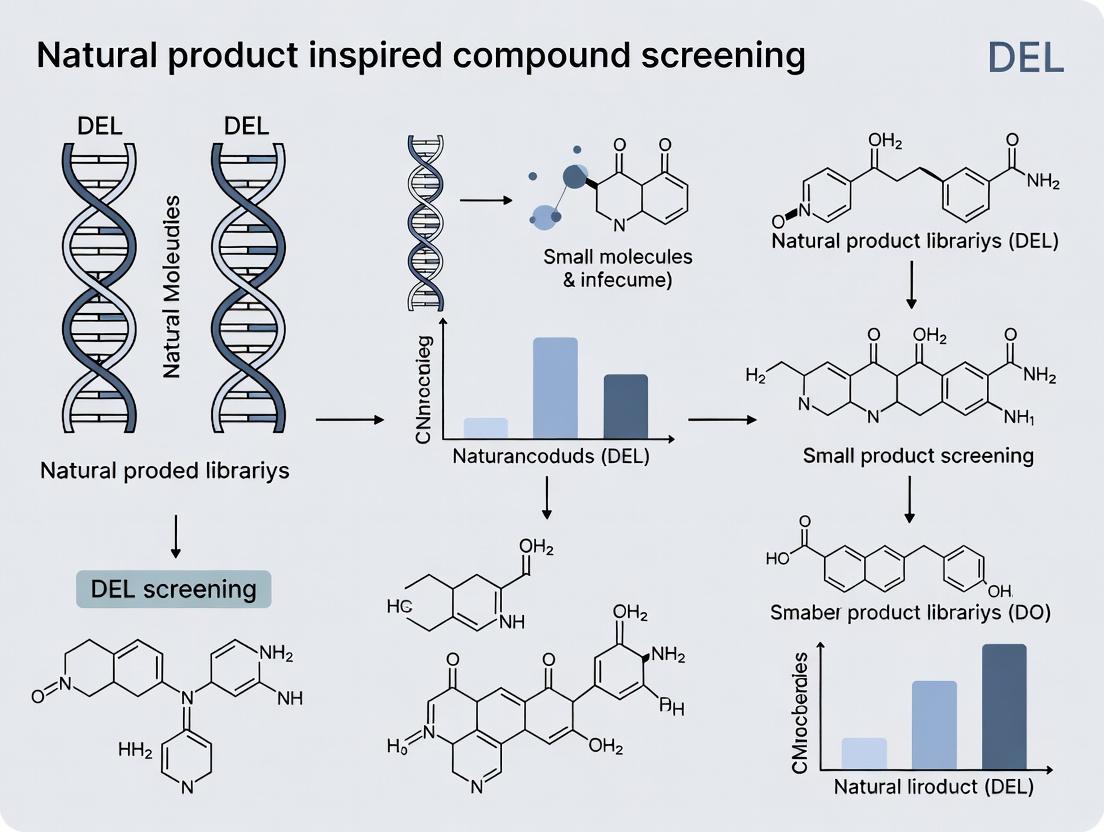
This article provides a comprehensive guide for drug discovery researchers on the application of DNA-Encoded Libraries (DELs) for screening natural product (NP)-inspired compounds.
Unlocking Nature's Pharmacy: How DNA-Encoded Libraries Revolutionize NP-Inspired Drug Discovery
Abstract
This article provides a comprehensive guide for drug discovery researchers on the application of DNA-Encoded Libraries (DELs) for screening natural product (NP)-inspired compounds. It begins with foundational concepts, exploring the synergy between NP scaffolds and DEL technology. It then details practical methodologies for library design, synthesis, and screening. A troubleshooting section addresses common technical and analytical challenges, while a comparative analysis validates DELs against traditional high-throughput screening (HTS). The conclusion synthesizes the transformative potential of DELs in accelerating the identification of novel bioactive compounds from nature-inspired chemical space.
The Synergy of Nature and Code: Foundations of NP-Inspired DELs
1. Introduction: Thesis Context Within the broader thesis on DNA-encoded library (DEL) technology for natural product (NP)-inspired screening, this application note posits that integrating NPs with DELs creates a synergistic platform. This combination addresses key limitations of traditional NP discovery (isolation yield, structural complexity) and pure synthetic DELs (limited scaffold diversity, "flat" chemical space) by creating genetically encoded, diverse libraries based on privileged NP scaffolds for accelerated hit discovery.
2. Application Notes: Rationale and Comparative Data
Table 1: Comparative Analysis of Natural Product Discovery, Synthetic DELs, and NP-DEL Fusion
| Aspect | Traditional NP Screening | Synthetic DEL Screening | NP-Inspired DEL Approach |
|---|---|---|---|
| Library Size | Limited (10^2 - 10^3 compounds/source) | Very Large (10^8 - 10^11 compounds) | Large (10^6 - 10^10 compounds) |
| Structural Complexity | High (Sp3-rich, stereocenters) | Typically Lower (Sp2-rich, planar) | Designed High Complexity |
| Synthetic Accessibility | Low (Isolation, total synthesis) | High (Combinatorial synthesis) | High (Combinatorial synthesis on NP cores) |
| Build-up Strategy | N/A | Split & Pool, encoded stepwise | Split & Pool on NP-derived scaffolds |
| Hit Rate (Typical) | ~0.1% (High quality hits) | ~0.001 - 0.01% | Aim: >0.01% with high-quality hits |
| Deconvolution | Bioassay-guided fractionation | DNA sequencing | DNA sequencing |
| Information on Target | Phenotypic, target often unknown | Requires immobilized purified target | Requires immobilized purified target |
3. Detailed Experimental Protocols
Protocol 1: Construction of an NP-Scaffold-Centric DEL Objective: Create a DEL using a core NP scaffold (e.g., tetrahydropyran, decalin) with peripheral diversity.
Materials: See "Scientist's Toolkit" below.
Procedure:
- Scaffold Preparation: Synthesize or procure NP-derived scaffold S1 containing at least two orthogonal reactive handles (e.g., amine, carboxylic acid, alkyne). Conjugate a dsDNA headpiece (HP1) with a compatible linker to one handle. Purify via HPLC.
- First Encoding & Diversification (Cycle A):
- Split the S1-HP1 conjugate into n reaction vessels.
- In each vessel, perform a coupling reaction (e.g., amidation, Suzuki) with a unique building block set BBA.
- Following the reaction, wash and then ligate a unique dsDNA tag (TagA1...An) encoding the identity of the added BBA to the growing DNA strand. Pool all vessels.
- Second Encoding & Diversification (Cycle B):
- Split the pooled library for the second diversification.
- In each vessel, react a different building block set BB_B with the second handle on the scaffold.
- Ligate the corresponding dsDNA tag (TagB1...Bn). Pool all vessels.
- QC and Amplification: Purify the final library. Assess chemical yield via qPCR of the DNA. Validate encoding by sequencing a sample of clones. Amplify the DNA tag region for selection.
Protocol 2: Affinity Selection with an NP-Inspired DEL Against a Protein Target Objective: Identify library members binding to a purified, immobilized target protein.
Materials: Streptavidin-coated magnetic beads, biotinylated target protein, selection buffer (PBS + 0.05% Tween 20 + BSA 1 mg/mL), wash buffer (PBS + 0.05% Tween 20), elution buffer (water or low-pH glycine buffer).
Procedure:
- Target Immobilization: Incubate biotinylated target protein (50-500 nM) with streptavidin beads (100 µL slurry) for 30 min at RT. Block with BSA (1 mg/mL, 30 min). Wash 3x with selection buffer.
- Library Incubation: Incubate the NP-inspired DEL (1-10 pmol in 500 µL selection buffer) with the immobilized target for 1-2 hours at 4°C with gentle rotation.
- Washing: Place tube on magnet. Discard supernatant. Perform a series of washes (e.g., 8-10 times) with 500 µL wash buffer, incubating 1 min per wash.
- Elution: Elute bound compounds by either:
- Denaturing Elution: Add 100 µL of elution buffer (e.g., 20 mM glycine-HCl, pH 2.0) for 5 min, neutralize.
- Thermal Elution: Add PCR-grade water and heat at 95°C for 10 min.
- PCR Amplification & Sequencing: Amplify the eluted DNA by PCR. Submit for NGS. Analyze sequence counts to identify enriched DNA tags, which correspond to the chemical building blocks of hit compounds.
4. Mandatory Visualizations
Diagram 1: NP-DEL Creation & Screening Workflow
Diagram 2: Synergy Logic of NP-DEL Fusion
5. The Scientist's Toolkit: Key Research Reagent Solutions
| Reagent / Material | Function & Explanation |
|---|---|
| dsDNA Headpiece | Double-stranded DNA with a terminal reactive group (e.g., NHS ester, maleimide) for covalent attachment to the chemical scaffold. Serves as the starting point for encoding. |
| Orthogonal NP Scaffold | A natural product-derived core (e.g., prostaglandin, flavone) with multiple, chemically distinct reactive sites for sequential combinatorial diversification. |
| Building Block Sets | Collections of commercially available or synthesized small molecules (acids, amines, boronic acids, etc.) used to introduce chemical diversity at each library synthesis step. |
| DNA Tags (dsDNA Oligos) | Short, unique double-stranded DNA sequences ligated after each chemical step to record the building block identity used in that split. |
| T4 DNA Ligase | Enzyme used to catalyze the ligation of dsDNA tags to the growing oligonucleotide chain on each library member. |
| Streptavidin Magnetic Beads | Solid support for immobilizing biotinylated target proteins during affinity selection, enabling easy washing and separation. |
| Biotinylated Target Protein | Purified protein of interest, modified with biotin to allow for specific and strong capture onto streptavidin beads for selection experiments. |
| High-Fidelity PCR Mix | Polymerase mix for the specific and error-free amplification of the DNA tags recovered from selection eluates, prior to NGS analysis. |
| Next-Generation Sequencer | Platform (e.g., Illumina) for the ultra-high-throughput sequencing of PCR-amplified DNA tags to decode the chemical structure of enriched library members. |
Within the pursuit of novel bioactive compounds inspired by natural products (NP), DNA-encoded library (DEL) technology has emerged as a transformative platform. It bridges the gap between NP-inspired structural complexity and the imperative for ultra-large chemical diversity in screening. This application note details the core principles of DNA encoding, elucidating how it enables the synthesis and interrogation of libraries orders of magnitude larger than traditional high-throughput screening (HTS) collections, thereby accelerating hit discovery in NP-inspired drug research.
Core Principles of DNA Encoding
Fundamental Concept
DNA encoding is a paradigm where each unique chemical compound in a library is covalently linked to a unique DNA sequence that serves as a barcode recording its synthetic history. This allows for the pooling and handling of billions of compounds as a single mixture, with compound identity decoded via high-throughput DNA sequencing.
Key Enabling Mechanisms
- Split-and-Pool Combinatorial Synthesis: The foundation for library size expansion.
- DNA-Templated Chemistry: Reactions occur in proximity to DNA templates, ensuring fidelity between the chemical step and barcode elongation.
- Compatible Chemical Reactions: Reactions must proceed in aqueous buffer, at moderate temperatures and pH, and tolerate DNA.
Table 1: Comparison of Library Scale: DEL vs. Traditional HTS
| Parameter | Traditional HTS | DNA-Encoded Library (DEL) |
|---|---|---|
| Typical Library Size | 10⁵ – 10⁶ compounds | 10⁸ – 10¹¹ compounds |
| Screening Format | Discrete compounds in wells | Pooled library in a single tube |
| Screening Throughput | Weeks to months | Days (one experiment per target) |
| Material Required per Compound | Micrograms to milligrams | Picograms to femtograms |
| Identity Readout | Analytical chemistry (LC-MS) | Next-generation sequencing (NGS) |
Detailed Protocols
Protocol 1: Core Split-and-Pool Cycle for DEL Synthesis
Objective: To add a chemical building block and its corresponding DNA barcode to a growing compound-DNA conjugate.
Materials: See "The Scientist's Toolkit" (Section 5).
Procedure:
- Split: Divide the starting DNA-conjugate (e.g., immobilized on solid beads or in solution) into n equal aliquots (n = number of building blocks in this cycle).
- React: To each aliquot, add a unique building block (e.g., carboxylic acid for amide coupling) and its corresponding DNA oligonucleotide tag (e.g., a PCR-amplifiable codon). Perform the chemical reaction under optimized, DNA-compatible conditions (e.g., using PyBOP as a coupling agent in neutral aqueous-organic solvent).
- Pool: After thorough washing to remove excess reagents, combine all n aliquots into a single mixture.
- DNA Ligation/Encoding: If not concurrent with Step 2, enzymatically ligate (using T4 DNA Ligase) the newly added oligonucleotide tag to the growing DNA barcode on each conjugate.
- Purification: Desalt or purify the pooled conjugates via HPLC or solid-phase capture.
- Repeat: Use the pooled output as the input for the next split-and-pool cycle. A 3-cycle synthesis with 100 building blocks per cycle yields 100³ = 1 million compounds.
Protocol 2: Affinity Selection Screening with a DEL
Objective: To isolate DNA-encoded compounds that bind to a purified protein target of interest.
Procedure:
- Target Immobilization: Incubate the purified, tagged target protein (e.g., biotinylated) with streptavidin-coated magnetic beads for 1 hour at 4°C in selection buffer (e.g., PBS with 0.05% Tween-20 and BSA). Wash beads twice.
- Library Incubation: Incubate the pooled DEL (1-1000 pmol in library scale) with the immobilized target in selection buffer for 1-2 hours at room temperature with gentle rotation.
- Stringent Washes: Separate beads and perform 8-10 cold wash steps with selection buffer to remove non-binders and weak binders.
- Elution: Elute bound compounds by either:
- Heat Denaturation: Add water and heat at 95°C for 10 minutes.
- Specific Disruption: Use a denaturing agent (e.g., 2% SDS) or a competitive ligand.
- DNA Recovery & Amplification: Purify the eluted DNA via ethanol precipitation or spin column. Amplify the barcode regions by PCR.
- Sequencing & Analysis: Subject the PCR product to NGS. Compare the frequency of DNA barcode sequences before and after selection to identify enriched compounds (hits).
Visualizations
Diagram 1: DEL Synthesis & Screening Core Workflow
Diagram 2: DNA Barcode Records Chemical Synthesis
The Scientist's Toolkit
Table 2: Key Research Reagent Solutions for DEL
| Item | Function in DEL | Key Consideration |
|---|---|---|
| DNA Headpiece | Dual-function initiator: contains a chemical handle (e.g., amine, alkyne) for chemistry and a primer site for PCR. | Stability, orthogonal reactivity, and minimal interference with protein targets. |
| DNA-Compatible Building Blocks | Chemical monomers (acids, amines, aldehydes, etc.) for library synthesis. | Must react efficiently in aqueous/organic solvent mixtures at near-neutral pH. |
| DNA-Compatible Coupling Reagents (e.g., PyBOP, EDC) | Activate carboxylates for amide bond formation with DNA conjugates. | Minimize side reactions with nucleobases or degradation of DNA. |
| T4 DNA Ligase | Enzymatically ligates oligonucleotide tags to the growing DNA barcode. | High efficiency is critical to maintain a 1:1 compound-to-barcode relationship. |
| Streptavidin Magnetic Beads | For immobilizing biotinylated target proteins during affinity selection. | Low non-specific binding to DNA is essential to reduce background. |
| NGS Library Prep Kit | Prepares the PCR-amplified selection outputs for high-throughput sequencing. | Must accommodate short, variable-length DNA barcodes. |
| DEL Analysis Software (e.g., internal pipelines, commercial) | Processes millions of NGS reads to identify enriched barcodes and decode corresponding structures. | Requires robust statistical models to distinguish signal from noise. |
Application Notes
Natural Products (NPs) represent an unparalleled source of structural diversity, chemical complexity, and validated bioactivity, making them ideal inspiration for modern drug discovery campaigns. Within the context of DNA-Encoded Library (DEL) technology, NPs provide a critical blueprint for designing combinatorial libraries that move beyond "flat" aromatic scaffolds. The integration of NP-inspired stereochemistry, polycyclic frameworks, and sp3-rich architectures into DELs addresses historical limitations of library design, enhancing the probability of identifying high-quality hits against challenging therapeutic targets, including protein-protein interactions and allosteric sites.
Table 1: Quantitative Comparison of NP-Inspired vs. Traditional Synthetic DELs
| Metric | Traditional Synthetic DELs | NP-Inspired DELs | Data Source / Note |
|---|---|---|---|
| Average Fraction of sp3 Carbons (Fsp3) | 0.25 - 0.35 | 0.45 - 0.60 | Analysis of published libraries; correlates with clinical success. |
| Represented Stereocenters | Low (often 0-1 per compound) | High (often 2-5+ per scaffold) | Designed based on core NP scaffolds like macrocycles. |
| Typical Library Size (Compounds) | 1e8 - 1e9 | 1e7 - 1e9 | NP-inspired synthesis can impose complexity constraints. |
| Hit Rate Against Challenging Targets | 0.001% - 0.01% | 0.01% - 0.1% | e.g., Protein-Protein Interactions; based on model studies. |
| Common Structural Motifs | Biaryl, amides, piperazines | Macrocycles, fused polycyclics, glycosides | Inspired by erythromycin, steroids, indole alkaloids. |
Table 2: Key NP Scaffolds for DEL Incorporation & Associated Targets
| NP-Inspired Scaffold | Bioactive Motif Mimicked | Target Class Example | DEL-Compatible Chemistry |
|---|---|---|---|
| Macrocyclic Lactone/Lactam | Cyclic peptide / depsipeptide | Intracellular PPIs, Kinases | On-DNA macrolactamization, ring-closing metathesis |
| Decalin/Steroid-like | Steroid hormone core | Nuclear Receptors, Membranes | Diels-Alder, intramolecular aldol on solid support |
| Indole/Alkaloid-like | Tryptamine-based frameworks | GPCRs, Neurotransporters | Fischer indole synthesis, Pictet-Spengler on-DNA |
| Glycoside/Sugar | Carbohydrate-protein recognition | Lectins, Cell Surface Targets | Glycosyltransferases or chemical glycosylation on-DNA |
Experimental Protocols
Protocol 1: On-DNA Pictet-Spengler Reaction for Tetrahydro-β-Carboline (THBC) Synthesis
Objective: To generate NP-inspired tetrahydro-β-carboline cores within a DNA-encoded library, mimicking indole alkaloid scaffolds.
Materials: DNA-headpiece conjugated with tryptamine derivative (DNA-Tryptamine), aldehydes (various, 50mM in DMSO), anhydrous phosphate buffer (pH 4.0), scavenger resin (e.g., polymer-bound cyanoborohydride), spin filters, thermomixer.
Procedure:
- Setup: In a 96-well plate, combine 10 µL of DNA-Tryptamine (10 µM in nuclease-free water) with 30 µL of phosphate buffer (pH 4.0).
- Condensation/Cyclization: Add 10 µL of aldehyde stock (50 mM) to each well. Seal plate and incubate at 45°C for 16-18 hours with gentle shaking (600 rpm).
- Quenching & Purification: Add 50 µL of scavenger resin suspension (in buffer) to each well to consume excess aldehyde. Shake for 2 hours at room temperature.
- Isolation: Transfer reaction mixtures to spin filters. Centrifuge at 3000 x g for 2 minutes to collect the DNA-conjugated product in the flow-through.
- QC: Analyze a sample by LC-MS (qTOF with DNA compatible method) to confirm formation of DNA-THBC conjugate (expected mass shift).
Protocol 2: Affinity Selection & PCR Amplification for NP-Inspired DEL Selections
Objective: To isolate and identify binders from an NP-inspired DEL against a purified protein target.
Materials: Target protein (biotinylated), NP-inspired DEL (pooled, 1 nM in selection buffer), streptavidin-coated magnetic beads, selection buffer (PBS + 0.05% Tween-20 + 1mg/mL BSA), wash buffer (PBS + 0.05% Tween-20), PCR reagents (primers, polymerase, dNTPs), thermal cycler, NGS sequencer.
Procedure:
- Bead Preparation: Wash 100 µL of streptavidin beads (10 mg/mL) 3x with selection buffer. Resuspend in 100 µL buffer.
- Target Immobilization: Incubate beads with 5-10 µg of biotinylated target protein for 30 min at 4°C. Wash 3x to remove unbound protein.
- Library Incubation: Incubate protein-bound beads with 1 mL of DEL (1 nM) for 1 hour at 4°C with rotation.
- Stringent Washes: Perform 5-8 cold wash steps (1 mL each) using wash buffer to remove non-binders.
- Elution: Elute bound DNA-encoded compounds by incubating beads with 50 µL of nuclease-free water at 95°C for 10 min. Transfer supernatant.
- PCR Amplification: Amplify the eluted DNA tags using 10-15 cycles of PCR with library-specific primers.
- Sequencing & Analysis: Purify PCR product and submit for Next-Generation Sequencing (NGS). Decode sequencing data to identify enriched chemical structures.
Pathway & Workflow Visualizations
The Scientist's Toolkit: Key Research Reagent Solutions
| Item / Reagent | Function in NP-Inspired DEL Research |
|---|---|
| DNA-Headpiece (e.g., dsDNA with primary amine) | The foundational conjugate point for all on-DNA synthesis; enables encoding. |
| Stable & Orthogonal On-DNA Protecting Groups (e.g., Fmoc, Alloc) | Allows multi-step, modular synthesis of complex NP-like scaffolds on DNA. |
| DNA-Compatible Building Blocks (Chiral, Sp3-rich) | Pre-synthesized fragments containing NP-like motifs (decalin, sugars, amino acids) for coupling. |
| DNA-Compatible Catalysts (e.g., Pd(0), Ru-carbene) | Enables advanced on-DNA reactions like cross-couplings and ring-closing metathesis. |
| Streptavidin Magnetic Beads | Critical for immobilizing biotinylated target proteins during affinity selection steps. |
| Hot-Start High-Fidelity DNA Polymerase | Ensures accurate, minimal-bias PCR amplification of enriched DNA tags prior to NGS. |
| NGS Library Prep Kit (DEL-specific) | Optimized kits for preparing the amplified DNA tags for Illumina or other sequencing platforms. |
| Bioinformatics Pipeline (e.g., DELanalysis software) | Dedicated software to decode NGS data, cluster reads, and identify statistically enriched structures. |
Key DEL Platforms and Architectures (e.g., Split-and-Pool) for NP Chemistries
DNA-Encoded Library (DEL) technology enables the high-throughput screening of vast chemical spaces (10^6 to 10^12 compounds) against biological targets. For natural product (NP)-inspired chemistries, which often involve complex scaffolds and stereocenters, specific DEL platforms and architectures have been developed to accommodate their synthetic complexity. This Application Note details the predominant platforms, focusing on the split-and-pool method, and provides protocols for their application in NP-inspired drug discovery.
Key DEL Architectures for NP Chemistries
The Split-and-Pool (Combinatorial) Architecture
The foundational method for DEL synthesis, where solid supports or chemical building blocks are divided (split), coupled with a unique DNA tag, and then recombined (pooled) for the next cycle. This architecture is particularly suited for NP-like scaffolds as it allows for the combinatorial assembly of diverse, complex fragments.
Diagram: Split-and-Pool DEL Synthesis Workflow
Table 1.1: Comparative Analysis of DEL Architectures for NP Chemistries
| Architecture | Key Feature | Max Library Size (Theoretical) | Suitability for NP Chemistries | Key Limitation |
|---|---|---|---|---|
| Split-and-Pool | Combinatorial, DNA tag added per step | > 10^12 | High - Enables complex, multi-step assembly of diverse scaffolds. | Potential for cross-contamination; requires robust chemical orthogonality. |
| DNA-Templated | Reactions occur on hybridized DNA templates | ~10^8 | Moderate-High - Good for macrocyclization & proximity-driven reactions common in NPs. | Limited to reactions compatible with aqueous milieu and DNA stability. |
| Photochemical | Spatial encoding via photolithography/microwells | ~10^6 | Moderate - Precise control useful for sensitive NP-like reactions. | Lower library diversity; specialized equipment needed. |
| Single Pharmacophore | Pre-formed core linked to diverse tags | ~10^7 | Low-Moderate - Best for decorating a single, complex NP core. | Lower combinatorial diversity from the core itself. |
Platform-Specific Adaptations for NP Chemistries
NP-inspired synthesis often requires specialized conditions incompatible with canonical DEL synthesis (e.g., organic solvents, transition metal catalysts, sensitive functional groups). Key platform adaptations include:
- Solvent-Tolerant DNA Compatibilization: Use of surfactants (e.g., Brij-58) or DNA polymerase mutants to protect DNA during organic-phase reactions.
- Chemo-orthogonal Ligation Strategies: Employing sequential conjugation chemistries (e.g., SPAAC, inverse-electron demand Diels-Alder, phosphorothioate-iodoacetamide) to install DNA tags under mild conditions after harsh chemical steps.
- On-DNA Late-Stage Functionalization (LSF): Techniques like C-H activation or photoredox catalysis performed on DNA-conjugated intermediates to mimic NP diversification.
Application Notes & Protocols
Protocol: Split-and-Pool Synthesis of a Tetrahydropyran (THP)-Inspired DEL
Objective: To construct a 3-cycle DEL (100x100x100 = 1M compounds) based on a stereochemically-defined THP scaffold, a common NP motif.
Research Reagent Solutions Toolkit
| Item/Reagent | Function in Protocol |
|---|---|
| Amino-functionalized PEGA Beads | Solid support for synthesis; compatible with aqueous & organic solvents. |
| dsDNA Headpiece (HP1) | Double-stranded initiator sequence with a 5' or 3' chemical handle (e.g., NH2, DBCO). |
| Sulfo-SMCC Crosslinker | Conjugates primary amine on bead/DNA to thiols on building blocks. |
| BB-1Thiol (100 diverse examples) | First-cycle building blocks (e.g., mercapto-THP derivatives) for scaffold diversification. |
| TdT Terminal Transferase & modified dNTPs | Enzymatically appends a unique single-stranded DNA "barcode" sequence for each building block. |
| Cleavage Cocktail (TFA:DCM:Triisopropylsilane) | Cleaves final compounds from solid support for analysis or screening. |
| qPCR Mix (with SYBR Green) | Quantifies DNA recovery and library quality after each synthesis cycle. |
Procedure:
Initial Conjugation: Covalently immobilize amino-modified HP1 (100 pmol) to PEGA beads (10 mg) using a standard EDC/sulfo-NHS coupling protocol. Wash and quantify DNA loading via picogreen assay.
Cycle 1 - Split & Tag:
- Split: Distribute the bead-bound HP1 slurry equally into 100 separate 1.5 mL reactor tubes.
- React: To each tube, add a unique BB-1Thiol building block (10 mM in DMF/PBS buffer containing 2 mM EDTA) and Sulfo-SMCC (5 mM). React for 2h at 25°C with gentle shaking.
- Wash: Centrifuge and wash beads thoroughly with DMF, DMSO, and aqueous buffer.
- Encode: In each tube, enzymatically append a unique 10-mer DNA sequence (barcode 1, BC1) to the 3' end of HP1 using Terminal Deoxynucleotidyl Transferase (TdT) and a defined dNTP mix. Quench the reaction.
- Pool: Combine all 100 bead aliquots into a single tube. Wash thoroughly.
Cycle 2 & 3: Repeat the Split & Tag process. For Cycle 2, utilize 100 amino-functionalized BB-2 (e.g., via reductive amination chemistry) and encode with BC2. For Cycle 3, utilize 100 carboxylic acid BB-3 (e.g., via amide coupling) and encode with BC3.
Final Processing: After Cycle 3, pool all beads. Cleave the small-molecule products from the beads (while preserving the DNA tag) using a mild, photolabile or enzymatic cleavage method. Purify the library by HPLC, desalt, and quantify by UV/vis and qPCR.
Diagram: THP-DEL Synthesis & Screening Pathway
Protocol: Affinity Selection & Hit Deconvolution for a DEL Targeting a Kinase
Objective: To identify binders from a NP-inspired DEL against a purified protein target.
Procedure:
Target Immobilization: Incubate biotinylated target protein (50-500 nM) with streptavidin-coated magnetic beads in selection buffer (PBS, 0.05% Tween-20, 100 µg/mL sheared salmon sperm DNA, 1 mg/mL BSA) for 30 min at 4°C. Block beads with additional BSA.
Library Incubation: Incubate the DEL (1-10 nM in library concentration, in selection buffer) with the target-bound beads for 1-2 hours at 4°C with gentle rotation.
Washing: Separate beads using a magnet. Perform 5-8 wash steps with cold selection buffer to remove non-binders.
Elution: Elute specifically bound compounds by either:
- Heat Denaturation: Resuspend beads in PCR-compatible buffer, heat to 95°C for 10 min.
- Proteolytic Digestion: Digest the target protein with proteinase K.
PCR Amplification & Sequencing: Amplify the eluted DNA tags using a high-fidelity polymerase for 15-20 cycles. Purify the PCR product and subject it to Illumina-based NGS.
Data Analysis: Count the frequency of each unique DNA barcode combination. Enrichment (E) is calculated as:
E = (Count_selection / Count_input). Compounds with E > 10 (and statistically significant vs. control selections) are prioritized for off-DNA synthesis and validation.
Table 2.2: Quantitative Metrics from a Model NP-DEL Screen Against Kinase Target 'X'
| Cycle 1 (THP Variant) | Cycle 2 (Amino Tail) | Cycle 3 (Acid Cap) | Enrichment (E) | NGS Read Count (Selection) | Off-DNA IC50 (nM) |
|---|---|---|---|---|---|
| THP-α-01 | Alkyl-amine-12 | Aryl-acid-05 | 0.8 | 152 | N/A (decoy) |
| THP-β-18 | Aryl-amine-44 | Heteroaryl-acid-33 | 42.7 | 8,540 | 12.5 |
| THP-β-18 | Aryl-amine-44 | Alkyl-acid-21 | 35.2 | 7,040 | 28.1 |
| THP-α-05 | Cycloalkyl-amine-07 | Aryl-acid-05 | 15.6 | 3,120 | 310.0 |
| THP-β-18 | Alkyl-amine-12 | Heteroaryl-acid-33 | 1.2 | 240 | N/A (decoy) |
Critical Considerations for NP-Inspired DELs
- Fidelity vs. Diversity: NP scaffolds may require longer synthetic sequences, increasing the risk of DNA damage and background noise. Balance library complexity with synthetic feasibility.
- Analytical QC: Employ LC-MS of model compounds and qPCR at each cycle to monitor chemical yield and DNA integrity. Capillary electrophoresis assesses tag length fidelity.
- Chemical Space: DELs excel at exploring planar, heterocyclic spaces. Incorporating sp3-rich, stereochemically complex NP motifs remains a challenge but is the focus of ongoing platform innovation, such as on-DNA cycloadditions and multicomponent reactions.
Application Notes
The exploration of chemical space for drug discovery bridges traditional natural product (NP) isolation and modern DNA-encoded library (DEL) synthesis. This synergy aims to capture the structural complexity and biological relevance of NPs within vast, synthetically accessible libraries.
Note 1: NP as Blueprints for DEL Design. NPs like vinca alkaloids or macrolides possess privileged scaffolds with proven bioactivity. DEL-inspired synthesis deconstructs these into fragment-sized building blocks, encoding each coupling step with a DNA tag. This creates libraries of NP-inspired compounds (NPIC) that retain key pharmacophores while exploring novel derivatizations.
Note 2: Screening Efficiency. A single DEL can contain 10^8 to 10^12 unique compounds, screened in a single tube via affinity selection against a protein target. This contrasts with traditional NP screening, which may require milligrams of isolated compound for a single target assay. The table below quantifies key differences.
Note 3: Data Integration. Post-selection, high-throughput sequencing of the DNA tags identifies hit structures. This data, combined with structural knowledge from NP isolation, feeds into machine learning models to predict new bioactive regions of chemical space and guide subsequent library design cycles.
Table 1: Comparison of NP Isolation vs. DEL-Inspired Synthesis Workflows
| Parameter | Traditional NP Isolation & Screening | DEL-Inspired NPIC Synthesis & Screening |
|---|---|---|
| Library Size | 100s - 1,000s of compounds per extract | 10^8 - 10^12 compounds per library |
| Screening Format | Individual compound assays (µg-mg scale) | Single-pot, affinity-based selection (pM-fM scale) |
| Cycle Time (Isolation/Synthesis to Hit ID) | 6-24 months | 4-12 weeks |
| Material Required per Compound for Screening | High (µg-mg) | Extremely Low (attomole-zep tomole) |
| Structural Complexity Coverage | High (complex, polycyclic) | Moderate to High (designed complexity) |
| Chemical Space Explored per Experiment | Limited, focused on natural scaffolds | Vast, includes novel hybrids & analogs |
Table 2: Typical Yields and Success Rates in NP-Inspired DEL Synthesis
| Process Step | Typical Yield / Efficiency Range | Key Influencing Factor |
|---|---|---|
| Initial DNA-Conjugate (Headpiece) Synthesis | 60-85% | Coupling efficiency of first building block to DNA |
| On-DNA Chemical Transformation (e.g., amide coupling) | 70-95% per step | Solvent compatibility, reagent choice |
| Multi-Cycle Library Assembly (3-4 cycles) | 30-60% overall yield | Cumulative step yields, DNA integrity |
| PCR Amplification Post-Selection | >10^6-fold amplification | Specificity of primers, PCR inhibitors |
| Hit Validation (Off-DNA Resynthesis) | 50-90% synthesis yield | Fidelity of DEL chemistry to solution-phase |
Experimental Protocols
Protocol 1: Isolation of a Reference Natural Product Scaffold
Purpose: To obtain a pure NP for structural analysis and use as a DEL design template. Materials: Plant/ microbial biomass, solvents (MeOH, EtOAc, H2O), silica gel, HPLC system (C18 column). Procedure:
- Extraction: Homogenize 1 kg biomass in 4L 80% aqueous MeOH. Filter and concentrate under vacuum to an aqueous residue.
- Partition: Suspend residue in 1L H2O, partition sequentially with EtOAc (3 x 1L). Collect organic layer.
- Fractionation: Subject EtOAc extract to silica gel column chromatography using a stepped gradient of hexane/EtOAc to EtOAc/MeOH.
- Purification: Analyze active fractions by TLC. Further purify target-containing fraction by reversed-phase HPLC (H2O/MeCN + 0.1% formic acid).
- Characterization: Analyze pure compound using NMR (1H, 13C), HR-MS.
Protocol 2: DEL Synthesis Inspired by an Alkaloid Scaffold
Purpose: To construct a 3-cycle DEL using building blocks derived from a common indole alkaloid core. Materials: DNA headpiece (5’-amino-modified), split-and-pool reactor blocks, activated building blocks (e.g., Fmoc-amino acids, acyl chlorides), reagents for on-DNA chemistry (e.g., EDC, sulfo-NHS), PCR reagents, desalting columns. Procedure:
- Cycle 1 – Attachment of Core Scaffold:
- Dilute 1 nmol of DNA headpiece in 100 µL PBS buffer (pH 7.4).
- Add 500 nmol of NHS-activated carboxylate of the indole-derived fragment. React for 16h at 25°C.
- Desalt using a spin column. Split the DNA-conjugate into 10 equal portions in separate reaction vessels.
- Cycle 2 – Amine Coupling (Split-and-Pool):
- To each of the 10 vessels, add a unique amine building block (1000 nmol) and coupling agents (EDC/sulfo-NHS). React for 12h.
- Pool all reactions into a single tube. Desalt.
- Cycle 3 – Acylation (Split-and-Pool):
- Split the pooled material into 10 new vessels.
- To each vessel, add a unique carboxylic acid building block (1000 nmol) and coupling agents. React for 12h.
- Pool, desalt, and purify by HPLC. The final library contains 10 x 10 = 100 theoretical compounds, each tagged with a unique DNA barcode sequence recording the building block history.
- Quality Control: Sample each intermediate and final pool. Quantify by UV absorbance, confirm step success by PCR amplification followed by agarose gel electrophoresis.
Protocol 3: Affinity Selection with a Protein Target
Purpose: To screen the NP-inspired DEL against a purified target protein. Materials: Purified target protein (e.g., kinase), immobilization beads (streptavidin for biotinylated targets), selection buffer (PBS + 0.05% Tween20 + BSA), washing buffers, Proteinase K, PCR cleanup kit. Procedure:
- Target Immobilization: Incubate 10 pmol of biotinylated target protein with 100 µL streptavidin beads for 30 min at 4°C. Block with BSA.
- Library Incubation: Incubate the DEL (1-10 pmol in total library mass) with immobilized target in 1 mL selection buffer for 1-2h at 4°C with gentle rotation.
- Washing: Pellet beads. Wash 5-8 times with 1 mL ice-cold selection buffer to remove unbound compounds.
- Elution: Elute bound compounds by either: a) Heat denaturation (95°C, 10 min), or b) Proteinase K digestion (2h, 37°C).
- DNA Recovery: Purify eluted DNA using a PCR cleanup kit. Elute in 20 µL H2O.
- PCR Amplification & Sequencing: Amplify recovered DNA with Illumina-compatible primers for 15-20 cycles. Purify PCR product and submit for NGS.
Diagrams
Title: NP to DEL Workflow & Feedback Loop
Title: DEL Split-and-Pool Synthesis Cycle
The Scientist's Toolkit: Key Research Reagent Solutions
Table 3: Essential Materials for NP-Inspired DEL Research
| Item | Function & Application |
|---|---|
| DNA Headpiece (e.g., 5’-Amino-Modified Oligo) | The starting point for DEL synthesis. Provides a unique primer site and the initial attachment point for the first chemical building block. |
| Sulfonate-NHS Ester Activated BBs | High-reactivity, water-compatible building blocks for efficient amide bond formation on DNA in aqueous buffers. |
| Solid-Phase Extraction (SPE) Plates (C18) | For rapid desalting and purification of DNA-conjugates between synthesis cycles, removing excess reagents. |
| Streptavidin-Coated Magnetic Beads | For rapid immobilization of biotinylated protein targets during affinity selection, enabling efficient washing steps. |
| Proteinase K | A robust protease used to gently elute bound compounds from protein targets after selection, minimizing DNA damage. |
| Indexed PCR Primers (Illumina-Compatible) | To amplify recovered DNA barcodes post-selection for sequencing, adding necessary flow cell adapters and sample indices. |
| Next-Generation Sequencing Kit (MiSeq) | For ultra-high-throughput sequencing of DNA barcodes to identify enriched library members. |
| UHPLC-HRMS System | For quality control of synthesized DEL intermediates and final compounds, and for characterizing off-DNA resynthesized hits. |
From Design to Hit: A Step-by-Step Guide to DEL Screening for NP Analogs
Within DNA-Encoded Library (DEL) technology for NP-inspired drug discovery, the strategic selection of privileged natural product (NP) scaffolds and building blocks is paramount. These elements provide a rich source of stereochemical complexity and pre-validated bioactivity, increasing the probability of identifying high-quality hits against challenging drug targets. This document details application notes and protocols for integrating privileged NP chemotypes into DEL design to enhance library quality and screening outcomes.
Application Notes: Current Data & Strategic Rationale
Privileged NP scaffolds exhibit high ligand efficiency and target promiscuity across protein families. Recent analyses of DEL screening campaigns highlight the superior hit rates of NP-inspired sublibraries.
Table 1: Performance Metrics of NP-Scaffold vs. Synthetic Scaffolds in DEL Screens (2020-2024)
| Scaffold Class | Representative Core | Avg. Library Size (Compounds) | Avg. Confirmed Hit Rate (%) | Avg. Ligand Efficiency (LE) of Hits | Most Frequent Target Class |
|---|---|---|---|---|---|
| NP-Derived | Spirooxindole | 350,000 | 0.15 | 0.42 | Protein-Protein Interactions |
| NP-Derived | Dihydrobenzopyran | 500,000 | 0.12 | 0.38 | Kinases, GPCRs |
| NP-Derived | Macrolide Fragment | 200,000 | 0.08 | 0.45 | Protein-Protein Interactions |
| Synthetic (Flat) | Biaryl | 1,000,000 | 0.05 | 0.31 | Kinases |
| Synthetic (3D) | Diazepane | 750,000 | 0.07 | 0.35 | Proteases |
Table 2: Sourcing & Complexity Analysis of Top NP Building Blocks
| Building Block | Natural Source (Example) | Commercial Availability (Scale) | Avg. Chiral Centers | Compatible DEL Chemistry (On-DNA) |
|---|---|---|---|---|
| Halicyclamine A fragment | Marine sponge | Low (mg-scale) | 3 | Reductive amination, amide coupling |
| Indolactam V core | Streptomyces | Medium (g-scale) | 2 | Suzuki-Miyaura, N-alkylation |
| Guanidine alkaloid motif | Frog skin, sponge | High (multi-g) | 1 | SNAr, amide coupling |
| Secologanin derivative | Plant | High (multi-g) | 4 | Aza-Michael, click chemistry |
Experimental Protocols
Protocol 3.1: On-DNA Functionalization of a Complex NP Scaffold (Spirooxindole Core)
Objective: To conjugate a spirooxindole carboxylic acid scaffold to a headpiece DNA oligonucleotide and subsequently diversify via on-DNA amide coupling.
Materials:
- Headpiece DNA (HP-DNA, 20-mer, 5'-amine modified, 1 nmol/µL in nuclease-free water).
- Spirooxindole-2-carboxylic acid (10 mM in dry DMF).
- Coupling solution: 200 mM EDC, 100 mM NHS in 0.1 M MES buffer (pH 5.5).
- Quenching buffer: 0.5 M hydroxylamine hydrochloride (pH 7.0).
- Selection buffer: 1x PBS with 0.05% Tween-20.
- Amine-based building blocks (100 mM in DMSO).
- On-DNA coupling mix: 50 mM HATU, 200 mM DIPEA in DMF.
Procedure:
- Conjugation: In a LoBind tube, mix 10 µL HP-DNA, 30 µL spirooxindole acid, and 60 µL coupling solution. Incubate at 25°C for 16h with gentle shaking.
- Quenching: Add 20 µL of quenching buffer. Incubate at 25°C for 30 min.
- Purification: Purify the DNA-conjugate using reversed-phase spin-column chromatography (C18). Elute with a gradient of water/acetonitrile. Lyophilize to dryness.
- Quality Control: Analyze conjugate by LC-MS (MALDI-TOF acceptable) to confirm mass addition.
- Diversification (Amide Coupling): Redissolve conjugate in 50 µL nuclease-free water. For each well, mix 5 µL conjugate, 2 µL amine building block, and 10 µL on-DNA coupling mix. Incubate at 37°C for 2h.
- Post-Reaction Workup: Purify each reaction using size-exclusion spin columns. Pool fractions as required for encoding or subsequent steps.
Protocol 3.2: DEL Screening & Hit Deconvolution for NP-Inspired Libraries
Objective: To perform a selection assay against a immobilized protein target and decode enriched structures via NGS and chemical history tracing.
Materials:
- Target protein, biotinylated.
- Streptavidin-coated magnetic beads.
- Binding & Wash (B&W) buffer: 5 mM Tris-HCl (pH 7.5), 0.5 mM EDTA, 1 M NaCl.
- Selection buffer: 1x PBS, 0.05% Tween-20, 1 mg/mL BSA, 1 mM DTT.
- PCR amplification kit for Illumina sequencing.
- DEL data analysis pipeline (e.g., in-house or commercial software).
Procedure:
- Target Immobilization: Wash 100 µL streptavidin beads 3x with B&W buffer. Incubate with 5 µg biotinylated target protein in 200 µL B&W buffer for 30 min at RT. Wash 3x with selection buffer.
- Library Incubation: Incubate the DEL (1-10 pmol in 500 µL selection buffer) with the target-bound beads for 1h at 4°C with rotation.
- Stringency Washes: Perform 5-10 cold wash steps with selection buffer. Transfer beads to a new tube after the 3rd wash to reduce non-specific binding.
- Elution: Elute bound DNA-encoded compounds using 100 µL of PCR-grade water at 95°C for 10 min.
- PCR Amplification & Sequencing: Amplify the eluted DNA tags using unique sample-indexed primers. Purify the PCR product and submit for Next-Generation Sequencing (NGS).
- Data Analysis: Process NGS reads through the data analysis pipeline. Count tag frequencies, compare to a naive library sample, and apply statistical models (e.g., Z-score, enrichment ratio) to identify significantly enriched structures. Re-synthesize off-DNA hits for validation.
Visualization: Diagrams & Workflows
Diagram Title: NP-Inspired DEL Design and Screening Workflow
Diagram Title: NP-DEL Hits Targeting PI3K/AKT/mTOR Pathway
The Scientist's Toolkit: Research Reagent Solutions
Table 3: Essential Reagents for NP-Inspired DEL Construction & Screening
| Item | Function & Relevance in NP-DEL Workflow | Example Product/Catalog |
|---|---|---|
| Headpiece DNA (HP-DNA) | The foundational DNA oligonucleotide containing a constant region for PCR and a terminal chemical handle (e.g., amine, azide) for initial scaffold conjugation. | Custom synthesis (e.g., IDT, Sigma). 5'-Amino Modifier C12. |
| Biotinylated Target Protein | Essential for immobilizing the protein of interest on solid support (streptavidin beads) for affinity-based DEL selections. | In-house biotinylation kit (e.g., Thermo Fisher No-Weight Biotinylation Kit) or purchased. |
| Streptavidin Magnetic Beads | Robust solid support for target immobilization, enabling efficient wash steps to remove non-binders during DEL selection. | Dynabeads M-280 Streptavidin. |
| HATU / EDC Coupling Reagents | Key activating agents for forming amide bonds between NP carboxylic acid scaffolds and the HP-DNA, or for subsequent diversification steps. | HATU (Sigma 445440), EDC-HCl (Thermo Fisher 22980). |
| NGS Library Prep Kit | For amplifying and preparing the recovered DNA tags from selection experiments for high-throughput sequencing. | Illumina DNA Prep Kit. |
| Chiral NP Building Block Set | Commercially available or custom-synthesized fragments derived from or inspired by natural products, providing 3D complexity. | Enamine "Natural Product-like" building block set, Life Chemicals NP-derived collection. |
| Size-Exclusion Spin Columns | For rapid purification of DNA-conjugated intermediates and final compounds away from salts, reagents, and solvents. | Illustra NAP-5 Columns (Cytiva). |
Challenges & Solutions in On-DNA Chemistry for NP-like Compounds
Abstract DNA-encoded library (DEL) technology enables the high-throughput synthesis and screening of vast chemical spaces. This Application Note details the challenges and solutions in performing on-DNA chemistry to synthesize natural product (NP)-inspired compounds, which often possess complex stereochemistry and sensitive functional groups. Protocols and reagent solutions are provided to facilitate robust library synthesis.
Key Challenges and Quantitative Data
On-DNA synthesis of NP-like scaffolds faces distinct hurdles. The table below summarizes primary challenges and corresponding solution strategies.
Table 1: Major Challenges and Mitigation Strategies for NP-like On-DNA Chemistry
| Challenge Category | Specific Hurdle | Impact on Yield/Data | Proposed Solution |
|---|---|---|---|
| DNA Compatibility | Aqueous/organic solvent incompatibility | Reaction yields can drop 50-90% in mixed solvents. | Use of water-miscible co-solvents (e.g., DMSO, DMF) with optimized pH buffers. |
| Functional Group Tolerance | Sensitivity of NP motifs (e.g., lactones, hemiacetals) to nucleophiles or pH extremes. | Decomposition of >70% of advanced intermediates. | Development of orthogonal protecting groups (e.g., silyl ethers for alcohols) stable to DNA. |
| Stereochemical Control | Poor diastereoselectivity in on-DNA reactions (e.g., cyclizations). | dr often < 2:1, complicating screening interpretation. | Use of chiral auxiliaries or DNA-tethered catalysts. Reported improvements to dr > 10:1. |
| Structural Complexity | Macrocyclization or spirocycle formation on-DNA. | Cyclization yields typically <5% for >12-membered rings. | High-dilution "pseudo" conditions and DNA-conformation-templated cyclization. |
Experimental Protocols
Protocol 2.1: On-DNA Pictet-Spengler Reaction for Tetrahydroisoquinoline (THIQ) Core Synthesis This protocol enables the synthesis of an NP-prevalent THIQ scaffold directly on oligonucleotide-headpieces.
Materials:
- DNA-headpiece conjugate (HP-DNA, 1 nmol in 50 mM Tris-HCl buffer, pH 7.4).
- Tryptamine-derived building block (0.1 M in DMSO).
- Aldehyde building block (0.1 M in DMSO).
- Reaction Buffer: 1.5 M NaCl, 100 mM NaOAc, pH 4.0.
- Quenching Buffer: 2 M Tris-HCl, pH 8.5.
- Cold Ethanol (100%, -20°C).
- 3 M Sodium Acetate, pH 5.2.
Procedure:
- In a PCR tube, combine:
- HP-DNA (1 nmol, 10 µL)
- Reaction Buffer (20 µL)
- Tryptamine building block (5 µL, 500 nmol)
- Aldehyde building block (5 µL, 500 nmol)
- Add nuclease-free H₂O to 100 µL final volume.
- Mix thoroughly and spin down. Incubate at 60°C for 16 hours.
- Cool to room temperature. Add 10 µL of Quenching Buffer and mix.
- Precipitate the DNA: Add 10 µL of 3 M NaOAc (pH 5.2) and 300 µL of cold ethanol. Incubate at -80°C for 1 hour.
- Centrifuge at 14,000 rpm for 25 minutes at 4°C. Carefully decant supernatant.
- Wash pellet with 500 µL of 70% cold ethanol. Centrifuge again for 10 minutes and decant.
- Air-dry the pellet for 5-10 minutes and resuspend in 100 µL of nuclease-free H₂O.
- Quantify by UV-Vis spectrometry and analyze by LC-MS or qPCR to confirm conjugation and determine yield (typically 60-80%).
Protocol 2.2: On-DNA Ring-Closing Metathesis (RCM) for Macrocyclic NP Mimics This protocol outlines the synthesis of macrocyclic scaffolds on-DNA using a ruthenium catalyst tolerant to aqueous conditions.
Materials:
- DNA-conjugated diene substrate (1 nmol in H₂O).
- Grubbs Catalyst 3rd Generation (H₂O stable, 50 mM stock in DMSO).
- RCM Buffer: 50 mM Tris-HCl, 1 M NaCl, 10 mM MgCl₂, pH 8.0.
- DMSO (anhydrous).
- Ethylenediamine (0.5 M in H₂O) for quenching.
Procedure:
- In a low-adhesion tube, combine:
- DNA-diene conjugate (1 nmol, 20 µL)
- RCM Buffer (70 µL)
- DMSO (8 µL)
- Mix gently. Add 2 µL of Grubbs Catalyst stock solution (100 nmol).
- Incubate the reaction at 37°C for 4 hours with gentle shaking.
- Quench the catalyst by adding 10 µL of 0.5 M ethylenediamine. Incubate for 15 minutes at room temperature.
- Ethanol precipitate as described in Protocol 2.1 (steps 4-7).
- Resuspend in H₂O. Analyze by HPLC-MS. Macrocycle yield is highly substrate-dependent (typically 5-25% for 12-16 membered rings).
Visualization of Workflows and Pathways
Workflow for On-DNA Synthesis of NP-like Compounds
On-DNA Pictet-Spengler Reaction Mechanism
The Scientist's Toolkit: Key Research Reagent Solutions
Table 2: Essential Reagents for Advanced On-DNA Chemistry
| Reagent/Material | Function & Key Property | Application Example |
|---|---|---|
| Water-Stable Ruthenium Catalysts (e.g., Grubbs G3) | Facilitates olefin metathesis in aqueous buffers. Tolerant to polar functionalities. | On-DNA macrocyclization via RCM. |
| HPLC-MS Grade DMSO/DMF | High-purity, water-miscible organic co-solvents. Low nuclease contamination. | Cosolvent for reactions requiring >20% organic phase. |
| DNA-Compatible Protecting Groups (e.g., TBDMS, Fmoc) | Stable to DNA and standard buffer pH ranges (4-9), but cleavable under specific conditions. | Protection of alcohols, amines, or acids during multi-step on-DNA synthesis. |
| Headpieces with Orthogonal Linkers (e.g., AMS, OOA) | Contain chemically distinct attachment points for sequential chemistry. | Enables split-and-pool synthesis with diverse reaction conditions. |
| Quenchers for Reactive Catalysts (e.g., Ethylenediamine, DTT) | Rapidly deactivate metal catalysts or reactive intermediates to prevent DNA damage post-reaction. | Essential step after Pd, Ru, or radical-based chemistries. |
| Solid-Phase Extraction (SPE) Plates (C18/Ion Exchange) | High-throughput desalting and purification of DNA-conjugated compounds post-reaction. | Removal of excess reagents, salts, and byproducts before encoding or screening. |
Within the broader thesis on DNA-Encoded Library (DEL) technology for natural product (NP)-inspired compound screening, the workflow of panning, PCR amplification, and Next-Generation Sequencing (NGS) is foundational. This integrated process enables the ultra-high-throughput screening of billions to trillions of small molecules against purified protein targets of therapeutic interest. The goal is to identify unique DNA tags associated with binding compounds, thereby decoding the chemical structures of hits for downstream synthesis and validation. This application note details the protocols for these interconnected steps, emphasizing their critical role in modern drug discovery.
Experimental Protocols
Protocol: Solution-Phase Panning Selection
Objective: To enrich DNA-encoded compounds that bind to a target protein from a background of non-binders.
Materials:
- Purified, immobilized target protein (e.g., biotinylated protein bound to streptavidin beads).
- DNA-Encoded Library (DEL) in selection buffer.
- Wash buffers (e.g., PBS with 0.05% Tween-20, optionally with increasing stringency).
- Elution buffer (e.g., high-salt, denaturing agent, or competitive ligand).
- Magnetic separation rack or centrifugal filters.
Methodology:
- Pre-clear: Incubate the DEL with bare beads (e.g., streptavidin) for 30 min at 4°C to remove non-specific bead binders. Separate and collect supernatant.
- Incubation: Mix the pre-cleared DEL with the immobilized target protein. Incubate with gentle rotation for 1-2 hours at 4-25°C (depending on target stability).
- Washing: Apply the mixture to a magnet or column. Retain beads and wash 5-10 times with cold wash buffer (500-1000 µL per wash) to remove unbound and weakly bound library members.
- Elution: Resuspend beads in elution buffer (e.g., 100 µL of 50 mM Tris-HCl, 10 mM EDTA, 0.5% SDS) and incubate at 95°C for 15 minutes to denature the protein and release bound DNA-tagged compounds. Alternatively, use a specific competitive inhibitor in buffer for native elution.
- Recovery: Separate the beads and carefully collect the eluate containing the enriched DNA tags.
- Desalting/Purification: Purify the eluted DNA using a spin column (e.g., silica-based) to remove salts, proteins, and inhibitors. Elute in nuclease-free water or low-EDTA TE buffer.
- Assessment: Quantify the recovered DNA by qPCR or fluorometry. A successful round typically yields 0.1-10 fmol of DNA, representing an enrichment over background.
Protocol: PCR Amplification of Enriched DNA Tags
Objective: To amplify the recovered, enriched DNA sequences to generate sufficient material for NGS library preparation.
Materials:
- Purified eluted DNA from panning.
- High-fidelity DNA polymerase master mix (e.g., KAPA HiFi).
- Forward and reverse PCR primers containing partial Illumina adapter sequences.
- Nuclease-free water.
- Thermal cycler.
- DNA purification beads or columns.
Methodology:
- Reaction Setup: In a 50 µL reaction, combine:
- 25 µL 2X HiFi Master Mix
- 2.5 µL Forward Primer (10 µM)
- 2.5 µL Reverse Primer (10 µM)
- 1-10 µL template DNA (eluted from panning)
- Nuclease-free water to 50 µL
- Thermal Cycling:
- 98°C for 45 s (initial denaturation)
- 15-20 cycles of:
- 98°C for 15 s (denaturation)
- 60-65°C for 30 s (annealing) – optimize based on primers
- 72°C for 30 s (extension)
- 72°C for 1 min (final extension)
- Hold at 4°C.
- Purification: Clean up the PCR product using a size-selective magnetic bead system (e.g., AMPure XP beads) to remove primers, primer dimers, and non-specific products. Follow manufacturer's protocol for a 0.8-1.0X bead-to-sample ratio.
- Quantification: Measure DNA concentration using a fluorometric assay (e.g., Qubit dsDNA HS Assay). Typical yields range from 50-200 ng.
Protocol: NGS Library Preparation & Sequencing
Objective: To attach full Illumina sequencing adapters and indices to the PCR-amplified DNA tags for multiplexed sequencing.
Materials:
- Purified PCR product from Step 2.2.
- Indexing PCR primer mix (Illumina dual indexing, e.g., Nextera XT Index Kit v2).
- Limited-cycle PCR master mix.
- AMPure XP beads.
- Agilent Bioanalyzer or TapeStation High Sensitivity D1000 reagents.
- Illumina sequencing platform (MiSeq, NextSeq, NovaSeq).
Methodology:
- Indexing PCR: Set up a second, limited-cycle (5-10 cycles) PCR reaction to attach full adapter indices (i7 and i5) to the amplicons from Protocol 2.2.
- Purification: Clean the final library with AMPure XP beads (0.8X ratio).
- Quality Control: Assess library fragment size distribution and concentration using a Bioanalyzer. A single, sharp peak at the expected size (typically 200-300 bp) is ideal.
- Normalization & Pooling: Normalize libraries to 4 nM based on QC data. Pool equal volumes of normalized, indexed libraries for multiplexed sequencing.
- Sequencing: Denature and dilute the pooled library per Illumina guidelines. Load onto a sequencing cartridge. A MiSeq v2 Nano (500 cycles) is often sufficient for initial screening, generating ~5M reads.
Data Presentation
Table 1: Typical Quantitative Benchmarks for a DEL Screening Round
| Workflow Stage | Key Metric | Typical Range / Value | Notes |
|---|---|---|---|
| Initial Library | Library Size | 10^8 – 10^12 Compounds | Dictates diversity and screening depth. |
| Panning | Input DNA Mass | 1 – 10 pmol | Amount of DEL used per selection. |
| Recovered DNA Post-Elution | 0.1 – 10 fmol | Enrichment factor is calculated vs. control. | |
| Number of Wash Steps | 5 – 10 | Increased stringency reduces background. | |
| PCR Amplification | Cycle Number (1st PCR) | 15 – 20 | Minimize to reduce amplification bias. |
| DNA Yield Post-Amplification | 50 – 200 ng | Sufficient for NGS library prep. | |
| NGS Sequencing | Recommended Read Depth | 10 – 100x Library Size | Ensures statistical representation of enriched hits. |
| Recommended Sequencing Platform | Illumina MiSeq/NextSeq | Balances read length, output, and cost. | |
| Expected Unique DNA Tags Identified | 10^3 – 10^6 | Correlates with number of enriched compounds. |
Visualizations
Title: DEL Screening and Sequencing Core Workflow
Title: PCR and NGS Library Preparation Steps
The Scientist's Toolkit: Research Reagent Solutions
Table 2: Essential Materials for DEL Screening Workflow
| Item | Function/Description | Example Product/Category |
|---|---|---|
| Biotinylated Target Protein | Enables immobilization on streptavidin-coated solid support for efficient panning and washing. | In-house biotinylation or purchased; >90% purity. |
| Streptavidin Magnetic Beads | Solid support for target immobilization; enables rapid magnetic separation during washes. | Dynabeads MyOne Streptavidin C1. |
| DEL Selection Buffer | Provides optimal pH, ionic strength, and additives (e.g., BSA, carrier DNA) to minimize non-specific binding. | PBS, 0.05% Tween-20, 1 mg/mL BSA, 0.1 mM salmon sperm DNA. |
| High-Fidelity DNA Polymerase | Amplifies recovered DNA with minimal error rates to preserve encoded chemical information. | KAPA HiFi HotStart ReadyMix, Q5 High-Fidelity DNA Polymerase. |
| AMPure XP Beads | Size-selective solid-phase reversible immobilization (SPRI) beads for PCR clean-up and size selection. | Beckman Coulter AMPure XP. |
| Illumina-Compatible Index Primers | Adds unique dual indices (i7 & i5) to PCR amplicons for multiplexed sequencing. | Illumina Nextera XT Index Kit v2. |
| dsDNA High-Sensitivity Assay Kit | Accurately quantifies low concentrations of double-stranded DNA for library normalization. | Qubit dsDNA HS Assay Kit. |
| High-Sensitivity DNA Analysis Kit | Provides precise size distribution and quality assessment of final NGS libraries. | Agilent High Sensitivity D1000 ScreenTape. |
This Application Note details the computational and bioinformatic protocols essential for analyzing DNA-Encoded Library (DEL) screening data, framed within a thesis exploring natural product (NP)-inspired DELs. The pipeline translates raw sequencing reads into statistically validated compound structures and their associated binding affinities.
Sequencing Read Processing and Decoding
The primary objective is to convert high-throughput sequencing data into chemical structure identifiers.
Protocol 1.1: Demultiplexing and Quality Control
- Demultiplexing: Use
bcl2fastqorGuppy(for nanopore) to separate pooled sequencing reads by their sample-specific barcodes. Output: FASTQ files per library/selection condition. - Quality Filtering: Employ
FastQCfor initial quality assessment. Trim adapter sequences and low-quality bases (Phred score < 20) usingcutadaptorTrimmomatic. - Quantitative Summary: Post-processing metrics should be tabulated.
Table 1.1: Representative Post-QC Sequencing Metrics
| Sample Condition | Raw Reads | Passed Filter Reads | Avg. Read Length (bp) | Key QC Result |
|---|---|---|---|---|
| Target Protein Selection | 50,000,000 | 45,500,000 (91%) | 150 | Pass |
| Beads-Only Control | 48,000,000 | 43,200,000 (90%) | 150 | Pass |
Protocol 1.2: Decoding DNA Tags to Chemical Building Blocks
- Alignment/Parsing: Map reads to the expected library codebook using a lightweight aligner (
Bowtie2) or perform direct string parsing based on known constant regions. - Error Correction: Implement a Hamming distance-based correction algorithm. Allow for a 1-2 bp mismatch per codon, correcting to the nearest valid building block sequence.
- Aggregation: Count the frequency of each unique DNA sequence (unique compound identifier).
Enrichment Analysis and Hit Identification
This step distinguishes true binders from background noise by comparing selection counts to control counts.
Protocol 2.1: Normalization and Enrichment Score Calculation
- Normalize Counts: Convert raw sequence counts to counts per million (CPM) for each condition (Selection, Beads-Only, Input Library).
CPM = (Count of Sequence / Total Reads in Condition) * 1,000,000 - Calculate Enrichment: Compute an enrichment score (E) for each compound.
E = log2( (CPM_Selection + Pseudocount) / (CPM_Control + Pseudocount) )A typical pseudocount of 1 is used to avoid division by zero.
Protocol 2.2: Statistical Hit Calling
- Z-score/Frequency Analysis: For each compound, calculate a Z-score based on the fold-change and its variance across technical replicates.
- Thresholding: Apply dual thresholds to identify hits. Common criteria:
- Enrichment Score (E) > 2.0 (4-fold enriched)
- Normalized Read Count in Selection > 50-100 CPM
- Z-score > 3.0 (indicating statistical significance p < 0.01)
Table 2.1: Example Hit Identification Output
| Compound ID | Building Blocks | CPM (Selection) | CPM (Control) | Enrichment (log2) | Z-score | Hit Status |
|---|---|---|---|---|---|---|
| CMPD-0012 | A3-B45-C78 | 1250.5 | 12.1 | 6.65 | 8.2 | Yes |
| CMPD-0045 | A1-B22-C78 | 850.2 | 45.5 | 4.22 | 5.1 | Yes |
| CMPD-0311 | A3-B10-C15 | 25.5 | 18.8 | 0.44 | 0.8 | No |
Structure Reconstruction and Triaging
Confirmed DNA hits are translated back to chemical structures for validation.
Protocol 3.1: Structure Assembly and Visualization
- Database Lookup: Use an internal library registry to associate the decoded building block combination (e.g., A3-B45-C78) with its corresponding chemical structure (typically in SMILES format).
- Assembly: For NP-inspired libraries, reconstruct the full compound by linking the building blocks according to the known chemistry (amide, Suzuki, etc.) using RDKit or a similar cheminformatics toolkit.
- Visualization: Generate 2D structural images for all hits using RDKit or ChemDraw.
Visualization: DEL Data Analysis Workflow
The Scientist's Toolkit: Key Research Reagent Solutions
Table 3.1: Essential Tools & Reagents for DEL Data Analysis
| Item | Function/Description | Example Product/Software |
|---|---|---|
| High-Throughput Sequencer | Generates raw sequencing data from PCR-amplified DEL selections. | Illumina MiSeq/NovaSeq, Oxford Nanopore MinION |
| Sequence Demultiplexing Tool | Separates pooled reads by sample index barcodes. | Illumina bcl2fastq, Guppy Basecaller |
| Quality Control Suite | Assesses read quality and performs adapter trimming. | FastQC, cutadapt, Trimmomatic |
| Sequence Alignment/Parsing Tool | Maps reads to the library codebook or extracts tag sequences. | Bowtie2, custom Python scripts (regex) |
| Cheminformatics Toolkit | Reconstructs and visualizes chemical structures from building blocks. | RDKit, OpenEye Toolkit, ChemDraw |
| Statistical Computing Environment | Performs enrichment calculations, statistical testing, and data visualization. | R (tidyverse), Python (pandas, numpy, scipy) |
| DEL-Specific Analysis Software | Integrated platforms for end-to-end DEL data processing. | Hit Dexter, DELs Open Tools, commercial vendor software |
| Compound Management Database | Registry linking DNA codes to chemical building blocks and structures. | Custom SQL/Spotfire DB, CDD Vault |
Application Notes
The integration of DNA-Encoded Libraries (DELs) into drug discovery has revolutionized the screening of natural product (NP)-inspired compound spaces. By enabling the interrogation of billions to trillions of compounds in a single experiment, DEL technology provides an efficient bridge between complex NP-inspired chemical diversity and high-value targets like kinases, GPCRs, and more recently, the ternary complexes required for PROTACs. This approach aligns with a broader thesis on leveraging DELs to systematically explore NP-like structural motifs, moving beyond traditional one-molecule-one-target screening to identify novel chemical starting points and mechanisms of action.
Targeting Kinases with DELs
Kinases remain a premier target class in oncology and inflammatory diseases. DEL screens against kinases have successfully identified novel, potent, and selective inhibitors from libraries encompassing NP-like scaffolds, such as privileged heterocycles and macrocycles.
Key Case Study: A 2023 screen of a 10-billion-member DEL against Bruton's tyrosine kinase (BTK) identified a novel series of macrocyclic inhibitors inspired by the structural constraint seen in many natural products. These compounds demonstrated high selectivity over other kinases in the Tec family.
Quantitative Data Summary: Table 1: DEL-Derived BTK Inhibitor Profiling Data
| Compound ID | DEL Library Size | KD (SPR) | IC50 (Enzymatic) | Selectivity (Tec Kinase Panel) | Cell-based pBTK IC50 |
|---|---|---|---|---|---|
| DEL-BTK-01 | 1.0 x 10¹⁰ | 5.2 nM | 3.8 nM | >100-fold vs. ITK, BMX | 18 nM |
| DEL-BTK-07 | 1.0 x 10¹⁰ | 1.1 nM | 0.9 nM | >500-fold vs. ITK, BMX | 7 nM |
Experimental Protocol: DEL Selection and Hit Validation for Kinase Targets
- Materials: Purified, biotinylated kinase domain (e.g., BTK catalytic domain), streptavidin-coated magnetic beads, DEL (e.g., 10 billion members), selection buffer (50 mM HEPES pH 7.4, 150 mM NaCl, 0.05% Tween-20, 1 mM TCEP, 5 mM MgCl2, 0.1% BSA), PCR reagents, NGS platform.
- Procedure:
- Immobilization: Incubate biotinylated kinase (100 nM) with streptavidin beads for 30 min at 4°C. Wash to remove unbound protein.
- Positive Selection: Incubate the protein-immobilized beads with the DEL (1-10 pmol total library) in selection buffer for 1-2 hours at room temperature with gentle rotation.
- Washing: Perform 5-10 stringent washes with selection buffer (containing 0.1% Tween-20) to remove non-binders.
- Elution: Elute bound compounds by denaturing the protein (e.g., with 2% SDS) or via competitive elution with a known high-affinity inhibitor.
- PCR Amplification & Sequencing: Amplify the DNA tags of the eluted compounds via PCR. Submit for next-generation sequencing (NGS).
- Data Analysis & Compound Synthesis: Decode NGS data to identify enriched chemical scaffolds. Resynthesize off-DNA compounds without the DNA tag for biochemical validation.
- Validation: Confirm binding using Surface Plasmon Resonance (SPR) and determine IC50 values in enzymatic and cellular phospho-target assays.
Signaling Pathway & Screening Logic
Diagram 1: DEL Screening Workflow for Kinase Inhibitor Discovery.
Targeting GPCRs with DELs
GPCR screening with DELs presents unique challenges due to their transmembrane nature and complex signaling states. Advances in membrane protein stabilization and use of purified receptors have enabled successful DEL campaigns against GPCRs, uncovering novel chemotypes that act as antagonists, agonists, or allosteric modulators.
Key Case Study: A 2024 study targeting the adenosine A2A receptor (A2AR) used a stabilized, purified receptor (StaR) in a DEL screen. This identified novel, sub-nanomolar antagonists with a unique scaffold distinct from known xanthine-based drugs.
Quantitative Data Summary: Table 2: DEL-Derived A2AR Antagonist Profiling Data
| Compound ID | DEL Library Size | KD (SPR/BLI) | IC50 (cAMP Assay) | Functional Activity | Selectivity (A1/A2B/A3) |
|---|---|---|---|---|---|
| DEL-A2AR-45 | 8.5 x 10⁹ | 0.8 nM | 2.1 nM | Full Antagonist | >500-fold / >200-fold / >1000-fold |
| DEL-A2AR-89 | 8.5 x 10⁹ | 0.3 nM | 0.7 nM | Full Antagonist | >1000-fold across panel |
Experimental Protocol: DEL Selection Using Stabilized GPCRs (StaRs)
- Materials: Purified, biotinylated GPCR StaR protein (e.g., A2AR), liposomes (e.g., DMPC:CHS), streptavidin beads, DEL, selection buffer with stabilizing agents (e.g., 50 mM HEPES pH 7.4, 150 mM NaCl, 0.05% DDM, 0.01% CHS, 0.1% BSA).
- Procedure:
- Receptor Reconstitution (Optional): Reconstitute purified GPCR into liposomes to maintain a more native-like lipid environment.
- Immobilization: Capture biotinylated GPCR (either in detergent micelles or proteoliposomes) onto streptavidin beads.
- Selection: Incubate immobilized GPCR with the DEL library for 1-4 hours in selection buffer. Include controls with empty beads for counter-selection.
- Washing & Elution: Perform sequential washes (8-12x) with buffer. Elute specifically bound compounds using acid, denaturant, or competitive ligand displacement.
- Tag Amplification & Sequencing: PCR amplify and sequence eluted DNA tags as per kinase protocol.
- Synthesis & Validation: Resynthesize hits off-DNA. Validate binding via Biolayer Interferometry (BLI) or SPR using purified receptor. Determine functional activity in cell-based assays (e.g., cAMP accumulation for A2AR).
Enabling PROTAC Discovery with DELs
DELs are uniquely suited for identifying ligands for ternary complex formation, a critical challenge in PROTAC development. Screens can simultaneously target the protein of interest (POI) and an E3 ligase to discover compounds that facilitate their proximity.
Key Case Study: A recent dual-pharmacology DEL approach screened for binders to both the BET bromodomain protein BRD4 and the E3 ligase VHL. This identified novel bifunctional molecules that, when converted to PROTACs, induced potent and selective degradation of BRD4.
Quantitative Data Summary: Table 3: DEL-Informed BRD4 PROTAC Data
| PROTAC ID | POI Binder Origin | E3 Ligand Origin | DC50 (BRD4 Degradation) | Dmax (%) | Selectivity (BET Family) |
|---|---|---|---|---|---|
| PROTAC-B1 | DEL-derived novel acetidine | Known VHL ligand | 3.2 nM | 98% | >50-fold vs. BRD3 |
| PROTAC-B5 | DEL-derived macrocycle | Known CRBN ligand | 12 nM | 95% | >30-fold vs. BRD3 |
Experimental Protocol: Sequential DEL Selection for Ternary Complex Enablers
- Materials: Purified, tagged POI (e.g., BRD4-BD1/2), purified E3 ligase complex (e.g., VCB complex), respective capture beads (e.g., anti-Flag M2 agarose for POI, streptavidin for biotinylated VHL), DEL containing potential bifunctional elements, selection buffers.
- Procedure:
- Primary Selection (POI): Perform a standard affinity selection against immobilized BRD4. Elute and collect binders.
- Secondary Selection (E3 Ligase): Take the eluate from step 1 and incubate it with immobilized VCB complex. The goal is to enrich compounds that can bind to both proteins, potentially simultaneously.
- Stringency Controls: Include parallel selections against each target individually and subtract common binders to find synergistic or cooperative binders.
- Sequencing & Analysis: Amplify and sequence DNA from the dual selection. Analyze for chemical features that could serve as linkers or dual pharmacophores.
- Hit-to-PROTAC: Resynthesize enriched cores. Chemically attach known E3 ligands (e.g., von Hippel-Lindau or Cereblon ligands) via optimized linkers to create full PROTAC molecules.
- Degradation Assay: Treat cells (e.g., MV4;11) with synthesized PROTACs for 4-18 hours. Lyse cells and quantify target protein levels via immunoblotting to determine DC50 and Dmax.
PROTAC Mechanism & DEL Screening Logic
Diagram 2: DEL-Enabled PROTAC Discovery and Mechanism of Action.
The Scientist's Toolkit: Key Research Reagent Solutions
Table 4: Essential Reagents for DEL-Based Screening Campaigns
| Reagent / Material | Function in DEL Experiments | Example / Notes |
|---|---|---|
| DEL Libraries | Source of ultra-high chemical diversity for screening. NP-inspired libraries contain privileged scaffolds mimicking natural product complexity. | Commercially available or custom-synthesized libraries (e.g., 1-20 billion members). |
| Biotinylated Target Proteins | Enables specific immobilization of purified protein targets (kinases, GPCRs, E3 ligases) onto streptavidin beads for selection. | Site-specific biotinylation (e.g., AviTag) is preferred to maintain activity. |
| Stabilized GPCRs (StaRs) | Mutant GPCRs with enhanced thermostability and solubility, enabling purification and DEL screening in detergent solution. | Essential for Class A GPCRs like A2AR, β1AR. |
| Streptavidin Magnetic Beads | Solid support for capturing biotinylated target proteins during affinity selection steps. | Enable efficient wash-elute cycles. Magnetic separation is standard. |
| Next-Generation Sequencing (NGS) Platform | Decodes the DNA tags of enriched compounds after selection, identifying hit structures via sequence analysis. | Illumina platforms (e.g., MiSeq) are most commonly used. |
| Surface Plasmon Resonance (SPR) / BLI Instrument | Validates binding affinity (KD) and kinetics of off-DNA synthesized hits against purified targets. | Biacore (SPR) or Octet (BLI) systems. |
| Cell-Based Functional Assay Kits | Determines the functional activity (IC50, EC50, antagonism/agonism) of validated hits in a physiological context. | cAMP, pERK, β-arrestin recruitment, or degradation (DC50) assays. |
| Linker & Conjugation Chemistry Toolkits | For converting DEL-informed binders into full PROTAC molecules by linking to E3 ligase ligands. | Include PEG, alkyl, and rigid linkers with click chemistry or amine-reactive handles. |
Overcoming Hurdles: Practical Troubleshooting for NP-DEL Screening
Common Pitfalls in On-DNA Synthesis of Complex NP Scaffolds
Within DNA-encoded library (DEL) research for natural product (NP)-inspired screening, the on-DNA synthesis of complex scaffolds presents unique challenges. These multi-step reactions on DNA-conjugated intermediates must proceed with high fidelity to generate libraries suitable for identifying high-affinity protein binders. This document details common synthetic pitfalls and provides protocols to mitigate them.
Table 1: Common On-DNA Synthetic Pitfalls and Their Impact
| Pitfall Category | Typical Manifestation | Approximate Yield Reduction | Key Contributing Factor(s) |
|---|---|---|---|
| DNA Compatibility | Degradation (strand breakage, depurination) | 40-70% | Low pH (<4), high temperature (>60°C), strong oxidants/reductants |
| Steric Hindrance | Low conversion in coupling steps | 50-90% | Bulky reagents, proximity of reaction site to DNA duplex |
| Hydrophobicity & Solubility | Precipitation of intermediate, non-homogeneous reactions | 30-80% | Highly hydrophobic NP core (e.g., polycyclic terpenoid) |
| Orthogonality | Unintended modification of DNA (e.g., amines on bases) | 15-50% | Poorly selective reagents (e.g., acylating agents) |
| Purification & Analysis | Inaccurate quantification of conjugation yield | N/A | Co-elution of DNA-peak with UV-active byproducts |
Detailed Protocols
Protocol 1: Assessing DNA Stability Under Reaction Conditions
Objective: Determine the maximum tolerable conditions (pH, temperature, solvent) for DNA integrity prior to scaffold synthesis.
Materials:
- DNA-headpiece conjugate (5'-amino-modified, 20-30 nt).
- Simulated reaction buffer/solvent.
- Denaturing Polyacrylamide Gel Electrophoresis (PAGE) apparatus.
- Quantification software (e.g., ImageJ).
Method:
- Aliquot the DNA conjugate into different tubes containing the target reaction medium (e.g., DMF/H₂O mix, pH-adjusted buffer).
- Incubate at the planned reaction temperature (e.g., 25°C, 37°C, 60°C) for the planned duration (e.g., 2h, 12h, 24h).
- Quench and desalt using a spin column.
- Analyze by denaturing PAGE (15-20% gel). Run an untreated control.
- Stain with SYBR Gold and image. Quantify the full-length band intensity relative to the control.
- Acceptance Criterion: >90% full-length DNA retention is required for the condition to be considered viable.
Protocol 2: On-DNA Cyclization via Macrolactamization
Objective: Execute a key cyclization step common in NP scaffold synthesis while minimizing DNA damage.
Background: Cyclizations are high-risk due to required high dilution and prolonged reactions.
Materials:
- DNA-linked linear peptide precursor (1 nmol in H₂O).
- Coupling reagent: HATU (0.1 M in DMF).
- Base: DIPEA (0.2 M in DMF).
- Dilution Buffer: 1:3 H₂O:DMF (v/v), 50 mM HEPES pH 8.0.
- PD Minitrap G-10 or G-25 desalting columns.
Method:
- High Dilution Setup: Dilute the DNA precursor to a final concentration of 10 µM in cold Dilution Buffer (total volume 100 µL for 1 nmol).
- Activation/Addition: In a separate tube, pre-mix HATU (10 eq, 10 µL) and DIPEA (20 eq, 10 µL) in DMF. Add this mixture dropwise to the stirring DNA solution over 1 hour via syringe pump.
- Reaction: After addition, let the reaction stir gently at 4°C for 24 hours.
- Quenching & Purification: Quench with 50 µL of 1M Tris-HCl pH 7.5. Desalt immediately using a size-exclusion column pre-equilibrated in H₂O.
- Analysis: Analyze by LC-MS (ion-pair RP-HPLC coupled to ESI-MS) to determine cyclic/linear product ratio and DNA integrity.
Visualization of Workflows
Diagram Title: On-DNA NP Synthesis Workflow & Decision Points
Diagram Title: Pitfalls Impact on DEL Thesis Goals
The Scientist's Toolkit: Research Reagent Solutions
Table 2: Essential Reagents for Robust On-DNA NP Synthesis
| Reagent / Material | Function & Rationale | Key Consideration for NPs |
|---|---|---|
| Stable DNA Headpieces (e.g., dsDNA, hairpin) | Provides a consistent, double-stranded attachment point; can enhance solubility and stability. | Mitigates steric hindrance by distancing chemistry from the encoding tags. |
| Water-Miscible Co-solvents (e.g., DMF, DMSO, t-BuOH, MeCN) | Enables solubility of organic reagents and hydrophobic NP intermediates. | Optimize ratio (e.g., 1:3 H₂O:DMF) to balance DNA stability and reactant solubility. |
| Mild Coupling Reagents (e.g., HATU, COMU, EDC·HCl) | Facilitates amide/ester bond formation with minimal racemization and side-reactions. | Prefer reagents with low risk of guanosine modification (e.g., avoid CDI with long exposure). |
| Orthogonal Protecting Groups (e.g., Alloc, ivDde, photolabile groups) | Allows sequential, selective deprotection for multi-step synthesis on DNA. | Critical for complex NP scaffolds requiring sequential derivatization. |
| DNA-Compatible Scavengers (e.g., polymer-bound isocyanides, thiols) | Quenches excess electrophiles without damaging DNA. | Essential after acylations or alkylations to prevent slow DNA degradation. |
| IP-RP HPLC Columns (e.g., C18, 2.5 µm beads) | Analytical and preparative purification of DNA-conjugated small molecules. | Required to separate species with similar mass but different hydrophobicity (common in NPs). |
| Desalting Plates/Columns (e.g., Sephadex G-25 spin plates) | Rapid buffer exchange and removal of salts/small molecules. | High recovery (>90%) is critical after each step to maintain library scale. |
In the context of DNA-Encoded Library (DEL) screening for natural product (NP)-inspired compounds, the affinity selection process, or "panning," is the critical step for identifying target-binding ligands. The panning conditions—specifically the choice of buffer, method of target immobilization, and the stringency of wash steps—directly dictate the success of a campaign by controlling the signal-to-noise ratio, minimizing non-specific binding, and ensuring the recovery of true binders. This application note provides detailed protocols and data-driven recommendations for optimizing these parameters to enhance DEL hit discovery.
Core Principles and Quantitative Comparisons
The optimization of panning conditions balances the need to preserve the native state of the target protein with the requirement to rigorously remove non-specifically bound library members. The following tables summarize key quantitative parameters.
Table 1: Common Buffer Systems for DEL Panning
| Buffer Composition (pH 7.4) | Key Additives | Primary Function & Rationale | Recommended Use Case |
|---|---|---|---|
| PBS (Phosphate-Buffered Saline) | 0.01% Tween-20, 0.1% BSA | Standard, mild ionic strength; additives reduce non-specific binding. | Soluble extracellular targets (e.g., kinases, cytokines). |
| HBS (HEPES-Buffered Saline) | 1-5 mM MgCl₂, 0.05% CHAPS | HEPES offers better pH stability; divalent cations support metalloenzymes; CHAPS is a mild detergent. | Membrane protein ectodomains, metalloproteases. |
| TBS (Tris-Buffered Saline) | 1 mM DTT, 0.1% Casein | Reducing agent (DTT) maintains disulfide bonds; casein is an alternative blocking agent. | Intracellular targets, cysteine-rich proteins. |
| Low-Salt Buffer (e.g., 20 mM Tris) | 0.01% Triton X-100 | Reduces electrostatic non-specific binding; detergent disrupts weak interactions. | High-stringency washes for charged targets (e.g., DNA-binding proteins). |
Table 2: Target Immobilization Methods
| Immobilization Method | Coupling Chemistry/Support | Typical Efficiency | Advantages | Disadvantages |
|---|---|---|---|---|
| Streptavidin-Biotin | Biotinylated target on streptavidin bead/matrix. | >90% capture | High affinity, uniform orientation, gentle elution (biocin). | Requires biotinylation; potential for site occlusion. |
| Ni-NTA | His-tagged target on Ni-NTA resin. | 70-90% | Standard for recombinant proteins; cost-effective. | Nickel leakage can cause non-specific binding; imidazole in eluate can interfere. |
| Passive Adsorption | Direct adsorption to polystyrene plate/bead. | Variable, often low | Simple, no tag required. | Random orientation, protein denaturation risk, high non-specific background. |
| Covalent Coupling | e.g., NHS-ester to amine groups on sepharose. | High | Stable, irreversible immobilization. | Random orientation, potential for modifying active site. |
Table 3: Stringency Wash Parameters
| Stringency Factor | Low Stringency (Counter-selection) | Medium Stringency (Standard) | High Stringency (Hit Enrichment) |
|---|---|---|---|
| Detergent Concentration | 0.01% Tween-20 | 0.05% Tween-20 | 0.1% Tween-20 or 0.01% SDS |
| Salt Concentration | 150 mM NaCl | 300-500 mM NaCl | 500 mM - 1 M NaCl |
| Wash Volume & Number | 3 x 100 μL | 5-8 x 200 μL | 10 x 500 μL |
| Incubation Time | Quick rinses (<30 sec) | 1-minute incubations | 2-5 minute incubations |
| Competitor (e.g., ATP) | None | Low concentration (e.g., 1 mM) | High concentration (e.g., 10 mM) |
Detailed Experimental Protocols
Protocol 1: Standard Panning with Streptavidin-Immobilized Target
Objective: To perform an affinity selection against a biotinylated target protein using magnetic beads. Materials: See "The Scientist's Toolkit" below.
Procedure:
- Target Capture: Wash 100 μL of streptavidin magnetic beads (pre-blocked with 0.1% BSA in PBS) twice with 200 μL of Selection Buffer (PBS, 0.01% Tween-20, 0.1% BSA). Resuspend beads in 100 μL of the same buffer.
- Target Immobilization: Add 10-100 pmol of biotinylated target protein to the beads. Incubate with gentle rotation for 30 minutes at 4°C.
- Wash: Place tube on a magnetic rack. Discard supernatant. Wash beads twice with 200 μL of Selection Buffer.
- Library Incubation: Resuspend beads in 100 μL of Selection Buffer. Add 1-10 pmol of the DEL (typically in 1-10 nM final concentration). Incubate with gentle rotation for 1-2 hours at 4°C (or RT).
- Stringency Washes: Place tube on magnetic rack. Carefully remove supernatant (non-binding fraction). Perform a series of washes:
- Wash 1 & 2: 200 μL Selection Buffer (low stringency).
- Wash 3-6: 200 μL Wash Buffer (PBS, 0.05% Tween-20, 300 mM NaCl).
- Optional Washes 7-8: 200 μL High-Stringency Buffer (e.g., PBS, 0.1% Tween-20).
- Elution: Resuspend beads in 50 μL of Elution Buffer (e.g., 95% formamide, 10 mM EDTA, pH 8.2, or 5 mM biocin in PBS). Heat at 95°C for 10 minutes. Place on magnet and transfer the eluate containing the bound DEL species to a fresh tube.
- PCR Recovery: Use the eluate as template for PCR amplification (20-25 cycles) to generate material for sequencing or subsequent panning rounds.
Protocol 2: Solution Panning with Tagged Target (On-DNA Protein Pull-Down)
Objective: To perform selections in solution to maintain target conformation, followed by capture. Materials: His-tagged target, Ni-NTA magnetic beads, DEL.
Procedure:
- Pre-clear DEL: Incubate the DEL (in appropriate buffer + 0.1% BSA) with bare Ni-NTA beads for 15 minutes. Magnetize and transfer supernatant to a new tube. This removes beads-binding DEL sequences.
- Binding Reaction: Mix the pre-cleared DEL with the His-tagged target protein (10-100 nM) in 100 μL of Binding Buffer (e.g., HBS, 5 mM MgCl₂, 0.05% Tween-20). Incubate for 1 hour at 4°C.
- Capture Complexes: Add pre-blocked Ni-NTA beads (20 μL slurry) to the binding reaction. Incubate for 15 minutes with gentle mixing.
- Stringency Washes: Magnetize and discard supernatant. Wash beads sequentially as per Table 3, adjusting buffers to include 10-20 mM imidazole to reduce non-specific binding to the resin.
- Elution & PCR: Elute with 50 μL of buffer containing 300 mM imidazole or low-pH buffer (e.g., 0.1 M Glycine, pH 2.5). Neutralize immediately. Proceed to PCR.
Visualizations
Diagram Title: DEL Panning Optimization Workflow
Diagram Title: NP-Inspired DEL Screening Thesis Context
The Scientist's Toolkit
Table 4: Essential Research Reagent Solutions for DEL Panning
| Item | Function & Rationale |
|---|---|
| Streptavidin Magnetic Beads | Solid support for capturing biotinylated targets; magnetic separation enables rapid, non-centrifugal washing. |
| Ni-NTA Magnetic Beads | Solid support for capturing His-tagged recombinant proteins; essential for solution-phase panning protocols. |
| PCR Clean-Up Kit | Purifies amplified DNA from panning eluates, removing enzymes, salts, and dNTPs prior to sequencing or next-round panning. |
| High-Fidelity PCR Master Mix | Amplifies recovered DEL codes with minimal error to prevent introduction of mutations during the selection process. |
| Next-Generation Sequencing (NGS) Kit | For deep sequencing of PCR-amplified codes from output pools to quantify enrichment and identify hit structures. |
| Blocking Agent (BSA or Casein) | Reduces non-specific binding of the DEL library to surfaces (beads, tubes, target protein). |
| Non-Ionic Detergent (Tween-20) | Redces hydrophobic non-specific interactions in wash buffers; critical for managing stringency. |
| Biotinylated Target Protein | Essential for oriented, high-affinity immobilization on streptavidin supports, preserving activity. |
Addressing PCR Bias and Sequencing Errors in Hit Deconvolution
Within DNA-encoded library (DEL) technology for natural product (NP)-inspired compound screening, hit deconvolution is the critical step of identifying the small-molecule binder from the enriched DNA barcode sequence. The fidelity of this process is fundamentally challenged by PCR bias and next-generation sequencing (NGS) errors, which can skew abundance counts, generate false sequences, and ultimately lead to incorrect hit identification. This application note details protocols and strategies to mitigate these artifacts, ensuring robust and reliable deconvolution.
PCR Bias in DEL Amplification
PCR amplification of pooled DEL DNA prior to sequencing is not a neutral process. Bias arises from differences in primer binding efficiency due to sequence composition (GC content, secondary structure) and amplicon length. This can drastically over- or under-represent certain barcodes.
Sequencing Errors in NGS
Illumina and other NGS platforms introduce errors during cluster generation and base calling. Substitution errors are the most common, potentially transforming a barcode sequence into a "phantom" hit that was never physically present in the selection output.
Table 1: Common Sources of Deconvolution Artifacts
| Source | Error Type | Impact on Deconvolution | Typical Frequency |
|---|---|---|---|
| PCR Polymerase | Misincorporation | Early introduction of sequence errors | ~1 x 10⁻⁵ per base |
| Early Cycle Bias | Amplification Efficiency Variance | Skewed abundance of true sequences | Variable, can be >10-fold |
| Sequencing | Substitution (most common) | Generation of false barcode sequences | ~0.1-1% per base (R1) |
| Sequencing | Insertion/Deletion (Indel) | Frameshift in barcode reading | ~0.001-0.1% per base |
Protocols for Error Mitigation
Protocol 1: High-Fidelity PCR with Limited Cycles
Objective: To amplify the DEL template for sequencing while minimizing bias and introducing fewer polymerase errors.
Reaction Setup:
- Template: 1-10 ng of purified DEL selection output.
- Polymerase: Use a high-fidelity, proofreading polymerase (e.g., Q5, KAPA HiFi).
- Primers: Design primers with uniform melting temperatures. Add full Illumina adapter sequences (P5/P7) for direct library preparation.
- Cycles: Limit to the minimum necessary (typically 12-18 cycles). Perform parallel reactions in triplicate.
PCR Conditions:
- 98°C for 30s (initial denaturation)
- [12-18] Cycles:
- 98°C for 10s (denaturation)
- 65°C for 30s (annealing) Optimize based on primers
- 72°C for 20s (extension)
- 72°C for 2m (final extension)
- 4°C hold.
Post-PCR: Pool triplicate reactions. Purify using double-sided SPRI bead cleanup (0.6x - 1.0x ratio). Quantify by qPCR for accurate sequencing loading.
Protocol 2: Unique Molecular Identifier (UMI) Tagging
Objective: To digitally correct for PCR bias and polymerase errors by tagging each original DNA template molecule with a random UMI.
- Reverse Transcription (for mRNA-display DELs) or Primary PCR: Incorporate a double-stranded UMI (e.g., 8-12 random bases) during the initial cDNA synthesis or in the first round of PCR immediately after elution of binders. This must occur before the exponential amplification for sequencing.
- Sequencing Library Prep: Perform Protocol 1 using primers that include indices for sample multiplexing.
- Bioinformatic Correction: After sequencing, group all reads originating from an identical UMI-barcode pair. Consensus calling from this read family eliminates errors introduced in later PCR cycles or sequencing.
Table 2: Comparison of Error Correction Methods
| Method | Principle | Reduces PCR Bias? | Corrects Sequencing Errors? | Computational Complexity |
|---|---|---|---|---|
| Standard PCR + Sequencing | None | No | No | Low |
| High-Fidelity, Low-Cycle PCR | Limits error introduction | Partially | No | Low |
| UMI-Based Correction | Consensus of reads per original molecule | Yes | Yes | High |
| Cluster-Based Filtering | Threshold based on read abundance/quality | No | Partially | Medium |
Protocol 3: Bioinformatic Filtering and Validation
Objective: To computationally identify and remove erroneous barcode sequences.
- Raw Read Processing: Demultiplex using sequencing indices. Trim adapter sequences.
- Barcode Clustering: Use a tool like
Bartenderor a custom algorithm to cluster similar barcodes allowing for 1-2 mismatches. - Abundance Thresholding: Discard clusters with total read counts below a statistically defined threshold (e.g., significantly above the background error rate measured from negative control selections).
- Sequence-Based Filtering: Align barcodes to the known library design. Flag sequences with indels or unexpected constant regions for exclusion.
- Hit Confirmation: Resynthesize the identified compound without the DNA tag for off-DNA validation in a primary biochemical assay.
The Scientist's Toolkit
Table 3: Essential Research Reagent Solutions
| Item | Function in Protocol | Example Product/Kit |
|---|---|---|
| High-Fidelity DNA Polymerase | Minimizes base misincorporation during PCR amplification for sequencing. | NEB Q5, KAPA HiFi HotStart |
| SPRI Magnetic Beads | For size-selective cleanup and purification of PCR products, removing primers and adapter dimers. | Beckman Coulter AMPure XP |
| UMI-Adapter Kit | Provides primers with random nucleotides to incorporate UMIs during first-strand synthesis. | Illumina TruSeq Unique Dual Indexes |
| Library Quantification Kit | Accurate qPCR-based quantification of sequencing library molarity for proper cluster density. | KAPA Library Quantification Kit |
| Next-Gen Sequencer | High-throughput platform for barcode sequencing. | Illumina MiSeq, NextSeq |
| Cluster-Based Analysis Software | Groups sequencing reads by barcode similarity to correct for errors. | Bartender, custom Python/R scripts |
Title: DEL Hit Deconvolution Workflow & Error Mitigation
Title: Error Source vs. Correction Strategy Pathway
Managing Non-Specific Binding and Background Noise in Selections
Within DNA-encoded library (DEL) technology for natural product (NP)-inspired drug discovery, selection quality is paramount. The primary challenge is distinguishing true, low-abundance target binders from a vast excess of non-specific binders and background noise. This document details application notes and protocols for managing these issues to ensure the fidelity of selection outputs.
Core Principles and Quantitative Data
Non-specific binding (NSB) arises from interactions between library members and non-target components (e.g., the solid support, purification tags, or container surfaces). Background noise includes residual non-specifically bound DNA sequences post-wash and amplification artifacts. Effective management hinges on strategic buffer optimization, rigorous washing, and the use of specific competitors.
Table 1: Common Causes and Mitigation Strategies for NSB/Noise
| Cause of NSB/Noise | Impact on Selection | Primary Mitigation Strategy | Typical Reduction Achieved* |
|---|---|---|---|
| Electrostatic Interactions | High background, false positives | Increase ionic strength (e.g., 150-500 mM NaCl), use non-ionic detergents | 60-80% |
| Hydrophobic Interactions | Non-specific enrichment of lipophilic compounds | Add non-ionic detergents (e.g., 0.01-0.1% Tween-20), include BSA (0.1-1 mg/mL) | 50-70% |
| Streptavidin-Biotin System Artifacts | Binders to streptavidin or the solid support | Pre-block with naive biotin, use cleavable linkers, add inert biotin in wash | 70-90% |
| DNA-Protein Interactions | Enrichment of DNA-binding compounds | Add nonspecific DNA (e.g., 0.1 mg/mL salmon sperm DNA) | 80-95% |
| Incomplete Washing | High background counts | Optimized multi-step wash protocols (stringency gradients) | 90-99% |
*Estimated reduction in background signal/reads based on published protocols.
Table 2: Recommended Buffer Additives for DEL Selections
| Additive | Typical Concentration | Primary Function | Consideration for NP-inspired DELs |
|---|---|---|---|
| Tween-20 | 0.01% - 0.1% | Reduces hydrophobic & electrostatic NSB | Compatible with diverse NP-like chemotypes. |
| BSA | 0.1 - 1.0 mg/mL | Blocks protein-binding surfaces, stabilizes target | Use fatty-acid free if target is a lipid-binding protein. |
| Salmon Sperm DNA | 0.1 mg/mL | Competes for DNA-binding proteins | Critical for selections against transcription factors. |
| DTT | 0.5 - 1 mM | Reduces disulfide-mediated NSB | May affect NP-inspired compounds with disulfides. |
| NaCl/KCl | 150 - 500 mM | Shields electrostatic interactions | Higher salt can weaken genuine polar interactions. |
| Inert Biotin | 10 - 100 µM | Blocks free streptavidin sites | Essential for solution-phase selections with streptavidin beads. |
Detailed Experimental Protocols
Protocol 1: Standard DEL Selection with NSB Countermeasures
Objective: Isolate target-specific binders from a large DEL with minimized background. Materials: Immobilized target protein, DEL (≥10^8 diversity), selection buffer (see Table 2), wash buffers (low to high stringency), PCR reagents, streptavidin magnetic beads (if using biotinylated target).
Procedure:
- Target Preparation & Blocking: Immobilize biotinylated target on pre-blocked streptavidin beads (block with 0.1 mg/mL BSA and 100 µM biotin for 1 hr). For immobilized His-tagged targets, use nickel-coated plates/beads pre-blocked with BSA and imidazole.
- Pre-Clear the Library: Incubate the DEL with bare, pre-blocked beads (or matrix without target) for 30 min at 4°C. Discard the beads. This removes library members that bind to the matrix itself.
- Positive Selection: Incubate the pre-cleared DEL with the target-immobilized beads in selection buffer (e.g., PBS, 0.05% Tween-20, 1 mg/mL BSA, 0.1 mg/mL salmon sperm DNA) for 1-2 hours at 4°C with gentle rotation.
- Stringent Washes:
- Transfer beads to a fresh tube.
- Perform 5-8 rapid washes with 500 µL of ice-cold selection buffer.
- Perform 3-5 stringent washes with a higher-salt buffer (e.g., PBS with 500 mM NaCl, 0.05% Tween-20).
- Perform a final low-salt wash (e.g., 10 mM Tris-HCl, pH 7.5).
- Elution: Elute bound compounds via target denaturation (e.g., 95°C for 10 min in water) or specific cleavage (e.g., TEV protease site). Do not use non-specific elution like high pH.
- PCR Amplification & Sequencing: Amplify the eluted DNA tags using a high-fidelity polymerase for minimal cycles (≤20) to prevent PCR bias. Purify amplicons and submit for NGS.
Protocol 2: "Counter-Selection" for Background Subtraction
Objective: Actively remove common background binders prior to positive selection. Materials: Two identical sets of "negative" matrices (beads/plates without the target, or with an irrelevant protein).
Procedure:
- Incubate the naive DEL with the first negative matrix under standard selection buffer conditions (2 hrs, 4°C).
- Collect the unbound supernatant.
- Incubate this supernatant with the second negative matrix (freshly pre-blocked) for another 2 hrs.
- The final supernatant is the "counter-selected" library, enriched for compounds that do not bind to common NSB sites. Proceed immediately to Protocol 1, Step 3.
Visualizing Workflows and Strategies
Title: Comprehensive DEL Selection Workflow with NSB Controls
Title: Sources of Non-Specific Binding in DEL Experiments
The Scientist's Toolkit: Research Reagent Solutions
Table 3: Essential Materials for High-Fidelity DEL Selections
| Item | Function in Managing NSB/Noise | Example Product(s) |
|---|---|---|
| High-Purity, Fatty-Acid Free BSA | Blocks non-specific interactions on the target and solid support without introducing contaminants that could bind NP-like compounds. | Sigma-Aldrich A7030 |
| Molecular Biology Grade Detergents | Reduces hydrophobic and electrostatic NSB. Tween-20 is standard; CHAPS can be used for membrane protein targets. | Thermo Scientific 28320 (Tween-20) |
| Pre-Blocked Streptavidin Magnetic Beads | Ready-to-use beads pre-saturated with inert biotin or BSA to minimize binding to the streptavidin matrix itself. | Dynabeads MyOne Streptavidin T1 |
| Non-Specific Carrier DNA | Competes for compounds/DNA tags that interact with DNA-binding domains on the target or contaminants. | Invitrogen salmon sperm DNA (15632-011) |
| PCR Bias-Reduction Polymerase | Minimizes amplification artifacts and skewing during post-selection PCR, preserving true enrichment ratios. | KAPA HiFi HotStart ReadyMix |
| Magnetic Separation Rack | Enables efficient and reproducible bead washing with minimal bead loss, critical for stringent protocols. | Thermo Scientific Magnetic Separation Rack |
| 96-Well Plate with Low DNA Binding | For plate-based selections, minimizes loss of material and NSB to the plate walls. | Corning Costar Low Binding Plate |
Within the context of DNA-encoded library (DEL) technology for natural product (NP)-inspired drug discovery, ensuring the fidelity between the DNA-recorded synthetic history and the final off-DNA resynthesized compound is paramount. This process validates the initial screening hit and is a critical prerequisite for downstream medicinal chemistry and development. This document provides detailed application notes and protocols for the key steps of hit decoding, off-DNA resynthesis, and analytical validation.
Key Workflow and Protocols
Protocol: Hit Decoding and Sequence Analysis
Objective: To PCR-amplify and sequence the DNA tag from a validated DEL hit to decode its synthetic building blocks.
- Cell Lysis & DNA Recovery: Resuspend the isolated bead or pellet from the affinity selection in 50 µL of lysis buffer (10 mM Tris-HCl, pH 8.0, 0.05% Tween-20, 0.5 mg/mL Proteinase K). Incubate at 56°C for 60 minutes, then 95°C for 10 minutes. Centrifuge and collect supernatant.
- PCR Amplification: Perform a 50 µL PCR reaction using high-fidelity polymerase.
- Template: 5 µL of lysate.
- Primers: Library-specific primers flanking the variable coding regions.
- Cycle: 98°C for 30s; (98°C for 10s, 60°C for 20s, 72°C for 20s) x 25 cycles; 72°C for 2 min.
- Purification & Sequencing: Purify PCR product via spin column. Submit for Sanger or NGS sequencing. Analyze sequences against the library's chemical lookup table to identify the compound structure.
Protocol: Off-DNA Resynthesis (Solution-Phase Example)
Objective: To synthesize the hit compound without the DNA tag, using traditional medicinal chemistry, based on the decoded structure. * Note: This is a generalized protocol. Specific steps depend entirely on the decoded structure. 1. Route Design: Plan a synthetic route independent of the original DEL chemistry, prioritizing yield and purity. NP-inspired scaffolds often require careful handling of stereocenters and sensitive functional groups. 2. Synthesis: Execute multi-step synthesis in solution phase. Example for a two-step amide coupling: * Step 1 - Carboxylic Acid Activation: Dissolve acid building block (1.0 eq) and coupling agent (e.g., HATU, 1.1 eq) in anhydrous DMF (0.1 M). Add DIPEA (2.0 eq) and stir at RT for 10 minutes. * Step 2 - Amide Bond Formation: Add amine building block (1.2 eq) to the reaction mixture. Stir at RT for 2-16 hours. Monitor by LC-MS. 3. Purification: Quench reaction and purify via reverse-phase preparative HPLC. Lyophilize pure fractions to obtain the final compound as a solid.
Protocol: Orthogonal Validation by Bioassay & Analytics
Objective: To confirm the resynthesized compound replicates the binding/activity and chemical identity of the DEL hit.
- Biochemical Affinity Assay (e.g., SPR):
- Immobilize the target protein on a sensor chip.
- Flow resynthesized compound at 5 concentrations (e.g., 1 nM to 1 µM) in running buffer.
- Record association/dissociation curves. Fit data to a 1:1 binding model to determine KD.
- Analytical LC-MS/MS Characterization:
- System: UPLC coupled to high-resolution mass spectrometer.
- Method: C18 column, gradient 5-95% acetonitrile in water (0.1% formic acid) over 10 min.
- Analysis: Compare retention time (RT) and exact mass (MS1) of the resynthesized compound to the DEL selection eluent (if available) and to theoretical values. Perform MS/MS fragmentation to confirm structure.
Data Presentation
Table 1: Comparison of DEL Hit vs. Off-DNA Resynthesized Compound
| Parameter | DEL Hit (On-DNA) | Off-DNA Resynthesized Compound | Acceptance Criteria |
|---|---|---|---|
| Theoretical Mass | N/A (Tagged) | Calculated for small molecule | N/A |
| Observed Mass (HRMS) | N/A | 455.2052 Da [M+H]+ | Δ < 5 ppm from theoretical |
| Purity (HPLC-UV, 214 nm) | Not applicable | ≥ 95% | ≥ 95% |
| Biochemical KD (SPR) | Inferred from selection | 12.3 nM ± 1.5 nM | KD < 100 nM; Correlation to selection enrichment |
| Functional IC50 | Not directly measured | 25.8 nM ± 3.2 nM | IC50 < 100 nM |
Table 2: Key Research Reagent Solutions
| Item | Function | Example Product/Specification |
|---|---|---|
| High-Fidelity PCR Mix | Amplifies DNA tags with minimal error for accurate decoding. | Q5 Hot Start High-Fidelity 2X Master Mix (NEB) |
| DNA Purification Kit | Purifies PCR products for sequencing. | AMPure XP Beads (Beckman Coulter) |
| Coupling Reagents | Facilitates amide bond formation during resynthesis. | HATU, (ChemPep); DIPEA (Sigma-Aldrich) |
| HPLC-Grade Solvents | For compound purification and analysis. | Acetonitrile, DMF (Fisher, Optima grade) |
| Analytical UPLC Column | Separates and analyzes compound purity. | Acquity UPLC BEH C18, 1.7µm, 2.1x50 mm (Waters) |
| SPR Sensor Chip | Immobilizes protein for binding affinity measurement. | Series S Sensor Chip Protein A (Cytiva) |
Visualization
Title: DEL Hit to Validated Compound Workflow
Title: DNA Tag Decoding Process
DELs vs. Traditional HTS: A Rigorous Validation for NP Discovery
Application Notes
DNA-encoded library (DEL) technology represents a paradigm shift in early drug discovery, enabling the ultra-high-throughput screening of vast molecular spaces against purified protein targets. Within the context of natural product (NP)-inspired research, DELs offer a powerful method to synthesize and screen combinatorial libraries based on NP-derived scaffolds, bridging the diversity of nature with synthetic tractability. This document provides a head-to-head comparison of key DEL screening parameters, detailed experimental protocols for library synthesis and screening, and essential resources for researchers.
Comparative Data Analysis
Table 1: Comparison of DEL Platforms and Strategies
| Parameter | Traditional HTS | Phage Display | Standard DEL (On-DNA Synthesis) | NP-Inspired DEL (Diversity-Oriented Synthesis) |
|---|---|---|---|---|
| Typical Library Size | 10⁵ – 10⁶ compounds | 10⁹ – 10¹¹ peptides/antibodies | 10⁸ – 10¹¹ compounds | 10⁷ – 10¹⁰ compounds |
| Synthesis Cost per Compound | $1 - $10+ (High) | Very Low (Biological) | $0.00001 - $0.0001 (Extremely Low) | $0.0001 - $0.001 (Very Low) |
| Screening Cost per Target | $50,000 - $500,000+ | $10,000 - $100,000 | $5,000 - $50,000 | $10,000 - $75,000 |
| Screening Speed (Target to Hits) | 6 - 18 months | 3 - 9 months | 2 - 8 weeks | 4 - 12 weeks |
| Key Advantages | Well-established, direct bioactivity data | Functional screening in cells, protein evolution | Unparalleled scale and cost efficiency, simple workflow | Combines NP-like complexity/3D-shape with DEL efficiency |
| Key Limitations | Cost, scale limitations, reagent demand | Limited to biologics, protein expression needed | Off-DNA resynthesis & validation required, requires pure target | Complex chemistry development, potential for lower yields |
Table 2: Breakdown of a Typical DEL Screening Campaign Cost (Approximate)
| Cost Component | Percentage of Total Cost | Notes |
|---|---|---|
| Library Construction (CapEx/Amortized) | 40-60% | Initial investment in split-and-pool synthesis, QC, sequencing. Dominant but amortized over many screens. |
| Target Protein & Assay Development | 20-30% | Cloning, expression, purification, biotinylation, affinity validation. |
| Selection Experiment & NGS | 10-20% | Incubation, wash buffers, bead streptavidin, PCR prep, sequencing runs. |
| Data Analysis & Hit Triage | 5-15% | Bioinformatics pipeline, sequence decoding, clustering, off-DNA compound prioritization. |
Experimental Protocols
Protocol 1: Three-Cycle Split-and-Pool Synthesis of an NP-Inspired DEL
- Initialization: Start with ~1 µmol of solid-phase resin (e.g., Tentagel) functionalized with a cleavable linker and the initial DNA headpiece (e.g., a 20-mer with unique constant regions).
- Cycle A – Scaffold Attachment:
- Divide the resin into n equal portions (e.g., 96 wells).
- To each portion, couple a unique NP-inspired core scaffold (e.g., tetrahydropyran, spirocycle, β-lactam) using a chemoselective reaction (e.g., amide coupling, click chemistry). Each scaffold is pre-functionalized with a protected or latent reactive handle.
- Wash thoroughly and pool all resin portions. Cleave a small sample for LC-MS and qPCR quality control (QC) to confirm coupling efficiency and DNA integrity.
- Encoding Step A: Ligate a unique DNA tag (e.g., 10-mer) to the headpiece sequence, specific to the coupled scaffold in each previous split. Use T4 DNA ligase or a template-independent polymerase.
- Cycle B & C – Diversity Building: Repeat the split-and-pool process for two additional cycles of chemical building block (BB) addition (e.g., amino acids, carboxylic acids, boronic acids). After each chemical step, perform an analogous DNA encoding step with a unique tag for each BB used.
- Final Cleavage & Purification: Cleave the small molecule-DNA conjugates from the resin under mild conditions (e.g., NH₄OH treatment). Purify the full library by reversed-phase HPLC or size-exclusion chromatography. Quantify by UV absorbance and qPCR. Validate by NGS to confirm tag distribution and library complexity.
Protocol 2: Affinity-Based Selection with a Purified Protein Target
- Target Immobilization: Incubate 100-500 nM of biotinylated target protein with 100 µL of streptavidin-coated magnetic beads in Selection Buffer (1x PBS, 0.05% Tween-20, 100 µg/mL sheared salmon sperm DNA, 1 mg/mL BSA) for 30 min at 4°C. Wash 3x with buffer.
- Library Incubation: Incubate the immobilized target with 1-10 pmol of the DEL library (in 1 mL Selection Buffer) for 1-2 hours at room temperature with gentle rotation. Include a no-target control (beads only) and/or a counter-target (e.g., closely related protein) for background subtraction.
- Stringency Washes: Place tube on a magnet. Carefully remove supernatant. Perform a series of 8-10 cold wash steps (1 mL each) with increasing stringency (e.g., Buffer, Buffer + 0.1% Tween, Buffer + 0.5% Tween, Buffer + 50 mM NaCl).
- Elution: Elute bound molecules by heat denaturation (95°C for 10 min in PCR-grade water) or specific competitive elution (e.g., with excess free biotin).
- PCR Amplification & NGS: Amplify the eluted DNA using a limited number of PCR cycles (≤ 20 cycles) with primers containing Illumina adapters. Purify the PCR product and submit for high-depth NGS (e.g., 10-50 million reads).
- Data Analysis: Decode NGS reads to count tag combinations. Compare enrichment (reads in target selection / reads in control selection) for each unique compound sequence. Compounds with >10-fold enrichment over background are typically considered hits for downstream validation.
Mandatory Visualization
The Scientist's Toolkit
Table 3: Key Research Reagent Solutions for DEL Construction & Screening
| Reagent / Material | Function & Explanation |
|---|---|
| DNA Headpiece (Solid Support) | Initiates library synthesis. A dsDNA oligo with constant primer regions, attached via a cleavable linker (e.g., SSB or photocleavable) to solid support (e.g., Tentagel). |
| Chemical Building Blocks (BBs) | The small molecule reagents appended to the growing compound. Must be compatible with aqueous-organic conditions and not degrade DNA. Often contain carboxylic acid, amine, or alkyne/azide for click chemistry. |
| Encoding DNA Tags | Short, unique dsDNA sequences ligated after each chemical step to record the identity of the attached BB, enabling history reconstruction via NGS. |
| T4 DNA Ligase / Taq DNA Polymerase | Enzymes for covalently attaching encoding tags to the growing DNA barcode. Ligase is common; polymerase can be used for single-stranded encoding. |
| Streptavidin Magnetic Beads | For immobilizing biotinylated target proteins during the affinity selection process, enabling rapid magnetic separation and washing. |
| Selection Buffer (with Blockers) | Buffer (PBS/Tween) supplemented with nonspecific blockers (BSA, sheared sperm DNA) to minimize nonspecific binding of the DEL to the target or beads. |
| High-Fidelity PCR Mix | For the minimal amplification of eluted DNA post-selection before NGS. Critical to avoid PCR bias or errors that distort enrichment counts. |
| NGS Platform (e.g., Illumina) | Provides the ultra-high-throughput sequencing required to decode millions of DNA tags from a single selection experiment. |
Application Notes
Within DNA-encoded library (DEL) screening for natural product (NP)-inspired drug discovery, analyzing hit compounds extends beyond simple affinity. A comprehensive evaluation integrates Hit Rate, Chemical Novelty, Biochemical Potency, and Chemical Tractability. This multi-faceted analysis prioritizes leads with the highest potential for progression into viable therapeutics.
Key Analytical Dimensions:
- Hit Rate: The frequency of confirmed binders relative to the total library size or screened population. A high primary hit rate may indicate promiscuous binding or library bias, requiring stringent off-DNA validation.
- Novelty: Assessed by structural dissimilarity (e.g., Tanimoto coefficient <0.3) to known compounds in databases like ChEMBL or PubChem. NP-inspired DELs aim to explore biologically pre-validated but chemically underexplored scaffolds.
- Potency: Measured initially by binding affinity (Kd, IC50) from surface plasmon resonance (SPR) or biochemical assays, followed by cellular activity (EC50, IC50) in phenotype-driven assays.
- Chemical Tractability: Evaluates the synthetic feasibility, presence of undesirable structural motifs (PAINS, toxophores), and suitability for medicinal chemistry optimization (e.g., Lipinski's Rule of Five, synthetic accessibility score).
Integrated Workflow: Following DEL selection and PCR amplification, hits are resynthesized off-DNA without tags. Triage proceeds through orthogonal binding assays, structural characterization, and computational profiling before advancing to cellular and functional studies.
Table 1: Representative Hit Analysis Metrics from NP-Inspired DEL Screening Campaigns
| DEL Library Theme | Primary Hit Rate | Avg. Novelty (Tanimoto Max) | Confirmed Potency Range (Kd/IC50) | Tractability Score (SAscore) | Lead Progression Rate |
|---|---|---|---|---|---|
| Macrocyclic Peptides | 0.01%-0.1% | 0.15-0.25 | 10 nM - 5 µM | 3.2 (Moderate) | 1:500 |
| Tetrahydropyran Scaffolds | 0.05%-0.2% | 0.20-0.30 | 50 nM - 10 µM | 2.8 (Good) | 1:200 |
| Indolizidine Alkaloid-like | 0.001%-0.01% | 0.10-0.20 | 1 nM - 1 µM | 4.1 (Challenging) | 1:1000 |
| Polyketide-inspired Fragments | 0.1%-0.5% | 0.25-0.35 | 1 µM - 100 µM | 2.1 (Excellent) | 1:50 |
Table 2: Key Computational Filters for Hit Triage
| Filter Category | Metric/Tool | Typical Threshold | Purpose |
|---|---|---|---|
| Novelty | Tanimoto Similarity (ECFP4) vs. ChEMBL | <0.3 | Identify novel chemotypes |
| Drug-likeness | Lipinski's Rule of Five | ≤1 violation | Prioritize oral bioavailability potential |
| Synthetic Accessibility | SAscore (RDKit) | 1 (Easy) to 10 (Hard) | <5 preferred for tractability |
| Structural Alerts | PAINS Filter, Brenk Alerts | 0 alerts | Remove promiscuous or toxic motifs |
| Physicochemical Properties | cLogP, TPSA | cLogP <5, TPSA <140 Ų | Optimize for membrane permeability |
Experimental Protocols
Protocol 1: Off-DNA Resynthesis and Primary Biochemical Validation
Objective: To resynthesize and confirm the binding activity of DEL-derived hits without the DNA tag.
Materials:
- Hit DNA Conjugates: From DEL selection output.
- PCR & Sequencing Reagents: For decoding hit structures.
- Solid-Phase/Grassroots Synthesis Equipment: For small molecule synthesis.
- Target Protein: Purified, biotinylated if required for assay.
- Assay Plates: Streptavidin-coated (SPR or plate-based).
- Detection Reagents: e.g., Europium-labeled streptavidin (TR-FRET).
Procedure:
- Decoding: Amplify and sequence the DNA tag from enriched pools to identify the attached chemical structure.
- Design & Synthesis: Design synthetic route for the small molecule without the DNA headpiece. Synthesize and purify compound (>90% purity, confirmed by LC-MS and NMR).
- Dose-Response Binding Assay (TR-FRET Example): a. Immobilize biotinylated target protein on streptavidin-coated plates. b. Serially dilute the resynthesized hit compound (e.g., 10 µM to 0.1 nM in 1:3 steps) in assay buffer. c. Add a constant concentration of a known, labeled tracer ligand (e.g., fluorescent probe). d. Incubate for 1-2 hours at RT. e. Add TR-FRET detection reagents (e.g., Europium cryptate, XL665). f. Measure time-resolved fluorescence resonance energy transfer (TR-FRET) signal. Calculate % inhibition and fit curve to determine IC50.
Protocol 2: Cellular Potency and Selectivity Assessment
Objective: To evaluate the functional activity and selectivity of confirmed hits in a cellular context.
Materials:
- Relevant cell line (engineered reporter or endogenous target).
- Cell culture medium and reagents.
- Hit compounds in DMSO.
- Reference controls (agonist/antagonist).
- Detection kit (e.g., luminescence, fluorescence).
Procedure:
- Cell Seeding: Seed cells in 96-well or 384-well plates at optimal density.
- Compound Treatment: Treat cells with a dilution series of the hit compound (in triplicate). Include vehicle (DMSO) and reference control wells.
- Incubation: Incubate according to assay kinetics (e.g., 6-48 hours).
- Signal Measurement: For a reporter gene assay, lyse cells and add luciferase substrate, measure luminescence. For a viability assay, add CellTiter-Glo, measure luminescence.
- Data Analysis: Normalize signals to vehicle and control wells. Calculate % response or inhibition and derive EC50/IC50 values. Assess selectivity by testing against a panel of related or unrelated cellular assays.
Mandatory Visualization
Diagram Title: DEL Hit-to-Lead Prioritization Workflow
Diagram Title: NP-Inspired DEL Screening and Analysis Pipeline
The Scientist's Toolkit
Table 3: Essential Research Reagents & Solutions for DEL Hit Analysis
| Item | Function in Analysis |
|---|---|
| Biotinylated Target Protein | Enables immobilization on streptavidin surfaces for on-DNA selection and off-DNA validation assays (SPR, TR-FRET). |
| Streptavidin-Coated SPR Chips/Magnetic Beads | Solid support for capturing the target during DEL selections and performing clean-up steps. |
| High-Fidelity PCR Mix | For accurate amplification of DNA tags from enriched pools prior to sequencing, minimizing PCR bias. |
| Next-Generation Sequencing (NGS) Kit | For deep sequencing of DEL hit tags to identify enriched chemical structures. |
| TR-FRET Assay Kit | A homogeneous, sensitive method for confirmatory binding assays (e.g., LanthaScreen, HTRF). |
| Surface Plasmon Resonance (SPR) Instrument & Chips | Provides label-free, kinetic binding data (Kon, Koff, KD) for off-DNA hit validation. |
| Compound Management Software (e.g., CDD Vault, Dotmatics) | Tracks hit structures, assay data, and analytical results through the triage pipeline. |
| Cheminformatics Software Suite (e.g., RDKit, Schrödinger) | Calculates novelty metrics, synthetic accessibility scores, and filters for PAINS/alert motifs. |
| Cellular Reporter Assay Kit | Measures functional cellular activity (e.g., luciferase, beta-lactamase) to determine EC50/IC50. |
This application note, framed within a broader thesis on DNA-encoded library (DEL) technology for natural product (NP)-inspired drug discovery, details practical protocols for integrating DEL screening with computational virtual screening (VS) and artificial intelligence (AI) methodologies. The convergence of these complementary approaches accelerates the identification of novel bioactive compounds from vast chemical spaces by leveraging the experimental scale of DEL with the predictive power of computational models. This synergy is particularly potent for exploring NP-inspired scaffolds, which offer high structural diversity and proven biological relevance but are often difficult to screen comprehensively using traditional methods.
Application Notes: Strategic Integration Workflows
Sequential Filtering Strategy
A powerful model involves using computational methods as a pre-filter or post-analyzer for DEL campaigns. Virtual screening of a in silico library mimicking or encompassing the DEL's chemistry can prioritize sub-libraries for synthesis or identify promising chemotypes within DEL hit clusters after sequencing.
Key Data from Recent Studies: Table 1: Performance Metrics of Integrated DEL-AI Workflows in Recent Literature
| Study Focus | DEL Library Size | AI/VS Method Used | Key Outcome Metric | Result |
|---|---|---|---|---|
| Kinase Inhibitor Discovery | 4.2 Billion Compounds | CNN-based Model on DEL Data | Enrichment Factor (EF1%) | 23.5 (vs. 8.7 for random selection) |
| GPCR Ligand Discovery | 800 Million Compounds | Molecular Docking Pre-filter | Synthesis/Test Efficiency | 42% confirmed actives from selected compounds |
| PROTAC Degrader Discovery | 500 Million Compounds | Bayesian Machine Learning | Hit Rate Improvement | 5.1x increase over conventional DEL analysis |
| Natural Product Mimetics | 1.1 Billion Compounds | Pharmacophore-based VS | Novel Scaffold Identification | 3 distinct new chemotypes identified |
AI-Enhanced DEL Design
Generative AI models trained on NP structures and successful DEL building blocks can propose novel, synthesizable compounds for inclusion in next-generation DELs, biasing libraries toward favorable regions of chemical space.
Covalent Inhibitor Discovery
Integration of docking simulations (predicting warhead orientation) with DEL screening for covalent binders has proven effective. The protocol in Section 3.2 details this approach.
Detailed Experimental Protocols
Protocol: AI-Prioritized Follow-up of DEL Hits
Objective: To validate and characterize DEL hits using AI models to prioritize compounds for off-DNA synthesis and biochemical assays.
Materials: DEL selection sequencing data (hit clusters), computational infrastructure.
Procedure:
- Data Preparation: Compile SMILES strings and enrichment counts for all decoded hits from DEL selection.
- Cluster Analysis: Group structurally similar hits using fingerprint-based clustering (e.g., Tanimoto similarity on ECFP4).
- Feature Generation: Calculate molecular descriptors (e.g., QSAR, physicochemical properties, predicted pharmacophores) for cluster representatives.
- Model Prediction: Input features into a pre-trained AI model (e.g., random forest, graph neural network) capable of predicting biochemical activity or selectivity. Models are often trained on historical assay data external to the DEL.
- Priority Ranking: Rank clusters based on a composite score combining DEL enrichment factor and AI-predicted activity/confidence score.
- Compound Selection: Select top-ranked cluster representatives for off-DNA synthesis using traditional medicinal chemistry.
- Validation: Test synthesized compounds in dose-response biochemical assays (e.g., IC50 determination).
Protocol: Virtual Screening-Guided DEL Selection for Covalent Targets
Objective: To identify covalent inhibitors by integrating molecular docking of warhead fragments with DEL screening for non-covalent binding elements.
Materials: Target protein crystal structure (with catalytic cysteine or other nucleophile), warhead fragment library, DEL(s) featuring compatible chemistries for warhead linking.
Procedure:
- Warhead Docking: Perform covalent docking or constrained non-covalent docking of a library of small, reactive warhead fragments (e.g., acrylamides, chloroacetamides) into the target site, focusing on reactive residue proximity.
- Warhead Selection: Identify 3-5 warhead fragments with optimal geometry, binding energy, and synthetic accessibility for linker attachment.
- DEL Design/Screening: Design or select a DEL where the warhead can be introduced as a chemical handle during or post-screening. Perform standard DEL selection against the target.
- Post-Selection Ligation: After selection and PCR amplification, use a chemical step or enzymatic ligation to attach the selected warhead moiety to the DNA-tagged non-covalent binders enriched in the selection.
- Counter-Selection: Perform a second selection round against the target under reducing conditions (e.g., with DTT) to covalently trap only compounds where the warhead has successfully engaged the nucleophilic residue.
- Sequencing & Analysis: Sequence the final pool and identify enriched compounds containing both the non-covalent binding motif from the DEL and the attached warhead.
Diagrams & Visual Workflows
Title: AI-Driven DEL Design and Screening Cycle
Title: DEL-VS Protocol for Covalent Inhibitors
The Scientist's Toolkit: Key Research Reagent Solutions
Table 2: Essential Materials for Integrated DEL-Computational Workflows
| Item / Reagent Solution | Function in Integrated Workflow | Key Considerations |
|---|---|---|
| DEL-Compatible Warhead Kits | Provide pre-functionalized, DNA-compatible building blocks for covalent inhibitor DELs or post-selection ligation. | Ensure reactivity is orthogonal to DEL chemistry and compatible with aqueous, biomolecular conditions. |
| Next-Generation Sequencing (NGS) Kits | Enable deep sequencing of DEL selection outputs for hit identification and enrichment calculation. | High read depth (>10M reads) is critical for detecting rare binders; unique molecular identifiers (UMIs) reduce PCR bias. |
| Structure-Based VS Software (e.g., Schrödinger, MOE, AutoDock) | Perform molecular docking to pre-filter virtual libraries or model warhead placement for covalent targeting. | Accuracy of the target's protein structure (especially side-chain conformations) is paramount. |
| Machine Learning Platforms (e.g., Torch, DeepChem, KNIME) | Provide environments to train and apply AI models for hit prediction, property forecasting, or generative design. | Requires curated historical data for training; model interpretability tools are valuable. |
| DNA-Compatible Chemistry Building Blocks | The core chemical diversity for DEL synthesis. For NP-inspired libraries, include sp³-rich, chiral, and macrocyclic scaffolds. | Commercial availability from vendors (e.g., Enamine, WuXi) is expanding. Purity and DNA-compatibility must be validated. |
| Affinity Selection Matrices | Immobilized target proteins (e.g., on magnetic beads) for performing the DEL selection step. | High target purity and activity retention after immobilization are essential to reduce non-specific binding. |
Abstract Within the context of DNA-Encoded Library (DEL) screening for natural product (NP)-inspired compounds, the transition from on-DNA hit identification to validated off-DNA leads represents a critical juncture. False positives from non-specific DNA interactions or library artifacts are common. This application note details essential validation studies to confirm the authentic binding affinity and biological activity of resynthesized compounds without the DNA tag, ensuring resources are allocated to genuine leads.
1. Introduction: The Validation Imperative in DEL A successful DEL screen against a protein target yields a list of enriched DNA sequences, decoded to corresponding chemical structures. The primary readout is enrichment, not direct binding affinity or function. The attached DNA barcode can itself influence compound behavior through charge or aggregation. Therefore, rigorous off-DNA validation is the definitive step to transition from a "DEL hit" to a credible "chemical lead," especially for NP-inspired scaffolds which may have complex pharmacophores.
2. Core Validation Assays: Binding & Function
2.1. Affinity Measurement via Surface Plasmon Resonance (SPR) SPR provides label-free, real-time kinetics for confirming direct target engagement of the off-DNA compound.
- Protocol Outline:
- Sensor Chip Preparation: Immobilize the purified target protein on a CM5 chip via amine coupling to achieve ~5-10 kRU response.
- Running Conditions: Use HBS-EP+ (10 mM HEPES, 150 mM NaCl, 3 mM EDTA, 0.05% v/v Surfactant P20, pH 7.4) as running buffer.
- Compound Analysis: Serially dilute the off-DNA compound in running buffer (typically 0.1 nM - 100 µM range). Inject over target and reference flow cells for 60-120s association, followed by 120-300s dissociation.
- Data Analysis: Reference-subtracted sensorgrams are fit to a 1:1 binding model to extract the association rate (kₐ), dissociation rate (kḍ), and equilibrium dissociation constant (K_D = kḍ/kₐ).
2.2. Dose-Response in a Biochemical Activity Assay This confirms the compound modulates the target's intended biochemical function.
- Protocol Outline (Example: Kinase Inhibition):
- Reaction Setup: In a 96-well plate, mix the kinase (e.g., 10 nM) with a series of compound concentrations (e.g., 11-point, 3-fold dilutions) in assay buffer (e.g., 50 mM HEPES, 10 mM MgCl₂, 1 mM DTT, pH 7.5).
- Initiation: Start the reaction by adding ATP (at Km concentration) and a fluorogenic peptide substrate.
- Detection: Use a coupled ADP-Glo or time-resolved fluorescence resonance energy transfer (TR-FRET) assay to measure product formation after 30-60 min incubation.
- Data Analysis: Plot signal versus log[compound] and fit to a four-parameter logistic model to determine the half-maximal inhibitory concentration (IC₅₀).
2.3. Cellular Target Engagement & Phenotypic Assay Cellular activity validates membrane permeability and target modulation in a physiologically relevant environment.
- Protocol Outline (Example: Anti-proliferative Effect):
- Cell Treatment: Seed cancer cells (e.g., 2000 cells/well) in a 96-well plate. After 24h, treat with serially diluted off-DNA compound.
- Incubation: Incubate for 72-96 hours.
- Viability Readout: Add a CellTiter-Glo luminescent reagent. Lysed cells produce a luminescent signal proportional to ATP content (cell viability).
- Data Analysis: Calculate % viability relative to DMSO-treated controls and determine the half-maximal growth inhibitory concentration (GI₅₀).
3. Data Presentation
Table 1: Summary of Off-DNA Validation Data for Hypothetical DEL Hit NP-2024-01
| Assay Type | Key Parameter | Result for NP-2024-01 | Interpretation & Next Steps |
|---|---|---|---|
| SPR (Binding) | K_D (nM) | 125 ± 18 nM | Confirms direct, micromolar-affinity binding. Proceed to medicinal chemistry optimization. |
| Biochemical | IC₅₀ (nM) | 480 nM | Confirms functional inhibition. Potency shift from K_D may suggest kinetic or assay format effects. |
| Cellular | GI₅₀ (µM) | 2.1 µM | Confirms cell permeability and on-target phenotype. Cytotoxicity index vs. normal cell line required. |
Table 2: Essential Research Reagent Solutions for Off-DNA Validation
| Reagent/Material | Function in Validation | Example Product/Note |
|---|---|---|
| Biotinylated Target Protein | Enables precise immobilization for SPR or pull-down assays. | Site-specifically biotinylated via AviTag or enzymatic modification. |
| TR-FRET Detection Kit | Enables homogeneous, high-throughput biochemical activity screening. | Cisbio KinaSure or HTRF kinase kits; adaptable for other target classes. |
| Cell Viability Assay Reagent | Quantifies phenotypic cellular response (e.g., proliferation). | Promega CellTiter-Glo (luminescence) or similar (MTT, Resazurin). |
| High-Purity DMSO | Universal solvent for compound stocks; critical for assay consistency. | Sterile, anhydrous, ≥99.9% purity. Store under desiccant. |
| SPR Sensor Chip | Solid support for immobilizing the target protein. | Cytiva Series S CM5 (dextran) or SA (streptavidin) chips. |
| Reference Inhibitor/Controls | Validates proper assay function and serves as a benchmark. | Well-characterized tool compound with known potency (e.g., Staurosporine for kinases). |
4. Experimental Workflow & Pathway Diagrams
Title: Off-DNA Validation Workflow from DEL Hit to Lead
Title: Biochemical Inhibition Pathway for a Kinase Target
1. Introduction & Application Notes
Within the paradigm of DNA-encoded library (DEL) technology for screening natural product (NP)-inspired compounds, integration with complementary methodologies is accelerating hit discovery. This document details the synergistic application of DELs, fragment-based screening (FBS), and affinity selection-mass spectrometry (AS-MS).
Application Note 1: Triage & Validation of DEL Hits via FBS DEL screens of NP-inspired libraries against therapeutic targets (e.g., kinases, protein-protein interaction interfaces) can yield numerous hits with low micromolar affinities. A primary challenge is discerning true binders from false positives and advancing validated chemical matter. FBS provides an orthogonal validation strategy. Hits from a DEL campaign, once decoded and resynthesized without the DNA tag, are characterized using biophysical techniques like surface plasmon resonance (SPR) or nuclear magnetic resonance (NMR). Confirmed binders can then serve as starting points for fragment elaboration or be used to guide the design of next-generation, more complex DELs.
Application Note 2: AS-MS for Direct Screening of Complex DEL Selections Traditional DEL selection relies on PCR amplification and sequencing of bound constructs. AS-MS introduces a direct, label-free detection method. After affinity selection of the DEL against an immobilized target, bound ligands are eluted under denaturing conditions and analyzed by high-resolution LC-MS. The small molecule is detected based on its exact mass, and the attached DNA oligonucleotide is concurrently detected via its intrinsic UV absorbance or through specialized MS methods. This provides direct chemical confirmation of binding and can deconvolute complex mixtures from selections, especially useful for NP-inspired scaffolds where non-specific binding can be an issue.
Table 1: Comparative Analysis of DEL, FBS, and AS-MS Techniques
| Feature | DNA-Encoded Libraries (DEL) | Fragment-Based Screening (FBS) | Affinity Selection-MS (AS-MS) |
|---|---|---|---|
| Library Size | (10^6) – (10^{12}) compounds | (10^2) – (10^4) fragments | (10^3) – (10^6) compounds |
| Compound MW Range | 200 – 600 Da | 150 – 300 Da | 200 – 1500 Da |
| Typical Affinity ((K_D)) | µM – nM mM – µM | nM – pM | |
| Key Readout | DNA sequencing counts | Biochemical/ Biophysical signal (SPR, NMR) | Mass spectrometric detection |
| Primary Strength | Ultra-high-throughput screening of vast chemical space | High ligand efficiency; detailed binding mode info | Label-free, direct detection of binders from mixtures |
| Integration with DEL | Core technology for synthesis and screening | Hit validation & elaboration strategy | Orthogonal hit identification & validation method |
2. Experimental Protocols
Protocol 1: DEL Selection Followed by Off-DNA Synthesis & SPR Validation
Objective: To identify and validate binders from an NP-inspired DEL against a recombinant protein target.
Materials:
- NP-inspired DEL (e.g., macrocyclic or privileged scaffold-based).
- Recombinant target protein with His-tag.
- Ni-NTA magnetic beads.
- Selection buffers: PBS + 0.05% Tween-20 (PBST), PBS.
- Elution buffer: 50mM Tris-HCl, 2% SDS, pH 8.0.
- PCR reagents and primers for DEL encoding regions.
- Next-generation sequencing (NGS) platform.
- Chemical reagents for off-DNA synthesis of hit compounds.
- SPR instrument (e.g., Biacore) and CMS sensor chip.
Procedure:
- Affinity Selection: Incubate the DEL (100 nM – 1 µM in library concentration) with target protein-immobilized Ni-NTA beads in PBST for 1 hour at 4°C.
- Washing: Pellet beads and wash 5x with 500 µL cold PBST to remove non-binders.
- Elution: Elute bound DEL constructs with 100 µL elution buffer at 95°C for 15 min.
- PCR & NGS: Recover the DNA tag via ethanol precipitation. Amplify by PCR and submit for NGS. Analyze data to identify enriched chemical structures.
- Off-DNA Synthesis: Chemically synthesize the top 20-50 hit compounds without the DNA headpiece.
- SPR Validation: a. Immobilize the target protein on a CMS chip via amine coupling. b. Dilute each synthesized hit compound in running buffer (e.g., HBS-EP). c. Inject compounds over the chip surface at multiple concentrations (e.g., 0.1 – 100 µM) at a flow rate of 30 µL/min. d. Monitor association (60-120 s) and dissociation (120-180 s) phases. e. Fit sensorgrams to a 1:1 binding model to determine kinetics ((ka), (kd)) and equilibrium dissociation constant ((K_D)).
Protocol 2: AS-MS Analysis of a DEL Selection Eluate
Objective: To directly detect small molecule binders from a DEL selection using LC-MS.
Materials:
- Eluate from DEL selection (Step 3 of Protocol 1).
- Protease (e.g., Proteinase K).
- Solid-phase extraction (SPE) cartridges (C18).
- UHPLC system coupled to a high-resolution mass spectrometer (e.g., Q-TOF).
- Mobile phases: A) 0.1% Formic acid in H₂O; B) 0.1% Formic acid in acetonitrile.
Procedure:
- Protein Digestion: Add Proteinase K to the SDS-containing eluate and incubate at 37°C for 1 hour to digest the target protein.
- Desalting & Concentration: Load the digest onto a C18 SPE cartridge. Wash with 5% B, then elute ligands with 80% B. Evaporate solvent and reconstitute in 20 µL of 20% B.
- LC-MS Analysis: a. Inject sample onto a reversed-phase UHPLC column (e.g., 1.7 µm, 2.1 x 50 mm). b. Use a gradient from 5% to 95% B over 10 minutes. c. Acquire MS data in positive electrospray ionization (ESI+) mode with a mass range of 150-1500 m/z. d. Simultaneously acquire UV chromatogram at 260 nm to monitor DNA oligonucleotides.
- Data Analysis: Process MS data using deconvolution software. Identify potential binders by searching exact masses against the library's chemical database. Correlate MS peaks with UV peaks at 260 nm to confirm DNA-associated small molecules.
3. Visualizations
Title: Integrated Hit Discovery & Validation Workflow
Title: DEL-Guided Fragment-Based Lead Optimization Cycle
4. The Scientist's Toolkit: Research Reagent Solutions
| Item | Function in DEL/FBS/AS-MS Research |
|---|---|
| His-tagged Recombinant Protein | Enables facile immobilization on Ni-NTA beads for DEL selections and AS-MS experiments. Essential for ensuring target purity and activity. |
| Stable Ni-NTA Magnetic Beads | Solid support for target immobilization during selections. Magnetic properties allow for efficient, low-volume washing steps critical for reducing background. |
| High-Fidelity PCR Mix | For accurate amplification of the DNA barcode from selected DEL constructs prior to NGS. Minimizes PCR errors that could lead to misidentification of hits. |
| NGS Library Prep Kit | Prepares the amplified DNA barcodes for sequencing, often incorporating unique sample indexes for multiplexing multiple selection conditions. |
| SPR Sensor Chip (CMS) | Gold standard for label-free kinetic validation of off-DNA synthesized hits. Provides real-time data on binding affinity ((KD)) and kinetics ((ka), (k_d)). |
| C18 Solid-Phase Extraction Plate | For desalting and concentrating small molecule eluates from AS-MS experiments, removing interfering buffers and detergents prior to LC-MS analysis. |
| High-Resolution Q-TOF Mass Spectrometer | Enables precise exact mass measurement for direct identification of small molecule binders in AS-MS workflows. Crucial for deconvoluting complex mixtures. |
| Fragment Library (Rule of 3 Compliant) | A curated collection of low molecular weight compounds for follow-up FBS. Used to validate and elaborate DEL-derived hit chemistry. |
| DMSO-d⁶ for NMR Screening | Solvent for protein-ligand NMR studies (e.g., STD-NMR), used as an orthogonal biophysical method to validate fragment binding. |
Conclusion
DNA-Encoded Libraries represent a paradigm shift in exploring nature-inspired chemical space, offering an unprecedented combination of scale, speed, and efficiency. By synergizing the rich bioactivity of natural product scaffolds with the power of encoded combinatorial chemistry, DELs address key bottlenecks in early drug discovery. The foundational principles establish a robust framework, while methodological advances enable practical implementation. Addressing synthesis and screening challenges through troubleshooting ensures reliable results, and comparative validation confirms DELs as a powerful complement or alternative to traditional HTS. Future directions point toward more complex on-DNA chemistries, tighter integration with machine learning for library design, and direct screening in more physiologically relevant environments. This convergence promises to accelerate the pipeline from nature's blueprint to novel clinical candidates, revitalizing natural products as a cornerstone of modern therapeutic discovery.