The Invisible Light: How British Radiologists Shape Modern Medicine
Exploring the journey from X-ray discovery to AI integration in medical imaging
Introduction: The Hidden Art of Seeing
In a world where medical technology continues to evolve at a breathtaking pace, one specialty remains at the forefront of diagnostic medicine—radiology. This discipline, built upon the discovery of invisible rays that can penetrate human tissue, has revolutionized how we identify and treat disease.
At the heart of this medical revolution in the United Kingdom stands the British Institute of Radiology (BIR), an organization that has nurtured and advanced the field since its inception. From Wilhelm Röntgen's accidental discovery of X-rays in 1895 to the cutting-edge artificial intelligence algorithms of today, British radiologists have consistently pushed the boundaries of what's possible in medical imaging 1 .
This article explores the fascinating journey of radiology in Britain, examining how professionals have transformed medical diagnosis and treatment while facing unprecedented challenges and technological innovations.
Historical Foundations: From Unknown Rays to Medical Marvel
1904
Clarence Madison Dally becomes one of the first radiation martyrs, dying from radiation exposure 6 .


The Modern Radiology Landscape: Challenges and Innovations
The Workforce Crisis
UK Radiology Workforce Shortfall
Current Shortfall (33%)
Projected 2024 Shortfall (44%)
Radiologists Nearing Retirement (20%)
Departments Reporting Staffing Issues (71%)
According to recent data, the UK has a staggering 33% shortfall in its radiology workforce, with projections suggesting this could increase to 44% by 2024 3 .
The implications of this shortage are profound. Without enough specialists to interpret scans, diagnostic delays can lead to later disease detection and worse outcomes. The financial impact is equally significant, with the NHS spending over £160 million annually on temporary staffing solutions like locums, insourcing, and outsourcing to teleradiology companies 3 .
Adaptation Strategies
Workforce Expansion
Establishment of radiology academies with 2-5x increases in training numbers 3 .
The Landmark Experiment: Exposing Radiology's Human Factor
One of the most fascinating chapters in radiological history emerged from investigations into what researchers called "observer variability" or "observer error" . In the late 1940s, as mass miniature radiography services expanded for tuberculosis screening, researchers made a startling discovery: radiologists disagreed dramatically in their interpretations of the same X-ray images.
Methodology: Measuring Disagreement
The seminal investigation began when the Veterans Administration sought to determine which X-ray technology was diagnostically most efficient. Researchers designed a study where five experienced radiologists independently evaluated hundreds of chest X-rays using different technologies.
Results: Astonishing Inconsistencies
The findings, published in the Journal of the American Medical Association in 1947 and 1949, revealed shocking levels of disagreement:
| Type of Variability | Rate of Discrepancy | Implications |
|---|---|---|
| Inter-observer variability | Approximately 30% | Different radiologists frequently reached different conclusions about the same image |
| Intra-observer variability | Approximately 20% | Same radiologist might interpret the same image differently on separate occasions |
These results demonstrated that even highly trained experts could overlook significant findings or interpret normal variations as pathological. The research team noted that radiologists had individual blind spots, affinities for detecting particular types of lesions, and even varying needs for eye-resting periods to maintain detection accuracy .
Analysis and Impact: Embracing Fallibility
This research fundamentally changed how the profession understood radiological expertise. Rather than treating radiology as an "exact science," professionals began acknowledging the inherent subjectivity in image interpretation. The study sparked global interest, with replication studies in Denmark, the Netherlands, and other countries confirming similar rates of variability worldwide.
"every day many persons throughout the country are being informed that their chests are free from disease when, in point of fact, they probably are not (and vice versa)" .
The Scientist's Toolkit: Essential Equipment in Radiology
The evolution of radiology has been propelled forward by both conceptual advances and physical tools.
| Technology | Introduction Period | Function | Impact |
|---|---|---|---|
| X-ray tube | 1890s | Generation of X-rays for imaging | Enabled first non-invasive look inside living body |
| CT scanner | 1970s | Cross-sectional imaging using X-rays | Revolutionized diagnosis by eliminating superimposition of structures |
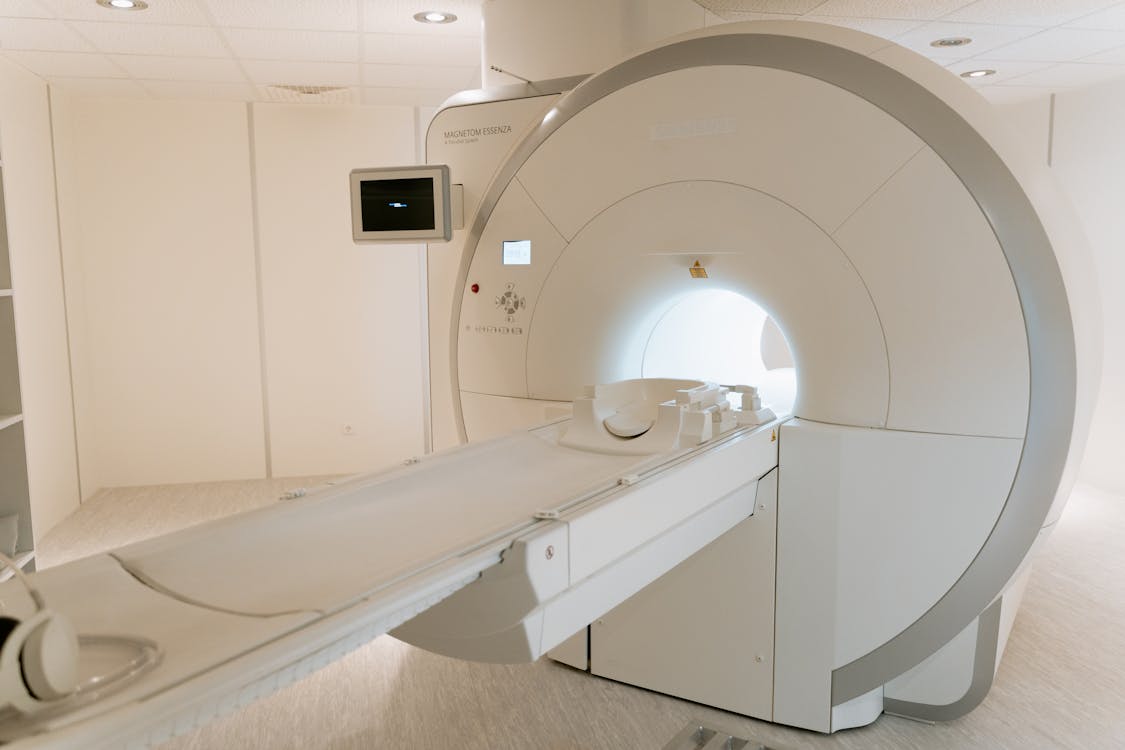
| MRI scanner | 1980s | Detailed soft tissue imaging using magnetic fields | Provided exceptional contrast resolution without radiation |
| Ultrasound | 1950s-1970s | Real-time imaging using sound waves | Enabled dynamic study of moving structures and blood flow |
| PACS system | 1990s-2000s | Digital image storage and retrieval | Eliminated film, enabled remote interpretation, and improved efficiency |
X-ray Technology
The foundational technology that started the radiology revolution in the 1890s.

MRI Scanner
Revolutionary technology providing detailed soft tissue imaging without radiation.

Ultrasound
Non-invasive imaging using sound waves, particularly valuable in obstetrics.
The Future of Radiology: AI and Beyond
AI Integration in Radiology
As radiology moves further into the 21st century, artificial intelligence represents both a disruptive innovation and potential solution to many challenges. AI algorithms show particular promise in triaging studies, detecting critical findings, and measuring quantitative changes over time 3 .
Rather than replacing radiologists, these technologies may amplify human capabilities, creating what some have called "centaur radiologists"—synergistic combinations of human expertise and artificial intelligence .
AI Applications in Modern Radiology
| Application Area | Current Status | Potential Benefits |
|---|---|---|
| Image acquisition | In development | Automated protocol optimization, dose reduction |
| Lesion detection | Commercially available | Improved detection of subtle abnormalities |
| Workflow prioritization | Commercially available | Faster identification of critical findings |
| Quantitative measurement | Commercially available | More precise tracking of disease progression |
| Report generation | In development | Reduced reporting time, increased standardization |
Enhanced Detection
AI algorithms can identify subtle patterns invisible to the human eye, improving early disease detection.
Workflow Efficiency
Automated triaging and prioritization help radiologists focus on the most critical cases first.
Quantitative Analysis
AI enables precise measurement of disease progression over time, beyond human capability.
Conclusion: An Evolving Specialty
The journey of British radiology from its tentative beginnings to its current high-tech practice reflects medicine's broader evolution from art to science—while acknowledging that both elements remain essential. The British Institute of Radiology and its members have navigated extraordinary challenges: from understanding radiation's dangers to addressing critical workforce shortages; from acknowledging diagnostic fallibility to embracing artificial intelligence.
What makes radiology particularly fascinating is its dynamic nature—the field continues to reinvent itself with each technological advancement. As we look to the future, the specialty seems poised to become increasingly quantitative, integrated, and essential to patient care. The invisible light that Röntgen discovered over a century ago continues to illuminate medicine's path forward, revealing not just our internal anatomy but also medicine's evolving relationship with technology, expertise, and innovation.
For medical students considering their future specialty, radiology offers a unique combination of technology, patient impact, and continuous learning. With programs like dedicated Bachelor's or Master's degrees in imaging now available at institutions including University College London, King's College London, and the University of Leeds, the next generation of radiologists will be better prepared than ever to navigate the exciting challenges ahead 5 .