Strategic Dereplication of Plant Extracts: Accelerating Novel Bioactive Compound Discovery
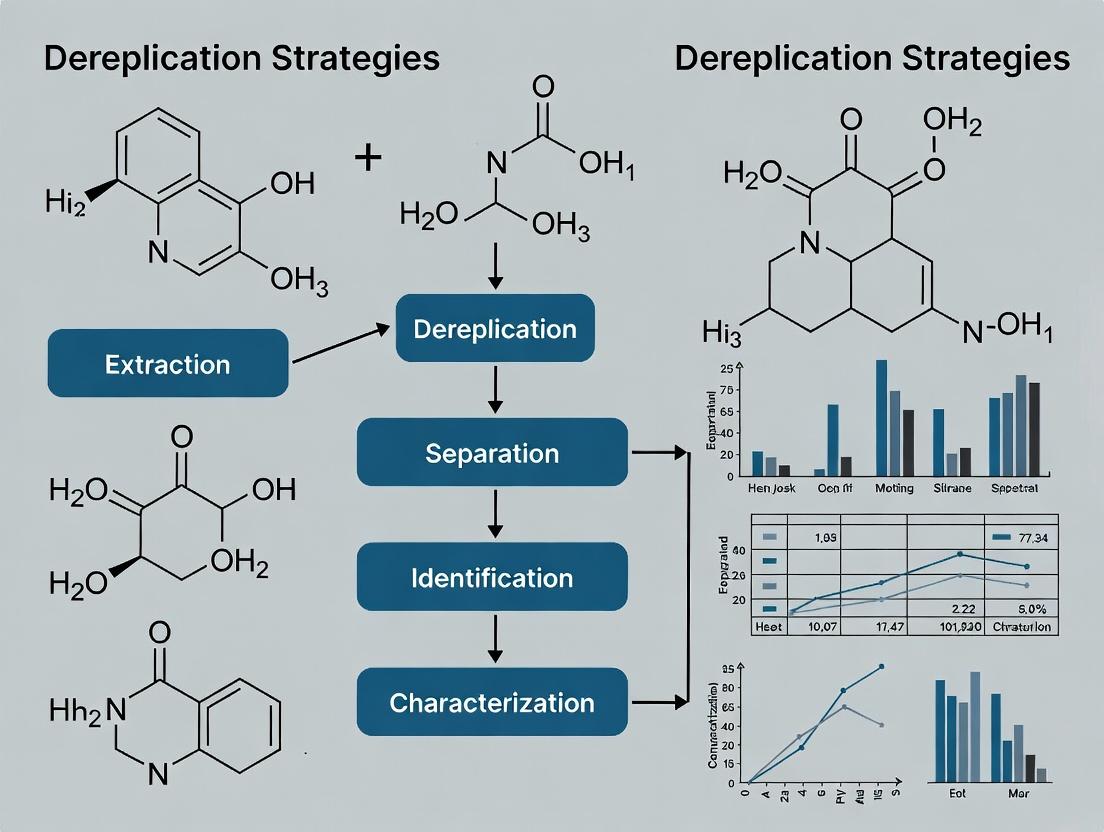
This article provides a comprehensive guide to dereplication strategies for plant extracts, tailored for researchers, scientists, and drug development professionals.
Strategic Dereplication of Plant Extracts: Accelerating Novel Bioactive Compound Discovery
Abstract
This article provides a comprehensive guide to dereplication strategies for plant extracts, tailored for researchers, scientists, and drug development professionals. It addresses the critical need to efficiently prioritize novel bioactive compounds by early identification of known substances, thereby accelerating the natural product discovery pipeline[citation:5]. The scope encompasses foundational concepts and the necessity of dereplication, modern methodological workflows integrating hyphenated analytical techniques and bioinformatics, practical troubleshooting for common technical and data analysis challenges, and the critical evaluation and validation of different dereplication approaches. The goal is to present a holistic framework that enhances efficiency and success rates in plant-based drug lead identification.
The Imperative of Dereplication: Overcoming Bottlenecks in Plant-Based Drug Discovery
Dereplication represents a critical first step in the natural product discovery pipeline, functioning as a systematic filtering process to eliminate known compounds from complex biological extracts. In plant extracts research—a field characterized by immense chemical complexity and biological diversity—dereplication serves as the essential gatekeeper that prevents redundant rediscovery of previously characterized molecules. The core objective is to accelerate discovery by rapidly identifying novel bioactive entities while conserving valuable resources.
This process has evolved from simple comparative chromatography to a sophisticated multi-technique paradigm integrating advanced separation sciences with high-resolution spectroscopy and bioinformatics. Within the context of plant research, dereplication addresses the fundamental challenge of chemical redundancy across species and families, where similar ecological pressures often lead to convergent biosynthesis of common secondary metabolites. The modern dereplication strategy transforms the traditional "grind-and-find" approach into a targeted discovery process that maximizes the probability of identifying novel chemical scaffolds with potential pharmaceutical, agricultural, or nutraceutical value [1].
Core Objectives and Strategic Importance
The implementation of dereplication strategies in plant extract research serves multiple interconnected objectives that collectively enhance research efficiency and outcome quality. These objectives align with broader goals in natural product discovery and development.
Table 1: Primary Objectives of Dereplication in Plant Extract Research
| Objective | Technical Description | Impact on Research Efficiency |
|---|---|---|
| Eliminate Rediscovery | Rapid identification of known compounds using spectral databases and reference standards | Reduces redundant characterization efforts by 60-80% |
| Prioritize Novelty | Highlight unknown or rare chemical features through comparative metabolomics | Increases novel compound discovery rate by 3-5 fold |
| Resource Optimization | Early-stage filtering before costly isolation and full structure elucidation | Decreases resource allocation to known compounds by 70% |
| Bioactivity Correlation | Link specific chemical features to observed biological activities | Accelerates structure-activity relationship studies |
| Chemotaxonomic Insights | Identify chemical markers for phylogenetic classification and authentication | Supports quality control in herbal product development |
The strategic importance of dereplication extends beyond simple compound filtering. In the broader thesis context of plant extract research strategies, dereplication establishes the foundational chemical understanding necessary for intelligent downstream decisions. It transforms random screening into informed exploration by creating chemical inventories that guide isolation priorities. Furthermore, it provides essential data for chemical ecology studies by revealing patterns in plant defense compounds and signaling molecules [1].
Methodological Framework: Integrated Analytical Approaches
Chromatographic Separation Techniques
The dereplication workflow begins with high-resolution chromatographic separation of crude plant extracts. Modern approaches typically employ Ultra-High Performance Liquid Chromatography (UHPLC) with sub-2μm particle columns, providing superior resolution over conventional HPLC. The separation protocol optimized for plant metabolites involves:
- Extract Preparation: 100 mg of dried plant material extracted with 10 mL of methanol-water (70:30, v/v) via ultrasonic assisted extraction (3 × 15 minutes)
- Column Selection: Reverse-phase C18 column (100 × 2.1 mm, 1.7 μm) maintained at 40°C
- Mobile Phase: Gradient elution with 0.1% formic acid in water (A) and 0.1% formic acid in acetonitrile (B)
- Gradient Program: 5% B (0-1 min), 5-95% B (1-25 min), 95% B (25-28 min), 95-5% B (28-28.5 min), 5% B (28.5-32 min)
- Flow Rate: 0.4 mL/min with injection volume of 2 μL
This separation creates the chemical fingerprint essential for subsequent spectroscopic analysis, effectively reducing sample complexity before mass spectrometric detection.
Spectroscopic Detection and Hyphenated Systems
Following chromatographic separation, hyphenated systems provide the multidimensional data required for compound identification. The most powerful configuration combines:
Liquid Chromatography-Photodiode Array-Mass Spectrometry (LC-PDA-MS):
- PDA Detection: 200-600 nm range capturing UV-Vis spectra with 1.2 nm resolution
- MS Detection: High-resolution quadrupole time-of-flight (QTOF) mass analyzer
- Ionization: Electrospray ionization (ESI) in positive and negative modes
- Mass Accuracy: < 2 ppm with resolution > 30,000 FWHM
- Collision Energies: Low (10 eV) and high (20-40 eV) energy channels for precursor and fragment ion data
For partial or unknown compounds, additional Nuclear Magnetic Resonance (NMR) spectroscopy is employed in microflow or tube-based configurations:
- Sample Requirements: 10-50 μg in 1.7 mm microtube or 5-20 μg for microflow NMR
- Experiments: 1D (^1)H NMR and 2D experiments (HSQC, HMBC, COSY) as needed
- Solvent Systems: Deuterated methanol, DMSO, or chloroform matched to chromatographic conditions
Data Mining and Bioinformatics Integration
The analytical data generated requires sophisticated bioinformatic processing to translate spectral information into chemical identities. The computational workflow involves:
- Data Preprocessing: Peak picking, alignment, and normalization using software like MZmine or XCMS
- Database Searching: Comparison against specialized natural product databases (NPASS, LOTUS, GNPS)
- Molecular Networking: Visualization of spectral similarity networks using GNPS platform
- In Silico Fragmentation: Prediction of MS/MS spectra for candidate structures using CFM-ID or CSI:FingerID
- Multivariate Analysis: PCA and OPLS-DA to identify discriminating features between samples
Table 2: Success Rates of Dereplication Strategies for Plant Extracts
| Analytical Approach | Compound Identification Rate | Time per Sample | Novelty Detection Sensitivity |
|---|---|---|---|
| LC-MS Only | 40-60% | 20-30 minutes | Moderate |
| LC-MS/MS with Database | 65-80% | 30-45 minutes | High |
| Molecular Networking | 70-85% | 45-60 minutes | Very High |
| Integrated LC-MS/NMR | 85-95% | 2-4 hours | Excellent |
Experimental Workflow: A Stepwise Protocol
The following comprehensive protocol outlines the standard dereplication process for plant extracts:
Phase 1: Sample Preparation and Fractionation
- Plant Material Authentication: Voucher specimen deposition with taxonomic identification
- Extraction: Sequential extraction with solvents of increasing polarity (hexane → ethyl acetate → methanol → water)
- Prefractionation: Solid-phase extraction (SPE) or vacuum liquid chromatography (VLC) to reduce complexity
- Bioactivity Screening: Primary bioassay (e.g., antimicrobial, antioxidant, enzyme inhibition) to identify active fractions
Phase 2: Analytical Profiling
- LC-UV-HRMS Analysis: As described in Section 3.1 with data-dependent MS/MS acquisition
- Data Processing: Conversion of raw files to mzXML format, peak detection, and alignment
- Dereplication Proper: Database search using exact mass, isotopic pattern, MS/MS fragments, and UV spectrum
- Confidence Scoring: Level 1 (identified compound): MS/MS and RT match to authentic standard; Level 2 (putatively annotated): MS/MS match to spectral library; Level 3 (putative class): characteristic fragment ions; Level 4 (unknown): no matches
Phase 3: Validation and Prioritization
- Standards Comparison: Co-injection with available reference compounds
- Isolation Guidance: Target novel or high-priority compounds for full isolation
- Scale-up: Preparative HPLC of selected fractions for downstream applications
The Scientist's Toolkit: Essential Research Reagents and Materials
Table 3: Essential Research Reagent Solutions for Plant Extract Dereplication
| Reagent/Material | Specification | Primary Function | Example Application |
|---|---|---|---|
| Extraction Solvents | HPLC grade methanol, ethanol, ethyl acetate, hexane | Sequential extraction of compounds by polarity | Sequential exhaustive extraction of plant tissues [2] |
| Chromatography Columns | UHPLC C18 (2.1 × 100 mm, 1.7 μm); SPE cartridges (C18, silica, Diol) | High-resolution separation; sample cleanup | Fractionation of crude extracts prior to LC-MS analysis |
| Ionization Additives | Formic acid, ammonium acetate, ammonium formate (LC-MS grade) | Enhance ionization efficiency in mass spectrometry | 0.1% formic acid in mobile phases for positive ion mode ESI |
| Deuterated NMR Solvents | Methanol-d₄, DMSO-d₆, Chloroform-d (99.8% D) | Provide lock signal and avoid solvent interference in NMR | Structure elucidation of isolated compounds |
| Reference Standards | Authentic natural product compounds (≥95% purity) | Retention time and spectral comparison | Co-injection for confirmation of dereplication results |
| Database Subscriptions | SciFinder, Reaxys, AntiBase, MarinLit | Spectral and structural databases for comparison | Identification of known compounds from spectral data |
| Formulation Excipients | Gum arabic, sucrose-mannitol combinations, stabilizers | Development of standardized extracts and formulations | Creating edible coatings with optimized extract delivery [2] |
Technological Integration and Advanced Applications
Modern dereplication increasingly incorporates molecular networking—a visual representation of spectral similarities that groups related compounds without requiring prior identification. This approach has revolutionized the field by enabling compound family-based discovery rather than single compound identification. The molecular networking process visualized below demonstrates how complex metabolomic data is transformed into actionable information:
Advanced dereplication strategies now incorporate machine learning algorithms to predict compound classes from partial spectral data and genome mining approaches to link biosynthetic gene clusters to detected metabolites. This integration creates a predictive dereplication framework that anticipates chemical novelty based on genetic potential and ecological context.
Application in Plant Extract Research and Formulation Development
The practical application of dereplication extends beyond discovery to support the development of standardized plant-based formulations. By identifying the key bioactive constituents, dereplication guides the optimization of extraction parameters to maximize desired compounds while minimizing unwanted ones. This is particularly valuable in creating formulations with specific health benefits, such as the edible coatings developed for quick-cooking rice with low glycemic index, where specific phenolic compounds from spices were targeted and optimized [2].
Similarly, in the formulation of tablet preparations from plant extracts, dereplication ensures batch-to-batch consistency and helps identify which specific compounds contribute to both therapeutic effects and physical properties of the formulation. The optimization of excipient combinations, such as sucrose-mannitol ratios in tablet formulations, works synergistically with dereplication to create reproducible, effective dosage forms [3].
Within the broader thesis context, dereplication strategies provide the chemical foundation for intelligent plant selection, extraction optimization, and formulation design. They transform plant extract research from empirical trial-and-error to a rational, evidence-based process that efficiently bridges traditional knowledge and modern pharmaceutical development.
The discovery of bioactive compounds from plant extracts has undergone a paradigm shift, moving from fortuitous observation to structured scientific inquiry. Historically, drug discovery relied heavily on empirical observations and labor-intensive screening of natural compounds, a process characterized by unpredictability and high costs [4]. For decades, the field was dominated by serendipity—the "faculty of making fortunate discoveries by accident" [5]. This approach, while yielding landmark discoveries, proved inefficient for systematic exploration of nature's chemical diversity. The central challenge emerged as the "rediscovery problem"—the repetitive and costly isolation of known compounds, which stifled innovation and consumed valuable resources [6].
Dereplication, the process of early identification of known compounds in complex mixtures, has become the critical strategy to overcome this bottleneck [7]. By rapidly recognizing known entities, researchers can prioritize novel chemistry, thereby accelerating the discovery pipeline. This whitepaper examines the evolution of dereplication from its serendipitous origins to contemporary systematic screening protocols, focusing specifically on technological advances that have transformed plant extract research. The integration of high-resolution analytical chemistry with bioinformatics now enables researchers to navigate complex phytochemical spaces with unprecedented precision, fundamentally changing how potential drug leads are identified and characterized [6] [7].
Historical Foundations: The Serendipity Era
The historical phase of natural product discovery was fundamentally defined by chance observations and empirical knowledge. The term "serendipity" itself, coined by Horace Walpole in 1754, captures the essence of this period: discoveries made by "accidents and sagacity" while in pursuit of something else [5]. This pre-systematic era relied on several key approaches.
- Observation and Traditional Knowledge: Many early drug discoveries originated from traditional medicine, where the effects of plants were observed in humans over generations [8]. The subsequent isolation of active principles, such as quinine from cinchona bark or morphine from opium poppy, was often driven by these anecdotal leads rather than targeted screening.
- Fortuitous Encounters in the Lab: Iconic examples, like Alexander Fleming's 1928 discovery of penicillin from a contaminated Penicillium mold, underscore the role of chance [5]. These discoveries were not the result of a designed screen for antibiotics but rather the acute observation of an unexpected anomaly.
- Phenotypic Screening in Complex Systems: Early drug screening often used whole animals or crude tissue preparations to observe physiological effects without knowledge of the specific molecular target [8]. While sometimes successful, this approach provided little mechanistic insight and was low-throughput, expensive, and ethically increasingly complex [4].
A cornerstone concept of this era, articulated by Louis Pasteur, is that "chance favors only the prepared mind" [5]. This highlights that serendipity is not passive luck but requires the expertise to recognize the significance of an unexpected result. However, the reliance on chance was a major limitation. The process was inherently inefficient, non-systematic, and unsuitable for exploring the vast chemical space of plant biodiversity in a comprehensive manner. The high probability of rediscovering known compounds led to diminishing returns, creating a pressing need for a more rational strategy [6] [4].
Table 1: Landmark Serendipitous Discoveries vs. Modern Systematic Analogs
| Era | Discovery Paradigm | Example Discovery | Key Driver | Primary Limitation |
|---|---|---|---|---|
| Serendipity (Pre-1980s) | Observation of unexpected activity | Penicillin (antibacterial) [5] | Contamination of a bacterial culture plate | Non-reproducible, inefficient, target-agnostic |
| Clinical observation | Sildenafil (Viagra) for erectile dysfunction [8] | Observed side effect during clinical trials for angina | Unpredictable, requires human testing for detection | |
| Systematic Screening (Modern) | Targeted phenotypic screen | Ivacaftor (CFTR potentiator for cystic fibrosis) [8] | High-throughput screen using cells expressing mutant CFTR | Requires high-quality assay development |
| Hypothesis-driven dereplication | Novel flavonoids via LC-MS/MS library matching [6] | Pre-emptive filtering of known compounds from an active extract | Dependent on quality and scope of reference databases |
The Rise of Systematic Screening and Modern Dereplication
The shift toward systematic screening was catalyzed by technological revolutions in molecular biology, separation science, and spectroscopy [4]. The inability of purely serendipitous approaches to efficiently mine nature's chemical diversity necessitated a more structured process. The core goal became increasing the probability of discovering novelty by efficiently filtering out the known. This led to the formalization of dereplication as an essential, early step in the natural product workflow [7].
Modern dereplication is a multi-faceted strategy that integrates several key technological pillars:
- High-Resolution Analytical Profiling: Techniques like Ultra-High-Performance Liquid Chromatography (UHPLC) coupled with high-resolution mass spectrometry (HRMS) provide the foundational data. These systems deliver precise molecular mass (often with <5 ppm error), isotopic patterns, and fragmentation spectra (MS/MS), enabling tentative identification based on empirical formula and fragmentation fingerprints [6] [9].
- Hyphenated Techniques: The integration of separation (LC), spectral detection (MS), and structural elucidation (NMR) into single workflows (LC-MS-NMR) allows for the online characterization of compounds as they elute from the chromatograph, minimizing the need for large-scale isolation of known molecules [7].
- Specialized Databases and Informatics: The creation of curated spectral libraries is paramount. While public databases (GNPS, MassBank, METLIN) exist, researchers often develop in-house libraries tailored to their specific research focus (e.g., specific plant families or compound classes) [6]. These libraries store not just mass spectra, but also chromatographic retention times and collision energy profiles, increasing identification confidence [6].
- Molecular Networking: This bioinformatic approach, pioneered by platforms like GNPS, visualizes the chemical relationships within a sample. MS/MS spectra are clustered into molecular families based on similarity, allowing researchers to quickly identify known compound clusters and spotlight unique, potentially novel nodes for further investigation [7].
Table 2: Key Analytical Techniques and Databases in Modern Dereplication
| Technique / Resource | Key Function in Dereplication | Typical Data Output | Advantage for Plant Extract Research |
|---|---|---|---|
| UHPLC-HRMS/MS [6] [7] | Separates complex mixtures and provides accurate mass & fragmentation data. | Retention time, accurate mass (MS1), fragment ions (MS2). | High resolution separates co-eluting isomers; HRMS gives empirical formula. |
| In-house Tandem MS Library [6] | Custom-built reference for rapid comparison against known compounds. | MS/MS spectra at multiple collision energies for [M+H]+ and [M+Na]+ adducts. | Tailored to project; includes chromatographic data for higher confidence. |
| Molecular Networking (e.g., GNPS) [7] | Organizes MS/MS data based on spectral similarity to map chemical space. | Visual network graph showing related molecules as connected nodes. | Quickly identifies families of known compounds and highlights unique clusters. |
| Public Metabolomics DBs (MassBank, METLIN, MoNA) [6] | Broad, searchable repositories of mass spectral data. | Mass spectra, sometimes with linked biological metadata. | Useful for initial screening and identifying widespread common metabolites. |
Experimental Protocol: Constructing an In-House MS/MS Library for Dereplication
The following detailed protocol, based on a contemporary study, outlines the construction of a targeted LC-ESI-MS/MS library for dereplicating 31 common phytochemicals, including flavonoids and triterpenes [6]. This exemplifies the systematic approach that has replaced ad-hoc identification.
Materials and Reagent Preparation
- Chemical Standards: Obtain high-purity (>97%) reference standards for the target compounds (e.g., quercetin, apigenin, betulinic acid) [6].
- Solvents and Mobile Phases: Use LC-MS grade solvents. A typical mobile phase consists of:
- Eluent A: 0.1% (v/v) Formic acid in Type-1 ultrapure water (resistivity 18.1 MΩ·cm).
- Eluent B: 0.1% (v/v) Formic acid in methanol [6].
- Sample Preparation: Prepare individual stock solutions of each standard in methanol. To increase throughput and mimic complex mixtures, create intelligent pooled samples. The pooling strategy should be based on calculated log P values and exact masses to minimize the co-elution of isomers or compounds with similar masses, which simplifies data deconvolution [6].
Instrumentation and Data Acquisition Parameters
- LC System: A UHPLC system equipped with a C18 reverse-phase column (e.g., 2.1 x 100 mm, 1.8 μm particle size).
- MS System: A high-resolution tandem mass spectrometer (e.g., Q-TOF or Orbitrap) with an electrospray ionization (ESI) source.
- Chromatographic Method:
- Gradient: Start at 5% B, increase to 95% B over 15-20 minutes.
- Flow Rate: 0.3 mL/min.
- Column Temperature: 40°C.
- Injection Volume: 2-5 μL [6].
- Mass Spectrometric Parameters:
- Ionization Mode: Positive ESI ([M+H]+ and [M+Na]+ adducts are targeted).
- Scan Range: m/z 100–1200.
- Collision Energies: Acquire data using:
- A stepped collision energy ramp (e.g., 25.5, 30, 35, 40 eV) to capture a broad range of fragments.
- A fixed, optimized average collision energy (e.g., 35 eV) for consistency [6].
- Source temperature, desolvation gas flow, and capillary voltage should be optimized for the specific instrument.
Library Construction and Data Processing
- Data Acquisition: Run each pooled standard sample in technical replicates. Include blank runs to subtract background.
- Feature Extraction: Use vendor or open-source software (e.g., MZmine, MS-DIAL) to extract precursor m/z, retention time (RT), and associated MS/MS spectra from the data files.
- Library Entry Creation: For each confirmed compound, create a library entry containing:
- Compound name, molecular formula, and class.
- Calculated and observed exact mass (with error in ppm).
- Observed adduct types ([M+H]+, [M+Na]+).
- Characteristic fragment ions and their relative abundances at different collision energies.
- Average relative retention time (can be normalized to an internal standard) [6].
- Validation: Validate the library by analyzing known plant extracts (e.g., green tea, ginkgo) and successfully dereplicating the target compounds present. Submit the curated MS/MS data to a public repository like MetaboLights (e.g., accession MTBLS9587) for community use [6].
Table 3: The Scientist's Toolkit: Essential Reagents & Materials for Dereplication [6] [9] [7]
| Item / Category | Specific Example / Specification | Function in Dereplication Workflow |
|---|---|---|
| Reference Standards | Pure phytochemicals (e.g., quercetin, rutin, betulinic acid), purity ≥97% [6]. | Provide authentic MS/MS spectra and retention times for building in-house libraries; essential for validation. |
| Chromatography Solvents | LC-MS grade methanol, acetonitrile, water; Formic acid (MS grade) [6]. | Form mobile phases for high-resolution UHPLC separation; additive (formic acid) promotes protonation in +ESI. |
| Chromatography Column | UHPLC C18 column (e.g., 2.1 x 100 mm, 1.7-1.8 μm particle size). | Performs the critical separation of compounds in the complex plant extract prior to mass spectrometric detection. |
| Internal Standards | Stable isotope-labeled analogs of common metabolites (e.g., 13C-quercetin). | Aid in retention time alignment, signal normalization, and quantitative comparison across multiple samples. |
| Mass Spectrometer | High-resolution instrument (Q-TOF, Orbitrap) with ESI and tandem MS capability [6]. | Generates accurate mass data (for formula prediction) and diagnostic fragment ions (for structural elucidation). |
| Informatics Software | Commercial (e.g., Compound Discoverer) or open-source (MZmine, GNPS) [7]. | Processes raw MS data, performs feature finding, database searches, and visualizes molecular networks. |
| Spectral Databases | In-house built library, GNPS, MassBank, METLIN, NIST [6] [7]. | Used as a reference for comparing experimental MS/MS spectra to rapidly identify known compounds. |
Integration with Contemporary Drug Discovery Paradigms
Modern dereplication does not occur in isolation; it is seamlessly integrated into broader, evolving drug discovery frameworks. Two paradigms, in particular, define the current landscape:
- Phenotypic Drug Discovery (PDD): PDD has experienced a major resurgence. It involves screening compounds for a desired effect in a physiologically relevant model (e.g., a cell-based disease model) without a preconceived molecular target [8]. Dereplication is crucial here. When a crude plant extract shows a promising phenotype, rapid chemical profiling is needed to determine if the activity is due to a novel compound or a known entity (which could still be valuable for a new indication). Notable PDD successes from natural product-inspired chemistry include ivacaftor (for cystic fibrosis) and risdiplam (for spinal muscular atrophy) [8].
- Target-Based Drug Discovery (TDD): The more classical approach involves screening compounds against a purified protein target implicated in a disease. For plant extracts, this often requires prior fractionation to reduce complexity. Dereplication can be applied at each fraction stage to tag fractions containing known compounds, allowing effort to be focused on fractions with novel chemistry that retain activity.
A key insight from modern discovery is the value of polypharmacology—where a single compound modulates multiple targets. This can be a source of side effects but also of efficacy for complex diseases [8]. Dereplication helps identify such "promiscuous" known compounds early, allowing researchers to decide whether to pursue them for their multi-target profile or to avoid them in favor of more selective, novel leads.
The trajectory from serendipity to systematic screening is now advancing towards predictive and in silico-guided discovery. The future of dereplication lies in deeper integration with other "omics" technologies and artificial intelligence.
- Genome Mining and Metabolomics Integration: Linking biosynthetic gene clusters (identified through genome sequencing of the plant or its associated microbes) to the metabolites they produce provides a genetic blueprint for discovery. This "genome-first" approach allows researchers to predict novel chemical scaffolds before isolation even begins, making dereplication proactive rather than reactive [7].
- AI and Machine Learning: AI models are being trained on vast spectral and structural databases to predict the MS/MS fragmentation patterns of unknown compounds, their likely biological activity, and even de novo structures from spectral data alone [7]. This could dramatically reduce the need for physical standards for every conceivable compound.
- Real-Time and Ambient Ionization MS: Techniques like DESI (Desorption Electrospray Ionization) allow for the direct analysis of plant tissues or thin-layer chromatography plates without extensive sample preparation, promising even faster dereplication cycles [9].
In conclusion, dereplication has evolved from a defensive tactic against rediscovery into a sophisticated, enabling science that sits at the heart of modern natural product research. By systematically eliminating the known, it clears the path to the novel. The field has fully embraced Louis Pasteur's adage, systematically preparing the minds (and laboratories) of researchers with advanced tools and databases, thereby maximizing the value of every observation and transforming the search for plant-based therapeutics into a rational, data-driven engineering discipline.
The discovery of novel bioactive compounds from plant extracts remains a cornerstone of pharmaceutical development, with a significant proportion of approved drugs originating from natural products [6]. However, this field is constrained by two fundamental and interconnected challenges: the profound chemical complexity of plant extracts and the persistent 'known compound' problem. Chemical complexity refers to the vast array of secondary metabolites—such as alkaloids, flavonoids, terpenoids, and phenolic acids—present in a single extract, often spanning a wide concentration range and featuring numerous isomers and analogs [10] [11]. This complexity makes comprehensive chemical characterization exceptionally difficult. Concurrently, the 'known compound' problem, or the frequent rediscovery of already characterized molecules, leads to inefficient use of resources, as researchers spend considerable time and effort isolating compounds that offer no novelty [6] [12].
These challenges are framed within the critical strategy of dereplication—the process of swiftly identifying known compounds in a mixture early in the discovery pipeline to focus resources on novel chemistry [7]. Effective dereplication is not merely an analytical step but a necessary strategic framework to navigate complexity and avoid redundancy. The inherent variability of plant extracts, influenced by factors like genetics, geography, climate, and extraction methodology, further amplifies these challenges, making standardization and reproducibility significant hurdles for both research and regulatory approval [10] [13]. This whitepaper provides an in-depth technical examination of these core challenges, detailing advanced analytical and strategic solutions essential for researchers and drug development professionals.
Core Challenges in Plant Extract Analysis
The Challenge of Chemical Complexity
The chemical profile of a plant extract is a highly complex matrix influenced by multiple variables. The primary sources of this complexity include:
- Diverse Compound Classes: A single extract can contain hundreds to thousands of unique molecules from different structural classes (e.g., polar flavonoids, non-polar terpenes, ionic alkaloids), each with distinct chemical properties [11].
- Dynamic Concentration Range: Bioactive constituents can exist in concentrations varying over several orders of magnitude, with potentially significant minor components that are analytically challenging to detect but biologically relevant [11].
- Structural Isomers and Analogs: Plants often produce series of structurally similar compounds (e.g., glycosylation variants of a core aglycone), which are difficult to separate and identify unambiguously [12].
- Extraction-Induced Variability: The extraction technique itself is a major determinant of chemical composition. Conventional methods like Soxhlet extraction or maceration can degrade heat-sensitive compounds, while advanced techniques like Ultrasound-Assisted Extraction (UAE) or Supercritical Fluid Extraction (SFE) can selectively enhance the yield of specific compound classes [10] [14].
Table 1: Impact of Extraction Techniques on Phytochemical Composition and Associated Challenges
| Extraction Technique | Key Principle | Advantages | Limitations & Introduced Complexities |
|---|---|---|---|
| Soxhlet Extraction | Continuous reflux and percolation with organic solvent [14]. | High efficiency, good for non-polar compounds, simple equipment. | Long extraction times, high thermal degradation of labile compounds, high solvent use [10] [14]. |
| Maceration | Steeping plant material in solvent at room temperature [14]. | Simple, preserves thermolabile compounds, low cost. | Low efficiency, long extraction times, poor selectivity [10]. |
| Ultrasound-Assisted Extraction (UAE) | Uses acoustic cavitation to disrupt cell walls [10]. | Rapid, improved yield, lower temperature, reduced solvent use. | Possible radical formation degrading antioxidants, variable scale-up results [10]. |
| Microwave-Assisted Extraction (MAE) | Uses microwave energy to heat solvents and plant matrices internally [10]. | Very rapid, high efficiency, low solvent volume. | Selective heating, risk of overheating local areas, limited to solvents that absorb microwaves [10] [14]. |
| Supercritical Fluid Extraction (SFE) | Uses supercritical CO₂ as solvent [14]. | Tunable selectivity, no solvent residues, excellent for thermolabile compounds. | High capital cost, limited polarity range (often requires modifiers), high pressure operation [14]. |
The 'Known Compound' Problem and Dereplication Imperative
The 'known compound' problem is a major bottleneck that dereplication strategies aim to solve. Without effective dereplication, the natural product discovery process is plagued by inefficiency [6] [7].
- Economic and Temporal Cost: The process of isolating and fully characterizing a single novel compound from a complex extract is labor-intensive, time-consuming, and expensive. Redoing this for compounds already described in the literature wastes critical resources [12].
- Database Limitations: While public mass spectral libraries (e.g., GNPS, MassBank) exist, they often lack chromatographic data (retention time), contain incomplete fragmentation patterns, or are too generic, leading to ambiguous or missed annotations [6].
- Need for Prioritization: High-throughput screening generates many active extracts. Dereplication provides the triage mechanism to prioritize extracts most likely to contain novel chemistry for further investigation [7].
Table 2: Common Dereplication Methodologies and Their Characteristics
| Methodology | Key Technology | Strengths | Weaknesses |
|---|---|---|---|
| LC-MS/MS Library Matching | Comparison of experimental MS/MS spectra to reference spectra in a database [6]. | Fast, high-throughput, can be automated. | Limited by scope/quality of library; cannot identify unknowns not in library [6]. |
| Molecular Networking (MN) | Visualizes MS/MS data as networks where similar spectra cluster together [12]. | Can annotate unknown analogs based on known cluster neighbors; great for chemical family discovery. | Computational complexity; requires careful parameter tuning; absolute structure not confirmed [12] [7]. |
| Multi-Detector Analysis | Couples UV-PDA, Charged Aerosol Detection (CAD), and HRMS [11]. | Provides orthogonal data (UV spectrum, universal response, exact mass); improves confidence in annotation. | Instrumentationally complex; data integration can be challenging [11]. |
Advanced Experimental Protocols for Dereplication
To address these challenges, integrated analytical protocols are essential. Below are detailed methodologies for two core dereplication approaches.
Protocol: In-House LC-MS/MS Spectral Library Construction for Targeted Dereplication
This protocol, adapted from a study on dereplicating 31 common phytochemicals, creates a targeted, reliable library for rapid screening [6].
- Standard Solution Preparation: Select and procure pure analytical standards of target compound classes (e.g., flavonoids, phenolic acids, triterpenes). Prepare stock solutions in appropriate solvents (e.g., methanol).
- Intelligent Pooling Strategy: To minimize co-elution and interference, pool standards based on their calculated log P (polarity) and exact mass. For example, group hydrophilic compounds (low log P) separately from hydrophobic ones (high log P) [6].
- LC-MS/MS Data Acquisition:
- Chromatography: Use a reversed-phase C18 column. Employ a gradient elution with mobile phases such as water (with 0.1% formic acid) and acetonitrile [6].
- Mass Spectrometry: Operate in electrospray ionization (ESI) positive and/or negative mode. For each standard, acquire high-resolution MS1 data and MS/MS fragmentation data at multiple collision energies (e.g., 10, 20, 30, 40 eV) to capture comprehensive fragmentation patterns [6].
- Library Construction: For each compound, compile its name, molecular formula, exact mass, observed adducts ([M+H]⁺, [M+Na]⁺), retention time, and all acquired MS/MS spectra into a database file.
- Sample Analysis and Dereplication: Analyze plant extracts under identical LC-MS/MS conditions. Use software to automatically match the retention time, exact mass, and MS/MS spectrum of each peak in the sample against the in-house library. A match within defined tolerances (e.g., ±0.1 min RT, ±5 ppm mass error, spectral similarity >0.8) confirms dereplication [6].
Protocol: Untargeted Dereplication via LC-MS/MS and Molecular Networking
This protocol leverages global profiling and molecular networking for untargeted discovery and analog identification, as demonstrated in a study on Sophora flavescens [12].
- Sample Preparation: Extract plant material (e.g., 50 mg dry powder) with a solvent system like methanol/water/formic acid (49:49:2 v/v/v) via sonication. Centrifuge, combine supernatants, and reconstitute for analysis [12].
- Dual Data Acquisition:
- Data-Dependent Acquisition (DDA): Perform a full MS1 scan, then automatically select the top N most intense ions for subsequent MS/MS fragmentation. This yields clean, interpretable MS/MS spectra for abundant ions [12].
- Data-Independent Acquisition (DIA): Fragment all ions within sequential, wide mass isolation windows (e.g., SWATH: 50 Da windows). This captures MS/MS data for low-abundance ions missed by DDA but results in complex, chimeric spectra [12].
- Data Processing:
- Molecular Networking and Annotation:
- Upload processed MS/MS data (from DIA pseudo-spectra and/or DDA spectra) to the Global Natural Products Social (GNPS) platform.
- Construct a Molecular Network where each node is a consensus MS/MS spectrum, and edges connect spectra with high similarity. Compounds from the same chemical family cluster together [12].
- Annotate nodes by searching against GNPS spectral libraries. Unidentified nodes that cluster near known compounds can be proposed as structural analogs [12] [7].
- Use the DDA results for direct database matching to complement network annotations.
The Scientist's Toolkit: Essential Reagents and Materials
Table 3: Key Research Reagent Solutions for Plant Extract Dereplication
| Item | Function & Application | Technical Notes |
|---|---|---|
| LC-MS Grade Solvents | Used as extraction solvents, mobile phases, and for sample reconstitution. Essential for minimizing background noise and ion suppression in MS. | Methanol, acetonitrile, water, formic acid. Low volatility and UV-cutoff specifications are critical [6] [12]. |
| Analytical Reference Standards | Pure compounds used to build in-house spectral libraries, confirm identities, and perform quantitative analysis. | Should be high purity (>95%). Cover major expected compound classes (e.g., quercetin, chlorogenic acid, matrine) [6] [12]. |
| Solid Phase Extraction (SPE) Cartridges | For rapid fractionation or clean-up of crude extracts to reduce complexity prior to LC-MS analysis. | Various phases (C18, NH2, silica) select for different compound classes. Used in pre-analytical simplification [7]. |
| Isotopically Labeled Internal Standards | Used in quantitative metabolomics to correct for matrix effects and variability in extraction/ionization efficiency. | e.g., ¹³C- or ²H-labeled analogs of key metabolites. Allows for precise relative quantification [11]. |
| Mass Spectrometry Tuning & Calibration Solutions | To calibrate mass accuracy and optimize instrument performance before data acquisition. | Vendor-specific mixtures (e.g., containing compounds across a wide m/z range) ensuring data reliability and reproducibility [11]. |
Integrated Workflows and Future Directions
Overcoming the dual challenges of complexity and dereplication requires integrated workflows. The most effective strategy combines extraction optimization, multi-detector analysis, and data mining. A promising workflow begins with a green extraction technique (e.g., UAE) to efficiently release a broad spectrum of compounds while minimizing degradation [10] [14]. The resulting extract is then profiled using a multi-detector UHPLC system coupling PDA, Charged Aerosol Detection (CAD), and HRMS. This provides complementary data: UV spectra for compound class hints, near-universal quantification from CAD, and exact mass with fragmentation from HRMS [11]. Data is processed through a sequential dereplication pipeline: first, a targeted search against an in-house library; second, an untargeted molecular networking analysis on GNPS to find analogs and novel clusters; finally, isolation and NMR confirmation for truly novel, high-priority hits [12] [7].
Future progress hinges on several key areas:
- Advanced Data Integration: Leveraging machine learning and artificial intelligence to better predict compound identity from MS/MS spectra and to integrate multi-omics data (metabolomics with genomics) [7].
- Quantitative Bioactivity Mapping: Employing formulas like the Total Bioactivity calculation (using parameters like EDV50) to track the preservation or loss of activity through the fractionation process, helping to identify synergistic interactions [15].
- Standardization for Regulation: Developing universally accepted chemical fingerprinting protocols to meet the growing need for robust safety and authenticity assessments of botanical products [13] [11].
Diagram 1: Integrated Workflow for Plant Extract Analysis and Dereplication.
Diagram 2: Extraction Method as a Determinant of Analytical Complexity.
Thesis Context: This whitepaper is framed within a broader thesis arguing that systematic dereplication strategies are not merely an analytical convenience but a fundamental economic and scientific imperative in plant-based drug discovery. It posits that intelligent early-stage identification of known compounds directly preserves finite research resources, accelerates the path to novel bioactive discovery, and enhances the reproducibility of phytochemical research.
The rediscovery of known natural products represents a significant and often hidden cost in plant-based drug discovery. Traditional bioactivity-guided fractionation is labor-intensive, time-consuming, and resource-demanding, often culminating in the isolation and characterization of compounds already documented in the literature [6]. This redundancy consumes valuable time, funding, and materials, diverting effort away from the discovery of truly novel chemotypes. Dereplication—the process of rapidly identifying known compounds in complex mixtures—has emerged as the critical strategy to mitigate this cost [16]. By employing advanced analytical techniques and computational tools early in the screening pipeline, researchers can efficiently "discard" known entities and prioritize unknown or novel bioactive leads for further investigation.
The stakes are substantial. From 1981 to 2019, approximately half of all newly approved drugs were derived from or inspired by natural products, predominantly from plants [6]. The chemical diversity within plant extracts is vast, encompassing classes like flavonoids, alkaloids, terpenes, and phenolic acids, each with wide-ranging bioactivities [6]. However, this diversity also increases the probability of redundant discovery. Dereplication strategies, therefore, are foundational to a sustainable and efficient research model, ensuring that resource allocation is optimized for innovation rather than repetition.
Core Dereplication Methodologies: A Technical Synopsis
Modern dereplication rests on integrating separation science, high-resolution mass spectrometry (HRMS), nuclear magnetic resonance (NMR), and bioinformatics. The choice and sequence of techniques constitute the strategic core of an efficient workflow.
High-Resolution Mass Spectrometry (HRMS) and Tandem MS Libraries
Liquid chromatography coupled to tandem mass spectrometry (LC-MS/MS) is the cornerstone of high-throughput dereplication. The development of in-house, curated MS/MS libraries for target compound classes offers a rapid first-pass screening tool. A seminal study demonstrated the construction of a library for 31 common phytochemicals (e.g., quercetin, chlorogenic acid, betulinic acid) using LC-ESI-MS/MS [6] [17]. A strategic pooling of standards based on log P values and exact masses was used to minimize co-elution and isomer interference, streamlining data acquisition [6]. Data acquisition parameters are summarized in Table 1.
Table 1: Key Analytical Parameters for LC-HR-ESI-MS/MS Dereplication Library Development [6]
| Parameter | Specification | Purpose/Rationale |
|---|---|---|
| Standards | 31 compounds, purity 97-98% | Representative of common flavonoid, phenolic acid, triterpene classes. |
| Pooling Strategy | Grouping by log P & exact mass | Minimizes co-elution and isomer presence in same injection, saving time. |
| Ionization Mode | Positive Ionization ([M+H]⁺, [M+Na]⁺) | Optimal for a wide range of natural products. |
| Collision Energy | Average: 25.5-62 eV; Individual: 10, 20, 30, 40 eV | Generates comprehensive fragmentation spectra for confident matching. |
| Mass Accuracy | <5 ppm error | High-resolution ensures precise molecular formula assignment. |
| Validation | Screening of 15 food/plant extracts | Tests library robustness against real, complex matrices. |
Molecular Networking and Computational Annotation
For untargeted discovery, molecular networking (MN) via platforms like the Global Natural Products Social Molecular Network (GNPS) is revolutionary [12] [18]. MN organizes MS/MS spectra based on fragmentation pattern similarity, visually clustering related compounds (e.g., analogues within a chemical family). This allows for the annotation of unknown compounds based on their spectral proximity to known nodes in the network. A workflow applied to Sophora flavescens root extract utilized both Data-Dependent Acquisition (DDA) and Data-Independent Acquisition (DIA) modes [12]. The DIA data (e.g., from SWATH acquisition) provided comprehensive fragmentation information for network construction, while DDA data yielded cleaner spectra for direct database matching, with the results being complementary [12].
Integrated Multimodal Workflows
The highest confidence in annotation is achieved by orthogonal data fusion. An advanced workflow for antioxidant discovery from Makwaen pepper by-product integrated online DPPH radical scavenging assays directly with HRMS/MS analysis and subsequent 13C NMR profiling [19]. Bioactive peaks were detected in real-time, and compounds were annotated by correlating radical scavenging activity with HRMS data, followed by structure confirmation using NMR. This multimodal approach simultaneously identifies known antioxidants and pinpoints novel active constituents for isolation [19].
Diagram 1: Integrated Dereplication & Discovery Workflow (100 chars)
The Scientist's Toolkit: Essential Reagents & Materials
A successful dereplication laboratory requires specialized reagents, standards, and software.
Table 2: Key Research Reagent Solutions for Dereplication Studies
| Item | Function / Purpose | Example from Literature |
|---|---|---|
| Authentic Standards | For building in-house MS/MS libraries; essential for validation and quantification. | 31 compounds including quercetin, rutin, chlorogenic acid used for library construction [6]. |
| LC-MS Grade Solvents | Ensure minimal background noise, ion suppression, and system contamination during HRMS. | Methanol, acetonitrile, formic acid for mobile phase preparation [6] [12]. |
| Solid-Phase Extraction (SPE) Cartridges | Pre-fractionate crude extracts to reduce complexity before LC-MS analysis. | Used in multimodal workflows to simplify mixtures for better sensitivity [19]. |
| Bioassay Reagents | Link chemical annotation to biological function. Online assays screen for activity directly. | DPPH radical used for online antioxidant activity screening [19]. |
| NMR Solvents (Deuterated) | Required for final-stage structure confirmation of novel or prioritized compounds. | Essential for the 13C NMR profiling step in integrated workflows [19]. |
| Database Subscriptions/Software | Enable spectral matching, molecular networking, and retention time prediction. | GNPS, DEREPLICATOR+ [18], NIST, MassBank, in-house libraries [6]. |
Quantifying the Saved Costs: From Time to Capital
The "cost of redundancy" is multi-faceted, encompassing direct financial outlays and intangible opportunity costs. Dereplication delivers savings across all dimensions.
Tangible Time Savings: The most immediate saving is in personnel time. A study on Convolvulus arvensis putatively identified 45 compounds via dereplication (HPLC-HRMSⁿ and molecular networking), most for the first time in that species, without embarking on isolation [20]. Isolating each of these via traditional methods could take months or years of labor. The pooling strategy for MS library development, analyzing multiple standards per run, similarly condenses weeks of individual analysis into days [6].
Conservation of Physical Resources: Every avoided re-isolation saves consumables: solvents for extraction and chromatography, columns, solid-phase cartridges, and NMR tube time. These material costs are substantial at scale.
Accelerated Discovery Pipeline: By quickly filtering out known compounds, dereplication focuses downstream investment (isolation, full structure elucidation, preclinical testing) on the most promising, potentially novel leads. This increases the return on investment (ROI) for entire research programs. Advanced algorithms like DEREPLICATOR+, which can search hundreds of millions of spectra against structural databases, exemplify this scale of efficiency [18].
Enhanced Reproducibility and Standardization: For research on medicinal plants, dereplication is key to identifying the major active constituents, enabling the preparation of standardized extracts essential for reproducible pharmacological and clinical studies [6] [20]. This prevents wasted effort on irreproducible bioactivity due to variable extract composition.
Experimental Protocols in Detail
Protocol: Constructing an In-House Tandem MS Library for Dereplication
This protocol is adapted from the work of Akhtar et al. (2025) for 31 common phytochemicals [6] [17].
Standard Solution Preparation:
- Obtain high-purity (>95%) analytical standards of target compounds.
- Prepare individual stock solutions in appropriate solvents (e.g., methanol, DMSO).
- Implement a Pooling Strategy: Calculate the log P (partition coefficient) and exact mass for each standard. Group compounds into pools to minimize the risk of co-elution and the presence of isomeric forms in the same injection. This drastically reduces the number of LC-MS runs required.
LC-HR-ESI-MS/MS Analysis:
- Chromatography: Use a UHPLC system with a C18 column (e.g., 2.1 x 100 mm, 1.7 µm). Employ a binary gradient of water (A) and acetonitrile (B), both with 0.1% formic acid, over 15-20 minutes.
- Mass Spectrometry: Operate a high-resolution mass spectrometer (Q-TOF or Orbitrap) in positive electrospray ionization (ESI+) mode.
- Data Acquisition: For each pool, acquire data in two ways:
- Use a collision energy ramp (e.g., 25-62 eV) to obtain an averaged MS/MS spectrum.
- Acquire MS/MS spectra at fixed collision energies (e.g., 10, 20, 30, 40 eV) to capture energy-dependent fragmentation patterns.
Library Curation:
- For each compound, extract the following data: precursor ion ([M+H]⁺ and/or [M+Na]⁺), accurate mass (<5 ppm error), retention time, and all characteristic fragment ions from the MS/MS spectra.
- Compile this information into a searchable database (using instrument software or open-source tools).
Validation:
- Analyze several complex plant or food extracts.
- Process the data using the library: match observed accurate mass, isotope pattern, retention time (if using a standardized method), and MS/MS fragmentation pattern against library entries.
- A confident match requires agreement on all available parameters.
Protocol: Molecular Networking for Untargeted Dereplication
This protocol is based on the strategy for Sophora flavescens [12].
Sample Preparation & LC-MS/MS Analysis:
- Extract plant material with a solvent like methanol/water/formic acid (49:49:2).
- Analyze the extract using a UPLC-HRMS system.
- Acquire data in both DDA and DIA modes in the same run or consecutive runs:
- DDA: Selects top N most intense ions from the MS1 scan for fragmentation.
- DIA (e.g., SWATH): Fragments all ions within sequential, overlapping mass windows, providing comprehensive fragmentation maps.
Data Processing for GNPS:
- Convert raw data files (.d) to an open format (.mzML) using MSConvert.
- For DIA data, use software like MS-DIAL to deconvolute the complex data and reconstruct pseudo-MS/MS spectra for each chromatographic peak.
- For DDA data, process with MZmine for feature detection (chromatogram building, deisotoping, alignment).
Molecular Networking and Annotation:
- Upload the processed MS/MS spectral files (.mgf) to the GNPS platform .
- Create a molecular network using the standard feature-based molecular networking (FBMN) workflow.
- The network will cluster compounds with similar MS/MS spectra. Annotate clusters by:
- Database search: Matching spectra within the network to public libraries (e.g., GNPS, NIST).
- Propagation: Annotating unknown nodes based on their connection to a known annotated node within the same cluster (implying structural similarity).
Dereplication is far more than a technical screening step; it is a fundamental strategic investment in research efficiency. The integrated use of curated MS libraries, molecular networking, and multimodal workflows represents a mature technological ecosystem designed to combat the high costs of redundancy. By preserving time, financial resources, and scientific effort, dereplication ensures that the formidable challenge of exploring plant chemical diversity remains focused on its most promising outcome: the discovery of novel therapeutic leads. As computational tools like DEREPLICATOR+ [18] and public data repositories continue to evolve, the cost-effectiveness and strategic power of dereplication will only increase, solidifying its role as an indispensable pillar of modern natural products research.
Integrating Dereplication into the Broader Drug Discovery Workflow
Dereplication has evolved from a simple compound identification step into a strategic integration point that accelerates the entire natural product drug discovery pipeline. By employing advanced metabolomics, high-resolution mass spectrometry, and machine learning, researchers can prioritize novel bioactive compounds from complex plant extracts while minimizing the costly rediscovery of known entities. This technical guide details the core principles, experimental protocols, and data integration strategies essential for embedding dereplication within a modern, bioactivity-driven discovery workflow, directly supporting the broader thesis on optimizing plant extract research.
Natural products (NPs) and their derivatives constitute a significant portion of modern pharmaceuticals, particularly in anti-infective and anticancer therapies [21]. However, the drug discovery process from plant extracts is plagued by high rates of compound rediscovery, leading to inefficient allocation of resources and time in isolation and characterization efforts [6]. Dereplication—the early and rapid identification of known compounds in a mixture—addresses this by filtering out known entities to focus resources on novel chemistry.
The contemporary view frames dereplication not as a standalone analytical check, but as a continuous integrative process. It connects initial bioactivity screening with downstream lead optimization, informed by structural elucidation and biological annotation [22]. This guide outlines how to operationalize this integrated approach, leveraging current technological advances to build a more efficient and predictive discovery workflow centered on plant extracts.
Core Analytical Principles & Data Streams
Effective dereplication rests on correlating multiple streams of analytical data to assign confidence to compound identifications.
- Chromatographic Separation: High-performance liquid chromatography (HPLC) or ultra-high-performance LC (UHPLC) provides the first dimension of separation, yielding retention time (RT) and UV-Vis spectra. As demonstrated in a recent study, compounds can be intelligently pooled for analysis based on log P values to minimize co-elution and isomer interference [6].
- Mass Spectrometric Analysis: High-resolution mass spectrometry (HR-MS) delivers accurate mass measurements, enabling the calculation of elemental compositions. Tandem mass spectrometry (MS/MS) generates fragmentation patterns that serve as a molecular "fingerprint."
- Data Integration: Confidence in identification increases when multiple data points align. A five-parameter match (exact mass, isotopic pattern, RT, MS/MS spectrum, and UV profile) provides high confidence, whereas a match on only exact mass is considered putative.
Table 1: Key Analytical Parameters for Confident Dereplication
| Parameter | Typical Specification | Role in Dereplication | Acceptable Tolerance |
|---|---|---|---|
| Exact Mass | Mass accuracy from HR-MS (Q-TOF, Orbitrap) | Determines molecular formula | < 5 ppm error [6] |
| MS/MS Spectrum | Fragmentation pattern at defined collision energies | Structural fingerprinting for library matching | Spectral similarity score (e.g., > 0.8) |
| Retention Time (RT) | Time in a standardized chromatographic method | Provides physicochemical context (e.g., log P) | < 0.1 min variation in standardized methods |
| UV/Vis Spectrum | Diode Array Detector (DAD) profile | Indicates chromophore and compound class (e.g., flavonoids) | Visual match or library fit |
| Isotopic Pattern | Observed vs. theoretical isotope abundance | Further confirms molecular formula | High probability score (e.g., > 90%) |
Integration Points within the Discovery Workflow
Dereplication must be embedded at critical decision points to guide the workflow efficiently.
Diagram: Integrated Dereplication Workflow in Drug Discovery. The process shows dereplication as a critical, recurring filter (green parallelograms) that prevents known compounds from proceeding to costly isolation stages.
Integration with Primary Screening
Following primary bioactivity screening, active crude extracts are immediately subjected to first-level dereplication via LC-HR-MS. This quick analysis determines if the activity is likely due to common, known bioactive compounds, preventing futile investment in fractionating extracts with trivial active principles.
Integration with Bioassay-Guided Fractionation
As active extracts are fractionated, dereplication is applied iteratively to each bioactive fraction. This ensures that the purification process tracks novel or unknown compounds rather than following known molecules through the separation scheme. Integrating tools like molecular networking—which clusters MS/MS spectra by similarity—allows researchers to visualize compound families and prioritize clusters devoid of database matches for isolation [22].
Integration with Compound Prioritization
The ultimate output of dereplication is a priority list. Fractions are ranked based on a composite score reflecting apparent novelty (low similarity to database entries), strength of bioactivity, and chemical tractability (abundance, purity). This data-driven prioritization is the key handoff point from the discovery to the medicinal chemistry team.
Experimental Protocols for LC-MS/MS-Based Dereplication
Protocol: Building an In-House Tandem Mass Spectral Library
This protocol, adapted from a study creating a library for 31 phytochemicals, is foundational for reliable dereplication [6].
Sample Pooling Strategy:
- Select pure analytical standards representing your compound classes of interest.
- Group standards into pools (e.g., 2-3 pools) based on calculated log P values and exact masses to minimize co-elution and the presence of isomers in the same analytical run [6].
LC-MS/MS Data Acquisition:
- Chromatography: Use a reversed-phase C18 column (e.g., 2.1 x 100 mm, 1.8 µm). Employ a binary mobile phase gradient (e.g., water and acetonitrile, both with 0.1% formic acid) over 15-20 minutes.
- MS Conditions: Acquire data in positive and/or negative electrospray ionization (ESI) mode on a high-resolution tandem mass spectrometer (e.g., Q-TOF or Orbitrap).
- MS/MS Acquisition: For each precursor ion ([M+H]⁺, [M+Na]⁺, [M-H]⁻), collect fragmentation spectra at multiple collision energies (e.g., 10, 20, 30, 40 eV) or use a ramped energy setting (e.g., 25-62 eV) to capture a comprehensive fragment profile [6].
Library Curation:
- For each compound, compile the following into a database entry: compound name, molecular formula, calculated exact mass, observed accurate mass (error < 5 ppm), adduct type, retention time, and all acquired MS/MS spectra.
- Submit the final library data to a public repository like MetaboLights for community use [6].
Protocol: Dereplicating an Unknown Plant Extract
- Extract Preparation: Prepare a methanolic or hydroalcoholic extract of the plant material. Filter and dilute to an appropriate concentration for LC-MS analysis.
- Data Acquisition: Analyze the extract using the identical LC-MS/MS method used to build the in-house library or required for the public database you intend to query.
- Data Processing:
- Convert raw data to an open format (e.g., .mzML).
- Use computational tools (e.g., MZmine, MS-DIAL) for peak picking, alignment, and adduct deconvolution.
- Database Search:
- Search the processed data against your in-house library, GNPS, MassBank, or other spectral libraries.
- Apply filters: require matches on precursor mass (5 ppm tolerance), isotopic pattern, and MS/MS spectral similarity (e.g., cosine score > 0.7).
- Molecular Networking (for advanced analysis):
- Upload the MS/MS data to the GNPS platform to create a molecular network.
- Visualize clusters of related molecules; nodes (compounds) with library matches annotate entire clusters, highlighting unknown regions for targeted isolation.
Table 2: The Scientist's Toolkit for Dereplication
| Item | Specification / Example | Function in Dereplication |
|---|---|---|
| UHPLC System | Binary pump, autosampler, column oven, DAD | High-resolution chromatographic separation of complex extracts. |
| High-Resolution Mass Spectrometer | Q-TOF, Orbitrap, FT-ICR | Provides accurate mass for formula assignment and MS/MS for structural fingerprinting. |
| Analytical Standards | Pure compounds (e.g., flavonoids, alkaloids) | Used to build in-house spectral libraries for targeted identification [6]. |
| Reversed-Phase Column | C18, 2.1 x 100 mm, 1.8 µm particle size | Standard column for separating small molecule natural products. |
| Data Processing Software | MZmine, MS-DIAL, XCMS | Converts raw data, detects peaks, aligns features across samples. |
| Spectral Databases | GNPS, MassBank, ReSpect, In-house library | Reference for matching MS/MS spectra of unknowns [22]. |
| Molecular Networking Platform | GNPS Web Platform | Visualizes spectral relationships and annotates compound families [22]. |
Advanced Strategies: Integrating Omics and Machine Learning
The frontier of dereplication involves moving beyond library matching to predictive classification.
- Bioactivity-Coupled Dereplication: A platform integrating LC-MS/MS-based metabolomics with yeast chemical genomics (YCG) profiles antifungal extracts. This links chemical features directly to a mechanistic biological readout, allowing dereplication based on both structure and mode of action [23].
- Machine Learning for Pharmacophore Classification: Machine learning (ML) models can be trained on LC-MS/MS data to predict a compound's bioactivity class (e.g., kinase inhibitor, DNA intercalator). One model demonstrated >93% accuracy in classifying compounds into 21 pharmacophore classes, enabling dereplication and activity prediction even without a spectral match [23].
- Open Data and Repository Mining: Public repositories like GNPS and MetaboLights host vast datasets. Mining these with network analysis and unsupervised ML can reveal global chemical patterns and underserved areas of chemical space, guiding targeted collection and screening efforts [21].
Diagram: ML-Enhanced vs. Traditional Dereplication. The diagram contrasts the traditional database search path (dashed lines) with a modern ML-based path that predicts bioactivity and novelty directly from MS data.
The integration of dereplication is moving towards fully automated, real-time analysis. Future workflows will see AI models analyzing MS data streams in tandem with robotic fraction collectors, making autonomous decisions on which fractions to retain. Furthermore, the integration of genomic data (e.g., biosynthetic gene cluster prediction from the source organism's genome) with metabolomic profiles will provide orthogonal validation for the novelty of detected compounds.
For the thesis on dereplication strategies for plant extracts, this underscores a paradigm shift: from dereplication as a defensive tactic against rediscovery to an offensive, intelligence-gathering engine. By systematically integrating the described analytical protocols, computational tools, and advanced ML strategies at every stage, researchers can construct a highly efficient, data-driven pipeline. This pipeline maximizes the probability of discovering novel bioactive leads from the vast, untapped complexity of plant metabolomes, thereby securing the continued relevance of natural products in modern therapeutic development.
Modern Dereplication Workflows: Integrating Analytical Chemistry and Bioinformatics
The systematic investigation of plant extracts for novel bioactive compounds represents a cornerstone of natural product research and drug discovery. Within this field, dereplication strategies are critical for efficiently distinguishing known compounds from potentially novel entities, thereby guiding resource allocation toward the most promising leads [24]. This technical guide details the integrated workflow from crude extract to analytical sample, framed within the essential context of dereplication. Effective sample preparation and prioritization are not merely preliminary steps; they are foundational processes that determine the success of downstream analytical efforts and the ultimate identification of novel bioactive molecules. The goal is to transform a complex, multifaceted crude extract into a refined analytical sample amenable to high-resolution characterization, while simultaneously gathering data to prioritize fractions for intensive isolation efforts.
Initial Processing: Extraction and Primary Fractionation
The journey begins with the generation of a crude extract, where the choice of solvent and method dictates the chemical profile captured.
2.1. Solvent Extraction Protocol A standard methanolic extraction protocol, as employed for compounds like Camellia oleifera saponins, proceeds as follows [25]:
- Drying & Milling: The plant material (e.g., seed meal) is dried and ground into a fine powder to maximize surface area.
- Solvent Extraction: The powdered material is soaked in methanol (e.g., a 1:10–1:20 solid-to-solvent ratio) with constant agitation or using an ultrasonic bath for a defined period (e.g., 30-60 minutes).
- Separation: The mixture is centrifuged or filtered to separate the liquid supernatant (the crude extract) from the solid residue.
- Concentration: The methanol extract is concentrated under reduced pressure using a rotary evaporator to yield a crude, often viscous, residue.
2.2. Primary Enrichment via Aqueous Two-Phase System (ATPS) For further enrichment of target compound classes like saponins, an ATPS can be implemented [25]:
- System Formation: The concentrated crude extract is dissolved in a mixture of water, a salt (e.g., ammonium sulfate), and an organic solvent (e.g., propanol). Specific mass ratios (e.g., 28% ammonium sulfate, 22% propanol) are optimized to induce the formation of two immiscible liquid phases.
- Partitioning: The solution is thoroughly mixed and then allowed to settle. Compounds partition between the two phases based on their differential solubility. For instance, saponins may preferentially concentrate in the propanol-rich upper phase.
- Recovery & Analysis: The target phase is separated, and the solvent is evaporated. The purity and yield are assessed, with reported purities increasing from 36.15% in the crude methanol extract to 83.72% after ATPS purification [25].
Table 1: Performance Metrics of Sample Preparation Methods
| Method | Target Compound Class | Reported Purity/Yield | Key Advantage | Primary Reference |
|---|---|---|---|---|
| Methanol Extraction | General phytochemicals, Saponins | Yield: 25.24% (for saponins) | Broad spectrum, simple setup | [25] |
| Aqueous Two-Phase System (ATPS) | Saponins, Polar metabolites | Purity: 83.72% (from 36.15% crude) | High selectivity and enrichment | [25] |
Diagram 1: Sample Preparation and Enrichment Workflow
Analytical Dereplication: Core Techniques and Protocols
Following enrichment, the sample undergoes detailed chemical analysis for dereplication. Liquid chromatography coupled with tandem mass spectrometry (LC-MS/MS) is the central platform for this task.
3.1. LC-MS/MS Analysis for Dereplication A detailed protocol for constructing an in-house MS/MS library, as described for 31 phytochemical standards, is as follows [6]:
- Standard Pooling: Reference standards are grouped into pools based on calculated log P values and exact masses to minimize co-elution and the presence of isomers during analysis.
- Chromatographic Separation:
- Column: A reverse-phase C18 column (e.g., 2.1 x 100 mm, 1.8 µm).
- Mobile Phase: (A) 0.1% formic acid in water; (B) 0.1% formic acid in methanol or acetonitrile.
- Gradient: A linear gradient from 5% to 95% B over 15-20 minutes.
- Flow Rate: 0.3 mL/min.
- Injection Volume: 2-5 µL.
- Mass Spectrometric Detection:
- Ionization: Electrospray Ionization (ESI) in positive mode.
- Scan Modes: Full MS scan (e.g., m/z 100-1500) for precursor ions, followed by data-dependent MS/MS scans on the most intense ions.
- Collision Energies: A stepped collision energy (e.g., 10, 20, 30, 40 eV) is applied to fragment the precursor ions and generate comprehensive spectra.
- Library Construction: For each standard, the following data are compiled into a library entry: compound name, molecular formula, exact mass (<5 ppm error), retention time (RT), and the MS/MS spectral data for both [M+H]+ and [M+Na]+ adducts where applicable.
3.2. Dereplication of Unknown Extracts The developed library is applied to screen complex extracts [6]:
- The plant extract is analyzed under identical LC-MS/MS conditions used for the library.
- The acquired data is processed: chromatographic peaks are detected, and associated MS1 (precise mass) and MS/MS spectra are extracted.
- An automated search compares the experimental data (RT, exact mass, MS/MS spectrum) against the in-house library.
- A match within predefined tolerances (e.g., mass error <5 ppm, RT window ±0.2 min, MS/MS spectral similarity >80%) leads to the confident identification of a known compound, thereby "dereplicating" it.
Table 2: Key Parameters for LC-MS/MS-based Dereplication [6]
| Parameter | Specification / Optimal Value | Role in Dereplication |
|---|---|---|
| Mass Accuracy | < 5 parts per million (ppm) | Provides elemental composition and distinguishes isobars. |
| Retention Time (RT) | Compound-specific, used with ±0.2 min window | Adds a chromatographic dimension of confidence to mass-based ID. |
| MS/MS Spectral Data | Fragmentation patterns at multiple collision energies (e.g., 10-40 eV) | Serves as a unique molecular fingerprint for confident identification. |
| Ion Adducts Recorded | [M+H]+ and [M+Na]+ | Increases detection coverage and confirmation points. |
Diagram 2: Analytical Dereplication and Prioritization Pathway
Prioritization Strategy within the Dereplication Workflow
The final stage integrates analytical results with biological and bibliographic data to make informed decisions on where to focus isolation efforts [24].
4.1. The Prioritization Protocol
- Literature Review: Concurrent with biological screening and chemical analysis, a thorough review of the scientific literature is conducted on the plant genus and species. This aims to identify all previously reported compounds and biological activities.
- Data Integration: The following data streams are compiled for each active fraction or crude extract:
- Biological Activity Potency (e.g., IC₅₀ in an antifungal assay) [24].
- Dereplication Results (list of identified known compounds and flags for unknown features).
- Literature Data (extent of prior research on the species, novelty of known compounds found).
- Decision Matrix: Extracts or fractions are ranked using a simple scoring system. High priority is given to samples that exhibit:
- High biological activity.
- A high proportion of unknown mass signals after dereplication.
- Little prior chemical investigation of the species (suggesting higher likelihood of novelty).
- Resource Allocation: High-priority samples are fast-tracked for subsequent intensive isolation and structure elucidation (e.g., preparative HPLC, NMR). Samples that are highly active but contain only well-known compounds may be deprioritized or studied for synergy.
This structured approach ensures that time and resources are invested in leads with the highest potential for yielding novel bioactive metabolites, which is the ultimate goal of dereplication within natural product research [6] [24].
The Scientist's Toolkit: Essential Research Reagents and Materials
Table 3: Key Reagents and Materials for Extract Preparation and Dereplication
| Item | Typical Specification / Example | Primary Function in Workflow |
|---|---|---|
| Extraction Solvents | Methanol, Ethanol, Acetone, Ethyl Acetate | Selective dissolution of phytochemicals from plant matrix [25]. |
| ATPS Components | Ammonium Sulfate, Propanol, Polyethylene Glycol (PEG) | Form immiscible phases for selective partitioning and purification of target compounds [25]. |
| LC-MS Grade Solvents | Acetonitrile, Methanol, Water with 0.1% Formic Acid | Mobile phase for high-resolution LC-MS; minimizes background noise and ion suppression [6]. |
| Analytical Standards | Pure (>97%) phytochemical reference compounds (e.g., quercetin, saponins) | Construction of in-house MS/MS libraries for definitive identification during dereplication [6]. |
| LC Column | Reverse-phase C18 (e.g., 2.1 x 100 mm, 1.8 µm particle size) | High-efficiency chromatographic separation of complex extract components prior to MS detection [6]. |
| Solid Phase Extraction (SPE) Cartridges | C18, Diol, Ion-Exchange phases | Clean-up and fractionation of crude extracts to remove interfering salts and pigments. |
| Filter Membranes | 0.22 µm PTFE or nylon | Removal of particulate matter from samples prior to LC-MS injection to protect instrumentation. |
The analysis of complex plant extracts for drug discovery presents a significant analytical challenge due to the vast diversity and wide concentration range of secondary metabolites. Dereplication, the process of rapidly identifying known compounds in crude mixtures, is a critical first step to prioritize novel bioactive leads and avoid the redundant isolation of known entities [26]. The evolution of hyphenated techniques, defined as the online coupling of a separation method with one or more spectroscopic detection technologies, has fundamentally transformed this field [27].
These techniques, particularly those combining liquid chromatography (LC) with mass spectrometry (MS), exploit the complementary strengths of both components: high-resolution separation of complex mixtures and highly selective, sensitive detection with rich structural information [27]. Within this domain, two platforms have become cornerstones for the dereplication and characterization of plant natural products: Ultra-High-Performance Liquid Chromatography-High-Resolution Mass Spectrometry (UHPLC-HRMS) and Liquid Chromatography-Tandem Mass Spectrometry (LC-MS/MS). UHPLC provides superior chromatographic resolution and speed compared to conventional HPLC, while HRMS delivers exact mass measurements for elemental composition determination. LC-MS/MS, often employing triple quadrupole or hybrid analyzers, offers exceptional sensitivity and specificity for targeted quantification and confirmation through diagnostic fragmentation patterns [28] [29]. This technical guide delineates the principles, applications, and methodological protocols for these two pivotal techniques within a strategic dereplication framework for plant extract research.
Core Techniques: Principles and Dereplication Applications
2.1 Ultra-High-Performance Liquid Chromatography-High-Resolution Mass Spectrometry (UHPLC-HRMS) UHPLC-HRMS represents the integration of advanced separation science with high-fidelity mass measurement. UHPLC operates at pressures significantly higher than HPLC (often >15,000 psi), utilizing columns packed with sub-2-micron particles. This allows for faster analysis times, increased peak capacity, and enhanced sensitivity due to sharper peak profiles [30]. A key technical advancement to maintain this performance in hyphenated systems is the minimization of post-column dispersion, which can otherwise degrade the superior resolution achieved by the column. Innovative system designs that place the column outlet in close proximity to the ion source, utilizing vacuum-jacketed columns and minimizing connection tubing, have demonstrated a 2x improvement in peak capacity [30].
The HRMS component is typically a time-of-flight (TOF) or an Orbitrap mass analyzer. Its primary role in dereplication is to provide accurate mass measurements (typically with an error <5 ppm) for both molecular ions and fragment ions [28] [29]. This enables the calculation of putative elemental formulas, a powerful filter for database searching. The high resolution effectively separates ions of similar nominal mass, reducing spectral complexity and increasing confidence in identification. UHPLC-HRMS is ideally suited for untargeted metabolomics and comprehensive profiling of crude extracts. Its workflow involves detecting hundreds to thousands of features, filtering data based on exact mass against natural product databases (e.g., ChemSpider, Dictionary of Natural Products), and often using isotopic pattern matching for further verification [28].
2.2 Liquid Chromatography-Tandem Mass Spectrometry (LC-MS/MS) LC-MS/MS is a workhorse for targeted and semi-targeted analysis. While it may use high-resolution or unit-mass analyzers, its defining feature is the use of tandem mass spectrometry in space (e.g., triple quadrupole) or in time (e.g., ion trap). In a triple quadrupole instrument, the first quadrupole (Q1) selects a precursor ion of interest, the second (q2) acts as a collision cell to fragment that ion, and the third (Q3) analyzes the resulting product ions [27] [29].
This technique excels in two primary modes crucial for dereplication:
- Product Ion Scan Mode: Used for structural elucidation. By fragmenting a specific precursor ion, it generates a characteristic MS/MS spectrum that serves as a molecular fingerprint. This spectrum can be matched against spectral libraries, providing orthogonal identification data to retention time and molecular weight [29].
- Multiple Reaction Monitoring (MRM) Mode: The gold standard for sensitive, specific quantification. It monitors a specific precursor ion > product ion transition for each compound. MRM is exceptionally robust for screening extracts for a predefined list of known bioactive compounds or chemical markers, even at very low concentrations in complex matrices [31] [32].
2.3 Strategic Comparison and Selection The choice between UHPLC-HRMS and LC-MS/MS is dictated by the dereplication objective. The table below summarizes their complementary roles.
Table 1: Strategic Comparison of UHPLC-HRMS and LC-MS/MS for Dereplication
| Aspect | UHPLC-HRMS | LC-MS/MS (Triple Quadrupole Focus) |
|---|---|---|
| Primary Strength | Untargeted, comprehensive discovery | Targeted, quantitative confirmation |
| Key Data Output | Accurate mass, elemental formula | Diagnostic fragment ions, MRM transitions |
| Optimal Application | Novel compound discovery, global metabolite profiling, formula-based database search | High-throughput screening for known compounds, quantitative validation of bioactive leads, pharmacokinetic studies |
| Sensitivity | High (full-scan mode) | Exceptional (MRM mode) |
| Identification Basis | Exact mass, isotopic pattern, heuristic filtering | Retention time, precursor/product ion pairs, library MS/MS match |
Experimental Protocols for Dereplication
A robust dereplication pipeline integrates sample preparation, data acquisition, and bioinformatics.
3.1 Sample Preparation for Plant Extracts The goal is a representative, MS-compatible extract. A standardized approach involves:
- Homogenization & Extraction: Fresh or lyophilized plant material is cryogenically ground. A solid-liquid extraction (e.g., accelerated solvent extraction, ASE) using a solvent like methanol or ethanol is effective for a broad metabolite range [26]. For targeted phytohormone analysis, a unified protocol with matrix-specific optimization—such as using acidified ethanol for high-sugar date samples—has proven effective [31].
- Clean-up & Concentration: Extracts are often concentrated under reduced temperature and pressure. Solid-phase extraction (SPE) may be used to remove interfering salts or lipids.
- Derivatization (for GC-MS): For volatile or thermally stable compounds, a two-step derivatization (methoximation followed by silylation) is standard for GC-MS analysis to increase volatility and stability [26].
3.2 Instrumental Configuration & Method Parameters
- UHPLC-HRMS Method: A typical method for a generic reverse-phase profiling uses a C18 column (e.g., 2.1 x 100 mm, 1.6-1.8 μm) with a water-acetonitrile gradient, both acidified with 0.1% formic acid. The MS operates in positive/negative electrospray ionization (ESI) switching mode with data-dependent acquisition (DDA). The DDA selects the most intense ions from the full HRMS scan for subsequent MS/MS fragmentation [28] [30].
- LC-MS/MS Method: For targeted quantification, as demonstrated in phytohormone analysis, a C18 column with a binary water/acetonitrile (+0.1% formic acid) gradient is common. The MS operates in scheduled MRM mode, where the detection window for each transition is centered on its known retention time, allowing for monitoring of hundreds of compounds in a single run with optimal dwell times [31].
3.3 Data Processing & Dereplication Workflow The post-acquisition workflow is critical. For UHPLC-HRMS data, software performs peak picking, alignment, and deconvolution. Accurate mass and isotopic pattern data are used to query chemical databases. For LC-MS/MS, processed MRM peaks are integrated and quantified against calibration curves. The integration of biological screening data (e.g., bioassay results) with chemical profiling data is the final step in prioritizing fractions for isolation of novel bioactive compounds [28] [32].
Table 2: Summary of Key Experimental Parameters from Cited Studies
| Study Focus | Technique | Key Chromatographic Parameters | Key MS Parameters | Primary Application |
|---|---|---|---|---|
| Unified Phytohormone Profiling [31] | LC-MS/MS (Triple Quad) | ZORBAX Eclipse Plus C18; Water/Acetonitrile + 0.1% FA gradient. | Scheduled MRM mode; ESI (+) & (-). | Targeted quantification of ABA, IAA, GA, SA across five plant species. |
| Portulaca oleracea Profiling [32] | LC-MS/MS & GC-MS | LC: C18 column, acidified water-MeOH gradient. GC: DB-5MS column. | LC-MS/MS: MRM for phenolics. GC-MS: EI, full scan. | Quantitative phenolic profiling (LC-MS/MS) and essential oil analysis (GC-MS). |
| Improved UHPLC-MS Performance [30] | UHPLC-MS/MS | 2.1 x 100 mm, 1.6 μm C18 column; fast 3-min gradient. | MRM mode; optimized post-column tubing to reduce dispersion. | Demonstrating peak capacity improvement for pharmaceutical compounds. |
| GC-TOF Dereplication [26] | GC-TOF MS | Factorially optimized method after methoximation/silylation. | Electron Ionization (EI); high-resolution TOF detection. | Non-targeted identification of plant metabolites using AMDIS/RAMSY deconvolution. |
The Scientist's Toolkit: Essential Research Reagents & Materials
Table 3: Essential Research Reagent Solutions for Hyphenated Analysis
| Item | Function & Importance |
|---|---|
| LC-MS Grade Solvents (Acetonitrile, Methanol, Water) | Minimize background noise and ion suppression; essential for reproducibility and sensitivity in MS detection [31]. |
| Volatile Buffers/Additives (Formic Acid, Ammonium Acetate, Ammonium Hydroxide) | Modify mobile phase pH to optimize ionization efficiency (positive or negative mode) and improve chromatographic peak shape for acids/bases [31] [30]. |
| Stable Isotope-Labeled Internal Standards (e.g., Salicylic acid-D4) | Compensate for matrix effects and variability in extraction/ionization; critical for accurate quantitative LC-MS/MS [31]. |
| Derivatization Reagents (MSTFA, MOX) | For GC-MS analysis: increase volatility and thermal stability of polar metabolites (sugars, organic acids) enabling their analysis [26]. |
| Quality Control Reference Materials | Standard mixtures of known compounds across retention time and m/z range to monitor system performance, calibration, and reproducibility over time. |
Visualizing Workflows and Relationships
Diagram 1: Integrated Dereplication Strategy Workflow (Max 760px)
Diagram 2: Technical Configuration of UHPLC-HRMS vs. LC-MS/MS (Max 760px)
Leveraging Tandem Mass Spectrometry for Structural Insights
The systematic exploration of natural extracts libraries (NELs) for novel drug leads is fundamentally hindered by the persistent challenge of rediscovering known compounds. This process, termed dereplication, is the frontline defense against wasted resources in natural product (NP) research [33]. Tandem mass spectrometry (MS/MS) has emerged as the cornerstone analytical technology for high-throughput dereplication, enabling the rapid structural characterization of metabolites directly within complex plant extracts before engaging in labor-intensive isolation [6] [34]. By fragmenting precursor ions and analyzing the resulting product ion spectra, MS/MS provides a molecular fingerprint rich in structural information. When contextualized with chromatographic retention and accurate mass, this fingerprint allows researchers to efficiently filter known entities and prioritize unknown, potentially novel scaffolds for further investigation [33] [17]. This technical guide details the advanced MS/MS methodologies, computational strategies, and experimental protocols that form the modern dereplication pipeline, framing them within the essential context of scalable and informed plant extract research.
Core Principles: How MS/MS Generates Structural Information
Tandem mass spectrometry derives its power from controlled fragmentation reactions. Following ionization (typically electrospray ionization - ESI), a precursor ion of interest is isolated in the first mass analyzer. This ion is then subjected to collision-induced dissociation (CID) with an inert gas, imparting internal energy that cleaves bonds to produce characteristic product ions [6]. The pattern of these fragments is reproducible and intrinsically linked to the compound's structure.
- Glycosidic Cleavage: For flavonoid glycosides like rutin, MS/MS readily cleaves the sugar moiety, yielding a prominent aglycone ion and a signature loss of the glycan mass (e.g., -162 Da for hexose) [6].
- Retro-Diels-Alder (RDA): A hallmark fragmentation of flavonoids in the gas phase, RDA rearrangement of the C-ring produces key diagnostic ions that reveal substitution patterns on the A- and B-rings [17].
- Neutral Losses: Common neutral losses such as H₂O, CO₂, or CH₃OH point to the presence of hydroxyl, carboxyl, or methoxy functional groups, respectively [35].
The structural insight gained is not absolute but highly suggestive. Confident annotation requires matching the observed MS/MS spectrum against a reference spectrum, underscoring the critical importance of high-quality spectral libraries [36].
Foundational Methodologies: From Extraction to Spectral Acquisition
A robust dereplication workflow begins with consistent extract preparation and optimized instrumental analysis.
Optimized Extraction for Comprehensive Metabolite Profiling
The choice of extraction solvent directly dictates which chemical classes are represented in the subsequent MS analysis. A standardized approach using a single solvent system facilitates library matching and cross-study comparisons [37].
Table 1: Efficiency of Solvent Systems for Metabolite Extraction from Plant Material (Data from a Cross-Species Comparative Study) [37]
| Botanical Species | Extraction Solvent | Total Spectral Variables Detected (NMR) | Key Assigned Metabolite Classes |
|---|---|---|---|
| Camellia sinensis (Tea) | Methanol-d₄/D₂O (1:1) | 155 | Polyphenols, alkaloids (caffeine), amino acids |
| Cannabis sativa | Methanol (90% CH₃OH + 10% CD₃OD) | 198 | Cannabinoids, terpenes, flavonoids |
| Myrciaria dubia (Camu camu) | Methanol (90% CH₃OH + 10% CD₃OD) | 167 | Organic acids (ascorbic acid), polyphenols |
| Myrciaria dubia (Camu camu) | Methanol (LC-MS) | 121 (LC-MS features) | Organic acids, polyphenols, flavonoids |
Liquid Chromatography-Electrospray Ionization-Tandem Mass Spectrometry (LC-ESI-MS/MS) Protocol
The following detailed protocol is adapted from a 2025 study for the development of an in-house MS/MS library for dereplication [6] [17].
1. Sample Preparation:
- Standard Pooling: To maximize efficiency, analytically pure reference standards are grouped into pools. A strategic pooling strategy based on log P values and exact masses is employed to minimize co-elution and the presence of isomeric compounds in the same LC-MS run [17].
- Extract Preparation: Plant material is dried, powdered, and extracted with a solvent such as methanol or aqueous methanol (e.g., 80%) using sonication or shaking. The extract is centrifuged, filtered (0.22 µm), and diluted to a consistent concentration prior to injection [37].
2. LC-ESI-MS/MS Data Acquisition:
- Chromatography: A reverse-phase C18 column is recommended. A binary gradient of water (with 0.1% formic acid) and acetonitrile (with 0.1% formic acid) is used for separation.
- Ionization: Positive electrospray ionization (ESI+) mode is commonly used for a broad range of natural products [6] [35].
- MS/MS Spectral Generation: The instrument is operated in data-dependent acquisition (DDA) mode. After each full MS scan (MS1), the most intense ions are sequentially isolated and fragmented.
- Collision Energy Ramp: To capture comprehensive fragmentation patterns, MS/MS spectra for library generation are acquired using a ramp of collision energies (e.g., 25–62 eV average energy). Additionally, spectra are collected at fixed energies (e.g., 10, 20, 30, 40 eV) to observe energy-dependent fragmentation behavior [6] [35].
- Adduct Consideration: Spectral data should be collected for common adducts, particularly [M+H]⁺ and [M+Na]⁺, to enhance library search reliability [17].
3. Library Construction & Dereplication:
- For each standard, the exact mass (with <5 ppm error), retention time, and all acquired MS/MS spectra are compiled.
- This data forms an in-house curated library. For dereplication, the LC-MS/MS data of an unknown plant extract is processed, and its features are searched against this library.
- A match is validated based on a combination of accurate mass, retention time (or relative retention time), and spectral similarity score [17].
Advanced Computational Strategies: Beyond Library Matching
While library matching is powerful, its scope is limited to known compounds. Advanced computational tools extend dereplication to the discovery of structural analogs and novel chemotypes.
Molecular Networking
Molecular networking (MN) is a graph-based visualization tool that clusters MS/MS spectra by similarity, creating a map of chemical relationships [34].
- Principle: Spectra from related compounds (sharing structural motifs) are more similar and cluster together. Nodes represent individual MS/MS spectra, and edges connect spectra with a cosine similarity score above a set threshold.
- Utility in Dereplication: Known compounds identified via library search within a network act as anchors. Neighboring, unannotated nodes in the same cluster are highly likely to be structural analogs (e.g., glycosylated variants, methylated derivatives, or other members of the same molecular family), providing immediate targets for isolation [34].
In-Silico Fragmentation and Structure Annotation
For spectra with no library match, in-silico tools predict fragmentation patterns of candidate structures.
- Tools: Software like SIRIUS integrates CSI:FingerID to rank candidate structures from chemical databases by comparing in-silico predicted spectra with the observed MS/MS spectrum [34].
- Workflow Integration: These tools are often integrated into platforms like the Global Natural Products Social Molecular Networking (GNPS), creating a pipeline from networking to structural hypothesis generation [34].
Table 2: Key Public and Specialized MS/MS Spectral Libraries for Plant Metabolite Dereplication [6] [34] [36]
| Library Name | Key Features | Primary Utility |
|---|---|---|
| NIST MS/MS Library | Large, general-purpose library; includes some NP spectra. | Broad, untargeted screening. |
| Global Natural Products Social (GNPS) | Crowd-sourced, community-built library with public deposition and molecular networking tools. | Discovery-oriented, network-based annotation. |
| RIKEN MS/MS Spectral Database (ReSpect) | Plant-specific database; includes many spectra from literature [36]. | Targeted phytochemical annotation. |
| MassBank of North America (MoNA) | Aggregates data from multiple sources in a public repository. | Flexible, open-access searching. |
| In-House Library (e.g., [6] [35]) | Custom-built from analyzed authentic standards; includes exact RT and adduct info. | Highly confident, project-specific dereplication. |
The Integrated Dereplication Workflow
The modern dereplication strategy is a multi-step, iterative process that leverages both analytical and computational techniques to efficiently triage natural extracts libraries [33].
The Scientist's Toolkit: Essential Reagents & Materials
A successful MS/MS-based dereplication project relies on a suite of specialized reagents, standards, and software.
Table 3: Research Reagent Solutions for MS/MS-Based Dereplication
| Item / Category | Function & Rationale | Example / Specification |
|---|---|---|
| Reference Standards | To build in-house spectral libraries for confident, high-resolution matching based on RT and MS/MS [6] [17]. | Authentic, high-purity (>95%) compounds from target chemical classes (e.g., flavonoids, triterpenoids). |
| LC-MS Grade Solvents | To minimize background noise, ion suppression, and column contamination during sensitive HRMS analysis. | Methanol, Acetonitrile, Water, all with 0.1% Formic Acid (for positive mode). |
| Solid Phase Extraction (SPE) | To fractionate or clean up crude extracts, reducing complexity and ion suppression in MS analysis. | C18 or mixed-mode SPE cartridges. |
| Quality Control (QC) Pool | To monitor instrument stability and reproducibility throughout the analytical sequence. | A pooled sample of all extracts or a standard mixture. |
| Chemical Databases | To source candidate structures for in-silico fragmentation and formula calculation. | PubChem, ChemSpider, COCONUT, LOTUS [33]. |
| Processing Software | To convert raw data, perform peak picking, alignment, and export feature lists for networking. | MZmine, MS-DIAL, XCMS. |
| Networking & Annotation Platform | To create molecular networks, search spectral libraries, and perform in-silico annotation. | GNPS Web Platform [34]. |
| Computational Hardware | To handle large-scale data processing, networking, and machine learning tasks. | Workstation with high CPU cores, RAM (>32 GB), and fast SSD storage. |
Tandem mass spectrometry has irrevocably transformed dereplication from a bottleneck into a predictive and prioritization engine for natural product discovery. The integration of curated spectral libraries, molecular networking, and in-silico annotation forms a cohesive strategy that addresses the core challenge of scalability in natural extracts library exploration [33]. This allows researchers to move beyond a simple "known vs. unknown" binary and instead map the chemical landscape of an extract, identifying not only novel entities but also understanding their structural context within molecular families. As these computational metabolomics tools continue to evolve, their deepening integration with automated extraction and screening platforms promises to further accelerate the sustainable and intelligent discovery of next-generation therapeutics from plant biodiversity.
The systematic investigation of plant extracts for novel bioactive compounds represents a cornerstone of modern drug discovery. Historically, half of all newly approved pharmaceuticals originate from medicinal plants or their derived natural products [6]. However, researchers face a formidable challenge: the frequent "rediscovery" of known compounds after labor-intensive isolation and characterization processes [6]. This inefficiency stems from the immense chemical complexity of plant extracts, which may contain thousands of metabolites, only a minor fraction of which are novel or of targeted bioactivity.
Dereplication—the rapid identification of known compounds within complex mixtures—has thus emerged as a critical filtering strategy early in the discovery pipeline. Its objective is to prioritize novel chemistry and avoid redundant expenditure of resources [9]. Traditional dereplication relied on comparative analysis against spectral libraries, but these methods often struggled with structural nuances, isomers, and previously uncharacterized analogs within molecular families [6].
Molecular networking (MN) has revolutionized this paradigm by moving beyond one-to-one spectral matching to a systems-level visualization of chemical space. By organizing molecules based on the similarity of their fragmentation spectra, MN maps the relationships between all detected metabolites, making it a powerful tool for the rapid annotation of known compounds and the targeted isolation of novel analogs within the same molecular family [38] [39]. This guide details the integration of molecular networking, particularly Feature-Based Molecular Networking (FBMN), as a core, actionable dereplication strategy within plant extract research.
Core Principles: From Spectral Similarity to Chemical Networks
A molecular network is a graphical representation where nodes correspond to individual compounds (represented by their tandem mass spectrometry, or MS/MS, spectra) and edges connect nodes with statistically significant similarity in their fragmentation patterns [38]. This visual framework is predicated on the core principle that structural similarity correlates with spectral similarity. Consequently, molecules that share common substructures or belong to the same chemical class (e.g., flavonoids, terpenoids) cluster together in the network [39].
Classical molecular networking forms the foundation, constructing networks directly from raw MS/MS data by aligning and comparing all collected spectra [39]. Its evolution into Feature-Based Molecular Networking (FBMN) marked a significant advance by integrating chromatographic dimension. FBMN first processes liquid chromatography-MS/MS (LC-MS/MS) data with feature detection tools (e.g., MZmine, OpenMS) to define chromatographic peaks for each ion. It then constructs the network using a representative MS/MS spectrum for each LC-MS feature [40] [39]. This approach provides critical advantages for dereplication:
- Isomer Resolution: Distinguishes between different compounds (e.g., positional isomers) that yield similar MS/MS spectra but have different retention times [40] [39].
- Quantitative Data Integration: Incorporates relative quantitative information (peak area/height) into each node, enabling statistical analysis across sample sets [39].
- Reduction of Spectral Redundancy: Collapses multiple MS/MS scans of the same eluting compound into a single, representative node, simplifying network interpretation [39].
A further refinement, Ion Identity Molecular Networking (IIMN), addresses the challenge that a single neutral molecule can form multiple ion species (e.g., [M+H]⁺, [M+Na]⁺, [M+NH₄]⁺) during ionization. These adducts fragment differently and appear as separate, disconnected nodes in classical MN or FBMN. IIMN uses chromatographic peak shape correlation and known mass differences to group all ion species originating from the same molecule, connecting them in the network and dramatically improving annotation propagation [41].
Table 1: Evolution and Comparative Advantages of Molecular Networking Approaches
| Network Type | Core Data Input | Key Advantages for Dereplication | Primary Limitation |
|---|---|---|---|
| Classical MN [39] | Raw MS/MS Spectra | Rapid, simple parameterization; ideal for repository-scale meta-analysis. | Lacks chromatographic context; cannot resolve isomers; prone to spectral redundancy. |
| Feature-Based MN (FBMN) [40] [39] | Aligned LC-MS Features (RT, m/z, area) & MS/MS | Integrates retention time and quantitative data; resolves isomers; reduces redundancy. | More complex setup; performance depends on upstream feature detection parameters. |
| Ion Identity MN (IIMN) [41] | FBMN data + Ion Correlation | Groups all ion adducts of a single molecule; maximizes connectivity and annotation. | Requires high-quality chromatographic peak data for correlation analysis. |
Experimental Protocol: A Step-by-Step Dereplication Workflow
Implementing molecular networking for dereplication involves a sequence of standardized steps, from sample preparation to network interpretation. The following protocol is optimized for plant extracts using LC-MS/MS.
Sample Preparation and Data Acquisition
- Extraction: Use standardized, minimally disruptive extraction (e.g., pressurized liquid extraction, microwave-assisted extraction) to obtain a comprehensive metabolite profile while minimizing degradation of target compounds [40].
- LC-MS/MS Analysis:
- Chromatography: Employ Reversed-Phase (C18) Ultra-High-Performance Liquid Chromatography (UHPLC) with a water/acetonitrile or water/methanol gradient, modified with 0.1% formic acid. This is suitable for a broad range of mid- to non-polar natural products [6] [40].
- Mass Spectrometry: Use a high-resolution mass spectrometer (Q-TOF, Orbitrap) operating in data-dependent acquisition (DDA) mode. Settings should include:
- Mass Range: m/z 100–1500.
- MS¹ Resolution: > 35,000.
- MS/MS Acquisition: Isolate the top N most intense ions per cycle (N=10-20) with a dynamic exclusion window.
- Collision Energies: Apply a stepped collision energy (e.g., 20, 40, 60 eV) or a centered value (25.5–62 eV) to generate rich fragmentation spectra [6].
Data Processing and Network Construction (FBMN Workflow)
This workflow uses the open-source Global Natural Products Social Molecular Networking (GNPS) platform [39] [42].
Diagram Title: FBMN Computational Workflow for Dereplication
- Feature Detection: Process raw LC-MS/MS files using software like MZmine 3 or MS-DIAL.
- Perform mass detection, chromatogram building, deconvolution, isotopic peak grouping, and alignment across samples.
- Critical Step: Set appropriate noise levels and minimum peak height to capture minor metabolites without overwhelming the dataset with background noise [39].
- Data Export for GNPS: Export two key files:
- Feature Quantification Table: Contains m/z, retention time (RT), and peak area/height for all features across all samples.
- MS2 Spectral Summary (.mgf): Contains one representative, consensus MS/MS spectrum for each LC-MS feature.
- GNPS Job Submission:
- Upload the two files to the GNPS platform (gnps.ucsd.edu) and launch the FBMN workflow [42].
- Key Parameters:
- Precursor Ion Mass Tolerance: 0.02 Da (for high-res instruments).
- Product Ion Mass Tolerance: 0.02 Da.
- Minimum Cosine Score: 0.7 (a common threshold for edge creation).
- Minimum Matched Fragment Ions: 6 [42].
- Library Search: Enable search against public spectral libraries (e.g., GNPS, NIST14, MassBank).
- Ion Identity Integration (Optional but Recommended): For advanced analysis, use the IIMN workflow. This requires the feature table to include ion identity relationships generated by tools like MZmine's Ion Identity Networking module before uploading to GNPS [41].
In-House Library Construction for Targeted Dereplication
While public libraries are valuable, creating a targeted in-house library of known plant metabolites significantly accelerates dereplication of specific compound classes [6].
Table 2: Example In-House Library Data for Common Phytochemicals (Adapted) [6]
| Compound Name | Class | Molecular Formula | Calculated [M+H]⁺/ [M+Na]⁺ | Observed m/z | Error (ppm) | RT (min) | Key MS/MS Fragments (m/z) |
|---|---|---|---|---|---|---|---|
| Quercetin | Flavonol | C₁₅H₁₀O₇ | [M+Na]⁺: 325.0318 | 325.0327 | 2.77 | 4.34 | 303.0500, 257.0450, 229.0500, 165.0180 |
| Chlorogenic Acid | Phenolic Acid | C₁₆H₁₈O₉ | [M+Na]⁺: 377.0843 | 377.0834 | -2.39 | 4.74 | 355.1029, 163.0390, 135.0441 |
| Rutin | Flavonol Glycoside | C₂₇H₃₀O₁₆ | [M+Na]⁺: 633.1426 | 633.1435 | 1.42 | 5.89 | 465.1033, 303.0500 (aglycone) |
| Apigenin | Flavone | C₁₅H₁₀O₅ | [M+H]⁺: 271.0601 | 271.0591 | -3.69 | 8.18 | 253.0495, 243.0655, 153.0180 |
| Betulinic Acid | Triterpenoid | C₃₀H₄₈O₃ | [M+H]⁺: 457.3677 | 457.3682 | 1.09 | 10.57 | 439.3572, 411.3623, 248.2501 |
Protocol for Library Construction:
- Standard Pooling: Analyze purified standards. To increase throughput, pool 10-15 compounds with distinct m/z and log P values to minimize co-elution and ion suppression [6].
- Data Acquisition: Analyze pools under the same LC-MS/MS conditions used for plant extracts. Acquire MS/MS spectra at multiple collision energies.
- Library Curation: For each standard, document: name, formula, exact mass, observed adducts ([M+H]⁺, [M+Na]⁺), retention time, and a curated MS/MS spectrum. This library can be formatted for import into GNPS or used for direct spectral matching in other software.
Network Interpretation and Strategic Dereplication
The final, annotated molecular network is the primary tool for decision-making. Interpretation focuses on distinguishing known from novel chemistry.
Diagram Title: Interpreting an Annotated Molecular Network for Dereplication
Key Interpretation Steps:
- Identify Library Hits: Nodes with a colored border (e.g., green) in GNPS indicate a match to a reference spectrum in a public or in-house library. These are dereplicated known compounds. Their presence in a cluster confirms the molecular family's class [39].
- Analyze Molecular Families: Clusters of connected nodes represent groups of structurally related compounds. Analyze the mass differences (Δm/z) along edges to predict biotransformations: +162.05 Da suggests glycosylation, -15.99 Da a demethylation, +14.02 Da a methylation [39].
- Prioritize Novelty: Unannotated nodes (no library match) within a cluster that are connected via rational biotransformations to known compounds are high-priority candidates for novel analogs. Nodes in entirely unannotated clusters may represent entirely novel chemotypes.
- Filter Artifacts: Small, disconnected nodes or nodes also present in procedural blank samples should be deprioritized as potential contaminants or noise.
The Dereplication Decision Workflow: The network directly guides laboratory work:
- Stop: If the bioactive fraction's network profile is dominated by library-annotated nodes for common compounds, the activity is likely not novel.
- Isolate: If bioactivity is linked to a cluster containing unannotated nodes, target those for purification. The network suggests related compounds to also isolate for structure-activity relationship (SAR) studies.
- Annotate: Use the fragmentation patterns and relationships to propose structures for novel nodes, guiding subsequent nuclear magnetic resonance (NMR) analysis.
Table 3: Key Reagents, Software, and Databases for Molecular Networking-Based Dereplication
| Category | Item/Resource | Function & Role in Dereplication | Example/Source |
|---|---|---|---|
| Chromatography | UHPLC System with C18 Column | Separates complex plant extract mixtures for individual compound analysis. | e.g., 2.1 x 100 mm, 1.7-1.8 μm particle size [40]. |
| Mass Spectrometry | High-Resolution Mass Spectrometer (HRMS) | Provides accurate mass for elemental composition and fragments for structural elucidation. | Q-TOF, Orbitrap series [6]. |
| Chemical Standards | Purified Natural Product Standards | Essential for constructing validated, in-house MS/MS libraries for targeted dereplication [6]. | Commercial suppliers (Sigma-Aldrich, Extrasynthese). |
| Data Processing Software | Feature Detection Tools | Detects and aligns chromatographic peaks, creating the quantitative and spectral input for FBMN. | MZmine 3 (open-source), MS-DIAL (open-source), Progenesis QI (commercial) [39]. |
| Networking Platform | GNPS Web Platform | Core ecosystem for performing molecular networking, library searches, and data sharing [42]. | https://gnps.ucsd.edu |
| Spectral Libraries | Public MS/MS Libraries | Reference databases for annotating spectra via spectral matching. | GNPS Libraries, NIST14, MassBank, MoNA [6] [39]. |
| Visualization & Analysis | Network Analysis Tools | Enables exploration, statistical analysis, and customization of molecular networks. | Cytoscape (with GNPS plugin), MetaboAnalyst (for statistics) [43] [39]. |
Molecular networking has fundamentally transformed dereplication from a discrete identification step into a continuous visualization and hypothesis-generating process. By mapping the chemical relationships within plant extracts, it allows researchers to instantly contextualize detected metabolites, rapidly annotate known compounds, and intelligently target novel chemical space for isolation. The integration of chromatographic data (FBMN), ion identity grouping (IIMN), and quantitative analysis creates a powerful, information-rich framework that maximizes the value of every LC-MS/MS run.
Future advancements are poised to deepen its impact. The integration of ion mobility spectrometry adds a fourth dimension (collisional cross-section) for enhanced isomer separation [39]. Automated structure prediction tools (e.g., SIRIUS, CSI:FingerID) coupled directly to network nodes will provide more confident structural proposals for unannotated features [41]. Furthermore, the convergence of MN with genomic data and biological screening results—an approach known as Network Pharmacology—will enable the direct mapping of chemical clusters to biological activity, streamlining the identification of active constituents [40]. For the natural product researcher, mastering molecular networking is no longer optional; it is an essential competency for efficient and successful navigation of the complex chemical landscapes found in plant extracts.
Utilizing Natural Product Databases and Bioinformatics Tools
The systematic investigation of plant extracts for novel bioactive compounds is a cornerstone of natural product-based drug discovery. A primary challenge in this field is the frequent rediscovery of known metabolites, which consumes significant time and resources during isolation and characterization processes [33]. Dereplication—the rapid identification of previously characterized compounds within a complex mixture—has therefore become an essential strategic framework. This guide details the integration of public and commercial natural product databases with advanced bioinformatics and cheminformatics tools to construct efficient, scalable dereplication pipelines. The objective is to enable researchers to prioritize truly novel chemistry and accelerate the transition from crude extract screening to the discovery of new therapeutic leads [44] [6].
The first step in any dereplication strategy is access to comprehensive chemical data. Resources range from physical libraries of fractions and pure compounds to digital databases containing spectral and structural information.
Physical Natural Product Extract Libraries (NELs)
Numerous academic and commercial institutions maintain extensive Natural Extract Libraries (NELs), which are collections of solvent-derived extracts formatted for high-throughput screening (HTS). These libraries provide the raw material for bioactivity testing and subsequent chemical analysis [33].
Table 1: Selected Major Natural Product Extract Libraries (NELs)
| Library / Provider | Library Size & Composition | Format & Accessibility | Key Features |
|---|---|---|---|
| Developmental Therapeutics Program, NCI | >230,000 crude extracts from plant, marine, microbial sources; >400 purified compounds [45]. | 96- and 384-well plates; no cost for materials (shipping fee only) [45]. | One of the world's most comprehensive collections; includes a Traditional Chinese Medicinal plant extracts library [45]. |
| MEDINA | >200,000 extracts from terrestrial and marine microorganisms [45]. | Available for screening at MEDINA or partner sites; robotically integrated modules [45]. | Focus on microbial-derived chemical diversity from diverse global environments [45]. |
| Natural Products Discovery Core, University of Michigan | 45,000+ natural product-enriched extracts (NPEs) from actinomycetes [45]. | HTS formats (96/384/1536 well); internal HTS facility available [45]. | Metadata-enabled with chemical and genetic profiles; global geographic sourcing [45]. |
| NatureBank, Griffith University | >18,000 extracts, >90,000 fractions, >100 pure compounds from Australian biota [45]. | Lead-like enhanced libraries configured for screening [45]. | Focus on unique Australian biodiversity; samples processed into extract, fraction, and pure compound tiers [45]. |
| Axxam/AXXSense | 11,500 pure compounds; 63,000 purified fractions; 21,200 pre-purified extracts [45]. | Information available upon contact [45]. | Comprehensive access to chemical diversity from plants, fungi, and microbial strains [45]. |
| ChemBioFrance | >15,000 natural extracts from plant, animal, marine, and microbial sources [45]. | Available in frozen 96-well plates (DMSO solution) [45]. | Multi-source extract library ready for screening campaigns [45]. |
Digital Spectral and Structural Databases
For dereplication, digital databases containing mass spectral (MS/MS) and nuclear magnetic resonance (NMR) data are critical for comparing analytical results against known compounds.
- Global Natural Products Social (GNPS): A central platform for community-wide organization and sharing of raw, processed, or annotated tandem mass spectrometry data. Its molecular networking workflow is a cornerstone of modern untargeted dereplication [12].
- MassBank of North America (MoNA): A public repository of mass spectral data, including many natural products, which aggregates data from other resources [6].
- NIST Mass Spectral Library: A comprehensive, commercially available library widely used for compound identification, including many phytochemicals [6].
- ChEMBL: A manually curated database of bioactive molecules with drug-like properties, containing bioactivity data for many natural products [46].
- In-house Libraries: As demonstrated in recent research, constructing a tailored, in-house MS/MS library for specific compound classes (e.g., 31 common flavonoids and phenolics) can drastically improve the speed and accuracy of dereplication for focused studies [6].
Integrated Bioinformatics Workflows for Dereplication
Modern dereplication moves beyond simple database matching to an integrated workflow combining liquid chromatography-tandem mass spectrometry (LC-MS/MS) with bioinformatics tools for data processing, annotation, and prioritization.
The Core Analytical and Computational Pipeline
The following diagram outlines a generalized, scalable workflow for the dereplication of plant extracts, synthesizing approaches from current research [12] [33].
Diagram 1: Integrated dereplication workflow for plant extracts.
Key Computational Tools and Strategies
- Data Acquisition: Both Data-Dependent Acquisition (DDA) and Data-Independent Acquisition (DIA or SWATH) modes are used. DDA provides cleaner MS/MS spectra for individual precursors, while DIA captures fragmentation data for all ions, ensuring no signals are missed. A combined approach is increasingly recommended for comprehensive coverage [12].
- Data Processing: Open-source software like MZmine and MS-DIAL are essential for processing raw LC-MS data. They perform chromatogram building, peak detection, deconvolution, deisotoping, and alignment across samples to create a feature table (m/z, retention time, intensity) [12].
- Molecular Networking (GNPS): This is a pivotal strategy for dereplication. MS/MS spectra are transformed into molecular networks where spectral similarity correlates with structural similarity. This clusters related compounds (e.g., analogues within a chemical family), allowing for the annotation of entire clusters based on a single known member and highlighting unique, potentially novel clusters for further investigation [12].
- Annotation and Prioritization: Features are annotated by searching against public spectral libraries on GNPS or commercial libraries. The true power of scalability comes from prioritization algorithms that can score features based on chemical novelty (distance from known compounds in the network), correlation with bioactivity data from HTS, or predicted properties from in silico tools [33].
Detailed Experimental Protocol: LC-MS/MS-Based Dereplication
The following protocol is adapted from a 2025 study on dereplicating Sophora flavescens metabolites and exemplifies a robust, multi-modal approach [12].
Sample Preparation and Extraction
- Material: 50 mg of dried, powdered plant material (passed through a 0.1 mm sieve).
- Extraction: Add 10 mL of extraction solvent (methanol/water/formic acid, 49:49:2, v/v/v).
- Sonication: Sonicate the mixture for 60 minutes at room temperature.
- Centrifugation: Centrifuge (e.g., 13,000 x g, 10 min) and collect the supernatant.
- Reconstitution: Pool supernatants from triplicate extractions, evaporate to dryness under a gentle nitrogen stream. Reconstitute the dried extract in H₂O/acetonitrile (95:5, v/v) to a final concentration of 10 mg plant material/mL.
- Filtration: Filter through a 0.22 μm polytetrafluoroethylene (PTFE) membrane prior to LC-MS injection.
LC-MS/MS Instrumental Analysis
- Chromatography:
- Column: Reversed-phase C18 column (e.g., 2.1 x 150 mm, 1.8 μm).
- Mobile Phase: A) 8 mM ammonium acetate in water; B) acetonitrile.
- Gradient: 3-98% B over 20 minutes (optimize for specific plant matrix).
- Flow Rate: 0.300 mL/min. Column Temperature: 40°C. Injection Volume: 2.0 μL.
- Mass Spectrometry (Q-TOF recommended):
- Ionization: Electrospray Ionization (ESI), positive mode.
- Source Parameters: Ion spray voltage: +5500 V; Source temperature: 550°C; Nebulizer, auxiliary, and curtain gases optimized.
- Acquisition Modes (run in separate injections or with advanced instrument methods):
- DDA Mode: Full scan (m/z 100-2000) with dependent acquisition of MS/MS on the top 4 most intense ions per cycle.
- DIA (SWATH) Mode: Sequential window acquisition covering m/z 100-1000 with 50 Da isolation windows and fragmentation.
Data Processing and Dereplication Workflow
- Convert Raw Data: Use ProteoWizard's MSConvert to convert vendor files to open mzML format.
- Process DIA Data: Use MS-DIAL (v5.3+) with SWATH mode settings to deconvolute DIA data and generate pseudo-MS/MS spectra for each chromatographic feature.
- Process DDA Data: Use MZmine (v4.3+) for classical untargeted feature detection, alignment, and gap filling on the DDA data.
- Molecular Networking: Export the aligned feature lists and associated MS/MS spectra (from DDA and/or processed DIA) from MZmine/MS-DIAL. Upload to the GNPS platform (https://gnps.ucsd.edu). Use the Feature-Based Molecular Networking (FBMN) workflow to create a molecular network. Use a library search within GNPS for initial annotations.
- Data Integration and Validation: Cross-reference annotations from the GNPS network with results from direct database searches (e.g., against an in-house library as described in [6]). Use the extracted ion chromatogram (EIC) of putative isomers to resolve compounds with similar spectra but different retention times. Manually inspect critical MS/MS spectra for diagnostic fragments.
Table 2: Key Parameters from Recent Dereplication Studies
| Study Aspect | Parameters from Sophora flavescens Study [12] | Parameters from In-House Library Study [6] |
|---|---|---|
| Analytical Goal | Untargeted profiling and dereplication of a complex root extract. | Targeted dereplication of 31 common phytochemicals across multiple samples. |
| Chromatography | 20-min RP-C18 gradient. | Optimized gradient to separate pooled standards by log P. |
| MS Analysis | DDA and DIA (SWATH) on Q-TOF. | DDA on LC-ESI-MS/MS (QqQ or Q-TOF). |
| Data Processing | MS-DIAL (for DIA), MZmine (for DDA). | Vendor or targeted data processing software. |
| Dereplication Core | GNPS Molecular Networking + direct DB search. | Targeted search against a custom, curated in-house MS/MS library. |
| Outcome | 51 compounds annotated, demonstrating complementary value of DDA and DIA. | Rapid, confident identification of target compounds in 15 plant/food extracts. |
Table 3: Key Research Reagent Solutions and Materials for LC-MS/MS Dereplication
| Item / Resource | Function / Role in Dereplication | Example / Specification |
|---|---|---|
| LC-MS Grade Solvents | Ensure minimal background noise and ion suppression in sensitive MS detection. | Methanol, acetonitrile, water (e.g., Fisher Optima, Merck LiChrosolv) [12]. |
| Acid / Buffer Additives | Improve chromatographic peak shape (for acidic compounds) and ionization efficiency. | Formic acid (0.1-1%), ammonium acetate or formate (2-10 mM) [12]. |
| Solid Phase Extraction (SPE) Cartridges | Pre-fractionate or clean up crude extracts to reduce complexity prior to LC-MS. | C18, Diol, or mixed-mode sorbents in 96-well plate format for throughput. |
| Reference Standard Compounds | Essential for constructing in-house spectral libraries and validating identifications. | Commercially available pure phytochemicals (e.g., from Sigma-Aldrich, Chengdu Zhibiao) [12] [6]. |
| 0.22 μm Syringe Filters | Remove particulate matter from samples to protect LC column and instrument. | Hydrophilic PTFE or nylon membranes, compatible with organic solvents [12]. |
| Open-Source Bioinformatics Suites | Process raw data, perform feature detection, alignment, and prepare files for networking. | MZmine, MS-DIAL, OpenMS [12] [33]. |
| Cloud-Based Analysis Platforms | Perform resource-intensive molecular networking and large-scale database searches. | GNPS (Global Natural Products Social) [12] [33]. |
| Curated In-House MS/MS Library | Accelerates dereplication of specific, expected compound classes with high confidence. | Library built from analyzed reference standards, containing m/z, RT, and fragmentation spectra [6]. |
Implementation and Future Perspectives
Successful implementation requires a workflow-centric view, integrating bench sample preparation seamlessly with downstream bioinformatics [47]. The field is moving toward greater scalability and intelligence. Key trends include:
- AI and Machine Learning Integration: AI models are increasingly used for predictive metabolite annotation, spectral similarity scoring, and bioactivity prediction directly from MS1 or MS/MS data, enhancing prioritization [47].
- Focus on Scalability: Tools and workflows must handle hundreds to thousands of extracts efficiently. This requires automated data processing pipelines, cloud computing, and standardized metadata to ensure reproducibility [33].
- Enhanced Data Security and Collaboration: As collaborative projects grow, platforms are implementing stronger encryption and access controls for sensitive data, while facilitating secure sharing through federated networks [47].
The future of dereplication lies in fully integrated, intelligent systems where analytical data is continuously fed into algorithms that not only identify knowns but also predict the structural novelty and potential bioactivity of unknowns, guiding natural products research toward unprecedented efficiency.
The search for novel antimicrobial agents from plant extracts is a critical frontier in addressing the global antimicrobial resistance (AMR) crisis, which is projected to cause 10 million deaths annually by 2050 [48]. Plants produce a vast and structurally diverse array of secondary metabolites—such as flavonoids, phenolic acids, and triterpenes—with documented antibacterial, antifungal, and antiviral activities [6]. Historically, natural products have been the source of over half of all new approved drugs [6].
However, the path from plant extract to novel drug candidate is fraught with inefficiency. The primary bottleneck is the frequent "rediscovery" of known, ubiquitous compounds, which wastes significant resources on labor-intensive isolation and characterization processes [6] [49]. Furthermore, the development of plant-derived antimicrobials faces specific translational challenges, including complex mixture analysis, suboptimal pharmacokinetic properties, and often a lack of clarity regarding their precise mechanism of action [49].
This is where dereplication becomes indispensable. Dereplication is the process of rapidly identifying known compounds within a complex mixture at the earliest stage of screening. Its goal is to eliminate redundant effort and prioritize novel, promising chemistry for further development [7]. Implementing a robust dereplication pipeline is therefore not merely a technical step but a foundational strategy for accelerating antimicrobial discovery. This guide provides an in-depth technical framework for building such a pipeline, framed within the broader thesis that advanced dereplication is the key to unlocking the true potential of plant extracts in the fight against AMR.
Core Experimental Workflow for Antimicrobial Dereplication
A modern dereplication pipeline integrates standardized extraction, advanced analytical chemistry, and bioinformatics-driven comparison. The following workflow details a proven, multi-stage approach.
Dereplication Pipeline for Plant Extracts
Initial Extraction & Sample Preparation
The choice of extraction protocol fundamentally determines which chemical classes will be represented for downstream screening and analysis. A comparative study of two common methods highlights their performance characteristics [50].
Table 1: Quantitative Comparison of Extraction Methods for Natural Products [50]
| Natural Product (Class) | Liquid-Liquid Extraction (Ethyl Acetate) Average Recovery (%) | Liquid-Solid Extraction (HP-20 Resin) Average Recovery (%) | Key Implication for Dereplication |
|---|---|---|---|
| Tetracycline (Antibiotic) | 85.2 | 76.1 | Both methods suitable; LL slightly superior. |
| Cyclosporine (Cyclic peptide) | 92.5 | 88.3 | Excellent recovery by both; minimal loss. |
| Colchicine (Alkaloid) | 78.8 | 81.9 | Comparable recovery; method choice not critical. |
| Gentamicin (Aminoglycoside) | 45.5 | 70.4 | SSE significantly better for polar compounds. |
Protocol: Liquid-Solid Phase Extraction with Polymeric Resin [50] This method is particularly effective for capturing a broad range of polarities.
- Resin Activation: Suspend Diaion HP-20 resin in methanol (MeOH) for 30 minutes. Wash thoroughly with deionized water to remove MeOH.
- Batch Extraction: Add the prepared resin to the clarified fermentation broth or plant extract (e.g., ~4.5 g resin per 100 mL sample). Agitate for 72 hours at a controlled temperature (e.g., 10°C).
- Resin Recovery: Filter the resin using a Büchner funnel or cheese-cloth. Wash the resin bed with deionized water to remove salts and highly polar impurities.
- Analyte Elution: Elute adsorbed compounds by soaking the resin in MeOH for 1 hour, followed by vacuum filtration. Repeat elution once.
- Sample Concentration: Combine eluents and evaporate to dryness under reduced pressure at 40°C. Redissolve the dry extract in a suitable solvent (e.g., DMSO or methanol) for bioassay and LC-MS analysis.
Analytical Core: LC-HR-MS/MS and Spectral Library Generation
The heart of dereplication is high-resolution tandem mass spectrometry. Building a tailored, in-house spectral library dramatically increases confidence and speed in compound identification compared to relying solely on public databases [6].
Protocol: Construction of an In-House Tandem Mass Spectral Library [6]
- Standard Selection & Pooling: Select analytical standards of compounds prevalent in your target plant families. Employ a pooling strategy based on calculated log P (to separate by hydrophobicity) and exact mass (to avoid isobaric overlaps) to minimize co-elution and streamline analysis. For example, 31 compounds were grouped into two pools [6].
- Chromatographic Separation: Use a reversed-phase C18 column (e.g., 2.1 x 100 mm, 1.7 µm). Employ a binary gradient of water (with 0.1% formic acid) and acetonitrile (with 0.1% formic acid). A typical gradient runs from 5% to 95% organic over 15-20 minutes.
- Mass Spectrometric Data Acquisition:
- Ionization: Electrospray Ionization (ESI) in positive mode.
- MS1: Acquire high-resolution full-scan spectra (e.g., resolution > 30,000) to determine accurate mass ([M+H]⁺ or [M+Na]⁺ adducts) with an error margin of <5 ppm.
- MS2: Acquire tandem mass spectra at multiple collision energies (e.g., 10, 20, 30, 40 eV) to capture comprehensive fragmentation fingerprints. Also use a ramped collision energy (e.g., 25-62 eV) for robust library matching.
- Library Curation: For each compound, compile the following data into a library entry: compound name, molecular formula, calculated and observed exact mass, retention time, precursor ion type, and all acquired MS/MS spectra. This library can be used within instrument software or converted for use in open-source platforms.
Data Analysis: From Raw Data to Compound Identification
Following data acquisition, automated processing aligns peaks, detects features, and queries databases.
- Feature Detection: Use software (e.g., MZmine, XCMS) to pick chromatographic peaks, align them across samples, and group adducts and isotopes into single "features" characterized by m/z, RT, and intensity.
- Database Querying: Query the exact mass of each feature against public (e.g., PubChem, GNPS) and private databases. A mass error tolerance of 5 ppm or less is standard. This step generates a list of putative compound IDs.
- Spectral Matching: The critical verification step. Compare the experimental MS/MS spectrum of the feature against the proposed database or in-house library entry. Use a scoring algorithm (e.g., dot product, entropy similarity) to assign confidence. A match to an in-house standard's RT and spectrum provides the highest confidence level (Level 1 identification) [6].
- Molecular Networking: An advanced, visualization-driven dereplication tool. Platforms like GNPS create networks where MS/MS spectral similarity clusters related molecules together. This allows for the rapid annotation of entire compound families in a sample and can highlight unique, potentially novel nodes within a cluster of known compounds [7].
Method Selection for Dereplication Goals
The Scientist's Toolkit: Essential Research Reagents & Materials
Table 2: Key Reagents and Materials for Dereplication Pipelines
| Item | Typical Specification/Example | Function in the Pipeline |
|---|---|---|
| Solid-Phase Extraction Resin | Diaion HP-20, Amberlite XAD [50] | Broad-spectrum capture of secondary metabolites from aqueous extracts. Essential for sample clean-up and concentration. |
| LC-MS Grade Solvents | Methanol, Acetonitrile, Water (with 0.1% Formic Acid) [6] | Mobile phase for chromatography. High purity is critical for low background noise and consistent ionization in MS. |
| Analytical Standards | Pure compounds (e.g., Quercetin, Catechin, Chlorogenic Acid) [6] | For constructing in-house spectral libraries and calibrating retention time. The cornerstone of high-confidence identification. |
| Chromatography Column | Reversed-Phase C18 (e.g., 2.1 x 100 mm, 1.7 µm particle size) [6] | Separation of complex plant extracts prior to mass spectrometry. Key for resolving isomeric compounds. |
| Mass Spectral Databases | GNPS, NIST, MassBank, In-house library [6] [7] | Digital references for compound identification via mass and spectral matching. |
| Data Processing Software | MZmine, XCMS, MS-DIAL [7] | Open-source tools for raw LC-MS data conversion, peak picking, alignment, and feature annotation. |
Integration with Downstream Antimicrobial Development
Effective dereplication is not an endpoint but a gatekeeper that feeds high-quality leads into downstream development pipelines. The field is moving toward tighter integration of these stages.
- Link to Bioassay Screening: The ideal pipeline couples chemical analysis directly with bioactivity data. By analyzing active fractions immediately with LC-HR-MS/MS, researchers can pinpoint the specific features correlated with antimicrobial activity, streamlining the identification of the active principle [7].
- Addressing Translational Challenges: Early dereplication helps flag compounds with known toxicity, poor pharmacokinetics, or mechanisms prone to resistance—issues prevalent with plant-derived antimicrobials [49]. This allows for the early prioritization of leads with better drug-like properties.
- Emerging Frontiers: Advanced dereplication now intersects with genomic mining (identifying biosynthetic gene clusters) and synthetic biology (expressing pathways in heterologous hosts) [7]. Furthermore, artificial intelligence and machine learning models are being trained to predict antimicrobial activity from chemical features or even design novel, optimized antimicrobial peptides, offering a powerful complement to empirical screening [48] [51].
Implementing a systematic dereplication pipeline is a transformative strategy for antimicrobial discovery from plant extracts. By integrating standardized extraction, high-resolution LC-MS/MS, curated spectral libraries, and bioinformatics tools like molecular networking, research teams can efficiently distinguish known compounds from novel chemical entities. This process conserves precious resources, accelerates the discovery timeline, and ultimately increases the probability of identifying truly novel antimicrobial leads capable of addressing the urgent threat of antimicrobial resistance. As techniques in analytics, genomics, and machine learning continue to converge, dereplication will evolve from a filter for knowns into an intelligent engine for predicting and guiding the discovery of the next generation of plant-based antimicrobial therapeutics.
Optimizing Dereplication: Solving Common Pitfalls and Enhancing Confidence
The chemical diversity inherent in plant extracts presents both a tremendous opportunity and a significant challenge for natural product research and drug discovery. This complexity, characterized by hundreds to thousands of metabolites spanning a wide range of polarities and concentrations, often obscures the identification of bioactive lead compounds [52]. Traditional bioactivity-guided isolation, while effective, is a linear, time-consuming, and resource-intensive process that risks the redundant "rediscovery" of known compounds [53]. Within this context, dereplication—the early identification of known compounds within a complex mixture—has become a critical, upstream strategy. It serves to prioritize novel chemistry and conserve valuable research effort [6].
This whitepaper provides an in-depth technical guide to modern strategies that address extract complexity. We detail the integrated workflow of systematic fractionation coupled with bioactivity screening, positioning it within a broader dereplication framework. We explore advanced analytical techniques that accelerate lead identification and discuss innovative methods designed to overcome the limitations of traditional approaches. The content is framed for researchers and drug development professionals seeking to streamline the discovery of novel bioactive natural products.
Core Strategy: Integrating Fractionation with Targeted Bioassays
The fundamental strategy for deconvoluting extract complexity involves the iterative separation of a crude extract into less complex fractions, with each step guided by biological activity data. This process continues until pure, active compounds are isolated [54].
Foundational Workflow and Experimental Design
A robust bioactivity-guided fractionation protocol begins with a well-characterized crude extract. The subsequent workflow is cyclical: fractionate, screen, and select. A generalized protocol involves generating a crude solvent extract (e.g., methanol), followed by initial liquid-liquid partition to create primary fractions (e.g., hexane, chloroform, ethyl acetate, aqueous) [55]. The most active primary fraction is then subjected to chromatographic separation (e.g., vacuum liquid chromatography, column chromatography) to yield subfractions, which are again screened. Active subfractions are purified via semi-preparative or preparative HPLC to isolate single compounds [56] [57].
A key innovation is the design of phenotypic screening platforms that reflect the complexity of disease pathophysiology. For instance, in the search for anti-rheumatic compounds, a custom panel targeting key inflammatory pathways in rheumatoid arthritis (NF-κB, NFAT, STAT3, STAT5) was employed alongside assays measuring cytokine and prostaglandin production [58]. This multidimensional bioactivity data provides a richer basis for selecting fractions for further investigation than single-target assays.
Table 1: Representative Bioactivity Data from Fractionation Studies
| Study Source & Target | Crude Extract Activity | Most Active Fraction | Key Isolated Compound(s) & Enhanced Activity | Proposed Mechanism |
|---|---|---|---|---|
| Anti-inflammatory (TCM Formulation) [58] | Variable activity across 8 plant species. | Non-polar (organic solvent) fractions. | Cinnamaldehyde (from C. cassia); IC₅₀ ≤20 µM in NF-κB assays. Broad cytokine inhibition. | Inhibition of NF-κB, NFAT pathways; reduction of IL-6, TNF-α, GM-CSF. |
| Anticancer (A. ringens) [56] [57] | IC₅₀: 26.61 µg/mL (Caco-2 cells). | HPLC Fractions F2 & F3. | Not fully isolated; enriched fractions reduced cell viability to ~20-25%. | G0/G1 cell cycle arrest; mitochondria-mediated apoptosis; cytoskeletal disruption. |
| Antidiabetic (C. calcitrapa) [59] | Ethyl acetate extract (E-2) showed best profile. | Subfraction E2-VIII. | Nepetin, kaempferide, luteolin (identified by HPLC). E2-VIII activity comparable to metformin in vivo. | α-amylase inhibition; antioxidant activity. |
| Antidiabetic (S. polyanthum) [55] | Methanol extract reduced glucose by 56%. | Chloroform fraction. | Squalene (identified in active fractions). Isolated fraction activity lower than crude extract. | Synergistic action suggested; lipid metabolism modulation. |
Detailed Experimental Protocol: Bioactivity-Guided Fractionation
The following protocol synthesizes methodologies from recent studies [54] [56] [55].
Phase 1: Initial Extraction and Bioactivity Screening
- Plant Material Preparation: Air-dry plant material and grind to a homogeneous powder.
- Crude Extraction: Perform exhaustive extraction using a suitable solvent (e.g., methanol, ethanol-water) via maceration or sonication. Filter and concentrate under reduced vacuum.
- Primary Bioassay: Screen the crude extract for the desired activity (e.g., cytotoxicity via MTT assay, anti-inflammatory via ELISA, antidiabetic in vivo model). Establish a dose-response curve to determine potency (e.g., IC₅₀).
Phase 2: Liquid-Liquid Fractionation and Activity Tracking
- Partitioning: Suspend the crude extract in a water-methanol mixture. Sequentially partition against solvents of increasing polarity (e.g., n-hexane, dichloromethane/chloroform, ethyl acetate).
- Fraction Screening: Concentrate each partition fraction and screen at consistent concentrations in the primary bioassay. Select the most active fraction (highest potency and/or selectivity) for further separation.
Phase 3: Chromatographic Separation and Dereplication
- Open Column Chromatography: Fractionate the active partition using normal-phase (e.g., silica gel) or reversed-phase (e.g., C18) media with a stepwise or gradient solvent system. Collect multiple fractions based on time or volume.
- Rapid Dereplication: Analyze active column fractions by thin-layer chromatography (TLC) and/or liquid chromatography-mass spectrometry (LC-MS). Compare MS/MS spectra and retention times to in-house or public spectral libraries (e.g., GNPS, MassBank) to identify known compounds [6].
- Subfraction Bioassay: Screen all column fractions. Prioritize fractions with both novel chemical profiles and high bioactivity for the next purification step.
Phase 4: High-Resolution Purification and Structure Elucidation
- Semi-Preparative HPLC: Further purify the active subfraction using reversed-phase HPLC with a water-acetonitrile/methanol gradient. Collect peaks individually.
- Final Bioassay and Identification: Test pure compounds for activity. Elucidate the structure of novel bioactive compounds using spectroscopic techniques (NMR (¹H, ¹³C, 2D), high-resolution MS, UV, IR) [58].
Diagram Title: Integrated Workflow for Bioactivity-Guided Isolation and Dereplication
Advanced and Emerging Techniques
Accelerated Dereplication via LC-MS/MS and Spectral Libraries
Modern dereplication relies heavily on hyphenated chromatography and mass spectrometry. Creating in-house tandem MS libraries for common phytochemical classes (e.g., flavonoids, phenolic acids, terpenes) allows for rapid comparison and identification. A developed strategy involves analyzing reference standards under optimized LC-ESI-MS/MS conditions to record precursor ions, fragment spectra, and retention times, which are compiled into a searchable library [6]. When analyzing an active fraction, its LC-MS/MS data is processed against this library, allowing researchers to "dereplicate" known compounds within minutes and focus isolation efforts on unknown signals. This approach was successfully used to identify 70 compounds in a complex polyherbal formulation, attributing them to individual plant constituents [60].
Competitive Ultrafiltration (CUF): A Next-Generation Screening Tool
To address the bottleneck of traditional screening, innovative affinity selection methods like Competitive Ultrafiltration (CUF) have been developed. CUF is a ligand-displacement strategy designed to selectively enrich high-affinity ligands from complex mixtures [53].
- A target enzyme is incubated with a weak, known inhibitor (the "model ligand") to form a complex.
- The plant extract is added. Compounds with higher affinity for the enzyme's active site displace the model ligand.
- The mixture is ultrafiltered; high-affinity ligands bound to the enzyme are retained, while displaced model ligands and unbound compounds pass through.
- Retained ligands are released, identified by LC-MS, and validated. This method directly selects for potent inhibitors, as demonstrated by the efficient discovery of neuraminidase inhibitors from Lonicera japonica [53]. CUF integrates separation, affinity screening, and enrichment into a single step.
Table 2: Comparison of Key Techniques for Managing Extract Complexity
| Technique | Primary Principle | Key Advantage | Key Limitation | Role in Dereplication |
|---|---|---|---|---|
| Classical Bioactivity-Guided Fractionation | Iterative separation guided by bioassay. | Directly links chemical entity to biological effect. | Time-consuming, labor-intensive, risks rediscovery. | Low; dereplication typically occurs late. |
| LC-MS/MS Spectral Library Matching | Comparison of MS/MS spectra & RT to standards. | Rapid, high-throughput identification of knowns. | Requires high-quality library; cannot confirm novelty absolutely. | High; enables early and rapid dereplication. |
| Competitive Ultrafiltration (CUF) | Affinity-based enrichment via ligand displacement. | Rapidly selects for high-affinity leads from crude mix. | Requires a suitable model ligand; target-specific. | Medium; enriches bioactive compounds prior to ID. |
| Molecular Networking (e.g., GNPS) | Visualizes MS/MS spectral similarities as clusters. | Maps chemical families; prioritizes unusual spectra. | Computational complexity; requires MS/MS data. | High; clusters known compounds and highlights novel chemotypes. |
The Scientist's Toolkit: Essential Research Reagents and Materials
Table 3: Key Research Reagent Solutions for Fractionation and Isolation Studies
| Reagent/Material | Typical Specification/Example | Primary Function in Workflow | Key Considerations for Use |
|---|---|---|---|
| Extraction Solvents | Methanol, Ethanol, Ethyl Acetate, Dichloromethane, n-Hexane. | Initial dissolution of metabolites from plant matrix. | Select based on target polarity; use LC-MS grade for subsequent analysis. |
| Chromatography Media | Silica Gel (40-63 µm), C18 Reversed-Phase Silica, Sephadex LH-20. | Stationary phase for fractionation based on polarity/size. | Activate/deactivate (silica) properly; match solvent polarity to media. |
| Bioassay Kits & Reagents | MTT Cell Viability Kit, ELISA Kits (Cytokines), Enzyme Inhibition Kits (e.g., α-amylase). | Quantifying biological activity of extracts/fractions. | Optimize cell density or sample concentration for linear range. |
| LC-MS/MS Standards | Authentic phytochemical standards (e.g., quercetin, chlorogenic acid). | Building in-house spectral libraries for dereplication [6]. | Ensure high purity; record data under consistent instrumental conditions. |
| Dereplication Databases | Global Natural Products Social (GNPS), MassBank, ReSpect. | Spectral matching for compound annotation [6]. | Understand scoring algorithms and limitations of library content. |
| Affinity Separation Materials | Ultrafiltration Centrifugal Devices (e.g., 10 kDa MWCO). | Enriching target-specific ligands in CUF experiments [53]. | Control incubation time, pH, and temperature to maintain protein activity. |
Addressing the complexity of plant extracts requires a synergistic strategy that couples intelligent separation science with robust biological screening and early-stage chemical informatics. The integrated workflow of bioactivity-guided fractionation, underpinned by rapid LC-MS/MS dereplication, forms a powerful core approach. Emerging techniques like competitive ultrafiltration (CUF) represent significant advances for lead discovery efficiency.
Future directions will involve deeper integration of multi-omics data (genomics, metabolomics) and artificial intelligence for predictive biosynthesis and activity modeling. Furthermore, recognizing and studying synergistic effects—where the whole extract's activity surpasses that of isolated compounds—remains a crucial frontier for understanding traditional medicines and developing complex botanical therapeutics [55]. By adopting these layered strategies, researchers can effectively navigate chemical complexity to uncover novel bioactive compounds with greater speed and confidence.
Within the critical framework of dereplication strategies for plant extracts research, data quality is the decisive factor between success and failure. Dereplication—the process of efficiently identifying known compounds in complex mixtures to prioritize novel bioactive leads—is fundamentally dependent on the integrity of analytical data [6]. The convergence of liquid chromatography (LC) and mass spectrometry (MS) provides unparalleled power for this task, yet it introduces a dual set of challenges. Suboptimal chromatographic separation leads to co-elution, obscuring individual compound signals and complicating spectral interpretation. Concurrently, improperly tuned mass spectrometric parameters can result in poor fragmentation, missed detections, or erroneous annotations. These pitfalls directly threaten the core objective of dereplication: to deliver confident, unambiguous identifications that prevent the redundant rediscovery of known entities [60]. This guide examines these intertwined challenges and provides a technical roadmap for optimizing LC-MS workflows, thereby ensuring the high-quality data essential for accelerating natural product-based drug discovery.
Core Data Quality Challenges in LC-MS-Based Dereplication
The path from a raw plant extract to a reliable compound annotation is fraught with analytical hurdles that degrade data quality. Understanding these challenges is the first step toward mitigation.
Chromatographic Hurdles: Resolution and Matrix Effects
The initial separation dimension is often the primary bottleneck. Plant extracts are exceptionally complex matrices containing hundreds to thousands of metabolites with wide-ranging polarities and concentrations [60]. Insufficient chromatographic resolution causes co-elution, where multiple compounds reach the MS detector simultaneously. This leads to:
- Ion suppression/enhancement: Co-eluting compounds compete for charge during ionization, disproportionately suppressing or amplifying the signal of analytes.
- Mixed MS/MS spectra: Fragmentation data from co-eluting ions becomes convoluted, preventing clean spectral matching against reference libraries [6].
Furthermore, non-volatile matrix components (e.g., sugars, salts, polypolymers) can foul the LC column and ion source, gradually degrading performance, increasing backpressure, and reducing sensitivity over an analytical batch [60].
Mass Spectrometric Hurdles: Selectivity and Reproducibility
Following separation, MS-specific challenges arise. Inconsistent or suboptimal ionization affects detection. The formation of multiple adducts ([M+H]⁺, [M+Na]⁺, [M+NH₄]⁺) is common but can fragment differently, complicating spectral matching if not comprehensively accounted for [6]. A major challenge is the optimization of collision energy (CE). Non-optimal CE yields either insufficient fragmentation (predominance of precursor ion) or over-fragmentation (complete destruction of diagnostic product ions), both of which provide poor-quality spectra for library matching. Finally, the lack of high-quality, context-specific spectral libraries forces reliance on generic databases that may not contain chromatographic retention data or relevant adduct information, lowering annotation confidence [6].
The Impact of Sample Preparation
The quality of the final LC-MS data is intrinsically linked to upstream sample preparation. Traditional extraction methods can be inefficient, degrade labile compounds, or introduce interfering solvents [14]. Crude extracts loaded directly into the system exacerbate all the chromatographic and mass spectrometric issues described above, leading to shorter column lifespans and increased instrument downtime.
Optimization Strategies for Chromatographic Separation
Optimizing the LC dimension is crucial for reducing matrix complexity before ions reach the mass spectrometer.
Methodological Optimization
- Gradient Elution Optimization: Employing carefully tailored multi-step gradients is essential for separating a broad chemical space. A shallow gradient early on can resolve highly polar compounds, while a steeper mid-gradient separates mid-polarity flavonoids and phenolics, followed by a strong wash for non-polar terpenes [6].
- Column Chemistry Selection: Beyond standard C18 columns, consider alternative selectivities. Phenyl-hexyl columns offer π-π interactions for separating aromatic compounds, while HILIC (Hydrophilic Interaction Liquid Chromatography) columns are superior for very polar metabolites that are poorly retained in reversed-phase mode.
- Mobile Phase Tuning: The use of additives like formic acid or ammonium acetate can improve peak shape and ionization efficiency. Buffered mobile phases help maintain stable ionization conditions, especially in negative ion mode.
Sample Cleanup Strategies
Implementing a sample cleanup step is a highly effective strategy to enhance chromatographic performance. As demonstrated in polyherbal formulation analysis, Solid-Phase Extraction (SPE) using C18 cartridges can selectively remove interfering sugars, pigments, and salts while retaining target phytochemicals [60]. This process significantly reduces matrix effects, sharpens peak shapes, improves resolution, and protects the analytical column. The optimization of SPE protocols—including conditioning solvent, sample load volume, wash steps, and elution solvent—is a critical component of a robust workflow [60].
Table 1: Summary of Chromatographic Optimization Parameters and Their Impact on Data Quality
| Parameter | Optimization Goal | Impact on Dereplication Data Quality | Typical Challenge in Plant Extracts |
|---|---|---|---|
| Gradient Profile | Resolve compounds across a wide polarity range. | Prevents co-elution, yields pure spectra for matching. | Extremely broad metabolite polarity (organic acids to triterpenes). |
| Column Chemistry | Match stationary phase selectivity to compound classes. | Improves separation of isomers and structurally similar compounds. | Isomeric flavonoids and glycosides (e.g., quercetin vs. isorhamnetin glycosides). |
| Mobile Phase Additive | Control ionization and improve peak shape. | Stabilizes signal, enhances sensitivity for certain classes. | Poor peak tailing for acidic compounds (phenolic acids). |
| Sample Cleanup (e.g., SPE) | Remove non-volatile matrix interferences. | Reduces ion suppression, extends column life, sharpens peaks. | High concentrations of sugars, tannins, and chlorophyll. |
Optimization of Mass Spectrometric Parameters
Once chromatographically resolved, compounds must be efficiently ionized and fragmented to generate informative spectra.
Ion Source and Precursor Selection
Stable ionization is foundational. Source parameters (temperatures, gas flows, voltages) should be tuned for the specific solvent stream and flow rate. Data-Dependent Acquisition (DDA) is the standard for untargeted profiling, but its settings are critical: a narrow isolation width (e.g., 1-2 m/z) prevents selection of multiple co-isolated precursors, while an intensity threshold ensures only ions of sufficient abundance trigger MS/MS, avoiding resource waste on noise [6]. It is essential to program the MS to target multiple adduct species ([M+H]⁺, [M+Na]⁺, [M-H]⁻) to comprehensively capture signals [6].
Collision Energy Optimization
This is arguably the most critical MS parameter for library-based dereplication. Fixed or ramped collision energies must be calibrated to produce rich, reproducible fragmentation spectra. A study on 31 phytochemical standards systematically acquired MS/MS spectra at multiple discrete collision energies (e.g., 10, 20, 30, 40 eV) and an averaged wide range (25.5–62 eV) to determine the optimal setting for each compound class [6]. This empirical approach ensures the generated spectra are ideal for matching.
The Critical Role of Analytical Standards and Reference Libraries
The use of authentic phytochemical analytical standards is non-negotiable for both method optimization and creating high-quality reference data [61]. Running standards under identical conditions allows for:
- Determination of exact retention time (RT) or relative RT.
- Acquisition of reference MS/MS spectra at optimized CE.
- Establishment of detection limits and linear dynamic ranges. These data form the basis of in-house spectral libraries, which are far more reliable for dereplication than public databases because they are acquired on the same instrument with the same methods, providing perfect matches for RT, m/z, and fragmentation pattern [6].
Table 2: Key Mass Spectrometric Parameters for Dereplication Optimization
| Parameter | Optimization Strategy | Direct Benefit to Dereplication |
|---|---|---|
| Collision Energy (CE) | Test a range of fixed and ramped energies using analytical standards; optimize per compound class [6]. | Generates rich, diagnostic fragmentation spectra for high-confidence library matching. |
| Adduct Detection | Configure precursor ion scans to target [M+H]⁺, [M+Na]⁺, [M+NH₄]⁺, [M-H]⁻, etc. [6]. | Prevents missed detections due to unexpected adduct formation; increases annotation confidence. |
| Data-Dependent Acquisition (DDA) | Set appropriate intensity thresholds, exclusion durations, and dynamic windows. | Efficiently uses instrument time to collect MS/MS on relevant ions, not noise or background. |
| Mass Accuracy & Resolution | Regular calibration using reference compounds; use high-resolution MS (HRMS) where possible. | Provides exact mass for formula prediction (<5 ppm error) and distinguishes isobaric compounds [6]. |
Integrated Experimental Protocol for Robust Dereplication
The following protocol synthesizes the optimization strategies into a coherent workflow for building a high-quality in-house library and applying it to plant extract analysis [6] [60].
Phase 1: Library Construction with Analytical Standards
- Compound Pooling: Select and pool purified analytical standards based on complementary properties. A logical strategy is to group compounds by log P (polarity) and exact mass to minimize the risk of co-elution and isobaric interference within a single injection [6].
- LC-MS/MS Analysis:
- Chromatography: Use a optimized gradient on a suitable column (e.g., C18). Record relative retention times.
- MS Analysis: Acquire data in high-resolution full-scan mode.
- MS/MS Acquisition: For each precursor ([M+H]⁺ and/or [M+Na]⁺), collect product ion spectra at multiple, discrete collision energies (e.g., 10, 20, 30, 40 eV) and a wide, averaged energy ramp [6].
- Data Curation: For each standard, compile its name, molecular formula, exact mass, observed adducts, relative RT, and all acquired MS/MS spectra into a standardized database entry.
Phase 2: Sample Preparation & Analysis of Plant Extracts
- Extraction: Use a consistent, validated method (e.g., weighed plant material extracted with methanol-water via ultrasonication).
- Cleanup: Pass the crude extract through a conditioned SPE cartridge (e.g., C18). Wash with water to remove sugars and salts, then elute target compounds with methanol. Evaporate and reconstitute in initial mobile phase [60].
- LC-HRMS/MS Analysis: Analyze the cleaned sample using the exact same method as used for the library. Acquire data in data-dependent mode.
Phase 3: Data Processing and Dereplication
- Peak Picking & Alignment: Process raw data to detect features (RT-m/z pairs).
- Library Matching: Query detected features against the in-house library. Apply multi-dimensional filters:
- Mass accuracy tolerance (e.g., < 5 ppm) [6].
- Retention time/relative RT tolerance (e.g., ± 0.2 min or ± 2%).
- MS/MS spectral similarity score (e.g., dot product > 0.8).
- Reporting: Annotations passing all filters are assigned a high confidence level. Unknown features are prioritized for downstream isolation and novel compound discovery.
Diagram 1: Integrated Workflow for Plant Extract Dereplication
The Scientist's Toolkit: Essential Reagents and Materials
A successful dereplication study relies on high-quality materials and reagents. The following table details essential items and their functions [6] [60] [61].
Table 3: Research Reagent Solutions for LC-MS-Based Dereplication
| Item | Function / Purpose | Key Consideration for Quality |
|---|---|---|
| Phytochemical Analytical Standards (e.g., Quercetin, Catechin, Berberine) [6] [61] | Serves as reference for retention time, exact mass, and fragmentation pattern. Essential for library building and method validation. | Purity (≥95%), preferably certified. Stable under storage conditions. |
| LC-MS Grade Solvents (Water, Methanol, Acetonitrile) [6] | Used as mobile phase and sample reconstitution solvent. Minimizes background noise and ion source contamination. | Low UV absorbance, volatile organic impurity levels, and particulate matter. |
| Mobile Phase Additives (Formic Acid, Ammonium Acetate) [6] | Improves chromatographic peak shape and aids in protonation/deprotonation during electrospray ionization. | High purity (e.g., ≥99% for MS), supplied in LC-MS grade solvents. |
| Solid-Phase Extraction (SPE) Cartridges (C18 phase) [60] | Removes matrix interferences (sugars, salts, pigments) from crude plant extracts, enhancing LC column life and MS sensitivity. | Consistent bed weight and particle size for reproducible recovery. |
| High-Recovery Vials & Inserts | Holds samples for injection. Minimizes adsorptive loss of analytes, especially non-polar compounds. | Deactivated glass or polymer; appropriate insert volume to match injection volume. |
| Calibration Solution for Mass Spectrometer | Contains a known mixture of ions (e.g., sodium formate) for regular mass accuracy and resolution calibration. | Compatible with instrument manufacturer's specifications; stable over time. |
In natural product research, particularly in the study of complex plant extracts, dereplication—the rapid identification of known compounds—is a critical first step to avoid redundant isolation and to prioritize novel chemistry for drug discovery [18]. The process relies heavily on comparing experimental data, most commonly mass spectra, against curated spectral databases [6]. However, the effectiveness of this strategy is fundamentally constrained by the limitations of the databases themselves. For researchers working with botanicals, these limitations manifest in three primary, interlinked challenges: the reliable discrimination of isomeric compounds, the detection and characterization of novel molecular clusters, and the pervasive issue of missing reference data for many specialized metabolites [12] [62].
Modern high-resolution mass spectrometry (HRMS) generates vast datasets from plant extracts, which may contain hundreds to thousands of unique features [60]. Spectral libraries, whether public like GNPS (Global Natural Products Social Molecular Networking) or commercial, struggle to keep pace. While algorithmic advances have improved search capabilities, core issues remain. Isomers, common in plant metabolism (e.g., flavonoid glycosides), often yield nearly identical mass spectra, leading to false positives or ambiguous identifications [63] [12]. Furthermore, databases are inherently retrospective; they cannot contain spectra for truly novel compounds, causing these molecules to remain unidentified or misclassified [64]. Finally, coverage is uneven, with well-studied compound classes over-represented while others, such as certain polycyclic polyprenylated acylphloroglucinols (PPAPs), have very limited spectral data available [62].
This technical guide examines these three core limitations within the practical framework of dereplication workflows for plant extracts. It presents current strategies, quantitative assessments of the problems, detailed experimental and computational protocols to mitigate them, and visualizes integrated solutions to advance natural product discovery.
Core Limitation I: The Isomer Challenge
The discrimination of isomers—molecules with identical molecular formulas but different structures—represents a significant bottleneck in dereplication. Traditional spectral matching, which relies on cosine similarity scores between fragment ion patterns, frequently fails to distinguish between closely related isomers, leading to incorrect annotations and wasted research effort [63] [12].
Quantitative Scope of the Problem
The difficulty of isomer identification is empirically demonstrated by benchmarking studies. The performance of spectral matching drops significantly when isomers are present in the reference library.
Table 1: Performance Metrics for Isomer Discrimination in Spectral Matching
| Evaluation Metric | Traditional Cosine Similarity [63] | Machine Learning Model (LSM-MS2) [63] | Context / Dataset |
|---|---|---|---|
| Top-1 Accuracy | ~35% | ~65% | Benchmark of 61 biologically relevant isomers across 22 groups. |
| Relative Improvement | Baseline | +30% points | Same isomer benchmark set. |
| Key Advantage | – | Learns subtle spectral patterns indicative of structural differences. | Constitutional isomers only. |
Experimental & Computational Strategies for Isomer Resolution
Overcoming isomer ambiguity requires moving beyond spectral similarity alone to incorporate orthogonal data and advanced algorithms.
Chromatographic Separation as a Primary Tool: The most fundamental strategy is to improve liquid chromatography (LC) conditions to achieve baseline separation of isomeric compounds. As demonstrated in dereplication studies of Sophora flavescens, isomers can be discriminated by their distinct retention times (RT) even when their MS/MS spectra are highly similar [12]. Optimizing gradients, column chemistry (e.g., using phenyl-hexyl or pentafluorophenyl phases alongside C18), and mobile phase modifiers is essential.
Leveraging Multi-Modal Data and Tandem MS Techniques:
- Data-Independent Acquisition (DIA): Methods like SWATH (Sequential Window Acquisition of all Theoretical mass spectra) collect fragmentation data for all ions in a sample, providing comprehensive MS/MS information that can be deconvoluted to link specific fragments to co-eluting isomers [12].
- Ion Mobility Spectrometry (IMS): This technique separates ions based on their size, shape, and charge as they drift through a gas, providing an additional dimension of separation (collision cross-section, CCS) that is highly informative for isomer differentiation [63].
- Integrated Workflow: A robust dereplication strategy combines Data-Dependent Acquisition (DDA) for clean spectral library matching and DIA for comprehensive fragment ion data. The results are then integrated using molecular networking, and isomers are finally resolved by analyzing their extracted ion chromatograms (EICs) [12].
Advanced In Silico and Machine Learning Approaches: Algorithms now go beyond simple spectral matching.
- Foundation Models: New deep learning models like LSM-MS2 are trained on millions of spectra to learn a "chemical semantic space" [63]. These models generate rich embeddings for spectra that capture subtle fragmentation patterns, improving top-1 accuracy for isomer identification by approximately 30 percentage points over traditional cosine similarity [63].
- Fragmentation Pathway Analysis: For specific compound classes, diagnostic fragmentation rules can be established. For example, in polycyclic polyprenylated acylphloroglucinols (PPAPs), the successive neutral losses of isobutene (C4H8) and isoprenyl (C5H8) units are a hallmark signature that can be tracked even in complex mixtures [62].
Core Limitation II: Identifying Novel Molecular Clusters
A primary goal of natural product research is the discovery of novel bioactive compounds. Spectral databases, by definition, contain only known references, causing novel compounds to remain as unannotated nodes in analytical datasets. The challenge is to prioritize these "unknown unknowns" for further investigation [64].
The Scale of Unidentified Chemistry
Public repositories highlight the vastness of unexplored chemical space. For instance, despite containing billions of spectra, an estimated 87% of spectra in the GNPS repository remain unidentified [63]. Advanced dereplication algorithms like DEREPLICATOR+ can search hundreds of millions of spectra against millions of compounds, yet still report tens of thousands of "variants" that lack exact matches, indicating potentially novel chemistry [65] [18].
Strategic Workflow for Novelty Prioritization
The key is to use database-derived information to guide the search for novelty, not just to identify knowns.
Molecular Networking as an Organizing Framework: Molecular networking clusters MS/MS spectra based on similarity, visually grouping related molecules [64] [12]. Known compounds form annotated clusters. Large, unannotated clusters connected to a known compound may represent analogs or novel derivatives. Clusters unique to a specific genus or species are high-priority targets for novel discovery [64].
Mass Defect Analysis for Class Prediction: Relative Mass Defect (RMD) is a calculated value that normalizes the mass defect to the ion's mass. Different natural product classes (e.g., peptides, polyketides, flavonoids) have characteristic hydrogen-to-carbon ratios, resulting in characteristic RMD ranges [64].
- Workflow: Unknown clusters from a molecular network are analyzed for their average RMD. This value is plotted against molecular weight on a reference plot built from known compounds. A significant deviation of the unknown cluster's RMD from the predicted class, especially when corroborated by atypical UV or MS/MS patterns, signals a potentially novel scaffold [64]. This method led to the discovery of the brasiliencin family of macrolides from Nocardia [64].
Genome-Mining Integration: For microbial extracts, pairing metabolomic data with genome sequencing is powerful. Identifying biosynthetic gene clusters (BGCs) for uncharacterized pathways (e.g., using antiSMASH) and then searching for their corresponding metabolic products in the molecular network can directly link novel genetics to novel chemistry [65] [64].
Table 2: Key Metrics in Novel Cluster Identification from Recent Studies
| Strategy | Dataset Analyzed | Key Outcome | Implication for Novelty |
|---|---|---|---|
| VInSMoC Algorithm [65] | 483M spectra vs. 87M molecules | Identified 85,000 previously unreported variants. | Highlights vast space of modified/novel analogs adjacent to known molecules. |
| RMD-Guided Discovery [64] | Actinobacterial extract library | Prioritized a cluster with mismatched RMD, leading to isolation of 4 new macrolides (brasiliencins A-D). | Demonstrates predictive power of mass defect filtering to flag structural novelty. |
| DEREPLICATOR+ [18] | ~200M spectra in GNPS | Identified 5x more molecules than previous tools, expanding known variant families. | Advanced algorithms reveal more of the "known-unknown" space, refining the target for true novelty. |
The incompleteness of spectral libraries is a fundamental constraint. For many plant species and specialized metabolite classes, reference standards are unavailable, and their spectra are absent from public databases [66] [62]. This makes confident dereplication impossible and forces reliance on in-house solutions.
The Coverage Gap: A Quantitative View
The disparity between chemical diversity and database coverage is stark:
- Pyrrolizidine Alkaloids (PAs): While an estimated 600+ PAs exist, only about 80 are commercially available as standards [66]. A recent effort created a public high-resolution spectral library for 102 PAs, significantly improving coverage but still highlighting the gap [66].
- Polyherbal Formulations: A study dereplicating a 10-plant formulation identified 70 compounds, but only 12 could be confirmed with authentic standards [60]. The rest were identifications based on spectral similarity and literature, with varying levels of confidence.
- Specialized Metabolites: For chemically complex groups like PPAPs in Hypericum, automated GNPS library searches often yield no results, necessitating manual, knowledge-driven fragmentation analysis [62].
Researchers must adopt proactive strategies to build reference data where it does not exist.
Developing In-House Spectral Libraries: This is a highly effective, targeted approach [6] [62].
- Protocol: Acquire or isolate analytical standards of target compounds. Analyze them under uniform, optimized LC-MS/MS conditions (consistent collision energies, chromatography). Record precursor ion ([M+H]⁺, [M+Na]⁺, etc.), retention time, and full MS/MS spectrum [6]. A pooling strategy based on logP and exact mass can increase throughput [6].
- Application: This library is then used to screen crude extracts, enabling rapid identification of these specific compounds. This was key to identifying 22 PPAPs in Hypericum species [62].
Creating and Contributing Public Community Resources: The development and sharing of open-access, high-quality spectral libraries is vital for field-wide progress. The Pyrrolizidine Alkaloid Spectral Library (PASL), containing 165 MS/MS spectra for 84 standards and 18 extract-annotated PAs, is a model example [66]. Such resources must include critical metadata: isomeric SMILES, collision energy, and instrument type.
Targeted Dereplication via Diagnostic Fragmentation: When no standard exists, literature-derived fragmentation rules become essential. For example, the identification of PPAPs relies on recognizing neutral losses of 56 Da (isobutene) and 68 Da (isoprenyl) from the [M+H]⁺ ion [62]. Establishing such "MS/MS fingerprints" for a compound class allows for putative identification directly in extracts.
Table 3: The Researcher's Toolkit for Advanced Dereplication
| Tool / Reagent | Primary Function in Dereplication | Key Consideration |
|---|---|---|
| Solid Phase Extraction (SPE) C18 Cartridges [60] | Sample clean-up to remove sugars, salts, and matrix interferents, improving chromatographic resolution and MS signal. | Optimization of wash/elution solvents is required for different plant matrices. |
| UHPLC System with C18/PFP Columns | High-resolution chromatographic separation to resolve isomers and reduce ion suppression. | Column chemistry choice (C18, phenyl, PFP) is critical for separating specific isomer types. |
| High-Resolution Mass Spectrometer (Q-TOF, Orbitrap) | Provides accurate mass (<5 ppm error) for elemental formula assignment and high-quality MS/MS spectra. | Essential for calculating mass defect and detecting diagnostic fragments. |
| Authentic Chemical Standards | Golden reference for constructing in-house libraries and confirming identifications [6] [62]. | Cost and availability are major limiting factors; pooling strategies can optimize use [6]. |
| GNPS Platform [64] [12] | Cloud-based ecosystem for molecular networking, library searching, and community data sharing. | The foundation for public library searches and metabolome visualization. |
| MS-DIAL / MZmine [64] [12] | Open-source software for raw data processing, feature detection, and alignment. | Critical for converting raw data into feature tables for networking and analysis. |
| In-House or Custom Spectral Library | Targeted reference for specific compound classes absent from public libraries [6] [62]. | Requires careful curation and standardized acquisition parameters. |
The limitations of spectral databases—isomer ambiguity, novel compound identification, and missing references—are persistent but not insurmountable barriers in plant dereplication research. As evidenced by current strategies, the solution lies in integration. Effective workflows must integrate orthogonal analytical data (chromatography, ion mobility, multi-energy MS/MS), computational tools (molecular networking, mass defect filtering, machine learning), and community-driven resource building [64] [63] [62].
The future of dereplication is pointed toward intelligent, predictive systems. Machine learning foundation models like LSM-MS2, trained on vast spectral corpora, will increasingly handle isomer discrimination and predict structural properties of unknowns directly from spectra [63]. The expansion of high-quality, publicly accessible spectral libraries for under-represented compound classes remains a critical community endeavor [66]. Finally, tighter integration of metabolomics with genomics and transcriptomics will provide a causal link between genotype and chemotype, offering a powerful guide to target the most promising novel chemistry in plant extracts for drug discovery pipelines.
Dereplication—the rapid identification of known compounds within complex mixtures—is a critical step in natural product research to prioritize novel bioactive leads and avoid redundant rediscovery [67]. While chromatographic and mass spectrometric techniques form the backbone of most dereplication pipelines, they can struggle with isomer differentiation, absolute quantification, and detailed structural elucidation without extensive purification. Nuclear Magnetic Resonance (NMR) spectroscopy provides a powerful orthogonal data stream that complements these methods [68]. This guide frames NMR’s quantitative and structural capabilities within modern dereplication strategies for plant extracts, emphasizing how the integration of orthogonal data types (e.g., HPTLC/MS + NMR) enhances confidence, accelerates discovery, and reveals new chemotypes [67] [69].
NMR as an Orthogonal Data Source in Dereplication
NMR delivers unique information that is intrinsically quantitative and rich in structural detail, addressing key gaps in chromatographic-based dereplication.
- Inherent Quantification: The intensity of an NMR signal is directly proportional to the abundance of the nuclei generating it, making NMR an inherently quantitative technique without the need for compound-specific calibration curves [70] [68]. This allows for the simultaneous absolute quantification of multiple constituents in a mixture using a single reference standard, which does not need to be identical to any analyte [70].
- Structural Fidelity and Isomer Discrimination: NMR provides definitive information on functional groups, molecular connectivity, and stereochemistry. It excels at distinguishing between isomers (constitutional, stereoisomers) that often share identical masses and similar chromatographic behavior, a common limitation of LC-MS-based dereplication [68].
- Direct Mixture Analysis and In-situ Detection: Advanced 1D and 2D NMR experiments can be performed directly on crude or fractionated extracts to detect and partially characterize compounds in their mixture state. This guides targeted isolation, as demonstrated by 1H-NMR-guided workflows that track specific bioactive resonances through purification steps [69].
Core Integrative Methodologies
Effective dereplication hinges on strategically combining NMR data with other analytical outputs.
HPTLC/Chemometrics with 13C NMR Dereplication
This approach uses High-Performance Thin-Layer Chromatography (HPTLC) for rapid, cost-effective profiling and chemometric analysis to identify variable metabolite patterns indicative of chemotypes. Subsequently, 13C NMR dereplication is applied to fractions of interest for structural characterization [67].
- Workflow: 1) Generate HPTLC fingerprints for multiple plant extracts. 2) Analyze densitometric data using chemometric tools (e.g., Principal Component Analysis - PCA) to identify outliers or groups with distinct profiles [67]. 3) From divergent samples, prepare semi-purified fractions via flash chromatography. 4) Acquire 13C NMR, DEPT-135, and DEPT-90 spectra of key fractions. 5) Use dereplication software (e.g., MixONat) to compare experimental chemical shifts (δC) against a natural product database, generating candidate matches with a similarity score [67]. Proposals with a score ≥0.70 are considered credible and require verification against literature data in the same solvent [67].
1H-NMR Metabolomics with Bioactivity Correlation
This method uses 1H-NMR spectra of crude extracts as a metabolic fingerprint and employs statistical correlation to link specific spectral features to measured biological activity, directly guiding isolation toward bioactive constituents [69].
- Workflow: 1) Record 1H-NMR spectra of a library of crude plant extracts. 2) Measure a relevant bioactivity (e.g., antifungal inhibition) for each extract. 3) Use correlation algorithms like Weighted Gene Co-expression Network Analysis (WGCNA) to group correlated spectral features into "modules" and identify modules whose signal intensities significantly correlate with bioactivity [69]. 4) Target the isolation of compounds from high-activity extracts that contain the characteristic resonances of the bioactive module. 5. Use preparative chromatography, guided by tracking the target NMR signals, to isolate the active compound(s) for full structural elucidation and bioassay confirmation [69].
Quantitative NMR (qNMR) for Standardization & Purity Assessment
qNMR provides a primary method for quantifying known metabolites in complex mixtures or assessing the purity of isolated compounds, crucial for standardizing extracts and calculating accurate bioactivity levels [70] [68].
- Key Principle: For accurate quantification, the NMR experiment must be acquired under conditions that allow for complete longitudinal (T1) relaxation between scans. The pulse repetition delay (D1) should be ≥ 7 times the longest T1 in the sample [68].
- FAINT-NMR Method: A hybrid quantitative method uses an Intensity Gain (IG) factor, derived from normalized absolute signal intensity (I), number of scans (NS), and receiver gain (RG): IG = I ∗ NS⁻¹ ∗ RG⁻¹ ∗ [mMol]⁻¹. This allows concentration calculation independent of specific experimental parameter settings [70].
- Optimized Parameters: Quantitative conditions differ from routine structural analysis settings, emphasizing longer relaxation delays, a 90° pulse, and sufficient scans to achieve a signal-to-noise ratio >100 for <1% integration error [68].
Table 1: Key NMR Experimental Parameters for Dereplication Strategies
| NMR Experiment | Primary Role in Dereplication | Critical Experimental Parameters | Key Outcome |
|---|---|---|---|
| 1D 1H-NMR | Metabolic fingerprinting, bioactivity correlation (WGCNA), quantitative analysis [69] [70]. | Pulse repetition delay (D1) > 7*T1 for qNMR; sufficient scans for S/N > 100 [68]. | Profile of major metabolites, quantifiable proton signals. |
| 1D 13C NMR & DEPT | Carbon framework analysis, database matching for dereplication [67]. | Long D1 due to slow 13C T1; sufficient scans for adequate S/N. | Number of protonated/geminal CH2 carbons, quaternary carbon counts. |
| 2D NMR (HSQC, HMBC, COSY) | Structural elucidation of unknowns, confirming database matches. | Optimized for sensitivity and resolution based on sample concentration. | Proton-carbon correlations, through-bond connectivity maps. |
Experimental Protocols
- Sample Preparation: Dissolve semi-purified fraction (10-20 mg) in 0.6 mL of deuterated solvent (e.g., DMSO-d6, CDCl3). Filter if necessary.
- Data Acquisition:
- Instrument: NMR spectrometer (≥ 400 MHz for 1H frequency recommended).
- Experiment Suite: Acquire 13C NMR, DEPT-135, and DEPT-90 spectra.
- Parameters: Use a standard zgpg30 pulse program (or equivalent) for 13C with inverse-gated decoupling to suppress NOE. Set D1 ≥ 2 seconds. Aim for 1024+ scans.
- Data Processing: Process spectra (Fourier transform, phase correction, baseline correction). Reference chemical shifts to solvent signal.
- Dereplication Execution:
- Input experimental δC values (list or as a peak-picked table) into dereplication software (e.g., MixONat).
- Select a relevant database (e.g., a custom Clusiaceae DB with 1913 entries [67]).
- Run analysis to receive candidate matches with scores (0-1 scale).
- Verify matches by comparing full δC data and substituent patterns with literature values in the same solvent.
- Sample & Reference Preparation: Accurately weigh analyte and a pure internal reference standard (e.g., maleic acid). Dissolve together in deuterated solvent to known, similar molar concentrations.
- Pulse Calibration: Precisely calibrate the 90° pulse width for the sample.
- Parameter Setup:
- Set D1 to ≥ 7 * T1(longest) of all quantified signals. Determine T1 via inversion recovery experiment.
- Set receiver gain (RG) manually or via automated routine.
- Set number of scans (NS) to achieve required precision.
- Data Acquisition & Processing: Acquire 1H-NMR spectrum with a simple 90° pulse sequence. Process with exponential line broadening (LB = 0.3 Hz typical) and careful phasing. Integrate target analyte and reference peaks.
- Calculation:
- Determine the IG factor using a reference sample: IG = (Iref / (NS * RG * Cref)), where C_ref is reference concentration.
- For unknown analyte: Canalyte = (Ianalyte / (NS * RG * IG)).
Table 2: Quantification Results Using FAINT-NMR Method on Quinine Samples [70]
| Sample | Real Concentration (mMol) | Back-Calculated Conc. (mMol) | Error with Native RG | Error with Linearized RG |
|---|---|---|---|---|
| 1 | 5.29 | 5.35 | +1.1% | +6.4% |
| 2 | 29.44 | 28.43 | -3.4% | +2.1% |
| 3 | 48.19 | 48.10 | -0.2% | +5.5% |
| 4 | 77.78 | 75.14 | -3.4% | +4.2% |
| 5 | 108.35 | 100.42 | -7.3% | -0.05% |
The Scientist's Toolkit: Research Reagent Solutions
Table 3: Essential Materials for NMR-Integrated Dereplication
| Item | Function & Specification | Example/Notes |
|---|---|---|
| Deuterated Solvents | Provide field-frequency lock for stable NMR signal. Must be compatible with extract/fraction. | DMSO-d6, CDCl3, CD3OD, D2O. Use anhydrous grade for sensitive samples [70]. |
| qNMR Reference Standards | Internal standard for absolute quantification. Must be pure, stable, and soluble with non-overlapping signals. | Maleic acid, 1,4-bis(trimethylsilyl)benzene (BTMSB), 3-(trimethylsilyl)-1-propanesulfonic acid sodium salt (DSS) [70]. |
| NMR Tubes | Hold sample within the spectrometer. Quality affects spectral resolution. | 5 mm precision match tubes (e.g., Wilmad 528-PP-7). Use for quantitative work. |
| Chromatography Media | Fractionate crude extracts for simplified NMR analysis. | Solid-phase extraction (SPE) cartridges (C18, Diol), preparative TLC plates, flash silica gel [67] [69]. |
| Chemical Shift Databases | Digital libraries for dereplication by spectrum comparison. | Custom-built DBs (e.g., Clusiaceae DB [67]), commercial databases (AntiBase, MarinLit), public resources (LOTUS NP). |
| Dereplication Software | Automates comparison of experimental NMR data with database entries. | MixONat (for 13C NMR) [67], NMRProcFlow, CRAFT for automated time-domain analysis [68]. |
Integrating the orthogonal data provided by NMR spectroscopy into dereplication pipelines for plant extract research creates a synergistic analytical framework. NMR's strengths in absolute quantification, isomeric discrimination, and in-situ structural probing directly address the principal limitations of separation-based techniques. Methodologies such as 13C NMR dereplication of chemotype-directed fractions, 1H-NMR metabolomics coupled with bioactivity correlation, and robust quantitative NMR (qNMR) transform dereplication from a simple screening step into a powerful, information-rich process. This integrated approach minimizes wasted effort on known compounds, accelerates the discovery and validation of novel bioactive scaffolds, and provides a deeper understanding of plant chemical diversity and its ecological or pharmacological implications [67] [69].
The systematic investigation of plant extracts for novel bioactive compounds presents a fundamental challenge: the efficient discrimination of known entities from truly novel discoveries. Dereplication—the rapid identification of known compounds within complex mixtures—addresses this challenge head-on, preventing the redundant and costly re-isolation of characterized metabolites and focusing resources on unexplored chemical space [71]. Within the broader thesis of advancing dereplication strategies, this guide focuses on the critical step that bridges initial detection and confirmed identity: annotation validation.
A spectral match, often derived from hyphenated techniques like GC-MS or LC-MS/MS, is merely a hypothesis. Transforming this hypothesis into a confident identification requires a rigorous, multi-tiered validation strategy. This process integrates orthogonal data, employs advanced computational tools, and adheres to stringent analytical standards. Framed within modern dereplication workflows, robust validation is the cornerstone of credible natural products research, ensuring the accuracy of chemical inventories that form the basis for downstream drug discovery and development [12] [72].
Foundational Concepts: From Spectral Data to Annotations
The journey from raw data to a proposed identity involves several key stages. Feature detection deconvolutes chromatographic peaks to extract pure mass spectra, a step where co-elution poses significant risks of misassignment [71]. Spectral matching compares these experimental spectra against reference libraries (e.g., NIST, GNPS, METLIN), yielding similarity scores (e.g., Match Factor, Cosine Score) [71].
However, a high score does not equate to confirmation. Annotation confidence is graded on a spectrum. A Level 1 identification (confirmed standard) requires matching retention time and MS/MS spectrum with an authentic compound analyzed under identical conditions. A Level 2 annotation (probable structure) may be based on library spectral match and predicted fragmentation, while Level 3 (tentative candidate) often relies solely on molecular formula or compound class [12]. The core objective of validation is to elevate annotations to the highest possible confidence level using available evidence.
A Multi-Tiered Validation Strategy
A robust validation framework employs orthogonal techniques to construct a convergent evidence model. This tiered strategy is illustrated in the following workflow.
Tier 1: Orthogonal Chromatographic and Spectroscopic Correlations
The first validation tier seeks consistency across independent analytical dimensions.
- Retention Index (RI) or Time (RT) Matching: Comparing the observed Linear Retention Index (LRI) in GC-MS or RT in LC-MS against a database value for the proposed compound, ideally under standardized, locked chromatographic conditions [71]. A match within a defined window (e.g., ± 5-10 LRI units, ± 0.1 min RT) adds significant confidence.
- Co-injection with Authentic Standards: The most definitive verification. Spiking the sample with a pure standard should yield a singular enhanced chromatographic peak for the analyte, confirming both spectral and chromatographic identity.
- Cross-Platform Spectral Consistency: Leveraging different ionization techniques can provide confirmatory evidence. For instance, an annotation from GC-EI-MS (hard ionization) can be supported by detecting the same molecular ion via GC-CI-MS (softer ionization) [71]. In LC-MS, comparing fragmentation patterns from positive and negative ionization modes or different collision energies strengthens the annotation.
Tier 2: In-Silico and Computational Corroboration
This tier uses predictive tools to assess the plausibility of an annotation.
- MS/MS Spectral Prediction and Matching: Tools like CSI:FingerID or CFM-ID predict in-silico fragmentation spectra of candidate structures. Comparing the experimental MS/MS spectrum to these predictions evaluates the annotation's feasibility beyond simple library matching [12].
- Molecular Networking (MN): A powerful strategy within platforms like GNPS. MN clusters compounds based on MS/MS spectral similarity, visualizing relationships. An unknown feature clustering tightly with nodes of known compounds (e.g., within a specific alkaloid or flavonoid cluster) provides strong contextual evidence for its structural class or even specific identity, supporting dereplication [12].
- Retention Time Prediction: Quantitative Structure-Retention Relationship (QSRR) models predict a compound's RT based on its chemical structure. Agreement between predicted and observed RT serves as orthogonal validation.
Tier 3: Integration of Preliminary Biological or Chemical Assays
For dereplication in a bioactivity-guided context, preliminary tests can prioritize annotations.
- Bioactivity Profile Correlation: If the crude extract shows a specific activity, validating annotations of compounds known to possess that activity adds a layer of biological plausibility.
- Rapid Chemical Screening: Novel, cost-effective methods like colorimetric testing tablets for alkaloids [73] can provide immediate, on-site chemical class verification. A positive colorimetric test for alkaloids in a fraction where matrine or oxymatrine is annotated via LC-MS supports the analytical findings [73] [12].
Experimental Protocols for Key Validation Techniques
This protocol is designed for validating volatile and semi-volatile compound annotations in complex plant extracts.
1. Sample Preparation:
- Dry and mill plant material (leaves/stems). Extract using pressurized solvent extraction (e.g., Accelerated Solvent Extraction) with ethanol at 60°C and 1500 psi for 15 minutes [71].
- Dry the extract under vacuum. Derivatize for GC-MS: First, methoximate with O-methylhydroxylamine hydrochloride in pyridine (2 hours, 30°C). Then, silylate with MSTFA (N-methyl-N-trifluoroacetamide) with 1% TMCS (1 hour, 37°C) [71].
2. GC-MS Analysis:
- System: GC coupled to a time-of-flight (TOF) mass spectrometer.
- Column: Non-polar or mid-polar capillary column (e.g., 30 m x 0.25 mm, 0.25 µm film).
- Injection: Splitless mode, injector at 250°C.
- Oven Program: Ramp from 70°C to 325°C at a defined rate (e.g., 5-10 °C/min).
- Carrier Gas: Helium.
- MS: Electron Ionization (EI) at 70 eV; scan range m/z 40-600.
3. Data Deconvolution & Validation:
- AMDIS Optimization: Use a factorial Design of Experiments (DoE) to optimize AMDIS parameters (component width, resolution, sensitivity) for your specific instrument and sample type to minimize false positives [71] [74].
- Heuristic Filtering: Apply a heuristic Compound Detection Factor (CDF) to AMDIS results:
CDF = (Match Factor * Reverse Match Factor) / 100. Set a threshold (e.g., CDF > 25) to filter low-confidence hits [71]. - RAMSY for Co-elutions: Apply Ratio Analysis of Mass Spectrometry (RAMSY) as a complementary tool to peaks with poor deconvolution in AMDIS. RAMSY analyzes intensity ratios across scans to resolve co-eluted ions [71].
- Orthogonal RI Validation: Calculate experimental Linear Retention Indices using a homologous series (e.g., fatty acid methyl esters, C8-C30). Compare annotated compounds' experimental LRIs to database LRIs (e.g., in NIST or Fiehn libraries). Accept matches within ± 5-10 LRI units [71].
This protocol validates annotations for non-volatile secondary metabolites using tandem mass spectrometry and community tools.
1. Sample Preparation (for Sophora flavescens roots):
- Powder dried plant material to pass a 0.1 mm sieve.
- Weigh 50 mg powder. Extract with 10 mL of methanol/water/formic acid (49:49:2, v/v/v) via sonication for 60 minutes. Centrifuge. Repeat extraction in triplicate and combine supernatants [12].
- Dry under nitrogen stream. Reconstitute in H₂O/acetonitrile (95:5, v/v) to a final concentration of 10 mg/mL. Filter through a 0.22 µm PTFE membrane.
2. LC-MS/MS Data Acquisition:
- System: UPLC coupled to a high-resolution Q-TOF mass spectrometer.
- Column: C18 column (e.g., 2.1 x 150 mm, 1.8 µm).
- Mobile Phase: (A) 8 mM ammonium acetate in water; (B) acetonitrile. Gradient elution from 3% to 98% B over 20 minutes [12].
- MS: Positive electrospray ionization (ESI+). Use two complementary modes:
- Data-Dependent Acquisition (DDA): Surveys MS1 (m/z 100-2000) and selects top N ions for MS/MS fragmentation.
- Data-Independent Acquisition (DIA/SWATH): Fragments all ions across sequential, wide m/z windows (e.g., 50 Da), capturing all MS2 data [12].
3. Data Processing & GNPS Molecular Networking:
- Convert Data: Convert raw files (.d) to open format (.mzML) using MSConvert.
- Process DIA Data: Use MS-DIAL to deconvolute DIA (SWATH) data, align features, and export a peak table and MS/MS spectral file for GNPS [12].
- Process DDA Data: Use MZmine for feature detection, alignment, and export for GNPS. Also, perform direct database search of DDA spectra against local or online libraries.
- GNPS Workflow: Upload spectral files to GNPS. Create a Feature-Based Molecular Network (FBMN). Set parameters: precursor ion mass tolerance 0.02 Da, fragment ion tolerance 0.02 Da, minimum cosine score for network edges (e.g., 0.7) [12].
- Validation via Network Context: Annotate nodes using spectral library matches within GNPS (e.g., against GNPS' own libraries). Validate the annotation of an unknown by its placement within a cluster of known compounds (e.g., an unknown clustering with matrine and oxymatrine is likely a similar Sophora alkaloid). Use DDA library matches and DIA network data as convergent evidence [12].
Data Analysis, Statistical Rigor, and Presentation
Avoiding Analytical Pitfalls
- False Positives in Deconvolution: Indiscriminate use of deconvolution software can generate 70–80% false assignments [71]. Mitigation requires parameter optimization via DoE and the use of heuristic filters like the CDF [71] [74].
- Pseudo-Replication in Statistical Testing: A common error is treating technical replicates (repeat injections of the same sample) as independent biological replicates, artificially inflating sample size (n) and leading to spurious statistical significance. Always base statistical comparisons on biological replicates (n = distinct plant extracts) [75].
- Clear Error Reporting: In graphs, clearly specify whether error bars represent standard deviation (SD), which shows variability within a sample group, or standard error of the mean (SEM), which estimates the precision of the calculated mean. Mislabeling is a frequent source of confusion [75].
Quantitative Comparison of Dereplication Techniques
The choice of technique depends on the research question, compound class, and available instrumentation. The following table summarizes key methodologies.
Table 1: Comparison of Core Dereplication and Validation Techniques
| Technique | Key Principle | Optimal for Compound Classes | Strengths | Limitations | Typical Confidence Gain |
|---|---|---|---|---|---|
| GC-EI-MS with RI [71] | Hard ionization; reproducible spectra; RI as orthogonal filter. | Volatiles, fatty acids, sugars, organic acids (after derivatization). | Highly reproducible spectral libraries; robust RI databases. | Requires derivatization for many metabolites; not suitable for non-volatile/large molecules. | Medium to High (with RI match). |
| LC-MS/MS DDA & Library Search | Soft ionization; targeted MS/MS of top ions; direct spectral matching. | Most secondary metabolites (alkaloids, flavonoids, terpenoids). | Broad applicability; rich MS/MS information. | Prone to missing low-abundance ions; results dependent on instrument-specific libraries. | Medium. |
| LC-MS/MS DIA & Molecular Networking [12] | Fragments all ions; organizes spectra by similarity in a network. | Complex mixtures, unknown analogs, compound classes. | Unbiased data capture; visualizes structural relationships; excellent for novelty detection. | Complex data processing; requires careful interpretation of network clusters. | Medium to High (from contextual evidence). |
| Co-injection with Standard | Spiking experiment to confirm chromatographic co-elution. | Any compound with available commercial standard. | Provides the highest level of confirmation (Level 1). | Standards are not available for all natural products; can be costly. | Definitive (Level 1 ID). |
Decision Matrix for Annotation Validation
The following diagram provides a practical pathway for selecting validation strategies based on the initial annotation confidence and available resources.
Advanced Frontiers and Future Directions
The field of annotation validation is being transformed by artificial intelligence and automated workflows.
- Machine Learning for Spectral Prediction: Advanced models now predict MS/MS spectra and retention times with high accuracy, providing powerful virtual standards for validation when authentic ones are unavailable [76].
- Self-Supervised Learning for Unlabeled Data: Techniques like Global and Local Semantics Mining (GLSM) can mine patterns from vast amounts of unlabeled spectral data. A model pre-trained this way can be fine-tuned with minimal labeled data to create highly robust classifiers, reducing dependency on fully curated libraries [76].
- Integrated Multi-Omics Dereplication Platforms: The future lies in platforms that automatically integrate MS data with genomic (biosynthetic gene cluster predictions) or transcriptomic data, providing biological context that strengthens or questions chemical annotations.
Implementing the described validation strategies requires specific materials and software.
Table 2: Research Reagent Solutions for Annotation Validation
| Item / Solution | Function in Validation | Key Example / Specification |
|---|---|---|
| Derivatization Reagents for GC-MS [71] | Renders polar metabolites volatile and thermally stable for GC-MS analysis, enabling RI matching. | MSTFA with 1% TMCS: Silylation agent for -OH, -COOH, -NH groups. Methoxyamine hydrochloride: Protects carbonyl groups (ketones, aldehydes). |
| Retention Index Standard Kits [71] | Provides a series of homologous compounds to calculate Linear Retention Indices (LRI), an essential orthogonal filter for GC-MS annotations. | FAME Mix (C8-C30): Fatty Acid Methyl Ester mixture used for calibrating LRIs on non-polar columns. |
| Authentic Chemical Standards | Provides the ultimate benchmark for Level 1 identification via co-elution experiments. | Commercially available purified natural products (e.g., matrine, curcumin). Critical for validating key annotated compounds [12] [72]. |
| Colorimetric Test Tablets [73] | Rapid, low-cost prescreening to verify the presence of a broad compound class (e.g., alkaloids), adding a layer of plausibility to specific annotations. | Tablets containing mercuric chloride, potassium iodide, picric acid, etc., that produce characteristic color changes with alkaloids [73]. |
| Molecular Networking Software Suite | Visualizes spectral relationships, allowing validation via chemical context within a sample. | GNPS Platform: Cloud-based ecosystem for creating and analyzing molecular networks [12]. MS-DIAL & MZmine: Open-source software for processing LC-MS DIA and DDA data for GNPS [12]. |
| Advanced Spectral Analysis Software | Optimizes data deconvolution and reduces false-positive annotations from raw instrument data. | AMDIS: Standard for deconvoluting overlapping GC-MS peaks [71]. RAMSY algorithm: Complementary statistical tool for resolving co-eluted ions in GC-MS [71]. |
Within a modern dereplication strategy, validating annotations is a non-negotiable, multi-faceted process that extends far beyond a simple database hit. It demands a hierarchical approach, leveraging orthogonal chromatographic data, computational predictions, and when possible, confirmatory biological or chemical assays. As the volume and complexity of metabolomic data grow, the integration of advanced computational tools—from molecular networking to self-supervised machine learning—will become increasingly central. By adhering to the rigorous frameworks and protocols outlined in this guide, researchers can transform tentative spectral matches into confident identifications, ensuring the integrity and productivity of plant-based drug discovery pipelines.
Automation and High-Throughput Considerations for Screening Libraries
The integration of automation and high-throughput screening (HTS) represents a transformative shift in natural products research, particularly within the critical framework of dereplication strategies for plant extracts. Dereplication—the rapid identification of known compounds early in the discovery pipeline—is essential to avoid redundant rediscovery and to prioritize novel chemistry for isolation [9]. Historically, the manual, low-throughput fractionation and screening of complex plant extracts created a bottleneck, slowing discovery and complicating dereplication efforts [77]. Modern automated platforms now enable the systematic generation of vast, well-annotated libraries of prefractionated samples, which are directly compatible with high-density assay formats [78]. This synergy creates a powerful continuum: automated library production feeds into high-throughput biological and chemical screening, generating data-rich outputs that immediately feed informed dereplication processes [79]. This technical guide details the core methodologies, instrumentation, and strategic considerations for implementing this integrated workflow, which is fundamental to accelerating the discovery of novel bioactive leads from plant biodiversity within an efficient dereplication context [80].
Automated Creation of Prefractionated Natural Product Libraries
The foundation of an effective HTS campaign is a high-quality, reproducible, and well-annotated library. For plant extracts, this involves automated processes to reduce complexity, remove nuisance compounds, and format samples for screening.
Core Automated Fractionation Workflow and Specifications
A proven high-throughput fractionation system, as exemplified by the National Cancer Institute’s (NCI) early work, can process approximately 2,600 unique plant extracts per year, yielding over 62,000 fractions in the 0.5–10 mg range [77]. This scale is essential for building a sustainable screening resource. The NCI’s current Cancer Moonshot initiative aims even higher, targeting a library of one million prefractionated natural product samples [78]. The core automated workflow integrates several key steps:
- Prefractionation & Polyphenol Removal: Crude ethanol extracts are dissolved and passed through polyamide solid-phase extraction (SPE) cartridges. This critical step removes polyphenols (tannins), which are common in plants and cause false-positive results in assays by non-specifically binding proteins or altering cellular redox potential [77]. Optimization tests indicate that 700 mg of polyamide resin is sufficient to remove polyphenols from a 100 mg extract, with an average non-polyphenolic compound recovery of about 60% [77].
- Preparative HPLC Fractionation: The pre-processed extract is automatically injected onto a preparative reversed-phase HPLC system. A standard method uses a water/methanol gradient (2% to 100% methanol) designed to separate a wide polarity range of compounds without additives, making it broadly applicable [77].
- Automated Fraction Collection & Drying: Eluent is collected in pre-weighed tubes at fixed time intervals (e.g., every 30 seconds). The collected fractions are then dried overnight in centrifugal evaporators (e.g., GeneVac) [77].
- Weighing & Reformatting: Dried tubes are automatically re-weighed to determine fraction mass. An integrated informatics system, such as a Fractionation Workflow Application (FWA), manages data and generates worklists for robotic systems to reformat the dried fractions into 96- or 384-well microtiter plates for storage and screening [77].
Table: Comparison of Library Generation Systems
| Parameter | Automated HPLC-Based System (2010) [77] | NCI Program for NP Discovery (2020+) [78] |
|---|---|---|
| Annual Throughput | ~2,600 extracts | Part of a program to create a 1,000,000 fraction library |
| Output Scale | 0.5 – 10 mg per fraction | Not specified, but designed for nanogram HTS consumption |
| Key Pre-treatment | Polyamide SPE for polyphenol removal | Presumed similar prefractionation to reduce complexity |
| Primary Goal | Create a screening resource for multiple HTS campaigns | Provide a massive, publicly available prefractionated library |
High-Throughput Library Generation and QC Workflow
Experimental Protocol: Polyphenol Removal Validation
Objective: To determine the optimal loading of polyamide resin for removing polyphenols from a crude plant extract. Materials: Polyamide SPE cartridge (700 mg bed weight), crude plant ethanol extract, FeCl₃ solution (9% w/v in water), methanol, water. Procedure:
- Dissolve 100 mg of dried crude extract in a suitable volume of water.
- Load the solution onto the conditioned polyamide SPE cartridge.
- Elute non-polyphenolic compounds with a methanol-water mixture (e.g., 80% methanol).
- Concentrate the eluent to dryness and weigh to calculate recovery.
- Colorimetric Test: Dilute an aliquot of the original crude extract with water. Add 1-2 drops of 9% FeCl₃ solution. Observe color change: a bluish-black indicates hydrolyzable tannins; a brownish/greenish-black indicates condensed tannins [77].
- Repeat the test on the post-SPE eluent. The absence of a dark color confirms effective polyphenol removal.
Advanced High-Throughput Screening Modalities for Plant Libraries
Screening prefractionated libraries requires robust, informative, and automatable assays. Modern HTS has evolved from simple single-target biochemical readouts to complex phenotypic and multiplexed systems.
Cell-Based Phenotypic and Multiplexed Screening
3D Cell Models: There is a strategic shift from traditional 2D monolayer cultures to 3D models (spheroids, organoids) for phenotypic screening. These models provide a more physiologically relevant microenvironment, influencing drug penetration, cellular gradients, and response, yielding data more predictive of in vivo activity [81]. Multiplexed Antiviral Screening: A prime example of advanced HTS is a multiplex, multicolor antiviral assay. This assay simultaneously tests samples against multiple viruses in a single well, drastically increasing efficiency for discovering broad-spectrum agents [82].
- Protocol Core: Host cells (e.g., Vero cells) are co-infected with a mixture of reporter viruses, each engineered to express a distinct fluorescent protein (e.g., DENV-2/mAzurite-blue, JEV/eGFP-green, YFV/mCherry-red).
- Automated Readout: Following incubation, high-content imaging (HCI) systems automatically quantify infection levels for each virus based on fluorescence and assess cytotoxicity via cell counts.
- Data Deconvolution: A specialized computational kernel converts the multi-parametric dose-response data into a simplified RGB (Red-Green-Blue) color code, visually representing the spectrum of activity across the viruses [82].
Table: Parameters for a Multiplexed Orthoflavivirus Screening Assay [82]
| Component | Specification | Function in Assay |
|---|---|---|
| Reporter Viruses | DENV-2/mAzurite, JEV/eGFP, YFV/mCherry | Genetically tagged to enable distinct, simultaneous tracking of infection for each virus. |
| Host Cells | Vero cells expressing NIR fluorescent protein (V-NIR) | Provide a consistent cellular substrate; NIR signal allows separate channel for automated cell counting/viability. |
| Assay Format | 384-well microtiter plate | Standard HTS format amenable to robotic liquid handling and automated imaging. |
| Primary Readout | High-content imaging (HCI) | Quantifies fluorescence intensity (infection) and cell count (cytotoxicity) in each well per channel. |
| Key Consideration | Optimization of virus ratios (MOI) | Required to balance infection rates of different viruses with varying replication kinetics in co-infection. |
Multiplexed Antiviral HTS and Data Analysis Pipeline
Miniaturized and Unified On-Chip Platforms
Emerging platforms like the chemBIOS system exemplify the next frontier of miniaturization and integration. This platform uses dendrimer-based surface patterning to create arrays of over 50,000 individual nanoliter-scale droplets on a single chip [83].
- Functionality: Each droplet acts as a separate nanovessel, allowing for parallel micro-synthesis, cell-based screening, or analytical characterization.
- Direct Analysis: The chip is coated with indium-tin oxide (ITO), enabling direct, high-sensitivity analysis of droplet contents via Matrix-Assisted Laser Desorption/Ionization Time-of-Flight Mass Spectrometry (MALDI-TOF MS). This creates a direct, automated bridge between synthesis/screening and analytical chemistry, providing immediate data for dereplication [83].
The Integrated Dereplication Engine: From HTS Hit to Known Compound
Dereplication is not a separate step but an integrated analytical process triggered by HTS hit identification. Its speed dictates the pace of the entire discovery pipeline [79].
Analytical Workflow for Dereplication
The standard workflow involves rapid chemical analysis of active fractions to identify known compounds.
- Ultra-High-Performance Liquid Chromatography (UPLC-MS/MS): The primary tool for profiling. Active fractions are analyzed using UPLC coupled with photodiode array (PDA), evaporative light scattering (ELSD), and high-resolution tandem mass spectrometry (HR-MS/MS) detectors [77] [9]. This provides chromatographic retention times, UV-Vis spectra, and precise molecular mass with fragmentation patterns in a single run.
- Molecular Networking: MS/MS data from active fractions can be processed using platforms like Global Natural Products Social Molecular Networking (GNPS). This computational technique visualizes relationships between compounds based on spectral similarity, clustering known molecules and highlighting unique, potentially novel nodes for prioritization [79].
- Database Interrogation: The acquired HR-MS (and sometimes MS/MS) data is searched against natural product databases (e.g., AntiBase, MarinLit, Dictionary of Natural Products, GNPS libraries) to find matches with known compounds [9] [79].
Experimental Protocol: Rapid UPLC-MS Dereplication of an Active Fraction
Objective: To obtain a chemical profile of an HTS hit fraction for database matching. Materials: Active fraction in DMSO, UPLC system coupled to PDA and Q-TOF mass spectrometer, C18 reversed-phase column, 0.1% formic acid in water and acetonitrile. Procedure:
- Reconstitute the active fraction in a suitable solvent (e.g., 80% methanol) for injection.
- Chromatography: Perform a fast gradient separation (e.g., 5-100% acetonitrile over 10 min).
- Simultaneous Detection:
- PDA: Acquire full UV-Vis spectra (200-600 nm) for each peak.
- MS: Acquire data in both positive and negative ionization modes. Use data-dependent acquisition (DDA) to select top ions for MS/MS fragmentation.
- Data Analysis:
- Extract the ion chromatogram for the base peak.
- For the major peaks, note the retention time, accurate mass, and MS/MS spectrum.
- Search the accurate mass against natural product databases within a defined ppm error window (e.g., ± 5 ppm).
- Compare the MS/MS spectrum and UV spectrum (if available) of any database matches to confirm the putative identity [9].
Future Directions and Strategic Considerations
The future of HTS and dereplication lies in deeper integration of automation, artificial intelligence (AI), and predictive biology.
- AI and Machine Learning: AI is poised to transform data analysis, from pattern recognition in high-content imaging to predicting novel natural product structures from complex spectral data [81]. Machine learning models can also prioritize fractions for isolation based on chemical novelty predicted from MS/MS networks [79].
- Advanced Predictive Models: Screening will increasingly move towards more physiologically relevant systems like patient-derived organoids and organ-on-a-chip models. While currently more suited for secondary validation, these models may be integrated into primary HTS as automation advances, providing unparalleled translational relevance [81].
- Sustainable and Optimized Workflows: The application of Design of Experiments (DOE) methodologies is crucial for optimizing extraction and fractionation conditions, maximizing yield and chemical diversity while minimizing solvent use and environmental impact—a key consideration in green chemistry [74].
- Regulatory and Access Compliance: Building a plant extract library requires strict adherence to international and national regulations regarding access to genetic resources and benefit-sharing, such as the Nagoya Protocol. Ensuring ethical sourcing and proper agreements is a non-negotiable first step [78] [80].
The Scientist's Toolkit: Essential Research Reagent Solutions
Table: Key Instruments, Software, and Consumables for Automated HTS and Dereplication
| Category | Item | Primary Function in Workflow |
|---|---|---|
| Library Preparation | Polyamide SPE Cartridges | Removal of polyphenolic nuisance compounds from crude plant extracts to reduce assay interference [77]. |
| Preparative HPLC System (e.g., Shimadzu) with automated fraction collector | High-resolution separation of crude extracts into discrete fractions of reduced complexity [77]. | |
| Centrifugal Evaporator (e.g., GeneVac) | Rapid, parallel drying of hundreds of liquid fractions under controlled temperature and pressure [77]. | |
| Automated Liquid Handler (e.g., Tecan, Hamilton) with weighing station | Reformats dried fractions into microtiter plates; accurately dispenses nanoliter volumes for assay setup [77] [78]. | |
| High-Throughput Screening | 384-well & 1536-well Microtiter Plates | Standardized vessel for conducting thousands of parallel miniaturized biological or biochemical assays [77] [81]. |
| High-Content Imaging (HCI) System (e.g., PerkinElmer, Molecular Devices) | Automated microscopy for multiplexed, phenotypic cell-based assays (e.g., multiplex antiviral, 3D spheroid models) [82] [81]. | |
| Acoustic Liquid Dispenser (e.g., Labcyte Echo) | Non-contact, nanoliter-scale transfer of samples and reagents with high speed and precision, minimizing waste [81]. | |
| Dereplication & Analysis | UPLC-HRMS System (e.g., Waters, Thermo) coupled with PDA | Provides high-resolution chromatographic separation, UV spectra, and accurate mass data for rapid compound profiling [9] [79]. |
| Molecular Networking Software (GNPS) | Cloud-based platform for analyzing MS/MS data; clusters compounds by spectral similarity to visualize known and novel chemistry [79]. | |
| Natural Product Databases (AntiBase, DNP, GNPS libraries) | Digital libraries of known compound spectra and data for matching against analytical results from active fractions [79] [80]. | |
| Informatics & Control | Laboratory Information Management System (LIMS) / Fractionation Workflow Application | Tracks samples, manages metadata, and controls instrument workflows from extraction through screening and data analysis [77]. |
Evaluating Dereplication Efficacy: Method Comparisons and Real-World Impact
The systematic exploration of plant extracts for novel bioactive compounds is a cornerstone of natural product-based drug discovery. However, this field is persistently challenged by the high probability of rediscovering known compounds, a process that consumes significant time and resources [6]. Dereplication—the rapid identification of known metabolites early in the discovery pipeline—has thus become an essential strategy to prioritize novel chemistry for isolation [34]. Within the context of a broader thesis on advancing dereplication methodologies, this whitepaper provides an in-depth technical benchmarking of three dominant paradigms: the established database-centric approach, the increasingly powerful molecular networking strategy, and the emerging genomic-aided method. Each approach offers distinct mechanisms for tackling the complexity of plant metabolomes, differing fundamentally in their underlying data types (spectral, fragmentation, genomic), analytical workflows, and informational outputs [6] [40] [84]. For researchers, scientists, and drug development professionals, selecting and potentially integrating these approaches requires a clear understanding of their technical capabilities, experimental requirements, and performance benchmarks. This guide details the core protocols, visualizes the critical workflows, and provides a comparative toolkit to inform strategic decision-making in plant extract research.
Database-Centric Dereplication: Targeted Identification via Spectral Libraries
Core Principle and Workflow
The database-centric approach is the most traditional dereplication method, relying on the comparison of experimental analytical data—typically mass spectra and retention times—against curated libraries of reference standards [6]. The core principle is targeted identification through exact matching or pattern recognition. A standard workflow involves extracting a plant sample, analyzing it via Liquid Chromatography-Tandem Mass Spectrometry (LC-MS/MS), and then searching the acquired MS/MS spectra against a commercial, public, or in-house library [60]. Confidence in identification is increased by matching multiple data points: precursor mass, isotopic pattern, fragmentation spectrum, and chromatographic retention behavior [6].
Workflow: Database-Centric Dereplication
Experimental Protocol: Building and Applying an LC-MS/MS Library
A detailed protocol for implementing a database-centric strategy, as exemplified by the construction of a focused in-house library [6], is as follows:
- Standard Pooling and Analysis: Select and group purified reference standards based on chemical class and log P values to minimize co-elution during LC-MS analysis. Prepare pooled standard solutions and analyze them using a high-resolution LC-MS/MS system (e.g., Q-TOF or Orbitrap) in data-dependent acquisition (DDA) mode [6].
- Data Acquisition Optimization: Acquire MS/MS spectra for each compound using both [M+H]+ and [M+Na]+ adducts. Use a collision energy ramp (e.g., 10, 20, 30, 40 eV) to capture comprehensive fragmentation patterns. Uniformly optimize chromatographic conditions (column, gradient, mobile phase) for the compound classes of interest [6].
- Library Curation: Process raw data to extract for each compound: name, molecular formula, exact mass (<5 ppm error), retention time (RT), precursor ion, and all associated MS/MS spectra. Compile this information into a searchable library format [6].
- Sample Dereplication: Process plant extract samples under identical LC-MS/MS conditions. Use software (e.g., vendor-specific or open-source like MZmine) to detect chromatographic features. Automatically query the detected features' MS/MS spectra against the curated library. Apply matching filters (e.g., mass error tolerance, spectral similarity score, RT window) to assign identities [60].
Performance Data and Applications
This method excels in the rapid screening of complex mixtures for expected or common metabolites. A study on a polyherbal formulation identified 70 compounds (44 unique to specific plants, 26 shared) using a library approach, demonstrating its utility for quality control and standardization [60]. The development of a dedicated library for 31 common phytochemicals allowed for their rapid dereplication in 15 different food and plant samples [6]. Key performance metrics revolve around library coverage, search speed, and annotation confidence.
Table 1: Benchmarking Database-Centric Dereplication Tools & Libraries
| Library/Resource | Key Characteristics | Typical Use Case | Reported Performance/Scale |
|---|---|---|---|
| In-House Library [6] | Custom-built from analyzed standards; includes RT, MS/MS, adducts. | Targeted dereplication of expected compound classes. | 31 standards; successful ID in 15 plant/food extracts. |
| Commercial Libraries (e.g., NIST) [6] | Large, broad-spectrum; often lack RT and plant-specific metabolites. | General unknown screening. | Contains thousands of spectra; variable relevance to NPs. |
| GNPS Public Libraries [34] [40] | Crowd-sourced, community-curated MS/MS spectra. | Open-access dereplication and spectral matching. | Massive scale; spectral quality can be variable. |
| Analysis Workflow [60] | SPE clean-up + LC-MS/MS + library search. | Deconvoluting complex polyherbal mixtures. | Identified 70 compounds in a 10-plant formulation. |
Molecular Networking (MN): Visualization-Driven Discovery
Core Principle and Workflow
Molecular Networking, particularly Feature-Based Molecular Networking (FBMN), represents a paradigm shift from targeted identification to visualization-guided exploratory analysis [40] [34]. It operates on the principle that compounds with similar chemical structures produce similar MS/MS fragmentation spectra. FBMN algorithms calculate spectral similarity scores between all detected features in a dataset and organize them into a visual network where nodes represent compounds and connecting edges represent significant spectral similarity [34]. This allows researchers to quickly cluster unknown compounds into molecular families, visualize the chemical space of an extract, and use annotations of known nodes to propagate putative identifications to neighboring unknowns [40].
Workflow: Feature-Based Molecular Networking (FBMN)
Experimental Protocol: Executing a Feature-Based Molecular Network
The protocol for FBMN emphasizes reproducible sample preparation and data processing to enable robust comparisons [40]:
- Sample Preparation & Metabolite Profiling: Extract plant tissues using a consistent, minimally disruptive method (e.g., pressurized liquid extraction) to preserve the native chemical profile. Analyze all samples in a randomized sequence using UHPLC-HRMS/MS in DDA mode, employing standardized gradients and ionization conditions [40].
- Chromatographic Feature Detection: Process the raw data files collectively using software like MZmine or OpenMS. Perform peak picking, chromatographic deconvolution, alignment across samples, and gap filling to generate a consensus feature table (with m/z, RT, and intensity) and a list of associated MS/MS spectra [40] [85].
- Spectral Networking and Analysis: Upload the feature table (.csv) and spectral file (.mgf) to the Global Natural Products Social Molecular Networking (GNPS) platform. Set parameters for network creation (precursor ion mass tolerance, fragment ion tolerance, minimum cosine score for edge creation). Execute the job to generate the molecular network [34].
- Network Annotation and Interpretation: Visualize the resulting network in Cytoscape. Annotate nodes by searching against GNPS spectral libraries. Integrate metadata (e.g., bioactivity scores, taxonomic origin) to color or size nodes, revealing patterns. Prioritize for isolation unannotated nodes in bioactive clusters or novel subnetworks [40] [85].
Performance Data and Applications
FBMN is powerful for dereplicating complex families and discovering structural analogs. It has been used to distinguish up to seven isomers in a single sample by incorporating chromatographic behavior, a task difficult for traditional MN [40]. In drug discovery, FBMN guided the isolation of novel anti-inflammatory chromene dimers and trace ascorbic acid derivatives, demonstrating its ability to highlight rare and bioactive compounds [40]. Its strength is not in absolute identification speed but in contextualizing unknowns within a chemical series and reducing redundancy.
Table 2: Benchmarking Molecular Networking Approaches
| Networking Type | Core Principle | Key Advantage | Application Example |
|---|---|---|---|
| Classical MN [34] | Groups MS/MS spectra by pairwise similarity. | Visualizes chemical relationships in a dataset. | Initial exploration of extract chemodiversity. |
| Feature-Based MN (FBMN) [40] | Integrates aligned LC-MS feature data (RT, intensity) with spectra. | Distinguishes isomers; enables quantitative comparisons. | Identifying 7 isomers; tracing bioactive metabolites. |
| Ion Identity MN (IIMN) [34] | Links different ion species (adducts, fragments) of the same molecule. | Deconvolutes complex MS1 signals for a cleaner network. | Simplifying networks from data with multiple adducts. |
| Bioactive MN (BMN) [34] | Overlays biological screening data onto the network. | Directly correlates chemical features with bioactivity. | Prioritizing nodes in active clusters for isolation. |
Genomic-Aided Dereplication: Predicting Chemistry from Genetic Blueprints
Core Principle and Workflow
Genomic-aided dereplication is a predictive, hypothesis-generating approach that connects the genetic capacity of an organism to its potential chemical output. Instead of analyzing the metabolites directly, it sequences and analyzes the plant's DNA to identify biosynthetic gene clusters (BGCs) responsible for producing classes of natural products (e.g., terpenes, alkaloids, polyketides) [86]. The core principle is that the presence, absence, or variation of key genes can predict chemotype. Workflows often involve genome skimming or whole-genome sequencing, followed by bioinformatic analysis to dereplicate known BGCs and flag potentially novel ones [84].
Workflow: Genomic-Aided Dereplication Strategy
Experimental Protocol: Genome Skimming for Identification and Prediction
A protocol focused on genome skimming, which efficiently generates data for both taxonomic identification and marker gene analysis [84]:
- Sample Collection and DNA Sequencing: Collect silica-dried or herbarium plant tissue. Extract total genomic DNA. Prepare a low-coverage (~1-5x) whole-genome sequencing library and sequence on an Illumina platform. This "genome skimming" approach preferentially sequences the highly repetitive organellar (chloroplast, mitochondrial) and ribosomal DNA [84].
- Taxonomic Identification via DNA Barcoding: Assemble the skimmed reads to reconstruct full chloroplast genomes and nuclear ribosomal DNA cassettes. Extract standard DNA barcode regions (e.g., rbcL, matK, ITS). Query these against reference databases (e.g., NCBI GenBank) using specialized tools (e.g., Skmer, varKoder) for precise species-level identification, which is the first critical dereplication step—ensuring the correct organism is being studied [84].
- Biosynthetic Gene Cluster (BGC) Mining: For deeper chemical prediction, perform de novo assembly of the nuclear genome reads or use the skimmed reads for homology-based searches. Use BGC prediction software (e.g., antiSMASH) to scan for genes involved in secondary metabolism. Compare predicted BGCs against databases of known clusters (e.g., MIBiG) to dereplicate common pathways and identify divergent or novel gene clusters warranting chemical investigation [86].
- Integration with Metabolomic Data: Correlate the genomic predictions with parallel LC-MS/MS metabolomic data from the same specimen. This integrative approach validates the expression of predicted pathways and focuses isolation efforts on compounds linked to genetically novel scaffolds [85].
Performance Data and Applications
Genomic-aided approaches provide a complementary, predictive layer to dereplication. Benchmarking studies using curated datasets, such as the Malpighiales plant clade dataset (287 accessions, 195 species), are critical for evaluating identification tool performance [84]. Tools like varKoder have been developed and tested on such datasets for accurate DNA-based identification [84]. In plant breeding, genomic selection and marker-assisted selection use similar principles to predict phenotypic traits, including metabolic profiles [86]. The key strength is predicting novelty at the genetic level before chemical labor is invested, though it requires validation through metabolomics.
Table 3: Benchmarking Genomic Tools & Datasets for Dereplication
| Tool / Dataset | Type | Primary Function in Dereplication | Reported Scale / Accuracy |
|---|---|---|---|
| varKoder & Benchmark Datasets [84] | Genome skimming analysis tool & curated data. | Standardized benchmarking of DNA-based ID tools. | Datasets span 195 Malpighiales species to all NCBI SRA taxa. |
| DNA Barcoding Tools (Skmer, PhyloHerb) [84] | Sequence analysis pipelines. | Rapid species identification from low-coverage sequencing. | Essential for verifying plant material and linking to known chemistry. |
| BGC Prediction Tools (e.g., antiSMASH) [86] | Genome mining software. | Predicts classes of metabolites from genomic data. | Dereplicates known pathways; flags putative novel clusters. |
| Molecular Markers (SNPs, SSRs) [86] | Genomic markers. | Links genetic markers to chemotypic traits (QTL mapping). | Enables prediction of chemical profiles in breeding populations. |
Comparative Analysis and Strategic Integration
Table 4: Key Research Reagent Solutions for Dereplication Studies
| Item | Function in Dereplication | Technical Note |
|---|---|---|
| Solid Phase Extraction (SPE) C-18 Cartridges [60] | Removes sugars, pigments, and salts from crude extracts, reducing matrix effects in LC-MS. | Critical for analyzing complex formulations; improves sensitivity and column lifetime. |
| LC-MS Grade Solvents & Additives (MeOH, ACN, Formic Acid) [6] | Ensures high-purity mobile phases for reproducible chromatography and minimal background noise. | Essential for obtaining high-quality, interpretable MS/MS spectra. |
| Authentic Chemical Standards [6] | Provides reference MS/MS spectra and retention times for building in-house libraries. | The gold standard for confident compound identification in database-centric approaches. |
| Stable Isotope-Labelled Internal Standards | Aids in quantitative precision and corrects for ionization suppression/enhancement in MS. | Important for robust comparative metabolomics within MN or multi-sample studies. |
| High-Quality DNA Extraction Kits (for varied tissue types) [84] | Yields pure, high-molecular-weight or skimmable degraded DNA for genomic analysis. | Choice depends on source (fresh vs. herbarium) and downstream application (WGS vs. barcoding). |
| Curated Public Data Resources: GNPS [34], LOTUS [85], MetaboLights [6], NCBI SRA [84] | Provide essential reference spectra, genomic data, and metabolomic datasets for comparison. | Fundamental for open science and applying database/MN approaches without building all resources de novo. |
Side-by-Side Benchmarking and Decision Framework
The choice of dereplication strategy depends on the research question, sample type, and available resources.
Table 5: Strategic Comparison of Dereplication Approaches
| Aspect | Database-Centric | Molecular Networking (FBMN) | Genomic-Aided |
|---|---|---|---|
| Primary Data | MS/MS spectra, Retention Time | MS/MS spectra, Aligned LC-MS features | DNA/RNA sequence data |
| Core Strength | Fast, confident ID of known compounds. | Visual exploration; IDs analog series; finds isomers. | Predicts chemical potential; IDs organism. |
| Key Limitation | Limited to what's in the library; blind to novel analogs. | Less confident in exact ID of novel nodes; computational overhead. | Predicts potential, not expressed chemistry; bioinformatics expertise needed. |
| Best For | Quality control, targeted screening, validating known bioactives. | Discovery-driven projects, annotating complex extracts, guiding isolation. | Prioritizing sourcing (novel species/strains), genome mining, explaining chemovariance. |
| Time to Result | Minutes to hours after data acquisition. | Hours to days (including processing). | Days to weeks (sequencing and analysis). |
| Cost Center | Library acquisition/curation; reference standards. | Instrument time; data storage/compute. | Sequencing costs; bioinformatics infrastructure. |
Integrated Workflows and Future Perspectives
The future of dereplication lies in strategic integration. A powerful emerging framework involves:
- Genomic Pre-Screening: Use genome skimming for species verification and BGC mining to predict novelty [84] [86].
- Metabolomic Profiling with FBMN: Analyze the extract's metabolome to visualize the expressed chemistry and cluster compounds [40] [85].
- Targeted Database Queries: Use focused library searches to anchor known compounds within the molecular network [6].
- Knowledge Graph Integration: As demonstrated by the ENPKG framework, integrating all data—genomic, spectroscopic, taxonomic, and bioactivity—into a queryable knowledge graph allows for sophisticated, hypothesis-generating exploration across all levels of data [85].
Furthermore, data-centric AI approaches, which focus on improving dataset quality and consistency, are poised to enhance the performance of models built on these integrated data, leading to more accurate predictions of novelty and bioactivity [87] [88]. For researchers framing a thesis on dereplication, the trajectory is clear: moving from single-method applications to intelligent, multi-layered integration systems that combine the predictive power of genomics, the exploratory power of networking, and the confirmatory power of reference libraries.
The discovery of novel bioactive compounds from plant extracts represents a cornerstone of pharmaceutical and nutraceutical development. However, this process is inherently inefficient, often plagued by the frequent rediscovery of known compounds, which wastes valuable resources and time [6]. Dereplication—the rapid identification of known compounds within complex mixtures—has thus become a critical first step in any natural product discovery pipeline [60]. Within the context of a broader thesis on dereplication strategies, this whitepaper posits that the success of discovery campaigns must be evaluated through three interdependent core metrics: Speed, Accuracy, and Novelty Hit Rate.
- Speed refers to the throughput of the analytical process, from sample preparation to tentative identification. It is quantified by the number of extracts processed per unit time and is essential for screening large, diverse plant libraries [6].
- Accuracy denotes the confidence level in compound identifications. It minimizes false positives and ensures that known compounds are correctly recognized, thereby protecting downstream isolation efforts [60] [89].
- Novelty Hit Rate is the percentage of analyzed extracts that show a high probability of containing previously unreported or structurally novel bioactive constituents. This metric directly measures the campaign's success in paving the way for new discoveries [6].
This guide provides an in-depth technical framework for implementing and optimizing these metrics within a modern dereplication workflow centered on Liquid Chromatography-Tandem Mass Spectrometry (LC-MS/MS).
Foundational Methodologies: From Sample to Data
A robust dereplication strategy is built on optimized, sequential protocols for sample preparation, chemical analysis, and data interrogation.
Experimental Protocol: Optimized Sample Preparation via Solid-Phase Extraction (SPE)
Complex polyherbal formulations and crude extracts contain sugars, pigments, and other interferents that suppress ionization and obscure chromatographic separation in LC-MS analysis [60]. A cleanup step is essential for accuracy.
Protocol (adapted from polyherbal formulation analysis) [60]:
- Conditioning: Activate a reversed-phase C18 SPE cartridge (e.g., 1 g/6 mL) sequentially with 10 mL of methanol followed by 10 mL of ultrapure water.
- Loading: Load 1-5 mL of the aqueous plant extract (or a reconstituted dry extract) onto the cartridge at a controlled flow rate of 1-2 mL/min.
- Washing: Remove polar interferents (e.g., sugars, organic acids) by washing with 10-15 mL of 5% methanol in water.
- Elution: Elute the target phytochemicals (typically mid- to non-polar) using 10-15 mL of 80-100% methanol. The eluate is collected.
- Concentration: Evaporate the eluate to dryness under a gentle stream of nitrogen or using a rotary evaporator. Reconstitute the dried residue in 1 mL of LC-MS grade methanol, vortex thoroughly, and filter through a 0.22 µm PTFE membrane prior to LC-MS injection.
Experimental Protocol: High-Resolution LC-MS/MS Analysis for Dereplication
This protocol generates the precise spectral data required for accurate compound identification.
Instrumentation: High-performance liquid chromatography system coupled to a high-resolution tandem mass spectrometer (e.g., Q-TOF, Orbitrap).
Chromatographic Conditions [60] [89]:
- Column: Reversed-phase C18 column (e.g., 2.1 x 100 mm, 1.7 µm particle size).
- Mobile Phase: (A) Water with 0.1% formic acid; (B) Acetonitrile or Methanol with 0.1% formic acid.
- Gradient: 5% B to 95% B over 25-30 minutes, hold at 95% B for 3-5 minutes.
- Flow Rate: 0.3 mL/min. Column Temperature: 40°C. Injection Volume: 2-5 µL.
Mass Spectrometric Conditions [6]:
- Ionization: Electrospray Ionization (ESI) in both positive and negative modes.
- Scan Range: m/z 100-1500.
- Data-Dependent Acquisition (DDA): Full MS scan at high resolution (e.g., 70,000 FWHM) followed by MS/MS scans on the top 5-10 most intense ions using stepped normalized collision energies (e.g., 20, 40, 60 eV).
- Source Parameters: Optimize for capillary voltage, nebulizer gas, and drying gas temperature for maximum sensitivity.
Experimental Protocol: Building an In-House Tandem Mass Spectral Library for Speed
Public databases can be vast and generic. A curated, in-house library of expected and relevant compounds dramatically increases identification speed [6].
Protocol for Library Construction [6]:
- Compound Selection: Acquire analytical standards of common plant metabolites (e.g., flavonoids, alkaloids, terpenoids) relevant to your plant families of interest.
- Pooled Analysis: Logically pool standards (e.g., by chemical class or m/z range) to minimize co-elution and analyze via the LC-MS/MS method above.
- Data Acquisition: For each standard, collect chromatographic data (retention time, RT) and MS/MS fragmentation spectra at multiple collision energies.
- Library Entry Creation: For each compound, create an entry containing: name, molecular formula, exact mass (< 5 ppm error), precursor ion (m/z for [M+H]+, [M+Na]+, [M-H]-), RT, and the consensus MS/MS spectrum.
- Validation: Screen representative plant extracts to validate library entries and adjust RT tolerances based on your specific chromatographic system.
Quantifying Success: Core Metrics and Performance Data
The effectiveness of the integrated dereplication workflow is measured by the following quantifiable outcomes.
Table 1: Performance Metrics of a Dereplication Campaign for a Polyherbal Formulation [60]
| Metric | Result | Implication for Campaign Success |
|---|---|---|
| Speed (Processing) | 70 compounds identified in a single LC-MS/MS run of a 10-plant formulation. | High-throughput capability enables analysis of complex mixtures without fractionation. |
| Accuracy (Validation) | 12 out of 70 identified compounds confirmed with authentic standards. | High-confidence identifications form a reliable basis for excluding known compounds. |
| Novelty Filtering | 44 compounds uniquely attributed to single plant species; 26 were common. | Enables targeted isolation of species-specific chemotypes, increasing novelty potential. |
Table 2: Impact of an In-House MS/MS Library on Dereplication Efficiency [6]
| Parameter | Without Library | With In-House Library | Gain in Efficiency |
|---|---|---|---|
| Dereplication Time per Extract | Hours to days (manual DB search) | Minutes (automated spectral matching) | > 90% reduction in time (Speed) |
| Confidence in ID | Low to moderate (based on m/z only) | High (match to RT and curated MS/MS spectrum) | Significant increase in Accuracy |
| Scope | 31 common phytochemicals rapidly identified across 15 plant/food extracts. | Enables consistent high-speed screening, focusing resources on unknown spectra. |
The Scientist's Toolkit: Essential Research Reagent Solutions
Table 3: Key Materials and Reagents for Advanced Dereplication Workflows
| Item | Function | Critical Specification / Note |
|---|---|---|
| SPE C18 Cartridges (1 g/6 mL) [60] | Cleanup of crude extracts; removal of sugars and salts to reduce ion suppression and improve LC separation. | Ensure phase is compatible with target analyte polarity. |
| LC-MS Grade Solvents (MeOH, ACN, Water) [60] [6] | Mobile phase for UHPLC; sample reconstitution. Minimizes background noise and system contamination. | Purity ≥ 99.9%, low UV absorbance, and volatile acid/base additives (e.g., formic acid). |
| Analytical Reference Standards [6] | Construction of in-house MS/MS libraries; definitive confirmation of compound identity. | Purity ≥ 95%. Should cover major chemotypes (e.g., quercetin, berberine, oleanolic acid). |
| Chromatography Column: C18 (2.1 x 100 mm, 1.7µm) [89] | High-resolution separation of complex metabolite mixtures prior to MS detection. | Sub-2µm particles provide superior peak capacity and resolution for complex extracts. |
| Design of Experiments (DoE) Software [90] | Statistically optimizes extraction parameters (solvent, time, temp) to maximize metabolite yield and bioactivity. | Crucial for improving the Accuracy and relevance of biological screening from extracts. |
Workflow Visualization: The Integrated Dereplication Pipeline
Dereplication Workflow and Success Metrics Integration
Pathway to Novelty: Strategic Prioritization Post-Dereplication
The ultimate goal of dereplication is to triage samples and focus resources on the most promising leads for novel chemistry.
Post-Dereplication Prioritization Logic for Novelty Hunting
An effective discovery campaign in plant extract research is no longer a linear path to isolation but an iterative cycle of analysis, prioritization, and validation. By implementing the integrated workflows and protocols described—centered on SPE cleanup, high-resolution LC-MS/MS, and curated spectral libraries—researchers can quantitatively track and optimize the Speed, Accuracy, and Novelty Hit Rate of their efforts. This metrics-driven approach to dereplication ensures that scientific resources are strategically allocated, minimizing redundant rediscovery and maximizing the probability of uncovering truly novel and bioactive natural products.
The Role of Dereplication in Quality Control and Standardization of Herbal Extracts
The systematic study of plant extracts for drug discovery and herbal medicine standardization represents one of the most promising yet challenging frontiers in pharmaceutical science. A central obstacle in this field is the rediscovery of known compounds, a costly and time-consuming outcome that plagues research efforts aimed at identifying novel bioactive entities [6]. Within this context, dereplication has emerged as an indispensable, pre-emptive analytical strategy. It is defined as the process of rapidly identifying known compounds within complex mixtures at the earliest stages of screening, thereby prioritizing truly novel leads for further isolation and characterization [9].
The imperative for robust dereplication is magnified when viewed through the lens of quality control (QC) and standardization for herbal extracts [91]. The global herbal medicine market faces significant challenges, including batch-to-batch variability, adulteration, and inconsistent therapeutic outcomes, all stemming from the complex and variable chemical composition of plant materials [92]. Traditional QC methods, which often rely on quantifying one or two marker compounds, are increasingly viewed as insufficient for capturing the holistic "chemical fingerprint" responsible for an extract's efficacy [93]. Here, dereplication transcends its role in novel drug discovery. It becomes a powerful QC tool, enabling the comprehensive chemical profiling necessary to ensure authenticity, consistency, and bioactivity of herbal products [91]. By accurately cataloging the spectrum of known bioactive and marker compounds—such as flavonoids, phenolic acids, and terpenes—dereplication provides the chemical baseline required for meaningful standardization [6] [93].
This whitepaper frames dereplication within a broader thesis on plant extract research, arguing that it is the critical link between discovery and quality assurance. We provide an in-depth technical guide to modern dereplication methodologies, detail their application in standardization protocols, and outline how integrating these strategies is essential for advancing reliable, evidence-based herbal medicine.
Core Dereplication Methodologies and Technologies
Modern dereplication employs a synergistic, multi-technique approach to maximize confidence in compound identification. The workflow typically begins with an initial bioactivity screen, followed by hyphenated analytical techniques for separation and characterization, and culminates in data mining against specialized libraries.
Table 1: Key Dereplication Techniques and Their Applications in Herbal Extract Analysis
| Technique | Core Principle | Primary Role in Dereplication | Strengths | Limitations |
|---|---|---|---|---|
| LC-HRMS/MS (Liquid Chromatography-High Resolution Tandem Mass Spectrometry) | Separates compounds by LC followed by precise mass measurement and fragmentation analysis [6]. | Primary tool for unknown identification; provides molecular formula and fragment fingerprints [6] [7]. | High sensitivity, broad compound coverage, provides structural clues via MS/MS. | Cannot fully determine stereochemistry; requires reference data for confident ID. |
| Molecular Networking | Visualizes MS/MS data as networks where similar spectra cluster together [7]. | Groups related compounds (e.g., analogs); annotates unknown clusters based on known nodes [7]. | Powerful for discovering structural analogs and novel compounds within known families. | Annotation depends on the quality and scope of the spectral library. |
| Online Bioactivity Screening (e.g., DPPH-HPLC) | Couples HPLC separation with immediate bioassay detection (e.g., antioxidant) [19]. | Directly links chromatographic peaks to a specific biological activity. | Rapid localization of active principles; highly efficient for targeted bioactivity. | Limited to assays compatible with online flow systems. |
| ¹³C NMR Profiling | Uses the chemical shift distribution of ¹³C nuclei as a reproducible fingerprint [19]. | Provides high-confidence structural confirmation and can dereplicate directly from crude extracts [19]. | Non-destructive, highly reproducible, gives direct structural information. | Lower sensitivity compared to MS; requires more material. |
Integrated Multimodal Workflows
The most advanced dereplication strategies integrate multiple techniques into a cohesive workflow. A paradigm is the online DPPH-assisted multimodal workflow. As demonstrated for Makwaen pepper extract, this approach combines online antioxidant screening with subsequent LC-HRMS/MS and ¹³C NMR analysis of active peaks [19]. The initial DPPH-HPLC step rapidly pinpoints antioxidant compounds. These targets are then characterized by HRMS/MS for tentative identification, which is finally confirmed by ¹³C NMR profiling using tools like CATHEDRAL to assign confidence levels [19]. This integration of biological screening, chemical separation, and orthogonal spectroscopic confirmation represents a robust model for activity-guided dereplication.
The Central Role of Databases and Informatics
The efficacy of any dereplication pipeline is contingent upon the quality and scope of chemical databases. Researchers have access to public repositories like GNPS, MassBank, and MetaboLights, where datasets such as the library of 31 reference standards (MTBLS9587) are shared [6] [7]. To overcome limitations in public libraries—such as lacking chromatographic data or visual peak representations [6]—the construction of in-house tandem mass spectral libraries is a key trend. As detailed in [6], building a library involves analyzing pooled reference standards under optimized, uniform LC-MS conditions, recording precursor and fragment ions, retention times, and collision energies. This curated library becomes a powerful tool for rapid screening of new extracts. Furthermore, chemometric tools and machine learning algorithms are increasingly applied to manage the complex datasets generated, enabling pattern recognition, sample classification, and the prediction of bioactive constituents [93] [7].
Diagram 1: Integrated Multimodal Dereplication Workflow. This flowchart depicts a modern, activity-guided dereplication pipeline, integrating biological screening, chemical separation, spectral analysis, and informatics for confident compound identification.
Application in Quality Control and Standardization
Dereplication provides the technical foundation for moving beyond single-marker QC to holistic, chemically informed standardization strategies for herbal extracts.
From Single Markers to Chemical Fingerprints and Q-Markers
Traditional pharmacopeial standards often rely on quantifying a single chemical constituent. However, the therapeutic effect of herbal medicine is typically synergistic and polypharmacological, arising from multiple compounds [93]. Dereplication enables more sophisticated QC models:
- Chemical Fingerprinting: Dereplication techniques like LC-MS profiling generate a comprehensive, reproducible chromatographic pattern—a fingerprint—for a reference extract. This fingerprint serves as a benchmark for assessing batch-to-batch consistency, authenticity, and detection of adulterants [93].
- Q-Marker Concept: This innovative strategy proposes using a suite of "Quality Markers" that are chemically inherent, bioactive, and predictive of the herbal product's therapeutic properties [93]. Dereplication is critical for discovering and validating these Q-markers, as it can identify the major bioactive constituents in an extract and trace them through the supply chain from raw material to finished product.
Ensuring Authenticity, Purity, and Batch Consistency
The core QC challenges in herbal medicine are directly addressed by dereplication:
- Authentication and Adulteration Detection: By establishing the precise chemical profile of a genuine botanical, dereplication can reveal the absence of expected markers or the presence of foreign substances, signaling substitution or adulteration [91] [92].
- Batch-to-Batch Standardization: Environmental factors cause natural variation in plant chemistry. Dereplication allows manufacturers to monitor this variation by profiling multiple batches against a reference fingerprint. This ensures the final product, while not chemically identical, falls within a specified range of chemical similarity that correlates with consistent efficacy [91] [93].
- Stability and Shelf-Life Studies: Tracking changes in the chemical fingerprint over time under various storage conditions helps establish scientifically valid expiration dates.
Table 2: Key Quality Control Parameters Enabled by Dereplication Strategies
| QC Parameter | Traditional Approach | Dereplication-Enhanced Approach | Impact on Product Quality |
|---|---|---|---|
| Authentication | Macroscopic/microscopic morphology; TLC of 1-2 markers [91]. | LC-MS fingerprint matching; detection of species-specific metabolite patterns [93]. | Higher confidence in correct species identification; detects sophisticated adulteration. |
| Standardization | Quantification of a single active or marker compound [92]. | Multi-component assay or chemical fingerprint comparison with defined similarity thresholds [93]. | Ensures consistency of the full bioactive profile, not just one constituent. |
| Contaminant Detection | Specific tests for heavy metals, pesticides, mycotoxins [92]. | Untargeted LC-HRMS screening capable of detecting a wide spectrum of unexpected contaminants and adulterants. | Broader safety screen, protecting against unknown or emerging contaminants. |
| Bioactivity Consistency | Inferred from chemical standardization. | Correlation of chemical fingerprint with bioassay results (e.g., online DPPH) [19]. | Directly links chemical profile to functional activity, ensuring therapeutic reliability. |
Diagram 2: The Logical Pathway from Dereplication to Quality Control Outcomes. This diagram illustrates how dereplication generates the chemical data required to implement key quality control protocols, ultimately ensuring reliable herbal products.
Detailed Experimental Protocols
This section details specific experimental methodologies drawn from recent research, providing a template for implementation.
This protocol describes the creation of a focused spectral library for rapid dereplication of common phytochemicals.
1. Materials & Standard Preparation:
- Standards: 31 natural product standards (purity 97-98%), including flavonoids (quercetin, rutin), phenolic acids (chlorogenic, ferulic), and triterpenes (betulinic acid) [6].
- Pooling Strategy: Standards are grouped into two pools based on calculated log P values and exact masses to minimize co-elution and isomer interference during analysis.
- Solvents: LC-MS grade methanol, water, and formic acid (mobile phase additive).
2. Instrumentation & LC-MS Conditions:
- System: Liquid Chromatography coupled to Electrospray Ionization Tandem Mass Spectrometry (LC-ESI-MS/MS).
- Chromatography: Reversed-phase column. Gradient elution with water/ methanol + 0.1% formic acid.
- Mass Spectrometry:
- Ionization Mode: Positive ESI.
- Data Acquisition: Full-scan MS (m/z range 100-1500) and data-dependent MS/MS.
- Collision Energies: Acquire MS/MS spectra at multiple collision energies (e.g., 10, 20, 30, 40 eV) to capture comprehensive fragmentation patterns [6].
3. Library Construction: For each standard, compile the following data into a library entry:
- Name, molecular formula, class.
- Observed exact mass (with <5 ppm error from calculated mass).
- Retention time.
- MS/MS spectrum (including major fragment ions and their intensities at specified collision energies).
- Adduct information ([M+H]⁺, [M+Na]⁺).
4. Validation:
- Use the constructed library to screen 15 different food and plant extracts.
- Validate identifications based on retention time alignment, exact mass, and MS/MS spectral match.
This protocol outlines a multimodal approach for identifying antioxidant compounds.
1. Extraction & Fractionation:
- Extract Preparation: Prepare a supercritical CO₂ extract of the plant material.
- Prefractionation: Subject the crude extract to Centrifugal Partition Chromatography (CPC) to reduce complexity and enrich bioactive fractions.
2. Online DPPH-HPLC Screening:
- Setup: Configure an HPLC system where the column effluent is split post-detection.
- One flow line goes to the mass spectrometer.
- The other mixes with a stable DPPH• radical solution in a reaction coil before reaching a UV-Vis detector.
- Analysis: A reduction in the DPPH• absorbance (typically at 517 nm) indicates an antioxidant compound eluting from the column. This generates a "negative peak" chromatogram corresponding to antioxidant activity [19].
3. HRMS/MS and Data Analysis:
- Perform parallel LC-HRMS/MS analysis on the active fraction.
- Process MS data with molecular networking (e.g., on GNPS platform) and search against spectral libraries.
- Tentatively annotate peaks showing antioxidant activity in the DPPH trace.
4. Orthogonal Confirmation by ¹³C NMR:
- Collect active fractions or peaks from preparative HPLC.
- Acquire ¹³C NMR spectra.
- Use the CATHEDRAL annotation tool or similar to compare the ¹³C chemical shift profile with databases for high-confidence structural confirmation and confidence ranking [19].
Table 3: The Scientist's Toolkit: Essential Reagents and Materials for Dereplication
| Item/Category | Function in Dereplication | Example/Specification |
|---|---|---|
| Analytical Reference Standards | Provides benchmark spectral data (RT, MS/MS) for library construction and compound verification [6]. | Pure compounds (e.g., quercetin, chlorogenic acid); purity ≥95%. |
| LC-MS Grade Solvents & Additives | Ensures high sensitivity, low background noise, and reproducible chromatography in LC-MS systems. | Methanol, Acetonitrile, Water; Formic Acid or Ammonium Acetate for mobile phase pH/modification. |
| Chromatography Columns | Separates complex mixtures into individual components for mass spectrometric analysis. | Reversed-phase C18 columns (e.g., 2.1 x 100 mm, 1.7-1.9 μm particle size for UHPLC). |
| Stable Radical Reagents | Used in online bioactivity screening for rapid identification of antioxidants [19]. | DPPH (2,2-diphenyl-1-picrylhydrazyl) radical solution. |
| Deuterated NMR Solvents | Required for acquiring high-resolution NMR spectra for structural confirmation [19]. | Deuterated methanol (CD₃OD), deuterated chloroform (CDCl₃), DMSO-d₆. |
| Data Analysis Software & Subscriptions | For processing MS/NMR data, molecular networking, database searching, and chemometric analysis [93] [7]. | MS-DIAL, MZmine, GNPS, CATHEDRAL, statistical software (R, SIMCA). |
The future of dereplication in herbal extract research is oriented toward greater integration, automation, and predictive power. Key trends include:
- Deep Integration of Omics Technologies: Combining dereplication with genomics and transcriptomics will allow researchers to predict biosynthetic pathways and discover novel compounds by linking expressed genes to detected metabolites [7].
- Advanced Data Science and AI: Machine learning models will increasingly be used to predict biological activity from chemical fingerprints, prioritize compounds for isolation, and even propose structural annotations for completely novel spectra [7].
- Bench-Top NMR and Portable MS: The development of more accessible, lower-field NMR instruments and portable mass spectrometers could democratize dereplication, enabling point-of-origin QC for raw plant materials [9].
In conclusion, dereplication is far more than a simple filter to avoid rediscovery. It is a sophisticated, multidimensional analytical philosophy that sits at the heart of modern research on plant extracts. Within the thesis of advancing herbal medicine, dereplication provides the essential chemical intelligence needed to bridge traditional use and modern scientific validation. By enabling comprehensive chemical profiling, it forms the only reliable basis for the standardization required to ensure herbal products are authentically sourced, chemically consistent, biologically active, and safe for consumers. As technologies converge, dereplication will undoubtedly evolve into an even more powerful engine for both discovery and quality assurance in the natural products field.
Within the strategic framework of plant extract research, dereplication is the pivotal process that enables the rapid identification of known compounds in complex mixtures, thereby focusing resources on the discovery of novel chemical entities. This methodology is critical in natural product-based drug discovery, where redundant rediscovery of common metabolites historically consumed significant time and funding [94]. The core thesis of modern dereplication asserts that by integrating advanced analytical technologies with intelligent data-mining strategies, researchers can dramatically accelerate the path from crude extract to novel lead compound [9]. This technical guide examines definitive success stories and the protocols that underpin them, illustrating how systematic dereplication transforms the investigation of plant biodiversity into a targeted search for pharmacologically relevant molecules.
Success Story: Targeted Profiling of Australian Haemodoraceae
A seminal 2025 study demonstrates the power of targeted chemical profiling in dereplicating complex plant extracts and revealing novel chemotypes [95]. The research focused on six species of the Australian Haemodoraceae family, known for producing phenylphenalenone-type compounds with antimicrobial properties.
Methodology and Experimental Protocol
The study employed a multi-tiered analytical workflow:
- Extract Preparation: Thirty individual ethanolic extracts were prepared from various anatomical parts (bulbs, stems, roots) of six species (Haemodorum simulans, H. spicatum, H. brevisepalum, Macropidia fuliginosa, H. coccineum, H. distichophyllum) [95].
- Database Compilation: An internal database of 152 known phenylphenalenones and related structures (oxabenzochrysenones, phenylbenzoisochromenones) was constructed, containing molecular masses, formulae, and characteristic UV absorbance maxima [95].
- HPLC-MS Analysis: Initial profiling used HPLC-MS with photodiode array detection. Identification was based on matching observed retention times, UV spectra (particularly maxima between 400-500 nm for phenylphenalenones), and molecular masses from ESI mass spectrometry against the database [95].
- High-Resolution Confirmation: Six selected extracts were further analyzed by High-Resolution LC(ESI)-MS to obtain exact mass data (<5 ppm error) for verification of known compounds and preliminary formula assignment for unknowns [95].
- Bioactivity Correlation: All extracts were simultaneously tested for anthelmintic activity against Haemonchus contortus larvae to guide the prioritization of bioactive, non-dereplicated fractions [95].
Key Findings and Quantitative Outcomes
The targeted dereplication strategy proved highly effective. The outcomes are summarized in the table below.
Table 1: Dereplication Outcomes from Haemodoraceae Study [95]
| Species | Extracts Analyzed | Confirmed Known Compounds | Key Identified Compound Classes | Notable Discovery |
|---|---|---|---|---|
| Haemodorum simulans | Multiple parts | 13 | PhP, OBC, PBIC | First report of PBIQ class in genus |
| Haemodorum brevisepalum | Multiple parts | 10 | PhP, OBC, PBIC | High proportion of known PhPs identified |
| Macropidia fuliginosa | Bulbs | 8 | PhP, OBC, PBIC, Benzofurans | Diverse secondary metabolite profile |
| Haemodorum coccineum | Multiple parts | 7 | PhP, OBC, PBIC | First detailed phytochemical study |
| Haemodorum distichophyllum | Roots & Bulbs | 11 | PhP, OBC, PBIC, Flavonoids | First study since 1970s; showed anthelmintic activity |
The methodology successfully identified 64% of all previously reported secondary metabolites across the key species. Critically, it enabled the researchers to flag non-matching components as potential novel leads. This led to the first report of phenylbenzoisoquinolindiones (PBIQs) in the genus Haemodorum and highlighted specific extracts with anthelmintic activity for future isolation work [95]. This case underscores how a well-designed, target-family-focused dereplication pipeline can efficiently map known chemistry and create a shortlist for novel compound discovery.
Success Story: Building a Predictive MS/MS Library for Common Phytochemicals
A complementary 2025 study addressed the dereplication of common but biologically relevant phytochemical classes, such as flavonoids and triterpenes, by constructing a predictive in-house tandem mass spectrometry library [6].
Experimental Protocol for Library Construction
The protocol emphasizes efficiency and reproducibility:
- Compound Pooling: Thirty-one authentic standards were pooled into two mixtures based on calculated log P values and exact masses to minimize co-elution and isomer interference during analysis [6].
- LC-ESI-MS/MS Analysis: Each pool was analyzed using a unified LC method. Tandem mass spectra were acquired in positive ionization mode for both [M+H]⁺ and [M+Na]⁺ adducts.
- Fragmentation Data Acquisition: MS/MS spectra were collected at multiple collision energies (10, 20, 30, 40 eV) and an averaged wide range (25.5-62 eV) to capture comprehensive fragmentation patterns [6].
- Library Curation: The library entry for each compound included its name, molecular formula, exact mass, retention time, adduct information, and the full suite of collision-energy-dependent MS/MS spectra [6].
- Validation: The library was validated by screening 15 different food and plant extracts, successfully dereplicating the target compounds amidst complex matrices [6].
Strategic Advantage and Output
This approach creates a high-confidence, readily searchable dataset. The inclusion of retention time and multiple adduct information significantly increases identification confidence compared to databases relying solely on mass or fragment data [6]. The library, publicly deposited in the MetaboLights database (MTBLS9587), provides a rapid filter to rule out common bioactive compounds like quercetin, rutin, or betulinic acid, allowing researchers to focus on unidentifiable signals that may represent novel leads [6].
Table 2: Representative Compounds in the Validated MS/MS Library [6]
| Compound Class | Example Compounds | Primary [M+H]⁺ Mass (Da) | Key Diagnostic Fragments | Utility in Dereplication |
|---|---|---|---|---|
| Flavonols | Quercetin, Myricetin, Isorhamnetin | 303.05, 319.04, 317.07 | Retro-Diels-Alder fragments, loss of H₂O/CO | Ubiquitous antioxidants; essential to rule out. |
| Flavones | Apigenin, Diosmetin | 271.06, 301.07 | Characteristic fragment ions at m/z 153, 118 | Common plant pigments. |
| Phenolic Acids | Chlorogenic acid, Cinnamic acid | 355.10, 149.06 | Loss of caffeic/quinic acid, benzoic acid fragment | Frequent constituents with broad activity. |
| Triterpenes | Betulinic acid, Oleanolic acid | 457.37, 457.37 | Sequential loss of H₂O, carboxyl group | Pentacyclic triterpenes with known anticancer activity. |
Diagram: Workflow for Rapid Dereplication Using a Pre-Built MS/MS Library
The Scientist's Toolkit: Essential Reagents and Materials
A robust dereplication pipeline relies on specific, high-quality materials and reagents. The following table details key solutions used in the featured studies.
Table 3: Essential Research Reagent Solutions for Dereplication [95] [6]
| Reagent/Material | Specification/Purity | Function in Dereplication | Example from Case Studies |
|---|---|---|---|
| Extraction Solvent | HPLC-grade Ethanol, Methanol | Universal solvent for preparing reproducible crude extracts from plant tissue. | Used for 30 Haemodoraceae voucher extracts [95]. |
| Chromatography Solvents | LC-MS grade Water, Acetonitrile, Methanol; Additives (e.g., Formic Acid) | Mobile phase components for high-resolution LC separation prior to MS detection. | Essential for separating complex pools of standards and samples [6]. |
| Authentic Standards | Phytochemical Reference Compounds (≥97% purity) | Critical for building validated, in-house spectral libraries with retention time data. | 31 standards used to construct the predictive MS/MS library [6]. |
| Internal Database | Curated list of known compounds (structures, masses, UV data) | Enables targeted screening for expected compound families in a biological source. | Database of 152 PhP-type compounds for Haemodoraceae profiling [95]. |
| Bioassay Reagents | Assay-specific (e.g., bacterial strains, culture media, detection dyes) | Provides biological activity data to prioritize extracts/fractions during dereplication. | Haemonchus contortus larvae used for anthelmintic testing [95]. |
Integrated Workflow and Pathway to Novel Leads
The ultimate goal of dereplication is to integrate chemical and biological data to pinpoint novelty. The most successful strategies merge the targeted and untargeted approaches exemplified by the two case studies.
Diagram: Integrated Dereplication Workflow for Novel Lead Identification
This integrated pathway begins with parallel chemical and biological profiling of crude extracts. The chemical data is processed through dual filters: a targeted search against a custom library (as with the Haemodoraceae PhPs) and an untargeted analysis like molecular networking to visualize chemical relatedness [9]. Extracts or fractions containing significant biological activity and chemical signals that pass through these dereplication filters unflagged are prioritized as high-value targets for subsequent fractionation and rigorous structural elucidation, maximizing the chance of discovering a novel lead compound.
The dereplication success stories analyzed herein demonstrate that the strategy is no longer merely a process of elimination. It is an active, intelligent discovery engine. The Haemodoraceae case shows how target-family knowledge, encoded in a dedicated database, allows for the efficient mapping of known chemistry and the surprising revelation of new structural classes within a well-studied plant family [95]. The MS/MS library study provides a robust, generalizable model for screening out ubiquitous bioactive compounds, clearing the analytical landscape for novel leads [6]. Together, they validate the core thesis: that a multifaceted dereplication strategy, combining targeted and untargeted analytical tools within a workflow informed by biological activity, is indispensable for accelerating the discovery of novel lead compounds from plant extracts in the modern drug development pipeline.
Dereplication, the process of rapidly identifying known compounds within complex natural extracts, is a cornerstone of efficient natural product discovery. Its primary objective is to prioritize novel chemistry, thereby conserving resources and accelerating the discovery of new bioactive leads for drug development [7]. In plant extract research, where chemical complexity is immense, dereplication strategies traditionally rely on the comparison of analytical data—such as mass spectral (MS) fragments, UV-Vis spectra, and chromatographic retention times—against reference databases [96] [6]. The underlying thesis of modern dereplication posits that integrating advanced analytical technologies with comprehensive databases will streamline the path to novelty. However, this process is not infallible. Critical limitations and gaps exist where dereplication can fail to recognize new compounds or, conversely, erroneously dismiss them as known entities, ultimately obscuring true novelty. This whitepaper examines these failure modes within the context of plant extracts, providing researchers with a technical guide to identify, understand, and mitigate these risks.
Core Limitations Leading to Dereplication Failure
The efficacy of dereplication is constrained by several interdependent factors, ranging from technical analytical limits to fundamental biological and informatic challenges.
Incompleteness and Bias in Reference Databases
The most fundamental limitation is the reliance on incomplete reference databases. Current spectral and genomic libraries capture only a fraction of extant chemical and biological diversity [97] [98].
- Chemical Database Gaps: Public mass spectral libraries (e.g., NIST, MassBank, GNPS) contain data for thousands of compounds, but this represents a small subset of predicted phytochemical diversity. Many databases lack chromatographic retention time data or are skewed toward certain well-studied compound classes or commercially available standards [6] [99].
- Genomic Database Biases: In microbiome-associated plant research, metagenome-assembled genomes (MAGs) have revealed vast "microbial dark matter." [97] [100] However, reference databases like GTDB are heavily biased toward genomes from Western, high-income populations and cultivated organisms, underrepresenting the genomic potential of microbial symbionts in plants from diverse ecosystems [98]. This bias directly limits the ability to dereplicate based on biosynthetic gene cluster (BGC) detection.
Table 1: Quantitative Evidence of Database Gaps from Genomic Studies
| Database/Study | Key Metric | Implication for Dereplication |
|---|---|---|
| Genome Taxonomy Database (GTDB Release 220) [97] | 72.5% of prokaryotic species represented only by MAGs (uncultured) | Cultivation-based chemical libraries miss most microbial metabolite potential. |
| Microflora Danica Project (2025) [97] | 15,314 MAGs from soil/sediment represented previously undescribed species; 97.9% were novel genera/species. | Highlights the vast unknown genomic space not represented in functional or metabolic databases. |
| Analysis of Global Gut Microbiomes [98] | Severe underrepresentation of populations from low- and middle-income countries in reference databases. | Limits generalizability and misses unique biosynthetic pathways associated with understudied ecologies. |
Analytical Sensitivity and Resolution Limits
Dereplication is constrained by the resolving power of the analytical platforms employed.
- Co-elution and Ion Suppression: In complex plant extracts, chromatographic co-elution of multiple metabolites is common. This can lead to mixed MS/MS spectra, making clean spectral matching impossible and causing novel compounds to be masked by signals from abundant known ones [6] [99].
- Detection Thresholds: Novel bioactive compounds are often present in minute quantities below the detection limit of standard ultraviolet (UV) or low-resolution mass spectrometry detectors, leading to their complete omission from the dereplication workflow [96] [7].
- Isomeric Discrimination: Many novel natural products are isomers of known compounds (e.g., differing in stereochemistry or regiochemistry). Standard LC-MS/MS dereplication struggles to distinguish these, as they often yield identical mass spectra and similar retention times. Precise novelty can only be confirmed with orthogonal techniques like NMR or chiral chromatography [7].
Context-Dependent Chemical Variation
A compound considered "known" in a database may exhibit novel biological activity or exist in a new context that is obscured by simplistic dereplication.
- Concentration-Dependent Activity: A known compound present at a previously unstudied, pharmacologically relevant concentration in a specific plant extract may be responsible for observed activity but dismissed during dereplication [101].
- Synergistic Interactions: Bioactivity may arise from novel synergies between known compounds. Dereplication, focused on individual components, would flag all as "known" and potentially discard a promising synergistic combination as uninteresting [101].
- Post-Harvest and Processing Modifications: Traditional preparation methods (e.g., drying, fermentation, decoction) can chemically modify native plant metabolites, creating novel derivatives not found in standard databases of raw plant material [101].
Technological and Methodological Workflow Gaps
The design of the dereplication pipeline itself can introduce failure points.
- Over-Reliance on a Single Technique: Dependency solely on MS-based dereplication without orthogonal verification (e.g., NMR) increases the risk of misannotation, especially for isomers or new compounds with minor structural differences from known entities [96] [7].
- Inadequate Data Preprocessing: Raw MS data contains noise, isotopes, and adduct ions. Without sophisticated preprocessing (noise filtering, deisotoping, deconvolution), generated spectra are poor quality, leading to false-negative database matches [99].
- Static vs. Dynamic Analysis: Most dereplication captures a chemical snapshot. Longitudinal studies of plants across growth stages, seasons, or stress conditions can reveal dynamic biosynthesis of novel compounds that would be missed in a single time-point analysis [102].
Figure 1: Pathways to Dereplication Failure. This diagram outlines the core dereplication workflow and how key limitations (red parallelograms) lead to primary failure modes (yellow boxes), resulting in negative outcomes (blue octagons).
Detailed Experimental Protocols to Address Gaps
To mitigate these limitations, researchers must adopt more robust and integrative experimental protocols.
Protocol for Enhanced MS/MS Library Construction and Dereplication
This protocol, adapted from recent work, details creating a high-quality in-house library to improve dereplication accuracy [6].
- Standard Pooling Strategy:
- Select analytical grade reference standards representing target compound classes (e.g., flavonoids, phenolic acids, triterpenes).
- Rational Pooling: Group standards into injection pools based on logP values and exact masses to minimize co-elution and the presence of isomers in the same run, ensuring cleaner MS/MS spectra [6].
- LC-ESI-MS/MS Data Acquisition:
- Chromatography: Use a reversed-phase UPLC system with a C18 column. Employ a binary gradient (e.g., water and methanol, both with 0.1% formic acid) tailored for broad polarity separation.
- MS Parameters: Operate in positive (and/or negative) electrospray ionization (ESI) mode on a high-resolution mass spectrometer (e.g., Q-TOF or Orbitrap).
- MS/MS Fragmentation: For each compound, acquire data using multiple collision energies (e.g., 10, 20, 30, 40 eV) and a wide average energy ramp (e.g., 25-62 eV) to capture comprehensive fragmentation patterns for both [M+H]+ and [M+Na]+ adducts [6].
- Library Construction:
- Process raw data to extract clean MS1 and MS2 spectra for each standard.
- Curate a database entry for each compound containing: name, molecular formula, calculated and observed exact mass (<5 ppm error), retention time, and annotated MS/MS spectra.
- Submit data to public repositories (e.g., MetaboLights) to contribute to community resources [6].
Protocol for Data Preprocessing and Novelty Scoring in Untargeted Analysis
For de novo analysis of plant extracts, this protocol enables better handling of raw data and prioritization of potential novelty [99].
- Raw MS Data Preprocessing:
- Noise Filtering: Apply intensity thresholds to remove low-abundance noise signals from raw spectral scans.
- Deisotoping: Algorithmically identify and remove isotopic peaks to simplify spectra.
- Peak Alignment & Deconvolution: Align peaks across samples and apply deconvolution filters to separate co-eluting compounds. A key filter identifies consecutive MS scans within a peak that have different base peak ions or show a convex downward pattern, indicating a mixture [99].
- Generation of Representative MS Spectra (RMS):
- Cluster preprocessed consecutive MS scans using a similarity scoring metric (e.g., modified dot-product).
- Optimize the similarity score threshold (e.g., 0.90-0.95) to balance between separating distinct compounds and over-fragmenting single peaks. Scans above the threshold are clustered into a single Representative MS Spectrum (RMS), ideally corresponding to one metabolite [99].
- Novelty Prioritization with the Fresh Compound Index (FCI):
- Construct or use an in-house database of RMS from hundreds of previously studied medicinal plants.
- For each RMS from the new sample, calculate its dissimilarity against all RMS in the reference database.
- Assign a Fresh Compound Index (FCI) score—a high score indicates low spectral similarity to any known entry, flagging it as high-priority for novel compound isolation [99].
Table 2: Key Experimental Protocols to Overcome Dereplication Gaps
| Protocol Goal | Key Steps | Critical Parameters & Tools | Primary Gap Addressed |
|---|---|---|---|
| Robust MS Library Build [6] | 1. Rational pooling of standards.2. Multi-energy MS/MS acquisition.3. Data curation & submission. | Pooling by logP/mass; Collision Energy Ramp (25-62 eV); Recording [M+H]+ & [M+Na]+ adducts. | Database incompleteness, spectral quality. |
| MS Data Preprocessing [99] | 1. Noise filtering & deisotoping.2. Similarity-based clustering.3. Deconvolution of mixed peaks. | Similarity threshold (0.90-0.95); Deconvolution filters for base peak shift. | Analytical resolution (co-elution). |
| Novelty Scoring (FCI) [99] | 1. Build in-house RMS database.2. Calculate sample RMS dissimilarity.3. Rank by Fresh Compound Index. | Large in-house RMS library; Modified dot-product metric. | Prioritization of true novelty. |
Figure 2: Multi-Omics Integration Workflow for Enhanced Dereplication. A reference-independent strategy that integrates metagenomics (MG), metatranscriptomics (MT), and metabolomics (MM) data to build a sample-specific catalog. This catalog guides metaproteomics (MP) analysis and enables the linking of detected metabolites to biosynthetic potential, overcoming database bias [102] [7].
The Scientist's Toolkit: Essential Research Reagent Solutions
Table 3: Key Research Reagents and Materials for Advanced Dereplication
| Item | Function in Dereplication | Technical Specification / Note |
|---|---|---|
| High-Purity Reference Standards | Essential for building in-house MS/MS libraries and calibrating retention times. | Purity ≥97%; Should span major phytochemical classes (flavonoids, alkaloids, terpenes) [6]. |
| Stable Isotope-Labeled Internal Standards | Used for quantitative MS, correcting for ion suppression, and validating metabolite identification. | e.g., 13C- or 2H-labeled analogs of key metabolites. |
| MS-Grade Solvents & Additives | Ensure reproducibility and sensitivity in LC-MS analysis. Minimize background noise. | LC-MS grade water, methanol, acetonitrile; Formic acid or ammonium acetate as volatile additives [6]. |
| Nucleic Acid Preservation Buffer | For multi-omics studies, preserves RNA/DNA integrity of plant tissue and associated microbiomes for genomic analysis. | e.g., RNAlater; crucial for metatranscriptomics to link gene expression to metabolite detection [102] [100]. |
| Solid-Phase Extraction (SPE) Cartridges | Fractionate complex crude extracts to reduce complexity, mitigate ion suppression, and isolate minor metabolites. | Various chemistries (C18, NH2, polymeric) for selective enrichment of compound classes. |
| Software for Molecular Networking | Enables visualization of MS/MS spectral similarity, clustering related compounds and highlighting unique nodes for novelty. | e.g., GNPS platform; essential for untargeted discovery [7]. |
| In-House RMS Database | A curated collection of Representative MS Spectra from historical projects. Serves as a project-specific reference for the FCI score. | Must be systematically built and maintained; more specific than public libraries [99]. |
Figure 3: Workflow for Preprocessing MS Data to Generate Clean Spectra. A detailed pipeline showing the critical steps to convert raw, noisy LC-MS data into clean Representative MS Spectra (RMS) suitable for accurate database matching or novelty scoring [99].
Dereplication is an indispensable but imperfect tool. Its failures are systematic, arising from gaps in databases, limitations in analytical chemistry, and oversimplifications of biological context. Moving beyond these limitations requires a paradigm shift from simple database matching to integrated, multi-tiered dereplication strategies. The future lies in:
- Building Larger, Curated, and Context-Rich Databases: Community efforts to share high-quality, standardized spectral and genomic data from diverse biological sources are paramount [6] [98].
- Adopting Multi-Omics Frameworks: Integrating metabolomics with metagenomics and metatranscriptomics allows for reference-independent discovery, linking chemical novelty directly to genetic potential, especially for plant-associated microbiomes [102] [7] [100].
- Implementing Intelligent Prioritization Algorithms: Tools like the Fresh Compound Index (FCI) that score spectral novelty must become standard, guiding resource allocation toward the most promising, unknown signals [99].
- Embracing Longitudinal and Ecological Study Designs: Understanding chemical variation across time and environmental gradients will reveal hidden novelty that static analyses miss [102].
By acknowledging and strategically addressing these limitations, researchers can refine dereplication from a blunt filtering tool into a precise guide, truly illuminating the path to novel bioactive natural products.
The discovery of novel bioactive compounds from plant extracts is foundational to pharmaceutical development, agrochemical innovation, and nutritional science. However, this field is bottlenecked by the dereplication problem—the rapid and accurate identification of known compounds within complex mixtures to prioritize novel entities for isolation. Traditional dereplication is labor-intensive, relying on iterative cycles of separation, spectroscopic analysis, and database searching, often leading to redundant rediscovery.
This whitepaper posits that Artificial Intelligence (AI) and Machine Learning (ML) are transcending these limitations, creating a paradigm shift from a sequential, guesswork-heavy process to a predictive, intelligence-driven workflow. By integrating multi-omics data, AI models can now predict bioactive potential, infer molecular structures, and elucidate mechanisms of action in silico, thereby framing dereplication not as an endpoint but as the first, automated step in a targeted discovery pipeline [103]. This evolution is critical for efficiently navigating the vast chemical space of plant metabolomes and is supported by a growing market for advanced biological data visualization tools, projected to expand from USD 644 million in 2024 to nearly USD 1.47 billion by 2034 [104].
Core AI/ML Methodologies in Dereplication
The integration of AI into plant extract research is characterized by a suite of sophisticated methodologies that address specific challenges in mixture analysis. The following table summarizes the key algorithms and their primary applications in dereplication.
Table: Core AI/ML Models in Plant Extract Dereplication
| Model Category | Key Techniques | Primary Application in Dereplication | Output & Advantage |
|---|---|---|---|
| Supervised Learning for Bioactivity Prediction | Tree Ensembles (Random Forest, XGBoost), Support Vector Machines (SVM) [105] | Classifying extracts or compounds for specific activities (e.g., anticancer, antimicrobial) [103]. | Predictive models that rank candidates by probable bioactivity, reducing screening load. |
| Deep Learning for Structure-Function Analysis | Graph Neural Networks (GNNs), Convolutional Neural Networks (CNNs) [103]. | Predicting 3D protein-ligand interactions and molecular properties from 2D structures [106]. | Functional insights (e.g., binding sites) and property prediction directly from structural data. |
| Self-Supervised & Foundation Models | Molecular Embeddings (e.g., ESM-2) [103] [106]. | Learning generalizable representations from vast, unlabeled molecular datasets. | Powerful pre-trained models that can be fine-tuned for specific tasks with limited labeled data. |
| Network Analysis & Multi-Omics Integration | Network Pharmacology, Feature-Based Molecular Networking [103]. | Mapping herb-ingredient-target-pathway relationships and correlating metabolomic features. | Systems-level view of synergistic effects and mechanistic hypotheses for complex mixtures. |
These methodologies are often deployed in concert. For instance, a Graph Neural Network can predict the binding affinity of a spectroscopically inferred compound against a proteome-wide target list, while network pharmacology models can contextualize this hit within a broader biological pathway map [103]. Furthermore, foundation models like ESMBind demonstrate the application of adapted AI workflows (combining models like ESM-2 and ESM-IF) to predict specific functions such as metal-binding in plant proteins, showcasing a direct path from sequence to functional insight [106].
Experimental Protocols and Workflows
Translating AI predictions into validated biological discoveries requires robust experimental protocols. Below is a detailed, stepwise workflow for the AI-guided dereplication and validation of a plant extract with predicted anticancer activity.
Table: Experimental Protocol for AI-Guided Dereplication & Validation
| Phase | Protocol Step | Detailed Methodology | Purpose & AI Integration Point |
|---|---|---|---|
| 1. Sample Preparation & Multi-Omics Profiling | 1.1 Liquid Chromatography-High Resolution Mass Spectrometry (LC-HRMS). | Extract is separated via UPLC and analyzed on a Q-TOF mass spectrometer in positive/negative ion modes. Data is converted to .mzML format. | Generates untargeted metabolomic data as the primary input for AI analysis. |
| 1.2 Feature-Based Molecular Networking (FBMN) [103]. | Process data in GNPS or MZmine3: detect features, align peaks, and create networks where edges represent spectral similarity (cosine score > 0.7). | Clusters related metabolites visually, annotating known compound families for initial dereplication. | |
| 2. In Silico AI Analysis & Prioritization | 2.1 Bioactivity Prediction. | Input SMILES codes (from spectral library matches or in silico annotation tools) into a pre-trained ML model (e.g., Random Forest for anticancer prediction). | Ranks molecular features based on predicted probability of desired bioactivity. |
| 2.2 Target & Mechanism Inference. | For top-ranked candidates, use a GNN-based model or molecular docking simulation to predict potential protein targets (e.g., kinases, apoptosis regulators). | Generates mechanistic hypotheses for experimental testing. | |
| 3. In Vitro Validation | 3.1 High-Throughput Bioassay. | Test the crude extract and subsequent fractions against target cancer cell lines (e.g., MCF-7, A549) using a cell viability assay (MTT or CellTiter-Glo). | Confirms broad bioactivity and tracks activity through fractionation. |
| 3.2 Mechanistic Add-Back Experiments [103]. | Based on AI-predicted targets, apply pathway-specific inhibitors or activators alongside the active fraction in the bioassay. Observe for effect modulation. | Validates the AI-inferred mechanism of action, moving beyond correlation to causation. | |
| 4. Compound Isolation & Final Validation | 4.1 Bioactivity-Guided Fractionation. | Use LC-HRMS and bioassay data to iteratively fractionate the extract (e.g., via preparative HPLC) until a pure active compound is isolated. | Isolates the causative agent. AI predictions guide fraction selection, speeding up the process. |
| 4.2 Structural Elucidation & Final Check. | Determine structure of pure compound using NMR (1H, 13C, 2D) and compare with public (PubChem) and proprietary databases. | Confirms novelty (successful dereplication) or identity (rediscovery). |
This workflow is cyclical, where validation results from one iteration (e.g., confirmed activity of a specific compound class) can be used to retrain and refine the initial AI models, enhancing their predictive accuracy for subsequent studies [103]. A key aspect of modern protocols is the use of operational multi-omics gates, such as transcriptomic signature reversal or proteome-scale target engagement assays, to provide orthogonal validation of AI predictions before costly isolation begins [103].
AI-Driven Dereplication & Validation Workflow
Data Visualization Standards for Accessible Research Communication
Effective communication of complex AI and omics data is paramount. Adhering to color-accessible design is both an ethical imperative and a practical necessity to ensure accuracy for all audiences, including the approximately 8% of men and 0.5% of women with color vision deficiency (CVD) [107] [108].
Color Palette Specification: All diagrams and charts must utilize the following approved palette, selected and applied according to the rules below to ensure maximum accessibility [107] [108] [109].
Table: Mandatory Color Palette & Application Rules
| Hex Code | Color Name | Recommended Use | Accessibility Notes |
|---|---|---|---|
#4285F4 |
Primary Blue | Key positive signals, main processes, primary data series. | High contrast against light backgrounds. Distinct in all common CVD types [107]. |
#EA4335 |
Alert Red | Critical alerts, inhibitory effects, stop points in a workflow. | Avoid adjacent use with #34A853. Use with stroke or label for CVD safety [108]. |
#FBBC05 |
Emphasis Yellow | Highlights, warnings, or secondary data series. | Use with dark stroke/text (#202124). Low lightness contrast alone. |
#34A853 |
Success Green | Positive outcomes, "go" signals, control states. | Avoid pairing with #EA4335. Use with direct labels if showing status [109]. |
#FFFFFF |
White | Backgrounds for diagrams, text color on dark nodes. | Ensure contrast ratio > 4.5:1 with foreground colors [109]. |
#F1F3F4 |
Light Grey | Secondary background, neutral grouping elements. | Sufficient contrast with #202124 and #5F6368 for text. |
#202124 |
Primary Black | All primary text, labels, and arrows. | Default for maximum readability. |
#5F6368 |
Secondary Grey | Secondary text, borders, or less critical lines. |
Visualization Best Practices:
- Go Beyond Color: Never rely on color alone to convey information. Use direct data labels, different geometric shapes (squares, circles, triangles), and varied line styles (solid, dashed, dotted) as redundant encodings [108].
- Chart Type Selection: Prefer accessible chart types like bar charts (with patterns or textures), directly labeled line charts, and dot plots. Use heatmaps and pie/treemaps with caution, ensuring they employ a single-hue sequential palette or are supplemented with numeric labels [107] [108].
- Tool-Based Validation: Use simulators like Coblis or Color Oracle to preview all graphics for common CVD types (protanopia, deuteranopia, tritanopia) [108]. A final check should confirm the visualization is interpretable in grayscale.
These standards ensure that research findings, from complex AI model architectures to experimental validation results, are communicated with clarity, precision, and inclusivity.
The Scientist's Toolkit: Essential Research Reagents & Solutions
Implementing the described AI-integrated pipeline requires both computational tools and wet-lab reagents. The following toolkit details essential solutions for key stages of the workflow.
Table: Essential Research Reagent Solutions for AI-Guided Dereplication
| Category | Item / Solution | Function & Description | Example / Specification |
|---|---|---|---|
| Omics Data Generation | LC-HRMS Solvent System | Mobile phases for chromatographic separation of complex plant metabolites. | A: 0.1% Formic Acid in H₂O. B: 0.1% Formic Acid in Acetonitrile. Uses MS-grade solvents. |
| Feature-Based Molecular Networking Platform | Cloud computational platform for mass spectrometry data processing and annotation. | GNPS (gnps.ucsd.edu). Enables molecular networking, library searches, and FBMN [103]. | |
| AI/Modeling | Chemical Structure Annotation Tool | Converts mass spec data into probable structural identifiers for AI model input. | SIRIUS/CSI:FingerID. Predicts molecular formulas and structures from MS/MS spectra. |
| Protein-Ligand Interaction Model | Predicts binding modes and affinities of prioritized compounds against target proteins. | ESMBind (open-source). Specialized in predicting metal-binding sites; adaptable for other interactions [106]. | |
| Validation & Assay | Cell Viability Assay Kit | Measures the cytotoxic or proliferative effect of extracts/fractions on cell lines. | CellTiter-Glo 3D. Luminescent assay suitable for adherent cells, robust and HTS-compatible. |
| Pathway-Specific Modulator Set | Reagents for mechanistic add-back experiments to validate AI-predicted targets [103]. | A panel of selective small-molecule inhibitors/activators for key pathways (e.g., kinase, apoptosis, autophagy). | |
| Isolation & Characterization | Preparative HPLC Columns | For high-resolution purification of active compounds from complex fractions. | C18 reversed-phase column, 5µm particle size, 250 x 21.2 mm dimension. |
| Deuterated NMR Solvent | Solvent for nuclear magnetic resonance spectroscopy for final structure elucidation. | DMSO-d6 or Methanol-d4, 99.8% atom D, for dissolving a wide range of natural products. |
This toolkit, bridging digital and physical laboratory environments, enables researchers to execute a closed-loop cycle from AI prediction to biochemical validation. The selection of pathway-specific modulators is particularly critical, as it allows for the design of mechanistic add-back experiments, which are the gold standard for transforming an AI-generated correlation into a causally validated mechanism of action [103].
Logic of AI Hypothesis Validation via Add-Back Experiment
Conclusion
Effective dereplication is not merely a filtering step but a strategic cornerstone in modern plant-based drug discovery. By integrating robust analytical platforms like UHPLC-HRMS with advanced bioinformatics tools such as molecular networking, researchers can swiftly navigate the chemical complexity of extracts to focus resources on truly novel leads[citation:4][citation:5]. Future directions point toward greater automation, the integration of genomic data for biosynthetic gene cluster prediction, and the application of artificial intelligence to improve prediction accuracy and handle spectral ambiguity. Embracing these comprehensive dereplication strategies will significantly enhance the efficiency and output of biomedical research, ensuring plant extracts remain a viable and prolific source for the next generation of clinical therapeutics[citation:1].
References
- 1. journal.uny.ac.id/index.php/jpmmp/article/view/12969 [https://journal.uny.ac.id/index.php/jpmmp/article/view/12969]
- 2. Konsentrasi Gum Arab Optimasi Rempah-Rempah pada... dan Ekstrak [https://journal.ugm.ac.id/agritech/article/view/9655]
- 3. kombinasi sukrosa-manitol Optimasi pengisi... sebagai [https://journal.uad.ac.id/index.php/Media-Farmasi/article/view/1166]
- 4. From Serendipity to Strategy: The Evolution of Drug ... [https://pharmafeatures.com/from-serendipity-to-strategy-the-evolution-of-drug-discovery/]
- 5. Serendipity [https://grokipedia.com/page/Serendipity]
- 6. Rapid Dereplication of Bioactive Compounds in Plant and ... [https://pmc.ncbi.nlm.nih.gov/articles/PMC12380011/]
- 7. Advanced Methods for Natural Products Discovery [https://www.mdpi.com/1660-3397/21/5/308]
- 8. Phenotypic Drug Discovery: Recent successes, lessons ... [https://pmc.ncbi.nlm.nih.gov/articles/PMC9708951/]
- 9. Dereplication of microbial extracts and related analytical ... [https://www.nature.com/articles/ja201412]
- 10. Impact of extraction techniques on phytochemical ... [https://pmc.ncbi.nlm.nih.gov/articles/PMC12343529/]
- 11. A multi-detector analytical approach for characterizing ... [https://link.springer.com/article/10.1007/s00216-025-06006-8]
- 12. Dereplication of secondary metabolites from Sophora ... [https://www.nature.com/articles/s41598-025-94958-3]
- 13. Safety assessment of botanicals: cutting through complexity [https://www.sciencedirect.com/science/article/pii/S2214799325000438]
- 14. Comparative analysis of extraction technologies for plant ... [https://www.frontiersin.org/journals/chemistry/articles/10.3389/fchem.2025.1536590/full]
- 15. A Method and Formula for the Quantitative Analysis of ... [https://www.mdpi.com/1422-0067/24/7/6850]
- 16. The Three Pillars of Natural Product Dereplication. ... [https://www.mdpi.com/1420-3049/26/3/637]
- 17. Rapid Dereplication of Bioactive Compounds in Plant and ... [https://pubmed.ncbi.nlm.nih.gov/40873593/]
- 18. Dereplication of microbial metabolites through database ... [https://www.nature.com/articles/s41467-018-06082-8]
- 19. Integrated online DPPH-assisted multimodal dereplication ... [https://www.sciencedirect.com/science/article/pii/S0021967325005187]
- 20. Dereplication and Quantification of Major Compounds ... [https://www.mdpi.com/1420-3049/27/3/963]
- 21. advances in metabolomics for natural product drug discovery [https://www.sciencedirect.com/science/article/pii/S095816692500117X?via%3Dihub]
- 22. Incorporating LC-MS/MS Analysis and the Dereplication of ... [https://pmc.ncbi.nlm.nih.gov/articles/PMC10468906/]
- 23. PhD Defense: Nathaniel Brittin - School of Pharmacy [https://pharmacy.wisc.edu/event/phd-defense-nathaniel-brittin/?mc_id=1770]
- 24. "Dereplication and Prioritization of Natural Product Extracts for ... [https://egrove.olemiss.edu/hon_thesis/501/]
- 25. Quantitative Analysis of Camellia oleifera Seed Saponins ... [https://pmc.ncbi.nlm.nih.gov/articles/PMC10004602/]
- 26. Dereplication of Natural Products Using GC-TOF Mass ... [https://www.frontiersin.org/journals/molecular-biosciences/articles/10.3389/fmolb.2016.00059/full]
- 27. Introduction to hyphenated techniques and their ... [https://pmc.ncbi.nlm.nih.gov/articles/PMC3658024/]
- 28. Recent applications of high resolution mass spectrometry ... [https://www.sciencedirect.com/science/article/abs/pii/S0165993618304953]
- 29. The Role of High-Resolution Analytical Techniques in ... [https://pmc.ncbi.nlm.nih.gov/articles/PMC8004826/]
- 30. Improved Performance of Ultrahigh-Pressure Liquid Chromatography–Mass Spectrometry (UHPLC–MS) Hyphenated Systems [https://www.chromatographyonline.com/view/improved-performance-of-ultrahigh-pressure-liquid-chromatography-mass-spectrometry-uhplc-ms-hyphenated-systems]
- 31. Comparative LC-MS/MS-based profiling of phytohormones [https://www.frontiersin.org/journals/plant-science/articles/10.3389/fpls.2025.1670979/full]
- 32. Chemical profiling by LC–MS/MS and GC ... [https://www.nature.com/articles/s41598-025-24271-6]
- 33. Scalability of mass spectrometry-based metabolomics for ... [https://pubs.rsc.org/en/content/articlehtml/2025/np/d5np00034c]
- 34. Molecular networking: An efficient tool for discovering and ... [https://www.sciencedirect.com/science/article/abs/pii/S0731708525000822]
- 35. Development of a Tandem Mass Spectral Library for the ... [https://pubmed.ncbi.nlm.nih.gov/39683071/]
- 36. A plant-specific MS/MS-based data resource and database [https://www.sciencedirect.com/science/article/pii/S003194221200310X]
- 37. Optimization of Extraction Methods for NMR and LC-MS ... [https://www.mdpi.com/1420-3049/30/16/3379]
- 38. Molecular Network - an overview | ScienceDirect Topics [https://www.sciencedirect.com/topics/biochemistry-genetics-and-molecular-biology/molecular-network]
- 39. Feature-Based Molecular Networking in the GNPS ... [https://pmc.ncbi.nlm.nih.gov/articles/PMC7885687/]
- 40. Feature-based molecular networking (FBMN) - PubMed Central [https://pmc.ncbi.nlm.nih.gov/articles/PMC12138091/]
- 41. Ion identity molecular networking for mass spectrometry ... [https://www.nature.com/articles/s41467-021-23953-9]
- 42. GNPS - Analyze, Connect, and Network with your Mass ... [https://gnps.ucsd.edu/]
- 43. Ten simple rules to create biological network figures for ... - PMC [https://pmc.ncbi.nlm.nih.gov/articles/PMC6762067/]
- 44. Natural product databases for drug discovery [https://www.sciencedirect.com/science/article/pii/S2773216924000163]
- 45. Natural Product Libraries | NCCIH - NIH [https://www.nccih.nih.gov/grants/natural-product-libraries]
- 46. ChEMBL [https://www.ebi.ac.uk/chembl/]
- 47. The 2025 Bioinformatics Toolkit: From Sample Prep to AI- ... [https://blog.omni-inc.com/blog/the-2025-bioinformatics-toolkit-from-sample-prep-to-ai-driven-analysis]
- 48. Design methods for antimicrobial peptides with improved ... [https://pmc.ncbi.nlm.nih.gov/articles/PMC10802102/]
- 49. Plant antibacterials: The challenges and opportunities [https://www.sciencedirect.com/science/article/pii/S2405844024071767]
- 50. Qualitative and Quantitative Comparison of Liquid ... [https://www.mdpi.com/2076-3417/11/21/10241]
- 51. Deciphering Design Principles for Antimicrobial-Nanobots ... [https://www.ailurus.bio/post/ai-for-ampbot]
- 52. Extraction, Isolation and Characterization of Bioactive ... [https://pmc.ncbi.nlm.nih.gov/articles/PMC3218439/]
- 53. A Ligand-Displacement Strategy for Rapid Discovery of ... [https://www.sciencedirect.com/science/article/abs/pii/S0039914025014390]
- 54. Bioassay Guided Fractionation Protocol for Determining Novel ... [https://pmc.ncbi.nlm.nih.gov/articles/PMC9654191/]
- 55. Bioactivity-Guided Fractionation and Identification of ... [https://www.mdpi.com/1420-3049/27/20/6814]
- 56. Bioactivity-Guided Fractionation and Mechanistic Insights ... [https://pmc.ncbi.nlm.nih.gov/articles/PMC12472686/]
- 57. Bioactivity-Guided Fractionation and Mechanistic Insights ... [https://www.mdpi.com/1424-8247/18/9/1250]
- 58. Bioactivity-guided isolation of anti-inflammatory ... [https://www.sciencedirect.com/science/article/abs/pii/S0944711325012619]
- 59. Bioassay-Guided Isolation and Active Compounds ... [https://pmc.ncbi.nlm.nih.gov/articles/PMC12156352/]
- 60. An effective dereplication strategy for analyzing a ... [https://www.sciencedirect.com/science/article/abs/pii/S0026265X25018867]
- 61. Phytochemical Analytical Standards for Accurate Data [https://www.iroatech.com/blog/why-phytochemical-analytical-standards-are-vital-for-accurate-data-analysis/]
- 62. Targeted Dereplication of H. patulum and H. hookeranium ... [https://www.mdpi.com/1420-3049/30/12/2531]
- 63. LSM-MS2: A Foundation Model Bridging Spectral ... [https://arxiv.org/html/2510.26715v1]
- 64. A Systematic Approach to Discover New Natural Product ... [https://pmc.ncbi.nlm.nih.gov/articles/PMC11862952/]
- 65. Identifying variants of molecules through database search ... [https://www.nature.com/articles/s43588-025-00923-5]
- 66. Development of a High-Resolution Tandem Mass Spectral ... [https://pmc.ncbi.nlm.nih.gov/articles/PMC12537953/]
- 67. Combining chemometric analysis of HPTLC data and 13 C ... [https://www.sciencedirect.com/science/article/abs/pii/S0021967325006004]
- 68. Quantitative Nuclear Magnetic Resonance (NMR) [https://www.azom.com/article.aspx?ArticleID=19597]
- 69. 1H-NMR Guided Isolation of Bioactive Compounds from ... [https://pmc.ncbi.nlm.nih.gov/articles/PMC12073215/]
- 70. Quantitative NMR Interpretation without Reference - PMC [https://pmc.ncbi.nlm.nih.gov/articles/PMC9671720/]
- 71. Dereplication of Natural Products Using GC-TOF Mass ... [https://pmc.ncbi.nlm.nih.gov/articles/PMC5044510/]
- 72. The Efficiency of Plant Extracts in the Prevention of Gastric ... [https://pmc.ncbi.nlm.nih.gov/articles/PMC12451837/]
- 73. Rapid and cost-effective colorimetric detection of alkaloids ... [https://www.nature.com/articles/s41598-025-11907-w]
- 74. Advancing Sustainable Phytochemical Extraction through ... [https://www.sciencedirect.com/science/article/pii/S2772826925000823]
- 75. A Brief Guide to Statistical Analysis and Presentation for ... [https://pmc.ncbi.nlm.nih.gov/articles/PMC9343907/]
- 76. Mining Global and Local Semantics from Unlabeled ... [https://pubmed.ncbi.nlm.nih.gov/40658574/]
- 77. An Automated High-Throughput System to Fractionate ... [https://pmc.ncbi.nlm.nih.gov/articles/PMC2866159/]
- 78. Creating and screening natural product libraries [https://pubs.rsc.org/en/content/articlehtml/2020/np/c9np00068b]
- 79. Advanced Methods for Natural Products Discovery: Bioactivity ... [https://pmc.ncbi.nlm.nih.gov/articles/PMC10222211/]
- 80. Building Natural Product–Based Libraries for Drug Discovery [https://link.springer.com/article/10.1007/s43450-024-00540-9]
- 81. High-Throughput Screening Meets AI and 3D Models [https://www.technologynetworks.com/drug-discovery/articles/how-high-throughput-screening-is-transforming-modern-drug-discovery-405922]
- 82. Multiplexed multicolor antiviral assay amenable for high- ... [https://pmc.ncbi.nlm.nih.gov/articles/PMC10761739/]
- 83. A combined high-throughput and high-content platform for ... [https://www.nature.com/articles/s41467-020-19040-0]
- 84. A curated benchmark dataset for molecular identification ... [https://pmc.ncbi.nlm.nih.gov/articles/PMC12122930/]
- 85. A Sample-Centric and Knowledge-Driven Computational ... [https://pmc.ncbi.nlm.nih.gov/articles/PMC10979503/]
- 86. Advances in genomic tools for plant breeding - PubMed Central [https://pmc.ncbi.nlm.nih.gov/articles/PMC11542492/]
- 87. A novel data-centric AI approach based on sensitivity and ... [https://www.sciencedirect.com/science/article/pii/S0957417425019840]
- 88. Data-centric AI approach for automated wildflower monitoring [https://journals.plos.org/plosone/article?id=10.1371/journal.pone.0302958]
- 89. A high-throughput method for dereplication and ... [https://www.sciencedirect.com/science/article/pii/S2090123220300187]
- 90. Determination of optimum extract conditions and ... [https://www.nature.com/articles/s41598-025-93925-2]
- 91. Advancing herbal medicine: enhancing product quality and ... [https://pmc.ncbi.nlm.nih.gov/articles/PMC10561302/]
- 92. The use of quality control parameters in the evaluation ... [https://link.springer.com/article/10.1007/s44337-024-00177-6]
- 93. Flavonoids as Markers in Herbal Medicine Quality Control [https://www.mdpi.com/2297-8739/12/11/289]
- 94. High-Throughput Screening of Natural Product and Synthetic ... [https://pmc.ncbi.nlm.nih.gov/articles/PMC10220967/]
- 95. Targeted Chemical Profiling and Dereplication of ... [https://pmc.ncbi.nlm.nih.gov/articles/PMC12566560/]
- 96. A comprehensive review-current development in ... [https://www.sciencedirect.com/science/article/pii/S2211715625003248]
- 97. Genome-resolved long-read sequencing expands known ... [https://www.nature.com/articles/s41564-025-02062-z]
- 98. Analyzing human gut microbiome data from global populations [https://pubmed.ncbi.nlm.nih.gov/40483188/]
- 99. Exploring novel secondary metabolites from natural ... [https://www.nature.com/articles/s41598-019-54078-1]
- 100. Metagenome-Assembled Genomes (MAGs): Advances, ... [https://www.mdpi.com/2076-2607/13/5/985]
- 101. Plant and marine-derived natural products: sustainable ... [https://pmc.ncbi.nlm.nih.gov/articles/PMC11743463/]
- 102. Challenges, Strategies, and Perspectives for Reference ... [https://www.frontiersin.org/journals/genetics/articles/10.3389/fgene.2021.666244/full]
- 103. Artificial intelligence for natural product drug discovery and ... [https://www.sciencedirect.com/science/article/pii/S2666521225001206]
- 104. Biological Data Visualization Market Statistics 2025-2034 [https://www.statifacts.com/outlook/biological-data-visualization-market]
- 105. Advancing Medicinal Plant Research with Artificial ... [https://www.nrfhh.com/Advancing-Medicinal-Plant-Research-with-Artificial-Intelligence-Key-Applications,206025,0,2.html]
- 106. Scientists Use AI to Predict (Plant) Protein Structure and ... [https://globalplantcouncil.org/scientists-use-ai-to-predict-plant-protein-structure-and-function/]
- 107. The best charts for color blind viewers | Blog [https://www.datylon.com/blog/data-visualization-for-colorblind-readers]
- 108. A Guide To Creating Data Charts For Color Blindness | Sigma [https://www.sigmacomputing.com/blog/data-charts-color-blindness]
- 109. Data Visualization Colors: Best Practices & Palettes (2025) [https://letdataspeak.com/mastering-color-in-data-visualizations/]