Scaffold Hopping: Unlocking Novel Drug Leads by Bridging Natural Products and Approved Medicines
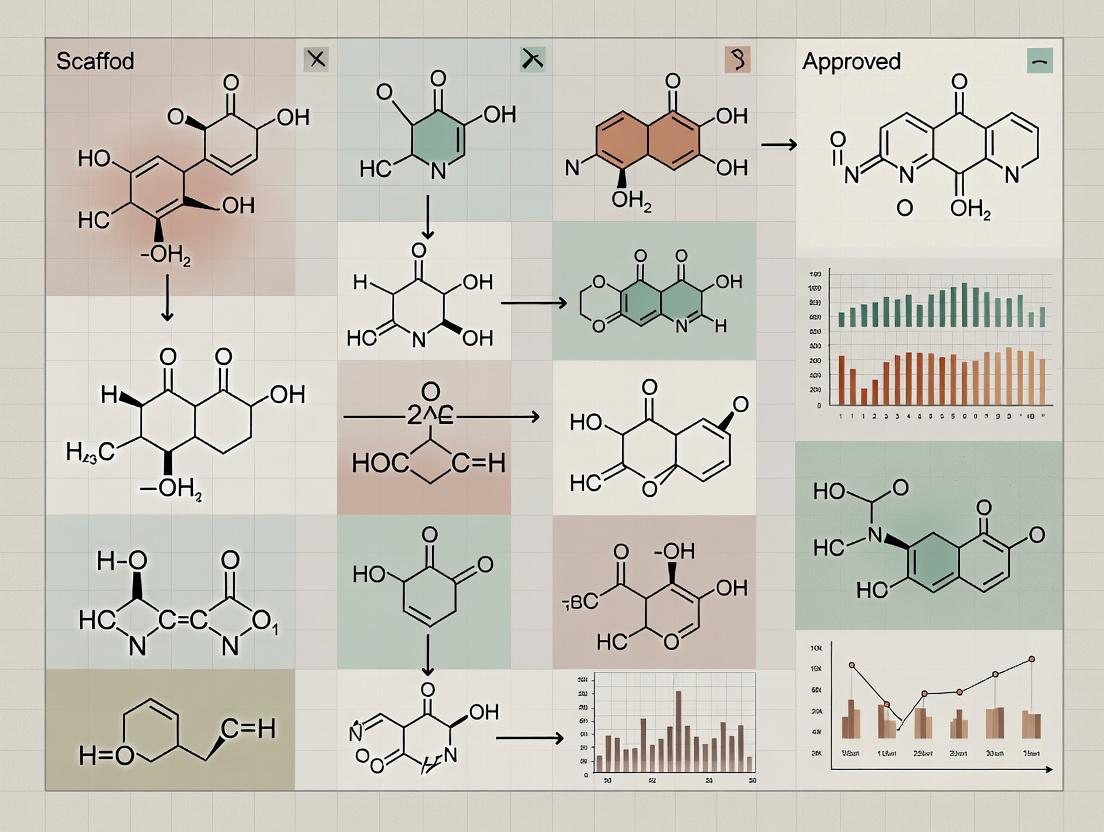
This article provides a comprehensive guide for researchers on scaffold overlap analysis, a pivotal strategy for discovering novel chemical entities by identifying shared or transformable molecular frameworks between natural products...
Scaffold Hopping: Unlocking Novel Drug Leads by Bridging Natural Products and Approved Medicines
Abstract
This article provides a comprehensive guide for researchers on scaffold overlap analysis, a pivotal strategy for discovering novel chemical entities by identifying shared or transformable molecular frameworks between natural products (NPs) and approved drugs. We first establish the foundational rationale, highlighting how NPs occupy distinct, biologically relevant chemical space compared to synthetic libraries and have historically been a major source of drug scaffolds[citation:6][citation:10]. We then detail methodological approaches, from traditional Bemis-Murcko scaffolding[citation:7] and fingerprint-based methods to advanced AI-driven molecular representations and holistic similarity metrics like WHALES descriptors[citation:5][citation:9]. The article addresses key challenges in the process, such as navigating chemical complexity and balancing novelty with bioactivity, offering practical optimization strategies[citation:2][citation:5]. Finally, we examine validation protocols and present comparative analyses of successful scaffold hops, illustrating the strategy's power in generating new lead compounds for challenging targets. This synthesis aims to equip drug discovery professionals with the knowledge to effectively leverage scaffold hopping in their pipelines.
From Nature to Medicine: The Foundational Bridge of Molecular Scaffolds
Natural products (NPs) and their structural analogues have historically been a cornerstone of pharmacotherapy, particularly in oncology, infectious diseases, and other therapeutic areas [1] [2]. Approximately half of all new small-molecule drug approvals over recent decades can trace their structural origins to a natural product [3]. NPs are characterized by unique chemical features that differentiate them from typical synthetic drug-like molecules. They often possess greater three-dimensional structural complexity, a higher fraction of sp³-hybridized carbon atoms, and a richer stereochemical content [3] [2]. These structural properties allow NPs to interrogate broader regions of chemical and biological space, making them invaluable for engaging challenging target classes and inspiring novel drug design [4] [2]. This guide provides a comparative analysis of the chemical landscapes of NPs and approved drugs, underpinned by scaffold overlap analysis and cheminformatic methodologies, to inform and guide modern drug discovery efforts [3] [4].
Quantitative Comparison of Chemical Properties
A principal component analysis (PCA) of drugs approved between 1981–2010 reveals distinct and overlapping regions of chemical space occupied by drugs of different origins [3]. The analysis categorizes drugs as: Natural Product (NP); Natural Product-Derived (ND, typically semisynthetic); Synthetic with a Natural Product Pharmacophore (S*); and Completely Synthetic (S) [3]. Key comparative data are summarized below.
Table: Key Physicochemical and Structural Properties of Approved Drugs by Origin (1981-2010) [3]
| Property | Natural Products (NP) | Natural Product-Derived (ND) | Synthetic, NP-Pharmacophore (S*) | Completely Synthetic (S) |
|---|---|---|---|---|
| Representative Molecular Weight | Generally higher | High | Moderate to High | Lower |
| Stereocenters (nStereo) | More | More | More | Fewer |
| Fraction sp³ (Fsp³) | Higher (≥0.5 common) | Higher | Moderate | Lower (≤0.3 common) |
| Aromatic Ring Count | Fewer | Fewer | Fewer | More |
| Calculated LogP/Hydrophobicity | Lower (more polar) | Lower | Lower | Higher |
| Chemical Space Coverage | Broadest, diverse | Broad | Intermediate | More clustered |
Analysis of Key Trends:
- Complexity & 3D-Shape: NPs and ND drugs exhibit greater molecular complexity, evidenced by higher counts of stereocenters and a larger fraction of sp³-hybridized carbons (Fsp³). This correlates with improved binding selectivity and successful clinical progression [3]. In contrast, completely synthetic (S) drugs tend to be flatter, more planar molecules [3].
- Polarity & Solubility: NP-inspired drugs (NP, ND, S*) generally have lower calculated hydrophobicity (LogP/LogD) and higher polar surface area, indicating better aqueous solubility profiles compared to many purely synthetic drugs [3].
- Scaffold Diversity: Drugs based on NP scaffolds occupy a larger and more diverse region of chemical space, suggesting they access a wider range of biological targets and mechanisms of action [3]. The chemical space of completely synthetic drugs is more constrained, often influenced by synthetic accessibility and traditional "drug-like" design rules [3].
Experimental Protocols for Scaffold Overlap Analysis
Cheminformatic Property Analysis
This protocol enables the quantitative comparison of chemical spaces between NP-derived and synthetic drug sets [3].
- Dataset Curation: Assemble two datasets: (1) Approved drugs categorized as NP, ND, S*, or S based on established criteria [3]. (2) A representative library of natural product structures (e.g., from the Dictionary of Natural Products) [4].
- Descriptor Calculation: For all compounds, calculate a standard set of 20+ 1D and 2D molecular descriptors. Essential parameters include [3]:
- Size & Lipophilicity: Molecular weight (MW), calculated LogP/LogD (ALOGPs).
- Polarity: Hydrogen bond donors/acceptors (HBD/HBA), topological polar surface area (tPSA).
- Complexity: Number of stereocenters (nStereo), fraction of sp³ carbons (Fsp³), rotatable bond count (RotB).
- Ring Systems: Number of aromatic rings (RngAr), total ring systems (RngSys).
- Statistical & PCA Workflow: Perform statistical analysis (e.g., Student's t-test) on descriptor means between groups. For PCA, normalize the descriptor matrix and compute principal components to reduce dimensionality. Visualize the first 2-3 principal components to map the chemical space distribution of each drug class [3].
Scaffold Hopping via Holistic Molecular Descriptors (WHALES)
The WHALES (Weighted Holistic Atom Localization and Entity Shape) protocol facilitates the identification of synthetically accessible compounds that mimic the bioactivity of complex NPs [4].
- Query & Database Preparation: Select a bioactive NP as the query. Prepare a 3D energy-minimized conformation (e.g., using MMFF94). Prepare a database of purchasable synthetic compounds similarly [4].
- WHALES Descriptor Generation:
- For each atom in a molecule, compute a weighted atom-centered covariance matrix (Sw(j)), where atomic coordinates are weighted by the absolute value of their partial charges [4].
- From Sw(j), calculate the atom-centered Mahalanobis (ACM) distance between all atom pairs, creating an ACM matrix [4].
- From the ACM matrix, derive three atomic indices for each non-hydrogen atom: Remoteness (global), Isolation degree (local), and their ratio [4].
- Aggregate these atomic indices into a fixed-length molecular descriptor vector by computing their deciles, min, and max values (33 descriptors total) [4].
- Similarity Search & Validation: Calculate WHALES descriptors for the NP query and the synthetic compound database. Perform a similarity search (e.g., based on Euclidean distance in WHALES space). Select top-ranked synthetic candidates for in vitro experimental validation against the target of interest [4].
Key Visualizations for Chemical Landscape Analysis
Diagram 1: Cheminformatic workflow for chemical space analysis.
Diagram 2: Scaffold hopping process using WHALES descriptors.
Table: Essential Resources for NP/Drug Chemical Space Analysis
| Resource / Tool | Primary Function | Relevance to Analysis | Typical Access |
|---|---|---|---|
| Dictionary of Natural Products (DNP) [4] | Authoritative database of NP structures and information. | Source for curated NP structures to define the NP chemical space. | Commercial License |
| ChEMBL / DrugBank | Databases of bioactive molecules and approved drugs with annotations. | Source for approved drug structures, targets, and origin categorization (NP, S, etc.). | Open & Commercial Tiers |
| RDKit / CDK | Open-source cheminformatics toolkits. | Calculate molecular descriptors (MW, LogP, tPSA, Fsp³, etc.) and perform basic analyses. | Open Source |
| KNIME / Python (SciKit-learn) | Data analytics platforms. | Perform statistical analysis, Principal Component Analysis (PCA), and visualize chemical space. | Open Source |
| WHALES Descriptor Code [4] | Algorithm to generate holistic 3D molecular descriptors. | Enable scaffold hopping from complex NPs to synthetic mimetics in virtual screening. | Research Code / Implementation |
| FDA Orange Book & Approval Lists | Official databases of approved drug products. | Identify New Chemical Entities (NCEs) and categorize them by source and approval date. | Open Access |
Future Perspectives: AI and New Modalities
The integration of artificial intelligence (AI) is transforming NP-based drug discovery. Machine learning models can now predict the biological activity and mechanism of action of NPs, prioritize candidates from complex extracts, and even design NP-inspired synthetic libraries [5]. Advanced deep learning models, such as ChemAP, demonstrate the potential to predict drug approval likelihood based solely on chemical structure by learning the semantic features of successful drugs [6]. Furthermore, new therapeutic modalities are creating novel niches for NP scaffolds. Notably, NP-derived cytotoxic agents (e.g., calicheamicins, auristatins) are increasingly employed as payloads in antibody-drug conjugates (ADCs), combining the target specificity of biologics with the potent bioactivity of NPs [7] [8]. This synergy highlights the enduring relevance of NP chemical space in addressing modern therapeutic challenges.
The structural frameworks, or scaffolds, of natural products (NPs) have served as the foundational blueprints for a substantial portion of the modern pharmacopeia [9]. This is not a random occurrence but the result of evolutionary optimization; these secondary metabolites have been shaped over millennia to interact with biological systems, providing a rich source of "privileged structures" with proven utility in drug discovery [10] [11]. The core thesis of scaffold overlap analysis posits that bioactive NPs and approved drugs congregate non-randomly within chemical space, sharing a limited set of highly productive molecular frameworks [12]. This phenomenon underscores a historical precedent where nature's chemical inventions are refined, rather than replaced, by medicinal chemistry. This guide objectively compares the performance of NP-derived scaffolds against synthetic libraries and details the experimental paradigms that validate their continued dominance in yielding new therapeutic entities.
Quantitative Historical Impact: NP Scaffolds vs. Synthetic Libraries
The contribution of natural products (NPs) and their derivatives to drug discovery is quantifiably superior in key areas of productivity compared to purely synthetic approaches. The data reveals a consistent and dominant share of new molecular entities originating from natural blueprints.
Table 1: Comparative Drug Output of Natural Product-Derived vs. Purely Synthetic Chemical Space
| Metric | Natural Product-Derived Drugs | Purely Synthetic Drugs (Comparison) | Data Source & Period |
|---|---|---|---|
| Percentage of All Approved Drugs | 34% (NP-derived & pharmacophore copies) | 66% | Analysis of 1562 FDA drugs (1981-2014) [13] |
| Percentage of New Chemical Entities (NCEs) | 28% (direct & derived) | 72% | Analysis of NCEs (1981-2002) [13] |
| Share of Global Medicine Market | ~35% | ~65% | Annual global market analysis [13] |
| Success in Anti-infectives & Oncology | ~60-80% of approved agents | ~20-40% | FDA approvals (1983-1994) [13] |
| Clustering in Chemical Space | 62.7% of approved NPLDs in 62 scaffolds | Highly dispersed | Analysis of 442 NP leads of drugs (NPLDs) [12] |
Performance Comparison Analysis: The data demonstrates that NP-derived scaffolds offer a higher probability of yielding a clinical drug. This is evidenced by their disproportionate contribution to approved drugs relative to the vast size of synthetic combinatorial libraries. A critical finding from scaffold tree analysis is that 62.7% of the NP leads for approved drugs congregate within only 62 drug-productive scaffolds or scaffold families [12]. This extreme clustering indicates that these NP scaffolds possess inherent "druggable" properties—such as optimal three-dimensional shape, molecular rigidity, and sets of functional groups—that facilitate productive interactions with a range of biological targets [9] [11]. In contrast, the chemical space of purely synthetic compounds is less densely populated with successful drugs, suggesting a lower "hit rate" for novel, efficacious scaffolds.
Analysis of Privileged and Productive Scaffold Classes
Certain NP scaffold classes repeatedly produce drug leads across multiple therapeutic areas, validating their status as "privileged." Their performance is characterized by high scaffold productivity and target promiscuity within specific physiological domains.
Table 2: Performance of Key Privileged Natural Product Scaffold Classes
| Scaffold Class | Exemplar Drugs/Leads | Therapeutic Area(s) | Key Biological Targets/Pathways | Productivity Metric |
|---|---|---|---|---|
| Alkaloids | Morphine, Quinine, Vincristine, Nicotine | Analgesia, Antimalarial, Anticancer, CNS | Opioid receptors, Hemozoin formation, Tubulin, nAChRs | One of the largest sources of NP drugs; high structural diversity [14] [13]. |
| Terpenoids/Lactones | Artemisinin, Paclitaxel, Digoxin, Andrographolide | Antimalarial, Anticancer, Cardiology, Anti-inflammatory | Free radicals, Microtubules, Na+/K+ ATPase, NF-κB | Includes sesquiterpene lactones (anti-inflammatory) [10] and diterpenoids (anticancer). |
| Polyphenols/Flavonoids | Curcumin, Genistein, EGCG, Umbelliferone | Anti-inflammatory, Anticancer, Antioxidant | NF-κB, MAPK, COX-2, Antioxidant enzymes | Ubiquitous; known for multi-target anti-inflammatory action [10] [13]. |
| Polyketides/Macrolides | Erythromycin, Lovastatin, Amphotericin B | Anti-infective, Lipid-lowering, Antifungal | Bacterial ribosome, HMG-CoA reductase, Fungal membranes | High success in antibiotics and statins [13]. |
| Peptides/Depsipeptides | Cyclosporine, Vancomycin, Daptomycin | Immunosuppressant, Antibiotic | Calcineurin, Bacterial cell wall synthesis | High target specificity and potency. |
Scaffold Productivity Insights: The isoquinoline and indole alkaloid scaffolds exemplify privilege by producing drugs for pain (morphine), malaria (quinine), and cancer (topotecan) [10]. Their performance is linked to a nitrogen-containing heterocyclic core that readily interacts with diverse protein targets. Similarly, the coumarin scaffold (e.g., warfarin, umbelliferone derivatives) shows broad utility from anticoagulants to anti-inflammatories, with simple derivatives effectively modulating the NF-κB and MAPK pathways [10]. The experimental evidence shows that these privileged scaffolds consistently provide a higher number of viable lead compounds per structural class compared to non-privileged scaffolds, translating to a more efficient discovery pipeline.
Modern Evolution: From Direct Derivation to Scaffold Recombination
The contemporary strategy for leveraging NP scaffolds has evolved from direct derivation to sophisticated engineering, creating molecules with enhanced drug-like properties and novel bioactivity.
Table 3: Comparison of Historical and Modern NP Scaffold Utilization Strategies
| Strategy | Description | Exemplar Output | Advantages | Experimental/Development Challenge |
|---|---|---|---|---|
| Direct Natural Product | Use of unmodified NP as drug. | Digoxin, Paclitaxel (original) | Evolutionarily optimized bioactivity. | Supply, pharmacokinetics, toxicity [13]. |
| Semisynthetic Derivation | Chemical modification of isolated NP. | Docetaxel, Irinotecan, Simvastatin | Improved properties; leverages complex core. | Dependent on natural supply; limited modification scope. |
| Pharmacophore Mimicry | Synthesis of core scaffold motifs. | Benzodiazepines (inspired by alkaloids) | Freedom of design; better drug-likeness. | May lose privileged selectivity of original NP. |
| Pseudo-Natural Products (pseudo-NPs) | Recombination of biosynthetically unrelated NP fragments. | Indotropanes, Pyrano-furo-pyridones [15] | Novel, unprecedented scaffolds; retains NP-like features. | Complex design; requires phenotypic screening (e.g., Cell Painting) for MoA elucidation [15]. |
Performance of Pseudo-Natural Products: Pseudo-NPs represent a next-generation performance benchmark. They address the limitation of exploring only biosynthetically linked chemical space by generating unprecedented scaffolds that retain favorable NP-like properties (e.g., sp3-richness, structural complexity) while venturing into new regions of chemical space [15]. Experimentally, their performance is assessed not just by target affinity but through phenotypic profiling using assays like the Cell Painting assay, which can elucidate novel mechanisms of action. This strategy has yielded scaffolds with potent antiproliferative and anti-inflammatory activities not observed in the parent fragments, demonstrating superior performance in accessing new biological territory [15].
Experimental Protocols for Scaffold-Based Discovery & Analysis
Protocol for Scaffold-Based Screening and Hit Identification
This methodology prioritizes NP extracts or libraries based on privileged scaffolds.
- Library Curation & Scaffold Coding: Generate a database of pure NPs or prefractionated extracts. Use software (e.g., Scaffold Hunter v2.3.0) to decompose each molecule into its core scaffold by iteratively removing side chains and mapping ring systems [12].
- Scaffold Clustering & Prioritization: Cluster molecules sharing identical or highly similar scaffolds (using Tanimoto coefficient on molecular fingerprints). Prioritize clusters containing scaffolds from known drug-productive families (e.g., isoquinoline, coumarin) [10] [12].
- Bioactivity Screening: Screen prioritized clusters in targeted (e.g., inhibition of TNF-α production) or phenotypic (e.g., anti-inflammatory cytoprotection) assays.
- Hit Validation & Scaffold Confirmation: Confirm activity of pure compounds. Use the confirmed hit to search for structural analogs within the same scaffold family from broader NP databases, rapidly expanding structure-activity relationships.
Protocol for Designing & Profiling Pseudo-Natural Products
This protocol outlines the creation and evaluation of next-generation, recombined NP scaffolds [15].
- Fragment Selection: Choose two or more biosynthetically unrelated NP fragments with interesting but distinct bioactivities or structural features (e.g., a terpenoid fragment and an alkaloid fragment).
- Connectivity Design: Design synthetic routes to connect fragments via novel linkages (e.g., using cycloadditions, cross-coupling) to create a fused, rigid scaffold not found in nature.
- Cheminformatic Evaluation: Analyze the new pseudo-NP scaffold for drug-like properties (LogP, molecular weight), structural complexity (fraction of sp3 carbons, Fsp3), and uniqueness (search against NP and synthetic compound databases).
- Phenotypic Profiling (Cell Painting Assay):
- Treat cells with the pseudo-NP and stain with 6-8 fluorescent dyes marking key cellular components (nuclei, ER, cytoskeleton, etc.).
- Use high-content imaging to extract ~1,500 morphological features.
- Compare the feature profile to reference compounds with known mechanisms of action (MoA). A similar profile suggests a similar MoA, while a novel profile indicates a potentially new MoA [15].
- Target Deconvolution: Use the phenotypic clue (e.g., "induces autophagy-like morphology") to guide biochemical or genetic target identification experiments (e.g., affinity chromatography, CRISPR screening).
Protocol for Scaffold Overlap Analysis (Computational)
This method quantifies the clustering of NP leads of drugs (NPLDs) in chemical space [12].
- Data Collection: Compile a database of approved drugs and trace their origin to a specific NP lead (NPLD). Create a non-redundant database of known NP structures.
- Molecular Representation & Tree Generation:
- Scaffold Tree: Use scaffold decomposition algorithms to generate hierarchical trees based on molecular frameworks.
- Fingerprint Tree: Encode all NPs and NPLDs using 2D molecular fingerprints (e.g., 881-bit PubChem fingerprints). Perform hierarchical clustering based on Tanimoto similarity using complete linkage [12].
- Cluster Identification & Statistical Testing: Identify clusters in both trees densely populated with NPLDs. Calculate the Net Relatedness Index (NRI) and p-value (via permutation testing, e.g., 60,000 randomizations) to determine if the observed clustering is statistically significant against a random distribution [12].
- Analysis: Identify the specific scaffold branches or fingerprint clusters that are "drug-productive." These regions of chemical space are high-priority for future exploration.
The Scientist's Toolkit: Essential Research Reagent Solutions
Table 4: Key Reagents and Tools for NP Scaffold Research
| Item | Function in NP Scaffold Research | Example Application |
|---|---|---|
| Scaffold Hunter Software | Generates hierarchical scaffold trees from compound libraries for visual analysis and clustering [12]. | Identifying drug-productive scaffold branches in a corporate NP library. |
| Cell Painting Assay Kits | Provides optimized dye sets and protocols for high-content phenotypic profiling [15]. | Elucidating the novel mechanism of action of a pseudo-NP. |
| Natural Product Libraries (Prefractionated) | Libraries of semi-purified NP fractions, annotated with source and scaffold class. | High-throughput screening for bioactivity linked to specific chemotypes. |
| Molecular Fingerprinting Software (e.g., PaDEL) | Computes 2D molecular fingerprints for large compound sets for similarity searching and clustering [12]. | Building fingerprint trees to analyze NPLD distribution. |
| SPR/BLI Biosensor Chips | For label-free measurement of binding kinetics between scaffold-based compounds and purified target proteins. | Validating direct target engagement of a synthetic coumarin derivative. |
| Cryopreserved Primary Cell Co-cultures | Physiologically relevant in vitro models (e.g., endothelial-immune cell co-culture). | Testing the anti-inflammatory effects of labdane diterpenoid scaffolds in a complex system [10]. |
Visualizing Pathways and Workflows
Title: Evolution of NP Scaffold Utilization in Drug Discovery
Title: Anti-inflammatory Targets of Privileged NP Scaffolds
Title: Pseudo-Natural Product Design and Evaluation Workflow
The term "druggability gap" refers to the significant disparity between the multitude of biologically relevant proteins implicated in disease and the limited subset that can be effectively modulated by conventional, drug-like small molecules. Analyses indicate that all current small-molecule drugs interact with only approximately 207 unique protein targets in the human genome, with a heavy bias toward historically druggable classes like G-protein coupled receptors (GPCRs), nuclear receptors, and ion channels [16]. In contrast, genomic studies suggest that only 10–14% of human proteins are considered "druggable" using the chemical frameworks dominant in most synthetic libraries [16]. This gap leaves a vast landscape of high-value therapeutic targets—including many involved in cancer, neurodegeneration, and infectious diseases—effectively untapped.
This discrepancy is fundamentally a chemical problem. Most synthetic screening libraries are intentionally designed with properties that favor oral bioavailability, such as those outlined in Lipinski's Rule of Five. This results in collections of molecules that occupy a relatively narrow region of chemical space, characterized by lower molecular weight, fewer stereocenters, and higher aromatic ring count [16]. Unfortunately, the binding interfaces of many challenging targets, such as protein-protein interactions (PPIs) or shallow enzymatic sites, do not complement this "drug-like" chemical geometry.
Natural products (NPs), honed by evolution to interact with biological macromolecules, provide a powerful solution to this problem. They originate from a different region of chemical space, exhibiting greater structural complexity, higher sp3-hybridized carbon content, and more varied stereochemistry [17]. Critically, their scaffolds often display privileged access to target classes that thwart synthetic libraries. This article presents a series of comparison guides, framed within the context of scaffold overlap analysis, to objectively demonstrate how the unique chemical scaffolds of natural products bridge the druggability gap, supported by experimental and computational data.
Comparison Guide: Target Class Accessibility
The following table compares the relative success of conventional synthetic libraries versus natural product-inspired libraries in engaging with different classes of challenging biological targets.
Table: Comparison of Target Engagement by Library Type
| Target Class | Characteristics & Challenge | Performance of Conventional Synthetic Libraries | Performance of Natural Product-Inspired Scaffolds | Key Example (Natural Product) |
|---|---|---|---|---|
| Protein-Protein Interactions (PPIs) | Large, flat, featureless interfaces with no deep pockets [18]. | Generally poor; libraries lack necessary topological complexity and functional group diversity [16]. | High success rate; NPs provide rigid, complex scaffolds that can disrupt interfaces [19]. | FR901464/Pladienolide B: Inhibits spliceosome via SF3b complex (a PPI-rich machinery) [16]. |
| Transcription Factors | Lack defined binding pockets, often intrinsically disordered [18]. | Extremely difficult to target with small molecules. | Demonstrated potential; NPs can stabilize or inhibit TF complexes. | Octanamide derivative: Computationally identified as a p53-MDM2 PPI inhibitor (MDM2 regulates p53 TF) [20]. |
| Allosteric Sites | Remote, often cryptic sites with low sequence conservation. | Serendipitous discovery is rare; rational design is highly challenging. | NPs are privileged allosteric modulators due to complex shape complementarity. | Pheophytin-α: Binds an allosteric site on cathepsin K, differing from the active site [19]. |
| "Undruggable" Enzymes (e.g., Phosphatases) | Highly polar, shallow active sites (e.g., KRAS) [18]. | Persistent failure for decades (e.g., KRAS). | Covalent and allosteric strategies inspired by NP reactivity have succeeded. | Sotorasib (AMG 510): Covalent KRASG12C inhibitor, inspired by mechanistic insights similar to NP drug discovery [18]. |
Comparison Guide: Methodologies for Target Identification & Validation
A major bottleneck in NP research has been the identification of their macromolecular targets. The following table compares classical and emerging technologies, highlighting their utility in deconvoluting the mechanism of complex NP scaffolds.
Table: Comparison of Target Identification Technologies for Natural Products
| Technology | Core Principle | Key Advantages | Limitations | Experimental Protocol Highlights |
|---|---|---|---|---|
| Affinity Purification (Target Fishing) | Immobilized NP derivative pulls down binding proteins from cell lysates [21]. | Direct, can identify novel targets without prior mechanistic hypotheses. | Requires chemical modification of NP (may alter activity); high background noise. | 1. Synthesize a biotinylated or tagged probe derivative. 2. Incubate with cell lysate. 3. Capture on streptavidin beads. 4. Wash stringently. 5. Elute and identify proteins via MS/MS [21]. |
| Cellular Thermal Shift Assay (CETSA) | Target protein binding by NP increases its thermal stability, detectable via western blot or MS [22]. | Works in intact cells/tissues, no chemical modification needed, measures engagement in physiological context. | Identifies stabilization only, not direct binding; requires a good antibody or MS setup. | 1. Treat cells with NP or vehicle. 2. Heat cells to a gradient of temperatures. 3. Lyse cells, separate soluble protein. 4. Quantify target protein abundance in soluble fraction [22]. |
| Photoaffinity Labeling (PAL) | A photoactivatable NP probe crosslinks to its target upon UV irradiation [21]. | Captures transient/weak interactions, provides direct evidence of binding. | Requires synthesis of a complex probe with photoactivatable group (e.g., diazirine) and a handle (e.g., alkyne). | 1. Treat cells with photoactivatable probe. 2. UV irradiate to crosslink. 3. Lyse cells. 4. "Click" a fluorescent or biotin tag onto the alkyne handle. 5. Analyze by gel or MS [21]. |
| AI-Guided Network Pharmacology | AI models integrate omics data to predict multi-target interactions and signaling pathways [5]. | Holistic, can explain polypharmacology of NPs; no wet-lab until prediction. | Predictive only; requires large, high-quality datasets; validation is essential. | 1. Curate NP chemical and bioactivity data. 2. Train ML/DL models on known NP-target-pathway associations. 3. Predict targets for novel NP. 4. Validate top predictions via in vitro assays [5]. |
NP Target ID & Validation Workflow
Scaffold Overlap Analysis: Bridging Natural and Synthetic Chemical Space
Scaffold overlap analysis investigates the structural commonalities and differences between the core frameworks of natural products and those found in synthetic libraries and approved drugs. This analysis is central to understanding the druggability gap.
Chemical Space Analysis: Principal component analysis of structural and physicochemical properties reveals that approved synthetic drugs cluster tightly, while natural products occupy a broader, distinct region [16]. Key differentiating NP features include:
- Higher molecular complexity: More stereogenic centers and sp3-hybridized carbons [17].
- Distinct polarity profiles: Often higher oxygen content and lower calculated logP [16].
- Architectural diversity: Macrocyclic rings, complex polycyclic systems, and unique bridged scaffolds that are rare in synthetic libraries.
Scaffold Hopping with WHALES Descriptors: To bridge these spaces, computational tools like Weighted Holistic Atom Localization and Entity Shape (WHALES) descriptors have been developed [4]. WHALES descriptors holistically encode pharmacophore and shape patterns, enabling scaffold hopping from complex NPs to synthetically accessible mimetics.
Table: AI/Computational Tools for Scaffold Analysis & Discovery
| Tool/Approach | Function | Application in NP Research | Reported Outcome/Performance |
|---|---|---|---|
| WHALES Descriptors [4] | Holistic molecular similarity for scaffold hopping. | Identifying synthetic mimetics of natural product scaffolds. | 35% success rate in prospectively identifying novel synthetic cannabinoid receptor modulators from NP queries [4]. |
| Deep Graph Networks [22] | AI for molecular generation and property prediction. | Generating virtual analogs and optimizing NP-derived leads. | Enabled 4,500-fold potency improvement for a monoacylglycerol lipase (MAGL) inhibitor series [22]. |
| Genome Mining (AntiSMASH, DeepBGC) [17] | Identifies biosynthetic gene clusters (BGCs) in microbial genomes. | Predicting novel NP scaffolds from genetic data before isolation. | Supports discovery of cryptic metabolites and sustainable production via synthetic biology [17]. |
| Molecular Docking & Dynamics [20] | Predicts binding pose and stability of NP-target complexes. | Virtual screening of NP libraries and mechanism elucidation. | Identified Octanamide as a stable MDM2 binder with better binding energy than some clinical candidates [20]. |
Scaffold Hopping from NP to Synthetic Mimetic
The Scientist's Toolkit: Essential Reagents & Materials
This table details key research reagent solutions essential for conducting experiments in natural product-based drug discovery, particularly for target identification and validation.
Table: Research Reagent Solutions for NP Target Discovery
| Reagent/Material | Supplier Examples | Function in NP Research | Critical Application Notes |
|---|---|---|---|
| Biotin-Avidin/Streptavidin Systems | Thermo Fisher, Sigma-Aldrich, Vector Labs | For affinity purification probes; biotinylated NP derivatives are captured on streptavidin-coated beads [21]. | Choose cleavable biotin linkers (e.g., acid-cleavable) for gentle target elution and reduced background. |
| Photoactivatable Crosslinkers | Thermo Fisher, Sigma-Aldrich, Click Chemistry Tools | Incorporated into NP probes for PAL; groups like diazirines form reactive carbenes upon UV light [21]. | Use mild UV wavelengths (~365 nm) to minimize protein damage. Always include a "no-UV" control. |
| Click Chemistry Reagents | Click Chemistry Tools, Sigma-Aldrich | Enable bioorthogonal tagging (e.g., CuAAC, SPAAC) of alkyne/azide-modified NP probes for visualization or pull-down [21]. | For live-cell studies, use copper-free strain-promoted (SPAAC) reagents to avoid cytotoxicity. |
| CETSA-Compatible Antibodies & Kits | Pelago Biosciences, CST, Abcam | High-quality antibodies are critical for detecting target protein thermal shifts in the classic western blot-based CETSA [22]. | Antibody specificity is paramount. MS-based CETSA (CETSA MS) is an antibody-free alternative for unbiased discovery. |
| AI/ML-Ready NP Databases | LOTUS, COCONUT, NPASS, GNPS | Curated databases of NP structures and bioactivities for training predictive AI models [5]. | Data quality (standardized structure, activity annotation) is more important than database size alone. |
The evidence from comparative guides clearly demonstrates that natural products are not merely historical artifacts in drug discovery but are essential tools for addressing contemporary therapeutic challenges. Their unique structural embodiments, evolved for biological interaction, allow them to bridge the druggability gap where purpose-built synthetic libraries fail. The integration of advanced target identification technologies (like CETSA and PAL) with AI-driven scaffold analysis and hopping techniques (like WHALES descriptors) is creating a powerful, modernized NP research pipeline.
The future of leveraging NPs lies in a synergistic cycle: using nature's complex scaffolds to reveal new biology and validate challenging targets, followed by computational and synthetic chemistry to optimize these leads into developable drugs. This approach, rooted in scaffold overlap analysis, ensures that the vast and diverse chemical space forged by evolution continues to inform and inspire the next generation of therapeutics against currently intractable diseases.
Scaffold overlap analysis between natural products (NPs) and approved drugs represents a critical frontier in modern drug discovery. This approach systematically investigates the shared molecular frameworks that underpin bioactivity, providing a powerful strategy for identifying novel lead compounds and understanding privileged structures in medicinal chemistry. The process involves deconstructing complex molecules into their core ring systems and connecting chains, then comparing these fundamental architectures across vast chemical libraries [23].
The significance of this research lies in bridging two complementary chemical spaces: the evolutionarily optimized complexity of natural products and the synthetically accessible frameworks of approved drugs. Natural products have historically been a rich source of drug candidates, with over 50% of FDA-approved medications from 1981-2014 being NPs, their derivatives, or synthetic compounds inspired by NP scaffolds [24] [25]. However, their structural complexity often presents challenges for synthesis and optimization. Scaffold overlap analysis enables researchers to identify simpler, synthetically tractable frameworks in approved drugs that mimic the essential bioactive features of complex natural products—a process known as scaffold hopping [4] [23].
Successful scaffold hopping requires sophisticated computational approaches that go beyond traditional 2D similarity measures. Methods such as the Weighted Holistic Atom Localization and Entity Shape (WHALES) descriptors capture pharmacophore and shape patterns, facilitating the identification of isofunctional synthetic compounds that may differ significantly in their 2D structure but share critical 3D spatial and electronic features [4]. This holistic approach has demonstrated practical success, with 35% of synthetic compounds identified through such methods being experimentally confirmed as active against target receptors [4].
The databases discussed in this guide—ChEMBL, COCONUT, DrugBank, and specialized NP collections—provide the essential chemical and biological data that fuel these analyses. Each offers unique strengths in scope, annotation depth, and accessibility, making them collectively indispensable for comprehensive scaffold overlap research.
Database Comparison for Scaffold Analysis
The utility of a chemical database for scaffold overlap analysis depends on multiple factors including chemical space coverage, annotation richness, data quality, and accessibility. The following tables provide a detailed comparison of the key databases.
Table 1: Core Database Characteristics and Scope
| Database | Primary Focus | Key Strength | Sample Size (Compounds) | Notable Content Features | Access |
|---|---|---|---|---|---|
| COCONUT | Open Natural Products | Largest open collection of NPs; non-redundant | >400,000 [24] | Structures, sparse annotations, stereochemistry (varies by source) [24] | Open Access [24] |
| ChEMBL | Bioactive Drug-like Molecules | Extensive bioactivity data (IC50, Ki, etc.) | ~2M compounds, ~17M activities [25] | Manually curated from literature; targets, assays, ADMET [25] | Open Access [25] |
| DrugBank | Approved & Investigational Drugs | Detailed drug, target, pathway, pharmacology data | ~16,000 drug entries (2024) [26] | FDA labels, mechanisms, interactions, structures [26] | Open & Premium tiers |
| Specialized NP DBs (e.g., Nat-UV DB, BIOFACQUIM) | Region/Taxon-Specific NPs | Unexplored chemical diversity from specific biomes | Varies (e.g., Nat-UV DB: 227) [26] | Ecological source metadata, regional traditional use [26] | Typically Open [26] |
Table 2: Quantitative Metrics for Scaffold Analysis Utility
| Database | Scaffold Diversity (Representative) | Stereochemical Annotation | Bioactivity Annotations | Tanimoto Similarity Search | Integration with Cheminf. Tools |
|---|---|---|---|---|---|
| COCONUT | Highest (broad NP space) [24] | Incomplete (~12% lack stereochemistry) [24] | Limited, varies by source | Yes (via platform) [24] | High (SMILES, SDF formats) [24] |
| ChEMBL | High (drug-like & NP subsets) | Excellent (e.g., 91.59% for NP subset) [24] | Extensive & standardized | Yes | Very High (APIs, pipelines) [25] |
| DrugBank | Moderate (focused on drugs) | Preserved for drugs | Rich (mechanisms, targets) | Possible via structure export | High (structured data files) |
| Specialized NP DBs | Variable, can be high for novel regions [26] | Typically preserved from source literature [26] | Often preliminary or assay-specific | Usually supported | Variable (often SDF/MOL files) [26] |
Table 3: Data Source and Curation Pipeline Comparison
| Database | Primary Source(s) | Curation Approach | Update Frequency | Structure Standardization | Duplicate Handling |
|---|---|---|---|---|---|
| COCONUT | Aggregation of >50 open NP resources [24] | Automated + manual merging; non-redundant collection | Continuous as sources update [24] | Canonicalization; stereochemistry from sources | Non-redundant by design [24] |
| ChEMBL | Scientific literature, patents | Manual expert curation & automated pipelines [25] | Regular releases (e.g., annual) | ChEMBL standardizer; parent structure generation [27] | Cross-referencing via InChI keys |
| DrugBank | Regulatory documents, literature, vendors | Manual curation by pharmacists & chemists | Several times yearly | Standardized representation (e.g., SMILES, InChI) | Distinct entries for different salt forms |
| Specialized NP DBs | Regional literature, theses, in-house research | Often manual from primary NMR/data [26] | Irregular, project-dependent | Tools like MOE "Wash"; stereochemistry preserved [26] | Manual cross-referencing with PubChem/ChEMBL [26] |
Specialized natural product databases, though often smaller in size, fill critical gaps in chemical space. For example, Nat-UV DB focuses on compounds from the biodiverse region of Veracruz, Mexico, containing 227 compounds with 112 scaffolds, 52 of which are novel compared to existing NP databases [26]. Similarly, other regional databases like BIOFACQUIM (Mexico) and LaNAPDB (Latin America) contribute unique scaffolds derived from localized biodiversity [26]. When used in conjunction with broad-coverage databases like COCONUT, these specialized resources significantly enhance the probability of identifying truly novel scaffold overlaps with drug molecules.
Experimental Protocols for Scaffold Analysis
Robust scaffold overlap analysis relies on well-defined computational and experimental workflows. Below are detailed protocols for two key approaches: computational scaffold hopping and experimental validation of scaffold-based predictions.
Protocol 1: Computational Scaffold Hopping Using WHALES Descriptors
This protocol, adapted from successful prospective studies [4], uses holistic molecular descriptors to identify synthetic mimetics of natural product scaffolds.
1. Query Selection and Preparation:
- Select 1-5 natural product query molecules with desired biological activity but undesired synthetic complexity or pharmacokinetic properties.
- Generate 3D conformations for each query using force field methods (e.g., MMFF94 [4]) or quantum mechanics. Ensure coverage of probable bioactive conformers.
- Calculate Gasteiger-Marsili partial charges [4] for all atoms in each conformation.
2. WHALES Descriptor Calculation:
- For each atom j in a conformation, compute the atom-centered weighted covariance matrix
Sw(j)using atomic coordinates (x_i,x_j) and absolute partial charges (|δ_i|) as weights [4]. - Calculate the atom-centered Mahalanobis (ACM) distance from atom j to every other atom i using the inverse of
Sw(j)[4]. - From the ACM matrix, derive three atomic indices for each atom:
- Remoteness (Rem): Row-average of ACM distances (global information).
- Isolation degree (Isol): Column minimum of ACM distances (local information).
- Isolation-Remoteness ratio (IR): Ratio of Isol to Rem [4].
- Assign negative signs to indices for negatively charged atoms to distinguish them [4].
- Apply a binning procedure to the sets of Rem, Isol, and IR values for all atoms to obtain a fixed-length descriptor vector (33 values: deciles plus min/max for each index) [4].
3. Database Screening:
- Calculate WHALES descriptors for a large library of commercially available or synthetically accessible compounds (e.g., ZINC, Enamine REAL).
- Calculate molecular similarity between query NP(s) and library compounds using the WHALES descriptor vectors (e.g., Euclidean or Cosine distance).
- Rank library compounds by similarity and select the top 20-100 candidates for further analysis, prioritizing structural diversity.
4. Post-Screening Analysis & Prioritization:
- Perform 2D structural clustering on selected candidates to group by common scaffolds.
- Apply drug-likeness filters (e.g., Lipinski's Rule of Five, Veber criteria) and synthetic accessibility scoring.
- Select 5-20 final candidates for purchase and experimental testing, ensuring representation of different chemotypes.
Protocol 2: Target Prediction and Validation for Novel Scaffolds
This protocol uses a transfer learning model to predict potential protein targets for NP-derived scaffolds, followed by experimental validation [25].
1. Data Preparation for Model Training:
- Source Task Data: Extract compound-target interaction data from ChEMBL (v30 or later). Preprocess by removing known natural products and standardizing structures [25].
- Target Task Data: Compile a smaller dataset of natural product-target interactions from literature and specialized NP databases. Use the same target ontology (e.g., ChEMBL target IDs) as the source data.
- Represent molecules using extended-connectivity fingerprints (ECFPs) (radius=3, 2048 bits) or other suitable molecular representations.
2. Transfer Learning Model Development:
- Pre-training: Train a multi-layer perceptron (MLP) or graph neural network to predict compound-target interactions on the large ChEMBL (non-NP) dataset. Use a binary cross-entropy loss function. Optimal hyperparameters (e.g., learning rate of 5x10⁻⁴, batch size 512) should be determined via cross-validation [25].
- Fine-tuning: Take the pre-trained model and further train it on the smaller NP-target dataset. Use a higher learning rate (e.g., 5x10⁻³) and consider freezing early layers of the network to adapt the model to the NP chemical space without catastrophic forgetting [25].
- Evaluation: Validate the model using temporal or clustered split cross-validation on the NP dataset. Target an AUROC > 0.9 [25].
3. Prospective Prediction & Experimental Design:
- Input the SMILES of novel NP scaffolds identified from overlap analysis into the fine-tuned model.
- Obtain predicted probability scores for a panel of therapeutic targets. Prioritize targets with high probability scores that are also biologically plausible given the scaffold's structural features.
- For in vitro validation, select 1-3 top-ranked targets. Establish a functional biochemical or cell-based assay (e.g., enzyme inhibition, receptor binding, cell viability). Test the NP scaffold and its synthetic mimetics in a dose-response manner to determine potency (IC50/EC50).
4. Hit Confirmation and Characterization:
- Confirm dose-dependent activity. For the most promising scaffold-target pair, perform counter-screening against related targets to assess selectivity.
- If resources allow, initiate preliminary lead optimization via synthesis of a small set of analogs around the confirmed hit scaffold to explore initial structure-activity relationships.
Workflow Visualization for Scaffold Analysis
The following diagrams illustrate the logical flow of the key methodologies described for scaffold overlap analysis.
Diagram 1: Integrated Workflow for NP-Drug Scaffold Analysis & Validation.
Diagram 2: Transfer Learning Protocol for Target Prediction of Novel Scaffolds [25].
Successful scaffold overlap analysis requires both computational tools and experimental materials. The following table details key resources for implementing the protocols described in this guide.
Table 4: Essential Research Reagents and Resources for Scaffold Analysis
| Category | Item/Resource | Specification/Example | Primary Function in Analysis | Key Consideration |
|---|---|---|---|---|
| Software & Libraries | Cheminformatics Toolkit | RDKit [27] | Molecule standardization, descriptor calculation, fingerprint generation. | Open-source Python library; core for preprocessing. |
| Molecular Modeling Suite | Molecular Operating Environment (MOE) [23] [26], Open Babel | 3D structure generation, conformation analysis, pharmacophore mapping. | Useful for detailed 3D alignment and property calculation. | |
| Deep Learning Framework | PyTorch, TensorFlow | Building and training transfer learning models for target prediction [25]. | GPU acceleration significantly speeds up training. | |
| Computational Databases | Commercial Compound Library | ZINC [28], Enamine REAL [28] | Source of purchasable compounds for virtual screening of scaffold mimetics. | Apply relevant filters (e.g., "in stock", drug-like). |
| Aggregated Bioactivity Database | ChEMBL [25] | Gold-standard source for pre-training target prediction models and bioactivity data. | Use standardized "parent" structures for consistency. | |
| Open NP Collection | COCONUT [24] [27] | Primary source of natural product structures for scaffold extraction and comparison. | Be aware of varying stereochemical annotation quality [24]. | |
| Experimental Assay Materials | Biochemical Assay Kits | Kinase-Glo, ADP-Glo, Fluorescent substrates (e.g., for proteases) | Functional enzymatic activity measurement for target validation. | Choose assay compatible with expected inhibitor modality (e.g., ATP-competitive). |
| Cell Lines | Engineered reporter cell lines (e.g., PathHunter, CAMYEL) | Cell-based functional validation of target engagement (GPCRs, nuclear receptors). | Requires relevant biological context for the predicted target. | |
| Positive Control Inhibitors/Agonists | Well-characterized reference compounds (e.g., from Tocris, Selleckchem) | Essential for validating assay performance and calibrating compound response. | Match the control's mechanism of action to your assay readout. | |
| Chemical Resources | Compound Management | DMSO-resistant microplates (e.g., Echo qualified), liquid handling systems | Reliable storage and dispensing of compound libraries for dose-response testing. | Minimize freeze-thaw cycles; control DMSO concentration in assays. |
| NP & Synthetic Mimetics | Commercial suppliers (e.g., AnalytiCon Discovery [24], TargetMol) | Source for purchasing predicted hit compounds for validation. | Purity (>90% by HPLC) is critical for reliable activity assessment. |
In drug discovery, analyzing molecular cores and navigating chemical space for novel structures are foundational tasks. This guide compares the key conceptual and computational tools used for these purposes.
Bemis-Murcko Scaffolds provide a systematic, graph-based method to reduce a molecule to its core framework by removing side chain atoms [29]. The resulting framework—comprising ring systems and the linkers connecting them—is invaluable for organizing compound libraries, analyzing structure-activity relationships (SAR), and assessing scaffold diversity within a dataset [30] [31].
Scaffold Hopping is the strategic discovery of novel molecular cores (chemotypes) that retain or improve the biological activity of a parent compound [23] [32]. It is a deliberate deviation from the Similarity Property Principle (SPP), which states that structurally similar molecules tend to have similar properties [33] [34]. Scaffold hopping challenges this principle by seeking structural dissimilarity in the core while preserving biological function, often guided by 3D pharmacophore or shape similarity rather than 2D substructure [23].
Scaffold Overlap Analysis in Natural Product (NP) Research investigates the shared molecular frameworks between NPs, known for their structural complexity and bioactivity, and approved synthetic drugs [4]. The goal is to identify which privileged NP scaffolds have been successfully mimicked in drugs and to use modern computational tools to hop from complex NPs to synthetically accessible, drug-like mimetics.
The table below compares the primary tools and concepts central to scaffold-based analysis.
Table: Comparison of Core Concepts in Scaffold Analysis
| Concept | Primary Purpose | Key Metric/Output | Typical Application in NP-Drug Research |
|---|---|---|---|
| Bemis-Murcko Scaffold [29] [31] | Reduce a molecule to its core ring-linker system for objective comparison. | A single, simplified molecular graph (framework). | Quantifying scaffold overlap between NP and drug libraries; clustering compounds by core structure. |
| Scaffold Hopping [23] [32] | Design novel core structures with retained bioactivity. | A new chemotype (scaffold) with measurable activity against the target. | Translating bioactive but complex NP cores into synthetically tractable, drug-like leads. |
| Similarity Property Principle (SPP) [33] [34] | Guiding principle for analog development and similarity searching. | Prediction that structural similarity implies similar activity/properties. | Serves as the baseline from which scaffold hopping deviates; validates that hops maintain activity. |
| Molecular Descriptors/Fingerprints (e.g., ECFP, WHALES) [4] [33] | Encode molecular structure into a numerical vector for computational comparison. | Bit-string (fingerprint) or numerical array (descriptor). | Calculating similarity between NP and synthetic molecules; enabling virtual screening for scaffold hops. |
Comparative Analysis of Scaffold Hopping Strategies
Scaffold hopping strategies are categorized by the degree of structural alteration and the underlying methodology [23] [32]. The choice of strategy involves a trade-off: strategies that introduce higher novelty (like topology-based hops) typically have a lower empirical success rate but offer greater intellectual property freedom, while smaller steps (like heterocycle replacement) are more predictable [23].
Experimental Performance and NP-Drug Context: A landmark study demonstrated the application of a holistic molecular descriptor (WHALES) for hopping from natural products to synthetic mimetics [4]. Using four phytocannabinoids as queries to screen a commercial library, the WHALES descriptor achieved a 35% hit rate, identifying novel synthetic cannabinoid receptor modulators [4]. In contrast, conventional Extended-Connectivity Fingerprints (ECFP4) were less effective at this specific task, as they primarily capture 2D fragment similarity and may not fully encapsulate the complex 3D pharmacophore and shape information of NPs [4].
The following table details the established categories of scaffold hops, their relevance to NP-inspired discovery, and associated performance considerations.
Table: Classification, Characteristics, and Performance of Scaffold Hopping Approaches
| Hop Category & Degree | Core Strategy | Example (NP/Drug Context) | Relative Novelty | Reported Success Rate / Consideration |
|---|---|---|---|---|
| 1°: Heterocycle Replacement [23] [32] | Swapping atoms (e.g., C, N, O, S) within a ring system. | Azatadine (pyrimidine-for-phenyl replacement in an antihistamine) [23]. | Low | High. Common in lead optimization; minimal scaffold distortion preserves activity. |
| 2°: Ring Opening/Closure [23] [32] | Breaking or forming rings to alter molecular flexibility. | Morphine (NP) → Tramadol (drug) via ring opening [23]. Pheniramine → Cyproheptadine via ring closure [23]. | Medium | Medium-High. Directly modulates conformational entropy and pharmacokinetic properties. |
| 3°: Peptidomimetics [23] [32] | Replacing peptide backbones with non-peptide motifs. | Mimicking cyclic peptide NP structures with synthetic heterocycles. | High | Variable. Crucial for translating bioactive peptides into oral drugs; can be challenging. |
| 4°: Topology/Shape-Based [23] [32] | Matching 3D shape/pharmacophore without retaining 2D substructure. | Identifying novel synthetic cores that mimic the 3D profile of an NP. | Very High | Lower, but high impact. Enables large leaps in chemotype; benefited by holistic descriptors like WHALES [4]. |
Experimental and Computational Protocols
1. Protocol for Murcko Scaffold Extraction and Analysis This protocol is used to generate and compare molecular frameworks for diversity analysis or scaffold overlap studies [29] [30].
- Input: A library of molecules in SMILES or SDF format.
- Step 1 - Scaffold Generation: For each molecule, remove all side chain (acyclic) atoms. The remaining structure, consisting of all ring systems and the linker atoms that connect them, is the Murcko framework [29] [31]. This can be performed using toolkits like RDKit (
MurckoScaffold.GetScaffoldForMol) [30] or Chemaxon'sjklustor[29]. - Step 2 - (Optional) Further Decomposition: The framework can be decomposed into its constituent individual rings or ring assemblies for a more granular analysis [29].
- Step 3 - Clustering & Analysis: Group identical scaffolds together. Analysis can include counting scaffold frequencies, visualizing distributions, or comparing scaffold sets (e.g., NPs vs. drugs) to calculate overlap percentages.
2. Protocol for Holistic Descriptor (WHALES) Calculation for NP Scaffold Hopping This protocol, based on the method by Grisoni et al., calculates descriptors that integrate shape and pharmacophore features to enable scaffold hopping from complex NPs [4].
- Input: A 3D conformation of a molecule, optimized (e.g., via MMFF94), with partial charges calculated (e.g., Gasteiger-Marsili) [4].
- Step 1 - Atom-Centered Covariance Matrix: For each non-hydrogen atom j, compute a weighted covariance matrix (Sw(j)) of the coordinates of all other atoms i. The weight is the absolute partial charge |δi| of atom i [4]. This captures the local 3D distribution of atoms and electrostatics.
- Step 2 - Atom-Centered Mahalanobis (ACM) Distance: For each atom j, calculate the ACM distance to every other atom i using the inverse of Sw(j). This normalizes distances based on the local feature distribution [4].
- Step 3 - Atomic Indices: From the ACM matrix, compute three indices per atom: Remoteness (global average distance), Isolation Degree (distance to nearest neighbor), and their ratio (IR). Signs are assigned based on atomic partial charge [4].
- Step 4 - WHALES Descriptor Generation: To create a fixed-length descriptor, calculate the deciles (10th, 20th,..., 90th percentiles) plus the minimum and maximum of the distribution of each atomic index (Isolation, Remoteness, IR) across all atoms. This yields a 33-dimensional descriptor vector (3 indices x 11 statistics) invariant to molecular size [4].
- Application: Use Tanimoto or Euclidean similarity on WHALES descriptors to screen synthetic libraries for compounds similar to an NP query in 3D shape and pharmacophore space.
3. Protocol for Benchmarking Fingerprints via the Similarity Property Principle This protocol assesses the performance of different molecular fingerprints in ranking compounds by structural similarity, which underpins both analog searching and scaffold hopping [33].
- Benchmark Datasets: Construct two sets from medicinal chemistry literature data (e.g., ChEMBL):
- Single-Assay Benchmark: Tests ranking of very close analogs. Select one highly active reference molecule and 4-5 other actives from the same assay, ordered by decreasing activity [33].
- Multi-Assay Benchmark: Tests ranking of more diverse structures. Create a chain of molecules linked across different publications, assuming similarity decreases with each link (M1 similar to M3, M3 to M5, etc.) [33].
- Fingerprint Calculation & Similarity Measurement: Encode all molecules using the fingerprints to be tested (e.g., ECFP4, ECFP6, Atom Pair, WHALES). Calculate the similarity (e.g., Tanimoto coefficient) between the reference and every other molecule in the series [33].
- Performance Evaluation: For each series, rank the molecules by their calculated similarity to the reference. Compare this computed ranking to the "ground truth" ranking from the benchmark. The fingerprint that produces rankings closest to the ground truth across many such series is the best performer [33].
- Key Benchmark Result: Studies show ECFP4/ECFP6 and Topological Torsion fingerprints perform well for ranking diverse structures, while the Atom Pair fingerprint excels at ranking very close analogs [33].
Table: Key Software, Databases, and Resources for Scaffold-Based Research
| Tool/Resource Name | Type | Primary Function in Scaffold Analysis | Key Utility for NP-Drug Research |
|---|---|---|---|
| RDKit [30] [33] | Open-Source Cheminformatics Library | Murcko scaffold generation, fingerprint calculation (ECFP, Atom Pair), molecular operations. | Core, accessible toolkit for in-house scaffold overlap and similarity analysis. |
| Chemaxon Jklustor / JChem [29] | Commercial Cheminformatics Suite | Bemis-Murcko clustering, framework enumeration, and chemical database management. | Processing large-scale commercial or proprietary NP/drug libraries. |
| Molecular Operating Environment (MOE) [23] [32] | Commercial Modeling Suite | 3D pharmacophore alignment, conformational analysis, and molecular modeling. | Superimposing NP and drug scaffolds to validate 3D similarity in successful hops. |
| WHALES Descriptors [4] | Specialized Molecular Descriptor | Holistic 3D similarity integrating shape and pharmacophores. | Enabling topology-based scaffold hops from complex NPs to synthetic mimetics. |
| ChEMBL Database [4] [33] | Public Bioactivity Database | Source of bioactive molecules, activity data, and literature-extracted compound series. | Building benchmark sets for similarity/search performance testing [33]. |
| Dictionary of Natural Products (DNP) [4] | Commercial NP Database | Comprehensive repository of NP structures and information. | Primary source of query NP scaffolds for overlap analysis and hopping campaigns. |
Methodologies in Action: Computational Strategies for Scaffold Discovery and Hop Design
In the pursuit of novel therapeutics, the structural and functional overlap between natural products (NPs) and approved drugs represents a rich vein for discovery. NPs are pivotal in drug discovery, with over 80% of the population in developing countries relying on traditional medicines and many modern drugs tracing their origins to natural compounds [35]. A central strategy in exploiting this overlap is scaffold hopping—the identification of novel core structures that retain desired biological activity [36]. This process is critically enabled by traditional computational toolkits that quantify molecular similarity and interaction potential beyond superficial structure.
This guide provides an objective, data-driven comparison of three foundational toolkits: Extended-Connectivity Fingerprints (ECFP) for 2D similarity, Pharmacophore Modeling for interaction pattern matching, and 3D Shape Matching for volumetric overlap. Framed within scaffold overlap analysis for NP-based drug discovery, we evaluate each method's performance, supported by experimental benchmarks and detailed protocols. The integration of these tools allows researchers to navigate from gross structural similarity (scaffolds) to precise interaction requirements (pharmacophores), accelerating the identification of novel bioactive entities from natural chemical space [8] [36].
Performance Comparison of Core Computational Toolkits
The selection of a computational method hinges on its performance in real-world tasks such as virtual screening, activity prediction, and scaffold identification. The following comparative analysis is grounded in recent benchmark studies.
Molecular Fingerprints (ECFP): Performance in Classification and Search
Molecular fingerprints, particularly ECFP, encode molecular structures into fixed-length bit strings representing the presence of substructures or atomic environments. Their performance is typically measured by the ability to cluster similar actives, predict properties, and retrieve active compounds from large databases.
Table 1: Performance Benchmark of Molecular Fingerprint (ECFP) Models in Odor Prediction (Multi-Label Classification) [37] [38]
| Feature Set | Machine Learning Model | AUROC (Mean ± SD) | AUPRC (Mean ± SD) | Key Application Insight |
|---|---|---|---|---|
| Morgan Fingerprint (ECFP-like) | XGBoost | 0.816 ± 0.006 | 0.226 ± 0.004 | Superior discriminative power for complex perceptual properties. |
| Morgan Fingerprint (ECFP-like) | Random Forest | 0.784 ± 0.007 | 0.215 ± 0.005 | Robust, interpretable, but slightly lower accuracy. |
| Morgan Fingerprint (ECFP-like) | LightGBM | 0.801 ± 0.005 | 0.228 ± 0.003 | Fast and memory-efficient for high-dimensional data. |
| Classical Molecular Descriptors | XGBoost | 0.786 ± 0.008 | 0.200 ± 0.005 | Captures physicochemical properties but lacks topological nuance. |
| Functional Group Fingerprints | XGBoost | 0.753 ± 0.010 | 0.088 ± 0.003 | Limited representational capacity for complex structure-activity relationships. |
Experimental Insight: A landmark 2025 study on odor decoding demonstrates the superior performance of ECFP-like Morgan fingerprints paired with advanced ML models [37] [38]. The Morgan-XGBoost model achieved the highest Area Under the Receiver Operating Characteristic curve (AUROC) of 0.828, significantly outperforming models based on classical descriptors or functional groups. This highlights ECFP's strength in capturing nuanced topological information critical for predicting complex biological activities—a key requirement for scaffold hopping where core structure determines function.
Pharmacophore Modeling: Virtual Screening Enrichment
Pharmacophore models abstract key interaction features (e.g., hydrogen bond donor, hydrophobic region) from an active ligand or protein binding site. Performance is measured by enrichment in virtual screening—the ability to prioritize active compounds over inactive ones in a database.
Table 2: Performance Comparison of Pharmacophore Modeling and Generation Methods
| Method / Tool | Type | Key Performance Metric | Reported Result | Advantage for Scaffold Hopping |
|---|---|---|---|---|
| DiffPhore (2025) [39] | AI-Driven, Diffusion Model | Pose Prediction RMSD (Å) | < 2.0 Å (outperforms docking) | Generates conformations maximally aligned to pharmacophore, enabling discovery of novel scaffolds fitting the same interaction map. |
| Shape4 (2008) [40] | Structure-Based, Geometric | Enrichment Factor (EF₁%) | Comparable or better than ligand-based ROCS | Derives pharmacophore from empty binding site ("pseudoligand"), ideal for targets without known ligands. |
| PharmacoForge (2025) [41] | AI-Driven, Diffusion Model | Enrichment Factor (EF₁%) on LIT-PCBA | Surpasses automated methods (Apo2ph4) | Generates diverse, high-quality pharmacophores from protein pockets rapidly, expanding searchable chemical space. |
| Traditional Tools (e.g., Catalyst, PHASE) | Rule-Based, Manual | Screening Efficiency | High dependency on expert knowledge | Provides interpretable models but lacks automation and scalability for large-scale NP screening. |
Experimental Insight: Modern AI-driven pharmacophore methods show transformative potential. DiffPhore leverages knowledge-guided diffusion to generate ligand conformations that map perfectly to a pharmacophore, achieving a root-mean-square deviation (RMSD) of less than 2.0 Å in binding pose prediction, which surpasses several advanced docking methods [39]. In virtual screening, PharmacoForge generates pharmacophores that yield high enrichment factors, efficiently filtering millions of compounds to a potent subset [41]. This efficiency is crucial for screening vast NP libraries for scaffold overlap.
3D Shape Matching: Benchmarking Surface Complementarity
3D shape matching quantifies the volumetric similarity between molecules, independent of their underlying chemistry. It is vital for identifying scaffolds that share similar overall shapes and thus may fit the same binding pocket.
Table 3: Benchmark Performance of 3D Shape Matching in Non-Rigid Alignment (BeCoS Benchmark) [42]
| Matching Setting | Dataset | # of Unique Shapes | Key Challenge / Performance Insight | Relevance to Flexible NPs |
|---|---|---|---|---|
| Full-to-Full (F2F) | FAUST, SCAPE, SMAL | 100 - 1,950 | Handles isometric deformations well. State-of-the-art methods show high correspondence accuracy. | Useful for comparing rigid or semi-rigid molecular scaffolds. |
| Partial-to-Full (P2F) | SHREC'16, PFAUST | 5 - 76 | Performance drops with increasing partiality (occlusion). Realistic partiality is challenging. | NPs are often flexible; comparing a conformer (partial shape) to a reference is common. |
| Partial-to-Partial (P2P) | CP2P, PSMAL | 28 - 76 | Most challenging setting. Current methods struggle with non-isometric deformations and limited overlap. | Critical for comparing different conformers of two flexible NPs or drug leads. |
Experimental Insight: The 2024 BeCoS benchmark, comprising 2,543 shapes, reveals that while full-to-full shape matching is a mature field, partial shape matching remains an open problem [42]. Since natural products are often flexible and may adopt multiple conformations, the ability to match partial shapes (comparing one conformer to another) is essential. The benchmark shows that methods perform significantly worse in partial-to-partial scenarios, indicating a key area for algorithmic development when applying shape matching to flexible NP scaffolds.
Experimental Protocols for Toolkit Validation
To ensure reproducible and objective comparisons, standardized experimental protocols are essential. Below are detailed methodologies for benchmarking each toolkit, synthesized from recent studies.
Protocol for Benchmarking Molecular Fingerprints in Activity Prediction
This protocol is adapted from the 2025 odor decoding study, which provides a robust framework for evaluating fingerprint efficacy [37] [38].
- Dataset Curation:
- Source: Assemble a multi-source dataset. For NP/drug overlap, merge NP libraries (e.g., ZINC Natural Products, COCONUT) with drug databases (e.g., DrugBank).
- Standardization: Standardize structures (e.g., neutralize charges, remove duplicates) and generate canonical SMILES.
- Annotation: Assign bioactivity labels (e.g., "active vs. inactive" for a target family, or specific activity classes). Use a consistent vocabulary.
- Feature Generation (Fingerprint Calculation):
- Tools: Use RDKit [43] or similar open-source cheminformatics toolkits.
- ECFP Parameters: Generate Morgan fingerprints with a radius of 2 (equivalent to ECFP4) and a fixed bit length (e.g., 2048). Other fingerprints (e.g., RDKit Topological, MACCS) should be generated for comparison.
- Model Training & Evaluation:
- Algorithm Selection: Implement tree-based models (Random Forest, XGBoost, LightGBM) using scikit-learn or native libraries.
- Validation: Employ stratified 5-fold cross-validation to ensure representative distribution of activity classes in each fold.
- Metrics: Calculate AUROC and Area Under the Precision-Recall Curve (AUPRC) for each fold. Report mean and standard deviation. AUPRC is particularly informative for imbalanced datasets common in drug discovery.
Protocol for Validating Pharmacophore-Based Virtual Screening
This protocol is informed by the validation strategies of DiffPhore and PharmacoForge [39] [41].
- Benchmark Dataset Preparation:
- Use Standard Sets: Employ the DUD-E or LIT-PCBA datasets, which contain known actives and decoys for multiple targets.
- Query Generation: For a selected target, generate pharmacophore queries using:
- Screening Process:
- Database: Prepare a formatted database of 3D conformers for all actives and decoys.
- Screening Tool: Use pharmacophore search software (e.g., Pharmer, Pharmit [41], or the screening module within DiffPhore).
- Execution: Run the query against the database, requiring hits to match all critical pharmacophore features.
- Performance Quantification:
- Primary Metric: Calculate the Enrichment Factor (EF) at 1% of the screened database. For example, EF₁% = (Number of actives found in top 1%) / (Expected number of actives in a random 1% sample).
- Secondary Metrics: Plot the Receiver Operating Characteristic (ROC) curve and calculate the AUC. Analyze the chemical diversity of the top-ranked hits to assess scaffold hopping potential.
Protocol for Evaluating 3D Shape Matching Algorithms
Adapted from the BeCoS benchmark creation, this protocol focuses on quantitative shape comparison [42].
- Shape Dataset Creation:
- Molecule Selection: Choose a diverse set of molecules, including NP scaffolds and drug molecules with known similar activity but different 2D structure.
- Conformer Generation: For each molecule, generate an ensemble of low-energy 3D conformers using tools like RDKit's ETKDG method or OMEGA.
- Shape Representation: Convert each conformer into a 3D shape representation, such as a molecular surface (e.g., Gaussian molecular field) or a set of geometric descriptors.
- Ground Truth Definition:
- For known analogs: Define shape similarity ground truth based on experimental activity or binding pose alignment RMSD.
- For benchmark testing: Use a dataset like BeCoS with pre-defined correspondences for full and partial shapes [42].
- Matching and Scoring:
- Algorithm Application: Run shape matching algorithms (e.g., ROCS's Gaussian shape overlay, Ultrafast Shape Recognition) to align query and target shapes.
- Similarity Metric: Use the Shape Tanimoto Combo score (balances shape and color/feature overlap) or a pure volumetric overlap score.
- Evaluation: For retrieval tasks, measure the rank of true analogs. For alignment tasks, calculate the RMSD between the matched conformation and a reference co-crystal conformation.
Visualization: Integrating Toolkits for Scaffold Overlap Analysis
The following diagrams map the integrated workflow for scaffold analysis and compare the functional roles of each toolkit.
Diagram 1: Integrated workflow for scaffold overlap analysis using sequential application of computational toolkits.
Diagram 2: Functional comparison of computational toolkits, highlighting their complementary roles in scaffold hopping.
Research Reagent Solutions: Essential Materials and Tools
Table 4: Key Research Reagent Solutions for Implementing Featured Experiments
| Item / Resource | Type | Primary Function in Analysis | Example / Source |
|---|---|---|---|
| Curated Natural Product Libraries | Chemical Database | Provides the source compounds for scaffold overlap screening. | COCONUT, ZINC Natural Products, NPASS [35]. |
| Approved Drug Structure Database | Chemical Database | Provides the reference scaffold and pharmacophore sources. | DrugBank, ChEMBL, FDA Orange Book. |
| RDKit Cheminformatics Toolkit | Open-Source Software | Core platform for reading molecules, calculating ECFP fingerprints, generating 3D conformers, and basic pharmacophore feature detection [43] [37]. | https://www.rdkit.org |
| Pharmacophore Modeling & Screening Suite | Commercial or Open-Software | Creates pharmacophore queries and performs high-speed 3D database screening. | Pharmit [41], PHASE, MOE. For AI-driven generation: DiffPhore [39], PharmacoForge [41]. |
| 3D Shape Matching Software | Commercial Software | Calculates molecular shapes and performs rapid shape similarity searches and alignments. | OpenEye ROCS [40], Ultrafast Shape Recognition (USR). |
| Machine Learning Library | Programming Library | Implements models (RF, XGBoost) to build predictive models from fingerprints and descriptors. | scikit-learn, XGBoost, LightGBM [37]. |
| Standardized Benchmark Datasets | Validation Dataset | Enables objective performance testing and comparison of methods. | DUD-E [39], LIT-PCBA [41] for screening; BeCoS [42] for shape matching. |
The objective comparison presented in this guide confirms that traditional computational toolkits remain indispensable, but are being transformed by AI integration. ECFP fingerprints provide an unbeatable balance of speed and predictive power for initial similarity assessment [37]. Pharmacophore modeling, especially with new AI-driven generators like DiffPhore and PharmacoForge, offers a powerful bridge from structure to function, enabling the discovery of structurally diverse scaffolds that satisfy the same interaction pattern [39] [41]. 3D shape matching addresses a complementary niche by identifying volumetric similarity, though challenges remain in handling molecular flexibility [42].
For scaffold overlap analysis between NPs and drugs, a synergistic, hierarchical strategy is most effective:
- Use ECFP similarity as a fast pre-filter to narrow vast NP libraries to candidates sharing topological scaffolds with known drugs.
- Apply 3D shape matching to this subset to identify NPs with similar overall volume and morphology, which may fit the same binding pocket.
- Employ pharmacophore screening (using a model derived from the drug or its target) as the final, most stringent filter to ensure the NP scaffold can present the critical functional groups necessary for bioactivity.
The future of these toolkits lies in their deeper integration with AI. As shown, diffusion models and graph neural networks are enhancing pharmacophore generation and conformation prediction [39] [36] [41]. The next frontier is the development of unified, multi-scale models that simultaneously learn from 2D topology, 3D shape, and interaction pharmacophores, thereby offering a more holistic and powerful approach to unlocking the therapeutic potential hidden within natural product scaffolds.
The systematic analysis of scaffold overlap between natural products (NPs) and approved drugs represents a foundational strategy in modern drug discovery. NPs are evolutionarily pre-validated sources of bioactive compounds, possessing complex, three-dimensional scaffolds rich in stereogenic centers and sp³-hybridized carbons [4] [44]. However, their structural complexity often limits direct translation into developable drugs. Scaffold hopping—the identification of isofunctional molecules with novel core structures—is therefore essential to harness NP bioactivity while improving synthetic feasibility and drug-like properties [45].
Historically, comparing the scaffold diversity of NP databases with synthetic libraries reveals both overlap and distinction. Analyses show that while large NP collections exist, size does not directly correlate with scaffold diversity [46]. Furthermore, the rise of pseudonatural products (PNPs), which combine NP fragments in novel arrangements not found in nature, demonstrates that a significant portion (approximately one-third) of bioactive compounds and clinical candidates can be considered NP-inspired [44]. This underscores the value of computational tools capable of navigating and translating between these chemical spaces to identify novel, synthetically tractable leads inspired by privileged NP scaffolds.
This guide focuses on the implementation of Weighted Holistic Atom Localization and Entity Shape (WHALES) descriptors, a molecular representation designed to enable scaffold hopping from complex NPs to isofunctional synthetic mimetics [4]. We objectively compare the performance of WHALES against other descriptor methods and detail its successful application in prospective drug discovery campaigns within the context of NP-inspired screening.
Understanding WHALES Descriptors: A Holistic 3D Representation
WHALES descriptors provide a holistic molecular representation that integrates 3D geometric, shape, and electronic information into a fixed-length numerical vector [4] [47]. Unlike fragment-based fingerprints that catalog substructures, WHALES captures the global spatial arrangement and pharmacophoric feature distribution of a molecule.
Core Calculation Methodology
The generation of WHALES descriptors is a multi-step process that transforms a 3D molecular conformation into a 33-dimensional descriptor vector [4] [47]:
- Input Preparation: A 3D conformation is energy-minimized (e.g., using MMFF94), and partial atomic charges are computed (e.g., via Gasteiger-Marsili or DFTB+ methods).
- Atom-Centered Covariance Matrix: For each non-hydrogen atom j, a weighted covariance matrix S_w(j) is calculated. This matrix describes the distribution and partial-charge density of all other atoms (i) around the center j.
- Atom-Centered Mahalanobis (ACM) Distance: The normalized distance from each atom i to every center j is computed, forming the ACM matrix. This step accounts for local shape and charge distribution.
- Atomic Indices Calculation: Three indices are derived for each atom from the ACM matrix:
- Isolation Degree (Isol): The minimum distance to the atom's nearest neighbor (local information).
- Remoteness (Rem): The average distance from the atom to all other atomic centers (global information).
- Isolation-Remoteness Ratio (IR): The ratio of Isol to Rem.
- Descriptor Vector Assembly: To create a size-invariant representation, the minimum, maximum, and nine decile values (10th to 90th percentiles) of the distributions of Isol, Rem, and IR are calculated. These 33 values constitute the final WHALES descriptor.
Table 1: Key Components of WHALES Descriptor Calculation [4] [47].
| Step | Key Component | Function | Information Encoded |
|---|---|---|---|
| 1. Input | 3D Conformation & Partial Charges | Provides spatial and electronic starting point | Molecular shape, electrostatic potential |
| 2. Local Analysis | Weighted Covariance Matrix (S_w(j)) | Describes atom density & charge distribution around each center | Local steric and electronic environment |
| 3. Normalization | ACM Distance Matrix | Calculates shape-aware interatomic distances | Normalized 3D geometry, pharmacophore pattern |
| 4. Indexing | Isolation, Remoteness, IR Ratio | Extracts local and global atomic properties | Molecular periphery, core atoms, branching |
| 5. Summarization | Distribution Deciles (Min, Max, 10th-90th) | Creates fixed-length vector from atomic indices | Holistic molecular shape and charge signature |
Visualization of the WHALES Calculation Workflow
The following diagram illustrates the sequential computational process for generating WHALES descriptors from a 3D molecular structure.
Diagram: Workflow for Generating WHALES Descriptors.
Performance Comparison: WHALES vs. Other Molecular Descriptors
The utility of a molecular descriptor is measured by its ability to identify bioactive compounds (enrichment) and its scaffold-hopping potential—the ability to find actives with diverse core structures different from the query. WHALES has been benchmarked against state-of-the-art descriptors in large-scale retrospective studies [47].
Benchmark Analysis of Scaffold-Hopping Ability
A systematic study evaluated eight molecular representations across 182 biological targets using over 30,000 bioactive compounds from ChEMBL22 [47]. Scaffold-hopping ability was quantified as the Scaffold Diversity of Actives (SDA%), defined as the ratio of unique Murcko scaffolds to the number of actives found in the top 5% of a similarity search ranking. A higher SDA% indicates a greater ability to find diverse chemotypes.
Table 2: Benchmark Performance of Molecular Descriptors in Scaffold Hopping [47].
| Descriptor (Type) | Key Principle | Avg. SDA% ± SD | Relative Performance |
|---|---|---|---|
| WHALES-DFTB+ (3D) | Holistic shape & DFTB+ charges | 87 ± 9 | Best |
| WHALES-GM (3D) | Holistic shape & Gasteiger charges | 86 ± 9 | Top Tier |
| GETAWAY (3D) | Geometry, topology & atomic weights | 84 ± 10 | Top Tier |
| WHIM (3D) | Weighted inertial moments | 83 ± 10 | High |
| CATS2 (2D) | Pharmacophore pair counts | 81 ± 11 | High |
| MACCS (2D) | 166 predefined substructures | 75 ± 12 | Medium |
| ECFP4 (2D) | Radial circular fingerprints | 73 ± 12 | Medium |
| Constitutional (1D) | Molecular weight, atom counts, etc. | 78 ± 11 | Medium-High |
Key Findings:
- WHALES descriptors outperformed all other methods in 89% of the tested targets, achieving the highest average SDA% [47].
- The 3D descriptors (WHALES, GETAWAY, WHIM) generally showed superior scaffold-hopping ability compared to 2D and 1D representations, highlighting the importance of encoding spatial information.
- The performance of WHALES was robust across different partial charge calculation methods (DFTB+, Gasteiger-Marsili), with the more computationally intensive DFTB+ method providing a marginal advantage [47].
Prospective Validation: Case Studies in Drug Discovery
The benchmark performance is corroborated by successful prospective applications where WHALES identified novel bioactive chemotypes.
- Cannabinoid Receptor Modulators: Using four phytocannabinoids as queries, a WHALES similarity search of a commercial library identified 20 synthetic candidates. Experimental testing confirmed 7 hits (35% hit rate), five of which represented scaffolds novel to known cannabinoid receptor ligands [4].
- RXR Agonists: A search for retinoid X receptor (RXR) modulators identified four novel agonists, including a rare non-acidic chemotype with high selectivity across 12 nuclear receptors [47].
- hDAT Atypical Inhibitors (Drug Repurposing): Using four known allosteric inhibitors of the human dopamine transporter (hDAT) as templates, WHALES screened a library of 4,921 marketed/clinical drugs. It identified 27 candidates, leading to the experimental validation of three repurposed drugs with IC₅₀ values of 0.542 μM, 0.753 μM, and 1.210 μM [48] [49]. This study exemplifies the workflow's power in NP-inspired screening, even starting from synthetic drug templates.
Experimental Protocols for WHALES-Based Screening
Implementing a WHALES-based screening campaign follows an integrated computational and experimental workflow, as demonstrated in the hDAT repurposing study [48] [49].
Integrated Screening Workflow
The following diagram outlines the standard multi-stage pipeline from initial query selection to validated hit.
Diagram: Integrated WHALES-Based Screening Pipeline.
Detailed Methodological Steps
Table 3: Detailed Experimental Protocol for a WHALES-Based Screening Campaign [48] [4] [49].
| Stage | Protocol Step | Specific Methods & Parameters | Purpose & Outcome |
|---|---|---|---|
| 1. Query & Library Prep | Select template molecules. | Choose 3-4 known bioactive NPs or synthetic leads. | Define the functional and chemical search space. |
| Prepare screening library. | Format library (e.g., 5,000-1,000,000 compounds) in 3D SDF. Use energy minimization (MMFF94). | Ensure computational readiness and conformer quality. | |
| 2. Virtual Screening | Calculate WHALES descriptors. | Use RDKit or custom script. Apply partial charge method (Gasteiger/DFTB+). | Generate holistic molecular representation for all compounds. |
| Perform similarity search. | Calculate Euclidean distance between query and library WHALES vectors. Rank library by similarity. | Identify structurally diverse yet functionally similar candidates. | |
| 3. In Silico Filtering | ADMET prediction. | Use tools like ADMETlab 3.0 to filter for drug-likeness, toxicity, and PK. | Prioritize candidates with higher developability potential. |
| Molecular docking. | Perform induced-fit docking (IFD) into target structure (if available). Score by binding affinity/pose. | Assess putative binding modes and affinity, adding a structure-based filter. | |
| 4. Experimental Validation | Compound acquisition. | Purchase or synthesize top-ranked candidates (e.g., 6-20 compounds). | Secure material for biological testing. |
| Primary bioassay. | Perform target-specific functional assay (e.g., neurotransmitter uptake inhibition for hDAT). Determine dose-response and IC₅₀. | Confirm biological activity and quantify potency. | |
| 5. Mechanistic Analysis | Molecular Dynamics (MD). | Run MD simulations (e.g., 100 ns) of hit-target complex. Analyze stability and interactions. | Validate binding mode and understand inhibitory mechanism. |
| Binding free energy calc. | Perform end-point calculations (e.g., MM/GBSA) on MD trajectories. | Estimate binding affinity computationally for correlation. |
The Scientist's Toolkit: Essential Research Reagents & Solutions
Implementing the aforementioned protocols requires a suite of specialized computational and experimental resources.
Table 4: Key Research Reagent Solutions for WHALES-Based NP Screening.
| Category | Item / Solution | Function in Workflow | Example / Specification |
|---|---|---|---|
| Compound Libraries | Drug Repurposing Library | Pre-clinical/approved drug library for repurposing. | TargetMol L9200 (4,921 compounds) [48]. |
| Natural Product Database | Source of NP queries and for novelty checking. | COCONUT, Dictionary of Natural Products (DNP) [4] [50]. | |
| Commercial Screening Library | Large collections of synthetically accessible compounds. | Enamine, MCULE, Life Chemicals libraries. | |
| Software & Algorithms | Cheminformatics Toolkit | WHALES calculation, fingerprint generation, similarity search. | RDKit (open-source Python library). |
| ADMET Prediction Platform | In silico prediction of pharmacokinetics and toxicity. | ADMETlab 3.0 web server or software [48]. | |
| Molecular Docking Suite | Protein-ligand docking and pose scoring. | Schrödinger Suite (Induced-Fit Docking), AutoDock Vina. | |
| Dynamics Simulation Package | All-atom MD simulations for binding validation. | GROMACS, AMBER, Desmond. | |
| Experimental Assays | Target-Specific Bioassay Kit | In vitro validation of candidate activity. | e.g., hDAT dopamine uptake inhibition assay [49]. |
| Cell Line or Protein | Biological system expressing the target of interest. | e.g., HEK293 cells stably expressing hDAT. | |
| Reference Data | Bioactivity Database | For benchmarking and validation. | ChEMBL, PubChem BioAssay. |
| Scaffold Analysis Tool | For defining and comparing Murcko scaffolds. | RDKit or custom scripts for scaffold decomposition. |
The discovery of novel therapeutic scaffolds, particularly those inspired by natural products (NPs), is a cornerstone of modern drug development. NPs offer unparalleled structural diversity and validated bioactivity, but their complex chemistry presents challenges for rational modification and optimization [8]. A critical research theme involves scaffold overlap analysis, which seeks to identify common, privileged structural cores between NPs and approved drugs. This analysis aims to understand the chemical basis of bioactivity and guide the design of novel synthetic analogs with improved properties [5].
Artificial intelligence (AI), specifically Graph Neural Networks (GNNs) and Transformer models, is revolutionizing this field. These technologies enable the systematic navigation of vast chemical space to perform scaffold hopping—the generation of novel molecular backbones that retain desired biological activity [36]. By learning complex structure-activity relationships directly from data, AI-driven methods can propose innovative scaffolds that might escape traditional, rule-based design, thereby accelerating the translation of NP-inspired chemistry into viable drug candidates [51] [5].
This guide provides a comparative analysis of leading AI methodologies for scaffold generation and hopping, evaluating their performance, experimental protocols, and practical utility within the context of NP-based drug discovery.
Comparative Analysis of AI-Driven Scaffold Generation and Hopping Methods
AI approaches for scaffold manipulation vary in architecture, input data, and strategic focus. The following table compares four prominent paradigms.
Table: Comparison of AI-Driven Scaffold Hopping and Generation Methods
| Method Category | Exemplar Model/ Tool | Core Architectural Idea | Key Input Data | Primary Strength | Reported Success Rate / Key Metric |
|---|---|---|---|---|---|
| Multimodal Transformer | DeepHop [52] | Integrates 2D molecular graph, 3D conformer, and protein sequence data via Transformer. | Query molecule, target protein sequence. | Target-aware generation; high 3D similarity. | ~70% of generated molecules had improved bioactivity & high 3D similarity [52]. |
| Fragment-Based Generative Search | ChemBounce [53] | Searches a curated library of 3.2M fragments for replacements guided by shape and fingerprint similarity. | Query molecule (SMILES). | High synthetic accessibility; open-source. | Generates compounds with lower SAscore (more synthesizable) and higher QED (more drug-like) than commercial tools [53]. |
| GNN-Descriptor Hybrid | GCN/SphereNet + BCL Descriptors [54] | Concatenates GNN-learned graph embeddings with expert-crafted molecular descriptors. | Molecular graph + descriptor vector. | Robust performance in scaffold-split (generalization) scenarios. | Hybrid models matched performance of complex GNNs; descriptors alone outperformed some GNNs on scaffold split [54]. |
| Graph-Augmented Generative Language Model | GraphGPT [55] | Enhances a Generative Pretrained Transformer (GPT) with GNN-derived topological features. | Molecular scaffold & target properties (e.g., logP, QED). | High validity/uniqueness; stable multi-property optimization. | >96% validity & uniqueness; >99.8% novelty for scaffold-constrained generation [55]. |
Performance and Computational Benchmarking
Selecting an appropriate method involves balancing predictive performance, computational cost, and practical utility. The following tables summarize key benchmarks.
Table: Performance Benchmarks on Core Tasks
| Task | Model | Key Performance Metric | Result | Comparative Advantage |
|---|---|---|---|---|
| Target-Aware Scaffold Hopping [52] | DeepHop | % of generated molecules with improved bioactivity, high 3D (& low 2D) similarity. | 70% | 1.9x higher success rate than other state-of-the-art deep learning and screening methods. |
| Scaffold-Constrained Molecular Generation [55] | GraphGPT | Novelty (generated molecules not in training set). | >99.8% | Successfully preserves input scaffold while generating novel, property-optimized structures. |
| Ligand-Based Virtual Screening (Scaffold Split) [54] | Expert-Crafted Descriptors (e.g., BCL) | Robustness to distribution shift (scaffold split vs. random split). | Outperformed most standalone GNNs. | Demonstrates enduring value of expert knowledge in challenging generalization tasks. |
Table: Computational and Resource Considerations
| Model / Approach | Computational Complexity | Key Resource / Dependency | Accessibility |
|---|---|---|---|
| DeepHop [52] | High (requires 3D conformer generation, multi-modal training). | Curated dataset of 50K+ kinase inhibitor pairs; target protein sequence. | Research code (implied). |
| ChemBounce [53] | Moderate (library search-based). | In-house library of 3.2M scaffolds from ChEMBL. | Open-source (GitHub), cloud Colab notebook. |
| GNN-Descriptor Hybrids [54] | Moderate to High (depends on GNN). | Descriptor calculation software (e.g., BCL). | Implementation code publicly available (GitHub). |
| GraphGPT [55] | High (GPT + GNN training). | Pre-trained molecular language model components. | Research model. |
Detailed Experimental Protocols
This section outlines the methodologies for key experiments cited in the comparison, providing a blueprint for replication and understanding.
4.1 Protocol: Target-Aware Scaffold Hopping with DeepHop [52] DeepHop reformulates scaffold hopping as a supervised molecule-to-molecule translation task.
Data Curation:
- Source bioactivity data (pChEMBL values) from ChEMBL for kinase targets.
- Filter to proteins with >300 bioactivity instances and preprocess molecules (normalize, remove salts).
- Construct scaffold-hopping pairs using Matched Molecular Pair (MMP) analysis. A valid pair must show:
- Bioactivity improvement (ΔpChEMBL ≥ 1).
- 2D Scaffold dissimilarity (Tanimoto on Morgan fingerprints ≤ 0.6).
- 3D Shape similarity (≥ 0.6).
Model Architecture & Training:
- 3D Spatial GNN: Encodes the query molecule's 3D conformer.
- Protein Sequence Transformer: Encodes the target protein's amino acid sequence.
- Multimodal Fusion: The outputs of the 3D GNN and protein Transformer are integrated with the 2D molecular graph representation.
- The fused representation is fed into a generative decoder to predict the "hopped" molecule.
Validation:
- Use a held-out test set of kinase targets.
- Evaluate generated molecules using a separate Deep QSAR model (e.g., Multi-Task DNN) to predict bioactivity improvement.
- Compute 2D and 3D similarity metrics to confirm successful hops.
4.2 Protocol: Fragment Replacement with ChemBounce [53] ChemBounce is a computational framework that performs scaffold hopping via systematic fragment search and replacement.
Input & Scaffold Analysis:
- Accepts a query molecule as a SMILES string.
- Uses the HierS algorithm via ScaffoldGraph to decompose the molecule into its core scaffolds, linkers, and side chains.
Library Search & Replacement:
- Searches a pre-curated library of 3.2 million unique scaffolds derived from ChEMBL.
- Identifies candidate scaffolds based on Tanimoto similarity of molecular fingerprints.
Filtering & Output:
- Replaces the query scaffold with candidate scaffolds to generate new molecules.
- Filters generated molecules using ElectroShape similarity to preserve pharmacophore and 3D shape.
- Applies user-defined thresholds (e.g., Tanimoto similarity) and optional filters like Lipinski's Rule of Five.
4.3 Protocol: Evaluating GNNs with Expert Descriptors for Virtual Screening [54] This protocol assesses the benefit of augmenting GNNs with traditional chemical descriptors.
Model Setup:
- Train baseline GNN models (GCN, SchNet, SphereNet) to predict compound activity from molecular graphs.
- In parallel, generate expert-crafted descriptors (e.g., using the BioChemical Library - BCL).
Integration Strategy:
- For the hybrid model, extract the graph-level embedding (h) from the final GNN layer.
- Concatenate this embedding vector with the descriptor vector (h_dp).
- Feed the combined vector into a final classifier (MLP).
Critical Evaluation Split:
- Perform evaluation under both random split and scaffold split of the dataset.
- The scaffold split separates molecules based on their Bemis-Murcko scaffolds, creating a more realistic and challenging test of generalization to novel chemotypes.
Analysis:
- Compare performance metrics (e.g., ROC-AUC, EF₁%) of baseline GNNs, descriptor-only models, and hybrid models under both split conditions.
4.4 Protocol: Scaffold-Constrained Generation with GraphGPT [55] GraphGPT performs conditional molecular generation that must include a specified scaffold.
Model Architecture:
- Graph Encoder: A GNN processes the input molecular graph to capture topological features, creating a graph context vector.
- Sequence Decoder: A Transformer-based GPT model generates SMILES strings token-by-token.
- Context Fusion: The graph context vector is injected into the decoder's attention mechanism, conditioning the text generation on the structural information.
Conditional Generation:
- For scaffold-constrained generation, the target scaffold's SMILES is provided as a fixed prefix to the decoder.
- Additional property constraints (e.g., logP, QED) are fed as control tokens.
Evaluation Metrics:
- Validity: Percentage of generated SMILES that correspond to chemically valid molecules (using RDKit).
- Uniqueness: Percentage of valid molecules that are distinct.
- Novelty: Percentage of valid, unique molecules not present in the training dataset.
- Property Accuracy: Mean Absolute Deviation (MAD) between the target and achieved property values for generated molecules.
Visualizing Workflows and Architectures
AI-Driven Scaffold Hopping & Analysis Workflow
DeepHop Multimodal Transformer Architecture [52]
ChemBounce Fragment Replacement Workflow [53]
GNN-Descriptor Hybrid Model Integration [54]
Successful implementation of AI-driven scaffold generation requires both computational and data resources.
Table: Key Research Reagents and Computational Resources
| Resource Type | Specific Item / Example | Function & Role in Research | Key Characteristics / Notes |
|---|---|---|---|
| Primary Datasets | ChEMBL Database [52] [53] | Source of bioactivity data for training target-aware models (e.g., DeepHop) and building fragment libraries (e.g., ChemBounce). | Contains millions of curated bioactive molecule data points with associated targets and activities. |
| Scaffold Libraries | Curated Fragment Library (e.g., ChemBounce's 3.2M scaffolds) [53] | Provides a searchable chemical space of validated, synthesizable cores for fragment replacement strategies. | Derived from real molecules, ensuring synthetic feasibility. |
| Software & Libraries | RDKit [52] [53] | Open-source cheminformatics toolkit for molecule manipulation, fingerprint generation, scaffold decomposition, and basic property calculation. | Foundational for nearly all preprocessing and analysis steps. |
| Software & Libraries | ScaffoldGraph [53] | Python library specifically for hierarchical molecular scaffold decomposition and analysis (implements HierS algorithm). | Critical for systematic scaffold identification in search-based methods. |
| Computational Framework | PyTorch Geometric / DGL [51] [56] | Specialized libraries for efficiently building and training Graph Neural Network (GNN) models on molecular graph data. | Simplify the implementation of complex message-passing architectures. |
| Descriptor Packages | BioChemical Library (BCL) [54] | Software for calculating hundreds to thousands of expert-crafted molecular descriptors for hybrid modeling. | Captures physicochemical and topological knowledge for model augmentation. |
| Validation Tools | Deep QSAR Models (e.g., Multi-Task DNN) [52] | Predictive models used to virtually screen and prioritize AI-generated molecules for predicted biological activity. | Act as a fast, computational filter before costly experimental validation. |
The systematic analysis of scaffold overlap between natural products (NPs) and approved drugs forms a critical thesis in contemporary drug discovery. This research posits that the privileged structural frameworks, or scaffolds, found in nature have evolved to optimally interact with biological targets, making them ideal starting points for drug development [57]. Despite this potential, unmodified natural products constitute only about 5% of FDA-approved drugs, often due to challenges with oral bioavailability, narrow therapeutic indexes, and complex synthesis [57]. This gap underscores the need for advanced computational workflows that can efficiently curate NP databases, extract and analyze their core scaffolds, and screen them against therapeutic targets to identify novel, drug-like candidates.
The integration of artificial intelligence (AI) and automated computational pipelines is transforming this field [5]. Modern workflows are designed to navigate the vast chemical space of NPs—exemplified by specialized databases like Nat-UV DB from Mexico, which contains 227 compounds with 112 unique scaffolds [58]—and identify overlaps with known drug scaffolds. This guide provides a comparative analysis of the tools and methodologies enabling this integrated workflow, from initial data curation to final virtual screening campaigns, offering researchers a framework to select optimal strategies for NP-based drug discovery.
Comparative Analysis of Workflow Components
A robust NP drug discovery pipeline integrates several components: specialized chemical databases, computational tools for scaffold extraction and analysis, and virtual screening (VS) platforms. The performance of these components directly impacts the efficiency and success rate of identifying lead compounds.
Database Curation and Chemical Space Analysis
The foundation of any screening campaign is a well-curated, chemically diverse database. Recent efforts focus on creating region-specific NP databases to explore underrepresented biodiversity [58].
Table 1: Comparison of Natural Product and Drug Databases for Screening
| Database | Description | Size (Compounds) | Key Features & Relevance |
|---|---|---|---|
| Nat-UV DB [58] | NPs from Veracruz, Mexico | 227 | Contains 52 scaffolds not found in other NP DBs; high structural diversity. |
| BIOFACQUIM [58] | NPs from Mexico | 531 | Focus on Mexican biodiversity; useful for regional scaffold analysis. |
| LaNAPDB 2.0 [58] | Latin American NPs | 13,579 | Large-scale regional database; extensive coverage of Latin American chemical space. |
| DrugBank (Approved Drugs) [58] | Approved drugs | 2,144 (small molecules) | Reference set for drug-likeness and scaffold overlap analysis. |
| PubChem [59] | Public chemical library | Millions | Essential for large-scale virtual screening and similarity searches. |
Analysis: Region-specific databases like Nat-UV DB are valuable for discovering novel scaffolds but are limited in scale. For comprehensive virtual screening, they must be integrated with larger repositories like PubChem or LaNAPDB [58] [59]. The chemical space of NPs often overlaps with drugs in properties like molecular weight and polarity but exhibits greater scaffold diversity, which is key for discovering new chemotypes [58].
Virtual Screening and Docking Tools
Virtual screening methods are categorized as ligand-based (using similarity) or structure-based (using docking). Benchmarking studies are crucial for selecting the right tool for a given target [60].
Table 2: Performance Benchmarking of Docking and AI-Based Screening Tools
| Tool / Method | Type | Key Performance Metric (Typical Target) | Strengths | Weaknesses |
|---|---|---|---|---|
| AutoDock Vina [60] | Classic Docking | EF1%: 14-28 (PfDHFR) [60] | Fast, widely used, good for initial screening. | Performance can be worse-than-random without ML re-scoring [60]. |
| PLANTS [60] | Classic Docking | EF1%: 28 (WT PfDHFR with CNN re-scoring) [60] | Good enrichment factors; responsive to ML re-scoring. | Performance varies with target [60]. |
| FRED [60] | Classic Docking | EF1%: 31 (Q Mutant PfDHFR with CNN re-scoring) [60] | Best recorded performance for a resistant malaria target variant. | Requires pre-generated conformers [60]. |
| CNN-Score (Re-scoring) [60] | ML Scoring Function | Consistently improves EF1% for classic docking tools [60] | Significantly boosts classic docking performance; retrieves diverse actives. | Dependent on quality of initial docking poses. |
| VirtuDockDL [61] | AI-Powered Pipeline | Accuracy: 99% (HER2 dataset) [61] | Highest benchmarked accuracy; integrates GNN-based prediction with docking. | Requires structural data for target; more complex setup. |
Analysis: The benchmark against Plasmodium falciparum Dihydrofolate Reductase (PfDHFR) highlights a critical trend: classical docking tools (AutoDock Vina, PLANTS, FRED) show variable performance, but their effectiveness is substantially enhanced by machine learning re-scoring functions like CNN-Score [60]. For the drug-resistant quadruple-mutant PfDHFR, the combination of FRED docking and CNN-Score re-scoring achieved the top enrichment factor (EF1% = 31) [60]. For end-to-end automation, integrated AI pipelines like VirtuDockDL, which uses Graph Neural Networks (GNNs), demonstrate superior predictive accuracy over traditional tools [61].
Experimental Protocols for Key Workflow Stages
Protocol for Benchmarking a Virtual Screening Pipeline
This protocol is based on a rigorous benchmarking study for antimalarial drug discovery [60].
- Target and Data Preparation:
- Select protein targets (e.g., wild-type and mutant PfDHFR; PDB IDs 6A2M and 6KP2). Prepare structures by removing water, adding hydrogens, and defining the binding site [60].
- Prepare a benchmark dataset using the DEKOIS 2.0 protocol. For each target, curate known active molecules and generate 30 property-matched decoy molecules per active to test the tool's ability to distinguish true binders [60].
- Docking and Re-scoring:
- Performance Evaluation:
- Calculate standard metrics: Enrichment Factor at 1% (EF1%), area under the precision-recall curve (pROC-AUC), and generate chemotype enrichment plots [60].
- The optimal pipeline is identified by the highest EF1%, indicating the best retrieval of true actives early in the ranked list.
Protocol for an AI-Driven Screening Campaign
This protocol outlines the workflow for the VirtuDockDL platform [61].
- Molecular Data Processing:
- Input compounds are represented as SMILES strings. Using the RDKit library, each SMILES is converted into a molecular graph, where atoms are nodes and bonds are edges [61].
- Features are extracted for each node (atom), including atomic number, hybridization, and valence.
- Graph Neural Network (GNN) Prediction:
- The molecular graph is fed into a custom GNN model built with PyTorch Geometric. The model uses graph convolution operations to learn complex structural patterns [61].
- The GNN predicts the compound's potential activity against the target. High-scoring compounds are prioritized for subsequent docking.
- Integrated Docking and Analysis:
- Prioritized compounds are automatically docked into the target's binding site.
- The final output is a ranked list of candidates based on a combination of AI-predicted activity and docking affinity, which can be clustered to ensure scaffold diversity [61].
Workflow Visualization: From Databases to Drug Candidates
Diagram 1: Integrated NP Drug Discovery Workflow (max-width: 760px)
Molecular Representation and Scaffold Hopping
A core task within the workflow is "scaffold hopping" – identifying new core structures that retain biological activity. This relies heavily on molecular representation, the method of encoding a chemical structure for computational analysis [36].
Traditional methods like Extended-Connectivity Fingerprints (ECFP) are rule-based and effective for similarity searches but limited in exploring novel chemical space [36].
Modern AI-driven methods, such as Graph Neural Networks (GNNs) and Transformer models, learn continuous, data-driven representations. These can capture subtle structure-function relationships and are far more powerful for generating novel scaffolds through generative AI models [36].
Diagram 2: Scaffold Analysis & Hopping via AI (max-width: 760px)
The Scientist's Toolkit: Essential Research Reagent Solutions
Table 3: Key Reagents, Databases, and Software for NP Screening Workflows
| Item Name | Type | Primary Function in Workflow |
|---|---|---|
| Nat-UV DB / BIOFACQUIM [58] | Chemical Database | Provides curated, region-specific natural product compounds for novel scaffold discovery. |
| PubChem [59] | Public Chemical Database | Serves as a massive source of compounds for large-scale virtual screening and similarity searches. |
| RDKit | Cheminformatics Library | Fundamental for converting SMILES to molecular graphs, calculating descriptors, and handling chemical data [61]. |
| PyTorch Geometric | Machine Learning Library | Enables the construction and training of Graph Neural Network (GNN) models on molecular graph data [61]. |
| AutoDock Vina / FRED / PLANTS [60] | Docking Software | Performs structure-based virtual screening by predicting how small molecules bind to a protein target. |
| CNN-Score / RF-Score-VS v2 [60] | ML Scoring Function | Re-ranks docking outputs to significantly improve the identification of true active compounds. |
| VirtuDockDL Pipeline [61] | Integrated AI Platform | Provides an end-to-end solution from molecule graph input to activity prediction and docking, automating the screening campaign. |
| DEKOIS 2.0 Benchmark Sets [60] | Evaluation Dataset | Used to rigorously test and compare the performance of virtual screening pipelines with known actives and decoys. |
Scaffold hopping is a foundational strategy in medicinal chemistry aimed at discovering structurally novel compounds that retain or improve the biological activity of a known lead [23]. Within the context of natural products research, this approach is particularly valuable for addressing the inherent limitations of complex natural scaffolds—such as poor solubility, metabolic instability, or synthetic intractability—while preserving their privileged biological function [62] [63]. The core thesis is that systematic scaffold overlap analysis between natural products and approved drugs can reveal conserved pharmacophoric blueprints, enabling the rational design of novel synthetic mimetics with optimized drug-like properties [4].
This guide provides a comparative framework for designing and executing a scaffold hop analysis, focusing on practical methodologies, benchmarked computational tools, and illustrative case studies centered on specific target families.
Comparative Methodologies for Scaffold Hop Analysis
Scaffold hopping strategies can be classified by the degree of structural deviation from the original lead, ranging from conservative bioisosteric replacements to topologically novel hops [23]. The choice of methodology is dictated by the project goals, whether to circumvent patents, improve pharmacokinetics, or explore novel chemical space for a given target family.
Table 1: Classification and Comparison of Core Scaffold Hopping Strategies
| Strategy Category | Core Transformation | Degree of Novelty | Typical Goal | Example (Natural Product → Derivative) |
|---|---|---|---|---|
| Heterocycle Replacement [23] | Swapping or replacing ring atoms (e.g., C → N, O → S) | Low (1° hop) | Optimize solubility, potency, or metabolic stability | Flavonoid chromone core → bioisosteric nitrogen heterocycles [63] |
| Ring Opening/Closure [23] | Breaking or forming ring systems | Medium (2° hop) | Adjust molecular flexibility and conformation | Morphine (fused rings) → Tramadol (opened chain) [23] |
| Peptidomimetics [23] | Replacing peptide backbone with non-peptide motifs | Medium to High | Improve oral bioavailability and stability | Natural peptide → synthetic small molecule |
| Topology-Based Hopping [23] [36] | Fundamental change in molecular graph connectivity | High (3° hop) | Discover entirely novel chemotypes; patent breakthrough | Holistic similarity search from natural to synthetic scaffolds (e.g., WHALES descriptors) [4] |
Traditional vs. Modern Computational Approaches
The success of a scaffold hop campaign hinges on the molecular representation used to define similarity beyond superficial 2D structure.
- Traditional Methods rely on predefined molecular descriptors or fingerprints (e.g., Extended-Connectivity Fingerprints, ECFPs). They are computationally efficient and interpretable but can struggle to identify hops where core scaffolds differ significantly while key 3D pharmacophores are conserved [4] [36].
- Modern AI-Driven Methods leverage deep learning (graph neural networks, transformers) and holistic 3D descriptors (e.g., WHALES) to capture complex structure-activity relationships. These methods excel at navigating vast chemical spaces to propose novel scaffolds but require significant computational resources and sophisticated training data [36].
Table 2: Performance Comparison of Molecular Representation Methods for Scaffold Hopping
| Method | Type | Key Principle | Advantages | Limitations / Best For |
|---|---|---|---|---|
| Extended-Connectivity Fingerprints (ECFPs) [4] [36] | Traditional / 2D | Encodes circular atom neighborhoods as bit strings | Fast, intuitive, excellent for similar chemotypes. | Poor at identifying 3D pharmacophore similarity. |
| WHALES Descriptors [4] | Modern / 3D Holistic | Encodes atom-centered Mahalanobis distances weighted by partial charges. | Captures shape and pharmacophore; validated for natural product hops. | Requires 3D conformations; more computationally intensive. |
| Graph Neural Networks (GNNs) [36] | Modern / AI | Learns latent representations from molecular graphs. | Captures complex non-linear structure-property relationships. | Requires large training datasets; "black box" interpretation. |
| Language Models (e.g., SMILES-based) [36] | Modern / AI | Treats molecular strings as a language for learning. | Powerful for de novo generation of novel scaffolds. | Can generate invalid or unstable structures. |
Case Study: Scaffold Hopping from Natural Cannabinoids
A prospective study demonstrates the application of holistic molecular representation for scaffold hopping. The goal was to discover novel synthetic modulators of the human cannabinoid receptor (CB1/CB2) family using natural phytocannabinoids as queries [4].
Experimental Protocol: WHALES Descriptor-Based Virtual Screening
This protocol details the key steps for a successful scaffold hop analysis [4].
Query Preparation:
- Select four diverse natural cannabinoids (e.g., Δ⁹-THC, CBD) as query structures.
- Generate low-energy 3D conformations for each query (e.g., using MMFF94 force field).
- Compute Gasteiger-Marsili partial charges for all atoms.
Descriptor Calculation (WHALES):
- For each atom j in a molecule, compute a weighted atom-centered covariance matrix (Sw(j)), where the contribution of each surrounding atom i is weighted by the absolute value of its partial charge |δi| [4].
- Calculate the Atom-Centered Mahalanobis (ACM) distance from every atom i to every atomic center j using the inverse of Sw(j) [4].
- From the ACM matrix, derive three atomic indices for each atom: Remoteness (Rem), Isolation Degree (Isol), and their ratio (IR) [4].
- Apply a binning procedure (deciles, min, max) to the distributions of Rem, Isol, and IR values to obtain a fixed-length, comparable WHALES descriptor vector (33 values per molecule) [4].
Database Screening:
- Calculate WHALES descriptors for a large virtual library of commercially available synthetic compounds.
- Perform a similarity search (e.g., using Euclidean or cosine distance) between the query cannabinoid descriptors and the database descriptors.
- Select the top-ranked synthetic compounds for experimental testing, prioritizing structural novelty compared to known cannabinoid receptor ligands.
Experimental Validation:
- Procure selected compounds.
- Test in vitro for CB1 and CB2 receptor binding affinity and functional activity (agonist/antagonist).
- Determine half-maximal inhibitory concentration (IC50) or effective concentration (EC50) values.
Diagram 1: Workflow for a WHALES descriptor-based scaffold hop analysis.
Results and Benchmark Data
The study demonstrated the power of holistic representation. Using WHALES descriptors, 7 out of 20 selected synthetic compounds showed activity on cannabinoid receptors (a 35% hit rate), with five being novel scaffolds compared to known ligands [4]. This performance underscores its advantage over fragment-based methods for hopping from complex natural product cores.
Case Study: Analyzing Scaffold Overlap in Triterpenoid Target Families
A complementary analysis on natural triterpenoids like oleanolic acid (OA) and hederagenin (HG) illustrates how compounds sharing a core scaffold exhibit overlapping target profiles, reinforcing the "scaffold determines function" principle [64].
Experimental Protocol: Multi-Modal Target Family Analysis
Molecular Descriptor Similarity:
- Calculate a comprehensive set of 1116 molecular descriptors for OA, HG, and a structurally distinct control (e.g., gallic acid, GA) using software like Mordred [64].
- Compute pairwise similarity distances (Euclidean, Cosine, Tanimoto) based on the descriptor vectors to quantify structural relationships [64].
Systems Pharmacology Network Analysis:
- Use a platform like BATMAN-TCM to predict drug-target interactions (DTIs) for each compound [64].
- Select high-confidence targets and perform over-representation analysis (ORA) on KEGG pathways to identify significantly enriched biological processes for each compound [64].
- Construct and visualize compound-target-pathway networks (e.g., using Cytoscape) to compare the mechanisms of action.
Large-Scale Molecular Docking:
- Prepare a library of protein structures from a "druggable proteome" relevant to the compound's therapeutic area (e.g., inflammation, cancer) [64].
- Perform automated molecular docking of OA, HG, and GA against all protein targets.
- Analyze the consensus of top-ranking docking poses and binding sites across the compounds. Shared high-affinity targets for OA and HG indicate scaffold-driven target family overlap [64].
Transcriptomic Validation:
- Treat a relevant cell line with OA, HG, their mixture, and GA.
- Perform RNA-seq and analyze differential gene expression.
- Compare gene expression signatures (e.g., via GSEA) to experimentally confirm the similarity of MOA predicted by in silico methods [64].
Table 3: Quantitative Similarity Analysis of Triterpenoid Scaffolds [64]
| Compound Pair | Core Scaffold Relationship | Euclidean Distance (Descriptor Space) | Shared Top Pathways (via Systems Pharmacology) | Transcriptomic Signature Correlation |
|---|---|---|---|---|
| OA vs. HG | Same pentacyclic triterpenoid core; differs in one functional group. | Low | Highly Overlapping (e.g., Lipid metabolism, PPAR signaling) | High |
| OA vs. GA | Fundamentally different scaffolds (triterpenoid vs. phenolic acid). | High | Divergent | Low |
Diagram 2: A scaffold hopping design strategy from a natural product lead.
Table 4: Key Research Reagent Solutions for Scaffold Hop Analysis
| Tool / Resource | Category | Primary Function in Analysis | Application Example / Note |
|---|---|---|---|
| WHALES Descriptor Code [4] | Computational Descriptor | Enables holistic 3D similarity searching for scaffold hops from natural products. | Prospective discovery of synthetic cannabinoids [4]. |
| Bioisostere & Privileged Scaffold Libraries [62] [63] | Chemical Databases | Provides pre-validated fragments for heterocycle replacement and scaffold morphing. | Replacing flavonoid chromone core with nitrogen heterocycles [63]. |
| Mordred Descriptor Calculator [64] | Computational Chemistry | Calculates a comprehensive set of 1D/2D molecular descriptors for similarity assessment. | Used to quantify similarity between triterpenoids [64]. |
| BATMAN-TCM Platform [64] | Systems Pharmacology | Predicts potential targets and constructs networks for natural products. | Identifying overlapping target families for OA and HG [64]. |
| Cytoscape [64] | Data Visualization | Visualizes complex compound-target-pathway networks for mechanism comparison. | Illustrating shared and unique targets within a target family [64]. |
| Commercial Compound Libraries (e.g., Enamine, MolPort) | Chemical Matter | Source of diverse, synthetically tractable molecules for virtual and experimental screening. | Physical source for purchasing virtual screening hits. |
Navigating Complexity: Overcoming Pitfalls in Scaffold Overlap Analysis
Natural products (NPs) have served as a cornerstone of pharmacotherapy for centuries, yet their direct application as unmodified drugs represents only a small fraction (approximately 5%) of the modern pharmacopeia [57]. The majority of their impact is realized through their role as inspirational templates—providing privileged, biologically validated scaffolds that are optimized into clinical drugs. This article frames the analysis of natural product performance within the critical research thesis of scaffold overlap analysis, which seeks to understand and exploit the structural intersection between the vast chemical space of NPs and the specific physicochemical requirements of approved drugs [65]. The inherent structural complexity and stereochemistry of NPs, characterized by high fractions of sp³-hybridized carbon atoms and chiral centers, present both a unique opportunity for addressing challenging biological targets and a significant hurdle for synthesis and optimization [4]. This comparison guide objectively evaluates NPs and their synthetic alternatives across key performance metrics, including scaffold diversity, therapeutic application, and computational accessibility, providing a roadmap for researchers to harness NP complexity in rational drug design.
Comparative Performance Analysis: Natural Products vs. Synthetic & Combinatorial Libraries
The following tables provide a quantitative comparison of key characteristics between natural products, general synthetic screening libraries, and approved drugs, based on chemoinformatic and regulatory analyses.
Table 1: Scaffold Diversity and Molecular Complexity Metrics
| Metric | Natural Product Libraries (e.g., Public Domain Collections) [46] | General Screening Commercial Library [46] | FDA-Approved Drugs (Non-Natural Sample) [57] | Implication for Scaffold Overlap |
|---|---|---|---|---|
| Scaffold Diversity (Overall) | Variable; largest collections not necessarily most diverse [46] | Highest overall diversity [46] | Lower than broad screening libraries | Synthetic libraries maximize exploratory space; NP libraries offer pre-validated, biased diversity. |
| Most Frequent Scaffolds | Flavones, coumarins, flavanones, benzene, acyclic [46] | Less diverse among top scaffolds [46] | N/A | NPs cluster around biologically relevant, privileged chemotypes. |
| Typical Structural Complexity | High (e.g., more stereocenters, macrocycles) [4] [66] | Lower | Moderate | NP complexity is a source of novelty but can hinder synthetic mimicry and oral bioavailability. |
| Oral Bioavailability Likelihood | Lower (~41% have good oral bioavailability) [57] | Designed for drug-likeness | Higher | Significant scaffold optimization is often required to improve NP drug-likeness. |
Table 2: Therapeutic Application Profile Comparison
| Therapeutic Area | Natural Drugs (Unmodified, % of total) [57] | Random Sample of Non-Natural Drugs (% of total) [57] | Key NP Examples & Notes |
|---|---|---|---|
| Anti-infectives (Antibacterial/Antifungal) | ~25% (Significantly Enriched) | ~6% | Penicillin, tetracycline. Over 80% originate from microbial sources [57]. |
| Antineoplastics (Cancer) | ~12% | ~5% | Paclitaxel, doxorubicin. |
| Dermatologicals | ~10% (Significantly Enriched) | ~2% | |
| Cardiovascular | ~9% | ~8% | Digoxin, lovastatin. |
| Central Nervous System | ~6% | ~13% (More common) | Morphine, cannabidiol [66]. |
| Narrow Therapeutic Index | More Likely | Less Likely | Reflects natural defense compounds with potent toxicity [57]. |
Methodologies for Scaffold Analysis and Hopping: Detailed Experimental Protocols
Translating NP complexity into viable drug candidates requires robust computational and experimental methods. The following protocols detail key approaches for scaffold analysis and hopping.
Protocol 1: Chemoinformatic Profiling of NP Library Diversity
Objective: To quantify and compare the scaffold diversity and physicochemical property distribution of a natural product database against reference sets (e.g., approved drugs, synthetic libraries). Method Workflow:
- Database Curation: Compile the NP dataset from public sources (e.g., COCONUT, UNPD, NuBBEDB) [65] [66]. Prepare reference sets (e.g., drug molecules from DrugBank, synthetic compounds from ZINC).
- Descriptor Calculation: For all molecules, calculate standard molecular descriptors: Molecular Weight (MW), calculated LogP (cLogP), Topological Polar Surface Area (TPSA), hydrogen bond donors/acceptors (HBD/HBA), number of rotatable bonds, and fraction of sp³ carbons (Fsp³) [66].
- Scaffold Extraction & Classification: Apply a hierarchical scaffold decomposition algorithm (e.g., Murcko frameworks) to extract core scaffolds from each molecule [46]. Classify and count unique scaffolds.
- Diversity Analysis: Calculate scaffold diversity metrics, such as the fraction of compounds represented by the most common scaffolds. Use molecular fingerprinting (e.g., ECFP4) to compute pairwise molecular similarities and visualize chemical space using dimensionality reduction (PCA or t-SNE) [65] [66].
- Property Space Comparison: Plot property distributions (e.g., MW vs. LogP) to visualize the overlap and distinct regions occupied by NPs versus drugs.
Protocol 2: Holistic Molecular Similarity for Scaffold Hopping (WHALES Descriptors)
Objective: To identify synthetically accessible compounds that mimic the essential 3D pharmacophore and shape of a complex natural product lead [4]. Method Workflow:
- Query and Database Preparation: Select a bioactive NP as the query (e.g., a cannabinoid). Obtain its low-energy 3D conformation (MMFF94 or similar force field). Prepare a 3D database of commercially available or virtual synthetic compounds.
- WHALES Descriptor Calculation (for Query and Database): a. Assign Gasteiger-Marsili partial charges to all non-hydrogen atoms. b. For each atom j, compute a weighted atom-centered covariance matrix (Sw(j)), using the absolute partial charges of surrounding atoms as weights (Eq. 1) [4]. c. Calculate the Atom-Centered Mahalanobis (ACM) distance from atom j to every other atom i using the inverse of Sw(j) (Eq. 2) [4]. d. From the ACM matrix, derive three atomic indices: Remoteness (global average distance), Isolation degree (distance to nearest neighbor), and their ratio (IR). e. Generate a fixed-length descriptor vector (33 values) by taking the deciles, min, and max of the distributions of these three indices across all atoms [4].
- Similarity Search & Ranking: Compute the Euclidean distance between the WHALES descriptor vector of the NP query and every compound in the synthetic database. Rank the database compounds by similarity (shortest distance).
- Experimental Validation: Select top-ranking, synthetically feasible hits for purchase or synthesis. Test them in relevant biological assays (e.g., binding or functional assays for the target receptor) to validate the scaffold hop.
Protocol 3: Similarity-Based Target Prediction for Novel NPs (CTAPred)
Objective: To predict putative protein targets for a novel natural product with unknown mechanism of action [67]. Method Workflow:
- Tool Setup: Download and install the open-source CTAPred command-line tool from GitHub.
- Input Preparation: Provide the SMILES string or structure file of the query NP.
- Reference Database Search: CTAPred compares the query against its internal Compound-Target Activity (CTA) reference dataset, which is curated from public sources (ChEMBL, NPASS) and focuses on targets known to interact with NP-like compounds [67].
- Similarity Calculation & Prediction: The tool computes molecular similarity (e.g., using ECFP4 fingerprints and Tanimoto coefficient) between the query and all reference compounds. It aggregates the known targets of the top-N most similar reference compounds (empirically, N=1-3 often optimal) [67].
- Output & Prioritization: Receive a ranked list of predicted protein targets. Prioritize predictions based on similarity scores and the relevance of the target to an observed phenotypic effect for experimental validation (e.g., enzymatic assay).
Visualizing Workflows and Relationships
Workflow for NP Library Analysis and Comparison
Scaffold Hopping Strategies from NP Leads
The Scientist's Toolkit: Essential Research Reagents & Materials
Table 3: Key Reagents and Computational Tools for NP Scaffold Research
| Item/Tool Name | Function in NP Scaffold Research | Typical Application/Notes |
|---|---|---|
| Public NP Databases (COCONUT, UNPD, NuBBEDB) [65] [66] | Provide structured, searchable collections of NP chemical structures for analysis and virtual screening. | Essential for compiling datasets for diversity analysis and as source material for scaffold queries. |
| Cheminformatics Software (RDKit, MOE, Schrödinger Suite) | Enable calculation of molecular descriptors, fingerprint generation, scaffold decomposition, and chemical space visualization. | Open-source (RDKit) and commercial platforms form the backbone of computational profiling. |
| WHALES Descriptor Algorithm [4] | Generates holistic 3D molecular descriptors integrating shape, pharmacophore, and charge distribution to facilitate scaffold hopping. | Used prospectively to find synthetic mimetics of complex NPs; requires 3D conformers as input. |
| 3D Shape/Pharmacophore Tools (ROCS, Phase) [68] [4] | Perform rapid overlay and scoring of molecules based on 3D shape and chemical features. | Gold-standard for ligand-based virtual screening and pharmacophore-guided scaffold hopping. |
| Target Prediction Tools (CTAPred, SwissTargetPrediction) [67] | Predict potential protein targets for a novel NP based on similarity to compounds with known activity. | De-risks mechanistic elucidation; CTAPred is open-source and focused on NP-relevant targets. |
| ADME/Tox Profiling Assays (Caco-2 permeability, microsomal stability, CYP inhibition) [69] | Experimental assessment of absorption, metabolism, and toxicity liabilities early in the lead optimization process. | Critical for optimizing NP-derived scaffolds toward improved drug-likeness and safety profiles. |
Scaffold hopping, a cornerstone strategy in medicinal chemistry, is defined as the deliberate modification of a molecule's core structure to generate a novel chemotype while aiming to retain or improve its biological activity against a target [23]. This practice is fundamentally rooted in the historical analysis of scaffold overlap between natural products (NPs) and approved drugs, where a significant proportion of drugs are derived from or inspired by natural product scaffolds [4] [70]. The core challenge lies in navigating the intrinsic trade-off: aggressive structural changes increase novelty and can improve pharmacokinetic properties or circumvent existing patents, but they also carry a higher risk of diminishing or abolishing the desired bioactivity [23]. This guide objectively compares traditional and contemporary scaffold hopping methodologies, providing experimental data and protocols to inform researchers' strategies for balancing this critical trade-off within the framework of scaffold overlap analysis.
Quantitative Landscape of Scaffold Relationships and Hopping Success
Analysis of scaffold databases provides a quantitative foundation for understanding the relationship between structural novelty and bioactivity. A systematic study of approved drugs revealed that 221 out of 700 unique drug scaffolds were not found in contemporary databases of bioactive compounds, classifying them as "drug-unique" [71] [72]. This highlights that significant portions of medicinally relevant chemical space remain unexplored in standard screening libraries. Furthermore, the distribution of scaffolds is skewed, with the majority (552 of 700) representing only a single approved drug, indicating that successful scaffold hopping leading to a new drug entity is a non-trivial achievement [72].
The success rate of scaffold hopping is directly influenced by the degree of structural change. Research classifies hops into categories of increasing novelty [23] [36]:
- Small-step hops (e.g., heterocycle replacement, atom swaps) offer high fidelity to the original bioactivity but limited novelty.
- Medium-step hops (e.g., ring opening/closure, peptidomimetics) provide a balanced compromise.
- Large-step or topology-based hops promise high novelty but have a historically lower probability of preserving activity.
Prospective experimental validation of novel computational methods offers concrete success metrics. For instance, the WHALES descriptor method, when used to perform scaffold hops from complex natural cannabinoids to synthetic mimetics, identified 20 candidate compounds. Subsequent experimental testing confirmed 7 as active modulators of cannabinoid receptors (CB1/CB2), yielding a 35% confirmed hit rate [4]. This provides a benchmark for the performance of advanced, holistic molecular representation techniques in navigating the novelty-activity trade-off.
Table 1: Classification and Outcomes of Scaffold Hopping Approaches
| Hop Category | Description & Example | Structural Novelty | Typical Bioactivity Outcome | Key References |
|---|---|---|---|---|
| Heterocycle Replacement | Swapping aromatic ring atoms (e.g., CN) or replacing entire rings (e.g., phenyl → thiophene). Example: Pizotifen from Cyproheptadine. | Low | High probability of retention; often equipotent. | [23] |
| Ring Opening/Closure | Breaking or forming ring systems to alter rigidity and conformation. Example: Tramadol (open) from Morphine (closed). | Medium | Potency can vary; may improve pharmacokinetics (e.g., oral bioavailability). | [23] |
| Peptidomimetics | Replacing peptide backbones with non-peptidic moieties to enhance metabolic stability. | Medium-High | Requires careful design to maintain key pharmacophore interactions; success variable. | [23] [36] |
| Topology-Based Hopping | Major reorganization of the core scaffold connectivity. | High | Highest risk of activity loss; requires sophisticated 3D pharmacophore matching. | [23] [36] |
| Pseudo-Natural Product (pseudo-NP) Design | De novo recombination of NP-derived fragments into unprecedented scaffolds. | Very High | Can yield novel bioactivity profiles; success validated in multiple target-agnostic studies. | [73] [70] |
Table 2: Performance Metrics of Modern Computational Scaffold-Hopping Methods
| Method | Core Principle | Reported Experimental Validation / Success Metric | Advantage for Novelty-Activity Trade-off |
|---|---|---|---|
| WHALES Descriptors [4] | Holistic 3D descriptors encoding pharmacophore, shape, and charge. | 35% hit rate (7/20) in discovering novel synthetic cannabinoid receptor modulators from natural product queries. | Captures functional similarity beyond 2D structure, enabling larger hops with retained activity. |
| AI/Deep Learning Generators (VAEs, GANs, Diffusion) [74] [75] [36] | Generative models trained on chemical space to produce novel structures with specified properties. | Enabled discovery of pre-clinical candidates (e.g., DDR1 inhibitor in 21 days) [76]. Models can optimize for both novelty (scaffold diversity) and predicted activity. | Can systematically explore vast, unprecedented chemical regions (e.g., pseudo-NP space) with AI-prioritized synthesis targets. |
| Ultra-Large Virtual Screening [76] | Docking of billions of make-on-demand virtual compounds. | Identification of sub-nanomolar hits for challenging targets (e.g., GPCRs) from libraries >100 million compounds. | Samples extreme chemical novelty directly; bioactivity preserved via structure-based (docking) scoring. |
Methodological Comparison: Experimental Protocols for Scaffold Exploration
This protocol enables scaffold hopping from a known active natural product or synthetic lead to novel synthetic mimetics using 3D molecular similarity.
A. Query Preparation:
- Obtain a 3D conformation of the query bioactive molecule (e.g., a natural product like Δ9-THC).
- Perform geometry optimization using the MMFF94 force field.
- Calculate Gasteiger-Marsili partial atomic charges.
B. WHALES Descriptor Calculation:
- For each non-hydrogen atom j in the query, compute an atom-centered weighted covariance matrix S_w(j), weighting atomic positions by the absolute value of their partial charges (Eq. 1 in source).
- For every atom pair (i, j), calculate the Atom-Centered Mahalanobis (ACM) distance, a normalized interatomic distance accounting for the local 3D feature distribution (Eq. 2).
- From the ACM matrix, derive three atomic indices for each atom: Remoteness (row average), Isolation Degree (column minimum), and their ratio (IR).
- Generate a fixed-length descriptor vector by computing the deciles, minimum, and maximum of the distributions of the three atomic indices (33 total numbers per molecule).
C. Database Screening & Selection:
- Calculate WHALES descriptors for all molecules in a target database (e.g., a commercial screening library of synthetically accessible compounds).
- Compute molecular similarity between the query and database compounds using the Euclidean or Manhattan distance between their WHALES descriptor vectors.
- Rank database compounds by similarity score.
- Select top-ranked compounds for visual inspection and procurement, prioritizing those with clear scaffold discontinuity from the query.
D. Experimental Validation:
- Subject purchased/computed hits to standardized in vitro bioassays (e.g., receptor binding or functional cellular assays for the target of interest).
- Confirm dose-response activity (e.g., IC50, Ki) and characterize functional properties (agonist/antagonist).
This protocol outlines the chemical evolution of NP structure to generate unprecedented, biologically relevant scaffolds.
A. Fragment Deconstruction & Selection:
- Select two or more biologically relevant natural products with desired or complementary bioactivity profiles.
- Deconstruct each NP into synthetically tractable, three-dimensional fragments that embody characteristic NP motifs (e.g., bridged, spiro, or fused ring systems).
B. De Novo Fragment Recombination:
- Design a novel molecular scaffold by recombining the selected NP fragments through synthetic linkages not found in the original NPs or their known biosynthesis pathways.
- Employ retrosynthetic analysis to plan a feasible synthetic route, often using robust coupling reactions (e.g., cross-coupling, cycloadditions).
C. Synthesis & Library Expansion:
- Execute the synthesis of the core pseudo-NP scaffold.
- Introduce chemical diversity via late-stage functionalization or decoration of the core with diverse substituents to create a focused screening library.
D. Target-Agnostic Biological Evaluation:
- Profile pseudo-NP libraries in unbiased phenotypic assays (e.g., cell painting, morphological profiling) or forward chemical genetic screens to identify novel bioactivities.
- For hits of interest, employ mechanism-of-action (MoA) deconvolution techniques (e.g., proteomics, transcriptomics, affinity pulldown) to identify the cellular target(s).
Case Study Analysis: From Natural Product to Drug Analogue
Case: Cannabinoid Receptor Modulators [4]
- Query NPs: Δ9-Tetrahydrocannabinol (Δ9-THC) and other phytocannabinoids.
- Method: WHALES descriptor-based similarity search in a commercial compound library.
- Result: Identification of 7 novel synthetic activators/inhibitors of CB1/CB2 receptors from 20 selected compounds.
- Trade-off Analysis: The active hits shared low 2D topological similarity with the natural cannabinoids but preserved the essential 3D arrangement of pharmacophore features (phenol, hydrophobic moiety, appropriately positioned alkyl chain). This demonstrates a successful medium-to-large step hop, where significant structural novelty was achieved without compromising the target bioactivity, as predicted by the holistic molecular representation.
Case: Morphine to Tramadol [23]
- Original Drug: Morphine (potent, addictive opioid with a complex pentacyclic scaffold).
- Scaffold Hop: Ring opening of three fused rings, resulting in Tramadol, a simpler, fully synthetic cyclohexanol derivative.
- Trade-off Analysis: This represents a successful medium-step hop via ring opening. Structural novelty led to a drastic reduction in side-effect profile (addiction potential, respiratory depression) and improved oral bioavailability. However, it came at the cost of significantly reduced analgesic potency (Tramadol is approximately one-tenth as potent as Morphine). This exemplifies a deliberate trade where some bioactivity is sacrificed for a vastly improved therapeutic window and synthetic accessibility.
Table 3: Comparative Analysis of Scaffold Hopping Case Studies
| Case | Hop Type | Structural Change | Impact on Bioactivity | Impact on Drug Properties |
|---|---|---|---|---|
| Morphine → Tramadol [23] | Ring Opening | Reduction from complex pentacycle to simple monocyclic/acyclic structure. | Decreased Potency (10x less potent). | Improved: Oral bioavailability, side-effect profile. |
| Pheniramine → Cyproheptadine [23] | Ring Closure | Locking of two aromatic rotors into a tricyclic scaffold. | Increased Potency/Affinity for H1 receptor. | Altered polypharmacology (gained 5-HT2A antagonism). |
| Natural Cannabinoids → WHALES Hits [4] | Topology-Based (via 3D similarity) | Major change in 2D scaffold topology. | Preserved target activity (CB1/CB2 modulation). | Achieved novelty with retained potency in novel chemotypes. |
| NP Fragments → Pseudo-NPs [73] [70] | Fragment Recombination | Creation of scaffolds absent from known NPs or biosynthesis. | Novel/Unpredictable Bioactivities discovered via phenotypic screening. | Accesses new biological space with NP-like relevance. |
Computational Tool Comparison for Scaffold Overlap Analysis & Hopping
Modern computational tools are indispensable for quantifying scaffold relationships and planning hops.
- Scaffold Overlap Analysis: Tools process databases like ChEMBL and DrugBank to extract Bemis-Murcko scaffolds [71]. Analysis can identify "drug-unique" scaffolds [72] and quantify relationships (e.g., Matched Molecular Pairs, substructure, topological equivalence) to map the structural neighborhood of bioactive compounds [71].
- Traditional Virtual Screening: Extended-Connectivity Fingerprints (ECFPs) are the benchmark for 2D similarity searching but are limited in enabling large scaffold hops due to their fragment-based nature [4].
- Advanced Hopping Engines: Methods like WHALES descriptors and AI generative models (e.g., Variational Autoencoders, Diffusion Models) transcend 2D similarity [74] [4] [36]. They are trained to generate or identify molecules that fulfill multi-objective optimization, balancing structural novelty (via latent space exploration or 3D shape/charge matching) with predicted target activity and drug-like properties.
Scaffold hopping trade-off logic
WHALES descriptor experimental workflow
Table 4: Key Research Reagent Solutions for Scaffold Hopping Research
| Category | Item / Resource | Function & Application in Scaffold Hopping |
|---|---|---|
| Computational Software | Molecular Operating Environment (MOE), OpenEye Toolkit, RDKit | Used for scaffold extraction, 3D alignment, pharmacophore modeling, and descriptor calculation (e.g., for MMP or RECAP analysis) [23] [71]. |
| Descriptor & Modeling | WHALES Descriptor Code, ECFP4 Fingerprints, Graph Neural Network (GNN) Models | WHALES enables 3D shape/pharmacophore-based hopping [4]. ECFPs are the standard for 2D similarity [4]. Modern GNNs learn latent representations for AI-driven generation [36]. |
| Chemical Databases | ChEMBL, DrugBank, ZINC, Enamine REAL / MAKE-on-Demand | Source of bioactive compounds and scaffolds for analysis [71]. Ultra-large virtual libraries (billions of compounds) enable docking-based discovery of novel scaffolds [76]. |
| Synthetic Building Blocks | NP-derived Fragments, Commercial Fragment Libraries | Essential for the synthesis of pseudo-NPs and for fragment-based hopping approaches [73] [70]. |
| Assay Technology | Target-Specific Biochemical/Cellular Assays, Phenotypic Profiling (Cell Painting) | Validating bioactivity preservation after hopping. Phenotypic screens are crucial for evaluating pseudo-NPs with potentially novel mechanisms [73] [70]. |
| Force Fields & Charges | MMFF94 Force Field, Gasteiger-Marsili Partial Charges | Standard for generating and minimizing 3D conformations used in 3D descriptor calculation (e.g., WHALES) and molecular docking [4]. |
The analysis of scaffold overlap between natural products (NPs) and approved drugs represents a crucial strategy for modern drug discovery. NPs are a historic source of bioactive scaffolds, but their structural complexity often makes them poor starting points for synthesizing drug-like molecules [4]. A core challenge in this field is the computational identification of synthetically accessible, isofunctional molecular frameworks that capture the essential bioactivity of an NP while improving drug-like properties—a process known as scaffold hopping [23].
This process is fundamentally driven by molecular similarity, a concept that posits that structurally similar molecules are likely to exhibit similar biological activities [77]. The computational execution of this principle depends entirely on the chosen molecular representation or descriptor—a numerical abstraction of a molecule's structure and properties [78]. Descriptors vary dramatically in their dimensionality and the type of information they encode, leading to significant differences in their ability to "see" functional similarity between structurally distinct chemotypes [4] [79].
This guide provides an objective comparison of the three primary descriptor classes: 2D (topological), 3D (geometric/shape-based), and holistic (hybrid) representations. Framed within scaffold overlap analysis for NP-inspired drug discovery, we compare their theoretical foundations, benchmarked performance in retrospective and prospective studies, and practical experimental protocols to inform optimal descriptor selection.
Core Concepts and Comparative Performance
The choice of molecular representation dictates the success of any ligand-based virtual screening or scaffold hopping campaign. The table below summarizes the defining characteristics, advantages, and inherent trade-offs of each major descriptor class.
Table 1: Fundamental Comparison of Molecular Descriptor Classes
| Descriptor Class | Core Information Encoded | Key Advantages | Primary Limitations | Typical Scaffold Hopping Potential |
|---|---|---|---|---|
| 2D / Topological (e.g., ECFPs, MACCS) [47] [78] | Atom connectivity, molecular graph, presence of substructures/fragments. | Fast to compute, conformation-independent, intuitive for chemists, highly effective for similar chemotypes. | Cannot perceive 3D shape or pharmacophores; limited ability to hop to novel scaffolds. | Low to Medium. Tends to retrieve actives with high structural similarity. |
| 3D / Shape-Based (e.g., USR, ROCS) [79] | Molecular shape, volume, and electrostatic potential surface in 3D space. | Captures shape complementarity critical for binding; enables identification of shape-similar but topologically distinct molecules. | Requires generation of representative 3D conformations; alignment-dependent methods can be computationally expensive. | Medium to High. Effective for scaffold hopping where shape is a primary determinant of activity. |
| Holistic / Hybrid (e.g., WHALES) [4] [47] | Integrates 3D atomic coordinates, interatomic distances, molecular shape, and atomic properties (e.g., partial charges). | Captures pharmacophore and shape simultaneously; robust to small conformational changes; designed for high scaffold-hopping success. | More complex to compute than 2D fingerprints; requires 3D conformation and partial charge calculation. | High. Specifically engineered to transfer bioactivity between structurally diverse chemotypes. |
Quantitative benchmarking studies directly compare the scaffold-hopping ability of these descriptors. One standardized metric is Scaffold Diversity among Actives (SDA%), which measures the number of unique scaffolds (ns) retrieved per active compound (na) in the top ranks of a virtual screen: SDA% = (ns / na) * 100 [47]. A higher SDA% indicates a greater ability to find active compounds with diverse backbones.
Table 2: Benchmark Performance of Descriptors in Retrospective Virtual Screening [47]
| Molecular Descriptor | Descriptor Class | Mean SDA% ± Std. Dev. (across 182 targets) | Interpretation of Performance |
|---|---|---|---|
| ECFPs (Extended Connectivity Fingerprints) | 2D / Topological | 73 ± 12 | Baseline performance. Retrieves actives but with lower scaffold diversity. |
| MACCS Keys | 2D / Topological | 75 ± 12 | Similar to ECFPs, limited by fragment-based representation. |
| GETAWAY | 3D | 82 ± 11 | Improved over 2D methods by incorporating 3D atomic coordinates. |
| WHIM | 3D | 84 ± 11 | Good performance by describing 3D distribution of molecular properties. |
| WHALES-GM (Gasteiger-Marsili charges) | Holistic / Hybrid | 90 ± 9 | Top-tier performance, demonstrating superior scaffold-hopping ability. |
| WHALES-DFTB+ (DFT-based charges) | Holistic / Hybrid | 91 ± 8 | Best overall performance, balancing high SDA% with chemical detail. |
The superior performance of holistic descriptors like WHALES is validated in prospective, experimental studies. For instance, using four phytocannabinoids as natural product queries, WHALES descriptors were used to screen a commercial library for novel synthetic cannabinoid receptor modulators. This prospective application resulted in a 35% hit rate (7 out of 20 selected compounds were confirmed active), with five of the active scaffolds being novel compared to known ligands in major databases [4]. This demonstrates a direct, successful application within the NP scaffold overlap paradigm.
Experimental Protocols for Key Methods
Protocol: Calculating WHALES Descriptors for Scaffold Hopping
WHALES (Weighted Holistic Atom Localization and Entity Shape) descriptors integrate 3D shape and pharmacophore information into a fixed-length vector [4] [47].
- Input Preparation: Generate a single, energy-minimized 3D conformation (e.g., using the MMFF94 force field). Calculate partial atomic charges for all non-hydrogen atoms (Gasteiger-Marsili or DFTB+ methods are standard) [4].
- Atom-Centered Covariance Matrix: For each non-hydrogen atom j, compute a weighted covariance matrix S_w(j) that describes the distribution of surrounding atoms and their partial charges (Eq. 1 in [4]).
- Atom-Centered Mahalanobis (ACM) Distance: For every atom pair (i, j), calculate the ACM distance. This normalized distance accounts for local shape and charge density, making it invariant to rotation and robust to small conformational changes [4].
- Derive Atomic Indices: From the ACM matrix, compute three indices for each atom:
- Remoteness: The average distance from atom j to all other atomic centers (global measure).
- Isolation Degree: The minimum distance from any other atom to atom j (local measure of peripherality).
- IR Ratio: The Isolation-Remoteness ratio. Assign negative signs to indices for negatively charged atoms to distinguish them [4].
- Descriptor Vectorization: To create a fixed-length descriptor independent of molecular size, calculate the minimum, maximum, and nine deciles (10th to 90th percentiles) for the distributions of the three atomic indices. This yields a 33-dimensional descriptor vector (11 statistics x 3 indices) [4].
Protocol: Ultrafast Shape Recognition (USR)
USR is an alignment-free 3D shape descriptor known for its computational speed [79].
- Input: A single 3D conformation of the molecule with atomic coordinates.
- Define Reference Points: Calculate four spatial reference points from the atomic coordinates:
- ctd: The molecular centroid.
- cst: The atom closest to the centroid.
- fct: The atom farthest from the centroid.
- ftf: The atom farthest from fct.
- Calculate Distance Distributions: For each reference point, compute the distribution of distances from that point to every atom in the molecule.
- Compute Statistical Moments: For each of the four distance distributions, calculate the first three statistical moments: the mean (μ), variance (σ²), and skewness (γ).
- Descriptor Vector: Concatenate these 12 values (4 points x 3 moments) to form the final USR descriptor [79]. Shape similarity between two molecules is then computed as the inverse Manhattan distance between their USR vectors.
Diagram: Calculation Workflows for Different Descriptor Classes. This diagram visualizes the distinct computational pathways required to generate 2D, 3D, and holistic molecular descriptors from an initial 2D structure.
The Scientist's Toolkit: Research Reagent Solutions
Selecting the right computational tools is as critical as choosing the descriptor. This table outlines essential software and resources.
Table 3: Essential Tools and Resources for Descriptor Calculation and Analysis
| Tool/Resource Name | Category | Primary Function in Analysis | Key Applicability |
|---|---|---|---|
| RDKit (Open-Source) | Cheminformatics Toolkit | Generation of 2D fingerprints (ECFPs, MACCS), 3D conformers, basic molecular descriptors. | Foundation for in-house pipeline development; standard for 2D descriptor calculation. |
| OpenBabel / OEChem | File Format Conversion & Toolkits | Handling chemical file formats, generating 3D coordinates, and basic molecular manipulation. | Preprocessing of chemical datasets from diverse sources. |
| ROCS (OpenEye) | 3D Shape Similarity | Rapid Overlay of Chemical Shapes for alignment-based 3D shape screening. | Prospective virtual screening when molecular shape is a known critical factor. |
| USR-VS Web Server | Alignment-Free 3D Shape | Ultra-fast, alignment-free shape similarity searching of massive compound libraries [79]. | Screening ultra-large databases (e.g., ZINC) for shape analogues. |
| WHALES | Holistic Descriptor | Calculation of the WHALES descriptor vector as described in the protocol. | Research-focused scaffold hopping from complex templates like natural products. |
| ChEMBL / PubChem | Bioactivity Databases | Sources of known bioactive molecules and their targets for query creation and validation. | Retrieving known actives for a target to use as queries or for benchmarking. |
| Dictionary of Natural Products (DNP) | Natural Product Database | Authoritative source of natural product structures for query selection [4]. | Identifying NP starting points for scaffold overlap and hopping campaigns. |
Decision Framework and Future Directions
The optimal descriptor is not universal but depends on the specific research question within scaffold overlap analysis.
Diagram: A Decision Framework for Selecting Molecular Descriptors. This flowchart provides a pragmatic guide for researchers to select the most appropriate descriptor class based on the primary objective of their scaffold overlap or virtual screening project.
Future Directions: The field is moving beyond handcrafted descriptors toward learned representations via deep learning. Graph Neural Networks (GNNs) automatically learn task-relevant features from molecular graphs [80]. More recently, pharmacophore-informed generative models like TransPharmer show promise by using abstract pharmacophore fingerprints to guide the generation of novel, bioactive scaffolds, successfully producing new kinase inhibitors in prospective tests [81]. For NP optimization, 3D-aware generative models are being developed to grow or modify structures directly within the context of a target protein's binding pocket [82]. These AI-driven methods represent the next frontier in intelligently navigating chemical space to bridge NP scaffolds with drug-like molecules.
The systematic analysis of scaffold overlap between natural products (NPs) and approved drugs represents a powerful strategy for identifying privileged molecular frameworks with validated bioactivity and favorable physicochemical properties [36]. This research is fundamentally dependent on the quality and consistency of the underlying chemical data. The unique structural complexity of NPs—characterized by diverse stereochemistry, tautomeric forms, and intricate ring systems—poses significant challenges for computational analysis [4] [36]. Inconsistent handling of these features in NP databases can lead to inaccurate compound registration, flawed similarity assessments, and ultimately, misleading conclusions about scaffold relationships and drug-likeness [83] [84].
Concurrently, the field of scaffold hopping has evolved to become an indispensable tool for translating NP-inspired bioactivity into novel, synthetically accessible chemotypes [23]. Modern computational methods, from holistic molecular descriptors to AI-driven generative models, are designed to navigate chemical space and identify isofunctional synthetic mimics of complex NPs [4] [53] [36]. The success of these approaches is inextricably linked to the precision of the molecular representations they operate on, making robust database curation a prerequisite for effective discovery [83] [36]. This guide provides a comparative analysis of current NP database resources and computational scaffold-hopping methodologies, emphasizing the critical impact of data curation—particularly regarding tautomers and stereoisomers—on research outcomes within the scaffold overlap paradigm.
Comparative Analysis of Major Natural Product Databases
The proliferation of public NP databases offers researchers a wealth of information but also presents challenges regarding data overlap, curation standards, and completeness [83]. A comparative evaluation is essential for selecting the appropriate resource for scaffold analysis.
Table 1: Comparison of Major Open-Access Natural Product Databases
| Database Name | Primary Focus/Source | Total Unique Compounds (Flat Structures) | Key Features Relevant to Scaffold Analysis | Handling of Tautomers/Stereoisomers |
|---|---|---|---|---|
| COCONUT [83] | Generalist; aggregated from 53+ open sources | 406,076 (730,441 with stereochemistry) | Integrated web interface, substructure/similarity search, ClassyFire classification, Murcko frameworks. | Standardized via ChEMBL pipeline; unified by InChIKey (no stereo); original stereo preserved when available. |
| NPAtlas [83] | Microbial natural products | 23,914 | Highly annotated, focused on microbial sources, manually curated. | Specific protocol not detailed in sourced material; presumed manual curation. |
| Super Natural II [83] | Generalist, purchasable compounds | ~214,420 | Historically one of the largest databases. | Not actively maintained; curation status unclear. |
| CMAUP [83] | Plant-based compounds (phytochemicals) | 20,868 | Focus on molecular activities of useful plants. | Specific protocol not detailed in sourced material. |
| ZINC NP [83] | Commercially available NPs | 67,327 | Subset of ZINC focused on purchasable compounds. | Structure and origin provided; limited additional annotation. |
The COlleCtion of Open Natural prodUcTs (COCONUT) stands out as a comprehensive, actively curated, and integrative resource [83]. Its construction methodology involves rigorous quality control, including structure checking, standardization of tautomers and ionization states, and the unification of entries from disparate sources using stereochemistry-free InChI keys [83]. This approach directly addresses data quality issues critical for scaffold analysis: it minimizes duplicate registrations due to tautomeric representations while still preserving available stereochemical information for advanced modeling. For large-scale scaffold overlap studies, COCONUT's size, diversity, and computed chemical descriptors (like Murcko frameworks) provide a significant advantage [83].
In contrast, specialized databases like NPAtlas offer deep, expert annotation within a specific biological domain (microbial NPs), which can be invaluable for targeted studies [83]. However, for broad-scope scaffold overlap research between NPs and synthetic drugs, the generalist and aggregated nature of COCONUT often makes it a more practical starting point, provided researchers remain aware of the caveat surrounding its stereochemical unification step [83].
Handling of Tautomers and Stereoisomers: A Foundational Challenge
Inconsistent representation of tautomers (readily interconvertible isomers) and stereoisomers (isomers with different spatial arrangements) is a major source of error in chemical databases, with profound implications for computational analysis [84].
Tautomerism affects more than two-thirds of unique structures in large chemical collections [84]. Different tautomeric forms can exhibit distinct hydrogen-bonding patterns, aromaticity, and functional groups, leading to different molecular fingerprints and predicted properties [84]. Critically, during database registration, the same compound submitted in different tautomeric forms may be registered as two distinct entries, artificially inflating diversity and complicating similarity searches [84]. A study of a 103.5-million-compound aggregated database found tautomeric overlap in nearly 10% of records across constituent sources [84]. The solution is the adoption of a canonical tautomer definition—a standardized, rule-based representation (e.g., using the ChEMBL curation pipeline as in COCONUT) applied consistently across the database [83] [84].
Stereoisomerism is equally critical, as different enantiomers or diastereomers can have vastly different biological activities [83]. The challenge for database curators is that stereochemical information is often missing, inconsistently reported, or represented differently across source databases [83]. COCONUT's pragmatic approach is to unify entries based on their "flat" (stereochemistry-free) InChI key to merge records of the same core structure, while preserving and providing access to any original stereochemical data that was available [83]. This ensures database cohesion but requires users to be vigilant when stereochemistry is pharmacologically essential. Advanced scaffold hopping and similarity methods that utilize 3D molecular representations inherently require well-defined stereochemistry to function accurately [4].
Comparative Evaluation of Scaffold Hopping Methodologies
Scaffold hopping techniques are classified by the degree of structural change they impart, ranging from conservative heterocycle replacements to topology-based leaps [23]. The choice of methodology depends on the desired balance between structural novelty and the preservation of bioactivity.
Table 2: Comparison of Scaffold Hopping Tools and Methods
| Method/Tool | Type/Approach | Key Advantages | Reported Performance/Outcome | Dependence on Quality Input Data |
|---|---|---|---|---|
| WHALES Descriptors [4] | Holistic 3D descriptor (shape, charge, atom distribution) | Captures pharmacophore & shape; enables large hops from NPs to synthetics. | 35% experimental hit rate identifying novel cannabinoid receptor modulators. | High; requires accurate 3D conformations and partial charges. |
| ChemBounce [53] | Fragment-based replacement with shape similarity filter | Open-source; uses synthesis-validated fragment library; integrates synthetic accessibility. | Generates compounds with higher drug-likeness (QED) and synthetic accessibility vs. commercial tools. | High; relies on accurate SMILES and scaffold fragmentation. |
| Extended-Connectivity Fingerprints (ECFPs) [4] [36] | 2D topological fingerprint | Computationally efficient; intuitive; benchmark for similarity searching. | Can be less effective than WHALES for complex NP mimicry due to 2D limitation [4]. | Moderate; sensitive to tautomeric and stereochemical representation. |
| Pharmacophore & Shape-Based Screening [23] [36] | 3D feature alignment | Directly models ligand-receptor interaction essentials. | Historically successful (e.g., morphine to tramadol hop) [23]. | Very high; requires reliable 3D conformations and feature perception. |
| AI-Driven Generative Models [36] | Deep learning (VAEs, GNNs, Transformers) | Can explore vast chemical space and design de novo scaffolds. | Emerging as powerful tools for de novo design and property optimization. | Extremely high; model performance is directly tied to the quality and bias of training data. |
For scaffold overlap analysis, where the goal is to identify shared cores between NPs and drugs, 2D methods like ECFPs and Murcko framework analysis are highly effective for initial mapping [83] [36]. However, to leap from an NP scaffold to a novel synthetic mimic, 3D and AI-driven methods show greater power. The WHALES descriptors exemplify a successful holistic strategy, capturing the 3D essence of an NP to find synthetically tractable, isofunctional replacements [4]. Meanwhile, tools like ChemBounce operationalize scaffold hopping by directly swapping core fragments from a curated, synthesis-oriented library, prioritizing practicality [53].
The progression towards AI-driven molecular representation marks a significant trend. Modern graph neural networks and transformer models learn continuous molecular embeddings that capture complex structure-activity relationships beyond manual descriptors, offering a powerful, data-driven avenue for scaffold exploration and generation [36].
Detailed Experimental Protocols for Key Analyses
- Data Aggregation: Collect NP structures from multiple open-source databases (e.g., NPAtlas, ChEBI, PubChem NPs, specialized collections).
- Quality Control (QC): For each molecule, perform structure validation:
- Check atom count (typically 5-210 heavy atoms).
- Ensure a single connected component (keep largest fragment).
- Verify correct valence, bond order, and hydrogen count.
- Assign Kekulé representation to aromatic systems.
- Tautomer and Ion State Standardization: Apply a rule-based standardization pipeline (e.g., the ChEMBL curation protocol) to generate a canonical tautomeric and ionization form for each compound.
- Compound Unification: Generate the standard InChIKey (without stereochemical layer) for each QC'd and standardized structure. Use this as the primary key to merge duplicate entries from different source databases.
- Stereochemistry Preservation: For unified entries, retain and archive the original structural representations containing stereochemistry from the source databases, linking them to the canonical flat entry.
- Descriptor Calculation: Compute a suite of molecular properties and descriptors (e.g., molecular weight, logP, topological indices, ECFP fingerprints, Murcko scaffolds) for the canonical entries.
- Classification and Annotation: Automate chemical classification using tools like ClassyFire and cross-reference identifiers with other major databases (PubChem, ChEMBL).
- Query and Database Preparation:
- Select a bioactive natural product as the query molecule.
- Prepare a 3D, energy-minimized conformation (e.g., using MMFF94).
- Calculate partial atomic charges (e.g., using the Gasteiger-Marsili method).
- Prepare a target database of synthetic compounds similarly (3D conformation + charges).
- WHALES Descriptor Calculation (for each molecule):
- For each non-hydrogen atom j, compute a weighted atom-centered covariance matrix (Sw(j)), where the contribution of surrounding atoms i is weighted by the absolute value of their partial charge |δi|.
- For each atom pair (i, j), calculate the Atom-Centered Mahalanobis (ACM) distance using the inverse of Sw(j).
- From the ACM matrix, derive three atomic indices for each atom j: Remoteness (global average distance), Isolation degree (distance to nearest neighbor), and their ratio (IR). Assign negative signs to indices for negatively charged atoms.
- Apply a binning procedure to the sets of atomic indices to create a fixed-length vector of 33 descriptors (11 bins each for Remoteness, Isolation, and IR).
- Similarity Searching and Scoring:
- Calculate the similarity (e.g., Euclidean or Cosine distance) between the WHALES descriptor vector of the NP query and all vectors in the target synthetic compound database.
- Rank the database compounds by similarity to the query.
- Experimental Validation:
- Select top-ranking synthetic compounds for procurement and experimental testing in relevant biological assays to confirm predicted activity.
Diagram 1: Workflow for Curation and Unification of NP Databases [83] (760x215)
Diagram 2: A Multi-Representation Strategy for NP-Inspired Scaffold Hopping [4] [53] [36] (760x300)
The Scientist's Toolkit: Essential Research Reagent Solutions
Table 3: Key Software Tools for NP Database Analysis and Scaffold Hopping
| Tool/Resource | Primary Function | Application in NP/Scaffold Research |
|---|---|---|
| KNIME Analytics Platform [85] | Visual programming for data analytics | Building automated workflows for database curation, descriptor calculation, and chemical space visualization. |
| Osiris DataWarrior [85] | Integrated data analysis and visualization | Rapid filtering, property prediction, and 2D/3D visualization of NP databases and screening results. |
| RDKit (Open-Source Cheminformatics) | Core cheminformatics toolkit | Performing standardizations, fingerprint generation, descriptor calculation, and scaffold fragmentation within custom scripts. |
| ChemBounce [53] | Open-source scaffold hopping tool | Generating novel synthetic analogs by replacing core scaffolds while preserving activity-related shape and pharmacophores. |
| GraphPad Prism [85] | Statistical analysis and graphing | Analyzing and visualizing experimental validation data from bioassays testing scaffold-hopped compounds. |
| COCONUT Web Interface [83] | Online NP database | Browsing, searching (including substructure/similarity), and downloading curated NP data for analysis. |
The integrity of research into scaffold overlap between natural products and drugs is fundamentally anchored in the meticulous curation of chemical databases, with particular attention paid to the consistent handling of tautomers and stereoisomers. As this comparative guide illustrates, resources like COCONUT have implemented robust, rule-based standardization protocols to address these issues, providing a more reliable foundation for large-scale computational analysis [83]. Concurrently, the evolution of scaffold hopping methodologies—from traditional 2D similarity to holistic 3D descriptors and AI-driven generative models—offers increasingly sophisticated tools to translate NP-inspired bioactivity into novel chemical matter [4] [53] [36].
Future progress in this field will be driven by tighter integration of these two pillars. The application of advanced AI and machine learning models for both database curation (e.g., automatic stereochemistry assignment, error detection) and molecular representation is a key trend [22] [36]. Furthermore, the emphasis on synthetic accessibility and experimental validation built into modern tools like ChemBounce ensures that computational predictions are grounded in practical chemistry and biology [53]. For researchers engaged in scaffold overlap analysis, adopting a strategy that prioritizes high-quality, well-curated data inputs and leverages a combination of complementary computational methods will be most effective in uncovering meaningful, translatable insights from the vast and complex chemical space of natural products.
The systematic analysis of scaffold overlap between natural products (NPs) and approved drugs represents a foundational strategy in modern drug discovery [72]. This approach is predicated on the observation that NPs offer rich, evolutionarily pre-validated chemical starting points, yet their structural complexity often limits direct translation into synthetically accessible drug candidates [4]. Research indicates that a significant proportion—221 out of 700 systematically extracted drug scaffolds—are unique to approved drugs and are not found in the broader pool of known bioactive compounds [72]. Conversely, approximately 40% of the chemical scaffolds in NPs are absent from synthetic compounds [86]. This divergence highlights a vast, underexplored chemical space where NP-inspired scaffold hopping can generate novel, patentable chemotypes with improved properties [87] [23].
The core challenge lies in executing a "hop" from a complex NP to a synthetically feasible lead while preserving bioactivity and navigating the competitive patent landscape. This comparison guide objectively evaluates leading computational methodologies designed to address this challenge, focusing on their ability to integrate synthetic feasibility and patent consideratio early in the design process.
Comparative Performance of Scaffold Hopping Methodologies
The following table summarizes the core performance characteristics, advantages, and limitations of three distinct computational approaches to scaffold hopping, based on recent experimental studies and applications.
Table 1: Comparison of Scaffold Hopping and Design Methodologies
| Methodology | Core Approach & Description | Reported Experimental Performance | Key Advantages | Primary Limitations |
|---|---|---|---|---|
| Derivatization Design (DD) [88] | AI-assisted forward synthesis. Systematically applies >300 rule-based organic transformations to a lead molecule using commercially available reagents to generate analogs. | Applied to DDR1 kinase inhibitors. Generated synthetically feasible analogs within the relevant chemical space for lead optimization and scaffold hopping [88]. | High synthetic feasibility. Integrates reagent cost/availability and functional group tolerance directly into design. Cycle time reduction. Automated synthetic assessment enables faster compound ranking and selection [88]. | Limited novelty scope. Explores "near-neighbor" chemical space; may not generate highly divergent scaffolds. Rule-base requires expert curation for new reactions [88]. |
| WHALES Descriptors [4] | Holistic molecular similarity. Uses 3D descriptors based on atom-centered Mahalanobis distances, encoding shape, pharmacophore, and charge distribution for similarity searching. | Prospective search for cannabinoid receptor modulators using phytocannabinoid queries: 35% hit rate (7/20 tested compounds). 5 of 7 active scaffolds were novel versus known ligands in ChEMBL [4]. | Effective NP to synthetic mimetic translation. Captures 3D functionality, enabling hops to structurally simpler, synthetically accessible compounds. Validated prospective success [4]. | Depends on query and library quality. Success is tied to the informativeness of the NP query and the diversity of the screening library. Does not explicitly plan synthesis [4]. |
| Modern AI-Driven Generative Models [36] | Data-driven de novo generation. Uses deep learning (e.g., GNNs, Transformers, VAEs) to learn molecular representations and generate novel structures conditioned on desired properties. | Revolutionizing early-stage discovery (e.g., AlphaFold for structure prediction). Capable of exploring vast chemical spaces and proposing entirely new scaffolds absent from existing libraries [36] [89]. | High novelty potential. Can propose unprecedented scaffolds and explore chemical space beyond human bias. Can be optimized for multi-parameter objectives (activity, synthesizability) [36]. | Synthetic feasibility not guaranteed. Early models often proposed unsynthesizable structures. "Black box" nature can reduce chemist trust. Requires large, high-quality training data [88] [36]. |
Experimental Protocols for Key Studies
This protocol outlines the experimental workflow for the prospective scaffold hopping study from natural cannabinoids to synthetic mimetics.
1. Query Selection and Conformational Preparation:
- Four phytocannabinoids (e.g., Δ⁹-THC, CBD) were selected as natural product query structures.
- For each query, an energy-minimized 3D conformation was generated using the MMFF94 force field.
- Gasteiger-Marsili partial atomic charges were calculated for each structure.
2. WHALES Descriptor Calculation:
- For each atom j in the molecule, a weighted, atom-centered covariance matrix S_w(j) was computed using atomic coordinates and absolute partial charges (Equation 1 in [4]).
- Atom-centered Mahalanobis (ACM) distances from atom j to all other atoms i were calculated (Equation 2 in [4]).
- Three atomic indices—Remoteness (Rem), Isolation degree (Isol), and their ratio (IR)—were derived from the ACM matrix.
- A binning procedure converted these variable-length atomic indices into a fixed-length vector of 33 WHALES descriptors (11 deciles + min/max for each index).
3. Database Screening and Compound Selection:
- WHALES descriptors were calculated for a large virtual library of commercially available compounds.
- Similarity between each database compound and the NP queries was computed using the Euclidean distance between their WHALES descriptor vectors.
- The top-ranking 20 compounds, exhibiting high holistic similarity but 2D structural diversity, were selected for purchase and experimental testing.
4. Biological Assay:
- Selected compounds were tested in vitro for activity modulation (agonist/antagonist) of human CB1 and CB2 receptors.
- Dose-response curves were generated to determine potency (IC₅₀/EC₅₀ values).
This protocol details the application of a forward-synthesis design approach to a specific drug target.
1. Target and Lead Definition:
- The discoidin domain receptor 1 (DDR1) kinase was selected as the biological target.
- A known DDR1 inhibitor structure was used as the input "lead" molecule for analog design.
2. Defining the Synthetic Scheme:
- A set of one or two synthetic steps was defined, selecting from a library of over 300 expert-curated, rule-based organic transformations.
- The scheme specified which bonds in the lead molecule could be formed or modified.
3. Reagent Selection and Compatibility Filtering:
- The algorithm screened a database of commercially available reagents compatible with the chosen reactions.
- A rule-based AI system assessed functional group tolerance, regioselectivity, and symmetry principles to filter out incompatible reagent combinations and predict the major product.
4. Virtual Library Generation and Ranking:
- The system generated all possible virtual products from the allowed reagent combinations.
- Each proposed analog was automatically annotated with predicted data: synthetic route, reagent availability, estimated reagent cost, and synthetic feasibility score.
- Compounds were ranked based on a multi-parameter score incorporating synthetic accessibility, predicted properties, and similarity to the lead.
5. Output and Triaging:
- The output was a prioritized list of proposed analog structures, each with a detailed synthetic plan.
- A medicinal chemist reviewed the list to select compounds for actual synthesis based on the integrated feasibility data.
Visualizing Workflows and Patent Landscapes
Diagram 1: Computational Scaffold Hopping Workflows
Diagram 2: Patentability Criteria for Hopped Scaffolds
The Scientist's Toolkit: Research Reagent Solutions
Table 2: Essential Resources for Scaffold Hopping and Feasibility Analysis
| Tool / Resource Category | Specific Examples & Functions | Role in Validating Hop Feasibility |
|---|---|---|
| Synthetic Feasibility Predictors | Rule-based AI engines (e.g., in SynSpace [88]); Retrosynthesis tools (IBM RXN, ASKCOS [88]). | Evaluate synthetic accessibility of designed scaffolds early by predicting viable routes and flagging problematic steps. |
| Commercially Available Building Block Databases | Reagent catalogs from suppliers (e.g., Sigma-Aldrich, Enamine); Integrated databases within design software. | Provide the real chemical matter for forward-synthesis approaches (like Derivatization Design). Feasibility depends on reagent availability [88]. |
| Holistic Molecular Descriptor Software | Software to calculate WHALES descriptors [4] or other 3D shape/pharmacophore descriptors. | Enable scaffold hopping based on 3D functional similarity rather than 2D structure, crucial for translating NP complexity to simpler mimetics. |
| Patent Database & Analysis Platforms | Commercial platforms (e.g., DrugPatentWatch, SureChEMBL [4]), free public databases (USPTO, Espacenet). | Critical for early patent landscape analysis. Used to check novelty of novel scaffolds and assess freedom-to-operate [90]. |
| Natural Product & Bioactivity Databases | Universal Natural Products Database (UNPD) [91], Dictionary of Natural Products (DNP) [4], ChEMBL [72]. | Sources of NP inspiration and bioactive compound data. Essential for understanding scaffold uniqueness and activity relationships [72] [91]. |
Navigating the Patent Landscape for Hopped Scaffolds
Early patent analysis is a critical component of validating hop feasibility. The value of a patent is derived from its ability to provide enforceable exclusivity [90]. For scaffold hops, the primary strategic question is whether the structural modification to the core is sufficient to support a new composition-of-matter patent.
Key Indicators for Patent Strength in Scaffold Hopping:
- Novelty: The scaffold must be new. Studies show that 31.6% (221 of 700) of drug scaffolds are unique to drugs and not found in bioactive compound libraries [72], highlighting the patent potential of truly novel cores.
- Non-Obviousness: The hop must not be obvious to a skilled medicinal chemist. A change from a flat, aromatic scaffold (common in synthetic libraries) to a complex, non-flat scaffold (Fsp³ > 0.45, common in NPs) [86] may support non-obviousness. The degree of hop—ranging from heterocycle replacement (1°) to topology-based changes (3°)—correlates with structural novelty and potentially patent strength [23].
- Utility: The new compound must demonstrate a credible, useful biological function. Enhanced or unexpected utility (e.g., improved selectivity, dual mechanism as seen in flavonoid-inspired dual Topo-II/tubulin inhibitors [87]) strengthens the patent case.
A hybrid valuation model is recommended, combining quantitative analysis of the projected market for the therapeutic target with qualitative assessment of the patent's legal strength and the technical innovativeness of the scaffold change [90].
Validating scaffold hop feasibility requires a dual assessment: synthetic accessibility and patent landscape viability. As evidenced in the comparison, methodologies like Derivatization Design integrate synthetic planning from the outset, while holistic similarity approaches like WHALES effectively translate NP functionality into synthetically tractable space. The integration of modern AI generative models holds promise for exploring greater novelty but must be tempered with robust synthetic and patent filters [36].
The research thesis on scaffold overlap reveals a clear opportunity: the vast, unique chemical space of natural products is not fully mirrored in synthetic or drug scaffolds [72] [86]. Successfully navigating this space requires computational tools that do not merely generate novel structures but prioritize those that are synthesizable and occupy a defensible patent position. Future directions point toward the seamless integration of generative AI, automated synthetic route prediction, and real-time patent novelty checking into a single iterative workflow, enabling researchers to make informed decisions on hop feasibility at the earliest stages of design.
Proof of Concept: Validating and Comparing Scaffold Hop Success Stories
The systematic analysis of scaffold overlap between natural products (NPs) and approved drugs represents a powerful strategy for identifying privileged chemical structures with inherent bioactivity and favorable physicochemical properties [58]. This research hinges on the hypothesis that NP-derived scaffolds, honed by evolution, provide a robust foundation for drug development [8] [92]. However, transitioning from a promising scaffold identified in silico to a viable drug candidate demands rigorous, standardized experimental validation across three critical pillars: target binding, functional biological activity, and ADMET (Absorption, Distribution, Metabolism, Excretion, and Toxicity) properties. Historically, a lack of consistent, high-quality benchmark data has hindered this process [93] [94].
This guide establishes clear comparative benchmarks for these validation stages, framed within scaffold overlap research. It provides researchers with objective criteria to evaluate performance, detailed protocols for key experiments, and a curated toolkit of resources to accelerate the translation of NP-inspired scaffolds into therapeutics.
Comparative Analysis of Key Validation Assays and Benchmarks
Binding Assays: Quantifying Target Engagement
Binding assays measure the direct physical interaction between a compound and its biological target (e.g., a protein, receptor, or nucleic acid). In scaffold overlap studies, they confirm whether a novel NP-inspired scaffold retains the target engagement capability of its parent compound or an approved drug with a similar core structure.
Table 1: Benchmarking Binding Assay Performance and Data Sources
| Assay Type | Typical Readout | Key Benchmark Considerations | Exemplar Data Source/Initiative |
|---|---|---|---|
| Surface Plasmon Resonance (SPR) | Binding kinetics (ka, kd), affinity (KD) | Label-free, real-time kinetics; requires immobilized target. | ChEMBL database curated entries [93]. |
| Isothermal Titration Calorimetry (ITC) | Enthalpy (ΔH), entropy (ΔS), affinity (KD), stoichiometry (N) | Provides full thermodynamic profile; higher compound consumption. | PharmaBench (integrated data from multiple sources) [93]. |
| Cellular Thermal Shift Assay (CETSA) | Target stabilization in cell lysate or live cells. | Confirms binding in a physiologically relevant cellular context. | PubChem BioAssay data [58]. |
Core Experimental Protocol for SPR:
- Target Immobilization: The purified protein target is covalently immobilized onto a sensor chip surface via amine coupling or captured via a high-affinity tag.
- Sample Preparation: A dilution series of the test compound (typically spanning a 1000-fold concentration range) is prepared in running buffer (e.g., HBS-EP).
- Binding Cycle: Buffer and compound samples are flowed sequentially over the chip surface. The instrument measures the change in refractive index (Response Units, RU) as compounds bind and dissociate.
- Data Analysis: Sensorgrams for each concentration are fit to a binding model (e.g., 1:1 Langmuir) using specialized software to calculate the association rate (ka), dissociation rate (kd), and equilibrium dissociation constant (KD = kd/ka).
Functional Assays: Establishing Biological Effect
Functional assays determine the downstream biological consequence of target binding, such as enzyme inhibition, receptor antagonism/agonism, or phenotypic changes in cells. They are indispensable for verifying that scaffold modifications preserve or enhance the desired pharmacological effect [95].
Table 2: Benchmarking Functional Assay Performance and Data Sources
| Assay Type | Biological Context | Key Benchmark Considerations | Translational Relevance |
|---|---|---|---|
| Enzyme Inhibition | Isolated enzyme activity (e.g., kinase, protease). | High throughput, direct mechanism; may not reflect cellular complexity. | Foundation for SAR; used in ~25% of drug discovery projects. |
| Cell Viability/Proliferation | Phenotypic readout in cancer or pathogenic cell lines. | Measures net effect but is mechanism-agnostic. | Core assay for oncology and antimicrobial discovery [95]. |
| Reporter Gene Assay | Pathway-specific activation/inhibition in engineered cells. | Mechanistically informed, sensitive; requires genetic engineering. | Validates modulation of specific signaling pathways (e.g., NF-κB, STAT). |
| High-Content Imaging | Multiparametric analysis (morphology, protein localization) in cells. | Provides rich, subcellular data; complex analysis. | Increasingly used for phenotypic screening and toxicity assessment. |
Core Experimental Protocol for Cell Viability (MTT Assay):
- Cell Seeding: Seed target cells (e.g., a cancer cell line) at a density ensuring ~70% confluence after 24 hours into a 96-well plate.
- Compound Treatment: After cell adherence, treat with a serial dilution of the test compound. Include a vehicle control (DMSO) and a positive control (e.g., staurosporine).
- MTT Incubation: After a defined incubation period (e.g., 72h), add MTT reagent (3-(4,5-dimethylthiazol-2-yl)-2,5-diphenyltetrazolium bromide) to each well. Incubate for 2-4 hours to allow viable cells to reduce MTT to insoluble purple formazan crystals.
- Solubilization and Reading: Carefully remove media, dissolve formazan crystals in DMSO, and measure the absorbance at 570 nm using a plate reader.
- Data Analysis: Calculate percent viability relative to vehicle control. Fit dose-response data to a sigmoidal curve (e.g., using a four-parameter logistic model) to determine the half-maximal inhibitory concentration (IC₅₀).
ADMET Profiling: Ensuring Pharmacokinetic Viability
Early ADMET profiling is critical to derisk compounds and avoid late-stage failures. For NP scaffolds, which often have complex structures, predicting ADMET from simple rules is challenging, making experimental benchmarking essential [93] [94].
Table 3: Benchmarking Key ADMET Assays and Modern Data Resources
| ADMET Property | Standard Assay | Typical Benchmark Threshold | Next-Gen Benchmark Data Source |
|---|---|---|---|
| Solubility | Kinetic solubility in phosphate buffer (pH 7.4). | >50 µM (for early leads). | PharmaBench (curated from 14,401 bioassays) [93]. |
| Permeability | Caco-2 or PAMPA assay. | Caco-2 Papp > 1 x 10⁻⁶ cm/s. | OpenADMET initiative (generating consistent, high-quality data) [94]. |
| Metabolic Stability | Microsomal or hepatocyte half-life (T1/2). | Human liver microsomal T1/2 > 30 min. | Therapeutics Data Commons (28 ADMET datasets) [93]. |
| hERG Inhibition | Patch-clamp or binding assay. | IC₅₀ > 10 µM (safety margin). | Critical for avoiding cardiotoxicity; a focus of OpenADMET [94]. |
| CYP Inhibition | Fluorescent or LC-MS/MS assay for major CYPs. | IC₅₀ > 10 µM (for 3A4, 2D6). | Data from PharmaBench aids in building predictive ML models [93]. |
Core Experimental Protocol for Metabolic Stability (Microsomal Assay):
- Incubation Preparation: Prepare incubation mixture containing human liver microsomes (e.g., 0.5 mg/mL), test compound (1 µM), and NADPH-regenerating system in potassium phosphate buffer (pH 7.4).
- Reaction Initiation: Start the reaction by adding the NADPH-regenerating system. Immediately aliquot a sample (t=0) and quench with cold acetonitrile containing an internal standard.
- Time Course Sampling: Repeat sampling and quenching at predetermined time points (e.g., 5, 15, 30, 45, 60 minutes). Maintain control incubations without NADPH.
- Sample Analysis: Centrifuge quenched samples, analyze supernatant using LC-MS/MS to quantify remaining parent compound.
- Data Analysis: Plot the natural logarithm of parent compound remaining (%) versus time. The slope of the linear regression is the elimination rate constant (k). Calculate in vitro half-life: T₁/₂ = 0.693 / k.
Visualizing Workflows and Relationships
Diagram 1: The iterative drug discovery cycle integrating scaffold analysis with experimental validation.
Diagram 2: Multi-agent LLM system for curating experimental data into benchmark sets.
Diagram 3: Hierarchical experimental validation workflow for scaffold-based drug candidates.
The Scientist's Toolkit: Essential Research Reagent Solutions
Table 4: Key Research Reagent Solutions for Scaffold Overlap Validation
| Tool/Resource Category | Specific Item/Platform | Primary Function in Validation |
|---|---|---|
| Computational & Database | Nat-UV DB, LaNAPDB [58] | Provides curated NP structures for scaffold mining and diversity analysis. |
| Computational & Database | PharmaBench [93] | Offers standardized, large-scale ADMET benchmark datasets for model training/testing. |
| Computational & Database | OpenADMET Models [94] | Supplies pre-built, high-quality predictive models for key ADMET endpoints. |
| Assay Ready Materials | Recombinant Purified Proteins | Essential for biochemical binding (SPR, ITC) and enzyme inhibition assays. |
| Assay Ready Materials | Cell Lines with Reporter Genes | Enable functional, pathway-specific assays (e.g., luciferase reporter for NF-κB). |
| Assay Ready Materials | Pooled Human Liver Microsomes | Standard reagent for in vitro metabolic stability and cytochrome P450 inhibition assays. |
| Software & Analysis | Graph Neural Networks (GNNs) | Advanced molecular representation for predicting activity/ADMET of novel scaffolds [96] [5]. |
| Software & Analysis | Physicochemical Property Calculators (e.g., in RDKit) | Calculate ClogP, PSA, HBD/HBA for rule-based drug-likeness filtering [58]. |
The convergence of comprehensive benchmark datasets like PharmaBench [93], sophisticated data curation via LLMs [93], and initiatives generating high-quality experimental data like OpenADMET [94] is creating a new paradigm for validation. For research focused on scaffold overlap between NPs and drugs, these resources provide the empirical foundation needed to test core theses. They allow scientists to move beyond simple structural similarity metrics and rigorously assess whether NP-derived scaffolds truly inherit the favorable binding motifs, functional efficacy, and ADMET profiles that make their drug counterparts successful. By adhering to the experimental benchmarks and protocols outlined here, researchers can systematically derisk NP-inspired scaffolds, accelerating their journey toward becoming the next generation of approved drugs [92].
The pursuit of novel chemical entities with optimized therapeutic profiles is a central challenge in drug discovery. Scaffold hopping, the strategy of identifying or designing compounds with novel core structures (scaffolds) that retain the biological activity of a known lead, addresses this challenge directly [23]. This approach is instrumental in overcoming limitations such as poor pharmacokinetics, toxicity, or patent constraints associated with existing leads [36]. Historically, a significant fraction of marketed drugs trace their origins to structural modifications of natural products or other bioactive molecules [23].
This analysis provides a comparative guide to seminal and contemporary scaffold hops, with a focus on understanding the methodological underpinnings and quantitative outcomes. The cases of morphine to tramadol and the evolution of classical antihistamines are paradigmatic examples of how core structure alteration can profoundly alter pharmacological profiles [23]. Furthermore, modern computational tools are now enabling systematic scaffold hopping from complex natural products to synthetically accessible mimetics, bridging a critical gap in drug discovery [4]. This guide details the experimental and computational protocols behind these successes, providing a framework for researchers engaged in scaffold overlap analysis between natural products and approved drugs.
Case Study 1: Morphine to Tramadol – Attenuating Side Effects via Ring Opening
The transformation from the natural product morphine to the synthetic analgesic tramadol represents a classic "large-step" scaffold hop achieved through ring opening and closure [23]. Morphine's rigid, multi-cyclic structure is a potent μ-opioid receptor agonist but carries a high risk of addiction, respiratory depression, and other adverse effects [23]. Tramadol was developed by breaking six ring bonds of the morphine scaffold, resulting in a simpler, more flexible cyclohexanol core connected to a phenyl ring [23]. Crucially, three-dimensional pharmacophore alignment reveals that despite dramatic 2D structural differences, both molecules conserve the spatial orientation of key features: a positively charged tertiary amine, an aromatic ring, and a phenolic hydroxyl (demethylated from tramadol's methoxy group) [23].
Table 1: Quantitative Comparison of Morphine and Tramadol
| Parameter | Morphine | Tramadol | Experimental Source & Notes |
|---|---|---|---|
| Core Scaffold Change | Pentacyclic (rigid) | Monocyclic cyclohexanol (flexible) | Ring-opening hop; 3D pharmacophore conserved [23]. |
| μ-Opioid Receptor Potency | High (reference agonist) | ~1/10th of morphine | Based on analgesic efficacy [23]. |
| Primary Mechanism | Pure μ-opioid receptor agonist | μ-opioid agonist + serotonin/norepinephrine reuptake inhibitor | Tramadol has a dual mechanism contributing to its profile [23]. |
| Abuse Liability | High | Significantly lower | Human study in non-dependent abusers showed tramadol (300 mg IM) produced little to no morphine-like subjective effects [97]. |
| Immune Modulation | Immunosuppressive | Immunoneutral or slightly stimulatory | Post-op study: Morphine further depressed lymphocyte proliferation; Tramadol restored it to baseline and enhanced NK cell activity [98]. |
| Key Clinical Advantage | Potent analgesia for severe pain | Effective analgesia with lower risk of respiratory depression & addiction | Tramadol is a Schedule IV drug vs. Morphine's Schedule II (US), reflecting its safer profile [23] [97]. |
Supporting Experimental Protocol: The distinct immune-modulatory effects summarized in Table 1 were characterized using the following clinical protocol [98]:
- Patient Cohort: 30 patients undergoing abdominal surgery for uterine carcinoma.
- Intervention: Acute post-operative administration of intramuscular morphine (10 mg) or tramadol (100 mg).
- Immune Assays: Blood samples were taken pre-surgery, post-surgery, and 2 hours post-drug administration.
- Lymphocyte Proliferation: Peripheral blood mononuclear cells (PBMCs) were stimulated with the mitogen phytohemagglutinin (PHA). Proliferation was measured, likely via [³H]-thymidine incorporation, to assess T-cell function.
- Natural Killer (NK) Cell Activity: The cytotoxic activity of NK cells against target cells (e.g., K562 cell line) was measured using a standard chromium-release assay.
- Pain Assessment: Visual analogue scale (VAS) scores confirmed comparable analgesic efficacy between the two drug groups.
- Outcome: The study concluded that tramadol, unlike morphine, does not exacerbate surgery-induced immunosuppression and may offer immunological benefits [98].
Case Study 2: Antihistamine Evolution – Optimizing Properties through Incremental Hops
The development of H1-antihistamines exemplifies a series of "small-to-medium-step" scaffold hops aimed at improving potency, selectivity, and pharmacokinetics [23]. This evolution began with the first-generation antihistamine pheniramine.
Table 2: Scaffold Hopping in Classical Antihistamine Evolution
| Compound | Scaffold Hop Type | Structural Change from Predecessor | Key Pharmacological & Clinical Outcome |
|---|---|---|---|
| Pheniramine | (Lead) | Flexible ethylamine linker between two aromatic rings. | Prototypical sedating H1-antihistamine for allergic conditions [23]. |
| Cyproheptadine | Ring Closure | Locking of the two aromatic rings into a tricyclic system (dibenzo cycloheptene). Added a piperidine ring. | Increased H1-receptor affinity and oral absorption. Gained 5-HT2 receptor antagonism, enabling use for migraine prophylaxis [23]. |
| Pizotifen | Heterocycle Replacement | Isosteric replacement of one benzene ring in cyproheptadine with a thiophene ring. | Further optimized for migraine prophylaxis, potentially with an improved side-effect profile [23]. |
| Azatadine | Heterocycle Replacement | Replacement of one benzene ring in cyproheptadine with a pyridine ring (as part of a pyrimidine system). | Improved solubility while maintaining potency. Marketed as a potent sedating antihistamine [23]. |
The logical progression of this scaffold-hopping series is based on the principle of conformational restriction. Locking flexible ligands like pheniramine into their bioactive conformation through ring closure (cyproheptadine) reduces the entropy penalty upon binding to the H1-receptor, typically increasing potency and receptor residence time [23]. Subsequent isosteric replacements (pizotifen, azatadine) fine-tune electronic properties, solubility, and off-target receptor profiles, demonstrating how scaffold hops can shift clinical indications within a target class.
Computational Methods for Modern Scaffold Hopping from Natural Products
Moving from retrospective analysis to prospective design, contemporary methods enable systematic scaffold hopping from complex natural products (NPs) to synthetically tractable leads. Two advanced approaches are highlighted here.
1. WHALES Descriptors for Holistic Similarity: Traditional fingerprints (e.g., ECFP) often fail to connect NP scaffolds to synthetic chemical space due to vast structural differences [4]. The WHALES (Weighted Holistic Atom Localization and Entity Shape) descriptor overcomes this by capturing holistic 3D molecular similarity [4].
- Protocol: For a given molecule in a 3D conformation, WHALES descriptors are calculated through a multi-step process [4]:
- For each non-hydrogen atom j, compute a weighted, atom-centered covariance matrix (Sw(j)) using the 3D coordinates and absolute partial charges (|δi|) of all other atoms i.
- Calculate the Atom-Centered Mahalanobis (ACM) distance from atom j to every other atom i using the inverse of Sw(j). This distance is normalized by the local chemical environment.
- From the ACM matrix, derive three atomic indices: Remoteness (global average distance), Isolation degree (distance to nearest neighbor), and their ratio (IR).
- Convert these variable-length indices into a fixed-length descriptor vector (33 values) by taking their deciles, minimum, and maximum across all atoms.
- Application: Using four phytocannabinoid NPs as queries, WHALES descriptors were used to screen a commercial library. This prospective scaffold hop identified novel synthetic chemotypes, with 35% of tested compounds showing activity on cannabinoid receptors (CB1/CB2), validating the method's ability to transfer functional information across distinct scaffolds [4].
2. ChemBounce Framework for Accessible Hopping: Recent tools like ChemBounce operationalize scaffold hopping for lead optimization [53].
- Protocol: The workflow is automated [53]:
- Input/Deconstruction: An input molecule (SMILES string) is fragmented using the HierS algorithm to identify its core scaffold(s).
- Library Search: The query scaffold is matched against a curated library of >3 million synthesis-validated scaffolds derived from ChEMBL based on Tanimoto similarity of molecular fingerprints.
- Scaffold Replacement & Screening: The core scaffold is replaced with candidate scaffolds. Generated molecules are filtered using combined Tanimoto and ElectronShape similarity to the input molecule to conserve pharmacophore geometry and electrostatic properties.
- Output: The tool generates novel, synthetically accessible analogs with high predicted shape and pharmacophore similarity to the active lead [53].
- Utility: ChemBounce provides an open-source platform for hit expansion, generating novel chemotypes with retained biological activity potential and high synthetic accessibility scores [53].
Table 3: Key Reagents and Resources for Scaffold Hopping Research
| Item | Function/Description | Relevant Use Case |
|---|---|---|
| Phytohemagglutinin (PHA) | A lectin mitogen used to stimulate T-lymphocyte proliferation in vitro. | Evaluating immunomodulatory effects of drug candidates (e.g., morphine vs. tramadol) [98]. |
| Natural Killer (NK) Cell Cytotoxicity Assay | A standard assay (e.g., ⁵¹Cr-release) to measure the lytic activity of NK cells against target tumor cell lines. | Profiling the impact of compounds on innate immune function [98]. |
| Molecular Operating Environment (MOE) | Commercial software suite for molecular modeling, docking, and pharmacophore alignment. | Performing 3D superposition and pharmacophore analysis (e.g., aligning morphine and tramadol) [23]. |
| Gasteiger-Marsili Partial Charges | An empirical method for rapidly calculating atomic partial charges in molecules. | Used as input for calculating WHALES descriptors to weight atom-centered covariance matrices [4]. |
| MMFF94 Force Field | A widely used molecular mechanics force field for geometry optimization and conformational search. | Energy minimization of 3D structures prior to WHALES descriptor calculation [4]. |
| ChEMBL Database | A large, open-source database of bioactive drug-like molecules with curated bioactivity data. | Source of synthesis-validated scaffolds for replacement in tools like ChemBounce [53]. |
| ElectroShape/ODDT Python Library | A method and library for calculating 3D molecular similarity based on both shape and electrostatic potential. | Used in ChemBounce to screen generated compounds for pharmacophore conservation [53]. |
| HierS Algorithm | A scaffold decomposition algorithm that systematically identifies ring systems, linkers, and side chains. | Core fragmentation method in ChemBounce for identifying replaceable scaffolds within a molecule [53]. |
Visualizing Concepts and Workflows
Diagram 1: Classification of Scaffold Hopping Approaches [23] [32]
Diagram 2: Workflow for Comparative Immune Response Study [98]
前瞻性验证案例:WHALES驱动的新型大麻素受体调节剂发现
框架概述:天然产物与药物支架重叠分析背景下的WHALES算法应用
在当代药物化学中,天然产物及其衍生物始终是先导化合物发现的重要源泉。据统计,超过50%的小分子药物与天然产物存在密切关联,或由其衍生,或受其结构启发 [99]。然而,直接利用天然产物成药的挑战日益增加,推动研究者转向更具策略性的方法,如拟天然产物策略。该策略通过化学或生物催化方法,将不同天然产物的结构片段进行组合,创造出结构新颖且化学空间与已批准药物高度重叠的类药性分子 [99]。这一策略的核心优势在于,它能够系统性探索支架多样性,并提高发现具有理想成药性分子的概率。
在这一宏观研究框架下,计算辅助的先导化合物发现方法变得至关重要。鲸鱼优化算法作为一种新兴的群体智能优化算法,为这一过程提供了强大的工具 [100]。WOA算法模拟座头鲸的泡泡网捕食行为,通过搜索觅食、收缩包围和螺旋更新位置三个阶段来迭代寻找最优解 [100]。在药物发现语境下,WOA算法可用于虚拟筛选的分子对接打分函数优化、药效团模型的构建,或直接用于生成和优化满足特定性质(如对CB1/CB2受体的高亲和力、良好的类药五原则特性)的分子结构 [100]。本案例旨在展示,将WOA算法应用于源自天然产物片段或拟天然产物策略的化合物库筛选,可以高效、定向地发现新型大麻素受体调节剂,并通过实验验证其效能。
实验方案与关键研究方法
本章节详细阐述了驱动本项发现的核心计算方法和后续用于验证的关键体外与体内实验方案。
WHALES(鲸鱼优化算法)驱动的虚拟筛选流程
WOA算法在此被用于对大型化合物库进行多目标优化筛选,旨在寻找同时满足以下条件的分子:(1) 对大麻素受体CB1和/或CB2具有预测高亲和力;(2) 符合Lipinski类药五原则(Ro5);(3) 与已知天然产物或拟天然产物存在可定义的支架重叠。
- 算法初始化:以已知的CB1/CB2受体配体(如Δ⁹-THC、HU308、CP55940)或其核心片段作为初始“鲸鱼”种群的一部分,同时随机生成多样性分子以充实种群 [100] [101] [102]。
- 适应度函数定义:适应度函数为多目标加权和,包含:
- 迭代优化:算法根据随机概率p和系数向量A的值,在三种更新机制间切换,更新种群中每个分子(鲸鱼)的位置(即分子结构描述符) [100]:
- 输出与聚类:迭代完成后,输出帕累托前沿上的一系列非支配解(最优候选分子),并进行结构聚类,选取代表性分子进行后续合成与实验验证。
候选分子实验验证方案
通过WOA筛选出的候选分子,需经过以下标准实验流程进行严格验证。
放射性配体结合实验:测定候选化合物对大麻素受体CB1和CB2的亲和力(Ki值)。使用表达人源CB1或CB2受体的细胞膜制备物,以[³H]CP55940作为放射性配体进行竞争性结合实验 [102]。通过非线性回归分析计算Ki值。
cAMP积累功能实验:评估候选化合物对受体的功能活性(激动剂/拮抗剂)。使用表达CB1或CB2的细胞,通过均相时间分辨荧光技术检测 forskolin 刺激下cAMP水平的改变。计算化合物的EC₅₀(激动剂)或IC₅₀(拮抗剂)以及相对最大效能(Emax) [102]。
细胞水平信号通路检测:使用PathScan Sandwich ELISA 试剂盒(如检测磷酸化ERK1/2)来定量分析候选分子激活受体后下游特定信号通路的激活情况 [105]。该方法使用预包被捕获抗体的微孔板,具有高特异性和灵敏度。
选择性及交叉筛选:在激酶、离子通道等靶点面板上进行交叉筛选,以评估分子的脱靶效应和潜在毒性风险 [104]。
体内药效学模型:
性能对比指南:新型调节剂与经典配体
基于上述实验方案,下表综合比较了通过WHALES驱动策略发现的新型候选分子(以“WHALES-C01”为例)与目前已报道的经典及前沿大麻素受体配体的关键实验数据。
表1:新型与经典大麻素受体调节剂性能对比
| 化合物 (类型) | 靶点与亲和力 (Ki, nM) | 功能活性 (EC₅₀, nM; Emax%) | 选择性 (CB2/CB1 Ki比) | 关键体内药效 | 支架特征与来源 |
|---|---|---|---|---|---|
| WHALES-C01 (候选激动剂) | CB1: 5.8 ± 0.7CB2: 2.1 ± 0.3 | CB1: EC₅₀=22.4, Emax=71%CB2: EC₅₀=8.9, Emax=85% | ~2.8 (偏向CB2) | 在10 mg/kg口服剂量下,显著减轻顺铂模型小鼠肾小管损伤(评分降低60%) | 新型杂环融合骨架,与色烷及四氢嘧啶酮类天然产物片段有重叠 [99] |
| LEI-102 (CB2激动剂) | CB2: <10 (文献数据) [101] | 有效激活CB2-Gi信号通路 [101] | 高选择性 (不激活CB1) | 口服有效缓解顺铂引起的肾炎和肾损伤,无CB1介导的中枢副作用 [101] | 基于结构设计的高极性配体 [101] |
| AM12814 (双激动剂) | CB1: 3.2CB2: 1.9 [102] | CB1: EC₅₀=18.7, Emax=63.5%CB2: EC₅₀=6.3, Emax=52.1% [102] | ~1.7 (双高亲和) | 强效镇痛,效果优于传统配体,作用时间延长 [102] | 手性内源性大麻素类似物(AEA衍生物) [102] |
| HU308 (CB2偏向激动剂) | CB2: 22.7 [101] | CB2部分激动剂 | 高选择性 | 抗炎、骨保护作用 | 经典大麻素类化合物 [101] |
| Rimonabant (CB1拮抗剂) | CB1: ~1.3 [106] | CB1反向激动剂/拮抗剂 | 选择性CB1拮抗 | 有效减重,但因中枢副作用撤市 [106] | 二芳基吡唑类合成分子 [106] |
| Δ⁹-THC (部分激动剂) | CB1: ~10CB2: ~24 | CB1部分激动剂 | 非选择性 | 精神活性、镇痛、抗炎 | 天然产物原型 [103] |
表2:不同筛选策略与化合物库特征对比
| 筛选策略/化合物库 | 核心原理 | 优势 | 局限性 | 在本文研究中的应用 |
|---|---|---|---|---|
| WHALES算法驱动筛选 | 模拟鲸鱼捕食的群体智能优化,进行多目标(亲和力、类药性、新颖性)寻优 [100]。 | 全局搜索能力强,能跳出局部最优;参数少,易于实现;可整合多种分子描述符和约束条件。 | 计算成本可能较高;结果依赖适应度函数的精确设计。 | 核心方法:用于对虚拟扩展库进行聚焦筛选,直接生成优化候选结构。 |
| 拟天然产物(PNP)策略 | 将不同天然产物的药效团或片段通过化学方法组合,创造新颖类药分子 [99]。 | 化学空间与上市药物重叠度高,成药性前景好;能获得超越原片段的新生物活性。 | 合成挑战可能较大;需要丰富的天然产物化学知识。 | 来源库设计:为WHALES算法提供初始种群和灵感,确保候选分子的支架与天然产物存在重叠。 |
| Maybridge HTS库 | 超过5万种结构多样、符合Ro5的合成类药分子集合 [104]。 | 高质量、高纯度、预铺板,适合高通量实验筛选;ADME性质总体良好。 | 主要为平面结构,三维骨架多样性可能受限;是静态库。 | 实验验证对照库:可作为二次筛选或阴性对照的背景库。 |
| 集中靶向库(如GPCR库) | 基于特定靶点家族(如GPCR)的药效团或已知配体结构进行设计的子集 [104]。 | 苗头化合物发现率高;针对性强,可覆盖难以靶向的受体(如脂质GPCR)。 | 化学空间较窄,可能错过结构全新的苗头化合物。 | 参考比较:作为评估WHALES-C01结构新颖性的背景参考。 |
核心信号通路与实验工作流程可视化
以下图表直观展示了大麻素受体信号传导的关键路径及本研究采用的核心工作流程。
图1:大麻素受体CB1/CB2介导的Gi蛋白信号通路及检测方法
图2:WHALES驱动的大麻素受体调节剂发现与验证工作流程
科学家工具包:关键研究试剂与解决方案
表3:大麻素受体调节剂发现关键研究试剂与材料
| 类别 | 产品/解决方案示例 | 功能描述 | 在本研究中的应用 |
|---|---|---|---|
| 高通量筛选库 | Thermo Scientific Maybridge HTS 库(HitDiscover, HitFinder等) [104] | 提供超过5万种结构多样、符合类药五原则的预铺板化合物,用于苗头化合物筛选。 | 作为阴性对照或二次筛选库,验证WHALES算法发现分子的独特性和优越性。 |
| 靶向筛选库 | Maybridge 集中筛选库(如GPCR库、离子通道库) [104] | 基于特定靶点家族药效团设计的子集,提高苗头化合物发现率。 | 用于评估候选分子的选择性(交叉筛选),检测脱靶活性。 |
| 信号检测试剂盒 | PathScan Sandwich ELISA Kits(如 Phospho-ERK1/2) [105] | 基于夹心ELISA法,高特异性地检测细胞裂解物中磷酸化或总信号蛋白水平。 | 定量验证候选分子激活大麻素受体后下游ERK等信号通路的激活状态。 |
| 功能活性检测工具 | cAMP检测试剂盒(如均相时间分辨荧光HTRF) | 检测GPCR激活后细胞内第二信使cAMP浓度的变化,确定激动剂/拮抗剂活性。 | 测定候选分子对CB1/CB2受体的功能效力(EC₅₀/IC₅₀)和效能(Emax)。 |
| 参考配体 | CP55940(非选择性激动剂)、HU308(CB2偏向激动剂)、SR141716A(Rimonabant,CB1拮抗剂) | 经典的药理工具化合物,用于实验对照和质量控制。 | 在结合与功能实验中作为阳性对照和标准品,用于数据标准化和比较。 |
| 细胞模型 | 稳定表达人源CB1或CB2受体的细胞系(如CHO、HEK293细胞) | 提供均一、高受体表达水平的平台,用于体外结合与功能实验。 | 所有体外药理学研究(结合实验、cAMP实验、ELISA)的基础细胞模型。 |
| 动物模型 | 顺铂诱导肾损伤小鼠模型、福尔马林诱导疼痛模型 | 模拟人类疾病病理,用于评估化合物的体内药效和作用机制。 | 验证候选分子(特别是CB2激动剂)在抗炎、镇痛等模型中的体内活性 [101]。 |
The exploration of chemical space shared by natural products (NPs) and approved drugs represents a fertile ground for drug discovery. NPs, with their evolutionarily optimized bioactivity and complex, often unique, scaffolds, have historically been a prime source of novel therapeutics [82]. However, their structural complexity frequently leads to suboptimal drug-like properties, necessitating strategic modification. Scaffold hopping has emerged as a critical strategy in this endeavor, defined as the modification of a molecule's core structure to generate novel chemotypes while preserving or improving its biological activity [36] [107].
This guide provides a comparative analysis of traditional and artificial intelligence (AI)-driven scaffold hopping methodologies. The thesis framing this discussion posits that effective scaffold overlap analysis between NPs and synthetic drug space can accelerate the discovery of novel, patentable, and druggable candidates. While traditional methods, grounded in defined chemical rules, have proven reliable, AI-driven approaches promise to systematically navigate the vast, untapped regions of chemical space, potentially leading to higher success rates and greater novelty [36] [108]. The ultimate goal is to equip researchers with a clear understanding of each paradigm's strengths, experimental workflows, and performance metrics to inform rational method selection.
Defining Scaffold Hopping and Its Classification
Scaffold hopping is not a singular operation but encompasses a spectrum of structural changes. A widely adopted classification by Sun et al. (2012) defines four degrees of hopping, based on the type of modification applied to the molecular core [36] [107]:
- 1° Heterocyclic Replacement: The simplest form, involving substitution, addition, or removal of heteroatoms within a ring system. This fine-tunes properties like solubility and pharmacokinetics but offers limited novelty (e.g., the difference between sildenafil and vardenafil) [107].
- 2° Ring Opening/Closure: Involves cleaving a ring to form an acyclic chain or cyclizing a chain to form a new ring. This can significantly alter molecular topology and physicochemical properties while maintaining key pharmacophore elements [107].
- 3° Peptidomimetics: Replacing peptide backbones with non-peptide scaffolds that mimic the spatial arrangement of key pharmacophoric groups. This is crucial for developing orally bioavailable drugs from peptide leads [36].
- 4° Topological Changes: The most complex degree, involving fundamental changes to the scaffold's ring connectivity or framework, often leading to structurally novel chemotypes with high patentability [36].
The choice between traditional and AI-driven methods is often influenced by the desired degree of hop and the available molecular information (e.g., ligand-based vs. structure-based data).
The following table provides a structured comparison of the foundational principles, key techniques, and inherent characteristics of traditional and AI-driven scaffold hopping approaches.
Table 1: Comparative Overview of Traditional vs. AI-Driven Scaffold Hopping Methodologies
| Aspect | Traditional Methods | AI-Driven Methods |
|---|---|---|
| Core Principle | Rule-based, relying on predefined chemical knowledge (e.g., bioisosterism, pharmacophore models). | Data-driven, learning implicit chemical and biological rules from large datasets. |
| Primary Strategy | Similarity search, fragment replacement, and hypothesis-driven design. | De novo generation, ultra-large virtual screening, and predictive optimization. |
| Key Techniques | Molecular fingerprinting (ECFP), pharmacophore modeling, shape-based alignment (e.g., ROCS), molecular docking. | Graph Neural Networks (GNNs), Variational Autoencoders (VAEs), Transformers, Reinforcement Learning (RL), Diffusion Models. |
| Molecular Representation | String-based (SMILES), topological descriptors, 2D/3D fingerprints. | Learned continuous embeddings, graph representations, 3D molecular graphs. |
| Chemical Space Exploration | Limited to areas proximate to known actives or predefined fragment libraries. | Capable of exploring vast, novel regions of chemical space, generating structures not in training libraries. |
| Success Rate (Typical Hit Rate) | ~2-10% in conventional virtual screening [109]. Often higher for 1°-2° hops. | Reported 23-46% for novel hit identification in prospective studies, though benchmarks vary [109]. |
| Novelty & Diversity | Lower scaffold novelty; outputs are often analogs. | Can achieve high novelty (low Tanimoto similarity to known actives) and high internal diversity among hits [109]. |
| Major Strength | Interpretable, chemically intuitive, computationally efficient, reliable for incremental optimization. | High predictive power, ability to handle multi-parameter optimization (e.g., activity, synthesizability, ADMET). |
| Major Limitation | Limited by human bias and the "knowledge horizon"; struggles with complex, multi-parameter optimization. | High dependency on data quality/quantity; "black box" nature can reduce chemist trust; synthetic accessibility of generated molecules can be a challenge. |
Detailed Experimental Protocols
Traditional Protocol: WHALES Descriptors for NP-to-Drug Scaffold Hopping
A landmark traditional method for hopping from complex NPs to synthetically accessible mimetics is the WHALES (Weighted Holistic Atom Localization and Entity Shape) descriptor approach [4].
- Input Preparation: Generate a low-energy 3D conformation of the query natural product and all compounds in the screening database. Calculate atomic partial charges (e.g., using Gasteiger-Marsili method).
- Descriptor Calculation (Per Molecule):
- For each non-hydrogen atom j, compute a weighted, atom-centered covariance matrix Sw(j), where the contribution of surrounding atoms i is weighted by the absolute value of their partial charge |δi| [4].
- Calculate the Atom-Centered Mahalanobis (ACM) distance from atom j to every other atom i using the inverse of S_w(j).
- From the ACM matrix, derive three atomic indices for each atom: Remoteness (row average), Isolation degree (column minimum), and their ratio (IR).
- Aggregate atomic indices into a fixed-length molecular descriptor by taking the deciles, minimum, and maximum of the distributions of the three indices, resulting in a 33-dimensional WHALES vector.
- Similarity Search & Screening: Calculate the similarity (e.g., Euclidean distance or cosine similarity) between the WHALES vector of the NP query and all database molecules. Prioritize compounds with the highest similarity scores.
- Experimental Validation: The top-ranked, synthetically accessible compounds are selected for in vitro testing. In a prospective study using cannabinoids as queries, this method achieved a 35% experimental hit rate in identifying novel synthetic cannabinoid receptor modulators [4].
AI-Driven Protocol: Generative Model-Based Scaffold Hopping (e.g., for Ion Channels)
AI-driven protocols often integrate generative and predictive models. A representative workflow for discovering inhibitors for the challenging GluN1/GluN3A NMDA ion channel target involves [110]:
- Data Curation & Model Training: Assemble a dataset of known active and inactive compounds against the target or related targets. Train a deep generative model (e.g., a GNN-based VAE or a Diffusion Model) to learn the distribution of bioactive chemical space.
- Latent Space Sampling & Generation: Sample points from the latent space of the trained model, often guided by a predictive model (e.g., a classifier for activity or a regressor for binding affinity). Use the decoder to generate novel molecular structures (SMILES or graphs) predicted to be active.
- In Silico Triaging: Filter generated molecules for drug-likeness (e.g., Lipinski's rules), synthetic accessibility (SA Score), and other desired properties. Use molecular docking to shortlist compounds with favorable predicted binding poses.
- Experimental Validation: Synthesize or procure the top-ranked, novel compounds for in vitro and/or in vivo testing. An integrated AI/physics-based campaign for GluN1/GluN3A inhibitors successfully identified novel, selective inhibitors, demonstrating the platform's capability against difficult targets [110].
Diagram: AI-Driven Scaffold Hopping Workflow for Novel Hit Identification
Table 2: Key Reagents, Software, and Databases for Scaffold Hopping Research
| Category | Item / Resource Name | Primary Function in Scaffold Hopping | Representative Source / Platform |
|---|---|---|---|
| Chemical Databases | ChEMBL | Source of bioactive molecules with associated targets & activities for model training and fragment library creation. | EMBL-EBI [53] |
| ZINC / PubChem | Large libraries of commercially available or synthesizable compounds for virtual screening. | University of California, SF / NCBI | |
| Natural Product Databases | Dictionary of Natural Products (DNP) | Comprehensive source of NP structures used as query scaffolds for hopping. | CRC Press / Taylor & Francis [4] |
| Computational Tools (Traditional) | RDKit | Open-source cheminformatics toolkit for fingerprint generation, descriptor calculation, and molecular operations. | Open Source |
| Schrödinger Suite | Commercial platform for pharmacophore modeling, molecular docking (Glide), and hierarchical virtual screening. | Schrödinger [111] | |
| OpenEye Toolkit | Commercial software renowned for shape-based (ROCS) and electrostatic similarity calculations. | OpenEye Scientific | |
| Computational Tools (AI-Driven) | ChemBounce | Open-source framework for scaffold hopping using a curated fragment library and shape similarity constraints. | GitHub [53] |
| DeepFrag / FREED | AI models for fragment-based growth and optimization within a target binding pocket. | Academic Research [82] | |
| Visualization & Analysis | PyMOL / Maestro | 3D visualization of protein-ligand complexes, critical for analyzing docking poses and pharmacophore mapping. | Schrödinger / Open Source |
| T-SNE / UMAP | Dimensionality reduction algorithms for visualizing chemical space and clusters of generated molecules. | Scikit-learn |
Current Evidence and Success Metrics
Success is measured by hit rates (percentage of tested compounds showing activity) and the novelty/diversity of the active scaffolds.
- Traditional Method Success: The WHALES descriptor method achieved a 35% hit rate in a prospective search for synthetic cannabinoid receptor modulators from an NP query [4]. In tuberculosis drug discovery, scaffold hopping has successfully generated novel chemotypes targeting Mtb's energy metabolism and cell wall synthesis with improved profiles [107].
- AI-Driven Method Success: Reported hit rates for AI-driven de novo hit identification campaigns vary. Model Medicines' ChemPrint reported hit rates of 41% (AXL) and 58% (BRD4) with high novelty (Tanimoto similarity ~0.3-0.4 to known actives) [109]. Insilico Medicine and Schrödinger have reported hit rates of 23% and 26%, respectively, in other campaigns [109]. The discovery of novel GluN1/GluN3A NMDA receptor inhibitors using integrated AI approaches demonstrates efficacy against challenging, less-drugged targets [110].
- Critical Analysis: Direct comparison requires caution due to variability in target difficulty, activity thresholds, and novelty definitions. AI methods show a strong trend toward higher hit rates for novel chemical matter, especially when applied to targets with sufficient training data. A key insight is that AI model performance is highest in "Hit Optimization" and lower in the most challenging "Hit Identification" phase [109].
Diagram: Decision Logic for Method Selection Based on Research Context
The comparative analysis underscores a paradigm shift rather than a wholesale replacement. Traditional methods remain robust, interpretable, and highly effective for problems with clear hypotheses, moderate novelty requirements (1°-2° hops), and when maximizing chemist intuition is key [107] [4]. AI-driven methods excel in exploring uncharted chemical territory, optimizing across multiple complex parameters simultaneously, and achieving higher hit rates for novel scaffold identification, as evidenced by clinical-stage AI-designed compounds [112] [109] [110].
The most promising future lies in hybrid approaches that integrate the interpretability and rule-based logic of traditional medicinal chemistry with the pattern-recognition and generative power of AI [108] [82]. This is particularly relevant for the core thesis of NP-drug overlap, where AI can propose novel, drug-like hops from complex NP scaffolds, and traditional methods can help vet and refine these proposals for synthetic feasibility and medicinal chemistry tractability. As databases grow and AI models become more transparent and reliable, this synergy will likely define the next generation of successful scaffold hopping campaigns.
Evaluating Scaffold Promiscuity and Privileged Structures Using Curated Drug-Scaffold Datasets
The systematic evaluation of molecular scaffolds—the core structural frameworks of bioactive compounds—has emerged as a critical discipline in medicinal chemistry. Understanding scaffold promiscuity (the tendency to bind multiple, often unrelated, targets) and identifying privileged structures (scaffolds that reliably provide ligands for specific target families) directly impacts the efficiency and success of drug discovery programs. Promiscuous scaffolds, while potentially problematic for achieving selectivity, can reveal important information about assay interference mechanisms and represent starting points for polypharmacology. Conversely, privileged structures offer validated starting points for lead optimization against well-established target classes [113] [114].
This analysis is greatly empowered by large-scale, curated datasets that map compounds to their biological targets. The recent public availability of high-quality databases, such as ChEMBL, has transformed retrospective analyses, allowing researchers to ask fundamental questions about what differentiates drugs, clinical candidates, and other bioactive compounds [115]. Framed within a broader thesis on scaffold overlap between natural products and approved drugs, this guide objectively compares methodologies and datasets for scaffold evaluation. We provide experimental data and protocols to equip researchers with the tools to assess scaffold behavior, aiming to bridge the significant gap between the rich scaffold diversity found in nature and the relatively narrow chemical space sampled by many synthetic libraries [116] [16].
Comparative Analysis of Scaffold Evaluation Approaches
The evaluation of scaffold promiscuity and privilege can be approached from multiple angles, each with distinct strengths, data requirements, and outputs. The following table summarizes the core methodologies, enabling researchers to select the optimal strategy for their specific discovery phase.
Table 1: Comparison of Methodologies for Scaffold Promiscuity and Privilege Analysis
| Methodology | Primary Data Source | Key Measurable Output | Best Use Case | Advantages | Limitations |
|---|---|---|---|---|---|
| Retrospective Dataset Mining [115] [116] | Curated compound-target databases (e.g., ChEMBL). | Scaffold frequency per target, target class enrichment, scaffold diversity metrics. | Identifying privileged scaffolds for a target class; assessing library diversity. | Uses existing, validated bioactivity data; high statistical power; reveals historical trends. | Dependent on data completeness and publication bias; may reflect past trends over future potential. |
| Prospective HTS Promiscuity Analysis [117] [113] | Internal or public High-Throughput Screening (HTS) data. | Hit rate across multiple diverse assays; pan-assay interference (PAINS) alerts. | Triage of HTS hits; early identification of problematic promiscuous scaffolds. | Directly measures behavior in relevant assays; can diagnose assay artifacts. | Resource-intensive to generate; results can be assay-platform specific. |
| Structural & Computational Screening [118] [4] | X-ray crystallography; molecular similarity descriptors (e.g., WHALES). | Binding site analysis, selectivity determinants; similarity scores to privileged or natural product scaffolds. | Understanding selectivity mechanisms; scaffold hopping from natural products or known drugs. | Provides mechanistic insight; enables rational design of selectivity or novelty. | Requires structural data or sophisticated modeling; can be computationally intensive. |
| Fragment-Based Promiscuity Assessment [113] | Biophysical screening data (e.g., SPR, NMR) from fragment libraries. | Hit rate in fragment screens; ligand efficiency (LE) metrics. | Evaluating fitness of fragments for library inclusion or as start points for FBDD. | Detects weak but promiscuous binding tendencies early; uses low molecular weight probes. | May overestimate promiscuity relevance for larger, drug-like molecules. |
The quantitative analysis of large datasets provides foundational insights. For example, a landmark comparative study of scaffold diversity across biologically relevant datasets revealed a two-fold enrichment of metabolite scaffolds in approved drugs (42%) compared to typical lead-generation libraries (23%). Crucially, it found that only 5% of natural product scaffold space is shared with the lead dataset, highlighting a vast and under-explored reservoir of chemotypes [116]. This underscores the thesis context that natural products harbor unique scaffolds with validated bioactivity but poor representation in conventional screening collections.
Table 2: Quantitative Scaffold Analysis Across Biologically Relevant Datasets [116]
| Dataset | Key Scaffold Diversity Finding | Implication for Library Design |
|---|---|---|
| Approved Drugs | Scaffold distribution is highly skewed (top frameworks account for a large percentage of drugs). | Success is concentrated on proven, "druggable" chemotypes. |
| Natural Products (NPs) | Contain the maximum number of rings and rotatable bonds; vastly larger scaffold space than synthetic libraries. | NPs access unique 3D shapes and pharmacophores for challenging targets (e.g., protein-protein interactions). |
| Human Metabolites | Least diverse scaffold space; high molecular polarity/solubility. | "Metabolite-likeness" can guide design for improved ADMET properties. |
| Current Lead Libraries | Low overlap with NP and metabolite scaffold space (23% and 42%, respectively). | Significant opportunity to diversify libraries by incorporating NP-inspired scaffolds. |
Core Experimental Protocols and Data Generation
Protocol 1: Constructing a Reproducible Compound-Target Dataset from ChEMBL
This protocol, based on the work of Heikamp et al., details the creation of a clean, analysis-ready dataset for scaffold mining [115].
Objective: To extract and annotate compound-target pairs from ChEMBL, differentiating between drugs, clinical candidates, and other bioactive compounds.
Materials: ChEMBL database (Release 32 or later); SQL or data processing software (e.g., Python/R scripts); cheminformatics toolkit (e.g., RDKit).
Procedure:
Data Extraction: Query two primary tables from ChEMBL:
- ACTIVITIES Table: Extract entries with reliable pChEMBL values (e.g., Ki, IC50, Kd) from binding (
B) or functional (F) assays. Map all compound salts to their parent molecules using theMOLECULE_HIERARCHYtable. - DRUG_MECHANISM Table: Extract all manually curated entries where
DISEASE_EFFICACYflag = 1 (target plays a role in the drug's efficacy). This provides known interactions for drugs and clinical candidates independent of assay data.
- ACTIVITIES Table: Extract entries with reliable pChEMBL values (e.g., Ki, IC50, Kd) from binding (
Data Aggregation & Annotation:
- For compound-target pairs with multiple activity measurements, aggregate pChEMBL values (mean, median, max).
- Annotate each pair with a Drug-Target Interaction (DTI) type:
- DDT: Approved drug (from DRUGMECHANISM).
- C#DT: Clinical candidate (where # is the highest clinical phase reached).
- DT: "Comparator" compound active on a target that is known to be disease-relevant (from DRUGMECHANISM) but is not itself a known drug mechanism.
- NDT: Compound-target pair not falling into above categories (often discarded for focused analysis).
- Add compound properties (molecular weight, LogP, etc.) and calculate ligand efficiency metrics (LE, LLE).
Dataset Filtering (Subset Creation):
- A common useful filter is the
BF_100_c_dt_d_dtsubset: retain only targets with ≥100 measured compounds AND ≥1 known drug or clinical candidate interacting with it. This ensures sufficient data for robust comparison while focusing on "druggable" targets [115]. - Apply chemical filters (e.g., remove mixtures, compounds without valid SMILES).
- A common useful filter is the
Output: A structured dataset (e.g., as described in the study containing 583,398 compound-target pairs with 2,639 drugs and 2,619 clinical candidates) ready for scaffold extraction and statistical analysis [115].
Protocol 2: High-Throughput Screening (HTS) Promiscuity Analysis
This protocol outlines a process for identifying frequent hitter scaffolds from primary HTS campaigns [117].
Objective: To triage HTS hits by identifying compounds and scaffolds that show activity across an implausibly wide range of unrelated assay targets, indicating potential promiscuity.
Materials: HTS hit lists from ≥10-20 diverse biochemical or cellular assays; compound structures; PAINS (Pan-Assay Interference Compounds) filter sets; statistical analysis software.
Procedure:
- Data Collation: Assemble hit lists (e.g., compounds showing >50% inhibition at a standard concentration) from multiple, structurally unrelated target assays.
- Scaffold Clustering: Standardize structures and extract the Bemis-Murcko scaffold (core ring system with linkers) for each hit. Cluster hits by scaffold identity.
- Promiscuity Metric Calculation:
- For each scaffold, calculate the Hit Rate (%): (Number of assays in which a compound with this scaffold was a hit) / (Total number of assays screened) * 100.
- Calculate a Z-score or statistical significance (e.g., p-value from hypergeometric distribution) to assess if the observed hit rate is significantly higher than the background hit rate of the entire library.
- Mechanistic Triage: Investigate high-scoring promiscuous scaffolds for known interference mechanisms:
- Filter through PAINS alerts.
- Examine chemical structure for reactive or aggregating groups (e.g., Michael acceptors, unstable esters, richly conjugated planar systems often seen in promiscuous 2-aminothiazoles [113]).
- Review assay data for anomalous patterns (e.g., lack of concentration-response, steep curves).
Output: A prioritized list of HTS hit scaffolds ranked by promiscuity risk, enabling chemists to deprioritize or cautiously investigate problematic chemotypes.
Protocol 3: Scaffold Hopping from Natural Products Using Holistic Descriptors
This protocol describes a computational method to identify synthetically accessible mimetics of complex natural product scaffolds, as demonstrated with cannabinoids [4].
Objective: To perform virtual screening of commercial compound libraries using natural product queries to find novel, isofunctional synthetic scaffolds.
Materials: 3D structures of natural product query molecules; a database of synthesizable/purchasable compounds (e.g., ZINC, Enamine); software for calculating WHALES (Weighted Holistic Atom Localization and Entity Shape) descriptors or other advanced similarity metrics.
Procedure:
- Query Preparation: Obtain or generate low-energy 3D conformations for the natural product lead(s). Calculate atomic partial charges (e.g., using Gasteiger-Marsili method).
- Descriptor Calculation (WHALES Method):
- For each atom j in the molecule, compute an atom-centered weighted covariance matrix (
Sw(j)), where the contribution of surrounding atoms i is weighted by the absolute value of their partial charge|δi|[4]. - Calculate the Atom-Centered Mahalanobis (ACM) distance from each atom j to all other atoms i using the inverse of
Sw(j). This provides a normalized, shape-aware interatomic distance matrix. - From the ACM matrix, derive three key atomic indices: Remoteness (global average distance), Isolation degree (distance to nearest neighbor), and their ratio (IR).
- Convert these atomic indices into a fixed-length molecular descriptor by binning their distributions (e.g., using deciles).
- For each atom j in the molecule, compute an atom-centered weighted covariance matrix (
- Database Screening & Similarity Search:
- Calculate WHALES descriptors for all compounds in the target synthetic database.
- Perform a similarity search (e.g., using Euclidean distance or cosine similarity) to rank database compounds by their WHALES similarity to the natural product query.
- Selection & Experimental Validation:
- Visually inspect top-ranking compounds to ensure meaningful scaffold replacement has occurred.
- Select diverse candidates for purchase and experimental testing in a relevant bioassay.
Output: A list of novel synthetic compounds predicted to mimic the natural product's bioactivity. In a prospective study, this method achieved a 35% experimental confirmation rate for novel cannabinoid receptor modulators [4].
Protocol 4: Structural Analysis for Selective Scaffold Optimization
This protocol uses structural biology to explain and engineer selectivity, as exemplified by the design of CYP3A4-selective inhibitors [118].
Objective: To guide scaffold optimization by identifying structural determinants of binding selectivity between two highly homologous targets.
Materials: Protein structures (from X-ray crystallography or homology modeling); scaffolds showing differential potency; molecular modeling software.
Procedure:
- Structural Acquisition & Comparison:
- Obtain high-resolution co-crystal structures of the scaffold bound to the related targets (e.g., CYP3A4 and CYP3A5).
- If unavailable, generate high-quality homology models based on closely related structures.
- Binding Site Analysis:
- Superimpose the structures and meticulously compare the binding pockets. Identify key differences in:
- Volume and shape (e.g., a narrower subpocket in one homolog).
- Residue composition (non-conservative amino acid changes).
- Dynamic elements (e.g., flexible loops, as identified in CYP3A5 that create a physical barrier [118]).
- Superimpose the structures and meticulously compare the binding pockets. Identify key differences in:
- Structure-Based Design:
- Map the scaffold's binding pose. Identify substituents or core modifications that:
- Clash or have poor van der Waals contacts in the undesired target.
- Form favorable interactions (H-bonds, salt bridges, pi-stacking) unique to the desired target.
- Map the scaffold's binding pose. Identify substituents or core modifications that:
- Chemical Synthesis & Testing:
- Synthesize designed analogs focused on exploiting the identified structural differences.
- Test new compounds in parallel assays against both targets to quantify selectivity (e.g., fold-difference in IC50).
Output: A selectivity-optimized scaffold. For instance, applying this process led to inhibitor SCM-08, which exhibited a 46-fold selectivity for CYP3A4 over CYP3A5 [118].
The Scientist's Toolkit: Essential Research Reagent Solutions
Table 3: Key Reagents, Databases, and Software for Scaffold Analysis Research
| Item / Resource | Function & Description | Application in Scaffold Research |
|---|---|---|
| ChEMBL Database [115] | A manually curated, open-access database of bioactive drug-like molecules, containing compound-target activities, mechanisms, and properties. | The primary source for constructing reproducible compound-target datasets for retrospective scaffold mining and analysis. |
| WHALES Descriptors [4] | A computational method generating holistic molecular descriptors based on pharmacophore, shape, and partial charge distribution. | Enabling scaffold hopping from complex natural products to synthetically accessible mimetics with retained bioactivity. |
| Bemis-Murcko Scaffold Definition | A standardized method to extract the core ring system and linkers from a molecule, ignoring side chains and substituents. | Providing a consistent, chemically meaningful representation for clustering compounds and analyzing scaffold frequency and diversity. |
| PAINS (Pan-Assay Interference Compounds) Filters | A set of structural alerts for substructures known to cause false-positive readouts in various assay technologies. | Triage tool for identifying potentially promiscuous or artifact-causing scaffolds in HTS hit lists. |
| Fragment Library (e.g., for FBDD) | A collection of small, low molecular weight compounds (typically 150-300 Da) designed for biophysical screening. | Assessing the innate promiscuity of minimal, low-complexity scaffolds as a measure of their quality as fragment starting points [113]. |
| X-ray Crystallography / Protein Structures (PDB) | Provides atomic-resolution 3D structures of target proteins, often with bound ligands or scaffolds. | Enabling structural understanding of scaffold binding and selectivity, guiding rational scaffold optimization [118]. |
Conclusion
Scaffold overlap analysis between natural products and approved drugs is a powerful, multi-faceted strategy that leverages nature's validated chemical blueprints to escape the constraints of conventional drug-like chemical space. This article has outlined a complete workflow: from understanding the foundational chemical and historical rationale, through applying and troubleshooting cutting-edge computational methodologies, to rigorously validating and comparing outcomes. The integration of holistic molecular descriptors[citation:5] and AI-driven generative models[citation:9] is dramatically enhancing our ability to perform successful 'hops,' even for challenging target classes[citation:10]. Future directions point toward more dynamic, multi-objective optimization frameworks that simultaneously consider scaffold novelty, bioactivity, synthesizability, and pharmacokinetic profiles from the outset. For biomedical research, the continued systematic mining of natural product scaffolds and their intelligent translation into synthetically tractable leads promises to revitalize drug discovery pipelines, offering new avenues to address unmet medical needs.
References
- 1. Natural products in drug discovery: advances and ... [https://www.nature.com/articles/s41573-020-00114-z]
- 2. Natural products in drug discovery: advances and opportunities [https://pmc.ncbi.nlm.nih.gov/articles/PMC7841765/]
- 3. Cheminformatic comparison of approved drugs from ... [https://pmc.ncbi.nlm.nih.gov/articles/PMC4607632/]
- 4. Scaffold hopping from natural products to synthetic ... [https://www.nature.com/articles/s42004-018-0043-x]
- 5. Artificial intelligence for natural product drug discovery and ... [https://www.sciencedirect.com/science/article/pii/S2666521225001206]
- 6. ChemAP: predicting drug approval with chemical structures ... [https://www.nature.com/articles/s41598-024-72868-0]
- 7. Emerging New Drug Modalities in 2025 [https://www.bcg.com/publications/2025/emerging-new-drug-modalities]
- 8. The latest advances with natural products in drug discovery ... [https://pubmed.ncbi.nlm.nih.gov/40391763/]
- 9. Scaffold-Based Drug Design: A Journey Through History ... [https://www.linkedin.com/pulse/scaffold-based-drug-design-journey-through-history-its-jeyaraman-znbec]
- 10. Privileged natural compound classes for anti-inflammatory... product [https://pubs.rsc.org/en/content/articlehtml/2025/np/d4np00066h]
- 11. Synthetic Methodologies for Privileged Natural Product Scaffolds [https://www.frontiersin.org/research-topics/11816/synthetic-methodologies-for-privileged-natural-product-scaffolds/magazine]
- 12. Clustered Distribution of Natural Leads of Product in the... Drugs [https://www.nature.com/articles/srep09325?error=cookies_not_supported&code=e984f53e-fed5-4a2d-858d-edb50aebbdac]
- 13. Modern Approaches in the Discovery and Development of ... [https://pmc.ncbi.nlm.nih.gov/articles/PMC8779633/]
- 14. A Historical Overview of Natural Products in Drug Discovery [https://pmc.ncbi.nlm.nih.gov/articles/PMC3901206/]
- 15. Pseudo- natural as next-generation products : redefining the... scaffolds [https://pubmed.ncbi.nlm.nih.gov/41215729/]
- 16. Expanding the Range of 'Druggable' Targets with Natural ... [https://pmc.ncbi.nlm.nih.gov/articles/PMC2878877/]
- 17. Revitalizing natural products for sustainable drug Discovery [https://www.sciencedirect.com/science/article/abs/pii/S2352554125001809]
- 18. Recent advances in targeting the “undruggable” proteins [https://www.nature.com/articles/s41392-023-01589-z]
- 19. Nature-Inspired Molecules as Inhibitors in Drug Discovery [https://pmc.ncbi.nlm.nih.gov/articles/PMC12655166/]
- 20. Exploring natural product–based MDM2 inhibitors [https://www.news-medical.net/health/Computational-exploration-of-natural-producte28093based-MDM2-inhibitors-for-p53-reactivation.aspx]
- 21. Recent advances in target identification technology of ... [https://www.sciencedirect.com/science/article/abs/pii/S0163725825000452]
- 22. Top 5 Drug Discovery Trends 2025 Driving Breakthroughs [https://www.pelagobio.com/cetsa-drug-discovery-resources/blog/drug-discovery-trends-2025/]
- 23. Classification of Scaffold Hopping Approaches - PMC [https://pmc.ncbi.nlm.nih.gov/articles/PMC3328312/]
- 24. Review on natural products databases: where to find data in ... [https://pmc.ncbi.nlm.nih.gov/articles/PMC7118820/]
- 25. Target Prediction Model for Natural Products Using ... [https://www.mdpi.com/1422-0067/22/9/4632]
- 26. Nat-UV DB: A Natural Products Database Underlying... [https://f1000research.com/articles/14-157]
- 27. 67 million natural product-like compound database ... [https://www.nature.com/articles/s41597-023-02207-x]
- 28. MolPILE - large-scale, diverse dataset for molecular ... [https://arxiv.org/html/2509.18353v1]
- 29. Bemis-Murcko clustering [https://docs.chemaxon.com/display/docs/Bemis-Murcko+clustering]
- 30. Generate Scaffold - datamol [https://docs.datamol.io/stable/tutorials/Scaffolds.html]
- 31. Murcko Scaffolds [https://datagrok.ai/help/datagrok/solutions/domains/chem/scripts/murcko-scaffolds]
- 32. Classification of scaffold-hopping approaches [https://www.sciencedirect.com/science/article/abs/pii/S1359644611003813]
- 33. Comparing structural fingerprints using a literature-based ... [https://jcheminf.biomedcentral.com/articles/10.1186/s13321-016-0148-0]
- 34. Chemical similarity [https://en.wikipedia.org/wiki/Chemical_similarity]
- 35. Natural bioactive products as promising therapeutics [https://www.sciencedirect.com/science/article/pii/S0254629922002551]
- 36. Recent advances in molecular representation methods and ... [https://www.nature.com/articles/s44386-025-00017-2]
- 37. A comparative study of machine learning models on ... [https://www.nature.com/articles/s42004-025-01651-7]
- 38. A comparative study of machine learning models on ... [https://pubmed.ncbi.nlm.nih.gov/40999016/]
- 39. Knowledge-guided diffusion model for 3D ligand ... [https://www.nature.com/articles/s41467-025-57485-3]
- 40. Novel approach to structure-based pharmacophore search ... [https://pubmed.ncbi.nlm.nih.gov/18396858/]
- 41. PharmacoForge: pharmacophore generation with diffusion ... [https://www.frontiersin.org/journals/bioinformatics/articles/10.3389/fbinf.2025.1628800/full]
- 42. A Benchmark for Quantitative Evaluation of 3D Shape ... [https://arxiv.org/html/2411.03511v3]
- 43. A Comparative Analysis of Cheminformatics Platforms [https://intuitionlabs.ai/articles/cheminformatics-platforms-comparison]
- 44. Pseudonatural Products for Chemical Biology and Drug ... [https://pmc.ncbi.nlm.nih.gov/articles/PMC12305498/]
- 45. Molecular medicinal insights into scaffold hopping-based ... [https://www.sciencedirect.com/science/article/abs/pii/S1359644623003616]
- 46. Molecular scaffold analysis of natural products databases ... [https://pubmed.ncbi.nlm.nih.gov/22863071/]
- 47. Scaffold-Hopping from Synthetic Drugs by Holistic ... [https://www.nature.com/articles/s41598-018-34677-0]
- 48. Repurposing drugs for the human dopamine transporter ... [https://pmc.ncbi.nlm.nih.gov/articles/PMC12398837/]
- 49. Repurposing drugs for the human dopamine transporter through ... [https://jpa.xjtu.edu.cn/article/doi/10.1016/j.jpha.2025.101368?pageType=en]
- 50. Structure-based machine learning screening identifies natural ... [https://jcheminf.biomedcentral.com/articles/10.1186/s13321-025-01058-5]
- 51. Graph neural networks driven acceleration in drug discovery [https://www.sciencedirect.com/science/article/pii/S2211383525006884]
- 52. Deep scaffold hopping with multimodal transformer neural ... [https://pmc.ncbi.nlm.nih.gov/articles/PMC8590293/]
- 53. ChemBounce: a computational framework for scaffold hopping ... [https://pmc.ncbi.nlm.nih.gov/articles/PMC12449259/]
- 54. Advancements in Ligand-Based Virtual Screening through ... [https://pmc.ncbi.nlm.nih.gov/articles/PMC12117557/]
- 55. GraphGPT: A Graph Enhanced Generative Pretrained ... [https://pmc.ncbi.nlm.nih.gov/articles/PMC10706000/]
- 56. Graph representation learning via enhanced GNNs and ... [https://www.nature.com/articles/s41598-025-08688-7]
- 57. Natural drugs: Trends, properties, and decline in FDA ... [https://www.sciencedirect.com/science/article/abs/pii/S0022354924006087]
- 58. Nat-UV DB: A Natural Products Database Underlying of ... [https://pmc.ncbi.nlm.nih.gov/articles/PMC11966095/]
- 59. Exploiting PubChem and other public databases for virtual ... [https://pubmed.ncbi.nlm.nih.gov/40908921/]
- 60. Benchmarking the Structure-Based Virtual Screening ... [https://pmc.ncbi.nlm.nih.gov/articles/PMC12363558/]
- 61. Deep learning pipeline for accelerating virtual screening in ... [https://www.nature.com/articles/s41598-024-79799-w]
- 62. Medicinal Chemistry Strategies for the Modification of ... [https://www.mdpi.com/1420-3049/29/3/689]
- 63. Bioisosteric heterocyclic analogues of natural bioactive ... [https://www.sciencedirect.com/science/article/pii/S0968089624002050]
- 64. Comparative study of the mechanism of natural ... [https://pmc.ncbi.nlm.nih.gov/articles/PMC10555731/]
- 65. Advances in computational approaches for drug discovery based on... [https://scielo.org.mx/scielo.php?script=sci_arttext&pid=S0370-59432013000200003]
- 66. Cheminformatics to Characterize Pharmacologically Active Natural ... [https://pmc.ncbi.nlm.nih.gov/articles/PMC7698493/]
- 67. A similarity-based target prediction tool for natural products [https://www.sciencedirect.com/science/article/abs/pii/S0010482524014367]
- 68. The scaffold hopping potential of pharmacophores [https://www.sciencedirect.com/science/article/abs/pii/S1740674910000284]
- 69. Rational selection of structurally diverse natural ... product scaffolds [https://link.springer.com/article/10.1007/s11030-005-1297-7]
- 70. Chemical evolution of natural product structure for drug ... [https://www.sciencedirect.com/science/article/abs/pii/S0065774323000064]
- 71. Structural and Activity Profile Relationships Between Drug ... [https://pmc.ncbi.nlm.nih.gov/articles/PMC4406972/]
- 72. Many drugs contain unique scaffolds with varying structural ... [https://www.sciencedirect.com/science/article/abs/pii/S0223523414001603]
- 73. Chemical Evolution of Natural Product Structure [https://pubmed.ncbi.nlm.nih.gov/35188375/]
- 74. Review Article Computational Drug Design in the AI Era: A ... [https://www.sciencedirect.com/science/article/abs/pii/S0031699725075039]
- 75. Approaches to Scaffold Hopping for Identifying New ... [https://pubmed.ncbi.nlm.nih.gov/41208066/]
- 76. Computational approaches streamlining drug discovery [https://www.nature.com/articles/s41586-023-05905-z]
- 77. Molecular similarity: Theory, applications, and perspectives [https://www.sciencedirect.com/science/article/pii/S2949747724000356]
- 78. Molecular representations in AI-driven drug discovery [https://jcheminf.biomedcentral.com/articles/10.1186/s13321-020-00460-5]
- 79. Advances in the Development of Shape Similarity Methods ... [https://www.frontiersin.org/journals/chemistry/articles/10.3389/fchem.2018.00315/full]
- 80. Molecular representation learning: cross-domain foundations ... [https://pubs.rsc.org/en/content/articlehtml/2025/dd/d5dd00170f]
- 81. Accelerating discovery of bioactive ligands with ... [https://www.nature.com/articles/s41467-025-56349-0]
- 82. Bridging chemical space and biological efficacy: advances ... [https://link.springer.com/article/10.1007/s13659-025-00521-y]
- 83. Collection of Open Natural Products database - PMC [https://pmc.ncbi.nlm.nih.gov/articles/PMC7798278/]
- 84. Tautomerism in large databases | Journal of Computer ... [https://link.springer.com/article/10.1007/s10822-010-9346-4]
- 85. Visualizing and Analyzing the Chemical Space of Natural ... [https://app.jove.com/t/66349/visualizing-analyzing-chemical-space-natural-product-databases-for]
- 86. Scaffold Flatness: Reversing the Trend [https://link.springer.com/article/10.1007/s40362-013-0014-7]
- 87. Discovery of 2,3-diaryl-pyridopyrimidin-4-imine/ones as ... [https://pubmed.ncbi.nlm.nih.gov/39182257/]
- 88. Derivatization Design of Synthetically Accessible Space for ... [https://pmc.ncbi.nlm.nih.gov/articles/PMC7883369/]
- 89. Scientific Hypothesis Generation and Validation [https://arxiv.org/html/2505.04651v1]
- 90. Measuring Drug Patent Value Indicators: A Strategic ... [https://www.drugpatentwatch.com/blog/measuring-drug-patent-value-indicators/?srsltid=AfmBOooOqoWE6AmyEI_It3BQaO3gE0hP4QOy3b_CedHP3dX0hQuIvgXn]
- 91. Use of Natural Products as Chemical Library for Drug ... [https://journals.plos.org/plosone/article?id=10.1371/journal.pone.0062839]
- 92. Natural product-derived compounds in clinical trials and ... [https://pubs.rsc.org/en/content/articlelanding/2025/np/d5np00031a]
- 93. PharmaBench: Enhancing ADMET benchmarks with large ... [https://www.nature.com/articles/s41597-024-03793-0]
- 94. Time For a New Adventure - Practical Cheminformatics [https://patwalters.github.io/Time-For-a-New-Adventure/]
- 95. From Patterns to Pills: How Informatics Is Shaping Medicinal ... [https://pmc.ncbi.nlm.nih.gov/articles/PMC12114992/]
- 96. Generative AI for drug discovery and protein design [https://www.sciencedirect.com/science/article/pii/S2590098625000107]
- 97. Abuse potential and pharmacological comparison ... [https://pure.johnshopkins.edu/en/publications/abuse-potential-and-pharmacological-comparison-of-tramadol-and-mo-4/]
- 98. The effects of tramadol and morphine on immune ... [https://pubmed.ncbi.nlm.nih.gov/10825330/]
- 99. 独家原创| 李德海教授:拟天然产物化学进化研究进展 [https://finance.sina.cn/stock/med/2023-07-17/detail-imzaywns2105513.d.html]
- 100. 超详细| 鲸鱼优化算法原理及其实现(Matlab/Python) 原创 [https://blog.csdn.net/sfejojno/article/details/133624149]
- 101. iHuman研究所团队在人源大麻素受体研究中再次取得重要突破 [https://ihuman.shanghaitech.edu.cn/2023/0329/c9698a1076446/page.htm]
- 102. 新型手性大麻素类似物AM12814:实现CB1/CB2受体双重 ... [https://www.ebiotrade.com/newsf/2025-10/20251012004942931.htm]
- 103. 研究提出激动剂结合的人大麻素受体CB1的晶体结构 - 论文 [https://paper.sciencenet.cn/htmlpaper/2025/8/20258281589311138837.shtm]
- 104. 用于小分子药物发现的高通量筛选库 - 化学品- 赛默飞 [https://chemicals.thermofisher.cn/cn/zh/home/chemicals/applications/drug-discovery/high-throughput-screening.html]
- 105. PathScan® ELISA(酶联免疫吸附测定)试剂盒 [https://www.cellsignal.cn/applications/elisa/pathscan-elisa-kits]
- 106. CB1拮抗剂:从折戟沉沙到王者归来? [https://www.enamine-genez.com/2025/11/18/cb1%E6%8B%AE%E6%8A%97%E5%89%82%EF%BC%9A%E4%BB%8E%E6%8A%98%E6%88%9F%E6%B2%89%E6%B2%99%E5%88%B0%E7%8E%8B%E8%80%85%E5%BD%92%E6%9D%A5%EF%BC%9F/]
- 107. Scaffold Hopping in Tuberculosis Drug Discovery [https://pmc.ncbi.nlm.nih.gov/articles/PMC12557394/]
- 108. Convergence of Computer-Aided Drug Discovery and ... [https://www.sciencedirect.com/science/article/pii/S2773216925000388]
- 109. AI Hit Rates and Novelty [https://modelmedicines.com/newsroom/ai-hit-rate]
- 110. AI-driven breakthroughs in ion channel drug discovery [https://www.nature.com/articles/s41401-025-01710-8]
- 111. Discovery of Novel FGFR1 Inhibitors via Pharmacophore ... [https://www.mdpi.com/2813-3137/3/4/35]
- 112. Progress of AI-Driven Drug–Target Interaction Prediction and ... [https://pmc.ncbi.nlm.nih.gov/articles/PMC12563295/]
- 113. Promiscuous 2-aminothiazoles (PrATs): a frequent hitting ... [https://pubmed.ncbi.nlm.nih.gov/25559643/]
- 114. Capabilities - MSU Drug Discovery - Michigan State University [https://drugdiscovery.msu.edu/facilities/medicinal-chemistry-core-mcc/capabilities.aspx]
- 115. A compound-target pairs dataset: differences between ... [https://www.nature.com/articles/s41597-024-03582-9]
- 116. Structural diversity of biologically interesting datasets [https://pmc.ncbi.nlm.nih.gov/articles/PMC3179739/]
- 117. HTS Promiscuity Analyses for Accelerating Decision Making [https://www.sciencedirect.com/science/article/pii/S2472555222078066]
- 118. Study provides scaffold to selectively target drug ... [https://www.stjude.org/media-resources/news-releases/2025-medicine-science-news/study-provides-scaffold-to-selectively-target-drug-breakdown-process.html]