Open Access Natural Product Databases: A 2025 Guide for Researchers in Drug Discovery
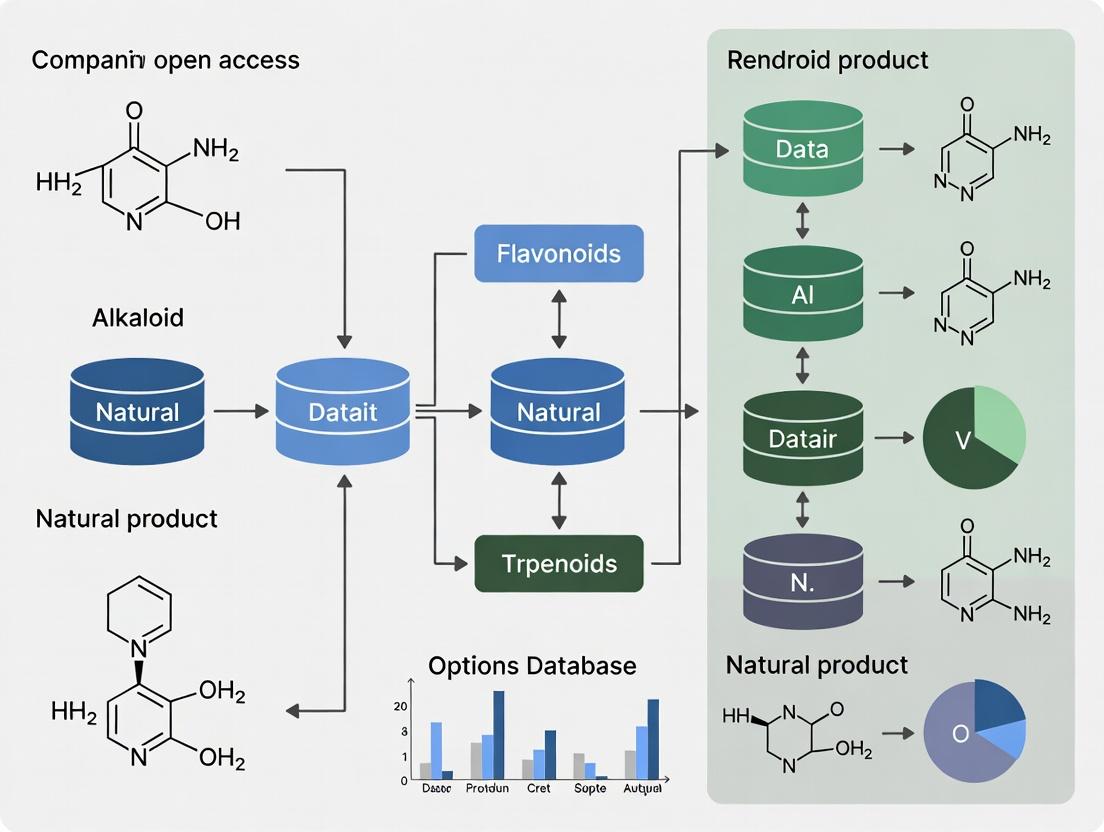
Natural products are a cornerstone of drug discovery, with over 50% of new drugs developed from 1981-2014 originating from these compounds [citation:2].
Open Access Natural Product Databases: A 2025 Guide for Researchers in Drug Discovery
Abstract
Natural products are a cornerstone of drug discovery, with over 50% of new drugs developed from 1981-2014 originating from these compounds [citation:2]. However, researchers face a fragmented landscape of over 120 databases, with only about 50 being truly open access [citation:2][citation:5]. This guide provides a comprehensive comparison of open-access natural product databases tailored for researchers, scientists, and drug development professionals. It covers foundational knowledge of available resources, practical methodologies for database utilization, strategies for troubleshooting common challenges like data quality and accessibility, and a framework for comparative evaluation to select the best tools for specific research intents, from virtual screening to dereplication.
Navigating the Landscape: An Introduction to Open-Access Natural Product Databases
The Critical Role of Natural Products in Modern Drug Discovery
The landscape of natural product (NP) discovery has undergone a profound transformation, driven by the digitization of chemical information and the advent of computational power. Historically, the discovery of bioactive NPs was a labor-intensive process rooted in ethnobotany and systematic bioassay-guided fractionation of crude extracts [1]. While this traditional approach yielded foundational therapeutics—such as the anticancer agent paclitaxel from the Pacific yew tree and the heart medicine digoxin from the foxglove plant—it is inherently low-throughput and resource-heavy [2]. The modern paradigm has shifted towards in silico screening and data-driven discovery, leveraging vast, curated databases of NP structures and properties [3]. This evolution is central to a broader thesis on open-access NP database research, which posits that the accessibility, quality, and interoperability of digital NP collections are now critical bottlenecks and opportunities in drug discovery [4].
Open-access databases have democratized research, allowing scientists to perform virtual screening of hundreds of thousands of compounds before any wet-lab work begins [3]. However, the field is fragmented, with over 120 different NP resources cited since 2000, of which only about 50 are truly open-access and provide retrievable molecular structures [4]. This comparison guide will objectively analyze the performance of different database strategies—from traditional, manually curated repositories to modern, computationally generated libraries—providing researchers with the experimental data and protocols needed to navigate this complex ecosystem.
Comparative Analysis of Database Strategies and Performance
The methodologies for building and utilizing NP databases fall into two primary categories: experimental compilation and computational generation. Each strategy offers distinct advantages and trade-offs in terms of data volume, novelty, and direct biological relevance, fundamentally shaping their utility in different stages of the drug discovery pipeline.
Performance Comparison: Experimental vs. Computational Databases
The table below summarizes the core characteristics of representative databases from both paradigms, highlighting their complementary roles.
Table 1: Comparison of Experimental and Computational Natural Product Database Strategies
| Strategy | Representative Database | Key Characteristics | Volume (Unique Compounds) | Primary Use Case | Key Limitation |
|---|---|---|---|---|---|
| Experimental Compilation | SuperNatural 3.0 (2022) [2] | Manually curated from literature; includes mechanisms, toxicity, vendors. | ~450,000 | Target identification, lead optimization, dereplication. | Limited to known chemical space; curation is time-intensive. |
| COCONUT (2020) [3] [4] | Aggregated open-access NP collections; sparse annotations. | ~400,000 | Virtual screening foundation, dataset for model training. | Heterogeneous data quality; often lacks standardized metadata. | |
| Computational Generation | Generated NP-Like Database (2023) [5] | Created by an LSTM neural network trained on known NPs. | ~67,000,000 | Exploring novel chemical space, ultra-large virtual screening. | Compounds are hypothetical; requires experimental validation. |
| ZINC (for commercially available NPs) [6] | Curates and standardizes compounds from vendor catalogs. | Billions (subset are NPs) | Purchasable lead-like compound sourcing. | Not exclusively NPs; may lack detailed biological annotations. |
Experimental databases like SuperNatural 3.0 provide high-confidence data essential for dereplication (avoiding rediscovery) and understanding mechanisms of action [2]. Their main constraint is scale, being confined to the several hundred thousand NPs that have been isolated and characterized. In contrast, computational strategies achieve a massive 165-fold expansion of accessible chemical space, as demonstrated by the 67 million compound database [5]. This generated library maintains "natural product-likeness" but consists of hypothetical structures that prioritize scaffold novelty and require subsequent synthesis or sourcing for biological testing.
Database Functionality and Usability Comparison
Beyond content, the utility of a database is determined by its search functionalities and data interoperability. Advanced query capabilities directly impact a researcher's efficiency in identifying candidate molecules.
Table 2: Functionality Comparison of Major Open-Access NP Databases
| Database | Search Modalities | Key Integrated Features | Data Export & Interoperability | Target/Action Annotation |
|---|---|---|---|---|
| SuperNatural 3.0 [2] | Name/ID, properties, similarity, substructure. | Predicted toxicity (ProTox-II), mechanism of action, vendor data, taste prediction. | Downloadable structures and data. | Pathway mapping (via KEGG/ChEMBL), focused libraries (e.g., anticancer, antiviral). |
| TCM Database@Taiwan [1] | Chemical properties, substructures, TCM classification. | ChemAxon plugin for structure drawing. | Downloads in 2D (.cdx) and 3D (.mol2) formats. | Limited; focuses on herb-ingredient-compound relationships. |
| TCMID [1] | Network-based (herb, ingredient, target, disease). | Self-developed network visualization tools. | Network data accessible. | Strong; links herbal ingredients to disease-related protein targets. |
| CEMTDD [1] | Herb, compound, target queries. | Integrated Cytoscape Web for network visualization. | Network data accessible. | Strong; displays compound-target-disease networks. |
This comparison reveals a trend from simple structure repositories toward integrated knowledge systems. Modern platforms like SuperNatural 3.0 and TCMID do not just list compounds; they connect them to targets, diseases, and pathways, bridging traditional medicine and molecular pharmacology [1] [2]. This enables systems pharmacology approaches and multi-target drug discovery.
Experimental Protocols: From Data Generation to Validation
The creation and use of these databases rely on rigorous, reproducible experimental and computational protocols. Below are detailed methodologies for two critical processes: the computational generation of novel NP-like libraries and the experimental validation pathway for database-sourced hits.
Protocol for Generating a Novel NP-Like Chemical Library
This protocol, based on the work generating 67 million NP-like molecules, outlines the steps for creating a validated virtual screening library using deep learning [5].
1. Data Curation and Preparation:
- Source Data: Obtain canonical SMILES (Simplified Molecular Input Line Entry System) strings for known natural products from a comprehensive open-source collection like COCONUT [3].
- Preprocessing: Remove stereochemistry information to reduce model complexity. Split the data into training (e.g., 80%) and validation sets.
- Tokenization: Break SMILES strings into a vocabulary of unique characters (e.g., 'C', '=', 'O', '(', ')') to create a "molecular language" for the model to learn.
2. Model Training:
- Architecture Selection: Employ a Recurrent Neural Network (RNN) with Long Short-Term Memory (LSTM) units, which is effective for sequence generation tasks.
- Training: Train the LSTM model on the tokenized SMILES sequences. The model learns the statistical likelihood of character sequences that define valid and NP-like chemical structures.
3. Library Generation and Sanitization:
- Generation: Use the trained model to generate a massive set (e.g., 100 million) of novel SMILES strings.
- Validity Filtering: Use cheminformatics toolkits (e.g., RDKit) to parse each SMILES and filter out syntactically invalid structures.
- Deduplication: Convert all valid SMILES to canonical form and remove duplicates.
- Chemical Curation: Apply a standardized pipeline (e.g., the ChEMBL curation pipeline) to correct valency issues, remove salts, and generate "parent" structures [5].
4. Characterization and Scoring:
- Calculate NP-Likeness: Use a tool like NP-Score to assess how closely each generated molecule's structural fragments resemble those in known NP databases [5].
- Pathway Classification: Use a classifier (e.g., NPClassifier) to predict the likely biosynthetic origin (e.g., polyketide, alkaloid) of the novel molecules [5].
- Descriptor Calculation: Compute key physicochemical properties (molecular weight, logP, polar surface area) to profile the chemical space of the new library.
Diagram Title: Workflow for Generative AI in NP Library Design
Protocol for Validating Database-Hits via Biological Assay
This protocol describes the critical path from in silico hit identification to in vitro confirmation, a cornerstone of modern NP-driven discovery.
1. Virtual Screening:
- Target Preparation: Obtain a high-resolution 3D structure of the target protein (e.g., from the Protein Data Bank, PDB [6]) and prepare it for docking (add hydrogens, assign charges).
- Library Docking: Using docking software (e.g., AutoDock Vina, Glide), screen the prepared NP database (e.g., SuperNatural 3.0 or a generated library) against the target's active site.
- Hit Selection: Rank compounds by docking score (binding affinity estimate) and visually inspect top candidates for sensible binding interactions and chemical tractability.
2. Compound Sourcing:
- Source from Vendor: For hits found in annotated databases like SuperNatural 3.0 or ZINC, purchase the physical compound from the listed commercial supplier [2] [6].
- Custom Synthesis: For novel, computationally generated hits, initiate synthetic chemistry routes to produce the compound for testing.
3. In Vitro Bioactivity Assay:
- Assay Design: Develop or adopt a biochemical or cell-based assay relevant to the target's function (e.g., enzyme inhibition, cell proliferation).
- Dose-Response Testing: Treat the assay system with a serial dilution of the sourced/synthesized hit compound.
- Data Analysis: Calculate potency metrics (e.g., IC50, EC50) to confirm the activity predicted by virtual screening.
4. Counter-Screening and Specificity:
- Selectivity Testing: Test active compounds against related but non-target proteins to assess selectivity and reduce the risk of off-target effects.
- Cytotoxicity Assay: Perform a general cell viability assay (e.g., against mammalian cell lines) to identify compounds with non-specific toxic effects.
Effective natural product research in the modern era requires a suite of interoperable databases and software tools. The following table details key resources that form the essential toolkit for researchers.
Table 3: Research Reagent Solutions: Key Databases and Tools for NP Discovery
| Tool / Database | Type | Primary Function in NP Research | Access |
|---|---|---|---|
| COCONUT [3] [4] | NP Structure Collection | Provides the largest open collection of unique NP structures; serves as a foundational dataset for training generative models or virtual screening. | Open Access |
| SuperNatural 3.0 [2] | Annotated NP Database | Offers richly annotated data (target, pathway, toxicity, vendor) for hypothesis-driven search and lead prioritization. | Open Access |
| ChEMBL [6] | Bioactivity Database | Provides bioactivity data (IC50, Ki) for millions of compounds; crucial for understanding structure-activity relationships (SAR) and target profiling. | Open Access |
| ZINC [6] | Purchasable Compound Database | Hosts ready-to-dock 3D structures of commercially available compounds, including NPs, enabling the transition from virtual hit to purchasable lead. | Open Access |
| RDKit | Cheminformatics Software | An open-source toolkit for cheminformatics; used for handling chemical data, calculating descriptors, fingerprinting, and integrating with machine learning pipelines [5] [2]. | Open Source |
| NP-Score [5] | Scoring Function | Quantifies the "natural product-likeness" of a molecule based on substructure fragments, guiding the design or prioritization of NP-like compounds. | Open Source / Algorithm |
| Cytoscape [1] | Network Analysis Software | Visualizes and analyzes complex herb-compound-target-disease interaction networks extracted from databases like TCMID and CEMTDD. | Open Source |
Discussion and Future Perspectives
The comparative analysis reveals that the future of NP discovery lies in the strategic integration of computational and experimental database paradigms. The sheer scale of computationally generated libraries (~67 million compounds) solves the problem of limited chemical novelty but introduces the challenge of validation [5]. Conversely, traditional experimental databases offer high-fidelity, biologically annotated data but are constrained to known chemical space [1] [2]. The most efficient discovery pipeline will likely use generative models to explore vast, novel regions of chemical space, followed by stringent filtering for drug-likeness and NP-likeness, and finally mapping the filtered hits onto the rich biological context provided by curated knowledge bases like SuperNatural 3.0 and ChEMBL [5] [2] [6].
Key future directions include: 1) Improving FAIRness: Enhancing the Findability, Accessibility, Interoperability, and Reusability of open NP data to prevent information loss [4]; 2) Standardizing Metadata: Developing community standards for reporting NP source organism, extraction, and bioactivity data to improve database quality and comparability [3]; and 3) Integrating Omics Data: Linking NP databases with genomic and metabolomic data to predict biosynthetic pathways and discover new analogs intelligently [5].
In conclusion, within the thesis of open-access NP database research, the critical role of natural products in modern drug discovery is increasingly defined by digital access and computational exploitation. The performance of one strategy over another is context-dependent. For understanding traditional medicine or dereplication, curated experimental databases are superior. For pioneering unprecedented chemotypes, computationally generated libraries are indispensable. The synergistic use of both, facilitated by the tools and protocols outlined here, represents the most powerful approach to unlocking the next generation of natural product-derived therapeutics.
Open access to research data, particularly in fields like natural product discovery, is foundational to accelerating scientific progress. The FAIR principles—ensuring data is Findable, Accessible, Interoperable, and Reusable—provide a critical framework for this endeavor [7]. In the context of natural product research, high-quality, open-access databases that adhere to these principles are indispensable tools for virtual screening, AI-driven discovery, and drug development [8]. This guide objectively compares leading open-access natural product databases, evaluating their performance, scale, and implementation of FAIR principles to aid researchers in selecting the most appropriate resources for their work.
The landscape of open-access natural product databases varies significantly in scale, origin, and specialization. The table below provides a high-level comparison of three distinct types of resources: a large-scale aggregated database, a focused regional collection, and a virtually generated library.
Table 1: Comparison of Open-Access Natural Product Database Characteristics
| Database Name | Primary Type & Scale | Key Features & Curation Approach | FAIR Emphasis & Access |
|---|---|---|---|
| COCONUT 2.0 [7] | Aggregated Collection (~400,000 known compounds) | Community curation; detailed provenance (organism, geography); substructure/similarity search. | High: Enables user submissions, has detailed metadata, and provides bulk downloads in multiple formats. |
| NAPRORE-CR [9] | Regional/Focused Collection (~1,161 compounds) | Compounds from Costa Rica; annotated with calculated properties (e.g., LogP, TPSA). | Medium: Freely available; includes structural data and properties but is smaller in scale. |
| 67M NP-Like Database [5] | AI-Generated Virtual Library (67 million compounds) | Generated via LSTM neural network; expands known chemical space by 165x; filtered for validity. | Medium: Openly available dataset; focuses on structural information with natural product-likeness scoring. |
Performance Analysis and Implementation of FAIR Principles
A deeper analysis of database performance and utility requires examining how each resource implements the core tenets of the FAIR principles.
Findability and Accessibility
Findability is achieved through persistent identifiers and rich metadata. COCONUT 2.0 excels here by assigning Digital Object Identifiers (DOIs) to contributed collections, making specific datasets citable and traceable [7]. Its advanced search interface allows queries by structure, substructure, name, and organism. In contrast, the 67M NP-Like Database is primarily findable as a single, massive dataset focused on structural information [5].
Accessibility is demonstrated by long-term retrieval and open protocols. All databases discussed are freely accessible online. COCONUT 2.0 enhances accessibility by offering multiple bulk download formats (SDF, CSV, SQL dump), facilitating offline analysis [7]. The regional NAPRORE-CR database is also openly available, supporting its mission of sharing biodiversity data [9].
Interoperability and Reusability
Interoperability refers to the ability to integrate with other data systems. COCONUT 2.0 uses standardized schemas (e.g., InChI, SMILES) and links to external ontology terms for organisms, fostering integration with other bioinformatics resources [7]. The AI-generated database uses canonical SMILES, a universal chemical language, ensuring compatibility with most cheminformatics software [5].
Reusability is paramount for data utility. It is ensured by rich descriptions of data provenance and licensing. COCONUT is strongest here, as each entry is annotated with source organism, geographic origin, and literature citations, providing essential context for reuse [7]. The virtual library, while vast, has less contextual metadata but is explicitly generated for reuse in in silico screening campaigns [5].
Table 2: Analysis of Database Performance in FAIR Principles
| FAIR Principle | COCONUT 2.0 [7] | NAPRORE-CR [9] | 67M NP-Like Database [5] |
|---|---|---|---|
| Findability | DOI for collections; rich metadata; multiple search modes. | DOI for dataset; basic metadata. | Accessible via repository; identified by study DOI. |
| Accessibility | Free web interface; bulk downloads (SDF, CSV, SQL). | Free download via Zenodo. | Free download from repository. |
| Interoperability | Uses standard identifiers; links to external taxonomies. | Uses standard chemical descriptors. | Uses canonical SMILES format. |
| Reusability | High: Detailed provenance, licensing, and community curation. | Moderate: Clear license but limited scope. | High: Created for screening; clear generation protocol. |
Experimental Protocols for Database Utilization and Validation
The value of these databases is realized through their application in structured research workflows. Below are detailed protocols for two key applications: virtual screening using existing databases and the generation of novel virtual libraries.
Protocol 1: Virtual Screening for Bioactive Compounds
This protocol is based on studies that screen databases like COCONUT for specific biological targets [10].
- Target and Database Selection: Define the protein target (e.g., NLRP3 inflammasome) [10]. Select a database (e.g., COCONUT, NAPRORE-CR) and download the structural data (SDF or SMILES format).
- Ligand Preparation: Use cheminformatics toolkits (e.g., RDKit) to sanitize structures: standardize tautomers, remove duplicates, add hydrogens, and generate plausible 3D conformations [5].
- Molecular Docking: Perform high-throughput docking against the target's active site using software like AutoDock Vina or Glide. Rank compounds based on docking scores (e.g., kcal/mol) [10].
- Post-Docking Analysis: Select top-ranked compounds (leads) for further analysis. Calculate binding free energies using more rigorous methods (e.g., MM-PBSA/GBSA) and run molecular dynamics simulations (100-200 ns) to assess complex stability [10].
- ADMET Prediction: Evaluate leads for drug-like properties (absorption, distribution, metabolism, excretion, toxicity) using in silico tools to prioritize candidates for experimental validation [10].
Protocol 2: Generating and Validating an AI-Based Virtual Library
This protocol outlines the methodology for creating expansive virtual databases, as demonstrated in the 67M compound study [5].
- Data Curation: Assemble a high-quality training set of known natural products (e.g., 325,535 SMILES from COCONUT). Remove stereochemistry to simplify the chemical language for the model [5].
- Model Training: Train a deep generative model (e.g., a Long Short-Term Memory Recurrent Neural Network) on the tokenized SMILES strings. The model learns the statistical patterns and "rules" of natural product structures [5].
- Library Generation: Use the trained model to generate a massive number of novel SMILES strings (e.g., 100 million) [5].
- Validation and Filtering: Employ a multi-step cheminformatics pipeline to ensure quality:
- Validity: Use RDKit's
Chem.MolFromSmiles()to filter out syntactically invalid strings. - Uniqueness: Remove duplicates by converting SMILES to canonical forms and InChI identifiers.
- Natural Product-Likeness: Score remaining structures using the NP Score tool to assess their similarity to known natural products [5].
- Validity: Use RDKit's
- Characterization: Analyze the final library's physicochemical space (e.g., molecular weight, logP) and classify compounds by biosynthetic pathway using tools like NPClassifier to demonstrate its coverage and novelty [5].
Diagram: Two primary workflows for leveraging open-access natural product (NP) databases in research.
The effective use and development of natural product databases rely on a suite of specialized software tools and resources.
Table 3: Essential Research Reagent Solutions for NP Database Work
| Tool/Resource Name | Category | Primary Function in NP Research |
|---|---|---|
| RDKit [5] | Cheminformatics Library | Core functions for reading/writing chemical structures, calculating molecular descriptors, and performing substructure searches. Used for database sanitization and analysis. |
| COCONUT Web Interface [7] | Database Portal | Provides user-friendly access to search (text, structure, similarity) and browse a large aggregated collection of natural products with metadata. |
| NP Score [5] | Scoring Algorithm | Quantifies the "natural product-likeness" of a molecule by comparing its structural fragments to those in known NP databases. Critical for validating AI-generated libraries. |
| MARCUS Tool [11] | Literature Curation | An integrated platform that uses AI (GPT-4, OCSR engines) to extract chemical structures and metadata from PDFs, streamlining submission to databases like COCONUT. |
| DECIMER/MolScribe [11] | Optical Chemical Recognition (OCSR) | Converts images of chemical structures in literature into machine-readable SMILES or InChI format, a key step in automated database curation. |
Diagram: The workflow for making unstructured natural product data FAIR using the MARCUS curation platform and the COCONUT database.
The field of natural product (NP) research is defined by both immense chemical wealth and significant infrastructural complexity. With over 400,000 fully characterized compounds known to date, NPs are a cornerstone of drug discovery, forming the basis for a substantial proportion of approved therapeutics [5]. However, this valuable data is dispersed across a vast, fragmented ecosystem of resources. Researchers have cataloged over 120 distinct databases and libraries, ranging from physical sample repositories to virtual screening libraries [12] [7]. Within this, approximately 50 maintain a commitment to open-access principles, creating a critical but heterogeneous resource for the global scientific community.
This comparison guide aims to bring clarity to this complex landscape. We objectively evaluate the scope, functionality, and performance of key open-access databases and the computational tools built upon them. The analysis is framed within a broader thesis: that while fragmentation presents a challenge, the synergistic use of expansive open databases and advanced in silico methodologies—such as AI-driven molecular generation and target prediction—is revolutionizing NP-based discovery by making it more systematic, predictive, and cost-effective [5] [13] [14].
Database Classification and Comparative Analysis
The NP resource ecosystem can be categorized by content type and access model. The following table summarizes the core characteristics of major categories, highlighting key examples and their primary applications in research.
Table 1: Classification and Comparison of Major Natural Product Resource Types
| Resource Category | Description & Scope | Key Examples (Source) | Primary Research Application |
|---|---|---|---|
| Comprehensive Open-Access NP Databases | Large-scale, digitally curated collections of chemical structures and associated metadata (e.g., source organism, literature). | COCONUT (~406,919 compounds) [5] [7], NPASS, CMAUP [13] | Virtual screening, chemoinformatic analysis, data mining for biodiscovery. |
| Physical Extract & Compound Libraries | Collections of tangible samples (crude extracts, prefractionated libraries, pure compounds) available for biological screening. | NCI Natural Products Repository (>230,000 extracts) [12], MEDINA (>200,000 extracts) [12], Axxam Library (11,500 compounds) [12] | High-throughput phenotypic and target-based screening, assay-guided isolation. |
| Broad Cheminformatics Repositories | General-purpose chemical databases that include substantial NP data alongside synthetic molecules. | PubChem (119M+ compounds) [6], ChEMBL (2.4M+ bioactive molecules) [6] [15], ZINC (54B+ compounds for virtual screening) [6] | Large-scale virtual screening, bioactivity data mining, ligand-based prediction. |
| Specialized & Regional Databases | Focused collections centered on specific source types (e.g., marine, microbial) or geographic origins. | Dictionary of Marine Natural Products [16], NAPRORE-CR (Costa Rican NPs) [9], StreptomeDB [13] | Targeted discovery from specific ecological niches, study of regional biodiversity. |
| AI-Generated Virtual Libraries | Expansive libraries of novel, NP-like chemical structures created by deep generative models. | 67M NP-like molecule database [5], NPGPT-generated libraries [14] | Exploration of novel chemical space, in silico hit discovery beyond known compounds. |
Experimental Protocols for Database Utilization and Validation
The effective use of NP databases often relies on standardized computational workflows. Below are detailed methodologies for two key applications: the creation/validation of AI-generated virtual libraries and the prediction of biological targets for NP compounds.
3.1 Protocol for Generating and Validating AI-Driven NP-like Libraries This protocol, based on the work of Tay et al. (2023) and subsequent studies, outlines the steps for creating a novel virtual library of NP-like molecules using deep learning [5] [14].
- Data Acquisition and Preprocessing: Obtain a canonical set of known NP structures, such as the ~406,919 compounds from COCONUT [5]. Standardize SMILES representations using a toolkit like RDKit or MolVS, which includes steps like removing salts and normalizing functional groups [14]. Filter structures based on desired criteria (e.g., atom count ≤ 150) [14].
- Model Training: Select a generative chemical language model architecture. Common choices include Recurrent Neural Networks with Long Short-Term Memory (RNN-LSTM) or Generative Pre-trained Transformers (GPT) [5] [14]. Tokenize the preprocessed SMILES or SELFIES strings from the training set. Train the model to learn the statistical patterns and "language" of NP structures.
- Sampling and Generation: Use the trained model to generate a large number (e.g., 100 million) of novel molecular string representations [5].
- Validation and Curation:
- Syntactic Validity: Parse generated strings with RDKit's
Chem.MolFromSmiles()to filter invalid outputs [5]. - Uniqueness & Deduplication: Convert valid structures to canonical SMILES and InChI keys to identify and remove duplicates [5].
- Chemical Sanity: Apply a chemical curation pipeline (e.g., ChEMBL's) to standardize structures and flag severe structural issues [5].
- NP-likeness Evaluation: Calculate a Natural Product-likeness score (NP Score) for generated molecules and compare the distribution to that of the known NP training set [5].
- Syntactic Validity: Parse generated strings with RDKit's
- Characterization: Use tools like NPClassifier to assign biosynthetic pathway-based classifications [5]. Calculate key physicochemical descriptors (e.g., molecular weight, logP) and use dimensionality reduction (e.g., t-SNE) to visualize the library's coverage of chemical space compared to known NPs [5].
3.2 Protocol for Similarity-Based Target Prediction of Natural Products This protocol details the use of the open-source tool CTAPred for predicting potential protein targets of a query NP [13].
- Reference Dataset Preparation: Compile a focused Compound-Target Activity (CTA) dataset from public sources like ChEMBL [13] [15]. Filter for compounds with measured bioactivities (e.g., IC50, Ki) against protein targets, prioritizing data relevant to NP-like chemical space.
- Query Input: Prepare the query NP compound(s) in an accepted format, such as SMILES.
- Fingerprint Calculation & Similarity Search: Encode both the query and reference compounds using a molecular fingerprint (e.g., Morgan fingerprint). Calculate the pairwise similarity (e.g., Tanimoto coefficient) between the query and all compounds in the reference dataset [13].
- Target Inference: Rank the reference compounds based on similarity to the query. Aggregate the known protein targets associated with the top N most similar reference compounds (N is optimized, often between 1-5) [13]. The frequency and potency of a target across this set contribute to its prediction score.
- Output & Prioritization: The tool outputs a ranked list of predicted protein targets for the query NP. Predictions can be prioritized based on the similarity scores, the prevalence of the target in the hit list, and the known biological context.
Visualizing Workflows and Relationships
Diagram 1: AI-driven workflow for virtual natural product library generation and screening.
Diagram 2: Similarity-based ligand-to-target prediction workflow for natural products.
The Scientist's Toolkit: Essential Research Reagent Solutions
Table 2: Key Tools and Resources for Computational Natural Product Research
| Tool/Resource Name | Type | Primary Function in NP Research | Key Feature / Note |
|---|---|---|---|
| COCONUT [7] | Open Database | Provides the largest consolidated collection of open NP structures for dereplication and virtual screening. | Implements community curation and links to original source collections. |
| RDKit [5] | Cheminformatics Toolkit | Enables fundamental operations: molecule manipulation, descriptor calculation, fingerprinting, and image rendering. | Open-source; essential for preprocessing and analyzing chemical data. |
| ChEMBL [6] [15] | Bioactivity Database | Serves as a critical source of experimentally measured compound-target activities for building prediction models. | Manually curated; includes quantitative data (IC50, Ki) for model training. |
| CTAPred [13] | Target Prediction Tool | An open-source, command-line tool for predicting protein targets of NPs using similarity-based methods. | Focuses on NP-relevant chemical space; allows batch processing. |
| NP Score [5] | Computational Metric | Quantifies how "natural product-like" a molecule is based on substructure analysis. | Used to validate the chemical space of AI-generated libraries. |
| NPClassifier [5] | Classification Tool | Automatically classifies NPs into biosynthetic pathways (e.g., polyketide, alkaloid). | Helps in organizing and understanding the origin of novel or generated structures. |
| ZINC [6] | Virtual Screening Library | Provides commercially available compounds and 3D conformers for large-scale virtual docking screens. | Acts as a bridge between virtual hits and purchasable compounds for testing. |
This guide provides a comparative analysis of three fundamental categories of databases—generalistic, thematic, and spectral libraries—within the critical and expanding domain of open-access (OA) natural product research. As OA models face pivotal deadlines and evolving policies, the infrastructure for discovering and analyzing scientific data is more important than ever [17]. This comparison, framed within a broader thesis on OA resources, is designed for researchers, scientists, and drug development professionals who require efficient, high-fidelity data to accelerate discovery. We objectively evaluate these databases based on scope, data type, application, and supporting experimental evidence.
Understanding the Database Categories
The landscape of research databases can be effectively organized into three major categories, each serving a distinct purpose in the scientific workflow.
Generalistic Databases: These are broad repositories that aggregate chemical and biological data from a vast array of sources without a narrow focus on a single discipline. They excel at providing a comprehensive "first look" at a compound, integrating information on structure, properties, bioactivities, and literature. A premier example is PubChem, a public NIH resource containing over 119 million unique compounds and 295 million bioactivity data points from more than 1,000 sources [18]. It serves as a central hub for initial compound identification, sourcing, and high-level biological activity screening, crucial for early-stage drug discovery and cross-disciplinary research [18] [19].
Thematic Databases: These are specialized resources focused on a specific research domain, organism, or data type. They provide deep, curated content tailored to experts within that field. Examples include PubMed for biomedical literature [19], NPASS for natural products and their source species [18], and ERIC for education research [19]. In natural product research, thematic databases offer curated datasets on metabolites from specific organisms (e.g., Yeast Metabolome Database) or dedicated repositories for chemical spectra, which are essential for confident compound annotation and dereplication [18].
Spectral Libraries: These are highly specialized databases containing reference fragmentation patterns (spectra) of molecules, acquired via techniques like mass spectrometry (MS). They are the core tools for analytical identification and quantification. Libraries can be empirical (built from experimentally measured standards) or in silico (predicted using machine learning models like Prosit) [20]. Their primary application is in metabolomics, proteomics, and chemical analysis, where they enable the automated, high-throughput identification of compounds in complex biological samples by matching observed spectra to reference entries [20].
The following table summarizes the core characteristics of these database categories.
Table: Comparison of Major Database Categories for Natural Product Research
| Feature | Generalistic Databases (e.g., PubChem) | Thematic Databases (e.g., NPASS, PubMed) | Spectral Libraries (Empirical & Predicted) |
|---|---|---|---|
| Primary Scope | Broad, cross-disciplinary aggregation [18]. | Deep, domain-specific focus [18] [19]. | Analytical fingerprint matching [20]. |
| Core Data Type | Chemical structures, properties, bioactivities, literature links [18]. | Curated compound sets, species-source data, domain-specific literature [18] [19]. | Reference mass spectra (MS/MS), retention times, collision cross-section values [20] [18]. |
| Key Application | Compound discovery, sourcing, initial bioactivity screening [18]. | Targeted discovery, dereplication, in-depth literature review [18] [19]. | Definitive identification & quantification in complex mixtures (e.g., metabolomics) [20]. |
| Research Stage | Early discovery & prioritization. | Focused investigation & validation. | Analytical confirmation & quantification. |
| Access Model | Open Access (e.g., PubChem) [18]. | Mix of OA and subscription [19]. | Often institutional/commercial; growing OA repositories. |
Comparative Performance and Experimental Data
The utility of these databases is best demonstrated through experimental data. Recent advancements highlight the performance gains achievable with modern spectral libraries and intelligent data acquisition.
Quantitative Performance of Spectral Libraries: A landmark 2023 study developed a Real-Time Library Searching (RTLS) workflow for proteomics, demonstrating the power of large-scale spectral libraries. The researchers used a library of 4 million predicted spectra to enable intelligent, real-time decision-making on a mass spectrometer [20].
- Throughput and Efficiency: The RTLS method doubled instrument acquisition efficiency compared to traditional data-dependent methods. It quantified 15% more significantly regulated proteins in half the gradient time when profiling proteome responses to drug perturbations [20].
- Comparative Advantage: In a separate application integrating RTLS with tandem mass tags (TMTpro), researchers achieved a 42-fold increase in sample throughput for quantifying reactive cysteine residues, a critical task in chemical proteomics and drug mechanism studies [20].
These figures underscore the transformative impact of specialized spectral libraries paired with intelligent informatics. For context, the scale of generalistic databases is immense but serves a different purpose. PubChem, for instance, adds value through integration, connecting compounds to 41.5 million scientific articles and 50.8 million patents [18].
Table: Key Experimental Metrics from Spectral Library Study [20]
| Performance Metric | Traditional Method | RTLS with Spectral Library | Improvement |
|---|---|---|---|
| Instrument Acquisition Efficiency | Baseline | 2-fold increase | 100% improvement |
| Gradient Time for Equivalent Protein Regulation Data | 120 minutes | 60 minutes | 50% reduction |
| Significantly Regulated Proteins Quantified | Baseline | 15% more proteins | Increased sensitivity |
| Sample Throughput for Reactive Cysteine Quantification | Baseline | 42-fold increase | 4200% improvement |
Detailed Experimental Protocols
To ensure reproducibility and provide a clear understanding of the data generation behind spectral library performance, the following protocol is summarized from the cited RTLS study [20].
Protocol: Real-Time Library Searching (RTLS) for Sample-Multiplexed Quantitative Proteomics
1. Sample Preparation:
- Cell Culture & Lysis: Human cell lines (e.g., HCT116, A549) or yeast (S. cerevisiae) are grown, harvested, and lysed in a buffer containing 8M urea and protease inhibitors.
- Peptide Labeling: Proteins are digested, and the resulting peptides are labeled with isobaric tandem mass tags (TMTpro) to enable multiplexed quantification.
- Sample Mixing: A standard sample is prepared by mixing peptides from human and yeast cells in a known ratio (e.g., 90:10 human:yeast) to create a ground-truth benchmark [20].
2. Spectral Library Generation:
- An in silico spectral library is generated for the whole proteome (human and yeast) using a prediction tool like Prosit. The library contains sequence, precursor charge, precursor m/z, and predicted fragment ion intensities for millions of peptides [20].
3. Mass Spectrometry with RTLS:
- Chromatography: Peptides are separated on a reversed-phase C18 column using a 30-180 minute liquid chromatography gradient.
- Instrumentation: Analysis is performed on a high-resolution Orbitrap mass spectrometer (e.g., Eclipse or Ascend) equipped with FAIMS (High-Field Asymmetric Waveform Ion Mobility Spectrometry) for additional gas-phase separation.
- Real-Time Search: As MS2 spectra are acquired, software matches them against the pre-loaded spectral library in milliseconds. Based on a high-confidence match (using scores like dot product), the system intelligently triggers quantitative MS3 scans, avoiding wasted time on unidentifiable or low-quality spectra [20].
4. Data Analysis:
- Quantification is based on reporter ion intensities from the triggered MS3 scans. The increased efficiency of RTLS allows for more comprehensive and accurate quantification across the multiplexed sample set [20].
Visualizing Workflows and Relationships
The integration of different database types is key to a successful research pipeline. The following diagrams illustrate a spectral library matching workflow and the logical relationship between database categories.
Diagram 1: Real-Time Spectral Library Matching Workflow This diagram details the computational and instrumental workflow for real-time spectral library matching, as described in the experimental protocol [20].
Diagram 2: Database Categories in the Research Pipeline This diagram shows how the three database categories logically connect and support different stages of the natural product research pipeline, from discovery to confirmation.
The Scientist's Toolkit: Essential Research Reagents and Materials
The following table lists key reagents, instruments, and software solutions essential for conducting experiments that generate and utilize spectral library data, as derived from the featured protocol [20].
Table: Essential Research Reagents and Materials for Spectral Library-Based Proteomics
| Item | Function/Description | Example/Note |
|---|---|---|
| TMTpro 16/18plex Isobaric Labels | Chemical tags for multiplexed sample quantification, allowing simultaneous analysis of up to 18 samples. | Critical for high-throughput quantitative experiments [20]. |
| FAIMS Device | High-Field Asymmetric waveform Ion Mobility Spectrometry; adds a separation dimension to reduce sample complexity and improve sensitivity. | Used with CV values typically at -40, -60, -80 [20]. |
| High-Resolution Mass Spectrometer | Instrument for accurate mass measurement and fragmentation (e.g., Orbitrap Eclipse/Ascend). | Enables the MS1, MS2, and SPS-MS3 scans required for the workflow [20]. |
| Prosit Software | A deep learning tool for predicting high-quality peptide MS/MS spectra from sequences. | Used to generate in silico spectral libraries for whole proteomes [20]. |
| Real-Time Search Software (Custom) | Software application that performs spectral matching against a large library within milliseconds of scan acquisition. | The core innovation enabling intelligent data acquisition [20]. |
| C18 Reverse-Phase LC Column | Chromatography column for separating peptides based on hydrophobicity prior to MS injection. | Standard for bottom-up proteomics; column length (e.g., 30cm) affects resolution [20]. |
This comparison establishes that generalistic, thematic, and spectral libraries are complementary pillars of modern natural product research. The future points toward greater integration and intelligence. Trends include the use of AI not just for spectral prediction but for autonomous database operations, anomaly detection, and enhanced data analytics [21]. Furthermore, the push for Open Access and FAIR data principles is making specialized resources like spectral libraries more accessible, fostering reproducibility and collaboration [17] [22]. Initiatives like NFDI4Chem aim to build a federated, FAIR data infrastructure for chemistry, which would seamlessly connect compound information from generalistic databases with analytical data from spectral libraries [23]. For the researcher, this evolving landscape means that strategic database selection—starting broad with generalistic resources, diving deep with thematic tools, and confirming with spectral libraries—will remain essential for efficient and impactful discovery.
The field of natural product (NP) discovery is undergoing a profound transformation, driven by the digitization of chemical information and the adoption of computational methodologies. This shift has precipitated a move from traditional, resource-intensive assay-guided exploration to data-driven, in silico discovery paradigms [5]. At the heart of this revolution are open-access databases, which serve as the foundational infrastructure for modern computational screening, machine learning, and genome mining. This comparison guide evaluates key databases within the broader thesis that accessible, well-curated, and interoperable data resources are critical for accelerating NP research and drug development.
The current landscape is characterized by a tension between breadth and specialization. Generalist databases aim to aggregate all known NPs into unified resources, thereby simplifying large-scale computational screening. In contrast, specialized microbial databases offer deep, contextual metadata—such as biosynthetic gene cluster (BGC) links and taxonomic provenance—that is essential for hypothesis-driven discovery [24] [25]. Furthermore, the advent of deep generative models has introduced a new category: ultra-large virtual libraries that dramatically expand the explorable chemical space beyond known compounds [5]. This guide objectively compares the scope, performance, and applications of these diverse resources, providing researchers with a framework to select the optimal tools for their specific workflows.
Comparative Analysis of Database Scale, Content, and Curation
A primary differentiator among NP databases is their scale, source of data, and the rigor of their curation pipelines. These factors directly impact their suitability for various research applications, from virtual screening to ecological studies.
Table 1: Comparison of Major Open Access Natural Product Databases by Scale and Content
| Database Name | Primary Scope | Number of Compounds | Key Data Sources & Curation Features | Primary Use Case |
|---|---|---|---|---|
| COCONUT [25] | Generalist: All known NPs | 406,919 (unique, flat structures) | Aggregated from 53 open sources; ChEMBL curation pipeline; 5-star annotation quality system. | Large-scale virtual screening, machine learning model training, broad chemical space analysis. |
| Generated NP-like DB [5] | Generative: AI-expanded library | 67,064,204 (generated molecules) | Created by LSTM-RNN trained on COCONUT; filtered via RDKit & ChEMBL pipeline. | Exploring novel chemical space, ultra-high-throughput in silico screening. |
| Natural Products Atlas [24] [26] | Specialist: Microbial NPs | 25,523 (as of 2019) | Expert-curated from literature; linked to MIBiG (BGCs) and GNPS (mass spectra). | Microbial NP discovery, dereplication, linking chemistry to genomics. |
| NPASS [24] | Specialist: NPs with activity data | ~35,032 (incl. ~9,000 microbial) | Focus on biological activities and source organisms. | Activity-guided discovery, target identification, pharmacology research. |
| StreptomeDB [24] [26] | Specialist: Streptomyces metabolites | >7,125 | Focus on compounds from the genus Streptomyces; includes some bioactivity data. | Research on actinobacterial metabolism, antibiotic discovery. |
COCONUT (Collection of Open Natural Products) establishes the benchmark for generalist, aggregated databases. Its construction involved unifying compounds from 53 disparate sources, followed by stringent standardization using the ChEMBL curation pipeline to check structural validity, remove salts, and generate parent structures [25]. A key innovation is its 5-star annotation system, which rates compounds based on the completeness of metadata (name, taxonomic origin, literature reference), guiding users toward higher-quality entries [25]. In contrast, specialist databases like the Natural Products Atlas prioritize depth over breadth. Its value lies in expert manual curation and its bi-directional links to genomic (MIBiG) and metabolomic (GNPS) databases, creating a networked resource for microbial natural products research [24].
The 67-million compound generated database represents a paradigm shift from curation to creation [5]. Its scale is enabled by a recurrent neural network (RNN) with long short-term memory (LSTM) units trained on the SMILES strings of known NPs from COCONUT. This model learned the underlying "molecular language" of NPs to generate novel, syntactically valid structures. While it sacrifices the detailed metadata of curated databases, it offers an unprecedented 165-fold expansion of NP-like chemical space for virtual screening [5].
Experimental Validation and Performance Metrics
The utility of a NP database is ultimately determined by the quality and chemical relevance of its contents. Rigorous experimental validation, using both cheminformatic and statistical measures, is essential to establish trust in these resources.
Validation of the Generative Database
The creation and validation of the 67-million compound database followed a multi-step computational protocol designed to ensure chemical validity, uniqueness, and "natural product-likeness" [5].
Experimental Protocol: Generation and Validation of AI-Derived NPs [5]
- Model Training: An LSTM-RNN was trained on 325,535 tokenized SMILES strings (stereochemistry removed) from the COCONUT database.
- Library Generation: The trained model generated 100 million novel SMILES strings.
- Validity & Uniqueness Filtering:
- Syntax Check: RDKit's
Chem.MolFromSmiles()filtered out 9.6 million invalid SMILES. - Deduplication: Structures were canonicalized and converted to InChI keys, removing 22.5 million duplicates.
- Structural Curation: The ChEMBL pipeline removed 0.85 million molecules with severe structural issues (penalty score >5).
- Syntax Check: RDKit's
- Natural Product-Likeness Assessment:
- The NP Score was calculated for all generated and known COCONUT molecules.
- The Kullback-Leibler (KL) divergence between the score distributions of the two sets was computed (0.064 nats), indicating high similarity.
- Structural Classification: The NPClassifier tool was used to assign biosynthetic pathway classes, with 88% of generated molecules receiving a classification.
- Chemical Space Analysis: 10 key molecular descriptors were calculated, and t-SNE dimensionality reduction was performed to visualize and compare the physiochemical space covered by known versus generated compounds.
Table 2: Key Validation Metrics for the 67M+ Generated NP Database [5]
| Validation Metric | Result | Interpretation & Significance |
|---|---|---|
| Final Library Size | 67,064,204 compounds | A 165-fold expansion over known NPs (~400k), enabling exploration of vast novel space. |
| Syntactic Validity Rate | ~90.4% (90.4M valid from 100M generated) | Demonstrates the model's proficiency in learning chemical grammar. |
| Uniqueness Rate | 77% of valid SMILES were unique. | Indicates the model generates novel diversity, not just repetitions. |
| NP Score KL Divergence | 0.064 nats | Distribution statistically indistinguishable from known NPs, confirming "NP-likeness". |
| NPClassifier Coverage | 88% classified | Suggests most generated structures align with known biosynthetic logic; unclassified 12% may represent novel classes. |
| Chemical Space Expansion | t-SNE shows significant expansion beyond COCONUT space. | Generated molecules cover new regions of physiochemical property space, promising novel scaffolds. |
Cheminformatic Benchmarking of Database Utility
Specialized computational fingerprints and scores have been developed to better handle the unique structural complexity of NPs. A key study benchmarked a novel neural network-derived fingerprint against traditional methods using NP-specific tasks [27].
Experimental Protocol: Benchmarking NP-Specific Fingerprints [27]
- Data Curation: A training set was created from COCONUT (394,939 NPs) and similar synthetic decoys from ZINC (210,412 compounds).
- Model Training: A multi-layer perceptron was trained to distinguish NPs from synthetic molecules.
- Fingerprint Extraction: The activations from a hidden layer of the trained network were used as a new "neural fingerprint."
- Benchmarking: This neural fingerprint was evaluated on three external validation tasks against traditional (ECFP4, MACCS) and NP-specific fingerprints:
- NP Identification: Distinguishing NPs from synthetic molecules.
- Target Identification: Distinguishing active from inactive NPs for specific protein targets.
- Mixed Screening: A realistic virtual screening scenario containing both NP and synthetic actives/inactives.
- Score Development: The activation of the network's output neuron was proposed as a new, data-driven Natural Product Likeness score.
The study concluded that the neural fingerprint outperformed all other methods in the "Mixed Screening" task, which most closely resembles a real-world drug discovery campaign [27]. This demonstrates that databases like COCONUT are not merely static repositories but are essential for training next-generation tools that unlock more effective NP discovery.
Diagram: Workflow for Generating and Validating an AI-Expanded NP Library
Leveraging NP databases effectively requires a suite of complementary software tools and reagents. The following table details key resources frequently employed in conjunction with databases for discovery workflows.
Table 3: Essential Research Tools and Reagents for NP Database Workflows
| Tool/Resource Name | Type | Primary Function in NP Research | Typical Application with Databases |
|---|---|---|---|
| RDKit [5] | Cheminformatics Toolkit | Provides fundamental functions for reading, writing, and manipulating chemical structures (SMILES, InChI), calculating molecular descriptors, and generating fingerprints. | Used for standardizing database structures, filtering invalid entries, and computing properties for analysis [5] [27]. |
| ChEMBL Curation Pipeline [5] [25] | Standardization Protocol | A standardized set of rules for checking chemical structure validity, removing salts and solvents, and generating parent molecules according to FDA/IUPAC guidelines. | Applied to raw data in COCONUT and the generated DB to ensure high-quality, consistent chemical representations [5]. |
| NP Score [5] | Computational Metric | A Bayesian score quantifying a molecule's similarity to the structural space of known natural products based on atom-centered fragments. | Used to validate the "natural product-likeness" of AI-generated libraries and to prioritize compounds from virtual screens [5]. |
| NPClassifier [5] | Deep Learning Classifier | A tool that classifies NPs into biosynthetic pathway classes (e.g., polyketide, non-ribosomal peptide) based on structural features. | Annotates database entries with putative biosynthetic origin, enabling organized exploration and targeted mining [5]. |
| antiSMASH [24] | Genomic Analysis Platform | Identifies and annotates Biosynthetic Gene Clusters (BGCs) in genomic DNA sequences. | Used alongside genomic data to link database compounds to their genetic blueprints, enabling genome-mining approaches. |
| GNPS [24] | Tandem MS Database | A platform for community-wide organization and sharing of raw, processed, or annotated tandem MS data. | Used with the Natural Products Atlas for spectral dereplication, identifying known compounds in mixtures quickly. |
Microbial natural products are a prolific source of antibiotics and other therapeutics. Research in this area relies on both digital databases and tangible strain collections, each playing a complementary role.
Specialized Microbial Databases
For microbial NPs, deep annotation is as critical as chemical structure. The Natural Products Atlas is the leading open-access resource, distinguished by its manual curation by NP specialists and its integration with genomic (MIBiG) and metabolomic (GNPS) data [24]. NPASS provides valuable supplemental bioactivity data, while StreptomeDB offers a focused lens on the chemically rich genus Streptomyces [24] [26]. These resources address a critical gap, as generalist databases often lack the detailed taxonomic and biosynthetic metadata required for microbial strain prioritization and dereplication.
Bridging Digital and Physical Collections
The ultimate source of novel microbial NPs is biological material. Large-scale strain collections, such as the Natural Products Discovery Center (NPDC) at The Wertheim UF Scripps Institute, represent an indispensable physical counterpart to digital databases [28]. The NPDC houses over 125,000 microbial strains, estimated to encode the potential for more than 3.75 million natural products—a figure that contextualizes the scale of known chemical space (~20,000 microbial NPs) and highlights the vast potential that remains unexplored [28].
The workflow connecting these resources is powerful: Genomic sequencing of strain collections identifies promising BGCs (digital data). These BGCs can be compared against databases like MIBiG to assess novelty. Subsequently, strains are cultured, and their extracts are analyzed with techniques like NMR-based metabolomics [29]. The resulting spectroscopic data is used to dereplicate against structural databases (e.g., Natural Products Atlas) to avoid rediscovery and to identify truly novel compounds for isolation.
Diagram: Integrated Workflow Linking Physical Repositories and Digital Databases
The expanding ecosystem of open-access NP databases offers tailored solutions for different research objectives. The choice of resource should be guided by the specific stage and goal of the discovery campaign.
For large-scale virtual screening and machine learning, comprehensive and computationally ready resources like COCONUT and the 67M+ generated database are indispensable. Their scale and structural consistency enable the application of AI models and high-throughput in silico screens [5] [27]. For microbial natural product discovery and dereplication, deeply annotated and expertly curated resources like the Natural Products Atlas are critical. Their links to genomic and spectroscopic data provide the contextual information needed to guide experimental work and avoid rediscovery [24]. Furthermore, access to physical strain collections like the NPDC is essential for translating digital predictions into novel chemical entities [28].
The future of NP discovery lies in the deeper integration of these resources. Advancing the FAIR (Findable, Accessible, Interoperable, Reusable) principles for all databases will enable more powerful meta-analyses and cross-domain searches [24]. Continued development of specialized computational tools—such as NP-optimized fingerprints and scores—will further enhance the utility of these databases. By strategically leveraging the complementary strengths of generalist aggregators, specialist repositories, AI-generated libraries, and physical collections, researchers can more effectively navigate the vast chemical potential of nature to address pressing challenges in drug development.
From Data to Discovery: Practical Workflows for Database Utilization
The systematic comparison of open-access natural product (NP) databases represents a critical thesis in modern cheminformatics, focusing on their utility, chemical diversity, and integration into efficient drug discovery pipelines. Virtual screening (VS) stands as the computational cornerstone of this research, enabling the systematic interrogation of these expansive chemical libraries to identify novel bioactive compounds [30]. The evolution of publicly available databases—from curated collections of known NPs like LOTUS and SuperNatural 3.0 to generated libraries of billions of novel, NP-like structures—has fundamentally transformed the scale and scope of computer-aided drug design [2] [5]. This guide objectively compares the performance of various database structures, virtual screening methodologies, and computational platforms, providing researchers with a framework to select optimal strategies for lead discovery. The discussion is grounded in experimental data and protocols that highlight the tangible outputs of integrating open-access NP databases into virtual workflows, from initial virtual hits to experimentally validated leads [31] [32].
Comparative Analysis of Database Structures and Screening Platforms
The performance of a virtual screening campaign is intrinsically linked to the characteristics of the compound database and the computational platform used. The following tables provide a comparative overview of prominent open-access natural product databases and virtual screening software.
Table 1: Comparison of Key Open-Access Natural Product Databases for Virtual Screening
| Database Name | Size (Compounds) | Key Features & Content | Access & Format | Primary Use Case in VS |
|---|---|---|---|---|
| LOTUS [33] | ~276,518 | Dedicated NP database; provides species origin (e.g., Kingdom Plantae). | Freely available online. | Structure-based screening for specific biological targets (e.g., acetylcholinesterase). |
| SuperNatural 3.0 [2] | ~449,058 | Annotated with predicted toxicity, mechanism of action, pathways, and vendor data. Includes targeted libraries for diseases. | Freely available via web server. | Ligand- and structure-based screening with pre-filtered libraries for specific indications. |
| Zimbabwe NP Database (ZiNaPoD) [32] | 6,220 | Curated library of natural products from Zimbabwe. | Presumably accessible upon request/research collaboration. | Regional NP discovery and pharmacophore-based screening. |
| 67M NP-Like Database [5] | ~67 million | Generated via machine learning (RNN) on known NPs; greatly expands novel chemical space. | Openly available data descriptor. | Exploration of ultra-large, novel NP-like chemical space for de novo hit discovery. |
| COCONUT [5] | ~406,919 | A large collection of open natural products; used as a training set for generative models. | Freely accessible online. | Benchmarking, training generative models, and general NP screening. |
Table 2: Performance Comparison of Virtual Screening Software & Platforms
| Software / Platform | Type | Key Algorithmic Features | Reported Performance Metrics | Access Model |
|---|---|---|---|---|
| RosettaVS / OpenVS Platform [31] | Structure-Based (SBVS) | Physics-based force field (RosettaGenFF-VS); models receptor flexibility; integrates active learning for billion-scale libraries. | Hit rates of 14% (KLHDC2) and 44% (NaV1.7); top enrichment factor (EF1% = 16.72) on CASF2016. | Open-source. |
| VSFlow [34] | Ligand-Based (LBVS) | Integrates 2D fingerprint, substructure, and 3D shape-based screening within one tool. Built on RDKit. | Enables rapid screening of large databases on standard CPUs; demonstrated with FDA-approved drug library. | Open-source command-line tool. |
| AutoDock Vina [32] | Structure-Based (SBVS) | Widely used docking program for binding pose and affinity prediction. | Used in pipeline yielding hits with binding energies ≤ -8 kcal/mol; part of validated workflow [32]. | Open-source. |
| LigandScout [32] | Ligand-Based (LBVS) | Used for pharmacophore model generation and screening. | Generated model with 80% accuracy, 95% sensitivity, 80% specificity for glucokinase activators [32]. | Commercial. |
| SwissSimilarity [34] | Ligand-Based (LBVS) | Web tool for 2D fingerprint and 3D shape screening against public and vendor libraries. | Enables easy web-based screening of common databases. | Freely accessible web server. |
Experimental Protocols and Validation from Case Studies
Protocol: Integrated NP Virtual-Interaction-Phenotypic (NP-VIP) Target Characterization
This novel protocol combines virtual screening with experimental 'omics' to deconvolute the complex targets of natural product extracts [35].
- Virtual Screening: A multi-target docking approach is performed against a proteome-wide target panel using constituents of an NP extract (e.g., Salvia miltiorrhiza).
- Chemical Proteomics: The NP extract is immobilized on a resin to create a affinity-based probe. Incubation with cell or tissue lysates pulls down putative protein targets, which are identified via mass spectrometry.
- Metabolomics: The biological system (e.g., cell or animal model) is treated with the NP extract, and subsequent changes in the endogenous metabolite profile are analyzed.
- Data Integration & Triangulation: Overlap analysis is performed on the target lists from the three independent methods. Targets identified by at least two methods are considered high-confidence. For S. miltiorrhiza, this identified five high-confidence targets for ischemic stroke treatment, including PARP1 and STAT3 [35].
- Experimental Validation: High-confidence targets are validated using methods like surface plasmon resonance (SPR), isothermal titration calorimetry (ITC), or functional enzymatic assays.
Diagram 1: NP-VIP Multi-Method Target Identification Workflow
Protocol: Structure-Based Virtual Screening for Glucokinase Activators
This protocol details a classic structure-based virtual screening cascade applied to a regional NP database [32].
- Pharmacophore Generation & Validation:
- A set of known active compounds (pEC50 ≥ 8) is used to generate a common feature pharmacophore model using software like LigandScout.
- The model is validated using the DUD-E benchmark dataset, calculating accuracy, sensitivity, and specificity.
- Database Filtering:
- The validated pharmacophore model is used as a rapid pre-filter against the target database (e.g., 6,220 compounds in ZiNaPoD). This step reduces the number of compounds for more computationally intensive docking.
- Molecular Docking:
- The pharmacophore hits are docked into the target protein's active site (e.g., glucokinase, PDB: 4NO7) using programs like AutoDock Vina in PyRx.
- Compounds are ranked by predicted binding affinity (kcal/mol). A threshold (e.g., ≤ -8 kcal/mol) is applied to select top candidates.
- ADME/Tox Prediction:
- The top docked hits are subjected to in silico ADME (Absorption, Distribution, Metabolism, Excretion) screening using tools like SwissADME to filter out compounds with poor drug-like or pharmacokinetic properties.
- Molecular Dynamics (MD) Simulation:
- The stability of the final shortlisted protein-ligand complexes is assessed using MD simulations (e.g., with GROMACS using the CHARMM36m force field).
- Key metrics include root mean square deviation (RMSD) of the ligand-protein complex and calculation of binding free energies (e.g., via MM-PBSA/GBSA). This protocol identified four stable glucokinase activators from ZiNaPoD, with two (Sphenostylisin I and DMDBC) showing particularly favorable binding free energies (-30.30 and -30.20 kcal/mol) and stable RMSD profiles [32].
Diagram 2: Cascade for Structure-Based VS of NP Databases
Table 3: Key Research Reagent Solutions for NP Virtual Screening
| Tool / Resource | Category | Primary Function | Access / Example |
|---|---|---|---|
| Curated NP Databases (LOTUS, SuperNatural 3.0) | Chemical Library | Provide structurally diverse, annotated, and often biologically pre-characterized starting points for screening. | [33] [2] |
| Generated NP-Like Libraries (e.g., 67M Database) | Chemical Library | Drastically expand accessible chemical space with novel, synthetically tractable NP-like scaffolds for discovery. | [5] |
| VSFlow | Software Tool | An integrated, open-source tool for performing 2D (substructure, fingerprint) and 3D shape-based ligand screening on local databases. | [34] |
| OpenVS / RosettaVS | Software Platform | An open-source, AI-accelerated platform for high-performance structure-based screening of ultra-large libraries, incorporating receptor flexibility. | [31] |
| AutoDock Vina & PyRx | Software Tool | A widely adopted, open-source docking suite for predicting binding poses and affinities in structure-based VS. | [32] |
| RDKit | Software Library | The fundamental open-source cheminformatics toolkit used for molecule handling, descriptor calculation, fingerprinting, and more in custom VS pipelines. | [2] [34] [5] |
| Pharmacophore Modeling Software (e.g., LigandScout) | Software Tool | Creates and validates 3D pharmacophore queries from active compounds for efficient database filtering. | [32] |
| ADME Prediction Tools (e.g., SwissADME) | Software Service | Provides in silico predictions of key pharmacokinetic and drug-likeness parameters to prioritize viable leads. | [32] |
| Molecular Dynamics Software (e.g., GROMACS) | Software Tool | Simulates the dynamic behavior of protein-ligand complexes to assess binding stability and calculate free energies. | [32] |
Within the paradigm of natural product (NP) discovery, dereplication constitutes the critical process of rapidly identifying known compounds early in the discovery pipeline to avoid redundant rediscovery and conserve resources [36]. This process is fundamentally reliant on the comparison of analytical data—typically from mass spectrometry (MS) and nuclear magnetic resonance (NMR) spectroscopy—against reference databases [37]. The efficiency and success of dereplication are directly governed by the scale, quality, and accessibility of these reference databases.
The shift toward open-access databases is a central theme in modern NP research, aiming to democratize data and accelerate discovery. These repositories vary from large-scale, global collections to specialized, region-specific libraries, each employing different strategies for data organization and querying. This guide objectively compares the performance of these varying database architectures and dereplication methodologies, providing a framework for researchers to select optimal tools within the context of a broader, computationally-driven NP discovery workflow [36].
Database Architectures and Strategic Comparison
The performance of a dereplication strategy is intrinsically linked to the design and scope of its underlying database. The following table summarizes the core characteristics of representative database types, from curated knowledgebases to generative libraries.
Table 1: Comparison of Open-Access Natural Product Database Architectures for Dereplication
| Database / Strategy | Core Approach & Scale | Key Query Method | Primary Advantage | Notable Limitation |
|---|---|---|---|---|
| COCONUT (Curated Knowledgebase) | Collection of ~406,919 fully characterized, known natural products [5]. | Spectral matching; substructure search; metadata filtering. | High confidence in annotations; direct link to literature and experimental data. | Limited to known chemical space; scale is static and resource-intensive to expand. |
| DEREP-NP (Fragment-Based Screening) | Database of 65 structural fragments derived from 229,358 pre-2013 NP structures [37]. | Matching counts of structural features inferred from NMR/MS data. | Rapid pre-filtering; handles complex or novel scaffolds via partial feature matching. | Dependent on accurate spectral interpretation to infer fragments; older core dataset. |
| Generative Database (e.g., 67M NP-like) | 67,064,204 computer-generated, natural product-like molecules (165x expansion) [5]. | Virtual screening (docking, similarity); AI-based property prediction. | Explores vast, novel chemical space beyond known NPs; enables in silico discovery. | Contains hypothetical molecules without known biological or spectral data; requires validation. |
| Specialized Repository (e.g., NAPRORE-CR) | Focused collection (e.g., 1,161 compounds from Costa Rica) with curated metadata [9]. | Taxonomy/ecology-based filtering; combined property and structural search. | High relevance for targeted biogeographic studies; enriched contextual metadata. | Limited general applicability; small scale reduces chance of random hits in broad screening. |
Performance Metrics and Experimental Validation
Query Performance and Specificity
The practical utility of a database is measured by its query speed and accuracy. Traditional spectral matching against curated libraries like COCONUT offers high specificity but can be computationally intensive for large-scale searches. In contrast, fragment-based methods like DEREP-NP use a cheminformatic pre-filter. This strategy first reduces the search space by matching simple structural feature counts deduced from spectra, leading to faster retrieval of candidate structures for final confirmation [37].
For the largest-scale databases, such as generative libraries, conventional spectral search is not applicable. Performance is instead measured by virtual screening throughput and the enrichment of bioactive hits in in silico campaigns. The 67-million-compound database, for example, was shown to occupy a significantly expanded physicochemical space compared to known NPs, increasing the probability of identifying novel scaffolds [5].
Experimental Validation of Dereplication Workflows
The effectiveness of a dereplication strategy must be validated experimentally. The following table synthesizes key experimental data from validation studies.
Table 2: Experimental Validation of Dereplication Strategies
| Validated System / Study | Experimental Input | Methodology | Reported Outcome | Key Performance Insight |
|---|---|---|---|---|
| DEREP-NP [37] | 1H, HSQC, and/or HMBC NMR data and/or MS data from purified compounds or simple fractions. | 1. Infer structural fragments from spectra. 2. Query database with fragment count vector. 3. Retrieve matching structures for verification. | Successfully dereplicated compounds from plant, marine invertebrate, and fungal sources, including in mixtures. | Fragment-based query is robust for partial or mixed compound data, accelerating the identification step before full structure elucidation. |
| Generative Model (67M NP-like) [5] | Known NP structures from COCONUT (training set: 325,535 molecules). | 1. Train RNN (LSTM) on SMILES strings. 2. Generate 100M novel SMILES. 3. Filter for validity, uniqueness, and NP-likeness (NP Score). | Produced 67M valid, unique structures. NP Score distribution of generated molecules closely matched that of known NPs (KL divergence: 0.064 nats). | AI can generate chemically valid molecules that occupy NP-like chemical space, providing a vast resource for in silico screening. |
| NAPRORE-CR [9] | Computed molecular descriptors (MW, LogP, TPSA, etc.) for NPs, drugs, pesticides, and cosmetics. | Chemical space visualization (e.g., PCA) and diversity analysis to compare property profiles. | NAPRORE-CR compounds showed property overlap with approved drugs and natural pesticides, suggesting potential cross-applications. | Focused, well-annotated databases enable efficient analysis of chemical space for specific bioactivity or application prediction. |
Detailed Experimental Protocols
Protocol: Fragment-Based Dereplication with DEREP-NP
This protocol outlines the core experimental workflow for using a fragment-based dereplication system, as validated in the literature [37].
1. Sample Preparation & Data Acquisition:
- Purify the natural product extract to obtain individual compounds or simple fractions containing 2-3 components.
- Acquire spectroscopic data. Minimum required: 1H NMR spectrum. Enhanced capability with: 2D NMR (HSQC, HMBC) and/or Mass Spectrometry (MS) data.
2. Spectral Analysis & Fragment Inference:
- Analyze the NMR/MS spectra to identify diagnostic structural features present in the unknown compound (e.g., presence of a phenolic group, olefinic protons, sugar moieties, specific heterocycles).
- Map these identified features to a predefined list of structural fragments (e.g., the 65 fragments used in DEREP-NP).
3. Database Query:
- In the database interface (e.g., DataWarrior platform for DEREP-NP), input the numeric count of each identified structural fragment.
- Execute the search. The database engine retrieves all structures whose fragment profile matches the input vector.
4. Result Verification:
- Review the list of candidate structures returned by the query.
- Confirm the identity of the putative match by direct comparison of the experimental spectroscopic data with literature-reported data for the candidate compound.
Protocol: Validating AI-Generated NP-Like Chemical Space
This protocol describes the method for generating and validating a large-scale database of AI-generated natural product-like molecules [5].
1. Data Curation & Model Training:
- Obtain a canonical set of known natural product structures (e.g., from COCONUT). Remove stereochemistry to simplify the molecular representation.
- Tokenize the SMILES strings of these known NPs.
- Train a Recurrent Neural Network (RNN) with Long Short-Term Memory (LSTM) units on the tokenized sequences to learn the underlying "language" of natural product structures.
2. Database Generation & Sanitization:
- Use the trained model to generate a large number (e.g., 100 million) of novel SMILES strings.
- Filter invalid SMILES using cheminformatics toolkits (e.g., RDKit's
Chem.MolFromSmiles()). - Remove duplicates by converting SMILES to canonical SMILES and InChI keys.
- Apply a chemical curation pipeline (e.g., the ChEMBL pipeline) to standardize structures and flag severe structural issues.
3. Characterization & Validation:
- Calculate Natural Product-likeness scores (NP Score) for both the generated molecules and the original training set of known NPs. Compare the distributions (e.g., using Kullback-Leibler divergence).
- Use NPClassifier to assign biosynthetic pathway classes to generated molecules and compare the distribution to that of known NPs.
- Compute a set of key physicochemical descriptors (e.g., molecular weight, logP, TPSA) for both sets.
- Visualize and compare the occupied chemical space using dimensionality reduction techniques like t-SNE.
Visualizing Workflows and Data Relationships
The Integrated Dereplication Workflow
Diagram 1: Integrated Dereplication and Novelty Assessment Workflow (100 chars)
Experimental Validation Pathway for AI-Generated Libraries
Diagram 2: AI Library Generation and Validation Pipeline (98 chars)
Database Query Optimization Logic
Diagram 3: Multi-Strategy Query Optimization Logic (99 chars)
Table 3: Key Research Reagent Solutions for Dereplication Studies
| Item / Resource | Function in Dereplication | Example / Notes |
|---|---|---|
| Open-Source Cheminformatics Toolkits | Enable structural standardization, fingerprint generation, descriptor calculation, and molecular visualization essential for processing query and database compounds. | RDKit [5]: A core toolkit for cheminformatics used in filtering and characterizing AI-generated libraries. DataWarrior [37]: Used as the platform for the DEREP-NP fragment database and query interface. |
| Standardized NMR & MS Data | Provide the experimental input for dereplication queries. High-quality, reproducible spectral data is crucial for accurate fragment inference or spectral matching. | Public repositories (e.g., GNPS, Metabolights) or published literature data. Protocols for 1H, HSQC, and HMBC NMR are explicitly used in fragment-based dereplication [37]. |
| Natural Product Classification Tools | Provide automated, consistent structural classification of compounds, enabling comparison of chemical space between known and novel datasets. | NPClassifier [5]: A deep learning tool that classifies NPs by biosynthetic pathway, superclass, and class. NP Score [5]: Calculates a Bayesian measure of natural product-likeness. |
| Curated Training Datasets | Serve as the foundational "ground truth" for training generative AI models or validating dereplication accuracy. | COCONUT (Collection of Open Natural Products) [5]: A comprehensive, open-access database used as the source of known NPs for training the generative model. |
| Chemical Curation Pipelines | Automate the cleaning and standardization of large-scale molecular datasets, ensuring chemical validity and consistency. | ChEMBL Chemical Curation Pipeline [5]: Used to sanitize AI-generated structures, checking for errors and generating standardized parent structures. |
Natural products (NPs) have been a cornerstone of drug discovery, with over 50% of new drugs from 1981-2014 originating from NPs or their derivatives [3]. Their unparalleled chemical diversity, evolved over millions of years, makes them an indispensable resource for probing biological systems and identifying new therapeutic leads [8]. However, a major bottleneck in modern NP research is efficiently linking these complex molecules to their biological targets and understanding their precise mechanisms of action (MoA).
This challenge is framed within a broader, fragmented data landscape. A recent survey identified over 120 different NP databases and collections published since 2000, yet only 50 are truly open access, with many thematic or geographically focused resources becoming inaccessible over time [3] [4]. This proliferation without central coordination leads to significant data redundancy, variable curation quality, and a dramatic loss of invaluable information [24]. For researchers focused on target identification and MoA elucidation, this means critical data is often siloed, inconsistently annotated, or locked behind expensive commercial paywalls [4].
This comparison guide evaluates key open-access platforms based on their utility for connecting NPs to biology. We objectively assess their content, tools for bioactivity mining, and support for experimental workflows, providing a clear roadmap for researchers to accelerate the transition from compound discovery to mechanistic understanding.
Comparative Analysis of Open-Access NP Databases for Target and MoA Research
The following table summarizes the core features of major open-access databases that provide data relevant to target protein identification and mechanism of action studies.
Table 1: Comparison of Key Open-Access Databases for NP Target and MoA Data
| Database (Primary Focus) | Size (Unique NPs) | Key Data Types for Target/MoA | Target/MoA-Specific Features | Access & Maintenance |
|---|---|---|---|---|
| COCONUT [3] (General Collection) | >400,000 | Structures, sparse annotations, organism source. | Provides the broadest open collection for virtual screening precursor steps. Limited direct bioactivity data. | Open access, freely downloadable, actively maintained. |
| Natural Products Atlas [24] (Microbial NPs) | ~25,000 (microbial) | Structures, source organisms, literature links. | Dedicated to microbial NPs. Links to MIBiG (biosynthetic gene clusters) and GNPS (spectral data) for contextual biology. | Open access, freely searchable, actively updated. |
| SuperNatural 3.0 [2] (NP with Predicted Properties) | ~449,000 | Structures, predicted toxicity, vendor info, predicted MoA, pathways, disease indications. | Integrated QSAR models predict MoA, therapeutic pathways, and target-specific focused libraries (e.g., antiviral, CNS). | Open access, no login required, updated version (2022). |
| NPASS [24] (NP Activity) | ~35,000 | Structures, species-target activity data (e.g., IC50, Ki), source organisms. | Explicitly links NPs to >3000 target proteins with quantitative activity data, ideal for building structure-activity relationships. | Open access, freely downloadable. |
| PubChem [38] (General Bioactivity) | Millions (includes NPs) | Structures, bioassay results, toxicity, vendor info. | Massive repository of bioassay data (AIDs). Enables direct mining of NP bioactivity against specific protein targets from HTS data. | Open access, freely searchable and downloadable, actively maintained by NCBI. |
Methodologies for Accessing and Validating Target and Mechanism of Action Data
Protocol for Virtual Screening and Target Fishing Using PubChem
This protocol utilizes PubChem's vast bioassay repository to identify potential targets for a NP of interest [38].
- Step 1 – Compound Identification: Search for the NP in the PubChem Compound database using its name, structure, or SMILES string via the structure search interface. Retrieve its unique Compound Identifier (CID).
- Step 2 – Bioactivity Profiling: Use the "BioActivity Analysis" tool on the compound summary page. This aggregates all bioassay results associated with the CID.
- Step 3 – Data Retrieval & Filtering: Download bioassay data (AIDs). Filter for assays using specific protein targets (e.g., "kinase," "GPCR") and for results with high-confidence active outcomes (e.g., concentration-response confirmed actives).
- Step 4 – Target List Generation: Compile a list of protein targets for which the NP shows activity below a defined potency threshold (e.g., IC50 < 10 µM). Cross-reference targets with databases like UniProt for functional annotation.
Protocol for MoA Prediction and Similarity-Based Target Inference Using SuperNatural 3.0
This protocol leverages pre-computed similarity models to propose a MoA for a novel NP [2].
- Step 1 – Query Submission: Input the NP's structure by drawing it, uploading a file, or entering a SMILES string into the SuperNatural 3.0 "Search by similarity" interface.
- Step 2 – Similarity Calculation: The system calculates the Tanimoto coefficient based on ECFP4 molecular fingerprints between the query and all database compounds.
- Step 3 – MoA Inference: The system retrieves the five most structurally similar known NPs from its ChEMBL-derived dataset. The known, direct protein interactions (target and bioactivity) of these similar compounds are presented as a hypothesized MoA for the query molecule.
- Step 4 – Pathway Contextualization: Use the "Pathways" function to map the inferred protein targets to KEGG pathways, providing a systems-level view of the potential biological mechanism.
Protocol for Literature-Based Discovery (LBD) of Novel NP-Target-Disease Links
LBD uses text mining to generate novel hypotheses by connecting disparate concepts across the literature [39].
- Step 1 – Knowledge Base Selection: Use a semantically processed literature database such as SemMedDB, which contains subject-predicate-object triples (e.g.,
<Curcumin, INHIBITS, TNF-alpha>). - Step 2 – Open Discovery Pathway: Start with a NP of interest (Concept A) and retrieve all known relationships (e.g., "inhibits," "binds"). Identify intermediate biological concepts (Concept B), such as a protein or pathway. Separately, start with a disease of interest (Concept C) and find concepts (B) known to affect it.
- Step 3 – Hypothesis Generation: Find shared intermediate concepts (B) that link the NP (A) and the disease (C) through a plausible biological chain (A→B→C). For example, a NP known to reduce inflammation (B) and inflammation (B) known to exacerbate a specific disease (C) generates the testable hypothesis that the NP may treat that disease [39].
- Step 4 – Experimental Prioritization: Rank generated hypotheses by the strength of evidence for each link and the novelty of the final A-C connection.
Diagram 1: Computational Workflow for NP Target Hypothesis Generation. This flow integrates database mining with experimental validation.
Table 2: Key Research Reagent Solutions for NP Target & MoA Studies
| Tool/Resource | Type | Primary Function in Target/MoA Research |
|---|---|---|
| RDKit [5] [2] | Software/Chemoinformatics | Open-source toolkit for cheminformatics; used to calculate molecular descriptors, generate fingerprints, and handle chemical data in computational workflows. |
| ChEMBL Database [2] | Bioactivity Database | A manually curated database of bioactive molecules with drug-like properties. Provides high-quality, target-annotated bioactivity data (IC50, Ki) for known NPs and analogs. |
| NPClassifier [5] | AI Classification Tool | Deep learning tool that classifies NPs based on structure, biosynthetic pathway, and bioactivity. Helps contextualize a novel NP within known chemical and biological space. |
| SemMedDB / SemRep [39] | Literature Mining Database & Tool | A database of semantic predications extracted from PubMed. Enables Literature-Based Discovery (LBD) to form novel NP-target-disease hypotheses. |
| antiSMASH [24] | Genomics Analysis Tool | Predicts biosynthetic gene clusters (BGCs) from genomic data. Linking a NP to its BGC provides insights into its biosynthetic logic and can predict structural analogs. |
Future Directions and Challenges
The field is rapidly evolving beyond static databases of known compounds. The generation of a database with 67 million natural product-like molecules using deep learning demonstrates a paradigm shift towards exploring vast, novel chemical spaces in silico before physical screening [5]. The future of linking NPs to biology lies in the integration of these expanded chemical libraries with multi-omics data (genomics, metabolomics) and the application of advanced AI for predictive modeling [8] [24].
Persistent challenges remain, primarily concerning data quality (e.g., the lack of stereochemistry in ~12% of database entries where it is relevant) [3] and the critical need for standardization and interoperability between databases [24]. For target and MoA research specifically, the manual curation of high-confidence bioactivity data remains a limiting factor. Moving forward, the adoption of FAIR (Findable, Accessible, Interoperable, Reusable) data principles and the development of more sophisticated, integrated database ecosystems are essential to fully unlock the potential of natural products in understanding biology and discovering new medicines [8] [24].
Diagram 2: Literature-Based Discovery Process for Novel NP Applications. This shows the transition from data mining to testable biological hypotheses.
The discovery of Natural Products (NPs) remains a cornerstone of drug development, with over 50% of new drugs from 1981-2014 originating from NPs or their derivatives [3]. However, the process is bottlenecked by the challenges of dereplication (the early identification of known compounds) and the structural elucidation of novel entities [40]. The proliferation of NP data has been both a solution and a challenge. A 2020 review identified over 120 different NP databases and collections published since 2000, yet only 50 were open access, and many were already inaccessible, leading to a dramatic loss of data [3]. This fragmentation underscores a critical thesis in the field: the mere existence of data is insufficient; its integration, accessibility, and intelligent prioritization are paramount for advancing discovery.
Molecular Networking (MN) has emerged as a powerful solution, transforming mass spectrometry data into visual maps of chemically related compounds [41]. Concurrently, open-access databases like COCONUT (Collection of Open Natural prodUcTs) have consolidated over 400,000 non-redundant NPs [3]. The frontier of research now lies in the synergistic integration of these two pillars. This case study objectively compares the performance of strategies that integrate MN with database-driven prioritization against traditional or siloed approaches. We evaluate this within the broader thesis that the future of NP research depends on open, interoperable data systems coupled with advanced computational algorithms to navigate the expanding chemical universe efficiently [42].
Comparative Landscape of Open Access Natural Product Databases
The effectiveness of any database-driven prioritization system is fundamentally constrained by the scope, quality, and accessibility of its underlying data. The open-access NP database ecosystem is diverse, ranging from broad generalist collections to specialized thematic resources [3].
Table 1: Key Open Access Natural Product Databases for Integration
| Database Name | Primary Focus / NP Type | Estimated Number of NPs (Non-Redundant) | Key Feature for MN Integration | Maintenance Status (as of source publication) |
|---|---|---|---|---|
| COCONUT [3] [5] [4] | Generalistic (Open Collection) | > 400,000 (curated); 67M+ (AI-generated) [5] | Largest open collection; basis for massive AI-generated libraries [5]. | Actively curated [3]. |
| GNPS Libraries [40] [41] | Experimental MS/MS Spectra | Not applicable (spectral library) | Core platform for MN; community-contributed spectral references [41]. | Actively maintained & updated. |
| NP Atlas [43] [42] | Microbial NPs (with metadata) | ~25,000 (as of 2021) | Rich metadata linking structures to producing organisms and references [42]. | Actively curated [42]. |
| PubChem [43] | General Chemicals (Includes NPs) | >100 million compounds | Extensive structure data; used for large-scale spectral matching benchmarks [43]. | Actively maintained & updated. |
| ChEBI [3] [4] | Metabolites & Bioactive Entities | ~15,700 NPs (71% with stereochemistry) [3] | High-quality chemical annotation and classification [3]. | Actively maintained & updated. |
A critical observation from the broader thesis is the trade-off between size and curation. While large collections like PubChem and AI-expanded libraries (e.g., 67 million NP-like molecules from COCONUT [5]) offer vast search spaces, they may contain noise or unvalidated structures. In contrast, manually curated resources like NP Atlas and ChEBI offer higher-confidence annotations but with less coverage [3] [42]. For MN integration, this means prioritization algorithms must be robust to varying data quality. Furthermore, the lack of a universal, community-edited resource for NPs—akin to UniProt for proteins—remains a significant hurdle for standardization and interoperability [3] [4].
Experimental Protocols for Integrated Workflows
The integration of MN and database searching follows a defined experimental and computational pipeline. The protocols below detail the core methodologies enabling this synergy.
Protocol 1: Molecular Networking and Feature-Based Analysis This protocol uses the Global Natural Product Social Molecular Networking (GNPS) platform [40] [41].
- Sample Preparation & LC-MS/MS Analysis: Complex NP extracts (e.g., microbial fermentation, plant material) are separated using Liquid Chromatography (LC). Tandem Mass Spectrometry (MS/MS) data is acquired in data-dependent acquisition (DDA) mode on a high-resolution instrument.
- Data Processing & Feature Detection: Raw MS/MS data is converted to open formats (e.g., mzML). Tools like MZmine or the GNPS feature detection module are used to extract MS1 features (precursor m/z, retention time, intensity) and their associated MS2 spectra [44].
- Molecular Network Construction: The similarity between all MS2 spectra is computed using the modified cosine score, which accounts for mass shifts due to neutral losses or adducts [41]. Pairs of spectra with a similarity score above a threshold (e.g., 0.7) are connected by edges in a network. This network is visualized with nodes representing MS/MS spectra and edges indicating structural similarity, clustering analogs and derivatives together [40] [41].
Protocol 2: Database-Driven Prioritization via Spectral Matching This protocol involves querying experimental spectra against reference libraries.
- Classical Spectral Library Search: Experimental MS2 spectra are directly matched against curated reference spectral libraries (e.g., GNPS libraries) using the modified cosine score. Hits above a significance threshold provide putative identifications for known compounds (dereplication) [43] [41].
- In-Silico Fragmentation & Database Search: For compounds not in spectral libraries, computational methods are used. The protocol involves:
- Candidate Retrieval: Querying structural databases (e.g., COCONUT, PubChem) by precursor m/z or molecular formula.
- Spectrum Prediction: Predicting in-silico MS2 fragmentation patterns for each candidate structure using tools like CFM-ID [43].
- Spectral Matching & Scoring: Comparing the experimental MS2 spectrum to all predicted spectra. Advanced algorithms like VInSMoC (Variable Interpretation of Spectrum–Molecule Couples) then score these matches, estimate statistical significance, and can even identify structural variants of known molecules [43].
Protocol 3: Knowledge-Guided Network Annotation Propagation This advanced protocol, as implemented in tools like MetDNA3, integrates a knowledge-driven metabolic reaction network with data-driven MN [44].
- Construction of a Metabolic Reaction Network (MRN): A comprehensive network is curated by integrating known biochemical reactions from databases (KEGG, MetaCyc, HMDB) and predicting new plausible reaction relationships using Graph Neural Network (GNN) models [44].
- Two-Layer Network Mapping: Experimental MS1 features from Protocol 1 are mapped to metabolites in the MRN based on accurate mass. Reaction relationships from the MRN (knowledge layer) are then mapped onto the experimental feature network (data layer), constrained by MS2 similarity [44].
- Recursive Annotation: Starting from a small set of confidently identified "seed" metabolites (from Protocol 2), annotations are propagated recursively through the interconnected two-layer network. A metabolite connected to a seed via a reaction link and supported by MS2 similarity provides a high-confidence putative annotation for the unknown feature [44].
Performance Comparison: Integrated vs. Traditional Approaches
The integration of MN with advanced database algorithms significantly outperforms traditional, sequential dereplication methods in coverage, accuracy, and efficiency.
Table 2: Algorithm Performance Benchmarking
| Algorithm / Tool | Core Methodology | Key Performance Metric (vs. Traditional Search) | Experimental Result (Dataset) | Reference |
|---|---|---|---|---|
| VInSMoC (Variable Mode) | Tolerant database search for molecular variants. | Identified 85,000 previously unreported variants of known molecules. | Benchmarking on 483M spectra (GNPS) vs. 87M structures (PubChem/COCONUT). | [43] |
| MetDNA3 (Two-Layer Networking) | Recursive annotation via knowledge/data network integration. | >10x improved computational efficiency for annotation propagation; annotated >12,000 metabolites via propagation. | Analysis of common biological samples (e.g., human urine). | [44] |
| Classical GNPS Library Search | Direct MS2 spectrum matching. | Foundation for dereplication; limited to known compounds in libraries. | Standard workflow for known compound identification. | [40] [41] |
| AI-Expanded Virtual Library [5] | RNN generation of NP-like chemical space. | 165-fold expansion of searchable NP-like space (67M compounds). | Generated from COCONUT training set; maintains NP-likeness score distribution. | [5] |
Analysis of Comparative Performance:
- Coverage & Novelty Detection: Traditional library searches are limited to known compounds. In contrast, VInSMoC's variant-tolerant search uncovered tens of thousands of unreported analogs, dramatically expanding the recognizable chemical space from a single database query [43]. Similarly, using an AI-expanded database (67M compounds) for in-silico search offers a theoretical coverage far exceeding any curated collection of known NPs [5].
- Accuracy & Confidence: MetDNA3's integration of a knowledge network (biochemical reactions) provides a powerful constraint that pure data-driven MN lacks. By requiring annotations to be consistent with both spectral similarity and plausible biochemical relationships, it increases confidence in putative identifications, especially for unknowns without a direct spectral match [44].
- Efficiency & Prioritization: The two-layer networking approach of MetDNA3 automates and accelerates the annotation process. By recursively propagating annotations from a few seeds, it efficiently prioritizes thousands of network neighbors for further investigation, a task that would be prohibitive manually [44]. This directly addresses the core challenge of prioritizing leads from complex MN maps.
Visualization of Integrated Workflows
The following diagrams illustrate the logical flow and key components of the integrated strategies discussed.
Diagram 1: Integrated MN and Database Prioritization Workflow. This flowchart outlines the core pipeline from sample analysis to target prioritization, highlighting the synergistic role of databases and algorithms [40] [44] [43].
Diagram 2: Two-Layer Interactive Networking Topology. This diagram illustrates the annotation propagation mechanism in systems like MetDNA3, where mappings between the knowledge network and experimental data enable the annotation of unknown features (Feature 2) via their connection to a seed (Feature 1) [44].
The Scientist's Toolkit: Essential Research Reagent Solutions
Table 3: Key Reagents and Materials for Integrated Workflows
| Item / Solution | Function in Integrated Workflow | Specification Notes |
|---|---|---|
| High-Resolution Mass Spectrometer | Generates the primary MS1 and MS2 spectral data for network construction and database searching. | Q-TOF or Orbitrap instruments are standard for sufficient mass accuracy and resolution [40] [41]. |
| Chromatography Columns & Solvents | Separate complex NP extracts prior to MS analysis to reduce ion suppression and improve feature detection. | Reversed-phase (C18) columns are common. Solvent purity is critical for low background noise [41]. |
| Reference Standard Compounds | Used to create in-house spectral libraries for confident dereplication and as "seed" annotations in propagation algorithms. | Should be of high purity (>95%). Ideally cover diverse chemical classes relevant to the study [41]. |
| Software Platforms (GNPS, MZmine) | Provide the computational environment for data processing, MN construction, and direct spectral library search [40] [41]. | Open-source platforms enable reproducible workflows and community data sharing. |
| Curated Structural Databases (e.g., COCONUT, NP Atlas) | Serve as the reference knowledge base for structural queries, in-silico prediction, and metabolic network construction [3] [44] [42]. | Data quality (e.g., stereochemistry annotation) is a key selection criterion [3]. |
| Advanced Algorithm Suites (e.g., VInSMoC, MetDNA3) | Perform tolerant database searches, statistical match validation, and recursive network annotation beyond standard library matching [44] [43]. | Often accessed via web servers or open-source code repositories. |
The discovery of bioactive natural products (NPs) has historically been a resource-intensive process, often characterized by a high rate of rediscovery. The advent of high-throughput genome sequencing and sophisticated bioinformatics tools has fundamentally shifted this paradigm toward genome mining—a targeted, gene-centric approach for discovering biosynthetic pathways [45]. This methodology focuses on identifying biosynthetic gene clusters (BGCs), which are co-localized groups of genes responsible for producing secondary metabolites like antibiotics, mycotoxins, and siderophores [46].
This shift coincides with an exponential growth in digital resources. Over 120 different natural product databases and collections have been published, though only about 50 remain truly open access [3]. This landscape of resources, ranging from comprehensive BGC repositories like MIBiG to vast compound libraries like COCONUT, forms the essential infrastructure for modern genome mining [3] [46]. This guide provides a comparative analysis of key open-access databases and tools, supported by experimental data from contemporary studies, to inform strategic decisions in natural product research and drug discovery.
The effectiveness of a genome mining project is heavily dependent on the selection of appropriate databases for annotation and comparison. The following tables provide a comparative overview of major resource types.
Table 1: Key Open-Access Natural Product and BGC Databases
| Database Name | Primary Type | Key Content/Function | Scale (Number of Entries) | Access Model & Maintenance Status |
|---|---|---|---|---|
| COCONUT [3] [5] | NP Structure Collection | Aggregates open NP structures; used for dereplication and training AI models | >695,000 NPs (2025) | Open Access, Maintained |
| MIBiG [47] [46] | BGC Knowledgebase | Curated repository of experimentally characterized BGCs | Not specified in sources | Open Access, Maintained |
| antiSMASH DB [46] | BGC Repository | Stores BGCs predicted by the antiSMASH tool from public genomes | Millions of BGCs | Open Access, Maintained |
| BIG-FAM [46] | BGC Family Database | Groups BGCs into Gene Cluster Families (GCFs) based on similarity | 1.2 million BGCs clustered [46] | Open Access, Maintained |
| ChEBI [3] | Chemical Entity Database | Focuses on "small" chemical compounds, including many NPs | ~15,700 NPs (2020) | Open Access, Maintained |
Performance Comparison: Specialized BGC databases (MIBiG, antiSMASH DB) are indispensable for functional annotation and hypothesis generation about metabolite output. In contrast, comprehensive NP libraries like COCONUT are critical for dereplication—ensuring a newly detected compound is novel—and for cheminformatics analyses. A 2025 study demonstrated the power of integration, using COCONUT's ~400,000 NPs to train a deep learning model that generated a validated library of 67 million NP-like molecules, vastly expanding accessible chemical space for in silico screening [5].
Table 2: Experimental Outcomes from Representative Genome Mining Studies (2025)
| Study Focus | Organisms Analyzed | Key Tool Used | Primary Finding | Implication for Database Utility |
|---|---|---|---|---|
| Fungal Mycotoxin Diversity [45] | 187 fungal genomes (Alternaria) | antiSMASH, BiG-SCAPE | Identified 6,323 BGCs; AOH mycotoxin cluster only in specific sections. | Relies on BGC databases for initial annotation and GCF classification. |
| Marine Bacterial Siderophores [47] | 199 marine bacterial genomes | antiSMASH 7.0, BiG-SCAPE | Found 29 BGC types; Vibrioferrin BGCs showed conserved cores but variable accessories. | Demonstrates need for databases to capture both conserved and variable regions of BGCs. |
| Bacteriocin Discovery [48] | 6,815 S. pseudintermedius genomes | antiSMASH 8.0, BAGEL4 | Subtilosin A BGC present in 20-38% of isolates, with varying completeness. | Highlights need for specialized (e.g., bacteriocin) databases for accurate annotation. |
| AI-based NP Expansion [5] | N/A (Computational Generation) | RNN (LSTM) trained on COCONUT | Generated 67 million valid NP-like molecules (165x expansion of known space). | Shows foundational value of comprehensive, open NP structure libraries for AI. |
Experimental Protocols for Genome Mining and BGC Analysis
The following detailed protocols are synthesized from recent, large-scale genomic studies to provide a reliable framework for BGC discovery and analysis.
Protocol 1: Large-Scale Fungal BGC Mining and Phylogenetic Correlation
This protocol is adapted from a 2025 study mining 187 fungal genomes in the family Pleosporaceae [45].
1. Genome Acquisition and Quality Control:
- Source: Retrieve genomes from public repositories (NCBI, JGI).
- QC Criteria: Filter assemblies using QUAST. Exclude genomes with abnormal size (>50 Mb for fungi) or high percentages of uncalled bases (>1.5% 'N's) [45].
- Sequencing (for novel isolates): Perform Illumina sequencing (e.g., NextSeq500). Process raw reads with Trimmomatic and perform de novo assembly with SPAdes [45].
2. Uniform Gene Prediction and Annotation:
- Pipeline: Process all genomes through a unified pipeline (e.g., funannotate v1.8.7) to eliminate technical bias.
- Steps: Includes repeat masking, ab initio gene prediction, and functional annotation using integrated tools [45].
3. BGC Identification and Classification:
- Tool: Run antiSMASH with default parameters for fungal genomes.
- Output: A list of predicted BGCs per genome, classified by type (e.g., PKS, NRPS, terpene).
4. Clustering into Gene Cluster Families (GCFs):
- Tool: Use BiG-SCAPE to calculate pairwise distances between all detected BGCs based on domain sequence similarity.
- Analysis: Cluster BGCs into GCFs at a chosen similarity cutoff (e.g., 30% for broad families). This groups BGCs predicted to produce similar metabolites [45].
5. Phylogenomic and Comparative Analysis:
- Phylogeny: Construct a species tree using conserved single-copy orthologs.
- Correlation: Map the presence/absence of specific BGCs or GCFs onto the phylogeny to identify taxonomically restricted or divergent biosynthetic potential (e.g., unique profiles in Alternaria sections Infectoriae and Pseudoalternaria) [45].
Protocol 2: Bacterial BGC Diversity and Structural Variability Analysis
This protocol is adapted from a 2025 study of marine bacteria, focusing on siderophore BGCs [47].
1. Strain Selection and Genome Retrieval:
- Selection: Curate a dataset based on research questions (e.g., phylogenetic diversity, specific habitat).
- Source: Download high-quality complete or draft genomes from NCBI.
2. BGC Prediction and Typing:
- Tool: Analyze each genome with antiSMASH 7.0 (bacterial version), enabling all analysis modules (KnownClusterBlast, ClusterBlast, etc.).
- Curation: Compile results, noting the number and type of BGCs per genome.
3. Focused Analysis of a Specific BGC Type:
- Example - NI-Siderophore BGCs: For clusters predicted to produce vibrioferrin, extract their GenBank files from antiSMASH.
- Alignment: Translate sequences and perform multiple sequence alignments (e.g., using Clustal Omega in Geneious Prime) for core and accessory genes.
4. Network Analysis of BGC Similarity:
- Tool: Process the focused set of BGCs with BiG-SCAPE.
- Visualization: Generate similarity networks at multiple cutoffs (e.g., 10% and 30%) and visualize them in Cytoscape. This reveals fine-scale (10%) and broad-scale (30%) genetic relationships between related BGCs [47].
5. Phylogenetic Reconciliation:
- Marker Gene: Extract and align a phylogenetic marker gene (e.g., rpoB).
- Integration: Build a maximum likelihood tree and annotate it with BGC abundance/type data to explore evolutionary relationships of biosynthetic traits.
The quantitative output from genome mining requires careful interpretation through the lens of available databases.
From BGC Counts to Biological Insight: A high BGC count (e.g., an average of 34 per fungal genome [45]) indicates metabolic potential but not activity. The critical step is GCF classification via BiG-SCAPE, which connects unknown BGCs to others in global databases (like antiSMASH DB or BIG-FAM) [46]. For instance, clustering can reveal that a novel BGC belongs to a GCF known to produce antimicrobials, guiding experimental follow-up.
Addressing "Cryptic" Clusters: Many BGCs are not linked to known compounds. The study on Alternaria found nine unique GCFs ideal for marker development, none associated with known metabolites [45]. Investigating these requires:
- Consulting MIBiG for known cluster architectures.
- Using NP databases (e.g., COCONUT) for in silico metabolomic matching, predicting physicochemical properties from genomic data.
Evaluating Cluster Completeness: Databases contain canonical architectures. Real genomic data often shows variation. The S. pseudintermedius study found the subtilosin A BGC was incomplete in many isolates [48]. Similarly, vibrioferrin BGCs showed highly conserved core genes but variable accessory genes [47]. Tools like antiSMASH provide "similarity confidence" scores by comparing to database entries, which must be interpreted cautiously as low similarity may indicate novelty or fragmentation [48].
The Scientist's Toolkit: Essential Research Reagent Solutions
This table details critical in silico "reagents"—databases and software tools—required for effective genome mining.
Table 3: Essential Bioinformatics Tools and Databases for Genome Mining
| Item Name | Category | Primary Function in Workflow | Key Consideration for Use |
|---|---|---|---|
| antiSMASH [47] [46] [48] | BGC Prediction Tool | The standard for identifying BGCs in bacterial/fungal genomes; provides initial type and similarity annotation. | Relies on built-in rule-based models; may miss novel BGC types absent from its rules. |
| BiG-SCAPE [45] [47] | BGC Clustering Tool | Calculates similarity between BGCs and groups them into GCFs, enabling prioritization and novelty assessment. | Choice of similarity cutoff (e.g., 10% vs. 30%) significantly impacts family granularity [47]. |
| MIBiG [47] [46] | BGC Knowledgebase | Gold-standard reference of experimentally validated BGCs; essential for annotating putative cluster function. | Manually curated and therefore limited in size compared to computationally predicted databases. |
| COCONUT [3] [5] | NP Structure Database | Largest open collection of NP structures; crucial for dereplication and training generative AI models. | Aggregates data from many sources; requires attention to standardization and stereochemistry. |
| BAGEL4 [48] | Specialized Prediction Tool | Specifically designed for discovering bacteriocins and RiPPs (ribosomally synthesized and post-translationally modified peptides). | Complementary to antiSMASH; may identify RiPP BGCs that other tools miss. |
| NPClassifier [5] | AI-based Classification Tool | Classifies NPs into pathway-based classes (e.g., polyketide, alkaloid) using a deep learning model. | Performance is tied to its training data; novel scaffolds may receive no classification [5]. |
Visualizing Workflows and Database Relationships
Diagram 1: Genome Mining and BGC Analysis Workflow
Genome Mining and BGC Analysis Workflow
Diagram 2: Ecosystem of Open-Access NP & BGC Databases
Ecosystem of NP and BGC Databases
Future Perspectives and Concluding Remarks
The field is moving beyond cataloging BGCs toward predicting chemical output and ecological function. Key future directions include:
- AI-Enhanced Prediction: While rule-based tools (antiSMASH) dominate, machine learning models are emerging to predict BGC boundaries, products, and bioactivity from sequence data, offering promise for novel cluster detection [46].
- Integration with Metabolomics: Linking genomic predictions (the potential) to metabolomic profiling (the output) via integrated databases is crucial for activating "cryptic" clusters.
- Generative Chemistry: As demonstrated by the 67-million-molecule library [5], AI trained on open NP databases (COCONUT) can exponentially expand explorable chemical space, creating a virtuous cycle where computational predictions guide physical discovery.
- Database Sustainability: With many NP databases becoming inaccessible [3], the maintenance of core, open resources like MIBiG, COCONUT, and the antiSMASH ecosystem is critical for continued progress.
In conclusion, effective genome mining relies on a strategic combination of computational tools and open-access databases. The experimental data confirms that while core tools like antiSMASH are standard, the interpretive power of a study hinges on sophisticated use of clustering databases (BiG-SCAPE, BIG-FAM) and reference libraries (MIBiG, COCONUT). Researchers must select resources based on their specific question—whether taxonomic profiling, targeted metabolite discovery, or exploratory chemical space expansion—to fully harness the advanced applications of genome mining.
Overcoming Common Hurdles: Data Quality, Access, and Integration Challenges
The exploration of natural products (NPs) for drug discovery relies heavily on the availability and quality of chemical data. Researchers depend on databases to provide accurate, standardized, and well-curated information on the identity, structure, and activity of compounds isolated from nature. However, significant data quality issues—particularly concerning stereochemical representation, inconsistent chemical standardization, and gaps in systematic curation—persist across many open-access resources. These deficiencies directly impact the reproducibility of computational screenings, the reliability of structure-activity relationship studies, and the efficiency of drug development pipelines.
This comparison guide objectively evaluates the landscape of open-access natural product databases and analytical tools. It is framed within a broader thesis that the utility of these resources for researchers and drug development professionals is intrinsically linked to their underlying data quality. By comparing methodological approaches, benchmarking performance where possible, and highlighting persistent gaps, this guide aims to inform the selection and utilization of these critical resources.
Methodological Approaches and Experimental Protocols
The assessment of data quality in NP databases involves examining the pipelines used for data generation, entry, and validation. This section outlines common experimental and computational protocols relevant to building and evaluating these resources.
Experimental Protocols for Compound Characterization
High-quality database entries are founded on robust analytical data. Two cornerstone techniques are highlighted here.
High-Performance Liquid Chromatography (HPLC) for Purity Assessment and Separation: A standardized protocol for evaluating separation performance, which is critical for isolating and purifying natural products, involves comparing different column technologies [49]. A mixture of five test compounds (e.g., digoxin and its metabolites) is separated under various conditions to measure key parameters:
- Column Types: Standard (150 mm, 3.5 µm), monolithic (100 mm), short column, high-temperature column, and Ultra Performance Liquid Chromatography (UPLC) column packed with 1.7 µm particles.
- Mobile Phase: Linear gradient elution using water and acetonitrile, each with 0.2% formic acid.
- Key Measurements: The method aims to achieve baseline resolution (Rs ≥ 1.5) in the shortest possible run time without exceeding a system pressure limit (e.g., 150 bar for conventional systems). The analytical run time, system backpressure, and plate number (N) as a measure of column efficiency are recorded for each configuration [49].
Nuclear Magnetic Resonance (NMR) for Structural Elucidation: A high-throughput NMR protocol for protein structure determination exemplifies the move towards standardized, efficient data collection [50]. While focused on proteins, its principles apply to small molecules:
- Core Technique: A set of five G-matrix Fourier Transform (GFT) NMR experiments is acquired for resonance assignment, requiring 1-9 days of instrument time per structure.
- Critical Data: This is combined with a single simultaneous 3D 15N,13C-aliphatic,13C-aromatic-resolved [1H,1H]-NOESY spectrum to obtain distance constraints for 3D structure determination [50].
- Outcome: The protocol provides the highly resolved spectral data necessary for unambiguous structural and stereochemical assignment, which should be the basis for database entries.
Computational and Curation Protocols
Data Curation Workflow: The Data Curation Network's CURATE(D) model provides a standardized framework for preparing research data for sharing and reuse [51]. The steps are: Check, Understand, Request, Augment, Transform, Evaluate, and Document. This process ensures data is findable, accessible, interoperable, and reusable (FAIR).
Virtual Library Generation and Sanitization: A protocol for generating and curating a large-scale virtual NP library demonstrates computational standardization [5]:
- Generation: A recurrent neural network (RNN) trained on ~325,000 known NP SMILES strings (with stereochemistry removed) generates 100 million novel NP-like SMILES [5].
- Sanitization: Invalid SMILES are filtered using RDKit's
Chem.MolFromSmiles()function. - Deduplication: Canonical SMILES and InChI identifiers are generated to remove duplicates.
- Standardization: The ChEMBL chemical curation pipeline checks and validates structures, standardizes them per FDA/IUPAC guidelines, and generates "parent" structures by removing salts and solvents [5].
- Characterization: Remaining molecules are characterized using Natural Product-likeness (NP) scoring and NPClassifier for biosynthetic pathway annotation [5].
Diagram: The CURATE(D) Workflow for Data Curation. This sequential model outlines the steps to transform raw data into a FAIR-compliant resource [51].
Performance Comparison: Separation Techniques and Database Traits
The quality of experimental data underpinning NP databases can be benchmarked through the performance of separation technologies. The following table compares different Liquid Chromatography approaches for separating a model compound mixture, highlighting trade-offs between speed, efficiency, and pressure [49].
Table 1: Performance Comparison of LC Approaches for Speeding Up Separations [49]
| LC Column / Approach | Column Dimensions | Particle Size | Optimal Flow Rate (mL/min) | Approx. Run Time | Backpressure | Relative Plate Count (N) | Primary Advantage |
|---|---|---|---|---|---|---|---|
| Standard | 150 x 4.6 mm | 3.5 µm | 1.0 | 10 min | Low | High (Reference) | High resolution, robust method [49] |
| High Flow on Standard | 150 x 4.6 mm | 3.5 µm | 2.0 | 5 min | Moderate | ~50% lower | Simple 2x speed gain [49] |
| Monolithic | 100 x 4.6 mm | N/A (2 µm through-pores) | 5.0 | ~2 min | Very Low | ~30% lower | Very fast, low backpressure [49] |
| High Temperature | 150 x 4.6 mm | 3.5 µm | 2.5-3.0 | ~3-4 min | Low | Lower | Fast, uses standard hardware [49] |
| UPLC | Short column (e.g., 50 mm) | 1.7 µm | High | 30 sec | Very High (800 bar) | High | Maximum speed & maintained efficiency [49] |
This experimental data underscores a key principle: the method chosen for compound analysis directly affects the quality (e.g., purity, resolution) of the resulting data entered into a database. While UPLC offers superior performance, its requirement for specialized, high-pressure instrumentation is a practical consideration for many labs [49].
The landscape of NP databases and libraries is diverse, ranging from physical sample collections to digital compilations. Their utility is defined by scope, accessibility, and data quality.
Table 2: Comparison of Select Natural Product Libraries and Databases
| Resource Name | Type / Focus | Approximate Scale | Key Data Provided | Access Model |
|---|---|---|---|---|
| NCI Natural Products Repository [12] | Physical Library | >230,000 crude extracts; >400 purified compounds | Source organism, extraction data | Free (cost of shipping) |
| COCONUT (Collection of Open Natural Products) [5] | Open Digital Database | ~400,000 known NPs | Structure, source, often biological activity | Open Access |
| 67M NP-Like Database [5] | Computationally Generated Library | 67 million molecules | Sanitized SMILES, NP-score, NPClassifier annotation | Open Access |
| Daicel Chiral Applications DB [52] | Analytical Method Database | 2,200+ compounds | Validated chiral HPLC separation methods | Proprietary / Support |
| MEDINA Library [12] | Physical Microbial Library | >200,000 microbial extracts | Source microbe, extraction data | Collaborative agreement |
| Polaris Hub [53] | Benchmarking Platform | Multiple datasets (e.g., ADME, binding) | Standardized datasets for ML model training | Open Access |
Diagram: Impact Pathway of Data Quality Issues. Core data problems lead to tangible negative outcomes in the drug discovery workflow.
The Scientist's Toolkit: Essential Research Reagent Solutions
Addressing data quality issues requires a combination of physical reagents, analytical tools, and software.
Table 3: Key Research Reagent Solutions for Natural Product Analysis
| Item / Tool | Function / Purpose | Relevance to Data Quality |
|---|---|---|
| Chiral HPLC Columns (e.g., CHIRALPAK, CHIRALCEL) [52] | Physically separate enantiomers for purity assessment and stereochemical assignment. | Directly resolves stereochemistry, providing experimental proof for database entries. |
| UPLC Systems & Columns [49] | Provide high-resolution, high-speed separation of complex mixtures (like natural extracts). | Generates high-quality analytical data for compound identification and purity verification. |
| Deuterated NMR Solvents (e.g., 2H2O) [50] | Allow for locking and shimming in NMR spectrometers for high-resolution structure elucidation. | Essential for acquiring the precise data needed for full structural (including stereochemical) characterization. |
| Reference Standards (e.g., from ChromaDex) [12] | Provide analytically verified samples of known compounds for method calibration and compound identification. | Act as a benchmark for validating analytical methods and confirming the identity of isolated compounds. |
| Curation & Standardization Software (e.g., RDKit, ChEMBL pipeline) [5] | Sanitize, standardize, and check the validity of chemical structure data (SMILES, InChI). | Ensures digital data is consistent, error-free, and interoperable across different databases and software. |
| Blank Nut for LC System [54] | Used for system pressure tests to diagnose pump leaks or blockages causing retention time shifts. | Ensures the analytical instrumentation itself is performing correctly, guaranteeing data reliability at the point of generation. |
Discussion: Persistent Gaps and Future Directions
The comparison reveals a fragmented ecosystem where databases excel in specific areas but rarely combine comprehensive, high-quality, and fully curated data. The stereochemistry gap is pronounced; many databases either omit stereochemistry or treat it ambiguously to simplify computational handling [5]. While pragmatic, this severely limits utility in drug discovery where stereochemistry is often essential for activity. Furthermore, inconsistent standardization—such as whether structures are stored as salts, neutral forms, or specific tautomers—creates interoperability hurdles that frustrate data merging and machine learning.
Perhaps the most significant gap is in systematic, ongoing curation. Many resources are static repositories lacking the funding or framework for the iterative review and enhancement described by the CURATE(D) model [51]. This leads to the propagation of errors and missing metadata. The emergence of benchmarking platforms like Polaris [53] points toward a future solution: community-adopted standards for dataset quality and performance evaluation. The future of high-quality NP data likely lies in integrated pipelines that couple rigorous experimental characterization (using advanced separation [49] and NMR [50] protocols) with automated, standardized curation [5] and FAIR-aligned sharing practices [51].
The field of natural products (NP) research is fundamentally reliant on comprehensive, high-quality databases for tasks ranging from virtual screening and dereplication to biosynthetic pathway analysis. However, a persistent and growing challenge is the widespread abandonment and inconsistent maintenance of these critical resources. A seminal 2020 review illuminated the severity of this issue, finding that of 123 NP databases and collections published since the year 2000, only 92 remained accessible, and a mere 50 provided open access to molecular structures [4]. This represents a dramatic loss of data and curation effort, creating significant obstacles for researchers.
This comparison guide objectively evaluates the current landscape of open-access natural product databases, focusing on their maintenance status, update protocols, and long-term sustainability. We frame this analysis within a broader thesis on open-access NP database research, arguing that the utility of a database is intrinsically linked to its active maintenance and integration into the modern FAIR (Findable, Accessible, Interoperable, Reusable) data ecosystem. For researchers and drug development professionals, selecting a database is no longer just about its current content but involves a critical assessment of its development trajectory and the team's commitment to its future.
Comparative Analysis of Database Maintenance and Performance
The following tables provide a quantitative and qualitative comparison of selected major open-access NP databases, highlighting their maintenance status, scale, and key features that contribute to their longevity and usefulness.
Table 1: Maintenance Status and Content Scale of Key Natural Product Databases
| Database Name | Latest Version/Update (as of 2025) | Total Compounds | Update Frequency & Strategy | Access Status | Primary Focus |
|---|---|---|---|---|---|
| PubChem [18] | 2025 Update | 119 million compounds (118.6M unique) | Continuous; Integrates >1000 data sources, added 130+ new sources in 2024-2025 | Open, actively maintained | General public chemical repository with extensive NP subset |
| COCONUT [4] | 2020 (Collection) | >400,000 non-redundant NPs | Static collection compiled from 50 open resources; not dynamically updated | Open, static snapshot | Largest open collection of unique NP structures |
| SuperNatural 3.0 [2] | 2022 (v3.0) | 449,058 natural compounds | Versioned releases; aggregated from several sources and literature | Open, actively maintained | NPs with mechanistic, pathway, and vendor information |
| NPASS [18] [24] | 2018 (Initial) | ~35,032 compounds (~9,000 microbial) | Not recently updated; contains source organism and activity data | Open, last update noted in 2018 | Natural products with biological activity and species source data |
| Natural Products Atlas [24] | 2019 (v2019_12) | 25,523 compounds | Actively developed; focused on microbial NPs | Open, actively maintained | Microbially-derived natural products |
| 67M NP-like DB [5] | 2023 (Generated) | 67,064,204 generated molecules | Static, AI-generated library; not updated with new literature | Open, static generated dataset | AI-expanded virtual library of NP-like chemical space |
Table 2: Functional Comparison and Sustainability Indicators
| Database | Data Curation Method | Integration with Other Resources | Dereplication & Search Capabilities | Sustainability Risk | Unique Maintenance Strength |
|---|---|---|---|---|---|
| PubChem | Automated + manual curation, standardization pipeline [18] | High; links to proteins, genes, pathways, patents, literature [18] | Advanced search by structure, property, bioactivity; linked to NCBI tools | Low; NIH-funded, large institutional support | Continuous integration pipeline from >1000 sources |
| COCONUT | Compiled from open sources, sparse annotations [4] | Low; a standalone compiled snapshot | Basic search via provided structures | Medium; static snapshot may become outdated | Provides a one-time, large-scale, non-redundant baseline |
| SuperNatural 3.0 | Curated using RDKit/ChemAxon, confidence scoring [2] | Medium; links to vendors, ChEMBL, UniProt, KEGG [2] | Search by name, property, similarity, substructure; MoA prediction [2] | Medium; depends on academic group funding | Regular versioned releases with new content and features |
| NPASS | Manually curated from literature [24] | Low; standalone resource | Search by organism, activity, compound name | High; no updates reported since 2018 | Focus on activity data adds unique value |
| Natural Products Atlas | Curated, focused on microbial NPs [24] | High; bidirectional links to MIBiG & GNPS [24] | Browse and search by structure, organism, cluster type | Medium; relies on dedicated consortium funding | Community-focused, integrated with genomics and metabolomics |
| 67M NP-like DB | AI-generated, filtered via cheminformatics pipelines [5] | Low; derived from COCONUT training set | Virtual screening against a static, vast library | Medium; static but massive; generation can be repeated | Demonstrates AI as a tool to bypass traditional curation limits |
Experimental Protocols: Methodologies for Overcoming Database Limitations
The challenges posed by static, incomplete, or abandoned databases have driven the development of novel computational and experimental protocols. These methodologies aim to extract more value from existing data, connect disparate resources, and discover novel compounds beyond known databases.
Protocol 1: AI-Driven Expansion of NP Chemical Space
This protocol, based on the generation of a 67-million compound library, addresses the limitation of small, static NP databases by using deep learning to explore vast, novel chemical space [5].
- Data Preparation: A recurrent neural network (RNN) with long short-term memory (LSTM) units is trained on tokenized SMILES strings (with stereochemistry removed) from a known NP database (e.g., 325,535 molecules from COCONUT).
- Structure Generation: The trained model generates 100 million novel SMILES strings by learning the "molecular language" of natural products.
- Validation & Sanitization:
- Syntax Check: Use RDKit's
Chem.MolFromSmiles()to filter invalid SMILES. - Deduplication: Convert SMILES to canonical SMILES and InChI keys to remove duplicates.
- Curation Pipeline: Apply the ChEMBL chemical curation pipeline to standardize structures, remove salts/solvents, and filter molecules with severe structural issues (penalty score >5).
- Syntax Check: Use RDKit's
- Characterization:
- Calculate Natural Product-likeness (NP) scores to ensure generated molecules resemble known NPs.
- Use NPClassifier to assign biosynthetic pathway labels.
- Compute key physicochemical descriptors (e.g., molecular weight, logP, TPSA) and use t-SNE to visualize the expanded chemical space coverage.
Protocol 2: Mass Spectral Database Search for Variant Identification (VInSMoC)
This experimental protocol, utilizing the VInSMoC algorithm, enables the identification of known molecules and their structural variants from mass spectrometry data, crucial for dereplication and novel analog discovery when database coverage is incomplete [43].
- Sample Preparation & MS Acquisition: Complex natural product extracts are analyzed using liquid chromatography-tandem mass spectrometry (LC-MS/MS) to obtain experimental MS/MS spectra.
- Database Curation: Compile a comprehensive molecular structure database (e.g., from PubChem and COCONUT).
- Spectral Search:
- Exact Search: Match experimental spectra against reference spectral libraries for known compound identification.
- Variable Search (VInSMoC Core): The algorithm searches for molecular variants by allowing modifications (e.g., methylation, hydroxylation, glycosylation) to database structures. It computes the statistical significance of matches between the experimental spectrum and the hypothetical variant.
- Hit Validation: Top-scoring variant identifications are evaluated based on statistical scores and contextual biological plausibility (e.g., presence of similar biosynthetic pathways in the source organism).
Diagram 1: VInSMoC Workflow for NP Identification from MS Data
Selecting the right tools is essential for productive research amidst a mix of well-maintained and abandoned databases. This toolkit highlights key software and resources.
Table 3: Research Reagent Solutions for NP Database Research
| Tool/Resource Name | Type | Primary Function | Role in Addressing Maintenance Problems |
|---|---|---|---|
| RDKit [2] [5] | Cheminformatics Software | Calculating molecular descriptors, fingerprinting, structure manipulation. | Enables standardization and analysis of structures from inconsistent or poorly curated sources. |
| ChEMBL Curation Pipeline [5] | Standardization Protocol | Sanitizing and standardizing chemical structures according to rules. | Cleans noisy or non-standard data, improving interoperability between different databases. |
| NPClassifier [5] | AI Classification Tool | Classifying NPs into biosynthetic pathways based on structure. | Provides annotation for unclassified or novel compounds, adding value to under-annotated databases. |
| GNPS (Global Natural Products Social) [24] | Mass Spectrometry Database/Platform | Community-wide repository and tool for MS/MS data analysis & molecular networking. | A living, community-updated resource for spectral data that compensates for static compound databases. |
| antiSMASH [24] | Genomic Analysis Tool | Identifying biosynthetic gene clusters (BGCs) in genomic data. | Shifts focus from static compound lists to genetically encoded potential, guiding targeted discovery. |
| VInSMoC [43] | Search Algorithm | Identifying molecular variants from mass spectra. | Discovers novel analogs not listed in existing databases, extending the utility of known chemical space. |
The comparative analysis reveals a stark dichotomy in the open-access NP database field: a handful of large, actively maintained, and integrated resources coexist with a long tail of specialized, static, or abandoned databases. The maintenance problem is not merely an inconvenience; it leads to data decay, broken links, and the silent loss of valuable scientific annotations.
Strategic recommendations for researchers and database developers include:
- For Users: Prioritize databases with clear update histories, active developer communities, and integration into larger ecosystems (e.g., PubChem, Natural Products Atlas). Use static databases (e.g., COCONUT, AI-generated libraries) as foundational snapshots, not primary sources for current information.
- For Developers & Funders: Embrace FAIR principles fully. Implement versioned, citable releases. Design for interoperability from the start by using common identifiers and APIs. The future lies in connected, living knowledge graphs—like those being built by PubChem [18] and the integration between the Natural Products Atlas, MIBiG, and GNPS [24]—rather than in standalone, static websites.
- For the Field: The adoption of AI, as shown for both structure generation [5] and spectral search [43], offers a powerful path forward. These tools can breathe new life into archived data, connect disparate information, and proactively explore new chemical space, ultimately mitigating the risks posed by database abandonment and ensuring the continued progress of natural product discovery.
The field of natural product (NP) research for drug discovery is increasingly reliant on computational methods and large-scale data analysis [8]. This shift has led to the development of numerous open-access databases, each offering unique collections of chemical structures, biological activities, and associated metadata [2] [18] [55]. However, these resources often operate as isolated data silos—systems where information is trapped and cannot be easily exchanged or used in concert with other systems [56] [57]. This fragmentation creates significant barriers for researchers who need a holistic view to identify promising drug candidates.
Data interoperability—the ability of different systems to access, exchange, and use data in a coordinated manner—is thus a critical challenge and opportunity [56]. Achieving interoperability allows researchers to perform combined queries across multiple databases, maximizing the value of each resource and accelerating the discovery pipeline. This comparison guide examines three major open-access NP databases, evaluates strategies for bridging the gaps between them, and provides a framework for integrated analysis within the broader thesis of comparative NP database research.
Comparative Analysis of Major Open-Access Natural Product Databases
The landscape of NP databases is diverse, with resources varying significantly in scope, data model, and accessibility. The following table provides a quantitative and functional comparison of three prominent examples.
Table 1: Comparison of Open-Access Natural Product Databases
| Feature | SuperNatural 3.0 [2] | PubChem (2025 Update) [18] | InterPAD [55] |
|---|---|---|---|
| Primary Focus | Curated natural compounds & derivatives | Comprehensive public chemical information | Phytochemical-Anticancer Drug Interactions |
| Compound Count | 449,058 natural compounds | 119 million compounds; 322 million substances | 331 phytochemicals; 244 anticancer drugs |
| Key Data Types | Structures, vendors, toxicity, mechanism of action (MoA), taste prediction | Structures, bioassays, patents, literature, pathways, regulatory data | Drug-drug interaction (DDI) effects, molecular mechanisms, cancer types, TCM "Cold/Hot" nature |
| Unique Annotation | Predicted taste profiles; Focused libraries (e.g., antiviral, CNS) | Consolidated literature & patent knowledge panels; Exposure & hazard data | Synergistic/Antagonistic effect classification; Medicinal plant theory integration |
| Data Sources | Aggregated from literature and other NP databases | >1,000 data sources | Manually curated from ~1,020 scientific articles & clinical trials |
| Interoperability Features | Linked to external NP databases; Confidence scoring | Cross-links to proteins, genes, pathways; Data available via PubChemRDF | Cross-links to UniProt, KEGG, ChEMBL, PubChem, DrugBank |
Foundational Strategies for Data Interoperability
Connecting disparate databases requires addressing technical, semantic, and organizational challenges [56]. The strategies below, derived from general data engineering principles, are essential for bridging NP database silos.
Table 2: Interoperability Strategies and Their Application to NP Databases
| Strategy Level | Core Principle [56] | Application to NP Research | Implementation Example |
|---|---|---|---|
| Syntactic | Use standard data formats & protocols for exchange. | Adopt universal chemical identifiers and file formats. | Using SMILES strings [2] or InChIKeys [55] as common chemical identifiers across all queries. |
| Semantic | Ensure consistent meaning of data using shared vocabularies & ontologies. | Map database-specific terms to common bio-ontologies. | Aligning disease indications to MeSH terms or target proteins to UniProt IDs [2] [55]. |
| Organizational | Align policies & goals to enable cross-system collaboration. | Promote community adoption of shared standards and data-sharing agreements. | Databases providing explicit cross-links to others (e.g., InterPAD linking to PubChem) [55]. |
| Architectural | Implement API-driven, event-based integration. | Provide programmable interfaces (APIs) for automated querying and data retrieval. | Using PubChem's PUG-REST API or other web services to fetch data programmatically [18]. |
Experimental Protocols for Cross-Database Validation
Validating findings across multiple databases is crucial for robust research. The following methodologies are employed by the featured resources and can be adapted for independent cross-database studies.
1. Protocol for Similarity-Based Compound Retrieval (as used in SuperNatural 3.0) [2]
- Objective: To identify natural compounds structurally similar to a query molecule.
- Method:
- Input: Provide a query structure via name (e.g., PubChem name), SMILES string, or drawn structure.
- Fingerprint Generation: The system converts the query into an ECFP4 (Extended-Connectivity Fingerprint) molecular fingerprint.
- Similarity Calculation: The fingerprint is compared against all compounds in the database using the Tanimoto coefficient (ranging from 0 to 1).
- Output: A ranked list of database compounds with similarity scores, where a score of 1 indicates an identical structure.
2. Protocol for Manual Curation of Interaction Data (as used in InterPAD) [55]
- Objective: To build a high-quality, evidence-based dataset of phytochemical-drug interactions.
- Method:
- Literature Mining: Conduct a systematic PubMed search using keyword combinations (e.g., "phytochemical name + anticancer drug + synergy").
- Screening: Filter results to include only primary research and clinical trials.
- Tripartite Curation: Multiple independent reviewers (e.g., PhD students) extract and annotate data points (e.g., interacting entities, effect, mechanism).
- Consensus Validation: Discrepancies are resolved through discussion or consultation with a third reviewer to ensure accuracy.
3. Protocol for Entity Co-occurrence Analysis (as used in PubChem) [18]
- Objective: To explore relationships between chemicals, genes, and diseases based on literature and patent mining.
- Method:
- Data Aggregation: Compile a massive corpus of scientific literature and patent documents.
- Named Entity Recognition (NER): Use text-mining tools to identify mentions of specific chemicals, genes, and diseases within the texts.
- Co-occurrence Mapping: Record instances where two or more entities (e.g., a natural compound and a disease) are mentioned in the same document or context.
- Knowledge Panel Generation: Statistically analyze co-occurrence frequencies to generate network-like panels that visually suggest potential relationships for further investigation.
Visualizing Interoperability Workflows and Data Relationships
Effective visualization is key to understanding complex data relationships and workflows [58] [59]. The following diagrams, created with Graphviz DOT language, illustrate the conceptual flow of data integration and a combined query across NP databases.
Data Integration Workflow for an NP Database
Federated Query Across Multiple NP Databases
The Scientist's Toolkit: Essential Research Reagent Solutions
The computational workflows for interoperable NP research rely on a suite of software tools and data resources. The following table details key components of this modern toolkit.
Table 3: Essential Digital Reagents for Interoperable NP Research
| Tool/Resource | Category | Primary Function | Application Example |
|---|---|---|---|
| RDKit [2] | Cheminformatics Library | Provides algorithms for cheminformatics, molecular fingerprint generation, and similarity searching. | Used by SuperNatural 3.0 to calculate Morgan fingerprints for similarity searches [2]. |
| ChEMBL Database [2] [55] | Bioactivity Database | A curated database of bioactive molecules with drug-like properties, linking compounds to targets. | Serves as a source for mechanism-of-action predictions in SuperNatural 3.0 and target data in InterPAD [2] [55]. |
| Application Programming Interface (API) [56] [57] | Integration Technology | A set of protocols that allows different software applications to communicate and exchange data. | Enables programmatic access to PubChem data for automated retrieval and integration into local workflows [18]. |
| Simplified Molecular-Input Line-Entry System (SMILES) [2] | Chemical Identifier | A line notation for representing molecular structures using ASCII strings, enabling easy exchange. | A universal format for inputting a query compound across different database search interfaces [2]. |
| Tanimoto Coefficient [2] | Similarity Metric | A statistical measure for comparing the structural similarity of molecules based on their fingerprints. | The core metric for quantifying molecular similarity in database searches (e.g., in SuperNatural 3.0) [2]. |
The pursuit of novel therapeutics from natural products is fundamentally enhanced by leveraging the collective power of multiple databases. As this guide illustrates, resources like SuperNatural 3.0, PubChem, and InterPAD offer complementary strengths—from broad compound inventories to deeply curated interaction data [2] [18] [55]. The central thesis of comparative database research must therefore evolve from merely evaluating individual resources to actively developing and implementing interoperability strategies. Successfully bridging database silos through syntactic, semantic, and organizational means [56] will unlock the potential for truly combined queries, providing researchers with an integrated, multi-faceted view of chemical space and bioactivity that is greater than the sum of its parts. This is not merely a technical challenge but a necessary step towards accelerating data-driven natural product discovery.
The FAIR principles—Findable, Accessible, Interoperable, and Reusable—provide a foundational framework for enhancing the utility and longevity of research data [60]. In the critical field of natural products research, where data fuels drug discovery and development, adherence to these principles is not merely beneficial but essential for advancing science. Open-access databases are pivotal resources, but their true value is unlocked when data can be reliably discovered, integrated, and built upon by the global research community. This guide provides a structured checklist and comparison framework to evaluate the FAIRness of such databases, offering researchers and data stewards a clear methodology to assess and improve their data resources within the broader landscape of open-access natural product research [61].
The FAIR Principles: A Foundation for Data-Driven Science
The FAIR principles, formally defined in 2016, establish guidelines to improve the stewardship of digital assets by ensuring they are optimized for use by both humans and computational systems [60]. This machine-actionability is crucial as data volume and complexity grow. The principles are defined as follows [60] [62]:
- Findable: Data and metadata should be easy to locate by both people and automated systems. The first step in reuse is discovery.
- Accessible: Once found, users must understand how data can be retrieved, potentially with authentication and authorization protocols.
- Interoperable: Data must be ready to be integrated with other datasets and to work with applications or workflows for analysis.
- Reusable: The ultimate goal is to optimize future reuse. Data should be richly described with clear usage licenses and provenance so they can be replicated or combined in new settings.
It is important to distinguish FAIR from "open." FAIR data can be accessible under restricted conditions if necessary (e.g., for privacy, security, or commercial reasons), provided the access conditions are transparent [61]. The aim is to make data "as open as possible, as closed as necessary" [61].
Developing a Practical FAIRness Evaluation Checklist
Based on the core principles and sub-principles [62], the following checklist provides actionable criteria for evaluating a dataset or repository. The Australian Research Data Commons (ARDC) offers a similar self-assessment tool that inspired this structured approach [63].
Table: FAIRness Evaluation Checklist for Research Data
| FAIR Principle | Key Evaluation Questions (Checklist Items) | Supporting Evidence & Metrics |
|---|---|---|
| Findable | 1. Is a globally unique, persistent identifier (e.g., DOI, Handle) assigned to the dataset? [63] [62] 2. Is the data described with rich, machine-readable metadata? [63] [62] 3. Is the identifier included in all metadata records? [62] 4. Is the metadata registered in a searchable resource (repository, data portal)? [63] [62] | Presence of a DOI/Handle. Use of standardized metadata schema (e.g., DataCite, Dublin Core). Indexing in global systems (e.g., DataCite, Google Dataset Search). |
| Accessible | 1. Can data be retrieved via a standardized protocol (e.g., HTTPS, FTP) using its identifier? [62] 2. Is the protocol open, free, and universally implementable? [62] 3. Are authentication/authorization procedures clear when needed? [62] 4. Is metadata accessible even if the data is no longer available? [63] [62] | Data resolves via a persistent identifier link. Existence of a public API. Clear access instructions or login portals. Persistent metadata record. |
| Interoperable | 1. Are data and metadata formatted using formal, accessible, shared languages? [62] 2. Are controlled vocabularies, ontologies, or FAIR-compliant standards used? [63] [62] 3. Do metadata include qualified references to related data or resources (e.g., via their identifiers)? [62] | Use of standard file formats (e.g., JSON-LD, RDF for metadata; SDF, XML for chemical data). Use of community standards (e.g., ChEBI ontology, InChIKeys). Links to related publications or datasets. |
| Reusable | 1. Is the data released with a clear, machine-readable usage license? [63] [62] 2. Is detailed provenance information (origin, processing steps) provided? [63] [62] 3. Are data described with accurate, relevant attributes and discipline-specific standards to provide rich context? [63] [62] | Presence of license (e.g., CC0, CC-BY, custom). Readme files with methodology. Adherence to field-specific reporting guidelines. |
A Framework for Comparative Analysis of Databases
A comparative evaluation requires a systematic protocol. The following methodology, adapted from studies evaluating FAIRness in domain-specific repositories [62], provides a replicable workflow.
Experimental Protocol for Systematic FAIRness Assessment
- Repository Identification & Sampling: Define the scope (e.g., "open-access natural product databases"). Use systematic web searches, literature reviews, and community catalogs to identify candidate repositories. For each, select a specific, representative dataset for evaluation.
- Checklist Application: For the selected dataset, systematically answer each question in the FAIRness checklist (Table above). Gather objective evidence (e.g., screenshot the landing page showing the DOI, inspect metadata files, attempt data download).
- Data Collection & Scoring: Record evidence and assign a score per criterion (e.g., 1 for fully met, 0.5 for partially met, 0 for not met). Calculate aggregate scores for each FAIR pillar and an overall total. Use a standardized scoring sheet to ensure consistency.
- Comparative Analysis & Visualization: Compile scores across all evaluated databases into a comparison table. Analyze patterns to identify which FAIR pillars are generally strong or weak across the field. Visualize results using radar charts or bar graphs to facilitate comparison.
- Contextual Interpretation: Discuss findings in context. A database may score lower on "Accessible" due to necessary ethical restrictions but compensate with excellent "Reusable" documentation. This step moves beyond simple scoring to practical utility.
FAIR Assessment Workflow for Database Comparison
Application in Natural Products Research: A Comparative View
Applying this framework to open-access natural product (NP) databases reveals a spectrum of FAIR compliance. For instance, the Natural Products Repository of Costa Rica (NAPRORE-CR) explicitly positions itself within the FAIR and open science framework [9]. It fulfills key criteria: it is Findable via a persistent DOI on Zenodo, Accessible through free download, Interoperable through provided structural data files and calculated properties, and Reusable with clear attribution and provenance [9].
Table: Comparative FAIRness of Select Open-Access Data Resources
| Resource / Focus | Findability (F) | Accessibility (A) | Interoperability (I) | Reusability (R) | Key Strengths & Notes |
|---|---|---|---|---|---|
| NAPRORE-CR [9](Natural Products) | High: Public DOI, rich metadata on Zenodo. | High: Freely downloadable via open protocol. | Medium: Standard chemoinformatic properties; links to PubChem/ChEMBL. | High: Clear open license; detailed computational provenance. | Explicitly FAIR-aligned; strong metadata & licensing. |
| Indigenous WCE Repositories [62](Water-Climate-Environment) | Low-Medium: Often lack PIDs; limited metadata. | Variable: Public but may lack standardized APIs. | Low: Heterogeneous, non-standard formats. | Low: Often missing licenses & provenance. | Highlights gap; emphasizes need for FAIR+CARE integration. |
| Generic Repository(e.g., Zenodo, Figshare) | High: DOI, indexed globally, metadata schema. | High: Standard HTTPS, API access. | Medium: Supports standards; depends on user upload. | Medium: License options; provenance depends on user. | Infrastructure enables FAIR but depends on user practice. |
The comparison shows that while technical infrastructure (like Zenodo) provides a strong FAIR-enabling base, ultimate compliance depends on curatorial practices. A significant finding from related research is that even well-intentioned public repositories can suffer from low findability and reusability if they lack persistent identifiers, rich metadata, and clear licenses [62]. For natural product databases, interoperability—achieved through the use of community standards like the InChIKey for molecular structures and ontologies for biological activity—is a particular area for ongoing improvement.
The Scientist's Toolkit for FAIR Data
Implementing and assessing FAIR principles is supported by a growing ecosystem of tools and resources.
Table: Essential Toolkit for FAIR Data Management and Assessment
| Tool / Resource Name | Primary Function | Relevance to FAIR Assessment |
|---|---|---|
| ARDC FAIR Data Self-Assessment Tool [63] | Interactive checklist providing a % score for each FAIR principle. | Enables quick self-evaluation; identifies specific areas for improvement. |
| F-UJI Automated FAIR Assessment Tool [61] | Web service that programmatically evaluates datasets against FAIR metrics. | Provides objective, machine-driven assessment; useful for benchmarking. |
| Zenodo / Figshare | General-purpose public data repositories. | Provide the infrastructure (DOIs, metadata, access) to fulfill F and A principles easily. |
| ChEMBL / PubChem | Domain-specific chemical databases. | Exemplars of I and R using standard identifiers, formats, and rich annotations. |
| DataCite Metadata Schema | Standard vocabulary for describing research data. | Critical for creating rich, interoperable (I) metadata to enhance F and R. |
| Creative Commons Licenses | Simple, standardized usage licenses. | The easiest way to fulfill the R1.1 requirement for clear access and reuse terms. |
A systematic approach to evaluating FAIRness, as outlined by the checklist and protocol provided, is essential for advancing the utility of open-access natural product databases. As the field moves forward, the integration of FAIR principles with domain-specific standards and ethical frameworks like the CARE principles for Indigenous data governance will be crucial [62]. By adopting these practices, researchers, database curators, and funders can ensure that valuable natural product data are not just archived but remain vibrant, interconnected resources that continuously fuel innovation in drug discovery and scientific understanding.
The exploration of natural products for drug discovery is undergoing a data-driven revolution, facilitated by open-access databases and computational tools. However, the long-term viability of research built upon these digital resources depends critically on their sustainability and active maintenance. Within the broader thesis of comparing open-access natural product databases, this guide provides a pragmatic framework for selecting resources that will remain reliable and useful over time. We objectively compare key platforms and tools, focusing on their maintenance status, adherence to modern data principles, and technical performance, providing researchers with the criteria needed to future-proof their computational workflows.
Comparative Analysis of Platform Sustainability and Performance
Selecting a resource requires evaluating both its current capabilities and its long-term viability. The tables below compare key platforms on metrics of sustainability, activity, and functional scope.
Table 1: Sustainability and Maintenance Metrics of Key Platforms This table assesses the operational health and adherence to FAIR (Findable, Accessible, Interoperable, Reusable) principles, which are critical for long-term reuse and integration [64].
| Platform / Resource | Maintenance Activity (Last 12 Months) | FAIR Principles Score (Reported/Assessed) | Licensing & Accessibility | Key Strength for Future-Proofing |
|---|---|---|---|---|
| FAIRDOM-SEEK/SEEK | Very High (Multiple releases in 2024-2025) [65] | 82.05% (Platform FAIRness assessment) [64] | Open-source; Flexible project-level options [64] | Active development community; Strong commitment to FAIR data management [65] [64] |
| MINERVA Platform | Actively Maintained (Used for PD & COVID-19 maps in 2025) [64] | Fulfilled (Data & metadata assessment) [64] | Open access via web server [64] | Specialized for visualizing & analyzing complex disease maps; Supports SBGN/SBML standards [64] |
| BioCyc Pathway Tools | Actively Maintained (Version 29.0 in 2025) [66] [67] | N/A (Not explicitly reported) | Freely accessible web service; Desktop version available [66] | Enables comparative genomics and statistics across organism databases [66] |
| VInSMoC Algorithm | Recently Published (2025); Code on GitHub [43] | N/A (Novel algorithm) | Code and web app publicly available [43] | Introduces scalable search for molecular variants, addressing a key limitation in current tools [43] |
Table 2: Functional Comparison of Database and Tool Types Different resource types serve distinct purposes in the research workflow. Understanding their scope helps in building a resilient toolchain.
| Resource Type | Primary Function | Example(s) | Key Performance/Scalability Note |
|---|---|---|---|
| Mass Spectral Library & Search | Identify molecules by matching experimental MS spectra | GNPS Libraries, PubChem [43] | Traditional tools limited to exact searches. VInSMoC enables variant search across 483M spectra [43]. |
| Structured Knowledge Repository | Curate, visualize, and analyze pathway/mechanism diagrams | MINERVA (Hosting PD & COVID-19 Disease Maps) [64] | FAIR assessment shows high interoperability using standards like SBML [64]. |
| Data Management Platform | Manage, share, and publish research assets (data, models, protocols) | FAIRDOM-SEEK/FAIRDOMHub [65] [64] | Regular update cycle indicates robust, sustained support for project data stewardship [65]. |
| Comparative Analysis Portal | Compute statistics and comparisons across genomic databases | BioCyc Comparative Analysis [66] | Results reflect both biological differences and varying levels of database curation [66] [67]. |
Experimental Protocols for Resource Evaluation
Before committing to a resource for a long-term project, researchers should conduct hands-on evaluations. The following protocols provide a methodological starting point.
Protocol 1: Evaluating Database Currency and Coverage for a Specific Target
- Objective: To assess whether a natural product database contains up-to-date and comprehensive information relevant to a specific disease or pathway of interest.
- Methodology:
- Define Query Set: Compile a list of 20-25 known natural products, their derivatives, and key molecular targets associated with your research focus (e.g., PCOS [68] or apicomplexan parasites [69]).
- Systematic Search: Execute structured searches for each compound and target across multiple databases (e.g., PubChem, COCONUT, NPAtlas).
- Metric Collection: For each database, record: (a) the percentage of compounds found, (b) the availability of annotated biological pathways or mechanisms, (c) links to recent literature (within last 3 years), and (d) the presence of standardized identifiers (e.g., InChIKey, PubChem CID).
- Analysis: Compare databases based on coverage, annotation depth, and evidence of recent updates. A database failing to include major recent discoveries in its field may not be sustainably curated.
Protocol 2: Benchmarking Scalability of a Computational Tool
- Objective: To test the practical performance of an analysis tool (e.g., a spectral search algorithm) with a dataset that mimics future project scale.
- Methodology:
- Dataset Preparation: Obtain or generate a test set of mass spectra. Start with a subset (e.g., 1,000 spectra) and scale up to a stress level (e.g., 100,000 spectra) if possible, mirroring the scale reported in benchmarks like the VInSMoC study (483 million spectra) [43].
- Controlled Experiment: Run the tool on the increasing dataset sizes on a standardized computing system. Record the wall-clock time and peak memory usage for each run.
- Comparative Benchmarking: If alternative tools exist, run the same dataset on them under identical conditions. Compare performance curves (time vs. dataset size).
- Analysis: A tool whose processing time increases linearly or sub-linearly with data size is more future-proof for growing datasets than one with exponential time complexity.
Visualizing Evaluation Workflows and Principles
The diagram below outlines a systematic decision workflow for selecting sustainable resources based on the criteria and protocols discussed.
Systematic workflow for evaluating and selecting sustainable research resources.
Adherence to the FAIR principles is a cornerstone of resource sustainability. The following diagram details the assessment framework applied to platforms like MINERVA [64].
The FAIR principles assessment framework for digital resources.
Building a future-proof research pipeline requires a toolkit of reliable, well-maintained resources. The following table lists key solutions, emphasizing those with demonstrated active development and community support.
Table 3: Research Reagent Solutions for Sustainable Workflows
| Item | Category | Function in Workflow | Sustainability Note |
|---|---|---|---|
| FAIRDOM-SEEK | Data Management Platform | Manages, shares, and publishes research data, models, and protocols throughout the project lifecycle. | High activity; Frequent releases indicate active maintenance and feature development [65]. |
| MINERVA Platform | Visualization & Analysis | Hosts, visualizes, and enables analysis of complex, curated disease maps and biological pathways. | FAIR-compliant infrastructure; Critical for reusable, interoperable pathway knowledge [64]. |
| VInSMoC | Spectral Search Algorithm | Enables scalable database search of mass spectra to identify known molecules and novel variants. | Addresses a key scalability limitation; Represents a next-generation, open methodology [43]. |
| BioCyc/Comparative Analysis | Comparative Genomics | Computes statistics and comparisons across multiple Pathway/Genome Databases (PGDBs). | Enables meta-analysis across organisms; Aids in hypothesis generation from existing curated knowledge [66]. |
| PubChem, COCONUT, NPAtlas | Chemical Compound Databases | Provide reference data on chemical structures, properties, and biological activities of natural products. | Foundational resources; Sustainability depends on continued curation and integration efforts [43]. |
| SBML/SBGN Standards | Data Standards | Provide machine-readable formats (SBML) and visual notation (SBGN) for systems biology models. | Widespread adoption ensures interoperability and long-term reusability of models [64]. |
Head-to-Head Analysis: Selecting the Right Database for Your Research Goals
The field of natural product (NP) research has undergone a profound digital transformation, shifting from paper-based index cards and isolated in-house collections to sophisticated, interconnected online databases [24]. This revolution is driven by the need to systematically organize the immense chemical diversity of NPs—compounds produced by living organisms that are foundational to drug discovery, agriculture, and cosmetics [3]. The proliferation of databases, however, presents a significant challenge: with over 120 resources developed since the year 2000, researchers face a fragmented landscape where selecting the appropriate tool is critical [24] [3].
This comparative framework is designed to guide researchers, scientists, and drug development professionals through this complex ecosystem. It establishes four key criteria—Size, Scope, Metadata, and Tools—for the objective evaluation of open-access NP databases. These criteria are analyzed within the broader thesis that the future of NP discovery lies in the integration of comprehensive, FAIR (Findable, Accessible, Interoperable, Reusable) data with advanced computational tools [24]. The transition from small, specialized datasets to large-scale, AI-enabled repositories is expanding the explorable chemical space from hundreds of thousands to hundreds of millions of compounds, fundamentally altering the paradigms of discovery [5] [70].
Comparative Analysis of Database Size and Scope
The size and scope of a database determine its utility for different research questions. Size, typically measured by the number of unique compounds, indicates breadth, while scope defines the focus, such as taxonomic source, geographic origin, or compound class.
Size Spectrum: Database sizes range from highly curated, specialized collections to vast, computationally generated libraries. Specialized databases like Nat-UV DB, focusing on the biodiversity of Veracruz, Mexico, contain 227 fully characterized compounds [71]. Mid-sized, curated resources for microbial NPs, such as the Natural Products Atlas and NPASS, contain approximately 25,500 and 35,000 compounds, respectively [24]. At the other extreme, AI-generated repositories represent a paradigm shift in scale. The GNDC repository catalogs over 234 million gene-encoded components, while a separate deep learning model generated a library of 67 million natural product-like molecules—a 165-fold expansion over the ~400,000 known, fully characterized NPs [5] [70].
Taxonomic and Geographic Scope: Scope is a key differentiator. Many databases are defined by their taxonomic focus (e.g., StreptomeDB for Streptomyces bacteria) [24] or geographic region (e.g., BIOFACQUIM and Nat-UV DB for Mexican NPs) [71]. Others, like COCONUT, aim for general comprehensiveness, aggregating open data to create a non-redundant collection of over 400,000 NPs [3]. The integration of regional databases into larger resources is crucial for building a globally representative chemical inventory.
Table 1: Comparative Size and Scope of Selected Open-Access Natural Product Databases
| Database Name | Reported Size (Number of Compounds) | Primary Scope & Focus | Key Differentiator |
|---|---|---|---|
| Nat-UV DB [71] | 227 | NPs from Veracruz, Mexico; characterized by NMR | Regional biodiversity focus; high curation level. |
| StreptomeDB [24] | 7,125 | Compounds from the bacterial genus Streptomyces | Taxon-specific focus for mining bacterial diversity. |
| Natural Products Atlas [24] | 25,523 | Microbial-derived natural products | Comprehensive coverage of published microbial NPs. |
| NPASS [24] | ~35,000 (9,000 microbial) | NPs with biological activity and source organism data | Links compounds to biological activity data. |
| COCONUT [3] | >400,000 | Non-redundant collection from open resources | Largest aggregated collection of open NPs. |
| AI-Generated Library [5] | 67,064,204 | Natural product-like molecules | Deep generative model expands novel chemical space. |
| GNDC Repository [70] | >234,000,000 | Gene-encoded components (metabolites, peptides, RNAs) | AI-curated from genomic data; unprecedented scale. |
Assessment of Metadata Completeness and Provenance
Metadata—the data about the data—is what transforms a simple list of structures into a scientifically actionable resource. Completeness and provenance are critical for reproducibility, dereplication, and advanced analysis.
Core Metadata Fields: Essential metadata for NP databases includes:
- Structural Identifiers: Canonical SMILES, InChI keys, with accurate stereochemistry.
- Source Organism: Full taxonomic classification (Kingdom, Genus, Species).
- Biological Activity: Assay results, target information, and potency data.
- Spectral Data: Reference NMR, MS, or UV spectra for validation.
- Literature & Provenance: Direct citation to the original isolation paper.
Current State and Challenges: A review of over 120 resources found that only 50 provided open access to molecular structures, and of those, many had sparse or inconsistent annotations [3]. For example, nearly 12% of molecules in one major collection lacked stereochemical information despite having stereocenters [3]. Specialized databases like Nat-UV DB exemplify high-quality curation, with each entry linked to an NMR-characterized compound from a documented geographic location [71]. Large public repositories like PubChem integrate NP data from sources like NPASS, adding layers of annotation such as bioactivity, hazard, and exposure information from authoritative bodies [18].
The FAIR Principle: Adherence to FAIR principles is a modern benchmark [24]. This involves using standardized vocabularies and persistent identifiers. For instance, the Chemical and Products Database (CPDat) employs rigorous curation pipelines and controlled vocabularies to ensure data is traceable back to its original source document [72]. This model of transparent provenance is ideal for NP databases.
Table 2: Metadata Completeness and Key Features Across Database Types
| Database / Feature | Source Organism Taxonomy | Reported Biological Activity | Spectral Data | Geographic Origin | Provenance (Direct Citation) |
|---|---|---|---|---|---|
| Regional (e.g., Nat-UV DB) | Essential, specific | Often reported | Core (NMR) | Defining feature | Yes, to original thesis/paper |
| Taxon-Specific (e.g., StreptomeDB) | Defining feature | Frequently included | Sometimes included | Occasionally | Usually |
| Comprehensive Curated (e.g., NP Atlas) | Essential | Varies | Linked (e.g., to GNPS) | Sometimes | Yes |
| Aggregated (e.g., COCONUT) | Often incomplete | Sparse | Rare | Rare | Via source database |
| Mega-Repository (e.g., PubChem) | Varies by source | Extensive from assays | Varies by source | Varies by source | Links to source data |
| AI-Generated (e.g., 67M library) | Not applicable | Not applicable | Not applicable | Not applicable | Generated de novo |
Evaluation of Integrated Analytical and Computational Tools
The utility of a modern NP database is increasingly defined by the computational tools it offers for data analysis, visualization, and prediction. These tools enable researchers to move from passive retrieval to active discovery.
Dereplication and Identification: A primary tool category links analytical data to database entries. The Global Natural Products Social Molecular Networking (GNPS) platform is a cornerstone, allowing users to compare experimental mass spectrometry (MS/MS) spectra against public spectral libraries to identify known compounds [73]. Molecular networking tools on GNPS visually cluster compounds with similar spectra, guiding the discovery of novel analogs within known compound families [73].
In-silico Prediction and Expansion: Advanced databases now integrate AI tools directly. The GNDC repository uses AI for the large-scale classification of millions of secondary metabolites and the generation of gene expression signatures [70]. Furthermore, deep generative models, like the recurrent neural network (RNN) used to create the library of 67 million NPs, demonstrate how tools can exponentially expand virtual screening libraries [5]. Cheminformatics toolkits like RDKit and NPClassifier are routinely used in database pipelines to standardize structures, calculate properties, and classify compounds based on biosynthetic pathways [5].
Visualization and Exploration: Tools for mapping chemical space are essential. t-Distributed Stochastic Neighbor Embedding (t-SNE) plots of molecular descriptors allow researchers to visualize how a database's compounds are distributed and compare them to drugs or other NP sets [5] [71]. These visualizations confirm that AI-generated libraries cover and significantly extend the physicochemical space of known NPs [5].
Diagram 1: Workflow for AI-Augmented Natural Product Discovery (94 characters)
Experimental Protocols for Key Methodologies
Protocol for Molecular Networking-Based Dereplication
This protocol utilizes the GNPS platform to identify known compounds and group related analogs in a complex mixture [73].
1. Sample Preparation & Data Acquisition:
- Prepare extracts using standard organic solvents.
- Analyze by liquid chromatography coupled with tandem mass spectrometry (LC-MS/MS) in data-dependent acquisition (DDA) mode.
- Convert raw data (.raw, .d) to open formats (.mzML, .mzXML) using MSConvert.
2. Data Processing & Feature Detection:
- Upload files to the GNPS platform (https://gnps.ucsd.edu).
- Use the Feature-Based Molecular Networking (FBMN) workflow, which typically involves processing with MZmine or OpenMS first to detect chromatographic features, then uploading the resulting feature table and spectra to GNPS.
3. Molecular Network Construction:
- Set the precursor and fragment ion mass tolerances (e.g., 0.02 Da and 0.02 Da).
- Set the minimum cosine score for spectral similarity (e.g., 0.7) and minimum matched peaks (e.g., 6).
- Run the job. GNPS will create a network where nodes represent MS/MS spectra and edges connect spectra with high similarity.
4. Dereplication & Annotation:
- Within the network visualization (Cytoscape), nodes annotated with compound names indicate matches to the GNPS spectral libraries.
- Use integrated annotation tools like DEREPLICATOR+ or NAP to propose structures for unknown nodes based on genome mining or analog matching.
- Target unannotated nodes connected to bioactive compounds or those forming novel clusters for isolation.
Protocol for Generating an AI-Expanded Natural Product Library
This protocol details the pipeline for creating a vast database of natural product-like molecules using deep learning, as described in [5].
1. Data Curation & Model Training:
- Input: Assemble a set of canonical SMILES strings from known natural products (e.g., 325,535 from COCONUT).
- Preprocessing: Remove stereochemistry to simplify the initial learning task. Tokenize the SMILES strings.
- Model Training: Train a Recurrent Neural Network (RNN) with Long Short-Term Memory (LSTM) units on the tokenized sequences. The model learns the statistical likelihood of one token following another.
2. Library Generation & Validation:
- Generation: Use the trained model to autoregressively generate 100 million new SMILES strings.
- Syntactic Validation: Filter SMILES using RDKit's
Chem.MolFromSmiles(), removing invalid entries (~9.6%). - Deduplication: Canonicalize SMILES and use InChI keys to remove duplicates (~22.5%).
3. Chemical Curation & Characterization:
- Apply the ChEMBL chemical curation pipeline to standardize structures, remove salts, and generate parent molecules. Filter molecules with high structural error scores.
- Calculate Natural Product-likeness (NP) scores for the generated library and compare the distribution to that of the training set to ensure chemical fidelity.
- Use NPClassifier to assign biosynthetic pathway-based classifications and compare distributions.
4. Chemical Space Analysis:
- For all valid molecules, calculate key physicochemical descriptors (e.g., molecular weight, LogP, rotatable bonds) using RDKit.
- Use t-SNE to project the high-dimensional descriptor space into 2D and visualize the coverage of the generated library relative to the training set, confirming expansion into novel regions of chemical space.
Diagram 2: Ecosystem of Open-Access NP Database Interrelations (85 characters)
Table 3: Key Research Reagent Solutions for NP Database Research
| Tool/Resource Name | Category | Primary Function in NP Research | Key Application |
|---|---|---|---|
| GNPS (Global Natural Products Social) [73] | Spectral Database & Cloud Platform | Hosts public MS/MS spectral libraries and provides workflows for molecular networking and dereplication. | Comparing experimental MS/MS data to identify known compounds and discover structural analogs. |
| RDKit [5] | Cheminformatics Toolkit | Open-source collection of cheminformatics and machine learning software. | Standardizing chemical structures, calculating molecular descriptors, and processing SMILES strings in database pipelines. |
| NPClassifier [5] | AI Classification Tool | Deep learning tool for classifying NPs by biosynthetic pathway, superclass, and class. | Automating the annotation and organization of large compound libraries based on structural type. |
| antiSMASH [24] | Genome Mining Tool | Identifies Biosynthetic Gene Clusters (BGCs) in genomic and metagenomic data. | Predicting the NP production potential of microorganisms and linking BGCs to compounds in databases like MIBiG. |
| ChEMBL Curation Pipeline [5] | Chemical Standardization Pipeline | A rigorous workflow for checking, standardizing, and generating parent chemical structures. | Ensuring high-quality, consistent chemical structure data in database construction and AI training sets. |
| t-SNE (t-Distributed Stochastic Neighbor Embedding) [5] [71] | Dimensionality Reduction Algorithm | Projects high-dimensional data (e.g., molecular descriptors) into 2D/3D for visualization. | Mapping and comparing the chemical space coverage of different NP databases or experimental libraries. |
This guide provides an objective comparison of major open-access databases relevant to natural product and drug discovery research. It is framed within the context of advancing methodologies for the systematic comparison of open-access resources, which is critical for accelerating computational and experimental workflows in pharmacology and systems biology.
Core Database Specifications and Coverage
The fundamental characteristics of a database, including its size, scope, and the nature of its data, determine its applicability to specific research questions. The following table compares these core specifications for selected major resources.
Table 1: Core Specifications of Major Open-Access Databases
| Database Name | Primary Content Focus | Total Entries/Records | Source of Data | Key Distinguishing Feature |
|---|---|---|---|---|
| BioLiP2 [74] [75] | Biologically relevant protein-ligand interactions | 204,223+ entries (updated weekly) [75] | Protein Data Bank (PDB), with manual literature validation [74] | Semi-manual curation to filter out non-biological crystallization additives [74] |
| 67M NP-like Database [5] | Computer-generated natural product-like molecules | 67,064,204 valid, unique molecules [5] | Generated via RNN trained on known natural products from COCONUT [5] | 165-fold expansion of known natural product chemical space; enables high-throughput in silico screening [5] |
| NP-KG (Knowledge Graph) [76] | Heterogeneous biomedical relationships for natural products | Integrates 14 ontologies, 17 open databases, & 4,529 full-text articles [76] | Ontologies, open databases, and literature via relation extraction [76] | Structured network linking natural products, targets, diseases, and adverse events for mechanism prediction [76] |
| FAIRDOMHub [77] [78] | Systems biology research assets (data, models, protocols) | Not specified; a repository/platform [78] | Researcher-contributed data, operating procedures, and models [78] | FAIR-compliant platform for sharing, interlinking, and preserving complete research investigations [78] |
Comparison of Functional Annotation and Prediction Capabilities
The utility of a database extends beyond raw data to the functional annotations and predictive tools it provides. These features are critical for hypothesis generation and experimental design.
Table 2: Functional Annotation and Computational Tools
| Database | Provided Annotations | Integrated Prediction Tools/Features | Primary Research Applications |
|---|---|---|---|
| BioLiP2 [74] [75] | Ligand-binding residues, affinity, catalytic sites, EC numbers, GO terms [75] | Composite structure/sequence search; link to COACH for binding site prediction [74] | Structure-based function annotation, molecular docking, virtual screening [74] |
| AgreementPred Framework [79] | Pharmacological categories (ATC, MeSH) for drugs & natural products | Multi-representation similarity search & agreement scoring for category recommendation [79] | Drug repositioning, mechanistic study of herbal medicines, annotating uncharacterized natural products [79] |
| 67M NP-like Database [5] | NP-likeness score, NPClassifier pathway, physicochemical descriptors [5] | Embedded in a generation/screening pipeline; provides pre-calculated scores for filtering [5] | In silico screening for novel bioactive compounds, exploring expanded natural product-like chemical space [5] |
| NP-KG [76] | Ontology-based relationships (e.g., "interacts with," "causes") between biomedical entities | Supports knowledge graph embedding models (e.g., ComplEx) for link prediction (e.g., NPDI prediction) [76] | Predicting novel natural product-drug interactions (NPDIs) and uncovering their potential mechanisms [76] |
Detailed Experimental Methodologies
Generation and Validation of a Virtual Natural Product Library
The creation of the 67-million-molecule database exemplifies a modern, computation-driven approach to expanding chemical space for discovery [5].
- Model Training: A Recurrent Neural Network (RNN) with Long Short-Term Memory (LSTM) units was trained on 325,535 known natural product SMILES strings (without stereochemistry) from the COCONUT database [5].
- SMILES Generation: The trained model generated 100 million novel SMILES strings [5].
- Curation & Validation:
- Syntax & Validity: RDKit's
Chem.MolFromSmiles()function filtered syntactically invalid entries [5]. - Deduplication: Molecules were converted to canonical SMILES and InChI keys to remove duplicates [5].
- Chemical Sanitization: The ChEMBL curation pipeline standardized structures and removed molecules with severe structural issues [5].
- Natural Product-Likeness: The NP Score was calculated for all valid molecules using RDKit, confirming a distribution similar to known natural products (KL divergence = 0.064 nats) [5].
- Classification: The NPClassifier tool annotated biosynthetic pathways for the generated molecules [5].
- Syntax & Validity: RDKit's
Predicting Natural Product-Drug Interactions via Knowledge Graph Embedding
This methodology uses graph representation learning to predict unknown interactions within a structured knowledge network [76].
- Graph Construction: NP-KG was built by integrating biomedical ontologies, open databases, and literature-extracted relationships for natural products of interest [76].
- Reference Data Compilation: A gold-standard set of known Natural Product-Drug Interactions (NPDIs) was compiled from resources like NatMed, the NaPDI database, and Stockley’s Herbal Medicines Interactions [76].
- Embedding Model Training: Knowledge Graph (KG) embedding models (e.g., TransE, ComplEx, RotatE) were trained on NP-KG. These models learn low-dimensional vector representations for each node (entity) and edge (relationship) [76].
- Link Prediction Task: The task was formulated as predicting missing edges (links) between natural product and drug nodes. The model's performance was evaluated by its ability to rank true interacting pairs from the reference dataset higher than corrupted, non-interacting pairs [76].
- Evaluation: Models were evaluated using intrinsic (mean rank, hits@k) and extrinsic (correlation with reference NPDI dataset) metrics. The ComplEx model demonstrated superior performance for the NPDI prediction task [76].
KG Embedding Workflow for NPDI Prediction
The Scientist's Toolkit: Essential Research Reagents & Solutions
This table lists key software tools and resources frequently employed in computational natural products research, as evidenced by the reviewed methodologies.
Table 3: Key Computational Tools for Natural Product Database Research
| Tool/Resource Name | Type | Primary Function in Research | Example Use Case |
|---|---|---|---|
| RDKit [5] | Cheminformatics Toolkit | Handles chemical informatics tasks: molecule I/O, descriptor calculation, substructure search. | Sanitizing SMILES strings, calculating NP-likeness scores and physicochemical descriptors [5]. |
| NPClassifier [5] | Deep Learning Classifier | Classifies natural products based on structure, biosynthesis, and biological activity. | Annotating biosynthetic pathways (e.g., polyketide, terpenoid) for novel natural product-like molecules [5]. |
| ChEMBL Curation Pipeline [5] | Chemical Standardization Pipeline | Validates, standardizes, and generates "parent" structures from chemical data. | Ensuring chemical validity and standardizing representations in large virtual libraries [5]. |
| PheKnowLator [76] | Knowledge Graph Constructor | Builds large-scale, heterogeneous biomedical knowledge graphs from ontologies and data. | Constructing the NP-KG for integrative analysis and relationship prediction [76]. |
| FAIRDOM-SEEK/FAIRDOMHub [77] [78] | Research Data Management Platform | Manages, shares, and publishes FAIR data, models, and protocols linked to investigations. | Preserving and sharing complete systems biology or drug discovery project assets for reproducibility [78]. |
Virtual Natural Product Library Generation Pipeline
The discovery and development of novel therapeutics from natural products (NPs) have entered a data-driven era. While comprehensive, broad-spectrum NP databases exist, targeted repositories focusing on specific microbial sources or data types have become indispensable for advancing hypothesis-driven research. These specialized databases address critical gaps in data accessibility, curation depth, and functional annotation that broader resources may overlook [80]. Within the context of open-access research, they provide the high-quality, curated datasets necessary for computational screening, dereplication, and mechanistic studies, directly fueling the pipeline for drug discovery [8].
This guide focuses on three pivotal specialized resources: NPASS (Natural Product Activity and Species Source), StreptomeDB, and the Natural Products Atlas. Each exemplifies a different strategic specialization—bioactivity, a specific prolific microbial genus, and comprehensive structural data for microbes, respectively. Their comparison reveals how tailored scope enhances utility for specific research questions, from target identification and mechanism of action studies to structural dereplication and cheminformatic exploration. The evolution of these databases, particularly recent updates integrating AI-mined protein interactions and interactive spectral data, highlights the field's trajectory toward more predictive and interactive resources [81] [79]. This analysis, framed within a broader thesis on open-access NP databases, objectively evaluates their performance, supported by experimental data and detailed methodologies.
Comparative Analysis of Database Features and Content
The strategic value of a specialized database is defined by its scope, data quality, unique features, and interoperability. The following table provides a direct comparison of NPASS, StreptomeDB (version 4.0), and the Natural Products Atlas across these key dimensions.
Table 1: Core Feature Comparison of Specialized Microbial Natural Product Databases
| Feature | NPASS | StreptomeDB 4.0 | Natural Products Atlas |
|---|---|---|---|
| Primary Specialization | Quantitative biological activities & species source [79]. | NPs exclusively from the bacterial genus Streptomyces [81]. | Comprehensive catalog of all published microbial NP structures [80]. |
| Total Compounds | Specific number not in sourced data; referenced as a key source for bioactive NPs [79]. | 8,552 NPs [81]. | 24,594 microbial NPs [80]. |
| Key Data Types | Activity values (e.g., IC₅₀, MIC), target organisms, source species [79]. | Compounds, source strains, predicted NMR/MS spectra, NP-protein relationships, BGC links [81]. | Structures, names, source organisms, isolation references, synthesis & reassignment data [80]. |
| Unique Selling Point | Linking precise bioactivity data to species source. | Deep genus-specific annotation (e.g., 336k literature-mined NP-protein links) [81]. | FAIR-compliant, community-driven central repository for microbial NP structures [80]. |
| Update Status (as of 2024-2025) | Actively used in recent cheminformatic frameworks [79]. | Major update in 2024 [81]. | Initial release 2019; foundational resource [80]. |
| Experimental Data Integration | Curated experimental bioactivity results. | Predicted spectral data for dereplication; interactive visualization [81]. | Links to experimental MS data via GNPS platform [80]. |
| Interoperability & Links | Used in tandem with DrugBank, LOTUS, etc., in predictive models [79]. | Hyperlinks to CPRiL, ePharmaLib, antiSMASH, MIBiG [81]. | Integrated with MIBiG (BGCs) and GNPS [80]. |
Experimental Protocols and Validation Studies
The utility of these databases is proven through their application in real-world research. The following experimental protocols, drawn from studies that utilized these resources, demonstrate their role in key NP discovery workflows.
Protocol 1: Dereplication of Natural Products Using StreptomeDB's Predicted Spectral Data
Dereplication, the early identification of known compounds, is crucial to avoid rediscovery. StreptomeDB 4.0 supports this via interactive, predicted mass spectrometry (MS) and nuclear magnetic resonance (NMR) spectra [81].
- Objective: To rapidly identify a newly isolated compound from a Streptomyces strain.
- Materials: Purified compound, LC/ESI-MS/MS or NMR spectrometer, StreptomeDB web interface.
- Methodology:
- Acquire Experimental Data: Generate MS/MS fragmentation data or ¹H NMR spectrum of the isolated compound.
- Database Query: In StreptomeDB, use the structure or substructure search tool to find candidate compounds based on molecular weight or scaffold.
- Spectral Comparison: For each candidate, access the interactive predicted MS (via plotly.js) or NMR (via JSpecView applet) spectral viewer.
- Match Analysis: Visually and computationally compare the peak patterns, fragmentation trees, or chemical shifts of the experimental data with the predicted spectra for database entries.
- Validation: Confirm putative matches by cross-referencing the source organism and published literature linked in the entry.
- Supporting Study: Researchers dereplicated cinnabaramide A by matching experimental LC/ESI-MS/MS data with StreptomeDB's predicted MS spectra [81]. Similarly, cycloheximide was identified by comparing ESI-MS spectra [81].
Protocol 2: Predicting Pharmacological Categories for Unannotated NPs Using a Cheminformatic Framework (Leveraging NPASS)
Many NPs lack annotated therapeutic categories. The AgreementPred framework uses structural similarity to known bioactive compounds from sources like NPASS to fill this gap [79].
- Objective: To recommend potential therapeutic categories (e.g., "antimicrobial," "anticancer") for a novel or unannotated natural product.
- Materials: Molecular structure (SMILES) of the query NP, AgreementPred framework or similar tool, annotated compound databases (NPASS, DrugBank).
- Methodology:
- Data Foundation: The model is trained on annotated compounds from NPASS, DrugBank, and others, using PubChem's ATC and MeSH terms as category labels [79].
- Multi-Representation Analysis: The query structure is encoded into 22 different molecular representations (e.g., ECFP4, pharmacophore fingerprints) to capture diverse structural aspects.
- Similarity Search: Each representation is used to find the most similar annotated compounds in the database.
- Data Fusion & Filtering: All suggested categories from the 22 similarity searches are aggregated. An agreement score filters predictions, keeping only those suggested by multiple independent representations to enhance precision.
- Output: A list of recommended pharmacological categories with associated confidence scores.
- Supporting Study: AgreementPred achieved a recall of 0.74 and precision of 0.55 for category prediction on a test set of 1000 compounds, outperforming single-representation methods [79].
Protocol 3: Microbial Natural Product Discovery and Annotation via the Natural Products Atlas Curation Pipeline
The Natural Products Atlas itself is the product of a large-scale curation effort, establishing a protocol for building comprehensive NP databases [80].
- Objective: To systematically extract, curate, and archive microbial natural product data from the historical scientific literature.
- Materials: PubMed and other literature databases, automated text-mining tools, manual curation interface, chemical structure drawing software (e.g., ChemDraw).
- Methodology:
- Article Identification: Use targeted keyword searches ("isolated from," "produced by") to identify relevant literature.
- Automated Data Extraction: Employ a custom platform to mine text for compound names, source organisms, and references.
- Manual Verification & Curation: Expert curators verify all extracted data. Chemical structures are drawn or standardized from images.
- Data Annotation & Integration: Annotate compounds with source taxonomy, link to BGC data (MIBiG), and connect to spectral libraries (GNPS).
- Community-Driven Updates: Implement web tools for community submission of new data or corrections to ensure longevity and accuracy.
- Supporting Study: This protocol resulted in the first open-access database of all microbial NP structures, with 24,594 compounds from 10,481 articles, fully referenced and downloadable [80].
Visualizing Workflows and Data Relationships
Diagram 1: The Natural Products Atlas Data Curation and Integration Pipeline
Diagram 2: Multi-Representation Cheminformatic Prediction for NP Annotation
The Scientist's Toolkit: Essential Research Reagents and Materials
The experimental protocols and database functionalities rely on a suite of software tools and computational resources.
Table 2: Key Research Reagent Solutions for Database-Driven NP Research
| Tool/Resource | Primary Function | Application Example |
|---|---|---|
| RDKit | Open-source cheminformatics toolkit for molecule manipulation and descriptor calculation [2] [5]. | Standardizing structures, generating molecular fingerprints, calculating properties in database curation and similarity searches [79] [82]. |
| PubTator | Text-mining tool for annotating biological entities (compounds, genes, diseases) in PubMed abstracts [81]. | Automated extraction of NP-protein relationships from literature for integration into StreptomeDB [81]. |
| AntiSMASH | Platform for the genomic identification and analysis of biosynthetic gene clusters (BGCs) [81]. | Linking NPs in StreptomeDB to their predicted genetic origins for genome mining [81]. |
| GNPS (Global Natural Products Social Molecular Networking) | Public mass spectrometry data repository and analysis platform [80]. | Community-driven spectral matching and dereplication; linked to the Natural Products Atlas for experimental data reference [80]. |
| NPClassifier | Deep learning tool for classifying NPs by biosynthetic pathway and structural class [5]. | Annotating the chemical class of database entries, as used in NPBS Atlas and generative NP library characterization [5] [82]. |
The discovery and development of therapeutics from natural products (NPs) have entered a transformative era, driven by technological advances and an exponential growth in data resources. Historically, over 50% of newly developed drugs originated from NPs or their derivatives [3]. This field now faces a critical juncture, defined by the coexistence and competition between expansive, curated commercial databases and dynamic, community-driven open-access repositories. A recent review identified over 120 distinct NP databases and collections; however, only 50 remain truly open-access, with many others being commercial, discontinued, or inaccessible [3]. This disparity highlights a fundamental challenge: data accessibility and sustainability directly impact research velocity and reproducibility.
Framed within a broader thesis on open-access NP database research, this guide objectively compares these two paradigms. The commercial model often offers highly curated, standardized, and well-integrated data with professional support—exemplified by tools like SciFinder and proprietary spectral libraries [3]. In contrast, the open-access model, championed by resources like the COlleCtion of Open NatUral producTs (COCONUT) and the Natural Products Magnetic Resonance Database (NP-MRD), promotes transparency, collaborative enhancement, and free availability, which is crucial for global research equity [3] [83]. A balanced strategy leverages the reliability and advanced features of commercial resources while integrating the innovative, expansive, and cost-free nature of open-access data to accelerate drug discovery, particularly for pressing global health issues such as apicomplexan parasitic diseases [69].
The utility of a natural product database is determined by its scope, data quality, accessibility, and integration capabilities. The table below provides a structured comparison of key characteristics between representative commercial and open-access resources, based on a comprehensive review of the field [3].
Table 1: Comparison of Commercial and Open-Access Natural Product Database Characteristics
| Feature | Commercial Resources (e.g., SciFinder, AntiBase, Ambinter GPNCL) | Open-Access Resources (e.g., COCONUT, NP-MRD, GNPS) |
|---|---|---|
| Primary Curation Model | Professional, centralized curation teams. | Community-driven, often with mixed or researcher-led curation. |
| Typical Data Scope | Very large (>100,000 to millions of compounds), broad or highly specialized [3]. | Variable; can be large (e.g., COCONUT >400,000 NPs) or focused on specific themes [3]. |
| Data Standardization & Quality | High, with consistent formatting and extensive validation. | Variable; can suffer from inconsistent annotation and missing stereochemistry (≈12% of molecules in one analysis) [3]. |
| Access Cost & Barriers | High subscription or licensing fees; requires institutional access. | Freely accessible; some may require registration [3]. |
| Update Frequency & Maintenance | Regular, scheduled updates with dedicated maintenance [3]. | Irregular; dependent on project funding and individual contributors [3]. |
| Interoperability & APIs | Often features proprietary formats and limited open APIs. | Increasing support for FAIR principles (Findable, Accessible, Interoperable, Reusable) and open APIs [83]. |
| Advanced Tools & Support | Integrated predictive tools, analytics, and dedicated technical support. | Growing suite of tools (e.g., AI/ML models, spectral networking), reliant on community forums for support [84]. |
| Long-Term Stability | High, backed by corporate entities. | At risk; many published databases become inaccessible over time [3]. |
Experimental Data and Performance Comparison
Objective comparison requires examining real-world experimental data. The following table summarizes key performance metrics from studies utilizing different resource types, focusing on proteomics (a key validation technology) and anti-parasitic screening.
Table 2: Experimental Data from Studies Leveraging Different Resource Types
| Study Focus | Resource Type Used | Key Experimental Metrics | Implication for Strategy |
|---|---|---|---|
| Large-Scale Proteomics Benchmarking [85] | Open-access data repository (PRIDE), open-search algorithms. | Analysis of 7,444 HeLa cell LC-MS/MS runs; identified 15,000-54,316 peptides per run. Enables training of ML models for data imputation and noise reduction. | Demonstrates the power of open data aggregation for developing and validating robust, general-purpose analytical tools. |
| Anti-Apicomplexan Drug Discovery [69] | Mixed: Literature mining (open) & proprietary compound libraries (commercial). | Identified artemisinin as a frontline antimalarial; highlighted nitazoxanide (limited efficacy) for cryptosporidiosis. Novel NP scaffolds are in development. | Successful discovery hinges on accessing both historical open literature and diverse, high-quality chemical libraries for screening. |
| Spectral Library Matching [86] | Open-access spectral library (GNPS). | Using a minimum cosine score of 0.7 and at least 6 matched peaks for confident annotation. Open libraries accelerate dereplication. | Community-contributed spectral libraries expand rapidly but require careful quality control to match commercial library reliability. |
| NP Dereplication & Identification [83] | Open-access database (NP-MRD). | Accepts raw/processed NMR data; provides structure validation reports and DFT-calculated chemical shifts within 24 hours of deposition. | Open, FAIR-compliant databases with integrated validation can approach the curation quality of commercial resources. |
Detailed Experimental Protocols
To ensure reproducibility, below are detailed methodologies for two key experiments cited in the comparison data.
Protocol 1: Large-Scale, Label-Free Proteomics Data Generation and Processing (as used in [85])
- Sample Preparation: HeLa cells are lysed, and proteins are denatured, reduced, and alkylated. Proteins are digested with trypsin (see Toolkit).
- LC-MS/MS Analysis: Peptide mixtures are separated using a nanoflow liquid chromatography system (e.g., EASY-nLC 1200) coupled online to a tandem mass spectrometer (e.g., Q-Exactive series) via an electrospray source.
- Data Acquisition: Operate in data-dependent acquisition (DDA) mode. Perform a full MS1 scan (e.g., 300-1750 m/z) followed by MS2 fragmentation of the top N most intense precursor ions.
- Database Searching: Process raw files using MaxQuant software (version 1.6.12.0).
- Search Parameters: Use the human UniProt proteome database. Set variable modifications to Oxidation (M) and Acetyl (Protein N-term). Set precursor mass tolerance to 4.5 ppm and fragment mass tolerance to 20 ppm.
- False Discovery Rate (FDR): Apply a 1% FDR filter at both the peptide-spectrum match and protein levels.
- Data Filtering & Aggregation: For protein-level analysis, filter out entries flagged as "Only identified by site," "Reverse," or "Potential contaminant." Aggregate intensities for protein groups.
Protocol 2: Mass Spectral Dereplication using the GNPS Platform (as per [86])
- Data Preparation: Convert raw MS/MS data to open formats (mzXML or mzML). Metadata regarding sample source and acquisition parameters is collected.
- Workflow Submission: Upload data to the GNPS website. Select the "Molecular Networking" or "Library Search" workflow.
- Parameter Configuration:
- Precursor/Product Ion Tolerance: Set to 0.02 Da for high-resolution instruments.
- Library Search: Enable search against public spectral libraries. Set the minimum cosine score (e.g., 0.7) and minimum matched peaks (e.g., 6) to define confident annotations.
- Molecular Networking: Set parameters to create networks based on spectral similarity (cosine score > 0.6-0.7).
- Analysis: GNPS performs automated library matching and generates a molecular network visualizing related spectra. Annotate nodes (spectra) based on library matches.
- Validation: Inspect matched spectra for key fragment ions. For novel compounds, use network topology to hypothesize structural similarity to known compounds.
Visualizing Workflows and Strategies
Open-Access NP Data Deposition and Discovery Workflow
The diagram below illustrates the integrated workflow for depositing data into an open-access repository like NP-MRD and leveraging it for discovery, demonstrating the community-driven cycle of data sharing and reuse [83].
(Diagram 1: Open-access NP data deposition and discovery cycle.)
Balanced Strategy for Anti-Parasitic Drug Discovery
This diagram outlines a strategic pipeline integrating both commercial and open-access resources to accelerate the discovery of next-generation treatments for apicomplexan parasites [69] [84].
(Diagram 2: Integrated drug discovery pipeline leveraging both resource types.)
The Scientist's Toolkit: Essential Research Reagents and Materials
A successful research strategy depends on both digital resources and physical reagents. The table below details essential materials used in the experimental protocols cited in this guide.
Table 3: Key Research Reagent Solutions for NP and Proteomics Research
| Reagent/Material | Function in Research | Example Use in Cited Protocols |
|---|---|---|
| Trypsin (Proteomics Grade) | Protease that cleaves proteins at lysine and arginine residues to generate peptides for LC-MS/MS analysis. | Digesting HeLa cell proteins in large-scale proteomics sample preparation [85]. |
| HeLa Cell Line | A widely used, immortalized human cell line serving as a consistent biological source for proteomic benchmarks. | Served as the biological sample for generating 7,444 mass spectrometry runs for tool development [85]. |
| Artemisinin | A sesquiterpene lactone NP and frontline antimalarial drug; serves as a positive control and scaffold for derivatives. | Cited as the gold-standard NP treatment for Plasmodium infections in anti-apicomplexan research [69]. |
| Nitazoxanide | A synthetic nitrothiazole benzamide used as an anti-infective; a standard treatment for cryptosporidiosis. | Referenced as the currently approved drug for cryptosporidiosis, highlighting the need for better NPs [69]. |
| Deuterated Solvents (e.g., DMSO-d6, CD3OD) | Solvents containing deuterium for nuclear magnetic resonance (NMR) spectroscopy; they do not produce interfering proton signals. | Essential for preparing samples for structural elucidation and data deposition to NP-MRD [83]. |
| LC-MS Grade Solvents (Acetonitrile, Methanol, Water) | High-purity solvents with minimal ionic contaminants to prevent signal suppression and background noise in mass spectrometry. | Used for liquid chromatography mobile phases and sample preparation in all MS-based protocols [86] [85]. |
The comparative analysis reveals that neither commercial nor open-access resources are sufficient in isolation. A balanced, integrated strategy is paramount for modern natural product research and drug development. Commercial databases offer unparalleled curation, reliability, and advanced, supported tools, making them indispensable for high-stakes tasks like patent-aware screening and final validation steps. Open-access resources provide unrestricted innovation, community-driven growth, and critical data equity, fostering novel discoveries and methodological advances, as seen in AI/ML model training [84] and large-scale proteomic benchmarks [85].
Strategic recommendations for researchers and institutions include:
- Utilize open-access resources for exploratory, high-risk hypothesis generation, initial dereplication, and training of custom computational models.
- Employ commercial resources for late-stage validation, in-depth intellectual property review, and access to specialized, high-quality chemical libraries.
- Advocate for and contribute to open-access initiatives that adhere to FAIR principles, enhancing their quality and sustainability to bridge the curation gap.
- Develop institutional policies that allocate funding for critical commercial database subscriptions while also supporting the publication and deposition of research data into open repositories.
This synergistic approach, leveraging the strengths of both models, will maximize the potential of natural products to address urgent therapeutic challenges, from antimicrobial resistance to neglected tropical diseases [69].
The field of natural product (NP) discovery is undergoing a profound digital transformation. With advances in computational technology, computation-enabled natural drug discovery is gaining increasing significance, with NP databases playing a pivotal role [8]. These databases are essential for critical tasks such as virtual screening, knowledge graph construction, and de novo molecular generation, directly impacting the efficiency and success rate of identifying new therapeutic candidates [8]. However, as the number and complexity of these databases grow—from curated repositories of known compounds to AI-enabled platforms like MedMeta, which integrates genomic and biochemical data across thousands of species [87]—researchers face a critical challenge: selecting the optimal resource for their specific project.
Choosing an unsuitable database can lead to significant costs in time and computational resources, potentially causing researchers to miss promising compounds. Despite the clear need, a systematic review reveals that database management system (DBMS) performance is often tested in ways that do not reflect real-world use cases, and tests are typically reported with insufficient detail for replication or for drawing firm conclusions from the stated results [88]. This gap underscores the necessity for a standardized, rigorous benchmarking framework tailored to the unique demands of NP research. This guide provides a foundational methodology and comparative data to empower researchers to measure and evaluate database performance effectively within the context of real discovery projects.
Foundational Principles of Experimental Benchmarking for Databases
Benchmarking in computational sciences is a method for rigorously comparing the performance of different methods or systems using well-characterized reference data to determine their strengths and provide actionable recommendations [89]. In the context of NP databases, effective benchmarking moves beyond simplistic speed tests to evaluate how a database supports the entire discovery workflow. The core principle is to compare observational or practical results against experimental findings or known truths to calibrate performance and identify bias [90].
A high-quality benchmark study should be neutral, comprehensive, and reproducible. Neutrality is paramount; the design must avoid unfairly disadvantaging any system, for instance, by extensively tuning parameters for one platform while using defaults for others [89]. The selection of databases for comparison should be guided by the benchmark's purpose. A comprehensive, neutral benchmark should include all relevant databases for a given analysis type, while a benchmark supporting a new database may compare it against a representative subset of state-of-the-art and baseline systems [89].
The most critical design choice is the selection or creation of reference datasets. These should accurately reflect the complexity and challenges of real NP research. Datasets can be simulated (with a known "ground truth" for validation) or real experimental data. It is essential that simulated data embody relevant properties of real NP data, such as structural diversity, stereochemistry, and annotation depth [89]. A benchmark should employ a variety of datasets to evaluate performance under a wide range of conditions [89].
Table 1: Core Principles for Designing a Database Benchmarking Study
| Principle | Description & Application to NP Databases | Common Pitfall to Avoid |
|---|---|---|
| Define Purpose & Scope [89] | Clearly state if the goal is a neutral comparison of existing platforms or demonstrating a new system's utility. Define the specific NP research tasks evaluated (e.g., substructure search, analog retrieval). | Scope too narrow, leading to unrepresentative results that don't reflect real-world use [88]. |
| Select Methods Comprehensively [89] | Include major open-access NP databases relevant to the scope. Justify exclusions. A summary table of selected databases is a key output. | Excluding a key database, introducing selection bias. |
| Use Representative Datasets [89] | Datasets must mirror real-world complexity (e.g., mixtures, stereoisomers, incomplete annotations). Use both simulated and real experimental data. | Using overly simplistic or artificial data that fails to stress-test database capabilities. |
| Apply Fair Configuration [89] | Use equivalent parameter tuning effort and software versions for all systems. Document all configurations exhaustively. | Extensively tuning one system while using defaults for others, creating a biased performance picture. |
| Measure Relevant Metrics [89] | Choose quantitative metrics aligned with research outcomes (e.g., recall of known actives, not just query speed). Include scalability and usability measures. | Relying solely on easy-to-measure metrics (e.g., load time) that don't translate to real-world research efficacy. |
Performance Comparison of Open Access Natural Product Databases
The landscape of open-access NP databases is diverse, catering to different facets of discovery. Traditional databases focus on curated collections of compounds with spectral and biological activity data, while next-generation platforms integrate omics data and predictive analytics. Performance must be assessed across multiple dimensions that matter to a working scientist.
Data Quality and Curation is the foundational dimension. The accuracy, provenance, and comprehensiveness of annotations directly affect the reliability of any downstream analysis. Key metrics include the percentage of entries with experimentally validated structures, the presence of stereochemical information, and the linkage to primary literature citations [8].
Search and Computational Performance is often the most visible metric. This includes the speed and accuracy of key queries: exact and similarity structure search, mass spectrometry-based dereplication, and biological target prediction. Scalability—how performance degrades with larger query sets or user concurrency—is crucial for high-throughput applications [88].
Content and Coverage defines the database's utility for a given research question. This involves the sheer number of unique compounds, taxonomic breadth of sources, and unique data types offered, such as predicted biosynthetic gene clusters or plant genomic associations as seen in MedMeta [87].
Usability and Interoperability refers to how easily researchers can integrate the database into their workflow. Factors include the quality of the application programming interface (API), availability of software development kits (SDKs), ease of local installation, and compatibility with common cheminformatics toolkits like RDKit.
Table 2: Comparative Performance of Select Open-Access NP Databases
| Database | Primary Content & Approach | Key Performance Strengths | Noted Limitations & Challenges |
|---|---|---|---|
| COCONUT | A comprehensive collection of NPs from multiple sources, focusing on unique structures [8]. | High recall in structure-based virtual screening due to large size. Good for assessing chemical space coverage. | Variable data quality; potential for duplicates. Limited bioactivity annotations per entry. |
| NPASS | Natural Product Activity and Species Source database, emphasizing biological activity data [8]. | Excellent for activity-centric queries. Links compounds to specific target organisms and assay results. | Smaller structural database than dedicated chemical repositories. |
| GNPS | A community-wide platform for mass spectrometry data sharing and dereplication [40]. | Unmatched for MS/MS spectral networking and rapid dereplication. Real-time library search. | Performance dependent on the quality of user-contributed reference spectra. Less focused on other data types. |
| MedMeta (Example of next-gen) | AI-enabled platform linking metabolites to genomic and pharmacopoeia data across 1,035 species [87]. | Powerful for hypothesis generation connecting biosynthesis to function. Integrates disparate data types. | Relatively new; long-term community adoption and update frequency to be determined. |
| PubChem | General-purpose chemical repository with a very large subset of NPs [8]. | Extremely fast query engines backed by NIH. Excellent integration with other NCBI resources (PubMed, BioAssay). | Not NP-specific; can be noisy. Requires careful filtering to isolate relevant natural compounds. |
A Standardized Experimental Protocol for Benchmarking
To ensure reproducible and meaningful results, benchmarking must follow a detailed protocol. Below is a proposed workflow for conducting a performance evaluation of NP databases, centered on the critical task of dereplication—the early identification of known compounds to avoid rediscovery [40].
Experimental Workflow for Dereplication Benchmarking
Diagram 1: Workflow for benchmarking NP database dereplication performance.
Phase 1: Preparation of Benchmark Query Set
- Action: Assemble a standardized, ground-truthed query set of 100-200 natural products. This set should include compounds with varying characteristics: different chemical classes (alkaloids, terpenoids, polyketides), mass ranges, and available data types (accurate mass, MS/MS spectra, NMR fingerprints).
- Rationale: Using a diverse, known set allows for the accurate calculation of performance metrics like recall and precision. The mixture of "easy" and "difficult" (e.g., isomers) queries tests robust performance [89].
Phase 2: Database Configuration & Query Execution
- Action: For each database under test (e.g., GNPS, COCONUT, NPASS), configure the query parameters to be as equivalent as possible. Execute the three core dereplication queries for each compound in the set:
- Exact Mass/Formula Search: Using the theoretical exact mass.
- Tandem MS Spectral Search: Using provided experimental MS/MS spectra (where available).
- Structural Similarity Search: Using the canonical SMILES string with a Tanimoto threshold (e.g., ≥ 0.7).
- Rationale: Testing multiple query types reflects real-world scenarios where researchers may have different starting data. Standardizing thresholds ensures a fair comparison [89].
Phase 3: Data Collection & Metric Calculation
- Action: For each query, record: (a) the top candidate(s) returned, (b) the score/confidence provided by the database, (c) the query execution time, and (d) any errors or timeouts. Validate results against the known identity of the query compound.
- Rationale: Comprehensive logging enables the calculation of the key metrics defined in Table 3. Timing data should be collected over multiple runs to account for network variability.
Table 3: Key Performance Metrics for NP Database Benchmarking
| Metric Category | Specific Metric | Calculation / Definition | Interpretation in NP Research |
|---|---|---|---|
| Accuracy | Recall (Sensitivity) | (True Positives) / (All Known Positives in Database) | Ability to find all relevant compounds. High recall prevents missing potential hits. |
| Precision | (True Positives) / (All Retrieved Candidates) | Ability to return correct hits without noise. High precision saves time in manual validation. | |
| Speed | Mean Query Response Time | Average time to return results for a single query. | Impacts high-throughput workflow efficiency. |
| Throughput | Number of queries processed successfully per hour. | Critical for screening large compound libraries. | |
| Operational | Usability Score | Qualitative rating (1-5) based on setup difficulty, documentation, and error messages. | Affects researcher adoption and time-to-first-result. |
| Interoperability | Qualitative rating on ease of exporting data for downstream tools (e.g., RDKit, Cytoscape). | Measures fit within a broader digital discovery pipeline. |
Integrating Databases into the NP Discovery Pipeline
The ultimate value of a database is not realized in isolation but in how effectively it accelerates the entire discovery pipeline. Modern NP discovery is a multi-stage, iterative process where databases provide critical support at nearly every phase.
Diagram 2: Role of specialized databases in the natural product discovery pipeline.
As shown in Diagram 2, the process is highly interconnected:
- Early-Stage Guidance: Genomic databases can inform which metabolites a source organism has the potential to produce, guiding the analytical strategy [87].
- Core Dereplication: After LC-MS/MS analysis, spectral databases (like GNPS) are queried for rapid compound identification, preventing redundant work on known molecules [40].
- Hit Prioritization: When a novel or interesting compound is detected, bioactivity databases (like NPASS) are consulted to predict potential therapeutic targets or mechanisms based on structural analogs [8].
- Structure Elucidation & Engineering: For novel compounds, integrative databases that link chemical structures to biosynthetic pathways (like MedMeta) can provide hypotheses for the compound's origin and guide efforts for its heterologous expression or synthetic bioengineering [87].
A high-performance database seamlessly feeds information into this cycle and accepts new data from it, creating a positive feedback loop that enriches the resource for the entire community.
Effectively leveraging databases requires more than just a web browser. The modern NP scientist utilizes a suite of software tools and resources to interact with data, perform local analysis, and integrate results. This toolkit is essential for conducting the benchmarking studies described and for daily research.
Table 4: Essential Toolkit for NP Database Research and Benchmarking
| Tool / Resource Category | Specific Examples | Primary Function in Benchmarking/NP Research |
|---|---|---|
| Cheminformatics Toolkits | RDKit, CDK (Chemistry Development Kit) | Local processing of chemical structures, calculation of molecular descriptors/fingerprints, and performing similarity searches for validation. Essential for standardizing structures from different databases. |
| Statistical & Analysis Software | R, Python (with pandas, scikit-learn), Jupyter Notebooks | Data analysis and metric calculation. Used to aggregate benchmark results, perform statistical tests on performance differences, and generate visualizations. R and Python are standard for reproducible research [89]. |
| Spectral Analysis Tools | MZmine, MS-DIAL, SIRIUS | Processing raw MS/MS data to generate the query spectra (peak lists) used for dereplication benchmarks. Also used to analyze and interpret spectral matching results. |
| Visualization Software | Cytoscape, Gephi, matplotlib/ggplot2 | Visualizing complex relationships. Crucial for mapping results from knowledge graph databases or displaying molecular networks from GNPS-based benchmarks. |
| Automation & Workflow Tools | Snakemake, Nextflow, Common Workflow Language (CWL) | Orchestrating benchmarking pipelines. Ensures all steps (query, execution, collection, analysis) are run consistently and reproducibly across all tested databases [89]. |
| Reference Data Repositories | MassBank, MetaboLights | Sources of ground-truthed experimental data for constructing benchmark query sets. Provide standardized, high-quality spectral and metabolite data. |
Conclusion
Open-access natural product databases are indispensable yet complex tools that have democratized data for drug discovery. A strategic approach is required, combining foundational knowledge of the fragmented landscape with practical application skills and critical evaluation of data quality and accessibility. The future points towards greater integration, adherence to FAIR principles, and the innovative use of AI to expand chemical space, as evidenced by generative models creating millions of novel natural product-like structures [citation:8]. For biomedical research, mastering these resources accelerates the identification of novel bioactive leads, enhances collaborative potential, and ultimately supports a more efficient and data-driven path from nature to medicine.
References
- 1. Review of natural product databases - PMC [https://pmc.ncbi.nlm.nih.gov/articles/PMC6495245/]
- 2. SuperNatural 3.0—a database of natural products and natural ... [https://pmc.ncbi.nlm.nih.gov/articles/PMC9825600/]
- 3. Review on natural products databases: where to find data in ... [https://pmc.ncbi.nlm.nih.gov/articles/PMC7118820/]
- 4. Review on natural products databases: where to find data in ... [https://jcheminf.biomedcentral.com/articles/10.1186/s13321-020-00424-9]
- 5. 67 million natural product-like compound database ... [https://www.nature.com/articles/s41597-023-02207-x]
- 6. 10 Most-used Cheminformatics Databases for the ... [https://neovarsity.org/blogs/most-used-cheminformatics-databases]
- 7. COCONUT 2.0: a comprehensive overhaul and curation of ... [https://pmc.ncbi.nlm.nih.gov/articles/PMC11701633/]
- 8. Natural product databases for drug discovery [https://www.sciencedirect.com/science/article/pii/S2773216924000163]
- 9. Natural Products Repository of Costa Rica (NAPRORE-CR) [https://chemrxiv.org/engage/chemrxiv/article-details/6863e5c03ba0887c3305fccb]
- 10. Exploring global natural product databases for NLRP3 ... [https://www.sciencedirect.com/science/article/pii/S1876034125000462]
- 11. MARCUS: molecular annotation and recognition for curating ... [https://pubs.rsc.org/en/content/articlehtml/2025/dd/d5dd00313j]
- 12. Natural Product Libraries | NCCIH - NIH [https://www.nccih.nih.gov/grants/natural-product-libraries]
- 13. A similarity-based target prediction tool for natural products [https://www.sciencedirect.com/science/article/abs/pii/S0010482524014367]
- 14. natural product-like compound generation with GPT-based ... [https://link.springer.com/article/10.1007/s11227-024-06860-w]
- 15. ChEMBL [https://www.ebi.ac.uk/chembl/]
- 16. CHEMnetBASE | Online Resources [https://librarianresources.taylorandfrancis.com/product-info/digital-products/databases/chemnetbase/]
- 17. Will 2025 be a turning point for Open Access? [https://www.digital-science.com/blog/2024/10/will-2025-be-a-turning-point-for-open-access/]
- 18. PubChem 2025 update - PMC - PubMed Central - NIH [https://pmc.ncbi.nlm.nih.gov/articles/PMC11701573/?utm_source=ncbi_twitter&utm_medium=referral&utm_campaign=pmc-nar-20250315]
- 19. Academic Search Engines for Research in 2025: Top Picks [https://jenni.ai/blog/academic-search-engines-2025]
- 20. Real-time spectral library matching for sample multiplexed ... [https://pmc.ncbi.nlm.nih.gov/articles/PMC11554524/]
- 21. Database Trends and Innovations: A Comprehensive ... [https://www.rapydo.io/blog/database-trends-and-innovations-a-comprehensive-outlook-for-2025]
- 22. Telling the Story of How Open Access Benefits Society [https://scholarlykitchen.sspnet.org/2025/02/06/telling-the-story-of-how-open-access-benefits-society-a-vision-for-the-future/]
- 23. Proposal NFDI4Chem 2025-2030 In the National Research ... [https://riojournal.com/article/177037/]
- 24. Microbial natural product databases: Moving forward in the ... [https://pmc.ncbi.nlm.nih.gov/articles/PMC7864863/]
- 25. COCONUT online: Collection of Open Natural Products ... [https://jcheminf.biomedcentral.com/articles/10.1186/s13321-020-00478-9]
- 26. Databases focused on natural products and compounds [https://www.secondarymetabolites.org/cpd_databases/]
- 27. Natural product scores and fingerprints extracted from ... [https://pmc.ncbi.nlm.nih.gov/articles/PMC8445839/]
- 28. Natural Products Discovery Center [https://wertheim.scripps.ufl.edu/departments/centers-and-specialties/natural-products-discovery-center/]
- 29. Exploring microbial natural products through NMR-based ... [https://pubs.rsc.org/en/content/articlelanding/2025/np/d4np00065j]
- 30. Exploiting PubChem and other public databases for virtual ... screening [https://pubmed.ncbi.nlm.nih.gov/40908921/]
- 31. An artificial intelligence accelerated virtual screening ... [https://www.nature.com/articles/s41467-024-52061-7]
- 32. of the zimbabwe Virtual ... screening natural product [https://scholar.ui.ac.id/en/publications/virtual-screening-of-the-zimbabwe-natural-product-database-for-gl]
- 33. Journal of Research in Pharmacy » Submission » Structure- based ... [https://dergipark.org.tr/en/pub/jrespharm/issue/91588/1688580]
- 34. VSFlow: an open-source ligand-based virtual screening tool [https://pmc.ncbi.nlm.nih.gov/articles/PMC10064649/]
- 35. Natural product virtual-interact-phenotypic target ... [https://www.sciencedirect.com/science/article/pii/S2095177924001989]
- 36. Advanced Methods for Natural Products Discovery [https://www.mdpi.com/1660-3397/21/5/308]
- 37. Database for Rapid Dereplication of Known Natural ... [https://pubmed.ncbi.nlm.nih.gov/28616931/]
- 38. Web search and data mining of natural products and their ... [https://pmc.ncbi.nlm.nih.gov/articles/PMC3869387/]
- 39. Computational Literature-based Discovery for Natural ... [https://www.frontiersin.org/journals/bioinformatics/articles/10.3389/fbinf.2022.827207/full]
- 40. Advanced Methods for Natural Products Discovery: Bioactivity ... [https://pmc.ncbi.nlm.nih.gov/articles/PMC10222211/]
- 41. Molecular Networking in Cosmetic Analysis: A Review of Non ... [https://pmc.ncbi.nlm.nih.gov/articles/PMC12526295/]
- 42. Benefiting from big data in natural products - RSC Publishing [https://pubs.rsc.org/en/content/articlehtml/2021/np/d1np00061f]
- 43. Identifying variants of molecules through database search ... [https://www.nature.com/articles/s43588-025-00923-5]
- 44. Knowledge and data-driven two-layer networking for ... [https://www.nature.com/articles/s41467-025-63536-6]
- 45. Genome mining reveals the distribution of biosynthetic gene ... [https://bmcgenomics.biomedcentral.com/articles/10.1186/s12864-025-11754-z]
- 46. Computational advances in biosynthetic gene cluster ... [https://www.sciencedirect.com/science/article/abs/pii/S0734975025000187]
- 47. Genomic insights into biosynthetic gene cluster diversity ... [https://www.nature.com/articles/s41598-025-21523-3]
- 48. Genome Mining Reveals a Sactipeptide Biosynthetic ... [https://pmc.ncbi.nlm.nih.gov/articles/PMC12300986/]
- 49. Practical Comparison of Different Approaches to Speed Up ... [https://www.chromatographyonline.com/view/practical-comparison-different-approaches-speed-lc-separations-0]
- 50. NMR data collection and analysis protocol for high-throughput ... [https://pmc.ncbi.nlm.nih.gov/articles/PMC1180791/]
- 51. Transforming Research with Data Curation Practices [https://www.cos.io/blog/data-curation]
- 52. Chiral Applications Database | Daicel ... [https://chiraltech.com/service-support/chiral-applications/]
- 53. Polaris - The benchmarking platform for drug discovery [https://polarishub.io/]
- 54. Troubleshooting Peak Retention Time Shifts and Non- ... [https://community.agilent.com/knowledge/lc-portal/kmp/lc-articles/kp1561.troubleshooting-peak-retention-time-shifts-and-non-reproducibility-in-lc-systems]
- 55. InterPAD is a database of drug-drug interaction between ... [https://www.nature.com/articles/s41598-025-10240-6]
- 56. Data Interoperability: Principles, Challenges, Best Practices [https://www.acceldata.io/blog/data-interoperability-key-principles-challenges-and-best-practices]
- 57. Data Interoperability vs. Data Silos: Why Integration ... [https://www.verbat.com/blog/data-interoperability-vs-data-silos-why-integration-architecture-wins-in-2025/]
- 58. Principles of Effective Data Visualization - PMC [https://pmc.ncbi.nlm.nih.gov/articles/PMC7733875/]
- 59. Designing Effective Data Visualizations [https://guides.library.jhu.edu/datavisualization/design]
- 60. FAIR Principles [https://www.go-fair.org/fair-principles/]
- 61. Open/FAIR data [https://openscience.lib.cas.cz/en/open-fair-data/]
- 62. Evaluation of FAIR Principles in Indigenous Water-Climate ... [https://datascience.codata.org/en/articles/10.5334/dsj-2025-031]
- 63. FAIR Data Self-Assessment Tool [https://ardc.edu.au/resource/fair-data-self-assessment-tool/]
- 64. FAIR assessment of Disease Maps fosters open science ... [https://www.nature.com/articles/s41597-025-05147-w]
- 65. News [https://fair-dom.org/news]
- 66. Comparative Analysis and Statistics Among Organisms [https://biocyc.org/comp-genomics]
- 67. Comparative Analysis Summary Table [https://biocyc.org/comp-genomics?type=(ORGANISM-STATS+PLASMIDS)&orgids=GCF_004797155]
- 68. Comparative advantage and efficacy of natural products for ... [https://pubmed.ncbi.nlm.nih.gov/40783741/]
- 69. A review of natural products as a source of next-generation ... [https://www.nature.com/articles/s44259-025-00119-x]
- 70. Artificial intelligence-curated repository of gene-encoded ... [https://www.sciencedirect.com/science/article/pii/S2666675825002140]
- 71. Nat-UV DB: A Natural Products Database Underlying of ... [https://pmc.ncbi.nlm.nih.gov/articles/PMC11966095/]
- 72. The Chemical and Products Database v4.0, an updated ... [https://www.nature.com/articles/s41597-025-05240-0]
- 73. Molecular networking: An efficient tool for discovering and ... [https://www.sciencedirect.com/science/article/abs/pii/S0731708525000822]
- 74. 2: an updated structure database for biologically relevant... BioLiP [https://pubmed.ncbi.nlm.nih.gov/37522378/]
- 75. - Database Commons BioLiP [https://ngdc.cncb.ac.cn/databasecommons/database/id/438]
- 76. Predicting Natural Product-Drug Interactions with ... [https://pmc.ncbi.nlm.nih.gov/articles/PMC12150722/]
- 77. FAIRDOMHub [https://fairdomhub.org/]
- 78. FAIRDOMHub: a repository and collaboration environment ... [https://pubmed.ncbi.nlm.nih.gov/27899646/]
- 79. AgreementPred: a cheminformatic framework for drug and ... [https://pubs.rsc.org/en/content/articlehtml/2025/dd/d5dd00329f]
- 80. The Natural Products Atlas: An Open Access Knowledge ... [https://pmc.ncbi.nlm.nih.gov/articles/PMC6891855/]
- 81. StreptomeDB 4.0: a comprehensive database of ... [https://pmc.ncbi.nlm.nih.gov/articles/PMC11701628/]
- 82. NPBS Atlas: a comprehensive data resource for exploring ... [https://pmc.ncbi.nlm.nih.gov/articles/PMC12625013/]
- 83. NP-MRD [https://np-mrd.org/]
- 84. Artificial intelligence for natural product drug discovery and ... [https://www.sciencedirect.com/science/article/pii/S2666521225001206]
- 85. Mass spectrometry-based proteomics data from thousands ... [https://www.nature.com/articles/s41597-024-02922-z]
- 86. GNPS - Analyze, Connect, and Network with your Mass ... [https://gnps.ucsd.edu/]
- 87. MedMeta: An AI-Enabled and Genomics-Based Database ... [https://www.sciencedirect.com/science/article/pii/S2095809925005697]
- 88. Database management system performance comparisons [https://www.sciencedirect.com/science/article/pii/S0164121223002674]
- 89. Essential guidelines for computational method benchmarking [https://pmc.ncbi.nlm.nih.gov/articles/PMC6584985/]
- 90. Experimental benchmarking [https://en.wikipedia.org/wiki/Experimental_benchmarking]