Multi-Omics Integration in Natural Product Research: A Comprehensive Roadmap from Gene Discovery to Clinical Translation
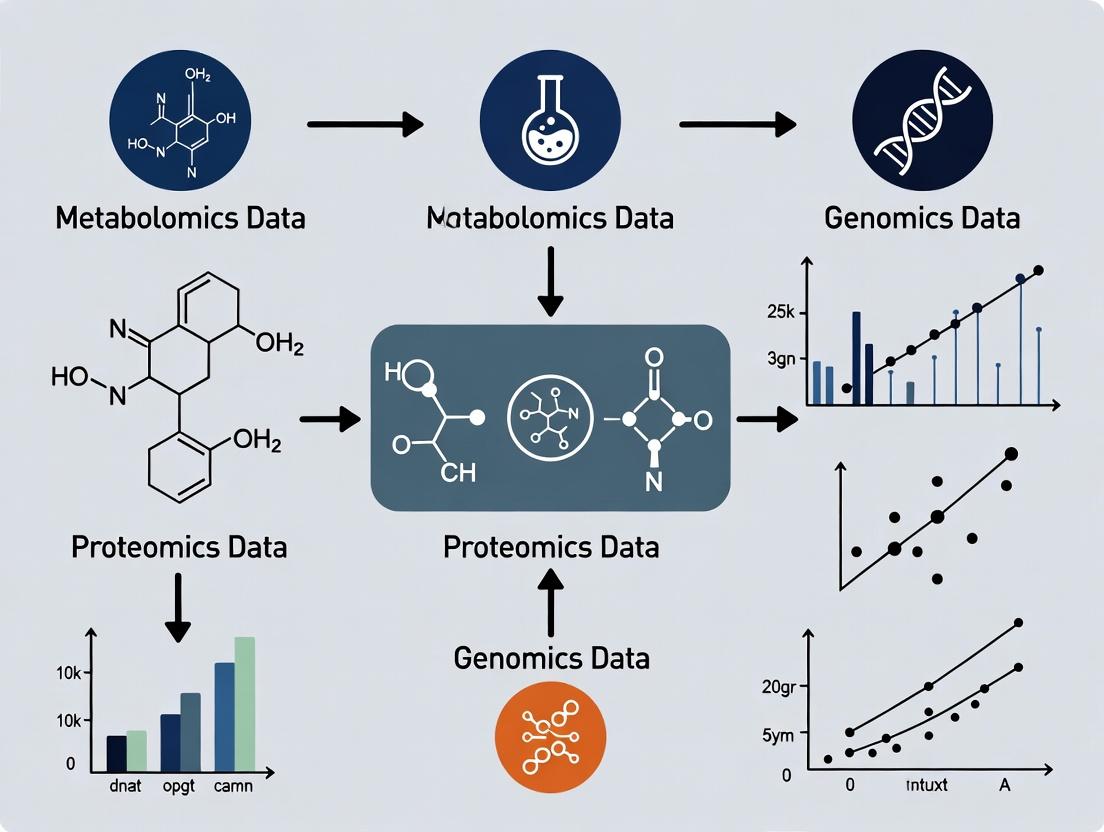
This article provides a comprehensive guide for researchers and drug development professionals on leveraging multi-omics data integration to revolutionize natural product discovery and development.
Multi-Omics Integration in Natural Product Research: A Comprehensive Roadmap from Gene Discovery to Clinical Translation
Abstract
This article provides a comprehensive guide for researchers and drug development professionals on leveraging multi-omics data integration to revolutionize natural product discovery and development. It begins by establishing the foundational principles of genomics, transcriptomics, proteomics, and metabolomics, and their synergistic role in moving from gene clusters to bioactive molecules [citation:1][citation:9]. The core of the article details methodological workflows, from genome mining and molecular networking to AI-driven predictive modeling, with practical applications in identifying novel antibiotics and plant-derived medicines [citation:6][citation:8]. To ensure robust research, we address critical troubleshooting steps for overcoming data heterogeneity, batch effects, and integration challenges [citation:3][citation:10]. Finally, the article evaluates and compares state-of-the-art computational frameworks and validation strategies for biomarker and target identification, essential for translating discoveries into clinical candidates [citation:2][citation:4]. This integrated roadmap aims to equip scientists with the knowledge to accelerate the pipeline from natural resource to novel therapeutic.
Building the Base: Core Omics Technologies and Experimental Design for Natural Product Discovery
This technical guide deconstructs the foundational omics technologies—genomics, transcriptomics, proteomics, and metabolomics—within the critical context of multi-omics data integration for natural product research. The integration of these disparate but complementary data layers is revolutionizing the discovery, characterization, and mechanistic understanding of bioactive natural compounds. By moving beyond single-layer analysis, researchers can connect a compound's genetic blueprint in a host organism to its expression, protein synthesis, and ultimate metabolic output, thereby accelerating the translation of natural products into viable therapeutics. This primer details the core principles, state-of-the-art methodologies, and integrative computational strategies essential for modern, systems-level research in this field [1] [2].
The Four Pillars of Omics Technology
Genomics: The Static Blueprint
Genomics involves the comprehensive study of an organism's complete set of DNA, including all its genes and non-coding sequences. It provides the static, heritable blueprint that encodes the potential for natural product biosynthesis.
- Core Technology: Next-Generation Sequencing (NGS), including Whole Genome Sequencing (WGS) and targeted amplicon sequencing.
- Key Output: Identifies Biosynthetic Gene Clusters (BGCs) responsible for producing secondary metabolites. It reveals single nucleotide polymorphisms (SNPs) and structural variations that may influence compound production [1].
- Role in Natural Product Research: Serves as the starting point for identifying the genetic potential of microbial communities or plants to produce novel compounds.
Transcriptomics: The Dynamic Expression
Transcriptomics measures the complete set of RNA transcripts (the transcriptome) produced by the genome under specific conditions. It reflects the dynamically expressed genes at a given time point.
- Core Technology: RNA sequencing (RNA-seq), including bulk and single-cell modalities.
- Key Output: Quantifies gene expression levels (mRNA abundance), revealing which BGCs are actively transcribed in response to environmental stimuli, co-culture, or stress [1].
- Role in Natural Product Research: Connects genetic potential to active biosynthesis, guiding the optimization of fermentation or cultivation conditions to activate silent gene clusters.
Proteomics: The Functional Effectors
Proteomics is the large-scale study of the entire complement of proteins (the proteome), including their structures, modifications, interactions, and abundances. Proteins are the functional executors of cellular processes, including the enzymes that catalyze natural product synthesis.
- Core Technology: Mass spectrometry (MS), often coupled with liquid chromatography (LC-MS/MS).
- Key Output: Identifies and quantifies proteins and their post-translational modifications (PTMs). Confirms the translation of key enzymes in a biosynthetic pathway [1].
- Role in Natural Product Research: Validates the functional expression of predicted biosynthetic machinery and can elucidate regulatory mechanisms controlling metabolic flux.
Metabolomics: The Phenotypic Signature
Metabolomics focuses on the comprehensive profiling of small-molecule metabolites (the metabolome) within a biological system. It represents the ultimate downstream output of genomic, transcriptomic, and proteomic activity.
- Core Technology: Mass spectrometry (MS) and Nuclear Magnetic Resonance (NMR) spectroscopy.
- Key Output: Identifies and quantifies endogenous and exogenous metabolites, providing a direct snapshot of the physiological state [1].
- Role in Natural Product Research: Directly detects and characterizes the final natural products and their intermediates. It is essential for profiling chemical diversity and understanding the metabolic response of a host to a bioactive compound.
Table 1: Core Omics Layers: Technologies, Outputs, and Applications in Natural Product Research
| Omics Layer | Core Molecular Target | Primary Technologies | Key Output for Natural Products | Temporal Dynamics |
|---|---|---|---|---|
| Genomics | DNA | NGS, WGS, PacBio | Biosynthetic Gene Clusters (BGCs), genetic potential | Static (with variation) |
| Transcriptomics | RNA | RNA-seq, scRNA-seq | Expression levels of BGC genes | Highly dynamic (minutes/hours) |
| Proteomics | Proteins | LC-MS/MS, 2D-Gels | Abundance/activity of biosynthetic enzymes | Dynamic (hours/days) |
| Metabolomics | Metabolites | LC/GC-MS, NMR | Identification/quantification of natural products & intermediates | Highly dynamic (seconds/minutes) |
Foundational Experimental Protocols
Multi-Omics Sample Preparation Workflow
A critical first step is designing an experiment that yields high-quality, integrable data from the same biological source material [3].
Diagram: Parallel sample processing workflow for multi-omics
Key Protocol Steps:
- Standardized Sampling: Collect and immediately snap-freeze material in liquid nitrogen to preserve all molecular layers. For microbial cultures, ensure harvest is during the target production phase.
- Homogenization: Use a standardized method (e.g., bead beating in a chilled homogenizer) to simultaneously lyse cells for parallel extractions.
- Parallel Fractionation: Aliquot the homogenate for dedicated, optimized extraction protocols:
- Genomics: Use silica-column or CTAB-based methods for high-molecular-weight DNA.
- Transcriptomics: Use guanidinium thiocyanate-phenol solutions (e.g., TRIzol) to simultaneously isolate RNA and stabilize it from degradation.
- Proteomics: Use urea- or detergent-based lysis buffers with protease/phosphatase inhibitors. Follow with protein precipitation, digestion (e.g., with trypsin), and desalting.
- Metabolomics: Use cold methanol/water/chloroform extraction for polar and non-polar metabolites. Quench metabolism rapidly.
Data Preprocessing and Normalization
Raw data from each platform must be standardized to be comparable and integrable [3] [1].
- Genomics: Quality trimming (FastQC, Trimmomatic), adapter removal, and alignment to a reference genome or de novo assembly. BGC prediction using tools like antiSMASH.
- Transcriptomics: Read alignment (HISAT2, STAR), gene/transcript quantification (featureCounts, Salmon), and normalization (e.g., TPM, FPKM) to account for library size and gene length.
- Proteomics: Peak picking and alignment from MS raw files, peptide identification via database searching (against a genome-informed proteome database), and label-free (MaxLFQ) or label-based quantification normalization.
- Metabolomics: Peak detection, alignment, and annotation using libraries (e.g., GNPS, HMDB). Normalization by total ion count, sample weight, or internal standards, followed by scaling (e.g., Pareto scaling).
Critical Preprocessing Step: Batch Effect Correction Technical variation from different processing batches can obscure biological signals. Methods like ComBat or ANOVA are essential to apply before integration [1].
Strategies for Multi-Omics Data Integration
Integration is not a one-size-fits-all process; the strategy depends on the biological question and data structure [4] [1].
Table 2: Multi-Omics Data Integration Strategies
| Integration Type | Description | Key Methods/Tools | Advantages | Challenges |
|---|---|---|---|---|
| Early (Feature-level) | Concatenating raw or preprocessed features from all omics into a single matrix before analysis. | Simple concatenation, some deep learning models. | Preserves all raw information; can capture complex, unforeseen interactions. | Extremely high dimensionality; prone to noise; dominant datasets may overshadow others [1]. |
| Intermediate (Model-level) | Analyzing omics datasets separately and then combining the results or model predictions. | Similarity Network Fusion (SNF), Multiple Kernel Learning, MOFA+ [3] [4]. | Reduces complexity; can incorporate biological context (e.g., pathways). Effective for patient/subtype stratification. | Requires careful design; may lose some granular information [1]. |
| Late (Decision-level) | Building separate predictive models for each omics type and combining their final outputs (e.g., predictions). | Ensemble methods (stacking, weighted voting). | Robust to missing data; computationally efficient; uses best model per data type. | May miss subtle cross-omics interactions not captured by individual models [1]. |
| Knowledge-Based | Using existing biological knowledge (pathways, networks) as a scaffold to overlay and connect multi-omics data. | Pathway enrichment (KEGG, Reactome), network analysis (Cytoscape). | Highly interpretable; leverages prior knowledge to guide integration. | Limited to known biology; may miss novel interactions. |
Diagram: Conceptual flow of multi-omics data integration strategies
A prominent example of a structured integration pipeline is XomicsToModel, a semi-automated protocol that integrates bibliomic, transcriptomic, proteomic, and metabolomic data with a generic genome-scale metabolic reconstruction to generate a thermodynamically consistent, context-specific metabolic model [5]. This is particularly powerful for natural product research, as it can predict how an organism redistributes metabolic flux in response to the production of a secondary metabolite or upon exposure to a bioactive compound.
Application in Natural Product Research: A Multi-Omics Workflow
Integrating multi-omics transforms the natural product discovery pipeline from a linear process to a systems-level cycle of hypothesis generation and testing.
- Discovery & Prioritization: Metagenomic or genomic sequencing of complex microbiomes or plant tissues identifies novel BGCs. Transcriptomic data from induced vs. control conditions prioritizes which of these BGCs are actively expressed and likely producing compounds [2].
- Characterization & Validation: Proteomic data confirms the production of key enzymes from the prioritized BGC. Metabolomic profiling (e.g., using Molecular Networking on GNPS) links the expressed BGC to its specific chemical products, discovering novel analogs [5].
- Mode-of-Action Studies: Treating a target organism (e.g., a pathogenic bacterium or cancer cell line) with a purified natural product and applying multi-omics (transcriptomics, proteomics, metabolomics) reveals the compound's system-wide impact, identifying pathways involved in its therapeutic effect and potential resistance mechanisms [1] [2].
- Biosynthesis Optimization: Integrating transcriptomic, proteomic, and metabolomic data from a producing host under different fermentation conditions identifies bottlenecks in the biosynthetic pathway. This guides metabolic engineering strategies to overproduce the desired compound.
Table 3: Essential Research Reagent Solutions for Multi-Omics Studies
| Reagent/Tool Category | Specific Example | Function in Multi-Omics Workflow |
|---|---|---|
| Nucleic Acid Stabilization | RNAlater, TRIzol Reagent | Preserves RNA integrity at sample collection for accurate transcriptomics; TRIzol allows simultaneous isolation of RNA, DNA, and proteins. |
| Protease/Phosphatase Inhibitors | EDTA, PMSF, Commercial Cocktails (e.g., from Roche) | Added during protein extraction to prevent degradation and preserve post-translational modification states for proteomics. |
| Metabolite Quenching Solvents | Cold 60% Aqueous Methanol | Rapidly halts cellular metabolism during sample harvest for metabolomics, providing a true snapshot of the metabolome. |
| Internal Standards for MS | Labeled Amino Acids (¹³C, ¹⁵N), SILAC kits; Stable Isotope-Labeled Metabolites | Enables accurate quantification in proteomics and metabolomics by correcting for technical variation during mass spectrometry. |
| Bioinformatics Pipelines | nf-core pipelines, COBRA Toolbox [5] | Standardized, version-controlled computational workflows for reproducible analysis and integration of omics data (e.g., for building metabolic models). |
| Multi-Omics Databases | The Cancer Genome Atlas (TCGA) [2], GNPS (for metabolomics) | Public repositories providing reference datasets for method benchmarking and discovery of connections between molecular layers. |
The future of multi-omics in natural product research lies in temporal and spatial integration, single-cell omics, and advanced artificial intelligence. Time-series (longitudinal) omics data will map the dynamic sequence of events leading to compound production or therapeutic response. Spatial transcriptomics and metabolomics will localize biosynthesis within a tissue or microbial biofilm. AI and graph neural networks will increasingly mine integrated datasets to predict novel BGC-product relationships and optimize synthetic biology designs [4] [1].
Successful multi-omics integration requires meticulous experimental design, rigorous standardization, and choosing an integration strategy aligned with the research goal [3]. By embracing this holistic approach, researchers can fully deconstruct the complexity of natural product biosynthesis and mechanism, leading to a new era of rational discovery and development.
The field of natural product research is undergoing a paradigm shift, driven by the exponential growth of genomic data. Sequencing technologies have revealed a staggering reservoir of biosynthetic potential, with marine bacterial genomes alone predicted to contain tens of thousands of biosynthetic gene clusters (BGCs) [6]. In the fungal subphylum Pezizomycotina, estimates suggest the existence of 1.4 to 4.3 million secondary metabolites, indicating that over 90% of fungal chemical diversity remains undiscovered [7]. However, this genomic promise is met with a central experimental challenge: the majority of these BGCs are "silent" or "cryptic," not expressed under standard laboratory conditions, creating a profound disconnect between genetic potential and characterized chemical output [8]. Establishing a definitive link between a BGC and its corresponding bioactive metabolite is therefore the critical bottleneck in modern drug discovery from natural sources.
This challenge is framed within the essential context of multi-omics data integration. Isolated genomics or metabolomics provides only a fragment of the picture. The solution lies in the concurrent and correlative application of genomics, transcriptomics, proteomics, and metabolomics to illuminate the complex pathway from gene sequence to functional small molecule [9] [10]. This technical guide details the core strategies, experimental protocols, and integrative analytical frameworks designed to solve this central challenge and accelerate the discovery of novel therapeutic agents.
Multi-Omics Integration: The Core Analytical Framework
The linkage of BGCs to metabolites is not a linear process but a cyclical, hypothesis-generating workflow powered by multi-omics integration. This framework systematically layers biological data to converge on validated gene-metabolite pairs.
Foundational Omics Layers and Their Interplay
- Genomics & Metagenomics: Serves as the starting point for in silico discovery. Tools like antiSMASH (antibiotics & Secondary Metabolite Analysis Shell) are used to scan sequenced genomes or metagenome-assembled genomes (MAGs) for BGCs [6] [11]. Clustering algorithms like BiG-SCAPE (Biosynthetic Gene Similarity Clustering and Prospecting Engine) group predicted BGCs into Gene Cluster Families (GCFs) based on sequence similarity, prioritizing novelty [6] [7]. For example, a study of marine bacteria clustered vibrioferrin BGCs into 12 families at 10% sequence similarity, highlighting fine-scale diversity [6].
- Transcriptomics: Identifies which prioritized BGCs are actively transcribed under specific conditions (e.g., stress, co-culture). RNA sequencing (RNA-seq) and co-expression network analysis can reveal clusters of co-regulated genes, providing strong circumstantial evidence for a BGC's boundary and activity [10].
- Metabolomics: Provides the chemical phenotype. High-resolution mass spectrometry (HR-MS) and molecular networking platforms like GNPS (Global Natural Products Social Molecular Networking) analyze the metabolome, grouping detected ions by spectral similarity into "molecular families" [12] [13].
- Proteomics: Validates the translation of BGC genes into functional enzymes. Quantitative techniques can confirm the production of key biosynthetic proteins when a pathway is activated [14] [10].
The integrative power is realized by correlating these layers: a BGC (genomics) that is highly transcribed (transcriptomics) should coincide with the production of its corresponding enzymes (proteomics) and a specific molecular family in the metabolome (metabolomics). Pathway-targeted molecular networking is a key strategy that refines this correlation. By comparing metabolomes of a wild-type strain and a mutant with a deleted or inactivated BGC, metabolites that disappear in the mutant can be specifically linked to that genetic locus [13].
Diagram: Multi-Omics Integration Workflow for BGC-Metabolite Linking. This diagram illustrates the parallel generation and integration of omics data layers to form and validate testable hypotheses linking specific BGCs to their metabolite products.
Quantitative Landscape of BGC Diversity
The scale of the challenge is underscored by quantitative surveys of BGC diversity across different environments and taxa.
Table 1: BGC Diversity in Selected Genomic and Metagenomic Studies
| Study Source / Environment | Number of Genomes/MAGs Analyzed | Predominant BGC Types Identified | Key Quantitative Findings | Reference |
|---|---|---|---|---|
| Marine Bacteria (21 species) | 199 genomes | Non-ribosomal peptide synthetases (NRPS), Betalactone, NI-siderophores | 29 total BGC types identified; Vibrioferrin BGCs formed 12 distinct families at 10% sequence similarity. | [6] |
| Alkaline Soda Lake Chitu (Metagenomic) | Metagenome-assembled genomes (MAGs) | Terpene-precursors (32%), Terpenes (25%), RiPPs (9%), NRPS (7%) | 13 major BGC types identified; highlights extremophiles as a rich source of diverse biosynthesis. | [11] |
| Fungal Genus Aspergillus | 135 genomes | Multiple classes (NRPS, PKS, Terpene, Hybrid) | Avg. ~52 BGCs per genome; 80% of Gene Cluster Families (GCFs) were species-specific. | [7] |
| Pezizomycotina Fungi (Projection) | Modeled from genomic surveys | Not Specified | Estimated 2.55 - 4.25 million BGCs across known species, encoding 1.4 - 4.3 million metabolites. | [7] |
Core Experimental Strategies for Establishing BGC-Metabolite Links
Beyond bioinformatic correlation, definitive proof requires experimental perturbation of the BGC and observation of the corresponding metabolic change. Two primary, complementary strategies are employed.
Strategy 1: BGC-First (Gene Manipulation in Native or Heterologous Host)
This approach starts with a genetically tractable BGC and aims to elicit or transfer its expression to observe metabolic output.
- Protocol: Heterologous Expression of Marine Bacterial BGCs.
- Step 1 - BGC Selection & Capture: A prioritized BGC (e.g., >10 kb) is captured from genomic DNA. For large clusters, this often involves cosmids, Bacterial Artificial Chromosomes (BACs), or direct synthesis [8].
- Step 2 - Host Selection: The choice of heterologous host is critical. Common hosts include Streptomyces spp. (for actinomycete BGCs), Escherichia coli (optimized with accessory genes), or Aspergillus nidulans (for fungal BGCs). Selection criteria include genetic tractability, native precursor supply, and compatibility with BGC regulatory elements [8].
- Step 3 - Vector Assembly & Transformation: The captured BGC is cloned into an appropriate expression vector, often containing strong, constitutive promoters to drive expression of "silent" clusters. The vector is then introduced into the heterologous host via transformation or conjugation.
- Step 4 - Fermentation & Metabolite Analysis: Transformed hosts are cultured. Metabolite extracts are compared to controls (host with empty vector) using HPLC-MS and molecular networking to identify new compounds specific to the BGC [8] [10]. A successful example is the heterologous expression of a vibrioferrin siderophore BGC from marine metagenomic DNA in E. coli [8].
Strategy 2: Metabolite-First (Comparative Omics and Pathway-Targeted Analysis)
This approach begins with an observed metabolite or metabolic profile and works backward to identify the responsible BGC.
- Protocol: Pathway-Targeted Molecular Networking with Genetic Mutants.
- Step 1 - Cultivation & Metabolomics: The native producing organism is cultivated under conditions that stimulate metabolite production (OSMAC approach: One Strain Many Compounds). A crude metabolite extract is analyzed by untargeted HR-LC/MS-MS [12].
- Step 2 - Genetic Inactivation: A key gene within the suspected BGC (e.g., a core biosynthetic enzyme like a polyketide synthase) is knocked out via homologous recombination or CRISPR-Cas9, creating an isogenic mutant strain [15].
- Step 3 - Comparative Analysis: The mutant and wild-type strains are cultivated identically, and their metabolomes are analyzed. The resulting MS/MS data files are processed and uploaded to the GNPS platform.
- Step 4 - Network Construction & Analysis: A molecular network is created from all fragmentation spectra. Spectra are clustered by similarity. Metabolites that are absent in the mutant network but present in the wild-type are directly linked to the inactivated BGC. This method was pivotal in characterizing metabolites from the colibactin BGC [13].
Diagram: Pathway-Targeted Molecular Networking Workflow. This workflow uses genetic inactivation of a BGC to pinpoint its specific metabolic products through comparative analysis of molecular networks.
The Scientist's Toolkit: Key Research Reagent Solutions
Successful execution of these strategies depends on a suite of specialized reagents, software, and biological materials.
Table 2: Essential Research Toolkit for Linking BGCs and Metabolites
| Tool / Reagent Category | Specific Example(s) | Primary Function in Workflow | Key Consideration / Application |
|---|---|---|---|
| Bioinformatics Software | antiSMASH [6], DeepBGC, PRISM | BGC Prediction & Annotation: Identifies and annotates BGCs in genome sequences. | Foundation of genome mining; accuracy is critical for downstream steps. |
| Clustering & Analysis Tools | BiG-SCAPE [6] [7], CORASON | GCF Analysis: Clusters BGCs by similarity to prioritize novelty and study diversity. | Used to contextualize a BGC within known chemical space. |
| Molecular Networking Platform | GNPS (Global Natural Products Social) [12] [10] | Metabolome Visualization & Dereplication: Organizes MS/MS data into networks of related molecules. | Core platform for metabolite-first and comparative strategies; essential for dereplication. |
| Heterologous Host Strains | Streptomyces coelicolor, Aspergillus nidulans, E. coli (BAP1) [8] | BGC Expression Chassis: Provides a genetically tractable background to express silent BGCs. | Host must supply necessary precursors, folding machinery, and tolerate pathway products. |
| Cloning & Assembly Systems | Gibson Assembly, Yeast Recombination, Cosmids/BACs [8] | BGC Capture & Engineering: Enables isolation, manipulation, and transfer of large DNA clusters. | Critical for handling BGCs often >30 kb in size. |
| Genetic Manipulation Tools | CRISPR-Cas9, Lambda-RED Recombination [15] | Gene Knockout/Knock-in: Creates isogenic mutant strains for comparative analysis. | Allows precise genetic perturbation to establish causality. |
| Mass Spectrometry Standards | Deuterated solvents, stable isotope-labeled precursors (e.g., ¹³C-acetate) | Metabolite Detection & Tracing: Aids in compound identification and elucidates biosynthetic pathways. | Used in isotopic labeling experiments to confirm a metabolite originates from a specific pathway. |
Future Perspectives: AI and Integrative Knowledge Graphs
The future of solving the BGC-metabolite linkage challenge lies in deeper, automated integration. Artificial Intelligence (AI) and Machine Learning (ML) are being harnessed to predict BGC boundaries, substrate specificity of enzymes, and even the chemical structures of final metabolites from sequence data alone [10]. The next frontier is the construction of integrative knowledge graphs that systematically link genomic entities (BGCs, enzymes), chemical entities (metabolites, spectra), and phenotypic data (bioactivity, regulation) [10]. These graphs, analyzed by graph neural networks, will allow for predictive reasoning across the entire natural product discovery pipeline, transforming the central challenge from a serial bottleneck into an integrated, predictive science. This evolution within the framework of multi-omics integration is poised to unlock the vast, untapped reservoir of bioactive metabolites encoded in the global microbiome [9] [7].
Principles of Systems Biology and Holistic Experimental Design for Multi-Omics Studies
The discovery and development of therapeutics from natural products represent a cornerstone of modern pharmacology, yielding compounds with unprecedented chemical structures and potent biological activities [16]. However, the transition from identifying a bioactive natural extract to understanding its precise mechanism of action remains a significant bottleneck. Traditional reductionist approaches, which study molecular components in isolation, often fail to capture the complex, multi-layered interactions through which natural products exert their effects. This gap necessitates a paradigm shift toward systems biology, a holistic framework that examines biological systems as integrated and interacting networks of genes, proteins, and metabolites [17].
Within this thesis on multi-omics data integration for natural product research, this whitepaper establishes the foundational principles and practical methodologies for designing and executing holistic multi-omics studies. The integration of genomics, transcriptomics, proteomics, and metabolomics data provides a comprehensive, systems-level view of a biological response to a natural product, moving beyond single-target identification to elucidate entire perturbed pathways and networks [14]. This guide details the core tenets of systems biology as they apply to experimental design, outlines actionable protocols for generating robust multi-omics data, and reviews computational strategies for integrative analysis, all aimed at accelerating and de-risking natural product-based drug discovery.
Foundational Principles of Systems Biology for Experimental Design
Systems biology is defined by several key principles that directly inform the design of meaningful multi-omics experiments, particularly in the context of natural products with potentially pleiotropic effects.
2.1 The Hierarchical and Interconnected Nature of Biological Systems Biological function emerges from the dynamic interactions across multiple organizational layers. The flow of information and regulation is not strictly linear but involves complex feedback and feedforward loops across these layers [17]. A natural product intervention can induce changes at the epigenetic or transcriptional level that subsequently alter the proteome and metabolome, while metabolic changes can themselves signal back to modify gene expression. A effective experimental design must therefore plan to capture data from multiple, complementary omics layers to map these interactions.
Diagram: Hierarchical & Interconnected Nature of Biological Systems
2.2 Dynamic and Context-Dependent Responses The cellular state is not static. The effect of a natural product is dependent on the temporal context (time of exposure), the cellular context (cell type, tissue), and the environmental context (nutrient availability, co-treatments) [17]. Systems biology experiments must incorporate these variables. For instance, a time-series design is critical to distinguish primary, direct targets from secondary, adaptive responses. Similarly, comparing omics profiles across different relevant cell types can reveal cell-specific mechanisms of action or toxicity.
2.3 Emergent Properties and Network Analysis The core analytic approach in systems biology is network-based. The goal is to integrate omics data to reconstruct molecular interaction networks (e.g., gene regulatory, protein-protein interaction, metabolic networks). Perturbations by a natural product are analyzed not just as a list of differentially expressed entities, but as localized or global rewiring of these networks. Key emergent properties, such as the identification of highly connected "hub" nodes or disrupted functional modules, can point to critical leverage points in the mechanism of action that might not be apparent from single-omics analysis [18].
Holistic Experimental Design Framework
Designing a multi-omics study requires careful upfront planning to ensure biological relevance, technical feasibility, and analytical power. The following framework outlines the critical decision points.
3.1 Defining the Precise Research Question The design is dictated by the question. In natural product research, common questions include:
- Target Deconvolution: What are the direct protein targets of this compound? [16]
- Mechanism of Action: What signaling pathways and biological processes are altered?
- Toxicity Prediction: What off-target or stress responses are induced at different doses?
- Biomarker Discovery: What omics signatures predict sensitivity or resistance to the compound?
The question determines the choice of omics layers, experimental model, and sampling strategy [19].
3.2 Selection of Omics Technologies Each omics layer provides unique and complementary information. The table below compares key technologies relevant to natural product research.
Table 1: Comparative Analysis of Core Omics Technologies in Natural Product Research
| Omics Layer | Key Technologies | Information Gained | Advantages for NP Research | Key Challenges |
|---|---|---|---|---|
| Genomics | Whole Genome Sequencing, SNP Arrays | Genetic blueprint, mutations, polymorphisms. | Identify genetic biomarkers of response; assess compound's effect on genome stability. | Static information; does not directly inform dynamic response [17]. |
| Transcriptomics | RNA-Seq, Single-Cell RNA-Seq (scRNA-Seq) | Global gene expression (mRNA) levels. | Highly sensitive; reveals regulated pathways; scRNA-Seq uncovers heterogeneity in response [17] [14]. | mRNA levels may not correlate with protein activity; post-transcriptional regulation missed. |
| Proteomics | LC-MS/MS (Label-free, TMT), Affinity Proteomics | Protein abundance, post-translational modifications (PTMs). | Directly profiles functional effectors; chemical proteomics can identify direct drug-binding proteins [16] [14]. | Lower throughput & depth than transcriptomics; dynamic range challenges [17]. |
| Metabolomics | LC/GC-MS, NMR | Abundance of small-molecule metabolites. | Closest readout of phenotypic state; reveals metabolic rewiring and potential on-/off-target effects [17]. | Extreme chemical diversity; requires multiple platforms; compound identification difficult. |
3.3 Critical Design Considerations
- Temporal Design: A time-course experiment is superior to a single endpoint. It allows for the construction of causal networks and distinguishes direct from indirect effects. Key time points should capture early signaling events, mid-term transcriptional responses, and longer-term phenotypic adaptations.
- Dose-Response Design: Including multiple concentrations (from sub-therapeutic to toxic) helps differentiate specific mechanisms from general stress responses and aids in understanding the therapeutic window.
- Replication and Batch Effects: Biological replication (multiple independent samples) is non-negotiable for statistical power. Technical replication and randomization are crucial to minimize batch effects, which are particularly pernicious when integrating data generated from different platforms at different times [19].
- Sample Matched Design: The most powerful design for integration is when all omics layers are profiled from the same biological sample aliquot or from aliquots taken from a homogenized pool. This eliminates inter-sample variability and is ideal for network inference [19].
Diagram: Holistic Multi-Omics Experimental Workflow
Detailed Methodologies and Protocols
4.1 Protocol for Single-Cell Multi-Omics from Primary Cells Single-cell technologies are emerging as powerful tools for natural product research, as they can resolve heterogeneous cell populations within a tissue or tumor that may respond differently to treatment [14]. The following adapts a protocol for high-quality single-cell multi-omics from human peripheral blood mononuclear cells (PBMCs) [20], a model relevant for immunomodulatory natural products.
- Sample Collection & PBMC Isolation: Collect fresh blood in anticoagulant tubes. Isolate PBMCs via density gradient centrifugation (e.g., Ficoll-Paque). Maintain samples at 4°C throughout. Assess cell viability (>95%) using Trypan Blue or an automated cell counter.
- Cell Processing for Single-Cell Sequencing: Resuspend PBMC pellet in a suitable buffer containing a viability dye. Use fluorescence-activated cell sorting (FACS) to sort single, live cells into 384-well plates containing lysis buffer. Plates are immediately frozen.
- Library Preparation: Perform reverse transcription and PCR amplification to generate cDNA. Construct sequencing libraries using kits compatible with your single-cell technology (e.g., 10x Genomics). Include unique molecular identifiers (UMIs) and cell barcodes to track transcripts to individual cells.
- Parallel Omics from the Same Population: From an aliquot of the same PBMC pool used for single-cell sorting, isolate material for bulk omics.
- Bulk RNA-seq: Extract total RNA for sequencing to provide a high-depth transcriptome baseline.
- Proteomics: Pellet cells, lyse, digest proteins with trypsin, and prepare peptides for LC-MS/MS analysis.
- Metabolomics: Quench metabolism (e.g., cold methanol), extract metabolites, and analyze by LC-MS.
4.2 Chemical Proteomics for Direct Target Identification This protocol is central to natural product target deconvolution [16] [14].
- Probe Synthesis: Chemically modify the natural product to incorporate a "handle" (e.g., an alkyne or azide for click chemistry) and a photoreactive group (e.g., a diazirine). Control: Synthesize an inactive analog with the same handle.
- Cell Treatment and Photo-Crosslinking: Treat live cells or cell lysates with the active probe or inactive control. Irradiate with UV light (e.g., 365 nm) to activate the diazirine, covalently crosslinking the probe to its interacting proteins.
- Click Chemistry and Enrichment: Lyse cells. Use copper-catalyzed azide-alkyne cycloaddition (CuAAC) to "click" a biotin or a solid-support tag onto the alkyne handle of the probe. Capture probe-bound proteins using streptavidin beads or the solid support.
- Protein Identification and Validation: Wash beads stringently. Elute bound proteins and identify them by high-sensitivity LC-MS/MS. Compare proteins enriched by the active probe versus the inactive control. Validate top hits through orthogonal methods (e.g., cellular thermal shift assay - CETSA, surface plasmon resonance).
Data Integration and Computational Analysis Strategies
The integration of heterogeneous omics datasets is the most critical analytical step. Methods can be categorized by the stage at which integration occurs [19].
5.1 Integration Methodologies
- Early Integration (Concatenation): Datasets from different omics are merged into a single large matrix (e.g., genes + proteins + metabolites as features) for analysis with multivariate statistics or machine learning. This is simple but challenging due to different data scales, noise structures, and the "curse of dimensionality" [19].
- Late Integration (Model-based): Analyses are performed separately on each omics dataset (e.g., differential expression analysis), and the results (p-values, pathway enrichments) are combined meta-analytically. This is flexible but may miss cross-omics interactions [19].
- Intermediate Integration (Transformation-based): This is often the most powerful approach. Dimensionality reduction (e.g., PCA, MOFA) is applied to each dataset to extract latent factors, which are then integrated. Network-based integration (e.g., constructing multi-layered networks where edges connect different entity types) is particularly aligned with systems biology principles and can reveal key inter-omic drivers [17] [18].
Diagram: Multi-Omics Data Integration Strategies
5.2 Pathway and Network Analysis The final analytical step involves interpreting integrated results in a biological context. Enrichment analysis tools (e.g., Gene Ontology, KEGG) are applied to combined gene/protein/metabolite lists. More sophisticated approaches involve mapping data onto prior knowledge networks (PKNs) of protein-protein interactions, signaling pathways, or metabolic models. The natural product's impact is visualized as a subnetwork of significantly perturbed interactions, highlighting key hubs and bridging molecules that connect different omics layers, thereby proposing testable mechanistic hypotheses [18].
The Scientist's Toolkit: Research Reagent Solutions
Table 2: Essential Research Reagents and Platforms for Multi-Omics Studies
| Category | Item/Reagent | Function in Multi-Omics Workflow | Key Consideration for Natural Product (NP) Research |
|---|---|---|---|
| Sample Preparation | Phase Lock/Barrier Tubes | Provides clean separation of organic and aqueous phases during metabolite/protein extraction, minimizing cross-contamination. | Critical for preparing high-quality samples for both proteomics and metabolomics from the same lysate. |
| Membrane-based Protein Extraction Kits | Efficiently separates cytoplasmic, nuclear, and membrane protein fractions for deeper proteome coverage. | Many NP targets are membrane-bound receptors or transporters. | |
| Stable Isotope-Labeled Internal Standards (SIL-IS) | Spiked into samples pre-extraction for metabolomics & proteomics to correct for technical variability and enable absolute quantification. | Essential for robust quantification, especially when comparing NP-treated vs. control samples. | |
| Target Identification | Alkyne/Azide-modified NP Probes | Chemically modified versions of the NP for click chemistry-enabled target enrichment (chemical proteomics) [16]. | Probe design must retain the biological activity of the parent NP. An inactive control probe is mandatory. |
| Diazirine-based Photo-Crosslinkers | Incorporated into NP probes to covalently capture transient or low-affinity protein interactions upon UV exposure. | Crucial for "fishing" direct targets from complex cellular milieus. | |
| Streptavidin Magnetic Beads | Used to capture biotin-tagged proteins after click chemistry for subsequent mass spec analysis. | High binding capacity and low non-specific binding are required. | |
| Single-Cell Analysis | Cell Viability Dyes (e.g., Propidium Iodide) | Distinguishes live from dead cells during FACS sorting for single-cell sequencing, ensuring high-quality input. | Dead cells can cause significant background noise in single-cell data. |
| Single-Cell 3' or 5' Gene Expression Kits | Enables barcoding and library construction from thousands of individual cells for transcriptomic profiling. | Allows dissection of heterogeneous responses to NP treatment within a tumor or tissue sample [14]. | |
| Data Analysis | Multi-Omics Integration Software (e.g., MOFA+, mixOmics) | Statistical packages designed specifically for the integration of heterogeneous omics datasets. | Prefer tools that provide visualization of inter-omic relationships and factor trajectories over time/dose. |
| Network Visualization & Analysis Tools (e.g., Cytoscape) | Platforms for building, visualizing, and analyzing molecular interaction networks from integrated data. | Essential for moving from lists to systems-level models of NP action. Plugins allow connection to pathway databases. |
Abstract Within the paradigm of multi-omics data integration for natural product discovery, the initial biological handling phases are paramount. This technical guide delineates the critical, interconnected procedures for sample collection, preservation, and biomass standardization that underpin successful genomics, metabolomics, and proteomics workflows. Drawing from contemporary studies on microbial and environmental sources, we detail standardized protocols for maintaining molecular integrity from field to lab, discuss biomass requirements for diverse analytical platforms, and present a unified workflow. Adherence to these foundational steps is essential for generating high-fidelity, interoperable data layers required for comprehensive biosynthetic gene cluster (BGC) mining, metabolite profiling, and ultimate natural product target discovery [21] [9] [14].
The discovery of novel natural products (NPs) has been fundamentally transformed by multi-omics approaches, which integrate genomics, transcriptomics, proteomics, and metabolomics to deconstruct the complex biosynthetic networks of source organisms [9]. However, the analytical power of these advanced technologies is contingent upon the quality and integrity of the starting biological material. Inconsistencies introduced during initial sample handling—such as metabolite degradation, RNA hydrolysis, or protein denaturation—propagate irreversibly through downstream workflows, leading to data artifacts that compromise integration and confound biological interpretation [21] [22].
This guide frames these technical prerequisites within the broader thesis of multi-omics integration for NP research. Effective integration relies on data layers that are not only individually robust but also temporally and contextually aligned. For instance, correlating the expression of a specific BGC (genomics/transcriptomics) with the production of its associated metabolite (metabolomics) requires that biomass for each analysis is harvested from an identical physiological state [14] [22]. Therefore, the standardization of sample collection, arrested preservation, and biomass partitioning is not merely a preliminary step but the critical first step that dictates the success of the entire multi-omics enterprise.
Core Methodologies for Sample Collection and Preservation
The chosen methodology must align with the target omics layers and the nature of the source material, whether it is environmental biomass, microbial cultures, or plant tissue.
2.1 Collection Strategies for Diverse Sources
- Environmental & Marine Samples: As demonstrated in a multi-omics characterization of tropical marine cyanobacteria, macroscopic tufts were collected from subtidal ecosystems. A key consideration for meta-omics is minimizing heterotrophic bacterial contamination, which can complicate genome assembly and metabolite attribution. Immediate processing or preservation in the field is essential [21].
- Microbial Cultures: For controlled omics studies, automated cultivation platforms (e.g., custom Tecan or BioLector systems) enable reproducible growth and precise, time-resolved sampling from microtiter plates or bioreactors. These systems facilitate the acquisition of samples from a defined physiological state (e.g., mid-log phase), which is crucial for integrating data across platforms [22].
2.2 Preservation Protocols for Molecular Integrity Preservation aims to instantaneously "snapshot" the molecular profile of the sample at the point of harvest.
- For Genomics/Transcriptomics: Immediate freezing in liquid nitrogen is the gold standard. The use of commercial stabilizing reagents like RNAlater is highly effective for field samples, as it permeates tissue to stabilize and protect RNA (and DNA) at ambient temperatures for later processing [21].
- For Metabolomics: Metabolism must be quenched within sub-second timescales. Methods include rapid filtration followed by immersion in cold (-40°C to -80°C) quenching solvents (e.g., 60% methanol), or directly spraying culture broth into cold solvent. Speed is critical to prevent turnover of labile metabolites [22].
- For Proteomics: Similar to metabolomics, samples are typically snap-frozen in liquid nitrogen. Subsequent storage at -80°C prevents protein degradation and modification.
Table 1: Standardized Preservation Methods by Omics Layer
| Omics Layer | Primary Goal | Recommended Method | Key Consideration |
|---|---|---|---|
| Genomics | Preserve DNA integrity & prevent shearing. | Snap-freeze in liquid N₂; or RNAlater for composite samples [21]. | Avoid repeated freeze-thaw cycles. |
| Transcriptomics | Arrest RNase activity & prevent degradation. | Immediate immersion in RNAlater or snap-freeze in liquid N₂ [21]. | Ensure preservative fully penetrates tissue. |
| Metabolomics | Quench enzymatic activity instantaneously. | <1 sec transfer to cold (-40°C) methanol/buffer [22]. | Speed is paramount; validate quenching efficiency. |
| Proteomics | Prevent proteolysis & post-translational modifications. | Snap-freeze in liquid N₂; store at -80°C. | Add protease/phosphatase inhibitors if needed. |
Biomass Considerations for Multi-Omics Workflows
Different omics techniques have varying biomass requirements and compatibility with extraction protocols. Planning for sufficient biomass and its rational subdivision is a key strategic element.
3.1 Biomass Requirements and Sample Partitioning A single sample harvest must often be partitioned for concurrent multi-omics analysis. The following workflow, adapted from automated microbial studies, illustrates this division [22]:
- Harvest: Collect biomass from a homogeneous culture or sample under defined conditions.
- Quench/Preserve: Immediately process for metabolomics (most time-critical), then stabilize aliquots for other analyses.
- Partition:
- Metabolomics/Lipidomics: Allocate biomass for cold solvent extraction (typically 1-10 mg wet cell weight).
- Proteomics: Allocate pellet for lysis and protein digestion.
- Genomics/Transcriptomics: Allocate pellet for nucleic acid extraction.
3.2 Scaling and High-Throughput Considerations Advanced automated platforms enable high-throughput omics by cultivating microorganisms in 96-well plates and integrating automated sampling. Key innovations include custom 3D-printed lids that control gas exchange (for aerobic/anaerobic studies) and enable reproducible sampling, minimizing "edge effects" that cause variance between wells [22]. This automation ensures that the biomass used for different omics analyses originates from an identical, controlled microenvironment.
Table 2: Typical Biomass and Handling Parameters for Microbial Omics
| Parameter | Genomics | Metabolomics | Proteomics | Primary Challenge |
|---|---|---|---|---|
| Min. Biomass | ~10⁸ cells [21] | 1-5 mg (wet weight) [22] | ~10⁷ cells [22] | Metabolomics requires minimal biomass but maximal speed. |
| Processing Temp. | 4°C (post-thaw) | -20°C to -40°C (quench) | 4°C (post-thaw) | Maintaining cold chain for metabolomics/proteomics. |
| Compatible w/ Auto. | Yes (cell lysis) | Yes (rapid quenching & extraction) | Yes (digestion protocols) | Integrating fast sampling (<1s) for metabolomics [22]. |
Detailed Experimental Protocols for Key Workflows
4.1 Protocol: Genomic DNA Extraction and Sequencing for BGC Mining (Adapted from [21])
- Sample Lysis: For filamentous cyanobacteria or tough tissues, use mechanical disruption (bead beating) combined with chemical lysis (CTAB/SDS buffers).
- DNA Purification: Purify lysate using phenol-chloroform-isoamyl alcohol extraction, followed by precipitation with isopropanol. RNase treatment is recommended.
- Quality Control: Assess DNA purity (A260/A280 ~1.8), integrity (via gel electrophoresis), and quantity. Use fluorometric assays for accuracy.
- Library Prep & Sequencing: For complex genomes rich in repetitive BGCs, employ a hybrid sequencing strategy. Use Illumina short-read data for accuracy combined with Oxford Nanopore or PacBio long-read data to scaffold and resolve repetitive regions [21].
- Bioinformatic Processing: Assemble reads using hybrid-aware assemblers (e.g., metaSPAdes). Identify BGCs using specialized tools like antiSMASH and perform phylogenomic analysis with BiG-SCAPE to prioritize novel clusters [21].
4.2 Protocol: LC-MS/MS-Based Metabolomics for Natural Product Dereplication
- Metabolite Extraction: To a quenched cell pellet, add cold extraction solvent (e.g., 80% methanol). Agitate vigorously for 15 minutes at 4°C, then centrifuge. Transfer supernatant for analysis.
- LC-MS/MS Analysis:
- Chromatography: Use reversed-phase C18 columns with a water-acetonitrile gradient (both modifiers containing 0.1% formic acid) for broad metabolite separation.
- Mass Spectrometry: Employ data-dependent acquisition (DDA) in positive and negative ionization modes. Collision-induced dissociation (CID) generates MS/MS spectra for compound identification.
- Data Processing: Convert raw files to open formats (e.g., .mzML). Use tools like MZmine or MS-DIAL for peak picking, alignment, and annotation. Dereplicate by matching MS/MS spectra against public libraries (GNPS, MassBank) [21].
Integration with Downstream Multi-Omics Analysis
The meticulously collected and preserved samples feed into parallel analytical pipelines whose data converge for integrated analysis. Genomics reveals the potential (BGCs), transcriptomics and proteomics reveal the expression, and metabolomics reveals the chemical output. Bioinformatics integration, often facilitated by KEGG or antiSMASH pathway mapping, links compound spectra to biosynthetic genes, guiding targeted isolation of novel NPs [9] [14]. This integrated workflow, from critical first steps to final discovery, is visualized below.
Multi-Omics Integration Workflow from Sample to Insight
The Scientist's Toolkit: Essential Reagents & Materials
Table 3: Key Research Reagent Solutions for Multi-Omics Sample Preparation
| Reagent/Material | Function | Primary Omics Application |
|---|---|---|
| RNAlater Stabilization Solution | Penetrates tissue to stabilize and protect RNA (and DNA) integrity at ambient temperatures, crucial for field-collected samples [21]. | Genomics, Transcriptomics |
| Cold Methanol/Quenching Buffer | Rapidly quenches cellular metabolism to "snapshot" the metabolome, preventing turnover of labile compounds [22]. | Metabolomics |
| CTAB or SDS Lysis Buffer | Effective for lysing difficult cell types (e.g., filamentous cyanobacteria, plant tissue) to release high-molecular-weight DNA [21]. | Genomics |
| Solid Phase Extraction (SPE) Cartridges | Used post-extraction to clean metabolite samples, remove salts, and fractionate compounds prior to LC-MS to reduce complexity [21]. | Metabolomics |
| Protease & Phosphatase Inhibitor Cocktails | Added to lysis buffers to prevent protein degradation and preserve post-translational modification states during protein extraction [14]. | Proteomics |
| Automated Cultivation Platform | Enables high-throughput, reproducible growth and precise sampling of microbial cultures under controlled conditions (e.g., Tecan robot with custom lid) [22]. | All (Sample Generation) |
From Data to Discovery: Integrated Workflows and AI-Powered Applications in NP Research
The discovery of natural products (NPs), such as antibiotics and anticancer agents, has historically relied on activity-guided screening of microbial extracts. While successful, this approach is plagued by high rediscovery rates and inefficiency [23]. The advent of rapid, low-cost genome sequencing revealed a vast untapped potential: a single bacterial genome can harbor over 30 biosynthetic gene clusters (BGCs), with less than 0.25% of all identified BGCs experimentally linked to known compounds [23]. This disparity underscores the paradigm shift towards genome mining—the use of computational tools to identify, analyze, and prioritize BGCs for targeted natural product discovery [24].
This shift aligns with the broader thesis of multi-omics data integration, which seeks to synthesize information from genomics, transcriptomics, metabolomics, and proteomics to fully elucidate biosynthetic pathways and their regulation [25]. Within this framework, genome mining provides the essential genomic blueprint. Tools like antiSMASH and PRISM serve as the critical first step, translating raw DNA sequence into testable biochemical hypotheses about potential novel metabolites [26] [27]. This guide details the core functionalities, applications, and integration of these pivotal tools within a modern multi-omics workflow for natural product research.
Table 1: The Scale of Opportunity and Challenge in Microbial Genome Mining
| Metric | Figure | Implication for Discovery | Source |
|---|---|---|---|
| Sequenced bacterial genomes (as of 2019) | >211,000 | Vast genetic resource for mining. | [23] |
| BGCs per bacterial genome (average) | Up to 30 | Each genome is a rich source of potential compounds. | [23] |
| Characterized BGCs (experimentally linked to product) | <0.25% | Immense unexplored chemical space remains. | [23] |
| BGCs in Streptomyces avermitilis (model strain) | 40 total (23 "silent") | Even well-studied strains harbor unexpressed potential. | [23] |
Core Genome Mining Tools: antiSMASH and PRISM
antiSMASH: The Comprehensive BGC Detection Platform
The Antibiotics & Secondary Metabolite Analysis Shell (antiSMASH) is the most widely used tool for the identification and annotation of BGCs in bacterial, fungal, and archaeal genomes [27]. Its core strength lies in a rule-based system that uses profile hidden Markov models (pHMMs) to detect signature biosynthetic enzymes across a growing number of BGC families.
Key Features and Advancements (antiSMASH 7.0):
- Expanded Detection: Identifies 81 distinct BGC types (up from 71), including newly added clusters like methanobactins and crocagins [27].
- Structure Prediction: Provides chemical structure predictions for major classes like nonribosomal peptides (NRPs), polyketides (PKs), and ribosomally synthesized and post-translationally modified peptides (RiPPs). Its new NRPyS library improves adenylation (A) domain substrate prediction using an expanded database of over 2,300 entries [27].
- Regulatory Insights: A new transcription factor binding site (TFBS) finder module scans for putative regulatory sites using position weight matrices from the LogoMotif database, offering clues on BGC regulation [27].
- Dereplication and Comparison: Integrates with the MIBiG (Minimum Information about a Biosynthetic Gene Cluster) repository for comparing identified BGCs against known clusters [27].
PRISM: The Chemical Structure Prediction Engine
Where antiSMASH excels at broad detection, the PRediction Informatics for Secondary Metabolomes (PRISM) platform specializes in detailed, accurate prediction of the final chemical structure encoded by a BGC [26] [28]. PRISM 4 employs a combinatorial approach, mapping genes to enzymatic reactions to reconstruct biosynthetic pathways in silico.
Key Features and Advancements (PRISM 4):
- Comprehensive Reaction Library: Utilizes 1,772 HMMs and implements 618 in silico tailoring reactions to predict structures for 16 classes of metabolites, including all clinically relevant bacterial antibiotic classes (e.g., β-lactams, aminoglycosides) [26].
- Combinatorial Logic: When enzyme specificity is ambiguous (e.g., a halogenase that could act on multiple sites), PRISM generates all chemically plausible product variants, providing a ranked set of predictions [26].
- Activity Prediction: The accuracy of its structural predictions enables the use of machine learning models to predict the likely biological activity (e.g., antibacterial) of the encoded molecule [26].
Table 2: Comparative Performance: antiSMASH 5 vs. PRISM 4
| Evaluation Metric | antiSMASH 5 | PRISM 4 | Implication |
|---|---|---|---|
| Detection Sensitivity (on 1,281 known BGCs) | Detected 1,212 BGCs (94.6%) | Detected 1,230 BGCs (96.0%) | Both tools show high sensitivity for BGC identification. |
| Structure Prediction Rate (on detected BGCs) | Predicted structures for 753 BGCs | Predicted structures for 1,157 BGCs | PRISM generates chemical hypotheses for a significantly larger subset of BGCs. |
| Structural Accuracy (Tanimoto Coefficient to known product) | Lower median similarity | Significantly higher median similarity (p < 10⁻¹⁵) | PRISM's predicted structures are more chemically accurate. |
| Predicted "Natural-Product-Likeness" | Lower molecular complexity, more "drug-like" | Higher molecular weight & complexity, closer to known NPs | PRISM's predictions better capture the complex scaffolds typical of natural products. |
Diagram 1: Genome mining tool workflow integration (74 characters)
Experimental Protocols for Tool Validation and Application
Protocol: Benchmarking Structure Prediction Accuracy (PRISM 4 Evaluation)
This protocol outlines the methodology used in [26] to validate PRISM 4's predictive power against known benchmarks.
- Reference Set Curation: Assemble a manually curated set of 1,281 BGCs with experimentally verified products from public databases (e.g., MIBiG) and literature. Correct any errors in deposited chemical structures or BGC boundaries.
- Tool Execution: Run both PRISM 4 and antiSMASH 5 on the genomic sequences harboring these reference BGCs using default parameters.
- Detection & Prediction Metrics: Record the number of BGCs detected and the number for which each tool outputs a predicted chemical structure.
- Structural Similarity Analysis:
- For each BGC with a predicted structure, calculate the Tanimoto Coefficient (Tc) between the predicted molecule(s) and the known true product. Tc is a measure of chemical similarity based on shared molecular fingerprints.
- Use statistical tests (e.g., paired Brunner-Munzel test) to compare the distribution of Tc scores between tools.
- Chemical Property Analysis: Compare predicted structures against known products using metrics like Bertz topological complexity index, molecular weight, and "natural product-likeness" score to assess if predictions inhabit biologically relevant chemical space.
Protocol: Activating and Linking a Cryptic BGC to Its Product
Following computational prioritization, this core experimental protocol connects a "silent" or cryptic BGC to its metabolic product [23] [24].
- BGC Prioritization: Use antiSMASH/PRISM to identify a cryptic BGC of interest (e.g., one with novel architecture or predicted novel activity).
- Host Strain Engineering:
- Heterologous Expression: Clone the entire predicted BGC into an amenable expression host (e.g., Streptomyces lividans). This often requires specialized techniques like Transformation-Associated Recombination (TAR) cloning due to large cluster sizes.
- Native Host Activation: Manipulate the native producer by:
- Overexpressing a predicted pathway-specific transcriptional activator.
- Deleting or inhibiting a global repressor (e.g., using CRISPR interference).
- Culturing under various OSMAC (One Strain Many Compounds) conditions to elicit production.
- Metabolite Analysis: Analyze the culture extract of the engineered strain versus the control using High-Resolution Liquid Chromatography-Mass Spectrometry (HR-LC-MS).
- Metabolite Purification & Structure Elucidation: Purify the compound(s) unique to the activated strain using preparative chromatography. Determine the complete 2D structure using Nuclear Magnetic Resonance (NMR) spectroscopy.
- Genetic Confirmation: Perform gene knockout or mutation of a core biosynthetic gene in the activated strain. Confirm the loss of compound production, providing genetic evidence linking the BGC to the metabolite.
Multi-Omics Integration for BGC Prioritization and Analysis
Genome mining is the foundational genomic layer in a multi-omics strategy. Integrating its outputs with other data types dramatically improves BGC prioritization and functional prediction [25].
- Transcriptomics: RNA-Seq data identifies which BGCs are actively transcribed under specific conditions, helping prioritize "silent" clusters that can be awakened. Tools like antiSMASH can integrate expression data for visualization [24].
- Metabolomics: Liquid Chromatography-Tandem Mass Spectrometry (LC-MS/MS) profiling of culture extracts, coupled with molecular networking (e.g., via Global Natural Products Social Molecular Networking), can detect novel metabolites. Correlating their production with BGC activation provides a direct link between genotype and chemotype [24].
- Proteomics: Detecting the biosynthetic enzymes themselves confirms BGC translation and can help pinpoint the timing of production.
Diagram 2: Multi-omics BGC prioritization workflow (63 characters)
Advanced Integration Strategies
- Phylogeny-Based Mining: Construct phylogenetic trees of core biosynthetic genes (e.g., polyketide synthase ketosynthase domains). Clades that diverge from known systems may produce novel chemical variants, guiding targeted exploration [24].
- Resistance Gene-Guided Mining: BGCs for antibiotics often include a self-resistance gene. Identifying novel resistance genes (e.g., divergent antibiotic efflux pumps) can pinpoint clusters producing compounds with new mechanisms of action [24].
- Metagenomic Mining: Tools like biosyntheticSPAdes are designed to reconstruct complete BGCs from fragmented metagenomic assembly graphs, unlocking the biosynthetic potential of unculturable microbes [29].
Table 3: Research Reagent Solutions for Genome Mining & Validation
| Tool / Resource Name | Type | Primary Function in Workflow |
|---|---|---|
| antiSMASH [27] | Software / Web Server | The standard for comprehensive BGC identification, annotation, and boundary prediction in genomic sequences. |
| PRISM [26] [28] | Software / Web Server | Predicts the detailed chemical structure of the natural product encoded by a BGC, with high accuracy for multiple classes. |
| MIBiG (Minimum Information about a BGC) [23] [27] | Curated Database | A repository of experimentally characterized BGCs used as a gold-standard reference for comparison and dereplication. |
| biosyntheticSPAdes [29] | Software | A specialized assembler that reconstructs complete BGCs from fragmented genomic or metagenomic assembly graphs. |
| BiG-SCAPE / BiG-FAM [23] [24] | Software / Database | Analyzes and classifies BGCs into gene cluster families (GCFs) based on protein domain sequence similarity, enabling global analysis of BGC diversity. |
| Flexynesis [30] | Software Toolkit | A deep learning framework for integrating bulk multi-omics data (transcriptome, methylome, etc.), useful for building predictive models of BGC activity or compound bioactivity. |
Challenges and Future Directions
Despite advances, significant challenges remain in realizing the full potential of genome mining [23].
- BGC Assembly and "Cryptic" Clusters: Long, repetitive BGCs are frequently fragmented during genome sequencing. Tools like biosyntheticSPAdes address this by leveraging assembly graphs [29]. Furthermore, a large majority of BGCs are "silent" under laboratory conditions, necessitating advanced activation strategies.
- Prediction Limitations: Structure prediction for highly modified peptides (e.g., glycopeptides) or clusters with unusual biochemistry remains error-prone. Tailoring enzyme function is especially difficult to predict precisely from sequence alone [23].
- Integration with AI and Automation: The future lies in deeper integration of artificial intelligence. Machine learning models are already being used to predict biological activity from PRISM's structures [26]. Tools like Flexynesis demonstrate the power of deep learning to integrate multi-omics data for predictive modeling in biology [30]. The next generation of tools will likely feature end-to-end AI pipelines that prioritize BGCs, predict products and activities, and suggest optimal expression hosts—moving closer to a fully in silico guided discovery cycle.
In conclusion, genome mining tools like antiSMASH and PRISM have fundamentally transformed natural product research from a screening-based to a hypothesis-driven endeavor. By providing the critical link between genetic sequence and chemical structure, they form the indispensable genomic core of a multi-omics integration thesis. As these tools evolve with improved algorithms and embrace AI-driven integration, they will continue to accelerate the targeted discovery of novel bioactive molecules from the microbial world.
This technical guide details the integration of metabolomics and molecular networking via the Global Natural Products Social Molecular Networking (GNPS) platform as a cornerstone strategy for dereplication and novel compound detection in natural product research. The core analytical workflow, exemplified by a 2025 Sophora flavescens study [31], combines Liquid Chromatography-Tandem Mass Spectrometry (LC-MS/MS) with complementary Data-Dependent (DDA) and Data-Independent Acquisition (DIA) modes to enable comprehensive metabolite profiling. Within a broader multi-omics framework [14] [9], this approach accelerates the identification of known compounds and prioritizes unique chemical entities for downstream pharmacological investigation. The guide provides explicit experimental protocols, data processing parameters, and visualization strategies to implement a reference data-driven analysis pipeline [32], directly addressing the critical bottlenecks of time and resource allocation in drug discovery [12].
Natural products (NPs) remain an unparalleled source of novel chemical scaffolds for drug development [14] [12]. However, traditional bioactivity-guided fractionation is plagued by the frequent re-isolation of known compounds, a costly and time-consuming obstacle. Dereplication—the rapid identification of known metabolites early in the discovery pipeline—is essential to focus resources on truly novel leads [12].
Metabolomics, particularly untargeted LC-MS/MS, provides a high-throughput solution by generating comprehensive chemical profiles of complex extracts [33]. The principal challenge lies in annotating the hundreds to thousands of mass spectral features in each analysis. Molecular networking, as implemented by the GNPS platform, transforms this challenge by organizing MS/MS spectra based on spectral similarity, creating a visual map where structurally related molecules cluster together [31] [34]. This strategy not only facilitates the propagation of annotations within clusters but also highlights orphan nodes that may represent novel compounds [32].
Integrating this metabolomic layer with other omics data (genomics, transcriptomics) creates a powerful, hypothesis-generating framework for targeted NP discovery, allowing researchers to connect chemical signatures to biosynthetic gene clusters [9].
Core Concepts: Metabolomics, Molecular Networking, and the GNPS Ecosystem
- Untargeted Metabolomics via LC-MS/MS: This analytical foundation uses liquid chromatography to separate metabolites in a complex sample, followed by mass spectrometry to measure their mass-to-charge ratio (m/z). Tandem MS (MS/MS) fragments precursor ions, generating unique spectral fingerprints crucial for identification [31] [33]. Two primary acquisition modes are employed:
- Data-Dependent Acquisition (DDA): Selects the most intense ions for fragmentation. It yields cleaner, simpler MS/MS spectra ideal for library matching but may undersample low-abundance ions.
- Data-Independent Acquisition (DIA): Fragments all ions within sequential, broad m/z windows (e.g., SWATH). It provides comprehensive data on all detectable analytes but generates complex, multiplexed spectra that require specialized deconvolution software (e.g., MS-DIAL) prior to analysis [31].
- Molecular Networking Logic: Molecular networking calculates pairwise similarity scores (e.g., cosine score) between all MS/MS spectra in a dataset. Spectra with scores above a defined threshold are connected, forming nodes (metabolites) and edges (structural relationships) in a network graph [34]. This visualization groups analogs and derivatives, enabling compound family-based analysis.
- The GNPS Platform: GNPS is a web-based ecosystem that provides workflows for creating molecular networks, searching spectra against reference libraries, and performing reference data-driven analysis [34] [32]. Its crowd-sourced libraries and publicly available reference datasets dramatically enhance annotation confidence and contextual interpretation.
The following diagram illustrates the integration of these core concepts into a cohesive dereplication strategy, from sample preparation to biological insight.
Diagram 1: Integrated Dereplication and Discovery Workflow (76 characters)
Experimental Protocol: A Case Study onSophora flavescens
A 2025 study on the medicinal plant Sophora flavescens provides a robust, published protocol for dereplication [31]. The following table summarizes key quantitative outcomes from this integrated DIA/DDA approach.
Table 1: Dereplication Results from Sophora flavescens Root Extract [31]
| Analytical Metric | Result | Technical Significance |
|---|---|---|
| Total Compounds Annotated | 51 | Demonstrates the comprehensiveness of the combined workflow. |
| Primary Compound Classes | Alkaloids, Flavonoids, Triterpenoids | Confirms known phytochemistry and validates method accuracy. |
| Key Annotation Outcome | DIA and DDA approaches were complementary. | DIA provided broader coverage; DDA provided cleaner spectra for matching. |
| Strategic Advantage | Molecular networking overcame trace compound identification challenges vs. direct DB matching. | Highlights the power of network context for annotating low-abundance ions. |
3.1. Step-by-Step Methodology
- A. Sample Preparation:
- Material: Dried root powder of Sophora flavescens.
- Extraction: 50 mg powder extracted with 10 mL methanol/water/formic acid (49:49:2, v/v/v) via 60-minute sonication [31].
- Processing: Centrifugation, supernatant collection, drying under nitrogen, and reconstitution in H2O/ACN (95:5). Final concentration: 10 mg/mL. Filter through 0.22 µm PTFE membrane before LC-MS injection [31].
B. LC-MS/MS Analysis (Dual Acquisition):
- Instrumentation: UPLC system coupled to a high-resolution Q-TOF mass spectrometer [31].
- Chromatography: C18 column; gradient elution with ammonium acetate in water (mobile phase A) and acetonitrile (B); 20-minute run [31].
- Mass Spectrometry: Positive ionization mode.
- DDA Parameters: Top 4 ions selected for fragmentation per cycle; collision energy (CE): 50 eV [31].
- DIA Parameters: SWATH acquisition with 50 Da windows covering 100-1000 Da; CE: 50 eV [31].
C. Data Processing for GNPS:
- DIA Data: Convert .raw files to mzML. Process with MS-DIAL (v5.3) for feature detection, deconvolution of multiplexed DIA spectra, and alignment across replicates. Export a "MS/MS spectral file" for GNPS [31].
- DDA Data: Convert .raw files to mzML. Process with MZmine (v4.3.0) for chromatogram building, deconvolution, and feature alignment. Export a "MS/MS spectral file" for GNPS [31].
D. GNPS Molecular Networking & Analysis:
- Upload: Submit the generated MS/MS spectral files (.mgf) to the GNPS platform [34].
- Parameters (Critical for Results):
- Precursor Ion Mass Tolerance: 0.02 Da (for high-res QTOF data) [32].
- Fragment Ion Mass Tolerance: 0.02 Da [32].
- Minimum Cosine Score (Min Pairs Cos): 0.7 (or as determined by FDR analysis) [32].
- Minimum Matched Fragment Peaks: 6 [34].
- Library Search Parameters: Set score threshold and min matched peaks for searching public libraries (e.g., GNPS, NIST14) [34].
- Job Submission & Visualization: Execute the workflow. Results can be visualized online or explored in Cytoscape after downloading the network file (GraphML) [32]. The analysis yields a table of library matches and a network where annotated nodes (e.g., matrine, kurarinone) serve as references for characterizing nearby unknown nodes [31].
Integration within a Multi-Omics Thesis Framework
Metabolomics and GNPS-based dereplication do not operate in isolation. They gain predictive power when integrated into a multi-omics data triangulation strategy, forming the core thesis of modern NP research [14] [9].
- Genomics/Transcriptomics: Genome mining can reveal biosynthetic gene clusters (BGCs) encoding pathways for novel NPs. Transcriptomics under specific stimuli (e.g., stress, co-culture) can identify upregulated BGCs. The molecular fingerprints from metabolomics provide the crucial link to confirm the actual production of the compounds predicted by these genetic clues [9].
- Proteomics & Target Discovery: Bioactive fractions flagged by GNPS can be subjected to chemical proteomics (e.g., affinity-based protein profiling) to identify potential molecular targets, elucidating the Mode of Action (MoA) [14] [12].
This integrated framework creates a virtuous cycle for discovery, as depicted in the following diagram.
Diagram 2: Multi-Omics Integration for NP Discovery (76 characters)
The GNPS Analysis Workflow: From Raw Data to Novelty Detection
The process within the GNPS environment is highly configurable. The following diagram details the key steps and decision points in a reference data-driven analysis workflow [32], which is essential for robust novel compound detection.
Diagram 3: GNPS Reference Data-Driven Analysis Steps (76 characters)
The Scientist’s Toolkit: Essential Research Reagents & Software
Successful implementation of this workflow requires specific materials and computational tools.
Table 2: Essential Research Reagents and Software Solutions
| Category | Item/Software | Function & Rationale |
|---|---|---|
| Analytical Standards | Matrine, Sophoridine, Kurarinone [31] | Provides retention time and MS/MS spectral validation for key compounds, anchoring network annotations. |
| Chromatography | UPLC/HPLC-grade solvents (MeOH, ACN, H₂O); Formic Acid/Ammonium Acetate [31] | Ensures optimal separation (chromatography) and ionization (mass spec) for a broad metabolite range. |
| Sample Prep | PTFE Syringe Filters (0.22 µm) [31] | Removes particulates to protect LC column and instrument. |
| Data Conversion | MSConvert (ProteoWizard) [31] | Universal tool to convert proprietary MS vendor files (.raw, .d) to open formats (.mzML, .mgf) for GNPS. |
| DIA Deconvolution | MS-DIAL [31] | Specialized software to demultiplex complex DIA (e.g., SWATH) data into pseudo-MS/MS spectra for networking. |
| DDA Processing | MZmine [31] | Open-source platform for feature detection, alignment, and MS/MS spectral export from DDA data. |
| GNPS Platform | GNPS Web Interface [34] [32] | Cloud-based ecosystem for molecular networking, library search, and reference data-driven analysis. |
| Network Visualization | Cytoscape [32] | Powerful desktop software for in-depth exploration, customization, and analysis of molecular networks. |
| Statistical Analysis | R & Python (e.g., ggplot2, seaborn) [35] |
Essential for downstream statistical analysis, quantification, and generation of publication-quality figures. |
The future of dereplication lies in deeper automation and intelligence. This includes:
- Advanced Analytics: Integration of MS²LDA to discover substructural motifs (Mass2Motifs) within networks, providing another layer of structural insight beyond spectral similarity [36].
- Automated Structure Prediction: Coupling GNPS outputs with in-silico tools (e.g., CSI:FingerID, DEREPLICATOR+) to predict molecular structures directly from MS/MS spectra for novel nodes [12].
- Seamless Multi-Omics Fusion: Development of unified bioinformatics platforms that automatically correlate GNPS network clusters with co-expressed biosynthetic gene clusters from genomic data, creating a closed-loop discovery engine [9].
In conclusion, metabolomics powered by GNPS molecular networking has fundamentally streamlined the dereplication process. When strategically embedded within a multi-omics research thesis, it transitions from a simple filtering step to a powerful engine for targeted novel natural product discovery. The protocols and frameworks detailed herein provide a concrete roadmap for researchers to accelerate the translation of complex natural extracts into novel therapeutic leads.
The systematic discovery and development of bioactive natural products demand a holistic understanding of the complex biosynthetic pathways within living organisms. Traditional single-omics approaches, while valuable, often provide a fragmented view. Transcriptomics reveals the potential for protein synthesis, proteomics identifies the functional enzymes present, and metabolomics profiles the final biochemical outputs. However, the correlations between these layers are frequently non-linear due to post-transcriptional regulation, translational efficiency, and post-translational modifications. Integrating these datasets is therefore not merely additive but multiplicative, enabling the construction of causal networks that link genes to enzymes and ultimately to the valuable metabolites they produce. This integrated approach is pivotal for elucidating the biosynthesis of complex medicinal compounds in plants and fungi, understanding their regulation under stress, and engineering optimized systems for production [37] [38].
Framed within a broader thesis on multi-omics for natural product research, this guide details the technical strategies, experimental protocols, and analytical frameworks for successfully connecting transcriptomic/proteomic layers with metabolic profiles. This methodology is essential for moving from observational data to mechanistic insight, accelerating the identification of key genetic targets and regulatory nodes for the sustainable production of high-value phytochemicals, nutraceuticals, and drug leads [39] [40].
Core Integration Strategies and Analytical Frameworks
The integration of heterogeneous omics data requires strategic selection of methods aligned with the specific biological question. Four principal paradigms are employed, each with distinct applications in natural product research.
Conceptual Integration relies on existing biological knowledge to connect datasets. This involves mapping differentially expressed genes and proteins to known biosynthetic pathways (e.g., phenylpropanoid, terpenoid, or alkaloid pathways) using databases like KEGG or GO. For instance, the upregulation of anthocyanin biosynthesis genes can be conceptually linked to the accumulation of specific pigments observed in metabolomic profiles [39] [38]. While useful for hypothesis generation, this method may miss novel or species-specific pathways.
Statistical Integration employs quantitative methods to find correlations across omics layers. Techniques such as multivariate analysis (e.g., PCA, PLS-DA), co-inertia analysis, and weighted correlation network analysis (WGCNA) are used to identify sets of co-varying transcripts, proteins, and metabolites. In studies of Ophiocordyceps sinensis, statistical integration helped correlate the expression of genes like TYR and DDC with the accumulation of amino acid-derived metabolites across developmental stages [40]. This method is powerful for identifying robust molecular signatures without a priori knowledge.
Model-Based Integration uses mathematical and computational models to simulate system behavior. Genome-scale metabolic networks (GSMNs) can be constrained with transcriptomic and proteomic data to predict metabolic flux and identify rate-limiting steps in the synthesis of target compounds. This approach is particularly valuable for in silico testing of genetic engineering strategies in plant or microbial systems before experimental validation [38].
Network and Pathway Integration is a powerful synthesis of the above methods. It involves constructing multi-layered interaction networks that combine protein-protein interactions, gene regulatory networks, and metabolic reactions. A seminal application is the construction of a compound-reaction-enzyme-gene network, as demonstrated in diabetic ulcer research, which can be directly adapted to map biosynthetic pathways for natural products. This network view identifies central regulatory hubs and key pathway enzymes that connect genetic potential to metabolic output [37] [38].
Detailed Experimental Protocols for Multi-Omics Profiling
Generating high-quality, compatible data from each omics layer is a prerequisite for successful integration. Below are standardized protocols derived from recent studies.
Transcriptomic Profiling via RNA-Sequencing
- Sample Preparation: Flash-freeze tissue in liquid nitrogen. For specialized cell types (e.g., glandular trichomes producing terpenes), use laser-capture microdissection prior to extraction [41].
- RNA Extraction & QC: Use TRIzol or column-based kits. Assess purity (A260/A280 ~2.0), integrity (RIN > 8.0 using Bioanalyzer), and quantity [37] [42].
- Library Preparation: Deplete ribosomal RNA using kits like Ribo-Zero Gold. Construct strand-specific cDNA libraries with the NEBNext Ultra Directional RNA Library Prep Kit [37].
- Sequencing: Sequence on an Illumina NovaSeq 6000 platform (150 bp paired-end) to a depth of 20-40 million reads per sample [37] [42].
- Bioinformatic Processing: Process raw reads with FastQC and Trimmomatic. Align to a reference genome using HISAT2. Assemble transcripts and quantify expression with StringTie and DESeq2 for differential expression analysis [42].
Proteomic Profiling via Tandem Mass Spectrometry
- Protein Extraction: Homogenize tissue in a lysis buffer (e.g., 8M urea, 2M thiourea). Quantify using the Bradford assay.
- Digestion & Preparation: Digest proteins with trypsin after reduction and alkylation. Desalt peptides using C18 solid-phase extraction [43] [42].
- LC-MS/MS Analysis: Separate peptides on a nanoflow UHPLC system (e.g., Thermo EASY-nLC 1200) coupled to a high-resolution mass spectrometer like a Q Exactive HF or Exploris 480. Use a data-dependent acquisition (DDA) method.
- Data Processing & Quantification: Search fragment spectra against a species-specific protein database (informed by the transcriptome) using software like MaxQuant or Proteome Discoverer. Perform label-free quantification (LFQ) or use TMT/iTRAQ tags for multiplexed studies to identify differentially expressed proteins [43] [42].
Metabolomic Profiling via LC-MS/MS
- Metabolite Extraction: Use a biphasic solvent system. A common method: homogenize tissue in cold methanol:acetonitrile:water (2:2:1, v/v), vortex, centrifuge, and collect supernatant [40].
- Chromatographic Separation: Employ reverse-phase (C18) and HILIC columns for broad coverage. Use a UHPLC system (e.g., Thermo Vanquish) with gradients optimized for metabolite polarity.
- Mass Spectrometry Analysis: Analyze using a high-resolution tandem MS like a Q Exactive Focus in both positive and negative electrospray ionization modes. Use full-scan and data-dependent MS/MS acquisition.
- Metabolite Identification & Quantification: Process data with XCMS or MS-DIAL. Annotate metabolites by matching m/z, RT, and MS/MS spectra to public libraries (e.g., GNPS, MassBank) and in-house standards. Perform statistical analysis (PCA, OPLS-DA) to identify differentially accumulated metabolites [44] [40].
Data Analysis: From Multi-Omic Datasets to Biological Insight
Following data generation, the integration process involves sequential steps to derive biological meaning.
1. Pre-processing and Quality Control: Each dataset must be independently normalized, scaled, and checked for batch effects. Tools like sva or ComBat can remove unwanted technical variance.
2. Differential Analysis: Identify significantly altered features in each omics layer (DEGs, DEPs, DAMs) between conditions (e.g., stressed vs. control, different developmental stages).
3. Pathway Enrichment Analysis: Enrichment tools (clusterProfiler, MetaboAnalyst) are used on each dataset to identify over-represented biological pathways, providing the first layer of conceptual integration [37] [40].
4. Multi-Omic Integration Analysis: * Joint Pathway Analysis: Overlay results from all omics layers on KEGG pathway maps to visualize concerted changes (e.g., upregulation of genes, proteins, and metabolites in a specific biosynthetic pathway). * Correlation Network Construction: Calculate pairwise correlation matrices (e.g., between DEGs and DAMs). Select strong correlations (e.g., |r| > 0.8, p < 0.01) to build bipartite networks, highlighting potential gene-metabolite relationships [44]. * Machine Learning for Pattern Recognition: Use multivariate methods like Multi-Omics Factor Analysis (MOFA) or DIABLO to identify latent factors that explain covariance across all data types, defining integrated molecular signatures [38] [45].
5. Systems Biology Modeling: Use integrated data to populate and constrain genome-scale metabolic models or to construct detailed mechanistic networks of specific biosynthetic clusters for hypothesis generation and in silico manipulation.
The table below summarizes key quantitative findings from recent multi-omics studies in various biological systems, illustrating the scale and output of this approach.
Table 1: Summary of Quantitative Findings from Recent Multi-Omics Studies
| Study System & Focus | Omics Layers Integrated | Key Quantitative Findings | Primary Biological Insight | Source |
|---|---|---|---|---|
| Diabetic Foot Ulcers (Human/Mouse) | Transcriptomics, Proteomics, Metabolomics | 653 DEGs; 883 DEPs (464 up, 419 down); 1,304 metabolites identified. | Inflammatory (NF-κB) and metabolic (PPAR, HIF-1) pathways are central to pathogenesis. | [37] |
| Amomum tsao-ko (Medicinal Plant) | Transcriptomics, Metabolomics | Upregulation of anthocyanin biosynthesis genes (e.g., CHS, DFR) correlated with accumulation of 5 key anthocyanin compounds. | Pericarp color variation is directly linked to differential regulation of flavonoid pathways. | [39] |
| Tomato under Salt Stress with Nanomaterials | Transcriptomics, Proteomics | CNTs restored expression of 358 proteins fully, 697 partially; Graphene restored 587 fully, 644 partially. | Nanomaterials enhance tolerance by restoring stress-suppressed proteins in MAPK and hormone signaling. | [43] |
| Brassicaceae Oilseed Crops | Transcriptomics, Metabolomics | 718 metabolites classified; Amino acids & derivatives (18.2%) and di/tri-peptides (16.9%) were most abundant. | Distinct species-specific metabolic profiles (e.g., glucosinolate differences) underlie differential stress tolerance. | [44] |
| Ophiocordyceps sinensis Development | Transcriptomics, Metabolomics | 596 DAMs; 2,550 DEGs across developmental stages. | Developmental quality is driven by shifts in amino acid (tyrosine, tryptophan) metabolism. | [40] |
| Diploid vs. Tetraploid Rice | Transcriptomics, Proteomics, Metabolomics | Stronger starch synthesis/catabolism and enhanced glycolysis/TCA cycle flux in tetraploids. | Polyploidy reshapes carbohydrate metabolism and energy production networks. | [42] |
Applications in Natural Product Research: Case Studies
Multi-omics integration is revolutionizing natural product research by providing a systems-level view of biosynthesis and regulation.
Case Study 1: Deciphering Medicinal Fungal Metabolomes. A study on Ophiocordyceps sinensis integrated transcriptomic and metabolomic data across three harvesting stages. The analysis identified 596 differentially accumulated metabolites (DAMs) and 2,550 DEGs. Correlation networks linked the upregulation of genes like DDC (dopa decarboxylase) and TYR (tyrosinase) to the increased accumulation of tyrosine-derived metabolites and melanin precursors. This explains the observed changes in color and medicinal compound profiles, providing a molecular guide for optimal harvesting timing to maximize specific bioactive components [40].
Case Study 2: Engineering Stress Resilience for Compound Production. Research on tomato plants exposed to salt stress and carbon nanomaterials (CNTs/graphene) used transcriptomic and proteomic integration. It showed that nanomaterials restored the expression of hundreds of stress-suppressed proteins. The integrated data pinpointed the coordinated activation of the MAPK signaling pathway and aquaporin-mediated water transport as key mechanisms. For natural product research, this demonstrates how multi-omics can identify master regulators that, when targeted, can maintain the productivity of plant biofactories under adverse environmental conditions [43].
Case Study 3: Comparative Analysis for Gene Discovery. An untargeted metabolomic and transcriptomic study of three Brassicaceae crops (B. napus, C. sativa, T. arvense) revealed distinct species-specific profiles. The near-absence of glucosinolates in C. sativa leaves was correlated with low expression of aliphatic glucosinolate biosynthesis genes. This comparative multi-omics approach successfully links metabolic phenotypes to genetic underpinnings, enabling the identification of key genes for the breeding or engineering of desired metabolic traits in related species [44].
The Scientist's Toolkit: Essential Research Reagent Solutions
Table 2: Key Reagents and Materials for Multi-Omics Experiments
| Item | Function in Multi-Omics Workflow | Example Product/Catalog |
|---|---|---|
| Ribo-Zero Gold rRNA Removal Kit | Depletes ribosomal RNA from total RNA samples, enriching for mRNA and non-coding RNA for transcriptome sequencing. | Illumina, #20020599 |
| NEBNext Ultra II Directional RNA Library Prep Kit | Prepares strand-specific, sequencing-ready cDNA libraries from RNA for Illumina platforms. | New England Biolabs, #E7760S |
| TRIzol Reagent | A monophasic solution of phenol and guanidine isothiocyanate for the effective isolation of high-quality total RNA (and simultaneous separation of DNA/protein). | Thermo Fisher, #15596026 |
| Trypsin, Proteomics Grade | Enzyme for specific digestion of proteins into peptides for bottom-up proteomic analysis by LC-MS/MS. | Promega, #V5280 |
| TMTpro 16plex Label Reagent Set | Isobaric chemical tags for multiplexed quantitative proteomics, allowing simultaneous comparison of up to 16 samples. | Thermo Fisher, #A44520 |
| C18 Solid-Phase Extraction (SPE) Cartridges | For desalting and cleaning up peptide or metabolite extracts prior to LC-MS analysis. | Waters, #WAT023590 |
| HSS T3 UPLC Column | Reverse-phase UPLC column optimized for high-resolution separation of a wide range of metabolites. | Waters, #186003539 |
| Q Exactive Series Mass Spectrometer | High-resolution, accurate-mass benchtop LC-MS/MS system for high-throughput proteomic and metabolomic profiling. | Thermo Fisher Scientific |
| Illumina NovaSeq 6000 System | High-throughput sequencing platform for generating deep transcriptomic (RNA-seq) and genomic data. | Illumina |
Visualization of Integration Workflows and Molecular Networks
Visualization is critical for interpreting complex multi-omics data. Below are Graphviz diagrams depicting a generalized workflow and a core integrative network model.
- Diagram 1 Title: Multi-Omics Integration Workflow for Natural Product Research
- Diagram 2 Title: Compound-Reaction-Enzyme-Gene Multi-Omics Network
The field of multi-omics integration is rapidly advancing. Spatial omics technologies are beginning to map transcript, protein, and metabolite distributions within tissue architectures, crucial for understanding production sites in plants (e.g., resins in ducts, alkaloids in trichomes). Single-cell multi-omics will unravel cellular heterogeneity within complex tissues, identifying rare cell types that are hyper-producers of valuable compounds [45]. The integration of epigenomic data (e.g., chromatin accessibility, DNA methylation) will add a regulatory layer explaining the long-term environmental conditioning of biosynthetic pathways. Most significantly, artificial intelligence and machine learning are becoming indispensable for navigating the high-dimensionality of integrated datasets, predicting novel pathway connections, and prioritizing the most promising genetic targets for metabolic engineering [45] [46] [41].
In conclusion, the strategic integration of transcriptomic, proteomic, and metabolomic data moves natural product research from descriptive profiling to mechanistic understanding and predictive modeling. By adopting the experimental protocols, analytical frameworks, and visualization tools outlined in this guide, researchers can systematically connect genetic potential to metabolic output. This integrated approach is foundational for unlocking the full potential of plant and microbial biofactories, paving the way for the sustainable discovery and production of the next generation of medicines, agrochemicals, and nutraceuticals.
The discovery and development of therapeutics from natural products represent one of the most complex challenges in modern biomedicine. These compounds, derived from plants, microbes, and marine organisms, interact with human biology through intricate, multi-scale mechanisms that span from molecular binding to systemic physiological responses [47]. Traditional single-omics approaches, which focus on isolated molecular layers such as genomics or metabolomics, provide only fragmented insights into these mechanisms. This fragmentation creates a significant bottleneck in translating the therapeutic potential of natural compounds into validated drugs.
Artificial intelligence (AI) and machine learning (ML) have emerged as the essential unifying engines capable of integrating these disparate data dimensions. By constructing correlation networks from high-dimensional multi-omics data and evolving them into predictive, causal knowledge graphs, AI provides a systems-level framework for natural product research [48] [49]. This paradigm shift moves beyond simple statistical associations to model the complex genotype-environment-phenotype relationships that define natural product efficacy and safety [49]. Within the specific context of multi-omics data integration for natural product research, AI acts as the computational scaffold. It supports the entire pipeline—from predicting the bioactivity of compounds in complex mixtures and inferring their mechanisms of action to identifying synergistic combinations and prioritizing candidates for costly laboratory validation [47]. This technical guide details the core algorithms, experimental protocols, and integrative frameworks that position AI as the indispensable engine for the next generation of natural product discovery.
Technical Foundations: From Data to Unifying Structures
Correlation Networks as the Foundational Layer
The initial step in multi-omics integration involves transforming raw, heterogeneous data into structured networks that capture statistical dependencies. Correlation networks are graphs where nodes represent molecular entities (e.g., a gene transcript, a protein, a metabolite) and edges represent significant pairwise correlations or associations measured across samples [50] [51]. For natural product studies, data may derive from transcriptomic profiles of treated cell lines, proteomic shifts in tissue samples, and metabolomic footprints of microbial fermentation, among others.
Constructing robust networks requires addressing key challenges: the "large p, small n" problem (where features far outnumber samples), batch effects, and data-type-specific noise. Dimensionality reduction techniques and similarity metrics (e.g., cosine similarity, Spearman correlation) are employed to build patient- or sample-similarity networks, which can then be analyzed using graph neural networks (GNNs) for tasks like disease classification [50]. However, correlation alone is insufficient; it does not imply causality or directionality. The next evolutionary step is the integration of prior biological knowledge to constrain and inform these networks, transforming them into predictive knowledge graphs.
The Evolution to Predictive Knowledge Graphs
A knowledge graph is a semantic network where nodes are entities (e.g., a natural compound, a protein target, a disease) and edges define their relationships (e.g., "inhibits," "is-associated-with," "participates-in-pathway") [52]. Predictive knowledge graphs for natural products integrate three core elements:
- Structured Prior Knowledge: Curated from databases (e.g., KEGG, STRING, HMDB) encompassing compound-target interactions, metabolic pathways, and disease genetics [53].
- Multi-omics Evidence: Quantitative, data-driven relationships extracted from correlation networks.
- Machine Learning Models: GNNs and other architectures that learn from the graph structure to predict novel, unknown interactions and properties [53].
This structure transforms the research workflow. For example, a graph can connect a plant-derived metabolite (node) to its predicted protein targets (nodes via "targets" edges), link those targets to signaling pathways, and finally connect dysregulated pathways to clinical disease phenotypes. Frameworks like MODA (Multi-Omics Data integration Analysis) exemplify this by using a GCN (Graph Convolutional Network) with attention mechanisms on a biological knowledge graph to identify hub molecules and functional modules driving diseases like prostate cancer [53]. This approach is directly translatable to identifying the mechanistic hubs of action for natural products.
Table 1: Performance of Selected AI-Driven Multi-Omics Integration Frameworks
| Framework | Core Methodology | Application Context | Key Performance Outcome | Reference |
|---|---|---|---|---|
| GNNRAI | Graph Neural Networks with representation alignment & integration | Alzheimer’s disease (transcriptomics + proteomics) | Improved prediction accuracy over single-omics models; identified known/novel biomarkers | [50] |
| MODA | Graph Convolutional Network (GCN) with biological knowledge graph | Prostate cancer (transcriptomics, miRNA, metabolomics) | Outperformed 7 existing methods in classification; identified validated hub metabolites (carnitine) | [53] |
| MINIE | Bayesian regression with Differential-Algebraic Equations (DAEs) | Parkinson’s disease (single-cell transcriptomics + bulk metabolomics) | Accurately inferred intra- and cross-layer causal regulatory networks from time-series data | [54] |
| GraphRAG | Knowledge Graph + Retrieval Augmented Generation | General multi-omics structuring and querying | Improves retrieval relevance and reduces AI "hallucination" by grounding responses in graph knowledge | [52] |
Core Methodologies and Architectures
Graph Neural Networks for Heterogeneous Data Integration
GNNs have become the architecture of choice for multi-omics integration because they natively operate on graph-structured data, mirroring biological systems. Their core operation is message passing, where nodes aggregate feature information from their neighbors to refine their own representations [50] [53].
The GNNRAI framework provides a blueprint for supervised integration [50]. It models each sample's omics data (e.g., gene expression) as a separate graph where nodes are features (genes) connected by prior interaction knowledge. Modality-specific GNNs learn low-dimensional embeddings for each omics layer, which are then aligned and integrated to predict a phenotype. Crucially, this approach uses graphs to model relationships among molecular features, which reduces effective dimensionality and allows the analysis of thousands of features with limited samples [50]. For natural products, this means a model can integrate gene expression changes, protein abundance shifts, and metabolite concentrations post-treatment, using a shared pathway knowledge graph as the topological backbone to predict a phenotypic outcome like cytotoxicity or anti-inflammatory effect.
Incorporating Temporal Dynamics and Causal Inference
Biological responses to natural compounds are dynamic. Methods that integrate time-series multi-omics data are critical for disentaging causation from correlation and understanding sequence of events. The MINIE (Multi-omIc Network Inference from timE-series data) method addresses this by integrating data from different temporal scales (e.g., fast metabolomic vs. slower transcriptomic changes) using a model of Differential-Algebraic Equations (DAEs) [54]. It applies a Bayesian regression framework to infer the topology of the regulatory network, identifying causal interactions within and across omics layers. Applying such a method to natural product research could reveal, for instance, whether a metabolite directly inhibits a kinase (fast event) which subsequently leads to downstream transcriptional changes (slow event), thereby elucidating the precise mechanism of action.
Knowledge Graph Enhancement with Graph RAG
A significant challenge is making the vast information within knowledge graphs accessible and actionable. Graph Retrieval Augmented Generation (Graph RAG) enhances traditional RAG systems by grounding large language model (LLM) queries in a structured knowledge graph [52]. When a researcher queries, "What are the potential anti-cancer targets of compound X?", Graph RAG retrieves relevant subgraphs connecting X to genes, pathways, and diseases, providing the LLM with structured evidence. This generates accurate, interpretable answers and reduces fabrication. This tool is invaluable for forming hypotheses about poorly characterized natural products by connecting them to established biological domains.
Diagram 1: AI as the Unifying Engine for Multi-Omics Integration.
Application in Natural Product Research
AI-driven multi-omics integration directly addresses longstanding hurdles in natural product drug discovery [47].
- Mechanism of Action Deconvolution: Natural extracts are complex mixtures. Frameworks like MODA can integrate metabolomic profiles of an extract with transcriptomic responses in host cells. By mapping these data onto a knowledge graph of metabolic and signaling pathways, the model can predict the key active compounds and their primary molecular targets, guiding isolation efforts [47] [53].
- Predicting Bioactivity and Synergy: Supervised models like GNNRAI can be trained on multi-omics profiles from cells treated with known bioactive compounds. Once trained, they can predict the anticancer or antimicrobial potential of a new natural product based on its induced molecular signature, significantly prioritizing candidates for in vitro validation [47] [50]. Furthermore, network pharmacology models embedded within knowledge graphs can predict synergistic herb–ingredient–target–pathway relationships [47].
- Biomarker Discovery for Personalized Response: Multi-omics analysis of patient cohorts can identify biomarkers that predict response to natural product-based therapies. Explainable AI (XAI) methods, such as integrated gradients applied to GNNs, can highlight which specific molecular features (e.g., a gene mutation combined with a metabolic shift) drive the prediction, enabling patient stratification [50] [55].
Diagram 2: Network Inference from Time-Series Multi-Omics Data.
Experimental Protocols & Validation
Translating AI predictions into biological discovery requires rigorous experimental cycles. Below is a generalized protocol for validating AI-derived hypotheses from natural product multi-omics studies.
Table 2: Experimental Validation Protocol for AI-Predicted Targets
| Stage | Protocol Description | Key Techniques & Reagents | Objective & Outcome Measure |
|---|---|---|---|
| 1. In Silico Prediction & Prioritization | Apply a framework like MODA or GNNRAI to integrated multi-omics data from NP-treated vs. control samples. Use explainability tools to rank predicted key molecules (hub genes/metabolites) and functional modules. | MODA/GNNRAI code, KEGG/STRING databases, SHAP or Integrated Gradients for explainability. | A ranked list of high-confidence candidate biomarkers or mechanistic hubs. |
| 2. In Vitro Target Engagement | Validate direct binding or functional modulation of the top-predicted target(s) by the natural compound. | Recombinant protein, Cellular thermal shift assay (CETSA), Drug affinity responsive target stability (DARTS), Surface plasmon resonance (SPR). | Confirm physical interaction and measure binding affinity (KD). |
| 3. Functional Genetic Validation | Modulate the expression of the target gene in vitro and assess the impact on the NP's phenotypic effect. | siRNA/shRNA (knockdown), CRISPRa/i (modulation), Stable cell lines. | Abrogation or enhancement of NP effect confirms target's functional role. |
| 4. Pathway & Phenotypic Rescue | Test if the phenotypic consequence of target inhibition can be reversed by pathway-specific activators or substrates. | Chemical activators/inhibitors, Metabolite supplementation (e.g., carnitine for BBOX1 [53]). | Restoration of normal phenotype confirms the predicted causal pathway. |
| 5. Ex Vivo / In Vivo Correlation | Measure the levels of validated biomarkers in higher-order models or patient samples correlating with treatment response. | Patient-derived organoids, Animal models, Immunohistochemistry, LC-MS/MS for metabolites. | Correlation between biomarker level and in vivo efficacy or disease state. |
The Scientist's Toolkit: Essential Research Solutions
Implementing this unified AI/ML approach requires a suite of computational and experimental tools.
Table 3: The Scientist's Toolkit for AI-Driven Multi-Omics Research
| Category | Tool/Reagent | Function & Application | Example/Reference |
|---|---|---|---|
| Computational Frameworks | GNNRAI, MODA, MINIE | End-to-end pipelines for supervised integration, knowledge-graph-based analysis, and temporal network inference. | [50] [54] [53] |
| Knowledge Resources | KEGG, STRING, HMDB, OmniPath | Curated databases providing prior biological knowledge for graph construction (pathways, interactions). | [53] |
| Explainable AI (XAI) | Integrated Gradients, SHAP | Post-hoc attribution methods to interpret model predictions and identify feature importance. | [50] |
| Validation - Target Engagement | CETSA, DARTS Kits | Experimental kits to detect compound-target binding in cell lysates or live cells without labeling. | Standard proteomics suppliers |
| Validation - Genetic Modulation | CRISPRa/i Libraries, siRNA Pools | High-throughput tools for functional gene validation in relevant cell models. | Standard genomics suppliers |
| Data Integration & Query | GraphRAG Systems | Combines knowledge graph retrieval with LLMs for hypothesis generation and literature synthesis. | [52] |
AI and ML, through the conceptual evolution from correlation networks to predictive knowledge graphs, have fundamentally unified the multi-omics landscape for natural product research. They provide the only scalable framework to integrate genomic predisposition, molecular omics responses, and clinical phenotype data into testable, mechanistic hypotheses [48] [49]. The future of this field lies in enhancing the causal fidelity and temporal resolution of these predictive graphs. This will involve closer integration of in silico models with in vitro experimental platforms like micro-physiological systems (organ-on-a-chip) and their digital twins [47]. Furthermore, as large language models mature, their ability to digest unstructured literature and clinical notes will continuously enrich biological knowledge graphs, creating a virtuous cycle of learning and discovery [47] [52]. The ultimate goal is a predictive, personalized model of natural product action—a unified engine driving efficient translation from traditional remedies to validated modern medicines.
Diagram 3: Enhanced Hypothesis Generation using Knowledge Graph & GraphRAG.
Appendices
Appendix 1: Glossary of Key Terms
- Knowledge Graph: A semantic network representing entities and their relationships, enabling complex querying and reasoning.
- Graph Neural Network (GNN): A class of neural networks designed to perform inference on graph-structured data via message passing.
- GraphRAG (Graph Retrieval Augmented Generation): A system that enhances LLM outputs by retrieving relevant, structured evidence from a knowledge graph.
- Multi-Omics Integration: The combined analysis of two or more omics data types (genomics, transcriptomics, proteomics, metabolomics) to gain a holistic biological understanding.
| Item | Function in Workflow | Specific Role in Validation |
|---|---|---|
| CETSA/DARTS Kits | Target Engagement Assays | Confirm physical binding of natural compound to AI-predicted protein target in a cellular context. |
| CRISPRa/i Modulation Systems | Functional Genetic Validation | Precisely upregulate or inhibit expression of predicted target genes to observe phenotypic consequences. |
| Pathway-Specific Chemical Probes | Phenotypic Rescue Experiments | Activate or inhibit a predicted downstream pathway node to test causality of the predicted mechanism. |
| Stable Isotope-Labeled Metabolites | Metabolic Flux Tracing | Validate predicted perturbations in metabolic pathways identified by frameworks like MODA [53]. |
| Multi-Omics Bioinformatics Suites (e.g., MetaboAnalyst, Galaxy) | Data Preprocessing & Basic Analysis | Perform initial QC, normalization, and statistical analysis of individual omics layers before advanced integration. |
The escalating crisis of antimicrobial resistance and the continuous demand for novel therapeutics necessitate a paradigm shift in natural product (NP) discovery. This whitepaper details a contemporary framework for accelerated drug discovery, founded on the systematic integration of multi-omics data. We present case studies and methodologies that leverage genomics, transcriptomics, metabolomics, and advanced computational tools to unlock the biosynthetic potential of microbial and plant systems. For microbial antibiotics, we highlight strategies including genome mining for silent biosynthetic gene clusters (BGCs), innovative cultivation techniques, and cell-free biosynthesis. For plant-derived therapeutics, we demonstrate the synergy between ethnobotanical knowledge and multi-omics for pathway elucidation and yield optimization. The convergence of these approaches, powered by machine learning and robust data integration platforms, is constructing a new, hypothesis-driven pipeline that dramatically accelerates the translation of genetic potential into clinically relevant compounds [56] [57] [58].
Natural products have been the cornerstone of pharmacopeias for millennia, with approximately 35–50% of approved drugs originating from natural sources [59]. However, traditional discovery pipelines are plagued by high rediscovery rates, low yields, and an inability to access the vast majority of genetic potential—the so-called "microbial dark matter" and uncharacterized plant metabolomes [60] [58]. The integration of multi-omics technologies provides a transformative solution, creating a connected data flow from gene sequence to functional metabolite.
This integrated approach reframes NP discovery from a slow, activity-guided screening process to a targeted, gene-centric engineering endeavor. It enables researchers to: 1) Identify genetic blueprints (BGCs) encoding novel compounds; 2) Prioritize the most promising targets using expression and metabolic data; 3) Activate and optimize production in native or heterologous hosts; and 4) Characterize the resulting compounds and their modes of action [56] [61] [55]. This whitepaper delves into the core technical strategies enabling this acceleration in both microbial and plant kingdoms, supported by specific experimental protocols and data integration frameworks.
Accelerated Discovery of Microbial Antibiotics
The classical Waksman platform for antibiotic discovery is limited by the culturing of a narrow phylogenetic range (predominantly Streptomyces) and the repeated discovery of known compounds [60]. Modern strategies bypass these limitations by combining ecological exploration, genomic prediction, and innovative cultivation.
Genome-Centric Discovery and BGC Activation
The foundation of modern microbial discovery is genome mining. Public repositories now contain hundreds of thousands of microbial genomes and metagenome-assembled genomes (MAGs), each harboring numerous BGCs. For instance, the Ocean-M database integrates 54,083 high-quality MAGs from marine environments and catalogs 151,798 BGCs, providing a systematic resource for discovery [62].
Table 1: Key Genomic Resources for Microbial Antibiotic Discovery
| Database/Resource | Primary Content | Key Utility for Discovery | Reference/Example |
|---|---|---|---|
| Ocean-M | 54,083 marine MAGs; 151,798 BGCs | Large-scale mining of ecologically relevant BGCs from marine microbiomes | [62] |
| antiSMASH | BGC identification & annotation | Standard tool for predicting BGC boundaries and potential chemical class | [56] |
| MIBiG | Curated data on known BGCs | Reference repository for dereplication and linking BGCs to metabolites | [56] |
A critical challenge is that many BGCs are "silent" under standard laboratory conditions. Strategies to activate them include:
- In situ cultivation techniques: Devices like the iChip cultivate microorganisms in their native environment by using semi-permeable membranes, allowing diffusion of chemical signals. This method led to the discovery of teixobactin from a previously uncultured β-proteobacterium [60].
- Co-cultivation: Simulating microbial interactions by growing two or more species together can trigger defensive metabolite production. Co-cultivation of fungi, particularly from the genus Aspergillus, with other microbes is a prolific source of new chemical structures [60].
- CRISPR-based refactoring: Synthetic biology tools are used to directly edit and reorganize silent BGCs within their native genomic context or to transplant them into optimized heterologous hosts (e.g., Streptomyces coelicolor) for expression [56].
Advanced Cultivation and Production Platforms
Accessing novel microbial producers requires moving beyond standard petri dishes.
- Exploration of underexplored niches: Microbes from marine ecosystems, extreme environments, and symbiotic associations (e.g., insect or nematode symbionts) possess unique biosynthetic pathways. Examples include darobactin from the nematode symbiont Photorhabdus khanii [60].
- Cell-free biosynthesis: This approach bypasses cellular growth constraints entirely by using extracted cellular machinery (enzymes, cofactors) in vitro to produce target compounds. It allows for rapid prototyping and optimization of biosynthetic pathways [56].
Experimental Protocol: A Workflow for Genome Mining and Heterologous Expression
- Genome Sequencing & BGC Identification: Sequence a target bacterial isolate or metagenomic sample. Assemble reads and annotate the genome(s). Use the antiSMASH software to identify and annotate BGCs [56].
- BGC Prioritization: Compare identified BGCs against the MIBiG database to flag known clusters. Prioritize unknown or atypical BGCs based on phylogenetic novelty, presence of unique enzymatic domains, or proximity to regulatory elements.
- Cluster Capture & Engineering: Amplify the entire prioritized BGC using techniques like Transformation-Associated Recombination (TAR) cloning. Alternatively, synthesize the cluster de novo. Refactor the cluster by replacing native promoters with strong, inducible ones.
- Heterologous Expression: Introduce the refactored BGC into a suitable expression host (e.g., S. coelicolor, Pseudomonas putida) via conjugation or transformation.
- Metabolite Analysis: Culture the engineered host and analyze the metabolome using LC-HRMS. Use molecular networking (e.g., via GNPS) to compare spectral profiles against databases and identify novel compounds [56] [60].
Accelerated Discovery of Plant-Derived Therapeutics
Plant-derived drug discovery is revolutionized by marrying the rich, pre-validated knowledge of ethnobotany with high-resolution multi-omics technologies, enabling the systematic decoding of complex biosynthetic pathways [57] [59].
Integration of Ethnobotany and Multi-Omics
Ethnobotanical knowledge provides a crucial filter, directing scientific inquiry to plant species with a documented history of therapeutic use. This integration follows a structured pipeline:
- Ethnobotanical Selection: Prioritize plants based on traditional use records (e.g., for treating fever, inflammation, infections).
- Multi-Omics Profiling: Generate layered molecular data from the selected plant.
- Genomics/Transcriptomics: Identify genes and expressed transcripts involved in secondary metabolism. Projects like the 1K Herb Genomes Project are building foundational genomic resources [61].
- Metabolomics: Use LC-MS/MS or GC-MS to create comprehensive chemical profiles of plant extracts, linking them to bioactivity [59] [63].
- Proteomics: Identify active enzymes in biosynthetic pathways, especially under induced conditions [63].
- Data Integration & Pathway Inference: Correlate metabolite abundance with gene expression across different tissues, developmental stages, or elicitation treatments to map putative biosynthetic pathways.
Table 2: Multi-Omics Platforms for Plant Secondary Metabolism Analysis
| Omics Layer | Key Technologies | Primary Output | Role in Discovery |
|---|---|---|---|
| Genomics | NGS, Long-read sequencing | Genome assembly, BGC identification | Provides the genetic blueprint of potential pathways. |
| Transcriptomics | RNA-seq, Single-cell RNA-seq | Gene expression profiles | Identifies candidate genes co-expressed with metabolite production. |
| Metabolomics | LC-MS/MS, GC-MS, NMR | Quantitative/qualitative metabolite profiles | Defines the chemical phenotype and bioactive compounds. |
| Proteomics | LC-MS/MS, iTRAQ, 2-DE | Protein identification & quantification | Confirms active enzymes and post-translational regulation. |
Pathway Elucidation and Yield Optimization
Once a target compound and its putative pathway are identified, the goal shifts to sustainable production.
- In vitro culture and elicitation: Plant cell, hairy root, or shoot cultures offer a controlled production system. Yield is enhanced by applying elicitors (e.g., methyl jasmonate, salicylic acid, chitosan) that mimic stress and trigger defense metabolite production [63]. For example, methyl jasmonate treatment upregulates key enzymes like oxidosqualene cyclase in ginsenoside biosynthesis [63].
- Metabolic Engineering: Multi-omics data guide the engineering of plants or microbial hosts (e.g., yeast) to overproduce target compounds. This involves overexpressing rate-limiting enzymes, silencing competing pathways, and transporting pathway intermediates [61].
- Establishment of Culture: Initiate aseptic callus or hairy root cultures from the medicinal plant of interest.
- Elicitor Treatment: Apply a range of concentrations of an abiotic elicitor (e.g., methyl jasmonate, 50-200 µM) or a biotic elicitor (e.g., fungal homogenate) to the culture medium. Maintain control cultures without elicitor.
- Multi-Omics Sampling: Harvest tissue at multiple time points (e.g., 6, 24, 48, 72 hours post-elicitation). For each sample:
- Flash-freeze a portion for RNA-seq (transcriptomics) and LC-MS/MS-based proteomics.
- Extract metabolites from another portion for LC-MS/MS metabolomics.
- Integrative Bioinformatics Analysis:
- Identify differentially expressed genes (DEGs) and proteins (DEPs).
- Identify significantly accumulated or depleted metabolites.
- Perform correlation network analysis (e.g., using WGCNA) to link gene/protein clusters with metabolite clusters, revealing candidate genes for the biosynthetic pathway of interest.
- Validation: Use gene silencing (RNAi) or heterologous expression in a model plant to validate the function of candidate genes [63].
The Integrating Force: Computational Tools and Data Integration
The true acceleration factor in modern NP discovery is computational. Machine learning (ML) and specialized software tools are essential for managing and interpreting multi-omics data [64] [55].
- BGC Prediction and Classification: Tools like deepBGC use deep learning models to detect BGCs with greater accuracy and predict their chemical product class [55].
- Metabolite Annotation and Molecular Networking: Platforms like GNPS (Global Natural Products Social Molecular Networking) allow for the rapid dereplication of known compounds and the identification of novel analogues within complex metabolomic data by clustering MS/MS spectra [57] [59].
- Multi-Omics Data Integration: Frameworks like MOFA+ and DIABLO integrate disparate omics datasets to identify latent factors that drive variation across data types, revealing robust biomarkers and molecular signatures linked to compound production or bioactivity [64].
- Functional Biomarker Discovery: ML models are increasingly used to identify functional biomarkers, such as specific BGC signatures or metabolic profiles, that predict the presence of a desired biological activity (e.g., antibacterial, anticancer) [55].
Table 3: Key Computational Tools for Multi-Omics Integration in NP Discovery
| Tool Category | Example Tools | Primary Function | Application |
|---|---|---|---|
| BGC Analysis | antiSMASH, deepBGC | Predict & classify biosynthetic gene clusters | Prioritizing novel microbial pathways |
| Metabolomics | GNPS, MS-DIAL | Process MS data, molecular networking | Dereplication & novel compound identification |
| Multi-Omics Integration | MOFA+, DIABLO, MixOmics | Integrate >2 omics data types | Identifying cross-omic biomarkers & pathways |
| Machine Learning | Random Forest, Neural Networks | Predictive modeling & feature selection | Linking genetic features to metabolite output or bioactivity |
The Scientist's Toolkit: Essential Research Reagent Solutions
The following table details critical reagents, materials, and tools required to implement the described multi-omics discovery workflows.
Table 4: Research Reagent Solutions for Multi-Omics Natural Product Discovery
| Category | Item/Reagent | Function in Workflow | Key Consideration |
|---|---|---|---|
| Nucleic Acid Analysis | High-fidelity DNA polymerase (e.g., Q5) | Accurate amplification of large BGCs for cloning. | Fidelity and processivity for large fragments. |
| CRISPR-Cas9 system (e.g., Cas9 nuclease, gRNAs) | Targeted genome editing for BGC refactoring or gene knockout. | Specificity and delivery efficiency into host. | |
| Cultivation & Elicitation | iChip or diffusion chamber devices | In situ cultivation of unculturable microbes. | Membrane pore size and material compatibility. |
| Methyl Jasmonate, Salicylic Acid | Abiotic elicitors to induce secondary metabolism in plant cultures. | Concentration optimization to avoid cytotoxicity. | |
| Metabolite Analysis | LC-MS grade solvents (Acetonitrile, Methanol) | Mobile phase for high-resolution metabolomics (LC-MS). | Purity to minimize background noise and ion suppression. |
| Solid Phase Extraction (SPE) cartridges (C18, HLB) | Clean-up and concentration of complex metabolite extracts. | Selectivity for target compound classes. | |
| Omics Integration | Isobaric tags (e.g., TMT, iTRAQ) | Multiplexed quantitative proteomics. | Ratio compression correction in data analysis. |
| Reference metabolomics libraries (e.g., NIST, GNPS) | Annotation of MS/MS spectra for metabolite identification. | Coverage of specialized natural products. |
The integration of multi-omics data is not merely an enhancement but a fundamental re-engineering of the natural product discovery pipeline. The case studies and methodologies outlined demonstrate a clear trajectory from descriptive, single-technology studies to predictive, systems-level science. The future of the field hinges on several key developments:
- Advanced Data Integration Platforms: Wider adoption and development of curated, cross-kingdom databases like Ocean-M, which seamlessly link genomic potential with environmental metadata and chemical information [62].
- Explainable AI (XAI): As machine learning models become more central, developing interpretable models will be crucial for generating testable biological hypotheses, not just statistical predictions [55].
- Sustainable Production Systems: The end goal of accelerated discovery is scalable and sustainable production. This will involve the continued convergence of multi-omics-guided metabolic engineering with synthetic biology to create efficient microbial or plant-based biofactories [56] [61]. By firmly embedding multi-omics integration at its core, NP research is poised to systematically illuminate the "dark matter" of biochemistry, delivering a new generation of antibiotics and plant-derived therapeutics with unprecedented speed and precision.
Navigating Complexity: Solving Data Heterogeneity, Integration Hurdles, and Workflow Bottlenecks
The integration of multi-omics data—encompassing genomics, transcriptomics, proteomics, and metabolomics—represents a paradigm shift in natural product research. These technologies have become powerful tools for the high-throughput screening and rapid identification of novel pharmacologically active compounds from natural sources [14] [9]. However, the promise of a systems-level understanding of biosynthetic pathways and mechanisms of action is contingent upon the ability to effectively unify disparate datasets. Data generated from different platforms, laboratories, and experimental batches introduce significant heterogeneity, characterized by technical noise, batch effects, and variable data structures [65] [66]. This heterogeneity obscures genuine biological signals, compromises statistical power, and poses a major barrier to the discovery of robust biomarkers and therapeutic targets.
Within the context of natural product-based drug development, this challenge is acute. Research often relies on aggregating data from multiple, independently designed studies to overcome the limited sample sizes typical of novel compound investigations [66]. Without rigorous harmonization, attempts at integration can lead to misleading conclusions, false discoveries, and failed translations. Therefore, data harmonization—the process of unifying the representation of heterogeneous data to ensure compatibility and comparability—is not merely a preprocessing step but a foundational component of modern, integrative analysis [65] [67]. This guide provides a technical framework for confronting data heterogeneity through normalization, scaling, and harmonization, specifically tailored for multi-omics applications in natural product research.
Data heterogeneity in multi-omics studies arises from multiple, often confounded, sources. Understanding these categories is the first step in selecting appropriate countermeasures.
- Technical Heterogeneity: This is introduced by the measurement technology itself. Differences in sequencing platforms (e.g., Illumina vs. Ion Torrent), mass spectrometer models, library preparation protocols (e.g., poly-A selection vs. ribodepletion for RNA-seq), and reagent lots create systematic variations that are unrelated to biology [66].
- Procedural Heterogeneity: Variations in sample collection, handling, storage, and processing protocols across different labs or studies can significantly alter molecular profiles. This also includes differences in bioinformatics pipelines for raw data processing (e.g., read alignment, quantification algorithms).
- Biological & Clinical Heterogeneity: Inherent differences in study cohorts, such as organism strain, age, sex, diet, and health status, contribute to biological variance [66]. In natural product research, this extends to the sourcing and cultivation conditions of the producing organism.
- Semantic & Structural Heterogeneity: Datasets use different file formats, data schemas, variable names, and units of measurement. At a deeper level, similar biological concepts may be annotated with different terminologies across databases, a problem addressed by advanced semantic harmonization methods [67].
The following table categorizes common sources of heterogeneity and their typical manifestations in multi-omics data.
Table 1: Sources and Manifestations of Heterogeneity in Multi-Omics Datasets
| Heterogeneity Type | Common Sources | Typical Manifestation in Data | Primary Impact |
|---|---|---|---|
| Technical | Different sequencing platforms, mass spectrometers, microarray chips, reagent batches. | Platform-specific systematic bias, differing dynamic ranges, batch effects visible in PCA. | Masks true biological differences; causes false positives/negatives. |
| Procedural | Variations in sample preparation, extraction protocols, data processing pipelines. | Differences in baseline signal, signal-to-noise ratio, and data distribution (e.g., count vs. intensity). | Reduces reproducibility and limits the validity of combined analysis. |
| Biological/Clinical | Differences in subject strain, sex, age, treatment regimen, organism source. | Increased within-group variance, cohort-specific subpatterns. | Confounds analysis; requires careful modeling to distinguish from treatment effect. |
| Semantic/Structural | Diverse file formats (FASTQ, mzML, .csv), variable naming conventions, database identifiers. | Inability to directly merge datasets; manual curation needed for column alignment. | Hampers automated data integration; time-intensive to resolve. |
Core Techniques for Normalization, Scaling, and Harmonization
Foundational Preprocessing: Normalization and Scaling
The initial step in addressing heterogeneity involves adjusting individual datasets to a common scale, mitigating the influence of technical artifacts.
- Log-Transformation: A critical first step for omics count data (e.g., RNA-seq, 16S rRNA) and intensity data. It stabilizes variance, reduces the influence of extreme outliers, and makes the data distribution more symmetric, which is a requirement for many downstream statistical models. Common transforms include
log2(x+1)or the variance-stabilizing transformation (VST). - Within-Sample Scaling (Normalization): This corrects for differences in total signal between samples, such as varying sequencing depths or total ion current. Methods include:
- Total Sum Scaling: Divides each feature by the total sum of all features in the sample.
- Quantile Normalization: Forces all samples to have an identical distribution of intensities.
- DESeq2's Median of Ratios (for RNA-seq): Estimates size factors based on the geometric mean across samples.
- Across-Sample Scaling (Standardization): This adjusts features to have comparable ranges across the entire dataset, which is essential for distance-based algorithms and machine learning. The most common method is Z-score standardization, where for each feature, the mean is subtracted and the result is divided by the standard deviation (
(x - mean) / std). This results in features with a mean of 0 and a standard deviation of 1 [66].
Advanced Harmonization Techniques
After initial scaling, advanced methods are required to remove persistent batch or study-specific effects while preserving biological signal.
- Empirical Bayes Methods (ComBat and its variants): A widely used family of algorithms that model batch effects as additive (shift in mean) and multiplicative (scale) parameters. Using an empirical Bayes framework, ComBat "shrinks" the batch effect estimates toward the overall mean, providing robust adjustment even for small batches. Extensions like ComBat-Seq are designed specifically for RNA-seq count data.
- Distance-Based and Linear Modeling: Methods such as Harmony and LIMMA use iterative clustering or linear models to simultaneously account for batch and biological covariates. They are particularly effective for single-cell genomics and complex experimental designs.
- Machine Learning-Driven Harmonization: Emerging approaches leverage ML to learn complex harmonization functions. The SONAR (Semantic and Distribution-Based Harmonization) method is a notable example. It learns an embedding for each variable by combining semantic information from variable descriptions with the distributional characteristics of the patient-level data itself. This dual-learning approach allows it to match variables that measure the same underlying concept even if they are described differently, outperforming methods based on semantics or data distribution alone [67].
Feature Selection Post-Harmonization
After harmonization, dimensionality reduction is crucial to focus on the most informative biological signals. Minimum Redundancy Maximum Relevance (mRMR) is a powerful filter method that selects a subset of features (e.g., genes) that have the highest mutual information with the phenotype of interest (maximum relevance) while simultaneously having low mutual information with each other (minimum redundancy) [66]. This process yields a compact, non-redundant, and biologically relevant feature set ideal for building robust predictive models.
Case Study: Harmonizing Murine Liver Transcriptomics for Spaceflight Biology
A 2024 study on murine liver transcriptomics from NASA's Rodent Research missions provides a clear, published protocol for confronting severe heterogeneity [66]. The goal was to integrate data from six highly heterogeneous missions to identify a robust gene signature for spaceflight response.
Experimental Protocol:
- Data Acquisition & Cohort Definition: RNA-seq count data were retrieved from six public datasets (n=137 samples). Cohorts varied by mission, mouse strain (C57BL/6 vs. BALB/c), age (10-32 weeks), sex, and library prep method (ribodepletion vs. mRNA enrichment) [66].
- Prefiltering: Low-count genes and pseudogenes were filtered out, reducing the feature set from ~55,000 to 17,733 genes.
- Normalization & Scaling:
- A global log2(x+1) transformation was applied to all datasets.
- Within-study Z-score standardization was then performed. This step was critical; scaling within each study before merging helped mitigate mission-specific technical variances.
- Batch Effect Assessment: PCA on the merged, log-transformed data showed stark clustering by mission origin, confirming strong batch effects. The same PCA after within-study Z-scoring showed reduced mission-driven clustering.
- Feature Selection: The mRMR algorithm was applied to the harmonized training data to select genes most predictive of spaceflight status. An "elbow point" at 60 genes was identified, balancing model accuracy and the risk of overfitting.
- Model Training & Validation: Multiple classifiers (Random Forest, SVM, LDA) were trained on the 60-gene harmonized set. Performance was evaluated using cross-validation, achieving high accuracy (AUC ≥ 0.87) in classifying spaceflown versus ground control samples.
A Generic Workflow for Multi-Omics Data Harmonization
The following diagram synthesizes the principles from the case study and broader literature into a generalized workflow for multi-omics data harmonization.
Multi-Omics Data Harmonization Workflow
The Scientist's Toolkit: Essential Reagents and Computational Tools
Table 2: Research Reagent Solutions for Multi-Omics Harmonization
| Category | Item / Tool | Function in Harmonization | Key Considerations |
|---|---|---|---|
| Wet-Lab Reagents | Ribo-depletion Kits (vs. Poly-A selection) | Controls for the type of RNA species captured in transcriptomics, a major source of technical bias. | Consistency in kit version and protocol across studies is ideal [66]. |
| Internal Standard Spikes (e.g., SIRMs for metabolomics) | Added to each sample before processing to correct for technical variation in extraction and instrument response. | Must be non-interfering and detectable across all samples. | |
| Reference Control Samples | A pooled sample or commercial standard run across all batches/studies. | Serves as a benchmark for assessing and adjusting batch effects. | |
| Computational Tools | R/Bioconductor Packages: sva (ComBat), limma, DESeq2 |
Industry-standard libraries for statistical normalization and batch effect correction. | Requires programming proficiency; highly flexible and well-validated. |
Python Packages: scikit-learn (StandardScaler), scanpy (Harmony), pyComBat |
Provide scalable, integrative environments for preprocessing and harmonization. | Growing ecosystem for multi-omics integration. | |
| SONAR Algorithm [67] | Advanced harmonization using semantic + distribution learning for variable alignment. | Particularly useful for integrating cohort studies with disparate variable definitions. | |
| mRMR Algorithm | Selects optimal, non-redundant feature subset post-harmonization for modeling. | Critical step to prevent overfitting and enhance biological interpretability [66]. |
Integration within the Multi-Omics Natural Product Discovery Pipeline
Data harmonization is not an isolated step but a bridge that enables the core promise of multi-omics in natural product research. The following diagram illustrates its role in a target discovery pipeline.
Harmonization in the Multi-Omics Natural Product Pipeline
Confronting data heterogeneity through systematic normalization, scaling, and harmonization is a non-negotiable prerequisite for credible multi-omics integration. As demonstrated in the NASA transcriptomics case study, a methodical pipeline—from log-transformation and within-study standardization to advanced feature selection—can successfully extract robust biological signals from highly disparate datasets [66]. For natural product research, where the goal is to link complex chemical entities to their mechanisms of action and biosynthetic origins, these techniques are indispensable. They transform isolated, platform-specific observations into a unified, systems-level knowledge base, thereby accelerating the discovery and development of novel therapeutic agents from nature's chemical reservoir [14] [9]. The continued development and adoption of sophisticated, automated harmonization frameworks like SONAR will be critical in fully realizing the potential of big data in this field [67].
Mitigating Batch Effects and Technical Noise in Multi-Omics Experiments
The integration of multi-omics data—spanning genomics, transcriptomics, proteomics, and metabolomics—represents a transformative paradigm for natural product (NP) research [14] [9]. These technologies enable the systematic discovery of pharmacologically active lead compounds and the elucidation of their mechanisms of action by providing a comprehensive view of biological systems [14]. However, the analytical power of multi-omics is critically undermined by batch effects and technical noise, which are non-biological variations introduced during sample handling, processing, and data acquisition [68].
In the context of a broader thesis on multi-omics integration for NP research, addressing these artifacts is not merely a technical step but a foundational requirement for scientific validity. Batch effects can mask true biological signals, lead to incorrect conclusions in differential analysis, and are a paramount factor contributing to the widely recognized reproducibility crisis in life sciences [68]. For NP studies, which often investigate subtle phenotypic changes induced by complex compounds, the risk is acute: technical noise can be misinterpreted as a treatment effect, or it can obscure the genuine, often modest, biological activity of a natural product [68]. This guide provides an in-depth technical framework for diagnosing, mitigating, and correcting these effects to ensure that multi-omics data integration delivers reliable, biologically meaningful insights for drug discovery.
Technical variability can infiltrate a multi-omics pipeline at every stage, from initial study design to final data output. A systematic understanding of these sources is the first step toward effective mitigation.
- Major Sources Across Experimental Stages: The origins of batch effects are diverse and omics-specific. Flawed study design, such as non-randomization of samples across batches or the confounding of batch with key biological factors (e.g., disease state), is a critical and often irreversible source of bias [68]. During sample preparation, variables like reagent lots (especially critical in single-cell assays), extraction kits, operator skill, and storage conditions introduce significant variance [68]. The data generation phase is susceptible to noise from instrument calibration, sequencing lane effects, chromatography column degradation, and differences between laboratory sites. Finally, bioinformatic processing with different software pipelines or parameter settings can also introduce systematic computational batch effects [68].
Table 1: Key Sources of Technical Noise in Omics Technologies Relevant to Natural Product Research
| Omics Layer | Primary Noise Sources | Typical Impact on Data | Susceptibility in NP Studies |
|---|---|---|---|
| Transcriptomics (RNA-seq) | Reagent lot variability, RNA integrity, sequencing depth, library preparation protocol. | Altered gene expression counts, false positive/negative differentially expressed genes. | High, as NP treatments often induce subtle transcriptomic shifts. |
| Metabolomics | Chromatography column drift, mass spectrometer calibration, metabolite extraction efficiency, ion suppression. | Shifts in peak intensity and retention time, misidentification of compounds. | Very High, central to identifying and quantifying NPs and their effects. |
| Proteomics | Enzyme digestion efficiency, liquid chromatography performance, TMT/Isobaric tag lot variation. | Quantitative ratios compressed or skewed, missing values. | High, for understanding protein-level target engagement and signaling. |
| Single-Cell Omics | Cell viability, ambient RNA, droplet generation efficiency, low input amplification bias. | Altered cell type proportions, gene detection rates, and cluster identities. | Emerging; critical for heterogeneous samples like plant tissues or microbial communities. |
- Diagnostic and Assessment Strategies: Before correction, the presence and magnitude of batch effects must be rigorously assessed. Principal Component Analysis (PCA) is a fundamental tool, where clustering of samples by batch rather than biological condition on the first few principal components visually indicates a strong batch effect [69]. Quantitative measures such as the Principal Component Analysis (PCA) R or the Percent Variance Explained by the batch variable provide objective metrics [69]. For multi-omics studies, specialized diagnostics are needed to assess whether batch is confounded with omics type, a common scenario when different assays are run in separate batches [69]. Tools like the MultiBaC package include specific graphical outputs for this multi-batch, multi-omics validation [69].
Methodologies for Batch Effect Correction
A suite of computational strategies, known as Batch Effect Correction Algorithms (BECAs), has been developed. Their applicability depends on the experimental design and the nature of the batch effect.
Standard Correction Methods for Known Batches: When batch information is explicitly known and recorded, several well-established methods can be applied.
- ComBat (and its parametric or non-parametric variants) uses an empirical Bayes framework to adjust for location and scale shifts across batches, assuming the batch effect is consistent across features [69].
- limma's
removeBatchEffectfunction performs a linear model-based adjustment, subtracting the batch component estimated from the data [69]. - ARySNbac (known batch mode), part of the MultiBaC package, employs ANOVA to decompose the data into experimental factors and residual noise, subsequently removing the estimated batch component [69]. A key limitation of these methods is their requirement for a balanced or non-confounded design; they fail when batch is perfectly correlated with a biological group of interest.
Advanced Strategies for Complex Scenarios:
- Hidden Batch Effects: Often, systematic technical noise originates from unknown or unrecorded sources (e.g., an unnoticed change in a lab protocol). Methods like Surrogate Variable Analysis (SVA) and Remove Unwanted Variation (RUV) estimate these hidden factors using control genes, sample replicates, or data-driven approaches. ARSyNbac also operates in a "noise reduction" mode, using PCA on residuals to identify and remove systematic hidden noise [69].
- Multi-Omics Batch Correction: This presents a unique challenge when different omics types (e.g., transcriptomics and metabolomics) are profiled in separate batches, confounding the batch and data-type effects. The MultiBaC strategy is the first BECA specifically designed for this. It requires at least one common omic type measured across all batches (e.g., transcriptomics). Using Partial Least Squares Regression (PLS), it models the relationship between common and non-common omics within a batch, predicts the non-common data into a shared space, and then applies standard correction to the now-aligned multi-omics dataset [69].
Table 2: Comparison of Batch Effect Correction Algorithms (BECAs)
| Method | Core Algorithm | Known Batch | Hidden Batch | Multi-Omics | Key Consideration |
|---|---|---|---|---|---|
| ComBat | Empirical Bayes | Yes | No | No | Can over-correct if biological signal differs by batch. |
| limma | Linear Models | Yes | No | No | Simple and fast; part of a robust differential expression pipeline. |
| SVA | Latent Factor Estimation | Optional | Yes | No | Returns surrogate variables for use in downstream models, not a corrected matrix. |
| ARSyNbac | ANOVA/PCA | Yes | Yes | No | Can handle both known and unknown noise simultaneously [69]. |
| MultiBaC | PLS Regression + ANOVA | Required | No | Yes | Requires a "common omic" across batches; unique solution for integrative studies [69]. |
An Integrated Experimental and Computational Protocol for Multi-Omics Data Harmonization
This protocol combines pre-emptive experimental design with the application of the MultiBaC pipeline, offering a robust workflow for integrating disparate omics datasets in NP research.
- Title: Integrated Multi-Omics Batch Correction Protocol Using MultiBaC.
- Objective: To remove batch effects from a multi-omics dataset where different omics layers are confounded with batch, enabling integrated downstream analysis for natural product mechanism-of-action studies.
- Experimental Design Prerequisites:
- Randomization: Distribute biological replicates of all key conditions (e.g., NP-treated vs. control) across all processing batches for each omics type.
- Common Omic Anchor: Ensure at least one omics assay (e.g., transcriptomics via RNA-seq) is performed on all samples across all batches to serve as the bridging dataset [69].
- Metadata Documentation: Meticulously record all potential batch variables: reagent lot numbers, instrument IDs, processing dates, and operator names.
- Computational Protocol (MultiBaC R Package):
- Data Container Creation: Load normalized count/intensity matrices for each omic type and batch. Use the
createMbac()function to organize them into anmbacobject, a structured list ofMultiAssayExperimentobjects [69]. - Model Fitting & Prediction: Execute the
MultiBaC()function. Internally, it will: (a) For each batch, fit a PLS model between the common omic and each non-common omic. (b) Use these models to predict the non-common omic data onto the common omic space, creating a unified multi-omics data structure [69]. - Batch Effect Correction: Apply the
ARSyNbac()function to the predicted, aligned data to remove the inter-batch technical variation [69]. - Validation & Visualization: Generate diagnostic plots from the package to assess: (a) PLS model performance (e.g., explained variance). (b) Batch effect strength before and after correction (e.g., PCA colored by batch). (c) Preservation of biological signal (e.g., PCA colored by treatment group) [69].
- Data Container Creation: Load normalized count/intensity matrices for each omic type and batch. Use the
- Downstream Analysis: The output is a harmonized multi-omics matrix ready for integrative analysis, such as multivariate correlation networks, pathway enrichment across layers, or supervised machine learning to identify multi-omic signatures of NP activity.
Multi-Omics Batch Correction Workflow with MultiBaC
The reliability of multi-omics data hinges on the consistency of laboratory materials and the use of validated bioinformatic tools.
Table 3: Research Reagent Solutions for Robust Multi-Omics Studies
| Item / Resource | Function in Workflow | Critical for Mitigating | Recommendation |
|---|---|---|---|
| Certified Fetal Bovine Serum (FBS) Lots | Cell culture supplement for in vitro NP treatment models. | Inter-batch variability in cell growth and response, a documented source of irreproducibility [68]. | Purchase large, single lots for a project; pre-test for suitability. |
| RNA/DNA/Protein Extraction Kits | Isolate analytes for downstream omics profiling. | Variation in yield, purity, and fragment size due to kit lot or protocol drift. | Use kits from the same lot for an entire study batch; include QC steps (RIN, Bioanalyzer). |
| Internal Standard Spikes (Metabolomics/Proteomics) | Non-biological compounds added to all samples for normalization. | Technical variation in sample processing, injection volume, and instrument sensitivity. | Use stable isotope-labeled standards (SIL) for target quantification or pooled QC samples. |
| Multi-omics Data Container (MultiAssayExperiment) | Bioinformatic object to manage diverse omics data and sample metadata. | Organizational errors and misalignment of samples across datasets. | Use Bioconductor's MultiAssayExperiment class for all analyses [69]. |
| Benchmarking Datasets | Publicly available data with known batch effects and biological truth. | Methodological bias when developing or testing new correction pipelines. | Use datasets from consortia like MAQC or SEQC to validate correction performance [68]. |
Selecting the appropriate mitigation strategy requires a decision tree based on experimental design. The following diagram provides a logical pathway for researchers.
Decision Tree for Batch Effect Correction Strategy Selection
In conclusion, within the framework of a thesis on multi-omics integration for natural product research, rigorous mitigation of batch effects transitions from an optional optimization to an ethical and scientific imperative. The journey begins with meticulous experimental design and sample randomization, proceeds through vigilant diagnostic assessment, and culminates in the application of advanced computational correction methods like MultiBaC tailored to the unique confoundings of multi-omics studies. By adopting this comprehensive approach, researchers can transform noisy, batch-confounded datasets into robust, reproducible, and biologically coherent multi-omics signatures. This fidelity is essential for accurately elucidating the mechanisms of action of natural products and accelerating the translation of these complex compounds into novel therapeutics.
Computational Strategies for High-Dimensionality and the "Curse of Dimensionality"
The integration of multi-omics data—encompassing genomics, transcriptomics, proteomics, metabolomics, and others—represents a frontier in understanding the complex mechanisms of action of natural products [70]. These compounds, often derived from botanicals, dietary phytochemicals, or probiotics, frequently exert their effects through subtle, multi-target interactions within biological networks [71]. However, the analytical pursuit of these mechanisms collides with a fundamental computational challenge: the curse of dimensionality.
In the context of natural product research, each omics layer can generate thousands to millions of features (e.g., gene expression levels, metabolite abundances, protein expressions) from a relatively small number of biological samples or experiments. This high-dimensional, low-sample-size regime leads to data sparsity, where the available data becomes exceedingly sparse in the vast feature space, undermining statistical power and increasing the risk of identifying false correlations [70]. Furthermore, the inherent heterogeneity between different omics technologies and batch effects introduces additional technical noise that can obscure true biological signals [70]. For researchers aiming to identify the synergistic components within a botanical mixture or to map the network pharmacology of a natural compound, these challenges are central [71].
Overcoming this curse is not merely a data processing step but a prerequisite for generating reliable, mechanistic insights. This whitepaper provides an in-depth technical guide to the computational strategies designed to navigate high-dimensionality, specifically framed within the goal of multi-omics integration for advanced natural product research.
Core Computational Strategies for Dimensionality Reduction and Integration
A suite of computational methods has been developed to reduce dimensionality, integrate disparate data types, and extract robust biological patterns. The following sections detail the primary algorithmic families, their applications, and protocols.
Correlation and Covariance-Based Methods
These methods seek to identify linear relationships between features across different omics datasets.
- Canonical Correlation Analysis (CCA): A classical method that finds linear combinations of features from two datasets that maximize their pairwise correlation. Given two omics matrices (X1) and (X2), CCA seeks vectors (w1) and (w2) to maximize (corr(X1 w1, X2 w2)) [70].
- Sparse Generalised CCA (sGCCA): Extends CCA to handle more than two datasets and incorporates sparsity constraints ((L_1) regularization) to produce interpretable models where only a subset of features contributes to the correlation structure, which is crucial for identifying key bioactive components from thousands of candidates [70].
- DIABLO (Data Integration Analysis for Biomarker discovery using Latent cOmponents): A supervised extension of sGCCA designed for classification and biomarker discovery. It identifies correlated feature modules across multiple omics types that are predictive of a specific outcome, such as the therapeutic response to a natural product intervention [70].
Typical Experimental Protocol for sGCCA/DIABLO Analysis:
- Preprocessing: Perform omics-specific normalization, log-transformation (e.g., for RNA-seq counts), and batch effect correction on individual datasets.
- Data Scaling: Scale features to have zero mean and unit variance within each dataset.
- Model Tuning: Use cross-validation to tune hyperparameters, primarily the sparsity penalty parameters (one per dataset), which control the number of selected features.
- Model Training: Fit the sGCCA or DIABLO model to identify canonical variates (latent components) and their contributing feature loadings.
- Interpretation: Examine the selected features with high absolute loadings on significant components to form multi-omics biomarker panels or functional modules.
Matrix Factorization Methods
These methods decompose high-dimensional data matrices into lower-dimensional factor matrices that capture major sources of variation.
- Joint and Individual Variation Explained (JIVE): Decomposes multiple omics matrices into three terms: a joint low-rank structure common to all datasets, individual structures specific to each dataset, and residual noise. This separation is vital for distinguishing shared biological signals from omics-specific technical artifacts [70].
- Integrative Non-Negative Matrix Factorization (intNMF): Factorizes multiple non-negative data matrices (common in omics) into a shared basis matrix and coefficient matrices. It is particularly used for integrative clustering, grouping samples (e.g., patient subtypes) based on shared patterns across all omics layers [70].
Typical Experimental Protocol for intNMF Clustering:
- Input Preparation: Ensure all input omics matrices are non-negative (apply transformations if necessary) and aligned by sample.
- Factorization: Solve the optimization problem (Xk ≈ W Hk) for each dataset (k), where (W) is the shared basis and (H_k) are the dataset-specific coefficients.
- Consensus Clustering: Repeat factorization multiple times to generate a consensus matrix that reflects sample co-clustering stability.
- Cluster Assignment: Apply a final clustering algorithm (e.g., hierarchical clustering) to the consensus matrix to define robust sample subgroups.
- Characterization: Identify the features (genes, metabolites) with high weights in the basis matrix (W) that define each cluster.
Deep Generative Models
Deep learning approaches, particularly generative models, are powerful for capturing non-linear relationships and handling data imperfections.
- Variational Autoencoders (VAEs): These are neural networks that learn a compressed, probabilistic latent representation of high-dimensional input data. In multi-omics integration, VAEs can be trained on concatenated or aligned omics data to create a joint latent space that effectively denoises data and imputes missing values [70].
- Multimodal VAEs: A key advancement where the architecture is designed to process each omics data type through separate encoder networks, the outputs of which are fused into a single unified latent distribution. This allows the model to learn cross-modal relationships even when some data is missing for certain samples [70].
Typical Experimental Protocol for Multi-Omics VAE Integration:
- Architecture Design: Construct an encoder network for each omics type, feeding into a common latent layer, followed by decoder networks to reconstruct each input.
- Loss Function: Define a composite loss function: reconstruction loss for each omics type + Kullback–Leibler divergence loss to regularize the latent space + optional adversarial or contrastive loss terms to enhance integration.
- Training: Train the model on paired multi-omics samples. Techniques like Monte Carlo dropout can be used for uncertainty estimation.
- Latent Space Analysis: Use the learned latent representations for downstream tasks: visualization, clustering, or as features for a supervised predictor of drug response.
- Data Imputation: Use the trained decoder to generate plausible values for missing omics measurements in new samples.
The table below provides a comparative summary of these core strategy families.
Table 1: Comparison of Core Multi-Omics Integration Strategies
| Model Approach | Key Strengths | Key Limitations | Ideal Use Case in Natural Product Research |
|---|---|---|---|
| Correlation-Based (e.g., sGCCA, DIABLO) | Highly interpretable; identifies co-varying feature modules across omics; supervised framework (DIABLO) links features to outcomes [70]. | Assumes linear relationships; may miss complex interactions. | Identifying multi-omics biomarker signatures predictive of a natural product's efficacy or toxicity. |
| Matrix Factorization (e.g., JIVE, intNMF) | Separates shared from data-specific signals; efficient dimensionality reduction; well-suited for integrative subtyping [70]. | Typically linear; requires careful initial normalization. | Discovering novel molecular subtypes of disease that respond differentially to a natural product therapy. |
| Deep Generative (e.g., VAE) | Captures non-linear and complex relationships; excels at data imputation and denoising; flexible architecture [70]. | "Black-box" nature reduces interpretability; requires larger sample sizes and significant computational resources [70]. | Integrating highly heterogeneous omics data to predict the polypharmacology and network-level effects of a complex botanical mixture. |
Visualizing Workflows and Dimensionality Effects
The Curse of Dimensionality in Feature Space
The following diagram conceptualizes how data sparsity increases exponentially with dimensionality, a core challenge in multi-omics analysis.
Diagram 1: Conceptualizing the Curse of Dimensionality
A Generic Multi-Omics Data Integration Pipeline
This workflow outlines the standard stages for processing and integrating high-dimensional omics data, from raw inputs to biological insight.
Diagram 2: Generic Multi-Omics Integration Pipeline
The Scientist's Toolkit: Essential Reagents and Platforms
Successful multi-omics research relies on both wet-lab reagents and dry-lab computational resources. The following table details key components of this toolkit.
Table 2: Research Reagent & Computational Solutions for Multi-Omics
| Category | Item/Platform | Function in Multi-Omics Natural Product Research |
|---|---|---|
| Omics Assay Kits | Total RNA-seq kits, SWATH-MS ready proteomics kits, Untargeted metabolomics platforms. | Generate the primary high-dimensional molecular data from samples treated with natural products or controls. |
| Reference Databases | Natural Product Magnetic Resonance Database (NP-MRD) [71], GNPS (Global Natural Products Social Molecular Networking), KEGG, STRING. | Annotate and identify natural products and their derivatives; map integrated omics features to biological pathways and networks. |
| Statistical Software | R/Bioconductor packages (mixOmics, MOFA2, omicade4), Python libraries (scikit-learn, PyTorch, TensorFlow). |
Provide implementations of CCA, matrix factorization, deep learning, and other algorithms for data integration and analysis [70]. |
| High-Performance Computing (HPC) | Local compute clusters or cloud platforms (AWS, Google Cloud, Azure). | Supply the necessary computational power for training deep generative models and processing large-scale multi-omics datasets [70]. |
Performance Metrics and Benchmarking
Selecting the appropriate integration strategy requires an understanding of their performance. Benchmarking studies often use both simulated and real biological datasets to evaluate methods.
Table 3: Key Metrics for Evaluating Integration Performance
| Metric | Description | Relevance to Natural Product Research |
|---|---|---|
| Integration Accuracy | Ability to correctly align samples or features from different omics modalities in a shared latent space. | Ensures that molecular patterns correlated with a treatment effect are coherently represented across data types. |
| Cluster Separation (Silhouette Score) | Measures how well-defined and distinct sample clusters are in the integrated latent space. | High separation may indicate distinct mechanistic subtypes of response to a natural product complex [71]. |
| Biological Relevance (Enrichment) | Statistical enrichment of known biological pathways or gene ontologies among features weighted heavily in the integrated model. | Connects computational results to testable biological hypotheses about mechanism of action. |
| Predictive Performance | Accuracy, AUC-ROC of a classifier built on integrated features to predict an outcome like treatment response. | Directly measures the utility of the integration for developing predictive biomarkers. |
| Runtime & Scalability | Computational time and memory usage as a function of sample and feature size. | Practical consideration for large-scale studies or resource-limited environments. |
The field is rapidly evolving. Foundation models pre-trained on vast public omics datasets promise to improve analysis of smaller, domain-specific natural product studies by transfer learning [70]. Furthermore, the integration of multimodal data beyond molecular omics—such as histopathological images, clinical records, and real-time biosensor data—is a priority to create a more holistic view of natural product effects [71]. Explainable AI (XAI) techniques are also being developed to pierce the "black box" of deep learning models, which is crucial for gaining scientific insight and building trust in computational predictions [70].
The curse of dimensionality is a formidable but surmountable challenge in multi-omics natural product research. By strategically employing correlation-based, matrix factorization, and deep generative models, researchers can distill high-dimensional data into actionable insights. The choice of strategy involves trade-offs between interpretability, flexibility, and computational demand. As methods continue to advance towards greater integration of diverse data modalities and improved explainability, computational strategies will remain indispensable for unlocking the full therapeutic potential and mechanistic understanding of natural products.
Handling Missing Data and Incomplete Omics Layers in Integrative Analysis
The integration of multi-omics data—spanning genomics, transcriptomics, proteomics, and metabolomics—represents a transformative approach for natural product (NP) discovery, offering a holistic view of the biosynthetic pathways that produce bioactive compounds [10]. This integration enables researchers to directly link biosynthetic gene clusters (BGCs) to the metabolites they encode, accelerating the identification and functional validation of novel therapeutics [47] [10]. However, a pervasive and often unavoidable technical hurdle complicates this promise: missing data and incomplete omics layers.
In practice, it is exceptionally rare to obtain a complete multi-omics profile for every sample in a study. This block-wise missingness occurs when entire omics data types are absent for a subset of samples due to limitations in sample volume, assay cost, technical failures, or the destructive nature of certain analyses [72] [70]. For instance, a precious plant extract sample might be sufficient for metabolomic profiling but depleted before genomic sequencing can be performed. A 2025 study examining sample availability in major projects like The Cancer Genome Atlas (TCGA) found significant imbalance, with some omics data types far exceeding others, making a complete dataset for all individuals impractical [72].
The consequences of ignoring this missingness are severe. Simply discarding samples with incomplete data drastically reduces statistical power and wastes valuable resources. Conversely, naive imputation of missing blocks risks introducing severe biases, violating model assumptions and leading to spurious biological conclusions [72] [52]. For NP research, where samples are often unique and irreplaceable—such as rare microbial isolates or plant specimens—developing robust analytical frameworks that can learn from incomplete data is not merely a technical advantage but a necessity for the field's advancement [47] [10].
This guide provides an in-depth technical examination of state-of-the-art methodologies for handling missing data in multi-omics integration, framed within the context of NP discovery. It covers mathematical frameworks, machine learning architectures, and practical experimental protocols, providing researchers with the tools to extract robust biological insights from inherently incomplete datasets.
Technical Foundations and Methodological Frameworks
Addressing missing data requires methodologies that either intelligently fill the gaps or, more powerfully, adapt their learning process to work with the incomplete data structure. The following sections detail the core computational strategies.
The Block-Wise Missing Data Framework and the Profile-Based Approach
A formal approach to block-wise missingness involves partitioning data into availability profiles. For a study with S omics sources, any given sample can be described by a binary indicator vector showing which sources are present. All unique patterns of availability form distinct profiles [72].
Table: Example of Data Availability Profiles for a Three-Omics Study (Genomics, Transcriptomics, Metabolomics)
| Profile ID (Decimal) | Binary Vector (G, T, M) | Available Omics | Compatible Complete Data Block |
|---|---|---|---|
| 1 | (0, 0, 1) | Metabolomics only | Profiles 1, 3, 5, 7 |
| 3 | (0, 1, 1) | Transcriptomics, Metabolomics | Profiles 3, 7 |
| 6 | (1, 1, 0) | Genomics, Transcriptomics | Profiles 6, 7 |
| 7 | (1, 1, 1) | All (Complete) | Profile 7 |
The key innovation is to form complete data blocks for analysis by grouping samples from a target profile with samples from "compatible" profiles that have a superset of the available data. This allows models to be trained on all available information without imputation. A corresponding optimization model can be formulated where the goal is to learn shared parameters (e.g., weight vectors β_i for each omics source) and profile-specific parameters (α_m) that combine them, using only the complete blocks within each profile [72].
Diagram 1: A Two-Step Algorithm for Block-Wise Missing Data [72].
Deep Learning and Generative Models for Integration and Imputation
Deep learning architectures provide flexible, nonlinear models for integration that can naturally handle missing data through their design and training procedures.
Variational Autoencoders (VAEs) are a prominent class of deep generative models that learn a compressed, latent representation of input data. For multi-omics, VAEs can be trained on available data, and their generative nature allows them to impute missing omics layers by reconstructing them from the latent space or from other available layers. They are particularly noted for tasks like data imputation, denoising, and creating joint embeddings from heterogeneous data sources [70] [30].
Flexynesis is a comprehensive deep learning toolkit that exemplifies this approach. It provides a modular framework for building models that can perform regression, classification, and survival analysis from multi-omics inputs. A key feature is its support for multi-task learning, where a model simultaneously learns to predict multiple outcome variables (e.g., compound activity and toxicity). This architecture is inherently robust to missing labels for some tasks, as each supervisory head is updated only when its label is present, allowing the model to learn from partially labeled datasets [30].
Graph Neural Networks (GNNs) offer another powerful paradigm, especially when integrating prior biological knowledge. The GNNRAI framework uses knowledge graphs (where nodes are biomolecules and edges are known interactions) as a structural prior for each omics modality. Each sample is represented as a set of graphs, which are processed by GNNs to create low-dimensional embeddings. These embeddings are aligned across modalities and integrated for prediction. Crucially, the model updates each modality-specific feature extractor using all samples for which that modality is available, effectively handling incomplete data without discarding samples [50].
Table: Comparison of Advanced Computational Methods for Handling Missing Multi-Omics Data
| Method Class | Core Mechanism | Strengths | Key Limitations | Suitability for NP Research |
|---|---|---|---|---|
| Profile-Based Optimization [72] | Forms complete blocks from data availability profiles; learns shared & profile-specific parameters. | No imputation needed; mathematically rigorous; preserves data structure. | Primarily linear models; scalability to many omics types. | High. Ideal for well-designed studies with defined, structured missingness. |
| Deep Generative Models (e.g., VAEs) [70] [30] | Learns latent distribution of data; can generate plausible values for missing layers. | Captures nonlinear relationships; flexible for imputation and integration. | High computational demand; requires large datasets; "black box" nature. | Medium-High. Useful for large-scale -omics datasets from microbial communities or plant collections. |
| Graph Neural Networks (e.g., GNNRAI) [50] | Incorporates biological knowledge graphs; learns from correlation structures among features. | Integrates prior knowledge; reduces dimensionality burden; handles missing modalities. | Depends on quality of prior knowledge graph; complex architecture. | Very High. Excellent for linking NP genes to pathways and metabolites via known interaction networks. |
| Multi-Task Learning (e.g., Flexynesis) [30] | Jointly models multiple prediction tasks with shared latent representations. | Efficiently uses all available labels; improves generalization. | Requires careful task design; risk of negative transfer between unrelated tasks. | High. Useful for predicting multiple bioactivity properties simultaneously from partial data. |
Application to Natural Product Discovery: Workflows and Protocols
The integration of these computational methods into NP research pipelines transforms how researchers approach discovery, from gene cluster identification to target validation.
An Integrated Multi-Omics Workflow for NP Discovery
A robust, missing-data-aware workflow for NP discovery involves sequential and parallel omics analyses, with integration points designed to compensate for informational gaps.
Diagram 2: Multi-Omics Workflow for Natural Product Discovery [10].
Detailed Experimental Protocol for a Multi-Omics Study
The following protocol outlines a standardized procedure for generating and integrating multi-omics data from a microbial NP producer, incorporating steps to mitigate and account for missing data.
Protocol: Integrated Multi-Omics Analysis of a Microbial Natural Product Producer
1. Sample Preparation & Experimental Design:
- Culture Conditions: Grow the microbial strain (e.g., Streptomyces) under multiple conditions (e.g., varying media, time points, co-culture) known to stimulate secondary metabolism. Prepare biological replicates (n≥3).
- Harvesting: For each replicate and condition, split the culture into aliquots dedicated to each omics assay immediately upon harvesting. Flash-freeze aliquots in liquid nitrogen. This splitting is critical as it creates the potential for block-wise missingness if an aliquot is lost or fails.
- Metadata Recording: Document precise metadata (weight, volume, extraction buffer) for each aliquot to enable cross-omics normalization [73].
2. Multi-Omics Data Generation:
- Metabolomics: Extract metabolites from one aliquot using a solvent system suitable for broad chemical classes (e.g., methanol:water:chloroform). Analyze by untargeted LC-MS/MS (e.g., Q-Exactive HF). Acquire data-dependent MS/MS spectra. Process raw data with MZmine or XCMS for feature detection and alignment [10].
- Genomics: Extract genomic DNA from a separate aliquot. Perform whole-genome sequencing (Illumina, ≥30x coverage; optionally supplement with PacBio for assembly). Annotate Biosynthetic Gene Clusters (BGCs) using antiSMASH or DeepBGC [10].
- Transcriptomics: Extract total RNA from a third aliquot. Perform RNA-seq (Illumina, aiming for 20-40 million reads per sample). Map reads to the assembled genome and quantify gene expression (e.g., using Salmon or HTSeq) [10].
- Proteomics/Chemoproteomics: For target identification, use a dedicated set of aliquots. Perform activity-based protein profiling (ABPP) or thermal proteome profiling (TPP) using the purified or crude natural product. Analyze by LC-MS/MS using TMT or label-free quantification [10].
3. Preprocessing and Normalization (Critical Step):
- Within-Omics Normalization: Apply standard normalization (e.g., variance stabilizing normalization for RNA-seq, probabilistic quotient normalization for metabolomics).
- Cross-Omics Scaling: To integrate quantitative data from different platforms, apply variance scaling or use the two-step normalization method demonstrated for MS-based multi-omics: first normalize by tissue weight before extraction, then by a post-extraction protein or internal standard concentration to minimize technical variation [73].
4. Data Integration Using Missing-Data-Tolerant Methods:
- Scenario A (All omics types present for most samples): Use a supervised integration method like DIABLO (from the
mixOmicsR package) or a GNN framework (like GNNRAI) to identify multi-omics molecular signatures correlated with high NP production or specific bioactivity [74] [50]. - Scenario B (Significant block-wise missing data): Apply the two-step profile-based algorithm or a multi-task deep learning model (Flexynesis). For example, train a model to predict NP yield (from metabolomics) and BGC expression (from transcriptomics) simultaneously, which can learn from samples missing one of these labels [72] [30].
- Knowledge Integration: Construct a knowledge graph linking identified BGCs, expressed enzymes, detected metabolites, and known protein targets from public databases. Use this graph as a prior for a GNN model to predict novel connections and prioritize candidates for isolation [52] [50].
5. Validation:
- In-silico Validation: Use held-out samples or cross-validation to assess prediction accuracy of the integrated model.
- Experimental Validation: Isolate the top-predicted novel metabolite using guided fractionation. Test its bioactivity in relevant assays. For predicted targets, validate binding using cellular thermal shift assays (CETSA) or enzymatic assays [10].
Implementing the above frameworks requires a suite of specialized software tools and databases.
Table: Research Reagent Solutions for Multi-Omics Integration in NP Research
| Tool/Resource Name | Category | Primary Function | Key Feature for Missing Data | Reference/Link |
|---|---|---|---|---|
| Flexynesis | Deep Learning Toolkit | Provides modular DL pipelines for multi-omics regression, classification, survival. | Native support for multi-task learning with missing labels. | [30]; PyPi, Bioconda |
| GNNRAI Framework | Graph Neural Network | Supervised integration of omics data with biological knowledge graphs. | Modality-specific updates handle missing omics layers. | [50] |
bwm R Package |
Statistical Modeling | Implements two-step optimization for block-wise missing data. | Directly models block-missing structure without imputation. | [72] |
| Metabolon Multi-Omics Tool | Commercial Platform | Cloud-based platform for multi-omics upload, analysis, visualization. | Includes latent factor analysis (DIABLO) for integration. | [74] |
mixOmics (DIABLO) |
R/Bioconductor Package | Multivariate statistics for multi-omics integration and biomarker discovery. | sGCCA extension for supervised integration of >2 omics types. | [70] [75] |
| MOFA+ | R/Python Package | Unsupervised factor analysis for multi-omics integration. | Probabilistic model can handle missing values natively. | [70] [75] |
| GNPS / GNPS Dashboard | Metabolomics Platform | Community platform for MS/MS data sharing, molecular networking. | Critical for metabolomic dereplication and analogue discovery. | [10] |
| antiSMASH | Genomics Platform | Identifies and annotates biosynthetic gene clusters in genomic data. | Foundation for linking genotype to metabolome. | [10] |
| REACTOME | Pathway Database | Curated database of biological pathways and interactions. | Used for functional enrichment analysis of multi-omics signatures. | [74] |
| Pathway Commons | Knowledge Graph | Aggregates pathway information from multiple sources. | Provides prior biological knowledge graphs for GNN models. | [50] |
The integration of multi-omics data is fundamentally reshaping natural product discovery, moving it from a slow, serendipity-driven process to a hypothesis-driven, systems-level science. The challenge of missing and incomplete data is an inherent part of this transition, but as this guide illustrates, it is a surmountable one. By adopting profile-based statistical models, flexible deep learning architectures, and knowledge-aware graph neural networks, researchers can extract robust insights from incomplete datasets, maximizing the value of every unique biological sample.
The future direction points towards even more sophisticated foundation models pre-trained on vast public multi-omics corpora, which could be fine-tuned for specific NP discovery tasks with limited data [70]. Furthermore, the integration of heterogeneous data types—including chemical structures, high-content imaging, and clinical outcomes—will require next-generation methods that can handle complex, hierarchical missingness patterns [47] [52]. For the NP researcher, embracing these computational methodologies is no longer optional but essential to unlock the full potential of nature's chemical arsenal in the development of urgently needed new therapeutics.
The discovery and development of natural products (NPs) as therapeutic leads represent a cornerstone of pharmaceutical innovation, driven by their unparalleled structural diversity and unique biological activities [14]. However, the modern research landscape demands a rigorous, data-driven approach to resource allocation. The integration of multi-omics technologies—genomics, transcriptomics, proteomics, and metabolomics—has fundamentally transformed NP isolation and target discovery, moving beyond serendipity to a systematic, hypothesis-generating paradigm [9]. This paradigm shift introduces a critical tripartite challenge: optimizing the interdependent variables of sequencing depth, analytical sensitivity, and project cost.
Sequencing depth dictates the resolution of genomic and transcriptomic data, directly influencing the ability to detect rare variants, fully characterize biosynthetic gene clusters (BGCs), and quantify low-abundance transcripts. Analytical sensitivity determines the lower limits of detection for proteins and metabolites, crucial for identifying novel compounds and understanding their biosynthesis. Both factors are inextricably linked to financial cost, which encompasses direct expenses (reagents, sequencing runs), indirect costs (labor, infrastructure), and opportunity costs associated with choosing one technological path over another [76]. Failure to balance these elements can result in data of insufficient quality, the oversight of key biological signals, or the unsustainable depletion of research budgets.
This technical guide provides a framework for researchers and drug development professionals to navigate this optimization problem. Framed within the broader thesis of multi-omics data integration for NP research, we detail methodological principles, present quantitative comparisons, and provide a structured cost-benefit analysis (CBA) approach to support informed, strategic decision-making in resource allocation [77].
Foundational Principles: Definitions and Interdependencies
Sequencing Depth
Sequencing depth, or coverage, refers to the average number of times a given nucleotide in the genome or transcriptome is read during a sequencing experiment. In NP research, optimal depth is context-dependent:
- Genome Sequencing: For microbial or plant genomes, a depth of 50-100x is typically required for de novo assembly of complex BGCs, while 30-50x may suffice for resequencing and variant calling.
- RNA-Sequencing (Transcriptomics): Standard differential expression analyses require 20-30 million reads per sample. For detecting rare transcripts or splicing variants, depths of 50-100 million reads are recommended.
- Metagenomics: Deeper sequencing (often >100 million reads) is necessary to capture the functional potential of complex microbial communities from environmental samples.
Analytical Sensitivity
Analytical sensitivity defines the lowest quantity of an analyte (e.g., a specific protein or metabolite) that can be reliably distinguished from background noise. It is a key performance metric for downstream omics platforms:
- Mass Spectrometry (Proteomics/Metabolomics): Sensitivity is influenced by instrument design (e.g., Quadrupole-TOF vs. Orbitrap), sample preparation, and ionization efficiency. Modern instruments can detect analytes in the attomole to zeptomole range.
- Nuclear Magnetic Resonance (NMR) Spectroscopy: While less sensitive than MS (typically millimolar to micromolar range), NMR provides unparalleled structural information and is quantitative without the need for specific standards.
Cost Components and Considerations
A comprehensive view of cost extends beyond the invoice for a sequencing run or a mass spectrometry column [76]. As shown in Table 1, costs can be categorized as follows:
Table 1: Comprehensive Cost Framework for Multi-Omics Projects
| Cost Category | Description | Examples in NP Multi-Omics Research |
|---|---|---|
| Direct Costs | Expenses directly tied to project execution. | Sequencing reagents, MS columns, solvents, commercial kits, cloud computing fees for data analysis. |
| Indirect Costs | Overhead expenses not directly billable but essential for operations. | Laboratory space utilities, equipment depreciation, administrative support, generic software licenses. |
| Fixed Costs | Unchanging regardless of project scale. | Equipment lease payments, annual service contracts for instruments, permanent staff salaries. |
| Variable Costs | Scale directly with the number of samples/experiments. | Cost per sequencing lane, consumables per sample, bioinformatics outsourcing on a per-sample basis. |
| Intangible Costs | Difficult to quantify but have real impact. | Project delay due to failed experiments, training time for new techniques, cognitive load of data integration. |
| Opportunity Costs | Value of the best alternative forgone. | Choosing RNA-seq over a focused qPCR panel allocates funds that could have been used for validation assays [77]. |
The time value of money is also critical for long-term projects. Future costs and benefits must be discounted to their Net Present Value (NPV) to allow for accurate comparison [76].
Multi-Omics Techniques and Their Resource Demands
The choice of omics technology dictates the resource profile of a project. Each technique provides a unique lens on NP biosynthesis and mechanism of action, with varying requirements for depth, sensitivity, and investment.
Genomics and Metagenomics
Objective: To identify biosynthetic gene clusters (BGCs) encoding NP pathways from cultured organisms or complex environmental samples.
- Protocol (Shotgun Metagenomics): Environmental DNA is extracted, fragmented, and used to prepare a sequencing library (e.g., Illumina Nextera). Libraries are sequenced on a HiSeq or NovaSeq platform to a target depth of 20-50 Gb of data per sample. Data is assembled (using tools like MEGAHIT or metaSPAdes) and BGCs are predicted with tools like antiSMASH.
- Resource Considerations: High depth is non-negotiable for adequate assembly, directly driving high sequencing costs. Long-read sequencing (PacBio, Oxford Nanopore) increases contiguity of assemblies but at a higher cost per base and with different accuracy profiles.
Transcriptomics
Objective: To profile gene expression changes in response to NP treatment or under conditions that induce NP biosynthesis.
- Protocol (Standard RNA-seq): Total RNA is extracted, ribosomal RNA is depleted, and cDNA libraries are constructed. Libraries are sequenced on an Illumina platform to a depth of 20-40 million paired-end reads per sample. Differential expression is analyzed with pipelines like HISAT2/StringTie/Ballgown or STAR/RSEM/DESeq2.
- Resource Considerations: Depth requirements increase with the complexity of the transcriptome and the need to detect low-abundance transcripts. Single-cell RNA-seq (scRNA-seq) offers cellular resolution but multiplies cost and computational complexity by several orders of magnitude.
Proteomics
Objective: To identify and quantify proteins that interact with an NP (target discovery) or are involved in its biosynthesis.
- Protocol (Chemical Proteomics for Target Discovery): An NP is functionalized with a clickable affinity tag (e.g., an alkyne handle) to create a molecular probe [14]. This probe is incubated with a cell lysate or live cells to bind protein targets. Click chemistry is used to attach a biotin or fluorescent reporter, followed by affinity purification and on-bead tryptic digestion. Peptides are analyzed by LC-MS/MS (Liquid Chromatography Tandem Mass Spectrometry) on a high-resolution instrument like an Orbitrap.
- Resource Considerations: Sensitivity is paramount to capture low-affinity or low-abundance protein targets. This requires high-end MS instrumentation and expert operation, representing a major capital and operational cost. Sample multiplexing (e.g., TMT, SILAC) can improve throughput and reduce per-sample cost.
Metabolomics
Objective: To comprehensively profile the small-molecule metabolites in a biological system, identifying novel NPs and characterizing metabolic fluxes.
- Protocol (Untargeted Metabolomics): Metabolites are extracted using a solvent system like methanol/water/chloroform. Analysis is performed via high-resolution LC-MS/MS in both positive and negative ionization modes. Data is processed using software like XCMS or MZmine for peak picking, alignment, and annotation against databases (GNPS, METLIN).
- Resource Considerations: Ultra-high sensitivity and resolution are needed to detect trace-level novel NPs. This often necessitates the use of expensive instrumentation (e.g., LC coupled to Q-TOF or Orbitrap MS). NMR, while less sensitive, is a complementary technique crucial for de novo structural elucidation.
Table 2: Comparative Resource Profile of Core Multi-Omics Techniques
| Technique | Primary Output | Key Resource Demand | Typical Cost per Sample (Relative) | Optimal Use Case in NP Research |
|---|---|---|---|---|
| Genomics | Genome assembly, BGC identification. | High Sequencing Depth | $$$$ | Discovery of novel biosynthetic pathways. |
| Transcriptomics | Gene expression profiles. | Moderate-High Sequencing Depth | $$ | Elucidating regulatory response to NP or biosynthesis induction. |
| Proteomics | Protein identification/quantification. | Extreme Analytical Sensitivity | $$$$ | Identifying direct protein targets of an NP [14]. |
| Metabolomics | Metabolite profiles, NP identification. | Extreme Analytical Sensitivity & Resolution | $$$ | Discovering novel compounds and profiling metabolic changes. |
A Framework for Cost-Benefit Analysis (CBA) in Experimental Design
To rationally balance depth, sensitivity, and cost, researchers must adopt a formal Cost-Benefit Analysis (CBA) framework, adapted from business and healthcare economics [76] [78] [77]. This structured approach moves decision-making from intuition to quantitative comparison.
The Six-Step CBA Process for Research Design
- Define Project Scope and Objectives: Clearly state the primary biological question. (e.g., "Identify the direct cellular target of novel NP-X."). Define the success metrics (e.g., identification of one high-confidence target protein).
- Identify All Costs and Benefits:
- Costs: Itemize all costs from Table 1 relevant to the proposed omics strategies.
- Benefits: Quantify expected outcomes. Tangible benefits may include "increased number of high-confidence BGCs discovered." Intangible benefits include "accelerated path to in vivo validation" or "generation of a publicly valuable dataset."
- Quantify Monetary Values: Assign monetary values where possible. For benefits, use shadow pricing (estimating value for non-market goods) [76]. For example, the value of a discovered BGC could be approximated by the average grant funding for characterizing one BGC.
- Apply Discount Rate and Calculate NPV: For projects over >1 year, apply a discount rate (e.g., 3-5%) to future costs/benefits to calculate their Net Present Value, acknowledging that resources now are more valuable than later [76].
- Perform Sensitivity Analysis: Test how the outcome changes with variation in key assumptions. What if sequencing costs drop 20%? What if the MS sensitivity is 30% worse than expected? This identifies the most critical (sensitive) parameters.
- Make a Recommendation: Calculate the Benefit-Cost Ratio (BCR = Total Benefits / Total Costs) and NPV (Benefits - Costs). A BCR > 1.0 or a positive NPV suggests the project is economically justified [77].
Practical Decision Matrix: From Question to Technique
The following matrix applies the CBA logic to common NP research scenarios, recommending a starting point for resource allocation.
Table 3: Decision Matrix for Selecting and Scaling Omics Approaches
| Research Objective | Recommended Primary Approach | Recommended Depth/Sensitivity | Cost-Saving Compromise | Justification |
|---|---|---|---|---|
| Discover novel NPs from a microbial strain. | Genomics + Metabolomics. | Genome: 80-100x coverage. Metabolomics: HRMS with LC separation. | Use draft genome (50x) for BGC screening; use MS/MS molecular networking (GNPS) prior to full isolation. | Genomics guides targeted metabolomics. Compromise reduces cost but risks missing fragmented BGCs or minor metabolites. |
| Identify the mechanism of action (MOA) of a known NP. | Chemical Proteomics + Transcriptomics [14]. | Proteomics: Max sensitivity on Orbitrap-class instrument. Transcriptomics: 30-40M reads/sample. | Use simpler affinity pulldown-MS without click chemistry; use qPCR arrays instead of full RNA-seq for validation. | Proteomics finds direct targets; transcriptomics reveals downstream effects. Compromise may increase false positives or miss unanticipated pathways. |
| Profile biosynthetic induction under stress. | Time-series Transcriptomics + Metabolomics. | Transcriptomics: 25-30M reads/sample per time point. Metabolomics: Targeted MS quantification if key NPs known. | Reduce time points; use pooled biological replicates for sequencing. | Captures dynamic correlation between gene expression and NP production. Compromise reduces temporal resolution and statistical power. |
Integration Strategies and the Scientist's Toolkit
The true power of multi-omics lies in data integration, which itself requires dedicated resources (bioinformatics expertise, software, computational infrastructure).
Logical Workflow for Integrated Analysis
The diagram below outlines the strategic and iterative process for designing a resource-optimized, integrated multi-omics study in NP research.
Multi-Omics Resource Optimization Workflow
The Scientist's Toolkit: Essential Research Reagents and Platforms
Successful execution relies on a core set of reliable materials and platforms.
Table 4: Key Research Reagent Solutions for Multi-Omics in NP Research
| Item | Function/Description | Example/Category | Role in Optimization |
|---|---|---|---|
| Nucleic Acid Library Prep Kits | Prepare DNA/RNA for next-generation sequencing. | Illumina Nextera DNA Flex, SMARTer Stranded Total RNA-Seq. | Choice impacts input material requirements, library complexity, and final data quality per dollar. |
| Click Chemistry Probes | Functionalize natural products for chemical proteomics studies [14]. | Alkyne- or azide-tagged NP derivatives. | Enables target identification. Probe design and synthesis quality directly affect experimental sensitivity and specificity. |
| Stable Isotope Labels | Enable quantitative proteomics and metabolomics. | SILAC amino acids, ¹³C-glucose for metabolic flux. | Provides robust quantification. Cost of labeled substrates is a key variable in experimental design. |
| Chromatography Columns | Separate complex mixtures prior to MS analysis. | C18 reversed-phase columns, HILIC columns. | Column choice and longevity critically influence metabolite/protein resolution and detection sensitivity. |
| Bioinformatics Pipelines & Software | Process, analyze, and integrate raw omics data. | antiSMASH (genomics), MaxQuant (proteomics), GNPS (metabolomics), KNIME/R for integration. | In-house expertise vs. commercial license cost. Efficient pipelines reduce computational costs and time-to-insight. |
| High-Performance Computing (HPC) Resources | Provide the computational power for data analysis. | Local servers, cloud computing (AWS, Google Cloud). | A major variable cost. Efficient code and workflow design minimize compute time and expense. |
Data Integration and Visualization Pathway
The conceptual pathway below illustrates how data from disparate omics layers converges to form a coherent biological model of NP action or biosynthesis, which is the ultimate return on investment.
Pathway for Multi-Omics Data Integration in Natural Product Research
Implementation: Protocols and Best Practices for Balanced Resource Allocation
Protocol: A Tiered Sequencing Strategy for NP-Producing Microbial Consortia
This protocol optimizes cost and depth by using sequential, targeted sequencing.
- Tier 1 - Low-Depth Survey: Perform shallow shotgun metagenomic sequencing (5 Gb/sample) on multiple environmental samples. Use this to assess community complexity and select the most promising, diverse samples for deep sequencing.
- Tier 2 - Targeted Deep Sequencing: Perform deep sequencing (100+ Gb) on 2-3 selected samples to enable high-quality metagenome-assembled genome (MAG) generation.
- Tier 3 - Long-Read Sequencing: Apply long-read sequencing (PacBio HiFi) specifically to DNA extracted from a sample enriched in a target MAG, to close BGCs and resolve repetitive regions.
- Bioinformatics: Use antiSMASH to mine assembled contigs for BGCs. Prioritize BGCs based on novelty and correlation with metabolomic data from the same samples.
Protocol: Optimized Chemical Proteomics for Limited NP Supply
When NP material is scarce, sensitivity is paramount, and costs are high. This protocol maximizes information yield.
- Probe Design & Synthesis: Chemically synthesize a minimal, functionalized derivative of the NP with an alkyne tag. Validate that the derivative retains biological activity.
- Competitive Pull-Down: Divide treated proteome into two aliquots. Incubate one with the probe alone, and the other with the probe plus a large excess of untagged, native NP. This competitive control is essential to distinguish specific binders from non-specific background [14].
- Maximized MS Sensitivity: Use a state-of-the-art Orbitrap Eclipse or similar mass spectrometer. Employ data-independent acquisition (DIA/SWATH) or tandem mass tag (TMT) multiplexing to maximize quantitative accuracy across many samples.
- Triangulation with Transcriptomics: Run a parallel transcriptomics experiment on NP-treated cells. Proteins pulled down by the probe whose corresponding genes are also differentially expressed provide high-confidence target candidates for validation.
Best Practices for Ongoing Resource Management
- Pilot Studies: Always conduct a small-scale pilot experiment. Use its results (e.g., variance in expression, number of metabolites detected) to power the main study accurately, preventing under- or over-investment.
- Modular Budgeting: Structure budgets with clear line items for each omics layer and a separate, significant allocation (15-20%) for integration and validation work.
- Embrace Open Science: Utilize public databases (e.g., NCBI, Metabolights, PRIDE) and open-source tools to reduce costs and leverage pre-existing data for comparative analysis.
- Continuous Sensitivity Analysis: Revisit the CBA model when key parameters change, such as a sudden drop in sequencing costs or the availability of a new, more sensitive MS instrument in a core facility.
In natural product research, the strategic integration of multi-omics technologies offers a powerful path to discovery but demands careful stewardship of finite resources. There is no universal optimal point for sequencing depth, analytical sensitivity, and cost; the balance must be dynamically calibrated for each specific research question and system [9].
The framework presented here advocates for a shift from reactive spending to proactive resource investment strategy. By formally applying cost-benefit analysis principles, employing tiered experimental designs, and leveraging an integrated toolkit, research teams can make defensible, data-backed decisions. This disciplined approach ensures that financial resources are converted into high-quality biological insights with maximum efficiency, ultimately accelerating the journey from complex natural extracts to novel therapeutic candidates and a deeper understanding of their mode of action [14]. The future of the field lies not in indiscriminate data generation, but in the intelligent, targeted, and integrated application of deep molecular profiling.
Benchmarking and Translational Power: Evaluating Methods and Validating Targets for Clinical Relevance
The integration of multi-omics data—spanning genomics, transcriptomics, proteomics, and metabolomics—represents a paradigm shift in systems biology, offering unprecedented potential to decipher the complex molecular mechanisms underlying disease and therapeutic response [79] [80]. While unsupervised integration methods are valuable for exploratory analysis, supervised integration methods are uniquely powerful for a critical task in biomedical research: identifying multi-omics biomarker signatures that are predictive of a specific phenotype or clinical outcome [81] [82]. This capability is central to advancing precision medicine, where the goal is to tailor strategies for disease prevention, diagnosis, and treatment based on an individual's unique molecular profile [50] [83].
The application of these advanced computational techniques is transforming the field of natural product research and drug development. Medicinal plants produce a vast array of specialized secondary metabolites—such as alkaloids, terpenoids, and flavonoids—with proven pharmacological activities [84]. However, the biosynthetic pathways for these compounds are often complex and poorly characterized, creating a bottleneck for sustainable production and rational drug design. Herbgenomics, which merges multi-omics technologies with traditional botanical knowledge, is emerging as a key discipline to address this challenge [84]. By applying supervised multi-omics integration to data from medicinal plants (e.g., transcriptomes and metabolomes from different tissues or under different stress conditions), researchers can move beyond simple correlation. They can directly model the relationship between genetic variation, gene expression, and the accumulation of target bioactive compounds, thereby identifying key genetic regulators and pathway enzymes predictive of high yield. This thesis situates the comparative analysis of DIABLO, SIDA, and Multiple Kernel Learning (MKL) within this innovative context, arguing that the selection and adept application of these methods are fundamental to unlocking the full potential of multi-omics data in the quest to discover, optimize, and sustainably produce plant-derived therapeutics.
Core Methodologies: Theoretical Foundations
DIABLO: Data Integration Analysis for Biomarker discovery using Latent cOmponents
DIABLO is a multivariate supervised integration method that extends the sparse Generalized Canonical Correlation Analysis (sGCCA) framework for classification tasks [81] [82]. Its primary objective is to identify a set of latent components—linear combinations of original features—that maximize the common covariance across multiple omics datasets while simultaneously discriminating between predefined sample classes (e.g., disease vs. control).
Given ( Q ) centered and scaled omics datasets ( \mathbf{X}^{(1)}, \mathbf{X}^{(2)}, ..., \mathbf{X}^{(Q)} ) measured on the same ( N ) samples, and a dummy matrix ( \mathbf{Y} ) encoding class membership, DIABLO solves the following optimization problem for each dimension ( h ): [ \max{\mathbf{a}h^{(1)}, ..., \mathbf{a}h^{(Q)}} \sum{i,j=1, i \neq j}^{Q} c{i,j} \, \text{cov}(\mathbf{X}h^{(i)} \mathbf{a}h^{(i)}, \mathbf{X}h^{(j)} \mathbf{a}h^{(j)}), ] subject to ( \lVert \mathbf{a}h^{(q)} \rVert2 = 1 ) and ( \lVert \mathbf{a}h^{(q)} \rVert1 \leq \lambda^{(q)} ) for all ( 1 \leq q \leq Q ) [81]. Here, ( \mathbf{a}h^{(q)} ) is the loading vector for dataset ( q ) on component ( h ), ( c{i,j} ) is an element of a user-defined design matrix ( \mathbf{C} ) specifying which datasets should be connected, and ( \lambda^{(q)} ) is a sparsity parameter. The ( \ell1 )-norm penalty induces sparsity in the loadings, performing embedded feature selection by driving the coefficients of non-informative variables to zero [81]. The resulting sparse components highlight a small subset of features that are highly correlated across omics layers and relevant to the class distinction. DIABLO classifies new samples based on a weighted majority vote of predictions made in the latent space of each omics block [82].
SIDA: Sparse Integrative Discriminant Analysis
SIDA formulates multi-omics integration as a joint separation and association problem [82]. It directly combines the objectives of Linear Discriminant Analysis (LDA), which seeks projections that maximize between-class separation and minimize within-class variance, and Canonical Correlation Analysis (CCA), which maximizes correlation across datasets.
For a ( K )-class problem with two omics views ( \mathbf{X}^{(1)} ) and ( \mathbf{X}^{(2)} ), SIDA seeks paired eigenvectors ( (\mathbf{u}, \mathbf{v}) ) that maximize the objective function: [ \text{tr} \left( \mathbf{u}^T \mathbf{\Sigma}{12} \mathbf{v} \right) + \frac{\rho}{2} \left[ \text{tr} \left( \mathbf{u}^T \mathbf{S}{b}^{(1)} \mathbf{u} \right) + \text{tr} \left( \mathbf{v}^T \mathbf{S}{b}^{(2)} \mathbf{v} \right) \right], ] subject to ( \mathbf{u}^T \mathbf{S}{w}^{(1)} \mathbf{u} = 1 ) and ( \mathbf{v}^T \mathbf{S}{w}^{(2)} \mathbf{v} = 1 ) [82]. Here, ( \mathbf{\Sigma}{12} ) is the cross-covariance matrix, ( \mathbf{S}{b} ) and ( \mathbf{S}{w} ) are between-class and within-class covariance matrices, and ( \rho ) is a parameter balancing the CCA and LDA components. A key strength of SIDA and its extension, SIDANet, is the ability to incorporate prior biological knowledge. This is achieved by embedding network information (e.g., protein-protein interactions) into a structured penalty term applied to the eigenvectors, guiding the feature selection toward functionally related molecules [82].
Multiple Kernel Learning (MKL)
Multiple Kernel Learning is a flexible framework for data integration that operates by combining kernels [85] [82]. Instead of analyzing raw data matrices directly, MKL first transforms each omics dataset (or subsets thereof) into a kernel matrix (or similarity matrix). Each kernel matrix ( \mathbf{K}^{(q)} ) encodes pairwise similarities between all samples for a particular data view.
The core MKL algorithm learns an optimal linear combination of these precomputed kernel matrices: [ \mathbf{K}{\mu} = \sum{q=1}^{Q} \muq \mathbf{K}^{(q)}, \quad \text{with } \muq \geq 0 \text{ and often } \lVert \mu \rVertp \leq 1, ] where ( \muq ) are the combination weights to be learned [82]. The integrated kernel ( \mathbf{K}{\mu} ) is then fed into a kernel-based classifier, such as a Support Vector Machine (SVM). The learning process simultaneously optimizes the classifier parameters and the kernel weights ( \muq ). This approach provides great flexibility, as different kernel functions (linear, polynomial, radial basis function) can be chosen to best capture the characteristics of each data type. MKL inherently performs view-level weighting, automatically assigning higher importance to more informative omics datasets.
Table 1: Summary of Core Methodological Characteristics
| Method | Core Mathematical Foundation | Integration Strategy | Feature Selection Mechanism | Ability to Incorporate Prior Knowledge |
|---|---|---|---|---|
| DIABLO | Sparse Generalized Canonical Correlation Analysis (sGCCA) | Intermediate: Projection to latent components | ℓ₁ penalty for sparse loadings (component-level) | No (purely data-driven) [82] |
| SIDA | Hybrid of Linear Discriminant Analysis (LDA) & Canonical Correlation Analysis (CCA) | Intermediate: Joint discriminant and correlative projection | Block-type penalty on eigenvectors | Yes (via structured penalties, e.g., SIDANet) [82] |
| Multiple Kernel Learning (MKL) | Kernel Algebra and Optimization (e.g., SVM) | Late: Weighted combination of kernel matrices | Implicit via kernel weights; can be coupled with filter/wrapper methods | Yes (can be encoded in kernel construction) [85] [82] |
Experimental Evaluation and Benchmark Performance
Empirical evaluation of supervised integration methods is complex due to the heterogeneity of data, the lack of gold standards, and varying evaluation metrics [85]. Recent benchmark studies, however, provide critical insights into the comparative performance of DIABLO, SIDA, and MKL approaches.
A comprehensive 2024 benchmark evaluated six integrative methods on real-world and simulated datasets covering oncology, infectious diseases, and vaccine response [83] [82]. The study used a stratified cross-validation protocol to assess balanced classification accuracy. Key findings indicated that DIABLO consistently demonstrated robust predictive performance, often matching or surpassing non-integrative baselines like Random Forest on concatenated data [82]. The method's strength lies in its direct maximization of correlation among selected features across views, which is effective for identifying coherent multi-omics signals.
A focused 2025 study compared DIABLO against another integrative method (NOLAS) for predicting breast cancer survival using RNA-Seq, RPPA, and miRNA data from TCGA [86]. The experimental protocol involved a stratified 50/50 train-test split, with performance assessed via the Area Under the ROC Curve (AUC) and F1-score. DIABLO achieved a higher AUC (0.632 vs. 0.549), with the difference confirmed as statistically significant by McNemar's test (p < 2.2×10⁻¹⁶) [86]. This study also highlighted the trade-off between prediction accuracy and feature stability. While DIABLO performed better in classification, its selected features showed lower stability across subsampling iterations (e.g., 38.46% stability for RPPA features) compared to the other method [86].
SIDA's performance is notable in scenarios where incorporated prior knowledge is accurate and relevant. The method's structured penalty can steer selection toward biologically plausible features, potentially improving interpretability. However, its absolute predictive performance in benchmarks can be variable, depending heavily on the chosen regularization parameters and the quality of the prior network [82].
MKL methods, such as PIMKL, offer strong performance, particularly when the relationship between data views and the outcome is complex and non-linear, as different kernel functions can capture diverse data characteristics [82]. Their primary output—kernel weights ((\mu_q))—provides a clear measure of dataset contribution to the predictive model.
Table 2: Comparative Performance from Benchmark Studies
| Evaluation Metric | DIABLO | SIDA / SIDANet | MKL (e.g., PIMKL) | Notes & Context |
|---|---|---|---|---|
| Predictive Accuracy (AUC/Accuracy) | High - Consistently strong; outperformed NOLAS (AUC 0.632 vs 0.549) in BRCA survival prediction [86]; competitive in multi-disease benchmarks [82]. | Moderate to High - Performance can be enhanced with accurate prior knowledge; may vary more than DIABLO based on parameter and network choice [82]. | Moderate to High - Excels with non-linear relationships; dependent on kernel choice and weight optimization [82]. | Benchmark across oncology, infectious disease, and vaccine datasets [82]. |
| Feature Selection Stability | Moderate - Can exhibit lower stability (e.g., 38-51% in subsampling) as it seeks a parsimonious, correlated signature [86]. | Potentially High - Structured penalties using prior networks can guide stable selection of interconnected features [82]. | View-Level, Not Feature-Level - Provides stable weights for whole datasets/views, not individual feature selection. | Stability measured via subsampling iterations [86]. |
| Biological Interpretability | High - Sparse loadings directly identify a small set of correlated variables from each omics layer for downstream enrichment analysis [81] [86]. | Very High - Selected features are constrained by prior biological networks, often yielding more functionally coherent signatures [82]. | Moderate - Interpretability is at the dataset/level; identifying specific cross-omics feature interactions is less direct. | Enrichment of DIABLO genes in PI3K-Akt signaling is an example of interpretable output [86]. |
| Handling of Prior Knowledge | None - Purely data-driven; no formal mechanism for incorporation. | Explicit - Core strength. Network information directly integrated into the model via penalties [82]. | Flexible - Can be incorporated during kernel construction (e.g., diffusion kernels on networks). | |
| Computational Scalability | Moderate - Efficient for high-dimensional data due to sparsity; complexity grows with number of omics blocks and selected components. | Moderate to High - Can be computationally intensive with large, dense prior networks. | Can be High - Kernel matrix computation and storage is O(N²); optimization can be complex. |
Application in Natural Product Research: A Protocol
The integration of supervised multi-omics methods is revolutionizing natural product research by enabling a systems-level understanding of biosynthetic pathways. Below is a detailed protocol for applying these methods to a classic problem: identifying transcriptional regulators of high-value metabolite accumulation in a medicinal plant.
1. Experimental Design and Data Generation:
- Plant Material: Use a population of the target medicinal plant (e.g., Salvia miltiorrhiza for phenolic acids) with high phenotypic diversity in the metabolite of interest. This could be different cultivars, accessions, or plants subjected to controlled elicitation (e.g., jasmonate treatment) [84].
- Multi-omics Profiling: For each plant sample, concurrently collect:
- Transcriptomics: RNA-Seq to quantify gene expression levels.
- Metabolomics: LC-MS/MS to quantify the levels of the target secondary metabolite(s) and pathway intermediates.
- Phenotyping: Precisely measure the final yield or concentration of the target bioactive compound(s) for each sample. Discretize the continuous yield values into classes (e.g., "High Producer" vs. "Low Producer") for supervised classification.
2. Data Preprocessing and Integration Setup:
- Individual Omics Processing: Follow standardized pipelines. For RNA-Seq: quality control, alignment, and normalization (e.g., TPM or DESeq2's median of ratios). For metabolomics: peak alignment, normalization, and imputation of missing values [79].
- Data Matrices: Create a sample-matched transcriptome matrix (samples x genes) and a metabolome matrix (samples x metabolites). Ensure the sample order is identical.
- Phenotype Vector: Create a binary class vector corresponding to "High Producer" or "Low Producer".
3. Method-Specific Modeling and Analysis:
- Using DIABLO (via
mixOmicsR package) [81]:- Tune the number of components and the number of features to select per component per dataset using repeated cross-validation to minimize the classification error rate.
- Run the final DIABLO model. The sparse loadings will output a shortlist of genes and metabolites that are highly correlated across the two omics layers and most discriminative of the production phenotype.
- Perform pathway enrichment analysis (e.g., KEGG, GO) on the selected genes. The co-selected metabolites can be mapped onto these pathways to visualize a potential regulatory module.
Using SIDANet (for knowledge-guided integration):
- Construct a prior knowledge network. For example, connect genes if their protein products are known to interact (from PPI databases) or if they belong to the same biosynthetic gene family or regulatory family (e.g., MYB, bHLH transcription factors known to regulate secondary metabolism) [84] [82].
- Incorporate this network into the SIDANet penalty. The model will then prioritize features that are both discriminative and connected within this predefined network.
- The result is a functionally coherent sub-network of genes and metabolites predictive of high yield, offering direct mechanistic hypotheses.
Using Multiple Kernel Learning:
- Construct kernels: A linear kernel for the transcriptome and an RBF kernel for the metabolome, for example.
- Train the MKL model. The learned weights (( \mu{\text{transcriptome}} ) and ( \mu{\text{metabolome}} )) indicate the relative contribution of each omics layer to predicting production capacity.
- While the model provides a prediction, identifying specific genes requires post-hoc analysis of the support vectors or using embedded feature selection methods on the weighted kernel.
4. Biological Validation and Follow-up:
- The key output is a shortlist of candidate biomarker genes (e.g., transcription factors, pathway enzymes). These candidates require functional validation.
- Validation techniques in natural product research include[q7]:
- Heterologous expression in microbial or plant systems.
- Gene silencing or knockout (e.g., using VIGS or CRISPR-Cas9) in the host plant and measuring consequent changes in metabolite profiles.
- Correlation analysis in an independent population of plants.
The Scientist's Toolkit: Research Reagent Solutions
Table 3: Essential Tools and Platforms for Supervised Multi-Omics Integration
| Tool/Reagent Category | Specific Examples & Platforms | Primary Function in Workflow | Key Considerations for Natural Product Research |
|---|---|---|---|
| Computational Implementation Platforms | R mixOmics Package [81], R SIDA Package [82], Python Scikit-learn & MKL Libraries [82], Omics Playground [79], GraphOmics [87] |
Provides accessible, code-based or GUI-driven interfaces to run DIABLO, SIDA, and other integration algorithms. Handles data input, parameter tuning, model fitting, and basic visualization. | Choose platforms that support flexible input of non-model organism data (e.g., custom genome annotations). mixOmics is widely used and documented for DIABLO. |
| Prior Knowledge Databases | KEGG PATHWAY, PlantCyc, STRING (for conserved PPIs), PlantTFDB (Transcription Factors), Specialized Herb Genomic Databases [84] | Sources of structured biological knowledge (pathways, interactions, gene families) required to build informed networks for SIDANet or informed kernels for MKL. | Critical Challenge: Prior knowledge for non-model medicinal plants is sparse. Rely on orthology-based mapping from model plants (e.g., Arabidopsis, rice) or closely related species with genomic resources. |
| Benchmarking & Validation Suites | Custom scripts for stratified k-fold cross-validation, subsampling for stability analysis [86], simulation frameworks based on real data [82]. | Essential for rigorously evaluating model performance, avoiding overfitting, and assessing the robustness of selected features before costly wet-lab validation. | Due to often small sample sizes in plant studies, use repeated cross-validation or leave-one-out protocols. Stability analysis is crucial to identify reliable candidate genes. |
| Downstream Interpretation Tools | ClusterProfiler (R), g:Profiler, Cytoscape | For functional enrichment analysis of gene lists derived from DIABLO or SIDA, and for visualizing network-based results from SIDANet. | Enrichment analysis may require custom gene set backgrounds based on the sequenced genome of the medicinal plant, rather than standard model organism databases. |
| Reference Genomes & Annotations | High-quality chromosome-level genome assemblies for the target medicinal plant species (increasingly available via projects like HerbGenome) [84]. | The foundational map for aligning RNA-Seq reads, calling genetic variants, and accurately annotating genes (especially those in biosynthetic gene clusters). | The availability of a well-annotated genome is the single most important factor determining the success and biological interpretability of a multi-omics study. |
The discovery and development of natural products into viable therapeutics represent a quintessential multi-omics challenge. These complex molecules interact with biological systems across multiple layers, modulating gene expression, protein function, and metabolic pathways. A thesis focused on multi-omics data integration for natural product research must, therefore, employ robust computational strategies to unravel the mechanisms of action, predict bioactivity, and identify synergistic combinations. The core of this challenge lies in effectively integrating heterogeneous, high-dimensional data from genomics, transcriptomics, proteomics, and metabolomics to form a coherent, systems-level understanding [88].
Integration strategies are broadly categorized by the stage at which data from different omics layers are combined: early (data-level), intermediate (model-level), and late (decision-level) fusion [89]. Early fusion concatenates raw or preprocessed features from all omics into a single matrix for model input. Intermediate fusion seeks a joint representation or latent space, often using dimensionality reduction or neural network architectures. Late fusion trains separate models on each omics dataset and combines their predictions [90] [91]. The choice of strategy involves critical trade-offs between leveraging inter-omics relationships and managing computational complexity, data heterogeneity, and the risk of overfitting, especially with the high-dimensional, small-sample-size datasets typical in biomedical research [92].
This technical guide benchmarks these paradigms within the context of precision oncology and complex disease research, providing a framework directly applicable to natural product discovery. We present quantitative performance comparisons, detailed experimental protocols, and implementable toolkits to guide researchers in selecting and applying the optimal integration strategy for their specific multi-omics questions.
The mathematical and conceptual foundations of the three fusion strategies govern their applicability and performance. Early Fusion (or feature concatenation) involves merging datasets at the input stage. Given P omics matrices ( Xi ) of dimensions ( ni \times m ) (with ( ni ) features and (m* samples), early fusion creates a combined matrix ( X{early} ) of dimension ( (\sum ni) \times m ) [89]. While simple and capable of capturing all available information, this approach suffers severely from the "curse of dimensionality," leading to model overfitting and requiring aggressive dimensionality reduction when ( \sum ni \gg m ) [92].
Intermediate Fusion aims to find a shared latent representation. Methods like joint dimensionality reduction (jDR) decompose the P omics matrices into omics-specific weight matrices (A_i* and a common factor matrix (F) [93]. Other approaches, like Similarity Network Fusion (SNF), construct and fuse sample-similarity networks from each omics layer [94]. Deep learning architectures, particularly autoencoders, are powerful tools for intermediate fusion, learning a compressed, shared encoding from concatenated or separate omics inputs [91] [95]. This paradigm balances information sharing with flexibility but can be computationally intensive and complex to interpret.
Late Fusion (or decision-level fusion) trains independent models (Mi) on each omics dataset (Xi). Final predictions ( \hat{y} ) are aggregated via a meta-learner (e.g., weighted voting, stacking, or a second-level model): ( \hat{y} = f(M1(X1), M2(X2), ..., MP(XP)) ) [90] [96]. This strategy is highly robust to missing modalities, allows for modality-specific preprocessing and modeling, and mitigates overfitting by training on lower-dimensional inputs. Its primary weakness is the inability to model feature-level interactions between omics layers during training [89] [92].
Table 1: Characteristics and Trade-offs of Multi-Omics Fusion Strategies
| Fusion Strategy | Integration Stage | Key Advantages | Key Limitations | Typical Algorithms |
|---|---|---|---|---|
| Early Fusion | Input/Feature Level | Simplicity; Captures all feature-level interactions. | High dimensionality; Prone to overfitting; Sensitive to noise/scale. | PCA, Random Forest, SVM on concatenated data [89] [92]. |
| Intermediate Fusion | Model/Representation Level | Balances shared and unique signals; Flexible representation learning. | Computationally complex; Risk of information loss; Interpretability challenges. | jDR (intNMF, MOFA), SNF, Autoencoders, Graph Neural Networks [93] [94] [91]. |
| Late Fusion | Output/Decision Level | Robust to missing data; Avoids dimensional curse; Enables modality-specific models. | Ignores inter-omics feature interactions; Complex ensemble management. | Weighted voting, SuperLearner, Stacked generalization [90] [96] [92]. |
Benchmarking Performance Across Strategies and Domains
Empirical benchmarking across diverse datasets and tasks is essential to guide strategy selection. Recent large-scale studies provide critical performance insights.
A comprehensive benchmark of joint Dimensionality Reduction (jDR) methods—an intermediate fusion approach—on cancer data from The Cancer Genome Atlas (TCGA) found that intNMF performed best in clustering tasks, while MCIA (Multiple Co-inertia Analysis) offered effective behavior across many contexts [93]. These methods excel at deriving biologically interpretable sample subtypes by integrating shared signals across omics.
For classification tasks, a benchmark of 16 deep learning-based fusion methods on cancer multi-omics data revealed that the choice of architecture is crucial. The multi-omics Graph Attention network (moGAT) achieved the best classification performance, highlighting the power of attention mechanisms within an intermediate fusion framework. Among generative approaches, efmmdVAE (an early fusion Variational Autoencoder with a maximum mean discrepancy loss) showed top-tier performance in clustering tasks [95].
Comparative analyses consistently show that late fusion enhances robustness and accuracy in complex prediction scenarios. A study on non-small cell lung cancer (NSCLC) subtype classification fused five modalities (RNA-Seq, miRNA-Seq, whole-slide imaging, copy number variation, and DNA methylation) using an optimized late fusion strategy, achieving an F1 score of 96.81% ± 1.07 and an AUC of 0.993 ± 0.004, significantly outperforming single-modality models [90]. Similarly, for cancer patient survival prediction, a systematic evaluation concluded that late fusion models consistently outperformed both single-modality and early fusion approaches, particularly given the high-dimensionality and small sample sizes of TCGA data [92].
The Integrative Network Fusion (INF) framework, which hybridizes intermediate and late fusion, demonstrates the value of strategic combination. By integrating features from SNF (intermediate) with a naive juxtaposition baseline (early) and training a final model on their intersection, INF achieved high accuracy with dramatically smaller biomarker signatures (56 vs. 1801 features for BRCA estrogen receptor status prediction) [94].
Table 2: Benchmarking Performance of Selected Integration Strategies
| Study & Task | Data Modalities | Top-Performing Strategy/Method | Key Performance Metric | Result | Implication for Natural Product Research |
|---|---|---|---|---|---|
| NSCLC Subtype Classification [90] | RNA-Seq, miRNA-Seq, WSI, CNV, DNA Methylation | Optimized Late Fusion | F1 Score / AUC | 96.81% / 0.993 | Robust, high-accuracy prediction of compound mechanism or target class. |
| Cancer Sample Clustering [93] | mRNA, miRNA, Methylation, etc. (TCGA) | intNMF (Intermediate Fusion) | Clustering Accuracy | Best performer | Identification of novel, multi-omics-defined compound response subtypes. |
| BRCA ER Status Prediction [94] | Gene Expression, CNV, Protein Expression | INF (Hybrid Intermediate/Late) | Matthews Correlation Coefficient (MCC) | 0.83 | Derives compact, interpretable multi-omics signatures of drug response. |
| Pan-Cancer Classification [95] | Gene Expression, Methylation, miRNA | moGAT (Intermediate Fusion) | Classification Accuracy | Best performer (moGAT) | Powerful for classifying natural products by high-level phenotypic or molecular effect. |
| Cancer Survival Prediction [92] | Transcripts, Proteins, Metabolites, Clinical | Late Fusion (with Gradient Boosting) | Concordance Index (C-index) | Outperformed early fusion | Predicts long-term patient outcome or treatment efficacy in preclinical models. |
Detailed Experimental Protocols
Implementing a robust benchmarking study for fusion strategies requires a standardized workflow. The following protocol, synthesized from best practices in the cited literature, provides a template.
Protocol: Benchmarking Fusion Strategies for a Classification Task
Objective: To compare the performance of Early, Intermediate, and Late Fusion strategies in predicting a categorical outcome (e.g., drug response, disease subtype) from multi-omics data.
Inputs:
- Datasets: P matched omics matrices (X1, X2, ..., XP), where each (Xi) is (n_i \times m) (features × samples).
- Labels: A categorical vector (y) of length (m) for the outcome of interest.
- Preprocessed Data: Normalized, batch-corrected, and feature-filtered matrices.
Procedure:
- Data Partitioning: Split the m samples into Training (70%), Validation (15%), and Hold-out Test (15%) sets using stratified sampling to preserve label distribution. For data with repeated measures (e.g., multiple samples per subject), partition at the subject level [96].
- Strategy Implementation:
- A. Early Fusion: Concatenate the P training matrices into a single matrix (X{train}^{early}) ((\sum ni \times m{train})). Train a classifier (e.g., Random Forest, SVM, or a Feed-Forward Neural Network) on (X{train}^{early}) and (y{train}). Use the validation set for hyperparameter tuning.
- B. Intermediate Fusion:
- Option 1 (jDR): Apply a method like intNMF or MOFA to the training data to derive a fused latent factor matrix (F{train}) ((k \times m{train})) [93]. Train a classifier on (F{train}) and (y{train}).
- Option 2 (Deep Learning): Implement an autoencoder architecture. The encoder takes concatenated or separate omics inputs and outputs a bottleneck layer (the shared representation). A classification head is attached to this bottleneck for supervised training [91] [95].
- C. Late Fusion: For each omics modality (i), train an independent classifier (Mi) on (X{i, train}) and (y{train}). On the validation set, collect the prediction outputs (e.g., class probabilities) from all P models to form a new feature matrix. Train a meta-learner (e.g., a logistic regression or a simple weighted average) on these predictions to generate the final output [90] [96].
- Model Training & Validation: For each strategy, perform nested k-fold cross-validation (e.g., 5x5) on the training/validation set to optimize hyperparameters and prevent data leakage. Use the validation performance to select the best model variant for each strategy.
- Evaluation: Apply the finalized models from each strategy to the hold-out test set. Report a suite of metrics: Accuracy, F1-Score (macro & weighted), AUC-ROC, and AUC-PR. Perform statistical testing (e.g., DeLong's test for AUC) to compare strategies.
- Interpretation & Analysis: For the winning strategy, conduct post-hoc interpretation: analyze feature importance (for early/late fusion) or inspect loadings of latent factors (for intermediate fusion) to identify key contributing omics features and derive biological insights.
Key Considerations:
- Dimensionality Reduction: For early fusion, applying a pre-filtering step (e.g., selecting top k variable features per modality) or using a model with built-in regularization (e.g., Lasso) is critical [92].
- Handling Missing Data: Late fusion naturally handles missing modalities for a sample. For early/intermediate fusion, imputation or the use of models that can accommodate missingness (e.g., some Bayesian or deep generative models) is required [91].
- Code Availability: Utilize reproducible frameworks like Flexynesis [30] or the AZ-AI multimodal pipeline [92] to ensure standardized implementation and fair comparison.
The Scientist's Toolkit: Software and Reagent Solutions
Selecting the right tools is imperative for successful multi-omics integration. Below is a curated toolkit derived from benchmarked and recently published resources.
Table 3: Essential Toolkit for Multi-Omics Integration Research
| Tool/Resource Name | Category | Function & Purpose | Key Feature for Natural Product Research | Reference |
|---|---|---|---|---|
| Flexynesis | Deep Learning Framework | An end-to-end, modular Python toolkit for bulk multi-omics integration. Supports early, late, and intermediate fusion via customizable neural architectures for classification, regression, and survival analysis. | Simplifies benchmarking of fusion strategies on custom datasets (e.g., transcriptomic/metabolomic profiles of natural product-treated cells). | [30] |
| Multi-Omics mix (momix) Jupyter Notebook | Benchmarking & jDR | Provides code to reproduce the benchmark of nine joint Dimensionality Reduction methods. Allows users to apply and evaluate methods like intNMF and MCIA on their data. | Identifies coherent sample clusters in multi-omics response data, suggesting common mechanisms of action across different natural products. | [93] |
| Integrative Network Fusion (INF) Pipeline | Hybrid Fusion Framework | A network-based R framework combining SNF (intermediate) with feature ranking and a final classifier. Yields compact, robust multi-omics signatures. | Derives minimal biomarker panels predictive of natural product efficacy, aiding in the development of companion diagnostics. | [94] |
| AZ-AI Multimodal Pipeline | Survival Analysis Pipeline | A Python library for rigorous benchmarking of fusion strategies (early, intermediate, late) for survival prediction, incorporating various feature selectors and models. | Models long-term treatment outcomes or disease progression in animal models or patient-derived data following natural product intervention. | [92] |
| SuperLearner R Package | Late Fusion Meta-Learning | Implements a stacking algorithm to optimally combine predictions from multiple base learner algorithms (e.g., Random Forest, SVM), forming a powerful late fusion meta-model. | Flexibly integrates diverse predictive models built on different omics layers without manual weight tuning. | [96] |
| Cytoscape / igraph | Network Visualization & Analysis | Software for visualizing and analyzing molecular interaction networks. Essential for interpreting gene-metabolite or protein-protein interaction networks derived from integrated analyses. | Visualizes the multi-tiered interaction network perturbed by a natural product, connecting its chemical structure to phenotypic outcome. | [88] |
Diagram 1: Multi-omics data integration strategy workflow.
Diagram 2: Workflow for benchmarking multi-omics integration strategies.
Diagram 3: Multi-step experimental protocol for fusion strategy comparison.
Diagram 4: Research workflow using integrated toolkits for fusion analysis.
The discovery of bioactive compounds from natural sources represents a cornerstone of therapeutic development. However, a persistent challenge in translating these compounds into drugs lies in identifying their precise protein targets—a process known as target deconvolution. Within the framework of modern multi-omics research, target deconvolution is the critical bridge connecting a observed therapeutic phenotype to a mechanistic, molecular-level understanding [97]. This is particularly vital for natural products, which often have complex, polypharmacological effects [14].
Forward chemical genetics, which begins with a phenotypic screen, is a common path in natural product discovery. Target deconvolution is the essential subsequent step to elucidate the mechanism of action (MoA) [97]. Traditional genetic methods (e.g., CRISPR, RNAi) can be limited by compensatory cellular mechanisms and may not fully replicate the effects of a small molecule [97]. Chemoproteomics has emerged as a powerful, unbiased solution, directly profiling protein-ligand interactions across the proteome [97] [98].
This guide focuses on two pivotal chemoproteomic strategies: 1) probe-based and probe-free affinity enrichment methods, and 2) stability-based profiling, principally Thermal Proteome Profiling (TPP). When integrated with transcriptomic, genomic, and metabolomic data, these techniques form a robust multi-omics pipeline for validating and contextualizing natural product targets, moving discovery from phenotypic observation to systems-level biological insight [14] [70].
Chemoproteomics: Mapping the Direct Target Landscape
Chemoproteomics encompasses techniques that use chemical tools or biophysical principles to directly interrogate the interactions between small molecules (like natural products) and the proteome. These methods fall into two broad categories: those that require a modified chemical probe and those that do not [97].
Probe-Based Affinity Enrichment Strategies
Canonical chemoproteomics relies on designing a chemical probe—a derivative of the bioactive compound functionalized with a handle (e.g., biotin, an alkyne/azide for "click chemistry," or a photoaffinity group) [97]. This probe is used to "hook" and enrich interacting proteins from a complex biological lysate for identification by mass spectrometry (MS).
- Affinity-Based Probes (ABPs): These are typically immobilized on a solid support to pull down binding proteins. They require the compound to have a sufficiently high affinity and slow off-rate to withstand washing steps.
- Activity-Based Probes (ABPs): These are covalent inhibitors that target enzymes based on their catalytic mechanism, labeling active sites. They are exceptionally useful for enzyme class profiling (e.g., serine hydrolases, cysteine proteases).
- Key Enhancements: Click chemistry (CuAAC or SPAAC) allows for a bioorthogonal tag to be added post-cell treatment, minimizing probe disturbance of cell permeability and binding. Photoaffinity labeling (PAL) incorporates a photoreactive group (e.g., diazirine) that forms a covalent crosslink with the target protein upon UV irradiation, capturing transient or weak interactions [97].
Limitations: The necessity for chemical modification is the major drawback. Synthesis can be challenging, and modification can alter the compound's bioactivity, cell permeability, or binding specificity, potentially leading to false negatives or artifacts [97] [98].
Probe-Free, Stability-Based Chemoproteomic Strategies
To circumvent the need for compound modification, a suite of "probe-free" methods has been developed. These techniques exploit the principle that a small molecule binding to a protein often alters the protein's biophysical stability, making it more resistant to denaturation. The differential stability of drug-bound versus unbound proteins across the proteome is then quantified by MS [98] [99].
These methods provide a proteome-wide evaluation of target engagement in near-native contexts. The core methodologies, alongside TPP which is covered in depth in Section 3, are summarized below.
Table 1: Overview of Probe-Free, Stability-Based Chemoproteomic Methods [98]
| Method | Core Principle | Key Advantage | Primary Limitation | Typical Proteome Coverage |
|---|---|---|---|---|
| Drug Affinity Responsive Target Stability (DARTS) | Ligand binding protects proteins from limited proteolysis. | Simple, low-tech; no special equipment. | Low throughput; semi-quantitative gel-based readout. | < 1,000 proteins |
| Limited Proteolysis-MS (LiP-MS) | Quantifies protease accessibility at peptide level via MS. | Provides binding site/structural information. | Complex data analysis; not all binding affects cleavage. | ~6,000 proteins |
| Stability of Proteins from Rates of Oxidation (SPROX) | Measures methionine oxidation rates under chemical denaturation. | Works in complex lysates. | Limited to peptides containing methionine. | ~3,000 proteins |
| Proteome Integral Solubility Alteration (PISA) | Measures solubility after a single heat shock across compound concentrations. | High throughput, no curve fitting needed. | Lacks thermodynamic data from melting curves. | ~8,000 proteins |
| Thermal Proteome Profiling (TPP) | Measures thermal melting curves across a temperature gradient. | Provides quantitative melting parameters (Tm). | High sample number, labor and analysis intensive. | 7,500-8,500 proteins |
Diagram 1: Chemoproteomics Strategy Overview. The workflow branches into probe-based (requiring compound modification) and probe-free strategies (measuring ligand-induced stability changes), both converging on quantitative MS for target identification.
Experimental Protocol: Key Steps for Affinity Probe-Based Target Pull-Down
This protocol outlines a standard workflow using a biotin- or click chemistry-enabled probe [97].
- Probe Design & Synthesis: Derivatize the natural product with a biotin tag or an alkyne/azide handle. A photoaffinity tag (e.g., diazirine) can be incorporated for UV crosslinking. Validate probe activity in a phenotypic assay relative to the parent compound.
- Cell Treatment & Lysis: Treat live cells or use cell lysates with the probe (µM to nM range). For photoaffinity probes, irradiate with UV light (~365 nm) to crosslink. Lyse cells in a non-denaturing buffer (e.g., PBS with 1% NP-40, protease inhibitors).
- Enrichment:
- Biotin Probe: Incubate lysate with streptavidin-coated beads.
- Click Chemistry Probe: Perform a copper-catalyzed (CuAAC) or strain-promoted (SPAAC) click reaction to conjugate an azide-biotin or alkyne-biotin tag to probe-bound proteins, followed by streptavidin-bead enrichment.
- Washing & Elution: Wash beads stringently (e.g., high salt, detergent) to reduce non-specific binding. Elute proteins with Laemmli buffer for gel analysis or by on-bead digestion.
- Sample Preparation for MS: Reduce, alkylate, and digest enriched proteins with trypsin. Desalt peptides.
- LC-MS/MS Analysis & Data Processing: Analyze peptides by liquid chromatography-tandem MS. Identify proteins by searching spectra against a protein database. Compare probe-treated samples to vehicle- or competition-treated controls to identify specific binders.
Deep Dive: Thermal Proteome Profiling (TPP)
TPP is the most widely adopted stability-based method. It scales the Cellular Thermal Shift Assay (CETSA) to a proteome-wide level by coupling the heat challenge with multiplexed quantitative MS [100] [99].
Core Principles and Evolution
The fundamental principle is that ligand binding increases a protein's thermal stability, shifting its melting curve to a higher temperature. TPP measures this shift for thousands of proteins simultaneously by assessing protein solubility across a temperature gradient [100] [99].
- Temperature-Range TPP (TPP-TR): The original format. Cells/lysates treated with compound or vehicle are heated at multiple temperatures (e.g., 8-10 points). The soluble fraction is quantified, generating a melting curve and calculating the melting temperature (Tm) for each protein. A positive ΔTm indicates stabilization [98] [99].
- Compound Concentration-Range TPP (TPP-CCR): Uses a single heating temperature across a range of drug concentrations to generate dose-response curves, providing estimates of apparent binding affinity (EC50) [99].
- Two-Dimensional TPP (2D-TPP): Combines both temperature and concentration gradients in a single multiplexed experiment. It dramatically increases sensitivity and confidence by requiring a dose-dependent stabilization, effectively filtering false positives [98] [99]. It is considered the state-of-the-art for target deconvolution.
- Beyond Target Identification: TPP's application has expanded to study protein-metabolite interactions, protein-protein interactions (PPIs) via co-aggregation patterns, and functional proteoforms (different protein species from the same gene) based on peptide-level melting behavior [101] [102].
Experimental Protocol: 2D-TPP Workflow
The following is a detailed protocol for a 2D-TPP experiment in intact cells [98] [99].
- Sample Preparation: Culture cells (e.g., 10 x 10^6 per condition). Prepare a series of drug concentrations (e.g., 0, 0.5x, 1x, 2x, 4x, 8x of an estimated EC50) and a vehicle control.
- Drug Treatment & Heating: Treat cell aliquots with each drug concentration or vehicle for a predetermined time. For each concentration, split the cells into 8-10 aliquots. Heat each aliquot at a different temperature (e.g., from 37°C to 67°C in increments) for 3 minutes in a precise thermal cycler.
- Cell Lysis & Soluble Protein Harvest: Lyse heated cells (e.g., freeze-thaw in buffer with detergent). Remove aggregated protein by high-speed centrifugation (e.g., 100,000 x g) or filter-aided methods.
- Multiplexed Sample Labeling: Digest the soluble protein fraction with trypsin. Label the peptides from each unique temperature/concentration combination with a unique Tandem Mass Tag (TMTpro, e.g., 16-plex). Pool all labeled samples into one mixture.
- High-Resolution LC-MS/MS Analysis: Fractionate the pooled sample via high-pH reverse-phase chromatography to reduce complexity. Analyze each fraction by low-pH nanoLC-MS/MS on a high-resolution instrument.
- Data Processing & Analysis:
- Protein Quantification: Extract reporter ion intensities for each TMT channel, corresponding to each condition.
- Curve Fitting & Modeling: For each protein, fit melting curves at each drug concentration. In 2D-TPP, a dedicated model (e.g., using the
TPPR package) analyzes the 2D data surface to identify proteins showing a significant, dose-dependent increase in thermal stability [98]. - Hit Prioritization: Primary targets are prioritized by statistical significance (e.g., FDR-adjusted p-value) and magnitude of stabilization. Downstream effects may also be visible in intact cell experiments.
Diagram 2: 2D Thermal Proteome Profiling (TPP) Workflow. Cells treated with a concentration gradient of a compound are subjected to a temperature gradient. The soluble proteome is digested, labeled with isobaric tags (TMTpro), pooled, and analyzed by MS. Data modeling identifies proteins with dose-dependent thermal stabilization.
Case Study: Multi-Method Deconvolution of Auranofin Targets
A comprehensive study on the anti-rheumatic drug auranofin showcases the power of integrating multiple chemoproteomic methods for validation [103]. Researchers applied TPP, Functional Identification of Target by Expression Proteomics (FITExP), and redox proteomics.
- TPP confirmed thioredoxin reductase 1 (TXNRD1) as the primary target, showing significant thermal stabilization.
- FITExP (monitoring protein expression changes) identified downstream pathway perturbations in oxidoreductase activity.
- Redox proteomics detailed the specific oxidative modification of TXNRD1's active site cysteine.
This orthogonal, multi-method approach provided a validated primary target, mechanistic insight into the MoA, and identified indirect downstream effects, creating a robust "proteomic signature" for the drug [103].
Integration with Multi-Omics for Systems-Level Validation
Target identification is not an endpoint. Placing targets within the broader cellular system is essential for understanding MoA, predicting efficacy, and anticipating side effects. This requires integrating chemoproteomic data with other omics datasets [14] [70].
- Transcriptomics & Genomics: Correlate target engagement with gene expression changes (RNA-seq) to map downstream pathways. Genetic dependency data (e.g., CRISPR screens) can validate if target gene knockout phenocopies drug treatment [14] [70].
- Metabolomics: Determine how target perturbation alters metabolic fluxes, connecting protein binding to phenotypic outcomes [14].
- Proteomics (Expression): Integrate TPP (stability) with global proteomic quantification (abundance) to distinguish direct stabilization from indirect changes in protein levels [103].
Table 2: Multi-Omics Data Integration for Contextualizing Natural Product Targets
| Omics Layer | Data Type | Integration Question for Target Validation | Interpretation & Value |
|---|---|---|---|
| Chemoproteomics | Protein-ligand binding (ΔTm, enrichment) | Which proteins directly interact with the natural product? | Primary Target List: Direct physical engagement. |
| Transcriptomics | Gene expression (RNA-seq) | How does treatment alter global gene expression? | MoA & Pathways: Downstream signaling consequences of target engagement. |
| Functional Genomics | Genetic dependency (CRISPR KO/KD) | Is the cell sensitive to loss of the putative target gene? | Genetic Validation: Supports target essentiality for phenotype. |
| Metabolomics | Metabolite abundance (LC-MS) | How are metabolic pathways perturbed? | Functional Phenotype: Links target to biochemical output. |
| Proteomics (Expression) | Protein abundance (Label-free, TMT) | Does binding change target protein levels? | Distinguishes Effect: Stability vs. abundance changes. |
Diagram 3: Multi-Omics Integration Framework for Target Validation. Data from orthogonal omics layers are integrated computationally. The convergence provides a systems-biology validated model of the compound's mechanism of action.
Computational Integration of Multi-Omics Data
The fusion of heterogeneous, high-dimensional omics datasets is a computational challenge. Methods range from classical statistics to modern deep learning [70] [30].
- Early & Mid-Stage Integration:
- Matrix Factorization (e.g., jNMF, intNMF): Decomposes multiple omics matrices into shared and dataset-specific factors for joint dimensionality reduction and clustering [70].
- Canonical Correlation Analysis (CCA) & Extensions: Find linear relationships between two omics datasets. Sparse GCCA extends this to multiple datasets [70].
- Deep Learning-Based Integration: These are powerful for capturing non-linear relationships.
- Variational Autoencoders (VAEs): Learn a joint, low-dimensional latent representation (embedding) of multi-omics data, useful for imputation, denoising, and sample stratification [70].
- Multi-Task Learning Frameworks: Tools like Flexynesis allow flexible construction of models that can simultaneously predict multiple outcomes (e.g., drug response, subtype classification) from multi-omics input, shaping a shared embedding space informed by all tasks [30].
- Application Pipeline: In practice, identified protein targets from TPP can be used to seed network analyses. Their protein-protein interaction partners can be mapped, and expression changes of these network nodes can be cross-referenced with transcriptomic data. This creates an interaction-aware, multi-layer network model of the drug's effect.
The Scientist's Toolkit: Essential Reagents and Materials
Table 3: Key Research Reagent Solutions for Chemoproteomics and TPP Experiments [97] [101] [98]
| Reagent/Material | Function/Description | Key Application |
|---|---|---|
| Isobaric Mass Tags (TMTpro, 16-18plex) | Enable multiplexed, relative quantification of peptides across up to 18 samples in a single MS run. | TPP, PISA; crucial for 2D-TPP experimental design. |
| Activity-Based Probes (ABPs) | Covalent probes targeting specific enzyme classes (e.g., fluorophosphonate for serine hydrolases). | Activity-based protein profiling (ABPP) to identify active enzymes. |
| Click Chemistry Reagents | Alkyne/Azide tags, Cu(I) catalysts (for CuAAC) or cyclooctynes (for SPAAC), and biotin conjugation handles. | Post-treatment labeling of probe-bound proteins for enrichment without perturbing initial binding. |
| Photoaffinity Labels (e.g., Diazirine) | Photoreactive moieties that form covalent bonds with neighboring molecules upon UV irradiation. | Capturing transient or low-affinity interactions in probe-based chemoproteomics. |
| Streptavidin Magnetic Beads | High-affinity capture of biotinylated proteins or biotin-conjugated probes. | Enrichment step in probe-based pulldown experiments. |
| Broad-Specificity Protease (e.g., Proteinase K) | Enzyme used at low concentration for limited proteolysis. | DARTS and LiP-MS experiments to probe protein stability/conformation. |
| Precision Thermal Cycler | Instrument for accurate and uniform heating of multiple cell aliquots across a temperature gradient. | TPP heating step. |
| High-pH Reversed-Phase Fractionation Kits | Columns or tips to fractionate complex peptide mixtures offline before MS. | Reducing sample complexity for deep proteome coverage in TPP. |
| Validated Cell Line Models | Disease-relevant cell lines with comprehensive multi-omics backgrounds (e.g., from CCLE). | Context-specific TPP and integration studies; enables linking of thermal profiles to drug response data [101]. |
| Data Analysis Software/Suites | R packages (TPP, proteomics), Python frameworks (Flexynesis [30]), and commercial platforms (e.g., Proteome Discoverer, Spectronaut). |
Curve fitting, statistical analysis, and multi-omics integration modeling. |
Target deconvolution for natural products has evolved from a challenging bottleneck to a systematic, multi-faceted discipline. Chemoproteomics, particularly through probe-free stability methods like TPP, provides an unbiased, direct readout of protein-ligand engagement in physiologically relevant contexts. The power of these approaches is magnified when they are integrated into a multi-omics workflow. Combining target lists with transcriptomic, genomic, and metabolomic data enables true systems-level validation and mechanistic elucidation.
Future directions point toward increasing throughput and sensitivity, deeper investigation of functional proteoforms [101], and the application of more sophisticated deep learning models for data integration [70] [30]. For researchers engaged in natural product-based drug discovery, mastering these chemoproteomic and integrative multi-omics strategies is no longer optional but essential for translating complex phenotypes into novel, target-validated therapeutic candidates.
The discovery and development of reliable biomarkers are critical for advancing personalized medicine, enabling early disease diagnosis, predicting patient prognosis, and guiding therapeutic decisions [104]. However, the traditional single-omics approach often fails to capture the complex, multi-layered pathophysiology of diseases, leading to biomarkers with insufficient sensitivity or specificity [105] [18]. Multi-omics integration—the combined analysis of genomics, transcriptomics, proteomics, metabolomics, and epigenomics—provides a systems-level framework to overcome these limitations [105] [106]. By elucidating the flow of information from genotype to phenotype, multi-omics strategies facilitate the identification of robust biomarker signatures that more accurately reflect disease biology [106].
In the context of natural product research, this integrated approach is particularly valuable. Natural products often exert their therapeutic effects through multi-target mechanisms, interacting with complex biological networks rather than single proteins [107]. Multi-omics data integration is therefore essential for deconvoluting these mechanisms, identifying measurable signatures of pharmacological response, and subsequently developing biomarkers that can predict efficacy or identify responsive patient populations. This guide provides a technical roadmap for transforming multi-omics discoveries into credible, preclinically validated biomarkers, bridging the gap between high-dimensional data and actionable biological insight.
Multi-Omics Data Acquisition and Integrative Analysis
The first phase involves generating and computationally integrating data from multiple molecular layers to identify candidate biomarker signatures.
2.1 Core Omics Layers and Technologies Each omics layer interrogates a distinct level of biological regulation and utilizes specific high-throughput technologies:
- Genomics/Epigenomics: Interrogates DNA sequence variations (SNPs, CNVs) and modifications (e.g., DNA methylation). Key technologies include Whole Genome Sequencing (WGS), arrays, and bisulfite sequencing [105].
- Transcriptomics: Profiles RNA expression levels, including mRNA and non-coding RNAs. Dominated by RNA sequencing (RNA-Seq) and single-cell RNA-Seq (scRNA-Seq) [105] [108].
- Proteomics: Identifies and quantifies proteins and their post-translational modifications. Primarily uses mass spectrometry (MS) and liquid chromatography-MS (LC-MS) [105].
- Metabolomics: Measures small-molecule metabolites, offering a snapshot of cellular physiology. Relies on MS and nuclear magnetic resonance (NMR) spectroscopy [105].
2.2 Strategies for Data Integration Integrating these heterogeneous datasets is computationally challenging. Strategies are broadly categorized as horizontal (across samples) or vertical (across omics layers for the same sample) [105]. The choice of method depends on the biological question.
Table 1: Multi-Omics Data Integration Strategies and Tools
| Integration Strategy | Description | Key Tools/Methods | Primary Application |
|---|---|---|---|
| Early Integration | Datasets are concatenated into a single matrix for analysis. | Standard ML algorithms (LASSO, SVM). | Requires heavy normalization; risk of one data type dominating [106]. |
| Intermediate Integration | Separate analyses per layer, followed by fusion of lower-dimensional representations. | MOFA (factor analysis), iCluster, Similarity Network Fusion (SNF). | Identifying shared latent factors or clusters across omics types [18] [50]. |
| Late Integration | Separate models are built for each omics layer, and results are combined at the decision level. | Voting systems, ensemble methods. | Leveraging strengths of modality-specific models [106]. |
| Knowledge-Guided Integration | Incorporates prior biological networks (e.g., PPI, pathways) to structure the integration. | Graph Neural Networks (GNNs), network-based fusion. | Identifying functional, interpretable biomarkers within biological contexts [50]. |
A representative workflow for biomarker discovery, as demonstrated in a study on diabetic retinopathy, involves: 1) acquiring disease and control omics datasets (e.g., from GEO database), 2) performing differential expression and co-expression network analysis (e.g., WGCNA) to identify candidate genes, 3) intersecting candidates with prior knowledge (e.g., cellular senescence genes), and 4) using machine learning (LASSO, Random Forest) to refine a key biomarker signature [108].
Diagram 1: Computational workflow for multi-omics data integration leading to candidate biomarker signature identification.
The Preclinical Biomarker Validation Pathway
A candidate signature derived from multi-omics analysis must undergo rigorous validation to establish its credibility before clinical translation. Preclinical validation focuses on confirming the biomarker's association with the disease or therapeutic response in biologically relevant models [104] [109].
3.1 Principles of Biomarker Validation Validation is a multi-step, "fit-for-purpose" process that evolves as evidence accumulates [109]. Key criteria include:
- Analytical Validation: Ensures the test measuring the biomarker is reliable, reproducible, accurate, and sensitive within the intended model system [109] [110].
- Biological/Functional Validation: Establishes a causal or mechanistically contributory role of the biomarker in the disease pathway or drug response, often through interventional studies (e.g., gene knockdown) [108].
- Preclinical Qualification: Demonstrates that changes in the biomarker reliably correlate with relevant phenotypic outcomes (e.g., tumor shrinkage, reduced pathology) in animal or advanced in vitro models [104] [110].
3.2 Key Preclinical Models for Validation Choosing a physiologically relevant model is paramount.
- In Vitro Models: Patient-derived organoids preserve patient-specific genetics and tumor heterogeneity, making them excellent for testing biomarker-drug response associations. CRISPR-engineered cell lines allow functional validation of biomarker genes [104].
- In Vivo Models: Patient-derived xenografts (PDX) maintain the stromal architecture and drug response profiles of the original tumor, serving as a gold standard for oncology biomarker validation. Genetically engineered mouse models (GEMMs) are used to study biomarker dynamics in an immune-competent, progressive disease setting [104].
Table 2: Core Criteria for Preclinical Biomarker Validation
| Validation Criterion | Definition | Key Assessment Methods |
|---|---|---|
| Analytical Sensitivity | Ability to detect the biomarker at low levels. | Limit of detection (LOD), standard curve analysis. |
| Analytical Specificity | Ability to measure the biomarker accurately amid interfering substances. | Spike-and-recovery, cross-reactivity testing. |
| Precision | Reproducibility of measurements (repeatability & reproducibility). | Intra-/inter-assay coefficient of variation (CV). |
| Dynamic Range | Range of concentrations where the assay provides accurate quantitative results. | Linear regression of measured vs. expected values. |
| Biological Correlation | Association between biomarker level and disease state/phenotype in vivo. | Correlation analysis in animal models (e.g., biomarker vs. tumor volume). |
| Functional Relevance | Causal role of the biomarker in the biological process. | Genetic manipulation (KO/KI) followed by phenotypic assessment. |
Diagram 2: Iterative pathway for preclinical validation of a multi-omics-derived biomarker signature.
Experimental Protocols for Preclinical Validation
This section details specific methodologies for key validation experiments, illustrated with examples from recent studies.
4.1 Protocol: Functional Validation Using In Vitro Organoid Models Objective: To test if a protein biomarker (e.g., IQGAP1) identified from multi-omics analysis is essential for cancer cell proliferation and drug response [111]. Materials: Patient-derived gastric cancer organoids, validated siRNA/shRNA targeting the biomarker, control siRNA, transfection reagent, cell viability assay kit (e.g., CellTiter-Glo), baseline and post-treatment RNA/DNA/protein isolation kits. Procedure:
- Organoid Culture: Maintain organoids in Matrigel with optimized, growth factor-enriched medium.
- Biomarker Perturbation: Transfect organoids with biomarker-specific or control siRNA using lipofection or electroporation. Include a non-targeting siRNA control.
- Phenotypic Assessment (72-96h post-transfection):
- Viability: Measure ATP levels as a proxy for cell viability using a luminescence-based assay.
- Proliferation: Quantify organoid size and number using bright-field microscopy and image analysis software.
- Drug Challenge: Treat biomarker-perturbed and control organoids with a relevant natural product or therapeutic compound (e.g., a compound predicted to target the biomarker's pathway). Generate dose-response curves.
- Multi-Omics Readout: Isolve RNA/protein from treated vs. control organoids. Perform qRT-PCR for the biomarker and downstream targets, or multiplexed proteomics (e.g., Olink, mass cytometry) to confirm target modulation and identify mechanism-of-action networks.
4.2 Protocol: In Vivo Qualification in a Patient-Derived Xenograft (PDX) Model Objective: To validate that a circulating transcriptomic signature predicts tumor response to treatment in vivo [104] [108]. Materials: Immunodeficient mice (e.g., NSG), PDX tissue fragment or cell suspension, drug/vehicle for treatment, equipment for blood collection and plasma isolation, RNA extraction kit, materials for digital PCR or RNA-Seq library prep. Procedure:
- PDX Engraftment: Implant a fragment of the patient-derived tumor subcutaneously into mice. Monitor until tumors reach a palpable size (~100-150 mm³).
- Baseline Blood Collection: Retro-orbitally or via tail vein, collect blood from each mouse. Isolate plasma and extract circulating RNA or cell-free DNA.
- Treatment & Monitoring: Randomize mice into treatment (natural product/drug) and vehicle control groups. Administer treatment per protocol. Measure tumor volumes 2-3 times weekly.
- Endpoint Analysis:
- Tumor Response: Calculate tumor growth inhibition (TGI). Classify mice as responders (TGI > threshold, e.g., 50%) or non-responders.
- Biomarker Measurement: Quantify the expression levels of the circulating multi-gene signature from baseline plasma samples using targeted RNA-Seq or nanoString.
- Correlation: Statistically correlate baseline biomarker signature levels (or early on-treatment changes) with the endpoint TGI or responder classification. A strong correlation qualifies the biomarker as predictive in this in vivo context.
4.3 Protocol: Spatial Validation via Multiplexed Immunofluorescence and In Situ Hybridization Objective: To spatially localize and quantify protein and RNA biomarkers within the tissue microenvironment, confirming multi-omics predictions [105]. Materials: Formalin-fixed, paraffin-embedded (FFPE) tissue sections from preclinical models or patient samples, primary antibodies for protein biomarkers, RNAscope probes for gene targets, multiplex immunofluorescence kit (e.g., Akoya/CODEX, multiplexed IHC), fluorescent microscope. Procedure:
- Multiplex Staining: For proteins, perform sequential rounds of antibody staining, imaging, and dye inactivation. For RNA, use RNAscope technology with fluorescent probes.
- Image Acquisition & Analysis: Acquire high-resolution, multi-channel images. Use image analysis software to segment different tissue regions (e.g., tumor, stroma, immune cells) and cell types.
- Quantitative Spatial Analysis: Quantify biomarker expression levels within specific compartments. Analyze spatial relationships (e.g., proximity of a biomarker-high tumor cell to a T cell). This validates the cellular source and context of the biomarker, as suggested by single-cell omics data [108].
Diagram 3: Convergent experimental workflows for multi-modal preclinical validation of biomarker candidates.
Table 3: Key Research Reagent Solutions for Multi-Omics Biomarker Validation
| Category | Item/Resource | Function in Validation | Example/Supplier |
|---|---|---|---|
| Biological Models | Patient-Derived Organoids (PDOs) | Preserves patient tumor heterogeneity for testing biomarker-drug link [104]. | CrownBio, various academia-derived biobanks. |
| Patient-Derived Xenograft (PDX) Models | Maintains tumor microenvironment for in vivo biomarker qualification [104]. | The Jackson Laboratory, Champions Oncology. | |
| Genetically Engineered Mouse Models (GEMMs) | Studies biomarker dynamics in immune-competent, progressive disease [104]. | Taconic Biosciences, The Jackson Laboratory. | |
| Assay Technologies | Multiplex Immunofluorescence Panels | Spatially resolves protein biomarker expression and cell-cell interactions [105]. | Akoya Biosciences (PhenoCycler), Standard IHC. |
| Single-Cell RNA-Seq Kits | Validates cell-type specificity of biomarker signatures from bulk data [105] [108]. | 10x Genomics Chromium, Parse Biosciences. | |
| Digital PCR / NanoString | Absolutely quantifies low-abundance nucleic acid biomarkers from liquid biopsies [111]. | Bio-Rad (ddPCR), NanoString nCounter. | |
| Data & Software | Multi-Omics Databases | Source for candidate discovery and independent cohort validation [105] [106]. | TCGA, CPTAC, GEO, ICGC. |
| Graph Neural Network (GNN) Tools | Integrates omics data with prior biological knowledge for interpretable discovery [50]. | PyTorch Geometric, Deep Graph Library. | |
| Pathway Analysis Suites | Places candidate biomarkers in functional context for mechanistic hypothesis generation. | GSEA, Ingenuity Pathway Analysis, Metascape. |
Establishing biomarker credibility is a multi-stage, iterative process that begins with integrative computational analysis of multi-omics data and culminates in rigorous preclinical validation using functionally relevant models. The strength of a biomarker lies not in a single high-throughput dataset, but in the convergence of evidence across analytical, biological, and preclinical qualification stages [109] [110]. For natural product research, this pathway is indispensable. It transforms the complex, systems-level perturbations induced by natural compounds into measurable, validated signatures that can de-risk clinical development, identify responsive subpopulations, and ultimately guide the application of these complex therapeutics in precision medicine. The future of credible biomarker development lies in the continued tightening of the loop between AI-driven multi-omics discovery and mechanistically grounded experimental biology.
The discovery and development of therapeutics from natural products (NPs) are undergoing a paradigm shift. While NPs remain an unparalleled source of pharmacologically active lead compounds due to their structural complexity and diversity, traditional discovery methods are often slow and face diminishing returns [14]. Concurrently, the field of medicine is evolving from a one-size-fits-all model toward precision medicine, which aims to deliver the right treatment to the right patient at the right time [112]. The convergence of these two fields is catalyzed by multi-omics technologies—the integrated application of genomics, transcriptomics, proteomics, and metabolomics [9].
For NP research, multi-omics provides a powerful, systematic framework to overcome historical bottlenecks. It enables the high-throughput identification of novel bioactive compounds, elucidation of their biosynthetic pathways, and—critically—the discovery of their molecular targets and mechanisms of action (MOA) [14] [10]. This "target deconvolution" is essential for understanding efficacy and potential off-target effects, a vital step in translational development [14]. When these deep molecular insights from NP research are integrated with rich phenotypic and outcome data from clinical practice, they fuel the engine of translational precision medicine [113]. This integration allows researchers to stratify patient populations, identify predictive biomarkers of response to NP-derived therapies, and ultimately deliver more effective and personalized treatments [112] [114]. This guide details the technical roadmap for this integration, from sample collection to clinical insight, within the pivotal context of modern NP research.
The Multi-Omics Technology Stack for Natural Product Investigation
A multi-omics investigation constructs a layered molecular profile of a biological system. Each layer provides distinct and complementary information, and together they form a comprehensive picture essential for NP discovery and development.
Table 1: Core Multi-Omics Technologies and Their Application in Natural Product Research
| Omics Layer | Key Technologies | Primary Output | Role in NP Research |
|---|---|---|---|
| Genomics | Whole-Genome Sequencing, Metagenomics | DNA sequence, Biosynthetic Gene Clusters (BGCs) | Identifies genetic potential for NP synthesis. Tools like antiSMASH mine genomes for novel BGCs [10]. |
| Transcriptomics | RNA Sequencing (RNA-Seq) | Gene expression profiles, differentially expressed genes | Reveals active biosynthetic pathways under specific conditions and responses to NP treatment [9] [10]. |
| Proteomics | LC-MS/MS (TMT, label-free), Chemoproteomics (TPP, CETSA) | Protein identification, quantification, post-translational modifications, drug-target interactions | Identifies the protein targets of NPs and measures downstream signaling effects. Thermal proteome profiling (TPP) is key for target deconvolution [14] [10]. |
| Metabolomics | LC-MS/MS, GC-MS, NMR | Identification and quantification of small molecules (metabolites) | Directly profiles NP compounds and the endogenous metabolic changes they induce, enabling discovery and MOA studies [9] [10]. |
Integrated Workflow: A typical integrated workflow begins with genomics to identify a potential BGC for a novel compound. Transcriptomics confirms the cluster is expressed under laboratory conditions. Metabolomics (e.g., using GNPS molecular networking) then detects the novel metabolite in the culture extract [10]. Finally, chemoproteomics techniques like cellular thermal shift assay (CETSA) are employed to identify the protein target of the purified NP, elucidating its MOA [14]. This sequential yet integrative application is foundational to modern NP research.
Foundational Challenge: Data Integration and Computational Strategies
The power of multi-omics comes from integration, but this poses significant computational challenges. Data are high-dimensional, heterogeneous (with different scales, noise profiles, and missing value patterns), and often collected from unmatched samples [70] [79]. Effective integration requires sophisticated computational methods to extract robust biological signals.
Pre-processing and Harmonization: Before integration, each omics dataset requires tailored pre-processing: normalization, batch effect correction, and handling of missing values. The lack of standardized pipelines here is a major hurdle [79]. The goal is to transform disparate data matrices into a harmonized format where cross-omics relationships can be reliably modeled.
Core Integration Methodologies: Integration methods can be categorized by their approach and whether they are unsupervised (exploring intrinsic data structure) or supervised (using a known outcome like disease status to guide integration) [70] [114].
Table 2: Overview of Key Multi-Omics Data Integration Methods
| Method Category | Example Algorithms | Key Principle | Strengths | Common Applications in Translational Research |
|---|---|---|---|---|
| Matrix Factorization | MOFA [79], JIVE, iNMF [70] | Decomposes data into lower-dimensional latent factors (shared and dataset-specific). | Identifies coordinated variation across omics; good for exploratory analysis. | Disease subtyping, identification of shared molecular patterns [70]. |
| Network-Based | Similarity Network Fusion (SNF) [79] | Constructs and fuses sample-similarity networks from each omics layer. | Non-linear, robust to noise and missing data. | Patient clustering, cancer subtyping, integrating unmatched data [70] [79]. |
| Supervised Integration | DIABLO [70] [79] | Finds components that maximize separation between pre-defined classes/outcomes. | Directly links multi-omics features to a clinical phenotype; performs feature selection. | Biomarker discovery, diagnostic/prognostic model building [114]. |
| Deep Learning | Variational Autoencoders (VAEs) [70] | Neural networks learn compressed, non-linear representations of the data. | Handles complex patterns, useful for data imputation and augmentation. | Integrating high-dimensional data, predicting drug response [70]. |
The choice of method depends on the study objective (e.g., exploratory subtyping vs. biomarker discovery), data characteristics, and computational resources. Often, a combination of approaches is used in a single analysis pipeline.
The Translational Pipeline: From Natural Product Discovery to Clinical Insight
The ultimate goal of integrating NP research with clinical data is to traverse the translational gap. This pipeline involves forward translation (bench-to-bedside) and reverse translation (bedside-to-bench), forming a continuous cycle of refinement [113].
Step 1: Discovery & Target Deconvolution in NP Research: This begins with identifying a bioactive NP lead. Genomic mining of microbial or plant material can predict novel compounds [10]. Metabolomic profiling of extracts pinpoints the active compound, which is then purified. Crucially, target deconvolution follows, using chemoproteomic methods like thermal proteome profiling (TPP). TPP works on the principle that a drug binding to its target protein stabilizes it against heat-induced denaturation. By measuring the melting profiles of thousands of proteins in a cell lysate with and without the NP, researchers can identify the specific proteins stabilized by binding, revealing the direct molecular target[s] [14].
Step 2: Preclinical Validation & Biomarker Hypothesis Generation: With a target identified, in vitro and in vivo models (e.g., patient-derived xenografts) are used to validate the MOA and anti-disease efficacy. Multi-omics profiling of treated versus control models reveals the downstream molecular signature of target engagement—including changes in gene expression, protein phosphorylation, and metabolite levels. This signature forms a biomarker hypothesis: a set of molecular features that can be tested in clinical samples as potential predictors of drug response or pharmacodynamic effect [113].
Step 3: Clinical Integration & Patient Stratification: This is where NP-derived insights meet human clinical data. In trials or retrospective cohorts, patient samples (tissue, blood) are profiled using targeted or untargeted omics assays. The key is to integrate this molecular data with structured clinical data from electronic health records (EHRs), including diagnosis, treatment history, and outcomes [112]. Supervised integration methods like DIABLO can then be used to identify multi-omics patterns that distinguish patients who responded to a therapy from those who did not [79]. These patterns may define molecular endotypes—disease subtypes with distinct biological mechanisms—which are more predictive of therapy response than traditional clinical categories [113]. For an NP-derived therapy, this could mean identifying the patient subgroup most likely to benefit based on the expression of its target pathway.
Step 4: Companion Diagnostic & Precision Therapy: The culmination of this pipeline is the development of a companion diagnostic—an assay (often genomic or proteomic) that prospectively identifies patients with the relevant molecular trait. This enables targeted clinical trials and, upon regulatory approval, guides treatment decisions in clinical practice, ensuring the NP-derived therapy is used for the right patients [113] [115].
Detailed Experimental Protocols
Protocol: Target Deconvolution of a Natural Product Using Thermal Proteome Profiling (TPP)
Thermal Proteome Profiling is a key chemoproteomic method for identifying the direct protein targets of bioactive small molecules, including NPs, in a native cellular context [14].
Principle: A drug binding to its target protein alters the protein's thermal stability. TPP uses multiplexed quantitative mass spectrometry to measure the melting curves of thousands of proteins in cells treated with the drug versus a vehicle control. Proteins shifted in their melting temperature (∆Tm) are candidate direct targets.
Procedure:
- Cell Culture & Treatment: Culture relevant human cell lines. Divide cells into two pools: treat one with the NP of interest at a pharmacologically relevant concentration, and the other with vehicle (DMSO) as a control. Incubate (e.g., 1 hour).
- Heat Denaturation & Protein Harvest: Aliquot each cell pool into 10-12 tubes. Heat each tube to a different temperature across a defined range (e.g., 37°C to 67°C). Rapidly cool, lyse cells, and digest soluble (non-denatured) proteins with trypsin.
- Multiplexed Peptide Labeling: Label the tryptic peptides from each temperature point for each condition (NP/Vehicle) with unique tandem mass tag (TMT) or isobaric tags for relative and absolute quantitation (iTRAQ) reagents [10].
- LC-MS/MS Analysis: Pool all labeled peptides and analyze by liquid chromatography-tandem mass spectrometry (LC-MS/MS).
- Data Processing & Analysis: Use software (e.g., MSFragger, MaxQuant) for protein identification and quantification. For each protein, calculate the ratio of its abundance at each temperature point between the NP and vehicle samples. Fit a melting curve to these ratios. Proteins exhibiting a significant, concentration-dependent positive ∆Tm in the NP-treated samples are considered putative direct targets. Candidate hits require orthogonal validation (e.g., cellular thermal shift assay (CETSA), surface plasmon resonance, genetic knockdown) [14].
Protocol: Integrating Multi-Omics Data for Patient Stratification Using the DIABLO Framework
DIABLO (Data Integration Analysis for Biomarker discovery using Latent cOmponents) is a supervised method ideal for building a multi-omics classifier to predict a clinical outcome [70] [79].
Objective: To identify a minimal set of integrated multi-omics features that robustly distinguish between two patient groups (e.g., responders vs. non-responders to an NP-derived therapy).
Procedure:
- Data Preparation: Assemble matched multi-omics datasets (e.g., transcriptomics, proteomics, metabolomics) from the same patient cohort, along with a binary clinical outcome vector. Pre-process each dataset independently: normalize, log-transform, and handle missing values. Scale features to mean zero and unit variance.
- Design & Tuning: Define the data design matrix specifying the relationships between omics blocks. Use cross-validation to tune key hyperparameters: the number of latent components and the sparsity penalty (which controls how many features are selected from each dataset).
- Model Training: Run the DIABLO algorithm (available in the
mixOmicsR package). DIABLO seeks latent components that are highly correlated across the different omics datasets and maximally separable with respect to the clinical outcome. - Feature Selection & Interpretation: Examine the selected (non-zero) loadings for each component. These represent the key integrative features (e.g., a specific mRNA, its corresponding protein, and a related metabolite) that define the component separating the groups.
- Validation: Assess model performance using cross-validation error rates (BER, AUC). Validate the selected feature signature in an independent patient cohort or using resampling methods. The final signature can be developed into a biomarker panel for prospective testing.
The Scientist's Toolkit: Essential Research Reagents and Materials
Table 3: Key Reagent Solutions for Multi-Omics Integration Studies in Natural Product Research
| Category | Reagent / Material | Function & Application |
|---|---|---|
| Sample Preparation | TriZol/ TRI Reagent | Simultaneous extraction of high-quality RNA, DNA, and proteins from a single biological sample, preserving multi-omics correlation. |
| Stable Isotope-Labeled Standards (SIL, SILAC) | Internal standards for absolute quantification in mass spectrometry-based proteomics and metabolomics; crucial for accurate data integration [10]. | |
| Chemoproteomics (Target ID) | Tandem Mass Tag (TMT) / iTRAQ Reagents | Isobaric chemical labels for multiplexed quantitative proteomics; enables comparison of up to 16 samples in a single MS run, as used in TPP [10]. |
| Activity-Based Probes (ABPs) | Chemical probes that covalently bind to the active site of enzyme families; used to interrogate NP MOA and target engagement in native systems [14]. | |
| Multi-Omics Assays | Single-Cell Multi-Omics Kits (10x Genomics Multiome) | Enables simultaneous profiling of gene expression (RNA) and chromatin accessibility (ATAC) from the same single cell, revealing regulatory mechanisms. |
| Olink Proseek Multiplex Panels | Proximity extension assay (PEA)-based technology for high-sensitivity, high-specificity quantification of dozens to thousands of proteins from minimal sample volume [113]. | |
| Data Integration | Commercial Biobank & Analytical Services | Provide access to well-annotated clinical samples, standardized multi-omics assay pipelines, and integrated data analysis platforms (e.g., Omics Playground) [79] [115]. |
The road to translation for NP-derived therapies is being paved by multi-omics integration. Future advancements will focus on single-cell and spatial multi-omics, allowing researchers to understand NP action and heterogeneity within tissues at unprecedented resolution [14]. The rise of foundation models pre-trained on vast public omics datasets will enable more powerful transfer learning for specific NP research questions [70]. Furthermore, the incorporation of real-world data (RWD) from wearables and continuous monitors will create dynamic, high-definition molecular and physiological profiles, offering new endpoints for NP efficacy [112].
In conclusion, the integration of deep multi-omics characterization from NP research with rich clinical datasets is not merely an incremental improvement but a fundamental shift toward a more predictive and precise form of medicine. By systematically linking novel chemical entities to their molecular targets, disease-relevant pathways, and ultimately to the patients most likely to benefit, this approach closes the translational gap. It ensures that the unparalleled chemical diversity of the natural world can be efficiently translated into safe, effective, and personalized therapies for the future.
Conclusion
The integration of multi-omics data represents a paradigm shift in natural product research, moving the field from serendipitous discovery to a predictive, systems-driven science. As synthesized from the four core intents, success hinges on a foundation of rigorous experimental design, the application of AI-enhanced integrative workflows, proactive troubleshooting of data complexities, and rigorous comparative validation of both methods and biological findings. The future trajectory points towards the seamless fusion of large-scale knowledge graphs, single-cell and spatial omics, and federated AI analysis to unlock the vast potential of uncultured microbes and complex medicinal plants [citation:5][citation:7]. To realize this potential and address urgent global health challenges like antimicrobial resistance, sustained investment in computational tools, open-source resources, and—most critically—cross-disciplinary collaboration between biologists, chemists, data scientists, and clinicians is essential. This collaborative, integrated approach will ultimately accelerate the delivery of novel, effective, and sustainable therapeutics from nature's chemical repertoire.
References
- 1. Integrating Multi-Omics for Precision Medicine: 2025 Guide [https://lifebit.ai/blog/integrating-multi-modal-genomic-and-multi-omics-data-for-precision-medicine/]
- 2. A guide to multi-omics data collection and integration for ... [https://pmc.ncbi.nlm.nih.gov/articles/PMC9747357/]
- 3. Ten quick tips for avoiding pitfalls in multi-omics data ... [https://pmc.ncbi.nlm.nih.gov/articles/PMC10325053/]
- 4. A Guide to Multi-omics Integration Strategies [https://frontlinegenomics.com/a-guide-to-multi-omics-integration-strategies/]
- 5. XomicsToModel: omics data integration and generation of ... [https://www.nature.com/articles/s41596-025-01288-9]
- 6. Genomic insights into biosynthetic gene cluster diversity ... [https://www.nature.com/articles/s41598-025-21523-3]
- 7. mGem: How many fungal secondary metabolites are ... [https://pmc.ncbi.nlm.nih.gov/articles/PMC12506122/]
- 8. Recent Advances in the Heterologous Expression of ... [https://pmc.ncbi.nlm.nih.gov/articles/PMC9225448/]
- 9. transforming the landscape of natural product isolation [https://pubmed.ncbi.nlm.nih.gov/40537580/]
- 10. Multi-Omics and Integrative Analytics in Natural Products ... [https://www.jove.com/fr/v/69458/multi-omics-and-integrative-analytics-in-natural-products-discovery]
- 11. Unveiling microbial secondary metabolite biosynthetic ... [https://www.sciencedirect.com/science/article/pii/S0717345825000260]
- 12. Advanced Methods for Natural Products Discovery: Bioactivity ... [https://pmc.ncbi.nlm.nih.gov/articles/PMC10222211/]
- 13. Linking Biosynthetic Gene Clusters to their Metabolites via ... [https://pmc.ncbi.nlm.nih.gov/articles/PMC5055756/]
- 14. and multi-omics-based techniques for natural product ... [https://www.sciencedirect.com/science/article/pii/S0753332221006156]
- 15. Strategies to establish the link between biosynthetic gene ... [https://www.sciencedirect.com/science/article/pii/S1087184518302950]
- 16. and multi-omics-based techniques for natural product ... [https://pubmed.ncbi.nlm.nih.gov/34175822/]
- 17. Designing and interpreting 'multi-omic' experiments that may ... [https://pmc.ncbi.nlm.nih.gov/articles/PMC7477987/]
- 18. Integrating Multi-Omics Data: Methods and Applications in ... [https://www.sciencedirect.com/science/article/pii/S2215017X25000657]
- 19. A Comprehensive Protocol and Step-by-Step Guide for ... [https://www.jove.com/t/66995/a-comprehensive-protocol-step-step-guide-for-multi-omics-integration]
- 20. A protocol for acquiring high-quality single-cell multi-omics ... [https://www.sciencedirect.com/science/article/pii/S2666166724005951]
- 21. A Multi-Omics Characterization of the Natural Product ... [https://pmc.ncbi.nlm.nih.gov/articles/PMC7825088/]
- 22. An automated workflow for multi-omics screening of ... [https://www.nature.com/articles/s41540-023-00277-6]
- 23. Targeting Bacterial Genomes for Natural Product Discovery [https://pmc.ncbi.nlm.nih.gov/articles/PMC6938545/]
- 24. Natural product discovery through microbial genome mining [https://www.sciencedirect.com/science/article/abs/pii/S136759312030106X]
- 25. leveraging big data in plant natural products biosynthesis ... [https://pubmed.ncbi.nlm.nih.gov/40545552/]
- 26. Comprehensive prediction of secondary metabolite ... [https://www.nature.com/articles/s41467-020-19986-1]
- 27. antiSMASH 7.0: new and improved predictions for ... [https://pmc.ncbi.nlm.nih.gov/articles/PMC10320115/]
- 28. Genomes to natural products PRediction Informatics for ... [https://pubmed.ncbi.nlm.nih.gov/26442528/]
- 29. BiosyntheticSPAdes: reconstructing biosynthetic gene ... [https://pmc.ncbi.nlm.nih.gov/articles/PMC6673720/]
- 30. Flexynesis: A deep learning toolkit for bulk multi-omics data ... [https://www.nature.com/articles/s41467-025-63688-5]
- 31. Dereplication of secondary metabolites from Sophora ... [https://www.nature.com/articles/s41598-025-94958-3]
- 32. Reference Data Driven Analysis - GNPS Documentation [https://ccms-ucsd.github.io/GNPSDocumentation/tutorials/rdd/]
- 33. Metabolomics in the Context of Plant Natural Products ... [https://pmc.ncbi.nlm.nih.gov/articles/PMC7023240/]
- 34. GNPS - Analyze, Connect, and Network with your Mass ... [https://gnps.ucsd.edu/]
- 35. Best practices and tools in R and Python for statistical ... [https://www.nature.com/articles/s41467-025-63751-1]
- 36. Effective data visualization strategies in untargeted ... [https://pmc.ncbi.nlm.nih.gov/articles/PMC11610048/]
- 37. Integrated transcriptomic, proteomic, and metabolomic ... [https://pmc.ncbi.nlm.nih.gov/articles/PMC12226305/]
- 38. Multi-Omics Integration for the Design of Novel Therapies and ... [https://pmc.ncbi.nlm.nih.gov/articles/PMC10594525/]
- 39. Integrating transcriptomics with metabolomics reveals the ... [https://www.sciencedirect.com/science/article/pii/S0926669025016097]
- 40. Integrated transcriptomic and metabolomic analysis reveals ... [https://bmcgenomics.biomedcentral.com/articles/10.1186/s12864-025-11869-3]
- 41. Exemplar uses of multi-omics in drug discovery [https://frontlinegenomics.com/exemplar-uses-of-multi-omics-in-drug-discovery/]
- 42. Integrated Transcriptomic, Proteomic, and Metabolomic ... - Rice [https://thericejournal.springeropen.com/articles/10.1186/s12284-025-00826-z]
- 43. Integration of transcriptomics and proteomics data for ... [https://pubs.rsc.org/en/content/articlehtml/2025/en/d5en00327j]
- 44. Unveiling unique metabolomic and transcriptomic profiles ... [https://www.frontiersin.org/journals/plant-science/articles/10.3389/fpls.2025.1597905/full]
- 45. Advancing drug discovery through multiomics [https://www.ddw-online.com/advancing-drug-discovery-through-multiomics-37448-202510/]
- 46. Multi-Omics Data Integration in Drug Discovery [https://www.pharmalex.com/thought-leadership/blogs/multi-omics-data-integration-in-drug-discovery/]
- 47. Artificial intelligence for natural product drug discovery and ... [https://www.sciencedirect.com/science/article/pii/S2666521225001206]
- 48. Harnessing AI in Multi-Modal Omics Data Integration [https://pmc.ncbi.nlm.nih.gov/articles/PMC11972123/]
- 49. AI-driven multi-omics integration for multi-scale predictive ... [https://www.sciencedirect.com/science/article/pii/S2001037024004513]
- 50. Effective integration of multi-omics with prior knowledge to ... [https://www.nature.com/articles/s41540-025-00519-9]
- 51. Machine learning and multi-omics integration [https://translational-medicine.biomedcentral.com/articles/10.1186/s12967-025-06425-2]
- 52. How to Structure Your Multi-Omics Data: Knowledge Graph + ... [https://blackthorn.ai/blog/how-to-structure-your-multi-omics-data/]
- 53. MODA: a graph convolutional network-based multi-omics ... [https://pmc.ncbi.nlm.nih.gov/articles/PMC12513173/]
- 54. Multi-omic network inference from time-series data [https://www.nature.com/articles/s41540-025-00591-1]
- 55. Machine learning enhances biomarker discovery: From multi [https://esmed.org/MRA/mra/article/view/6888]
- 56. Emerging strategies to enhance microbial natural product– ... [https://www.sciencedirect.com/science/article/pii/S0958166925001132]
- 57. Bridging Ethnobotanical Knowledge and Multi-Omics ... [https://pubmed.ncbi.nlm.nih.gov/40559386/]
- 58. Towards the sustainable discovery and development of ... [https://www.nature.com/articles/s41570-021-00313-1]
- 59. Bridging Ethnobotanical Knowledge and Multi-Omics ... [https://pmc.ncbi.nlm.nih.gov/articles/PMC12195599/]
- 60. Modern Trends in Natural Antibiotic Discovery - PMC [https://pmc.ncbi.nlm.nih.gov/articles/PMC10221674/]
- 61. Review Multi-Omics Roadmap to Plant-Derived Medicines [https://www.sciencedirect.com/science/article/pii/S2095809925006526]
- 62. Ocean-M: an integrated global-scale multi-omics database ... [https://pubmed.ncbi.nlm.nih.gov/41171124/]
- 63. Integrating Multiomics, In Vitro Culture, and Elicitation to ... [https://www.mdpi.com/2223-7747/14/13/2029]
- 64. Microbiome Based Precision Medicine through Integrated ... [https://www.sciencedirect.com/science/article/abs/pii/S094450132500343X]
- 65. Data Harmonization for Heterogeneous Datasets [https://www.mdpi.com/2076-3417/11/17/8275]
- 66. Harmonizing heterogeneous transcriptomics datasets for ... [https://pmc.ncbi.nlm.nih.gov/articles/PMC11167036/]
- 67. Robust Automated Harmonization of Heterogeneous Data ... [https://medinform.jmir.org/2025/1/e54133]
- 68. Assessing and mitigating in large-scale batch studies effects omics [https://genomebiology.biomedcentral.com/articles/10.1186/s13059-024-03401-9]
- 69. MultiBaC: an R package to remove batch in effects - multi ... omic [https://pmc.ncbi.nlm.nih.gov/articles/PMC9048667/]
- 70. A technical review of multi-omics data integration methods: from classical statistical to deep generative approaches - PMC [https://pmc.ncbi.nlm.nih.gov/articles/PMC12315550/]
- 71. Natural Products Research—Information for Researchers - nccih [https://www.nccih.nih.gov/grants/nutritional-interventions-and-natural-products-research-information-for-researchers]
- 72. A Two-Step Algorithm for Handling Block-Wise Missing ... [https://www.mdpi.com/2076-3417/15/7/3650]
- 73. Evaluating sample normalization methods for MS-based ... [https://pubs.rsc.org/en/content/articlelanding/2025/an/d4an01573h]
- 74. Multiomics Tool [https://www.metabolon.com/bioinformatics/multiomics/]
- 75. mikelove/awesome-multi-omics: List of software packages ... [https://github.com/mikelove/awesome-multi-omics]
- 76. Cost-benefit analysis: Steps and examples explained (2025) [https://www.wrike.com/project-management-guide/faq/what-is-cost-benefit-analysis-in-project-management/]
- 77. What is a Cost-Benefit Analysis? Process Steps, Pros & Cons [https://www.imd.org/blog/strategy/cost-benefit-analysis/]
- 78. Systematic review of cost effectiveness and budget impact of ... [https://pmc.ncbi.nlm.nih.gov/articles/PMC12381244/]
- 79. Multi-Omics: Challenges and Solutions [https://bigomics.ch/blog/key-challenges-in-multi-omics-data-integration/]
- 80. A technical review of multi-omics data integration methods [https://pubmed.ncbi.nlm.nih.gov/40748323/]
- 81. DIABLO: an integrative approach for identifying key ... [https://pmc.ncbi.nlm.nih.gov/articles/PMC6735831/]
- 82. Comparative analysis of integrative classification methods ... [https://pmc.ncbi.nlm.nih.gov/articles/PMC11234228/]
- 83. Comparative analysis of integrative classification methods ... [https://pubmed.ncbi.nlm.nih.gov/38985929/]
- 84. Integrating herbgenomics with systems biology ... [https://www.sciencedirect.com/science/article/abs/pii/S1359644625002685]
- 85. Evaluation and comparison of multi-omics data integration ... [https://pmc.ncbi.nlm.nih.gov/articles/PMC8384175/]
- 86. Comparative evaluation of DIABLO and NOLAS for multi ... [http://www.diva-portal.org/smash/record.jsf?pid=diva2:1973806]
- 87. Recent Web Platforms for Multi-Omics Integration ... [https://www.mdpi.com/2076-3417/15/1/329]
- 88. Strategies for Comprehensive Multi-Omics Integrative Data ... [https://pmc.ncbi.nlm.nih.gov/articles/PMC11592251/]
- 89. Integration strategies of multi-omics data for machine ... [https://www.sciencedirect.com/science/article/pii/S2001037021002683]
- 90. Machine-Learning-Based Late Fusion on Multi-Omics and ... [https://pmc.ncbi.nlm.nih.gov/articles/PMC9025878/]
- 91. Deep learning-based approaches for multi-omics data ... [https://biodatamining.biomedcentral.com/articles/10.1186/s13040-024-00391-z]
- 92. A machine learning approach for multimodal data fusion ... [https://www.nature.com/articles/s41698-025-00917-6]
- 93. Benchmarking joint multi-omics dimensionality reduction ... [https://www.nature.com/articles/s41467-020-20430-7]
- 94. Integrative Network Fusion: A Multi-Omics Approach in ... [https://pmc.ncbi.nlm.nih.gov/articles/PMC7340129/]
- 95. A benchmark study of deep learning-based multi-omics data ... [https://genomebiology.biomedcentral.com/articles/10.1186/s13059-022-02739-2]
- 96. Orchestrating Microbiome Analysis - 15 Multi-omics Integration [https://microbiome.github.io/OMA/docs/devel/pages/IntegratedLearner.html]
- 97. Chemoproteomics, A Broad Avenue to Target Deconvolution [https://pmc.ncbi.nlm.nih.gov/articles/PMC10885659/]
- 98. Stability-based approaches in chemoproteomics - PMC [https://pmc.ncbi.nlm.nih.gov/articles/PMC11062140/]
- 99. Thermal proteome profiling: unbiased assessment of protein ... [https://proteomesci.biomedcentral.com/articles/10.1186/s12953-017-0122-4]
- 100. Thermal proteome profiling for interrogating protein ... [https://pubmed.ncbi.nlm.nih.gov/32133759/]
- 101. Deep thermal profiling for detection of functional ... [https://www.nature.com/articles/s41589-023-01284-8]
- 102. Thermal proteome profiling: Insights into protein ... [https://www.sciencedirect.com/science/article/abs/pii/S1367593122001107]
- 103. Comprehensive chemical proteomics for target ... [https://www.sciencedirect.com/science/article/pii/S2213231720302433]
- 104. Preclinical vs. Clinical Biomarkers: Understanding Their ... [https://blog.crownbio.com/preclinical-vs-clinical-biomarkers-understanding-their-distinct-roles-in-drug-development]
- 105. Multi-omics strategies for biomarker discovery and application ... [https://pmc.ncbi.nlm.nih.gov/articles/PMC12638490/]
- 106. Multi-omics Data Integration, Interpretation, and Its Application [https://pmc.ncbi.nlm.nih.gov/articles/PMC7003173/]
- 107. Emerging trends and hot topics in the application of multi ... [https://www.sciencedirect.com/science/article/pii/S1573412924000021]
- 108. Multi-omics and experimental validation studies reveal key ... [https://pmc.ncbi.nlm.nih.gov/articles/PMC12341235/]
- 109. A Pathway and Approach to Biomarker Validation ... [https://pmc.ncbi.nlm.nih.gov/articles/PMC3261486/]
- 110. Discovery and validation of biomarkers to aid the ... [https://www.nature.com/articles/s41582-020-0362-2]
- 111. Multi-omics analysis identifies diagnostic circulating ... [https://www.nature.com/articles/s41698-025-00895-9]
- 112. Translational Research in the Era of Precision Medicine [https://pmc.ncbi.nlm.nih.gov/articles/PMC8002976/]
- 113. Translational precision medicine: an industry perspective [https://translational-medicine.biomedcentral.com/articles/10.1186/s12967-021-02910-6]
- 114. A guide to multi-omics data collection and integration for ... [https://www.sciencedirect.com/science/article/pii/S200103702200544X]
- 115. Translational and Biomarker Research Services [https://www.precisionformedicine.com/specialty-lab-services]