MTT Assay Protocol for Natural Products: A Complete Guide to Cytotoxicity Evaluation in Drug Discovery
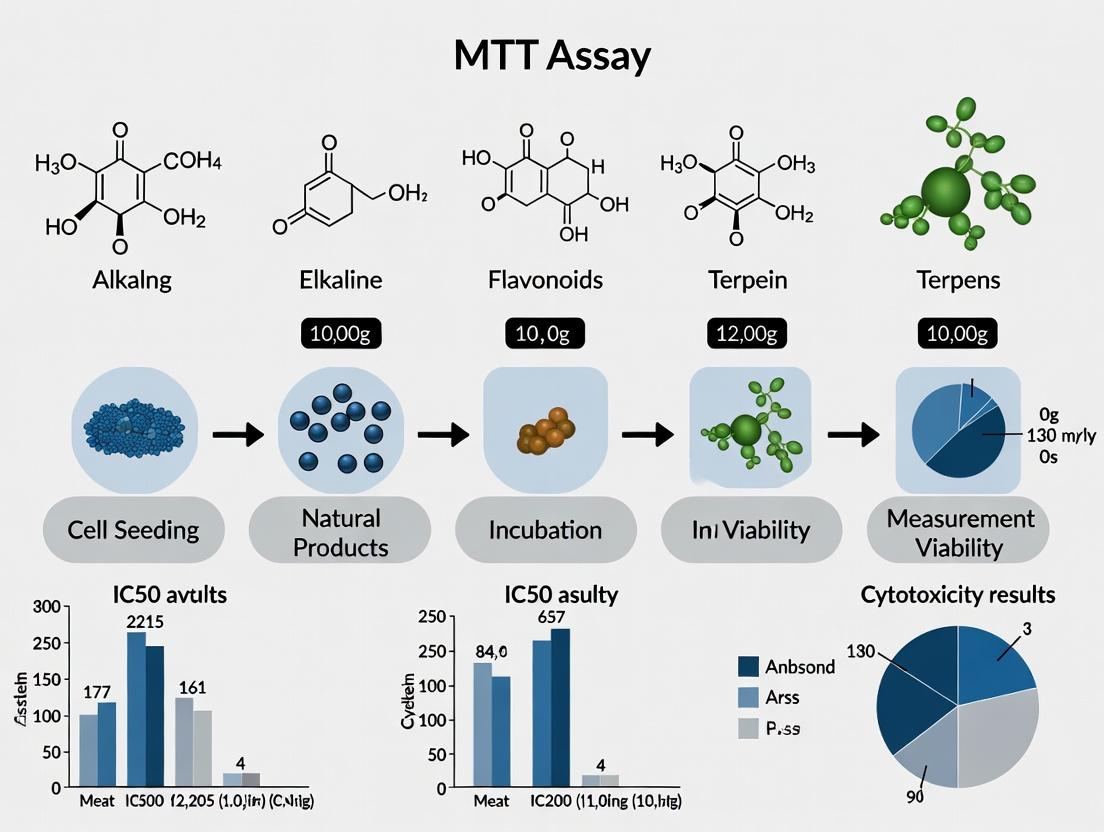
This comprehensive guide details the MTT assay's application for evaluating natural product cytotoxicity, a cornerstone in drug discovery.
MTT Assay Protocol for Natural Products: A Complete Guide to Cytotoxicity Evaluation in Drug Discovery
Abstract
This comprehensive guide details the MTT assay's application for evaluating natural product cytotoxicity, a cornerstone in drug discovery. Covering foundational principles, step-by-step protocols optimized for complex natural extracts, advanced troubleshooting, and rigorous validation against contemporary methods, this article provides researchers with the essential knowledge to generate reliable, reproducible data for preclinical screening.
Understanding the MTT Assay: The Gold Standard for Natural Product Cytotoxicity Screening
In the context of a thesis exploring the cytotoxicity of natural products, the MTT assay is a foundational, colorimetric technique. Its core principle relies on the reduction of the yellow, water-soluble tetrazolium salt, 3-(4,5-dimethylthiazol-2-yl)-2,5-diphenyltetrazolium bromide (MTT), to an insoluble purple formazan precipitate by metabolically active cells. This reduction occurs primarily in the mitochondria via the activity of NAD(P)H-dependent oxidoreductase enzymes, collectively representing the mitochondrial succinate dehydrogenase system. Therefore, the amount of formazan produced is directly proportional to the mitochondrial activity of the cell population. In cytotoxicity screening of natural product extracts or compounds, a decrease in formazan signal relative to untreated controls serves as a surrogate indicator of reduced cell viability, potentially due to apoptosis, necrosis, or metabolic inhibition. While not a direct measure of cell number, it is a robust, economical, and high-throughput proxy for assessing the therapeutic potential or toxicological profile of novel natural entities.
The Molecular Pathway of MTT Reduction
Title: Biochemical Pathway of MTT Reduction in Mitochondria
Standardized Protocol for MTT Assay in Natural Product Screening
Materials & Reagent Setup
- Cell Culture: Appropriate cell line (e.g., HepG2 for hepatotoxicity, MCF-7 for breast cancer).
- Test Compounds: Natural product extracts or purified compounds, dissolved in DMSO or culture medium (final DMSO concentration ≤0.5% v/v).
- MTT Solution: 5 mg/mL MTT in phosphate-buffered saline (PBS). Filter sterilize (0.22 µm) and store protected from light at 4°C for ≤2 weeks.
- Solubilization Solution: Acidified isopropanol (0.1N HCl in isopropanol) or DMSO.
Procedure
- Cell Seeding: Seed cells in a 96-well flat-bottom microplate at an optimized density (e.g., 5,000-10,000 cells/well in 100 µL complete medium). Include a "cell-free" background control (medium only). Incubate for 24 h (37°C, 5% CO₂) to allow attachment.
- Compound Treatment: Prepare serial dilutions of natural products. Aspirate medium from wells and add 100 µL of fresh medium containing the desired concentration of test compound or vehicle control. Incubate for desired exposure time (e.g., 24, 48, 72 h).
- MTT Addition: Add 10-20 µL of MTT stock solution (5 mg/mL) to each well to achieve a final concentration of 0.5-1 mg/mL. Return plate to incubator for 2-4 hours.
- Formazan Solubilization: Carefully aspirate the medium without disturbing the formed formazan crystals. Add 100-150 µL of solubilization solution (DMSO or acidified isopropanol) to each well. Shake gently on an orbital shaker for 10-15 minutes to fully dissolve crystals.
- Absorbance Measurement: Read absorbance immediately at 570 nm (formazan peak) with a reference wavelength of 630-650 nm to correct for nonspecific background, using a microplate reader.
- Data Analysis: Calculate percentage cell viability: (Mean Abs[Test] - Mean Abs[Background]) / (Mean Abs[Vehicle Control] - Mean Abs[Background]) × 100%.
Experimental Workflow for Cytotoxicity Screening
Title: MTT Assay Workflow for Natural Product Cytotoxicity Testing
Data Presentation: Representative Cytotoxicity Results
Table 1: Example Cytotoxicity Data of a Natural Product Extract on Cancer Cell Lines
| Cell Line | Exposure Time (h) | IC₅₀ Value (µg/mL) | 95% Confidence Interval | R² of Dose-Response Curve |
|---|---|---|---|---|
| HeLa | 24 | 45.2 | 41.8 - 48.9 | 0.98 |
| HeLa | 48 | 22.7 | 20.1 - 25.6 | 0.99 |
| A549 | 24 | >100 | N/A | 0.87 |
| A549 | 48 | 78.5 | 70.3 - 87.6 | 0.96 |
| MCF-7 | 48 | 15.4 | 13.2 - 17.9 | 0.98 |
Table 2: Critical Controls and Expected Outcomes in an MTT Assay
| Well Type | Content | Purpose | Expected Result (A570) |
|---|---|---|---|
| Background Control | Medium + MTT + Solubilizer (No cells) | Correct for plate/medium absorbance | Low (0.05-0.15) |
| Vehicle Control | Cells + Vehicle (e.g., 0.5% DMSO) + MTT + Solubilizer | Define 100% viability | High (0.8-1.5, depends on cell density) |
| Positive Control | Cells + Cytotoxic Agent (e.g., 100 µM Staurosporine) + MTT + Solubilizer | Define 0% viability / assay validity | Near background |
| Test Compound | Cells + Natural Product + MTT + Solubilizer | Determine sample cytotoxicity | Variable (between background and vehicle control) |
The Scientist's Toolkit: Essential Research Reagents & Materials
Table 3: Key Reagent Solutions for MTT Assay
| Item | Function & Critical Notes |
|---|---|
| MTT Tetrazolium Salt | The core substrate. Light-sensitive. Must be prepared fresh or aliquoted and stored frozen, protected from light. |
| Cell Culture Medium (Phenol Red-free) | Recommended to avoid interference of phenol red with absorbance readings at 570 nm. |
| Dimethyl Sulfoxide (DMSO) | Standard solvent for water-insoluble natural products. Must be used at non-cytotoxic concentrations (typically ≤0.5%). Also used as a formazan solubilizer. |
| Acidified Isopropanol (0.1N HCl) | Alternative solubilization solution. The acid helps dissolve formazan and may reduce interference from protein precipitation. |
| Sodium Dodecyl Sulfate (SDS) Solution | An alternative solubilizer (e.g., 10% SDS in 0.01M HCl). Requires longer incubation (overnight) but provides more stable readings. |
| Positive Control Compound (e.g., Staurosporine, Doxorubicin, Triton X-100) | Validates assay performance by ensuring the system can detect cytotoxicity. |
| 96-Well Flat-Bottom Microplate | Optically clear plates for absorbance measurement. Tissue-culture treated for cell adhesion. |
| Microplate Spectrophotometer | Must be capable of reading absorbance at 570 nm with a reference filter (630-650 nm). |
The MTT (3-(4,5-dimethylthiazol-2-yl)-2,5-diphenyltetrazolium bromide) tetrazolium reduction assay was first described by Mosmann in 1983 as a colorimetric method for assessing mammalian cell survival and proliferation. Its adoption in natural product (NP) research was nearly immediate, providing a crucial tool for screening crude extracts and isolated compounds for cytotoxic potential. Despite the development of newer assays (e.g., resazurin/Alamar Blue, ATP luminescence, clonogenic), MTT remains a cornerstone in NP cytotoxicity evaluation due to its historical validation, cost-effectiveness, simplicity, and the vast body of comparative data it has generated over four decades. Its principle—the reduction of yellow tetrazolium MTT to purple formazan crystals by metabolically active cells—serves as a robust proxy for mitochondrial activity and, by extension, cell viability.
Advantages of MTT for Natural Product Research
The persistence of MTT in NP research is attributable to a confluence of practical and scientific advantages, particularly relevant for resource-aware research settings and high-throughput primary screening.
Table 1: Key Advantages of MTT in Natural Product Cytotoxicity Screening
| Advantage | Description | Relevance to NP Research |
|---|---|---|
| Cost-Effectiveness | Reagents are inexpensive compared to luminescence or fluorescence-based kits. | Essential for labs screening hundreds of crude extracts or fractions with limited budgets. |
| Technical Simplicity | Requires basic laboratory equipment (plate reader, incubator). No washing steps. | Accessible to labs of all technical levels, from field stations to core facilities. |
| Historical Dataset | 40+ years of published data using MTT across countless cell lines. | Enables direct comparison of new NP findings with a massive historical literature. |
| Reproducibility | Well-understood protocol with known interferences and optimization points. | High inter-laboratory reproducibility for standard cell lines. |
| Endpoint Flexibility | The formazan product is stable, allowing plates to be read at convenience. | Ideal for labs with shared or limited plate reader access. |
| High-Throughput Compatible | Easily adapted to 96- and 384-well formats. | Suitable for primary screening of large NP libraries. |
Core Protocol: MTT Assay for Cytotoxicity Screening of Natural Product Extracts
Adapted from current best practices (2023-2024 literature).
Research Reagent Solutions & Essential Materials
Table 2: The Scientist's Toolkit for MTT Assay
| Item | Function / Rationale |
|---|---|
| MTT Stock Solution | (5 mg/mL in PBS, sterile-filtered). The tetrazolium substrate. Store at -20°C protected from light. |
| Cell Culture Media | Phenol red-free recommended to reduce background absorbance. |
| Solubilization Solution | Typically DMSO, acidified isopropanol, or SDS-based buffers. Dissolves water-insoluble formazan crystals for reading. |
| Reference Controls | Doxorubicin (positive cytotoxic control) and DMSO vehicle (negative/solvent control). |
| 96-well Microplate | Flat-bottom, tissue culture-treated plates. |
| Microplate Reader | Equipped with a 570 nm filter (reference filter 630-690 nm recommended). |
| Test Natural Products | Dissolved in DMSO or culture media. Final solvent concentration ≤0.5% (v/v) to avoid cytotoxicity. |
Detailed Step-by-Step Protocol
Day 1: Cell Seeding
- Cell Preparation: Harvest adherent cells in log growth phase. Prepare a single-cell suspension in complete growth media.
- Plate Seeding: Seed cells in a 96-well plate at an optimized density (e.g., 5,000 - 20,000 cells/well in 100 µL). Include cell-free control wells (media only) for background subtraction.
- Incubation: Incubate plate for 24 h at 37°C, 5% CO₂ to allow cell attachment and resumption of exponential growth.
Day 2: Natural Product Treatment
- NP Dilution: Prepare serial dilutions of the natural product extract/compound in culture media.
- Treatment: Remove 100 µL of old media from each well and replace with 100 µL of treatment media containing the NP at desired concentrations. Run each concentration in at least triplicate. Include vehicle control and positive control wells.
- Incubation: Incubate plate for desired treatment duration (e.g., 24, 48, 72 h).
Day 3/4/5: MTT Assay & Analysis
- MTT Addition: Add 10-20 µL of MTT stock solution (5 mg/mL) directly to each well (final concentration ~0.5 mg/mL). Swirl gently to mix.
- Incubation: Incubate plate for 2-4 h at 37°C. Purple formazan crystals should be visible under a microscope.
- Solubilization: Carefully remove the media containing MTT. Add 100 µL of solubilization solution (e.g., DMSO) to each well. Shake gently on an orbital shaker for 15 min to fully dissolve crystals.
- Absorbance Measurement: Read absorbance at 570 nm with a reference wavelength of 630-690 nm on a plate reader.
- Data Calculation:
- Calculate mean absorbance for replicates.
- Subtract background mean (cell-free control).
- Calculate cell viability:
(Mean Abs_sample / Mean Abs_vehicle control) x 100%. - Generate dose-response curves and calculate IC₅₀ values using appropriate software (e.g., GraphPad Prism).
Critical Considerations and Mitigation of Common Interferences in NP Research
Natural products present unique challenges for the MTT assay. Key interferences and solutions are summarized below.
Table 3: Common NP-Related Interferences & Solutions
| Interference Type | Mechanism | Mitigation Strategy |
|---|---|---|
| Direct Reduction | Some polyphenols, quinones, or reducing agents can reduce MTT in the absence of cells. | Include cell-free controls with NP + MTT. Subtract this value from experimental wells. |
| Color/Pigmentation | Strongly colored compounds (e.g., carotenoids, chlorophyll) absorb at ~570 nm. | Include NP-only controls (cells, NP, no MTT) to correct for compound absorbance. |
| Miscibility Issues | Crude extracts may precipitate or form colloids with media. | Pre-filter stock solutions. Use a final low concentration of DMSO (≤0.5%) or other co-solvents. |
| Time-Dependent Effects | Cytostatic vs. cytotoxic effects, or prodrug activation over time. | Perform time-course experiments (24, 48, 72 h). Combine with a complementary assay (e.g., clonogenic). |
Pathway and Workflow Visualizations
Title: MTT Assay Protocol Workflow for Natural Products
Title: Mitigating NP-Specific Interferences in MTT Assay
Title: Biochemical Pathway of MTT Reduction in Living Cells
Within a thesis investigating the cytotoxicity of natural products, the MTT assay remains a cornerstone methodology. Its reliability hinges on the precise interplay of three key components: the MTT tetrazolium salt, effective solubilization agents, and accurate detection systems. This document provides detailed application notes and protocols to optimize these components for robust and reproducible results in natural product screening.
MTT Tetrazolium Salt: The Biochemical Sensor
MTT (3-(4,5-dimethylthiazol-2-yl)-2,5-diphenyltetrazolium bromide) is a yellow, water-soluble tetrazolium salt. It serves as a redox indicator, primarily reduced by NAD(P)H-dependent oxidoreductase enzymes in the mitochondria of metabolically active cells. This reduction yields intracellular, insoluble purple formazan crystals.
Application Notes:
- Storage & Stability: Prepare MTT stock solution (typically 5 mg/mL in PBS or serum-free medium), filter sterilize (0.2 µm), and store protected from light at -20°C for up to 6 months. Avoid repeated freeze-thaw cycles.
- Final Concentration Optimization: While 0.5 mg/mL is standard, titrate for each cell line (range: 0.2-1.0 mg/mL). Natural products with inherent color or redox activity may require concentration adjustments.
- Incubation Time: Typically 2-4 hours. Over-incubation can lead to formazan crystal exocytosis and reduced signal.
Table 1: MTT Salt Formulation Variables
| Variable | Typical Range | Optimization Consideration |
|---|---|---|
| Stock Concentration | 5 mg/mL | Ensures solubility, minimizes volume added to wells. |
| Final Working Concentration | 0.2 - 1.0 mg/mL | Must balance signal intensity with potential cytotoxicity of MTT itself. |
| Incubation Time | 2 - 4 hours | Dependent on cell line metabolic rate. Validate via time-course experiment. |
| Incubation Conditions | 37°C, standard CO₂ | Essential for maintaining cellular metabolic activity during reaction. |
Protocol 1: MTT Solution Preparation and Cell Incubation
- Weigh 50 mg of MTT tetrazolium salt.
- Dissolve in 10 mL of sterile phosphate-buffered saline (PBS) or serum-free, phenol red-free medium.
- Vortex thoroughly until fully dissolved.
- Filter sterilize using a 0.2 µm syringe filter into a sterile, light-protected tube.
- Aliquot and store at -20°C.
- During Assay: Add MTT solution directly to culture wells at 10% of the total well volume (e.g., 20 µL to 200 µL medium). Mix gently by swirling the plate.
- Incubate plate for 2-4 hours at 37°C in a cell culture incubator.
Solubilization Agents: Critical for Signal Recovery
Following incubation, the insoluble purple formazan must be dissolved for spectrophotometric reading. The choice of agent significantly impacts signal homogeneity, background, and compatibility with downstream detection.
Application Notes:
- Acidic Isopropanol: A classical agent (e.g., 0.04 N HCl in isopropanol). Acid degrades protein and helps dissolve crystals. Can precipitate serum proteins, leading to turbidity.
- DMSO: The most universal solvent. It efficiently dissolves formazan without precipitation issues. Ensure all culture medium is removed prior to addition.
- SDS-based Solutions: Sodium dodecyl sulfate (SDS) in aqueous buffer (e.g., 10% SDS in 0.01 M HCl). Provides a more uniform solution and is suitable for automation but requires longer solubilization times, often with incubation at 37°C.
Table 2: Comparison of Common Solubilization Agents
| Agent | Typical Formulation | Pros | Cons | Optimal Use Case |
|---|---|---|---|---|
| DMSO | 100% Anhydrous DMSO | Rapid, complete solubilization; low background. | Evaporates quickly; requires complete medium removal. | Standard protocols for adherent/suspension cells. |
| Acidic Isopropanol | 0.04 N HCl in Isopropanol | Effective for most cell types. | Can precipitate serum proteins, causing turbidity; volatile. | Assays with serum-free conditions. |
| SDS Solution | 10% SDS in 0.01 M HCl | Aqueous, uniform solution; low volatility. | Slow solubilization (overnight incubation possible). | Automated high-throughput assays; problematic cells. |
Protocol 2: Formazan Solubilization using DMSO
- After MTT incubation, carefully aspirate the entire culture medium from each well without disturbing the formazan crystals at the bottom.
- Note: For suspension cells, centrifugation of plates may be required prior to aspiration.
- Add 100-150 µL of anhydrous DMSO to each well.
- Place the plate on an orbital shaker for 5-10 minutes at low speed to ensure complete dissolution of crystals.
- Optional: For complete dissolution, incubate the plate at 37°C for 5 minutes after shaking.
Detection Systems: Quantifying the Signal
The dissolved formazan is quantified by measuring its absorbance, typically at 570 nm. A reference wavelength (600-690 nm) is used to correct for background interference, which is crucial when testing colored natural products.
Application Notes:
- Microplate Readers: Standard tool. Ensure the instrument is calibrated and has a filter or monochromator suitable for 570 nm.
- Dual-Wavelength Measurement: Critical for accuracy. Measure absorbance at the peak (570 nm) and a reference wavelength (e.g., 650 nm or 690 nm) where formazan does not absorb. Subtract the reference from the primary measurement.
- Pathlength Correction: For assays where the solubilization volume varies, use a pathlength correction feature if available.
- Data Validation: Include controls on every plate: media-only blanks, untreated cell controls (100% viability), and a cell-free natural product control to detect any direct MTT reduction or color interference.
Protocol 3: Absorbance Measurement and Data Analysis
- Ensure the formazan-DMSO solution is homogenous and free of bubbles.
- Wipe the bottom of the microplate clean.
- Insert the plate into a microplate reader.
- Set up the reader protocol:
- Absorbance mode.
- Primary wavelength (λ1): 570 nm.
- Reference wavelength (λ2): 650 nm or 690 nm.
- Read all experimental and control wells.
- Calculate corrected absorbance for each well: A_corrected = A₅₇₀ - A₆₅₀.
- Calculate percentage cell viability:
% Viability = (A_corrected(Treated) - A_corrected(Blank)) / (A_corrected(Untreated Control) - A_corrected(Blank)) * 100
The Scientist's Toolkit: Essential Research Reagent Solutions
| Item | Function & Rationale |
|---|---|
| MTT Tetrazolium Salt | The redox-sensitive substrate that is reduced to colored formazan by metabolically active cells. |
| Anhydrous DMSO | Preferred solubilization agent for dissolving the insoluble formazan product into a homogeneous colored solution for measurement. |
| PBS (without Ca2+/Mg2+) | Used to prepare sterile MTT stock solution; the lack of divalent cations prevents precipitation. |
| 0.2 µm Syringe Filter | For sterile filtration of MTT stock solution, preventing microbial contamination during long-term storage. |
| Phenol Red-Free Medium | Optional but recommended for MTT solution preparation and assay steps to avoid interference from the phenol red dye at 570 nm. |
| SDS (Sodium Dodecyl Sulfate) | Alternative solubilizing agent in aqueous buffers; useful for problematic cells or automated workflows. |
| Microplate Reader | Instrument for quantifying the dissolved formazan via absorbance at 570 nm with a reference wavelength. |
| 96- or 384-well Cell Culture Plates | Flat-bottom plates optimized for cell growth and compatible with absorbance readers. |
Visualizations
Diagram 1: MTT Assay Workflow for Natural Products
Diagram 2: MTT Reduction Pathway in Mitochondria
Within a thesis on the MTT assay for natural product cytotoxicity evaluation, precise quantification of toxic effects is fundamental. Cytotoxicity, the degree to which a substance causes damage to living cells, is quantified using key pharmacological parameters—primarily the half-maximal inhibitory concentration (IC50) and the half-maximal effective concentration (EC50)—derived from cell viability percentage data. These metrics form the cornerstone for comparing the potency and efficacy of natural product extracts or compounds, guiding decisions on therapeutic potential and safety profiles in drug development pipelines.
Table 1: Key Pharmacological Parameters in Cytotoxicity Assessment
| Parameter | Definition | Typical Unit | Interpretation in Cytotoxicity Context |
|---|---|---|---|
| Cell Viability (%) | The percentage of metabolically active (living) cells in a treated sample relative to an untreated control. | Percentage (%) | 100% = No cytotoxicity. A decrease indicates a dose-dependent toxic effect. |
| IC50 | The concentration of a compound required to inhibit a biological process (e.g., cell metabolism, proliferation) by 50%. | µM, µg/mL, nM | Measures potency of growth inhibition or cell death. Lower IC50 = greater potency. |
| EC50 | The concentration of a compound required to elicit a specific biological response (e.g., induction of apoptosis, ROS production) by 50%. | µM, µg/mL, nM | Measures potency for a defined effective outcome, which could be desired (therapeutic) or undesired (toxic). |
Key Distinction: In cytotoxicity studies, IC50 typically refers to the concentration causing 50% loss of cell viability (a negative effect). EC50 may be used interchangeably but is often reserved for concentrations causing 50% of a maximal specific effect, such as caspase activation. The interpretation depends on the assay endpoint.
Table 2: Benchmark Cytotoxicity Ranges for Natural Products (General Guidance)
| IC50 Range | Typical Interpretation for Cancer Cell Lines | Follow-up Action |
|---|---|---|
| < 10 µM (or < 20 µg/mL for crude extracts) | Highly cytotoxic/active | Prioritize for mechanistic studies and further purification. |
| 10 – 100 µM (or 20 – 200 µg/mL) | Moderately active | Consider for lead optimization or synergy studies. |
| > 100 µM (or > 200 µg/mL) | Weakly active or inactive | May be deprioritized, unless selectivity is exceptional. |
Protocols for Cytotoxicity Evaluation via MTT Assay
Protocol 1: Standard MTT Assay for Cell Viability Percentage Calculation
Objective: To determine the percentage of viable cells after treatment with a natural product.
Research Reagent Solutions & Materials:
| Item | Function |
|---|---|
| Cell Line (e.g., HeLa, MCF-7) | Model system for toxicity testing. |
| Natural Product Compound/Extract | Test agent of unknown cytotoxicity. |
| MTT Reagent (3-(4,5-Dimethylthiazol-2-yl)-2,5-Diphenyltetrazolium Bromide) | Yellow tetrazolium salt reduced to purple formazan by metabolically active cells. |
| Dimethyl Sulfoxide (DMSO) | Solvent for dissolving water-insoluble compounds and for solubilizing formazan crystals. |
| Cell Culture Medium & Supplements | Provides nutrients for cell maintenance. |
| 96-Well Microplate (Tissue Culture Treated) | Platform for cell seeding, treatment, and assay execution. |
| Microplate Spectrophotometer | Measures absorbance of formazan at 570 nm. |
Methodology:
- Cell Seeding: Seed cells in a 96-well plate at an optimal density (e.g., 5,000-10,000 cells/well) in complete medium. Incubate for 24 hours to allow adhesion.
- Treatment: Prepare serial dilutions of the natural product in medium. Replace medium in wells with treatment solutions. Include untreated control wells (100% viability) and blank wells (medium only, no cells). Incubate for desired exposure time (e.g., 24, 48, 72 hours).
- MTT Incubation: Add MTT reagent (e.g., 10 µL of 5 mg/mL stock) to each well. Incubate for 2-4 hours at 37°C to allow formazan crystal formation.
- Solubilization: Carefully remove the medium containing MTT. Add DMSO (e.g., 100 µL/well) to dissolve the formazan crystals. Shake gently.
- Absorbance Measurement: Read the absorbance at 570 nm (reference wavelength ~650-690 nm) using a microplate reader.
- Calculation: Average Absorbance (Test) = Abs (Test well) - Abs (Blank well) Average Absorbance (Control) = Abs (Control well) - Abs (Blank well) Cell Viability (%) = [(Average Absorbance (Test)) / (Average Absorbance (Control))] x 100
Protocol 2: Determination of IC50/EC50 from Dose-Response Data
Objective: To calculate the IC50/EC50 value from cell viability data across a concentration gradient.
Methodology:
- Perform MTT Assay: Conduct Protocol 1 across a minimum of 8 concentrations of the test compound (e.g., serial 1:2 or 1:3 dilutions). Use at least triplicate wells per concentration.
- Data Preparation: Calculate the mean cell viability percentage and standard deviation for each concentration.
- Nonlinear Regression Analysis: Using software (GraphPad Prism, R, Origin):
- Plot concentration (log10 scale) on the x-axis versus cell viability (%) on the y-axis.
- Fit the data to a sigmoidal dose-response (variable slope) model, also known as a four-parameter logistic (4PL) model.
- The general equation is: Y = Bottom + (Top - Bottom) / (1 + 10^((LogIC50 - X) * HillSlope)) where Y = response (viability %), X = log10(concentration), Top and Bottom are plateaus (typically ~100 and 0, respectively).
- IC50/EC50 Output: The software calculates the IC50/EC50 as the concentration at the inflection point of the curve (Y = 50% between Top and Bottom). Report with 95% confidence intervals.
Visualization of Workflows and Pathways
Title: MTT Assay Workflow for IC50 Determination
Title: Common Cytotoxicity Pathways for Natural Products
The Role of MTT Assays in the Natural Product Drug Discovery Pipeline
Within the broader thesis on optimizing cytotoxicity evaluation for natural products, the MTT (3-(4,5-dimethylthiazol-2-yl)-2,5-diphenyltetrazolium bromide) assay is established as a cornerstone preliminary screening tool. Its role is critical in the early stages of the drug discovery pipeline to rapidly and economically identify natural product extracts or compounds with cytotoxic potential, guiding subsequent isolation and development efforts. This application note details its standardized use, recent methodological considerations, and integration points within the holistic discovery workflow.
MTT Assay Protocol for Natural Product Screening
Materials & Reagent Solutions
Research Reagent Solutions Table:
| Item | Function | Key Considerations for Natural Products |
|---|---|---|
| MTT Reagent | Yellow tetrazolium salt; reduced to purple formazan by metabolically active cells. | Prepare fresh at 5 mg/mL in PBS or medium without phenol red; filter sterilize. |
| Test Natural Product | Crude extract, fraction, or purified compound. | Solubilize in DMSO (<0.5% final v/v), ethanol, or culture medium. Include vehicle control. |
| Cell Culture Medium | Supports growth of target cell lines (e.g., cancer lines). | Use medium appropriate for cell line; may require serum reduction during treatment. |
| Solubilization Solution | Dissolves insoluble purple formazan crystals. | Typically, DMSO, acidic isopropanol, or SDS-based buffers. Must fully solubilize crystals. |
| Positive Control | Establishes baseline for 100% cytotoxicity. | Often 100 µM cisplatin or 10% DMSO, depending on cell line. |
| 96-well Microplate | Platform for high-throughput cell culture and assay. | Use clear, flat-bottom plates. Ensure edge effect is minimized. |
Detailed Step-by-Step Protocol
Day 1: Cell Seeding
- Harvest exponentially growing adherent cells (e.g., HeLa, MCF-7, HepG2).
- Count and adjust cell suspension density using a hemocytometer or automated counter.
- Seed cells in 96-well plates at an optimized density (e.g., 5,000 - 10,000 cells/well in 100 µL complete medium). For suspension cells, adjust protocol accordingly.
- Incubate plates for 24 hours at 37°C, 5% CO₂ to allow cell attachment and stabilization.
Day 2: Treatment with Natural Products
- Prepare serial dilutions of the natural product in treatment medium. A typical 8-point dose-response curve is recommended (e.g., 100 µM to 0.1 µM).
- Aspirate old medium from adherent cells and add 100 µL of treatment medium containing the test compound or vehicle control. Include wells for positive (cytotoxic) control and blank (medium only, no cells).
- Return plates to incubator for desired treatment period (commonly 24, 48, or 72 hours).
Day 3/4/5: MTT Assay & Quantification
- Post-treatment, prepare MTT solution (5 mg/mL).
- Add 10-20 µL of MTT solution directly to each well (final concentration ~0.5 mg/mL). Swirl gently.
- Incubate plates for 2-4 hours at 37°C, 5% CO₂. Protect from light.
- Carefully observe for purple formazan crystal formation under a microscope.
- Add 100 µL of solubilization solution (e.g., DMSO) to each well. For some protocols, the medium is aspirated first.
- Seal plates and shake gently on an orbital shaker for 15 minutes to ensure complete crystal dissolution.
- Measure absorbance at 570 nm (formazan peak) with a reference wavelength of 630-650 nm (to subtract background) using a microplate reader.
Data Analysis
- Calculate the mean absorbance for each treatment group, subtracting the mean absorbance of the blank wells.
- Normalize data: % Cell Viability = (Mean Absorbance of Treated Well / Mean Absorbance of Vehicle Control Well) × 100.
- Plot % Cell Viability vs. log₁₀(Concentration) to generate dose-response curves.
- Calculate IC₅₀ (half-maximal inhibitory concentration) using non-linear regression (e.g., four-parameter logistic/sigmoidal curve) in software like GraphPad Prism.
Quantitative Data & Interpretation
Table 1: Representative MTT Data for a Hypothetical Natural Product (Curcuminoid) Against Cancer Cell Lines (48h Treatment)
| Cell Line | Tissue Origin | IC₅₀ (µM) | 95% Confidence Interval (µM) | R² of Fit | Assay Z'-Factor* |
|---|---|---|---|---|---|
| MCF-7 | Breast Adenocarcinoma | 15.2 | 13.8 - 16.7 | 0.98 | 0.65 |
| A549 | Lung Carcinoma | 22.5 | 20.1 - 25.2 | 0.96 | 0.61 |
| HepG2 | Hepatocellular Carcinoma | 18.7 | 16.9 - 20.6 | 0.97 | 0.58 |
| HEK293 | Normal Embryonic Kidney | >100 | N/A | N/A | 0.62 |
*A Z'-Factor > 0.5 indicates a robust assay suitable for screening.
Table 2: Advantages and Limitations of MTT in Natural Product Screening
| Advantage | Limitation & Mitigation Strategy |
|---|---|
| High-Throughput Compatible | Interference: Some natural products (e.g., pigments, antioxidants) can directly reduce MTT or absorb at 570 nm. Mitigation: Include additional controls (product + MTT in cell-free wells) and confirm results with alternative assays (e.g., resazurin, ATP-based). |
| Cost-Effective & Simple | Metabolic Assumption: Measures dehydrogenase activity, not direct cell death. Mitigation: Correlate with direct viability markers (trypan blue exclusion, LDH release). |
| Well-Established & Reproducible | Solubility Issues: Crude extracts may precipitate. Mitigation: Use sonication, different solvents (e.g., cyclodextrins), and confirm homogeneous dosing. |
| Low Volume Requirements | Endpoint Assay Only Mitigation: For kinetic data, use real-time assays in parallel. |
Integration in the Discovery Pipeline: Workflow & Pathways
Diagram 1: MTT Assay Position in Natural Product Discovery Pipeline
Diagram 2: MTT Reduction and Cytotoxicity Pathway
Advanced Protocol Notes & Troubleshooting
Optimization for Challenging Natural Products:
- Colored/Pigmented Extracts: Run an interference plate. Subtract absorbance of wells containing product + MTT but no cells from the corresponding test wells.
- Low Solubility: Pre-dissolve in DMSO and add to medium with gentle sonication. Ensure final DMSO concentration is non-toxic to cells (<0.5% v/v).
- Short-Lived or Unstable Compounds: Consider shorter treatment times (e.g., 4-6 hours) followed by MTT assay, or use real-time cell analysis systems.
Critical Controls:
- Vehicle Control: Cells + vehicle (e.g., 0.1% DMSO).
- Positive Control: Cells + known cytotoxic agent (e.g., 100 µM cisplatin).
- Blank: Medium + MTT + solubilizer, no cells.
- Product Interference Control: Medium + Natural Product + MTT + solubilizer, no cells.
Troubleshooting Table:
| Problem | Possible Cause | Solution |
|---|---|---|
| Low Signal (Absorbance) | Low cell seeding density; short MTT incubation; inactive MTT reagent. | Re-titer cell number; extend MTT incubation to 4 hours; prepare fresh MTT. |
| High Background in Blanks | Particulate contamination; precipitation of medium components with solubilizer. | Filter all reagents; change solubilizer (e.g., use SDS in HCl instead of DMSO). |
| Poor Replicate Reproducibility | Inconsistent cell seeding; edge effects in plate; uneven solubilization. | Use automated liquid handler; utilize edge wells with PBS only; ensure adequate shaking. |
| Overestimation of Viability | Natural product directly reduces MTT. | Implement the interference control plate and correct calculations. |
Step-by-Step MTT Protocol Optimized for Natural Extracts and Compounds
This protocol, framed within a broader thesis on MTT assay for natural product cytotoxicity evaluation, details the critical pre-assay steps of cell line selection, culture, and plate seeding. The reproducibility and biological relevance of cytotoxicity data hinge on meticulous planning and execution at this initial stage. Proper selection of relevant cell models, maintenance of robust culture conditions, and consistent seeding are foundational to assessing the therapeutic potential of natural product extracts or compounds.
Cell Line Selection for Natural Product Screening
The choice of cell line is dictated by the research objective: whether screening for general cytotoxicity or targeted, tissue-specific activity.
Table 1: Common Cell Lines for Cytotoxicity Screening of Natural Products
| Cell Line | Origin/Tissue | Typical Doubling Time | Key Applications in Natural Product Research | Considerations |
|---|---|---|---|---|
| HeLa | Human cervical adenocarcinoma | ~24 hours | Broad-spectrum cytotoxicity screening; high reproducibility. | Cancer model; p53 deficient; requires strict containment. |
| MCF-7 | Human breast adenocarcinoma | ~30-40 hours | Screening for anti-breast cancer activity; hormone-responsive. | Expresses estrogen receptor; slower growth rate. |
| A549 | Human lung carcinoma | ~22-24 hours | Screening for anti-lung cancer and anti-inflammatory agents. | Expresses cytochrome P450 enzymes; adherent, epithelial. |
| HepG2 | Human hepatocellular carcinoma | ~24-48 hours | Screening for hepatotoxicity and hepatoprotective agents. | Retains some phase I/II metabolism enzymes; good for metabolism studies. |
| HEK 293 | Human embryonic kidney | ~20-24 hours | General cytotoxicity; transfection studies for mechanistic work. | Easy to culture; non-cancerous origin but transformed. |
| RAW 264.7 | Mouse macrophage | ~18-24 hours | Screening for immunomodulatory and anti-inflammatory natural products. | Suspension/adherent; responsive to LPS; phagocytic. |
| NIH/3T3 | Mouse embryo fibroblast | ~18-24 hours | Used as a "normal" control cell line in comparison to cancer lines. | Non-tumorigenic; contact-inhibited; sensitive to overcrowding. |
Protocol 2.1: Criteria-Based Cell Line Selection Workflow
- Define Research Goal: Determine if the aim is general toxicity profiling or targeted mechanism (e.g., anti-lung cancer, hepatoprotection).
- Review Literature: Search recent publications for established models relevant to your natural product's suspected bioactivity.
- Consider Practicality: Factor in doubling time, adherence properties, ease of culture, and biosafety level requirements.
- Plan for Controls: Select at least one cancer cell line and one "normal" cell line for comparative selectivity index (SI) calculation.
- Authenticate and Validate: Prior to banking, authenticate cell lines using STR profiling and test for mycoplasma contamination.
Cell Culture Protocols for Assay Preparation
Consistent, healthy, and contaminant-free cultures are essential.
Protocol 3.1: Standard Subculture of Adherent Cells Objective: To maintain cells in exponential growth phase and prepare them for assay seeding. Materials: Cell line of choice, complete growth medium, DPBS, trypsin-EDTA solution, T-75 culture flasks.
- Observe: Check cells under microscope for 70-90% confluence and healthy morphology.
- Aspirate: Remove and discard the spent culture medium.
- Wash: Gently rinse cell monolayer with 5-7 mL sterile DPBS to remove residual serum.
- Trypsinize: Add 2-3 mL of pre-warmed trypsin-EDTA solution. Incubate at 37°C for 2-5 minutes.
- Neutralize: Observe cell detachment under microscope. Add 6-8 mL of complete medium to inactivate trypsin.
- Centrifuge: Transfer cell suspension to a conical tube. Centrifuge at 200 x g for 5 minutes.
- Reseed: Aspirate supernatant. Resuspend pellet in fresh medium. Count cells and seed new flasks at appropriate density (e.g., 0.5-1 x 10⁴ cells/cm²).
Protocol 3.2: Cell Counting and Viability Assessment via Trypan Blue Exclusion Objective: To determine accurate cell concentration and viability before seeding. Materials: Cell suspension, 0.4% Trypan Blue solution, hemocytometer, microscope.
- Mix: Combine 20 µL of cell suspension with 20 µL of Trypan Blue solution (1:1 dilution).
- Load: Transfer 10-15 µL of the mixture to a hemocytometer chamber.
- Count: Under a microscope, count live (unstained) and dead (blue-stained) cells in the four corner quadrants.
- Calculate:
- Total Cells/mL = (Average count per quadrant x Dilution Factor x 10⁴) / Number of quadrants counted.
- % Viability = (Total live cells / Total cells) x 100. Only proceed if viability >95%.
Plate Seeding Optimization for MTT Assay
Uniform cell distribution and optimal density are critical for linear MTT formazan production.
Protocol 4.1: Deterministic Seeding Density Optimization Objective: To determine the ideal seeding density that yields 70-90% confluence at assay endpoint without overgrowth.
- Prepare a cell suspension at 5 x 10⁴ cells/mL.
- Seed a 96-well plate with serial dilutions: 100 µL/well to achieve densities from 2,000 to 20,000 cells/well.
- Incubate for 24, 48, and 72 hours. At each time point, for one plate, perform the MTT assay.
- Plot absorbance (OD 570nm) against cell number. Select the density yielding an OD in the linear, mid-range of the curve (typically 0.8-1.2) at the desired assay duration (e.g., 48h).
Table 2: Example Seeding Densities for 96-Well Plate (48h MTT Assay)
| Cell Line | Recommended Seeding Density (cells/well) | Expected Confluence at Seeding | Expected Confluence at 48h |
|---|---|---|---|
| HeLa | 5,000 - 8,000 | 25-30% | 80-90% |
| MCF-7 | 8,000 - 12,000 | 20-25% | 70-80% |
| A549 | 6,000 - 10,000 | 25-30% | 85-95% |
| HepG2 | 10,000 - 15,000 | 15-20% | 70-85% |
| RAW 264.7 | 20,000 - 30,000 | N/A (suspension) | N/A |
Protocol 4.2: Master Mix Seeding for High-Throughput Screening Objective: To ensure uniform cell distribution across all wells of a microplate.
- After counting, prepare a single, large-volume "Master Mix" of cell suspension in a sterile reservoir. Gently stir or swirl frequently.
- Using a multichannel pipette or automated dispenser, seed the entire plate from the single reservoir.
- After seeding, gently tap the plate from all four sides and place it in a figure-eight motion on the incubator shelf to evenly distribute cells.
- Allow plates to rest undisturbed for 15-30 minutes in the laminar flow hood before moving to the 37°C, 5% CO₂ incubator.
The Scientist's Toolkit: Research Reagent Solutions
Table 3: Essential Materials for Pre-Assay Planning
| Item | Function | Key Consideration |
|---|---|---|
| Complete Growth Medium | Provides nutrients, growth factors, and buffers pH for cell growth. | Select appropriate base medium (DMEM, RPMI-1640) and supplement with FBS (typically 10%). |
| Fetal Bovine Serum (FBS) | Source of essential proteins, hormones, and lipids for cell proliferation. | Batch testing is recommended; heat-inactivation may be required for some cell types. |
| Trypsin-EDTA Solution | Proteolytic enzyme (trypsin) detaches adherent cells; EDTA enhances activity. | Use 0.25% concentration for most lines; limit exposure time to prevent damage. |
| Dulbecco's PBS (DPBS) | Salt solution for washing cells without osmotic shock; removes inhibitors of trypsin. | Must be calcium- and magnesium-free for use before trypsinization. |
| Trypan Blue Stain (0.4%) | Vital dye that selectively stains dead cells with compromised membranes. | Count immediately after mixing (within 5 min). Do not use as a sterility test. |
| Dimethyl Sulfoxide (DMSO) | Universal solvent for resuspending many natural product compounds. | Final concentration in cell culture should typically not exceed 0.5% v/v to avoid cytotoxicity. |
| Cell Freezing Medium | Cryoprotectant medium (e.g., with DMSO) for long-term storage of cell stocks. | Use controlled-rate freezing to -80°C before transferring to liquid nitrogen. |
| Mycoplasma Detection Kit | To test for mycoplasma contamination, which alters cell metabolism and response. | Test monthly or with each new thaw; use PCR-based methods for sensitivity. |
Visualization of Workflows and Pathways
Title: Pre-Assay Cell Line and Seeding Workflow
Title: MTT Assay Pathway in Natural Product Testing
Within the framework of a thesis on utilizing the MTT assay for natural product cytotoxicity evaluation, the reproducibility and biological relevance of results are fundamentally dependent on rigorous sample preparation. Inconsistent solubilization, microbial contamination, or compound degradation can lead to false positives/negatives in metabolic activity measurements. This document provides standardized application notes and protocols to ensure natural product extracts and purified compounds are prepared as stable, sterile solutions ready for cell-based screening.
Solubilization Strategies for Diverse Chemistries
Natural products present significant solubility challenges due to structural diversity (e.g., polyphenols, terpenoids, alkaloids). Selection of solvent systems must balance solubility with biocompatibility for the subsequent MTT assay.
Table 1: Common Solvent Systems for Natural Product Solubilization
| Solvent/Carrier | Typical Working Concentration | Key Applications & Notes | Critical MTT Assay Consideration |
|---|---|---|---|
| Dimethyl Sulfoxide (DMSO) | 0.1 - 0.5% (v/v) final in assay | First-line solvent for most non-polar compounds; stock solutions often at 10-100 mM. | Final [DMSO] must be ≤0.5% to avoid cytotoxicity in most mammalian cell lines. |
| Ethanol | 0.5 - 1% (v/v) final in assay | Suitable for many moderately polar compounds. | Requires sterile filtration, not chemical sterilization; evaporate and reconstitute if needed. |
| Cell Culture Medium | N/A (as vehicle) | Direct solubilization of highly polar, water-soluble compounds (e.g., glycosides). | Filter immediately; potential for microbial growth in stocks. |
| Cyclodextrins (e.g., HP-β-CD) | 0.1 - 1% (w/v) | Molecular encapsulation of poorly soluble compounds; enhances aqueous solubility. | Must include vehicle control at same concentration; verify no MTT formazan interference. |
| Aqueous Buffers (pH-adjusted) | N/A | For ionizable compounds; adjust pH for carboxylates or alkaloids. | Ensure pH is re-checked after solubilization and is physiological (7.0-7.4) for assay. |
Protocol 2.1: Systematic Solubilization and Stock Solution Preparation Objective: To prepare a 10 mM DMSO stock solution of a crude natural product extract for cytotoxicity screening.
- Weighing: Accurately weigh an amount of the dried natural product extract corresponding to its average molecular weight (use estimated MW for extracts) to yield a 10 mM solution. For unknown extracts, a standard 10 mg/mL stock is recommended.
- Primary Solubilization: Transfer the powder to a sterile glass vial. Add a calculated volume of anhydrous, cell culture-grade DMSO to achieve the target concentration. Vortex vigorously for 1-2 minutes.
- Sonication: Sonicate the mixture in a water bath sonicator for 10-15 minutes at 25°C to disrupt aggregates.
- Visual Inspection: Examine the solution for particulate matter. If undissolved material remains, proceed with mild heating (≤40°C) for 5 minutes with intermittent vortexing.
- Documentation: Record the exact weight, solvent volume, date, and calculated concentration. Store as per Section 4.
Sterile Filtration Techniques
Heat sterilization degrades most natural products. Sterile filtration is the method of choice.
Protocol 3.1: Aseptic Filtration of Natural Product Solutions Objective: To achieve a sterile, particulate-free solution suitable for cell culture.
- Equipment: Use a sterile, low protein-binding syringe-driven filter unit (e.g., 0.22 µm PVDF or PES membrane). Cellulose acetate (CA) is not recommended for DMSO solutions.
- Preparation: Pre-rinse the filter with 1-2 mL of the pure solvent (e.g., DMSO, ethanol) to wet the membrane and minimize compound adsorption.
- Filtration: Draw the solubilized product into a sterile syringe. Attach the filter unit and gently expel the solution into a new, sterile reception tube. Apply steady, moderate pressure.
- Yield Consideration: For dilute or precious samples, flush the filter with an additional 0.5 mL of solvent to recover residual compound.
- Sterility Check: Aliquot a small portion (e.g., 100 µL) into sterile broth and incubate at 37°C for 24-48 hours to confirm absence of microbial growth.
Storage and Stability Considerations
Improper storage leads to chemical degradation, precipitation, or solvent evaporation, directly impacting MTT assay dose-response curves.
Table 2: Recommended Storage Conditions for Natural Product Stocks
| Stock Solvent | Recommended Storage Temperature | Maximum Recommended Storage Duration | Stability Preservation Tips |
|---|---|---|---|
| DMSO (anhydrous) | -80°C (for long-term) | 6-12 months | Aliquot to avoid freeze-thaw cycles. Use airtight, non-permeable cryovials. Thaw at room temp in a desiccator. |
| Ethanol / Methanol | -20°C | 3-6 months | Seal with parafilm to prevent evaporation and water absorption. |
| Aqueous Buffers | -80°C | 1-3 months | For pH-sensitive compounds, prepare fresh stocks frequently. Consider adding antioxidant (e.g., 0.1% ascorbate) if prone to oxidation. |
| Cyclodextrin Solutions | 4°C | 1 month | Store in the dark; monitor for precipitation or microbial contamination. |
The Scientist's Toolkit: Essential Reagents & Materials
Table 3: Key Research Reagent Solutions for Sample Preparation
| Item | Function & Rationale |
|---|---|
| Anhydrous DMSO (Cell Culture Grade) | Primary solvent for stock solutions; low volatility, high solubilizing power, and permeable to cells. Must be sterile and dry to prevent hydrolysis of compounds. |
| PVDF Syringe Filters (0.22 µm) | Low protein-binding sterile filters compatible with organic solvents like DMSO and ethanol, minimizing sample loss. |
| Hydroxypropyl-β-Cyclodextrin (HP-β-CD) | Solubilizing agent that forms inclusion complexes, increasing aqueous solubility of lipophilic compounds without cytotoxicity at low %. |
| Dimethylformamide (DMF) | Alternative solvent for compounds insoluble in DMSO. Note: Higher cytotoxicity may require lower final assay concentration (≤0.1%). |
| Nitrogen or Argon Gas Cylinder | For inert gas purging of vials before sealing to displace oxygen and prevent oxidative degradation of sensitive compounds during storage. |
| Glass Vials with PTFE-Lined Caps | Preferred storage vessels; prevent leaching and adsorption compared to some plastics, and provide a solid seal against solvent evaporation. |
| PBS or Serum-free Medium | Standard diluent for creating intermediate working concentrations from stock solutions prior to addition to cell culture wells. |
Visualized Workflows
Title: Workflow for Preparing Natural Product Assay Solutions
Title: Key Degradation Pathways and Prevention Methods
Within the broader thesis "Optimization and Validation of the MTT Assay for High-Throughput Cytotoxicity Screening of Natural Product Libraries," this document details the critical wet-lab procedural core. The reliability of dose-response data hinges on the stringent execution of the treatment, incubation, and solubilization steps outlined herein. Standardization of this workflow is paramount for generating reproducible, high-quality data suitable for evaluating the therapeutic potential of natural compounds.
Key Research Reagent Solutions
The following table details essential materials and their specific functions within the MTT assay workflow.
| Reagent/Material | Function & Critical Notes |
|---|---|
| MTT Reagent (3-(4,5-Dimethylthiazol-2-yl)-2,5-diphenyltetrazolium bromide) | Yellow tetrazolium salt. Cellular reductases convert it to purple formazan. Prepare fresh at 5 mg/mL in sterile PBS or serum-free medium, filter sterilize (0.2 µm). |
| Test Natural Products | Typically dissolved in DMSO. Final DMSO concentration in cell culture must not exceed 0.5% (v/v) to avoid solvent toxicity. Serial dilutions prepared in treatment medium. |
| Cell Culture Medium (with serum) | Used for cell maintenance and often as the treatment medium to maintain cell viability during compound exposure. |
| Serum-free Medium or PBS | Vehicle for preparing MTT stock solution to prevent premature reduction by serum components. |
| Formazan Solubilization Solution | Typically acidified isopropanol (e.g., 0.1N HCl in anhydrous isopropanol) or commercial SDS-based buffers. Dissolves purple formazan crystals for spectrophotometric reading. |
| 96-well Tissue Culture Microplates | Flat-bottom plates are standard. Edge wells are prone to evaporation; fill with PBS or omit from analysis. |
Detailed Experimental Protocols
Protocol: Cell Treatment with Natural Product Libraries
This protocol follows a 24-hour treatment period prior to MTT addition, a standard for initial cytotoxicity screening.
Materials:
- Pre-seeded cells in 96-well plates (e.g., 5,000-10,000 cells/well in 100 µL complete medium).
- Serial dilutions of natural product test compounds in treatment medium.
- Control wells: Media only (blank), Vehicle control (e.g., 0.5% DMSO), Untreated cells (negative control), Positive control (e.g., 100 µM Staurosporine or 1% Triton X-100).
Procedure:
- Preparation: Aspirate growth medium from pre-seeded cell plates.
- Treatment Addition: Add 100 µL of the appropriate natural product dilution (in treatment medium) to each test well. Include all controls in replicate (n≥3).
- Incubation: Incubate the plate for 24 hours at 37°C in a humidified 5% CO₂ incubator.
- Proceed to MTT Incubation.
Protocol: MTT Incubation and Formazan Crystal Formation
Materials: Prepared MTT stock solution (5 mg/mL).
Procedure:
- MTT Addition: After the 24-hour treatment, carefully add 10 µL of MTT stock solution directly to each well containing 100 µL of medium. Final MTT concentration is ~0.45 mg/mL.
- Incubation: Return the plate to the CO₂ incubator for 3-4 hours. Protect from light.
- Visual Inspection: Post-incubation, purple formazan crystals should be visible under a microscope, particularly in viable control wells.
- Proceed to Solubilization.
Protocol: Formazan Solubilization and Spectrophotometric Analysis
Materials: Acidified isopropanol (0.1N HCl in anhydrous isopropanol) or preferred solubilization buffer.
Procedure:
- Medium Removal: Carefully aspirate 80-90 µL of the spent medium from each well without disturbing the formazan crystals at the bottom.
- Solubilization: Add 100 µL of acidified isopropanol (or alternative solubilizer) to each well.
- Mixing: Place the plate on an orbital shaker for 15-20 minutes to ensure complete dissolution of crystals. Alternatively, pipette up and down gently.
- Absorbance Measurement: Read the absorbance at 570 nm with a reference wavelength of 630-650 nm to correct for nonspecific background. Read promptly after solubilization.
Data Presentation and Analysis
Raw absorbance data must be processed to calculate cell viability. The table below summarizes a typical data analysis workflow.
| Step | Calculation | Purpose |
|---|---|---|
| 1. Background Subtraction | A_corrected = A₅₇₀ (sample) - A₆₅₀ (sample) | Removes optical imperfections from the plate and solution turbidity. |
| 2. Blank Correction | A_net = A_corrected (sample) - Mean(A_corrected (media blank)) | Accounts for absorbance from the medium and reagents alone. |
| 3. Viability Calculation | % Viability = [ A_net (treated) / A_net (vehicle control) ] x 100 | Normalizes data to untreated cells (100% viability). |
| 4. IC₅₀ Determination | Non-linear regression analysis (e.g., log(inhibitor) vs. response -- Variable slope (four parameters)) | Determines the half-maximal inhibitory concentration of the natural product. |
Critical Workflow and Pathway Visualizations
Experimental Workflow for MTT Assay
Cellular Reduction of MTT to Formazan
Within the context of developing a robust MTT assay for natural product cytotoxicity evaluation, precise optimization of core parameters is non-negotiable. Natural products present unique challenges due to their inherent chemical complexity, potential insolubility, light sensitivity, and the presence of interfering compounds (e.g., pigments, polyphenols). This application note provides detailed protocols and data-driven recommendations for establishing concentration ranges, time points, and control strategies to generate reliable, reproducible, and interpretable cytotoxicity data.
Systematic Optimization of Core Assay Parameters
Defining Concentration Ranges: From Broad Screening to IC50 Determination
A tiered approach to concentration selection is recommended to efficiently capture the full cytotoxic profile of a natural product extract or compound.
Table 1: Recommended Concentration Range Strategy for Natural Products
| Assay Phase | Purpose | Recommended Range | Number of Concentrations | Dilution Factor | Key Considerations |
|---|---|---|---|---|---|
| Initial Screening | Identify active samples/cytotoxic potential. | 1 µg/mL – 200 µg/mL (or 1 µM – 100 µM for pure compounds) | 5-7 | 3-5 fold serial dilutions | Account for solubility limits; include a high concentration to observe 100% inhibition. |
| IC50 Determination | Precisely quantify potency. | Concentrations bracketing expected IC50 (typically from ~0.1x to 10x IC50) | 8-10 | 2-fold serial dilutions | Ensure curve spans 10%-90% viability; run in triplicate minimum. |
| Mechanistic Studies | Evaluate effects on specific pathways. | Sub-cytotoxic to cytotoxic (e.g., 0.1x IC50, 0.5x IC50, IC50, 2x IC50) | 4-5 | As required | Confirm cytotoxicity at higher doses is consistent with MTT data via complementary assays. |
Protocol 2.1.1: Preparation of Natural Product Stock and Working Solutions
- Stock Solution Preparation: Dissolve the natural product in an appropriate solvent (DMSO, ethanol, or culture-grade water). For crude extracts, a common starting concentration is 20 mg/mL in DMSO. Sterilize by filtration (0.22 µm pore size). Note: Record final solvent concentration and ensure it does not exceed 0.5% v/v in the final assay to avoid solvent toxicity.
- Working Solution Serial Dilution: Prepare a dilution series in complete cell culture medium (not PBS to avoid precipitation). For a 2-fold serial dilution over 8 points, start with 2x the highest desired final concentration. Perform 1:1 serial dilutions in medium across 8 tubes.
- Assay Plate Preparation: Add 100 µL of cell suspension to each well. Subsequently, add 100 µL of each working solution to the designated wells, resulting in a final 1:2 dilution and the intended final concentration range. Include solvent control wells (medium + 0.5% DMSO).
Optimizing Incubation Time Points
The incubation period with the natural product must be sufficient to allow the compound to exert its cytotoxic effect, which depends on the mechanism of action (e.g., rapid apoptosis vs. slow inhibition of cell division).
Table 2: Time Point Selection Guidelines Based on Assay Objectives
| Cell Line Doubling Time | Preliminary Kinetic Study | Standard Screening Time | Mechanistic Focus | Rationale |
|---|---|---|---|---|
| Fast (<24 h, e.g., HeLa) | 6, 24, 48, 72 h | 48 hours | 24 h (early apoptosis) 48 h (overall cytotoxicity) 72 h (anti-proliferative) | Captures both rapid and delayed effects. 48h balances effect size and assay throughput. |
| Slow (>48 h, e.g., some primary cells) | 24, 48, 72, 96 h | 72 hours | 72 h (cytotoxicity) 96-120 h (anti-proliferative) | Allows slower-cycling cells sufficient time to respond to treatment. |
Protocol 2.2.1: Kinetic Time-Course Experiment
- Seed cells in a 96-well plate as per standard protocol.
- Treat cells with a minimum of three concentrations: a high (expected ~IC80), a mid (~IC50), and a low (sub-toxic) concentration, plus controls.
- Set up multiple identical plates. At each predetermined time point (e.g., 6, 24, 48, 72h), process one plate through the MTT assay.
- Plot viability (%) vs. time for each concentration. The optimal time point for subsequent assays is where the dose-response curve is most stable and pronounced.
Designing a Comprehensive Control Strategy
A rigorous control scheme is essential to deconvolute natural product effects from assay artifacts.
Table 3: Essential Controls for Natural Product MTT Assays
| Control Type | Purpose | Composition | Expected Result | Acceptance Criterion |
|---|---|---|---|---|
| Cell-only (Negative Control) | Defines 100% metabolic activity/viability. | Cells + medium + equivalent solvent. | Maximum MTT formazan signal. | CV < 20% among replicates. |
| Blank (Background Control) | Accounts for non-specific MTT reduction. | Medium only (no cells). | Minimal absorbance. | Absorbance should be < 10% of cell-only control. |
| Solvent Control | Controls for toxicity of the vehicle. | Cells + medium + highest solvent % used in treatments. | Signal ~equal to cell-only control. | Viability > 90% relative to cell-only. |
| Positive Control (Cytotoxic) | Verifies assay responsiveness. | Cells + known cytotoxic agent (e.g., 100 µM Staurosporine or 1 µM Doxorubicin). | Minimal MTT formazan signal. | Viability < 20% relative to cell-only. |
| Interference Control (Critical for NPs) | Detects direct MTT reduction or pigment interference. | Natural product at all test concentrations in medium WITHOUT CELLS. | No significant signal generation. | Absorbance must not exceed blank control significantly. If it does, modify protocol (e.g., wash cells before MTT). |
Protocol 2.3.1: Performing the Interference Control
- Prepare a 96-well plate with culture medium only (no cells).
- Add your serial dilutions of the natural product directly to the medium, mimicking the treatment plate exactly.
- Proceed with the standard MTT addition, incubation, and solubilization steps.
- Measure absorbance. Any signal above the medium-only blank indicates direct reduction of MTT by the compound or color interference. Solution: Incorporate a washing step (2x with PBS) after treatment incubation and before adding MTT reagent to remove the natural product.
Key Signaling Pathways in Cytotoxicity Assessment
Cytotoxicity from natural products can arise via multiple pathways. Understanding these helps in interpreting MTT data, which reflects overall metabolic dysfunction.
Diagram 1: Cytotoxicity Pathways Measured by MTT Assay
The Scientist's Toolkit: Essential Reagents & Materials
Table 4: Key Research Reagent Solutions for MTT Cytotoxicity Assays
| Item | Function / Description | Critical Considerations for Natural Products |
|---|---|---|
| MTT Reagent | (3-(4,5-Dimethylthiazol-2-yl)-2,5-diphenyltetrazolium bromide). Yellow tetrazolium salt reduced to purple formazan by metabolically active cells. | Prepare fresh in PBS or medium without serum/phenol red. Filter sterilize (0.22 µm). Final concentration typically 0.2-0.5 mg/mL. |
| Solubilization Solution | Dissolves formazan crystals for absorbance reading. Common: DMSO, Acidified Isopropanol (0.1% HCl), SDS in buffer. | DMSO is most universal. Ensure compatibility with plate material. Use acidified alcohol cautiously with colored extracts. |
| Cell Culture Medium (Phenol Red-Free) | Supports cells during treatment and MTT incubation. | Phenol red-free medium reduces background absorbance at 570 nm, crucial for colored natural products. |
| DMSO (Cell Culture Grade) | Primary solvent for many hydrophobic natural products. | Use high-purity, sterile DMSO. Final concentration ≤0.5% v/v is generally non-toxic for most cell lines. |
| Positive Control Agent | Validates assay sensitivity. | Staurosporine (apoptosis inducer), Doxorubicin (DNA intercalator), or Triton X-100 (detergent for 100% kill). Use at established IC100. |
| Cell Line-Specific Growth Media | Optimizes cell health and doubling time. | Use standardized, low-passage cells. Serum batch consistency is vital for reproducibility. |
| 96-Well Clear Flat-Bottom Plates | Platform for cell seeding, treatment, and absorbance reading. | Use tissue-culture treated plates to ensure cell adherence. Avoid plates with colored borders for absorbance reads. |
| Microplate Absorbance Reader | Measures formazan absorbance. | Must have a 570 nm filter (measurement) and a 630-690 nm reference wavelength to subtract background from particulates/colored compounds. |
Detailed Integrated Workflow Protocol
A step-by-step protocol incorporating optimized parameters and controls.
Diagram 2: Optimized MTT Assay Workflow for Natural Products
Protocol 5.1: Comprehensive MTT Assay for Natural Product Cytotoxicity Day 1: Cell Seeding
- Harvest exponentially growing cells and prepare a suspension in complete, phenol red-free medium at a density predetermined for optimal growth (e.g., 5,000 - 20,000 cells/well for 96-well plate).
- Seed 100 µL of cell suspension into each well of a 96-well tissue culture-treated plate. For interference control plates, seed medium only (100 µL).
- Incubate plates for 24 h at 37°C, 5% CO2 to allow cell attachment and entry into log phase.
Day 2: Treatment
- Prepare 2x concentrated working solutions of the natural product in phenol red-free medium via serial dilution.
- Aspirate old medium from cell plates. Important: For interference plates, proceed without aspiration.
- Add 100 µL of each 2x treatment solution to the corresponding wells containing 100 µL of cells (resulting in 1x final concentration). For interference plates, add 100 µL of treatment to 100 µL of medium. Include all controls: Cell-only (medium + solvent), Solvent Control, Positive Control, Blank (medium only).
- Return plates to incubator for the optimized treatment period (e.g., 48 hours).
Day 4: MTT Development
- Prepare MTT stock solution at 5 mg/mL in PBS. Filter sterilize.
- Add 20 µL of MTT stock to each well (final concentration 0.83 mg/mL for 120 µL total volume). Gently swirl plate.
- Incubate for 2-4 hours at 37°C, 5% CO2 until purple formazan crystals are visible under microscope.
- Carefully aspirate all medium from the wells without disturbing the crystals at the bottom. Note: Omit this step if interference was detected; instead, proceed directly to step 12, as washing is not possible.
- Add 100 µL of DMSO to each well to solubilize the formazan crystals. Shake plates on an orbital shaker for 10-15 minutes.
- Read the absorbance immediately on a microplate reader at 570 nm with a reference wavelength of 650 nm to correct for nonspecific absorption.
Data Analysis
- Calculate the average absorbance for all control and treatment replicates.
- Subtract the average absorbance of the "Blank" (medium only) wells from all other readings.
- Calculate percentage cell viability:
% Viability = [(Abs Treatment - Abs Interference Control) / (Abs Cell-only Control - Abs Blank)] * 100 - Generate dose-response curves and calculate IC50 values using non-linear regression analysis software (e.g., GraphPad Prism).
Within the broader thesis investigating the cytotoxicity of natural products using the MTT assay, this document details the critical application notes and protocols for the final experimental phase: data acquisition and initial processing. Accurate spectrophotometric measurement of formazan absorbance and its proper transformation into interpretable cytotoxicity data are paramount. Errors introduced here can invalidate all prior work on compound extraction, cell culture, and treatment. This protocol ensures robust, reproducible, and statistically sound initial data handling.
Key Research Reagent Solutions & Materials
The following table details essential materials for the spectrophotometric measurement phase of the MTT assay.
Table 1: Essential Research Reagent Solutions for MTT Spectrophotometry
| Item | Function in Assay |
|---|---|
| MTT Reagent (3-(4,5-Dimethylthiazol-2-yl)-2,5-diphenyltetrazolium bromide) | Yellow tetrazolium salt reduced by metabolically active cells to purple formazan. |
| Acidified Isopropanol (e.g., 0.1% HCl in isopropanol) or SDS-based Lysis Buffer | Solubilizes the water-insoluble formazan crystals for homogenous spectrophotometric reading. |
| 96-well Microplate Reader (with 540-600 nm filter, preferably 570 nm with 630-650 nm reference) | Measures the absorbance of the solubilized formazan product. Must be capable of reading 96-well plates. |
| Clear or Transparent-Bottom 96-well Plate | Optically suitable plate for absorbance measurement. |
| Multichannel Pipette & Reservoir | Ensures rapid, uniform addition of solubilization solution to all wells. |
| Data Analysis Software (e.g., Microsoft Excel, GraphPad Prism, specialized plate reader software) | For initial data processing, normalization, and statistical analysis. |
Detailed Protocol: Spectrophotometric Measurement & Data Acquisition
3.1 Solubilization of Formazan Crystals
- Following the standard MTT incubation (typically 2-4 hours), carefully aspirate the culture medium containing MTT without disturbing the formazan crystals at the bottom of the wells.
- Immediately add a pre-determined volume of acidified isopropanol or SDS lysis buffer to each well (e.g., 100 µL per well for a 96-well plate). Use a multichannel pipette for consistency and speed.
- Place the plate on an orbital shaker for 15-20 minutes at low speed, protected from light, to ensure complete dissolution of formazan crystals. Gently pipette up and down several times if necessary to homogenize.
3.2 Spectrophotometric Measurement
- Calibrate the microplate reader according to the manufacturer's instructions.
- Set the primary detection wavelength to 570 nm and the reference wavelength to 630 nm or 650 nm. The reference wavelength corrects for nonspecific absorbance from plate imperfections, fingerprints, or cell debris.
- Wipe the bottom of the plate clean with a lint-free cloth and ethanol.
- Insert the plate into the reader and initiate absorbance measurement. Save the raw data output file in a compatible format (e.g., .csv, .txt, .xlsx).
3.3 Initial Data Processing Workflow
- Raw Data Compilation: Import the raw absorbance values (A570nm - A630nm) into data analysis software. Organize data according to the plate layout.
- Background Subtraction: Subtract the average absorbance of the blank wells (containing solubilization solution and media, but no cells) from all experimental well values.
- Calculation of Cell Viability (%):
- Calculate the mean absorbance for each treatment group (including controls).
- Normalize the mean absorbance of each treatment group to the mean absorbance of the untreated control (Vehicle Control) group, which is set to represent 100% viability.
- Formula: % Viability = (Mean AbsorbanceTreated / Mean AbsorbanceUntreated Control) x 100.
- Calculation of Percentage Cytotoxicity: Optional, but useful: % Cytotoxicity = 100 - % Viability.
- Replicate Management: Calculate the mean ± standard deviation (SD) or standard error of the mean (SEM) for all replicates per treatment condition.
Diagram 1: Initial MTT Data Processing Workflow (63 chars)
Table 2: Example Raw and Processed Absorbance Data from an MTT Assay
| Well | Treatment | Conc. (µg/mL) | Raw Abs (570-630 nm) | Blank-Corrected Abs | % Viability (vs. Control) |
|---|---|---|---|---|---|
| A1-A3 | Vehicle Control | 0 | 0.845, 0.812, 0.830 | 0.840, 0.807, 0.825 | 100.0 ± 2.1 |
| B1-B3 | Natural Product X | 10 | 0.801, 0.790, 0.815 | 0.796, 0.785, 0.810 | 95.2 ± 1.5 |
| C1-C3 | Natural Product X | 50 | 0.602, 0.588, 0.610 | 0.597, 0.583, 0.605 | 71.0 ± 1.8 |
| D1-D3 | Natural Product X | 100 | 0.301, 0.295, 0.315 | 0.296, 0.290, 0.310 | 35.6 ± 1.9 |
| E1-E3 | Positive Control (e.g., Cisplatin) | 10 µM | 0.255, 0.245, 0.260 | 0.250, 0.240, 0.255 | 29.6 ± 1.4 |
| H1-H3 | Blank (Media + Solvent) | N/A | 0.005, 0.007, 0.006 | - | - |
Note: Blank Average (0.006) was subtracted from all Raw Abs values to generate Blank-Corrected Abs. % Viability calculated from the mean of the Vehicle Control corrected absorbance (0.824).
Table 3: Summary of Key Cytotoxicity Metrics for Dose-Response Analysis
| Treatment | IC₅₀ Estimate (µg/mL) | Maximum Inhibition (%) at Tested Conc. | R² of Log(Conc.) vs. Response |
|---|---|---|---|
| Natural Product X | ~78.5 | ~64.4 | 0.992 |
| Positive Control (Cisplatin 10µM) | (Not calculated, single point) | ~70.4 | N/A |
Critical Application Notes & Troubleshooting
- High Background/Variable Blanks: Ensure blanks contain exactly the same volume of solubilization solution as sample wells. Check for contamination or uneven evaporation. Use a reference wavelength.
- Precipitate Formation after Solubilization: Acidified isopropanol can precipitate proteins in serum. Ensure thorough mixing. Alternatively, use SDS-based buffers which are more compatible with serum.
- Edge Effect (Well-to-Well Variation): Plate cells and treat compounds in the inner 60 wells only, using the outer perimeter wells filled with PBS or culture medium to minimize evaporation gradients.
- Signal Saturation: Ensure absorbance readings for the control wells are within the linear range of the plate reader (typically <2.0 OD, ideally between 0.1 and 1.2). Adjust initial cell seeding density if necessary.
- Data Normalization: Always include a vehicle control (cells treated with the same concentration of solvent used for the natural product, e.g., DMSO ≤0.1%) as the 100% viability baseline. A no-cell blank is for background subtraction only.
Diagram 2: MTT Assay Core Mechanism & Readout (53 chars)
Within the broader thesis on the application of the MTT assay for natural product cytotoxicity evaluation, this case study exemplifies the systematic screening of a complex plant-derived fraction library. The MTT assay remains the cornerstone for initial high-throughput cytotoxicity screening due to its reliability, simplicity, and ability to reflect cellular metabolic activity as a proxy for cell viability. This protocol details the integration of fraction library management, standardized cell culture, rigorous MTT protocol, and data analysis to identify cytotoxic leads.
Key Research Reagent Solutions
The following table details essential materials and their functions for this screening workflow.
| Reagent/Material | Function in Screening |
|---|---|
| Plant Fraction Library | A standardized collection of semi-purified compounds (e.g., from HPLC) in DMSO, formatted in 96-well source plates. Serves as the test substance library. |
| MTT Reagent (3-(4,5-Dimethylthiazol-2-yl)-2,5-diphenyltetrazolium bromide) | Yellow tetrazolium salt reduced by mitochondrial dehydrogenases in viable cells to purple formazan crystals. |
| Cell Culture Medium (e.g., RPMI-1640, DMEM) | Provides nutrients for the maintenance of the cancer cell lines during treatment incubation. |
| Fetal Bovine Serum (FBS) | Serum supplement for cell culture medium, essential for cell growth and adhesion. |
| Trypsin-EDTA Solution | For adherent cell detachment and harvesting to prepare uniform cell suspensions for plating. |
| Dimethyl Sulfoxide (DMSO) | Universal solvent for reconstituting hydrophobic plant fractions and for solubilizing formazan crystals post-incubation. |
| Positive Control (e.g., Doxorubicin, Staurosporine) | Well-characterized cytotoxic compound used to validate assay sensitivity and performance in each run. |
| Lysis Buffer (SDS in Acidified Isopropanol) | Alternative to DMSO for solubilizing formazan crystals, often leading to more stable signal. |
Experimental Protocol: MTT-Based Cytotoxicity Screening
A. Cell Preparation and Plating
- Cell Line: Select relevant cancer cell lines (e.g., HeLa, MCF-7, A549). Maintain in complete medium (e.g., DMEM + 10% FBS) at 37°C, 5% CO₂.
- Harvesting: At ~80% confluency, rinse with PBS, detach with trypsin-EDTA, and neutralize with complete medium.
- Counting & Seeding: Count cells using a hemocytometer or automated counter. Seed cells into 96-well flat-bottom plates at an optimized density (e.g., 5,000 - 10,000 cells/well in 100 µL complete medium). Include cell-free medium blanks.
- Incubation: Incubate plates for 24 hours to allow cell attachment and resumption of log-phase growth.
B. Fraction Library Addition and Treatment
- Library Reformating: Using a liquid handler or multichannel pipette, transfer plant fractions from source plates to the assay plates. A typical final testing concentration is 20 µg/mL in 0.1% DMSO.
- Controls: Include wells for:
- Negative Control: Cells + 0.1% DMSO (vehicle control).
- Positive Control: Cells + a known cytotoxic agent (e.g., 1 µM doxorubicin).
- Blank: Medium only (no cells).
- Treatment Incubation: Incubate plates for a defined period (e.g., 48 or 72 hours) at 37°C, 5% CO₂.
C. MTT Assay Execution
- MTT Addition: After treatment, add 10-20 µL of MTT solution (5 mg/mL in PBS) to each well.
- Formazan Formation: Incubate for 3-4 hours at 37°C.
- Solubilization: Carefully aspirate the medium without disturbing the formazan crystals. Add 100 µL of DMSO (or SDS lysis buffer) to each well.
- Mixing: Agitate plates on an orbital shaker for 10-15 minutes to ensure complete crystal dissolution.
D. Data Acquisition and Analysis
- Absorbance Measurement: Read absorbance at 570 nm (formazan) with a reference wavelength of 630-650 nm using a microplate reader.
- Viability Calculation:
- Subtract the average absorbance of blank wells from all sample readings.
- Calculate percent cell viability:
% Viability = (Mean Abs_sample / Mean Abs_negative control) * 100
- Hit Identification: A fraction causing >50% reduction in viability at the test concentration is typically considered a "hit" for further dose-response analysis.
Data Presentation: Representative Screening Results
Table 1: Cytotoxicity Screening of Select Plant Fractions Against A549 Lung Cancer Cells (48h Treatment, 20 µg/mL)
| Fraction ID | Source Plant | Part Used | Mean Abs (570 nm) | % Viability | Hit Status (≤50% Viability) |
|---|---|---|---|---|---|
| PF-001 | Artemisia annua | Leaves | 0.85 | 94.4% | No |
| PF-002 | Camptotheca acuminata | Bark | 0.15 | 16.7% | Yes |
| PF-003 | Taxus brevifolia | Needles | 0.10 | 11.1% | Yes |
| PF-004 | Curcuma longa | Rhizome | 0.78 | 86.7% | No |
| Positive Control | Doxorubicin (1 µM) | - | 0.12 | 13.3% | Yes |
| Negative Control | 0.1% DMSO | - | 0.90 | 100% | No |
| Blank | Medium Only | - | 0.05 | - | - |
Table 2: Dose-Response Validation of Primary Hits (IC₅₀ Determination)
| Fraction ID | IC₅₀ (µg/mL) [95% CI] | Notes |
|---|---|---|
| PF-002 | 4.7 [3.8 - 5.8] | Potent activity, similar to known topoisomerase I inhibitors. |
| PF-003 | 1.2 [0.9 - 1.6] | Highly potent, warrants immediate follow-up for mechanism. |
| Doxorubicin | 0.8 [0.6 - 1.0] µM | Benchmark compound. |
Visualized Workflows and Pathways
MTT Screening Workflow for Plant Fractions
MTT Reduction in Viable Cells
Potential Mechanisms of Cytotoxic Fractions
Solving Common MTT Pitfalls: Interference, Accuracy, and Reproducibility Challenges with Natural Products
1. Introduction Within the broader thesis on optimizing the MTT assay for natural product cytotoxicity evaluation, this document addresses a critical, recurrent limitation: intrinsic interference leading to false results. Many natural product extracts (NPEs) and purified compounds can directly reduce MTT to formazan or alter background absorbance, confounding the assessment of true cellular metabolic activity. This note provides protocols for identifying and mitigating such interference.
2. Mechanisms of Interference & Identification Protocols Two primary mechanisms of interference are characterized: direct MTT reduction and background signal alteration.
2.1. Protocol: Detection of Direct MTT Reduction (Cell-Free Assay)
- Objective: To determine if the test agent chemically reduces MTT in the absence of cells.
- Materials: Test compound/NPE, MTT reagent, assay medium (phenol red-free), DMSO, 96-well plate, microplate reader.
- Procedure:
- Prepare serial dilutions of the test agent in assay medium in a 96-well plate (final volume 100 µL/well). Include medium-only controls.
- Add 10 µL of MTT stock solution (5 mg/mL in PBS) to each well. Final MTT concentration: ~0.45 mg/mL.
- Incubate the plate under standard cell culture conditions (37°C, 5% CO₂) for the same duration as your cellular assay (e.g., 2-4 hours).
- Terminate the reaction by adding 100 µL of DMSO (or your standard solubilization buffer) to each well. Agitate gently.
- Measure absorbance at 570 nm with a reference at 650-690 nm.
- Interpretation: A concentration-dependent increase in absorbance indicates direct MTT reduction by the agent.
2.2. Protocol: Assessment of Background Signal Interference
- Objective: To quantify absorbance contributions from the test agent itself (color, turbidity).
- Materials: Test compound/NPE, assay medium, DMSO, 96-well plate, microplate reader.
- Procedure:
- Prepare serial dilutions of the test agent in assay medium in a 96-well plate. Include cell-free, MTT-free controls for each concentration.
- Add an equivalent volume of medium instead of MTT.
- At the time of your assay readout, add 100 µL of DMSO to mimic the final assay conditions.
- Measure absorbance at 570 nm and 690 nm immediately.
- Interpretation: Significant absorbance at 570 nm indicates the agent contributes color/turbidity. This value must be subtracted from cellular assay readings for accuracy.
3. Data Summary: Quantification of Interference Table 1: Example Interference Data for Hypothetical Natural Products
| Natural Product | Concentration (µg/mL) | Direct MTT Reduction (A570) | Background Signal (A570) | Conclusion |
|---|---|---|---|---|
| Green Tea Extract | 100 | 0.85 ± 0.07 | 0.12 ± 0.02 | Severe direct reduction |
| Curcumin | 50 | 0.05 ± 0.01 | 0.65 ± 0.05 | High background color |
| Resveratrol | 200 | 0.02 ± 0.01 | 0.03 ± 0.01 | Negligible interference |
| Control Medium | - | 0.01 ± 0.005 | 0.01 ± 0.005 | Baseline |
4. Mitigation Strategies and Validation Protocol 4.1. Strategy Selection Workflow A decision pathway for mitigating identified interference is provided below.
Diagram Title: Decision Workflow for Mitigating MTT Assay Interference
4.2. Protocol: Post-Incubation Washing Mitigation
- Objective: Remove test agent prior to MTT addition to prevent direct chemical reduction.
- Procedure:
- Seed and treat cells with the test agent as usual.
- After treatment incubation, carefully aspirate the medium containing the agent.
- Gently wash cells 2-3 times with pre-warmed PBS or fresh medium.
- Add fresh, agent-free medium containing MTT and complete the assay as standard.
- Note: Valid only for non-internalized agents. May not work for extracts that alter cellular metabolism irreversibly during treatment.
5. The Scientist's Toolkit: Key Reagent Solutions Table 2: Essential Materials for Interference Testing
| Item | Function & Rationale |
|---|---|
| Phenol Red-Free Medium | Eliminates background absorbance from phenol red dye during spectrophotometry. |
| MTT (Thiazolyl Blue Tetrazolium Bromide) | The yellow tetrazolium salt reduced to purple formazan. Primary substrate. |
| CellTiter-Glo Luminescent Assay | ATP-based viability assay. Validates MTT data; unaffected by reduction interference. |
| WST-8/CCK-8 Assay Kit | Alternative tetrazolium (water-soluble formazan). Less prone to some interference types. |
| DMSO (Cell Culture Grade) | Standard solvent for dissolving formazan crystals and many natural products. |
| 96-Well Clear Flat-Bottom Plates | Standard platform for high-throughput spectrophotometric assays. |
6. Validation via Orthogonal Assay Protocol: ATP-Based Cell Viability Validation
- Objective: Confirm true cytotoxicity using a non-tetrazolium endpoint.
- Materials: ATP-based luminescence assay kit (e.g., CellTiter-Glo), white-walled 96-well plate, luminescence microplate reader.
- Procedure:
- Treat cells in a white-walled plate identical to the MTT setup.
- Equilibrate plate and assay buffer to room temperature.
- Add equal volume of CellTiter-Glo reagent to each well.
- Mix on an orbital shaker for 2 minutes to induce cell lysis.
- Incubate for 10 minutes at RT to stabilize signal.
- Record luminescence.
- Integration: Correlate ATP (RLU) and MTT (A570) data. Discrepancy indicates MTT interference.
7. Integrated Experimental Workflow The complete pathway from assay setup to validated data is summarized below.
Diagram Title: Full Workflow for MTT Interference Identification and Correction
Application Notes and Protocols
In the context of a broader thesis on MTT assay for natural product cytotoxicity evaluation, achieving a high signal-to-noise (S/N) ratio with low background is paramount for accurate determination of IC50 values. Poor S/N ratios compromise the detection of subtle cytotoxic effects, which is critical when evaluating complex natural product extracts. This document outlines systematic troubleshooting approaches and protocols.
I. Common Causes and Quantitative Impacts The following table summarizes primary causes, their effects on assay parameters, and typical quantitative impacts based on current literature and experimental data.
Table 1: Primary Causes of Poor S/N and High Background in MTT Assays
| Cause Category | Specific Issue | Effect on Signal | Effect on Background/Noise | Typical Impact on S/N Ratio |
|---|---|---|---|---|
| Reagent & Formazan | Incomplete solubilization of formazan crystals | Drastically Reduced | N/A | Reduction by 50-80% |
| Precipitate in MTT stock or working solution | Variable (Reduced) | Increased (Turbidity) | Reduction by 30-70% | |
| Microbial contamination in MTT/PBS | N/A | Increased (Absorbance) | Reduction by 40-90% | |
| Cell & Culture | Overly confluent cell monolayers | Saturated (Non-linear) | Increased (High cell number in controls) | Reduction by 60% at confluence >90% |
| Phenol red in culture medium during assay | Minor | Increased (Absorbance ~550 nm) | Reduction by 20-30% | |
| Serum-induced reduction activity in cell-free wells | N/A | Increased (Non-specific reduction) | Reduction by 50-95% | |
| Assay Procedure | Incomplete removal of MTT working solution | N/A | Significantly Increased | Reduction by 70-95% |
| Bubbles in wells during absorbance reading | Artifact Increase/Decrease | Increased (Light scattering) | Highly Variable | |
| Incubation time too long (Excessive formazan) | Saturated | Increased (Spontaneous reduction) | Bell-shaped curve; optimal time critical |
II. Detailed Diagnostic and Remedial Protocols
Protocol 1: Verification of Formazan Solubilization Efficiency Objective: To determine if poor S/N stems from incomplete formazan solubilization. Materials: Test plates, DMSO, Sorensen's glycine buffer (optional), multi-channel pipette, plate shaker. Method:
- After typical MTT incubation and medium removal, add the solubilization solution (e.g., 100 µL DMSO per well).
- Place the plate on an orbital shaker protected from light. Agitate at 200-300 rpm.
- Periodically (every 5 minutes for 30 mins), examine wells under an inverted microscope at 10x magnification.
- Continue agitation until no crystalline or granular purple material is visible. Note the time required.
- If crystals persist after 60 mins in DMSO, consider switching to a 1:1 mixture of DMSO and Sorensen's glycine buffer (0.1 M glycine, 0.1 M NaCl, pH 10.5). Interpretation: Complete solubilization is critical. Persistent crystals falsely lower absorbance. Optimize solubilization solution and duration based on cell type and density.
Protocol 2: Testing for Non-Specific MTT Reduction Objective: To quantify background from serum or assay components independent of cellular activity. Materials: Complete culture medium, serum-free medium, MTT stock, test compound(s), sterile 96-well plate. Method:
- Prepare four sets of quadrupicate wells:
- A1: Serum-free medium only.
- A2: Complete medium (with serum) only.
- A3: Serum-free medium + MTT.
- A4: Complete medium + MTT.
- Add 100 µL of the respective medium to each well.
- Add 10 µL of MTT stock solution (5 mg/mL in PBS) to wells A3 and A4.
- Incubate under standard assay conditions (e.g., 37°C, 4 hrs).
- Add 100 µL of solubilization solution directly (no aspiration step) and measure absorbance. Interpretation: High absorbance in A4 (Complete medium + MTT) indicates significant serum-mediated reduction. Subtract this value as background. Consider using serum-free medium during the MTT incubation period.
Protocol 3: Optimized MTT Assay Workflow for Natural Product Screening Objective: A standardized protocol minimizing background and maximizing S/N. Materials: Sterile, clear-bottom 96-well plates, natural product extracts/dilutions, cell suspension, MTT stock (5 mg/mL in PBS, 0.22 µm filtered, stored at -20°C in aliquots), acidified isopropanol (0.04 N HCl) or DMSO, plate reader. Method:
- Cell Seeding: Seed cells at an optimized density (e.g., 5,000-10,000 cells/well for most adherent lines) in 100 µL complete medium. Include cell-free background control wells (medium only). Incubate 24 hrs.
- Treatment: Add natural product treatments. Include vehicle controls and blank (medium-only) wells. Incubate for desired exposure time.
- MTT Incubation: Prepare MTT working solution by diluting stock in phenol red-free, serum-free medium to 0.5 mg/mL. Aspirate treatment medium completely from all wells. Immediately add 100 µL of MTT working solution to each well. Incubate for 2-4 hrs at 37°C (optimize time for your cell line).
- Solubilization: Carefully aspirate MTT solution completely. Add 100 µL of pre-warmed DMSO or acidified isopropanol to each well.
- Agitation: Shake the plate on an orbital shaker at medium speed for 10-15 minutes, protected from light, until all formazan crystals are dissolved (verify microscopically).
- Reading: Read absorbance immediately at 570 nm with a reference wavelength of 630-690 nm to subtract background scattering.
III. Visualized Workflows and Relationships
Diagram Title: Troubleshooting Logic Flow for MTT Assay S/N Issues
Diagram Title: Optimized MTT Assay Workflow Protocol
IV. The Scientist's Toolkit: Key Research Reagent Solutions
Table 2: Essential Materials for Optimized MTT Assays
| Item | Function & Rationale | Optimization Tip |
|---|---|---|
| Phenol Red-Free Medium | Eliminates absorbance interference at ~550 nm, reducing background. | Use specifically for preparing the MTT working solution and during the incubation step. |
| Filtered MTT Stock Solution | Removes insoluble precipitates that cause uneven catalysis and high background. | Filter through 0.22 µm filter, aliquot, and store at -20°C. Avoid freeze-thaw cycles >5x. |
| DMSO (Cell Culture Grade) | Standard solvent for formazan. High purity reduces background absorbance. | Pre-warm to 37°C to accelerate solubilization. Use anhydrous grade. |
| Acidified Isopropanol (0.04N HCl) | Alternative solubilization solution; can reduce background from some cell line residuals. | Prepare fresh or store in an airtight, dark bottle for ≤1 month. |
| Clear-Flat-Bottom 96-Well Plates | Ensures consistent optical path length for accurate absorbance measurement. | Check for cell adhesion compatibility. Avoid plates with high binding for suspension cells. |
| Multi-Channel Pipette & Reagent Reservoir | Ensures rapid, uniform addition of MTT and solubilization solution across the plate. | Critical for step 3 & 5 of Protocol 3 to minimize assay timing artifacts. |
| Orbital Plate Shaker | Ensures complete and uniform dissolution of formazan crystals, critical for reproducibility. | Calibrate shaking speed; too vigorous can create bubbles. |
1. Introduction: The Problem in MTT Assay Context Within cytotoxicity evaluation of natural products via MTT assay, two major physical artifacts compromise data integrity: Edge Effects (wells on the outer perimeter exhibit different cell growth/metabolism due to temperature and evaporation gradients) and Evaporation (uneven media loss alters reagent concentration and osmolarity). These artifacts are particularly detrimental when screening complex natural product extracts with subtle or variable cytotoxic effects, leading to false positives/negatives and increased inter-plate variability.
2. Quantitative Impact of Edge Effects A summary of key studies measuring the edge effect in cell-based assays.
Table 1: Measured Impact of Edge Effects on Assay Variability
| Assay Type | Typical CV Increase in Edge Wells* | Key Contributing Factor | Reference Year |
|---|---|---|---|
| Standard MTT (Humidified Incubator) | 15-25% | Evaporation & Thermal Gradient | 2018 |
| MTT with Natural Products (DMSO vehicle) | 20-35% | Evaporation-enhanced DMSO concentration | 2021 |
| Long-term (72h) Cytotoxicity | Up to 40% | Cumulative evaporation & medium depletion | 2022 |
| With Mitigation (Plate Seal + Layout) | Reduced to <10% | Minimized physical gradients | - |
*CV = Coefficient of Variation. Data synthesized from recent peer-reviewed literature.
3. Core Protocol: Optimized Plate Layout for MTT Assay This protocol is designed to be integrated into a standard MTT assay workflow for natural product testing.
A. Pre-Experimental Planning
- Purpose: To negate edge effects through experimental design, not just statistical correction.
- Key Strategy: Designate outer perimeter wells (Columns 1, 12; Rows A, H) as "Sacrificial Wells." These will contain medium and cells but no test compounds. They serve as evaporation buffers and thermal sinks.
B. Detailed Layout Procedure
- Plate Map Creation: For a 96-well plate, mark wells A1-H1, A12-H12, B1-G1, B12-G12 as buffer wells.
- Cell Seeding:
- Prepare a homogeneous single-cell suspension.
- Seed all wells, including sacrificial perimeter wells, with an equal cell density (e.g., 5,000-10,000 cells/well in 100 µL medium).
- Incubate (37°C, 5% CO2) for 24h to allow adhesion.
- Natural Product/Drug Application:
- Prepare serial dilutions of natural product extracts in assay medium. Include vehicle controls (e.g., 0.1% DMSO).
- Only add treatments to the inner 60 wells (Columns 2-11, Rows B-G). Remove 100 µL of old medium from these inner wells and replace with 100 µL of treatment medium.
- Sacrificial Wells: Remove 100 µL of old medium from these perimeter wells and replace with 100 µL of fresh, compound-free medium.
- Incubation & Mitigation:
- Place the assay plate in a humidified chamber (e.g., a sealed container with sterile water-soaked towels at the bottom) within the incubator.
- If no chamber is available, use breathable, low-evaporation plate seals designed for long-term incubation.
- Incubate for the desired treatment period (e.g., 24, 48, 72h).
- MTT Assay Execution:
- Add MTT reagent (e.g., 10 µL of 5 mg/mL stock) to all wells, including sacrificial wells.
- After incubation (e.g., 4h), add solubilization solution (e.g., 100 µL SDS-HCl). Mix gently.
- Read Absorbance: Read at 570 nm with a reference filter of 650 nm. Data from sacrificial wells are recorded but excluded from the final analysis of compound effects.
4. Advanced Strategy: Randomized Block Design For high-precision dose-response studies, implement a randomized block layout within the inner 60 wells to confound any residual gradients.
- Each dose of a single natural product extract is replicated in small, randomized blocks across the plate.
- This requires robotic or multi-channel pipette aid for application.
Table 2: Comparison of Plate Layout Strategies for Natural Product MTT Assays
| Strategy | Description | Pros | Cons | Best For |
|---|---|---|---|---|
| Full-Plate, No Buffer | Test compounds in all wells. | Maximizes throughput. | High edge effect, unreliable data. | Not recommended. |
| Perimeter Buffer Wells | Outer wells contain cells + medium only. | Simple, highly effective, no extra cost. | Reduces usable wells by ~36%. | Most routine screening. |
| Randomized Block Design | Test conditions randomized in inner zone. | Statistically robust, accounts for gradients. | Complex set-up, prone to pipetting errors. | Definitive dose-response studies. |
| Inter-Plate Controls | Controls placed on every plate. | Normalizes plate-to-plate variation. | Requires more plates/controls. | All multi-plate experiments. |
5. The Scientist's Toolkit: Essential Reagent Solutions
Table 3: Key Research Reagent Solutions for Robust MTT Assays
| Item | Function & Rationale |
|---|---|
| Phenolic Red-Free Medium | Eliminates background absorbance from phenol red during the MTT read, increasing signal-to-noise. |
| Low-Evaporation, Breathable Plate Seals | Reduces evaporation by >70% while allowing gas exchange (CO2/O2). Critical for long incubations. |
| Humidified Chamber | Creates a local environment at ~95% humidity, virtually eliminating evaporation gradients. |
| DMSO (High-Quality, Sterile) | Common solvent for natural product libraries. Batch consistency is critical for reproducibility. |
| SDS in Acidic Isopropanol | A highly effective solubilization solution for formazan crystals, providing stable, homogeneous signals. |
| Automated Liquid Handler | Enables precise, complex plate layouts (like randomized blocks) and high-throughput processing. |
6. Visualizing Workflows and Strategies
Title: MTT Assay Workflow with Edge Effect Mitigation
Title: 96-Well Plate Layout with Buffer Perimeter
Within the broader thesis investigating the MTT assay for the cytotoxicity evaluation of natural products, a significant methodological challenge is the interference caused by complex extract matrices. Natural product extracts are often intrinsically colored (e.g., from anthraquinones, chlorophyll), auto-fluorescent (e.g., alkaloids, polyphenols), or contain particulate matter that interferes with the standard MTT formazan absorbance measurement at 570 nm. This application note details validated protocols to optimize, validate, and accurately interpret MTT assay results when working with these difficult matrices, ensuring data integrity in natural product drug discovery pipelines.
Core Challenges & Interference Mechanisms
The primary interferences and their impact on the standard MTT protocol are summarized in Table 1.
Table 1: Types of Matrix Interference in MTT Assays with Natural Product Extracts
| Interference Type | Common Source in Extracts | Mechanism of MTT Assay Interference | Impact on Absorbance (570 nm) |
|---|---|---|---|
| Intrinsic Color | Chlorophyll (green), anthraquinones (yellow/red), curcuminoids (yellow) | Direct absorbance at or near 570 nm, competing with formazan signal. | False elevation or reduction, non-cell-related background. |
| Auto-Fluorescence | Flavonoids, alkaloids (e.g., berberine), some polyphenols | Emission spectra may overlap with detection, especially in plate readers using specific filters. Can cause optical crosstalk. | Inconsistent or noisy signal, background fluorescence. |
| Particulate Matter | Insoluble plant fibers, precipitated compounds, polymeric tannins. | Light scattering, causing apparent increase in absorbance. Can physically shield cells or settle unevenly. | High, variable background; poor well-to-well reproducibility. |
| Chemical Reactivity | Reducing agents (e.g., ascorbic acid, quinones), antioxidants. | Direct non-enzymatic reduction of MTT to formazan in absence of viable cells. | False positive cytotoxicity signal (apparent low viability). |
| Enzyme Inhibition | Certain saponins, heavy metals, or toxic compounds in crude extracts. | Direct inhibition of mitochondrial succinate dehydrogenase, preventing MTT reduction. | False negative cytotoxicity signal (apparent high viability). |
Diagram 1: Pathways of extract interference leading to MTT assay artifacts.
Experimental Protocols for Optimization & Validation
Protocol 3.1: Background Absorbance Subtraction using Sample-Only Controls
Purpose: To correct for direct absorbance of the extract at the assay wavelength. Materials: 96-well plate, test extract, culture medium, DMSO, plate reader. Procedure:
- Seed cells in Plate A as per standard MTT protocol.
- In a separate Plate B (no cells), prepare sample-only control wells: Add culture medium and extract at the exact concentrations used in test wells.
- Add MTT reagent to both Plate A (with cells) and Plate B (sample-only controls) and incubate simultaneously.
- Terminate both plates with DMSO.
- Measure absorbance at 570 nm (formazan) and a reference wavelength (e.g., 690 nm or 750 nm) for both plates.
- Calculation: Corrected Viability (%) = [(Abs570testwell - Abs690testwell) - (Abs570samplecontrol - Abs690samplecontrol)] / [Average(Abs570vehiclecontrol - Abs690vehiclecontrol)] x 100.
Protocol 3.2: Particulate Removal & Clarification Pre-treatment
Purpose: To remove light-scattering particles prior to assay. Materials: Microplate filter plates (0.45 µm PVDF), vacuum manifold, low-protein-binding microcentrifuge tubes. Procedure:
- Prepare extract solutions in culture medium at 2x the desired final test concentration.
- For non-volatile extracts: Centrifuge at 16,000 x g for 10 min at 4°C. Carefully aspirate the supernatant, avoiding the pellet. Filter sterilize through a 0.22 µm syringe filter.
- For volatile or heat-sensitive extracts: Use membrane filtration (0.22 µm) directly.
- Alternative for post-assay particles: After DMSO solubilization, transfer 100 µL from each well to a filter plate on a vacuum manifold, collecting the filtrate in a clean plate for reading.
Protocol 3.3: Validation of Mitochondrial Specificity (Chemical Reactivity Check)
Purpose: To confirm MTT reduction is enzymatic and cell-dependent. Materials: Cell-free assay buffer (e.g., PBS), test extract, MTT, heat-killed cell control. Procedure:
- Prepare a cell-free system: Add extract (at highest test concentration) to wells containing only medium + MTT. Incubate alongside cell plates.
- Prepare a heat-killed cell control: Heat-treat a sample of cells (70°C, 30 min) to denature enzymes. Plate and treat with extract.
- Compare absorbance. A significant signal in the cell-free system indicates direct MTT reduction by the extract. Data from such extracts require careful interpretation or alternative assays.
Protocol 3.4: Dual-Wavelength & Spectrophotometric Scanning
Purpose: To account for non-uniform background absorbance. Materials: Microplate reader capable of spectral scanning (400-750 nm). Procedure:
- Perform the MTT assay as usual.
- After DMSO addition, perform a full spectral scan (e.g., 400-750 nm) of representative wells: vehicle control, sample-only control, and test wells.
- Identify the true formazan peak (~560-570 nm) and a wavelength where formazan has minimal absorbance but extract background is present (e.g., 690-750 nm).
- Use the formula in Protocol 3.1 for all wells using these optimized wavelengths.
The Scientist's Toolkit: Research Reagent Solutions
Table 2: Essential Materials for MTT Assay Optimization with Difficult Extracts
| Item | Function & Rationale | Example Product/Catalog |
|---|---|---|
| Tetrazolium Salt Alternatives | WST-8 (CCK-8) produces a water-soluble formazan, avoiding solubilization step and particulate issues from DMSO. Less prone to interference from some reducing agents. | Dojindo CCK-8; Sigma-Aldrich MTS |
| Cell Viability Dyes (Orthogonal) | For validation. Membrane integrity dyes (propidium iodide, 7-AAD) or enzymatic activity markers (Calcein AM) provide non-tetrazolium based viability data. | Thermo Fisher LIVE/DEAD Kit; Invitrogen Calcein AM |
| Advanced Plate Readers | Equipped with spectrophotometric scanning, adjustable bandwidth, and fluorescence top/bottom reading to avoid particulate scatter. | BioTek Synergy H1; BMG Labtech CLARIOstar |
| Low-Binding Plates & Tips | Minimizes adsorption of sticky extract components (e.g., tannins) to plastic, improving reproducibility and dose accuracy. | Corning Costar Ultra-Low Attachment Plates; Axygen Low-Retention Tips |
| In-well Filters | 0.45 µm PVDF filter plates for post-assay clarification of solubilized formazan before reading. | Millipore MultiScreenHTS PVDF Filter Plates |
| MTT Solubilization Buffer | Alternative to DMSO: Sodium dodecyl sulfate (SDS) in acidic isopropanol can more effectively dissolve formazan crystals and some particulates. | 10% SDS in 0.01M HCl |
Diagram 2: Workflow for optimizing MTT assays with interfering extracts.
Data Presentation: Comparative Analysis of Correction Methods
Table 3: Efficacy of Optimization Protocols on a Model Green Tea Extract (High Polyphenols/Color) Data simulated from typical results. Absorbance values are mean ± SD (n=6).
| Condition | Absorbance 570 nm | Absorbance 690 nm | Corrected Viability (%) | Notes |
|---|---|---|---|---|
| Cells + Vehicle | 0.850 ± 0.05 | 0.080 ± 0.01 | 100.0 (Ref) | Baseline MTT reduction. |
| Cells + Extract (100 µg/mL) | 1.250 ± 0.15 | 0.450 ± 0.08 | 38.5 | Apparent viability falsely high due to background color. |
| Sample-Only Control (100 µg/mL) | 0.520 ± 0.06 | 0.420 ± 0.05 | N/A | Direct extract absorbance. |
| Cells + Extract (Corrected, Prot. 3.1) | Calculated: 0.730 | Calculated: 0.030 | 15.2 | True cytotoxicity revealed after subtraction. |
| Extract + Heat-Killed Cells (Prot. 3.3) | 0.610 ± 0.07 | 0.410 ± 0.06 | N/A | Indicates minor direct MTT reduction. |
| WST-8 Assay Equivalent | N/A (Read at 450 nm) | N/A | 18.7 | Good correlation with corrected MTT, less background. |
For natural product research within an MTT-based cytotoxicity thesis, rigorous optimization is non-negotiable. The mandatory steps are: 1) Always include sample-only background controls, 2) Validate mitochondrial specificity for new extract classes, and 3) Employ dual-wavelength readings. For persistently problematic extracts, switching to a water-soluble tetrazolium (WST-8) or an orthogonal viability assay (ATP, resazurin) is recommended. These protocols ensure that observed cytotoxicity reflects true biological activity, not matrix-derived artifact, strengthening the validity of the broader research findings.
Within the context of a thesis on MTT assay for natural product cytotoxicity evaluation, reproducibility is the cornerstone of valid, publishable research. Inconsistencies in cell counts, serum lots, and reagent quality are primary sources of inter-experimental variability, leading to unreliable IC50 values and hampered comparability. This application note provides standardized protocols and critical considerations to mitigate these factors.
Table 1: Impact of Standardization Variables on MTT Assay Outcomes
| Variable | Typical Range Causing Variability | Effect on Absorbance (OD) | Impact on Calculated IC50 |
|---|---|---|---|
| Initial Cell Seeding Density | ± 10-15% from target | Linear correlation; ±10% density can alter OD by ±8-12% | Can shift IC50 by >±20% |
| Fetal Bovine Serum (FBS) Batch | Biological variation between lots | Can cause baseline OD variance of up to ±15% | Major source of error; can alter IC50 by 1.5 to 2-fold |
| MTT Reagent Stability | Degradation post-reconstitution (>4 weeks at -20°C) | Decreased formazan yield; reduced signal intensity | Falsely increases apparent IC50 (reduced cytotoxicity) |
| DMSO Quality (for solubilization) | % impurities (e.g., aldehydes) | Can directly affect cell viability, altering baseline OD | Can introduce false positive/negative cytotoxicity |
Detailed Experimental Protocols
Protocol A: Standardized Cell Counting & Seeding for 96-well Plates
Objective: To achieve consistent initial cell density using a hemocytometer or automated counter. Materials: Cell suspension, 0.4% Trypan Blue, hemocytometer, phosphate-buffered saline (PBS), growth medium. Procedure:
- Harvest and prepare a single-cell suspension. Ensure clumps are dispersed.
- Mix 10 µL of cell suspension with 10 µL of 0.4% Trypan Blue.
- Load 10 µL onto a hemocytometer. Count viable (unstained) cells in the four corner quadrants.
- Calculate: Total viable cells/mL = (Average count per quadrant) x Dilution Factor (2) x 10^4.
- Critical Step: Dilute cell suspension in complete growth medium to the exact working concentration (e.g., 5.0 x 10^4 cells/mL). Seed 100 µL/well for a final density of 5,000 cells/well.
- Allow plates to equilibrate in a CO2 incubator for 24h before treatment.
Protocol B: Qualification of a New Serum Batch
Objective: To compare new FBS batch performance against the current "gold standard" batch. Materials: Two batches of FBS, cell line of interest, MTT assay kit, complete growth media prepared with each batch. Procedure:
- Prepare complete media using the current ("Control") and new ("Test") FBS batches. Keep all other components identical.
- Seed cells in 96-well plates at standardized density (Protocol A) using both media types.
- Incubate for 24h, then perform an MTT assay on a subset of plates to assess baseline metabolic activity.
- For cytotoxicity assessment, treat cells with a standard natural product (e.g., a known curcumin or doxorubicin control) at 3-5 serial dilutions.
- Run full MTT assay after treatment period.
- Acceptance Criteria: The baseline OD and the dose-response curve/IC50 from the "Test" serum should not deviate by more than 10-15% from the "Control".
Protocol C: Quality Control for MTT Reagent
Objective: To verify the reducing capacity of the MTT reagent. Materials: MTT stock solution, sterile PBS, positive control (fresh MTT aliquot), spectrophotometer. Procedure:
- Prepare a 1 mL reaction mixture: 900 µL PBS + 100 µL MTT stock (e.g., 5 mg/mL).
- Add 50 µL of a fresh ascorbic acid solution (1 mg/mL) as a chemical reducing agent.
- Incubate at 37°C for 4 hours in the dark.
- Add 500 µL of solubilization buffer (e.g., SDS in acidic isopropanol) and mix thoroughly.
- Measure absorbance at 570 nm against a blank (PBS + MTT + solubilizer, no ascorbate).
- Acceptance Criteria: The absorbance of the test batch should be ≥90% of the absorbance from a freshly prepared or known-good MTT control batch.
Visualization: Workflow & Pathway Diagrams
Diagram Title: MTT Reproducibility Workflow with QC Gates
Diagram Title: MTT Signal Pathway and Critical Variables
The Scientist's Toolkit: Essential Reagent Solutions
Table 2: Key Research Reagent Solutions for Reproducible MTT Assays
| Item | Function & Rationale | Quality Control Recommendation |
|---|---|---|
| Fetal Bovine Serum (FBS) | Provides essential growth factors, hormones, and nutrients for cell proliferation and maintenance. Batch variation is a major confounding factor. | Purchase large, single-lot quantities. Pre-qualify each new lot using Protocol B against a standard cytotoxin. |
| MTT Reagent (Thiazolyl Blue Tetrazolium Bromide) | Yellow substrate reduced by mitochondrial succinate dehydrogenase and other cellular reductases to purple formazan. | Reconstitute aliquots, store at -20°C protected from light ≤4 weeks. Perform periodic reduction test (Protocol C). |
| Cell Culture-Tested DMSO | Standard solvent for dissolving many natural products. Impurities can be cytotoxic. | Use high-purity, sterile-filtered grade (≥99.9%). Test solvent-only control at the highest concentration used. |
| Cell Dissociation Reagent (e.g., Trypsin-EDTA) | Generates a single-cell suspension for accurate counting and uniform seeding. | Verify activity and absence of contamination. Thaw only working aliquots. |
| Trypan Blue Solution (0.4%) | Vital dye used to distinguish viable (unstained) from non-viable (blue) cells during counting. | Filter before use if precipitate forms. Store at room temperature. |
| Solubilization Buffer (e.g., SDS in Acidic Isopropanol) | Dissolves formazan crystals to create a homogeneous colored solution for absorbance reading. | Prepare fresh or store in the dark. Ensure complete solubilization by checking for crystals under a microscope. |
Application Notes
In the context of natural product cytotoxicity evaluation using the MTT assay, researchers frequently encounter compounds that interfere with the standard protocol, leading to false positives or false negatives. These interferences can be chemical (e.g., direct reduction of MTT by antioxidants like flavonoids or ascorbic acid) or physical (e.g., color quenching or precipitation). Two advanced strategies to mitigate these issues are pre-incubation washes and the use of alternative tetrazolium salts.
Pre-incubation Washes: This technique addresses interference from compounds that directly reduce MTT or alter cellular metabolism transiently. After the initial compound treatment period, the culture medium is removed, cells are gently washed with PBS, and fresh medium without the test compound is added before adding MTT. This step allows for the clearance of the interfering compound, ensuring that the formazan produced reflects only the metabolic activity of the cells at the time of assay, not the reductive capacity of the compound itself.
Alternative Tetrazolium Salts: Salts like MTS, WST-1, WST-8, and XTT offer distinct advantages. They are reduced by cellular dehydrogenases to formazan products that are directly soluble in culture medium, eliminating the need for a solubilization step and reducing assay time. Crucially, their redox potentials differ from MTT, making them less susceptible to reduction by certain interfering compounds commonly found in natural product extracts. Their use can provide a more accurate reflection of true cytotoxicity.
Comparative Data of Tetrazolium Salts
Table 1: Comparison of Key Tetrazolium Salts for Cytotoxicity Assays
| Salt | Final Product Solubility | Typical Electron Coupler | Assay Steps | Key Advantage for Problematic Compounds | Primary Interference Concern |
|---|---|---|---|---|---|
| MTT | Insoluble (requires solubilization) | Not required | 3: Incubation, Solubilization, Read | Well-established, cost-effective. | High; direct reduction by antioxidants. |
| MTS | Aqueous-soluble | Phenazine methosulfate (PMS) | 2: Incubation, Read | No solubilization, less prone to some reductants. | Can be light-sensitive; requires fresh coupling. |
| WST-1 | Aqueous-soluble | 1-Methoxy PMS | 2: Incubation, Read | High sensitivity, very low background. | Membrane-impermeable (measures surface activity). |
| WST-8 (CCK-8) | Aqueous-soluble | 1-Methoxy PMS | 2: Incubation, Read | Highly water-soluble, stable, low toxicity. | Membrane-impermeable; cost. |
| XTT | Aqueous-soluble | PMS or Electron Coupling Reagent | 2: Incubation, Read | Early standard soluble salt. | Can have higher background than WSTs. |
Detailed Protocols
Protocol A: Standard MTT Assay with Pre-incubation Wash for Interfering Compounds
- Materials: Cell line, natural product extract/test compound, complete culture medium, PBS (pH 7.4), MTT reagent (5 mg/mL in PBS), acidified isopropanol (0.1% HCl) or DMSO, microplate reader.
- Procedure:
- Seed cells in a 96-well plate and incubate overnight.
- Treat cells with serial dilutions of the natural product.
- Incubate for the desired treatment period (e.g., 24, 48 h).
- Critical Wash Step: Carefully aspirate the treatment medium. Gently wash cells 2x with 100-150 µL of pre-warmed PBS per well.
- Add fresh culture medium (100 µL) without any test compound.
- Add MTT solution (10-20 µL per well) to achieve a final concentration of 0.5-1 mg/mL.
- Incubate for 2-4 hours at 37°C.
- Carefully aspirate the medium containing MTT.
- Solubilize formazan crystals with acidified isopropanol or DMSO (100 µL/well). Shake gently.
- Measure absorbance at 570 nm with a reference wavelength of 630-650 nm.
Protocol B: Direct One-Step Assay Using MTS/WST-1 for Problematic Extracts
- Materials: Cell line, natural product extract/test compound, complete culture medium, commercial MTS or WST-1 reagent (e.g., CellTiter 96 AQueous One Solution), microplate reader.
- Procedure:
- Seed and treat cells as in Protocol A steps 1-3.
- No wash step is typically performed.
- Add the MTS/WST-1 reagent directly to the culture medium. Use 10-20% of the total culture volume (e.g., 20 µL into 100 µL medium).
- Incubate the plate for 1-4 hours at 37°C in a humidified, 5% CO2 atmosphere. Protect from light.
- Record the absorbance directly at 490-492 nm for MTS or 440-450 nm for WST-1.
Visualizations
Decision Workflow for Problematic Compounds
The Scientist's Toolkit: Essential Reagents & Materials
Table 2: Key Research Reagent Solutions for Advanced MTT Assays
| Item | Function & Application Note |
|---|---|
| PBS (Phosphate Buffered Saline), pH 7.4 | For pre-incubation washes to remove residual test compounds without lysing adherent cells. Must be sterile and pre-warmed. |
| MTT (Thiazolyl Blue Tetrazolium Bromide) | The classic tetrazolium salt. Prepare at 5 mg/mL in PBS, filter sterilize, and store protected from light at -20°C for long term. |
| MTS/PMS Stock Solution | Commercial ready-mix or prepared stock. PMS is light and temperature-sensitive; must be used immediately or stored frozen in the dark for short periods. |
| WST-1 / CCK-8 Ready-to-Use Solution | Stable, single-solution assay kits. Highly convenient but more expensive. Aliquots should be protected from light. |
| Acidified Isopropanol (0.1% HCl) | A common solubilization solution for MTT formazan. Can be replaced with DMSO or SDS-based buffers if compatible with the plate. |
| 96-Well Clear Flat-Bottom Microplate | Standard plate format. Ensure it is tissue-culture treated for cell adherence. Must be compatible with the plate reader. |
| Multi-channel Pipette & Reservoir | Essential for efficient medium changes, washing steps, and reagent addition across multiple wells simultaneously. |
| Microplate Reader with Adjustable Filters | Must be capable of reading at specific wavelengths: 570 nm (MTT), 490 nm (MTS), 440-450 nm (WST-1), with a reference filter (630-650 nm). |
Beyond MTT: Validating Cytotoxicity Data with Complementary Assays and Modern Techniques
Within the context of natural product cytotoxicity evaluation using the MTT assay, a fundamental challenge lies in distinguishing specific cytotoxicity from non-specific, general metabolic inhibition. The MTT assay measures cellular metabolic activity via NAD(P)H-dependent oxidoreductase enzymes, interpreting reduction as a proxy for cell viability. However, natural products can interfere with this process through mechanisms unrelated to cell death, such as direct chemical reduction of MTT or inhibition of mitochondrial dehydrogenases, leading to false-positive cytotoxicity results. This application note details validation protocols essential for confirming specific cytotoxic action.
Core Validation Concepts & Quantitative Data
Table 1: Common Interference Mechanisms in MTT Assays with Natural Products
| Interference Type | Mechanism | Resultant Artifact | Key Validation Test |
|---|---|---|---|
| Direct Chemical Reduction | Test compound reduces MTT to formazan in absence of cells. | False positive cytotoxicity. | Cell-free MTT incubation. |
| Enzyme Inhibition | Compound inhibits mitochondrial succinate dehydrogenase or other oxidoreductases. | False positive cytotoxicity. | Multi-assay correlation (e.g., ATP, LDH). |
| Altered Metabolic Activity | Compound modulates metabolism without causing death (e.g., cytostasis). | Overestimation of cytotoxicity. | Cell count correlation (e.g., trypan blue). |
| Solvent/Excipient Effects | Carrier solvent (DMSO, ethanol) affects enzyme activity or membrane integrity. | Altered background signal. | Solvent-only controls at all concentrations. |
Table 2: Expected Correlation Data from Validated Cytotoxicity
| Assay Method | What it Measures | Correlation with True Cytotoxicity | Interpretation of Discordance |
|---|---|---|---|
| MTT | Metabolic activity (dehydrogenases). | High correlation if no interference. | Suggests metabolic inhibition artifact. |
| ATP Assay (e.g., CellTiter-Glo) | Cellular ATP levels. | Gold standard for viable cell mass. | MTT/ATP discrepancy indicates interference. |
| Membrane Integrity (LDH, PI) | Plasma membrane integrity. | Confirms late apoptosis/necrosis. | MTT loss without LDH release suggests cytostasis. |
| Direct Cell Count (Hemocytometer) | Absolute number of intact cells. | Direct measure of cell number. | MTT loss with stable count indicates metabolic modulation. |
Detailed Experimental Protocols
Protocol 1: Cell-Free MTT Reduction Test
Objective: To detect direct chemical interaction between the test natural product and MTT tetrazolium salt.
- Reagent Preparation: Prepare working concentration of your natural product in assay medium (e.g., RPMI-1640 without phenol red, with 10% FBS). Create a dilution series matching planned cytotoxicity experiment concentrations.
- Control Preparation: Prepare a negative control (assay medium only) and a positive control for reduction (e.g., 1mM Sodium ascorbate).
- Procedure: In a 96-well plate, add 100 µL of each natural product dilution or control to wells. Do not add cells. Add 10 µL of MTT stock solution (5 mg/mL in PBS) to each well. Incubate plate at 37°C for the same duration used in your standard assay (typically 2-4 hours).
- Analysis: Add solubilization agent (e.g., 100 µL SDS-HCl solution) and incubate overnight. Measure absorbance at 570 nm with a reference at 650 nm. Significant absorbance in test wells compared to medium-only control indicates direct MTT reduction.
Protocol 2: Multi-Assay Correlation for Specific Cytotoxicity
Objective: To correlate MTT results with orthogonal viability/cytotoxicity assays using the same cell population.
- Cell Plating: Plate cells in a standardized density (e.g., 10,000 cells/well for a 96-well plate) in growth medium. Incubate for 24 hours for attachment.
- Compound Treatment: Treat cells with your natural product dilution series. Include a vehicle control and a cytotoxic positive control (e.g., 1µM Staurosporine). Use a plate layout that allows harvesting from sister wells or identical plates.
- Parallel Assay Execution:
- MTT Assay: Perform standard MTT assay on one set of plates.
- ATP Assay (CellTiter-Glo): On an identical plate, equilibrate to room temperature for 30 min. Add equal volume of CellTiter-Glo reagent, shake for 2 min, incubate for 10 min in dark, record luminescence.
- Membrane Integrity (LDH assay): Use supernatant from assay plates. Mix supernatant with LDH assay reagent (containing INT, diaphorase, NAD+), incubate 20-30 min, measure absorbance at 490 nm.
- Data Analysis: Plot dose-response curves for all assays. Calculate IC50 values. A true cytotoxic agent should show strong correlation (e.g., R² > 0.85) between MTT IC50 and ATP assay IC50. An LDH release curve should shift to the right (higher IC50) compared to MTT if apoptosis (early metabolic shutdown) is the primary mode of action.
Protocol 3: Morphological Validation via Live/Dead Staining
Objective: To visually confirm cell death coincident with MTT signal reduction.
- Treatment: Treat cells grown in a black-walled, clear-bottom 96-well plate with the natural product at the estimated IC50 and IC90 from the MTT assay.
- Staining: After treatment interval, aspirate medium and add staining solution containing Calcein AM (2 µM, labels live cells green) and Propidium Iodide (4 µM, labels dead cells red) in PBS. Incubate at 37°C for 30 min.
- Imaging: Image using a fluorescence microscope with FITC (for Calcein) and TRITC (for PI) channels. Quantify the ratio of red:green cells in multiple fields.
- Correlation: The percentage of PI-positive cells should correlate with the percentage of MTT signal loss at corresponding concentrations.
The Scientist's Toolkit: Essential Reagents & Materials
Table 3: Key Research Reagent Solutions for Assay Validation
| Item | Function & Rationale |
|---|---|
| MTT (Thiazolyl Blue Tetrazolium Bromide) | Yellow tetrazolium salt reduced to purple formazan by active mitochondrial enzymes; core reagent for primary metabolic readout. |
| CellTiter-Glo Luminescent Assay | Measures cellular ATP content via luciferase reaction; gold standard for quantifying viable cell mass, orthogonal to MTT. |
| LDH Cytotoxicity Assay Kit | Measures lactate dehydrogenase released upon plasma membrane damage; confirms necrotic/lytic cell death. |
| Calcein AM / Propidium Iodide (PI) | Dual fluorescent live/dead stain for morphological validation; Calcein-AM (esterase activity in live cells), PI (DNA intercalation in dead cells). |
| Dimethyl Sulfoxide (DMSO), High Purity | Common solvent for hydrophobic natural products; must be used at ≤0.5% v/v to avoid solvent-induced metabolic effects. |
| SDS-HCI or DMSO Solubilization Solution | Solubilizes formazan crystals post-MTT incubation for homogenous absorbance reading. |
| Phenazine Methosulfate (PMS) | An electron-coupling agent sometimes used to shuttle electrons to MTT; can be a source of interference with redox-active compounds. |
Visualization: Pathways & Workflows
Title: Mechanisms Leading to MTT Assay False Positives
Title: Decision Workflow for Validating MTT Cytotoxicity Results
This application note, framed within a thesis on MTT assay for natural product cytotoxicity evaluation, provides a comparative analysis of four established cell viability and cytotoxicity assays. While MTT is a cornerstone in natural product screening, understanding its advantages and limitations relative to other common endpoints is crucial for researchers in drug development. This document compares the principles, applications, and protocols of MTT, Resazurin, ATP-Luminescence, and Clonogenic assays to guide appropriate method selection.
Assay Comparison: Principles & Quantitative Data
Table 1: Core Characteristics and Performance Metrics of Cytotoxicity Assays
| Assay Parameter | MTT Assay | Resazurin (Alamar Blue) Assay | ATP-Luminescence Assay | Clonogenic Assay |
|---|---|---|---|---|
| Detection Principle | Mitochondrial reductase activity reduces tetrazolium to purple formazan. | Cellular reduction of blue resazurin to pink, fluorescent resorufin. | Quantification of ATP via luciferase reaction (light emission). | Colony formation from single cells post-treatment. |
| Endpoint | Colorimetric (Absorbance) | Fluorometric/Colorimetric | Luminescent | Manual/Automated Colony Count |
| Signal Readout | Absorbance at 570 nm (ref: 630-650 nm) | Fluorescence: Ex/Em ~560/590 nm; Abs: 570/600 nm | Luminescence (Relative Light Units) | Number of colonies (>50 cells) |
| Assay Time | 1-4 hours incubation + solubilization | 1-4 hours incubation | 10-30 minutes incubation | 7-14 days incubation |
| Throughput | High | Very High | Very High | Very Low |
| Sensitivity | Moderate | High | Very High (detects <10 cells) | High (measures reproductive death) |
| Cost per Plate | Low | Low | High | Low (but labor-intensive) |
| Key Advantage | Robust, inexpensive, well-established. | Homogeneous, reversible, less toxic. | Highly sensitive, linear over wide range. | Gold standard for long-term survival/reproductive capacity. |
| Key Limitation | Endpoint, formazan crystals require solubilization. | Chemical interference from reducing agents. | Cell lysis required, sensitive to ATPase activity. | Lengthy, low throughput, laborious. |
| Natural Product Interference Risk | High (direct reduction, color quenching). | Moderate (fluorescence quenching). | Low (bioluminescent reaction specific). | Very Low (washed out before assay). |
Table 2: Typical Data Output from a Comparative Study Using HeLa Cells Treated with a Reference Cytotoxicant (e.g., Doxorubicin)
| Assay | IC₅₀ (nM) Doxorubicin | Z'-Factor* | Signal-to-Background Ratio | Dynamic Range (Log) |
|---|---|---|---|---|
| MTT | 120 ± 15 | 0.6 - 0.8 | ~8 | 1.5 - 2 |
| Resazurin | 105 ± 10 | 0.7 - 0.9 | ~15 | 3 - 4 |
| ATP-Luminescence | 98 ± 8 | 0.8 - 0.9 | >100 | 4 - 5 |
| Clonogenic | 50 ± 5 | N/A (low throughput) | N/A | N/A |
Z'-Factor >0.5 indicates an excellent assay for HTS. *Surviving Fraction IC₅₀, reflecting long-term cytotoxicity.
Experimental Protocols
Detailed MTT Assay Protocol for Natural Product Screening
Principle: Viable cells with active metabolism reduce yellow MTT (3-(4,5-dimethylthiazol-2-yl)-2,5-diphenyltetrazolium bromide) to insoluble purple formazan crystals. Key Considerations for Natural Products: Test for direct MTT reduction by product alone; include vehicle controls for colored or turbid extracts.
Procedure:
- Cell Seeding: Seed cells in 96-well flat-bottom plates at optimal density (e.g., 5,000-10,000 cells/well for HeLa). Culture for 24 hours.
- Treatment: Serially dilute natural product/extract in culture medium. Replace medium with treatment dilutions. Include vehicle control (e.g., DMSO <0.5%) and blank (medium only). Incubate (e.g., 24-72h).
- MTT Addition: Prepare MTT stock (5 mg/mL in PBS). Add 10-20 µL per 100 µL medium (final 0.5 mg/mL). Incubate 2-4 hours at 37°C.
- Solubilization: Carefully remove medium containing MTT. Add 100-150 µL of solubilization solution (e.g., DMSO, acidified isopropanol, or SDS-based buffer). Shake gently to dissolve crystals.
- Measurement: Read absorbance at 570 nm with a reference wavelength of 630-650 nm on a plate reader.
- Analysis: Calculate % viability = (Absₜᵣₑₐₜₑₑ - Absᵦₗₐₙₖ)/(Absᵥₑₕᵢcₗₑ cₒₙₜᵣₒₗ - Absᵦₗₐₙₖ) × 100. Generate dose-response curves.
Resazurin (Alamar Blue) Assay Protocol
Principle: Metabolically active cells reduce non-fluorescent resazurin (blue) to highly fluorescent resorufin (pink).
Procedure:
- Cell Seeding & Treatment: As per steps 1 & 2 of MTT protocol.
- Resazurin Addition: Add sterile resazurin sodium salt solution (10% v/v of medium volume, typically from a 0.15 mg/mL stock). Final concentration 0.015 mg/mL.
- Incubation & Measurement: Incubate 1-4 hours at 37°C. Monitor fluorescence (Ex 560 nm / Em 590 nm) kinetically or at endpoint. Colorimetric reading (570/600 nm) is possible.
- Analysis: Calculate % reduction relative to controls. The assay is non-toxic, allowing continued culture.
ATP-Luminescence Assay Protocol
Principle: ATP from lysed viable cells drives luciferase reaction, producing light proportional to cell number.
Procedure:
- Cell Seeding & Treatment: As per steps 1 & 2 of MTT protocol.
- Lysis & ATP Detection: Equilibrate commercial ATP assay kit reagents. Add cell lysis reagent (often containing detergent) to wells. Mix gently for 5 minutes.
- Luminescence Measurement: Add luciferin/luciferase substrate mix. Measure luminescence immediately (within 10 minutes) using a luminometer or plate reader with luminescence detection.
- Analysis: Generate standard curve with known cell numbers. Express results as relative luminescence units (RLU) or ATP concentration/cell number equivalent.
Clonogenic Survival Assay Protocol
Principle: Measures the ability of a single cell to proliferate indefinitely, forming a colony (>50 cells).
Procedure:
- Treatment: Treat cells in flasks/dishes with natural product for desired duration.
- Cell Harvest & Seeding: Trypsinize, count, and seed a low, known number of cells (e.g., 200-1000) into fresh culture dishes containing drug-free medium. Seed in triplicate/quadruplicate.
- Colony Formation: Incubate for 7-14 days, allowing colonies to form. Do not disturb.
- Fixation & Staining: Remove medium. Gently rinse with PBS. Fix colonies with methanol or formaldehyde (e.g., 10-30 minutes). Stain with crystal violet (0.5% w/v) or Giemsa for 30+ minutes.
- Counting & Analysis: Rinse, dry, and manually count colonies (≥50 cells). Calculate Plating Efficiency (PE) and Surviving Fraction (SF): SF = (Colonies counted)/(Cells seeded × (PE/100)).
Signaling Pathways and Workflows
The Scientist's Toolkit: Key Research Reagent Solutions
Table 3: Essential Materials for Featured Cytotoxicity Assays
| Item | Function | Key Considerations for Natural Product Research |
|---|---|---|
| MTT Reagent (3-(4,5-dimethylthiazol-2-yl)-2,5-diphenyltetrazolium bromide) | Tetrazolium salt substrate for mitochondrial reductases. | Prepare fresh in PBS or buffer; filter sterilize. Test for non-enzymatic reduction by test compounds. |
| Resazurin Sodium Salt | Cell-permeable oxidation-reduction indicator. | Prepare stock (e.g., 0.15 mg/mL in PBS), sterile filter, protect from light. Reversible, allowing kinetic reads. |
| ATP Assay Kit (e.g., based on firefly luciferase) | Provides optimized lysis buffer and stable luciferin/luciferase mix for sensitive ATP detection. | Commercial kits (e.g., from Promega, Thermo Fisher) ensure reproducibility. Avoid repeated freeze-thaw of reagents. |
| Cell Culture-Tested DMSO | Universal solvent for many natural product libraries. | Keep final concentration low (<0.5% v/v) to avoid cytotoxicity; include vehicle control. |
| Cell-Lysis Buffer (for ATP Assay) | Rapidly lyses cells to release ATP while inactizing ATPases. | Often proprietary, part of commercial kits. Must be compatible with luciferase reaction. |
| Crystal Violet Stain (for Clonogenic Assay) | Stains DNA of fixed cells for colony visualization and counting. | 0.5% (w/v) in methanol/water; can be reused. Filter before use to remove crystals. |
| Solubilization Solution (for MTT) | Dissolves insoluble formazan crystals (e.g., DMSO, SDS buffer). | DMSO is common; ensure complete solubilization before reading. SDS-based buffers are less volatile. |
| 96-/384-Well Cell Culture Plates | Microplate format for high-throughput screening assays. | Use clear-bottom for absorbance/fluorescence; white plates for luminescence; ensure tissue-culture treated. |
1. Introduction & Context Within the broader thesis on utilizing the MTT assay for natural product cytotoxicity evaluation, a critical research question emerges: does a reduction in cell viability (MTT signal) stem from cytostatic effects, necrotic cell death, or programmed apoptosis? The MTT assay, measuring mitochondrial reductase activity, indicates metabolic compromise but cannot discriminate between death pathways. Accurate mechanistic profiling, especially for natural products with potential chemotherapeutic value, requires correlation with apoptosis-specific assays like Caspase activation detection and Annexin V staining for phosphatidylserine externalization. This application note details protocols and analytical strategies for this essential correlation.
2. Quantitative Data Correlation: Expected Outcomes Interpreting concurrent data from MTT and apoptosis assays is crucial for mechanistic insight. The following table summarizes typical correlated outcomes.
Table 1: Interpretation of Correlated MTT and Apoptosis Assay Data
| MTT Result (Viability ↓) | Caspase Activity | Annexin V/PI Staining | Probable Interpretation |
|---|---|---|---|
| Significant decrease | Significant increase | Annexin V⁺/PI⁻ (Early) & Annexin V⁺/PI⁺ (Late) | Classical Apoptosis. Cytotoxicity is primarily via apoptotic pathway. |
| Moderate decrease | Mild or no increase | Dominantly Annexin V⁺/PI⁺ | Primary Necrosis or Late Apoptosis. Cells may be undergoing rapid necrosis or are in terminal stages of apoptosis. |
| Significant decrease | No increase | Minimal Annexin V staining | Cytostatic Effect / Non-Apoptotic Death. Metabolic inhibition without caspase-dependent apoptosis (e.g., autophagy, senescence, or other pathways). |
| No change/decrease | Significant increase | Annexin V⁺/PI⁻ increase | Early Apoptotic Signal. Metabolic activity may not yet be impacted; precedes MTT detection. |
3. Detailed Experimental Protocols
3.1. Foundation Protocol: MTT Assay for Cytotoxicity Screening
- Objective: Determine the IC₅₀ of a natural product for subsequent apoptosis assay concentration selection.
- Materials: Cell line of interest, natural product extract/compound, MTT reagent (3-(4,5-dimethylthiazol-2-yl)-2,5-diphenyltetrazolium bromide), DMSO, cell culture medium, 96-well plate, microplate reader.
- Procedure:
- Seed cells in a 96-well plate at optimal density (e.g., 5-10 x 10³ cells/well). Incubate overnight.
- Treat cells with a serial dilution of the natural product (e.g., 0.1-100 µM). Include vehicle control and blank wells.
- After treatment period (e.g., 24, 48 h), add MTT solution (0.5 mg/mL final concentration). Incubate 2-4 h at 37°C.
- Carefully remove medium and solubilize formed formazan crystals with DMSO (100-200 µL/well).
- Measure absorbance at 570 nm with a reference at 630 nm. Calculate % viability relative to control.
3.2. Protocol A: Caspase-3/7 Activation Assay (Luminescent)
- Objective: Quantitatively measure effector caspase activity as an apoptosis marker.
- Materials: Caspase-Glo 3/7 Assay reagent, white-walled 96-well plate, luminometer.
- Procedure:
- Following MTT-guided dosing, seed and treat cells in a white-walled plate for the desired time point(s).
- Equilibrate plate and Caspase-Glo reagent to room temperature.
- Add a volume of Caspase-Glo reagent equal to the culture medium volume in each well.
- Mix on a plate shaker for 30s, incubate at room temperature for 30-60 min.
- Measure luminescence. Increased signal correlates with caspase activity.
3.3. Protocol B: Annexin V-FITC / Propidium Iodide (PI) Flow Cytometry
- Objective: Distinguish between early apoptotic, late apoptotic, and necrotic cells.
- Materials: Annexin V-FITC conjugate, PI staining solution, Binding Buffer (10mM HEPES, 140mM NaCl, 2.5mM CaCl₂, pH 7.4), flow cytometer.
- Procedure:
- Harvest treated and control cells (include unstained and single-stained controls).
- Wash cells twice with cold PBS and resuspend in 1X Binding Buffer at ~1 x 10⁶ cells/mL.
- Transfer 100 µL cell suspension to a tube. Add 5 µL Annexin V-FITC and 5 µL PI (or per manufacturer's guide).
- Incubate for 15 min at room temperature in the dark.
- Add 400 µL Binding Buffer and analyze by flow cytometry within 1 hour. Use FITC (FL1) vs. PI (FL3) plot for quadrant analysis.
4. The Scientist's Toolkit: Research Reagent Solutions
Table 2: Essential Reagents for Correlation Studies
| Reagent / Kit | Function in Correlation Studies |
|---|---|
| MTT Reagent | Yellow tetrazolium salt reduced to purple formazan by metabolically active cells; foundational viability metric. |
| Caspase-Glo 3/7 Assay | Luminescent homogenous assay providing quantitative, sensitive measurement of effector caspase activity. |
| Annexin V-FITC Conjugate | Binds to phosphatidylserine (PS) exposed on the outer leaflet of the plasma membrane in early apoptosis. |
| Propidium Iodide (PI) | Membrane-impermeant DNA dye; stains cells with compromised membrane (late apoptosis/necrosis). |
| Cell Staining Buffer | Flow cytometry buffer containing azide and serum to maintain cell viability and surface epitopes during staining. |
| H₂O₂ or Staurosporine | Common positive control inducers of apoptosis for assay validation. |
5. Visualizing the Correlative Workflow and Pathways
Title: Workflow for Correlating MTT with Apoptosis Assays
Title: Apoptosis Pathway & Corresponding Assay Readouts
Integrating MTT with High-Content Imaging for Morphological Confirmation of Cell Death
Within the broader thesis on using the MTT assay for natural product cytotoxicity evaluation, a critical challenge is distinguishing true cytotoxic events from mere metabolic perturbation. The MTT assay, while high-throughput and quantitative, is an indirect measure of cell viability based on mitochondrial reductase activity. False positives (e.g., metabolic inhibition without death) and false negatives (e.g., death via non-metabolic pathways) can confound results. This application note details the integration of the endpoint MTT assay with subsequent High-Content Imaging (HCI) analysis on the same microplate wells. This synergistic approach provides quantitative viability data from MTT coupled with direct, multi-parametric morphological confirmation of cell death, thereby increasing the robustness and validity of cytotoxicity claims for novel natural products.
Application Notes: Synergistic Data Interpretation
The core value lies in correlating the quantitative MTT readout with qualitative and quantitative HCI metrics. Key morphological features of apoptosis (nuclear condensation and fragmentation, membrane blebbing) and necrosis (cellular swelling, membrane rupture) can be specifically labeled and quantified.
Table 1: Correlation of MTT Data with HCI Morphological Markers
| MTT Viability (% of Control) | Expected HCI Morphological Phenotype (Apoptosis) | Expected HCI Morphological Phenotype (Necrosis) | Key Confirmatory HCI Markers |
|---|---|---|---|
| < 30% | Predominant. High incidence of fragmented nuclei. | Possible secondary necrosis. | ↑ Hoechst intensity, ↓ nuclear area, ↑ caspase-3 signal. |
| 30 - 70% | Mixed population likely. Distinct apoptotic and healthy cells. | May be present. | Bimodal distribution in nuclear morphology parameters. |
| > 70% | Minimal. Mostly healthy morphology. | Unlikely. | Uniform, round nuclei; intact membrane stains. |
| Discrepant Case: Low MTT, Healthy Morphology | Suggests metabolic inhibition (e.g., mitochondrial uncoupler). | Not applicable. | Healthy nuclei, intact membrane, but low MTT signal. |
| Discrepant Case: High MTT, Aberrant Morphology | Suggests early-stage death or death pathway independent of metabolic activity. | Possible. | Aberrant morphology despite high MTT reduction. |
Table 2: Example HCI Quantitative Output for a Cytotoxic Natural Product
| Analysis Parameter | Control (DMSO) | Test Compound (50 µg/mL) | p-value | Interpretation |
|---|---|---|---|---|
| Cell Count (per FOV) | 215 ± 12 | 127 ± 18 | <0.001 | Confirms reduced cell number. |
| Avg. Nuclear Area (µm²) | 185 ± 15 | 142 ± 30 | <0.01 | Suggests nuclear condensation. |
| % Cells with Fragmented Nuclei | 1.2 ± 0.5 | 45.3 ± 7.2 | <0.001 | Confirms apoptotic induction. |
| % PI-Positive Cells | 3.5 ± 1.1 | 15.2 ± 4.3 | <0.01 | Indicates loss of membrane integrity. |
Protocols
Protocol 1: Sequential MTT-HCI Assay in a 96-Well Plate
This protocol is optimized for adherent cell lines (e.g., HeLa, A549, MCF-7) treated with natural product extracts.
Materials:
- Cells & Reagents: Adherent cell line, natural product compounds, complete growth medium, MTT reagent (5 mg/mL in PBS), DMSO, anhydrous ethanol or isopropanol.
- Stains: Hoechst 33342 (Nuclear stain), Propidium Iodide (PI, membrane integrity), CellEvent Caspase-3/7 Green Detection Reagent (apoptosis).
- Equipment: CO2 incubator, 96-well clear-bottom microplate, plate reader (570 nm), high-content imaging system (e.g., ImageXpress, Operetta, or CX7).
Procedure:
- Cell Seeding & Treatment: Seed cells at optimal density (e.g., 5,000-10,000 cells/well) in 100 µL complete medium. Incubate for 24 h. Add natural product treatments in triplicate, including vehicle and positive controls (e.g., 10 µM Staurosporine for apoptosis). Incubate for desired time (e.g., 24-48 h).
- MTT Assay Endpoint: Add 10 µL of MTT solution (5 mg/mL) per well. Incubate for 3-4 h at 37°C.
- MTT Formazan Solubilization: Carefully remove 80 µL of medium from each well without disturbing the cell layer/formazan crystals. Add 100 µL of DMSO to each well. Shake gently for 10-15 minutes to fully dissolve crystals.
- Absorbance Measurement: Read absorbance at 570 nm (reference ~690 nm) on a plate reader. Do not discard plates.
- Cell Fixation & Staining for HCI:
- Remove the DMSO/MTT solution.
- Wash gently once with 100 µL PBS.
- Fix cells with 100 µL 4% paraformaldehyde (PFA) for 20 min at RT.
- Wash twice with PBS.
- Add staining solution: PBS containing Hoechst 33342 (1 µg/mL) and PI (2 µg/mL). Incubate 20-30 min at RT protected from light.
- Wash once with PBS. Leave 100 µL PBS in each well for imaging.
- High-Content Image Acquisition: Image each well using a 10x or 20x objective. Acquire channels: DAPI (for Hoechst) and TRITC (for PI). Use autofocus. Acquire multiple fields per well (≥4) to ensure statistical robustness.
- Image & Data Analysis: Use HCI software to:
- Identify nuclei using the Hoechst channel.
- Measure nuclear area, intensity, and texture.
- Identify PI-positive (necrotic/late apoptotic) cells.
- Calculate cell count, % PI-positive, and morphological parameters.
Protocol 2: Live-Cell Staining for Kinetic Assessment (Alternative)
For time-course studies of cell death dynamics post-MTT reading (requires live-cell imaging capabilities).
Procedure:
- Perform MTT assay as in Protocol 1 steps 1-4 on a separate plate treated in parallel.
- On the HCI plate: At the end of treatment, add dyes directly to live cells: Hoechst 33342 (1 µg/mL) and CellEvent Caspase-3/7 reagent (according to manufacturer's instructions) in pre-warmed medium.
- Incubate for 30 min at 37°C.
- Image Immediately: Acquire time-lapse images every 30-60 minutes for 4-24 h to monitor caspase activation and morphological changes in real time.
The Scientist's Toolkit
Table 3: Essential Research Reagent Solutions
| Item | Function & Rationale |
|---|---|
| MTT (Thiazolyl Blue Tetrazolium Bromide) | Yellow tetrazolium salt reduced by mitochondrial dehydrogenases in viable cells to purple formazan, providing a colorimetric measure of metabolic activity. |
| Hoechst 33342 | Cell-permeable blue-fluorescent DNA stain. Labels all nuclei, enabling automated cell counting and analysis of nuclear morphology (condensation, fragmentation). |
| Propidium Iodide (PI) | Red-fluorescent DNA stain impermeable to intact membranes. Labels nuclei of cells with compromised plasma membranes (necrotic/late apoptotic). |
| CellEvent Caspase-3/7 Green | Non-fluorescent peptide substrate that becomes fluorescent upon cleavage by active caspase-3/7. Specific marker for mid-to-late apoptosis. |
| 4% Paraformaldehyde (PFA) | Cross-linking fixative. Preserves cellular morphology instantly, stopping all biochemical processes and "locking" the state of the cells at the assay endpoint. |
| Dimethyl Sulfoxide (DMSO) | Serves dual purpose: 1) Solvent for many natural product compounds. 2) Efficient solvent for dissolving MTT formazan crystals for absorbance reading. |
| Clear-Bottom 96-Well Microplate | Essential for both absorbance reading (optical clarity) and high-quality bottom-reading fluorescence imaging. |
Visualizations
Title: Sequential MTT and HCI Experimental Workflow
Title: Logical Decision Pathway for Cytotoxicity Confirmation
Application Notes: Critical Interpretation of MTT Assay Data in Natural Product Screening
The MTT (3-(4,5-dimethylthiazol-2-yl)-2,5-diphenyltetrazolium bromide) assay is a cornerstone in preliminary cytotoxicity evaluation of natural products. Its widespread use is attributed to its simplicity, cost-effectiveness, and suitability for high-throughput screening. However, interpretation of results is often confounded by factors leading to false positives (indicating cytotoxicity where none exists) and false negatives (failing to detect true cytotoxicity). These limitations necessitate a paradigm shift from relying solely on metabolic activity readouts to incorporating mandatory mechanistic follow-up studies. This is critical within natural product research where crude extracts and compounds may directly interfere with the MTT reaction mechanism or subtly alter cellular metabolism without causing cell death.
Table 1: Common Causes and Examples of MTT Assay Artifacts in Natural Product Research
| Artifact Type | Primary Cause | Example from Natural Product Research | Suggested Confirmatory Assay |
|---|---|---|---|
| False Positive | Direct reduction of MTT by test compound | Polyphenols (e.g., flavonoids, quinones), ascorbic acid, reducing sugars in plant extracts | Microscopic inspection, LDH release assay, Trypan Blue exclusion |
| False Positive | Increased metabolic activity without proliferation | Mitochondrial uncouplers or stimulants in herbal extracts | Cell cycle analysis, direct proliferation assays (BrdU/EdU) |
| False Negative | Test compound interference with mitochondrial succinate dehydrogenase (SDH) activity | Compounds that inhibit SDH or electron transport chain complexes | ATP-based viability assays (e.g., CellTiter-Glo), colony formation assay |
| False Negative | Altered cellular metabolism shifting from mitochondrial to glycolytic activity | Bioactive compounds affecting signaling pathways like PI3K/Akt/mTOR | Seahorse extracellular flux analysis, glucose uptake assays |
| General Interference | Color/fluorescence of test compound at 570 nm | Strongly pigmented compounds (e.g., curcumin, chlorophylls) | Wavelength correction, use of alternative assays (resazurin, CFDA-AM) |
| General Interference | Precipitation of formazan crystals | Compounds or extract constituents causing crystal aggregation | Solubilization optimization, microscopic validation, automated imaging |
Table 2: Quantitative Impact of Interfering Substances on MTT Readouts (Representative Data)
| Interfering Substance | Concentration Tested | Apparent Viability Change (vs Control) | True Viability (Confirmed by orthogonal assay) | Discrepancy |
|---|---|---|---|---|
| Epigallocatechin gallate (EGCG) | 50 µM | -65% (Cytotoxic) | -5% (Non-cytotoxic) | 60% False Positive |
| Rotenone (SDH Inhibitor) | 100 nM | -10% (Mild effect) | -70% (Highly cytotoxic) | 60% False Negative |
| Copper (II) Ions | 10 µM | -40% (Cytotoxic) | +5% (Non-cytotoxic) | 45% False Positive |
| FCCP (Uncoupler) | 1 µM | +25% (Proliferative) | -2% (Non-cytotoxic) | 27% False Positive (Inverse) |
| Curcumin (Pigment) | 20 µM | -50% (Cytotoxic) | -20% (Mildly cytotoxic) | 30% Overestimation |
Detailed Experimental Protocols for Validation and Mechanistic Follow-Up
Protocol 1: Initial MTT Assay with Interference Controls
Objective: To assess the cytotoxicity of a natural product extract/compound while identifying potential assay interference.
Materials: (See "The Scientist's Toolkit" below) Procedure:
- Cell Seeding: Seed cells (e.g., HeLa, HepG2) in a 96-well plate at an optimal density (e.g., 5,000-10,000 cells/well) in 100 µL complete medium. Incubate for 24 h (37°C, 5% CO₂).
- Treatment: Prepare serial dilutions of the natural product in medium. Include wells for:
- Test compound on cells.
- Test compound in medium without cells (background control for color/absorbance interference).
- Vehicle control on cells.
- Positive control (e.g., 100 µM cisplatin) on cells.
- Incubation: Treat cells for desired time (e.g., 24, 48, 72 h).
- MTT Reaction: Add 10 µL of MTT reagent (5 mg/mL in PBS) to each well. Incubate for 2-4 h.
- Solubilization: Carefully remove 85 µL of medium from each well. Add 100 µL of acidified isopropanol (or DMSO) to solubilize formazan crystals. Shake gently for 15 min.
- Absorbance Measurement: Read absorbance at 570 nm with a reference wavelength of 630-650 nm to correct for nonspecific absorption.
- Data Analysis: Calculate % viability = [(Abssample - Absblank) / (Absvehiclecontrol - Abs_blank)] * 100. Crucially, compare "compound + cells" data to the "compound-only" background absorbance.
Protocol 2: Orthogonal Viability Assay - Lactate Dehydrogenase (LDH) Release
Objective: To confirm membrane integrity-based cytotoxicity, avoiding MTT reduction artifacts.
Procedure:
- Following treatment (Steps 1-3 of Protocol 1), do not add MTT.
- At assay endpoint, gently centrifuge the plate (250 x g, 5 min) to pellet cells and debris.
- Transfer 50 µL of supernatant from each well to a new 96-well plate.
- Add 50 µL of reconstituted LDH detection reagent (containing diaphorase/NAD+, INT, sodium lactate) to each supernatant sample.
- Incubate for 20-30 minutes at room temperature, protected from light.
- Measure absorbance at 490 nm (primary) and 680 nm (reference).
- Calculate % cytotoxicity relative to a lysis control (100% LDH release) and untreated control (0% release).
Protocol 3: Mechanistic Follow-Up - Assessment of Mitochondrial Function via ATP Quantification
Objective: To distinguish between true cytotoxicity and mere modulation of metabolic enzyme activity.
Procedure:
- Seed and treat cells in a white-walled, clear-bottom 96-well plate as in Protocol 1.
- At endpoint, equilibrate plate and CellTiter-Glo reagent to room temperature for 30 min.
- Add a volume of CellTiter-Glo Reagent equal to the volume of medium present in each well (e.g., 100 µL).
- Mix on an orbital shaker for 2 min to induce cell lysis.
- Allow the plate to incubate at room temperature for 10 min to stabilize luminescent signal.
- Record luminescence using an integration time of 0.5-1 second per well.
- Data Interpretation: A significant drop in ATP luminescence concurrent with a drop in MTT signal supports true cytotoxicity. A stable ATP signal despite reduced MTT signal suggests specific SDH inhibition or interference, indicating a false negative in the context of viability.
Visualizations
Title: MTT Assay Pitfalls and the Path to Mechanistic Follow-Up
Title: Decision Workflow for Validating MTT Results in Natural Product Research
The Scientist's Toolkit: Key Research Reagent Solutions
| Item / Reagent | Primary Function & Rationale |
|---|---|
| MTT (Thiazolyl Blue Tetrazolium Bromide) | Yellow tetrazolium salt reduced by mitochondrial succinate dehydrogenase in viable cells to purple, insoluble formazan. The cornerstone reagent for metabolic activity measurement. |
| CellTiter-Glo Luminescent Assay | Measures cellular ATP content via a luciferase reaction. Provides a direct, rapid, and interference-resistant assessment of viable cell mass, orthogonal to MTT. |
| CytoTox 96 Non-Radioactive Cytotoxicity Assay | Colorimetric LDH release assay. Quantifies lactate dehydrogenase released upon membrane damage, confirming necrosis or late apoptosis. |
| Resazurin Sodium Salt (Alamar Blue) | A blue, non-fluorescent dye reduced to pink, fluorescent resorufin by metabolically active cells. Offers a reversible, less toxic alternative to MTT with continuous monitoring potential. |
| Carboxyfluorescein diacetate (CFDA-AM) | Cell-permeant esterase substrate. Hydrolyzed intracellularly to fluorescent carboxyfluorescein, retained in live cells, indicating esterase activity and membrane integrity. |
| Acidified Isopropanol (0.04 N HCl) | Standard solvent for dissolving water-insoluble MTT formazan crystals post-incubation, creating a homogeneous colored solution for absorbance reading. |
| Dimethyl Sulfoxide (DMSO) | Alternative solvent for formazan crystals, often more efficient for certain cell lines. Must be used with caution regarding plate compatibility. |
| Triton X-100 (or other detergents) | Used to create a lysis control (100% cell death) for LDH and other release assays. |
| Seahorse XFp Analyzer Cartridge & Kits | For real-time, live-cell analysis of mitochondrial respiration (OCR) and glycolysis (ECAR). The gold standard for detailed mechanistic metabolic profiling. |
| Annexin V-FITC / Propidium Iodide (PI) Kit | For flow cytometry detection of apoptosis (Annexin V+) and necrosis (PI+). Essential for mechanistic follow-up on the mode of cell death induced by cytotoxic agents. |
Best Practices for Reporting MTT Cytotoxicity Data in Natural Product Publications
Introduction Within the broader thesis on MTT assay methodology for natural product research, this document establishes standardized Application Notes and Protocols. The goal is to enhance the rigor, reproducibility, and interpretability of cytotoxicity data published in the field, addressing common inconsistencies and omissions.
Application Note 1: Essential Components of a Published MTT Study A comprehensive MTT cytotoxicity report for a natural product must include the metadata and controls detailed in Table 1.
Table 1: Minimum Reporting Requirements for MTT Cytotoxicity Studies
| Component | Description & Best Practice |
|---|---|
| Natural Product Characterization | Source (species, part), extraction method, solvent, purity/standardization (e.g., HPLC fingerprint), stock concentration, storage conditions. |
| Cell Line Details | Species, tissue origin, specific name (e.g., A549, MCF-7), passage number range used, authentication method (e.g., STR profiling), mycoplasma testing status. |
| Culture Conditions | Medium formulation, serum type/% , supplements, incubation atmosphere (e.g., 5% CO2). |
| MTT Reagent Protocol | MTT brand/concentration, incubation time/temperature, solubilization method (e.g., DMSO, SDS buffer), volume used. |
| Experimental Design | Seeding density (cells/well), plate type (e.g., 96-well), treatment duration, number of biological replicates (n), number of technical replicates. |
| Controls | Negative control (untreated cells), vehicle control (e.g., 0.1% DMSO), positive cytotoxicity control (e.g., 1% Triton X-100, 100 µM cisplatin). |
| Data Analysis | Formula for % viability calculation (see Protocol 1), curve-fitting model (e.g., four-parameter logistic), software used, reported metrics (IC50/EC50 with confidence intervals). |
| Raw Data Availability | Statement on accessibility of raw absorbance values (e.g., supplementary material, repository). |
Protocol 1: Standardized MTT Assay Workflow Title: MTT Cytotoxicity Assay for Natural Product Screening
- Cell Seeding: Harvest exponentially growing cells. Prepare a uniform suspension and seed into a 96-well flat-bottom plate at an optimized density (e.g., 5,000-10,000 cells/well in 100 µL complete medium). Include control wells (medium-only for background, untreated cells for 100% viability). Incubate for 24 h for attachment.
- Treatment: Prepare serial dilutions of the natural product test compound in culture medium, ensuring the vehicle concentration is constant (≤0.5% v/v). Aspirate medium from seeded plate and add 100 µL of each treatment concentration to designated wells, in triplicate or more.
- Incubation: Incubate cells with the treatment for the desired period (e.g., 24, 48, 72 h).
- MTT Addition: Prepare MTT solution in PBS (e.g., 5 mg/mL). Filter sterilize. Add 10-20 µL per well to achieve a final typical concentration of 0.5 mg/mL. Swirl gently and incubate for 2-4 h at 37°C.
- Formazan Solubilization: Carefully aspirate the medium without disturbing the formed purple formazan crystals. Add 100-150 µL of solubilization solvent (e.g., DMSO, acidified isopropanol) to each well. Shake the plate gently on an orbital shaker for 15-30 minutes in the dark to fully dissolve crystals.
- Absorbance Measurement: Measure the absorbance of each well at 570 nm using a microplate reader, with a reference wavelength of 630-650 nm to subtract background. Subtract the average absorbance of medium-only wells.
- Data Calculation: Calculate percentage cell viability for each treatment:
% Viability = [(Abs_treatment - Abs_blank) / (Abs_untreated control - Abs_blank)] * 100Fit the dose-response data using non-linear regression to calculate IC50 values.
MTT Assay Protocol Workflow
Application Note 2: Critical Interpretation & Validation The MTT assay measures metabolic activity as a proxy for cell viability. Best practices require acknowledging and addressing key interpretative pitfalls (Table 2).
Table 2: Key Interference Factors and Mitigation Strategies
| Interference Factor | Potential Impact on OD570 | Mitigation Strategy |
|---|---|---|
| Natural Product Color/Pigmentation | Direct absorbance at 570 nm, leading to false high signal. | Include a "no-cell" control with compound + MTT. Subtract this background. |
| Redox Activity of Compound | Direct reduction of MTT to formazan, independent of cells. | Pre-test compound with MTT in cell-free medium. Use a different assay (e.g., resazurin, LDH) for confirmation. |
| Altered Metabolic Rate | Cytostatic compounds may reduce metabolism without cell death, overestimating cytotoxicity. | Combine with a direct viability assay (e.g., trypan blue exclusion, propidium iodide). |
| Solvent Toxicity | Vehicle (DMSO, ethanol) affects cell viability at high concentrations. | Keep final vehicle concentration ≤0.5% and include a matched vehicle control. |
| Formazan Crystal Solubility | Incomplete solubilization leads to uneven signal and high variance. | Optimize solvent (e.g., add mild acid); ensure adequate shaking time. |
MTT Reduction Biochemical Pathway
The Scientist's Toolkit: Key Research Reagent Solutions Table 3: Essential Materials for Robust MTT Cytotoxicity Assays
| Item | Function & Selection Note |
|---|---|
| Authenticated Cell Line | Foundation of assay. Use lines from reputed repositories (ATCC, ECACC) with recent STR profiling. |
| Phenol Red-Free Medium | Optional but recommended to reduce background absorbance during plate reading. |
| MTT Reagent (Thiazolyl Blue) | Critical reagent. Prepare fresh or aliquot and store frozen, protected from light. |
| DMSO (Cell Culture Grade) | Primary solvent for many natural products and for dissolving formazan crystals. Ensure sterile, low endotoxin grade. |
| Microplate Reader | Filter-based or monochromator-based reader capable of measuring 570 nm with a 630-650 nm reference. |
| 96-Well Plate, Flat-Bottom, Tissue Culture Treated | Optimal for adherent cell growth and consistent optical measurements. |
| Plate Shaker | Essential for uniform and complete solubilization of formazan crystals before reading. |
| Positive Control Compound (e.g., Cisplatin, Staurosporine) | Validates assay sensitivity and performance in each experiment. |
| Software (e.g., GraphPad Prism, R) | For non-linear regression analysis of dose-response curves and IC50 calculation with confidence intervals. |
Conclusion
The MTT assay remains an indispensable, robust, and cost-effective first-line tool for evaluating natural product cytotoxicity, providing critical quantitative data for screening and dose-response analysis. However, its effective application requires careful optimization to overcome matrix interferences and a clear understanding that it measures metabolic activity, not cell death per se. As outlined, rigorous troubleshooting and, most importantly, validation with orthogonal, mechanism-informed assays are essential to translate MTT results into credible biological insights. Future directions in natural product research will involve greater integration of MTT data with real-time live-cell analysis, high-content screening, and omics technologies to fully elucidate compound mechanisms, moving beyond viability metrics toward predictive toxicology and enhanced therapeutic discovery.