Mastering LC-MS/MS Dereplication: A Comprehensive Guide for Natural Product Discovery and Drug Development
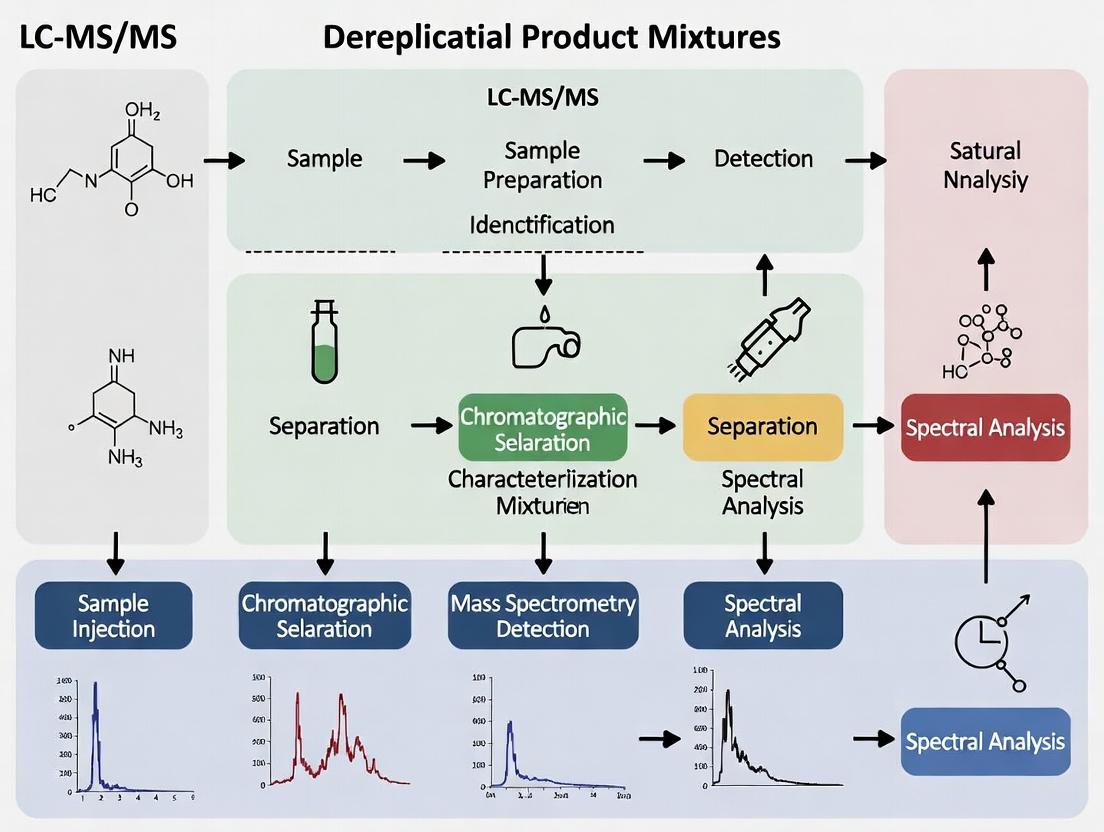
This article provides a detailed roadmap for researchers and drug development professionals to leverage Liquid Chromatography-Tandem Mass Spectrometry (LC-MS/MS) for the efficient dereplication of complex natural product mixtures.
Mastering LC-MS/MS Dereplication: A Comprehensive Guide for Natural Product Discovery and Drug Development
Abstract
This article provides a detailed roadmap for researchers and drug development professionals to leverage Liquid Chromatography-Tandem Mass Spectrometry (LC-MS/MS) for the efficient dereplication of complex natural product mixtures. It begins by establishing the foundational concepts and critical role of dereplication in accelerating natural product-based drug discovery. We then explore advanced LC-MS/MS methodologies, data acquisition strategies (DDA vs. DIA), and the integration of bioinformatics tools and spectral libraries for compound identification. Practical guidance is offered for troubleshooting common technical challenges and optimizing workflows for sensitivity and throughput. Finally, the article critically evaluates validation protocols and compares LC-MS/MS with orthogonal techniques like NMR, outlining best practices for confident compound annotation. The synthesis of these four core intents empowers scientists to design robust dereplication pipelines that minimize rediscovery and prioritize novel bioactive leads.
What is Dereplication? Core Concepts and Strategic Importance in Natural Product Research
In the context of LC-MS/MS-based research on natural product (NP) mixtures, dereplication is the definitive, early-stage process of identifying known compounds within complex extracts to prioritize novel chemistry for isolation and characterization. It is the critical filter that prevents redundant research, saving substantial time and resources. Modern dereplication integrates Liquid Chromatography with tandem Mass Spectrometry (LC-MS/MS), enabling high-resolution separation coupled with structural elucidation via fragmentation patterns. The core strategy involves comparing acquired MS/MS spectral data against curated natural product databases. The workflow's efficiency directly impacts the hit rate of novel bioactive compounds entering the drug development pipeline.
Key Experimental Protocols
Protocol 1: LC-MS/MS Analysis of a Crude Natural Product Extract
Objective: To generate high-quality MS and MS/MS data for dereplication. Materials: See Research Reagent Solutions table. Procedure:
- Extract Preparation: Weigh 10 mg of crude NP extract. Dissolve in 1 mL of LC-MS grade methanol. Vortex for 30 sec and sonicate for 5 min. Centrifuge at 15,000 x g for 10 min. Filter supernatant through a 0.22 µm PTFE syringe filter into an LC vial.
- LC Conditions:
- Column: C18 reversed-phase (2.1 x 100 mm, 1.7-1.8 µm particle size).
- Mobile Phase: A = 0.1% Formic acid in H₂O; B = 0.1% Formic acid in Acetonitrile.
- Gradient: 5% B to 100% B over 20 min, hold at 100% B for 3 min.
- Flow Rate: 0.3 mL/min. Column Temp: 40°C. Injection Volume: 2 µL.
- MS/MS Conditions:
- Ionization: ESI positive/negative switching mode.
- Mass Range: 100-1500 m/z.
- Data-Dependent Acquisition (DDA): Top 5 most intense ions per cycle are fragmented.
- Collision Energies: Ramped (e.g., 20-40 eV).
- Data Acquisition: Run samples in technical triplicate. Include solvent blanks.
Protocol 2: Database-Driven Dereplication Workflow
Objective: To identify known compounds from LC-MS/MS data. Procedure:
- Data Pre-processing: Convert raw files to open formats (e.g., .mzML) using MSConvert. Perform peak picking, deisotoping, and alignment using software like MZmine 3 or MS-DIAL.
- MS/MS Spectral Query: Upload processed MS/MS spectra (as .mgf file) to a dereplication platform.
- For GNPS: Use the
MASSTorLibrary Searchworkflow against public libraries. - For SIRIUS: Use
CSI:FingerIDfor in silico fragmentation and database matching.
- For GNPS: Use the
- Criteria for Positive Identification:
- Level 1: MS/MS spectrum match with reference (Cosine score > 0.8, at least 5 matched fragments).
- Level 2: Retention time/index match with authentic standard (if available).
- Level 3: MS¹ accurate mass match (< 5 ppm error) to database entry.
- Reporting: Compounds matching criteria are flagged as "known." Unmatched features are prioritized for novel compound discovery.
Data Presentation
Table 1: Comparison of Major Dereplication Platforms & Databases (2024)
| Platform/Database | Type | Compound Count | Key Feature | Typical Query Time |
|---|---|---|---|---|
| GNPS | Public Web Platform | >1.5M MS/MS spectra | Community-curated, workflow-driven | 5-30 min/job |
| SIRIUS/CSI:FingerID | Standalone/Web Tool | Predicts from >1M structures | In-silico fragmentation first | 1-3 min/compound |
| NPAtlas | Public Database | >25,000 NPs | Manually curated, genomic context | N/A (Database) |
| MetFrag | In-Silico Tool | Links to PubChem | Combines MS/MS with candidate lists | <1 min/compound |
| AntiBase 2024 | Commercial DB | ~45,000 NPs | Extensive microbial & marine data | N/A (Licensed DB) |
Table 2: Typical DDA-MS/MS Parameters for Dereplication
| Parameter | Positive Mode | Negative Mode |
|---|---|---|
| Capillary Voltage (kV) | 3.5 | 3.0 |
| Cone Voltage (V) | 40 | 40 |
| Source Temp (°C) | 150 | 150 |
| Desolvation Temp (°C) | 500 | 500 |
| Collision Energy Ramp | 20-40 eV | 15-35 eV |
| MS¹ Resolution | 60,000 | 60,000 |
| MS/MS Resolution | 30,000 | 30,000 |
Visualizations
Title: LC-MS/MS Dereplication Decision Workflow
Title: Multi-Parameter Dereplication Strategy
The Scientist's Toolkit
Research Reagent Solutions & Essential Materials
| Item | Function/Benefit | Example Vendor/Product |
|---|---|---|
| LC-MS Grade Solvents | Minimal ion suppression, consistent baseline, prevent column contamination. | Honeywell, Fisher Chemical |
| Hybrid Quadrupole-Orbitrap MS | High resolution & accurate mass for MS¹ and MS/MS; essential for confident dereplication. | Thermo Scientific Orbitrap Exploris series |
| UPLC C18 Column | High-efficiency separation of complex NP mixtures. | Waters ACQUITY UPLC BEH C18 (1.7µm) |
| Solid Phase Extraction (SPE) Cartridges | Pre-fractionation of crude extracts to reduce complexity. | Phenomenex Strata series |
| Natural Product Databases | Curated spectral & structural data for comparison. | GNPS, AntiBase, Dictionary of NP |
| Dereplication Software | Automates data processing, alignment, and database search. | MZmine 3, MS-DIAL, SIRIUS |
| Analytical Standards | For retention time indexing and verification of identifications. | Sigma-Aldrich, Cayman Chemical |
| 0.22 µm PTFE Syringe Filters | Removal of particulate matter to protect LC system and column. | Millipore Millex-LGR |
Application Notes
In natural product (NP) dereplication, the primary cost is not financial but temporal and intellectual: the redundant characterization of known compounds. LC-MS/MS is the pivotal technology that mitigates this by providing a multi-dimensional chemical fingerprint—retention time (RT), accurate mass, isotopic pattern, and fragmentation spectrum—enabling rapid comparison against databases.
Table 1: Comparative Analysis of Dereplication Techniques
| Technique | Time per Sample (min) | Key Data Outputs | Confidence Level | Risk of Rediscovery |
|---|---|---|---|---|
| Bioassay-Guided Fractionation | Weeks–Months | Biological activity only | Low | Very High |
| LC-UV/ELSD | 20-60 | RT, UV Spectrum | Low–Medium | High |
| LC-MS (Single Stage) | 20-60 | RT, Accurate Mass | Medium | Medium |
| LC-MS/MS | 30-90 | RT, Accurate Mass, MS/MS Spectrum | High | Low |
| NMR (Direct on Crude) | 60-300+ | Full Structural Data | Very High | Very Low (but slow) |
The integration of LC-MS/MS data with bioactivity screening creates a powerful filter. A bioactive fraction’s MS/MS spectrum can be queried against public spectral libraries (e.g., GNPS, MassBank) or proprietary databases. A high-confidence match annotates the likely active principle in minutes, allowing researchers to deprioritize known compounds (e.g., common flavonoids, sterols) and focus resources on novel chemistry.
Protocols
Protocol 1: LC-MS/MS Dereplication of a Bioactive Crude Extract
I. Sample Preparation
- Material: Crude natural product extract (e.g., microbial fermentation broth extract, plant leaf extract).
- Dissolution: Weigh 1.0 mg of extract. Dissolve in 1 mL of LC-MS grade methanol or methanol-water (1:1, v/v) to a final concentration of ~1 mg/mL.
- Clarification: Vortex for 1 minute, then centrifuge at 14,000 x g for 10 minutes at 4°C.
- Transfer: Carefully transfer the supernatant to a clean LC-MS vial.
II. LC-MS/MS Analysis
- Instrument: Reversed-Phase UHPLC system coupled to a high-resolution tandem mass spectrometer (e.g., Q-TOF, Orbitrap, or QqQ).
- Chromatography:
- Column: C18 column (e.g., 2.1 x 100 mm, 1.7-1.9 µm particle size).
- Mobile Phase A: Water with 0.1% formic acid.
- Mobile Phase B: Acetonitrile with 0.1% formic acid.
- Gradient: 5% B to 100% B over 25 minutes, hold at 100% B for 3 minutes.
- Flow Rate: 0.4 mL/min.
- Column Temp: 40°C.
- Injection Volume: 2-5 µL.
- Mass Spectrometry (Data-Dependent Acquisition - DDA):
- Ionization: Electrospray Ionization (ESI), positive and negative modes (acquired separately).
- Full Scan Range: m/z 100-1500.
- Resolution: >30,000 FWHM (for accurate mass).
- MS/MS Scan: Select top 5-10 most intense ions from full scan for fragmentation per cycle.
- Collision Energy: Ramped (e.g., 20-40 eV) to generate diverse fragments.
III. Data Processing & Dereplication
- Convert raw data to open format (.mzML/.mzXML).
- Feature Detection: Use software (e.g., MZmine, XCMS) to extract chromatographic peaks, align RT, and deisotope. Output: list of m/z, RT, and intensity for all detected compounds.
- Database Query: Submit the accurate mass ([M+H]+/[M-H]-) and MS/MS spectra to:
- In-house NP LC-MS/MS Library: For known compounds from your institution.
- Public Libraries: GNPS Molecular Networking platform, MassBank, NIST MS/MS.
- Annotation: Matches are scored (e.g., spectral cosine similarity >0.7). Annotate compounds and correlate with bioassay data to identify putative actives.
Protocol 2: Molecular Networking via GNPS for Novelty Assessment
- Perform Protocol 1 on a set of related samples (e.g., different fermentation conditions, plant parts).
- Create .mgf File: Export consensus MS/MS spectra from all samples using MZmine or similar.
- Upload to GNPS: Create a molecular network using the Feature-Based Molecular Networking workflow.
- Analyze: Clusters of similar MS/MS spectra represent chemical families. Known compounds (matched to library spectra) will cluster and can be annotated. Isolated nodes or unannotated clusters highlight potentially novel chemistry for prioritization.
Visualizations
Diagram Title: LC-MS/MS Dereplication Decision Workflow
Diagram Title: From Elicitation to Novel Compound Prioritization
The Scientist's Toolkit: Key Research Reagent Solutions
Table 2: Essential Materials for LC-MS/MS-Based NP Dereplication
| Item | Function & Specification | Rationale |
|---|---|---|
| LC-MS Grade Solvents (Water, MeOH, ACN) | Mobile phase preparation; sample dissolution. | Minimizes background ions and column contamination, ensuring sensitivity. |
| Acid Additives (Formic Acid, FA; Trifluoroacetic Acid, TFA) | Mobile phase modifier (typically 0.1% v/v). | Promotes protonation/deprotonation for ESI, improves chromatographic peak shape. |
| UHPLC Column (C18, 2.1 x 100 mm, 1.7µm) | High-resolution chromatographic separation. | Core hardware for separating complex NP mixtures prior to MS detection. |
| Mass Calibration Solution | Daily instrument calibration (e.g., sodium formate clusters). | Mandatory for obtaining accurate mass data, critical for formula prediction. |
| Internal Standard Mix | Quality control and occasional quantification. | Monitors system performance and can aid in semi-quantitative comparison. |
| Solid Phase Extraction (SPE) Cartridges (C18, Diol) | Rapid extract fractionation or clean-up. | Simplifies mixtures before LC-MS/MS, aiding in deconvolution of signals. |
| Database Subscription/Software (e.g., Compound Discoverer, GNPS) | Spectral analysis and library matching. | Essential informatics platform for translating MS/MS data into annotations. |
This application note details the critical performance metrics—speed, sensitivity, and specificity—for the LC-MS/MS analysis of complex natural product mixtures in dereplication research. We provide standardized protocols and data benchmarks to optimize the identification of known compounds and the detection of novel chemical entities, accelerating drug discovery pipelines.
In natural product research, dereplication via LC-MS/MS is essential to avoid redundant rediscovery of known compounds. The efficiency of this process hinges on three interdependent key performance indicators (KPIs): Speed (throughput and analysis time), Sensitivity (detection limit for low-abundance metabolites), and Specificity (ability to differentiate between structurally similar compounds). This note frames these metrics within a thesis on advancing LC-MS/MS workflows for the efficient prioritization of novel bioactive mixtures.
Key Metrics: Definitions and Benchmarks
Quantitative Benchmarking Table
The following table summarizes target performance metrics for a high-throughput dereplication platform.
Table 1: Target KPIs for Dereplication LC-MS/MS Platforms
| Metric | Definition | Target Benchmark | Measurement Method |
|---|---|---|---|
| Analytical Speed | Sample cycle time (injection-to-injection) | < 15 minutes | UHPLC with sub-2µm particles, 50-100 mm column length. |
| Sensitivity (MS) | Limit of Detection (LOD) for a reference standard (e.g., reserpine) in ESI+ | < 1 pg on-column (S/N > 3:1) | Flow injection analysis of serial dilutions. |
| Sensitivity (MS/MS) | Minimum amount for library-spectrum match (MFG ≥ 800) | < 10 pg on-column | Injection of standard, data-dependent acquisition (DDA). |
| Chromatographic Specificity | Peak Capacity (at fixed gradient time) | > 200 peaks/run (10 min grad) | Calculation from average peak width (4σ). |
| Spectral Specificity | MS/MS spectral match score (vs. public library) | Forward Fit ≥ 800, Reverse Fit ≥ 800 | Analysis of a certified reference standard. |
Interdependence and Optimization
Maximizing one metric often compromises another. For instance, ultra-fast gradients (<5 min) can reduce chromatographic resolution (specificity) and ion suppression can impact sensitivity. A balanced method uses fast UHPLC gradients coupled with high-resolution tandem MS (HRMS/MS) and intelligent data acquisition.
Detailed Experimental Protocols
Protocol: High-Speed Dereplication Screening with Data-Dependent Acquisition (DDA)
Objective: To rapidly profile a natural product extract (<15 min runtime) while acquiring high-quality MS/MS spectra for database matching. Materials: See "The Scientist's Toolkit" below. Procedure:
- Sample Prep: Reconstitute dried extract in 80% MeOH, 0.1% formic acid to a final concentration of ~1 mg/mL. Filter through a 0.22 µm PVDF syringe filter.
- LC Conditions:
- Column: C18 (50 x 2.1 mm, 1.7-1.9 µm).
- Mobile Phase: A = H₂O + 0.1% Formic Acid; B = Acetonitrile + 0.1% Formic Acid.
- Gradient: 5% B to 100% B over 10 minutes, hold 2 min, re-equilibrate (3 min total cycle).
- Flow Rate: 0.4 mL/min. Column Temp: 40°C.
- MS/MS Conditions (Q-TOF or Orbitrap):
- Polarity: ESI+ and ESI- (separate runs or fast polarity switching).
- Scan Range: 100-1500 m/z.
- MS¹ Scan Rate: 5 Hz.
- DDA Criteria: Top 3 most intense ions per cycle (>1000 counts), exclude after 2 spectra, dynamic exclusion for 30 s.
- Fragmentation: Stepped collision energy (e.g., 20, 40, 60 eV).
- Data Processing: Convert raw files (.d to .mzML). Perform feature finding (MZmine, MS-DIAL). Query MS/MS spectra against GNPS, MassBank, or in-house libraries.
Protocol: Sensitivity and Specificity Validation
Objective: To establish system LOD and confirm identity of key analytes via orthogonal parameters. Materials: Certified natural product standards (e.g., berberine, quercetin, reserpine). Procedure:
- LOD/LOQ Determination: Prepare a dilution series of standards (1 pg/µL to 1 ng/µL). Inject 5 µL. Plot peak area vs. concentration. LOD = concentration yielding S/N=3.
- Specificity Verification: For a putative hit from dereplication, compare with standard using three orthogonal metrics:
- Retention Time Index: Match within ±0.1 min under identical conditions.
- Accurate Mass: Δ ppm < 5 between measured and theoretical [M+H]+.
- MS/MS Spectral Match: Use cosine similarity score (≥0.8 is confident).
Visualization of Workflows and Relationships
Diagram Title: LC-MS/MS DDA Dereplication Workflow
Diagram Title: KPI Interdependence in Mixture Analysis
The Scientist's Toolkit: Essential Research Reagents & Materials
Table 2: Key Reagents and Materials for Dereplication LC-MS/MS
| Item | Function/Benefit | Example Product/Brand |
|---|---|---|
| UHPLC C18 Column | Provides high peak capacity and rapid separation for complex mixtures. | Waters ACQUITY UPLC BEH C18 (1.7 µm, 50-100mm). |
| LC-MS Grade Solvents | Minimizes background noise and ion suppression; ensures reproducibility. | Fisher Optima, Honeywell CHROMASOLV. |
| Ammonium Formate/Formic Acid | Volatile buffers for mobile phase; formic acid aids protonation in ESI+. | Sigma-Aldrich, ≥99% purity. |
| Solid Phase Extraction (SPE) Cartridges | Pre-fractionation or clean-up to reduce matrix effects and increase sensitivity. | Phenomenex Strata-X, Waters Oasis HLB. |
| Certified Natural Product Standards | Essential for system qualification, LOD determination, and identity confirmation. | Extrasynthese, Phytolab. |
| Internal Standard Mix (IS) | Corrects for instrument drift and ionization variability. | Stable isotope-labeled amino acids or lipids. |
| PVDF Syringe Filters | Removes particulate matter to protect LC column and MS source. | 0.22 µm, 13 mm diameter. |
| Mass Spectrometry Data Analysis Suite | For feature detection, alignment, and database mining. | MZmine, MS-DIAL, GNPS. |
Application Note: LC-MS/MS for Dereplication in Natural Product Research
Dereplication is a critical step in natural product (NP) drug discovery to avoid redundant isolation of known compounds. This note details the application of Liquid Chromatography-Tandem Mass Spectrometry (LC-MS/MS) for the rapid identification of compounds in complex NP extracts, framed within a thesis on accelerating NP discovery pipelines.
Core Workflow and Quantitative Data
The dereplication workflow integrates chromatographic separation with tandem mass spectral acquisition and database interrogation. Key quantitative performance metrics for a robust dereplication platform are summarized below.
Table 1: Typical LC-MS/MS Performance Parameters for NP Dereplication
| Parameter | Typical Value/Range | Function in Dereplication |
|---|---|---|
| LC Column Particle Size | 1.7 - 2.6 µm | Enables high-resolution separation of complex mixtures. |
| Chromatographic Peak Width | 5 - 15 seconds | Provides sufficient data points for accurate peak integration. |
| MS1 Resolution (Orbitrap) | 60,000 - 120,000 FWHM | Accurate mass measurement for elemental composition assignment. |
| MS1 Mass Accuracy | < 2 ppm | Critical for database filtering (e.g., DNP, GNPS). |
| MS/MS Scan Rate | 10 - 20 Hz (Q-TOF) | Allows data-dependent acquisition on co-eluting peaks. |
| Fragmentation Energy (Collision-Induced Dissociation) | 10-40 eV (stepped) | Generates comprehensive fragment ion spectra for structure elucidation. |
| Dynamic Exclusion Window | 10 - 20 seconds | Prevents repeated fragmentation of abundant ions. |
Detailed Protocol: LC-MS/MS-Based Dereplication of a Crude Natural Product Extract
Objective: To separate, acquire tandem mass spectra, and preliminarily identify major constituents in a crude fungal extract.
I. Materials & Reagent Solutions
The Scientist's Toolkit: Key Research Reagents and Materials
| Item | Function in Dereplication Protocol |
|---|---|
| C18 Reverse-Phase LC Column (e.g., 2.1 x 100 mm, 1.8 µm) | Chromatographic core; separates compounds by hydrophobicity. |
| MS-Grade Acetonitrile & Water (with 0.1% Formic Acid) | Mobile phase components; provide chromatographic elution and protonation for ESI+. |
| Ammonium Formate Buffer (10 mM, aqueous) | Alternative volatile buffer for negative ion mode (ESI-). |
| Leucine Enkephalin (or similar standard) | Lock mass compound for real-time internal mass calibration. |
| Reference Standard Mix (e.g., natural product analogs) | System suitability check for retention time and MS response. |
| Solid Phase Extraction (SPE) Cartridge (C18 or polymeric) | For crude extract pre-cleaning and concentration. |
| GNPS, DNP, or In-House MS/MS Library | Spectral database for compound matching and dereplication. |
II. Instrumentation Setup
- LC System: UHPLC system capable of binary gradients.
- MS System: High-resolution tandem mass spectrometer (e.g., Q-TOF, Orbitrap, or Quadrupole-Ion Trap) with electrospray ionization (ESI) source.
III. Step-by-Step Procedure
A. Sample Preparation
- Weigh 5.0 mg of the dried crude extract.
- Dissolve in 1.0 mL of MS-grade methanol. Vortex for 1 minute and sonicate for 5 minutes.
- Centrifuge at 14,000 x g for 10 minutes to pellet insoluble particulates.
- Transfer the supernatant to a clean LC vial. Dilute 1:10 with the starting mobile phase (e.g., 5% acetonitrile in water).
B. Liquid Chromatography Method
- Column Temperature: 40°C
- Flow Rate: 0.3 mL/min
- Injection Volume: 2 µL
- Gradient:
- 0-2 min: 5% B (hold)
- 2-25 min: 5% to 100% B (linear)
- 25-28 min: 100% B (hold)
- 28-28.1 min: 100% to 5% B
- 28.1-33 min: 5% B (re-equilibration)
- Mobile Phase A: H₂O with 0.1% formic acid
- Mobile Phase B: Acetonitrile with 0.1% formic acid
C. Mass Spectrometry Method (Data-Dependent Acquisition - DDA)
- Ionization: ESI positive/negative switching or positive-only mode.
- Source Parameters: Capillary Voltage: 3.0 kV (ESI+); Source Temp: 150°C; Desolvation Temp: 350°C; Cone Gas Flow: 50 L/hr; Desolvation Gas Flow: 800 L/hr.
- MS1 Survey Scan: m/z 100-1500, scan time 0.2 sec, centroid data mode. Resolution > 30,000 (if using HRMS).
- MS2 (dd-MS/MS) Parameters:
- Top 3-5 most intense ions per cycle selected for fragmentation.
- Intensity threshold: 5000 counts.
- Apply dynamic exclusion for 15 seconds.
- Fragmentation: Collision-Induced Dissociation (CID) with stepped collision energy (e.g., 20, 35, 50 eV) or ramped based on m/z.
D. Data Processing & Dereplication
- Process raw data with vendor software (e.g., MassLynx, Xcalibur, or Analyst) to generate peak lists (retention time, m/z, intensity).
- Convert data to open formats (.mzML, .mzXML).
- Molecular Networking: Upload data to the GNPS platform .
- Create a molecular network using the FEATURE-BASED MOLECULAR NETWORKING workflow.
- Compare MS/MS spectra against GNPS libraries (e.g., DNP, NIST) and visualize clusters of related compounds.
- Database Search: Simultaneously, search accurate MS1 and MS/MS data against in-house or commercial NP databases using tools like SIRIUS, or MS-FINDER.
Visualizing the Dereplication Workflow and Data Interpretation
Workflow for LC-MS/MS Based Dereplication
Generating a Tandem Mass Spectrum from a Precursor Ion
Within the broader thesis on LC-MS/MS for dereplication of natural product mixtures, the central challenge is the rapid identification of known compounds to prioritize novel chemistry. Public spectral libraries and databases serve as the indispensable building blocks for this process, transforming raw MS/MS data into actionable chemical information. This document provides detailed application notes and protocols for leveraging these resources.
Core Public Spectral Databases: A Quantitative Comparison
The landscape of public spectral databases is diverse. The table below summarizes key quantitative metrics and focus areas for the leading platforms.
Table 1: Comparison of Major Public MS/MS Spectral Databases for Natural Products
| Database Name | Primary Focus | Approximate Spectral Entries (MS/MS) | Data Repository | Key Dereplication Workflow | Data Contribution Model |
|---|---|---|---|---|---|
| GNPS (Global Natural Products Social Molecular Networking) | Natural products, metabolomics | >500,000 community spectra | MassIVE (MSV000084205) | Molecular Networking, Library Search, MASST | Open, crowd-sourced |
| MassBank | General metabolomics, environmental, natural products | ~200,000 high-resolution spectra | Multiple consortium members | MassBank Search, GNPS Integration | Consortium, curated |
| ReSpect (RIKEN MSn Spectral Database for Phytochemicals) | Plant-derived natural products | ~40,000 MSn spectra (MS²-MS⁴) | PRIME | Spectral tree similarity search | Institutionally curated |
| MoNA (MassBank of North America) | Aggregated metabolomics data | ~1,000,000 spectra (aggregated from GNPS, MassBank, etc.) | Independent repository | Library search, GC-MS/LC-MS | Aggregator, curated |
| NIST Tandem Mass Spectral Library | Broad chemical space (commercial, but with free evaluation) | >300,000 MS/MS spectra (commercial) | NIST | Similarity search, ion chemistry | Commercial, curated |
Key Experimental Protocols
Protocol 3.1: Dereplication using GNPS Molecular Networking and Library Search
Objective: To identify known compounds and visualize the chemical space of a natural product extract.
Materials & Reagents:
- LC-MS/MS system (Q-TOF, Orbitrap, or qTOF preferred)
- Natural product extract (e.g., microbial fermentation broth, plant extract)
- Solvents: LC-MS grade water, acetonitrile, methanol
Procedure:
- Data Acquisition:
- Separate compounds using a reversed-phase C18 column (e.g., 2.1 x 100 mm, 1.7 µm).
- Use a gradient from 5% to 100% acetonitrile (with 0.1% formic acid) over 20 minutes.
- Acquire data-dependent MS/MS (dd-MS²) in positive and/or negative ionization modes. Collision energy should be stepped (e.g., 20, 40, 60 eV).
Data Conversion:
- Convert raw data files (.d, .raw) to open mzML format using MSConvert (ProteoWizard).
Molecular Networking on GNPS:
- Navigate to the GNPS workflow interface.
- Upload your mzML files.
- Select the "Molecular Networking" workflow.
- Set parameters: Precursor ion mass tolerance: 0.02 Da; Fragment ion tolerance: 0.02 Da; Minimum cosine score for edge creation: 0.7; Minimum matched fragment ions: 6.
- Select "GNPS Library" for spectral library search within the network job.
- Submit the job.
Data Interpretation:
- Visualize the resulting molecular network using Cytoscape.
- Nodes (clusters) with spectral matches to the GNPS library will be annotated with compound names and links. Unknown clusters represent potential novel chemistry.
Protocol 3.2: High-Confidence Annotation via MassBank Database Search
Objective: To obtain high-confidence, curated annotations for specific precursor ions.
Materials & Reagents: Same as Protocol 3.1.
Procedure:
- Data Acquisition and Conversion: Follow Steps 1 & 2 from Protocol 3.1.
MassBank Search:
- Use the open-source software
MZmine 3for data preprocessing. - Perform peak picking, alignment, and gap filling.
- Export an .mgf (Mascot Generic Format) file for the MS/MS spectra of features of interest.
- Directly search this .mgf file against the MassBank database using the MassBank Spectrum Search web interface.
- Filter results by: Instrument type (e.g., LC-ESI-QTOF), collision energy, and similarity score (>800 is typically high confidence).
- Use the open-source software
Validation:
- Compare the experimental MS/MS spectrum with the reference spectrum from MassBank, noting key fragment ions and relative abundances.
- Cross-check the putative annotation with retention time and isotopic pattern data if available.
Visual Workflows
Diagram Title: GNPS Dereplication & Molecular Networking Workflow
Diagram Title: Spectral Library Search Strategy for Annotation
The Scientist's Toolkit: Essential Research Reagents & Materials
Table 2: Key Research Reagent Solutions for NP Dereplication Studies
| Item | Function in LC-MS/MS Dereplication | Example/Notes |
|---|---|---|
| LC-MS Grade Solvents (Water, Acetonitrile, Methanol) | Mobile phase components; ensure minimal background noise and ion suppression. | Fisher Optima, Honeywell CHROMASOLV. |
| Acid/Base Modifiers (Formic Acid, Ammonium Formate) | Improve chromatographic peak shape and ionization efficiency in ESI. | 0.1% Formic Acid is standard for positive mode. |
| Reference Mass Calibrant | Enables real-time mass calibration for high-accuracy instruments (e.g., Orbitrap, Q-TOF). | Pierce LTQ Velos ESI Positive Ion Calibration Solution. |
| Standard Compound Mixtures | System suitability testing, retention time indexing, and MS/MS parameter validation. | UHPLC-ESI-QTOF MS/MS System Suitability Test Kit (commercial or custom). |
| Solid Phase Extraction (SPE) Cartridges | Clean-up and fractionation of crude extracts to reduce complexity prior to LC-MS/MS. | C18, HLB, or DIAION for different compound classes. |
| Data Conversion Software | Converts proprietary instrument data to open-source formats for database submission. | ProteoWizard MSConvert (freely available). |
| Public Database Access Credentials | Required for uploading data, accessing advanced workflows, and contributing spectra. | Free registration for GNPS, MassBank. |
Step-by-Step LC-MS/MS Dereplication Workflow: From Sample to Annotation
Sample Preparation Best Practices for Complex Natural Extracts
Within the broader thesis on LC-MS/MS for dereplication of natural product mixtures, robust and reproducible sample preparation is the critical first step. The complexity of natural extracts—containing primary and secondary metabolites across a vast dynamic range of polarities and concentrations—demands standardized protocols to minimize ionization suppression, column fouling, and analyte degradation, thereby ensuring high-quality data for accurate dereplication and identification.
Key Challenges & Quantitative Considerations
The primary challenges in preparing complex natural extracts for LC-MS/MS analysis are summarized in Table 1.
Table 1: Key Challenges in Natural Extract Preparation for LC-MS/MS Dereplication
| Challenge | Impact on LC-MS/MS Dereplication | Typical Quantitative Target for Mitigation |
|---|---|---|
| Matrix Complexity | Ion suppression/enhancement, reduced sensitivity. | Aim for >85% removal of interfering pigments, salts, and lipids via cleanup. |
| Analyte Concentration Range | Low-abundance metabolites masked by dominant signals. | Enrichment protocols should improve S/N ratio of target chemotypes by >10-fold. |
| Solvent Incompatibility | Poor chromatographic peak shape, phase collapse. | Final reconstitution solvent strength should be ≤10% of mobile phase starting condition. |
| Analyte Stability | Degradation leads to false negatives or artifact identification. | Process samples at ≤4°C or use enzyme inhibitors (e.g., 1 mM PMSF) to stabilize. |
| Irreproducible Recovery | Hinders comparative metabolomics and biomarker discovery. | Strive for <15% RSD in recovery of internal standards across samples. |
Detailed Experimental Protocols
Protocol 1: Solid-Phase Extraction (SPE) for Generic Cleanup and Fractionation
This protocol is designed to remove common interferents (e.g., chlorophyll, tannins) and broadly fractionate extracts by polarity.
- Conditioning: Activate a reversed-phase C18 SPE cartridge (500 mg/6 mL) with 10 mL methanol, followed by 10 mL HPLC-grade water. Do not let the sorbent dry.
- Loading: Acidify the aqueous natural extract (e.g., plant broth) to pH ~2 with 0.1% formic acid. Load the sample onto the cartridge at a flow rate not exceeding 2 mL/min.
- Washing: Remove salts and highly polar interferents with 10 mL of 5% methanol in water (acidified with 0.1% formic acid).
- Elution (Fractionated): Collect separate elution fractions:
- Fraction A (Mid-Polarity): Elute with 10 mL of 50% methanol in water.
- Fraction B (Mid-to-Non-Polar): Elute with 10 mL of 85% methanol in water.
- Fraction C (Non-Polar): Elute with 10 mL of 100% methanol, followed by 10 mL of 100% ethyl acetate.
- Concentration: Evaporate each fraction to dryness under a gentle stream of nitrogen at 35°C. Reconstitute in 200 µL of starting LC mobile phase (e.g., 5% acetonitrile in water), vortex for 1 min, and centrifuge at 14,000 x g for 10 min before transferring supernatant to an LC vial.
Protocol 2: QuEChERS-Based Extraction for Solid Tissue
Adapted from pesticide analysis, this protocol is effective for rapid, simultaneous extraction and cleanup of metabolites from plant or fungal tissue.
- Homogenization: Freeze-dry and finely grind 100 mg of tissue. Weigh 50 mg into a 15 mL centrifuge tube.
- Extraction: Add 1 mL of 1% acetic acid in acetonitrile:water (80:20, v/v). Add internal standard mix. Vortex vigorously for 1 min.
- Salting Out: Add a commercial QuEChERS salt packet (containing MgSO₄ and NaCl). Shake for 30 sec and vortex for 1 min.
- Centrifugation: Centrifuge at 4000 x g for 5 min at 4°C.
- Dispersive-SPE Cleanup: Transfer 500 µL of the upper acetonitrile layer to a 2 mL microcentrifuge tube containing 150 mg MgSO₄ and 50 mg of primary-secondary amine (PSA) sorbent. Vortex for 2 min.
- Final Preparation: Centrifuge at 14,000 x g for 5 min. Dilute 100 µL of the supernatant with 100 µL of water. Filter through a 0.22 µm PVDF syringe filter into an LC vial.
Protocol 3: In-Solution Concentration and Desalting for Polar Extracts
Ideal for microbial fermentation broths or aqueous infusions prior to HILIC-MS/MS analysis.
- Pre-treatment: Clarify the aqueous extract by centrifugation at 10,000 x g for 20 min and subsequent filtration through a 0.45 µm glass fiber filter.
- Loading: Load up to 5 mL of clarified supernatant onto a pre-washed (with methanol and water) 3 kDa molecular weight cut-off (MWCO) centrifugal filter unit.
- Desalting & Concentration: Centrifuge at 5000 x g at 4°C until the volume is reduced to ~200 µL. Add 2 mL of water to the filter and centrifuge again to 200 µL (repeat twice).
- Recovery: Invert the filter device into a clean tube and centrifuge at 1000 x g for 2 min to recover the retentate. Adjust final volume and solvent composition for LC-MS injection.
Visualizing Workflows and Pathways
Diagram 1: Generalized Workflow for Natural Extract Prep
Diagram 2: Dereplication Decision Pathway Post LC-MS/MS
The Scientist's Toolkit: Essential Research Reagents & Materials
Table 2: Key Reagents and Materials for Sample Preparation
| Item | Function & Rationale |
|---|---|
| C18 Solid-Phase Extraction (SPE) Cartridges | Broad-spectrum reversed-phase cleanup; removes pigments, lipids, and salts while retaining a wide polarity range of metabolites. |
| Primary-Secondary Amine (PSA) Sorbent | Used in dispersive-SPE (e.g., QuEChERS); effectively removes fatty acids, organic acids, and sugars via hydrogen bonding and anion exchange. |
| 3 kDa Molecular Weight Cut-Off (MWCO) Filters | Desalting and concentration of aqueous extracts; removes proteins and large polymers while retaining small molecule metabolites. |
| Deuterated Internal Standards (e.g., d₃-L-Leucine) | Monitors and corrects for losses during sample preparation and matrix effects during LC-MS ionization; critical for quantitative recovery assessments. |
| Formic Acid (LC-MS Grade) | Acidifies solvents to suppress analyte ionization, improving retention on reversed-phase columns and stabilizing acidic compounds. |
| Inert Hydromatrix (Diatomaceous Earth) | Provides a solid support for loading wet or semi-solid extracts onto SPE cartridges or for dry packing in column chromatography. |
| Polyvinylpolypyrrolidone (PVPP) | Selectively binds and removes polyphenols and tannins which can cause significant ion suppression and column degradation. |
| 0.22 µm PVDF Syringe Filters | Final filtration step to remove particulate matter that could clog LC tubing or frits; PVDF is low-binding and compatible with organic solvents. |
Within the broader research on LC-MS/MS dereplication of complex natural product (NP) mixtures, the chromatography front-end is the critical determinant of success. Effective dereplication requires the high-resolution separation of structurally diverse NPs (e.g., alkaloids, flavonoids, terpenoids, peptides) to enable unambiguous MS detection and database matching. This application note details the optimization of two interdependent parameters: stationary phase column chemistry and gradient elution profiles, to maximize peak capacity, resolution, and MS compatibility for NP extracts.
Column Chemistry Selection for NP Diversity
The choice of stationary phase dictates the primary selectivity of the separation. For broad-spectrum NP analysis, a multi-column screening approach is recommended.
Key Column Chemistries & Their Applications:
| Column Chemistry | Mechanism | Ideal For NP Classes | Key Functional Group Interactions |
|---|---|---|---|
| C18 (Octadecyl) | Reversed-Phase (RP), Hydrophobicity | Mid-to-non-polar terpenoids, fatty acids, aglycones | Van der Waals, hydrophobic |
| C8 (Octyl) | RP, Moderate Hydrophobicity | Less hydrophobic NPs, larger peptides | Van der Waals (weaker than C18) |
| Phenyl-Hexyl | RP + π-π Interactions | Aromatic compounds, flavonoids, phenylpropanoids | Hydrophobic + π-π stacking |
| Pentafluorophenyl (PFP) | RP + Dipole-Dipole + π-π | Isomeric separations, halogenated NPs, stereoisomers | Hydrophobic, dipole-dipole, π-π, charge transfer |
| HILIC (e.g., Amide) | Hydrophilic Interaction | Polar glycosides, sugars, polar alkaloids | Hydrogen bonding, dipole-dipole, partitioning |
| Cyano (CN) | Mixed-Mode (RP & Normal Phase) | Moderately polar NPs, offering orthogonal selectivity | Hydrophobic, dipole-dipole, weak H-bonding |
Protocol 1: Initial Column Screening for a Crude Plant Extract
- Objective: Identify the best column for peak capacity and resolution.
- Materials: LC-MS/MS system, extracts, columns (C18, PFP, Phenyl, HILIC).
- Method:
- Sample Prep: Reconstitute dried extract in 80% MeOH/water to 1 mg/mL, filter (0.22 µm PVDF).
- LC Conditions: Binary gradient. Mobile Phase A: Water + 0.1% Formic Acid (FA). B: Acetonitrile + 0.1% FA.
- Gradient (Generic): 5% B to 100% B over 20 min, hold 3 min, re-equilibrate.
- Flow Rate: 0.3 mL/min (for 2.1 mm ID column).
- Column Temp: 40°C.
- Injection: 2 µL.
- MS: Full scan (m/z 100-1500) in positive/negative ESI.
- Analysis: Compare total ion chromatograms (TICs) for number of detected peaks (> 6 S/N) and visual resolution. The PFP column often provides superior selectivity for complex NP mixtures.
Gradient Elution Optimization
After column selection, the gradient profile is fine-tuned to distribute peaks evenly across the chromatographic space.
Quantitative Impact of Gradient Parameters:
| Parameter | Effect on Separation | Typical Optimization Range for NPs |
|---|---|---|
| Gradient Time (tG) | Longer = higher resolution, longer run time. | 15 - 60 minutes |
| Gradient Shape | Linear = simplicity; Multi-step = resolution of specific clusters. | Start shallow (5-20% B), steepen mid-gradient, shallow end (90-100% B) |
| Initial %B | Retains very polar analytes; too high causes loss of resolution early. | 2% - 10% |
| Final %B | Elutes very hydrophobic compounds; too low leaves material in column. | 95% - 100% |
| Post-Time & Equilibration | Critical for reproducibility. | Minimum 5 column volumes (e.g., 10 min for 0.3 mL/min) |
Protocol 2: Steepness Testing & Scouting Gradient
- Objective: Determine optimal gradient time and shape.
- Method (using selected column from Protocol 1):
- Run three linear gradients from 5% to 100% B over 15, 30, and 45 minutes.
- Calculate the average peak width and count the number of resolved peaks (valley-to-valley) in a crowded region (e.g., 10-15 min window).
- Implement a multi-step scouting gradient: 5% B (0-2 min), 5-30% B (2-10 min), 30-85% B (10-25 min), 85-100% B (25-30 min), hold 100% B (30-33 min).
- Analyze the distribution of peaks. If compounds elute in a compressed band, flatten the gradient in that %B region.
- Data Analysis: Optimal gradient yields a relatively uniform distribution of peaks and widest peak capacities.
The Scientist's Toolkit: Research Reagent Solutions
| Item | Function & Rationale |
|---|---|
| MS-Grade Water & Acetonitrile | Low UV absorbance and minimal ion suppression for high-sensitivity MS detection. |
| Ammonium Formate (e.g., 2-10 mM) / Formic Acid (0.1%) | Common volatile buffers for LC-MS. FA aids protonation in +ESI; ammonium formate can provide better peak shape for some NPs. |
| PFP Core-Shell Column (e.g., 2.1 x 150 mm, 2.7 µm) | Provides excellent, often orthogonal, selectivity for isomeric and structurally diverse NPs compared to standard C18. |
| 0.22 µm PVDF Syringe Filters | Chemically resistant for filtering diverse organic extract solutions without leaching. |
| C18 Solid-Phase Extraction (SPE) Cartridges | For pre-LC clean-up of crude extracts to remove salts and highly polar interferents, protecting the analytical column. |
| ESI Tuning Mix Solution | To calibrate and optimize MS instrument mass accuracy and sensitivity before analytical runs. |
Visualizations
Diagram 1: LC-MS/MS Dereplication Workflow for NPs
Diagram 2: Gradient Shape Impact on Peak Distribution
Effective dereplication mandates tailored chromatography. A systematic approach starting with a selective stationary phase (e.g., PFP) followed by meticulous gradient optimization is essential to deconvolute complex NP mixtures. This maximizes the quality of MS data entering spectral databases, directly increasing the confidence and throughput of downstream identification workflows.
Within the LC-MS/MS-based dereplication of natural product (NP) mixtures, the choice of acquisition mode is critical for balancing metabolite coverage, identification confidence, and quantification. DDA and DIA represent two foundational paradigms. DDA, the traditional approach, selectively targets the most intense ions for fragmentation, generating rich "library-ready" spectra ideal for initial compound identification. DIA systematically fragments all ions within predefined, wide m/z windows, producing complex spectra that enable comprehensive, retrospective analysis and high-precision quantification. For NP research, DDA excels in novel compound discovery against spectral libraries, while DIA provides superior reproducibility and depth for profiling complex extracts over multiple experiments.
Comparative Analysis: DDA vs. DIA
Table 1: Core Characteristics and Performance Metrics
| Parameter | Data-Dependent Acquisition (DDA) | Data-Independent Acquisition (DIA) |
|---|---|---|
| Selection Principle | Intensity-based; Top N most intense precursors per cycle. | Sequential isolation of all precursors in predefined m/z windows (e.g., 20-40 Da). |
| Fragmentation | Selective, targeted on chosen precursors. | Non-selective, all ions in each window are co-fragmented. |
| Primary Output | Clean, interpretable MS/MS spectra from single precursors. | Complex, composite MS/MS spectra containing fragments from multiple precursors. |
| Identification Workflow | Direct spectral matching to reference libraries (e.g., GNPS). | Requires spectral deconvolution using project-specific or generic spectral libraries. |
| Reproducibility | Low to moderate; subject to precursor intensity stochasticity. | Very high; acquisition is comprehensive and consistent across runs. |
| Quantitative Precision | Moderate; can suffer from missing data. | High; consistent peptide/propound coverage enables accurate label-free quantification. |
| Ideal for Dereplication | Initial screening, novel compound discovery, when reference libraries are available. | Large-scale comparative profiling, quantifying subtle differences in complex NP extracts. |
Table 2: Typical Instrument Parameters for NP Dereplication
| Setting | DDA Protocol | DIA Protocol |
|---|---|---|
| MS1 Resolution | 60,000 @ 200 m/z | 60,000 @ 200 m/z |
| MS2 Resolution | 15,000 @ 200 m/z | 15,000 @ 200 m/z |
| Scan Range | m/z 100-1500 | m/z 100-1500 |
| Isolation Window | 1.6 m/z (quadrupole) | 20-25 m/z variable windows covering scan range |
| Collision Energy | Stepped (e.g., 20, 40, 60 eV) | Stepped or optimized ramp (e.g., 25-45 eV) |
| Cycle Time | ~1.5-3 seconds (1 MS1 + top 10-15 MS2) | ~2-4 seconds (1 MS1 + 30-40 variable window MS2) |
| Dynamic Exclusion | 15-30 seconds | Not Applicable |
Detailed Experimental Protocols
Protocol 1: DDA for Library Generation and Novel NP Identification Objective: To acquire high-quality MS/MS spectra for compound identification via spectral library matching (e.g., on GNPS).
- Sample Preparation: Prepare NP extract in 80% MeOH / 0.1% formic acid. Filter (0.22 µm) prior to LC-MS injection.
- LC Separation: Use a C18 column (2.1 x 100 mm, 1.7 µm). Employ a gradient from 5% to 100% acetonitrile (0.1% formic acid) over 30 min, at 0.3 mL/min.
- MS Instrument Setup (Q-TOF or Orbitrap):
- Ionization: ESI positive/negative mode switching.
- MS1: Scan range m/z 100-1500, resolution 60,000.
- DDA Criteria: Cycle time ~2 sec. Select top 12 most intense ions with intensity > 1e5 for fragmentation per cycle.
- Dynamic Exclusion: Exclude fragmented ions for 20 sec.
- Fragmentation: Use stepped normalized collision energy (e.g., 20, 40, 60 eV for Orbitrap).
- Data Processing: Convert raw files to .mzML format. Upload to Global Natural Products Social Molecular Networking (GNPS) platform. Perform spectral library search and molecular networking.
Protocol 2: DIA for Comprehensive Profiling and Quantitative Dereplication Objective: To achieve reproducible, in-depth quantification and profiling of all detectable ions in complex NP mixtures.
- Sample & LC: As per Protocol 1. Include pooled quality control (QC) samples and biological/technical replicates.
- MS Instrument Setup:
- MS1: As per Protocol 1.
- DIA Scheme: Define variable isolation windows (e.g., 30 windows of variable width) covering the entire m/z 100-1500 range. Optimize window placement based on precursor density from a prior DDA run.
- MS2: For each window, acquire fragment spectra at resolution 15,000 with stepped collision energy.
- Library Generation (Essential for DIA):
- Run a subset of pooled or representative samples using the DDA protocol above.
- Alternatively, use fractionated samples to reduce complexity for DDA library building.
- Process DDA files to create a project-specific spectral library (e.g., using MS-DIAL or Spectronaut).
- DIA Data Analysis:
- Use specialized software (e.g., DIA-NN, Skyline, MS-DIAL).
- Input: DIA raw files + project-specific spectral library.
- Process: Spectral deconvolution, peak extraction, and label-free quantification (LFQ) based on MS1 or MS2 peak areas.
- Output: A matrix of compound identities, abundances, and statistical comparisons across samples.
Visualized Workflows
Title: DDA and DIA Workflow Comparison for NP Analysis
The Scientist's Toolkit: Key Reagent Solutions
Table 3: Essential Materials for LC-MS/MS Dereplication Studies
| Item | Function & Rationale |
|---|---|
| Hypersil Gold C18 Column (1.7 µm, 2.1 x 100 mm) | Provides high-resolution separation of complex NP mixtures. Standard particle size and phase for reproducible reversed-phase chromatography. |
| LC-MS Grade Solvents (Water, Acetonitrile, Methanol) | Minimizes background noise and ion suppression caused by contaminants in lower-grade solvents, critical for sensitivity. |
| Mass Spectrometry-Compatible Acids (Formic Acid, Trifluoroacetic Acid) | Used as mobile phase additives (typically 0.1%) to promote protonation/deprotonation and improve chromatographic peak shape. |
| ESI Tuning & Calibration Solution | A defined mixture of known masses (e.g., from Pierce or Agilent) for regular instrument calibration, ensuring mass accuracy. |
| Quality Control Pooled Sample | A pool of all experimental NP extracts. Injected repeatedly throughout the run sequence to monitor system stability and for DIA library generation. |
| Commercial or Custom NP Spectral Libraries | Reference databases (e.g., GNPS, NIST, Wiley) containing curated MS/MS spectra of known compounds for definitive identification. |
| Data Analysis Software | Specialized platforms: GNPS (for DDA networking), DIA-NN or Skyline (for DIA deconvolution/quantification), MS-DIAL (for both). |
Within the broader thesis on LC-MS/MS dereplication of complex natural product (NP) extracts, the interpretation of MS/MS fragmentation patterns is the critical step for preliminary structural classification. This document provides application notes and protocols for recognizing the diagnostic fragmentation signatures of three major NP classes: Alkaloids, Terpenoids, and Polyketides. Efficient dereplication hinges on correlating chromatographic retention, accurate mass, and class-specific fragmentation to prioritize novel compounds for isolation.
Table 1: Characteristic MS/MS Fragments and Neutral Losses of Major NP Classes
| NP Class | Core Skeleton | Key Diagnostic Neutral Losses (Da) | Characteristic Product Ions / Rings | Rationale & Notes |
|---|---|---|---|---|
| Alkaloids | N-containing heterocycles | -17 (NH₃), -27 (HCN), -30 (CH₂O, from N-oxides), -43 (CH₃N=CH₂ from betaines) | m/z 148, 144, 175 (protopine type); m/z 70, 130 (tropane); m/z 58 (CH₂=N⁺(CH₃)₂, quaternary N) | Driven by cleavages alpha to nitrogen, retro-Diels-Alder (RDA) in isoquinoline cores, and elimination of small stable molecules (NH₃, HCN). |
| Terpenoids | Isoprene (C5H8) units | -68 (C5H8, isoprene), -18 (H₂O), -44 (CO₂ in carboxylated), -56 (C4H8 in limonoids) | m/z 109, 123, 137, 161 (classical terpene fragments); m/z 95, 81 (signatures of cleaved rings) | Fragmentation often occurs via cleavage between isoprene units and complex rearrangements of decalin or other polycyclic systems. Iridoids show loss of C₄H₆O₂ (-86). |
| Polyketides | Linear or cyclic assemblies of -CH₂-CO- units | -44 (CO₂), -18 (H₂O), -28 (CO or C₂H₄), -46 (HCOOH from methyl esters) | Even-electron ions differing by 14 (CH₂) or 44 (CO₂) units; m/z 125 (phthalate, common artifact) | Patterns reflect the original acetate or propionate building blocks. Aromatic polyketides (e.g., anthraquinones) show sequential CO losses. Macrolides undergo cleavage along the macrocycle. |
Experimental Protocols
Protocol 1: LC-MS/MS Data Acquisition for Dereplication
Objective: To generate high-quality MS/MS spectra from complex NP extracts for fragmentation pattern analysis.
Materials: See Scientist's Toolkit below.
Procedure:
- Sample Preparation: Reconstitute dried crude extract in appropriate solvent (e.g., 80% MeOH) to a concentration of ~1 mg/mL. Centrifuge at 14,000 x g for 10 min to remove particulates.
- LC Separation: Inject 5-10 µL onto a reversed-phase C18 column (2.1 x 100 mm, 1.7-1.8 µm). Use a binary gradient (A: H₂O + 0.1% Formic Acid; B: ACN + 0.1% Formic Acid) from 5% to 95% B over 20-30 min. Flow rate: 0.3-0.4 mL/min.
- MS/MS Data Acquisition (Data-Dependent Analysis - DDA):
- Full MS scan (m/z 100-1500) in positive and/or negative ionization mode.
- Select the top 5-10 most intense ions per cycle for fragmentation.
- Use a stepped normalized collision energy (e.g., 20, 40, 60 eV) to capture a wide range of fragments.
- Apply dynamic exclusion (15 s) to improve coverage.
- Data Processing: Convert raw files to open format (.mzML). Use software (e.g., MZmine, MS-DIAL) for feature detection, alignment, and MS/MS spectral export.
Protocol 2: In-silico Spectral Library Matching & Manual Interpretation
Objective: To annotate features by matching experimental MS/MS spectra to reference patterns.
Procedure:
- Automated Dereplication: Submit exported .mgf (spectral) files to platforms like GNPS (Global Natural Products Social Molecular Networking). Use libraries (e.g., NIST, MassBank, GNPS-built libraries) for spectral matching. A cosine score >0.7 suggests a likely match.
- Manual Pattern Inspection:
- For each unknown feature, examine the MS/MS spectrum for the diagnostic neutral losses and product ions listed in Table 1.
- Alkaloids: Scan spectrum for losses of 17, 27, 30 Da and/or presence of low-mass ions like m/z 58, 70.
- Terpenoids: Look for losses of 68 (C5H8), 18, 44 Da and clusters of ions around m/z 109, 123.
- Polyketides: Identify series of fragments differing by 14 (CH₂) or 44 (CO₂) Da.
- Propose a compound class based on the collective evidence.
Diagrams
Title: LC-MS/MS Dereplication Workflow for NP Classes
Title: Decision Tree for Interpreting NP MS/MS Patterns
The Scientist's Toolkit
Table 2: Essential Research Reagents & Materials
| Item / Reagent | Function in Dereplication Protocol |
|---|---|
| UHPLC-Q-TOF or Orbitrap Mass Spectrometer | High-resolution accurate mass measurement and MS/MS fragmentation. Essential for determining elemental formulas. |
| Reversed-Phase C18 UHPLC Column (e.g., 2.1 x 100 mm, 1.7 µm) | High-efficiency chromatographic separation of complex NP mixtures prior to MS injection. |
| LC-MS Grade Solvents (Water, Acetonitrile, Methanol) | Minimize background noise and ion suppression during LC-MS analysis. |
| Formic Acid (0.1%) | Common volatile additive to enhance ionization efficiency in positive electrospray mode. |
| Solid Phase Extraction (SPE) Cartridges (C18, Diol) | Pre-fractionation of crude extracts to reduce complexity and ion suppression. |
| Data Processing Software (e.g., MZmine, MS-DIAL, Compound Discoverer) | Open-source or commercial platforms for feature detection, alignment, and spectral export. |
| Spectral Libraries (GNPS, MassBank, NIST, In-house) | Reference databases for matching experimental MS/MS spectra. |
| Dereplication Platforms (GNPS Molecular Networking, SIRIUS/CSI:FingerID) | Web-based tools for automated spectral matching and in-silico structure prediction. |
Application Notes
Within the context of LC-MS/MS dereplication of natural product (NP) mixtures, the informatics pipeline transforms raw spectral data into actionable structural hypotheses. The core challenge is the rapid identification of known compounds to prioritize novel entities for isolation. This integrated workflow mitigates data overload by automating processing, visualizing chemical relationships, and enabling targeted database searches. The application of this pipeline, as demonstrated in recent studies, significantly accelerates the early stages of NP-based drug discovery.
Quantitative Performance Metrics of Common Informatics Tools
Table 1: Comparison of Key Software Tools in the NP Dereplication Pipeline
| Tool Name | Primary Function | Input Data Type | Key Metric | Typical Performance (Recent Benchmarks) |
|---|---|---|---|---|
| MS-DIAL | Feature detection, alignment, identification | LC-MS/MS raw data | # Features detected | ~2,000-5,000 features from a 20-min NP LC-MS run |
| MZmine 3 | Feature detection, gap filling, deisotoping | LC-MS/MS raw data | Processing Speed | 50-70% faster than MZmine 2 for large datasets |
| Global Natural Products Social Molecular Networking (GNPS) | Molecular networking, library search | MS/MS peak lists (e.g., .mgf) | Spectral Library Matches | >1 billion MS/MS spectra in public library; Cosine score > 0.7 and >6 matched peaks considered reliable |
| SIRIUS | Molecular formula & structure prediction | MS1 and MS/MS data | Formula Prediction Accuracy | >90% Top-1 accuracy for compounds up to 500 Da with good MS/MS data |
| NAP | Database search & annotation | In silico predicted spectra | Annotation Yield | Increases putative annotations by 30-50% over library matching alone |
Detailed Experimental Protocols
Protocol 1: Automated LC-MS/MS Data Processing with MZmine 3 for NP Extracts Objective: To convert raw LC-MS/MS data (.raw, .d) into a curated list of aligned features with associated MS/MS spectra for downstream analysis.
- Data Import: Launch MZmine 3. Use
File → Import → Raw data filesto select your LC-MS/MS data files in centroid mode. - Mass Detection: In the
Batch modequeue, add theMass detectionmodule. Set noise level (e.g., 1.0E3 for Orbitrap data). Apply to MS1 and MS2 levels separately. - Chromatogram Building: Add the
ADAP Chromotogram buildermodule. SetMin group size in # of scansto 5,Group intensity thresholdto 1.0E4,Min highest intensityto 5.0E3, andm/z toleranceto 10 ppm. - Deconvolution: Add the
Local minimum resolverdeconvolution algorithm. SetChromatographic thresholdto 90%,Search minimum in RT rangeto 0.2 min,Minimum relative heightto 10%,Minimum absolute heightto 5.0E3, andMin ratio of peak top/edgeto 1.8. - Deisotoping: Add the
Isotopic peak groupermodule. Setm/z toleranceto 10 ppm andRT toleranceto 0.2 min. - Alignment: Add the
Join alignermodule. Setm/z toleranceto 15 ppm,Weight for m/zto 75,Retention time toleranceto 0.3 min, andWeight for RTto 25. - Gap Filling: Add the
Peak findergap filler. SetIntensity toleranceto 10%,m/z toleranceto 10 ppm, andRT toleranceto 0.3 min. - Export: Use
Export → Export to GNPSto generate the required.mgf(MS/MS spectra) and.csv(feature table) files for molecular networking.
Protocol 2: Molecular Networking and Annotation via GNPS Objective: To visualize chemical families and annotate features using public spectral libraries.
- Data Preparation: Ensure your
.mgffile contains consolidated MS/MS spectra for all features. A complementary.csvmetadata file is recommended. - Job Submission: Navigate to the GNPS website (gnps.ucsd.edu). Under
Workflows, selectMolecular Networking. - Parameter Setting: Upload your files. Use the following critical parameters:
- Precursor Ion Mass Tolerance: 0.02 Da
- Fragment Ion Mass Tolerance: 0.02 Da
- Min Pairs Cos: 0.70
- Network TopK: 10
- Maximum Connected Component Size: 100
- Library Search Min Matched Peaks: 6
- Score Threshold: 0.7
- Advanced Parameters: Enable
Analyze with MS2LDAto discern substructure motifs andRun DEREPLICATORfor non-standard peptide annotation. - Submit & Monitor: Execute the job. Processing time varies from minutes to hours.
- Result Interpretation: Use the
CytoScapedesktop app to explore the network. Nodes represent consensus MS/MS spectra; edges connect spectra with cosine similarity above the threshold. Node color can be configured to reflect metadata (e.g., biological activity). Library annotations are displayed on nodes.
Protocol 3: In-silico Database Searching with SIRIUS+CSI:FingerID Objective: To obtain molecular formula and structural predictions for features lacking library matches.
- Input: From MZmine, export an
.mgffile for a single, unannotated feature of interest. Ensure the MS1 isotopic pattern and MS/MS spectrum are intact. - Submission to SIRIUS: Use the SIRIUS GUI or command line. Set parameters:
--instrument orbitrap --ppm-max 10for mass accuracy. - Formula Identification: SIRIUS will rank candidate molecular formulas using isotope pattern analysis (Tree Score) and fragmentation trees (Fragment Score).
- Structure Prediction: For the top-ranked formula, initiate the CSI:FingerID search. This tool predicts the molecular fingerprint from the MS/MS spectrum and searches structural databases (e.g., PubChem, COCONUT).
- Result Analysis: Review the ranked list of candidate structures. Pay attention to the
CSI:FingerID Score. A score above 0.8 indicates high confidence. Cross-check the predicted structure class with the molecular network neighborhood for consistency.
Mandatory Visualization
Title: NP Dereplication Informatics Pipeline Workflow
Title: Molecular Network Annotation Concept
The Scientist's Toolkit: Research Reagent Solutions
Table 2: Essential Materials & Tools for the NP Informatics Pipeline
| Item | Function/Description | Example or Specification |
|---|---|---|
| High-Resolution LC-MS/MS System | Generates accurate mass and fragmentation data. Essential for formula prediction and spectral matching. | Orbitrap (Thermo) or Q-TOF (Agilent, Waters) systems. Resolution > 35,000 FWHM. |
| Chromatography Column | Separates complex NP mixtures to reduce ion suppression and MS/MS complexity. | C18 reversed-phase column (e.g., 2.1 x 100 mm, 1.8 µm particle size). |
| Data Processing Software | Converts vendor-specific raw files into universal formats and performs feature detection. | MS-DIAL, MZmine 3, or proprietary software (e.g., Compound Discoverer, MarkerLynx). |
| Molecular Networking Platform | Creates visual maps of spectral similarity to group analogs and propagate annotations. | GNPS (global.ucsd.edu), MetGem, or IonIdentity. |
| Spectral Reference Libraries | Databases of curated MS/MS spectra for dereplication. | GNPS Public Libraries, MassBank, NIST MS/MS, or in-house libraries. |
| In-silico Prediction Suite | Predicts molecular formula and structures from MS/MS data when no library match exists. | SIRIUS suite (SIRIUS, CSI:FingerID, CANOPUS). |
| Chemical Databases | Provide structural context for predicted formulas and fingerprints. | PubChem, COCONUT, NP Atlas, ChemSpider. |
| Visualization Software | Allows interactive exploration of molecular networks and data. | CytoScape (with GNPS plugin), or the GNPS web viewer. |
Solving Common LC-MS/MS Dereplication Challenges: A Troubleshooting Guide
Addressing Ion Suppression and Matrix Effects in Crude Extracts
Within the thesis framework "LC-MS/MS for Dereplication of Natural Product Mixtures," a central analytical challenge is the reliable detection and identification of secondary metabolites in complex crude biological extracts. Ion suppression and matrix effects (ME) are phenomena where co-eluting compounds from the extract alter the ionization efficiency of target analytes in the electrospray ion source, leading to inaccurate quantification, reduced sensitivity, and potential misidentification during dereplication. This document details standardized protocols and application notes to systematically identify, evaluate, and mitigate these effects to ensure data fidelity.
Quantifying Matrix Effects: The Post-Infusion Method
A robust protocol for assessing the magnitude of ME for specific analyte/sample combinations.
Experimental Protocol:
- Standard Solutions: Prepare a neat standard solution of the target analyte(s) in mobile phase at a known concentration (e.g., 100 ng/mL).
- Extract Preparation: Prepare a matrix-free control (solvent) and the crude natural product extract (e.g., plant, microbial fermentation broth extract) using standard extraction procedures. Reconstitute the dried crude extract in mobile phase to a typical working concentration.
- LC-MS/MS Setup: Configure the MS/MS to monitor at least two specific MRM transitions per analyte. Use standard chromatographic conditions.
- Post-Infusion: Connect a syringe pump containing the neat standard solution to the LC flow path via a low-dead-volume T-connector post-column and pre-MS inlet.
- Data Acquisition: Inject the matrix-free control and the crude extract onto the LC column. Simultaneously, start a continuous, low-flow infusion (e.g., 5-10 µL/min) of the neat standard via the syringe pump. The chromatographic run will thus produce a constant MS signal from the infused analyte, upon which the eluting matrix is superimposed.
- Analysis: Visualize the signal of the post-infused analyte across the chromatographic run. A stable signal indicates minimal ME. Signal dips or enhancements correspond to regions of ion suppression or enhancement caused by co-eluting matrix components.
Table 1: Interpretation of Post-Infusion Results
| Observed Signal Profile | Matrix Effect (%) Calculation* | Interpretation |
|---|---|---|
| Stable Baseline | ~0% | Negligible matrix effect. |
| Signal Reduction (Dip) | Negative Value (e.g., -60%) | Ion Suppression present. Identification/quantification at this retention time compromised. |
| Signal Enhancement (Peak) | Positive Value (e.g., +25%) | Ion Enhancement present. |
*ME% = [(Signal in Matrix - Signal in Solvent) / Signal in Solvent] x 100.
Diagram Title: Post-Infusion Matrix Effect Assessment Workflow
Core Mitigation Strategies: Protocols
Sample Preparation: Selective Clean-up
Protocol for Solid-Phase Extraction (SPE) Clean-up:
- Select an SPE sorbent appropriate for your analyte class (e.g., C18 for non-polar, HLB for broad-range). Condition with methanol, then equilibrate with water or weak loading solvent.
- Load the reconstituted crude extract diluted in a weak solvent.
- Wash with 5-10 column volumes of a weak solvent (e.g., 5% methanol in water with 0.1% formic acid) to remove highly polar interfering salts and sugars.
- Elute the analytes with a stronger solvent (e.g., 80-100% methanol or acetonitrile, possibly acidified).
- Evaporate and reconstitute in initial mobile phase for LC-MS/MS analysis. Compare ME pre- and post-SPE using the post-infusion method.
Chromatographic Resolution
Protocol for Gradient Optimization to Separate Analytes from Matrix:
- Perform a standard gradient run of the crude extract while monitoring a generic base peak chromatogram (BPC).
- Identify regions of intense ion current from the matrix (common in early eluting compounds).
- Use the post-infusion method to map suppression zones.
- Systematically modify the gradient (initial hold time, slope, final concentration) to shift the retention times of target analytes away from these high-suppression zones, even at the cost of longer run times.
Internal Standardization
Protocol for Using Stable Isotope-Labeled Internal Standards (SIL-IS):
- Source or synthesize SIL-IS (e.g., ¹³C, ²H-labeled) of target natural products or use structurally similar analogs if SIL-IS are unavailable.
- Add a known, constant amount of SIL-IS to all samples (standards, crude extracts, blanks) prior to any sample preparation step.
- The SIL-IS will co-elute with the native analyte and experience identical matrix effects and extraction losses.
- Quantify using the response ratio (analyte peak area / SIL-IS peak area). This ratio corrects for both ME and preparation variability.
Table 2: Efficacy of Mitigation Strategies
| Strategy | Mechanism of Action | Reduction in ME (%)* | Key Limitation |
|---|---|---|---|
| SPE Clean-up | Physical removal of interfering matrix ions. | 40-80% | Risk of analyte loss; method development required. |
| Gradient Optimization | Temporal separation of analyte & interferents. | 30-70% | May increase run time; not all co-elution resolved. |
| SIL Internal Standards | Mathematical correction via ratio. | 95-100% (for co-eluting IS) | Cost & availability of labeled standards. |
| Dilution of Extract | Lowers absolute concentration of interferents. | Variable | May dilute analyte below LOD. |
| Alternative Ionization | Switching to APCI or APPI for less polar compounds. | Can shift ME profile | Not universal; depends on analyte. |
*Reported ranges based on published method comparisons in phytochemical and metabolomics studies.
Diagram Title: Mitigation Pathways for Matrix Effects
The Scientist's Toolkit: Research Reagent Solutions
Table 3: Essential Materials for Addressing Ion Suppression
| Item | Function & Rationale |
|---|---|
| HybridSPE-Phospholipid or Captiva EMR-Lipid Cartridges | Selective removal of phospholipids—a major source of ion suppression in ESI+ from biological extracts. |
| Oasis HLB (Hydrophilic-Lipophilic Balance) SPE Sorbent | Universal reversed-phase sorbent for broad clean-up of crude extracts, retaining a wide log P range of analytes. |
| Stable Isotope-Labeled (¹³C, ¹⁵N, ²H) Natural Product Standards | Ideal internal standards for absolute quantification and ME correction; identical chemical properties. |
| Formic Acid (LC-MS Grade) / Ammonium Acetate | Mobile phase additives to control pH and improve ionization efficiency; high purity prevents background interference. |
| Diol or Cyano SPE Sorbents | For orthogonal clean-up of polar interferents in normal-phase mode, complementing reversed-phase methods. |
| Post-Column Infusion T-connector (PEEK, low-dead-volume) | Essential hardware for performing the post-infusion ME assessment experiment. |
| Reference Standard Mixture (e.g., UHPLC-MS METabolomics Mix) | A set of compounds spanning polarities to systematically test and optimize chromatography for ME minimization. |
Within the context of LC-MS/MS dereplication of complex natural product mixtures, a primary challenge is the detection and identification of low-abundance metabolites. These compounds, often bioactive, are masked by more abundant matrix components. This application note details technical adjustments in sample preparation, chromatography, and mass spectrometry to enhance sensitivity for low-signal analytes, thereby improving the depth of dereplication efforts in drug discovery pipelines.
Table 1: Impact of Sample Preparation Techniques on Signal Intensity
| Technique | Key Parameter | Typical Signal Gain (vs. Standard) | Primary Effect |
|---|---|---|---|
| Solid-Phase Extraction (SPE) | Selective sorbent (e.g., mixed-mode) | 5-20x | Reduces ion suppression |
| Liquid-Liquid Extraction (LLE) | pH-controlled partitioning | 3-10x | Removes polar interferents |
| Micro-SPE / µSPE | Reduced bed mass, smaller elution vol. | 10-50x | Pre-concentrates analyte |
| Protein Precipitation | Solvent:Sample ratio (4:1) | 1.5-3x | Removes proteins |
| Derivatization | Targeting low-ionization efficiency groups | 10-1000x | Enhances ionization |
Table 2: LC-MS/MS Instrumental Optimizations for Sensitivity
| System Component | Adjustment | Quantitative Benefit | Rationale |
|---|---|---|---|
| LC Column | ID: 1.0-2.1mm, Particle: <2µm | S/N increase 2-5x | Reduced dilution, sharper peaks |
| Injection | On-line trapping, large volume (>20µL) | Peak Area increase 3-10x | Pre-concentration on column |
| ESI Source | Capillary ID: 50-100µm, Drying gas temp | Signal increase 2-4x | Improved desolvation for nano/micro-flow |
| MS/MS | Scheduled MRM, extended dwell times | S/N increase 3-8x | Maximizes measurement time |
| Data Acquisition | Data-Dependent Acquisition (DDA) with dynamic exclusion | ID rate of low-abundance ions ↑ 40% | Preferentially fragments low signals |
Detailed Experimental Protocols
Protocol 1: Micro-Solid-Phase Extraction (µSPE) for Metabolite Pre-concentration
Purpose: To concentrate trace metabolites from a crude natural product extract while removing high-abundance sugars and salts. Materials: C18 µSPE plates (10 mg bed weight), 96-well collection plate, positive pressure manifold, solvent reservoir. Procedure:
- Conditioning: Load 200 µL methanol to each well. Apply pressure to pass through. Repeat with 200 µL LC-MS grade water.
- Loading: Acidify 500 µL of clarified extract supernatant to pH 2 with formic acid. Load entire volume onto conditioned well slowly (1-2 drops/sec).
- Washing: Apply 200 µL of 5% methanol in water (acidified with 0.1% FA) to remove polar interferents. Dry wells under full pressure for 5 minutes.
- Elution: Elute metabolites with 2 x 50 µL aliquots of 80% methanol in water. Combine eluates in a collection plate.
- Reconstitution: Evaporate eluate to dryness under a gentle N₂ stream. Reconstitute in 20 µL of starting mobile phase for LC-MS analysis. This yields a 25x pre-concentration factor.
Protocol 2: Nano-LC/MS Method for Sensitivity Enhancement
Purpose: To maximize ionization efficiency by reducing flow rates and coupling to a nano-electrospray source. Chromatography:
- Column: Fused silica capillary, 75µm ID x 15cm, packed with 1.7µm C18 particles.
- Flow Rate: 300 nL/min.
- Gradient: 2-35% B over 45 min (A: 0.1% FA in water, B: 0.1% FA in ACN).
- Injection: 5 µL via on-line trapping column (180µm x 2cm). MS Parameters:
- Ion Source: Nano-ESI, coated emitter tip (10µm).
- Spray Voltage: 1.8 kV.
- Capillary Temp: 275°C.
- DDA Settings: Full MS scan (m/z 150-1500, R=70k), Top 10 MS/MS scans (HCD, NCE 28, R=17.5k). Dynamic exclusion: 10 sec.
Visualized Workflows & Pathways
Title: Workflow for Sensitive Metabolite Dereplication
Title: Technical Adjustments Enhancing MS Signal Path
The Scientist's Toolkit: Research Reagent Solutions
| Item | Function in Sensitivity Improvement |
|---|---|
| Mixed-Mode SPE Cartridges (e.g., Oasis MCX) | Selective retention of basic/acidic metabolites via ion-exchange, removing neutral interferents. |
| Derivatization Reagents (e.g., Dansyl Chloride) | Tags hydroxyl or amine groups to improve ionization efficiency and MS/MS fragmentation. |
| Nano-LC Solvents (LC-MS Grade, 0.1% FA) | Minimizes chemical noise and ensures stable, low-flow nano-electrospray. |
| Silica Capillary Emitters (10µm tip) | Produces stable nano-electrospray plume for efficient ion transfer into the MS. |
| Retention Time Alignment Standards | Allows for reliable use of narrow-window scheduled MRM for trace analysis. |
| High-Capacity Trapping Columns | Enables large-volume injection without peak broadening for on-line pre-concentration. |
| Mobile Phase Additives (e.g., DIPEA) | Can enhance [M+H]+ signal for stubborn analytes in positive ion mode. |
Within the thesis on "LC-MS/MS Dereplication of Natural Product Mixtures," managing the deluge of data generated is a critical bottleneck. Modern ultra-high-performance LC systems coupled with high-resolution tandem mass spectrometers can produce raw data files exceeding 2–4 GB per sample run. A single dereplication study screening hundreds of crude extracts can thus yield tens of terabytes of data. Efficient storage architectures, rapid processing pipelines, and intelligent automation are not merely convenient but essential for translating raw data into actionable biological insights and novel compound discoveries.
Data Lifecycle & Quantitative Benchmarks
The following table summarizes key quantitative challenges and modern solutions in high-throughput LC-MS/MS dereplication.
Table 1: Data Management Benchmarks in LC-MS/MS Dereplication
| Aspect | Typical Volume/Requirement | Current Benchmark/Solution | Impact on Dereplication Workflow |
|---|---|---|---|
| Raw Data per Run | 2 - 4 GB (HRAM MS/MS) | Use of efficient formats (e.g., .mzML) | Defines primary storage needs; conversion reduces size by ~30-50%. |
| Study Scale Data | 5 - 20 TB for 1000+ extracts | Tiered storage (SSD cache, HDD archive, cold storage) | Enables long-term project viability and data reuse for meta-analysis. |
| Feature Detection | 10^4 - 10^5 features/sample | Parallel processing on HPC/cloud clusters (e.g., AWS, GCP) | Cuts processing time from days to hours for large batches. |
| Database Query | 10^3 - 10^5 queries/batch | In-memory databases (Redis) & indexed spectral libraries (GNPS) | Enables real-time or near-real-time putative annotation. |
| Automated Reporting | 100s of samples/report | Scripted workflows (Knime, Nextflow, Snakemake) | Eliminates manual curation, ensures reproducibility. |
Application Notes & Protocols
Application Note 1: Implementing a Tiered Storage Architecture
Objective: To establish a cost-effective, scalable storage system for raw and processed LC-MS/MS data that balances access speed with capacity.
Protocol:
- Primary Acquisition & Cache (Tier 1): Instrument PCs should be equipped with ≥2 TB NVMe SSDs. Configure acquisition software to write directly here.
- Active Processing Storage (Tier 2): Deploy a high-speed Network Attached Storage (NAS) or storage area network (SAN) with SSD or high-performance HDD arrays (≥50 TB). This tier holds data for ongoing projects.
- Mid-Term Archive (Tier 3): Implement a larger capacity HDD-based system (≥500 TB) for data from completed studies (1-5 years). Access is slower but online.
- Long-Term Cold Storage (Tier 4): Use cloud object storage (AWS S3 Glacier, Google Cloud Storage Coldline) or tape libraries for regulatory/compliance data (>5 years). Retrieval involves a delay.
- Data Management Policy: Automate data transfer between tiers using rules-based software (e.g.,
irods). Metadata must be updated with each move.
Application Note 2: Accelerating Feature Detection & Alignment
Objective: To reduce processing time for feature detection from raw LC-MS/MS data from multiple samples.
Protocol:
- Containerization: Package the processing software (e.g., MZmine 3, OpenMS) and its dependencies into a Docker/Singularity container.
- Workflow Scripting: Implement the workflow (noise filtering, chromatogram building, deconvolution, alignment, gap filling) using a pipeline manager like Nextflow.
- Parallel Execution:
- Configure the Nextflow script to process individual samples in parallel on a High-Performance Computing (HPC) cluster or cloud virtual machines.
- Use the
-process.executoroption (e.g.,slurm,awsbatch) to match your infrastructure. - Set
cpusandmemorydirectives for each process based on tool requirements (e.g., 8 cpus, 32 GB memory for feature detection).
- Batch Submission: Submit the entire batch (e.g., 100 samples). The pipeline manages job distribution, merging results into a single feature table.
Application Note 3: Automated Dereplication & Reporting Workflow
Objective: To create an end-to-end automated pipeline from raw data to a preliminary dereplication report.
Protocol:
- Trigger: New raw data file(s) appear in a designated "inbox" directory (e.g., on Tier 1 storage).
- Feature Processing: The pipeline from Application Note 2 is automatically triggered via a cron job or a file-watcher script.
- Annotation: The resulting feature table (with m/z, RT, MS/MS spectra) is passed to an annotation module.
- Step A: Query an in-house natural product database (e.g., stored in PostgreSQL with molecular fingerprint indexing).
- Step B: Submit spectra to the GNPS Molecular Networking workflow via its API.
- Step C: Run an in-silico fragmentation tool (e.g., SIRIUS/CSI:FingerID) for compound class prediction.
- Report Generation: A Python/R script compiles results into a structured report (PDF/HTML).
- Content: Summary table of top hits, links to GNPS job, chromatographic overlay of features of interest.
- Notification: An email alert with the report attached is sent to the researcher, and all result files are transferred to the project directory on Tier 2 storage.
Visualizations
Diagram Title: Tiered Storage & Automated LC-MS/MS Data Flow
Diagram Title: Parallelized LC-MS Data Processing Pipeline
The Scientist's Toolkit
Table 2: Essential Research Reagent Solutions for Automated Dereplication
| Item / Solution | Function in Workflow | Example Product/Software |
|---|---|---|
| Containerization Platform | Ensures software environment and version reproducibility across compute infrastructure. | Docker, Singularity |
| Pipeline Management Tool | Orchestrates complex, multi-step data analysis workflows with built-in parallelism and failure recovery. | Nextflow, Snakemake, Galaxy |
| Spectral Library & Database | Provides reference MS/MS spectra and metadata for putative compound identification. | GNPS Libraries, Internal NP Database (e.g., in PostgreSQL) |
| In-silico Annotation Suite | Predicts molecular formula, fragmentation trees, and compound classes from MS/MS data. | SIRIUS, CSI:FingerID, NPClassifier |
| Cloud/Compute Resource | Provides on-demand scalable computing power for parallel processing of large batches. | AWS Batch, Google Cloud Life Sciences, SLURM HPC |
| Metadata Catalog | Tracks samples, raw data locations, processing parameters, and results for FAIR compliance. | iRODS, openBIS, custom SQLite database |
| Scripting Environment | Glues together different tools, automates reporting, and handles data formatting. | Python (Pandas, NumPy), R (tidyverse), Jupyter Notebooks |
1. Introduction Within the framework of a broader thesis on LC-MS/MS dereplication of natural product mixtures, the precise separation of isomers and isobars is a critical bottleneck. These structurally similar compounds—constitutional isomers, stereoisomers, and isobars with identical nominal mass—generate identical or near-identical mass spectra, confounding identification. Advanced chromatographic techniques are therefore indispensable for resolving these analytes prior to MS/MS detection to enable accurate structural elucidation and avoid misidentification in complex biological matrices.
2. Core Quantitative Data: Separation Techniques Comparison Table 1: Comparison of Advanced Chromatographic Techniques for Isomer/Isobar Separation
| Technique | Primary Mechanism | Typical Peak Capacity | Resolution (Rs) Range for Isomers | Key Advantage | Compatibility with MS |
|---|---|---|---|---|---|
| Ultra-High Performance Liquid Chromatography (UHPLC) | High-pressure, small-particle (sub-2 µm) reversed-phase chemistry. | 400-600 | 1.2 - 2.5 | High throughput, excellent efficiency. | Excellent. |
| Hydrophilic Interaction Liquid Chromatography (HILIC) | Partitioning between water-rich layer on polar stationary phase and organic mobile phase. | 300-500 | 1.0 - 3.0+ | Retains polar isomers often unretained in RPLC. | Excellent (requires high organic modifier). |
| Chiral Separations | Enantioselective interaction with chiral selector (e.g., cyclodextrins). | 150-300 | 1.5 - 4.0 | Direct resolution of enantiomers. | Good (specialized columns). |
| Ion Mobility Spectrometry (IMS) | Gas-phase separation based on size, shape, and charge (Collision Cross Section, CCS). | N/A (adds a 2nd dimension) | N/A (Provides CCS values) | Orthogonal separation dimension post-LC. | Native integration in LC-IMS-MS platforms. |
| Two-Dimensional LC (2D-LC) | Two independent separations (e.g., RPLC x HILIC). | ~1000-3000 (product of both dimensions) | Drastically improved | Maximum resolving power for complex mixtures. | Complex, requires valve interfaces. |
Table 2: Representative Isomer Separation Metrics from Recent Studies (2023-2024)
| Analyte Pair (Isomers/Isobars) | Technique | Column | Critical Parameter | Achieved Resolution (Rs) | Reference Application |
|---|---|---|---|---|---|
| Flavonoid glycosides (e.g., quercetin-3-O-rutinoside vs. quercetin-4′-O-glucoside) | UHPLC-PDA/MS | C18, 1.7µm, 100 x 2.1mm | Shallow water/acetonitrile gradient with 0.1% formic acid | 2.1 | Plant extract dereplication. |
| Cis-/Trans- resveratrol analogs | HILIC-MS/MS | Amide, 1.8µm, 150 x 2.1mm | Isocratic 85% Acetonitrile with 10mM ammonium acetate | 1.8 | Bioactivity screening. |
| D-/L- amino acids in peptides | Chiral LC-MS/MS | Teicoplanin-based chiral, 150 x 2.1mm | Polar ionic mode with methanol/acetic acid/ammonia | 3.5 | Non-ribosomal peptide discovery. |
| Isobaric lipids (PC 34:1) | LC-IMS-MS | C18, 1.7µm + Travelling Wave IMS | Drift gas (N2) velocity and wave height optimized | CCS difference: 2.5% | Microbial metabolomics. |
3. Detailed Experimental Protocols
Protocol 3.1: Comprehensive 2D-LC-MS/MS for Complex Natural Product Extracts Objective: To resolve isomeric natural products in a fungal extract using offline RP x HILIC configuration. Materials: UHPLC system (Q1), Fraction collector, UHPLC-MS/MS system (Q2) with HILIC, C18 trap cartridges. A. First Dimension (RPLC Fractionation):
- Column: Acquity UPLC BEH C18 (2.1 x 150 mm, 1.7 µm).
- Mobile Phase: A: Water + 0.1% Formic Acid; B: Acetonitrile + 0.1% Formic Acid.
- Gradient: 5% B to 95% B over 60 min, hold 5 min.
- Flow Rate: 0.25 mL/min.
- Injection: 10 µL of filtered crude extract (5 mg/mL in 50% MeOH).
- Fractionation: Collect 48 x 1-minute fractions into a 96-well plate. Dry fractions under vacuum. B. Second Dimension (HILIC-MS/MS Analysis):
- Reconstitution: Reconstitute each dried fraction in 50 µL of 90% Acetonitrile.
- Column: Acquity UPLC BEH HILIC (2.1 x 100 mm, 1.7 µm).
- Mobile Phase: A: 95% Acetonitrile / 5% 50mM Ammonium Acetate (pH 6.8); B: 50% Acetonitrile / 50% 50mM Ammonium Acetate.
- Gradient: 0% B to 40% B over 12 min.
- Flow Rate: 0.4 mL/min.
- MS Detection: ESI+/- switching, data-dependent acquisition (DDA) on Q-TOF or Orbitrap.
Protocol 3.2: LC-IMS-MS for Isobaric Alkaloid Separation Objective: To differentiate isobaric alkaloids using collision cross section (CCS) as an additional identifier. Materials: UHPLC system coupled to a quadrupole-ion mobility-time-of-flight (Q-IMS-TOF) mass spectrometer.
- Chromatography:
- Column: Kinetex C18 (2.1 x 100 mm, 1.6 µm).
- Gradient: 5-100% Acetonitrile (with 0.1% Diethylamine) in 15 min.
- Flow: 0.3 mL/min.
- Ion Mobility Setup:
- Drift Gas: High-purity Nitrogen.
- IMS Wave Velocity: Ramp from 500 to 300 m/s.
- IMS Wave Height: 40 V.
- Cell Temperature: 35°C.
- MS Acquisition:
- Mode: ESI+, m/z 100-1200.
- Collision Energy Ramp: 20-50 eV for post-IMS fragmentation.
- CCS Calibration: Use poly-DL-alanine or tune mix ions as calibrants.
- Data Analysis: Align features by m/z, RT, and CCS. Use CCS databases (e.g., AllCCS) for orthogonal filtering of identifications.
4. Visualization Diagrams
Diagram Title: Multi-Dimensional Separation Workflow for Dereplication
Diagram Title: Decision Pathway for Isomer Separation Technique Selection
5. The Scientist's Toolkit: Essential Research Reagents & Materials Table 3: Key Research Reagent Solutions for Advanced Isomer Separations
| Item Name | Function/Application | Critical Notes |
|---|---|---|
| Sub-2µm UHPLC Particles (e.g., BEH C18, CSH) | Provides high efficiency and peak capacity for 1D separations. | Core to all modern LC-MS methods; requires high-pressure systems. |
| Chiral Selector Columns (e.g., Cyclodextrin, Teicoplanin) | Enantioselective separation of chiral natural products (e.g., alkaloids, acids). | Often require normal-phase or polar ionic mobile phases. |
| HILIC Columns (e.g., Amide, Silica) | Retains and separates highly polar, hydrophilic isomers. | Mobile phase must contain ≥60% organic and volatile buffers. |
| Ion Mobility-Compatible Mass Spectrometer | Adds CCS as a stable, reproducible molecular descriptor for isobar/isomer distinction. | Key platforms: TWIMS (Waters), DTIMS (Agilent), TIMS (Bruker). |
| Heart-Cutting or Comprehensive 2D-LC Interface | Automates transfer of fractions from 1st to 2nd dimension. | Critical for implementing 2D-LC; can be commercial or custom. |
| Volatile Mobile Phase Additives (Ammonium Acetate/Formate, FA, TFA, DEA) | Modifies selectivity for ionizable isomers; ensures MS compatibility. | Choice dramatically impacts ionization and separation (e.g., DEA for basic compounds). |
| CCS Calibration Standards (e.g., Poly-DL-Alanine) | Enables accurate CCS measurement for database matching. | Essential for creating reliable, transferable IMS data. |
| Dereplication Software with CCS Libraries (e.g., UNIFI, GNPS with IMS) | Integrates m/z, RT, CCS, and MS/MS for database queries. | Next-generation dereplication requires multi-parameter databases. |
Optimizing MS/MS Parameters for Diverse and Unexpected Natural Product Scaffolds
Within the broader thesis on advancing LC-MS/MS for dereplication of natural product mixtures, a critical challenge is the detection and characterization of novel or unusual scaffolds. Standardized MS/MS parameters often fail to fragment these compounds effectively, leading to missed discoveries. This application note details a systematic approach to optimize collision energy (CE), isolation width, and other key parameters to maximize informative fragmentation across chemically diverse natural products.
Core MS/MS Parameter Optimization Strategy
Collision Energy (CE) Ramping
The optimal CE is highly dependent on the compound's mass, charge state, and rigidity. A fixed CE is insufficient for diverse mixtures.
Protocol: Stepped Collision Energy Ramping
- Instrument Setup: On a Q-TOF or Orbitrap instrument, create a data-dependent acquisition (DDA) method.
- Parameter Definition: For each precursor ion, acquire MS/MS spectra at multiple, stepped CEs.
- Typical Ramp: For a precursor of m/z 500 in positive mode, step from 20 eV to 50 eV in 10 eV increments. Adjust range based on initial scans:
- Low m/z (<300): 10-30 eV
- Medium m/z (300-700): 20-50 eV
- High m/z (>700): 35-80 eV
- Data Processing: Use software (e.g., MZmine, MS-DIAL) to merge spectra, ensuring comprehensive fragment coverage.
Dynamic Precursor Isolation Windows
A narrow isolation window (e.g., 1.2 m/z) is standard but can miss co-eluting isomers or adducts. A dynamic approach improves coverage.
Protocol: Adaptive Isolation Width
- Initial Survey Scan: Use a full MS scan at high resolution (e.g., 120,000 @ m/z 200).
- Peak Detection: Real-time detection of peak width (FWHM - Full Width at Half Maximum) for each precursor.
- Window Calculation: Set isolation width to 2.5 x FWHM of the precursor ion, with a cap at 4 m/z to maintain specificity.
- Application: Particularly crucial for complex plant or microbial extracts where co-elution is common.
Table 1: Optimized Parameter Ranges for Different Natural Product Classes
| Natural Product Class | Example Scaffold | Recommended CE Range (eV) | Optimal Isolation Width (m/z) | Key Diagnostic Ions Sought |
|---|---|---|---|---|
| Polyketides (Macrolides) | Erythromycin | 25-45 | 1.8-2.2 | Water loss, aglycone fragments |
| Non-Ribosomal Peptides | Cyclosporin A | 30-55 | 2.0-2.5 | Characteristic peptide sequence ions (b, y) |
| Alkaloids | Strychnine | 20-40 | 1.5-2.0 | Nitrogen-containing ring fragments |
| Terpenoids (Saponins) | Ginsenoside Rb1 | 35-60 | 2.2-3.0 | Sugar moiety losses (162 Da, 146 Da) |
| Unexpected/Novel | Unknown | Stepped Ramp: 15-60 | Dynamic (FWHM-based) | Neutral losses (e.g., 44, 18, 162 Da) |
Table 2: Impact of Parameter Optimization on Dereplication Yield
| Optimization Method | % Increase in MS/MS Spectra Quality* | % Increase in Putative Novel Hits ID'd |
|---|---|---|
| Fixed CE (35 eV) | Baseline (0%) | Baseline (0%) |
| Stepped CE Ramping | 42% | 28% |
| Dynamic Isolation Width | 18% | 15% |
| Combined Approach | 65% | 40% |
*Spectra quality defined by number of informative fragments (>5) and signal-to-noise ratio (>10:1).
Detailed Experimental Protocols
Protocol 1: System Suitability and Calibration for Dereplication Objective: Ensure system performance is tuned for broad-spectrum detection.
- Prepare a calibrant mixture containing natural product standards spanning 200-1500 m/z (e.g., reserpine, tetracycline, vancomycin).
- Inject 5 µL via LC-MS/MS. Use a C18 column (2.1 x 100 mm, 1.7 µm) with a water/acetonitrile gradient (5-95% ACN over 18 min, 0.1% formic acid).
- Tune the instrument using this mix. Key metrics: MS1 resolution >60,000, MS/MS isolation efficiency >80%, mass accuracy <2 ppm.
- Perform iterative CE optimization on each calibrant to establish a baseline compound-class-specific model.
Protocol 2: Iterative Optimization for Unknown Scaffolds in a Crude Extract Objective: Empirically determine best parameters for an unknown active fraction.
- Fraction Analysis: Inject the unknown fraction using a standard DDA method (CE fixed at 35 eV).
- Review & Identify Gaps: In the software, flag precursors that yielded poor/no fragments.
- Targeted Re-injection: Create an inclusion list of the "failed" precursors.
- Method Refinement: For each precursor, apply a stepped CE ramp (e.g., 15, 30, 45, 60 eV) and a dynamic isolation width.
- Spectra Acquisition & Merging: Re-acquire data and merge spectra from all CE steps to create a composite spectrum.
- Database Query: Search the composite spectrum against natural product libraries (e.g., GNPS, COCONUT).
Visualized Workflows and Pathways
Title: LC-MS/MS Optimization Workflow for Dereplication
Title: Stepped Collision Energy Rationale
The Scientist's Toolkit: Research Reagent Solutions
Table 3: Essential Materials for Method Optimization
| Item | Function in Optimization | Example Product/Catalog |
|---|---|---|
| Tuning Mix for NPs | Calibrates MS and tests system response across a mass range relevant to NPs. | "Natural Product Tuning Mix" (e.g., custom mix of reserpine, digoxin, leu-enkephalin). |
| Broad-Scaffold Standard Library | Provides known compounds to empirically establish class-specific optimal CE values. | "Natural Product Standard Kit" (e.g., Sigma-Aldrich LOPAC with NPs, or custom collection). |
| Quality Control Extract | A consistent, complex natural extract for inter-day optimization comparison. | In-house prepared authenticated plant or microbial fermentate extract (e.g., Streptomyces coelicolor). |
| Retention Time Index Kit | Aids in LC method alignment and confirms system stability during parameter testing. | Not applicable for direct MS/MS optimization; more relevant for LC development. |
| Data Analysis Software | Enforces merging of stepped CE spectra, performs FWHM calculations, and automates database queries. | MZmine (Open Source), MS-DIAL (Open Source), Compound Discoverer (Thermo), UNIFI (Waters). |
| High-Purity Solvents & Modifiers | Essential for consistent ionization, especially for hard-to-ionize scaffolds. | LC-MS Grade Water, Acetonitrile, Methanol with 0.1% Formic Acid or Ammonium Acetate. |
Ensuring Confidence: Validation Strategies and Comparative Analysis with Orthogonal Techniques
Within the thesis on LC-MS/MS dereplication of natural product mixtures, establishing a clear, multi-tiered confidence framework for compound annotation is paramount. Moving from a simple spectral match to definitive identification requires orthogonal data and rigorous protocols. This application note details the experimental strategies and criteria necessary to navigate this confidence spectrum, ensuring reliable outcomes in drug discovery pipelines.
The Confidence Hierarchy in NP Dereplication
Annotations are classified based on the type and quality of supporting evidence. The table below summarizes the consensus levels, adapted from current community guidelines (Schymanski et al., 2014; Blazenovic et al., 2018) as applied to natural products.
Table 1: Confidence Levels for Natural Product Annotation
| Level | Designation | Required Evidence (LC-MS/MS Context) | Typical Action in Dereplication |
|---|---|---|---|
| Level 1 | Confirmed Structure | Reference standard analyzed under identical analytical conditions; matching RT, MS, MS/MS. | Definitive identification; report with certainty. |
| Level 2 | Probable Structure | Library MS/MS match with high spectral similarity (e.g., MoNA, GNPS) and consistent chemical logic; may include in-silico MS/MS support. | High-priority target for isolation or synthesis. |
| Level 3 | Tentative Candidate | Consistent molecular formula & tentative in-silico fragmentation; no library match. | Requires further investigation (Level 2 or 1). |
| Level 4 | Molecular Formula | Accurate mass only; no fragmentation or RT evidence. | Insufficient for structure; considered a feature. |
| Level 5 | Exact Mass | Low-resolution m/z signal only. | Minimal evidence; used for presence/absence. |
Core Experimental Protocols
Protocol 3.1: Achieving Level 2 (Probable Structure) via Library Matching
This protocol details the workflow for annotating features in a complex mixture using public spectral libraries.
Materials: Crude natural product extract, LC-HRMS/MS system (e.g., Q-TOF, Orbitrap), data processing software (e.g., MZmine, MS-DIAL), access to spectral libraries (GNPS, MassBank, MoNA).
Procedure:
- LC-MS/MS Data Acquisition:
- Separate extract using a reversed-phase C18 column with a water-acetonitrile gradient (e.g., 5% to 95% ACN over 30 min).
- Acquire full-scan MS data in positive and/or negative ionization modes (m/z 100-1500).
- Perform data-dependent acquisition (DDA): fragment the top N most intense ions per cycle using stepped normalized collision energy (e.g., 20, 40, 60 eV).
Data Processing & Feature Finding:
- Convert raw files to an open format (.mzML).
- Use MZmine to detect chromatographic peaks, deisotope, align features, and gap-fill.
- Export a consensus MS/MS spectra file (.mgf) for all detected features.
Spectral Library Matching:
- Submit the .mgf file to the GNPS Molecular Networking workflow .
- Set parameters: precursor ion mass tolerance 0.02 Da, fragment ion tolerance 0.02 Da, minimum cosine score threshold 0.7.
- Inspect results. A match with a high cosine score (>0.8) and observed retention time/log P consistency suggests a Level 2 annotation.
Protocol 3.2: Orthogonal Validation for Level 1 (Confirmed Structure)
To elevate a Level 2 annotation to Level 1, analysis of an authentic standard is required.
Materials: Putatively identified compound from Protocol 3.1, purchased or isolated authentic standard, same LC-MS/MS system as Protocol 3.1.
Procedure:
- Co-injection Experiment:
- Prepare a solution of the crude extract spiked with a low concentration (e.g., 1 µM) of the authentic standard.
- Analyze this mixture using the identical LC-MS/MS method from Protocol 3.1.
- Multi-dimensional Comparison:
- Chromatography: The peak intensity of the putative compound must increase precisely at the standard's retention time (RT shift < 0.1 min).
- Mass Accuracy: The measured m/z of the precursor ion must match that of the standard within instrument error (e.g., < 5 ppm).
- MS/MS Spectra: The experimental MS/MS spectrum of the putative feature must be identical to the standard's spectrum (cosine score > 0.9).
- Confirmation: Only if all three criteria are met can the annotation be reported as a Level 1 confirmed structure.
Visualization of Workflows and Relationships
Title: Dereplication Workflow from MS/MS to Identification
Title: Confidence Hierarchy Pyramid for NP Annotation
The Scientist's Toolkit: Essential Research Reagents & Materials
Table 2: Key Reagent Solutions for Confident Dereplication
| Item | Function in Dereplication | Notes for Protocol |
|---|---|---|
| Authentic Chemical Standards | Gold-standard for achieving Level 1 confirmation via co-elution and spectral matching. | Source from reputable suppliers (e.g., Sigma, Cayman) or purify in-house. |
| LC-MS Grade Solvents (Acetonitrile, Methanol, Water) | Ensure high signal-to-noise, prevent contamination, and guarantee reproducible chromatography. | Use with 0.1% formic acid or ammonium acetate as modifiers. |
| Stationary Phase Columns (e.g., C18, HILIC, PFP) | Provide orthogonal separation mechanisms to resolve complex NP mixtures. | Column choice depends on extract polarity. C18 is most common. |
| Retention Time Index Standards | Aid in aligning runs and predicting lipophilicity (log P) for candidate filtering. | Mixture of evenly spaced, well-characterized compounds. |
| Spectral Libraries (GNPS, MassBank, MoNA, In-house) | Enable Level 2 annotations via spectral matching; contain curated MS/MS data. | In-house libraries built from isolated NPs are most valuable. |
| Software Suites (MZmine, MS-DIAL, GNPS, SIRIUS) | Process raw data, perform feature detection, and enable in-silico predictions (Level 3). | Critical for handling large LC-MS/MS datasets. |
1.0 Introduction & Thesis Context Within the broader thesis on LC-MS/MS dereplication of natural product mixtures, validation protocols are critical for establishing confidence in compound annotations. Dereplication aims to rapidly identify known compounds to prioritize novel entities. Validation, via authentic standards and spiking experiments, is the definitive step to confirm structural identities, moving beyond tentative spectral matching and mitigating false positives from complex matrix effects.
2.0 The Scientist's Toolkit: Essential Research Reagent Solutions
| Item | Function in Validation Protocols |
|---|---|
| Certified Authentic Standards | Pure, chemically characterized compounds used as reference for retention time, fragmentation pattern, and calibration. Essential for definitive identification. |
| Stable Isotope-Labeled Standards (SIS) | Internal standards (e.g., ¹³C-, ²H-labeled) used in spiking experiments to correct for matrix effects, ionization suppression, and quantify recovery. |
| High-Purity Solvents (LC-MS Grade) | Minimize background noise and ion suppression, ensuring consistent chromatography and accurate MS response for spiked analytes. |
| Characterized Natural Product Extract | The complex "unknown" sample matrix used for spiking experiments to simulate real-world dereplication challenges. |
| Solid Phase Extraction (SPE) Cartridges | Used for sample clean-up or fractionation pre-spiking to study the impact of matrix complexity on identification fidelity. |
3.0 Protocol 1: Establishment of a Primary Reference Database with Authentic Standards
3.1 Objective: To create a validated LC-MS/MS spectral library for dereplication by characterizing authentic standards under standardized conditions.
3.2 Materials:
- LC-MS/MS system (QqQ or Q-TOF)
- Authentic standard compounds (>95% purity)
- Stock solutions (e.g., 1 mg/mL in DMSO or methanol)
- Mobile phases (A: 0.1% Formic acid in H₂O; B: 0.1% Formic acid in ACN)
3.3 Detailed Methodology:
- Solution Preparation: Serially dilute stock solutions to a working concentration range (e.g., 1 – 1000 ng/mL).
- Chromatographic Optimization: Inject each standard individually. Optimize LC gradient to achieve baseline separation (if running mixes) and a sharp peak (FWHM < 10 sec).
- MS/MS Data Acquisition:
- Full Scan (Q-TOF): Collect high-resolution m/z data (e.g., 50-2000 m/z).
- Product Ion Scan (QqQ/Q-TOF): For each standard, optimize collision energy (CE) to generate 3-5 characteristic fragment ions.
- Set source parameters (gas temp, flow, voltages) consistently.
- Data Compilation: For each compound, record:
- Precursor ion ([M+H]⁺, [M-H]⁻, etc.) and exact mass.
- Mean Retention Time (RT) ± %RSD (n=6 injections).
- Optimal Collision Energy (eV).
- 3-5 Characteristic product ions (m/z and relative abundance).
3.4 Quantitative Data Summary: Table 1: Example Authentic Standard Characterization Data for a Flavonoid Library
| Compound Name | Exact Mass [M+H]⁺ | Mean RT (min) | %RSD (RT) | Optimal CE (V) | Key Product Ions (m/z; rel. abund. >10%) |
|---|---|---|---|---|---|
| Quercetin | 303.0499 | 12.45 | 0.8% | 30 | 153.0180 (100%), 229.0495 (45%), 137.0228 (20%) |
| Kaempferol | 287.0550 | 15.21 | 1.2% | 28 | 153.0180 (100%), 213.0546 (30%), 121.0284 (15%) |
| Apigenin | 271.0601 | 16.87 | 0.9% | 25 | 153.0180 (100%), 119.0491 (25%), 107.0491 (12%) |
4.0 Protocol 2: Spiking Experiment for Identity Confirmation & Matrix Effect Assessment
4.1 Objective: To unequivocally confirm the identity of a putatively annotated compound in a natural product extract and evaluate matrix-induced suppression/enhancement.
4.2 Materials:
- Characterized natural product extract (e.g., plant, microbial)
- Authentic standard of the putative compound
- Stable Isotope-Labeled Standard (SIS) of the compound (if available)
- Same LC-MS/MS system and method as in Protocol 1.
4.3 Detailed Methodology:
- Sample Preparation:
- Sample A (Unspiked Extract): Dilute crude extract to a suitable concentration.
- Sample B (Spiked Extract): Spike Sample A with a known amount of authentic standard (e.g., final conc. 50 ng/mL).
- Sample C (Standard in Solvent): Prepare standard at identical concentration (50 ng/mL) in pure solvent.
- Optional: Include an SIS spike in all samples for normalization.
- LC-MS/MS Analysis:
- Analyze all samples (A, B, C) in triplicate using the identical method from Protocol 1.
- For putative compound, monitor: (a) Precursor ion → product ion transition(s), (b) Full scan spectra at the peak apex.
- Data Analysis & Validation Criteria:
- RT Match: RT of peak in Sample B must match RT in Sample C within ±0.1 min (or ±2%).
- Spectral Match: MS/MS spectrum from the peak in Sample B must match Sample C (library match score >90%).
- Peak Enhancement: The peak area for the transition in Sample B should be significantly greater than in Sample A.
- Matrix Effect (ME) Calculation: ME (%) = (Peak Area of Spike in Matrix B / Peak Area of Spike in Solvent C) x 100. ME >100% = enhancement; <100% = suppression.
4.4 Quantitative Data Summary: Table 2: Example Spiking Experiment Data for Putative Quercetin in a Plant Extract
| Sample ID | Peak Area (Target Transition) | RT (min) | Spectral Match Score | Matrix Effect (%) | Identity Confirmed? |
|---|---|---|---|---|---|
| A: Unspiked Extract | 15,250 | 12.44 | 85%* | N/A | Tentative |
| B: Spiked Extract | 85,500 | 12.45 | 98% | 85% | Yes |
| C: Std in Solvent | 78,900 | 12.43 | 100% (ref) | Reference | Reference |
*Putative annotation from database search. ME = (85,500-15,250) / 78,900 * 100 = 85% (15% ion suppression).
5.0 Visualized Workflows & Relationships
Title: Validation Decision Path in Dereplication
Title: Spiking Experiment Protocol Workflow
The dereplication of natural product (NP) mixtures in drug discovery pipelines demands rapid, accurate, and comprehensive structural characterization. The central thesis of modern NP research is that no single analytical technique can fully resolve the chemical complexity encountered. LC-MS/MS excels in separation, detection, and partial structural analysis at minute quantities, while NMR provides definitive atomic connectivity and stereochemistry. Their synergistic application is essential for efficient dereplication, preventing the rediscovery of known compounds and accelerating the identification of novel leads.
Core Strengths and Limitations: A Quantitative Comparison
Table 1: Comparative Analysis of LC-MS/MS and NMR for Structure Elucidation
| Parameter | LC-MS/MS (Triple Quadrupole or Q-TOF) | NMR (Solution-State, 500-800 MHz) |
|---|---|---|
| Sample Requirement | 1 pg – 100 ng (for detection) | 10 µg – 1 mg (for 1D/2D experiments) |
| Analysis Time | 10-30 min per LC run; MS/MS in seconds | 5 min – 48 hrs per experiment |
| Primary Information | Molecular weight (MS), fragment ions (MS/MS), empirical formula (HRMS), partial substructures. | Complete covalent connectivity, functional groups, stereochemistry, relative configuration, intermolecular interactions. |
| Sensitivity | Extremely high (femto- to picomole) | Moderate to low (nano- to micromole) |
| Quantitation | Excellent (linear dynamic range >10^5) | Possible, but less routine and precise |
| Throughput | High (automated data-dependent acquisition) | Low to moderate |
| Key Limitation | Cannot differentiate isomers (e.g., stereoisomers) with identical fragmentation. | Low sensitivity; requires pure or highly enriched compounds. |
Application Notes: Integrated Workflow for NP Dereplication
Application Note AN-101: Targeted Dereplication of Flavonoid Glycosides Objective: Rapidly identify known flavonoid glycosides in a plant extract. Workflow:
- LC-MS/MS Profiling: HRMS (Q-TOF) in negative ion mode identifies [M-H]⁻ ions. Isotopic pattern confirms elemental composition (e.g., C₂₁H₂₀O₁₂ for a putative flavonoid diglycoside).
- MS/MS Library Search: Product ion spectrum (e.g., characteristic losses of 162 Da (hexose) and 146 Da (deoxyhexose)) is matched against an in-house spectral library.
- NMR Verification: If library match score is high but not definitive, the compound is purified via semi-prep HPLC. A quick 1D ¹H NMR spectrum confirms the glycosidic proton patterns and aromatic substitution, providing absolute confidence in the identity without full 2D analysis.
Application Note AN-102: De Novo Structure Elucidation of an Unknown Alkaloid Objective: Determine the complete structure of a novel alkaloid from a microbial fermentation broth. Workflow:
- LC-HRMS/MS: Suggests a molecular formula of C₁₇H₂₁N₃O₂ (4 degrees of unsaturation). MS/MS shows a distinct neutral loss of C₆H₅NO, suggesting a carboxamide moiety.
- Microscale NMR: A purified sample (∼80 µg) is analyzed using a cryoprobe-equipped 600 MHz NMR. 1D ¹H and ¹³C (from HSQC) give initial structural insights.
- Definitive 2D NMR: Key 2D experiments (COSY, TOCSY, HSQC, HMBC, NOESY) are performed. HMBC correlations from a methyl group to two quaternary carbons establish a key ring junction. NOESY correlations define the relative stereochemistry.
- Data Reconciliation: The final proposed structure is validated by in-silico MS/MS fragmentation prediction tools and comparison of predicted vs. experimental chemical shifts.
Title: Integrated Dereplication Workflow
Detailed Experimental Protocols
Protocol 4.1: LC-MS/MS Profiling of NP Extracts for Dereplication
Objective: Acquire high-quality MS and MS/MS data for mixture analysis. Materials: See "The Scientist's Toolkit" below. Procedure:
- Sample Prep: Weigh 1.0 mg of dried NP extract. Dissolve in 1.0 mL of LC-MS grade methanol. Sonicate for 10 min, centrifuge at 14,000 x g for 5 min. Filter supernatant through a 0.22 µm PVDF membrane into an LC vial.
- LC Conditions:
- Column: C18 (2.1 x 100 mm, 1.7 µm)
- Mobile Phase: A) H₂O + 0.1% Formic Acid; B) Acetonitrile + 0.1% Formic Acid
- Gradient: 5% B to 95% B over 18 min, hold 2 min.
- Flow Rate: 0.3 mL/min. Column Temp: 40°C. Injection: 2 µL.
- MS/MS Conditions (Q-TOF):
- Ionization: ESI positive/negative switching.
- Scan Range: m/z 100-1500.
- Data-Dependent Acquisition (DDA): Top 5 most intense ions per cycle selected for fragmentation. Collision energy: ramped 20-40 eV.
- Internal mass calibration enabled.
- Data Processing: Use vendor software to generate peak lists (RT, m/z, intensity). Perform molecular feature finding. Export MS/MS spectra for library matching (e.g., GNPS, in-house).
Protocol 4.2: NMR Structure Elucidation of a Purified NP
Objective: Acquire a suite of 1D and 2D NMR spectra for complete structural analysis. Materials: See "The Scientist's Toolkit" below. Procedure:
- Sample Preparation:
- Transfer purified, dried compound (~0.5-1.0 mg) to a clean 1.7 mm or 3 mm NMR tube.
- Add 150 µL of deuterated solvent (e.g., CD₃OD, DMSO-d₆). Vortex to dissolve.
- NMR Experiment Setup (600 MHz with Cryoprobe):
- Lock, tune, match, and shim the sample.
- Calibrate pulse widths (P1) and power levels for all nuclei.
- Spectral Acquisition Order:
- ¹H NMR: 16-32 scans. Use water suppression (e.g., presat) if needed.
- ¹³C NMR (DEPTQ): ~2000 scans (1-2 hrs).
- COSY: Gradient-selected, 256 increments in F1.
- HSQC: Optimized for ¹JCH = 145 Hz.
- HMBC: Optimized for ⁷JCH = 8 Hz.
- ROESY or NOESY: For stereochemistry, 300-400 ms mixing time.
- Data Processing & Analysis:
- Process all spectra: apply apodization, zero-filling, and Fourier transformation. Phasing and baseline correction are critical.
- Assign all ¹H and ¹³C signals sequentially using correlation data from COSY, HSQC, and HMBC. Propose a structure consistent with all data.
Title: Sequential NMR Analysis Workflow
The Scientist's Toolkit
Table 2: Key Research Reagent Solutions for Integrated Structure Elucidation
| Item / Reagent | Function in LC-MS/MS | Function in NMR |
|---|---|---|
| HPLC-MS Grade Solvents (MeOH, ACN, H₂O) | Mobile phase components; minimize ion suppression and background noise. | Not typically used. |
| Volatile Additives (Formic Acid, Ammonium Acetate) | Modifiers to enhance ionization efficiency and control analyte charge state. | Not used in NMR sample prep. |
| Deuterated NMR Solvents (CD₃OD, DMSO-d₆, CDCl₃) | Not used. | Provides a lock signal for field stability; minimizes solvent interference in ¹H spectrum. |
| Internal Standard (e.g., Sodium 3-(trimethylsilyl)propionate-2,2,3,3-d₄ (TSP)) | For mass accuracy calibration (e.g., lockspray in Q-TOF). | Chemical shift reference (δ 0.00 ppm for ¹H and ¹³C). |
| Reverse-Phase UPLC Column (e.g., C18, 1.7µm) | High-resolution chromatographic separation of complex mixtures. | Not applicable. |
| 3 mm or 1.7 mm NMR Tubes | Not applicable. | Holds micro-volume (30-150 µL) samples for mass-limited studies; compatible with cryoprobes. |
| MS & NMR Spectral Databases (SciFinder, GNPS, AntiBase, HMDB) | For automated MS/MS spectral matching in dereplication. | For querying ¹H/¹³C chemical shifts and structural motifs. |
Within the framework of LC-MS/MS for dereplicating complex natural product (NP) mixtures, the choice between low-resolution mass spectrometry (LRMS, e.g., single quadrupole) and high-resolution mass spectrometry (HRMS, e.g., Q-TOF, Orbitrap) is critical. Dereplication aims to swiftly identify known compounds to prioritize novel leads. LRMS offers robustness and lower cost but is limited by nominal mass accuracy. HRMS provides exact mass measurements, enabling the calculation of elemental compositions—a decisive advantage for filtering database queries (e.g., against DNP, MarinLit, GNPS) and reducing false positives. The efficiency gain is not merely in identification confidence but in the throughput of annotated spectra, directly impacting the pace of drug discovery pipelines.
Table 1: Platform Performance Metrics for NP Dereplication
| Parameter | Low-Resolution MS (e.g., Quadrupole) | High-Resolution MS (e.g., Q-TOF) |
|---|---|---|
| Mass Accuracy | ~0.5-1.0 Da (nominal) | < 5 ppm (exact) |
| Resolving Power | Unit resolution (e.g., 1,000) | 20,000 - 100,000+ |
| Key Strength | Cost-effective, robust, simple operation | High specificity, elemental composition, wide dynamic range |
| Primary Limitation | High false-positive rate in database search | Higher instrument cost, complex data handling |
| Ideal Use Case | Initial crude fraction screening, target compound monitoring | In-depth mixture analysis, novel analog identification |
| Typical ID Confidence | Low to Medium (requires orthogonal data) | High (based on exact mass & isotopic fit) |
Table 2: Dereplication Workflow Output Comparison (Theoretical Study)
| Metric | LRMS Workflow | HRMS Workflow |
|---|---|---|
| Crude Extract Features Detected | 150 | 220 |
| Database Hits (Tentative IDs) | 85 | 75 |
| Hits after Isotopic/Adduct Filtering | 65 | 25 |
| Confirmed Known NPs (after MS/MS) | 15 | 22 |
| Novel/Candidate for Isolation | 5 | 18 |
| Time to Decision per Sample | ~2 hours | ~1.5 hours |
Experimental Protocols
Protocol 1: HRMS-Based Dereplication of a Microbial Extract Objective: To identify known natural products in a fermentation broth extract using HPLC-HRMS/MS. Materials: See Scientist's Toolkit. Procedure:
- Sample Prep: Reconstitute lyophilized extract in LC-MS grade MeOH to 1 mg/mL. Filter through a 0.22 µm PVDF syringe filter.
- LC Conditions:
- Column: C18 (2.1 x 100 mm, 1.7 µm).
- Gradient: 5-95% MeCN in H2O (both with 0.1% formic acid) over 18 min.
- Flow: 0.3 mL/min. Column temp: 40°C.
- HRMS Data Acquisition (Positive Mode):
- Mass range: 150-2000 m/z.
- Resolution: >30,000 (at 400 m/z).
- Collision Energy: Stepped (20, 40, 60 eV) for data-dependent MS/MS on top 5 ions per cycle.
- Data Processing:
- Use software (e.g., MZmine, MS-DIAL) for feature detection: peak picking, deisotoping, adduct grouping.
- Export list of [M+H]+/[M+Na]+ ions with exact mass and MS/MS spectra.
- Database Query:
- Input exact masses (± 5 ppm) into GNPS Molecular Networking workflow.
- Simultaneously, query an in-house NP library for precursor mass matches.
- Analyze MS/MS spectra via spectral matching (e.g., against GNPS libraries, cosine similarity >0.7).
Protocol 2: Comparative LRMS Screening for Targeted Compounds Objective: Rapid screening for the presence of specific, known NP classes. Materials: See Scientist's Toolkit. Procedure:
- Sample Prep: As in Protocol 1.
- LC Conditions: As in Protocol 1, but using a shorter gradient (10 min).
- LRMS/SIM Method:
- Operate in Selected Ion Monitoring (SIM) mode.
- Program SIM windows for the [M+H]+ ions of up to 10 target compounds (based on prior genus knowledge).
- Dwell time: 200 ms per ion.
- Analysis:
- Identify peaks with matching retention time (vs. standard if available) and nominal mass.
- Any putative hit requires confirmation via subsequent HRMS/MS analysis.
Visualizations
Title: Dereplication Workflow Paths: LRMS vs HRMS
Title: Platform Selection Logic for NP Dereplication
The Scientist's Toolkit
Table 3: Essential Research Reagent Solutions & Materials
| Item | Function in Dereplication Workflow |
|---|---|
| HPLC-MS Grade Solvents (MeCN, MeOH, H2O) | Ensure minimal background noise and ion suppression during LC-MS analysis. |
| Formic Acid / Ammonium Acetate | Common volatile additives for mobile phase to promote [M+H]+ or [M-H]- ionization in ESI. |
| C18 Reverse-Phase HPLC Column | Core component for separating complex NP mixtures based on hydrophobicity. |
| Solid Phase Extraction (SPE) Cartridges | For rapid fractionation or desalting of crude extracts prior to LC-MS. |
| Mass Spectrometry Calibrant | Essential for HRMS accuracy (e.g., sodium formate, Pierce FlexMix). |
| Natural Product Databases | Digital libraries (e.g., GNPS, DNP, MarinLit) for spectral and structural matching. |
| Data Processing Software | Tools (e.g., MZmine, MS-DIAL, Compound Discoverer) for converting raw data to feature lists. |
| Reference Standard Compounds | Crucial for validating identifications by matching RT and MS/MS. |
Within a research thesis on LC-MS/MS for dereplication of natural product mixtures, establishing robust performance benchmarks is critical for validating workflows and ensuring reproducible discovery. This document provides detailed application notes and protocols for quantifying the efficiency, accuracy, and robustness of dereplication pipelines. By implementing standardized metrics, researchers can objectively compare methodologies, optimize parameters, and accelerate the identification of novel bioactive compounds.
Dereplication, the process of efficiently identifying known compounds within complex natural product extracts, requires a multi-faceted performance evaluation. Key metric categories include:
- Computational Efficiency: Speed and resource usage.
- Annotation Accuracy: Correctness of identifications against validated standards.
- Sensitivity & Specificity: Ability to find true positives and reject false positives.
- Chemical Space Coverage: Comprehensiveness of underlying databases.
- Robustness & Reproducibility: Consistency across replicates and instruments.
Core Performance Metrics & Quantitative Benchmarks
The following tables summarize key quantitative metrics for evaluating dereplication workflows.
Table 1: Primary Accuracy & Sensitivity Metrics
| Metric | Formula/Description | Target Benchmark (LC-MS/MS Focus) |
|---|---|---|
| True Positive Rate (Recall/Sensitivity) | TP / (TP + FN) | ≥ 0.85 (High-Quality Library) |
| Precision | TP / (TP + FP) | ≥ 0.90 |
| False Discovery Rate (FDR) | FP / (TP + FP) | ≤ 0.10 |
| Annotation Accuracy at Rank 1 | Correct 1st-rank IDs / Total Queries | ≥ 0.80 |
| Mean Reciprocal Rank (MRR) | Σ (1 / Rank of first correct ID) / N | ≥ 0.85 |
Table 2: Workflow Efficiency & Robustness Metrics
| Metric | Description | Ideal Benchmark |
|---|---|---|
| Average Processing Time | Time per sample (from RAW data to report) | < 5 minutes |
| Peak Picking Reproducibility | CV of feature counts across technical replicates (n=5) | CV < 15% |
| Database Query Rate | MS/MS queries per second | > 100 queries/sec |
| Software Robustness | % of samples processed without manual intervention | 100% |
| Inter-instrument Reproducibility | % compound ID overlap across LC-MS/MS platforms | ≥ 70% |
TP: True Positive, FP: False Positive, FN: False Negative, CV: Coefficient of Variation.
Experimental Protocols for Benchmarking
Protocol 1: Creation and Use of a Standardized Validation Mix
Purpose: To provide a ground-truth sample for calculating accuracy metrics (TP, FP, FN, Precision, Recall).
Materials:
- LC-MS/MS system (e.g., Q-Exactive series, timsTOF)
- Standard compounds (≥ 20 pure natural products spanning various classes)
- HPLC-grade solvents
Procedure:
- Solution Preparation: Prepare individual stock solutions of each standard compound. Combine aliquots to create a validation mix where each compound is present at a detectable level (e.g., 1 µg/mL).
- LC-MS/MS Analysis:
- Column: C18 (100 x 2.1 mm, 1.7-1.9 µm).
- Gradient: 5-95% MeCN in H2O (0.1% Formic acid) over 18 min.
- MS: Data-Dependent Acquisition (DDA) mode. Full MS scan (m/z 150-1500) at 70k resolution, MS/MS on top 10 ions at 17.5k resolution.
- Data Processing & Benchmarking:
- Process the RAW file through your target dereplication workflow (e.g., GNPS, SIRIUS, proprietary pipeline).
- Compare all annotations against the known component list.
- Classify each annotation as a True Positive (TP) if it matches a known component (within ± 10 ppm m/z error and plausible adduct), False Positive (FP) if it does not, or False Negative (FN) if a known component is not annotated.
- Calculate metrics from Table 1.
Protocol 2: Assessing Reproducibility and Robustness
Purpose: To measure the Coefficient of Variation (CV) in feature detection and identification.
Procedure:
- Sample Replication: Inject the same natural product extract (or validation mix) five times consecutively.
- Data Acquisition: Use identical LC-MS/MS parameters as in Protocol 1.
- Analysis:
- Process all five RAW files independently through the dereplication workflow.
- For each file, record the total number of detected MS/MS spectral features.
- For compounds identified in all replicates, record the retention time and integrated peak area.
- Calculation:
- Calculate the CV for the total feature count across five injections.
- For a subset of compounds present in all replicates, calculate the CV for retention time and peak area. A robust workflow should yield a feature count CV < 15% and RT CV < 2%.
Visualization of Workflows and Relationships
Diagram Title: LC-MS/MS Dereplication Benchmarking Workflow
Diagram Title: Accuracy Metric Interdependencies
The Scientist's Toolkit: Essential Research Reagents & Materials
Table 3: Key Reagents & Solutions for Benchmarking Experiments
| Item | Function & Role in Benchmarking | Example Product/Specification |
|---|---|---|
| Standard Natural Product Library | Provides ground-truth compounds for accuracy validation. Must span chemical diversity. | Sigma-Aldrich "Natural Product Library"; ≥ 20 compounds (Alkaloids, Flavonoids, Terpenoids). |
| LC-MS Grade Solvents | Ensures minimal background noise, preventing false MS/MS features. | Methanol, Acetonitrile, Water, all LC-MS grade (0.1% Formic Acid optional). |
| Quality Control (QC) Reference Extract | Complex, standardized extract for assessing reproducibility over time. | NIST SRM 1950 (Metabolites in Human Plasma) or in-house pooled plant/fungal extract. |
| Retention Time Index (RTI) Standards | Allows for RT alignment correction across runs, improving ID confidence. | C8-C30 Fatty Acid Methyl Esters (FAMEs) mix or proprietary RT calibration kits. |
| MS Calibration Solution | Ensures mass accuracy, a fundamental parameter for database matching. | Pierce LTQ Velos ESI Positive Ion Calibration Solution or manufacturer-specific mix. |
| Blank Solvent (Mobile Phase) | Critical for assessing chemical noise and system carryover (source of FPs). | Identical to mobile phase used for gradients. |
| Database Subscription/Access | The reference for annotation. Performance is limited by database quality/coverage. | GNPS Public Spectral Libraries, NIST MS/MS, commercial databases (e.g., AntiBase, Dictionary of NP). |
Conclusion
Effective dereplication via LC-MS/MS has evolved from a supportive technique to the central engine of modern natural product discovery. By mastering the foundational principles, implementing robust methodological workflows, proactively troubleshooting analytical challenges, and rigorously validating findings with complementary techniques, researchers can construct highly efficient discovery pipelines. This integrated approach dramatically reduces the time and cost associated with rediscovering known compounds, allowing teams to focus resources on truly novel chemical entities with promising bioactivity. The future lies in the deeper integration of AI-driven spectral prediction, real-time database querying, and automated bioactivity mapping, pushing LC-MS/MS dereplication beyond mere identification towards predictive discovery. For biomedical and clinical research, this translates to an accelerated path from natural source to lead compound, unlocking nature's chemical diversity for the next generation of therapeutics against antimicrobial resistance, cancer, and other complex diseases.