LC-MS vs NMR in Metabolomics: A Comprehensive Guide to Metabolite Coverage and Technique Integration
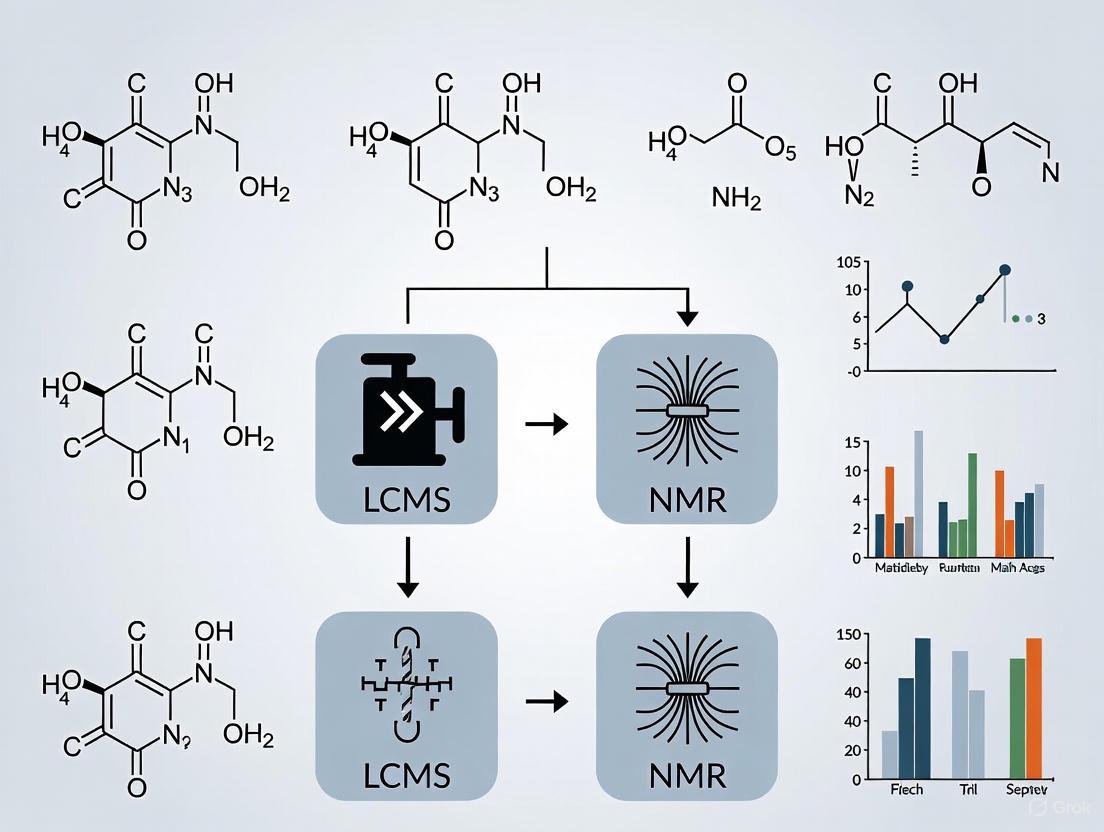
This article provides a systematic comparison of Liquid Chromatography-Mass Spectrometry (LC-MS) and Nuclear Magnetic Resonance (NMR) spectroscopy for metabolomic analysis, tailored for researchers and drug development professionals.
LC-MS vs NMR in Metabolomics: A Comprehensive Guide to Metabolite Coverage and Technique Integration
Abstract
This article provides a systematic comparison of Liquid Chromatography-Mass Spectrometry (LC-MS) and Nuclear Magnetic Resonance (NMR) spectroscopy for metabolomic analysis, tailored for researchers and drug development professionals. It explores the foundational principles dictating their complementary metabolite coverage, with NMR quantifying abundant soluble metabolites and LC-MS targeting sensitive analysis of lipids and low-concentration species. The content details methodological workflows for distinct and combined applications, presents troubleshooting strategies for sample preparation and instrumentation, and validates the superior analytical outcomes achieved through data fusion. The synthesis concludes that integrating NMR and LC-MS is paramount for expanding metabolome coverage and enhancing the robustness of biological and clinical findings.
Principles of Metabolite Detection: Understanding the Core Strengths of NMR and LC-MS
In metabolomics and drug development, Liquid Chromatography-Mass Spectrometry (LC-MS) and Nuclear Magnetic Resonance (NMR) spectroscopy represent two complementary analytical pillars with fundamentally different detection mechanisms. LC-MS operates on principles of physical separation and mass-to-charge ratio detection, offering exceptional sensitivity for trace-level compound detection. NMR spectroscopy functions by detecting nuclear spin transitions in a magnetic field, providing superior capabilities for structural elucidation and absolute quantification. This fundamental difference in detection philosophy creates a natural trade-off: LC-MS typically provides lower detection limits, while NMR offers more reliable quantification without requiring compound-specific standards. The selection between these techniques is not merely technical but philosophical, influencing experimental design, data interpretation, and analytical outcomes in research settings.
Fundamental Principles and Direct Performance Comparison
The core detection mechanisms of LC-MS and NMR dictate their performance characteristics in metabolic analysis. In LC-MS, compounds are ionized (commonly via electrospray ionization), separated by mass, and detected based on their mass-to-charge ratio (m/z). This process enables exceptional sensitivity but introduces variability due to ionization efficiency differences between compounds and matrix effects that can suppress or enhance signals [1] [2]. Conversely, NMR detects the resonant frequency of atomic nuclei (typically 1H or 13C) in a magnetic field, producing signals directly proportional to the number of nuclei present without requiring ionization. This provides inherent quantification capability but with limited sensitivity compared to MS-based methods [3] [4].
Table 1: Fundamental Characteristics of LC-MS and NMR in Metabolite Analysis
| Parameter | LC-MS | NMR |
|---|---|---|
| Detection Principle | Mass-to-charge ratio of ionized molecules | Nuclear spin transitions in magnetic field |
| Quantification Basis | Relative to calibration standards (relative quantification) or internal standards | Directly proportional to number of nuclei (absolute quantification possible) |
| Typical Sensitivity | pM-nM range (10-12-10-9 M) [2] | μM-mM range (10-6-10-3 M) [5] [3] |
| Dynamic Range | 103-104 [5] | 102-103 |
| Key Strength | High sensitivity for trace analysis | Structural elucidation, absolute quantification |
| Primary Limitation | Matrix effects, ionization variability [2] | Lower sensitivity, spectral overlap |
Table 2: Experimental Metabolite Coverage Comparison from Integrated Studies
| Study Focus | Metabolites by NMR Alone | Metabolites by LC-MS/GC-MS Alone | Overlapping Metabolites | Key Finding |
|---|---|---|---|---|
| C. reinhardtii Metabolomics [5] | 20 | 82 | 22 | Combined approach identified 102 total metabolites |
| Blood Serum Analysis [6] | Protocol optimized for sequential analysis | Protocol optimized for sequential analysis | - | Single preparation enables both techniques |
| Botanical Authentication [7] | 155-198 spectral variables (various botanicals) | 121 metabolites in Myrciaria dubia | - | Methanol most effective extraction solvent for both |
The following diagram illustrates the fundamental detection workflows and their relationship to sensitivity and quantification capabilities:
Experimental Evidence: Quantification Capabilities and Sensitivity Enhancement Strategies
NMR Quantification Methodologies
The exceptional quantification capabilities of NMR stem from the direct proportionality between signal intensity and the number of nuclei generating the signal. This relationship enables both relative and absolute quantification without compound-specific calibration curves. In practice, quantitative 1D 1H NMR experiments with sufficient relaxation delays (typically >5×T1) provide accurate concentration data when referenced against internal or external standards [4]. For complex mixtures with signal overlap, quantitative 2D NMR methods have been developed that maintain the quantitative relationship while spreading signals into a second dimension, significantly improving peak resolution [4].
Solid-state NMR quantification requires additional considerations, as the quantitative coil volume - the region where NMR response is linearly proportional to sample amount - must be determined and matched to the sample volume. Methodologies using magnetic field gradients or sample displacement techniques can define this quantitative volume, optimizing precision and sensitivity for solid samples [8]. The ERETIC (Electronic Reference To access In vivo Concentrations) method further improves quantification precision by introducing an electronic reference signal that compensates for instrumental instabilities in both liquid and solid-state NMR [8].
LC-MS Sensitivity Enhancement Approaches
LC-MS sensitivity optimization focuses on improving the signal-to-noise ratio through enhanced ionization efficiency, better ion transmission, and reduced background interference. Electrospray ionization (ESI) optimization is crucial, with capillary voltage, nebulizing gas flow, desolvation temperature, and capillary-to-orifice distance requiring systematic adjustment [2]. For example, desolvation temperature optimization can yield 20% sensitivity improvements for some compounds, though thermally labile analytes may require lower temperatures to prevent degradation [2].
For large molecule analysis, Summation of Multiple Reaction Monitoring (SMRM) transitions significantly enhances sensitivity by combining signals from multiple charge states of the same molecule. Unlike small molecules that typically form singly charged ions, large biomolecules distribute across multiple charge states during electrospray ionization, scattering signal intensity. SMRM counters this effect by superimposing MRM transitions from different precursor-to-product ion combinations of the same analyte, boosting detection sensitivity while maintaining specificity through chromatographic separation [1].
Table 3: LC-MS Sensitivity Enhancement Strategies and Experimental Impact
| Optimization Area | Specific Parameters | Experimental Impact | Considerations |
|---|---|---|---|
| Ion Source [2] | Capillary voltage, nebulizer gas, desolvation temperature, probe position | 2-3x sensitivity improvement demonstrated for urinary metabolites | Compound-dependent; thermal lability concerns |
| Chromatography [9] | Column dimensions (reduced i.d.), flow rate, mobile phase composition | Signal intensity increase with reduced i.d. columns | System dead volume must be minimized |
| Sample Preparation [2] [9] | Protein precipitation, solid-phase extraction, dilution | Reduced matrix effects, improved S/N | Balance between cleanliness and recovery |
| SMRM for Large Molecules [1] | Summation of multiple precursor-product ion transitions | Enhanced sensitivity for peptides/proteins | Requires chromatographic separation specificity |
Integrated Approaches and Data Fusion Strategies
Research demonstrates that NMR and LC-MS provide complementary rather than redundant information, with integrated approaches significantly expanding metabolome coverage. A study analyzing C. reinhardtii metabolomes found that NMR uniquely identified 14 metabolites (including glycine, lysine, methionine, and valine), while GC-MS uniquely identified 16 metabolites, with only 17 metabolites detected by both techniques [5]. This complementarity enables more comprehensive pathway coverage, particularly for central carbon metabolism including the oxidative pentose phosphate pathway, Calvin cycle, tricarboxylic acid cycle, and amino acid biosynthesis [5].
Data fusion strategies systematically combine NMR and MS datasets to extract more information than either technique alone. These approaches operate at three primary levels:
Low-level data fusion: Concatenates pre-processed raw data or variables from NMR and MS datasets before multivariate analysis, requiring careful intra- and inter-block scaling to equalize technical variances between platforms [3].
Mid-level data fusion: Employs dimensionality reduction techniques (PCA, PARAFAC, MCR-ALS) on separate NMR and MS datasets before concatenating the extracted features, effectively addressing the high dimensionality of combined datasets [3].
High-level data fusion: Combines model outputs or decisions from separately analyzed NMR and MS data using methods like Bayesian consensus or majority voting, preserving the unique interpretive value of each platform while generating consensus conclusions [3].
The following workflow illustrates how these techniques are integrated in practical metabolomics research:
Advanced Applications and Protocol Implementation
Cutting-Edge Sensitivity Enhancement Technologies
Dissolution dynamic nuclear polarization (d-DNP) represents a revolutionary approach to overcoming NMR's inherent sensitivity limitations. This technique achieves signal enhancements of >10,000-fold for 13C nuclei by transferring electron polarization to nuclear spins at cryogenic temperatures, followed by rapid dissolution and transfer to an NMR spectrometer for analysis [4]. This sensitivity breakthrough enables detection of low-abundance metabolites at natural 13C abundance, opening new possibilities for tracking metabolic fluxes without isotope labeling [4].
For LC-MS, alternative ionization techniques like atmospheric pressure chemical ionization (APCI) can reduce matrix effects compared to ESI, particularly for moderate polarity, thermally stable compounds [2]. APCI generates ions through gas-phase reactions rather than charged droplet mechanisms, diminishing competitive ionization suppression from co-eluting matrix components.
Experimental Protocols for Integrated Metabolomics
Serum Sample Preparation for Sequential NMR and LC-MS Analysis [6]:
- Protein Removal: Employ simultaneous solvent precipitation and molecular weight cut-off (MWCO) filtration
- Solvent Considerations: Use deuterated methanol:deuterium oxide (1:1) for extraction; demonstrated no significant metabolite deuteration affecting LC-MS analysis
- Buffer Compatibility: Standard NMR phosphate buffers in D2O well-tolerated in LC-MS systems
- Sample Division: Single aliquot sufficient for sequential analysis, reducing sample volume requirements
Botanical Metabolite Fingerprinting Protocol [7]:
- Extraction: Homogenize plant material (50-300 mg based on matrix) with 1-2 mL methanol with 10% CD3OD or methanol:D2O (1:1)
- Analysis: Conduct 1H NMR (400 MHz) with 0.01 ppm bin size followed by LC-MS with reverse-phase separation
- Data Processing: Apply hierarchical clustering analysis to evaluate solvent efficacy and metabolite coverage
Essential Research Reagent Solutions
Table 4: Key Reagents and Materials for Integrated NMR and LC-MS Metabolomics
| Reagent/Material | Specification | Function | Technical Considerations |
|---|---|---|---|
| Deuterated Methanol [6] [7] | LC-MS Grade, 99.8% D | Extraction solvent for dual NMR/MS analysis | Provides NMR lock signal; no significant H/D exchange affecting MS |
| Deuterium Oxide [6] [7] | LC-MS Grade, 99.9% D | Aqueous component for extraction | Enables NMR locking; minimal background in MS |
| Ammonium Formate/Acetate [9] | MS Grade, >99% | Volatile LC-MS buffer | pH control without source contamination; avoid non-volatile buffers |
| Formic Acid [2] [9] | MS Grade, >99.5% | Mobile phase modifier | Promotes [M+H]+ ionization in ESI+; use at 0.1% concentration |
| Methanol/Acetonitrile [9] | Hypergrade LC-MS | Organic mobile phases | Low UV absorption, MS background; avoid plasticizer contamination |
| Internal Standards [1] | Isotope-labeled analogs | Quantification reference | Use 13C, 15N, or 2H-labeled compounds for MS; TSP for NMR |
| Solid Phase Extraction [1] [9] | HLB, C18, or mixed-mode | Sample clean-up | Reduces matrix effects; selective metabolite enrichment |
The fundamental detection mechanisms of LC-MS and NMR create a natural methodological synergy that advances metabolomic research beyond the capabilities of either technique alone. LC-MS provides exceptional sensitivity for comprehensive metabolite detection, while NMR delivers robust structural elucidation and absolute quantification. The experimental evidence demonstrates that integrated approaches significantly expand metabolite coverage, improve analytical accuracy, and provide more comprehensive pathway mapping in biological systems. For drug development professionals and researchers, the strategic combination of these platforms—supported by appropriate sample preparation protocols and data fusion strategies—represents the most powerful approach for addressing the analytical challenges of complex mixture analysis. As sensitivity enhancement technologies like d-DNP-NMR and SMRM continue to evolve, the complementary relationship between these fundamental detection mechanisms will further solidify their essential role in metabolomics and pharmaceutical research.
Mass spectrometry (MS) and nuclear magnetic resonance (NMR) spectroscopy represent the two primary analytical pillars supporting modern metabolomics research [3]. The selection between these techniques profoundly influences experimental design, data quality, and biological interpretation throughout drug development and basic research. This guide provides an objective, data-driven comparison of LC-MS and NMR methodologies, detailing their inherent strengths and limitations to inform platform selection for metabolite coverage studies. We synthesize experimental data and standardized protocols to empower researchers in making evidence-based decisions aligned with their specific research objectives, whether focused on comprehensive biomarker discovery, targeted pathway analysis, or structural elucidation of unknown compounds.
Technical Comparison of LC-MS and NMR Platforms
The complementary nature of LC-MS and NMR stems from their fundamentally different physical principles of detection. LC-MS measures mass-to-charge ratios of ionized molecules, while NMR detects the resonant frequencies of atomic nuclei within a magnetic field [10]. This fundamental difference creates a trade-off between sensitivity and structural information that shapes their application landscapes.
Table 1: Core Technical Characteristics of LC-MS and NMR in Metabolomics
| Parameter | Liquid Chromatography-Mass Spectrometry (LC-MS) | Nuclear Magnetic Resonance (NMR) |
|---|---|---|
| Fundamental Principle | Measurement of mass-to-charge (m/z) ratio of ionized molecules [11] | Detection of resonant frequencies of atomic nuclei in a magnetic field [10] |
| Sensitivity | High (femtomole to attomole range) [10] [3] | Low (nanomole to micromole range) [10] [3] |
| Metabolite Coverage | Broad; capable of detecting thousands of features in a single run [12] | Limited to ~50-150 most abundant metabolites in a typical 1D spectrum [3] |
| Structural Elucidation Power | Limited; relies on fragmentation patterns and databases [10] | High; provides direct information on atomic connectivity and isomer distinction [10] |
| Quantitation | Semi-quantitative; suffers from matrix effects and ion suppression [10] [12] | Inherently quantitative; signal intensity directly proportional to concentration [10] [3] |
| Sample Throughput | Medium to High (with modern UHPLC systems) [11] | Very High for 1D experiments; Low for 2D experiments [10] |
| Reproducibility | Moderate; affected by matrix effects and instrument calibration [13] [3] | Very High; data consistent across instruments and vendors [7] [3] |
| Sample Destruction | Destructive [3] | Non-destructive; sample can be recovered for further analysis [10] [3] |
| Key Limitation | Matrix effects, ion suppression, inability to distinguish isomers without standards [10] [12] | Low sensitivity, requires relatively high metabolite concentrations [10] [3] |
| Key Advantage | Exceptional sensitivity and wide dynamic range [11] [12] | Provides definitive structural information and is inherently quantitative [10] [3] |
Experimental Protocols for Metabolite Analysis
Standardized Metabolite Extraction for Multi-Platform Analysis
Robust sample preparation is critical for generating reliable metabolomics data. A recent multi-botanical study systematically optimized extraction protocols for parallel NMR and LC-MS analysis [7]. The following protocol has been validated across diverse sample types, including cell cultures, tissues, and biofluids:
- Homogenization: Mechanically homogenize 50-300 mg of sample (weight adjusted based on sample type) using a bead beater or rotor-stator homogenizer in pre-chilled extraction solvent [7] [14].
- Solvent Selection: Utilize methanol with 10% deuterated methanol (CD₃OD) for comprehensive metabolite extraction. This solvent combination provides broad metabolite coverage while maintaining NMR compatibility [7].
- Liquid-Liquid Extraction: For biphasic extraction of polar and non-polar metabolites, use a methanol/chloroform/water system (typical ratio 2:2:1.8). Vortex vigorously for 60 seconds and incubate on ice for 10 minutes [14].
- Phase Separation: Centrifuge at 14,000 × g for 15 minutes at 4°C. The upper aqueous phase contains polar metabolites, while the lower organic phase contains lipids [14].
- Internal Standard Addition: Add known quantities of internal standards (e.g., stable isotope-labeled compounds) to the extraction solvent prior to sample processing to correct for technical variability [14]. Common standards include d₄-alanine for amino acids and ¹³C₆-glucose for sugars.
- Sample Concentration: Transfer supernatant to new tubes and evaporate under a gentle nitrogen stream or vacuum centrifugation. Reconstitute dried extracts in appropriate solvents for each platform [7].
Data Acquisition Parameters
LC-MS Analysis:
- Chromatography: Employ reversed-phase C18 column (100 × 2.1 mm, 1.8 μm) with water/acetonitrile (both containing 0.1% formic acid) gradient elution over 15 minutes for broad metabolite coverage. For polar metabolites, use HILIC chromatography as a complementary approach [11] [12].
- Mass Spectrometry: Operate in both positive and negative electrospray ionization modes with mass resolution >30,000 (Orbitrap or Q-TOF instruments). Data-dependent acquisition (DDA) selects top N ions for fragmentation after each survey scan [11].
NMR Analysis:
- Sample Preparation: Reconstitute dried extracts in 600 μL of deuterated phosphate buffer (100 mM, pD 7.4) containing 0.3 mM DSS-d₆ as chemical shift reference [15] [7].
- Data Collection: Acquire 1D ¹H NMR spectra using a NOESY-presat pulse sequence at 298K on 600 MHz spectrometer equipped with cryoprobe. Use 128 scans, 2s relaxation delay, and 16 ppm spectral width [15].
Analytical Workflow Visualization
The fundamental experimental workflows for LC-MS and NMR metabolomics share common initial steps but diverge significantly in data acquisition and analysis phases, reflecting their different technical requirements and outputs.
Figure 1: Comparative workflows for LC-MS and NMR metabolomics. After common sample preparation stages, analyses diverge into platform-specific procedures that converge again at the statistical analysis phase.
Essential Research Reagents and Materials
The reliability of metabolomic data depends critically on the quality and consistency of research reagents and materials used throughout the analytical process.
Table 2: Essential Research Reagents for Metabolomics
| Reagent/Material | Function/Purpose | Application Notes |
|---|---|---|
| Deuterated Methanol (CD₃OD) | Extraction solvent for NMR-compatible samples; provides deuterium lock signal [7] | Use at 10% in standard methanol for optimal NMR performance without prohibitive cost [7] |
| Deuterated Water (D₂O) | Solvent for aqueous NMR samples; minimizes solvent proton interference [10] | Typically used with phosphate buffer (pH 7.4) for chemical shift consistency [15] |
| Deuterated DSS (DSS-d₆) | Chemical shift reference standard for NMR [15] | Provides internal reference (0 ppm) for metabolite chemical shift assignment [15] |
| Stable Isotope-Labeled Internal Standards | Quantitation standards for MS; corrects for technical variability [14] | Includes compounds like d₄-alanine, ¹³C₆-glucose; added prior to extraction [14] |
| Methanol/Chloroform | Biphasic extraction solvent system [14] | Classical 2:2:1.8 (MeOH:CHCl₃:H₂O) ratio separates polar and non-polar metabolites [14] |
| Formic Acid | Mobile phase additive for LC-MS; promotes protonation in positive ion mode [11] | Used at 0.1% in both water and organic mobile phases [11] |
| Ammonium Acetate/Formate | Mobile phase buffers for LC-MS; volatile salts compatible with MS detection [11] | Preferred over non-volatile buffers that cause ion source contamination [11] |
Integrated Data Analysis and Method Validation
Statistical Considerations for Metabolomic Data
The analysis of metabolomics data requires specialized statistical approaches that account for high dimensionality, multicollinearity, and multiple testing. A comprehensive comparison of statistical methods revealed that sparse multivariate methods like Sparse Partial Least Squares (SPLS) outperform traditional univariate approaches, particularly in nontargeted datasets where the number of metabolites exceeds the number of samples [16]. For LC-MS data, where thousands of metabolite features may be detected, these sparse methods demonstrate greater selectivity and lower potential for spurious relationships compared to univariate approaches with multiplicity correction [16].
Inter-laboratory Reproducibility
A critical multi-laboratory study examining reproducibility across 12 facilities revealed that while different LC-MS methods can produce comparable relative quantification data for approximately half of measured metabolites, several factors contribute to inter-laboratory variability [13]. These include erroneous peak identification, insufficient chromatographic separation, differences in detection sensitivity, and variations in extraction protocols [13]. NMR demonstrates superior inter-laboratory reproducibility due to its stability across instruments and vendors, though it covers fewer metabolites [7] [3].
Data Fusion Strategies
The integration of LC-MS and NMR data through data fusion strategies represents a powerful approach to overcome the limitations of either technique alone [3]. Three primary fusion levels have been established:
- Low-Level Fusion: Direct concatenation of pre-processed data matrices from different platforms before statistical analysis [3].
- Mid-Level Fusion: Integration of extracted features (e.g., principal components) from each platform before modeling [3].
- High-Level Fusion: Combination of model outputs or decisions from separate analyses of each data type [3].
These approaches leverage the complementary strengths of both platforms, with NMR providing definitive identification and absolute quantification of abundant metabolites, while LC-MS extends coverage to lower-abundance species [10] [3].
LC-MS and NMR offer complementary rather than competing capabilities for metabolomic analysis. LC-MS provides superior sensitivity and metabolite coverage, making it ideal for biomarker discovery and targeted analysis of low-abundance metabolites. NMR delivers unmatched structural elucidation power, inherent quantitation, and high reproducibility, making it valuable for definitive metabolite identification and studies requiring absolute quantification. The optimal choice depends entirely on research objectives: LC-MS for comprehensive coverage and sensitivity needs, NMR for structural characterization and quantitative precision. For the most complete metabolic understanding, integrated approaches employing both platforms through data fusion strategies offer the most powerful solution, leveraging the complementary strengths of both analytical workhorses to provide a systems-level view of the metabolome.
Metabolite Classes Uniquely Identified by NMR and LC-MS
Metabolomics, the comprehensive study of small molecule metabolites, relies primarily on two analytical platforms: nuclear magnetic resonance (NMR) spectroscopy and liquid chromatography-mass spectrometry (LC-MS). The metabolite coverage of these techniques is not identical but complementary. A growing consensus within the scientific community acknowledges that combining NMR and MS delivers a more comprehensive analysis of the metabolome by leveraging their distinct strengths [17] [5]. This guide provides an objective comparison of the metabolite classes uniquely identified by each technology, supported by experimental data and detailed methodologies to inform researchers and drug development professionals.
Technical Comparison: NMR and LC-MS in Metabolomics
The fundamental differences in the principles of detection between NMR and LC-MS lead to variations in sensitivity, reproducibility, and the types of metabolites they are best suited to analyze.
Table 1: Fundamental Characteristics of NMR and LC-MS in Metabolomics
| Feature | Nuclear Magnetic Resonance (NMR) | Mass Spectrometry (MS) |
|---|---|---|
| Sensitivity | Low [18] [17] | High [18] [17] |
| Reproducibility | Very high [18] [19] | Average [18] [19] |
| Quantitation | Highly quantitative and reproducible without need for multiple internal standards [17] [19] | Requires internal standards for reliable quantitation; can be affected by ion suppression [11] [20] |
| Sample Preparation | Minimal; requires little to no derivatization [19] | Complex; often requires extraction and sometimes chemical derivatization (especially for GC-MS) [18] [5] |
| Throughput | Fast and easily automatable; high throughput [19] | Slower due to chromatography run times; lower throughput [19] |
| Detection | Non-destructive; directly detects metabolites in solution [21] [22] | Destructive; requires metabolite ionization for detection [11] [20] |
| Key Strength | Excellent for identifying and quantifying highly polar, volatile, or unstable compounds [19] | Excellent for broad, untargeted screening and detecting low-abundance metabolites [11] [17] |
The difference in sensitivity arises because NMR detects the majority of isotopes for a given atom (e.g., 1H), while MS detects ions after often inefficient ionization processes. However, NMR's strength lies in its high reproducibility and direct quantitation, as the signal intensity is directly proportional to the metabolite concentration, and all metabolites are detected with the same sensitivity [19]. In contrast, MS response is highly dependent on the metabolite's specific ionization efficiency, which can be suppressed by co-eluting matrix components, making absolute quantitation more challenging [11] [20].
Experimental Evidence of Unique Metabolite Coverage
A targeted study analyzing the metabolome of Chlamydomonas reinhardtii provided clear evidence of the complementary coverage of NMR and MS. The study identified a total of 102 metabolites, with a significant number being uniquely detected by one platform [5].
Table 2: Unique Metabolite Identification in a C. reinhardtii Study
| Analytical Platform | Total Metabolites Detected | Unique Metabolites of Interest Identified |
|---|---|---|
| GC-MS Alone | 82 | 16 |
| NMR Alone | 20 | 14 |
| Common to Both | 22 | 17 |
This data demonstrates that relying on a single platform would have missed a substantial proportion of the metabolome. Specifically, GC-MS failed to detect 14 metabolites of interest that were identified by NMR, while NMR missed 16 that were found by GC-MS [5]. This synergy allows for a more robust interpretation of biological states.
Table 3: Representative Metabolite Classes Uniquely Identified by Each Platform
| Metabolite Class | Uniquely Identified by NMR | Uniquely Identified by LC-MS/GC-MS |
|---|---|---|
| Energy Metabolism | Fructose, glycerol, pyruvate [5] | Fructose-6-phosphate [5] |
| Amino Acids | Glycine, lysine, methionine, valine [5] | Asparagine, cysteine, histidine, serine, tryptophan [5] |
| TCA Cycle | Acetate, isocitrate, ketoglutarate, malate, succinate [5] | Fumarate [5] |
| Specialized Compounds | Sugars, organic acids, alcohols, polyols [19] | Non-polar lipids (e.g., triacylglycerols, sterols) [11] [20] |
| Bioactive Lipids | - | Oxylipins, endocannabinoids (e.g., AEA, PEA) [23] |
NMR is particularly adept at detecting and quantifying compounds that are challenging for MS, such as sugars, organic acids, and alcohols, because these compounds are readily soluble in aqueous solvents and contain NMR-active nuclei [19]. Conversely, MS excels at detecting metabolites that ionize well, including many non-polar lipids and low-abundance signaling molecules like oxylipins, which are often missed by NMR due to its lower sensitivity [23] [17].
Detailed Experimental Protocols
To ensure the reliability and reproducibility of metabolomics data, standardized protocols are crucial. Below are detailed methodologies for sample preparation and data acquisition for both NMR and LC-MS platforms.
NMR Spectroscopy Metabolomics Protocol
Sample Preparation for Biofluids (e.g., Serum/Plasma):
- Protein Removal: Add 400 μL of biofluid to a molecular weight cut-off (MWCO) filter (e.g., 3 kDa or 10 kDa). Centrifuge to obtain a protein-free filtrate [23] [6].
- Buffering and Referencing: Mix the filtrate with a deuterated phosphate buffer (e.g., 200 μL of 1.5 M K2HPO4, pH 7.4). Include a known concentration (e.g., 0.5 mM) of an internal chemical shift reference, such as 3-(trimethylsilyl)-2,2′,3,3′-tetradeuteropropionic acid (TSP) or sodium trimethylsilylpropionate (DSS) [21] [19].
- Loading: Transfer 550 μL of the mixture into a standard 5 mm NMR tube.
Data Acquisition:
- Instrumentation: Conduct experiments on a high-field NMR spectrometer (e.g., 600 MHz or higher) equipped with a cryoprobe for enhanced sensitivity [19].
- 1D 1H NMR: Acquire a one-dimensional proton NMR spectrum using a standard pulse sequence with water signal suppression (e.g., NOESY-presaturation or WATERGATE) [21] [17]. Key acquisition parameters typically include: 64-128 transients, a spectral width of 20 ppm, an acquisition time of 2-3 seconds, and a relaxation delay of 3-5 seconds.
- 2D NMR for Deconvolution: For complex samples or to confirm identities, acquire two-dimensional experiments such as 1H-13C Heteronuclear Single Quantum Coherence (HSQC) for one-bond C-H correlations and 1H-13C Heteronuclear Multiple Bond Correlation (HMBC) for longer-range couplings [21] [5].
Data Processing and Metabolite Identification:
- Process the free induction decay (FID) by applying Fourier transformation, phase correction, and baseline correction.
- Reference the spectrum to the internal standard (TSP/DSS at 0 ppm).
- Identify and quantify metabolites using software tools (e.g., Chenomx NMR Suite, Bayesil, MagMet) that perform spectral deconvolution by matching the experimental spectrum against a database of reference spectra from pure compounds [19].
LC-MS/MS Metabolomics Protocol
Sample Preparation:
- Protein Precipitation: Add a cold organic solvent (e.g., methanol or acetonitrile) to the biofluid (e.g., a 2:1 or 3:1 solvent-to-sample ratio). Vortex mix and centrifuge to pellet proteins. Collect the supernatant for analysis [11] [6].
- Reconstitution: If necessary, dry the supernatant under a stream of nitrogen or in a vacuum concentrator and reconstitute the residue in a solvent compatible with the LC-MS method.
Data Acquisition:
- Chromatography:
- Reversed-Phase (RPLC): Use a C18 column to separate semi-polar compounds (e.g., phenolic acids, flavonoids, many lipids). The mobile phase typically consists of water (with 0.1% formic acid) and acetonitrile or methanol [11] [20].
- Hydrophilic Interaction (HILIC): Use a polar column (e.g., aminopropyl) to separate polar compounds (e.g., sugars, amino acids, carboxylic acids) that are poorly retained by RPLC [11] [20].
- Mass Spectrometry:
- Ionization: Employ electrospray ionization (ESI) in both positive and negative ion modes to cover a wide range of metabolites [11].
- Data Acquisition Modes:
- Full Scan: Acquire data to determine the precise mass (m/z) of molecular ions using a high-resolution mass analyzer (e.g., Q-TOF, Orbitrap) [11] [20].
- Tandem MS (MS/MS): Use data-dependent acquisition (DDA) to automatically select precursor ions above an intensity threshold and fragment them (e.g., via CID) to obtain structural information [11].
Data Processing and Metabolite Identification:
- Process the raw data to perform peak picking, alignment, and deisotoping.
- Annotate metabolites by matching the observed m/z and MS/MS fragmentation patterns against metabolic databases (e.g., HMDB, GOLM). The "gold standard" for confirmation is comparison with the retention time and MS/MS spectrum of an authentic chemical standard [11] [20].
Workflow Visualization: Combined NMR and LC-MS Approach
Integrating NMR and LC-MS data from a single sample aliquot maximizes metabolome coverage. The following diagram illustrates a validated workflow for sequential analysis of a blood serum sample.
Figure 1: Workflow for Integrated NMR and LC-MS Metabolomics.
The Scientist's Toolkit: Essential Reagent Solutions
Table 4: Key Reagents and Materials for NMR and LC-MS Metabolomics
| Item | Function | Application |
|---|---|---|
| Deuterated Solvents (e.g., D2O) | Provides a field-frequency lock for the NMR spectrometer and enables water signal suppression. | NMR Spectroscopy [21] [6] |
| Internal Standards (TSP, DSS) | Serves as a chemical shift reference (δ 0 ppm) and, at a known concentration, enables absolute quantification of metabolites. | NMR Spectroscopy [21] [19] |
| MWCO Filters (3kDa, 10kDa) | Removes high-molecular-weight proteins from biofluids, preventing signal broadening in NMR and ion suppression/column fouling in LC-MS. | Sample Prep for NMR & LC-MS [23] [6] |
| Stable Isotope-Labeled Internal Standards | Corrects for variability in matrix-induced ion suppression and extraction efficiency, allowing for accurate quantification. | LC-MS Quantitation [11] [20] |
| LC-MS Grade Solvents | Provides high-purity solvents with minimal contaminants to reduce chemical noise and background signals during LC-MS analysis. | LC-MS Mobile Phase [11] |
The comparative analysis of metabolite classes unequivocally demonstrates that NMR and LC-MS are not competing but complementary technologies. NMR uniquely provides highly reproducible and absolute quantification of central carbon metabolism intermediates, amino acids, and highly polar compounds. In contrast, LC-MS offers unparalleled sensitivity for detecting low-abundance metabolites, including specific lipids and signaling molecules. A platform-unbiased approach that integrates both NMR and LC-MS is therefore essential for achieving the broadest coverage of the metabolome, leading to a more robust and comprehensive understanding of biological systems in basic research and drug development.
Metabolomics, the comprehensive analysis of low-molecular-weight metabolites in biological systems, relies primarily on mass spectrometry (MS) and nuclear magnetic resonance (NMR) spectroscopy as its foundational analytical platforms. Despite a prevailing perception in the field that MS alone serves metabolomics best, evidence demonstrates that these techniques are fundamentally complementary. A comparative study treating Chlamydomonas reinhardtii with chemical modulators identified 102 metabolites collectively, with each technique detecting unique species: 82 by GC-MS, 20 by NMR, and only 22 by both methods [5]. This synergy significantly enhanced the coverage of central metabolic pathways, including the oxidative pentose phosphate pathway, Calvin cycle, and tricarboxylic acid cycle. This guide objectively compares the performance of LC-MS, GC-MS, and NMR platforms, providing experimental data and methodologies that underscore the necessity of their integrated application for comprehensive metabolome coverage in research and drug development.
The metabolome represents the final downstream product of the cellular genome, transcriptome, and proteome, providing the most direct reflection of an organism's physiological state. However, its comprehensive characterization presents a formidable analytical challenge due to the immense chemical diversity of metabolites, which span a wide polarity range, exist in concentrations that can vary by over 9 orders of magnitude, and include structurally similar isomers. Current estimates suggest the human metabolome may encompass approximately 150,000 metabolites, yet typical metabolomics studies identify only a few hundred, creating a significant coverage gap [5].
To address this complexity, no single analytical technique can provide universal resolution. The two most prominent technologies, NMR and MS, are often viewed competitively, but a growing body of evidence positions them as synergistic partners. In 2017, only 5% of metabolomics manuscripts in PubMed described a combined NMR and MS approach, highlighting a critical missed opportunity in the field [5]. This guide examines the inherent strengths and limitations of each platform, demonstrating through experimental data and protocols how their strategic integration delivers a more holistic view of biological systems.
Analytical Platform Comparison: NMR vs. MS
The selection of an analytical platform dictates the scope and depth of metabolomic investigation. NMR and MS offer distinct advantages and limitations rooted in their underlying physical principles.
Table 1: Fundamental Characteristics of NMR and MS Platforms
| Characteristic | Nuclear Magnetic Resonance (NMR) | Mass Spectrometry (MS) |
|---|---|---|
| Sensitivity | Low (typically ≥ 1 μM) [5] | High (sub-micromolar range) [5] |
| Reproducibility | Very High [18] | Average [18] |
| Detectable Metabolites | 30-100 metabolites per sample [18] | 300-1000+ metabolites per sample [18] |
| Quantitation | Excellent; inherently quantitative [3] | Relative; requires calibration curves [3] |
| Structural Elucidation | Powerful for de novo identification and isomer distinction [24] | Limited; relies on libraries and fragmentation patterns [3] |
| Sample Preparation | Minimal; often non-destructive [18] | Complex; requires extraction, can be destructive [18] |
| Analysis Time | Fast; minimal chromatography needed [18] | Longer; often requires coupled chromatography (LC/GC) [18] |
| Key Strengths | Non-destructive, excellent for isotopologue tracking, minimal bias | Broad coverage, high sensitivity, capable of detecting low-abundance species |
| Primary Limitations | Lower sensitivity, limited dynamic range (~10³ to 10⁴) [5] | Ion suppression effects, semi-destructive, variable ionization efficiency [5] |
The operational differences are significant. NMR detects the most abundant metabolites, while MS detects metabolites that are readily ionizable, leading to fundamentally different metabolite coverage from the same biological sample [5]. MS-based platforms typically couple to separation techniques like Gas Chromatography (GC) or Liquid Chromatography (LC) to manage complex samples, but these introduce their own challenges, including "non-uniform metabolite derivatization, incomplete column recovery, decomposition during derivatization, and ion-suppression" [5].
Experimental Evidence: Quantitative Coverage Data
Direct comparisons of NMR and MS applications in controlled studies provide compelling evidence for their complementarity. The following data, drawn from recent research, quantifies the overlap and unique contributions of each technique.
Table 2: Comparative Metabolite Identification in Key Studies
| Study & Sample Type | Total Metabolites Identified | Unique to NMR | Unique to MS | Identified by Both |
|---|---|---|---|---|
| Chlamydomonas reinhardtii Extracts (GC-MS vs NMR) [5] | 102 | 20 | 60 (82 by GC-MS total) | 22 |
| ESCC Tissues (NMR vs Targeted MS) [25] | 315 (by MS) | Specific pathways consistently identified by both (e.g., Alanine, Aspartate, Glutamate Metabolism) | ||
| Critically Ill Patient Serum (UHPLC-HRMS vs FTIR) [26] | N/A | FTIR better for unbalanced population prediction models | UHPLC-HRMS showed 8-17% higher accuracy (≥83%) in homogenous populations |
In the Chlamydomonas study, which focused on 47 metabolites of interest that changed with treatment, 14 were uniquely identified by NMR and 16 were uniquely identified by GC-MS, with 17 identified by both [5]. This demonstrates that relying on a single platform would have missed 30-40% of the significant metabolites. Pathway coverage also differed: NMR uniquely identified key TCA cycle intermediates like acetate, isocitrate, and ketoglutarate, while GC-MS uniquely identified fructose-6-phosphate and several amino acids [5].
In a clinical application for Esophageal Squamous Cell Carcinoma (ESCC) diagnosis, both NMR and MS consistently identified aberrations in 'alanine, aspartate and glutamate metabolism' throughout cancer evolution [25]. The NMR-based simplified panels of five serum or urine metabolites outperformed clinical serological tumor markers, achieving an Area Under the Curve (AUC) of 0.984 and 0.930, respectively, and were highly effective for early-stage detection [25].
Detailed Experimental Protocols
To illustrate how these complementary data are generated, below are detailed methodologies from cited studies.
This protocol exemplifies a platform-unbiased workflow for analyzing aqueous extracts from microalgae treated with lipid accumulation modulators (WD30030 and WD10784).
- Sample Preparation: Chlamydomonas reinhardtii cells were grown in tris-acetate phosphate (TAP) media containing 13C2-acetate (for enhanced NMR detection). Cells were treated with compounds or vehicle control, and metabolites were aqueous-extracted.
- GC-MS Analysis:
- Platform: Gas Chromatography coupled to Mass Spectrometry.
- Data Processing: The eRah package was used for peak picking, retention time alignment, and metabolite library search [5].
- Metabolite Identification: Matches were performed against the GOLM database [5].
- Statistical Analysis: Assigned metabolite peak areas were imported into MVAPACK for Principal Component Analysis (PCA).
- NMR Analysis:
- Platform: 1H NMR spectroscopy, with complete 2D 1H-13C HSQC (Heteronuclear Single Quantum Coherence) spectra used for multivariate analysis.
- Data Processing: NMRpipe and NMRviewJ were used for processing and peak picking [5].
- Metabolite Identification: Assignments were performed using the Biological Magnetic Resonance Bank (BMRB) metabolomics database [5].
- Statistical Analysis: Data matrices were Standard Normal Variate (SNV) normalized and unit variance scaled before PCA.
- Data Integration: A Multiblock PCA (MB-PCA) model was successfully generated to create a single statistical model for the combined NMR and GC-MS datasets [5].
This large-scale clinical study employed a cross-platform strategy to identify and validate metabolic biomarkers for early cancer detection.
- Sample Collection: A multi-center retrospective analysis included 560 participants, with 1,153 matched samples (ESCC tissues, normal mucosae, pre- and post-operative sera, and urines).
- NMR Analysis:
- Platform: 600 MHz 1H NMR.
- Data Processing: Uniform manifold approximation and projection (UMAP) and hierarchical clustering analysis (HCA) were used. OPLS-DA models were built, and differential metabolites were screened using VIP >1 and adjusted p-value < 0.05.
- Pathway Analysis: Kyoto Encyclopedia of Genes and Genomes (KEGG) pathway analysis was performed.
- Targeted MS Analysis:
- Platform: Liquid chromatography-tandem mass spectrometry (LC-MS/MS) in Multiple Reaction Monitoring (MRM) mode and Gas Chromatography-tandem mass spectrometry (GC-MS/MS).
- Coverage: Over 500 biochemicals were quantified, covering 544 metabolites and 11 fatty acids.
- Validation: A two-way orthogonal partial least squares (O2PLS) model was constructed to integrate NMR and MS data matrices to identify key, consensus metabolite variables.
- Biofluid Classifier Development: NMR-based metabolic signatures in serum and urine, which reflected tissue changes, were simplified into panels for early detection and validated for accuracy.
Visualizing the Complementary Workflow
The synergy between NMR and MS platforms can be effectively leveraged through integrated data fusion strategies. The following diagram visualizes a generalized workflow for combining these techniques to maximize metabolome coverage, from sample preparation to biological insight.
Essential Research Reagent Solutions
The execution of robust, multi-platform metabolomics requires specific, high-quality reagents and materials. The following table details key solutions used in the featured experiments.
Table 3: Key Research Reagent Solutions for Combined Metabolomics
| Reagent / Material | Function / Application | Example from Protocol |
|---|---|---|
| Stable Isotope-Labeled Substrates (e.g., 13C2-acetate) | Enables tracking of metabolic flux in living cells and enhances NMR detection. | Chlamydomonas growth media [5]. |
| Deuterated Solvents (e.g., Methanol-d4, CD3OD) | Provides the signal lock for NMR spectroscopy without introducing interfering proton signals. | NMR sample preparation in plant and clinical studies [25] [27]. |
| Internal Standards (e.g., HMDS, (Z)-3-hexenyl acetate) | Serves as a quantitative reference for NMR chemical shift calibration (HMDS) or for quantifying volatile compounds in GC-MS. | Used in NMR quantification [27] and SPME-GC-MS aroma profiling [27]. |
| SPME Fibers (e.g., DVB-CAR-PDMS) | Solid-phase microextraction fibers for solvent-free extraction and concentration of volatile metabolites for GC-MS analysis. | Headspace volatiles analysis in plant metabolomics [27]. |
| Quality Control (QC) Materials | Pooled samples or standardized reference materials analyzed repeatedly to monitor instrument stability and data quality throughout a run. | Critical for large-scale clinical and multi-platform studies [25]. |
| Authenticated Metabolite Libraries & Databases (e.g., BMRB, GOLM, HMDB) | Essential for confident metabolite identification by providing reference spectra for both NMR and MS. | Used for metabolite assignment in both NMR and MS workflows [5] [24]. |
The pursuit of comprehensive metabolome coverage is a central challenge in modern bioscience. While powerful, no single analytical platform can fully capture the complexity of the metabolome. The evidence is clear: the synergistic integration of NMR and MS delivers a far more complete and reliable picture of metabolic states than either technique can provide alone.
The combined approach mitigates the limitations of each method, enhances confidence in metabolite identification, and provides a more robust foundation for understanding biological mechanisms, identifying biomarkers, and advancing drug development. As the field evolves, data fusion strategies that formally integrate NMR and MS datasets will become standard practice. Therefore, the future of metabolomics lies not in choosing between NMR and MS, but in strategically deploying both to illuminate the full spectrum of metabolic activity.
From Theory to Practice: Workflow Design and Application Across Biological Matrices
Sample Preparation Protocols for Single and Sequential Analysis
A Comparative Guide for Metabolomics Research
In metabolomics, the choice of sample preparation protocol directly dictates the breadth and reliability of your experimental results. The fundamental challenge lies in the vast chemical diversity of metabolites, which makes it impossible for any single method to capture the entire metabolome. This guide objectively compares the performance of major sample preparation techniques, focusing on their metabolite coverage for LC-MS and NMR analysis, to help you design a robust strategy for both single and sequential analyses.
Core Principles of Sample Preparation
Sample preparation is the critical first step in any metabolomics workflow, designed to extract metabolites while removing interfering components from the biological matrix. The core objectives are consistent across platforms: to remove proteins and phospholipids that can damage instrumentation or cause ion suppression; to concentrate analytes of interest to enhance sensitivity; and to present the sample in a solvent compatible with the subsequent analytical system [28].
The choice between a single, comprehensive protocol and a sequential, multi-protocol approach hinges on the research goal. A single protocol, such as protein precipitation, offers a balanced view of the metabolome with high throughput. In contrast, a sequential approach using orthogonald methods (e.g., combining solvent precipitation with solid-phase extraction) can significantly expand metabolome coverage by extracting different classes of metabolites, albeit at the cost of increased sample consumption, time, and complexity [29] [30].
Comparative Performance of Sample Preparation Methods
The table below summarizes the performance of common sample preparation methods based on recent comparative studies, primarily in plasma and serum.
Table 1: Performance Comparison of Sample Preparation Methods for LC-MS Metabolomics
| Method | Typical Metabolite Coverage (Number of Features) | Key Strengths | Key Limitations | Best Suited For |
|---|---|---|---|---|
| Methanol Precipitation [30] | ~86% of total features detected (in plasma) | Broad specificity, outstanding accuracy, high reproducibility, low cost | Less effective for very polar or very non-polar metabolites | Untargeted analysis seeking maximum coverage; high-throughput studies |
| Acetonitrile Precipitation [30] | Lower than MeOH | Effective protein removal, less phospholipid co-precipitation than MeOH | Lower metabolite coverage and diversity compared to MeOH | Analyses where phospholipid removal is a priority |
| Methanol:Acetonitrile (1:1) Precipitation [30] | Intermediate between MeOH and ACN | Balances coverage of polar and non-polar metabolites | Can be less reproducible than single-solvent methods | A balanced, one-step approach for diverse metabolite classes |
| Solid-Phase Extraction (SPE) [30] | Lower overall, but high uniqueness | Excellent matrix depletion (phospholipids), reduces ion suppression, can concentrate analytes | Lower overall coverage, higher cost, more complex and time-consuming | Targeted analysis; reducing matrix effects for sensitive quantitation |
| Liquid-Liquid Extraction (LLE) [28] | Varies by solvent system | Excellent for non-polar analytes, good matrix clean-up, can concentrate analytes | Complex, multi-step, labor-intensive, not ideal for polar metabolites | Extracting non-polar metabolites (e.g., lipids) |
| Dilution [28] | Limited to abundant metabolites | Extremely simple, fast, and low-cost; ideal for low-protein matrices | Minimal matrix removal, high potential for matrix effects | Low-protein matrices like urine or cerebrospinal fluid |
Key Findings from Experimental Data:
A 2023 study directly comparing five extraction methods found that methanol precipitation provided the best combination of broad metabolite coverage (86.3% of total features in plasma) and high reproducibility (CV < 30% for 92.9% of compounds) [30]. The same study highlighted the high orthogonality of methods, showing that SPE can recover a subset of metabolites not effectively captured by solvent precipitation. This underscores the potential benefit of a sequential analysis strategy for expanding coverage [30].
Another study confirmed that combining data from multiple matrices (e.g., blood, urine, feces) using a multi-platform approach (NMR and LC-MS) provides a more comprehensive metabolic map than any single sample type or analytical platform alone [29].
Detailed Experimental Protocols
Protocol 1: Methanol Precipitation for LC-MS
This is a widely used, robust protocol for untargeted LC-MS analysis of plasma or serum [30].
- Principle: Miscible organic solvents denature and precipitate proteins, which are then removed by centrifugation.
- Reagents & Materials:
- LC-MS grade Methanol
- Phosphate-Buffered Saline (PBS) or purified water
- Internal Standard (IS) mixture
- Cold centrifuge
- Vortex mixer
- Step-by-Step Procedure:
- Aliquot Sample: Pipette 50 µL of plasma/serum into a microcentrifuge tube.
- Add Internal Standard: Add an appropriate volume of your IS mixture.
- Precipitate Proteins: Add 200 µL of cold methanol (4°C) to the sample (1:4 ratio).
- Vortex and Incubate: Vortex vigorously for 30-60 seconds. Incubate at -20°C for at least 60 minutes to ensure complete protein precipitation.
- Centrifuge: Centrifuge at >14,000 × g for 15 minutes at 4°C to pellet the precipitated proteins.
- Recover Supernatant: Carefully transfer the supernatant to a new LC-MS vial.
- Analysis: The supernatant can be directly injected or evaporated to dryness and reconstituted in a mobile phase-compatible solvent before LC-MS analysis.
- Workflow Diagram:
Protocol 2: Sequential Methanol Precipitation and SPE
This sequential protocol aims to maximize metabolome coverage by applying two orthogonal methods to the same sample.
- Principle: An initial methanol precipitation captures a broad range of metabolites. The resulting pellet is then subjected to a second, specific extraction (e.g., for lipids) via SPE.
- Reagents & Materials:
- All reagents from Protocol 1
- Solid-Phase Extraction (SPE) cartridges (e.g., C18 for lipids)
- Appropriate organic solvents for SPE (e.g., chloroform, methanol, water)
- Step-by-Step Procedure - Fraction 1 (Polar/Semi-Polar):
- Follow Protocol 1 (Methanol Precipitation) to obtain the first supernatant (Fraction 1).
- This fraction is now ready for analysis or further processing.
- Step-by-Step Procedure - Fraction 2 (Non-Polar):
- Process Pellet: Do not discard the protein pellet from Step 4 of Protocol 1.
- Extract Lipids: Add a non-polar solvent (e.g., 200 µL chloroform:methanol 2:1) to the pellet. Vortex thoroughly.
- Centrifuge: Centrifuge to separate phases and collect the organic (lower) layer.
- Load onto SPE: Condition a C18 SPE cartridge with methanol and water. Load the organic extract.
- Wash and Elute: Wash with water to remove residual polar contaminants. Elute lipids with a solvent like isopropanol.
- Analysis: Combine the eluate with Fraction 1 or analyze separately.
- Workflow Diagram:
Protocol 3: Sample Preparation for NMR Spectroscopy
NMR sample preparation prioritizes sample integrity and stability for high-resolution spectroscopy.
- Principle: Samples are prepared in deuterated solvents to provide a signal for the instrument lock system, with careful attention to concentration and purity.
- Reagents & Materials:
- Deuterated Solvent (e.g., D₂O, CD₃OD, CDCl₃)
- High-Quality NMR Tubes (e.g., Wilmad, Norell)
- Internal Chemical Shift Reference (e.g., DSS, TSP for aqueous samples; TMS for organic)
- Step-by-Step Procedure:
- Prepare Sample: Transfer 0.6-0.7 mL of deuterated solvent into a secondary vial. For biofluids like plasma, this may involve a 1:2 dilution with a phosphate buffer in D₂O [29].
- Add Reference Standard: Add a small amount of internal reference (e.g., DSS).
- Mix and Transfer: Vortex to ensure homogeneity. Using a Pasteur pipette, transfer the solution into a clean NMR tube.
- Cap and Label: Cap the tube securely and label it with a permanent marker.
- Workflow Diagram:
The Scientist's Toolkit: Essential Research Reagents
Table 2: Key Reagents and Materials for Metabolomics Sample Preparation
| Item | Function | Example Use Cases |
|---|---|---|
| Methanol (LC-MS Grade) | Protein precipitating agent; extraction solvent | Methanol precipitation protocol; mobile phase component [30] |
| Acetonitrile (LC-MS Grade) | Protein precipitating agent; weak solvent for RP-LC | Protein precipitation; alternative to MeOH for phospholipid reduction [30] |
| Deuterated Solvents (e.g., D₂O) | NMR solvent providing a deuterium lock signal | Preparing samples for NMR spectroscopy [31] |
| Internal Standards (ISTDs) | Correction for variability in sample prep and analysis | Isotope-labelled standards added to samples before extraction for quantification [32] |
| Chemical Derivatization Reagents | Modify metabolites to enhance detection | Improving ionization efficiency in LC-MS or shifting NMR peaks [32] |
| Phospholipid Removal Plates | Selective solid-phase removal of phospholipids | Reducing matrix effects in LC-MS from plasma/serum [28] |
| Solid-Phase Extraction (SPE) Cartridges | Selective extraction and purification of analytes | Isolating specific metabolite classes (e.g., acids, lipids) [30] |
| Internal Reference (DSS/TSP) | Chemical shift reference in NMR spectroscopy | Providing a known peak (0 ppm) for calibrating NMR spectra in aqueous solutions [31] |
No single sample preparation protocol is universally optimal for metabolomics. The choice hinges on the specific research question. Methanol precipitation stands out as the most robust and comprehensive single-protocol method for untargeted LC-MS, offering an unmatched balance of coverage, accuracy, and throughput [30]. For the most expansive metabolome coverage, a sequential strategy that leverages orthogonal methods like methanol precipitation followed by SPE is recommended, despite its greater complexity [29] [30].
The future of sample preparation lies in standardization and automation. The lack of standardized protocols impedes inter-laboratory comparisons, while automation using liquid handling robots can dramatically improve reproducibility, throughput, and efficiency, minimizing human error and contamination [33]. By carefully selecting and potentially combining these protocols, researchers can effectively tailor their analytical approach to achieve comprehensive and reliable metabolite coverage in both single and sequential analyses.
In the landscape of modern analytical chemistry, Nuclear Magnetic Resonance (NMR) spectroscopy and Mass Spectrometry (MS) have emerged as the two cornerstone technologies for metabolomic analysis and molecular structure determination. While MS is often celebrated for its high sensitivity, NMR spectroscopy provides a powerful, non-destructive, and highly reproducible complement, offering unique capabilities in structural elucidation and absolute quantification without the need for compound-specific standards [34] [3]. The intrinsic quantitative nature of NMR arises from the direct proportionality between signal intensity and the number of nuclei, meaning all protons are detected with the same sensitivity, allowing for absolute quantification with a single internal or external standard [34]. Furthermore, NMR requires minimal sample preparation, is non-destructive, and can rapidly acquire a metabolite profile (typically within 1–15 minutes) with sufficient sensitivity to differentiate subtle biological differences [34]. This guide objectively examines the workflow of NMR spectroscopy, from sample preparation to data analysis, and compares its performance and metabolite coverage with LC-MS techniques, providing researchers and drug development professionals with a clear framework for selecting the appropriate analytical tool.
Experimental Protocols: From Sample to Spectrum
Sample Collection and Preparation
The fidelity of NMR analysis is highly dependent on proper sample collection and preparation. Detailed procedures for collecting, storing, and preparing various biofluids and tissues have been established as guidelines for metabolomics applications [34].
Biofluids (Urine, Serum, Plasma): These common biofluids require minimal pretreatment. Standard protocols involve adding sodium azide to control bacterial growth, a phosphate buffer (e.g., in D2O) to control pH and provide a deuterium lock for the spectrometer, and a reference compound such as TSP (3-(trimethylsilyl)-propionate, sodium salt) or DSS (2,2-dimethyl-2-silapentane-5-sulfonate, sodium salt) for chemical shift calibration and quantitation [34]. A specific protocol for human urine involves centrifugation of the sample, after which the supernatant is mixed with a D2O phosphate buffer containing TSP before being transferred to an NMR tube [35].
Tissues and Botanical Extracts: Tissue samples can be analyzed directly via High-Resolution Magic Angle Spinning (HRMAS) NMR or subjected to solvent extraction for liquid-state NMR analysis [34]. For botanical ingredient analysis, a standardized extraction protocol has been demonstrated. This typically involves homogenizing plant material and extracting a specific mass (e.g., 50-300 mg) with a solvent volume of 1-2 mL. Methanol, particularly a 1:1 mixture of methanol-deuterium oxide or 90% CH3OH with 10% CD3OD, has been identified as one of the most effective extraction solvents, providing the broadest metabolite coverage for diverse taxa such as Camellia sinensis (tea) and Cannabis sativa [7].
Dried Blood Spots (DBS): An emerging sample type, DBS can be analyzed using NMR with methanol extraction proving superior to aqueous buffers for metabolite recovery, yielding cleaner spectra with fewer interfering macromolecular signals [36].
Instrumentation and Data Acquisition
The choice of instrumentation and pulse sequences critically determines the sensitivity and resolution of NMR data.
Magnet Strength and Probes: While 500-600 MHz instruments are cost-effective and widely used in metabolomics, 800 and 900 MHz systems are employed for enhanced resolution [34]. The probe technology is crucial. The introduction of cryoprobes, which cool the electronics to reduce thermal noise, can enhance sensitivity by up to four-fold [34]. Microcoil probes are designed for mass-limited samples, enabling the analysis of volumes as small as 400 nL, significantly improving the signal-to-noise ratio for small quantities [34].
Pulse Sequences for Suppression and Selectivity: The analysis of biological samples requires techniques to manage dominant solvent signals and broad macromolecular backgrounds.
- Solvent Suppression: Sequences like WET and WATERGATE are used to effectively suppress the water signal without affecting the quantitation of metabolites of interest. Robust sequences like Pre-SAT180 and WET180 are designed for high-throughput automation, tolerating imperfect pulse calibration and slight changes in shimming [34].
- Macromolecule Suppression: The CPMG (Carr-Purcell-Meiboom-Gill) spin-echo pulse sequence is the most common and robust method for suppressing broad signals from proteins in biofluids like serum, thereby enhancing the visibility of low-molecular-weight metabolites [34]. An alternative computational method, Relaxation-Edited Spectroscopy (RESY), can transform a standard 1D spectrum to mimic the CPMG effect [34].
Data Processing and Multivariate Analysis
The complex, multi-dimensional data generated by NMR requires sophisticated processing and statistical analysis to extract biologically relevant information.
Data Pre-processing Workflow
Raw NMR data (Free Induction Decays, or FIDs) undergo a standard pre-processing pipeline before statistical analysis [35]:
- Apodization: Multiplying the FID by an exponential function (e.g., 0.3 Hz line-broadening) to improve the signal-to-noise ratio.
- Fourier Transformation: Converting the time-domain FID into a frequency-domain spectrum.
- Phase and Baseline Correction: Manual or automated adjustment to produce pure absorption-mode peaks and a flat baseline.
- Referencing: Calibrating the spectrum's chemical shift scale using a known reference compound like TSP (0.0 ppm).
- Spectral Alignment: Correcting for small shifts in peak positions across multiple samples.
- Binning (Bucketing): Dividing the spectrum into consecutive small segments (e.g., 0.003 ppm wide) and integrating the signal within each segment to reduce the complexity of the data.
- Normalization: Scaling the data to account for overall concentration differences, for instance, by normalizing to the total sum of integrals.
- Scaling: Applying statistical scaling to balance the importance of intense and less intense peaks in multivariate models.
Scaling Algorithms and Their Impact
The choice of scaling algorithm during pre-processing significantly influences the outcome of multivariate statistical analyses. A performance comparison of three common methods reveals distinct applications [35]:
Table: Performance Comparison of NMR Data Scaling Algorithms
| Scaling Algorithm | Mathematical Operation | Clustering Identification | Discriminative Metabolite Identification | Technical Error Tolerance |
|---|---|---|---|---|
| Unit Variance (UV) | Variables divided by standard deviation (1/stdev) | Excellent; robust approach with high technical error tolerance [35] | Effective for identifying changes in relative quantities [35] | High [35] |
| Mean Centering (CTR) | Variables adjusted to fluctuate around zero | Less robust than UV scaling [35] | Effective for identifying changes in absolute quantities [35] | Low [35] |
| Pareto (Par) | Mean-centered variables divided by √(stdev) | Less robust than UV scaling [35] | Effective for identifying changes in absolute quantities [35] | Low [35] |
For the purpose of identifying clustering information in models like Principal Component Analysis (PCA), UV scaling is the most robust approach, especially when technical variances (e.g., from imperfect spectral alignment) are present [35]. For identifying discriminative metabolites between groups, the choice depends on the biological question: UV scaling highlights metabolites with significant changes in relative quantities, while CTR and Par scaling are better for finding changes in absolute quantities [35].
NMR Workflow Visualization
The following diagram summarizes the key stages of a standard NMR-based metabolomics workflow, from sample preparation to biological interpretation:
NMR Metabolomics Workflow Overview
Structural Elucidation: The Computational Frontier
Beyond metabolomic profiling, NMR is indispensable for determining the complete molecular structure of unknown compounds, including stereochemistry.
Computational NMR Prediction
A significant advancement in the field is the integration of computational methods to predict NMR parameters and compare them with experimental data. A state-of-the-art workflow for predicting experimental proton NMR spectra for small molecules involves [37]:
- Conformational Search: Using a tool like
crestto generate an ensemble of possible molecular conformations. - Geometry Optimization: Optimizing each conformer's structure at a level such as B3LYP-D3/6-31G(d).
- Redundancy Removal: Filtering out duplicate conformers.
- Shift Calculation: Predicting the NMR chemical shifts for each conformer using a specially optimized functional like WP04 with a basis set such as 6-311++G(2d,p) and a Polarizable Continuum Model (PCM) for chloroform solvent.
- Boltzmann Weighting: Combining the shifts from all conformers based on their relative energies to produce a final, weighted average prediction.
This computational approach, which can run in a few hours for small molecules, provides a powerful method for verifying molecular structures and assigning stereochemistry [37].
NMR in Pharmaceutical Structure Elucidation
In drug discovery and development, NMR is critical for:
- Identifying and confirming Active Pharmaceutical Ingredients (APIs) and their impurities [38].
- Determining stereochemistry and three-dimensional configuration using techniques like NOESY/ROESY, which probe spatial proximity between atoms [38].
- Characterizing complex drugs, including peptides and natural products, to assess conformation and batch consistency [38].
NMR is particularly valuable for detecting isomeric impurities or degradation products that may be missed by LC-MS due to their identical masses but distinct structural fingerprints [38].
NMR vs. LC-MS: A Comparative Analysis of Performance
The choice between NMR and LC-MS is not a matter of which is universally superior, but which is more fit-for-purpose for a specific analytical question. The following table provides a direct, data-driven comparison.
Table: NMR vs. LC-MS Metabolomic Analysis Performance Comparison
| Parameter | NMR Spectroscopy | LC-MS (Untargeted) |
|---|---|---|
| Sensitivity | Lower sensitivity (micromolar to millimolar) [34] [3] | High sensitivity (nanomolar to picomolar) [34] [3] |
| Quantitation | Excellent: Absolute quantitation with a single standard; high reproducibility [34] [3] | Variable: Requires compound-specific standards; limited reproducibility [34] [3] |
| Structural Insight | High: Direct information on functional groups, stereochemistry, and dynamics via 2D experiments (COSY, HSQC, HMBC) [38] | Low: Provides molecular weight and fragmentation pattern; limited structural detail [38] |
| Sample Preparation | Minimal (buffer, deuterated solvent); non-destructive [34] | Often complex (protein precipitation, extraction); destructive [3] |
| Metabolite Coverage | Broad coverage of abundant metabolites; detects ~40-200 compounds in complex extracts [7] | Very broad, including low-abundance species; detects hundreds to thousands of features [7] |
| Isomer Differentiation | Excellent: Easily distinguishes structural and stereoisomers [38] | Poor: Struggles with isomers without separation [38] |
| Analysis Time | Rapid (minutes per sample for 1D); no chromatography needed [34] | Longer (tens of minutes per sample); chromatography required [3] |
| Key Applications | Biomarker discovery, metabolic pathways, absolute quantitation, structural elucidation, in-vivo analysis [34] [38] | Biomarker discovery, high-throughput screening, trace analysis, targeted quantitation [34] [3] |
Integrated and Data Fusion Approaches
Recognizing the complementary nature of NMR and MS, recent strategies focus on data fusion (DF) to create more robust and comprehensive metabolic models [3]. These are generally classified into three levels:
- Low-Level Data Fusion (LLDF): The most straightforward approach, involving the concatenation of raw or pre-processed data matrices from NMR and LC-MS before multivariate analysis. This requires careful intra-block (e.g., Pareto scaling) and inter-block scaling to equalize the contributions from each platform [3].
- Mid-Level Data Fusion (MLDF): This method involves reducing the dimensionality of each dataset separately (e.g., using PCA to extract principal component scores), then concatenating these selected features for final analysis. This helps overcome the challenge of having many more variables than samples [3].
- High-Level Data Fusion (HLDF): The most complex approach, which combines the final results or decisions from models built independently on NMR and MS data (e.g., using Bayesian inference), rather than fusing the raw data itself [3].
A practical application of integration showed that a single serum aliquot could be prepared for sequential analysis by NMR and multiple LC-MS platforms, with deuterated solvents from NMR preparation showing no adverse effects on LC-MS detection [6]. This demonstrates the feasibility of a unified workflow for maximum metabolome coverage.
The Scientist's Toolkit: Essential Reagents and Materials
Table: Key Research Reagents for NMR-based Metabolomics
| Reagent/Material | Function | Example Usage |
|---|---|---|
| D2O (Deuterated Water) | Provides a deuterium lock signal for the NMR spectrometer; solvent for aqueous samples. | Used in phosphate buffer for biofluid preparation [34] [35]. |
| TSP / DSS | Chemical shift reference compound (sets 0.0 ppm); can be used for quantitation. | Added to urine and blood plasma samples as an internal standard [34] [35]. |
| CD3OD (Deuterated Methanol) | Deuterated solvent for metabolite extraction; provides a lock signal. | Used in 1:1 mixture with D2O or as 10% addition to CH3OH for optimal extraction of diverse botanicals [7]. |
| Sodium Azide | Antimicrobial agent to prevent bacterial growth in samples during storage. | Added to urine samples during collection [35]. |
| KH2PO4/K2HPO4 | Phosphate buffer to control sample pH, minimizing chemical shift variation. | Prepared in D2O for buffering biofluids like urine and serum [34] [35]. |
| Methanol (CH3OH) | Highly effective solvent for metabolite extraction from tissues and botanicals. | Used to extract a wide range of metabolites from plants like tea and cannabis [7]. |
NMR spectroscopy delivers a unique and powerful profile of capabilities in the metabolomics and structural biology toolkit. Its strengths in providing absolute quantification, detailed structural information, and high reproducibility make it an invaluable platform, particularly when these factors are the primary research objectives. While LC-MS provides unrivalled sensitivity for detecting trace metabolites, the two techniques are highly complementary. The future of metabolic analysis lies not in choosing one over the other, but in strategically leveraging their combined power through integrated workflows and data fusion strategies. For researchers requiring definitive structural elucidation, robust quantitation, and non-destructive analysis, NMR remains an indispensable and complementary technique to MS-based methods.
Liquid Chromatography-Mass Spectrometry (LC-MS) has become a cornerstone analytical technique in modern metabolomics and pharmaceutical research due to its exceptional sensitivity, selectivity, and versatility in analyzing complex biological samples. This technique synergistically combines the physical separation capabilities of liquid chromatography with the mass analysis capabilities of mass spectrometry [39]. In the context of metabolite analysis, LC-MS provides broad coverage of diverse chemicals and is particularly valuable for detecting low-abundance metabolites in complex matrices [39] [40]. When compared to Nuclear Magnetic Resonance (NMR) spectroscopy, another fundamental metabolomics platform, LC-MS offers complementary strengths and limitations. While NMR provides non-destructive analysis, precise quantification, and detailed structural information, LC-MS delivers significantly higher sensitivity, making it indispensable for detecting trace-level metabolites and conducting comprehensive metabolomic profiling [3].
The fundamental LC-MS workflow involves sample preparation, chromatographic separation, ionization, mass analysis, and data processing. A key challenge in metabolomics is the enormous chemical diversity of metabolites, spanning various compound classes with different polarities and chemical properties [40]. No single LC-MS method can cover the entire metabolome, necessitating different separation and detection strategies for different research questions [40]. This guide examines current LC-MS workflows, comparing separation modes, mass detection strategies, and their performance relative to NMR for comprehensive metabolite coverage.
Chromatography Separation Modes in LC-MS
Reversed-Phase Chromatography (RPC)
Principles and Applications: Reversed-Phase Chromatography (RPC) represents the most widely used separation mode in LC-MS based metabolomics and lipidomics [40]. RPC employs a non-polar stationary phase (typically C18 or C8 bonded silica) and a polar mobile phase (often water mixed with organic modifiers like acetonitrile or methanol). Separation occurs based on analyte hydrophobicity, with more non-polar compounds retaining longer on the column. RPC is ideal for non-polar to mid-polar molecules, including many lipids, steroids, and non-polar metabolites [40]. The technique offers excellent resolution for complex mixtures and demonstrates high reproducibility across various applications.
Methodological Considerations: Modern RPC frequently utilizes Ultra-High-Performance Liquid Chromatography (UHPLC) systems that operate at significantly higher pressures (typically 600-1300 bar) compared to conventional HPLC [41]. These systems provide improved resolution, shorter analysis times, and enhanced sensitivity. The current trend in RPC column technology includes smaller particle sizes (sub-2μm) and novel stationary phases such as fused-core particles and monolithic columns [42]. For instance, the Chromolith Fast Gradient RP-18e column has been successfully employed for high-throughput analysis of pharmaceutical compounds in whole blood matrices, demonstrating the efficiency of monolithic chromatography for improving sample throughput [42].
Hydrophilic Interaction Liquid Chromatography (HILIC)
Principles and Applications: Hydrophilic Interaction Liquid Chromatography (HILIC) has emerged as a powerful complementary technique to RPC for analyzing polar metabolites that typically show poor retention in reversed-phase systems [40]. HILIC employs a polar stationary phase (such as bare silica, amide, or cyano) and a mobile phase consisting of organic solvent (typically acetonitrile) with a small percentage of aqueous buffer. Separation occurs through a complex mechanism involving liquid-liquid partitioning, hydrogen bonding, and electrostatic interactions [40]. HILIC is particularly valuable for polar metabolites like amino acids, sugars, nucleotides, and organic acids that are inadequately retained in RPC systems.
Methodological Considerations: HILIC methods require careful optimization of mobile phase composition, pH, and buffer concentration to achieve optimal separation and maintain MS compatibility. The high organic content in HILIC mobile phases enhances electrospray ionization efficiency, potentially improving sensitivity for polar compounds [2]. However, HILIC methods may suffer from longer equilibration times and greater retention time variability compared to RPC. Recent advancements in HILIC column technology include novel stationary phases with improved reproducibility and tailored selectivity for specific metabolite classes.
Ion Chromatography-Mass Spectrometry (IC-MS)
Principles and Applications: Ion Chromatography-Mass Spectrometry (IC-MS) extends the chromatographic separation space beyond RPC and HILIC, offering unique capabilities for analyzing highly polar and ionic compounds [43]. IC-MS utilizes ion-exchange mechanisms with specialized stationary phases and employs aqueous buffers with specific pH and ionic strength as mobile phases. This technique is particularly suited for metabolites that are challenging for both RPC and HILIC, including organic acids, sugar phosphates, nucleotides, and other charged metabolites [43]. IC-MS has found important applications in targeted metabolomics, clinical diagnostics, and environmental analysis of ionic contaminants.
Methodological Considerations: Modern IC-MS systems often incorporate electrolytically generated eluents and suppressor technology to enhance sensitivity and compatibility with MS detection [41]. The development of metal-free flow paths (e.g., PEEK materials) has reduced metal contamination and improved analyte recovery for metal-sensitive compounds [41]. IC-MS methods require careful consideration of eluent composition and post-column addition to ensure efficient ionization while preventing salt precipitation in the MS interface.
Table 1: Comparison of LC-MS Separation Modes for Metabolite Analysis
| Separation Mode | Retention Mechanism | Optimal For Metabolite Classes | Strengths | Limitations |
|---|---|---|---|---|
| Reversed-Phase (RPC) | Hydrophobic interactions | Lipids, non-polar to mid-polar metabolites | Excellent resolution, high reproducibility | Poor retention of highly polar metabolites |
| HILIC | Mixed-mode: partitioning, hydrogen bonding, electrostatic | Polar metabolites: amino acids, sugars, nucleotides | Retains polar metabolites missed by RPC, enhanced ESI efficiency | Longer equilibration, retention time variability |
| Ion Chromatography (IC-MS) | Ion-exchange | Ionic compounds: organic acids, sugar phosphates, nucleotides | Unique selectivity for ionic species, complementary to RPC/HILIC | Specialized instrumentation, potential for ion suppression |
Mass Spectrometry Detection Strategies
Mass Analyzer Technologies
The mass analyzer is a critical component determining the performance characteristics of an LC-MS system, including mass accuracy, resolution, scan speed, and dynamic range. Different analyzer technologies offer distinct advantages for specific metabolomics applications.
High-Resolution Mass Spectrometers (HRMS): High-Resolution Mass Spectrometers including Time-of-Flight (TOF), Quadrupole-Time-of-Flight (QTOF), and Orbitrap instruments have become increasingly prominent in metabolomics applications due to their superior mass accuracy and resolving power [43]. QTOF instruments typically provide resolving power of 20,000-60,000, while Orbitrap systems can achieve resolutions up to 1,000,000 [43]. This high resolution enables precise determination of elemental composition and distinction between isobaric compounds with minimal mass differences. For example, in lipidomics, Orbitrap technology can resolve lysophosphatidylethanolamine (LPE 18:1, m/z = 480.30854) from lysophosphatidylcholine (LPC 16:0p, m/z = 480.34454), which would co-elute in lower resolution instruments [43].
Tandem Mass Spectrometry (MS/MS): Tandem mass spectrometry, particularly using triple quadrupole (TQ) instruments operated in Selected Reaction Monitoring (SRM) or Multiple Reaction Monitoring (MRM) mode, remains the gold standard for targeted quantitative analysis [41]. These systems offer exceptional sensitivity, specificity, and wide dynamic range for quantifying predefined metabolites. Recent advancements in TQ technology include improved collision cells, faster scanning capabilities (e.g., 900 MRM/sec in the Sciex 7500+ system), and enhanced ionization sources [41]. TQ instruments are ideally suited for applications requiring precise quantification of specific metabolite panels, such as clinical diagnostics and pharmacokinetic studies.
Trapped Ion Mobility Spectrometry (TIMS): The integration of ion mobility separation with mass spectrometry represents a significant advancement in metabolomics. Instruments like the timsTOF Ultra 2 incorporate trapped ion mobility spectrometry, adding a fourth dimension of separation based on analyte size, shape, and charge [41]. This technology enables deeper proteomic and metabolomic coverage from limited sample amounts, with demonstrated capability to measure over 1000 proteins from just 25-pg samples [41].
Table 2: Comparison of Mass Analyzer Performance Characteristics
| Mass Analyzer Type | Resolving Power | Mass Accuracy (ppm) | Optimal Applications | Key Instrument Models |
|---|---|---|---|---|
| Triple Quadrupole (TQ) | Unit resolution (1-2k) | 10-100 | Targeted quantification, clinical assays | Shimadzu LCMS-TQ series, Sciex 7500+ |
| QTOF | 20,000-60,000 | <5 | Untargeted metabolomics, metabolite identification | Sciex ZenoTOF 7600+, Bruker timsTOF |
| Orbitrap | Up to 1,000,000 | <1-2 | High-resolution metabolomics, lipidomics, structural elucidation | Thermo Fisher Orbitrap Astral |
| TIMS-TOF | 20,000-60,000 (with IMS separation) | <5 | 4D proteomics/metabolomics, complex sample analysis | Bruker timsTOF Ultra 2 |
Ionization Techniques
Electrospray Ionization (ESI): Electrospray Ionization has become the most widely used ionization technique in LC-MS based metabolomics due to its exceptional versatility and ability to handle a broad range of compound classes [39]. In ESI, the LC eluent is nebulized into a fine spray of charged droplets under the influence of a high electric field. As the solvent evaporates, the charge concentration increases until gas-phase ions are emitted into the mass spectrometer [2]. ESI efficiently handles flow rates from nL/min to mL/min and is considered a "soft" ionization technique that typically produces intact molecular ions with minimal fragmentation. ESI sensitivity is strongly influenced by mobile phase composition, flow rate, and source parameters including capillary voltage, nebulizing gas flow, and desolvation temperature [2].
Atmospheric Pressure Chemical Ionization (APCI): APCI is an alternative ionization technique particularly suited for less polar, thermally stable compounds that may ionize poorly by ESI [2]. In APCI, the LC eluent is vaporized at high temperature, and gas-phase analyte molecules undergo chemical ionization through reactions with reagent ions generated by a corona discharge needle. APCI typically produces less extensive multiple charging than ESI and is less susceptible to matrix effects, making it valuable for specific applications [2].
Atmospheric Pressure Photoionization (APPI): APPI utilizes photon energy from a vacuum ultraviolet lamp to ionize analyte molecules, either through direct photoionization or through interaction with dopant molecules. APPI extends the range of analyzable compounds to non-polar molecules that are challenging for both ESI and APCI, including polycyclic aromatic hydrocarbons and certain lipids [39].
Comparative Experimental Data: LC-MS vs. NMR
Methodologies for Comparative Studies
Direct comparisons between LC-MS and NMR platforms require carefully designed experimental protocols to ensure meaningful results. A representative methodology for comparative analysis of biological samples involves parallel sample preparation with split aliquots analyzed by each platform [23] [3].
Sample Preparation Protocol: Biological samples (e.g., saliva, plasma, urine, or tissue extracts) are typically collected and immediately frozen at -80°C until analysis. For LC-MS analysis, samples undergo protein precipitation with cold organic solvents (e.g., methanol or acetonitrile), centrifugation, and supernatant collection. Additional solid-phase extraction (SPE) may be employed for specific metabolite classes. For NMR analysis, samples are mixed with buffer solutions (typically phosphate buffer in D₂O) to maintain consistent pH, and chemical shift reference compounds (e.g., TSP or DSS) are added for quantitative analysis [3].
LC-MS Analysis Parameters: A comprehensive LC-MS analysis typically employs complementary separation methods. For instance, a validated protocol might include:
- RPC-MS: Acquity UPLC BEH C18 column (100 × 2.1 mm, 1.7 μm); mobile phase A: water with 0.1% formic acid; mobile phase B: acetonitrile with 0.1% formic acid; gradient: 1-99% B over 10-20 minutes; flow rate: 0.4 mL/min; column temperature: 40°C; MS detection: QTOF or Orbitrap instrument in positive/negative switching mode with data-dependent MS/MS [40].
- HILIC-MS: Acquity UPLC BEH Amide column (100 × 2.1 mm, 1.7 μm); mobile phase A: water with 10 mM ammonium formate (pH 3.0); mobile phase B: 95% acetonitrile/water with 10 mM ammonium formate; gradient: 100-60% B over 10-15 minutes; other parameters similar to RPC-MS [40].
NMR Analysis Parameters: A standard NMR protocol employs: 500-800 MHz NMR spectrometer equipped with cryogenic probe; sample temperature: 298K; standard one-dimensional ¹H NMR with water suppression (e.g., PRESAT or NOESYPR1D); acquisition time: 2-3 minutes per sample; relaxation delay: 1-4 seconds; number of transients: 64-128 [3].
Performance Comparison Data
Multiple studies have systematically compared the metabolite coverage and analytical performance of LC-MS and NMR platforms. The data reveal complementary strengths that justify the use of both techniques for comprehensive metabolomic analysis.
Table 3: Comparative Metabolite Coverage of LC-MS and NMR in Biological Samples
| Sample Type | Total Metabolites Detected (NMR) | Total Metabolites Detected (LC-MS) | Overlap Between Platforms | Unique to NMR | Unique to LC-MS | Reference |
|---|---|---|---|---|---|---|
| Human Saliva | 45 quantified metabolites | 24 bioactive lipids (2 endocannabinoids, 22 oxylipins) | Minimal | Amino acids, organic acids, carbohydrates | Oxylipins, endocannabinoids | [23] |
| Plant Extracts | 30-50 major metabolites | 200-500 features (depending on method) | ~20-30% of NMR metabolites | Structural isomers, complex carbohydrates | Low-abundance secondary metabolites, specific lipid classes | [3] |
| Blood Plasma/Serum | 40-60 quantified metabolites | 300-1000+ features (comprehensive LC-MS) | ~25-40% of NMR metabolites | Lipoproteins, cholesterol, urea | Eicosanoids, steroids, bile acids, phospholipids | [3] |
The data demonstrate that LC-MS typically detects a larger number of metabolite features, particularly low-abundance compounds, while NMR provides more reliable quantification and structural information for abundant metabolites. A study on saliva analysis revealed that NMR quantified 45 metabolites including amino acids, organic acids, and carbohydrates, while LC-MS/MS quantified 24 bioactive lipids including endocannabinoids and oxylipins with minimal overlap between platforms [23]. This highlights the complementary nature of both techniques for comprehensive metabolome coverage.
Integrated Workflow Strategies
Data Fusion Approaches
The complementary nature of LC-MS and NMR has led to the development of sophisticated data fusion strategies that integrate information from both platforms to provide a more comprehensive view of the metabolome [3]. These approaches can be categorized into three main levels:
Low-Level Data Fusion (LLDF): LLDF involves the direct concatenation of raw or pre-processed data matrices from NMR and LC-MS platforms before multivariate statistical analysis [3]. This approach requires extensive pre-processing including artifact correction, mean centering, unit variance scaling, and block weight adjustment to equalize the contributions from each platform. LLDF preserves the maximum amount of information but faces challenges due to the different dimensionality and variance structure of NMR and MS data.
Mid-Level Data Fusion (MLDF): MLDF involves separate dimensionality reduction of NMR and LC-MS data matrices (e.g., by Principal Component Analysis) followed by concatenation of the extracted features [3]. This approach reduces the data complexity and mitigates the "curse of dimensionality" associated with LLDF. MLDF has proven effective for sample classification and biomarker discovery in clinical metabolomics studies.
High-Level Data Fusion (HLDF): HLDF combines the model outputs or decisions from separate analyses of NMR and LC-MS data rather than the raw data themselves [3]. This approach includes methods such as Bayesian integration, majority voting, and heuristic rules. HLDF is computationally efficient and allows platform-specific optimization but may lose subtle correlations between platforms.
Integrated NMR and LC-MS Workflow for Comprehensive Metabolite Coverage
Essential Research Reagent Solutions
Successful implementation of LC-MS workflows requires specific reagents and materials optimized for metabolomic applications. The following table details key research reagent solutions and their functions in LC-MS based metabolomics.
Table 4: Essential Research Reagent Solutions for LC-MS Metabolomics
| Reagent/Material | Function/Purpose | Application Notes | Representative Examples |
|---|---|---|---|
| LC-MS Grade Solvents | High-purity mobile phase components | Minimize background interference, enhance sensitivity | Water, methanol, acetonitrile with LC-MS grade purity |
| Ammonium Salts | Mobile phase additives for LC-MS | Enhance ionization, control pH | Ammonium acetate, ammonium formate (1-20 mM) |
| Acid Modifiers | Mobile phase pH control | Improve chromatographic separation and ionization | Formic acid, acetic acid (0.05-0.1%) |
| Stable Isotope Standards | Internal standards for quantification | Correct for matrix effects, ionization variability | ¹³C, ¹⁵N, ²H-labeled amino acids, lipids, organic acids |
| Protein Precipitation Reagents | Sample clean-up | Remove proteins, prevent ion suppression | Cold acetonitrile, methanol (2:1-3:1 v/v sample) |
| SPE Cartridges | Sample extraction and concentration | Selective enrichment of metabolite classes | C18 for lipids, HILIC for polar metabolites, ion-exchange for acids/bases |
LC-MS workflows provide powerful tools for comprehensive metabolite analysis, with different separation modes (RPC, HILIC, IC) and mass detection strategies offering complementary capabilities for covering diverse metabolite classes. The comparison with NMR reveals a synergistic relationship between these analytical platforms, with LC-MS offering superior sensitivity and coverage for low-abundance metabolites, while NMR provides more reliable quantification and structural information for abundant metabolites. Modern metabolomics increasingly employs integrated workflows that combine LC-MS and NMR through sophisticated data fusion strategies, enabling more comprehensive metabolome coverage and enhanced biological insights. As LC-MS technology continues to evolve with improvements in separation efficiency, mass resolution, and sensitivity, its role in pharmaceutical research and clinical diagnostics will continue to expand, particularly when complemented by the structural elucidation capabilities of NMR spectroscopy.
Metabolomics has emerged as a powerful tool for studying biological systems by comprehensively analyzing small-molecule metabolites. This guide objectively compares the application of two principal analytical platforms—liquid chromatography-mass spectrometry (LC-MS) and nuclear magnetic resonance (NMR) spectroscopy—across three distinct biological matrices: serum, saliva, and plant tissues. The performance of these techniques is evaluated based on sensitivity, metabolite coverage, reproducibility, and suitability for different research goals, providing scientists and drug development professionals with data-driven insights for experimental design.
The fundamental differences between NMR and MS are substantial and directly influence their application suitability. The table below summarizes the key technical characteristics of each platform.
Table 1: Core Technical Characteristics of NMR and MS in Metabolomics
| Characteristic | Nuclear Magnetic Resonance (NMR) | Mass Spectrometry (MS) |
|---|---|---|
| Sensitivity | Low | High |
| Reproducibility | Very High | Average |
| Number of Detectable Metabolites | 30 - 100 | 300 - 1000+ |
| Targeted Analysis | Not Optimal | Better Suited |
| Sample Preparation | Minimal | More Complex |
| Tissue Extraction | Not Required | Required |
| Sample Analysis Time | Fast | Longer |
| Instrument Cost | More Expensive | Cheaper than NMR |
Performance Comparison Across Biological Matrices
Serum Metabolomics
Serum metabolomics provides a direct window into systemic metabolism and is a rich source for biomarker discovery. LC-MS demonstrates exceptional performance in this area, particularly for large-scale, untargeted studies requiring high sensitivity.
Table 2: Serum Metabolomics Application: LC-MS vs. NMR
| Aspect | LC-MS Performance & Data | NMR Performance & Data |
|---|---|---|
| Typical Metabolite Coverage | Identified 26 CRC-associated serum metabolites in a study of 715 participants [44]. | Identified 43 metabolites in serum from healthy individuals [45] [46]. |
| Diagnostic Performance | CRC diagnostic model achieved AUROC of 0.96-0.97 and accuracies up to 92.5% [44]. | Not specifically reported for diagnostic models in the cited literature. |
| Key Strengths | High sensitivity for biomarker discovery; ideal for large cohorts and multi-omics integration. | High reproducibility; minimal sample preparation; excellent for quantitative profiling. |
| Sample Protocol | 10 µL serum; protein precipitation with methanol; centrifugation; analysis by UPLC-MS [44]. | Minimal preparation; serum samples typically diluted with buffer for analysis [45] [46]. |
Experimental Protocol for Serum Metabolomics using LC-MS:
- Sample Collection & Preparation: Blood samples are collected after an 8-16 hour fast. Serum is separated via centrifugation (e.g., 3000 rpm for 10 minutes), followed by a second, high-speed centrifugation (14,000 rpm for 10 minutes at 4°C) to remove particulates. For LC-MS, proteins are precipitated by adding cold methanol (e.g., 400 µL to 100 µL of serum), vortexing, and centrifuging. The supernatant is then dried and reconstituted in a solvent compatible with the LC system [44].
- Data Acquisition: Untargeted profiling is typically performed using UPLC systems coupled to high-resolution mass spectrometers (e.g., UPLC I-Class system with Synapt G2-Si). Separation can be achieved with a reverse-phase column (e.g., ACQUITY UPLC HSS T3), and data is acquired in full-scan mode in both positive and negative ionization polarities [44].
- Data Processing: Raw data are converted and processed using software packages like XCMS for feature detection, alignment, and integration. Metabolites are annotated by matching accurate mass and fragmentation spectra against databases such as HMDB and KEGG [44].
Figure 1: LC-MS Serum Metabolomics Workflow
Saliva Metabolomics
Saliva is an emerging, non-invasive biofluid whose metabolome is complex and influenced by both systemic and oral conditions. NMR has been instrumental in foundational studies comparing saliva to serum.
Table 3: Saliva Metabolomics Application: LC-MS vs. NMR
| Aspect | LC-MS Performance & Data | NMR Performance & Data |
|---|---|---|
| Typical Metabolite Coverage | Over 3500 untargeted features and 188 targeted metabolites detected in a pediatric study (n=1436) [47]. | 31 metabolites shared between serum and all saliva types; unique metabolites in each matrix [45] [46]. |
| Key Findings | Strong associations found with weight status, age, and oral microbiome composition [47]. | Serum is more concentrated and less variable; moderate/strong correlations for some metabolites (e.g., 2-Hydroxyisovalerate); saliva is not an ultrafiltrate of blood [45] [46]. |
| Key Strengths | High sensitivity for broad biomarker discovery in large populations. | Excellent reproducibility for quantitative comparison of metabolite levels across biofluids. |
| Sample Protocol | Collection methods (e.g., whole vs. glandular) must be standardized; subsequent LC-MS analysis. | Collection of parotid, submandibular/sublingual, and whole saliva; minimal preparation for 1H-NMR spectroscopy [46]. |
Experimental Protocol for Salivary Metabolomics using NMR:
- Sample Collection: Saliva can be collected as whole saliva or as gland-specific secretions (e.g., parotid saliva PS, submandibular/sublingual saliva SM/SLS) using specialized devices. Standardizing collection time and participant status (e.g., fasting) is critical due to high variability [46].
- Data Acquisition: Metabolite profiling is conducted using 1H-NMR spectroscopy. Samples require minimal preparation, often just dilution with a phosphate buffer in D2O. Standard 1D NMR experiments like the NOESY-presat pulse sequence are used to suppress the water signal [45] [46].
- Data Analysis: Spectra are processed and quantified against a reference compound like TSP. Multivariate statistical analyses, such as Partial Least Squares–Discriminant Analysis (PLS-DA), are used to visualize clustering and identify discriminant metabolites based on Variable Importance in Projection (VIP) scores [46].
Figure 2: NMR Saliva Metabolomics Workflow
Plant Metabolomics
Plant metabolomics deals with an exceptionally diverse set of metabolites and benefits greatly from the high sensitivity and coverage of LC-MS, especially when coupled with advanced data processing tools.
Table 4: Plant Metabolomics Application: LC-MS vs. NMR
| Aspect | LC-MS Performance & Data | NMR Performance & Data |
|---|---|---|
| Market Context | Dominant technology; global plant metabolomics market projected to reach $3.5 billion by 2029 [48]. | Less prominent in high-throughput applications. |
| Metabolite Coverage | Capable of detecting 1000+ metabolites; essential for studying specialized metabolism [49]. | Limited to several dozen most abundant metabolites. |
| Key Strengths | High-throughput; superior for discovering novel metabolites and elucidating pathways; integrates with transcriptomics. | Can analyze tissues directly; highly quantitative and reproducible. |
| Data Processing | Over 500 computational tools available; workflows (XCMS, MS-DIAL, MZmine) show significant feature overlap variations [49] [50]. | Simpler data processing; direct quantification from spectra. |
Experimental Protocol for Plant Metabolomics using LC-MS:
- Sample Preparation: Plant tissues are harvested, flash-frozen in liquid nitrogen, and ground to a fine powder. Metabolites are extracted using a solvent system like methanol:water:chloroform, followed by centrifugation to pellet debris. The extract is then concentrated and reconstituted for LC-MS analysis [48] [49].
- Data Acquisition: Analysis is performed using UHPLC coupled to high-resolution tandem mass spectrometry (HR-MS/MS). This allows for separation of complex metabolite mixtures and provides accurate mass and fragmentation data for annotation [49].
- Data Processing and Annotation: Raw data is processed using platforms like XCMS, MZmine, or MS-DIAL for peak picking, alignment, and feature table generation. Annotation is achieved by matching MS/MS spectra against public (e.g., GNPS) and commercial libraries. Advanced techniques include metabolome-wide association studies (mGWAS) and integration with transcriptomic data [49] [50].
Figure 3: LC-MS Plant Metabolomics Workflow
The Scientist's Toolkit: Essential Research Reagents and Materials
The following table details key reagents and materials essential for conducting metabolomics studies across the featured applications.
Table 5: Essential Research Reagents and Solutions for Metabolomics
| Item | Function / Application |
|---|---|
| Methanol (MeOH) & Acetonitrile (ACN) | Common solvents for protein precipitation in serum/saliva and for metabolite extraction from plant tissues. [44] |
| Formic Acid | Mobile phase additive in LC-MS to improve ionization efficiency in positive electrospray ionization (ESI+) mode. [44] |
| Deuterated Solvent (e.g., D2O) | The lock solvent for NMR spectroscopy; also used for sample dilution. [45] [46] |
| Deuterated Standard (e.g., TSP) | Internal chemical shift reference and quantification standard for 1H-NMR spectroscopy. [45] [46] |
| Ultra-Pure Water | Used for mobile phase preparation, sample reconstitution, and as a blank. Critical for minimizing background noise in LC-MS. [44] |
| Stable Isotope-Labeled Internal Standards | Used for quality control, normalization, and semi-quantification in LC-MS to account for matrix effects and instrument variability. |
| Anion Exchange Chromatography Columns | Used for separating polar metabolites in LC-MS, complementary to reverse-phase chromatography. [50] |
| HSS T3 or C18 Reverse-Phase Columns | Standard UPLC columns for separating a broad range of metabolites in complex biological samples. [44] |
The choice between LC-MS and NMR is dictated by the specific research question and biological matrix. LC-MS is the platform of choice for discovery-phase research, offering superior sensitivity and metabolite coverage, which is critical for serum biomarker studies [44], large-scale salivary phenotyping [47], and exploring the vast diversity of plant metabolomes [49]. Its main drawbacks are lower reproducibility and more complex data analysis.
Conversely, NMR provides an excellent solution for highly quantitative and reproducible metabolic profiling, making it ideal for foundational comparative studies, such as investigating relationships between serum and salivary metabolite concentrations [45] [46]. Its non-destructive nature and minimal sample preparation are significant advantages, though its lower sensitivity limits the number of metabolites detected.
For a systems-level understanding, the integration of both platforms, along with other omics technologies, represents the most powerful approach for future research in precision medicine and agricultural biotechnology.
Overcoming Analytical Challenges: Strategies for Robust Metabolite Profiling
Optimizing Solvent Extraction for Comprehensive Metabolite Recovery
Metabolomics, the comprehensive analysis of small molecules within a biological system, relies heavily on efficient and reproducible metabolite extraction. The choice of extraction solvent and methodology profoundly impacts metabolite coverage, recovery, and subsequent analytical results from platforms like liquid chromatography-mass spectrometry (LC-MS) and nuclear magnetic resonance (NMR) spectroscopy. This guide objectively compares the performance of various solvent-based extraction methods, providing researchers and drug development professionals with experimental data to inform protocol selection for metabolomic studies. The optimal extraction strategy must balance broad metabolite coverage with high reproducibility while considering sample-specific characteristics and analytical platform requirements.
Comparative Performance of Extraction Methods
Extraction Efficiency Across Biological Matrices
Different biological samples present unique challenges for metabolite extraction, necessitating matrix-specific optimization. The following table summarizes key performance metrics for various extraction methods across common sample types.
Table 1: Extraction Method Performance Across Biological Matrices
| Sample Type | Extraction Method | Key Performance Metrics | Recommended Applications |
|---|---|---|---|
| Human Plasma [51] [52] | Methanol precipitation | Broadest metabolite coverage; Outstanding accuracy (95.2%); Excellent repeatability (RSD < 10%) | Untargeted LC-MS metabolomics |
| Methanol/Ethanol (1:1) | High coverage; Excellent precision | General metabolomic screening | |
| SPE (Solid-Phase Extraction) | Improved repeatability; Reduced matrix effects; Lower overall coverage | Targeted analysis with reduced phospholipid interference | |
| Adherent Cells (HDFa, DPSCs) [53] | Scraping to solvent (MeOH) | Higher abundances of amino acids and peptides vs. trypsinization | NMR-based metabolomics of mesenchymal stem cells |
| 80% Methanol | High extraction efficiency for most identified metabolites | General polar metabolite profiling | |
| MTBE/Methanol-Chloroform | High efficiency for diverse metabolite classes | Simultaneous polar/lipid metabolite extraction | |
| Musculoskeletal Tissues [54] | Modified Bligh-Dyer (mBD) | 65 metabolites detected; mRSD 15% (Bone); Good sensitivity | GC-MS analysis of central carbon metabolites in bone |
| Modified Matyash (mMat) | 59 metabolites detected; Variable repeatability (Muscle) | Polar and non-polar metabolite extraction with less toxicity | |
| Botanical Ingredients [7] | Methanol (10% deuterated) | 198 metabolite variables (Cannabis); 121 metabolites (Myrciaria dubia) | Combined NMR and LC-MS fingerprinting |
| Methanol-Deuterium Oxide (1:1) | 155 NMR spectral variables (Camellia sinensis) | NMR-based authentication |
Quantitative Recovery and Matrix Effects
Systematic assessment of extraction methods reveals significant differences in absolute recovery and susceptibility to matrix effects, crucial factors for quantitative accuracy.
Table 2: Recovery and Matrix Effects of Extraction Methods in Plasma LC-MS Analysis [52]
| Extraction Method | Average Absolute Recovery (%) | Matrix Effects (% Signal Suppression) | Orthogonality to Methanol Extraction |
|---|---|---|---|
| Methanol Precipitation | 85-95% | High (20-40% suppression) | Reference method |
| Methanol/Ethanol (1:1) | 80-90% | High (15-35% suppression) | Low orthogonality |
| Acetonitrile Precipitation | 75-85% | Moderate (10-25% suppression) | Low orthogonality |
| MTBE Liquid-Liquid Extraction | 70-80% | Low to Moderate (5-15% suppression) | High orthogonality |
| Ion-Exchange SPE | 60-75% | Very Low (<5% suppression) | High orthogonality |
| C18 SPE | 50-70% | Low (5-10% suppression) | Medium orthogonality |
Solvent precipitation methods, particularly methanol and methanol/ethanol combinations, demonstrate superior recovery rates for a broad range of metabolites [51] [52]. However, this wide selectivity comes with a significant drawback: high susceptibility to ion suppression effects in mass spectrometry due to co-precipitation of interfering compounds. SPE methods, while exhibiting lower overall recovery, significantly reduce matrix effects, thereby improving detection sensitivity for lower abundance metabolites [52].
Experimental Protocols for Method Evaluation
Protocol 1: Solvent Precipitation for Plasma/Serum LC-MS
This widely used protocol provides broad metabolite coverage with high reproducibility [51].
- Sample Preparation: Thaw plasma/serum samples on ice. Aliquot 100 µL into a microcentrifuge tube.
- Protein Precipitation: Add 300 µL of cold methanol (-20°C) to the sample (1:3 ratio).
- Vortexing and Incubation: Vortex vigorously for 30 seconds. Incubate at -20°C for 60 minutes to precipitate proteins.
- Centrifugation: Centrifuge at 14,000 × g for 15 minutes at 4°C.
- Collection: Transfer the supernatant (metabolite-containing fraction) to a new vial.
- Evaporation: Evaporate to dryness under a gentle nitrogen stream.
- Reconstitution: Reconstitute the dried extract in an appropriate solvent compatible with the intended LC-MS method (e.g., 100 µL water:methanol, 95:5). Vortex thoroughly.
- Analysis: Centrifuge briefly and transfer to an LC vial for analysis.
Protocol 2: Two-Phase Extraction for Cells and Tissues
This method enables simultaneous extraction of polar and non-polar metabolites, compatible with both LC-MS and NMR [53] [55].
- Homogenization: For tissues, homogenize using a Tissuelyzer with pre-cooled beads in a suitable buffer (e.g., PBS:MeOH 1:1). For adherent cells, scrape directly into cold 80% methanol.
- Initial Extraction: Transfer homogenate to a glass tube. Add chloroform (for a final ratio of 9:1 methanol:chloroform) or MTBE (for methanol-MTBE system).
- Sonication: Sonicate the mixture on ice (3 cycles of 10 seconds pulse, 20 seconds rest).
- Incubation: Incubate for 20 minutes at 4°C with agitation.
- Phase Separation: Add water and/or chloroform as needed to achieve phase separation. Centrifuge at 14,000 × g for 15 minutes at 4°C.
- Collection: Carefully collect the upper (polar) and lower (non-polar) phases into separate vials.
- Storage: Store extracts at -80°C until analysis.
Protocol 3: Sequential Extraction for Combined NMR and LC-MS Analysis
This protocol enables comprehensive analysis from a single serum aliquot, leveraging the complementary strengths of both analytical platforms [6].
- Sample Preparation: Thaw serum on ice. Aliquot 200 µL for sequential analysis.
- Protein Removal: Add 400 µL of cold, deuterated methanol (for NMR compatibility) to the serum. Vortex and incubate at -20°C for 60 minutes.
- Centrifugation: Centrifuge at 14,000 × g for 15 minutes at 4°C.
- Split for Analysis:
- NMR Analysis: Transfer 500 µL of supernatant to an NMR tube. Add 100 µL of deuterated phosphate buffer (pH 7.4) containing 0.05% TSP for chemical shift referencing.
- LC-MS Analysis: Use the remaining supernatant. Evaporate under nitrogen and reconstitute in LC-MS compatible solvent.
- Instrumental Analysis:
- Acquire NMR spectra first (non-destructive analysis).
- Following NMR, proceed with LC-MS analysis of the same prepared sample.
Workflow Visualization
Extraction Method Selection Workflow
Sequential NMR and LC-MS Analysis
The Scientist's Toolkit: Essential Research Reagents
Table 3: Key Reagents for Metabolite Extraction Protocols
| Reagent/Solution | Primary Function | Application Notes |
|---|---|---|
| Methanol (LC-MS grade) | Protein precipitation; Broad-spectrum metabolite extraction | Highest coverage for untargeted studies; Use cold for improved protein precipitation [51] [52] |
| Deuterated Methanol (CD₃OD) | NMR-compatible extraction solvent; Provides deuterium lock signal | Essential for NMR studies; 10% deuterated methanol sufficient for LC-MS compatibility [7] |
| Methyl-tert-butyl ether (MTBE) | Liquid-liquid extraction; Simultaneous polar/lipid metabolite extraction | Less toxic alternative to chloroform; Forms distinct biphasic system [55] [54] |
| Chloroform | Organic phase for biphasic extraction; Lipid solubilization | Traditional Bligh-Dyer method component; Handling requires fume hood due to toxicity [54] |
| Phosphate Buffer (deuterated) | pH stabilization for NMR; Chemical shift referencing | Maintains consistent pH for reproducible NMR chemical shifts [6] |
| Phospholipid Removal SPE | Selective removal of phospholipids; Reduction of matrix effects | Improves MS detection of low-abundance metabolites; May reduce overall coverage [51] [52] |
| Internal Standard Mix | Normalization; Quality control; Recovery calculation | Should include stable isotope-labeled compounds covering various metabolite classes [56] [51] |
Optimizing solvent extraction is fundamental to comprehensive metabolite recovery in metabolomic studies. Methanol-based precipitation remains the gold standard for untargeted LC-MS analysis of biofluids, offering superior metabolite coverage and recovery, though with higher matrix effects. For specialized applications, including NMR integration, tissue analysis, or reduced ion suppression, alternative methods like two-phase extraction or SPE provide valuable orthogonal approaches. The optimal extraction strategy must align with specific research objectives, sample type, and analytical platforms to ensure biologically relevant and analytically robust results.
Liquid chromatography-mass spectrometry (LC-MS) has emerged as a cornerstone analytical technique in metabolomics, enabling the detection and quantification of thousands of metabolites in complex biological samples. Its exceptional sensitivity and broad dynamic range make it particularly valuable for uncovering biomarkers and understanding metabolic pathways in drug development and clinical research. However, two significant analytical challenges consistently impact data quality and reliability: ion suppression and chromatography reproducibility. Ion suppression occurs when co-eluting compounds interfere with the ionization of target analytes, leading to reduced sensitivity and inaccurate quantification [57]. Chromatography reproducibility issues manifest as retention time shifts and peak shape variations across analyses, compromising quantitative accuracy and compound identification [58] [59]. These pitfalls become particularly relevant when framing LC-MS performance within the broader context of metabolite coverage comparison with nuclear magnetic resonance (NMR) spectroscopy. While NMR offers excellent reproducibility and enables direct structural elucidation, LC-MS typically provides significantly higher sensitivity and broader metabolome coverage [6] [3]. This guide objectively compares current solutions to these LC-MS pitfalls, providing researchers with experimental data and methodologies to enhance their analytical workflows.
Understanding and Mitigating Ion Suppression
Mechanisms and Impact of Ion Suppression
Ion suppression represents a major matrix effect in mass spectrometry that dramatically decreases measurement accuracy, precision, and sensitivity [57]. This phenomenon occurs when less volatile compounds or co-eluting matrix components compete for charge during the ionization process, thereby reducing the ionization efficiency of target analytes. The mechanisms are multifactorial, depending on ionization source type, mobile phase composition, gas temperature, and physicochemical properties of both analytes and matrix components [57]. The consequences can be severe, with reported ion suppression ranging from 1% to over 90% for detected metabolites, with coefficients of variation ranging from 1% to 20% across different analytical conditions [57]. This substantial suppression significantly compromises quantitative accuracy in metabolomic studies, particularly for low-abundance metabolites where signal reduction may lead to complete loss of detection.
Experimental Solutions for Ion Suppression Correction
IROA TruQuant Workflow: The Isotopic Ratio Outlier Analysis (IROA) TruQuant workflow uses a stable isotope-labeled internal standard (IROA-IS) library with companion algorithms to measure and correct for ion suppression [57]. This approach employs a chemically identical but isotopically different Long-Term Reference Standard (IROA-LTRS) containing a 1:1 mixture of IROA standards at 95% ¹³C and 5% ¹³C, creating a distinctive isotopolog ladder pattern that distinguishes real metabolites from artifacts [57]. The method identifies each molecule based on this unique, formula-specific isotopolog ladder, with ¹²C channel signals from the natural abundance isotopologs and ¹³C channel signals from the 95% ¹³C labeled standards. Since metabolites in the Internal Standard are spiked into samples at constant concentrations, the loss of ¹³C signals due to ion suppression in each sample can be determined and used to correct for the loss of corresponding ¹²C signals [57].
Table 1: Performance of IROA Workflow Across Different Chromatographic Systems
| Chromatographic System | Ionization Mode | Ion Source Condition | Maximum Ion Suppression Observed | Correction Efficacy |
|---|---|---|---|---|
| Reversed-Phase (C18) LC-MS | Positive | Cleaned | 8.3% (phenylalanine) | Full correction to linearity |
| Reversed-Phase (C18) LC-MS | Positive | Uncleaned | Significant increase vs. cleaned | Effective correction |
| Ion Chromatography (IC)-MS | Negative | Cleaned | 97% (pyroglutamylglycine) | Full correction to linearity |
| HILIC-MS | Positive | Uncleaned | Extensive suppression | Effective correction |
| HILIC-MS | Negative | Cleaned | Moderate to high suppression | Effective correction |
Chemical Isotope Labeling (CIL) LC-MS: This approach enhances detection sensitivity and improves metabolite quantification accuracy by chemically labeling metabolites with optimized reagents prior to LC-MS analysis [60]. Dansyl chloride labeling targets amine-/phenol- and hydroxyl-containing metabolites under distinct reaction conditions, increasing metabolite hydrophobicity and ionization efficiency [60]. A two-channel mixing strategy combines samples labeled separately for the amine/phenol and hydroxyl submetabolomes prior to LC-MS analysis, effectively doubling throughput while maintaining analytical robustness. In evaluations using human urine and serum samples, this method demonstrated enhanced peak pair detectability and reliable metabolite identification while mitigating ion suppression effects [60].
Figure 1: IROA Workflow for Ion Suppression Correction
Enhancing Chromatographic Reproducibility
Chromatographic reproducibility in LC-MS methods is affected by multiple factors, including column performance over time, mobile phase composition, temperature fluctuations, and sample matrix effects. The precision of LC-MS methods is typically evaluated at three levels: repeatability (short-term precision under identical conditions), intermediate precision (within-lab variability over extended periods with different analysts, reagents, and instruments), and reproducibility (between-lab precision) [61]. Nano-flow LC systems, while offering excellent sensitivity, often suffer from robustness issues including challenges in manufacturing reproducible columns, maintaining stable electrospray ionization, chromatographic overloading, and long sample transfer times at low flow rates [59].
Advanced Separation Strategies for Improved Reproducibility
Micro-flow LC-MS/MS: Micro-flow LC using 1×150 mm columns demonstrates exceptional reproducibility with chromatographic retention time coefficients of variation <0.3% and protein quantification coefficients of variation <7.5% across >2000 samples of human cell lines, tissues, and body fluids [59]. This approach significantly improves robustness compared to nano-flow systems, with the same column analyzing >7500 samples without apparent performance loss. While requiring approximately 5× more sample material than nano-flow LC for similar identification numbers, micro-flow LC provides excellent separation efficiency with very narrow LC peaks that increase peptide concentration, partially offsetting the higher flow rate's dilution effect [59].
Table 2: Comparison of LC Configuration Performance Characteristics
| Parameter | Nano-Flow LC | Micro-Flow LC | 2D-LC |
|---|---|---|---|
| Column Dimensions | 75 μm ID | 1 mm ID | Mixed-mode RP/IEX + HILIC |
| Typical Flow Rate | Very low (~300 nL/min) | 50 μL/min | Variable per dimension |
| Retention Time Reproducibility | Moderate | <0.3% CV | Dependent on transfer method |
| Sample Capacity | Low | Moderate | High |
| Feature Detection | 800-10,000 proteins | >9,000 proteins | Increased vs. 1D-LC |
| Robustness/Lifetime | Limited | >7,500 samples | Moderate |
Comprehensive Two-Dimensional LC (LC×LC): Offline comprehensive 2D-LC-TOF-MS systems with mixed-mode reversed-phase/ion-exchange (RP/IEX) in the first dimension and hydrophilic interaction liquid chromatography (HILIC) in the second dimension significantly expand the separation space for complex metabolomic samples [58]. This approach demonstrated outstanding orthogonality and potential for maximizing metabolome coverage in human urine profiling. Direct transfer of 5 μL fraction volumes without offline treatment proved most promising for untargeted metabolomic studies, enhancing feature detection compared to one-dimensional separations while maintaining practical workflow requirements [58].
Serial Coupling and Column-Switching Setups: Simplified approaches such as serial column coupling or column-switching setups can improve metabolite coverage without the complexity of comprehensive 2D-LC. Serial RP-HILIC coupling connects columns via a T-piece with a make-up gradient for the second column, yielding 20-30% more MS-detected features from mouse serum compared to single column separation [58]. Similarly, column-switching setups split samples into HILIC and RP retained parts, successively eluting them to increase feature counts and separation efficiency [58].
Figure 2: Comprehensive 2D-LC Workflow for Enhanced Separation
Comparative Performance Data: Solutions in Practice
Experimental Validation of Ion Suppression Correction Methods
The IROA TruQuant workflow was evaluated across multiple chromatographic systems including ion chromatography (IC), hydrophilic interaction liquid chromatography (HILIC), and reversed-phase liquid chromatography (RPLC)-MS in both positive and negative ionization modes, with both clean and unclean ion sources [57]. Across all conditions, the workflow effectively corrected ion suppression and restored the expected linear increase in signal with increasing sample input. For example, phenylalanine (M+H) exhibited 8.3% ion suppression in RPLC positive mode with a cleaned ionization source, and suppression correction restored linear response [57]. In a more extreme case, pyroglutamylglycine (M-H) exhibited up to 97% suppression in ICMS negative mode, which was also effectively corrected by the IROA workflow [57]. The method facilitated identification and measurement of 539 different metabolites across the entire sample set, with an average of 422 metabolites observed in each sample and 216 common to all samples [57].
Reproducibility Performance Across LC Configurations
Micro-flow LC-MS/MS demonstrates remarkable long-term stability, maintaining consistent peptide and protein identification numbers through 8 continuous cycles of 155 injections each (1,240 total samples) over approximately 40 days [59]. While mass spectrometric performance eventually declined due to contaminant accumulation after 8 cycles, chromatographic performance remained stable. For deep proteome analysis, micro-flow LC identified >9,000 proteins and >120,000 peptides in 16 hours, comparable to recent nano-flow LC literature but with significantly improved robustness [59]. The improved chromatographic separation performance also enhanced practical dynamic range of protein expression quantification, increasing from 1:50 (nano-flow) to 1:150 (micro-flow) with extended gradient times [59].
Table 3: Quantitative Performance Comparison Across Analytical Platforms
| Performance Metric | LC-MS (Standard) | LC-MS (IROA-Corrected) | NMR |
|---|---|---|---|
| Quantitative Accuracy | Compromised by ion suppression | Restored linearity | Excellent |
| Sensitivity | Excellent | Maintained with correction | Limited |
| Reproducibility | Moderate to good | Improved | Excellent |
| Metabolite Coverage | Up to 85% of known metabolome | ~500 metabolites demonstrated | Limited to abundant metabolites |
| Structural Information | Limited | Limited | Excellent |
| Throughput | High | Moderate | Moderate to high |
Integrated Workflows and Methodologies
Sample Preparation Protocols
Effective sample preparation is critical for both mitigating ion suppression and enhancing chromatographic reproducibility. For serum samples, a preparation protocol enabling sequential NMR and multi-LC-MS untargeted metabolomics analysis from a single aliquot has been developed [6]. This approach uses protein removal involving both solvent precipitation and molecular weight cut-off (MWCO) filtration as the primary factor influencing metabolite abundance. The protocol demonstrates that deuterated solvents used in NMR preparation do not result in detectable deuterium incorporation into metabolites when analyzed by LC-MS, and NMR buffers are well tolerated by LC-MS systems [6]. For plant matrices, optimized extraction methods using methanol-deuterium oxide (1:1) or methanol (90% CH₃OH + 10% CD₃OD) have proven effective for comprehensive metabolite fingerprinting, with methanol (10% deuterated) providing the broadest metabolite coverage across multiple botanical species [7].
Data Fusion Approaches for Enhanced Metabolite Coverage
Integrating data from multiple analytical platforms represents a powerful strategy for comprehensive metabolomic analysis. Data fusion (DF) strategies combining NMR and MS data are classified into three levels: low-level (concatenation of raw or pre-processed data matrices), mid-level (integration of extracted features), and high-level (combination of model outputs) [3]. Low-level data fusion employing proper intra-block and inter-block scaling strategies can effectively combine ¹H-NMR and LC-MS datasets, while mid-level fusion through dimensionality reduction techniques such as Principal Component Analysis (PCA) helps address challenges associated with high variable-to-observation ratios [3]. These integrated approaches provide a more comprehensive view of biochemical profiles than either technique alone, particularly valuable for clinical, plant, and food matrix applications [3].
The Scientist's Toolkit: Essential Research Reagents and Materials
Table 4: Key Research Reagent Solutions for LC-MS Pitfall Mitigation
| Reagent/Material | Function | Application Context |
|---|---|---|
| IROA Internal Standard (IROA-IS) | Ion suppression measurement and correction | Enables quantification of ion suppression and data correction |
| IROA Long-Term Reference Standard (IROA-LTRS) | Quality control and standardization | Provides consistent reference across analyses |
| ¹²C/¹³C-Dansyl Chloride | Chemical isotope labeling for amine/phenol metabolites | Enhances ionization efficiency and detection sensitivity |
| Deuterated Methanol (CD₃OD) | Extraction solvent for cross-platform analysis | Compatible with both NMR and LC-MS analysis |
| Mixed-Mode RP/IEX Columns | Multi-mechanism separation | Expands metabolite retention range in first dimension 2D-LC |
| HILIC Columns | Polar metabolite retention | Complementary separation to reversed-phase mechanisms |
| Micro-flow LC Columns (1×150 mm) | Robust high-performance separation | Enhances chromatographic reproducibility for long series |
| Stable Isotope-Labeled Internal Standards | Matrix effect compensation | Corrects for variability in ionization efficiency |
Ion suppression and chromatography reproducibility remain significant challenges in LC-MS-based metabolomics, but current methodologies provide effective solutions for drug development researchers. The IROA TruQuant workflow offers a comprehensive approach to ion suppression correction across diverse analytical conditions, while micro-flow LC and comprehensive 2D-LC strategies significantly enhance chromatographic reproducibility and metabolome coverage. When selecting appropriate methodologies, researchers should consider their specific requirements for sensitivity, throughput, and quantitative accuracy. For applications demanding the highest quantitative accuracy in complex matrices, IROA correction with micro-flow LC provides exceptional performance. For maximal metabolome coverage, comprehensive 2D-LC approaches expand separation space beyond single-dimensional methods. Ultimately, these advanced LC-MS methodologies complement the inherent strengths of NMR spectroscopy, with platform selection depending on specific research questions, sample types, and required metabolite coverage. By implementing these robust solutions, researchers can overcome critical LC-MS pitfalls and generate more reliable, reproducible metabolomic data for drug development applications.
In the field of metabolomics and drug development, researchers rely on two principal analytical techniques: Nuclear Magnetic Resonance (NMR) spectroscopy and Mass Spectrometry (MS), the latter often coupled with liquid chromatography (LC-MS). Each technique possesses a unique profile of strengths and weaknesses that directly impacts the breadth and depth of metabolite coverage achievable in research. NMR is renowned for its high reproducibility, quantitative accuracy, and capability for non-destructive analysis and unknown structure elucidation [62] [17]. However, its utility is challenged by two inherent limitations: relatively low sensitivity and limited spectral resolution, which can lead to signal overlap in complex biological mixtures [10] [62]. This guide objectively compares the performance of NMR and LC-MS/MS, detailing how the integration of these platforms mitigates NMR's constraints, supported by experimental data and protocols.
Comparative Performance: NMR vs. LC-MS/MS
The following table summarizes the key characteristics of NMR and LC-MS/MS, highlighting their complementary nature.
Table 1: Key Analytical Characteristics of NMR and LC-MS/MS in Metabolomics
| Characteristic | NMR | LC-MS/MS |
|---|---|---|
| Sensitivity | Low (Limit of Detection ~1 μM) [62] | High (Femtomole range) [10] |
| Reproducibility | Very High [18] [17] | Average [18] |
| Quantitation | Highly quantitative with a single internal standard [62] [17] | Quantitative, but requires multiple internal standards [62] |
| Number of Detectable Metabolites | 30-100 [18] | 300-1000+ [18] |
| Sample Preparation | Minimal; can analyze intact tissues [62] [18] | More complex; often requires tissue extraction [18] |
| Key Strength | Distinguishes isomers; non-destructive; provides structural information | Identifies functional groups; high sensitivity and selectivity [10] |
Mitigating NMR Limitations: Strategic Integration with LC-MS
Overcoming Sensitivity Limitations
The low sensitivity of NMR, which requires microgram quantities of analyte compared to the nanogram levels sufficient for MS, stems from the small energy difference between nuclear spin states [10]. To address this, several technological and strategic advances are employed:
- Hardware Innovations: The development of cryogenically cooled probes (cryoprobes) reduces electronic noise, yielding a 2- to 4-fold improvement in signal-to-noise (S/N) ratio. Microcoil probes concentrate the sample into a smaller active volume (as low as 1.5 μL), effectively increasing analyte concentration and signal [10].
- Hyperpolarization Techniques: Methods like dynamic nuclear polarization (DNP) can transiently boost NMR sensitivity by several orders of magnitude, helping to close the gap with MS [17].
- Off-line Coupling and Pre-concentration: Direct, online LC-NMR-MS is challenging due to NMR's slow acquisition times. Stop-flow LC-MS-NMR and LC-MS-SPE-NMR are effective alternative approaches. In LC-MS-SPE-NMR, LC peaks are trapped onto solid-phase extraction cartridges, which can be dried and re-eluted with a deuterated solvent into the NMR, drastically pre-concentrating the sample and overcoming solvent-related issues [10] [63].
Resolving Spectral Overlap
The limited resolution of NMR can cause overlapping signals from different metabolites, especially in complex samples like blood serum. LC-MS integration helps deconvolute this complexity.
- Complementary Data Correlation: LC-MS provides a second, orthogonal dimension of separation. The correlation of NMR chemical shifts with LC retention times and MS m/z values allows researchers to resolve and assign signals from co-eluting or overlapping metabolites. A method called NMR/LC-MS parallel dynamic spectroscopy (PDS) was developed to discover the intrinsic correlation between retention time (Rt), mass/charge (m/z) and chemical shift (δ) data of the same constituent from mixture spectra [63].
- Statistical Integration for Biomarker Discovery: Advanced statistical models are used to combine datasets from both platforms. One study used a backward variable elimination partial least-squares discriminant analysis (BVE-PLSDA) to combine NMR and LC-MS data for colorectal cancer detection. This combined model provided significantly improved predictive accuracy over models using either platform alone and helped select a robust subset of biomarkers [64].
Experimental Validation: A Case Study in Saliva Analysis
A study quantifying metabolites in human saliva provides a clear protocol and dataset demonstrating the complementary nature of NMR and LC-MS/MS.
Experimental Protocol
- Sample Preparation: Saliva was collected via three methods (unstimulated, stimulated, and pure parotid). For NMR analysis, samples were ultrafiltered (3 kDa cutoff) to remove proteins and macromolecules, then mixed with a D₂O-based buffer containing a reference standard (TSP) [23] [65]. For LC-MS/MS analysis, both filtered and unfiltered samples were used to quantify bioactive lipids [65].
- Instrumental Analysis:
- NMR: ¹H NMR spectra were acquired on a 500 MHz spectrometer using a water suppression pulse sequence. Metabolites were identified and quantified based on their characteristic chemical shifts [65].
- LC-MS/MS: A targeted method was used on a system consisting of an Agilent 1260 LC and an AB Sciex QTrap 5500 MS. Analysis was performed in multiple reaction monitoring (MRM) mode for specific identification and sensitive quantitation of lipids [65].
Key Findings and Data
The combined approach extended metabolome coverage and revealed differences between saliva types.
Table 2: Metabolite Quantification in Saliva by NMR and LC-MS/MS (Adapted from Figueira et al.) [23] [65]
| Analytical Platform | Class of Metabolites Measured | Number of Metabolites Quantified | Key Metabolites Identified |
|---|---|---|---|
| NMR | Small, soluble metabolites | 45 | Lactate, acetate, propionate, succinate, choline, sugars, amino acids |
| LC-MS/MS | Bioactive lipids (oxylipins, endocannabinoids) | 24 | Anandamide (AEA), Palmitoylethanolamide (PEA), various oxylipins |
This study concluded that the choice of saliva collection method significantly impacted the metabolite profile, a finding only possible through the combined use of both platforms [65].
Workflow Diagram
The following diagram illustrates the integrated workflow used in such multimodal metabolomic studies.
Essential Research Reagent Solutions
The successful implementation of the protocols above relies on several key reagents and materials.
Table 3: Key Research Reagents and Materials for Integrated NMR and LC-MS Studies
| Reagent/Material | Function | Example in Protocol |
|---|---|---|
| Deuterated Solvents (e.g., D₂O) | Provides NMR lock signal and reduces solvent interference in ¹H NMR spectra. | Used in NMR buffer for saliva analysis [65]. |
| Internal Standards (e.g., TSP) | Chemical shift reference and quantitative calibrant for NMR. | Sealed in capillary and inserted into NMR tube [64] [65]. |
| Ultrafiltration Devices | Removes proteins and macromolecules to improve NMR spectrum quality. | 3 kDa cutoff filters used for saliva sample preparation [65]. |
| LC-MS Internal Standards | Enables accurate quantification in MS; often stable isotope-labeled. | L-tyrosine-¹³C₂ and sodium L-lactate-¹³C₃ used in serum analysis [64]. |
| Solid-Phase Extraction (SPE) Cartridges | Traps and pre-concentrates LC eluents for offline NMR analysis. | Used in LC-MS-SPE-NMR to enhance NMR sensitivity [10] [63]. |
Quality Assurance and Quality Control (QA/QC) Best Practices
Analytical Platform Comparison: NMR vs. LC-MS
Table 1: Characteristic Comparison of NMR and LC-MS in Metabolomics [7] [66] [17]
| Feature | NMR Spectroscopy | LC-MS |
|---|---|---|
| Sensitivity | Low (typically ≥1 μM) | High (can detect ng/mL levels) [66] [11] [17] |
| Reproducibility | Very High (CVs ≤ 5%) | Average [66] [17] [18] |
| Typical Metabolite Coverage | 30-100 metabolites | 300-1000+ metabolites [17] [18] |
| Quantitation | Excellent and inherently quantitative; absolute with one standard | Requires calibration curves and isotopic standards for absolute quantitation [32] [66] [17] |
| Sample Preparation | Minimal; can analyze intact bio-fluids | More complex; requires protein removal [66] [6] [18] |
| Metabolite Identification | Powerful for unknowns and structure elucidation | Relies on spectral libraries and authentic standards [66] [11] [67] |
| Destructive to Sample | Non-destructive; sample can be recovered | Destructive [66] |
| Best Suited For | Authentication, fingerprinting, robust quantification | High-coverage discovery, targeted quantitation of low-abundance metabolites [7] [32] [17] |
Experimental Data on Metabolite Coverage
Solvent Extraction Efficiency
Table 2: Metabolite Recovery from Botanical Ingredients Using Different Solvents [7]
| Taxon | Extraction Solvent | Number of Metabolite Variables (NMR) | Number of Assigned Metabolites (NMR) | Number of Metabolites (LC-MS) |
|---|---|---|---|---|
| Camellia sinensis (Tea) | Methanol-Deuterium Oxide (1:1) | 155 | 11 | Not Reported |
| Cannabis sativa | Methanol (90% CH₃OH + 10% CD₃OD) | 198 | 9 | Not Reported |
| Myrciaria dubia (Camu camu) | Methanol (90% CH₃OH + 10% CD₃OD) | 167 | 28 | 121 |
| Multiple Botanicals | Methanol (10% deuterated) | Broadest coverage across species | Broadest coverage across species | Not Reported |
Platform Coverage in Biomedical Studies
Table 3: Metabolite Coverage in Blood-Based Studies [32] [66] [17]
| Sample Type | NMR Coverage | LC-MS Coverage |
|---|---|---|
| Blood Serum/Plasma (Intact) | ~30 metabolites | Not Applicable |
| Blood Serum/Plasma (Deproteinized) | Up to 60-70 metabolites | >700 metabolites (Targeted) |
| Urine | Dozens to hundreds of metabolites | Thousands of features (Untargeted) |
Detailed Experimental Protocols
- Sample Preparation: Homogenize plant material. For a 50 mg sample, use 1 mL of extraction solvent. Methanol with 10% deuterated methanol (CD₃OD) is recommended for comprehensive coverage. For LC-MS compatibility, a 1:1 mixture of methanol and deuterium oxide can be used.
- Data Acquisition: Utilize a 400 MHz NMR spectrometer or higher. Record spectra at a controlled temperature. For 1D ¹H NMR, use a bin size of 0.01 ppm for enhanced resolution. The CPMG (Carr-Purcell-Meiboom-Gill) pulse sequence is often employed for biofluids to suppress signals from macromolecules like proteins.
- Data Processing: Apply Fourier transformation, phase correction, and baseline correction. Reference the chemical shift scale to an internal standard like TSP (trimethylsilylpropanoic acid) or DSS (2,2-dimethyl-2-silapentane-5-sulfonate). For multivariate analysis, data is typically normalized and scaled.
- Analysis: Use hierarchical clustering analysis (HCA) or principal component analysis (PCA) to evaluate solvent efficacy and discriminate between samples based on metabolite profiles.
- Sample Preparation: Deproteinize serum/plasma samples using organic solvents (e.g., methanol or acetonitrile) or molecular weight cut-off (MWCO) filtration. For the MEGA assay, chemical derivatization is employed for certain metabolite classes to improve detection.
- Data Acquisition: The MEGA assay uses a combination of:
- Liquid Chromatography: Reverse-phase LC (RPLC) for non-polar to moderately polar metabolites, and Hydrophilic Interaction LC (HILIC) for ionic and polar compounds.
- Mass Spectrometry: LC-MS/MS with Multiple Reaction Monitoring (MRM) for sensitive and specific quantification. It also incorporates direct flow injection MS (DFI-MS) in positive and negative ionization modes.
- Quantification: Absolute quantification is achieved using isotopic internal standards and multi-point calibration curves for each of the 721 targeted metabolites.
- High-Throughput Adaptation: The entire process is adapted to a 96-well plate format to enable automated, high-throughput sample analysis.
Workflow Visualization
The Scientist's Toolkit: Research Reagent Solutions
Table 4: Essential Materials for Integrated Metabolomics Workflows [7] [32] [6]
| Item | Function | Application |
|---|---|---|
| Deuterated Methanol (CD₃OD) | Extraction solvent; provides NMR signal for instrument lock. | NMR and cross-platform (NMR/LC-MS) extraction. [7] [6] |
| Deuterium Oxide (D₂O) | NMR solvent; enables dissolution of polar metabolites. | NMR analysis, often with a phosphate buffer for pH control. [7] |
| Isotope-Labeled Internal Standards | Internal standards for absolute quantification; correct for analytical variability. | Targeted LC-MS/MS quantitation (e.g., MEGA assay). [32] |
| DSS-d6 (or TSP) | Internal chemical shift reference and quantification standard for NMR. | NMR chemical shift referencing and absolute quantitation. [32] [66] |
| Molecular Weight Cut-Off (MWCO) Filters | Physical removal of proteins and macromolecules from biofluids. | Sample preparation for LC-MS and deproteinized NMR. [32] [6] |
| Chemical Derivatization Reagents (e.g., 3-NPH, PITC) | Improve chromatographic separation and MS detectability of certain metabolite classes. | Targeted LC-MS assays to expand metabolite coverage. [32] |
Validating Performance and Integrating Data for a Holistic View
Statistical Validation of Technique Complementarity
Metabolomics, the comprehensive analysis of small molecule metabolites, relies primarily on nuclear magnetic resonance (NMR) spectroscopy and mass spectrometry (MS) as its foundational analytical platforms [68] [17]. Despite their shared application in metabolomic characterization, these techniques are often viewed competitively rather than as complementary tools. This perception persists despite growing recognition that NMR and MS exhibit inherent technical complementarity, with each method detecting distinct but overlapping subsets of the metabolome [5] [68].
The erroneous belief that metabolomics is better served by exclusively utilizing MS has negatively impacted the field, potentially limiting metabolome coverage and diminishing research quality [5]. In reality, NMR typically detects the most abundant metabolites (≥ 1 μM), while MS identifies metabolites that readily ionize, with variable sensitivity depending on the experimental setup [5] [68]. This fundamental difference in detection principles means that combining both techniques yields greater coverage of the metabolome than either approach alone.
Statistical validation of this complementarity requires rigorous experimental designs that employ both techniques on the same set of biological samples, followed by integrated data analysis. Such studies demonstrate conclusively that the technical strengths of NMR and MS are synergistic rather than redundant, enabling researchers to overcome the limitations inherent in each standalone method [5] [3]. The combination not only expands metabolite coverage but also enhances confidence in metabolite identification through confirmatory evidence from orthogonal techniques.
Experimental Evidence of Complementarity
Comparative Metabolite Coverage Studies
A landmark study investigating compound-treated Chlamydomonas reinhardtii provides compelling quantitative evidence for the complementary coverage of NMR and MS-based metabolomics [5]. In this experiment, researchers analyzed identical algal samples using both NMR and GC-MS, followed by systematic statistical comparison of the detected metabolites.
Table 1: Metabolite Detection by NMR and GC-MS in Compound-Treated Algal Samples
| Detection Category | Number of Metabolites | Key Characteristics |
|---|---|---|
| Total Detected | 102 | Comprehensive coverage |
| GC-MS Unique | 82 | Ionizable, volatile, or derivatizable compounds |
| NMR Unique | 20 | Highly abundant metabolites |
| Common to Both | 22 | Validation across platforms |
| Metabolites of Interest | 47 | Perturbed upon treatment |
| NMR Unique Perturbed | 14 | Included key pathway intermediates |
| GC-MS Unique Perturbed | 16 | Expanded pathway coverage |
| Perturbed in Both | 17 | Highly confident alterations |
The data reveal that each technique identified unique metabolites missed by the other, with only 22 metabolites detected by both platforms [5]. Specifically, NMR uniquely identified 14 metabolites of interest that were significantly perturbed upon compound treatment, while GC-MS uniquely identified 16 perturbed metabolites. This statistical demonstration of complementary coverage enabled researchers to more fully characterize pathway activities in central carbon metabolism leading to fatty acid and complex lipid synthesis [5].
Pathway analysis further demonstrated how this complementarity provides biological insights. NMR data uniquely identified key metabolites in the oxidative pentose phosphate pathway, Calvin cycle, tricarboxylic acid cycle, and amino acid biosynthetic pathways that were missed by MS alone [5]. The combined approach thus informed on overall pathway activity more comprehensively than either technique in isolation.
Technical Basis for Complementary Coverage
The observed statistical complementarity stems from fundamental differences in the physical principles underlying NMR and MS detection [68]. NMR detection depends on the presence of magnetically active nuclei (primarily ¹H) in metabolites and their molecular environment, favoring more abundant compounds. In contrast, MS detection requires successful metabolite ionization, which varies considerably based on chemical properties and sample matrix effects.
Table 2: Fundamental Technical Comparisons Between NMR and MS
| Parameter | NMR | MS |
|---|---|---|
| Sensitivity | ~1 μM (limited) | Femtomolar to attomolar (high) |
| Resolution | Limited (~0.5 Hz on 800 MHz) | High (∼10³ to 10⁴) |
| Dynamic Range | ~10³ | ~10³ to 10⁴ |
| Quantitation | Excellent (inherently quantitative) | Challenging (requires standards) |
| Sample Preparation | Minimal (often no separation) | Extensive (typically requires chromatography) |
| Structural Information | Extensive (direct structural elucidation) | Limited (indirect through fragmentation) |
| Throughput | Moderate to high | Varies with platform |
| Reproducibility | Excellent | Moderate |
These technical differences manifest in practical analytical trade-offs. NMR requires minimal sample handling and provides inherently quantitative data but lacks sensitivity for low-abundance metabolites [68] [17]. MS provides exceptional sensitivity but suffers from challenges in quantitation and is susceptible to ion suppression effects, where the presence of one metabolite prevents detection of others [68]. Chromatography methods used with MS introduce additional variables, including non-uniform metabolite derivatization, incomplete column recovery, decomposition during derivatization, and misaligned retention times [5].
The convergence of evidence from multiple studies confirms that these technical differences translate directly into complementary metabolite detection. While NMR identifies highly abundant metabolites regardless of ionization potential, MS detects metabolites at low concentrations that readily ionize, with partial overlap between these categories [5] [68].
Experimental Protocols for Validation
Sample Preparation for Multi-Platform Analysis
Robust statistical validation of technique complementarity requires careful experimental design, beginning with sample preparation compatible with both analytical platforms. A validated protocol for blood serum analysis demonstrates this approach, enabling sequential NMR and multi-LC-MS analysis from a single serum aliquot [6].
The sample preparation workflow involves: (1) protein removal using both solvent precipitation and molecular weight cut-off (MWCO) filtration; (2) split of the resulting extract for NMR and MS analysis; (3) preparation of NMR samples in deuterated solvents compatible with subsequent MS analysis [6]. Critical validation experiments confirmed that deuterated solvents used for NMR did not result in detectable deuterium incorporation into metabolites when analyzed by LC-MS, and that NMR buffers were well-tolerated in MS systems [6].
For botanical samples, optimized extraction methods have been systematically evaluated across multiple species, including Camellia sinensis, Cannabis sativa, and Myrciaria dubia [7]. Methanol-based extractions, particularly methanol-deuterium oxide (1:1) and methanol with 10% deuterated methanol, proved most effective for concurrent NMR and LC-MS analysis, providing the broadest metabolite coverage across diverse plant matrices [7].
Data Acquisition and Processing
Following sample preparation, coordinated data acquisition and processing are essential for valid statistical comparison. The algal study employed a representative workflow in which identical sample extracts were divided for NMR and GC-MS analysis [5]. NMR data were processed using NMRpipe and NMRviewJ, while GC-MS data were processed using the eRah package for peak picking, retention time alignment, and metabolite library searching [5].
Statistical validation was performed using both unsupervised multivariate analysis of each dataset separately and multiblock PCA (MB-PCA) of the combined datasets [5]. This approach enabled demonstration that both techniques produced statistically significant separation between treated and untreated groups while also showing that the combined data provided a single, integrated statistical model capturing the complementary information from both platforms.
Experimental Workflow for Technique Comparison
Data Integration Methodologies
Statistical Integration Approaches
Combining data from NMR and MS platforms requires specialized statistical approaches that accommodate their different characteristics. Data fusion (DF) strategies have been developed specifically for this purpose and are classified by their level of abstraction [3].
Table 3: Data Fusion Strategies for Combining NMR and MS Data
| Fusion Level | Description | Methodologies | Advantages | Limitations |
|---|---|---|---|---|
| Low-Level | Direct concatenation of raw or pre-processed data matrices | PCA, PLS after appropriate scaling | Maximum information retention | High dimensionality; Dominance of larger datasets |
| Mid-Level | Concatenation of features extracted from each dataset | PCA, PARAFAC, MCR-ALS | Dimensionality reduction; Focus on relevant features | Potential loss of information during feature extraction |
| High-Level | Combination of model outputs or decisions | Bayesian integration, Heuristic rules | Flexibility; Can use optimized models for each platform | Complexity; Interpretation challenges |
Low-level data fusion (LLDF) represents the most straightforward approach, involving concatenation of two or more data matrices from different sources [3]. Successful implementation requires careful pre-processing with intra-block scaling methods (such as Pareto scaling) to equalize contributions from each analytical block, followed by inter-block normalization to prevent dominance by the platform with more variables or greater variance [3].
Mid-level data fusion (MLDF) addresses the high dimensionality of metabolomics data by first extracting important features from each platform separately before concatenation [3]. This approach is particularly valuable when the number of variables greatly exceeds the number of observations, a common scenario in metabolomics studies.
Multiblock PCA (MB-PCA) and other multiblock methods have proven particularly effective for integrating NMR and MS data, as demonstrated in the algal study where it successfully generated a single statistical model from both datasets while maintaining the integrity of each data block [5].
Automated Metabolite Identification Tools
Beyond statistical integration, computational tools have been developed to leverage combined NMR and MS data for improved metabolite identification. ROIAL-NMR represents one such approach, systematically identifying potential metabolites from defined proton NMR spectral regions-of-interest (ROIs) using the Human Metabolome Database (HMDB) as a reference [69].
This Python program calculates a "match ratio" describing how completely a metabolite's NMR spectral multiplicity is represented in experimentally determined ROIs, enabling more accurate metabolite identification than chemical shift matching alone [69]. When combined with MS data on the same samples, such tools significantly enhance confidence in metabolite annotations.
The convergence of statistical integration methods and computational identification tools creates a powerful framework for validating technique complementarity. Together, they transform the combined use of NMR and MS from parallel application of separate techniques to a truly integrated analytical approach.
Applications and Biomarker Discovery
Enhanced Biomarker Discovery
The complementary nature of NMR and MS has profound implications for biomarker discovery, where comprehensive metabolome coverage is essential for identifying clinically relevant signatures. Large-scale population studies demonstrate the value of this integrated approach, such as the UK Biobank atlas of plasma NMR biomarkers encompassing 118,461 individuals [70].
This study quantified 249 metabolic measures, including lipoprotein lipids, fatty acids, and small molecules such as amino acids, ketones, and glycolysis metabolites [70]. The resulting atlas revealed biomarker associations across a wide spectrum of diseases beyond cardiometabolic conditions, including susceptibility to infectious diseases, various cancers, joint disorders, and mental health outcomes.
The statistical power of such large-scale studies enables detection of subtle but biologically significant metabolic patterns that would be challenging to identify with either technique alone. Furthermore, the high reproducibility and quantitative accuracy of NMR complement the sensitivity and broad detection capabilities of MS, creating a synergistic relationship that enhances biomarker validation.
Functional Metabolomics Applications
Beyond mere metabolite identification, combining NMR and MS enables "functional metabolomics" approaches that investigate the biological roles of metabolites and their associated enzymes [71]. This methodology focuses on validating the potential mechanisms of differential metabolites through in vivo and in vitro experiments, moving beyond correlation to establish causation.
Functional metabolomics employs multi-omics correlation analysis to systematically associate key mRNAs, proteins, and microbial abundances with metabolite fluctuations [71]. For example, integrated analyses of fecal metabolomics, gut microbiome profiling, and brain transcriptomics have identified microbial-derived bile acids that modulate neuronal inflammation via specific signaling pathways [71].
The combination of NMR and MS provides complementary data that strengthens these functional investigations. While MS identifies low-abundance signaling molecules, NMR provides quantitative data on abundant metabolites that often represent key pathway nodes, together offering a more complete picture of metabolic network perturbations.
The Scientist's Toolkit
Table 4: Essential Research Reagent Solutions for Combined NMR-MS Metabolomics
| Reagent/Equipment | Function | Application Notes |
|---|---|---|
| Deuterated Methanol | NMR solvent with proton lock capability | Compatible with subsequent LC-MS analysis; 10% deuterated recommended [7] |
| Deuterium Oxide | Aqueous NMR solvent | Often used in 1:1 mixture with methanol [7] |
| Molecular Weight Cut-off Filters | Protein removal from biofluids | Essential for serum/plasma preparation; prevents macromolecular interference [6] |
| Deuterated Phosphate Buffer | pH control for NMR | Maintains consistent chemical shifts; compatible with MS [6] |
| Internal Standards | Quantitation and quality control | Should be compatible with both NMR and MS detection |
| Quality Control Pools | System suitability assessment | Combined sample aliquots to monitor analytical performance |
| NMR Reference Compounds | Chemical shift calibration | Typically TSP or DSS for ¹H NMR in aqueous solutions |
| MS Ionization Additives | Enhanced ionization | Formic acid, ammonium acetate, etc.; must not interfere with NMR |
Statistical validation unequivocally demonstrates the complementary nature of NMR and MS in metabolomics. Experimental evidence from multiple studies confirms that these techniques detect distinct but overlapping metabolite sets, with combined application significantly expanding metabolome coverage. The technical strengths of each platform—NMR's quantitative accuracy and reproducibility versus MS's sensitivity and broad detection—are synergistic rather than competitive.
Robust experimental protocols now enable sequential analysis of single samples by both techniques, while advanced data fusion methodologies provide statistical frameworks for integrated data analysis. The resulting comprehensive metabolic profiles enhance biomarker discovery, pathway analysis, and functional metabolomics applications.
For researchers designing metabolomics studies, these findings strongly advocate for a combined analytical approach rather than exclusive reliance on either platform alone. As the field advances toward increasingly integrated multi-omics investigations, the statistical validation of NMR-MS complementarity provides a foundational principle for comprehensive metabolic characterization.
In the field of metabolomics, where researchers aim to comprehensively characterize the complete set of low-molecular-weight metabolites in biological systems, no single analytical technique can provide a complete picture [72]. Data fusion has emerged as a critical methodology to overcome this limitation by integrating data from multiple analytical platforms to produce more consistent, accurate, and useful information than that provided by any individual data source [73]. The fundamental premise of data fusion is that by combining complementary data sources, researchers can achieve a more holistic view of biochemical processes, enabling more accurate classification of samples and deeper biological insights [74] [72].
Mass spectrometry (MS) and nuclear magnetic resonance (NMR) spectroscopy represent two cornerstone analytical techniques in metabolomics, each with distinct advantages and limitations [72]. LC-MS boasts high sensitivity and resolution, enabling detection of numerous metabolites, but it provides limited structural information and can struggle with metabolite identification [74] [72]. Conversely, NMR offers valuable structural elucidation capabilities and precise quantification but has relatively low sensitivity compared to MS [72]. This complementary nature makes LC-MS and NMR ideal candidates for data fusion approaches in metabolomic research, particularly in pharmaceutical applications such as drug development where comprehensive metabolite coverage is essential [74] [75].
Data fusion processes are typically categorized into three distinct levels—low, mid, and high—based on the stage of processing at which integration occurs [73]. Understanding the principles, applications, and performance characteristics of each level enables researchers to select optimal strategies for specific research questions in metabolite analysis.
Theoretical Framework and Classification Systems
Conceptual Foundations of Data Fusion
Data fusion originated from multisensor environments with the goal of combining data from multiple sensors to achieve lower detection error probability and higher reliability than single-source data [76]. The Joint Directors of Laboratories (JDL) Data Fusion Group developed one of the most influential models, defining data fusion as "a multi-level process dealing with the association, correlation, combination of data and information from single and multiple sources to achieve refined position, identify estimates and complete and timely assessments of situations, threats and their significance" [76] [77]. This conceptual framework has been successfully adapted to analytical chemistry and metabolomics, where it enables more comprehensive characterization of complex samples.
Classification of Data Fusion Levels
The most widely accepted classification system in analytical sciences categorizes data fusion into three distinct levels based on the abstraction level of the data being combined [72] [78] [79]:
Low-Level Fusion (LLDF): Also known as data-in data-out (DAI-DAO) or early fusion, this approach combines raw or pre-processed data matrices from different sources before any feature extraction or modeling [72] [76]. The concatenated data is then analyzed as a single block.
Mid-Level Fusion (MLDF): Referred to as feature-in feature-out (FEI-FEO) or intermediate fusion, this strategy involves extracting features from each data source separately, then combining the most discriminative features before model building [72] [78].
High-Level Fusion (HLDF): Known as decision-in decision-out (DEI-DEO) or late fusion, this method processes each data source independently through separate models, then combines the decisions or predictions from these models [72] [76].
Each approach represents a different point on the spectrum between maintaining data integrity (LLDF) and maximizing fault tolerance (HLDF), with significant implications for analytical performance in metabolomic studies.
Comparative Analysis of Data Fusion Levels
Technical Specifications and Workflows
The three data fusion levels employ distinct technical approaches for integrating LC-MS and NMR data, each with characteristic workflows, advantages, and limitations:
Diagram 1: Workflow comparison of data fusion strategies for LC-MS and NMR data integration.
Performance Comparison in Metabolomic Studies
Empirical studies across various metabolomic applications demonstrate significant performance differences between fusion strategies:
Table 1: Performance comparison of data fusion levels in metabolomics studies
| Fusion Level | Classification Accuracy | Advantages | Limitations | Best-Suited Applications |
|---|---|---|---|---|
| Low-Level Fusion (LLDF) | Poor to moderate classification effect in emodin hepatotoxicity study [74] | Maintains integrity and authenticity of original data; allows detection of cross-sensor correlations [74] [72] | Long processing time; poor analysis ability; low anti-interference; sensitive to noise and sensor failures [74] [72] | Analyzing highly correlated, precise original data; exploratory analysis without clear feature selection criteria [74] |
| Mid-Level Fusion (MLDF) | Significantly improved separation effect in emodin hepatotoxicity research; best classification using RF-RF model [74]; 100% classification accuracy for salmon origin [79] | Reduces data dimensionality; retains important information; shortens processing time; reduces noise interference [74] [78]; enhances model discrimination ability [79] | Requires effective feature selection methods; potential loss of subtle information during feature extraction [74] | Discrimination of complex samples; quality control of TCM; food authenticity analysis [78] [79] |
| High-Level Fusion (HLDF) | Varies by application; can outperform single-platform models but may be inferior to MLDF in some cases [80] | High fault tolerance; modularity; handles heterogeneous data well; less computationally intensive [81] [72] | Does not exploit cross-sensor interactions; may require more samples; complex model interpretation [81] [72] | Systems with sensor redundancy; applications requiring fault tolerance [81] |
The superior performance of mid-level fusion in metabolomic studies stems from its ability to leverage complementary information while reducing dimensionality. For example, in research on emodin hepatotoxicity, both single datasets and LLDF showed poor classification effects, while MLDF demonstrated significantly improved separation, with a Random Forest model combined with RF-based feature selection (RF-RF) achieving the best classification performance [74]. Similarly, in food authenticity, MLDF of REIMS and ICP-MS data achieved 100% classification accuracy for salmon geographical origin, outperforming single-platform methods [79].
Experimental Protocols and Methodologies
Detailed Protocol: Mid-Level Data Fusion for LC-MS and NMR
Based on recent hepatotoxic metabolomics research, the following protocol outlines a robust methodology for implementing mid-level data fusion of LC-MS and NMR data [74]:
Sample Preparation and Data Acquisition
- LC-MS Analysis: Perform liquid chromatography-mass spectrometry analysis using appropriate separation conditions (e.g., C18 column, gradient elution). Use high-resolution mass spectrometry for precise mass measurement. Maintain quality control with pooled quality control (QC) samples [74] [78].
- NMR Analysis: Conduct NMR spectroscopy using standard protocols (e.g., 1H NMR with NOESYPRESAT pulse sequence for water suppression). Utilize phosphate buffer in D₂O containing TSP as internal standard [74].
Data Pre-processing
- LC-MS Data Processing: Perform peak detection, alignment, and normalization. Use internal standards for retention time correction. Generate a data matrix of ion intensities versus samples [74] [78].
- NMR Data Processing: Apply Fourier transformation, phase correction, and baseline correction. Perform spectral alignment and binning (e.g., 0.04 ppm segments). Normalize to total spectral area or internal standard [74].
- Data Scaling: Apply appropriate scaling methods (e.g., Pareto scaling for intra-block normalization) to equalize contributions from different analytical sources [72].
Feature Extraction and Selection
- LC-MS Feature Selection: Identify discriminative features using statistical tests (ANOVA) or variable importance measures (VIP from OPLS-DA). Tentatively identify metabolites using accurate mass databases and fragmentation patterns [74] [79].
- NMR Feature Selection: Select discriminative spectral regions or bins using similar statistical approaches. Identify metabolites through comparison with reference spectra or databases [74].
- Feature Reduction: Apply dimensionality reduction techniques (PCA, RF variable importance) to select the most discriminative features from each platform while minimizing redundancy [74].
Data Fusion and Model Building
- Feature Concatenation: Combine selected features from LC-MS and NMR into a unified data matrix [74] [78].
- Model Development: Apply machine learning algorithms to the fused dataset. Random Forest has shown particular effectiveness in metabolomic studies [74]. Alternative algorithms include Support Vector Machine (SVM), k-Nearest Neighbors (kNN), Neural Networks (NN), and Decision Trees (DT) [74].
- Model Validation: Use cross-validation and external validation sets to assess model performance. Apply permutation testing to confirm significance [74] [79].
Case Study: Emodin Hepatotoxicity Research
A recent study on emodin hepatotoxicity provides compelling evidence for the effectiveness of mid-level data fusion [74] [75]. Researchers investigated liver metabolomics in mice after emodin administration using both LC-MS and NMR platforms. When analyzed separately, both techniques showed poor classification between groups with different administration durations (0, 1, 7, and 14 days). The study compared multiple algorithms (PCA, PLS-DA, SVM, kNN, NN, DT, RF) for building both LLDF and MLDF models, finding that MLDF significantly improved separation effects, with an RF model established after combining features selected by RF (RF-RF) demonstrating the best classification performance [74].
Table 2: Key experimental findings from emodin hepatotoxicity study using data fusion [74]
| Analytical Approach | Classification Performance | Key Algorithms Tested | Optimal Model |
|---|---|---|---|
| Single Dataset (LC-MS only) | Poor separation between administration duration groups | PCA, PLS-DA | None satisfactory |
| Single Dataset (NMR only) | Poor separation between administration duration groups | PCA, PLS-DA | None satisfactory |
| Low-Level Data Fusion (LLDF) | Poor classification effect | PCA, PLS-DA, SVM, kNN, NN, DT, RF | None satisfactory |
| Mid-Level Data Fusion (MLDF) | Significantly improved separation effect | PCA, PLS-DA, SVM, kNN, NN, DT, RF | RF-RF (Random Forest with RF feature selection) |
The Scientist's Toolkit: Essential Research Reagents and Materials
Successful implementation of data fusion strategies for LC-MS and NMR metabolomic studies requires specific reagents, materials, and analytical resources:
Table 3: Essential research reagents and solutions for LC-MS/NMR metabolomics studies
| Item | Function/Purpose | Example Specifications | Application Notes |
|---|---|---|---|
| LC-MS Grade Solvents | Mobile phase preparation; sample extraction | HPLC-grade methanol and acetonitrile [74] | Minimize background interference and ion suppression in MS detection |
| Internal Standards | Retention time correction; quantification reference | Stable isotope-labeled compounds; TSP for NMR [74] | Correct for technical variability during sample preparation and analysis |
| NMR Buffer Solutions | Maintain consistent pH for NMR analysis | Phosphate buffer in D₂O (e.g., K₂HPO₄/NaH₂PO₄) [74] | Ensure chemical shift consistency across samples |
| Quality Control Materials | Monitor instrument performance; validate methods | Pooled quality control (QC) samples from all samples [78] | Essential for assessing analytical variability in large-scale studies |
| Chemical Reference Standards | Metabolite identification; method validation | Commercially available reference compounds [78] | Confirm identity of discriminative metabolites discovered through data fusion |
| Data Processing Software | Spectral analysis; feature extraction; statistical analysis | Proprietary or open-source platforms for LC-MS/NMR data | Enable efficient data pre-processing and feature selection prior to fusion |
The integration of LC-MS and NMR data through fusion strategies represents a powerful approach for enhancing metabolite coverage and improving classification accuracy in metabolomic research. Based on comparative experimental data:
Mid-Level Data Fusion consistently demonstrates superior performance for discriminating complex biological samples, making it the recommended approach for most metabolomic applications involving LC-MS and NMR integration [74] [78] [79].
Low-Level Fusion maintains data integrity but shows limited classification performance due to high dimensionality and sensitivity to technical variations, suggesting restrained application except for highly correlated, precise datasets [74] [72].
High-Level Fusion offers advantages in fault tolerance and modularity but may not fully exploit complementary information between techniques, making it suitable for systems with redundant measurements or requiring robust performance despite potential sensor failures [81] [72].
For drug development professionals and researchers seeking to maximize metabolite coverage in LC-MS and NMR studies, mid-level data fusion coupled with Random Forest modeling emerges as a particularly effective strategy, successfully leveraging the complementary strengths of both analytical platforms while mitigating their individual limitations [74]. This approach enables more comprehensive metabolite discovery, more accurate sample classification, and ultimately, deeper biological insights into complex pharmaceutical research questions.
Central carbon metabolism, comprising glycolysis, the pentose phosphate pathway, and the tricarboxylic acid (TCA) cycle, represents the biochemical core of cellular energy production and biosynthetic precursor generation. Comprehensive analysis of this system presents a significant analytical challenge due to the immense chemical diversity of its metabolites, which range from highly polar sugars and organic acids to less polar compounds, with concentrations spanning several orders of magnitude. Traditionally, metabolomics has relied on separate applications of mass spectrometry (MS) and nuclear magnetic resonance (NMR) spectroscopy, often based on the erroneous perspective that MS alone is optimal for metabolomics [5]. This case study demonstrates how the strategic integration of liquid chromatography-mass spectrometry (LC-MS) and NMR transforms our ability to reveal the complex workings of central carbon metabolism by leveraging their complementary analytical strengths. This synergistic approach provides a more complete picture of metabolic states, advancing research in biomarker discovery, disease mechanisms, and drug development [82] [5].
Complementary Analytical Profiles: NMR vs. LC-MS
The power of combining NMR and LC-MS stems from their fundamentally different physical principles and operational characteristics, which lead to complementary metabolite coverage [5] [3].
Table 1: Fundamental Complementary Characteristics of NMR and LC-MS
| Feature | NMR Spectroscopy | LC-MS/MS |
|---|---|---|
| Basic Principle | Detection of nuclear spin transitions in a magnetic field | Measurement of mass-to-charge ratio of ionized molecules |
| Sensitivity | Low to moderate (μM range) [83] | High (pM-nM range) [65] |
| Sample Destruction | Non-destructive [3] | Destructive [3] |
| Quantitation | Absolute, without need for internal standards [83] | Relative, requires internal standards for precise quantitation [11] |
| Structural Elucidation | Excellent for isomer differentiation and unknown ID [83] | Limited, relies on fragmentation patterns and databases |
| Throughput | High with minimal sample prep [83] | Moderate, requires chromatography |
| Reproducibility | High, inter-laboratory reproducible [83] | Moderate, can be affected by ion suppression [5] |
NMR detects the most abundant metabolites in a sample, requiring minimal preparation and enabling direct, absolute quantification without internal standards. Its exceptional strength lies in distinguishing between structural isomers and elucidating unknown metabolite structures. Conversely, LC-MS detects metabolites that are readily ionizable, offering superior sensitivity that allows for the detection of low-abundance compounds. However, it is a destructive technique that typically requires chromatography and is susceptible to ion suppression effects in complex matrices [5] [3]. The combination of these techniques effectively bridges the analytical gap, providing both broad and deep coverage of the metabolome.
Experimental Evidence: A Direct Comparison of Coverage
Concrete experimental evidence solidifies the value of this combined approach. A seminal study treating Chlamydomonas reinhardtii with lipid modulators provides a clear, quantitative demonstration. The research identified 102 metabolites in total: 82 by GC-MS alone, 20 by NMR alone, and 22 by both techniques [5]. This means that relying on a single platform would have missed a significant portion of the metabolome—20% would have been invisible without NMR, and a striking 80% would have been missed without MS [5].
Table 2: Metabolic Pathway Coverage from a Combined NMR and MS Study
| Metabolic Pathway | Unique to NMR | Unique to MS | Identified by Both |
|---|---|---|---|
| Glycolysis | Fructose, Glycerol, Pyruvate | Fructose-6-phosphate | 6 other intermediates |
| Amino Acid Metabolism | Glycine, Lysine, Methionine, Valine | Asparagine, Cysteine, Histidine, Serine, Tryptophan | 15 other amino acids |
| TCA Cycle | Acetate, Isocitrate, Ketoglutarate, Malate, Succinate | Fumarate | - |
| Nucleotides & Nucleosides | Cytosine, Uridine | Uracil | 2-Deoxyadenosine, Adenosine, Guanosine, Hypoxanthine, Inosine, Thymine, Xanthosine |
This data underscores a critical point: the techniques are highly complementary, not redundant. For instance, in central carbon metabolism, NMR uniquely identified key TCA cycle intermediates like succinate and malate, while MS provided coverage for others like fumarate. This combined data informed on the activity across the oxidative pentose phosphate pathway, Calvin cycle, TCA cycle, and amino acid biosynthetic pathways, offering a system-wide view that would be incomplete with either technique alone [5].
Detailed Experimental Protocols
To implement this integrated approach, researchers can follow established, robust methodologies for sample preparation and data acquisition for both NMR and LC-MS.
Protocol for NMR-Based Metabolomics
Sample Preparation:
- Urine: Use with minimal preparation. A brief centrifugation (e.g., 1,000 × g for 10 min) to remove insoluble particles is sufficient [83].
- Blood Plasma/Serum or Cell Extracts: Employ methanolic extraction or ultrafiltration (e.g., using a 3 kDa cutoff filter) to remove macromolecules like proteins [65] [83].
- Tissue: Utilize High-Resolution Magic Angle Spinning (HR-MAS) NMR for intact tissue analysis or perform metabolite extraction for solution-state NMR [83].
Data Acquisition:
- Solvent Suppression: Use pulse sequences like NOESY-1D with presaturation or CPMG to suppress the large water signal and flatten the baseline [83].
- Standard 1D 1H NMR: Acquire spectra on a high-field spectrometer (e.g., 600 MHz). This is the workhorse for metabolomic profiling, typically allowing the identification and quantification of 40-60 metabolites in a single experiment [83].
- 2D NMR (for deconvolution and ID confirmation): For complex regions or to confirm identities, acquire 2D spectra such as ( ^1H-^1H ) TOCSY (for correlation within spin systems) and ( ^1H-^{13}C ) HSQC (for identifying directly bonded carbon-proton pairs) [5] [83].
Protocol for LC-MS/MS-Based Metabolomics
Sample Preparation:
- General Protocol: Add chilled organic solvent (e.g., acetonitrile or methanol) to a biofluid or cell extract aliquot to precipitate proteins. Vortex, then centrifuge (e.g., 14,000 rcf for 20 min at 4°C) to pellet debris. Collect the supernatant for analysis [84].
- Targeted Analysis of Carbonyl-Containing Metabolites (e.g., TCA cycle acids): Derivatize the supernatant with reagents like 3-nitrophenylhydrazine (3-NPH) to enhance ionization efficiency and chromatographic behavior. Incubate the mixture at 60°C for 40 min [84].
- Solid-Phase Extraction (SPE): For complex matrices or to concentrate analytes, use SPE with appropriate sorbents (e.g., C18 for non-polar compounds, NH2 for sugars) to clean up and concentrate samples before LC-MS injection [85].
Data Acquisition:
- Chromatography:
- Reversed-Phase (RP): Use C18 columns with water and methanol/acetonitrile mobile phases to separate semi-polar compounds.
- Hydrophilic Interaction Liquid Chromatography (HILIC): Use polar columns (e.g., aminopropyl) with high organic content to retain and separate highly polar metabolites like sugars and amino acids, which are poorly retained by RP-LC [11].
- Mass Spectrometry:
- Targeted Quantitation: Use a triple quadrupole (QqQ) mass spectrometer in Selected Reaction Monitoring (SRM) or Multiple Reaction Monitoring (MRM) mode for highly sensitive and specific quantification of a pre-defined set of metabolites [11].
- Untargeted Profiling: Use high-resolution mass spectrometers (HRMS) like Quadrupole-Time of Flight (Q-TOF) or Orbitrap instruments. Operate in data-dependent acquisition (DDA) mode to automatically fragment top-abundant ions, or data-independent acquisition (DIA) mode to fragment all ions within a specific mass window [11].
The Scientist's Toolkit: Essential Research Reagents and Materials
Successful execution of a combined NMR and LC-MS metabolomics study requires specific reagents and materials to ensure analytical robustness and reproducibility.
Table 3: Essential Research Reagents and Materials for Combined Metabolomics
| Item | Function/Purpose | Example Use Case |
|---|---|---|
| Deuterated Solvent (D₂O) | Provides a field-frequency lock for the NMR spectrometer; enables solvent signal suppression. | Preparation of all aqueous NMR samples (urine, plasma ultrafiltrate, cell extracts) [65]. |
| Internal Standard for NMR (e.g., TSP, DSS) | Chemical shift reference and quantitation standard for NMR spectra. | Added to every sample at known concentration for spectral calibration and absolute quantification [83]. |
| Stable Isotope-Labeled Internal Standards for MS (e.g., Succinic acid-D₄) | Corrects for variability in sample preparation and ionization efficiency in LC-MS. | Spiked into each sample before extraction for precise relative quantification [84]. |
| β-Glucuronidase/Sulfatase Enzyme | Hydrolyzes phase II metabolite conjugates to measure total (free + conjugated) analyte levels. | Enzymatic deconjugation of urine samples prior to extraction for steroid or phenolic acid analysis [85]. |
| Solid-Phase Extraction (SPE) Cartridges | Clean-up and concentrate samples to remove interfering salts and matrices, enhancing sensitivity. | Purification of urine extracts for targeted LC-MS analysis of specific metabolite classes [85]. |
| UHPLC Columns (C18 and HILIC) | Provide high-resolution chromatographic separation of complex metabolite mixtures prior to MS detection. | C18 for semi-polar lipids; HILIC for polar sugars and organic acids in central carbon metabolism [11]. |
| Derivatization Reagents (e.g., 3-NPH) | Chemically modify metabolites to improve their chromatographic separation and MS ionization efficiency. | Derivatization of carbonyl groups in TCA cycle acids (e.g., α-ketoglutarate) for enhanced LC-MS detection [84]. |
Data Integration Strategies and Real-World Application
The final and most impactful step is the integration of data from both platforms. Simple side-by-side comparison of results can be powerful, but advanced data fusion (DF) strategies build a unified statistical model [3]. DF is categorized by the level of integration:
- Low-Level DF: Concatenation of raw or pre-processed data matrices from NMR and MS before statistical analysis. This requires careful scaling to equalize the contributions from each platform [3].
- Mid-Level DF: Separate dimensionality reduction (e.g., via Principal Component Analysis - PCA) of each dataset, followed by concatenation of the resulting scores for final modeling [3]. This is particularly effective for handling the high variable-to-sample ratio common in omics studies [86].
- High-Level DF: Combining the predictions or outcomes of separate models built on each data block [3].
A powerful example of the utility of this approach comes from a study of colorectal cancer (CRC), where NMR-based metabolomics of tissue samples revealed significant alterations in glucose metabolism, one-carbon metabolism, glutamine metabolism, and the TCA cycle. The analysis identified five specific metabolites (glucose, glutamate, alanine, valine, and histidine) that could distinguish between early and advanced stages of cancer [87]. This application demonstrates how the broad metabolic coverage provided by the technique can directly inform on clinical diagnostics and understanding of disease heterogeneity.
This case study unequivocally demonstrates that the combined application of NMR and LC-MS is not merely beneficial but is essential for a comprehensive and accurate dissection of central carbon metabolism. The synergistic use of NMR's quantitative robustness and power for structural elucidation with LC-MS's high sensitivity and broad dynamic range provides a level of metabolome coverage unattainable by either technique in isolation. As metabolomics continues to drive advances in biomarker discovery, systems biology, and drug development, embracing this multi-platform, integrated analytical strategy will be key to unlocking deeper, more meaningful biological insights.
Benchmarking Against Single-Technique Approaches
Metabolomics, the comprehensive analysis of small molecule metabolites, relies primarily on two analytical platforms: liquid chromatography-mass spectrometry (LC-MS) and nuclear magnetic resonance (NMR) spectroscopy [88] [89]. While each technique offers distinct advantages, relying exclusively on either LC-MS or NMR inevitably yields an incomplete representation of the metabolome [88]. This limitation arises from fundamental differences in their operational principles, sensitivity profiles, and metabolite detection capabilities. LC-MS separates compounds chromatographically before ionizing and detecting them based on mass-to-charge ratio, excelling in sensitivity and coverage [89] [14]. In contrast, NMR exploits the magnetic properties of atomic nuclei, providing reproducible, quantitative data with minimal sample preparation and the unique ability to elucidate novel molecular structures directly from spectral data [88] [89]. The technological gap between these platforms has traditionally fostered single-technique approaches, despite acknowledged complementarity. This review objectively benchmarks both techniques against emerging multi-platform methodologies, demonstrating how integrated workflows substantially expand metabolite coverage and analytical confidence in pharmaceutical and clinical research applications.
Technical Comparison: LC-MS versus NMR Spectroscopy
The fundamental differences between LC-MS and NMR spectroscopy translate to distinct performance characteristics in metabolomic analyses. Table 1 provides a direct comparison of their key technical attributes, highlighting their complementary strengths and limitations.
Table 1: Technical Comparison of LC-MS and NMR in Metabolomics
| Feature | Mass Spectrometry (MS) | NMR Spectroscopy |
|---|---|---|
| Sensitivity | High (detects metabolites at nanomolar to picomolar concentrations) [89] | Moderate (requires metabolites at micromolar concentrations) [88] [89] |
| Metabolites Detected per Run | Hundreds to tens of thousands [89] | Dozens to ~200 [88] |
| Quantitation | Relative (requires internal standards for absolute quantitation) [89] | Absolute (inherently quantitative) [88] [89] |
| Sample Preparation | Requires extraction & ionization; can be complex [14] | Minimal and non-destructive [88] |
| Reproducibility | Can vary due to ion suppression and instrument calibration [89] | Exceptionally high and reproducible across labs [88] [89] |
| Structural Elucidation | Relies on fragmentation patterns and database matching [90] | Provides direct atomic-level structural information [88] [89] |
| Key Strength | High-throughput, high-sensitivity biomarker discovery [89] | Structural ID, absolute quantitation, in vivo flux analysis [88] |
The choice of platform significantly impacts experimental outcomes. NMR's non-destructive nature allows for repeated analyses of the same sample and enables real-time metabolic flux studies in living cells, a unique capability not feasible with destructive MS techniques [88]. Furthermore, NMR is particularly adept at detecting and characterizing compounds that are challenging for LC-MS, such as sugars, organic acids, alcohols, and other highly polar molecules [88]. Conversely, LC-MS's superior sensitivity makes it the preferred platform for detecting low-abundance metabolites and expanding overall metabolome coverage, though this can come with challenges in quantification and reproducibility due to ion suppression effects [89].
Experimental Protocols for Cross-Platform Metabolomics
The integration of LC-MS and NMR data requires careful experimental design to ensure compatibility and maximize the strengths of each technique. A key development is the creation of a single serum preparation protocol that enables sequential NMR and multi-platform LC-MS analysis from a single aliquot [6]. This protocol addresses compatibility challenges, such as the need for deuterated solvents in NMR, and demonstrates that LC-MS compound-feature abundances are minimally affected by NMR buffers [6].
Sample Preparation and Metabolite Extraction
Efficient and reproducible sample processing is critical for reliable metabolomic data. A standardized extraction method optimizes metabolite coverage for both platforms. A cross-species study on botanicals found that methanol, specifically 90% CH3OH with 10% CD3OD, was the most effective extraction solvent for comprehensive metabolite fingerprinting using both NMR and LC-MS [91] [92]. The general workflow involves:
- Rapid Quenching: Immediate inhibition of metabolism using methods like flash freezing in liquid N2 or chilled methanol to preserve the in vivo metabolic state [14].
- Metabolite Extraction: Employing biphasic liquid-liquid extraction with optimized solvent systems. A mixture of methanol and chloroform is classical and widely used, where polar metabolites partition into the methanol phase and non-polar lipids into the chloroform phase [14].
- Use of Internal Standards: Adding known concentrations of stable isotope-labeled internal standards to the extraction buffer prior to sample processing to correct for variability and enable accurate quantification [14].
Data Acquisition and Processing Workflows
Figure 1 illustrates the core data acquisition and analysis workflows for LC-MS and NMR, highlighting their distinct processes and the point of integration.
Figure 1: Comparative Workflows for LC-MS and NMR Metabolomics. The pathways converge at data integration for a comprehensive biological interpretation.
For LC-MS, computational processing is a major bottleneck and area of innovation. Untargeted LC-MS data analysis involves a complex pipeline of spectral alignment, peak picking, and metabolite annotation [90] [93]. Tools like MetaboAnalystR 4.0 have emerged to offer unified end-to-end workflows, supporting both data-dependent (DDA) and data-independent (DIA) acquisition methods, and integrating large reference spectral databases for compound identification [94]. A significant challenge in the field is the lack of standardized benchmark datasets with known "ground truth" to validate these software tools [93]. In response, simulated LC-MS datasets with known peak locations, intensities, and controlled levels of noise are being developed to objectively assess software performance [93].
NMR data processing is generally more straightforward. It typically involves Fourier transformation of the free induction decay (FID), phasing, baseline correction, and chemical shift referencing [88]. The focus is often on quantifying identified metabolites and leveraging techniques like 2D NMR or in vivo magnetic resonance spectroscopy (MRS) for deeper structural or dynamic analysis [88].
Performance Benchmarking: Coverage, Sensitivity, and Reproducibility
Objective benchmarking reveals that the performance gap between LC-MS and NMR is not a simple matter of one technique being superior, but rather a trade-off between sensitivity/metabolite coverage and reproducibility/quantitative accuracy.
Metabolite Coverage and Sensitivity
Table 2 summarizes quantitative data on the metabolite detection capabilities of each platform, underscoring their complementary nature.
Table 2: Metabolite Detection Performance of LC-MS and NMR
| Aspect | LC-MS | NMR | Source |
|---|---|---|---|
| Typical Number of Detected Metabolites | 1000+ identified metabolites | 50-200 identified metabolites | [88] |
| Concentration Detection Limit | Nanomolar (10e-9 M) to picomolar (10e-12 M) | Micromolar (10e-6 M) | [88] [89] |
| Detection in Botanical Study (Camellia sinensis) | N/A | 155 spectral metabolite variables with MeOH-D2O extraction | [92] |
| Detection in Botanical Study (Cannabis sativa) | N/A | 198 spectral metabolite variables with 10% deuterated methanol | [92] |
| Annotation Rate in Untargeted MS | ~10% of molecules can be annotated on average | Not applicable | [90] |
The data shows that LC-MS provides broader metabolite coverage due to its high sensitivity, while NMR offers robust, if less comprehensive, profiling. The low annotation rate in untargeted MS highlights a significant challenge: high sensitivity does not automatically translate to high-confidence identifications [90]. Computational methods like molecular networking and machine learning are increasingly used to improve annotation rates in MS-based studies [90].
Quantitative Reproducibility and Analytical Robustness
While LC-MS excels in depth of coverage, NMR holds a decisive advantage in analytical reproducibility and quantitative rigor. NMR spectroscopy is exceptionally reproducible, making it ideal for large-scale clinical and longitudinal studies where data consistency over time and across laboratories is paramount [88]. Its signals are directly proportional to the number of nuclei producing them, making NMR inherently quantitative without the need for compound-specific internal standards [88] [89]. In contrast, LC-MS signal intensity is influenced by ionization efficiency, which can be suppressed by co-eluting compounds, making quantification less reliable and often requiring internal standards for accuracy [89]. This reproducibility makes NMR particularly valuable for quality control of botanical ingredients, where it can verify authenticity and screen for adulterants with high reliability [92].
The Integrated Multi-Platform Approach
The limitations of single-technique approaches are leading the field toward integrated methodologies. The combination of LC-MS and NMR creates a synergistic workflow where their strengths complement each other, providing a more holistic view of the metabolome.
Synergistic Workflow Design
An effective multi-platform workflow begins with using a single sample aliquot for sequential analysis [6]. The non-destructive nature of NMR allows the same sample to be analyzed first by NMR and then by LC-MS, ensuring perfect sample matching. The broad metabolic profile from NMR can guide the focus of LC-MS, which can then be used to probe deeper into specific metabolite classes or low-abundance compounds flagged as interesting in the NMR data. This workflow is powered by computational tools that can process data from both platforms. Software like MVAPACK, which can process both 1D/2D NMR and LC-MS datasets, is a step toward reducing the technical barriers to multi-platform analysis [93].
Enhanced Confidence in Metabolite Identification
Integration significantly boosts confidence in metabolite identification. An annotation made by matching an LC-MS spectrum to a database (MSI level 2) gains substantial support if the same compound is independently identified via NMR in the same sample [90] [88]. This is crucial for applications like biomarker discovery or the characterization of novel natural products, where incorrect identification can lead to wasted resources and erroneous conclusions. Furthermore, NMR can be particularly useful for identifying isomeric compounds that have identical mass spectra but distinct NMR signatures, a common challenge in MS-based metabolomics [88].
Essential Research Reagents and Solutions
Successful implementation of cross-platform metabolomics relies on a set of key reagents and materials. Table 3 details these essential components and their functions in the integrated workflow.
Table 3: Key Research Reagent Solutions for Cross-Platform Metabolomics
| Reagent / Material | Function | Application Notes |
|---|---|---|
| Deuterated Methanol (CD3OD) | Extraction solvent compatible with both NMR (provides deuterium lock) and LC-MS. | Optimized as 90% CH3OH / 10% CD3OD for broad metabolite coverage [91] [92]. |
| Deuterium Oxide (D2O) | NMR solvent for locking and shimming; component of extraction buffers. | Often used in a 1:1 mixture with methanol for effective extraction of polar metabolites [92]. |
| Deuterated Chloroform (CDCl3) | Solvent for extracting non-polar metabolites (lipids) for NMR analysis. | Used in biphasic extraction systems with methanol/water [14]. |
| Potassium Phosphate Buffer | Buffers pH in deuterated solvents to ensure consistent NMR chemical shifts. | Critical for reproducibility, especially in biofluid analysis [6] [92]. |
| Internal Standards (IS) | Compound added in known quantities to correct for variability in extraction and analysis. | Stable isotope-labeled IS (e.g., 13C, 15N) are ideal for both NMR and MS [14]. |
| Quality Control (QC) Pool | A representative sample created by mixing small aliquots of all experimental samples. | Run repeatedly throughout the analytical sequence to monitor instrument stability [14]. |
Benchmarking exercises conclusively demonstrate that no single analytical technique can fully capture the complexity of a biological metabolome. While LC-MS provides unparalleled sensitivity and metabolite coverage, NMR offers unmatched reproducibility, direct structural elucidation, and absolute quantification. The choice between them is not a binary one; the most powerful and informative metabolomics studies strategically employ both platforms. The emerging paradigm of integrated LC-MS/NMR workflows, supported by robust experimental protocols and unified computational tools, represents the future of metabolomics. This multi-platform approach provides a more complete and reliable picture of the metabolic state, ultimately accelerating discoveries in biomarker identification, drug development, and systems biology.
Conclusion
The comparison between LC-MS and NMR reveals not a competition, but a powerful partnership. LC-MS provides high sensitivity for targeted pathways and low-abundance metabolites, while NMR offers robust quantification and structural elucidation for abundant species. The future of metabolomics in biomedical and clinical research lies in the strategic integration of these platforms. Employing data fusion methodologies will be crucial to unlock a more comprehensive view of the metabolome, leading to more reliable biomarker discovery, deeper understanding of disease mechanisms, and enhanced quality control in drug development. Moving beyond single-platform studies is essential for maximizing metabolome coverage and biological insight.
References
- 1. Enhancement of Sensitivity and Quantification Quality in ... [https://pmc.ncbi.nlm.nih.gov/articles/PMC8804067/]
- 2. LC–MS Sensitivity: Practical Strategies to Boost Your ... [https://www.chromatographyonline.com/view/lc-ms-sensitivity-practical-strategies-boost-your-signal-and-lower-your-noise]
- 3. Integrating NMR and MS for Improved Metabolomic Analysis [https://www.mdpi.com/1420-3049/30/12/2624]
- 4. Breaking the Sensitivity Barrier of NMR Spectroscopy [https://www.bruker.com/en/landingpages/bbio/resolution-in-a-new-dimension-for-solving-challenges-of-society/customer-insight-patrick-giraudeau.html]
- 5. Combining Mass Spectrometry and NMR Improves Metabolite ... [https://pmc.ncbi.nlm.nih.gov/articles/PMC6668615/]
- 6. Integrating NMR and multi-LC-MS-based untargeted ... [https://www.sciencedirect.com/science/article/pii/S0003267025003733]
- 7. Optimization of Extraction Methods for NMR and LC-MS ... [https://pmc.ncbi.nlm.nih.gov/articles/PMC12388471/]
- 8. Precision and sensitivity optimization of quantitative ... [https://www.sciencedirect.com/science/article/abs/pii/S1090780707002157]
- 9. How to Maximize Sensitivity in LC-MS [https://www.sigmaaldrich.com/US/en/technical-documents/technical-article/analytical-chemistry/small-molecule-hplc/tips-and-tricks-sensitivity-gains-in-lcms?srsltid=AfmBOorL4NItJzcqQQoZ2chMFzImCoI6QArgwOxRkZ5_ygh7ZpFLQw3e]
- 10. The integration of LC-MS and NMR for the analysis of low ... [https://pmc.ncbi.nlm.nih.gov/articles/PMC6339611/]
- 11. Metabolite identification and quantitation in LC-MS ... [https://pmc.ncbi.nlm.nih.gov/articles/PMC3278153/]
- 12. LC–MS-based holistic metabolic profiling. Problems ... [https://www.sciencedirect.com/science/article/abs/pii/S1570023214000737]
- 13. Inter-Laboratory Comparison of Metabolite Measurements ... [https://pmc.ncbi.nlm.nih.gov/articles/PMC6918145/]
- 14. Mass-spectrometry based metabolomics: an overview of ... [https://proteomesci.biomedcentral.com/articles/10.1186/s12953-025-00241-8]
- 15. NMR Precision Metabolomics: Dynamic Peak Sum ... [https://pmc.ncbi.nlm.nih.gov/articles/PMC11122845/]
- 16. Quantitative Comparison of Statistical Methods for ... [https://www.mdpi.com/2218-1989/12/6/519]
- 17. NMR-based metabolomics: Where are we now and where ... [https://www.sciencedirect.com/science/article/abs/pii/S0079656525000081]
- 18. Comparison of NMR and MS | Metabolomics [https://www.ebi.ac.uk/training/online/courses/metabolomics-introduction/designing-a-metabolomics-study/comparison-of-nmr-and-ms/]
- 19. NMR and Metabolomics—A Roadmap for the Future - PMC [https://pmc.ncbi.nlm.nih.gov/articles/PMC9394421/]
- 20. Metabolite identification and quantitation in LC-MS ... [https://www.sciencedirect.com/science/article/abs/pii/S0165993611003165]
- 21. A guide to the identification of metabolites in NMR-based ... [https://pmc.ncbi.nlm.nih.gov/articles/PMC4821453/]
- 22. NMR Metabolics | Redox Biology Center | Nebraska [https://redoxbiologycenter.unl.edu/nmr-metabolics/]
- 23. Metabolite quantification by NMR and LC-MS/MS reveals ... [https://pubmed.ncbi.nlm.nih.gov/28380387/]
- 24. A guide to the identification of metabolites in NMR-based ... [https://www.sciencedirect.com/science/article/pii/S2001037015300192]
- 25. NMR and MS reveal characteristic metabolome atlas ... [https://www.nature.com/articles/s41467-024-46837-0]
- 26. Comparison of two metabolomics-platforms to discover ... [https://www.sciencedirect.com/science/article/pii/S0010482524014781]
- 27. Integrated comparative metabolite profiling via NMR and ... [https://www.nature.com/articles/s41598-023-28551-x]
- 28. A practical guide to sample preparation for liquid ... [https://www.spectroscopyeurope.com/article/practical-guide-sample-preparation-liquid-chromatography-tandem-mass-spectrometry-clinical]
- 29. Optimization of Sample Preparation for Metabolomics ... [https://pmc.ncbi.nlm.nih.gov/articles/PMC8305469/]
- 30. Comparison between 5 extractions methods in either ... [https://pmc.ncbi.nlm.nih.gov/articles/PMC10200056/]
- 31. NMR Sample Preparation - Chemical Instrumentation Facility [https://www.cif.iastate.edu/nmr/nmr-tutorials/sample-preparation]
- 32. A Comprehensive LC–MS Metabolomics Assay for Quantitative Analysis of Serum and Plasma - PMC [https://pmc.ncbi.nlm.nih.gov/articles/PMC11596266/]
- 33. LC-MS Sample Preparation: Techniques & Challenges [https://opentrons.com/applications/lc-ms-sample-preparation?srsltid=AfmBOoohbCf064YDtc4DPj3RXmaUySu8WKe33rDLVrJ3h8JIhlg7LEkX]
- 34. Advances in NMR-based biofluid analysis and metabolite ... [https://pmc.ncbi.nlm.nih.gov/articles/PMC4720135/]
- 35. Performance comparison of three scaling algorithms in ... [https://pmc.ncbi.nlm.nih.gov/articles/PMC10044292/]
- 36. Exploring nuclear magnetic resonance spectroscopy for ... [https://www.sciencedirect.com/science/article/pii/S0039914025013001]
- 37. Computational NMR Prediction: A Microreview - Corin Wagen [https://corinwagen.github.io/public/blog/20230314_nmr_microreview.html]
- 38. 2025 Pharma Trends: Structure elucidation services by NMR [https://resolvemass.ca/structure-elucidation-services-by-nmr/]
- 39. Liquid chromatography–mass spectrometry [https://en.wikipedia.org/wiki/Liquid_chromatography%E2%80%93mass_spectrometry]
- 40. Current state-of-the-art of separation methods used in LC-MS ... [https://pubmed.ncbi.nlm.nih.gov/34879285/]
- 41. New HPLC, MS, and CDS Products from 2024–2025 [https://www.chromatographyonline.com/view/new-hplc-ms-and-cds-products-from-2024-2025-a-brief-review]
- 42. Strategies for Developing Sensitive and Automated LC-MS/ ... [https://pmc.ncbi.nlm.nih.gov/articles/PMC3986713/]
- 43. Comprehensive analytical approaches: The use of LC-MS ... [https://www.sciencedirect.com/science/article/abs/pii/S0026265X25021289]
- 44. Serum metabolomics-based diagnostic biomarkers for ... [https://pmc.ncbi.nlm.nih.gov/articles/PMC12597806/]
- 45. Human Serum and Salivary Metabolomes: Diversity ... [https://pubmed.ncbi.nlm.nih.gov/38068926/]
- 46. Human Serum and Salivary Metabolomes: Diversity and ... [https://www.mdpi.com/1422-0067/24/23/16603]
- 47. A repository of the salivary metabolome and its key drivers ... [https://www.sciencedirect.com/science/article/pii/S2352396425004633?via%3Dihub]
- 48. Plant Metabolomics Analysis 2025 and Forecasts 2033 [https://www.archivemarketresearch.com/reports/plant-metabolomics-136908]
- 49. A Deep Dive into Plant Metabolomics [https://pubmed.ncbi.nlm.nih.gov/40991682/]
- 50. Modular comparison of untargeted metabolomics ... [https://www.sciencedirect.com/science/article/pii/S0003267024012923]
- 51. Comparison between 5 extractions methods in either plasma ... [https://cmbl.biomedcentral.com/articles/10.1186/s11658-023-00452-x]
- 52. Systematic Assessment of Seven Solvent and Solid-Phase Extraction ... [https://www.nature.com/articles/srep38885?error=cookies_not_supported&code=7910840a-42d9-4034-9861-c2d1a26494d1]
- 53. Comparison of Various Extraction Approaches for ... [https://pmc.ncbi.nlm.nih.gov/articles/PMC11122815/]
- 54. A Comparison of Solvent-Based Extraction Methods to Assess ... [https://pmc.ncbi.nlm.nih.gov/articles/PMC9144563/]
- 55. Comprehensive tissue homogenization and metabolite ... [https://www.sciencedirect.com/science/article/pii/S0003267025001229]
- 56. Urine organic acid metabolomic profiling by gas chromatography mass... [https://pmc.ncbi.nlm.nih.gov/articles/PMC11876077/]
- 57. Ion suppression correction and normalization for non- ... [https://www.nature.com/articles/s41467-025-56646-8]
- 58. Comparative evaluation of comprehensive offline 2D-LC ... [https://link.springer.com/article/10.1007/s00216-025-06195-2]
- 59. Robust, reproducible and quantitative... | Nature Communications [https://www.nature.com/articles/s41467-019-13973-x?error=cookies_not_supported&code=a88530fe-87db-4df6-b745-659ef43caa8b]
- 60. Study of Metabolite Detectability in Simultaneous Profiling ... [https://pmc.ncbi.nlm.nih.gov/articles/PMC12388855/]
- 61. 4.1. Repeatability, intermediate precision and reproducibility ... [https://sisu.ut.ee/lcms_method_validation/41-precision-trueness-accuracy/]
- 62. Can NMR solve some significant challenges in metabolomics? [https://pmc.ncbi.nlm.nih.gov/articles/PMC4646661/]
- 63. Nuclear magnetic resonance and liquid chromatography ... [https://www.sciencedirect.com/science/article/abs/pii/S0003267008018795]
- 64. Combining NMR and LC/MS Using Backward Variable ... [https://pmc.ncbi.nlm.nih.gov/articles/PMC5450811/]
- 65. Metabolite quantification by NMR and LC-MS/MS reveals ... [https://www.sciencedirect.com/science/article/abs/pii/S0731708516313085]
- 66. NMR Based Metabolomics - PMC [https://pmc.ncbi.nlm.nih.gov/articles/PMC8816450/]
- 67. LC-MS Metabolomics Analysis [https://www.thermofisher.com/us/en/home/industrial/mass-spectrometry/mass-spectrometry-learning-center/mass-spectrometry-applications-area/metabolomics-mass-spectrometry/practical-guide-metabolomics/lc-ms-metabolomics-analysis.html]
- 68. Beyond the Paradigm: Combining Mass Spectrometry and ... [https://pmc.ncbi.nlm.nih.gov/articles/PMC5448308/]
- 69. Automatic Identification of Potential Cellular Metabolites for ... [https://pmc.ncbi.nlm.nih.gov/articles/PMC12445015/]
- 70. Atlas of plasma NMR biomarkers for health and disease in ... [https://www.nature.com/articles/s41467-023-36231-7]
- 71. Functional metabolomics: unlocking the role of small ... [https://www.frontiersin.org/journals/molecular-biosciences/articles/10.3389/fmolb.2025.1542100/full]
- 72. Integrating NMR and MS for Improved Metabolomic Analysis [https://pmc.ncbi.nlm.nih.gov/articles/PMC12196070/]
- 73. Data fusion [https://en.wikipedia.org/wiki/Data_fusion]
- 74. A Novel Data Fusion Strategy of LC-MS and NMR ... [https://www.sciencedirect.com/science/article/abs/pii/S0731708525003310]
- 75. A novel data fusion strategy of LC-MS and NMR ... [https://pubmed.ncbi.nlm.nih.gov/40446772/]
- 76. A Review of Data Fusion Techniques - PMC - PubMed Central [https://pmc.ncbi.nlm.nih.gov/articles/PMC3826336/]
- 77. A Comparative Analysis of Three Data Fusion Methods and ... [https://www.mdpi.com/2227-7390/13/8/1218]
- 78. Mid-Level Data Fusion Techniques of LC-MS and HS-GC ... [https://www.mdpi.com/1420-3049/30/7/1404]
- 79. Data fusion and multivariate analysis for food authenticity ... [https://www.nature.com/articles/s41467-023-38382-z]
- 80. Comparison of different data and information fusion ... [https://www.sciencedirect.com/science/article/abs/pii/B9780443288241505020]
- 81. Late vs early sensor fusion for autonomous driving [https://segments.ai/blog/late-vs-early-sensor-fusion-a-comparison/]
- 82. Advances in Dual-Column Chromatography for ... [https://www.sciencedirect.com/science/article/pii/S2772391725000647]
- 83. Studying Metabolism by NMR-Based Metabolomics [https://www.frontiersin.org/journals/molecular-biosciences/articles/10.3389/fmolb.2022.882487/full]
- 84. Targeted urinary metabolomics combined with machine ... [https://www.frontiersin.org/journals/molecular-biosciences/articles/10.3389/fmolb.2025.1615047/full]
- 85. A comparison of four liquid chromatography–mass ... [https://link.springer.com/article/10.1007/s00216-023-04791-8]
- 86. Pathway level metabolomics analysis identifies carbon ... [https://www.nature.com/articles/s41598-025-92840-w]
- 87. NMR-based metabolomics combined with metabolic ... [https://pubmed.ncbi.nlm.nih.gov/39629979/]
- 88. NMR Spectroscopy for Metabolomics Research - PMC [https://pmc.ncbi.nlm.nih.gov/articles/PMC6680826/]
- 89. Metabolomics Techniques: MS, NMR & Emerging ... [https://www.arome-science.com/metabolomics-faqs/analytical-techniques-in-metabolomics-mass-spectrometry-nmr-and-emerging-technologies/]
- 90. Good practices and recommendations for using and ... [https://pmc.ncbi.nlm.nih.gov/articles/PMC9722809/]
- 91. Optimization of Extraction Methods for NMR and LC-MS ... [https://pubmed.ncbi.nlm.nih.gov/40871533/]
- 92. Optimization of Extraction Methods for NMR and LC-MS ... [https://www.mdpi.com/1420-3049/30/16/3379]
- 93. A simulated LC-MS dataset for assessing the ... [https://pmc.ncbi.nlm.nih.gov/articles/PMC11610799/]
- 94. MetaboAnalystR 4.0: a unified LC-MS workflow for global ... [https://www.nature.com/articles/s41467-024-48009-6]