Intelligent Prioritization: Transformative Strategies for Screening Natural Product Extracts in Drug Discovery
This article provides a comprehensive guide for researchers and drug development professionals on modern, efficient methods for prioritizing natural product extracts for biological screening.
Intelligent Prioritization: Transformative Strategies for Screening Natural Product Extracts in Drug Discovery
Abstract
This article provides a comprehensive guide for researchers and drug development professionals on modern, efficient methods for prioritizing natural product extracts for biological screening. It explores the foundational challenges of complexity and redundancy inherent in natural product libraries and details advanced methodological approaches, including artificial intelligence (AI)-driven prediction, in silico screening, and bioaffinity techniques. The guide addresses practical troubleshooting for common assay interferences and offers optimization strategies for library design and data analysis. Finally, it presents frameworks for the validation and comparative evaluation of prioritization methods, synthesizing these insights into a strategic roadmap to accelerate the discovery of novel bioactive compounds from nature.
Navigating the Complexity: Foundational Principles for Prioritizing Natural Product Libraries
Technical Support & Troubleshooting Center
Welcome to the Technical Support Center for Natural Product Screening. This resource is designed to assist researchers, scientists, and drug development professionals in navigating common experimental challenges related to natural product (NP) libraries. Framed within a broader thesis on methods for prioritizing natural product extracts for biological screening, this guide focuses on overcoming the inefficiencies of structural redundancy and compound rediscovery [1].
This center employs a structured troubleshooting framework to help you diagnose and solve problems efficiently [2]. The following FAQs and guides are organized by category, moving from broad conceptual challenges to specific experimental protocols.
Frequently Asked Questions (FAQs) & Troubleshooting Guides
Category 1: Library Sourcing and Prioritization
Q1: How can I select a natural product library that minimizes my risk of screening predominantly known or redundant compounds?
- Problem: Initial screens yield high hit rates that dereplicate to common nuisance compounds or known actives, wasting resources [1].
- Root Cause: Many commercial libraries, while diverse, may over-represent certain taxonomic groups or compound classes. A library's construction method (crude extract vs. prefractionated) significantly impacts its "dereplication burden" [1].
- Solutions:
- Prioritize Prefractionated Libraries: Libraries of partially purified fractions (e.g., the NCI's NP Library) separate compounds during production, reducing interference and increasing the probability of isolating novel chemotypes [1].
- Demand Metadata: Choose libraries that provide extensive sample metadata (e.g., taxonomic source, geographic origin, genomic data of microbial strains). This allows for intelligent pre-selection and diversity analysis before screening [3] [1].
- Consider Source Novelty: Explore libraries specializing in understudied sources (e.g., microbial microbiomes from extreme environments, cyanobacteria) [3].
Q2: What are the key considerations for establishing ethical and legally compliant access to novel biological resources?
- Problem: Uncertainty regarding permits, benefit-sharing agreements, and compliance with international treaties delays or halts research.
- Impact: Inability to access novel biodiversity, legal repercussions, and damage to institutional reputations [1].
- Context: Essential for international collection efforts and receiving samples from external partners.
- Solutions:
- Adhere to International Frameworks: Ensure all collections comply with the Nagoya Protocol on Access and Benefit-Sharing (ABS) and the Convention on Biological Diversity (CBD). The NCI's Letter of Collection (LOC) provides a historical model for equitable agreements [1].
- Secure Comprehensive Documentation: Obtain all necessary collecting, export, and import permits. For domestic "citizen science" soil collections, ensure institutional permits from relevant agencies (e.g., USDA) are in place [1].
- Actionable Step: Before collection, consult your institution's technology transfer or legal office to establish a Material Transfer Agreement (MTA) template that includes benefit-sharing terms.
Category 2: Assay Design and Screening
Q3: My cell-based phenotypic assay is plagued by high toxicity or nonspecific inhibition from natural product extracts. How can I adapt my assay?
- Problem: Crude extracts cause widespread cell death or assay interference, masking specific bioactive signals [1].
- Context: Common with extracts containing tannins, saponins, or other promiscuous inhibitors.
- Solutions:
- Employ Prefractionated Libraries: This is the most effective strategy to dilute nuisance compounds and separate them from actives [1].
- Adjust Assay Conditions:
- Reduce Test Concentration: Screen extracts/fractions at lower concentrations (e.g., 10 µg/mL instead of 100 µg/mL).
- Add Quenchers: Include non-interfering agents like polyvinylpolypyrrolidone (PVPP) to bind polyphenols or albumin to sequester fatty acids.
- Use Orthogonal Assays: Confirm hits in a secondary, mechanistically different assay to filter out false positives.
- Protocol - Cell Viability Counter-Screen: Run a parallel cell viability assay (e.g., ATP-based luminescence) on all samples. Flag samples where general cytotoxicity correlates with the primary assay signal for cautious follow-up.
Q4: My target-based biochemical assay shows no activity. Are natural products incompatible with my purified enzyme target?
- Problem: Lack of hits in a high-throughput screening (HTS) campaign against a molecular target.
- Root Cause: Crude extracts have low concentrations of any single compound, which may be below the assay's limit of detection. The target's active site may also be inaccessible to certain natural product scaffolds [1].
- Solutions:
- Switch to a Purified or Prefractionated Library: Prefractionation enriches individual components, increasing the effective concentration in the well and the probability of detection [1].
- Re-evaluate Assay Sensitivity: Optimize the assay for a lower signal-to-noise ratio to detect weaker inhibitors. Consider using a more sensitive detection method (e.g., fluorescence polarization, TR-FRET).
- Consider Alternative Mechanisms: If targeting protein-protein interactions, explore natural product libraries known for complex molecular scaffolds, such as those from microbes or marine invertebrates [3].
Category 3: Hit Triage and Dereplication
Q5: My primary screen generated hundreds of hits. What is a systematic, triage protocol to prioritize the most promising ones for dereplication?
- Problem: Overwhelming number of active samples with limited resources for follow-up.
- Solution - Implement a Prioritization Workflow:
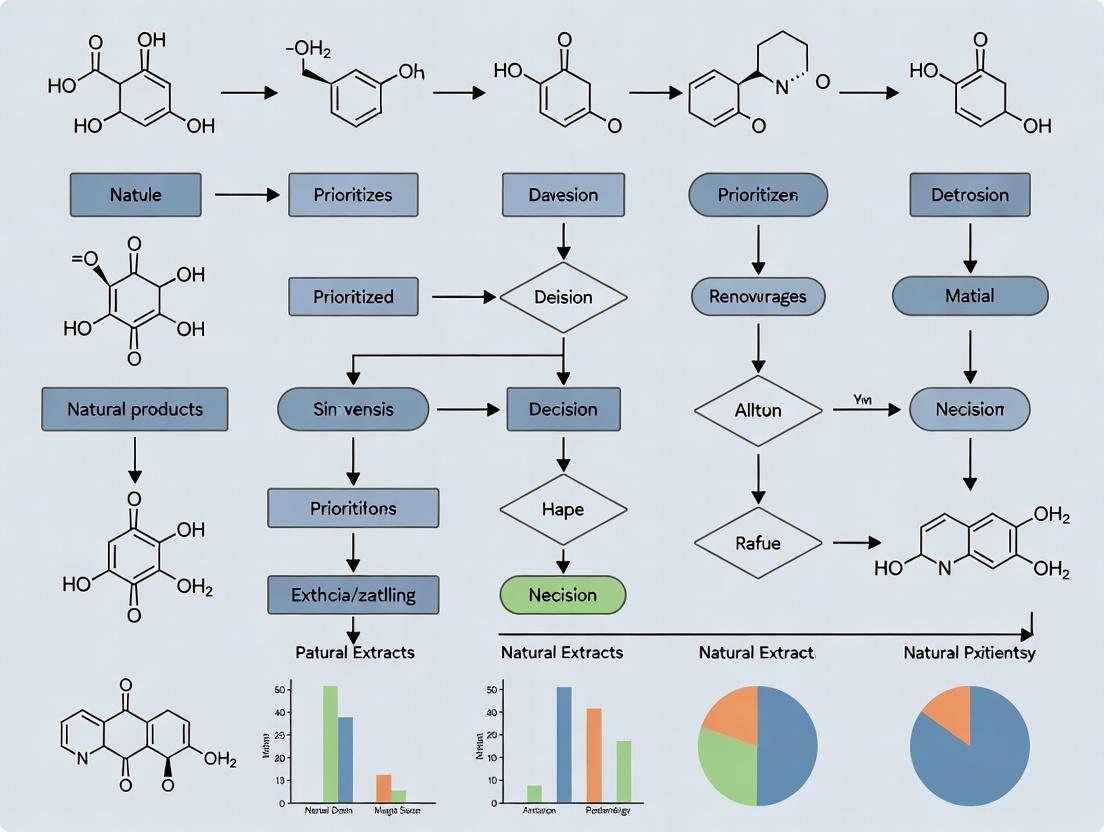
The following diagram outlines a decision-making framework to efficiently triage screening hits based on activity, chemical novelty, and resource allocation.
Q6: During dereplication, how do I distinguish a genuinely novel compound from a new derivative of a known scaffold?
- Problem: LC-MS data shows a molecular weight not in databases, but the MS/MS fragmentation pattern looks familiar.
- Solutions:
- Utilize Molecular Networking: Visualize the MS/MS data as a molecular network. A genuinely novel scaffold will often form a distinct cluster separate from known compound families. New derivatives will cluster closely with their parent compound [1].
- Consult Genomic Data (if available): For microbial hits, check if the source strain's genome contains biosynthetic gene clusters (BGCs) predicted to produce known compound families. This can provide early warning of potential redundancy.
- Rapid Mini-Purification: Isolate a microgram quantity of the compound via analytical-scale HPLC and acquire 1D NMR (e.g., 1H). Even this minimal data can often confirm or deny structural novelty.
Detailed Experimental Protocols
This protocol reduces redundancy by separating components early, creating a more screening-friendly library.
Principle: Crude extract is subjected to a standardized mid-pressure liquid chromatography (MPLC) separation to generate a consistent number of fractions across all samples, deconvoluting the mixture.
Materials:
- Crude natural product extracts (lyophilized)
- MPLC system (e.g., CombiFlash series) with C18 reversed-phase column
- Solvents: Water (Milli-Q), HPLC-grade Acetonitrile, Methanol
- Fraction collector
- Deepwell 96-well or 384-well plates for library storage
- Centrifugal vacuum concentrator
Procedure:
- Sample Preparation: Weigh 100-200 mg of crude extract. Dissolve in a suitable solvent (e.g., 50% DMSO in methanol) and centrifuge to remove particulate matter.
- MPLC Method Development: Establish a generic gradient suitable for a wide polarity range. Example: C18 column, 30g; Flow rate: 40 mL/min; Gradient: 5% to 100% acetonitrile in water (with 0.1% formic acid) over 15 column volumes.
- Fractionation: Inject the prepared sample. Collect fractions based on either (a) fixed time intervals (e.g., every 15 seconds) or (b) UV peak detection. The NCI method typically generates 96 fractions per extract.
- Pooling Strategy (Critical): To create a manageable library size, combine fractions according to a strategic pooling algorithm (e.g., combine fractions 1-4, 5-8, etc., or use a "windowed" pooling method). This retains separation while controlling library scale.
- Transfer to Screening Plates: Concentrate pooled fractions using a centrifugal evaporator. Reconstitute in DMSO at a standardized concentration (e.g., 2 mg/mL based on original crude extract weight). Transfer to 96-well or 384-well master plates using a liquid handler.
- Quality Control: For each plate, include control wells (solvent blank, reference inhibitor/activator). Randomly select fractions for LC-UV analysis to verify consistency of separation across samples.
Protocol 2: Rapid Dereplication of Active Fractions using LC-HRMS and Molecular Networking
Principle: Uses high-resolution mass spectrometry and database mining to quickly identify known compounds, focusing resources on unknowns.
Materials:
- Active fraction in solvent (e.g., DMSO, methanol)
- UHPLC system coupled to High-Resolution Mass Spectrometer (Q-TOF or Orbitrap)
- Software: Compound Discoverer, MZmine, or Global Natural Products Social Molecular Networking (GNPS) platform.
- Databases: In-house NP library, public databases (PubChem, NP Atlas, MarinLit).
Procedure:
- LC-HRMS Analysis:
- Column: C18, 2.1 x 100 mm, 1.7 µm.
- Gradient: 5% to 100% acetonitrile in water (0.1% formic acid) over 12 min.
- MS Settings: Data-Dependent Acquisition (DDA) mode. Full MS scan (m/z 150-2000) followed by MS/MS fragmentation of top ions.
- Data Processing:
- Convert raw files to .mzML or .mzXML format.
- Use MZmine or similar to detect features, align peaks, and deisotope.
- Database Search:
- Search exact mass (± 5 ppm) of the [M+H]+ or [M-H]- ion against in-house and online NP databases.
- If a match is found, compare the observed MS/MS spectrum with the reference spectrum (if available).
- Molecular Networking (for novel compounds):
- Upload the processed MS/MS data to the GNPS website (https://gnps.ucsd.edu).
- Create a molecular network using the classic workflow.
- Visualize the network (e.g., in Cytoscape). Active fractions containing known compounds will cluster with database nodes. Isolated clusters or nodes with no edges to known compounds represent priority novel leads.
- Reporting: Document the putative identification, confidence level (Level 1-5 as per Metabolomics Standards Initiative), and recommendation for follow-up (discard or prioritize).
The Scientist's Toolkit: Research Reagent Solutions
The following table details key resources for accessing diverse natural product libraries and essential tools for screening and dereplication [3] [1].
Resource Name / Reagent
Type
Key Function / Description
Relevance to Reducing Redundancy
NCI Program for Natural Product Discovery Repository [3] [1]
Prefractionated Library
One of the world's largest, most comprehensive collections. Provides ~230,000 crude extracts and is producing 1,000,000 prefractionated samples in 384-well plates free of charge.
High. Prefractionation separates components, reducing interference. Extensive source diversity (global collections) increases novelty potential.
MEDINA Natural Products Library [3]
Microbial Extract Library
One of the world’s largest libraries of microbial-derived NPs (>200,000 extracts from terrestrial and marine microbes).
High. Specialization in under-explored microbial diversity from unique environments targets novel chemotypes.
Axxam/AXXSense Natural Compound Library [3]
Pure Compounds & Extracts
Offers 11,500 pure NPs, 63,000 purified fractions, and 21,200 pre-purified extracts from plants and microbes.
Medium-High. Access to purified fractions and pure compounds simplifies screening but requires due diligence on source novelty.
ChromaDex Natural Product Libraries [3]
Botanical Extracts & Fractions
Proprietary extraction process yielding 1,200 characterized botanical extracts and 2,550 fractions, preserving cross-fraction synergy.
Medium. Focus on characterized extracts aids dereplication. Synergy preservation can reveal new bioactivity from known plants.
NatureBank (Griffith University) [3]
Extract, Fraction & Pure Compound Libraries
A unique, lead-like enhanced library from Australian biodiversity (>18,000 extracts, >90,000 fractions).
High. Focus on biogeographically unique (Australian) biota and generation of lead-like enhanced fractions targets novel chemical space.
Global Natural Products Social Molecular Networking (GNPS)
Analysis Platform
A web-based platform for crowdsourced MS/MS data analysis and molecular networking.
Critical. Enables rapid visual dereplication and identification of novel molecular families by comparing MS/MS spectra to a global library.
Solid Phase Extraction (SPE) Cartridges (e.g., C18, Diatomaceous Earth)
Laboratory Consumable
Used for rapid, low-pressure fractionation of crude extracts to remove nuisance compounds (e.g., chlorophyll, tannins) before screening.
Medium. A simple, low-cost prefractionation step that can reduce assay interference and simplify downstream active fraction analysis.
Visual Guide: Strategic Approaches to Overcome Redundancy
The following diagram synthesizes the core strategies discussed to form a cohesive workflow for managing structural redundancy, from library selection through to novel compound identification.
This technical support center provides researchers with practical troubleshooting guides and FAQs for defining and optimizing key success metrics in natural product (NP) screening campaigns. Framed within the broader thesis of prioritizing NP extracts for biological screening, this resource addresses the common experimental and analytical challenges in measuring hit rates, assessing scaffold diversity, and confirming chemical novelty. The guidance below is based on current literature and protocols to help you efficiently triage screening results, validate findings, and build high-quality libraries for drug discovery.
Foundational Concepts & Quantitative Benchmarks
Before troubleshooting, it is essential to understand standard metrics and benchmarks. The tables below summarize key performance data from recent screening campaigns and library design studies.
Table 1: Representative Hit Rates Across Screening Campaigns This table compares hit rates from different screening approaches, highlighting the impact of library design and assay type [4] [5] [6].
| Screening Campaign / Library Type | Assay Target | Initial Library Size | Hit Rate (%) | Key Activity Cut-off (µM) | Citation |
|---|---|---|---|---|---|
| Full Fungal Extract Library | Plasmodium falciparum (phenotypic) | 1,439 extracts | 11.3 | Not Specified | [4] |
| Rational Library (80% Scaffold Diversity) | Plasmodium falciparum (phenotypic) | 50 extracts | 22.0 | Not Specified | [4] |
| AnalytiCon NATx Library | Clostridioides difficile (whole-cell) | 5,000 compounds | 0.2 (10 hits) | MIC: 0.5-2 µg/mL | [6] |
| AI-Driven Hit Identification (ChemPrint) | BRD4 (target-based) | 12 compounds tested | 58.3 | ≤ 20 µM | [5] |
| Virtual Screening (Literature Analysis) | Various | Variable | Highly Variable | Often 1-100 µM | [7] |
Table 2: Impact of Scaffold-Centric Library Design on Performance Data demonstrates how prioritizing scaffold diversity reduces library size while increasing hit rates and retaining bioactive features [4].
| Metric | Full Library (1,439 Extracts) | 80% Scaffold Diversity Library (50 Extracts) | 100% Scaffold Diversity Library (216 Extracts) |
|---|---|---|---|
| Library Size Reduction | Baseline | 28.8-fold reduction | 6.6-fold reduction |
| Hit Rate vs. P. falciparum | 11.26% | 22.00% | 15.74% |
| Hit Rate vs. Neuraminidase | 2.57% | 8.00% | 5.09% |
| Retention of Bioactive Features* | 10 features | 8 features retained | 10 features retained |
Features significantly correlated with anti-Plasmodium* activity in the full library [4].
Core Experimental Protocols & Workflows
Protocol: MS/MS-Based Library Prioritization for Scaffold Diversity
This protocol details a method to rationally minimize a natural product extract library based on liquid chromatography-tandem mass spectrometry (LC-MS/MS) data to maximize scaffold diversity and hit rates [4].
1. Sample Preparation & Data Acquisition:
- Prepare crude natural product extracts (e.g., fungal, bacterial) in appropriate solvents for LC-MS/MS analysis.
- Acquire untargeted LC-MS/MS data for all extracts in the library. Use standardized gradients and collision energies to ensure reproducible fragmentation spectra.
2. Molecular Networking & Scaffold Detection:
- Process the raw MS/MS data using the GNPS (Global Natural Products Social Molecular Networking) platform or similar software.
- Use classical molecular networking to group MS/MS spectra based on fragmentation pattern similarity. Each spectral family (or molecular network node) corresponds to a unique molecular scaffold. Adducts and in-source fragments of the same molecule will group together [4].
3. Rational Library Selection:
- Use custom algorithms (e.g., in R or Python) to select extracts based on scaffold diversity.
- Step 1: Rank all extracts by the number of unique scaffolds they contain.
- Step 2: Select the extract with the highest scaffold count for your new "rational library."
- Step 3: Iteratively add the extract that contributes the most new scaffolds not already present in the rational library.
- Step 4: Continue until a pre-defined threshold (e.g., 80% or 100% of total scaffolds in the full library) is reached [4].
4. Validation:
- Screen the rationally selected minimal library and the full library in parallel using your biological assay.
- Compare hit rates. The rational library should yield a significantly higher hit rate due to reduced redundancy [4].
Protocol: Hit Validation Cascade for Natural Product Hits
This protocol outlines the standard workflow to confirm and prioritize initial hits from a primary screen, crucial for accurate hit rate calculation [7] [6].
1. Primary Screening:
- Conduct a high-throughput screen (e.g., 384-well plate) of your library. Use a single-point activity measurement (e.g., % inhibition at 3-10 µM).
- Define a hit threshold: Use statistical methods (e.g., Z'-factor, 3 standard deviations above mean) or a fixed percentage inhibition (e.g., >50%) to identify primary hits [7].
2. Hit Confirmation (Cherry-Picking & Re-test):
- Physically cherry-pick the primary hit samples from source plates.
- Re-test them in the same primary assay, ideally in a dose-response format (e.g., 8-point dilution series), to confirm activity and rule out false positives from screening artifacts [6].
3. Counter-Screens & Selectivity:
- Test confirmed hits in a counter-screen against related but undesired targets or in a cytotoxicity assay (e.g., MTS assay on mammalian cell lines like Caco-2) to identify non-selective or cytotoxic compounds [7] [6].
- For antimicrobials, test against commensal or probiotic strains (e.g., Bifidobacterium, Bacteroides) to assess selectivity over beneficial flora [6].
4. Orthogonal Assay & Mechanism:
- Validate activity in an orthogonal, mechanistically distinct assay. For a whole-cell phenotype, use a target-based enzyme assay. For an enzyme target, use a cellular reporter assay [7].
- Employ biophysical methods (e.g., SPR, ITC, NMR) to confirm direct binding to the intended target [7].
5. Hit Criteria Definition:
- A validated hit should meet predefined potency (e.g., IC50/EC50/Ki < 10-20 µM for Hit Identification), demonstrate selectivity in counter-screens, and show confirmed activity in an orthogonal assay [7] [5].
- The final hit rate is calculated as: (Number of validated hits) / (Number of extracts/compounds tested in the primary screen) * 100.
Protocol: Assessing Novelty via Genome Mining and Dereplication
This protocol describes a strategy to prioritize extracts with high novelty potential by targeting silent biosynthetic gene clusters (BGCs) and dereplicating known compounds [8].
1. Genomic DNA Extraction & Sequencing:
- Isolate high-quality genomic DNA from microbial strains in your collection.
- Perform whole-genome sequencing (e.g., Illumina, Nanopore).
2. In Silico Genome Mining for BGCs:
- Annotate sequenced genomes using the antiSMASH (antibiotics & Secondary Metabolite Analysis Shell) tool. This identifies and characterizes putative BGCs for polyketides, non-ribosomal peptides, terpenes, etc. [8].
- Prioritize strains containing a high number of "silent" or "cryptic" BGCs—clusters not associated with known metabolites from that strain under standard lab conditions.
3. Elicitation to Activate Silent BGCs:
- Use High-Throughput Elicitor Screening (HiTES). Grow prioritized strains in 96- or 384-well microtiter plates, each well with a different growth condition (varying media, co-culture, small molecule inducers, etc.) [8].
- After cultivation, perform rapid chemical analysis directly from the culture broth or extracts using techniques like LAESI-IMS (Laser Ablation Electrospray Ionization-Imaging Mass Spectrometry) [8].
4. Metabolomic Dereplication:
- Analyze LC-MS/MS data from elicited cultures and standard extracts.
- Use molecular networking (GNPS) to compare MS/MS spectra of your active hits against public databases (e.g., GNPS, Reaxys, SciFinder) to identify known compounds quickly.
- Prioritize hits that form new molecular network nodes not connected to known compounds, indicating potential novelty [4].
The Scientist's Toolkit: Research Reagent Solutions
Table 3: Essential Materials for NP Screening & Hit Triage
| Item | Function & Rationale | Example/Specification |
|---|---|---|
| Prefractionated NP Libraries | Increases hit confidence by separating bioactive minor metabolites from nuisance compounds; reduces assay interference [9]. | Libraries generated via HPLC, SFC, or SPE; e.g., NCI's prefractionated library [9]. |
| LC-MS/MS System with UHPLC | Essential for chemical profiling, quality control, molecular networking, and dereplication. Enables scaffold diversity analysis [4]. | Systems capable of high-resolution mass spectrometry and data-dependent MS/MS acquisition. |
| GNPS Platform Access | Free, cloud-based platform for processing MS/MS data to create molecular networks, essential for scaffold analysis and dereplication [4]. | https://gnps.ucsd.edu |
| AntiSMASH Software | Key bioinformatics tool for in silico genome mining to identify Biosynthetic Gene Clusters (BGCs) and prioritize strains for novelty [8]. | https://antismash.secondarymetabolites.org |
| Cell-Based Viability Assay Kits | For counter-screens to assess cytotoxicity of hits, a critical selectivity filter. | MTS, MTT, or CellTiter-Glo assays for mammalian cells (e.g., Caco-2) [6]. |
| Orthogonal Assay Reagents | Materials for secondary, mechanistically distinct assays to confirm primary hit activity and target engagement [7]. | May include purified recombinant enzyme, substrate, detection antibodies, or reporter cell lines. |
| Reference Standard Antibiotics/Inhibitors | Essential positive and negative controls for biological assays to ensure proper function and for comparison of hit potency/selectivity [6]. | e.g., Vancomycin for C. difficile assays; staurosporine for kinase panels. |
Troubleshooting Guides & FAQs
FAQ 1: Our primary screen yielded a high hit rate (>15%). Is this promising or indicative of an artifact?
- Investigate: A very high hit rate can signal assay interference. Common culprits with natural product extracts include:
- Pan-assay interference compounds (PAINS): Perform a chemical database check for known PAINS scaffolds in your hits.
- Aggregators: Test hits in the presence of a non-ionic detergent (e.g., 0.01% Triton X-100); if activity is lost, aggregation is likely.
- Fluorescence/Quenching: Check if hit samples are fluorescent or absorb at assay detection wavelengths.
- Non-selective cytotoxicity: Run a rapid viability counter-screen.
- Solution: Progress only hits that pass the Hit Validation Cascade (Section 2.2). Your true, validated hit rate will likely be lower but more reliable [7].
FAQ 2: How do we meaningfully calculate and report scaffold diversity for our library?
- Problem: Simple compound counts are poor proxies for diversity. Two libraries of equal size can have vastly different scaffold diversities.
- Solution: Use MS/MS-based molecular networking as described in Protocol 2.1.
- The number of distinct spectral families (nodes) in the network represents the number of unique molecular scaffolds.
- Report diversity as "scaffold hit rate" (number of unique active scaffolds / total tested) or as the percentage of total library scaffold space captured in a subset [4].
- A rational, scaffold-diverse library of 50 extracts can capture 80% of the scaffolds found in a full 1,400-extract library [4].
FAQ 3: Our active compound appears to be novel from MS dereplication but we later found it is a known compound. What went wrong?
- Investigate: This is typically a database coverage issue. Public MS/MS libraries are not exhaustive.
- Solution: Implement a multi-tiered dereplication strategy:
- MS/MS level: Compare against GNPS, MassBank, and in-house libraries.
- Physicochemical property level: Calculate the exact mass and search against comprehensive structure databases (e.g., SciFinder, Reaxys, MarinLit) applying relevant filters (source organism, phylum).
- Literature level: Perform a thorough literature search on the proposed structural class and biological activity.
- Ultimate confirmation requires isolation and full structure elucidation by NMR [8].
FAQ 4: How do we define an appropriate activity cut-off for declaring a "hit" in a natural product screen?
- Context: For early-stage Hit Identification from NPs, the goal is to find a novel scaffold with a promising structure-activity relationship (SAR) starting point, not a final drug candidate.
- Guideline: A cutoff of ≤ 20 µM (IC50/EC50/MIC) is a common and pragmatic threshold for hit declaration. It balances the need for meaningful activity with the reality that minor metabolites in extracts may be diluted but are highly optimizable [5].
- Critical Step: Ligand Efficiency (LE) or Lipophilic Ligand Efficiency (LLE) should be calculated for pure compounds. This normalizes activity for molecular size/lipophilicity and is a better indicator of optimization potential than potency alone [7].
This technical support center provides essential guidance for researchers prioritizing natural product extracts for biological screening within the legal and ethical frameworks of the Convention on Biological Diversity (CBD) and the Nagoya Protocol on Access and Benefit-Sharing (ABS). The Nagoya Protocol, which entered into force on 12 October 2014 and has been ratified by 142 Parties as of August 2025, establishes legally binding international obligations for accessing genetic resources and sharing the benefits from their utilization [10]. Non-compliance can lead to legal disputes, research embargoes, and reputational damage.
The core challenge is integrating robust ABS due diligence into the early stages of research, where biological material is often prioritized based on scant preliminary data. This guide offers troubleshooting and FAQs to navigate these complexities.
The following table summarizes the core components of the ABS framework that researchers must understand.
Table: Core Components of the ABS Framework for Researchers
| Component | Definition & Scope | Key Obligations for Researchers (Users) |
|---|---|---|
| Genetic Resource (GR) | Biological material containing functional units of heredity, of actual or potential value. Includes plants, animals, microbes (in-situ or ex-situ) [11]. | Determine if your sample is a GR under the Protocol. Access requires prior informed consent (PIC) and mutually agreed terms (MAT) with the provider country [11]. |
| Traditional Knowledge (TK) | Knowledge, innovations, and practices of indigenous and local communities associated with GR [11]. | If research is based on TK, additional PIC and MAT with the relevant communities are required [11]. |
| Utilization | Conducting research and development on the genetic or biochemical composition of GR, including through biotechnology [11]. | All research (non-commercial and commercial) on biochemical composition constitutes "utilization" and triggers ABS obligations [11]. |
| Prior Informed Consent (PIC) | The permission given by a provider country (or indigenous community) for access to GR or TK, based on full information [11]. | Obtain PIC before accessing the resource. Document the process and keep the permit/certificate. |
| Mutually Agreed Terms (MAT) | A contract between provider and user outlining the terms of access, use, and benefit-sharing [11]. | Negotiate and sign MAT before access. MAT must address benefit-sharing (monetary: royalties; non-monetary: collaboration, capacity building) [10]. |
| Internationally Recognized Certificate of Compliance (IRCC) | A permit issued by a provider country's Competent National Authority (CNA) proving legal access under PIC and MAT [12]. | Request an IRCC from the provider country. It is the key document for proving due diligence to funders, publishers, and checkpoints [12]. |
Troubleshooting Guides & FAQs
Scenario 1: "My sample was obtained from an international culture collection before 2014. Do I need ABS documentation?"
- Problem: Uncertain applicability of the Nagoya Protocol to ex-situ collections.
- Diagnosis: The Nagoya Protocol applies to GR accessed on or after 12 October 2014, provided the provider country has ratified it and established domestic ABS measures [11]. However, many countries established national ABS laws before 2014 under the CBD. The legality of access is determined by the national law in effect at the time and place of collection [11].
- Solution:
- Provenance Investigation: Contact the culture collection to request all available documentation (collection date, location, original PIC/MAT, Material Transfer Agreements).
- Check National Law: Use the ABS Clearing-House (ABSCH) to check the national legislation of the country of origin. Determine if ABS measures were in force at the time of collection [12] [11].
- Risk Assessment: If documentation is incomplete and the country had strict pre-2014 laws, treat the sample as potentially non-compliant. Seek new, fully documented access or discontinue use.
- Prevention: Source materials exclusively from repositories that provide "Nagoya-compliant" certifications and detailed provenance metadata [10].
Scenario 2: "My preliminary screening identified a promising extract, but I have no ABS documents. Can I proceed with lead optimization?"
- Problem: Discovery of promising activity in a sample with unclear or non-existent legal provenance.
- Diagnosis: Proceeding with utilization (including further R&D) without complying with ABS obligations constitutes a breach of international and likely national law (e.g., EU ABS Regulation). This jeopardizes future patent applications, publications, and collaborations [10] [13].
- Solution:
- Immediate Pause: Halt all research on the specific extract.
- Retrospective Due Diligence: Attempt to trace the sample back through all lab notebooks, suppliers, and collaborators to its country of origin.
- Contact Authorities: Use the ABSCH to find the National Focal Point (NFP) and Competent National Authority (CNA) of the provider country [11]. Inquire about the possibility of obtaining PIC and MAT retrospectively. Document all communication attempts [11].
- Contingency Plan: If retroactive compliance is impossible, deprioritize this lead. The cost, time, and legal risk outweigh the potential benefit.
- Prevention: Implement a mandatory pre-screening documentation check. No biological material enters the screening pipeline without a completed ABS checklist and supporting documents.
Scenario 3: "I am collaborating with a researcher in a provider country. They sent me extracts. Is their permit valid for my lab?"
- Problem: Validity of permits across jurisdictions and for secondary users.
- Diagnosis: PIC and MAT are often specific to the original researcher/institution and the stated research purpose. Sharing materials or results with a new user (you) usually requires an amendment to the MAT or a new Material Transfer Agreement (MTA) that references the original terms [10].
- Solution:
- Request Original Documents: Ask your collaborator for a copy of the IRCC, PIC, and MAT.
- Analyze MAT Terms: Scrutinize the MAT for clauses on "third-party transfers," "collaborators," and "change of purpose." Many MATs explicitly forbid transfer without provider country approval.
- Joint Amendment: Work with your collaborator and the provider country's CNA to formally amend the MAT to include your institution, role, and the terms of benefit-sharing.
- Prevention: Address future collaboration and material transfer explicitly during initial MAT negotiations. Use standardized MTA templates that align with ABS principles.
Scenario 4: "My genomic study uses only Digital Sequence Information (DSI) from a public database, derived from a foreign GR. Does the Nagoya Protocol apply?"
- Problem: Legal ambiguity surrounding DSI (e.g., gene sequence data).
- Diagnosis: This is a highly contentious area. The Nagoya Protocol text does not explicitly mention DSI. In 2022, the CBD COP15 agreed to develop a new multilateral benefit-sharing mechanism for DSI, decoupling it from the bilateral access rules of the Protocol [10]. Currently, most national ABS laws do not regulate the use of DSI alone, but the legal landscape is evolving.
- Solution:
- Check Specific Laws: Consult the ABSCH for the latest position and laws of the country from which the original physical material was sourced [12].
- Practice Diligence: Although not strictly required, documenting the provenance of DSI (source organism, country) is a best practice for future-proofing your research.
- Engage with Policy: Stay informed on the development of the new global DSI mechanism through institutional research offices.
- Prevention: When generating new DSI, publish with rich, FAIR (Findable, Accessible, Interoperable, Reusable) metadata that includes ABS compliance information for the source material [14].
Experimental Protocols: Integrating Provenance with Prioritization
To prioritize extracts for screening while ensuring ethical and legal provenance, follow this integrated workflow.
Protocol: Tiered Prioritization of Natural Product Extracts with ABS Due Diligence
A. Initial Triage & Documentation Audit
- Objective: To quickly eliminate samples with insurmountable legal risks before committing scientific resources.
- Materials: Sample inventory, ABS Clearing-House, document management system.
- Method:
- For each extract, create a record with: Unique ID, taxonomic ID, date/geographic origin of collection, name of collector, and current custodian.
- Demand the following documents: Internationally Recognized Certificate of Compliance (IRCC), or equivalent permit; Signed Mutually Agreed Terms (MAT); Material Transfer Agreement (MTA) for ex-situ sourced materials [12] [10].
- Cross-check the country of origin against the ABSCH to confirm its status as a Party to the Nagoya Protocol and review its specific domestic requirements [11].
- Prioritization Criterion: Samples with complete, valid documentation (IRCC, MAT) proceed to Tier 1. Samples with partial or unclear documentation are placed on hold. Samples with no documentation are deprioritized or discarded.
B. Tier 1: High-Throughput Biochemical Profiling (Legal & Safe Samples)
- Objective: To generate preliminary chemical data for prioritization from compliant samples.
- Materials: Liquid Chromatography-High Resolution Mass Spectrometry (LC-HRMS), metabolomics software, 96-well plate systems.
- Method:
- Perform untargeted LC-HRMS on all compliant extracts [13].
- Process data to identify molecular features (mass-to-charge ratio, retention time).
- Use computational tools (e.g., Molecular Networking via GNPS) to dereplicate features against known natural product databases, identifying novelty and potential chemical classes [13].
- Prioritization Criterion: Extracts with a high number of unique molecular features not found in databases ("chemical novelty score") are promoted to Tier 2. Document all raw and processed data with the sample's unique ABS ID to maintain an unbroken chain of provenance [14].
C. Tier 2: Targeted Bioactivity Screening & Genomic Correlation
- Objective: To assess biological activity and explore genetic basis of production.
- Materials: Phenotypic or target-based assay kits, RNA/DNA extraction kits, RT-qPCR or RNA-Seq platforms.
- Method:
- Subject prioritized extracts to relevant biological assays (e.g., antimicrobial, cytotoxicity).
- For promising hits, if the source organism is available, conduct gene expression analysis. For example, quantify expression levels of key biosynthetic genes (e.g., β-glu-1 for acetophenone defence in Picea glauca) using RT-qPCR [15].
- Correlate bioactivity levels with gene expression data and chemical profiles from Tier 1.
- Prioritization Criterion: Extracts showing significant, reproducible bioactivity with a plausible chemical-genetic correlation become high-priority leads for further development. This integrated data package (chemical + biological + genetic + legal) is critical for securing downstream funding and partnerships.
The Scientist's Toolkit: Essential Research Reagents & Solutions
Table: Essential Reagents and Tools for ABS-Compliant Natural Product Research
| Item / Solution | Function in Research | Role in ABS Compliance & Provenance |
|---|---|---|
| ABS Clearing-House (ABSCH) | Online global information portal [12]. | Primary tool for due diligence. Check country profiles, National Focal Points, Competent National Authorities, and published Internationally Recognized Certificates of Compliance (IRCC) [11]. |
| Document Management System | Digital repository for research data (e.g., Electronic Lab Notebook). | Maintains an immutable, timestamped record of all ABS documents (PIC, MAT, IRCC, MTAs), correspondence with authorities, and links to experimental data [14]. |
| Material Transfer Agreement (MTA) | Contract governing the transfer of tangible research materials between institutions. | Legally binds the recipient to the terms (including ABS terms) under which the material was originally accessed. Critical for transfers from ex-situ collections [10]. |
| Metabolomics/LC-HRMS Platform | Analytical chemistry for characterizing small molecules in extracts [13]. | Generates chemical provenance data ("metabolomic fingerprint"). Links biological activity to specific chemical features of a legally-sourced sample. |
| RNA/DNA Extraction & Sequencing Kits | Molecular biology tools for genomic and transcriptomic analysis. | Enables gene expression studies (e.g., RT-qPCR for β-glu-1 [15]) that can correlate bioactivity with genetic traits of the source organism, adding value to the resource. |
| Standardized MAT Template | A model contract for benefit-sharing negotiations. | Expedites negotiations and helps ensure all legally required elements (benefit-sharing, dispute resolution, reporting) are included, providing legal certainty [11]. |
Technical Support Center: Frequently Asked Questions & Troubleshooting
This technical support center provides targeted guidance for researchers facing common experimental challenges in the early stages of natural product research. The following FAQs and troubleshooting guides are framed within the critical context of prioritizing high-quality, reproducible extracts for downstream biological screening.
Frequently Asked Questions (FAQs)
Q1: How can I ensure my botanical extract is both representative of consumer products and scientifically authenticated for a screening campaign?
- Answer: You must reconcile two key requirements: representativeness and authentication. First, identify the most commonly used consumer product via national surveys, sales reports, or the NIH's Dietary Supplement Label Database to ensure ecological validity [16]. Second, for authentication, procure material from a lot for which a voucher specimen can be obtained. This specimen—a pressed, dried sample of the plant including key morphological features (e.g., flowers, leaves)—must be verified by a trained botanist and deposited in a publicly accessible herbarium with a unique accession number [16] [17]. This two-pronged approach satisfies both real-world relevance and the rigorous scientific standard required for publication and grant funding (e.g., NCCIH policy) [18].
Q2: What are the minimum characterization requirements for a natural product extract before it can be used in a biological screening assay?
- Answer: Prior to biological screening, a multi-tiered characterization is essential to define your "test article." The minimum requirements, as outlined by guidelines like ConPhyMP, include [19]:
- Plant Material Description: Full taxonomic identification (genus, species, authority), plant part used, geographic origin, and harvest time.
- Extract Preparation Details: Exact extraction protocol (solvent, solvent-to-material ratio, time, temperature, equipment).
- Chemical Fingerprint: A chromatographic profile (e.g., HPLC-UV or LC-MS) of the extract batch used for screening.
- Quantification of Markers: Measurement of one or more key bioactive constituents or chemical markers, expressed as weight percent.
- Contaminant Screening: Testing for heavy metals, pesticide residues, and microbial contaminants to avoid false positives/negatives in bioassays [18]. Without this baseline data, bioactive assay results cannot be reliably reproduced or attributed to specific chemistries.
Q3: My initial biological screen showed promising activity, but I cannot replicate it with a new batch of extract. Where should I start troubleshooting?
- Answer: Irreproducible bioactivity most commonly stems from inconsistent starting material or extraction. Follow this troubleshooting cascade:
- Audit the Source: Verify the new batch is from the same authenticated species and plant part. Re-examine the voucher specimen from the original active batch [16].
- Compare Chemical Fingerprints: Run HPLC or TLC analyses of both the active and inactive batches side-by-side. Significant differences in the chromatographic profile point to material or processing variability [20] [19].
- Review Extraction Parameters: Meticulously compare all extraction variables: particle size of plant powder, solvent purity, extraction duration, and temperature. Even minor deviations can alter metabolite profiles [21].
- Check Stability: Determine if the original extract was stored properly (e.g., -20°C, protected from light) and if degradation could explain the loss of activity [16].
Q4: What is the most efficient extraction method for an untargeted screening program where the active constituents are unknown?
- Answer: For untargeted screening, the goal is broad metabolite recovery. A sequential or graded solvent extraction is often the most efficient strategy. Start with a mid-polarity solvent like methanol or ethanol-water mixtures, which extract a wide range of semi-polar compounds (e.g., alkaloids, flavonoids, saponins) [20]. Follow this with a more non-polar solvent (e.g., dichloromethane) to capture terpenoids and fatty acids. This approach generates multiple fractions for screening from a single plant sample, increasing the probability of identifying bioactive chemotypes while providing preliminary information on compound polarity [22].
Troubleshooting Guides
Problem: Suspected misidentification of plant material.
- Symptoms: Chemical profile differs drastically from literature for the claimed species; biological activity is absent or contradictory to published data.
- Solution:
- Immediate Action: Cease all experimentation with the material in question.
- Re-authentication: If possible, have a second taxonomic expert re-examine the original voucher specimen or raw plant material [23].
- DNA Barcoding: As a definitive check, perform DNA barcoding (e.g., using rbcL, matK, or ITS2 regions) on the material and compare sequences with trusted databases [24].
- Prevention: For future work, always obtain a voucher specimen before processing material for extraction and ensure it is deposited in a recognized herbarium. Document the identification with high-quality photographs of key morphological characters [17] [23].
Problem: Low yield of target bioactive compounds from an optimized extract.
- Symptoms: The extraction produces adequate total mass but a low concentration of the marker/active compounds of interest.
- Solution:
- Parameter Optimization: Systematically optimize extraction parameters using Design of Experiments (DOE), such as a Box-Behnken design. Test variables like solvent concentration, temperature, extraction time, and solid-to-liquid ratio to find the ideal conditions for your target compounds [25].
- Technique Upgrade: Transition from conventional methods (e.g., maceration) to an advanced technique like Ultrasound-Assisted Extraction (UAE) or Microwave-Assisted Extraction (MAE). These methods enhance cell wall disruption and improve compound release efficiency, often leading to higher yields of sensitive bioactive molecules [21] [22].
- Post-Extraction Concentration: Employ techniques like rotary evaporation under reduced pressure to gently concentrate the extract without degrading thermolabile constituents.
Problem: Complex extract causes interference in a high-throughput screening (HTS) assay.
- Symptoms: High background noise, false positives (e.g., assay compound precipitation, fluorescence quenching), or cytotoxic effects at low concentrations that mask specific activity.
- Solution:
- Prefractionation: Simplify the extract by pre-fractionation using solid-phase extraction (SPE) or quick flash chromatography to separate it into less complex fractions (e.g., by polarity) before screening [20].
- Assay Controls: Include rigorous controls: a) an extract vehicle control, b) a "spiked" control where a known assay inhibitor is added to the extract to see if activity is masked, and c) a counter-screen for general assay interference (e.g., fluorescence at relevant wavelengths).
- Bioassay-Guided Fractionation: If activity is confirmed, immediately initiate a bioassay-guided fractionation (BGF) process. Use a rapid, small-scale bioassay to track the activity through subsequent purification steps (e.g., TLC-bioautography for antimicrobials) [20], isolating the responsible compound(s) for cleaner follow-up assays.
Core Experimental Protocols
Protocol 1: Creation and Deposition of a Voucher Specimen
Objective: To preserve a permanent, verifiable record of the biological material used in research. Materials: Fresh plant material (including reproductive structures if possible), plant press, blotting paper, herbarium mounting sheets, labels, access to a recognized herbarium. Procedure:
- Collection: Collect representative plant samples in triplicate from the same population and lot used for extraction. Include all key morphological parts (roots, stems, leaves, flowers/fruits) [16].
- Pressing & Drying: Place specimens in a plant press with absorbent paper. Change paper daily until specimens are completely dry to prevent mold.
- Labeling: Create a durable label with essential data: taxonomic identification (when confirmed), GPS coordinates, collection date, collector's name, habitat notes, and a unique project code [17].
- Taxonomic Authentication: Submit one pressed specimen to a qualified taxonomist or botanist for definitive identification. Attach their determination label to the specimen sheet.
- Deposition: Formally request deposition of the authenticated specimen in a public herbarium. Obtain a unique accession number (e.g., "OSUC 123456" for the Triplehorn Insect Collection) [17].
- Citation: In all related publications, cite the voucher specimen by its herbarium and accession number [16].
Protocol 2: Chemical Profiling by HPLC-UV/PDA for Extract Standardization
Objective: To generate a reproducible chemical fingerprint for batch-to-batch comparison and quality control. Materials: Test extract, analytical-grade solvents, HPLC system with photodiode array (PDA) detector, reversed-phase C18 column, analytical balance, syringe filters (0.22 or 0.45 µm). Procedure:
- Sample Prep: Accurately weigh ~10 mg of extract. Dissolve in appropriate HPLC-grade solvent (e.g., methanol), sonicate, and dilute to a known concentration (e.g., 1 mg/mL). Filter through a syringe filter before injection.
- Chromatographic Conditions:
- Column: C18 (e.g., 150 x 4.6 mm, 5 µm particle size).
- Mobile Phase: Binary gradient. Common: Water (A) and Acetonitrile (B), both with 0.1% Formic Acid.
- Gradient: Example: 5% B to 95% B over 30-40 minutes.
- Flow Rate: 1.0 mL/min.
- Detection: PDA from 200-400 nm. Monitor at 254 nm and 280 nm as standard wavelengths.
- Injection Volume: 10-20 µL.
- Analysis: Run the sample and a solvent blank. Integrate the chromatogram to note retention times and peak areas of major signals. This profile serves as the "fingerprint" for the extract [20] [19].
- Standardization: If marker compounds are available, run authentic standards under identical conditions to calibrate and quantify their levels in the extract.
Protocol 3: Bioassay-Guided Fractionation Using TLC-Bioautography
Objective: To rapidly localize antimicrobial compounds within a crude extract on a chromatographic plate. Materials: Crude extract, TLC plates (silica gel), solvents for mobile phase, microbial culture (e.g., Staphylococcus aureus), nutrient agar, incubation chamber. Procedure (Agar Overlay Method):
- TLC Development: Spot the crude extract on a TLC plate and develop in a suitable solvent system to separate constituents. Dry the plate thoroughly to remove all solvent [20].
- Agar Overlay: Prepare molten, sterile nutrient agar seeded with a log-phase microbial culture. Carefully pour a thin layer of the seeded agar over the developed and dried TLC plate. Allow it to solidify [20].
- Incubation: Incubate the plate (agar-side up) at the microbe's optimal growth temperature (e.g., 37°C for 24 hours).
- Visualization: After incubation, clear zones of growth inhibition in the agar layer correspond to the location of antimicrobial compounds on the underlying TLC plate. Mark these zones against the Rf value.
- Isolation: Use preparative TLC to isolate the compound(s) from the active zone(s) for further purification and identification [20].
Data Presentation
Table 1: Key Steps for Authentication and Vouchering of Plant Material
| Step | Description | Purpose | Key Considerations & References |
|---|---|---|---|
| 1. Literature Review | Research traditional use, common species, and plant parts. | Ensures study material is relevant and justifies species selection. | Use consumer surveys, sales data, ethnopharmacological literature [16]. |
| 2. Sourcing | Procure material from reputable supplier or collect wild/cultivated plants. | Obtains sufficient, consistent raw material. | For wild collection, obtain necessary permits; document location (GPS) [18]. |
| 3. Voucher Collection | Collect representative plant samples (flowers, leaves, stem) in triplicate. | Provides physical specimen for taxonomic verification. | Must be from the exact same batch used for extraction [16] [17]. |
| 4. Taxonomic Authentication | Have specimen identified by a trained botanist. | Confirms genus, species, and authority. | Essential for publication; attach determiner's label [23]. |
| 5. Herbarium Deposition | Deposit authenticated specimen in a public herbarium. | Creates permanent, citable record for scientific community. | Obtain accession number; cite in all publications [16] [17]. |
| 6. Documentation | Maintain detailed records and high-quality photographs. | Enables verification and supports reproducibility. | Photos allow preliminary remote verification [23]. |
Table 2: Comparison of Common Extraction Techniques for Natural Products
| Method | Principle | Typical Conditions | Advantages | Disadvantages | Best For |
|---|---|---|---|---|---|
| Maceration | Solvent soaking at room temperature. | Room temp, 3-4 days, variable solvent volume [20]. | Simple, no special equipment, good for thermolabile compounds. | Slow, inefficient, high solvent use. | Initial exploration, fragile compounds. |
| Soxhlet | Continuous reflux and percolation. | Solvent boiling point, 3-18 hrs, 150-200 mL solvent [20]. | High efficiency, good for exhaustive extraction of non-polar compounds. | High heat, long time, not suitable for thermolabile compounds. | Exhaustive extraction of stable, non-polar compounds. |
| Ultrasound-Assisted (UAE) | Cell disruption via acoustic cavitation. | Lower temps (30-60°C), minutes to 1 hour, reduced solvent [21]. | Fast, efficient, lower temperatures, improves yield. | Potential for radical formation, scale-up challenges. | General purpose, improving yield from many matrices. |
| Microwave-Assisted (MAE) | Heating via microwave dielectric effect. | Elevated temps, very fast (minutes), reduced solvent [21]. | Extremely rapid, efficient, highly controllable. | Requires specialized equipment, thermal degradation risk. | Fast, targeted extraction of compounds stable to brief heating. |
Table 3: Summary of Essential Material Characterization Protocols
| Characterization Type | Recommended Technique(s) | Minimum Reporting Requirement | Purpose in Prioritization | Reference |
|---|---|---|---|---|
| Authentication | Voucher specimen + taxonomic ID; DNA barcoding (if disputed). | Herbarium name and accession number in publication. | Ensures biological reproducibility; prevents misidentification. | [16] [17] [23] |
| Chemical Fingerprinting | HPLC-UV/PDA or LC-MS. | Chromatogram showing major peaks (e.g., in publication appendix). | Provides a "batch fingerprint" for quality control and comparison. | [20] [19] |
| Marker Quantification | HPLC with reference standard calibration. | Concentration (e.g., % w/w) of 1-3 key markers in the extract. | Enables standardization and dose-reproducibility in bioassays. | [19] [18] |
| Contaminant Screening | ICP-MS (metals), GC-MS (pesticides), microbial tests. | Statement of testing and that levels were below permissible limits. | Eliminates bioactivity from contaminants; ensures safety. | [18] |
| Stability Assessment | Repeated chemical fingerprinting over time under storage conditions. | Description of storage conditions and stability duration. | Guarantees consistent material throughout the study period. | [16] [18] |
Mandatory Visualizations
Workflow for Plant Material Authentication & Vouchering
Material Characterization & Standardization Workflow
The Scientist's Toolkit: Key Research Reagent Solutions
Table 4: Essential Materials for Authentication and Characterization
| Item | Function/Description | Key Application & Notes |
|---|---|---|
| Herbarium-Grade Press & Blotter Paper | For properly drying and flattening plant specimens to preserve morphological integrity. | Voucher specimen preparation. Prevents rotting and facilitates mounting [16]. |
| Acid-Free, Rag Paper Labels | Durable labels for specimen data that will not degrade or damage the voucher over decades. | Labeling voucher specimens with collection metadata. Ensures permanent legibility [17]. |
| DNA Extraction & PCR Kits | For isolating and amplifying specific genomic regions (e.g., rbcL, ITS2) from plant tissue. | Molecular authentication via DNA barcoding. Used to resolve ambiguous identifications [24]. |
| HPLC-Grade Solvents | Ultra-pure solvents (MeOH, ACN, Water, with modifiers like formic acid) for reproducible chromatography. | Preparing mobile phases and sample solutions for HPLC/LC-MS analysis. Minimizes background interference [20]. |
| Chemical Reference Standards | Authentic, high-purity samples of known marker or bioactive compounds. | Quantifying specific constituents in extracts via HPLC calibration. Essential for standardization [19] [18]. |
| Certified Reference Materials (CRMs) for Contaminants | Standard solutions with known concentrations of heavy metals, pesticide residues, etc. | Calibrating instruments (ICP-MS, GC-MS) for accurate contaminant quantification [18]. |
| Stable Isotope-Labeled Internal Standards | Compounds identical to analytes but with heavier isotopes (e.g., ¹³C, ²H) for mass spectrometry. | Used in LC-MS for precise, matrix-effect-corrected quantification of metabolites [19]. |
| Solid-Phase Extraction (SPE) Cartridges | Cartridges with various sorbents (C18, silica, ion-exchange) for fractionation or clean-up. | Simplifying complex extracts pre-screening or removing interfering compounds before analysis [20]. |
Within a research thesis focused on methods for prioritizing natural product (NP) extracts for biological screening, the format of the screening "library" is a fundamental variable that dictates experimental strategy, resource allocation, and ultimate success. The evolution from testing crude, complex extracts toward using pre-fractionated or highly defined genetic libraries represents a critical path from discovery to mechanistic understanding. This technical support center provides guidance on selecting and implementing different library formats, framed within the NP drug discovery workflow, to efficiently identify bioactive compounds and their cellular targets [26].
Library Formats Comparison and Selection
Choosing the appropriate library format is the first critical step in designing a screening campaign. The decision balances the breadth of discovery against the depth of mechanistic insight and is constrained by available resources.
Comparative Analysis of Primary Library Formats
The table below summarizes the core characteristics, advantages, and applications of three primary library types relevant to modern natural product and functional genomics research.
Table 1: Comparison of Key Screening Library Formats [26] [27] [28]
| Library Format | Description & Composition | Key Advantages | Primary Screening Applications | Typical Hit Rate & Complexity |
|---|---|---|---|---|
| Crude Natural Product Extracts | Complex mixtures of metabolites from microbial, plant, or marine sources. | • Maximizes chemical diversity and novelty potential.• Preserves natural synergies (additive/potentiating effects).• Lower initial preparation cost. | • Primary bioactivity screening (antibacterial, anticancer, etc.).• Identifying novel pharmacophores. | Highly variable (0.1-1%). Very high complexity, leading to major deconvolution challenges. |
| Pre-fractionated Libraries | Crude extracts separated into distinct fractions (e.g., by HPLC) based on chemical properties. | • Reduces mixture complexity for easier target identification.• Enriches minor components, increasing detection sensitivity.• Provides early chemical profiling data (LC-MS/NMR). | • Bioactivity-guided fractionation.• Prioritizing extracts for full dereplication.• Creating semi-purified sublibraries for HTS. | More consistent than crude extracts. Moderate complexity; activity can often be traced to a single fraction. |
| CRISPR-based Genetic Libraries (Pooled) | Defined pools of sgRNAs delivered via lentivirus to perturb genes genome-wide in a cell population [27]. | • Enables systematic, unbiased interrogation of gene function (knockout, inhibition, activation) [29] [28].• High consistency and reproducibility.• Direct link between phenotype and target gene. | • Identifying host genes essential for pathogen infection or drug resistance.• Uncovering genetic modifiers of NP toxicity or efficacy (target deconvolution).• Synthetic lethality screens. | Designed for high signal-to-noise; hit rates depend on screen type (positive/negative selection) [27]. Low complexity per cell (single guide), high complexity for the pool. |
Key Decision Factors for Library Selection
Selecting a format depends on your specific project goals within the NP screening pipeline.
Table 2: Decision Matrix for Selecting a Library Format
| Decision Factor | Favoring Crude/Pre-fractionated NP Libraries | Favoring CRISPR Genetic Libraries |
|---|---|---|
| Project Goal | Discovery of novel chemical entities with bioactivity. | Discovery of gene functions and pathways involved in a phenotype. |
| Stage in Workflow | Early-stage, phenotype-first discovery. | Mid- to late-stage, mechanism-first investigation (e.g., target ID). |
| Available Resources | Access to unique biological source material and analytical chemistry (LC-MS, NMR) [26]. | Access to cell culture facilities, viral work, and NGS sequencing capabilities [27]. |
| Deconvolution Strategy | Willing to invest in bioassay-guided fractionation and compound purification. | Requires bioinformatics pipelines for NGS data analysis (e.g., MAGeCK, CRISPResso2). |
Frequently Asked Questions (FAQs)
Q1: When should I move from screening crude extracts to a pre-fractionated library? Prioritize pre-fractionation when you have a confirmed bioactive crude extract and need to reduce complexity for the next step. This is crucial when the crude extract activity is weak (to enrich minor components) or when early LC-MS data suggests the presence of a known compound you wish to quickly exclude. Pre-fractionation is the essential bridge between crude discovery and compound isolation [26].
Q2: Can I use CRISPR screens to find the target of my natural product? Yes, this is a powerful application called target deconvolution. You would perform a positive selection CRISPR knockout or activation screen in the presence of a lethal dose of your NP. Cells with genetic perturbations that confer resistance will survive and enrich for sgRNAs targeting the NP's direct cellular target or genes in its resistance pathway [27] [28].
Q3: What is the critical difference between a pooled and an arrayed CRISPR screen, and which should I use?
- Pooled Screens: All sgRNAs are delivered together to a large cell population, which is then subjected to a bulk selection pressure (e.g., a drug). The relative abundance of each sgRNA before and after selection is quantified by NGS. Ideal for simple, selectable phenotypes (viability, drug resistance) and whole-genome screening [27].
- Arrayed Screens: Each sgRNA or gene perturbation is delivered to cells in separate wells of a plate. This allows for complex, multi-parameter phenotypic readouts (e.g., high-content imaging, metabolomics). Best for focused libraries and when you need per-well data [27]. For most genome-wide loss-of-function screens in NP research (e.g., finding essential genes or resistance mechanisms), pooled formats are the standard due to their lower cost and operational simplicity.
Q4: Why is a low Multiplicity of Infection (MOI ~0.3-0.4) critical for pooled CRISPR screens? A low MOI ensures that most transduced cells receive only a single sgRNA. This maintains a clear, unambiguous link between an observed phenotype and the genetic perturbation causing it. High MOI leads to multiple sgRNAs per cell, making it impossible to determine which one is responsible for the phenotype [27].
Q5: How many sgRNAs per gene are optimal in a library? Modern optimized libraries (e.g., Brunello, Dolcetto) use 4-5 highly active sgRNAs per gene. This provides sufficient redundancy to overcome occasional inactive guides while maintaining a compact library size, which reduces screening cost and increases cell coverage per guide [29] [28]. Historical libraries used 6-10 guides, but improved algorithms for predicting sgRNA efficiency have made smaller libraries more effective.
Troubleshooting Common Experimental Issues
| Problem | Possible Causes | Recommended Solutions |
|---|---|---|
| Low or No Hit Rate in Crude Extract Screen | • Extract toxicity masking specific bioactivity.• Concentration too low for minor active components.• Inappropriate assay or readout. | • Test a range of concentrations.• Pre-fractionate to enrich components and reduce toxicity.• Validate assay with known controls. |
| Activity "Disappears" During Pre-fractionation | • Bioactive compound is unstable under separation conditions.• Activity depends on synergy between multiple compounds separated into different fractions. | • Use milder chromatographic conditions (e.g., avoid acidic/basic mobile phases).• Test combinations of adjacent inactive fractions for restored activity. |
| Poor Dynamic Range in CRISPR Positive Selection Screen | • Selection pressure is too weak or too strong.• Insufficient library coverage or cell population bottlenecking. | • Titrate the selecting agent (e.g., NP concentration) to achieve 90-99% cell death in control population.• Maintain a minimum of 500 cells per sgRNA through the entire screen to prevent stochastic dropout [28]. |
| High False-Positive Rate in CRISPR Negative Selection (Dropout) Screen | • "Cutting toxicity" from non-specific DNA damage by Cas9, especially with promiscuous sgRNAs [28].• Inadequate number of biological replicates. | • Use nuclease-dead dCas9 for CRISPRi screens, which lack cutting toxicity and are ideal for essential gene identification [29] [28].• Perform at least 3 biological replicates and use robust statistical models (e.g., MAGeCK RRA) that account for guide-level variance. |
| Inconsistent Results Between sgRNAs Targeting the Same Gene | • Variable on-target activity due to local chromatin state or sequence features [29].• Off-target effects from individual sgRNAs. | • Use sgRNAs designed with modern algorithms (e.g., Rule Set 2) that account for chromatin accessibility [29] [28].• Base hit calls on consistent phenotype across multiple sgRNAs targeting the same gene, not a single guide. |
Detailed Experimental Protocols
Protocol: Generating a Pre-fractionated Natural Product Library for Activity Screening
Objective: To fractionate a bioactive crude extract into a manageable sub-library for facilitated dereplication and target isolation.
Materials: Active crude NP extract, analytical and preparative HPLC systems with UV/ELSD/MS detection, fraction collector, 96-deep well plates, solvent evaporator (nitrogen or centrifugal), bioassay plates and reagents.
Workflow:
- Profiling: Analyze the crude extract via analytical LC-MS to establish a chromatographic baseline and gain initial metabolomic data [26].
- Method Scaling: Scale the chromatographic method (column dimensions, flow rate, gradient) to preparative HPLC.
- Fractionation: Inject the crude extract onto the preparative column. Collect fractions based on a fixed time interval (e.g., every 15-30 seconds) or triggered by UV threshold.
- Processing: Transfer fractions to 96-well plates. Evaporate solvents completely using a nitrogen blowdown or centrifugal evaporator.
- Re-dissolution: Re-dissolve each fraction residue in a uniform volume of assay-compatible solvent (e.g., DMSO).
- Sublibrary Creation: This plate now constitutes your pre-fractionated library. It can be used directly in bioassays, and the associated LC-MS data for each well enables rapid correlation of activity with specific chemical features [26].
Protocol: Essential Gene Discovery Using a Pooled CRISPRi Knockdown Screen
Objective: To identify genes essential for cell viability in your model cell line using a pooled, genome-wide CRISPR interference (CRISPRi) library.
Principle: A lentiviral library of sgRNAs is transduced at low MOI into cells stably expressing dCas9-KRAB (a transcriptional repressor). Cells expressing sgRNAs that knock down essential genes are depleted from the population over time. NGS-based quantification reveals depleted sgRNAs and their target genes [29] [28].
Workflow Diagram: The following diagram illustrates the key steps in a pooled CRISPRi knockout screen workflow.
Procedure:
- Cell Line Preparation: Generate a cell line (e.g., K562, A375) that stably expresses dCas9-KRAB via lentiviral transduction and blasticidin selection. Confirm expression by western blot.
- Viral Transduction: Transduce the dCas9 cells with the pooled sgRNA library (e.g., Dolcetto CRISPRi library) [28] at an MOI of 0.3-0.4 to ensure most cells get ≤1 sgRNA. Include puromycin selection 24 hours post-transduction.
- Coverage and Passaging: Maintain a representation of at least 500 cells per sgRNA throughout the screen. Passage cells for a minimum of 14 population doublings to allow for the depletion of cells targeting essential genes.
- Genomic DNA (gDNA) Harvest: Harvest gDNA from a minimum of 20 million cells at the point of puromycin selection completion (T0 baseline) and at the end of the screen (Tfinal). Use maxiprep-scale kits to ensure high-quality, high-quantity gDNA.
- NGS Library Prep & Sequencing: Amplify the integrated sgRNA sequences from the gDNA via a two-step PCR. The first PCR amplifies the region from genomic DNA; the second adds Illumina adapters and sample barcodes for multiplexing. Sequence to a depth of 50-100 reads per sgRNA.
- Data Analysis: Align sequencing reads to the sgRNA library reference. Count reads per sgRNA in T0 and Tfinal samples. Use statistical packages like MAGeCK to compare the depletion of sgRNAs, rank target genes, and identify essential genes with high confidence [28].
The Scientist's Toolkit: Key Research Reagent Solutions
Table 3: Essential Materials and Reagents for Library-Based Screening
| Item | Function in Workflow | Key Considerations & Examples |
|---|---|---|
| LC-MS/MS System | Profiling crude extracts and annotating fractions. Provides molecular weight and fragmentation data for dereplication [26]. | High-resolution mass accuracy (HRMS) is critical for formula prediction. Coupling with NMR (LC-MS/NMR) is powerful but specialized. |
| Optimized CRISPR Library | The core reagent for genetic screens. Defines the quality and coverage of the screen. | Use modern, algorithm-designed libraries (e.g., Brunello for KO, Dolcetto for CRISPRi) [28]. Ensure it's cloned in your required backbone (lentiGuide, lentiCRISPR). |
| Lentiviral Packaging System | Producing the infectious virus to deliver the CRISPR library into target cells. | 2nd or 3rd generation systems for safety. Include necessary packaging plasmids (psPAX2, pMD2.G). Always follow institutional biosafety protocols. |
| Next-Generation Sequencer | Quantifying sgRNA abundance in pooled screens. The readout for CRISPR screen results. | Illumina platforms (NextSeq, NovaSeq) are standard. Ensure sufficient read depth and multiplexing capacity for your library size [27]. |
| Bioinformatics Pipeline | Analyzing NGS data from CRISPR screens to identify hit genes. | Essential for statistical analysis. MAGeCK is the most widely used open-source tool. Commercial software (e.g., Geneious Biomanger) offers user-friendly interfaces. |
| Validated Control sgRNAs/Compounds | Assay validation and quality control. | Include non-targeting control sgRNAs in your library. Use known essential gene targeting sgRNAs (e.g., RPA3) and non-essential gene targets as positive/negative controls. For NP screens, use standard bioactive compounds (e.g., staurosporine). |
The Modern Toolbox: AI, Omics, and Advanced Assays for Strategic Prioritization
Technical Support Center: Troubleshooting AI-Driven Natural Product Research
This technical support center is designed for researchers employing artificial intelligence (AI) and machine learning (ML) to predict the bioactivity and mechanism of action (MoA) of natural product extracts. Its purpose is to troubleshoot common experimental and computational hurdles within the broader thesis context of developing robust methods for prioritizing natural product extracts for biological screening [24]. The following FAQs and guides address specific, practical issues encountered in this interdisciplinary workflow.
Frequently Asked Questions (FAQs)
1. My ML model performs well on training data but fails to generalize to new natural product libraries. What could be wrong? This is a classic sign of overfitting or a domain shift problem, highly prevalent in natural product research due to small, imbalanced datasets [24]. First, audit your data for batch variability and incomplete provenance (e.g., missing extraction method or species taxonomy), which can create hidden biases [24]. Ensure your training set encompasses the chemical diversity you intend to screen. Implement scaffold and time-split benchmarks during model validation instead of simple random splits; this tests the model's ability to predict truly novel scaffolds [24]. Furthermore, use applicability domain (AD) estimation techniques. Before applying your model to a new library, calculate whether the new compounds fall within the chemical space of the training data. Compounds outside the AD should be flagged as low-confidence predictions [24].
2. How can I reliably predict the Mechanism of Action (MoA) for a hit compound from a complex natural product extract? Predicting MoA for mixtures is challenging. Move beyond single-target docking. Implement network pharmacology approaches that construct herb–ingredient–target–pathway graphs to propose synergistic effects [24]. For a more rigorous test, design mechanistic add-back experiments based on AI predictions [24]. For instance, if the model predicts inhibition of a specific kinase pathway, you can attempt to rescue the observed phenotype in a cell-based assay by adding a downstream activator. Also, leverage multi-omics operational gates [24]. Compare the transcriptomic or proteomic signature of cells treated with your extract against signatures from treatments with compounds of known MoA (reference databases). AI can then infer the MoA by identifying reversed disease signatures or shared pathway perturbations [24].
3. What are the best practices for integrating diverse and messy natural product data (structures, spectra, bioactivity) for AI analysis? The core challenge is data fragmentation. The leading strategy is to construct or utilize a Natural Product Knowledge Graph [30]. Unlike simple tables, a knowledge graph can link heterogeneous nodes (e.g., a plant species, a mass spectrometry peak, a gene cluster, a bioactivity result) with defined relationships (e.g., "produces," "has_fragment," "inhibits") [30]. This structure preserves multimodal data context and enables advanced AI reasoning. Start by standardizing your data using minimal information metadata standards for provenance [24]. Tools like the Experimental Natural Products Knowledge Graph (ENPKG) demonstrate how to convert unstructured data into connected, queryable resources [30]. This foundational work is critical for models to emulate a scientist's decision-making by traversing connected biological and chemical evidence [30].
4. My virtual screening pipeline identified hits, but they show no activity in the lab. How do I debug this? A disconnect between in silico and in vitro results requires systematic troubleshooting. First, validate your computational pipeline. Ensure the protein structure (e.g., from AlphaFold) has a realistic, druggable binding pocket [31]. Re-dock known active controls to verify the docking protocol can reproduce correct poses and affinities [32]. Second, interrogate the chemical matter. Check if the AI-prioritized compounds are promiscuous binders or have structural alerts for toxicity (PAINS filters) [24]. Third, review the experimental setup. Confirm the hit compounds were soluble and stable in your assay buffer. A critical step is to use an open-source, validated platform like OpenVS/RosettaVS, which has been shown to achieve high hit rates (e.g., 14-44%) with crystallographic validation of docking poses, ensuring the computational methods are robust [32]. Finally, consider extract complexity: activity in a crude extract may come from a minor component not captured by screening a pre-fractionated library.
5. How do I choose between ligand-based and structure-based AI models for my project? The choice depends on available data and project goals. Use this decision framework:
- Structure-Based Models (e.g., docking, AlphaFold): Choose these when you have a known or predicted 3D structure of the biological target [32] [31]. They are essential for mechanistic insight (predicting binding poses) and for targeting novel or less characterized proteins where few known ligands exist. They require high-quality protein structures and account for receptor flexibility [32].
- Ligand-Based Models (e.g., QSAR, similarity searching): Choose these when you have a set of known active and inactive compounds but lack a good protein structure. They are powerful for virtual screening of very large libraries based on chemical fingerprints and are generally faster. They work best when the new compounds are structurally similar to known actives in the training set.
- Hybrid Approach: For natural product MoA prediction, a network pharmacology approach that integrates both ligand-target predictions and pathway data is often most effective [24].
Key AI/ML Model Performance
The table below summarizes the performance characteristics of different AI/ML model types relevant to natural product research, based on benchmark studies and reported applications.
Table 1: Comparison of Key AI/ML Model Types for Bioactivity Prediction
| Model Type | Best For / Strength | Common Pitfalls / Limitations | Reported Performance Example |
|---|---|---|---|
| Tree Ensembles (Random Forest, XGBoost) [24] [33] | Handling mixed data types, providing feature importance, good on smaller datasets. | May struggle with extrapolation beyond training data space. | AUC of 0.94 for classifying enzyme inhibitors [33]. |
| Graph Neural Networks [24] | Modeling molecular structure directly as graphs, capturing topology. | High computational cost; requires large amounts of data. | Used for molecular property prediction and generative design. |
| Deep Learning (CNNs, etc.) [34] | Processing complex, high-dimensional data (e.g., spectral images). | "Black box" nature; extreme dependency on data quality and volume. | Modernizes fields like virtual screening and peptide synthesis [34]. |
| Knowledge Graph AI [30] | Integrating multimodal data (chemical, genomic, phenotypic) for reasoning. | Complex to build and maintain; requires data standardization. | Enables causal inference and hypothesis generation across data types. |
Experimental Protocols & Validation
Protocol 1: AI-Accelerated Virtual Screening for Hit Identification This protocol is adapted from state-of-the-art, open-source platforms for screening ultra-large libraries [32].
- Target Preparation: Obtain a high-resolution 3D structure of the target (X-ray, cryo-EM, or high-confidence AlphaFold model [31]). Define the binding site coordinates.
- Library Preparation: Format your natural product compound library (e.g., in SDF or SMILES format). Apply standard chemical cleaning (neutralization, salt removal).
- Active Learning Screening with OpenVS/RosettaVS:
- Use the VSX (Virtual Screening Express) mode for initial rapid docking of the entire library [32].
- A target-specific neural network actively learns during docking to triage and select the most promising compounds for more accurate evaluation.
- Top-ranked compounds from VSX are re-docked using the VSH (Virtual Screening High-Precision) mode, which incorporates full receptor side-chain flexibility [32].
- Hit Selection: Rank compounds based on the computed binding score (RosettaGenFF-VS, which combines enthalpy and entropy estimates [32]). Apply drug-likeness filters (e.g., Lipinski's Rule of Five [33]) and visual inspection of binding poses.
- Experimental Validation: Procure or synthesize top-ranked hits for in vitro binding or functional assays. Ideally, validate the predicted binding mode via crystallography or mutagenesis [32].
Protocol 2: Experimental Validation of AI-Predicted Bioactivity & MoA Validation is critical to confirm AI predictions and translate them into biological insight [24].
- Primary Bioassay: Test the purified natural product or extract in a target-specific biochemical or cell-based assay. Compare IC50/EC50 values to those of known controls.
- Counter-Screen / Selectivity Panel: To confirm target specificity, test the hit against related off-targets. This addresses potential promiscuity [24].
- Cellular Pathway Validation (for MoA):
- Transcriptomics/Proteomics: Treat a relevant cell line with the compound and perform RNA-seq or quantitative proteomics. Use pathway enrichment analysis to identify perturbed pathways. Compare this signature to databases of signatures from genetic perturbations or known drugs [24].
- Mechanistic Add-Back: If a specific pathway node (e.g., a kinase) is predicted to be inhibited, attempt to rescue the phenotype by adding a downstream activator (e.g., a cell-permeable second messenger) [24].
- Structural Validation: If resources allow, solve a co-crystal structure of the target protein bound to the natural product. This provides unambiguous validation of the AI-predicted binding pose and MoA [32].
Table 2: Summary of Experimental Validation Methods for AI Predictions
| Validation Method | What It Confirms | Complexity/Cost | Key Outcome |
|---|---|---|---|
| Primary Bioassay | Predicted bioactivity (e.g., inhibition, activation) | Low to Medium | Dose-response curve, potency (IC50/EC50). |
| X-ray Crystallography | Predicted binding pose and protein-ligand interactions | Very High | Atomic-resolution structural validation [32]. |
| Transcriptomic Profiling | Predicted Mechanism of Action (MoA) and pathway engagement | Medium to High | Gene expression signature, pathway enrichment [24]. |
| Mechanistic Add-Back | Predicted causal role of a specific target in the phenotype | Medium | Functional rescue of phenotype confirms target involvement [24]. |
Visualization of Workflows & Relationships
AI-Driven Prioritization Workflow for Natural Product Screening
Knowledge Graph for Natural Product Data Integration and AI Inference [30]
The Scientist's Toolkit: Research Reagent Solutions
Table 3: Essential Computational and Experimental Reagents for AI-Driven NP Research
| Tool / Reagent Category | Specific Item or Software | Primary Function in Workflow |
|---|---|---|
| Computational Docking & Screening | OpenVS/RosettaVS Platform [32] | Open-source, AI-accelerated virtual screening platform for ultra-large libraries, supporting flexible receptor docking. |
| Computational Docking & Screening | AlphaFold [31] | Predicts high-accuracy 3D protein structures for targets lacking experimental models, enabling structure-based design. |
| Data Integration & Analysis | Knowledge Graph Frameworks (e.g., ENPKG concept) [30] | Structures multimodal natural product data (chemical, spectral, genomic, bioassay) into a connected, queryable format for AI. |
| Machine Learning | Python Scikit-learn, XGBoost [33] | Libraries for building and validating classic ML models (Random Forest, SVM, etc.) for classification and regression tasks. |
| Extraction & Sample Prep | Standardized Solvents (e.g., HPLC-grade MeOH, EtOH, H2O) [21] | Ensures reproducible extraction of bioactive compounds; polarity choice dictates phytochemical profile. |
| Extraction & Sample Prep | Enzyme Cocktails (e.g., cellulase, pectinase) [21] | Used in Enzyme-Assisted Extraction (EAE) to break down plant cell walls and improve release of intracellular compounds. |
| Analytical Validation | LC-MS / GC-MS Systems | Provides chemical profiling of extracts and pure compounds, generating data (mass spectra) for knowledge graphs and dereplication. |
| Biological Validation | Cell-Based Reporter Assay Kits | Functional assays to validate AI-predicted MoA (e.g., pathway activation/inhibition) in a physiological context. |
Technical Support Center
Frequently Asked Questions (FAQs) & Troubleshooting Guides
Q1: My virtual screening of a natural product library yields an unmanageably high number of hits (>20% of the library). How can I increase the stringency of the triage? A: A high hit rate often indicates low docking score thresholds or inadequate treatment of molecular flexibility. Implement a multi-step filtering protocol:
- Apply Pharmacophore Filters: Prior to docking, filter libraries using a pharmacophore model derived from known active compounds against your target.
- Use Consensus Docking: Run the screening using 2-3 different docking algorithms/scoring functions. Retain only compounds that rank highly across all methods.
- Post-Docking MM-GBSA/MM-PBSA: Apply more computationally expensive Molecular Mechanics with Generalized Born/Poisson-Boltzmann Surface Area refinement to the top 5-10% of hits to improve binding affinity prediction accuracy.
- Implement Interaction Fingerprinting: Ensure top hits form key, target-specific interactions (e.g., hydrogen bonds with a catalytic residue).
Q2: ADMET predictions for my natural product hits consistently return "Poor Solubility" and "High CYP Inhibition" alerts. Are these compounds immediately invalid? A: Not necessarily. Natural products often have complex scaffolds that violate traditional drug-like rules (e.g., Lipinski's Rule of Five).
- For Solubility: This is a key parameter for bioavailability. Check the predicted logS value. If it is only moderately poor (-6 to -4), consider it a risk flag, not a stop sign. Proceed to experimental validation in a tiered solubility assay (e.g., kinetic vs. thermodynamic solubility).
- For CYP Inhibition: This predicts potential drug-drug interactions. Triage based on the CYP isoform and probability score. Inhibition of CYP3A4 is a major concern. Prioritize compounds with lower probability scores (<0.7) for experimental CYP inhibition assays.
Q3: The 3D structure of my target protein is unavailable (e.g., a novel membrane receptor). How can I perform structure-based virtual screening? A: You must employ homology modeling.
- Identify Template: Use protein BLAST against the PDB to find a homologous protein with a known structure (>30% sequence identity is desirable).
- Build Model: Use automated servers (e.g., SWISS-MODEL, Phyre2) or software (Modeller) to construct a 3D model.
- Critical - Model Refinement & Validation: This is the most error-prone step. Always:
- Refine the loop regions.
- Perform molecular dynamics relaxation of the model.
- Validate using tools like PROCHECK, QMEAN, and MolProbity to assess stereochemical quality.
- Proceed with Caution: Use the validated model for screening, but consider applying less restrictive docking parameters to account for model uncertainty.
Q4: My in vitro assay results show no activity for compounds predicted to be strong binders. What are the likely causes? A: This discrepancy between in silico and in vitro results can arise from several points of failure:
- Compound Integrity: The compound may have degraded in storage. Troubleshooting: Check compound purity via LC-MS before assay.
- Assay Conditions: The in silico model may not account for assay buffer conditions (pH, salinity) that affect compound protonation or aggregation. Troubleshooting: Re-run predictions with correct protonation states (e.g., at pH 7.4) and test for compound aggregation (e.g., add 0.01% Tween-80).
- Target Flexibility: The docking simulation used a rigid protein, while the real protein may have conformational changes upon binding. Troubleshooting: If resources allow, perform ensemble docking against multiple receptor conformations.
- Inactive Conformer: The compound was docked in a low-energy conformation that is not bioactive. Troubleshooting: Consider pharmacophore-based alignment as an alternative or supplement to docking.
Experimental Protocols
Protocol 1: Consensus Virtual Screening Workflow for Natural Product Prioritization Objective: To reliably identify putative hits from a natural product library against a defined protein target. Method:
- Library Preparation: Download a natural product database (e.g., ZINC Natural Products, NPASS). Prepare 3D structures using OMEGA or LigPrep, generating likely tautomers and protonation states at pH 7.4 ± 2.0.
- Protein Preparation: Obtain the target protein structure from PDB (e.g., 1ABC). Prepare using Protein Preparation Wizard (Schrödinger) or similar: add hydrogens, assign bond orders, fix missing side chains, optimize H-bond networks, and perform restrained energy minimization.
- Grid Generation: Define the binding site (catalytic site or known allosteric site). Generate a grid box encompassing the site with 10-15 Å padding around co-crystallized ligands.
- Parallel Docking: Perform molecular docking using two distinct algorithms (e.g., Glide SP and AutoDock Vina).
- Consensus Scoring & Ranking: For each compound, record the docking score from each program. Normalize scores (Z-score) within each method's result set. Calculate a Consensus Rank by averaging the normalized ranks. Prioritize compounds with the best average rank.
- Visual Inspection: Manually inspect the top 50-100 consensus-ranked hits for plausible binding modes and key interactions.
Protocol 2: Tiered In Silico ADMET Profiling for Hit Triage Objective: To computationally predict ADMET liabilities and prioritize hits with favorable profiles. Method:
- Tier 1 - Rapid Filtering: Submit the list of top virtual screening hits (e.g., 500 compounds) to a platform like SwissADME or admetSAR.
- Record predictions for: Lipinski's Rule of 5, Veber's rules, Solubility (LogS), Gastrointestinal absorption, and BBB permeability.
- Filter: Flag (do not discard) compounds with >1 Lipinski violation or poor solubility for manual review.
- Tier 2 - Detailed Prediction: For the remaining compounds, run specialized QSAR models for:
- Metabolism: CYP450 (1A2, 2C9, 2C19, 2D6, 3A4) inhibition/substrate likelihood using StarDrop or MetaCore.
- Toxicity: Ames mutagenicity, hERG channel inhibition, hepatotoxicity using ProTox-II or DILIpredict.
- Data Integration: Compile results into a decision matrix. Assign a simple scoring system (e.g., +1 for favorable, 0 for intermediate, -1 for unfavorable prediction) across key parameters: Absorption, Solubility, CYP3A4 inhibition, hERG inhibition.
- Priority Ranking: Rank compounds by the sum of their scores. The highest-ranking compounds proceed to in vitro testing.
Data Presentation
Table 1: Comparison of Virtual Screening Software for Natural Product Libraries
| Software | Algorithm Type | Strengths for Natural Products | Key Limitations | Approx. Cost (Academic) |
|---|---|---|---|---|
| AutoDock Vina | Gradient-Optimization | Fast, handles flexibility well, open-source. | Scoring function can be less accurate for complex molecules. | Free |
| Glide (Schrödinger) | Grid-Based, Hierarchical | High accuracy, excellent scoring function, robust handling of H-bonds. | Computationally expensive, requires license. | ~$5,000/yr |
| GOLD (CCDC) | Genetic Algorithm | Excellent for exploring binding modes, good with metal ions. | Can be slower, scoring function tuning needed. | ~$4,000/yr |
| rDock | Genetic Algorithm | Fast, designed for high-throughput, open-source. | Less user-friendly GUI, community-supported. | Free |
| SeeSAR (BiosolveIT) | Hybrid, Interactive | Excellent for visual analysis and affinity estimation (HYDE). | Primarily for focused libraries/post-processing. | ~$2,000/yr |
Table 2: Summary of Key In Silico ADMET Prediction Tools
| Tool Name | Primary Focus | Prediction Method | Key Output Parameters | Accessibility |
|---|---|---|---|---|
| SwissADME | Absorption & PhysChem | BOILED-Egg, iLOGP, etc. | LogP, LogS, Drug-likeness, Bioavailability Radar | Free Web Server |
| pkCSM | Pharmacokinetics & Tox | Graph-Based Signatures | Absorption (HIA), Distribution (VDss), Metabolism (CYP), Excretion, Toxicity (AMES, hERG) | Free Web Server |
| ProTox-II | Toxicology | Molecular Similarity & Fragmentation | Organ toxicity (hepatotoxicity), Tox21 endpoints, LD50, Toxicity classes | Free Web Server |
| admetSAR 2.0 | Comprehensive ADMET | QSAR Models | >40 endpoints for absorption, distribution, metabolism, toxicity, and environmental toxicity | Free Web Server |
| StarDrop | Integrated Design | Bayesian Models & Meta-learning | P450 metabolism, clearance, potency, selectivity, compound optimization | Commercial |
Mandatory Visualizations
Title: Virtual Screening and ADMET Triage Workflow
Title: Tiered In Silico ADMET Profiling Strategy
The Scientist's Toolkit: Research Reagent Solutions
| Item / Solution | Function in In Silico Frontloading | Example / Note |
|---|---|---|
| Curated Natural Product Database | Provides the chemical structures for screening. Essential for library preparation. | ZINC20 NP Library, NPASS, CMAUP. Ensure stereochemistry is defined. |
| Protein Structure File (PDB Format) | The 3D target for structure-based screening. Starting point for protein preparation. | Download from RCSB PDB. Prefer high-resolution (<2.5 Å) structures with a relevant ligand bound. |
| Ligand Preparation Software | Generates 3D conformers, corrects ionization states, and minimizes structures for docking. | LigPrep (Schrödinger), OMEGA (OpenEye), Corina. |
| Molecular Docking Suite | Performs the virtual screening by predicting binding poses and scores. | AutoDock Vina, Glide, GOLD. Choice depends on accuracy needs vs. speed. |
| ADMET Prediction Platform | Computationally estimates pharmacokinetic and toxicity profiles. | SwissADME, admetSAR, ProTox-II. Use consensus from multiple platforms for robustness. |
| Scripting Language (Python/R) | Automates workflow steps, data parsing from multiple tools, and generation of consensus rankings. | Python with RDKit, R with rCDK. Critical for processing large datasets. |
| Visualization Software | Enables manual inspection of docking poses and interaction analysis. | PyMOL, Maestro (Schrödinger), SeeSAR. Necessary for the final "eyeball test". |
| High-Performance Computing (HPC) Cluster | Provides the computational power to screen large libraries and run intensive simulations (MD, MM-PBSA). | Local university cluster or cloud solutions (AWS, Google Cloud). |
This technical support center provides targeted guidance for implementing untargeted metabolomics and molecular networking to prioritize natural product extracts for biological screening. The content is framed within a research thesis focused on developing efficient, diversity-driven methods for selecting extracts with the highest potential for novel bioactivity.
Troubleshooting Guides
Issue 1: Poor Chromatographic Resolution or Peak Tailing
- Symptoms: Broad, asymmetrical peaks; poor separation of compounds; inconsistent retention times.
- Potential Causes & Solutions:
- Cause: Column degradation or contamination from non-volatile matrix components [35].
- Solution: Implement a guard column. Regularly flush and re-equilibrate the analytical column with strong solvents. For plant extracts, use thorough pre-filtration (e.g., 0.22 µm PTFE filters) [36].
- Cause: Inappropriate mobile phase pH or gradient for the metabolite classes of interest [35].
- Solution: Optimize the solvent system. For broad untargeted profiling, a water/acetonitrile gradient with 0.1% formic acid is common [36]. Adjust pH for specific compound classes (e.g., basic conditions for phenolic acids).
Issue 2: Low Signal Intensity or High Background Noise in MS
- Symptoms: Weak metabolite signals; high chemical noise in blanks; poor signal-to-noise ratio.
- Potential Causes & Solutions:
- Cause: Ion source contamination (e.g., from salts or phospholipids) [37].
- Solution: Clean the ion source and sample cone according to the manufacturer's protocol. Increase desolvation gas temperature and flow rate to improve droplet evaporation [38].
- Cause: Inefficient ionization due to improper source parameters or ion suppression from co-eluting matrix compounds [35].
- Solution: Tune source parameters (capillary voltage, probe temperature) using a standard mix representative of your analyte polarity. Dilute samples or improve sample clean-up to mitigate ion suppression.
Issue 3: High Technical Variation in QC Samples
- Symptoms: Quality Control (QC) samples do not cluster tightly in Principal Component Analysis (PCA), indicating poor run stability [39].
- Potential Causes & Solutions:
- Cause: Instrumental drift over long acquisition sequences [37].
- Solution: Inject pooled QC samples at the beginning of the run and after every 6-10 experimental samples to monitor stability [40]. Use these QCs for post-acquisition signal correction (e.g., LOESS normalization).
- Cause: Inconsistent sample preparation or extraction efficiency [35].
- Solution: Strictly standardize the extraction protocol (solvent volumes, vortex/sonication time, centrifugation speed). Use internal standards spiked into the extraction solvent to correct for preparation variability [35].
Issue 4: Molecular Network is Dense with Uninformative Clusters
- Symptoms: Network is dominated by large, unspecific clusters of common metabolites (e.g., lipids, carbohydrates), obscuring relevant specialized metabolite families.
- Potential Causes & Solutions:
- Cause: Precursor ion selection during data-dependent acquisition (DDA) is biased toward high-abundance, uninformative ions [4].
- Solution: Use an exclusion list to prevent re-triggering on common background ions. Implement intensity-dependent dynamic exclusion. Prioritize MS/MS acquisition on ions with odd masses or isotopic patterns suggestive of novel scaffolds.
- Cause: The cosine similarity score threshold for network edges is set too low [41].
- Solution: Increase the minimum cosine score (e.g., from 0.6 to 0.7 or 0.75) to connect only closely related spectra. Apply a minimum matched peaks filter to require more evidence for spectral similarity [42].
Issue 5: Low Annotation Rate of Molecular Features
- Symptoms: A high percentage of features in the dataset remain "unknown" after database searching [40].
- Potential Causes & Solutions:
- Cause: Reliance solely on generic spectral libraries that lack natural product diversity.
- Solution: Search multiple databases in parallel (e.g., GNPS, MassBank, in-house libraries) [39]. Use in-silico fragmentation tools (e.g., SIRIUS/CSI:FingerID) to predict structures for unannotated nodes [38].
- Cause: Poor-quality MS/MS spectra with insufficient fragment ions.
- Solution: Optimize collision energies (use stepped collision energy if available). For low-abundance precursors, consider data-independent acquisition (DIA) to capture fragmentation data for all ions, not just the most intense.
Frequently Asked Questions (FAQs)
Q1: What is the core principle behind using molecular networking for diversity-based selection? A1: The method is based on the principle that structurally similar molecules produce similar fragmentation patterns in tandem mass spectrometry (MS/MS) [41]. Molecular networking clusters these similar spectra, visualizing the "chemical space" of an extract library as a network of interconnected "scaffold" clusters [4]. By selecting extracts that contribute unique or diverse clusters, you maximize the structural diversity of the screening library, minimizing redundancy and increasing the probability of discovering novel bioactive scaffolds [4].
Q2: What is a typical end-to-end workflow for this approach? A2: A standard workflow integrates analytical chemistry, computational analysis, and biological testing [35] [39]:
- Sample Preparation: Extract natural product samples (e.g., plant, fungal) under standardized conditions [38] [36].
- LC-HRMS/MS Analysis: Analyze extracts using Ultra-High-Performance Liquid Chromatography coupled to High-Resolution Tandem Mass Spectrometry (UPLC-HRMS/MS) in data-dependent acquisition mode [38].
- Data Processing: Convert raw files, perform peak picking, alignment, and deconvolution using software like MZmine or MS-DIAL [39].
- Molecular Networking: Upload processed MS/MS data to the Global Natural Products Social Molecular Networking (GNPS) platform to create a feature-based molecular network (FBMN) [38] [40].
- Diversity Analysis & Library Design: Use computational scripts to analyze each extract's contribution to network diversity and select a minimal subset that captures the maximum scaffold diversity [4].
- Biological Screening: Screen the rationally selected, reduced library in phenotypic or target-based assays [4].
Diagram: Untargeted Metabolomics for Extract Prioritization Workflow
Q3: How do I quantify the "diversity" of an extract from the molecular network? A3: Diversity is measured computationally by analyzing an extract's contribution to the molecular network. Key metrics include:
- Scaffold Richness: The number of unique molecular families (network clusters) an extract contains.
- Unique Scaffolds: The number of clusters that are only found in that specific extract.
- Chemical Similarity: The average cosine similarity distance between an extract's nodes and all others in the library [4]. Advanced algorithms for rational library reduction start by selecting the extract with the highest scaffold richness, then iteratively add the extract that adds the most new, previously unselected scaffolds to the collection [4].
Q4: What evidence supports that this method improves screening efficiency? A4: Comparative studies show this method significantly increases bioassay hit rates. In one study, a fungal extract library was reduced from 1,439 to 50 extracts (capturing 80% scaffold diversity). The hit rate against Plasmodium falciparum increased from 11.3% in the full library to 22.0% in the rationally selected subset [4]. Similar increases were observed for other targets (Trichomonas vaginalis, neuraminidase), demonstrating that reducing chemical redundancy enriches for bioactive extracts [4].
Q5: Can I use this approach if I don't have a fully annotated spectral library? A5: Yes. A major strength of molecular networking is that it does not require prior annotation to be effective for diversity analysis. Networking is based on spectral similarity, not identity [41] [4]. You can cluster, compare diversity, and select extracts based on unknown spectral families. Annotation can be pursued later for prioritized clusters of interest using in-silico tools or isolation work [38] [42].
Q6: What are the key differences between Classical MN and Feature-Based MN (FBMN)? A6: Classical MN uses MS/MS spectral data alone. Feature-Based MN (FBMN) is more advanced and integrates MS1 feature information (like precise m/z, retention time, and peak area) with MS/MS spectra [40].
- FBMN Advantages: It allows for better handling of isomers (same MS/MS but different RT), enables quantitative analysis across samples, reduces data redundancy by grouping adducts and isotopes of the same feature, and provides a more reliable link between statistical analysis and molecular families [40] [39]. For diversity-based selection integrated with metabolomics, FBMN is the recommended approach.
Diagram: Molecular Networking and Scaffold Clustering Logic
Key Experimental Protocols & Data
The following table summarizes quantitative outcomes from studies applying untargeted metabolomics and molecular networking for chemical characterization and library prioritization.
Table: Performance Metrics in Diversity-Based Metabolomics Studies
| Study Focus & Source | Number of Extracts / Samples Analyzed | Number of Metabolites Annotated/Detected | Key Outcome for Prioritization |
|---|---|---|---|
| Apiaceae Fruits Screening [38] | 9 fruit extracts | 260 metabolites annotated | Identified Apium graveolens & Petroselinum crispum as high-priority extracts based on abundance of apigenin scaffolds linked to bioactivity. |
| Bamboo Altitudinal Variation [36] | 111 samples from 12 species | 89 differential metabolites | Chemical diversity (flavonoids vs. cinnamic acids) was directly correlated to environmental (altitude) factor, providing a selection criterion. |
| Fungal Library Rationalization [4] | 1,439 fungal extracts | Scaffold-based analysis (not individual metabolites) | Achieved 84.9% reduction in library size (to 216 extracts) while retaining 100% of scaffold diversity. Hit rates increased by 95-211% across three assays. |
| Rumex sanguineus Characterization [40] | 24 samples (roots, stems, leaves) | 347 metabolites grouped in 8 classes | Mapped organ-specific metabolite accumulation (e.g., emodin in leaves), enabling targeted selection of plant parts for specific compound classes. |
Detailed Methodological Protocols
Protocol 1: UPLC-HRMS/MS Analysis for Molecular Networking This protocol is adapted from methods used for plant extract profiling [38] [36].
- Column: Reversed-phase C18 column (e.g., 100 x 2.1 mm, 1.7-2.6 µm particle size).
- Mobile Phase: (A) 0.1% Formic acid in water; (B) Acetonitrile [36].
- Gradient: Start at 3% B, increase linearly to 97% B over 15-20 minutes, hold for 2-3 minutes, then re-equilibrate [38] [36].
- Flow Rate: 0.3-0.4 mL/min. Column Temperature: 30-40°C.
- MS Settings:
- Ionization: Heated Electrospray Ionization (HESI), positive and/or negative mode.
- Full Scan (MS1): Resolution > 35,000; Scan range m/z 80-1500.
- Data-Dependent MS/MS (dd-MS2): Top 10-15 most intense ions per cycle. Resolution > 17,500.
- Fragmentation: Stepped Normalized Collision Energy (e.g., 20, 40, 60 eV).
- Dynamic Exclusion: 10-15 seconds to increase coverage of lower-abundance ions.
Protocol 2: Creating a Feature-Based Molecular Network (FBMN) on GNPS
- Data Conversion: Convert raw LC-MS files to .mzML or .mzXML format using MSConvert (ProteoWizard).
- Feature Detection: Process files with MZmine 3 or MS-DIAL to perform peak picking, alignment, gap filling, and deisotoping. Export three tables: (1) feature quantification, (2) MS/MS spectral summary, (3) metadata.
- GNPS Submission: Go to the GNPS website (gnps.ucsd.edu). In the FBMN workflow, upload the three exported files.
- Parameter Settings (Critical for Diversity Analysis):
- Precursor Ion Mass Tolerance: 0.02 Da.
- Fragment Ion Mass Tolerance: 0.02 Da.
- Minimum Cosine Score: 0.7 (to ensure meaningful connections).
- Minimum Matched Fragment Ions: 6.
- Network TopK: 10 (connects a node to its top 10 most similar neighbors).
- Library Search: Enable to annotate known compounds against public libraries.
- Job Submission and Visualization: Execute the job. Results can be visualized directly in the GNPS web viewer or exported to Cytoscape for advanced visualization and analysis [39].
Protocol 3: Statistical Analysis for Differential Metabolites Used to identify chemical features varying under different conditions (e.g., species, environment) [36] [39].
- After processing in MZmine, export a peak intensity table.
- Import into MetaboAnalyst 5.0.
- Data Preparation: Apply sum normalization, log transformation, and Pareto scaling.
- Multivariate Analysis:
- Perform Principal Component Analysis (PCA) for an unsupervised overview of sample grouping.
- Perform Orthogonal Partial Least Squares-Discriminant Analysis (OPLS-DA) to maximize separation between predefined groups (e.g., high vs. low altitude).
- Univariate Analysis: Apply student's t-test or ANOVA (with FDR correction) to identify metabolites with statistically significant abundance changes between groups.
- Integration with MN: Use the mz/RT of significant differential features to locate their corresponding nodes in the molecular network, linking statistical significance to chemical families [36].
The Scientist's Toolkit: Research Reagent Solutions
Table: Essential Materials for Untargeted Metabolomics and Molecular Networking Workflows
| Item | Function & Role in the Workflow | Example/Specification |
|---|---|---|
| Extraction Solvents | To comprehensively solubilize metabolites of diverse polarities from biological matrices. Biphasic systems separate polar and non-polar compounds [35]. | Methanol/Chloroform/Water (e.g., 5:2.5:2.5 v/v/v) [36] or Methanol/MTBE/Water [40]. |
| LC-MS Grade Solvents | For mobile phase preparation. High purity minimizes background noise and ion suppression, ensuring chromatographic reproducibility and MS sensitivity. | Acetonitrile, Methanol, Water with 0.1% Formic Acid [38] [36]. |
| Internal Standards (ISTDs) | Spiked into samples prior to extraction to monitor and correct for variability in sample preparation, injection, and ionization efficiency [35]. | Stable isotope-labeled analogs of common metabolites (e.g., L-Tryptophan-d5) [40] or a cocktail of chemical standards covering different retention times. |
| Quality Control (QC) Pool | A pooled sample created by mixing equal aliquots of all experimental samples. Injected repeatedly throughout the analytical sequence to assess instrument stability and for data normalization [40] [39]. | N/A – Prepared from the sample set itself. |
| UHPLC Column | To achieve high-resolution separation of complex metabolite mixtures, reducing ion suppression and improving MS/MS spectral purity. | Reversed-phase C18 column (e.g., 100-150 mm x 2.1 mm, sub-2 µm particles) [38]. |
| Tuning/Calibration Solution | To calibrate the mass accuracy and sensitivity of the mass spectrometer before data acquisition. | Vendor-specific solution containing a mixture of compounds across a defined m/z range (e.g., sodium formate clusters). |
| Reference Spectral Libraries | Databases of known MS/MS spectra for metabolite annotation via spectral matching on the GNPS platform [41] [39]. | GNPS spectral libraries, MassBank, HMDB, METLIN. |
| Data Processing Software | To convert raw instrument data, detect chromatographic peaks, align features across samples, and format data for molecular networking. | MZmine 3 (open source), MS-DIAL (open source), or vendor-specific software. |
This technical support center is designed for researchers employing bioaffinity screening to prioritize natural product extracts within a broader drug discovery pipeline. Bioaffinity techniques, which involve immobilizing a biological target to selectively "fish out" binding compounds from complex mixtures, offer a powerful strategy for identifying leads from natural sources [43]. These methods are valued for their sensitivity, specificity, and efficiency in processing complex samples without requiring prior separation of individual components [43]. The following guides and FAQs address common experimental challenges, provide validated protocols, and outline essential resources to optimize your screening outcomes.
Technical Comparison of Screening Methods
Selecting the appropriate bioaffinity method is critical for a successful screening campaign. The table below compares the core techniques, their primary detection mechanisms, and key performance characteristics to guide your experimental design [43].
Table 1: Comparison of Key Bioaffinity Screening Techniques for Natural Product Prioritization
| Method | Principle (Target Immobilization) | Detection Mode | Throughput | Key Advantage for Natural Products |
|---|---|---|---|---|
| Affinity Chromatography | Target immobilized on column resin [43]. | Elution profile (UV, MS). | Medium | Excellent for separating binding compounds; reusable columns [43]. |
| Affinity Ultrafiltration | Target in solution, captured by size-exclusion membrane after binding [43]. | Analysis of retentate (MS, bioassay). | Medium-High | Rapid screening of complex mixtures; minimal target consumption. |
| Surface Plasmon Resonance (SPR) | Target immobilized on a sensor chip surface [43]. | Real-time change in refractive index. | Medium | Provides real-time kinetics (ka, kd) and affinity (KD) without labels. |
| Fluorescence Polarization (FP) | Target in solution (no immobilization required). | Change in fluorescence polarization upon binding. | Very High | Homogeneous "mix-and-read" assay; ideal for high-throughput primary screening. |
| Affinity Magnetic Separation | Target immobilized on magnetic beads/particles [43]. | Analysis of bead-bound fraction (MS, bioassay). | Medium | Easy and rapid separation of bound ligands using a magnetic field. |
Detailed Experimental Protocols
Protocol 1: Affinity Ultrafiltration Screening with LC-MS Analysis
This protocol is effective for the initial screening of complex natural product extracts.
- Target Incubation: Prepare the target protein (e.g., enzyme, receptor) in a suitable binding buffer. Mix a defined amount (e.g., 1-10 µg) with the crude natural product extract or fraction. Include a negative control (target denatured by heat or buffer alone) [43].
- Equilibration: Incubate the mixture at optimal temperature (often 25°C or 37°C) for 30-60 minutes to allow ligand-target binding.
- Ultrafiltration: Transfer the mixture to an ultrafiltration device (e.g., 10 kDa molecular weight cutoff membrane). Centrifuge per manufacturer instructions to separate high-molecular-weight target-ligand complexes (retentate) from unbound low-molecular-weight compounds (filtrate).
- Washing: Wash the retentate with binding buffer (2-3 times) to remove nonspecifically bound compounds.
- Ligand Displacement & Elution: Disrupt the ligand-target complex in the retentate using a denaturing solvent (e.g., 50-80% methanol or acetonitrile in water). Centrifuge to collect the eluate containing the liberated ligands.
- Analysis: Concentrate the eluate and analyze via LC-MS. Compare chromatograms to the negative control to identify peaks corresponding to potential binders. Further validation via dose-response binding assays is required.
Protocol 2: Immobilization of Protein Targets for Affinity Chromatography
Stable and functional target immobilization is the foundation of several bioaffinity methods [44].
- Support Selection: Choose a chromatographic resin (e.g., agarose, sepharose) with appropriate functional groups (amine, carboxyl, epoxy) [44].
- Target Preparation: Buffer-exchange the purified target protein into a coupling buffer (e.g., 0.1 M NaHCO₃, pH 8.3 for amine coupling) free of interfering amines (e.g., Tris, azide).
- Covalent Coupling (via Amine Groups):
- Activation: Wash the resin. For NHS-activated resin, proceed directly. For carboxyl resin, activate with a solution of N-Hydroxysuccinimide (NHS) and N-(3-Dimethylaminopropyl)-N'-ethylcarbodiimide (EDC) for 20 minutes [44].
- Coupling: Mix the activated resin with the target protein solution (recommended density: 1-10 mg protein per mL resin). Rotate gently for 2-4 hours at 4°C.
- Quenching: Block remaining active groups by adding 1 M ethanolamine (pH 8.0) or 0.1 M Tris-HCl (pH 8.0) for 1 hour.
- Washing & Storage: Wash the affinity resin sequentially with 3-5 column volumes each of coupling buffer, a high-salt buffer (e.g., 1 M NaCl), and a low-pH buffer (e.g., 0.1 M acetate, pH 4.0) to remove non-covalently bound protein. Store in storage buffer (PBS with 0.02% sodium azide) at 4°C.
- Validation: Test the immobilized target's activity by running a known ligand or substrate through a small column and assessing specific binding or enzymatic conversion.
Troubleshooting Guides and FAQs
Table 2: Common Troubleshooting Guide for Bioaffinity Screening Experiments
| Problem | Possible Causes | Recommended Solutions |
|---|---|---|
| Low or No Binding of Known Ligands | Target denaturation during immobilization [44]. | Use gentler coupling chemistry; include stabilizing agents (glycerol, ligands) in coupling buffer. |
| Insufficient accessibility of active site [44]. | Employ site-specific immobilization (e.g., via introduced cysteine tags); use a longer spacer arm. | |
| Incorrect binding buffer conditions (pH, ionic strength). | Perform binding optimization assays with a known ligand in solution before immobilization. | |
| High Nonspecific Binding | Hydrophobic or ionic interactions with support matrix [45]. | Include a blocking agent (e.g., BSA, casein) post-coupling. Increase salt concentration (0.1-0.5 M NaCl) or add a mild detergent (0.05% Tween-20) in wash buffers [45]. |
| Overly dense target immobilization leading to "crowding" [44]. | Reduce the amount of protein coupled per mL of resin. | |
| Target Elution is Too Broad or Inefficient | Low-affinity or multivalent interactions. | Optimize elution buffer: try stepwise or gradient elution with altered pH, increased ionic strength, or competitive ligands [45]. |
| Aggregation or denaturation of target on column [45]. | Include a pulse or stop-flow elution method to allow time for dissociation [45]. Ensure storage buffer contains reducing agents if needed. | |
| Poor Reproducibility Between Runs | Inconsistent immobilization chemistry [44]. | Standardize the coupling protocol precisely (pH, time, protein concentration). Use freshly prepared coupling reagents. |
| Column degradation or microbial growth. | Store columns with antimicrobial agents (0.02% azide). Monitor column performance with standards. | |
| Weak or No Signal in Label-Free Detection (e.g., SPR) | Mass of natural product ligand is too small for detectable response. | Use a sandwich or inhibition assay format. Switch to a labeled method (e.g., FP) for low-MW compounds. |
| Surface fouling or rapid sensor decay. | Implement more stringent sample cleanup (desalting, SPE) for crude extracts. Increase frequency of sensor chip regeneration. |
Frequently Asked Questions (FAQs)
Q: How do I choose between immobilizing the target or the compound library?
- A: Immobilizing the target is standard for screening solution-based libraries (like natural extracts) as it allows one target preparation to screen millions of compounds and mimics a more physiological binding context [43]. Compound immobilization is used in techniques like DNA-encoded libraries.
Q: What is the biggest advantage of bioaffinity screening for natural products over HTS?
- A: It directly isolates binders from unfractionated, complex mixtures, bypassing the need for pure compounds in the initial screen. This preserves synergistic effects and identifies minor constituents that might be missed in conventional HTS [43].
Q: Can I use crude extracts in SPR, or do I need pure compounds?
- A: Crude extracts can be used, but they pose challenges like surface fouling and signal ambiguity. It is highly recommended to partially fractionate the extract first (e.g., by HPLC) or use the SPR in an inhibition format, where the extract is pre-mixed with the target and flowed over an immobilized known ligand.
Q: How can I confirm that a "hit" from affinity ultrafiltration is specific?
- A: Always run parallel negative controls with a denatured target. A true hit should show enrichment only in the active target sample. Follow up with dose-dependent binding assays (e.g., SPR, ITC) and a functional bioassay to confirm the binding has biological relevance.
Visual Workflow: Bioaffinity Screening for Natural Products
The following diagram illustrates the general decision-making and experimental workflow for implementing a bioaffinity screening strategy to prioritize natural product extracts.
Diagram 1: Workflow for Prioritizing Natural Product Extracts via Bioaffinity Screening
The Scientist's Toolkit: Essential Research Reagents & Materials
Table 3: Key Reagent Solutions for Target Immobilization and Bioaffinity Screening
| Item | Function & Description | Key Considerations |
|---|---|---|
| Activated Chromatography Resins | Solid supports (agarose, sepharose) pre-functionalized with groups like NHS, epoxy, or carboxyl for covalent protein coupling [44]. | Choose bead size and porosity for flow. NHS is efficient for amine coupling but sensitive to hydrolysis. |
| Magnetic Beads with Functional Coatings | Micron-sized particles (e.g., streptavidin-coated, epoxy-activated) for easy target immobilization and separation via magnet [43]. | Ideal for batch-mode binding and ultrafiltration-like assays. Minimize nonspecific binding with appropriate blocking. |
| Surface Plasmon Resonance (SPR) Sensor Chips | Gold-coated glass chips with a dextran or flat polymer matrix for target immobilization in real-time binding analysis [43]. | CM5 (carboxymethylated dextran) chips are most common. Requires dedicated instrument and optimization. |
| Bioinylation Kit | Enzymatic or chemical reagents to label purified target proteins with biotin. | Enables versatile immobilization on streptavidin-coated resins, beads, or SPR chips, often with better orientation. |
| Crosslinkers (Homobifunctional/Heterobifunctional) | Chemical reagents like BS³ or SMCC to crosslink targets to surfaces or for site-specific immobilization [44]. | Heterobifunctional linkers (e.g., maleimide-NHS) allow controlled orientation. Optimization of crosslinker length and chemistry is needed. |
| Competitive Elution Buffers | Solutions containing high concentrations of a known ligand (e.g., substrate, cofactor) or harsh conditions (low pH, high salt) to elute bound compounds from affinity columns [45]. | Preserves target activity better than denaturing elution. Must be compatible with downstream analysis (e.g., MS). |
| Blocking Agents | Proteins (BSA, casein) or small molecules (ethanolamine, glycine) used to passivate unused reactive groups and surfaces to minimize nonspecific binding [44]. | Essential step after immobilization. Ensure the blocking agent does not interfere with the target's active site. |
High-content phenotypic profiling is an advanced, image-based screening method that quantifies hundreds to thousands of morphological features from individual cells to create a comprehensive "fingerprint" of cellular state [46]. This approach contrasts with conventional assays that measure only one or two pre-defined parameters. By capturing unbiased, multiparametric data at single-cell resolution, it enables the detection of subtle phenotypic changes, classification of compounds by mechanism of action (MOA), and identification of novel biological activities [47] [48].
Within natural product research, this technology is transformative for prioritizing extracts. Crude natural extracts are chemically complex, and traditional bioactivity-guided fractionation is slow and prone to rediscovering known compounds [49] [50]. High-content phenotypic profiling allows researchers to rapidly screen extracts, generate rich biological signatures, and prioritize those inducing unique, potent, or therapeutically relevant phenotypes. This integrates biological activity with chemical analysis early in the pipeline, efficiently focusing isolation efforts on the most promising novel leads [51].
Core Principles and Workflow
A standard profiling workflow, such as the Cell Painting assay, involves several key stages [47] [46]:
- Cell Perturbation: Treating cells with compounds, natural product extracts, or genetic perturbations.
- Multiplexed Staining: Using fluorescent dyes to label multiple organelles (e.g., nucleus, endoplasmic reticulum, actin, mitochondria).
- High-Throughput Imaging: Automated microscopy to capture high-dimensional image data.
- Image Analysis: Software-based segmentation and feature extraction, measuring morphology, intensity, and texture for each cell.
- Data Analysis and Profiling: Statistical analysis and machine learning to create phenotypic profiles, compare perturbations, and identify patterns.
The following diagram illustrates this integrated workflow from sample preparation to data-driven prioritization.
Troubleshooting Guide: Common Technical Issues and Solutions
Researchers often encounter technical challenges during high-content profiling experiments. This section addresses specific, documented problems and provides tested solutions.
Image Acquisition and Quality Issues
Q1: My acquired images show uneven fluorescence intensity across the plate (e.g., stronger intensity in certain rows or columns). What is causing this and how can I fix it? A: This is a classic positional effect, a common form of technical variability in multi-well plate assays. It is often caused by inconsistencies in liquid handling (e.g., using a multi-channel pipettor), evaporation at plate edges, or uneven scanning by the imager [52].
- Solution:
- Experimental Design: Include control wells (e.g., DMSO or untreated cells) distributed across all rows and columns of the plate. This layout is critical for detecting and correcting the artifact [52].
- Detection: Generate a heatmap of a control feature (e.g., average nuclear intensity) across the plate. Systematic row/column patterns indicate a positional effect.
- Correction: Apply a statistical correction algorithm like Median Polish using the data from the distributed control wells. This method iteratively calculates and removes row and column effects from the entire plate data [52].
- Prevention: Calibrate liquid handlers regularly, use plate seals to minimize evaporation, and ensure the imaging system is properly calibrated.
Q2: I am getting poor or inconsistent segmentation of cells and organelles (e.g., nuclei not splitting, cytoplasm detection failures). How can I improve this? A: Inaccurate segmentation is a major bottleneck that corrupts all downstream feature data.
- Solution:
- Optimize Staining: Ensure dye concentrations are optimal and washes are thorough to maintain a high signal-to-noise ratio.
- Leverage Machine Learning: Use image analysis software with built-in deep learning models (e.g., semantic segmentation). Pre-trained models for nuclei or cells are often robust to intensity variations and can accurately split touching objects [46].
- Validate and Adapt: Manually review segmentation masks for a subset of images across different treatment conditions. If performance is poor, train a custom model on your specific cell type and staining protocol [46].
- Adjust Algorithmic Parameters: For traditional algorithms, carefully adjust thresholds, scale, and propagation parameters for your specific dataset.
Data Processing and Analysis Errors
Q3: When running the data normalization and profiling script from the standard Cell Painting protocol, I get a database connection error: "near ' ': syntax error" or a module not found error. What's wrong?
A: This is a frequently encountered issue in community forums [53]. The errors typically stem from two sources:
- Database Compatibility: The original profiling scripts from early protocols often require a MySQL database backend. Using an SQLite database (a common default output from image analysis software) will cause syntax errors [53].
- Fix: Migrate your data to a MySQL database, or, more efficiently, switch to modern, database-agnostic analysis pipelines like the
cytominerR package, which is designed for SQLite and other backends [53].
- Fix: Migrate your data to a MySQL database, or, more efficiently, switch to modern, database-agnostic analysis pipelines like the
- Python Environment & Paths: The error
"No module named cpa.profiling found"indicates the Python environment is not correctly set up [53].- Fix: Ensure you are using the correct version of Python (historically Python 2.7 for older tools) and that the
PYTHONPATHenvironment variable is set to include the path to theCellProfiler-Analystcode directory.
- Fix: Ensure you are using the correct version of Python (historically Python 2.7 for older tools) and that the
Q4: My phenotypic profiles show high technical variation between replicate plates, making it hard to identify true biological signals. How can I improve reproducibility? A: Batch effects are common. Beyond positional correction (Q1), implement these steps:
- Solution:
- Robust Normalization: Use robust standardization (e.g., median and median absolute deviation) instead of mean and standard deviation, as it is less sensitive to outliers [52].
- Advanced Metrics: Consider using statistical distances that compare entire feature distributions rather than well averages. The Wasserstein distance metric has been shown superior for detecting differences between complex cell feature distributions [52].
- Anomaly Detection: Implement self-supervised anomaly detection methods trained on control well data. These methods learn the normal morphological "space" of your cells and can highlight reproducible perturbations while dampening batch-specific noise [54].
Experimental Design and Interpretation
Q5: How many cells do I need to profile per treatment condition to get a reliable phenotypic signature? A: Sufficient cell number is critical to capture population heterogeneity. A well with too few cells is a common reason for data exclusion.
- Solution:
- Minimum Threshold: Establish and apply a minimum cell count filter. A common rule is to exclude wells with fewer than 50-100 cells from analysis, as metrics calculated from small populations are unstable [46].
- Optimal Number: Aim for hundreds to thousands of cells per treatment condition. This allows for robust distribution-based analysis and the detection of sub-population effects [52].
- Plate QC: During quality control, visualize cell count heatmaps across the plate to identify wells or regions with low cell counts due to toxicity or seeding errors.
Q6: When screening natural product extracts, how do I distinguish a specific interesting phenotype from general cytotoxicity? A: This is a central challenge in prioritization. A toxic extract will cause dramatic but non-informative changes.
- Solution:
- Integrate Viability Metrics: Always include a direct measure of cell number/viability (e.g., total cell count from segmentation, or a separate viability dye) as a core feature in your profile [52].
- Multi-Concentration Testing: Screen extracts at multiple dilutions. A specific phenotypic signature may appear at a non-toxic concentration and evolve in a dose-dependent manner, while pure toxicity often shows a rapid, all-or-nothing loss of cells [52] [46].
- Profile-Based Distinction: In the multidimensional profile space, cytotoxic compounds often cluster together (e.g., paclitaxel and rotenone). Extracts that cluster away from these generic toxins may have more specific mechanisms [46].
Table 1: Summary of Common Errors and Recommended Solutions
| Problem Category | Specific Error / Symptom | Likely Cause | Recommended Solution |
|---|---|---|---|
| Image Quality | Uneven fluorescence across plate | Positional/liquid handling effect | Use distributed controls & apply Median Polish correction [52] |
| Image Analysis | Poor cell/nuclei segmentation | Low contrast, touching objects | Use deep learning segmentation models [46] |
| Data Processing | "near ' ': syntax error" during profiling |
SQLite vs. MySQL database mismatch | Use cytominer package or migrate to MySQL [53] |
| Data Processing | "No module named cpa.profiling" |
Incorrect Python path or environment | Set PYTHONPATH; use correct Python version [53] |
| Data Quality | High replicate variation | Batch effects, poor normalization | Use Wasserstein distance; apply anomaly detection [52] [54] |
| Experimental Design | Unreliable well-level profiles | Too few cells analyzed | Filter out wells with <50-100 cells [46] |
Frequently Asked Questions (FAQs)
Q1: What is the difference between high-content screening (HCS) and high-content phenotypic profiling? A: Both use automated microscopy, but the goal differs. Traditional HCS is typically a "hit-finding" mission using one or a few pre-defined readouts (e.g., nuclear translocation). Phenotypic profiling is a "fingerprinting" mission that extracts hundreds of unbiased measurements to create a unique signature for each perturbation, enabling mechanism prediction, clustering, and functional annotation without a pre-specified target [47] [46].
Q2: Why is single-cell data preferred over well-averaged data? A: Well averages (mean, median) mask biological heterogeneity. Single-cell data preserves the distribution of features, allowing you to detect subpopulations of responding cells, discern multimodal distributions (e.g., cell cycle phases), and identify subtle shifts that averages would miss [52]. For instance, a drug might cause a subset of cells to undergo extreme morphological change while others remain normal—a critical insight lost in an average.
Q3: How do I choose which statistical metric to use for comparing profiles? A: The choice depends on your data structure and question. The table below compares key metrics [52].
Table 2: Comparison of Statistical Metrics for Phenotypic Profiling
| Metric | Description | Best For | Limitations |
|---|---|---|---|
| Z-Score | Measures deviation from control mean in units of standard deviation. | Simple, fast comparison of aggregated well data. | Oversimplifies; fails to capture distribution shape or subpopulations [52]. |
| Kolmogorov-Smirnov (KS) Statistic | Quantifies the maximum distance between two cumulative distribution functions. | Comparing full distributions of a single feature. | Multivariate extensions are complex; less sensitive to subtle shifts in distribution tails. |
| Wasserstein Distance | Measures the "cost" of transforming one distribution into another. | Detecting any change in distribution shape, spread, or modality. Highly sensitive [52]. | Computationally more intensive than Z-score. |
| Mahalanobis Distance | Measures distance of a point from a distribution, accounting for feature correlations. | Detecting outliers in multivariate space. | Requires more data to estimate covariance matrix accurately; sensitive to outliers. |
Q4: My natural product extract is a complex mixture. How can profiling help if multiple compounds are acting on the cells simultaneously? A: The resulting phenotypic profile is a holistic readout of the extract's combined bioactivity. This can be advantageous:
- Synergy Detection: The profile may reveal a unique signature not seen with single compounds, indicating synergistic interactions.
- Prioritization for Deconvolution: An extract with a strong, unique profile is a high priority for fractionation. You can then re-profile subsequent fractions to track the activity and potentially separate contributions.
- Dereplication: If the profile closely matches that of a known, pure compound (in your reference database), it suggests the presence of that compound, allowing for early dereplication [49] [50].
Q5: Can I use active learning to reduce the annotation burden in my profiling project? A: Yes. Active learning is a machine learning strategy designed to minimize the number of samples an expert needs to label. Instead of labeling random cells or treatments, the algorithm selectively queries the expert to label the most "informative" or "uncertain" examples. This has been shown to significantly reduce the time and cost required to train accurate phenotypic classifiers in high-content screens [55].
The following diagram outlines the strategic integration of phenotypic profiling with chemical analysis for efficient natural product prioritization.
Detailed Experimental Protocols
Core Cell Painting Assay Protocol
This protocol is adapted from the established Cell Painting method [47] and application notes [46].
1. Cell Seeding and Perturbation:
- Seed appropriate cells (e.g., U2OS) in a 384-well microclear plate at an optimized density (e.g., 2,000 cells/well in 40 µL medium) to achieve ~70% confluency after 24 hrs [46].
- Incubate for 24 hrs at 37°C.
- Prepare natural product extracts or reference compounds in dosing medium. Perform a dilution series (e.g., 7 points, 1:3 dilutions) to assess dose response [52] [46].
- Treat cells by replacing medium with dosing medium. Include controls (DMSO vehicle, positive controls) distributed across the plate [52].
- Incubate for desired time (e.g., 24-48 hrs).
2. Staining (Live-Cell and Fixed Steps):
- Live-cell mitochondrial stain: Add MitoTracker Deep Red FM (e.g., 500 nM) directly to culture medium. Incubate 30 min at 37°C [46].
- Fixation: Add paraformaldehyde (PFA) to a final concentration of 3.2% directly to the well. Incubate 20-30 min at room temperature (RT).
- Permeabilization: Wash with PBS, then permeabilize with 0.1% Triton X-100 in PBS for 20 min at RT.
- Multiplexed Staining: Prepare a master staining cocktail in blocking buffer (e.g., 1% BSA in PBS) containing [47] [46]:
- Hoechst 33342 (DNA): 5 µg/mL
- Phalloidin (F-actin): 5 µL/mL (from stock)
- Concanavalin A, Alexa Fluor conjugates (ER): 100 µg/mL
- Wheat Germ Agglutinin, Alexa Fluor conjugates (Golgi/Plasma Membrane): 1.5 µg/mL
- SYTO 14 (RNA/Nucleoli): 3 µM
- Add stain cocktail to wells, incubate 30-60 min at RT protected from light.
- Wash 3x with PBS or HBSS. Leave a small volume of PBS in wells to prevent drying. Seal plate with optical adhesive film.
3. Image Acquisition:
- Use a high-content confocal or widefield microscope with a 20x or higher magnification objective.
- Acquire images in 5 channels corresponding to the dye emission spectra (e.g., DAPI, FITC, TRITC, Texas Red, Cy5) [46].
- Acquire multiple fields of view per well (e.g., 4-9) to sample a sufficient number of cells.
- For confocal systems, set an appropriate pinhole size (e.g., 60 µm). Consider acquiring a small Z-stack (e.g., 3 slices) and using a best-focus projection to ensure sharpness across the well [46].
Data Analysis Workflow Protocol
1. Feature Extraction:
- Use image analysis software (e.g., CellProfiler, IN Carta, etc.).
- Segment primary objects (nuclei) using the Hoechst channel. A deep-learning model is highly recommended for accuracy [46].
- Propagate to identify cell boundaries using a cytoplasmic stain (e.g., Phalloidin or Concanavalin A).
- Identify other organelles within the cell masks: mitochondria (networks), actin filaments, ER structures.
- Measure features for every object: morphology (size, shape), intensity (mean, std, total), texture (Haralick, Gabor), and spatial relationships (distances, correlations between channels). This typically yields 1,500-1,800 features per cell [47].
2. Data Processing and Normalization:
- Aggregate single-cell data to the well level using distribution-based methods (e.g., median, Q1, Q3, or full distribution modeling) [52].
- Perform quality control: exclude wells with low cell counts (<50 cells) or poor segmentation quality [46].
- Correct for inter-plate and positional effects using control wells and methods like Median Polish [52].
- Normalize features using robust scaling (e.g., median and MAD) or standard Z-scoring relative to control wells.
3. Phenotypic Profiling and Prioritization:
- Dimensionality Reduction: Apply Principal Component Analysis (PCA) to the normalized well-level data.
- Calculate Phenotypic Signatures: The profile for each extract is its coordinates in PCA space or the vector of normalized feature values.
- Quantify Similarity: Compute distances between profiles (e.g., Euclidean distance on PCA coordinates, Wasserstein distance on distributions) [52].
- Cluster and Prioritize: Use hierarchical clustering or k-means to group extracts with similar profiles. Prioritize extracts that:
- Form unique clusters distant from DMSO and known toxic compounds.
- Show a strong, dose-dependent phenotypic response.
- Cluster with profiles of known desirable mechanisms (if available).
The following diagram details this computational pipeline from raw images to actionable profiles.
The Scientist's Toolkit: Essential Research Reagent Solutions
Table 3: Key Reagents and Materials for High-Content Phenotypic Profiling
| Reagent / Material | Function in Assay | Key Considerations |
|---|---|---|
| Hoechst 33342 | Cell-permeant DNA stain. Labels nuclei for segmentation and cell cycle analysis. | Standard concentration: 5-10 µg/mL. Stable and inexpensive. Use to identify individual cells [47] [46]. |
| Phalloidin (conjugated) | Binds filamentous actin (F-actin). Visualizes cytoskeletal structure. | Critical for defining cell shape and cytoplasm. Alexa Fluor 488 or 568 conjugates common [47]. |
| Concanavalin A, Alexa Fluor conjugate | Binds glycoproteins in the endoplasmic reticulum (ER) and cell membrane. | Labels ER structure and perimeter. Often used in the "PMG" (Plasma Membrane & Golgi) panel [52] [46]. |
| Wheat Germ Agglutinin (WGA), Alexa Fluor conjugate | Binds N-acetylglucosamine and sialic acid residues. Labels Golgi apparatus and plasma membrane. | Provides distinct punctate and peripheral staining [47] [46]. |
| MitoTracker Deep Red FM | Live-cell dye that accumulates in active mitochondria based on membrane potential. | Must be added prior to fixation. Labels mitochondrial networks. Confocal-compatible [46]. |
| SYTO 14 | Cell-permeant green fluorescent nucleic acid stain. Labels cytoplasmic RNA and nucleoli. | Provides contrast for nucleoli and general RNA distribution [46]. |
| 384-well, µClear plates | Cell culture plates with optical clear bottoms for high-resolution microscopy. | Essential for reverse objective imaging. Black sides reduce cross-well fluorescence bleed [46]. |
| Paraformaldehyde (PFA) | Cross-linking fixative. Preserves cellular morphology and fluorescence post-staining. | Typically used at 3.2-4% for 20-30 minutes. Must be fresh or aliquoted from single-use stocks [46]. |
| Triton X-100 | Non-ionic detergent for cell permeabilization after fixation. Allows entry of large dye conjugates. | Standard concentration: 0.1% in PBS. Incubation time (~20 min) is critical for balance between access and preservation [46]. |
| Optical Adhesive Seal | Seals plate for imaging and storage. Prevents evaporation and contamination. | Must be low-autofluorescence. Ensure a bubble-free seal to maintain focus consistency during imaging. |
Welcome to the Technical Support Center for Multi-Omics Integration in Natural Product Research. This resource is designed to assist researchers in navigating the computational and methodological challenges of integrating genomics and metabolomics data to prioritize natural product extracts for biological screening. The following guides address common pitfalls, provide actionable protocols, and list essential tools for successful research.
Troubleshooting Guide: Common Multi-Omics Integration Failures
This section diagnoses frequent problems encountered when integrating genomics and metabolomics data for screening prioritization, based on analysis of failed projects [56].
Q1: Our integrated analysis of fungal genomic (BGC) and metabolomic data yielded confusing, contradictory results. The top correlated features do not make biological sense. What went wrong? A: The most probable cause is unmatched samples across omics layers. Contradictions often arise when genomic data (e.g., from strain sequencing) and metabolomic data (e.g., from extract analysis) come from different, unpaired sample sets. For instance, trying to correlate biosynthetic gene cluster (BGC) abundance from one set of 20 fungal strains with metabolite peaks from a different set of 15 extracts will generate spurious correlations [56].
- Solution: Before integration, create a sample matching matrix. Only integrate data from the same exact biological samples. If full pairing is impossible, consider group-level summarization only as a last resort and clearly state this limitation [56].
Q2: After integrating bulk metabolomics data with single-cell transcriptomics from a co-culture assay, our model failed to identify known host-response pathways. Why? A: This is a classic case of misaligned resolution and missing biological context. Bulk metabolomics measures an average signal from all cells, while single-cell RNA-seq reveals specific cell-type expressions. Integrating them directly assumes uniform cell composition, which is rarely true [56].
- Solution: Do not integrate data of fundamentally different resolutions directly. For such pairings, use reference-based deconvolution methods to estimate cell-type proportions from the bulk data, or aggregate single-cell data into pseudo-bulk profiles based on known cell-type markers before integration [56].
Q3: The final integrated model is overwhelmingly dominated by signals from our genomic variant data, completely masking the metabolomic signals. How can we balance the influence of each dataset? A: This results from improper normalization across modalities. Each omics type has unique scales and distributions. Genomic variant counts, proteomic spectral counts, and metabolomic peak intensities are not directly comparable. Simply merging them allows the dataset with the largest numerical range (often genomics) to dominate [57] [56].
- Solution: Apply modality-specific normalization before integration. Common techniques include log-transformation, Centered Log-Ratio (CLR) for compositional data like metabolomics, and quantile normalization. The goal is to make the data distributions from each platform comparable, ensuring no single layer skews the analysis [57] [56].
Q4: We used a top-variable-feature selection for our multi-omics integration. The resulting biomarker list is dominated by unannotated metabolic features and housekeeping genes, which are not useful for prioritization. What is a better strategy? A: You have encountered the pitfall of blind feature selection without biological guidance. Selecting features based solely on statistical variance (e.g., top 1000 variable genes/metabolites) often selects technical noise or biologically irrelevant but highly variable features [56].
- Solution: Implement biology-aware filtering. Before integration:
- For Genomics: Filter out housekeeping genes, ribosomal RNAs, and focus on genes relevant to your system (e.g., secondary metabolism genes for natural products).
- For Metabolomics: Remove solvent artifacts, background noise peaks, and adducts. Prioritize annotated metabolites or those with putative links to BGCs [4].
- Use domain knowledge to curate a relevant feature list for integration.
Q5: Our pipeline successfully integrated data and produced clusters, but the wet-lab validation failed—extracts in the same cluster showed no similar bioactivity. What happened? A: The integration tool may have masked biological conflicts in favor of technical consensus. Some integration algorithms are designed to find a "shared space," aggressively downplaying discordant signals that are actually biologically meaningful (e.g., a BGC being present but not expressed under the tested conditions) [56] [58].
- Solution: Use tools that explicitly model and report both shared and modality-specific signals. When interpreting results, actively investigate discordances. A BGC with no corresponding metabolite under standard conditions isn't a failed integration; it's a hypothesis to test different cultivation parameters [59] [56].
Frequently Asked Questions (FAQs) on Methods & Workflows
Q6: What are the main computational strategies for integrating genomics and metabolomics data? A: There are four primary strategies, each with suitable tools [60]:
- Pathway & Ontology-Based: Maps genes and metabolites onto known biological pathways (e.g., KEGG) to see coordinated changes. Tools: IMPALA, iPEAP, MetaboAnalyst [60].
- Network-Based: Constructs correlation or interaction networks linking genomic features and metabolites. Tools: MetaMapR, Metscape (Cytoscape plugin), Grinn [60].
- Statistical & Machine Learning-Based: Uses multivariate methods to find latent relationships. Tools: mixOmics (R package), MOFA+, DIABLO [60] [58].
- Empirical Correlation-Based: Calculates direct correlations (e.g., Spearman) between all genes and metabolites. Tools: WGCNA, DiffCorr [60].
Q7: How can I rapidly prioritize which fungal extracts to screen based on their chemical diversity? A: Implement a LC-MS/MS-based molecular networking prioritization protocol. This method, demonstrated to reduce library size by >80%, uses untargeted metabolomics to select extracts that maximize chemical scaffold diversity, thereby increasing screening hit rates [4].
- Workflow: Acquire LC-MS/MS data for all extracts → Process with GNPS molecular networking to group similar spectra into "molecular families" → Use a custom algorithm to iteratively pick extracts that add the most new families to the subset → Validate the prioritized library in a bioassay [4].
Q8: We have genomic data suggesting high potential, but metabolomic data is low resolution. How can we link them? A: Employ a genome-metabolome correlation strategy. This involves:
- BGC Prediction: Use tools like antiSMASH to identify Biosynthetic Gene Clusters in your genomic data.
- Metabolite Feature Detection: Process your LC-MS data to detect all metabolite features (peaks with m/z and RT).
- Correlation Mining: Statistically correlate the abundance (or presence/absence) of each BGC (across many strains) with the abundance of each metabolite feature across the same strains. Strong correlations can link a BGC to its putative metabolic product, even without full identification [61].
Q9: What is the single most important step to ensure successful multi-omics integration? A: Meticulous experimental design and metadata collection from the start. The most sophisticated algorithm cannot fix a fundamentally flawed experiment. Ensure sample pairing, plan for appropriate normalization controls, and document every piece of metadata (e.g., growth conditions, extraction protocol, instrument settings). Designing the resource with the end-user's analytical needs in mind is critical for utility [57].
Experimental Protocol: Rational Natural Product Library Prioritization
This detailed protocol is based on a published method for rationally minimizing natural product screening libraries using LC-MS/MS data and molecular networking, which achieved an 84.9% reduction in library size while increasing bioassay hit rates [4].
Objective
To select a minimal subset of natural product extracts that maximizes chemical scaffold diversity from a larger library, thereby increasing the probability of discovering novel bioactive compounds in subsequent biological screening.
Materials & Equipment
- Library: A collection of natural product extracts (e.g., microbial, fungal) in a suitable solvent.
- LC-MS/MS System: Ultra-High Performance Liquid Chromatography coupled to a tandem mass spectrometer.
- Software:
- MS-Convert (ProteoWizard): For converting raw MS data to open formats.
- MZmine 3 or similar: For chromatogram building, peak picking, and feature alignment.
- Global Natural Products Social Molecular Networking (GNPS): For creating molecular networks.
- R or Python Environment: For running the custom diversity selection algorithm.
Step-by-Step Procedure
Step 1: Untargeted LC-MS/MS Data Acquisition
- Analyze each natural product extract in the full library using a standardized, untargeted LC-MS/MS method.
- Use data-dependent acquisition (DDA) to fragment the top N ions in each cycle.
- Ensure consistent injection volumes and use quality control samples throughout the run.
Step 2: Mass Spectrometry Data Preprocessing
- Convert all raw data files (.d, .raw) to the open .mzML format.
- Process the .mzML files in MZmine 3: perform mass detection, chromatogram building, deconvolution, isotopic peak grouping, and alignment to create a feature table (rows = features, columns = samples).
- Export the results: (a) the feature intensity table (.csv), and (b) the filtered, aligned MS/MS spectra in .mgf format.
Step 3: Molecular Networking on GNPS
- Upload the .mgf file to the GNPS platform .
- Create a Classical Molecular Network using standard parameters (Precursor/Product ion mass tolerance: 0.02 Da; Min matched peaks: 6; Cosine score threshold: 0.7).
- The output is a network where nodes represent consensus MS/MS spectra, and edges connect spectra with high similarity. Each connected cluster (molecular family) represents a unique chemical scaffold or structurally related compounds.
Step 4: Rational Library Selection Algorithm
- Map the feature table from Step 2 to the molecular network clusters. Each feature is assigned to a specific scaffold cluster.
- For each extract in your library, calculate the number of unique scaffold clusters it contains.
- Run the iterative selection algorithm [4]: a. First Pick: Select the extract containing the highest number of unique scaffolds. b. Iterate: From the remaining extracts, select the one that adds the greatest number of new, unrepresented scaffolds to the growing selection. c. Stop: Continue until you reach a pre-defined target (e.g., 80%, 95%, or 100% of the total scaffold diversity found in the full library).
Step 5: Validation & Screening
- Physically prepare the selected, minimized "rational library" of extracts.
- Subject both the rational library and a randomly selected control library of the same size to your biological assay(s).
- Compare hit rates. The published method achieved hit rates of 22.0% (vs. 11.3% full library) against P. falciparum and 18.0% (vs. 7.6%) against T. vaginalis using an 80%-diversity library [4].
Expected Outcomes & Data Interpretation
- Library Size Reduction: A drastic reduction (e.g., from 1,439 to 50-216 extracts) is achievable while retaining most chemical diversity [4].
- Increased Hit Rate: The rational library should yield a higher bioactivity hit rate than both the full library and a randomly selected subset, as it reduces redundancy.
- Retention of Bioactive Features: Key metabolite features statistically correlated with bioactivity in the full library should be largely retained (e.g., 8 out of 10 significant features retained in an 80% diversity library) [4].
Workflow for Rational Extract Prioritization using Metabolomics [4]
Performance Data & Benchmarking
The following tables summarize quantitative outcomes from implementing the rational library prioritization protocol and related integration methods.
Table 1: Performance of Rational Library Minimization Protocol [4] This table compares the size and screening efficiency of a full fungal extract library versus rationally selected subsets.
| Library Type | Number of Extracts | Scaffold Diversity Captured | Hit Rate vs. P. falciparum | Hit Rate vs. T. vaginalis | Hit Rate vs. Neuraminidase |
|---|---|---|---|---|---|
| Full Library | 1,439 | 100% (Baseline) | 11.26% | 7.64% | 2.57% |
| Rational (80% Div.) | 50 | 80% | 22.00% | 18.00% | 8.00% |
| Rational (100% Div.) | 216 | 100% | 15.74% | 12.50% | 5.09% |
| Random (50 Extracts) | 50 | ~40-60%* | 8-14% (IQR) | 4-10% (IQR) | 0-2% (IQR) |
IQR = Interquartile Range from 1,000 iterations. *Estimated from study trends [4].
Table 2: Tools for Multi-Omics Data Integration Strategies [60] [58] A guide to selecting software based on integration approach and data type.
| Integration Strategy | Representative Tool | Optimal Use Case | Input Data Types | Complexity |
|---|---|---|---|---|
| Pathway-Based | MetaboAnalyst [60] | Linking metabolite changes to pathway-level genomic alterations. | Metabolomics, Transcriptomics | Low |
| Network-Based | MetaMapR [60] | Exploring unknown metabolite-gene correlations without prior pathway knowledge. | Metabolomics, (Genomics/Proteomics) | Low-Moderate |
| Machine Learning / Multivariate | mixOmics (R package) [60] | Identifying combined genomic & metabolomic signatures predictive of a trait (e.g., bioactivity). | Any (matched samples required) | High |
| Latent Factor Analysis | MOFA+ [58] | Unsupervised discovery of hidden factors driving variation across multiple omics layers. | Any (matched samples required) | High |
| Supervised Integration | DIABLO [58] | Building a multi-omics classifier for known sample groups (e.g., active vs. inactive extracts). | Any (with phenotype labels) | High |
The Scientist's Toolkit: Essential Reagents & Software
Table 3: Key Research Reagent Solutions for Multi-Omics Prioritization
| Item | Function / Purpose | Application in Prioritization Workflow |
|---|---|---|
| Liquid Chromatography (U/HPLC) Columns (e.g., C18 reversed-phase) | Separates complex natural product mixtures prior to mass spectrometry. | Essential for generating high-resolution metabolomic data; choice of column chemistry affects metabolite coverage [4] [62]. |
| Mass Spectrometry Grade Solvents (Acetonitrile, Methanol, Water with 0.1% Formic Acid) | Mobile phase for LC-MS; ensures minimal ion suppression and background noise. | Critical for reproducible and sensitive detection of metabolites in untargeted profiling [4]. |
| Internal Standard Mixes (Stable Isotope-Labeled Metabolites) | Controls for technical variation during sample prep and MS analysis. | Used for quality control, signal normalization, and assessing instrument performance across batches [57]. |
| DNA/RNA Extraction Kits (for microbial/fungal cultures) | Yields high-purity genetic material for sequencing. | Required for generating genomic data to identify BGCs and correlate with metabolomic output [61]. |
| Next-Generation Sequencing Kits | Enables whole genome or transcriptome sequencing. | Generates the genomic data layer for integration (e.g., for BGC prediction or gene expression analysis) [63]. |
| Cultivation Media Components | Influences the expression of secondary metabolite BGCs. | Used in experimental design to trigger chemical diversity in situ before analysis, as shown in LMJ-SSP studies [59]. |
Conceptual Framework for Multi-Omics Data Integration
Overcoming Pitfalls: Optimizing Assays and Data for Reliable Natural Product Screening
Identifying and Mitigating Common Assay Interferences (Fluorescence, Toxicity, Non-Specific Binding)
Technical Support Center: Assay Interference Troubleshooting
This technical support center provides targeted guidance for researchers prioritizing natural product extracts for biological screening. A core challenge in this field is distinguishing true bioactive compounds from false positives caused by assay interference. The following FAQs address specific experimental issues, offering solutions to validate your screening results.
Frequently Asked Questions (FAQs)
Q1: My high-throughput screening (HTS) of natural product extracts yielded several "hits," but I suspect many are false positives due to chemical reactivity. What is the first step I should take? A1: Your first step should be a knowledge-based triage using substructure filters. Many false positives are caused by compounds with reactive functional groups, known as Pan-Assay Interference Compounds (PAINS). Filter your hit list against PAINS libraries and other filters like REOS (Rapid Elimination Of Swill) to flag compounds likely to cause non-specific chemical reactivity with assay reagents or protein targets [64]. This allows you to prioritize hits with more drug-like properties for follow-up.
Q2: In my cell-based phenotypic assay, I'm getting unexpected activation signals from some crude extracts. Could this be interference, and how can I check? A2: Yes, cell-based assays are not immune to interference. A common culprit is chemical reactivity with assay components, such as reporter enzymes or co-factors. For example, some compounds can react with ATP to form adducts that stabilize luciferase, creating a false activation signal [64]. To investigate:
- Run a counter-screen: Test the suspect extracts in an identical assay system but with a different detection method (e.g., switch from luminescent to fluorescent readout).
- Assess cytotoxicity: Run a parallel viability assay (e.g., MTT, resazurin) on the same cells. A sudden change in signal at a given concentration may correlate with cell death, indicating the "activity" is due to toxicity rather than specific target modulation [64].
Q3: My ELISA results for a purified natural compound show a high, uniform background across all wells, drowning out the specific signal. What are the most likely causes and fixes? A3: A high uniform background typically points to non-specific binding (NSB). Common causes and solutions include [65] [66]:
- Insufficient Blocking: The unoccupied sites on the microplate are binding your detection antibodies or other reagents.
- Solution: Increase the concentration of your blocking agent (e.g., BSA, casein) or extend the blocking time. Ensure your blocker is compatible with your assay system.
- Antibody Concentration is Too High: An excessively high concentration of your primary or secondary antibody can increase NSB.
- Solution: Titrate your antibodies to find the optimal concentration that maximizes signal-to-noise.
- Contaminated Buffers or Reagents: Trace contaminants, like leftover HRP enzyme from a previous experiment, can catalyze the substrate reaction.
- Solution: Always prepare fresh wash buffers and use fresh, dedicated containers and pipettes for each reagent.
Q4: I am testing a series of natural product fractions in a fluorescence-based assay. Some fractions show very high fluorescence intensity, interfering with the readout. What can I do? A4: This is a case of compound autofluorescence or inner filter effect. You can mitigate this by:
- Dilution: Perform a serial dilution of the interfering fraction. A true concentration-dependent biological signal will follow the dilution curve, while interference may dissipate [67].
- Alternative Detection: If possible, switch to a non-fluorescence-based readout (e.g., luminescence, absorbance) for these specific samples.
- Spectral Scanning: Use a plate reader to scan the excitation/emission spectra of the fraction alone. If its spectrum overlaps with your assay's fluorophore, you can try switching to a fluorophore with different spectral characteristics.
Q5: When I run serial dilutions of my active natural extract to calculate IC50, the dose-response curve is non-linear and the analyte does not recover as expected. What does this indicate? A5: Non-linear recovery upon dilution is a classic sign of an interfering substance present in the crude extract [67]. The interference (e.g., an enzyme inhibitor, a competing substrate, or a compound that sequesters the target) is at a high concentration relative to your analyte of interest. As you dilute the sample, the interference drops below its effective concentration, and the measured activity plateaus at a level reflecting the true analyte concentration. This finding strongly suggests the need for further purification of the extract before reliable bioactivity quantification.
Q6: How can I confirm that a promising activity from a natural extract is genuine and not caused by assay interference? A6: The gold standard is to use orthogonal assay methods. This involves testing the extract in a second, biologically relevant assay that measures the same endpoint but uses a completely different detection technology or assay principle [67] [64]. For example, if your primary hit came from a fluorescence polarization (FP) binding assay, confirm it with a surface plasmon resonance (SPR) or a functional enzymatic assay. Concordant results from two orthogonal methods provide powerful evidence for specific biological activity.
Detailed Experimental Protocols for Interference Investigation
Protocol 1: Serial Dilution for Interference Detection This protocol validates whether an assay signal is concentration-dependent and linear, helping identify matrix effects or the presence of interfering substances [67].
- Prepare Sample: Start with your natural product extract or purified compound in the appropriate assay buffer.
- Create Dilution Series: Perform a standard serial dilution (e.g., two-fold) in the recommended diluent. It is critical to use a minimum of 5-6 data points covering a wide range of concentrations.
- Run Assay: Test each dilution in your assay system in replicates (n≥3).
- Data Analysis: Plot the measured signal (or calculated concentration) against the dilution factor or the expected concentration.
- Interpretation:
- Linear Recovery: The data points fall along the line of identity (y=x), indicating no significant interference.
- Non-Linear Recovery: The measured values deviate from linearity, often showing a "hook effect" where high concentrations show lower than expected signal. This is indicative of interference, and the point where the curve plateaus may better represent the true analyte concentration.
Protocol 2: Counter-Screening for Chemical Reactivity (Thiol Reactivity Probe) This protocol identifies compounds that act through non-specific chemical reactivity with cysteine residues, a common interference mechanism [64].
- Principle: Use a small-molecule thiol probe like β-mercaptoethanol (BME), dithiothreitol (DTT), or glutathione (GSH). These nucleophilic thiols will react with and scavenge electrophilic compounds.
- Procedure: a. Prepare your test compound at the concentration that showed activity in your primary assay. b. Incubate the compound with a molar excess (e.g., 10-100x) of the thiol probe (e.g., 1-10 mM BME) in assay buffer for 30-60 minutes at room temperature. c. Run your primary assay with this pre-treated sample alongside an untreated control (compound incubated with buffer only).
- Interpretation: A significant reduction (e.g., >50%) in the activity of the pre-treated sample strongly suggests the activity was due to non-specific covalent modification of protein thiols in your assay system.
Protocol 3: Sample Pre-Treatment for Heterophile Antibody Interference This protocol is used to diagnose interference in sandwich immunoassays caused by human anti-animal antibodies present in some biological samples [67].
- Materials: Obtain a commercial heterophile antibody blocking reagent or blocking tubes.
- Procedure: a. Split your test sample (e.g., serum, extract in serum) into two aliquots. b. Treat one aliquot with the blocking reagent according to the manufacturer's instructions. The other aliquot serves as an untreated control. c. Run both the treated and untreated samples in your immunoassay.
- Interpretation: A significant difference (>30% or based on validated cut-offs) between the results of the treated and untreated samples confirms the presence of heterophile antibody interference. The result from the blocked sample is more reliable.
Quantitative Data on Common Interferences
Table 1: Prevalence of Known Interference Compounds in Screening Libraries [64]
| Screening Library | Total Compounds | Compounds Flagged by HTS/REOS Filters | Compounds Flagged as PAINS |
|---|---|---|---|
| MLSMR | ~330,000 | ~5,000 (1.5%) | ~22,000 (6.7%) |
| Academic Library A | ~65,000 | ~1,200 (1.8%) | ~5,400 (8.3%) |
| eMolecules (2015) | ~6,000,000 | Not Specified | ~550,000 (9.2%) |
Table 2: Troubleshooting Guide for Common ELISA Interferences [65] [66]
| Problem | Potential Interference Cause | Recommended Solution |
|---|---|---|
| Weak/Low Signal | Matrix effects, enzyme inhibitors (e.g., azide), target degradation. | Serial dilution to check recovery [67]; use azide-free buffers; include protease inhibitors. |
| High Background | Non-specific binding (NSB) of antibodies. | Optimize blocking agent and time; include detergent (e.g., 0.05% Tween-20) in wash buffer; titrate antibody concentrations. |
| High Variability | Particulates or precipitates in crude extracts unevenly distributed. | Centrifuge or filter extracts prior to assay; ensure homogeneous mixing. |
| "Hook Effect" (Very high conc. gives low signal) | Saturation of capture/detection antibodies in sandwich assays. | Always test samples at multiple dilutions. |
| Edge Effects | Evaporation or temperature gradients during incubation. | Use plate sealers, ensure uniform incubation temperature, avoid stacking plates. |
Workflow Diagrams for Interference Investigation and Natural Product Prioritization
Assay Interference Investigation Workflow
Natural Product Prioritization Workflow
The Scientist's Toolkit: Key Reagents for Mitigating Interferences
Table 3: Essential Reagents for Assay Interference Management
| Reagent Category | Specific Examples | Primary Function in Interference Mitigation |
|---|---|---|
| Blocking Agents | Bovine Serum Albumin (BSA), Casein, Gelatin, Non-fat dry milk | Reduces non-specific binding by saturating protein-binding sites on assay surfaces (plates, beads) [65] [66]. |
| Interference Blocking Reagents | Heterophile Antibody Blocking Reagents, Biotin Scavengers (e.g., streptavidin-coated beads) | Specifically removes or neutralizes common interfering substances (e.g., HAMA, biotin) from samples prior to testing [67]. |
| Detergents | Tween-20, Triton X-100 | Reduces hydrophobic interactions that cause non-specific binding when added to wash and/or assay buffers at low concentrations (0.01-0.1%) [65]. |
| Thiol Scavengers | β-mercaptoethanol (BME), Dithiothreitol (DTT), Glutathione (GSH) | Serves as a counter-screen for chemically reactive electrophiles; loss of activity upon co-incubation indicates interference via covalent protein modification [64]. |
| Alternative Assay Substrates/Reporters | Luminescent substrates (e.g., luciferin), Alternative fluorophores (e.g., Cy5, Alexa Fluor 647) | Provides an orthogonal detection method to rule out interference from compound autofluorescence or inhibition of a specific reporter enzyme (e.g., HRP, ALP) [64]. |
| Stabilizers & Diluents | Commercial Protein Stabilizers, High-performance Assay Diluents | Preserves reagent integrity and can be formulated to minimize matrix effects and non-specific interactions in complex samples like crude extracts [66]. |
Rational library minimization is a critical strategy in modern biological screening and drug discovery research, addressing the fundamental challenge of exploring vast biological or chemical spaces with limited experimental resources. This approach involves the application of computational and analytical techniques to design or select smaller, smarter subsets of libraries—whether of genetic sequences, metabolic pathways, natural product extracts, or synthetic compounds—that maximally represent the diversity and functional potential of the original, much larger collection [68] [69].
The core thesis of this field posits that by strategically minimizing library size while preserving key diversity metrics, researchers can dramatically reduce the time, cost, and material requirements of high-throughput screening (HTS) without compromising, and sometimes even enhancing, the probability of discovering bioactive hits [70] [71]. This is particularly vital for natural product research, where libraries of crude extracts can contain thousands of samples with significant structural redundancy [69] [72]. Effective minimization transforms these libraries from a logistical bottleneck into a tractable and cost-effective starting point for discovery campaigns.
Core Principles and Comparative Methodologies
The success of a minimization strategy hinges on balancing three competing objectives: maximizing retained diversity, minimizing library size, and preserving bioactivity potential. Different computational methodologies have been developed to achieve this balance, each suited to particular types of libraries and data inputs.
The table below summarizes the key methodologies, their primary applications, and their performance characteristics.
Table 1: Comparative Overview of Rational Library Minimization Methodologies
| Methodology | Primary Application | Key Metric for Diversity | Typical Size Reduction | Key Advantage |
|---|---|---|---|---|
| LC-MS/MS Molecular Networking [69] [70] [73] | Natural product extract libraries | MS/MS spectral similarity (molecular scaffolds) | 85-90% (to reach 80% scaffold diversity) [69] | Directly targets chemical redundancy; increases bioassay hit rate. |
| RedLibs Algorithm [68] | RBS/Genetic variant libraries for pathway engineering | Uniform sampling of Translation Initiation Rate (TIR) space | User-defined (e.g., 24 from 65,536) [68] | Generates optimally uniform, one-pot cloning libraries for metabolic sweet spot identification. |
| Cost Function Network with Diversity Constraints [74] | Computational protein design (amino acid sequences) | Hamming distance between protein sequences | Generates provably diverse low-energy solution sets | Provides mathematical guarantees on diversity and energy optimality. |
| BCUT Chemistry-Space Distance [75] | Synthetic compound library acquisition | Euclidean distance in multi-dimensional BCUT descriptor space | Prioritizes acquisition to fill voids in existing chemistry space | Optimizes enhancement of an existing compound collection's structural diversity. |
| Multi-Objective Genetic Algorithm [76] | Random peptide library design | Mass disparity & sequence permutation diversity | Reduces permutations with overlapping masses (e.g., 15 from 25 dipeptides) [76] | Simplifies MS deconvolution by minimizing mass redundancy. |
Detailed Experimental Protocols
Protocol 1: LC-MS/MS-Based Minimization of Natural Product Libraries
This protocol details the method for rationally reducing a library of natural product extracts using untargeted metabolomics and molecular networking [69] [70].
1. Sample Preparation & Data Acquisition:
- Prepare crude organic extracts from your source material (e.g., fungal cultures) [69].
- Analyze each extract via reversed-phase liquid chromatography coupled to tandem mass spectrometry (LC-MS/MS) in data-dependent acquisition mode.
- Convert raw data files (.raw, .d) to open formats (.mzML) using tools like MSConvert.
2. Molecular Networking & Scaffold Detection:
- Upload processed data to the Global Natural Products Social Molecular Networking (GNPS) platform .
- Perform a "Classical Molecular Networking" job using standard parameters (e.g., precursor ion mass tolerance 2.0 Da, fragment ion tolerance 0.5 Da, minimum cosine score 0.7) [69].
- The networking algorithm clusters MS/MS spectra based on similarity; each cluster (or "molecular family") corresponds to a unique molecular scaffold or structurally related analogues.
3. Iterative Library Selection:
- Use custom R/Python scripts (as provided in the original study [69]) to analyze the network.
- Step 1: Select the extract containing the greatest number of unique molecular scaffolds (nodes in the network not linked to others).
- Step 2: Iteratively add the extract that contributes the largest number of new, previously unselected scaffolds to the growing minimal library.
- Step 3: Continue until a predefined percentage of total scaffold diversity (e.g., 80%, 100%) is captured or until the addition of new extracts yields diminishing returns [69].
4. Validation via Bioactivity Testing:
- Screen the full library and the rationally minimized sub-library in parallel using relevant phenotypic or target-based bioassays (e.g., anti-parasitic, enzyme inhibition) [69].
- Compare hit rates (number of active extracts / total extracts screened) to confirm the minimal library retains or enriches bioactivity.
Protocol 2: RedLibs for Designing Reduced Ribosome Binding Site (RBS) Libraries
This protocol outlines the design of a minimized, uniform library for tuning gene expression in a metabolic pathway [68].
1. Input Generation:
- Define the DNA sequence spanning from ~50 bp upstream to ~20 bp downstream of the start codon (ATG) for your gene of interest.
- Use the RBS Calculator ( or similar biophysical model to predict the Translation Initiation Rate (TIR) for every possible sequence within a fully degenerate window (e.g., 8 nucleotides) in the Shine-Dalgarno region. This generates a list of sequence-TIR pairs (e.g., 65,536 for N8).
2. Library Design with RedLibs:
- Input the sequence-TIR list into the RedLibs algorithm (available at https://www.bsse.ethz.ch/bpl/software/redlibs).
- Specify the desired size of your final experimental library (e.g., 12, 24, 96 variants).
- RedLibs performs an exhaustive search to find the single degenerate DNA sequence (e.g., using IUPAC ambiguity codes) that, when synthesized, will produce a sublibrary whose predicted TIR distribution best matches a uniform distribution across the possible range.
3. Library Synthesis & Cloning:
- Synthesize the degenerate oligonucleotide sequence output by RedLibs.
- Use it in a one-pot cloning strategy (e.g., Golden Gate assembly, PCR-based site-directed mutagenesis) to generate the combinatorial RBS library for your target gene within an expression plasmid [68].
4. Screening & Validation:
- Transform the plasmid library into the host organism.
- Screen or select for clones with the desired phenotype (e.g., fluorescence for a reporter, product yield for a metabolic pathway). The uniform distribution increases the likelihood of finding optimally balanced expression levels.
Technical Support Center: Troubleshooting Guides and FAQs
Q1: After applying the LC-MS/MS minimization protocol, my rational sub-library showed a lower hit rate than the full library in a primary screen. What went wrong?
- A1: Several factors could cause this:
- Bioactive Scaffold Threshold: The minimal library may capture most scaffolds, but the specific bioactive compound(s) might be present in very low abundance in the selected extracts. Consider incorporating semi-quantitative MS peak abundance into the selection algorithm [69].
- Synergistic Effects: Bioactivity may depend on synergistic combinations of compounds present in different extracts. The minimization process, which selects for unique scaffolds, might break these combinations. Re-test combinations of hits from the minimal library.
- Assay Variability: Ensure the statistical significance of the hit rate comparison. Use the same assay conditions and include appropriate controls. The original study used 1000 iterations of random selection to establish a baseline hit rate range for comparison [69].
Q2: The RedLibs algorithm suggests a degenerate sequence, but the cloned library does not show the expected uniform distribution of phenotypic output (e.g., fluorescence). How can I troubleshoot this?
- A2: The discrepancy lies between predicted TIR and actual expression.
- Model Context: The RBS Calculator's prediction is gene-specific but may not perfectly account for the full cellular context (mRNA stability, downstream coding sequence). Validate the model by cloning and testing 5-10 individual variants spanning the TIR range.
- Cloning Bias: The one-pot cloning efficiency may not be equal for all sequences. Verify library representation by sequencing 20-50 random clones from the pooled plasmid library before transformation.
- Host Effects: Cellular burden from high expression or toxicity of the protein product can distort the distribution. Consider using a lower-copy plasmid or a inducible promoter system.
Q3: For computational protein design, how do I choose between a library of the global minimum energy conformation (GMEC) and a diversity-constrained library?
- A3: The choice depends on confidence in the energy function and the goal [74].
- Use GMEC-only if: The energy function is highly accurate for your system, and you have high confidence in the input backbone structure. This is for "fine-tuning" a stable design.
- Use a diversity-constrained library if: The energy function is approximate or the design involves significant backbone changes. A library of provably diverse, low-energy sequences (generated by CFN methods [74]) increases the probability that at least one variant will fold and function in reality, compensating for model inaccuracies.
Q4: We have a synthetic compound library. Should we minimize it before screening, or screen it all?
- A4: Minimization is advisable if screening costs (reagents, time) are high, or if the assay is low-throughput.
- Apply a BCUT-like method [75]: If you are acquiring compounds to augment an existing collection, use distance-based selection to fill voids in your chemical space.
- Apply a clustering/dissimilarity method: If you have an existing large library, use fingerprint-based clustering (e.g., using Morgan fingerprints) and select one or a few representatives from each cluster. This removes redundancy.
- Screen everything only if: The assay is cheap, ultra-high-throughput, and you are concerned about missing actives that are structurally similar to inactives (which clustering might discard).
The Scientist's Toolkit: Essential Research Reagent Solutions
Table 2: Key Reagents and Materials for Library Minimization Workflows
| Item | Function in Minimization | Example/Notes |
|---|---|---|
| LC-MS Grade Solvents | Extraction and chromatographic separation of natural product libraries. | Acetonitrile, methanol, water with 0.1% formic acid. Essential for high-quality, reproducible MS data [69]. |
| Mass Spectrometry Instrument | Generates the primary data (MS1 and MS/MS spectra) for chemical diversity analysis. | Q-TOF or Orbitrap systems are preferred for high-resolution metabolomics [70] [72]. |
| GNPS Platform Access | Cloud-based platform for performing molecular networking and analyzing MS/MS data. | Free, open-access resource critical for the LC-MS/MS minimization protocol [69] [73]. |
| RBS Calculator Software | Predicts translation initiation rates for input DNA sequences. | Generates the essential sequence-TIR pair list required for the RedLibs algorithm [68]. |
| Degenerate Oligonucleotides | Physical instantiation of a computationally designed minimized DNA library. | Ordered from gene synthesis companies. The sequence is the direct output of algorithms like RedLibs [68]. |
| High-Fidelity DNA Polymerase | Accurate amplification of degenerate oligonucleotides during library cloning. | Enzymes like Q5 or Phusion reduce PCR-introduced sequence bias. |
| Chemical Descriptor Software | Calculates molecular properties for compound library diversity analysis. | Software like RDKit (open-source) or Tripos' SYBYL (commercial) can generate BCUT descriptors, fingerprints, etc. [75]. |
Visualization of Workflows and Relationships
LC-MS/MS-Based Library Minimization Workflow
Diagram 1: Workflow for MS-Based Natural Product Library Minimization (Max width: 760px)
Algorithm Selection Logic for Library Minimization
Diagram 2: Decision Logic for Selecting a Minimization Algorithm (Max width: 760px)
Troubleshooting Guide: Common Assay Challenges with Natural Product Extracts
This guide addresses frequent technical issues encountered when screening complex natural product mixtures. The solutions are framed within the context of methods for prioritizing extracts for downstream biological screening research [77].
Q1: My cell-based assay results are inconsistent between replicates when testing natural product extracts. The negative control sometimes shows unexpected activity. What could be wrong?
A: This is a classic sign of solvent interference or cytotoxicity. Many natural product components are water-insoluble and require solvents like DMSO or ethanol for dissolution [78]. Even low concentrations can modulate cellular responses.
- Primary Cause: The final solvent concentration in your assay well may be too high or inconsistent. A study showed that DMSO at concentrations as low as 0.25-0.5% can have stimulatory or inhibitory effects on immunomodulatory readouts like IL-6 production, depending on the cell type [78].
- Solution:
- Standardize & Minimize Solvent: Keep the final solvent concentration consistent across all samples, controls, and blanks. Never exceed 0.1% DMSO or 0.5% ethanol for sensitive cell lines without prior validation [78].
- Include Solvent Controls: Run a full set of controls (positive, negative) containing the same solvent concentration as your test samples.
- Check Cytotoxicity: Run a parallel viability assay (e.g., ATP-based) to confirm that observed activity is not due to general cell death.
Q2: I am screening plant extracts against a protein target in a biochemical assay. The hit rate is suspiciously high, suggesting possible non-specific binding or assay artifact. How can I prioritize true leads?
A: High hit rates in primary screens of complex mixtures are common due to interfering compounds [79].
- Primary Cause: Natural extracts contain substances like polyphenols, tannins, and reactive quinones that can denature proteins, fluoresce, or absorb light at detection wavelengths, leading to false positives [79] [13].
- Solution:
- Employ Orthogonal Assays: Follow up primary hits with a secondary, biophysically distinct assay (e.g., Surface Plasmon Resonance (SPR) or thermal shift assay) to confirm binding [79] [13].
- Use Dose-Response: Confirm activity with a dilution series. True inhibitors show a concentration-dependent response. False positives often have a steep, non-sigmoidal curve.
- Add Interference Controls: Include detergent (e.g., Triton X-100) or reducing agent (e.g., DTT) controls to identify promiscuous inhibitors.
Q3: When preparing extracts for screening, how do I choose a solvent that effectively dissolves bioactive components without compromising assay integrity?
A: Solvent choice is a critical balance between extraction efficiency and biocompatibility [78] [80].
- Primary Cause: Different solvents extract different classes of molecules based on polarity. An inappropriate solvent can miss key actives or co-extract too many interfering compounds.
- Solution: Follow a tiered solvent strategy:
- For Extraction: Use a solvent series (e.g., hexane, ethyl acetate, methanol/water) to fractionate the crude material based on polarity. This simplifies the mixture and provides initial selectivity.
- For Assay Delivery: Choose the most compatible solvent for your assay. DMSO is the universal choice for most biochemical and cellular assays but must be kept at low concentrations [78]. β-cyclodextrin is an excellent alternative for highly lipophilic compounds and has been shown to have minimal interference in immunomodulatory assays [78].
- Standardize: Always evaporate the extraction solvent and re-dissolve the dry residue in your standardized assay-compatible solvent (e.g., DMSO) to ensure consistency.
Q4: My assay works perfectly with pure compounds but fails when I introduce a crude natural extract. The signal is quenched or highly variable.
A: This indicates matrix interference from the complex extract background [81].
- Primary Cause: Compounds in the extract may absorb or fluoresce at your assay's detection wavelengths, quench fluorescence, inhibit the assay enzyme, or chelate essential metal ions.
- Solution:
- Dilute the Extract: This is the simplest approach to reduce interference, but it also dilutes the potential active compound.
- Include Extract-Only Controls: Run controls containing the extract at all test concentrations but without the key assay component (enzyme, substrate, cells). This measures background signal.
- Apply a Clean-up Step: Use solid-phase extraction (SPE) or liquid-liquid partitioning to remove common interfering classes (like chlorophylls or tannins) before screening.
Table 1: Troubleshooting Common Assay Interferences from Natural Product Extracts
| Problem Symptom | Likely Cause | Immediate Action | Long-term Solution |
|---|---|---|---|
| High background, noisy signal | Fluorescent or colored compounds in extract | Measure extract-only background; switch to a non-optical readout (e.g., radiometric) if possible. | Pre-fractionate extract; use background subtraction in data analysis. |
| Inverted dose-response (activity decreases with concentration) | Cytotoxicity at higher concentrations | Run a viability assay in parallel. | Reduce top test concentration; use a less sensitive cell line for primary screening. |
| Plate edge effects (zonal activity) | Evaporation of solvent due to poor plate sealing | Ensure plates are properly sealed with plate sealers during incubation. | Use automated liquid handlers for consistency; incubate in humidified chambers. |
| Activity lost upon fractionation | Synergistic effect of multiple components | Test recombined fractions. | Employ phenotypic or pathway-based assays that can detect synergy; use intact extract screening methods. |
Experimental Protocols for Prioritizing Natural Product Extracts
The following detailed protocols are central to a thesis focused on efficient, bioactivity-guided prioritization of natural product libraries for drug discovery [82] [77].
Protocol 1: Bioaffinity Selection Using Cell Membrane Chromatography (CMC) Online with LC-MS/MS
This protocol uses immobilized cell membranes containing a target of interest (e.g., a GPCR) to "fish out" binding ligands directly from a crude extract, followed by immediate identification [82].
Principle: Cell membranes expressing a specific receptor are immobilized on a silica carrier to create a Cell Membrane Stationary Phase (CMSP) column. When a natural extract is injected, compounds with affinity for the receptor are retained. These bound ligands are then desorbed, transferred, and identified by LC-MS/MS [82].
Materials:
- CMSP column (prepared from target-expressing cells, e.g., HEK293/EGFR) [82].
- HPLC system with a 10-port switching valve.
- Mass spectrometer (QQQ or Q-TOF).
- Mobile phases: (A) PBS or Tris-HCl buffer (pH 7.4); (B) Acetonitrile or methanol with 0.1% formic acid.
- Crude natural product extract, dissolved in initial mobile phase.
Step-by-Step Method:
- System Setup: Connect the CMSP column (1st dimension) and the analytical HPLC column (2nd dimension) via the 10-port switching valve. The valve directs flow paths for the loading/desorption and transfer/analysis phases [82].
- Equilibration: Equilibrate the CMSP column with aqueous buffer (Mobile Phase A) at a low flow rate (e.g., 0.2 mL/min).
- Loading & Washing: Inject the crude extract onto the CMSP column. Wash with buffer for 10-15 minutes to elute all unbound compounds to waste.
- Desorption & Transfer: Switch the valve. Use a gradient to 100% organic solvent (Mobile Phase B) to desorb the bound ligands from the CMSP column and transfer them onto the head of the analytical HPLC column for trapping.
- Separation & Identification: Switch the valve back. Run a gradient elution on the analytical HPLC column to separate the captured ligands, which are then analyzed by MS/MS for identification.
- Data Analysis: Compare MS/MS spectra with natural product databases for dereplication [13].
Protocol 2: Optimizing Solvent Conditions for a Biochemical HTS Assay
This protocol outlines the systematic optimization of solvent type and concentration to ensure robust assay performance for screening natural product libraries [79] [78].
Principle: To determine the maximum tolerable concentration of a solvent that does not interfere with the assay system, ensuring compound solubility without introducing artifacts.
Materials:
- Assay reagents (enzyme, substrate, cofactors, buffer).
- Solvents: DMSO, ethanol, β-cyclodextrin solution.
- Positive control (known inhibitor) and negative control (buffer only).
- Detection instrument (plate reader).
Step-by-Step Method:
- Prepare Solvent Dilutions: Prepare a series of solvent concentrations in your assay buffer (e.g., DMSO: 0.1%, 0.25%, 0.5%, 1%, 2%; Ethanol: 0.1%, 0.5%, 1%, 2%, 5%) [78].
- Run Interference Test: In a microtiter plate, set up reactions containing the full assay cocktail with each solvent concentration. Use n=4 replicates. Include a no-solvent control.
- Measure Signal: Run the assay under standard conditions and measure the signal (e.g., fluorescence, absorbance).
- Calculate Tolerance Threshold: Calculate the mean signal and coefficient of variation (CV) for each solvent concentration. The maximum acceptable solvent concentration is the highest level that causes a statistically insignificant change in signal (typically <10% change from control) and maintains a low CV (<10%).
- Validate with Controls: Confirm that the positive and negative controls perform as expected at the chosen solvent concentration.
Table 2: Maximum Tolerated Solvent Concentrations in Cell-Based Assays (Example Data) [78]
| Solvent | Typical Use | Recommended Max Final Concentration | Key Interference Risks |
|---|---|---|---|
| Dimethyl Sulfoxide (DMSO) | Universal solvent for lipophilic compounds. | ≤0.1% for sensitive assays; ≤0.5% with validation. | Modulates cell differentiation, membrane permeability, and gene expression. Can inhibit or stimulate immune responses at low doses [78]. |
| Ethanol | Solvent for less polar compounds. | ≤0.5% | Can affect membrane fluidity and receptor function. LPS-induced ROS production is particularly sensitive [78]. |
| β-Cyclodextrin | Solubilizing agent for highly hydrophobic compounds. | Up to 10 µg/mL (may vary widely). | Generally low interference. Shown to have minimal effect on IL-6 and ROS production in immune cells [78]. |
| Methanol | Extraction solvent, rarely for delivery. | Avoid in live-cell assays. | Cytotoxic due to metabolism to formaldehyde. |
Visualizing Key Workflows and Concepts
Diagram 1: Natural Product Prioritization Workflow
Diagram 2: Cell Membrane Chromatography (CMC) Screening Process
The Scientist's Toolkit: Essential Research Reagents & Materials
Table 3: Key Reagents for Optimizing Assays with Complex Mixtures
| Reagent/Material | Primary Function | Key Considerations for Natural Product Screening |
|---|---|---|
| Dimethyl Sulfoxide (DMSO) | Universal solvent for dissolving organic compounds for assay delivery. | Use spectrophotometric grade. Keep final concentration ≤0.1-0.5% in assays. Store dry, as it is hygroscopic [78]. |
| β-Cyclodextrin | Molecular carrier to solubilize highly hydrophobic compounds in aqueous buffer. | A superior alternative to DMSO for problematic compounds. Causes minimal assay interference at low concentrations [78]. |
| Assay-Ready Plates (384/1536-well) | Microtiter plates for high-throughput screening (HTS). | Use low-binding surface-treated plates (e.g., polypropylene) to prevent adsorption of hydrophobic natural products. |
| SPE Cartridges (C18, Silica, Diol) | For rapid clean-up or fractionation of crude extracts before screening. | Removes tannins, chlorophylls, and salts that cause interference. Enriches fractions by polarity, simplifying mixtures [82] [13]. |
| CMC Column or Kit | For bioaffinity screening. Contains immobilized cell membranes with a specific target. | Enables direct "fishing" of target binders from crude extracts, bypassing early purification steps [82]. |
| Standardized Control Compounds | Pharmacological controls for assay validation (agonists, antagonists, inhibitors). | Critical for ensuring each assay run can detect known activity. Use controls that are chemically distinct from common natural products. |
| Quenching/Stop Solutions | To terminate enzymatic or cellular reactions at a fixed timepoint. | Must be compatible with detection method and sufficiently potent to overcome potential inhibitory effects of extract components. |
| Detergents (e.g., Triton X-100, CHAPS) | To reduce non-specific binding and prevent compound aggregation. | Useful for mitigating false positives from promiscuous inhibitors in biochemical assays [79]. |
Technical Support Center
Welcome to the Technical Support Center for AI Training in Natural Product Research. This resource is designed to assist researchers, scientists, and drug development professionals in diagnosing and resolving common issues related to data imbalance and model bias within the specific context of prioritizing natural product extracts for biological screening. The following guides and FAQs integrate AI methodology with the experimental pipeline of modern natural product-based drug discovery [4] [13].
Troubleshooting Guide: Common AI Training Issues
The table below outlines frequent problems, their likely causes in the context of screening natural product libraries, and recommended corrective actions based on current best practices [83] [84] [85].
| Problem & Symptoms | Likely Cause (Contextualized for NP Screening) | Recommended Solution & Reference |
|---|---|---|
| Poor minority class performance: Model fails to identify rare bioactive extracts or rare disease presentations; high false negative rate for the target of interest [86]. | Severe class imbalance: Bioactive extracts constitute a tiny fraction of the screening library (e.g., hit rates often <5%) [4] [84]. Minority "active" class is insufficiently represented in training batches. | Resample & Rebalance: Apply SMOTE (Synthetic Minority Oversampling Technique) to generate synthetic feature representations of the minority class [85]. Combine with downsampling the majority class and upweighting its loss contribution to correct for the artificial balance [84]. |
| Biased & unfair predictions: Model performance degrades for extracts from specific sources (e.g., certain fungal genera) or fails to generalize to new, diverse extract libraries [87]. | Sampling & historical bias: Training library over-represents certain taxonomic families or cultivation conditions, embedding historical collection biases into the model [87]. | Bias Mitigation Algorithms: Implement in-processing techniques like adversarial debiasing or fairness constraints to remove spurious correlations with source metadata [83]. Use synthetic data to generate counterfactual examples for underrepresented sources [88]. |
| High accuracy but low precision/recall (F1-score): Overall library prioritization accuracy seems good, but the model misses many true actives (low recall) or selects many inactive extracts (low precision). | Misleading evaluation metric: Accuracy is a poor metric for imbalanced datasets. A model that always predicts "inactive" can achieve >95% accuracy if actives are rare [85]. | Use Robust Evaluation Metrics: Switch to precision, recall, F1-score, and AUC-ROC. Report subgroup-specific metrics (e.g., per phylogenetic clade) to uncover hidden disparities [83] [85]. |
| Model collapse or degradation over time: Successive model iterations or generative tools produce less diverse, redundant, or lower-quality predictions for novel chemical scaffolds. | Feedback loop with AI-generated data: Model is retrained on data that includes its own previous predictions or synthetic outputs, amplifying errors and reducing diversity [88]. | Human-in-the-Loop (HITL) Validation: Integrate expert review (e.g., medicinal chemist evaluation) into the training loop to validate synthetic data and maintain ground-truth integrity [88]. Ensure a continuous influx of novel, real-world extract data. |
| Failure to generalize to new assays: A model trained to prioritize anti-malarial extracts performs poorly when adapted for a new target (e.g., antiviral screening). | Assay-specific bias & feature mismatch: The model learned correlations specific to the initial bioassay's phenotypic profile or target protein, not general bioactive chemical principles. | Transfer Learning with Multi-Task Objectives: Pre-train on broad, multi-assay data where available. Use representation learning to create assay-agnostic chemical feature embeddings. Fine-tune on specific assay data with careful regularization [86]. |
Frequently Asked Questions (FAQs)
Q1: Our natural product extract library is massive (10,000+ samples), but only a tiny fraction are bioactive. How do we start building an AI model without drowning in negative examples? A: Begin with a rational library reduction strategy before AI training. As demonstrated by recent research, apply LC-MS/MS-based molecular networking to cluster extracts by chemical scaffold similarity [4]. Select a minimal subset that maximizes scaffold diversity (e.g., covering 80-95% of chemical diversity). This can reduce your training set by 6- to 28-fold while increasing the bioassay hit rate by concentrating actives, effectively mitigating imbalance at the data source [4]. Use this rationally reduced, more balanced library as your primary training dataset.
Q2: We have limited extract samples for a rare organism. How can we possibly train a robust model? A: Leverage synthetic data generation and data augmentation. For LC-MS/MS features, techniques like SMOTE can create synthetic minority class examples in the feature space [85]. For image-based data (e.g., morphological screening), use rotations, flips, and color jitters [86]. For more complex data generation, Generative Adversarial Networks (GANs) can create synthetic extract profiles. Crucially, this synthetic data must be validated by experts (HITL) to ensure chemical and biological plausibility [88].
Q3: What is the most effective technical approach to remove bias from our prioritization model? A: There is no single best approach; it requires a pipeline strategy. The literature categorizes methods by intervention point [83]:
- Pre-processing: Apply reweighting to your training extracts, giving higher weight to samples from underrepresented sources. Use targeted augmentation to generate synthetic data for these groups [83].
- In-processing: During model training, employ adversarial debiasing, where a secondary network tries to predict the extract's source from the main model's features, forcing the main model to learn source-invariant representations [83]. Fairness constraints can also be added directly to the loss function [89].
- Post-processing: After training, adjust decision thresholds for different subgroups to equalize performance metrics like recall [83]. A combination of pre-processing and in-processing is often most robust within a natural product screening context.
Q4: How do we choose between different fairness metrics (e.g., Demographic Parity vs. Equalized Odds)? A: The choice depends on the ethical and practical goals of your screening campaign [83].
- Use Demographic Parity if your goal is to ensure an equal rate of selection for extracts from all source groups, regardless of underlying activity rates.
- Use Equalized Odds or Equal Opportunity if your goal is fairness in error rates. This ensures extracts from all sources have the same chance of being correctly identified as active (true positive rate) and the same risk of being incorrectly flagged as active (false positive rate) [83]. For early-stage discovery where maximizing true actives is critical, Equal Opportunity (equal true positive rate) is often a suitable objective, as it focuses on minimizing missed discoveries from any source.
Q5: Our model is a "black box." How can we trust its prioritization for expensive downstream testing? A: Prioritize interpretability techniques. Use attention mechanisms to highlight which mass spectral peaks or fragments the model focused on. Apply SHAP or LIME to explain individual predictions by quantifying feature contribution [90]. Furthermore, validate model predictions prospectively. Select a batch of extracts ranked high by the AI (and a control batch ranked low) and run them through your biological assay. This real-world validation is the ultimate test of trust and model utility [4].
Experimental Protocols
Protocol 1: Rational Natural Product Library Reduction for Balanced Training Data
Objective: To reduce a large, imbalanced natural product extract library to a minimal, chemically diverse subset suitable for training AI models, while retaining bioactive potential [4].
Materials:
- Library of natural product extracts (e.g., microbial, fungal).
- Ultra-High-Performance Liquid Chromatography system coupled to a Tandem Mass Spectrometer (UHPLC-MS/MS).
- GNPS (Global Natural Products Social Molecular Networking) environment or analogous software.
- Custom R/Python scripts for diversity-based selection (see referenced code availability) [4].
Procedure:
- Data Acquisition: Acquire untargeted LC-MS/MS data for all extracts in the library using standardized gradients.
- Molecular Networking: Process mass spectral data through GNPS to create a molecular network. MS/MS spectra are clustered into "molecular families" (nodes) based on spectral similarity, which corresponds to structural similarity [4].
- Scaffold Diversity Mapping: Treat each molecular family as a unique chemical scaffold. For each extract, map its presence or absence across all scaffold nodes.
- Greedy Selection Algorithm: Iteratively select extracts using a maximum-diversity algorithm: a. First, select the extract containing the highest number of unique scaffolds. b. For subsequent selections, choose the extract that adds the greatest number of scaffolds not yet represented in the selected subset. c. Iterate until a pre-defined percentage (e.g., 80%, 95%, 100%) of the total scaffold diversity in the full library is captured [4].
- Validation: Bioassay the rationally selected library and compare hit rates to the original full library and randomly selected subsets of equal size.
Protocol 2: Benchmarking Bias Mitigation Techniques for Extract Prioritization Models
Objective: To empirically evaluate and select a bias mitigation strategy for an AI model that prioritizes natural product extracts.
Materials:
- Dataset of extracts with features (e.g., LC-MS/MS profiles, genomic features) and labels (bioactive/inactive).
- Protected attribute metadata (e.g., source organism phylum, geographic origin).
- Machine learning framework (e.g., TensorFlow, PyTorch) with fairness libraries (e.g., TensorFlow Model Remediation, Fairlearn).
Procedure:
- Baseline Model: Train a standard model (e.g., Gradient Boosted Trees, DNN) on your dataset. Evaluate overall performance and calculate subgroup performance (e.g., recall per source phylum) to quantify initial bias [87].
- Implement Mitigation Techniques: Train separate models incorporating different techniques:
- Pre-processing: Apply reweighting (
weight = (P(attribute) * P(label)) / P(attribute, label)) or use a sampling strategy [83]. - In-processing: Implement Adversarial Debiasing with a gradient reversal layer or use the MinDiff regularizer to penalize differences in prediction distributions between groups [83] [89].
- Post-processing: Apply threshold optimization separately for each subgroup to equalize a chosen metric (e.g., recall) [83].
- Pre-processing: Apply reweighting (
- Evaluation & Selection: For each mitigated model, compute the same suite of overall and subgroup metrics as the baseline. Use a Pareto frontier analysis to visualize the trade-off between overall model performance (e.g., AUC) and fairness (e.g., worst-subgroup recall) [83]. Select the model that offers the best acceptable compromise for your application.
Visualizations
The Scientist's Toolkit: Key Research Reagent Solutions
| Item | Function in AI & NP Research | Relevance to Thesis Context |
|---|---|---|
| UHPLC-HRMS/MS System | Generates high-resolution metabolomic profiles (features) for each extract, serving as the primary, rich dataset for AI model training and molecular networking [4] [13]. | Enables the chemical characterization required for rational library reduction and the creation of feature vectors for predictive modeling. |
| GNPS Platform | Provides an ecosystem for mass spectral data processing, molecular networking, and dereplication. Critical for defining chemical scaffold diversity prior to AI training [4]. | Directly facilitates Protocol 1, transforming raw MS data into a map of chemical space used to reduce library imbalance. |
| Synthetic Data Generation Tools (e.g., SMOTE, GANs) | Algorithmic tools to create artificial training examples for minority classes (e.g., bioactive extracts) or underrepresented groups, helping to balance datasets [88] [85]. | Addresses the fundamental data scarcity of bioactive samples, allowing for more robust model training without exhaustive recollection. |
| Bias Mitigation Libraries (e.g., TensorFlow Model Remediation, Fairlearn) | Software libraries containing pre-built implementations of techniques like adversarial debiasing, reweighting, and the MinDiff regularizer [83] [89]. | Provides the essential algorithmic tools to execute Protocol 2, moving from bias identification to active remediation within the model development pipeline. |
| Human-in-the-Loop (HITL) Annotation Platform | A system for integrating expert scientist review (e.g., of spectral data, synthetic compound plausibility, bioassay results) into the AI training and validation cycle [88]. | Ensures the biological and chemical validity of synthetic data and model predictions, preventing model collapse and maintaining real-world relevance [88]. |
Technical Support Center: Troubleshooting and FAQs
This technical support center addresses common challenges in natural product research and bioprocessing, framed within a thesis on prioritizing extracts for biological screening. The guidance focuses on ensuring batch-to-batch reproducibility—the capability to produce consistent product performance across multiple manufacturing or experimental runs—which is fundamental to reliable screening results and downstream development [91].
Troubleshooting Guide: Common Scenarios
| Problem Scenario | Possible Causes | Recommended Actions & Quality Control Checks |
|---|---|---|
| 1. Inconsistent bioactivity in replicate screening of the same natural product extract. | - High batch-to-batch variability in the source material (e.g., fermentation, plant harvest) [92].- Degradation of bioactive compounds during extract storage.- Inconsistent extract preparation (e.g., solvent volumes, drying times). | - Standardize Source: Implement controlled, standardized cultivation or collection protocols [92].- Stability Testing: Conduct accelerated stability studies on extracts. Store aliquots under inert atmosphere at -80°C.- SOP Adherence: Use detailed, validated Standard Operating Procedures (SOPs) for extraction with calibrated equipment. |
| 2. High variability in key metrics (e.g., titer, growth) between fermentation batches. | - Uncontrolled inoculum preparation and size [93].- Drift in critical process parameters (pH, dissolved oxygen, feed rate).- Unmeasured disturbances in substrate quality or composition. | - Inoculum QC: Standardize inoculum age, density, and viability for each batch [93].- Implement PAT: Use Process Analytical Technology for real-time monitoring and adaptive control of biomass or growth rate [92] [93].- Raw Material Testing: Certify key substrates and media components against specifications. |
| 3. Low hit rate or frequent "rediscovery" of known compounds in a large natural product library. | - High chemical redundancy (many extracts contain the same scaffolds) [4].- Library is too large and diluted with inactive extracts.- Assay interference from nuisance compounds (e.g., tannins, salts) [94]. | - Dereplicate with MS/MS: Apply LC-MS/MS and molecular networking to create a rationally reduced, scaffold-diverse library [4].- Prefractionate: Use solid-phase extraction (SPE) to simplify extracts into cleaner fractions, concentrating actives and removing interferents [94]. |
| 4. Poor inter-assay precision (plate-to-plate variability) in ELISA-based quantification. | - Reagent lot-to-lot variability [95].- Inconsistent assay execution (incubation times, temperatures, washing).- Plate reader calibration drift. | - Lot-to-Lot Validation: When using a new kit lot, perform a correlation study (R² >0.85) with the old lot using multiple positive controls [95].- Automate Processes: Use liquid handlers for consistent reagent dispensing and washers.- Regular QC: Include control samples with known values on every plate and track trends. |
Frequently Asked Questions (FAQs)
Q1: What are the key quantitative measures of batch-to-batch reproducibility in my process? A: Reproducibility is assessed through precision metrics. Common measures include:
- Coefficient of Variation (%CV): The standard deviation expressed as a percentage of the mean. For critical quality attributes (e.g., final product titer, potency), a lower %CV indicates higher reproducibility. In immunoassays, intra-assay CV should typically be <10-15%, and inter-assay CV <15-20% [95].
- Process Capability Indices (e.g., Cpk): Statistical measures that compare the inherent variability of your process to the specified tolerance limits. A Cpk ≥ 1.33 is often a target for a "capable" process.
- Statistical Comparison (e.g., R²): When comparing batches, such as new vs. old reagent lots, linear regression analysis with an R² value between 0.85-1.00 is considered acceptable correlation [95].
Q2: How can I proactively design my natural product screening library to minimize redundancy and cost? A: A "Quality-by-Design" approach for your library is recommended [93]. Instead of screening thousands of crude extracts, use analytical data to prioritize.
- Strategy: Employ untargeted LC-MS/MS to profile all extracts. Process the data through molecular networking software (e.g., GNPS) to group compounds by structural similarity (scaffolds) [4].
- Rational Selection: Algorithmically select the subset of extracts that collectively represent the maximum number of unique chemical scaffolds. This can reduce library size by over 80% while increasing the bioassay hit rate by concentrating chemical diversity [4].
Q3: What is PAT, and how can it help improve reproducibility in my bioprocess? A: Process Analytical Technology (PAT) is a framework, endorsed by regulatory agencies, for designing, analyzing, and controlling manufacturing through real-time measurement of critical parameters [93]. It moves from fixed-batch processing to adaptive control.
- Application: In a fermentation, instead of running a fixed feed profile, you can use soft sensors (like an Artificial Neural Network) to estimate real-time biomass from online data (O2, CO2, base addition). A controller then adjusts the feed rate to keep the biomass on a predefined, optimal trajectory, correcting for disturbances [92]. This adaptive control drastically improves batch-to-batch reproducibility for both biomass and product yield [92] [93].
Q4: My downstream purification yields are variable. Could upstream powder properties be the cause? A: Yes. The physicochemical properties of dried extracts or powdered intermediates significantly impact downstream unit operations.
- Key Properties: Variability in particle size distribution, shape, moisture content, and cohesion can affect flowability, compaction, and dissolution rates [96].
- Solution: Implement powder testing (e.g., shear cell analysis, measurement of Basic Flowability Energy) as part of your batch release criteria for solid intermediates. This helps identify and control a hidden source of batch-to-batch variability [96].
Detailed Experimental Protocols
Protocol 1: Rational Reduction of a Natural Product Extract Library Using LC-MS/MS [4]
Objective: To reduce the size of a large natural product extract library while maximizing retained chemical diversity and bioactive potential.
Materials:
- Library of natural product extracts (e.g., fungal, bacterial, plant).
- Ultra-High-Performance Liquid Chromatography system coupled to a tandem Mass Spectrometer (UHPLC-MS/MS).
- Molecular networking software (e.g., Global Natural Products Social Molecular Networking, GNPS).
- Custom R or Python scripts for data analysis (see source for availability [4]).
Method:
- LC-MS/MS Data Acquisition: Analyze each extract in the library using a standardized, untargeted UHPLC-MS/MS method to obtain both chromatographic and spectral fragmentation data.
- Molecular Network Construction: Upload all MS/MS spectra to the GNPS platform. Use the "classical molecular networking" workflow to cluster spectra based on fragmentation pattern similarity (cosine score > 0.7), forming groups of structurally related molecules (scaffolds).
- Scaffold Diversity Analysis: Define each cluster (or "molecular family") in the network as a unique chemical scaffold.
- Iterative Library Selection: a. Identify the single extract that contains the highest number of unique scaffolds. b. Add this extract to the new "rational library." c. Remove all scaffolds present in the selected extract from the total pool of scaffolds to be discovered. d. From the remaining extracts, identify the one that now contains the most scaffolds not yet represented in the rational library. e. Repeat steps b-d until a pre-defined percentage of total scaffold diversity (e.g., 80%, 95%) is captured in the rational library.
- Validation: Screen both the full library and the rational library in relevant bioassays. The hit rate (percentage of active samples) in the rational library should be equal to or greater than that of the full library [4].
Protocol 2: Adaptive Fed-Batch Control for Reproducible Recombinant Protein Production [92] [93]
Objective: To achieve consistent cell growth and product titer across multiple fermentation batches by controlling to a predefined biomass profile.
Materials:
- Bioreactor with online sensors for dissolved oxygen (DO), exit gases (O2, CO2), pH, and temperature.
- Automated feeding system for substrate.
- Software for data acquisition and implementation of control algorithms.
- Artificial Neural Network (ANN) model trained on historical process data to estimate biomass from online signals.
Method:
- Define Optimal Trajectory: Establish a desired time-profile for total biomass (Xset(t)) based on an optimal specific growth rate (μ) for product formation [92].
- Online Biomass Estimation: In real-time during the fermentation, feed online sensor data (OUR, CPR, base addition) into a pre-trained ANN. The ANN output provides an accurate, real-time estimate of the current total biomass (Xest) [92].
- Implement Adaptive Control: a. At each control interval, compare the estimated biomass (Xest) to the desired setpoint (Xset(t)) for that time. b. Calculate the error (e = Xset - Xest). c. Use a feedback control algorithm (e.g., Proportional-Integral controller) to adjust the substrate feed rate (F). The controller increases feed if biomass is lagging and decreases it if biomass is ahead of the setpoint trajectory. d. This adjustment forces the culture to follow the desired growth path, compensating for any initial inoculation differences or mid-process disturbances [93].
- Monitoring: The consistency of the biomass profile and the final product titer across batches are the primary metrics of success, with variability significantly reduced compared to fixed-parameter processes [92].
Table 1: Impact of Rational Library Reduction on Screening Efficiency [4] Data from a study of 1,439 fungal extracts screened against parasitic and viral targets.
| Library Type | Number of Extracts | Scaffold Diversity Captured | Anti-P. falciparum Hit Rate | Anti-T. vaginalis Hit Rate | Anti-Neuraminidase Hit Rate |
|---|---|---|---|---|---|
| Full Library | 1,439 | 100% (baseline) | 11.3% | 7.6% | 2.6% |
| 80% Diversity Library | 50 | 80% | 22.0% | 18.0% | 8.0% |
| 100% Diversity Library | 216 | 100% | 15.7% | 12.5% | 5.1% |
| Random 50-Extract Library (Average) | 50 | ~45% | 8-14% | 4-10% | 0-2% |
Table 2: Key Parameters for Assessing Analytical Reproducibility [95] Standard benchmarks for evaluating precision in quantitative assays like ELISA.
| Parameter | Definition | Typical Acceptability Criterion | Purpose |
|---|---|---|---|
| Intra-Assay Precision | Variation between replicate measurements on the same plate. | Coefficient of Variation (CV) ≤ 10-15% | Measures repeatability of the assay procedure itself. |
| Inter-Assay Precision | Variation between identical assays run on different days. | CV ≤ 15-20% | Measures robustness and day-to-day reproducibility. |
| Lot-to-Lot Correlation | Comparison of results from old vs. new reagent kit lots. | Linear regression R² ≥ 0.85 [95] | Ensures consistency of results over time and across reagent batches. |
Pathway and Workflow Diagrams
The Scientist's Toolkit: Key Research Reagent Solutions
| Item | Primary Function in Context | Key Rationale & Application |
|---|---|---|
| UHPLC-MS/MS System | High-resolution chromatographic separation and mass spectral analysis of complex natural product extracts. | Enables the untargeted metabolomic profiling required for molecular networking and rational library design. It provides the data on which scaffold diversity is assessed [4]. |
| Process Analytical Technology (PAT) Sensors (e.g., pH, DO, Raman, Mass Spec for off-gas) | Real-time, in-line monitoring of critical process parameters (CPPs) during bioprocessing. | Forms the data backbone for implementing Quality-by-Design and adaptive feedback control, allowing for corrections that ensure batch-to-batch reproducibility [92] [93]. |
| Artificial Neural Network (ANN) Software | Modeling tool to create "soft sensors" for estimating variables that cannot be measured directly in real-time (e.g., biomass). | Uses correlated online sensor data (OUR, CPR) to provide accurate, real-time estimates of biomass, enabling precise adaptive control to a setpoint trajectory [92]. |
| Solid-Phase Extraction (SPE) Cartridges & Stationary Phases (e.g., Diol, C4, C8 phases) | Prefractionation of crude natural product extracts based on compound polarity. | Simplifies complex mixtures, removes nuisance compounds (e.g., tannins), concentrates minor metabolites, and produces fractions more compatible with HTS, leading to higher confidence hit identification [94]. |
| Controlled Bioreactor System with Automated Feed | Provides the physical environment for reproducible microbial cultivation with precise control over and adjustment of growth conditions. | The essential platform for executing adaptive fed-batch processes. Automation ensures consistent application of control algorithms to manage substrate feeding and environmental parameters [92]. |
| Global Natural Products Social Molecular Networking (GNPS) | A web-based platform for mass spectrometry data analysis and molecular networking. | Allows researchers to dereplicate extracts by visualizing chemical relationships as networks of spectral similarity, which is the foundation for selecting a non-redundant, scaffold-diverse screening library [4]. |
From Prediction to Proof: Validating and Comparing Prioritization Strategies
In the context of prioritizing natural product extracts for biological screening, a rational library selection method has been developed to overcome the major bottlenecks of high-throughput screening (HTS). Traditional screening of large, redundant natural product libraries is hampered by structural overlap, leading to wasted resources on the repeated discovery of known bioactives [4]. This new method leverages liquid chromatography-tandem mass spectrometry (LC-MS/MS) data and computational molecular networking to create minimized libraries that maximize scaffold diversity [4].
The core principle is that molecules with similar MS/MS fragmentation patterns have similar core structures, and diversifying these scaffolds increases the likelihood of discovering novel bioactivity [4]. Empirical benchmarking shows this rational method drastically outperforms random selection. For instance, to achieve 80% of the maximal chemical diversity in a library of 1,439 fungal extracts, the rational method required only 50 extracts, whereas random selection needed an average of 109 extracts [4]. More importantly, these rationally designed libraries demonstrated significantly increased bioassay hit rates across various pathogenic targets compared to both the full library and randomly selected subsets [4].
This technical support center provides researchers with detailed protocols, troubleshooting advice, and explanatory resources to successfully implement and benchmark rational library selection methods within their natural product drug discovery workflows.
Frequently Asked Questions (FAQs)
Q1: What is the main advantage of rational library selection over screening a full, randomly selected library? The primary advantage is a dramatic increase in cost- and time-efficiency without sacrificing the discovery of novel bioactive compounds. Rational selection uses LC-MS/MS data to minimize redundancy, ensuring the screened library is enriched with chemically unique scaffolds [4]. This leads to higher hit rates in bioassays. For example, a rationally selected library containing only 50 extracts achieved an anti-Plasmodium hit rate of 22%, nearly double the 11.3% hit rate of the full 1,439-extract library [4].
Q2: What type of instrumental data is required to build a rational library? The method requires untargeted LC-MS/MS data acquired from all extracts in your initial library. The tandem mass spectrometry (MS/MS) fragmentation patterns are processed using molecular networking software (like GNPS) to group molecules by structural similarity into "scaffold" clusters [4]. This network forms the basis for the diversity-maximizing algorithm.
Q3: Won't a smaller library mean I miss important bioactive compounds? Benchmarking studies indicate that minimal bioactive loss occurs. When researchers identified MS features statistically correlated with activity in a full library, the rational 80%-diversity library retained 80-100% of those putatively bioactive features across multiple assay types [4]. The method prioritizes diversity, which inherently captures the range of chemistry present, including most bioactives.
Q4: Is this method only applicable to fungal extracts or specific bioassays? No, the principle is broadly applicable. The original study used fungal extracts but validated the method on independently sourced LC-MS data from other natural product sources [4]. Furthermore, increased hit rates were demonstrated across fundamentally different assay types: phenotypic whole-organism assays (Plasmodium falciparum, Trichomonas vaginalis) and a target-based enzymatic assay (influenza neuraminidase) [4].
Q5: How does rational selection compare to other library minimization techniques (e.g., DNA-based)? Rational selection based on LC-MS/MS spectral data offers a direct, chemistry-centric approach that does not require prior knowledge of biosynthetic gene clusters or complex multi-omics pipelines. The study showed this method achieved greater library size reduction than previously published alternative methods [4].
Troubleshooting Common Experimental Issues
Problem: Low or Inconsistent Bioassay Hit Rates After Rational Library Selection
- Potential Cause 1: Insufficient LC-MS/MS Data Quality. Poor fragmentation spectra lead to inaccurate molecular networks.
- Solution: Optimize MS/MS collision energies for your compound classes. Ensure good chromatographic separation to reduce ion suppression. Include solvent blanks and pooled quality control samples in your sequence to monitor instrument stability.
- Potential Cause 2: The Selected Diversity Threshold is Too Low.
- Solution: Re-run the selection algorithm to capture a higher percentage of total scaffold diversity (e.g., 95% or 100%). While this increases library size, it may be necessary for challenging targets. Refer to the performance table (Table 1) to decide on an acceptable trade-off.
- Potential Cause 3: Bioassay Variability or Interference.
- Solution: Implement robust assay controls and counterscreens. For target-based assays, use orthogonal biophysical methods like NMR spectroscopy to validate hits and weed out false positives from assay artifacts [97].
Problem: Technical Failures in LC-MS/MS Analysis or Data Processing
- Potential Cause 1: Column Degradation or Instrument Drift Causing Poor Chromatography.
- Solution: Follow a strict system suitability and column maintenance schedule. Use retention time alignment tools during data processing.
- Potential Cause 2: Molecular Networking Yields Poor or Uninterpretable Clusters.
- Solution: Check data conversion parameters. Adjust molecular networking settings (cosine score threshold, minimum matched peaks) in GNPS. Consult the extensive GNPS documentation and community forums.
- Potential Cause 3: Inability to Reproduce Published Rational Selection Workflow.
- Solution: The authors of the key study have made their custom R code freely available [4]. Ensure you have the correct software dependencies (R, relevant packages) and that your input data is formatted as required by the script.
Problem: Difficulty Integrating Rational Selection with Other Discovery Platforms
- Potential Cause: Data Silos and Incompatible Formats.
- Solution: Adopt an integrated platform approach. For example, Similarity Network Fusion (SNF) is a bioinformatic method that can integrate disparate datasets, such as cytological profiling and gene expression signatures, with metabolomics data to strengthen mechanism-of-action predictions [98]. Plan data architecture (common IDs, metadata) at the project outset.
Detailed Experimental Protocols
Objective: To create a minimized natural product extract library that maximizes chemical scaffold diversity.
- Sample Preparation: Prepare crude natural product extracts (e.g., from fungi, bacteria, plants) in a suitable solvent for LC-MS injection. Include a pooled QC sample.
- LC-MS/MS Data Acquisition:
- Use a reversed-phase UHPLC system coupled to a high-resolution tandem mass spectrometer.
- Employ a data-dependent acquisition (DDA) method that switches to MS/MS mode for the top N most intense ions in each cycle.
- Acquire data for all extracts in the full library.
- Data Processing & Molecular Networking:
- Convert raw data files to open formats (e.g., .mzML).
- Upload data to the GNPS platform (https://gnps.ucsd.edu).
- Create a molecular network using the "Classical Molecular Networking" workflow. Key parameters: precursor ion mass tolerance 2.0 Da, product ion tolerance 0.5 Da, minimum cosine score 0.7.
- Library Selection Algorithm:
- Download the network information (e.g., cluster information table).
- Use the provided custom R code [4] to execute the selection algorithm.
- Input: A table mapping each extract to the molecular network scaffolds (clusters) it contains.
- Process: The algorithm iteratively selects the extract that adds the greatest number of new, previously unselected scaffolds to the growing rational library.
- Output: A list of extract IDs constituting the rational library for a desired level of scaffold diversity (e.g., 80%, 100%).
- Validation: Physically assemble the rational library from your extract repository and proceed to biological screening.
Objective: To confirm direct binding of a hit compound from the rational library to a purified protein target, eliminating false positives.
- Protein Preparation: Produce and purify ≥0.5 mg of (^{15}\text{N})-isotope labeled target protein. Exchange into NMR-compatible buffer (e.g., PBS, 10% D(_2)O).
- Sample Preparation: Prepare the hit compound in DMSO-d6 or the same NMR buffer. Maintain a final DMSO concentration ≤2% in all samples.
- 1D (^{1}\text{H}) NMR Ligand Observation (for weaker binding):
- Acquire a reference 1D (^{1}\text{H}) spectrum of the compound alone.
- Add protein to the compound solution (typical molar ratios from 1:1 to 1:10 protein:ligand).
- Acquire new spectra. Look for line broadening or chemical shift perturbations in the ligand signals upon binding.
- 2D (^{1}\text{H})-(^{15}\text{N}) HSQC Protein Observation (for stronger/structure-based binding):
- Acquire a 2D (^{1}\text{H})-(^{15}\text{N}) HSQC spectrum of the (^{15}\text{N})-labeled protein alone.
- Titrate the hit compound into the protein sample.
- Acquire a new HSQC spectrum after each addition. Chemical shift perturbations in specific protein backbone amide signals confirm binding and can map the binding site.
- Analysis: Use software (e.g., NMRFAM-SPARKY) to analyze and quantify chemical shift changes. Plot perturbations vs. residue number to identify the binding interface.
Objective: To prioritize individual compounds within an active rational library extract for isolation by predicting binding to a known target.
- Target Preparation:
- Retrieve a 3D crystal structure of the target (e.g., STAT3 SH2 domain, PDB: 6NJS) from the Protein Data Bank.
- Use software (e.g., Schrodinger's Protein Preparation Wizard) to add hydrogens, assign bond orders, fill missing side chains, and minimize the structure.
- Ligand Preparation:
- Generate a virtual library of compound structures identified by LC-MS in the active extract (using in-silico tools or natural product databases).
- Prepare ligands: generate 3D conformations, assign protonation states at pH 7.4 ± 0.5, and perform energy minimization.
- Molecular Docking:
- Define the binding site grid around the co-crystallized ligand or known active site.
- Perform docking simulations (e.g., using GLIDE). Start with high-throughput virtual screening (HTVS) mode, then re-dock top hits with standard precision (SP) and extra precision (XP) modes.
- Post-Docking Analysis:
- Rank compounds by docking score (more negative = stronger predicted binding).
- Analyze the binding pose of top hits for key interactions (hydrogen bonds, hydrophobic contacts).
- Perform Molecular Mechanics/Generalized Born Surface Area (MM-GBSA) calculations to estimate binding free energy for a refined selection [99].
Performance Data & Benchmarking Tables
Table 1: Benchmarking Rational vs. Random Library Selection Performance [4]
| Performance Metric | Full Library (1,439 Extracts) | Rational 80% Diversity Library (50 Extracts) | Random 50-Extract Library (Average of 1,000 Iterations) | Rational 100% Diversity Library (216 Extracts) |
|---|---|---|---|---|
| Scaffold Diversity Achieved | 100% (Baseline) | 80% | ~80% [4] | 100% |
| Anti-P. falciparum Hit Rate | 11.26% | 22.00% | 8.00–14.00% | 15.74% |
| Anti-T. vaginalis Hit Rate | 7.64% | 18.00% | 4.00–10.00% | 12.50% |
| Anti-Neuraminidase Hit Rate | 2.57% | 8.00% | 0.00–2.00% | 5.09% |
Table 2: Retention of Bioactivity-Correlated MS Features in Rational Libraries [4]
| Bioassay | Significant Features in Full Library | Retained in 80% Diversity Library | Retained in 95% Diversity Library | Retained in 100% Diversity Library |
|---|---|---|---|---|
| P. falciparum | 10 | 8 | 10 | 10 |
| T. vaginalis | 5 | 5 | 5 | 5 |
| Neuraminidase | 17 | 16 | 16 | 17 |
Visualizing Workflows and Relationships
Diagram 1: The core workflow for creating and screening a rational, diversity-maximized natural product library.
Diagram 2: An integrated platform combining multiple screening and analytical data streams for robust hit identification and mechanistic insight.
The Scientist's Toolkit: Essential Research Reagents & Materials
Table 3: Key Reagents and Instruments for Rational Library Screening Workflows
| Item | Function in Workflow | Key Specifications / Notes |
|---|---|---|
| Natural Product Extracts | The raw material for library construction. | Crude or pre-fractionated extracts from diverse microbial, fungal, or plant sources. Characterize source metadata (taxonomy, geography). |
| UHPLC-Q-TOF or Orbitrap Mass Spectrometer | Generates high-resolution LC-MS/MS data for molecular networking. | Must support data-dependent acquisition (DDA). High mass accuracy and resolution are critical for reliable networking. |
| GNPS Platform Access | Cloud-based computational ecosystem for mass spectrometry data analysis. | Used for molecular networking, library searches, and data sharing. A free, open-access resource. |
| Custom R Script for Library Selection [4] | Executes the scaffold diversity-maximizing algorithm. | Available from the authors; requires a basic R environment to run. |
| Assay-Specific Reagents | For biological screening of the rational library. | Varies by target: live pathogens, purified enzymes, cell lines, fluorescent substrates, etc. |
| NMR Spectrometer (≥ 400 MHz) | For hit validation and binding studies. | Essential for confirming direct target engagement and weeding out false positives, especially in target-based screens [97]. Equipped with a cryoprobe for sensitivity. |
| Schrödinger Suite or Open-Source Alternatives (e.g., AutoDock Vina) | For in silico docking studies to prioritize compounds within hits. | Used to model interactions between putative bioactive compounds and a known protein target [99]. |
Frequently Asked Questions (FAQs)
Q1: What is the core principle of the Cellular Thermal Shift Assay (CETSA), and why is it particularly useful for studying natural products? A1: CETSA is based on the biophysical principle that a protein's thermal stability often increases when a ligand, such as a small molecule drug or a natural product, binds to it. This binding stabilizes the native fold, making the protein more resistant to heat-induced denaturation and aggregation [100]. For natural product research, CETSA is exceptionally valuable because it is a label-free method. It does not require chemical modification of the often complex and fragile natural product, allowing target engagement to be studied in its native form within a physiologically relevant cellular environment [101] [102].
Q2: How do I choose between performing CETSA in intact cells versus cell lysates? A2: The choice depends on your research question. Intact cell CETSA is necessary to confirm that your compound can cross the cell membrane and engage the target in a live, physiologically relevant context, which includes factors like cellular metabolism and compartmentalization [103]. It is ideal for validating that a hit from a phenotypic screen engages the suspected target. Lysate CETSA removes the permeability barrier and is useful for distinguishing between compounds that fail due to poor cell entry versus those that genuinely lack binding affinity. It is often a good first step to confirm binding to the target protein in a simplified system [100] [101].
Q3: What are the key advantages of using CETSA for hit validation in natural product screening compared to traditional biochemical assays? A3: CETSA provides direct evidence of target engagement in a native cellular environment, reducing false positives common in high-throughput screening (HTS). While traditional biochemical assays can identify compounds that bind to a purified protein, they fail to account for critical cellular factors like membrane permeability, off-target binding, and compound metabolism. CETSA confirms that the natural product not only binds but does so within the complex milieu of the cell, increasing confidence that the observed phenotypic effect is linked to the intended target [104] [101].
Q4: When should I consider using Thermal Proteome Profiling (TPP) instead of a standard, target-specific CETSA? A4: Standard CETSA requires a hypothesis (a specific target protein and a detection method like an antibody). Thermal Proteome Profiling (TPP), a mass spectrometry-based CETSA format, is an unbiased, proteome-wide approach and should be used for target deconvolution [101] [102]. If you have a natural product with a compelling phenotypic effect but an unknown protein target, TPP can scan thousands of proteins simultaneously to identify which ones show a thermal shift upon compound treatment, revealing direct binding partners and potential off-targets [102].
Q5: My compound shows excellent activity in a functional assay but no thermal shift in CETSA. Does this mean it doesn't engage the target? A5: Not necessarily. While a thermal shift is strong evidence of direct binding, the absence of a shift does not definitively prove the lack of engagement. Some legitimate binding events, particularly those involving protein-protein interaction inhibitors or molecular glues, may not significantly alter the overall thermal stability of the target protein [100]. In such cases, orthogonal, temperature-independent methods like Drug Affinity Responsive Target Stability (DARTS) or surface plasmon resonance (SPR) should be used to investigate binding [100] [105].
Troubleshooting Guide
This guide addresses common technical challenges in CETSA experiments, from assay setup to data interpretation.
Irregular or Uninterpretable Melt Curves
A clear melt curve, showing a sigmoidal transition from soluble to aggregated protein, is essential for determining the melting temperature (Tm). Irregular curves hinder analysis.
Problem: No Transition / Flat Curve
- Possible Causes & Solutions:
- Insufficient Protein Detection: The target protein may be expressed at very low levels. Optimize lysis and protein extraction conditions. Consider using a more sensitive detection method (e.g., switch from western blot to a bead-based immunoassay like AlphaLISA) or an overexpressing cell line [101].
- Excessively Stable or Unstable Protein: Some proteins, like multipass membrane proteins or intrinsically disordered proteins, have very high or low intrinsic stability, making a clear melt transition difficult to capture [101]. Extend the temperature range (e.g., 37°C – 75°C) or try a different cellular context (lysate vs. intact cells).
- Possible Causes & Solutions:
Problem: "Bumpy" or Non-Sigmoidal Curves
- Possible Causes & Solutions:
- Compound Interference: The test compound itself may be fluorescent, absorbent, or cause precipitation at high temperatures, interfering with the detection signal [100]. Include a compound-only control (no protein) to check for intrinsic signal. For colorimetric/fluorescent detection, test a different assay buffer.
- Protein Aggregation at Baseline: The target protein may be partially unstable or aggregated at the starting (low) temperature. Ensure the protein is fresh and properly handled. Include a protease/phosphatase inhibitor cocktail in the lysis buffer to maintain integrity [100].
- Possible Causes & Solutions:
Lack of Expected Thermal Shift
The compound is known to bind, but no ΔTm is observed.
Problem in Intact Cell CETSA:
- Primary Cause: Poor Cell Permeability. The compound may not efficiently cross the cell membrane to reach its intracellular target [100].
- Solution: Perform a parallel CETSA experiment in cell lysate. If a thermal shift appears in the lysate but not in intact cells, the issue is likely permeability, not binding affinity. This can guide medicinal chemistry efforts to improve the compound's cell-penetrant properties.
Problem in Both Intact Cell and Lysate CETSA:
- Primary Cause: Binding Does Not Stabilize. As noted in FAQ A5, some binding modes do not confer thermal stabilization. The binding may be very weak, or the compound may stabilize a specific domain without affecting the global protein melt [100].
- Solution: Use an orthogonal binding assay. The DARTS assay, which detects ligand-induced protection from proteolysis, is a good complementary, label-free method that can sometimes detect binding events missed by CETSA [105].
High Background or Poor Signal-to-Noise in Detection
This is critical for western blot or immunoassay-based CETSA formats.
Problem: High Background in Western Blot
- Possible Causes & Solutions:
- Incomplete Removal of Aggregates: Centrifugation after heating is crucial. Increase centrifugation speed or time, or add a filtration step to ensure only soluble protein is analyzed [100].
- Non-Specific Antibody Binding: Optimize antibody dilution and blocking conditions. Include a no-primary-antibody control to identify background from the secondary antibody.
- Possible Causes & Solutions:
Problem: Low Signal in Plate-Based Immunoassays
- Possible Causes & Solutions:
- Insufficient Cell Input: The number of cells per well may be too low. Perform a cell titration experiment to determine the optimal cell density for a robust signal [101].
- Suboptimal Lysis: The lysis buffer may not efficiently extract the target protein. Test different lysis buffers with varying detergent strengths (e.g., 0.1% vs. 0.5% NP-40).
- Possible Causes & Solutions:
Inconsistent Results Between Replicates
Reproducibility is key for reliable ΔTm calculation.
- Problem: Variable Melt Curves
- Possible Causes & Solutions:
- Inconsistent Heating: The heating block or water bath must have excellent temperature uniformity across all wells/tubes. Calibrate the heating device and use a high-quality thermocycler for precise temperature control [100].
- Cell State Variability: Passage number, confluency, and stress levels can affect protein expression and stability. Use cells within a consistent passage range and ensure they are healthy and evenly plated [101].
- Compound Handling: Natural product stocks in DMSO can absorb water or degrade. Use fresh or properly stored stocks, and ensure consistent final DMSO concentration across all samples (typically ≤0.5%) [100].
- Possible Causes & Solutions:
Data & Workflow Reference
Comparison of Key Thermal Shift Assay Formats
Choosing the right assay depends on your stage in the natural product discovery pipeline.
Table 1: Comparison of Thermal Shift Assay Formats for Drug Discovery [100] [101] [105]
| Feature | Differential Scanning Fluorimetry (DSF) | Protein Thermal Shift Assay (PTSA) | Cellular Thermal Shift Assay (CETSA) |
|---|---|---|---|
| Core Principle | Fluorescent dye binds exposed hydrophobicity of unfolding recombinant protein. | Direct quantification (e.g., via gel) of soluble recombinant protein after heating. | Quantification of soluble endogenous protein in a cellular context after heating. |
| Sample Type | Purified recombinant protein. | Purified recombinant protein. | Intact cells or cell lysates. |
| Throughput | Very High (384/1536-well plates). | Low to Medium. | Medium (WB) to High (plate-based immunoassays). |
| Key Advantage | Ideal for initial high-throughput screening of compound libraries. | Simple, cost-effective; no specialized equipment or dyes needed. | Physiologically relevant context; accounts for permeability, metabolism. |
| Primary Limitation | No cellular context; prone to false positives from compound-dye interference. | No cellular context. | Lower throughput than DSF; requires a specific detection method (antibody/MS). |
| Best For NP Research | Initial binding screening of purified protein targets. | Confirming binding to purified protein before cellular studies. | Validating target engagement in cells for hits from phenotypic screens. |
CETSA Experimental Protocol for Natural Product Hit Validation
This protocol is for a western blot-based CETSA in intact cells, a common format for validating hits from natural product libraries [101] [102].
Materials:
- Cells expressing the target protein (endogenous or engineered).
- Natural product compound (test) and vehicle control (e.g., DMSO).
- Cell culture plates, heating block or precise thermocycler.
- Lysis buffer (e.g., PBS with 0.8% NP-40, protease inhibitors).
- Centrifuge, BCA protein assay kit, SDS-PAGE and western blot equipment.
Procedure:
- Cell Treatment: Seed cells at optimal density. The following day, treat with the natural product compound at the desired concentration (include a dose-response if possible) and a vehicle control. Incubate under normal culture conditions (e.g., 37°C, 5% CO₂) for a predetermined time (e.g., 1-2 hours) to allow for cellular uptake and target engagement [100].
- Heat Challenge: Harvest cells (e.g., by trypsinization or scraping) and wash with PBS. Resuspend cell pellets in a conductive buffer (e.g., PBS). Aliquot equal volumes into PCR tubes. Critical: Subject the aliquots to a gradient of defined temperatures (e.g., from 37°C to 65°C in 3°C increments) for a fixed time (typically 3 minutes) in a precise thermocycler. Include a set of unheated controls (4°C) [101].
- Cell Lysis & Aggregate Removal: Immediately after heating, lyse all samples (including unheated controls) on ice using a detergent-based lysis buffer with protease inhibitors. Vortex thoroughly. Centrifuge at high speed (e.g., 20,000 x g for 20 minutes at 4°C) to pellet denatured and aggregated proteins [100].
- Soluble Protein Analysis: Carefully collect the supernatant containing the heat-stable, soluble protein. Determine the protein concentration of each sample using a BCA assay.
- Target Detection: Load equal amounts of protein from each temperature point onto an SDS-PAGE gel. Perform a western blot for your target protein. For normalization, also probe for a verified heat-stable loading control protein (e.g., SOD1, which is stable up to 95°C) [100].
- Data Analysis: Quantify the band intensity of the target protein at each temperature, normalized to the loading control. Plot the relative amount of soluble protein (%) against temperature to generate melt curves for vehicle and compound-treated samples. The midpoint of the curve is the Tm. A rightward shift (higher Tm) in the compound-treated sample indicates thermal stabilization and direct target engagement.
Essential Visual Guides
CETSA Workflow for Natural Product Validation
This diagram outlines the key steps in a CETSA experiment designed to validate a natural product hit [101] [102].
Troubleshooting Decision Tree for Failed CETSA
Follow this logical pathway to diagnose common problems when a CETSA experiment fails to show a thermal shift [100] [105].
Assay Selection Pathway for Target Engagement
This flowchart guides the selection of the most appropriate target engagement assay based on the research question and available tools [101] [105] [102].
The Scientist's Toolkit: Essential Reagents & Materials
Table 2: Key Reagent Solutions for CETSA Experiments [100] [101]
| Item | Function / Purpose | Key Considerations & Recommendations |
|---|---|---|
| Cell Lines | Provide the cellular context with endogenously or recombinantly expressed target protein. | Use low-passage, healthy cells. For low-abundance targets, consider CRISPR-edited or stably overexpressing lines, but validate function. |
| Test Compounds (Natural Products) | The ligands whose target engagement is being measured. | Prepare fresh DMSO stocks. Include a vehicle control (e.g., 0.1-0.5% DMSO). For extracts, standardize concentration (e.g., µg/mL). |
| Precision Heating Device | Applies a controlled, uniform temperature gradient to samples. | A calibrated thermocycler with a heated lid is ideal. For blocks/baths, verify uniformity across positions. |
| Detergent-Based Lysis Buffer | Solubilizes membrane and cellular proteins after heating while keeping aggregates insoluble. | Common: PBS with 0.5-1% NP-40 or Triton X-100. Always include protease inhibitors. |
| Heat-Stable Loading Control Antibody | Normalizes for sample loading and extraction efficiency across temperature points. | Critical: Use a protein verified as stable over your temp range (e.g., SOD1, APP-αCTF). Avoid GAPDH/β-actin for high temps (>60°C) [100]. |
| High-Speed Centrifuge | Separates soluble (folded) protein from insoluble (denatured/aggregated) protein after heating and lysis. | Capable of ≥20,000 x g at 4°C. Ensures clean supernatant for analysis. |
| Sensitive Detection System | Quantifies the amount of remaining soluble target protein at each temperature. | Western blot: Use high-affinity, validated antibodies. For higher throughput: Plate-based immunoassays (AlphaLISA, HTRF). For unbiased work: Mass Spectrometry. |
This technical support center provides targeted troubleshooting guidance for researchers aiming to increase hit rates in antimicrobial and antiparasitic screening campaigns, with a focus on natural product (NP) extracts. The following sections address common experimental bottlenecks, offer step-by-step protocols, and list essential resources to optimize your discovery workflow within the context of methods for prioritizing NP extracts for biological screening [106] [13].
Troubleshooting Guide: Common Issues & Solutions
Problem 1: High Rates of Inactive or Nonspecific Hits in Primary Screens
- Potential Cause: Screening of chemically complex, unpurified natural extracts can lead to interference, masking, or toxicity that obscures true activity [106].
- Solution: Implement a pre-fractionation step before primary screening. Use solid-phase extraction or coarse chromatography to generate simplified sub-fractions. This reduces complexity and increases the likelihood of identifying active principals [13].
Problem 2: Frequent Rediscovery of Known Compounds (Dereplication Failure)
- Potential Cause: Late-stage identification of known metabolites wastes resources. This is a major bottleneck in NP discovery [106].
- Solution: Integrate early dereplication into the workflow. After a hit is identified, immediately analyze it using hyphenated techniques like LC-HRMS/MS. Compare spectral data against NP databases (e.g., GNPS) before committing to full isolation and structure elucidation [106].
Problem 3: Hits from Target-Based Screens Fail in Phenotypic Parasitic Assays
- Potential Cause: The compound may not penetrate the parasite cell, may be effluxed, or may be metabolically inactivated in situ [107].
- Solution: Adopt a parallel or tandem screening strategy. Screen compounds or fragments against a purified target (e.g., an essential parasite enzyme) and a panel of live parasites simultaneously. This identifies compounds with both target potency and whole-cell activity early on [107].
Problem 4: Hit Compounds are Toxic to Mammalian Cells
- Potential Cause: Lack of selectivity between pathogenic and host cell targets.
- Solution: Use a counter-screening design. In the yeast-based automated screen, for example, a strain expressing the human version of the target is included. Hits that inhibit both parasite and human targets are deprioritized, focusing efforts on selective inhibitors [108].
Frequently Asked Questions (FAQs)
Q1: What is the most effective way to prioritize which natural product extracts to screen first? A: Prioritize extracts using a taxonomically and metabolomically informed approach. Combine metadata (source organism phylogeny, habitat) with rapid metabolomic profiling (e.g., via LC-MS). Extracts from unique sources or those showing a high diversity of secondary metabolite ions should be prioritized to maximize chemical novelty and reduce redundancy [106].
Q2: How can I increase the throughput of my antiparasitic phenotypic screens without sacrificing accuracy? A: Implement image-based, high-content screening (HCS) in multi-well plates. For example, for anti-biofilm screens, use GFP-tagged pathogens and automated epifluorescence microscopy with image analysis scripts to quantify biofilm inhibition. This allows for high-throughput quantification of complex phenotypes beyond simple growth [106].
Q3: We found a hit, but the compound's mode of action (MoA) is unknown. How can we determine it efficiently? A: Employ proteomic and chemoinformatic MoA prediction. Use techniques like drug affinity responsive target stability (DARTS) or thermal proteome profiling (TPP) on parasite lysates to identify potential protein targets. Complement this with in silico molecular docking of your hit compound against putative targets suggested by the proteomic data [106].
Q4: What are the best practices for managing and sharing screening data to improve collaborative hit discovery? A: Utilize public spectral databases and molecular networking. Deposit your LC-MS/MS data to platforms like the Global Natural Products Social Molecular Networking (GNPS). This allows you to create molecular families of your hits, visualize their relationship to known compounds, and can lead to identification via crowd-sourced curation [106].
Key Experimental Protocols
This protocol uses engineered yeast to find compounds that selectively inhibit parasite enzymes over human homologs.
- Principle: Express essential parasite target enzymes (e.g., dihydrofolate reductase, N-myristoyltransferase) in engineered yeast strains, each tagged with a different fluorescent protein. Include a control strain expressing the human enzyme homolog.
- Procedure:
- Strain Preparation: Culture yeast strains expressing parasite targets (Tagged with, e.g., GFP) and the human target (Tagged with, e.g., RFP) in selective media.
- Assay Setup: In a 384-well plate, mix the strains and add test compounds (e.g., natural product fractions).
- Incubation & Imaging: Incubate plates and use an automated high-throughput microscope to measure fluorescence from each strain over time.
- Data Analysis: Quantify growth inhibition by measuring fluorescence decay. A "specific hit" strongly inhibits fluorescence in a parasite strain but not in the human control strain.
- Key Outcome: This method achieved a 60% success rate in translating yeast hits to compounds that killed or severely inhibited Trypanosoma brucei [108].
This hybrid protocol identifies hits via target-based fragment screening and immediately validates them in live parasites.
- Principle: Screen a small, efficient library of low-molecular-weight fragments against a purified parasite target. Promising fragments and their close analogs are then tested directly against a panel of live parasites.
- Procedure:
- Target-Based Fragment Screen: Perform a biochemical screen (e.g., by differential scanning fluorimetry or surface plasmon resonance) of a ~1,000-compound fragment library against a purified, essential parasite enzyme (e.g., T. brucei PDEB1).
- Hit Expansion: Purchase or synthesize a series of structural analogs of the primary fragment hits to establish initial structure-activity relationships (SAR).
- Phenotypic Panel Screen: Test the original fragments and their analogs against a panel of live parasites (T. brucei, T. cruzi, Leishmania infantum, Plasmodium falciparum) and mammalian (MRC-5) cells in a 96-well format.
- Triaging: Prioritize compounds that show activity in the target screen, confirm activity against live parasites, and exhibit low cytotoxicity.
- Key Outcome: This workflow discovered novel benzhydryl ethers with broad antiprotozoal activity and low mammalian cell toxicity [107].
Table 1: Comparison of Screening Strategies for Hit Discovery
| Screening Strategy | Typical Library Size | Key Advantage | Primary Challenge | Best for Prioritizing |
|---|---|---|---|---|
| Phenotypic (Whole Cell) | 10,000 - 100,000+ | Identifies compounds with cell permeability and whole-cell activity; MoA agnostic [13]. | MoA deconvolution is difficult; high false-positive rate from toxicity [107]. | Extracts/fractions with novel biology or multi-target effects. |
| Target-Based (Biochemical) | 1,000 - 500,000 | Clear, defined MoA from the start; amenable to HTS and rational design [107]. | Target validation critical; hit may not work in cells due to permeability/metabolism [107]. | Purified compounds or pre-fractionated libraries against validated targets. |
| Fragment-Based | 500 - 2,000 | Efficient chemical space coverage; high hit rates; easy optimization [107]. | Very weak initial binding affinity requires sensitive detection methods [107]. | Finding novel chemotypes and starting points for medicinal chemistry. |
| Yeast-Based Surrogate | Scalable to HTS | Avoids culturing dangerous parasites; built-in selectivity counter-screen [108]. | Requires yeast-compatible targets; may not replicate parasite metabolism [108]. | Rapid, safe selectivity screening against specific molecular targets. |
Table 2: Key Dereplication and Metabolomics Tools
| Tool / Technique | Primary Function | Role in Increasing Hit Rates | Throughput Level |
|---|---|---|---|
| LC-HRMS/MS | Provides accurate mass and fragmentation data for metabolites [106]. | Enables early identification of known compounds, filtering them out from downstream processing [106]. | High |
| Molecular Networking (e.g., GNPS) | Visualizes spectral similarity, clustering related compounds [106]. | Rapidly identifies novel chemical families within active extracts, guiding isolation [106]. | High |
| Computer-Assisted Structure Elucidation (CASE) | Uses NMR/data to propose candidate structures [106]. | Accelerates the final, rate-limiting step of full structure determination for novel hits [106]. | Medium |
| (Metato)Genomics & Genome Mining | Predicts biosynthetic gene clusters for secondary metabolites [106]. | Guides the selection of microbial strains or plants likely to produce novel compound classes [106]. | Medium |
Visual Workflows and Pathways
NP Hit Prioritization & Dereplication Workflow
Tandem Fragment & Phenotypic Screening [107]
The Scientist's Toolkit: Key Research Reagent Solutions
Table 3: Essential Materials for Featured Experiments
| Reagent / Material | Function in Screening | Example / Specification | Key Benefit |
|---|---|---|---|
| Engineered Yeast Strains | Surrogate host for expressing parasite and human target proteins for selectivity screening [108]. | Yeast (S. cerevisiae) strains expressing T. brucei NMT (GFP-tagged) and human NMT (RFP-tagged) [108]. | Enables automated, safe high-throughput screening with built-in counter-screen for selectivity. |
| Fragment Library | A collection of small, simple molecules for target-based screening to find efficient starting points [107]. | A curated set of ~1,000 compounds obeying the "rule of three" (MW <300, cLogP <3) [107]. | Maximizes the chance of finding binders and efficiently covers chemical space. |
| Bioluminescent Reporter Bacteria | Used in co-culture assays to detect antibacterial production from microbial isolates [106]. | Pseudomonas aeruginosa or Staphylococcus aureus engineered to express luciferase [106]. | Allows rapid, sensitive, and scalable detection of antimicrobial activity in mixed cultures. |
| Chromatography Media for Pre-fractionation | To reduce the complexity of crude natural extracts before screening [13]. | Solid-Phase Extraction (SPE) cartridges (C18, Diol, Ion-Exchange) or coarse HPLC columns [13]. | Removes nuisance compounds (e.g., tannins, chlorophyll), reduces interference, and deconvolutes activity. |
| Dereplication Database | Spectral library for comparing analytical data to identify known compounds [106]. | Global Natural Products Social Molecular Networking (GNPS), AntiBase, MarinLit [106]. | Allows for the early triage of known compounds, saving significant time and resources. |
Within the framework of a thesis investigating methods for prioritizing natural product (NP) extracts for biological screening, selecting the appropriate software platform is a critical foundational decision. Researchers must choose between implementing Commercial Off-the-Shelf (COTS) software or developing a custom-built solution. This technical support center provides troubleshooting and guidance for researchers navigating this choice and the subsequent experimental workflows. Commercial platforms are pre-built, tested, and supported solutions designed for broad usability, offering tools for data management and analysis [109]. In contrast, custom-built libraries are tailored systems developed in-house or by a third party to meet the specific, unique requirements of a research group's prioritization logic, data integration needs, and experimental protocols [109]. This analysis will frame the pros, cons, and applications of each approach within the context of modern NP research, which leverages artificial intelligence for activity prediction and bioinformatic tools for hypothesis validation [24] [110].
Platform Comparison and Selection Guide
Selecting a prioritization platform requires balancing immediate functionality against long-term flexibility. The following table summarizes the core differences to inform this decision.
Table 1: Core Comparison: Commercial vs. Custom-Built Prioritization Platforms
| Aspect | Commercial Off-the-Shelf (COTS) Platforms | Custom-Built Libraries & Platforms |
|---|---|---|
| Definition & Core Idea | Pre-built, commercially sold software for broad market use [109]. | Software tailor-made for a specific organization's unique processes [109]. |
| Development & Cost | Lower initial cost; development cost is spread across many customers [109]. | High initial development cost and resource investment [109]. |
| Implementation Time | Fast deployment; "ready-to-use" [109]. | Long development and deployment cycle [109]. |
| Customization & Flexibility | Limited; may require adapting workflows to software constraints [109]. | High; complete control over features, logic, and user interface [109]. |
| Maintenance & Support | Handled by the vendor via updates and technical support [109]. | Responsibility of the developing team/institution; requires dedicated resources [109]. |
| Integration | Can be challenging with existing lab systems; may require additional tools [109]. | Designed for seamless integration with specific in-house databases and instruments [109]. |
| Scalability | Generally scalable, but dependent on vendor's offering tiers [109]. | Can be designed to scale precisely with project needs from the start [109]. |
| Best Suited For | Standardized workflows, groups with limited IT resources, and projects needing a quick start. | Research with highly specialized, non-standard prioritization algorithms, or unique data fusion requirements. |
The choice significantly impacts the research workflow. For instance, the NaPDI Center's systematic approach to prioritizing natural products for drug-interaction studies [111] [112] could be implemented within a flexible custom platform to handle its specific "fulcrum model" decision logic [111]. Conversely, a lab using standard AI models for initial bioactivity prediction [24] might find a commercial bioinformatics or data analysis suite sufficient.
Troubleshooting Guides & FAQs
Platform Implementation & Data Management
Q1: Our research requires integrating multiple data types (e.g., metabolomics, genomic sequences, screening results). A commercial platform seems unable to handle our specific data schema. What are our options? A1: This is a common limitation of COTS software [109]. You have two main paths:
- Custom Development: Build a custom data warehouse. This is labor-intensive but allows perfect schema design. For example, modern biobanking software manages diverse data (genomic, clinical, image) by integrating samples with associated metadata [113] [114].
- Hybrid Approach: Use a commercial sample management platform as a core sample repository [114] and develop custom scripts or a lightweight application layer to execute your unique prioritization algorithms on exported data.
Q2: How can we ensure data integrity and traceability when using a custom-built system? A2: Implement features standard in enterprise sample management software: audit logs, chain-of-custody tracking, and version control for both data and analysis scripts [114]. Define and enforce Standard Operating Procedures (SOPs) for data entry. During development, prioritize a system that records the "who, what, when, where, and how" of every sample and data point manipulation [114].
Q3: We are considering a custom platform. What are the key phases of the development process? A3: The custom software development process typically follows these stages [109]:
- Partner Selection: Choose a developer with relevant scientific domain expertise.
- Goal & Scope Definition: Meticulously define business goals, key features, and the technology stack.
- Design: Create wireframes and user experience (UX) flows for an intuitive interface.
- Development & Testing: Code the application followed by rigorous unit, integration, and user acceptance testing.
- Deployment & Support: Launch the software and plan for ongoing maintenance, updates, and user training [109].
Experimental & Analytical Workflow
Q4: Our cell-based assay for validating NP activity shows no assay window (no signal difference between controls). What should we check? A4: Follow this systematic checklist:
- Instrument Setup: Verify the instrument (e.g., microplate reader) is correctly configured for the detection method (e.g., TR-FRET, luminescence). An improperly configured instrument is a common cause [115].
- Reagent Integrity: Check reagent expiration dates and preparation. Ensure compounds are in solution and not precipitated.
- Control Validation: Run a development reaction with your 0% and 100% activity controls, using buffer to replace omitted reagents, to isolate a problem with the assay biochemistry from instrument issues [115].
- Cell Health: Confirm cells are viable, appropriately transfected (if required), and treated within the correct passage number.
Q5: We observe high variation (noise) in our screening data, compromising our ability to rank NP extracts reliably. How can we improve robustness? A5: Focus on the Z'-factor, a key metric that assesses assay quality by considering both the signal window and the data variation [115].
- Calculate the Z'-factor for your assay plate using control data. A Z'-factor > 0.5 is considered excellent for screening [115].
- To improve Z'-factor: Reduce pipetting errors via automation, ensure uniform cell seeding, use fresh reagent aliquots, and optimize incubation times to maximize the signal-to-noise ratio. A large assay window with high noise is less robust than a smaller window with low noise [115].
Q6: When using bioinformatic tools like antiSMASH to prioritize biosynthetic gene clusters (BGCs), how can we experimentally validate silent or cryptic clusters? A6: Bioinformatic prioritization requires experimental follow-up. Key methods include:
- CRISPR-Cas Editing: Activate silent BGCs by editing promoter regions or knock out regulatory genes [110].
- Heterologous Expression: Clone the prioritized BGC into a model host (e.g., Streptomyces) for expression and compound production [110].
- Co-culture or Elicitor Addition: Mimic ecological interactions by co-culturing or adding chemical elicitors to trigger cluster expression in the native host.
Workflow Visualization
Diagram 1: Integrated NP Prioritization & Validation Workflow
This diagram outlines a high-level workflow for prioritizing natural products, from initial collection to experimental validation, incorporating both computational and bench-level processes.
Diagram 2: Architecture of a Hybrid Prioritization Platform
This diagram illustrates how a flexible hybrid system can integrate commercial software components with custom-built modules to balance functionality and specialization.
The Scientist's Toolkit: Key Reagents & Materials
Table 2: Essential Research Reagent Solutions for NP Prioritization Workflows
| Item | Function in Prioritization Workflow | Key Considerations |
|---|---|---|
| Validated Assay Kits (e.g., Kinase Activity) | Provide robust, standardized in vitro biochemical assays to confirm predicted bioactivity of prioritized compounds [115]. | Ensure compatibility with your detection instrument. Always run control reactions to validate assay window and Z'-factor before screening valuable samples [115]. |
| TR-FRET or LanthaScreen Reagents | Enable time-resolved fluorescence resonance energy transfer (TR-FRET) assays, a common platform for binding and enzymatic activity studies in drug discovery [115]. | Correct filter selection on the microplate reader is critical. Use ratiometric data analysis (acceptor/donor signal) to control for pipetting variance and reagent lot differences [115]. |
| Cell Lines (Engineered & Primary) | Used for cell-based validation of NP extracts to assess cytotoxicity, pathway modulation, and phenotypic effects. | Engineered lines (e.g., reporter genes) offer specificity; primary cells offer physiological relevance. Check for mycoplasma contamination regularly. |
| CRISPR-Cas9 Systems | Experimental tool for validating bioinformatic hypotheses by activating silent biosynthetic gene clusters (BGCs) in native hosts [110]. | Requires design of specific single-guide RNAs (sgRNAs) and efficient delivery methods (electroporation, conjugation) for the target organism. |
| LC-MS/MS & NMR Instrumentation | Critical for the dereplication (identifying known compounds) and structural elucidation of bioactive components in prioritized extracts. | Requires hyphenated systems (e.g., LC-MS/MS) for complex mixtures and authentic standards or robust databases for metabolite identification. |
| Sample Management Software | Tracks the lineage, location, and associated data of physical NP extracts and derived samples, ensuring integrity and traceability [114]. | Essential for linking screening results back to original extract. Features should include audit trails, chain-of-custody, and integration with analysis tools [113] [114]. |
This Technical Support Center is designed as a practical resource for researchers navigating the complex transition from identifying an in vitro hit from a natural product extract to developing a validated lead candidate. The process is fraught with technical challenges that can compromise the predictivity of preclinical research for clinical outcomes [116]. Framed within a thesis on prioritizing natural product extracts for biological screening, this guide addresses specific, high-frequency experimental hurdles through troubleshooting guides, detailed protocols, and FAQs. The goal is to enhance the rigor, reproducibility, and ultimately, the translational success of your natural product-based drug discovery projects [116] [13].
Section 1: Troubleshooting Common Experimental Challenges
Q1: Our natural product hit shows excellent in vitro potency but fails in follow-up cell-based assays. What could be the issue?
- Potential Cause & Solution: The discrepancy often stems from poor compound solubility or stability in physiological assay conditions. Natural products may precipitate in cell culture media or degrade.
- Troubleshooting Steps:
- Analyze Physicochemical Properties: Check the logP (partition coefficient) and polar surface area of your hit. High logP (>5) often predicts poor aqueous solubility [13].
- Test Stability: Incubate the compound in assay buffer and cell culture media at 37°C over 24-48 hours. Use analytical techniques like HPLC to quantify remaining parent compound.
- Modify Formulation: Utilize solubilizing agents (e.g., DMSO at final concentrations ≤0.1%, cyclodextrins) or switch to a serum-containing media if compatible with the assay.
- Confirm Target Engagement: Use a cellular target engagement assay (e.g., cellular thermal shift assay - CETSA) to verify the hit is actually interacting with its intended target in cells, ruling out an artefact of the primary screen.
- Troubleshooting Steps:
Q2: We observe high variability and poor replicability in our high-throughput screening (HTS) of complex natural product extracts. How can we improve consistency?
- Potential Cause & Solution: Inconsistent results are frequently due to inadequate extract characterization and lack of assay quality control.
- Troubleshooting Steps:
- Standardize the Natural Product (NP): Adhere to the NCCIH Policy on Natural Product Integrity [116]. Document the source, preparation method, and use a chemical fingerprint (e.g., via HPLC or LC-MS) for each batch. Variability in the starting material is a major source of noise [116].
- Implement Rigorous Assay Controls: Include a robust positive control (a known inhibitor/activator) and negative control (vehicle) on every plate. Calculate the Z’-factor for each assay plate; a Z’ > 0.5 indicates a robust assay suitable for screening [117].
- Control for Assay Artefacts: Test for common interferents: check for fluorescence or absorbance at your detection wavelengths, and rule out promiscuous aggregation by adding a non-ionic detergent (e.g., 0.01% Triton X-100) [116].
- Troubleshooting Steps:
Q3: During hit-to-lead optimization, improving one ADMET property (e.g., solubility) negatively impacts another (e.g., potency). How should we proceed?
- Potential Cause & Solution: This is a classic challenge in medicinal chemistry optimization. The key is systematic, parallel optimization using a Design-Make-Test-Analyze (DMTA) cycle [118].
- Troubleshooting Steps:
- Establish a Multi-Parameter Optimization (MPO) Strategy: Define minimum acceptable thresholds and desired goals for all key properties early on (e.g., potency (IC50/EC50), solubility, metabolic stability in liver microsomes, permeability in Caco-2 cells).
- Utilize Structural Analytics: Use the structure-activity relationship (SAR) and structure-property relationship (SPR) data from your analogue series. Computational tools can help predict the property impact of specific chemical modifications before synthesis.
- Prioritize Balanced Leads: A lead with moderate potency (e.g., nM IC50) and excellent drug-like properties is often preferable to a highly potent (pM) compound with poor solubility or predicted high clearance [118].
- Troubleshooting Steps:
Q4: Our CRISPR screening data to validate a novel target identified from natural product phenotyping shows a low signal-to-noise ratio. What optimization is needed?
- Potential Cause & Solution: A weak phenotype in a CRISPR screen often results from insufficient selection pressure or low library coverage [119].
- Troubleshooting Steps:
- Optimize Selection Pressure: For a positive screen (selecting for survival/resistance), titrate the dose of your natural product or other selective agent to achieve 70-90% cell death. For a negative screen (selecting for sensitivity), ensure the condition is sub-lethal but imposes a clear growth disadvantage [119].
- Ensure Adequate Library Coverage: Maintain a minimum of 200-500 cells per sgRNA in the plasmid library and the initial cell pool to ensure all guides are represented. Sequence the initial pool to confirm coverage [119].
- Include Strong Controls: Use known essential genes (e.g., ribosomal proteins) as negative controls and known resistance genes as positive controls. The clear depletion or enrichment of these controls validates the screen setup [119].
- Troubleshooting Steps:
Section 2: Detailed Experimental Protocols
This protocol is used to rapidly identify bioactive components from a crude extract that bind to a purified protein target.
Materials:
- Purified target protein (e.g., recombinant enzyme or receptor)
- Complex natural product extract
- Ultrafiltration devices (e.g., 10 kDa molecular weight cut-off centrifugal filters)
- Appropriate binding buffer (e.g., PBS, Tris-HCl)
- HPLC or LC-MS system for analysis
Procedure:
- Incubation: Mix the purified target protein (50-100 µg) with the natural product extract in binding buffer (total volume 500 µL). Incubate at room temperature or 4°C for 30-60 minutes to allow ligand-protein binding.
- Ultrafiltration: Transfer the mixture to an ultrafiltration device. Centrifuge according to the manufacturer's instructions (typically 10,000 x g for 10-15 minutes). High-affinity ligands bound to the protein will be retained in the filter with the protein, while unbound compounds pass through.
- Washing: Wash the filter with binding buffer (2 x 500 µL) to remove weakly bound or non-specifically bound compounds.
- Ligand Dissociation: Add a dissociating solvent (e.g., 100 µL of methanol/acetonitrile/water mixture, 50:45:5, v/v/v) to the filter. Gently vortex and centrifuge to elute the bound ligands.
- Analysis: Analyze the eluate (bound fraction) and the initial flow-through (unbound fraction) by HPLC or LC-MS. Compare chromatograms to identify compounds specifically enriched in the bound fraction.
- Validation: Test the identified pure compounds in a functional bioassay to confirm activity [43].
This iterative protocol is core to the hit-to-lead phase.
Procedure:
- Design:
- Analyze the SAR of your initial hit cluster.
- Use computational chemistry to design analogues aimed at improving specific deficiencies (e.g., adding polar groups to improve solubility, modifying metabolically labile sites).
- Prioritize a set of 20-50 compounds for synthesis based on predicted properties.
Make:
- Synthesize or source the designed analogues. For natural product derivatives, this may involve semi-synthesis from the parent compound or de novo synthesis.
Test:
- Test all analogues in a primary potency assay.
- Test compounds meeting potency criteria in a panel of secondary assays: microsomal stability, Caco-2 permeability, solubility, and counter-screens against related targets to assess selectivity.
- Key data to collect is summarized in Table 1.
Analyze:
- Correlate structural changes with changes in biological and physicochemical properties.
- Use this analysis to inform the next "Design" phase, refining the strategy to converge on a lead series with the optimal balance of properties [118].
Table 1: Key Assays for Hit-to-Lead Progression of Natural Products
| Assay Type | Specific Assay | Purpose & Measured Endpoint | Success Criteria (Typical) |
|---|---|---|---|
| Potency & Efficacy | Primary in vitro target assay | Confirm activity; determine IC50/EC50 | IC50/EC50 < 1 µM |
| Cell-based functional assay | Confirm activity in a cellular context; determine cellular IC50/EC50 | IC50/EC50 < 10 µM | |
| Selectivity | Counter-screening against related targets | Assess selectivity to minimize off-target effects | >10-100x selectivity vs. key anti-targets |
| ADMET | Metabolic stability (e.g., liver microsomes) | Predict intrinsic clearance | Low to moderate clearance |
| Caco-2 permeability | Predict intestinal absorption | Papp > 1 x 10⁻⁶ cm/s | |
| Kinetic solubility | Assess solubility in physiological buffer | >10 µg/mL | |
| Cytochrome P450 inhibition | Assess potential for drug-drug interactions | IC50 > 10 µM for major CYP enzymes | |
| Mechanism | Target engagement (e.g., CETSA, SPR) | Confirm direct binding to the intended target in cells or biophysically | Confirmed binding with expected affinity |
Section 3: FAQs on Translational Predictivity
Q: How does translational research for natural products differ from traditional small molecules? A: Natural product research often begins with a complex mixture of unknown composition, rather than a single, defined chemical entity [116]. This adds layers of complexity in characterization, standardization, and understanding mechanism of action. The translational path must therefore include rigorous phytochemical analysis and may involve identifying the single active constituent or understanding synergistic effects of multiple components [13].
Q: What are the most critical factors in selecting a preclinical in vivo model for a natural product lead? A: The model must have strong clinical predictive validity for the disease and the intended pharmacological action [116]. Key considerations include: 1) Pharmacokinetic Relevance: Does the model metabolize the compound similarly to humans? 2) Pathophysiological Relevance: Does the disease model accurately reflect the human condition? 3) Biomarker Translation: Are the efficacy biomarkers measured in the model translatable to clinical endpoints? Always use multiple models to increase confidence [116].
Q: What is "rigor and replicability" in this context, and how is it achieved? [116] A: In translational natural product research, rigor refers to strict adherence to robust experimental design, while replicability means obtaining consistent results across independent studies [116]. It is achieved by:
- Blinding and Randomization: During data collection and analysis in animal studies.
- A Priori Sample Size Calculation: To ensure studies are adequately powered.
- Transparent Reporting: Publishing detailed methods, including exact natural product characterization, and null/negative results.
- Independent Replication: Confirming key findings in a separate laboratory [116].
Q: How can informatics and "big data" approaches improve the predictivity of natural product research? [120] A: Translational informatics integrates data across molecular, imaging, and clinical levels. For natural products, this can involve:
- Molecular Networking: Using LC-MS/MS data to rapidly dereplicate and identify novel analogs in extracts.
- Cheminformatics: Predicting targets and mechanisms for isolated compounds by comparing their structures to databases of known bioactives.
- Integration with Clinical Data: Mining electronic health records or biobanks to identify potential clinical indications for natural products based on their traditional use or molecular signatures [120].
Section 4: The Scientist's Toolkit: Research Reagent Solutions
Table 2: Essential Research Reagents & Materials for Featured Experiments
| Item | Function/Application | Key Considerations |
|---|---|---|
| Standardized Natural Product Extracts & Reference Compounds | Provide consistent, chemically defined starting material for screening and assay development. Critical for replicability [116]. | Source from reputable suppliers (e.g., NCI Natural Products Repository). Request certificates of analysis with HPLC/LC-MS fingerprints. |
| CRISPR sgRNA Libraries (Whole Genome or Focused) | Enable genome-wide or pathway-specific functional screens to identify and validate drug targets [119]. | Choose a library with high coverage (e.g., 4-6 sgRNAs/gene) from a trusted vendor. Use lentiviral delivery for stable integration. |
| Bioaffinity Screening Kits (e.g., SPR chips, Magnetic Beads with Immobilized Targets) | Isolate target-specific binders from complex mixtures without the need for prior separation [43]. | Select a kit compatible with your target type (protein, DNA). Consider label-free SPR for kinetic affinity measurement (kon/koff). |
| ADMET Prediction Assay Kits | Provide standardized, in vitro assays for key absorption, distribution, metabolism, excretion, and toxicity properties. | Kits for metabolic stability (microsomes/S9), cytochrome P450 inhibition, and permeability (e.g., PAMPA) are essential for early lead profiling [118]. |
| Validated Antibodies for Key Signaling Pathway Markers | Enable mechanistic studies in cell-based and in vivo models via Western blot, IHC, or flow cytometry. | Crucial for confirming hypothesized MoA (e.g., antibodies for phosphorylated ERK1/2 in MAPK pathway analysis) [120]. Select antibodies with application-specific validation. |
Section 5: Visualizing Workflows and Pathways
Diagram 1: Translational Research Workflow from NP Extract to Candidate [116] [117] [118]
Diagram 2: Key Signaling Pathways Relevant to Natural Product MoA Studies [120]
Conclusion
Effective prioritization of natural product extracts is no longer a logistical hurdle but a strategic cornerstone of modern drug discovery. By integrating foundational ethical and scientific rigor with cutting-edge AI and bioaffinity methodologies, researchers can dramatically compress timelines and increase the quality of hits. Success hinges on proactively troubleshooting assay interferences and rigorously validating predictions with functional cellular readouts. The future points toward fully integrated, AI-guided platforms that combine in silico prediction, automated high-content phenotypic screening, and mechanistic validation into seamless workflows. Embracing these transformative strategies will unlock the vast, underexplored chemical space of natural products, delivering novel leads to address pressing therapeutic challenges such as antimicrobial resistance and complex chronic diseases.
References
- 1. Creating and screening natural - product ... libraries Natural Product [https://pubs.rsc.org/en/content/articlehtml/2020/np/c9np00068b]
- 2. How to create a Troubleshooting Guide for your business [https://document360.com/blog/troubleshooting-guide/]
- 3. | NCCIH Natural Product Libraries [https://www.nccih.nih.gov/grants/natural-product-libraries]
- 4. Rationally minimizing natural product libraries using mass ... [https://pmc.ncbi.nlm.nih.gov/articles/PMC11915828/]
- 5. AI Hit Rates and Novelty [https://modelmedicines.com/newsroom/ai-hit-rate]
- 6. High-throughput screening identifies a novel natural ... [https://www.nature.com/articles/s41598-021-90314-3]
- 7. Hit Identification and Optimization in Virtual Screening [https://pmc.ncbi.nlm.nih.gov/articles/PMC3772997/]
- 8. High-Throughput Mining of Novel Compounds from Known ... [https://www.mdpi.com/1420-3049/29/13/3237]
- 9. Creating and screening natural product libraries - PMC [https://pmc.ncbi.nlm.nih.gov/articles/PMC8494140/]
- 10. Nagoya Protocol [https://en.wikipedia.org/wiki/Nagoya_Protocol]
- 11. Access and Benefit-Sharing (Nagoya Protocol and the CBD) [https://spnhc.org/access-and-benefit-sharing-nagoya-protocol-and-the-cbd/]
- 12. The Nagoya Protocol on Access and Benefit-sharing [https://www.cbd.int/access-benefit-sharing]
- 13. Natural products in drug discovery: advances and ... [https://www.nature.com/articles/s41573-020-00114-z]
- 14. Metadata integrity in bioinformatics: Bridging the gap ... [https://www.sciencedirect.com/science/article/pii/S2001037023003616]
- 15. Variation in the Molecular Phenotype of βglu‐1, an Insect ... [https://pmc.ncbi.nlm.nih.gov/articles/PMC12617029/]
- 16. Selection and Characterization of Botanical Natural ... [https://pmc.ncbi.nlm.nih.gov/articles/PMC6658353/]
- 17. Vouchers - Museum of Biological Diversity [https://mbd.osu.edu/collections/insects/policies/vouchers]
- 18. NCCIH Policy: Natural Product Integrity [https://www.nccih.nih.gov/research/nccih-policy-natural-product-integrity]
- 19. Best Practice in the chemical characterisation of extracts ... [https://www.frontiersin.org/journals/pharmacology/articles/10.3389/fphar.2022.953205/full]
- 20. Extraction, Isolation and Characterization of Bioactive ... [https://pmc.ncbi.nlm.nih.gov/articles/PMC3218439/]
- 21. Impact of extraction techniques on phytochemical ... [https://pmc.ncbi.nlm.nih.gov/articles/PMC12343529/]
- 22. The Extraction, Characterization and Biological Activity of ... [https://www.mdpi.com/2223-7747/12/19/3382]
- 23. how to increase the reliability of specimen identification? [https://pmc.ncbi.nlm.nih.gov/articles/PMC8086990/]
- 24. Artificial intelligence for natural product drug discovery and ... [https://www.sciencedirect.com/science/article/pii/S2666521225001206]
- 25. Advancing Sustainable Phytochemical Extraction through ... [https://www.sciencedirect.com/science/article/pii/S2772826925000823]
- 26. advances in metabolomics for natural product drug discovery [https://www.sciencedirect.com/science/article/pii/S095816692500117X?via%3Dihub]
- 27. Everything you need to know about CRISPR library ... [https://www.takarabio.com/learning-centers/gene-function/gene-editing/genome-wide-screening/crispr-library-screening?srsltid=AfmBOoogGeFszKq0vY9rH4GGXiz5pwTqn4wioyL3XGEmub1lJiWoh2UB]
- 28. Optimized libraries for CRISPR-Cas9 genetic screens with ... [https://www.nature.com/articles/s41467-018-07901-8]
- 29. Compact and highly active next-generation libraries for ... [https://pmc.ncbi.nlm.nih.gov/articles/PMC5094855/]
- 30. Empowering natural product science with AI - RSC Publishing [https://pubs.rsc.org/en/content/articlehtml/2025/np/d4np00008k]
- 31. Integrating artificial intelligence in drug discovery and early ... [https://pmc.ncbi.nlm.nih.gov/articles/PMC11909971/]
- 32. An artificial intelligence accelerated virtual screening ... [https://www.nature.com/articles/s41467-024-52061-7]
- 33. Decoding GuaB: Machine Learning-Powered Discovery of ... [https://www.mdpi.com/1424-8247/18/12/1842]
- 34. Artificial intelligence: Machine learning approach for ... [https://www.sciencedirect.com/science/article/abs/pii/S0166354223002188]
- 35. Mass-spectrometry based metabolomics - PubMed Central - NIH [https://pmc.ncbi.nlm.nih.gov/articles/PMC12105183/]
- 36. Untargeted metabolomics approach and molecular ... [https://www.frontiersin.org/journals/molecular-biosciences/articles/10.3389/fmolb.2023.1192088/full]
- 37. Common pitfalls in clinical metabolomics: A guide from ... [https://biocrates.com/common-pitfalls-in-clinical-metabolomics/]
- 38. Untargeted metabolomics-based molecular networking for ... [https://www.sciencedirect.com/science/article/abs/pii/S0367326X2300357X]
- 39. Metabolomics Data Analysis & Interpretation [https://www.arome-science.com/metabolomics-faqs/metabolomics-data-analysis-interpretation-full-workflow-explained/]
- 40. Non-targeted metabolomics-based molecular networking ... [https://link.springer.com/article/10.1007/s11306-024-02210-2]
- 41. Molecular Networking in Cosmetic Analysis: A Review of Non ... [https://pmc.ncbi.nlm.nih.gov/articles/PMC12526295/]
- 42. HQ-SGMN: a qualitative structure-guided molecular ... [https://www.sciencedirect.com/science/article/pii/S0304389425035800]
- 43. Recent advances in bioaffinity strategies for preclinical and ... [https://www.sciencedirect.com/science/article/abs/pii/S1359644624000102]
- 44. Immobilization Techniques for Microarray: Challenges and ... [https://pmc.ncbi.nlm.nih.gov/articles/PMC4299010/]
- 45. Affinity Chromatography Troubleshooting [https://www.sigmaaldrich.com/US/en/technical-documents/technical-article/protein-biology/protein-purification/affinity-chromatography-troubleshooting?srsltid=AfmBOopdRKRpcrV251qjHyWUMdEMb9A_hNugp5hFPA8IP8KrpUk_svPF]
- 46. High-Content Phenotypic Profiling with Cell Painting Assay [https://www.moleculardevices.com/en/assets/app-note/dd/img/high-content-phenotypic-profiling-using-the-cell-painting-assay]
- 47. Cell Painting, a high-content image-based assay for ... [https://pmc.ncbi.nlm.nih.gov/articles/PMC5223290/]
- 48. Improving drug discovery with high-content phenotypic ... [https://pmc.ncbi.nlm.nih.gov/articles/PMC4844861/]
- 49. Innovative omics-based approaches for prioritisation and ... [https://pubmed.ncbi.nlm.nih.gov/31073562/]
- 50. Hybrid MS/NMR methods on the prioritization of natural ... [https://www.sciencedirect.com/science/article/abs/pii/S0731708517314012]
- 51. "Dereplication and Prioritization of Natural Product Extracts for ... [https://egrove.olemiss.edu/hon_thesis/501/]
- 52. A statistical framework for high-content phenotypic profiling ... [https://www.nature.com/articles/s42003-022-04343-3]
- 53. Cell Painting: Error when trying to generate per well profiles [https://forum.image.sc/t/cell-painting-error-when-trying-to-generate-per-well-profiles/13088]
- 54. Anomaly detection for high-content image-based ... [https://www.sciencedirect.com/science/article/pii/S2405471225002625]
- 55. Active Learning Strategies for Phenotypic Profiling of High- ... [https://www.sciencedirect.com/science/article/pii/S2472555222073762]
- 56. Why Multi-Omics Data Integration Often Fails [https://www4.accurascience.com/blogs_44_0.html]
- 57. Ten quick tips for avoiding pitfalls in multi-omics data ... [https://pmc.ncbi.nlm.nih.gov/articles/PMC10325053/]
- 58. Multi-Omics: Challenges and Solutions [https://bigomics.ch/blog/key-challenges-in-multi-omics-data-integration/]
- 59. Rapid Screening and Prioritization of Culture Conditions ... [https://chemrxiv.org/engage/chemrxiv/article-details/684c2ff21a8f9bdab50d5361]
- 60. Genomic, Proteomic, and Metabolomic Data Integration ... [https://pmc.ncbi.nlm.nih.gov/articles/PMC4562606/]
- 61. Integration of metabolomics with genomics: Metabolic gene ... [https://www.sciencedirect.com/science/article/pii/S1096719222003213]
- 62. How to Read a Chromatogram? [https://lab-training.com/how-to-read-a-chromatogram/]
- 63. How to integrate genomics and metabolomics data? [https://synapse.patsnap.com/article/how-to-integrate-genomics-and-metabolomics-data]
- 64. Assay Interference by Chemical Reactivity - NCBI - NIH [https://www.ncbi.nlm.nih.gov/books/NBK326709/]
- 65. ELISA Troubleshooting Guide [https://www.bio-techne.com/resources/protocols-troubleshooting/elisa-troubleshooting]
- 66. Elisa Troubleshooting -Technical Issues | Surmodis [https://shop.surmodics.com/elisa-troubleshooting-guide]
- 67. Investigating Immunoassay Interferences [https://myadlm.org/cln/articles/2022/april/investigating-immunoassay-interferences]
- 68. Rationally reduced libraries for combinatorial pathway ... [https://www.nature.com/articles/ncomms11163]
- 69. Rationally Minimizing Natural Product Libraries Using Mass ... [https://pmc.ncbi.nlm.nih.gov/articles/PMC11142144/]
- 70. Rationally minimizing natural product libraries using mass ... [https://pubmed.ncbi.nlm.nih.gov/39992101/]
- 71. Building Natural Product–Based Libraries for Drug Discovery [https://link.springer.com/article/10.1007/s43450-024-00540-9]
- 72. Advanced Methods for Natural Products Discovery [https://www.mdpi.com/1660-3397/21/5/308]
- 73. Rationally minimizing natural product libraries using mass ... [https://www.semanticscholar.org/paper/Rationally-minimizing-natural-product-libraries-Ness-Peramuna/aed48a1312c8037ddebc032e5b43abc7af7b1e74]
- 74. Guaranteed Diversity and Optimality in Cost Function ... [https://www.mdpi.com/1999-4893/14/6/168]
- 75. Compound Acquisition and Prioritization Algorithm for ... [https://pmc.ncbi.nlm.nih.gov/articles/PMC3909521/]
- 76. Algorithm-supported, mass and sequence diversity-oriented ... [https://jcheminf.biomedcentral.com/articles/10.1186/s13321-019-0347-6]
- 77. Natural products as a screening resource [https://www.sciencedirect.com/science/article/abs/pii/S1367593107001081]
- 78. Considerations regarding use of solvents in in vitro cell ... [https://pmc.ncbi.nlm.nih.gov/articles/PMC3967611/]
- 79. Assay Guidance Manual - NCBI Bookshelf - NIH [https://www.ncbi.nlm.nih.gov/books/NBK53196/]
- 80. Individual tuning of solvent parameters – from organic ... [https://www.sciencedirect.com/science/article/pii/S0167732221006061]
- 81. dPCR assay development | Digital PCR troubleshooting [https://www.qiagen.com/us/applications/digital-pcr/beginners/dpcr-guide/setup-and-troubleshooting]
- 82. Recent advances in screening active components from natural ... [https://pmc.ncbi.nlm.nih.gov/articles/PMC7606101/]
- 83. Bias Mitigation in ML Models [https://www.emergentmind.com/topics/bias-mitigation-techniques]
- 84. Class-imbalanced datasets | Machine Learning [https://developers.google.com/machine-learning/crash-course/overfitting/imbalanced-datasets]
- 85. Handling Imbalanced Data for Classification [https://www.geeksforgeeks.org/machine-learning/handling-imbalanced-data-for-classification/]
- 86. Frontiers | Impact of imbalanced features on large datasets [https://www.frontiersin.org/journals/big-data/articles/10.3389/fdata.2025.1455442/full]
- 87. Bias in AI | Examples, Causes & Mitigation Strategies 2025 [https://kodexolabs.com/bias-in-ai/]
- 88. Why Synthetic Data Is Taking Over in 2025: Solving AI’s Data Crisis | Humans in the Loop [https://humansintheloop.org/why-synthetic-data-is-taking-over-in-2025-solving-ais-data-crisis/]
- 89. Fairness: Mitigating bias | Machine Learning [https://developers.google.com/machine-learning/crash-course/fairness/mitigating-bias]
- 90. Top 9 Machine Learning Challenges in 2025 [https://www.netguru.com/blog/machine-learning-problems]
- 91. Batch-to-Batch Reproducibility Definition | Battery Technology ... [https://www.novonixgroup.com/glossary-term/batch-to-batch-reproducibility/]
- 92. Improving the batch-to-batch reproducibility in microbial ... [https://pmc.ncbi.nlm.nih.gov/articles/PMC1705514/]
- 93. Process Analytical Technology (PAT): Batch-to- ... [https://www.sciencedirect.com/science/article/abs/pii/S0168165607002866]
- 94. NCI Program for Natural Product Discovery - PubMed Central [https://pmc.ncbi.nlm.nih.gov/articles/PMC8130845/]
- 95. Why is ELISA lot-to-lot Reproducibility Critical for your ... [https://www.enzo.com/note/why-is-elisa-lot-to-lot-reproducibility-critical-for-your-research/]
- 96. Powder Exploration: Unraveling Basics, Technology, and ... [https://astrinexlab.com/blog-news/powder-exploration-unraveling-basics-technology-and-batch-to-batch-reproducibility-in-the-pharma-industry/]
- 97. High-throughput screening by Nuclear Magnetic ... [https://pmc.ncbi.nlm.nih.gov/articles/PMC4545611/]
- 98. Integrated platform promises to accelerate drug discovery ... [https://news.ucsc.edu/2022/12/natural-products-screening/]
- 99. Computational screening and molecular dynamics of natural ... [https://pmc.ncbi.nlm.nih.gov/articles/PMC12638358/]
- 100. Thermal shift assays in drug discovery [https://www.sciencedirect.com/science/article/abs/pii/S1056871925008007]
- 101. Cellular Thermal Shift Assay-Enabled Drug Discovery [https://pmc.ncbi.nlm.nih.gov/articles/PMC10108388/]
- 102. CETSA and thermal proteome profiling strategies for target ... [https://www.sciencedirect.com/science/article/abs/pii/S0944711323002234]
- 103. Application of the Cellular Thermal Shift Assay (CETSA) to ... [https://pubmed.ncbi.nlm.nih.gov/38767506/]
- 104. Validating Drug Discovery Hits with CETSA® Technology [https://www.pelagobio.com/cetsa-drug-discovery-resources/blog/hit-validation-drug-discovery/]
- 105. DARTS vs CETSA: Choosing the Right Assay for Target ... [https://www.creative-proteomics.com/resource/darts-vs-cetsa-choosing-the-right-assay-for-target-validation.htm]
- 106. Advanced Methods for Natural Products Discovery: Bioactivity ... [https://pmc.ncbi.nlm.nih.gov/articles/PMC10222211/]
- 107. Fragment-Based Screening in Tandem with Phenotypic ... [https://www.sciencedirect.com/science/article/pii/S2472555222071726]
- 108. Yeast-based automated high-throughput screens to identify ... [https://pubmed.ncbi.nlm.nih.gov/23446112/]
- 109. Off-the-shelf (COTS) vs. custom software: Pros, cons, and ... [https://www.codelevate.com/blog/what-is-cots-software-commercial-off-the-shelf]
- 110. Highlights of bioinformatic tools and methods for validating ... [https://www.sciencedirect.com/science/article/pii/S1367593123001059]
- 111. A NaPDI Center Recommended Approach - PMC [https://pmc.ncbi.nlm.nih.gov/articles/PMC6003438/]
- 112. Selection of Priority Natural Products for Evaluation as ... [https://www.sciencedirect.com/science/article/abs/pii/S0090955624055740]
- 113. Data Management in Biobanking: Strategies, Challenges, and ... [https://pmc.ncbi.nlm.nih.gov/articles/PMC11417763/]
- 114. Solving the Challenges of Biological Sample Management [https://www.labkey.com/biological-sample-management/]
- 115. Drug Discovery Assays Support—Troubleshooting [https://www.thermofisher.com/in/en/home/technical-resources/technical-reference-library/drug-discovery-development-support-center/drug-discovery-assays-support/drug-discovery-assays-support-troubleshooting.html]
- 116. Improving Natural Product Research Translation: from Source ... [https://pmc.ncbi.nlm.nih.gov/articles/PMC7470648/]
- 117. Principles of early drug discovery - PMC - PubMed Central [https://pmc.ncbi.nlm.nih.gov/articles/PMC3058157/]
- 118. Hit-to-lead: It takes integration [https://www.sygnaturediscovery.com/news-and-events/blog/hit-to-lead-it-takes-integration/]
- 119. CRISPR Screen Analysis: Expert Troubleshooting Q&A [https://www.ubigene.us/application/crispr-screening-data-analytics-faq.html]
- 120. Translational Informatics for Natural Products as ... [https://www.frontiersin.org/journals/cell-and-developmental-biology/articles/10.3389/fcell.2021.738838/full]