Innovative Strategies to Minimize Bioactive Rediscovery in Natural Product Screening: A 2025 Guide for Drug Discovery Researchers
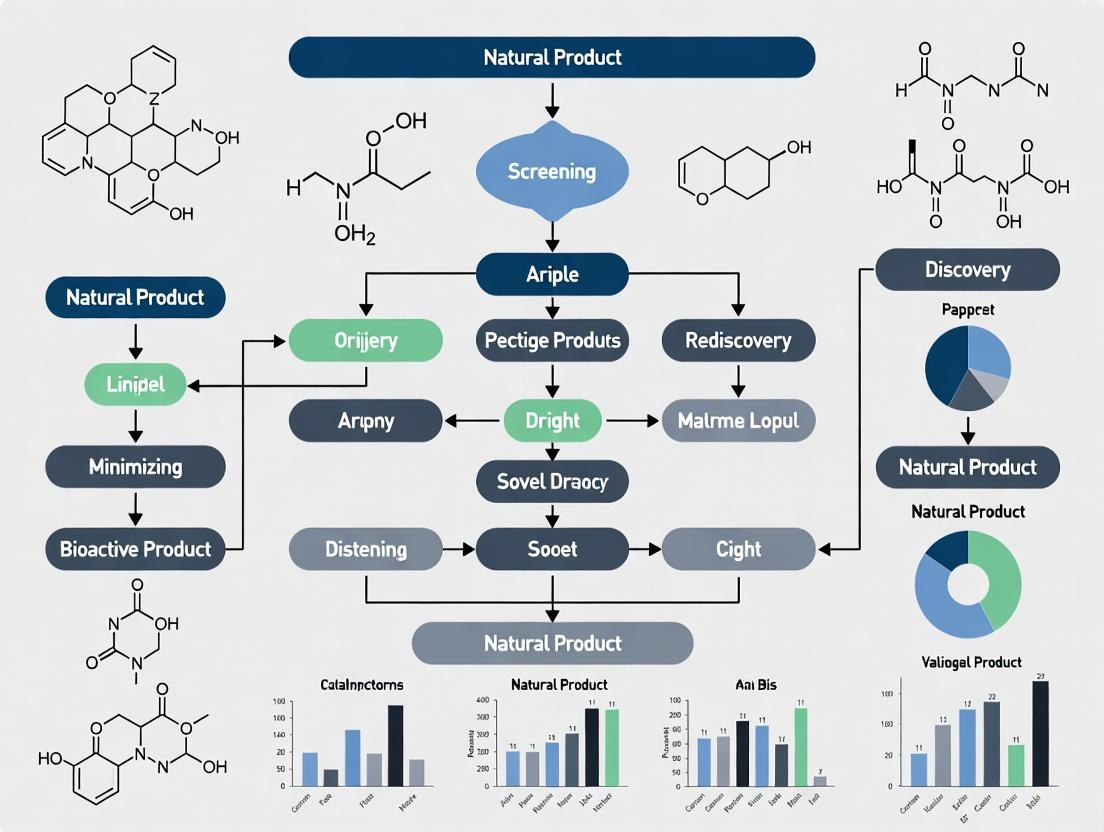
This article provides a comprehensive framework for overcoming the pervasive challenge of bioactive compound rediscovery in natural product-based drug discovery.
Innovative Strategies to Minimize Bioactive Rediscovery in Natural Product Screening: A 2025 Guide for Drug Discovery Researchers
Abstract
This article provides a comprehensive framework for overcoming the pervasive challenge of bioactive compound rediscovery in natural product-based drug discovery. It details foundational principles on the origins of structural redundancy, explores modern methodological solutions like mass spectrometry-based library rationalization and in-silico dereplication, and offers troubleshooting for common implementation hurdles. By comparing the efficacy of emerging strategies—from genome mining to artificial intelligence—and outlining robust validation protocols, the article equips researchers with the knowledge to design efficient screening campaigns that maximize the discovery of novel chemical scaffolds and accelerate the identification of new therapeutic leads.
Understanding the Rediscovery Problem: Sources of Redundancy and Its Impact on Natural Product Screening Efficiency
In natural product screening, structural redundancy refers to the presence of identical or highly similar bioactive molecular scaffolds across multiple extracts or fractions within a library [1]. This redundancy is an inherent challenge because it leads directly to bioactive rediscovery, where valuable screening resources are wasted repeatedly identifying the same known compounds.
From a technical support perspective, this problem manifests as diminishing returns in high-throughput screening (HTS). You invest significant time and resources screening thousands of extracts, only to find that a high percentage of "hits" are the same familiar compounds or chemical classes [2]. This not only wastes assay reagents and personnel time but also obscures potentially novel, low-abundance bioactives.
The core thesis for overcoming this challenge is that strategic library design and informatics-driven prioritization can dramatically reduce redundancy before screening begins. By focusing on scaffold diversity rather than sheer sample number, you can design smaller, smarter libraries that increase your probability of discovering novel bioactives [1].
Troubleshooting Guide: Identifying and Solving Redundancy Issues
Problem: My screening hit rate is high, but most leads are known compounds.
This is the classic symptom of library redundancy. A high initial hit rate followed by rapid dereplication of known compounds indicates your library has high chemical similarity across many samples.
Diagnostic Steps:
- Perform Retrospective LC-MS Analysis: Re-examine 10-20 of your most potent "hit" extracts by LC-MS. Create a simple molecular network using freely available tools like GNPS (Global Natural Products Social Molecular Networking). Clustering of MS/MS spectra from different hits will visually indicate if they share similar metabolites [1].
- Check Source Metadata: Correlate hit data with the source of your extracts (e.g., fungal strain, plant genus, collection site). Redundancy often clusters around specific taxonomic groups or isolation conditions [2].
Solution: Implement Pre-Screen Informatics Filtering
- Procedure: Before your next screen, analyze a representative subset of your library (e.g., 10%) by untargeted LC-MS/MS.
- Software: Process data through GNPS to generate a molecular network.
- Action: Identify large "molecular families" (clusters of >10 similar spectra) that represent common scaffolds. If your library's goal is novel discovery, consider temporarily deprioritizing or blending extracts that are over-represented in these large clusters for the next screen [1].
Problem: My assay is overwhelmed by nuisance compounds (e.g., tannins, saponins).
Nuisance compounds cause false positives or non-specific inhibition, clogging the pipeline. Their structural redundancy makes them appear in many extracts.
Diagnostic Steps:
- Assay Interference Profile: Run your assay with purified standards of common nuisance compounds (e.g., tannic acid) to establish their interference signature.
- LC-MS Correlation: Use computational tools to correlate the presence of specific mass features (m/z and retention time) with the nuisance activity across hundreds of screening data points.
Solution: Apply Targeted Fractionation or Library Pre-Treatment
- Protocol for Solid-Phase Extraction (SPE) Cleanup:
- Condition a reverse-phase C18 SPE cartridge with methanol, then equilibrate with water.
- Load your crude natural product extract dissolved in water.
- Wash with 10-20% aqueous methanol to elute highly polar nuisance compounds like salts and sugars.
- Elute your desired mid-to-nonpolar compounds with 80-100% methanol. This step often removes many polyphenolic nuisance compounds [2].
- Alternative Strategy: Switch from crude extracts to a pre-fractionated library. A single crude extract separated into 8-12 fractions by HPLC reduces the concentration of any single nuisance compound per well and separates it from potential true bioactives [2].
Screening a 10,000-extract library is impractical for many academic labs. The key is not to screen randomly but to select an informative subset.
Diagnostic Step: Quantify your library's diversity. If you lack LC-MS data, use phylogenetic diversity as a proxy. Map your extracts on a phylogenetic tree based on source organism. Tight clustering indicates potential for chemical redundancy [3].
Solution: Construct a Rational Mini-Library Using MS-Based Diversity Selection This method uses LC-MS/MS data to select the minimal set of extracts that capture maximal scaffold diversity [1].
- Experimental Protocol:
- Data Acquisition: Analyze all library extracts by standardized untargeted LC-MS/MS.
- Molecular Networking: Process all files through GNPS to group MS/MS spectra into molecular families (scaffolds).
- Scaffold Inventory: For each extract, create a list of all unique molecular family scaffolds it contains.
- Rational Selection via Iterative Algorithm: a. Select the single extract with the highest number of unique scaffolds. b. Add this extract to your new "Rational Mini-Library." c. From the remaining unsampled extracts, select the one that adds the greatest number of new scaffolds not already present in the Rational Mini-Library. d. Repeat step (c) until you reach your desired sample count (e.g., 5% of the original library) or until 80-90% of the total unique scaffolds in the full library are represented.
- Expected Outcome: Research shows this method can reduce a library by 6.6- to 28.8-fold while increasing bioassay hit rates by removing redundant, non-bioactive extracts [1].
Table 1: Comparison of Library Reduction Methods
| Method | Key Principle | Data Required | Typical Library Size Reduction | Risk of Losing Novel Bioactives |
|---|---|---|---|---|
| Random Selection | Simple random sampling | None | User-defined | High, uncontrolled |
| Phylogenetic Selection | Diverse source organisms | DNA barcoding or taxonomy | Moderate | Medium, chemistry ≠ phylogeny |
| MS-Based Rational Selection [1] | Maximize unique MS/MS scaffolds | LC-MS/MS data | High (6.6 to 28.8-fold) | Low (controlled by algorithm) |
| Bioactivity-Guided Selection | Prioritize historically active extracts | Historical screening data | Low to Moderate | High (biased toward known chemistry) |
Detailed Experimental Protocols
Protocol 1: LC-MS/MS-Based Library Dereplication and Redundancy Assessment
Goal: To quickly identify groups of extracts in your library that share identical major metabolites.
Materials:
- LC-MS/MS system (Q-TOF or Orbitrap preferred)
- Standardized extraction solvent (e.g., 80% methanol)
- GNPS account (gnps.ucsd.edu)
Procedure:
- Sample Preparation: Reconstitute all dried extracts to a standard concentration (e.g., 1 mg/mL) in MS-grade methanol. Centrifuge and transfer supernatant to MS vials.
- LC-MS/MS Data Acquisition:
- Column: C18 reversed-phase (e.g., 2.1 x 100 mm, 1.7-1.9 µm).
- Gradient: 5% to 100% acetonitrile in water (both with 0.1% formic acid) over 20 minutes.
- MS Settings: Data-Dependent Acquisition (DDA) mode. Collect full scan MS1 (m/z 100-1500), then fragment the top 10 most intense ions for MS2.
- Data Processing:
- Convert raw files to .mzML format using MSConvert (ProteoWizard).
- Upload to GNPS and create a Classical Molecular Network using default parameters.
- Analyze the Network: Large clusters of nodes (MS/MS spectra) connected by thick edges (high spectral similarity) indicate commonly occurring, redundant metabolites. Extracts whose spectra appear in the same cluster are chemically redundant.
Protocol 2: Building a Redundancy-Minimized Screening Library
Goal: To select a subset of 100 extracts from a 2000-extract library that maximizes chemical diversity.
Materials:
- Full library LC-MS/MS data (from Protocol 1)
- R statistical software with
ggplot2andtidyverse - Custom R script for iterative selection (publicly available code from [1] can be adapted).
Procedure:
- From the GNPS output, generate a binary matrix: rows = extracts, columns = molecular families (scaffolds), value = 1 (present) or 0 (absent).
- Run the iterative selection algorithm:
- The resulting
selected_extractslist is your optimized, redundancy-minimized library. Physically retrieve these 100 extracts for screening.
Visualization of Concepts and Workflows
Diagram: Workflow for Rational Library Minimization [1]
Diagram: Structural Redundancy in Library Design
Data Interpretation Guide
How to Read Molecular Networks for Redundancy
- Large, Dense Clusters: Indicate a commonly produced scaffold present in many extracts (high redundancy). The thickness of the lines (edges) between nodes indicates spectral similarity.
- Many Singletons: Many unconnected nodes (single MS/MS spectra) indicate high unique chemical diversity.
- Extract Overlap: If the spectra from 10 different extracts all fall into one large cluster, those 10 extracts are chemically redundant for that major compound class.
Quantifying the Benefit: Key Performance Indicators (KPIs)
After implementing redundancy reduction, track these metrics:
Table 2: Expected Improvement from Redundancy Reduction (Based on Published Data) [1]
| Performance Metric | Typical Full Library | Rational Mini-Library (80% Diversity) | Improvement Factor |
|---|---|---|---|
| Library Size (No. of Extracts) | 1,439 | 50 | 28.8x smaller |
| Hit Rate vs. P. falciparum | 11.26% | 22.00% | 1.95x higher |
| Hit Rate vs. T. vaginalis | 7.64% | 18.00% | 2.36x higher |
| Hit Rate vs. Neuraminidase | 2.57% | 8.00% | 3.11x higher |
| Scaffold Diversity Retained | 100% | 80% | Controlled trade-off |
The Scientist's Toolkit: Research Reagent Solutions
Table 3: Essential Materials for Redundancy Assessment
| Item | Function in Redundancy Minimization | Example/Supplier Notes |
|---|---|---|
| Fungal/Bacterial Extract Library | The raw material for screening. Diversity of source organisms is the starting point for chemical diversity. | In-house collections; commercially available from suppliers like AnalytiCon Discovery or the NCI Program for Natural Product Discovery [2]. |
| LC-MS/MS System with DDA | Generates the spectral data required for molecular networking and scaffold-based analysis. | Q-TOF (e.g., Agilent 6545/6546) or Orbitrap (e.g., Thermo Exploris) systems are ideal [1]. |
| GNPS Platform Access | Free, cloud-based platform for performing molecular networking and analyzing LC-MS/MS data for redundancy. | Essential. Accounts are free at https://gnps.ucsd.edu. |
| Solid Phase Extraction (SPE) Cartridges | For quick clean-up of crude extracts to remove common nuisance compounds that cause assay interference. | C18 reversed-phase cartridges (e.g., Waters Oasis, Agilent Bond Elut). Used for partial fractionation [2]. |
| Standardized Bioassay Kits | To test the performance of your minimized library. Higher hit rates validate the reduction strategy. | Use assays relevant to your field (e.g., anti-parasitic, enzyme inhibition) [1]. |
| R or Python Software Environment | For running custom scripts to perform the iterative diversity selection algorithm. | R packages: tidyverse, igraph. Python libraries: pandas, networkx. |
Frequently Asked Questions (FAQs)
Q: I don't have an LC-MS/MS. Can I still reduce redundancy in my library? A: Yes, but with less precision. You can:
- Use Phylogenetic Data: If your library is from microbial isolates, use 16S rRNA gene sequencing data. Select strains that are phylogenetically distant, as this often (but not always) correlates with metabolic diversity [3].
- Use Historical Bioactivity Data: If you have past screening data, use chemometric tools like Principal Component Analysis (PCA) to cluster extracts based on their bioactivity profiles across multiple assays. Select one representative from each major bioactivity cluster.
- Employ Simple Chromatography: Run all extracts on standardized thin-layer chromatography (TLC). Visually cluster extracts with similar TLC profiles and select a subset from each cluster.
Q: Doesn't a smaller library mean I'm more likely to miss a rare, potent bioactive? A: This is a common and valid concern. The rational selection method is designed to maximize scaffold diversity. Rare scaffolds are, by definition, unique. The algorithm will prioritize an extract containing a single, unique rare scaffold over an extract containing many common scaffolds. Published data shows that 95-100% of features correlated with bioactivity in a full library were retained in a rationally selected mini-library [1]. The method minimizes the loss of rare actives.
Q: How do I handle regulatory and ethical issues related to sourcing natural products? A: This is critical. Always ensure compliance with the Convention on Biological Diversity (CBD) and the Nagoya Protocol on Access and Benefit-Sharing (ABS). Before collecting or acquiring samples, you must have:
- Prior Informed Consent (PIC) from the source country.
- Mutually Agreed Terms (MAT) that outline fair and equitable benefit-sharing arising from commercialization [2] [4].
- Properly documented voucher specimens deposited in a recognized herbarium or culture collection. Work with established programs that have these frameworks in place, such as the NCI Natural Products Repository [2].
Q: What's the difference between "structural redundancy" and "biological redundancy" in this context? A: This is an important distinction.
- Structural Redundancy (our focus): The presence of the same or highly similar chemical molecules or scaffolds across multiple library samples. It's a property of your chemical library.
- Biological Redundancy [3]: A property of living systems where multiple genes, pathways, or processes can perform the same function, ensuring resilience. In screening, biological redundancy in a target pathway can make it harder to find a single potent inhibitor, but that is a separate challenge from library design.
A persistent and costly challenge in natural product (NP) screening is the frequent rediscovery of known bioactive compounds, which diminishes the efficiency and economic viability of discovery pipelines [5]. This technical support center provides researchers and drug development professionals with targeted troubleshooting guides and methodological protocols framed within a strategic thesis: overcoming rediscovery requires an integrated understanding of the primary causes—phylogenetic relationships, common biosynthetic pathways, and environmental factors [6] [7]. By employing advanced pre-screening strategies such as phylogenetic dereplication, genome mining, and reactivity-based screening, researchers can prioritize novel chemical space and silence the expression of common pathways [8] [5].
Troubleshooting Guide & FAQ
This section addresses common experimental pitfalls and provides solutions based on contemporary research strategies.
Section 1: Troubleshooting Phylogenetic & Genomic Analysis
Problem: My microbial isolate is phylogenetically related to a known prolific producer, leading to high rediscovery rates. How can I prioritize it for novel discovery?
- Solution & Strategy: Move beyond species-level taxonomy. Perform phylogenomic analysis of Biosynthetic Gene Clusters (BGCs) and their regulatory elements. Clusters in common pathways (e.g., polyketide synthases (PKS) and nonribosomal peptide synthetases (NRPS)) can be highly conserved across species [8]. Use tools like the Natural Product Domain Seeker (NaPDoS) to classify ketosynthase (KS) and condensation (C) domains phylogenetically. This can predict structural motifs and differentiate between common and unique biosynthetic potentials [8]. Focus on strains where BGC phylogeny suggests divergent evolution or novel domain architecture, even if the organismal phylogeny is common.
Problem: Genome mining predicts many BGCs, but they remain "silent" under standard laboratory culture conditions.
- Solution & Strategy: This is often an environmental and regulatory factor issue. Silence is frequently due to the lack of correct environmental or regulatory triggers [7]. Implement a phylogenetic classification of regulatory mechanisms. Analyze and compare the regulatory genes (e.g., transcription factors, histidine kinases) associated with silent BGCs to those of characterized clusters in databases like MiBIG [7]. If the regulatory apparatus is phylogenetically similar to a cluster activated by a known chemical elicitor (e.g., a specific histone deacetylase inhibitor or signaling molecule), apply that elicitor to your culture. This "phylogenetic activation" strategy leverages conserved regulatory logic [7].
Experimental Protocol: Phylogenetic Analysis of BGC Regulatory Elements [7]
- BGC Prediction & Curation: Use antiSMASH on your target genome(s). Filter results for "complete" or "high confidence" BGCs using the BiG-FAM database to ensure analyzable genetic units.
- Regulatory Protein Identification: From the BGC sequences, identify genes encoding putative regulatory proteins (e.g., transcription factors (TFs), histidine kinases (HKs)). Use Hidden Markov Models (HMMs) from the Pfam database (e.g., PF00512 for Histidine Kinase CA domain) with HMMER software (E-value < 0.01) for domain detection.
- Sequence Alignment & Tree Construction: Extract the protein sequences of the regulatory domains. Perform a multiple sequence alignment with reference sequences from characterized BGCs (e.g., from MiBIG) using CLUSTAL Omega or MAFFT. Construct a phylogenetic tree using a maximum-likelihood method (e.g., RAxML) with appropriate bootstrapping (e.g., 100 replicates).
- Phylogenetic Classification & Hypothesis Generation: Classify your unknown regulatory element within the phylogenetic tree. If it clusters closely with a regulator known to respond to a specific stimulus, design a cultivation experiment incorporating that stimulus (e.g., sub-inhibitory antibiotic, metal stress, co-culture).
Section 2: Troubleshooting Biosynthetic Pathway-Driven Rediscovery
Problem: My extracts show promising activity, but dereplication consistently identifies common scaffold molecules (e.g., macrolides, tetracyclines).
- Solution & Strategy: Employ a chemistry-first, reactivity-based screening (RBS) approach before bioassay [5]. Functional groups common to well-known compound classes can be targeted. Use chemoselective probes to tag metabolites containing specific reactive moieties (e.g., epoxides, Michael acceptors, electron-rich olefins) in crude extracts. Analysis via LC-MS identifies only tagged metabolites, effectively filtering out non-reactive common compounds and highlighting potentially novel reactive scaffolds [5].
Problem: I want to explore novel chemical space inspired by natural scaffolds without synthesizing vast libraries blindly.
- Solution & Strategy: Adopt a Biology-Oriented Synthesis (BIOS) or Diversity-Oriented Synthesis (DOS) strategy informed by phylogenetics [6]. Use phylogenetic analysis of successful natural product classes to identify core "privileged" scaffolds that target specific protein families (e.g., protein-protein interactions). Then, synthesize focused libraries around these scaffolds by ring distortion, pruning, or hybridization [6]. This balances exploration of chemical space with a higher probability of bioactivity.
Experimental Protocol: Reactivity-Based Screening with a Thiol Probe [5]
- Objective: To selectively label and identify natural products containing electrophilic functional groups (e.g., Michael acceptors, epoxides) in a bacterial extract.
- Materials: Crude ethyl acetate extract of bacterial culture, thiol-reactive probe (e.g., 2-mercaptoethanol-derived probe with a biotin or fluorophore tag), dimethyl sulfoxide (DMSO), LC-MS system.
- Procedure:
- Probe Reaction: Dissolve the crude extract in a suitable buffer (e.g., PBS pH 7.4) or aqueous acetonitrile. Add the thiol-reactive probe (final concentration ~100 µM) from a DMSO stock solution. Incubate at 25°C for 1-2 hours.
- Control Reaction: Prepare an identical sample with no probe or with an inactive, "scrambled" probe.
- Analysis: Quench reactions and analyze by LC-MS. Compare the total ion chromatograms (TIC) and extracted ion chromatograms (XIC) of the probe-treated vs. control samples.
- Data Interpretation: Look for new chromatographic peaks present only in the probe-treated sample. These correspond to probe-metabolite adducts. The mass shift (e.g., +119 Da for a 2-mercaptoethanol tag) helps identify the parent ion of the reactive natural product. This parent ion can then be targeted for isolation and structure elucidation.
Section 3: Troubleshooting Environmental & Cultivation Issues
- Problem: Isolates from unique environments still produce common metabolites when cultured in standard media.
- Solution & Strategy: Standard lab media create a common environmental factor that selects for the expression of common, "fast-growth" BGCs. To access environment-specific chemistry, you must mimic key ecological parameters. This goes beyond nutrient composition. Consider:
- Physical Stressors: Simulate substrate attachment (biofilm reactors), shear stress (agitation variations), or light cycles.
- Chemical Cues: Use extracts from co-habitating organisms or supplement with species-specific signaling molecules (e.g., acyl-homoserine lactones).
- Co-culture: Cultivate with other microbes from the same niche to trigger defensive or communicative metabolite production [9].
- Solution & Strategy: Standard lab media create a common environmental factor that selects for the expression of common, "fast-growth" BGCs. To access environment-specific chemistry, you must mimic key ecological parameters. This goes beyond nutrient composition. Consider:
Table 1: Quantitative Performance of Strategies to Minimize Rediscovery
| Strategy | Core Principle | Key Metric/Outcome | Example/Reference |
|---|---|---|---|
| Phylogenetic Dereplication | Analyze evolutionary relatedness of BGCs to predict novelty. | Classification of KS domains into >8 distinct clades predicting enzyme architecture [8]. | NaPDoS tool for KS/C domain analysis [8]. |
| Regulatory Phylogenetics | Use phylogeny of regulatory genes to activate silent BGCs. | Framework tested on 2,694 BGCs from diverse environments; identified common regulatory patterns across habitats [7]. | Prediction of activators for uncharacterized BGCs in actinobacteria [7]. |
| Reactivity-Based Screening (RBS) | Chemoselective tagging of metabolites with specific functional groups. | Direct detection of rare electrophilic NPs, bypassing bioactivity screens dominated by common hits [5]. | Probes for thiols, tetrazines, aminooxy groups target unique chemotypes [5]. |
| Diversity-Oriented Synthesis (DOS) | Generate skeletally diverse libraries from NP-inspired scaffolds. | A 2,070-member macrolactone library identified robotnikin, a Hedgehog inhibitor with 91% efficacy (ECmax) [6]. | Discovery of novel antibiotic gemmacin from a 242-molecule NP-like library [6]. |
Visualization of Integrated Strategies
Diagram 1: Integrated Workflow for Minimizing Rediscovery
Diagram 2: Reactivity-Based Screening (RBS) Process
The Scientist's Toolkit: Key Research Reagent Solutions
Table 2: Essential Reagents and Materials for Featured Strategies
| Item | Function / Application | Example/Note |
|---|---|---|
| antiSMASH Software | Predicts BGCs in genomic data. Foundational for genome mining and phylogenetic analysis of BGCs [7]. | Use version 6.0 or higher for comprehensive predictions [7]. |
| NaPDoS (Web Tool) | Performs phylogenetic analysis of KS and C domains from PKS/NRPS sequences to predict cluster type and novelty [8]. | Input: KS or C domain sequence. Output: Phylogenetic clade assignment. |
| MIBiG Database | Repository of experimentally characterized BGCs. Essential reference for comparative phylogenetics and regulatory analysis [7]. | Use as a source of reference sequences for tree building. |
| Reactivity-Based Probes | Chemoselective tags for functional groups (thiol, aminooxy, tetrazine). Enrich or detect NPs with specific reactive moieties [5]. | Example: Thiol probes label epoxide- or β-lactone-containing metabolites [5]. |
| Histidine Kinase HMMs (Pfam) | Hidden Markov Models (e.g., PF00512) used to identify and classify regulatory domains within BGCs for phylogenetic studies [7]. | Used with HMMER software for sensitive domain detection. |
| Solid-Supported Phosphonate | Building block for DOS libraries. Enables divergent synthesis of multiple NP-like scaffolds from a common intermediate [6]. | Key reagent in the synthesis of gemmacin and related antibiotic libraries [6]. |
| Elicitor Molecules | Chemical signals (e.g., antibiotics, metals, quorum sensing molecules) used to mimic environmental cues and activate silent BGCs [7] [9]. | Choice is guided by phylogenetic analysis of BGC regulators. |
Technical Support Center: Troubleshooting Rediscovery in Natural Product Screening
Welcome to the Technical Support Center. This resource is designed within the broader thesis that strategic pre-screening analysis is paramount to minimizing bioactive rediscovery—a major inefficiency that consumes time, budgets, and scientific momentum. The following guides and FAQs address common experimental pitfalls and provide data-driven solutions to optimize your natural product screening campaigns.
Troubleshooting Guide: Common Issues & Solutions
Problem 1: Declining or Stagnant Hit Rates in High-Throughput Screening (HTS)
- Symptoms: Consistently low hit rates (<2-3%) in phenotypic or target-based assays; high rate of hits identifying known compounds upon validation.
- Diagnosis: This is a classic sign of screening a library with high chemical redundancy, where the same or similar scaffolds are represented repeatedly, drowning out novel bioactivity [1].
- Solution: Implement a rational library reduction strategy prior to HTS.
- Protocol: Utilize untargeted LC-MS/MS with molecular networking (e.g., GNPS) to profile your extract library [1]. Construct a rational sub-library by iteratively selecting extracts that add the most new molecular scaffolds, aiming for 80-95% of total diversity [1].
- Expected Outcome: A dramatically smaller library (e.g., 50 extracts vs. 1,439) that delivers a higher hit rate (e.g., 22% vs. 11.3% for P. falciparum) and preserves most bioactive compounds correlated with activity in the full library [1].
Problem 2: High Costs and Long Timelines for Library Screening
- Symptoms: Screening budgets exhausted on early phases; lead discovery timeline is protracted.
- Diagnosis: Screening excessively large, redundant libraries multiplies reagent, labor, and time costs without improving output.
- Solution: Adopt a tiered, in silico-first screening pipeline.
- Protocol: Before wet-lab assays, employ virtual screening. Use molecular docking (e.g., AutoDock) against your target and apply machine learning models to predict ADMET properties and bioactivity [10] [11]. Prioritize only the top-ranking, computationally validated candidates for experimental testing.
- Expected Outcome: Significant reduction in the number of extracts or compounds requiring physical screening, compressing the initial discovery timeline and focusing resources on high-probability leads [10].
Problem 3: Frequent Rediscovery of Known Bioactives (Dereplication Failure)
- Symptoms: Promising assay hits are later identified as well-known compounds (e.g., common flavonoids, mycotoxins).
- Diagnosis: Inadequate dereplication at the screening or early hit-confirmation stage.
- Solution: Integrate real-time, automated dereplication into the workflow.
- Protocol: Couple your primary bioassay with high-resolution LC-MS/MS analysis. Use tools like the Global Natural Products Social Molecular Networking (GNPS) platform to automatically compare MS/MS spectra of active fractions against public libraries of known natural products [12] [1].
- Expected Outcome: Immediate flagging of known compounds, allowing researchers to deprioritize them early and focus resources on novel chemotypes.
Problem 4: Difficulty Linking Bioactivity to a Specific Compound in Crude Extracts
- Symptoms: An extract shows activity, but isolation efforts fail or lead to an inactive pure compound due to synergy or trace components.
- Diagnosis: Lack of a method to pinpoint the exact feature (mass-retention time pair) responsible for activity within a complex mixture.
- Solution: Perform bioactivity-correlation analysis using metabolomic data.
- Protocol: After acquiring LC-MS/MS data for all library samples, use statistical tools (e.g., Spearman correlation) to find MS features whose intensity across samples strongly correlates with the bioactivity score from your HTS [1]. These features become priority targets for isolation.
- Expected Outcome: Precise targeting of the ions responsible for bioactivity, increasing the efficiency and success rate of the subsequent isolation and structure elucidation phases.
Frequently Asked Questions (FAQs)
Q1: What is the tangible cost of rediscovery in natural product screening? A1: Rediscovery is a multi-faceted cost sink. Primarily, it wastes the direct screening budget (reagents, assay plates, instrumentation time) on uninformative data points. A study demonstrated that by rationally reducing a fungal extract library from 1,439 to 50 samples (aiming for 80% scaffold diversity), the hit rate against P. falciparum increased from 11.3% to 22% [1]. This means the unreduced library required screening 28.8 times more samples to achieve the same number of unique hits, representing a massive multiplier on screening costs and time.
Q2: How can I justify the upfront time and cost of LC-MS/MS profiling for rational library design? A2: The investment is rapidly offset. The quantitative data shows that reaching 80% scaffold diversity required screening 109 random extracts versus only 50 rationally selected extracts [1]. The cost of LC-MS/MS analysis for 1,439 extracts is fixed. The ongoing, variable cost of screening an additional 59 samples per assay—and across multiple future assays—is where savings compound. Furthermore, the increased hit rate means more valuable leads are identified sooner, accelerating the entire discovery pipeline and improving return on investment.
Q3: Are these strategies only relevant for microbial or fungal extract libraries? A3: No. The principle of minimizing redundancy via pre-screening analysis is universal. The rational library design method based on LC-MS/MS spectral similarity has been validated on fungal libraries [1], but the underlying workflow is applicable to plant, marine, or any other crude extract libraries. Similarly, in silico docking and AI-based prediction tools are agnostic to the compound source and are being widely applied across all domains of natural product research [12] [10].
Q4: We have a small lab. Can we implement these strategies without extensive computational infrastructure? A4: Yes, with strategic use of public resources. For molecular networking and dereplication, the free, web-based GNPS platform is a powerful starting point [1]. For basic in silico screening, user-friendly software like SwissADME (for drug-likeness) and AutoDock (for docking) are accessible [11]. Cloud-based computing services can also be used on-demand for more intensive tasks. Collaboration with bioinformatics groups is another effective pathway.
Q5: How do AI and machine learning specifically help reduce rediscovery? A5: AI/ML tackles rediscovery proactively. Models can:
- Predict Novelty: Train models on known natural product libraries to score new compounds for structural novelty or similarity to known bioactives [12].
- Prioritize Unlikely Targets: Predict potential targets for a compound, helping avoid pathways saturated with known inhibitors [12].
- Design Focused Libraries: Generative AI can propose novel, synthetically accessible structures inspired by but distinct from known natural scaffolds, creating intellectual property space [12].
Quantitative Impact of Rediscovery & Strategic Solutions
The following tables summarize the direct experimental impact of bioactive rediscovery and the quantifiable benefits of implementing rational library design.
Table 1: The Cost of Redundancy - Hit Rate Penalty in Full vs. Rational Libraries [1]
| Bioassay Target | Hit Rate: Full Library (1,439 extracts) | Hit Rate: 80% Diversity Rational Library (50 extracts) | Hit Rate: 100% Diversity Rational Library (216 extracts) |
|---|---|---|---|
| Phenotypic: P. falciparum | 11.26% | 22.00% (95% increase) | 15.74% |
| Phenotypic: T. vaginalis | 7.64% | 18.00% (136% increase) | 12.50% |
| Target-Based: Neuraminidase | 2.57% | 8.00% (211% increase) | 5.09% |
Table 2: Efficiency Gains from Rational Library Design [1]
| Metric | Random Selection | Rational LC-MS/MS-Based Selection | Efficiency Gain |
|---|---|---|---|
| Extracts needed for 80% scaffold diversity | 109 (average) | 50 | 2.2-fold more efficient |
| Extracts needed for 100% scaffold diversity | 755 (average) | 216 | 3.5-fold more efficient |
| Library size reduction (to 100% diversity) | N/A | From 1,439 to 216 extracts | 6.6-fold reduction |
| Retention of bioactivity-correlated features | N/A | 8 out of 10 retained in 80% library; All retained in 100% library [1] | Minimal loss of key actives |
Detailed Experimental Protocols
Protocol: Rational Natural Product Library Design via LC-MS/MS and Molecular Networking
Objective: To create a minimized screening library that maximizes chemical diversity and bioactive potential while minimizing redundancy.
Materials:
- Library of crude natural product extracts (e.g., microbial, plant).
- UHPLC system coupled to a high-resolution tandem mass spectrometer (e.g., Q-TOF, Orbitrap).
- Classical Molecular Networking workflow on the GNPS platform (https://gnps.ucsd.edu).
- Custom R scripts for iterative diversity selection (see data availability in [1]).
Method:
- Untargeted LC-MS/MS Profiling: Analyze all library extracts using a standardized, untargeted LC-MS/MS method in data-dependent acquisition (DDA) mode.
- Molecular Networking: Process the raw MS/MS data through the GNPS classical molecular networking workflow. This clusters MS/MS spectra based on similarity, forming "molecular families" that represent similar chemical scaffolds [1].
- Scaffold Diversity Matrix: Generate a binary matrix where rows are extracts and columns are molecular families (scaffolds). A value of 1 indicates the presence of that scaffold in the extract.
- Iterative Library Construction: a. Select the extract containing the highest number of unique scaffolds. b. Add this extract to the "rational library" list and remove all scaffolds it contains from the available pool. c. Recalculate and select the next extract that adds the most new scaffolds to the rational library. d. Repeat until a pre-defined threshold of total scaffold diversity (e.g., 80%, 95%, 100%) is achieved [1].
- Validation: The resulting minimal library of 'n' extracts is ready for high-throughput screening. Its performance can be benchmarked retrospectively or prospectively against random subsets of equal size.
Visualizing the Workflows
Rational vs. Legacy Natural Product Screening Pipelines
Algorithm for Rational Natural Product Library Design [1]
The Scientist's Toolkit: Essential Reagents & Solutions
Table 3: Key Research Reagents & Tools for Minimizing Rediscovery
| Item / Solution | Function / Role in Pipeline | Key Benefit for Avoiding Rediscovery |
|---|---|---|
| High-Resolution LC-MS/MS System | Untargeted metabolomic profiling of extract libraries. | Enables molecular networking and scaffold-based diversity analysis prior to bioassay [1]. |
| GNPS (Global Natural Products Social) Platform | Public web-platform for mass spectrometry data analysis and molecular networking [1]. | Provides free, community-powered tools for dereplication and visualizing chemical redundancy. |
| CETSA (Cellular Thermal Shift Assay) | Confirms target engagement of hits in physiologically relevant cellular environments [11]. | Validates mechanism early, ensuring resource investment in compounds with confirmed, relevant bioactivity. |
| AI/ML Model for ADMET & Bioactivity Prediction | In silico prediction of pharmacokinetics and biological activity (e.g., SwissADME) [10] [11]. | Filters out compounds with poor developability or predictable off-target effects before experimental screening. |
| AutoDock / Similar Docking Software | Predicts binding affinity and pose of small molecules to a protein target [10]. | Enables virtual screening to prioritize extracts or compounds with a higher probability of specific activity. |
| Stable Isotope Labeling Precursors | Used in microbial cultivation to aid in tracing biosynthetic origins and differentiating novel compounds [13]. | Accelerates the deconvolution of novel versus known biosynthetic pathways in active hits. |
The persistent rediscovery of known bioactive compounds remains a critical bottleneck in natural product-based drug discovery. Screening large libraries of extracts often leads to high costs and lengthy timelines with diminishing returns, as these libraries are frequently burdened with structural redundancy [1]. This technical support center is designed within the context of a strategic thesis: proactively maximizing scaffold diversity—the representation of distinct molecular cores or frameworks—is the most effective method to minimize bioactive rediscovery and enhance the identification of novel chemotypes.
This guide provides researchers and drug development professionals with targeted troubleshooting advice, experimental protocols, and essential tools to implement the scaffold diversity principle, transforming natural product screening from a numbers game into a rational search for novelty.
Core Concepts: Scaffolds, Diversity, and Novelty
- Molecular Scaffold: The core ring system and linker structure of a molecule, excluding peripheral side chains. It defines the fundamental topology and shape [14]. In natural products, this core is often honed by evolution for specific biological interactions [13].
- Scaffold Diversity: A measure of the variety and distribution of unique scaffolds within a compound library. High scaffold diversity is a key indicator of broad functional diversity and increased probability of identifying novel bioactive compounds [15].
- Scaffold Hopping: A medicinal chemistry strategy to modify a known active compound's core structure to generate a novel chemotype while retaining or improving biological activity [16]. This principle is reverse-applied in screening: seeking diverse cores to find novel activities.
- Bioactive Rediscovery: The repeated identification of already known active compounds during screening campaigns, a direct consequence of low scaffold diversity in screening libraries [1].
Troubleshooting Guide: Common Issues & Solutions
Problem 1: Persistently Low Hit Rates in High-Throughput Screening (HTS)
- Symptoms: Screening large natural product extract libraries yields very few confirmed hits, or hits are consistently from known chemical classes.
- Root Cause: The library has low effective scaffold diversity due to chemical redundancy. Many extracts contain similar sets of common, well-characterized natural products [1].
- Solution: Implement pre-screening library rationalization.
- Profile your extract library using untargeted LC-MS/MS to obtain fragmentation (MS/MS) data for all detectable metabolites [1].
- Process the data through molecular networking software (e.g., GNPS) to cluster MS/MS spectra based on structural similarity, creating networks where each cluster represents a distinct molecular scaffold or closely related analogues [1].
- Analyze the network to assess scaffold redundancy.
- Select a rational subset of extracts. Use an algorithm to iteratively choose the extract that adds the greatest number of new, unrepresented scaffold clusters to the subset until a desired coverage threshold (e.g., 80-95% of total scaffolds) is reached [1].
- Expected Outcome: Dramatically reduced library size with minimal loss of chemical diversity, leading to significantly increased bioassay hit rates. For example, one study achieved an 84.9% reduction in library size needed to reach maximal scaffold diversity, which translated to hit rate increases from 2.57% to 8.00% in a target-based assay [1].
Problem 2: Frequent Dereplication of Known Compounds
- Symptoms: Promising hits from primary screens are repeatedly identified as well-known natural products (e.g., staurosporine, geldanamycin).
- Root Cause: Library construction is biased towards prolific, easily cultured source organisms or does not prioritize taxonomic and metabolic novelty.
- Solution: Integrate genomic and metabolomic prioritization.
- Sequence potential source organisms (bacteria, fungi) to identify Biosynthetic Gene Clusters (BGCs) using tools like AntiSMASH [13].
- Prioritize strains that contain a high abundance of "cryptic" or rare BGCs not commonly associated with known metabolites [13].
- Use metabolomics (LC-MS) to correlate gene cluster expression with the production of novel secondary metabolites under varied culture conditions [13].
- Focus screening efforts on extracts from these pre-validated, genetically novel strains.
- Expected Outcome: A higher proportion of hits correspond to novel chemical scaffolds, reducing the time and resources wasted on dereplicating known compounds.
Problem 3: Inability to Quantify Library Diversity
- Symptoms: No objective metric to compare libraries or guide procurement and synthesis decisions.
- Root Cause: Reliance on subjective measures or single parameters (e.g., compound count) instead of multi-faceted diversity assessment.
- Solution: Employ a Consensus Diversity Plot (CDP) analysis.
- Calculate scaffold diversity using metrics like the area under the cyclic system recovery (CSR) curve or Shannon Entropy [17].
- Calculate fingerprint diversity using molecular fingerprints (e.g., MACCS keys, ECFP) and Tanimoto similarity [17].
- Plot each library as a point on a 2D CDP with scaffold diversity on one axis and fingerprint diversity on the other. A third dimension (e.g., physicochemical property diversity) can be represented by color [17].
- Interpret: Libraries in the high-scaffold/high-fingerprint quadrant have the greatest global diversity and are most likely to explore novel chemical space [17].
- Expected Outcome: Data-driven decision-making for library design, acquisition, and synthesis focus, enabling strategic investment in areas of chemical space with low representation.
Table 1: Impact of Scaffold-Based Library Rationalization on Screening Efficiency [1]
| Activity Assay | Hit Rate in Full Library (1,439 extracts) | Hit Rate in 80% Scaffold Diversity Library (50 extracts) | Fold Library Size Reduction |
|---|---|---|---|
| P. falciparum (phenotypic) | 11.26% | 22.00% | 28.8-fold |
| T. vaginalis (phenotypic) | 7.64% | 18.00% | 28.8-fold |
| Neuraminidase (target-based) | 2.57% | 8.00% | 28.8-fold |
Frequently Asked Questions (FAQs)
Q1: What exactly is a "scaffold" and how is it different from the whole molecule? A scaffold is the core structure of a molecule—its ring systems and the linkers that connect them—with all variable side chains trimmed back to attachment points [14]. Think of it as the molecular "backbone." Two molecules can have identical scaffolds but very different side chains (appendages), leading to different properties. Focusing on scaffolds prioritizes fundamental shape and topology, which are primary determinants of biological activity [15].
Q2: Why is scaffold diversity more important than just having a large number of compounds? Large compound libraries are often dominated by many analogues of the same few scaffolds [14]. This leads to redundancy. Since similar scaffolds often produce similar biological activities, screening a massive but redundant library increases cost and time without increasing the chance of finding truly novel hits. A smaller library deliberately constructed for high scaffold diversity samples a broader area of biologically relevant chemical space, making novel discoveries more probable [1] [15].
Q3: Can you give a real-world example of scaffold modification leading to a new drug? Yes. The evolution from morphine to tramadol is a classic "scaffold hopping" example. By breaking open morphine's complex, fused multi-ring system (scaffold A), chemists created the simpler, single-ring scaffold of tramadol (scaffold B) [16]. Despite the dramatic 2D structural change, key 3D pharmacophore elements (a basic amine and an aromatic ring) were maintained, preserving analgesic activity while significantly improving the safety and pharmacokinetic profile [16].
Q4: How do I balance exploring novel scaffolds with the need for "drug-like" properties? Novelty and drug-likeness are not mutually exclusive. The strategy is to apply property filters after scaffold selection. When designing or selecting a diverse scaffold set, first ensure synthetic feasibility and structural novelty. Then, during the decoration phase—where side chains are added to the scaffold to create actual screening compounds—apply stringent medicinal chemistry filters (e.g., modified Lipinski's rules, Veber parameters) to the building blocks used for decoration [18] [19]. This ensures the final compound library is both novel and has a high probability of favorable physicochemical properties.
Table 2: Glossary of Key Scaffold Analysis Terms
| Term | Definition | Application in Troubleshooting |
|---|---|---|
| Murcko Framework | An objective, algorithmic definition of a scaffold: all ring systems and the linkers between them [14]. | Standardized scaffold assignment for consistent library analysis and comparison. |
| Scaffold Tree | A hierarchical breakdown of a molecule, iteratively removing rings to reveal scaffold relationships [14]. | Useful for analyzing scaffold complexity and for clustering similar scaffolds. |
| Cyclic System Recovery (CSR) Curve | A plot showing the cumulative percentage of compounds recovered as a function of the cumulative percentage of scaffolds, ordered from most to least frequent [17]. | Quantifies scaffold redundancy. A steep initial curve indicates high redundancy (few scaffolds account for many compounds). |
| Shannon Entropy (SE) | A metric from information theory that measures the "evenness" of the distribution of compounds across scaffolds [17]. | A high SE indicates a library where compounds are evenly distributed across many scaffolds (high diversity). A low SE indicates a library dominated by a few scaffolds. |
Detailed Experimental Protocols
Protocol 1: LC-MS/MS and Molecular Networking for Extract Library Rationalization
- Objective: To reduce the size of a natural product extract library while retaining >95% of its scaffold diversity.
- Materials: Natural product extract library in suitable solvent (e.g., DMSO), UHPLC system coupled to high-resolution tandem mass spectrometer (e.g., Q-TOF, Orbitrap), GNPS account or similar molecular networking software.
- Procedure:
- Data Acquisition: Analyze each extract via untargeted LC-MS/MS. Use a generic gradient (e.g., water/acetonitrile + 0.1% formic acid) and data-dependent acquisition (DDA) to fragment the top ions in each cycle.
- Data Conversion: Convert raw mass spectral files to open formats (.mzML, .mzXML).
- Molecular Networking: Upload files to the GNPS platform. Use the "Classical Molecular Networking" workflow with standard parameters. This clusters MS/MS spectra based on similarity, where each cluster represents a unique molecular family (scaffold) [1].
- Scaffold Diversity Analysis: Download the network information. Each extract is associated with a list of scaffold clusters it contains.
- Rational Library Selection: Implement a greedy algorithm:
- Step 1: Select the extract containing the highest number of scaffold clusters.
- Step 2: Add the extract that contributes the greatest number of scaffold clusters not already present in the selected set.
- Step 3: Iterate Step 2 until a predefined percentage (e.g., 95%) of all unique scaffold clusters in the full library is represented in the selected subset [1].
- Validation: Test the bioactivity of the rationalized library versus the full library in a pilot screen. The rationalized library should achieve a comparable or higher hit rate [1].
Protocol 2: Build-Up Library Synthesis for Natural Product Optimization
- Objective: To rapidly generate and screen analogue libraries of a complex natural product lead without full synthesis of each analogue.
- Materials: A core fragment of the natural product containing a reactive handle (e.g., an aldehyde), a diverse collection of accessory fragments with a complementary handle (e.g., hydrazides), 96-well plates, centrifugal concentrator.
- Procedure (Adapted from MraY inhibitor optimization [20]):
- Design: Divide the natural product into two fragments: a core (containing essential pharmacophore elements) and an accessory part (modifiable for SAR).
- Fragment Synthesis: Chemically prepare the core fragment with a ketone/aldehyde group. Acquire or synthesize a library of accessory fragments with a hydrazide group.
- In-Situ Library Synthesis:
- Pipette 10 mM DMSO solutions of the core fragment and one accessory fragment into a well of a 96-well plate.
- Mix and allow the hydrazone formation reaction to proceed at room temperature for 30-60 minutes.
- Remove solvent via centrifugal evaporation.
- The residue contains the crude product for direct testing.
- In-Situ Screening: Redissolve the residue in buffer/DMSO and directly add to a biochemical or cell-based assay plate. No purification is needed as the reaction is high-yielding and clean [20].
- Validation: Identify active wells, then synthesize and purify the corresponding hydrazone analogue for full characterization and dose-response analysis.
Scaffold-Based Library Rationalization Workflow
Scaffold Hopping Strategies for Novelty
The Scientist's Toolkit: Research Reagent Solutions
Table 3: Essential Tools for Scaffold-Diverse Discovery
| Category | Item / Resource | Function & Relevance | Example / Source |
|---|---|---|---|
| Analytical & Computational | High-Resolution LC-MS/MS System | Generates the spectral data for molecular networking and dereplication. Essential for Protocol 1. | Q-Exactive Orbitrap (Thermo), timsTOF (Bruker) |
| Molecular Networking Platform | Clusters MS/MS data by structural similarity to visualize and quantify scaffold diversity. | GNPS (Global Natural Products Social Molecular Networking) [1] | |
| Consensus Diversity Plot (CDP) Tool | Provides a 2D visualization of library diversity using multiple metrics (scaffold, fingerprint, properties). | Online Shiny App [17] | |
| Biosynthetic Gene Cluster (BGC) Miner | Identifies cryptic BGCs in genomic data to prioritize organisms likely to produce novel scaffolds. | AntiSMASH [13], DeepBGC | |
| Chemical Libraries | Scaffold-Diverse Screening Libraries | Commercially available libraries designed explicitly for high scaffold/chemotype diversity. | Life Chemicals Scaffold Library (1,580 scaffolds) [19], ChemDiv Novel Scaffolds [18] |
| Building Block Collections | Diverse sets of fragments for decorating core scaffolds during library synthesis, ensuring final compounds are drug-like. | Enamine, Sigma-Aldrich Building Blocks | |
| Synthetic & Optimization | In-Situ Screening Kits | Microplates and reagents optimized for performing reactions directly in assay plates (e.g., amine aldehydes, hydrazides). | Useful for implementing Protocol 2 (Build-Up Libraries). |
| Diversity-Oriented Synthesis (DOS) Pathways | Synthetic routes designed to yield multiple distinct scaffolds from common intermediates, maximizing skeletal diversity [15]. | Published DOS pathways (e.g., using branching cascades). |
Overcoming the challenge of bioactive rediscovery requires a paradigm shift from screening sheer volume to screening intelligent diversity. The Scaffold Diversity Principle provides the framework for this shift. By leveraging modern analytical techniques like LC-MS/MS-based molecular networking to rationally design screening libraries, employing computational tools like Consensus Diversity Plots for assessment, and adopting efficient strategies like build-up libraries for optimization, researchers can systematically prioritize novel core structures.
This focused approach minimizes redundancy, increases hit rates, and maximizes the return on investment in natural product drug discovery, ensuring that this historically fertile field continues to deliver the novel chemotypes needed to address emerging therapeutic challenges.
Practical Solutions: Methodologies for Rational Library Design and Advanced Dereplication
Technical Support Center: Troubleshooting and FAQs
This technical support center provides resources for researchers implementing LC-MS/MS and molecular networking to rationally minimize natural product screening libraries. The content is framed within the broader thesis that reducing chemical redundancy is a primary strategy for minimizing bioactive rediscovery and accelerating drug discovery pipelines [1].
Frequently Asked Questions (FAQs)
Q1: What is the core principle behind MS-based library rationalization? A1: The method uses untargeted LC-MS/MS data to group molecules from large extract libraries into scaffolds based on MS/MS spectral similarity, which correlates with structural similarity [1]. A computational algorithm then selects the smallest subset of extracts that capture the maximum scaffold diversity from the original library, dramatically reducing its size while retaining bioactive potential [1].
Q2: How significant is the library size reduction, and does it affect bioactivity? A2: The reduction is substantial. In one study, a full library of 1,439 fungal extracts was reduced to a rational library of 216 extracts (an 85% reduction) while retaining 100% of the detected scaffolds [1]. Crucially, bioassay hit rates often increase in the rationalized library because chemical redundancy is minimized. For example, hit rates against P. falciparum increased from 11.3% in the full library to 22.0% in a highly reduced (50-extract) rational library [1].
Q3: What types of screening assays is this method validated for? A3: The method has been validated across major assay types used in high-throughput screening (HTS). This includes phenotypic whole-organism assays (e.g., against the parasites P. falciparum and T. vaginalis) and target-based assays using purified enzymes (e.g., influenza neuraminidase) [1]. The increased hit rate holds true across these different formats.
Q4: Are the specific chemical features correlated with bioactivity lost during rationalization? A4: Data shows excellent retention of bioactive features. In a validation study, 10 MS features significantly correlated with anti-Plasmodium activity were identified in the full library. All 10 were retained in the rational library designed for 100% scaffold diversity, and 8 were retained in the more aggressively reduced (80% diversity) library [1].
Q5: What software and computational tools are required? A5: The workflow requires standard LC-MS/MS data processing software, the GNPS (Global Natural Products Social Molecular Networking) platform for classical molecular networking, and custom R code for the scaffold-based selection algorithm [1]. The referenced study makes its R code freely available.
Troubleshooting Guides
Guide 1: Low MS/MS Signal or Poor-Quality Spectra
Problem: Weak, noisy, or inconsistent MS/MS spectra, leading to poor molecular networking results.
- Potential Causes & Solutions:
- Cause: Contaminated ion source or mobile phase.
- Solution: Perform systematic maintenance. Clean the MS/MS interface and source components [21]. Replace mobile phases and solvents with fresh, high-purity grades. Check for buffer deposits or discolored fittings indicating slow leaks [21].
- Cause: Declining LC column performance or pump issues.
- Solution: Review pressure traces against archived records to detect overpressure or leaks [21]. Replace the LC column if peak shape deteriorates (e.g., fronting, tailing). Ensure pump seals and check valves are functioning correctly.
- Cause: Incorrect MS/MS parameters or calibration drift.
- Solution: Regularly perform and review System Suitability Tests (SST) with neat standards to monitor instrument health [21]. Verify mass calibration, detector voltage, and resolution settings. Compare post-column infusion peak heights to historical data to isolate sensitivity loss to the MS/MS [21].
Guide 2: Ineffective Library Rationalization (Poor Diversity or Bioactivity Loss)
Problem: The rationalized library does not achieve expected scaffold coverage or shows decreased bioactivity.
- Potential Causes & Solutions:
- Cause: Inadequate molecular networking parameters.
- Solution: Optimize parameters on the GNPS platform (precursor/product ion mass tolerance, cosine score threshold) to ensure scaffolds meaningfully group structurally related molecules. Validate networking results with known standards.
- Cause: The selection algorithm is not prioritizing true scaffold diversity.
- Solution: Verify that the algorithm selects extracts based on unique, non-overlapping scaffolds. Ensure adducts and in-source fragments are properly accounted for to avoid inflating apparent diversity [1].
- Cause: The original extract library has extremely low chemical diversity.
- Solution: The method relies on existing diversity. Assess the chemical space of your full library via principal component analysis (PCA) of MS data prior to rationalization.
Guide 3: Failed Bioactivity Correlation with MS Features
Problem: Unable to reliably correlate bioactive assay hits with specific MS/MS features or scaffolds.
- Potential Causes & Solutions:
- Cause: Bioactivity is caused by synergistic effects of multiple compounds, not a single scaffold.
- Solution: Consider more complex correlation models or use bioaffinity-guided purification techniques (e.g., affinity ultrafiltration, magnetic separation) to directly isolate target-binding compounds from active extracts [22].
- Cause: The active compound is present at very low abundance or ionizes poorly.
- Solution: Employ alternative ionization modes (e.g., switch from ESI+ to ESI-). Use fractionation prior to LC-MS/MS to concentrate minor components.
- Cause: The bioactive scaffold is not detected under the used chromatographic conditions.
- Solution: Broaden the chromatographic method (e.g., wider polarity gradient) or use multiple separation methods to capture a more comprehensive metabolome.
Experimental Protocols
Protocol 1: Core Workflow for LC-MS/MS-Based Library Rationalization
This protocol is adapted from the method validated for fungal extract libraries [1].
Sample Preparation:
- Prepare crude natural product extracts (e.g., from microbial fermentation, plants) in a suitable solvent for LC-MS/MS, typically at a standardized concentration.
- Include a solvent blank and quality control (QC) samples pooled from all extracts.
Untargeted LC-MS/MS Data Acquisition:
- Analyze all library extracts using a standardized, high-resolution LC-MS/MS method.
- LC Conditions: Use a reversed-phase C18 column with a water/acetonitrile gradient (e.g., 5% to 100% organic over 20-30 minutes) containing 0.1% formic acid.
- MS Conditions: Use data-dependent acquisition (DDA) in positive and/or negative electrospray ionization (ESI) mode. Acquire full-scan MS spectra (e.g., m/z 100-1500) followed by MS/MS scans of the top N most intense ions.
Data Processing and Molecular Networking:
- Convert raw data files (.d, .raw) to open formats (.mzML, .mzXML).
- Upload all files to the GNPS platform.
- Perform "Classical Molecular Networking" analysis. Key parameters: precursor ion mass tolerance (0.02 Da), product ion tolerance (0.02 Da), minimum cosine score for network edges (0.7).
- The output is a network where nodes represent consensus MS/MS spectra and edges connect spectra with high similarity. Each connected cluster (scaffold family) groups molecules with shared structural cores [1].
Scaffold-Based Library Selection:
- Using custom R code (as provided in the original study [1]), analyze the molecular network.
- The algorithm identifies all unique scaffold clusters present in the library.
- It iteratively selects the extract that contributes the highest number of scaffolds not yet represented in the growing rational library.
- The process continues until a user-defined threshold (e.g., 80%, 95%, 100%) of total scaffold diversity is captured.
Validation:
- Test the bioactivity of the rationalized library versus the full library in relevant phenotypic or target-based assays [1].
- Use statistical correlation (e.g., Spearman rank) to link bioactivity scores in the full library to specific MS1 features (m/z-RT pairs). Confirm the retention of these bioactive features in the rational library [1].
Protocol 2: System Suitability Test (SST) for LC-MS/MS Performance Monitoring
A robust SST is critical for troubleshooting [21].
- SST Solution: Prepare a neat standard mixture containing 5-10 known natural products or metabolites covering a range of masses and polarities.
- Daily Procedure: Inject the SST solution at the beginning and end of each sequencing batch.
- Key Performance Indicators (KPIs) to Monitor and Archive:
- Chromatography: Retention time stability (±0.1 min), peak shape (asymmetry factor), and column pressure.
- MS: Signal intensity (peak height/area), signal-to-noise ratio (S/N), and mass accuracy (ppm error).
- Action: Establish acceptable ranges for each KPI. Investigate the root cause if any KPI falls outside its range before processing experimental samples [21].
Data Presentation
Table 1: Bioactivity Hit Rate Comparison: Full Library vs. Rationalized Libraries [1]
| Activity Assay | Hit Rate: Full Library (1,439 extracts) | Hit Rate: 80% Scaffold Diversity Library (50 extracts) | Hit Rate: 100% Scaffold Diversity Library (216 extracts) |
|---|---|---|---|
| P. falciparum (phenotypic) | 11.26% | 22.00% | 15.74% |
| T. vaginalis (phenotypic) | 7.64% | 18.00% | 12.50% |
| Neuraminidase (target-based) | 2.57% | 8.00% | 5.09% |
Table 2: Retention of Bioactivity-Correlated MS Features in Rational Libraries [1]
| Activity Assay | # of Correlated Features in Full Library | # Retained in 80% Diversity Library | # Retained in 100% Diversity Library |
|---|---|---|---|
| P. falciparum | 10 | 8 | 10 |
| T. vaginalis | 5 | 5 | 5 |
| Neuraminidase | 17 | 16 | 17 |
Experimental and Data Analysis Workflows
Workflow for LC-MS/MS-Based Library Rationalization
LC-MS/MS Troubleshooting Decision Tree
The Scientist's Toolkit: Essential Research Reagents & Materials
Table 3: Key Reagents and Materials for MS-Based Library Rationalization
| Item | Function in the Workflow | Key Considerations |
|---|---|---|
| High-Purity Solvents (ACN, MeOH, Water) | Mobile phase components for LC-MS/MS. | Use LC-MS grade to minimize background noise and ion suppression [21]. |
| Volatile Additives (Formic Acid, Ammonium Acetate) | Mobile phase modifiers to promote ionization. | Typically used at 0.1% concentration. Choose acid or buffer based on ionization mode. |
| U/HPLC Column (e.g., C18) | Chromatographic separation of complex extracts. | Column choice (length, particle size, pore size) defines resolution and run time. |
| MS Calibration Solution | Accurate mass calibration of the mass spectrometer. | Required daily or per sequencing batch to ensure mass accuracy < 5 ppm. |
| System Suitability Test (SST) Mix | A cocktail of standard compounds to verify LC and MS performance [21]. | Should include compounds covering a range of RT and m/z relevant to your samples. |
| Solid Support for Bioaffinity Fishing (e.g., Magnetic Beads) | For validating bioactive scaffolds via target-binding assays [22]. | Beads can be coated with target proteins (e.g., enzymes) to directly isolate ligands from active extracts. |
| Molecular Networking Software (GNPS) | Cloud-based platform for processing MS/MS data into scaffold networks [1]. | Central to the workflow; requires data in open formats (.mzML). |
FAQs: Common Technical Challenges in Virtual Dereplication
This section addresses frequent technical issues encountered by researchers when implementing AI-driven virtual dereplication workflows.
FAQ 1: My AI model for activity prediction consistently yields high false-positive rates. What could be the root cause, and how can I address it?
- Answer: High false-positive rates often stem from biased or imbalanced training data [12]. If your dataset overrepresents certain compound classes or active motifs, the model will be biased toward them. To address this:
- Audit Your Data: Use cheminformatics toolkits (e.g., RDKit) to analyze the chemical space coverage of your training set. Check for overrepresentation of specific scaffolds.
- Apply Data Balancing: Implement techniques like Synthetic Minority Over-sampling Technique (SMOTE) for small datasets or under-sampling for major classes [12].
- Validate Rigorously: Use a time-split or scaffold-split validation protocol instead of random splitting. This tests the model's ability to generalize to truly novel chemotypes, a critical requirement in dereplication [12].
- Answer: Integration failures typically involve data formatting or preprocessing discrepancies. Follow this protocol:
- Standardize Your Data: Convert all raw spectra to open formats (e.g., .mzML) using tools like MSConvert (ProteoWizard). Ensure consistent collision energy settings across datasets.
- Align Metadata: Confirm that your compound metadata (precursor m/z, retention time, ionization mode) matches the required fields for the target platform, such as the Global Natural Products Social Molecular Networking (GNPS) platform [23].
- Pre-process with GNPS Tools: Use the GNPS data pipeline (available on GitHub) to filter noise, peak-pick, and align spectra before uploading. This maximizes spectral matching fidelity [23] [9].
FAQ 3: When performing virtual screening, my docking scores do not correlate with subsequent experimental bioassay results. Why does this happen?
- Answer: A lack of correlation suggests a disconnect between the computational model and the biological reality. Key factors include:
- Inappropriate Protein Structure: The crystal structure used may be in an inactive conformation or lack crucial water molecules/cofactors. Solution: Use homology modeling with MD relaxation or try ensemble docking against multiple protein conformations.
- Over-simplified Scoring: Standard docking scores estimate affinity poorly for complex NPs. Solution: Post-process hits with more rigorous Molecular Mechanics/Generalized Born Surface Area (MM/GBSA) calculations or apply machine-learning-based affinity predictors trained on NP-like compounds [24].
- Ignoring Compound Stability: The simulation assumes a pure, stable ligand. In reality, compounds in a crude extract may degrade or interact. Always cross-reference virtual hits with analytical chemistry data (LC-MS) from your extract [23].
FAQ 4: How can I assess the "novelty" of a natural product candidate identified through an AI dereplication pipeline to avoid rediscovery?
- Answer: Novelty assessment requires multi-layered database interrogation. Do not rely on a single source.
- Perform Multi-Database Queries: Search candidate structures against comprehensive, curated NP databases (e.g., COCONUT, NPASS, LOTUS) using both exact and substructure searches [23].
- Analyse the Chemical Context: Use a tool like ChemMN to visualize the candidate's position within a larger molecular network of known compounds. True novelty is suggested by a cluster of related, unknown spectra distinct from clusters of known compounds [23] [9].
- Check Patent Literature: Use commercial tools like SciFinder or Reaxys to search patent claims, which often contain novel structures not yet in academic databases.
FAQ 5: My institution has limited HPC resources. Can I run meaningful AI-based dereplication?
- Answer: Yes, by leveraging optimized, pre-trained models and cloud-based workflows.
- Use Pre-trained Models: Platforms like Insilico Medicine's Chemistry42 or Atomwise offer access to cloud-based, pre-trained models for property prediction and target identification, requiring only compound SMILES as input [24].
- Employ Transfer Learning: Start with a large, pre-trained model on general chemical libraries (e.g., PubChem). Finetune it on your smaller, specialized NP dataset using cost-effective cloud GPU instances, which requires less computational power than training from scratch [12].
- Utilize Efficient Algorithms: For similarity searching and clustering, use highly optimized algorithms like Tanimoto similarity with bit-based fingerprints or the GROUPE algorithm for MS/MS spectra, which are less resource-intensive than deep learning [23].
Step-by-Step Troubleshooting Guides
This guide adapts the structured five-step troubleshooting framework for technical problem-solving to the context of computational NP research [25].
Guide 1: Troubleshooting Failed Spectral Dereplication in GNPS
Issue: Molecular networking in GNPS fails to link new MS/MS spectra to any known library spectra, resulting in no annotations.
Step 1: Identify the Problem
- Action: Precisely define the failure. Is it a universal match failure, or only for specific ionisation modes or m/z ranges? Check job logs on the GNPS website for error messages [23].
- Success Indicator: A clear statement such as: "MS/MS spectra from positive-mode ESI data in the 300-800 m/z range yield zero library matches, despite strong signal intensity."
Step 2: Establish Probable Cause
- Action: Analyze the data preprocessing steps. The most common causes are:
- Incorrect preprocessing: Poor peak picking or excessive noise filtering removed genuine fragment ions.
- Parameter mismatch: The precursor/fragment mass tolerance set in the GNPS job is stricter than your instrument's accuracy.
- Gap in library coverage: The natural product chemotype in your sample is not represented in the selected reference libraries [23] [9].
- Success Indicator: Hypothesis formation, e.g., "The most probable cause is a mismatch between the 0.05 Da fragment tolerance setting and the instrument's true 0.1 Da accuracy."
Step 3: Test a Solution
- Action: Test one parameter change at a time. First, re-submit a subset of data with relaxed mass tolerance parameters (e.g., increase from 0.01 Da to 0.02 Da for precursor mass, and 0.05 Da to 0.1 Da for fragment ions). Use the "Filter Spectrum" module in GNPS to apply minimal noise filtering [23].
- Success Indicator: The GNPS job completes and yields a higher number of spectral matches for the test subset.
Step 4: Implement the Solution
- Action: Apply the validated parameter set (e.g., relaxed mass tolerances) to the entire dataset. Re-run the full molecular networking job. Document the exact parameters used in your laboratory information management system (LIMS) [25].
- Success Indicator: The full job completes successfully with improved annotation rates.
Step 5: Verify Functionality
- Action: Validate the biological relevance of the new annotations. Cross-check a few matched compounds against your bioassay data. Does the predicted compound class align with the observed activity? Perform a manual check of raw vs. library spectra for a high-scoring match to confirm quality [9].
- Success Indicator: A significant proportion of new annotations are biologically plausible, and manual inspection confirms spectral match quality.
Guide 2: Debugging a Machine Learning Model with Poor Generalization
Issue: An in-house ML model for predicting antibacterial activity performs well on training/validation data but fails to predict the activity of new, structurally distinct NP batches.
Step 1: Identify the Problem
- Action: Confirm the generalization failure. Use the model to predict a held-out external test set comprising compounds from a new microbial source. Quantify the drop in performance metrics (e.g., AUC-ROC, precision) [12].
- Success Indicator: Clear metrics showing a large performance gap between internal validation (>0.8 AUC) and external testing (<0.6 AUC).
Step 2: Establish Probable Cause
- Action: Diagnose model bias. Analyze the model's applicability domain. Project the external test set compounds into the chemical space of the training set using Principal Component Analysis (PCA) or t-SNE. The probable cause is that the new compounds fall outside the chemical space the model learned from (domain shift) [12].
- Success Indicator: Visualization shows a clear separation between the chemical space clusters of the training and new test compounds.
Step 3: Test a Solution
- Action: Implement a domain-adversarial neural network (DANN) or similar technique designed to learn features invariant to the source (e.g., microbial genus). Train a simplified version on a small subset of data that includes both old and new chemotypes [12].
- Success Indicator: The retrained model shows improved (though not perfect) predictive accuracy on the new test subset.
Step 4: Implement the Solution
- Action: Retrain the main production model using the domain-adversarial architecture on the entire available dataset, ensuring representation from diverse biological sources. Deploy the new model with a built-in applicability domain checker that flags predictions for compounds outside the training space [24] [12].
- Success Indicator: New model is deployed, and its uncertainty estimation module actively flags low-confidence predictions.
Step 5: Verify Functionality
- Action: Establish a continuous validation pipeline. Routinely test the model's predictions on new, experimentally confirmed active/inactive compounds. Monitor performance drift over time and schedule periodic model retraining with newly acquired data [12].
- Success Indicator: A dashboard tracking model performance on new data shows stable, reliable metrics over several months.
Detailed Experimental Protocols
Protocol 1: Molecular Networking for Dereplication via GNPS
This protocol details the creation of a molecular network to group related spectra and identify known compounds [23] [9].
Objective: To rapidly group MS/MS data from a natural product extract and annotate known compounds via spectral matching.
Materials: LC-MS/MS data file (.raw, .d, .wiff format), computer with internet access, GNPS account.
Method:
- Data Conversion: Convert raw LC-MS/MS files to open .mzML format using MSConvert (ProteoWizard). Enable peak picking for MS2 spectra.
- File Upload: Navigate to the GNPS website (gnps.ucsd.edu). Use the "Upload Files" function to transfer your .mzML files to the GNPS/MassIVE server.
- Job Parameterization: In the "Molecular Networking" workflow, set key parameters:
- Precursor Ion Mass Tolerance: 0.02 Da.
- Fragment Ion Mass Tolerance: 0.02 Da.
- Minimum Cosine Score: 0.7 (for relatedness).
- Minimum Matched Fragment Ions: 6.
- Library Search Parameters: Set to search against public GNPS libraries and enable advanced search options like "search analogs."
- Job Submission & Monitoring: Submit the job. Processing time varies with data size. Monitor job status via the provided link.
- Data Interpretation: Once complete, visualize the network using CytoScape. Clusters of nodes (spectra) represent groups of related molecules. Nodes annotated with library match names indicate known compounds. Investigate large, unannotated clusters for potential novelty.
Protocol 2: AI-Enhanced Virtual Screening & Validation Workflow
This protocol integrates AI-based prediction with computational validation prior to costly experimental testing [24] [12].
Objective: To prioritize NP-like compounds from a virtual library for anti-inflammatory activity targeting COX-2.
Materials: Virtual compound library (in SDF or SMILES format), access to AI prediction platforms (e.g., Pharma.AI, or locally run models), molecular docking software (e.g., AutoDock Vina, Schrödinger Suite), access to a high-performance computing (HPC) cluster.
Method:
- AI-Based Bioactivity Prediction:
- Input the virtual library (e.g., 50,000 NP-like compounds) into a pre-trained graph neural network (GNN) model for COX-2 inhibition prediction.
- Apply a probability threshold (e.g., p(active) > 0.85) to generate a primary hit list (e.g., ~2,500 compounds).
- ADMET & Druggability Filtering:
- Subject the primary hits to ADMET prediction filters (e.g., using pkCSM or ADMETLab 2.0) to remove compounds with predicted poor solubility, high hepatotoxicity, or low metabolic stability.
- Apply drug-likeness rules (e.g., extended Rule of 5 for NPs) to refine the list to ~500 compounds.
- Molecular Docking & Binding Mode Analysis:
- Prepare the 3D structure of the COX-2 protein (PDB ID: 5IKR). Prepare the ligand structures using energy minimization.
- Perform high-throughput molecular docking of the filtered library. Retain the top 50 compounds based on docking score and binding pose rationality (e.g., formation of key salt bridges with Arg120).
- In-Silico Validation via Molecular Dynamics (MD):
- For the final 10-20 top-ranking compounds, run short-scale MD simulations (50-100 ns) in an explicit solvent to assess binding stability (root-mean-square deviation of ligand) and calculate relative binding free energies using MM/GBSA.
- Final Prioritization:
- Rank the final candidates based on a composite score integrating AI prediction probability, docking score, and MM/GBSA binding energy. The top 3-5 compounds are recommended for experimental purchase or synthesis and testing.
Visualization of Workflows and Pathways
Diagram 1: AI-Driven Virtual Dereplication Workflow
Diagram 2: Troubleshooting Logic for Failed AI Predictions
The Scientist's Toolkit: Essential Research Reagents & Platforms
The following table details key computational tools, databases, and platforms essential for establishing an in-silico pre-screening pipeline [24] [23] [12].
Table: Essential Digital Tools for AI-Powered Virtual Dereplication
| Tool/Platform Name | Type | Primary Function in Dereplication | Key Consideration |
|---|---|---|---|
| Global Natural Products Social Molecular Networking (GNPS) [23] [9] | Web Platform / Ecosystem | Community-wide, cloud-based mass spectrometry data analysis for spectral matching and molecular networking. | The cornerstone for experimental spectral dereplication; requires standardized MS/MS data. |
| COCONUT (COlleCtion of Open Natural ProdUcTs) [23] | Database | One of the largest open-access NP databases (>400,000 compounds) for structure-based novelty checking. | Critical for comprehensive novelty assessment; requires local installation for large-scale queries. |
| RDKit | Cheminformatics Toolkit | Open-source toolkit for cheminformatics (fingerprint generation, descriptor calculation, molecular editing). | The fundamental library for in-house script development and data preprocessing for ML. |
| Pharma.AI (Insilico Medicine) [24] | Commercial AI Platform | Suite of AI tools (PandaOmics, Chemistry42) for target discovery and generative chemistry of NP-inspired molecules. | Useful for organizations without in-house AI expertise; operates on a SaaS or collaboration model. |
| AutoDock Vina / FRED (OpenEye) | Docking Software | Performs virtual screening by predicting ligand binding poses and affinities to protein targets. | Docking is computationally intensive; requires HPC access for screening large libraries. |
| Cylc / Nextflow | Workflow Management System | Orchestrates complex, multi-step computational pipelines (e.g., from raw data to prediction). | Essential for ensuring reproducibility and scalability of automated dereplication workflows. |
| ChemMN / MetGem | Visualization Software | Specialized software for visualizing and interpreting molecular networks from GNPS output. | User-friendly interfaces that help identify interesting clusters for novel compound discovery. |
Comparative Analysis of Data & Methods
Table: Comparison of Key In-Silico Dereplication Strategies
| Strategy | Primary Data Input | Core Technology | Best For | Common Limitations |
|---|---|---|---|---|
| Spectral Library Matching [23] [9] | MS/MS or NMR Spectra | Cosine similarity matching to reference libraries. | Rapid identification of known compounds in crude extracts. | Useless for truly novel compounds absent from libraries. |
| Molecular Networking [23] | MS/MS Spectra | Spectral similarity-based clustering (e.g., GNPS). | Visualizing chemical families and discovering analogs of known compounds. | Requires good quality MS/MS spectra; analog annotation can be tentative. |
| Machine Learning (QSAR) [24] [12] | Chemical Structures (SMILES, Fingerprints) | Predictive models (Random Forest, GNN) trained on bioactivity data. | Prioritizing compounds with a desired biological activity from virtual libraries. | Highly dependent on quality/training data; risk of extrapolation errors. |
| Virtual Screening (Docking) [24] | 3D Chemical Structures & Protein Target | Molecular docking and scoring functions. | Understanding potential binding modes and filtering for target engagement. | Scoring inaccuracies; limited to targets with known 3D structures. |
| Genome Mining [23] | Microbial Genomic DNA | Bioinformatics detection of Biosynthetic Gene Clusters (BGCs). | Predicting NP structural class and novelty before cultivation/extraction. | Does not guarantee compound production under lab conditions. |
Technical Support Center: Troubleshooting Genome Mining for Novel Natural Products
This technical support center is designed within the thesis context of developing strategies to minimize bioactive rediscovery in natural product screening research. It provides targeted guidance for researchers employing genome mining to prioritize novel biosynthetic gene clusters (BGCs), thereby optimizing source selection for downstream experimental characterization.
Frequently Asked Questions (FAQs)
1. We have identified thousands of BGCs from a large genomic dataset. What are the most effective computational strategies to prioritize the ones most likely to encode novel bioactive compounds?
The prioritization of BGCs from large-scale genomic data is a critical step to focus experimental efforts. Three primary, evidence-based strategies have been successfully employed, as summarized in the table below [26]:
Table 1: Core Strategies for BGC Prioritization
| Prioritization Strategy | Core Logic | Key Advantage | Typical Bioinformatic Approach |
|---|---|---|---|
| Resistance-Gene-Guided | Identifies BGCs coupled with self-resistance mechanisms (e.g., efflux pumps, drug-modifying enzymes). | Directly links the BGC to a bioactive compound with a specific mode of action. | HMMER searches for known resistance protein families; genomic co-localization analysis. |
| Phylogenomics-Guided | Targets BGCs that are unique to a specific phylogenetic lineage or show a patchy distribution. | Highlights evolutionarily novel or lineage-specific chemistry, reducing rediscovery of widespread metabolites. | Phylogenetic tree construction; comparative genomics to map BGC presence/absence across taxa. |
| Substructure-Targeted | Focuses on BGCs encoding specific enzymatic tailoring reactions (e.g., halogenation, glycosylation) or core scaffolds. | Enables the targeted discovery of compounds with desired chemical properties or novelty. | Analysis of specific enzyme domains (e.g., methyltransferases [27], PKS/NRPS modules) within BGCs. |
A combined workflow integrating these strategies is highly recommended for robust prioritization [26].
Diagram Title: A Multi-Strategy Workflow for Prioritizing Biosynthetic Gene Clusters
2. How do I implement a phylogenomics-guided prioritization strategy to find lineage-specific metabolites?
This strategy is based on the principle that BGCs with a distribution restricted to a specific phylogenetic branch are less likely to encode commonly rediscovered metabolites [26] [28].
- Experimental Protocol: Phylogenomics-Guided BGC Prioritization
- Dataset Assembly: Compile a set of high-quality genome assemblies from your target organism group and relevant outgroups [28].
- BGC Prediction & Dereplication: Use a standard tool like antiSMASH to identify all BGCs in each genome. Compare predicted BGCs against reference databases (e.g., MIBiG) to flag and remove known clusters [26].
- Gene Cluster Family (GCF) Analysis: Group homologous BGCs into Gene Cluster Families (GCFs) using tools like BiG-SCAPE or clinker. This treats related BGCs as a single unit for analysis [28].
- Phylogenomic Tree Construction: Build a robust phylogenetic tree for your organisms using conserved single-copy orthologous genes.
- Trait Mapping: Map the presence/absence pattern of each GCF onto the phylogenetic tree.
- Prioritization: Identify and prioritize GCFs that are:
3. Can machine learning improve the prediction of enzyme function for substructure-targeted mining?
Yes. Traditional homology-based searches for tailoring enzymes (e.g., methyltransferases) can yield many candidates of uncertain function. Machine learning (ML) models trained on specific sequence and structural features can dramatically improve prioritization accuracy.
- Experimental Protocol: ML-Powered Enzyme Mining [27]
- Define Target Reaction: Clearly define the chemical transformation of interest (e.g., C-methylation of a polyketide scaffold).
- Create Training Set: Assemble positive (enzymes known to perform the reaction) and negative (enzymes known not to) sequence datasets from characterized BGCs.
- Feature Extraction: Compute relevant features for each enzyme sequence (e.g., amino acid composition, domain architecture, physicochemical properties, co-localization genes).
- Model Training & Validation: Train a classifier (e.g., Random Forest). The cited study achieved >70% experimental validation success rate for methyltransferases predicted by their Random Forest model [27].
- Genome Screening & Ranking: Apply the trained model to score and rank putative enzymes from mined BGCs. Prioritize BGCs containing high-scoring enzymes for experimental testing.
4. How can I use mass spectrometry data to complement genome mining and reduce extract library redundancy?
Integrating metabolomic data before biological screening is a powerful dereplication strategy. LC-MS/MS-based molecular networking groups compounds by structural similarity, allowing for the rational design of minimally redundant extract libraries.
- Experimental Protocol: MS-Guided Library Minimization [1]
- Profile Extracts: Acquire untargeted LC-MS/MS data for all extracts in your initial library.
- Molecular Networking: Process data through GNPS to create a molecular network. Each "node" represents a consensus MS/MS spectrum, and clusters of related nodes represent molecular "scaffolds" [1].
- Scaffold-Centric Selection: Use a custom algorithm to sequentially select the extract that adds the greatest number of new scaffolds to the growing subset library. This maximizes chemical diversity with the fewest samples.
- Outcome: This method has been shown to reduce library size by ~85% while retaining bioactive compounds and significantly increasing bioassay hit rates by removing redundant chemistry [1].
Table 2: Performance of MS-Guided Library Minimization [1]
| Activity Assay | Hit Rate: Full Library (1439 extracts) | Hit Rate: Minimized Library (50 extracts) | Key Bioactive Features Retained |
|---|---|---|---|
| Plasmodium falciparum (malaria parasite) | 11.3% | 22.0% | 8 out of 10 |
| Trichomonas vaginalis (parasite) | 7.6% | 18.0% | 5 out of 5 |
| Neuraminidase (influenza virus enzyme) | 2.6% | 8.0% | 16 out of 17 |
5. What are the most common technical issues in BGC prediction and how can I resolve them?
Problem: AntiSMASH predicts an incomplete or fragmented BGC.
- Cause: This is often due to a fragmented genome assembly or sequences reaching the end of a contig.
- Solution: Use assembly quality metrics (e.g., N50) to select high-quality genomes. For crucial targets, consider long-read sequencing to improve assembly continuity. Manually inspect the genomic region and use BLAST to search for flanking genes on neighboring contigs [29] [28].
Problem: My prioritized BGC is "silent" and does not produce the expected compound under standard lab conditions.
- Cause: Expression of many BGCs is tightly regulated and not activated in vitro.
- Solution: Employ heterologous expression in a tractable host (e.g., Aspergillus nidulans, Streptomyces coelicolor). Alternatively, use promoter engineering or global regulator manipulation (e.g., overexpression of transcription factors like laeA in fungi) to activate the silent cluster in the native host [26].
Problem: I have identified a unique GCF but cannot link it to a known or predicted chemical structure.
- Cause: The cluster may produce a truly novel scaffold, or the core biosynthetic enzyme has divergent, unpredictable specificity.
- Solution: This represents the frontier of discovery. Proceed with heterologous expression of the entire GCF. Use comparative metabolomics (e.g., analyzing the expressing vs. control strain via LC-MS) to identify the metabolic output de novo for structural elucidation [26] [27].
The Scientist's Toolkit: Essential Research Reagents & Materials
Table 3: Key Reagents and Resources for Genome Mining and Validation
| Item | Function/Description | Example/Source |
|---|---|---|
| Genome Mining Software | Identifies and annotates BGCs in genomic data. | antiSMASH (primary tool), PRISM, DeepBGC [26]. |
| BGC Reference Database | Repository of characterized BGCs for dereplication. | MIBiG (Minimum Information about a Biosynthetic Gene cluster) [26]. |
| Comparative Genomics Platform | Groups BGCs into families and analyzes their relationships. | BiG-SCAPE, clinker [28]. |
| Molecular Networking Platform | Analyzes LC-MS/MS data to group compounds by structural similarity. | GNPS (Global Natural Products Social Molecular Networking) [1]. |
| Heterologous Expression Host | Model system for expressing silent or poorly expressed BGCs. | Fungi: Aspergillus nidulans. Bacteria: Streptomyces coelicolor [26]. |
| Metabolomics Standards | Internal standards and reference libraries for LC-MS analysis. | Commercial metabolite libraries, stable isotope-labeled internal standards. |
The discovery of novel bioactive natural products is persistently hampered by the high rate of rediscovery, where known compounds are repeatedly isolated, consuming valuable time and resources [30]. The integration of metabolomics, genomics, and bioactivity data into a unified workflow presents a transformative strategy to overcome this challenge [31]. This intelligent curation approach moves beyond traditional single-method screening by strategically prioritizing samples and compounds that exhibit signals of novelty across multiple data layers before costly isolation begins [30].
At the core of this strategy is the synergy between biosynthetic gene cluster (BGC) analysis from genomic data and the chemical profiling enabled by modern metabolomics [30]. By dereplicating samples at both the genetic and chemical levels early in the pipeline, researchers can focus efforts on strains or extracts that harbor unique genetic potential and corresponding novel chemistry, thereby minimizing the pursuit of known compounds [32] [30]. This multi-omics framework is central to modern strategies for repositioning natural products in drug discovery [32].
Foundational Concepts for Integrated Workflows
Key Principles:
- Genome Mining & Dereplication: Public databases and tools allow for the rapid comparison of sequenced biosynthetic gene clusters (BGCs) against known references. This genomic dereplication flags strains that likely produce novel compounds before any cultivation or extraction is performed [30].
- Metabolomics for Chemical Prioritization: Advanced mass spectrometry (MS) and nuclear magnetic resonance (NMR) techniques generate detailed chemical profiles of complex extracts [31]. Computational tools like molecular networking cluster related metabolites, visually highlighting both known compounds and unique chemical entities worthy of further investigation [30].
- Data Integration for Intelligent Curation: The true power lies in connecting genomic "potential" with metabolomic "presence" and bioactivity data. A strain with a unique BGC that also produces a cluster of unidentifiable metabolites in a bioactive fraction represents the highest-priority target for library inclusion and downstream isolation [30] [31].
Troubleshooting Guides for Integrated Workflows
This section addresses common technical challenges encountered when establishing and running integrated omics workflows for natural product discovery.
Genomics & Bioinformatics Issues
| Problem Category | Specific Issue | Possible Cause | Recommended Solution |
|---|---|---|---|
| Data Quality | Poor genome assembly affecting BGC prediction. | Low-quality sequencing data (short reads, low coverage) or complex repeat regions within BGCs. | Use long-read sequencing (e.g., PacBio, Nanopore) or hybrid assembly approaches. Manually inspect and curate BGC boundaries in antiSMASH [30]. |
| Software & Analysis | antiSMASH detects no BGCs in a known producer strain. | Strict default detection thresholds or atypical BGC architecture not in core detection rules. | Adjust the detection stringency (--relaxed option). Use complementary tools like ARTS or EvoMining which employ different detection algorithms [30]. |
| Dereplication | Inability to determine novelty of a detected BGC. | Limited homology to entries in standard databases (MIBiG). | Perform a BiG-SCAPE analysis to place the BGC within a global family context. Low similarity to any known gene cluster family suggests high novelty [30]. |
| Database Integration | Difficulty cross-referencing genomic and metabolomic data. | Data silos; lack of a unified identifier system between genomic and chemical databases. | Utilize paired genome-metabolome platforms like the Paired Omics Data Platform (PoDP), which are specifically designed for such integration [30]. |
Metabolomics & Analytical Chemistry Issues
| Problem Category | Specific Issue | Possible Cause | Recommended Solution |
|---|---|---|---|
| Instrumentation | Low sensitivity or resolution in MS data for minor metabolites. | Ion suppression in complex extracts, improper instrument calibration, or suboptimal chromatography. | Employ fractionation to simplify the sample. Use MS/MS or MSⁿ data acquisition modes. Optimize chromatographic separation (e.g., longer gradients, different column chemistry) [31]. |
| Data Processing | High background noise obscures metabolite signals in LC-MS data. | Chemical noise from solvents, buffers, or plasticizers. | Perform blank subtractions during data processing. Use quality control (QC) samples and apply noise reduction algorithms available in platforms like GNPS [31]. |
| Compound Identification | Cannot annotate a major bioactive peak via database search. | Compound is truly novel or not present in searched libraries (which are often limited). | Use molecular networking on GNPS to find related analogs, providing structural clues. Employ in silico fragmentation tools to predict MS² spectra of hypothetical structures for comparison [30] [31]. |
| Data Integration | Observed metabolite in MS does not link to any predicted BGC from the same strain. | The BGC may be silent under lab conditions, or the metabolite may originate from a different (e.g., horizontal gene transfer) or non-ribosomal pathway. | Use omics-guided elicitation (e.g., co-culture, epigenetic modifiers) to activate silent clusters. Re-annotate genome with specialized tools for RiPPs or other atypical natural products [30]. |
Data Integration & Bioinformatics Pipeline Issues
| Problem Category | Specific Issue | Possible Cause | Recommended Solution |
|---|---|---|---|
| Workflow Automation | Manual data transfer between genomics and metabolomics software causes errors and bottlenecks. | Lack of a scripted or pipelined process. | Develop or adopt Python or R scripts using APIs (e.g., for antiSMASH, GNPS) or toolkits like NPLinker to automate data flow and correlation [30]. |
| Bioactivity Correlation | Difficulty triangulating bioactivity data with specific BGCs or metabolites. | Bioassay is performed on crude extract containing many compounds; activity is synergistic. | Use bioactivity-guided fractionation coupled with LC-MS. Employ imaging mass spectrometry to localize activity directly on a plate or tissue. |
| Scalability & Computation | Molecular networking or genome mining jobs are prohibitively slow or crash. | Insufficient computational resources (RAM, CPU) for large datasets. | Allocate adequate resources (e.g., 70+ GB RAM for large projects). Use GPU acceleration where supported (e.g., for certain deep learning models in MS analysis). Optimize parameters and subset data initially [33]. |
| Standardization | Inconsistent metadata makes reused or shared data incomprehensible. | Lack of adherence to community standards for describing samples, experiments, and parameters. | Apply the FAIR principles. Use minimum information standards (e.g., MIBiG for BGCs [30]) and controlled vocabularies when depositing data in public repositories. |
Experimental Protocols for Key Methodologies
Protocol: Genomic DNA Extraction, Sequencing, and BGC Mining for Microbial Strains
Objective: To obtain a high-quality genome sequence from a microbial strain and identify its biosynthetic gene clusters (BGCs) for dereplication and prioritization.
Materials: Microbial culture, DNA extraction kit (for Gram-positive/Gram-negative bacteria or fungi), optional RNase A, Qubit Fluorometer, agarose gel electrophoresis system, Illumina/Nanopore/PacBio sequencing platform.
Procedure:
- Cultivation & Harvesting: Grow the strain under optimal conditions to late-log/stationary phase (often when secondary metabolism is active). Pellet cells by centrifugation.
- High-Molecular-Weight (HMW) DNA Extraction: Use a validated kit or protocol (e.g., CTAB for fungi) to extract HMW DNA. Treat with RNase A. Verify DNA integrity and size (>20 kb) via pulsed-field or standard agarose gel electrophoresis. Quantify using a fluorometer (Qubit).
- Genome Sequencing: Prepare sequencing library according to platform manufacturer's instructions. For accurate BGC assembly, long-read sequencing (PacBio, Nanopore) is strongly recommended due to the repetitive nature of large BGCs. Hybrid assembly with short-read Illumina data can polish consensus accuracy.
- Genome Assembly & Annotation: Assemble reads using appropriate long-read assemblers (e.g., Flye, Canu). Annotate the assembled contigs using the Prokka (for bacteria) or Funannotate (for fungi) pipeline.
- BGC Prediction & Dereplication: Submit the annotated genome file (in .gbk or .fasta format) to the antiSMASH webserver or run the tool locally [30]. Use the integrated ClusterBlast and MIBiG comparison features to assess homology to known BGCs. For advanced phylogenomic analysis, extract BGC sequences and analyze with BiG-SCAPE to determine Gene Cluster Family membership [30].
Protocol: LC-MS/MS-Based Metabolomics and Molecular Networking for Extract Profiling
Objective: To generate a comprehensive chemical profile of a natural extract and organize metabolites into a molecular network to visualize chemical relationships and prioritize unknowns.
Materials: Crude natural extract, appropriate solvents (MeCN, MeOH, H₂O with 0.1% formic acid), UHPLC system coupled to a high-resolution tandem mass spectrometer (e.g., Q-TOF, Orbitrap), data processing workstation.
Procedure:
- Sample Preparation: Dissolve dried extract to a consistent concentration (e.g., 1 mg/mL) in a suitable MS-compatible solvent. Filter through a 0.22 µm membrane. Prepare a pooled Quality Control (QC) sample from all extracts.
- LC-MS/MS Data Acquisition: Inject sample onto a reversed-phase UHPLC column (e.g., C18). Use a gradient from aqueous to organic phase. Acquire data in data-dependent acquisition (DDA) mode: a full MS1 scan (e.g., m/z 100-1500) followed by MS2 scans on the most intense ions. Ensure the QC is run repeatedly at the start and throughout the sequence to monitor instrument stability.
- Data Conversion and Processing: Convert raw instrument files to open formats (.mzML, .mzXML) using MSConvert (ProteoWizard). Process the data using MZmine 3 or similar software for feature detection, chromatographic alignment, and gap filling.
- Molecular Networking: Export the MS2 spectral data (as .mgf files) and upload to the Global Natural Products Social Molecular Networking (GNPS) platform [30]. Create a molecular network using the Feature-Based Molecular Networking (FBMN) workflow, which links features from MZmine. Set parameters (cosine score >0.7, minimum matched peaks >6).
- Annotation & Prioritization: Annotate nodes (metabolites) within the network using GNPS library search against public spectral libraries. Nodes that remain unannotated (no library match) but are connected in a cluster to known compounds are potential novel analogs. Nodes from bioactive fractions are high-priority targets for further isolation.
Protocol: Integrating Genomic and Metabolomic Data for Target Prioritization
Objective: To correlate unique BGCs identified in a genome with distinct metabolite families observed in the metabolomic profile of the same strain.
Materials: Output files from antiSMASH (genome) and GNPS/MZmine (metabolomics), bioactivity data (if available), a correlation tool or platform.
Procedure:
- Data Standardization: Ensure both datasets are linked to the same sample identifier. From antiSMASH, note the chromosomal location, predicted core structure type (e.g., T1PKS, NRPS), and MIBiG similarity of each BGC. From GNPS, note the molecular network cluster ID, precursor m/z, and putative annotation for key metabolite families.
- Correlation Analysis: Manually or computationally seek correlations. A promising sign is a strain that contains a BGC with low similarity (<70%) to any MIBiG entry (genomic novelty) and simultaneously produces a molecular network cluster of unannotated metabolites (chemical novelty).
- Bioactivity Overlay: If bioactivity data is available (e.g., fractionated assay results), map the activity to specific network clusters. A network cluster of unknown metabolites that correlates with bioactivity and a unique BGC represents the highest-confidence target for downstream investigation.
- Platform-Assisted Integration: For a more systematic approach, use integrated platforms designed for this purpose. For example, the Paired Omics Data Platform (PoDP) allows for the submission of paired genomic and metabolomic data to facilitate community-driven discovery and linking [30]. Tools like NPLinker can also automate the scoring of links between BGCs and molecular families.
Workflow and Pathway Visualizations
Diagram: Integrated Multi-Omics Workflow for Library Curation
Diagram: Hedgehog Signaling Pathway & Intervention Point
| Resource Type | Specific Tool/Reagent | Primary Function in Workflow | Key Considerations |
|---|---|---|---|
| Genomics & Bioinformatics | antiSMASH [30] | The standard tool for identifying, annotating, and analyzing biosynthetic gene clusters (BGCs) in genomic data. | Web server and standalone version. Use for initial mining and integrated MIBiG comparison for dereplication. |
| BiG-SCAPE / CORASON [30] | Generates phylogenetic trees of BGCs (Gene Cluster Families) to visualize relationships and assess novelty on a global scale. | Run on locally assembled BGCs. Essential for advanced genomic dereplication beyond pairwise similarity. | |
| MIBiG Repository [30] | A curated Minimum Information about a Biosynthetic Gene Cluster database. The gold standard for known BGCs. | Use as a reference for dereplication. Submitting novel characterized BGCs contributes to the community. | |
| Metabolomics & Analytics | Global Natural Products Social Molecular Networking (GNPS) [30] | A web-based platform for mass spectrometry data analysis, molecular networking, and library search. | Core tool for metabolomic dereplication and visualizing chemical relationships via molecular networks. |
| MZmine 3 | Open-source software for processing LC-MS data (feature detection, alignment, deisotoping). | Prepares data for GNPS. Highly customizable but requires computational proficiency. | |
| High-Resolution Mass Spectrometer (e.g., Q-TOF, Orbitrap) | Instrumentation for acquiring high-quality MS1 and MS/MS data necessary for compound identification and networking. | High mass accuracy and resolution are critical for reliable molecular formula assignment and networking. | |
| Data Integration Platforms | Paired Omics Data Platform (PoDP) [30] | A platform specifically designed for storing and linking paired genomic and metabolomic data from the same sample. | Facilitates the community-based discovery of links between BGCs and metabolite families. |
| Specialized Databases | ARTS [30] | Identifies BGCs with "Antibiotic Resistant Target Seeker" motifs, prioritizing those likely encoding resistance to their own product. | Useful for targeted discovery of antibiotics. |
| EvoMining [30] | Discovers expanded or novel BGCs by exploring the evolutionary history of enzyme families beyond core biosynthetic genes. | Finds BGCs missed by traditional homology-based tools. | |
| Chemical Synthesis & Design | Privileged Fragments [34] | Recurring molecular scaffolds with proven bioactivity, used as building blocks in library design and structural optimization. | Integrating these fragments into natural product-inspired libraries can improve drug-like properties [34]. |
| Diversity-Oriented Synthesis (DOS) [6] | A synthetic strategy to generate structurally diverse compound libraries from common precursors, often inspired by natural product scaffolds. | Used to create screening libraries that explore broader chemical space around a bioactive natural core [6]. |
Optimizing Your Pipeline: Addressing Common Pitfalls and Maximizing Novel Compound Yield
This technical support center is designed for researchers, scientists, and drug development professionals navigating the core challenge of natural product (NP) screening: how to rationally reduce large, redundant extract libraries without sacrificing the discovery of novel bioactive compounds. Framed within a broader thesis on minimizing bioactive rediscovery, the following guides and FAQs provide actionable strategies, detailed protocols, and essential tools to optimize your screening campaigns [1] [35].
Frequently Asked Questions (FAQs) & Troubleshooting
Q1: Our high-throughput screening (HTS) of a large natural product library yielded a disappointingly low hit rate. What could be the cause, and how can we improve it?
- Primary Cause: The library likely has high levels of chemical redundancy, where the same or very similar compounds are present across many extracts. This dilutes the effective chemical diversity and lowers the probability of encountering unique bioactive scaffolds [1].
- Solution & Protocol: Implement a rational, diversity-driven library reduction prior to screening.
- Profile your full extract library using untargeted LC-MS/MS [1].
- Process the MS/MS data through molecular networking software (e.g., GNPS) to cluster spectra into scaffolds based on structural similarity [1].
- Use a scaffold-based selection algorithm to iteratively pick extracts that add the most new scaffolds to the subset, until a target diversity coverage (e.g., 80%) is reached [1].
- Preventive Step: This pre-screening analysis becomes a standard first step in library design. Studies show this method can reduce library size by 85% while doubling the bioassay hit rate by removing redundancy [1].
Q2: We keep re-isolating known compounds (rediscovery). How can we prioritize extracts with novel chemistry?
- Primary Cause: Reliance on traditional selection criteria (e.g., source organism taxonomy) without considering actual chemical content.
- Solution & Protocol: Integrate dereplication with chemical prioritization.
- Early Dereplication: Use LC-HRMS/MS to obtain precise molecular formulas and fragment fingerprints. Search against NP databases (e.g., GNPS, NPASS) before bioassay [35].
- Novelty Scoring: For extracts not matching known bioactive compounds, examine their molecular network position. Prioritize extracts containing:
- Preventive Step: Establish a dereplication pipeline that is mandatory for all hit extracts before committing to isolation.
Q3: After a promising bioassay hit, identifying the specific bioactive compound within the complex extract is slow and resource-intensive.
- Primary Cause: Relying solely on bioassay-guided fractionation, which requires repeated cycles of separation and testing.
- Solution & Protocol: Employ bioaffinity-based screening techniques to directly "fish out" target-binding molecules.
- Affinity Selection Mass Spectrometry (ASMS): Incubate the crude extract with the purified protein target. Separate bound from unbound compounds and use MS to identify the ligands [37].
- Ultrafiltration LC-MS: Similar principle, using size exclusion to isolate target-ligand complexes [37] [38].
- Cellular Thermal Shift Assay (CETSA): Monitor protein stabilization in cells upon ligand binding, linking bioactivity directly to a cellular target [38].
- Preventive Step: For target-based screens, integrate a bioaffinity method upfront to bypass initial fractionation and accelerate target deconvolution.
Q4: Our library reduction strategy successfully shrank the size, but we are concerned we permanently lost valuable bioactive extracts.
- Primary Cause: The reduction algorithm may have been overly aggressive or based on parameters that didn't correlate well with bioactivity.
- Solution & Protocol: Validate reduction efficacy with retrospective bioactivity correlation.
- If historical bioassay data exists, perform a statistical correlation between MS features (m/z-RT pairs) and bioactivity scores across the full library [1].
- Identify features significantly correlated with activity.
- Check what percentage of these bioactivity-correlated features are retained in your rationally reduced library. One study retained 16 out of 17 such features in an 80%-diversity subset [1].
- Preventive Step: When designing a reduced library, aim for a diversity coverage (e.g., 95%) that balances size reduction with retention of correlated bioactive features. Always archive the full library for possible future re-mining.
Q5: How can we design a synthetically tractable screening library that mimics the richness of natural product space?
- Primary Cause: Fully synthetic libraries often occupy chemical space far from bioactive NP regions, while NP extracts are complex and unsustainable.
- Solution & Protocol: Use a Targeted Sampling of Natural Product space (TSNaP) strategy.
- Define a NP Family: Choose a promising NP family (e.g., polyketide macrolides) [36].
- Fragment Analysis: Deconstruct NPs into core fragments (e.g., tetrahydofuranol, polyketide chain, side chain) [36].
- Virtual Library Assembly: Combine fragment variants in silico to generate a large virtual library [36].
- Prioritize Synthesis: Score virtual compounds for 3D structural similarity to known bioactive NPs. Synthesize top-ranked compounds to populate this optimized region of chemical space [36]. This approach has yielded libraries with hit rates exceeding typical small-molecule screens [36].
Detailed Experimental Protocols
Protocol 1: Rational Library Reduction via LC-MS/MS and Molecular Networking
Objective: To reduce a large NP extract library to a minimal size while maximizing retained chemical diversity and bioactive potential [1].
Materials: Crude extract library, LC-MS/MS system (high-resolution mass spectrometer preferred), GNPS account or similar molecular networking platform, R/Python environment for custom analysis.
Workflow Steps:
- Standardized LC-MS/MS Profiling:
- Analyze all extracts under identical, untargeted LC-MS/MS conditions.
- Use data-dependent acquisition (DDA) to fragment top ions.
- Data Processing & Molecular Networking:
- Convert raw files to open formats (e.g., .mzML).
- Upload to GNPS. Perform molecular networking with classic workflow.
- Parameters: min pairs cos score > 0.7, minimum matched peaks = 6.
- Output: A network where nodes are MS/MS spectra and edges indicate high similarity, grouping structurally related molecules.
- Scaffold-Based Extract Selection:
- Define each molecular family (connected cluster) in the network as a "scaffold."
- Develop/use a script to: a) Select the extract with the highest number of unique scaffolds. b) Iteratively add the extract that contributes the most new scaffolds not yet present in the selected subset. c) Stop when a pre-defined percentage of total scaffolds (e.g., 80%, 95%) from the full library is captured.
- Validation:
- Test the reduced library in bioassays and compare hit rates to the full library and randomly selected subsets of equal size [1].
Protocol 2: Targeted Sampling of Natural Product Space (TSNaP) for Library Design
Objective: To computationally design and synthesize a focused library of NP-like compounds with high predicted bioactivity [36].
Materials: Set of related bioactive NP structures, computational chemistry software (e.g., OpenEye toolkits, Tinker), synthetic organic chemistry capabilities.
Workflow Steps:
- Fragment Deconstruction:
- Analyze 10-20 related NP structures. Identify conserved core fragments and variable regions.
- Example: For polyketide-like macrolides, fragments may include a tetrahydrofuranol unit, a polyketide-like enoic acid chain, and diverse side chains [36].
- Virtual Library Generation:
- Enumerate all possible combinations of synthesized or commercially available building blocks representing the fragment variations. This can generate thousands of virtual molecules.
- 3D Conformational Analysis & Scoring:
- For each virtual molecule and each reference NP, generate an ensemble of low-energy conformers.
- Use 3D similarity software (e.g., FastROCS) to calculate the best volumetric and functional group overlap between each virtual molecule conformer and each NP conformer.
- Assign each virtual molecule a composite score reflecting its average similarity to the set of bioactive NPs [36].
- Synthesis Prioritization & Library Production:
- Rank the virtual library by the similarity score.
- Select the top 50-100 compounds for synthesis using a modular, unified synthetic route that accommodates the varied building blocks.
- Screen the synthesized library in phenotypic or target-based assays.
Core Data & Performance Metrics
The following tables summarize key quantitative findings from rational library reduction strategies, providing benchmarks for expected performance.
Table 1: Bioassay Hit Rate Comparison: Full Library vs. Rationally Reduced Subsets [1]
| Activity Assay | Hit Rate: Full Library (1,439 extracts) | Hit Rate: 80% Diversity Library (50 extracts) | Hit Rate: 100% Diversity Library (216 extracts) |
|---|---|---|---|
| Plasmodium falciparum (phenotypic) | 11.26% | 22.00% | 15.74% |
| Trichomonas vaginalis (phenotypic) | 7.64% | 18.00% | 12.50% |
| Neuraminidase (target-based) | 2.57% | 8.00% | 5.09% |
Table 2: Retention of Bioactivity-Correlated Chemical Features in Reduced Libraries [1]
| Activity Assay | # of Features Correlated with Activity in Full Library | # Retained in 80% Diversity Library | # Retained in 100% Diversity Library |
|---|---|---|---|
| Plasmodium falciparum | 10 | 8 | 10 |
| Trichomonas vaginalis | 5 | 5 | 5 |
| Neuraminidase | 17 | 16 | 17 |
Visual Guides: Workflows & Strategies
Diagram 1: Rational Library Reduction Workflow (Max Width: 760px)
Diagram 2: Targeted Sampling of Natural Product Space (TSNaP) (Max Width: 760px)
The Scientist's Toolkit: Essential Research Reagents & Solutions
Table 3: Key Reagents, Materials, and Tools for Modern NP Screening
| Item | Primary Function & Application | Key Consideration |
|---|---|---|
| High-Resolution LC-MS/MS System | Untargeted metabolomics profiling for dereplication and molecular networking [1] [35]. | Enables accurate mass measurement and high-quality MS/MS spectra for reliable networking. |
| Molecular Networking Software (e.g., GNPS) | Clusters MS/MS data by structural similarity, visualizing chemical diversity and identifying novel scaffolds [1] [35]. | Open-access, community-driven platform with continuously updated libraries. |
| Natural Product Databases (e.g., NPASS, LOTUS, GNPS libraries) | For dereplication by comparing MS/MS spectra or molecular formulas to known compounds [35]. | Essential for avoiding rediscovery. Use multiple databases for broader coverage. |
| Bioaffinity Separation Materials (e.g., streptavidin beads, magnetic nanoparticles) | Immobilization of protein targets for affinity selection/pulldown assays to isolate bioactive ligands from mixes [37] [38]. | Critical for target deconvolution. Ensure immobilization does not disrupt protein function. |
| Modular Synthetic Building Blocks | For synthesizing NP-inspired libraries via strategies like TSNaP or Diversity-Oriented Synthesis (DOS) [36] [6]. | Should embody key pharmacophores and stereochemistry found in NP families. |
| 3D Chemical Similarity Software (e.g., OpenEye ROCS) | To computationally score and prioritize virtual compounds based on overlap with bioactive NP shapes and functional groups [36]. | Moves library design beyond 2D descriptors to better predict bioactivity. |
| CRISPR-Cas9 Gene Editing Tools | For functional genomics validation of targets identified via chemical proteomics or phenotypic screening [38] [39]. | Provides genetic proof for compound-target interaction. |
Welcome to the Natural Product Discovery Technical Support Center. This resource is designed for researchers navigating the critical challenge of minimizing bioactive rediscovery during high-throughput screening. A major bottleneck in the field is the tendency to repeatedly isolate known compounds, wasting valuable time and resources [23]. This center provides targeted troubleshooting guides and FAQs to help you implement blinded rationalization methods—strategies that reduce library size and bias by selecting samples based on chemical diversity prior to bioactivity testing [40]. The protocols and solutions herein are framed within the broader thesis that proactive, informatics-driven library design is essential for uncovering novel bioactive scaffolds and accelerating efficient drug discovery [2] [40].
Troubleshooting Guides
Issue 1: High Rediscovery Rate of Known Bioactives
Problem: Your screening campaign yields a high hit rate, but follow-up analysis shows many are known compounds with previously reported activity against your target. Potential Causes & Solutions:
- Cause: Screening an unfiltered, chemically redundant extract library.
- Solution: Implement a pre-screening rationalization workflow. Use untargeted LC-MS/MS to profile all extracts and group molecules by structural similarity via molecular networking (e.g., GNPS) [40]. Select extracts for your screening library to maximize scaffold diversity, not based on source organism or prior bioactivity data. This blinds the selection process to known bioactivity.
- Cause: Inadequate dereplication prior to hit investigation.
- Solution: Integrate rapid dereplication into your workflow. For initial hits, consult natural product databases (e.g., LOTUS, NPASS) using MS/MS and UV spectral data before committing to isolation [23].
- Root Cause Analysis: This often stems from legacy library design focused on organism taxonomy rather than underlying chemistry. Modernize your approach by building libraries informed by chemical data [40].
Issue 2: Poor Performance of Natural Product Extracts in Target-Based Assays
Problem: Extracts cause interference, high background noise, or nonspecific inhibition/activation in biochemical assays. Potential Causes & Solutions:
- Cause: Presence of fluorescent, colored, or promiscuously bioactive nuisance compounds in crude extracts [2].
- Solution: Employ prefractionation. A single-step solid-phase extraction (SPE) or HPLC fractionation can sequester nuisance compounds into predictable fractions, clarifying the activity in other fractions [2]. Use the rationalization method on the prefractionated library, not the crude extracts.
- Cause: Assay incompatibility with extract complexity (e.g., solvent, precipitate).
- Solution: Optimize assay conditions for natural products. Include matched control wells containing extract solvent and use counterscreens to rule out false positives from assay interference [2].
- Root Cause Analysis: Target-based assays are highly susceptible to interference. Transitioning from crude extracts to prefractionated libraries or using phenotypic assays can mitigate this [2].
Issue 3: Failed or Inefficient Scale-Up of a Promising Hit
Problem: After identifying a novel active fraction, you cannot obtain enough material for structure elucidation and confirmatory assays. Potential Causes & Solutions:
- Cause: The active component is a minor metabolite in the original source organism.
- Solution: Prioritize extracts where bioactive scaffolds are abundant. The LC-MS data from your rationalization workflow can show relative metabolite abundance. Correlate this with bioactivity to guide isolation toward major constituents of active scaffolds [40].
- Solution: Explore alternative sourcing. If the organism is uncultivable, consider metagenomic approaches to identify the biosynthetic gene cluster and express it in a heterologous host [41].
- Cause: Loss of activity during fractionation.
- Solution: Use a bioactivity-guided fractionation (BGF) tracker. Ensure your initial rationalization and screening data (LC-MS + bioactivity) are tightly linked to track the active through purification stages [40].
Frequently Asked Questions (FAQs)
Q1: What does it mean to "blind" a rationalization method to bioactivity data, and why is it critical? A: Blinding means that the algorithm or method used to select which samples enter your primary screen has no access to historical or preliminary bioactivity data for those samples. Selection is based solely on chemical parameters (e.g., MS/MS spectral diversity) [40]. This is critical to avoid selection bias, where you might unconsciously favor organisms or extracts with known biological effects, thereby perpetuating rediscovery and missing truly novel chemotypes.
Q2: We have a large, diverse collection of crude extracts. Is it better to screen everything or invest in LC-MS profiling and rationalization first? A: For maximizing novel discovery efficiency, profiling and rationalization are superior. Research demonstrates that a library reduced by 85% through MS/MS-based rationalization can retain over 98% of bioactive chemical features while significantly increasing the bioactivity hit rate, as redundant samples are removed [40]. The upfront investment in LC-MS analysis saves substantial downstream costs in screening, hit validation, and dereplication.
Q3: Can I apply rationalization methods to libraries other than crude microbial extracts? A: Yes. The principle is universally applicable. The method described is effective for prefractionated libraries, plant extracts, and marine invertebrate extracts [40]. The key requirement is the ability to generate representative LC-MS/MS spectral data for each sample in the library to assess chemical composition.
Q4: How do I handle extracts where the LC-MS shows a very complex mixture? A: Complexity is expected. Molecular networking software (like GNPS) is designed to handle this by clustering related MS/MS spectra into molecular families, simplifying the visualization of diversity [23] [40]. Your rationalization goal is to select the set of extracts that, together, cover the broadest array of these molecular families (scaffolds).
Q5: What are the most common pitfalls when setting up a blinded rationalization workflow? A:
- Inconsistent Sample Preparation: For LC-MS profiling, use a standardized, reproducible extraction and dilution protocol across all samples.
- Poor Data Quality: Optimize MS parameters to get high-quality MS/MS spectra for as many features as possible.
- Ignoring the Solvent Front: Very polar metabolites may not be retained on standard reversed-phase columns. Consider multiple chromatography methods for comprehensive profiling.
- Over-reduction: Setting the scaffold diversity target too low (e.g., 50%) may exclude rare but valuable chemotypes. Aim for 80-100% scaffold diversity for a balanced approach [40].
Experimental Protocols & Data
Core Protocol: Rational Library Minimization via LC-MS/MS Molecular Networking
This protocol details the key method for creating a blinded, chemically diverse screening subset [40].
1. Sample Preparation & LC-MS/MS Analysis:
- Preparation: Reconstitute all crude extracts or pre-fractions in a standardized solvent (e.g., 1:1 MeOH:DMSO). Dilute to a consistent concentration based on dry weight (e.g., 1 mg/mL).
- Instrumentation: Use a UHPLC system coupled to a high-resolution tandem mass spectrometer (e.g., Q-TOF, Orbitrap).
- Chromatography: Employ a reversed-phase C18 column with a standard water-acetonitrile gradient (e.g., 5% to 100% ACN over 20 min).
- Mass Spectrometry: Acquire data in data-dependent acquisition (DDA) mode. Collect full MS scans (e.g., m/z 100-1500) followed by MS/MS scans on the top N most intense ions. Acquire data in both positive and negative ionization modes.
2. Data Processing & Molecular Networking:
- Conversion: Convert raw data files to open formats (e.g., .mzML).
- Feature Finding: Use software like MZmine or MS-DIAL to pick chromatographic peaks, align across samples, and de-isotope.
- Molecular Networking: Upload the processed MS/MS data to the Global Natural Products Social Molecular Networking (GNPS) platform.
- Parameters: Use "classical molecular networking" with a cosine score threshold (e.g., 0.7) and minimum matched peaks (e.g., 6). This clusters MS/MS spectra into networks where nodes represent molecules and edges represent spectral similarity, implying structural relatedness [40].
3. Rational Library Selection (Blinded Workflow):
- Scaffold Counting: Define each unique molecular network (cluster) as a representative chemical scaffold.
- Selection Algorithm: Using a custom script (e.g., in R/Python), iteratively select extracts:
- First, pick the extract containing the highest number of unique scaffolds.
- Next, add the extract that contributes the greatest number of new scaffolds not yet present in the selected set.
- Repeat step 2 until a pre-defined goal is reached (e.g., 80%, 95%, or 100% of total scaffold diversity observed in the full library) [40].
- Critical Blinding Step: This entire selection process must be performed without any reference to bioactivity data from prior screenings of these extracts.
4. Validation (Post-Hoc Analysis):
- After the rationalized library is screened and hits are identified, retrospectively analyze the LC-MS data of hit samples to correlate specific molecular features (nodes in the network) with bioactivity.
- Check if features correlated with activity in the full library were retained in your rationalized subset (expected retention is >95% for a 100%-diversity library) [40].
Table 1: Performance Metrics of a Rationalized Fungal Extract Library (1439 extracts) [40]
| Metric | Full Library | Rational Library (80% Diversity) | Rational Library (100% Diversity) |
|---|---|---|---|
| Number of Extracts | 1439 | 50 | 216 |
| Library Size Reduction | 0% | 96.5% | 85% |
| Anti-P. falciparum Hit Rate | 11.26% | 22.00% | 15.74% |
| Anti-T. vaginalis Hit Rate | 7.64% | 18.00% | 12.50% |
| Anti-Neuraminidase Hit Rate | 2.57% | 8.00% | 5.09% |
| Retention of Bioactive Features (vs. full library) | 100% | ~84% | ~98% |
Supplementary Protocol: Prefractionation by Solid-Phase Extraction (SPE)
Prefractionation reduces assay interference and can be applied before rationalization [2].
Method:
- Load a crude extract, dissolved in a weak solvent, onto a reversed-phase C18 SPE cartridge.
- Elute with a step gradient of increasing methanol/water or acetonitrile/water (e.g., 20%, 40%, 60%, 80%, 100% organic).
- Collect 5-6 fractions per extract, dry down, and reconstitute for LC-MS analysis as per the core protocol.
- Treat each fraction as a distinct sample in the subsequent rationalization workflow.
Workflow Visualizations
Blinded Rational Library Design & Screening Workflow
Concept of Scaffold-Centric Rational Selection
The Scientist's Toolkit: Key Reagents & Materials
Table 2: Essential Materials for Blinded Rationalization Workflows
| Item | Function/Description | Key Considerations |
|---|---|---|
| High-Resolution Tandem Mass Spectrometer (e.g., Q-TOF, Orbitrap) | Generates the high-quality MS/MS spectral data required for molecular networking and scaffold discrimination. | Resolution > 35,000 FWHM is recommended for accurate mass determination of molecular features [23]. |
| Reversed-Phase UHPLC Column (e.g., C18, 2.1 x 100 mm, 1.7-1.9 µm) | Separates complex natural product mixtures prior to MS analysis. | Use a standardized column and gradient across all samples for reproducible profiling [40]. |
| Global Natural Products Social Molecular Networking (GNPS) Platform | A free, cloud-based platform for processing MS/MS data to create molecular networks and perform dereplication [23] [40]. | Essential for visualizing chemical relationships and defining unique scaffolds without structural elucidation. |
| Standardized Solvents for Reconstitution (e.g., LC-MS grade MeOH, DMSO, Acetonitrile) | To dissolve and consistently present natural product samples for LC-MS analysis. | Use a consistent solvent mix and final concentration across all library samples to ensure comparable signal intensity [40]. |
| Scripting Environment (R or Python with key packages) | To run the custom iterative algorithm for selecting extracts based on cumulative scaffold diversity. | Code must read network data from GNPS and implement the blinded, diversity-maximizing selection logic [40]. |
| Natural Product Databases (e.g., LOTUS, NPASS, GNPS spectral libraries) | Used in the post-screening dereplication phase to quickly identify known compounds among hits. | Integrating these into your analytical workflow is crucial for minimizing time spent on rediscovered compounds [23]. |
Technical Support Center: Isolation & Dereplication
This technical support center provides targeted guidance for researchers transitioning from a bioactive crude extract to a pure, novel natural product. Framed within the critical thesis of minimizing bioactive rediscovery in natural product screening, the following guides and FAQs address common experimental hurdles and present modern, efficient strategies to ensure your isolated compound is both pure and novel [42] [13].
Frequently Asked Questions (FAQs)
Q1: My crude extract shows strong bioactivity in initial screening, but I suspect it may contain known compounds. What is the most efficient first step before committing to full isolation? A: The essential first step is early and integrated dereplication. Immediately after bioactivity confirmation, analyze your crude extract using hyphenated techniques like UPLC-PDA-MS/MS (Ultra-Performance Liquid Chromatography with Photodiode Array and Tandem Mass Spectrometry) [43]. Compare the obtained UV spectra, molecular masses, and fragmentation patterns against natural product databases such as the Global Natural Products Social Molecular Networking (GNPS) platform [43]. This allows you to "recognize and reject" known compounds at the start, saving months of wasted effort on rediscovery [13].
Q2: During bioassay-guided fractionation, I see a significant drop or complete loss of activity in my later fractions. What could be happening? A: This common issue, known as "activity loss," can have several causes:
- Synergistic Effects: The original activity may result from multiple compounds working together. Isolating them breaks the synergy [44].
- Compound Instability: The active compound may degrade during the separation process due to pH changes, exposure to light, or unstable functional groups.
- Non-Specific Binding: The compound may irreversibly bind to stationary phases in certain chromatographic media.
- Troubleshooting Protocol: First, recombine adjacent inactive fractions and re-test. If activity returns, it suggests synergy or separation of essential co-factors. Second, repeat the separation step under milder, protected conditions (e.g., amber glass, inert atmosphere, controlled pH). Use a different chromatography chemistry (e.g., switch from normal-phase to Sephadex LH-20 size exclusion) to test for binding issues.
Q3: What are the biggest advantages of using modern "green" extraction techniques like UAE or MAE over traditional solvent extraction for isolation workflows? A: Techniques like Ultrasound-Assisted Extraction (UAE) and Microwave-Assisted Extraction (MAE) offer critical advantages for efficient isolation [44] [45]:
- Higher Efficiency & Yield: They achieve superior cell disruption and mass transfer, recovering more target compound per gram of source material [45].
- Reduced Solvent Consumption: They typically use 50-90% less solvent, making downstream evaporation and purification faster and cheaper.
- Preservation of Labile Compounds: Significantly shorter processing times (minutes vs. hours/days) minimize exposure to heat and oxygen, reducing the degradation of sensitive bioactive molecules [44].
- Selectivity: Parameters can be tuned to selectively target specific compound classes, yielding a cleaner initial extract [45].
Q4: How can I induce a microbial strain to produce novel metabolites it doesn't make under standard lab conditions? A: Many biosynthetic gene clusters are "silent" under routine cultivation. Use One Strain Many Compounds (OSMAC) and elicitation strategies via miniaturized platforms like the MATRIX protocol [43]. This involves culturing the strain in parallel in multiple media (varying carbon/nitrogen sources, salinity, pH) and conditions (static vs. shaken, solid vs. liquid) [43]. Adding sub-inhibitory concentrations of antibiotics, metal ions, or enzyme inhibitors can also act as epigenetic triggers to activate cryptic pathways, vastly increasing the chance of discovering novel scaffolds [13].
Q5: After isolation, my pure compound shows a different biological activity than the original crude extract. Is this normal? A: Yes, this occurs and underscores the complexity of natural matrices. Explanations include:
- Masked Activity: The target activity in the crude extract was from a minor component, while you isolated a major, but differently active, compound.
- Prodrug Activation: The isolated compound may require activation (e.g., by a gut microbiota enzyme or liver metabolism) that was absent in your in vitro assay [44].
- Matrix-Enhanced Bioavailability: Other components in the crude extract (like lipids or surfactants) may have enhanced the solubility or cellular uptake of the active compound, an effect lost upon purification [44].
- Resolution: Re-test the original crude extract spiked with your pure compound to investigate potential synergistic or inhibitory interactions.
Core Strategies for Efficient & Targeted Isolation
The modern isolation workflow is not a linear process but an integrated cycle of separation, analysis, and database interrogation designed to prioritize novelty.
Strategy 1: Prioritize Green Extraction for a Superior Starting Point Begin with an efficient, selective extraction to maximize target compound yield and minimize co-extraction of interfering substances. The table below compares key techniques [44] [45].
Table 1: Comparison of Modern Extraction Techniques for Isolation Workflows
| Technique | Key Principle | Optimal For | Typical Conditions | Key Advantage for Isolation |
|---|---|---|---|---|
| Ultrasound-Assisted (UAE) | Cavitation from sound waves disrupts cell walls [45]. | Thermolabile compounds; plant phenolics, algae polysaccharides. | 30-60°C, 5-60 min, water/ethanol mixtures [45]. | Fast, high yield, excellent for labile compounds. |
| Microwave-Assisted (MAE) | Dielectric heating causes rapid intracellular heating [44]. | Non-polar to medium-polar compounds (essential oils, pigments). | 70-120°C, solvents with high dielectric constant (e.g., ethanol) [44]. | Extremely rapid, highly solvent-efficient. |
| Supercritical Fluid (SFE) | Uses supercritical CO₂ as tunable solvent [44]. | Lipophilic compounds (oils, waxes, volatiles); nutraceuticals. | High pressure (50-300 bar), 40-70°C [44]. | Solvent-free final extract; selectivity via pressure/temp. |
Strategy 2: Integrate Dereplication at Every Chromatographic Step Dereplication must be continuous, not a one-time event. After each separation step (e.g., after open column chromatography or a preparatory HPLC run), analyze active fractions by LC-MS.
- Tools: Use GNPS molecular networking [43]. This tool clusters MS/MS spectra from your fractions with those in public libraries. Compounds clustering with known molecules are likely analogues; unique spectral clusters are high-priority novel targets.
- Tactical Fraction Pooling: Based on dereplication data, aggressively pool fractions containing known or inactive compounds to reduce the number of samples for subsequent steps. Focus resources only on fractions with unique or promising spectra.
Strategy 3: Employ Miniaturized Cultivation to Unlock Novelty from Microbes For microbial natural products, the cultivation method is the first variable in avoiding rediscovery. The MATRIX protocol is a standardized, high-throughput method for this purpose [43].
Table 2: Key Variations in the MATRIX Cultivation Protocol for Eliciting Novel Metabolites [43]
| Cultivation Format | Medium Type | Volume | Key Parameter Variations | Goal for Elicitation |
|---|---|---|---|---|
| Broth (Shaken/Static) | Liquid broth (e.g., ISP2, R2A) | 1.5 mL | Aeration (shaking vs. static), salinity, pH, rare carbon sources. | Alter redox state and nutrient limitation to trigger stress responses. |
| Solid-Phase Agar | Agar slants | 2.5 mL | Solid interface, diffusion gradients, co-culture with other microbes. | Simulate soil or host environment; induce quorum-sensing based production. |
| Grain Media | Sterile rice, barley, etc. | ~1 g grain + 1.5 mL | Complex nutrient matrix from grain decomposition. | Provide slow-release, complex nutrients mimicking natural habitat. |
Protocol: MATRIX Cultivation and In-Situ Extraction [43]
- Preparation: Dispense chosen media into wells of a sterile 24-well microtiter plate configured as a microbioreactor.
- Inoculation: Inoculate wells with microbial strain(s). Include uninoculated control wells for each media type.
- Incubation: Seal plate with a gas-permeable membrane cover. Incubate under defined conditions (e.g., 27°C, 190 rpm for broth, or static for solid media) for 7-21 days.
- In-Situ Extraction: Directly into each well, add an organic solvent (e.g., ethyl acetate or methanol). Agitate to mix, then collect the solvent layer. This creates a library of extracts from one strain under many conditions.
- Analysis: Screen extracts for bioactivity and profile chemically via UPLC-MS. Prioritize conditions yielding unique chemical profiles for scale-up.
The Scientist's Toolkit: Essential Research Reagent Solutions
Table 3: Key Materials for Efficient Isolation and Dereplication
| Item / Reagent | Function in Isolation/Dereplication | Key Consideration |
|---|---|---|
| Sephadex LH-20 | Size-exclusion chromatography for desalting and separating small molecules from sugars, peptides, or polyphenols based on molecular size. | Excellent for fractionating crude extracts in methanol or acetone/water. Gentle, non-binding. |
| Solid-Phase Extraction (SPE) Cartridges (C18, Diol, HLB) | Rapid clean-up and rough fractionation of crude extracts. Removes chlorophyll, tannins, and salts. | Choose chemistry based on target polarity. Essential for preparing samples for analytical LC-MS. |
| UPLC-QTOF-MS/MS System | High-resolution mass spectrometry for determining exact mass and generating MS/MS fragmentation spectra for dereplication. | The core tool for molecular networking and database matching (e.g., GNPS) [43]. |
| Microbial Culture Media MATRIX Kit | A standardized set of diverse media components (grains, salts, carbon sources) for OSMAC cultivation in 24-well format [43]. | Enables systematic exploration of microbial chemical space to trigger novel metabolite production. |
| Analytical & Preparative HPLC Columns (C18, Phenyl-Hexyl) | High-resolution separation of complex mixtures. Analytical for profiling, preparatory for isolating milligram quantities. | Phenyl-Hexyl phases often offer different selectivity than C18 for separating complex natural products. |
| Deuterated Solvents (CD3OD, DMSO-d6) | Essential for Nuclear Magnetic Resonance (NMR) spectroscopy, the definitive method for determining compound structure. | Critical for final structure elucidation after purification to confirm novelty. |
Visualizing Workflows and Decision Pathways
Integrated Dereplication and Isolation Workflow
Troubleshooting Decision Tree for Activity Loss
Troubleshooting Guides & FAQs for Natural Product Screening
FAQ 1: Our metagenomic library from an extreme environment (e.g., deep-sea sediment) is yielding a high rate of "empty" clones or non-functional expression in the heterologous host. What are the primary causes and solutions?
Answer: This is a common challenge in functional metagenomics. The primary causes and mitigation strategies are summarized below.
| Issue Category | Specific Problem | Proposed Solution | Key Reference/Reagent |
|---|---|---|---|
| Host Compatibility | Native promoters/RIBOS not recognized; toxicity of expressed genes; insufficient tRNA for rare codons. | Use a broad-host-range expression system (e.g., pSEVA vectors); employ a host strain suite (E. coli, Pseudomonas putida, Streptomyces lividans); use tRNA supplementation plasmids (e.g., pRIG). | pSEVA Family Vectors: Modular vectors with diverse origins of replication and promoters for cross-host cloning. |
| DNA Integrity | Biases in DNA extraction favoring certain populations; shearing of high-GC content DNA. | Use gentle, bias-minimizing extraction kits (e.g., NEB Monarch kits for soil); size-select large fragments (>40 kb) for fosmid/Cosmid libraries. | GELase: Enzyme for agarose gel digestion, enabling recovery of high-molecular-weight DNA. |
| Gene Assembly | Incomplete pathway capture; fragmented biosynthetic gene clusters (BGCs). | Apply direct single-cell sequencing or Hi-C metagenomics to link BGCs; use Gibson or yeast assembly to rebuild large clusters. | Gibson Assembly Master Mix: For seamless, simultaneous assembly of multiple DNA fragments. |
Experimental Protocol: Construction and Screening of a Fosmid Metagenomic Library
- DNA Extraction: Isolate high-molecular-weight DNA from 10g of sample using a protocol involving CTAB lysis, proteinase K digestion, and isopropanol precipitation. Avoid vortexing.
- Size Selection: Run DNA on a low-melting-point agarose gel. Excise the region >40 kb and purify using GELase following manufacturer instructions.
- End-Repair & Ligation: Treat DNA with an end-repair enzyme mix. Ligate into a copy-controlled fosmid vector (e.g., pCC1FOS) using T4 DNA Ligase.
- Packaging & Transformation: Perform in vitro phage packaging using MaxPlax Lambda Packaging Extracts. Transduce into EPI300-T1R E. coli cells.
- Arrayed Library Creation: Plate transductants on LB + chloramphenicol. Pick individual colonies into 384-well plates, grow, and archive with glycerol.
- Functional Screening: Replicate colonies onto assay plates (e.g., LB agar with indicator strains for antimicrobial activity, chromogenic substrates for enzymes).
FAQ 2: When using MS/MS-based metabolomics for dereplication, how do we distinguish genuinely novel compounds from structural isomers or known compounds with minor modifications in a complex microbiome extract?
Answer: Advanced spectral networking and in-silico tools are required. Key steps and thresholds are outlined below.
| Analytical Step | Tool/Platform | Critical Parameter | Purpose & Threshold for "Novelty" |
|---|---|---|---|
| MS/MS Data Acquisition | LC-Q-TOF or LC-Orbitrap | Resolution > 50,000; Data-Dependent Acquisition (DDA) with dynamic exclusion. | Generate high-fidelity tandem mass spectra. |
| Spectral Networking | GNPS (Global Natural Products Social Molecular Networking) | Cosine score > 0.7; Minimum matched peaks > 6. | Cluster similar spectra; visualize compound families. |
| Database Dereplication | GNPS libraries, AntiBase, LOTUS | Mass tolerance < 0.01 Da; require MS/MS spectral match. | Flag known compounds. A library hit with a cosine score > 0.8 and a reversed score > 0.7 is considered a strong match. |
| In-Silico Structure Prediction | SIRIUS, CANOPUS, NPClassifier | CSI:FingerID score; CANOPUS class prediction. | Predict molecular formula, compound class, and potentially novel backbone structures not in databases. |
Experimental Protocol: LC-MS/MS Dereplication Workflow
- Sample Preparation: Fractionate crude extract via vacuum liquid chromatography (e.g., step gradient of H2O/MeOH). Analyze each fraction separately.
- LC-MS/MS Run: Use a C18 column with a 5-100% acetonitrile (0.1% formic acid) gradient over 20 min. Acquire MS1 (m/z 100-1500) and data-dependent MS2 spectra.
- Data Processing: Convert raw files to .mzML format using MSConvert (ProteoWizard). Submit to GNPS for molecular networking (https://gnps.ucsd.edu).
- Analysis: In the GNPS interface, inspect clusters not connected to library spectra. For nodes of interest, use the SIRIUS desktop suite to predict molecular formula and structure fingerprints.
FAQ 3: Our activity-guided fractionation from a novel extremophile culture is leading to rapid loss of bioactivity, suggesting compound instability. How can we stabilize and identify these labile metabolites?
Answer: This requires modifying the isolation workflow to minimize degradation. Key adjustments and stabilizing agents are listed.
| Degradation Cause | Stabilization Strategy | Specific Reagent / Protocol Adjustment |
|---|---|---|
| Oxidation | Work under inert atmosphere (N2/Ar); add antioxidants to solvents. | Sparge all solvents with nitrogen; add 0.1% (w/v) ascorbic acid or 1 mM dithiothreitol (DTT) to aqueous buffers. |
| pH Sensitivity | Maintain neutral pH during extraction; avoid strong acids/bases. | Use pH 7.0 phosphate buffer for extraction; replace TFA in LC-MS with formic acid. |
| Thermolability | Reduce processing temperatures; use rapid evaporation. | Perform rotary evaporation at ≤30°C; utilize speed-vac concentrators for final drying. |
| Light Sensitivity | Use amber glassware; wrap containers in foil. | Conduct all fractionation steps in low-light conditions. |
| Enzymatic Degradation | Rapidly denature enzymes post-extraction. | Immediately mix culture broth with an equal volume of hot (60°C) ethanol. |
Experimental Protocol: Stabilized Activity-Guided Fractionation
- Quenching & Extraction: Harvest extremophile culture by rapidly mixing with pre-heated 60°C ethanol (1:1 v/v). Sonicate on ice for 10 min. Centrifuge.
- Low-Temp Concentration: Evaporate supernatant under reduced pressure at 30°C to an aqueous residue.
- Gentle Fractionation: Adsorb residue onto HP-20 resin. Elute with step gradients of N2-sparged H2O, 25% MeOH, 50% MeOH, 100% MeOH. Dry fractions under a gentle N2 stream.
- Bioassay & Analysis: Re-dissolve fractions in stabilizer-containing buffer (e.g., pH 7.0, 0.1% ascorbic acid). Perform rapid bioassay. Immediately analyze active fractions by LC-MS (with cooled autosampler).
The Scientist's Toolkit: Key Research Reagent Solutions
| Item | Function in Context of Emerging NP Sources |
|---|---|
| pCC1FOS or pJWC1 Fosmid Vectors | Copy-controlled vectors for stable maintenance of large (30-40 kb) environmental DNA inserts in E. coli, preventing host toxicity from highly expressed genes. |
| EPI300 or Pseudomonas putida KT2440 | Engineered heterologous host strains designed for efficient cloning and expression of complex metagenomic DNA and BGCs. |
| SwaI or similar Rare-Cutting Restriction Enzyme | Used for fosmid recovery and re-cloning to facilitate alternative host expression or sequencing. |
| Sephadex LH-20 | Size-exclusion chromatography resin for gentle, non-adsorptive fractionation of crude extracts under aqueous or organic solvents, ideal for labile compounds. |
| Diaion HP-20 Resin | Macroporous resin for initial capture of secondary metabolites from large volumes of fermentation broth or aqueous extract, facilitating desalting and concentration. |
| Deuterated Extraction Solvents (e.g., CD3OD, D2O) | For direct NMR analysis of unstable compounds in fraction pools, minimizing sample manipulation and degradation. |
| LC-MS Grade Solvents with 0.1% Formic Acid | High-purity solvents for optimal ionization and detection of novel metabolites, reducing ion suppression from contaminants. |
| Authentic Standard of Sorbicillin (or other common rediscovered compound) | A necessary internal control for dereplication by LC-MS retention time and UV/MS spectra matching. |
Diagrams
Evaluating Success: Validating Strategies and Comparing Modern vs. Traditional Approaches
Within the critical research imperative of minimizing bioactive rediscovery in natural product screening, establishing robust KPIs is essential. This technical support center provides troubleshooting guidance and methodological protocols for researchers quantifying two core KPIs: Hit Rate Enhancement and Novel Scaffold Discovery. The goal is to ensure accurate measurement and interpretation of data to guide effective dereplication and innovation strategies.
Troubleshooting Guides & FAQs
Q1: Our hit rate (number of confirmed active extracts/total screened) has increased, but we suspect it's due to increased rediscovery of known compounds. Which specific metrics should we calculate to differentiate true enhancement from rediscovery? A1: Calculate the following tandem KPIs:
- Apparent Hit Rate: (Total Active Fractions / Total Screened) * 100.
- Novelty-Adjusted Hit Rate: [(Total Active Fractions - Fractions with Known Bioactives) / Total Screened] * 100.
- Novel Scaffold Ratio: (Number of Hits with Novel Scaffolds / Total Hits Characterized) * 100. Troubleshooting: If the Apparent Hit Rate rises while the Novelty-Adjusted Hit Rate stagnates or falls, your enhancement is likely driven by rediscovery. Review your pre-screening dereplication protocols (FAQ 2).
Q2: Our LC-MS/MS dereplication workflow is flagging many fractions as containing known compounds, but we later find novel scaffolds among them. What could be going wrong? A2: This indicates a high false-positive rate in your dereplication. Common issues and solutions:
- Issue: Incomplete/Outdated Spectral Libraries.
- Fix: Supplement commercial libraries (e.g., GNPS, AntiBase) with in-house libraries of your institution's known pure compounds. Schedule monthly library updates.
- Issue: Poor MS/MS Spectral Quality or Low Abundance.
- Fix: Optimize collision energies for your instrument and compound class. Use dynamic exclusion to capture spectra for low-abundance ions. Re-inject with higher loading if necessary.
- Issue: Over-reliance on Automated Scoring.
- Fix: Implement a manual review step for hits with similarity scores in the 70-85% range. Check for key fragment ions indicative of novel core structures.
Q3: When quantifying novel scaffold discovery, what is the minimum required characterization data to confidently classify a hit as a "novel scaffold"? A3: A tiered level of confidence is standard. The minimum data for provisional classification is outlined below. Failure to meet Tier 1 often leads to misclassification.
Diagram Title: Minimum Data Tiers for Novel Scaffold Classification
Q4: Our statistical analysis shows no significant improvement in novel scaffold discovery year-over-year. How can we determine if the issue is with our screening library or our assays? A4: Perform a systematic diagnostic using the following controlled experiment:
Diagnostic Protocol:
- Control Set: Create a panel of 20 purified compounds: 10 known bioactive compounds relevant to your assay target and 10 confirmed novel scaffolds from external literature.
- Spike Test: Spike these controls at relevant concentrations into your standard fraction matrix (e.g., inert fraction from your library).
- Blinded Re-screen: Process the spiked samples through your entire screening and characterization pipeline.
- Analysis: Calculate recovery rates (Detection, Activity Confirmation, Novelty Classification) separately for known and novel controls.
Interpretation Table:
| Outcome | Likely Issue |
|---|---|
| Low recovery of known controls | Assay/Sensitivity Problem: Your primary screen may be failing to detect true actives. |
| Low recovery of novel controls, high recovery of known | Dereplication Over-reach/Characterization Bottleneck: Your pipeline is too aggressively filtering or failing to characterize novel chemotypes. |
| High recovery of both controls | Library Source Problem: The input natural product library is depleted of novelty for your target. |
Experimental Protocols
Protocol 1: Calculating KPIs for a Screening Campaign
Objective: To quantitatively measure the success of a natural product screening batch in enhancing hit rate while minimizing rediscovery.
Materials: See "Scientist's Toolkit" below. Method:
- Primary Screening: Perform your target-based or phenotypic assay on all library fractions. Record all responses above the defined activity threshold (e.g., >70% inhibition).
- Dereplication: Subject all active fractions to high-resolution LC-MS/MS. Process data against configured databases (GNPS, Custom DB).
- Categorization: Categorize each hit as:
- Known Bioactive: MS/MS match (≥85% similarity) to compound with reported same-target activity.
- Known Compound: MS/MS match to compound with no reported relevant activity.
- Unknown/Novel: No significant database match.
- Hit Confirmation: Re-test categorized hits in a dose-response assay to confirm activity and obtain preliminary IC50/EC50.
- KPI Calculation: Use the following formulas after confirmation.
KPI Calculation Table:
| KPI | Formula | Interpretation |
|---|---|---|
| Apparent Hit Rate | (Total Confirmed Active Fractions / Total Screened Fractions) x 100 | Raw screening efficiency. |
| Rediscovery Rate (RDR) | (Hits as 'Known Bioactive' / Total Confirmed Hits) x 100 | Direct measure of dereplication failure. |
| Novelty-Adjusted Hit Rate | [(Total Confirmed Hits - 'Known Bioactive' Hits) / Total Screened] x 100 | True efficiency of finding new leads. |
| Novel Scaffold Ratio | (Hits progressed to 'Novel Scaffold' classification / Total Hits Characterized) x 100 | Success in true innovation. |
Protocol 2: Tiered Characterization for Novel Scaffold Confirmation
Objective: To establish a standardized, resource-efficient workflow for progressing an unknown hit to a confirmed novel scaffold.
Method:
Diagram Title: Tiered Confirmation Workflow for Novel Scaffolds
Detailed Steps:
- Purification: Scale up cultivation/extraction. Purify using preparative HPLC or solvent partitioning to obtain >1 mg of compound for NMR.
- Structure Elucidation:
- Acquire (^1)H, (^13)C, HSQC, HMBC, COSY NMR spectra.
- Acquire high-resolution mass spectrometry (HRMS) data for molecular formula.
- Propose core structure.
- Database Interrogation: Search proposed structure, its molecular formula, and key NMR shifts against SciFinder, Reaxys, and the Natural Products Atlas. Novelty is confirmed only if no structurally matching compound is found.
- Biological Confirmation: Re-test the pure compound in the primary assay and a related counter-screen to confirm activity is intrinsic and not an artifact.
The Scientist's Toolkit: Research Reagent Solutions
| Item | Function in KPI Measurement |
|---|---|
| LC-MS/MS Grade Solvents | Essential for reproducible chromatography and clean mass spectrometry data during dereplication. |
| Commercial Spectral Libraries (e.g., GNPS, AntiBase, Dictionary of NP) | Reference databases for preliminary dereplication to identify known compounds and calculate Rediscovery Rate (RDR). |
| In-House Pure Compound Library | A custom MS/MS library of previously isolated compounds from your source organisms, critical for reducing false negatives in dereplication. |
| Dereplication Software (e.g., MZmine, MS-DIAL) | Open-source platforms to process LC-MS/MS data, perform feature detection, and link to spectral libraries for automated KPI tracking. |
| NMR Solvents (e.g., DMSO-d6, CD3OD) | Required for final structural elucidation to definitively classify a scaffold as novel. |
| Bioassay Kits/Cell Lines with Clear MOA | Well-characterized target-based or phenotypic assays are necessary to define a "hit" and ensure activity is relevant for Novelty-Adjusted Hit Rate calculation. |
| 96/384-Well Assay Plates | Enable high-throughput primary screening to generate the large denominator data needed for statistically significant KPI trends. |
Within a research strategy aimed at minimizing bioactive rediscovery in natural product screening, two primary pre-screening rationalization approaches are employed: Mass Spectrometry (MS)-Based Dereplication and Phylogenetic/Geography-Based Selection. This technical support center addresses common practical challenges encountered when implementing these strategies, ensuring efficient and effective prioritization of novel bioactive leads.
Troubleshooting Guides & FAQs
Section 1: Mass Spectrometry Dereplication
Q1: My LC-HRMS/MS data shows a clear molecular ion, but database searches return no matches or highly improbable hits. What are the first steps to diagnose this?
- A: This indicates a potential issue with data quality or search parameters.
- Calibration Check: Verify the mass accuracy of your instrument using a standard calibration mixture. Post-acquisition internal recalibration may be necessary.
- Adduct Consideration: Expand the search parameters to include less common adducts (e.g., +HCOO-, +CH3COO-, +NH4+ in positive mode; -H+K+, -H+Na+ in negative mode).
- Ionization Suppression: Check for co-eluting compounds causing ionization suppression. Dilute the sample or improve chromatographic separation.
- Novel Compound: The compound may be truly novel. Proceed to MS/MS fragmentation and analyze fragment patterns for unknown compound classes.
- A: This indicates a potential issue with data quality or search parameters.
Q2: How do I handle high background noise or contamination peaks that interfere with dereplication?
- A: Implement blank subtraction and background filtering.
- Run Blanks: Always include solvent and procedural blanks in your analytical sequence.
- Software Tools: Use metabolomics software (e.g., MZmine, MS-DIAL) to perform blank feature subtraction, removing any peaks present in the blank from your sample dataset.
- Common Contaminants: Maintain an in-house database of common laboratory contaminants (plasticizers, column bleed, solvents) to filter them out automatically.
- A: Implement blank subtraction and background filtering.
Section 2: Phylogenetic & Geographic Selection
Q3: How specific should the phylogenetic selection be to effectively reduce rediscovery? Is selecting a new genus sufficient?
- A: While a new genus is a good start, species- or strain-level specificity is more powerful. Closely related species often produce similar secondary metabolites. Prioritize organisms that are:
- Phylogenetically Distinct: Use molecular phylogenetics (16S rRNA for bacteria, ITS for fungi) to identify lineages that are evolutionarily distant from well-studied, productive taxa.
- Ecologically Unique: Isolates from extreme or underexplored ecological niches within a known genus can yield novel chemistry.
- A: While a new genus is a good start, species- or strain-level specificity is more powerful. Closely related species often produce similar secondary metabolites. Prioritize organisms that are:
Q4: What are the best practices for documenting and leveraging geographic selection data to justify novelty?
- A: Precise metadata is crucial.
- Record GPS Coordinates: Document exact collection coordinates, depth, and habitat.
- Link to Biogeography: Research the biogeographic history of the region. Isolated ecosystems (e.g., islands, deep-sea vents, ancient lakes) have higher endemicity and potential for unique biosynthetic pathways.
- Database Cross-Reference: Cross-reference your collection site with known natural product occurrence maps (e.g., from literature mining) to identify chemically underexplored regions.
- A: Precise metadata is crucial.
Table 1: Comparative Analysis of Prioritization Strategies
| Feature | MS-Based Dereplication | Phylogenetic/Geography-Based Selection |
|---|---|---|
| Primary Goal | Post-cultivation filtering of known compounds | Pre-cultivation prioritization of promising sources |
| Key Metric | Spectral match score (e.g., cosine similarity) | Phylogenetic distance / Geographic uniqueness |
| Throughput | High (can be automated) | Low to Medium (requires collection/identification) |
| Rediscovery Minimization | Direct: Actively filters known molecules | Indirect: Targets under-explored taxa/locations |
| Major Limitation | Limited by database comprehensiveness | Does not guarantee novel chemistry; may miss producers |
| Complementary Use | Ideal for high-throughput extract libraries | Best for designing a targeted, rationale-driven strain library |
Detailed Experimental Protocols
Protocol 1: LC-HRMS/MS Dereplication Workflow
- Sample Prep: Crude extract is dissolved in appropriate solvent (e.g., MeOH) and filtered (0.22 µm PTFE).
- LC Separation: Use a C18 column with a water/acetonitrile gradient (both modified with 0.1% formic acid). Run time: 15-20 minutes.
- HRMS Analysis: Acquire data in data-dependent acquisition (DDA) mode on a Q-TOF or Orbitrap instrument. Full scan range: m/z 100-1500. Top 3-5 most intense ions selected for MS/MS fragmentation.
- Data Processing: Convert raw files to .mzML format. Use software (e.g., MZmine) for peak picking, alignment, and deisotoping.
- Database Query: Export feature lists (m/z, RT, MS/MS) to query against databases (GNPS, LOTUS, in-house libraries) with a set mass tolerance (e.g., 5 ppm) and minimum MS/MS match score.
Protocol 2: Phylogenetically-Informed Strain Selection
- DNA Extraction: Isolate genomic DNA from a pure microbial culture or environmental sample.
- PCR Amplification: Amplify phylogenetic marker gene (e.g., 16S rRNA for bacteria, ITS for fungi) using universal primers.
- Sequencing & Alignment: Sanger sequence the PCR product. Align the sequence with related references from NCBI GenBank using ClustalW or MAFFT.
- Tree Construction: Generate a phylogenetic tree (Maximum Likelihood or Neighbor-Joining method) using software like MEGA. Bootstrap analysis (1000 replicates) assesses node confidence.
- Selection: Identify strains that cluster in distinct, under-sampled clades distant from known prolific producers. Prioritize these for fermentation and extraction.
Visualizations
Diagram 1: MS Dereplication Workflow (98 chars)
Diagram 2: Dual Strategy for Novelty (94 chars)
The Scientist's Toolkit: Research Reagent Solutions
| Item | Function in Context |
|---|---|
| Hybrid Quadrupole-Orbitrap Mass Spectrometer | Provides high-resolution and accurate mass measurements (HRAM) for precise molecular formula determination and MS/MS structural elucidation. |
| C18 Reversed-Phase UHPLC Column | Core component for separating complex natural product mixtures prior to MS injection, reducing ion suppression. |
| GNPS/MassIVE Public Data Repository | Cloud-based platform for storing, sharing, and comparing mass spectrometry data against community-wide libraries. |
| PCR Kit for 16S/ITS rRNA Genes | Essential for amplifying conserved phylogenetic marker genes from microbial DNA for identification and phylogenetic placement. |
| Silica Gel & Sephadex LH-20 | Standard stationary phases for the fractionation and purification of compounds following bioactivity- or MS-guided isolation. |
| Database Subscription (e.g., AntiBase, MarinLit) | Curated commercial databases containing spectral and structural data of known natural products for dereplication. |
| Internal Mass Calibration Standard Solution | Mixture of known compounds (e.g., fluorinated phosphazenes) for real-time internal mass calibration during HRMS runs. |
Technical Support Center: Assay Validation & Troubleshooting
Welcome to the technical support center for assay validation in natural product screening. This resource is designed within the strategic framework of minimizing bioactive rediscovery—a major bottleneck in natural product research [2] [23]. The following troubleshooting guides and FAQs address common challenges in applying robust validation strategies across phenotypic and target-based assay paradigms [46] [47].
Troubleshooting Guide: Core Validation Strategies Across Assay Types
A systematic validation workflow is essential for confirming novel bioactivity and minimizing the rediscovery of known compounds or artifacts. The following diagram outlines an integrated process applicable to both phenotypic and target-based hits.
Integrated Hit Validation Workflow to Minimize Rediscovery
Phenotypic Assay Validation
Phenotypic screening observes changes in a cell or organism's state without presupposing a molecular target, offering an unbiased path to first-in-class medicines but requiring rigorous deconvolution of the mechanism of action (MoA) [46] [48].
Q1: Our phenotypic screen identified a potent hit from a natural product extract, but we suspect it might be a known cytotoxic compound causing a nonspecific effect. How can we validate its specific bioactivity? A: Implement a multi-tiered counter-screening strategy.
- Primary Specificity Test: Conduct a parallel viability assay on a related but non-diseased cell line or primary cell type. A specific modulator will show a differential effect compared to the disease model, while a general cytotoxin will affect both equally [49] [47].
- Phenotypic Profiling: Use high-content imaging to analyze multiple cellular features (morphology, organelle health, specific biomarker intensities). Compare the hit's profile to profiles induced by known cytotoxins (e.g., actin disruptors, DNA damaging agents) and positive controls. Machine learning tools can classify the hit's MoA based on these multidimensional profiles [23] [12].
- Chemical Genetics: If possible, use CRISPRi or CRISPR knockout to reduce expression of the suspected primary target of the known cytotoxin in your assay cells. If the hit's activity is diminished, it likely acts through that suspected pathway. Resistance to a selective inhibitor of the suspected target can also be informative [49] [47].
Q2: We have a validated phenotypic hit from a prefractionated natural product library. What is the most efficient workflow to dereplicate it and avoid isolating a known compound? A: Integrate analytical chemistry and bioinformatics early.
- Immediate Profiling: Subject the active fraction to high-resolution LC-MS/MS analysis.
- Database Query: Use the acquired mass spectral data (precursor mass, MS/MS fragmentation pattern) to query natural product databases (e.g., GNPS, NPASS) and in-house libraries [2] [23].
- Molecular Networking: Visualize the data using molecular networking (e.g., via the GNPS platform). This clusters compounds with similar MS/MS spectra, allowing you to see if your active fraction clusters with known bioactive molecules or novel scaffolds [23].
- Priority Triage: If the analysis suggests novelty, proceed with isolation. If it aligns with a known compound, compare the observed phenotypic effect with the known compound's literature MoA. Discrepancy may still warrant investigation.
Target-Based Assay Validation
Target-based screening measures a compound's effect on a predefined purified protein or pathway component. While offering a clear mechanism, it risks identifying hits that are ineffective in a cellular context (lack of permeability, off-target effects) [50] [49].
Q3: Our target-based screen identified a potent inhibitor of a recombinant kinase, but the compound shows no activity in a cellular pathway reporter assay. What are the likely causes and solutions? A: This disconnect often stems from compound properties or assay context.
- Cause 1 – Poor Cell Permeability: The compound may not enter cells. Troubleshoot: Check chemical structure for charged groups. Use a cell-permeable prodrug analog or a cell-based thermal shift assay (CETSA) to directly test for target engagement in cells [51] [38].
- Cause 2 – Serum Binding: The compound may be highly bound by serum proteins in the cellular assay medium. Troubleshoot: Repeat the cellular assay with reduced serum concentration (e.g., 0.5-1%) or use dialysis to assess serum binding [2].
- Cause 3 – Off-Target Toxicity: The compound may be broadly toxic at the concentration needed for target inhibition in cells. Troubleshoot: Run a parallel cell viability assay. A sharp drop in viability coinciding with the target assay's effective concentration range indicates general toxicity.
- Cause 4 – Redundant Pathway: The targeted kinase's function may be redundant in the chosen cell line. Troubleshoot: Use genetic knockdown (siRNA/CRISPR) of the target in the cell line to confirm it is essential for the pathway readout before deeming the hit irrelevant [49].
Q4: We have a natural product hit from a target-based screen, but suspect it is a promiscuous, aggregating compound. How can we confirm specific binding? A: Rule out nonspecific aggregation, a common artifact.
- Detergent Test: Re-run the biochemical assay in the presence of a non-ionic detergent (e.g., 0.01-0.1% Triton X-100). Aggregation-based inhibition is often abolished or significantly reduced by detergent [2].
- Time-Dependence: Assess enzyme inhibition kinetics. True inhibitors typically show time-independent binding under assay conditions, while aggregators may show time-dependent effects.
- Observe Concentration-Response Curves: Aggregators often produce steep, non-sigmoidal inhibition curves. Test in a cell-free, label-free biophysical method like surface plasmon resonance (SPR) or isothermal titration calorimetry (ITC) to confirm stoichiometric binding [50] [38].
- Covalent Binder Check: If the compound contains electrophilic groups, test if activity is reduced by pre-incubation with a nucleophile (e.g., DTT, glutathione) [51].
Experimental Protocols for Key Validation Experiments
Protocol 1: Cellular Thermal Shift Assay (CETSA) for Target Engagement Validation
Purpose: To confirm that a suspected hit physically engages with its intended protein target in a live cellular context, bridging target-based and phenotypic findings [51] [38]. Procedure:
- Cell Treatment: Treat cells (in suspension or adhered) with the hit compound or vehicle control at relevant concentrations (e.g., 1-10 µM) for 2-4 hours.
- Heating: Aliquot cell suspensions into PCR tubes. Heat each aliquot at a range of temperatures (e.g., 37°C to 67°C in 3°C increments) for 3 minutes in a thermal cycler.
- Lysis & Clarification: Immediately freeze samples in liquid nitrogen, then thaw and lyse cells. Centrifuge at high speed (20,000 x g) to separate soluble protein from precipitated aggregates.
- Analysis: Analyze the soluble fraction by Western blot for the target protein. A leftward shift in the protein's melting curve (thermal stabilization) in compound-treated samples indicates direct target engagement.
Protocol 2: Affinity-Based Chemical Proteomics (Target Fishing)
Purpose: To deconvolute the direct protein targets of a phenotypic screening hit, identifying its mechanism of action [50] [38]. Procedure:
- Probe Synthesis: Chemically modify the hit compound to include a bio-orthogonal handle (e.g., an alkyne) and a cleavable linker without destroying its bioactivity.
- Cell Treatment & Lysis: Treat live cells with the probe or a negative control probe (lacking the active moiety). Lyse cells under non-denaturing conditions.
- Click Chemistry & Enrichment: Use copper-catalyzed azide-alkyne cycloaddition (CuAAC) to "click" an azide-biotin tag onto the probe. Pass the lysate over streptavidin beads to enrich probe-bound proteins.
- Wash & Elution: Wash beads stringently to remove non-specifically bound proteins. Elute bound proteins, either by cleaving the linker or boiling in SDS buffer.
- Identification: Digest eluted proteins with trypsin and identify them by liquid chromatography-tandem mass spectrometry (LC-MS/MS). Compare protein lists from the active probe vs. control to identify specific binding partners.
Protocol 3: High-Content Imaging for Phenotypic Hit Profiling
Purpose: To generate a multivariate phenotypic signature for a hit, enabling comparison to reference compounds and MoA prediction [23] [47]. Procedure:
- Assay Setup: Seed disease-relevant cells (e.g., patient-derived stem cells) in 384-well imaging plates. Treat with the hit compound, reference compounds with known MoAs, and controls.
- Staining: Fix and stain cells with multiplexed fluorescent dyes (e.g., Hoechst for nuclei, Phalloidin for actin, antibodies for specific phosphorylation markers, mitochondrial dyes).
- Image Acquisition: Use an automated high-content microscope to capture 9-16 fields per well across all fluorescence channels.
- Feature Extraction: Use image analysis software (e.g., CellProfiler) to extract hundreds of quantitative features per cell (size, intensity, texture, shape) for each channel.
- Signature Analysis & Classification: Normalize data and use dimensionality reduction (e.g., t-SNE) or machine learning classifiers to cluster the hit's phenotypic profile with those of reference compounds, suggesting a similar MoA.
The table below summarizes key quantitative considerations for validating hits from different assay types within a rediscovery minimization framework [50] [46] [2].
Table 1: Comparative Metrics for Assay Validation and Rediscovery Rates
| Metric | Phenotypic Screening | Target-Based Screening | Validation Strategy to Minimize Rediscovery |
|---|---|---|---|
| Historical Success (First-in-Class) | Higher proportion (28 vs. 17 from 1999-2008) [46] [47]. | Lower proportion for first-in-class [46]. | Use phenotypic for novel MoA; apply stringent phenotypic counter-screens to target-based hits. |
| Primary Hit Rate | Typically lower (0.1-1%) due to complexity [49] [47]. | Can be higher (often >1%) [49]. | Prioritize hits with clean counter-screen profiles (e.g., >10-fold selectivity window). |
| Rediscovery Rate (Known Compounds) | Can be high without dereplication; nuisance compounds common [2] [23]. | High for known, potent chemotypes (e.g., kinase inhibitors) [50]. | Mandate LC-MS/MS dereplication before hit confirmation experiments [23]. |
| Target Deconvolution Required | Essential and can be time-consuming [49] [38]. | Immediate (target is known). | For phenotypic hits, plan integrated chemoproteomics (e.g., affinity pull-down + MS) early [50] [51]. |
| Cellular Context Relevance | Built-in; hits are cell-active by design [48] [47]. | Must be validated separately (e.g., via CETSA) [51]. | Require cellular target engagement data (CETSA) for all target-based hits before progression. |
| Key Artifacts | Compound fluorescence, cytotoxicity, assay interference [2]. | Non-specific aggregation, chemical reactivity, assay interference [2]. | Implement detergent tests, cysteine reactivity assays, and orthogonal biophysical binding assays. |
The Scientist's Toolkit: Key Research Reagent Solutions
Table 2: Essential Reagents and Materials for Validation Experiments
| Reagent/Material | Primary Function | Application Context |
|---|---|---|
| Prefractionated Natural Product Libraries | Provides semi-purified samples, concentrating minor metabolites and reducing nuisance compound interference compared to crude extracts [2]. | Primary screening for both assay types to improve hit quality. |
| Photoaffinity or Alkyne-Tagged Probe Kits | Enables covalent cross-linking or bio-orthogonal tagging of bioactive compounds for target fishing [50] [38]. | Chemical proteomics for MoA deconvolution of phenotypic hits. |
| Streptavidin Magnetic Beads | High-affinity capture of biotinylated probe-protein complexes from cell lysates [50] [38]. | Affinity purification in chemical proteomics workflows. |
| Cellular Thermal Shift Assay (CETSA) Kits | Provides optimized buffers and protocols to assess target engagement in intact cells [51] [38]. | Validating cellular activity of target-based hits and confirming targets of phenotypic hits. |
| Multiplexed Cell Staining Kits (HCS) | Allows simultaneous fluorescent labeling of multiple cellular components (nuclei, cytoskeleton, organelles) [23] [47]. | Generating phenotypic profiles for hit triage and MoA classification. |
| Global Natural Products Social (GNPS) Platform | Open-access platform for MS/MS data analysis, molecular networking, and database dereplication [23]. | Rapid early-stage dereplication of active fractions to flag known compounds. |
Strategic Workflow for Assay Selection and Integration
Choosing and integrating the right assay type is a strategic decision. The following diagram compares the two primary screening paths and highlights critical validation nodes where integration is key to minimizing wasted effort on rediscovered or artifactual hits.
Comparative Strategic Paths for Phenotypic and Target-Based Screening
Technical Support Center: Troubleshooting & FAQs
This support center provides guidance for researchers integrating emerging technologies into natural product screening pipelines to minimize bioactive rediscovery.
Troubleshooting Guides
Issue 1: AI/ML Model Generates High False-Positive Rates in Virtual Screening
- Problem: The model frequently predicts unknown extracts as containing known bioactive compounds, leading to wasted effort on rediscovery.
- Diagnosis: This is often caused by training data bias. The model was likely trained on publicly available datasets (e.g., COCONUT, NPASS) which are skewed toward frequently reported and easily isolated compounds.
- Solution:
- Curate a Negative Set: Augment your training data with a carefully curated set of "inactive" or "non-bioactive" molecular structures relevant to your target.
- Implement Novelty Filters: Integrate a pre-screening filter using a structural novelty algorithm (e.g., based on molecular fingerprints or scaffold trees) to deprioritize extracts with high similarity to compounds in major databases.
- Re-train with Domain Adaptation: Use transfer learning techniques to fine-tune a pre-trained model on a smaller, proprietary dataset of novel actives from your unique source organisms.
Issue 2: Quantum Computing Simulation Fails or Returns Incoherent Results
- Problem: Simulations of molecular interactions (e.g., ligand-target binding) on quantum computing simulators or hardware fail to converge or produce physically impossible results.
- Diagnosis: The most common causes are improper Hamiltonian formulation (incorrect representation of the molecular system's energy) or excessive circuit depth/noise on simulated hardware.
- Solution:
- Simplify the System: Start with a smaller, core fragment of both the natural product ligand and the binding pocket. Use a minimal basis set for initial calculations.
- Verify Hamiltonian: Double-check the mapping of your molecular system to qubits. Use established libraries like Qiskit Nature or PennyLane's quantum chemistry modules to reduce formulation errors.
- Adjust VQE Parameters: If using the Variational Quantum Eigensolver (VQE), modify the ansatz (circuit structure) and optimizer. A shallower ansatz may be more robust against simulated noise.
Issue 3: Advanced Translational Model Fails to Predict In Vivo Efficacy
- Problem: A compound shows strong in vitro activity and a promising in silico ADMET (Absorption, Distribution, Metabolism, Excretion, Toxicity) profile, but the translational model (e.g., organ-on-a-chip, animal disease model) shows no efficacy.
- Diagnosis: The discrepancy often arises from ignoring prodrug metabolism or tissue-specific bioavailability. Many natural products are metabolized in vivo to their active form, which standard in vitro assays may not replicate.
- Solution:
- Incorporate Metabolic Activation: Pre-incubate the natural product with relevant metabolic enzymes (e.g., liver S9 fractions) before applying it to the translational model.
- Multi-Tiered Screening: Implement a sequential protocol: first, screen crude extracts in a simple in vitro assay; second, apply AI to prioritize novel structures; third, test purified compounds in a high-fidelity tissue model that includes a microenvironment (e.g., co-cultured cells, flow conditions).
Frequently Asked Questions (FAQs)
Q1: What is the minimum dataset size required to train a useful AI model for dereplication? A: For a deep learning model, a minimum of 5,000-10,000 unique, well-annotated compound-structure-activity data points is recommended for initial feature learning. However, for effective transfer learning on a specific target or organism family, a few hundred high-quality, novel examples can suffice to fine-tune a pre-trained model.
Q2: Are quantum computers currently practical for routine natural product research? A: No, they are not yet practical for routine use. Current quantum hardware is prone to noise and has limited qubits. The immediate utility lies in quantum-inspired algorithms run on classical computers and in simulating small molecules to benchmark future applications. Research should focus on hybrid quantum-classical algorithms for specific sub-problems like protein folding around a novel ligand.
Q3: Which "omics" data is most critical for building a predictive translational model? A: Pharmacotranscriptomics and metabolomics are paramount. Correlating the transcriptional response of human tissue models exposed to a natural product with known drug signatures can predict mechanism and efficacy. Metabolomics of the model's medium can reveal if the compound is being metabolized and into what.
Q4: How do we cost-effectively integrate these technologies? A: Start with a cloud-based, modular approach. Use cloud APIs for AI/ML model training and inference (e.g., Google Vertex AI, AWS SageMaker). Utilize quantum computing cloud services (e.g., IBM Quantum, Amazon Braket) for algorithm development and small-scale experiments. Partner with core facilities for access to advanced translational models like organ-on-a-chip systems.
Experimental Protocols & Data
Protocol 1: AI-Powered LC-MS/MS Dereplication Workflow
This protocol uses AI to annotate LC-MS/MS data from crude natural product extracts, minimizing the isolation of known compounds.
Methodology:
- Data Acquisition: Run the crude extract on an LC-MS/MS system (high-resolution mass spectrometer preferred).
- Preprocessing: Convert raw data to open formats (e.g., .mzML). Use tools like MZmine 3 for feature detection, alignment, and gap filling.
- AI-Based Annotation:
- Input the precursor mass and MS/MS spectrum of a feature.
- Submit to a deep learning tool such as SIRIUS 5 (which incorporates CSI:FingerID) or MetDNA.
- These tools predict a molecular fingerprint from the MS/MS spectrum and compare it to a in-silico fragmented database, scoring structural matches.
- Novelty Prioritization: Filter results using a custom database of known compounds from your research focus. Assign a "Novelty Score" inversely proportional to the similarity of the top AI-predicted structure to the custom database. Features with low-score or no matches are prioritized for isolation.
Protocol 2: Hybrid Quantum-Classical Calculation for Binding Affinity Estimation
This protocol estimates the binding energy of a novel natural product ligand to a target protein using a hybrid approach.
Methodology:
- System Preparation: Using classical computing, prepare the protein-ligand complex from a docking simulation (e.g., AutoDock Vina). Define the active region (e.g., ligand + 5Å residue cutoff).
- Hamiltonian Formulation: Map the electronic structure of the active region into a qubit Hamiltonian using the Jordan-Wigner or Bravyi-Kitaev transformation. Leverage a library like Qiskit's
FermionicOperator. - Variational Quantum Eigensolver (VQE) Setup:
- Choose a parameterized quantum circuit (ansatz), such as the Unitary Coupled Cluster Singles and Doubles (UCCSD) approximation.
- Select a classical optimizer (e.g., COBYLA, SPSA).
- Execution: Run the VQE algorithm on a quantum simulator (e.g., Qiskit Aer) to find the ground state energy of the ligand-protein complex and the separated components.
- Binding Energy Calculation: Calculate the estimated binding energy ΔE = E(complex) - [E(protein) + E(ligand)]. Compare relative ΔE values across a series of ligands to prioritize novel compounds with predicted strong binding.
Summary of Key Quantitative Comparisons
Table 1: Comparison of Technology Readiness Levels (TRL) for Minimizing Rediscovery
| Technology | Current TRL (1-9) | Key Strength for Novelty | Primary Limitation | Typely Required Time per Sample |
|---|---|---|---|---|
| AI/ML for Dereplication | 7-8 (Operational) | High-speed pattern recognition in spectral/data space | Dependent on training data quality | Seconds to minutes |
| Quantum Computing for Molecular Simulation | 2-3 (Experimental Proof) | Theoretically exact electronic structure calculation | Noise, qubit coherence, scale limitations | Hours to days (simulation) |
| Advanced Translational Models (e.g., Organ-on-a-chip) | 5-6 (Validation) | Human-relevant physiological context | High cost, low throughput, complexity | Days to weeks |
Table 2: Performance Metrics of AI Dereplication Tools (Representative Data)
| Tool Name | Algorithm Type | Reported Top-1 Accuracy | Database Size | Ability to ID "Unknowns" |
|---|---|---|---|---|
| CSI:FingerID | Deep Learning (SVMs + NN) | ~70-80% on benchmark datasets | >300,000 structures | Yes, via confidence scoring |
| MetDNA | Network Inference & ML | ~85% annotation rate for metabolites | 2,000+ known metabolites | Yes, via propagation to unknown peaks |
| DEREPLICATOR+ | Variable Bayesian Analysis | High for peptides & glycosides | Custom (GNPS) | Flags unknown molecular families |
Visualizations
Diagram 1: AI-Driven Dereplication and Novelty Prioritization Workflow
Diagram 2: Example Signaling Pathway for a Novel Anti-Inflammatory Agent
The Scientist's Toolkit: Research Reagent Solutions
Table 3: Essential Research Reagents & Tools for Integrated Technology Screening
| Item Name | Category | Function/Benefit | Example Vendor/Software |
|---|---|---|---|
| High-Quality, Curated MS/MS Spectral Library | AI/ML Data | Provides the ground-truth data for training and validating AI dereplication models. Critical for accuracy. | GNPS Public Spectral Libraries, Custom in-house libraries. |
| Stable Isotope-Labeled Precursors (e.g., 13C, 15N) | Translational Models | Enables precise tracking of natural product metabolism and incorporation in advanced tissue models via metabolomics. | Cambridge Isotope Laboratories, Sigma-Aldrich. |
| Quantum Chemistry Software Package | Quantum Computing | Provides the classical computational foundation and interfaces for hybrid quantum-classical algorithm development. | Qiskit Nature, PennyLane, Schrödinger. |
| Primary Human Cell Co-culture Kit (e.g., Hepatocytes + Kupffer cells) | Translational Models | Creates a more physiologically relevant in vitro model for assessing natural product metabolism and toxicity. | ScienCell Research Laboratories, Lonza. |
| Fragment-Based Screening Library Derived from Natural Product Scaffolds | AI/ML & Med Chem | Used to validate AI-predicted novel scaffolds and for hit-to-lead optimization, focusing on novel chemical space. | Enamine REAL Fragment Library, Custom-designed sets. |
Conclusion
Minimizing bioactive rediscovery is not merely a technical hurdle but a strategic imperative for revitalizing natural product drug discovery. By adopting a multi-faceted approach that integrates foundational understanding of redundancy, modern MS and computational methodologies, careful optimization, and rigorous validation, research teams can dramatically enhance screening efficiency. The convergence of these strategies—evidenced by techniques that reduce library size by over 80% while increasing bioassay hit rates—signals a transformative shift[citation:1]. Future progress hinges on the deeper integration of AI for predictive dereplication, the application of quantum computing for complex molecular simulations, and the sustained development of human-relevant translational models for validation[citation:5][citation:8]. Embracing this holistic framework will empower researchers to more effectively tap into nature's chemical diversity, accelerating the delivery of novel therapeutics for unmet medical needs.
References
- 1. Rationally minimizing natural product libraries using mass ... [https://pmc.ncbi.nlm.nih.gov/articles/PMC11915828/]
- 2. Creating and screening natural product libraries - PMC [https://pmc.ncbi.nlm.nih.gov/articles/PMC8494140/]
- 3. Understanding redundancy and resilience [https://pmc.ncbi.nlm.nih.gov/articles/PMC8892264/]
- 4. Building Natural Product–Based Libraries for Drug Discovery [https://link.springer.com/article/10.1007/s43450-024-00540-9]
- 5. Reactivity-Based Screening for Natural Product Discovery - PMC [https://www.ncbi.nlm.nih.gov/pmc/articles/PMC9183948/]
- 6. Natural product-inspired strategies towards the discovery of novel bioactive molecules | Future Journal of Pharmaceutical Sciences | Full Text [https://fjps.springeropen.com/articles/10.1186/s43094-024-00627-z]
- 7. Phylogenetic classification of natural product biosynthetic ... [https://www.frontiersin.org/journals/microbiology/articles/10.3389/fmicb.2023.1290473/full]
- 8. Phylogenetic Approaches to Natural Product Structure ... [https://pmc.ncbi.nlm.nih.gov/articles/PMC4504231/]
- 9. Natural products in drug discovery: advances and ... [https://www.nature.com/articles/s41573-020-00114-z]
- 10. In Silico strategies for drug discovery: optimizing natural ... [https://link.springer.com/article/10.1007/s44371-025-00201-3]
- 11. Top 5 Drug Discovery Trends 2025 Driving Breakthroughs [https://www.pelagobio.com/cetsa-drug-discovery-resources/blog/drug-discovery-trends-2025/]
- 12. Artificial intelligence for natural product drug discovery and ... [https://www.sciencedirect.com/science/article/pii/S2666521225001206]
- 13. Revitalizing natural products for sustainable drug Discovery [https://www.sciencedirect.com/science/article/abs/pii/S2352554125001809]
- 14. Scaffold Diversity of Exemplified Medicinal Chemistry Space [https://pmc.ncbi.nlm.nih.gov/articles/PMC3180201/]
- 15. Diversity-oriented synthesis as a tool for the discovery of ... [https://www.nature.com/articles/ncomms1081]
- 16. Classification of Scaffold Hopping Approaches - PMC [https://pmc.ncbi.nlm.nih.gov/articles/PMC3328312/]
- 17. a global diversity analysis of chemical libraries [https://pmc.ncbi.nlm.nih.gov/articles/PMC5105260/]
- 18. Novel scaffolds and discovery libraries [https://www.chemdiv.com/drug-discovery-services/custom-chemistry/novel-scaffolds-and-discovery-libraries/]
- 19. Scaffolds and Scaffold-based Compounds [https://lifechemicals.com/screening-libraries/scaffolds-and-scaffold-based-compounds]
- 20. Development of a natural product optimization strategy for ... [https://www.nature.com/articles/s41467-024-49484-7]
- 21. Troubleshooting Liquid Chromatography-Tandem Mass ... [https://myadlm.org/cln/articles/2015/august/troubleshooting-liquid-chromatography-tandem-mass-spectrometry-in-the-clinical-laboratory]
- 22. Recent advances in bioaffinity strategies for preclinical and ... [https://www.sciencedirect.com/science/article/abs/pii/S1359644624000102]
- 23. Advanced Methods for Natural Products Discovery: Bioactivity ... [https://pmc.ncbi.nlm.nih.gov/articles/PMC10222211/]
- 24. Artificial Intelligence in Natural Product Drug Discovery [https://pmc.ncbi.nlm.nih.gov/articles/PMC11874025/]
- 25. Expert Technical Troubleshooting Guide: Quick Fixes [https://blog.screendesk.io/technical-troubleshooting-guide/]
- 26. Targeted Large-Scale Genome Mining and Candidate ... [https://pmc.ncbi.nlm.nih.gov/articles/PMC9231227/]
- 27. Genome mining of tailoring enzymes from biosynthetic ... [https://www.sciencedirect.com/science/article/pii/S109671762500120X]
- 28. Genome mining reveals the distribution of biosynthetic gene ... [https://bmcgenomics.biomedcentral.com/articles/10.1186/s12864-025-11754-z]
- 29. A short guide to genetic data mining - PMC [https://pmc.ncbi.nlm.nih.gov/articles/PMC7788452/]
- 30. Integrated Metabolomic–Genomic Workflows Accelerate ... [https://pmc.ncbi.nlm.nih.gov/articles/PMC9453739/]
- 31. advances in metabolomics for natural product drug discovery [https://www.sciencedirect.com/science/article/pii/S095816692500117X?via%3Dihub]
- 32. Repositioning Natural Products in Drug Discovery - PMC [https://pmc.ncbi.nlm.nih.gov/articles/PMC7179106/]
- 33. Frequently Asked Questions [https://www.bioinfor.com/faq/]
- 34. Medicinal Chemistry Strategies for the Modification of ... [https://www.mdpi.com/1420-3049/29/3/689]
- 35. Advanced Methods for Natural Products Discovery [https://www.mdpi.com/1660-3397/21/5/308]
- 36. Targeted sampling of natural product space to identify ... [https://www.nature.com/articles/s41467-024-46721-x]
- 37. Recent advances in screening active components from ... [https://www.sciencedirect.com/science/article/pii/S221138352030592X]
- 38. Currently Available Strategies for Target Identification of ... [https://www.frontiersin.org/journals/chemistry/articles/10.3389/fchem.2021.761609/full]
- 39. A major trade-off between growth and defense in Arabidopsis ... [https://journals.plos.org/plosbiology/article?id=10.1371/journal.pbio.3003237]
- 40. Rationally Minimizing Natural Product Libraries Using Mass ... [https://pmc.ncbi.nlm.nih.gov/articles/PMC11142144/]
- 41. Mining Microbial Dark Matter: Advanced Cultivation ... [https://pmc.ncbi.nlm.nih.gov/articles/PMC12566907/]
- 42. The latest advances with natural products in drug discovery ... [https://pubmed.ncbi.nlm.nih.gov/40391763/]
- 43. MATRIX: a platform for cultivation profiling and bioactive ... [https://www.frontiersin.org/journals/natural-products/articles/10.3389/fntpr.2024.1532543/full]
- 44. Natural sources of bioactive compounds: recent advances ... [https://www.sciencedirect.com/science/article/abs/pii/S096399692502191X]
- 45. Bioactive Compounds of Plant‐Based Food [https://pmc.ncbi.nlm.nih.gov/articles/PMC12152400/]
- 46. Phenotypic vs. target-based drug discovery for first-in-class ... [https://pubmed.ncbi.nlm.nih.gov/23511784/]
- 47. Phenotypic Drug Discovery: Recent successes, lessons ... [https://pmc.ncbi.nlm.nih.gov/articles/PMC9708951/]
- 48. Phenotypic Drug Discovery Modern Successes [https://www.pfizer.com/news/articles/that_which_is_old_is_new_again_phenotypic_drug_discovery_makes_a_comeback]
- 49. Phenotypic Versus Target-Based Screening for Drug ... [https://www.technologynetworks.com/drug-discovery/articles/phenotypic-versus-target-based-screening-for-drug-discovery-300037]
- 50. Recent advances in target identification technology of ... [https://www.sciencedirect.com/science/article/abs/pii/S0163725825000452]
- 51. Emerging Target Discovery Strategies Drive the Decoding of ... [https://pmc.ncbi.nlm.nih.gov/articles/PMC12380071/]