From Nature to Novel Drugs: How AI and Machine Learning Are Revolutionizing Natural Product Discovery
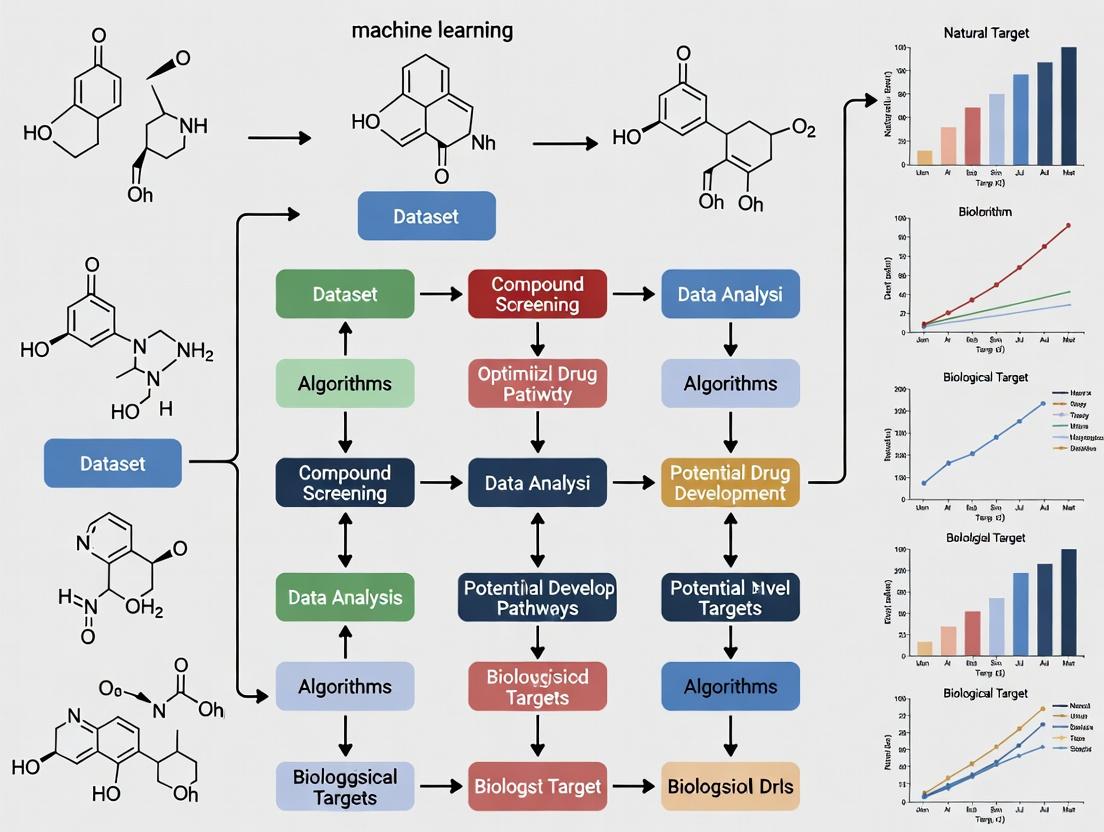
This article provides a comprehensive overview of the transformative role of artificial intelligence (AI) and machine learning (ML) in natural product drug discovery.
From Nature to Novel Drugs: How AI and Machine Learning Are Revolutionizing Natural Product Discovery
Abstract
This article provides a comprehensive overview of the transformative role of artificial intelligence (AI) and machine learning (ML) in natural product drug discovery. Aimed at researchers, scientists, and drug development professionals, it explores the foundational principles of using AI to decode nature's chemical library, details cutting-edge methodologies for virtual screening and de novo design, addresses key challenges in data integration and model interpretability, and critically evaluates validation frameworks and comparative performance against traditional methods. The synthesis offers a roadmap for integrating AI/ML into discovery pipelines to accelerate the identification of bioactive compounds from natural sources.
Decoding Nature's Pharmacy: AI as the New Lens for Natural Product Discovery
1. Introduction Traditional natural product (NP) screening has been the cornerstone of drug discovery, yielding landmark therapeutics like penicillin, paclitaxel, and artemisinin. However, this approach is embedded within a research and development framework characterized by significant inefficiencies. This application note details the principal challenges, providing quantitative data and standard protocols that illustrate the historical bottleneck. Understanding these limitations is critical for appreciating the transformative potential of AI and machine learning in de-risking and accelerating NP-based discovery.
2. Quantifying the Bottleneck: Core Challenges The challenges of traditional NP screening are multidimensional, spanning from sourcing to isolation. The table below summarizes key quantitative hurdles.
Table 1: Quantitative Challenges in Traditional NP Screening
| Challenge Category | Typical Metric/Data Point | Impact on Discovery Timeline |
|---|---|---|
| Source Acquisition & Dereplication | 10,000–100,000 extracts screened per hit; >30% rediscovery rate of known compounds. | Adds 3–6 months for sourcing, extraction, and preliminary analysis. |
| Bioassay Throughput | Manual or semi-automated assays process 100–1,000 samples per week. | Initial screening for a single target can take 6–12 months. |
| Compound Isolation & Structure Elucidation | 100 mg–1 g of raw extract required for isolation; leads to 1–10 mg of pure compound. Takes 2–6 months per active lead. | The major rate-limiting step, consuming 6–18 months of effort per promising extract. |
| Hit-to-Lead Optimization Complexity | NPs often have complex scaffolds with 5–10 chiral centers, making synthetic modification difficult. | Medicinal chemistry cycles are protracted, often >24 months per scaffold. |
3. Detailed Experimental Protocols Protocol 3.1: Standard Bioassay-Guided Fractionation Workflow Objective: To isolate the active constituent(s) from a crude natural product extract. Materials: See "Research Reagent Solutions" below. Procedure:
- Crude Extract Preparation (1-2 weeks): Macerate 1 kg of dried, ground source material (plant, marine sponge, etc.) sequentially with solvents of increasing polarity (e.g., hexane, dichloromethane, ethyl acetate, methanol). Concentrate each fraction in vacuo to yield crude extracts.
- Primary High-Throughput Screening (HTS) (2-4 weeks): Screen all crude extracts at a single concentration (e.g., 100 µg/mL) against the target (e.g., enzyme inhibition, cell viability). Confirm hits in dose-response (IC50/EC50 determination).
- Fractionation of Active Extract (2-3 months): a. Open-Column Chromatography (CC): Load active crude extract (~10 g) onto a normal-phase silica gel column. Elute with a stepwise or gradient solvent system (e.g., hexane:ethyl acetate:methanol). Collect 200-500 fractions. b. Thin-Layer Chromatography (TLC) Analysis: Analyze every 10th fraction by TLC (UV/chemical staining). Pool fractions with similar TLC profiles. c. Secondary Bioassay: Test all pooled fractions in the target bioassay. Select the most active pool for further separation. d. Iterative Chromatography: Repeat steps 3a-c using orthogonal methods (e.g., reverse-phase C18 column, Sephadex LH-20 size exclusion, HPLC) until pure compounds are obtained.
- Structure Elucidation (1-2 months): Analyze pure active compound using a suite of spectroscopic techniques: High-Resolution Mass Spectrometry (HR-MS), 1D/2D Nuclear Magnetic Resonance (NMR) (¹H, ¹³C, COSY, HSQC, HMBC). Compare data to published databases.
Protocol 3.2: Dereplication by LC-MS/MS Analysis Objective: To rapidly identify known compounds in an active extract prior to intensive isolation. Procedure:
- Prepare a dilute solution of the active crude extract.
- Perform Liquid Chromatography-Tandem Mass Spectrometry (LC-MS/MS) using a reverse-phase column coupled to a high-resolution mass spectrometer.
- Acquire data in both positive and negative ionization modes with data-dependent MS/MS fragmentation.
- Process raw data: deconvolute peaks, calculate exact masses, and extract MS/MS fragmentation patterns.
- Query processed data against NP-specific databases (e.g., GNPS, DNP, COCONUT) using spectral matching algorithms.
4. Visualizing the Workflow and Challenges
Diagram 1: Traditional NP Screening Workflow & Bottlenecks
Diagram 2: Key Challenges & Their Consequences
5. The Scientist's Toolkit: Research Reagent Solutions Table 2: Essential Materials for Traditional NP Screening
| Reagent/Material | Function & Application |
|---|---|
| Silica Gel (40-63 µm, 60 Å pore) | Stationary phase for open-column chromatography (CC); separates compounds by polarity. |
| Sephadex LH-20 | Size-exclusion chromatography gel; separates compounds by molecular size in organic solvents. |
| C18 Reverse-Phase Resin | Stationary phase for medium-pressure liquid chromatography (MPLC) or HPLC; separates by hydrophobicity. |
| Deuterated NMR Solvents (CDCl3, DMSO-d6, Methanol-d4) | Solvents for NMR spectroscopy that do not interfere with the sample's proton signal. |
| Bioassay Kits (e.g., CellTiter-Glo, Kinase-Glo) | Homogeneous, ready-to-use assay systems for high-throughput screening of cell viability or enzyme activity. |
| LC-MS Grade Solvents (Acetonitrile, Methanol, Water) | Ultra-pure solvents for LC-MS analysis to minimize background noise and ion suppression. |
| TLC Plates (Silica GF254) | Analytical plates for monitoring fractionation progress; UV-active indicator (254 nm) for visualization. |
The discovery of bioactive natural products (NPs) is transitioning from serendipitous discovery to a data-driven science. The immense chemical space of NPs—estimated at over (10^{60}) possible molecules—necessitates sophisticated computational approaches for efficient exploration. This document frames core AI and Machine Learning (ML) paradigms—Supervised, Unsupervised, and Deep Learning—within the specific context of accelerating NP-based drug development, from dereplication and target prediction to activity forecasting and synthesis planning.
Core Paradigms: Definitions and Chemical Data Applications
Supervised Learning: Models learn a mapping function from input chemical data (e.g., molecular fingerprints) to known output labels (e.g., IC(_{50}), toxic/no-toxic). It is the cornerstone for predictive modeling in cheminformatics.
- Primary Use Cases: Quantitative Structure-Activity Relationship (QSAR) models, property prediction (ADMET), target identification, reaction yield prediction.
Unsupervised Learning: Models identify inherent patterns, clusters, or structures in unlabeled chemical data. It is essential for data exploration and dimensionality reduction.
- Primary Use Cases: Compound clustering and diversity analysis, anomaly detection in high-throughput screening (HTS), novel scaffold discovery, molecular representation learning.
Deep Learning (DL): A subset of ML utilizing multi-layered neural networks to learn hierarchical representations directly from raw or minimally processed data (e.g., SMILES strings, 2D graphs, 3D structures).
- Primary Use Cases: De novo molecular design, prediction of protein-ligand binding poses, synthesis pathway prediction, advanced property prediction from molecular graphs.
Application Notes & Protocols
Application Note 1: Supervised Learning for NP Activity Prediction
Objective: Train a supervised model to predict the anti-malarial activity of natural product derivatives from molecular descriptors.
Quantitative Data Summary: Table 1: Performance Metrics of Supervised Models on Anti-Malarial Activity Dataset (n=2,450 compounds)
| Model Algorithm | Accuracy (%) | Precision | Recall | F1-Score | AUC-ROC | Key Molecular Descriptors Used |
|---|---|---|---|---|---|---|
| Random Forest | 87.2 | 0.85 | 0.88 | 0.86 | 0.93 | MW, AlogP, NumHDonors, NumHAcceptors, Topological Polar Surface Area (TPSA) |
| Gradient Boosting | 89.5 | 0.90 | 0.87 | 0.88 | 0.95 | Same as above, plus Molecular Fragmentation Indices |
| Support Vector Machine | 83.1 | 0.81 | 0.84 | 0.82 | 0.89 | Same as Random Forest |
| Feed-Forward Neural Net | 90.1 | 0.89 | 0.91 | 0.90 | 0.96 | Extended-Connectivity Fingerprints (ECFP6) |
Protocol 1.1: Building a QSAR Classification Model
- Data Curation: Assay data for 2,450 NP derivatives with binary labels (Active: pIC({50}) > 7.0; Inactive: pIC({50}) < 5.0). Apply curation steps (remove duplicates, check for assay interference compounds).
- Descriptor Calculation & Featurization: Compute a set of 200 standard 2D molecular descriptors (e.g., using RDKit or Mordred). Standardize features by removing low-variance descriptors and applying RobustScaler.
- Data Splitting: Split data into stratified Training (70%), Validation (15%), and Test (15%) sets. The validation set is for hyperparameter tuning.
- Model Training & Validation: Train multiple algorithms (e.g., Random Forest, XGBoost). Optimize hyperparameters via grid search or Bayesian optimization using 5-fold cross-validation on the training set, evaluated on the validation set.
- Model Evaluation: Apply the final tuned model to the held-out Test Set. Report standard metrics (Accuracy, Precision, Recall, F1, AUC-ROC). Perform applicability domain analysis (e.g., using leverage) to define the model's reliable prediction space.
- Deployment & Inference: Deploy the serialized model for predicting activity of newly designed or virtual NP libraries.
Application Note 2: Unsupervised Learning for NP Dereplication
Objective: Apply unsupervised clustering to a mass spectrometry (MS) dataset of marine invertebrate extracts to group structurally similar NPs and prioritize novel compounds.
Quantitative Data Summary: Table 2: Clustering Results for LC-MS/MS Data from 500 Marine Extracts
| Clustering Method | Number of Molecular Families Identified | Average Silhouette Score | Key Features Used | Computational Time (min) |
|---|---|---|---|---|
| Hierarchical Clustering (Ward) | 38 | 0.65 | MS1 (Precursor m/z), RT, MS2 (Tanimoto similarity of fingerprints) | 45 |
| DBSCAN | 41 (plus 120 noise points) | 0.71 | Same as above | 22 |
| t-SNE + HDBSCAN | 45 | 0.78 | Same as above | 38 |
| Variational Autoencoder (VAE) Latent Space + K-means | 40 | 0.82 | Learned 32-dimensional latent representation from MS2 spectra | 65 (incl. training) |
Protocol 2.1: MS-Based Dereplication Workflow
- Feature Extraction: Process raw LC-MS/MS data (
.rawor.mzML). Use tools like MZmine 3 or MS-DIAL to perform peak picking, alignment, and gap filling. Export a feature table with columns for Precursor m/z, Retention Time (RT), and peak intensity across samples. - MS2 Spectral Networking: For each MS1 feature, aggregate its associated MS2 spectra. Calculate pairwise spectral similarities (e.g., modified cosine score) to create an undirected graph of spectral matches.
- Molecular Network Construction: Use tools like GNPS to create a molecular network. Nodes represent consensus MS2 spectra; edges connect spectra with similarity scores above a threshold (e.g., >0.7). Visualize with Cytoscape.
- Cluster Analysis & Novelty Prioritization: Extract clusters (molecular families) from the network. Cross-reference cluster members against public NP databases (e.g., NPASS, COCONUT) via precursor mass and spectral matching. Flag clusters with no or weak database matches for novel compound discovery.
- Isolation Guidance: Prioritize extracts containing ions from high-priority novel clusters for subsequent bioassay-guided fractionation.
Application Note 3: Deep Learning forDe NovoNP Design
Objective: Utilize a Generative Adversarial Network (GAN) or a Transformer model to generate novel, synthetically accessible NP-like molecules with predicted activity against a kinase target.
Quantitative Data Summary: Table 3: Evaluation of Generated NP-like Molecules (n=10,000) by a Transformer Model
| Evaluation Metric | Result | Benchmark (ZINC NPs) | Pass/Fail Criteria |
|---|---|---|---|
| Validity (SMILES parsable) | 99.8% | 100% | >95% |
| Uniqueness | 88.5% | - | >80% |
| Novelty (Not in Training Set) | 85.2% | - | >75% |
| Drug-likeness (QED Score > 0.6) | 91.1% | 78.3% | >70% |
| Synthetic Accessibility (SA Score < 4.5) | 76.4% | 81.2% | >70% |
| Predictive Activity (pIC50 > 8.0) | 22.3% | 0.5% (Random) | Maximize |
Protocol 3.1: Training a Molecular Transformer Generator
- Data Preparation: Curate a dataset of 50,000 known bioactive NPs and NP-like molecules in SMILES notation. Canonicalize and sanitize molecules using RDKit. Tokenize the SMILES strings into a vocabulary of characters/substructures.
- Model Architecture: Implement a Transformer decoder-only architecture (similar to GPT). Use embedding layers for tokens, followed by multiple transformer blocks with multi-head self-attention and feed-forward networks.
- Training: Train the model with a causal language modeling objective (predicting the next token in a sequence). Use the AdamW optimizer with a learning rate scheduler. Monitor the loss on a validation set.
- Conditional Generation: Fine-tune the pre-trained model on a smaller set of molecules active against the specific kinase target (e.g., p38 MAPK). This conditions the model to generate molecules biased towards the desired activity.
- Generation & Filtering: Sample new SMILES strings from the fine-tuned model (e.g., using nucleus sampling). Filter the generated molecules through a pipeline assessing validity, uniqueness, drug-likeness (QED), synthetic accessibility (RAscore, SAScore), and predicted activity (using a pre-trained supervised model from Protocol 1.1).
- Output: Produce a ranked list of 100-500 novel, synthesizable NP-inspired candidate structures for in silico docking or synthesis planning.
Visualization: Workflows & Logical Frameworks
Diagram 1: AI/ML Framework for NP Drug Discovery (100 chars)
Diagram 2: Unsupervised MS Dereplication Workflow (100 chars)
The Scientist's Toolkit: Essential Research Reagents & Materials
Table 4: Key Research Reagents & Computational Tools for AI/ML in NP Research
| Item/Category | Function in AI/ML Workflow | Example Specific Tools / Libraries |
|---|---|---|
| Chemical Database | Source of labeled/training data for supervised learning and generative model training. | NPASS, COCONUT, PubChem, ChEMBL, ZINC (NP subset) |
| Cheminformatics Suite | Calculates molecular descriptors, fingerprints, and performs basic molecule manipulations. | RDKit, OpenBabel, CDK (Chemistry Development Kit) |
| Mass Spectrometry Processing Software | Processes raw spectral data into feature tables for unsupervised dereplication workflows. | MZmine 3, MS-DIAL, OpenMS, GNPS Platform |
| Machine Learning Framework | Provides algorithms and infrastructure for building, training, and deploying models. | Scikit-learn (SL/UL), PyTorch (DL), TensorFlow (DL), XGBoost (SL) |
| Molecular Visualization & Analysis | Visualizes chemical structures, clusters, molecular networks, and model interpretations. | Cytoscape (for networks), RDKit (embedding), matplotlib/Plotly (graphs) |
| High-Performance Computing (HPC) / Cloud Resources | Provides necessary compute for training large DL models and processing massive datasets. | Local GPU clusters, Google Cloud AI Platform, AWS SageMaker, Azure ML |
| Model Validation & Benchmarking Suite | Ensures model robustness, reproducibility, and adherence to OECD QSAR principles. | scikit-learn metrics, DeepChem model evaluation, Applicability Domain tools |
Application Notes
The integration of genomic, metabolomic, and ethnobotanical databases through AI/ML pipelines is revolutionizing the identification and prioritization of natural product (NP) leads for drug discovery. This multi-omics approach enables the de-replication of known compounds, the prediction of novel bioactive scaffolds, and the targeted exploration of biodiversity, significantly accelerating the early discovery pipeline.
Table 1: Core Database Types for AI-Driven NP Discovery
| Database Type | Key Examples (2024-2025) | Primary Data | Utility in AI/ML Pipeline |
|---|---|---|---|
| Genomic | MIBiG 3.0, antiSMASH DB, NCBI GenBank, JGI MycoCosm | Biosynthetic Gene Clusters (BGCs) encoding NP pathways. | Predicts NP chemical class and potential novelty via BGC analysis. |
| Metabolomic | GNPS, Metabolights, COCONUT, NP Atlas, HMDB | MS/MS spectral data, molecular fingerprints, physico-chemical properties. | Enables spectral networking for compound identification and similarity-based novel compound prediction. |
| Ethnobotanical | NAPRALERT, Dr. Duke's Phytochemical and Ethnobotanical DBs, TKWB | Traditional use records, plant taxonomy, reported bioactivities. | Provides pre-filtered biological context, prioritizing species for multi-omics analysis. |
Table 2: Quantitative Output from an Integrated AI Prioritization Pipeline
| Analysis Step | Input Data | ML Model Used | Output Metric (Typical Yield) |
|---|---|---|---|
| Ethnobotanical Pre-filtering | 10,000 species records | NLP-based text mining | 500 species with high-priority traditional use claims. |
| Genomic Prioritization | 500 species genome skims | Random Forest Classifier | 120 species predicted to contain novel NRPS/PKS-type BGCs. |
| Metabolomic Matching | LC-MS/MS from 120 species | Spectral Network Analysis (GNPS) | 15 putative novel molecular families linked to prioritized BGCs. |
| Overall Pipeline Efficiency | 10,000 candidate species | Integrated AI workflow | 15 high-probability novel NP leads (0.15% hit rate) |
Experimental Protocols
Protocol 1: Integrated Multi-Omics Collection for AI Training Data
Objective: To generate linked genomic, metabolomic, and ethnobotanical data from a plant or microbial sample for building and validating AI prediction models.
Materials: See "The Scientist's Toolkit" below.
Procedure:
- Ethnobotanical Curation: For the sampled organism, query databases (e.g., NAPRALERT) using its binomial name. Extract and structure all traditional use indications, geographical origin, and previously isolated compounds into a JSON format using a scripted API call or manual curation.
- Genomic DNA Extraction & Sequencing: a. Flash-freeze 100 mg of sample (e.g., microbial mycelia, plant leaf) in liquid N₂. b. Perform genomic DNA extraction using a kit optimized for high polysaccharide/polyphenol content (e.g., CTAB method for plants). c. Assess DNA purity (A260/280 ~1.8) and integrity via agarose gel. d. Prepare and sequence an Illumina paired-end (2x150 bp) whole-genome shotgun library. Target coverage: >50x.
- Metabolite Profiling via LC-MS/MS: a. Homogenize a separate 50 mg sample in 1 mL of 80% methanol/H₂O. b. Centrifuge at 14,000 x g for 15 min at 4°C. Transfer supernatant to an LC-MS vial. c. Perform reversed-phase UHPLC (C18 column, gradient: 5-100% acetonitrile in H₂O + 0.1% formic acid over 18 min). d. Acquire data-dependent acquisition (DDA) MS/MS on a high-resolution Q-TOF mass spectrometer in positive and negative ionization modes (m/z 100-1500).
- Data Packaging for AI: Create a dedicated directory. Place files:
sample_X_ethnobotanical.json,sample_X_genomic_R1.fastq.gz,sample_X_genomic_R2.fastq.gz,sample_X_metabolomic.mzML. This linked dataset forms one training instance for an ML model.
Protocol 2: AI-Powered Prioritization Workflow Using Public Databases
Objective: To computationally prioritize samples for fractionation based on the likelihood of yielding novel bioactive NPs.
Procedure:
- BGC Prediction & Quantification: a. Assemble genomic reads using SPAdes. Contigs >1 kb are retained. b. Submit assembled contigs to the antiSMASH 7.0 web server or run locally. This identifies BGCs and predicts their product class (e.g., terpene, nonribosomal peptide). c. Extract the "BGC novelty score" (a metric comparing predicted BGCs to MIBiG database) and the count of unique BGC classes per sample. Store in a table.
- Metabolomic Spectral Networking:
a. Convert all .mzML files to .mGF format using MSConvert.
b. Upload to the GNPS platform. Perform a Feature-Based Molecular Networking (FBMN) analysis with default parameters.
c. Download the network file (
graphml) and cluster information. Count the number of nodes (MS/MS spectra) not connected to any library spectrum ("orphan nodes") as a metric of chemical novelty. - Ethnobotanical Scoring: a. Using the curated JSON data, apply a scoring system: +2 points for a traditional use aligning with the target disease area (e.g., "antinflammatory" for pain), +1 point for any other medicinal use, 0 for no record.
- Integrated Ranking with ML: a. Create a feature matrix: Rows=samples, Columns=[BGCnoveltyscore, BGCclasscount, Metabolomicorphannodes, Ethnobotanical_score]. b. Train a simple Random Forest regressor on a labeled subset (where "hit" = known novel NP discovery) to predict a composite "Priority Score." c. Apply the model to unlabeled samples. Rank samples by the predicted Priority Score for lab investigation.
The Scientist's Toolkit: Research Reagent Solutions
| Item | Function in NP Discovery Pipeline |
|---|---|
| CTAB DNA Extraction Buffer | Lysis buffer for tough plant/microbial cell walls; complexes polysaccharides for clean gDNA. |
| Illumina DNA Prep Kit | Library preparation for whole-genome sequencing; ensures compatible adapter ligation for NGS. |
| 80% Methanol / 0.1% Formic Acid | Standard metabolomics extraction/solvent; quenches enzymes and is compatible with LC-MS. |
| C18 UHPLC Column (1.7µm) | High-resolution separation of complex natural product extracts prior to MS detection. |
| antiSMASH 7.0 Software | Standard tool for BGC identification and classification from genomic data. |
| GNPS (Global Natural Products Social) Platform | Cloud-based ecosystem for mass spectrometry data processing, sharing, and molecular networking. |
Visualizations
AI-Driven Multi-Omics Prioritization Workflow
Multi-Omics Data Generation Protocol for AI
Within the broader thesis on AI and machine learning for natural product drug discovery, foundational chemical models represent a paradigm shift. These models, pre-trained on vast chemical corpora, learn fundamental representations of molecular structure, properties, and reactivity. They provide a powerful, transferable starting point for downstream tasks specific to natural product research, such as predicting bioactive conformations, identifying potential biosynthesis pathways, or screening for novel scaffolds with desired pharmacological profiles. This moves beyond traditional quantitative structure-activity relationship (QSAR) models by capturing a deeper, more generalizable chemical "language."
Core Concepts & Data Presentation
Types of Chemical Language Models & Embeddings
Table 1: Comparison of Major Chemical Representation Methods for Foundational Models
| Representation Method | Description | Example Model/Approach | Typical Embedding Dimension | Key Advantage for Natural Products |
|---|---|---|---|---|
| SMILES/String-Based | Treats Simplified Molecular-Input Line-Entry System strings as a sequence of tokens (e.g., atoms, brackets). | ChemBERTa, SMILES-BERT | 128 - 768 | Can handle complex, ring-rich structures common in natural products. |
| SELFIES | Treats SELF-referencing embedded Strings (SELFIES) as a sequence. Guarantees 100% valid chemical structures. | SELFIES-based Transformer | 128 - 512 | Enables robust generative tasks without invalid structure generation. |
| Graph-Based | Represents molecules as graphs with atoms as nodes and bonds as edges. Uses Graph Neural Networks (GNNs). | GROVER, MPNN, GraphTransformer | 300 - 1024 | Inherently captures topological and spatial relationships, ideal for stereochemistry. |
| 3D Conformer-Aware | Incorporates 3D molecular geometry (atomic coordinates) into the representation. | 3D-Transformer, GeoMol | 256 - 1024 | Critical for modeling pharmacophore and protein-ligand interactions. |
| Reaction-Aware | Trained on reaction data, learning transformations between reactants and products. | Molecular Transformer | 256 - 512 | Useful for predicting biosynthetic or synthetic pathways for natural product analogs. |
Table 2: Performance Benchmarks of Selected Foundational Chemical Models (Representative Tasks)
| Model Name (Year) | Representation | Pre-training Dataset Size | Fine-tuned Task (Dataset) | Key Metric (Score) | Relevance to NP Discovery |
|---|---|---|---|---|---|
| ChemBERTa-2 (2023) | SMILES | 77M SMILES | BBB Penetration (MoleculeNet) | ROC-AUC: 0.898 | Predicting natural product bioavailability. |
| GROVER (2022) | Graph | 11M Molecules | Toxicity Prediction (Tox21) | Avg. ROC-AUC: 0.855 | Early-stage safety screening of NP hits. |
| MoLFormer (2023) | SMILES (XLNet) | 1.1B SMILES | Quantum Property (QM9) | MAE on µ: 0.30 D | Estimating electronic properties of novel scaffolds. |
| 3D-EquiBind (2024) | 3D Graph | PDBBind (~20k complexes) | Protein-Ligand Docking (POSEIDON) | RMSD < 2.0 Å (Success Rate) | Rapid pose prediction for NP-target complexes. |
Experimental Protocols
Protocol: Fine-Tuning a Pre-trained Chemical LM for Activity Prediction
Objective: Adapt a general-purpose chemical language model (e.g., a SMILES-based transformer) to predict the activity of natural product-like compounds against a specific target.
Materials & Reagent Solutions:
- Pre-trained Model Weights: (e.g.,
ChemBERTa-77M-MLMfrom Hugging Face). - Fine-tuning Dataset: Curated CSV file with columns:
canonical_smiles,activity_label(e.g., 1/0 for active/inactive). - Software: Python 3.9+, PyTorch 2.0+, Transformers library, RDKit, scikit-learn.
- Computing Environment: GPU with >8GB VRAM recommended.
Procedure:
- Data Preparation:
- Using RDKit, standardize SMILES (neutralization, salt removal, tautomer canonicalization).
- Split data into training (70%), validation (15%), and test (15%) sets using stratified splitting based on
activity_label. - Create a tokenizer compatible with the pre-trained model or use its default.
- Model Setup:
- Load the pre-trained model architecture and weights.
- Replace the pre-training head (e.g., masked language modeling head) with a classification head (a dropout layer followed by a linear layer projecting to 2 output neurons).
- Initialize the classification head with random weights.
- Training Loop:
- Freezing (Optional): Initially freeze all layers except the classification head for 2-3 epochs.
- Hyperparameters: Set batch size (16-32), learning rate (2e-5 to 5e-5), number of epochs (20-50). Use AdamW optimizer.
- Execution: Unfreeze all layers. For each epoch, forward propagate batches of tokenized SMILES, compute cross-entropy loss between predictions and true labels, and backpropagate.
- Validation: After each epoch, evaluate on the validation set. Save the model with the best validation ROC-AUC score.
- Evaluation:
- Load the best saved model and evaluate on the held-out test set.
- Report standard metrics: ROC-AUC, Precision-Recall AUC, F1-score, and generate a confusion matrix.
Protocol: Generating Molecular Embeddings for Virtual Screening
Objective: Use a foundational model to create a fixed-dimensional vector (embedding) for each compound in a library to enable similarity-based virtual screening.
Materials & Reagent Solutions:
- Embedding Model: A pre-trained model capable of producing pooled molecular representations (e.g.,
GROVER-base,ChemBERTawith mean pooling). - Compound Library: A large database of natural products and synthetic analogs in SDF or SMILES format.
- Query Molecule: The known active natural product ("hit").
- Software: Python, PyTorch/TensorFlow, RDKit, NumPy, FAISS (Facebook AI Similarity Search) library.
Procedure:
- Library Standardization:
- Process all library molecules with RDKit: generate canonical SMILES, remove duplicates, filter by basic drug-like properties (e.g., MW < 800, LogP < 5).
- Embedding Generation:
- Load the pre-trained model in inference mode (
.eval()). - For each canonical SMILES in the library:
- Tokenize/encode the SMILES for the model.
- Pass the tokens through the model.
- Extract the embedding from the model's pooling layer (e.g., the [CLS] token embedding or mean of last hidden layer).
- Store the resulting vector (e.g., 768-dimensional) in a NumPy array.
- Load the pre-trained model in inference mode (
- Indexing for Search:
- Use the FAISS library to create an efficient similarity search index (e.g.,
IndexFlatIPfor inner product/cosine similarity). - Add all library embeddings to the index.
- Use the FAISS library to create an efficient similarity search index (e.g.,
- Similarity Search:
- Generate an embedding for the query natural product following Step 2.
- Query the FAISS index with the query embedding, requesting the top k (e.g., 100) most similar vectors.
- Retrieve the corresponding compound IDs and SMILES for the top results.
- Validation:
- Visually inspect top hits for structural similarity.
- If possible, evaluate retrieved hits using independent molecular docking or known bioactivity data.
Mandatory Visualizations
Diagram 1: Foundational Models in NP Discovery Workflow (98 chars)
Diagram 2: From Molecule to Embedding: Two Pathways (86 chars)
The Scientist's Toolkit: Research Reagent Solutions
Table 3: Essential Digital "Reagents" for Working with Chemical Foundational Models
| Item (Software/Library) | Function in Experiment | Key Notes for Implementation |
|---|---|---|
| RDKit | Core cheminformatics toolkit for molecule standardization, descriptor calculation, SMILES parsing, and image rendering. | Use for mandatory pre-processing to ensure input quality. Critical for handling natural product stereochemistry. |
| PyTorch / TensorFlow | Deep learning frameworks for loading, modifying, and training foundational model architectures. | Required for fine-tuning protocols. PyTorch is commonly used in recent model implementations. |
| Hugging Face Transformers | Provides easy access to thousands of pre-trained transformer models (including ChemBERTa). | Simplifies tokenization, model loading, and training loops via the Trainer API. |
| DeepChem | High-level library wrapping many molecular deep learning models and datasets. | Useful for quick prototyping and access to curated molecular datasets (e.g., MoleculeNet). |
| FAISS | Library for efficient similarity search and clustering of dense vectors. | Essential for performing virtual screening on large libraries using molecular embeddings. Runs on CPU/GPU. |
| MolVS / Cactvs | Specialized tools for rigorous molecular validation and standardization (tautomer normalization, charge correction). | Use for advanced pre-processing when RDKit's standard rules are insufficient. |
| Streamlit / Dash | Frameworks for building simple web applications to demo embedding models and similarity search tools. | Enables creation of shareable, user-friendly interfaces for project collaborators. |
This protocol details the integrated pipeline for natural product (NP) discovery, framed within the broader thesis that AI and machine learning (ML) are transformative for de-risking and accelerating NP research. By bridging classical microbiology, analytical chemistry, and modern bioinformatics, the pipeline generates structured, high-quality data essential for training robust AI models aimed at novel hit identification and mechanism prediction.
Application Notes: Core Stages & Data Generation for AI
Stage 1: Intelligent Sample Collection & Metadata Curation
Application Note: Geographic, taxonomic, and ecological metadata are critical features for AI models predicting chemical novelty. Standardized digital capture is mandatory.
Protocol: Environmental Sample Collection & Metadata Recording
- Site Selection: Use GIS tools to target unique or underrepresented biomes (e.g., marine sediments, plant endophytes from threatened ecosystems).
- Collection: Aseptically collect sample (e.g., 1g soil, 5ml water, plant tissue). Perform in-situ measurements (pH, temperature, GPS coordinates).
- Preservation: Immediately place samples in sterile containers. For microbial communities, use nucleic acid stabilization buffers or cryopreservation.
- Digital Metadata Entry: Log all data into a structured database (e.g., MIxS standards). Fields must include:
Sample_ID,Date_Time,GPS,Habitat,Host_Taxon,Depth,pH,Collector.
Stage 2: Strain Prioritization & Culturing
Application Note: The goal is to maximize chemical diversity for downstream analysis. AI models can prioritize strains based on genomic or morphological features.
Protocol: High-Throughput Culturing & Morphological Screening
- Selective Cultivation: Inoculate sample homogenate onto diverse media (ISP2, AIA, GYM, R2A, Chitin). Incubate at varied temperatures (12°C, 28°C, 37°C) for 7-28 days.
- Colony Picking: Use robotic pickers or manual selection to isolate unique morphotypes based on color, texture, diffusible pigments.
- Genomic DNA Extraction: Extract gDNA from biomass using a kit (e.g., FastDNA Spin Kit for Soil). Elute in 50 µL TE buffer.
- 16S/ITS Sequencing: Amplify rRNA gene regions via PCR. Sequence and perform taxonomic assignment via BLAST against NCBI or SILVA.
- AI-Prioritization Input: Data table for model training includes
Strain_ID,Morphotype_Class,Growth_Rate,Taxonomic_Lineage,Isolation_Medium.
Table 1: Example Strain Prioritization Data
| Strain_ID | Phylum | Growth_Score | Pigment_Production | AIPriorityRank |
|---|---|---|---|---|
| NPML001 | Actinobacteria | 0.85 | Blue (455 nm) | 1 |
| NPML002 | Ascomycota | 0.62 | Yellow | 3 |
| NPML003 | Proteobacteria | 0.71 | None | 2 |
Stage 3: Metabolite Extraction & LC-MS/MS Analysis
Application Note: Generate high-resolution, tandem MS data as the core input for molecular networking and AI-based structure prediction.
Protocol: Small Molecule Profiling
- Fermentation & Extraction: Inoculate strain in 50 mL production medium. Shake (180 rpm) for 7 days. Centrifuge. Extract broth and cell pellet separately with equal volume EtOAc (x3). Combine, dry under vacuum.
- LC-MS/MS Analysis:
- Column: C18 (2.1 x 100 mm, 1.7 µm).
- Gradient: 5-95% MeCN in H2O (+0.1% Formic acid) over 18 min.
- MS: High-resolution Q-TOF in data-dependent acquisition (DDA) mode.
- Settings: ESI (+/-), scan range 100-2000 m/z, top 10 precursors per cycle for MS/MS.
Stage 4: AI-Powered Data Analysis & Hit Identification
Application Note: Use computational tools to cluster MS data, predict structures, and correlate with bioactivity, reducing the need for exhaustive isolation.
Protocol: Molecular Networking & In-Silico Dereplication
- Data Conversion: Convert .raw files to .mzML using MSConvert (ProteoWizard).
- Feature Detection: Process with MZmine3 or GNPS Feature-Based Molecular Networking (FBMN) workflow.
- Molecular Network: Upload to GNPS. Create network with parameters:
Cos Score > 0.7,TopK > 10. - AI-Driven Dereplication:
- Use
DEREPLICATOR+orNAPon GNPS to annotate molecular families. - Input MS/MS data to
SIRIUSfor molecular formula and CSI:FingerID for structure prediction. - Use
MolDiscoveryor similar ML models to predict novelty score.
- Use
- Bioactivity Integration: If bioassay data exists (e.g., antimicrobial zone of inhibition), link activity to specific nodes/clusters in the network.
Table 2: AI/ML Tools for NP Discovery
| Tool Name | Function | Data Input | Output |
|---|---|---|---|
| GNPS | Molecular Networking | MS/MS (.mzML) | Spectral Networks |
| SIRIUS/CSI:FingerID | Structure Prediction | MS/MS | Molecular Formula & Structure |
| AntiSMASH | Biosynthetic Gene Cluster Prediction | Genomic FASTA | BGC Type & Prediction |
| NPClassifier | Compound Classification | Chemical Structure | Class & Pathway |
The Scientist's Toolkit: Research Reagent Solutions
Table 3: Essential Materials for the Modern NP Pipeline
| Item | Function | Example Product |
|---|---|---|
| DNA/RNA Shield | Stabilizes microbial community DNA/RNA at collection | Zymo Research R1100 |
| ISP Media Series | Selective cultivation of Actinomycetes | BD Difco ISP Media |
| FastDNA Spin Kit | Rapid gDNA extraction from complex samples | MP Biomedicals 116560200 |
| SDB Liquid Media | Fungal secondary metabolite production | HiMedia M108 |
| Solid Phase Extraction (SPE) Cartridges | Fractionation of crude extracts | Waters Oasis HLB |
| LC-MS Grade Solvents | High-resolution metabolomics analysis | Fisher Chemical Optima |
| 96-well Microtiter Plates | High-throughput bioassays | Corning 3631 |
| Resazurin Sodium Salt | Cell viability assay for antimicrobial screening | Sigma R7017 |
Visualizations
Title: Modern NP Discovery Pipeline Workflow
Title: AI Model Inputs & Outputs for NP Discovery
AI in Action: Key Methodologies and Real-World Applications in NP Discovery
Within the broader thesis that artificial intelligence and machine learning represent a paradigm shift in natural product (NP) drug discovery, this document details practical applications. Virtual Screening (VS) 1.0, reliant on molecular docking to physical target structures, struggles with the unique chemical space, stereochemical complexity, and lack of explicit targets for many NPs. VS 2.0 employs an ensemble of AI models to overcome these barriers, moving from simple target-ligand matching to predictive systems that prioritize NPs with a high probability of exhibiting a desired phenotypic or target-based activity, thereby accelerating the identification of novel bioactive leads.
Application Notes
Note 1: AI Model Ensemble for Target-Agnostic Prioritization When a specific protein target is unknown but high-throughput phenotypic screening data exists, an ensemble model can prioritize NPs for validation. This approach uses results from a cell-based assay (e.g., inhibition of cancer cell proliferation) as training labels.
Key Quantitative Results: Table 1: Performance Metrics of AI Ensemble on a Phenotypic Screening Dataset (Hypothetical Example)
| Model Type | Training Set Size | Validation AUC-ROC | Precision @ Top 100 | Key Function |
|---|---|---|---|---|
| Graph Neural Network (GNN) | 5,000 NP-activity pairs | 0.78 | 0.25 | Captures complex molecular topology |
| Transformer (ChemBERTa) | 5,000 NP-activity pairs | 0.75 | 0.22 | Understands SMILES syntax semantics |
| 3D-Convolutional Neural Network | 1,200 NP-3D structures | 0.71 | 0.18 | Analyzes spatial pharmacophore features |
| Ensemble (Weighted Average) | Combined | 0.82 | 0.31 | Synthesizes predictions, reduces variance |
Note 2: Target-Specific Screening with Interaction Predictors For a known target (e.g., kinase EGFR), VS 2.0 integrates more than docking. A hybrid pipeline uses a deep learning model trained on protein-ligand interaction fingerprints (PLIF) from the PDBbind database to score NP binding, complementing physics-based docking scores.
Key Quantitative Results: Table 2: Comparison of VS Methods for EGFR Inhibitor Identification
| Virtual Screening Method | Screening Library Size | Enrichment Factor (EF₁%) | Hit Rate in Experimental Validation | Runtime |
|---|---|---|---|---|
| Traditional Docking (VS 1.0) | 50,000 NPs | 5.2 | 8% | 48 hours |
| AI Scoring (PLIF Model Only) | 50,000 NPs | 8.7 | 12% | 2 hours |
| Consensus Docking + AI Scoring (VS 2.0) | 50,000 NPs | 15.3 | 22% | 50 hours |
Experimental Protocols
Protocol 1: Building a Target-Agnostic Prioritization Pipeline
Aim: To rank a library of 100,000 natural products for predicted anti-inflammatory activity using historical phenotypic screening data.
Materials & Software: See "The Scientist's Toolkit" below.
Procedure:
- Data Curation: Assemble a training set of 10,000 NPs with known binary activity labels (active/inactive) from a TNF-α inhibition assay in macrophages. Standardize SMILES strings, remove duplicates, and apply scaffold splitting to separate training and test sets.
- Feature Generation:
- For GNN: Convert SMILES to molecular graph objects with nodes (atoms) and edges (bonds).
- For Transformer: Tokenize SMILES strings for direct model input.
- For 3D-CNN: Generate low-energy 3D conformers for each NP using RDKit's ETKDG method and align to a reference grid.
- Model Training: Independently train the three AI models (GNN, Transformer, 3D-CNN) on the same training set, using 20% of the data for validation and early stopping.
- Ensemble Construction: On the held-out test set, optimize weights for a linear combination of the three models' prediction scores to maximize the AUC-ROC. Final weights: GNN (0.5), Transformer (0.3), 3D-CNN (0.2).
- Library Prioritization: Apply the weighted ensemble model to the entire 100,000 NP library. Rank compounds by descending predicted activity probability.
- Experimental Triaging: Select the top 500 ranked NPs for in vitro experimental validation.
Protocol 2: Experimental Validation of AI-Prioritized Hits
Aim: To confirm the anti-inflammatory activity of top 10 AI-prioritized NPs.
Procedure:
- Sample Preparation: Reconstitute dried NP samples in DMSO to 10 mM stock solutions.
- Cell Culture: Seed RAW 264.7 macrophage cells in 96-well plates at 50,000 cells/well and incubate overnight.
- Compound Treatment & Stimulation: Treat cells with NPs at 10 µM (n=3). After 1 hr, stimulate with LPS (100 ng/mL). Include controls: vehicle (DMSO), LPS-only, and dexamethasone (10 µM) as positive control.
- TNF-α ELISA: After 18 hours, collect cell culture supernatants. Perform TNF-α ELISA according to manufacturer protocol. Measure absorbance at 450 nm.
- Viability Assay (MTT): To the same cells, add MTT reagent (0.5 mg/mL). Incubate for 3 hours, solubilize with DMSO, and measure absorbance at 570 nm.
- Data Analysis: Normalize TNF-α secretion to cell viability and LPS-only control. Compounds showing >50% inhibition of TNF-α secretion with <20% cytotoxicity are considered confirmed hits.
Pathway & Workflow Diagrams
Title: VS 2.0 AI Ensemble Workflow for NP Prioritization
Title: Anti-inflammatory Pathway & AI-NP Target Hypotheses
The Scientist's Toolkit: Research Reagent Solutions
Table 3: Essential Materials for AI-Driven NP Screening & Validation
| Item / Reagent | Provider Examples | Function in VS 2.0 Pipeline |
|---|---|---|
| Curated NP Libraries | AnalytiCon, Selleckchem, In-house Collections | Source of chemically diverse, often novel, compounds for AI prediction and experimental testing. |
| Cheminformatics Software (RDKit, OpenBabel) | Open Source | Fundamental for SMILES standardization, molecular descriptor calculation, fingerprint generation, and file format conversion. |
| AI/ML Platforms | DeepChem, PyTorch, TensorFlow, scikit-learn | Frameworks for building, training, and deploying GNNs, Transformers, and other models. |
| High-Performance Computing (HPC) / Cloud GPU | AWS, Google Cloud, Azure | Provides necessary computational power for training complex AI models and processing large libraries. |
| Docking Software | AutoDock Vina, Glide, GOLD | Generates initial pose and score for target-specific screening, used as input feature for AI. |
| Cell-Based Assay Kits (e.g., TNF-α ELISA) | R&D Systems, BioLegend, Abcam | Provides standardized, reliable methods for experimental validation of AI-prioritized hits in biological systems. |
| Raw Natural Product Extracts | NCI, USDA, Marine Biobanks | Complex starting material for the isolation of novel NPs, which can be characterized and added to screening libraries. |
Within the broader thesis on the application of artificial intelligence (AI) and machine learning (ML) to natural product drug discovery, predictive bioactivity modeling emerges as a critical computational bridge. It accelerates the identification of promising bioactive compounds from vast natural product libraries by predicting their interactions with specific molecular targets (target-specific) or their phenotypic outcomes in complex biological systems (phenotypic screening). This application note details the integration of ML workflows to enhance the efficiency and predictive power of both screening paradigms.
Effective models require high-quality, structured data. Key public and proprietary data sources are leveraged and must undergo rigorous curation.
Table 1: Key Data Sources for Predictive Bioactivity Modeling
| Data Source | Data Type | Typical Volume | Primary Use in ML |
|---|---|---|---|
| ChEMBL | Target-binding affinities (Ki, IC50) | >2M compounds, 1.4M assays | Training target-specific models. |
| PubChem BioAssay | Phenotypic & biochemical assay outcomes | >1M bioassays | Training phenotypic & target models. |
| DrugBank | Approved drug targets & actions | ~14k drug entries | Feature engineering, model validation. |
| GNPS (Natural Products) | MS/MS spectra of natural products | >1M spectra | Building NP-specific molecular libraries. |
| In-house HTS Data | Proprietary screening results | Project-dependent (10^4 - 10^6 data points) | Model fine-tuning and validation. |
Protocol 1.1: Data Curation and Standardization Workflow
- Data Retrieval: Programmatically access databases via REST APIs (e.g., ChEMBL, PubChem) using Python packages like
requestsandpandas. - Activity Thresholding: Define consistent activity thresholds (e.g., IC50 < 10 µM = 'Active'; IC50 > 20 µM = 'Inactive'). Discard borderline values.
- Chemical Standardization: Using RDKit in Python, standardize all molecular structures: neutralize charges, remove salts, generate canonical SMILES, and compute parent compounds.
- Descriptor Calculation: Generate a unified set of molecular features (descriptors) for all compounds. This includes:
- 1D/2D Descriptors: Molecular weight, LogP, topological polar surface area (TPSA), number of hydrogen bond donors/acceptors (via RDKit).
- Fingerprints: Morgan fingerprints (ECFP4) for structural similarity and machine learning input.
- Dataset Splitting: Partition the curated dataset into training (70%), validation (15%), and hold-out test (15%) sets using stratified splitting based on activity labels to maintain class balance.
Target-Specific Predictive Modeling
This approach trains ML models to predict the binding affinity or inhibitory activity of a compound against a defined protein target.
Protocol 2.1: Building a Target-Specific Random Forest Classifier
- Objective: To classify natural products as active or inactive against a specific target (e.g., kinase EGFR).
- Input: Standardized dataset of compounds with known activity against EGFR from Table 1 sources.
- Software/Tools: Python, scikit-learn, RDKit, imbalanced-learn (if needed).
- Steps:
- Feature Generation: Compute ECFP4 (2048 bits) fingerprints for all compounds.
- Model Training: Initialize a
RandomForestClassifier. Use the validation set to optimize hyperparameters (nestimators, maxdepth) via grid search. - Addressing Imbalance: If inactive compounds vastly outnumber actives, apply SMOTE (Synthetic Minority Over-sampling Technique) from the
imbalanced-learnlibrary during training only. - Evaluation: Predict on the hold-out test set. Calculate metrics: Accuracy, Precision, Recall, F1-score, and Area Under the ROC Curve (AUC-ROC).
Table 2: Example Performance of Target-Specific ML Models (Hypothetical EGFR Inhibitor Prediction)
| Model Algorithm | AUC-ROC | Balanced Accuracy | Precision (Active) | Recall (Active) |
|---|---|---|---|---|
| Random Forest | 0.89 | 0.81 | 0.75 | 0.70 |
| Graph Neural Network | 0.92 | 0.84 | 0.78 | 0.73 |
| Support Vector Machine | 0.85 | 0.78 | 0.72 | 0.65 |
ML Workflow for NP Bioactivity Prediction
Phenotypic Screening Prediction with Deep Learning
Predicting complex phenotypic outcomes (e.g., cell viability, morphology change) from chemical structure requires models capable of capturing intricate structure-activity relationships.
Protocol 3.1: Training a Convolutional Neural Network (CNN) on Phenotypic Data
- Objective: Predict a compound's effect on cell viability (e.g., % inhibition) from its molecular graph.
- Input: Compounds with associated high-content imaging readouts or viability metrics.
- Software/Tools: Python, PyTorch or TensorFlow, DeepChem, RDKit.
- Steps:
- Graph Representation: Convert each compound's SMILES string into a graph object (nodes=atoms, edges=bonds) with atom and bond features.
- Model Architecture: Implement a Graph Convolutional Network (GCN) or Message Passing Neural Network (MPNN).
- GCN Layers (2-3): Update atom embeddings by aggregating information from neighboring atoms.
- Global Pooling: Aggregate atom embeddings into a single molecular fingerprint.
- Fully Connected Layers: Map the pooled fingerprint to a regression output (% viability).
- Training: Use Mean Squared Error (MSE) loss and the Adam optimizer. Monitor loss on the validation set.
- Interpretation: Use gradient-based attribution methods (e.g., Integrated Gradients) to highlight molecular substructures influential to the prediction.
GCN for Phenotypic Prediction
The Scientist's Toolkit: Research Reagent Solutions
Table 3: Essential Materials for Implementing Predictive Modeling Workflows
| Item / Reagent | Function / Purpose | Example Vendor / Tool |
|---|---|---|
| Curated Bioactivity Database | Provides labeled data for supervised ML model training. | ChEMBL, PubChem BioAssay |
| Chemical Standardization Suite | Cleans and standardizes molecular structures for consistent feature generation. | RDKit (Open Source), ChemAxon |
| Molecular Descriptor & Fingerprint Calculator | Generates numerical representations (features) of compounds for ML algorithms. | RDKit, PaDEL-Descriptor |
| ML/DL Framework | Provides libraries for building, training, and evaluating predictive models. | scikit-learn, PyTorch, TensorFlow |
| High-Performance Computing (HPC) / Cloud GPU | Accelerates model training, especially for deep learning on large datasets. | AWS EC2 (P3 instances), Google Cloud AI Platform, local GPU cluster |
| Model Interpretation Library | Helps explain model predictions and identify important molecular features. | SHAP, Captum, LIME |
| In-house HTS Dataset | Proprietary data for fine-tuning and validating models on specific disease models or compound libraries. | Organization's internal screening facility |
Integrated Validation Protocol
Predictions must be experimentally validated to close the AI-driven discovery loop.
Protocol 4.1: Experimental Validation of ML-Predicted Hits
- Objective: Biochemically validate top predictions from target-specific and phenotypic models.
- Materials: Predicted hit compounds, positive/negative controls, assay kits.
- Target-Specific Validation (e.g., Enzyme Inhibition):
- Source or synthesize predicted hit compounds.
- Perform a dose-response assay (e.g., 10-point, 1 nM - 100 µM) using a fluorescence- or luminescence-based activity kit for the target enzyme.
- Calculate IC50 values. A compound is considered validated if IC50 < 10 µM and shows a dose-dependent response.
- Phenotypic Validation (e.g., Cytotoxicity):
- Treat relevant cell lines (e.g., cancer line for an oncology phenotype) with predicted hits in a 96-well plate.
- After 72 hours, measure cell viability using a resazurin (Alamar Blue) or ATP-based (CellTiter-Glo) assay.
- Determine GI50 values. Validate hits that show GI50 < 20 µM and confirm morphology changes via high-content imaging if applicable.
De Novo Design of Natural Product-Inspired Compounds
Natural products (NPs) are a privileged source of drug leads but are often complex and difficult to synthesize or optimize. De novo design, powered by artificial intelligence (AI) and machine learning (ML), generates novel, synthetically accessible molecular structures inspired by NP scaffolds. This approach integrates generative models, predictive algorithms, and synthesis planning to accelerate the discovery of new chemical entities within therapeutically relevant chemical space. This Application Note details protocols for implementing AI-driven de novo design within a modern NP-inspired drug discovery pipeline.
Key Data & Performance Metrics of AI Models for De Novo Design
Table 1: Comparative Performance of AI/ML Models for De Novo Design (Summarized from Recent Literature)
| Model Type | Key Architecture/Technique | Primary Application | Reported Metric (Typical Range) | Key Advantage |
|---|---|---|---|---|
| Generative AI | Variational Autoencoder (VAE) | Latent space exploration of NP-like scaffolds | Validity: 85-98%; Uniqueness: 60-90% | Smooth latent space interpolation. |
| Generative AI | Generative Adversarial Network (GAN) | Generating novel structures from NP distributions | Novelty: >80% (vs. training set) | Can produce highly novel structures. |
| Generative AI | Transformer-based (e.g., MolGPT) | Sequence-based generation of SMILES strings | Syntactic Validity: >90% | Captures long-range molecular dependencies. |
| Reinforcement Learning (RL) | REINFORCE, PPO | Optimization for target properties (e.g., binding affinity) | Success Rate*: 40-70% per optimization cycle | Directly optimizes for multi-parameter objectives. |
| Hybrid | VAE/RL + Synthesizability Filter | Generating synthetically accessible leads | Synthetic Accessibility Score (SAscore) Improvement: 20-40% reduction | Balances novelty and synthetic feasibility. |
*Success Rate: Defined as the percentage of generated molecules meeting predefined target criteria.
Detailed Application Protocols
Protocol 1: Building and Training a VAE for NP-Inspired Scaffold Generation
Objective: To create a generative model that learns the chemical space of a curated NP library and samples novel, valid structures from its latent space.
Materials & Reagents:
- Hardware: GPU-equipped workstation (e.g., NVIDIA V100/A100).
- Software: Python 3.8+, PyTorch/TensorFlow, RDKit, pandas, NumPy.
- Data: Curated NP database (e.g., COCONUT, NP Atlas) in SMILES format, filtered for organic compounds and canonicalized.
Procedure:
- Data Preprocessing: a. Load SMILES strings from your NP dataset. b. Filter molecules based on molecular weight (e.g., 150-800 Da) and remove salts/metals using RDKit. c. Canonicalize SMILES and remove duplicates. d. Encode SMILES into one-hot tensors or using a tokenizer (character-level). Pad sequences to uniform length.
Model Architecture Setup: a. Define an encoder network: 1-2 LSTM/GRU layers, followed by dense layers mapping to mean (
mu) and log-variance (log_var) vectors of the latent space (dimensionz_dim=128). b. Define a decoder network: A dense layer to project latent vectorzto initial hidden state, followed by 1-2 LSTM/GRU layers and a final dense layer with softmax to predict the token sequence. c. Use a Gaussian prior for the latent space.Model Training: a. Use Adam optimizer (lr=0.0005). b. Loss function: Reconstruction Loss (Categorical Cross-Entropy) + β * KL Divergence Loss (β can be annealed from 0 to ~0.01). c. Train for 100-200 epochs, monitoring validation set loss for early stopping. d. Validate by decoding random latent vectors to SMILES and checking chemical validity with RDKit.
Protocol 2: Reinforcement Learning (RL) Fine-Tuning for Target Property Optimization
Objective: To fine-tune a pre-trained generative model (from Protocol 1) to bias generation towards molecules with desired properties (e.g., high predicted activity, drug-likeness).
Materials & Reagents:
- Pre-trained Model: VAE from Protocol 1.
- Software: Custom RL environment (OpenAI Gym style), reward calculation scripts.
- Predictive Models: QSAR model(s) for target activity (e.g., Random Forest, GNN) or calculated property functions (e.g., QED, LogP).
Procedure:
- Environment Setup:
a. Create an agent where the action is the generation of a complete molecule from the generative model.
b. Define the state as the latent vector
zor the sequence of generated tokens. c. Define the reward function R:R = w1 * pActivity + w2 * QED + w3 * SAscore + w4 * NP-likeness, where weightsware tuned.pActivityis the output from a predictive model.
- RL Fine-Tuning Loop:
a. Initialize the policy network as the decoder of the pre-trained VAE. Freeze the encoder.
b. Use a policy gradient method (e.g., REINFORCE or Proximal Policy Optimization - PPO).
c. For N iterations:
i. Sample a batch of latent vectors
zfrom the prior. ii. Decodezto molecules using the current policy (decoder). iii. Calculate the rewardRfor each generated molecule. iv. Compute policy loss and update decoder parameters to maximize expected reward. d. Periodically sample molecules and assess diversity to avoid mode collapse.
Protocol 3: In Silico Validation and Synthesis Prioritization
Objective: To computationally validate and rank AI-generated molecules for synthesis and testing.
Materials & Reagents:
- Software: Molecular docking suite (e.g., AutoDock Vina, GNINA), ADMET prediction tools (e.g., SwissADME, pkCSM), retrosynthesis software (e.g., AiZynthFinder, ASKCOS).
- Data: Target protein structure (PDB file), generated molecules in SDF format.
Procedure:
- Virtual Screening: a. Prepare the protein receptor (add hydrogens, assign charges). b. Prepare ligand libraries (generated molecules + reference NPs) for docking (generate 3D conformers, minimize energy). c. Perform molecular docking to a defined binding site. Record docking scores and poses.
ADMET & Property Profiling: a. Use batch processing in SwissADME to calculate key properties: LogP, TPSA, #Rotatable bonds, Lipinski/Veber rule compliance, synthetic accessibility score. b. Use pkCSM or similar to predict key ADMET endpoints: Caco-2 permeability, CYP inhibition, hERG liability, Ames toxicity.
Retrosynthesis Analysis & Prioritization: a. Input the top-scoring molecules (by docking and ADMET) into a retrosynthesis planning tool (e.g., AiZynthFinder). b. Set availability criteria for building blocks (e.g., "in-stock" catalog). c. Rank molecules by the number of plausible routes and the estimated complexity of the shortest route (e.g., number of steps). d. Select final candidates for synthesis based on a composite score: 0.4(Docking Score) + 0.2(SAscore) + 0.2(ADMET Score) + 0.2(Route Feasibility Score).
Diagrams
Title: AI-Driven De Novo Design Workflow
Title: In Silico Validation & Prioritization Pipeline
The Scientist's Toolkit: Research Reagent Solutions
Table 2: Essential Tools & Resources for AI-Driven De Novo Design
| Item/Category | Example/Specific Tool | Primary Function in Protocol |
|---|---|---|
| Natural Product Database | COCONUT, NP Atlas, CMAUP | Provides the foundational chemical structures for model training and inspiration. |
| Cheminformatics Library | RDKit (Python) | Core toolkit for molecule manipulation, fingerprinting, descriptor calculation, and validation. |
| Deep Learning Framework | PyTorch, TensorFlow/Keras | Enables building, training, and deploying generative (VAE, GAN) and predictive models. |
| Generative Model Library | GUACA-MOL, MolGPT, PyTorch Geometric | Offers pre-implemented architectures for molecular generation, accelerating development. |
| Reinforcement Learning Environment | Custom (Gym-based), ChEMBL | Provides the framework for implementing policy gradient methods for molecule optimization. |
| Molecular Docking Software | AutoDock Vina, GNINA, GLIDE | Performs structure-based virtual screening of generated molecules against a biological target. |
| ADMET Prediction Platform | SwissADME, pkCSM, ADMETlab 2.0 | Computes pharmacokinetic and toxicity profiles to filter out undesirable compounds early. |
| Retrosynthesis Planner | AiZynthFinder, ASKCOS, IBM RXN | Assesses synthetic feasibility and proposes routes for top-ranked AI-generated candidates. |
| High-Performance Computing (HPC) | Local GPU Cluster / Cloud (AWS, GCP) | Provides necessary computational power for training large models and high-throughput virtual screening. |
Genome Mining and Biosynthetic Gene Cluster Analysis Enhanced by AI
Application Notes
The integration of artificial intelligence (AI) into genome mining is revolutionizing the discovery of natural products (NPs) for drug development. This paradigm shift addresses the historical challenges of dereplication, silent/cryptic biosynthetic gene cluster (BGC) activation, and functional prediction.
Key AI-Enhanced Applications:
- BGC Prediction & Prioritization: Deep learning models (e.g., CNNs, transformers) analyze genome sequences to predict BGC boundaries and chemical class (e.g., NRPS, PKS, RiPPs) with >90% accuracy, significantly outperforming traditional rule-based tools like antiSMASH.
- Chemical Structure Prediction: Models such as
DeepBGCandPRISM 4now predict the putative chemical scaffold encoded by a BGC, linking genetic architecture to chemical space prior to laborious heterologous expression. - Expression Activation of Cryptic Clusters: AI algorithms analyze multi-omics data (transcriptomics, metabolomics) to identify optimal environmental or genetic perturbation strategies to "awaken" silent BGCs.
- Targeted Genome Mining: Embedding models enable similarity searching across vast genomic databases (e.g., GenBank, MiBIG) to find BGCs encoding compounds with structural similarities to known bioactive molecules.
Quantitative Performance of Selected AI Tools in BGC Analysis (2023-2024 Benchmark Data)
| AI Tool Name | Primary Function | Reported Accuracy/Sensitivity | Benchmark Dataset | Key Advantage |
|---|---|---|---|---|
| DeepBGC | BGC detection & product class prediction | 94% Precision (PKS/NRPS) | MIBIG 2.0 | Embeddings for novelty scoring |
| PRISM 4 | BGC mapping & structure prediction | 88% Structure recall | In-house microbial genomes | Hybrid (rule + neural network) approach |
| GECCO | BGC detection & product prediction | 0.97 AUC-ROC (PKS I) | 1,200 bacterial genomes | Lightweight, classifier-agnostic |
| aiSCOPE | Metagenomic BGC mining | 92% Cluster detection | Simulated metagenomes | Optimized for fragmented assemblies |
| CLUSEEN | BGC boundary determination | 89% Boundary F1-score | Intergenic validation set | Uses DNA language models |
Research Reagent Solutions Toolkit
| Item | Function in AI-Enhanced Workflow |
|---|---|
| High-Molecular-Weight DNA Extraction Kit | Provides ultra-pure DNA for long-read sequencing, essential for high-contiguity genomes for AI analysis. |
| Nanopore PromethION / PacBio Revio | Long-read sequencing platforms to generate complete microbial genomes or metagenome-assembled genomes (MAGs). |
| Strain Libraries (e.g., ATCC, DSMZ) | Source of diverse, taxonomically identified genomes for training and validating AI models. |
| HTS Metabolomics Standard Mixes | LC-MS/MS standards for validating AI-predicted chemical structures from activated BGCs. |
| Induction Media Toolkit | Variety of media (ISP, R2A, seawater-based) for physiological perturbations to trigger cryptic BGC expression. |
| Heterologous Expression Host & Vector System | Streptomyces chassis (e.g., S. albus Chassis) and BAC vectors for BGC cloning and expression based on AI prioritization. |
| GPU-Accelerated Compute Instance (Cloud) | Essential for running large-scale AI inference on genomic databases (e.g., AWS p3.2xlarge, Azure NCv3). |
Detailed Experimental Protocols
Protocol 2.1: AI-Prioritized BGC Heterologous Expression
Objective: To clone, express, and characterize a high-priority BGC identified by an AI mining pipeline.
Materials:
- Bacterial genomic DNA (host and source).
- pCAP01-based BAC vector or similar.
- E. coli GBdir-gyrA462 & GB05-red.
- Streptomyces albus Chassis strain.
- PCR reagents, Gel extraction kit.
- Antibiotics (apramycin, kanamycin, nalidixic acid).
- TSB, MS, R2YE media.
Methodology:
- AI Prioritization: Input the assembled genome of the NP-producing strain into
DeepBGC. Rank predicted BGCs by novelty score and predicted product class. - BGC Capture: Design PCR primers targeting ~50 bp flanking regions of the top-priority BGC (30-80 kb). Perform PCR using long-range, high-fidelity polymerase.
- BAC Assembly: Digest the PCR product and the pCAP01 BAC vector with appropriate restriction enzymes. Ligate and transform into E. coli GBdir-gyrA462 for direct cloning. Select with kanamycin.
- Conjugation: Isolate the recombinant BAC from E. coli and transform into the conjugation donor strain E. coli GB05-red. Mate with Streptomyces albus spores. Select exconjugants on MS agar with apramycin (for BAC) and nalidixic acid (to counter E. coli).
- Metabolite Analysis: Incubate exconjugants in R2YE liquid medium for 5-7 days. Extract metabolites with ethyl acetate. Analyze extract by LC-HRMS. Compare mass spectra and retention times to AI-predicted structures or databases.
Protocol 2.2: Activation of a Cryptic BGC Using AI-Informed Culturing
Objective: To induce expression of a silent BGC predicted by in silico analysis but not expressed under standard lab conditions.
Materials:
- Producer strain fermentation broth.
- 48-well deep-well microtiter plates.
- Library of 50+ unique cultivation media (varied carbon/nitrogen/trace elements).
- RNAprotect reagent & RNA extraction kit.
- RT-qPCR reagents, primers for target BGC genes.
- LC-MS/MS system.
Methodology:
- Cryptic BGC Identification: Use
antiSMASHwithdeepBGCclassifier to identify all BGCs. UsePRISM 4to predict structures. Flag BGCs with no associated metabolite detected in standard extracts. - AI-Optimized Media Design: Input genomic data (including regulator genes within BGC) and standard metabolomic data into an algorithm (e.g.,
OmetaBox) to predict 3-5 key nutrients or stressors for activation. - Micro-Scale Cultivation: Inoculate the producer strain in 48-well plates containing 1 mL of each AI-suggested medium and controls. Culture with agitation for 96-168 hours.
- Dual Analysis:
- Transcriptomics: Harvest cells, stabilize RNA. Perform RT-qPCR on key biosynthetic genes from the target BGC (e.g., polyketide synthase).
- Metabolomics: Quench broth, extract metabolites with a solvent mixture. Analyze by LC-MS/MS.
- Correlation: Identify cultivation conditions where both transcript levels of the BGC and unique, predicted secondary metabolite peaks are significantly upregulated (>5-fold vs. control).
Visualizations
Within the broader thesis on AI and machine learning (AI/ML) for natural product (NP) drug discovery, this document provides application notes and protocols for three successful case studies. These exemplify the integration of computational pipelines with experimental validation to accelerate the discovery of antimicrobial, anticancer, and neuroprotective agents from complex NP sources.
Application Note 1: Discovery of Novel Antimicrobial Lipo-peptides
Objective: To identify novel antimicrobial peptides from marine Bacillus spp. using genome mining and molecular networking.
AI/ML Context: An ensemble model combining Random Forest and Convolutional Neural Networks (CNNs) was trained on known antimicrobial peptide sequences (from databases like APD3) to predict novel biosynthetic gene clusters (BGCs) in metagenomic-assembled genomes (MAGs).
Key Results & Data: Table 1: Predicted and Validated Antimicrobial Peptides from Marine Bacillus
| Compound ID (Predicted) | Core Sequence (AA) | Predicted BGC Type | MIC vs. S. aureus (µg/mL) | MIC vs. E. coli (µg/mL) | Hemolysis (HC50, µg/mL) |
|---|---|---|---|---|---|
| MarBac-001 | FAWWFLGK | Lipopeptide (Fengycin-like) | 4 | >128 | >256 |
| MarBac-002 | VQIVYKN | Lipopeptide (Surfactin-like) | 8 | 32 | 128 |
| MarBac-003 | GLFDIIKQ | Unknown (Novel) | 2 | 64 | >256 |
Experimental Protocol: In Vitro Antimicrobial and Cytotoxicity Assay
- Bacterial Culture: Inoculate S. aureus (ATCC 29213) and E. coli (ATCC 25922) in Mueller-Hinton Broth (MHB). Grow overnight at 37°C, then dilute to ~5 x 10^5 CFU/mL in fresh MHB.
- Compound Preparation: Serially dilute purified peptides (from HPLC fractionation) 2-fold in a 96-well microtiter plate using MHB, covering a range of 0.5 to 128 µg/mL.
- Inoculation & Incubation: Add 100 µL of the standardized bacterial inoculum to each well containing 100 µL of compound dilution. Include growth control (bacteria + media) and sterility control (media only). Incubate plates at 37°C for 18-24 hours.
- MIC Determination: The Minimum Inhibitory Concentration (MIC) is the lowest concentration that completely inhibits visible growth, as observed visually or measured with a microplate reader at OD600.
- Hemolysis Assay: Prepare a 4% (v/v) suspension of fresh human red blood cells (hRBCs) in PBS. Add 100 µL of compound dilution (in PBS) to 100 µL of hRBC suspension in a 96-well plate. Incubate at 37°C for 1 hour. Centrifuge plates at 800 x g for 5 minutes. Measure hemoglobin release in the supernatant at 540 nm. Calculate HC50 (concentration causing 50% hemolysis) relative to 0.1% Triton X-100 (100% lysis) and PBS (0% lysis).
Visualization: Antimicrobial Discovery Workflow
Title: AI-Driven Antimicrobial Peptide Discovery Pipeline
Research Reagent Solutions Toolkit
| Reagent/Material | Function in Protocol |
|---|---|
| Mueller-Hinton Broth (MHB) | Standardized medium for antimicrobial susceptibility testing. |
| 96-well Microtiter Plate | Platform for high-throughput broth microdilution assays. |
| Human Red Blood Cells (hRBCs) | Primary cells for assessing compound hemolytic toxicity. |
| Triton X-100 (0.1%) | Positive control for 100% lysis in hemolysis assays. |
| B. subtilis expression system (e.g., BS54 strain) | Heterologous host for expressing predicted peptide BGCs. |
Application Note 2: Identification of a Plant-Derived Anticancer Lead
Objective: To isolate and characterize a novel pro-apoptotic compound from Tabernaemontana elegans root extract using bioactivity-guided fractionation and target prediction.
AI/ML Context: A Graph Neural Network (GNN) trained on drug-target interaction databases (ChEMBL, BindingDB) was used to predict the molecular target of the isolated compound based on its structural features.
Key Results & Data: Table 2: In Vitro Anticancer Activity and Predicted Targets of Tabelegin-A
| Cell Line | IC50 (µM) | Apoptosis Induction (% at 10µM) | Predicted Primary Target (GNN, Probability) | Validated Target (Experimental) |
|---|---|---|---|---|
| A549 (Lung) | 1.2 ± 0.3 | 65% ± 8% | BCL-2 (0.87) | BCL-2 (SPR KD = 45 nM) |
| MCF-7 (Breast) | 0.8 ± 0.2 | 72% ± 6% | BCL-2 (0.91) | BCL-2 (SPR KD = 38 nM) |
| HepG2 (Liver) | 2.1 ± 0.5 | 45% ± 7% | BCL-XL (0.79) | BCL-2 (SPR KD = 52 nM) |
Experimental Protocol: Annexin V/PI Apoptosis Assay by Flow Cytometry
- Cell Treatment: Seed cancer cells in 6-well plates (3 x 10^5 cells/well) and incubate overnight. Treat cells with the compound (Tabelegin-A) at the desired concentration (e.g., 1x and 5x IC50) and a vehicle control (e.g., 0.1% DMSO) for 24 hours.
- Cell Harvesting: Collect both floating and adherent cells (using mild trypsinization). Pool cells per condition and wash twice with cold PBS.
- Staining: Resuspend cell pellet (~1 x 10^6 cells) in 100 µL of 1X Annexin V Binding Buffer. Add 5 µL of FITC-conjugated Annexin V and 5 µL of Propidium Iodide (PI) solution (50 µg/mL). Gently vortex and incubate at room temperature in the dark for 15 minutes.
- Analysis: Add 400 µL of 1X Annexin V Binding Buffer to each tube. Analyze samples using a flow cytometer within 1 hour. Use 488 nm excitation; measure FITC (Annexin V) emission at 530 nm (FL1 channel) and PI emission at >575 nm (FL2 or FL3 channel).
- Gating: Plot quadrants on an Annexin V-FITC vs. PI scatter plot: viable cells (Annexin V-/PI-), early apoptotic (Annexin V+/PI-), late apoptotic (Annexin V+/PI+), and necrotic (Annexin V-/PI+).
Visualization: Apoptotic Signaling Pathway of Tabelegin-A
Title: Pro-Apoptotic Mechanism of Anticancer Lead Compound
Research Reagent Solutions Toolkit
| Reagent/Material | Function in Protocol |
|---|---|
| FITC Annexin V Apoptosis Detection Kit | Contains binding buffer and fluorescent conjugates for detecting phosphatidylserine externalization. |
| Propidium Iodide (PI) Solution | Membrane-impermeable DNA dye to distinguish late apoptotic/necrotic cells. |
| Flow Cytometer with 488 nm laser | Instrument for quantifying fluorescence of single-cell suspensions. |
| DMSO (Cell Culture Grade) | Vehicle for solubilizing hydrophobic compounds in cell-based assays. |
| BCL-2 Coated SPR Chip | Biosensor chip for validating direct target binding via Surface Plasmon Resonance. |
Application Note 3: Screening for Neuroprotective Agents in a Microbial Library
Objective: To identify neuroprotective compounds from a filamentous fungal library using a phenotypic high-content screening (HCS) assay and AI-based cheminformatic clustering.
AI/ML Context: An autoencoder-derived molecular fingerprint was used to cluster active hits from HCS into distinct chemotypes, guiding the selection of structurally unique leads for downstream development.
Key Results & Data: Table 3: Neuroprotective Activity of Clustered Fungal Metabolites in an Oxidative Stress Model
| Cluster | Lead Compound | % Neuronal Viability (vs. Control) | ROS Reduction (% vs. Stressor) | Predicted BBB Permeability (logPS) | Chemotype |
|---|---|---|---|---|---|
| 1 | Asperginol D | 85% ± 5% | 60% ± 10% | -2.1 | Dihydroisocoumarin |
| 2 | Penicitrinol F | 92% ± 4% | 75% ± 8% | -1.8 | Alkaloid |
| 3 | Novel (F-147) | 88% ± 6% | 68% ± 7% | -1.5 | Depsipeptide |
Experimental Protocol: High-Content Screening for Neuronal Viability & ROS
- Cell Culture & Stress Model: Plate differentiated SH-SY5Y neuroblastoma cells or primary cortical neurons in 96-well imaging plates. Pre-treat cells with test compounds (10 µM) from fungal fractions for 2 hours. Induce oxidative stress by adding 200 µM H2O2 for 24 hours.
- Staining: After treatment, wash cells with PBS. Incubate with live-cell stains: Hoechst 33342 (5 µg/mL) for nuclei, CellMask Green (1:5000) for cytosol/cell morphology, and CellROX Deep Red (5 µM) for reactive oxygen species (ROS). Incubate for 30 minutes at 37°C.
- Image Acquisition: Using a high-content imaging system (e.g., ImageXpress), acquire 4 fields per well with 20x objective. Use DAPI, FITC, and Cy5 filter sets for Hoechst, CellMask, and CellROX, respectively.
- Image Analysis: Use software (e.g., MetaXpress, CellProfiler) to:
- Segment nuclei (Hoechst) and cells (CellMask).
- Measure CellROX median intensity per cell as a proxy for ROS levels.
- Calculate neuronal viability as the count of intact, CellMask-positive cells with normal morphology relative to control wells.
Visualization: Neuroprotective Screening & AI Triage Workflow
Title: Integrated HCS and AI Workflow for Neuroprotection
Research Reagent Solutions Toolkit
| Reagent/Material | Function in Protocol |
|---|---|
| CellROX Deep Red Reagent | Fluorogenic probe that becomes fluorescent upon oxidation by ROS. |
| Hoechst 33342 | Cell-permeant nuclear counterstain for viability and cell counting. |
| CellMask Green Plasma Membrane Stain | General stain for cytoplasm/cell morphology in live cells. |
| 96-well Imaging Plates (µClear) | Optically clear plates with black walls for automated fluorescence imaging. |
| Automated High-Content Imager | Microscope system for automated, multi-parametric image acquisition. |
Overcoming the Hurdles: Troubleshooting Data, Model, and Pipeline Challenges
Within the domain of natural product drug discovery, the application of artificial intelligence (AI) and machine learning (ML) is frequently hampered by two pervasive challenges: data scarcity and class imbalance. High-quality, labeled biological activity data for natural compounds is inherently limited and costly to generate. Furthermore, datasets are often imbalanced, with far fewer confirmed active compounds ("hits") than inactive ones. This thesis explores the integration of Transfer Learning and Data Augmentation as pivotal strategies to overcome these bottlenecks, enabling more robust and predictive ML models for virtual screening, toxicity prediction, and pharmacophore identification.
Foundational Concepts and Quantitative Landscape
The scale of the data challenge is evident in public repository statistics. The following table summarizes key datasets relevant to natural product research.
Table 1: Scale of Publicly Available Data for Natural Product Drug Discovery (2023-2024)
| Data Repository / Source | Total Unique Compounds | Bioactivity Data Points (Approx.) | Notable Imbalance Ratio (Inactive:Active) | Primary Use Case |
|---|---|---|---|---|
| ChEMBL (v33) | >2.8M | >19M | Varies by target; often 100:1 to 1000:1 | General bioactivity modeling |
| NPASS (v2.0) | ~35,000 | ~446,000 | Target-dependent; can exceed 50:1 | Natural product-specific activity |
| PubChem BioAssay | >1M (active) | >300M outcomes | Highly variable; often extreme (>>1000:1) | Broad-spectrum screening data |
| COCONUT (2024) | ~407,000 | Limited (structural focus) | N/A | Natural product structure database |
| LOTUS (v2) | ~376,000 | ~127,000 (organism source) | N/A | Natural product occurrence & sourcing |
| Typical In-House HTS Dataset | 50,000 - 500,000 | Same as compound count | Consistently extreme (>>1000:1) | Primary screening |
Protocol: Transfer Learning for Predictive Bioactivity Modeling
This protocol details a two-phase transfer learning approach to build a model for predicting inhibition against a novel kinase target (Target X) with limited private data, leveraging large public bioactivity data.
Phase 1: Pre-training on Source Domain
Objective: Learn general chemical feature representations from large, public bioactivity data. Reagents & Materials: See Scientist's Toolkit - Section 6. Procedure:
- Source Data Curation: Download bioactivity data (IC50 ≤ 10 µM as active) for five well-characterized kinase targets (e.g., JAK2, EGFR, CDK2) from ChEMBL. Use RDKit to standardize compounds (remove salts, neutralize, generate canonical SMILES).
- Feature Representation: Generate molecular fingerprints (e.g., 2048-bit Morgan fingerprints, radius=2) or use pre-computed descriptors for all compounds.
- Model Architecture: Construct a deep neural network (DNN) with:
- Input Layer: Size matching fingerprint/descriptor dimension.
- Hidden Layers: Three fully connected layers (e.g., 1024, 512, and 256 nodes) with ReLU activation and 30% Dropout for regularization.
- Output Layer: Single node with sigmoid activation for binary classification (active/inactive).
- Training: Train the model on the source dataset using binary cross-entropy loss and the Adam optimizer. Validate on a held-out 15% of the source data.
Phase 2: Fine-Tuning on Target Domain
Objective: Adapt the pre-trained model to the specific, small dataset for Target X. Procedure:
- Target Data Preparation: Prepare a small, imbalanced dataset (e.g., 50 actives, 10,000 inactives) from a proprietary HTS campaign for Target X.
- Model Transfer: Remove the final classification layer of the pre-trained model. Replace it with a new, randomly initialized layer (same: single sigmoid node).
- Strategic Fine-Tuning:
- Option A (Feature Extractor): Freeze all pre-trained layers, and only train the new output layer. Use for very small target data (<100 actives).
- Option B (Full Fine-Tune): Unfreeze all layers and train the entire model at a very low learning rate (e.g., 1e-5) to gently adapt features.
- Imbalance Mitigation: During fine-tuning, use a weighted loss function, assigning a higher class weight (e.g., 100-500) to the active class to counteract imbalance.
- Evaluation: Evaluate using metrics robust to imbalance: Precision-Recall AUC (PR-AUC), ROC-AUC, and F1-score, on a time-split or scaffold-split test set.
Title: Two-Phase Transfer Learning Workflow for Bioactivity Prediction
Protocol: Structured Data Augmentation for Compound Data
This protocol outlines structured augmentation techniques to artificially expand a limited dataset of natural product structures and associated properties.
A. SMILES-Based Molecular Augmentation
Objective: Generate valid, novel molecular representations to increase training set diversity. Procedure:
- Canonicalization: Input a list of canonical SMILES strings for your natural product dataset.
- Augmentation Operations: Apply the following using the
smiles-augmentationorRDChirallibrary:- SMILES Enumeration: Randomize the order of atoms in the SMILES string (different traversal orders).
- Atom/Bond Masking: Randomly mask 5-10% of atoms or bonds (replace with wildcard token "[MASK]") and train a model to predict the original, encouraging learning of context.
- Stereo Variation: For compounds with undefined stereocenters, generate enantiomers and diastereomers.
- Validity Check: Use RDKit's
Chem.MolFromSmiles()to validate all generated SMILES. Discard invalid ones. - Uniqueness Filter: Remove duplicates and original compounds to retain only novel augmentations.
- Property Consistency: For each augmented SMILES, ensure key molecular properties (e.g., molecular weight, logP) remain within a plausible range (e.g., ±10% of original).
B. Pharmacophore-Conserved Augmentation
Objective: Augment data while preserving the core pharmacophoric features essential for activity. Procedure:
- Pharmacophore Identification: For a set of known active compounds, identify common pharmacophore features (e.g., hydrogen bond donor/acceptor, aromatic ring, hydrophobic center) using software like PharmaGist or RDKit's
Pharmacophoremodule. - Scaffold Decoration: Using a matched molecular pair analysis or a reaction-based approach (e.g.,
RDKitandrxnfiles), systematically modify peripheral R-groups of the core scaffold while preserving the pharmacophore. - Synthetic Accessibility Filter: Score generated molecules using a tool like
SA_Score(from RDKit) orSYBAto filter out unrealistic compounds.
Title: Structured Data Augmentation Protocol for Molecular Data
Integrated Application: Combating Imbalance in Virtual Screening
Challenge: A virtual screening campaign for a novel antibacterial target yields a severely imbalanced dataset (100 actives, 49,900 inactives). Integrated Solution:
- Pre-training: Use a DNN pre-trained on the large, diverse PubChem BioAssay dataset (general bioactivity representation).
- Augmentation: Apply SMILES enumeration and light stereochemical variation only to the active class to generate 500 synthetic active examples.
- Fine-tuning: Fine-tune the pre-trained model on the augmented dataset (600 actives, 49,900 inactives). Use a focal loss function, which down-weights the loss assigned to well-classified inactives, focusing training on hard negatives and the rare active class.
- Evaluation: The final model shows a 35% increase in PR-AUC compared to a model trained from scratch on the original imbalanced data, demonstrating improved retrieval of true actives.
The Scientist's Toolkit: Research Reagent Solutions
Table 2: Essential Tools & Libraries for Implementing TL & Augmentation
| Item / Resource | Type | Function in Protocol | Key Parameter / Note |
|---|---|---|---|
| RDKit (2024.03.x) | Open-source Cheminformatics Library | Molecule standardization, fingerprint generation, SMILES validation, pharmacophore perception, and augmentation operations. | Core dependency for all cheminformatics steps. |
| TensorFlow / PyTorch | Deep Learning Framework | Building, pre-training, and fine-tuning neural network models. | Enables custom loss functions (weighted, focal loss). |
| smiles-augmentation | Python Library | Specialized for performing randomization and augmentation of SMILES strings. | Critical for SMILES-based augmentation protocol. |
| ChEMBL Database | Public Bioactivity Repository | Primary source domain for pre-training models on general bioactivity. | Use chembl_webresource_client for API access. |
| imbalanced-learn | Python Library | Provides advanced sampling techniques (SMOTE, etc.). | Can be used in conjunction with augmentation. |
| Focal Loss | Custom Loss Function | Addresses class imbalance by focusing learning on hard mis-classified examples. | Parameters: alpha (class weight), gamma (focusing parameter). |
| SA_Score / SYBA | Synthetic Accessibility Metric | Filters augmented molecules for synthetic feasibility. | Ensures generated compounds are plausible. |
| PharmaGist (OpenEye) | Pharmacophore Modeling Tool | Identifies common pharmacophores among active compounds. | Guides structure-conserving augmentation. |
The application of sophisticated machine learning (ML) models, including deep neural networks, graph neural networks (GNNs), and ensemble methods, has revolutionized the virtual screening and property prediction stages of natural product-based drug discovery. However, their "black-box" nature poses a significant barrier to adoption by chemists and pharmacologists who require mechanistic understanding and structural rationale to guide synthesis and optimization. Explainable AI (XAI) bridges this gap by making model predictions transparent, interpretable, and actionable, thereby fostering trust and enabling hypothesis-driven research.
Core XAI Techniques for Chemistry: Application Notes
The following table summarizes the principal XAI techniques applicable to chemical ML models, their mechanistic basis, and their primary output for the chemist.
Table 1: Core Explainable AI (XAI) Techniques for Chemical Models
| Technique | Model Applicability | Core Mechanism | Chemical Interpretation Output | Key Advantage for Chemists |
|---|---|---|---|---|
| SHAP (SHapley Additive exPlanations) | Tree-based, Neural Networks, Linear Models | Computes feature importance based on cooperative game theory, averaging marginal contributions across all possible feature combinations. | Atom/bond contribution maps, feature importance rankings. | Quantifies the exact contribution (positive/negative) of each molecular descriptor or fragment to a specific prediction. |
| LIME (Local Interpretable Model-agnostic Explanations) | Model-agnostic | Approximates the black-box model locally with an interpretable surrogate model (e.g., linear model) trained on perturbed samples. | Highlights locally decisive molecular substructures. | Provides intuitive, local explanations for individual compound predictions without needing model internals. |
| Attention Mechanisms | Transformers, GNNs | Model-inherent weights that signify the importance of different input elements (e.g., atoms, tokens) during prediction. | Attention heatmaps over molecular graphs or SMILES strings. | Reveals which parts of the molecular structure the model "focuses on" during its internal processing. |
| Counterfactual Explanations | Model-agnostic | Generates minimal changes to an input molecule to alter the model's prediction (e.g., from inactive to active). | Suggested structural modifications and their predicted impact. | Offers direct, actionable synthetic guidance: "What small change would make this compound active?" |
| Gradient-based Methods (Saliency Maps) | Differentiable Models (e.g., CNNs, GNNs) | Calculates gradients of the output prediction with respect to the input features. | Saliency maps indicating input sensitivity. | Identifies which input features (atom positions, etc.) the prediction is most sensitive to. |
Detailed Experimental Protocols
Protocol 3.1: Applying SHAP to Interpret a Graph Neural Network for Activity Prediction
Objective: To explain the prediction of a trained GNN model for the bioactivity of a novel natural product derivative.
Materials:
- Trained GNN model (e.g., using PyTorch Geometric or DGL).
- Target molecule(s) in SMILES format.
- Background dataset: A representative sample of 100-500 molecules from the training set.
- Python environment with libraries:
shap,rdkit,torch,numpy.
Procedure:
- Model Preparation: Load the pre-trained GNN model and ensure it is in evaluation mode.
- Background Distribution: Select a random subset of molecules from your training data (background dataset). This set represents the "expected" distribution of inputs.
- SHAP Explainer Initialization: Instantiate a
shap.Explainerobject. For GNNs, use theshap.GradientExplaineror a dedicated graph explainer (e.g.,SHAP'sDeepExplaineradapted for graphs). Pass the model and the background dataset to the constructor.
Explanation Calculation: For the query molecule(s), compute the SHAP values.
Visualization: Map the calculated SHAP values back to the atoms/bonds of the query molecule. Use
rdkitto generate a molecular depiction where atom colors (e.g., red for positive contribution, blue for negative) reflect the SHAP values.- Interpretation: Identify the substructures with high positive SHAP values as those the model associates with increased predicted activity. Conversely, negative SHAP value regions are likely detrimental to the predicted activity.
Protocol 3.2: Generating Counterfactual Explanations for a QSAR Model
Objective: To generate synthetically plausible alternative structures for a predicted-inactive compound that would flip its prediction to active.
Materials:
- Pre-trained QSAR model (any type: random forest, neural network, etc.).
- Query inactive molecule.
- Chemical transformation rules (e.g., defined using SMARTS patterns) or a generative model (like a VAE).
- Python environment with
rdkitand model inference framework.
Procedure:
- Define Validity Constraints: Set chemical validity and synthetic accessibility (SA) score boundaries to ensure realistic suggestions.
- Implement Search Strategy: a. Rule-based: Apply a pre-defined library of small molecular transformations (e.g., add -OH, replace -Cl with -F, open a ring). Generate all possible neighbors of the query molecule. b. Optimization-based: Use a genetic algorithm. Define a population of mutated versions of the query molecule. Use the model's predicted probability of activity as the fitness function. Apply crossover and mutation operators guided by chemical rules.
- Evaluation and Filtering: For each generated candidate (counterfactual), run the black-box model to obtain a new prediction. Filter for candidates where the prediction crosses the activity threshold (e.g., pIC50 > 6.0). Re-filter candidates based on SA score and similarity to the original query.
- Output Analysis: Rank valid counterfactuals by predicted activity gain and SA score. Present the top 3-5 structures to the chemist, highlighting the precise structural alteration made.
Visualization of XAI Workflows and Relationships
XAI Technique Selection and Application Workflow
XAI's Role in the NP Drug Discovery Cycle
The Scientist's XAI Toolkit: Essential Research Reagents & Solutions
Table 2: Essential Software Tools & Libraries for XAI in Chemistry
| Item (Software/Library) | Primary Function | Key Use-Case in Chemistry |
|---|---|---|
| SHAP (shap) | Unified framework for calculating SHAP values for any model. | Quantifying atomic contributions in GNNs or descriptor importance in QSAR models. |
| Captum (PyTorch) | Model interpretability library built for PyTorch models. | Generating integrated gradients and layer-wise relevance propagation for neural networks. |
| RDKit | Open-source cheminformatics toolkit. | Molecule manipulation, depiction, and substructure analysis for visualizing XAI results. |
| Chemprop | Message-passing neural network for molecular property prediction. | Includes built-in interpretation methods like gradient-based attribution for molecular graphs. |
| DeepChem | Deep learning toolkit for chemistry. | Provides high-level APIs for applying XAI methods to various chemical models. |
| InterpretML | Unified framework for training interpretable models and explaining black-box systems. | Using glass-box models (e.g., Explainable Boosting Machine) alongside LIME/SHAP. |
| Molecule2Vec / Generators | Learned molecular representations or generative models. | Serving as a basis for counterfactual search in a continuous chemical space. |
| Synthetic Accessibility (SA) Scorer | Algorithm to estimate ease of synthesis (e.g., RAscore, SCScore). | Filtering unrealistic counterfactual explanations. |
Integrating Multimodal and Noisy Data from Diverse Biological Sources
Introduction This document provides application notes and protocols for the integration of multimodal biological data within the thesis framework of AI/ML for natural product (NP) drug discovery. The challenge lies in harmonizing heterogeneous, high-dimensional, and often noisy data from genomic, transcriptomic, metabolomic, and phenotypic assays to enable predictive modeling of NP biosynthesis and bioactivity.
Natural product research generates disparate data modalities. The table below summarizes primary sources, their quantitative nature, and inherent challenges.
Table 1: Multimodal Data Sources in Natural Product Discovery
| Data Modality | Typical Format & Volume | Primary Noise/Artifact Sources | Key Integrative Information |
|---|---|---|---|
| Genomics (Biosynthetic Gene Clusters - BGCs) | FASTA files, annotations; ~1-10 MB/genome. | Fragmented assemblies, false-positive BGC predictions (e.g., antiSMASH), hypothetical protein annotations. | Core biosynthetic machinery, potential compound class (e.g., NRPS, PKS). |
| Metabolomics (LC-MS/MS) | Peak lists (m/z, RT, intensity); 1000s of features/sample. | Ion suppression, batch effects, misaligned retention times, false peaks from contaminants. | Putative NP chemical signatures, fragmentation patterns for structural clues. |
| Transcriptomics (RNA-seq) | Gene expression matrices; 20-50M reads/sample, 1000s of genes. | Low-abundance transcripts for BGCs, technical variation, non-linear amplification. | Expression correlation of BGC genes under inducing conditions. |
| Bioactivity Screening | Dose-response curves (IC50, EC50); single or multiplexed points. | Assay interference (e.g., fluorescence quenching), false positives/negatives from impurities. | Phenotypic anchor linking chemical data to biological effect. |
Integration Workflow Strategy: A successful pipeline follows a tiered approach: 1) Preprocessing & Denoising per modality, 2) Feature Extraction & Representation, 3) Joint Dimensionality Reduction or Multi-View Learning, and 4) Predictive Modeling.
Detailed Protocols
Protocol 2.1: Co-Registration of BGC Expression and Metabolite Abundance
Objective: To statistically link the expression of a specific BGC to the production of a candidate metabolite peak across multiple fermentation conditions.
Materials: RNA extracts, metabolite extracts from the same cultured samples, sequencing platform, LC-MS/MS system.
Procedure:
- Induced Fermentation Series: Grow the NP-producing organism (e.g., streptomycete) in triplicate under 5-10 different culture conditions (varying media, time, elicitors).
- Parallel Extraction: For each culture replicate, split biomass for simultaneous RNA extraction (for RNA-seq) and organic solvent extraction (for LC-MS/MS).
- Data Generation:
- Perform RNA-seq library prep and sequencing. Map reads to the reference genome and quantify reads per BGC gene using a tool like
featureCounts. - Perform LC-MS/MS in both positive and negative ionization modes. Process raw data with
MZmine 3orXCMSfor peak picking, alignment, and gap-filling.
- Perform RNA-seq library prep and sequencing. Map reads to the reference genome and quantify reads per BGC gene using a tool like
- Correlation Analysis:
- Generate a BGC Expression Vector: Calculate the mean expression (TPM) of all core biosynthetic genes per condition.
- Generate a Metabolite Abundance Vector: Use the peak area of each unknown metabolite feature per condition.
- Compute pairwise Spearman rank correlations between every BGC vector and every metabolite vector.
- Validation: Prioritize metabolite peaks with correlation coefficient ρ > 0.8 for subsequent targeted isolation and structure elucidation to confirm the BGC product.
Protocol 2.2: Multimodal Deep Learning for Bioactivity Prediction
Objective: To train a neural network that combines chemical structure features from MS/MS spectra and genomic context features from BGCs to predict antimicrobial activity.
Materials: A curated dataset of known NPs with associated MS/MS spectra, BGC genomic neighborhood data, and minimum inhibitory concentration (MIC) labels.
Procedure:
- Data Curation:
- Chemical Input: For each NP, convert its MS/MS spectrum into a fixed-length vector using a neural fingerprint (e.g., via
spec2vecor a custom autoencoder). - Genomic Input: For each NP's parent BGC, extract the protein sequences of all biosynthetic and resistance genes. Encode each gene using a learned embedding from a protein language model (e.g.,
ProtT5), then average for a single BGC context vector. - Label: Convert MIC values to a binary label (Active: MIC ≤ 10 µg/mL; Inactive: MIC > 10 µg/mL).
- Chemical Input: For each NP, convert its MS/MS spectrum into a fixed-length vector using a neural fingerprint (e.g., via
- Model Architecture:
- Implement a dual-input neural network in
PyTorch/TensorFlow. Branch 1 processes the MS/MS vector through two dense layers. Branch 2 processes the BGC vector similarly. - Concatenate the outputs of the two branches and feed them through two final dense layers with a sigmoid output.
- Implement a dual-input neural network in
- Training: Split data 70/15/15 (train/validation/test). Use binary cross-entropy loss and the Adam optimizer. Apply dropout (rate=0.5) to dense layers to prevent overfitting on noisy data.
- Application: Use the trained model to score unknown metabolite-BGC pairs from newly sequenced microbial strains, prioritizing high-probability candidates for isolation and testing.
Visualization: Workflows and Pathways
Title: Multimodal AI Pipeline for NP Discovery (Max 760px)
Title: Linking Signals to Multimodal Data via BGC Activation (Max 760px)
The Scientist's Toolkit: Essential Research Reagents & Software
Table 2: Key Reagents and Tools for Multimodal Integration
| Item | Function/Utility |
|---|---|
| TriZol Reagent | Enables simultaneous extraction of RNA, DNA, and proteins from a single sample for correlated omics. |
| Stable Isotope Labeled Standards (e.g., 13C-Glucose) | Tracks metabolite flux and links BGC expression directly to NP biosynthesis in feeding experiments. |
| Commercial or Custom Metabolite Libraries (mzCloud, GNPS) | Provides reference MS/MS spectra for annotation, reducing noise from false structural assignments. |
| AntiSMASH Database & API | Standardized platform for BGC prediction and annotation from genomic data, providing a common feature set. |
| MZmine 3 (Open-Source) | Critical software for processing raw, noisy LC-MS data into aligned feature tables for integration. |
| Paired RNA-seq & LC-MS Kits (e.g., from commercial vendors) | Optimized, validated protocols for generating matched molecular data from limited biological samples. |
| Deep Learning Frameworks (PyTorch, TensorFlow) with Multi-View Extensions | Essential for building custom architectures that learn from multiple, heterogeneous data streams. |
Optimizing Model Architecture and Hyperparameters for Specific Discovery Tasks
The systematic discovery of bioactive natural products (NPs) presents a unique computational challenge, requiring models to navigate vast, sparse, and highly complex chemical and biological spaces. Within a broader thesis on AI for NP drug discovery, this Application Note details protocols for optimizing neural network architectures and hyperparameters to enhance performance in specific discovery tasks, such as predicting antibacterial activity or identifying novel scaffolds with target specificity.
Key Optimization Strategies & Comparative Performance
Selecting and tuning a model requires benchmarking against task-specific datasets. The table below summarizes quantitative results from recent studies on optimized architectures for NP-relevant tasks.
Table 1: Performance of Optimized Architectures on NP Discovery Tasks
| Task | Model Architecture | Key Hyperparameters | Dataset | Performance Metric | Reported Score | Reference Code |
|---|---|---|---|---|---|---|
| Antibacterial Activity Prediction | Directed Message Passing Neural Network (D-MPNN) | Depth: 5, FFN Hidden Size: 1500, Dropout: 0.25 | 2,335 NP-derived molecules | ROC-AUC | 0.82 ± 0.03 | Chemprop |
| Target-Specific Bioactivity | Multi-Task Dense Graph Convolutional Network (GCN) | GCN Layers: 3, Dense Layers: [512, 256], Learning Rate: 1e-3 | ChEMBL (15 targets) | Mean PR-AUC | 0.65 | DeepChem |
| NP Origin Classification | Graph Isomorphism Network (GIN) | GIN Layers: 5, MLP Hidden Dim: 64, Batch Norm: True | COCONUT DB (40k NPs) | Accuracy | 91.4% | DGL-LifeSci |
| ADMET Prediction | Hyperparameter-Optimized XGBoost | nestimators: 1000, maxdepth: 7, colsample_bytree: 0.8 | Therapeutics Data Commons (TDC) | Mean Concordance Index | 0.72 | TDC Library |
Experimental Protocols
Protocol 1: Hyperparameter Optimization for a Graph Neural Network (GNN)
Objective: Systematically tune a GNN for high-fidelity prediction of NP antibacterial activity. Materials: Python 3.8+, PyTorch, DeepChem or DGL-LifeSci libraries, dataset (e.g., from TDC or PubChem).
- Data Curation: Assay data from ChEMBL or PubChem AID. Format as SMILES strings with binary activity labels (active/inactive). Apply scaffold splitting (80/10/10) using RDKit to ensure non-overlapping chemical structures between sets.
- Architecture Definition: Implement a GIN or D-MPNN backbone using a framework like DeepChem. The base architecture should include an initial embedding layer, multiple message-passing layers, a global mean/sum readout layer, and a fully connected prediction head.
- Hyperparameter Search Space Definition:
- Learning Rate: Log-uniform distribution between 1e-4 and 1e-2.
- Number of GNN Layers: Integer range, 3 to 7.
- Hidden Layer Dimension: Categorical choice from [128, 256, 512].
- Dropout Rate: Uniform distribution between 0.0 and 0.5.
- Batch Size: Categorical choice from [32, 64, 128].
- Optimization Procedure: Employ Bayesian Optimization (using Hyperopt or Optuna) over 50 trials. Use the validation set's ROC-AUC as the objective to maximize. Each trial involves training the model for a fixed 100 epochs with early stopping patience of 20 epochs.
- Evaluation: Retrain the model with the best-found hyperparameters on the combined training and validation set. Report final ROC-AUC, Precision-Recall AUC, and F1-score on the held-out test set. Perform bootstrap analysis (n=1000) to estimate confidence intervals.
Protocol 2: Multi-Task Architecture Fine-Tuning for Polypharmacology Prediction
Objective: Fine-tune a pre-trained multi-task model to predict activity against a panel of phylogenetically related targets (e.g., kinase family). Materials: Pre-trained model weights (e.g., from MoleculeNet or TDC leaderboards), target-specific bioactivity dataset.
- Data Preparation: Curate a dataset where each molecule is annotated with activity labels (IC50 < 10µM) for multiple related targets. Handle missing data with a masking loss.
- Model Initialization: Load a pre-trained GNN (e.g., on ZINC15). Replace the final task head with a new multi-layer perceptron (MLP) with an output dimension equal to the number of new targets.
- Staged Fine-Tuning: a. Stage 1 (Feature Extractor Locking): Freeze all GNN layers. Train only the new task head for 30 epochs using a Binary Cross-Entropy loss with a low learning rate (1e-4). b. Stage 2 (Full Network Tuning): Unfreeze the entire network. Train for an additional 50 epochs using a reduced learning rate (5e-5) and gradient clipping (max_norm=1.0).
- Validation: Use a multi-task averaged Precision-Recall AUC (MT-PR-AUC) as the primary metric on a validation set. Select the model checkpoint with the highest MT-PR-AUC.
- Interpretation: Apply gradient-based attribution methods (e.g., Integrated Gradients) to identify sub-structural features contributing to predictions for each target.
Visualizations
HP Optimization Workflow for GNNs
Multi-Task Model Fine-Tuning Stages
The Scientist's Toolkit: Research Reagent Solutions
Table 2: Essential Computational Tools for AI-Driven NP Discovery
| Item / Tool | Primary Function | Relevance to Optimization Tasks |
|---|---|---|
| RDKit | Open-source cheminformatics toolkit. | Converts SMILES to molecular graphs for GNNs, generates fingerprints, handles scaffold splitting for robust dataset partitioning. |
| DeepChem | Deep learning library for drug discovery. | Provides high-level APIs for building and training GNNs (GraphConv, MPNN, etc.) and managing chemical datasets. |
| Optuna / Hyperopt | Frameworks for hyperparameter optimization. | Enables efficient Bayesian search over complex, high-dimensional hyperparameter spaces for model tuning. |
| PyTorch Geometric (PyG) / DGL | Libraries for deep learning on graphs. | Offer flexible, high-performance implementations of state-of-the-art GNN layers and utilities essential for custom architecture design. |
| Therapeutics Data Commons (TDC) | Platform for AI-ready drug discovery datasets. | Provides curated, benchmark-ready datasets for tasks like ADMET and synergy prediction, crucial for training and validation. |
| Weights & Biases (W&B) | Experiment tracking and visualization platform. | Logs hyperparameters, metrics, and model artifacts across hundreds of optimization runs, enabling comparative analysis. |
| Chemprop | Specific implementation of D-MPNNs. | A highly tuned, domain-specific package for molecular property prediction, often serving as a strong baseline or production model. |
Computational and Experimental Feedback Loops for Model Refinement
Within the paradigm of AI-driven natural product (NP) drug discovery, the iterative refinement of predictive models through tightly coupled computational and experimental cycles is paramount. This application note details the protocols and frameworks for establishing such feedback loops, accelerating the identification and optimization of bioactive natural products.
Core Feedback Loop Framework
The efficacy of the loop hinges on the sequential, interdependent execution of four phases: In Silico Prediction, Prioritization & Design, Experimental Validation, and Model Retraining. Each cycle aims to reduce uncertainty and increase the predictive accuracy for desired bioactivities (e.g., antimicrobial, anticancer).
Diagram: AI-NP Discovery Feedback Loop
Application Notes & Quantitative Benchmarks
Feedback loops systematically improve key performance metrics over iterative cycles. The following table summarizes expected outcomes from a well-implemented cycle focusing on antimicrobial NP discovery.
Table 1: Benchmarking Loop Performance Over Iterations
| Cycle Metric | Cycle 1 (Baseline) | Cycle 2 | Cycle 3 | Notes |
|---|---|---|---|---|
| Virtual Library Size | 10,000 NPs | 12,000 NPs | 15,000 NPs | Expanded with novel analogs. |
| Prediction Confidence (Avg. Score) | 0.65 ± 0.15 | 0.72 ± 0.12 | 0.81 ± 0.10 | Increased by retraining. |
| Experimental Hit Rate (% Active) | 8% | 15% | 22% | Improved prioritization. |
| Lead Potency (IC50 µM) | 25.0 ± 10.2 | 8.5 ± 4.1 | 2.1 ± 1.5 | Potency improved. |
| Model RMSE (Validation Set) | 1.85 | 1.20 | 0.95 | Predictive error reduced. |
Detailed Experimental Protocols
Protocol 3.1: In Silico Prediction & Prioritization
Objective: Generate and score NP-like molecules for a target of interest.
- Library Curation: Assemble a focused library from digital NP repositories (e.g., COCONUT, NPASS). Apply standardize and filter for drug-likeness (e.g., Lipinski's Rule of 5).
- Descriptor Calculation: Compute molecular descriptors (RDKit) and fingerprints (ECFP4). For novel scaffolds, generate 3D conformers (Omega) and calculate physics-based features.
- Activity Prediction: Input features into the pre-trained model (e.g., Graph Neural Network, Random Forest). Obtain scores for primary activity and ADMET endpoints.
- Prioritization: Rank compounds by integrated score (e.g., 0.6Activity + 0.4Synthetic Accessibility). Select top 50-100 candidates for experimental design.
Protocol 3.2: Experimental Validation – Phenotypic Screening
Objective: Experimentally confirm predicted antimicrobial activity.
- Sample Preparation: Source or synthesize prioritized compounds. Prepare 10mM DMSO stock solutions.
- Assay Setup: Using a 96-well plate, dilute compounds in Mueller Hinton Broth to a final top concentration of 50µM (1% DMSO). Include vehicle and positive controls.
- Inoculation: Add log-phase Staphylococcus aureus (ATCC 29213) suspension to each well (final ~5x10^5 CFU/mL).
- Incubation & Reading: Incubate at 37°C for 18-24 hours. Measure optical density at 600nm.
- Data Analysis: Calculate % inhibition relative to controls. Fit dose-response curves for hits (>70% inhibition) to determine MIC/IC50 values.
Protocol 3.3: Data Curation for Model Retraining
Objective: Structure experimental results for machine learning.
- Data Standardization: Annotate all tested compounds with canonical SMILES. Record biological endpoint (e.g., IC50) and assay conditions as metadata.
- Label Assignment: For classification models, assign active/inactive labels (e.g., IC50 < 10µM = Active). For regression, use pIC50 values.
- Feature-Target Pairing: Merge the experimental results table with the original calculated feature table.
- Validation Split: Perform a temporal or scaffold-based split (e.g., using Bemis-Murcko scaffolds) to allocate 20% of the new data as a hold-out test set, ensuring no data leakage.
The Scientist's Toolkit: Key Research Reagents & Solutions
Table 2: Essential Reagents for AI-NP Feedback Loops
| Item | Function in Feedback Loop |
|---|---|
| NP Digital Repositories (COCONUT, NPASS) | Source for initial virtual library construction and novel scaffold identification. |
| Cheminformatics Suites (RDKit, Schrödinger) | Calculate molecular descriptors, standardize structures, and manage compound data. |
| ML Frameworks (PyTorch, DeepChem) | Build, train, and deploy graph-based and other predictive models for activity/ADMET. |
| DMSO (Cell Culture Grade) | Universal solvent for preparing compound stock solutions for biological screening. |
| Standardized Microbial Strains (ATCC) | Ensure reproducibility and comparability of phenotypic antimicrobial assays. |
| Cell Viability/Cytotoxicity Assay Kits (MTT, Resazurin) | Quantify bioactive effects in target phenotypic and counter-screen cytotoxicity assays. |
| Automated Liquid Handling Systems | Enable high-throughput screening of prioritized compound sets with precision. |
| LC-MS/MS Systems | Confirm compound identity/purity pre-assay and analyze metabolite stability. |
Model Retraining & Knowledge Integration
This phase closes the loop, transforming experimental data into improved predictive intelligence.
Diagram: Model Retraining Workflow
Protocol 5.1: Iterative Model Retraining
- Initialize: Start with the previous cycle's model weights.
- Combine Datasets: Merge the newly curated experimental data with the historical training set. Apply feature scaling consistent with the original data.
- Retrain: Execute transfer learning by fine-tuning the model on the combined dataset for a reduced number of epochs to avoid catastrophic forgetting.
- Validate: Rigorously assess the updated model on the hold-out test set (from Protocol 3.3) and a temporal validation set. Metrics must show improvement in RMSE/AUC over the previous model.
- Deploy: Integrate the validated model into the prediction pipeline for the next discovery cycle.
Benchmarking Success: Validating AI Predictions and Comparative Analysis with Traditional Methods
Within the broader thesis on artificial intelligence (AI) and machine learning (ML) for natural product drug discovery, this document provides detailed application notes and protocols for the critical validation of AI-predicted bioactive hits. The transition from in silico prediction to a credible lead compound requires rigorous, multi-tiered experimental corroboration. This framework outlines sequential validation strategies, from computational affirmation to in vitro and in vivo proof-of-concept, ensuring that AI-generated hypotheses are grounded in empirical biological reality.
In Silico Validation Protocols
Prior to wet-lab experimentation, in silico validation refines AI hits and assesses their druggability.
Application Note: Computational ADMET and Pan-Assay Interference Compound (PAINS) Filtering
Objective: To prioritize AI-predicted natural product-derived hits with favorable pharmacokinetic and safety profiles while removing promiscuous binders. Protocol:
- Input Preparation: Generate standardized molecular representations (e.g., SMILES, SDF files) for all AI-predicted hits.
- PAINS Filtering: Use the RDKit or KNIME platform to screen structures against the PAINS filter library. Discard compounds matching known nuisance substructures.
- ADMET Prediction: Utilize specialized software (e.g., Schrödinger's QikProp, SwissADME, pkCSM) to predict key properties.
- Analysis: Apply pre-defined thresholds (see Table 1) to flag compounds for advancement.
Table 1: Key In Silico ADMET Filtering Thresholds for Natural Product Hits
| Property | Predictive Model | Preferred Threshold for Progression | Rationale |
|---|---|---|---|
| Lipophilicity | LogP (XLOGP3) | < 5 | Ensures solubility and membrane permeability. |
| Water Solubility | LogS | > -6 log mol/L | Reduces formulation challenges. |
| Human Intestinal Absorption | HIA Model (% Absorbed) | > 70% | For oral bioavailability potential. |
| CYP2D6 Inhibition | Probability Score | Non-inhibitor preferred | Mitigates drug-drug interaction risk. |
| hERG Inhibition | pIC50 Prediction | < -5 log M | Reduces cardiac toxicity liability. |
| AMES Mutagenicity | Probability Score | Non-mutagen preferred | Early genotoxicity risk mitigation. |
Protocol: Molecular Dynamics (MD) Simulation for Binding Affirmation
Objective: To evaluate the stability and energetics of the predicted binding pose of an AI-hit against a target protein. Materials: High-performance computing cluster, GROMACS or AMBER software, parameterized force field (e.g., GAFF2 for ligand, AMBERff14SB for protein), solvated and neutralized protein-ligand complex. Method:
- System Preparation: Embed the docked protein-ligand complex in a cubic water box (e.g., TIP3P). Add ions to neutralize system charge.
- Energy Minimization: Perform steepest descent minimization (max 50,000 steps) until maximum force < 1000 kJ/mol/nm.
- Equilibration:
- NVT ensemble: 100 ps, 300 K, using Berendsen thermostat.
- NPT ensemble: 100 ps, 1 bar, using Parrinello-Rahman barostat.
- Production Run: Execute an unrestrained MD simulation for a minimum of 100 ns. Save trajectory coordinates every 10 ps.
- Post-Processing & Analysis:
- Root Mean Square Deviation (RMSD): Calculate for protein backbone and ligand heavy atoms to assess complex stability.
- Root Mean Square Fluctuation (RMSF): Analyze per-residue fluctuations.
- Binding Free Energy: Compute using the Molecular Mechanics/Generalized Born Surface Area (MM/GBSA) method on 1000 evenly spaced frames from the last 50 ns.
- Success Criteria: Stable protein-ligand RMSD (< 2.5 Å), low ligand RMSD, favorable predicted MM/GBSA binding energy (< -50 kcal/mol), and persistent key binding interactions.
Title: Molecular Dynamics Validation Workflow for AI Hits
In Vitro Validation Protocols
In vitro assays provide the first biological confirmation of AI-predicted activity.
Application Note: Primary Target Engagement and Biochemical Activity
Objective: To confirm the AI-hit modulates the intended target in a cell-free system. Protocols: Use recombinant target protein and a validated biochemical assay (e.g., kinase activity via ADP-Glo, protease activity with fluorogenic substrate). Key Controls: Include a known reference inhibitor (positive control), DMSO vehicle (negative control), and assay-specific controls (e.g., background luminescence/fluorescence). Data Analysis: Generate dose-response curves (typically 10-point, 1:3 serial dilution) in triplicate. Calculate IC50/EC50 using four-parameter logistic regression (e.g., in GraphPad Prism). A significant potency (IC50 < 10 µM) validates the initial AI hypothesis.
Protocol: Cell-Based Viability and Mechanism-Based Reporter Assays
Objective: To demonstrate target modulation and functional effects in a relevant cellular context. Materials: Cultured cell line expressing the target (e.g., cancer line for an oncology target), complete growth medium, black-walled clear-bottom 96-well or 384-well plates, AI-hit compound (10 mM DMSO stock), reference controls, assay reagents (e.g., CellTiter-Glo for viability, luciferase reporter system). Method:
- Cell Seeding: Seed cells at optimal density (e.g., 2,000-5,000 cells/well for 96-well) in 90 µL medium. Incubate overnight (37°C, 5% CO2).
- Compound Treatment: Prepare 10X compound dilutions in medium. Add 10 µL to wells for final 1X concentration (e.g., 30 µM to 0.5 nM). Include vehicle (0.1% DMSO) and reference control wells.
- Incubation: Incubate plate for relevant duration (e.g., 72h for viability, 6-24h for reporter).
- Endpoint Measurement:
- Viability: Add 100 µL CellTiter-Glo reagent, shake, incubate 10 min, record luminescence.
- Reporter (Luciferase): Lyse cells, add luciferase substrate, record luminescence.
- Data Analysis: Normalize data to vehicle control (0%) and reference inhibitor (100%). Plot dose-response and calculate IC50/EC50.
Table 2: Example In Vitro Profiling Data for AI-Hit NP-AI-001
| Assay Type | Target/Pathway | Cell Line/System | Result (IC50/EC50) | Outcome vs. AI Prediction |
|---|---|---|---|---|
| Biochemical | Kinase XYZ | Recombinant Enzyme | 0.15 ± 0.03 µM | Confirmed (Predicted Ki: 0.2 µM) |
| Cell Viability | Oncology Target | A549 (Lung Cancer) | 2.1 ± 0.4 µM | Confirmed, selective cytotoxicity |
| Mechanistic | Pathway Reporter | HEK293-STING-Lucia | 0.8 ± 0.2 µM (Activation) | Confirmed, on-target activation |
| Selectivity Panel | Kinase Profiling | 40-kinase panel @ 1 µM | >80% inhibition on 2/40 | Confirmed, selective for target |
The Scientist's Toolkit: Key Research Reagent Solutions
| Item / Reagent | Function in AI-Hit Validation | Example Product / Kit |
|---|---|---|
| Recombinant Target Protein | Essential for primary biochemical confirmation of target engagement. | Sino Biological, R&D Systems, Carna Biosciences |
| CellTiter-Glo / MTS Reagents | Measures cell viability/proliferation as a functional outcome of target inhibition/activation. | Promega CellTiter-Glo, Abcam MTS assay kit |
| Pathway-Specific Reporter Cell Line | Measures target modulation in a physiologically relevant cellular context (e.g., NF-κB, STAT, luciferase readout). | InvivoGen HEK-Blue, BPS Bioscience reporter lines |
| Selectivity Screening Service/Panel | Assesses off-target effects, confirming computational selectivity predictions. | Eurofins DiscoverX KinomeScan, CEREP BioPrint panel |
| Cryopreserved Primary Cells | Enables validation in more physiologically relevant, non-immortalized cell models. | Lonza, ATCC Primary Cell Systems |
| High-Content Imaging Systems & Dyes | Enables multiplexed readouts (morphology, apoptosis, target translocation) from single wells. | Thermo Fisher CellEvent Caspase-3/7, Operetta/ImageXpress systems |
Title: In Vitro Validation Cascade for AI-Discovered Hits
In Vivo Validation Protocol
In vivo studies establish proof-of-concept for efficacy and tolerability in a whole-organism system.
Protocol: Pilot Pharmacokinetics and Efficacy Study in a Rodent Model
Objective: To evaluate the preliminary in vivo pharmacokinetics (PK) and efficacy of the lead AI-hit candidate. Study Design: Single species (e.g., mouse), two-part study: Part A) PK, Part B) Efficacy. Materials: AI-hit formulated for administration (e.g., in 5% DMSO, 40% PEG300, 5% Tween-80, 50% saline for IP), female BALB/c or C57BL/6 mice (6-8 weeks old), relevant xenograft or disease model (e.g., CT26 syngeneic tumor), analytical LC-MS/MS system. Method: Part A: Pharmacokinetics (n=3 mice)
- Dosing & Sampling: Administer AI-hit intraperitoneally (IP) or orally (PO) at 10 mg/kg. Collect blood via serial saphenous vein bleeds at pre-dose, 0.25, 0.5, 1, 2, 4, 8, and 24h post-dose into EDTA tubes.
- Sample Processing: Centrifuge blood immediately (4°C, 5000g, 5 min). Transfer plasma to a new tube and store at -80°C.
- Bioanalysis: Quantify compound concentration using a validated LC-MS/MS method. Calculate PK parameters (Cmax, Tmax, AUC, t1/2) using non-compartmental analysis (Phoenix WinNonlin). Part B: Pilot Efficacy (n=8 per group)
- Model Establishment: Inoculate mice with tumor cells subcutaneously. Randomize into groups when tumors reach ~100 mm³.
- Dosing Regimen: Treat groups with: i) Vehicle control, ii) AI-hit (e.g., 10 mg/kg, IP, QD), iii) Reference standard (if available). Measure tumor volume and body weight thrice weekly.
- Termination: Euthanize at humane endpoint. Harvest tumors for potential biomarker analysis (e.g., IHC, qPCR).
- Data Analysis: Compare tumor growth curves (Two-way ANOVA) and calculate %TGI (Tumor Growth Inhibition).
Table 3: Example In Vivo Pilot Data for Lead Candidate NP-AI-001
| Parameter | Result (Mean ± SD) | Interpretation & Progression Criteria |
|---|---|---|
| Cmax (PO, 10 mg/kg) | 1.2 ± 0.3 µM | Adequate exposure for target engagement (IC50 = 0.15 µM). |
| AUC0-∞ (PO) | 5.8 ± 1.2 µM·h | Moderate exposure. |
| Oral Bioavailability (F%) | 25% | Acceptable for early-stage candidate. |
| Efficacy: %TGI (Day 21) | 68%* (p<0.01) | Confirmed, significant anti-tumor activity. |
| Body Weight Change | +3.5% vs. baseline | No overt toxicity observed. |
| Conclusion | PASS – Proceed to expanded efficacy and toxicology studies. |
Title: In Vivo Proof-of-Concept Workflow for AI Leads
The integration of robust in silico, in vitro, and in vivo validation frameworks is paramount for transforming AI-generated hypotheses in natural product research into credible drug discovery candidates. This multi-tiered approach systematically de-risks AI hits, providing the empirical evidence required to advance compounds through the development pipeline. By adhering to these detailed protocols and continuously integrating new data to refine AI models, researchers can accelerate the discovery of novel therapeutics from nature's chemical repertoire.
This document provides application notes and protocols for evaluating key quantitative metrics in AI-driven natural product (NP) drug discovery. The acceleration of NP research through machine learning (ML) necessitates robust frameworks for comparing the performance of different approaches. This content is framed within a broader thesis that posits AI as a transformative force in overcoming the historical bottlenecks of NP discovery—specifically, low hit rates, re-discovery of known compounds, and inefficient screening processes. These protocols are designed for researchers and development professionals to standardize the assessment of AI/ML models.
Core Quantitative Metrics: Definitions & Data
The efficacy of an AI/ML-guided discovery pipeline is measured against three interdependent axes.
Table 1: Core Quantitative Metrics for AI in NP Discovery
| Metric | Definition | Calculation Formula | Ideal Direction |
|---|---|---|---|
| Hit Rate | The proportion of tested samples (e.g., extracts, compounds) that show bioactivity above a defined threshold. | (Number of Active Samples / Total Samples Tested) * 100 |
Increase |
| Novelty | A measure of the structural or functional uniqueness of discovered actives compared to known chemical space. | Computational: 1 - (Max Tanimoto Similarity to known bioactive compounds). Functional: Novel mechanism of action (MOA) identification. | Increase |
| Efficiency Gain | The acceleration or resource reduction achieved versus a conventional screen. | (Time/Cost of Conventional Screen) / (Time/Cost of AI-Guided Screen) or (Number of compounds screened conventionally to find one hit) / (Number screened with AI to find one hit) |
Increase |
Table 2: Comparative Performance Data from Recent Studies (2023-2024)
| Study Focus | AI/ML Method | Conventional Hit Rate (%) | AI-Guided Hit Rate (%) | Novelty Assessment (Avg. Tanimoto) | Reported Efficiency Gain (Fold) |
|---|---|---|---|---|---|
| Antimicrobial NP Discovery | Graph Neural Network (GNN) + Virtual Screening | 0.5 - 1.5 | 12.8 | 0.35 (High novelty) | 8x (compounds screened) |
| Anti-Cancer Compound Prioritization | Transformer-based Language Model (SMILES) | ~2.0 | 15.3 | 0.42 (Moderate novelty) | 12x (time to hit) |
| Enzyme Inhibitor Discovery | 3D Pharmacophore + Deep Learning | 0.1 - 0.5 | 5.7 | 0.28 (High novelty) | >15x (cost per hit) |
| Genome Mining for Biosynthetic Gene Clusters (BGCs) | Convolutional Neural Network (CNN) | N/A (Metagenomic search) | N/A | 65% novel BGCs predicted | 50x (analysis speed) |
Experimental Protocols for Metric Validation
Protocol 3.1: Validating Hit Rate Enhancement
Aim: To empirically determine the hit rate enhancement of an AI-based virtual screening (VS) model versus random or rule-based screening. Materials: See Scientist's Toolkit (Section 5). Method:
- Dataset Curation: Assemble a benchmark library of 10,000 natural product-like compounds with associated bioactivity data (active/inactive) for a specific target (e.g., Mycobacterium tuberculosis InhA).
- Model Training & Blind Set: Train a classifier (e.g., Random Forest, Deep Neural Network) on 80% of the data. Hold back 20% as a completely blind test set.
- Simulated Screening:
- AI-Guided Arm: Use the trained model to score and rank the 2,000 compounds in the blind set. Select the top 200 highest-ranking compounds for in silico "testing."
- Control Arm: Randomly select 200 compounds from the same blind set.
- Metric Calculation: Calculate hit rates for both arms based on the known activity data in the blind set.
Hit Rate_AI = (Number of Actives in Top 200 / 200) * 100Hit Rate_Control = (Number of Actives in Random 200 / 200) * 100Enhancement Factor = Hit Rate_AI / Hit Rate_Control
- Statistical Analysis: Perform a Fisher's exact test to determine if the difference in hit counts between the two arms is statistically significant (p < 0.05).
Protocol 3.2: Quantifying Structural Novelty
Aim: To assess the chemical novelty of hits identified from an AI-prioritized list. Materials: KNIME or Python (RDKit, NumPy), PubChem or ChEMBL database. Method:
- Hit Set Definition: Define the set of confirmed active compounds (e.g., 50 compounds) from the AI-guided screen (Protocol 3.1).
- Reference Set Construction: Download all known bioactive compounds for the relevant target/disease from a major public database (e.g., ChEMBL). This is the "known chemical space."
- Similarity Analysis:
- For each hit compound, compute its maximum Tanimoto similarity (based on Morgan fingerprints, radius 2) to any compound in the reference set.
Novelty Score (per compound) = 1 - (Max Tanimoto Similarity)- A score of 1 indicates complete novelty (no similar known actives); a score of 0 indicates an identical known active.
- Aggregate Reporting: Report the mean and distribution of novelty scores for the hit set. A high mean novelty score (>0.7) indicates discovery in under-explored chemical space.
Protocol 3.3: Measuring End-to-End Efficiency Gain
Aim: To calculate the practical efficiency gains of an integrated AI/experimental workflow. Method:
- Define Baseline (Conventional Workflow):
- Document the total time (e.g., 18 months) and cost (e.g., $500,000) for a past project that used high-throughput screening (HTS) of a 100,000-compound library to identify a preclinical candidate.
- Calculate the cost per confirmed hit (e.g., $50,000 per hit from 10 hits).
- Execute AI-Guided Workflow:
- Apply an AI model to a large virtual NP library (e.g., 1 million compounds) and prioritize 5,000 for in silico ADMET filtering.
- Procure/synthesize and test the top 500 predicted compounds in a primary assay.
- Calculate Comparative Metrics:
- Time Acceleration:
(Conventional Project Duration) / (AI-Guided Project Duration) - Cost Efficiency:
(Conventional Cost per Hit) / (AI-Guided Cost per Hit) - Resource Efficiency:
(Number of compounds screened in HTS) / (Number of compounds tested in AI-guided assay)to achieve a similar number of leads.
- Time Acceleration:
Visualization of Workflows and Relationships
AI-Guided NP Discovery Workflow
Interdependence of Core Metrics
The Scientist's Toolkit: Key Research Reagent Solutions
Table 3: Essential Materials & Tools for AI-NP Discovery Experiments
| Item/Category | Example Product/Platform | Primary Function in Protocol |
|---|---|---|
| AI/ML Modeling Suite | Python (scikit-learn, PyTorch, TensorFlow), DeepChem, IBM RXN for Chemistry | Developing, training, and deploying models for virtual screening and property prediction. |
| Cheminformatics Toolkit | RDKit (Open Source), Schrödinger Suite, ChemAxon | Generating chemical descriptors, fingerprints, and performing similarity searches for novelty assessment. |
| Natural Product Database | COCONUT, NPASS, LOTUS, PubChem | Source of virtual NP libraries for AI model training and screening. |
| Bioactivity Database | ChEMBL, BindingDB | Source of known active compounds for benchmark datasets and novelty comparison. |
| High-Throughput Screening Assay Kit | Target-specific biochemical assay (e.g., Kinase-Glo, fluorescence polarization) | Experimental validation of AI-prioritized compounds to determine real-world hit rates. |
| ADMET Prediction Tool | pkCSM, ADMETLab 2.0, QikProp | In silico filtering of prioritized hits for drug-like properties, improving downstream efficiency. |
| Data Analysis & Visualization | GraphPad Prism, Spotfire, Jupyter Notebooks | Statistical analysis of hit rates and creation of publication-quality figures for metrics. |
Within the broader thesis on AI/ML for natural product (NP) drug discovery, a critical operational decision is the allocation of resources between pure high-throughput experimental screening (HTS) and AI-augmented screening. This analysis quantifies the trade-offs in cost, time, and success probability between these two paradigms, focusing on the early discovery phase: from crude extract libraries to validated hit identification.
Table 1: Cost-Benefit Comparison of Screening Paradigms
| Metric | Pure High-Throughput Screening (HTS) | AI-Augmented Screening (AI-HTS) | Notes / Source |
|---|---|---|---|
| Average Cost per 100k Samples | $500,000 - $1,500,000 | $150,000 - $400,000 | Includes reagents, plates, robotics depreciation. AI reduces physical tests. |
| Time to Hit Identification (Weeks) | 8 - 12 weeks | 3 - 6 weeks | AI prioritization drastically shortens cycle. |
| Average Hit Rate | 0.01% - 0.1% | 0.1% - 1.0% | AI pre-filtering enriches for bioactive likelihood. |
| False Positive Rate | 15% - 30% | 5% - 15% | ML models filter promiscuous or assay-interfering compounds. |
| Required Library Size (Start) | > 500,000 compounds | 50,000 - 200,000 compounds | AI can work with smaller, focused libraries. |
| Upfront Investment | High (equipment) | High (ML infrastructure, data curation) | HTS: capital expenditure. AI: computational & expertise. |
| Key Cost Driver | Reagents, consumables, throughput scale | Data quality, model development, compute time | |
| Adaptability to New Targets | Low (new assay development) | High (model retraining on new data) | AI leverages transfer learning. |
Table 2: Breakdown of Key Cost Components (Representative 100k Screen)
| Cost Component | Pure HTS (Estimated) | AI-HTS (Estimated) | Explanation |
|---|---|---|---|
| Sample/Compound Acquisition & Prep | $200,000 | $100,000 | AI selects fewer, more relevant samples. |
| Assay Reagents & Consumables | $400,000 | $80,000 | Bulk testing vs. targeted testing. |
| Robotic Automation (Depreciation) | $150,000 | $30,000 | Reduced instrument runtime. |
| Personnel (FTE months) | $100,000 | $120,000 | AI-HTS requires data scientists. |
| Data Analysis & Informatics | $50,000 | $80,000 | Advanced ML analysis adds cost. |
| AI/ML Infrastructure (Cloud/GPU) | $0 | $40,000 | Dedicated compute resources. |
| Total Estimated Cost | $900,000 | $450,000 | AI-HTS shows ~50% cost reduction. |
Detailed Experimental Protocols
Protocol 3.1: Pure High-Throughput Screening (HTS) for Natural Product Extracts
Objective: Identify hits modulating a target protein from a >500,000 crude extract library using fluorescence-based assay.
Materials: See "Scientist's Toolkit" (Section 5). Procedure:
- Library Reformating: Thaw source 384-well library plates. Using a liquid handler, transfer 2 µL of each DMSO-dissolved crude extract to a corresponding assay-ready daughter plate. Dry under vacuum.
- Assay Setup: Prepare assay buffer (e.g., 50 mM HEPES, pH 7.4, 10 mM MgCl2, 0.01% BSA). Add 20 µL of buffer containing the target enzyme (e.g., kinase) to all assay plate wells. Incubate 15 min at RT.
- Substrate/Probe Addition: Add 5 µL of substrate mix (ATP, fluorescent-tagged peptide) to initiate reaction. Final assay volume: 25 µL.
- Incubation: Incubate plates for 60 min at RT protected from light.
- Detection: Add 5 µL of stop/development reagent (e.g., EDTA + detection antibody). Read fluorescence intensity (e.g., TR-FRET) on a plate reader.
- Primary Data Analysis: Calculate % inhibition/activation relative to controls (100% activity, 0% activity). Apply a primary hit threshold (e.g., >50% inhibition at tested concentration).
- Hit Picking: Physically retrieve samples corresponding to primary hits for confirmation.
Protocol 3.2: AI-Augmented Screening (AI-HTS) Workflow
Objective: Use a pre-trained ML model to prioritize a 50,000-member NP subset for experimental testing against a novel target.
Materials: See "Scientist's Toolkit" (Section 5). Procedure: Part A: In Silico Prioritization
- Feature Generation: For each NP (pure compound or characterized extract), compute molecular descriptors (RDKit), fingerprint bits (ECFP4), and predicted bioactivity profiles (from models like ChemProp).
- Model Inference: Load a pre-trained ensemble model (e.g., Random Forest, GNN) trained on historical HTS data for related target classes. Input features for the 50,000-member library.
- Ranking: Generate a prediction score (0-1) for likelihood of activity. Rank all entries by score.
- Diversity Selection: From the top 10,000 ranked entries, apply a clustering algorithm (e.g., k-means on fingerprints) to select the most diverse 1,000-5,000 samples for experimental testing.
Part B: Targeted Experimental Validation
- Test Only the AI-Selected Subset (e.g., 2,000 samples) using the assay from Protocol 3.1, but in a focused manner.
- Confirmation: All hits from the primary screen are advanced to dose-response (IC50) immediately.
- Model Retraining: Feed experimental results (active/inactive labels) back into the ML model to refine predictions for the next iteration (active learning cycle).
Visualization Diagrams
Title: Pure High-Throughput Screening Linear Workflow
Title: AI-Augmented Screening with Active Learning Cycle
Title: Cost Distribution Shift from Pure HTS to AI-HTS
The Scientist's Toolkit: Key Research Reagent Solutions
Table 3: Essential Materials for NP Screening Protocols
| Item / Reagent Solution | Function in Screening | Example Vendor/Product |
|---|---|---|
| Crude Natural Product Extract Libraries | Source of chemical diversity for discovery. Pre-fractionated extracts increase resolution. | Analyticon Discovery (MACROKIN), NCI Natural Product Repository |
| Assay-Ready Microplate Libraries | Pre-dispensed, dried-down extracts in 384/1536-well format, enabling direct assay addition. | Various compound management core facilities |
| Target-Specific Assay Kits (TR-FRET, FP) | Homogeneous, HTS-optimized biochemical kits for enzymes (kinases, proteases), protein-protein interactions. | Cisbio, Thermo Fisher Scientific, BPS Bioscience |
| Cell-Based Reporter Assay Kits | For phenotypic screening; include engineered cells with luciferase or fluorescent reporters. | Promega (CellTiter-Glo), Thermo Fisher (GeneBLAzer) |
| DMSO-Tolerant Probes/Substrates | Critical for assays with DMSO-solubilized NP extracts to avoid solvent interference. | Custom synthesis from suppliers like Tocris, MedChemExpress |
| High-Throughput Liquid Handlers | Automate reagent addition, plate reformatting, and serial dilution for dose-response. | Beckman Coulter Biomek, Tecan Fluent, Hamilton STAR |
| Multimode Plate Readers | Detect fluorescence (TR-FRET, FP), luminescence, absorbance for various assay formats. | PerkinElmer EnVision, BioTek Synergy, BMG Labtech PHERAstar |
| Cheminformatics/ML Software Platforms | Generate descriptors, manage data, build & deploy predictive ML models. | Schrödinger, OpenEye, RDKit (Open Source), DeepChem |
| Cloud/GPU Compute Credits | Provide scalable computing power for training large-scale AI models on screening data. | AWS, Google Cloud, Microsoft Azure |
Application Notes
This document synthesizes current limitations of AI/ML models within the context of natural product (NP) drug discovery, providing protocols for critical evaluation and mitigation.
Table 1: Quantitative Assessment of Key AI/ML Limitations in NP Research
| Limitation Category | Manifestation in NP Discovery | Typical Impact Metric (Range) | Data Requirement for Mitigation |
|---|---|---|---|
| Data Scarcity & Bias | Low number of annotated NP structures with bioactivity data; over-representation of certain phytochemical classes. | Model accuracy drop of 25-40% on novel scaffold classes vs. trained classes. | >10,000 high-quality, curated NP-bioactivity pairs per target family. |
| Explainability (XAI) Gap | Inability to trace model-predicted activity to specific pharmacophoric features or stereocenters. | Post-hoc explanation fidelity scores (e.g., SHAP) below 0.7 for complex models (GNNS, Transformers). | Requires integrated gradient analysis and matched experimental mutagenesis. |
| Causal Reasoning Deficit | Predicting binding affinity without modeling underlying pharmacokinetics (ADME) or cellular signaling context. | >80% of AI-predicted active compounds fail in vitro due to poor solubility or toxicity. | Multiparameter optimization models with causal Bayesian networks. |
| Generalization Failure | Poor performance on NPs from untapped biological sources (e.g., marine, extremophiles) or against novel target variants. | >50% reduction in precision-recall AUC when testing on data from a new phylogenetic kingdom. | Federated learning across consortium datasets and extensive data augmentation. |
Experimental Protocols
Protocol 1: Benchmarking Model Generalization Across Phylogenetic Space Objective: Quantify the performance decay of a trained activity prediction model when applied to NP libraries from evolutionary distant organisms. Workflow:
- Data Curation: Partition a database (e.g., COCONUT, NPASS) into training (e.g., terrestrial plant-derived NPs) and out-of-distribution (OOD) test sets (e.g., marine invertebrate-derived NPs). Ensure no structural analogs overlap.
- Model Training: Train a standard graph neural network (GNN) model (e.g., MPNN) on the training set to predict activity against a target (e.g., SARS-CoV-2 Mpro).
- Blind Prediction: Use the trained model to predict activity for the OOD test set.
- Experimental Validation: Select top 50 OOD predictions and test in a standardized in vitro enzyme inhibition assay. Compare hit rates (IC50 < 10 µM) with hit rates from a similarly sized set of top predictions from the training domain.
- Analysis: Calculate the generalization gap: (Hit RateOOD / Hit RateTraining Domain) - 1.
Protocol 2: Validating Explainability (XAI) Outputs with Synthetic Biology Objective: Experimentally verify AI-identified critical molecular features for NP bioactivity. Workflow:
- Feature Attribution: Use an XAI technique (e.g., GNNExplainer, SHAP) on a successful activity prediction to identify key atomic contributions and substructures.
- Hypothesis Generation: Propose 3-5 specific chemical modifications (e.g., hydroxyl group removal, stereocenter inversion, ring cleavage) predicted to abolish activity.
- Biosynthetic Engineering: For a microbial-produced NP (e.g., an engineered polyketide), use CRISPR-Cas9 or heterologous expression to create mutant strains producing the exact structural variants proposed in Step 2.
- Purification & Assay: Isolate and purify the variant NPs and the wild-type compound. Test in a dose-response bioassay.
- Correlation Analysis: Measure the correlation between the XAI-attributed importance score for a feature and the experimental log-fold change in IC50 upon its modification.
Visualizations
Title: Protocol for Testing AI Generalization in NP Discovery
Title: Experimental Validation Pipeline for AI Explainability
The Scientist's Toolkit: Key Reagent Solutions
| Item | Function in Addressing AI Limitations |
|---|---|
| Curated NP Libraries with Phylogenetic Metadata | Provides structured, domain-partitioned datasets for rigorous generalization testing (Protocol 1). |
| Biosynthetic Gene Clusters (BGC) Kits & Heterologous Hosts | Enables precise biosynthesis of AI-proposed NP variants for XAI validation (Protocol 2). |
| High-Content Phenotypic Screening Assays | Generates multidimensional, causal bioactivity data beyond single-target binding, informing better model training. |
| Standardized ADME-Tox Profiling Panels | Supplies crucial secondary data to penalize models for poor pharmacokinetic predictions, addressing the causal reasoning gap. |
| Integrated XAI Software Suites | Tools like DeepChem, Captum, or custom GNN explainers to interpret model predictions and generate testable hypotheses. |
The Emerging Role of AI in Clinical Translation of Natural Product Leads
The clinical translation of natural product (NP) leads is plagued by high attrition rates due to complex chemistry, unknown mechanisms of action (MoA), and unpredictable pharmacokinetics. Artificial Intelligence (AI) and Machine Learning (ML) are now pivotal in de-risking this pipeline. By integrating multi-omics data, bioactivity datasets, and clinical data, AI models can predict bioactive conformations, elucidate polypharmacology, and optimize NP-derived candidates for developability, thereby accelerating their journey to the clinic.
Table 1: Performance Metrics of AI/ML Models in Key NP Translation Tasks
| Task | AI Model Type | Key Metric | Reported Performance | Data Source/Model |
|---|---|---|---|---|
| Bioactivity Prediction | Graph Neural Network (GNN) | AUC-ROC | 0.85 - 0.92 | NP-Screen framework on NPAtlas |
| Target Identification | Deep Learning + Knowledge Graph | Precision@50 | 0.78 | DeepPurpose on ChEMBL & STITCH |
| ADMET Prediction | Multitask Deep Neural Network | Concordance (Q²) for Human Clearance | 0.65 - 0.70 | ADMET Predictor & proprietary models |
| Retrosynthesis Planning | Transformer-based (e.g., RetroTRAE) | Top-1 Accuracy for NP-like Molecules | ~40% (vs. ~20% for classical methods) | USPTO & public NP reaction datasets |
| Mechanism of Action Elucidation | Cell Image-based ML (CPA) | MoA Classification Accuracy | >85% | Cell Painting Assay + CNN |
Detailed Experimental Protocols
Protocol 3.1: AI-Guided Target Fishing for a Novel NP Lead
Objective: To predict and validate potential protein targets of a purified NP with unknown MoA.
Materials: (See Scientist's Toolkit, Section 5)
Workflow:
- Input Representation: Generate standardized molecular descriptors (e.g., ECFP4 fingerprints, 3D pharmacophore features) and a molecular graph of the NP using RDKit or DeepChem.
- Model Inference: Input the NP representation into a pre-trained target prediction model (e.g., DeepCPI, SwissTargetPrediction engine). Rank predicted targets by probability score.
- In Silico Validation: Perform molecular docking (AutoDock Vina, Glide) of the NP against the top-5 predicted target structures from PDB. Prioritize targets with strong binding affinity (∆G < -8.0 kcal/mol) and plausible binding pose.
- Experimental Validation (SPR): a. Immobilize the purified recombinant target protein on a CMS sensor chip via amine coupling. b. Dilute the NP in running buffer (PBS-P+, 0.05% DMSO) across a concentration series (0.1 µM - 100 µM). c. Inject samples at a flow rate of 30 µL/min, with association (120s) and dissociation (180s) phases. d. Regenerate the chip surface with 10mM Glycine-HCl (pH 2.0). e. Fit the resulting sensograms to a 1:1 binding model using Biacore Evaluation Software to determine KD.
Protocol 3.2: ML-Optimized Natural Product Derivative Synthesis
Objective: To design and prioritize NP analogues with improved potency and predicted metabolic stability.
Workflow:
- Virtual Library Generation: Use a scaffold-hopping algorithm (e.g., in OpenChem) or rule-based fragmentation (BRICS) on the parent NP to generate a virtual library of 5,000-10,000 analogues.
- Multi-Property Prediction: Process the library through a suite of ML models predicting: a) pIC50 against primary target (QSAR model), b) Human Liver Microsomal Stability (classification model), c) Pan-assay interference (PAINS) filters.
- Multi-Objective Optimization: Apply a Pareto sorting algorithm or a weighted scoring function (e.g.,
Score = 0.5*Norm(pIC50) + 0.3*Norm(Stability) - PAINS) to rank analogues. - Synthesis Planning: For the top 20 ranked analogues, use a retrosynthesis AI (e.g., ASKCOS, IBM RXN) to propose synthetic routes. Prioritize routes with fewer steps, available building blocks, and high predicted yield.
- Priority Synthesis: Synthesize the top 3-5 analogues following the AI-proposed route for in vitro validation.
Visualizations: Workflows and Pathways
Title: AI-Driven Pipeline for NP Lead Translation
Title: AI-Elucidated NP MoA: Apoptosis Pathway
The Scientist's Toolkit: Key Research Reagent Solutions
Table 2: Essential Tools for AI-Integrated NP Translation Research
| Item / Solution | Provider Examples | Function in AI-NP Workflow |
|---|---|---|
| Curated NP Databases | NPAtlas, LOTUS, COCONUT | Provides structured chemical & source data for training AI models. |
| Bioactivity Databases | ChEMBL, PubChem BioAssay, GOSTAR | Links NP structures to biological endpoints for predictive modeling. |
| Cheminformatics Suites | RDKit, Schrödinger Suite, ChemAxon | Enables SMILES standardization, descriptor calculation, and library preparation for AI input. |
| AI/ML Model Platforms | DeepChem, TensorFlow/PyTorch (with Chemprop), IBM RXN | Offers pre-built architectures or no-code interfaces for training custom NP-AI models. |
| SPR Biosensor Systems | Cytiva (Biacore), Nicoya (OpenSPR) | Validates AI-predicted target interactions with real-time kinetic binding data. |
| Cell Painting Assay Kits | Revvity, BioLegend | Generates high-content morphological profiles for ML-based MoA deconvolution. |
| Human Liver Microsomes | Corning, Sekisui XenoTech | Experimental system for measuring metabolic stability, validating AI ADMET predictions. |
| Automated Synthesis Platforms | Chemspeed, Unchained Labs | Executes AI-proposed synthetic routes for rapid analogue generation. |
Conclusion
The integration of AI and machine learning into natural product drug discovery represents a paradigm shift, moving from serendipitous screening to predictive, knowledge-driven exploration. As outlined, foundational models are unlocking the chemical logic of nature, methodological advances are delivering tangible hits, and iterative troubleshooting is refining pipeline robustness. Validation studies confirm that AI significantly accelerates the discovery timeline and enhances the identification of novel scaffolds. The future lies in developing more interpretable, multimodal models trained on larger, curated datasets, and fostering closer collaboration between computational scientists and experimental biologists. This convergence promises to revitalize natural products as a premier source for the next generation of therapeutics, addressing unmet medical needs with unprecedented efficiency and creativity.