From Maceration to Machine Learning: A Comparative Analysis of Traditional vs. AI-Powered Natural Product Discovery
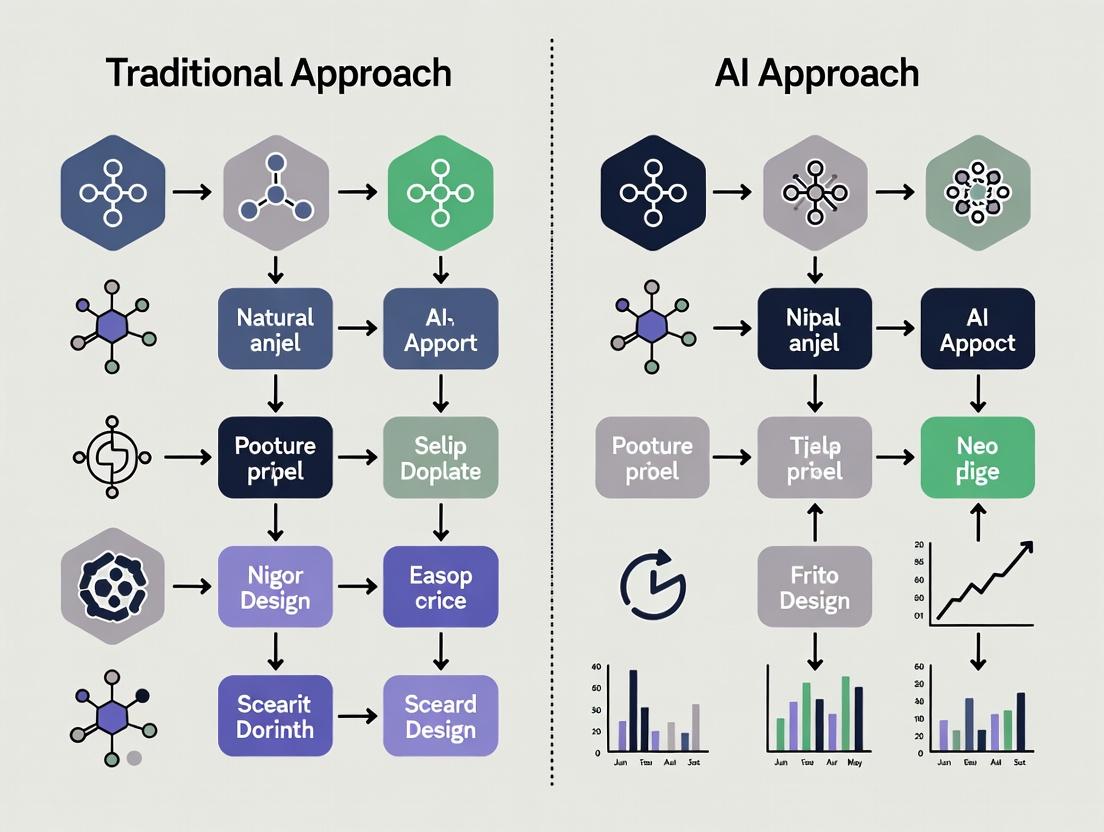
This article provides a comprehensive, comparative analysis of traditional and artificial intelligence (AI)-driven approaches in natural product (NP) research for drug discovery.
From Maceration to Machine Learning: A Comparative Analysis of Traditional vs. AI-Powered Natural Product Discovery
Abstract
This article provides a comprehensive, comparative analysis of traditional and artificial intelligence (AI)-driven approaches in natural product (NP) research for drug discovery. Aimed at researchers, scientists, and drug development professionals, it explores the foundational principles, methodological applications, practical challenges, and validation strategies of both paradigms. The scope spans from conventional extraction and bioassay-guided isolation to modern AI applications in virtual screening, activity prediction, and de novo design. The analysis synthesizes current evidence, addresses key operational and regulatory challenges, and outlines a forward-looking perspective on integrating these complementary methodologies to accelerate the translation of natural products into novel therapeutics.
The Pillars of Discovery: Core Principles of Traditional and AI-Driven Natural Product Research
Thesis Context: This guide is framed within a broader thesis comparing traditional and artificial intelligence (AI) approaches for natural products research, aiming to provide researchers, scientists, and drug development professionals with an objective, data-driven comparison of their performance and applications.
Historical Foundations and Modern Evolution of Natural Products Research
The investigation of natural products (NPs) for therapeutic purposes is one of the oldest scientific traditions, forming the cornerstone of modern pharmacology [1]. Historical records from ancient Mesopotamia (2600 B.C.), Egypt (Ebers Papyrus, 2900 B.C.), and China (Shennong Herbal, ~100 B.C.) document the extensive use of plant oils, extracts, and other natural substances to treat ailments ranging from coughs and inflammation to more complex diseases [1]. This empirical knowledge, developed through centuries of trial and error, established the foundational paradigm of traditional NP research: bioactivity-guided isolation and characterization [1].
The 19th and 20th centuries marked the systematization of this paradigm. Techniques such as solvent extraction, chromatography for purification, and spectroscopic methods (like NMR and mass spectrometry) for structural elucidation became standard [2]. This workflow led to landmark discoveries, including salicin (the precursor to aspirin) from willow bark, morphine from opium poppy, and penicillin from fungal mold [1] [3]. The core approach was—and in many labs remains—experimental and iterative: extract, fractionate, test for bioactivity, and identify the active constituent. However, this process is often labor-intensive, time-consuming, and limited by the complexity of natural mixtures and the scarcity of source material [2] [4]. The development of a single drug like Taxol from the Pacific yew tree spanned decades, highlighting the bottlenecks of traditional methods [4].
In the late 20th century, advances in genomics, analytical chemistry, and computational power began to reshape the field. The integration of omics technologies (genomics, metabolomics, proteomics) provided a more holistic view of the biosynthetic capabilities of organisms and the complexity of natural extracts [2] [5]. Concurrently, the advent of artificial intelligence (AI), particularly machine learning (ML) and deep learning (DL), has introduced a complementary, data-driven paradigm. AI leverages algorithms to find patterns in vast, multimodal datasets—including chemical structures, genomic sequences, spectral data, and pharmacological profiles—to predict bioactivity, elucidate structures, and even design novel NP-inspired molecules in silico before physical testing begins [6] [7] [4].
This evolution has created two interconnected yet distinct paradigms: the traditional, empirically-driven approach and the modern, AI-prediction-guided approach. The following sections provide a detailed, objective comparison of their methodologies, performance, and practical applications.
Comparative Analysis of Research Paradigms: Methodologies and Performance
The fundamental difference between the traditional and AI-enhanced paradigms lies in the starting point and sequence of the discovery workflow. The following table summarizes the core characteristics, advantages, and limitations of each approach.
Table 1: Core Paradigm Comparison in Natural Products Research
| Aspect | Traditional/Empirical Paradigm | AI-Enhanced/Predictive Paradigm |
|---|---|---|
| Primary Driver | Experimental observation & bioassay-guided fractionation [1] [2]. | Data-driven prediction & in silico modeling prior to experimentation [6] [4]. |
| Typical Workflow | Collection → Extraction → Bioactivity Screening → Bioassay-Guided Fractionation → Isolation → Structural Elucidation [2] [4]. | Data Curation & Integration → In Silico Target/Activity Prediction → Virtual Screening → Prioritization → Targeted Isolation/Synthesis [6] [7]. |
| Key Strengths | • Direct empirical validation.• Unbiased discovery of novel scaffolds & serendipitous findings.• Well-established, reproducible techniques [1] [2]. | • High speed & scalability in analyzing vast chemical space.• Ability to predict complex properties (ADMET, bioactivity).• Can overcome supply limitations via de novo design [6] [3] [4]. |
| Major Limitations | • Low-throughput, resource & time-intensive.• High rediscovery rate of known compounds (dereplication challenge).• Limited by source availability & extraction yields [2] [4]. | • Dependent on quality, quantity, and standardization of training data.• Risk of model bias & "black box" interpretability issues.• Predictions require final empirical validation [6] [7] [8]. |
| Data Utilization | Relies on data generated from each sequential experiment to guide the next step. | Integrates and learns from pre-existing, multimodal datasets (chemical, genomic, phenotypic) to generate hypotheses [7] [4]. |
The performance of these paradigms can be quantified in key discovery phases. Recent studies leveraging AI demonstrate significant acceleration.
Table 2: Performance Comparison in Key Research Phases
| Research Phase | Traditional Paradigm Metrics | AI-Enhanced Paradigm Metrics & Examples |
|---|---|---|
| Initial Screening & Hit Identification | • Months to years for extract library screening.• Hit rate often < 0.1% in random screening [2]. | • Virtual screening of millions of structures in days [4].• Example: Integration of pharmacophore & protein-ligand data reported >50-fold enrichment in hit rates compared to traditional methods [9]. |
| Structure Elucidation | • Relies on extensive NMR/MS analysis; can take weeks per compound.• Challenging for novel or complex scaffolds [2]. | • AI models (e.g., Deep Neural Networks) can predict NMR spectra or suggest structures from spectral data.• Example: DP4-AI automates NMR analysis for configuration assignment, speeding up the process [8]. |
| Lead Optimization | • Iterative synthesis & testing cycles; each cycle can take months.• Guided by structure-activity relationship (SAR) intuition [2]. | • Generative AI designs novel analogs meeting multiple criteria.• Example: Deep graph networks generated >26,000 virtual analogs, leading to inhibitors with a >4,500-fold potency improvement from initial hits [9]. |
| Mechanism Prediction | • Target identification requires extensive biochemical & cellular assays (e.g., pull-down assays, knockouts). | • Network pharmacology & knowledge graphs predict herb-ingredient-target-pathway interactions in silico [6] [5]. |
Detailed Experimental Protocols for Key Methodologies
Protocol for Traditional Bioassay-Guided Fractionation
This remains the gold standard for isolating bioactive pure compounds from complex natural extracts [2].
- Sample Preparation & Extraction: Source material (plant, marine organism, microbial culture) is dried, ground, and sequentially extracted with solvents of increasing polarity (e.g., hexane, dichloromethane, ethyl acetate, methanol/water) to create a crude extract library [2].
- Primary Bioactivity Screening: Crude extracts are screened in relevant in vitro biological assays (e.g., antimicrobial, anticancer, enzyme inhibition). The most potent extract is selected for further study.
- Bioassay-Guided Fractionation:
- The active crude extract is subjected to coarse separation, typically using vacuum liquid chromatography (VLC) or flash column chromatography with a normal-phase (e.g., silica gel) or reversed-phase (e.g., C18) stationary phase.
- Collected fractions are concentrated, and aliquots are tested in the same bioassay.
- Active fractions are further purified using high-performance liquid chromatography (HPLC) (analytical or semi-preparative scale) with optimized solvent systems.
- This cycle of fractionation and bioassay is repeated until pure, active compounds are obtained [2] [4].
- Structural Elucidation: The pure compound is subjected to:
- High-Resolution Mass Spectrometry (HR-MS) for molecular formula.
- Nuclear Magnetic Resonance (NMR) Spectroscopy (1D: 1H, 13C; 2D: COSY, HSQC, HMBC) for structural determination.
- Comparison with literature data or databases for dereplication to avoid rediscovery of known compounds [2].
Protocol for AI-Driven Virtual Screening & Validation
This protocol outlines a modern, prediction-first workflow for identifying NP-derived drug candidates [6] [4].
- Data Curation & Model Training:
- Collect and curate a multimodal dataset linking NP structures (from databases like COCONUT, NPASS) to associated data: genomic biosynthetic gene clusters (BGCs), mass spectra, and bioactivity profiles [7].
- Train a machine learning model (e.g., Graph Neural Network for structures, Convolutional Neural Network for spectra) on this data to learn patterns correlating features with a desired biological activity.
- Virtual Screening & Prioritization:
- Use the trained model to screen a in silico library of NP structures or hypothetical structures generated de novo.
- Rank candidates based on predicted activity scores, drug-likeness, and synthetic accessibility.
- In Vitro Experimental Validation:
- Targeted Isolation or Synthesis: Procure the top-ranked AI-predicted compounds either by targeted isolation from the natural source (if known) or by chemical synthesis.
- Primary Assay Confirmation: Test the compounds in the same biological assay used to define the model's training data. A key study validated several AI-predicted natural compounds in vitro, confirming their translational potential [6].
- Mechanistic Validation: Employ Cellular Thermal Shift Assay (CETSA) to confirm direct target engagement in live cells, providing functional validation of the AI prediction in a physiologically relevant context [9].
Visualization of Paradigms and Pathways
Comparative Research Workflow: Traditional vs. AI-Enhanced
This diagram contrasts the sequential, experiment-led traditional pathway with the integrated, prediction-led AI pathway.
Diagram 1: Comparative Workflow of Natural Product Research Paradigms
Network Pharmacology Mechanism for Multi-Target Natural Products
This diagram illustrates the AI-facilitated, systems-level approach to understanding how complex natural products interact with biological networks, moving beyond the single-target model [6] [5].
Diagram 2: AI and Network Pharmacology in Multi-Target Natural Product Action
The Scientist's Toolkit: Essential Research Reagent Solutions
The following table details key reagents, materials, and computational tools essential for conducting research within both paradigms.
Table 3: Essential Research Toolkit for Natural Products Research
| Tool/Reagent Category | Specific Examples & Functions | Primary Paradigm |
|---|---|---|
| Separation & Purification | Silica Gel / C18 Resin: Stationary phases for open column or flash chromatography for initial fractionation [2]. | Traditional |
| HPLC/Semi-prep HPLC Columns: For high-resolution purification of compounds to homogeneity. Critical for obtaining pure samples for NMR [2]. | Both | |
| Structural Elucidation | Deuterated Solvents (CDCl3, DMSO-d6): For NMR spectroscopy to provide a stable lock signal and avoid interfering proton signals [2]. | Both |
| NMR Reference Standards (TMS): Provides the chemical shift zero point for 1H and 13C NMR spectra [2]. | Both | |
| Bioactivity Validation | Cell-Based Assay Kits (e.g., MTT, Caspase-Glo): For measuring cytotoxicity, proliferation, or specific pathway activities in live cells [4]. | Both |
| CETSA (Cellular Thermal Shift Assay) Reagents: To confirm direct target engagement of a predicted compound in a physiologically relevant cellular context, bridging AI prediction and functional validation [9]. | AI-Enhanced | |
| Data Generation & Analysis | LC-HRMS Systems: Couples separation with high-resolution mass detection for metabolomic profiling and dereplication [2]. | Both |
| AI/ML Software Platforms (e.g., Python with RDKit, DeepChem): Open-source libraries for building predictive models for virtual screening and property prediction [4]. | AI-Enhanced | |
| Data Integration | Public NP Databases (COCONUT, NPASS, GNPS): Provide structured chemical and spectral data for training AI models [7]. | AI-Enhanced |
| Knowledge Graph Frameworks (e.g., Neo4j): Enable the integration of multimodal data (chemical, biological, omics) to uncover complex relationships as depicted in Diagram 2 [7]. | AI-Enhanced |
Synthesis and Future Trajectory
The historical, empirical paradigm and the emerging, AI-enhanced paradigm are not mutually exclusive but are increasingly synergistic. The traditional approach provides the critical, ground-truthed experimental data required to train and validate robust AI models [7]. In turn, AI offers powerful tools to overcome the historic bottlenecks of traditional research—speed, scale, and the dereplication challenge—by guiding researchers toward the most promising candidates within complex mixtures or vast chemical spaces [6] [4].
The future of natural product research lies in integrated, hybrid workflows. The ideal pipeline begins with AI mining multimodal knowledge graphs to predict promising source organisms or molecular scaffolds [7]. This is followed by targeted cultivation or synthesis and efficient, focused isolation using advanced analytics. Finally, AI-predicted mechanisms are validated using functional cellular assays like CETSA [9]. This convergence accelerates discovery while maintaining the empirical rigor that is the hallmark of traditional natural products chemistry. As data standardization improves and models become more interpretable, this synergistic paradigm is poised to unlock the vast, untapped potential of natural products for drug discovery more efficiently than ever before.
For decades, the systematic journey from biological source to isolated active compound has been the cornerstone of drug discovery. Traditional natural product research, responsible for approximately 32% of new small-molecule drugs introduced between 1981 and 2019 [10], relies on a rigorous, iterative process anchored by bioassay-guided fractionation (BGF). This workflow is defined by its activity-driven hypothesis testing, where each separation step is validated by a biological assay to track the desired effect [10].
This guide details the core components of this traditional paradigm—source selection, extraction, bioassay-guided fractionation, and structural elucidation—and objectively compares its performance against emerging artificial intelligence (AI)-driven approaches. The analysis is framed within a critical thesis: while AI promises revolutionary speed and scale [11], the traditional workflow remains indispensable for its empirical validation and proven track record in delivering clinically successful drugs from complex natural matrices [12] [13].
Foundational Stages of the Traditional Workflow
Source Selection and Prioritization
The initial stage involves selecting a promising biological source (plant, fungus, marine organism). This has historically been informed by ethnobotanical knowledge, ecological observations, or taxonomic relatedness to known prolific producers. A contemporary shift emphasizes sustainable sourcing, such as cultivating plants to prevent overexploitation of wild populations, as demonstrated with Salvia canariensis for biopesticide development [12].
Extraction and Initial Processing
The selected biomass undergoes extraction, typically using solvents of varying polarity. The goal is to obtain a chemically complex crude extract containing the source's secondary metabolites. Recent advancements apply Design of Experiments (DOE) to optimize extraction parameters (solvent, time, temperature) for improved yield and reduced environmental impact [14]. The initial crude extract is the starting material for all subsequent steps.
The Core Engine: Bioassay-Guided Fractionation (BGF)
BGF is the iterative heart of the traditional workflow. The crude extract is subjected to sequential separation techniques (e.g., liquid-liquid partitioning, column chromatography) to generate simpler fractions. The critical differentiator is that each fraction is simultaneously tested in a relevant biological assay. Only fractions retaining the desired bioactivity are selected for further separation, progressively enriching the active component(s) until pure compounds are obtained [12] [10].
Case Study: Discovery of a Biofungicide fromSalvia canariensis
A 2024 study provides a quintessential example of the modern BGF workflow [12]:
- Objective: Identify antifungal compounds from cultivated S. canariensis.
- Bioassay: Growth inhibition (% GI) of phytopathogenic fungi (Botrytis cinerea, Fusarium oxysporum, Alternaria alternata).
- Process:
- The ethanolic leaf extract showed significant activity (~42-69% GI at 1 mg/mL).
- Liquid-liquid partition yielded hexane (Hx), ethyl acetate (EtOAc), and aqueous fractions.
- The Hx fraction showed the highest activity, guiding its selection for further separation.
- The Hx fraction was separated via silica gel column chromatography into 13 sub-fractions (A1-A13).
- Sub-fraction A9 exhibited the strongest and broadest antifungal activity.
- Final purification of A9 led to the isolation of the known abietane diterpenoid salviol, confirmed as the key bioactive compound.
Table 1: Key Antifungal Activity Data from Bioassay-Guided Fractionation of S. canariensis [12]
| Sample | Concentration | % Growth Inhibition (Alternaria alternata) | % Growth Inhibition (Botrytis cinerea) | % Growth Inhibition (Fusarium oxysporum) |
|---|---|---|---|---|
| Crude Ethanolic Extract | 1 mg/mL | 68.6% | 41.1% | 53.6% |
| Hexane Fraction (Hx) | 1 mg/mL | 73.5% | 52.4% | 70.1% |
| Active Sub-fraction (A9) | 0.5 mg/mL | 82.5% | 68.8% | 88.9% |
| Isolated Compound (Salviol) | Variable | Concentration-dependent activity confirmed | ||
| Commercial Fungicide (Positive Control) | Label rate | ~90% (Fosbel-Plus) | ~90% (Fosbel-Plus) | ~90% (Fosbel-Plus) |
Evolution of Traditional Methods: The PLANTA Protocol
The core BGF logic is being enhanced by advanced analytical integrations. The PLANTA protocol (2025) exemplifies this evolution by combining 1H NMR profiling, HPTLC, and bioassays with chemometric tools before isolation [13]. It uses statistical correlation (NMR-HeteroCovariance Approach) to generate a "pseudospectrum" highlighting NMR signals correlated with bioactivity, allowing for the pre-isolation identification of active constituents in a complex mixture. In a proof-of-concept study, this method achieved an 89.5% detection rate of active metabolites [13].
Diagram 1: The Traditional Bioassay-Guided Fractionation Workflow (70 characters)
Performance Comparison: Traditional BGF vs. AI-Enabled Approaches
The traditional workflow is increasingly contrasted with data-driven AI methodologies. The comparison below is based on stated capabilities and limitations of each paradigm.
Table 2: Comparative Analysis of Traditional and AI-Enabled Workflows in Natural Product Research
| Performance Metric | Traditional Bioassay-Guided Workflow | AI/Computational Workflow | Supporting Data & Context |
|---|---|---|---|
| Primary Driver | Biological activity (phenotype-first). | Predictive algorithms and pattern recognition (data-first). | BGF is activity-driven [10]; AI uses models for target and molecule prediction [4]. |
| Typical Timeline (Hit to Lead) | Several months to years. | Potentially weeks to months for virtual screening and in silico design. | AI can compress early discovery phases [11]; traditional isolation is inherently labor-intensive [3]. |
| Key Strength | Empirical validation. Direct link between compound and biological effect in physiologically relevant assays. Unbiased discovery of novel mechanisms. | Speed & scale. Can screen millions of virtual compounds or analyze vast omics datasets almost instantaneously. | BGF delivers confirmed bioactive entities [12]. AI can evaluate vast chemical spaces [11] and integrate multi-omics data [4]. |
| Key Limitation | Low throughput, resource-intensive. Prone to rediscovery of known compounds (dereplication challenge). Slow and requires large amounts of starting material. | Data dependency & "black box". Relies on quality training data; predictions require experimental validation. Limited ability to model complex natural product interactions. | Dereplication is a major hurdle [13]. AI models are only as good as their data and lack intuitive explainability [4] [11]. |
| Success Rate (Early Phase) | Historically the source of many drugs; success is linked to assay quality and source novelty. | Reported 80-90% Phase I success for AI-designed drugs vs. 40-65% industry average, though this field is nascent [11]. | Metrics suggest AI improves early candidate selection [11]. Traditional methods have a proven, but slower, track record [10]. |
| Best Suited For | Exploring uncharacterized sources, phenotype-based discovery, isolating compounds with complex or unknown mechanisms. | Dereplication, virtual screening of analogs, target prediction, optimizing ADMET properties, and analyzing genomic data for biosynthetic potential. | AI excels at data mining and prediction [4] [3]. BGF is essential for genuine novelty from complex extracts [10]. |
Diagram 2: Logic for Choosing a Research Strategy (63 characters)
Detailed Experimental Protocols
Objective: To isolate antifungal compounds from plant material. Key Materials: Lyophilized plant powder, ethanol, chromatography-grade solvents (hexane, ethyl acetate), silica gel for column chromatography, fungal strains (Botrytis cinerea, Fusarium oxysporum, Alternaria alternata), potato dextrose agar (PDA). Procedure:
- Extraction: Macerate dried leaf powder in ethanol. Filter and concentrate under vacuum to obtain crude ethanolic extract.
- Liquid-Liquid Partition: Suspend crude extract in water. Partition sequentially with hexane and ethyl acetate. Concentrate each organic layer to obtain hexane (Hx) and ethyl acetate (EtOAc) fractions.
- Antifungal Disk Diffusion Assay: Prepare PDA plates inoculated with fungal mycelium. Apply sterile filter disks loaded with test samples (crude extract, fractions at 1 mg/mL). Incubate plates and measure zones of growth inhibition.
- Bioassay-Guided Column Chromatography: Pack a glass column with silica gel. Load the most active fraction (e.g., Hx fraction). Elute with a gradient of increasing polarity (e.g., hexane to ethyl acetate to methanol). Collect multiple sub-fractions.
- Assay of Sub-fractions: Test all sub-fractions in the antifungal assay (step 3). Select the sub-fraction(s) with the highest activity for further purification (e.g., repeated chromatography or preparative TLC).
- Structure Elucidation: Analyze the pure active compound using NMR spectroscopy (¹H, ¹³C, 2D experiments) and mass spectrometry to determine its chemical structure.
Objective: To identify bioactive compounds in a complex mixture prior to physical isolation. Key Materials: Complex natural extract, deuterated NMR solvent (e.g., methanol-d4), HPTLC plates, bioassay reagents (e.g., DPPH for antioxidant assay), NMR spectrometer, HPTLC system. Procedure:
- Fractionation & Bioassay: Fractionate the crude extract (e.g., by FCPC or column chromatography). Test each fraction for bioactivity (e.g., DPPH radical scavenging).
- ¹H NMR Profiling: Acquire ¹H NMR spectra for all fractions.
- NMR-HetCA Analysis: Use statistical software (e.g., MATLAB, Python) to perform HeteroCovariance Analysis. Calculate covariance between the ¹H NMR spectral data matrix and the vector of bioactivity values across fractions. Generate a HetCA pseudospectrum where peak intensities correlate with contribution to bioactivity.
- HPTLC Analysis & sHetCA: Run HPTLC on all fractions. Use densitometry to convert the HPTLC plate image into a chromatographic data matrix. Perform sparse HetCA (sHetCA) to correlate chromatographic bands with bioactivity.
- Cross-Correlation (SH-SCY): Implement Statistical Heterocovariance–SpectroChromatographY (SH-SCY) to correlate specific NMR peaks from HetCA with specific bands from HPTLC sHetCA. This orthogonally validates the bioactive components.
- STOCSY-Guided Dereplication: For key bioactive NMR peaks, use Statistical Total Correlation Spectroscopy (STOCSY) to identify all NMR signals from the same molecule. "Deplete" the full spectrum of non-correlating signals to generate a clean, database-compatible spectrum for querying natural product NMR libraries.
The Scientist's Toolkit: Essential Research Reagent Solutions
Table 3: Key Research Reagents and Materials for Traditional Natural Product Workflows
| Item/Category | Function in Workflow | Specific Example/Note |
|---|---|---|
| Chromatography Media | Physical separation of compounds based on polarity, size, or affinity. | Silica Gel: Standard for open column and flash chromatography. Sephadex LH-20: Size-exclusion chromatography for desalting or separating by molecular weight. |
| Bioassay Components | To provide a measurable biological endpoint for guiding fractionation. | Fungal Spores/Mycelia: For antifungal assays [12]. DPPH (2,2-diphenyl-1-picrylhydrazyl): Stable radical for antioxidant activity assays [13]. Cell Lines & Reagents: For cytotoxicity or specific target-based assays. |
| Solvents for Extraction & Partitioning | To dissolve and separate metabolites based on solubility. | Ethanol/Methanol: For polar extraction. Hexane: For non-polar fractionation. Ethyl Acetate: For medium-polarity fractionation. Water: Aqueous phase in partitions [12]. |
| Deuterated NMR Solvents | To provide an isotopic lock and non-interfering signal for NMR spectroscopy. | Methanol-d4, Chloroform-d: Standard solvents for acquiring ¹H and ¹³C NMR spectra for structure elucidation [13]. |
| Spectroscopic Standards | To calibrate instruments and provide reference points for structural analysis. | Tetramethylsilane (TMS): Internal standard for chemical shift calibration in NMR (δ = 0 ppm) [13]. |
| Culture Media | To grow and maintain test organisms for bioassays. | Potato Dextrose Agar (PDA): For cultivating phytopathogenic fungi [12]. LB Broth/Agar: For cultivating bacterial strains. |
The discovery of therapeutic agents from natural products (NPs) has historically been a cornerstone of medicine, contributing to approximately 50% of all FDA-approved drugs, including landmark treatments like penicillin and paclitaxel [3]. However, traditional NP research is characterized by formidable challenges: it is notoriously labor-intensive, time-consuming, and resource-heavy. The journey from source material to a characterized bioactive compound involves exhaustive extraction, complex purification, and challenging structural elucidation, often spanning years or even decades [3] [4].
This article presents a comparative analysis of traditional methodologies versus modern artificial intelligence (AI)-enabled approaches within NP-based drug discovery. The central thesis is that AI is not merely an incremental improvement but a transformative force that redefines the entire research pipeline [8]. By integrating machine learning (ML), deep learning (DL), and advanced data architectures, AI addresses the core inefficiencies of traditional work. It enables the rapid analysis of vast, multimodal datasets—from genomic and metabolomic information to chemical structures and pharmacological data—allowing researchers to predict bioactivity, elucidate mechanisms, and prioritize candidates with unprecedented speed and scale [6] [7].
The transition is driven by necessity. The traditional model, reliant on trial-and-error and manual expertise, struggles with the chemical complexity and low yield typical of NPs [4]. In contrast, the AI-enabled pipeline offers a systematic, data-driven framework for navigating this complexity, promising to accelerate the delivery of novel therapeutics for oncology, infectious diseases, neurodegeneration, and beyond [6] [15].
Core Comparison: Traditional vs. AI-Enabled Pipelines
The fundamental divergence between traditional and AI-enabled research lies in their approach to data, hypothesis generation, and experimental design. The table below provides a high-level comparison of the two paradigms across key dimensions of the drug discovery workflow.
Table: Comparative Overview of Traditional and AI-Enabled Approaches in Natural Product Research
| Aspect | Traditional Pipeline | AI-Enabled Pipeline | Key Implications |
|---|---|---|---|
| Primary Driver | Hypothesis-driven, based on ethnobotany, literature, or observed bioactivity [3]. | Data-driven, leveraging patterns discovered algorithmically from large-scale datasets [6] [16]. | Shifts from targeted, linear exploration to broad, parallelized discovery of novel patterns and connections. |
| Data Utilization | Relies on limited, manually curated datasets from targeted experiments (e.g., a single plant extract's bioassay results) [4]. | Integrates and mines massive, multimodal datasets (genomic, spectroscopic, bioassay, literature) [7] [17]. | Enables the discovery of relationships invisible to manual analysis, improving prediction accuracy and candidate novelty. |
| Compound Screening | Bioassay-guided fractionation; sequential, physical testing of extracts and compounds [3]. | Virtual screening of millions of compounds in silico; AI-prioritized shortlists for physical validation [8] [4]. | Dramatically increases throughput, reduces reagent costs, and focuses lab resources on the most promising leads. |
| Lead Optimization | Iterative, synthetic modification based on medicinal chemistry intuition and structure-activity relationship (SAR) tables [4]. | Generative AI and predictive modeling propose novel analogs with optimized properties (potency, solubility, ADMET) [17]. | Accelerates the design of better drug candidates and explores a broader chemical space around a natural scaffold. |
| Timeline & Resource Impact | Process can take 10-15 years from discovery to market, with high rates of late-stage failure [15]. | Can compress early discovery (target to pre-clinical candidate) from years to under 18 months [15]. | Reduces the multi-billion dollar cost of drug development and accelerates patient access to new therapies. |
| Key Limitation | Low throughput, high cost, difficult to scale, and limited by human bias and cognitive capacity [18]. | Dependent on data quality, quantity, and standardization; risk of model bias; "black box" interpretability issues [6] [7]. | Success hinges on solving data infrastructure challenges and developing transparent, robust AI models. |
The AI Pipeline Deconstructed: Data, Algorithms, and Predictive Modeling
Data: The New Foundation - From Silos to Knowledge Graphs
The efficacy of any AI system is fundamentally constrained by the quality, quantity, and structure of its training data. Traditional NP data is often fragmented, unstandardized, and scattered across proprietary lab notebooks, published papers, and disparate databases [7]. This "siloed" nature makes it poorly suited for ML models that require large, consistent datasets.
The AI-enabled future is being built on knowledge graphs [7]. Unlike simple databases, knowledge graphs structurally represent entities (e.g., a specific compound, a gene, a disease) as nodes and the relationships between them (e.g., "inhibits," "is biosynthesized by," "treats") as edges. This framework is inherently multimodal, capable of linking chemical structures from mass spectrometry, biosynthetic pathways from genomic data, bioactivity from assay results, and textual information from the scientific literature into a single, queryable network [7].
Table: Key Data Types and Their Role in the AI-Enabled Pipeline
| Data Modality | Description | AI/ML Application Examples | Traditional Challenge Addressed |
|---|---|---|---|
| Chemical & Metabolomic Data | Molecular structures, mass spectra (MS), nuclear magnetic resonance (NMR) spectra. | MS/NMR prediction & dereplication: AI models predict spectra from structures (and vice-versa) to rapidly identify known compounds and flag novel ones [4]. | Avoids redundant isolation of known compounds, saving months of lab work. |
| Genomic & Biosynthetic Data | DNA sequences, identified biosynthetic gene clusters (BGCs). | BGC prediction & pathway elucidation: ML models predict the type of NP a BGC produces and simulate its biosynthetic pathway [6] [7]. | Uncovers the genetic basis of compound production, enabling engineered biosynthesis or metagenomic mining. |
| Bioactivity & Pharmacological Data | Results from in vitro and in vivo assays (IC50, toxicity, etc.). | Predictive bioactivity modeling: QSAR and DL models predict a compound's activity against a target from its structure alone [8] [17]. | Prioritizes which compounds to isolate and test, moving from random screening to informed prediction. |
| Textual & Knowledge Data | Scientific literature, patents, electronic health records. | Literature mining with NLP: Natural Language Processing extracts implicit relationships (e.g., "compound X reduces inflammation in model Y") to generate new hypotheses [8] [4]. | Synthesizes knowledge across millions of documents, uncovering hidden connections between NPs, targets, and diseases. |
Diagram: The Central Role of the Knowledge Graph in AI-Enabled Discovery. Multimodal data sources are integrated into a structured knowledge graph, which serves as the foundational data layer for various AI applications that ultimately converge on validated lead candidates [7].
Algorithms: The Engine of Prediction and Design
AI algorithms transform integrated data into actionable predictions and designs. These algorithms operate at different stages of the pipeline, from initial screening to lead optimization.
Table: Key AI/ML Algorithm Classes and Their Applications in NP Research
| Algorithm Class | How It Works | Specific Application in NP Research | Comparative Advantage |
|---|---|---|---|
| Supervised Learning (e.g., Random Forest, SVM, Neural Nets) | Learns a mapping function from labeled input-output pairs (e.g., chemical structure -> biological activity). | QSAR Modeling, ADMET Prediction, Spectral Matching. Predicts properties of unknown compounds based on known data [17]. | Replaces or prioritizes costly, low-throughput experimental assays. A single model can screen millions of virtual compounds. |
| Unsupervised & Self-Supervised Learning (e.g., Clustering, Autoencoders) | Discovers inherent patterns, groupings, or representations in unlabeled data. | Chemical Space Exploration, Molecular Representation Learning. Groups NPs by structural similarity or creates compressed molecular "fingerprints" [7] [4]. | Uncovers novel structural families and bioactivity clusters without pre-existing labels, enabling de novo insight generation. |
| Deep Learning (DL) & Graph Neural Networks (GNNs) | Uses multi-layered neural networks to model highly complex, non-linear relationships. GNNs operate directly on graph-structured data. | Molecular Property Prediction, Protein-Ligand Docking, Knowledge Graph Reasoning. Excels at tasks where the molecular structure or relational context is paramount [6] [17]. | Provides superior accuracy for complex prediction tasks by directly learning from molecular graphs or the knowledge graph itself. |
| Generative AI (e.g., VAEs, GANs, Transformers) | Learns the underlying distribution of data (e.g., bioactive molecules) to generate novel, similar instances with desired properties. | De Novo Design of NP-inspired Compounds. Generates novel molecular structures optimized for multiple parameters (potency, synthesizability, safety) [4] [17]. | Moves beyond screening existing libraries to inventing new, optimal chemical entities, vastly expanding accessible chemical space. |
Predictive Modeling: From Correlation to Causal Inference
The ultimate goal of the AI pipeline is to make accurate, translational predictions. This evolves from simple statistical correlations toward more robust causal inference.
Traditional Forecasting vs. AI Predictive Modeling: Traditional methods, like linear regression on a handful of variables, are limited in handling the high-dimensional, noisy data of biology [16]. AI forecasting models, particularly DL models, can process thousands of interacting features (e.g., gene expression, metabolite levels, clinical phenotypes) to predict clinical outcomes, drug response, or synthetic viability with 10-50% greater accuracy [16].
The Next Frontier - Causal AI: Current models often identify correlations rather than causation. The next generation of AI aims for causal inference—understanding the underlying cause-and-effect mechanisms (e.g., which specific compound in a herbal extract inhibits which protein to cause an anti-inflammatory effect) [7]. This is critical for understanding NP mechanisms of action, which are often multi-target and synergistic. Knowledge graphs are a key stepping stone, as their relational structure is more amenable to causal reasoning than tabular data [7].
Experimental Validation & Case Studies
Experimental Protocols: Validating AI Predictions
The AI pipeline is iterative and requires rigorous experimental validation. A standard protocol for validating an AI-predicted NP lead involves:
- In Silico Prediction & Prioritization: A generative or screening model proposes candidate molecules with predicted activity against a target (e.g., PD-L1 for immuno-oncology). Candidates are ranked by multi-parameter optimization scores balancing predicted affinity, solubility, and synthetic accessibility [17].
- De Novo Synthesis or Procurement: The top-ranked candidates, which are often novel structures, are synthesized via AI-assisted retrosynthetic planning [4] or, if known, sourced from compound libraries.
- In Vitro Biochemical/Biophysical Assay: Purified compounds are tested in a target-specific assay (e.g., enzyme inhibition, binding displacement) to measure IC50/EC50. This step provides the first ground-truth validation of the AI's prediction [15].
- Cellular Phenotypic Assay: Active compounds move to cell-based assays (e.g., cancer cell cytotoxicity, immune cell activation reporter assays) to confirm functional activity in a more complex biological environment [17].
- Mechanistic Profiling & Multi-Target Analysis: For NPs known for polypharmacology, techniques like cellular thermal shift assay (CETSA) or network pharmacology analysis are used to identify all engaged protein targets and map them to disease pathways [6].
- In Vivo Efficacy Studies: The most promising lead undergoes testing in a relevant animal disease model to evaluate pharmacokinetics, toxicity, and therapeutic efficacy, bridging the gap to preclinical development [15].
Case Study: AI in Accelerating Small-Molecule Immunotherapy
A compelling illustration of the AI pipeline is in designing small-molecule immunotherapies, an area dominated by biologic drugs (antibodies).
The Challenge: Antibodies against targets like PD-1/PD-L1 are effective but costly, require infusion, and have poor tumor penetration. Small-molecule inhibitors could offer oral availability and better distribution but are extremely difficult to design for large, flat protein-protein interaction interfaces [17].
The AI-Enabled Approach:
- Target & Data Integration: AI integrates structural data (PD-L1 protein dimers), known active compounds (from literature/patents), and cellular expression data.
- Generative Design: A Generative Adversarial Network (GAN) or Reinforcement Learning (RL) model is tasked with generating novel chemical structures that fit the PD-L1 binding pocket and meet drug-like criteria [17].
- Virtual Screening & Optimization: Thousands of generated molecules are virtually screened using a DL-based docking model. Top hits are further optimized by another AI model for improved potency and ADMET properties.
- Validation: The final AI-designed molecule is synthesized and shown to successfully disrupt PD-L1 dimerization, enhance T-cell activation in vitro, and inhibit tumor growth in a mouse model [17].
The Result: This approach, employed by companies like Insilico Medicine and Exscientia, has demonstrated the ability to produce pre-clinical candidates for similar complex targets in under 12-18 months, a fraction of the traditional timeline [15] [19].
Diagram: AI-Enabled Workflow for Small-Molecule Immunotherapy Design. The process integrates AI-driven generative design and in-silico screening with focused experimental validation, creating a highly efficient, iterative loop from concept to pre-clinical candidate [17].
The Scientist's Toolkit: Essential Research Reagent Solutions
Transitioning to or integrating with an AI-enabled pipeline requires both computational tools and advanced experimental reagents.
Table: Key Research Reagent Solutions for AI-Integrated NP Discovery
| Tool/Reagent Category | Specific Example | Function in the AI Pipeline | Provider/Technology |
|---|---|---|---|
| Multimodal Data Generation | Untargeted Metabolomics Kits | Generate the mass spectrometry data that feeds AI models for dereplication and novel compound discovery. | Agilent, Waters, Bruker |
| Single-Cell RNA Sequencing Reagents | Provide high-resolution genomic data to understand the biosynthetic potential of individual cells within a complex source (e.g., plant tissue, microbiome). | 10x Genomics, PacBio | |
| Target Engagement & Validation | Cellular Thermal Shift Assay (CETSA) Kits | Experimentally validate AI-predicted drug-target interactions in a cellular context, crucial for polypharmacology studies [6]. | Thermo Fisher Scientific |
| Phospho-Specific Antibody Panels | Verify AI-predicted signaling pathway modulation (e.g., JAK-STAT, NF-κB) following NP treatment. | Cell Signaling Technology | |
| High-Content Screening | Fluorescent Cell-Based Reporter Assays | Generate rich, quantitative phenotypic data (images, fluorescence intensity) for training AI models that predict complex bioactivities. | PerkinElmer, Revvity |
| In Silico & AI Software | Molecular Modeling & Simulation Suites | Provide the physics-based computational environment for docking, MD simulations, and hybrid AI-physics modeling [19]. | Schrödinger, OpenEye |
| Cloud-Based AI Drug Discovery Platforms | Offer access to pre-trained models for target identification, molecule generation, and property prediction without building in-house AI infrastructure [19]. | Insilico Medicine (Pharma.AI), Exscientia (CentaurAI) |
The comparative analysis clearly demonstrates that the AI-enabled pipeline represents a fundamental upgrade over traditional NP research methods. By systematically addressing the bottlenecks of data fragmentation, low-throughput screening, and inefficient optimization, AI provides a scalable, predictive, and accelerated framework for discovery.
The future of this field will be shaped by several key developments:
- Widespread Adoption of Knowledge Graphs: Efforts like the Natural Product Science Knowledge Graph will become essential infrastructure, breaking down data silos and enabling more sophisticated causal AI models [7].
- Rise of Generative Biology: AI will move beyond small molecules to design novel enzymes, biosynthetic pathways, and optimized microbial strains for the sustainable production of complex NPs [6] [19].
- Enhanced Explainability and Trust: Developing "explainable AI" (XAI) techniques will be critical for interpreting model predictions and gaining regulatory acceptance, moving away from the "black box" perception [6].
- Democratization through Cloud Platforms: Cloud-based AI tools (e.g., from Atomwise, Cyclica) will make these powerful technologies accessible to academic labs and smaller biotechs, further accelerating innovation [19].
In conclusion, the integration of AI into natural products research is not a replacement for scientific intuition or experimental rigor but a powerful augmentation. The most successful future research programs will be those that effectively combine domain expertise with AI-driven insights, creating a synergistic loop where human knowledge trains better models, and model predictions guide more insightful experiments. This partnership holds the key to unlocking the vast, untapped therapeutic potential of the natural world.
The discovery and development of drugs from natural products stand at a methodological crossroads. On one path lies the traditional empirical approach, characterized by its deep, mechanistic richness and validation through direct biological observation. On the other is the modern computational-AI paradigm, defined by its unprecedented scale, speed, and ability to navigate vast chemical spaces. This guide provides an objective comparison of these two paradigms within natural products research, examining their performance, experimental foundations, and synergistic potential for researchers and drug development professionals [6].
Quantitative Comparison of Paradigm Performance
The following tables summarize the core performance metrics of traditional and AI-enhanced approaches across key stages of natural product research.
Table 1: Performance Metrics in Early Discovery & Screening
| Performance Metric | Traditional Empirical Approach | AI-Enhanced Computational Approach | Supporting Data & Notes |
|---|---|---|---|
| Library/Collection Scale | Hundreds to thousands of physical extracts or compounds [20]. | Billions of virtual compounds in screenable libraries [20]. | Ultra-large virtual libraries (e.g., ZINC20, Enamine REAL) contain >1 billion make-on-demand molecules [20]. |
| Primary Screening Throughput | Medium to High-Throughput Screening (HTS): 10⁴–10⁵ compounds per campaign [21]. | Ultra-large virtual screening: 10⁸–10⁹ compounds per campaign [20]. | Computational pre-filtering drastically reduces the number of compounds requiring physical HTS [9]. |
| Hit Identification Rate | Typically low (often <0.1%) in blind HTS [20]. | Significantly enriched via virtual screening; one study reported a 50-fold enrichment over random [9]. | AI/ML models integrate pharmacophore and interaction data to prioritize candidates [9]. |
| Time for Hit Identification | Months to years, depending on library size and assay complexity. | Days to weeks for virtual screening of billion-compound libraries [20]. | Case: An AI-driven platform identified a novel clinical candidate for fibrosis in 18 months (vs. 4-6 years traditional) [15]. |
| Multi-Target & Synergy Analysis | Challenging; requires sequential or multiplexed assays. | Native capability via network pharmacology and polypharmacology models [22]. | AI-NP constructs herb-ingredient-target-pathway graphs to propose synergistic effects [22] [6]. |
Table 2: Performance in Lead Optimization & Development
| Performance Metric | Traditional Empirical Approach | AI-Enhanced Computational Approach | Supporting Data & Notes |
|---|---|---|---|
| SAR (Structure-Activity Relationship) Cycle Time | Long (months per cycle) due to sequential synthesis and testing. | Compressed (weeks) via generative AI and predictive property models [9]. | AI-guided "design-make-test-analyze" (DMTA) cycles accelerate optimization [9]. |
| Potency Optimization Efficiency | Iterative, guided by medicinal chemist intuition. | Data-driven; one study used deep graphs to generate 26k analogs, achieving a >4,500-fold potency improvement [9]. | Generative models explore chemical space around a hit far more exhaustively [6]. |
| ADMET Prediction | Late-stage, relying on in vivo studies; high attrition. | Early-stage in silico filters (e.g., SwissADME) improve developability likelihood [21] [9]. | Tools predict pharmacokinetics and toxicity before synthesis, de-risking pipelines [21]. |
| Target Engagement Validation | Gold-standard but low-throughput (e.g., SPR, CETSA). | Predictive docking and simulation; AI can prioritize compounds for validation [9]. | CETSA provides empirical, cell-based validation that complements computational predictions [9]. |
| Clinical Translation Success Rate | Historically low (<10% from Phase I to approval) [15]. | Emerging evidence of improved efficiency; AI-derived molecules are now in clinical trials [15]. | AI's impact on late-stage success rates is promising but requires long-term tracking [15]. |
Detailed Experimental Protocols
A synergistic research program leverages the scale of computation and the richness of empirical validation. Below are detailed protocols for two integrative experiments.
Protocol: AI-Guided Virtual Screening for Natural Product-Inspired Compounds
This protocol leverages computational scale to identify novel bioactive candidates from virtual libraries [20].
Target Selection and Preparation:
- Select a protein target with a resolved 3D structure (from PDB) or a high-quality homology model.
- Prepare the target structure using standard software (e.g., Schrödinger's Protein Preparation Wizard, UCSF Chimera): remove water molecules, add hydrogen atoms, assign protonation states, and minimize the structure.
Virtual Library Curation:
- Access an ultra-large virtual compound library (e.g., ZINC20, Enamine REAL Space).
- Apply pre-filters for drug-likeness (e.g., Lipinski's Rule of Five, molecular weight <500 Da) to create a focused screening library of 100 million to 1 billion compounds [20].
AI-Powered Docking and Scoring:
- Method A (Structure-Based): Perform high-throughput molecular docking (e.g., using AutoDock-GPU, FRED) to generate predicted binding poses and scores for each compound [9].
- Method B (AI-Prediction): Employ a pre-trained deep learning model (e.g., a Graph Neural Network) to predict binding affinity or activity directly from molecular structures, bypassing explicit docking [6] [20].
- Rank the entire library based on the composite score.
Post-Screening Analysis & Prioritization:
- Cluster top-ranked compounds by chemical scaffold.
- Apply additional AI-based filters for synthetic accessibility and predicted ADMET properties [21].
- Select 50-100 diverse, high-priority virtual hits for procurement or synthesis.
Experimental Validation:
- Subject the acquired compounds to a biochemical or cell-based primary assay to confirm activity.
- Validate true hits through dose-response experiments to determine IC50/EC50 values.
Protocol: Empirical Validation of Multi-Target Mechanisms via Network Pharmacology & CETSA
This protocol uses empirical methods to validate the holistic, multi-target mechanisms predicted for a natural product extract [22] [9].
Network Pharmacology Analysis (In Silico):
- Component Identification: Use LC-MS/MS to characterize the chemical constituents of the natural product extract [21].
- Target Prediction: Input the identified compounds into multiple target prediction algorithms (e.g., SwissTargetPrediction, PharmMapper) to generate a list of putative protein targets.
- Network Construction: Integrate the compound-target predictions with protein-protein interaction (PPI) data and pathway databases (KEGG, Reactome) to build a holistic "herb-ingredient-target-pathway" network [22].
- Core Target Identification: Use network topology analysis (degree, betweenness centrality) to identify key mechanistic targets within the network.
Cellular Target Engagement Validation (In Vitro/In Situ):
- CETSA (Cellular Thermal Shift Assay) Setup: Treat live cells (relevant to the extract's indication) with the natural product extract or vehicle control [9].
- Heat Challenge & Protein Isolation: Heat aliquots of cell lysates to a gradient of temperatures (e.g., 37°C–67°C). Centrifuge to separate stabilized (soluble) protein from aggregated protein.
- Target Detection: Use Western blotting with antibodies against the core targets identified in Step 1 to quantify the amount of stabilized protein at each temperature.
- Data Analysis: Generate melt curves. A rightward shift in the thermal stability curve (increased Tm) for a target protein in the treated sample indicates direct ligand binding and target engagement within the complex cellular environment [9].
Functional Phenotypic Corroboration:
- In parallel, perform a relevant phenotypic assay (e.g., anti-inflammatory cytokine secretion, cell viability).
- Correlate the dose- and time-dependent phenotypic effects with the target engagement profiles from CETSA to establish a mechanistic link between pathway modulation and biological outcome.
Visualizing the Integrated Workflow
The synergy between computational and empirical methods is best understood as an iterative, reinforcing cycle.
AI-Enhanced Natural Product Discovery Workflow
This diagram illustrates the integrated pipeline from virtual discovery to empirical validation.
Knowledge Graph Construction for Mechanism Elucidation
This diagram details the core AI-driven method for predicting the multi-scale mechanisms of complex natural products.
The Scientist's Toolkit: Essential Research Reagent Solutions
Table 3: Key Reagents & Platforms for Integrated Research
| Tool/Reagent Category | Specific Examples | Primary Function in Research | Paradigm Alignment |
|---|---|---|---|
| Virtual Screening & Docking | AutoDock-GPU, FRED, Schrödinger Suite [20] [9] | Predicts binding pose and affinity of small molecules to a protein target. | Computational Scale |
| AI/ML Modeling Platforms | Deep Graph Networks, GNN Libraries (PyTorch Geometric), Random Forest/ SVM models [22] [6] | Predicts activity, properties, or generates novel molecular structures. | Computational Scale & Speed |
| ADMET Prediction | SwissADME, pkCSM, QikProp [21] [9] | Estimates pharmacokinetic and toxicity profiles from chemical structure. | Computational De-risking |
| Target Engagement Validation | CETSA (Cellular Thermal Shift Assay) kits, SPR (Biacore) systems [9] | Provides direct, cell-based evidence of physical drug-target interaction. | Empirical Richness |
| Multi-Omics Analysis | LC-MS/MS systems, scRNA-seq platforms, Proteomics suites (DIA) [21] | Empirically characterizes the full chemical and biological response profile. | Empirical Richness |
| Network Analysis & Databases | Cytoscape, KEGG, STRING, TCM databases [22] | Integrates disparate biological data into unified networks for systems-level insight. | Integrative (Both) |
Tools of the Trade: A Deep Dive into Techniques and Their Real-World Applications
The discovery and development of bioactive natural products (NPs) remain a cornerstone of modern therapeutics, with many successful drugs originating from plant, microbial, and marine sources [4]. This pipeline fundamentally depends on the efficient extraction and isolation of target compounds from complex biological matrices, a process that has evolved from simple solvent-based methods to sophisticated chromatographic technologies [23] [24]. These physical separation techniques constitute the essential, experimental arsenal for NP researchers.
Concurrently, a paradigm shift is underway with the integration of Artificial Intelligence (AI) and machine learning into NP research. AI promises to accelerate discovery by predicting bioactivity, elucidating complex mechanisms, and prioritizing compounds for isolation [4] [6]. However, the predictive power of AI is ultimately grounded in and validated by high-quality experimental data generated through these very extraction and isolation processes. This guide provides a comparative analysis of the traditional physical separation toolkit, framing it within the broader thesis of a synergistic future where empirical laboratory science and computational intelligence converge to overcome the historical challenges of time, cost, and complexity in NP drug discovery [4].
Comparative Analysis of Extraction Methodologies
The initial extraction step is critical for liberating bioactive compounds from cellular structures. The choice of method significantly impacts yield, compound stability, solvent consumption, and time.
Solvent-Based Conventional Extraction
These classical techniques rely on the solubility of target compounds and the use of heat and/or agitation.
- Maceration: Plant material is soaked in a solvent at room temperature with occasional agitation. It is simple and cost-effective but characterized by long extraction times (hours to days), high solvent consumption, and potentially low yields [24] [25].
- Soxhlet Extraction: Continuous extraction using solvent reflux. It is highly efficient and does not require filtration, but uses high temperatures unsuitable for thermolabile compounds and involves significant solvent use [24] [25].
- Percolation: Solvent passes slowly through a packed bed of material. It offers higher efficiency than maceration but remains a time-consuming process with variable yields [24].
Advanced Solvent-Assisted Extraction Techniques
Modern techniques enhance extraction efficiency by applying physical energy to disrupt cell walls and improve mass transfer.
- Ultrasound-Assisted Extraction (UAE): Uses ultrasonic cavitation to disrupt cells. It drastically reduces time and solvent use while increasing yields. A potential drawback is heat generation, which may degrade sensitive compounds [24] [26] [25].
- Microwave-Assisted Extraction (MAE): Employs microwave energy to heat solvents and plant interiors directly, causing cell rupture from internal pressure. It is exceptionally fast, efficient, and provides high yields of bioactive compounds, as demonstrated in comparative studies [26] [25]. Careful temperature control is necessary.
- Supercritical Fluid Extraction (SFE): Uses supercritical CO₂ as a solvent. It is a green technology, operates at low temperatures, and allows easy solvent removal. However, it has high capital cost and is less effective for very polar molecules without modifiers [23] [24].
- Accelerated Solvent Extraction (ASE): Uses conventional solvents at elevated temperatures and pressures. It automates extraction, reduces time and solvent volume, and is highly reproducible [23] [24].
Table 1: Performance Comparison of Key Extraction Techniques [23] [26] [25]
| Method | Typical Extraction Time | Solvent Consumption | Operational Temperature | Key Advantage | Major Limitation |
|---|---|---|---|---|---|
| Maceration | 12-72 hours | Very High | Ambient | Simplicity, low cost | Very slow, low efficiency |
| Soxhlet | 4-24 hours | High | High (solvent b.p.) | Exhaustive extraction | Degrades thermolabile compounds |
| UAE | 10-60 minutes | Low | Low-Moderate | Fast, good for thermolabiles | Possible heat buildup |
| MAE | 1-10 minutes | Very Low | Moderate-High | Very fast, high yields | Requires polar solvents |
| SFE | 30-90 minutes | Low (CO₂) | Low | Solvent-free extract, green | High cost, low polarity range |
| ASE | 12-20 minutes | Low | High | Automated, reproducible | High pressure equipment |
Table 2: Experimental Yield Data from Matthiola ovatifolia Extraction (Ethanol Solvent) [26] Comparative study showing quantitative differences in phytochemical recovery.
| Phytochemical Class | Conventional Solvent (mg/g) | UAE (mg/g) | MAE (mg/g) | UMAE (mg/g) |
|---|---|---|---|---|
| Total Phenolics | 52.1 ± 0.2 | 60.3 ± 0.4 | 69.6 ± 0.3 | 65.8 ± 0.3 |
| Total Flavonoids | 32.4 ± 0.1 | 40.1 ± 0.2 | 44.5 ± 0.1 | 42.2 ± 0.2 |
| Total Alkaloids | 58.7 ± 0.3 | 66.4 ± 0.2 | 71.6 ± 0.2 | 69.1 ± 0.3 |
Chromatographic Isolation and Purification Techniques
Following extraction, chromatographic techniques separate complex mixtures into individual compounds based on differential partitioning between mobile and stationary phases.
Table 3: Comparison of Chromatographic Isolation Techniques [27] [24] [28]
| Technique | Principle | Scale | Resolution | Speed | Best For |
|---|---|---|---|---|---|
| Flash Chromatography | Adsorption on silica | Prep | Low-Medium | Fast | Initial fractionation |
| Vacuum Liquid Chromatography | Adsorption under vacuum | Prep | Low | Fast | Quick bulk separation |
| Medium-Pressure LC (MPLC) | Optimized column packing | Prep | Medium | Medium | Milligram to gram isolation |
| High-Performance LC (HPLC) | High-pressure, small particles | Anal.-Prep | Very High | Slow (Anal.) to Med. (Prep) | Final purification, analytics |
| Preparative HPLC | Scalable HPLC conditions | Large Prep | High | Medium | Isolating 10mg-gram quantities |
| Gas Chromatography (GC) | Volatility & adsorption | Anal.-Micro Prep | High | Fast | Volatile, thermostable compounds |
High-Performance Liquid Chromatography (HPLC) is the workhorse for final purification. Its dominance stems from high resolution, precision, reproducibility, and versatility in analyzing diverse analytes [28]. The coupling of HPLC with mass spectrometry (LC-MS) provides an "invincible edge" for identification and quantification [28]. Modern advancements like Ultra-HPLC (UHPLC) using sub-2μm particles offer higher speed, resolution, and sensitivity [28].
Detailed Experimental Protocols
This protocol compares modified Bligh-Dyer (mBD) and Matyash (mMat) methods for polar metabolites.
1. Tissue Homogenization:
- Freeze tissue (bone or muscle) in liquid N₂.
- Homogenize using a Tissuelyzer (e.g., 2 min at 30 Hz) or a Pulverizer.
- Weigh 20-30 mg of homogenized powder.
2. Modified Bligh-Dyer (mBD) Extraction:
- Add 400 μL of methanol and 200 μL of water to the powder. Vortex.
- Add 400 μL of chloroform. Vortex vigorously.
- Add 400 μL of chloroform and 400 μL of water. Vortex.
- Centrifuge at 14,000 g for 15 min at 4°C to separate phases.
- Collect the upper aqueous phase containing polar metabolites.
- Dry under a gentle stream of nitrogen.
3. Modified Matyash (mMat) Extraction:
- Add 375 μL of methanol to the powder. Vortex.
- Add 1,250 μL of methyl tert-butyl ether (MTBE). Vortex vigorously.
- Add 313 μL of water. Vortex.
- Centrifuge at 14,000 g for 15 min at 4°C.
- Collect the lower aqueous phase.
- Dry under nitrogen.
4. Derivatization for GC-MS:
- Redissolve dried extract in 20 μL of methoxyamine hydrochloride in pyridine (15 mg/mL). Incubate at 70°C for 1 hour.
- Add 30 μL of N-methyl-N-(trimethylsilyl)trifluoroacetamide (MSTFA). Incubate at 70°C for 1 hour.
- Analyze by GC-MS.
Optimized protocol for high-yield extraction of bioactive phenolics and flavonoids.
1. Sample Preparation:
- Lyophilize plant material and grind to a fine powder.
- Weigh 1.0 g of powder into a sealed microwave extraction vessel.
2. Extraction:
- Add 30 mL of ethanol (material-to-liquid ratio 1:30).
- Set microwave parameters: Power = 550 W, Time = 165 seconds, Temperature = controlled to remain below solvent boiling point.
- Start the extraction cycle.
3. Post-Extraction Processing:
- Allow the vessel to cool. Transfer contents to a centrifuge tube.
- Centrifuge at 10,000 g for 10 minutes at 4°C to pellet debris.
- Collect the supernatant.
- Concentrate the supernatant using a rotary evaporator at 40°C.
- Store the dry extract at -18°C for analysis.
4. Analysis:
- Determine Total Phenolic Content (TPC) using the Folin-Ciocalteu method.
- Determine Total Flavonoid Content (TFC) using an aluminum chloride colorimetric assay.
Integration with AI-Driven Discovery Workflows
The traditional extraction-isolation pipeline is being transformed from a linear, trial-and-error process into an intelligent, iterative cycle powered by AI [4] [6].
1. Predictive Prioritization: AI models trained on chemical and biological data can predict the bioactivity of extracts or even specific metabolites within a complex mixture. This allows researchers to prioritize which plant sources or chromatographic fractions to investigate, dramatically reducing wasted effort on inactive leads [4].
2. Dereplication Acceleration: A major time sink in NP research is the re-isolation of known compounds. AI, particularly machine learning models applied to LC-MS or NMR data, can rapidly compare spectral fingerprints against vast databases to identify known compounds early in the process—a task known as dereplication [4] [6].
3. Experimental Design & Optimization: AI can help optimize extraction and separation parameters. For example, machine learning algorithms can model the effect of solvent polarity, temperature, and time on yield, suggesting the most efficient conditions for a target compound class [6].
4. Target Identification & Mechanism Prediction: Network pharmacology, an AI-driven approach, can construct herb-ingredient-target-pathway networks. This helps propose molecular targets and therapeutic mechanisms for isolated NPs, guiding subsequent biological testing [6].
The synergy is clear: AI provides the predictive intelligence to guide the physical separation arsenal, which in turn generates the high-quality experimental data required to validate and refine AI models.
The Scientist's Toolkit: Essential Research Reagent Solutions
Table 4: Key Reagents, Materials, and Instruments for Extraction & Isolation
| Item | Category | Function & Application | Key Consideration |
|---|---|---|---|
| Methanol, Acetonitrile, Chloroform | Solvents | Universal extraction solvents for metabolites; used in mobile phases for chromatography [29] [30]. | Purity (LC-MS grade), toxicity, environmental impact. |
| Methyl tert-butyl ether (MTBE) | Solvent | Less toxic alternative to chloroform in biphasic extraction (e.g., Matyash method) [29]. | Stability, evaporation rate. |
| Supercritical CO₂ | Solvent & Fluid | Green extraction medium in SFE; non-toxic, easily removed [23] [24]. | Requires high-pressure equipment. |
| Silica Gel, C18-bonded Silica | Stationary Phase | Adsorbents for normal-phase (Silica) and reversed-phase (C18) column chromatography [24]. | Particle size, pore size, surface area. |
| HPLC/UHPLC Columns | Consumable | High-resolution separation of complex mixtures for analysis and purification [28]. | Chemistry (C18, HILIC, etc.), particle size (e.g., 1.7-5μm), dimensions. |
| Solid-Phase Extraction (SPE) Cartridges | Consumable | Rapid cleanup and fractionation of crude extracts; removal of phospholipids from biofluids [24] [30]. | Selectivity (phase chemistry), capacity. |
| Ultrasonic Bath/Probe | Instrument | Applies ultrasonic energy for UAE [24] [26]. | Power control, temperature management. |
| Microwave Reactor | Instrument | Applies controlled microwave energy for MAE [26] [25]. | Temperature and pressure monitoring, safety. |
| Rotary Evaporator | Instrument | Gently removes bulk solvent from extracts under reduced pressure. | Bath temperature, condenser efficiency. |
| GC-MS System | Instrument | Analyzes volatile and derivatized metabolites; provides identification [29]. | Requires sample derivatization for polar compounds. |
| LC-MS (or LC-MS/MS) System | Instrument | The gold-standard platform for analyzing non-volatile NPs; combines separation with identification and quantification [4] [28] [30]. | High resolution enables confident ID. |
| Preparative HPLC System | Instrument | Scales up analytical HPLC conditions to isolate milligram to gram quantities of pure compound [24]. | Flow rate, column diameter, detector sensitivity. |
The traditional arsenal of extraction and chromatography remains irreplaceable for physically obtaining pure, bioactive natural products. As comparative data shows, the evolution from basic maceration to advanced MAE and from simple column chromatography to UHPLC has delivered profound gains in speed, yield, and resolution [26] [28].
The future of efficient NP discovery, however, lies not in choosing between this empirical toolkit and AI, but in their strategic integration. AI acts as a force multiplier for the laboratory arsenal, providing predictive insights that guide researchers toward the most promising sources, compounds, and separation conditions [4] [6]. In turn, the meticulous work of extraction and isolation provides the validated, high-fidelity experimental data essential for building and refining trustworthy AI models. This synergistic loop between computational prediction and physical separation promises to accelerate the translation of nature's chemical diversity into the next generation of therapeutic agents.
This guide objectively compares the performance of ultrasound-assisted extraction (UAE), microwave-assisted extraction (MAE), and supercritical fluid extraction (SFE) against conventional methods and each other. Framed within a broader thesis on AI-enhanced natural products research, it provides experimental data, detailed protocols, and analysis of how modern techniques and computational tools are transforming extraction efficiency, compound preservation, and process sustainability for drug development [6] [9] [31].
Quantitative Performance Comparison of Modern Extraction Techniques
The following tables summarize key performance metrics for modern extraction techniques, based on comparative experimental studies for different natural product classes.
Table 1: Comparative Yield and Efficiency for Bioactive Compound Extraction
| Extraction Technique | Target Compound / Matrix | Key Performance Metric vs. Conventional Method | Optimal Conditions (Simplified) | Source Study |
|---|---|---|---|---|
| Microwave-Assisted Extraction (MAE) | Phenolics, Flavonoids, Antioxidants (Stevia leaves) [32] | Yield: 8.07-11.34% higher TPC/TFC; Time: 58.33% less [32] | 5.15 min, 284.05 W, 53.10% EtOH, 53.89°C [32] | Kumar & Tripathy, 2025 [32] |
| Ultrasound-Assisted Extraction (UAE) | Phenolics, Flavonoids, Antioxidants (Stevia leaves) [32] | Lower yield than MAE; Higher than conventional [32] | Varied with RSM/ANN-GA optimization [32] | Kumar & Tripathy, 2025 [32] |
| Ultrasonic-Microwave-Assisted (UMAE) | Polysaccharides (Alpinia officinarum) [33] | Max extraction rate: 18.28% ± 2.23% [33] | 19 mins, 410 W Ultrasonic power [33] | 2025 Study [33] |
| Ultrasound-Assisted Extraction (UAE) | Protein (Acacia seeds) [34] | Protein yield increase: 6.3-10.92% [34] | 80 W, 20 kHz, 20 min [34] | 2025 Study [34] |
| Modified QuEChERS | Hesperidin (Lemon peel) [35] | Yield: 48.7% higher than UAE; Time: 75% shorter [35] | Method-specific solvent & sorbent use [35] | 2025 Study [35] |
Table 2: Functional and Economic Parameters of Extraction Techniques
| Parameter | Ultrasound (UAE) | Microwave (MAE) | Supercritical Fluid (SFE) | Traditional (e.g., Soxhlet, Maceration) |
|---|---|---|---|---|
| Primary Mechanism | Acoustic cavitation [32] | Dielectric heating [32] | Tunable solvation power of supercritical fluids (e.g., CO₂) [36] | Solvent diffusion, heat |
| Typical Duration | Minutes to tens of minutes [32] [34] | Very fast (minutes) [32] | Moderate (tens of minutes to hours) | Very long (hours to days) |
| Operational Temperature | Low to Moderate (often < 50-60°C) [34] | Moderate to High (precise control) [32] | Near-ambient to Moderate (e.g., 31-60°C for CO₂) [36] | High (reflux) or Ambient |
| Solvent Consumption | Moderate to Low [32] | Low [32] | Very Low (CO₂ is recycled) [36] | High |
| Selectivity | Moderate | Moderate | High (tunable) [36] | Low to Moderate |
| Capital Investment | Moderate | Moderate | Very High [36] | Low |
| Best For | Heat-sensitive compounds, proteins [34], cell disruption | Rapid extraction of robust polyphenols [32] [37] | High-value, sensitive compounds; solvent-free requirement [36] | Universal, low-budget applications |
Detailed Experimental Protocols from Key Studies
Protocol 1: Comparative MAE and UAE for Stevia Bioactives [32]
- Objective: Optimize and compare MAE and UAE for total phenolic content (TPC), total flavonoid content (TFC), and antioxidant activity (AA) from Stevia rebaudiana leaves.
- Sample Prep: Dried leaves ground and sieved to ~250 microns [32].
- Experimental Design:
- Extraction:
- Analysis: TPC by Folin-Ciocalteu assay, TFC by aluminum chloride method, AA by DPPH radical scavenging assay [32].
- Key Result: MAE outperformed UAE, yielding significantly higher TPC, TFC, and AA with 58.33% less extraction time [32]. The ANN-GA model (R²=0.9985 for MAE) provided highly accurate predictions [32].
Protocol 2: UAE for Acacia Seed Protein Functionality [34]
- Objective: Enhance protein yield and techno-functional properties from Acacia seeds.
- Sample Prep: Seeds ground into flour and defatted [34].
- Extraction: Flour dispersed in water (1:10 w/v), pH adjusted to 9. UAE performed using a probe (e.g., 80 W, 20 kHz, 20 min) with temperature controlled below 35°C [34]. Protein precipitated at isoelectric point (pH 4.5) [34].
- Analysis: Protein yield calculated. Functionality tests included emulsifying activity index, foaming capacity/stability, water/oil holding capacity, and protein digestibility [34].
- Key Result: UAE increased protein yield by 6.3-10.9% and significantly improved all functional properties compared to non-ultrasonic extraction [34].
Protocol 3: Optimizing Polysaccharide Extraction via UMAE [33]
- Objective: Optimize UMAE for polysaccharides from Alpinia officinarum rhizomes and compare with hot reflux extraction (HRE).
- Sample Prep: Dried rhizomes powdered and de-fatted with ethanol [33].
- Experimental Design: A Box-Behnken Design (BBD) with three factors: liquid-solid ratio, extraction time, and ultrasonic power [33].
- Extraction: Performed in a combined microwave-ultrasound reactor. Optimal UMAE conditions were 19 min, 410 W ultrasonic power [33]. Compared against traditional HRE.
- Analysis: Polysaccharide yield calculated. Extracts purified and characterized for monosaccharide composition, molecular weight, and antioxidant activity [33].
- Key Result: UMAE achieved a maximum yield of 18.28%. The UMAE-derived polysaccharide (PAOR-1) showed different structural characteristics and higher antioxidant activity than the HRE-derived one (PAOR-2) [33].
The Scientist's Toolkit: Essential Reagents & Materials
Table 3: Key Reagents and Materials for Modern Extraction Protocols
| Item Name / Category | Typical Specification / Example | Primary Function in Extraction |
|---|---|---|
| Green Solvents | Ethanol (50-100%), Water [32] [33] | Extraction medium for phenolics, flavonoids; eco-friendly alternative to organic solvents. |
| Characterization Reagents | Folin-Ciocalteu reagent [32] [37], DPPH [32] [37], Aluminum chloride [32] | Quantification of total phenolic content (TPC) and assessment of antioxidant activity. |
| Sorbents for Clean-up | Primary Secondary Amine (PSA), C18, Graphitized Carbon Black (GCB) [35] | Used in QuEChERS to remove co-extracted interferences like organic acids, pigments, and sugars. |
| Supercritical Fluid | Supercritical Carbon Dioxide (scCO₂) [36] | Primary solvent in SFE; inert, tunable, leaves no toxic residue. |
| Co-solvents/Modifiers | Ethanol, Methanol (for SFE) [36] | Added to scCO₂ to modify polarity and improve extraction yield of more polar compounds. |
| Protease/Analytical Enzyme | Pepsin, Trypsin (for digestibility) [34] | Used in vitro to simulate gastrointestinal digestion and assess protein digestibility. |
AI-Enhanced Optimization in Extraction Research
A paradigm shift in optimization uses artificial intelligence (AI) and machine learning (ML) to surpass traditional statistical models. Response Surface Methodology (RSM) has been standard for modeling interactions between process variables (e.g., time, power, solvent concentration) [32] [33]. However, RSM can struggle with highly complex, non-linear relationships [32].
Advanced Artificial Neural Network (ANN) models, particularly when hybridized with optimization algorithms like Genetic Algorithms (GA), demonstrate superior predictive accuracy. In stevia extraction, an ANN-GA model for MAE achieved a near-perfect R² of 0.9985, outperforming the RSM model and precisely identifying global optimum conditions [32]. Similarly, ensemble ML models like LSBoost with Random Forest have been used to optimize MAE for pomegranate peel phenolics, identifying microwave power as the most critical parameter [37].
This AI-driven approach is a cornerstone of the modern thesis in natural products research. It represents a move from purely empirical, trial-and-error experimentation to predictive, in-silico-guided discovery. AI integrates multi-omics data, predicts bioactive compound targets, and accelerates the design-make-test-analyze (DMTA) cycles in drug discovery [6] [9] [31]. Thus, AI does not merely optimize a single extraction step but provides a framework for rationally prioritizing which natural products to extract and screen based on predicted biological activity [6].
AI vs. Traditional Natural Product Research
Selection Guide & Future Outlook
Technique Selection: The choice depends on the research goal.
- For maximum speed and high polyphenol yield: MAE is superior [32] [37].
- For heat-sensitive compounds or protein functionality: UAE is ideal [34].
- For ultimate purity, solvent-free requirements, or high-value APIs: SFE is best, despite higher cost [36].
- For complex matrices requiring clean-up: Modified QuEChERS methods offer an efficient solution [35].
- For process optimization: Integrating AI/ML (ANN-GA) is now best practice over traditional RSM alone [32] [37].
Future Outlook: The convergence of green extraction technologies and AI-driven optimization defines the future. The SFE market is projected to grow at a CAGR of 10.8%, driven by demand for clean-label products and stringent pharmaceutical standards [36]. AI's role will expand from process optimization to predictive bioactivity modeling and generative molecular design, creating a more efficient and targeted pipeline from plant material to drug candidate [6] [9] [31]. This synergy between advanced physical extraction techniques and intelligent computational analysis represents the core of the next generation of natural products research.
Modern AI-Optimized Extraction Workflow
The discovery of therapeutics from natural products (NPs) has long been a cornerstone of drug development, yielding critical agents such as paclitaxel, artemisinin, and vincristine [38]. However, traditional research paradigms, primarily reliant on bioassay-guided fractionation, are inherently slow, labor-intensive, and biased toward abundant rather than the most bioactive components [38]. These methods struggle to decipher the multi-component, multi-target, multi-pathway mechanisms that underlie the efficacy of complex natural remedies like Traditional Chinese Medicine (TCM) [39].
Artificial Intelligence (AI), particularly Machine Learning (ML) and Deep Learning (DL), integrated with Network Pharmacology (NP), is revolutionizing this field. AI enables the efficient analysis of vast, complex datasets—from chemical structures to multi-omics profiles—to predict bioactive compounds, elucidate their mechanisms, and optimize drug candidates [8] [6] [40]. This comparison guide objectively evaluates the performance of these modern AI/ML-NP methodologies against traditional approaches, providing a clear framework for researchers and drug development professionals navigating this evolving landscape [39].
Methodological Comparison: Traditional vs. AI-Driven Approaches
The fundamental difference between traditional and AI-driven NP research lies in data handling, analytical capability, and scalability. The following table summarizes the core distinctions.
Table 1: Comparative Analysis of Traditional and AI-Driven Network Pharmacology Approaches [6] [39]
| Comparison Dimension | Traditional Network Pharmacology & Biochemometrics | AI-Driven Network Pharmacology (AI-NP) | Performance and Practical Insights |
|---|---|---|---|
| Core Methodology | Bioassay-guided fractionation; Statistical correlation (e.g., PLS, S-Plot) [38]; Manual network construction and topology analysis [39]. | Machine Learning (Random Forest, SVM); Deep Learning (GCN, CNN); Graph Neural Networks (GNNs) [41] [39] [42]. | AI models automatically identify complex, non-linear patterns beyond human discernment or simple statistics. |
| Data Processing & Integration | Relies on fragmented public databases; Manual curation; Limited ability to integrate heterogeneous, high-dimensional data (e.g., multi-omics) [39]. | Integrates multimodal data (chemical, genomic, proteomic, clinical) dynamically; Uses deep representation learning for fusion [6] [39]. | AI dramatically improves data integration depth, scale, and timeliness, strengthening the research foundation. |
| Predictive Power & Discovery | Identifies correlations; Effective but can miss subtle or complex interactions; Discovery is linear and sequential [38]. | High-throughput prediction of drug-target interactions, bioactivity, and ADMET properties; Enables de novo molecular design [6] [42]. | AI accelerates the "hit" discovery process and can uncover novel, unexpected bioactive compounds and targets [41] [42]. |
| Interpretability & Insight | Models are inherently interpretable (e.g., loadings plots, selectivity ratios) [38]; Results are expert-driven. | Complex models can be "black boxes"; Requires Explainable AI (XAI) tools (e.g., SHAP, LIME) for mechanistic insight [39]. | A key challenge is balancing high predictive performance with interpretability for credible biological hypotheses [8] [39]. |
| Computational Efficiency & Scalability | Low computational efficiency; Not designed for large-scale biological networks or massive chemical libraries [39]. | High-throughput parallel computing; Scalable to extremely large networks and datasets [39] [43]. | AI-NP enables the analysis of system-level complexity that is infeasible with manual methods. |
| Validation & Translational Potential | Focus on preclinical mechanistic validation; Direct but slow link to experimental biology [38]. | Integrates clinical big data for prediction; Can generate precise, testable hypotheses but requires rigorous experimental validation [6] [39]. | AI bridges computation with experiment, but its predictions must be gated by robust in vitro and in vivo validation [6]. |
Performance Benchmarks: Quantitative Experimental Data
Independent studies provide quantitative benchmarks for the performance of ML and DL models in NP-relevant tasks, such as bioactivity prediction and target identification.
Table 2: Performance Comparison of Machine Learning and Deep Learning Models on Pharmaceutical Datasets [43]
| Dataset (Prediction Task) | Best Performing Model | Key Performance Metrics | Comparative Insight |
|---|---|---|---|
| Solubility | Deep Neural Network (DNN) | Ranked highest across multiple metrics (AUC, F1 Score, MCC). | DNNs consistently outperformed classic ML (SVM, Random Forest) on this physicochemical property. |
| hERG Channel Toxicity | Deep Neural Network (DNN) | Achieved superior balanced accuracy and Matthews Correlation Coefficient (MCC). | DL handles complex, non-linear endpoint prediction more effectively than traditional methods. |
| Tuberculosis (Mtb) Activity | Deep Neural Network (DNN) | Top-ranked model for identifying active compounds against Mycobacterium tuberculosis. | Demonstrated efficacy in whole-cell phenotypic screening data, relevant for NP antimicrobial discovery. |
| Malaria (P. falciparum) Activity | Support Vector Machine (SVM) | Performed best on this highly imbalanced dataset (active ratio: 0.0089). | On extremely skewed data, classic ML can sometimes match or surpass DL, highlighting the need for method selection based on data characteristics. |
| General Trend Across 8 Datasets | Deep Neural Networks (DNNs) | Ranked highest overall, followed by Support Vector Machines (SVM) [43]. | DL offers robust performance improvements across diverse ADMET and bioactivity prediction tasks central to NP discovery. |
Specific AI-NP studies demonstrate high predictive accuracy. For example, a Graph Convolutional Network (GCNConv) model used to validate hub genes in an Alzheimer's disease study achieved exceptional predictive performance: R² values of 0.9858 (training), 0.9677 (validation), and 0.9575 (testing) [41]. Furthermore, the DeepDGC model for drug-target interaction (DTI) prediction showed a concordance index (CI) exceeding 0.9 on benchmark datasets, successfully predicting novel licorice compounds (glabrone, vestitol) and targets (PTEN, MAP3K8) for COVID-19 therapy, later validated by molecular docking [42].
Detailed Experimental Protocols
4.1 Protocol 1: AI-Integrated Network Pharmacology for Multi-Target Mechanism Elucidation (e.g., Alzheimer's Disease) [41]
This protocol outlines a standard workflow combining NP with DL for target identification and validation.
- Compound and Target Collection: Retrieve bioactive compounds from NP databases (e.g., PubChem). Predict their putative protein targets using tools like SwissTargetPrediction.
- Disease Target Compilation: Gather known disease-associated genes from genomic databases (e.g., GeneCards, OMIM).
- Network Construction and Hub Gene Identification:
- Identify overlapping targets between compound predictions and disease genes.
- Input overlapping targets into the STRING database to generate a Protein-Protein Interaction (PPI) network.
- Import the PPI network into Cytoscape. Use topology analysis plugins (e.g., CytoHubba) to calculate network centrality measures (Degree, Betweenness) and identify preliminary "hub genes."
- Deep Learning Validation of Hubs: To overcome the static and topology-only limitations of traditional NP, validate hub genes using a graph-based DL framework:
- Represent the PPI network as a graph where nodes are proteins and edges are interactions.
- Train a Graph Convolutional Network (GCN or GCNConv) model on this graph. The model learns node embeddings incorporating both features and graph structure.
- The model's output validates the biological significance of the hub genes, as seen in the high R² values confirming key Alzheimer's targets like TNF, APP, and IL6 [41].
- Functional & Molecular Validation:
- Perform GO and KEGG pathway enrichment analysis on validated hubs using DAVID or Metascape.
- Conduct molecular docking (e.g., AutoDock Vina) and molecular dynamics simulations to assess binding affinity and stability of key compounds (e.g., flavylium) to the validated hub targets.
4.2 Protocol 2: Biochemometric Analysis for Bioactive Compound Identification in Complex Mixtures [38]
This protocol represents a sophisticated traditional approach enhanced with chemometrics.
- Fractionation and Bioassay: Subject a crude natural extract to sequential chromatographic fractionation (e.g., HPLC). Test the biological activity (e.g., antimicrobial IC50) of the crude extract and every resulting fraction.
- Untargeted Metabolomic Profiling: Analyze all fractions using UPLC-HRMS to generate comprehensive chemical profiles (retention time - m/z pairs).
- Data Integration and Statistical Modeling: Integrate the chemical profile dataset (independent variables) with the bioactivity dataset (dependent variable).
- Use Partial Least Squares (PLS) regression to model the covariance between chemical features and biological activity.
- Apply the Selectivity Ratio method: Transform the PLS model to create a "target projection" that maximizes correlation with the bioactivity. The Selectivity Ratio (explained variance/residual variance for each chemical feature) quantitatively identifies ions most predictive of activity, effectively pinpointing bioactive components even in low abundance.
- Isolation and Validation: Target the isolation of compounds corresponding to ions with high selectivity ratios. Confirm their structure via NMR and MS, and validate their bioactivity in pure form.
Workflow and Model Architecture Diagrams
Diagram 1: AI-Network Pharmacology Integration Workflow. This diagram illustrates how AI (ML/DL) and Network Pharmacology (NP) are synergistically integrated in modern NP discovery. Multi-source data is fused and processed by AI models and NP analysis in parallel to generate prioritized, testable predictions that guide experimental validation [6] [39].
Diagram 2: Deep Learning Model (DeepDGC) for Drug-Target Interaction. Architecture of a hybrid deep learning model that integrates Graph Convolutional Networks (GCN) and Convolutional Neural Networks (CNN) to extract complementary features from molecular structures and protein sequences for accurate binding affinity prediction [42].
The Scientist's Toolkit: Essential Research Reagents and Solutions
Table 3: Key Research Reagent Solutions for AI-Driven NP Discovery
| Tool/Category | Specific Example(s) | Function in NP Research | Relevant Methodology |
|---|---|---|---|
| Bioassay Kits & Reagents | Cell-based viability/toxicity assays (e.g., MTT); Antimicrobial susceptibility test kits; Enzyme activity assay kits. | Provide the quantitative biological activity data essential for training ML models and validating AI predictions [38]. | All experimental validation. |
| Chromatography & Spectroscopy | UPLC-HRMS systems; NMR spectrometers. | Generate high-resolution chemical profiling data (untargeted metabolomics) for biochemometric analysis and compound identification [38]. | Biochemometrics, Compound Isolation. |
| Public Chemical/Biological Databases | PubChem [43]; TCMSP [42]; ChEMBL [43]; GeneCards [41]. | Provide structured data on compounds, targets, and diseases for network construction and model training. | Network Pharmacology, Data Sourcing. |
| Target Prediction & Network Tools | SwissTargetPrediction [41]; STRING database [41]; Cytoscape [41] [42]. | Predict compound targets, build protein interaction networks, and perform topological analysis. | Network Pharmacology. |
| Machine Learning Frameworks | Scikit-learn [43]; DeepPurpose [42]; RDKit [43]. | Provide algorithms (SVM, RF) and environments for building classic ML and DL models for virtual screening and QSAR. | Machine Learning, Cheminformatics. |
| Deep Learning Libraries | TensorFlow/Keras [43]; PyTorch Geometric (for GNNs). | Enable the construction, training, and deployment of complex DL architectures like GCNs and CNNs for DTI prediction [42]. | Deep Learning, Graph Neural Networks. |
| Molecular Modeling Software | AutoDock Vina; GROMACS. | Perform molecular docking and dynamics simulations to validate AI-predicted compound-target interactions at an atomic level [41] [42]. | Structural Validation. |
| ADMET Prediction Platforms | SwissADME [42]; pkCSM [42]. | Predict pharmacokinetic and toxicity profiles in silico to prioritize drug-like candidates early in the discovery pipeline [42]. | Compound Prioritization. |
The integration of AI/ML with network pharmacology represents a superior paradigm for NP discovery, offering unparalleled speed, scale, and systems-level insight compared to traditional methods [6] [39]. Experimental data confirms that DL models often achieve higher predictive accuracy across key pharmaceutical tasks [43]. However, challenges remain, including the need for high-quality, standardized datasets, improving model interpretability, and ensuring robust experimental validation of computational predictions [8] [6].
The future lies in hybrid approaches that leverage the hypothesis-generating power of AI with the mechanistic rigor of traditional experimental pharmacology. Advances in explainable AI (XAI), the use of micro-physiological systems (organ-on-a-chip) for validation, and the development of digital twins for natural product formulations will further close the gap between in silico prediction and clinical translation [6] [39]. For researchers, the strategic adoption of the tools and protocols outlined here will be crucial for unlocking the full therapeutic potential of natural products in the modern drug development ecosystem.
引言:传统范式与AI范式的比较
药物发现领域正经历着一场从经验驱动到数据驱动的根本性变革。传统研究方法,尤其在天然产物研究中,严重依赖大量重复性实验、跨学科专家的手动协作以及对分散信息的检索与解释,导致流程高度碎片化,研发周期漫长且成本高昂 [44]。一个典型的药物研发项目传统上平均需要10-15年,耗资超过10亿美元,而成功率不足10% [45] [46]。
相比之下,人工智能(AI)方法通过整合多源生物医学数据、自动化复杂任务并驱动主动学习循环,正在重塑这一流程。AI不仅将过去需时数月的流程压缩到数小时 [44],更有望将整体研发周期缩短至5-7年 [46]。在早期临床阶段,AI生成分子的I期临床试验成功率据报告可达80%-90%,显著高于50%的历史平均水平 [45]。这种转变的核心在于AI能够处理人类专家难以驾驭的海量化学与生物学空间,实现更优的全局性决策,从而对抗药物研发领域著名的“反摩尔定律”(即研发效率随时间下降的趋势) [45]。
本指南旨在系统比较AI在三大核心应用——靶点预测、ADMET分析及生成分子设计——中的性能、方法论及其相对于传统路径的优势,为研究者在天然产物及其他药物发现领域的技术选型提供客观依据。
靶点与活性预测(Target Prediction)
靶点预测是药物发现的起点,目标是识别与疾病相关的生物大分子(通常是蛋白质),并预测小分子与之结合并调节其功能的能力。AI在此领域的应用已从静态的知识图谱查询,发展到动态的多智能体推理系统。
2.1 性能对比:知识图谱、深度学习与智能体系统
| 方法类别 | 代表性平台/公司 | 核心技术与数据源 | 预测性能与特点 | 局限性 |
|---|---|---|---|---|
| 知识图谱与NLP | BenevolentAI [47] [48] | 整合科学文献、多组学数据、临床信息;利用NLP和图机器学习。 | 擅长发现隐藏的基因-疾病-化合物关联;成功预测巴瑞替尼(Baricitinib)用于新冠治疗 [47]。 | 依赖数据质量;图谱为静态,缺乏主动推理;预测的靶点仍需严格生物学验证(如其Trk抑制剂BEN-2293在IIa期试验失败) [47]。 |
| 深度学习与计算化学 | Schrӧdinger [47], Atomwise [48] | 结合量子力学、分子力学模拟与机器学习(如AtomNet深度学习平台)。 | 基于物理原理,精度高;适用于大规模虚拟筛选;Schrӧdinger平台助力开发的TYK2抑制剂交易额达40亿美元 [47]。 | 计算资源消耗大;高度依赖高质量的蛋白结构数据;对全新靶点或无序蛋白区域预测能力有限 [48]。 |
| 多智能体系统 | 深度智能制药 [48]、Kiin Bio虚拟科学家 [44] | 多智能体(感知、计算、行动、记忆)协同;整合100+种工具与模型 [44]。 | 自动化、闭环推理;在研发自动化效率和工作流准确性上,据称比部分领先平台高出18% [48];可协调多步骤任务,如综合文献分析与冲突数据检测 [44]。 | 系统复杂,部署成本高;需要重大的组织变革;决策过程的透明性与可解释性面临挑战 [48]。 |
2.2 关键实验协议:用于罕见病药物重定位的智能体工作流
本协议描述了基于多智能体系统加速罕见病药物重定位的典型工作流程 [44]。
- 问题定义:监督者智能体接收自然语言查询(如“寻找脊髓性肌萎缩症(SMA)的药物重定位机会”)。
- 任务分解与分配:监督者智能体将任务分解,分配给五个专业子智能体:
- 疾病智能体:从数据库(如OMIM、ClinVar)检索SMA的遗传学、病理学特征。
- 通路智能体:分析相关信号通路(如SMN蛋白合成通路),识别关键节点。
- 分子智能体:查询已知与SMA通路节点相互作用的化合物库。
- 蛋白智能体:分析蛋白质相互作用网络,寻找潜在靶点。
- 安全智能体:评估已识别化合物的临床前与临床安全数据。
- 协同推理与整合:各子智能体通过API调用工具查询异构数据库,并将结果返回。监督者智能体整合信息,建立“疾病-通路-靶点-药物”关联假设。
- 验证与排序:药物化学家智能体对生成的假设进行化学合理性与合成可行性评估,并依据预测效力、安全性等指标进行优先级排序。
- 输出与迭代:系统输出一份包含潜在可重定位药物、作用机制及证据层级的报告。人类专家可反馈意见,触发新一轮迭代。
2.3 逻辑关系图:多智能体靶点发现工作流
(图:多智能体靶点发现与重定位协同工作流程)
ADMET性质预测与毒性剖析(ADMET Profiling)
ADMET(吸收、分布、代谢、排泄和毒性)预测旨在早期评估化合物的药代动力学和安全性,是降低临床失败率的关键。传统方法严重依赖动物实验,耗时长、成本高且存在物种外推不确定性。
3.1 性能对比:传统QSAR、深度学习与交互式智能体
| 方法类别 | 技术原理 | 预测精度与效率 | 可解释性 | 应用场景 |
|---|---|---|---|---|
| 传统QSAR/药效团模型 | 基于分子描述符(如logP、分子量)和统计模型(如随机森林、SVM)。 | 对同系物预测较好;计算速度快;但化学空间覆盖有限,对结构新颖的化合物外推能力差。 | 中等,可提供重要描述符贡献。 | 初步、快速的化合物库初筛。 |
| 深度学习模型 | 使用图神经网络(GNN)、Transformer等直接学习分子结构到性质的复杂映射。 | 精度通常高于传统QSAR;能处理更广泛的化学空间;但需要大量高质量训练数据。 | 较低,是“黑箱”模型,难以追踪预测依据。 | 大规模虚拟化合物的ADMET端点高通量预测。 |
| 交互式AI智能体(如ReAct架构) [44] | 结合LLM推理、工具调用(如化学信息学工具、数据库查询)与人类反馈循环。 | 通过多步骤推理整合多源证据(如代谢物生成、交叉数据比对),可靠性高;可将专家生产力提升一个数量级 [44]。 | 高,系统提供推理链条、数据来源及冲突检测说明(参见表3示例) [44]。 | 复杂的化学安全评估,如内分泌干扰风险、代谢毒性深度剖析。 |
3.2 关键实验协议:AI智能体驱动的化合物毒性深度评估
以评估香料化合物Cashmeran的内分泌干扰风险为例,展示交互式AI智能体的工作协议 [44]:
- 任务启动:用户向AI智能体系统提出初步任务,如“评估Cashmeran (CAS: 33704-61-9)的内分泌干扰潜在风险”。
- 观察与规划:智能体调用化学信息学工具,分析Cashmeran的母体结构,识别可能发生代谢的位点。
- 行动一(代谢物预测):智能体调用代谢物预测工具,生成Cashmeran的主要I相和II相代谢物结构列表。
- 推理与决策:智能体决定对母体化合物及所有预测代谢物并行进行内分泌活性端点预测。
- 行动二(端点预测):智能体调用多个定量结构-活性关系(QSAR)模型和数据库,对每个分子进行雌激素受体(ER)、雄激素受体(AR)等结合活性的概率预测。
- 反思与整合:智能体分析所有结果,发现Cashmeran本身活性低,但其某些代谢物显示出一定的潜在活性。同时,智能体检索毒代动力学数据,评估这些活性代谢物在体内的暴露水平与持续时间。
- 输出与迭代:系统生成综合报告(类似表4),结论为“Cashmeran代谢相对快速,总体危害特征理想” [44]。用户可追问,如“比较其与类似物Galaxolide的风险”,智能体则开启新一轮循环。
3.3 科学家工具包:ADMET预测关键资源
| 工具/资源类型 | 名称示例 | 功能描述 | 在AI工作流中的角色 |
|---|---|---|---|
| 化合物与代谢数据库 | PubChem, ChEMBL, DrugBank | 提供化合物结构、生物活性及实验测定的ADMET数据。 | 训练数据源:用于构建预测模型。验证源:用于交叉比对智能体预测结果 [44]。 |
| 计算工具与API | RDKit, Open Babel, OSIRIS Property Explorer | 用于计算分子描述符、结构标准化、理化性质预测及毒性警报检测。 | 智能体的基础工具:被AI智能体调用以执行标准化学信息学任务 [44]。 |
| 专业化预测模型 | ProTox, admetSAR, 商业FEP(自由能微扰)软件 | 针对特定毒性端点(如肝毒性、心脏毒性)或高精度结合亲和力的预测工具。 | 专业评估工具:作为智能体工具箱中的“专家模块”,提供深度预测 [49]。 |
| 自动化实验平台 | 高通量体外筛选机器人,自动质谱分析仪 | 自动化执行肝微粒体稳定性测试、细胞毒性测试等实验。 | 验证与数据生成:在闭环系统中,接受智能体设计的实验方案,产生真实世界数据以反馈优化模型 [44] [45]。 |
生成式分子设计(Generative Molecular Design)
生成式分子设计旨在创造具有理想性质(如高活性、选择性、良好ADMET)的全新分子结构。它超越了虚拟筛选,主动探索广阔的化学空间。
4.1 性能对比:生成对抗网络、强化学习与物理模型融合
| 方法/平台 | 核心技术 | 生成效率与质量 | 关键优势 | 挑战与局限 |
|---|---|---|---|---|
| 早期生成模型(如GANs) | 生成对抗网络学习现有化合物分布。 | 可生成类药分子,但新颖性和性质优化能力有限,易陷入模式崩溃。 | 证明AI具有“创造”分子的潜力。 | 难以融入复杂的多目标优化和基于物理的规则。 |
| 强化学习框架(如REINVENT) [49] | 使用RNN或Transformer作为“先验”,通过奖励函数(打分)进行微调。 | 高度可控,可针对多目标性质(活性、类药性、合成可及性)进行优化。 | 导向明确,可紧密集成外部预测模型作为奖励信号。 | 奖励函数设计需要专业知识;可能生成“诡异”但高分的不合理分子。 |
| 生成式主动学习 (GAL) [49] | 结合REINVENT(生成)与高精度计算(如ESMACS结合自由能模拟)作为验证“先知”。 | 在Exascale超算上,能以短挂钟时间发现打分更高、化学多样性的配体 [49]。 | 将生成式AI的探索能力与基于物理模型的精确评估相结合,减少假阳性。 | 计算成本极高,严重依赖顶级超算资源(如Frontier)。 |
| 集成平台(如Exscientia的Centaur Chemist) [47] | 融合多种生成、预测及自动化实验技术。 | 能将候选分子从靶点推进到临床阶段的周期缩短至12-18个月 [47]。 | 端到端集成,实现从设计到实验验证的快速闭环。 | 平台复杂,属于商业黑箱;依赖于内部高质量数据积累。 |
4.2 关键实验协议:生成式主动学习(GAL)循环
该协议详述了如何将生成模型与高精度物理模拟结合,用于发现全新配体 [49]。
- 初始化:
- 构建先验模型:使用海量化合物结构训练一个生成式模型(如基于SMILES的RNN),使其学会基本的化学规则和类药性分布。
- 构建初始代理模型:用一个较小的、已知活性的数据集训练一个快速的活性预测模型(如ChemProp D-MPNN),作为初始打分函数的一部分。
- GAL迭代循环: a. 设计(Design):REINVENT模型使用包含代理模型预测分、类药性(QED) 和结构警报过滤器的加权几何平均打分函数,生成一批(如1000个)新分子结构 [49]。 b. 制造(Make):在计算语境下,此步骤为分子准备,将生成的SMILES转化为可用于模拟的三维构象和力场参数。 c. 测试(Test):使用高精度的“先知”方法(如ESMACS分子动力学模拟)计算这批分子与靶蛋白的绝对结合自由能。这是循环中最耗资源但最可靠的步骤。 d. 分析(Analyze): * 用新的结合自由能数据更新代理模型,使其预测更准确。 * 分析生成分子的化学多样性、优势结构。 * 判断是否达到终止标准(如找到满足特定结合能的分子,或达到最大迭代次数)。
- 输出:循环终止后,输出所有经高精度验证的候选配体及其结合模式分析。
4.3 工作流程图:生成式主动学习(GAL)闭环
(图:结合生成模型与高精度物理验证的主动学习循环)
总结与展望
AI在靶点预测、ADMET剖析和生成分子设计方面的应用已展现出超越传统方法的显著效能优势。这种优势体现在速度(将数月流程压缩至小时)、成本(每年为行业节约数百亿美元潜力)以及决策的全局最优性上 [44] [45]。然而,AI并非万能。其成功高度依赖于高质量、标准化的数据,且最终的生物学验证仍不可或缺,这一点从部分AI设计药物在临床II期的失败中可以得到印证 [47]。
未来趋势将集中在三个方面:一是多智能体系统的普及,它通过模拟跨学科团队协作,实现真正自主的药物发现闭环 [44] [48];二是AI与自动化实验的深度耦合,形成“数字孪生”实验室,以极低成本产生高质量数据 [45];三是AI与传统实验技术的创造性结合,例如AI与“点击化学”的融合,可实现分子砌块的智能设计与超高通量合成,极大扩展可探索的化学空间 [50]。对于天然产物研究者而言,拥抱AI并非放弃传统智慧,而是利用这一强大工具,更高效地从自然宝库中识别、优化和创造新一代药物,最终实现从“经验试错”到“理性设计”的范式转移。
Navigating the Bottlenecks: Overcoming Critical Challenges in Both Paradigms
This comparison guide objectively evaluates traditional natural product research methods against emerging AI-driven approaches. Framed within a broader thesis comparing these paradigms, we provide experimental data and protocols to illustrate the transformative potential of AI in overcoming longstanding challenges in drug discovery [6] [4].
Comparative Performance Analysis: Traditional vs. AI-Enabled Approaches
The following tables quantify the key differences between traditional and AI-augmented workflows across critical dimensions of natural product research.
Table 1: High-Level Workflow Comparison
| Performance Metric | Traditional Approach | AI-Enabled Approach | Supporting Data / Notes |
|---|---|---|---|
| Typical Discovery Timeline | 10-15 years [51] | Potentially reduced by 40-50% [51] | AI accelerates target validation, lead identification, and clinical trial design [31]. |
| Average Attrition Rate | >90% failure from Phase I to approval [51] | Early data suggests improved candidate selection | AI models predict toxicity and efficacy to de-risk candidates earlier [52]. |
| Key Cost Driver | High-throughput screening (HTS), synthetic chemistry, failed trials [4] | Computational infrastructure, data generation/curation [51] | Traditional average cost: >$2.5B per approved drug [51]. AI aims to reduce late-stage failures. |
| Chemical Space Explored | Limited by physical screening libraries (10⁵-10⁶ compounds) | Can navigate virtual spaces >10⁶⁰ compounds [52] [51] | AI enables exploration of vast, untapped chemical space for novel scaffolds [51]. |
| Handling of Molecular Complexity | Relies on expert intuition; synthesis planning is manual and iterative | Quantitative complexity metrics guide retrosynthesis [53]; AI plans synthetic routes | AI uses graph and information theory to quantify structural and synthetic complexity [53]. |
Table 2: Experimental Stage Comparison with Quantitative Data
| Research Stage | Traditional Method & Yield/Time | AI-Augmented Method & Yield/Time | Experimental Basis & Validation |
|---|---|---|---|
| Bioactive Compound Identification | Bioassay-guided fractionation: Yields often <0.01% of crude extract; highly time-intensive [4]. | Virtual Screening (VS): Can prioritize 0.1-1% of a virtual library as high-probability hits [6]. | Study: DeepVS docking showed exceptional performance screening 95,000 decoys against 40 receptors [52]. |
| Structural Elucidation | NMR/MS/XCrystallography: Can take weeks/months per novel compound [4]. | AI-Predicted Structure from MS/MS: Initial predictions in seconds; requires validation [7]. | Knowledge graphs link fragmentation patterns to known building blocks, accelerating annotation [7] [54]. |
| Synthesis Planning | Manual Retrosynthetic Analysis: For complex molecules (e.g., Taxol), first total synthesis took >30 steps over decades [4] [53]. | Computer-Aided Synthesis Planning (CASP): Generates multiple feasible routes in minutes/hours [53]. | CASP algorithms use complexity-scoring functions to find optimal disconnections, reducing step count [53]. |
| ADMET Prediction | Late-Stage Experimental Testing: High failure rate due to poor pharmacokinetics/toxicology [4]. | Early In-Silico Prediction: Models achieve high accuracy (e.g., >0.8 AUC for some endpoints) [52]. | In a Merck QSAR challenge, deep learning models significantly outperformed traditional methods on 15 ADMET datasets [52]. |
Detailed Experimental Protocols
Protocol 1: Traditional Bioassay-Guided Fractionation for Antibacterial Discovery
- Objective: To isolate and identify a novel antibacterial compound from a plant extract.
- Materials: Dried plant material, serial organic solvents (hexane, ethyl acetate, methanol), chromatographic media (silica gel, Sephadex LH-20), bacterial culture (e.g., S. aureus), broth microdilution assay plates.
- Procedure:
- Extraction: Sequentially macerate 1 kg of dried plant material in hexane, ethyl acetate, and methanol. Concentrate each extract under vacuum [4].
- Primary Bioassay: Test each crude extract for bacterial growth inhibition via broth microdilution. Select the most active extract for fractionation.
- Fractionation: Subject the active extract (~10 g) to vacuum liquid chromatography (VLC) on silica gel, eluting with a stepwise gradient of increasing polarity. Pool fractions based on TLC profiles to yield 20-30 primary fractions.
- Secondary Bioassay: Test all primary fractions for activity. Take the active fraction(s) and further separate using repeated normal-phase (silica) or size-exclusion (Sephadex) chromatography.
- Isolation & Purity Check: Repeat step 4 until a single, pure compound is obtained as confirmed by HPLC and NMR. This may require 10-20 chromatographic steps over several months.
- Structure Elucidation: Obtain high-resolution mass spectrometry (HR-MS) and 1D/2D NMR data. Perform manual spectral analysis and comparison to literature for structure determination [4].
- Key Challenge: The process is recursive and slow. Bioactivity can be lost across steps due to synergy, and final yields of pure compound are often in the milligram range or less [4].
Protocol 2: AI-Powered Virtual Screening and Prioritization for Antibacterial Discovery
- Objective: To computationally identify novel antibacterial hit compounds from a large virtual library.
- Materials (In-Silico): Public (e.g., PubChem, LOTUS) or proprietary compound libraries; protein structure of a bacterial target (e.g., from PDB or predicted by AlphaFold); AI/ML software platform (e.g., for docking, QSAR, or graph neural networks) [6] [52] [54].
- Procedure:
- Library Curation & Preparation: Assemble a virtual library of 1+ million natural products and analogs (e.g., from LOTUS initiative) [54]. Prepare 3D structures and generate molecular descriptors or fingerprints.
- Model Training/Application:
- Method A (Structure-Based): Perform molecular docking of the library against the AI-predicted or crystallographic protein target. Use a scoring function to rank compounds by predicted binding affinity [52].
- Method B (Ligand-Based): Train a graph neural network (GNN) or random forest model on known active/inactive compounds. Use the model to score the library for predicted antibacterial activity [6] [4].
- AI-Prioritization: Apply a consensus or ensemble approach to generate a ranked list of the top 100-1000 virtual hits.
- In-Silico ADMET Filtering: Process the top hits through AI models predicting permeability, solubility, and toxicity to filter out compounds with poor drug-like properties [52].
- Synthesis Planning: For top-ranked compounds not commercially available, use a CASP tool to generate and score potential synthetic routes based on step count and complexity reduction [53].
- Wet-Lab Validation: Procure or synthesize the 20-50 highest-priority compounds for in vitro antibacterial testing.
- Key Advantage: This dry-lab workflow prioritizes a small number of high-likelihood candidates for synthesis and testing, dramatically reducing the initial experimental burden [31] [51].
Visualizations of Workflows and Relationships
Diagram 1: Traditional vs. AI-Augmented NP Discovery Workflow
Diagram 2: Knowledge Graph for Data Integration & AI Inference
The Scientist's Toolkit: Key Research Reagent Solutions
Table 3: Essential Materials and Reagents for AI-NP Research
| Item / Solution | Function in Research | Relevance to Overcoming Traditional Hurdles |
|---|---|---|
| Public NP Databases (e.g., LOTUS, NPASS, TCMSP) | Provide structured, annotated data on natural product structures, sources, and biological activities for training AI models [55] [54]. | Mitigates data scarcity. Offers a starting point for virtual screening and pattern recognition, reducing reliance on initial physical screening [7]. |
| CASP Software (e.g., ASKCOS, AiZynthFinder) | Uses retrosynthetic algorithms and reaction databases to plan synthetic routes for target molecules, considering step count and complexity [53]. | Directly addresses compound complexity by proposing efficient syntheses for novel or low-yield natural products and analogs [4] [53]. |
| Pretrained Foundation Models (e.g., AMPLIFY for proteins, ChemBERTa for molecules) | Offer a starting point of general chemical or biological knowledge, which can be fine-tuned with proprietary data for specific discovery tasks [51]. | Reduces computational cost and data needs for individual research groups, democratizing access to advanced AI tools [51]. |
| Analytical Standards & Dereplication Databases | Libraries of known compound spectra (MS, NMR) used to identify already-characterized substances early in the isolation process [4]. | Saves time and resources by preventing the redundant isolation of known compounds, a major inefficiency in traditional fractionation [4]. |
| Micro-physiological Systems (Organ-on-a-Chip) | Provide more human-relevant in vitro activity and toxicity data than standard cell assays [6]. | Generates high-quality, translational experimental data to train and validate AI prediction models for efficacy and safety [6]. |
The discovery and development of therapeutics from natural products have historically been a cornerstone of medicine, yielding compounds such as penicillin, aspirin, and paclitaxel [56]. However, traditional research methodologies are characterized by intensive labor, serendipity, and lengthy timelines, often taking over a decade and costing more than $2 billion to bring a single drug to market [57]. This process is particularly challenging for natural products due to the extreme complexity of chemical compositions, difficulties in purification, and the multifaceted nature of their pharmacological mechanisms [56].
Artificial Intelligence (AI) promises a paradigm shift. By leveraging machine learning (ML) and deep learning (DL), AI can analyze vast datasets to accelerate virtual screening, de novo molecule design, and pharmacological mechanism elucidation [56] [31]. This transition from a sequential, experiment-heavy process to a parallel, data-driven one represents a fundamental change in the research ontology. AI-native biotech firms have demonstrated the potential for radical acceleration, compressing discovery timelines from years to months [15]. Yet, the integration of AI into this domain is not a simple substitution of tools. It is constrained by significant, field-specific barriers that must be objectively understood and compared to traditional approaches to gauge true progress and practical feasibility. This guide provides a comparative analysis centered on the three core AI-specific barriers—data scarcity, model interpretability, and computational demands—within the broader thesis of evolving from traditional to AI-accelerated natural products research.
Barrier 1: Data Scarcity and Fragmentation
The efficacy of any AI model is intrinsically tied to the volume, quality, and structure of its training data. Here, natural product research faces a unique and profound challenge compared to traditional small-molecule discovery.
Traditional vs. AI Data Paradigms:
- Traditional Approach: Relies on focused, small-scale experimental data. A researcher might work with a limited set of extracts from a specific organism, using techniques like bioassay-guided fractionation. Data is often manual, localized, and stored in lab notebooks. The "scarcity" is managed by deep, iterative investigation of a narrow chemical space.
- AI-Driven Approach: Requires large-scale, standardized, and interconnected datasets to train predictive models. It thrives on finding patterns across thousands or millions of data points [54].
The central conflict is that the natural product data landscape is inherently multimodal, fragmented, and unstandardized [54] [7]. Data types—genomic (biosynthetic gene clusters), metabolomic (mass spectra), spectroscopic (NMR), and bioassay results—are stored in separate, siloed repositories with different formats and annotation standards [7]. For example, a molecule's mass spectrum might be in one database, its genomic origin in another, and its anti-cancer activity in a third, with no universal identifier linking them. This makes it exceptionally difficult to assemble the comprehensive, high-quality datasets needed for robust AI training.
Comparative Analysis: Data Landscape
| Aspect | Traditional Natural Products Research | AI-Driven Natural Products Research | Key Implication for AI Adoption |
|---|---|---|---|
| Data Philosophy | Data is generated to test a specific hypothesis on a limited sample set. Depth over breadth. | Data is a foundational asset for training predictive models. Breadth, interconnectivity, and standardization are critical. | AI requires a fundamental shift from data as a result to data as a primary input resource [54]. |
| Data Structure | Unstructured or semi-structured (lab notebooks, chromatograms, spectra files). | Requires structured, machine-readable, and often relational formats (e.g., knowledge graphs). | Significant upfront investment in data curation and structuring is mandatory [58] [59]. |
| Primary Challenge | Access to rare biological material; time-intensive data generation per sample. | Access to existing, integrated datasets; "data silos" and lack of standardization [58] [7]. | The main barrier is not generating new data, but connecting and standardizing existing data [54]. |
| Solution Strategy | Improved extraction and analytical techniques for novel organisms. | Development of federated knowledge graphs, data consortiums, and synthetic data generation [54] [7]. | Success depends on community-wide initiatives (e.g., LOTUS, ENPKG) rather than individual lab efforts [7]. |
Experimental Protocol Spotlight: Building a Natural Product Knowledge Graph A proposed solution to data scarcity is the construction of a Natural Product Science Knowledge Graph [54] [7].
- Data Ingestion: Collate multimodal data from public repositories (e.g., GNPS, MIBiG, PubChem) and proprietary sources.
- Entity Resolution: Map all data entries (compounds, species, genes, spectra) to canonical identifiers or create cross-references.
- Relationship Definition: Define and extract relationships (e.g., "isproducedby," "hasspectrum," "inhibitstarget") from literature using NLP or manual curation.
- Graph Population: Use a graph database (e.g., Neo4j) to create nodes (entities) and edges (relationships), resulting in a structured, interconnected network.
- Model Training: This graph serves as the training ground for Graph Neural Networks (GNNs) that can predict missing links (e.g., suggest the bioactivity of an uncharacterized compound) or generate novel, biologically plausible molecular structures within the connected chemical space [54].
Barrier 2: Model Interpretability and the "Black Box" Problem
In traditional research, the scientific method is built on causal understanding. A chemist understands why a structural modification increases potency based on chemical principles. In contrast, many advanced AI models, particularly DL models, function as "black boxes," providing predictions without transparent reasoning [17].
Comparative Analysis: Decision-Making Logic
| Aspect | Traditional Research | AI-Driven Research | Key Implication for AI Adoption |
|---|---|---|---|
| Decision Basis | Causal inference, mechanistic hypothesis, and first-principles understanding (e.g., chemical bonding, enzymatic inhibition). | Statistical correlation and pattern recognition within high-dimensional data. | AI may identify excellent candidates but fail to provide the mechanistic insight required for confident lead optimization and regulatory approval [56]. |
| Interpretability | High. Every step and conclusion is theoretically explainable. | Variable. Ranges from interpretable linear models to inscrutable deep neural networks. | Lack of interpretability erodes trust among scientists and raises challenges for validating models in regulated drug development [58]. |
| Core Task | Causal Inference: Uncovering cause-and-effect relationships [54]. | Prediction: Forecasting outcomes based on patterns [54]. | The field needs AI that moves beyond prediction toward causal inference to emulate true scientific reasoning [54] [7]. |
| Validation Method | Controlled experiments designed to test a specific mechanistic hypothesis. | Back-testing on held-out data, prospective validation in new assays. | Validation must bridge the gap between statistical performance and biological plausibility. |
Experimental Protocol Spotlight: Explainable AI (XAI) for Compound Prioritization A protocol to make AI-driven virtual screening more interpretable.
- Model Training: Train a graph convolutional network (GCN) to predict compound activity from molecular graphs.
- Prediction: Use the model to screen a virtual library, ranking compounds by predicted activity.
- Interpretation via Saliency Maps: Employ an XAI technique like Gradient-weighted Class Activation Mapping (Grad-CAM) for graphs. This method highlights which substructures or functional groups within the candidate molecule the model "attended to" most when making its positive prediction.
- Expert-in-the-Loop Validation: A medicinal chemist reviews the top-ranked compounds along with the highlighted salient features. The chemist assesses whether the model's "reasoning" (e.g., focusing on a specific ketone group) aligns with known structure-activity relationships (SAR). This hybrid approach merges AI's scale with human expert insight, building trust and guiding iterative model improvement [58].
Barrier 3: Computational Demands and Infrastructure
The computational resource requirements for AI represent a fundamental shift from the traditional lab's capital expenditure, moving from benchtop equipment to high-performance computing (HPC) and cloud infrastructure.
Traditional vs. AI Resource Allocation:
- Traditional: Major costs are physical: lab space, chemical reagents, analytical instruments (HPLC, MS, NMR), and personnel time for manual labor.
- AI-Driven: Major costs become digital: high-performance GPUs/TPUs, vast data storage, specialized software, and personnel with computational expertise [57]. Training a single large model on complex chemical data can require thousands of GPU hours.
Comparative Analysis: Infrastructure & Costs
| Aspect | Traditional Research | AI-Driven Research | Key Implication for AI Adoption |
|---|---|---|---|
| Primary Capital Cost | Analytical instrumentation, chemical libraries, lab facilities. | Compute hardware (GPU clusters), cloud credits, data storage/management systems. | Creates a high financial and technical barrier to entry, favoring large pharma or well-funded biotechs [57] [59]. |
| Scalability | Linear scaling: screening twice as many compounds requires roughly twice the reagents and labor time. | Non-linear scaling: initial model training is costly, but screening a virtual library of 10 million vs. 1 million compounds incurs marginal additional cost. | Enables exploration of vast chemical spaces (e.g., >10^60 drug-like molecules) impossible for wet-lab methods. |
| Key Infrastructure | Wet labs, chemical storage, instrument rooms. | Data centers, high-speed networks, cloud/hybrid compute platforms. | Requires strategic decisions on on-premise HPC vs. cloud vs. colocation (e.g., Equinix) to balance cost, performance, and data residency rules [57]. |
| Performance Metric | Compounds screened per week; milligram yield of pure compound. | Petaflops of compute; model training time; inference latency. | Success hinges on specialized AI infrastructure with optimized power, cooling, and low-latency access to data sources [57]. |
Case Study Data: Nanyang Biologics implemented an AI infrastructure for drug-target interaction prediction using a Graph Neural Network. By leveraging an optimized HPC environment in a colocation data center, they reported a 68% acceleration in discovery cycles and a 90% reduction in R&D costs, highlighting the transformative ROI of proper AI infrastructure [57].
The Scientist's Toolkit: Research Reagent Solutions
Transitioning to AI-augmented research requires a new toolkit. Below are essential "reagents" for the digital side of natural product discovery.
| Tool/Category | Function in AI-Driven Research | Traditional Analog | Key Considerations |
|---|---|---|---|
| Knowledge Graph Platforms (e.g., Neo4j, Amazon Neptune) | Integrates multimodal data (chemical, biological, pharmacological) into a queryable network of relationships, enabling complex reasoning and link prediction [54] [7]. | Lab notebook or relational database of compounds. | Requires significant data engineering effort. Community standards (like Wikidata/LOTUS) are crucial for interoperability [7]. |
| AutoML & Low-Code AI Platforms (e.g., Google Vertex AI, StackAI) | Democratizes model building by automating algorithm selection, feature engineering, and hyperparameter tuning, reducing dependency on elite AI talent [58] [17]. | Standardized experimental protocol kits. | Balances ease-of-use with limitations in customization. Critical for enabling biologists to leverage AI. |
| Synthetic Data Generators | Creates artificial, biologically plausible data (e.g., virtual mass spectra, compound structures) to augment small or biased training datasets, mitigating data scarcity [58]. | Chemical synthesis of analog compounds. | Quality is paramount; synthetic data must accurately reflect the complexity and noise of real-world data to be useful. |
| Explainable AI (XAI) Libraries (e.g., SHAP, LIME, Captum) | Provides post-hoc explanations for model predictions (e.g., which molecular features drove an activity prediction), addressing the "black box" problem and building scientific trust [58] [17]. | Analytical chemistry techniques (e.g., NMR) to elucidate structure. | Explanations are approximations and may not reflect true model causality; used as a guide for human experts. |
| High-Performance Computing (HPC) / Cloud Services (e.g., AWS HealthOmics, NVIDIA Clara) | Provides on-demand access to massive parallel computing (GPUs) and specialized life science workflows required for training large models and simulating molecular dynamics [57]. | High-throughput screening robotics and analytical instrument clusters. | Cost management is critical; choice between cloud, on-premise, or hybrid models depends on data sensitivity, scale, and budget [57]. |
The integration of AI into natural products research is not merely an upgrade but a fundamental paradigm shift from a deductive, experiment-limited process to an inductive, data-explorative one. As this comparison demonstrates, the barriers of data scarcity, model interpretability, and computational demands are significant and redefine the core competencies and infrastructure of the field.
The path forward is hybrid and strategic. Success will not come from wholly replacing traditional methods but from creating a virtuous cycle: AI rapidly mines interconnected knowledge graphs to generate testable hypotheses and prioritize candidates [54] [7]. These predictions are then validated through rigorous, mechanism-focused wet-lab experiments. The results of these experiments, in turn, feed back into the knowledge graphs and AI models, refining their accuracy. Overcoming these barriers requires concerted efforts in community data sharing, investment in explainable and causal AI methods, and strategic partnerships to access scalable computational infrastructure. By directly addressing these challenges, the promise of AI to unlock the next generation of natural product-derived therapeutics can move from potential to reality.
The field of natural products research stands at a critical juncture. For decades, the discovery and development of bioactive compounds from plants, microbes, and marine organisms have relied on traditional workflows characterized by solvent-intensive extraction, laborious separation, and empirical screening [60]. While these methods have yielded approximately 50% of FDA-approved drugs, they are increasingly scrutinized for their environmental footprint, significant resource consumption, and time-intensive processes [4]. Concurrently, the urgent demand for accelerated drug discovery and sustainable practices has catalyzed a paradigm shift [6].
This guide frames its comparison within a broader thesis examining traditional and artificial intelligence (AI) approaches. The integration of Green Chemistry principles and hybrid separation techniques represents a transformative optimization of traditional workflows. These integrations aim to mitigate environmental impact—reducing solvent use, energy consumption, and waste generation—while enhancing efficiency and selectivity [61] [62]. Simultaneously, AI is emerging not as a replacement, but as a powerful augmenting tool. It offers capabilities for predictive modeling, virtual screening, and workflow optimization, promising to streamline the discovery pipeline from biomass selection to compound purification [6] [63].
This article provides a structured, objective comparison of these evolving methodologies. It assesses the performance of modern green and hybrid techniques against conventional benchmarks, supported by experimental data, and explores the nascent role of AI in redefining the research landscape.
Comparison of Extraction and Separation Techniques
The core of natural product research lies in efficiently isolating bioactive compounds from complex matrices. This section compares the performance of conventional methods with modern green and hybrid alternatives, focusing on quantitative metrics relevant to researchers and process developers.
Green Extraction vs. Conventional Solvent Extraction
Traditional methods like Soxhlet extraction and maceration are benchmarked against greener, energy-assisted techniques. The following table summarizes key performance indicators based on recent studies [61] [60] [62].
Table 1: Performance Comparison of Extraction Techniques
| Technique | Typical Solvent Volume (mL/g biomass) | Extraction Time | Energy Consumption | Relative Yield of Bioactives | Key Advantages | Primary Limitations |
|---|---|---|---|---|---|---|
| Soxhlet (Conventional) | 200-500 | 6-24 hours | Very High | Baseline (1.0x) | Exhaustive extraction, simple apparatus. | High solvent & energy use, long duration, thermal degradation risk. |
| Maceration (Conventional) | 100-300 | 24-72 hours | Low | 0.8x - 1.0x | Room temperature, simple. | Very long duration, low efficiency, large solvent volume. |
| Microwave-Assisted (MAE) | 20-50 | 5-30 minutes | Medium-High | 1.2x - 1.8x | Rapid, targeted heating, reduced solvent. | Non-uniform heating, capital cost, scale-up challenges. |
| Ultrasound-Assisted (UAE) | 30-100 | 10-60 minutes | Medium | 1.1x - 1.5x | Low temperature, cell wall disruption. | Potential for radical formation, probe erosion, batch processing. |
| Supercritical Fluid (SFE) | 10-30 (CO₂) | 30-120 minutes | High (compression) | 0.9x - 1.6x | Solvent-free (CO₂), tunable selectivity. | High pressure equipment cost, co-solvent often needed for polar compounds. |
| Pressurized Liquid (PLE) | 15-40 | 10-30 minutes | Medium-High | 1.3x - 2.0x | Fast, efficient, automated. | High pressure/temperature, solid sample requirement. |
Supporting Experimental Data: A study on polyphenol extraction from apple pomace demonstrated that PLE achieved equivalent yields to conventional methods in under 15 minutes using 80% less solvent [60]. For essential oils, a sequential UAE-MAE hybrid process for lemongrass reduced total extraction time by 70% and increased citronellal yield by 22% compared to hydrodistillation [60].
Hybrid Separation vs. Standalone Unit Operations
Following extraction, the purification of target compounds often requires multiple separation steps. Hybrid systems that combine unit operations can significantly enhance performance.
Table 2: Performance of Hybrid Separation Configurations
| Hybrid System | Configuration | Application Example | Reported Improvement vs. Single Process | Key Mechanism |
|---|---|---|---|---|
| SFE-UAE | Supercritical CO₂ extraction with ultrasonic cell disruption. | Extraction of antioxidants from seeds. | Yield increase of 30-40%, reduced extraction time by 50% [60]. | Ultrasound enhances mass transfer and matrix penetration of SFE. |
| Nanofiltration-Evaporation | Membrane concentration followed by thermal evaporation. | Solvent recovery or solute concentration in pharmaceuticals [64]. | Up to 90% reduction in energy consumption and CO₂ emissions for suitable solutes [64]. | Nanofiltration removes bulk solvent at low energy cost; evaporation polish. |
| UAEE (UAE + Enzymatic) | Ultrasound pretreatment followed by enzymatic hydrolysis. | Extraction of bound phenolics from plant cell walls. | Yield increase of 50-200% for bound compounds [60]. | Ultrasound disrupts structure, enhancing enzyme accessibility. |
| Membrane-Liquid Extraction | Selective membrane permeation coupled to a stripping solvent. | Continuous separation of organic acids from fermentation broth. | Improved selectivity and continuous operation vs. batch extraction [64]. | Membrane provides interfacial stability and selective transport. |
Experimental Protocol: Evaluating a Nanofiltration-Evaporation Hybrid [64]
- Objective: To concentrate a pharmaceutical intermediate from 1% w/v to 95% w/v in an organic solvent (e.g., methanol).
- Materials: Ceramic or polymeric nanofiltration membrane module, evaporation unit, feed solution.
- Procedure:
- Stage 1 (Nanofiltration): The dilute feed is circulated under pressure across the membrane. Solvent permeates, retaining the solute. The process continues until the retentate reaches ~20% concentration or flux declines significantly.
- Stage 2 (Evaporation): The nanofiltration retentate is transferred to a rotary evaporator or falling film evaporator to reach the final 95% concentration.
- Analysis: Compare total energy consumption (kWh/kg product) and CO₂ emissions to a process using evaporation alone. Solute rejection (R) is calculated as
R = 1 - (C_perm / C_feed). The study indicates nanofiltration becomes energetically favorable whenR > 0.6for such a binary concentration task [64].
The AI-Augmented Workflow: A Comparative Framework
AI does not directly perform extraction but optimizes the workflow surrounding it. The table below contrasts decision-making aspects of traditional and AI-augmented approaches.
Table 3: Traditional vs. AI-Augmented Workflow Decisions
| Decision Point | Traditional Approach | AI-Augmented Approach | Potential Impact |
|---|---|---|---|
| Solvent/Technique Selection | Based on literature & empirical trial-and-error. | Predictive modeling using molecular properties of target and matrix to suggest optimal green solvent/technique [6]. | Reduces preliminary experimental runs, optimizes for yield and green metrics. |
| Process Optimization | One-factor-at-a-time (OFAT) or Design of Experiments (DoE). | Machine Learning (ML) models trained on historical data to model multi-parameter interactions and predict optimal setpoints [4] [63]. | Faster, more comprehensive optimization, identifying non-intuitive optimal conditions. |
| Dereplication | LC-MS/MS analysis followed by manual database search. | Automated spectral matching with NLP-enhanced databases and MS/MS molecular networking [4] [7]. | Rapid identification of known compounds, prioritizing novel chemistry. |
| Separation Sequencing | Heuristic rules and experience. | Retrosynthesis-inspired planning algorithms to design efficient hybrid purification pathways [63]. | Designs less obvious but more efficient multi-step separation cascades. |
Diagram: Integration of AI-Augmented Planning with Physical Green Workflows. AI models analyze multimodal data to recommend optimized protocols, creating a feedback loop that refines future predictions.
The Scientist's Toolkit: Essential Research Reagent Solutions
Transitioning to optimized workflows requires specific materials and reagents. This toolkit highlights key solutions for integrating green chemistry and hybrid techniques [61] [60] [62].
Table 4: Key Reagents & Materials for Green Hybrid Workflows
| Item | Function in Workflow | Green/Synergistic Advantage |
|---|---|---|
| Deep Eutectic Solvents (DES) | Alternative extraction solvents (e.g., choline chloride:urea). | Biodegradable, low-toxicity, tunable polarity for selective extraction [60]. |
| Supercritical CO₂ | Solvent for SFE, often with polar co-solvents (e.g., ethanol). | Non-toxic, recyclable, leaves no residue. Energy cost offset by selectivity gains [62]. |
| Ionic Liquids | Solvents for difficult matrices or as adjuvants in membranes. | Low volatility, high thermal stability, tunable properties [61]. |
| Bio-based Sorbents (e.g., chitosan, cyclodextrin polymers) | Solid-phase extraction (SPE) or Fabric Phase Sorptive Extraction (FPSE). | Renewable materials, often biodegradable, effective for polyphenols/alkaloids [61]. |
| Nanofiltration Membranes (Organic Solvent Nanofiltration - OSN) | Solvent exchange, solute concentration, purification in hybrid systems. | Enables membrane integration into organic synthesis streams, drastically cutting energy vs. distillation [64]. |
| Immobilized Enzymes | Used in UAEE or as selective biocatalysts in synthesis. | High specificity under mild conditions (pH, temperature), reducing need for harsh chemicals [60]. |
| Chemometric Software Packages | For experimental design (DoE) and analysis of complex data from hybrid processes. | Maximizes information gain from fewer experiments, optimizing green metrics [62]. |
Experimental Protocols for Key Hybrid Techniques
Objective: To efficiently extract thermolabile and stable bioactive compounds from plant material. Materials: Plant material (dried, powdered), ethanol-water mixture, ultrasonic bath or probe, microwave extraction system, rotary evaporator. Procedure:
- Ultrasound Pretreatment: Suspend biomass in green solvent (e.g., 30% ethanol) in an ultrasonic bath for 15-20 minutes at 40°C. This disrupts cell walls.
- Microwave-Assisted Extraction: Transfer the mixture to a sealed microwave vessel. Perform MAE at a controlled power (e.g., 500W) for 5-10 minutes at 70°C.
- Separation: Cool, filter, and concentrate the extract under reduced pressure. Key Data: Compare yield and antioxidant activity (e.g., by DPPH assay) against standalone UAE or MAE of the same total duration. UMAE often shows synergistic yield improvements of 15-30% [60].
Objective: To objectively evaluate the environmental footprint of a new hybrid method versus a conventional one. Materials: Process data (solvent, energy, water consumption, waste output), LCA software (e.g., OpenLCA, SimaPro). Procedure:
- Goal & Scope: Define the functional unit (e.g., "isolate 1 gram of 95% pure compound X").
- Inventory Analysis: Quantify all material/energy inputs and emissions/waste outputs for each process step from both methods.
- Impact Assessment: Use software to calculate impact categories (e.g., global warming potential, water use, toxicity).
- Interpretation: Identify environmental hotspots and declare the superior method. A study might show that a PLE-DES method has a 40% lower overall environmental impact than a Soxhlet-hexane method, despite PLE's higher energy use, due to solvent toxicity and waste differences [62].
The comparative data presented demonstrates that integrating green chemistry principles and hybrid separation techniques offers a substantive optimization over traditional workflows. Green extraction methods (MAE, UAE, SFE, PLE) consistently reduce solvent use and time while maintaining or improving yields [61] [60]. Hybrid configurations (e.g., SFE-UAE, Nanofiltration-Evaporation) leverage synergies to enhance selectivity and dramatically cut energy consumption—by up to 90% in ideal cases [64].
The emerging layer of AI and data-driven science augments this physical optimization. By predicting optimal conditions, planning efficient separations, and enabling rapid dereplication, AI addresses the "trial-and-error" inefficiency that has long plagued natural products research [6] [63]. The most promising path forward is not a choice between traditional and AI approaches, but their convergence. The future workflow is intelligent: it uses AI to design minimal, green, and hybrid experimental protocols that are then executed in the lab, with the resulting data feeding back to refine the AI models. This closed-loop, integrated approach has the potential to accelerate sustainable discovery, reducing both the environmental and temporal costs of bringing natural product-based therapies to market.
The discovery of therapeutics from natural products (NPs) has historically been a cornerstone of drug development, yielding compounds with unique complexity and bioactivity [4]. However, traditional NP research is characterized by labor-intensive processes—involving extraction, bioassay-guided fractionation, and structural elucidation—that are time-consuming, costly, and prone to high rates of redundancy and failure [4]. The development of Taxol, for instance, spanned three decades [4]. In contrast, Artificial Intelligence (AI) is catalyzing a paradigm shift, offering tools to navigate the immense chemical space of NPs with unprecedented speed and predictive power [15] [4].
This comparison guide objectively evaluates the performance of AI-driven approaches against traditional methodologies within NP research. The core thesis is that AI does not merely automate existing steps but fundamentally re-engineers the workflow through strategic data curation, robust model validation, and proactive bias mitigation. Evidence indicates that integrating AI can compress preclinical discovery timelines from years to months and drastically reduce costs [15]. For example, an AI-driven project identified a novel target and advanced a drug candidate for idiopathic pulmonary fibrosis to preclinical trials in 18 months at a fraction of the typical cost [15]. This guide will dissect the comparative advantages across three critical pillars: data management, validation rigor, and algorithmic fairness, providing researchers with a framework for implementing optimized, next-generation NP discovery pipelines.
Comparative Analysis: Traditional vs. AI-Driven Workflows
The integration of AI transforms the sequential, hypothesis-heavy pipeline of traditional NP research into a parallel, data-driven engine. The quantitative differences in output, efficiency, and success rates are substantial, as summarized in the table below.
Table 1: Performance Comparison of Traditional vs. AI-Driven Approaches in Natural Products Research
| Performance Metric | Traditional Approach | AI-Driven Approach | Supporting Experimental Data & Notes |
|---|---|---|---|
| Preclinical Timeline | 4–6 years (typical cycle) [15] | 12–24 months (demonstrated) [15] | Insilico Medicine advanced an IPF candidate to preclinical trials in ~18 months [15]. |
| Hit Identification | High-Throughput Screening (HTS): Low hit rate (<0.1%), limited by library size and cost [4]. | Virtual Screening & De Novo Design: Higher predicted hit rates, explores vast virtual chemical space [4]. | AI models prioritize synthesizable, drug-like compounds, reducing physical screening burden [4]. |
| Data Utilization & Scope | Relies on limited, project-specific experimental data. Struggles with multi-omic integration. | Integrates massive, heterogeneous datasets (genomic, spectroscopic, bioactivity, literature) [4]. | NLP algorithms can extract latent knowledge from centuries of published literature and patents [4]. |
| Target Validation Efficiency | In vivo/in vitro assays are sequential, low-throughput, and costly [65] [66]. | In silico prediction and network analysis enable rapid prioritization and multi-target profiling [66]. | Machine learning models can predict target-disease associations and polypharmacology from existing data [66]. |
| Bias Susceptibility | Subject to research trends, resource availability, and investigator confirmation bias. | Can amplify biases in training data (e.g., over-representation of certain chemical classes) [67]. | A review found 50% of healthcare AI models had a high risk of bias, often from imbalanced data [67]. |
| Key Bottleneck | Physical screening and synthesis speed; serendipity. | Quality, diversity, and curation of training data [68] [69]. | Models trained on purposefully curated data can match performance with 13x fewer iterations [68]. |
Pillar I: Strategic Data Curation for NP Discovery
Data curation is the systematic process of selecting, structuring, enriching, and managing data to make it fit for AI model training and analysis [68] [69]. In NP research, this transcends simple cleaning to become the critical foundation for success.
Comparative Data Landscapes
Traditional NP research relies on structured, small-scale data generated in-house (e.g., NMR spectra, LC-MS runs, IC50 values from specific assays). Its primary challenges are data scarcity and silos. The AI paradigm, however, leverages unstructured, large-scale, and heterogeneous data aggregated from public databases (e.g., NP atlas, ChEMBL), published literature, and high-throughput omics experiments [4]. The challenge shifts from data scarcity to ensuring quality, relevance, and balanced representation within massive datasets.
Advanced Curation Techniques for NP Data
Effective curation strategies directly address the unique challenges of NP data:
- Dereplication & Redundancy Removal: AI models, particularly via spectral similarity analysis and molecular fingerprinting, can rapidly identify known compounds in crude extracts, preventing redundant isolation and characterization efforts [4]. This is a direct automation and enhancement of a traditional chemist's literature search.
- Joint Example Selection: Advanced algorithms like JEST (Joint Example Selection for Multimodal Learning) select batches of data points that provide maximal learning value across multiple objectives (e.g., structural diversity, bioactivity coverage, synthetic accessibility) [68]. This leads to highly efficient training, with studies showing performance can be matched using 13 times fewer iterations and 10 times less computation [68].
- Spectral Analysis & Data Augmentation: For underrepresented "long-tail" NP classes, semantic-guided augmentation and spectral analysis can generate valid synthetic data or identify rare informative samples, improving model robustness and coverage of chemical space [68].
- Human-in-the-Loop Curation: Expert knowledge remains irreplaceable for defining complex annotation guidelines (e.g., labeling biosynthetic pathways or subtle spectral features) and for validating model outputs in active learning cycles [68] [70]. This creates a synergistic feedback loop between human expertise and machine scalability.
Experimental Protocol: Implementing a Curation Workflow
The following protocol outlines a practical data curation pipeline for an AI-driven NP discovery project aimed at identifying novel anti-inflammatory compounds from marine extracts.
1. Objective: Assemble a high-quality, balanced dataset for training a multi-task model to predict anti-inflammatory activity and cytotoxicity from molecular structure.
2. Data Identification & Aggregation:
* Sources: Query public databases (NP atlas, PubChem, ChEMBL) for marine-sourced compounds. Use NLP tools to extract compound-data and bioactivity mentions from patents and journals [4].
* Initial Collection: Result: ~50,000 unique NP structures with associated bioactivity data.
3. Automated Cleaning & Standardization:
* Format Standardization: Convert all structures to a standard molecular representation (e.g., SMILES).
* Descriptor Calculation: Generate consistent molecular descriptors and fingerprints for all entries.
* Activity Data Normalization: Convert reported IC50, EC50, etc., to uniform units and standardize assay type annotations.
4. Curation & Enrichment:
* Dereplication: Apply fingerprint-based clustering to remove duplicate entries (>95% Tanimoto similarity).
* Bias Mitigation: Analyze the distribution of compound families. If terpenoids represent 60% of the data, employ strategic under-sampling of over-represented classes and synthetic augmentation (using generative models) for rare classes like marine alkaloids.
* Metadata Annotation: Enrich entries with predicted ADMET properties and biosynthetic pathway classifications using pre-trained models.
5. Splitting & Versioning:
* Stratified Splitting: Partition the curated dataset (~45,000 compounds) into training (70%), validation (15%), and test (15%) sets, ensuring each set maintains the balanced distribution of compound classes and activity ranges.
* Data Versioning: Document all curation steps, parameters, and the final dataset version in a reproducible script (e.g., using Python and dvc).
Table 2: The Scientist's Toolkit: Essential Reagents & Solutions for AI-Enhanced NP Research
| Item Category | Specific Tool / Reagent | Function in AI Workflow |
|---|---|---|
| Data Sources | Public NP Databases (e.g., NP Atlas, COCONUT), Literature Corpora | Provide the raw, heterogeneous data required for training AI models on NP chemical space [4]. |
| Curation Software | Data Catalogs (e.g., governed data catalogs), LightlyOne, SCIKIQ Curate | Automate data profiling, deduplication, bias detection, and dataset versioning [70] [71] [69]. |
| Computational Tools | Cheminformatics Libraries (RDKit, DeepChem), NLP Models (BERT, specialized LLMs) | Calculate molecular features, parse scientific text, and build foundational predictive models [4]. |
| Validation Assays | In vitro binding assays (CETSA), Phenotypic cell-based assays | Provide experimental ground-truth data for target engagement and functional response, critical for validating AI predictions [65] [66]. |
| Bias Audit Frameworks | Fairness metric libraries (AI Fairness 360), Demographic data dictionaries | Quantify model performance disparities across subpopulations defined by molecular scaffolds or source organisms [67]. |
Pillar II: Model Validation and Target Qualification
In drug discovery, target validation confirms that modulating a target provides therapeutic benefit [65] [66]. For AI models, validation confirms that predictions are accurate, reliable, and translatable to real biological systems. This requires moving beyond standard performance metrics on held-out data.
From Computational Metrics to Biological Trust
Traditional model validation relies on statistical metrics like AUC-ROC, precision, and recall. While necessary, these are insufficient for NP research. AI model validation must integrate experimental biology to qualify targets and compound predictions. The portfolio assessment tool proposed by Merchant [65] is instructive, outlining increasing levels of confidence from genetic associations to clinical experience for targets, and from in silico to in vivo data for compounds.
Experimental Protocols for AI Model Validation
Protocol A: Validating a Target Prediction Model
- AI Prediction: Train a model on multi-omic data to predict novel protein targets for a known NP with a phenotypic effect but unknown mechanism.
- Top Prediction Selection: Select the top 3-5 predicted targets based on model confidence and druggability scores.
- Experimental Validation Cascade:
- In vitro Binding (CETSA): Treat relevant cell lines with the NP. Use the Cellular Thermal Shift Assay (CETSA) to confirm direct binding and stabilization of the predicted protein targets [66].
- Functional Cellular Assay: Using RNAi or CRISPR knockdown of the predicted target, test if the phenotypic effect of the NP is abolished or diminished.
- Rescue Experiment: Re-introduce the wild-type target gene in knockdown cells and confirm restoration of NP effect.
- Iterative Model Refinement: Use experimental results (true/false positives) to retrain and improve the AI model.
Protocol B: Validating a De Novo Generated NP Analog
- AI Generation: Use a generative model (e.g., GAN, VAEs) to design novel analogs of a toxic but active NP, optimizing for reduced predicted toxicity and maintained activity.
- In silico ADMET & Synthesis Planning: Filter generated molecules by synthetic accessibility scores and use AI tools to propose synthesis routes.
- Experimental Validation Cascade:
- Chemical Synthesis: Synthesize the top 2-3 proposed analogs.
- In vitro Potency & Cytotoxicity: Test analogs in primary disease-relevant assays and cytotoxicity counterscreens. Compare to the original NP.
- In vivo Proof-of-Concept: In an appropriate animal model, evaluate the efficacy and acute toxicity of the most promising analog.
Pillar III: Recognizing and Mitigating Bias
AI models inherently learn patterns from data. If the training data reflects historical or systemic biases, the model will perpetuate and potentially amplify them—a "bias in, bias out" scenario [67]. In NP research, bias can lead to skewed exploration of chemical space and inequitable therapeutic outcomes.
- Data Bias: The most common source. Public NP databases are skewed toward well-studied sources (e.g., terrestrial plants over marine microbes), certain compound classes (e.g., flavonoids), and assays for popular disease areas (e.g., cancer) [4]. This leads to models that are less accurate or generative for under-represented regions of chemical space.
- Algorithmic Bias: Model architectures or objective functions may inadvertently favor certain molecular properties. For example, a model trained primarily on "drug-like" synthetic compounds may penalize the complex scaffolds typical of NPs.
- Human & Systemic Bias: Research trends favor "hot" targets or source organisms, creating feedback loops. Historical collection practices may overlook indigenous knowledge or biodiversity from specific regions [67].
Mitigation Strategies and Audit Protocol
Mitigation must be proactive and integrated throughout the AI lifecycle [67].
- Pre-Training: Data Auditing & Curation
- Audit Dataset Composition: Quantify the representation of NP source organisms, biogeographic regions, and chemical families. Visualize distributions using PCA or t-SNE plots [70].
- Implement Balanced Sampling: Use techniques like the DIVERSITY strategy with
stopping_condition_minimum_distanceto ensure selected training samples cover the chemical space broadly [70].
- During Training: Algorithmic Fairness
- Apply Fairness Constraints: Incorporate loss function penalties that encourage similar prediction performance across different molecular scaffold groups.
- Adversarial Debiasing: Train the model to predict the primary task (e.g., bioactivity) while simultaneously being unable to predict the protected attribute (e.g., biological source kingdom).
- Post-Training: Rigorous Validation
- Disaggregated Evaluation: Report model performance metrics (AUC, precision) separately for major versus minor compound classes or for NPs from different source types.
- "Stress-Test" on Long-Tail Data: Evaluate the model on a specially curated set of rare or novel-structure NPs to assess generalizability.
Table 3: Bias Audit Framework for an NP Predictive Model
| Bias Dimension | Audit Question | Quantitative Metric | Mitigation Action if Bias Found |
|---|---|---|---|
| Chemical Class Representation | Is the model equally accurate for terpenoids vs. peptides? | Disparity in F1-score between the majority and minority class. | Apply oversampling/ augmentation for the minority class; use fairness-aware learning. |
| Source Organism Bias | Does the model perform poorly for compounds from fungal sources? | Prediction accuracy stratified by source organism (Plant, Fungus, Marine). | Enrich training data with underrepresented sources; collect new data. |
| Disease Area Bias | Is bioactivity prediction better for anticancer vs. antimicrobial NPs? | Model recall for different therapeutic activity labels. | Re-balance the multi-label training dataset; adjust loss weights. |
The comparative analysis demonstrates that AI-driven workflows offer transformative advantages in speed, cost-efficiency, and predictive scope for natural products research. However, this power is contingent upon rigorous implementation of its three foundational pillars: strategic data curation to build high-quality, representative datasets; biological model validation to bridge the digital-physical gap; and proactive bias mitigation to ensure equitable and generalizable discoveries.
The future of the field lies in the tighter integration of these pillars. This includes developing standardized, FAIR (Findable, Accessible, Interoperable, Reusable) NP data repositories, creating benchmark datasets and challenges for model comparison, and establishing best-practice guidelines for the experimental validation of AI predictions. Furthermore, the rise of generative AI and self-driving laboratories promises to close the loop from AI design to automated synthesis and testing, further accelerating the cycle of discovery [71] [4]. For researchers, the imperative is to cultivate interdisciplinary expertise—combining deep domain knowledge in natural products chemistry with data science literacy—to critically deploy these powerful tools and responsibly unlock the next generation of nature-inspired therapeutics.
Benchmarking Success: Efficacy, Validation, and Regulatory Pathways
The discovery and development of therapeutics from natural products represent a cornerstone of pharmaceutical science, with approximately two-thirds of modern small-molecule drugs having origins in natural compounds [72]. Historically, this field has relied on traditional validation frameworks centered on labor-intensive in vitro and in vivo experimental confirmation of bioactivity. The process begins with the screening of natural extracts, progresses to the isolation of active compounds, and culminates in rigorous biological testing to confirm therapeutic potential and elucidate mechanisms of action.
Concurrently, the landscape is being transformed by artificial intelligence (AI). AI tools are now accelerating natural product-based drug discovery by enabling the prediction of anticancer, anti-inflammatory, and antimicrobial actions [6]. This shift introduces a new validation paradigm: in silico confirmation. AI and machine learning models analyze vast molecular datasets to predict bioactivity, ADME (Absorption, Distribution, Metabolism, Excretion) properties, and potential toxicity before a physical compound is ever synthesized or tested in a lab [73] [72].
This guide objectively compares these two coexisting validation frameworks within the broader thesis of traditional versus AI-driven approaches in natural products research. We will analyze their methodologies, performance metrics, and practical applications, providing researchers and drug development professionals with a clear understanding of their complementary roles in modern drug discovery.
Comparative Analysis of Validation Frameworks
The following tables provide a structured comparison of the core characteristics, performance, and resource implications of traditional experimental validation versus modern AI-driven in silico validation.
Table 1: Core Methodological Comparison of Validation Approaches
| Aspect | Traditional Experimental Validation | AI-Driven In Silico Validation |
|---|---|---|
| Primary Objective | Empirical confirmation of bioactivity, efficacy, and safety in biological systems. | Prediction of bioactivity, physicochemical properties, and drug-likeness from molecular structure. |
| Key Techniques | In vitro cell-based assays (e.g., MTT for proliferation), enzyme inhibition tests, in vivo animal models [74]. | Machine Learning (ML), Deep Learning (DL), molecular docking, dynamics simulations, QSAR, network pharmacology [6] [74] [72]. |
| Data Input | Physical natural compounds or extracts, live cells, animal models. | Digital representations of molecules (e.g., SMILES strings, 2D/3D structures), biological target data, existing bioactivity databases [72]. |
| Output | Quantitative experimental data (e.g., IC50, tumor size reduction, survival rates). | Predictive scores (e.g., binding affinity, ADME probability, toxicity risk), ranked compound lists, mechanistic hypotheses [73]. |
| Stage in Pipeline | Mid to late discovery; follows initial hit identification. | Early discovery; used for virtual screening and prioritization before synthesis or isolation [6]. |
| Validation of Output | Requires independent replication, statistical significance, and often progression to higher-order models (e.g., animal to human). | Requires experimental validation in wet-lab assays to confirm computational predictions [74] [72]. |
Table 2: Performance and Practical Metrics
| Metric | Traditional Experimental Validation | AI-Driven In Silico Validation | Supporting Data/Context |
|---|---|---|---|
| Time per Compound | Weeks to months for a full in vitro and in vivo profile. | Seconds to hours for initial screening and prediction [73]. | In silico methods eliminate the need for physical samples and lengthy biological assays [73]. |
| Relative Cost | Very High (reagents, animals, specialized labor). | Very Low (computational power, software) [73]. | Experimental ADME assessment is costly and time-consuming, whereas in silico tools are cheap [73]. |
| Success Rate (Hit Confirmation) | Directly measured but low; depends on quality of initial hits. | Predictive; can increase experimental hit rate by prioritizing likely active compounds. | AI is used to “virtually screen” and prioritize candidates, improving the efficiency of downstream experimental testing [6]. |
| Throughput | Low to medium. | Very high (can screen millions of virtual compounds) [72]. | Enables the exploration of vast virtual chemical spaces inaccessible to traditional HTS. |
| Key Strengths | Provides definitive biological proof. Reveals complex systemic effects (pharmacokinetics, toxicity). | Extreme speed and cost-efficiency for early screening. Can predict properties for compounds that are unstable or difficult to isolate [73]. | For example, AI can model compounds that are sensitive to environmental factors like pH or temperature [73]. |
| Key Limitations | Time, cost, and ethical constraints (especially in vivo). Low throughput. Requires physical compound. | Predictions are only as good as the training data. Risk of false positives/negatives. Cannot capture full biological complexity. | Challenges include small, imbalanced datasets for natural products and limited experimental validation for AI predictions [6]. |
Detailed Experimental and Computational Protocols
Protocol for TraditionalIn VitroValidation of a Natural Product Hit
This protocol outlines a standard workflow for confirming the anticancer activity of a isolated natural compound, as exemplified by studies on flavonoids like naringenin [74].
Cell Culture Preparation:
- Cell Line: Use relevant cancer cell lines (e.g., MCF-7 for breast cancer) [74]. Maintain cells in appropriate media (e.g., DMEM with 10% FBS) at 37°C in a 5% CO₂ incubator.
- Seeding: Seed cells into 96-well plates at a density optimized for logarithmic growth (e.g., 5,000-10,000 cells/well). Allow cells to adhere overnight.
Compound Treatment:
- Preparation: Prepare a serial dilution of the purified natural compound (e.g., naringenin) in DMSO or culture media. Include a vehicle control (DMSO alone).
- Exposure: Treat cells with a range of compound concentrations. Incubate for a defined period (e.g., 24, 48, 72 hours).
Viability/Proliferation Assay (MTT Assay):
- Principle: Measures mitochondrial activity as a proxy for cell viability.
- Procedure: After treatment, add MTT reagent to each well. Incubate for 2-4 hours. The metabolically active cells convert MTT to purple formazan crystals. Solubilize crystals with a detergent solution (e.g., SDS).
- Analysis: Measure the absorbance of each well at 570 nm using a plate reader. Calculate the percentage of cell viability relative to the untreated control. Determine the half-maximal inhibitory concentration (IC₅₀) using non-linear regression analysis.
Apoptosis Assay (Annexin V/PI Staining):
- Principle: Distinguishes early apoptotic (Annexin V+/PI-), late apoptotic/necrotic (Annexin V+/PI+), and viable cells (Annexin V-/PI-).
- Procedure: Harvest treated and control cells. Wash with PBS and resuspend in binding buffer. Stain with fluorescent Annexin V and Propidium Iodide (PI) according to manufacturer instructions.
- Analysis: Analyze cell populations using flow cytometry within 1 hour. Quantify the percentage of cells in each quadrant.
Wound Healing Migration Assay:
- Procedure: Create a uniform "wound" in a confluent cell monolayer using a sterile pipette tip. Wash away debris and add media containing a sub-cytotoxic concentration of the compound.
- Analysis: Capture images of the wound at 0, 24, and 48 hours using a microscope. Measure the gap width using image analysis software (e.g., ImageJ). Calculate the percentage of wound closure relative to time zero.
Protocol for AI-DrivenIn SilicoValidation and Prediction
This protocol describes an integrated computational workflow for predicting the activity and mechanism of a natural compound, combining network pharmacology, molecular docking, and ADME prediction [74] [73].
Target Prediction and Network Pharmacology:
- Input: Obtain the canonical SMILES string of the natural compound (e.g., naringenin) [74].
- Target Fishing: Use databases like SwissTargetPrediction and STITCH to predict potential protein targets in Homo sapiens. Apply confidence filters (e.g., probability > 0.1 for SwissTargetPrediction) [74].
- Disease Target Retrieval: Retrieve genes associated with the disease of interest (e.g., "Breast Cancer") from databases like GeneCards, OMIM, and CTD. Apply relevance score filters [74].
- Network Construction: Identify overlapping targets between the compound and disease. Input these into the STRING database to build a Protein-Protein Interaction (PPI) network. Perform topological analysis (degree centrality, betweenness centrality) in Cytoscape software to identify hub targets [74].
- Pathway Analysis: Subject the overlapping targets to Gene Ontology (GO) and KEGG pathway enrichment analysis using tools like ShinyGO to hypothesize the biological mechanisms [74].
Molecular Docking and Dynamics:
- Protein Preparation: Retrieve the 3D crystal structure of a key hub target (e.g., SRC kinase) from the Protein Data Bank (PDB). Prepare the protein by removing water, adding hydrogens, and assigning charges.
- Ligand Preparation: Generate the 3D structure of the natural compound, minimize its energy, and assign appropriate charges.
- Docking Simulation: Perform molecular docking using software like AutoDock Vina to predict the binding pose and affinity (expressed as kcal/mol). Strong binding is typically indicated by more negative values [74].
- Validation: Run a molecular dynamics (MD) simulation (e.g., 100 nanoseconds) using software like GROMACS to assess the stability of the predicted protein-ligand complex in a simulated biological environment [74].
ADME/Toxicity Prediction:
- Tool Application: Input the compound's structure into dedicated in silico ADME prediction tools.
- Property Prediction: Calculate key properties: gastrointestinal absorption, blood-brain barrier permeability, cytochrome P450 enzyme inhibition profiles, and hepatotoxicity.
- Analysis: Compare predicted values against known thresholds for drug-likeness (e.g., Lipinski's Rule of Five) to provide an early assessment of developability [73].
Visualizing Pathways and Workflows
The Scientist's Toolkit: Research Reagent Solutions
Table 3: Essential Tools and Reagents for Validation Studies
| Category | Item/Solution | Primary Function in Validation | Example/Supplier Context |
|---|---|---|---|
| Computational Databases & Software | SwissTargetPrediction, STITCH, GeneCards, STRING | Predicting compound targets, retrieving disease-associated genes, and constructing interaction networks for in silico mechanism hypothesis generation [74]. | Publicly available web servers and databases. |
| Molecular Modeling Software | AutoDock Vina, GROMACS, Schrödinger Suite | Performing molecular docking to predict binding affinity and running molecular dynamics simulations to assess complex stability [74]. | Open-source and commercial software packages. |
| ADME Prediction Tools | pkCSM, admetSAR, SwissADME | Predicting pharmacokinetic and toxicity properties of molecules in silico to triage compounds with poor drug-likeness [73]. | Web-based and standalone tools. |
| Cell Lines | MCF-7 (Breast Cancer), HEK293, HepG2 | Providing biologically relevant in vitro systems for testing compound efficacy, cytotoxicity, and mechanism of action [74]. | Available from repositories like ATCC. |
| Assay Kits | MTT Cell Viability Kit, Annexin V-FITC Apoptosis Kit | Quantifying changes in cell proliferation and programmed cell death in response to compound treatment [74]. | Available from major life science suppliers (e.g., Thermo Fisher, Abcam). |
| Chemical Standards & Reagents | Purified Natural Compound (e.g., Naringenin), DMSO, Cell Culture Media | The test article itself and essential solvents/reagents for preparing treatment solutions and maintaining cell cultures. | Suppliers like Sigma-Aldrich; compound purity is critical. |
| Animal Models | Xenograft Mouse Models (e.g., nude mice with tumor implants) | Providing a complex in vivo system to evaluate compound efficacy, pharmacokinetics, and toxicity before human trials. | Requires institutional IACUC approval and specialized facilities. |
The discovery of bioactive compounds from natural products (NPs) stands at a pivotal crossroads, defined by the convergence of deeply rooted traditional methods and transformative artificial intelligence (AI) approaches [4]. For decades, the paradigm of bioassay-guided fractionation has dominated the field. This labor-intensive process involves the sequential extraction, chromatographic separation, and biological testing of natural extracts, ultimately leading to the isolation of active compounds [4]. While this method has yielded foundational therapeutics like paclitaxel (Taxol), its limitations are profound: the process is inherently low-throughput, suffers from high rates of rediscovery (dereplication challenges), and offers limited predictive power for novel bioactivity [4].
In contrast, an AI-augmented paradigm is rapidly emerging. This approach leverages machine learning (ML) and deep learning (DL) models to predict molecular properties, bioactivity, and biosynthetic origins in silico before any laboratory work begins [6] [4]. AI techniques, including virtual screening of ultra-large chemical libraries and generative design of NP-inspired molecules, are shifting the research workflow from a linear, trial-and-error process to a targeted, hypothesis-driven engine [75]. The core thesis of this guide is to objectively compare these two paradigms, examining how their convergence—where AI predictions are rigorously validated by experimental isolation—is accelerating the discovery of novel bioactive compounds with greater speed, efficiency, and mechanistic insight [6] [56].
Comparative Analysis: Traditional vs. AI-Augmented Methodologies
The following table summarizes the fundamental differences between traditional and AI-augmented approaches across key dimensions of the natural product discovery pipeline.
Table 1: Comparative Analysis of Traditional and AI-Augmented Approaches in Natural Product Research
| Aspect | Traditional Approach (Bioassay-Guided) | AI-Augmented Approach | Supporting Data & Context |
|---|---|---|---|
| Primary Strategy | Physical separation guided by observed biological activity in iterative steps [4]. | In silico prediction and prioritization of candidates using ML/DL models prior to physical isolation [75]. | AI enables rapid de novo molecular generation and ultra-large-scale virtual screening [75]. |
| Throughput & Scale | Low to medium; limited by manual extraction and assay capacity. | Very high; capable of screening millions of virtual compounds or genomic sequences [6]. | AI reduces lead generation timelines by up to 28% and virtual screening costs by up to 40% [76]. |
| Key Challenge | Dereplication (rediscovery of known compounds), low yield, and lack of predictive power for novel scaffolds [4]. | Dependence on quality, standardized data; model interpretability ("black box" problem); and domain shift [6] [54]. | Natural product data is often multimodal, unbalanced, unstandardized, and scattered [54]. |
| Data Foundation | Relies on internally generated experimental data from assays and spectroscopy. | Integrates diverse, large-scale datasets (cheminformatics, genomics, transcriptomics, metabolomics) [6] [4]. | AI tools analyze extensive text, spectral, and molecular data from literature and databases [4] [56]. |
| Typical Output | Isolated bioactive compound(s), often after years of work (e.g., 30 years for Taxol) [4]. | Ranked list of high-probability bioactive candidates, predicted targets, and/or novel molecular structures [6] [75]. | AI is used for drug repurposing, ADMET prediction, and synthesis planning [4]. |
| Mechanistic Insight | Elucidated late in the process via target identification assays. | Often predicted concurrently via network pharmacology (herb–ingredient–target–pathway graphs) [6]. | AI models propose synergistic effects and multi-target mechanisms [6]. |
Case Studies of Convergence: Validated AI Predictions
The true measure of the AI paradigm lies in experimental validation. The following cases illustrate successful convergence, where computational predictions led to the isolation of bioactive compounds.
Table 2: Experimental Validation Outcomes from AI-Predicted Natural Product Candidates
| AI Model / Strategy | Predicted Target / Activity | Validated Compound / Outcome | Experimental Protocol Summary |
|---|---|---|---|
| Graph Neural Networks & Tree Ensembles [6] | Anticancer, anti-inflammatory, and antimicrobial actions. | Several AI-predicted natural compounds were validated in vitro, confirming translational potential [6]. | Candidates ranked by AI were moved into reproducible cell-based assays. Activity confirmation was followed by isolation via preparative chromatography [6]. |
| Network Pharmacology & Multi-Omics Integration [6] | Synergistic effects and multi-target mechanisms for complex diseases. | Prioritized formulations or compound combinations with validated synergistic activity. | Transcriptomic signature reversal and proteome-scale target engagement assays were used to validate predicted multi-target mechanisms in relevant cell lines [6]. |
| Knowledge Graph Reasoning (e.g., ENPKG) [54] | Discovery of novel bioactive compounds from unstructured metabolomics data. | Pioneered the conversion of unstructured data into connected public knowledge, leading to new bioactive compound discovery [54]. | Untargeted metabolomics with feature-based molecular networking was linked to bioassay data within a knowledge graph. AI identified gaps and connections, guiding targeted isolation of predicted active features [54]. |
| Virtual Screening & Generative AI [75] | Inhibition of "undruggable" or novel disease targets. | De novo generated or prioritized molecules with confirmed in vitro binding and/or functional activity. | Hybrid AI-structure/ligand-based virtual screening boosted hit rates. Top-ranked virtual hits were synthesized or sourced, then tested in binding assays (SPR, thermal shift) and functional phenotypic assays [75]. |
Detailed Experimental Protocols
Protocol 1: Traditional Bioassay-Guided Fractionation This protocol is the canonical workflow for isolating bioactive natural products [4].
- Extraction: Raw natural material (plant, marine organism, microbial culture) is dried, powdered, and sequentially extracted with solvents of increasing polarity (e.g., hexane, ethyl acetate, methanol) to create crude extracts.
- Primary Bioassay: All crude extracts are screened in one or more pharmacological assays (e.g., cytotoxicity against cancer cell lines, antimicrobial disk diffusion, enzyme inhibition).
- Bioassay-Guided Separation: The active crude extract is fractionated using techniques like vacuum liquid chromatography (VLC) or flash column chromatography.
- Iterative Testing & Isolation: Each fraction is tested in the same bioassay. Active fractions are further purified using techniques such as preparative high-performance liquid chromatography (HPLC). This cycle of separation and biotesting continues until pure, active compounds are obtained.
- Structure Elucidation: The pure compound is characterized using nuclear magnetic resonance (NMR) spectroscopy, mass spectrometry (MS), and X-ray crystallography to determine its chemical structure [4].
Protocol 2: AI-Prioritized Virtual Screening & Validation This protocol represents the modern, AI-driven workflow for targeted discovery [75].
- Library Curation & Target Preparation: A virtual library of natural product structures is assembled from databases. The 3D structure of a protein target is prepared, either from experimental data (PDB) or an AI-predicted model (e.g., AlphaFold2) [77].
- AI-Powered Virtual Screening: A multi-stage screening pipeline is implemented:
- Step 1 (Ultra-Quick Filter): A fast ML model (e.g., similarity search, simple pharmacophore) reduces the library from millions to hundreds of thousands.
- Step 2 (Docking & Scoring): Remaining compounds are docked into the target's binding site. A DL-based scoring function ranks them by predicted binding affinity.
- Step 3 (ADMET Prediction): Top-ranked hits are filtered by AI-predicted absorption, distribution, metabolism, excretion, and toxicity (ADMET) properties to prioritize drug-like candidates [75].
- Sourcing/Isolation of Hits: The top 10-50 virtual hits are selected. These compounds are either purchased from commercial suppliers, requested from compound repositories, or targeted for isolation from natural sources using the predicted chemical structure as a guide.
- In Vitro Validation: The procured compounds are tested in:
- Biophysical Assays: Surface plasmon resonance (SPR) or microscale thermophoresis (MST) to confirm direct binding to the target protein.
- Functional Biochemical/Cellular Assays: Enzyme activity assays or cell-based reporter assays to confirm the predicted biological activity.
Visualizing the Workflows: From Data to Compound
The logical and operational relationships in the two discovery paradigms are illustrated below.
Diagram 1: Traditional Bioassay-Guided Fractionation Workflow
Diagram 2: AI-Augmented Discovery and Validation Pipeline
The Scientist's Toolkit: Essential Research Reagents & Solutions
The following table details key reagents, materials, and computational tools essential for executing both traditional and AI-convergent research.
Table 3: Research Reagent Solutions for Natural Product Discovery
| Item / Solution | Function in Research | Application Context |
|---|---|---|
| Solid Phase Extraction (SPE) Cartridges | Pre-purification of crude extracts to remove chlorophyll, tannins, or salts, protecting subsequent chromatography columns. | Traditional isolation; sample preparation for metabolomics [4]. |
| Sephadex LH-20 & C18 Silica Gel | Stationary phases for size-exclusion and reverse-phase chromatography, respectively. Crucial for separating complex natural product mixtures. | Core materials for fractionation in traditional and AI-targeted isolation [4]. |
| LC-MS & NMR Solvents (Deuterated) | High-purity solvents for analytical and preparative chromatography, and for dissolving samples for structure elucidation. | Universal use in extraction, purification, and spectroscopic analysis [4]. |
| Cell-Based Assay Kits (e.g., MTT, Caspase-Glo) | Provide standardized reagents to measure cell viability, cytotoxicity, or specific pathway activities in a microplate format. | Primary bioactivity screening in both paradigms [6]. |
| Recombinant Target Proteins | Purified proteins for use in biophysical binding assays (SPR, MST) and enzymatic activity assays. | Essential for validating AI predictions against specific molecular targets [75] [77]. |
| AI Software Platforms (e.g., AIDDISON, AlphaFold) | Enable de novo molecular design, ultra-large virtual screening, and high-accuracy protein structure prediction. | Core engines for the AI-augmented discovery pipeline [76] [77]. |
| Public NP Databases (e.g., LOTUS, NPASS) | Curated repositories of natural product structures, sources, and bioactivities. Serve as training data for AI models and reference for dereplication. | Foundational for building AI models and avoiding rediscovery [54] [4]. |
| Knowledge Graph Frameworks (e.g., ENPKG) | Semantic web technologies to structure and connect multimodal, unstructured experimental data, enabling advanced AI reasoning. | Emerging tool for data integration and hypothesis generation in convergent research [54]. |
This guide provides an objective comparison of the evolving regulatory frameworks established by the U.S. Food and Drug Administration (FDA) and the European Medicines Agency (EMA) for artificial intelligence (AI)-integrated drug development. The analysis is framed within the broader thesis of comparing traditional and AI-augmented approaches, with a specific lens on natural products research—a field where complex, multi-component therapies stand to benefit significantly from AI-driven deconvolution and validation.
Comparative Analysis of Regulatory Frameworks
The regulatory approaches of the FDA and EMA are evolving from foundational principles but are characterized by distinct strategic emphases, creating different environments for innovation and compliance [78].
Table 1: Comparative Analysis of FDA and EMA Regulatory Approaches for AI in Drug Development
| Aspect | U.S. Food and Drug Administration (FDA) | European Medicines Agency (EMA) |
|---|---|---|
| Core Philosophy | Flexible, product-centric, and dialogue-driven [78]. | Structured, risk-tiered, and process-oriented [78]. |
| Primary Guidance | Context of Use (CoU) framework within drug/biological product guidelines [79]. | Integrated approach guided by the overarching EU AI Act [78]. |
| Regulatory Focus | Safety and efficacy of the final drug product; AI is a component of the development process [79]. | The trustworthiness and risk profile of the AI system itself, integrated into medicinal product assessment [78]. |
| Key Strength | Promotes rapid innovation and allows for case-by-case adaptation [78]. | Provides high predictability and clear ex-ante requirements for market approval [78]. |
| Potential Challenge | Can create uncertainty regarding general expectations and precedents [78]. | May slow early-stage adoption due to stringent, upfront compliance demands [78]. |
| Adaptability | High adaptability to novel technologies through iterative sponsor-agency dialogue. | Defined adaptability within a structured risk classification (Unacceptable, High, Limited, Minimal) [78]. |
Interpretation of Regulatory Divergence: The FDA's model, exemplified by its "Context of Use" framework, offers flexibility but can lead to regulatory uncertainty, especially for novel AI methodologies without precedent [79]. Conversely, the EMA's alignment with the EU AI Act creates a more predictable but potentially rigid pathway, where AI tools in drug development are categorized by risk (e.g., high-risk for clinical decision support) [78]. This divergence reflects broader institutional differences: the FDA's mandate to promote public health through innovation contrasts with the EU's foundational emphasis on fundamental rights and risk mitigation [78].
Comparative Performance: AI vs. Traditional Approaches
The integration of AI is demonstrating tangible impacts on the speed and economics of drug development, challenging traditional paradigms. The following table contrasts outcomes from prominent AI-driven programs with historical industry averages.
Table 2: Performance Comparison: AI-Augmented vs. Traditional Drug Development
| Metric | AI-Augmented Development (Case Examples) | Traditional Development (Industry Average) | Data Source / Notes |
|---|---|---|---|
| Preclinical Timeline | ~18 months (Insilico Medicine: target to candidate for IPF) [80]. | 5-6 years [80]. | Demonstrates compression of early discovery. |
| Cost per New Drug | Market projection of significant reduction; AI could unlock $60-110B in annual industry value [80]. | >$2 billion [80]. | Direct cost comparison is complex; AI reduces late-stage attrition costs. |
| Clinical Trial Patient Recruitment | Tools under development aim to reduce recruitment "from months to minutes" [80]. | Often a multi-month bottleneck [81]. | AI optimizes site selection and patient matching. |
| Phase 2a Success Signal | Positive efficacy signal (Insilico's ISM001-055 for IPF) [80]. | High failure rate in Phase 2 (typical "valley of death") [80]. | Suggests AI can improve probability of technical success. |
| Novel Target Identification | Enabled for complex diseases (e.g., TNIK for IPF) [80]. | Often relies on well-validated targets, limiting novelty. | AI can mine multi-omics data for novel biology. |
Critical Interpretation of Performance Data: The success of Insilico Medicine's program demonstrates AI's potential to accelerate the identification of novel targets and molecules [80]. However, setbacks like the discontinuation of Recursion's REC-994 highlight the persistent "translation gap" between AI-predicted biology and human clinical efficacy [80]. This underscores that AI is not a guarantee of success but a powerful tool to increase the odds and efficiency. The economic imperative is clear: reversing "Eroom's Law" (the trend of rising R&D costs) depends on leveraging AI to fail faster and cheaper in early stages, reserving resources for the most promising candidates [80].
Experimental Protocols for Validation
3.1 Protocol for Traditional Natural Product Mechanism Elucidation This protocol, derived from contemporary research, outlines a systematic approach to deconvolve the complex mechanism of action (MOA) of natural products [82].
- Compound Selection & Characterization: Select phytochemical compounds (e.g., Oleanolic Acid, Hederagenin). Obtain canonical SMILES and calculate 1,116+ molecular descriptors (e.g., using Mordred library) to establish physicochemical profiles [82].
- Network Pharmacology Analysis: Use a platform like BATMAN-TCM to predict drug-target interactions (DTI) for each compound. Select targets with a DTI score ≥10. Perform over-representation analysis (ORA) using KEGG pathway databases to identify enriched biological pathways (adjusted p-value <0.05) [82].
- Large-Scale Molecular Docking: Prepare a library of compounds and a druggable human proteome (3D structures from AlphaFold/PDB). Perform automated molecular docking (e.g., using AutoDock Vina) to calculate binding affinities. Cluster results to identify primary protein targets and compare binding sites for similar compounds [82].
- Transcriptomic Validation: Treat relevant cell lines with individual compounds and their combinations. Perform RNA-seq to generate drug response transcriptomes. Analyze differential gene expression and perform gene set enrichment analysis (GSEA) to confirm pathways identified in silico. Correlate transcriptome changes between similar compounds to validate shared MOA [82].
3.2 Protocol for AI-Enabled Drug-Target Interaction (DTI) Prediction This protocol details an AI-driven workflow for predicting novel drug-target interactions, a foundational task in both natural product research and synthetic drug discovery [83].
- Data Curation & Representation:
- Drug Data: Encode molecules from libraries (e.g., PubChem) as molecular fingerprints (ECFP4) or graph representations (atoms as nodes, bonds as edges) [83].
- Target Data: Encode protein targets using amino acid sequences, physicochemical descriptors, or 3D structural graphs (residues as nodes) [83].
- Interaction Data: Compile known DTIs from benchmark datasets (e.g., BindingDB, Davis, KIBA). Address class imbalance via techniques like negative sampling [83].
- Model Training & Validation:
- Architecture Selection: Implement a Graph Neural Network (GNN) or a Transformer-based model. These are adept at handling non-Euclidean graph data of molecules and proteins [83].
- Training Loop: Feed paired drug-target representations into the model to predict interaction probability or binding affinity (regression). Use binary cross-entropy or mean squared error loss functions [83].
- Validation: Perform k-fold cross-validation. Use stringent metrics: Area Under the Precision-Recall Curve (AUPRC) is critical for imbalanced data, alongside AUC-ROC and RMSE for affinity prediction [83].
- Prospective Prediction & Experimental Triaging: Use the trained model to screen virtual compound libraries (including natural product derivatives) against a target of interest. Rank candidates by predicted affinity/score. The top-ranking candidates undergo in silico ADMET (Absorption, Distribution, Metabolism, Excretion, Toxicity) filtering before being prioritized for in vitro validation in assay cascades [83].
Visualizing Workflows and Frameworks
FDA vs EMA Regulatory Decision Framework
Natural Products Research: Traditional vs AI-Augmented Paths
The Scientist's Toolkit: Essential Research Reagents & Solutions
Table 3: Key Research Reagents and Solutions for AI-Integrated Natural Product Research
| Category | Item / Solution | Function in Research |
|---|---|---|
| Traditional Natural Products Chemistry | Bioassay Kits (e.g., kinase, cytokine, cell viability) | Used in bioactivity-guided fractionation to track pharmacological activity during compound isolation [84]. |
| Standardized Plant Extract Libraries | Provide consistent, chemically characterized starting materials for reproducible screening and analysis [84]. | |
| Computational & AI Infrastructure | Molecular Descriptor Software (e.g., Mordred, RDKit) | Calculates 1,000+ physicochemical features from SMILES strings for compound similarity analysis and model input [82]. |
| DTI Prediction Platforms (e.g., BATMAN-TCM, in-house GNN models) | Predicts potential protein targets for natural compounds using network pharmacology or deep learning [82] [83]. | |
| Generative Chemistry Software (e.g., Chemistry42) | Designs novel molecular structures or analogs with optimized properties (potency, solubility) based on natural product scaffolds [80]. | |
| Validation & Omics | 3D Protein Structure Databases (AlphaFold DB, PDB) | Provides high-quality protein structures for large-scale molecular docking studies to validate predicted interactions [82] [83]. |
| Drug Response Transcriptome Datasets | RNA-seq data from compound-treated cells used to validate multi-target mechanisms via gene set enrichment analysis [82]. | |
| Regulatory Science | Context of Use (CoU) Framework Template | A structured document to define the purpose, scope, and limitations of an AI/ML model for regulatory submission to the FDA [79]. |
| AI Model Audit Trail Software | Logs all changes to an AI model (training data, parameters, versions) to meet regulatory requirements for transparency and lifecycle management [78] [79]. |
The discovery and development of natural products (NPs) have long been hindered by their inherent complexity. Traditional research pipelines, while valuable, often struggle with the "multi-component, multi-target, multi-pathway" nature of compounds derived from sources like Traditional Chinese Medicine (TCM), leading to lengthy, costly, and high-attrition development cycles [39]. The central thesis of modern NP research posits that a hybrid methodology—strategically integrating artificial intelligence (AI) with established experimental practices—offers a transformative path forward. This guide objectively compares the performance of traditional and AI-enhanced approaches across the NP research pipeline. It provides a structured roadmap for integration, supported by experimental data, to equip researchers and drug development professionals with a clear framework for adopting hybrid models that enhance efficiency, predictive accuracy, and translational success [39] [85].
Performance Comparison: Traditional vs. AI-Enhanced NP Research
The integration of AI fundamentally augments core capabilities across the NP workflow. The following tables provide a comparative analysis of key dimensions and quantitative performance outcomes.
Table 1: Methodological Comparison of Traditional and AI-Enhanced NP Research Pipelines
| Comparison Dimension | Traditional NP Research | AI-Enhanced NP Research (Hybrid Approach) | Implications for NP Discovery |
|---|---|---|---|
| Data Acquisition & Integration | Relies on fragmented public databases and literature mining; manual curation; slow updates [39]. | Integrates multimodal data (omics, bioassays, clinical records) dynamically; automated processing of high-dimensional data [39] [86]. | Enables systems-level analysis of complex NP formulations and their interactions. |
| Target & Mechanism Prediction | Based on hypothesis-driven, single-target studies or simple correlation networks from limited data [39]. | Uses ML/DL and graph neural networks (GNNs) to identify multi-target interactions and elucidate holistic mechanisms from large datasets [39] [85]. | Unlocks the polypharmacology of NPs and predicts off-target effects and synergistic actions. |
| Compound Screening & Prioritization | Relies on high-throughput screening (HTS), which is resource-intensive and low-yield. Virtual screening uses simpler docking simulations [85]. | Employs AI for virtual screening with advanced affinity prediction, de novo molecular generation, and lead optimization in vast chemical spaces [39] [85]. | Dramatically increases the speed and reduces the cost of identifying and optimizing NP-derived leads. |
| Pharmacokinetics (PK) & Toxicity Prediction | Uses in vivo studies and traditional physiologically based pharmacokinetic (PBPK) models with fixed parameters [86]. | AI-powered PK models (e.g., multi-view learning) integrate prior knowledge (size, charge) to predict biodistribution and clearance with limited data [86]. | Accelerates the design of NP formulations (e.g., nanoparticles) with optimal delivery profiles and safety. |
| Model Interpretability & Insight | Models are generally simple and interpretable but lack power for complex, non-linear relationships [39]. | Complex models can be "black boxes"; however, explainable AI (XAI) tools (SHAP, LIME) are increasingly used to reveal decision drivers [39] [86]. | Shifts research from pure correlation to understanding causal biological relationships in NP action. |
| Clinical Translational Potential | Focus is on preclinical validation; clinical predictions are limited and often qualitative [39]. | Integrates real-world data (RWD) and electronic health records (EHRs) for patient stratification and efficacy prediction [39]. | Bridges the gap between preclinical NP research and patient-centered therapeutic outcomes. |
Table 2: Quantitative Performance Metrics of AI Models in NP Research
| AI Model / Approach | Application in NP Research | Key Performance Metrics (vs. Baselines) | Experimental Context & Dataset |
|---|---|---|---|
| Context-Aware Hybrid Ant Colony Optimized Logistic Forest (CA-HACO-LF) [85] | Predicting drug-target interactions for drug discovery. | Accuracy: 0.986, High Precision, Recall, F1-Score, AUC-ROC [85]. | Kaggle dataset with >11,000 drug details; benchmarked against standard RF and LR models [85]. |
| Multi-view Deep Learning with Ensemble [86] | Predicting nanoparticle pharmacokinetics (biodistribution). | Significant improvement in Mean Squared Error (MSE) and R² scores over standard DL, XGBoost, or RF alone [86]. | Dataset of NP pharmacokinetic studies; model incorporates prior knowledge (size, charge) via cross-attention [86]. |
| Graph Neural Networks (GNNs) & FP-GNN [39] | Mapping multi-scale mechanisms of TCM and predicting bioactivity. | Effectively captures structural relationships and outperforms traditional fingerprint-based methods in target prediction [39]. | Used in network pharmacology studies to model "herb-component-target-pathway" networks [39]. |
| AI-Network Pharmacology (AI-NP) Framework [39] | Holistic mechanism elucidation and candidate prioritization. | Enhances predictive power for active compound identification and therapeutic effect mapping compared to manual network analysis [39]. | Applied in case studies of TCM formulas for complex diseases, integrating multi-omics data [39]. |
Detailed Experimental Protocols for Key Hybrid Workflows
Protocol: AI-Augmented Virtual Screening for NP Lead Identification
This protocol outlines a hybrid workflow for identifying novel NP-derived leads [85].
- Compound Library Curation: Create a digital library of NP structures from databases (e.g., TCMSP, NPASS). Standardize structures (remove duplicates, neutralize charges).
- Feature Extraction & Representation:
- Generate multiple molecular descriptors (e.g., fingerprints, physicochemical properties).
- Employ NLP-inspired techniques like N-grams and compute molecular similarity using Cosine Similarity or Tanimoto coefficients [85].
- AI Model Training & Prediction:
- Train a hybrid model like CA-HACO-LF. Use Ant Colony Optimization for intelligent feature selection from the high-dimensional descriptor space [85].
- The optimized feature set is used by a Logistic Forest classifier to predict the probability of a desired activity (e.g., binding to a target protein) [85].
- Experimental Triaging & Validation:
- Rank compounds by predicted activity score.
- Subject the top 50-100 in silico hits to in vitro biochemical assays (e.g., enzyme inhibition) for primary validation.
Protocol: Predicting NP Pharmacokinetics Using a Multi-view AI Model
This protocol describes an AI-driven approach to predict the in vivo fate of NP formulations, such as lipid nanoparticles [86].
- Data Compilation: Assemble a dataset from published literature containing NP properties (core material, hydrodynamic diameter, surface charge, shape) and corresponding in vivo pharmacokinetic parameters (e.g., organ-specific uptake, clearance half-life) [86].
- Prior Knowledge Integration (Multi-view Setup):
- View 1 (Data-driven): Raw experimental data.
- View 2 (Knowledge-driven): Engineered features based on established nanomedicine principles (e.g., logarithmic transforms of size, categorical encoding of surface chemistry) [86].
- Model Training with Cross-Attention:
- Interpretation & Formulation Guidance:
- Use saliency maps from the model to identify which physicochemical properties most influence distribution to a target organ (e.g., spleen vs. liver) [86].
- Use these insights to guide the rational design of next-generation NP formulations.
Visualization of Hybrid Workflows
The following diagrams, created with Graphviz DOT language, illustrate the logical flow of the hybrid AI-NP research pipeline and the experimental validation cascade.
AI-NP Hybrid Research Workflow
Experimental Validation Cascade for AI-Prioritized NPs
Roadmap for Integrating AI into Existing NP Research Pipelines
Successful integration requires a phased, strategic approach adapted from enterprise AI implementation frameworks [87] [88].
Phase 1: Assessment & Strategic Planning (Months 1-3)
- Needs Evaluation: Identify the top pain points in your current pipeline (e.g., low hit rates in screening, inability to elucidate mechanisms) [88].
- Data Audit: Inventory available data (chemical, bioassay, omics). Assess quality, structure, and accessibility. Data is the "lifeblood" of AI projects [88].
- Start Small: Select one well-defined, high-impact use case for a pilot (e.g., using a published AI model to re-prioritize your compound library for a specific target) [87] [89].
Phase 2: Pilot Project & Skill Building (Months 4-6)
- Run a Controlled Pilot: Implement the chosen use case with clear success metrics (e.g., compare AI-prioritized hits vs. traditional HTS hits in validation assays) [88].
- Upskill Team: Provide training in AI fundamentals and data science tools. Foster collaboration between biologists, chemists, and data scientists [87].
- Evaluate and Adapt: Analyze pilot results, gather team feedback, and identify technical and workflow adjustments needed [88].
Phase 3: Systematic Integration & Scaling (Months 7-18)
- Workflow Integration: Embed the validated AI tool into the existing research workflow (e.g., make virtual screening with an AI model the standard first step before in vitro testing) [89].
- Infrastructure Development: Establish robust data management practices and potentially invest in compute resources (cloud or local) [87].
- Expand Scope: Apply the integration pattern to additional use cases (e.g., adding PK prediction early in the lead optimization phase) [86].
Phase 4: Optimization & Full Adoption (Ongoing)
- Monitor Performance: Continuously track key metrics (e.g., cycle time reduction, increase in lead candidate quality) [87].
- Iterate on Models: Refine AI models with newly generated experimental data to improve predictive performance continuously [87] [86].
- Cultural Adoption: Foster an AI-augmented research culture where hypotheses are increasingly generated and tested through human-AI collaboration [89].
The Scientist's Toolkit: Essential Research Reagents & Solutions
Table 3: Key Resources for Implementing Hybrid AI-NP Research
| Category | Item / Solution | Function in Hybrid Research | Example / Note |
|---|---|---|---|
| Data Resources | Public NP/TCM Databases (TCMSP, NPASS) | Provide structured chemical and biological data for model training and screening libraries [39]. | Foundational for building in silico NP libraries. |
| Pharmacokinetic Datasets | Curated in vivo data for training AI PK models (e.g., for nanoparticles) [86]. | Often requires meta-analysis of literature; key for predictive ADMET. | |
| AI/ML Tools & Platforms | Graph Neural Network (GNN) Libraries (PyTorch Geometric, DGL) | Enable modeling of complex relationships in NP-target-pathway networks [39]. | Essential for network pharmacology applications. |
| Automated Machine Learning (AutoML) Platforms | Lower the barrier to entry for building initial predictive models without deep coding expertise. | Useful for teams in early AI adoption phases. | |
| Explainable AI (XAI) Tools (SHAP, LIME) | Interpret "black-box" AI model predictions to gain mechanistic insights [39] [86]. | Critical for building trust and generating biological hypotheses. | |
| Experimental Validation Reagents | Reporter Assay Kits | Validate predicted target pathway modulation in cell-based systems. | Standard wet-lab reagents remain essential for ground-truthing AI predictions. |
| In Vivo Imaging Agents | Track the biodistribution of NP formulations (e.g., fluorescent dyes, radiolabels) to validate AI PK predictions [86]. | Provides experimental confirmation of AI-guided NP design. | |
| Infrastructure | Cloud Computing Credits / High-Performance Computing (HPC) | Provide the computational power needed for training complex models and screening ultra-large libraries. | A practical solution for most labs versus maintaining local clusters. |
| Data Management & ELT Tools | Extract, Load, and Transform heterogeneous data from lab instruments and databases into analyzable formats [87]. | Crucial for maintaining the data quality required for effective AI. |
Conclusion
The comparative analysis reveals that traditional and AI-driven approaches to natural product discovery are not mutually exclusive but fundamentally complementary. Traditional methods provide the irreplaceable empirical foundation—yielding physically isolated compounds with confirmed biological activity—while AI offers unprecedented scale, speed, and predictive power to navigate chemical and biological space intelligently. The future of the field lies in a synergistic, hybrid model where AI prioritizes sourcing, predicts bioactive scaffolds, and optimizes ADMET properties, thereby guiding and streamlining subsequent traditional laboratory isolation and validation. Successfully navigating this integration requires addressing persistent challenges, including improving the quality and accessibility of NP data, enhancing model interpretability, and adapting to evolving regulatory expectations for AI in drug development [citation:5]. Embracing this convergent paradigm promises to de-risk the NP discovery process, overcome historical bottlenecks, and more efficiently unlock the vast therapeutic potential encoded in nature's chemical diversity for biomedical and clinical advancement.
References
- 1. A Historical Overview of Natural Products in Drug Discovery [https://pmc.ncbi.nlm.nih.gov/articles/PMC3901206/]
- 2. Natural products in drug discovery: advances and ... [https://www.nature.com/articles/s41573-020-00114-z]
- 3. Natural Products with Artificial Intelligence: A Revolution in ... [https://ijrpas.com/HTMLPaper.aspx?Journal=International%20Journal%20of%20Research%20in%20Pharmacy%20and%20Allied%20Science;PID=2025-4-1-5]
- 4. Artificial Intelligence in Natural Product Drug Discovery [https://pmc.ncbi.nlm.nih.gov/articles/PMC11874025/]
- 5. Trends and Pitfalls in the Progress of Network Pharmacology ... [https://pmc.ncbi.nlm.nih.gov/articles/PMC12030339/]
- 6. Artificial intelligence for natural product drug discovery and ... [https://www.sciencedirect.com/science/article/pii/S2666521225001206]
- 7. Empowering natural product science with AI: leveraging ... [https://pubs.rsc.org/en/content/articlehtml/2025/np/d4np00008k]
- 8. Review Artificial intelligence in natural products research [https://www.sciencedirect.com/science/article/pii/S1875536425609022?dgcid=rss_sd_all]
- 9. Top 5 Drug Discovery Trends 2025 Driving Breakthroughs [https://www.pelagobio.com/cetsa-drug-discovery-resources/blog/drug-discovery-trends-2025/]
- 10. Toward Hybrid Strategies in Natural Product Drug Discovery [https://chemrxiv.org/engage/chemrxiv/article-details/68a957a823be8e43d69b88e7]
- 11. AI Driven Drug Discovery: 5 Powerful Breakthroughs in 2025 [https://lifebit.ai/blog/ai-driven-drug-discovery/]
- 12. Bioassay-Guided Fractionation Networking for Discovery of ... [https://www.mdpi.com/1422-0067/25/24/13323]
- 13. PLANTA Protocol for the Direct Detection and Identification ... [https://pmc.ncbi.nlm.nih.gov/articles/PMC12529470/]
- 14. Advancing Sustainable Phytochemical Extraction through ... [https://www.sciencedirect.com/science/article/pii/S2772826925000823]
- 15. From Lab to Clinic: How Artificial Intelligence (AI) Is ... [https://pmc.ncbi.nlm.nih.gov/articles/PMC12298131/]
- 16. AI Forecasting Models: Everything You Need to Know in ... [https://nwai.co/ai-forecasting-models-everything-you-need-to-know-in-2025/]
- 17. Integrating artificial intelligence into small molecule ... [https://www.nature.com/articles/s44386-025-00029-y]
- 18. AI vs Traditional Methods: A Comparative Analysis of Data ... [https://superagi.com/ai-vs-traditional-methods-a-comparative-analysis-of-data-driven-decision-making-in-2025/]
- 19. 25 Leading AI Companies to Watch in 2025: Transforming ... [https://biopharmaapac.com/analysis/32/5655/25-leading-ai-companies-to-watch-in-2025-transforming-drug-discovery-and-precision-medicine.html]
- 20. Computational approaches streamlining drug discovery [https://www.nature.com/articles/s41586-023-05905-z]
- 21. Advancing pharmaceutical research: A comprehensive ... [https://www.sciencedirect.com/science/article/pii/S157341292400001X]
- 22. AI driven Network Pharmacology: Multi-scale Mechanisms ... [https://www.sciencedirect.com/science/article/pii/S2001037025004854]
- 23. A review of modern and conventional extraction techniques ... [https://www.sciencedirect.com/science/article/pii/S2468227623000443]
- 24. Natural Products' Extraction and Isolation-Between ... [https://www.frontiersin.org/journals/natural-products/articles/10.3389/fntpr.2022.873808/full]
- 25. Recent advances and comparisons of conventional and ... [https://pmc.ncbi.nlm.nih.gov/articles/PMC7550548/]
- 26. Comparative analysis of solvent and advanced extraction ... [https://www.nature.com/articles/s41598-025-23565-z]
- 27. Advantages and Disadvantages of Chromatography [https://www.pharmastuff4u.com/2023/03/advantages-and-disadvantages-of.html]
- 28. The Essence of Modern HPLC: Advantages, Limitations ... [https://www.chromatographyonline.com/view/essence-modern-hplc-advantages-limitations-fundamentals-and-opportunities]
- 29. A Comparison of Solvent-Based Extraction Methods to Assess ... [https://pmc.ncbi.nlm.nih.gov/articles/PMC9144563/]
- 30. Comparison between 5 extractions methods in either plasma ... [https://cmbl.biomedcentral.com/articles/10.1186/s11658-023-00452-x]
- 31. The future of pharmaceuticals: Artificial intelligence in drug ... [https://www.sciencedirect.com/science/article/pii/S2095177925000656]
- 32. Comparative evaluation and optimization of microwave and ... [https://pubs.rsc.org/en/content/articlehtml/2025/fb/d5fb00329f]
- 33. Optimization, Characterization, and Antioxidant Activity - PMC [https://pmc.ncbi.nlm.nih.gov/articles/PMC12298646/]
- 34. Effect of Ultrasound on Extraction Efficiency and Functional ... [https://pmc.ncbi.nlm.nih.gov/articles/PMC12455555/]
- 35. Comparison of ultrasound-assisted extraction and modified ... [https://www.sciencedirect.com/science/article/pii/S0889157525003680]
- 36. Supercritical Fluid Extraction Chemicals Market Size [https://www.gminsights.com/industry-analysis/supercritical-fluid-extraction-chemicals-market]
- 37. Machine learning optimization of microwave-assisted ... [https://www.nature.com/articles/s41598-025-04798-4]
- 38. Biochemometrics for Natural Products Research [https://pmc.ncbi.nlm.nih.gov/articles/PMC5135737/]
- 39. AI driven network pharmacology: Multi-scale mechanisms of ... [https://pmc.ncbi.nlm.nih.gov/articles/PMC12663848/]
- 40. Artificial intelligence in natural products research [https://pubmed.ncbi.nlm.nih.gov/41260783/]
- 41. Deep Learning, Network Pharmacology and ... [https://www.sciencedirect.com/science/article/pii/S3050787125000940]
- 42. Deep learning-based network pharmacology for exploring ... [https://www.nature.com/articles/s41598-023-31380-7]
- 43. Comparison of Deep Learning With Multiple Machine ... [https://pmc.ncbi.nlm.nih.gov/articles/PMC5741413/]
- 44. AI智能体在药物发现中的应用概述 [https://hub.baai.ac.cn/view/50759]
- 45. 2025,AI重塑药物研发的三个方向 - ByDrug [https://bydrug.pharmcube.com/news/detail/59b0c9b04d0c8e4465170ff9b03da90a]
- 46. AI 引領藥物研發變革挑戰與機遇並存 [https://geneonline.news/ai-%E5%BC%95%E9%A0%98%E8%97%A5%E7%89%A9%E7%A0%94%E7%99%BC%E8%AE%8A%E9%9D%A9-%E6%8C%91%E6%88%B0%E8%88%87%E6%A9%9F%E9%81%87%E4%B8%A6%E5%AD%98/]
- 47. 综述:领先的人工智能驱动药物发现平台:2025年的市场格局 ... [https://www.ebiotrade.com/newsf/2025-11/20251112002210649.htm]
- 48. 终极指南– 2025年最佳AI药物发现公司 [https://www.dip-ai.com/use-cases/zh-Hans/the-best-AI-drug-discovery-company]
- 49. REINVENT与精确的结合自由能排序相结合的生成式主动学习 [http://blog.molcalx.com.cn/2025/02/01/gen-ai-active-learning.html]
- 50. AI驱动、诺奖技术“点击”制药行业新未来“2025 ... [https://www.shanghai.gov.cn/nw15343/20251030/d6ad40eff17f4ffa9ae1a6c7e7522bf7.html]
- 51. From Data to Drugs: The Role of Artificial Intelligence in Drug ... [https://wyss.harvard.edu/news/from-data-to-drugs-the-role-of-artificial-intelligence-in-drug-discovery/]
- 52. Artificial intelligence in drug discovery and development - PMC [https://pmc.ncbi.nlm.nih.gov/articles/PMC7577280/]
- 53. Molecular complexity as a driving force for the advancement of ... [https://pmc.ncbi.nlm.nih.gov/articles/PMC11608557/]
- 54. Empowering natural product science with AI - PubMed Central [https://pmc.ncbi.nlm.nih.gov/articles/PMC11327853/]
- 55. A Bibliometric Study of Research Trends [https://link.springer.com/article/10.1186/s44424-025-00025-z]
- 56. Artificial intelligence in natural products research [https://www.cjnmcpu.com/article/doi/10.1016/S1875-5364(25)60902-2]
- 57. Designing the Best AI Infrastructure for Drug Discovery [https://blog.equinix.com/blog/2025/08/28/designing-the-best-ai-infrastructure-for-drug-discovery/]
- 58. The 7 Biggest AI Adoption Challenges for 2025 [https://www.stack-ai.com/blog/the-biggest-ai-adoption-challenges]
- 59. Top 5 AI Adoption Challenges for 2025 [https://pellera.com/blog/top-5-ai-adoption-challenges-for-2025-overcoming-barriers-to-success/]
- 60. Current developments and trends in hybrid extraction ... [https://www.sciencedirect.com/science/article/abs/pii/S1570023225000959]
- 61. A comprehensive review of modern green analytical methods [https://www.sciencedirect.com/science/article/pii/S2772826924000178]
- 62. Green Analytical Chemistry—Recent Innovations [https://www.mdpi.com/2673-4532/6/1/10]
- 63. A virtual platform for automated hybrid organic-enzymatic ... [https://www.nature.com/articles/s41467-025-65898-3]
- 64. A hybrid modelling approach to compare chemical ... [https://www.nature.com/articles/s41560-024-01668-7]
- 65. Target Validation - NCBI - NIH [https://www.ncbi.nlm.nih.gov/books/NBK195039/]
- 66. Importance of Target Identification & Validation in Drug ... [https://lifesciences.danaher.com/us/en/library/target-identification-validation-drug-discovery.html]
- 67. Bias recognition and mitigation strategies in artificial ... [https://pmc.ncbi.nlm.nih.gov/articles/PMC11897215/]
- 68. Why data curation is the key to achieving deployment ... [https://invisibletech.ai/blog/why-data-curation-is-the-key-to-achieving-deployment-ready-ai]
- 69. What Is Data Curation? | IBM [https://www.ibm.com/think/topics/data-curation]
- 70. The How-To Guide to Data Curation in Machine Learning [https://www.lightly.ai/blog/data-curation]
- 71. Data Curation with Generative AI and Auto ML for Better ... [https://scikiq.com/blog/how-ai-is-revolutionizing-data-curation-techniques-for-better-data-quality/]
- 72. In Silico strategies for drug discovery: optimizing natural ... [https://link.springer.com/article/10.1007/s44371-025-00201-3]
- 73. In Silico ADME Methods Used in the Evaluation of Natural ... [https://pmc.ncbi.nlm.nih.gov/articles/PMC12389637/]
- 74. Integrating in-silico and experimental validation ... [https://www.nature.com/articles/s41598-025-19931-6]
- 75. Convergence of Computer-Aided Drug Discovery and ... [https://www.sciencedirect.com/science/article/pii/S2773216925000388]
- 76. AI-Powered Molecular Innovation: Breakthroughs and ... [https://www.mantellassociates.com/ai-powered-molecular-innovation-breakthroughs-and-2025-growth/]
- 77. The AI-Biology Convergence: Designing the Next ... [https://ardigen.com/the-ai-biology-convergence-designing-the-next-generation-of-biologics/]
- 78. The future of AI regulation in drug development [https://pubmed.ncbi.nlm.nih.gov/41221487/?utm_source=FeedFetcher&utm_medium=rss&utm_campaign=pubmed-2&utm_content=1xYNIuIh3tIMBYz3yiU7dlycd8Rp8Cx3ro6ssuI6TcjlOocMHc&fc=20240202004602&ff=20251112084516&v=2.18.0.post22+67771e2]
- 79. Reimagining drug regulation in the age of AI: a framework ... [https://www.frontiersin.org/journals/medicine/articles/10.3389/fmed.2025.1679611/full]
- 80. How AI Is Irrevocably Altering the DNA of Drug Development [https://www.drugpatentwatch.com/blog/how-ai-is-already-changing-drug-development/?srsltid=AfmBOooM87aXnaXD0z13Nlax6SrI-x0gQGvqzD1WyAPZofoE0QSncT9n]
- 81. Transformative Role of Artificial Intelligence in Drug ... [https://pmc.ncbi.nlm.nih.gov/articles/PMC12406033/]
- 82. Comparative study of the mechanism of natural ... [https://pmc.ncbi.nlm.nih.gov/articles/PMC10555731/]
- 83. Application of Artificial Intelligence In Drug-target ... [https://www.nature.com/articles/s44385-024-00003-9]
- 84. Modern Approaches in the Discovery and Development of ... [https://www.mdpi.com/1420-3049/27/2/349]
- 85. AI-driven drug discovery using a context-aware hybrid ... [https://www.nature.com/articles/s41598-025-19593-4]
- 86. AI-powered prediction of nanoparticle pharmacokinetics [https://www.sciencedirect.com/science/article/abs/pii/S2352492825022548]
- 87. AI Integration Roadmap for Enterprises in 2026 [https://www.ai21.com/glossary/foundational-llm/ai-integration/]
- 88. Your Roadmap to Successful AI integration - aiineyecare.com [https://aiineyecare.com/your-roadmap-to-successful-ai-integration/]
- 89. AI integration: How to bring AI into your workflows [https://zapier.com/blog/ai-integration/]