Dereplication in Natural Product Discovery: Overcoming the Rediscovery Bottleneck to Accelerate Novel Lead Identification
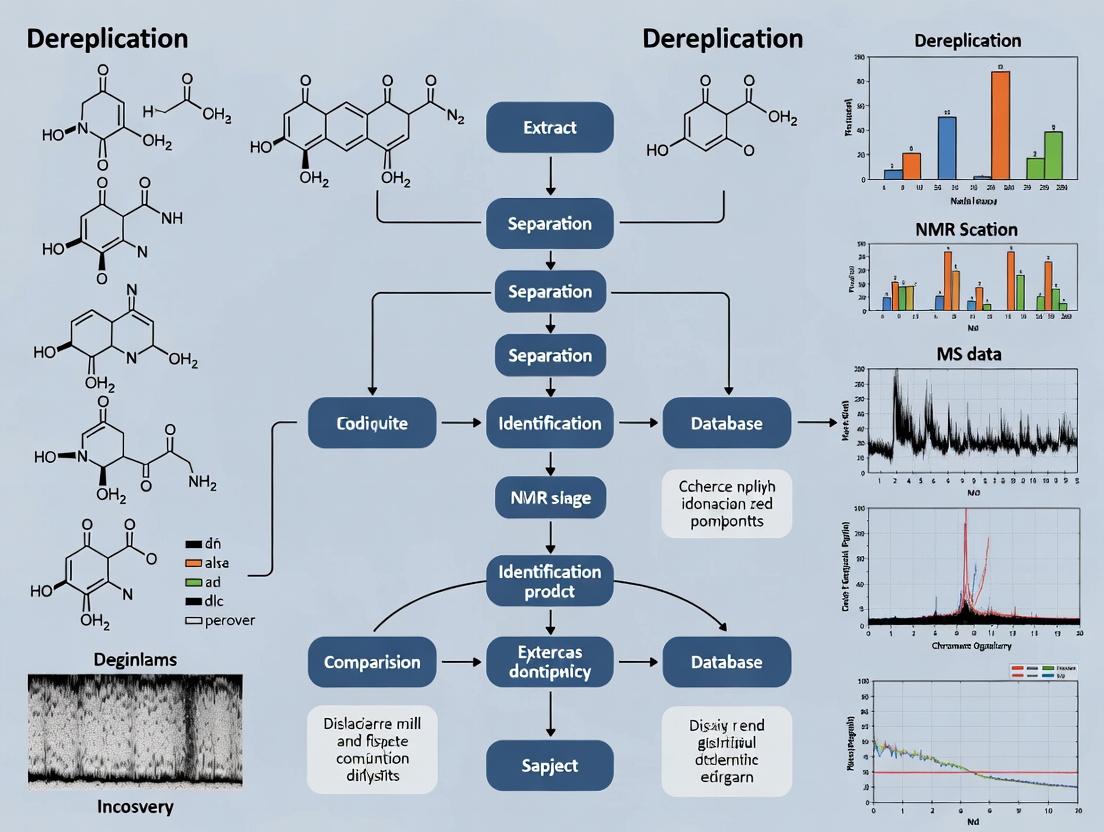
This article provides a comprehensive overview of dereplication, a critical early-stage process in natural product (NP) drug discovery aimed at swiftly identifying known compounds to focus resources on novel leads[citation:1].
Dereplication in Natural Product Discovery: Overcoming the Rediscovery Bottleneck to Accelerate Novel Lead Identification
Abstract
This article provides a comprehensive overview of dereplication, a critical early-stage process in natural product (NP) drug discovery aimed at swiftly identifying known compounds to focus resources on novel leads[citation:1]. Tailored for researchers and drug development professionals, it explores the foundational concepts and economic necessity of dereplication[citation:1]. The scope encompasses modern methodological workflows integrating liquid chromatography-tandem mass spectrometry (LC-MS/MS), molecular networking, and chemical genomics[citation:2][citation:3]. It addresses key troubleshooting challenges in analyzing complex mixtures and data interpretation[citation:4]. Finally, the article offers a comparative analysis of various dereplication strategies and validation frameworks, highlighting their relative strengths in accelerating the path from biodiscovery to biomedical innovation[citation:5][citation:9].
Demystifying Dereplication: Core Concepts and Critical Challenges in Natural Product Screening
Dereplication is a critical, upfront analytical process in natural product discovery designed to rapidly identify known compounds within complex biological extracts [1]. Its primary function is to prevent the costly and time-consuming rediscovery of previously characterized molecules, thereby streamlining the path to novel bioactive leads [1]. Modern dereplication has evolved from simple chromatographic comparisons to a data-rich, multi-technique strategy. It now integrates advanced analytical technologies like Liquid Chromatography-Tandem Mass Spectrometry (LC-MS/MS) with computational metabolomics and biological profiling to prioritize unique chemistry efficiently [2] [3]. This guide details the core principles, methodologies, and integrated workflows that establish dereplication as an indispensable strategic filter for rationalizing natural product libraries and accelerating drug discovery [4].
The Imperative for Dereplication in Modern Drug Discovery
Natural products and their derivatives have historically been the source of a majority of new pharmaceutical agents, underscoring their continued importance [4]. However, the traditional screening pipeline from crude extract to isolated bioactive compound is inherently inefficient. The central challenge is structural redundancy; libraries comprising thousands of microbial or plant extracts often contain overlapping sets of common metabolites [4]. This redundancy leads directly to the rediscovery of known compounds, a significant bottleneck that consumes extensive time and financial resources in bioassay-guided fractionation only to arrive at a molecule of already-known structure and activity [1].
Dereplication addresses this challenge head-on by acting as a strategic triage step. It is defined as the process of using chromatographic and spectroscopic techniques to recognize known substances in an extract early in the discovery pipeline [1]. The objectives are multifold:
- To identify and eliminate nuisance compounds (e.g., tannins, fatty acids) or known active compounds from further consideration.
- To recognize multiple extracts containing the same active principle, allowing for the prioritization of the most promising source.
- To focus isolation efforts exclusively on fractions displaying novel chemistry or unprecedented bioactivity.
By filtering out the "known," dereplication ensures that the limited resources of a discovery program are concentrated on the most promising leads for novel scaffold isolation [4] [2].
Core Methodologies and Workflows
The contemporary dereplication pipeline is built upon a foundation of hyphenated analytical techniques, primarily coupling high-resolution separation with sensitive detection and spectral analysis.
The Analytical Core: LC-MS/MS and Molecular Networking
Liquid Chromatography-Tandem Mass Spectrometry (LC-MS/MS) is the cornerstone of modern dereplication. The standard workflow involves:
- Extract Preparation & Analysis: Crude extracts are separated via High-Performance Liquid Chromatography (HPLC) or Ultra-HPLC (UHPLC), and eluting compounds are ionized (typically by electrospray ionization) and analyzed by a high-resolution mass spectrometer [2].
- Data Acquisition: The system collects both precursor ion mass (m/z) and fragmentation (MS/MS) spectra, providing data on molecular mass and structural subunits.
- Computational Processing: MS/MS data are processed through platforms like the Global Natural Products Social Molecular Networking (GNPS). GNPS performs molecular networking by clustering MS/MS spectra based on fragmentation pattern similarity, which correlates strongly with structural similarity [4].
- Dereplication: Spectra within the network are then compared against extensive reference spectral libraries (e.g., within GNPS, MassBank) to putatively annotate known compounds.
A key strategic application of this data is the rational design of minimized screening libraries. Research demonstrates that by selecting extracts based on MS/MS spectral (scaffold) diversity rather than randomly, library size can be reduced dramatically with minimal loss of chemical diversity or bioactivity potential. For instance, one study achieved an 84.9% reduction in the number of extracts needed to reach maximal scaffold diversity, shrinking a library from 1,439 to 216 extracts while retaining all bioactive correlated features [4].
Table 1: Efficacy of MS/MS-Based Rational Library Design [4]
| Metric | Full Library (1,439 Extracts) | Rational Library (216 Extracts) | Reduction Factor |
|---|---|---|---|
| Scaffold Diversity | 100% (All scaffolds) | 100% (All scaffolds) | 6.6-fold size reduction |
| Anti-P. falciparum Hit Rate | 11.26% | 15.74% | Hit rate increased by ~40% |
| Bioactive Features Retained | 10 features | 10 features | 100% retention |
Experimental Protocol: LC-MS/MS-Based Dereplication
- Sample Preparation: Prepare test extract and standard solutions in appropriate LC-MS grade solvent. Filter through a 0.22 µm membrane.
- LC Conditions (Example): Utilize a reversed-phase C18 column (e.g., 2.1 x 100 mm, 1.7 µm). Employ a binary gradient from 5% to 100% organic modifier (acetonitrile or methanol) in water, both containing 0.1% formic acid, over 15-20 minutes. Maintain a flow rate of 0.3-0.4 mL/min.
- MS Conditions: Operate in data-dependent acquisition (DDA) mode on a high-resolution tandem mass spectrometer (e.g., Q-TOF, Orbitrap). The full scan range is typically m/z 100-1500. The top N most intense ions from each scan are selected for MS/MS fragmentation using collision-induced dissociation (CID) or higher-energy collisional dissociation (HCD).
- Data Processing: Convert raw data files (.d, .raw) to open formats (.mzML, .mzXML). Upload to the GNPS platform (https://gnps.ucsd.edu). Perform molecular networking using classical networking parameters (min. pairs cosine score: 0.7, min. matched peaks: 6). Execute library search against public spectral libraries.
- Annotation & Prioritization: Review molecular network. Clusters containing nodes that match library spectra for known compounds are dereplicated. Prioritize for further study nodes that form unique clusters without library matches or that show correlation with bioassay results.
Diagram 1: Core dereplication workflow using LC-MS/MS.
Advanced and Integrated Dereplication Strategies
To address the limitations of purely structural analysis, cutting-edge pipelines integrate orthogonal methods that provide functional or biological context.
Integration with Chemical Genomics
Chemical genomics provides a functional readout complementary to structural MS data. In this approach, a bioactive extract is tested against a library of yeast (Saccharomyces cerevisiae) gene deletion mutants. Compounds with known mechanisms of action (MoA) produce characteristic profiles of hypersensitive and resistant mutant strains, creating a "chemical genomic fingerprint" [3].
Integrated Protocol: A fraction showing antifungal activity is analyzed in parallel by LC-MS/MS and Yeast Chemical Genomics (YCG).
- YCG Arm: The fraction is applied to a pool of DNA-barcoded yeast knockout strains grown in a 384-well format. After incubation, genomic DNA is extracted, barcodes are amplified via PCR, and sequenced. Bioinformatic tools (e.g., BEAN-counter) quantify strain abundance to generate a sensitivity/resistance profile [3].
- Triaging Decision: The sample is triaged based on combined evidence:
- LC-MS/MS identifies a known compound AND its YCG profile matches that compound's signature → Confidently dereplicated.
- LC-MS/MS suggests novelty AND the YCG profile is unique or suggests a novel MoA → High-priority candidate for isolation.
- Discrepant results trigger further investigation (e.g., for compound modification or mixture effects).
This orthogonal integration significantly improves the detection of unwanted compound classes over either method used alone [3].
Table 2: Complementary Roles of Integrated Dereplication Techniques
| Technique | Primary Data Type | Strengths | Role in Dereplication |
|---|---|---|---|
| LC-MS/MS | Structural & Spectroscopic | High sensitivity; Provides chemical formula & fragmentation pattern; Enables molecular networking | Identifies compounds by matching to spectral libraries of known entities. |
| Chemical Genomics | Functional & Biological | Provides mechanistic insight; Generates bioactivity fingerprints; Functional counterpart to structure | Identifies compounds by matching bioactivity profiles to known mechanisms of action. |
Diagram 2: Integrated dereplication using structural and functional data.
A successful dereplication platform relies on both sophisticated instrumentation and specialized biological and computational resources.
Table 3: Key Research Reagent Solutions for Dereplication
| Item | Function in Dereplication | Example/Specification |
|---|---|---|
| UHPLC-Q-TOF/MS System | Provides high-resolution chromatographic separation coupled with accurate mass and MS/MS spectral acquisition for compound characterization [2]. | Systems from Agilent, Waters, Thermo Fisher, etc. |
| GNPS Platform | An open-access cloud platform for processing MS/MS data, performing molecular networking, and searching public spectral libraries for annotation [4] [3]. | https://gnps.ucsd.edu |
| SIRIUS 5 Software | Offers database-independent structure elucidation by predicting molecular formulas and structures from MS/MS data, expanding comparison to vast chemical databases [3]. | |
| Yeast Knockout Strain Collection | A pooled library of isogenic S. cerevisiae strains, each with a single gene deletion and a unique DNA barcode, used for chemical genomic profiling [3]. | e.g., Diagnostic library of 310 knockouts [3]. |
| Reference Spectral Libraries | Curated databases of MS/MS spectra for known natural products and metabolites, essential for positive identification during library matching [1]. | GNPS libraries, MassBank, in-house libraries. |
| Specialized Chromatography Columns | For separating complex natural product mixtures; options include reversed-phase (C18), HILIC, or specialized chiral columns. | 2.1 mm x 100 mm, sub-2µm particle size for UHPLC [2]. |
Dereplication has evolved from a simple avoidance tactic into a proactive, strategic filtering technology that is fundamental to efficient natural product discovery. By leveraging the power of high-resolution LC-MS/MS, computational metabolomics, and orthogonal functional profiling, modern dereplication pipelines can rationally minimize screening libraries, dramatically increase hit rates, and ensure that discovery efforts are focused on true novelty [4] [3]. As spectral and genomic databases continue to expand and machine learning tools become more integrated, dereplication will solidify its role as the indispensable gatekeeper, guiding researchers more swiftly than ever toward the novel chemical scaffolds needed to address emerging therapeutic challenges.
The systematic discovery of bioactive natural products (NPs) is a cornerstone of pharmaceutical development, having yielded a significant proportion of all approved drugs, particularly in the realms of anti-infectives and oncology [5]. However, this field faces a fundamental and costly paradox: the tremendous chemical diversity offered by nature is paralleled by a high probability of repeatedly isolating the same known compounds. This process of "rediscovery" squanders finite research resources and critically slows the pipeline for identifying novel therapeutic leads [6] [7].
Within this context, dereplication emerges not merely as a technical step, but as a core operational thesis essential for sustainable research. Dereplication is defined as the rapid, early-stage identification of known compounds within complex biological extracts, thereby steering investigative efforts and resources toward truly novel chemical entities [8] [9]. Its implementation is an economic and temporal imperative. By intercepting known molecules early—before committing to lengthy and expensive isolation, purification, and full structure elucidation—research teams can achieve a dramatic increase in efficiency and cost-effectiveness [10] [5].
The evolution of dereplication has been propelled by advancements in analytical technologies and bioinformatics. The traditional reliance on simple database searches using molecular weight has given way to sophisticated strategies integrating hyphenated techniques like LC-MS/MS and LC-NMR, and more recently, to data-driven approaches such as mass spectrometry-based molecular networking and genomics-informed screening [8] [10]. This guide will articulate the quantitative impact of dereplication, detail the experimental protocols that underpin modern strategies, and provide the conceptual frameworks and practical tools necessary to implement a robust dereplication thesis within any natural product discovery program.
The Quantifiable Cost of Rediscovery: Data and Impact
The argument for dereplication is compellingly supported by quantitative metrics that illustrate its impact on research efficiency, speed, and novelty yield. The following tables synthesize data on the performance of modern dereplication workflows and the economic burden they alleviate.
Table 1: Performance Metrics of Modern Dereplication Strategies
| Strategy | Key Technology | Reported Efficiency Gain | Key Outcome | Source/Example |
|---|---|---|---|---|
| Molecular Networking | LC-MS/MS, GNPS Platform | Dereplication of 58 molecules (including analogs) from microbial samples in a single study [6]. | Identification of known compounds and clustering of structural analogs, guiding isolation toward novelty. | Analysis of marine/terrestrial microbial samples [6]. |
| Integrated LC-MS/MS Workflow | DDA & DIA Acquisition, GNPS | Annotation of 51 compounds from a single plant extract (Sophora flavescens) [11]. | Comprehensive metabolite profiling enabling rapid prioritization of unknown clusters for further study. | Dereplication study of Sophora flavescens roots [11]. |
| Pre-fractionation & HTS | UHPLC-MS, Micro-fractionation | Enables screening of >100,000 fractions per year, identifying active peaks before full isolation [2]. | Dramatic increase in throughput for bioactivity-guided discovery, minimizing work on known actives. | Construction of natural product libraries [2]. |
| Genome Mining | Bioinformatics (e.g., antiSMASH) | Predicts thousands of cryptic biosynthetic gene clusters (BGCs) from sequenced genomes [10] [7]. | Shift from random screening to targeted activation of silent pathways for novel compound production. | Strategy to overcome rediscovery of common metabolites [7]. |
Table 2: The Economic and Temporal Burden of Rediscovery
| Research Phase | Approximate Time & Cost Without Dereplication | Risk Mitigated by Early Dereplication | Consequence of Late-Stage Rediscovery |
|---|---|---|---|
| Bioassay-Guided Fractionation | Weeks to months; significant reagent and labor costs. | Investment in isolating a known bioactive compound. | Waste of resources on pharmacologically characterized molecules. |
| Large-Scale Cultivation & Extraction | Months; high cost for growth media, scale-up equipment, and processing. | Commitment of large-scale resources to produce a known compound. | Major financial loss and project delay. |
| Full Structure Elucidation | Weeks (NMR, HRMS, etc.); requires high-end instrumentation and expert analysis. | Expenditure of the most specialized and expensive analytical effort. | Loss of opportunity cost where instruments could be used for novel compounds. |
| Patent Application | High legal and filing costs (tens of thousands of dollars). | Pursuit of intellectual property for a non-novel structure. | Legal rejection and total loss of filing investment [5]. |
Core Methodologies and Experimental Protocols
The effectiveness of dereplication hinges on the strategic application of analytical protocols. Below are detailed methodologies for two cornerstone approaches: Mass Spectrometry-Based Molecular Networking and Hyphenated LC-MS/NMR Analysis.
3.1 Protocol: Mass Spectrometry-Based Molecular Networking via GNPS This protocol outlines the steps for using the Global Natural Products Social Molecular Networking (GNPS) platform, a community-driven workflow for dereplicating and visualizing complex mixture data [6] [11].
Objective: To rapidly identify known metabolites and cluster structurally related analogs in a crude extract based on MS/MS fragmentation pattern similarity. Materials & Instrumentation:
- Crude natural product extract.
- UPLC or HPLC system coupled to a tandem mass spectrometer (e.g., Q-TOF, Orbitrap) capable of Data-Dependent Acquisition (DDA) or Data-Independent Acquisition (DIA).
- GNPS platform (https://gnps.ucsd.edu).
- Data conversion software (e.g., MSConvert, ProteoWizard).
Procedure:
- Sample Preparation & LC-MS/MS Analysis: a. Prepare extract solution at a concentration suitable for LC-MS (e.g., 1 mg/mL). Centrifuge and filter (0.22 µm) prior to injection [11]. b. Perform reversed-phase LC separation. A typical method uses a C18 column, water (with 0.1% formic acid) and acetonitrile as mobile phases, with a gradient from 5% to 98% organic over 20-30 minutes [11]. c. Acquire MS/MS data in positive or negative ionization mode. For DDA, select the top N most intense ions per cycle for fragmentation. For DIA (e.g., SWATH), acquire fragmentation data across sequential, overlapping m/z windows covering the entire precursor range [11].
Data Conversion and Processing: a. Convert raw instrument files (.d, .raw) to open formats (.mzML, .mzXML) using MSConvert. b. (For DIA data only): Use software like MS-DIAL to deconvolute complex fragmentation data and generate pseudo-MS/MS spectra for each chromatographic feature [11]. c. (Optional): Use feature-finding software like MZmine for chromatographic alignment, isotope grouping, and blank subtraction of DDA data before GNPS analysis [11].
Molecular Network Construction on GNPS: a. Upload the processed MS/MS data file to GNPS. b. Set spectral processing parameters: precursor ion mass tolerance (e.g., 0.02 Da), fragment ion tolerance (e.g., 0.02 Da). Set minimum cosine score for network edges (e.g., 0.7) and minimum matched peaks (e.g., 6) [6]. c. Initiate the analysis. GNPS will compare all spectra pairwise, calculating a cosine similarity score based on shared fragment ions and neutral losses.
Data Analysis and Dereplication: a. Visualize the network using tools within GNPS or Cytoscape. Each node represents a consensus MS/MS spectrum; edges connect nodes with similar spectra [6]. b. Annotate nodes by searching against GNPS spectral libraries (e.g., MassBank, ReSpect). Library matches provide putative identifications for known compounds. c. Analyze clusters: Structurally similar molecules (e.g., analogs from the same biosynthetic family) cluster together. Unknown molecules connected to known "seed" compounds can be prioritized as novel analogs [6].
3.2 Protocol: Hyphenated LC-MS/SPE-NMR for Targeted Dereplication This protocol is used for the unambiguous identification of a compound of interest, often after molecular networking or bioassay has highlighted a specific target.
Objective: To isolate and collect a chromatographic peak of interest for subsequent off-line or at-line nuclear magnetic resonance (NMR) analysis, providing definitive structural confirmation. Materials & Instrumentation:
- LC-MS system with a post-column flow splitter.
- Solid-Phase Extraction (SPE) cartridge trap or a fraction collector.
- NMR spectrometer (preferably 500 MHz or higher).
- Deuterated NMR solvents (e.g., CD3OD, DMSO-d6).
Procedure:
- LC-MS Analysis and Peak Targeting: a. Perform an analytical LC-MS run to identify the retention time and mass of the target compound. b. Optimize the chromatographic method to maximize separation of the target peak.
Automated Fractionation/Trapping: a. Based on the known retention time, program the system to trigger fraction collection or divert flow to an SPE cartridge when the UV or MS signal for the target compound is detected. b. For SPE trapping, the compound is captured on a cartridge (e.g., C18). After the run, the cartridge is dried with nitrogen to remove LC solvents [2].
Elution for NMR: a. Elute the trapped compound directly into an NMR tube using a small volume (e.g., 30-150 µL) of deuterated solvent [10]. b. If using a fraction collector, dry the fraction under a gentle nitrogen stream and reconstitute in deuterated solvent.
NMR Acquisition and Structure Elucidation: a. Acquire standard 1D (1H, 13C) and 2D (COSY, HSQC, HMBC) NMR experiments. b. Compare the acquired chemical shifts and coupling constants with literature or database values for the suspected known compound to achieve definitive dereplication [10] [2].
Visualizing Workflows and Relationships
The following diagrams, generated using DOT language, map the logical workflows and data relationships central to effective dereplication strategies.
A successful dereplication pipeline relies on both laboratory reagents and digital resources. The following table details key components of the modern dereplication toolkit.
Table 3: Essential Research Reagent Solutions for Dereplication
| Category | Item/Resource | Function in Dereplication | Key Examples / Notes |
|---|---|---|---|
| Analytical Standards | Authentic Natural Product Standards | Provide definitive reference for retention time, MS/MS spectrum, and NMR data for comparison, enabling conclusive identification [11]. | Commercial suppliers (e.g., Sigma-Aldrich, Chengdu Zhibiao Biotech); isolated in-house. Critical for high-confidence dereplication. |
| Chromatography | U/HPLC-grade Solvents & Columns | Enable high-resolution separation of complex extracts, which is prerequisite for clean MS and NMR data acquisition [2] [11]. | Water, acetonitrile, methanol with modifiers (e.g., formic acid). C18 reversed-phase columns (e.g., 1.8 µm particle size). |
| Mass Spectrometry | Tuning & Calibration Solutions | Ensure mass accuracy and reproducibility of the MS system, which is critical for reliable database matching and molecular formula prediction. | Solutions containing known ions across a broad m/z range (e.g., sodium formate clusters). |
| Nuclear Magnetic Resonance | Deuterated Solvents | Provide the lock signal for stable NMR acquisition and allow for proper shimming. Essential for preparing samples from LC fractionation [10]. | CD3OD, DMSO-d6, CDCl3. Must be anhydrous and of high isotopic purity. |
| Bioinformatics & Databases | Spectral & Structural Databases | Digital repositories for comparing experimental data against known compounds. The breadth and curation quality directly impact dereplication success [8] [10]. | Public: GNPS, MassBank, PubChem. Commercial: SciFinder, Dictionary of Natural Products, MarinLit. |
| Software Platforms | Data Processing & Analysis Tools | Convert, process, and visualize complex datasets, bridging instrument output and biological insight [8] [11]. | GNPS: Molecular networking. MZmine/MS-DIAL: LC-MS data processing. Cytoscape: Network visualization. |
The discovery of novel bioactive natural products is a foundational pillar of drug development. However, this process is notoriously inefficient, often encumbered by the repeated isolation of known compounds [1]. Dereplication—the rapid identification of known substances early in the discovery pipeline—has thus become a critical strategy to focus resources on truly novel chemistry [12] [13]. At its core, dereplication is a comparative analytical process, matching data from a bioactive sample against comprehensive databases of known compounds [12]. The evolution of this field is inextricably linked to advancements in separation science and detection technology. This whitepaper traces the technical journey from the foundational simplicity of Thin-Layer Chromatography (TLC) to the sophisticated, information-rich world of hyphenated techniques, framing this evolution within the context of accelerating and refining the dereplication process in modern natural product research.
The Foundational Era: Thin-Layer Chromatography
Historical Development and Core Principles
The origins of planar chromatography date to the work of Russian scientists Nikolay Izmailov and M. S. Shraiber in 1938, who used thin layers of alumina on glass plates to separate plant extracts [14]. This method was refined and standardized by Egon Stahl in the 1950s, leading to the commercial availability of pre-coated plates and the widespread adoption of TLC [14]. The principle is straightforward: a sample is applied to a stationary phase (e.g., silica gel) coated on a plate, which is then placed in a chamber with a shallow pool of a mobile phase (solvent). The solvent migrates up the plate via capillary action, separating compounds based on their differential affinity for the stationary and mobile phases [14] [15].
The visual output is expressed as an Rf value (retention factor), a unitless ratio of the distance traveled by the compound to the distance traveled by the solvent front. TLC’s enduring advantages include its simplicity, low cost, minimal sample preparation, high sample throughput (multiple samples per plate), and the ability to use a wide range of destructive and non-destructive detection reagents [16] [15].
Evolution to High-Performance TLC (HPTLC) and Early Hyphenation
The pursuit of greater resolution, reproducibility, and quantitation drove the evolution from TLC to High-Performance TLC (HPTLC). HPTLC plates are characterized by a finer, more uniform particle size (5-7 µm vs. 10-12 µm for TLC) and a thinner, more homogeneous layer [16]. This results in sharper zones, improved separation efficiency, and the ability to perform reliable quantitative analysis via scanning densitometry [14].
A pivotal innovation was the hyphenation of TLC/HPTLC with spectroscopic detection. The development of interfaces to couple the TLC plate directly to mass spectrometry (MS) was transformative [14]. Early methods involved scraping off the analyte zone, eluting the compound, and injecting it into an MS. Modern TLC-MS interfaces use elution-based probes that directly extract the compound from the plate into the MS ion source, preserving the chromatographic integrity and enabling rapid structural insight [17]. This marriage marked the beginning of true hyphenated planar chromatography, adding powerful identification capabilities to TLC’s excellent separation and profiling strength.
Table 1: Evolution of Key Chromatographic Parameters from TLC to Modern Hyphenated Systems
| Parameter | Classical TLC | Modern HPTLC | Hyphenated LC-MS |
|---|---|---|---|
| Stationary Phase Particle Size | 10-12 µm, irregular | 5-7 µm, spherical, narrow distribution | 1.7-5 µm (for UHPLC), spherical |
| Plate/Column Efficiency | ~600 theoretical plates/run | ~5,000 theoretical plates/run | >100,000 theoretical plates/column |
| Separation Mode | Primarily normal-phase (silica gel) | Normal-phase, reversed-phase, chemically modified | Predominantly reversed-phase (C18) |
| Detection | Visual, UV/Vis, post-chromatographic derivatization | Scanning densitometry, chemical/biological assays | On-line MS, PDA (Photodiode Array), NMR |
| Key Metric | Rf value (visual comparison) | Rf value, peak area/height (densitometry) | Retention time, m/z, fragmentation pattern, NMR spectrum |
| Throughput | Very High (parallel analysis of ~20 samples) | High (parallel analysis, automated application) | Serial analysis (one sample per injection) |
| Information Output | Separation profile, semi-quantitative | Quantitative data, bioactivity profile (via EDA) | High-resolution separation with on-line structural identification |
The Paradigm Shift: The Rise of Hyphenated Techniques
Conceptual Framework and Definitions
Hyphenated techniques are defined by the on-line coupling of a separation method (chromatography) with one or more spectroscopic detection techniques [18]. The term "hyphenation" emphasizes the direct, automated connection where the effluent from the chromatograph is transferred in real-time to the spectrometer. This creates a synergistic system where the separation power of chromatography resolves a complex mixture, and the spectroscopic detector provides selective, information-rich identification for each resolved component [18].
The primary goal is to obtain a maximum of qualitative and quantitative information in a single, automated analytical run. For dereplication, this means that a bioactive crude extract can be separated, and each resulting peak can be characterized by its molecular weight, fragmentation pattern, and/or spectral signature without the need for time-consuming isolation.
Key Hyphenated Platforms and Their Technical Specifications
- GC-MS (Gas Chromatography-Mass Spectrometry): The first widely adopted hyphenated technique [18]. It is ideal for volatile, thermally stable, and relatively non-polar compounds. For polar natural products (e.g., sugars, acids), derivatization (e.g., silylation) is often required. Electron Impact (EI) ionization generates rich, reproducible fragmentation libraries, enabling high-confidence database matching, a cornerstone of early dereplication efforts [18] [1].
- LC-MS (Liquid Chromatography-Mass Spectrometry): The workhorse of modern natural product dereplication. It directly analyzes a broad range of polar to non-polar compounds without the need for volatility. The development of "soft" ionization techniques like Electrospray Ionization (ESI) and Atmospheric Pressure Chemical Ionization (APCI) was revolutionary, as they predominantly generate intact molecular ions ([M+H]⁺, [M-H]⁻) [18]. Tandem MS (MS/MS or LC-MS²) provides fragment ion data critical for structural elucidation. Ultra-High-Performance LC (UHPLC) coupled with high-resolution mass spectrometers (HRMS) like Time-of-Flight (TOF) or Orbitrap instruments delivers exceptional chromatographic resolution paired with exact mass measurement (<5 ppm accuracy), enabling the prediction of elemental formulas [10].
- LC-NMR (Liquid Chromatography-Nuclear Magnetic Resonance): Represents the pinnacle of hyphenated structural elucidation. While less sensitive than MS, NMR provides unambiguous structural information, including stereochemistry. Coupling is technically challenging due to the need for solvent suppression and the low concentration of analytes. It is often used in LC-MS-NMR "triple hyphenation" setups or in a stop-flow mode to collect data on peaks of interest pre-identified by LC-MS [18].
- Hyphenated HPTLC-EDA-MS: A powerful planar chromatography hybrid. HPTLC separates the crude extract. The plate is then subjected to an Effect-Directed Analysis (EDA) bioassay, such as an enzyme inhibition or antimicrobial test, which visually localizes the bioactive zones on the plate [17] [19]. Only these bioactive zones are then eluted via an interface into an MS for identification. This directly links biological activity to chemical structure in a highly efficient, targeted manner, streamlining dereplication by focusing only on the active constituents [19].
Table 2: Comparison of Major Hyphenated Techniques in Dereplication
| Technique | Key Separation Mechanism | Key Detection Mechanism | Primary Information Gained | Best Suited for Compound Classes | Role in Dereplication Workflow |
|---|---|---|---|---|---|
| GC-MS | Volatility, polarity | Electron Impact (EI) or Chemical Ionization (CI) MS | Retention index, fragmentation pattern (library match) | Essential oils, fatty acids, volatile terpenes, alkaloids | Rapid screening of volatile components, high-confidence library matching |
| LC-MS | Polarity, molecular size | ESI or APCI MS, often HRMS and MS/MS | Retention time, exact mass, isotopic pattern, fragment ions | Extremely broad: glycosides, saponins, peptides, phenolics | Core dereplication tool: molecular formula determination, database searching, analog identification |
| LC-NMR | Polarity, molecular size | ¹H or ¹³C NMR | Number and type of protons/carbons, connectivity, stereochemistry | All classes, but limited by sensitivity | Definitive structural confirmation, solving stereochemistry of novel hits |
| HPTLC-EDA-MS | Polarity, adsorption | Biological assay followed by ESI-MS | Bioactivity localization (Rf value), then molecular mass/fragments of active only | Broad, especially for direct bioactivity correlation | High-throughput prioritization: identifies only the chemical entities responsible for observed bioactivity |
Integration into Modern Dereplication Workflows
The Contemporary Dereplication Pipeline
Modern dereplication is a multi-step, informatics-driven process. The workflow begins with the preparation of a crude natural extract showing bioactivity. This extract is first analyzed by UHPLC-HRMS to obtain a chromatographic profile with associated exact mass and MS/MS data for each major component [10]. This chemical data is then cross-referenced against natural product databases (e.g., SciFinder, MarinLit, GNPS – Global Natural Products Social Molecular Networking) and in-house libraries [12] [1].
A critical advancement is the use of molecular networking, an informatics approach that organizes MS/MS data based on spectral similarity. In a molecular network, structurally related compounds (e.g., analogs within a compound family) cluster together. This allows researchers to rapidly visualize known compound families and simultaneously highlight unique, potentially novel nodes in the network for prioritization [10]. This workflow exemplifies how hyphenated LC-MS² data forms the primary data layer for intelligent dereplication.
Detailed Experimental Protocols
Protocol 1: Standard UHPLC-HRMS Analysis for Dereplication
- Sample Preparation: Weigh 1-5 mg of dried crude extract. Dissolve in 1 mL of appropriate LC-MS grade solvent (e.g., methanol). Vortex and sonicate for 10 minutes. Centrifuge at 14,000 rpm for 10 minutes to pellet insoluble material. Dilute supernatant 1:10 with starting mobile phase prior to injection.
- Chromatographic Separation:
- Column: C18 reversed-phase column (e.g., 100 x 2.1 mm, 1.7 µm particle size).
- Mobile Phase: (A) Water with 0.1% formic acid; (B) Acetonitrile with 0.1% formic acid.
- Gradient: 5% B to 95% B over 15-20 minutes.
- Flow Rate: 0.3 mL/min.
- Injection Volume: 1-5 µL.
- Mass Spectrometric Detection:
- Ion Source: Electrospray Ionization (ESI), positive and/or negative ion modes.
- Mass Analyzer: High-resolution Time-of-Flight (TOF) or Orbitrap.
- Scan Range: m/z 100-1500.
- Data Acquisition: Full-scan MS for exact masses, followed by data-dependent acquisition (DDA) to automatically trigger MS/MS scans on the most intense ions.
- Data Processing: Use software (e.g., MZmine, MS-DIAL) to perform peak picking, alignment, and deconvolution. Export lists of retention times, exact masses, and MS/MS spectra for database searching.
Protocol 2: HPTLC-Bioautography-MS for Targeted Dereplication
- HPTLC Separation:
- Apply crude extract as bands (e.g., 8 mm) to a normal-phase silica gel HPTLC plate using an automated applicator.
- Develop in a saturated twin-trough chamber with an optimized mobile phase (e.g., ethyl acetate: methanol: water, 77:15:8 v/v).
- Dry plate thoroughly.
- Effect-Directed Assay (EDA):
- For an antimicrobial assay, evenly spray the plate with a nutrient agar suspension of a reporter bacterium (e.g., Bacillus subtilis).
- Incubate the plate in a humid chamber at 37°C for 6-18 hours.
- Visualize inhibition zones (clear areas against a cloudy bacterial lawn) under white light.
- MS Interfacing:
- Mark the precise location of inhibition zones.
- Use an elution-based TLC-MS interface. Position the elution head directly over the bioactive zone.
- Elute the compound directly into the ESI source of the mass spectrometer using a steady flow of suitable solvent (e.g., methanol).
- Identification: Acquire MS and MS/MS spectra of the eluted bioactive compound and search against spectral libraries [17] [19].
Visualization of Workflows and Evolution
Diagram 1: The Historical Evolution of Chromatographic Techniques Toward Modern Dereplication. This diagram traces the progression from foundational planar methods to online hyphenated systems and their convergence into data-rich dereplication platforms.
Diagram 2: Integrated Modern Dereplication Workflow Incorporating Hyphenated Techniques. This workflow shows how LC-MS and HPTLC-EDA-MS provide complementary data streams that feed into a central informatics engine for decision-making.
The Scientist's Toolkit: Essential Reagents and Materials
Table 3: Key Research Reagent Solutions for Hyphenated Technique-Based Dereplication
| Item | Function in Dereplication | Example/Note |
|---|---|---|
| LC-MS Grade Solvents | Mobile phase preparation and sample dissolution; minimize ion suppression and background noise in MS detection. | Acetonitrile, Methanol, Water (all with 0.1% formic acid or ammonium acetate). |
| Standard Stationary Phases | Core separation media for LC-MS and HPTLC. | C18 UHPLC columns (1.7-2.1 mm ID); Silica gel, C18, or DIOL HPTLC plates. |
| Mass Spectrometry Calibrants | Accurate mass calibration of the HRMS instrument, essential for determining elemental formulas. | Sodium formate clusters or proprietary calibration solutions. |
| Bioassay Reagents (for EDA) | Enable biological detection directly on HPTLC plates to localize bioactive compounds. | Enzyme solutions (e.g., acetylcholinesterase), microbial broth cultures, tetrazolium dyes for viability. |
| Derivatization Reagents (for GC-MS) | Convert polar, non-volatile compounds into volatile derivatives for GC-MS analysis. | N,O-Bis(trimethylsilyl)trifluoroacetamide (BSTFA) for silylation. |
| Natural Product Databases | Digital libraries for spectral and structural comparison; the reference against which "knowns" are identified. | Commercial (SciFinder, Reaxys) and public (GNPS, NP Atlas) databases. |
| Data Processing Software | Extract, align, and analyze complex datasets from LC-HRMS; perform molecular networking and database queries. | MZmine, MS-DIAL, GNPS workflows, vendor-specific software (e.g., Compound Discoverer). |
The historical evolution from Thin-Layer Chromatography to advanced hyphenated techniques represents a paradigm shift in analytical capability, directly fueling the modern dereplication engine. TLC provided the foundational concept of simple, parallel separation and visual profiling. Its evolution into HPTLC, coupled with bioassays and MS, created a powerful, targeted tool for linking chemistry to biology. The development of on-line hyphenated systems, particularly LC-HRMS/MS, provided the high-resolution, information-dense data streams necessary for rapid chemical characterization. Today, these techniques are not used in isolation but are integrated into intelligent, informatics-driven workflows. Dereplication has thus transformed from a simple step to avoid rediscovery into a sophisticated, proactive strategy that uses historical chromatographic principles married to modern spectroscopic and computational power to efficiently navigate the complex chemical space of natural products and accelerate the discovery of novel therapeutic leads.
Within the paradigm of dereplication—the rapid identification of known compounds to prioritize novel chemistry—natural product (NP) discovery faces three convergent and formidable challenges. These include the unpredictable biological synergism or antagonism of compounds within complex "cocktail" mixtures, the confounding presence of ubiquitous or environmentally derived chemicals that mask true bioactivity, and the critical limitations of NP databases that hinder accurate annotation. This whitepaper provides an in-depth technical analysis of these challenges, framing them as primary bottlenecks in the dereplication workflow. It details modern experimental and computational methodologies designed to deconvolute mixture effects, discriminate environmental contaminants from true metabolites, and leverage next-generation databases. The discussion is contextualized within the broader thesis that effective dereplication is not merely a filtering step but a strategic process essential for navigating the complexity of natural chemical space and ensuring the discovery of genuinely novel therapeutic leads.
Dereplication is a critical, upfront process in natural product research aimed at the rapid identification of known compounds within complex biological extracts. Its primary goal is to avoid the redundant and costly isolation of previously characterized metabolites, thereby accelerating the discovery of novel chemical entities with potential therapeutic value [10]. The process has evolved from simple library matching to an integrated strategy combining liquid chromatography-high-resolution mass spectrometry (LC-HRMS), nuclear magnetic resonance (NMR) profiling, and bioinformatics [20].
However, the efficiency of dereplication is severely tested by several inherent challenges. The "cocktail effect" refers to the non-additive biological interactions (synergy or antagonism) of multiple compounds in a mixture, which can lead to misleading bioactivity readings that are not attributable to any single constituent [21]. Simultaneously, the pervasive presence of ubiquitous compounds—including environmental pollutants, media components, and common microbial metabolites—can contaminate extracts and generate false-positive signals [22] [23]. Furthermore, the success of any dereplication protocol is fundamentally dependent on the quality and scope of NP databases, which are often plagued by issues of curation, standardization, and chemical redundancy [24] [10]. This whitepaper dissects these three interrelated challenges, providing technical insights and protocols essential for researchers aiming to refine their dereplication workflows and enhance the yield of novel NP discovery.
The 'Cocktail Effect': Deconvoluting Bioactivity in Complex Mixtures
Bioactive natural extracts are inherently complex mixtures. The observed activity is rarely the sum of individual component effects but often a result of synergistic or antagonistic interactions—the "cocktail effect." This phenomenon complicates dereplication by creating a bioactivity signal that cannot be traced to any single known database entry, potentially leading to the misprioritization of extracts.
Quantitative Analysis of Mixture Interactions
Experimental models are crucial for quantifying mixture effects. A study assessing the combined cytotoxicity of frequent environmental pollutants (pharmaceuticals and pesticides) demonstrated significant deviations from expected additive effects [21].
Table 1: Experimental Data on Synergistic Cocktail Effects in a Microbial Toxicity Model [21]
| Mixture Combination | Test System | Combination Index (CI) Value | Interpretation | Key Finding |
|---|---|---|---|---|
| Diclofenac + Carbamazepine | Aliivibrio fischeri bioluminescence inhibition | CI < 1 | Synergism | Interaction amplified individual cytotoxicity. |
| Diclofenac + S-metolachlor | Aliivibrio fischeri bioluminescence inhibition | CI < 1 | Synergism | Non-toxic concentration of S-metolachlor enhanced toxicity. |
| Terbuthylazine (low conc.) in Senary Mix | Aliivibrio fischeri bioluminescence inhibition | Significant effect | Toxicity Enhancer | Compound itself non-toxic, but increased mixture toxicity. |
| Ibuprofen + Diclofenac | Aliivibrio fischeri bioluminescence inhibition | CI ≈ 1 | Additivity | Effect was predictable from individual dose-responses. |
The Combination Index (CI) method is a standard quantitative measure for this purpose, where CI < 1 indicates synergy, CI = 1 indicates additivity, and CI > 1 indicates antagonism [21].
Experimental Protocol: Assessing Mixture Toxicity for Dereplication Prioritization
Objective: To evaluate whether the bioactivity of a natural extract is attributable to a single component or a cocktail effect, prior to isolation efforts.
Methodology (Based on [21]):
- Fractionation & Bioassay: The crude active extract is subjected to orthogonal fractionation (e.g., HP20SS column chromatography followed by semi-preparative HPLC). All fractions and the original crude extract are tested in a quantitative bioassay (e.g., antimicrobial MIC, enzyme inhibition IC50).
- Dose-Response Analysis: For the crude extract and any active fractions, full dose-response curves are generated.
- Calculation of Expected Additive Effect: Using the dose-response data of individual fractions, the expected additive effect (E) of a reconstructed mixture is calculated based on the Concentration Addition (CA) or Independent Action (IA) model [21].
- Comparison with Observed Effect: The observed effect (O) of the original crude extract is compared to the predicted additive effect (E). A statistically significant difference (O >> E suggests synergy; O << E suggests antagonism) indicates a cocktail effect.
- Statistical Validation: Methods like PERMANOVA can be employed to determine the specific role (synergist, antagonist, additive) of individual compounds within the mixture [21].
Interpretation: An extract showing strong synergy should be prioritized for complete metabolomic profiling and bioactivity-guided isolation of the interacting consortium, as dereplication targeting single compounds may fail.
Ubiquitous Compounds: Differentiating Novel Metabolites from Background Noise
A major dereplication hurdle is the presence of compounds that are ubiquitous across samples. These include persistent organic pollutants (POPs), endocrine-disrupting chemicals (EDCs), common microbial siderophores, and media components [22] [23]. Their detection can mask the signal of rare, novel metabolites and lead to false-positive bioactivity associations.
The Impact of Realistic Environmental Mixtures
Studies using environmentally relevant mixtures of POPs illustrate this challenge. For example, exposure of zebrafish larvae to a mixture of 29 ubiquitous POPs at realistic concentrations caused severe developmental defects, including craniofacial cartilage malformations and disrupted bone mineralization [22]. Transcriptomic analysis revealed these effects were mediated through the disruption of nuclear receptor signaling pathways (androgen, vitamin D, and retinoic acid receptors) [22]. If such pollutants are present in an environmental sample (e.g., marine sponge or microbial extract), their potent bioactivity could be mistakenly attributed to a novel natural product.
Table 2: Effects of a Ubiquitous POP Mixture on Zebrafish Development [22]
| Parameter Assessed | Observation vs. Control | Biological Implication |
|---|---|---|
| Craniofacial Cartilage | Significant decrease in Meckel's cartilage size and angle between ceratohyals. | Disrupted chondrogenesis and skeletal patterning. |
| Mineralized Bone | Impaired formation and morphology. | Disrupted osteoblast function and bone development. |
| Transcriptomic Profile | Dysregulation of nuclear receptor (AR, VDR, RAR) signaling pathways. | Molecular mechanism linked to endocrine disruption. |
| Chemical Similarity | Structural clustering showed POPs resembled vitamin D and retinoic acid. | Suggests direct receptor binding or interference as a mode of action. |
Experimental Protocol: Zebrafish Model for Identifying Pollution-Derived Bioactivity
Objective: To determine if observed in vitro bioactivity from an environmental extract is replicable in a whole-organism model and linked to specific developmental pathways characteristic of pollutant action.
Methodology (Based on [22]):
- Sample Preparation: Extract is dissolved in embryo medium with appropriate solvent controls (e.g., <0.1% DMSO).
- Zebrafish Exposure: Wild-type zebrafish embryos are exposed to the extract from 6 hours post-fertilization (hpf) to 4-5 days post-fertilization (dpf) in a multi-well plate.
- Morphological Phenotyping: At 5 dpf, larvae are fixed and stained with Alcian Blue (cartilage) and/or Alizarin Red (bone). Key craniofacial structures (Meckel's, palatoquadrate, ceratohyal) are imaged and measured morphometrically.
- Transcriptomic Analysis: RNA is extracted from a parallel group of exposed larvae for RNA-seq. Data is analyzed for enrichment in pathways like nuclear receptor signaling, xenobiotic metabolism, and oxidative stress response.
- Chemical Profiling: The extract is analyzed by LC-HRMS, and spectral features are cross-referenced against databases of known environmental pollutants (e.g., NORMAN Suspect List).
Interpretation: If the extract induces phenotypes and gene expression changes congruent with known POP/EDC effects, the bioactivity is likely not from a novel therapeutic NP but from ubiquitous contaminants. This mandates rigorous background subtraction in dereplication workflows.
Database Limitations: The Foundation and Fault Lines of Dereplication
The efficacy of dereplication is directly tied to the comprehensiveness and accuracy of NP databases. Current databases face significant limitations: incomplete annotation, structural errors, lack of standardized data, and redundancy (the same compound under multiple names) [24] [10]. Furthermore, they are often siloed, separating chemical, genomic, and bioactivity data.
Characteristics and Challenges of Major NP Databases
Table 3: Characteristics and Limitations of Natural Product Database Types [24] [10]
| Database Type | Examples | Primary Strengths | Key Limitations for Dereplication |
|---|---|---|---|
| Comprehensive | COCONUT, LOTUS, NPASS | Broad coverage across terrestrial, marine, and microbial NPs. | High redundancy; variable data quality; often lack raw spectral data for confident matching. |
| Specialized | MarinLit, AntiBase | Curated for specific sources (marine, microbial); higher data quality. | Narrow scope; may miss cross-kingdom analogues; often proprietary. |
| Spectral Libraries | GNPS, MassBank | Contain experimental MS/MS spectra for pattern matching. | Limited to compounds with publicly deposited spectra; coverage is a small fraction of known NPs. |
| Genomic | MIBiG, antiSMASH DB | Link compounds to Biosynthetic Gene Clusters (BGCs). | Difficult to connect to chemical data from crude extracts directly; require genomic input. |
A critical analysis reveals that less than 5% of known NPs have publicly available, high-quality MS/MS reference spectra, making the majority of compounds "dark matter" for standard spectral matching [10].
Advanced Protocol: Integrated Dereplication Using the PLANTA Workflow
To overcome database limitations, advanced workflows integrate multiple analytical dimensions. The PLANTA protocol exemplifies this by combining NMR and HPTLC with heterocovariance statistical analysis to identify bioactive constituents before isolation [25].
Objective: To directly link bioactivity observed in a thin-layer chromatography (TLC) bioautography assay to specific compounds detected by NMR in a complex mixture, bypassing reliance on incomplete MS/MS databases.
Methodology (Based on [25]):
- Parallel Analysis: The crude extract is simultaneously analyzed by:
- HPTLC: Developed and then subjected to in situ bioautography (e.g., DPPH radical scavenging assay).
- ¹H NMR: A full spectrum of the crude extract is acquired.
- Data Correlation - SH-SCY: A novel Statistical Heterocovariance - SpectroChromatographY (SH-SCY) analysis is performed. This statistical method correlates the 1D NMR spectral data with the digitized HPTLC bioactivity profile.
- Targeted Spectral Analysis: The SH-SCY output identifies the specific NMR signals (chemical shifts) that correlate most strongly with bioactivity. STOCSY-guided spectral deconvolution is then used to resolve the full NMR signature of the active compound(s), even in a crowded spectrum.
- Database Query & Identification: The resolved NMR signature (chemical shifts, coupling constants) is used to query NMR databases (e.g., NMRShiftDB) for structural identification. This provides orthogonal confirmation to any tentative MS-based identification.
Significance: This protocol achieved an 89.5% detection rate and 73.7% correct identification of active metabolites in a proof-of-concept study with a 59-compound mixture [25]. It reduces dependency on any single database by using bioactivity as a direct filter and NMR for definitive structural querying.
The Scientist's Toolkit: Essential Research Reagents and Materials
The following reagents and materials are fundamental for implementing the experimental approaches discussed to address the key challenges in dereplication.
Table 4: Research Reagent Solutions for Advanced Dereplication Challenges
| Reagent/Material | Primary Function | Application in Challenge |
|---|---|---|
| Aliivibrio fischeri (NRRL B-11177) | Bioluminescent reporter bacterium for acute cytotoxicity testing. | Quantifying the cocktail effect via bioluminescence inhibition assays [21]. |
| Combination Index (CI) Calculator Software | Software (e.g., CompuSyn) to calculate CI values from dose-response data. | Determining synergistic, additive, or antagonistic interactions in mixtures [21]. |
| Zebrafish (Danio rerio) Wild-type Strain | Vertebrate model organism for developmental phenotyping and toxicology. | Assessing bioactivity of extracts in a whole organism and identifying pollutant-like effects [22]. |
| Alcian Blue 8GX Stain | Specific cationic dye for staining sulfated proteoglycans in cartilage. | Visualizing craniofacial cartilage malformations in zebrafish larvae [22]. |
| Deuterated NMR Solvent (e.g., DMSO-d₆, CD₃OD) | Provides a stable lock signal and minimizes solvent interference in NMR spectra. | Essential for acquiring high-resolution ¹H NMR spectra of crude extracts for the PLANTA protocol [25]. |
| HPTLC Silica Gel Plates | Stationary phase for high-performance thin-layer chromatography. | Separating components of crude extracts for parallel chemical and bioautographic analysis [25]. |
| DPPH (2,2-Diphenyl-1-picrylhydrazyl) | Stable free radical used for antioxidant activity assays. | In situ bioautography on HPTLC plates to locate antioxidant compounds [25]. |
| Standardized POP Mixture | Defined mixture of persistent organic pollutants at environmental ratios. | Positive control for experiments screening and identifying ubiquitous contaminant effects [22]. |
Modern Dereplication Workflows: Integrating Analytical Techniques and Bioinformatics Tools
The systematic investigation of natural sources—plants, marine organisms, and microbes—for novel bioactive compounds is a foundational pillar of drug discovery. However, this process is historically encumbered by a persistent and costly challenge: the frequent rediscovery of known compounds. Dereplication is the critical, front-line analytical strategy designed to address this problem. It is defined as the rapid identification of known compounds within a complex extract before engaging in lengthy and resource-intensive isolation and purification processes [1].
The primary objective of dereplication is efficiency. By quickly recognizing known entities, including common nuisance compounds (e.g., tannins, fatty acids) or previously documented actives, researchers can prioritize novel leads and conserve resources [1] [10]. This is particularly vital in high-throughput screening (HTS) environments, where the chemical complexity of crude extracts can otherwise lead to significant wasted effort [2] [10]. Modern dereplication is inseparable from advanced analytical profiling. Techniques like Liquid Chromatography-Tandem Mass Spectrometry (LC-MS/MS) and Ultra-High-Performance Liquid Chromatography-Mass Spectrometry (UHPLC-MS) form the analytical core, enabling the rapid generation of detailed chemical fingerprints of complex mixtures [26] [2].
This whitepaper details the instrumental configurations, experimental workflows, and data interrogation strategies that position LC-MS/MS and UHPLC-MS as indispensable tools for rapid fingerprinting and effective dereplication in contemporary natural product research.
The Analytical Arsenal: Instrumentation and Operational Principles
The power of modern dereplication stems from coupling high-resolution separation with sensitive and informative mass detection. LC-MS/MS and UHPLC-MS are the central techniques, each with nuanced strengths.
LC-MS/MS builds upon standard liquid chromatography-mass spectrometry by adding a second stage of mass analysis. After initial ionization (commonly electrospray ionization - ESI), a specific precursor ion is selected in the first mass analyzer, fragmented via collision-induced dissociation (CID), and the resulting product ions are analyzed in a second mass analyzer [26]. This generates MS/MS spectra that are rich in structural information, serving as unique molecular fingerprints. These spectra are invaluable for database matching, dramatically increasing confidence in compound annotation compared to reliance on molecular weight alone [26] [27].
UHPLC-MS utilizes chromatographic columns packed with sub-2-micron particles and systems capable of withstanding very high pressures (often >15,000 psi). This allows for superior chromatographic resolution and speed [28]. The enhanced peak capacity separates more compounds in a shorter time, reducing ion suppression and improving detection sensitivity. When coupled to high-resolution mass spectrometers (HRMS) like Time-of-Flight (TOF) or Orbitrap analyzers, UHPLC-HRMS provides accurate mass measurements for elemental composition determination, a key parameter for database searches [2] [10].
The choice between a microflow (e.g., 1.0 mm column internal diameter) and an analytical flow (e.g., 2.1-4.6 mm i.d.) setup is also a key consideration. Microflow UHPLC-MS offers significantly increased sensitivity, making it ideal for analyzing mass-limited samples such as rare plant extracts, single microbial colonies, or precious fractions [28].
Table 1: Comparison of Key Analytical Platforms for Dereplication
| Platform | Key Strength | Typical Analysis Time | Primary Dereplication Data | Best Suited For |
|---|---|---|---|---|
| UHPLC-HRMS | High chromatographic resolution & accurate mass | 10-30 minutes | Accurate mass, isotopic pattern, retention time | Untargeted profiling, novel compound detection |
| LC-MS/MS (QqQ) | High sensitivity & quantitative robustness | 10-20 minutes | MRM transitions, fragmentation spectra | Targeted screening for known compound classes |
| Microflow UHPLC-MS | High sensitivity for mass-limited samples | 15-40 minutes | Accurate mass, low-abundance ion detection | Precious samples, single-organism analysis |
| GC-TOF-MS | Volatile/semi-volatile analysis; robust spectral libraries | 30-60 minutes | Retention index, EI fragmentation spectrum | Volatile metabolites, essential oils, derivatized extracts |
Core Methodologies and Experimental Protocols
A robust dereplication pipeline integrates optimized sample preparation, chromatographic separation, and systematic data acquisition.
Sample Preparation for Natural Product Extracts
The goal is to create a representative and MS-compatible sample. A common protocol for plant or microbial extracts is as follows:
- Crude Extract Reconstitution: Weigh 1-5 mg of dried crude extract. Dissolve in 1 mL of a solvent compatible with the LC starting conditions (e.g., 80% water, 20% methanol for reversed-phase). Vortex and sonicate to ensure full dissolution.
- Clean-up (Optional but Recommended): Pass the solution through a solid-phase extraction (SPE) cartridge (e.g., C18). Elute with a step gradient of increasing organic solvent (methanol or acetonitrile) to remove salts and highly polar impurities. Combine or analyze fractions separately.
- Filtration: Pass the final sample through a 0.22 µm PTFE or nylon membrane syringe filter into an LC-MS vial to remove particulate matter [26] [28].
Instrumental Parameters for Untargeted UHPLC-HRMS Profiling
This method is designed for broad detection of secondary metabolites.
- Chromatography:
- Column: C18 reversed-phase (e.g., 2.1 x 100 mm, 1.7-1.9 µm particle size).
- Mobile Phase: A: Water with 0.1% Formic Acid; B: Acetonitrile with 0.1% Formic Acid.
- Gradient: 5% B to 100% B over 18-25 minutes. Hold at 100% B for 3 minutes.
- Flow Rate: 0.4 mL/min for 2.1 mm i.d. column; 0.05-0.1 mL/min for 1.0 mm i.d. microflow column.
- Injection Volume: 2-5 µL.
- Mass Spectrometry (Q-TOF or Orbitrap):
- Ionization: ESI positive and negative modes, acquired separately or rapidly switched.
- Mass Range: 100-1500 m/z.
- Resolution: >30,000 FWHM (for accurate mass).
- Scan Rate: 5-10 Hz.
- Collision Energy: Use data-independent acquisition (DIA) or data-dependent acquisition (DDA). For DDA, acquire MS/MS spectra for top N most intense ions per cycle using a collision energy ramp (e.g., 20-40 eV) [28] [29].
Instrumental Parameters for Targeted LC-MS/MS (MRM) Screening
This method is optimized for sensitive detection of specific, known compound classes.
- Chromatography: Similar to above, but with a shorter, optimized isocratic or gradient step (e.g., 8-12 minutes).
- Mass Spectrometry (Triple Quadrupole):
- Ionization: ESI in optimal polarity mode.
- Detection Mode: Multiple Reaction Monitoring (MRM).
- Parameters: For each target compound, the optimized precursor ion > product ion transition(s), along with specific collision energy and declustering potential, are defined in a table. Dwell times of 20-50 ms per transition are typical.
- Source/Gas Parameters: Optimize for maximum signal intensity of the target ions [29].
Diagram 1: Integrated Dereplication Workflow for Natural Products
Data Interrogation: From Spectral Fingerprints to Confident Annotations
The acquired data is only as valuable as the strategy used to interpret it. Dereplication relies on layered data interrogation.
1. Molecular Networking via GNPS: The Global Natural Products Social Molecular Networking platform is a transformative, open-access tool [26] [10]. Users upload MS/MS data, and GNPS clusters spectra based on similarity, creating a visual network where molecules with related structures (and thus similar fragmentation patterns) cluster together. This allows for the rapid annotation of entire compound families within a sample based on one or a few library matches, dramatically accelerating dereplication [26].
2. Targeted Database Searching: MS/MS spectra or accurate mass values are searched against structured libraries. This includes: - Commercial/Local Libraries: Curated in-house libraries of authentic standards. - Public MS/MS Libraries: Such as those within GNPS, MassBank, or NIST. - Natural Product Databases: DNP (Dictionary of Natural Products), MarinLit (for marine compounds) [10] [27].
3. Metabolomics Informatics Tools: Software like MZmine, XCMS, or MS-DIAL is used for peak picking, alignment across samples, and deconvolution. These tools convert raw data into a feature table containing mass, retention time, and intensity for each detected ion, which is essential for comparative analysis [28] [27].
Table 2: Key Metrics for Evaluating Dereplication Performance
| Metric | Description | Typical Target/Benchmark |
|---|---|---|
| Chromatographic Peak Capacity | Number of peaks resolvable in a given time. | >400 peaks per 20-min run (UHPLC) |
| MS/MS Spectral Quality | Richness and reproducibility of fragmentation spectra. | Library match scores (e.g., >7.0 on GNPS) |
| False Discovery Rate (FDR) | Proportion of incorrect annotations. | <5% for confident annotations |
| Dereplication Speed | Time from sample injection to annotation report. | <1 hour per sample for automated workflows |
| Sensitivity (for Microflow) | Limit of detection for standard compounds. | Low pg to high fg on-column |
Diagram 2: Analytical Pathways for Dereplication
The Scientist's Toolkit: Essential Research Reagent Solutions
Table 3: Essential Materials and Reagents for LC-MS/MS and UHPLC-MS Dereplication
| Item | Function & Purpose | Technical Notes |
|---|---|---|
| UHPLC-grade Solvents (Acetonitrile, Methanol, Water) | Mobile phase components. Low UV absorbance and MS purity minimize background noise and ion suppression. | Use with 0.1% formic acid or ammonium formate for improved ionization. |
| Solid-Phase Extraction (SPE) Cartridges (C18, HLB, Silica) | Sample clean-up to remove salts, pigments, and highly polar matrix components that interfere with analysis. | Choice of sorbent depends on extract chemistry; HLB is versatile for a wide polarity range. |
| Analytical UHPLC Columns (C18, 1.7-1.9 µm, 2.1 x 100 mm) | Core separation component. Sub-2-micron particles provide high efficiency and resolution. | Maintain at recommended pH and temperature limits to preserve column lifetime. |
| Microflow UHPLC Columns (C18, 1.7-1.9 µm, 1.0 x 100 mm) | Separation for mass-limited samples. Smaller internal diameter increases sensitivity. | Requires a dedicated microflow or split-flow LC system and careful connection to avoid dead volume. |
| Internal Standard Mix (Stable Isotope-Labeled Compounds) | Monitors instrument performance, corrects for retention time drift, and can aid in semi-quantification. | Choose compounds not native to the sample type (e.g., chlorpropamide for plant extracts). |
| Derivatization Reagents (for GC-MS or specific LC applications) | Modifies compound properties to improve volatility (for GC) or ionization efficiency/detection (for LC). | Ex: MSTFA for silylation in GC-MS; dansyl chloride for amine analysis in LC-MS. |
| Quality Control (QC) Reference Extract | A well-characterized, complex natural extract run periodically to monitor system stability, reproducibility, and data quality. | Data from QC runs are used for feature alignment and to filter out irreproducible signals. |
LC-MS/MS and UHPLC-MS profiling are not standalone techniques but the analytical core of an integrated dereplication engine. Their true power is realized when embedded within a workflow that includes efficient bioactivity screening, robust cheminformatics, and open-access data sharing platforms like GNPS [26] [10]. This integration enables a paradigm shift from slow, sequential isolation to rapid, parallelized characterization.
The future of dereplication lies in further automation, the expansion of curated, publicly available MS/MS libraries, and the integration of machine learning models capable of predicting compound classes and even novel scaffolds from spectral data [10]. By adopting and continuously refining these analytical core methodologies, researchers can significantly de-risk and accelerate the journey from natural extract to novel therapeutic lead, ensuring that the vast chemical diversity of nature is explored with unprecedented speed and intelligence.
Leveraging Molecular Networking (GNPS) for Visual Metabolome Exploration and Prioritization
Global Natural Product Social Molecular Networking (GNPS) represents a paradigm-shifting ecosystem for the analysis of untargeted mass spectrometry data, fundamentally accelerating the discovery and dereplication of natural products [30]. By transforming complex tandem mass spectrometry (MS/MS) data into visual molecular networks, GNPS enables researchers to rapidly prioritize unknown metabolites, discern structural relationships, and avoid redundant rediscovery of known compounds [30] [31]. This technical guide details the integration of GNPS into modern dereplication workflows, providing actionable protocols, advanced visualization strategies, and a dedicated toolkit for researchers aiming to efficiently navigate the chemical complexity of natural extracts and identify novel bioactive leads [12] [2].
Dereplication is the critical, early-stage process in natural product screening that aims to rapidly identify known compounds within complex biological extracts [12]. Its primary objective is to eliminate redundancy, steering research resources away from the costly and time-consuming re-isolation of previously characterized substances and toward the discovery of genuine novelty [2]. In the context of a drug discovery thesis, effective dereplication is not merely a preliminary step but a strategic necessity. It ensures that a research campaign is built on a foundation of novel chemical entities with higher potential for unprecedented biological activity [12].
The evolution of dereplication has been driven by two main factors: the expansion of comprehensive chemical and spectral databases, and significant advancements in analytical technologies, particularly in mass spectrometry and nuclear magnetic resonance (NMR) spectroscopy [12]. Modern dereplication workflows synergistically combine these elements, using hyphenated techniques like LC-MS/MS and LC-NMR to obtain robust chemical fingerprints, which are then queried against databases for rapid annotation [12] [2]. Molecular networking via GNPS emerges as a powerful extension of this concept, moving beyond the identification of single compounds to provide a systems-level view of an extract's metabolome, thereby contextualizing known molecules within a network of related unknowns for smarter prioritization [30] [31].
The GNPS Ecosystem: Infrastructure for Community-Driven Metabolomics
GNPS is a cloud-based, open-access platform that serves as a central hub for the metabolomics community. It is more than a single tool; it is an integrated ecosystem co-localizing public data, computational infrastructure, and analytical knowledgebases [30].
Table 1: Scale and Scope of the GNPS Ecosystem (as of early 2021) [30]
| Metric | Specification |
|---|---|
| Public Data Sets | >1,800 |
| Mass Spectrometry Files | >490,000 |
| Tandem Mass Spectra | >1.2 billion |
| Monthly User Accesses | ~300,000 |
| User Countries | >160 |
| Integrated Analytical Tools | ~50 |
The platform's core strength lies in its ability to perform two key functions: library spectrum matching and molecular networking [30]. Users can directly match their experimental MS/MS spectra against all public reference libraries. More innovatively, molecular networking algorithms group together spectra with similar fragmentation patterns, visualizing them as interconnected nodes in a network where clusters represent families of structurally related metabolites [30] [31]. This visual framework allows researchers to extrapolate annotations from a few known nodes (e.g., library matches) to neighboring unknown compounds, dramatically increasing annotation coverage. Furthermore, tools like Feature-Based Molecular Networking (FBMN) incorporate MS1-level information (retention time, isotopic pattern) to differentiate isomers and integrate quantitative data for robust statistical analysis downstream [30] [31].
Experimental Protocols: From Sample to Network
Integrating GNPS into a research pipeline requires careful execution of the following steps.
Protocol 1: Sample Preparation and LC-MS/MS Data Acquisition
This protocol is optimized for untargeted profiling of plant or microbial extracts [31].
- Extraction: Homogenize 25 mg of freeze-dried tissue. Extract with 1650 µL of a solvent mix (e.g., water, methanol, and methyl tert-butyl ether in a defined ratio) to ensure broad metabolite coverage [31].
- Clean-up: Centrifuge the extract. Transfer 600 µL of supernatant and dry under a gentle nitrogen stream.
- Reconstitution: Reconstitute the dried metabolite film in 300 µL of UPLC-grade methanol/water (1:1, v/v).
- Internal Standard: Add a stable isotope-labeled internal standard (e.g., L-tryptophan-d5 at 1 mg/L) to monitor instrument performance and aid normalization [31].
- Quality Control (QC): Create a pooled QC sample by combining equal volumes of all sample extracts. Inject the QC repeatedly at the beginning of the sequence and after every 4-8 experimental runs to assess system stability and reproducibility [31].
- LC-MS/MS Analysis:
- Chromatography: Utilize a UHPLC system with a reversed-phase C18 column (e.g., 2.1 x 100 mm, 1.7 µm). Employ a binary gradient from water to acetonitrile, both acidified with 0.1% formic acid.
- Mass Spectrometry: Couple to a high-resolution mass spectrometer (e.g., Q-Exactive Orbitrap). Acquire data in data-dependent acquisition (DDA) mode: a full MS scan (e.g., m/z 100-1500) followed by MS/MS scans on the top N most intense ions.
Protocol 2: Data Preprocessing for Feature-Based Molecular Networking (FBMN)
FBMN requires both MS/MS spectral data and a feature quantification table [30].
- Convert Raw Data: Use ProteoWizard's
msConvertto vendor raw files (.d, .raw) into the open.mzMLformat [30]. - Feature Detection & Alignment: Process the
.mzMLfiles using software like MZmine 3, XCMS, or MS-DIAL [32].- Key steps include: chromatogram building, mass detection, chromatographic deconvolution, isotopic peak grouping, alignment across samples, and gap filling.
- Generate Output Files: Export two critical files:
- A MS/MS spectral file (
.mgfformat) containing the fragmentation spectra for detected features. - A feature quantification table (
.csvformat) with columns for feature ID, m/z, retention time, and the integrated peak area/intensity for each sample.
- A MS/MS spectral file (
- Validate Files: Use the GNPS quick-start interface to validate the format and completeness of the
.mgfand.csvfiles before submission [30].
Protocol 3: Molecular Networking Job Submission on GNPS
- Access Platform: Navigate to the GNPS website or the dedicated quick-start page (
https://gnps-quickstart.ucsd.edu) [30]. - Select Workflow: Choose "Feature-Based Molecular Networking."
- Upload Files: Drag-and-drop the prepared
.mgf(spectral file) and.csv(quantification table) files. - Set Parameters: Configure key networking parameters:
- Precursor Ion Mass Tolerance: 0.02 Da (for high-res instruments).
- Fragment Ion Mass Tolerance: 0.02 Da.
- Cosine Score Threshold: 0.7 (typical minimum similarity for connecting nodes).
- Minimum Matched Fragment Ions: 6.
- Network TopK: 10 (limits connections per node to the 10 most similar).
- Select Libraries: Choose relevant MS/MS spectral libraries for annotation (e.g., NIST14, GNPS public libraries).
- Submit & Monitor: Execute the job. GNPS provides a URL to monitor progress and view results.
Diagram: Molecular Networking Data Flow (Workflow). This diagram outlines the sequential steps from raw LC-MS/MS data acquisition to the generation of an interactive molecular network ready for biological interpretation.
Visualization Strategies for Data Interpretation and Prioritization
Effective visualization is crucial for translating molecular networks into scientific insights. GNPS provides a native viewer, but advanced analysis often requires exporting data to specialized tools [33].
Network Exploration in Cytoscape: Export the network from GNPS in
.graphMLformat. Import into Cytoscape for advanced visualization [30]. Key strategies include:- Color Coding: Use color to represent node properties, such as fold-change between sample groups (imported from the quantification table) or the confidence level of annotations.
- Node Sizing: Scale the size of nodes based on quantitative metrics like average peak intensity or statistical significance (p-value).
- Layout Optimization: Apply force-directed layouts (e.g., Prefuse Force Directed) to spatially cluster related metabolites, making structural families visually apparent.
- Ego-Network Isolation: Select a node of interest (e.g., a known bioactive compound) and visualize its immediate connections to explore structural analogs and potential biosynthesis pathways [33].
Integrating Statistical Visualizations: Combine network views with classic metabolomics plots for a multi-faceted analysis [34].
- Volcano Plots: Identify metabolites that are both statistically significant and have high fold-change between conditions. Cross-reference these "hits" back to their location in the molecular network to see if they belong to an enriched cluster [34].
- Hierarchical Clustering Heatmaps: Visualize the abundance patterns of metabolites within a specific network cluster across all samples. This reveals co-regulation and can link chemical families to biological phenotypes [34].
Diagram: Dereplication Decision Logic in a Network Context. This flowchart illustrates the logical process for evaluating nodes within a molecular network, guiding the decision to dereplicate known compounds or prioritize novel ones for further investigation.
Table 2: Key Reagents and Computational Tools for GNPS-Based Dereplication
| Item / Resource | Function / Purpose | Example / Specification |
|---|---|---|
| LC-MS Grade Solvents | Ensures minimal background noise and ion suppression during chromatography and ionization. | Methanol, Acetonitrile, Water (e.g., from Biosolve Chimie, Fisher Chemical) [31]. |
| Acid Additive | Promotes protonation of analytes in positive ESI mode and improves chromatographic peak shape. | Formic Acid, 0.1% (v/v) in mobile phases [31]. |
| Internal Standard | Monitors instrument performance, corrects for signal drift, and aids in semi-quantification. | Stable isotope-labeled compound (e.g., L-Tryptophan-d5) [31]. |
| Analytical Standards | Provides reference retention time and MS/MS spectra for confident Level 1 identification. | Pure compounds relevant to study system (e.g., Emodin, Rutin) [31]. |
| ProteoWizard | Converts proprietary mass spectrometer vendor files to open, community-standard formats. | msConvert tool for creating .mzML files [30]. |
| MZmine / XCMS | Processes raw LC-MS data to detect chromatographic peaks, align features across samples, and create the input files for FBMN. | Open-source software packages for computational metabolomics [32]. |
| Cytoscape | Advanced, interactive network visualization and analysis software. Enables custom styling, filtering, and integration of experimental data with network topology. | Essential for in-depth exploration of molecular networks exported from GNPS [30] [33]. |
Case Study & Application: Dereplication ofRumex sanguineus
A 2025 study on the wild edible plant Rumex sanguineus demonstrates the power of this integrated approach [31]. Researchers performed UHPLC-HRMS analysis on roots, stems, and leaves, processed the data via FBMN on GNPS, and successfully annotated 347 metabolites.
Table 3: Metabolite Classes Annotated in Rumex sanguineus via FBMN [31]
| Biochemical Class | Approximate Percentage of Annotated Metabolites | Key Example(s) Detected |
|---|---|---|
| Polyphenols & Anthraquinones | 60% | Emodin, Emodin-8-glucoside |
| Flavonoids | Significant portion included above | Rutin, Quercetin, Kaempferol |
| Other Specialized Metabolites | 40% (combined) | Various (unidentified prior to study) |
The molecular network immediately clustered known anthraquinones like emodin together. This allowed the researchers to quickly dereplicate this known compound across different plant organs. More importantly, the network revealed unknown nodes within the same cluster—structural analogs of emodin that became high-priority targets for subsequent isolation and characterization [31]. Furthermore, by integrating quantitative data, they could quantify emodin levels, finding the highest accumulation in leaves, which informed safety assessments for culinary use. This case underscores how molecular networking transforms dereplication from a simple "identify and discard" step into a knowledge-driven prioritization engine that maps both known and novel chemistry within a sample.
Molecular networking via GNPS has redefined the dereplication paradigm in natural product research. It advances the process from the isolated identification of known compounds to the visual exploration of entire metabolite families, enabling intelligent, context-aware prioritization. By following the detailed protocols for FBMN, employing strategic visualization in tools like Cytoscape, and leveraging the growing public data and tools within the GNPS ecosystem, researchers can significantly accelerate the discovery pipeline. This approach ensures that drug discovery efforts are efficiently focused on the most promising, novel chemical scaffolds, thereby increasing the odds of uncovering the next generation of therapeutic leads from nature's vast chemical repertoire.
The Role of Public and Commercial Databases (e.g., GNPS, METLIN, PubChem)
The discovery of novel bioactive natural products (NPs) is a foundational pillar of drug development, responsible for a significant proportion of approved therapeutics. However, this process is notoriously inefficient, burdened by high rates of rediscovering known compounds [35]. Dereplication—the rapid identification of known molecules within complex biological extracts—has emerged as the essential strategic filter to address this bottleneck [10]. By leveraging analytical data to recognize known entities early, researchers can prioritize resources and efforts toward truly novel and potentially valuable leads.
The modern dereplication paradigm is inextricably linked to the growth of public and commercial chemical databases. Historically, dereplication relied on laborious, sequential isolation and structure elucidation. Today, it is a high-throughput, informatics-driven process where mass spectrometry (MS) or nuclear magnetic resonance (NMR) data from a crude extract are queried against vast digital libraries [36] [37]. This shift has transformed natural product research from a slow, chemistry-centric operation to a fast, data-centric discovery engine. The efficacy of this approach hinges on the comprehensiveness, accuracy, and accessibility of the underlying databases, as well as the sophistication of the algorithms used to search them [38]. This guide explores the core databases powering contemporary dereplication, details the experimental and computational workflows they enable, and provides a toolkit for their effective implementation.
The landscape of databases used in dereplication is diverse, encompassing broad public repositories, specialized natural product collections, and spectral libraries. Each serves a distinct function within the discovery pipeline. The following table summarizes the key characteristics of major platforms.
Table 1: Key Public and Commercial Databases for Natural Product Dereplication
| Database Name | Type & Primary Focus | Key Features & Metrics (as cited) | Primary Use in Dereplication |
|---|---|---|---|
| PubChem | Public chemical repository [39]. | Contains approximately 83 million compound records [38]. Links structures to bioactivity data (ChEMBL, DrugBank), literature, and vendors. | Formula/mass search for preliminary identity check. Source of structural data for in silico spectral prediction and virtual screening [39]. |
| ChemSpider | Public chemical structure database [36]. | Aggregates over 67 million structures from hundreds of sources [36]. Provides text and structure search. | Similar to PubChem; used for cross-referencing and validating chemical formulae and structures. |
| Global Natural Products Social Molecular Networking (GNPS) | Public mass spectrometry ecosystem [10] [38]. | Repository of millions of community-contributed tandem MS spectra [38]. Enables molecular networking and spectral library search. | Direct spectral matching against community data. Molecular networking to visualize related compounds and identify novel analogs of known molecules [10]. |
| METLIN | Public metabolite database [27]. | Contains tandem MS data for known metabolites. | High-confidence identification via accurate mass and MS/MS spectral matching. |
| Dictionary of Natural Products (DNP) | Commercial specialized NP database. | Contains approximately 300,000 natural product entries [38]. Highly curated with detailed taxonomic and structural data. | Authoritative source for known natural products. Essential for definitive dereplication of NPs from literature. |
| AntiMarin | Specialized database for marine NPs. | Contains approximately 60,000 compounds [38]. | Targeted dereplication of metabolites from marine organisms. |
| mzCloud | Commercial high-resolution MS/MS spectral library. | Deep, curated tree-spectra for thousands of compounds. Advanced search algorithms. | High-confidence identification using sophisticated spectral matching beyond precursor mass. |
| NIST Mass Spectral Library | Commercial electron ionization (EI) mass spectral library. | The industry standard for GC-EI-MS. Contains spectra for hundreds of thousands of volatile compounds. | Primary tool for compound identification in GC-MS-based metabolomics and dereplication workflows [27]. |
Integrated Experimental & Computational Protocols for Database-Driven Dereplication
Effective dereplication integrates standardized laboratory protocols with computational search strategies. Below are detailed methodologies for two cornerstone approaches.
Protocol: Dereplication Using Tandem MS and the DEREPLICATOR+ Algorithm
This protocol leverages high-resolution LC-MS/MS data and the public GNPS infrastructure for high-throughput dereplication of diverse metabolite classes [38].
1. Sample Preparation & Data Acquisition:
- Prepare crude natural extracts (e.g., from microbial fermentation or plant material) in a suitable LC-MS compatible solvent (e.g., methanol, acetonitrile).
- Acquire LC-HRMS/MS data. A typical setup uses reversed-phase chromatography coupled to a Q-TOF or Orbitrap mass spectrometer. Data-Dependent Acquisition (DDA) is used to collect fragmentation spectra (MS2) for the most intense ions in each MS1 scan.
2. Data Preprocessing & Submission:
- Convert raw instrument files (.d, .raw) to an open format (.mzML, .mzXML) using tools like MSConvert (ProteoWizard).
- Upload the processed files to the GNPS platform (https://gnps.ucsd.edu).
3. Database Search with DEREPLICATOR+:
- Within GNPS, select the Dereplicator workflow.
- Configure parameters:
- Precursor Ion Mass Tolerance: Set to 0.02 Da (or appropriate for instrument accuracy).
- Fragment Ion Mass Tolerance: Set to 0.02 Da.
- Database Selection: Choose relevant structural databases (e.g., AntiMarin, DNP) integrated within DEREPLICATOR+.
- False Discovery Rate (FDR) Threshold: Set to 1% or 0% for high-stringency identifications [38].
- Execute the job. DEREPLICATOR+ algorithmically fragments candidate structures from the database, generates theoretical spectra, and matches them to experimental MS2 spectra, assigning a confidence score [38].
4. Results Interpretation:
- Review the list of identified compounds ranked by score. Annotated spectra show matched peaks between experimental and theoretical fragments.
- Identifications at 0% FDR (p-value threshold ~10⁻⁸) are considered high-confidence [38].
- Utilize the molecular networking visualization in GNPS to see clusters of related spectra; identified known compounds can serve as anchors to pinpoint novel analogs in the same network [10] [38].
Protocol: GC-TOF MS Dereplication with AMDIS and RAMSY Deconvolution
This protocol is optimized for volatile and derivatized metabolites, combining classical library search with advanced chemometrics to resolve co-eluting peaks [27] [40].
1. Sample Derivatization:
- Methoximation: Add 10 µL of methoxyamine hydrochloride in pyridine (40 mg/mL) to the dried extract. Incubate at 30°C for 90 minutes to protect carbonyl groups.
- Silylation: Add 90 µL of N-methyl-N-(trimethylsilyl)trifluoroacetamide (MSTFA) with 1% trimethylchlorosilane (TMCS). Incubate at 37°C for 30 minutes to trimethylsilylate acidic protons (e.g., in -OH, -COOH groups) [27].
2. GC-TOF MS Analysis:
- Use a GC system equipped with a non-polar or mid-polar capillary column (e.g., DB-5MS) coupled to a high-resolution time-of-flight mass spectrometer.
- Use electron ionization (EI) at 70 eV for reproducible, library-searchable fragmentation.
- Inject a retention index standard (e.g., alkane series or fatty acid methyl esters) for chromatographic alignment.
3. Data Deconvolution & Library Search:
- Process the raw data using Automated Mass Spectral Deconvolution and Identification System (AMDIS). Optimize deconvolution parameters (component width, shape requirements) via an experimental design to minimize false positives [27].
- Search deconvolved spectra against standard EI libraries (e.g., NIST, Fiehn RTL). Use the Compound Detection Factor (CDF), a heuristic filter combining match factor and peak shape, to improve reliability [27].
4. Advanced Deconvolution with RAMSY:
- For chromatographic peaks with poor deconvolution (low match factor), apply Ratio Analysis of Mass Spectrometry (RAMSY) as a complementary tool.
- RAMSY analyzes intensity ratios of ions across sequential scans to statistically resolve co-eluting compounds, recovering low-abundance ions missed by AMDIS [27].
- Integrate the RAMSY-resolved spectra back into the library search workflow for a comprehensive metabolite identification.
The following diagram illustrates the integrated computational and experimental workflow for modern dereplication.
Database-Driven Dereplication Workflow
The Scientist's Toolkit: Essential Research Reagents and Materials
Successful experimental dereplication requires both informatics tools and specific laboratory reagents. The following table details key materials for the sample preparation and analysis stages.
Table 2: Research Reagent Solutions for Dereplication Experiments
| Reagent/Material | Specifications/Example | Primary Function in Dereplication |
|---|---|---|
| Solid Phase Extraction (SPE) Cartridges | C18, Diol, Mixed-mode resins. | Fractionate crude extracts to reduce complexity prior to LC-MS analysis, improving ionization and spectral quality. |
| LC-MS Grade Solvents | Methanol, Acetonitrile, Water (with 0.1% Formic Acid or Ammonium Acetate). | Mobile phase for HPLC separation; additive modifiers promote protonation/deprotonation for optimal MS ionization [36]. |
| Derivatization Reagents (for GC-MS) | MSTFA (+1% TMCS): Silylation agent. Methoxyamine hydrochloride: Methoximation agent [27]. | Increase volatility and thermal stability of polar metabolites (acids, alcohols, sugars) for GC-MS analysis, enabling search against EI libraries [27] [40]. |
| Retention Index Standards | Alkane series (C7-C40) or Fatty Acid Methyl Ester (FAME) mix [27]. | Provide standardized retention times for GC peaks, allowing alignment across runs and use of retention index databases for orthogonal identification [27]. |
| Internal Standards (IS) | Stable isotope-labeled analogs of common metabolites (e.g., amino acids, fatty acids). | Monitor and correct for instrumental variability during MS acquisition; essential for robust comparative metabolomics. |
| Chemical Reference Standards | Authentic, purified natural products (commercially available or isolated in-house). | Generate in-house MS/MS spectral libraries for highest-confidence identification; validate computational predictions. |
Current Trends and Future Directions
The field of database-driven dereplication is evolving rapidly, propelled by artificial intelligence (AI) and increased data integration. Machine learning models now predict bioactive properties and molecular fingerprints directly from structural data or even raw spectral features, helping prioritize not just novelty, but also potential function [41]. The integration of genomic data (e.g., from biosynthetic gene cluster mining) with metabolomic profiles represents a powerful trend, allowing researchers to connect a detected metabolite's spectrum to its genetic blueprint for deeper validation [10] [42].
A significant challenge remains the "dark matter" of metabolomics—spectra that cannot be matched to any known structure in databases. Future progress depends on the continued expansion of open spectral libraries like GNPS, the development of universal in silico fragmentation predictors, and the implementation of federated databases that seamlessly link chemical, spectral, genomic, and phenotypic data [35] [37]. For researchers, mastering the current ecosystem of databases and protocols outlined here is the essential first step toward contributing to and navigating this expanding frontier of natural product discovery.
The resurgence of natural product (NP) discovery as a vital source of novel therapeutics necessitates overcoming persistent bottlenecks, chief among them being dereplication—the early and rapid identification of known compounds to prioritize truly novel leads [10]. Modern drug discovery addresses this challenge by moving beyond single-technique analysis toward the strategic integration of orthogonal data. This whitepinescribes a robust, multi-platform framework that synergizes the complementary strengths of UV-Vis spectroscopy, nuclear magnetic resonance (NMR), and chemical genomics to accelerate dereplication and deliver profound, systems-level insights into a compound's mechanism of action (MoA). By providing concurrent chemical, structural, and functional annotations, this integrated approach minimizes rediscovery, validates novelty, and maps bioactive constituents onto biological pathways, thereby de-risking and streamlining the NP discovery pipeline.
Dereplication is a decisive, early-stage process in natural product research aimed at swiftly identifying known compounds within complex biological extracts. Its primary objective is to avoid redundant rediscovery, thereby conserving resources and focusing effort on novel chemical entities with therapeutic potential [12]. The process has evolved from simple library comparisons to a sophisticated, data-rich discipline, driven by advancements in analytical technologies and bioinformatics [43]. Effective dereplication must answer two core questions rapidly: What is this compound? and Has it been described before?
The complexity of natural extracts, often containing hundreds to thousands of metabolites, makes this a non-trivial task. Consequently, reliance on a single analytical technique frequently yields incomplete or ambiguous identification. Orthogonal data integration—the combination of information from independent, non-redundant analytical platforms—has emerged as the gold standard. This strategy cross-validates findings, fills informational gaps inherent to any one method, and constructs a comprehensive profile of the bioactive constituent. When extended to include chemical genomics, this profile transcends mere identification, offering predictive and confirmatory insights into the compound's biological function and MoA.
This guide details the core methodologies, integration protocols, and practical applications of a tripartite orthogonal system combining UV-Vis, NMR, and chemical genomics, positioning it within the modern dereplication workflow to enhance the efficiency and success rate of NP-based drug discovery.
Orthogonal Analytical Platforms: Core Principles and Strengths
Each analytical technique in the integrated framework provides a unique and complementary lens through which to view the chemical entity.
UV-Vis Spectroscopy: The Chromophore Interrogator
Ultraviolet-Visible spectroscopy provides fundamental information on a compound's chromophoric system. The absorption spectrum (typically 200-800 nm) reveals patterns of conjugation, aromaticity, and the presence of specific functional groups (e.g., carbonyls, polyenes, polyphenolics). While not uniquely identifying for complex NPs, a UV-Vis spectrum serves as a rapid, non-destructive first-pass filter. It can suggest compound class (e.g., flavonoids absorb at 250-280 nm and 300-380 nm), estimate purity, and, via hyphenation with chromatography (HPLC-DAD), create a UV profile for each eluted peak. Its primary strength is sensitivity and speed, but its weakness is low structural specificity.
Nuclear Magnetic Resonance Spectroscopy: The Structural Elucidator
NMR spectroscopy is unparalleled in providing atomic-resolution structural information in solution. One-dimensional (1H, 13C) and two-dimensional (COSY, HSQC, HMBC) experiments map out the carbon skeleton, proton connectivity, and through-bond correlations. NMR is the definitive tool for elucidating planar structures and, with advanced methods, stereochemistry. For dereplication, NMR fingerprinting allows for direct comparison with spectral libraries. Its strengths are rich structural information and quantitative capability without the need for identical standards. Its main limitations are lower sensitivity compared to mass spectrometry and the requirement for relatively pure, milligram-scale samples.
Chemical Genomics: The Functional Profiler
Chemical genomics investigates the interaction between a chemical compound and the genome, typically by assessing how genetic perturbations (e.g., gene deletions, knockdowns) alter a compound's bioactivity. In yeast or bacterial model systems, profiling a compound against a library of mutant strains generates a haploinsufficiency or homozygous profiling signature. This signature acts as a unique functional barcode, indicative of the compound's cellular target or pathway. Its strength is the direct delivery of MoA hypotheses—a compound may elicit a profile similar to a known DNA-damaging agent or microtubule inhibitor. Its weakness is that it is a functional assay requiring a compatible biological system and does not provide chemical identity.
Table 1: Complementary Strengths and Roles of Orthogonal Techniques in Dereplication
| Technique | Primary Information Generated | Key Strength | Primary Role in Dereplication | Sample Requirement |
|---|---|---|---|---|
| UV-Vis (HPLC-DAD) | Chromophore, conjugation, compound class | Rapid, sensitive, hyphenatable | Initial classification & peak tracking | Microgram (μg) |
| NMR (1D/2D) | Molecular structure, connectivity, stereochemistry | Definitive structural elucidation | Confirm identity via library matching | Milligram (mg) |
| Chemical Genomics | Functional signature, target pathway, MoA hypothesis | Direct link to biological function | Prioritize novel mechanisms & predict MoA | Bioactive amount |
Integrated Dereplication Workflow: From Extract to Mechanism
The power of orthogonal integration is realized through a cohesive, sequential workflow that feeds information from one platform to the next, culminating in a confident identification and mechanistic insight.
Diagram 1: Orthogonal Data Integration Workflow for Dereplication & MoA Insight. This workflow synthesizes chemical and genomic data to efficiently distinguish known from novel bioactive natural products.
Workflow Stages:
- Bioactivity-Guided Fractionation: The crude extract is fractionated using chromatographic methods (e.g., HPLC), with continuous tracking of bioactivity to isolate the active fraction(s).
- UV-Vis and MS-Based Dereplication: The active fraction is analyzed by LC-DAD-MS/MS. The UV spectrum suggests a compound class, while the high-resolution mass and fragmentation pattern provide a molecular formula and tentative identity via query of public databases like GNPS (Global Natural Products Social Molecular Networking) [43] [10].
- NMR Confirmation and De Novo Elucidation: If the MS/UV query suggests a known compound, purification followed by NMR analysis provides definitive confirmation by matching spectra to references in databases such as the NIH/NCCIH Natural Product Magnetic Resonance Database (NP-MRD) [44]. If no match is found, comprehensive 1D/2D NMR experiments are performed for de novo structure elucidation.
- Chemical Genomics for Novel Leads: Upon confirming a potentially novel structure, chemical genomic profiling is deployed. The pure compound is tested against a genomic mutant library. The resulting fitness profile is compared to databases of profiles for compounds with known MoA, generating a testable hypothesis about its primary cellular target or pathway [10].
- Integrated Decision Point: The convergent data—chemical structure (NMR), functional signature (Genomics), and chromatographic behavior (UV-MS)—provide overwhelming evidence for either dereplication (known compound) or the prioritization of a novel lead with a predicted mechanism.
Detailed Experimental Protocols
This protocol exemplifies the use of NMR for both identification and precise quantitation in a complex biological matrix.
Objective: To identify and quantify short-chain fatty acids (SCFAs) in a mouse fecal extract using 1H NMR. Materials: NMR spectrometer (500 MHz or higher), deuterated phosphate buffer (pH 7.4), internal standard (e.g., TSP-d4 or DSS-d6), fecal sample. Procedure:
- Sample Preparation: Homogenize 50 mg of fecal sample in 1 mL of deuterated phosphate buffer. Centrifuge at 14,000 rpm for 20 min at 4°C. Transfer 600 µL of supernatant to a 5 mm NMR tube.
- NMR Acquisition: Acquire a standard 1D 1H NMR spectrum with water suppression (e.g., presaturation) at 25°C. Use a 90° pulse, spectral width of 12 ppm, 4-8 s relaxation delay, and 128-256 scans.
- Data Processing: Apply Fourier transformation, phase correction, and baseline correction. Reference the spectrum to the internal standard methyl signal (set to 0 ppm).
- Identification: Identify SCFA signals: Acetate (singlet, ~1.91 ppm), Propionate (multiplet, ~1.05 ppm & triplet, ~2.18 ppm), Butyrate (triplet, ~0.90 ppm & multiplet, ~2.16 ppm). Confirm by spiking with authentic standards.
- Quantitation: Integrate the characteristic, non-overlapping signal for each SCFA. Quantify using the internal standard method:
Concentration (mM) = (Area_Sample / Area_Std) * (N_Std / N_Sample) * Concentration_Std.Nis the number of protons giving rise to the signal.
Protocol: Chemical Genomic Profiling inS. cerevisiae
Objective: To generate a haploinsufficiency profile for a pure NP to predict its MoA. Materials: Yeast heterozygous deletion mutant collection (e.g., BY4743 background), YPD media, 384-well microtiter plates, liquid handling robot, plate reader. Procedure:
- Culture Preparation: Grow individual mutant strains in YPD to mid-log phase. Dilute to a standardized density in fresh media containing sub-inhibitory concentrations of the NP (e.g., IC~20~) and dispense into 384-well plates. DMSO-only wells serve as growth controls.
- Growth Inhibition Assay: Incubate plates with shaking at 30°C for 16-24 hours. Measure optical density (OD~600~) at the start and end of incubation.
- Data Analysis: Calculate normalized growth:
(OD_final_NP - OD_initial) / (OD_final_DMSO - OD_initial)for each strain. Strains where the deleted gene is essential for surviving the compound's action will show haploinsufficiency—significantly reduced growth compared to the wild-type control. - Signature Generation & Comparison: Rank strains by sensitivity. The set of most sensitive strains constitutes the compound's "chemical genomic profile." This profile is compared to reference profiles in databases (e.g., the E. coli or yeast fitness project databases) using statistical tools (e.g., Mann-Whitney U test, gene set enrichment analysis) to identify known compounds or pathways with similar profiles, thereby predicting the MoA.
Quantitative Performance Metrics of Orthogonal Techniques
The selection of an appropriate technique depends on the specific analytical question. The following table summarizes key performance metrics, drawing from a comparative study of GC-MS and NMR methods [45]. While focused on SCFAs, the relative advantages are broadly illustrative.
Table 2: Quantitative Performance Comparison: NMR vs. GC-MS Methods [45]
| Performance Metric | NMR Method (w/ Calibration) | GC-MS Propyl Esterification | Implication for Dereplication |
|---|---|---|---|
| Sensitivity (LOD) | ~10-50 μg/mL | <0.01 μg/mL for key analytes | GC-MS superior for trace components in complex mixes. |
| Recovery Accuracy | 95-105% (matrix dependent) | 97.8–108.3% (excellent accuracy) | Both are quantitatively reliable for target analytes. |
| Repeatability (%RSD) | <5% (intra- and inter-day) | 5-15% (higher variability) | NMR offers superior reproducibility for robust comparison. |
| Matrix Effects | Minimal | Can be significant | NMR less prone to ion suppression/enhancement issues. |
| Sample Preparation | Minimal (buffer, centrifuge) | Complex (derivatization, extraction) | NMR offers faster, simpler prep for high-throughput. |
| Structural Info | High (atomic connectivity) | Low (fragment patterns) | NMR is critical for definitive, de novo identification. |
| Throughput | Medium | High (after prep) | GC-MS better for screening many samples post-prep. |
Interpretation for Integration: The data decisively argues against a single-platform strategy. For sensitive detection and initial profiling of numerous fractions, LC/GC-MS is preferred. For definitive identification, stereochemical assignment, and highly reproducible quantitation of purified leads, NMR is indispensable. The orthogonal use of both ensures both breadth and depth of analysis.
Table 3: Key Research Reagent Solutions for Integrated Dereplication
| Category | Item / Resource | Function / Description | Key Utility |
|---|---|---|---|
| Analytical Standards | Stable Isotope-Labeled Standards (e.g., 1-13C SCFAs) [45] | Enable precise quantitative recovery studies and trace analysis in complex matrices. | Method validation & absolute quantitation. |
| NMR Reagents | Deuterated Solvents (DMSO-d6, CD3OD) & Internal Standards (TSP-d4) [45] | Provide NMR signal lock, solvent suppression, and chemical shift reference for reproducible spectroscopy. | Essential for all NMR-based identification & quantitation. |
| Genomic Tools | Haploid/Diploid Yeast Deletion Mutant Collections | A pooled or arrayed library of non-essential gene knockouts for genome-wide fitness profiling. | Generating chemical genomic MoA signatures. |
| Bioinformatics & Databases | GNPS (Global Natural Products Social Molecular Networking) [43] [10] | Open-access platform for MS/MS spectral matching, molecular networking, and data sharing. | Primary tool for MS-based dereplication & analog discovery. |
| Bioinformatics & Databases | NP-MRD (Natural Product Magnetic Resonance Database) [44] | NIH-curated, open-access database linking NP structures to experimental NMR spectra. | Gold-standard for NMR spectral matching in dereplication. |
| Bioinformatics & Databases | AntiSMASH / DeepBGC [46] | Bioinformatics tools for genome mining to identify biosynthetic gene clusters (BGCs). | Linking chemical structure to genetic origin; predicting novelty. |
| Software | CASE (Computer-Assisted Structure Elucidation) Software [10] | Uses NMR data to generate and rank plausible structural hypotheses. | Accelerates de novo structure elucidation of novel NPs. |
The integration of UV-Vis, NMR, and chemical genomics represents a paradigm shift in natural product dereplication, transforming it from a defensive filter against rediscovery into a powerful, proactive engine for mechanism-informed lead discovery. This orthogonal framework delivers a holistic view of the bioactive entity: its chemical identity, its three-dimensional structure, and its functional interaction with the biological system.
The future of this field lies in deepening integration through artificial intelligence and machine learning. AI models can be trained to predict NMR spectra from structures (and vice versa), correlate chemical genomic profiles with structural motifs, and mine the vast, untapped data in genomic and metabolomic databases for novel biosynthetic pathways [47] [46]. Furthermore, the rise of ultra-high-throughput NMR and microcoil probes is directly addressing NMR's traditional sensitivity and throughput limitations, promising to bring definitive structural information earlier into the screening cascade [10].
For researchers and drug development professionals, adopting this integrated, multi-platform mindset is no longer optional but essential. It maximizes the return on investment in NP screening, ensures rigorous identification, and provides the mechanistic understanding necessary to navigate the complex journey from hit to clinic. By faithfully applying the principles and protocols outlined herein, the scientific community can more efficiently unlock the profound therapeutic potential encoded within nature's chemical diversity.
Dereplication is a critical, early-stage process in natural product (NP) discovery aimed at the rapid identification of known compounds within complex biological extracts. Its primary purpose is to avoid the redundant and resource-intensive rediscovery of known entities, thereby prioritizing novel bioactive leads for further investigation [1]. Traditionally, dereplication relied on techniques like thin-layer chromatography and UV comparison, but it has evolved into a sophisticated analytical paradigm integrating advanced separation science, spectroscopy, and bioinformatics [1].
The necessity for dereplication stems from the overwhelming chemical complexity of natural extracts and the historical high rate of compound rediscovery. In conventional bioactivity-guided fractionation, significant time and material resources can be expended isolating a compound, only to find it is already documented. Effective dereplication streamlines the discovery pipeline by filtering out known compounds—including common "nuisance" compounds like tannins or fatty acids that cause false-positive assay results—and focusing efforts on unique chemical signatures [1].
This whitepaper frames two advanced, synergistic methodologies within this essential dereplication context: Supercritical Fluid Chromatography-Mass Spectrometry (SFC-MS) and Genome-Mining Guided Dereplication. SFC-MS offers a green, efficient, and orthogonal analytical platform for separating and identifying compounds in complex mixtures [48]. Genome mining provides a predictive, genetics-first strategy to target the production of novel metabolites, fundamentally shifting the dereplication question from "What is this compound?" to "Should we look for this compound in the first place?" [49] [50]. Together, they represent a modern, integrated framework for accelerating the discovery of novel bioactive natural products.
Supercritical Fluid Chromatography-Mass Spectrometry (SFC-MS): A Green Analytical Platform
Principles and Evolution of SFC-MS
Supercritical Fluid Chromatography (SFC) utilizes a mobile phase held above its critical temperature and pressure, most commonly carbon dioxide (CO₂). Supercritical CO₂ exhibits favorable transport properties, including low viscosity and high diffusivity, which enable faster separations and higher flow rates compared to liquid chromatography (LC), even when using columns packed with sub-2 μm particles for high efficiency [48] [51]. Modern SFC is predominantly performed in the packed-column format with polar organic modifiers (e.g., methanol, isopropanol) and additives to elute a broad spectrum of analytes [48].
The hyphenation of SFC with mass spectrometry (MS) has been pivotal to its resurgence. Robust interfaces, such as atmospheric pressure chemical ionization (APCI) and electrospray ionization (ESI), are now standard. A key technical adaptation is the post-column addition of a makeup solvent, which ensures consistent and efficient ionization of analytes after the decompression of CO₂ [48]. This combination merges the high-speed, green separation capabilities of SFC with the sensitivity and selective detection of MS.
SFC-MS is recognized as a green chemistry alternative to traditional reversed-phase LC-MS. Its primary mobile phase, CO₂, is non-toxic, non-flammable, and often sourced from renewable by-products. The technique significantly reduces the consumption of hazardous organic solvents—often by 70-90%—aligning with the principles of green analytical chemistry by minimizing waste, operator hazard, and environmental impact [48] [1].
Technical Advantages for Dereplication and Metabolite Analysis
SFC-MS offers several orthogonal and complementary advantages to LC-MS that are particularly beneficial for dereplication:
- Orthogonal Separation Mechanism: SFC operates primarily with a normal-phase-like mechanism, providing separation selectivity that is highly complementary to reversed-phase LC. This orthogonality is invaluable for resolving co-eluting compounds that may be indistinguishable in a single LC system, reducing the risk of misidentification during dereplication [48].
- Analysis of Diverse Compound Classes: While initially favored for non-polar compounds, modern SFC-MS successfully analyzes a wide polarity range [48]. It is exceptionally well-suited for medium-polarity to non-polar metabolites (e.g., lipids, polyprenols, certain antibiotics) and chiral compounds [52] [51]. It also benefits the analysis of compounds unstable in aqueous conditions or prone to degradation in LC systems [48].
- Speed and Throughput: The fast kinetics of the supercritical mobile phase allow for rapid gradient re-equilibration and shorter run times, facilitating high-throughput screening of extract libraries, which is essential for large-scale dereplication campaigns [51].
Table 1: Comparative Performance of SFC-MS vs. LC-MS for Natural Product Analysis
| Parameter | SFC-MS | Reversed-Phase LC-MS | Advantage for Dereplication |
|---|---|---|---|
| Primary Mobile Phase | Supercritical CO₂ with organic modifier | Aqueous/organic solvent mixtures | Drastic reduction (≈80-90%) in organic solvent waste [48]. |
| Typical Separation Mode | Normal-phase-like | Reversed-phase | Provides orthogonal selectivity; resolves different compound subsets, improving confidence in identification [48]. |
| Analysis Speed | Very high (fast gradients, rapid equilibration) | Moderate to high | Enables higher throughput screening of extract libraries [51]. |
| Ideal Compound Polarity Range | Low to medium polarity | Medium to high polarity | Excellent for lipids, terpenes, polyprenols, and chiral molecules; complements LC-MS coverage [52]. |
| Sample Recovery | High (easy dry-down post-collection) | Moderate (requires solvent evaporation) | Simplifies semi-prep fraction collection for subsequent bioassay [1]. |
Detailed Experimental Protocol: SFC-MS Method Development for Complex Metabolites
The following protocol, adapted from the development of a validated SFC-MS method for eicosanoids [53], outlines a systematic approach applicable to NP dereplication.
1. Instrumentation Setup:
- Chromatography System: A modern SFC system equipped with a binary pump for CO₂ and modifier, an autosampler, a column oven, and a back-pressure regulator (BPR).
- Mass Spectrometer: A single quadrupole or tandem MS detector coupled via an ESI or APCI interface. A makeup solvent pump is integrated post-BPR and prior to the MS inlet.
- Data Acquisition: Software for instrument control, data acquisition, and analysis.
2. Initial Column and Condition Screening:
- Column Selection: Test a diverse set of stationary phases (e.g., diol, 2-ethylpyridine, cyanopropyl, amylose-based chiral, C18). For NP extracts, ethylpyridine and diol columns often provide a good starting point [53].
- Mobile Phase: A: Supercritical CO₂. B: Organic modifier (e.g., methanol, ethanol, isopropanol, acetonitrile) often with a volatile additive (0.1-1% formic acid, ammonium hydroxide, or ammonium formate) to aid ionization and peak shape.
- Gradient Program: Begin with a broad, shallow gradient (e.g., 2-40% B over 10-15 minutes) to assess the elution profile of the complex extract.
- Key Parameters: Set column temperature (35-60°C), BPR pressure (100-150 bar), and total flow rate according to column dimensions [53].
3. Method Optimization:
- Modifier Composition: Evaluate different modifiers (MeOH vs. IPA vs. ACN) and additive combinations to improve peak shape, resolution, and MS response.
- Gradient Steepness: Adjust gradient slope to optimize separation of regions of interest identified in the initial screen.
- Makeup Solvent: Optimize composition and flow rate (typically 0.1-0.3 mL/min of MeOH or IPA with additive) for stable and sensitive MS detection [48].
4. MS Parameter Tuning:
- Tune source parameters (capillary voltage, fragmentor voltage, gas temperature/flow) using a standard compound eluting under the final method conditions.
- Select appropriate ionization mode (positive or negative) and acquisition mode (Full Scan for untargeted profiling, Selected Ion Monitoring (SIM) or Multiple Reaction Monitoring (MRM) for targeted compounds).
5. System Suitability and Validation (for targeted dereplication/quantification):
- Assess precision, linearity, limit of detection/quantification, and recovery using relevant standard compounds [53].
Graphviz Title: Workflow for Developing an SFC-MS Dereplication Method (Max 100 chars)
Genome-Mining Guided Dereplication: A Predictive Strategy
Conceptual Foundation: From Genes to Molecules
Genome mining is the process of interrogating genomic sequence data to identify biosynthetic gene clusters (BGCs) responsible for secondary metabolite production and subsequently elucidating their chemical products [49]. This approach is predicated on the discovery that microbial genomes harbor far more BGCs than are expressed under standard laboratory conditions, representing a vast reservoir of cryptic or silent metabolic potential [50].
This paradigm shift transforms dereplication. Instead of starting with a complex extract and working backward to identify compounds, genome mining starts with a genetic blueprint. It allows researchers to predict the potential novelty of a strain's metabolome before cultivation and chemical analysis. Key bioinformatic tools (e.g., antiSMASH, PRISM) automatically scan genomes to predict BGC boundaries, core biosynthetic machinery (like Polyketide Synthases (PKS) and Nonribosomal Peptide Synthetases (NRPS)), and sometimes even tentative chemical structures [50].
Advanced Mining Strategies for Targeted Discovery
Moving beyond simple BGC identification, advanced strategies use "biosynthetic hooks" to target specific, desirable chemistries, thereby guiding and refining the dereplication process [54].
- Bioactive Feature Targeting: This strategy mines genomes for enzymes that install specific reactive functional groups (warheads) associated with bioactivity. For example, searching for conserved genes involved in forming enediyne, β-lactone, or epoxyketone moieties can prioritize BGCs for compounds with potent, often cytotoxic, activities [54]. The discovery of the potent enediyne tiancimycin A via this approach exemplifies its power [54].
- Resistance Gene-Based Mining: Many BGCs contain genes conferring self-resistance to the produced antibiotic. Mining for known resistance genes (e.g., for topoisomerase inhibitors, fatty acid synthesis) can point to clusters encoding compounds with specific modes of action [50]. This led to the discovery of pyxidicyclins from Pyxidicoccus fallax [50].
- Phylogeny-Guided Mining: Analyzing the evolutionary relationships of BGCs across strains can identify conserved "core" clusters (likely producing essential compounds) versus variable "accessory" clusters (potential sources of novel chemistry). Prioritizing strains with unique BGC complements minimizes the chance of rediscovery [49].
Table 2: Statistical Overview of Genome Mining Outcomes from Selected Studies
| Mining Strategy | Study Scale | Key Finding | Impact on Dereplication |
|---|---|---|---|
| Enediyne Biosynthetic Gene Probe [54] | Survey of 3,400 actinomycete strains | 81 strains (2.4%) positive for enediyne genes; led to discovery of tiancimycin A. | Enabled ultra-early prioritization of <3% of a large library for a high-value chemical class. |
| MbtH Homolog Analysis (NRPS potential) [49] | Genomic survey of actinomycetes | Identified "gifted" taxa with high numbers of NRPS pathways vs. those with low potential. | Allows triage of microbial sources at the taxonomic level, focusing on genetically gifted producers. |
| Resistance Gene Mining for DHAD inhibitors [50] | Screening of fungal genomes | Identified conserved BGC in Aspergillus terreus; led to aspterric acid. | Directly linked a genetic signature (DHAD homolog) to a specific bioactivity (herbicidal potential). |
Experimental Protocol: From BGC Prediction to Compound Identification
1. Genome Sequencing and Assembly:
- Obtain high-quality genomic DNA from the microbial strain.
- Perform whole-genome sequencing (e.g., Illumina, PacBio) and assemble reads into contiguous sequences (contigs).
2. In Silico Biosynthetic Gene Cluster Prediction:
- Submit assembled genome to automated BGC prediction pipelines such as antiSMASH.
- Analyze output to identify BGCs, annotate core biosynthetic genes (PKS, NRPS, etc.), and compare to known BGC databases to assess novelty.
3. BGC Prioritization and Activation:
- Prioritize one or more "high-interest" BGCs based on novelty, presence of targeted biosynthetic hooks (e.g., β-lactone synthetase), or linkage to specific resistance genes.
- Activate silent BGCs if necessary. Strategies include:
- Heterologous Expression: Clone the entire BGC into a suitable expression host (e.g., Streptomyces lividans) [50].
- Cultural Manipulation: Use OSMAC (One Strain Many Compounds) approach, varying media, co-culture, or adding epigenetic modifiers [50].
- Genetic Manipulation: Overexpress pathway-specific positive regulators or delete repressors within the native host.
4. Metabolite Analysis and Correlation:
- Culture the activated strain and extract metabolites.
- Use comparative metabolomics (e.g., LC-MS or SFC-MS profiling of wild-type vs. activated mutant/expression host).
- Isulate and purify compounds from scaled-up cultures showing new peaks.
- Determine structure using NMR and HRMS, confirming the link between the prioritized BGC and the novel metabolite.
Graphviz Title: Genome-Mining Guided Discovery Experimental Workflow (Max 100 chars)
Integration and Synergistic Application
The true power of these advanced approaches is realized through their synergistic integration. Genome mining and SFC-MS form a complementary, iterative cycle for accelerated discovery.
Workflow Integration:
- Genome-First Triage: A library of microbial strains is sequenced and mined. Strains are prioritized not by random screening, but by the genetic novelty and specific biosynthetic potential of their BGCs [49] [50].
- Targeted Cultivation and Analysis: Prioritized strains are cultivated under conditions predicted to stimulate metabolite production (informed by genomics). Extracts are then profiled using orthogonal SFC-MS and LC-MS.
- Advanced Dereplication: The combined MS data is analyzed against chemical databases. The orthogonal SFC separation often resolves isomers and compounds co-eluting in LC, providing cleaner spectra and more confident identifications, reducing false negatives in dereplication [48] [1].
- MS-Guided Genome-Metabolite Linking: Tools for molecular networking (e.g., on GNPS platform) can cluster MS/MS spectra from SFC/LC runs. Spectra from unknown peaks can be correlated with BGC predictions from the same strain, helping to link orphan metabolites to their cognate gene clusters and flagging them for isolation [1] [50].
This integrated pipeline ensures that chemical analysis is focused on genetically promising strains and that the analytical data feeds back into refining genetic predictions, creating a powerful, closed-loop discovery engine.
The Scientist's Toolkit: Essential Research Reagents and Materials
Table 3: Key Research Reagent Solutions for Integrated Dereplication
| Category | Item / Solution | Function / Purpose | Example/Note |
|---|---|---|---|
| SFC-MS Analysis | Supercritical CO₂ (≥99.9% grade) | Primary mobile phase for SFC. | Must be free of impurities; often equipped with a helium headspace pump [53]. |
| LC/MS Grade Organic Modifiers & Additives | Mobile phase modifier (B) and additives for elution/ionization. | Methanol, Isopropanol, Acetonitrile; Additives: Formic Acid, Ammonium Hydroxide/Formate [53]. | |
| Makeup Solvent | Post-BPR solvent to ensure stable MS ionization after CO₂ decompression. | Typically MeOH or IPA with 0.1% additive, delivered at 0.1-0.3 mL/min [48]. | |
| Diverse SFC Stationary Phases | Columns for method development and orthogonal separation. | Diol, 2-ethylpyridine, cyanopropyl, and chiral (amylose-based) columns are essential [53]. | |
| Genome Mining | High-Fidelity DNA Polymerase & Kits | For PCR amplification of BGCs or diagnostic biosynthetic genes. | Used in PCR-based pre-screens for specific BGC types (e.g., for enediynes) [54]. |
| Bacterial Artificial Chromosome (BAC) or Cosmid Vectors | For cloning large DNA fragments (~40-200 kb) containing entire BGCs. | Essential for heterologous expression of silent BGCs in surrogate hosts [50]. | |
| Broad-Host-Range Expression Vectors | For genetic manipulation (overexpression, CRISPR editing) in native or surrogate hosts. | Used to activate silent clusters via regulatory gene overexpression [50]. | |
| General NP Work | Solid Phase Extraction (SPE) Cartridges | For rapid fractionation and clean-up of crude extracts prior to analysis. | C18, Diol, or mixed-mode phases to fractionate by polarity. |
| Dereplication Databases & Software | For comparing analytical data to known compounds. | GNPS, AntiBase, SciFinder, MetaboLights, in-house MS/MS libraries [1]. |
Navigating Dereplication Pitfalls: Strategies for Complex Mixtures and Data Interpretation
Addressing Co-elution and Signal Suppression in Complex Crude Extracts
Within the framework of natural product dereplication—the rapid identification of known compounds to prioritize novel chemical entities—co-elution and ion suppression present formidable barriers to accurate analysis [10]. This technical guide synthesizes current strategies to overcome these matrix effects, which distort quantitative results and obscure metabolite detection in complex crude extracts [55]. We detail integrated solutions spanning advanced instrumental configurations like nanoflow liquid chromatography-mass spectrometry (LC-MS), optimized sample preparation protocols, and innovative computational data processing workflows [56]. By implementing these methodologies, researchers can enhance the fidelity of their dereplication pipelines, accelerating the discovery of novel bioactive natural products [8].
The primary goal of dereplication in natural product discovery is to efficiently and accurately discriminate known compounds from novel chemical entities early in the screening pipeline [10]. This process is critically dependent on high-performance liquid chromatography coupled with mass spectrometry (LC-MS), which serves as the cornerstone for separating and identifying metabolites in complex biological extracts [8]. However, the very complexity of these crude extracts—containing salts, lipids, primary metabolites, and co-produced secondary metabolites—generates significant analytical noise. Co-elution, where non-target matrix components share chromatographic space with analytes of interest, directly leads to ion suppression or enhancement within the mass spectrometer's electrospray ionization source [55] [56]. These matrix effects corrupt spectral data, leading to inaccurate quantification, reduced sensitivity, and, most critically, misidentification or complete oversight of novel compounds. Thus, addressing co-elution and signal suppression is not merely an analytical optimization task but a fundamental requirement for successful and efficient dereplication, ensuring that research efforts are correctly directed toward true novelty [10].
Core Analytical Challenges: Matrix Effects and Quantification
Matrix effects, defined as the alteration of an analyte's ionization efficiency by co-eluting substances, are the "Achilles' heel" of quantitative LC-MS analysis in complex samples [56]. Their impact on dereplication is twofold: they distort the apparent abundance of compounds (hindering quantitative assessment) and can mask the presence of low-abundance novel metabolites entirely.
The extent of matrix effects is highly variable and depends on the analyte, the specific biological matrix, and the chromatographic conditions. A validation study of a multi-analyte LC-MS/MS method for over 500 secondary metabolites in various food matrices found that apparent recoveries (which include the impact of matrix effects) ranged from 70-120% for only 53–83% of analytes, depending on the matrix [55]. When relative matrix effects (variation between different individual samples of the same matrix type) were considered, they constituted a major contributor to overall method uncertainty [55]. This highlights that even with careful calibration, the chemical composition of individual natural product extracts can vary sufficiently to compromise reproducible analysis.
Table 1: Performance Summary of Strategies to Mitigate Matrix Effects in Complex Extracts
| Strategy | Key Mechanism | Typical Reduction in Signal Suppression/Enhancement | Primary Limitation | Best Suited For |
|---|---|---|---|---|
| High-Dilution "Dilute-and-Shoot" [55] | Physical reduction of matrix concentration in ion source. | Variable; can be ineffective for strongly suppressing matrices unless dilution is high. | Worsens limits of detection (LOD). | Extracts with moderately complex matrices and high analyte concentration. |
| Nanoflow LC-MS [56] | Smaller droplet size in nano-electrospray improves ionization efficiency and reduces competition. | Negligible matrix effects reported with high (e.g., 1:50) dilution factors. | Requires specialized instrumentation and expertise; potential for clogging. | High-sensitivity analysis of precious samples where minimal matrix effect is critical. |
| Stable Isotope-Labeled Internal Standards (SIL-IS) | Co-eluting IS corrects for suppression/enhancement for each specific analyte. | Can theoretically achieve 100% correction for the target analyte. | Commercially unavailable for most natural products; prohibitively expensive for multi-analyte work. | Targeted quantification of specific, high-value compounds. |
| Advanced Sample Preparation (e.g., SPE, QuEChERS) | Selective removal of interfering matrix components prior to injection. | Highly variable (50-95% reduction) depending on protocol and matrix. | Can introduce analyte loss; adds time and complexity; may bias chemical profile. | Dirty or highly complex matrices (e.g., soil, plant tissue). |
Integrated Strategies for Mitigation
A multi-pronged approach is necessary to robustly address co-elution and suppression. The optimal workflow balances instrumental advances, sample preparation, and intelligent data analysis.
Instrumental and Methodological Solutions
Nanoflow LC-MS represents a paradigm shift for analyzing complex extracts. By operating at flow rates in the low µL/min to nL/min range, it generates smaller electrospray droplets, leading to superior ionization efficiency and a significantly reduced number of competing molecules per droplet [56]. This physical advantage means that even when co-elution occurs, its impact on ionization is minimized. Studies have demonstrated that combining nanoflow LC-MS with high dilution factors (e.g., 1:50) can render matrix effects negligible, allowing for accurate quantification using simpler external solvent calibration curves even in challenging matrices like urine, wastewater, and food extracts [56].
Chromatographic Optimization is the first line of defense. Employing ultra-high-performance LC (UHPLC) with sub-2-µm particles provides superior peak capacity and resolution, physically separating analytes from matrix interferences. Coupling this with high-resolution mass spectrometry (HR-MS) is essential for dereplication. HR-MS provides accurate mass measurements, allowing for the calculation of elemental compositions—a critical filter for database searching [10]. Furthermore, data-independent acquisition (DIA) or tandem MS/MS fragmentation triggered on all ions can generate characteristic spectral fingerprints for each chromatographic peak, supporting identification even under conditions of partial co-elution.
Sample Preparation and Clean-up
While "dilute-and-shoot" is attractive for its simplicity, selective clean-up is often required. Solid-Phase Extraction (SPE) offers a versatile way to fractionate extracts or remove specific classes of interferents (e.g., salts, chlorophyll). QuEChERS (Quick, Easy, Cheap, Effective, Rugged, Safe) is a widely adopted dispersive SPE technique effective for removing proteins, sugars, and organic acids from crude mixtures [55]. For green and sustainable chemistry, methods like Solid-Phase Microextraction (SPME) and Fabric Phase Sorptive Extraction (FPSE) are emerging, minimizing solvent use while providing selective enrichment of analytes [57]. The choice of method depends on the nature of the matrix and the target analyte's chemical properties; the key is to balance clean-up efficiency with the risk of losing valuable natural products.
Data Analysis and Computational Compensation
When physical separation is incomplete, computational tools are vital. Molecular Networking, as implemented in platforms like the Global Natural Products Social Molecular Networking (GNPS), is a transformative tool for dereplication that is resilient to some matrix effects [10]. It clusters MS/MS spectra based on similarity, meaning that an analyte's spectral signature can be recognized and connected to related molecules in a network even if its chromatographic peak is partially obscured or its intensity is suppressed. Furthermore, machine learning algorithms are being trained to recognize and compensate for patterns of ion suppression based on chemical features of co-eluting substances, offering a promising avenue for software-based correction [10].
Diagram Title: Integrated Analytical & Computational Workflow for Dereplication
Detailed Experimental Protocols
Objective: To achieve sensitive, matrix-effect-free quantification of metabolites in a complex crude extract. Materials:
- Instrumentation: Nanoflow LC system (e.g., employing a binary pump); HR-MS instrument (Orbitrap or Q-TOF) equipped with a nano-electrospray ion source.
- Column: Reversed-phase C18 nano-column (e.g., 75 µm internal diameter, 15-25 cm length) with an integrated emitter tip.
- Reagents: LC-MS grade water, acetonitrile, methanol; formic acid (≥98%). Procedure:
- Extract Preparation: Dilute the crude natural product extract in a suitable solvent (e.g., 50% methanol/water). Perform a preliminary dilution (e.g., 1:10). Based on initial scans, apply a further dilution to achieve a final high dilution factor (1:50 or higher). The goal is to bring analyte concentration within the linear range while drastically reducing matrix concentration.
- Nano-LC Method:
- Mobile Phase A: 0.1% formic acid in water.
- Mobile Phase B: 0.1% formic acid in acetonitrile.
- Flow Rate: 200-300 nL/min.
- Gradient: Optimize for your column and analyte polarity. A typical gradient runs from 2% B to 35% B over 30-60 minutes, followed by a wash and re-equilibration.
- Column Temperature: 35-40°C.
- Injection Volume: 1-5 µL (via a µL-pickup injection loop or an autosampler configured for nanoflow).
- HR-MS Parameters:
- Ionization Mode: Positive and/or negative nano-electrospray.
- Capillary Voltage: 1.5-2.2 kV.
- MS Scan Range: m/z 100-1500.
- Resolution: ≥70,000 at m/z 200 (for Orbitrap).
- Data Acquisition: Full-scan MS for quantification and discovery; include data-dependent MS/MS (dd-MS²) or data-independent acquisition for identification.
- Calibration: Prepare calibration standards in pure solvent (e.g., 50% methanol). Due to negligible matrix effects under these conditions, an external calibration curve can be used for quantification [56].
Objective: To assess the extent of absolute and relative matrix effects for a given LC-MS dereplication method. Materials: Blank matrix (e.g., cultured media, homogenized plant tissue from an untransformed organism); analyte standards. Procedure:
- Post-Extraction Spike Experiment (Absolute Matrix Effect):
a. Prepare a neat standard solution in solvent at concentration C.
b. Prepare a blank matrix extract. Split into two aliquots.
c. Spike one aliquot with the standard to also reach concentration C after extraction and clean-up.
d. Analyze both the neat standard (Astd) and the post-extraction spiked matrix (Aspiked) using the LC-MS method.
e. Calculate the absolute matrix effect (ME%) as:
ME% = (A_spiked / A_std) × 100. A value of 100% indicates no effect; <100% indicates suppression; >100% indicates enhancement. - Relative Matrix Effect Assessment: a. Obtain multiple individual batches/sources of the biological matrix (at least n=6). b. For each individual matrix, perform the post-extraction spike experiment as above at a relevant concentration. c. Calculate the ME% for each individual matrix source. d. Calculate the relative standard deviation (RSD%) of the ME% values across the different matrix sources. An RSD > 15-20% indicates significant relative matrix effects, meaning method accuracy depends heavily on the specific sample matrix [55].
- Apparent Recovery Experiment: a. Spike the analyte standard into the blank matrix before extraction and clean-up. b. Process the sample through the entire method and analyze (Apre). c. Compare the response to that of the post-extraction spike (Aspiked) from Step 1. Apparent Recovery = (Apre / Aspiked) × 100. This incorporates both extraction efficiency and matrix effects.
Table 2: The Scientist's Toolkit: Essential Research Reagent Solutions
| Item | Function in Addressing Co-elution/Suppression | Key Considerations |
|---|---|---|
| High-Resolution Mass Spectrometer (HR-MS) [10] [56] | Provides accurate mass for elemental composition assignment and high-fidelity MS/MS spectra for molecular networking, enabling identification despite partial co-elution. | Orbitrap and FT-ICR offer highest resolution; Q-TOF balances speed, resolution, and cost. |
| Nanoflow LC System with Integrated Emitter Columns [56] | Dramatically reduces matrix effects via nano-electrospray, allowing high sample dilution. Essential for sensitive analysis of precious extracts. | Requires stable pumps and low-dead-volume connections. Emitter columns minimize clogging. |
| Solid-Phase Extraction (SPE) Station & Sorbents | Selective clean-up to remove classes of matrix interferents (e.g., C18 for lipids, SCX for salts). Reduces overall matrix load entering the LC-MS. | Sorbent choice (reverse-phase, ion-exchange, mixed-mode) is critical and should be guided by analyte chemistry. |
| QuEChERS Extraction Kits [55] | Dispersive SPE protocol for rapid removal of proteins, sugars, and organic acids from complex biological matrices. | Multiple standardized kits exist; selection is based on matrix pH and target analyte polarity. |
| Stable Isotope-Labeled Standards (when available) | Gold standard for correcting matrix effects via internal standardization, as they co-elute and experience identical suppression as the native analyte. | Commercial availability is extremely limited for natural products. Often must be synthesized in-house. |
| LC-MS Grade Solvents & Additives | Minimizes chemical noise and background ions that can contribute to source contamination and non-specific suppression. | Essential for nanoflow systems which are highly sensitive to contaminants. |
Data Interpretation and Dereplication in the Presence of Residual Noise
Even with optimized methods, some level of interference is inevitable. Effective dereplication, therefore, relies on intelligent data interpretation. The first step is processing raw LC-HRMS data with software (e.g., MZmine, XCMS) to perform peak detection, alignment, and deconvolution, which can partially resolve co-eluting peaks based on subtle differences in mass spectral profiles [10]. The resulting feature list, containing m/z, retention time, and intensity, is the input for dereplication.
Critical to this process is querying natural product-specific databases. These databases (e.g., LOTUS, NP Atlas, GNPS) contain chemical and spectral information on known natural products [8]. A match is typically based on a combination of:
- Accurate mass (often < 5 ppm error) for the [M+H]⁺ or [M-H]⁻ ion.
- Isotopic pattern fitting the proposed formula.
- MS/MS spectrum similarity (e.g., cosine score > 0.7).
- Retention time or retention index (if standards are available for comparison).
Table 3: Key Platforms and Databases for Dereplication
| Platform/Database | Primary Function | Utility in Overcoming Matrix Effects |
|---|---|---|
| Global Natural Products Social Molecular Networking (GNPS) [10] | Web-based platform for creating and analyzing MS/MS molecular networks. | Resilient to suppression: Identifies compounds based on spectral similarity networks, even if peak intensity is unreliable. Allows community-driven annotation. |
| LOTUS Initiative | A curated, open-access resource linking natural products to their organismal sources. | Provides a clean, dereplicated data layer. Cross-referencing found m/z with likely producing organisms can filter false positives from matrix artifacts. |
| Commercial HR-MS Libraries (e.g., mzCloud) | Curated, high-quality MS/MS spectral libraries. | High-confidence matches help distinguish true analyte spectra from background or co-elution noise. |
| In-house Spectral Libraries | Custom libraries built from authentic standards analyzed on the local instrument. | Crucial for reliable RT-based ID: Accounts for local chromatographic conditions and matrix effects, providing the most reliable standard for comparison. |
Successfully navigating the challenges of co-elution and signal suppression is a prerequisite for robust dereplication in natural product discovery. No single technique offers a universal solution; rather, an integrated strategy is required. This involves investing in instrumental configurations that minimize the problem at its source (e.g., nanoflow LC-HRMS), employing judicious sample preparation to reduce matrix complexity, and leveraging advanced computational workflows like molecular networking that are inherently more tolerant of analytical noise. By systematically implementing these strategies, researchers can ensure their dereplication efforts are accurate and efficient, effectively filtering out known compounds and shining a clear light on the novel chemical diversity that drives innovation in drug discovery and biotechnology.
The discovery of novel Natural Products (NPs) for drug development and biotechnology is a resource-intensive process, hampered by significant bottlenecks. Among these, dereplication—the early and rapid identification of known compounds within complex biological extracts—stands as a primary challenge [10]. Its fundamental purpose is to avoid the costly and time-consuming re-isolation of already characterized metabolites, thereby streamlining the path to novel chemical entities [40] [1]. Within the broader NP discovery workflow, dereplication acts as a critical triage step, ensuring that only extracts with a high probability of containing novel bioactive components proceed to intensive downstream isolation and structure elucidation efforts.
The scale of the dereplication challenge is underscored by publication metrics: from April 2014 to January 2023, nearly 1,240 publications on Web of Science focused on NP dereplication, with these articles receiving over 40,520 citations [10] [43]. This intense research activity highlights its recognized importance. The process typically relies on hyphenated analytical techniques—primarily Liquid Chromatography-Mass Spectrometry (LC-MS) and Gas Chromatography-Mass Spectrometry (GC-MS)—coupled with searches against extensive chemical and spectral databases [40] [27]. However, the extreme complexity of crude natural extracts, where hundreds of metabolites co-elute, creates a persistent analytical problem: chromatographic peak overlap. This overlap severely compromises the quality of mass spectra and prevents accurate compound identification, necessitating advanced computational deconvolution strategies [58].
Table 1: The Role and Impact of Dereplication in Natural Product Research
| Aspect | Description | Key Challenge |
|---|---|---|
| Primary Goal | Early identification of known compounds to prioritize novel leads [10] [1]. | Distinguishing novel from known metabolites in highly complex mixtures. |
| Core Analytical Tools | Hyphenated techniques (LC-MS, GC-MS) combined with spectral databases [40] [27]. | Chromatographic co-elution (peak overlap) corrupting spectral purity. |
| Quantitative Research Activity | ~1,240 publications (Apr 2014-Jan 2023) with >40,520 citations [10] [43]. | Developing robust, high-throughput methods to manage growing chemical data. |
| Strategic Outcome | Avoids redundant isolation, accelerates discovery pipeline, reduces costs [40]. | Integration of dereplication seamlessly into the broader discovery workflow. |
Foundational Tools: AMDIS and RAMSY
To address the problem of peak overlap in GC-MS data, two complementary computational approaches have been developed: the widely used Automated Mass Spectral Deconvolution and Identification System (AMDIS) and the statistically driven Ratio Analysis of Mass Spectrometry (RAMSY).
AMDIS is an established, empirical software that deconvolutes co-eluting peaks by analyzing differences in peak shape and mass spectral profiles across a chromatographic run [40] [27]. It models pure component spectra and subtracts them from the total ion signal to resolve mixtures. However, its performance is highly dependent on user-defined parameters (e.g., resolution, sensitivity, shape requirements). Unoptimized or indiscriminate use of AMDIS can lead to false-positive identification rates as high as 70–80% [27]. Furthermore, it often struggles with severely co-eluted peaks where component spectra are extensively intertwined, resulting in low Match Factor (MF) confidence scores or missed metabolites entirely [40].
RAMSY represents a different, ratio-based statistical approach derived from a similar method used in NMR spectroscopy [58]. Its core principle is that for a single pure compound, the intensity ratios between its different mass spectral fragments remain constant across the chromatographic peak. For a selected "driving peak" (a specific m/z value), RAMSY calculates the ratio of every other data point in the spectrum to this driver across multiple scans. It then computes the quotient of the mean and standard deviation of these ratios. Peaks originating from the same compound as the driver will exhibit a low standard deviation, yielding a high RAMSY value, while peaks from interfering compounds or noise show high variance and are suppressed [58]. This makes RAMSY exceptionally effective at recovering the pure spectrum of a minor component obscured by a major co-eluting compound.
Table 2: Comparative Analysis of AMDIS and RAMSY Deconvolution Approaches
| Feature | AMDIS (Automated Mass Spectral Deconvolution and Identification System) | RAMSY (Ratio Analysis of Mass Spectrometry) |
|---|---|---|
| Core Principle | Empirical deconvolution based on differences in chromatographic peak shape and spectral evolution [40] [27]. | Statistical analysis of constant ion intensity ratios across the chromatographic peak for a single compound [58]. |
| Primary Strength | Effective for partially resolved peaks; integrated with large libraries (e.g., NIST) for direct identification [27]. | Excellent for severely co-eluted peaks; recovers low-intensity ions from minor components [40] [58]. |
| Key Limitation | Performance is parameter-sensitive; high false-positive rates if unoptimized; fails with severe overlap [40] [27]. | Requires a pre-selected "driving peak"; is a deconvolution filter, not a direct identification tool [58]. |
| Output | Deconvoluted pure spectra ready for library matching. | A "cleaned" spectrum with interfering signals suppressed, enhancing match quality. |
| Typical Role | First-pass, broad-spectrum deconvolution and identification. | Targeted, complementary refinement of problematic peaks from AMDIS output. |
A Synergistic Workflow: Integrating AMDIS and RAMSY
Recognizing the complementary strengths of AMDIS and RAMSY, researchers have developed an integrated dereplication protocol that significantly improves the accuracy of metabolite identification in complex plant extracts [40] [27]. The workflow is sequential and iterative, designed to maximize the coverage of AMDIS while leveraging RAMSY to resolve its failures.
The process begins with the optimization of AMDIS parameters using a factorial design of experiments for each sample type. This critical step tailors the deconvolution settings (resolution, sensitivity, shape factor) to the specific chromatographic conditions, reducing the initial false-positive rate. A heuristic Compound Detection Factor (CDF) can be applied to the AMDIS results to further filter unreliable identifications [40] [27].
Despite optimization, AMDIS will inevitably fail to fully deconvolute some severely overlapping peaks. These problematic peaks, characterized by low Match Factors or apparent spectral contamination, are flagged for secondary analysis with RAMSY. A key ion (m/z) from the suspected target compound is chosen as the driving peak. Applying RAMSY suppresses ions from the co-eluting interferent, yielding a "cleaned" mass spectrum. This purified spectrum is then searched against standard libraries, often resulting in a dramatically improved Match Factor and confident identification [40].
This hybrid approach was successfully validated using plant species from Solanaceae, Chrysobalanaceae, and Euphorbiaceae families, demonstrating its utility for complex biological samples [40] [27].
Flowchart: Integrated AMDIS/RAMSY Dereplication Workflow for GC-MS Data.
Detailed Experimental Protocol for GC-MS-Based Dereplication
This section outlines a standardized protocol for plant metabolite dereplication using the combined AMDIS/RAMSY approach, as derived from established methodologies [40] [27].
Sample Preparation and Derivatization
- Extraction: Dry and grind plant material (e.g., leaves, stems). Perform accelerated solvent extraction (ASE) or similar with ethanol (e.g., 60°C, 1500 psi, 15 min). Dry the extract under vacuum [40] [27].
- Methoximation: Add 10 µL of methoxyamine hydrochloride in pyridine (40 mg/mL) to the dried extract. Incubate at 30°C for 90 minutes. This step protects carbonyl groups (aldehydes, ketones) and prevents ring formation of reducing sugars.
- Silylation: Add 90 µL of N-Methyl-N-(trimethylsilyl)trifluoroacetamide (MSTFA) with 1% Trimethylchlorosilane (TMCS). Incubate at 37°C for 30 minutes. This replaces active hydrogens (e.g., from -OH, -COOH, -NH groups) with trimethylsilyl groups, enhancing volatility and thermal stability for GC analysis.
- Internal Standard Addition: Add a retention index marker standard, such as a homologous series of Fatty Acid Methyl Esters (FAMEs, C8-C30), to the derivatized sample [40] [58].
GC-TOF MS Data Acquisition
- Instrument: Agilent 7890A GC coupled to a 5975C MSD (or equivalent time-of-flight system).
- Column: DB5-MS+ capillary column (30 m × 250 µm × 0.25 µm).
- Carrier Gas: Helium, constant flow (e.g., 1.2 mL/min).
- Injection: 1 µL, split mode (e.g., 10:1 ratio).
- Oven Program: Start at 60°C, ramp to 325°C at a defined rate (e.g., 10°C/min).
- Ionization: Electron Impact (EI) at 70 eV.
- Detection: Full scan mode over a relevant mass range (e.g., m/z 50-600) [40] [27].
Data Processing and Deconvolution Workflow
- AMDIS Optimization & Processing:
- Use a factorial design (e.g., varying resolution, sensitivity, shape factor) on a representative sample to determine the optimal AMDIS deconvolution settings for your specific matrix [40].
- Process all samples using the optimized parameters. Ensure the use of Linear Retention Indices (LRI) alongside mass spectral matching.
- Apply a heuristic Compound Detection Factor (CDF) to filter results and generate a preliminary identification list with Match Factors (MF) [27].
- RAMSY Processing for Problematic Peaks:
- Identify peaks from the AMDIS output with low MF values or visual evidence of severe co-elution.
- For a target compound in such a peak, select a characteristic, relatively intense ion as the "driving peak" for RAMSY.
- Apply the RAMSY algorithm (implemented in MATLAB, R, or other computational environments) to the raw data surrounding the retention time of the co-eluted peak [58].
- The algorithm calculates the ratio of all other ion intensities to the driving peak across successive scans and outputs a spectrum where ions co-varying with the driver are enhanced.
- Final Identification:
- Perform a library search (e.g., NIST, Fiehn RTL) on the RAMSY-deconvoluted spectrum.
- Compare the resulting MF and LRI to the initial AMDIS result. A significant increase in MF confirms a successful deconvolution and more reliable identification [40].
Diagram: RAMSY Algorithm Process for Spectral Deconvolution.
Essential Research Reagent Solutions
The successful implementation of the GC-MS dereplication workflow relies on a suite of specialized reagents and materials.
Table 3: Key Reagents and Materials for GC-MS Based Dereplication
| Reagent/Material | Function in the Protocol | Critical Notes |
|---|---|---|
| O-methylhydroxylamine hydrochloride | Methoximation reagent. Converts aldehydes/ketones to methoximes, stabilizing molecules and preventing cyclization of sugars [40] [27]. | Must be prepared fresh in anhydrous pyridine for consistent reaction. |
| Pyridine (silylation grade) | Solvent for methoximation; acts as a catalyst and acid scavenger in silylation. | Anhydrous grade is essential to prevent hydrolysis of derivatizing agents. |
| MSTFA + 1% TMCS | Silylation reagent. Replaces active hydrogens with trimethylsilyl groups, increasing volatility for GC analysis [40] [58]. | TMCS (Trimethylchlorosilane) catalyzes the reaction. Store under anhydrous conditions. |
| Fatty Acid Methyl Ester (FAME) Mixture (C8-C30) | Retention Index (RI) standard. Creates a ladder of known retention times for calculating Linear Retention Indices (LRI) for unknowns, adding orthogonal identification confidence [40] [58]. | Added post-derivatization immediately before injection. |
| Deuterated Internal Standard (e.g., myristic acid-d27) | Internal standard for retention time locking (RTL) and potential quantification. Corrects for minor run-to-run retention time shifts [58]. | Added to the sample prior to the derivatization process. |
| GC-MS Capillary Column (e.g., DB5-MS+) | Stationary phase for chromatographic separation. A low-bleed, mid-polarity column (5% phenyl polysiloxane) is standard for metabolomics [40] [27]. | Proper conditioning and maintenance are critical for peak shape and reproducibility. |
Future Directions and Integration with Broader Discovery Platforms
The integration of AMDIS and RAMSY represents a significant advance in GC-MS data processing, but dereplication continues to evolve within a broader, more integrative NP discovery ecosystem. The future lies in the convergence of multiple data streams.
A major trend is the integration of molecular networking—often applied to LC-MS/MS data—with GC-MS-based profiling. Platforms like the Global Natural Products Social Molecular Networking (GNPS) allow researchers to visualize chemical space and cluster related molecules, even across different analytical platforms [10]. Deconvoluted GC-MS spectra from the AMDIS/RAMSY pipeline can, in principle, be incorporated into such networks to find relationships between volatile/semi-volatile metabolites and heavier compounds detected by LC-MS.
Furthermore, dereplication is increasingly informed by genomic and metagenomic data. Knowing the biosynthetic gene cluster potential of a microbial strain or plant can prioritize certain chemical classes during the analytical dereplication step [10]. Finally, artificial intelligence and machine learning are being leveraged to predict fragmentation patterns, retention indices, and to manage the vast data from hyphenated techniques, promising to further automate and improve the accuracy of dereplication workflows [10]. In this context, robust deconvolution tools like AMDIS and RAMSY remain foundational for generating the high-quality spectral data required for these next-generation analyses.
Dereplication is a critical, early-stage process in natural product (NP) drug discovery designed to rapidly identify known compounds within complex biological extracts. Its primary function is to prevent the redundant and costly rediscovery of already characterized metabolites, thereby streamlining the path toward the isolation of novel bioactive entities [12]. This systematic approach relies on the comparison of acquired analytical data—including chromatographic retention times, mass spectra, and nuclear magnetic resonance (NMR) spectra—against extensive databases of known compounds [12] [27].
The process is fundamentally rooted in spectral matching, where unknown spectra are algorithmically compared to reference libraries. Efficient dereplication accelerates research and conserves resources, allowing teams to focus efforts on fractions containing putatively novel chemistry. However, the core reliance on spectral libraries also defines its principal limitations: the process is inherently constrained by the scope and quality of existing databases and struggles with compounds that lack reference spectra or have isomeric counterparts [59] [60]. As the field advances, overcoming these limitations is paramount for unlocking the full potential of nature's chemical diversity for drug development [61] [5].
Core Limitations of Spectral Matching
The Isomer Challenge: Structural Ambiguity from Identical Mass
The most significant analytical hurdle in dereplication is the confident differentiation of isomers—distinct molecules that share an identical molecular formula. This category includes constitutional isomers (different connectivity), stereoisomers (different spatial arrangement), and tautomers. Standard low-resolution mass spectrometry (MS) and even high-resolution accurate mass (HRAM) measurements can determine a molecular formula but cannot distinguish between its isomeric forms, as they yield identical m/z values for the molecular ion [59].
- Constitutional Isomers: For example, the formula C₁₁H₁₁Br₂N₅O corresponds to several marine alkaloids, such as dibromophakellin and oroidin. While tandem MS (MS/MS) can provide fragment patterns suggestive of specific structures, isomers often yield highly similar spectra. In the CASMI 2016 challenge, dereplication tools initially ranked the correct isomer for such compounds as #5 or #3, not as the top hit, necessitating manual interpretation of neutral losses for final confidence [59].
- Stereoisomers: These are particularly problematic, as they share not only the formula and connectivity but also nearly identical MS/MS spectra and chromatographic retention times on standard columns. Spectral libraries are frequently deficient in stereochemical annotations.
- Limits of Orthogonal Techniques: While techniques like vacuum ultraviolet (VUV) spectroscopy coupled with comprehensive two-dimensional gas chromatography (GC×GC) have shown promise—demonstrating the ability to uniquely identify all 18 constitutional isomers of octane (C₈H₁₈) at concentrations below 0.20% by mass—these are not yet universally integrated into NP workflows [62]. For complex, polar natural products common in extracts, the universal applicability of such techniques remains limited.
Novel Compound Classes: The "Database Gap"
Dereplication is intrinsically retrospective; it can only identify what has been seen and recorded before. A profound limitation emerges when analyzing novel compound classes or unusual derivatives for which no reference spectra exist in public or commercial libraries [60]. This creates a "database gap."
- Low Annotation Rates: In the study of highly complex systems like dissolved organic matter (DOM), annotation rates based on spectral matching to structure databases are often below 5% [60]. While NP extracts are typically less complex, the principle holds: a significant portion of the chemosphere, especially from underexplored biological sources, is not represented in libraries.
- Bias Toward Known Chemistries: This gap biases discovery efforts toward known chemical classes (e.g., common flavonoids, alkaloids) from well-studied organisms. Truly novel scaffolds, which are of highest value in drug discovery for overcoming resistance and hitting new targets, are at risk of being misannotated as known compounds with similar spectral features or remaining entirely unidentified [24] [61].
- The Reliance on Reference Data: The effectiveness of tools like MS-FINDER, CSI:FingerID, and CFM-ID, which perform in-silico fragmentation and ranking, is contingent on the structural diversity within their training sets. Their predictive power diminishes for genuinely novel archetypes [59].
Table 1: Key Challenges in Dereplicating Isomers and Novel Compounds
| Challenge Type | Specific Issue | Consequence in Dereplication |
|---|---|---|
| Isomers | Constitutional Isomers (e.g., C₁₁H₁₁Br₂N₅O) [59] | Ambiguous identification; requires manual MS/MS interpretation or orthogonal methods. |
| Stereoisomers | Nearly indistinguishable by MS/MS or retention time; requires chiral separation or NMR. | |
| Tautomers | Dynamic interconversion can lead to mixed or shifting spectral signatures. | |
| Novel Compounds | Absence from Spectral Libraries | Compounds are either misannotated as structural analogues or flagged as "unknown." |
| Low Annotation Rates in Complex Mixtures [60] | High rate of unassigned features, potentially obscuring novel bioactive leads. | |
| Bias in In-Silico Prediction Tools | Algorithms are trained on known structures, reducing accuracy for novel scaffolds. |
Advanced Strategies to Overcome Limitations
Integrated Multimodal Workflows
The most robust solution is the integration of orthogonal analytical techniques into a single, streamlined workflow. No single technology can resolve all ambiguities, but their combination dramatically increases confidence.
A prime example is the online DPPH-assisted multimodal dereplication strategy [63]. This workflow integrates:
- Online Bioactivity Screening: HPLC coupling with a 2,2-diphenyl-1-picrylhydrazyl (DPPH) radical assay pinpoints antioxidant compounds directly in the effluent.
- High-Resolution Mass Spectrometry (HRMS/MS): Provides accurate mass and fragment ion data for molecular formula assignment and structural clues.
- Nuclear Magnetic Resonance (NMR) Profiling: Particularly 13C NMR, offers definitive information on carbon skeleton and functional groups, crucial for distinguishing isomers and confirming novel scaffolds [63].
- Advanced Data Analysis: Tools like CATHEDRAL are used to classify annotations with defined confidence levels by integrating scores from both MS/MS and NMR data pipelines [63].
This approach was successfully applied to a Makwaen pepper by-product extract, leading to the identification of 50 active compounds, including 10 never before reported in the Zanthoxylum genus [63].
Diagram: Integrated Multimodal Dereplication Workflow [63]
Mass Difference (Δm) Matching for Complex Mixtures
For ultra-complex mixtures where chromatographic separation of all isomers is impossible, mass difference (Δm) matching presents a novel, database-independent strategy [60].
The method operates on a key principle: while the absolute identity of a precursor ion may be unknown, the neutral losses (Δm) observed in its MS/MS spectrum are characteristic of its structural subunits. The process involves:
- Deconvolution of Chimeric Spectra: In direct-infusion FTMS², the isolation window often fragments multiple isobaric precursors simultaneously. Algorithms deconvolute these mixed spectra.
- Construction of Δm Matrices: All possible mass differences between every precursor and product ion pair are calculated.
- Matching to Δm Libraries: These experimental Δm values are matched not against compound libraries, but against libraries of annotated Δm features derived from known reference structures (e.g., loss of a galloyl unit from tannins, loss of a hexose from glycosides) [60].
- Structural Inference: The set of matched Δm features provides a "structural fingerprint" that predicts the presence of specific functional groups or substructures in the unknown molecule, even if the complete molecule is novel.
This approach shifts the identification paradigm from matching whole molecules to matching diagnostic structural pieces, making it powerful for profiling novel compound classes within complex matrices like natural extracts [60].
Diagram: Mass Difference (Δm) Matching Workflow [60]
Enhanced Chromatography and Chemometrics
Improving the separation power before spectral acquisition directly mitigates the isomer problem.
- Advanced Chromatography: Employing comprehensive two-dimensional GC (GC×GC) or two-dimensional LC (LC×LC) significantly increases peak capacity, separating isomers that co-elute in one-dimensional systems. GC×GC coupled with a VUV detector has proven highly effective for hydrocarbon isomer identification [62].
- Chemometric Deconvolution: In GC-MS, tools like the Automated Mass Spectral Deconvolution and Identification System (AMDIS) separate overlapping peaks. Coupling AMDIS with the Ratio Analysis of Mass Spectrometry (RAMSY) algorithm acts as a "digital filter," recovering low-intensity, co-eluted ions and reducing false-positive identifications by 70-80% [27]. A factorial design to optimize AMDIS parameters for each sample type further enhances performance [27].
Quantitative Performance and Benchmarking
The effectiveness of dereplication strategies is quantifiable. Performance metrics from controlled studies and contests like CASMI (Critical Assessment of Small Molecule Identification) provide critical benchmarks.
Table 2: Performance Metrics of Dereplication Strategies
| Method / Study | Description | Performance Outcome | Key Limitation Highlighted |
|---|---|---|---|
| Manual MS/MS Dereplication [59] | CASMI 2016 NP category: Using HR-MS/MS, databases, and in-silico tools (MS-FINDER, CSI:FingerID). | 13 out of 18 compounds correctly dereplicated. | Isomers required manual interpretation of neutral losses for correct ranking. |
| Integrated DPPH-HRMS-NMR Workflow [63] | Application to Makwaen pepper by-product extract. | 50 active compounds identified; annotations confidence-ranked. | Demonstrates requirement for multiple techniques for confident annotation of new genus reports. |
| GC×GC-VUV Spectroscopy [62] | Analysis of all C₈H₁₈ isomers. | All isomers uniquely identified; limit of identification <0.20% by mass. | Technique specificity for hydrocarbon isomers; applicability to polar NPs unclear. |
| Δm Matching [60] | Analysis of dissolved organic matter (DOM). | Provides structural fingerprints where traditional annotation rates are <5%. | Provides substructure, not full identification; requires extensive Δm feature libraries. |
Detailed Experimental Protocols
This protocol outlines the stepwise strategy employed successfully in the CASMI 2016 challenge.
- Molecular Formula Determination:
- Use high-resolution MS1 data (typically from QTOF or Orbitrap instruments).
- Apply heuristic filters (Seven Golden Rules) and software (SIRIUS2) to generate a ranked list of candidate molecular formulas.
- Database Query for Isomer Retrieval:
- Input the top candidate molecular formula into natural product databases (e.g., Dictionary of Natural Products, UNPD, ChemSpider, Reaxys).
- Retrieve all known structural isomers matching that formula.
- In-Silico Fragmentation and Ranking:
- Convert isomer structures (SMILES/InChI) and submit to tools like CSI:FingerID (web service) or MS-FINDER (standalone).
- These tools predict MS/MS spectra from structures and compare them to the experimental spectrum, generating a ranking.
- Optionally, use CFM-ID to generate predicted spectra for a dot-product similarity search.
- Manual Verification and Refinement:
- Inspect the top-ranked candidates. Examine the experimental spectrum for diagnostic neutral losses or key product ions characteristic of a specific scaffold (e.g., loss of a guanidine moiety).
- This manual step is often crucial for correctly prioritizing the right isomer.
This protocol enhances metabolite identification from complex plant extracts.
- Sample Preparation:
- Derivatize dried extract via methoximation (with O-methylhydroxylamine hydrochloride in pyridine, 30°C, 90 min) followed by trimethylsilylation (with MSTFA+1% TMCS, 37°C, 30 min).
- Add a retention index standard (e.g., FAME mix).
- GC-TOF MS Analysis:
- Perform analysis using optimized temperature gradients.
- Use electron ionization (EI) at 70 eV for reproducible fragmentation.
- Data Deconvolution with AMDIS:
- Process raw data with AMDIS. First, use a factorial design to optimize AMDIS deconvolution parameters (e.g., component width, resolution, sensitivity) for the specific sample type.
- Apply a heuristic Compound Detection Factor (CDF) to filter AMDIS results and reduce false positives.
- Complementary Deconvolution with RAMSY:
- For peaks with poor deconvolution or substantial co-elution in AMDIS, apply the RAMSY algorithm.
- RAMSY analyzes ratios of ion intensities across multiple scans to mathematically resolve overlapping components and recover low-abundance ions.
- Metabolite Identification:
- Combine the purified spectra from AMDIS and RAMSY.
- Search consolidated spectra against standard EI-MS libraries (e.g., NIST) using both mass spectrum and retention index matching.
Diagram: Enhanced GC-MS Dereplication Protocol [27]
The Scientist's Toolkit: Essential Reagents & Materials
Table 3: Key Research Reagent Solutions for Advanced Dereplication
| Item / Reagent | Function in Dereplication | Application Context |
|---|---|---|
| 2,2-Diphenyl-1-picrylhydrazyl (DPPH) | Free-radical reagent for online antioxidant activity screening; helps prioritize bioactive fractions for identification [63]. | Integrated LC-DPPH-HRMS-NMR workflows. |
| Deuterated NMR Solvents (e.g., DMSO-d₆, CD₃OD) | Provides a stable, non-interfering lock signal and field frequency for high-resolution 1D/2D NMR experiments, essential for structure elucidation and isomer distinction [63] [12]. | NMR profiling of active fractions. |
| O-Methylhydroxylamine Hydrochloride | Derivatizing agent for methoximation; protects carbonyl groups (aldehydes/ketones) and prevents sugar ring formation prior to silylation for GC-MS [27]. | GC-MS based metabolomics of plant extracts. |
| N-Methyl-N-trimethylsilyltrifluoroacetamide (MSTFA) with 1% TMCS | Trimethylsilylating agent; replaces active hydrogens (-OH, -COOH, -NH) with TMS groups, increasing volatility and thermal stability for GC-MS analysis [27]. | GC-MS based metabolomics. |
| Fatty Acid Methyl Ester (FAME) Mix | Retention index standard; provides known, evenly spaced retention times to calibrate the GC column for reproducible compound alignment across runs [27]. | GC-MS analysis. |
| Centrifugal Partition Chromatography (CPC) Solvent System | Fractionation technique; uses liquid-liquid partitioning to separate compounds based on polarity without a solid stationary phase, reducing irreversible adsorption [63]. | Pre-fractionation of crude extracts to reduce complexity. |
Within the broader field of natural product (NP) discovery research, dereplication is fundamentally defined as the process of rapidly identifying known compounds in complex biological extracts to prioritize novel leads for further investigation [12] [1]. This core concept has been critical to the resurgence of NPs as a source of new drug candidates, preventing the costly and time-consuming rediscovery of known substances [12] [5]. The principle has been seamlessly translated into metagenomics, particularly in the analysis of metagenome-assembled genomes (MAGs). Here, dereplication refers to the reduction of a set of MAGs based on high genomic sequence similarity, resolving a central tension: the need to manage data redundancy against the imperative to preserve genetic diversity essential for population-scale analyses [64] [65].
This whitepaper explores this modern dilemma. On one hand, dereplication is necessary for accurate ecological inference, as retaining highly similar genomes can distort abundance estimates and complicate analyses [64] [66]. On the other, the removal of these genomes results in the irrevocable loss of population-specific genetic data, including accessory genes and strain-level variations that are vital for understanding microbial ecology, evolution, and functional potential [64] [67]. The resolution of this dilemma is not binary but strategic, requiring informed methodological choices based on specific research objectives.
The Core Dilemma: Advantages and Consequences of Dereplication
The decision to dereplicate a set of MAGs carries significant implications for downstream analysis. The choice hinges on whether the research priority is a streamlined, non-redundant catalog for community profiling or a rich dataset for probing microdiversity and population genetics.
The Case for Dereplication
Dereplication is advocated primarily to ensure the accuracy and interpretability of fundamental metagenomic analyses. The presence of multiple, highly similar MAGs (e.g., sharing >99% Average Nucleotide Identity (ANI)) leads to ambiguous read mapping during quantification [66]. Sequencing reads can align equally well to several redundant genomes, causing bioinformatics tools to either distribute reads randomly or report all possible alignments [64]. This artifact inflates perceived microbial diversity and obscures true abundance patterns, making it appear that multiple ecologically equivalent populations co-occur when a single abundant population is more likely [64]. Furthermore, redundancy complicates manual curation efforts in platforms like Anvi’o, as differential coverage patterns—a key metric for verifying bin quality—become unreliable when reads are distributed across multiple similar MAGs [64].
The Case Against Dereplication
Opposition to dereplication centers on the irretrievable loss of population genomic information. MAGs with high ANI derived from different samples are analogous to conspecific isolates in traditional microbiology, offering a valuable resource for studying strain-level variation [64] [65]. Dereplication tools typically remove genomes based on the identity of shared genomic regions, which discards data on single-nucleotide polymorphisms (SNPs) and, critically, on the variable auxiliary gene content that constitutes the accessory genome [64]. This accessory genome encodes specialized functions that can underlie ecological adaptation. For instance, a study of 46 Microcystis aeruginosa MAGs found that dereplication could eliminate over 2,200 unique gene clusters from the pangenome, severely compromising insights into the population's functional diversity and adaptive capacity [64].
Table 1: Impact of Dereplication Tools on MAG and Gene Cluster Retention
| Dataset / Parameter | No Dereplication | Pyani (99% ANI) | dRep-default (99% ANI) | dRep-gANI (99% ANI) | dRep-gANI (96.5% ANI) |
|---|---|---|---|---|---|
| MAG Retention (Parks et al. dataset) [64] | 7,800 | 5,236 | 6,288 | 4,047 | 3,357 |
| MAG Retention (Almeida et al. dataset) [64] | 1,951 | 1,865 | 1,607 | 1,605 | 1,590 |
| Gene Cluster Retention (M. aeruginosa Pangenome) [64] | 9,175 | 8,962 | 9,175 | 8,728 | 6,947 |
Methodological Frameworks and Protocols
Implementing dereplication requires a structured bioinformatic workflow. The standard approach involves calculating pairwise genome similarities, clustering based on a defined threshold, and selecting a representative genome for each cluster [66].
Computational Protocol for MAG Dereplication and Read Mapping
A standard pipeline for dereplication and subsequent abundance profiling involves several key steps, as implemented in workflows like the Earth Hologenome Pipeline [66].
1. Dereplication with dRep:
The tool dRep is commonly used for its efficiency and accuracy. It combines a fast initial clustering step using Mash (which estimates distance via k-mer sketching) with a more accurate secondary check using gANI (for genome-wide Average Nucleotide Identity based on open reading frames) or ANIm (based on MUMmer alignments) [64] [66].
2. Constructing a Non-Redundant MAG Catalogue: After dereplication, the representative genomes are concatenated into a single reference catalogue for read mapping.
3. Read Mapping and Quantification:
Sequencing reads from each sample are mapped back to the non-redundant catalogue to estimate abundances. This typically uses an aligner like Bowtie2 and a tool like CoverM to calculate coverage.
Experimental Protocol for Natural Product Dereplication
In NP discovery, dereplication integrates analytical chemistry with database searching. A contemporary protocol is outlined below [12] [2].
1. Sample Preparation and Profiling:
- Extraction: Prepare a crude extract from microbial culture or environmental sample using appropriate solvents.
- Chromatographic Separation: Employ Ultra-High-Performance Liquid Chromatography (UHPLC) for high-resolution separation. A C18 reversed-phase column with a water-acetonitrile gradient (often with modifiers like formic acid) is standard.
- Multi-Modal Detection: Couple the UHPLC system to both a High-Resolution Mass Spectrometer (HR-MS) and a Diode Array Detector (DAD). MS data provides accurate mass and fragmentation patterns, while UV-Vis spectra offer chromophore information.
2. Data Acquisition and Analysis:
- Acquire HR-MS data in both positive and negative ionization modes.
- Process MS data to generate a list of molecular features (accurate mass, retention time, intensity).
- Perform tandem MS/MS on selected ions to obtain fragmentation patterns.
3. Database Query and Dereplication:
- Query the obtained accurate mass (often as [M+H]+ or [M-H]- ions) against curated NP databases (e.g., AntiBase, Chapman & Hall Dictionary, in-house libraries).
- Use MS/MS spectral matching for higher confidence identification. Tools like the Global Natural Products Social Molecular Networking (GNPS) platform can compare experimental MS/MS spectra to reference libraries.
- Cross-reference taxonomic information of the source organism with known metabolite profiles to narrow candidates.
- If available, apply 1D or 2D NMR spectroscopy to ambiguous cases for definitive structural confirmation.
Visualization of Workflows and Decisions
Diagram 1: Strategic Decision Workflow for MAG Dereplication
Diagram 2: Technical Workflow for Dereplication and Read Mapping
Table 2: Key Tools and Resources for Dereplication in Metagenomics
| Tool/Resource Name | Category | Primary Function | Key Parameter/Consideration |
|---|---|---|---|
| dRep [64] [66] | Software Tool | Genome dereplication and comparison. | -sa (secondary ANI threshold); Choice of gANI (gene-based) vs ANIm (whole-genome) for accuracy. |
| PyANI [64] | Software Tool | Calculates ANI using BLAST+ or MUMmer. | Considered a reference for accuracy but computationally intensive. Used with a threshold (e.g., 99%). |
| Mash [64] | Software Tool | Fast genome distance estimation via MinHash sketching. | Used for initial, fast clustering to reduce computational load before precise ANI calculation. |
| CoverM [66] | Software Tool | Generates coverage and abundance profiles from read mappings. | -m relative_abundance mode; --min-covered-fraction to filter low-coverage genomes. |
| Bowtie2 [66] | Software Tool | Aligns sequencing reads to the dereplicated MAG catalog. | Standard for read mapping. Requires an indexed reference catalogue. |
| Metagenomics-Toolkit [68] | Integrated Workflow | Scalable Nextflow pipeline including dereplication, co-occurrence, and metabolic modeling. | Enables reproducible, cloud-optimized analysis of thousands of samples. |
| GNPS (Global Natural Products Social Molecular Networking) [5] | Database/Platform | Mass spectrometry database for NP dereplication via MS/MS spectral matching. | Critical for identifying known metabolites in NP discovery from microbial extracts. |
| Average Nucleotide Identity (ANI) | Metric | Standard measure for genomic similarity between MAGs. | 98-99% is a common operational threshold for dereplicating conspecific genomes [64] [66]. |
The dereplication dilemma in metagenomics presents no universal solution but demands a purpose-driven strategy. The choice must be explicitly aligned with the study's primary objectives and explicitly reported to ensure reproducibility and accurate interpretation.
For research aiming to define core community membership, estimate robust taxonomic abundances, or perform large-scale ecological comparisons, dereplication is strongly recommended. A threshold of 98-99% ANI often provides a practical balance, reducing mapping ambiguity while retaining species-level diversity [66]. Researchers should be aware that tool selection (e.g., dRep vs. pyANI) and parameters significantly impact outcomes, as shown in Table 1, and should justify their choices [64].
Conversely, studies focused on microbial evolution, population genetics, host-microbe strain tracking, or pangenome dynamics should avoid or minimally apply dereplication. Alternative strategies include using strain-resolution algorithms that deconvolve mixtures without discarding genomes or performing analyses on all genomes initially and applying dereplication only to specific, abundance-focused sub-analyses [64].
As the field progresses, integrated solutions like the Metagenomics-Toolkit [68] and advanced algorithms will better reconcile the need for both concise catalogs and rich, strain-resolved data. Ultimately, transparent methodology and a clear acknowledgment of the trade-offs inherent in dereplication—whether losing auxiliary genes or grappling with mapping ambiguity—are paramount for advancing robust and insightful microbiome science.
The systematic discovery of novel bioactive compounds from natural sources—plants, microbes, and marine organisms—is a cornerstone of pharmaceutical and agrochemical development. However, this field has long been hampered by the persistent rediscovery of known compounds, a costly and time-consuming process that wastes valuable resources. Within this context, dereplication has emerged as an indispensable strategic framework. It is defined as the rapid identification of known substances within complex mixtures early in the discovery pipeline, specifically to prioritize novel chemistry for further investigation [1].
The re-emergence of natural products research is critically dependent on efficient dereplication, which acts as a discovery funnel [12]. By quickly eliminating known entities and nuisance compounds (e.g., tannins, fatty acids) that cause false-positive results in bioassays, researchers can focus efforts and resources on fractions containing likely novel bioactive metabolites [69] [1]. Modern dereplication is not a single technique but an integrated workflow combining advanced separation science, multimodal analytical spectroscopy, and automated data mining against curated chemical and spectral databases [12]. This guide details the optimization of this workflow, from the initial high-throughput processing of raw extracts to the final automated analysis of complex spectral data, providing a robust pipeline for efficient natural product discovery.
Integrated High-Throughput Fractionation and Sample Preparation
The foundation of an efficient dereplication workflow is the generation of high-quality, reproducible fractions suitable for both biological screening and advanced chemical analysis. Modern systems transition from traditional, labor-intensive methods to automated, parallelized processes.
Core Methodology for Automated Fractionation
An optimized high-throughput fractionation system is designed to process thousands of crude natural product extracts annually. A proven automated workflow involves several key stages [69]:
- Pre-fractionation for Polyphenol Removal: Crude ethanol extracts are dissolved and loaded onto polyamide solid-phase extraction (SPE) cartridges. Polyphenols (tannins) are retained, while other metabolites are eluted. This step is crucial, as polyphenols can cause false-positive results in biological assays through non-selective protein binding and alteration of cellular redox potentials. Optimization tests indicate that approximately 700 mg of polyamide resin is sufficient to remove polyphenols from a 100 mg crude extract, with an average metabolite recovery of about 60% [69].
- Preparative HPLC Fractionation: The pre-processed extract is fractionated using reversed-phase preparative HPLC. A standard method employs a water-methanol gradient (e.g., 2% to 100% methanol) without additives to accommodate the wide range of compound pKa values. Fractions are collected at fixed time intervals (e.g., every 30 seconds) [69].
- Automated Drying and Weighing: Collected fractions are dried overnight in centrifugal evaporators (e.g., GeneVac). Tubes are pre- and post-weighed on automated weighing stations to determine the mass of each fraction. Over 85% of fractions typically yield >0.5 mg of material, which is sufficient for hundreds of nanoscale bioassays [69].
- Reformatting and Data Management: Dried fractions are automatically reformatted into 96- or 384-well microtiter plates for screening and storage. A centralized Fractionation Workflow Application (FWA) manages all sample annotation, instrument control, and data tracking, ensuring seamless integration from physical sample handling to data output [69].
Quantitative Output of a High-Throughput System
Table 1: Annualized Output of an Automated High-Throughput Fractionation System [69].
| Metric | Specification | Output/Result |
|---|---|---|
| System Throughput | Extracts processed per year | ~2,600 unique extracts |
| Fraction Generation | Fractions produced per year | ~62,000 individual fractions |
| Fraction Mass Scale | Typical dry weight range | 0.5 – 10 mg |
| Screening Capacity | Estimated assays per 0.5 mg fraction | Several hundred (nanogram-scale assays) |
| Polyphenol Removal | Recovery of non-polyphenolic metabolites | ~60% (range 49.3–84.4%) |
Complementary and Advanced Preparation Techniques
- Supercritical Fluid Extraction-Chromatography (SFE-SFC): An emerging green chemistry approach that combines extraction and fractionation, minimizing toxic solvent use and eliminating dry-down steps. It is particularly useful for lipophilic compounds and can be coupled directly to MS [1].
- Derivatization for GC-MS Analysis: For volatile or thermally stable metabolites, a two-step derivatization—methoximation followed by silylation—is performed prior to GC-TOF-MS analysis to improve volatility and detection [27].
Multi-Modal Analytical Platforms for Dereplication
Dereplication relies on orthogonal analytical techniques to gather complementary structural information. The integration of data from these platforms increases confidence in metabolite identification.
Key Analytical Technologies and Their Roles
Table 2: Core Analytical Platforms in Dereplication Workflows and Their Primary Data Outputs [12] [70].
| Platform | Key Principle | Primary Dereplication Data | Typential Role in Workflow |
|---|---|---|---|
| Ultra-Performance Liquid Chromatography (UPLC) | High-resolution separation. | Chromatographic retention time (Rt), UV-Vis PDA spectra. | Initial separation, purity assessment, compound classification via UV profiles. |
| Mass Spectrometry (MS) | Ionization and mass-to-charge ratio analysis. | Accurate molecular mass, isotopic patterns, MS/MS fragmentation spectra. | Molecular formula determination, database matching, structural elucidation via fragments. |
| Nuclear Magnetic Resonance (NMR) Spectroscopy | Detection of magnetically active nuclei in a magnetic field. | 1D/2D chemical shift data, coupling constants, spatial correlations via TOCSY/HSQC. | Definitive structural elucidation, isomer distinction, functional group identification. |
Integrated Data Analysis: The NMR/MS Translator Approach
A significant innovation in dereplication is the NMR/MS Translator, a hybrid strategy that synergistically uses NMR and MS data from the same sample [70]. The process, illustrated in the diagram below, is not sequential but integrative:
Experimental Protocol for NMR/MS Translator [70]:
- Sample Preparation: Analyze an aliquot of the bioactive fraction or extract without prior isolation. For NMR, dissolve in deuterated buffer (e.g., D₂O with phosphate buffer). For MS, dilute in an appropriate solvent (e.g., 50% acetonitrile/water with 0.1% formic acid).
- Data Acquisition:
- Acquire a 2D NMR spectrum (e.g., ¹H-¹³C HSQC).
- Acquire a high-resolution MS¹ spectrum (e.g., using ESI-Q-TOF in positive and/or negative mode).
- Data Processing:
- Query the 2D NMR spectrum against a dedicated database (e.g., COLMAR HSQC) to obtain a list of probable metabolite candidates.
- For each candidate, use the Translator algorithm to calculate the exact m/z values for all possible ions, adducts, and fragments.
- Integration & Validation:
- Search the calculated m/z list against the experimental high-resolution MS¹ spectrum (within a defined error tolerance, e.g., < 5 ppm).
- Assignments in the MS spectrum that correspond to an NMR-derived candidate provide mutual validation, greatly increasing identification confidence.
This method leverages the high specificity of NMR identification to guide and confirm MS assignments, creating a more powerful analysis than either technique used independently [70].
Automated Data Processing and Novelty Scoring
The vast spectral datasets generated require automated processing to extract meaningful chemical information and prioritize novel compounds.
From Raw Spectra to Representative Data: An LC/MS Processing Pipeline
A critical step in MS-based dereplication is converting thousands of raw LC-MS spectral scans into clean, representative spectra for individual metabolites. An optimized pipeline involves [71]:
- Noise Filtering: Remove ion peaks with intensity below a defined threshold (e.g., < 100 counts).
- Deisotoping: Identify and collapse isotopic peaks to their monoisotopic mass.
- Spectra Clustering: Consecutive scans across a chromatographic peak are clustered based on spectral similarity (e.g., using a modified dot-product algorithm). A threshold (e.g., similarity score > 0.95) determines cluster boundaries.
- Deconvolution: Apply filters to split clusters that show changing base peaks or convex downward patterns, indicating co-elution of multiple compounds.
- Output: Generation of Representative MS Spectra (RMS) for each detected metabolite, which contain consolidated m/z and intensity data for parent and fragment ions [71].
Assessing Novelty: The Fresh Compound Index (FCI)
To systematically prioritize novel chemistry, a Fresh Compound Index (FCI) can be calculated. The FCI quantifies the dissimilarity of an RMS from a test sample against a large in-house database of reference RMS from known and characterized natural products [71].
Protocol for FCI Calculation and Application [71]:
- Database Construction: Build a reference spectral database from analyzed medicinal plants (e.g., RMS from 466 plants yielding 65,322 reference spectra).
- Similarity Search: For each RMS from a new sample, perform a similarity search (e.g., cosine correlation) against the entire reference database.
- Index Calculation: The FCI is derived from the inverse of the highest similarity score found. A high FCI indicates low similarity to any known compound in the database, signaling high novelty.
- Prioritization: Fractions or pure compounds with high biological activity and high FCI scores are prioritized for full structure elucidation.
This data processing and scoring workflow is summarized in the following diagram:
The Scientist's Toolkit: Essential Reagents and Materials
A robust dereplication workflow depends on specialized reagents, materials, and software. The following table details key components.
Table 3: Essential Research Reagent Solutions for Dereplication Workflows [69] [70] [71].
| Category | Item / Solution | Function in Workflow |
|---|---|---|
| Sample Preparation | Polyamide Solid Phase Extraction (SPE) Cartridges | Selective removal of polyphenols/tannins from crude plant extracts to reduce bioassay interference [69]. |
| Derivatization Reagents (MSTFA + TMCS, O-methylhydroxylamine HCl) | For GC-MS analysis: methoximation protects carbonyls; silylation increases volatility of polar metabolites [27]. | |
| Chromatography | Preparative HPLC Columns (C18, etc.) | High-resolution fractionation of extracts based on hydrophobicity [69]. |
| UPLC Columns (C18, HILIC, etc.) | Fast, high-efficiency analytical separation for metabolite profiling [71]. | |
| Solvents & Buffers | LC-MS Grade Solvents (Water, Methanol, Acetonitrile) | Ensure high-purity mobile phases to minimize background noise in sensitive MS detection. |
| Deuterated NMR Solvents (D₂O, CD₃OD) & Buffers | Provide a locking signal for NMR spectrometers and control sample pH for reproducible chemical shifts [70]. | |
| Analytical Standards | Retention Index Marker Kits (e.g., FAME mix for GC) | Provide reference points for chromatographic retention time normalization, aiding in compound identification [27]. |
| Software & Databases | Fractionation Workflow Application (FWA) | Custom software for tracking samples, controlling instruments, and managing data throughout automated fractionation [69]. |
| Spectral Databases (NIST, METLIN, COLMAR, GNPS, In-house libraries) | Essential references for matching experimental MS, MS/MS, and NMR spectra to known compounds [12] [71] [72]. | |
| Integrated Analysis Software (e.g., Bruker AMIX) | Enables combined statistical and spectroscopic analysis of NMR and MS data sets within a single platform [72]. |
Integrated Workflow Applications and Future Directions
The optimized, integrated workflow culminates in efficient decision-making. Bioassay results from high-throughput screening are linked directly to the analytical and novelty data of active fractions. For example, an active fraction can be quickly analyzed via UPLC-HRMS and NMR. The resulting spectra are processed automatically, searched against databases, and an FCI is calculated. This integrated profile allows a researcher to rapidly determine if the activity is likely due to a known compound, a novel derivative, or a completely novel scaffold [71] [73].
Future developments are focusing on deeper integration and intelligence:
- Multi-Omics Integration: Correlating metabolomics data with transcriptomics and genomics to discover biosynthetic gene clusters and predict new compound families [73].
- Advanced Molecular Networking: Using MS/MS spectral similarity to visually map relationships between compounds in a sample, guiding the discovery of novel analogues within known structural classes [73].
- Artificial Intelligence: Employing machine learning to predict novel spectral patterns, biological activity from chemical features, and to manage the ever-growing complexity of chemical and biological data.
By implementing the optimized workflow from high-throughput fractionation to automated data analysis, natural products research transforms from a slow, artisanal process into a streamlined, data-driven discovery engine, firmly centered on the powerful strategy of dereplication.
Benchmarking Dereplication Strategies: A Comparative Analysis of Techniques and Validation Frameworks
Within the broader thesis on dereplication in natural product discovery—defined as the process for the early identification of known compounds to prioritize novel leads—the selection of an analytical technique is a critical strategic decision [10]. The core challenge is to maximize the speed, accuracy, and comprehensiveness of compound identification from complex biological extracts. No single method provides a complete solution; instead, researchers must leverage the complementary strengths of mass spectrometry (MS) and nuclear magnetic resonance (NMR) spectroscopy [74]. This guide provides an in-depth technical comparison of the three most prominent platforms—LC-MS/MS, GC-MS, and NMR—detailing their operating principles, performance metrics, and practical workflows to inform method selection and integration.
Technical Comparison of Dereplication Platforms
The choice between LC-MS/MS, GC-MS, and NMR is governed by their fundamental analytical capabilities, which dictate the type and quality of information obtained.
Liquid Chromatography-Tandem Mass Spectrometry (LC-MS/MS) combines the separation power of liquid chromatography with the high sensitivity and structural elucidation capabilities of tandem mass spectrometry. It is exceptionally versatile for analyzing medium to high molecular weight, non-volatile, and thermally labile compounds, which constitute most natural products. Ultra-high-performance LC (UHPLC) coupled with high-resolution accurate-mass (HRAM) instruments provides excellent separation and mass measurement precision, enabling tentative identification via molecular formula and fragmentation fingerprint matching against libraries [2] [11].
Gas Chromatography-Mass Spectrometry (GC-MS) is the technique of choice for volatile, thermally stable, or chemically derivatizable metabolites. It offers superior chromatographic resolution and highly reproducible, electron-impact (EI) mass spectra that are easily searchable against extensive commercial libraries. However, its application is limited to a smaller subset of the natural product metabolome due to volatility requirements.
Nuclear Magnetic Resonance (NMR) Spectroscopy probes the magnetic environment of nuclei (e.g., ¹H, ¹³C) to provide definitive information on molecular structure, including connectivity, stereochemistry, and functional groups [75] [76]. While less sensitive than MS techniques, NMR is inherently quantitative, non-destructive, and requires minimal sample-specific preparation. It is unparalleled for the unambiguous structure elucidation of novel compounds and for differentiating between isomers, a common weakness of MS-based methods [74].
The quantitative performance parameters of these techniques are summarized in the table below.
Table: Technical Specifications and Performance Metrics for Dereplication Platforms
| Parameter | LC-MS/MS | GC-MS | NMR |
|---|---|---|---|
| Typical Sensitivity | High (pM-fM range) [74] | Very High (fM range) | Low (μM-mM range) [74] [77] |
| Metabolites Detected per Run | 300 - 1000+ [77] | 200 - 500+ | 30 - 100 [77] |
| Key Strength | High sensitivity; broad compound coverage; fragmentation data for IDs | Excellent resolution & reproducibility; robust spectral libraries | Unambiguous structure elucidation; quantitative; non-destructive |
| Primary Limitation | Isomer discrimination; ion suppression effects; library-dependent | Requires volatility/derivatization; limited to smaller molecules | Low sensitivity; high sample requirement; complex data analysis |
| Sample Throughput | High | Very High | Moderate |
| Best Suited For | High-throughput screening of complex extracts; molecular networking [78] [11] | Targeted analysis of volatiles, fatty acids, sugars | Structure verification; isomer identification; absolute configuration |
Detailed Experimental Protocols for Dereplication
Effective dereplication relies on standardized, robust protocols from sample preparation to data analysis.
Protocol 1: Integrated MS-Based Dereplication from Microbial Cultures
This protocol, adapted from a soil microbiome antibiotic discovery study, integrates cultivation, bioactivity screening, and LC-MS/MS dereplication [78].
- In situ Cultivation & Extraction: Isolate bacteria using microbial diffusion chambers incubated in native soil. Recover colonies and culture in appropriate liquid media (e.g., Reasoner’s 2A broth). Extract secondary metabolites from the fermentation broth using a solvent like ethyl acetate or a methanol/water mixture.
- Bioactivity Screening: Screen crude extracts against target pathogens (e.g., Staphylococcus aureus, Escherichia coli) using a 96-well plate antimicrobial assay. Prioritize extracts showing inhibitory activity.
- LC-MS/MS Analysis:
- Instrument: UHPLC system coupled to a high-resolution tandem mass spectrometer (e.g., Q-TOF or Orbitrap).
- Chromatography: Use a reversed-phase C18 column. Employ a gradient elution with water (0.1% formic acid) and acetonitrile.
- Mass Spectrometry: Acquire data in data-dependent acquisition (DDA) mode. Collect full-scan MS data (e.g., m/z 100-2000) followed by MS/MS scans on the most intense ions.
- Dereplication via Molecular Networking: Process raw MS/MS data using the Global Natural Products Social Molecular Networking (GNPS) platform [10] [78]. The workflow involves:
- Converting data files to .mzML format.
- Uploading spectra to GNPS to create a molecular network where nodes (compounds) are connected based on MS/MS spectral similarity.
- Annotating nodes by matching spectra against GNPS and other public spectral libraries (e.g., MassBank). Matches allow for the rapid identification of known antibiotics like actinomycin D or valinomycin, thereby dereplicating the bioactive extract [78].
Protocol 2: LC-MS/MS Dereplication of Plant Metabolites Using DDA and DIA
This protocol from a 2025 study on Sophora flavescens employs complementary acquisition modes for comprehensive coverage [11].
- Sample Preparation: Dry and finely grind plant material. Extract metabolites (e.g., 50 mg powder) with a solvent system like methanol/water/formic acid (49:49:2, v/v/v) via sonication. Centrifuge, combine supernatants, dry under nitrogen, and reconstitute in a compatible solvent (e.g., H₂O/acetonitrile, 95:5). Filter prior to analysis.
- Dual-Mode LC-MS/MS Acquisition:
- Data-Dependent Acquisition (DDA): A survey scan triggers MS/MS on the top N most intense ions. This yields clean, interpretable fragmentation spectra ideal for library matching.
- Data-Independent Acquisition (DIA): Sequentially isolates and fragments all ions across pre-defined, wide m/z windows (e.g., SWATH). This captures fragmentation data for all detectable analytes, including low-abundance ions missed by DDA.
- Data Processing & Integration:
- Process DIA data with software like MS-DIAL to deconvolute complex spectra and generate pseudo-MS/MS spectra for networking.
- Process DDA data with software like MZmine for feature detection and alignment.
- Submit both datasets to GNPS for molecular networking and library matching. Combine annotations from both modes, using extracted ion chromatograms (EICs) to resolve isomers [11].
Protocol 3: NMR for Structure Verification and Dereplication
NMR is used both for direct dereplication of knowns and for full structure elucidation of unknowns post-MS triage.
- Sample Preparation: A relatively pure compound (typically >0.5-1 mg) is required. For crude extracts, pre-fractionation via HPLC is necessary. The sample is dissolved in a deuterated solvent (e.g., CD₃OD, DMSO-d₆) and transferred to a high-quality NMR tube.
- 1D & 2D NMR Data Acquisition:
- 1H NMR: The first experiment run; provides information on hydrogen count, chemical environment (chemical shift δ, ppm), and coupling patterns (multiplicity, J-couplings).
- 13C NMR (often proton-decoupled): Reveals the number and types of carbon atoms.
- Key 2D Experiments: These establish atomic connectivity and spatial proximity.
- COSY: Identifies scalar-coupled proton-proton networks.
- HSQC: Correlates directly bonded protons and carbons (¹JCH).
- HMBC: Correlates protons with long-range coupled carbons (²JCH, ³JCH), establishing key linkages across heteroatoms or quaternary carbons.
- NOESY/ROESY: Provides through-space correlations critical for determining stereochemistry and relative configuration [10].
- Structure Elucidation & Dereplication:
- For known compounds, key 1H/13C chemical shifts and coupling constants are compared to literature or database values (e.g., published in journals or proprietary in-house libraries).
- For novel compounds, data from the suite of 2D experiments is used to piece together the planar structure and relative stereochemistry. Computer-Assisted Structure Elucidation (CASE) software can aid in this process [10]. Absolute configuration may be determined using advanced methods like vibrational circular dichroism (VCD) or quantum chemical NMR shift calculations (e.g., DP4 probability) [10].
Visualizing Dereplication Workflows and Logic
The following diagrams illustrate the strategic decision-making and technical processes in integrated dereplication.
Decision Logic for Dereplication and Novelty Prioritization
Complementary Roles of MS and NMR in Identification
Detailed LC-MS/MS Workflow for Dereplication [11]
The Scientist's Toolkit: Essential Research Reagents & Materials
Successful dereplication relies on specialized tools, reagents, and databases.
Table: Key Reagents, Instruments, and Databases for Dereplication
| Category | Item/Technique | Function in Dereplication | Key Consideration |
|---|---|---|---|
| Cultivation & Extraction | Microbial Diffusion Chambers [78] | Enables in situ cultivation of uncultivable soil bacteria, expanding metabolite diversity. | Mimics natural chemical and nutrient environment. |
| Solid Phase Extraction (SPE) Cartridges | Fractionates crude extracts to reduce complexity and concentrate actives prior to analysis. | Select sorbent (C18, HLB, etc.) based on compound chemistry. | |
| Chromatography | UHPLC System with C18 Column [11] | Provides high-resolution separation of complex mixtures prior to MS detection. | Sub-2μm particle columns enable faster, more efficient separations. |
| Derivatization Reagents (e.g., MSTFA for GC-MS) | Increases volatility and thermal stability of polar metabolites for GC-MS analysis. | Reaction conditions must be controlled for reproducibility. | |
| Mass Spectrometry | High-Resolution Mass Spectrometer (Q-TOF, Orbitrap) [11] | Delivers accurate mass measurements (<5 ppm error) for confident molecular formula assignment. | Mass accuracy and resolution are critical for database matching. |
| Data-Independent Acquisition (DIA/SWATH) [11] | Captures fragmentation data for all analytes, improving coverage of low-abundance ions. | Requires specialized software (e.g., MS-DIAL) for data deconvolution. | |
| NMR Spectroscopy | Deuterated Solvents (e.g., CD₃OD, DMSO-d₆) | Provides a signal-free lock and field frequency reference for NMR experiments. | Must be anhydrous and compound-compatible. |
| NMR Reference Standards (e.g., TMS) [75] | Provides a universal chemical shift reference point (δ = 0 ppm) for spectrum calibration. | Chemically inert and easily removable from sample. | |
| Informatics & Databases | GNPS Molecular Networking Platform [10] [78] | Cloud-based ecosystem for processing MS/MS data, creating networks, and performing library searches. | Central to modern, open-access dereplication workflows. |
| In-house Spectral Library | Curated database of MS and NMR spectra from previously isolated compounds and purchased standards. | Most effective for dereplication within a focused research program. |
Strategic Integration for Modern Dereplication
The most effective dereplication strategy is not a choice of one technique, but the strategic integration of multiple platforms. The optimal pathway typically begins with high-throughput LC-MS/MS screening of active extracts. Molecular networking on platforms like GNPS facilitates rapid annotation of known compounds and clusters unknown, potentially novel analogs [10] [11]. The complementary use of DDA and DIA modes maximizes the depth of MS/MS data coverage [11].
Extracts or fractions that remain unexplained by MS, or that contain clusters of interesting isomers, are subsequently channeled to NMR analysis. Here, the full suite of 1D and 2D experiments provides the definitive structural proof necessary to confirm novelty, elucidate stereochemistry, and solve absolute configuration—tasks that remain challenging for MS alone [10] [74].
Ultimately, the integration of MS-based triage with NMR-based confirmation, supported by genomic data on biosynthetic gene clusters, represents the state of the art [78]. This multi-tiered approach efficiently navigates the vast chemical space of natural products, accelerating the discovery of genuinely novel bioactive compounds.
Invasive fungal infections pose a severe and growing global health threat, with mortality rates ranging from 30% to 95% for susceptible populations such as immunocompromised patients [79]. The therapeutic arsenal is limited to three primary antifungal classes—polyenes, azoles, and echinocandins—and the emergence of multi-drug resistant (MDR) strains of pathogens like Candida auris, C. glabrata, and Aspergillus fumigatus underscores an urgent need for compounds with novel mechanisms of action (MoA) [79].
Natural products (NPs) remain a prolific source of new bioactive leads. However, a major bottleneck in NP discovery is dereplication—the process of rapidly identifying known compounds or their derivatives early in the screening pipeline to avoid costly and time-consuming rediscovery [10]. Dereplication has evolved from simple comparison to reference standards into a sophisticated, multi-faceted strategy integrating chemical and biological data [10]. Effective dereplication accelerates discovery by allowing researchers to prioritize novel chemotypes and focus resources on the most promising leads.
This whitepaper details an integrated discovery platform that combines Liquid Chromatography-Tandem Mass Spectrometry (LC-MS/MS) for structural dereplication with Yeast Chemical Genomics (YCG) for functional MoA profiling. This orthogonal approach simultaneously interrogates the chemical identity and biological mechanism of antifungal hits, providing a powerful filter to guide the discovery of genuinely novel therapeutics [79].
The Integrated Discovery Platform: Core Components and Workflow
The platform synergizes analytical chemistry and functional genomics. LC-MS/MS provides high-resolution structural data, while YCG generates a biological fingerprint by assessing how a compound affects a comprehensive library of yeast gene knockout strains.
LC-MS/MS for Structural Dereplication
Liquid Chromatography-Tandem Mass Spectrometry is a cornerstone technique for identifying known compounds in complex mixtures. Recent advances have enabled the simultaneous, quantitative detection of multiple target analytes, such as microbial signal peptides, in near-real time without pre-concentration, with limits of quantification (LOQs) in the range of 0.02–0.05 µM [80]. For dereplication, spectral data from active fractions are processed using:
- Global Natural Products Social Molecular Networking (GNPS): Compares experimental MS/MS spectra against a library of over 600,000 annotated reference spectra [79].
- SIRIUS 5: Performs database-independent structure prediction via computational fragmentation trees, enabling comparison to more than 110 million unique structures in databases like PubChem [79].
Public databases are critical for this step. For example, PubChem, a key NIH resource, contains information on over 119 million compounds and 295 million bioactivity data points, providing an essential reference for known chemistry [81].
Yeast Chemical Genomics (YCG) for Functional Profiling
YCG complements structural analysis by generating a phenotypic "fingerprint" of a compound's bioactivity. The protocol involves:
- Exposure: A pooled library of DNA-barcoded Saccharomyces cerevisiae single-gene knockout strains is grown in the presence of an antifungal fraction.
- Selection & Sequencing: Strain abundance is quantified via barcode sequencing to identify gene knockouts that confer hypersensitivity or resistance.
- Profile Generation & Analysis: This generates a Chemical Genomic Profile—a vector representing the growth of all knockout strains. Profiles of unknown hits are clustered and compared with those of known antifungals using tools like BEAN-counter and hierarchical clustering [79].
This profile is diagnostic. For example, the profile for the echinocandin micafungin (targeting cell wall synthesis) includes knockouts of cell wall maintenance genes (SSD1, SKT5, CHS7), while the DNA-damaging agent MMS shows hypersensitivity in DNA repair gene knockouts (MMS1, MUS81, RAD5) [79].
Integrated Workflow for Antifungal Discovery
The following diagram illustrates the sequential and orthogonal steps of the integrated platform, from initial biological screening to the final prioritization of novel leads.
Experimental Protocols
LC-MS/MS Method for Signal Peptide & Metabolite Analysis
This protocol is adapted from methods used for quantifying microbial signal peptides and dereplicating natural products [80] [79].
1. Sample Preparation:
- Cultivation: Grow engineered yeast strains (e.g., S. cerevisiae BY4717Δbar1) in defined medium (e.g., W0 medium with appropriate supplements) [80].
- Extraction: Centrifuge culture and collect supernatant. For intracellular metabolites or less polar compounds, employ solid-phase extraction (SPE) using C18 or mixed-mode cartridges [82].
- Fractionation: Use preparatory HPLC to fractionate complex extracts for high-throughput screening [79].
2. LC-MS/MS Analysis:
- Column: TSKgel Amide-80 column (2.0 mm I.D. × 150 mm, 3 µm) for HILIC separation of peptides [80]. Use C18 columns (e.g., 2.1 x 100 mm, 1.8 µm) for typical natural product metabolomics.
- Mobile Phase: (For HILIC) Eluent A: 10 mM ammonium acetate in 90% ACN/10% H₂O; Eluent B: 10 mM ammonium acetate in H₂O. Gradient: 0-8 min, 0-40% B; 8-10 min, 40-100% B [80].
- Mass Spectrometer: Triple quadrupole or Q-TOF mass spectrometer with electrospray ionization (ESI).
- MS Parameters: ESI positive mode; capillary voltage 3500 V; source temperature 300°C. For targeted quantification (e.g., α-factor, CSF peptide), use Multiple Reaction Monitoring (MRM) [80].
3. Data Processing & Dereplication:
- Convert raw files to .mzML format.
- Process with GNPS for spectral networking and library search [79].
- Use SIRIUS 5 in conjunction with PubChem for in-silico structure prediction and database matching [79] [81].
Yeast Chemical Genomics (YCG) Protocol
This protocol details the generation of chemical genomic profiles for mechanism-of-action inference [79].
1. Strain Pool Preparation:
- Grow the pooled Diagnostic Yeast Knockout Library (e.g., ~310 barcoded strains) in rich medium (YPD) to mid-log phase.
- Distribute pool into 384-well plates containing serially diluted test fractions or pure compounds. Include controls (DMSO, known antifungals).
2. Pooled Growth & Genomic DNA Extraction:
- Incubate plates with shaking at 30°C for 16-20 hours.
- Harvest cells and extract genomic DNA using a automated magnetic bead-based system.
3. Barcode Amplification & Sequencing:
- Amplify unique molecular barcodes from each strain using a common primer pair with Illumina adapter sequences.
- Pool amplicons from all wells of a plate, purify, and sequence on an Illumina MiSeq or NextSeq platform (150 bp single-end run is sufficient).
4. Data Analysis & Profile Generation:
- Demultiplex sequences and map barcodes to strain identities.
- Use BEAN-counter (v.2.6.1) to normalize reads and calculate strain fitness (log2(fold change)) relative to the DMSO control [79].
- Generate a fitness profile vector for each tested sample.
- Perform hierarchical clustering (e.g., using TreeView 3.0) to compare profiles of unknowns to a reference database of known compounds [79].
- Use CG-Target software to link hypersensitivity profiles to specific yeast bioprocesses and predict MoA [79].
Key Data and Validation
The platform's utility is demonstrated by its application in screening over 40,000 fractions, from which 450 showed activity against MDR Candida species [79]. Key validation experiments and quantitative performance data are summarized below.
Table 1: Analytical Performance of LC-MS/MS for Signal Peptide Quantification [80]
| Analyte (Source) | Sequence | Limit of Quantification (LOQ) in Matrix | Concentration in Overexpression Culture |
|---|---|---|---|
| CSF (B. subtilis) | ERGMT | 0.05 µM | Up to 2.5 µM |
| α-factor (S. cerevisiae) | WHWLQLKPQPMY | 0.03 µM | ~1 µM |
| P-factor (S. pombe) | TYDAFLRAYQSWNTFVNPDRPNL | 0.02 µM | ~1 µM |
Table 2: Platform Validation via Spiking Experiments [79]
| Spiked Antifungal (Class) | LC-MS/MS Identification | YCG Profile Match to Pure Compound | Interpretation |
|---|---|---|---|
| Itraconazole (Azole) | Confirmed | Yes (clustered with azoles) | Platform correctly identifies known compound. |
| Micafungin (Echinocandin) | Confirmed | Yes (profile included cell wall genes) | Platform correctly identifies known compound and MoA. |
| Amphotericin B (Polyene) | Confirmed | No (new profile generated) | Compound was modified by bacterial co-culture, demonstrating YCG's sensitivity to biotransformation. |
| Caspofungin (Echinocandin) | Confirmed | Partial Match | Suggests partial modification or interference from extract matrix. |
The Scientist's Toolkit: Essential Research Reagents & Materials
Table 3: Key Reagents and Materials for the Integrated Platform
| Item | Function/Description | Example/Supplier Note |
|---|---|---|
| Diagnostic Yeast Knockout Pool | Pooled, barcoded S. cerevisiae haploid deletion strains for YCG profiling. | Essential for generating chemical genomic fingerprints; available from genetic stock centers [79]. |
| LC-MS/MS Solvents & Additives | High-purity solvents and volatile buffers for chromatography and ionization. | ACN, MeOH (LC-MS grade); Formic Acid, Ammonium Acetate (≥99% for LC-MS) [80]. |
| HILIC & Reverse-Phase Columns | For separation of polar peptides and diverse natural products. | TSKgel Amide-80 (HILIC); Poroshell 120 EC-C18 (reverse-phase) [80] [82]. |
| Internal Standards (ISTDs) | Stable isotope-labeled analogs for quantitative MS. | Critical for MRM quantification; e.g., ¹³C/¹⁵N-labeled α-factor, CSF [80]. |
| Solid Phase Extraction (SPE) Cartridges | To fractionate complex extracts and remove matrix interference. | C18, mixed-mode (C18/SCX), used for clean-up and pre-fractionation [79] [82]. |
| Bioinformatics Software | Tools for data analysis, visualization, and prediction. | GNPS, SIRIUS 5, BEAN-counter, CG-Target, TreeView [79]. |
| Public Chemical/Bioactivity Databases | Reference repositories for dereplication and annotation. | PubChem (119M+ compounds), ChemSpider, NPASS for natural products [81] [10]. |
Case Study: Discovery and Characterization of Macrotetrolides
The power of the integrated approach is exemplified by the discovery of macrotetrolide-type ionophores (e.g., nonactin) [79].
- Primary Screen & LC-MS/MS: Active fractions from an insect microbiome-derived strain inhibited Candida. LC-MS/MS analysis, supported by GNPS, identified signatures matching macrotetrolides.
- YCG Profiling: Five additional fractions with no prior LC-MS data showed nearly identical YCG profiles to the macrotetrolide-positive control. The shared profile featured hypersensitivity in knockouts like SMY1 and GIM3.
- Integrated Analysis & MoA Prediction: While the raw YCG profile did not directly point to a single pathway, CG-Target analysis linked the hypersensitivity profile to a network of genes involved in mitochondrial function (e.g., MDM38, ATP14). This perfectly matched the known MoA of macrotetrolides as potassium ionophores that disrupt mitochondrial membrane potential.
- Validation: Targeted LC-MS/MS confirmed the presence of macrotetrolides in all five YCG-indicated fractions.
This case demonstrates the complementary nature of the two techniques: LC-MS/MS provided structural confirmation, while YCG rapidly grouped fractions by biological mechanism and correctly predicted the underlying MoA through bioinformatic analysis.
The integration of LC-MS/MS and Yeast Chemical Genomics creates a powerful dereplication engine that filters out rediscoveries while simultaneously illuminating the mechanism of action of novel hits. This dual-filter strategy addresses the two most critical questions in early discovery: "What is it?" and "How does it work?"
Future developments will focus on increasing throughput and predictive power. Advances include:
- Automation and Miniaturization: Implementing 384-well or 1536-well YCG formats and automated SPE/LC-MS sample preparation to increase throughput [79] [83].
- Advanced Bioinformatics: Deploying machine learning models trained on larger YCG and chemical datasets to improve MoA prediction accuracy [10].
- Expanding Genomic Profiling: Utilizing yeast overexpression libraries or human haploid cell lines to extend MoA resolution beyond S. cerevisiae.
By merging deep chemical analysis with functional genomic phenotyping, this integrated platform provides a robust, efficient, and informative path for discovering the next generation of urgently needed antifungal agents.
The dereplication of natural products—the rapid identification of known compounds to prioritize novelty—is a critical bottleneck in drug discovery pipelines. This whitepaper details a paradigm-shifting case study in which Global Natural Products Social Molecular Networking (GNPS) was deployed to revitalize a library of 960 southern Australian marine extracts, predominantly sponges, that was considered depleted after 30+ years of research [84]. By visualizing the chemical relationships within the complex extract mixtures, molecular networking provided an unprecedented dereplication strategy that successfully identified clusters of unknown metabolites, leading to the discovery of multiple new chemical classes [84]. This technical guide outlines the experimental workflow, data analysis protocols, and key findings, demonstrating how modern metabolomics tools can transform legacy natural product resources into valuable assets for identifying novel bioactive leads [84] [10].
The discovery of novel bioactive natural products (NPs) is a cornerstone of pharmaceutical development, with marine organisms being a particularly rich source of structurally unique and potent compounds [85]. However, the process is inherently inefficient, plagued by the high probability of rediscovering known compounds. Dereplication is the process used early in the discovery pipeline to rapidly identify known substances, thereby allowing researchers to focus resources on the isolation and characterization of novel chemotypes [10].
Historically, dereplication relied on sequential methods like thin-layer chromatography (TLC), evolving to hyphenated techniques such as HPLC-UV-MS [84]. While effective, these methods often struggle with the complexity of crude extracts and generate vast datasets that are difficult to interpret holistically. This inefficiency can lead to the premature deprioritization of valuable extracts, effectively stranding potentially novel chemistry [84]. The case study presented here is framed within this broader thesis: that advanced dereplication technologies are essential to overcome rediscovery rates and unlock the hidden potential within existing natural product libraries [10].
The Challenge of Marine Natural Product Libraries
Marine invertebrates, especially sponges, produce an extraordinary array of secondary metabolites. To harness this diversity, researchers have long created extract libraries for screening [85]. The featured library in this case study consisted of 960 marine extracts from over 400 sponge species collected over 35 years across southern Australia and Antarctic waters [84].
Despite previous extensive study leading to the discovery of hundreds of novel compounds, approximately 85% of the library had been deprioritized. This was largely due to the limitations of past dereplication methods, which failed to detect rare or novel compounds masked by more abundant known metabolites or deemed the sources "exhaustively studied" [84]. This created a perception of the library as a "depleted" resource, a common challenge in the field where diminishing returns prompt the abandonment of valuable sample collections [84].
Table 1: Composition of the Southern Australian Marine Extract Library [84]
| Component | Number of Samples | Details |
|---|---|---|
| Total Library | 960 | Accommodated in 10 x 96-well plates. |
| Taxonomically Identified Sponges | 409 | Identified to at least genus level. |
| Unidentified Samples | 551 | Comprising 384 sponges, 49 tunicates, 118 macroalgae. |
| Previously Studied/Deprioritized | ~85% | Designated of lesser interest due to older dereplication methods. |
Molecular Networking as a Next-Generation Dereplication Engine
Molecular networking (MN), particularly via the open-access GNPS platform, has emerged as a powerful solution to dereplication challenges [86]. It functions by analyzing tandem mass spectrometry (MS/MS) data. The core principle is that structurally similar molecules fragment in similar ways, producing comparable MS/MS spectra [86].
In a molecular network, each node represents a distinct MS/MS spectrum (a compound), and edges connecting nodes indicate high spectral similarity, suggesting structural relatedness [86]. This visualization allows researchers to:
- Quickly identify known compounds by matching nodes to spectral libraries.
- Observe molecular families as clusters of connected nodes.
- Prioritize novel chemistry by targeting nodes that are unconnected to known compounds or that form unique clusters [84] [86].
This approach shifts dereplication from a purely subtractive process to a guided, targeted isolation strategy. It reveals the chemical landscape of an entire extract or library at once, making it ideal for reassessing understudied resources [10].
Diagram Title: Molecular Networking & Dereplication Workflow for Natural Product Discovery
Case Study: Reviving a Depleted Library
The research team subjected the 960-extract library to analysis by ultra-performance liquid chromatography quadrupole time-of-flight mass spectrometry (UPLC-QTOF-MS) in data-dependent acquisition (DDA) mode to generate MS/MS data for all detectable metabolites [84].
The resulting data was processed and uploaded to the GNPS platform to create a global molecular network [84]. This network provided a visual map of the chemical space contained within the entire library. By examining this map, researchers could instantly:
- Confirm the presence of known compound classes from well-studied sponges (serving as internal controls).
- Identify "orphan" nodes or unique clusters not linked to known compounds, indicating potential novelty.
- Select specific extracts for re-investigation based on these promising chemical signatures [84].
This single analytical campaign successfully repurposed the legacy library, transforming it from a deprecated asset into a source of new discovery leads.
Table 2: Novel Natural Product Classes Discovered via Molecular Networking [84]
| Sponge Source (Specimen Code) | New Compound Class Discovered | Key Significance |
|---|---|---|
| Geodia sp. (CMB-001063) | Trachycladindoles (Indole Alkaloids) | Exceptionally rare class, previously known from only one other sponge specimen. |
| Dysidea sp. (CMB-01171) | Dysidealactams (Sesquiterpene Glycinyl-Lactams) | Unprecedented structural class from a genus considered exhaustively studied. |
| Cacospongia sp. | Cacolides (Sesterterpene α-Methyl-γ-hydroxybutenolides) | Easily mischaracterized as common tetronic acids; novel scaffold revealed by MN. |
| Thorectandra choanoides (CMB-01889) | Thorectandrins (Indole Alkaloids) | Provided new biosynthetic insights into the well-known aplysinopsin class. |
Detailed Experimental Protocols
Library Preparation & LC-MS/MS Analysis
- Extract Handling: The 960 crude marine extracts, stored long-term in 10% aqueous ethanol at -20°C, were transferred to a 96-well plate format [84].
- Chromatography: Extracts were analyzed using a UPLC system equipped with a reversed-phase C18 column (e.g., 1.7 µm, 2.1 x 100 mm). A gradient elution was used, typically from 5% to 100% acetonitrile in water (both modifiers containing 0.1% formic acid) over 15-20 minutes [84].
- Mass Spectrometry: Eluates were analyzed by a high-resolution QTOF mass spectrometer operating in DDA mode. Full MS1 scans (e.g., m/z 100-1500) were followed by MS2 scans on the most intense ions. Collision energies were ramped to produce rich fragmentation spectra [84] [86].
Molecular Network Construction & Analysis on GNPS
- Data Conversion: Raw MS data files were converted to open formats (.mzXML, .mzML, or .mgf) using tools like MSConvert [86].
- File Upload: Converted files were uploaded to the GNPS website (https://gnps.ucsd.edu) via an FTP client [86].
- Job Parameters: A molecular network was created using the Feature-Based Molecular Networking (FBMN) workflow within GNPS. Key parameters included: a precursor ion mass tolerance of 2.0 Da, fragment ion tolerance of 0.5 Da, and a minimum cosine score of 0.7 for creating edges between nodes. The network was visualized using Cytoscape [86].
- Dereplication & Prioritization:
- The library search function matched node spectra against public (e.g., GNPS) and in-house spectral libraries.
- Nodes with matches were annotated as known compounds.
- Clusters with no library matches, or containing nodes with unexpected masses/formulae for their taxonomy, were flagged for targeted isolation [84] [86].
Targeted Isolation & Structure Elucidation
- Scale-up Extraction: The source organism of a prioritized extract was re-collected or extracted on a larger scale [84].
- Fractionation: The extract was fractionated using a combination of techniques (e.g., vacuum liquid chromatography, solid-phase extraction, and semi-preparative HPLC) guided by the m/z value and retention time of the target ion from the LC-MS data [85].
- Purification & Identification: Final purification was achieved via analytical or semi-preparative HPLC. The structure of the pure compound was determined using spectroscopic methods, primarily nuclear magnetic resonance (NMR) spectroscopy (1H, 13C, COSY, HSQC, HMBC) and high-resolution mass spectrometry (HRESIMS) [84].
Diagram Title: Decision Logic for Prioritizing Novel Compounds in Molecular Networks
The Scientist's Toolkit: Research Reagent Solutions
Table 3: Key Research Reagents, Materials, and Software for Molecular Network-Guided Revival
| Item | Function in the Workflow | Technical Notes |
|---|---|---|
| HP20SS Resin | Initial desalting and solid-phase extraction (SPE) of marine extracts. Removes inorganic salts that suppress ionization in MS. | Used in early library creation; washing with 100% H₂O removes salts before organic elution [85]. |
| C18 Monolithic HPLC Column | High-efficiency chromatographic separation under low back-pressure. Essential for separating complex natural product mixtures. | Enables fractionation of 2 mg extract in 200 µL DMSO, yielding enough material for both screening and NMR [85]. |
| UPLC-QTOF Mass Spectrometer | Generates high-resolution MS1 and MS/MS (MS2) data for all detectable compounds in an extract. The primary data source for MN. | Data-Dependent Acquisition (DDA) mode is standard. High mass accuracy is critical for formula prediction [84] [86]. |
| GNPS Platform (gnps.ucsd.edu) | Cloud-based platform for creating, visualizing, and analyzing molecular networks. The core tool for data processing and dereplication. | Uses algorithms to cluster MS/MS spectra by similarity. Integrates with library search and in-silico annotation tools [84] [86]. |
| Cytoscape | Open-source software for visualizing complex molecular networks generated by GNPS. | Allows manual exploration of clusters, adjustment of visual parameters, and integration of metadata [86]. |
| DEREPLICATOR+ | In-silico tool integrated with GNPS for automated peptide identification. Crucial for dereplicating ribosomal peptides (RiPPs). | Uses mass spectrometry data to propose structures of known peptides, accelerating dereplication [86]. |
| 600 MHz NMR Spectrometer with Cryoprobe | Critical for structure elucidation of purified compounds. Provides definitive proof of structure and stereochemistry. | Cryoprobes significantly enhance sensitivity, allowing structure confirmation on microgram quantities from library wells [85] [84]. |
| Compound Databases (MarinLit, AntiBase) | Specialized natural product databases. Used for manual and cross-referenced dereplication based on taxonomy, mass, and UV data. | Complement spectral library searches on GNPS by providing comprehensive literature context [10]. |
This case study demonstrates that a "depleted" natural product library is often a function of outdated dereplication technology, not a lack of chemical novelty. Molecular networking, by providing a global, visual, and data-driven overview of chemical space, serves as a powerful engine for reviving such resources. It efficiently separates known from unknown chemistry, turning the dereplication process into a targeted discovery engine [84].
The successful discovery of multiple new compound classes from a well-studied library has profound implications for natural product research. It argues for the re-evaluation of legacy extract collections using modern metabolomics tools and establishes molecular networking as an indispensable component of the contemporary natural product discovery workflow. As annotation algorithms and spectral libraries continue to improve, the integration of molecular networking with genomic and bioactivity data promises to further accelerate the identification of novel therapeutic leads from nature's chemical repertoire [10] [86].
Dereplication is a critical, early-stage process in natural product (NP) discovery aimed at the rapid identification of known compounds within complex biological extracts [1]. Its primary purpose is to avoid the costly and time-consuming re-isolation of ubiquitous or previously characterized metabolites, thereby streamlining the path to the discovery of novel bioactive entities [2]. This process is foundational to a broader thesis on modern NP research, which seeks to overcome historical inefficiencies by integrating advanced analytical technologies and informatics.
The necessity for robust validation strategies is embedded within the dereplication workflow. Without confirmation, putative identifications based on chromatographic or spectral matches remain uncertain. False positives can arise from database errors, spectral interferences, or the presence of structural isomers, while false negatives may cause promising novel compounds to be overlooked [27]. Therefore, establishing confidence requires a multi-technique approach that moves beyond simple database matching. This article delineates a tripartite framework for validation comprising (1) rigorous physical isolation of the bioactive entity, (2) interrogation against comprehensive spectral libraries, and (3) confirmatory spiking experiments. Together, these methodologies transform tentative annotations into verified identifications, ensuring the integrity and efficiency of the drug discovery pipeline [12].
Table 1: The Impact and Evolution of Dereplication Research (2014-2023)
| Metric | Data | Significance |
|---|---|---|
| Publications on Dereplication (since 2014) | 908 articles [10] | Reflects the field's sustained growth and central importance. |
| Total Citations | Over 40,520 [10] | Indicates high impact and active discourse within the scientific community. |
| Major Bottleneck | Dereplication & Structure Elucidation [10] | Highlights the technical challenge that validation strategies aim to solve. |
| Key Trend | Integration of ML/AI and in silico libraries [10] [87] | Points to the evolving, data-driven future of the field. |
Foundational Validation: Compound Isolation and Purity Assurance
The most definitive form of validation in dereplication is the physical isolation of the compound responsible for the observed biological activity. This process, often initiated by bioassay-guided fractionation, provides the pure entity necessary for unambiguous structural elucidation and confirmation of bioactivity.
Micro-fractionation is a pivotal technique bridging screening and isolation. Bioactive crude extracts are separated via analytical or semi-preparative chromatography, and fractions are collected into microtiter plates for parallelized biological testing and chemical analysis [2]. This maps activity directly to specific chromatographic peaks, prioritizing only those fractions containing the bioactive principle for subsequent, larger-scale isolation. Advanced techniques like Supercritical Fluid Chromatography (SFC) are particularly valuable here, offering rapid isolation with minimal risk of degrading labile natural products due to the absence of water in the mobile phase and reduced need for lengthy dry-down steps [1].
The final step requires purification to homogeneity, typically using preparative HPLC, SFC, or centrifugal partition chromatography. Validation of purity is essential and is achieved through complementary analytical techniques:
- Diode-Array Detection (DAD): Assesses UV-spectral homogeneity across the chromatographic peak.
- High-Resolution Mass Spectrometry (HRMS): Confirms a single molecular ion species and exact mass.
- Quantitative NMR (qNMR): Provides a definitive purity assessment and can quantify the isolated compound without a reference standard [2].
Only with a pure, isolated compound in hand can researchers proceed to full structural characterization via 1D/2D NMR and ultimately validate the initial dereplication hypothesis.
Spectral Library Matching: From Reference Databases to In Silico Prediction
Spectral libraries are the cornerstone of high-throughput dereplication, enabling the comparison of experimental data from unknowns against curated references. The field has evolved from simple mass spectral databases to multidimensional libraries incorporating retention time, collision cross-section, and MS/MS spectral data [12].
Types of Spectral Libraries:
- Empirical Libraries: Built from experimental analysis of authentic standards or well-characterized extracts. Examples include public repositories like the Global Natural Product Social Molecular Networking (GNPS) library and commercial MS/MS libraries [10].
- In Silico Predicted Libraries: Generated computationally using machine learning models trained on large datasets of empirical spectra. Tools like Prosit and Carafe predict peptide fragment ion intensities and retention times for proteomics, a concept being adapted for natural products [87].
Analytical Techniques for Library Generation and Matching:
- LC-MS/MS and GC-MS: The primary workhorses. LC-MS/MS is ideal for non-volatile NPs, while GC-MS offers superior reproducibility for volatile compounds. Ultra-High-Performance LC (UHPLC) coupled with high-resolution mass spectrometers (e.g., Q-TOF, Orbitrap) is now standard for creating precise MS/MS spectral fingerprints [2] [12].
- Molecular Networking: A paradigm-shifting bioinformatic approach that visualizes spectral similarity as molecular families. An unknown compound clustered with known analogues in a network provides immediate structural context, greatly aiding dereplication [10].
- Advanced Deconvolution Algorithms: Critical for analyzing complex samples. As demonstrated in GC-TOF MS studies, tools like the Automated Mass Spectral Deconvolution and Identification System (AMDIS) paired with Ratio Analysis of MS (RAMSY) algorithms significantly improve the accurate extraction of pure spectra from co-eluting peaks, reducing false identifications [27].
Table 2: Comparison of Spectral Library Types and Applications
| Library Type | Generation Method | Key Advantages | Current Limitations |
|---|---|---|---|
| Empirical (DDA-based) | Data-Dependent Acquisition (DDA) MS of standards [87]. | High spectral fidelity for known compounds. | Time-consuming to build; limited to analyzed compounds; DDA/DIA spectral mismatch [87]. |
| In Silico (DIA-optimized) | Machine learning trained directly on DIA data (e.g., Carafe) [87]. | Tailored to specific DIA instrument settings; reduces need for extensive experimental libraries. | Reliant on model training data; emerging technology for NP applications. |
| Synthetic Spectral (Raman) | In silico spiking of pure component fingerprints into process spectra [88]. | Rapid, cost-effective model calibration for Process Analytical Technology (PAT). | Primarily used for process monitoring, not compound identification. |
Diagram: Tripartite Validation Workflow for Dereplication. A putative identification from database query requires confirmation through one or more validation pathways: physical isolation, spectral library matching, or spiking experiments.
Confirmatory Spiking Experiments: The Gold Standard
When an authentic standard of the suspected compound is available, the spiking experiment serves as the gold standard for validation. This method provides direct, incontrovertible evidence for identity based on the fundamental chromatographic principle that a single compound will co-elute as a single peak under identical conditions.
The Core Protocol: A small, precise amount of the pure reference standard is added (spiked) into the original, complex natural extract. The mixture is then analyzed using the same chromatographic and spectroscopic methods (e.g., LC-MS) used in the initial dereplication.
- Positive Identification: Is confirmed by observing a singular increase in the intensity of the target chromatographic peak without peak splitting or the appearance of a shoulder. The MS signal for the target m/z should increase proportionally, and the MS/MS spectrum should remain identical [89].
- Negative Result: The appearance of a second, separate peak indicates that the compound in the extract is not identical to the standard, signaling a novel analogue or a false positive.
Advanced and In Silico Spiking Applications:
- Synthetic Spectral Libraries for Raman: In bioprocess analytics, pure component spectra are digitally spiked into existing spectral datasets to create enriched Synthetic Spectral Libraries (SSLs). This in silico spiking builds robust calibration models for monitoring metabolites like glucose and lactate without the labor of physical spiking for every new process [88].
- Retention Time Calibration: In proteomics, spiked iRT (indexed Retention Time) peptides are used to normalize retention times across different LC-MS/MS runs, improving the accuracy of library matching in data-independent acquisition (DIA) experiments [89].
The Scientist's Toolkit: Essential Reagents & Materials
Table 3: Key Research Reagent Solutions for Dereplication & Validation
| Reagent / Material | Function in Dereplication/Validation | Typical Application |
|---|---|---|
| MSTFA + 1% TMCS | Derivatizing agent for GC-MS analysis. Silylates hydroxyl, carboxyl, and amine groups to increase volatility and thermal stability of metabolites [27]. | Sample preparation for GC-MS-based metabolomics and dereplication of plant extracts. |
| O-Methylhydroxylamine hydrochloride | Methoximation reagent for GC-MS. Protects carbonyl groups (aldehydes, ketones) by converting them to methoximes, preventing cyclic forms and improving chromatographic behavior [27]. | Sample preparation step prior to silylation for GC-MS analysis. |
| FAME Mixtures (C8-C30) | Retention index standards for GC. Provides a standard set of fatty acid methyl esters with known retention times to calibrate and convert sample RTs to system-independent Kovats indices [27]. | Retention time locking and accurate compound identification in GC-MS. |
| iRT Peptide Kits | Chromatographic calibrants for LC-MS/MS. A set of synthetic peptides with known elution properties used to normalize retention times across different instruments and gradients [89]. | Enhancing reproducibility and accuracy in LC-MS/MS-based proteomic and metabolomic studies. |
| Authentic Natural Product Standards | Reference compounds for spiking experiments and library building. Provides the definitive benchmark for comparing chromatographic retention, MS/MS spectra, and biological activity [12]. | Final confirmatory spiking experiments; construction of in-house empirical spectral libraries. |
In modern natural product research, dereplication is not merely a screening step but a sophisticated validation-centric process. The integration of high-resolution isolation techniques, multidimensional spectral libraries (both empirical and in silico), and definitive spiking experiments creates a robust framework for establishing confidence in compound identity.
This tripartite strategy directly addresses the core thesis of dereplication: to accelerate the discovery of novel lead compounds by efficiently and reliably eliminating known entities from consideration. As the field advances, the convergence of high-throughput analytics, machine learning-powered predictions [87], and automated validation workflows will further reduce the time from extract to validated hit. By adhering to this rigorous, multi-pronged approach, researchers can ensure that their pipelines are both efficient and credible, solidifying the vital role of natural products in the future of drug discovery [10] [12].
Diagram: Carafe Workflow for DIA-Optimized Spectral Library Generation. This process uses interference detection on DIA data to train a model that predicts peptide properties, creating a tailored in silico library [87].
Within natural product (NP) discovery research, dereplication is the critical, early-stage process of rapidly identifying known compounds within complex biological extracts to prioritize novel, bioactive leads for further investigation [43]. It acts as a strategic filter against inefficiency, directly governing the three cardinal metrics of a successful discovery pipeline: Speed, Accuracy, and Novelty Rate. The traditional, labor-intensive process of bioassay-guided fractionation is often thwarted by the repeated isolation of abundant, known metabolites, wasting precious time and resources [90]. Modern dereplication, powered by advances in analytical chemistry and bioinformatics, transforms this bottleneck into a streamlined engine for discovery [20] [43].
The integration of high-resolution metabolomics, genomic sequencing, and computational tools has redefined dereplication from a simple library-matching exercise into a sophisticated, multi-parameter decision-making framework [42] [91]. This guide details the experimental and computational strategies that optimize the interdependent metrics of speed, accuracy, and novelty, framing them within the essential context of dereplication to empower researchers in building more efficient and productive discovery campaigns.
Optimizing for Speed: Accelerating the Discovery Workflow
Speed in NP discovery is measured by the time from sample receipt to the confident identification or prioritization of a lead compound. Accelerating this timeline hinges on high-throughput analytics, automated data processing, and intelligent prioritization to swiftly navigate vast chemical landscapes [43] [91].
High-Throughput Analytical and Computational Platforms
The transition from molecule-first analysis to extract-scale metabolomics is central to improving speed. Scalable mass spectrometry (MS)-based platforms enable the rapid profiling of hundreds of Natural Extract Library (NEL) samples, generating datasets for computational prioritization [91].
Liquid Chromatography-High Resolution Tandem Mass Spectrometry (LC-HRMS/MS) is the workhorse for high-speed dereplication. It provides accurate mass and fragmentation data for tentative identifications. Data-Independent Acquisition (DIA) modes, like Sequential Window Acquisition of All Theoretical Mass Spectra (SWATH), capture comprehensive fragmentation data for all ions, ensuring no metabolites are missed and reducing the need for re-analysis [11].
Automated Data Processing Pipelines are indispensable. Tools like MZmine and MS-DIAL perform peak detection, alignment, and deconvolution automatically, converting raw data into analyzable feature lists in hours instead of weeks [11] [90]. Subsequent integration with molecular networking on the Global Natural Products Social Molecular Networking (GNPS) platform allows for the rapid visual clustering of related metabolites, expediting chemical annotation [11] [90].
The innovative nanoRAPIDS platform exemplifies a paradigm shift towards extreme speed and miniaturization. It combines analytical-scale LC separation with high-resolution nanofractionation directly into 384-well plates, followed by parallel bioassay and MS analysis. This at-line correlation of bioactivity with specific m/z features and retention times dramatically compresses the timeline from screening to bioactive compound identification [90].
Table: Comparative Throughput of Key Analytical and Computational Methods
| Method/Platform | Key Function | Throughput Advantage | Typical Processing Time per Sample (Post-acquisition) |
|---|---|---|---|
| LC-HRMS/MS (DDA Mode) | Targeted MS/MS for top ions [11] | Standard for identification; good for focused analysis. | 1-2 hours (manual processing) |
| LC-HRMS/MS (DIA/SWATH Mode) | Untargeted MS/MS for all ions [11] | No precursor selection bias; captures full data in one run. | 2-3 hours (with automated deconvolution) |
| MZmine / MS-DIAL | Automated peak picking & alignment [11] [90] | Replaces weeks of manual data reduction. | 30-60 minutes (for batch processing) |
| GNPS Molecular Networking | Visual clustering of MS/MS similarities [11] [90] | Rapid analog identification and novelty assessment. | 1-2 hours (for dataset submission and analysis) |
| nanoRAPIDS Platform | Integrated nanofractionation, bioassay, & MS [90] | At-line bioactivity-MS correlation; eliminates separate fractionation. | Bioactivity and MS data correlated in near real-time. |
Experimental Protocol: Rapid LC-MS/MS-Based Dereplication
The following protocol, adapted from a study on Sophora flavescens, outlines a streamlined workflow for fast metabolite profiling and dereplication [11].
1. Sample Preparation:
- Plant material (e.g., root) is dried, ground, and sieved.
- A defined weight (e.g., 50 mg) is extracted with a solvent mixture (e.g., methanol/water/formic acid, 49:49:2 v/v/v) via sonication for 60 minutes.
- The extract is centrifuged, and the supernatant is dried under nitrogen or lyophilized.
- The dried extract is reconstituted in a compatible solvent (e.g., H2O/acetonitrile, 95:5 v/v), filtered (0.22 µm), and transferred to an LC vial [11].
2. Instrumental Analysis (LC-HRMS/MS):
- LC System: Utilize a UPLC system with a C18 column (e.g., 2.1 x 150 mm, 1.8 µm).
- Gradient: Employ a water-acetonitrile gradient (both with modifiers like 8 mM ammonium acetate and 0.1% formic acid) over 20-30 minutes.
- MS System: A Q-TOF or Orbitrap mass spectrometer operating in positive and/or negative electrospray ionization mode.
- Acquisition: Run in both Data-Dependent Acquisition (DDA) and Data-Independent Acquisition (DIA) modes in separate injections [11].
- DDA: Collects high-quality MS/MS spectra for the most intense ions.
- DIA (SWATH): Fragments all ions across sequential, overlapping mass windows for comprehensive coverage.
3. Data Processing & Dereplication:
- Convert raw data files to an open format (.mzML) using MSConvert.
- Process DIA data with MS-DIAL for peak detection and to generate pseudo-MS/MS spectra from deconvoluted fragmentation data.
- Process DDA data with MZmine for feature detection, alignment, and ion identity networking.
- Upload the resulting MS/MS spectral files (.mgf) and feature tables to the GNPS platform.
- Perform Feature-Based Molecular Networking (FBMN) to cluster compounds by structural similarity and execute library searches against public spectral repositories [11].
- Cross-reference annotations from DIA and DDA workflows to maximize confidence and coverage.
Maximizing Accuracy: Confident Identification and Reduction of Rediscovery
Accuracy in dereplication is the confidence level of a metabolite's identification and the effectiveness in filtering out known compounds. It is paramount to avoid the costly "rediscovery" of known entities, a major hurdle that has discouraged industrial investment in NP discovery [91]. Achieving high accuracy requires a multi-technique, multi-data layer strategy.
Multi-Dimensional Data Integration for Confident Annotation
Reliance on a single data point (e.g., precursor m/z) is insufficient. Accurate dereplication integrates orthogonal data:
- High-Resolution MS/MS Spectra: Provides structural fingerprints via fragmentation patterns. Library matching against curated spectral databases (e.g., GNPS, MassBank) is the first key step [43] [11].
- Retention Time & Chromatographic Behavior: Helps distinguish isomers with identical masses but different structures. Comparison with authentic standards, when available, is the gold standard [11].
- Tandem MS Spectral Networking: Molecular networking on GNPS goes beyond simple library matching. It clusters compounds with similar MS/MS spectra, allowing for the propagation of annotations within a chemical family and the identification of new analogs based on spectral similarity to known compounds [11] [90].
- Genomic Corroboration: For microbial NP discovery, genome mining tools like antiSMASH can predict the biosynthetic gene clusters (BGCs) present in a strain. The correlation of a detected metabolite's putative class with a predicted BGC significantly increases identification confidence [90].
- Nuclear Magnetic Resonance (NMR) Spectroscopy: While lower throughput than MS, NMR provides definitive structural proof for high-priority, novel leads after MS-based prioritization [20].
The Role of Bioinformatics and Decision Theory
Advanced computational approaches are transforming accuracy. Machine learning models are being trained to predict compound classes or even specific structural features directly from MS/MS spectra, aiding in the annotation of compounds absent from libraries [91].
Furthermore, principles from multi-criteria decision analysis are being formalized to mimic and enhance the chemist's intuition. By creating scoring systems that weigh factors like spectral match score, novelty index (database absence), biological activity potency, and taxonomic information of the source, pipelines can objectively prioritize the most promising, likely novel leads for downstream investment [91].
Table: Metrics and Thresholds for Accurate Dereplication
| Data Dimension | Tool/Method | Accuracy Metric | High-Confidence Threshold/Guideline |
|---|---|---|---|
| MS1 Accurate Mass | HRMS (Orbitrap, Q-TOF) | Mass Error | < 5 ppm (parts per million) |
| MS/MS Spectral Match | GNPS Library Search | Cosine Score | > 0.7 (and matched fragment ions) |
| Isomer Discrimination | LC Retention Time | Comparison to Standard | RT match within ± 0.2 min (same method) |
| Molecular Family Context | GNPS Molecular Networking | Spectral Network Clustering | Annotation propagated from a known core node within same cluster |
| Genomic Support | antiSMASH BGC Prediction [90] | Metabolite-BGC Correlation | Detected metabolite class matches predicted BGC product class |
Experimental Protocol: Integrated MS/NMR and Bioactivity Dereplication
This protocol, based on the nanoRAPIDS platform, details a high-accuracy workflow that directly links chemical analysis with bioactivity to pinpoint the precise bioactive constituents [90].
1. Integrated Nanofractionation and Bioassay:
- A crude microbial extract (as little as 10 µL) is separated by analytical-scale LC.
- The eluent is split post-column: ~95% is directed to a nanofraction collector, depositing fractions at high temporal resolution (e.g., every 6 seconds) into a 384-well plate. The remaining ~5% flows directly to the HRMS for simultaneous MS and MS/MS analysis.
- The nanofractionated plate is dried and subjected to a target bioassay (e.g., a bacterial growth inhibition assay using resazurin as an indicator).
- A bioactivity chromatogram is generated, plotting inhibition (%) against fraction number (converted to retention time) [90].
2. Automated Data Correlation and Dereplication:
- The raw LC-MS/MS data is processed automatically by MZmine to create a list of all detected metabolite features (with m/z, RT, and MS/MS spectra).
- The bioactivity chromatogram is aligned with the MS total ion chromatogram using retention time.
- MZmine or a custom script is used to correlate bioactivity peaks with specific m/z features eluting at the same time, generating a shortlist of putatively bioactive ions.
- The MS/MS spectra of these bioactive ions are searched against public libraries via GNPS for identification. They are also placed into a Feature-Based Molecular Network to visualize their relationship to other compounds in the extract and to annotate analogs [90].
3. Targeted Isolation and Confirmation:
- Based on the correlated data, a targeted, scaled-up isolation (e.g., preparative HPLC) is performed solely on the fraction containing the bioactive ion of interest.
- The purified compound is confirmed using 1D and 2D NMR spectroscopy for final structural elucidation and stereochemical assignment [90].
Driving Novelty Rate: Accessing Underexplored Chemical Space
The ultimate goal of dereplication is not just to discard the known, but to efficiently spotlight the novel. The Novelty Rate is the proportion of prioritized leads that are truly new chemical entities. Enhancing this rate requires strategies to access low-abundance metabolites and elicit silent biosynthetic pathways.
Strategies to Uncover Novel Chemistry
1. Mining Low-Abundance and Obscured Metabolites: Abundant known compounds often mask the signal of rare, novel ones in crude extracts. The nanoRAPIDS platform is specifically designed to overcome this by using sensitive nanofractionation and bioassays to detect and pinpoint bioactive compounds regardless of their abundance, successfully identifying minor bioactive angucyclines hidden by major metabolites [90].
2. Elicitation and OSMAC Approaches: The One Strain Many Compounds (OSMAC) strategy involves culturing a single microbial strain under varied conditions (media, temperature, co-culture) to activate dormant BGCs. When combined with high-throughput elicitor screening and metabolomic profiling, this can dramatically increase the novelty rate of the detected metabolites [90].
3. Genome-Guided Prioritization: Sequencing the genome of a source organism and predicting its BGCs with antiSMASH provides a "blueprint" of its biosynthetic potential. Researchers can then prioritize strains with a high proportion of BGCs that are "orphan" (not linked to known products) or of rare and desirable types for further metabolomic investigation [42] [90].
4. Advanced Computational Novelty Detection: Beyond spectral library matching, new algorithms analyze MS/MS spectra to predict molecular fingerprints or structural features. Compounds whose predicted features do not match any entry in structural databases (e.g., PubChem, LOTUS) can be flagged as high-priority novel candidates [91]. The LOTUS initiative is building a comprehensive, FAIR (Findable, Accessible, Interoperable, Reusable) knowledge base of NPs to improve the robustness of such novelty assessments [91].
Table: Impact of Advanced Strategies on Novelty Rate
| Strategy | Mechanism of Action | Key Tool/Platform | Reported Outcome/Advantage |
|---|---|---|---|
| Sensitive Bioactivity Corr. | Detects minor bioactive compounds masked by majors [90] | nanoRAPIDS | Discovery of unusual N-acetylcysteine conjugate of saquayamycin N, a minor metabolite [90]. |
| OSMAC & Elicitation | Activates silent biosynthetic gene clusters [90] | Varied culture conditions; elicitor libraries | Expands the chemical diversity produced by a single strain beyond standard lab conditions. |
| Genome Mining | Prioritizes strains with high novel BGC potential [42] [90] | antiSMASH, PRISM | Guides resource allocation to the most genetically promising sources before extraction. |
| Computational Novelty Scoring | Flags spectra with no DB match & predicts new scaffolds [91] | MS2-based machine learning models; LOTUS DB | Objectively ranks features by novelty potential, reducing bias. |
Experimental Protocol: Activity-Guided Discovery of Novel Analogs
This protocol describes a proactive approach to finding novel analogs within known compound families, a common route to new drug leads.
1. Elicitation and Metabolite Profiling:
- Select a microbial strain with known bioactivity or interesting genomic potential.
- Cultivate the strain under standard and several OSMAC conditions (e.g., varying nitrogen source, addition of enzyme inhibitors, co-culture).
- Prepare crude extracts from each culture condition.
- Analyze all extracts using a standardized LC-HRMS/MS DIA method (as in Section 2.2) to obtain comprehensive metabolomic profiles [90].
2. Comparative Molecular Networking and Novel Node Detection:
- Process all LC-MS/MS data together through MZmine and GNPS FBMN to create a global molecular network encompassing all culture conditions.
- Annotate known compounds via library search. Visually inspect the network for clusters (chemical families) linked to a known compound node.
- Identify "singleton" nodes (unconnected to others) or sub-clusters that are distant from known compound nodes but show some spectral similarity. These are primary novelty candidates.
- Specifically, look for nodes whose presence or intensity is strongly induced under one particular OSMAC condition compared to the control [90].
3. Prioritization and Targeted Isolation:
- Cross-reference novelty candidates with bioassay data. Prioritize nodes that are both chemically novel and bioactive.
- For the top priority novel node, use its accurate m/z and retention time to guide a targeted, large-scale fermentation and purification campaign from the inducing culture condition.
- Elucidate the complete structure using HRMS, 1D/2D NMR, and other spectroscopic techniques as needed.
The Scientist's Toolkit: Essential Reagents and Platforms
Successful implementation of a metrics-driven dereplication pipeline relies on a suite of specialized reagents, software, and databases.
Table: Key Research Reagent Solutions for Advanced Dereplication
| Category | Item/Platform | Function in the Pipeline | Key Benefit |
|---|---|---|---|
| Analytical Standards | Authentic Natural Product Standards (e.g., Matrine, Kurarinone) [11] | Retention time locking and definitive MS/MS spectral comparison for absolute identification. | Provides the highest level of accuracy for dereplicating specific target compounds. |
| Chromatography | Ultra-Pure Solvents & Buffers (e.g., LC-MS grade MeCN, H₂O; Ammonium Acetate) [11] | Mobile phase components for high-resolution LC-MS separation. | Minimizes background noise, ensures reproducible retention times, and prevents ion source contamination. |
| Software & Databases | GNPS (Global Natural Products Social) [11] [90] | Cloud-based platform for molecular networking, spectral library search, and community data sharing. | Core tool for rapid analog identification, novelty assessment, and democratizing spectral knowledge. |
| Software & Databases | MZmine [11] [90] | Open-source software for MS data processing: peak detection, alignment, and feature listing. | Automates the most time-consuming step in data analysis, directly improving Speed. |
| Software & Databases | MS-DIAL [11] | Software specialized for processing DIA data (e.g., SWATH) and lipidomics/metabolomics. | Essential for deconvolving complex DIA data into usable pseudo-MS/MS spectra for networking. |
| Software & Databases | antiSMASH [90] | Bioinformatics platform for genome mining and prediction of biosynthetic gene clusters. | Informs Novelty Rate by identifying strains with high potential for novel compound production. |
| Integrated Platform | nanoRAPIDS-type setup [90] | Hardware/software integrating nanofractionation, bioassay, and MS. | Maximizes Speed and Accuracy by directly correlating bioactivity with chemical features in one workflow. |
Conclusion
Dereplication has evolved from a simple chromatographic filter to a sophisticated, informatics-driven discipline that is central to the revitalization of natural product drug discovery[citation:2][citation:10]. By establishing foundational principles, implementing integrated LC-MS/MS and bioinformatics workflows, proactively troubleshooting analytical challenges, and rigorously comparing methodological efficacy, researchers can decisively overcome the rediscovery bottleneck. The future of dereplication lies in the deeper integration of artificial intelligence for predictive analysis, the expansion of curated, open-access spectral libraries, and the seamless coupling with genomic and metabolomic data. This optimized approach is essential for efficiently navigating the vast chemical diversity of nature, accelerating the identification of novel therapeutic leads to address pressing biomedical challenges such as antimicrobial resistance[citation:3].
References
- 1. Dereplication - an overview [https://www.sciencedirect.com/topics/biochemistry-genetics-and-molecular-biology/dereplication]
- 2. Dereplication of microbial extracts and related analytical ... [https://www.nature.com/articles/ja201412]
- 3. Dereplication of Natural Product Antifungals via Liquid ... [https://www.mdpi.com/1420-3049/30/1/77]
- 4. Rationally minimizing natural product libraries using mass ... [https://pmc.ncbi.nlm.nih.gov/articles/PMC11915828/]
- 5. Natural products in drug discovery: advances and ... [https://www.nature.com/articles/s41573-020-00114-z]
- 6. Molecular Networking as a Dereplication Strategy - PMC [https://pmc.ncbi.nlm.nih.gov/articles/PMC3936340/]
- 7. Modern Trends in Natural Antibiotic Discovery - PMC [https://pmc.ncbi.nlm.nih.gov/articles/PMC10221674/]
- 8. status and prospects of computational resources for Current ... natural [https://pubmed.ncbi.nlm.nih.gov/26153512/]
- 9. Streamlining Natural with Product Research Dereplication [https://www.numberanalytics.com/blog/streamlining-natural-product-research-with-dereplication]
- 10. Advanced Methods for Natural Products Discovery: Bioactivity ... [https://pmc.ncbi.nlm.nih.gov/articles/PMC10222211/]
- 11. Dereplication of secondary metabolites from Sophora ... [https://www.nature.com/articles/s41598-025-94958-3]
- 12. Natural Products Dereplication: Databases and Analytical ... [https://pubmed.ncbi.nlm.nih.gov/39101983/]
- 13. racing to speed up the natural products discovery process [https://pubs.rsc.org/en/content/articlelanding/2015/np/c4np00134f]
- 14. Discover the History of Thin-Layer Chromatography [https://chromtech.com/blog/the-history-of-thinlayer-chromatography/]
- 15. Thin-Layer Chromatography Techniques - an overview [https://www.sciencedirect.com/topics/chemical-engineering/thin-layer-chromatography-techniques]
- 16. Stationary Phases for Modern Thin-Layer Chromatography [https://www.chromatographyonline.com/view/stationary-phases-modern-thin-layer-chromatography]
- 17. Hyphenated TLC as a Tool in the Effect-Directed Discovery ... [https://www.mdpi.com/2076-3417/10/3/1123]
- 18. Introduction to hyphenated techniques and their ... [https://pmc.ncbi.nlm.nih.gov/articles/PMC3658024/]
- 19. High-performance thin-layer chromatography combined ... [https://www.sciencedirect.com/science/article/pii/S0003267021004700]
- 20. advances in metabolomics for natural product drug discovery [https://www.sciencedirect.com/science/article/pii/S095816692500117X?via%3Dihub]
- 21. The Cocktail Effects on the Acute Cytotoxicity of Pesticides ... [https://pmc.ncbi.nlm.nih.gov/articles/PMC10974651/]
- 22. A realistic mixture of ubiquitous persistent organic pollutants ... [https://journals.plos.org/plosone/article?id=10.1371/journal.pone.0298956]
- 23. Environmental Endocrine-Disrupting Chemical Exposure [https://pmc.ncbi.nlm.nih.gov/articles/PMC7541969/]
- 24. Challenges in natural product-based drug discovery ... [https://pmc.ncbi.nlm.nih.gov/articles/PMC10613855/]
- 25. PLANTA Protocol for the Direct Detection and Identification ... [https://pubmed.ncbi.nlm.nih.gov/41041709/]
- 26. Incorporating LC-MS/MS Analysis and the Dereplication of ... [https://pmc.ncbi.nlm.nih.gov/articles/PMC10468906/]
- 27. Dereplication of Natural Products Using GC-TOF Mass ... [https://www.frontiersin.org/journals/molecular-biosciences/articles/10.3389/fmolb.2016.00059/full]
- 28. Development of microflow ultra high performance liquid ... [https://pmc.ncbi.nlm.nih.gov/articles/PMC11511728/]
- 29. Markers of oxidative stress, immunity and inflammation [https://www.sciencedirect.com/science/article/pii/S0003267024001491]
- 30. Quick-start for Untargeted Metabolomics Analysis in GNPS [https://pmc.ncbi.nlm.nih.gov/articles/PMC8705952/]
- 31. Non-targeted metabolomics-based molecular networking ... [https://link.springer.com/article/10.1007/s11306-024-02210-2]
- 32. Guide to Metabolomics Analysis: A Bioinformatics Workflow [https://pmc.ncbi.nlm.nih.gov/articles/PMC9032224/]
- 33. Effective data visualization strategies in untargeted ... [https://pubs.rsc.org/en/content/articlehtml/2025/np/d4np00039k]
- 34. Visualizing Metabolomics Data: Graphical Insights [https://metabolomics.creative-proteomics.com/resource/visualizing-metabolomics-data-graphical-insights.htm]
- 35. Comparative mass spectrometry-based metabolomics ... [https://pmc.ncbi.nlm.nih.gov/articles/PMC5214543/]
- 36. Recent applications of high resolution mass spectrometry ... [https://www.sciencedirect.com/science/article/abs/pii/S0165993618304953]
- 37. A comprehensive review-current development in ... [https://www.sciencedirect.com/science/article/pii/S2211715625003248]
- 38. Dereplication of microbial metabolites through database ... [https://www.nature.com/articles/s41467-018-06082-8]
- 39. Exploiting PubChem and other public databases for virtual ... [https://pubmed.ncbi.nlm.nih.gov/40908921/]
- 40. Dereplication of Natural Products Using GC-TOF Mass ... [https://pmc.ncbi.nlm.nih.gov/articles/PMC5044510/]
- 41. Artificial intelligence for natural product drug discovery and ... [https://www.sciencedirect.com/science/article/pii/S2666521225001206]
- 42. Toward a unified pipeline for natural product discovery [https://pubs.rsc.org/en/content/articlelanding/2025/np/d5np00041f]
- 43. Advanced Methods for Natural Products Discovery [https://www.mdpi.com/1660-3397/21/5/308]
- 44. Natural Products Research—Information for Researchers - nccih [https://www.nccih.nih.gov/grants/nutritional-interventions-and-natural-products-research-information-for-researchers]
- 45. Orthogonal Comparison of GC−MS and 1H NMR ... [https://pmc.ncbi.nlm.nih.gov/articles/PMC6334302/]
- 46. Revitalizing natural products for sustainable drug Discovery [https://www.sciencedirect.com/science/article/abs/pii/S2352554125001809]
- 47. A comprehensive review on computational metabolomics [https://www.sciencedirect.com/science/article/pii/S2001037025002806]
- 48. mass spectrometry: Is it a viable option for analysis of ... [https://www.sciencedirect.com/science/article/abs/pii/S0165993618302747]
- 49. Microbial genome mining for accelerated natural products ... [https://pmc.ncbi.nlm.nih.gov/articles/PMC4070288/]
- 50. Mining and unearthing hidden biosynthetic potential [https://www.nature.com/articles/s41467-021-24133-5]
- 51. Investigation of supercritical fluid chromatography retention ... [https://www.sciencedirect.com/science/article/abs/pii/S0003267022000344]
- 52. Application of Supercritical Fluid Chromatography ... [https://pubmed.ncbi.nlm.nih.gov/18384099/]
- 53. Development of SFC-MS Method for Quantification of ... [https://pmc.ncbi.nlm.nih.gov/articles/PMC9782761/]
- 54. Genome mining methods to discover bioactive natural ... [https://pmc.ncbi.nlm.nih.gov/articles/PMC8597713/]
- 55. Validation of an LC-MS/MS-based dilute-and-shoot ... [https://pmc.ncbi.nlm.nih.gov/articles/PMC7136310/]
- 56. Matrix-effect free quantitative liquid chromatography mass ... [https://www.sciencedirect.com/science/article/abs/pii/S0021967317313092]
- 57. A comprehensive review of modern green analytical methods [https://www.sciencedirect.com/science/article/pii/S2772826924000178]
- 58. RAMSY: Ratio Analysis of Mass Spectrometry to Improve ... [https://pmc.ncbi.nlm.nih.gov/articles/PMC3867450/]
- 59. Strategies for dereplication of natural compounds using ... [https://pmc.ncbi.nlm.nih.gov/articles/PMC5720153/]
- 60. Mass Difference Matching Unfolds Hidden Molecular ... [https://pmc.ncbi.nlm.nih.gov/articles/PMC9352317/]
- 61. Triumphs and Challenges of Natural Product Discovery in ... [https://pubmed.ncbi.nlm.nih.gov/38639989/]
- 62. Limits of identification using VUV spectroscopy applied to ... [https://www.sciencedirect.com/science/article/pii/S0039914023002023]
- 63. Integrated online DPPH-assisted multimodal dereplication ... [https://www.sciencedirect.com/science/article/pii/S0021967325005187]
- 64. To Dereplicate or Not To Dereplicate? - PMC [https://pmc.ncbi.nlm.nih.gov/articles/PMC7380574/]
- 65. To Dereplicate or Not To Dereplicate? [https://pubmed.ncbi.nlm.nih.gov/32434845/]
- 66. Chapter 5 Dereplication and mapping [https://www.earthhologenome.org/bioinformatics/dereplication-and-mapping.html]
- 67. Genome-resolved metagenomics: a game changer for ... [https://www.nature.com/articles/s12276-024-01262-7]
- 68. Metagenomics-Toolkit: the flexible and efficient cloud-based ... [https://pmc.ncbi.nlm.nih.gov/articles/PMC12267984/]
- 69. An Automated High-Throughput System to Fractionate ... [https://pmc.ncbi.nlm.nih.gov/articles/PMC2866159/]
- 70. NMR/MS Translator for the Enhanced Simultaneous ... [https://pmc.ncbi.nlm.nih.gov/articles/PMC5035700/]
- 71. Exploring novel secondary metabolites from natural ... [https://www.nature.com/articles/s41598-019-54078-1]
- 72. AMIX | Analysis of NMR and MS Data [https://www.bruker.com/en/products-and-solutions/mr/nmr-software/amix.html]
- 73. Identification of Secondary Metabolites by Multi-Omics ... [https://pmc.ncbi.nlm.nih.gov/articles/PMC11596162/]
- 74. Beyond the Paradigm: Combining Mass Spectrometry and ... [https://pmc.ncbi.nlm.nih.gov/articles/PMC5448308/]
- 75. NMR Spectroscopy [https://www2.chemistry.msu.edu/faculty/reusch/virttxtjml/spectrpy/nmr/nmr1.htm]
- 76. 4.7: NMR Spectroscopy [https://chem.libretexts.org/Bookshelves/Analytical_Chemistry/Physical_Methods_in_Chemistry_and_Nano_Science_(Barron)/04%3A_Chemical_Speciation/4.07%3A_NMR_Spectroscopy]
- 77. of Comparison and NMR | Metabolomics MS [https://www.ebi.ac.uk/training/online/courses/metabolomics-introduction/designing-a-metabolomics-study/comparison-of-nmr-and-ms/]
- 78. An integrated multi-omic approach for discovery and ... [https://pmc.ncbi.nlm.nih.gov/articles/PMC12560952/]
- 79. Dereplication of Natural Product Antifungals via Liquid ... [https://pmc.ncbi.nlm.nih.gov/articles/PMC11721837/]
- 80. – LC / MS quantification of bacterial and fungal signal peptides via... MS [https://pmc.ncbi.nlm.nih.gov/articles/PMC11876276/]
- 81. PubChem 2025 update - PMC - PubMed Central - NIH [https://pmc.ncbi.nlm.nih.gov/articles/PMC11701573/?utm_source=ncbi_twitter&utm_medium=referral&utm_campaign=pmc-nar-20250315]
- 82. An integrated strategy for characterization of chemical ... [https://www.sciencedirect.com/science/article/abs/pii/S073170852300016X]
- 83. Exploring the Environmental Footprint of MS / MS Techniques to... [https://www.chromatographyonline.com/view/exploring-the-environmental-footprint-of-ms-ms-techniques-to-determine-endocrine-disrupting-chemicals]
- 84. Case Studies in Molecular Network-Guided Marine ... [https://pmc.ncbi.nlm.nih.gov/articles/PMC10381900/]
- 85. Marine Natural Product Libraries for High-Throughput ... [https://pmc.ncbi.nlm.nih.gov/articles/PMC2533854/]
- 86. Molecular networking: An efficient tool for discovering and ... [https://www.sciencedirect.com/science/article/abs/pii/S0731708525000822]
- 87. Carafe enables high quality in silico spectral library ... [https://www.nature.com/articles/s41467-025-64928-4]
- 88. Synthetic spectral libraries for Raman model calibration [https://pmc.ncbi.nlm.nih.gov/articles/PMC12528253/]
- 89. Spiked human substantia nigra proteome data set for use ... [https://www.sciencedirect.com/science/article/pii/S2352340919300605]
- 90. nanoRAPIDS as an analytical pipeline for the discovery of ... [https://www.nature.com/articles/s42004-024-01153-y]
- 91. Scalability of mass spectrometry-based metabolomics for ... [https://pubs.rsc.org/en/content/articlehtml/2025/np/d5np00034c]