Dereplication in Drug Discovery: Accelerating the Pipeline from Natural Products to Novel Leads
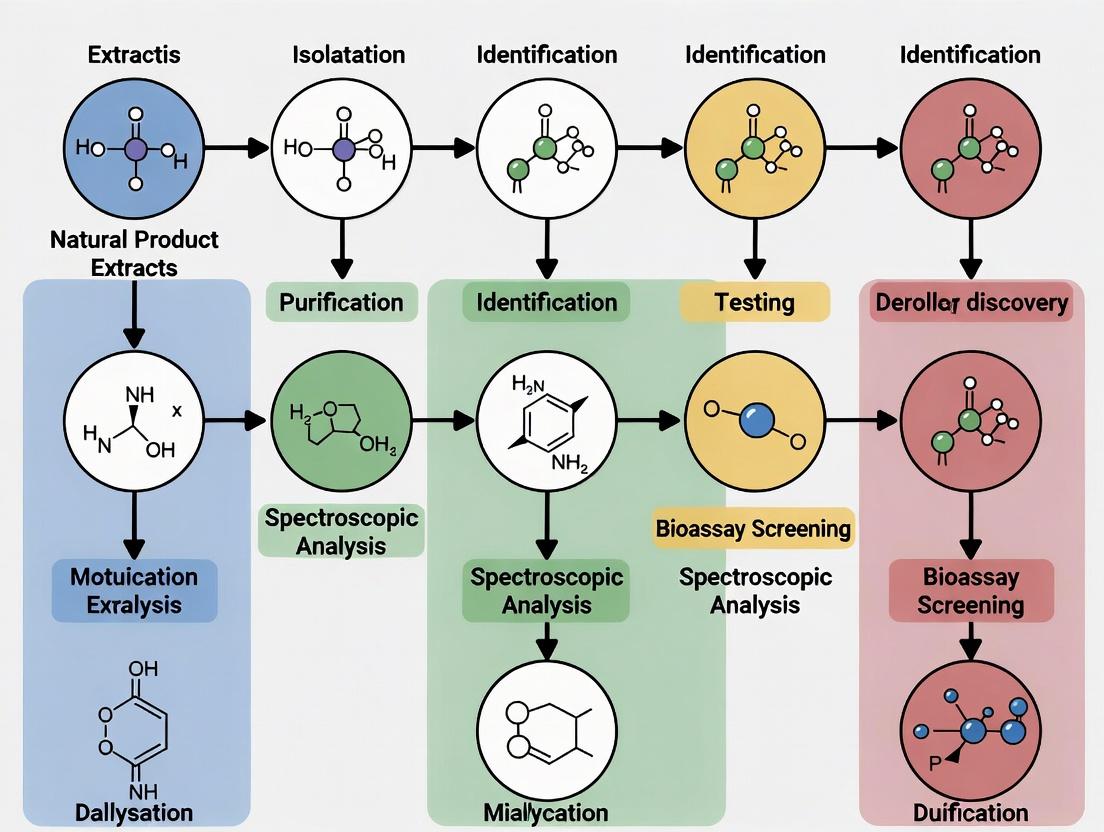
This comprehensive article examines the pivotal role of dereplication within the drug discovery pipeline, specifically for researchers and drug development professionals.
Dereplication in Drug Discovery: Accelerating the Pipeline from Natural Products to Novel Leads
Abstract
This comprehensive article examines the pivotal role of dereplication within the drug discovery pipeline, specifically for researchers and drug development professionals. It establishes foundational principles, detailing the historical evolution and the three core pillars of taxonomy, molecular structures, and spectroscopy that underpin the process. The scope covers methodological advancements, including integrated LC-MS strategies and molecular networking, followed by practical troubleshooting for common challenges like nuisance compounds and workflow optimization. Finally, it explores validation through case studies, comparative analysis of tools, and the integration of emerging artificial intelligence and machine learning technologies, outlining a complete framework for efficient natural product lead identification.
The Foundation of Dereplication: Core Principles and Its Strategic Role in Drug Discovery
Foundational Understanding and Core Purpose
Dereplication is a strategic, early-stage process in natural product (NP) drug discovery defined as the use of chromatographic and spectroscopic analyses to recognize previously isolated or known substances present in a complex biological extract [1]. Its primary mandate is to expedite the discovery of novel bioactive compounds by systematically identifying and setting aside known entities or "nuisance" compounds, thereby preventing the costly and time-consuming rediscovery of known molecules [1] [2].
The operational scope of dereplication has evolved from simple comparison techniques to a sophisticated, multi-parametric decision gate within the drug discovery pipeline. Traditionally, it involved methods like UV comparison and thin-layer chromatography [1]. Today, it integrates hyphenated analytical techniques (e.g., LC-MS, LC-NMR), bioactivity profiling, and database mining to evaluate the chemical novelty of an active extract before committing to full-scale bioassay-guided fractionation [1] [3]. This is particularly critical because natural product extracts are inherently complex mixtures, and biological assays alone cannot distinguish between novel and known bioactive components [1].
The core purposes of dereplication are threefold:
- Novelty Filtering: To identify known compounds—including common interferents like tannins, fatty acids, or saponins—responsible for observed biological activity [1].
- Resource Prioritization: To recognize multiple extracts containing the same active profile, allowing researchers to prioritize the most promising, chemically unique leads for downstream isolation [1].
- Efficiency Enhancement: To condense multiple rounds of purification and testing into streamlined workflows, dramatically accelerating the early discovery timeline [4] [3].
Core Methodologies and Workflows
Modern dereplication employs a suite of orthogonal analytical and computational strategies. The choice of methodology depends on the sample origin, the nature of the bioassay, and the desired depth of information.
- Hyphenated Analytical Techniques: Liquid chromatography coupled with mass spectrometry (LC-MS) and photodiode array detection (LC-PDA-MS) forms the backbone of dereplication, providing data on molecular weight, fragmentation patterns, and UV profiles for comparison with libraries [4] [2]. Supercritical fluid chromatography-MS (SFC-MS) is an emerging greener alternative, offering rapid isolation without the need for dry-down steps common in reversed-phase LC [1].
- Ligand Fishing Assays: These target-based approaches, such as the ultrafiltration-based LLAMAS (Lickety-Split Ligand-Affinity-Based Molecular Angling System), transform the biological target into a sorbent. They selectively isolate binding molecules from a mixture in a single step, directly linking bioactivity to chemical identity [4].
- Mass Spectrometry-Based Molecular Networking: This computational strategy organizes MS/MS data based on chemical similarity, visually clustering related molecules. It not only dereplicates known compounds but also reveals structural analogs within a sample, guiding the discovery of novel variants [2].
- In-Silico Database Search Algorithms: Tools like DEREPLICATOR+ search experimental tandem mass spectra against vast databases of natural product structures (e.g., Dictionary of Natural Products, AntiMarin). By using detailed fragmentation models, they can identify diverse classes of metabolites beyond peptides, such as polyketides and terpenes, with high statistical confidence [5].
Table 1: Comparison of Core Dereplication Methodologies
| Methodology | Key Principle | Typical Data Output | Primary Strength | Common Tool/Platform |
|---|---|---|---|---|
| LC-PDA-MS/MS | Separation coupled with mass and UV spectral acquisition | Retention time, parent mass, fragment ions, UV spectrum | High sensitivity, robust and standardized workflows | Common commercial LC and MS systems |
| Ligand Fishing (e.g., LLAMAS) | Affinity capture of bioactive compounds using immobilized target | List of target-binding compounds from a mixture | Direct link between structure and bioactivity; high selectivity | Ultrafiltration plates; target protein/DNA [4] |
| Molecular Networking | Cosine-based clustering of MS/MS spectra by similarity | Visual network of related compounds; clusters of analogs | Discovers analogs and compound families; visual intuitive output | Global Natural Products Social Molecular Networking (GNPS) [2] |
| Database Search (e.g., DEREPLICATOR+) | In-silico matching of experimental spectra to theoretical fragmentation | Compound identity with statistical score (e.g., FDR) | High-throughput, automated identification from large spectral datasets | DEREPLICATOR+ algorithm; GNPS platform [5] |
Detailed Experimental Protocol: The LLAMAS Workflow
The following protocol details the LLAMAS, an integrated method for dereplicating DNA-binding molecules from complex natural product extracts [4].
1. Principle: LLAMAS combines ultrafiltration-based ligand fishing with LC-PDA-MS/MS analysis and database mining. Compounds with affinity for DNA are selectively retained in an incubation complex, while unbound molecules are removed. Comparative analysis of filtrates from DNA-containing and control samples reveals the binding agents.
2. Reagents and Materials:
- Biological Target: Bulk salmon sperm DNA (or specific DNA sequences).
- Ultrafiltration Units: 100 kDa molecular weight cut-off (MWCO) modified poly(ether sulfone) membrane filters.
- Incubation/Wash Buffer: Tris-EDTA buffer modified with glycerol and 33% (v/v) methanol (MeOH) to maintain DNA structure and solubilize diverse natural products.
- Elution Solvent: MeOH spiked with 0.1% formic acid.
- Analytical Instrumentation: Ultra-high-performance liquid chromatography (UHPLC) system coupled to a photodiode array detector and an ion-trap mass spectrometer capable of MS/MS.
3. Step-by-Step Procedure:
- Step 1 – Sample Incubation: Incubate the natural product extract (in incubation buffer) with DNA (experimental) or without DNA (control) for a defined period (e.g., 30 minutes) at room temperature.
- Step 2 – Ultrafiltration and Washing: Transfer the incubation mixture to the 100 kDa MWCO ultrafiltration device. Centrifuge (e.g., 5000 x g) to obtain the filtrate containing unbound compounds. Wash the retentate (DNA-compound complex) with incubation buffer to remove non-specifically bound materials. Collect all wash filtrates.
- Step 3 – Target Elution: Add the organic elution solvent (MeOH + 0.1% formic acid) to the retentate to disrupt DNA-ligand interactions. Centrifuge and collect the eluate containing the DNA-binding compounds.
- Step 4 – LC-PDA-MS/MS Analysis: Analyze the final wash filtrates and the eluates from both experimental and control samples using UHPLC-PDA-MS/MS.
- Step 5 – Data Analysis and Dereplication:
- Compare chromatograms of experimental vs. control samples. Compounds that show a significant decrease in peak area in the experimental wash filtrate or appear in the experimental eluate are candidate DNA binders.
- Use the acquired MS/MS spectral data and precursor masses to search natural product databases (e.g., GNPS, SciFinder, Dictionary of Natural Products) for identity confirmation [4].
Modern Approaches and Integrative Strategies
Contemporary dereplication is characterized by integration with other 'omics' technologies and high-throughput workflows.
- Integration with Genomics and Metagenomics: Genome mining tools predict biosynthetic gene clusters (BGCs) for novel compounds. Dereplication validates these predictions by matching the observed metabolites from the organism's extract to known compounds, ensuring effort is focused on truly novel BGC products [6] [5]. This synergy between genetic potential and chemical analysis is a cornerstone of modern NP discovery.
- High-Throughput Analytical Platforms: Advances in UHPLC, automated fractionation, and rapid scanning mass spectrometers have drastically increased the throughput of dereplication. SFC-MS is notable for its speed and reduced solvent consumption [1]. Furthermore, ambient ionization techniques like nanoDESI allow for direct analysis of microbial colonies, feeding spectra directly into molecular networking for real-time dereplication [2].
- Advanced Informatics and Artificial Intelligence: AI and machine learning are transforming dereplication. Models now predict bioactive compounds, infer mechanisms of action, and assist in structure elucidation [7] [8]. Large language models (LLMs) can standardize and curate data from literature and patents, populating the very databases essential for dereplication [7].
Table 2: Key Integrated 'Omics' and Informatics Tools for Dereplication
| Tool/Strategy | Function in Dereplication | Associated Technique | Outcome |
|---|---|---|---|
| Genome Mining (e.g., AntiSMASH) | Predicts biosynthetic potential for novel compounds from genetic data [6]. | Genomics / Metagenomics | Prioritizes strains with high novelty potential for chemical analysis. |
| Global Natural Products Social Molecular Networking (GNPS) | Public repository and platform for sharing, processing, and comparing MS/MS spectra [2] [5]. | Tandem Mass Spectrometry | Enables crowdsourced dereplication and discovery of analogs via molecular networking. |
| Machine Learning / AI Models | Predicts chemical identity, bioactivity, or structural class from spectral or genomic data [7] [8]. | Cheminformatics / Bioinformatics | Accelerates preliminary identification and prioritizes unknown signals for investigation. |
| Spectral Library Search Algorithms (e.g., DEREPLICATOR+) | Automates high-confidence matching of experimental spectra to vast compound libraries [5]. | Tandem Mass Spectrometry | Provides rapid, automated identifications with controlled false discovery rates (FDR). |
Diagram 1: Molecular Networking & Informatics Workflow for Dereplication (92 characters)
Future Directions and Evolving Challenges
The future of dereplication is inextricably linked to broader trends in sustainable drug discovery and digital transformation.
- Sustainability-Driven Discovery: Dereplication supports green chemistry principles by minimizing wasted resources on rediscovery. It aligns with sustainable sourcing (e.g., using genome mining to access compounds without overharvesting) and green analytical techniques like SFC-MS [1] [6].
- Advanced AI and Automation: The next generation of dereplication will see deeper AI integration. This includes using graph neural networks for better structure-spectrum predictions, generative AI for designing NP-inspired libraries, and large language models for intelligent database curation and literature mining [7] [8].
- Persisting and Emerging Challenges: Key hurdles remain, including handling extreme chemical complexity and "cocktail effects", the high cost of proprietary databases, and integrating disparate data types (genomic, spectral, bioassay) [3]. Ensuring data quality, standardization, and open access will be critical for advancing the field.
Diagram 2: Integrated Dereplication in the Drug Discovery Pipeline (83 characters)
Table 3: Key Research Reagent Solutions for Dereplication
| Item / Resource | Function in Dereplication | Example / Note |
|---|---|---|
| Hyphenated LC-MS System | Separates complex mixtures and provides mass spectral data for compound detection and fragmentation analysis. | UHPLC coupled to high-resolution Q-TOF or ion trap MS. |
| Standardized Bioassay Kits | Provides reliable biological activity data to trigger and guide the dereplication of active extracts. | Commercial enzyme inhibition or cell viability assay kits. |
| Ultrafiltration Devices | Enables ligand-fishing assays by size-based separation of target-compound complexes from unbound molecules. | 100 kDa MWCO centrifugal units for protein/DNA target assays [4]. |
| Natural Product Databases | Reference libraries for comparing spectral, chromatographic, and structural data. | Dictionary of Natural Products (commercial), AntiMarin, GNPS spectral libraries (public) [2] [5]. |
| Informatics Software Platforms | Processes, analyzes, and visualizes complex dereplication data. | GNPS for molecular networking, DEREPLICATOR+ for automated identification, Cytoscape for network visualization [2] [5]. |
| Specialized Chromatography | Offers orthogonal separation to resolve challenging compounds, improving MS detection. | SFC-MS for rapid, green analysis of non-polar metabolites [1]. |
The discovery of therapeutics from natural products (NPs) has been a cornerstone of medicine for millennia. From the use of opium and myrrh in ancient Mesopotamia to the modern application of paclitaxel and artemisinin, NPs and their derivatives have consistently provided novel lead compounds [9]. Historically, the predominant method for uncovering these bioactive entities was bioassay-guided fractionation (BGF), a linear, labor-intensive process of separating complex extracts based on biological activity. Despite its success, this approach presented significant bottlenecks, including the frequent rediscovery of known compounds and the inefficient allocation of resources [1].
Dereplication has emerged as the critical strategic pivot addressing these inefficiencies within the modern drug discovery pipeline. It is defined as the early and rapid identification of known compounds in complex mixtures before committing to full isolation and characterization [3]. By integrating advanced analytical chemistry, bioinformatics, and data mining, dereplication acts as a triage system, allowing researchers to prioritize novel chemotypes and avoid redundant work. Since approximately 2012, dereplication has experienced a publication boom, reflecting its role as a multidisciplinary field essential for accelerating the pace of NP discovery [10]. This article details the historical evolution from classical BGF to integrated dereplication workflows, framing it within the broader thesis that modern dereplication is not merely an auxiliary technique but a fundamental and indispensable component of an efficient, data-driven NP drug discovery pipeline.
The Traditional Paradigm: Bioassay-Guided Fractionation
2.1 Principles and Historical Workflow Bioassay-guided fractionation is an iterative, feedback-driven process. It begins with the selection and preparation of a crude natural extract (e.g., from plants, marine organisms, or microbes), which is then subjected to a biological assay relevant to a therapeutic target (e.g., antimicrobial, cytotoxic, or enzyme inhibition activity). The active crude extract is systematically separated, typically using chromatographic techniques like open-column or flash chromatography, into a series of less complex fractions. Each fraction is re-evaluated in the bioassay. Only those fractions retaining the desired activity are selected for the next round of fractionation, which employs higher-resolution separation methods (e.g., HPLC). This cycle of separation, bioassay, and selection continues until a pure, active compound is isolated, at which point structure elucidation (primarily via NMR and MS) is performed [9] [11].
2.2 Strengths and Inherent Limitations The principal strength of BGF is its unbiased, activity-centric approach. It requires no prior knowledge of the extract's chemical composition and is guaranteed to isolate compounds with a confirmed biological effect in the chosen assay [12]. This method was responsible for the discovery of countless blockbuster drugs.
However, its limitations became increasingly apparent:
- Inefficiency and Resource Intensity: The process is slow, often requiring months to years to isolate a single compound, and consumes large quantities of solvents and assay reagents.
- Rediscovery of Known Compounds: The most significant bottleneck was the high probability of painstakingly isolating well-characterized, ubiquitous "nuisance" compounds (e.g., tannins, fatty acids, common flavonoids) or known active compounds [1].
- "Cocktail Effect" Misidentification: Bioactivity in a crude fraction can result from the synergistic interaction of multiple compounds rather than a single potent agent. BGF can inadvertently break this synergistic combination during fractionation, causing the loss of activity and misleading the isolation pathway [1].
- Compound Degradation: Repeated handling and lengthy processes risk the degradation of labile metabolites.
The following table quantifies the historical success of NPs, underscoring the importance of the source material that BGF sought to mine, while also highlighting the need for more efficient methods [9] [11].
Table 1: Quantitative Impact of Natural Products in Drug Discovery
| Metric | Data | Time Period / Context |
|---|---|---|
| New Chemical Entities (NCEs) from Natural Sources | 28% | 1981-2002 |
| NCEs developed from natural product pharmacophores | 24% | 1981-2002 |
| FDA-approved drugs that are NPs or NP-derived | ~34% | 1981-2014 (of 1562 drugs) |
| Proportion in Antibiotic & Anticancer Agents | 60-80% | 1983-1994 |
| Prescription drugs in USA based on NPs | 84 of top 150 | 1997 analysis |
| Annual global medicine market from NPs | ~35% | - |
The Paradigm Shift: The Rise of Dereplication
Dereplication evolved as a solution to the core inefficiencies of BGF. Its primary objective is to "race to identify" known substances as early as possible in the discovery pipeline. The conceptual shift moved the point of chemical analysis from the end of the process (after isolation of a pure compound) to the very beginning (profiling of crude or semi-purified extracts) [10].
3.1 Core Objectives and Strategic Advantages The implementation of dereplication provides several key strategic advantages that streamline the NP pipeline:
- Priority Setting: Rapidly identifies extracts or fractions containing novel or rare chemotypes worthy of further investment.
- Resource Economy: Prevents the costly and time-consuming isolation of known or undesirable compounds.
- Chemical Ecology Insight: Can identify clusters of related metabolites within an extract, guiding the discovery of analogue series.
- Data-Rich Foundation: Creates searchable, annotated chemical profiles of extract libraries for future mining.
3.2 Evolution of Enabling Technologies The feasibility of modern dereplication is entirely dependent on technological advances in separation science, spectroscopy, and data processing:
- Hyphenated Analytical Techniques: The coupling of high-resolution separation with spectroscopic detection became foundational. LC-MS/MS and UHPLC-HRMS provide precise molecular formulae and fragment fingerprints. LC-NMR offers critical structural information from partially purified mixtures [3] [13].
- Databases and Cheminformatics: The development of comprehensive, searchable NP databases (e.g., AntiBase, MarinLit, GNPS) allows for the cross-referencing of acquired analytical data (exact mass, MS/MS spectra, UV profiles) against known compounds [3] [14].
- Molecular Networking: A transformative, visualization-based tool. Platforms like GNPS create networks where related MS/MS spectra cluster together. This allows for the immediate visualization of known compound clusters (dereplication) and the simultaneous highlighting of unique, potentially novel spectral nodes in a complex dataset [3] [14].
- Advanced Structure Elucidation: Computer-Assisted Structure Elucidation (CASE) systems and quantum chemical calculations for NMR and optical properties aid in solving complex structures, particularly stereochemistry, with less material and greater speed [3].
Integrated Modern Workflow: Combining Bioassay and Dereplication
The contemporary NP discovery pipeline is not an abandonment of bioactivity but a synergistic integration of biological screening with upfront chemical intelligence. The modern workflow is parallelized and data-driven.
Diagram: Modern Dereplication-First Workflow in Natural Product Discovery. This integrated pipeline conducts biological screening and chemical profiling in parallel, with a dereplication "engine" triaging results to prioritize novel chemotypes for targeted isolation [3] [14] [10].
4.1 Detailed Experimental Protocols
Protocol 1: High-Throughput Bioassay Coupled with Microfractionation for Dereplication
- Objective: To identify the specific chromatographic peak(s) responsible for activity in a complex extract.
- Procedure:
- Extract Preparation: Prepare a concentrated solution of the active crude extract in a suitable solvent (e.g., DMSO).
- Analytical Separation: Inject the extract onto an analytical-scale UHPLC system.
- Microfractionation: Using an automated fraction collector, collect the column effluent at fixed time intervals (e.g., every 6-15 seconds) into a 96- or 384-well microtiter plate. Evaporate solvents to leave dried fractions.
- Daughter Plate Bioassay: Re-dissolve each fraction in assay buffer and subject it to the relevant bioassay (e.g., a cell-based or enzymatic assay).
- Chemical Analysis: In parallel, analyze the same UHPLC method coupled to HR-MS. Correlate the bioactivity results from the microtiter plate wells with the specific retention time and MS data.
- Outcome: The active compound(s) are pinpointed to a specific retention time window and associated with a precise mass and MS/MS spectrum for immediate database dereplication [13].
Protocol 2: LC-HRMS/MS and Molecular Networking for Dereplication of an Active Extract
- Objective: To rapidly visualize the chemical composition of an active extract and identify both known and novel metabolite families.
- Procedure:
- Data Acquisition: Analyze the crude or pre-fractionated extract using RP-UHPLC coupled to a high-resolution tandem mass spectrometer (e.g., Q-TOF, Orbitrap). Acquire data in both positive and negative ionization modes with data-dependent acquisition (DDA) to obtain MS1 and MS2 spectra.
- Data Processing: Convert raw data files to an open format (.mzML). Use software like MZmine or MS-DIAL for peak picking, alignment, and generation of a feature table (containing m/z, RT, and intensity).
- Molecular Networking: Upload the MS2 data files (.mgf) to the GNPS platform (https://gnps.ucsd.edu). Set networking parameters (cosine score, minimum matched peaks). The analysis clusters MS2 spectra based on similarity.
- Dereplication Analysis: Within the GNPS environment, search MS2 spectra against reference spectral libraries. Nodes (metabolites) with library matches are annotated as known compounds. Clusters containing only unmatched nodes represent potential novel metabolite families.
- Bioactivity Overlay: Import the feature table from Step 2 and overlay quantitative bioassay data (if available) or annotate which fraction/cluster showed activity. This visually links bioactivity to specific regions of the chemical network [3] [14].
4.2 The Scientist's Toolkit: Essential Reagents & Materials
Table 2: Key Research Reagent Solutions for Dereplication
| Reagent / Material | Function in Dereplication |
|---|---|
| Ultra-High-Performance Liquid Chromatography (UHPLC) Systems | Provides high-resolution, rapid separation of complex natural extracts, essential for obtaining pure compound spectra and accurate microfractionation [13]. |
| High-Resolution Mass Spectrometer (HR-MS/MS; e.g., Q-TOF, Orbitrap) | Delivers exact mass measurements for molecular formula determination and generates fragmentation spectra (MS/MS) for structural comparison and database matching [3] [14]. |
| Global Natural Products Social Molecular Networking (GNPS) Platform | A cloud-based ecosystem for processing MS/MS data, performing spectral library searches (dereplication), and creating visual molecular networks to explore chemical relationships [3] [14]. |
| Natural Product Databases (e.g., AntiBase, MarinLit, LOTUS, NP Atlas) | Curated repositories of chemical, spectral, and biological data for known NPs. Used to query acquired MS, MS/MS, and NMR data for identification [3] [14]. |
| Computer-Assisted Structure Elucidation (CASE) Software | Uses algorithms to interpret spectroscopic data (primarily NMR) and generate plausible structural candidates, drastically accelerating the structure elucidation process [3]. |
| Microfractionation & Automated Liquid Handling Systems | Enables the precise collection of HPLC peaks into microtiter plates for parallelized biological testing, directly linking chromatographic peaks to bioactivity [12] [13]. |
Impact and Future Directions in the Drug Discovery Pipeline
The integration of dereplication has fundamentally reshaped the economics and output of the NP discovery pipeline. It has enabled a shift from low-throughput, single-compound isolation to the high-throughput characterization of chemical libraries. This allows academic and industrial labs to interrogate biodiversity more comprehensively, focusing efforts on the most promising, novel leads.
Future advancements are poised to deepen this integration:
- Artificial Intelligence and Machine Learning: AI models are being trained to predict MS/MS fragmentation patterns, propose structures from spectral data, and even predict bioactivity from chemical fingerprints, further accelerating the identification and prioritization steps [3].
- Integrated Multi-Omics: Combining metabolomics (dereplication) with genomics (genome mining for biosynthetic gene clusters) and transcriptomics allows for a holistic understanding of an organism's chemical potential and its regulation, guiding targeted discovery efforts [3] [14].
- Open Data and Collaboration: Platforms like GNPS exemplify the power of community-shared data. The growth of open-access spectral libraries continues to enhance the power and accuracy of dereplication for the global scientific community [14].
The historical journey from bioassay-guided fractionation to modern dereplication represents a paradigm shift in natural product drug discovery. Dereplication has evolved from a simple screening step to a sophisticated, data-centric discipline that sits at the heart of the discovery pipeline. By frontloading chemical intelligence, it effectively de-risks the resource-intensive process of natural product isolation, ensuring that effort is invested in truly novel and promising chemotypes. As part of a broader thesis on modern drug discovery, dereplication is the critical filter that transforms the vast complexity of nature into a tractable stream of innovative lead compounds, thereby securing the continued relevance and productivity of natural products as an indispensable source of future medicines.
The drug discovery pipeline is a high-stakes endeavor characterized by immense investments of time and capital, where the efficient triage of potential leads is paramount. Within this context, especially in natural product research, dereplication stands as a critical, proactive strategy. It is defined as the process of rapidly identifying known compounds within a crude extract or fraction early in the discovery workflow, thereby preventing the redundant expenditure of resources on the re-isolation and re-elucidation of previously characterized molecules [15]. The core thesis of modern dereplication is that this rapid identification is not reliant on a single data point but on the synergistic integration of three foundational pillars: the biological taxonomy of the source organism, the molecular structure of the compound, and its spectroscopic signature [15].
The convergence of these three data streams creates a powerful filter. Taxonomic information provides a prior probability, guiding the search toward compounds known from related organisms. The definitive identification is achieved by matching experimental spectroscopic data—most crucially from mass spectrometry (MS) and nuclear magnetic resonance (NMR)—against the structural and spectral data of known compounds within curated databases [15]. This integrated approach accelerates the discovery process, allowing researchers to swiftly bypass known entities and focus efforts on truly novel chemistry with potential therapeutic value. The following sections deconstruct each pillar, detail their integration, and provide a practical protocol illustrating the complete workflow.
Deconstructing the Three Pillars
Pillar I: Biological Taxonomy as a Predictive Filter
Taxonomy, the science of classifying living organisms, serves as the first logical filter in dereplication. It operates on the principle of chemotaxonomy, which posits that evolutionary relationships are often reflected in metabolic profiles. Organisms within the same genus or family frequently biosynthesize similar or identical secondary metabolites [15]. Therefore, knowing the precise taxonomic identity of a source organism (e.g., the marine sponge Aplysina cauliformis) allows researchers to narrow the search space significantly. Instead of comparing spectral data against all known natural products, the search can be focused on compounds reported from the same genus, family, or order, dramatically increasing efficiency and hit accuracy.
- Key Tools & Databases: Navigating modern taxonomy requires digital resources. The NCBI Taxonomy Browser provides a constantly updated hierarchical framework for species classification [15]. For linking taxonomy to chemistry, databases like KNApSAcK and UNPD (Universal Natural Products Database) are essential, as they explicitly connect compound records to their biological sources [15].
Pillar II: Molecular Structures as the Definitive Identity
The molecular structure is the ultimate identifier of a compound. In silico, chemical structures are represented as mathematical graphs (atoms as nodes, bonds as edges). For dereplication, the accurate and standardized representation of these structures in databases is critical [15].
- Representation Formats: Common machine-readable formats include:
- SMILES (Simplified Molecular-Input Line-Entry System): A linear string notation [15].
- InChI (International Chemical Identifier): A non-proprietary, layered identifier standard developed by IUPAC [15].
- MOL/SDF files: File formats that include atomic coordinates, essential for depicting 2D/3D structure and for computational analysis [15].
- Critical Databases: Comprehensive structural databases are the reference libraries for dereplication. PubChem and CAS (Chemical Abstracts Service) are among the largest public and commercial collections, respectively [15]. For natural products, resources like COCONUT offer large, curated, open-access collections of unique NP structures [15]. The integrity of dereplication hinges on the quality and comprehensiveness of these structural repositories.
Pillar III: Spectroscopy as the Analytical Interrogator
Spectroscopy encompasses the suite of analytical techniques that probe the interaction of matter with electromagnetic radiation or other energy sources to produce a characteristic "fingerprint" [16]. In dereplication, spectroscopy provides the experimental data that is matched against theoretical or library data associated with known structures.
Core Techniques:
- Mass Spectrometry (MS): Determines the mass-to-charge ratio (m/z) of ions. High-Resolution MS (HRMS) delivers exact mass measurements, enabling the determination of empirical molecular formulas with high confidence. Tandem MS (MS/MS or MSⁿ) fragments precursor ions, providing structural information about molecular substructures [15] [17].
- Nuclear Magnetic Resonance (NMR) Spectroscopy: Provides detailed information on the carbon-hydrogen framework of a molecule. ¹H and ¹³C NMR chemical shifts, along with 2D experiments (e.g., COSY, HSQC, HMBC), reveal connectivity and spatial relationships between atoms, offering the most definitive proof of structure matching [15].
- Hybrid & Supplementary Techniques: LC-MS/MS and LC-NMR combine separation with spectral analysis for complex mixtures. Other techniques like infrared (IR) and ultraviolet-visible (UV-Vis) spectroscopy provide supportive data on functional groups and chromophores [16].
The Data Gap and Predictive Solution: A major historical challenge has been the lack of accessible, high-quality experimental spectral libraries for many natural products. A powerful workaround is the use of computational prediction. Software tools (e.g., CNMR Predictor, nmrshiftdb2) can predict NMR chemical shifts for a given candidate structure with high accuracy. This allows for dereplication by comparing experimental spectra against predicted spectra for all candidate structures from a taxonomically informed search [15].
The Integrated Dereplication Workflow
The power of the three-pillar approach is realized in their integration within a systematic workflow. The process is not linear but iterative, with each piece of evidence refining the hypothesis.
Diagram: The Three-Pillar Dereplication Workflow
- Input: The process begins with a biologically active crude extract.
- Taxonomic Filtering (Pillar I): The source organism is identified, and its taxonomy is used to query databases (e.g., KNApSAcK, UNPD) for a focused list of known compounds associated with related organisms.
- Analytical Interrogation (Pillar III): The extract is analyzed via HRMS and NMR to generate experimental spectroscopic data (e.g., molecular ion, fragmentation pattern, chemical shifts).
- Integrated Query & Matching: An annotated query is created, combining the taxonomic prior with the experimental spectral data. This query is used to search structural databases (Pillar II). Searches can be for:
- Experimental library spectra (if available).
- Predicted spectra generated in real-time for database candidates.
- Decision Point: A confident match leads to dereplication (identification of a known compound). A partial or absent match flags the compound as a potential novel entity, warranting further isolation and full structure elucidation. This step may trigger a refinement of the taxonomic or analytical parameters in an iterative loop.
Quantitative Landscape of Dereplication Tools and Data
The efficacy of dereplication is directly tied to the scale and quality of available data resources. The table below summarizes key metrics for databases and research activity central to the three-pillar approach.
Table 1: Key Databases and Metrics for Dereplication
| Database/Tool Name | Primary Focus | Key Metric / Scale | Role in the Three Pillars |
|---|---|---|---|
| PubChem [15] | Chemical Structures | >100 million compounds [15] | Pillar II: Definitive structural repository. |
| COCONUT [15] | Natural Products | ~400,000 unique NP structures [15] | Pillar II: Curated NP-specific structural data. |
| KNApSAcK [15] | Species-Metabolite Relationships | Links compounds to source species | Pillars I & II: Integrates taxonomy (I) with structures (II). |
| GNPS (Global Natural Products Social Molecular Networking) [3] [17] | Tandem MS Spectral Networking | Community-driven MS/MS library & tools | Pillar III: Enables MS-based dereplication via spectral matching and molecular networking. |
| Research Publications (2014-2023) [3] | Dereplication & Structure Elucidation | ~908 articles, ~40,520 citations [3] | Indicator of high field activity and methodological evolution. |
Experimental Protocol: Bioassay-Guided Dereplication in Action
The following protocol, adapted from a 2025 study on the marine sponge Aplysina cauliformis, exemplifies the integrated three-pillar approach in a drug discovery context [17].
Title: Bioassay-Guided Dereplication for the Identification of an Antiproliferative Bromotyramine.
Objective: To rapidly isolate and identify the bioactive constituent(s) from a crude organic extract with cytotoxic activity against HepG2 liver cancer cells.
Materials & Methods:
- Source Material & Taxonomy: The marine sponge Aplysina cauliformis (Phylum: Porifera, Order: Verongida) was collected, identified, and voucher specimens deposited. This taxonomic classification immediately suggests the potential presence of brominated tyrosine-derived alkaloids, a known chemotaxonomic marker for this genus [17].
- Bioactivity Screening: The crude organic extract was tested for cytotoxicity against HepG2 cells using an MTT assay, confirming activity (IC₅₀ = 214.29 ± 1.19 µg/mL) [17].
- Fractionation & Bioassay: The crude extract was fractionated using reversed-phase (RP-C18) chromatography. All fractions were re-screened for bioactivity. The most active fraction (A4, IC₅₀ = 134.28 ± 1.05 µg/mL) was selected for detailed analysis [17].
- Integrated Spectroscopic Analysis (LC-HRMS/MS & Molecular Networking):
- Fraction A4 was analyzed by LC-HRMS/MS on an Orbitrap mass spectrometer.
- Raw data was processed (MZmine software) to detect features, align peaks, and deconvolute isotopes.
- The processed data was uploaded to the GNPS platform to create a molecular network. In this network, each node represents a molecular ion, and connecting edges indicate shared MS/MS fragmentation patterns, visually clustering structurally related molecules [17].
- Dereplication Decision:
- The molecular network revealed a distinct cluster containing all features unique to the bioactive Fraction A4. Nodes within this cluster showed isotopic patterns indicative of dibrominated compounds [17].
- One node (m/z 335.9589, [M]+) was putatively annotated as N,N,N-trimethyl-3,5-dibromotyramine by matching its exact mass and MS/MS fragments against in-silico predictions and literature data for the Aplysina genus (leveraging Pillars I & III) [17].
- Targeted Isolation & Validation: Guided by this annotation, Fraction A4 was subjected to targeted HPLC purification to isolate the predicted compound. The isolated compound was confirmed to be N,N,N-trimethyl-3,5-dibromotyramine by full NMR analysis and exhibited antiproliferative activity (IC₅₀ = 37.49 ± 1.94 µg/mL on HepG2) [17].
Diagram: Experimental Protocol Workflow
The Scientist's Toolkit: Essential Reagents & Materials
Table 2: Key Research Reagent Solutions for Dereplication
| Item | Function / Application | Specific Example/Note |
|---|---|---|
| RP-C18 Stationary Phase | Fractionation of crude extracts based on hydrophobicity. | Used in flash chromatography or cartridges for initial bioassay-guided fractionation [17]. |
| Deuterated NMR Solvents | Required for NMR spectroscopy to provide a signal lock and avoid interference from protonated solvents. | Chloroform-d (CDCl₃), Methanol-d₄ (CD₃OD), DMSO-d₆. |
| LC-MS Grade Solvents | Essential for high-performance liquid chromatography coupled to mass spectrometry to minimize background noise and ion suppression. | Acetonitrile, Methanol, Water with 0.1% Formic Acid. |
| Cell Lines & Assay Kits | For bioactivity-guided isolation. Provides the phenotypic anchor for the discovery process. | HepG2 (cancer), IHH (normal) cells; MTT assay kit for cell viability [17]. |
| Internal MS Calibrants | Ensures accurate mass measurement in HRMS. | Calibration solution specific to the mass spectrometer (e.g., ESI-L Low Concentration Tuning Mix). |
| Molecular Networking Software | Processes untargeted MS/MS data to visualize chemical relationships within a sample. | GNPS2 (web platform), MZmine (for data preprocessing), Cytoscape (for visualization) [17]. |
The integration of taxonomy, molecular structures, and spectroscopy has transformed dereplication from a defensive check against redundancy into an offensive engine for discovery. Current trends point toward even greater integration and automation:
- Artificial Intelligence & Machine Learning: AI models are being trained to predict not just NMR shifts, but also MS/MS fragmentation patterns and even bioactivity from structural or spectral input, potentially bypassing multiple traditional steps [3].
- Genomic Integration: Linking biosynthetic gene cluster (BGC) data from the source organism's genome to spectroscopic and taxonomic data creates a fourth, predictive pillar. This "genome-mining" approach can forecast the type of molecules an organism can produce before extraction even begins [3].
In conclusion, the three-pillar framework is the cornerstone of a lean and effective natural product drug discovery pipeline. By strategically employing taxonomic prediction, structural database mining, and advanced spectroscopic analysis in a convergent workflow, researchers can accelerate the journey from raw biological material to novel therapeutic lead. As databases grow and algorithms become more sophisticated, this integrated approach will continue to be indispensable in navigating the complex chemical landscape of nature for drug discovery.
The drug discovery pipeline is a notoriously inefficient system, often characterized as finding "a needle in a haystack." A fundamental and persistent challenge exacerbating this inefficiency is the rediscovery of known compounds—a problem known as the dereplication challenge [18]. In natural product research, which accounts for roughly 70% of approved pharmaceuticals, this issue is particularly acute, where the same bioactive molecules are isolated and characterized repeatedly, wasting immense time and resources [19]. The conventional discovery process, reliant on labor-intensive trial-and-error and high-throughput screening, is slow, costly, and yields results with low accuracy [20]. With the projected pipeline value for new therapeutic modalities now at $197 billion, representing 60% of the total pharmaceutical pipeline, the economic stakes for optimizing discovery efficiency have never been higher [21]. This whitepaper frames dereplication not merely as a technical step in the workflow but as an economic imperative. By strategically avoiding rediscovery through advanced computational and analytical methods, the industry can conserve finite resources, accelerate the delivery of novel therapies, and ensure that research investments yield truly innovative returns.
The Economic and Temporal Cost of Conventional Discovery
The traditional drug discovery model is unsustainable from both a financial and temporal perspective. The process is measured in years and billions of dollars, with a significant portion of that investment yielding no novel information due to redundant rediscovery.
Table 1: The Economic Scale of Drug Discovery and Savings (2024-2025)
| Metric | Data | Source/Context |
|---|---|---|
| Projected Pipeline Value (New Modalities) | $197 billion (60% of total pipeline) [21] | BCG 2025 Report |
| Total Savings from Generics & Biosimilars (2024) | $467 billion [22] | AAM/IQVIA Report |
| Savings from Biosimilars Since 2015 | $56.2 billion [23] | Biosimilars Council Report |
| Typical Discovery-to-Preclinical Timeline | ~5 years [24] | Industry standard |
| AI-Accelerated Discovery Timeline (Example) | 18 months to Phase I [24] | Insilico Medicine's IPF drug |
| High-Through Screening Attrition Rate | ~1 marketable drug per 1 million screened compounds [25] | Scientific Reports 2024 |
The data underscores a dual economic reality: the immense value trapped in the innovation pipeline and the staggering savings unlocked by overcoming exclusivity—a process that efficient dereplication can initiate earlier. The "dereplication problem" in natural product discovery is a primary bottleneck, leading to diminishing returns on screening efforts [18]. Furthermore, while new modalities like antibodies and nucleic acids are driving growth, they are not immune to the inefficiencies of redundant target pursuit and molecule optimization [21]. Each cycle of rediscovery consumes resources that could be allocated to pioneering research, directly impacting a company's bottom line and the industry's capacity to address unmet medical needs.
Dereplication: Core Concepts and Strategic Importance
Dereplication is the process of rapidly identifying known compounds within a test sample early in the discovery pipeline to prioritize novel leads. Its primary objective is to avoid the costly and time-consuming isolation and full characterization of substances already documented in the scientific literature or proprietary databases.
The strategic implementation of dereplication transforms the discovery workflow:
- Front-Loaded Efficiency: By identifying known entities at the crude extract or early fraction stage, resources are focused solely on unknown chemistry.
- Informed Prioritization: It enables data-driven decisions, steering medicinal chemists and biologists toward the most promising, novel leads.
- Foundation for Innovation: It clears the "noise" of known biology, allowing true innovation to emerge. Effective dereplication is especially critical in natural product research, where chemical diversity is vast but the rediscovery rate is high [19] [26].
Table 2: Analytical Techniques for Dereplication
| Technique | Key Output | Role in Dereplication | Typical Throughput |
|---|---|---|---|
| LC-HRMS/MS (Liquid Chromatography-High Resolution Mass Spectrometry) | Exact mass, isotopic pattern, fragmentation spectrum [26] | Gold standard. Provides precise molecular formula and structural fingerprints for database matching. | Medium-High |
| NMR (Nuclear Magnetic Resonance) Spectroscopy | Detailed structural and conformational data | Provides definitive structural elucidation but is lower throughput; often used after MS-based triage. | Low |
| UV/Vis Spectroscopy | Chromophore information | Supports compound class identification (e.g., flavonoids, alkaloids). | High |
| Database Mining & Molecular Networking | Spectral similarity networks, putative identifications | Uses algorithms to compare experimental data against spectral libraries (e.g., GNPS, MassBank) [26]. | Very High (in silico) |
Methodologies: Implementing Effective Dereplication Protocols
A robust dereplication strategy integrates standardized experimental protocols with computational validation. The following detailed methodology, adapted from a 2025 study, outlines a systematic approach for LC-MS/MS-based dereplication [26].
Experimental Protocol: Construction and Use of an In-House Tandem Mass Spectral Library for Dereplication [26]
1. Objective: To develop a rapid, high-confidence LC-ESI-MS/MS method for dereplicating 31 common phytochemicals from complex plant and food extracts.
2. Materials and Reagents:
- Standards: 31 purified natural product standards (e.g., quercetin, apigenin, chlorogenic acid), purity 97-98%.
- Solvents: LC-MS grade methanol, formic acid, Type-I ultrapure water.
- Equipment: UHPLC system coupled to a high-resolution tandem mass spectrometer (e.g., Q-TOF or Orbitrap).
3. Experimental Procedure:
- A. Sample Pooling Strategy: To maximize efficiency, standards are pooled based on log P values and exact masses to minimize co-elution and the presence of isomers in the same LC run.
- B. LC-MS/MS Data Acquisition:
- Chromatography: Use a reverse-phase C18 column. A binary gradient of water (0.1% formic acid) and methanol is typical.
- Mass Spectrometry: Operate in positive electrospray ionization (ESI+) mode.
- Data-Dependent Acquisition (DDA): Full MS scan (e.g., m/z 100-1500) followed by MS/MS scans of the most intense precursors.
- Collision Energies: Acquire data at multiple collision energies (e.g., 10, 20, 30, 40 eV) to capture comprehensive fragmentation patterns.
- C. Library Construction: For each standard, compile the following into a database entry:
- Compound name, molecular formula, class.
- Observed exact mass (with <5 ppm error) for [M+H]+ and/or [M+Na]+ adducts.
- Retention time (RT).
- MS/MS spectrum at various collision energies.
- D. Dereplication of Unknown Extracts:
- Prepare test samples (e.g., plant extract).
- Analyze under identical LC-MS/MS conditions used for the library.
- Process data: For each peak in the unknown, extract precursor exact mass and MS/MS spectrum.
- Query the in-house library: Match observed RT (with a tolerance window, e.g., ±0.2 min), exact mass (e.g., ±5 ppm), and MS/MS spectral similarity.
- A positive identification requires consensus across these three parameters.
4. Data Analysis and Validation: The developed library was validated by successfully dereplicating compounds in 15 different plant and food extracts. The use of pooled standards, standardized conditions, and multi-parameter matching significantly reduces analytical time and cost compared to analyzing each standard individually [26].
The AI and Computational Revolution in Dereplication
Artificial Intelligence (AI) and Machine Learning (ML) are overcoming the limitations of traditional dereplication by moving beyond simple database lookups to predictive and generative modeling. This represents a paradigm shift from recognizing known compounds to predicting novel bioactivity.
Deep Learning for Predictive Dereplication & Discovery: Modern deep neural networks can learn complex structure-activity relationships from existing data. A landmark 2020 study demonstrated this by training a deep learning model on just 2,335 molecules to predict antibacterial activity [18]. When this model screened over 107 million molecules in silico, it identified halicin—a structurally novel antibiotic with broad-spectrum activity—and eight other promising antibacterial compounds [18]. This approach inverts the traditional workflow: instead of physically screening millions of compounds to find a few hits, AI virtually screens billions of molecules to prioritize a handful for empirical testing, dramatically increasing efficiency and reducing cost.
Integrated AI Platforms in the 2025 Landscape: The field has rapidly evolved, with several platforms now integrating AI throughout the discovery pipeline [24].
- Generative Chemistry (e.g., Exscientia): Uses AI to design novel drug-like molecules de novo that satisfy specific target product profiles, compressing design cycles [24].
- Phenomics-First Systems (e.g., Recursion): Leverages AI to analyze high-content cellular imaging data to identify disease phenotypes and potential drug modulators [24].
- Physics-Plus-ML (e.g., Schrödinger): Combines molecular simulations with machine learning for accurate binding affinity prediction and lead optimization [24].
Table 3: Performance Metrics of Leading AI Discovery Platforms (2025 Landscape)
| Platform / Company | Core AI Approach | Reported Efficiency Gain | Clinical-Stage Pipeline |
|---|---|---|---|
| Exscientia | Generative Chemistry, Centaur Chemist | ~70% faster design cycles; 10x fewer compounds synthesized [24] | Multiple Phase I/II candidates (e.g., CDK7, LSD1 inhibitors) [24] |
| Insilico Medicine | Generative AI & Target Discovery | 18 months from target to Phase I (idiopathic pulmonary fibrosis) [24] | Phase IIa results for ISM001-055 [24] |
| Schrödinger | Physics-Based Simulation + ML | Advanced TYK2 inhibitor (zasocitinib) to Phase III [24] | Late-stage clinical validation of platform [24] |
| VirtuDockDL (Research Platform) | Graph Neural Network (GNN) for Virtual Screening | 99% accuracy in benchmarking vs. HER2 target; superior to traditional tools [25] | Research tool for accelerating lead identification [25] |
These platforms exemplify the transition to an AI-augmented pipeline, where dereplication is no longer a discrete step but a continuous, intelligent filtering process embedded from virtual screening to lead optimization.
The Scientist's Toolkit: Essential Reagents and Solutions
Implementing a state-of-the-art dereplication strategy requires both wet-lab and computational tools.
Table 4: Research Reagent Solutions for Advanced Dereplication
| Item / Solution | Function in Dereplication | Example / Specification |
|---|---|---|
| High-Resolution Mass Spectrometer | Provides exact mass and MS/MS fragmentation data for unambiguous compound identification [26]. | Q-TOF or Orbitrap LC-MS/MS systems. |
| Validated Natural Product Standards | Essential for building and calibrating in-house spectral libraries [26]. | Purified compounds (e.g., flavonoids, alkaloids) from Sigma-Aldrich, etc. |
| LC-MS Grade Solvents & Columns | Ensure reproducibility and sensitivity in chromatographic separation prior to MS detection. | Methanol, acetonitrile, formic acid; reverse-phase C18 UHPLC columns. |
| Curated Spectral Databases | Provide reference data for matching unknown spectra against known compounds. | GNPS, MassBank, NIST, mzCloud [26]. |
| AI/ML Software Platforms | Enable predictive screening, generative design, and complex data integration. | Proprietary (Exscientia, Schrödinger) or open-source (VirtuDockDL [25], DeepChem). |
| Chemical Structure Databases | Large-scale libraries for virtual screening and novelty assessment. | ZINC15 (>107 million molecules) [18], Drug Repurposing Hub [18]. |
Dereplication has evolved from a defensive tactic to avoid wasted effort into a proactive, strategic engine for innovation. By integrating sophisticated analytical chemistry with powerful AI, the drug discovery pipeline can shed its inefficiencies and redirect resources toward true breakthrough science. The economic imperative is clear: in an era where new modalities dominate a $197 billion pipeline [21] and the cost of failure is astronomical, avoiding rediscovery is not just prudent—it is critical for sustainability and growth.
The future of dereplication lies in the seamless fusion of experimental and computational domains. Advances in automated, robotics-driven synthesis and screening will generate high-quality data at scale [24], which will, in turn, fuel more accurate AI models. Explainable AI (XAI) will build trust in algorithmic predictions [20], while federated learning may allow for collaborative model training across institutions without compromising proprietary data. As these tools mature, the vision of a fully integrated, AI-driven discovery pipeline—where dereplication is a continuous, intelligent process from hypothesis to candidate—will become a reality, fundamentally accelerating the delivery of new therapies to patients.
Dereplication as a Strategic Gatekeeper in Natural Product Screening Campaigns
Within the natural product (NP) drug discovery pipeline, dereplication functions as an indispensable strategic gatekeeper. Its primary role is the early and rapid identification of known compounds within bioactive extracts, thereby preventing the costly and time-consuming rediscovery of common metabolites [27]. By acting as a critical filter, dereplication ensures that research resources are allocated efficiently toward the discovery of novel chemical entities with therapeutic potential [3].
The re-emergence of NPs as a vital source of drug leads is directly tied to advances in dereplication methodologies [27]. The process is driven by two interconnected factors: the expansion of large, annotated NP databases and significant improvements in analytical technologies, particularly in mass spectrometry (MS) and nuclear magnetic resonance (NMR) spectroscopy [27]. Modern dereplication integrates chemical profiling, biological screening, and computational data analysis into a cohesive workflow, transitioning from a simple negative filter to an active, knowledge-guided prioritization engine. This evolution solidifies its role as a non-negotiable, strategic checkpoint that governs the flow of candidates through the discovery pipeline, from initial screening to lead development [3] [28].
Core Dereplication Technologies: Principles and Comparative Analysis
Effective dereplication relies on hyphenated analytical techniques that separate complex mixtures and provide structural data for rapid compound identification. The selection of technology is dictated by the need for sensitivity, speed, and informational depth.
Liquid Chromatography-Mass Spectrometry (LC-MS) is the cornerstone of modern dereplication. Ultra-high-performance LC (UHPLC) coupled with high-resolution mass spectrometry (HR-MS) enables the rapid profiling of crude extracts [28]. Tandem mass spectrometry (MS/MS) generates fragmentation patterns that serve as molecular fingerprints, which can be searched against spectral libraries such as Global Natural Product Social Molecular Networking (GNPS) [29]. Affinity Selection Mass Spectrometry (AS-MS) represents a targeted, label-free biophysical approach. It directly probes non-covalent interactions between a biological target and ligands from a complex mixture, identifying binders based on mass [30]. AS-MS is particularly valuable for identifying active compounds without prior fractionation, streamlining the path from screening to identification.
Nuclear Magnetic Resonance (NMR) Spectroscopy, while less high-throughput, provides unparalleled structural detail, including stereochemistry. It is often employed as a secondary, confirmatory technique following MS-based screening or for the detailed analysis of prioritized unknowns [27].
The following table summarizes the core technologies, their output, and primary applications in dereplication workflows.
Table 1: Core Analytical Technologies for Dereplication
| Technology | Key Output | Primary Role in Dereplication | Throughput |
|---|---|---|---|
| LC-HR-MS/MS | Accurate mass, isotopic pattern, MS/MS fragmentation spectrum | Initial chemical profiling, molecular formula assignment, library searching [27] [29] | High |
| AS-MS | Mass of target-bound ligands | Direct identification of bioactive binders from mixtures; orthogonal to functional assays [30] | Medium-High |
| NMR Spectroscopy (e.g., 1H, 13C, HSQC, HMBC) | Detailed structural and stereochemical information | Confirmation of knowns, partial or full structure elucidation of novel compounds [27] [3] | Low-Medium |
Integrated Methodologies: From Workflow to Experimental Protocol
A robust dereplication strategy integrates orthogonal data streams to maximize confidence in identification. A contemporary, high-throughput workflow combines chemical analysis with biological mechanism profiling.
Strategic Workflow Integration
The strategic position and integration of dereplication within a broader NP screening campaign is visualized below. This workflow emphasizes its gatekeeper function, preventing known compounds from proceeding to costly downstream development.
Detailed Experimental Protocol: Affinity Selection Mass Spectrometry (AS-MS)
AS-MS is a powerful, non-functional assay method for identifying ligands directly from complex NP libraries [30]. The following protocol outlines a solution-based ultrafiltration AS-MS experiment.
1. Incubation:
- Prepare the target protein (e.g., an enzyme) in a suitable buffer (e.g., PBS, Tris-HCl) at a concentration in the low micromolar range (typically 1-10 µM).
- Incubate the protein with the crude NP extract or fraction library. The target is usually in molar excess over individual library components to minimize ligand competition [30].
- Optimize incubation time and temperature to reach binding equilibrium.
2. Separation (Ultrafiltration):
- Transfer the incubation mixture to an ultrafiltration device with a molecular weight cutoff (MWCO) selected to retain the protein-ligand complex (e.g., 10-30 kDa).
- Apply centrifugal force to filter the solution. Unbound small molecules pass through the membrane, while the protein and bound ligands are retained.
- Wash the retentate with buffer to remove non-specifically bound compounds.
3. Dissociation:
- Dissociate ligands from the target protein complex in the retentate. Denaturing conditions are commonly used, such as adding a 50:50 mixture of methanol or acetonitrile with 1% formic acid [30].
- For reusable immobilized targets, gentler dissociation methods like pH change or competitive displacement with a high-affinity ligand may be used [30].
4. Analysis & Identification:
- Analyze the dissociated ligand eluate via LC-MS/MS.
- Compare acquired masses and MS/MS spectra to in-house or public databases.
- Perform control experiments (incubation without target) to calculate affinity ratios and distinguish specific binders from background [30].
Detailed Experimental Protocol: Integrated LC-MS/MS and Chemical Genomics
A recent study on antifungal discovery demonstrated a powerful integrated protocol combining structural and functional dereplication [29].
1. Sample Preparation & Screening:
- Generate a prefractionated library from prioritized bacterial strains (e.g., from marine or insect microbiomes).
- Screen fractions at multiple concentrations against target pathogens (e.g., Candida albicans) and counter-screen for cytotoxicity.
2. Structural Dereplication (LC-MS/MS):
- Analyze active fractions using high-resolution LC-MS/MS.
- Process data using GNPS for spectral library matching and SIRIUS 5 for database-independent structure prediction and classification [29].
- Annotate compounds by matching MS/MS spectra and calculated molecular formulas to known antifungal families.
3. Functional Dereplication (Yeast Chemical Genomics - YCG):
- Expose a pooled library of DNA-barcoded Saccharomyces cerevisiae knockout strains to the active fraction in a 384-well plate format.
- After incubation, extract genomic DNA, amplify barcodes via PCR, and sequence.
- Use software (e.g., BEAN-counter) to quantify strain abundance and generate a chemical genomic profile—a vector of hypersensitivity/resistance for each knockout [29].
- Cluster this profile against reference profiles of known antifungals. Similar profiles suggest a shared or similar mechanism of action (MoA).
4. Data Integration:
- Triangulate results. A fraction where LC-MS/MS identifies a known polyene and YCG clusters with an amphotericin B profile provides high-confidence dereplication.
- Fractions with novel chemistry and a unique YCG profile are prioritized for full isolation and characterization.
The integrated workflow of this dual-method approach is detailed below.
Quantitative Impact and AI-Enhanced Dereplication
The efficiency gain from dereplication is quantifiable. In the antifungal campaign cited, screening over 40,000 fractions yielded 450 active hits. Integrated dereplication rapidly identified known compounds like the macrotetrolides (e.g., nonactin), allowing efforts to focus on the most promising novel leads [29]. This filtering prevented the redundant expenditure of resources on rediscovery.
Table 2: Impact Metrics from an Integrated Dereplication Campaign [29]
| Metric | Result | Implication |
|---|---|---|
| Fractions Screened | >40,000 | Scale of the initial screening library |
| Primary Actives | 450 (~1.1% hit rate) | Candidates entering the dereplication gateway |
| Confirmed Knowns via LC-MS/MS & YCG | Multiple families (e.g., Macrotetrolides) | Resources saved by early termination |
| Key Outcome | Focus on fractions with novel chemistry & MoA | Strategic reallocation to highest-value targets |
Artificial Intelligence (AI) and Machine Learning (ML) are transforming dereplication from a database-matching exercise into a predictive science. Key applications include:
- Spectrum Prediction and Matching: ML models predict MS/MS spectra from structures and vice versa, improving identification accuracy, especially for compounds not in libraries [31] [8].
- Bioactivity Prediction: Models trained on chemical structures and associated bioactivity data can predict the potential therapeutic action of a dereplicated but not fully identified metabolite, aiding in prioritization [31].
- Database Enhancement: AI helps manage and cross-link disparate data sources (spectral, genomic, taxonomic), creating more powerful knowledge networks for search and annotation [8]. For example, AI models are increasingly used for the virtual screening of NP databases and predicting candidates with specific pharmacological properties [31].
Table 3: Research Reagent Solutions for Dereplication Workflows
| Item/Category | Function in Dereplication | Example/Specification |
|---|---|---|
| Ultrafiltration Units | Separation of protein-ligand complexes from unbound molecules in AS-MS protocols [30]. | Devices with 10-30 kDa MWCO membranes. |
| Magnetic Microbeads (for MagMASS) | Solid support for immobilizing protein targets in affinity capture AS-MS setups [30]. | Beads functionalized with NHS ester or streptavidin for target conjugation. |
| LC-MS Grade Solvents | Ensure high sensitivity and low background in MS analysis for reliable metabolite detection. | Methanol, Acetonitrile, Water with 0.1% Formic Acid. |
| Yeast Knockout Strain Pool | Essential reagent for Yeast Chemical Genomics (YCG) to generate mechanism-of-action profiles [29]. | A pooled library of barcoded S. cerevisiae deletion strains (e.g., ~310 diagnostic strains). |
| Reference Standard Library | Critical for definitive compound identification by matching retention time, mass, and fragmentation. | In-house or commercial collections of known natural products and drugs. |
| DNA Barcode Primers | Amplification of unique sequence tags from YCG strain pools for NGS quantification [29]. | Primers specific to the upstream/downstream sequences flanking the knockout barcodes. |
Dereplication has firmly evolved into a strategic gatekeeper, essential for the sustainability and productivity of NP drug discovery. By integrating advanced analytical technologies like LC-MS/MS and AS-MS with functional genomics and AI-driven informatics, modern dereplication platforms deliver more than just identification—they provide mechanistic insight and predictive prioritization.
The future of the field lies in deeper integration and automation. The convergence of AI-predicted properties, real-time analytics coupled with screening, and standardized data-sharing platforms will further compress the timeline from extract to novel lead. Overcoming challenges related to mixture complexity, stereochemistry determination, and the "known-unknown" gap will require continuous innovation [8] [3]. As these tools mature, dereplication will solidify its role not merely as a gate, but as an intelligent guide, steering NP research toward the most promising frontiers of chemical and therapeutic novelty.
Methodologies in Practice: Advanced Analytical Tools and Integrated Application Workflows
In the resource-intensive journey of drug discovery, dereplication serves as a critical, early-stage filter to avoid the costly rediscovery of known compounds. The process involves the rapid identification of previously characterized metabolites within complex biological extracts, allowing researchers to prioritize novel chemical entities with therapeutic potential [32]. Historically, the inability to effectively dereplicate natural products contributed to the decline of such programs in the pharmaceutical industry, as significant investment was exhausted on isolating and characterizing known substances [32]. Today, the integration of advanced analytical techniques into the discovery pipeline—spanning from initial lead identification through preclinical development—is fundamental to improving efficiency and success rates.
The modern drug discovery pipeline encompasses target identification, lead discovery, lead optimization, and preclinical assessment before a candidate enters clinical trials [33]. Analytical chemistry is pivotal at multiple junctures, particularly in characterizing compounds derived from natural sources, synthetic libraries, or biotransformation studies. Liquid Chromatography-Mass Spectrometry (LC-MS), Liquid Chromatography-Nuclear Magnetic Resonance Spectroscopy (LC-NMR), and High-Resolution Mass Spectrometry (HRMS) form a complementary triad of technologies that provide the structural elucidation, sensitivity, and high-throughput capability necessary for effective dereplication and compound characterization [32] [34] [35]. This whitepaper provides an in-depth technical guide to these core techniques, detailing their principles, applications, and specific methodologies within the context of a streamlined drug discovery workflow.
High-Resolution Mass Spectrometry (HRMS): Principles and Pharmaceutical Applications
High-Resolution Mass Spectrometry is defined by its ability to measure the mass-to-charge ratio (m/z) of ions with high accuracy and resolving power, typically ≥ 10,000 Full Width at Half Maximum (FWHM) [34]. This high resolution allows for the discrimination between ions of very similar mass, providing unequivocal determination of elemental compositions via accurate mass measurements [34]. Unlike low-resolution mass spectrometers that report nominal mass, HRMS provides exact mass with up to 4-5 decimal places, enabling the distinction of compounds with the same nominal mass but different elemental formulas (e.g., CO vs. C₂H₄) [34] [36].
HRMS Instrumentation and Performance
The key performance characteristics of HRMS analyzers are resolving power, mass accuracy, and mass range. Common HRMS platforms include Time-of-Flight (TOF), Orbitrap, and Fourier Transform Ion Cyclotron Resonance (FT-ICR) mass analyzers, each with distinct advantages [34].
Table 1: Comparison of Common High-Resolution Mass Analyzers [34]
| Mass Analyzer Type | Typical Resolving Power (FWHM) | Mass Accuracy (ppm) | m/z Range (Upper Limit) | Relative Cost |
|---|---|---|---|---|
| Quadrupole (Q) | < 5 x 10³ | > 100 | 2,000 - 4,000 | Lower |
| Ion Trap (IT) | < 5 x 10³ | < 30 | 4,000 - 20,000 | Lower |
| Time-of-Flight (TOF) | 10 - 60 x 10³ | 0.5 - 5 | 100,000 | Moderate |
| Orbitrap | 120 - 1,000 x 10³ | 0.5 - 5 | 20,000 | Higher |
| FT-ICR | 100 - 10,000 x 10³ | 0.05 - 1 | 30,000 | High |
Orbitrap and FT-ICR instruments offer superior resolution and mass accuracy, making them ideal for elucidating complex mixtures and new drug modalities like peptides, oligonucleotides, and antibody-drug conjugates [34]. Hybrid instruments, such as quadrupole-Orbitrap systems, combine the selectivity of quadrupole precursor ion selection with the high resolution of an Orbitrap analyzer, proving exceptionally powerful for quantitative and qualitative analyses in regulated bioanalytical laboratories [37].
Application in Drug Discovery and Development
HRMS has become indispensable across the pharmaceutical development continuum. Its applications include:
- Metabolite Identification (MetID): HRMS is used to identify and characterize in vitro and in vivo drug metabolites, providing critical data for lead optimization and toxicology studies [34] [37]. The technique's high resolution helps separate metabolite signals from biological matrix interferences.
- Impurity and Degradant Profiling: The accurate mass capabilities support the identification of low-level impurities and degradation products during drug substance and product development [34].
- Quantitative Bioanalysis: While traditionally the domain of triple quadrupole mass spectrometers, HRMS is increasingly used for targeted quantitative analysis, especially for complex molecules where its superior selectivity improves sensitivity and accuracy [37].
- Dereplication: HRMS provides exact mass data for molecular ions and fragments, which can be searched against chemical databases to rapidly identify known compounds in natural product extracts, a cornerstone of efficient dereplication [32] [38].
A key advantage in troubleshooting is HRMS's capability for data-independent acquisition and retrospective data mining. Unlike targeted triple quadrupole methods, a single HRMS full-scan acquisition can be revisited to investigate unforeseen analytes or stability issues without re-injecting the sample [37].
Liquid Chromatography-Mass Spectrometry (LC-MS/MS) for Dereplication
The coupling of liquid chromatography with tandem mass spectrometry (LC-MS/MS) is the workhorse technique for dereplication. LC separates the complex mixture of an extract, and MS/MS provides structural information via fragmentation patterns, which are matched against reference spectral libraries [32].
The Dereplication Workflow
A standardized LC-MS/MS dereplication protocol, as applied to natural product extracts, involves several key stages [32] [38].
Diagram 1: LC-MS/MS dereplication workflow.
Detailed Experimental Protocol for LC-MS/MS Dereplication
The following protocol is adapted from a high-throughput dereplication study of Salvia species and an undergraduate laboratory experiment [32] [38].
1. Sample Preparation:
- Plant material is dried, ground, and extracted using solvents like methanol, acetone, or water [32].
- The crude extract may be fractionated using solid-phase extraction (SPE) to simplify the mixture [32].
- Extracts are filtered (e.g., 0.22 µm) prior to LC injection.
2. Liquid Chromatography:
- Column: Reversed-phase C18 column (e.g., 2.1 x 100 mm, 1.8 µm particle size).
- Mobile Phase: Binary gradient. Typical solvents are water (A) and acetonitrile (B), both with 0.1% formic acid to enhance ionization.
- Gradient: Optimized for the sample. Example: 5% B to 100% B over 25 minutes, held, then re-equilibrated [38].
- Flow Rate: 0.3 - 0.4 mL/min.
- Injection Volume: 1-5 µL.
3. Mass Spectrometry:
- Instrument: High-resolution ESI-QTOF or ion trap mass spectrometer capable of MS/MS [32] [38].
- Ionization Mode: Electrospray Ionization (ESI), positive and/or negative mode.
- Data Acquisition: Full-scan MS survey (e.g., m/z 100-1500) followed by data-dependent MS/MS scans on the most intense ions. Collision energies are set to induce fragmentation (e.g., 20-40 eV).
4. Data Processing and Dereplication:
- MS/MS data files are converted to open formats (e.g., .mzXML).
- Data is uploaded to a spectral matching platform like the Global Natural Products Social Molecular Networking (GNPS) [32].
- The platform matches experimental MS/MS spectra against reference libraries (e.g., GNPS, MassBank). A cosine similarity score quantifies match quality.
- Putative identifications are made for high-scoring matches, successfully dereplicating known compounds.
The Scientist's Toolkit: LC-MS/MS Dereplication
Table 2: Essential Research Reagents and Tools for LC-MS/MS Dereplication
| Item | Function in Dereplication | Example/Notes |
|---|---|---|
| High-Resolution Mass Spectrometer | Provides accurate mass and MS/MS fragmentation data for compound identification. | Q-TOF, Quadrupole-Orbitrap, Ion Trap [34] [38]. |
| Reversed-Phase UHPLC Column | Separates complex mixtures of metabolites prior to mass analysis. | C18 column, 1.7-1.8 µm particle size for high resolution [38]. |
| Global Natural Products Social Molecular Networking (GNPS) | Online platform for spectral library matching and creating molecular networks based on shared fragments [32]. | Freely accessible platform crucial for dereplication. |
| Solvents & Mobile Phase Additives | Extraction and chromatographic separation. | LC-MS grade Acetonitrile, Water, Methanol; Formic Acid for pH control/ionization [32] [38]. |
| Solid-Phase Extraction (SPE) Cartridges | Pre-fractionates crude extracts to reduce complexity and concentrate analytes of interest. | C18 or modified silica phases [32]. |
| Reference Standard Compounds | Validates identifications by comparing retention time and MS/MS spectrum. | Commercially available bioactive natural products (e.g., rosmarinic acid in Salvia) [38]. |
Liquid Chromatography-Nuclear Magnetic Resonance (LC-NMR) Spectroscopy
LC-NMR integrates the separation power of chromatography with the unparalleled structural elucidation capabilities of Nuclear Magnetic Resonance spectroscopy. It is a premier technique for the de novo structure determination of unknown compounds in mixtures, especially when MS data is insufficient [39] [35].
Principles and Modes of Operation
NMR detects atoms with nuclear spin (e.g., ¹H, ¹³C) in a strong magnetic field, providing detailed information on molecular structure, connectivity, and stereochemistry. Coupling it with LC presents significant technical challenges due to NMR's inherently low sensitivity compared to MS [35]. Several operational modes have been developed:
- On-Flow Mode: NMR spectra are acquired continuously as the LC eluent passes through the flow probe. This is fast but has low sensitivity.
- Stopped-Flow Mode: The LC flow is halted when a peak of interest is in the NMR probe, allowing for longer signal averaging and multi-dimensional NMR experiments.
- Loop-Storage/CapLC-NMR: Peaks are trapped in capillary loops for subsequent offline NMR analysis, or capillary-scale LC is used to deliver concentrated analyte to a microcoil NMR probe, greatly enhancing mass sensitivity [35].
Recent advancements like cryogenically cooled probes (CryoFlowProbes) and LC-SPE-NMR (where analytes are concentrated on solid-phase extraction cartridges post-column) have dramatically improved detection limits, making the technique more practical for drug discovery [39] [35].
Application in Drug Discovery
LC-NMR-MS, where the NMR and MS are connected in parallel after the LC, is a powerful hybrid approach. The MS provides molecular weight and fragmentation data, while the NMR gives unequivocal structural information. Key applications include:
- Structural Elucidation of Novel Natural Products: Determining the complete structure of unknown bioactive compounds from crude or partially purified fractions [35].
- Metabolite Identification: Characterizing the structures of drug metabolites in biological fluids (e.g., urine, bile) without the need for complete isolation [35].
- Impurity Characterization: Identifying the structure of unknown impurities in pharmaceutical formulations.
The integration of these techniques provides a comprehensive analytical workflow for dereplication and novel compound identification.
Diagram 2: Schematic of an integrated LC-NMR-MS system.
Integrated Strategies and Future Perspectives
The future of dereplication and compound characterization lies in the intelligent integration of LC-MS, HRMS, and LC-NMR data, augmented by bioinformatics and automation.
- Data Integration: Combining HRMS-derived exact mass and formula with MS/MS fragmentation patterns and NMR-derived structural information provides a definitive identification. Platforms that can correlate these multimodal datasets are key.
- Automation and Throughput: Advances in automated sample preparation, UHPLC, and data analysis software are enabling high-throughput dereplication. Methods can now profile dozens of samples per day, rapidly screening extract libraries [38].
- Advanced Informatics: Molecular networking on platforms like GNPS visualizes the chemical relationships within samples, clustering compounds with similar MS/MS spectra and highlighting both known and potentially novel compound families [32]. Artificial intelligence is beginning to assist in predicting fragmentation patterns and annotating unknown spectra.
- Expanding Applications: These techniques are increasingly applied beyond natural products to new drug modalities (peptides, oligonucleotides, conjugates), chemoproteomics for target deconvolution, and metabolomics for biomarker discovery [34] [40].
In conclusion, LC-MS, HRMS, and LC-NMR are not standalone techniques but complementary pillars of a modern analytical strategy in drug discovery. Their effective application within the dereplication framework is essential for navigating the complexity of biological extracts, accelerating the discovery of novel lead compounds, and efficiently allocating resources in the relentless pursuit of new therapeutics.
Within the modern drug discovery pipeline, dereplication—the early identification of known compounds—stands as a critical bottleneck. The process prevents the costly rediscovery of known entities and directs resources toward novel chemistry. This whitepaper details the technical integration of Feature-Based Molecular Networking (FBMN) on the Global Natural Products Social Molecular Networking (GNPS) platform as a transformative solution for high-throughput metabolite profiling and dereplication. We provide a comprehensive guide on leveraging this public infrastructure to visualize complex metabolomes, annotate unknown features via spectral matching, and prioritize novel bioactive candidates from natural product extracts and clinical samples. Supported by quantitative data and detailed experimental protocols, this document serves as a foundational resource for researchers aiming to accelerate natural product discovery through computational metabolomics.
The discovery of novel bioactive natural products (NPs) for therapeutic development is a resource-intensive endeavor, historically plagued by high rates of compound rediscovery. Dereplication addresses this by rapidly characterizing the chemical composition of active extracts early in the pipeline, before committing to lengthy isolation processes [3]. The core challenge lies in efficiently sifting through thousands of mass spectral features to distinguish novel compounds from known metabolites.
Molecular Networking (MN), particularly as implemented on the public GNPS platform, has emerged as a cornerstone technology for this task. By organizing molecules based on the similarity of their tandem mass spectrometry (MS/MS) fragmentation patterns, MN provides a visual map of chemical space where structurally related compounds cluster into molecular families [41]. This approach transcends simple library matching by revealing unknown analogs of known compounds and highlighting unique clusters that may represent novel chemical scaffolds [42]. The integration of quantitative feature detection from chromatographic data into Feature-Based Molecular Networking (FBMN) has further resolved critical limitations, enabling the separation of isomers and incorporating relative quantification for robust statistical analysis [43] [42]. This guide details the methodologies and experimental frameworks for deploying GNPS and FBMN to streamline dereplication, thereby enhancing the efficiency and success rate of NP-based drug discovery campaigns.
Core Principles: From Spectral Data to Chemical Networks
Foundations of Molecular Networking
At its core, a molecular network is a graph-based representation of an MS/MS dataset. Each node represents the consensus MS/MS spectrum of a detected metabolite feature. An edge is drawn between two nodes when the similarity of their MS/MS spectra, typically calculated using a modified cosine score, exceeds a user-defined threshold (e.g., >0.7) [41] [44]. This spectral similarity often correlates with structural similarity, causing compounds that share a common backbone or functional group to cluster together. These clusters can reveal biotransformation pathways, such as glycosylation, methylation, or oxidation, manifesting as patterns of mass differences within a network [42].
Evolution to Feature-Based Molecular Networking (FBMN)
Classical MN, which operates directly on raw spectral files, has significant limitations: it cannot resolve chromatographically separated isomers and lacks direct integration with quantitative feature data [42]. FBMN solves this by using inputs from feature detection tools like MZmine, MS-DIAL, or OpenMS. These tools first perform chromatographic peak picking, alignment, and deconvolution across samples, producing a table of LC-MS features characterized by precise mass, retention time (RT), and peak area or height [43] [42].
Table 1: Comparative Analysis of Molecular Networking Tools
| Tool Name | Core Principle | Key Advantage | Primary Application in Dereplication |
|---|---|---|---|
| Classical MN [41] | Networks from raw MS/MS spectra | Fast, simple, good for repository-scale analysis | Initial exploration of spectral relationships |
| Feature-Based MN (FBMN) [43] [42] | Networks from processed LC-MS features | Resolves isomers, integrates quantification, better annotation | Detailed analysis of single studies, quantitative metabolomics |
| Ion Identity MN (IIMN) [45] | Groups adducts and multimers of same molecule | Reduces network complexity, improves annotation coverage | Clarifying complex ion patterns in untargeted data |
| Bioactive MN (BMN/ALMN) [41] | Overlays bioactivity data onto network nodes | Directly links chemical features to biological activity | Prioritizing bioactive compound families in screening |
| nanoRAPIDS [46] | Couples nanofractionation bioassay with MN | Identifies bioactive constituents in complex mixtures at nanoscale | Bioactivity-guided dereplication of minor constituents |
FBMN then constructs the network using a representative MS/MS spectrum for each feature. This workflow offers three critical advancements:
- Isomer Resolution: Compounds with identical mass but different RT (e.g., positional isomers) are represented as distinct nodes.
- Quantitative Integration: Feature abundances (peak areas) are embedded in the network, enabling statistical analysis and correlation with phenotypic data [43].
- Reduced Redundancy: Multiple MS/MS scans of the same eluting feature are condensed into one consensus spectrum, simplifying the network [42].
The GNPS Ecosystem: Infrastructure and Workflows
The Global Natural Products Social Molecular Networking (GNPS) platform is a free, cloud-based cyberinfrastructure that provides access to computational tools and public spectral libraries [44]. Its MassIVE repository hosts thousands of public mass spectrometry datasets, fostering community-driven data sharing and reanalysis.
Key Infrastructure Components
- Public Spectral Libraries: GNPS hosts continuously growing, crowdsourced libraries containing over 600,000 annotated MS/MS reference spectra [29]. This is the primary resource for spectral matching and annotation.
- Contextual Libraries: Researchers can build and share study-specific libraries (e.g., for nutrimetabolomics or a particular plant genus), dramatically improving annotation accuracy as spectra are acquired under identical instrumental conditions [43].
- Dereplication Tools: GNPS integrates advanced in silico annotation tools like DEREPLICATOR+, MolDiscovery, and Network Annotation Propagation (NAP), which can propose structures for novel analogs even without an exact spectral match [41].
- Workflow Automation: The platform offers predefined, customizable workflows for Classical MN, FBMN, Library Search, and more, accessible via a web interface [44].
Table 2: Key Quantitative Metrics of GNPS and Related Resources
| Resource | Metric | Scale/Value | Significance for Dereplication |
|---|---|---|---|
| GNPS Public Spectral Libraries [29] | Annotated Reference Spectra | ~600,000 | Direct spectral matching for known compounds |
| SIRIUS 5 Database Reach [29] | Searchable Structures | >110,000,000 | In-silico predictions for unknowns beyond library scope |
| MassIVE Repository [42] | Public MS Datasets | 1,000s of datasets | Meta-analysis, discovery of public data analogs |
| Typical FBMN Job [43] | Annotated Metabolites per Study | 10s to 100s | Achievable annotation coverage in targeted studies |
Experimental Protocols for GNPS-Based Dereplication
Protocol 1: Untargeted Metabolite Profiling and Dereplication for Biofluid Analysis
This protocol, adapted from a nutrimetabolomics study on postprandial urine [43], outlines a comprehensive FBMN workflow for biomarker discovery.
1. Sample Preparation & LC-MS/MS Acquisition:
- Extraction: Process biofluid samples (e.g., urine, plasma) with appropriate solvent precipitation (e.g., methanol). Include pooled quality control (QC) samples.
- Chromatography: Use reversed-phase UHPLC (e.g., C18 column) with a water/acetonitrile gradient.
- Mass Spectrometry: Acquire data in data-dependent acquisition (DDA) mode on a high-resolution mass spectrometer (e.g., Q-TOF, Orbitrap). Collect full-scan MS1 data (e.g., m/z 50-1500) and fragment the top N most intense ions per cycle for MS/MS. Acquire data in both positive and negative ionization modes separately [43].
2. Data Pre-processing with MZmine 3:
- Convert raw files (.raw, .d) to open formats (.mzML) using ProteoWizard MSConvert.
- Import .mzML files into MZmine 3. Execute the following modules in sequence [43] [42]:
- Mass Detection: Set noise levels for MS1 and MS2.
- Chromatogram Builder: Define minimum peak duration and m/z tolerance.
- Chromatographic Deconvolution: Use the "Local Minimum Search" algorithm.
- Isotope Peak Grouper: Group adducts and isotopes.
- Alignment (Join Aligner): Align features across samples based on m/z and RT tolerance.
- Gap Filling: Fill in missing peaks.
- Export: Export the feature quantification table (.csv) and the MS/MS spectral summary file (.mgf) formatted for GNPS FBMN.
3. Feature-Based Molecular Networking on GNPS:
- Navigate to the FBMN workflow on the GNPS website (https://gnps.ucsd.edu).
- Upload the exported .mgf and .csv files. Set key parameters [44]:
- Precursor Ion Mass Tolerance: 0.02 Da (for high-res instruments).
- Fragment Ion Mass Tolerance: 0.02 Da.
- Minimum Cosine Score for Networking: 0.7.
- Minimum Matched Fragment Peaks: 6.
- Library Search Parameters: Min cosine score: 0.7, Min matched peaks: 6.
- Select the option to search against GNPS spectral libraries and enable advanced dereplication tools like DEREPLICATOR+.
- Submit the job and monitor via the provided link.
4. Data Analysis and Interpretation:
- Network Visualization: Explore the resulting network using Cytoscape (with the GNPS plugin) or the built-in CosmIc viewer. Size nodes by feature abundance and color them by sample group or annotation status.
- Annotation: Nodes with library matches will be annotated. Investigate large, unannotated clusters as potential sources of novel chemistry.
- Statistical Integration: Use the feature quantification table to perform statistical analysis (e.g., PCA, t-tests) in tools like MetaboAnalyst. Correlate the abundance of networked features with biological outcomes [43].
Figure 1. Integrated GNPS-FBMN Dereplication Workflow. The pipeline from sample acquisition to biological interpretation, highlighting the convergence of processed feature data and spectral networking.
Protocol 2: Integrated LC-MS/MS and Chemical Genomics for Antifungal Dereplication
This protocol, based on a study identifying antifungal natural products [29], integrates orthogonal mechanisms of action (MoA) data with structural dereplication.
1. High-Throughput Bioactivity Screening:
- Screen a library of microbial extract fractions against target pathogens (e.g., Candida albicans) in a 384-well format.
- Identify active fractions showing inhibition.
2. Parallel Orthogonal Analysis:
- LC-MS/MS Analysis: Analyze active fractions using the LC-MS/MS method described in Protocol 4.1.
- Yeast Chemical Genomics (YCG): Subject active fractions to YCG analysis. This involves exposing a pooled collection of DNA-barcoded Saccharomyces cerevisiae knockout strains to the fraction, sequencing the barcodes to quantify strain survival, and generating a hypersensitivity profile that serves as a functional fingerprint [29].
3. Integrated Dereplication:
- Process the MS data through the GNPS FBMN workflow as in Protocol 4.1.
- Structural Filter: Dereplicate via GNPS library search and SIRIUS 5 for in-silico structure prediction. Flag fractions containing known antifungals (e.g., matches to amphotericin, azoles).
- Functional Filter: Compare the YCG profile of the active fraction to a reference database of profiles from pure known compounds. Flag fractions with profiles matching known MoAs [29].
- Priority Selection: Fractions that pass both filters (i.e., contain unknown chemistry and have a novel YCG profile) are prioritized for downstream isolation and characterization. This dual filter drastically reduces rediscovery rates.
Figure 2. Dual-Filter Strategy for Antifungal Dereplication. Active fractions are subjected to parallel structural (GNPS) and functional (YCG) analysis. Only fractions that evade both known-compound filters are prioritized, efficiently focusing efforts on novel chemistry.
Table 3: Key Research Reagent Solutions for GNPS-Based Dereplication
| Tool/Resource Category | Specific Item/Software | Function in Dereplication Workflow | Key Source/Reference |
|---|---|---|---|
| Data Acquisition | High-Resolution LC-MS/MS System (Q-TOF, Orbitrap) | Generates high-quality MS1 and MS/MS spectra for networking and annotation. | Instrument-dependent |
| Data Conversion | ProteoWizard MSConvert | Converts vendor-specific raw files to open mzML/mzXML formats for downstream processing. | [43] |
| Feature Detection | MZmine 3 (or MS-DIAL, OpenMS) | Processes LC-MS data: detects peaks, deconvolutes, aligns, exports feature table & MS/MS for FBMN. | [43] [42] |
| Molecular Networking | GNPS FBMN Workflow | Core platform for creating networks, searching spectral libraries, and running dereplication tools. | [44] [42] |
| In-Silico Annotation | SIRIUS 5 (with CSI:FingerID, CANOPUS) | Predicts molecular formula, structures, and chemical classes from MS/MS data when no library match exists. | [45] [29] |
| Contextual Libraries | User/Built GNPS Spectral Libraries | Study-specific reference spectra dramatically improve annotation accuracy and coverage. | [43] |
| Network Visualization | Cytoscape with GNPS Plugin | Visualizes molecular networks, allows custom styling by metadata, and enables advanced graph analysis. | [46] |
| Bioactivity Integration | nanoRAPIDS platform / YCG Profiling | Correlates chromatographic fractions with bioassay data or provides mechanism-of-action insights. | [46] [29] |
The integration of Artificial Intelligence (AI) and machine learning (ML) with GNPS workflows represents the next frontier in dereplication. AI models are being developed to predict bioactive compounds directly from MS data or molecular networks, propose structures for unannotated nodes with high confidence, and even design optimal screening strategies [8] [31]. Tools that can predict biosynthetic gene clusters (BGCs) from genomic data and link them to molecular families in networks—an approach called metabologenomics—are closing the gap between genotype and chemical phenotype, offering a powerful new rationale for novelty prioritization [3].
Furthermore, the rise of repository-scale meta-analysis via tools like MASST (Mass Spectrometry Search Tool) on GNPS allows researchers to query a single spectrum against all public datasets, instantly revealing its occurrence across studies and biological contexts [42]. This transforms dereplication from a project-specific task into a global assessment of a molecule's novelty.
In conclusion, leveraging GNPS for metabolite profiling, particularly through the FBMN workflow, provides a powerful, publicly accessible framework that systematically addresses the dereplication bottleneck. By visually mapping chemical space, integrating quantitative and bioactivity data, and utilizing growing community resources, researchers can efficiently prioritize novel chemical entities. This approach is transforming natural product discovery from a slow, serendipity-driven process into a targeted, data-driven component of the modern drug discovery pipeline.
In the drug discovery pipeline, particularly within natural product research, dereplication is a critical, front-line process. It involves the rapid identification of known compounds within a crude biological extract to prioritize novel leads and avoid the costly rediscovery of known entities [47]. The efficiency and success of dereplication are fundamentally dependent on the quality, scope, and accessibility of chemical and biological databases. With over 120 different natural product databases reported since 2000, selecting the right informational toolkit is paramount [47].
This guide provides an in-depth technical comparison of three cornerstone resources: the Dictionary of Natural Products (DNP), the CAS SciFinder discovery platform, and the foundational CAS databases. Framed within the dereplication workflow, we analyze their structural data, spectral information, curation standards, and integrative tools to empower researchers in accelerating the journey from novel extract to new chemical entity.
Dictionary of Natural Products (DNP): The Specialized Authority
The DNP is a highly specialized database dedicated exclusively to natural products. It is a definitive reference containing properties and complete literature history for over 340,000 natural compounds [48]. Its content is manually curated and reviewed twice yearly, with approximately 10,000 new entries added annually, ensuring it keeps pace with the rapid discovery in the field [48] [49]. As part of the CHEMnetBASE collection, the DNP links compound data to authoritative taxonomic information via the Catalog of Life, providing crucial context on biological source organisms [50].
CAS SciFinder: The AI-Enhanced Discovery Platform
CAS SciFinder is a comprehensive, AI-powered research platform built upon the CAS Content Collection. It is designed to move users from search to solution by providing connected insights across substances, reactions, patents, and suppliers [51]. Its late-2025 enhancements mark a significant evolution, integrating "science-smart" AI capabilities developed to accurately interpret complex scientific information [52]. Key features include SearchSense for natural language queries and AI-powered summaries, and Interactive Retrosynthesis for real-time synthetic pathway planning [52] [53].
CAS Databases: The Curated Content Foundation
The CAS SciFinder platform is powered by a suite of deeply curated underlying databases, which represent the largest human-curated collection of scientific data in the world [54]. These discrete but interconnected databases include:
- CAS REGISTRY: The gold standard for chemical substance information, containing over 279 million registered substances, including names, structures, and properties [55] [54].
- CAS References: A collection of over 59 million records from scientific literature dating to the early 1800s [55].
- CAS Reactions: A database of more than 150 million single- and multi-step reactions with detailed conditions and yields [55] [54].
- CAS Commercial Sources: Aggregated supplier data for sourcing chemicals [54]. This modular architecture allows CAS to apply consistent, scientist-led curation—involving hundreds of PhD scientists globally—across all chemistry domains [55] [54].
Table 1: Core Quantitative Comparison of Database Scope
| Feature | Dictionary of Natural Products (DNP) | CAS SciFinder (Platform) | CAS REGISTRY (Database) |
|---|---|---|---|
| Total Compound Entries | >340,000 natural products [48] | Access to >279 million substances [54] | >279 million substances [55] [54] |
| Estimated Natural Products | >340,000 (specialized focus) [48] | ~300,000+ (estimated) [47] | Not explicitly segmented |
| Update Frequency | Twice yearly [48] [49] | Continuous (platform & content updates) [53] | Continuous |
| Curation Method | Manual scientist curation [48] | Scientist curation enhanced by AI [52] | Human scientist curation [55] [54] |
| Key Content Type | Natural product structures, properties, literature | Integrated substances, reactions, patents, suppliers, methods | Chemical substance data (core registry) |
Role in the Dereplication Workflow: A Technical Evaluation
Dereplication is a multi-faceted process. The following workflow diagram integrates the unique strengths of each database system at critical decision points.
Dereplication Decision Pathway Integrating DNP, SciFinder & CAS
Early-Stage Triage and Taxonomic Filtering (DNP)
Following initial LC-MS or NMR analysis, researchers often have preliminary data such as molecular formula, UV profile, and the biological source organism. The DNP excels at this stage. Scientists can filter compounds by the genus or species of the source organism, rapidly narrowing the list of candidate compounds [50]. This taxonomic filtering, combined with searches based on measured molecular weight or UV maxima, provides a powerful first pass to identify probable known compounds, a method highlighted in dereplication reviews [47].
Structural Elucidation and Analog Search (SciFinder)
When a novel spectral signature is detected, SciFinder's advanced search capabilities become vital. Researchers can search by:
- Chemical structure or substructure: Drawn directly into the platform.
- Molecular formula: Derived from high-resolution mass spectrometry.
- Spectral data: Including predicted NMR information (e.g., ¹³C, ¹H, ¹⁹F, ³¹P) [53]. The platform's integration of the CAS REGISTRY ensures access to the most comprehensive set of reported substances for comparison [54]. Furthermore, the "Interactive Retrosynthesis" tool can be engaged if a promising novel compound requires synthetic optimization or analog production, generating viable synthetic routes in seconds [52] [53].
Definitive Identification and Data Verification (CAS Databases)
For final confirmation, the depth of the CAS databases is indispensable. A unique CAS Registry Number provides an unambiguous link to all curated data for a substance across the entire CAS ecosystem [55]. Researchers can verify:
- All reported spectral data and physical properties.
- Complete literature and patent history, crucial for assessing prior art and novelty.
- Biological activity data via connected life sciences content [54]. The platform's IP Connections tool, powered by AI, is particularly valuable here, helping researchers quickly identify relevant prior art within patents and journals to assess the compound's novelty and patent landscape with confidence [52].
Experimental Protocol for Database-Assisted Dereplication
The following step-by-step protocol outlines a standard dereplication procedure utilizing these databases.
Objective: To rapidly identify known compounds in an active natural product extract to prioritize novel leads for isolation. Materials: Active fraction or crude extract, LC-HRMS system, NMR spectrometer, database access (DNP, SciFinder).
Procedure:
- Fractionation & Screening: Fractionate the crude extract using standard chromatographic methods (e.g., vacuum liquid chromatography, HPLC). Test fractions for target biological activity.
- Analytical Profiling:
- Analyze the active fraction via LC-HRMS to obtain accurate molecular mass(es) and formula(e).
- Acquire UV-Vis spectra (LC-PDA) for characteristic chromophore data.
- For major constituents, isolate sufficient material (~50-100 µg) for 1D NMR analysis (e.g., ¹H, ¹³C).
- Taxonomic Pre-Filter (DNP):
- In the DNP, perform a search filtered by the source organism (genus/species).
- Apply additional filters based on the obtained molecular formula and UV maxima [47] [50].
- Review the list of candidate compounds. If a close match is found, proceed to Step 4 for confirmation. If no matches are found, flag as a high-priority novel lead.
- Structural Search & Confirmation (SciFinder/CAS):
- In SciFinder, initiate a substance search. Use the molecular formula, drawn chemical structure (if partial structure is known from NMR), or InChI/SMILES string as the query [53].
- From the results, examine candidate entries. Use the CAS Registry Number to access the full substance detail page.
- Compare all available reported data (predicted and experimental NMR, MS, optical rotation) against your experimental data for definitive identification [53] [54].
- Novelty Assessment & Prior Art Check:
- For compounds with no definitive match, use SciFinder's IP Connections or patent filters to perform a prior art search using the compound's characteristics as keywords [52].
- Analyze the patent and literature landscape to assess the compound's novelty and potential freedom-to-operate.
Table 2: The Scientist's Toolkit for Dereplication
| Reagent / Material | Function in Dereplication Protocol |
|---|---|
| Silica Gel / C18 Resin | Stationary phases for fractionating crude extracts via column chromatography. |
| LC-MS Grade Solvents | Used for high-performance liquid chromatography to separate compounds under analytical and preparative conditions. |
| Deuterated NMR Solvents | Required for dissolving microgram-scale samples for nuclear magnetic resonance spectroscopy. |
| Internal MS Standards | For accurate mass calibration in high-resolution mass spectrometry. |
| Database Subscriptions | Essential software tools for spectral matching, structural searching, and data verification. |
Comparative Analysis and Strategic Selection
The databases form a complementary ecosystem. The diagram below maps their specialized roles within the broader research and development landscape.
NP Research Database Ecosystem and Access Pathways
Strategic Selection Guide
- For Dedicated Natural Product Labs: The DNP is essential. Its specialized focus and taxonomic integration make it the most efficient tool for the initial dereplication sweep, especially when working with known families of organisms [48] [50]. It should be used in conjunction with a platform like SciFinder for definitive confirmation and broader chemistry.
- For Broad Medicinal & Synthetic Chemistry: CAS SciFinder is the comprehensive choice. Its seamless integration of reaction planning, supplier data, patent analysis, and the unparalleled scope of the CAS REGISTRY supports the entire drug discovery pipeline from hit ID to development [51] [52]. Its AI-summarization and natural language search lower the barrier to accessing this deep data [52] [53].
- For Maximum Confidence in Identification: The human-curated CAS databases (accessed via SciFinder) represent the gold standard for verifying compound identity and properties, a non-negotiable requirement before claiming novelty [55] [54].
Within the critical path of dereplication, no single database serves all needs. The Dictionary of Natural Products stands as the specialized, authoritative filter for natural product research. The CAS SciFinder platform provides the integrated, AI-enhanced environment for broad discovery and problem-solving. Underpinning it all, the scientist-curated CAS databases deliver the verified data foundation required for confident decision-making.
An effective dereplication strategy leverages the unique strengths of each: using the DNP for rapid taxonomic and NP-focused triage, employing SciFinder for deep structural and reaction chemistry exploration, and ultimately relying on the curated authority of the CAS REGISTRY for definitive confirmation. This multi-database approach minimizes rediscovery risk and maximizes the efficient allocation of resources, directly accelerating the delivery of novel therapeutic leads.
The discovery of novel, bioactive compounds—particularly those capable of binding DNA or modulating nucleic acid-protein interactions—represents a critical frontier in developing therapies for cancers, genetic disorders, and infectious diseases. This whitepaper details the LLAMAS (Llama-derived Antibody Fragment Screening and AI-Mediated Analysis System), an integrated technological framework that synergizes biologic discovery from camelids with advanced computational dereplication to accelerate the drug discovery pipeline. The system directly addresses the central bottleneck of dereplication—the early identification of known compounds to avoid redundant rediscovery—which consumes significant time and resources in natural product research [3]. By combining the high-affinity, single-domain VHH antibodies (nanobodies) from immunized llamas with AI-powered analytics and high-throughput nano-fractionation, LLAMAS provides a validated, efficient pathway from biologic immunization to the identification and prioritization of novel DNA-binding entities.
The attrition rate in drug discovery remains prohibitively high, with natural product (NP) research often hampered by the repeated isolation of known metabolites. Dereplication is the decisive step to "race to speed up the natural products discovery process" by identifying known compounds early [3]. This process is not merely an avoidance tactic but a strategic prioritization engine that focuses resources on truly novel chemical space. In the context of discovering DNA-binders or gene regulatory modulators, the challenge is amplified. The target space is complex, and lead molecules must exhibit exceptional specificity and affinity. Traditional high-throughput screening (HTS) of complex biologic extracts often fails because abundant, known compounds obscure the signal of rare, novel bioactive agents [46]. The LLAMAS system is engineered to overcome this by integrating a highly specific biologic source (llama VHH libraries) with a nanoliter-scale analytical and computational dereplication pipeline, ensuring that only the most promising, novel candidates are advanced.
The LLAMAS System: Core Components and Integrated Workflow
The LLAMAS system is built on three synergistic pillars: (1) Biologic Discovery from Lama glama, (2) High-Resolution Analytical Dereplication, and (3) Artificial Intelligence-Mediated Prioritization.
Biologic Discovery: Llama Immunization and VHH Library Generation
Llamas and other camelids produce unique heavy-chain-only antibodies (HCAbs). The antigen-binding fragment of these HCAbs is a single, stable protein domain known as a VHH or nanobody [56]. These VHHs offer superior properties for drug discovery: small size (~15 kDa), high solubility, deep tissue penetration, and the ability to bind epitopes inaccessible to conventional antibodies [57].
- Immunization Protocol: Llamas are immunized using a combination of genetic and protein-based strategies. A proven method involves priming with DNA plasmids encoding the target antigen (e.g., a DNA-binding protein or a specific DNA structure) via gene gun delivery, followed by boosts with purified recombinant protein [56] [58]. This approach robustly elicits a diverse, high-affinity VHH response.
- Library Construction: Post-immunization, peripheral blood lymphocytes are isolated, and the VHH repertoire is amplified via PCR. The genes are cloned into a phage display vector, creating a library of >10⁸ unique clones, each expressing a specific VHH on the surface of a bacteriophage [56] [58].
The Dereplication Engine: nanoRAPIDS and AI Integration
Following initial functional screening (e.g., for DNA-binding or inhibition of a DNA-protein interaction), bioactive hits are subjected to the dereplication core. LLAMAS incorporates the nanoRAPIDS (Reliable Analytical Platform for Identification and Dereplication of Specialized metabolites) pipeline [46].
- Nanoliter-Scale Fractionation: As little as 10 µL of a crude phage eluate or microbial extract is separated by liquid chromatography (LC). The effluent is split: a minor flow goes to a high-resolution mass spectrometer (HR-MS/MS) for real-time analysis, while the majority is fractionated at 6-second intervals into 384-well plates at nanoliter volumes [46].
- At-Line Bioassay: Each nanofraction is automatically subjected to a miniaturized, target-specific bioassay (e.g., a resazurin reduction assay for antimicrobial activity or a fluorescence polarization assay for DNA binding).
- Data Integration and Molecular Networking: MS/MS data is automatically processed (e.g., using MZmine) to detect mass features. This data is uploaded to the Global Natural Products Social Molecular Networking (GNPS) platform, which clusters molecules based on spectral similarity, creating a visual "molecular network" [3] [46]. Bioactivity data from the nanofraction assay is overlaid onto this network, instantly pinpointing the exact mass features responsible for the activity.
- AI-Powered Prioritization: Tools like ChatNT, a multimodal conversational agent for biological sequences, can be integrated at this stage [59]. ChatNT can interpret the MS and sequencing data, query biological databases in natural language, predict the function of unknown clusters based on genomic context, and rank candidates for further exploration. This moves dereplication from simple identity checking to predictive novelty assessment.
The integrated workflow of the LLAMAS system, from biologic generation to AI-informed candidate selection, is depicted below.
Diagram 1: Integrated Workflow of the LLAMAS System for DNA-Binder Discovery [56] [46] [59].
Data Presentation: Quantitative Efficacy of System Components
Efficacy of Llama-Derived VHHs
The biologic arm of LLAMAS is validated by the consistent isolation of potent, single-domain binders. A case study for HIV-neutralizing VHHs demonstrates the potential for high-affinity target engagement.
Table 1: Neutralization Breadth and Potency of Llama-Derived Anti-HIV VHHs (Single Agents) [56]
| VHH Clone | Immunogen | Neutralization Breadth (% of Panel) | Median IC₅₀ (µg/mL) | Key Characteristic |
|---|---|---|---|---|
| B9 | DNA/VLP/gp140 protein | 77% (47/61 viruses) | 0.85 | Broadest single agent |
| A14 | DNA/VLP/gp140 protein | 74% (45/61) | 0.53 | Most potent single agent |
| 3E3 | gp140 protein | 82% (58/71) | 0.73 | Isolated via competitive elution |
| J3 (Historical Control) | gp140 protein | >95% | ~0.1 | Validates immunization platform |
Performance Metrics of the nanoRAPIDS Dereplication Platform
The nanoRAPIDS component provides the technical specifications that enable LLAMAS to overcome traditional dereplication hurdles.
Table 2: Technical Specifications and Performance of the nanoRAPIDS Dereplication Platform [46]
| Parameter | Specification | Impact on Dereplication |
|---|---|---|
| Sample Consumption | As low as 10 µL of crude extract | Enables screening of precious samples from micro-scale cultivations. |
| Fractionation Resolution | 6 seconds per fraction | Provides high-resolution bioactivity chromatograms, precisely aligning bioactivity with MS data. |
| Assay Throughput | 384 fractions per run | Compatible with high-throughput bioassay formats (e.g., 384-well plate assays). |
| Data Processing | Automated via MZmine & GNPS | Eliminates manual peak picking; enables rapid, unbiased feature detection and molecular networking. |
| Key Outcome | Direct correlation of m/z and RT with bioactivity in a molecular network. | Instantly distinguishes novel bioactive clusters from known, inactive, or abundant compound families. |
Detailed Experimental Protocols
This protocol outlines the generation of a target-specific VHH phage display library.
- Antigen Design & Preparation: Clone the gene for the target DNA-binding protein (or a designed DNA epitope) into a mammalian expression vector (e.g., pVAC).
- Gene Gun Bullet Preparation: Precipitate plasmid DNA onto gold microparticles (1.0 µm diameter) following manufacturer's instructions.
- Llama Immunization:
- Prime (Day 0): Administer DNA via gene gun to the inner ear pinna (2-4 µg DNA per shot, 4 shots total).
- Boost (Weeks 4, 8): Deliver a booster immunization using intradermal injection of purified recombinant protein (50-100 µg) mixed with adjuvant, using a DERMOJET device.
- Serology: Collect blood 7-10 days post-boost to monitor seroconversion via ELISA.
- Library Construction:
- Lymphocyte Isolation: Draw 100-150 mL of blood post-final boost. Isolate peripheral blood mononuclear cells (PBMCs) via density gradient centrifugation.
- RNA Extraction & cDNA Synthesis: Extract total RNA from ~10⁷ PBMCs. Synthesize first-strand cDNA.
- VHH Amplification: Perform nested PCR using camelid-specific primers to amplify the VHH repertoire.
- Cloning into Phage Vector: Digest PCR product and phage display vector (e.g., pHEN2). Ligate and electroporate into competent E. coli TG1 cells. The resulting library should contain >10⁸ independent transformants.
- Phage Rescue: Rescue the library by superinfection with helper phage (e.g., M13K07) to produce phage particles displaying the VHH library.
This protocol is applied to a bioactive phage eluate or microbial extract after a primary hit is identified.
- Sample Preparation: Reconstitute the lyophilized active fraction or crude extract in 10-20 µL of LC-MS compatible solvent.
- LC-MS/MS and Nanofractionation:
- Inject the sample onto a reversed-phase UHPLC column.
- Employ a post-column splitter: ~90% of the flow is directed to a fraction collector, dispensing into a 384-well plate every 6 seconds. The remaining ~10% is directed to a high-resolution tandem mass spectrometer.
- Acquire MS data in data-dependent acquisition (DDA) mode, fragmenting the top ions.
- At-Line Bioassay:
- Evaporate the nanofractionated plates to dryness.
- Redissolve fractions in a minimal volume of assay buffer.
- Perform a miniaturized target assay (e.g., for DNA-binding inhibition) in the 384-well format. Incubate and read the assay signal.
- Data Processing & Molecular Networking:
- Process the raw MS/MS data through MZmine for feature detection, alignment, and deconvolution.
- Export the processed MS/MS spectra (.mgf file) to the GNPS platform.
- Create a Feature-Based Molecular Network (FBMN). The GNPS job will also perform a library search against public spectral libraries.
- Bioactivity Mapping:
- Using the precise retention time from the nanofractionation, correlate the bioassay readout with the LC-MS base peak chromatogram.
- Import the GNPS network into Cytoscape. Overlay the bioactivity data as a node attribute, visually identifying the specific cluster of molecules responsible for the activity. Molecules matching known compounds in the GNPS library are instantly dereplicated.
The nanoRAPIDS process, a core component of the LLAMAS dereplication engine, is detailed in the following workflow.
Diagram 2: The nanoRAPIDS Analytical Dereplication Pipeline [46].
The Scientist's Toolkit: Essential Reagents and Materials
Table 3: Key Research Reagent Solutions for LLAMAS System Implementation
| Category | Item / Reagent | Function in LLAMAS Workflow | Key Reference |
|---|---|---|---|
| Biologic Generation | Gene Gun System & Gold Microparticles | For ballistic delivery of DNA plasmids during llama immunization. | [58] |
| DERMOJET Intradermal Injector | For efficient protein booster immunizations. | [58] | |
| Phage Display Vector (e.g., pHEN2) | Cloning and expression of amplified VHH genes for library creation and selection. | [56] [58] | |
| Dereplication Analytics | UPLC/HPLC System with Post-Column Splitter | High-resolution chromatographic separation and division of flow for parallel MS and fraction collection. | [46] |
| High-Resolution Mass Spectrometer (Q-TOF, Orbitrap) | Provides accurate m/z and MS/MS fragmentation data for compound identification. | [3] [46] | |
| Automated Nanofraction Collector | Precisely collects LC effluent at high temporal resolution into microtiter plates. | [46] | |
| Informatics & AI | GNPS (Global Natural Products Social) Platform | Cloud-based platform for creating molecular networks and performing spectral library searches for dereplication. | [3] [46] |
| MZmine Software | Open-source platform for processing raw LC-MS data (peak detection, alignment, deisotoping). | [46] | |
| ChatNT or Similar Multimodal AI Agent | Interprets biological sequence and MS data via natural language, predicts function, and prioritizes novel leads. | [59] |
The LLAMAS system presents a validated, integrated framework that directly tackles the central challenge of dereplication in the drug discovery pipeline for DNA-binders and beyond. By fielding the unique advantages of llama-derived nanobodies with the unparalleled resolution of nanoRAPIDS analytics and the predictive power of modern AI, it creates a funnel that efficiently filters out known compounds and prioritizes novel chemical entities with a defined biologic function.
Future developments will focus on increasing the system's connectivity and predictive depth. This includes tighter integration of genomic data (e.g., from the source microbes of natural products or the llama immune repertoire) with the metabolomic networks, and the training of domain-specific large language models (LLMs) on the full corpus of natural product chemistry, biology, and pharmacology literature [8] [59]. The goal is a fully autonomous, learning-driven discovery engine where AI not only dereplicates but also proposes the most promising novel chemical scaffolds for synthesis and testing, dramatically accelerating the journey from biologic immunogen to pre-clinical drug candidate.
High-Throughput and Automated Workflows for Scalable Dereplication
Within the modern drug discovery pipeline, dereplication—the early identification of known compounds—stands as a critical gatekeeper to innovation. It prevents the costly rediscovery of known entities, directing resources toward novel chemical scaffolds with therapeutic potential [60]. This whitepaper details the integration of high-throughput technologies and intelligent automation to transform dereplication from a bottleneck into a scalable, data-driven engine. By synthesizing advancements in mass spectrometry, artificial intelligence, and robotic workflows, we present a framework for accelerating natural product discovery and compound screening. The convergence of these technologies enables researchers to interrogate vast biological and chemical space with unprecedented speed and precision, fundamentally enhancing the efficiency of early-stage drug discovery.
The Strategic Imperative of Dereplication in Drug Discovery
The drug discovery pipeline is a high-stakes endeavor marked by immense cost, lengthy timelines, and high attrition rates. Natural products (NPs) and their derivatives have historically been a prolific source of new drugs, accounting for approximately 49.5% of all approved therapeutics [61]. However, the traditional bioassay-guided isolation process is inherently inefficient, often leading to the repeated isolation of known compounds, a problem that wastes significant time and resources [60] [61].
Dereplication addresses this core inefficiency. It operates as a triage system, employing analytical techniques to identify known compounds at the earliest possible stage—often from crude extracts or early fractions. Its role extends beyond mere elimination; strategic dereplication guides the discovery process by highlighting novel or unusual chemical signatures worthy of further investigation. In the context of high-throughput screening (HTS), where thousands of samples are processed, manual dereplication is impossible. Therefore, scalable, automated dereplication workflows are not merely beneficial but essential for maintaining pipeline momentum. They ensure that the increasing throughput of sample generation, enabled by technologies like culturomics and combinatorial synthesis, is matched by an equally rapid and intelligent analytical triage process [62] [63]. The ultimate goal is to compress the early discovery timeline, allowing teams to focus intellectual and financial capital on the most promising, novel leads.
Core Technological Pillars of Modern Dereplication
Modern dereplication rests on integrating advanced analytical instrumentation with sophisticated data analysis algorithms. This synergy creates a powerful toolkit for characterizing complex mixtures.
Advanced Analytical Platforms
The primary analytical workhorses for dereplication are mass spectrometry (MS) and nuclear magnetic resonance (NMR) spectroscopy, each offering complementary data.
Mass Spectrometry (MS) and Hyphenated Techniques: MS is the cornerstone of high-throughput dereplication due to its sensitivity, speed, and compatibility with automation. Liquid Chromatography-Mass Spectrometry (LC-MS) provides a powerful two-dimensional separation (by retention time and mass-to-charge ratio) for complex mixtures [60]. Emerging approaches focus on increasing throughput beyond traditional LC-MS. Direct infusion ESI-MS and Laser Desorption/Ionization MS (LDI-MS) can analyze samples in seconds, sacrificing chromatographic separation for extreme speed, suitable for initial rapid screening [64]. Furthermore, Solid Phase Microextraction (SPME) techniques, such as the SPME-lid system for 96-well plates, enable minimally invasive, time-course metabolomic analysis of live cell cultures, providing dynamic biochemical data for profiling [65].
Nuclear Magnetic Resonance (NMR) Spectroscopy: NMR offers unparalleled structural information and is a quantitative, non-destructive technique. While traditionally lower throughput, advancements in flow-NMR, microprobes, and automated sample changers have improved its applicability in profiling. NMR is particularly valuable for identifying compound classes and elucidating structures after MS-based triage [61]. Its strength lies in detecting and quantifying compounds regardless of ionization efficiency, a limitation of MS.
Bioinformatics and Data Analysis Algorithms
The data deluge from analytical instruments requires intelligent algorithms for interpretation.
- Spectral Dereplication Algorithms: Tools like SPeDE (Spectral Dereplication) exemplify this evolution. Designed for MALDI-TOF MS data, SPeDE uses a hybrid of global and local peak comparisons to identify unique spectral features, clustering redundant spectra into Operational Isolation Units (OIUs) with high precision. It operates without requiring a pre-existing reference database, making it ideal for novel environmental or microbial isolates [62].
- Multivariate and Correlation-Based Methods: For complex mixture analysis, methods like Statistical HeteroCovariance Analysis (HetCA) and its variants (e.g., NMR-HetCA, HPTLC-sHetCA) are powerful. These chemometric techniques identify correlations between spectral features (NMR or HPTLC) and biological activity data across a series of fractions. This pinpoints which specific chemical signals are associated with the observed bioactivity, directly linking chemistry to function [61].
- Molecular Networking: This widely adopted MS/MS data visualization and analysis strategy groups related molecules based on structural similarities in their fragmentation patterns. It allows for the rapid annotation of compound families within a dataset and is highly effective for dereplication within known chemical classes [60].
Table 1: Comparison of Key Dereplication Technologies and Workflows
| Technology / Workflow | Throughput | Key Advantage | Primary Limitation | Best Use Case |
|---|---|---|---|---|
| LC-MS/MS with Databases | Moderate (10-100s/hr) | High confidence ID with library matching | Dependent on quality/comprehensiveness of DB | Dereplication against known compound libraries |
| SPeDE Algorithm [62] | High (1000s of spectra) | Database-independent; identifies unique features | Optimized for MALDI-TOF MS of microbial isolates | Dereplication of large culture collections |
| Molecular Networking | High | Visualizes compound families; discovers analogues | Relies on MS/MS fragmentation quality | Exploring chemical diversity and novelty in extracts |
| PLANTA Protocol [61] | Low-Moderate | Integrates NMR, HPTLC & bioactivity; high confidence | Multi-platform, requires multiple datasets | Bioactivity-guided dereplication in complex plant extracts |
| Direct Infusion MS | Very High (secs/sample) | Extreme speed for initial triage | No separation; ion suppression issues | Rapid screening of large mutant libraries or fractions |
Automation Systems and Integrated Data Architecture
Hardware automation and intelligent software form the operational backbone of scalable dereplication, turning discrete instruments into connected, intelligent systems.
Laboratory Automation and Robotics
Automation in the wet lab ensures consistent, reproducible sample preparation and handling, which is critical for generating high-quality, analyzable data.
- Liquid Handlers and Integrated Workstations: Systems from providers like Tecan and SPT Labtech automate pipetting, dispensing, and plate replication. The trend is toward flexibility, with platforms like Tecan’s Veya offering “walk-up” accessibility for simpler tasks, while integrated systems using software like FlowPilot manage complex, multi-instrument workflows unattended [66].
- Biology-First Automation: Platforms like mo:re’s MO:BOT automate the entire workflow for complex biological models, such as 3D organoid seeding, feeding, and quality control. This ensures that the biological material entering the dereplication pipeline is standardized and reproducible, enhancing downstream data reliability [66].
- End-to-End Protein/Metabolite Platforms: Systems like Nuclera’s eProtein Discovery System encapsulate the automation ideal, integrating DNA design, protein expression, purification, and analysis into a single, cartridge-based workflow that can deliver results in under 48 hours [66].
The Data Infrastructure: LIMS, AI, and FAIR Data
Automation generates vast data streams. The true value is unlocked by software that transforms this data into insights.
- AI-Ready Data Platforms: Modern Laboratory Information Management Systems (LIMS) like Scispot are built with artificial intelligence (AI) as a core requirement. They feature structured data architectures (e.g., data lakehouses) that automatically harmonize data from disparate instruments (LC-MS, plate readers, liquid handlers) into standardized, AI-ready formats. This eliminates the manual “data wrangling” that consumes up to 80% of a data scientist’s time [67].
- Intelligent Assistants and Predictive Analytics: Platforms now embed AI agents (e.g., Scispot’s Scibot) that allow researchers to query data conversationally, automate experimental write-ups, or even trigger next-step workflows. More importantly, these systems enable predictive analytics, using historical data to forecast experimental outcomes, recommend promising compound analogs, or flag potential assay interference early [67].
- Workflow Automation Tools: Tools like n8n, Windmill, and Activepieces provide the “digital glue” to connect software applications. They can automate data pipelines—for example, triggering a spectral analysis script upon MS data upload, pushing results to a shared database, and notifying the team via a channel like Slack [68].
- Traceability and Metadata: As emphasized at ELRIG Drug Discovery 2025, robust metadata capture is non-negotiable for AI and reproducibility. Automated systems must record not just the result, but every condition, instrument state, and reagent lot to build trustworthy datasets for machine learning models [66].
Automated Dereplication Data Pipeline
Detailed Experimental Protocols
This section outlines two specific, complementary protocols that exemplify modern dereplication workflows.
Objective: To rapidly cluster MALDI-TOF mass spectra from thousands of microbial isolates into Operational Isolation Units (OIUs) to eliminate genetic redundancies without prior identification.
Materials:
- Sample: Cell pellets from purified microbial isolates (e.g., from culturomics campaigns).
- Reagents: MALDI matrix solution (e.g., α-cyano-4-hydroxycinnamic acid in 50% acetonitrile/2.5% trifluoroacetic acid).
- Equipment: MALDI-TOF mass spectrometer, 96- or 384-spot steel target plate.
- Software: SPeDE algorithm (open source, available on GitHub).
Methodology:
- Sample Preparation: Standardize culture growth conditions. Transfer a small cell mass to the MALDI target plate, overlay with 1 µL of matrix solution, and allow to co-crystallize at room temperature.
- Data Acquisition: Acquire mass spectra in linear positive ion mode over a defined m/z range (e.g., 2,000–20,000 Da). Collect multiple technical replicates per isolate.
- Spectral Preprocessing (within SPeDE): Import raw spectra. The algorithm applies baseline correction, performs peak picking with a defined signal-to-noise (S/N) threshold (default >30), and aligns peaks across spectra.
- Pairwise Spectrum Comparison: For each spectrum pair, SPeDE matches peaks falling within a user-defined accuracy window (e.g., 500-1000 ppm). It then calculates the Pearson correlation coefficient (PPMC) of the raw spectral data in a local region around each matched and unmatched peak.
- Unique Feature Determination: A peak is declared a Unique Spectral Feature (USF) if its local PPMC is below a set threshold (e.g., 50%). The number of USFs determines if two spectra are non-redundant.
- Clustering and OIU Selection: Spectra are clustered into groups where all members are redundant with a chosen reference spectrum (the highest quality spectrum in the cluster). Each cluster represents one OIU.
- Output: A list of reference spectra representing the unique OIUs for downstream genomic sequencing or storage.
Optimization Note: The PPMC threshold is critical. A higher threshold (e.g., 70%) increases precision (fewer false positives) but reduces the dereplication ratio (more clusters). Parameters should be tuned on a representative subset of data [62].
Objective: To identify the bioactive constituents in a complex natural extract prior to isolation by correlating NMR and HPTLC chemical profiles with bioassay data.
Materials:
- Sample: Crude natural extract, pre-fractionated (e.g., by Fast Centrifugal Partition Chromatography - FCPC) into 20-30 fractions.
- Reagents: NMR solvents (e.g., methanol-d4), HPTLC plates, bioassay reagents (e.g., DPPH for antioxidant assay).
- Equipment: 600 MHz NMR spectrometer with autosampler, HPTLC system with automatic developer and scanner, microplate reader.
- Software: MATLAB or Python with custom scripts for HetCA, SH-SCY, and STOCSY analyses; NMR database (e.g., HMDB, BMRB).
Methodology:
- Parallel Data Generation:
- NMR Profiling: Acquire 1H NMR spectra for all fractions under standardized conditions (e.g., 128 scans, 6s relaxation delay).
- HPTLC Analysis: Develop all fractions on HPTLC plates. Post-chromatography, derive digital chromatograms and densitograms.
- Bioactivity Screening: Perform a quantitative bioassay (e.g., DPPH radical scavenging) on all fractions in microplate format.
- Statistical Correlation Analysis:
- NMR-HetCA: Calculate the covariance between each point in the 1H NMR spectra (bucketed data) and the bioactivity values across all fractions. This generates a pseudospectrum where peak intensities correspond to correlation with bioactivity.
- HPTLC-sHetCA: Perform a similar covariance calculation between HPTLC densitogram profiles and bioactivity data.
- Cross-Correlation (SH-SCY): Perform Statistical Heterocovariance–SpectroChromatographY to link specific NMR peaks from the active pseudospectrum to specific bands on the HPTLC plate, and vice versa.
- Targeted Spectral Depletion & Dereplication:
- For a highly correlated NMR peak, use STOCSY to find all other NMR peaks from the same compound that co-vary with it across fractions.
- Create a “depleted spectrum” by subtracting all non-correlating signals, resulting in a simplified spectrum of the active component.
- Search this depleted spectrum against NMR databases for identification.
- Validation: Use the SH-SCY results to locate the putative active compound on the HPTLC plate. Compare its Rf value and any subsequent MS data from the scraped band with the database match for final confirmation.
PLANTA Protocol Workflow for Bioactivity-Guided Dereplication
Table 2: The Scientist's Toolkit for Automated Dereplication
| Category | Tool/Reagent | Function in Dereplication Workflow | Key Provider/Example |
|---|---|---|---|
| Sample Prep & Handling | Automated Liquid Handler | Precise, high-volume pipetting for assay & plate setup; enables reproducibility. | Tecan Veya, Hamilton STAR [66] |
| SPME-Lid System | Minimally invasive, in-incubator extraction from live cell cultures for time-course metabolomics [65]. | Custom or commercial SPME fiber kits [65] | |
| Analytical Instrumentation | UPLC-HRMS System | High-resolution separation and mass analysis for complex mixture profiling. | Waters, Thermo Fisher, Agilent |
| MALDI-TOF Mass Spectrometer | Rapid fingerprinting of microbial isolates or intact proteins. | Bruker, Shimadzu | |
| Automated NMR Spectrometer | High-throughput structural profiling with sample changer. | Bruker, JEOL | |
| Bioassay & Screening | Microplate Reader | Quantifies bioactivity (absorbance, fluorescence, luminescence) in HTS format. | BMG Labtech, Agilent |
| 3D Cell Culture Automation | Standardizes production of biologically relevant models (organoids) for screening. | mo:re MO:BOT [66] | |
| Data & Informatics | AI-Ready LIMS/ELN | Centralized data management, automation of data pipelines, and AI-powered insights. | Scispot, Labguru (Cenevo) [66] [67] |
| Dereplication Algorithm | Processes spectral data to identify unique vs. redundant entities. | SPeDE (for MS) [62], HetCA scripts (for NMR) [61] | |
| Workflow Automation Software | Digitally connects instruments, databases, and apps to automate data flows. | n8n, Windmill [68] |
Case Studies and Performance Metrics
Real-world applications demonstrate the impact of automated dereplication.
- Case Study: Microbial Culturomics with SPeDE. In a large-scale isolation campaign, researchers might generate over 5,000 microbial isolates [62]. Traditional 16S rRNA sequencing for dereplication would be prohibitively expensive and slow. Using MALDI-TOF MS coupled with the SPeDE algorithm, spectra can be acquired and processed in a high-throughput manner. SPeDE demonstrated 99.8% precision in clustering spectra from known strains at an optimized threshold, reducing the 5,228 spectra dataset to a manageable number of unique OIUs for targeted genomic analysis. This represents a reduction in downstream processing costs and time by over 90% compared to sequencing every isolate [62].
- Case Study: Natural Product Discovery with the PLANTA Protocol. When applied to an artificial extract of 59 compounds, the PLANTA protocol achieved an 89.5% detection rate for metabolites active in the DPPH assay and correctly identified 73.7% of them prior to any physical isolation [61]. This significantly de-risks and accelerates the discovery process by allowing chemists to focus isolation efforts only on fractions with a high probability of containing novel bioactive compounds, avoiding months of wasted effort on known or inactive materials.
- Industry Implementation with AI-LIMS. Companies implementing integrated platforms like Scispot report operational efficiencies such as a 50% increase in sample processing capacity without additional staff, and the reduction of data preparation time for AI/ML projects from weeks to minutes [67]. This accelerates the iterative cycle of screening, dereplication, and lead optimization.
Implementation Roadmap and Future Directions
Implementing a scalable dereplication workflow requires strategic planning.
- Assess and Integrate: Begin by auditing current bottlenecks. Integrate one automated node at a time (e.g., an automated liquid handler for sample plating) and ensure its connection to the data infrastructure.
- Prioritize Data Structure: The most critical step is establishing a FAIR (Findable, Accessible, Interoperable, Reusable) data architecture. Invest in a flexible LIMS/ELN that can capture rich metadata from the outset [67] [69].
- Start with Software Automation: Before large hardware investments, use workflow automation tools (e.g., n8n) to connect existing instruments and databases, automating data transfer and basic analysis to free up scientist time [68].
- Cultivate Cross-Disciplinary Skills: Build teams with hybrid expertise in biology, chemistry, data science, and software engineering.
The future of dereplication is inextricably linked to AI and self-driving labs. Foundational AI models trained on massive, well-curated spectral and structural databases will enable near-instantaneous compound identification and novelty prediction. We will see tighter closed-loop systems where AI analyzes screening and dereplication data, then directly designs and initiates the next round of automated experiments to optimize lead compounds or explore novel chemical space [66] [63]. The role of the scientist will evolve from manual executor to strategic director of these intelligent, automated discovery engines.
Troubleshooting Dereplication: Overcoming Common Challenges and Optimizing Workflows
Identifying and Filtering Nuisance Compounds and Frequent False Positives
In the modern drug discovery pipeline, dereplication—the early identification of known compounds or nuisance entities—has evolved from a supportive task to a critical, foundational strategy. Its primary role is to conserve substantial resources by preventing the redundant pursuit of false leads, thereby accelerating the transition from hit identification to viable lead candidate development. The landscape of high-throughput screening (HTS), while powerful, is fraught with misleading signals; in some systems, over 95% of initial positive results can be attributed to false positives arising from various assay interference mechanisms [70]. These problematic compounds, often termed frequent hitters (FHs) or pan-assay interference compounds (PAINS), engage in non-specific, non-drug-like interactions that masquerade as genuine bioactivity [70] [71].
This challenge is particularly acute in natural product (NP) research, where chemical complexity is inherent. Certain ubiquitous natural products, designated as Invalid Metabolic Panaceas (IMPs), exhibit promiscuous bioactivity across disparate assays, diverting significant research effort away from more selective, promising molecules [72]. The dereplication process, therefore, must extend beyond merely identifying known active compounds to proactively filtering out compounds with intrinsic nuisance properties. This whitepaper provides an in-depth technical guide to the mechanisms, detection methodologies, and integrated workflows essential for robust nuisance compound identification and filtering, framing this practice as an indispensable pillar of efficient and successful drug discovery.
Defining the Problem: Classes and Mechanisms of Nuisance Compounds
Nuisance compounds interfere with bioassays through well-characterized physicochemical mechanisms rather than specific, target-directed binding. Their promiscuity makes them recurrent problems across screening campaigns.
Table 1: Major Classes of Frequent False Positives and Their Mechanisms
| Class of Nuisance Compound | Primary Mechanism of Interference | Typical Assay Readouts Affected | Key Structural or Property Alerts |
|---|---|---|---|
| Colloidal Aggregators | Form sub-micron aggregates in aqueous buffer that non-specifically sequester proteins [70] [71]. | Biochemical enzymatic, binding assays. | Often lipophilic, planar compounds; detected by detergent sensitivity (e.g., Triton X-100). |
| Spectroscopic Interference Compounds | Autofluorescent compounds: Emit light at detection wavelengths [70]. Luciferase Inhibitors: Directly inhibit Firefly (FLuc) or other reporter enzymes [70]. | Fluorescence, luminescence-based assays. | Conjugated systems (fluorescence); aromatic, heterocyclic motifs (luciferase inhibition). |
| Chemically Reactive Compounds | Form covalent bonds with protein nucleophiles (e.g., cysteine thiols) via electrophilic groups [70] [73]. | Most assay types, often time-dependent. | Presence of Michael acceptors, epoxides, alkyl halides, reactive aldehydes. |
| Redox-Active / Redox Cycling Compounds (RCCs) | Generate reactive oxygen species (ROS) under assay conditions, oxidizing sensitive protein residues [73] [71]. | Assays with redox-sensitive targets or components. | Quinones, polyphenols, aromatic nitro and hydroxylamine groups. |
| Promiscuous Inhibitors & IMPs | Exhibit multi-target activity through poorly defined or mixed mechanisms, including some listed above [70] [72]. | Wide variety of phenotypic and biochemical assays. | May include certain catechols, rhodanines, and curcuminoids; often flagged by PAINS filters. |
A particularly insidious phenomenon in NP research is the Invalid Metabolic Panacea (IMP). Meta-analysis of decades of phytochemical literature reveals that a minuscule fraction of known NPs (<0.1%) account for a disproportionately large share of reported bioactivities. These IMPs, such as curcumin and ursolic acid, are reported as active in countless studies against unrelated targets, a pattern indicative of pervasive assay interference or non-specific bioactivity that invalidates their status as selective drug leads [72]. This highlights the necessity for rigorous, mechanism-aware dereplication specific to the NP domain.
Computational Strategies for Early-Stage Filtering
Computational prescreening is the most efficient first line of defense, enabling the triage of large virtual or physical libraries before resource-intensive experimental work begins.
Integrated Prediction Platforms: The ChemFH Model
The ChemFH platform represents a state-of-the-art, integrated tool for virtual FH evaluation [70]. It was built using a high-quality dataset of 823,391 compounds and employs a multi-task Directed Message Passing Neural Network (DMPNN) architecture. The model simultaneously predicts multiple interference endpoints (e.g., aggregation, fluorescence, reactivity) and incorporates uncertainty estimation to gauge prediction confidence [70].
Table 2: Performance Metrics of the ChemFH Platform [70]
| Model / Feature | Average AUC | Key Capabilities | Applicability |
|---|---|---|---|
| Multi-task DMPNN (Core Model) | 0.91 | Predicts multiple FH mechanisms with uncertainty estimation. | Primary virtual screening of large compound libraries. |
| 102 Representative Alert Substructures | High Precision (>0.7 avg.) | Provides interpretable, rule-based filtering based on derived chemical motifs. | Supplementary, explainable filtering and chemist guidance. |
| 10 Common FH Screening Rules | Variable | Incorporates established rules (PAINS, ALARM NMR, Lilly MedChem, etc.) for comprehensive coverage [70]. | Broad-spectrum initial check and cross-validation. |
| External Validation (75 Compounds) | Reliable Accuracy | Successfully validated on external test sets and natural products (e.g., curcumin, chaetocin). | Benchmarking and reliability assessment for NP libraries. |
Substructure Alert Filters: Applications and Limitations
Rule-based filters, such as the widely used PAINS (Pan-Assay Interference Compounds) alerts, operate by identifying problematic molecular substructures [70] [71]. While useful for initial flagging, they have significant limitations: their endpoints are often ambiguous, they can suffer from high false-positive rates in certain chemical series, and they may not generalize well to novel scaffolds [70]. Their utility is greatest when used conservatively and in combination with other methods, such as the more transparent and high-precision substructure rules derived in tools like ChemFH [70].
The Role of AI and Machine Learning
Broader artificial intelligence (AI) and machine learning (ML) applications are revolutionizing early drug discovery. Transformer-based models and graph neural networks are enhancing the prediction of drug-target interactions and molecular properties, which indirectly supports nuisance compound identification by improving the focus on compounds with genuine, mechanism-based activity profiles [8] [74]. These AI tools are increasingly integrated into dereplication workflows to prioritize compounds with a higher probability of being true, developable hits.
Experimental Protocols for Orthogonal Validation
Computational alerts must be confirmed experimentally. A cascade of orthogonal assays is required to diagnose specific interference mechanisms.
Detecting Redox-Active and Thiol-Reactive Compounds
This optimized assay cascade is critical for identifying compounds that interfere via redox or covalent mechanisms [73].
- DPPH Radical Scavenging Assay: A high-throughput method to detect general antioxidant or redox cycling activity. Compounds (tested at 10-100 µM) are incubated with the stable DPPH radical, and a rapid loss of absorbance at 517 nm indicates redox activity [61] [73].
- HRP-Phenol Red (HRP-PR) Assay: Specifically detects redox cycling compounds (RCCs) that generate hydrogen peroxide. H₂O₂ produced in the presence of a reducing agent (e.g., DTT) drives the HRP-catalyzed oxidation of phenol red, measured at 610 nm. Inhibition of this signal by scavengers like catalase confirms the presence of H₂O₂ [73].
- Glutathione (GSH) / DTT Depletion Assay: Measures thiol reactivity. The test compound is incubated with GSH or DTT, and the remaining thiol is quantified colorimetrically using Ellman's reagent (DTNB). Significant thiol depletion indicates electrophilic reactivity [73].
- ALARM NMR Assay: A definitive covalent binding assay. It monitors the shift of a specific ¹³C-methyl resonance in the engineered LA protein upon covalent modification of a critical cysteine residue. A confirmed shift is strong evidence of irreversible, cysteine-targeted reactivity [70] [73].
Identifying Aggregators
- Detergent Sensitivity Test: The primary assay for aggregation. The inhibitory activity of a hit compound is re-tested in the presence and absence of a non-ionic detergent (e.g., 0.01% Triton X-100). A significant reduction or abolition of potency in the presence of detergent is a hallmark of colloidal aggregation [70] [71].
- Dynamic Light Scattering (DLS): A biophysical method to directly detect and measure the size of particles in solution. The formation of particles in the 100-1000 nm range upon addition of a compound to assay buffer provides direct evidence of aggregation [71].
Advanced Dereplication in Complex Mixtures: The PLANTA Protocol
For natural product extracts, the PLANTA (PhytochemicaL Analysis for NaTural bioActives) protocol enables bioactive constituent identification prior to isolation, minimizing the pursuit of nuisance compounds embedded in mixtures [61].
- Fractionation & Profiling: The crude extract is fractionated (e.g., by FCPC or HPLC). Each fraction is analyzed by ¹H NMR spectroscopy and subjected to a bioassay (e.g., DPPH) [61].
- NMR-HeteroCovariance Analysis (NMR-HetCA): Statistical correlation (covariance, Pearson) is calculated between the ¹H NMR spectral data and bioactivity data across all fractions. This generates a "pseudospectrum" highlighting NMR signals that correlate with activity [61].
- STOCSY-Guided Spectral Depletion: For active correlated peaks, Statistical Total Correlation Spectroscopy (STOCSY) is used to identify all NMR signals from the same metabolite. These signals are then selectively "depleted" from the full spectrum to create a simplified, database-searchable spectrum for the active constituent [61].
- Orthogonal HPTLC Correlation: High-performance thin-layer chromatography (HPTLC) provides a second dimension of separation. A novel SH-SCY (Statistical Heterocovariance–SpectroChromatographY) analysis correlates HPTLC bands with NMR peaks, enhancing identification confidence [61]. In a proof-of-concept study, this integrated protocol achieved an 89.5% detection rate and 73.7% correct identification rate for active metabolites in a complex artificial mixture [61].
Assay Design and the Robustness Set: A Proactive Defense
A proactive strategy in assay development can preemptively minimize the impact of nuisance compounds. This involves the design and use of a "Robustness Set" during assay optimization [71].
A Robustness Set is a bespoke collection of 50-200 compounds known to exhibit various interference mechanisms (e.g., aggregators, fluorescent compounds, redox cyclers, reactive compounds). Before screening a full library, this set is run through the primary assay. If >25% of the robustness set compounds show activity, the assay is deemed overly susceptible to interference and should be re-optimized [71]. Examples of optimization include:
- Adding reducing agents (e.g., DTT, TCEP) to protect against redox interference.
- Including non-ionic detergents (e.g., Triton X-100) to disrupt aggregates.
- Adjusting buffer components or pH to reduce non-specific binding.
- Implementing a secondary, orthogonal readout technology to confirm primary hits.
This process ensures the primary screen is "robust" against common artifacts, significantly lowering the initial false positive rate and streamlining downstream triage [71].
Integrating Dereplication into the Discovery Workflow
Effective nuisance compound filtering is not a single step but a continuous, integrated process woven throughout the early discovery pipeline.
- Pre-Screening Computational Filtering: Apply tools like ChemFH and substructure alerts to virtual and physical libraries to flag and deprioritize likely frequent hitters before any experimental testing [70].
- Robust Primary Screening: Conduct HTS using assays optimized with a Robustness Set to minimize inherent susceptibility to interference [71].
- Hit Triage Cascade: Subject primary hits to a mandatory, multi-step experimental cascade:
- Step 1 - Orthogonal Assays: Confirm activity in a different assay format (e.g., switch from fluorescence to luminescence readout, use a binding vs. functional assay).
- Step 2 - Mechanism-Specific Counterscreens: Run targeted assays (e.g., DPPH, detergent test, GSH depletion) to diagnose specific interference [73].
- Step 3 - Dose-Response Analysis: Establish a clean, sigmoidal dose-response curve. Steep Hill slopes or a limited potency range can indicate aggregation or interference.
- Advanced Characterization for NPs: For natural product hits, employ integrated profiling techniques like the PLANTA protocol to identify the true active constituent within a mixture before isolation, preventing futile effort on IMPs or minor components [61].
- Data Feedback Loop: Annotate confirmed nuisance compounds in corporate databases and use this growing dataset to refine computational models (e.g., retrain ML models like ChemFH), creating a continuously improving, knowledge-driven filter [8] [70].
The Scientist's Toolkit: Essential Research Reagents and Materials
Table 3: Key Reagents and Materials for Nuisance Compound Investigation
| Reagent / Material | Typical Use Case | Function in Experimental Protocol |
|---|---|---|
| Triton X-100 | Aggregator detection [70] [71]. | Non-ionic detergent added to assay buffer (e.g., 0.01%) to disrupt colloidal aggregates, confirming mechanism if potency is lost. |
| DTT (Dithiothreitol) / TCEP | Redox/Reactivity assays; general reducing agent [73] [71]. | Strong reducing agent (1-5 mM) to protect protein thiols. Also used as a substrate in thiol reactivity depletion assays. |
| GSH (Glutathione, reduced) | Thiol reactivity assay [73]. | Physiological thiol nucleophile; incubated with test compound to measure covalent reactivity via depletion. |
| DPPH (2,2-Diphenyl-1-picrylhydrazyl) | Redox activity screen [61] [73]. | Stable free radical; decrease in absorbance at 517 nm upon reaction indicates compound redox/antioxidant activity. |
| Ellman's Reagent (DTNB) | Thiol quantification assay [73]. | Reacts with free thiol groups (from GSH or DTT) to produce a yellow chromophore (TNB²⁻), measured at 412 nm, to quantify thiol depletion. |
| Phenol Red / Horseradish Peroxidase (HRP) | HRP-PR assay for H₂O₂ detection [73]. | HRP catalyzes H₂O₂-dependent oxidation of phenol red, causing a measurable color change (to 610 nm). Used to detect redox cycling. |
| Deuterated NMR Solvents (e.g., MeOD-d₄, DMSO-d₆) | NMR-based profiling (e.g., PLANTA protocol) [61]. | Solvent for acquiring ¹H NMR spectra of natural product fractions without obscuring the analyte signal region. |
| HPTLC Plates (e.g., Silica Gel 60) | Chromatographic separation in PLANTA [61]. | Stationary phase for high-performance thin-layer chromatography, enabling rapid, parallel separation of extract components for correlation with NMR and bioactivity data. |
| Reference Nuisance Compounds (for Robustness Set) | Assay development & validation [71]. | A curated set of known aggregators, fluorescent compounds, redox cyclers, etc., used to test and optimize assay robustness before full library screening. |
The systematic identification and filtering of nuisance compounds is a non-negotiable component of a mature and efficient drug discovery program. It is the essential practice that empowers dereplication to fulfill its role as the guardian of pipeline productivity. By integrating predictive computational models like ChemFH, mechanism-informed experimental cascades, and proactive assay design with robustness sets, research teams can dramatically reduce wasted effort on false leads.
The future of this field lies in increasing integration and intelligence. The fusion of AI with advanced analytical data (from NMR, MS, and phenotypic profiling) will enable more predictive and context-aware filtering [8] [74]. Furthermore, the development of standardized, quantitative metrics for "nuisance potential" and the expansion of high-quality, publicly accessible datasets on compound interference will elevate best practices across the industry. As drug discovery embraces increasingly complex targets and novel modalities, the principles of rigorous, mechanistic triage outlined here will remain fundamental to distinguishing true innovation from compelling artifact.
The dereplication of known compounds is a cornerstone of natural product research, designed to prevent resource-intensive rediscovery. However, conventional dereplication applied at the outset of an investigation can inadvertently filter out novel or uncommon metabolites that lack entries in major databases. This whitepaper advocates for a paradigm shift: the implementation of intelligent prioritization strategies before deep dereplication. By employing bias filters, ligand-affinity selection, or nanoscale bioactivity correlation, researchers can first enrich for "unknown" spectral features or bioactivity, thereby focusing chromatographic and analytical efforts on the most promising novel leads. This strategy repositions dereplication not as a first filter, but as a confirmatory tool applied to a pre-prioritized subset, dramatically increasing the efficiency of novel bioactive metabolite discovery within the drug discovery pipeline [75] [46] [76].
Natural products (NPs) and their derivatives represent a prolific source of approved therapeutics, particularly in anti-infective and anticancer fields [4] [77]. The traditional drug discovery pipeline begins with screening complex biological extracts for a desired bioactivity, followed by bioassay-guided fractionation to isolate the active principle. Within this framework, dereplication—the early identification of known compounds—is essential to avoid redundant isolation and characterization of previously reported metabolites [75] [76].
However, the indiscriminate application of dereplication at the initial stages introduces a critical bottleneck. Modern high-resolution mass spectrometry (HRMS) and metabolomic profiling of crude extracts can generate data for hundreds of metabolites [75]. Dereplicating this entire dataset against compound libraries inevitably prioritizes abundant, well-documented compounds, while novel, rare, or low-abundance metabolites remain obscured. These "unknowns" constitute the most valuable discovery space but are often lost in preliminary data reduction.
This context frames the thesis of this whitepaper: Strategic prioritization of novel chemical space before comprehensive dereplication is a superior approach for innovative drug discovery. By designing workflows that first target uncommon spectral signatures, unique bioactivity profiles, or ligand-target interactions, researchers can allocate resources to isolating truly novel scaffolds. Subsequent dereplication then serves as a final verification step, rather than a primary gatekeeper. This document details the methodologies, experimental protocols, and tools enabling this strategic shift.
Core Methodological Frameworks for Prioritization
Three complementary methodological frameworks exemplify the prioritization-before-dereplication paradigm: spectral/abundance filtering, target-based ligand fishing, and nanoscale bioactivity-correlation platforms.
Spectral and Abundance-Based Prioritization
This strategy uses LC-HRMS data of a whole extract to deliberately seek metabolites that are not easily identifiable. As demonstrated in the discovery of ghosalin from Murraya paniculata, the process involves applying sequential "bias filters" to a long mass list to prioritize unknowns before class-specific dereplication [75].
Table 1: Prioritization Filters Applied to LC-HRMS Data from Murraya paniculata Root Extract [75]
| Filtering Stage | Criteria/Goal | Input Number | Output Number | Key Action |
|---|---|---|---|---|
| 1. Initial Profiling | LC-HRMS data acquisition | - | 509 metabolites | Generation of full mass list |
| 2. Primary Filtering | Remove ubiquitous prim. metabolites, focus on sec. metabolites | 509 | 93 metabolites | Apply bias for uncommon masses & formulas |
| 3. Class-Specific Dereplication | Dereplicate within a prioritized chemical class (e.g., coumarins) | 93 | 10 coumarins | Spectral library matching |
| 4. Novelty Identification | Isolate and characterize unknown structures | 10 coumarins | 3 new coumarins | NMR, X-ray crystallography |
The critical insight is that identifying a new metabolite within a class-specific subset (e.g., coumarins) is more efficient than attempting to identify it within the entire metabolome [75]. The initial filters are designed to eliminate common primary metabolites and highlight chemical space likely to contain novel secondary metabolites.
Target-Based Ligand Fishing Prioritization
Ligand-affinity methods physically prioritize compounds based on their interaction with a defined biological target before analytical characterization. The Lickety-Split Ligand-Affinity-Based Molecular Angling System (LLAMAS) is a prime example [4]. It transforms the biological target into a discovery tool, condensing multiple purification and assay steps into one.
Core LLAMAS Protocol [4]:
- Incubation: A complex natural extract is incubated with an immobilized target (e.g., salmon sperm DNA).
- Ultrafiltration: The mixture is passed through a 100 kDa molecular weight cut-off filter. Target-ligand complexes are retained, while unbound compounds are washed away.
- Elution & Analysis: Bound ligands are dissociated (e.g., using methanol with 0.1% formic acid) and analyzed by LC-PDA-MS/MS.
- Prioritized Dereplication: Compounds detected specifically in the target-eluted fraction are considered priority hits. Their MS/MS data are interrogated against natural product databases (GNPS, Dictionary of Natural Products, SciFinder) for dereplication and identification.
This method prioritizes the entire discovery process on a mechanistic basis, ensuring that only target-engaging molecules are advanced, regardless of their abundance in the crude extract.
Integrated Bioactivity Correlation at Nanoscale
The nanoRAPIDS (Reliable Analytical Platform for Identification and Dereplication of Specialized metabolites) platform addresses the challenge of low-abundance bioactive compounds obscured by abundant known antibiotics [46]. It prioritizes based on correlated bioactivity at nanoliter scale.
Core nanoRAPIDS Workflow [46]:
- Nanofractionation: A crude extract (as little as 10 µL) is separated by analytical-scale LC and fractionated at high temporal resolution (e.g., 6-second intervals) into a 384-well plate.
- Parallel Bioassay & MS: Each nanoliter fraction is subjected to a microtiter plate bioassay (e.g., bacterial growth inhibition). In parallel, LC-MS/MS data is acquired for the same separation.
- Automated Data Correlation: Software (MZmine) automatically correlates bioactivity peaks in the fractionation plate with specific m/z features and retention times from the MS data.
- Network-Based Prioritization: MS/MS data from bioactive features are used to construct a Feature-Based Molecular Network (FBMN) via GNPS. Bioactive compounds are mapped within the network, allowing for rapid dereplication of known nodes and prioritization of unique, bioactive clusters for isolation.
Diagram 1: nanoRAPIDS Workflow for Bioactive Metabolite Prioritization (94 characters)
Comparative Analysis of Prioritization Strategies
The choice of prioritization strategy depends on project goals, available tools, and the nature of the target. The table below provides a comparative overview.
Table 2: Comparative Analysis of Prioritization Strategies [75] [4] [46]
| Strategy | Primary Basis for Prioritization | Key Advantage | Key Limitation | Best Suited For |
|---|---|---|---|---|
| Spectral/Abundance Filtering | Chemical features (mass, formula) & novelty likelihood. | Simple, uses standard LC-HRMS data; effective for chemical class-focused discovery. | Relies on heuristic filters; may miss novel structures in common chemical space. | Broad exploration of plant/fungal extracts for novel scaffolds within known families. |
| Target-Based Ligand Fishing (e.g., LLAMAS) | Physical interaction with a purified protein, DNA, or other target. | Mechanism-guided; highly efficient for target-specific lead discovery. | Requires stable, functional target; may miss prodrugs or compounds requiring metabolism. | Projects with a defined molecular target (e.g., enzyme inhibitors, DNA binders). |
| Bioactivity-Correlation (e.g., nanoRAPIDS) | Direct link between fractionated peaks and biological activity. | Unbiased functional readout; exceptionally sensitive to minor bioactive components. | Requires a scalable, robust bioassay; higher technical complexity. | Identifying low-abundance antibiotics or bioactive metabolites in microbial fermentations. |
Case Studies in Successful Prioritization
Discovery of Ghosalin: A Novel Cytotoxic Coumarin
Applying spectral prioritization to Murraya paniculata root extract, researchers filtered 509 LC-HRMS features to 93 secondary metabolite candidates [75]. Subsequent focused dereplication within the coumarin class identified 10 compounds, three of which were novel. One, ghosalin, was isolated and its structure confirmed by 2D NMR and X-ray crystallography. Crucially, cytotoxicity assays confirmed bioactivity, validating the prioritization approach. This case demonstrates that postponing deep dereplication until after filtering for novelty can directly yield new bioactive leads.
Uncovering a RareN-Acetylcysteine Conjugate via nanoRAPIDS
When analyzing Streptomyces sp. MBT84 extracts elicited with catechol, the nanoRAPIDS platform was used to prioritize bioactive angucyclines [46]. Molecular networking of MS data revealed a large cluster of related angucyclines. By mapping the bioactivity data onto this network, researchers pinpointed activity in a minor, structurally unique node. This led to the isolation of a previously unknown N-acetylcysteine conjugate of saquayamycin, a compound produced at low levels within an abundant molecular family. This success underscores the power of correlation platforms to highlight rare bioactive metabolites that conventional dereplication would overlook.
The Scientist's Toolkit: Essential Reagents and Materials
Implementing prioritization strategies requires specialized reagents, materials, and software. The following table details key components.
Table 3: Research Reagent Solutions for Prioritization Workflows [75] [4] [46]
| Item Name | Specifications/Example | Primary Function in Prioritization |
|---|---|---|
| Ultrafiltration Units | 100 kDa molecular weight cut-off, modified poly(ether sulfone) membrane [4]. | Physically separates target-ligand complexes from unbound molecules in ligand-fishing assays (e.g., LLAMAS). |
| Biological Target | Purified protein, enzyme, or nucleic acid (e.g., salmon sperm DNA) [4]. | Serves as the affinity capture agent for mechanism-based prioritization of interacting compounds. |
| Incubation Buffer | Tris-EDTA with glycerol and 33% MeOH [4]. | Maintains target stability and compound solubility during ligand-fishing incubations. |
| Nanoliter Fraction Collector | At-line system capable of fractionating LC effluent into 384-well plates at 6-second resolution [46]. | Enables high-resolution spatial separation of an LC run for parallel bioactivity testing and MS correlation. |
| Microplate Bioassay Reagents | Resazurin (alamarBlue), bacterial/fungal spores, growth media [46]. | Provides the functional readout for bioactivity-correlation platforms like nanoRAPIDS. |
| LC-HRMS System | High-resolution mass spectrometer coupled to UHPLC (e.g., Q-TOF, Orbitrap) [75]. | Generates the high-quality m/z and MS/MS spectral data essential for all spectral-based prioritization and dereplication. |
| Molecular Networking Software | Global Natural Products Social (GNPS) platform [4] [46]. | Visualizes chemical relationships between metabolites; crucial for dereplication and identifying novel clusters in prioritized subsets. |
| Data Processing Software | MZmine, XCMS, or proprietary vendor software [46]. | Processes raw LC-MS data, performs feature detection, alignment, and links MS features to bioactivity data. |
Diagram 2: Strategic Pathways for Novel Metabolite Prioritization (78 characters)
The integration of intelligent prioritization steps before deep dereplication represents a necessary evolution in natural product-based drug discovery. By employing strategies that first enrich for novelty, target engagement, or unique bioactivity, researchers can effectively navigate the complex metabolome of natural extracts and direct resources toward the most promising and innovative leads. This approach mitigates the primary risk of conventional dereplication—the premature exclusion of novel chemical space.
Future advancements will involve deeper integration of multi-omics data. Genomic information can predict biosynthetic potential and guide the selection of strains or cultivation conditions likely to produce novel compound families [77] [76]. Prior knowledge of biosynthetic gene clusters (BGCs) can be used as a prioritization filter itself. Furthermore, artificial intelligence and machine learning models trained on mass spectral and bioactivity data will enhance the predictive power of initial filters, making prioritization more accurate and efficient [77].
In conclusion, reframing dereplication as a later-stage confirmatory tool within a pipeline headed by robust prioritization strategies offers a clear pathway to revitalizing the discovery of novel bioactive metabolites from nature's vast and underexplored chemical repertoire.
The drug discovery pipeline is besieged by escalating costs, prolonged timelines, and high attrition rates, particularly in the transition from preclinical to clinical phases [78] [79]. Within this challenging landscape, dereplication — the rapid identification of known compounds within complex biological extracts — has evolved from a routine analytical step into a critical strategic function. Its primary role is to prevent the redundant rediscovery of common metabolites, thereby focusing precious resources on novel chemistry with the potential for unprecedented bioactivity.
This technical guide posits that optimized dereplication is not merely supportive but foundational to a lean and efficient discovery pipeline. The process hinges on the precise interplay of three core analytical pillars: multidimensional solvent systems for comprehensive metabolite extraction, high-resolution mass spectrometry (MS) conditions for unambiguous detection, and advanced data processing algorithms for intelligent interpretation [80] [81]. Inefficiencies or suboptimal parameters in any of these pillars create bottlenecks, leading to missed novelty, wasted effort, and delayed progression of genuine leads.
Framed within a broader thesis on accelerating therapeutic discovery, this document provides an in-depth technical examination of each pillar. It details optimized protocols, presents comparative data, and integrates contemporary advancements in automation and artificial intelligence (AI) that are transforming dereplication from a manual, experience-driven task into a predictive, data-driven engine for decision-making [66] [82] [81].
Strategic Context: The Role of Optimized Dereplication in the Drug Discovery Pipeline
Dereplication operates as a critical gatekeeper at the earliest stages of the pipeline, primarily following high-throughput phenotypic or target-based screening of natural product libraries or synthetic compound collections. Its strategic value is quantified through key performance indicators: the rate of novel hit identification, the reduction in downstream resource expenditure on known entities, and the acceleration of the hit-to-lead timeline [82] [79].
The modern dereplication workflow is deeply interwoven with multi-omics data (genomics, metabolomics) and computational predictions. For instance, genome mining for biosynthetic gene clusters (BGCs) can predict the potential novelty of a microbial strain, guiding which extracts merit deeper analytical investment [83] [81]. Subsequently, optimized analytical parameters ensure that the resulting chemical analysis is of sufficient depth and fidelity to confirm or refute these predictions.
Failure to optimize these parameters carries significant risk. Inadequate solvent systems fail to extract key metabolite classes, creating blind spots. Poor MS resolution leads to ambiguous molecular formula assignments, while sluggish data processing delays decision-making. Together, these shortcomings can result in either the mistaken pursuit of known compounds or, more detrimentally, the dismissal of a novel scaffold due to poor-quality data [80]. Therefore, parameter optimization is a direct investment in pipeline productivity and success rate.
Table 1: Optimization Targets and Impact on Discovery Pipeline Efficiency
| Analytical Pillar | Key Optimization Parameters | Primary Impact on Pipeline | Risk of Sub-Optimization |
|---|---|---|---|
| Solvent Systems | Polarity, pH, extraction ratio, biphasic vs. monophasic [80] | Breadth of metabolite coverage; sample representativeness | Missed novel compounds in unextracted chemical classes; incomplete activity profile. |
| MS Conditions | Resolution (>60,000), mass accuracy (<2 ppm), fragmentation energy (stepped NCE), ionization polarity [84] [80] | Confidence in molecular formula & structure assignment; detection sensitivity. | Misidentification; inability to differentiate isobaric compounds; false negatives. |
| Data Processing | Database comprehensiveness, algorithmic scoring (e.g., for fragmentation), AI-powered novelty scoring [85] [81] | Speed and accuracy of identification; prioritization of unknowns. | Slow turnaround; high false-positive/negative identifications; missed patterns. |
Pillar I: Optimization of Solvent Systems for Comprehensive Metabolite Coverage
The goal of solvent system optimization is to achieve a maximally representative chemical profile of the sample, be it a microbial fermentation, plant extract, or synthetic reaction mixture. The extreme physicochemical diversity of metabolites—from polar amino acids and sugars to non-polar lipids and polyketides—necessitates a strategic, often multiplexed approach [80].
Core Principles and Solvent Selection
The choice of solvent is dictated by the principle of "like dissolves like." A single solvent cannot universally extract all metabolites. Therefore, methods often employ solvent mixtures or sequential extractions. Key considerations include:
- Polarity: A blend of polar (e.g., methanol, acetonitrile) and non-polar (e.g., chloroform, methyl tert-butyl ether (MTBE)) solvents is required for broad coverage [80].
- pH: Adjusting the pH of the aqueous component can selectively ionize and extract certain metabolite classes (e.g., organic acids under acidic conditions, alkaloids under basic conditions).
- Denaturing Capacity: Solvents like methanol and acetonitrile effectively quench enzymatic activity and precipitate proteins, stabilizing the metabolome at the point of extraction [80].
Table 2: Optimized Solvent Systems for Targeted Metabolite Classes
| Target Metabolite Class | Recommended Solvent System | Ratio (v/v) | Key Characteristics & Rationale |
|---|---|---|---|
| Broad-Polarity Untargeted Profiling | Methanol:Chloroform:Water [80] | 2:1:1 (final) | Classical biphasic Folch/Bligh & Dyer method. Polar metabolites in MeOH/H₂O phase; lipids in CHCl₃ phase. |
| Polar Metabolites (e.g., sugars, amino acids) | Aqueous Methanol or Acetonitrile [80] | 80:20 (MeOH/ACN:H₂O) | Efficient protein precipitation and quenching. High recovery of central carbon metabolites. |
| Lipids & Non-Polar Metabolites | MTBE:Methanol:Water [80] | 3:1:1 | MTBE offers lower toxicity vs. chloroform. Excellent recovery of phospholipids, triglycerides. |
| Acidic Metabolites (e.g., organic acids) | Acidified Methanol (e.g., with 0.1% Formic Acid) | 80:20 (MeOH:H₂O, acidified) | Suppresses ionization of acids, increasing their partition into organic solvent. |
| Alkaloids & Basic Metabolites | Alkaline Methanol (e.g., with 0.1% NH₄OH) | 80:20 (MeOH:H₂O, alkalized) | Enhances extraction of basic nitrogen-containing compounds. |
Detailed Protocol: Biphasic Extraction for Global Metabolomics and Lipidomics
This protocol is adapted from established metabolomics methods for generating comprehensive profiles suitable for dereplication [80].
Materials:
- Sample (e.g., 20 mg freeze-dried microbial pellet or plant material)
- Liquid nitrogen and mortar/pestle or bead-beater homogenizer
- Pre-chilled (-20°C) Methanol and Chloroform
- LC-MS grade Water
- Internal Standard Mix (e.g., stable isotope-labeled amino acids, fatty acids)
- Centrifuge and vortex mixer
- Glass vials for separation
Procedure:
- Homogenization & Quenching: Rapidly homogenize the sample under liquid nitrogen. Immediately add 800 µL of ice-cold methanol containing a known concentration of internal standards to quench metabolism.
- First Extraction: Add 400 µL of chloroform. Vortex vigorously for 60 seconds.
- Aqueous Addition: Add 300 µL of LC-MS grade water. Vortex vigorously for another 60 seconds.
- Phase Separation: Centrifuge at 14,000 x g for 10 minutes at 4°C. This will yield a two-phase system: a lower organic phase (chloroform, containing non-polar lipids), an interfacial protein pellet, and an upper aqueous phase (methanol/water, containing polar metabolites).
- Collection: Carefully collect both the upper and lower phases into separate glass vials without disturbing the pellet.
- Concentration: Evaporate solvents under a gentle stream of nitrogen or in a speed vacuum concentrator.
- Reconstitution: Reconstitute the polar fraction in 100 µL of 50:50 methanol:water for LC-MS analysis. Reconstitute the non-polar lipid fraction in 100 µL of 90:10 isopropanol:methanol for MS analysis.
- Quality Control: Pool a small aliquot of all samples to create a quality control (QC) sample, which is injected repeatedly throughout the analytical sequence to monitor instrument stability.
Pillar II: Optimization of Mass Spectrometry Conditions for Confident Identification
Modern dereplication is powered by high-resolution mass spectrometry (HRMS), which provides the accurate mass measurements necessary for calculating candidate elemental formulas. Tandem MS/MS fragmentation delivers structural fingerprints crucial for definitive matching against databases.
Key MS Parameter Optimization
- Resolution and Mass Accuracy: For dereplication, a resolution > 60,000 (at m/z 200) and a mass accuracy < 2 ppm are considered essential. This allows differentiation of isobaric compounds (e.g., C₆H₁₂N₃O₂ vs. C₈H₁₀NO₂, Δm = 0.036 Da) and narrows candidate molecular formulas to a manageable number [84] [80].
- Ionization Sources: Complementary data from both electrospray ionization (ESI) in positive and negative modes is standard. Matrix-assisted laser desorption/ionization (MALDI) is invaluable for imaging mass spectrometry of tissues or microbial colonies, linking chemistry to spatial context [84].
- Data-Dependent Acquisition (DDA): This is the workhorse for untargeted analysis. The instrument continuously performs full MS scans and selects the most intense ions for subsequent MS/MS fragmentation. Optimization involves setting intensity thresholds, dynamic exclusion windows, and charge state filters.
- Fragmentation Energy: Using a stepped normalized collision energy (NCE) (e.g., 20, 40, 60 eV) in a single injection ensures optimal fragmentation patterns for metabolites of different stabilities and chemical classes, generating richer spectra for database matching [84].
- Chromatography Coupling: Reverse-phase (RP) LC is most common, but hydrophilic interaction liquid chromatography (HILIC) is critical for retaining very polar metabolites. Supercritical fluid chromatography (SFC) is gaining traction for chiral separations and analyzing non-polar compounds [86].
Detailed Protocol: Untargeted HRMS/MS Analysis with Stepped Fragmentation
This protocol outlines parameters for a robust LC-HRMS/MS analysis suitable for dereplication.
LC Conditions (Example: Reverse-Phase):
- Column: C18 column (2.1 x 100 mm, 1.7 µm)
- Mobile Phase: A = Water with 0.1% Formic Acid; B = Acetonitrile with 0.1% Formic Acid
- Gradient: 5% B to 100% B over 20 minutes, hold 3 min, re-equilibrate.
- Flow Rate: 0.3 mL/min
- Column Temp: 40°C
- Injection Volume: 2-5 µL
MS Conditions (Orbitrap-class Instrument):
- Ionization: ESI, positive and negative modes (separate runs)
- Spray Voltage: ±3.5 kV
- Capillary Temp: 320°C
- Sheath/Aux Gas Flow: Optimized
- Full MS Scan:
- Resolution: 70,000 (at m/z 200)
- Scan Range: m/z 100-1500
- AGC Target: 1e6
- Maximum Injection Time: 100 ms
- MS/MS (DDA) Settings:
- Resolution: 17,500
- Isolation Window: m/z 1.2
- Fragmentation: Stepped NCE of 25, 40, 55 eV
- AGC Target: 1e5
- Dynamic Exclusion: 15 seconds
Pillar III: Optimization of Data Processing and AI-Enhanced Dereplication
The data deluge from HRMS requires sophisticated processing to convert raw spectra into actionable knowledge. The traditional workflow of peak picking, alignment, and database searching is now supercharged by machine learning and AI [85] [81].
Integrated Data Processing Workflow
Diagram Title: Integrated Data Processing and AI-Enhanced Dereplication Workflow
Key Tools and AI Integration
- Software Platforms: Tools like MZmine, XCMS, and commercial software perform peak detection, alignment, and deconvolution. They generate a feature table listing mass, retention time, and intensity across samples [80].
- Database Searching: Features are searched against in-house libraries (most critical), public databases (e.g., GNPS, NP Atlas, PubChem), and in-silico fragmentation libraries (e.g., CSI:FingerID). Scoring algorithms rank matches based on mass error, isotopic pattern, and MS/MS similarity [81].
- AI-Enhanced Prioritization: This is the frontier. AI models are trained to predict "natural-product-likeness," bioactivity potential, or structural novelty directly from MS/MS spectra or molecular fingerprints [81]. A key application is retrosynthesis planning, where AI evaluates the synthetic feasibility of a novel scaffold, guiding whether it is a practical lead [81].
- Knowledge Graphs: Integrating chemical, biological, and taxonomic data into knowledge graphs allows for sophisticated queries. For example, finding all compounds from a specific fungal genus that have similar MS/MS patterns to a detected unknown can accelerate identification [81].
Table 3: Comparison of Data Processing Tools and AI Applications
| Tool Category | Example Tools/Platforms | Core Function in Dereplication | AI/ML Integration |
|---|---|---|---|
| Peak Processing | MZmine, XCMS, MS-DIAL | Raw spectrum to feature table conversion; alignment across samples. | Limited; primarily algorithmic. |
| Database & Spectral Search | GNPS, SIRIUS, Compound Discoverer | Matching accurate mass & MS/MS spectra to known compounds. | Uses machine learning for spectral prediction (e.g., CSI:FingerID). |
| Novelty Prioritization | NP-Scout, Custom GNN Models | Scoring "natural-product-likeness" or bioactivity potential. | Core function relies on trained ML/AI models on NP databases [81]. |
| Retrosynthesis Planning | IBM RXN, ASKCOS | Proposing synthetic routes for novel prioritized hits. | Driven by transformer-based AI models [81]. |
The Scientist's Toolkit: Essential Reagents and Materials
- Solvents (LC-MS Grade): Methanol, Acetonitrile, Chloroform, Water, Methyl tert-butyl ether (MTBE). Function: Extraction, chromatography, and instrument calibration. High purity is essential to minimize background noise [80].
- Internal Standards (Stable Isotope-Labeled): ¹³C/¹⁵N-labeled amino acids, fatty acids, or proprietary mixes. Function: Added at extraction to monitor and correct for variability in recovery, ionization efficiency, and instrument drift [80].
- Mass Calibration Solution: Solution containing known ions across a broad m/z range (e.g., Pierce LTQ Velos ESI Positive Ion Calibration Solution). Function: Ensures the mass spectrometer maintains sub-ppm mass accuracy before and during analysis.
- Quality Control (QC) Material: Pooled sample from all study extracts or a certified reference material. Function: Injected at regular intervals throughout the analytical sequence to assess system stability, reproducibility, and for data normalization.
- Solid-Phase Extraction (SPE) Cartridges: (e.g., C18, HLB). Function: Optional clean-up step to remove salts and highly polar matrix interferents, reducing ion suppression and improving chromatographic performance for mid-to-non-polar metabolites.
- AI/ML Software Platform Access: Access to commercial or open-source platforms (e.g., AIDDISON, various cloud-based solutions). Function: Provides the computational environment for running AI models for virtual screening, novelty prediction, and retrosynthesis analysis, closing the loop between analysis and decision-making [82] [81].
The future of dereplication is inextricably linked to full workflow automation and deeper AI integration. Robotic liquid handlers automate extraction and sample preparation, while automated MS data acquisition coupled with real-time AI analysis can theoretically make "dereplication-on-the-fly" decisions, directing fraction collectors to isolate only novel compounds [66]. The rise of foundation models trained on vast, multi-modal datasets (chemical structures, spectra, genomic data) promises even more powerful predictive capabilities for de novo structure elucidation and activity prediction [81].
In conclusion, optimizing the tripartite foundation of solvent systems, MS conditions, and data processing is a decisive factor in the success of modern drug discovery pipelines. By implementing the detailed protocols and strategic frameworks outlined in this guide, research teams can transform their dereplication process from a bottleneck into a high-throughput engine for novelty detection. This ensures that the formidable challenges of cost, time, and attrition in drug development are met with maximized efficiency and a sharply increased probability of discovering the next generation of therapeutic leads.
Addressing the 'Cocktail Effect' and Compound Decomposition in Complex Mixtures
In the drug discovery pipeline, the screening of complex natural product extracts represents a critical source of novel bioactive compounds. However, this process is fundamentally challenged by two interconnected phenomena: the "cocktail effect" and compound decomposition. The cocktail effect refers to the synergistic, additive, or antagonistic biological activity arising from multiple compounds within a crude extract, which can mask the true activity of individual constituents and lead to false-positive or false-negative results in target-based assays [1]. Concurrently, the inherent instability of certain metabolites during extraction, storage, or separation can lead to their decomposition, generating artifacts and further complicating the biological profile [1].
Dereplication, defined as the process of rapidly identifying known compounds in a mixture before engaging in costly isolation, is the essential strategic response to these challenges [1]. Its role extends beyond mere avoidance of rediscovery; it is a critical filter to prioritize novel chemistry and to deconvolute the complex bioactivity of mixtures. By integrating advanced analytical techniques early in the workflow, dereplication allows researchers to navigate the intricacies of the cocktail effect and account for decomposition products, thereby streamlining the path to the discovery of genuinely new molecular entities.
Quantitative Impact: The Scale of the Problem
The challenges posed by complex mixtures are not trivial; they represent significant bottlenecks in time and resource allocation. The following table quantifies key aspects of these challenges and the efficiencies gained through modern dereplication strategies.
Table 1: Impact of Complex Mixture Challenges and Dereplication Efficacy
| Challenge / Metric | Description & Quantitative Impact | Dereplication Solution & Efficiency Gain |
|---|---|---|
| Prevalence of Nuisance Compounds | Common interfering compounds (e.g., tannins, fatty acids) can cause non-specific activity in >30% of crude plant extracts in certain assay types, leading to high false-positive rates [1]. | Early spectroscopic (UV, MS) or chromatographic profiling can flag and eliminate these nuisance compounds before bioassay, reducing false-positive rates by an estimated 50-70% [1]. |
| Rate of Known Compound Rediscovery | Without dereplication, historical hit rates for novel chemotypes from microbial extracts can be as low as 1-5% due to frequent re-isolation of known metabolites [13]. | Implementation of LC-MS and database matching has been shown to increase the novelty rate of isolates to over 25% by pre-filtering known entities [13]. |
| Time to Identify Active Principle | Traditional bioassay-guided fractionation for a single active extract can require 3-12 months to isolate and identify the active component [1]. | Integrated dereplication platforms (e.g., HPLC-DAD-MS-microfractionation) can identify the active chromatographic peak responsible for bioactivity within days to weeks [13]. |
| Sensitivity for Unstable Compounds | Labile compounds (e.g., certain glycosides, peroxides) may decompose during standard work-up, with losses potentially exceeding 90%, obscuring their original presence and activity [1]. | The use of gentler, on-line techniques like SFE-SFC-MS (Supercritical Fluid Extraction-Chromatography) minimizes degradation, allowing detection of labile metabolites that are missed by conventional methods [1]. |
Core Methodologies for Advanced Dereplication
Overcoming the cocktail effect and decomposition requires a multi-faceted analytical approach. The following detailed protocols outline key methodologies for effective dereplication.
Protocol: Integrated HPLC-PDA-MS-Microfractionation for Bioactivity Mapping
This protocol is designed to directly link chromatographic peaks with observed biological activity, deconvoluting the cocktail effect.
- Sample Preparation: Prepare the crude extract in a compatible solvent (e.g., methanol, DMSO) at a concentration of 10-100 mg/mL. Centrifuge and filter (0.22 μm) to remove particulates [13].
- Chromatographic Separation:
- Utilize an Ultra-High-Performance Liquid Chromatography (UHPLC) system with a sub-2μm C18 column for high-resolution separation [13].
- Employ a binary gradient (e.g., water-acetonitrile, both with 0.1% formic acid) over 10-30 minutes.
- Split the effluent post-column: ~95% is directed to a fraction collector, and ~5% is directed to the mass spectrometer.
- Parallel Detection:
- Photodiode Array (PDA) Detection: Acquire UV-Vis spectra (190-800 nm) for each peak, providing preliminary chemical class information (e.g., flavonoids, alkaloids) [1].
- Mass Spectrometry (MS) Detection: Use high-resolution mass spectrometry (HRMS, e.g., Q-TOF or Orbitrap). Acquire data in both positive and negative electrospray ionization (ESI) modes. Data-dependent MS/MS fragmentation is triggered on the most intense ions [1].
- Microfractionation:
- Program the fraction collector to collect time-based fractions (e.g., every 6-15 seconds) directly into 96-well microtiter plates [1].
- After collection, evaporate the solvents under a gentle nitrogen stream.
- Bioassay Integration:
- Re-dissolve each dried micro-fraction in assay buffer or DMSO.
- Transfer aliquots to "daughter plates" for parallel biological screening against the target of interest [1].
- Correlate bioactivity data with the precise retention time, UV spectrum, and mass signature from the parallel analysis to pinpoint the exact peak responsible for the activity.
Protocol: SFE-SFC-MS for Labile Compound Analysis
This protocol uses supercritical fluid technology to minimize decomposition during analysis.
- On-line SFE (Supercritical Fluid Extraction):
- Pack ~50 mg of dried, powdered source material (plant, microbial pellet) into a high-pressure extraction vessel.
- Use supercritical CO₂ (scCO₂) as the primary extraction fluid. Modifiers (e.g., 5-20% methanol) can be added via a pump to increase polarity range [1].
- Dynamic extraction is performed at controlled pressure (150-400 bar) and temperature (40-60°C) for 10-30 minutes.
- On-line SFC (Supercritical Fluid Chromatography) Separation:
- The extract is directly transferred to an analytical SFC column (e.g., 2-ethylpyridine or diol stationary phase).
- Separation is achieved using a gradient of scCO₂ and co-solvent (modifier). The absence of water and lower operational temperatures compared to LC helps preserve thermolabile and hydrolytically unstable compounds [1].
- MS Detection and Dereplication:
- The column effluent is introduced into a mass spectrometer via a compatible interface (often with makeup solvent).
- Acquire high-resolution mass data and perform database searches against natural product libraries. The "greener" and faster profile (no dry-down needed) enables rapid screening of many samples for novel, unstable chemotypes [1].
Visualizing the Dereplication Workflow and Data Integration
A strategic dereplication workflow is essential for efficiently navigating complex mixtures. The following diagram illustrates the integrated process from sample to decision.
Strategic Dereplication Workflow in Drug Discovery
The integration of disparate data types is key to successful dereplication. Molecular networking, in particular, provides a powerful visual framework for this task.
Data Integration in Molecular Networking for Dereplication
The Scientist's Toolkit: Essential Reagents and Materials
Successful dereplication relies on a suite of specialized reagents, columns, and databases. The following table details key components of the modern dereplication toolkit.
Table 2: Key Research Reagent Solutions for Dereplication
| Item/Category | Specific Example & Properties | Function in Addressing Cocktail/Decomposition |
|---|---|---|
| Chromatography Columns | UHPLC C18 Columns (e.g., 2.1 x 100 mm, 1.7-1.8 μm particle size). Provide high peak capacity for separating complex mixtures [13]. | High-resolution separation is the first critical step in deconvoluting the cocktail effect, resolving individual contributors to biological activity. |
| MS Ionization Sources & Modifiers | Electrospray Ionization (ESI) Probes, compatible with both LC and SFC. Ammonium formate/Formic acid as volatile buffers [1]. | Soft ionization generates molecular ions for labile compounds with minimal fragmentation. Acidic modifiers aid in protonation and detection of a wide range of metabolites, capturing unstable species. |
| Supercritical Fluid Fluids | Supercritical CO₂ (SFC-grade) with Methanol/Modifier. Inert, non-polar, low-temperature extraction and separation medium [1]. | Minimizes thermal and hydrolytic decomposition of labile compounds during extraction and analysis, providing a truer profile of the native mixture. |
| Dereplication Databases | Global Natural Products Social Molecular Networking (GNPS), Dictionary of Natural Products, In-house spectral libraries [1]. | Enables rapid comparison of acquired MS/MS spectra and UV data against known compounds, flagging nuisance molecules and previously characterized entities. |
| Microfractionation Hardware | Automated 96/384-well plate fraction collectors with time- or peak-based triggering. | Allows physical linking of discrete chromatographic regions to bioassay results, directly identifying which peak in a complex mixture (cocktail) is active. |
| Bioassay Plates & Reagents | 384-well microtiter plates, cell-based assay kits, or enzyme/substrate mixes for target-based assays. | Enables high-throughput biological testing of numerous microfractions in parallel, generating the activity data needed to interpret the cocktail effect. |
The 'cocktail effect' and compound decomposition are not mere technical obstacles but fundamental characteristics of natural product-based drug discovery. Addressing them is not optional but a strategic imperative for efficient resource allocation. Modern dereplication, as framed within the broader drug discovery pipeline, has evolved from a simple avoidant step into a sophisticated, proactive filtration and prioritization engine.
By employing integrated workflows that combine high-resolution separation, multi-modal detection, and intelligent data mining, researchers can effectively deconvolute synergistic mixtures, account for analytical artifacts, and focus efforts exclusively on novel and stable bioactive chemotypes. The continued development of greener, faster techniques like SFC-MS and the expansion of open-access spectral libraries will further empower this critical field. Ultimately, robust dereplication transforms the daunting complexity of natural mixtures into a navigable map, accelerating the journey from raw extract to novel therapeutic lead.
Standardization and Quality Control for Reproducible Results Across Laboratories
Within the modern drug discovery pipeline, particularly in the field of natural products (NP), dereplication stands as a critical gatekeeping process. It is defined as the early identification of known compounds within complex biological extracts to prioritize novel chemistry for further investigation [3]. The efficiency of this step directly impacts the entire research trajectory, determining whether a project advances a promising new lead or redundantly rediscovers a known entity. However, the inherent complexity of NP extracts, combined with the sophisticated analytical techniques required for their analysis, introduces significant challenges in obtaining reproducible and reliable results across different laboratories and studies [87].
The lack of standardized methodologies in dereplication creates a major bottleneck. Inconsistent sample preparation, variable instrumental parameters, and unvalidated data analysis workflows lead to inter-laboratory discrepancies. These inconsistencies undermine the credibility of findings, waste precious resources on known compounds, and ultimately slow the pace of novel drug discovery [3]. Furthermore, as drug discovery evolves to incorporate advanced approaches like metabolomics and artificial intelligence, the need for high-quality, reproducible input data becomes even more paramount [8].
This technical guide frames standardization and quality control (QC) not as peripheral administrative tasks, but as foundational scientific requirements for robust dereplication. By implementing the rigorous practices outlined herein—spanning analytical method validation, standardized operational protocols, and comprehensive data management—research teams can transform dereplication from a subjective art into a reproducible, high-throughput science. This ensures that the drug discovery pipeline is fed with reliably novel candidates, accelerating the path to new therapeutics [88].
Foundational Principles of Reproducibility and Quality Control
Reproducibility in scientific research is defined as obtaining consistent results using the same input data, computational steps, methods, and conditions of analysis [89]. In the context of laboratory science, it is distinct from replication, which attempts to identically repeat an experiment. Reproducibility ensures that the findings of one research group can be independently verified and built upon by others, forming the bedrock of scientific progress [90].
A robust Quality Control (QC) strategy is the operational engine that drives reproducibility. In pharmaceutical development and analytical research, QC is a systematic, multi-stage approach designed to ensure that every step of a process meets predefined standards of identity, strength, purity, and performance [88]. The core stages of a comprehensive QC process include:
- Raw Material Testing: Verifying the identity, purity, and quality of all inputs (e.g., solvents, reagents, biological samples) before use [88].
- In-Process Quality Control (IPQC): Monitoring and controlling critical process parameters (e.g., temperature, pH, chromatography gradients) during method execution to prevent deviations [88].
- Finished Product/Data Testing: The final verification that the output—whether a drug product or an analytical dataset—meets all specified acceptance criteria [88].
- Stability Testing: Assessing how the quality of a material or the performance of a method changes over time under defined storage or use conditions [88].
Underpinning all QC activities is the formal process of analytical method validation. This is a non-negotiable requirement for establishing that a test method is reliable and reproducible for its intended use. Key validation parameters, as per ICH guidelines, must be demonstrated [88] [89]:
Table 1: Key Parameters for Analytical Method Validation
| Validation Parameter | Definition | Importance in Dereplication |
|---|---|---|
| Accuracy | Closeness of measured value to the true or accepted reference value. | Ensures compound identification (e.g., mass, retention time) is correct, not just precise. |
| Precision | Degree of scatter (standard deviation/relative standard deviation) between a series of measurements. | Distinguishes true biological variation from analytical noise in metabolite profiling. |
| Specificity | Ability to assess the analyte unequivocally in the presence of other components. | Critical for detecting target ions in complex extract matrices without interference. |
| Detection Limit (LOD) | Lowest amount of analyte that can be detected, but not necessarily quantified. | Determines the sensitivity threshold for detecting low-abundance metabolites. |
| Quantitation Limit (LOQ) | Lowest amount of analyte that can be quantified with acceptable precision and accuracy. | Essential for any quantitative profiling used in dereplication workflows [38]. |
| Linearity & Range | Ability to obtain results proportional to analyte concentration over a specified range. | Ensures reliable quantification across different metabolite concentration levels in extracts. |
| Robustness | Capacity to remain unaffected by small, deliberate variations in method parameters. | Predicts the method's reliability when transferred between instruments or operators. |
The principles of Quality by Design (QbD) advocate for building quality into the process from the outset, rather than relying solely on end-product testing [88]. For dereplication, this means proactively defining Critical Quality Attributes (CQAs) of the data (e.g., mass accuracy, chromatographic resolution, fragmentation quality) and controlling the Critical Process Parameters (CPPs) that affect them. A companion framework, Analytical Quality by Design (AQbD), applies these risk-based principles directly to analytical method development, ensuring methods remain robust despite expected variations in raw materials or conditions [91].
Standardizing the Dereplication Workflow: From Sample to Annotation
Achieving reproducible dereplication requires a fully standardized workflow, where each step is controlled and documented. The following protocol outlines a generalized, high-throughput workflow suitable for LC-MS/MS-based dereplication of natural product extracts [3] [38] [13].
Detailed Experimental Protocol for LC-MS/MS-Based Dereplication
A. Sample Preparation Standardization
- Extraction: Weigh a precise amount of freeze-dried biomass (e.g., 10.0 mg ± 0.1 mg). Perform a standardized extraction using a defined solvent system (e.g., 1 mL of 80% methanol in water), sonication time (e.g., 15 minutes at 25°C), and centrifugation parameters (e.g., 15,000 x g for 10 minutes). The supernatant is transferred to a fresh vial [87].
- Normalization: Dilute all extracts to a standard concentration based on original biomass or total ion count from a scout run. Use a single batch of solvent for all dilutions to prepare QC samples.
- Quality Control Samples:
- Prepare a pooled QC sample by combining equal aliquots from all study extracts. This sample is injected repeatedly throughout the analytical sequence to monitor instrument stability.
- Use a reference standard mix containing compounds with known chromatographic and mass spectrometric properties relevant to the sample set (e.g., specific flavonoids or terpenoids for plant extracts) [38].
B. Instrumental Analysis & Data Acquisition
- Chromatography: Employ Ultra-High-Performance Liquid Chromatography (UHPLC) with a standardized, validated gradient. A typical method uses a C18 column (e.g., 2.1 x 100 mm, 1.7 μm) maintained at 40°C. The mobile phase consists of water (A) and acetonitrile (B), both with 0.1% formic acid. A linear gradient from 5% B to 100% B over 15 minutes at a flow rate of 0.4 mL/min is effective for a broad metabolite range [38] [13].
- Mass Spectrometry: Utilize a high-resolution mass spectrometer (e.g., Q-TOF) with electrospray ionization (ESI) in both positive and negative modes. Key standardized parameters include: capillary voltage (3000 V), nozzle voltage (500 V), gas temperature (325°C), gas flow (10 L/min), and nebulizer pressure (35 psi). Data is acquired in data-dependent acquisition (DDA) mode: a full MS scan (e.g., m/z 100-1700) at 2-4 spectra/sec, followed by MS/MS scans on the top 3-10 most intense ions per cycle using a collision energy ramp (e.g., 10-40 eV) [38].
- Sequence Layout: Organize the injection sequence with randomization of analytical samples to avoid batch effects. Begin with 5-10 injections of the pooled QC sample to condition the column and stabilize the system. Inject the QC sample after every 5-10 analytical samples to monitor performance drift.
C. Data Processing & Dereplication
- Feature Detection: Process raw files using standardized software (e.g., MZmine, MS-DIAL). Use consistent parameters for peak picking: a noise level of 1,000 counts, a minimum peak duration of 0.1 min, and an m/z tolerance of 0.005 Da or 5 ppm. Align peaks across samples with a retention time tolerance of 0.1 min and an m/z tolerance of 5 ppm [87].
- Database Searching: Annotate features by searching acquired MS/MS spectra against curated natural product databases (e.g., GNPS, AntiMarin, MarinLit) [3] [87]. Standardize search parameters: precursor mass tolerance (5-10 ppm), fragment mass tolerance (0.02 Da), and a minimum cosine score threshold (e.g., 0.7) for spectral matching.
- Molecular Networking: Upload processed data to the Global Natural Products Social Molecular Networking (GNPS) platform. Create molecular networks using the Feature-Based Molecular Networking (FBMN) workflow to visualize the chemical relationships between metabolites and rapidly cluster known compounds [3].
D. Quality Assessment of the Run
- Monitor the total ion chromatogram (TIC) and base peak chromatogram (BPC) of the QC injections. The retention time stability for key reference compounds should have a relative standard deviation (RSD) of < 0.5%.
- Track the peak area and mass accuracy of internal standards in the QC samples. Mass accuracy should consistently be within 5 ppm of the theoretical value.
- Assess the chromatographic peak shape (e.g., asymmetry factor) and resolution between critical pairs in the standard mix.
- Only proceed with dereplication analysis if all pre-defined QC criteria for the analytical batch are met. Any batch failing QC must be investigated, and the samples re-injected if necessary.
The following diagram illustrates this integrated, quality-controlled workflow.
Diagram 1: Quality-Controlled Dereplication Workflow. This flowchart depicts the integrated stages of a standardized dereplication pipeline, highlighting critical quality control checkpoints (green diamonds) and feedback loops for non-conforming batches.
Implementing a Cross-Laboratory Quality Framework
Reproducibility must extend beyond a single laboratory. Implementing a cross-laboratory framework requires harmonization of materials, methods, and data practices.
A. Standardization of Critical Research Materials Consistency begins with the reagents and materials used. The following toolkit is essential for reproducible dereplication studies.
Table 2: Research Reagent Solutions for Dereplication
| Item | Function & Rationale | Standardization Requirement |
|---|---|---|
| Authenticated Reference Strains (Microbial) | Provide a consistent, genetically defined source of metabolites for method validation and inter-lab comparison [92]. | Must be traceable to a recognized culture collection (e.g., ATCC, DSMZ). Activity and identity must be verified regularly [92]. |
| Certified Reference Standards | Pure chemical compounds used to calibrate instruments, validate methods, and confirm identifications [88]. | Use certified materials from reputable suppliers. Document purity, lot number, and prepare fresh stock solutions according to SOPs. |
| Chromatography Solvents & Columns | Directly impact retention time stability, peak shape, and ionization efficiency [38]. | Use HPLC-MS grade solvents from a single supplier lot per study. Use the same column manufacturer and phase chemistry across labs. |
| Internal Standards (Isotope-Labeled) | Added to every sample to correct for variability in sample preparation and instrument response [38]. | Choose compounds not endogenous to the sample set. Use consistent concentration and addition point in the protocol. |
B. Method Transfer & Cross-Lab Validation Transferring a validated dereplication method to another laboratory is a formal process.
- Documentation Transfer: The originating lab provides a detailed method protocol, validation report, and SOPs.
- Training: Personnel from the receiving lab are trained, often observing the method at the originating site.
- Installation Qualification (IQ)/Operational Qualification (OQ): The receiving lab verifies their instrument meets necessary specifications.
- Performance Qualification (PQ): The receiving lab runs the method using the same standardized samples and QC criteria. Results are compared against predefined acceptance limits (e.g., ≤ 15% RSD for peak areas of key analytes in QC samples).
- Round-Robin Testing: The ultimate test of reproducibility. Identical, homogeneous samples (e.g., a purified natural product or a characterized extract) are analyzed by multiple laboratories using the same SOP. The results are compiled and assessed for inter-laboratory consistency [89]. This directly tests a method's robustness and the labs' ability to reproduce results.
C. Data Management & FAIR Principles Reproducibility is impossible without transparent, accessible data. The FAIR Guiding Principles—that data be Findable, Accessible, Interoperable, and Reusable—must be applied [90].
- Findable/Accessible: Deposit raw mass spectrometry data (e.g., .raw, .d files) in public repositories like the Metabolomics Workbench or GNPS MassIVE. Use persistent digital identifiers (DOIs).
- Interoperable: Use open, non-proprietary data formats where possible (e.g., mzML). Rich metadata must be included, describing sample origin, extraction protocol, instrumental parameters, and data processing steps using controlled vocabularies.
- Reusable: Provide clear data analysis scripts (e.g., in R or Python) and detailed "readme" files to enable other researchers to repeat the analysis from raw data to final annotation.
Case Study: Standardization in Antibiotic Potency Testing
The challenges and solutions for cross-laboratory reproducibility are exemplified in the field of antibiotic potency testing, a regulated QC activity with direct parallels to bioactivity-guided dereplication [92].
The Challenge: Antibiotic potency testing via microbiological assay (e.g., cylinder-plate method) is notoriously variable. Key sources of irreproducibility include differences in reference strain vitality, culture conditions (medium, temperature, incubation time), sample preparation, and subjective measurement of inhibition zones [92].
Standardization Solutions Implemented:
- Strain Standardization: Mandatory use of internationally recognized reference strains (e.g., from ATCC or NCTC). Labs must maintain strict protocols for strain storage, sub-culturing, and regular verification of susceptibility [92].
- Process Control: Adherence to pharmacopeial methods (USP, EP, ChP) that specify detailed conditions for media preparation, bacterial suspension density (e.g., McFarland standard), incubation parameters, and assay execution [92].
- Automated Measurement: Replacement of manual calipers with automated inhibition zone readers to eliminate subjective bias and improve measurement precision [92].
- Continuous QC: Incorporation of reference antibiotic standards in every assay run to create a standard curve and control for inter-day variability.
Outcome: These strict controls allow different quality control laboratories worldwide to generate comparable potency results for the same antibiotic sample, ensuring patient safety and regulatory compliance [92]. This model directly informs dereplication: consistent biological materials (strains/extracts), rigid adherence to SOPs, automated data capture, and routine use of internal standards are all transferable principles for achieving reproducible bioactivity and chemical profiling data.
Future Directions: Digitalization and AI-Enhanced Reproducibility
The future of reproducible dereplication lies in the integration of digital and intelligent systems that minimize human error and variability.
- Digital Laboratory Platforms: Cloud-based data platforms allow for the centralized, standardized storage of all dereplication data—from sample metadata to instrumental parameters and processed results [91]. This creates a "single source of truth," facilitating audit trails, easier method transfer, and collaboration across sites.
- Artificial Intelligence & Machine Learning: AI models are being trained to predict natural product activity, structure, and even optimal extraction parameters [8]. For reproducibility, AI can serve as a powerful QC tool: machine learning algorithms can monitor real-time data acquisition, flag deviations from expected chromatographic or spectral patterns, and predict potential identification conflicts before they propagate [8] [91].
- Process Analytical Technology (PAT) & Real-Time Monitoring: The adoption of PAT frameworks involves using in-line or at-line sensors to monitor Critical Process Parameters (CPPs) in real-time. In a dereplication context, this could mean real-time monitoring of mobile phase composition, column temperature, and MS detector performance, with automated feedback loops to adjust parameters and maintain system suitability throughout a long sequence [88] [91].
These technologies, governed by Analytical Quality by Design (AQbD) principles, will shift the paradigm from retrospective QC (checking data after the run) to proactive quality assurance, where the analytical process itself is actively controlled and guaranteed to produce reproducible, high-fidelity dereplication data [91].
In the high-stakes race of drug discovery, dereplication is a critical determinant of pipeline efficiency and success. As this guide has detailed, achieving reproducible dereplication across laboratories is not a matter of chance but the direct result of implementing a rigorous, systematic framework of standardization and quality control. This encompasses the validation of analytical methods, the strict standardization of operational protocols, the use of traceable reference materials, and the principled management of data.
By adopting these practices—from foundational QC principles and detailed SOPs to emerging digital and AI tools—research teams can transform their dereplication workflows. The result is the reliable generation of comparable data across time and geography, which accelerates the confident identification of novel chemical entities, reduces wasted resources, and ultimately fast-tracks the delivery of new therapeutics to patients. In an era of increasingly complex natural product research and collaborative science, investment in such reproducibility infrastructure is not merely beneficial; it is essential for credible and impactful discovery.
Validation and Emerging Frontiers: Comparative Analysis and AI-Driven Innovation
The systematic investigation of natural products (NPs) remains an indispensable pillar in the drug discovery pipeline, responsible for approximately half of all new small-molecule therapeutics approved over the past four decades [27]. However, this endeavor is inherently bottlenecked by the costly and time-consuming re-isolation and re-elucidation of known compounds, a process which can consume over 90% of a project's resources. Dereplication—the rapid early-stage identification of known metabolites within complex biological extracts—has thus emerged as the critical gatekeeping strategy to accelerate the discovery of novel chemical entities [3].
Modern dereplication transcends simple avoidance of known compounds. It is a sophisticated, integrative discipline that leverages high-throughput analytical technologies, expansive spectral and structural databases, and advanced computational algorithms. Its validated application is fundamental to the re-emergence of NP research in the "omics" era, ensuring that resource-intensive isolation and characterization efforts are focused exclusively on novel chemistry with therapeutic potential [3] [27]. This technical guide examines core dereplication methodologies, presents validated case studies with explicit protocols, and frames these strategies within the contemporary NP drug discovery workflow.
Foundational Strategies and Enabling Technologies
Effective dereplication workflows are built on two synergistic pillars: (1) robust analytical platforms that generate precise chemical fingerprints, and (2) comprehensive databases against which these fingerprints are queried.
- Analytical Core: Liquid chromatography coupled to high-resolution tandem mass spectrometry (LC-HRMS/MS) is the cornerstone technology. It provides multidimensional data: retention time (RT), precise parent ion mass (<5 ppm error), isotopic patterns, and fragmentation (MS/MS) spectra [27] [26]. Ultra-high-performance LC (UHPLC) enhances throughput and resolution [13]. Nuclear magnetic resonance (NMR) spectroscopy, though less sensitive, offers definitive structural insights for major components or after partial purification [27].
- Database Infrastructure: Successful identification depends on querying experimental data against curated repositories. These include universal chemical databases (e.g., PubChem, ChemSpider), NP-specific libraries (e.g., Dictionary of Natural Products, AntiMarin), and, most critically, public spectral libraries such as the Global Natural Products Social Molecular Networking (GNPS) platform [3] [5]. The growth of such resources has been a primary driver in dereplication's evolution [27].
Table 1: Key Natural Product Databases for Dereplication
| Database Name | Primary Content/Scope | Utility in Dereplication | Reference |
|---|---|---|---|
| GNPS Spectral Library | Tandem mass spectra of natural products. | Direct spectral matching for MS/MS data; enables molecular networking. | [3] [5] |
| Dictionary of Natural Products | Chemical structures and data for >200,000 NPs. | Structural search by formula, mass, and substructure. | [27] [5] |
| AntiMarin | ~60,000 marine-sourced compounds. | Specialized library for marine biodiscovery. | [5] |
| PubChem | >100 million chemical structures with bioactivity. | Broadest structure search; cross-referencing bioassays. | [5] |
| mzCloud / MassBank | High-quality curated mass spectral libraries. | Reference spectra for LC-MS/MS-based identification. | [3] [26] |
Validated Dereplication Methodologies: From Algorithms to Integrated Platforms
Spectral Library Matching and Molecular Networking
The most direct approach involves automated computational matching of experimental MS/MS spectra against reference libraries in platforms like GNPS. This strategy's power is magnified through molecular networking, which clusters MS/MS spectra based on similarity, visually mapping the chemical relationships within a sample [93]. Known compounds identified in a cluster provide immediate dereplication, while unknown, structurally related neighbors become priority targets for novel discovery.
In-Silico Dereplication Algorithms: The Case of DEREPLICATOR+
For compounds absent from spectral libraries, in-silico fragmentation algorithms are essential. DEREPLICATOR+ is a prominent advanced tool that generates theoretical fragmentation graphs from chemical structures in databases and matches them to experimental spectra [5].
- Experimental Protocol Outline: A crude extract is analyzed via LC-HRMS/MS. The resulting MS/MS data file is processed by DEREPLICATOR+, which searches it against a structural database (e.g., AntiMarin). The algorithm scores metabolite-spectrum matches (MSMs) and controls the false discovery rate (FDR) [5].
- Performance Validation: In a benchmark study searching 178,635 spectra from Actinomyces extracts, DEREPLICATOR+ identified 488 unique compounds at a 1% FDR. This was a fivefold increase over its predecessor and included diverse classes (peptides, polyketides, terpenes) that older tools missed [5]. This demonstrates a validated strategy for comprehensive metabolite annotation.
Table 2: Performance Benchmark of DEREPLICATOR+ Algorithm
| Metric | DEREPLICATOR+ Performance (1% FDR) | Comparison to Previous Tool (DEREPLICATOR) | Implication |
|---|---|---|---|
| Unique Compounds Identified | 488 compounds | ~5x increase | Vastly expanded dereplication coverage. |
| Spectra per Compound | Avg. 16.7 spectra | 8x increase (vs. 2.2) | Better identification of lower-quality spectra. |
| Compound Classes Found | Peptides, lipids, polyketides, terpenes, benzenoids | Primarily peptides only | Enables dereplication across NP chemical space. |
| Data Source | SpectraActiSeq dataset (Actinomyces) [5] |
Bioactivity-Coupled Dereplication: The nanoRAPIDS Platform
A major challenge is prioritizing bioactives within complex mixtures. The nanoRAPIDS (Reliable Analytical Platform for Identification and Dereplication of Specialized metabolites) platform integrates nanoscale fractionation, bioassay, and MS analysis [46].
- Experimental Protocol Details:
- Separation & Fractionation: A crude extract (as little as 10 µL) is separated by analytical-scale LC. The effluent is split: >95% is fractionated at high temporal resolution (every 6 seconds) into a 384-well plate; <5% is directed to HRMS/MS for real-time analysis [46].
- Bioassay: The nanoliter-scale fractions are subjected to a target bioassay (e.g., bacterial growth inhibition using a resazurin reduction assay) [46].
- Data Integration & Dereplication: Bioactivity chromatograms are aligned with MS total ion chromatograms. Features (m/z-RT pairs) correlated with bioactivity peaks are automatically extracted using software like MZmine. Their MS/MS data are used for GNPS molecular networking and library search to dereplicate known compounds and highlight novel bioactive analogs [46].
- Case Study Validation: Applied to a Bacillus extract, nanoRAPIDS correctly identified bioactive families of iturins and surfactins, mapping multiple congeners within a molecular network. In a Streptomyces extract, it successfully prioritized a low-abundance, novel N-acetylcysteine conjugate of saquayamycin N from a dominant background of known angucyclines, leading to its isolation [46]. This validates the platform's utility for targeting minor bioactive constituents.
Case Study: Building a Custom MS/MS Library for Plant Metabolites
A 2025 study demonstrated a targeted dereplication strategy by constructing an in-house MS/MS library for 31 common phytochemicals (e.g., flavonoids, triterpenes) [26].
- Experimental Protocol:
- Pooling Strategy: Standard compounds were pooled based on logP and exact mass to minimize co-elution and isomer interference [26].
- Data Acquisition: Each pool was analyzed by LC-ESI-MS/MS in positive mode. Data was acquired for [M+H]⁺ and/or [M+Na]⁺ adducts using a range of collision energies (10-40 eV) [26].
- Library Construction: A library was built containing compound name, formula, exact mass, RT, and all MS/MS spectra. It was validated by successfully dereplicating these compounds in 15 different plant and food extracts [26].
- Validation & Utility: This approach provides a cost-effective, rapid method for quality control and targeted metabolite identification in herbal formulations, complementing broader untargeted discovery efforts [26].
The Scientist's Toolkit: Essential Reagents & Materials
Table 3: Key Research Reagent Solutions for Dereplication Experiments
| Item | Function / Role in Dereplication | Example & Rationale |
|---|---|---|
| LC-MS Grade Solvents | Mobile phase for chromatographic separation. Ensures minimal background noise and ion suppression. | Methanol, Acetonitrile, Water with 0.1% Formic Acid (for positive ion mode) [26]. |
| Chemical Standards | For constructing in-house spectral libraries and validating identifications. | Pure compounds (e.g., quercetin, catechin) used to generate reference MS/MS spectra [26]. |
| Bioassay Reagents | To link chemical features to biological activity in integrated platforms. | Resazurin dye for microbial viability assays in nanoRAPIDS [46]. |
| Extraction Solvents | For comprehensive metabolite recovery from biological matrices. | Ethyl Acetate, Methanol, or mixed solvents for extracting microbes or plant tissue. |
| Derivatization Reagents | (Optional) To enhance detection or volatility of certain compound classes. | Silylation reagents for GC-MS analysis of fatty acids or sugars. |
| Database Subscriptions/Access | Essential software/informatic tools for spectral matching and structure search. | Access to commercial spectral libraries (e.g., NIST) or curated NP databases (e.g., Dictionary of Natural Products) [27] [5]. |
Future Directions and Integration with the Drug Discovery Pipeline
The future of validated dereplication lies in deeper integration with artificial intelligence (AI) and multi-omics data. AI and machine learning models are being deployed to predict "NP-likeness," propose structures from MS/MS data, and prioritize biosynthetic gene clusters (BGCs) from genomic data for targeted discovery [8] [81]. The convergence of genomics (highlighting biosynthetic potential), metabolomics (revealing expressed chemistry), and automated dereplication creates a powerful, closed-loop pipeline. This pipeline efficiently gates the progression of extracts from initial screening, through dereplication, to the isolation of novel lead compounds, thereby streamlining the entire drug discovery process [3] [81].
Comparative Analysis of Software Platforms, Databases, and Analytical Workflows
The discovery of novel bioactive compounds, particularly from natural products (NP), is a cornerstone of pharmaceutical development but remains an expensive and time-consuming endeavor [3]. Within this pipeline, dereplication—the early identification of known compounds to avoid redundant research—has emerged as a pivotal, efficiency-driving step. It is recognized as one of the two major bottlenecks in NP discovery, the other being structure elucidation [3]. The urgency for effective dereplication is underscored by the sheer scale of published research; from April 2014 to January 2023, nearly 908 articles were published on NP dereplication, receiving over 40,520 citations [3].
The modern dereplication workflow has evolved from simple library comparisons to a multidisciplinary informatics challenge, integrating data from high-throughput screening (HTS), liquid chromatography-mass spectrometry (LC-MS), nuclear magnetic resonance (NMR), and genomics [3]. This integration is essential for accessing the vast "hidden chemical space" where novel scaffolds reside, which may constitute up to 97% of undiscovered natural products [46]. The convergence of cloud-based software platforms, specialized biological and chemical databases, and automated analytical workflows is fundamentally reshaping this field, accelerating the path from extract to novel lead candidate.
Comparative Analysis of Platforms and Databases
The technological landscape supporting dereplication is diverse, encompassing broad commercial software platforms, specialized public databases, and AI-driven discovery engines. The selection of tools dictates the speed, accuracy, and cost-effectiveness of the discovery pipeline.
Software as a Service (SaaS) and Informatics Platforms
Cloud-based SaaS platforms are increasingly dominant due to their scalability, collaborative features, and reduced need for local computational infrastructure [94]. The market is segmented by solution type, therapeutic area, and end-user, with distinct leaders in each category.
Table 1: Market Segmentation and Leadership in Drug Discovery SaaS Platforms (2024) [94]
| Segmentation Category | Dominant Segment (Market Share) | Fastest-Growing Segment (Forecast CAGR 2025-2035) |
|---|---|---|
| By Solution Type | AI/ML-Based Drug Discovery (30%) | Data Management & Analytics |
| By Therapeutic Area | Oncology (35%) | Infectious Diseases |
| By End User | Pharmaceutical Companies (55%) | Academic & Research Institutes |
| By Deployment Mode | Cloud-Based SaaS (75%) | Hybrid Deployment |
Leading integrated platforms include CAS BioFinder Discovery Platform, which centralizes interconnected chemical, biological, and patent data with AI-enhanced predictive tools for target and ligand discovery [95]. Similarly, ACD/Labs software is used by major pharmaceutical companies like AstraZeneca to build global analytical databases, making spectral and structural data accessible for dereplication and structure elucidation across the organization [96].
A distinct and rapidly advancing category is AI-driven drug discovery platforms. These leverage machine learning and generative models to compress traditional discovery timelines. Key players have advanced candidates to clinical stages, demonstrating the practical impact of this integration [24].
Table 2: Comparative Analysis of Leading AI-Driven Drug Discovery Platforms (2025 Landscape) [24]
| Platform (Company) | Core AI Approach | Key Differentiator | Representative Clinical-Stage Achievement |
|---|---|---|---|
| Exscientia | Generative Chemistry & Automated Design | "Centaur Chemist" human-AI iterative design; Patient-derived tissue screening. | First AI-designed drug (DSP-1181) to enter Phase I trials (2020). |
| Insilico Medicine | Generative Chemistry & Target Discovery | End-to-end AI from target identification to molecule generation. | AI-generated IPF drug (ISM001-055) from target to Phase I in 18 months. |
| Recursion | Phenomics-First Screening | Massive scale phenotypic screening with computer vision. | Integrated platform post-merger with Exscientia (2024). |
| Schrödinger | Physics-Based Simulation & ML | Combination of first-principles physics and machine learning. | TYK2 inhibitor (zasocitinib) originating from platform in Phase III trials. |
Specialized Databases for Dereplication
Effective dereplication requires interrogation against comprehensive, curated databases. These repositories vary in focus, from spectral data to compound bioactivity.
Table 3: Key Database Types for Dereplication in Natural Products Discovery [3]
| Database Type | Primary Function | Examples | Utility in Dereplication |
|---|---|---|---|
| Spectral & Chemical Databases | Store and compare MS/MS, NMR, UV spectra. | GNPS, Antibase, CAS Content Collection | Direct spectral matching for known compound identification. |
| Bioactivity Databases | Annotate compounds with biological target data. | ChEMBL, PubChem, BindingDB, CAS BioFinder | Predict mode of action (MoA) and potential off-target effects. |
| Genomic & Metabolomic Databases | Link biosynthetic gene clusters (BGCs) to metabolites. | MIBiG, AntiSMASH outputs | Prioritize strains based on genetic potential for novel chemistry. |
The Global Natural Products Social Molecular Networking (GNPS) platform is a cornerstone of modern dereplication, enabling the creation of molecular networks that visualize chemical relationships within sample sets. This allows researchers to quickly cluster unknown spectra with known ones and identify novel analogs within related chemical families [3] [46].
Detailed Experimental Protocols for Dereplication
The integration of separation science, bioassay, and informatics is formalized in advanced analytical workflows. The following protocol details the implementation of nanoRAPIDS, a state-of-the-art platform for identifying low-abundance bioactive metabolites [46].
Objective: To rapidly identify and prioritize bioactive compounds in complex microbial extracts while dereplicating known molecules, using minimal sample volume.
Principle: The platform integrates at-line nanofractionation with LC-MS/MS and bioassay. Bioactivity data is directly correlated with high-resolution mass spectrometry features, which are then investigated via molecular networking for dereplication and analog identification.
Materials & Reagents:
- Crude Microbial Extract: As little as 10 µL.
- LC-MS Solvents: HPLC-grade water, acetonitrile, and methanol, typically with 0.1% formic acid.
- Bioassay Reagents: Target microorganisms (e.g., E. coli, B. subtilis), resazurin reduction assay components, and appropriate growth media.
- Software: MZmine (v2.53 or higher) for data processing, GNPS for molecular networking, Cytoscape for network visualization.
Procedure:
Sample Separation & Nanofractionation:
- Inject the crude extract onto a reversed-phase UHPLC column.
- Employ a post-column splitter to divide the eluent: ~95% is directed to a nanofraction collector, and ~5% to a high-resolution mass spectrometer (e.g., Q-ToF).
- In the nanofraction collector, effluent is deposited into a 384-well plate at high temporal resolution (e.g., every 6 seconds), preserving chromatographic resolution.
Parallel Mass Spectrometry Analysis:
- Acquire full-scan MS data (
MS^1) and data-dependent acquisition (MS^2) spectra in positive and/or negative ionization modes. - This generates a complete LC-MS/MS map of the extract correlated to the fractionation timeline.
- Acquire full-scan MS data (
High-Throughput Bioactivity Screening:
- Evaporate solvents from the 384-well fraction plate.
- Resuspend each nanofraction in a small volume of bioassay buffer.
- Perform a miniaturized bioassay (e.g., resazurin-based viability assay) against the target pathogen(s) in the same 384-well plate format.
- Measure inhibition to generate a bioactivity chromatogram where peaks correspond to retention times of active compounds.
Automated Data Processing & Correlation:
- Process raw LC-MS/MS data in MZmine for feature detection, alignment, and deconvolution.
- Use an automated script to correlate the bioactivity peaks (retention time) with the precise m/z values of detected features in MZmine.
- Export the filtered peak list containing
MS^2spectra of bioactive features.
Molecular Networking & Dereplication:
- Upload the processed
MS^2data to the GNPS platform. - Perform Feature-Based Molecular Networking (FBMN). This clusters
MS^2spectra into molecular families based on spectral similarity. - Execute a library search within GNPS against public spectral libraries (e.g., GNPS, MassBank) to annotate known compounds directly.
- Visualize the network in Cytoscape. Bioactive compounds (identified by their specific m/z and RT) are highlighted within the network, showing their relationship to known compounds and uncharacterized analogs.
- Upload the processed
Prioritization & Identification:
- Prioritize for isolation bioactive nodes that are either: a) library matches to novel bioactive compounds, or b) located in network clusters devoid of library matches (indicating chemical novelty).
- Use the precise m/z and RT to guide targeted isolation from larger-scale cultures.
Validation: The platform was validated using a Bacillus sp. extract, successfully identifying bioactive iturins and surfactins and correctly annotating them via GNPS library matching [46]. Its power was demonstrated by discovering a rare N-acetylcysteine conjugate of saquayamycin N from Streptomyces, a low-abundance metabolite obscured by more abundant angucyclines [46].
Workflow and Relationship Visualizations
Integrated Dereplication Workflow in Drug Discovery
This diagram outlines the multi-stage, informatics-integrated modern dereplication pipeline within the broader drug discovery context.
The nanoRAPIDS Analytical Protocol
This diagram details the sequential and parallel processes in the nanoRAPIDS platform for targeted identification of bioactive metabolites [46].
AI-Enhanced Drug Discovery Platform Architecture
This diagram illustrates the closed-loop, data-driven architecture characteristic of leading AI-driven discovery platforms [94] [24].
The Scientist's Toolkit: Essential Research Reagent Solutions
The implementation of advanced dereplication workflows relies on a suite of specialized software, databases, and analytical tools.
Table 4: Key Research Reagent Solutions for Advanced Dereplication Workflows
| Tool Name | Type | Primary Function | Application in Dereplication |
|---|---|---|---|
| GNPS (Global Natural Products Social) [3] [46] | Public Web Platform & Spectral Library | Crowdsourced MS/MS spectral library sharing and molecular networking. | Core platform for MS/MS spectral matching and visualizing chemical relationships via molecular networks. |
| MZmine [46] | Open-Source Software Suite | Data processing for mass spectrometry: detection, alignment, deisotoping. | Automates processing of LC-MS data from complex extracts and correlates features with bioassay results. |
| CAS BioFinder Discovery Platform [95] | Commercial Integrated Database | Unified search of interconnected chemical, biological, and patent data. | Provides a centralized resource for confirming known compounds and assessing the novelty of hits. |
| AntiSMASH [3] | Bioinformatics Toolbox | Identification and analysis of biosynthetic gene clusters (BGCs) in genomic data. | Used for genome mining to prioritize microbial strains with high potential for producing novel compound classes. |
| Cytoscape [46] | Network Visualization Software | Visualization and analysis of complex molecular networks. | Used to visualize and interpret GNPS molecular networks, highlighting bioactive nodes and novel clusters. |
| ACD/Labs Software Suite [96] | Commercial Analytical Informatics | Management, processing, and prediction of spectroscopic data (NMR, MS). | Builds institutional databases for spectral dereplication and assists in computer-assisted structure elucidation (CASE). |
| Resazurin Assay Kits | Biochemical Reagent | Cell viability indicator (blue, non-fluorescent → pink, fluorescent). | Enables miniaturized, high-throughput bioactivity screening in 384-well plates following nanofractionation [46]. |
The Rise of AI and Machine Learning for Predictive Dereplication and Metabolite Annotation
The traditional drug discovery pipeline is a formidable gauntlet characterized by protracted timelines, astronomical costs, and staggering failure rates. On average, developing a new therapeutic requires 10 to 15 years and capitalized costs that can exceed $2.6 billion per approved drug [97]. A primary driver of this inefficiency is the early-stage discovery process, where researchers must sift through thousands of natural products or synthetic compounds to identify novel, bioactive leads. Here, dereplication—the rapid identification of known compounds within complex mixtures—becomes a critical, rate-limiting step. Failure to efficiently recognize known entities leads to redundant research, wasted resources, and missed opportunities to prioritize truly novel chemistry [98].
The convergence of high-resolution mass spectrometry (HRMS) and artificial intelligence (AI) is fundamentally transforming this landscape. Modern untargeted metabolomics, particularly liquid chromatography–HRMS (LC–HRMS), generates vast datasets profiling complex biological and natural product extracts [99]. However, the majority of detected chemical features remain unidentified due to limitations in spectral libraries and the structural ambiguity of isomers [100]. AI and machine learning (ML) are emerging as powerful solutions for predictive dereplication and metabolite annotation, moving the field from reliance on direct spectral matching to inference-driven prediction of chemical properties and identities [99] [98]. This technical guide explores the core algorithms, computational workflows, and experimental protocols that are streamlining dereplication, thereby accelerating the entire drug discovery pipeline by ensuring that resource-intensive isolation and characterization efforts are focused on the most promising, novel candidates.
Table: The Drug Development Timeline and the Impact of Early-Stage Efficiency
| Development Stage | Average Duration | Attrition Rate / Key Challenge | Role of Predictive Dereplication |
|---|---|---|---|
| Discovery & Preclinical | 2-4 years | High compound redundancy; ~0.01% progress to approval [97] | Prevents redundant work on known compounds; prioritizes novel leads. |
| Phase I Clinical Trials | ~2.3 years | ~48% failure rate (safety/toxicity) [97] | Ensures novel chemistry with potentially better safety profiles is advanced. |
| Phase II Clinical Trials | ~3.6 years | ~71% failure rate (lack of efficacy) [97] | Identifies novel scaffolds with unique mechanisms of action. |
| Phase III & Review | ~4.6 years | ~42% failure in Phase III; ~9% rejection at review [97] | Reduces late-stage failures originating from non-novel starting points. |
The application of AI in dereplication is built upon several core computational concepts and high-quality data sources.
2.1 Quantitative Structure-Retention Relationship (QSRR) Modeling Retention time (RT) in chromatography is a key orthogonal parameter for compound identification. QSRR modeling uses ML to predict RT based on molecular descriptors (e.g., molar volume, polarizability) [99]. Advances in deep learning and graph neural networks (GNNs) now allow for highly accurate RT predictions, which are instrumental in filtering false-positive annotations and differentiating structural isomers [99]. Tools like QSRR Automator enable the rapid construction of such models using methods like Support Vector Regression and Random Forest, accommodating various chromatographic conditions [99].
2.2 Spectral and Molecular Prediction Beyond RT, AI models predict mass spectral fragmentation patterns. Techniques involve learning from vast libraries of MS/MS spectra to predict spectra for candidate structures or to score the similarity between experimental and in-silico spectra. This is crucial for annotating compounds absent from experimental spectral libraries [101].
2.3 Data Curation and Knowledge Graphs The accuracy of any AI model is contingent on data quality. Rigorous data management—involving human-curated entity disambiguation, normalization of experimental contexts, and provenance tracking—is essential [102]. For example, reconciling the hundreds of different names for a single protein or chemical entity into a singular authority construct prevents data fragmentation and builds a reliable foundation for modeling [102]. This curated data is increasingly organized into biological knowledge graphs, which map relationships between compounds, targets, pathways, and diseases, providing rich context for predictive modeling [102].
2.4 Core AI/ML Techniques
- Graph Neural Networks (GNNs): Ideal for processing molecules represented as graphs (atoms as nodes, bonds as edges). They are used to predict reaction relationships between metabolites and to learn complex structural features for property prediction [100].
- Generative Models (e.g., GANs): Used for de novo molecular design, generating novel compound structures that meet specific criteria for bioactivity and synthesizability [98].
- Ensemble Modeling: Combines predictions from multiple models (e.g., structure-based, descriptor-based) to produce a consensus prediction with higher confidence than any single model [102].
AI/ML Foundation for Predictive Dereplication
Computational Workflows and Platforms for Automated Annotation
To handle the scale of untargeted metabolomics data, reproducible and automated computational workflows are essential.
3.1 The Metabolome Annotation Workflow (MAW) MAW is an automated, FAIR-compliant (Findable, Accessible, Interoperable, Reusable) pipeline for LC-MS2 data [101]. Its modular design integrates several critical steps:
- MS2 Data Pre-processing: Reads .mzML files, extracts precursor masses, and normalizes spectra.
- Spectral Database Dereplication: Queries public libraries (GNPS, HMDB, MassBank) to find matches for experimental MS2 spectra.
- Compound Database Dereplication: Searches compound structure databases when no spectral match is found.
- Candidate Selection & Ranking: Uses the cheminformatics tool RDKit to score and prioritize putative structures, integrating results from tools like SIRIUS for final candidate selection [101].
MAW is distributed as Docker containers (MAW-R and MAW-Py), ensuring reproducibility and ease of deployment in cloud environments [101].
3.2 Network-Based Annotation with MetDNA3 A paradigm-shifting approach involves two-layer interactive networking, as implemented in MetDNA3 [100]. This strategy synergistically combines:
- Knowledge-Driven Layer: A comprehensive metabolic reaction network (MRN) curated from databases like KEGG and HMDB, and expanded using a GNN to predict novel reaction relationships between metabolites.
- Data-Driven Layer: A molecular network built from experimental LC-MS features, connected by relationships like MS2 similarity.
The workflow first maps experimental features onto the MRN via MS1 mass matching. It then uses reaction relationships and MS2 similarity constraints to propagate annotations recursively from a few confidently identified "seed" metabolites to thousands of related, unknown features [100]. This method reported annotating over 1,600 seed metabolites and more than 12,000 putative metabolites via propagation in common biological samples, showcasing a massive increase in coverage [100].
Table: Comparison of Network-Based Annotation Strategies
| Strategy | Core Principle | Key Advantage | Example Tool/Platform |
|---|---|---|---|
| Data-Driven Molecular Networking | Connects MS2 features based on spectral similarity. | Discovers related compound families without prior knowledge; good for novel natural products. | GNPS Feature-Based Molecular Networking [100] |
| Knowledge-Driven Networking | Uses known biochemical reaction networks to guide annotation. | Provides high-confidence, biologically contextual annotations for known metabolism. | MetDNA [100] |
| Two-Layer Interactive Networking | Integrates data-driven and knowledge-driven networks. | Dramatically improves annotation coverage, accuracy, and efficiency for both known and unknown metabolites. | MetDNA3 [100] |
Integrated Computational Annotation Workflow
Experimental Protocols for AI-Enhanced Dereplication
AI models require robust experimental data for training and validation. Integrated workflows that couple chemical separation, bioactivity screening, and multi-modal analysis are key.
4.1 Integrated Online Bioactivity Screening Protocol A state-of-the-art protocol for dereplicating antioxidants from a complex natural extract (Makwaen pepper by-product) demonstrates this integration [103]:
- Extract Fractionation: The crude supercritical CO₂ extract is first fractionated using Centrifugal Partition Chromatography (CPC) and HPLC to reduce complexity and enhance detection sensitivity.
- Online Bioactivity Screening: Fractions are analyzed using LC-HRMS/MS coupled with an online 2,2-diphenyl-1-picrylhydrazyl (DPPH) assay. This setup allows simultaneous acquisition of MS data and free-radical scavenging activity data for each chromatographic peak.
- Multi-Modal Data Acquisition: Active peaks are subjected to high-resolution MS/MS for fragmentation data and, where necessary, to 13C NMR spectroscopy for definitive structural confirmation.
- AI-Assisted Annotation & Confidence Ranking: Data from MS, MS/MS, and NMR are processed with the CATHEDRAL annotation tool, which classifies compound identifications into confidence levels. AI-driven tools assist in interpreting the complex datasets and ranking putative annotations.
This protocol successfully annotated 50 antioxidant compounds, ten of which were new to the Zanthoxylum genus, showcasing its power for rapid bioactive natural product discovery [103].
4.2 The Scientist's Toolkit: Key Research Reagents & Materials Table: Essential Materials for Integrated Dereplication Workflows
| Item | Function in Dereplication | Key Characteristics / Purpose |
|---|---|---|
| Liquid Chromatography-High Resolution Tandem Mass Spectrometer (LC-HRMS/MS) | Core analytical instrument for separating mixtures and providing accurate mass and fragmentation data for compounds. | High mass accuracy (<5 ppm) and resolution are critical for formula assignment and database searching [103]. |
| Online DPPH Radical Scavenging Assay | Coupled to LC-MS to provide real-time bioactivity data for chromatographically separated peaks. | Enables direct correlation between chemical features and antioxidant activity, prioritizing bioactive compounds for identification [103]. |
| Centrifugal Partition Chromatography (CPC) | A support-free liquid-liquid separation technique used for gentle, high-recovery fractionation of crude extracts. | Redends mixture complexity prior to LC-MS analysis, improving detection of minor metabolites and dereplication accuracy [103]. |
| Nuclear Magnetic Resonance (NMR) Spectrometer | Provides definitive structural elucidation for unknown compounds, especially for stereochemistry and connectivity. | 13C NMR is used for chemical profiling and confirming structures proposed by MS-based annotation [103]. |
| Reference Spectral & Compound Databases (e.g., GNPS, HMDB, MassBank) | Digital libraries for matching experimental MS/MS spectra and compound metadata. | The breadth and quality of these databases directly limit the scope of dereplication; community-driven platforms like GNPS are vital [101] [100]. |
| Chemical Standards (Internal & External) | Used for calibrating retention time, instrument response, and confirming identifications. | Essential for developing accurate QSRR models and for achieving Level 1 (confirmed) identifications [99]. |
Integration into the Drug Discovery Pipeline and Impact
The integration of AI-driven dereplication is not an isolated activity but a force multiplier across the early drug discovery pipeline.
5.1 Accelerating Lead Discovery In natural product discovery, AI-powered workflows can screen extracts, identify novel scaffolds, and dereplicate known compounds in a fraction of the time previously required. This allows teams to focus medicinal chemistry efforts on the most promising, novel leads. For synthetic libraries, generative AI models can design novel molecules de novo with desired properties. For instance, a large-scale de novo design workflow explored 23 billion theoretical compounds to identify four novel, potent scaffolds for a target in just six days [104].
5.2 Informing Go/No-Go Decisions By rapidly providing detailed chemical information on hits from high-throughput screens, predictive annotation helps assess novelty and potential intellectual property space early. This information is critical for making go/no-go decisions before committing to costly downstream development. Phase II trials, where failure due to lack of efficacy is highest (~71%), are a key leverage point for this early de-risking [97].
5.3 Enabling Complex Modality Discovery AI-driven annotation is expanding beyond small molecules. Predictive frameworks are being developed for antibody-drug conjugates (ADCs), PROTACs, and other complex modalities [102]. Dereplication in these contexts involves characterizing complex biomolecules and their modifications, where AI tools for analyzing protein sequences, post-translational modifications, and conjugation sites are increasingly important.
Current Challenges and Future Directions
Despite significant progress, several challenges remain for the widespread adoption of AI in dereplication.
6.1 Data Quality and Standardization The "garbage in, garbage out" principle is paramount. Inconsistent data reporting, lack of standardized protocols, and sparse annotation in public databases limit model performance [102]. Initiatives promoting FAIR data and community-wide standards for reporting metabolomics experiments are critical [101].
6.2 Model Interpretability and Trust The "black box" nature of some complex AI models can hinder trust among scientists. The field is increasingly focusing on Explainable AI (XAI) to make model predictions more interpretable, which is also a key topic in contemporary AI and chemistry workshops [105].
6.3 Integration and Usability Bridging the gap between powerful computational workflows and bench scientists requires user-friendly software interfaces and robust IT infrastructure. Cloud-based platforms and containerized tools (like Docker) are vital for accessibility [101].
Future directions point toward real-time dereplication during data acquisition, tighter integration of multi-omics data (exposomics, proteomics), and the development of universal foundational models for chemistry that can be fine-tuned for specific dereplication tasks. As these technologies mature, predictive dereplication will evolve from a screening tool to an integral, predictive component of a fully integrated and accelerated drug discovery engine.
Integration with Genomics and Metabolomics for Enhanced Confidence and Target Prediction
The discovery of novel bioactive compounds from natural sources remains a cornerstone of pharmaceutical development, with marine and microbial organisms offering particularly promising reservoirs of chemical diversity [3]. However, this field faces a persistent and costly challenge: dereplication. Dereplication is the early-stage process of identifying known compounds within complex biological extracts to avoid the redundant rediscovery of already-characterized molecules [3] [5]. Within the broader thesis of streamlining the drug discovery pipeline, efficient dereplication is not merely a preliminary step but a critical strategic gatekeeper. It determines whether a research program advances toward novel, patentable entities or expends resources re-isolating known substances.
The scale of the problem is significant. Between April 2014 and January 2023, nearly 1,240 publications focused on dereplication, reflecting its status as a "hot topic" in natural products research [3]. Despite this attention, traditional single-omics approaches often fall short. Mass spectrometry (MS)-based dereplication, while sensitive, struggles with isomer differentiation and is highly dependent on ionization efficiency [106]. Genomics, on the other hand, can predict biosynthetic potential but cannot confirm which compounds are actually produced under given conditions [3].
This whitepaper posits that the integration of genomics and metabolomics presents a transformative solution. This multi-omics framework bridges the gap between genetic blueprint (potential) and chemical expression (actual production). By correlating biosynthetic gene clusters (BGCs) identified through genomic sequencing with the metabolite profiles detected via high-resolution metabolomics, researchers can achieve enhanced confidence in target prediction. This synergy allows for the prioritization of extracts that possess both the genetic machinery for novel biosynthesis and the chemical evidence of unique metabolites, thereby accelerating the discovery of truly novel therapeutic leads [3] [107].
Integrated Genomics-Metabolomics Workflow for Targeted Dereplication
A robust, integrated workflow is essential for systematic dereplication. The following pipeline outlines a stepwise approach that combines genomic and metabolomic data to prioritize novel natural products efficiently.
The workflow initiates with parallel genomic and metabolomic profiling. The Genomics Module sequences the source organism's DNA, assembles the genome, and uses specialized tools like antiSMASH to identify BGCs responsible for secondary metabolite biosynthesis [3]. These BGCs are then scored for novelty based on similarity to known clusters in databases like MIBiG [3].
Simultaneously, the Metabolomics Module analyzes the organism's chemical extract using Liquid Chromatography-High Resolution Tandem Mass Spectrometry (LC-HRMS/MS). The resulting data is processed to detect chemical features, which are then organized via molecular networking on platforms like the Global Natural Products Social Molecular Networking (GNPS). This visualizes relationships between metabolites based on spectral similarity [3] [5]. Initial dereplication is performed by searching MS/MS spectra against public libraries to flag known compounds.
The crucial integrative step occurs in the Correlation Engine. Here, prioritized novel BGCs are cross-referenced with unexplained metabolite clusters in the molecular network. A strong correlation—such as the unique metabolite's production being consistent with the enzymatic machinery predicted by a novel BGC—significantly elevates confidence that the target is both new and biosynthetically accessible. This prioritized list directs downstream isolation efforts, maximizing resource efficiency [108] [107].
Experimental Protocols & Core Methodologies
Genomics-Driven Protocol: BGC Identification and Analysis
- Sample Preparation & Sequencing: Isolate high-molecular-weight genomic DNA from the microbial strain or environmental sample. For bacteria and fungi, use standardized kits with lysozyme or enzymatic lysis protocols. Perform whole-genome sequencing using an Illumina NovaSeq X platform for high-throughput coverage or an Oxford Nanopore platform for long-read assembly to resolve repetitive BGC regions [109].
- Bioinformatic Processing: Assemble raw reads using a hybrid assembler like metaSPAdes for metagenomic data or SPAdes for isolate genomes [5]. Annotate the assembled contigs using pipelines like Prokka (for bacteria) or Funannotate (for fungi) to predict open reading frames.
- BGC Mining and Prioritization: Submit the annotated genome to the antiSMASH web server or utilize the PRISM tool for in-depth analysis [3]. These tools identify BGCs (e.g., for non-ribosomal peptides (NRPs), polyketides (PKs), ribosomally synthesized and post-translationally modified peptides (RiPPs)) and provide a similarity percentage to known clusters. Prioritize BGCs with low similarity (<70%) to known entries in the MIBiG database as high-value novel targets [3].
Metabolomics-Driven Protocol: LC-HRMS/MS and Molecular Networking
- Extract Preparation and Chromatography: Prepare organic extracts (e.g., using ethyl acetate) from cultured organisms. Perform LC separation using a reversed-phase C18 column (e.g., 2.1 x 150 mm, 1.7 µm) with a water-acetonitrile gradient containing 0.1% formic acid [5].
- Mass Spectrometry Analysis: Acquire data on a high-resolution Q-TOF or Orbitrap mass spectrometer. Use data-dependent acquisition (DDA) mode: survey MS1 scan (resolution > 60,000) from m/z 100-2000, followed by MS/MS scans (resolution > 15,000) on the top N most intense ions, with dynamic exclusion enabled.
- Molecular Networking and Dereplication: Convert raw data (.raw, .d) to .mzML format using MSConvert. Process files with MZmine or MS-DIAL for feature detection, alignment, and ion annotation. Export the MS/MS spectral data and upload to the GNPS platform (https://gnps.ucsd.edu). Create a molecular network using the Feature-Based Molecular Networking workflow with standard parameters (cosine score > 0.7, minimum matched peaks > 6) [3] [5].
- Dereplication Execution: Within GNPS, perform a library search against integrated spectral libraries (e.g., GNPS, NIST, MassBank). For a more comprehensive search against structural databases, employ the DEREPLICATOR+ algorithm. DEREPLICATOR+ generates fragmentation graphs from candidate structures and matches them to experimental spectra, reporting results with a calculated False Discovery Rate (FDR) [5].
Integrated Refinement Protocol: The NP-PRESS Pipeline
To specifically remove irrelevant metabolic features and highlight true secondary metabolites, the NP-PRESS pipeline can be employed [108]. This two-stage metabolome refining protocol is particularly useful for complex microbial extracts.
- Stage 1 (FUNEL Algorithm): Analyze a time-series of culture extracts (e.g., daily samples over 7 days). FUNEL identifies and filters out "biotic irrelevant features"—those arising from degraded media components or cellular debris—by modeling their kinetics, which differ from true secondary metabolites.
- Stage 2 (simRank Algorithm): The remaining features are analyzed via simRank, which calculates molecular structural similarity based on MS/MS fragmentation patterns. This clusters metabolites into families and ranks them for novelty, effectively prioritizing features that are structurally unique within the dataset and against public databases [108].
Table 1: Comparison of Key Analytical Platforms for Dereplication
| Platform/Technique | Core Principle | Key Strength | Primary Limitation | Typical Data Output |
|---|---|---|---|---|
| LC-HRMS/MS | Separation by polarity & mass-to-charge ratio | High sensitivity; broad metabolite coverage | Cannot differentiate isomers unambiguously | MS1 & MS/MS spectra (m/z, intensity, RT) |
| Molecular Networking (GNPS) | Spectral similarity clustering | Visualizes chemical families; annotates via library match | Dependent on quality of MS/MS spectra | Network graph (.graphml); library match tables |
| DEREPLICATOR+ | Fragmentation graph matching to structures | Searches structural DBs; identifies novel variants | Computational intensity for large DBs | Annotated spectra list with FDR score [5] |
| 2D-NMR (e.g., MADByTE) | Nuclear spin coupling & spatial proximity | Definitive structural & isomer identification | Low sensitivity; requires more material | HSQC, TOCSY spectra; spin system networks [106] |
| Genome Mining (antiSMASH) | Homology-based BGC detection | Predicts biosynthetic potential & novelty | Does not confirm compound production | BGC locus map with similarity scores [3] |
Statistical Validation and Confidence Metrics
The integration of disparate omics data requires robust statistical frameworks to assign confidence levels to target predictions.
- Genomic Confidence Metrics: For a predicted BGC, the percent identity to the closest known BGC (from MIBiG) is a primary metric. Clusters below 50% identity are considered highly novel. Additional confidence comes from the completeness of the cluster (presence of all core biosynthetic genes) and the taxonomic consistency of its host [3].
- Metabolomic Confidence Metrics: In MS-based dereplication, the cosine score (spectral similarity, range 0-1) from library matching is key. A score >0.8 is considered a high-confidence match. For DEREPLICATOR+, the FDR score is critical; identifications at 1% FDR or lower are considered reliable [5]. In NP-PRESS, the simRank score prioritizes features with low similarity to known compounds [108].
- Integrated Confidence Score: The highest confidence for a novel target arises from a triangulation of evidence:
- A high-priority, novel BGC present in the genome.
- A cluster of related, unexplained metabolites in the molecular network.
- The absence of high-confidence matches for these metabolites in public spectral libraries.
- (Optional) Detection of predicted precursor masses or fragment ions consistent with the BGC's putative product.
Table 2: Key Performance Metrics in Integrated Dereplication Studies
| Metric | Description | Benchmark for High Confidence | Relevant Tool/Platform |
|---|---|---|---|
| BGC Novelty (% Identity) | Sequence similarity to closest known cluster | < 70% | antiSMASH, PRISM [3] |
| Spectral Match Score | Cosine similarity between query and reference MS/MS | > 0.8 | GNPS Library Search [5] |
| False Discovery Rate (FDR) | Estimated proportion of incorrect identifications | ≤ 1% | DEREPLICATOR+ [5] |
| Network Connectivity | Number of related nodes in a molecular family | > 3 nodes | GNPS Molecular Networking [3] |
| Triangulation Confidence | Subjective score based on multi-omics evidence | High (All lines of evidence align) | Integrated Analysis |
Multi-Omics Data Integration Strategies and AI Augmentation
Effectively combining genomic and metabolomic data layers is a non-trivial computational challenge. The choice of integration strategy depends on the research question and data structure [110] [107].
Table 3: Multi-Omics Data Integration Strategies for Target Prediction
| Integration Strategy | Description | Advantages | Disadvantages | Use Case in Dereplication |
|---|---|---|---|---|
| Early Integration | Raw or processed features from all omics layers are concatenated into a single dataset for analysis. | Captures all potential interactions; preserves full information. | Very high dimensionality; prone to noise; requires significant data normalization. | Limited; used in advanced ML models predicting metabolite presence from BGC features. |
| Intermediate Integration | Each data type is transformed into an intermediate representation (e.g., kernels, graphs) before fusion. | Balances information preservation and complexity; allows inclusion of biological knowledge (e.g., pathways). | Design of intermediate representation is critical and non-trivial. | Promising for linking BGC enzyme sequences (genomic graph) to metabolite families (spectral similarity graph). |
| Late Integration | Separate models are built on each omics dataset, and their results (e.g., ranked target lists) are combined at the final stage. | Flexible; robust to missing data; leverages best model for each data type. | May fail to capture complex, non-linear cross-omics interactions. | Most common practical approach: merging a ranked list of novel BGCs with a ranked list of unknown metabolites. |
Artificial Intelligence, particularly machine learning (ML) and large language models (LLMs), is revolutionizing this integrative space. ML models like Graph Convolutional Networks (GCNs) are suited for intermediate integration, operating directly on biological networks constructed from omics data [110]. Similarity Network Fusion (SNF) is another method that constructs and fuses patient-similarity networks from each omics layer, which can be adapted to fuse strain-similarity based on genomics and metabolomics [110].
LLMs, including domain-specific models like BioBERT and BioGPT, are powerful tools for mining the vast textual knowledge in scientific literature. They can extract relationships between organisms, BGC types, and metabolite classes, providing prior knowledge that guides the integration of new experimental data [111]. For instance, an LLM can be queried to summarize all known metabolites produced by a genus, which can then be used to filter dereplication results more intelligently [31] [111].
The Scientist's Toolkit: Essential Reagents, Databases, and Software
Table 4: Key Research Reagent Solutions for Integrated Dereplication Workflows
| Category | Item/Resource | Function/Description | Key Provider/Example |
|---|---|---|---|
| Genomic Sequencing | Whole-Genome Sequencing Service | Provides high-coverage DNA sequence data for BGC mining. | Illumina NovaSeq X, Oxford Nanopore [109] |
| Chromatography | Reversed-Phase UPLC Column | Separates complex metabolite mixtures prior to MS injection. | C18 column (e.g., Waters ACQUITY) [5] |
| Mass Spectrometry | High-Resolution Mass Spectrometer | Accurately measures m/z of ions and fragments for identification. | Q-TOF (e.g., Bruker timsTOF), Orbitrap (Thermo) [3] |
| Bioinformatics | BGC Prediction Software | Identifies and annotates biosynthetic gene clusters in genomes. | antiSMASH, PRISM [3] |
| Bioinformatics | Molecular Networking Platform | Clusters MS/MS spectra by similarity for visualization & annotation. | GNPS (Global Natural Products Social) [3] [5] |
| Reference Database | Spectral Libraries | Reference MS/MS spectra for known compounds. | GNPS Libraries, NIST, MassBank [5] |
| Reference Database | Structural & Genomic DBs | Chemical structures and curated BGC information. | MIBiG, PubChem, Dictionary of Natural Products [3] [5] |
| Specialized Algorithm | Dereplication Software | Matches experimental spectra to structural databases. | DEREPLICATOR+ [5], NP-PRESS [108] |
| AI/LLM Tool | Biomedical Language Model | Mines literature for biological relationships and prior knowledge. | BioGPT [111], PubMedBERT [111] |
The integration of genomics and metabolomics represents a paradigm shift in dereplication, moving it from a defensive filter against rediscovery to a proactive engine for novel target prediction. By concurrently analyzing an organism's biosynthetic capacity and its metabolic output, this multi-omics framework provides a cohesive biological narrative that significantly de-risks the early stages of natural product discovery.
The future of this field lies in the deeper automation and intelligence of the integration process. Advances in AI will enable more sophisticated intermediate integration models that can predict the chemical structure of a metabolite directly from its associated BGC sequence with greater accuracy [112] [31]. Furthermore, the rise of spatial multi-omics—mapping metabolite production directly to specific microbial members in a community or to tissue sections—will add another layer of resolution, crucial for studying host-microbe interactions or plant-derived medicines [109] [107].
As databases grow and algorithms improve, the vision of a fully automated, genome-to-lead discovery pipeline comes closer to reality. For researchers, embracing this integrated approach is no longer optional but essential to efficiently navigate the vast chemical diversity of nature and secure a competitive edge in the discovery of the next generation of therapeutics.
The pursuit of novel therapeutics from natural products and synthetic libraries remains a cornerstone of drug discovery. However, this process is notoriously inefficient, expensive, and time-consuming. A primary bottleneck is the repeated rediscovery of known compounds—a problem that dereplication seeks to solve. Dereplication is the process of rapidly identifying known substances within complex mixtures at the earliest stages of screening, thereby preventing redundant investment in the isolation and characterization of previously documented molecules [3]. In the context of an optimized drug discovery pipeline, dereplication is not merely a filtering step but a critical strategic function that conserves resources, directs effort toward truly novel chemical space, and accelerates the journey to a viable lead.
The urgency for advanced dereplication has never been greater. From April 2014 to January 2023, nearly 1240 publications and 908 articles focused on dereplication, garnering over 40,520 citations, underscoring its status as a "hot topic" in the field [3]. This academic interest is matched by industrial necessity, as pharmaceutical R&D seeks to improve return on investment and pipeline productivity. The evolution from manual, offline dereplication to automated, real-time systems represents the next frontier. This whitepaper argues that integrating high-throughput analytics, artificial intelligence (AI), and automated workflows into a seamless dereplication platform is essential for future-proofing the drug discovery pipeline. Such systems promise to transform dereplication from a periodic check into a continuous, intelligent, and predictive function that enhances every stage of discovery, from initial screening to lead optimization [66] [113].
The Evolution and Core Challenge of Dereplication
Traditionally, dereplication relied on labor-intensive techniques following bioactivity screening. Active extracts were fractionated, and compounds were isolated and characterized using tools like liquid chromatography-mass spectrometry (LC-MS) and nuclear magnetic resonance (NMR) spectroscopy, with scientists manually comparing data against in-house or commercial databases. This sequential, offline process could take weeks or months, allowing considerable resources to be expended on known entities.
The core challenge has shifted from simple identification to managing complexity and speed. Modern discovery campaigns utilize high-throughput screening (HTS) of immensely complex natural product extracts or combinatorial libraries, generating thousands of active hits [3]. Furthermore, the chemical space against which these hits must be compared is vast and ever-growing, encompassing extensive public and proprietary databases. Manual interrogation of this data is impossible. Therefore, the contemporary dereplication problem is a data science challenge: to unambiguously identify known compounds from multivariate analytical data in near real-time, ideally as soon as a bioactive sample is detected.
Table 1: Key Bottlenecks in Traditional Dereplication and Modern Solutions
| Bottleneck | Impact on Pipeline | Modern Solution |
|---|---|---|
| Manual, Sequential Analysis | Adds weeks to process; delays decision-making | Online, Hyphenated Analytical Systems (e.g., LC-MS-NMR) |
| Isolated Data Silos | Inefficient comparison; lost contextual data | Integrated Digital Platforms & Cloud Databases [66] [113] |
| Limited Database Scope | High rate of missed identification | Curation of Multi-Source & In-House Databases |
| Inability to Handle Complex Mixtures | Requires pure compounds, slowing throughput | Advanced MS/MS Molecular Networking & AI Deconvolution [3] |
| Late-Stage Implementation | Resources wasted on known compound isolation | Front-Loaded, Real-Time Analysis integrated with primary screening |
Architectural Pillars of an Automated, Real-Time Dereplication System
An automated dereplication system is a cyber-physical platform integrating hardware, software, and data. Its architecture rests on four interconnected pillars.
High-Throughput, Hyphenated Analytical Technologies
The physical foundation is a suite of automated, connected analytical instruments. The goal is to generate comprehensive chemical profiles without manual intervention. Key technologies include:
- Automated Liquid Handling & Sample Preparation: Robotics for consistent plate reformatting, extraction, and dilution, feeding samples directly to analyzers [66].
- Online Bioassay Coupling: Techniques like the online 2,2-diphenyl-1-picrylhydrazyl (DPPH) assay enable simultaneous chemical profiling and antioxidant activity detection, directly linking chemistry to biology [103].
- Hyphenated Chromatography-Spectroscopy: Systems coupling High-Resolution Mass Spectrometry (HR-MS/MS) with techniques like Vacuum Ultraviolet (VUV) spectroscopy or NMR provide orthogonal data streams (exact mass, fragmentation pattern, spectroscopic signatures) for confident annotation [3] [103].
- Real-Time Process Analytical Technology (PAT): Sensors for in-line monitoring, crucial for translating these approaches to manufacturing and scale-up contexts [114].
Integrated Data Acquisition and Digital Infrastructure
Data from disparate instruments must be captured, synchronized, and structured. This requires:
- Centralized Data Lakes: Cloud-based storage solutions that break down data silos, providing global accessibility and enabling collaboration across sites [113].
- Standardized Metadata Capture: Consistent experimental metadata (sample origin, preparation, instrumental parameters) is critical for AI model training and reproducibility. As emphasized at ELRIG 2025, "If AI is to mean anything, we need to capture more than results. Every condition and state must be recorded" [66].
- Digital Twins: Creating virtual models of the physical workflow allows for simulation, optimization, and predictive analysis before running actual experiments [114].
Intelligent Data Processing and Annotation Engines
This is the computational core where identification occurs.
- Molecular Networking: Tools like Global Natural Products Social Molecular Networking (GNPS) cluster MS/MS spectra based on similarity, allowing for the propagation of annotations within families of related compounds and the prioritization of unique nodes [3].
- In-Silico Fragmentation & Prediction: AI models predict MS/MS spectra or NMR chemical shifts from candidate structures, enabling comparison with experimental data when reference standards are absent.
- Multi-Dimensional Database Matching: Algorithms search acquired data (exact mass, isotopic pattern, MS/MS fragments, retention time, spectroscopic hooks) against curated databases. Confidence is ranked by the level of evidence, as seen in workflows using tools like CATHEDRAL [103].
- Automated Structure Elucidation: For true unknowns, Computer-Assisted Structure Elucidation (CASE) systems use spectroscopic data constraints to generate and rank plausible structures [3].
Automated Decision-Making and Workflow Orchestration
The system must conclude and act. This layer applies rules to analytical results.
- Rule-Based & ML-Powered Triaging: Hits are automatically classified (e.g., "known compound," "known analog," "putative novel") and routed. Novel or priority hits can trigger automated follow-up, such as prep-scale fractionation.
- Closed-Loop Experimentation: In advanced setups, the results from one analysis can automatically design and initiate the next experiment, creating an iterative discovery cycle.
- Integration with Laboratory Information Management Systems (LIMS): Results and decisions are logged, and downstream tasks (e.g., compound plating for confirmatory assays) are automatically scheduled within the broader laboratory ecosystem [114].
Automated Real-Time Dereplication System Architecture
Experimental Protocols: Implementing an Integrated Dereplication Workflow
The following detailed protocol, adapted from recent research, exemplifies the implementation of a multimodal, automated dereplication strategy [103].
Protocol: Integrated Online DPPH-Assisted Dereplication of Antioxidants from a Natural Extract
Objective: To rapidly identify radical-scavenging compounds in a complex natural product extract by integrating online activity screening with HR-MS/MS and 13C NMR profiling.
I. Sample Preparation & Fractionation
- Extract Preparation: Generate a supercritical CO₂ extract from the source material (e.g., Makwaen pepper by-product). Weigh and dissolve in appropriate solvent (e.g., methanol) to a known concentration.
- Automated Fractionation: Subject the crude extract to Centrifugal Partition Chromatography (CPC) using an automated system. Pre-select a solvent system (e.g., Hexane:Ethyl Acetate:Methanol:Water). Collect fractions in a 96-well plate using a fraction collector triggered by elution profile.
- Secondary Fractionation: Further separate active CPC fractions via automated High-Performance Liquid Chromatography (HPLC) using a complementary stationary phase. Collect sub-fractions.
II. Online Bioactivity Screening
- DPPH Reaction Setup: Configure a post-column reaction system. Mix the HPLC effluent in a T-fitting with a methanolic solution of the DPPH radical (stable nitrogen-centered radical).
- Real-Time Detection: Use a UV-Vis diode array detector to monitor the decrease in absorbance at 517 nm (characteristic of DPPH) in real-time as the column eluent passes through a reaction coil. A negative peak corresponds to radical-scavenging activity.
- Data Synchronization: Precisely align the bioactivity chromatogram (DPPH quenching trace) with the primary UV chromatogram and MS data using system software.
III. Hyphenated HR-MS/MS Analysis
- Instrumentation: Use a UHPLC system coupled to a high-resolution Q-TOF or Orbitrap mass spectrometer.
- Chromatography: Employ a C18 column with a water-acetonitrile gradient (both phases containing 0.1% formic acid). Use the same method for both preparative and analytical runs for correlation.
- Data Acquisition: Operate the MS in data-dependent acquisition (DDA) mode. Continuously collect full-scan MS data (m/z 100-1500). Automatically trigger MS/MS fragmentation on the top N most intense ions in each cycle.
- Internal Calibration: Use a reference mass for real-time internal calibration to ensure high mass accuracy (<5 ppm).
IV. 13C NMR Profiling
- Sample Preparation: Pooled active sub-fractions from multiple runs are concentrated under reduced temperature and automated evaporation. Redissolve in deuterated solvent (e.g., DMSO-d6).
- Automated NMR Analysis: Load samples into a liquid handler coupled to an NMR spectrometer equipped with a cryoprobe. Run a standardized 1D 13C NMR experiment with sufficient scans.
- Data Processing: Apply automated Fourier transformation, phasing, and baseline correction. Use chemical shift referencing.
V. Data Integration & Compound Annotation
- Data Consolidation: Import all chromatographic (UV, DPPH), spectrometric (HR-MS, MS/MS), and spectroscopic (13C NMR) data into a unified software platform (e.g., MZmine, ACD/Spectrus).
- Feature Alignment: Align peaks across datasets using retention time and trace.
- Database Queries:
- Search exact masses against natural product databases (e.g., COCONUT, NPASS) with a 5-ppm tolerance.
- Compare experimental MS/MS spectra against spectral libraries (e.g., GNPS, MassBank) using similarity scoring (Cosine score > 0.7).
- Match 13C NMR chemical shifts against predicted or literature values for candidate structures.
- Confidence Ranking: Apply a system like CATHEDRAL to assign confidence levels (Level 1: Confirmed by reference standard; Level 2: Probable structure by MS/MS & NMR; Level 3: Tentative candidate; Level 4: Molecular formula only) [103].
- Reporting: Generate an automated report listing annotated compounds, their associated bioactivity (DPPH quenching), and confidence level for review.
The Scientist's Toolkit: Essential Reagents & Materials for Automated Dereplication
Table 2: Key Research Reagent Solutions for Automated Dereplication Workflows
| Item | Function in Dereplication | Key Characteristics & Examples |
|---|---|---|
| Automated Liquid Handlers | Precise, high-throughput reformatting, dilution, and sample prep for plates/bioassays. | Eppendorf Research 3 neo pipette (ergonomic, modular) [66]; Tecan Veya system (walk-up simplicity) [66]. |
| Online Bioassay Reagents | Enables real-time biological activity correlation with chemical analysis. | DPPH Radical (for antioxidant screening) [103]; fluorogenic enzyme substrates for target-based assays. |
| Hyphenated Analytical Systems | Generates orthogonal chemical data (mass, fragmentation, spectra) in a single run. | LC-HRMS/MS systems (e.g., Q-TOF, Orbitrap); LC-NMR; GCxGC-TOFMS. |
| Chromatography Columns & Phases | Separation of complex mixtures prior to detection. | UHPLC C18 columns (core reverse-phase); HILIC, Chiral, and SFC columns for orthogonal separation. |
| Reference Standards & Databases | Essential for compound identification and confidence ranking. | In-house purified compound libraries; commercial databases (e.g., CAS Scifinder, Reaxys, GNPS) [3]. |
| Structured Data Management Software | Captures, organizes, and links all experimental metadata and results. | Lab Execution Systems (LES); Electronic Lab Notebooks (ELN) like Labguru [66]; LIMS. |
| Advanced Analytics & AI Platforms | Processes complex datasets for annotation, prediction, and decision-making. | GNPS molecular networking; CASE software; commercial AI platforms (e.g., Sonrai Analytics) [3] [66]. |
| Specialized Fractionation Equipment | Purifies active components from crude mixtures for definitive identification. | Centrifugal Partition Chromatography (CPC) systems; Automated Prep-HPLC systems [103]. |
Implementation Roadmap and Future Outlook
Transitioning to an automated, real-time dereplication system is a strategic investment. A phased implementation is recommended:
- Digitization & Data Foundation (Months 0-6): Begin by implementing a unified ELN/LIMS to capture all existing data and future experiments with rich metadata. Audit and curate internal compound databases [66].
- Process Automation (Months 6-18): Introduce automation for the most repetitive, high-volume tasks—sample preparation, liquid handling, and standard analysis. Start with modular, benchtop systems to build user comfort [66] [113].
- Analytical Integration & AI Pilot (Months 18-30): Establish a core hyphenated analytical platform (e.g., LC-HRMS/MS) with automated data transfer. Pilot an AI/ML tool on a focused project, such as MS/MS spectrum prediction or molecular networking analysis [3].
- Full System Integration & Closed-Loop Operation (Months 30+): Integrate subsystems via orchestration software. Implement rule-based triaging and connect to downstream automated purification and testing platforms, approaching a closed-loop discovery engine.
The future of dereplication is intrinsically linked to broader trends in AI-driven discovery and the fully automated lab. As highlighted at AUTOMA+ 2025 and by industry leaders, the focus is on practical implementations that deliver robust, validated data under regulatory expectations [114] [113]. Future systems will likely incorporate:
- Generative AI for designing novel compounds that avoid known chemical space.
- Foundation models trained on massive, multi-omic datasets to predict bioactivity from chemical fingerprints.
- Increased regulatory acceptance of AI-driven analytical methods, provided they are transparent, validated, and have rigorous audit trails [66] [114].
In conclusion, dereplication has evolved from a defensive tactic to a proactive, strategic capability. By embracing automation, real-time data integration, and artificial intelligence, drug discovery pipelines can be future-proofed against inefficiency. This transforms dereplication into a powerful engine for navigating the vastness of chemical space, ensuring that the invaluable resources of time, funding, and scientific creativity are focused squarely on the discovery of the truly new.
Conclusion
Dereplication stands as an indispensable, strategic component of the contemporary drug discovery pipeline, transforming natural product research from a slow, resource-intensive process into an efficient, targeted endeavor. By mastering its foundational principles, leveraging integrated methodological tools, and proactively troubleshooting workflows, researchers can decisively prioritize novel chemical entities. The ongoing integration of artificial intelligence, machine learning, and multi-omics data promises to further automate and validate these processes, pushing the boundaries of speed and accuracy. The future of biomedical research hinges on these continued innovations in dereplication, which will be crucial for uncovering the next generation of therapeutic leads against complex diseases.
References
- 1. Dereplication - an overview [https://www.sciencedirect.com/topics/biochemistry-genetics-and-molecular-biology/dereplication]
- 2. Molecular Networking as a Dereplication Strategy - PMC [https://pmc.ncbi.nlm.nih.gov/articles/PMC3936340/]
- 3. Advanced Methods for Natural Products Discovery: Bioactivity ... [https://pmc.ncbi.nlm.nih.gov/articles/PMC10222211/]
- 4. An Integrated Strategy for the Detection, Dereplication, and ... [https://pmc.ncbi.nlm.nih.gov/articles/PMC9229839/]
- 5. Dereplication of microbial metabolites through database ... [https://www.nature.com/articles/s41467-018-06082-8]
- 6. Revitalizing natural products for sustainable drug Discovery [https://www.sciencedirect.com/science/article/abs/pii/S2352554125001809]
- 7. Artificial Intelligence in Natural Product Drug Discovery [https://pmc.ncbi.nlm.nih.gov/articles/PMC11874025/]
- 8. Artificial intelligence for natural product drug discovery and ... [https://www.sciencedirect.com/science/article/pii/S2666521225001206]
- 9. Modern Approaches in the Discovery and Development of ... [https://pmc.ncbi.nlm.nih.gov/articles/PMC8779633/]
- 10. Dereplication: racing to speed up the natural products ... [https://www.academia.edu/11849788/Dereplication_racing_to_speed_up_the_natural_products_discovery_process]
- 11. Modern Approaches in the Discovery and Development of ... [https://www.mdpi.com/1420-3049/27/2/349]
- 12. A guide to the use of bioassays in exploration of natural ... [https://www.sciencedirect.com/science/article/pii/S0734975024000016]
- 13. Dereplication of microbial extracts and related analytical ... [https://www.nature.com/articles/ja201412]
- 14. Natural products in drug discovery: advances and ... [https://www.nature.com/articles/s41573-020-00114-z]
- 15. The Three of Natural Product Dereplication. Alkaloids from the... Pillars [https://pmc.ncbi.nlm.nih.gov/articles/PMC7865595/]
- 16. What Is Spectroscopy & How Is It Used in the Lab? [https://www.excedr.com/blog/what-is-spectroscopy]
- 17. Bioassay-Guided Procedure Coupled with HR-ESIMS ... [https://www.mdpi.com/1660-3397/23/5/187]
- 18. A deep learning approach to antibiotic discovery - PMC [https://pmc.ncbi.nlm.nih.gov/articles/PMC8349178/]
- 19. Applications of machine in microbial natural product learning ... drug [https://pubmed.ncbi.nlm.nih.gov/37651150/]
- 20. The Role of AI in Drug Discovery: Challenges, Opportunities ... [https://pmc.ncbi.nlm.nih.gov/articles/PMC10302890/]
- 21. Emerging New Drug Modalities in 2025 [https://www.bcg.com/publications/2025/emerging-new-drug-modalities]
- 22. 2025 U.S. Generic & Biosimilar Medicines Savings Report [https://accessiblemeds.org/resources/reports/2025-savings-report/]
- 23. 2025 U.S. Generic & Biosimilar Medicines Savings Report [https://biosimilarscouncil.org/resource/2025-generic-biosimilar-medicines-savings-report/]
- 24. Leading AI-Driven Drug Discovery Platforms [https://www.sciencedirect.com/science/article/abs/pii/S0031699725075118]
- 25. Deep learning for accelerating virtual screening in pipeline ... drug [https://www.nature.com/articles/s41598-024-79799-w?error=cookies_not_supported&code=01f552c3-8151-48fe-8cf3-fb77de8e162d]
- 26. Rapid Dereplication of Bioactive Compounds in Plant and ... [https://pmc.ncbi.nlm.nih.gov/articles/PMC12380011/]
- 27. Natural Products Dereplication: Databases and Analytical ... [https://pubmed.ncbi.nlm.nih.gov/39101983/]
- 28. of microbial extracts and related analytical technologies Dereplication [https://www.nature.com/articles/ja201412?error=cookies_not_supported&code=35084018-b73c-44c7-ab1d-c8b5d58d56ec]
- 29. Dereplication of Natural Product Antifungals via Liquid ... [https://www.mdpi.com/1420-3049/30/1/77]
- 30. Frontiers | Affinity selection mass spectrometry (AS-MS) for prospecting... [https://www.frontiersin.org/journals/natural-products/articles/10.3389/fntpr.2025.1562501/full]
- 31. AI's emerging role in natural product drug discovery [https://www.cas.org/resources/cas-insights/ais-emerging-role-in-natural-product-drug-discovery]
- 32. Incorporating LC-MS/MS Analysis and the Dereplication of ... [https://pmc.ncbi.nlm.nih.gov/articles/PMC10468906/]
- 33. From Plants to Pharmaceuticals: A Guide [https://www.numberanalytics.com/blog/from-plants-to-pharmaceuticals-drug-discovery-guide]
- 34. Advances in high‐resolution mass spectrometry applied to ... [https://pmc.ncbi.nlm.nih.gov/articles/PMC10989654/]
- 35. Review LC–NMR–MS in drug discovery [https://www.sciencedirect.com/science/article/abs/pii/S1359644603027491]
- 36. High Resolution Mass Spectrometry (HRMS) - an overview [https://www.sciencedirect.com/topics/chemistry/high-resolution-mass-spectrometry-hrms]
- 37. HRMS in Drug Development: An Interview with Nicholas ... [https://www.chromatographyonline.com/view/hrms-in-drug-development-an-interview-with-nicholas-ingram-of-iqvia-laboratories]
- 38. A high-throughput method for dereplication and ... [https://www.sciencedirect.com/science/article/pii/S2090123220300187]
- 39. LC-NMR-MS in drug discovery [https://pubmed.ncbi.nlm.nih.gov/12867148/]
- 40. Chemoproteomic methods for covalent drug - PMC discovery [https://pmc.ncbi.nlm.nih.gov/articles/PMC8328943/]
- 41. Molecular networking: An efficient tool for discovering and ... [https://www.sciencedirect.com/science/article/abs/pii/S0731708525000822]
- 42. Feature-Based Molecular Networking in the GNPS ... [https://pmc.ncbi.nlm.nih.gov/articles/PMC7885687/]
- 43. Combining Feature-Based Molecular Networking and ... [https://pmc.ncbi.nlm.nih.gov/articles/PMC9610267/]
- 44. GNPS - Analyze, Connect, and Network with your Mass ... [https://gnps.ucsd.edu/]
- 45. Comprehensive mass spectrometric metabolomic profiling ... [https://www.nature.com/articles/s41597-024-03094-6]
- 46. nanoRAPIDS as an analytical pipeline for the discovery of ... [https://www.nature.com/articles/s42004-024-01153-y]
- 47. Review on natural products databases: where to find data in ... [https://jcheminf.biomedcentral.com/articles/10.1186/s13321-020-00424-9]
- 48. Explore the Dictionary of Natural Products [https://www.routledge.com/go/the_dictionary_of_natural_products]
- 49. 30th Anniversary of Dictionary of Natural Products [https://librarianresources.taylorandfrancis.com/insights/collection-development-management/celebrating-30-years-of-dictionary-of-natural-products/]
- 50. CHEMnetBASE | Online Resources [https://librarianresources.taylorandfrancis.com/product-info/digital-products/databases/chemnetbase/]
- 51. CAS SciFinder - Chemical Compound Database [https://www.cas.org/solutions/cas-scifinder-discovery-platform/cas-scifinder]
- 52. Press releases [https://www.cas.org/press-releases/cas-scifinder-integrates-transformative-new-science-smart-ai-capabilities-to-enhance-r-d-efficiency-and-boost-innovation]
- 53. CAS SciFinder Enhancements [https://www.cas.org/solutions/cas-scifinder-discovery-platform/cas-scifinder/releases]
- 54. CAS Data [https://www.cas.org/cas-data]
- 55. CAS Databases Documentation | Chemical Information ... [https://www.cas.org/training/documentation/cas-databases]
- 56. Molecular Evolution of Broadly Neutralizing Llama ... [https://pmc.ncbi.nlm.nih.gov/articles/PMC4270772/]
- 57. Franklin researchers demonstrate 'significant potential' of ... [https://www.rfi.ac.uk/collaborate/case-studies/llama-antibodies/]
- 58. Llama DNA Immunization and Isolation of Functional ... [https://pubmed.ncbi.nlm.nih.gov/35157268/]
- 59. A multimodal conversational agent for DNA, RNA and ... [https://www.nature.com/articles/s42256-025-01047-1]
- 60. Advanced Methods for Natural Products Discovery [https://www.mdpi.com/1660-3397/21/5/308]
- 61. PLANTA Protocol for the Direct Detection and Identification ... [https://pmc.ncbi.nlm.nih.gov/articles/PMC12529470/]
- 62. Introducing SPeDE: High-Throughput Dereplication and ... [https://pmc.ncbi.nlm.nih.gov/articles/PMC6739102/]
- 63. high-throughput technologies and automated workflows to ... [https://www.sciencedirect.com/science/article/pii/S0958166925000643]
- 64. 'Need for speed: high throughput' – mass spectrometry ... [https://pubs.rsc.org/en/content/articlehtml/2025/np/d4np00053f]
- 65. Protocol for the upgraded high-throughput SPME system ... [https://www.sciencedirect.com/science/article/pii/S2772577425000345]
- 66. Inside ELRIG's Drug Discovery 2025 [https://www.drugtargetreview.com/article/190237/inside-elrigs-drug-discovery-2025/]
- 67. Best AI-driven Drug Discovery LIMS Software in 2026 [https://www.scispot.com/blog/best-ai-driven-drug-discovery-lims-software]
- 68. Top 9 Workflow Automation Tools as of November 2025 [https://www.shakudo.io/blog/top-9-workflow-automation-tools]
- 69. What is automating your high-throughput processes? [https://www.genedata.com/company/news/details/news-article/ghost-in-the-machine-what-is-automating-your-high-throughput-processes]
- 70. ChemFH: an integrated tool for screening frequent false ... [https://pmc.ncbi.nlm.nih.gov/articles/PMC11223804/]
- 71. Reducing the PAINS in High Throughput Screening [https://www.ddw-online.com/reducing-the-pains-in-high-throughput-screening-assay-design-as-a-tool-for-maximising-efficiency-1269-201910/]
- 72. Can Invalid Bioactives Undermine Natural Product-Based ... [https://pmc.ncbi.nlm.nih.gov/articles/PMC4791574/]
- 73. Redox active or thiol reactive? Optimization of rapid ... [https://www.sciencedirect.com/science/article/pii/S1359644622001167]
- 74. Machine Learning Empowering Drug Discovery [https://www.mdpi.com/1420-3049/29/4/903]
- 75. ghosalin from Murraya paniculata root [https://pubs.rsc.org/en/content/articlelanding/2024/ay/d4ay01359j]
- 76. Innovative omics-based approaches for prioritisation and ... [https://www.sciencedirect.com/org/science/article/pii/S0265056822005128]
- 77. Strategies Used for the Discovery of New Microbial ... [https://pmc.ncbi.nlm.nih.gov/articles/PMC12251386/]
- 78. Frontiers | New strategies to enhance the efficiency and precision of... [https://www.frontiersin.org/journals/pharmacology/articles/10.3389/fphar.2025.1550158/full]
- 79. Accelerating Drug Development: Optimizing Data Deployment from... [https://www.elucidata.io/blog/optimizing-deployment-for-faster-drug-development-from-r-d-to-market]
- 80. Mass-spectrometry based metabolomics - PubMed Central - NIH [https://pmc.ncbi.nlm.nih.gov/articles/PMC12105183/]
- 81. AI in Natural Product Drug Discovery: Now & Next [https://ai.creative-biolabs.com/blog/ai-in-natural-product-drug-discovery-now-next/]
- 82. Top 5 Drug Trends Discovery Driving Breakthroughs 2025 [https://www.pelagobio.com/cetsa-drug-discovery-resources/blog/drug-discovery-trends-2025/]
- 83. Toward a unified pipeline for natural product discovery [https://pubs.rsc.org/en/content/articlelanding/2025/np/d5np00041f]
- 84. Optimizing Parameters for High-throughput Imaging Mass ... [https://www.spectroscopyonline.com/view/optimizing-parameters-for-high-throughput-imaging-mass-spectroscopy]
- 85. Early Drug : Target Identification, Screening and... Discovery [https://www.ijert.org/early-drug-discovery-target-identification-screening-and-optimization-using-gcn]
- 86. Journal of Chromatography A | Vol 1758, 13 September 2025 [https://www.sciencedirect.com/journal/journal-of-chromatography-a/vol/1758/suppl/C]
- 87. Metabolomics and dereplication strategies in natural ... [https://pubmed.ncbi.nlm.nih.gov/23963915/]
- 88. Pharma Quality Control Strategies for Drug Development ... [https://biotech-spain.com/en/articles/pharma-quality-control-strategies-for-drug-development-and-regulatory-compliance/]
- 89. Ensuring Reproducible Data in the Laboratory [https://www.labmanager.com/ensuring-reproducible-data-in-the-laboratory-23958]
- 90. Ten simple rules for implementing open and reproducible ... [https://pmc.ncbi.nlm.nih.gov/articles/PMC9815586/]
- 91. The Future of CMC in Drug Development: Trends to Watch ... [https://synergbiopharma.com/cmc-trends-drug-development/]
- 92. Reliable Antibiotic Potency Testing for Pharmaceutical ... [https://www.sgs.com/en-us/news/2025/11/reliable-antibiotic-potency-testing-for-pharmaceutical-development-and-quality-control]
- 93. Case Studies in Molecular Network-Guided Marine ... [https://pubmed.ncbi.nlm.nih.gov/37504944/]
- 94. Drug Discovery SaaS Platforms Market 2025 Trends and ... [https://www.towardshealthcare.com/insights/drug-discovery-saas-platforms-market-sizing]
- 95. CAS BioFinder Discovery Platform | Drug Discovery Data [https://www.cas.org/solutions/biofinder-discovery-platform]
- 96. Pharmaceutical Discovery and Development Analytical ... [https://www.acdlabs.com/resource/pharmaceutical-discovery-and-development-analytical-workflows/]
- 97. The Predictive Pipeline: Structuring Drug Development ... [https://www.drugpatentwatch.com/blog/the-predictive-pipeline-structuring-drug-development-timelines-with-ai-driven-patent-intelligence/?srsltid=AfmBOorTf611G-N2H-w-_IXJU9R9Cu6rCnxqKwqHWXdUzWGf5hGj8ZZz]
- 98. Artificial Intelligence (AI) Applications in Drug Discovery and ... [https://pmc.ncbi.nlm.nih.gov/articles/PMC11510778/]
- 99. AI redefines mass spectrometry chemicals identification [https://pmc.ncbi.nlm.nih.gov/articles/PMC12647117/]
- 100. Knowledge and data-driven two-layer networking for ... [https://www.nature.com/articles/s41467-025-63536-6]
- 101. MAW: the reproducible Metabolome Annotation Workflow for ... [https://jcheminf.biomedcentral.com/articles/10.1186/s13321-023-00695-y]
- 102. How Predictive Models Empower Drug Discovery [https://www.cas.org/industries/drug-discovery/challenges/how-predictive-models-empower-drug-discovery]
- 103. Integrated online DPPH-assisted multimodal dereplication ... [https://www.sciencedirect.com/science/article/pii/S0021967325005187]
- 104. AI in Drug Discovery 2025 - Schrödinger [https://www.schrodinger.com/life-science/resources/event/ai-in-drug-discovery-2025/]
- 105. AI in Drug Discovery – ICANN 2025 [https://e-nns.org/icann2025/aidd/]
- 106. Dereplication of Fungal Metabolites by NMR-Based ... [https://pmc.ncbi.nlm.nih.gov/articles/PMC8957573/]
- 107. Advancing drug discovery through multiomics [https://www.ddw-online.com/advancing-drug-discovery-through-multiomics-37448-202510/]
- 108. A two-stage metabolome refining pipeline for natural ... [https://www.sciencedirect.com/science/article/pii/S2405805X25000067]
- 109. 2025 and Beyond: The Future of Genomic Data Analysis ... [https://blog.crownbio.com/2025-and-beyond-the-future-of-genomic-data-analysis-and-innovations-in-genomics-services]
- 110. Integrating Multi-Omics for Precision Medicine: 2025 Guide [https://lifebit.ai/blog/integrating-multi-modal-genomic-and-multi-omics-data-for-precision-medicine/]
- 111. Application of artificial intelligence large language models in ... [https://pmc.ncbi.nlm.nih.gov/articles/PMC12279696/]
- 112. Towards LLM-Driven Multi-Agent Pipeline for Drug :... Discovery [https://openreview.net/forum?id=3ncjySu5ro]
- 113. Automated labs: the future of drug R&D [https://www.iptonline.com/articles/automated-labs-the-future-of-drug-r-d-spring-2025]
- 114. AUTOMA+ 2025: Pharmaceutical Automation and ... [https://www.drugdiscoverytrends.com/automa-2025-to-cover-pharma-automation-and-digitalization-trends/]