Decoding Nature's Pharmacy: A Comprehensive Guide to NMR Spectroscopy for Natural Product Characterization and Drug Discovery
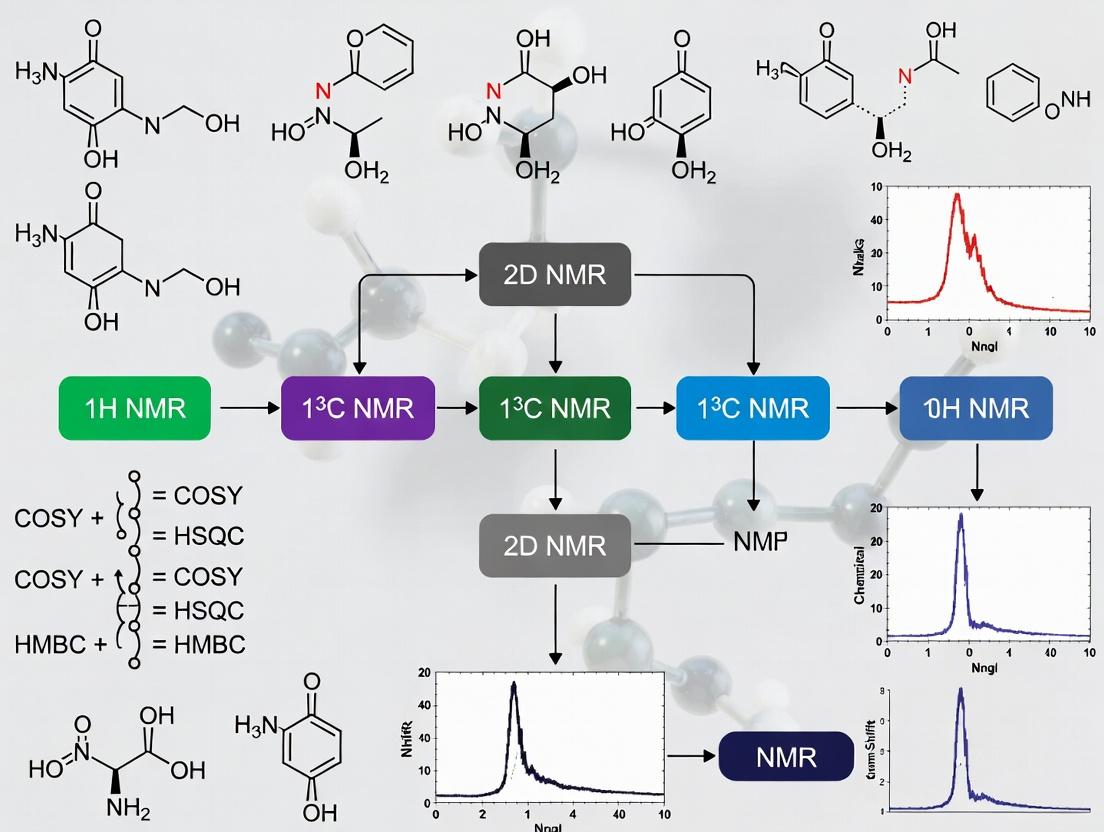
This article provides a detailed, modern overview of Nuclear Magnetic Resonance (NMR) spectroscopy's pivotal role in characterizing natural products.
Decoding Nature's Pharmacy: A Comprehensive Guide to NMR Spectroscopy for Natural Product Characterization and Drug Discovery
Abstract
This article provides a detailed, modern overview of Nuclear Magnetic Resonance (NMR) spectroscopy's pivotal role in characterizing natural products. It covers fundamental principles, explores advanced 1D and 2D techniques crucial for structural elucidation of complex molecules, addresses common experimental challenges and optimization strategies, and compares NMR with complementary analytical methods like MS and XRD. Targeted at researchers and drug development professionals, this guide synthesizes current methodologies to streamline the identification, validation, and development of bioactive natural compounds into novel therapeutics.
The NMR Blueprint: Core Principles and Strategic Role in Natural Product Research
Nuclear Magnetic Resonance (NMR) spectroscopy is the unequivocal analytical cornerstone for the structural elucidation of complex organic molecules, particularly within natural product research. Its non-destructive nature and ability to provide atomic-resolution information on molecular structure, dynamics, and interaction make it indispensable for identifying novel bioactive compounds and guiding drug development.
Quantitative Data on NMR Performance Metrics
The following table summarizes key quantitative attributes that underscore NMR's dominance in structural analysis.
Table 1: Comparative Analytical Metrics for Structural Elucidation Techniques
| Parameter | Solution-State NMR | Mass Spectrometry (MS) | X-ray Crystallography |
|---|---|---|---|
| Primary Information | Chemical environment, connectivity, spatial proximity, dynamics | Molecular mass, formula, fragmentation pattern | Absolute 3D atomic coordinates |
| Sample Requirement (Natural Product) | 0.1 - 5 mg (for 1D/2D) | < 0.001 mg | ~1 mg, must be crystalline |
| Experiment Time (per sample) | 30 min - 72 hrs | Minutes | Days to months |
| Key Quantitative Output | Chemical shift (ppm), J-coupling (Hz), NOE intensity | m/z, intensity | Atomic coordinates (Å) |
| Throughput | Medium | High | Low |
| Ability to Study Mixtures | Excellent (if resolved) | Excellent | Poor |
| Solvent Compatibility | Requires deuterated solvent | Broad compatibility | Crystallization solvent |
Detailed Experimental Protocols for Natural Product Characterization
Protocol 1: Initial 1D NMR Profiling and Sample Preparation
Objective: To obtain primary structural fingerprints (¹H and ¹³C NMR spectra) of a purified natural product.
Sample Preparation:
- Weigh 1-2 mg of the purified, dry compound into a clean 5 mm NMR tube.
- Dissolve the sample in 0.6 mL of an appropriate deuterated solvent (e.g., CDCl₃, DMSO-d₆, Methanol-d₄). Ensure the sample is fully dissolved and free of particulate matter.
- Cap the tube and label it appropriately.
¹H NMR Acquisition:
- Load the sample into a NMR spectrometer (e.g., 400-600 MHz).
- Lock, tune, and match the probe to the deuterium signal of the solvent.
- Shim the magnet to optimize field homogeneity.
- Set acquisition parameters: Spectral width = 20 ppm, Center = 5 ppm, Pulse program = zg30, Number of scans = 16-64.
- Acquire the spectrum. Process the FID: Apply Fourier Transform, phase correction, baseline correction, and reference the chemical shift to the residual proton signal of the solvent (e.g., CHCl₃ at 7.26 ppm).
¹³C NMR Acquisition:
- Using the same sample, switch observation to ¹³C nucleus.
- Set acquisition parameters: Spectral width = 240 ppm, Center = 100 ppm, Pulse program = zgpg30, Number of scans = 1024-4096 (due to low natural abundance).
- Acquire the spectrum with composite pulse decoupling to remove ¹H coupling.
- Process the FID and reference the chemical shift to the solvent carbon signal (e.g., CDCl₃ triplet at 77.16 ppm).
Protocol 2: Key 2D NMR Experiments for Connectivity Mapping
Objective: To establish through-bond and through-space connectivities for complete structure assembly.
¹H-¹H COSY (Correlation Spectroscopy):
- Purpose: Identify scalar (J)-coupled proton networks (typically geminal and vicinal relationships).
- Method: On the prepared sample, select the COSY pulse sequence (cosygpqf or similar). Set spectral widths to cover the ¹H chemical shift range in both dimensions. Acquire 2048 x 256 data points with 2-4 scans per increment. Process with squared cosine bell window functions and display as a contour plot.
¹H-¹³C HSQC (Heteronuclear Single Quantum Coherence):
- Purpose: Directly correlate each proton to its directly bonded carbon atom. Serves as the "molecular skeleton" map.
- Method: Select the HSQC pulse sequence (hsqcetgp or similar). Set F2 (¹H) width to 20 ppm and F1 (¹³C) width to 240 ppm. Acquire 2048 x 256 data points with 2-8 scans per increment. Optimize for ¹JCH coupling (~145 Hz). Process and phase for pure absorption mode contours.
¹H-¹³C HMBC (Heteronuclear Multiple Bond Correlation):
- Purpose: Correlate protons to carbons over 2-3 bonds (e.g., ²JCH, ³JCH). Critical for linking molecular fragments via quaternary carbons and carbonyl groups.
- Method: Select the HMBC pulse sequence (hmbcetgpl3nd or similar). Set a long-range coupling constant (⁸JCH) to 8 Hz. Acquire 4096 x 512 data points with 4-16 scans per increment to enhance sensitivity for weak correlations.
Visualizing the NMR Structure Elucidation Workflow
Title: NMR-Based Structure Elucidation Workflow
The Scientist's Toolkit: Key Research Reagent Solutions
Table 2: Essential Materials for NMR-Based Natural Product Analysis
| Item | Function | Example/Note |
|---|---|---|
| Deuterated Solvents | Provides a field-frequency lock signal and minimizes interfering proton signals. | CDCl₃, DMSO-d₆, Methanol-d₄. Must be >99.8% D. |
| NMR Sample Tubes | High-precision glassware for holding sample within the magnetic field. | 5 mm outer diameter, 7" length, matched specifications. |
| Chemical Shift References | Provides a known standard for calibrating the chemical shift scale. | Tetramethylsilane (TMS) or residual solvent peak. |
| Shimming Tools | Software or manual tools to optimize magnetic field homogeneity. | Automated gradient shimming routines are standard. |
| Cryoprobes | NMR probe with cooled electronics and/or coil to drastically reduce thermal noise. | Increases sensitivity 4x, reducing experiment time or sample need. |
| Software Suites | For processing, analyzing, and visualizing 1D/2D NMR data. | MestReNova, TopSpin, ACD/Labs. |
| Micro-scale NMR Tubes | For sample-limited applications (e.g., < 100 µg). | 1.7 mm or 3 mm tubes with matched probes. |
Application Notes
Nuclear Magnetic Resonance (NMR) spectroscopy is the cornerstone of structural elucidation and characterization in natural product research. The complementary information provided by different NMR-active nuclei allows researchers to determine planar structures, relative configurations, conformations, and dynamic properties of complex metabolites. This set of application notes details the utility, experimental considerations, and integrated workflows for the four key nuclei (¹H, ¹³C, ¹⁵N, ³¹P) within the context of a doctoral thesis focused on advancing NMR methodologies for natural product discovery.
¹H NMR: Provides information on the number, type, and chemical environment of hydrogen atoms. It is the primary tool for determining coupling constants (for stereochemistry) and integration ratios. Key advancements include pure shift techniques for resolving complex, overlapped regions and ultrafast 2D methods for high-throughput screening.
¹³C NMR: Essential for determining the carbon skeleton of a natural product. Direct observation provides information on the number and types of carbon atoms. Its low natural abundance (1.1%) and sensitivity are overcome with polarization transfer techniques (e.g., DEPT, INEPT) and cryoprobes. Heteronuclear single quantum coherence (HSQC) and heteronuclear multiple bond correlation (HMBC) experiments are irreplaceable for establishing C-H connectivities.
¹⁵N NMR: Despite its low natural abundance (0.37%) and negative gyromagnetic ratio, ¹⁵N NMR is gaining importance for characterizing alkaloids, peptides, and other nitrogen-containing natural products. Indirect detection via ¹H in inverse-mode experiments (e.g., ¹H-¹⁵N HSQC, HMBC) is standard. It provides insights into hydrogen bonding, protonation states, and molecular interactions.
³¹P NMR: A highly sensitive nucleus used primarily for characterizing phosphorylated natural products (e.g., phospholipids, nucleotide analogs, phosphonate antibiotics). It is also employed as a powerful tool in NMR-based metabolic profiling and in studying ligand interactions with proteins or membranes using ³¹P-labeled probes.
Comparative Quantitative Data
Table 1: Key NMR Properties of Target Nuclei
| Nucleus | Natural Abundance (%) | Relative Sensitivity | Standard Reference Compound | Typical Chemical Shift Range (ppm) | Key Application in Natural Products |
|---|---|---|---|---|---|
| ¹H | 99.98 | 1.00 | Tetramethylsilane (TMS) | 0 - 15 | Primary structure, integration, J-couplings |
| ¹³C | 1.11 | 1.76 x 10⁻⁴ | TMS | 0 - 250 | Carbon framework, multiplicity (DEPT) |
| ¹⁵N | 0.37 | 3.85 x 10⁻⁶ | Nitromethane / NH₃ (liquid) | ~ -350 to 550 (referenced) | N-containing moieties, H-bonding |
| ³¹P | 100.00 | 6.63 x 10⁻² | 85% Phosphoric Acid | ~ -250 to 500 | Phosphorylated metabolites, ligand binding |
Table 2: Recommended 2D NMR Experiments for Structure Elucidation
| Experiment | Detected Nuclei | Correlation Type | Key Information Provided | Typical Experiment Time (min)* |
|---|---|---|---|---|
| COSY | ¹H - ¹H | Through-bond (²J,³JHH) | Proton-proton coupling networks | 5 - 30 |
| TOCSY | ¹H - ¹H | Through-bond (total spin system) | Isolated proton spin systems (e.g., sugars) | 10 - 60 |
| HSQC | ¹H - ¹³C (or ¹⁵N) | One-bond (¹JCH) | Directly bonded C-H / N-H pairs | 15 - 90 |
| HMBC | ¹H - ¹³C (or ¹⁵N) | Long-range (²J,³JCH) | Carbon-proton connectivity over 2-3 bonds | 30 - 120 |
| ¹H-¹⁵N HMBC | ¹H - ¹⁵N | Long-range (²J,³JNH) | Identifying N-containing functional groups | 60 - 180 |
*Times are for a ~1-2 mg sample of a mid-MW natural product (~500 Da) on a 600 MHz spectrometer equipped with a cryogenic probe.
Experimental Protocols
Protocol 1: Comprehensive 1D and 2D NMR Analysis of a Novel Alkaloid
Objective: To fully characterize the structure of a purified, nitrogen-containing natural product (e.g., an alkaloid, ~1.0 mg).
Materials: Purified compound in 150 µL of deuterated solvent (e.g., DMSO-d6 or CD₃OD), 3 mm NMR tube, 600 MHz NMR spectrometer with a triple-resonance cryoprobe.
Procedure:
- Sample Preparation: Dissolve ~1.0 mg of the purified compound in 150 µL of deuterated solvent. Transfer to a 3 mm NMR tube using a micro-syringe.
- ¹H NMR (Primary Structure):
- Insert sample, lock, tune, match, and shim.
- Acquire a standard ¹H spectrum with water suppression (e.g., presaturation) if needed.
- Parameters: Spectral width (δ) 12 ppm, relaxation delay (D1) 2.0 s, number of scans (NS) 32.
- Process with exponential line broadening (LB) of 0.3 Hz, Fourier transform, phase, and baseline correct.
- ¹³C NMR and DEPT-135 (Carbon Framework):
- Run a proton-decoupled ¹³C experiment.
- Parameters: Spectral width 240 ppm, D1 2.0 s, NS 1024-2048 (overnight acquisition possible).
- Run a DEPT-135 experiment to distinguish CH₃/CH (positive peaks) from CH₂ (negative peaks) and quaternary C (no signal).
- Parameters: Optimized ¹JCH coupling constant (~145 Hz), NS 256-512.
- Key 2D Experiments (Connectivity):
- ¹H-¹³C HSQC: Use sensitivity-improved version. Set spectral widths based on ¹H and ¹³C ranges. NS=4-8 per t1 increment, total time ~20 min.
- ¹H-¹³C HMBC: Optimize for long-range coupling (~8 Hz). Set D1 to 1.5-2.0 s. NS=8-16 per t1 increment, total time ~1-2 hours.
- ¹H-¹⁵N HSQC/HMBC: Switch probe to ¹⁵N channel. For HSQC, use gradient-selected, sensitivity-enhanced pulse sequence. For HMBC, optimize for ⁵-¹⁰ Hz. These experiments may require several hours due to low sensitivity.
- Data Integration: Assign all ¹H and ¹³C signals by correlating data from COSY, TOCSY, HSQC, and HMBC spectra. Use ¹H-¹⁵N correlations to pinpoint nitrogen atoms and their protonation state.
Protocol 2: ³¹P NMR Screening for Phosphorylated Metabolites in Crude Extracts
Objective: To rapidly identify and quantify phosphorylated compounds in a partially purified natural product extract.
Materials: Crude extract fraction, deuterated buffer (e.g., 100 mM Tris-D11, pD 7.5, 10% D₂O), 5 mm NMR tube, NMR spectrometer with broadband observe (BBO) or ³¹P probe.
Procedure:
- Sample Preparation: Reconstitute the dried extract fraction in 600 µL of deuterated buffer. Add a known concentration of an internal standard (e.g., methylene diphosphonic acid, MDP). Transfer to a 5 mm NMR tube.
- Acquisition:
- Tune and match the probe to the ³¹P frequency (e.g., 242.9 MHz on a 600 MHz spectrometer).
- Use a simple one-pulse experiment with full ¹H decoupling to collapse multiplet structures.
- Parameters: Spectral width 100 ppm (centered at ~0 ppm relative to external 85% H₃PO₄), 90° pulse, D1 5.0 s (to allow full T1 relaxation for quantitation), NS 128-256.
- Processing and Analysis:
- Process with zero-filling and mild line broadening (1-2 Hz).
- Reference the spectrum using the internal standard or an external reference.
- Identify phosphorylated metabolites (e.g., phosphonates ~10-25 ppm; inorganic phosphate ~2-3 ppm; phosphodiester ~0 ppm) by comparing chemical shifts to databases.
- Use integration relative to the internal standard for quantification.
Visualizations
Diagram Title: Integrated NMR Workflow for Natural Product Structure Elucidation
Diagram Title: Natural Product Characterization Pipeline in a Thesis
The Scientist's Toolkit
Table 3: Essential Research Reagent Solutions for NMR-Based Natural Product Analysis
| Item | Function & Rationale |
|---|---|
| Deuterated Solvents (DMSO-d6, CD₃OD, CDCl₃, D₂O) | Provides the lock signal for the NMR spectrometer and minimizes large solvent proton signals that would obscure compound signals. Choice depends on compound solubility. |
| NMR Reference Standards (TMS, DSS for ¹H/¹³C; NH₃(l) for ¹⁵N; 85% H₃PO₄ for ³¹P) | Provides a precise chemical shift (δ = 0 ppm) reference point for each nucleus, ensuring data is comparable across instruments and laboratories. |
| Shigemi NMR Microtubes (for 3mm or 5mm probes) | Allows for high-quality data acquisition from very limited sample quantities (< 500 µg) by matching the magnetic susceptibility of the solvent and reducing the required sample volume. |
| Cryogenic Probes (e.g., TCI CryoProbe) | Increases sensitivity by a factor of 4-5 by cooling the detector coils and preamplifiers with helium, drastically reducing experiment time or enabling work with sub-milligram samples. |
| Spectral Databases (Bruker ACD, Chenomx, DNP) | Software tools for predicting chemical shifts, processing complex 2D data, and comparing experimental spectra to known compounds for dereplication. |
| Internal Quantitation Standard (e.g., MDP for ³¹P) | A compound with a known, non-overlapping signal used as an internal reference to quantify the concentration of metabolites in a mixture via NMR integration. |
Within the broader thesis investigating NMR spectroscopy's pivotal role in the dereplication and structural elucidation of bioactive natural products, a rigorous understanding of the four fundamental NMR parameters is essential. This document provides detailed application notes and protocols for leveraging chemical shift (δ), scalar coupling constant (J), signal integration, and relaxation times (T₁, T₂) to solve complex structural problems in natural product research. These parameters are the primary data from which molecular connectivity, stereochemistry, dynamics, and concentration are derived, directly impacting drug discovery pipelines that source compounds from nature.
Application Notes & Quantitative Data
Chemical Shift (δ)
The chemical shift is the resonant frequency of a nucleus relative to a standard, expressed in parts per million (ppm). It is exquisitely sensitive to the local electronic environment, making it the first diagnostic tool for identifying functional groups and substitution patterns.
Table 1: Diagnostic ¹H and ¹³C Chemical Shift Ranges for Common Natural Product Moieties
| Moiety / Functional Group | Approximate ¹H δ (ppm) | Approximate ¹³C δ (ppm) | Application in Natural Products |
|---|---|---|---|
| Aliphatic (CH₃, CH₂, CH) | 0.8 - 2.5 | 10 - 50 | Terpene chains, fatty acid tails |
| Olefinic (=C-H) | 4.5 - 6.5 | 100 - 150 | Flavonoids, polyketides, terpenes |
| Aromatic (Ar-H) | 6.5 - 8.2 | 110 - 160 | Flavonoids, alkaloids, polyphenols |
| Methoxy (O-CH₃) | 3.3 - 4.0 | 50 - 60 | Common substituent in many classes |
| Acetyl (O-CO-CH₃) | 2.0 - 2.5 | 20-22 (CH₃), 169-171 (C=O) | Acetylated sugars, polyols |
| Anomeric Proton (H-C-O) | 4.3 - 6.0 | 90 - 110 | Glycosidic linkage identification |
| Aldehyde (H-C=O) | 9.0 - 10.0 | 190 - 200 | Rare, but diagnostic when present |
Protocol 1.1: Routine Chemical Shift Referencing
- Sample Preparation: Dissolve 2-10 mg of purified natural product in 0.6 mL of deuterated solvent (e.g., CDCl₃, DMSO-d₆). Add 1-2 drops of tetramethylsilane (TMS) as an internal reference (δ = 0.00 ppm for both ¹H and ¹³C) or use the residual protonated solvent peak (e.g., CHCl₃ in CDCl₃ at 7.26 ppm for ¹H).
- Acquisition: Acquire a standard ¹H NMR spectrum.
- Calibration: In the processing software, set the known reference signal to its defined chemical shift. All other signals in the spectrum are automatically calibrated relative to this point.
Scalar Coupling Constant (J)
The coupling constant (J, in Hz) arises through-bond interaction between nuclei (typically ≤ 3 bonds apart). Its magnitude reveals dihedral angles (via the Karplus relationship), stereochemistry (cis/trans, axial/equatorial), and connectivity.
Table 2: Diagnostic Coupling Constants for Stereochemical Assignment
| Coupling Type | Typical J Value (Hz) | Structural Inference |
|---|---|---|
| Geminal (²JHH) | -12 to -15 | Diastereotopic protons |
| Vicinal, anti (³JHH) | 6 - 14 | Anti-periplanar arrangement |
| Vicinal, gauche (³JHH) | 2 - 4 | Gauche arrangement |
| trans Olefinic | 12 - 18 | E-configuration across double bond |
| cis Olefinic | 6 - 12 | Z-configuration across double bond |
| Aromatic, ortho | 6 - 9 | Adjacent protons on aromatic ring |
| Aromatic, meta | 1 - 3 | Protons meta to each other |
Protocol 2.1: Measuring Coupling Constants from 1D ¹H NMR
- Acquire High-Resolution Spectrum: Ensure digital resolution is sufficiently high (0.1-0.2 Hz/point). Use a non-spinning sample and adequate relaxation delay.
- Phase and Baseline Correction: Process the spectrum with optimal phase and flat baseline.
- Measurement: Use the software's multiplet analysis tool. Fit the peaks of the multiplet and extract J values directly. Alternatively, measure the peak-to-peak separation (in Hz) within a doublet, triplet, or doublet of doublets.
Signal Integration
Integration measures the area under an NMR signal, which is directly proportional to the number of nuclei giving rise to that signal. This is crucial for determining proton ratios and, when paired with an internal standard of known concentration, for quantitative analysis (qNMR).
Protocol 3.1: Quantitative NMR (qNMR) for Purity Assessment
- Internal Standard Selection: Choose a certified qNMR standard (e.g., dimethyl terephthalate (DMT), maleic acid) that is chemically stable, non-hygroscopic, and has non-overlapping signals.
- Sample Preparation: Precisely weigh (~1-10 mg) both the natural product analyte (A) and the reference standard (S) into an NMR tube. Add precisely 0.6 mL of deuterated solvent.
- Acquisition Parameters: Use a relaxation delay (d1) ≥ 5 times the longest T₁ (often 30-60 seconds), a 90° pulse, and no signal saturation. Acquire spectrum.
- Calculation: Integrate one isolated signal for the analyte (Iₐ) and one for the standard (Iₛ). Use the formula: Purity (%) = (Iₐ / Nₐ) × (Wₛ / Mₛ) × (Mₐ / Wₐ) × (Nₛ / Iₛ) × Purityₛ × 100%, where W is weight, M is molar mass, N is the number of protons giving the integrated signal, and Purityₛ is the certified purity of the standard.
Relaxation Times (T₁, T₂)
Longitudinal relaxation time (T₁) and transverse relaxation time (T₂) report on molecular mobility and dynamics. T₁ is critical for setting acquisition parameters, while T₂ affects linewidth.
Table 3: Typical ¹H T₁ Ranges and Implications
| Molecular Environment | Approximate T₁ (s) | Implication for Experiment |
|---|---|---|
| Small, mobile molecule (MW < 500) | 1 - 10 | Requires careful d1 setting for quantification. |
| Mid-size natural product (MW 500-1000) | 0.5 - 3 | Standard d1 of 1-2s may cause minor saturation. |
| Macromolecule / Bound compound | 0.01 - 0.5 | Very short d1 can be used; signals may be broad. |
Protocol 4.1: Inversion Recovery for T₁ Measurement
- Pulse Sequence: Use the standard inversion-recovery sequence: [180° – τ – 90° – Acquire].
- Parameter Setup: Set a array of 10-15 τ (delay) values, typically ranging from 0.001s to ~5T₁(estimated). Use a long relaxation delay (d1 > 5T₁) between scans.
- Data Fitting: Process spectra. For each signal of interest, plot peak intensity I(τ) against τ. Fit data to the equation: I(τ) = I₀ [1 - 2 exp(-τ / T₁)], where I₀ is the equilibrium intensity, to extract T₁.
Integrated Workflow for Structure Elucidation
The following diagram illustrates the logical flow of using the four fundamental parameters to characterize a natural product.
Diagram Title: Logical Flow of NMR Parameters for Structure Elucidation
The Scientist's Toolkit: Research Reagent Solutions
Table 4: Essential Materials for NMR-based Natural Product Characterization
| Item / Reagent | Function & Application Note |
|---|---|
| Deuterated Solvents (CDCl₃, DMSO-d₆, CD₃OD, D₂O) | Provides the lock signal for the NMR spectrometer; minimizes large solvent signals in ¹H spectrum. Choice depends on compound solubility. |
| Quantitative NMR Standards (e.g., Dimethyl terephthalate, Maleic acid) | Certified reference material for precise quantification of compound concentration and purity (qNMR). |
| NMR Sample Tubes (5 mm, 7-inch length) | High-quality, matched tubes ensure consistent shimming and spectral quality. |
| Chemical Shift Reference (Tetramethylsilane - TMS) | Primary internal reference standard (δ = 0.00 ppm) for both ¹H and ¹³C in organic solvents. |
| Susceptibility Plug (or coaxial insert) | Used to maintain a consistent sample volume/height in the tube, critical for shimming. |
| Chiral Solvating Agent (e.g., (R)-(-)- or (S)-(+)-1-Phenylethylamine) | For determining enantiomeric purity by creating diastereomeric complexes with different NMR signals. |
| Shift Reagents (e.g., Eu(fod)₃, Pr(fod)₃) | Paramagnetic lanthanide complexes that induce predictable chemical shift changes to probe functional groups or stereochemistry. |
| Sealed Capillary of solvent in D₂O (e.g., DSS-d₆) | Provides an external or internal reference standard for aqueous samples (e.g., D₂O, phosphate buffers). |
Within the broader thesis on NMR spectroscopy applications, this document positions Nuclear Magnetic Resonance (NMR) as the definitive, non-destructive structural elucidation core within the modern natural product (NP) discovery pipeline. While hyphenated chromatographic-mass spectrometric techniques (LC-MS/MS, GC-MS) excel at rapid profiling and dereplication, NMR remains unparalleled for determining novel planar structures, relative configurations, and conformations in solution, directly interfacing with bioassay data to identify active constituents.
Application Notes & Quantitative Data
Table 1: Comparative Metrics of Key Techniques in NP Characterization
| Technique | Primary Role in NP Pipeline | Key Quantitative Metrics (Typical Performance) | Key Limitation |
|---|---|---|---|
| LC-HRMS/MS | Dereplication, Profiling, Metabolomics | Mass Accuracy: < 5 ppm; Resolution: > 25,000; Sensitivity: pg-level | Cannot distinguish isomers or determine absolute configuration. |
| GC-MS | Volatile/Semi-volatile Profiling | Library Match Scores > 800 (NIST); Excellent Reproducibility | Requires derivatization for non-volatiles. |
| 1D/2D NMR | Structural Elucidation, Isomer Identification | Sensitivity (CryoProbe): ~10s of ng (¹H), µg (¹³C); Chemical Shift Range: ¹H 0-20 ppm, ¹³C 0-250 ppm. | Lower sensitivity vs. MS; requires pure compound (µg-mg). |
| MicroED | Absolute Configuration (Crystalline NPs) | Resolution: < 1.0 Å; Sample: Nanogram crystals | Requires a single, high-quality microcrystal. |
| Computational NMR | DP4+ Probability, ML Prediction | DP4+ Probability > 95% for correct isomer; Mean Absolute Error (δ ¹³C): < 2 ppm | Dependent on quality of theoretical calculations. |
Table 2: NMR Experiment Suite for Sequential NP Characterization
| NMR Experiment | Key Information Obtained | Typical Time (600 MHz, Cryoprobe) | Application Note |
|---|---|---|---|
| ¹H NMR | Proton count, coupling, chemical environment. | 1-5 min | First step; assesses purity and provides fingerprint. |
| ¹³C NMR (DEPT) | Carbon count, hybridization (CH₃, CH₂, CH, C). | 30-60 min | Defines carbon skeleton. |
| HSQC | Direct ¹H-¹³C correlations (one-bond). | 10-30 min | Critical framework for assigning protonated carbons. |
| HMBC | Long-range ¹H-¹³C correlations (2-3 bonds). | 30-60 min | Connects structural fragments through quaternary carbons. |
| COSY/TOCSY | ¹H-¹H through-bond correlations (vicinal/long-range). | 5-20 min | Establishes proton spin systems and connectivity. |
| NOESY/ROESY | ¹H-¹H through-space correlations (< 5 Å). | 30-90 min | Determines relative stereochemistry and conformation. |
Experimental Protocols
Protocol 3.1: Integrated Workflow from Crude Extract to Full NMR Characterization
Aim: To isolate and fully characterize a bioactive natural product from a crude extract. Materials: See "The Scientist's Toolkit" below.
Procedure:
- Extraction & Fractionation: Perform solvent partition (e.g., Kupchan scheme) of crude extract. Monitor fractions via analytical TLC/LC-MS.
- Bioassay-Guided Fractionation: Subject fractions to target bioassay (e.g., antimicrobial, cytotoxicity). Select the most active fraction for further separation.
- High-Resolution Purification: Use preparative or semi-preparative HPLC (C18 column). Collect peaks based on UV (e.g., 210, 254 nm) and MS triggers.
- Purity Assessment: Analyze purified compound via:
- UPLC-MS: Single peak with expected [M+H]⁺/[M-H]⁻ ion.
- Analytical HPLC-UV/ELSD: Single peak, >95% purity.
- NMR Sample Preparation:
- Transfer 0.5-2.0 mg of pure compound to a clean 1.7mm or 3mm NMR tube.
- Dissolve in 30-150 µL of deuterated solvent (e.g., CD₃OD, DMSO-d₆). Ensure sample is fully dissolved and free of particulate matter.
- Sequential NMR Data Acquisition (Automated):
- Lock, tune/match, and shim the spectrometer.
- Run a standard automated program (
zgesgpor equivalent on Bruker;PROTONon Jeol) which typically executes in order: ¹H, ¹³C, DEPT-135, HSQC, HMBC, COSY, ROESY. - For advanced configuration, use
NOAH(NMR by Ordered Acquisition using 1H-detection) supersequences for time efficiency.
- Data Processing & Analysis:
- Process all FIDs: Apply appropriate window functions (e.g., exponential for ¹H, squared cosine for 2D), zero-filling, and Fourier transform.
- Manually assign all signals: Start with HSQC to assign CH pairs, use COSY/TOCSY to build spin systems, connect fragments via HMBC, and confirm stereochemistry via ROESY/NOESY cross-peaks.
- Structural Verification: Compare experimental ¹H/¹³C shifts and coupling constants with literature data for known compounds. For novel structures, perform computational NMR (DFT calculations for chemical shifts, DP4+ analysis).
Protocol 3.2: Rapid Dereplication by ¹H NMR (for Known Compounds)
Aim: To quickly identify known natural products and avoid redundant isolation. Materials: Crude fraction, deuterated solvent, 1.7mm NMR tube with insert (for multiple samples).
Procedure:
- Prepare a dilute sample (~50 µg) of the semi-pure fraction in deuterated solvent in a 1.7mm tube.
- Acquire a standard ¹H NMR spectrum with sufficient scans for S/N (>100:1).
- Process the spectrum (phase, baseline correct, reference).
- Use specialized databases (e.g., AntiBase, NMRShiftDB, COCONUT) to search the ¹H NMR spectrum (binned data or peak list) against known NPs.
- A high spectral match score (>90%) indicates a high probability of a known compound, guiding the decision to stop or continue isolation.
Visualizations
Title: Integrated Natural Product Characterization Workflow
Title: NMR Experiment Selection Logic Tree
The Scientist's Toolkit: Key Research Reagent Solutions
| Item/Reagent | Function in NP/NMR Pipeline |
|---|---|
| Deuterated Solvents (CD₃OD, DMSO-d₆, CDCl₃) | NMR sample medium; provides lock signal for field stability. Choice depends on compound solubility. |
| NMR Sample Tubes (1.7mm, 3mm, 5mm) | High-quality tubes for minimal sample volume (1.7mm) or standard work (5mm). Match to probehead. |
| LC-MS Grade Solvents (MeCN, MeOH, H₂O) | Essential for clean HPLC separation and high-resolution MS detection without ion suppression. |
| Solid Phase Extraction (SPE) Cartridges (C18, Diol, Si) | For rapid desalting or pre-fractionation of crude extracts prior to HPLC. |
| Semi-Prep HPLC Columns (C18, 5-10µm, 10x250mm) | Workhorse column for isolating milligram quantities of target NPs from complex mixtures. |
| Cryogenically Cooled Probes (CryoProbe) | Increases NMR sensitivity by 4x or more, reducing experiment time and sample requirement to microgram levels. |
| NMR Tube Spinner | Ensures sample tube rotates evenly for homogeneous magnetic field and optimal shimming. |
| Computational Chemistry Software (Gaussian, ADF, mPW1PW91) | For DFT calculations of NMR chemical shifts to predict spectra of candidate structures for validation. |
| NMR Prediction & DB Software (MestReNova, ACD/Labs, Chenomx) | Processes spectra, predicts shifts for proposed structures, and searches commercial NP NMR libraries. |
The unambiguous characterization of natural products via Nuclear Magnetic Resonance (NMR) spectroscopy is fundamentally dependent on sample purity. Within the broader thesis on NMR applications in natural product research, this protocol details the critical pre-analytical steps required to transform a complex crude biological extract into a compound of sufficient purity for definitive ¹H, ¹³C, and 2D-NMR analysis. Impurities can cause signal overlap, obscure key correlations, and lead to misassignment. This document provides current, validated methodologies to ensure the isolated compound meets the stringent purity thresholds (>95%) required for publication-quality NMR data and subsequent drug development workflows.
Key Protocols for Sample Preparation
Protocol 2.1: Solid-Phase Extraction (SPE) for Initial Fractionation
Objective: To rapidly desalt and fractionate a crude liquid extract based on compound polarity. Materials: C18 SPE cartridge (500 mg/6 mL), vacuum manifold, methanol (HPLC grade), acetonitrile (HPLC grade), deionized water, 0.1% formic acid. Procedure:
- Conditioning: Pass 6 mL of methanol through the cartridge, followed by 6 mL of water (or starting buffer). Do not allow the cartridge to dry.
- Loading: Acidify the aqueous crude extract to pH ~3 with 0.1% formic acid. Load the sample onto the cartridge at a flow rate of 1-2 mL/min.
- Washing: Elute with 6 mL of 5% methanol in water (v/v) to remove salts and highly polar impurities. Collect waste.
- Elution: Elute compounds stepwise with 6 mL each of 30%, 50%, 70%, and 100% methanol in water. Collect each fraction separately.
- Evaporation: Concentrate each fraction under a gentle stream of nitrogen or using a rotary evaporator (<40°C). Notes: This step significantly reduces matrix complexity prior to chromatographic analysis.
Protocol 2.2: Analytical HPLC Method Development for Purity Assessment
Objective: To establish an isocratic or gradient HPLC method for monitoring purification and assessing final purity. Materials: Analytical C18 column (4.6 x 150 mm, 5 µm), HPLC system with DAD/UV detector, mobile phase A (Water + 0.1% Formic Acid), mobile phase B (Acetonitrile + 0.1% Formic Acid). Procedure:
- Scouting Run: Perform a linear gradient from 5% B to 100% B over 20 minutes, flow rate 1.0 mL/min, detection 210-280 nm.
- Peak Analysis: Identify the retention time (t_R) of the target compound.
- Method Optimization: Adjust the gradient slope around the tR of the target to improve resolution from neighboring peaks. Goal: achieve baseline separation (resolution Rs > 1.5).
- Purity Check: Inject the final isolated compound. Use DAD spectral overlay (200-400 nm) across the peak to confirm homogeneity. Notes: This method is used to guide preparative-scale isolation and provide quantitative purity data.
Protocol 2.3: Preparative HPLC for Target Isolation
Objective: To scale up the separation for milligram to gram isolation of the target compound. Materials: Preparative C18 column (21.2 x 250 mm, 10 µm or 5 µm), preparative HPLC or FPLC system, fraction collector. Procedure:
- Method Translation: Scale the optimized analytical gradient to the preparative column, adjusting flow rate and injection volume proportionally to column volume.
- Sample Preparation: Dissolve the semi-pure fraction (from SPE or flash chromatography) in a minimum volume of the starting mobile phase. Filter (0.45 µm PTFE) before injection.
- Run and Collect: Execute the method, triggering fraction collection based on UV threshold or timed windows centered on the target t_R.
- Screening: Analyze collected fractions by analytical HPLC (Protocol 2.2). Pool fractions containing target at >95% purity.
- Final Concentration: Lyophilize (for water/acetonitrile) or evaporate under reduced pressure to obtain the pure solid compound.
Protocol 2.4: Sample Preparation for NMR Spectroscopy
Objective: To prepare the pure compound in a suitable deuterated solvent for high-resolution NMR analysis. Materials: High-purity deuterated solvent (e.g., CD₃OD, DMSO-d₆), 5 mm NMR tube, micropipettes. Procedure:
- Weighing: Accurately weigh 1-5 mg of the pure, dry compound into a clean vial.
- Dissolution: Add 500-600 µL of the selected deuterated solvent. Vortex thoroughly for 1-2 minutes to ensure complete dissolution.
- Transfer: Using a Pasteur pipette, transfer the solution to a clean, dry 5 mm NMR tube. Cap tightly.
- Labelling: Label the tube clearly with compound ID, solvent, and date. Notes: For ¹³C-NMR or 2D experiments, higher concentrations (≥10 mg/600 µL) may be required. Ensure solvent choice is appropriate for the sample's solubility and does not interfere with key spectral regions.
Data Presentation
Table 1: Quantitative Purity Assessment Through HPLC-DAD
| Sample Stage | Target Peak Area % | Key Impurity Peak Area % | Resolution (R_s) from Nearest Peak | Notes |
|---|---|---|---|---|
| Crude Extract | 1.5% | Multiple >5% each | N/A | Target obscured |
| Post-SPE (70% MeOH Fraction) | 22.3% | 15.7% (t_R ± 0.3 min) | 0.8 | Major impurity identified |
| Post-Preparative HPLC (Pooled Fractions) | 98.7% | <0.5% (each) | >2.0 | Meets purity spec for NMR |
Table 2: Recommended Deuterated Solvents for Natural Product NMR
| Solvent | Chemical Shift (¹H, δ) | Chemical Shift (¹³C, δ) | Best For | Considerations |
|---|---|---|---|---|
| CDCl₃ | 7.26 ppm | 77.16 ppm (triplet) | Non-polar compounds, terpenoids | Hygroscopic; may require drying |
| CD₃OD | 3.31 ppm (quin), 4.87 ppm (OH) | 49.00 ppm (heptet) | Polar compounds, glycosides | Exchanges labile protons (OH, NH) |
| DMSO-d₆ | 2.50 ppm | 39.52 ppm (septet) | Broad range, esp. less soluble compounds | High boiling point, viscous, absorbs H₂O |
| D₂O | 4.79 ppm (HOD) | N/A | Water-soluble compounds (e.g., sugars) | Requires suppression of H₂O/HOD signal |
The Scientist's Toolkit: Research Reagent Solutions
| Item | Function & Rationale |
|---|---|
| C18 Solid-Phase Extraction (SPE) Cartridges | For rapid desalting and gross fractionation of crude extracts based on hydrophobicity. |
| HPLC-Grade Solvents (MeCN, MeOH, H₂O + Modifiers) | Essential for creating reproducible, low-UV-absorbance mobile phases for HPLC. |
| Deuterated NMR Solvents (99.8% D minimum) | Provides the deuterium lock signal for stable NMR acquisition; minimizes interfering proton signals. |
| Preparative C18 HPLC Column (10 µm, 250 x 21.2 mm) | Enables high-resolution separation of complex mixtures at loadable scales for compound isolation. |
| 0.45 µm PTFE Syringe Filters | Removes particulate matter from samples prior to HPLC injection, protecting columns. |
| Lyophilizer (Freeze Dryer) | Gently removes volatile solvents (H₂O, MeCN) from polar, heat-sensitive compounds post-HPLC. |
Visualization of Workflows
Title: Natural Product Purification Workflow for NMR
Title: Impact of Sample Impurities on NMR Data Quality
Advanced NMR Toolkit: Practical 1D & 2D Techniques for Solving Complex Structures
Within the thesis "Advanced NMR Spectroscopic Techniques for the Structure Elucidation of Bioactive Natural Products," the foundational 1D NMR experiments form the critical first step in the analytical workflow. This chapter details the core protocols for acquiring and interpreting 1H, 13C, and DEPT spectra, alongside selective 1D experiments, which collectively provide the initial structural framework—identifying carbon skeletons, proton networks, and functional groups—upon which more complex 2D experiments are built. Their robustness, speed, and information content make them indispensable workhorses in the natural product researcher's arsenal.
Table 1: Key Parameters for Core 1D NMR Experiments
| Experiment | Typical Sample Requirement (Natural Product) | Approximate Time (at 500 MHz) | Key Informational Output | Common Spectral Width (ppm) |
|---|---|---|---|---|
| 1H NMR | 1-5 mg | 2-5 minutes | Proton count, chemical environment, coupling constants, integration. | -1 to 14 ppm |
| 13C NMR | 10-20 mg (for direct detection) | 30 min - 2 hours | Number of carbons, hybridization (sp3, sp2, sp), chemical environment. | 0 to 240 ppm |
| DEPT-90 | 10-20 mg | 5-10 minutes per sub-spectrum | Signals for CH groups only. Positive phase. | Same as 13C spectrum |
| DEPT-135 | (Acquired as a set with DEPT-90/45) | 5-10 minutes per sub-spectrum | CH3/CH positive; CH2 negative; Quaternary C absent. | Same as 13C spectrum |
| 1D Selective NOESY/ROESY | 1-5 mg | 15-45 minutes per irradiation | Through-space proximities, stereochemistry. | Defined by selected peak |
| 1D TOCSY | 1-5 mg | 10-30 minutes per irradiation | Scalar-coupled network from a selected proton. | Defined by selected peak |
Table 2: Characteristic Chemical Shift Ranges for Natural Product Scaffolds
| Carbon/Proton Type | Typical 13C δ (ppm) | Typical 1H δ (ppm) | Representative Natural Product Class |
|---|---|---|---|
| Aliphatic CH3 | 5 - 25 | 0.7 - 1.2 | Terpenes, fatty acid chains. |
| O-CH3 | 55 - 60 | 3.2 - 3.5 | Methoxy flavonoids, alkaloids. |
| Anomeric Carbon | 90 - 110 | 4.3 - 5.7 | Glycosidic sugars. |
| Olefinic CH | 115 - 145 | 5.0 - 6.5 | Terpenes, polyketides. |
| Aromatic CH | 115 - 135 | 6.5 - 8.0 | Flavonoids, polyphenols. |
| Carbonyl (C=O) | 170 - 220 | N/A | Lactones, quinones, peptides. |
Detailed Experimental Protocols
Protocol 3.1: Standard 1H NMR Acquisition
- Objective: To obtain a high-resolution proton spectrum with quantitative integration.
- Sample: 2-3 mg of purified natural product dissolved in 0.6 mL of deuterated solvent (e.g., CDCl3, DMSO-d6, MeOD).
- Procedure:
- Insert sample tube into magnet, lock, and shim.
- Tune and match the probe for 1H.
- Set spectral width (SW) to 20 ppm. Set transmitter offset (O1P) to the residual solvent peak.
- Determine the 90° pulse length (P1) via an automated pulse calibration routine.
- Set acquisition time (AQ) to ~4 seconds and relaxation delay (D1) to 5-7 seconds (≥ 5 * T1) for quantitative integration.
- Set number of scans (NS) to 16-32.
- Collect the FID. Apply exponential line broadening (LB = 0.3 Hz) and Fourier transform.
- Phase and baseline correct. Reference spectrum to residual solvent peak.
- Data Interpretation: Analyze chemical shifts, multiplicity (s, d, t, q, m), integration ratios, and coupling constants (J).
Protocol 3.2: Proton-Decoupled 13C NMR Acquisition
- Objective: To obtain a broadband-decoupled 13C spectrum identifying all carbon resonances.
- Sample: 15 mg of natural product in 0.6 mL deuterated solvent.
- Procedure:
- Lock, shim, and tune/match for 13C (observe) and 1H (decouple).
- Set SW to 240 ppm. O1P ~100 ppm.
- Calibrate 90° pulse for 13C.
- Use inverse-gated decoupling (Waltz-16 or GARP) with decoupler power (~50 W) only during acquisition to suppress NOE enhancement for semi-quantitative analysis.
- Set D1 to 2-3 seconds. NS to 1024-4096. AQ to ~1 second.
- Acquire data. Apply strong line broadening (LB = 1-2 Hz) during processing to improve S/N. FT, phase, and baseline correct.
- Reference spectrum to solvent signal (e.g., CDCl3 central peak at 77.16 ppm).
Protocol 3.3: DEPT (Distortionless Enhancement by Polarization Transfer) Editing
- Objective: To distinguish CH3, CH2, CH, and quaternary carbon types.
- Sample: Same as for 13C.
- Procedure:
- Set up a standard DEPT pulse sequence (e.g., DEPT-135). Calibrate 1H 90° and 180° pulses, and 13C 90° pulse.
- Set J-coupling constant (CNST2 or P3) to ~145 Hz (typical for 1JCH).
- DEPT-135: Set final 1H pulse (θ) to 135°. Acquire spectrum. CH/CH3 positive; CH2 negative.
- DEPT-90: Create new experiment with θ = 90°. Acquire. Only CH groups appear positive.
- DEPT-45: Create new experiment with θ = 45°. Acquire. All protonated carbons (CH, CH2, CH3) appear positive with similar intensity.
- Process all spectra identically to the 13C spectrum. Overlay and compare to identify carbon types. Quaternary carbons appear only in the standard 13C spectrum.
Protocol 3.4: Selective 1D TOCSY Experiment
- Objective: To isolate the scalar-coupled spin network of a specific proton.
- Sample: 2-3 mg in deuterated solvent.
- Procedure:
- Use a 1D version of the TOCSY pulse sequence with a shaped pulse (e.g., Gaussian) for selective excitation.
- Acquire a high-resolution 1H spectrum. Choose the target proton signal for irradiation.
- Define the selective pulse profile, ensuring it irradiates only the target multiplet (pulse power/width calibration is critical).
- Set mixing time (D9) to 60-120 ms for short-range correlations, or up to 200 ms for longer-range network transfer.
- Set NS = 64-128. Acquire the 1D TOCSY spectrum.
- Subtract a reference spectrum (with irradiation offset) if necessary to remove artifacts. Process similarly to 1D 1H.
Visualizations
Title: Core 1D NMR Workflow for Natural Products
Title: DEPT Spectral Editing Logic
The Scientist's Toolkit: Research Reagent Solutions
Table 3: Essential Materials for 1D NMR of Natural Products
| Item | Function & Rationale |
|---|---|
| Deuterated Solvents (CDCl3, DMSO-d6, MeOD, Acetone-d6) | Provides a deuterium lock signal for field stability. Minimizes large solvent proton signals that would obscure analyte signals. Choice affects solubility and chemical shift. |
| NMR Sample Tubes (5 mm, 7-inch) | High-quality, matched tubes ensure consistent shimming and spectral resolution. |
| Chemical Shift Reference Standards (TMS, DSS) | Tetramethylsilane (TMS) or 3-(trimethylsilyl)-1-propanesulfonic acid (DSS) provide a universal 0 ppm reference point for 1H and 13C spectra. |
| Shim Tools (Automated/Manual) | Corrects minor magnetic field inhomogeneities to achieve narrow line shapes and maximize resolution. |
| Selective/Shaped Pulse Libraries (e.g., Gaussian, REBURP) | Integrated into spectrometer software. Enables precise frequency selection for 1D TOCSY, NOESY, and decoupling experiments. |
| Capillary Inserts (Coaxial Inserts) | Allows for the use of a secondary reference (e.g., D2O with DSS) or a solvent suppression standard without mixing with the primary sample. |
This chapter, embedded within a broader thesis on NMR spectroscopy applications in natural product characterization, addresses a central challenge: elucidating the structure of complex, unknown organic molecules isolated from biological sources. Traditional 1D NMR often provides insufficient information due to signal overlap. This work details the integrated application of three pivotal 2D NMR techniques—COSY, TOCSY, and HSQC/TOCSY—to establish through-bond connectivities, enabling the unambiguous assignment of proton and carbon resonances and the subsequent determination of molecular frameworks.
Technique Fundamentals
- COSY (Correlation Spectroscopy): Identifies scalar (J-) couplings between protons that are typically two or three bonds apart (^2^JHH, ^3^JHH). It establishes direct "neighbor" relationships within a spin system.
- TOCSY (Total Correlation Spectroscopy): Identifies all protons within a coupled spin network, even if they are not directly coupled. It propagates magnetization through the entire network, revealing "families" of protons (e.g., all protons in an amino acid side chain).
- HSQC/TOCSY (Heteronuclear Single Quantum Coherence/TOCSY): A hyphenated experiment that combines two steps. First, HSQC correlates a proton directly bonded to a carbon (^1^JCH). Second, a TOCSY mixing period transfers magnetization from that proton to other protons within its spin network. The result is a map showing which carbon nuclei (via their attached protons) belong to which proton spin system.
Quantitative Comparison of Key Parameters
Table 1: Comparative Summary of 2D NMR Connectivity Experiments
| Parameter | COSY | TOCSY | HSQC/TOCSY |
|---|---|---|---|
| Correlation Type | H-H (through-bond) | H-H (through-bond) | C-H → H-H (through-bond) |
| Coupling Pathway | ^2,3^JHH | Propagates through entire spin system | ^1^JCH, then ^n^JHH |
| Key Information | Direct proton neighbors | All protons in a coupled network | Carbon-attached proton's spin system membership |
| Typical Mixing Time | Not applicable | 60-120 ms | TOCSY mix: 60-80 ms |
| Experiment Time | ~15-30 min | ~30-60 min | ~1-2 hours |
| Primary Use in Assignment | Proton network backbone | Delineating complete proton spin systems | Linking carbon chemical shifts to specific proton networks |
Detailed Experimental Protocols
Protocol: Standard 1H-1H COSY Experiment
Application: Initial mapping of vicinal and geminal proton couplings.
- Sample Preparation: Dissolve 2-10 mg of natural product in 0.6 mL of deuterated solvent (e.g., CDCl3, DMSO-d6).
- NMR Setup: Load sample into a high-field NMR spectrometer (≥ 500 MHz for proton). Lock, shim, and tune/probe.
- Acquisition Parameters:
- Pulse Sequence:
cosygpqfor equivalent. - Spectral Width (F2 & F1): 10-15 ppm (centered on solvent residual peak).
- Number of Points (TD): 2048 in F2 (acquisition).
- Number of Increments (F1): 256-512.
- Scans per Increment: 4-8.
- Relaxation Delay (D1): 1.0-1.5 s.
- Pulse Sequence:
- Processing: Apply apodization (sine-bell or QSINE) in both dimensions. Perform Fourier Transform, phase correction, and baseline correction. Symmetrize the spectrum if appropriate.
Protocol: Phase-Sensitive TOCSY Experiment
Application: Identifying all protons within an isolated spin system.
- Sample Preparation: As per Section 3.1.
- NMR Setup: As per Section 3.1.
- Acquisition Parameters:
- Pulse Sequence:
dipsi2esgpphormlevphpp(for clean mixing). - Spectral Width: 10-15 ppm in both dimensions.
- Points (TD): 2048 in F2.
- Increments (F1): 300-400.
- Scans per Increment: 8-16.
- Mixing Time: 70 ms (adjustable: longer times (100-120 ms) for longer spin systems).
- Relaxation Delay (D1): 1.5-2.0 s.
- Pulse Sequence:
- Processing: Use TPPI or States-TPPI for phase-sensitive acquisition. Apply apodization (sine-bell shifted by 60-90°). FT, phase, and baseline correct.
Protocol: HSQC/TOCSY Experiment
Application: Correlating carbon chemical shifts to specific proton spin systems.
- Sample Preparation: As per Section 3.1. Ensure sufficient sample concentration due to lower sensitivity.
- NMR Setup: As per Section 3.1.
- Acquisition Parameters:
- Pulse Sequence:
hsqcdietgpsisp2.2or equivalent (with adiabatic pulses for carbon). - Spectral Width (F2 - 1H): 10-15 ppm.
- Spectral Width (F1 - 13C): 160-220 ppm (aliphatic/aromatic).
- Points (TD): 2048 in F2.
- Increments (F1): 200-256.
- Scans per Increment: 16-32 (depends on sample concentration).
- TOCSY Mixing Time: 60-80 ms.
- Relaxation Delay (D1): 1.8-2.2 s.
- Decoupling Scheme: GARP or WALTZ-16 for 13C during acquisition.
- Pulse Sequence:
- Processing: Apply linear prediction in F1. Use apodization (sine-bell or QSINE) in both dimensions. FT, phase, and baseline correct. Reference to solvent or TMS.
Visualizing the Connectivity Strategy
- Diagram 1 Title: Strategy for 2D NMR-Based Structural Elucidation
- Diagram 2 Title: NMR Correlation Map for a Molecular Fragment
The Scientist's Toolkit: Essential Research Reagents & Materials
Table 2: Key Research Reagent Solutions for 2D NMR in Natural Products
| Item | Function & Rationale |
|---|---|
| Deuterated Solvents (CDCl3, DMSO-d6, CD3OD, D2O) | Provides a lock signal for field/frequency stability and minimizes large solvent proton signals that would obscure analyte signals. |
| NMR Sample Tubes (5 mm, 7-inch, 528-PP material) | High-quality, matched tubes ensure consistent spinning and minimal magnetic susceptibility distortions, critical for good shimming and lineshape. |
| Tetramethylsilane (TMS) or Solvent Reference | Internal chemical shift reference standard (δ 0.00 ppm for 1H/13C). |
| Susceptibility Plugs (PFTFE) | Minimizes vortexing and evaporation, maintaining sample homogeneity. |
| High-Purity, Dry NMR Samples | Impurities (e.g., water, solvents) cause artifact peaks. Rigorous purification and drying are essential. |
| Shimming Tools (Gradient Shimming) | Automated routines to maximize magnetic field homogeneity (line shape), directly impacting resolution and sensitivity in 2D experiments. |
| Processing Software (MestReNova, TopSpin, NMRPipe) | Essential for data processing, visualization, and analysis, including peak picking, integration, and structure verification. |
Within the broader thesis investigating advanced NMR spectroscopy for the structural elucidation of complex natural products, this chapter addresses the critical challenge of establishing atomic connectivity over multiple bonds and through space. While 1D and simple 2D COSY/HSQC experiments define the molecular scaffold, full characterization of novel bioactive compounds—such as alkaloids, polyketides, or glycosylated terpenoids—requires mapping of long-range (J) couplings and spatial proximities. This is essential for assigning quaternary carbons, determining substitution patterns on aromatic systems, elucidating stereochemistry, and defining glycosidic linkages. The HMBC (Heteronuclear Multiple Bond Correlation), NOESY (Nuclear Overhauser Effect SpectroscopyY), and ROESY (Rotating frame Overhauser Effect SpectroscopyY) experiments form the cornerstone of this phase of structural analysis, enabling researchers to piece together the complete planar and three-dimensional structure of a molecule from microgram to milligram quantities.
Core Experiments: Principles and Applications
HMBC detects correlations between protons and heteronuclei (typically ^13C) over long-range couplings (^nJ_CH, n = 2-4). It is indispensable for connecting molecular fragments across heteroatoms or quaternary centers.
NOESY and ROESY are through-space experiments, correlating protons that are close in space (typically < 5 Å), regardless of bond connectivity. NOESY is optimal for medium-to-large molecules at high field strengths, while ROESY is crucial for small-to-medium molecules where the NOE is weak or zero, and for all sizes at mid-range field strengths.
Table 1: Comparison of Key 2D NMR Experiments for Long-Range Correlations
| Feature | HMBC | NOESY | ROESY |
|---|---|---|---|
| Correlation Type | Through-bond (^2,3,4J_CH) |
Through-space (dipolar) | Through-space (dipolar, in rotating frame) |
| Key Application | Linking protonated & quaternary carbons; heterocycle substitution | Stereochemistry, conformation, spatial proximity | Stereochemistry for small molecules (MW < 1000 Da); all sizes at low/mid field |
| Typical Mixing Time | Delay for ^nJ evolution (~60-100 ms) |
Variable, 200-1000 ms | Spin-lock period, 100-300 ms |
| Sign of Cross-peaks | Opposite to diagonal* | Same as diagonal (small mol.) Opposite (large mol.) | Always opposite to diagonal |
| Critical Parameter | ^nJ delay optimization |
Mixing time (τ_m) |
Spin-lock power & duration |
*In phased spectra, HMBC cross-peaks are typically opposite in sign to the diagonal, which is often nulled.
Detailed Experimental Protocols
Protocol 1: Gradient-Selected^1H-^13CHMBC
Objective: Detect ^2J_CH and ^3J_CH correlations to establish connectivity across 2-3 bonds.
- Sample Preparation: Dissolve 2-10 mg of natural product in 0.6 mL of deuterated solvent (e.g., CDCl3, DMSO-d6). Use a standard 5 mm NMR tube.
- NMR Setup:
- Place tube in magnet, lock, shim, and tune/probe.
- Set probe temperature (e.g., 298 K).
- Calibrate
^1H90° pulse width. - Locate
^13Ccenter frequency (without decoupling).
- Acquisition Parameters (Bruker Avance Neo 500 MHz Example):
- Pulse Program:
hmbcetgpl3nd(gradient-selected, low-pass J-filter to suppress^1J_CH). - Spectral Width (F2,
^1H): 12 ppm (e.g., -0.5 to 11.5 ppm). - Spectral Width (F1,
^13C): 220 ppm (e.g., -10 to 210 ppm). ^nJCoupling Constant: SetJvalue (LOWJ/DELTA) to 8 Hz (optimizable, 6-10 Hz range).- Time Domain (TD): F2: 2k; F1: 256.
- Number of Scans (NS): 32-64 per t1 increment.
- Relaxation Delay (D1): 1.5-2.0 seconds.
- Total Experiment Time: ~4-8 hours.
- Pulse Program:
- Processing:
- Apply linear prediction in F1.
- Use QSINE or SINE bell window functions in both dimensions.
- Zero-filling to 1k x 1k real points.
- Fourier transform, phase correct, and baseline correct.
Protocol 2: Phase-Sensitive^1H-^1HNOESY
Objective: Measure through-space proton-proton correlations to determine relative configuration and conformation.
- Sample Preparation: As per Protocol 1. Ensure sample is degassed if long mixing times are used.
- NMR Setup: Standard
^1Hsetup with good shimming. - Acquisition Parameters (Bruker Avance Neo 500 MHz Example):
- Pulse Program:
noesygpphpp(gradient-selected, phase-sensitive). - Spectral Width (F2 & F1): 12 ppm.
- Mixing Time (
τ_m): 400 ms (optimize: 200 ms for large mol., 800 ms for small mol.). - Time Domain (TD): F2: 2k; F1: 512.
- Number of Scans (NS): 16-32 per t1 increment.
- Relaxation Delay (D1): 2.0-3.0 seconds.
- Presaturation: Use during relaxation delay to suppress solvent (e.g.,
cnst2= 80 Hz). - Total Experiment Time: ~6-12 hours.
- Pulse Program:
- Processing:
- Use TPPI or States-TPPI for phase-sensitive data.
- Apply SINE or QSINE window functions.
- Zero-filling to 2k x 2k.
- Fourier transform, phase correct symmetrically.
Protocol 3: Phase-Sensitive^1H-^1HROESY
Objective: Obtain through-space correlations for small-to-medium molecules or at any molecular weight when NOE is weak.
- Sample Preparation: As per Protocol 1.
- NMR Setup: Standard
^1Hsetup. Calibrate spin-lock power (p15/pl1). - Acquisition Parameters (Bruker Avance Neo 500 MHz Example):
- Pulse Program:
roesyphpp(spin-lock with continuous wave or composite pulse). - Spectral Width: 12 ppm.
- Spin-Lock Mixing Time: 200-300 ms.
- Spin-Lock Power (
γB1/2π): 2-4 kHz (calibrate to avoid heating orJ-modulation). - Time Domain (TD): F2: 2k; F1: 512.
- Number of Scans (NS): 16-32.
- Relaxation Delay (D1): 2.0 seconds.
- Total Experiment Time: ~6-12 hours.
- Pulse Program:
- Processing: Identical to NOESY processing (step 4 above).
Visualization of Workflows and Relationships
Title: HMBC Experiment Workflow for Structure Elucidation
Title: Decision Guide for HMBC, NOESY, or ROESY Experiment Selection
The Scientist's Toolkit: Essential Research Reagents & Materials
Table 2: Key Reagents and Materials for Long-Range Correlation NMR
| Item | Function & Rationale |
|---|---|
| Deuterated NMR Solvents (CDCl3, DMSO-d6, Methanol-d4, Pyridine-d5) | Provides the lock signal for field stability; minimizes solvent proton background. Choice depends on compound solubility. |
| High-Quality NMR Tubes (5 mm, 7", 528-PP) | Precision tubes ensure consistent sample spinning and shimming, critical for high-resolution 2D data. |
| Reference Compounds (e.g., TMS, DSS) | Internal chemical shift standards for accurate ppm calibration across experiments. |
| Cold Nitrogen Gas (or Compressed Air) System | Maintains precise, stable probe temperature (±0.1 K), essential for reproducible NOE/ROE measurements. |
| Gradient Shimming Solutions (e.g., D2O with DSS, CDCl3) | Pre-mixed samples for automated gradient shimming, ensuring optimal field homogeneity for all 2D experiments. |
| Sample Preparation Kit (micropipettes, syringes, gloves, vial inserts) | For accurate, contamination-free transfer of microgram-milligram quantities of precious natural product isolates. |
Within the broader thesis on advanced NMR spectroscopy applications in natural product research, this document provides focused Application Notes and Protocols for the characterization of four major secondary metabolite classes. The integration of 1D/2D NMR, hyphenated techniques, and computational tools is essential for de novo structure elucidation in modern drug discovery pipelines.
Application Notes
NMR Strategies by Compound Class
The following table summarizes the core NMR experiments and their diagnostic utility for each natural product class.
Table 1: Primary NMR Experiments for Natural Product Class Characterization
| Natural Product Class | Key 1D/2D NMR Experiments | Diagnostic NMR Features & Challenges |
|---|---|---|
| Alkaloids | ¹H NMR, ¹³C NMR, COSY, TOCSY, HSQC, HMBC, NOESY/ROESY | Presence of heterocyclic nitrogen; coupling patterns of protons adjacent to N; ¹³C chemical shifts of carbons bonded to N (δ 30-70 ppm); HMBC correlations from NH protons crucial for ring connectivity. |
| Terpenoids | ¹H NMR, ¹³C NMR, COSY, HSQC, HMBC, NOESY | Isoprene unit patterns; characteristic methyl singlets (δ 0.7-1.5 ppm) in sesqui- and diterpenes; olefinic proton signals; stereochemistry at multiple chiral centers requires NOE. |
| Polyketides | ¹H NMR, ¹³C NMR, COSY, HSQC, HMBC, HSQC-TOCSY | Long aliphatic chains with keto, hydroxyl, and methyl branch points; ¹³C shifts of carbonyls (δ 200-220 ppm); J-based configuration analysis for polyols. |
| Glycosides | ¹H NMR, ¹³C NMR, COSY, TOCSY, HSQC, HMBC, HSQC-TOCSY, 1D-TOCSY | Anomeric proton doublets (δ 4.3-6.0 ppm, J= 1-8 Hz); anomeric carbon signals (δ 95-110 ppm); sugar spin system identification via TOCSY; linkage determination via HMBC/NOE. |
Quantitative Data on Recent Characterizations
A survey of recent literature (2022-2024) highlights the reliance on multi-technique NMR workflows.
Table 2: Statistics from Recent Characterization Studies (2022-2024)
| Parameter | Alkaloids | Terpenoids | Polyketides | Glycosides |
|---|---|---|---|---|
| Avg. Number of New Compounds/Study | 3-5 | 4-7 | 2-4 | 5-10 |
| Avg. Sample Amount Required | 1-3 mg | 2-5 mg | 3-7 mg | 2-4 mg |
| Most Critical 2D Experiment | HMBC (100%) | HMBC/NOESY (95%) | HSQC-TOCSY (85%) | TOCSY/COSY (100%) |
| % of Studies Using HRMS-NMR | 98% | 99% | 100% | 97% |
| % of Studies Using Computational DP4+ | 75% | 85% | 60% | 40% |
| Typical NMR Time (600 MHz) | 24-48 hrs | 24-72 hrs | 48-72 hrs | 24-48 hrs |
Experimental Protocols
Protocol: Comprehensive NMR Workflow for Novel Alkaloid Characterization
Objective: To isolate and determine the planar and stereochemical structure of an unknown alkaloid from a plant extract.
Materials: Partially purified fraction (>90% purity by LC-UV), NMR solvents (CD₃OD, CDCl₃, DMSO-d₆), 3 mm NMR tubes.
Procedure:
- Sample Preparation: Dissolve 1-2 mg of sample in 600 µL of appropriate deuterated solvent. Filter through a small plug of cotton into a 3 mm NMR tube.
- 1D NMR Acquisition:
- Acquire ¹H NMR (16-32 scans) with water suppression if needed.
- Acquire ¹³C NMR (5000-10000 scans) using an inverse-gated decoupling pulse sequence to obtain quantitative decoupled spectra.
- 2D NMR Acquisition (Critical Set):
- COSY: Use gradient-selected pulse sequence. Spectral width 12 ppm in both dimensions. 2048 x 256 data matrix.
- HSQC: Set ¹JCH = 145 Hz. Spectral width: 12 ppm (F2, ¹H), 180 ppm (F1, ¹³C). 2048 x 256 data matrix.
- HMBC: Optimize for long-range coupling (¹JCH = 8 Hz). Spectral width: 12 ppm (F2), 220 ppm (F1). 2048 x 256 data matrix.
- ROESY (for medium-sized molecules): Use spin-lock mixing time of 300-400 ms to detect NOE correlations.
- Data Processing & Analysis:
- Process all spectra (exponential window function for ¹H, squared cosine for 2D). Calibrate to solvent peak.
- Assign all ¹H and ¹³C signals sequentially using the COSY/HSQC fingerprint.
- Establish connectivities through quaternary carbons and heteroatoms using HMBC.
- Determine relative stereochemistry via analysis of coupling constants and ROESY correlations.
- Validation: Compare experimental ¹³C NMR chemical shifts with those predicted by DFT/GIAO computational methods (e.g., DP4+ analysis) to confirm structure.
Protocol: LC-SPE-NMR/MS for Dereplication of Polyketides
Objective: To rapidly separate and identify known polyketides from a microbial fermentation broth to prioritize novel compounds.
Materials: LC-MS grade solvents, C18 LC column, Solid Phase Extraction (SPE) cartridges (e.g., Hysphere), LC-MS-NMR hyphenated system.
Procedure:
- LC-MS Separation: Inject crude extract. Use a linear H₂O/MeCN gradient with 0.1% formic acid over 60 min. Monitor with diode array detector (200-600 nm) and high-resolution ESI-MS.
- Peak Selection & Trapping: Based on UV and MS patterns (e.g., characteristic frag losses of 44 Da for -CO₂), select peaks for detailed NMR. Divert chosen LC peaks to individual Hysphere SPE cartridges using a switching valve.
- Automated Elution to NMR: Dry each trapped peak on the cartridge with N₂ gas. Automatically elute the adsorbed compound with 30-50 µL of deuterated solvent (e.g., ACN-d₃) directly into a 1.0 mm or 1.7 mm capillary NMR flow probe.
- Microcoil NMR Acquisition: Acquire rapid ¹H NMR (8-16 scans) and, if concentration allows, a gHSQC experiment (1-2 hrs) on the trapped peak.
- Database Matching: Compare acquired ¹H NMR spectrum and HRMS data against in-house or commercial natural product databases (e.g., AntiBase, NP Atlas) for dereplication.
Diagrams
Title: NMR Workflow for Alkaloid Structure Elucidation
Title: LC-SPE-NMR Dereplication Workflow
The Scientist's Toolkit
Table 3: Key Research Reagent Solutions & Materials
| Item | Function & Application Notes |
|---|---|
| Deuterated NMR Solvents (DMSO-d₆, CDCl₃, CD₃OD, etc.) | Provides the lock signal for NMR spectrometers; allows for precise shimming. Choice depends on compound solubility and need to observe exchangeable protons. |
| Deuterated Solvent with TMS (e.g., CDCl₃ with 0.03% TMS) | Tetramethylsilane (TMS) serves as the internal chemical shift reference standard (δ 0.00 ppm for ¹H and ¹³C). |
| Shigemi NMR Tubes (3 mm) | Ideal for precious, mass-limited samples. Limits sample volume to the active coil region, maximizing effective concentration. |
| LC-SPE Cartridges (e.g., Hysphere, GP, C18) | Used in hyphenated LC-NMR to trap, concentrate, and dry selected LC peaks prior to NMR analysis. |
| Cryogenic Probes (e.g., 1.7 mm TCI CryoProbe) | Dramatically increases NMR sensitivity (4x or more) by cooling coils and preamplifiers, reducing thermal noise. Critical for microgram-scale samples. |
| Computational Software (e.g., MestReNova, ACD/Labs, Gaussian) | Used for NMR processing, prediction (¹³C, ¹H), and DFT calculations for NMR chemical shift prediction and DP4+ probability analysis. |
| Natural Product Databases (AntiBase, SciFinder, NP Atlas) | Spectral and structural databases for rapid comparison and dereplication of known compounds. |
Mixture Analysis and Dereplication Strategies Using NMR
Within the broader context of natural product characterization research, Nuclear Magnetic Resonance (NMR) spectroscopy stands as an indispensable, non-destructive analytical tool. Its capacity to provide detailed structural information in complex mixtures is pivotal for dereplication—the rapid identification of known compounds to prioritize novel entities. This application note details contemporary protocols and strategies for NMR-based mixture analysis, directly supporting drug discovery pipelines by accelerating lead identification and reducing redundant compound isolation.
Table 1: Comparison of Key NMR Techniques for Mixture Analysis
| Technique | Typical Experiment Time | Key Information Gained | Ideal Application in Dereplication |
|---|---|---|---|
| 1D ¹H NMR | 2-5 minutes | Proton count, chemical shifts, coupling constants, integration. | Initial crude extract profiling, major component identification. |
| 2D J-Resolved | 10-30 minutes | Decoupled proton spectra, separation of coupling from chemical shift. | Simplifying overlapped signals in mixtures. |
| 2D ¹H-¹³C HSQC | 30-60 minutes | Direct ¹H-¹³C correlations (one-bond). | Carbon skeleton mapping, functional group identification. |
| 2D ¹H-¹³C HMBC | 60-120 minutes | Long-range ¹H-¹³C correlations (2-3 bonds). | Establishing atom connectivity, especially through quaternary carbons. |
| 1D ¹H NMR with DOSY | 30-60 minutes | Apparent molecular diffusion coefficients. | Virtual separation by molecular size/weight in a mixture. |
| LC-SPE-NMR | Varies by LC run | Isolated compound NMR post-chromatography. | Targeted analysis of specific chromatographic peaks. |
Table 2: Typical NMR Sample Requirements for Natural Product Extracts
| Parameter | Standard ¹H/2D NMR | Microcoil/Cryoprobe NMR | LC-NMR |
|---|---|---|---|
| Sample Mass | 1-10 mg | 10-100 µg | Nanogram to microgram per peak |
| Solvent Volume | 500-600 µL | 10-50 µL | Flow-based (µL/min) |
| Concentration | ~1-10 mM | ~0.1-1 mM | Variable |
| Data Acquisition Time | Minutes to hours | Minutes to hours | Real-time with LC run |
Detailed Experimental Protocols
Protocol 1: Standard 1D and 2D NMR Profiling for Crude Extracts
Objective: To acquire a comprehensive NMR fingerprint of a crude natural product extract for initial dereplication.
Materials: See "The Scientist's Toolkit" below.
Procedure:
- Sample Preparation: Precisely weigh 2-5 mg of the dried crude extract. Dissolve in 0.6 mL of a deuterated solvent (e.g., DMSO-d₆, CD₃OD, or CDCl₃) containing 0.05% v/v TMS as an internal chemical shift reference (δ 0.00 ppm). Vortex and sonicate to ensure complete dissolution. Centrifuge at 13,000 rpm for 5 minutes to pellet any insoluble particulate.
- Sample Transfer: Using a Pasteur pipette, transfer the supernatant to a clean, high-quality 5 mm NMR tube. Avoid introducing bubbles.
- Instrument Setup: Load the sample into a NMR spectrometer (≥ 500 MHz is recommended). Lock, tune, and match the probe to the sample. Shim the magnet to optimize field homogeneity.
- 1D ¹H NMR Acquisition: Acquire a standard ¹H spectrum with the following typical parameters: Spectral width = 20 ppm, Pulse angle = 30°, Acquisition time = 4 s, Relaxation delay = 2 s, Number of scans = 64-128. Apply exponential line broadening (0.3 Hz) prior to Fourier transformation.
- 2D ¹H-¹³C HSQC Acquisition: Using the gradient-selected HSQC pulse sequence, set parameters to optimize for direct ¹H-¹³C correlations: ¹JCH = 145 Hz, Spectral width in F2 (¹H) = 12-16 ppm, Spectral width in F1 (¹³C) = 180-220 ppm, Number of increments = 256, Scans per increment = 4-8. Process with squared cosine-bell window functions in both dimensions.
- 2D ¹H-¹³C HMBC Acquisition: Using the gradient-selected HMBC pulse sequence, set parameters for long-range correlations: nJCH = 8 Hz, Spectral widths as in HSQC, Number of increments = 512, Scans per increment = 16-32. Process similarly to HSQC.
Protocol 2: Dereplication via Spectral Database Matching
Objective: To identify known compounds in the mixture by comparing acquired NMR data to reference databases.
Procedure:
- Data Processing and Preparation: Process all 1D and 2D spectra. For 1H NMR, calibrate the spectrum to the TMS peak (0.00 ppm). Export peak-picked chemical shift lists (for ¹H and, if available, ¹³C) in a standard format (e.g., .mnova, .jdx, .csv).
- Database Query: Import the chemical shift data into a dedicated NMR dereplication platform (e.g., Chenomx, ACD/Labs NMR Workbook Suite, or proprietary in-house databases). Utilize both 1D chemical shift and 2D correlation patterns as search constraints.
- Result Analysis: The software will return a ranked list of potential matches from the database. Critically evaluate each candidate:
- Check for consistency of all major signals in the mixture spectrum with the candidate's reference spectrum.
- Pay special attention to distinctive spin systems, aromatic substitution patterns, and coupling constants.
- Confirm matches using the 2D HSQC/HMBC data, verifying the carbon chemical shifts and long-range connectivities.
- Validation: If a pure standard of the tentatively identified compound is available, acquire a comparative NMR spectrum under identical conditions for definitive confirmation.
Visualizations
Title: NMR Dereplication Workflow
Title: NMR Experiment Hierarchy for Mixtures
The Scientist's Toolkit
Table 3: Essential Research Reagent Solutions & Materials
| Item | Function in NMR-based Mixture Analysis |
|---|---|
| Deuterated Solvents (DMSO-d₆, CD₃OD, CDCl₃) | Provides the deuterium lock signal for the spectrometer; dissolves the sample without adding interfering proton signals. |
| Tetramethylsilane (TMS) | Internal chemical shift reference standard (δ 0.00 ppm) for calibrating spectra. |
| Shigemi Tubes | NMR tubes with matched susceptibility plugs. Minimize required sample volume (≤ 300 µL) while maintaining spectral quality. |
| 3 mm or 1.7 mm NMR Tubes | For use with microprobes, enabling analysis of mass-limited samples (< 100 µg). |
| NMR Spectral Databases (e.g., Chenomx, HMDB, proprietary NP libraries) | Reference libraries containing pure compound NMR spectra for comparison and dereplication. |
| LC-SPE (Solid Phase Extraction) Interface | Bridges HPLC to NMR; traps individual chromatographic peaks on cartridges for subsequent elution with deuterated solvent into the NMR flow cell. |
| Cryogenically Cooled Probes (Cryoprobes) | Increase sensitivity by 3-4 fold by cooling receiver coils and electronics, reducing thermal noise. Critical for analyzing dilute mixtures or mass-limited samples. |
| Automated Sample Changer | Enables high-throughput, unattended acquisition of NMR data for multiple mixture samples (e.g., fraction libraries). |
Overcoming NMR Hurdles: Expert Strategies for Challenging Natural Product Samples
Within the broader context of NMR spectroscopy applications in natural product characterization, the analysis of low-yield or dilute samples remains a critical bottleneck. Isolating sufficient quantities of novel bioactive compounds from complex biological matrices is often challenging. This application note details current, practical strategies to enhance sensitivity and obtain high-quality NMR data from mass- and concentration-limited samples, thereby accelerating structure elucidation in drug discovery pipelines.
The primary challenges in analyzing low-yield natural products are summarized below, alongside benchmark data for common sensitivity-enhancement techniques.
Table 1: Comparative Analysis of NMR Techniques for Low-Yield Samples
| Technique | Typical Sample Requirement (Natural Product) | Approximate Sensitivity Gain (vs. 5 mm RT Probe) | Key Application in Natural Products |
|---|---|---|---|
| Standard 5 mm Probe (RT) | 5-10 mg (in 500-600 µL) | 1x (Baseline) | Routine 1D/2D of abundant compounds |
| Cryogenically Cooled Probes | 50-500 µg (in 500-600 µL) | 4x (¹H), ~16x (¹³C) | Critical for 1D ¹³C and heteronuclear 2D NMR |
| Microcoil Probes (1.7 mm) | 5-50 µg (in 30-50 µL) | 5-10x (by mass efficiency) | Ultralow-yield isolates from rare organisms |
| Capillary Probes (1 mm) | 1-10 µg (in ~5-10 µL) | High mass-limited sensitivity | Nanoscale structure elucidation |
| NMR Tube Concentrators | Enables 3-5x sample conc. in standard tube | Up to 5x (via reduced volume) | Pre-concentration of dilute fractions |
| Multiple Scans / Extended Aq. | Limited by stability & time | √N (Scans) | Essential for all natural product ¹³C acquisition |
Detailed Experimental Protocols
Protocol 1: Sample Preparation Using NMR Tube Concentrators
Objective: To concentrate a dilute natural product fraction (< 0.1 mM in 1 mL) into a sub-100 µL volume suitable for a 1.7 mm or 3 mm microprobe.
Materials: Rotary evaporator, gentle nitrogen/argon stream, 1.7 mm Shigemi tube or matched microtube, appropriate deuterated solvent (e.g., CD₃OD).
Procedure:
- Initial Evaporation: Transfer the dilute sample in a volatile solvent (e.g., MeOH, CH₃CN) to a small, tapered vial. Concentrate to dryness using a rotary evaporator (< 30°C).
- Precise Reconstitution: Using a calibrated microsyringe, add a minimal volume (e.g., 30-50 µL) of the chosen deuterated solvent to the vial. Rinse the walls thoroughly.
- Transfer and Load: Using a microsyringe or capillary tube, transfer the concentrated solution directly into the micro NMR tube. Ensure no air bubbles are introduced.
- Sealing: Cap the tube appropriately. For Shigemi tubes, ensure the plunger is correctly positioned to define the active volume.
- Acquisition: Set up the spectrometer with the correct probehead and calibrate pulses (e.g., 90° pulse width) for the new sample geometry.
Protocol 2: Acquiring 2D NMR Data on a Cryoprobe-Equipped Spectrometer
Objective: To obtain heteronuclear 2D data (HSQC, HMBC) on a sub-1 mg natural product sample.
Materials: 500+ MHz NMR with a triple-resonance cryoprobe (e.g., 5 mm TCI), 3 mm or 5 mm NMR tube, ~500 µg sample in 150-500 µL deuterated solvent.
Procedure:
- Sample Preparation: Weigh sample accurately and dissolve in minimal deuterated solvent. Use a 3 mm tube if volume is < 200 µL for optimal fill factor.
- Instrument Setup: Lock, tune, match, and shim the sample. Perform a ¹H 90° pulse width calibration.
- ¹D ¹H NMR: Acquire a high-quality ¹H spectrum with sufficient digital resolution (e.g., 64k points, 12 ppm spectral width).
- 2D HSQC Setup:
- Use gradient-selected, sensitivity-enhanced pulse sequence.
- Set ¹JCH coupling constant to 145 Hz.
- Set t₁ domain (indirect dimension, ¹³C) for desired resolution (e.g., 256 increments).
- Set number of scans per increment (ns) to 4-16, depending on concentration. Use the cryoprobe's gain to allow longer recycle delays (d1) of 1.5-2 seconds for complete relaxation.
- 2D HMBC Setup:
- Use a pulse sequence with a low-pass J-filter to suppress ¹JCH correlations.
- Set long-range coupling constant (nJCH) to 8 Hz.
- Increase scans per increment relative to HSQC (e.g., 16-32 scans) due to lower sensitivity.
- Processing: Use exponential window functions (lb = 1-3 Hz for ¹H dimension, 5-15 Hz for ¹³C dimension) prior to Fourier transformation. Apply polynomial baseline correction if necessary.
Visualizing the Strategic Workflow
Decision Workflow for Low-Yield NMR Analysis
The Scientist's Toolkit: Research Reagent Solutions
Table 2: Essential Materials for Sensitive NMR of Natural Products
| Item | Function/Benefit | Application Note |
|---|---|---|
| Deuterated Solvents (99.8%+ D) | Provides lock signal; minimizes interfering ¹H signals. | Use low-impurity grades. Store under inert atmosphere to prevent H/D exchange. |
| Shigemi Tubes (Matched) | Limits sample volume to active coil region, maximizing effective concentration. | Critical for ¹H-detected microprobes (1.7mm, 3mm). Ensure solvent matches tube susceptibility. |
| NMR Tube Concentrators | Evaporates solvent from within standard tube, concentrating sample. | Prevents loss during transfer. Ideal for precious, non-volatile compounds. |
| Cryogenically Cooled Probes | Reduces electronic noise by cooling receiver coils & preamps, boosting S/N. | The single most effective hardware upgrade for ¹³C and 2D on mass-limited samples. |
| Salted Buffers (D₂O-based) | Controls ionic strength and pH for biomolecule-natural product interaction studies. | Use phosphate or other deuterated buffers. Correct for chemical shift changes. |
| External Reference (e.g., TMS) | Provides precise chemical shift calibration in non-standard tubes/setups. | Add in a sealed capillary or use a secondary internal standard (e.g., DSS for aqueous). |
| High-Precision Microsyringes | Enables accurate handling of µL-volumes for microcoil NMR. | Calibrated syringes (e.g., 10 µL, 50 µL) are essential for reproducible sample preparation. |
Application Notes
Within the broader thesis on advancing NMR spectroscopy for the structural elucidation of bioactive natural products, overcoming severe signal overlap in 1H NMR spectra is paramount. The complexity inherent to molecules like glycosylated flavonoids, polycyclic terpenoids, or peptide macrocycles often renders conventional 1D and 2D NMR insufficient. This document details contemporary protocols that synergize non-uniform sampling (NUS), pure shift methodologies, and covalent tagging to achieve resolution enhancement, enabling precise structural and stereochemical assignment critical for drug development.
Core Quantitative Data Comparison
Table 1: Comparison of Resolution Enhancement Techniques
| Technique | Key Parameter Enhanced | Typical Time Increase Factor | Effective Resolution Gain | Best Applied To |
|---|---|---|---|---|
| NUS 2D NMR | Indirect Dimension (F1) Resolution | 2-5x (vs. equivalent linear) | Up to 4x in F1 | Any 2D/3D experiment (HSQC, HMBC, NOESY) |
| PSYCHE Pure Shift 1H | Direct 1H Dimension Resolution | 4-10x (vs. standard 1D) | Collapses multiplets to singlets; 20-50x J-decoupling | Crowded 1H regions for coupling constant extraction |
| Covalent Tagging (e.g., 13C-Enriched Acetylation) | Chemical Shift Dispersion (Δδ) | Varies by synthesis | 0.5-2 ppm shift per site | Specific functional groups (e.g., -OH, -NH2) |
| 3D NMR (HCCH) | Correlation Spread | 8-24x (vs. 2D) | Separates overlapped 2D cross-peaks into 3rd dimension | Sugars, peptide sidechains in large scaffolds |
Experimental Protocols
Protocol 1: Non-Uniform Sampling (NUS) 1H-13C HSQC for a Natural Product Extract Objective: Achieve high-resolution in the indirect 13C dimension within a feasible acquisition time.
- Sample: Prepare 15-20 mg of partially purified natural product fraction in 0.6 mL of deuterated solvent (e.g., DMSO-d6).
- Spectrometer Setup: Load standard 1H-13C HSQC pulse sequence. Set spectral width in F2 (1H) to 12-14 ppm and in F1 (13C) to 160-180 ppm.
- NUS Parameters: Using the spectrometer's NUS interface, set the target resolution in F1 (e.g., 4096 complex points, corresponding to 0.1 Hz/point). Program a 25-33% sampling schedule (e.g., 25% of 1024 increments = 256 sampled points) using a Poisson-gap sampling profile to minimize artifacts.
- Acquisition: Set number of scans (NS) per increment to 8-16. Acquire data. Total time: ~4 hours (vs. ~16 hours for linear sampling).
- Processing: Process data with iterative soft thresholding (IST) reconstruction (e.g., using NMRPipe, MestReNova, or TopSpin's hmsIST). Apply matched apodization, zero-fill, and Fourier transform.
Protocol 2: PSYCHE Pure Shift 1D 1H NMR Objective: Obtain a broadband proton-decoupled 1H spectrum to resolve overlapped multiplets.
- Sample: Use same sample as Protocol 1.
- Spectrometer Setup: Load the
psycheorpurepspulse sequence. Calibrate the Z-gradient pulses. - Parameter Optimization: Set a long, shaped chirp pulse for broadband inversion (typical pulse length 20-30 ms). Adjust the gradient ratio for optimal selection. Set acquisition time to 2-4 seconds.
- Acquisition: Set NS to 64-128 to compensate for sensitivity loss. Total time: ~30-60 minutes.
- Processing: Apply mild exponential line broadening (0.5-1.0 Hz) and Fourier transform. Reference residual solvent peak.
Protocol 3: Site-Specific Resolution Enhancement via 13C-Acetic Anhydride Tagging Objective: Chemically shift overlapped alcohol or amine proton/carbon signals.
- Reaction: Dissolve 5-10 mg of the natural product in 0.5 mL of dry pyridine-d5 under nitrogen. Add 2-5 molar equivalents of 1,2-13C2-acetic anhydride. Heat at 40°C for 2-4 hours.
- Work-up: Directly transfer the reaction mixture to a 3 mm NMR tube. Alternatively, remove solvent under reduced pressure and re-dissolve in appropriate deuterated solvent.
- NMR Analysis: Acquire a standard 1H-13C HSQC spectrum. The acetylated sites will show distinct, isotopically labeled cross-peaks for the CH3 (downfield shift in 1H/~21 ppm in 13C) and the carbonyl (~170-175 ppm in 13C, no 1H correlation), dispersing signals from the parent molecule's crowded region.
Visualizations
Diagram 1: Resolution Enhancement Strategy Flow
Diagram 2: Experimental Decision Workflow
The Scientist's Toolkit: Key Research Reagent Solutions
Table 2: Essential Materials for Resolution Enhancement Experiments
| Item | Function & Application |
|---|---|
| Deuterated DMSO (DMSO-d6) | High-boiling, versatile NMR solvent for a wide range of natural products. |
| 1,2-13C2-Acetic Anhydride | Isotope-labeled derivatization agent for site-specific tagging of -OH/-NH2 groups. |
| Cryogenically Cooled Probes (H/F/X/C/N) | Maximizes sensitivity, enabling NUS and pure shift experiments on limited samples (<1 mg). |
| NUS-Compatible NMR Software (TopSpin, NMRPipe) | Enables schedule generation and iterative reconstruction of NUS data. |
| Shigemi Tubes (Microtube) | For extreme sample-limited situations, maximizes filling factor and sensitivity. |
| Chiral Derivatizing Agents (e.g., Mosher's ester) | Resolves enantiomeric or diastereomeric proton signals via chemical shift dispersion. |
1.0 Thesis Context Within a doctoral thesis focused on advancing NMR spectroscopy for the dereplication and characterization of novel bioactive natural products, a central technical challenge is the dynamic range problem. This arises when the intense signal from the bulk solvent (e.g., H₂O, CH₃OH) or from abundant impurities (e.g., plasticizers, buffers) obscures the weak signals of the target analyte, often present in microgram quantities. Effective suppression of these unwanted signals is not merely a technical step but a foundational enabler for detecting trace-level metabolites, characterizing minor isomers, and ultimately elucidating complete molecular structures in complex biological matrices.
2.0 Core Suppression Techniques: Mechanisms and Quantitative Performance The efficacy of suppression techniques is quantified by their suppression factor (SF), typically measured as the ratio of the unsuppressed to suppressed signal intensity, and their impact on the proximally located analyte signals. The choice of technique is dictated by solvent type, experimental goal (¹H observation, heteronuclear detection), and available hardware.
Table 1: Quantitative Performance of Primary ¹H Solvent Suppression Techniques
| Technique | Typical Suppression Factor (SF) | Excitation Uniformity | Key Advantage | Primary Limitation |
|---|---|---|---|---|
| Presaturation | 10² - 10³ | Poor near solvent | Simplicity, speed | Saturation transfer to exchangeable analytes |
| WET | 10³ - 10⁴ | Good | Excellent for multiple solvents, automation friendly | Requires precise pulse calibration |
| Excitation Sculpting | 10³ - 10⁴ | Excellent | Robust, low artifact; ideal for 2D NMR | Sequence-time intensive |
| Watergate | 10³ - 10⁴ | Excellent (with gradients) | High fidelity for signals near solvent | Sensitive to B₁ inhomogeneity |
3.0 Detailed Experimental Protocols
Protocol 3.1: WET Solvent Suppression for ¹H-NMR of Crude Natural Product Extract in Methanol-d₄ Objective: Acquire a high-quality ¹H spectrum of a partially purified extract where residual methanol (δ 3.31 ppm) and water (δ 4.8 ppm) signals overwhelm analyte signals. Materials: NMR spectrometer (≥400 MHz) with triple-axis gradient probe; Bruker TopSpin or Varian VNMRJ software; 3 mm NMR tube; natural product extract in 600 µL MeOH-d₄. Procedure:
- Sample Preparation: Transfer the sample to a 3 mm NMR tube. For a 5 mm probe, use a 3 mm susceptibility matched tube (e.g., Shigemi tube) to reduce solvent volume and improve suppression.
- Automated Setup: Lock, tune, match, and shim (gradient shim) on the sample.
- Pulse Sequence: Select the WET sequence (e.g.,
zgpron Bruker,weton Varian). This is typically a 1D sequence with composite pulses and gradient spoilings tailored for multiple solvent frequencies. - Parameter Optimization:
- Set O1 (transmitter offset) to the methanol-d₄ residual proton frequency (~3.31 ppm).
- In the WET parameter table, define a second suppression frequency for residual water (~4.8 ppm).
- Set P9 (soft pulse power) to achieve a 90° pulse length of ~50-100 ms for the selective pulses. Calibrate if necessary.
- Set d1 (relaxation delay) to 2-3 seconds.
- Gradient parameters are usually pre-optimized; use amplitudes of ~5-20 G/cm for spoiling.
- Acquisition: Run the experiment with 64-128 scans. Process with mild exponential line broadening (0.3-1.0 Hz).
Protocol 3.2: Excitation Sculpting with Watergate for ²D ¹H-¹³C HSQC in Aqueous Buffer Objective: Acquire a 2D HSQC spectrum of a peptide natural product in 90% H₂O/10% D₂O phosphate buffer, suppressing the immense water signal without affecting nearby αH signals. Materials: Spectrometer with Z-axis gradient probe; water-soluble natural product in aqueous buffer. Procedure:
- Sample Preparation: Use a sample in a standard 5 mm NMR tube. Ensure the sample height is consistent for optimal shimming.
- Shimming: Perform careful automated and manual shimming to achieve a water linewidth < 2 Hz.
- Pulse Sequence: Select the hsqcetgpsisp2.2 or equivalent (Bruker) which incorporates a Watergate (using a 3-9-19 binomial or gradient-edited cluster) block during the INEPT periods.
- Parameter Setup:
- Set O1P to the water frequency (4.7 ppm at 25°C).
- The Watergate p2 (180° selective pulse) duration is typically 1-2 ms. Ensure its power is correctly calibrated.
- Set sw (spectral width) appropriately for both dimensions (e.g., 12 ppm in F2, 165 ppm in F1).
- Use gradient ratios as specified by the sequence vendor; do not modify.
- Acquisition: Acquire with 4-16 scans per t1 increment and 256-512 t1 increments. Process with squared cosine window functions in both dimensions.
4.0 Visualizing the Suppression Strategy Workflow
Diagram 1: NMR Solvent/Impurity Suppression Strategy
5.0 The Scientist's Toolkit: Essential Reagents & Materials
Table 2: Key Research Reagent Solutions for Dynamic Range Management
| Item | Function & Rationale |
|---|---|
| Deuterated Solvents (D₂O, MeOD, CD₃OD, DMSO-d₆) | Provides the lock signal for the spectrometer and reduces the ¹H solvent peak intensity by >99.9%. Essential for all high-field NMR. |
| Susceptibility-Matched NMR Tubes (e.g., Shigemi) | Minimizes the active solvent volume in the coil, dramatically reducing the absolute solvent signal intensity and improving suppression efficacy. |
| Chromatography Media (Sephadex LH-20, C18 Resin) | For rapid desalting and buffer exchange of aqueous samples post-bioassay, removing salts and buffers that cause signal broadening and impurities. |
| Solid Phase Extraction (SPE) Cartridges | To concentrate dilute natural product fractions and exchange into a volatile solvent (e.g., MeOH) prior to final dissolution in deuterated solvent. |
| Standard NMR Reference Compound (e.g., DSS-d₆) | Provides an internal chemical shift reference (0 ppm) and, for DSS, a quantitation standard. The deuterated form avoids adding an interfering ¹H signal. |
| Gradient-Capable NMR Probe (Triple-Axis, Z-axis) | Hardware essential for executing modern suppression sequences like WET, Watergate, and Excitation Sculpting, which use pulsed field gradients for coherence selection. |
This application note is framed within a broader thesis investigating advanced Nuclear Magnetic Resonance (NMR) spectroscopy techniques for the structural elucidation of complex natural products. The characterization of nitrogen-containing alkaloids, peptides, and other bioactive molecules often requires direct observation of the 15N nucleus. However, its low gyromagnetic ratio (γ), negative magnetogyric ratio, and low natural abundance (0.37%) present significant sensitivity challenges. Similarly, other low-γ nuclei like 2H, 13C, 17O, and 29Si are critical for detailed structural and dynamics studies but are difficult to observe. This document details modern strategies to overcome these limitations, enabling researchers to integrate 15N and other low-γ NMR data into comprehensive natural product characterization workflows.
Quantitative Comparison of Key Low-γ Nuclei
Table 1: Key Properties of Low-Gamma Nuclei Relevant to Natural Product Research
| Nucleus | Natural Abundance (%) | Relative Sensitivity (at constant field) | Spin | Gyromagnetic Ratio γ (10^7 rad T^-1 s^-1) | Standard Reference (δ=0 ppm) |
|---|---|---|---|---|---|
| ¹H | 99.98 | 1.000 | 1/2 | 26.752 | TMS (0 ppm) |
| ¹⁵N | 0.37 | 3.85 × 10⁻⁶ | 1/2 | -2.712 | Nitromethane (CH₃NO₂) |
| ²H | 0.0115 (nat.), >98% (enriched) | 1.11 × 10⁻⁶ | 1 | 4.106 | TMS-d₁₂ (0 ppm) |
| ¹³C | 1.07 | 1.76 × 10⁻⁴ | 1/2 | 6.728 | TMS (0 ppm) |
| ¹⁷O | 0.038 | 1.08 × 10⁻⁵ | 5/2 | -3.628 | D₂O (0 ppm, by definition) |
| ²⁹Si | 4.68 | 3.69 × 10⁻⁴ | 1/2 | -5.319 | TMS (0 ppm) |
Table 2: Comparison of Sensitivity-Enhancement Techniques for 15N NMR
| Technique | Principle | Typical Sensitivity Gain (vs. 1D ¹⁵N) | Key Requirement | Best Suited For |
|---|---|---|---|---|
| Direct Polarization (DP) | Single pulse, long relaxation delay | 1x (baseline) | High concentration (>100 mM) | Abundant or enriched samples |
| Inverse Detection (¹H→¹⁵N) | Transfer polarization from ¹H to ¹⁵N | ~300x (η²(⁵N/¹H) ≈ 305) | ¹H-¹⁵N J-coupling | Most solution-state studies |
| Direct Hyperpolarization (e.g., SABRE) | Parahydrogen-induced polarization | >10,000x transient gain | Catalyst, parahydrogen, specific substrate | Real-time monitoring, very dilute species |
| Cross Polarization (CP) Magic Angle Spinning (MAS) | Transfer polarization from ¹H to ¹⁵N in solids | ~4-10x (vs DP in solids) | High-power decoupling, MAS | Solid-state samples, peptides, polymers |
| Dynamic Nuclear Polarization (DNP) | Transfer polarization from electrons to nuclei | >10,000x | Radical polarizing agent, low temp (~90 K) | Surface studies, extremely dilute species |
Experimental Protocols & Methodologies
Protocol 3.1: Inverse Detection 2D ¹H-¹⁵N HSQC for Natural Products in Solution
Application: Mapping proton-attached nitrogens in alkaloids, peptides, and other NH-containing natural products at natural abundance.
Materials:
- NMR sample: ~5-20 mg of natural product in 0.6 mL of deuterated solvent (e.g., DMSO-d₆, CD₃OD).
- NMR spectrometer: System equipped with a cryogenically cooled inverse detection probe (e.g., 5 mm TCI CryoProbe).
Procedure:
- Sample Preparation: Dissolve the compound in a suitable deuterated solvent. Use a coaxial insert containing a ¹⁵N reference (e.g., formamide in DMSO-d₆) if external referencing is needed.
- Spectrometer Setup: Lock, tune, match, and shim the sample on the deuterium signal. Set the probe temperature (e.g., 298 K).
- Pulse Calibration: Determine the 90° pulse widths for ¹H and ¹⁵N on the actual sample using standard methods.
- Find ¹⁵N Carrier Frequency: Run a quick 1D ¹H-coupled ¹⁵N experiment or set carrier to ~120 ppm (amide region).
- Acquisition Parameters (Typical):
- Pulse Sequence:
hsqcetgp(phase-sensitive gradient-enhanced HSQC). - Spectral Width: ¹H: 10-15 ppm; ¹⁵N: 220-250 ppm (amide/amine) or 300-350 ppm (nitro, imino).
- Number of Points: t₂ (¹H): 2k; t₁ (¹⁵N): 128-256 increments.
- Scans per Increment: 16-64 (depending on concentration).
- Relaxation Delay: 1.0-1.5 s.
- ¹H Decoupling during Acquisition: Use GARP4 or WALTZ16 on ¹⁵N channel.
- Total Experiment Time: 30 minutes to 4 hours.
- Pulse Sequence:
- Processing: Apply apodization (e.g., sine-bell squared) in both dimensions, zero-filling (to 1k in F1), Fourier transform, and phase correction. Reference relative to the solvent peak or external standard.
Protocol 3.2: ¹⁵N Cross-Polarization Magic Angle Spinning (CP/MAS) for Solid Natural Products
Application: Obtaining ¹⁵N spectra of solid-phase natural products (e.g., microcrystalline powders, peptides, or plant cell wall components).
Materials:
- Sample: 20-50 mg of finely powdered solid.
- 4 mm ZrO₂ MAS rotor with Kel-F or Vespel caps.
- Solid-state NMR spectrometer with a MAS probe capable of high-power ¹H decoupling and ¹⁵N CP.
Procedure:
- Sample Packing: Pack the rotor uniformly to ensure stable spinning.
- MAS Setup: Insert rotor into the probe. Set and stabilize the MAS rate (typically 10-14 kHz for organics).
- Field Adjustment and Lock: For solids, use the internal ²H lock from the rotor cap or the compound itself.
- Pulse Calibration: Calibrate ¹H 90° pulse and ¹⁵N 90° pulse using a standard like glycine.
- Hartmann-Hahn Match: Optimize the ¹H and ¹⁵N RF field strengths (ν₁) to satisfy the Hartmann-Hahn condition (ν₁(¹H) = ν₁(¹⁵N) ± νr, where νr is the spin rate).
- Contact Time Optimization: Run a series of CP experiments with varying contact times (0.1 ms to 5 ms) to find the optimal polarization transfer time (typically 1-3 ms for ¹⁵N-¹H).
- Acquisition Parameters (Typical):
- Spectral Width: 500 ppm (centered at ~150 ppm).
- Contact Time: 2 ms.
- Recycle Delay: 2-4 s (depends on ¹H T₁).
- Number of Scans: 10k - 50k.
- ¹H Decoupling: Use SPINAL-64 or TPPM at ν₁ ~80-100 kHz during acquisition.
- Processing: Apply line broadening (50-100 Hz), zero-filling, and Fourier transform. Reference externally to the ¹⁵N peak of solid glycine (δ = 33.4 ppm relative to nitromethane).
Visualizations: Workflows and Pathways
Title: Decision Workflow for Low-Gamma Nuclei NMR
Title: HSQC Pulse Sequence Logic for Sensitivity Gain
The Scientist's Toolkit: Essential Research Reagents & Materials
Table 3: Key Reagent Solutions and Materials for Low-γ NMR
| Item | Function & Application | Example/Notes |
|---|---|---|
| Deuterated Solvents (with/without ¹⁵N) | Provide field-frequency lock signal; can be used for shimming and referencing. | DMSO-d₆, CD₃OD, D₂O. ¹⁵N-labeled solvents (e.g., ¹⁵NH₃, ¹⁵N-pyridine) for hyperpolarization studies. |
| External Reference Standards | Chemical shift referencing for nuclei lacking an internal standard. | ¹⁵N: Formamide (neat, δ = 112.5 ppm vs. CH₃NO₂) in a coaxial insert. ²⁹Si: TMS or Q8M8 (octamer). |
| MAS Rotors and Caps | Contain and spin solid samples at the magic angle (54.74°) for line narrowing. | 4 mm ZrO₂ rotors for standard CP/MAS; 1.3 mm rotors for very fast MAS (>60 kHz). |
| Cryogenically Cooled Probes | Dramatically reduce electronic noise, boosting sensitivity for direct and inverse detection. | 5 mm TCI CryoProbe (¹H/¹³C/¹⁵N) for solution-state; DNP-MAS probes for solids. |
| Polarizing Agents (for DNP) | Provide source of unpaired electrons for polarization transfer in DNP experiments. | AMUPol, TEKPol, or HYTEK radicals dissolved in suitable glass-forming solvent (e.g., d₈-toluene/D₂O). |
| ¹⁵N-Enriched Precursors | Biosynthetic or synthetic incorporation of the label into target molecules for enhanced detection. | (¹⁵NH₄)₂SO₄ for microbial cultures; ¹⁵N-labeled amino acids for peptide synthesis. |
| Parahydrogen Generator | Produces the H₂ spin isomer required for SABRE hyperpolarization of ¹⁵N sites. | Bench-top system cooling H₂ to ~30 K in presence of catalyst to enrich para-state (>90%). |
| SABRE Catalyst | Facilitates the reversible exchange and polarization transfer from parahydrogen to target ¹⁵N nuclei. | Iridium-based N-heterocyclic carbene complexes (e.g., [Ir(IMes)(COD)Cl]). |
Within the broader thesis on NMR spectroscopy applications in natural product characterization, the optimization of acquisition and processing parameters is paramount. This set of application notes details protocols for maximizing spectral quality—resolution, sensitivity, and fidelity—critical for elucidating complex structures of bioactive compounds in drug discovery pipelines.
Optimizing Pulse Sequences for Natural Products
The choice of pulse sequence dictates the type of structural information obtained. For natural products, which often exist in complex mixtures or possess challenging stereochemistry, multi-dimensional and selective experiments are essential.
Key Pulse Sequences and Applications
| Sequence | Primary Application in Natural Products | Key Optimizable Parameters | Typical Experiment Time |
|---|---|---|---|
| 1D NOESY | Detecting small molecules/quantitation; observing intermolecular interactions (e.g., compound-protein). | Pulse angle (θ), relaxation delay (d1), number of scans (ns). | 2-5 min |
| 2D (^1)H-(^13)C HSQC | Direct (^1)H-(^13)C correlation; mapping protonated carbons. | (^1J_{CH}) setting, acquisition times (F2, F1), non-uniform sampling (NUS). | 15-60 min |
| 2D (^1)H-(^1)H COSY | Identifying scalar-coupled proton networks. | Spectral width (sw), number of increments (ni), window function. | 10-30 min |
| 2D (^1)H-(^13)C HMBC | Detecting long-range (^1)H-(^13)C couplings (2-4 bonds); crucial for quaternary carbon and connectivity mapping. | Long-range coupling constant (e.g., (^nJ_{CH}) = 8 Hz), low-pass J-filter, NUS. | 45-120 min |
| 2D (^1)H-(^1)H ROESY | Determining relative configuration and conformation via through-space interactions in mid-sized molecules (MW ~500-1200 Da). | Spin-lock mixing time (τ_m), spin-lock power. | 30-90 min |
| 1D Selective TOCSY | Isolating and tracing spin systems within crowded spectra of mixtures. | Selective pulse shape/duration, mixing time (DIPS1-2). | 5-15 min |
Protocol: Acquiring an Optimized 2D HMBC
Objective: To obtain high-sensitivity, artifact-free long-range heteronuclear correlations from a limited natural product sample (~2 mg). Materials: NMR spectrometer (≥ 400 MHz for (^1)H), 3 mm NMR tube, deuterated solvent (e.g., CD(_3)OD). Procedure:
- Sample Preparation: Dissolve 2.0 mg of purified natural product in 150 µL of CD(_3)OD. Transfer to a 3 mm NMR tube.
- Shimming and Calibration: Lock, tune, match, and shim the sample. Calibrate the 90° pulse for both (^1)H and (^13)C nuclei.
- Parameter Setup:
- Set probe temperature to 298 K.
- Spectral Width (F2, (^1)H): 12 ppm.
- Spectral Width (F1, (^13)C): 200 ppm.
- Number of Complex Points (F2, td): 2048.
- Number of Increments (F1, ni): 256 (or 128 with NUS for 50% saving).
- Non-Uniform Sampling (NUS): Enable, set to 50% of ni.
- Long-Range J Constant: Set (^nJ_{C,H}) to 8 Hz in the pulse sequence parameters.
- Relaxation Delay (d1): 1.5 seconds.
- Scans per Increment (ns): 4.
- Total Acquisition Time: ~2 hours (with 50% NUS).
- Processing: Apply a sine-bell window function (QSINE) in both dimensions. Zero-filling to 2048 x 1024 points. Fourier transform and phase adjust.
Optimizing Acquisition Time
Balancing signal-to-noise ratio (SNR) with practical time constraints is crucial for high-throughput natural product screening.
Quantitative Trade-offs: SNR vs. Time
| Parameter Change | Effect on SNR | Effect on Acquisition Time | Recommendation for Natural Products |
|---|---|---|---|
| Increase Number of Scans (ns) | Increases with √ns | Increases linearly | Use ns=16-32 for quantitative 1D (^1)H; ns=2-4 for 2D experiments. |
| Increase Relaxation Delay (d1) | Increases until fully relaxed | Increases linearly | Set d1 to ~1.3 x T1 of the slowest relaxing peak. For small molecules, 1-2 sec is often sufficient. |
| Increase Resolution (td, ni) | No direct effect | Increases linearly | For 2D, use just enough ni to resolve correlations (e.g., 128-256). Employ NUS. |
| Use Cryoprobes | Increases by ~4x | Decreases significantly | Essential for sample-limited studies (<1 mg). |
| Use Non-Uniform Sampling (NUS) | Maintains SNR | Reduces time by 30-70% | Standard for all 2D/3D experiments on mid-sized molecules. |
Optimizing Data Processing
Proper processing transforms raw data into interpretable spectra, revealing subtle coupling and enhancing resolution.
Protocol: Processing a 1D (^1)H NMR Spectrum for Metabolite Quantification
Objective: To produce a phased, baseline-corrected spectrum suitable for integration and quantitative analysis of mixture components. Software: TopSpin, MestReNova, or equivalent. Procedure:
- Initial FT: Apply Fourier Transform to the raw FID.
- Phase Correction: Use zero-order (PHC0) and first-order (PHC1) correction to achieve pure absorption-mode peaks with flat baselines.
- Baseline Correction: Apply a polynomial function (typically order 3-5) to correct for low-frequency baseline distortions.
- Referencing: Set a known solvent peak (e.g., residual CHD(_2)OD at 3.31 ppm) or add TMS (0.00 ppm).
- Window Function (Pre-FT): For resolution enhancement, apply a Lorentz-to-Gauss transformation (e.g., LB = -1 Hz, GB = 0.1). For SNR enhancement, apply exponential multiplication (e.g., LB = 1 Hz).
- Integration: Manually define integral regions for key diagnostic peaks, ensuring they are normalized to a known standard or an isolated singlet.
Advanced Processing: Linear Prediction & NUS Processing
Linear Prediction: Used to extend the FID in the time domain, improving digital resolution without additional experiment time. Double the number of points in the indirect dimension before FT. NUS Processing: Use iterative reconstruction algorithms (e.g., IST, compressed sensing) to transform sparsely sampled data into a full spectrum. Always compare with a small subset of traditionally sampled data for validation.
The Scientist's Toolkit: Research Reagent Solutions
| Item | Function in NMR of Natural Products |
|---|---|
| Deuterated Solvents (e.g., CD(3)OD, DMSO-d6, CDCl(3)) | Provides a field-frequency lock signal; minimizes strong solvent proton signals that would obscure analyte signals. |
| NMR Tube (3 mm, 5 mm) | Sample container. 3 mm tubes are ideal for mass-limited samples (< 500 µg) when used with a compatible probe. |
| Susceptibility Plug (PTFE) | Centers the sample volume vertically in the coil for optimal magnetic field homogeneity and lineshape. |
| Chemical Shift Reference (e.g., TMS, DSS) | Provides a precise internal standard (0.00 ppm) for chemical shift calibration. |
| Chromatography Media (e.g., Sephadex LH-20, C18 silica) | For pre-NMR sample purification to remove interfering salts, pigments, or fats from crude extracts. |
| Shigemi Tube | Matches the magnetic susceptibility of specific deuterated solvents, drastically improving lineshape for high-resolution studies. |
Visualizations
Diagram 1: NMR Workflow for Natural Product Characterization
Diagram 2: Parameter Optimization Decision Path
NMR in Context: Validation, Integration, and Comparative Analysis with Other Techniques
The determination of absolute stereochemistry is a critical and often final step in the complete structural elucidation of natural products and synthetic drug candidates. Within the broader thesis on NMR spectroscopy applications in natural product research, this represents a synergistic endpoint. While NMR excels at defining relative configuration and connectivity within a molecule, it is typically achiral and cannot independently assign absolute configuration (AC). This application note details how chiroptical spectroscopic methods—specifically Electronic Circular Dichroism (ECD), Vibrational Circular Dichroism (VCD), and Optical Rotation (OR)—are combined with NMR-derived structural frameworks to unambiguously determine AC. This integrated approach is indispensable for establishing the correct three-dimensional structure of bioactive compounds, which directly impacts understanding structure-activity relationships and drug development.
Core Principles and Data Correlation
The combined strategy involves using NMR to determine the gross structure and relative configuration, followed by chiroptical methods to assign the absolute configuration. Computational chemistry plays a vital role in predicting chiroptical data for candidate stereoisomers.
Table 1: Comparison of Techniques for Absolute Configuration Determination
| Technique | Measured Property | Sample Requirement (Typical) | Key Strengths | Primary Limitation |
|---|---|---|---|---|
| Optical Rotation (OR) | Angle of polarized light rotation ([α]D) | 1-10 mg | Simple, historical data rich, sensitive to chiral environment. | Low stereochemical specificity; can be ambiguous alone. |
| Electronic CD (ECD) | Differential absorption of L vs R circularly polarized UV-Vis light | 0.1-1 mg | Sensitive to chromophores; excellent for conjugated systems. | Requires a chromophore; solvent/conformation sensitive. |
| Vibrational CD (VCD) | Differential absorption in the IR region | 0.5-5 mg (varies) | Directly probes chiral C-H, C-C, C-O bonds; no chromophore needed. | Requires robust computation for interpretation; signal is weak. |
| NMR (Anisotropic) | Residual Dipolar Couplings (RDCs) or CSA in aligned media | 5-20 mg | Provides direct structural data in anisotropic phase. | Requires sample alignment (e.g., gels); more complex setup. |
Table 2: Quantitative Decision Guide for Method Selection
| Compound Characteristic | Preferred Primary Method | Complementary Method(s) | Confidence Metric |
|---|---|---|---|
| Strong UV Chromophore (e.g., conjugated enone, aromatic) | ECD | OR, TD-DFT calculation | Compare experimental vs. calculated ECD spectra; sign of Cotton effects. |
| No Chromophore, Multiple Stereocenters | VCD | OR, DP4+ probability (NMR) | Compare experimental vs. calculated VCD spectra; similarity index > 0.7. |
| Flexible Molecule | ECD/VCD + Conformational Analysis | Boltzmann-weighted DFT | Agreement across multiple conformers' calculated spectra. |
| Available in Enantiopure Form | Any chiroptical method | Mosher's NMR (ester derivatization) | Chiroptical data assignment; NMR confirms enantiopurity via derivatization. |
Detailed Experimental Protocols
Protocol 3.1: Workflow for Absolute Configuration Assignment via ECD/ECD Calculation
Objective: To determine the AC of a compound with a UV chromophore by comparing experimental and TD-DFT calculated ECD spectra.
Materials & Prerequisites:
- NMR-confirmed planar structure and relative configuration.
- Enantiomerically enriched sample (>90% ee).
- Solvents: High-purity spectroscopic grade (e.g., acetonitrile, methanol).
Procedure:
- Sample Preparation: Precisely weigh 0.2-0.5 mg of compound. Dissolve in appropriate solvent (e.g., methanol) in a volumetric flask to achieve an absorbance of 0.5-1.0 in the UV region of interest (typically 200-400 nm).
- Experimental ECD Measurement:
- Use a quartz cell with a path length of 0.1-1.0 mm.
- Purge the CD spectrometer with nitrogen for at least 20 minutes to remove ozone and reduce noise below 250 nm.
- Record the ECD spectrum at 20°C (or relevant temperature). Parameters: wavelength range 190-400 nm, step size 0.5 nm, bandwidth 1 nm, scan speed 100 nm/min, 3-5 accumulations.
- Subtract the baseline (solvent alone).
- Computational ECD Prediction:
- Conformational Search: Perform a molecular mechanics (MMFF or MMFF94) conformational search for each candidate diastereomer (with defined AC).
- Geometry Optimization & Boltzmann Population: Optimize all low-energy conformers (within ~3 kcal/mol of the global minimum) using DFT (e.g., B3LYP/6-31+G(d,p) level). Calculate harmonic frequencies to confirm true minima and derive relative free energies (G) and Boltzmann populations.
- ECD Calculation: For each populated conformer, calculate the excitation energies and rotational strengths using Time-Dependent DFT (TD-DFT) at a higher level (e.g., CAM-B3LYP/def2-TZVP). Apply an appropriate solvent model (e.g., IEF-PCM).
- Spectrum Generation: Generate the Boltzmann-weighted composite ECD spectrum by summing the spectra of individual conformers, applying a Gaussian band shape (half-width ~0.3 eV).
- Data Analysis: Compare the sign, position, and intensity of Cotton effects between the experimental and calculated spectra. A clear match for one enantiomer and a mirror-image mismatch for its antipode confirms the AC.
Protocol 3.2: Workflow for Absolute Configuration Assignment via VCD
Objective: To determine the AC of a compound (especially without a strong chromophore) by comparing experimental and DFT calculated VCD spectra.
Procedure:
- Sample Preparation (Solution):
- Weigh 1-3 mg of compound.
- Dissolve in a suitable IR-transparent solvent (e.g., CDCl3, DMSO-d6) to a concentration of 0.1-0.3 M in a 100 µL volume.
- Use a BaF2 or CaF2 cell with a path length of 100 µm.
- Experimental VCD/IR Measurement:
- Equilibrate the VCD spectrometer for 1 hour.
- Collect dual polarization spectra with high photoelastic modulator (PEM) setting. Parameters: resolution 4 cm⁻¹, collection time 6-12 hours, spectral range 1800-800 cm⁻¹.
- Simultaneously collect the corresponding IR absorption spectrum to ensure optimal absorbance (< 1.0 AU).
- Perform solvent subtraction carefully.
- Computational VCD Prediction:
- Perform a conformational search and optimization as in Protocol 3.1.
- VCD Calculation: For each populated conformer, calculate harmonic vibrational frequencies, dipole and rotational strengths at the DFT level (e.g., B3PW91/6-31G(d) or higher). Apply a scaling factor (~0.97-0.98) for frequencies.
- Spectrum Generation: Generate the Boltzmann-weighted IR and VCD spectra using a Lorentzian band shape (half-width ~4-8 cm⁻¹).
- Data Analysis: Compare the experimental and calculated VCD spectra across the fingerprint region. A positive similarity index (or confidence level) and visual match of key band signs confirm the AC.
Visualization of Workflows and Relationships
Title: Integrated Workflow for Absolute Stereochemistry Determination
Title: From Natural Product to Full Stereochemical Assignment
The Scientist's Toolkit: Essential Research Reagents & Materials
Table 3: Key Research Reagent Solutions for Combined Stereochemical Analysis
| Item | Function & Relevance | Example/Notes |
|---|---|---|
| Deuterated Solvents (NMR Grade) | Solvent for NMR sample preparation; essential for lock/referencing. Allows measurement of residual protons for structure elucidation. | Chloroform-d (CDCl3), Methanol-d4 (CD3OD), DMSO-d6 (DMSO‑d6). Must be anhydrous for sensitive compounds. |
| Chiral Derivatizing Agent (CDA) | Converts enantiomers into diastereomers via covalent bonding for analysis by NMR. | α-Methoxy-α-(trifluoromethyl)phenylacetic acid (MTPA) Mosher's acids. NMR chemical shift differences (Δδ) indicate AC. |
| Chiral HPLC Columns | Analytical and preparative separation of enantiomers to obtain enantiopure samples for chiroptical analysis. | Polysaccharide-based (e.g., Chiralpak IA, OD-H), Pirkle-type, cyclodextrin columns. |
| Spectroscopic Grade Solvents | High-purity solvents with low UV cut-off for ECD and VCD measurements to minimize background absorbance. | Acetonitrile (HPLC grade), n-Hexane, Methanol. Often required to be degassed for ECD. |
| IR/VCD Sample Cells | Holds sample for VCD measurement. Material must be transparent in the IR fingerprint region. | BaF2 or CaF2 windows, with 50-100 µm path length spacers. |
| ECD Quartz Cells | Holds sample for ECD measurement in the UV-Vis range. Short path lengths for high absorbance samples. | Stoppered quartz cells with 0.1 mm, 1 mm, and 10 mm path lengths. |
| Alignment Media for RDCs | Creates weak anisotropic environment for NMR measurement of Residual Dipolar Couplings (RDCs). | Polyacrylamide gels, phospholipid bicelles, or phage suspensions. |
| DFT Computational Software | Performs quantum mechanical calculations to predict ECD/VCD spectra and optimize conformers. | Gaussian, ORCA, ADF. Requires significant computational resources. |
Within the broader thesis on NMR spectroscopy applications in natural product characterization, this document delineates the synergistic interplay between Nuclear Magnetic Resonance (NMR) spectroscopy and Mass Spectrometry (MS). These techniques form the cornerstone of modern structural elucidation, where MS excels in determining molecular mass and formula with high sensitivity, and NMR provides unparalleled detail on atomic connectivity, stereochemistry, and molecular conformation in solution. Their combined use is non-negotiable for definitive structure confirmation of novel entities in drug discovery pipelines.
Quantitative Comparison of Core Capabilities
Table 1: Comparative Analytical Strengths of NMR and MS
| Parameter | NMR Spectroscopy | Mass Spectrometry (High-Resolution) |
|---|---|---|
| Primary Information | Molecular connectivity, functional groups, stereochemistry, conformation, dynamics. | Molecular weight, elemental composition, fragment patterns. |
| Key Metric | Chemical shift (δ, ppm), coupling constant (J, Hz), relaxation times. | Mass-to-Charge ratio (m/z), accurate mass (<5 ppm error), isotopic pattern. |
| Sample Throughput | Moderate to Low (minutes to hours per sample). | High (seconds per sample). |
| Sample Requirement | Microgram to milligram (µg-mg). | Nanogram to picogram (ng-pg). |
| Quantitative Capability | Excellent (direct proportionality of signal integral). | Good, requires standards (ion suppression effects). |
| Key Limitation | Lower sensitivity; requires relatively pure compounds. | Isomer discrimination; limited conformational data. |
Table 2: Complementary Data for Structure Confirmation of a Hypothetical Natural Product (M.W. 450 Da)
| Technique | Experiment | Data Obtained | Structural Information Confirmed |
|---|---|---|---|
| MS | HR-ESI-MS | [M+H]⁺ m/z 451.1864 (calc. 451.1862). | Molecular formula: C₂₅H₃₀O₈ (Δ = 0.44 ppm). |
| MS | MS/MS (CID) | Fragments at m/z 433, 389, 301. | Loss of H₂O, C₃H₆O₂, and a glycosidic unit. |
| NMR | ¹H NMR | 30 proton signals, J-coupling patterns. | Number of protons, neighbor counts (spin systems). |
| NMR | ¹³C DEPT-135 | 25 carbons: 6 CH₃, 8 CH₂, 7 CH, 4 Cq. | Carbon skeleton and hybridization states. |
| NMR | HSQC | Direct ¹H-¹³C correlations. | Protonation map of the carbon framework. |
| NMR | HMBC | Long-range ¹H-¹³C correlations (2-3 bonds). | Connects molecular fragments, locates quaternary carbons. |
| NMR | COSY/ROESY | ¹H-¹H coupling & spatial proximities. | Connectivity sequence and relative stereochemistry. |
Integrated Experimental Protocols
Protocol 1: Integrated MS-NMR Workflow for Novel Natural Product Characterization Objective: To isolate and fully characterize a novel secondary metabolite from a microbial extract.
- Crude Extract Analysis (MS-led):
- Prepare a 1 mg/mL solution of the crude ethyl acetate extract in LC-MS grade methanol.
- Analyze by UHPLC-HRMS using a C18 column (2.1 x 100 mm, 1.7 µm). Use a gradient of H₂O/0.1% formic acid to acetonitrile/0.1% formic acid over 15 min.
- Acquire data in positive and negative ESI modes with data-dependent MS/MS on the top 5 most intense ions.
- Data Processing: Use software (e.g., MZmine, Compound Discoverer) to dereplicate against natural product databases using accurate mass and MS/MS patterns. Identify potential novel ions (no database match).
Targeted Isolation:
- Scale-up fermentation and extraction.
- Use guidance from LC-MS to guide fractionation via flash chromatography and semi-preparative HPLC, monitoring for the target m/z.
Pure Compound Structure Elucidation (NMR-led):
- Dissolve 2-5 mg of the purified compound in 0.6 mL of deuterated solvent (e.g., CD₃OD, DMSO-d₆).
- Primary NMR Suite: Acquire ¹H, ¹³C, DEPT-135, COSY, HSQC, and HMBC spectra at 500 MHz or higher.
- Stereochemistry: Acquire 1D NOE or 2D ROESY/NOESY spectra in a non-polar solvent (e.g., C₆D₆) if necessary.
- Final Confirmation: Correlate all MS-derived molecular formula and fragment data with NMR-derived connectivity and spatial data to assemble the complete planar structure and relative configuration.
Protocol 2: MS-Based Quantitative Assay with NMR Validation Objective: To quantify a known natural product in complex biological matrices and confirm its chemical integrity.
- LC-MS/MS Method Development:
- Prepare a calibration curve (0.1-1000 ng/mL) of the authentic standard in biological matrix (e.g., plasma).
- Perform protein precipitation, inject supernatant.
- Use MRM (Multiple Reaction Monitoring) mode on a triple quadrupole MS. Optimize collision energy for a specific precursor→product ion transition.
- Quantify unknowns using the linear regression of the calibration curve.
- NMR Integrity Check:
- Pool sample extracts containing the quantified analyte.
- Concentrate the pool and subject it to ¹H NMR (e.g., 600 MHz, cryoprobe).
- Compare the ¹H NMR spectrum of the recovered material to the spectrum of the pristine authentic standard.
- Confirmation Criteria: Match of all chemical shifts, coupling constants, and integration ratios confirms no degradation or isomerization occurred during the biological assay.
Visualization of Workflows and Relationships
Title: Integrated MS-NMR Workflow for Novel Natural Products
Title: NMR and MS Synergy in Structure Confirmation
The Scientist's Toolkit: Essential Research Reagents & Materials
Table 3: Key Reagents and Consumables for Integrated MS/NMR Analysis
| Item | Function/Description | Critical Consideration |
|---|---|---|
| Deuterated NMR Solvents (CDCl₃, DMSO-d₆, CD₃OD) | Provides a lock signal for the NMR spectrometer and minimizes interfering ¹H signals from the solvent. | Must be anhydrous and of high isotopic purity (>99.8% D) to avoid solvent artifacts. |
| LC-MS Grade Solvents (MeOH, ACN, H₂O + modifiers) | Used for sample preparation, chromatography, and mass spectrometry ionization. | High purity minimizes background ions, ensures reproducibility, and prevents instrument contamination. |
| Internal Standards for MS Quantification (e.g., Stable Isotope-Labeled Analogs) | Corrects for matrix effects and ion suppression during LC-MS/MS quantification. | Should be chemically identical to the analyte but with a distinct mass shift (e.g., ¹³C, ²H). |
| NMR Reference Compounds (e.g., TMS, DSS) | Provides a precise chemical shift reference point (0 ppm) for ¹H and ¹³C spectra. | Should be inert and soluble in the deuterated solvent used. |
| Microscale NMR Tubes (e.g., 1.7mm or 3mm) | Enables high-quality NMR data acquisition on mass-limited samples (µg scale). | Requires a compatible NMR probehead. Reduces solvent volume and cost. |
| Solid-Phase Extraction (SPE) Cartridges | For rapid desalting and concentration of samples prior to MS or NMR analysis. | Choice of phase (C18, HLB, ion-exchange) depends on analyte chemistry. Critical for biofluid analysis. |
Within a thesis investigating NMR spectroscopy's applications in natural product characterization, this comparative analysis is foundational. Both Nuclear Magnetic Resonance (NMR) and X-ray Crystallography (XRD) are premier techniques for determining the three-dimensional structure of molecules, a critical step in understanding the bioactivity of natural products. However, their underlying principles, data outputs, and experimental demands differ significantly, making each uniquely suited to specific challenges in the research pipeline. This article delineates their strengths through quantitative comparison, detailed protocols, and workflow visualizations to guide researchers in selecting the optimal tool.
Comparative Quantitative Analysis
Table 1: Core Technical Comparison
| Parameter | NMR Spectroscopy | X-ray Crystallography (XRD) |
|---|---|---|
| Sample State | Solution, liquid crystal, solid-state | Single crystal (required) |
| Sample Amount | ~0.1-10 mg | A single crystal (<< 0.1 mg) |
| Molecular Weight Range | <~100 kDa (solution); larger with specific approaches | No inherent upper limit |
| Primary Output | Set of interatomic distances (NOEs), dihedral angles (J-couplings), dynamics data | High-resolution electron density map |
| Atomic Resolution | ~0.5 - 3 Å (depends on experiment, sample, field) | Often < 1.0 Å (highly precise atomic coordinates) |
| Key Measurement | Nuclear spin interactions (chemical shift, J-coupling, dipolar coupling) | X-ray diffraction intensities |
| Phase Problem | Not applicable | Must be solved (experimental or computational) |
| Measurement Time | Minutes to weeks | Minutes to days for data collection |
Table 2: Strengths in Natural Product Research Context
| Research Need | NMR Advantage | XRD Advantage |
|---|---|---|
| Structure Elucidation | Directly observes H, C, N, P; determines relative configuration in solution. | Gold standard for absolute configuration (if anomalous scatterers present). |
| Conformational Analysis | Probes flexibility, dynamics, and multiple conformations in solution (ps-ms timescale). | Provides a single, static "snapshot" of the most stable crystal conformation. |
| Molecular Interactions | Ideal for studying weak, transient ligand-binding events in solution (e.g., with proteins). | Visualizes precise, tight-binding interactions in a co-crystal structure. |
| Sample Requirement | No crystallization needed; analyzes molecule in near-native (solution) state. | Requires a high-quality single crystal, often the major bottleneck. |
| Handling Unknowns | Can characterize impure mixtures, determine planar structure from 1D/2D spectra. | Requires a pure, crystallizable compound. |
Application Notes & Protocols
Application Note 1: Determining Relative Configuration of a Novel Macrolide
- Challenge: A novel macrolide natural product is isolated in minute quantities (~2 mg). It resists crystallization, but its planar structure suggests multiple stereocenters.
- NMR Solution: Utilize J-coupling constants and ROESY/NOESY experiments in deuterated DMSO to determine relative configuration.
- Protocol Outline:
- Sample Prep: Dissolve 1-2 mg of compound in 0.6 mL of deuterated DMSO in a 5 mm NMR tube.
- 1D
^1HNMR: Confirm sample integrity and purity. - 2D
^1H-^13CHSQC: Identify protonated carbons. - 2D
^1H-^1HCOSY & TOCSY: Establish spin systems and identify scalar-coupled networks. - 2D
^1H-^13CHMBC: Correlate protons to long-range carbons (2-4 bonds), establishing connectivity between spin systems. - 2D ROESY (150-300 ms mix time): Acquire through-space correlations to determine spatial proximity of protons. Key ROE cross-peaks between protons on different spin systems define relative stereochemistry via coupling model analysis and comparison to DFT-calculated models.
^1HNMR in C_6D_6: Repeat key experiments in a different solvent to resolve overlapped signals and confirm ROE assignments.
Application Note 2: Absolute Configuration of a Novel Alkaloid via XRD
- Challenge: The absolute configuration of a novel, crystalline alkaloid must be unambiguously determined for chiral synthesis and SAR studies.
- XRD Solution: Obtain a high-resolution crystal structure using Cu Kα radiation and determine absolute configuration via Flack x parameter.
- Protocol Outline:
- Crystallization: Employ vapor diffusion (e.g., CH
_2Cl_2/hexanes) to grow a single crystal of suitable size (~0.1-0.3 mm on a side). - Crystal Selection & Mounting: Select a well-formed crystal under a microscope, coat in paratone oil, and mount on a nylon loop. Flash-cool in liquid N
_2stream (100 K). - Data Collection: On a modern diffractometer (e.g., Bruker D8 Venture), collect a full sphere of diffraction data (Cu Kα, λ = 1.54178 Å). Aim for high completeness (>98%) and redundancy.
- Data Processing: Use SAINT for integration and SADABS for absorption correction.
- Structure Solution: Solve the phase problem using SHELXT (intrinsic phasing method).
- Refinement & Model Building: Refine the structure using SHELXL (least-squares method) and build the model in Olex2 or SHELXLE. Anisotropic refinement for all non-H atoms.
- Absolute Configuration: The presence of heavier atoms (e.g., O, N) allows determination. Refine the Flack x parameter. A value of 0.00(3) confirms the assigned absolute structure.
- Crystallization: Employ vapor diffusion (e.g., CH
Workflow Visualization
Diagram Title: Complementary Structural Biology Workflow
Diagram Title: Key Steps for NMR-Based Structure Elucidation
The Scientist's Toolkit
Table 3: Essential Research Reagent Solutions for NMR-based Natural Product Studies
| Item | Function & Specification |
|---|---|
Deuterated Solvents (CDCl_3, DMSO-d_6, CD_3OD, C_6D_6, D_2O) |
Provides the NMR "lock" signal and dissolves sample without adding interfering ^1H signals. Choice affects molecular conformation and chemical shifts. |
| NMR Tube (5 mm, 7-inch) | High-quality, matched tubes ensure consistent magnetic field homogeneity and spectral line shape. |
| Internal Chemical Shift Standard (Tetramethylsilane (TMS), DSS) | Added in trace amounts to provide a reference peak (0 ppm) for calibrating chemical shifts. |
| Chiral Derivatizing Agents (e.g., Mosher's acid chloride (α-methoxy-α-trifluoromethylphenylacetic acid, MTPA-Cl)) | Used to convert enantiomers into diastereomers via esterification, allowing determination of absolute configuration by NMR. |
Shift Reagents (e.g., Eu(fod)_3, Pr(fod)_3) |
Paramagnetic lanthanide complexes that induce predictable chemical shift changes, aiding in signal assignment and conformational analysis. |
Deoxygenation Setup (Freeze-Pump-Thaw cycles or N_2/Ar sparging) |
Removes paramagnetic O_2 from solution, which broadens NMR lines and reduces sensitivity, especially critical for ^13C detection. |
Quantitative NMR (qNMR) for Purity Assessment and Standardization
Within the broader thesis on NMR spectroscopy applications in natural product characterization research, Quantitative NMR (qNMR) emerges as a pivotal, non-destructive analytical tool. It provides absolute quantification of analytes without requiring identical reference standards, enabling precise purity assessment of isolated natural products and the establishment of traceable reference materials. This capability is foundational for standardization in drug development from natural sources, ensuring the accuracy of biological screening results and the quality control of active pharmaceutical ingredients (APIs).
Core Principles and Applications
qNMR quantifies analytes by comparing the integral of a target analyte signal to the integral of a signal from a reference standard of known purity and concentration. The fundamental equation is: nUnknown = (IUnknown / IStandard) × (NStandard / NUnknown) × (MUnknown / MStandard) × nStandard where n is moles, I is NMR integral, N is number of nuclei, and M is molecular weight.
Key applications include:
- Absolute Purity Assignment: Determining the mass fraction of the primary component in a natural product isolate.
- Standardization of CRMs: Certifying the content of candidate Certified Reference Materials (CRMs) for use in analytical methods.
- Mixture Analysis: Quantifying multiple components in a complex extract without separation.
- Validation of Other Methods: Serving as a primary ratio method to validate HPLC-UV or LC-MS assays.
Data Presentation: Comparative Analysis of qNMR Performance
Table 1: Key Performance Characteristics of qNMR for Purity Assessment
| Parameter | Typical Performance Range | Key Influencing Factors |
|---|---|---|
| Accuracy | 97% - 102% | Purity of internal standard, integration precision, relaxation delay (T1). |
| Precision (Repeatability, RSD) | 0.3% - 1.5% | Spectrometer stability, sample preparation, integration. |
| Limit of Quantification (LOQ) | ~10 mM (¹H, 400 MHz) | Signal-to-noise ratio (S/N), background interference. |
| Dynamic Range | >1:1000 | Receiver gain, digital resolution. |
| Measurement Uncertainty | 0.5% - 2.0% (k=2) | Combined standard uncertainties from weighing, standard purity, integration, etc. |
Table 2: Common Internal Standards for qNMR of Natural Products
| Standard | Typical Solvent | Key NMR Signal (δ) | Molecular Weight (g/mol) | Primary Use Case |
|---|---|---|---|---|
| Dimethyl sulfone (DMSO2) | D2O, CD3OD | 3.16 ppm (s, 6H) | 94.13 | Polar compounds, water-soluble samples. |
| Maleic Acid | D2O, DMSO-d6 | 6.30 ppm (s, 2H) | 116.07 | Suitable for aqueous phase, well-separated singlet. |
| 1,2,4,5-Tetrachloro-3-nitrobenzene | CDCl3 | 8.27 ppm (s, 1H) | 246.90 | For organic-soluble compounds, signal at low field. |
| Sodium 3-(trimethylsilyl)propionate-2,2,3,3-d4 (TSP) | D2O | 0.00 ppm (reference) | 172.23 | Chemical shift reference & potential quant. standard. |
Experimental Protocols
Protocol 1: Absolute Purity Assessment of an Isolated Natural Product
Objective: To determine the mass fraction purity (% w/w) of a purified natural product compound (e.g., berberine chloride) using an internal standard.
Materials: See "The Scientist's Toolkit" below.
Procedure:
- Preparation of Internal Standard Solution: Accurately weigh (~10-20 mg) a high-purity internal standard (e.g., dimethyl sulfone) into a volumetric flask (e.g., 5 mL). Dissolve and dilute to mark with appropriate deuterated solvent (e.g., D2O). Record exact mass (mIS) and calculate concentration (CIS).
- Sample Preparation: Accurately weigh the natural product sample (msample) into an NMR tube. Precisely add a known volume (VIS soln) of the internal standard solution using a calibrated micro-pipette. Evaporate the solvent under a gentle stream of nitrogen or lyophilize.
- NMR Sample Reconstitution: Add a precise volume (e.g., 0.65 mL) of the same deuterated solvent to the NMR tube. Cap and mix thoroughly until all material is dissolved.
- qNMR Acquisition Parameters:
- Probe Temperature: 25°C or 30°C (regulated).
- Relaxation Delay (d1): ≥ 5 × T1 of the slowest-relaxing signal quantified (typically 25-60 seconds for small molecules).
- Pulse Angle: 30° or 90°.
- Number of Scans (NS): Sufficient to achieve S/N > 250 for the target quantitation peaks.
- Acquisition Time: ~4 seconds.
- Spectral Width: 20 ppm.
- Receiver Gain: Set to optimal, non-saturating level.
- Data Processing:
- Apply exponential line broadening (LB = 0.3 Hz).
- Perform careful phase and baseline correction.
- Integrate the selected signals for the analyte (IA) and the internal standard (IIS).
- Calculation: Purity (%) = [ (IA / IIS) × (NIS / NA) × (MA / MIS) × (mIS / VIS soln) × Vadded ] / msample × 100% Where N is the number of protons giving rise to the integrated signal.
Protocol 2: Method Validation for qNMR Purity Assay
Objective: To establish linearity, precision, and limit of quantification for a qNMR method.
- Linearity: Prepare a series of 5-6 samples with a constant amount of internal standard and varying amounts of the analyte across the expected purity range (e.g., 80-120% of nominal). Plot the ratio of integrals (IA/IIS) against the mass ratio (mA/mIS). The correlation coefficient (R²) should be >0.999.
- Precision: Prepare six independent samples from the same homogeneous batch. Analyze each separately and calculate the relative standard deviation (RSD) of the determined purity. Acceptance criteria is typically RSD < 1.0%.
- LOQ Determination: Prepare a sample with a low analyte-to-standard ratio. Acquire spectra with increasing NS. LOQ is the concentration where S/N ≥ 10 for the analyte signal and the precision (RSD) is ≤ 5%.
Mandatory Visualization
Diagram Title: qNMR Purity Assessment Workflow
Diagram Title: qNMR Role in Natural Product Research Thesis
The Scientist's Toolkit: Essential Research Reagent Solutions
Table 3: Essential Materials for qNMR Experiments
| Item | Function & Specification | Critical Notes |
|---|---|---|
| Certified Reference Material (CRM) for qNMR | High-purity substance (>99.9%) with certified purity, used as the primary internal standard. Traceable to SI units. | Foundation for accuracy. NIST, EURAMET, or national metrology institute CRMs are preferred. |
| High-Precision Analytical Balance | For accurate weighing of sample and standard. Minimum readability: 0.01 mg. | Calibration and performance verification are mandatory. Use anti-static equipment. |
| Deuterated Solvents (qNMR Grade) | Solvent for NMR with high deuteration level (>99.95% D) and low impurity signals. | Ensures no interfering signals in the spectral region of interest. |
| Certified Volumetric Glassware / Micropipettes | For precise volumetric preparation of standard solutions. | Must be calibrated for the volumes used to minimize uncertainty. |
| High-Quality NMR Tubes | Tubes with consistent wall thickness and magnetic susceptibility (e.g., 5 mm 535-PP). | Inconsistent tubes can affect lineshape and integral reproducibility. |
| Automated Sample Changer | For high-throughput and consistent sample handling/loading. | Improves repeatability and efficiency for multi-sample studies. |
| qNMR Processing Software | Software with advanced baseline correction and integration algorithms (e.g., ACD/Spectrus, MestReNova, TopSpin). | Essential for accurate, reproducible data analysis. |
Within the broader thesis on NMR spectroscopy applications in natural product research, the characterization of complex biological mixtures—such as plant extracts or microbial fermentation broths—presents a formidable challenge. Individual techniques like Liquid Chromatography (LC), Mass Spectrometry (MS), and Nuclear Magnetic Resonance (NMR) spectroscopy offer partial solutions but are insufficient alone. This application note details the integrated LC-NMR-MS platform, a powerful hyphenated system that combines the separation power of LC with the structural elucidation strengths of NMR and the sensitivity and molecular formula data of MS. This synergistic approach is indispensable for the de novo identification of novel bioactive compounds in drug discovery pipelines.
System Configuration & Workflow
The typical setup involves an LC system coupled in parallel or in series to both an MS and an NMR spectrometer. A post-column splitter diverts a minor fraction (typically 5-15%) of the eluent to the MS (for destructive analysis) and the major fraction to the NMR flow cell (for non-destructive analysis). Stopped-flow or peak-trapping modes are used to acquire longer, multi-pulse NMR experiments on chromatographic peaks of interest.
Diagram: LC-NMR-MS System Workflow
Table 1: Application Comparison of LC-NMR-MS in Natural Product Research
| Application Focus | Typical Sample | Key MS Data (Accuracy) | Key NMR Experiments | Primary Advantage |
|---|---|---|---|---|
| Dereplication | Fungal Extract | Exact Mass (< 5 ppm), MS/MS Fragmentation | 1D 1H (stopped-flow) | Rapid identification of known compounds, avoids redundancy. |
| De Novo Structure Elucidation | Plant Extract | HRMS for Molecular Formula (< 2 ppm) | 1H, COSY, HSQC, HMBC (trapped peak) | Complete structural assignment of novel scaffolds. |
| Isomer Differentiation | Isomeric Flavonoids | Identical Exact Mass | HSQC, HMBC, NOESY (stopped-flow) | Resolves structures where MS data is insufficient. |
| Metabolic Profiling | Biosynthesis Study | LC-MS Peak Tracking | 1H NMR for Kinetic Profiling | Correlates genomic data with metabolic output. |
Table 2: Representative Performance Metrics for an Integrated System
| Component | Parameter | Typical Specification | Impact on Analysis |
|---|---|---|---|
| NMR | Flow Cell Volume | 30-120 µL | Balances sensitivity & chromatographic resolution. |
| NMR | 1H Sensitivity (600 MHz) | ≥ 150:1 (S/N for 0.1% Ethylbenzene) | Determines minimum amount for on-flow detection. |
| MS | Mass Accuracy (HRMS) | 1-3 ppm with internal calibration | Enforces molecular formula assignment for NMR structure. |
| LC | Column ID | 2.1 - 4.6 mm | Optimizes for loading capacity and solvent consumption for NMR. |
Detailed Experimental Protocols
Protocol 1: Stopped-Flow 1H NMR for Dereplication Objective: To rapidly obtain a proton spectrum of a chromatographic peak for comparison with a database.
- LC Conditions: Use a 2.1 mm C18 column, 0.4 mL/min flow rate, with a water-acetonitrile gradient modified with 0.1% formic acid.
- System Setup: Configure the splitter to divert ~10% to the MS and ~90% to the NMR probe.
- Trigger Setup: Program the system to stop the LC flow when the MS signals a peak of interest (based on UV or MS TIC threshold).
- NMR Acquisition: Once flow is stopped, immediately acquire a 1D 1H NMR spectrum (16-32 scans) with water suppression (e.g., WET or PRESAT).
- Data Analysis: Compare the acquired proton spectrum (chemical shifts, coupling constants) against in-house or commercial natural product NMR libraries.
Protocol 2: Peak Trapping for Full Structure Elucidation Objective: To isolate sufficient material of a pure compound for advanced 2D NMR experiments.
- LC Separation & Detection: Perform an analytical LC-MS run to identify the retention time (t_R) of the target peak.
- Trapping Setup: Equip the system with a solid-phase extraction (SPE) trapping cartridge (e.g., C18) post-NMR flow cell but before waste.
- Peak Capture: On a subsequent run, at a predetermined window around the t_R, divert the entire peak onto the trapping cartridge. Wash with H₂O to remove salts.
- Elution to NMR: Use a small volume (~50 µL) of deuterated acetonitrile (ACN-d₃) or methanol (MeOD) to elute the trapped compound directly into a dedicated NMR microtube or a shut-off flow cell.
- Advanced NMR: Acquire a full suite of 2D NMR experiments (COSY, HSQC, HMBC, NOESY/ROESY) without time constraints.
Protocol 3: On-Flow LC-NMR-MS for Metabolic Profiling Objective: To simultaneously monitor all separated components in a single run.
- Synchronization: Precisely synchronize the clocks of the LC, MS, and NMR systems.
- NMR Acquisition: Set the NMR to continuously acquire back-to-back 1D 1H spectra (e.g., 8-16 scans per spectrum) with a very short relaxation delay (d1 ~0.5-1s).
- Data Collection: Run the LC-MS as usual, acquiring UV, TIC, and MS/MS data.
- Data Correlation: Use the retention time axis to align the NMR pseudo-2D contour plot (chemical shift vs. t_R), the MS TIC, and the UV chromatogram. This creates a comprehensive map where every peak has associated MS and NMR data.
The Scientist's Toolkit: Essential Research Reagent Solutions
Table 3: Key Materials and Reagents for LC-NMR-MS Experiments
| Item | Function & Specification | Critical Notes |
|---|---|---|
| Deuterated LC Solvents (e.g., D₂O, ACN-d₃) | Provides the NMR lock signal for field/frequency stability. Minimum 99.8% D. | A major operational cost. Consider solvent recovery systems. |
| LC-MS Grade Additives (e.g., Formic Acid, NH₄OAc) | Modifies pH for optimal LC separation and MS ionization. | Must be volatile. Non-volatile additives (e.g., phosphate buffers) are incompatible. |
| SPE Trapping Cartridges (C8, C18, HILIC) | Traps and concentrates chromatographic peaks for off-line NMR. | Select phase complementary to the LC column chemistry. |
| NMR Reference Compound (e.g., DSS-d₆ or TSP-d₄) | Provides internal chemical shift reference. | Must be added post-column via a syringe pump if used in on-flow modes. |
| High-Pressure Tubing & Fittings (PEEK) | Connects system components with minimal dead volume. | Critical to maintain chromatographic resolution between LC and detectors. |
Diagram: Logical Decision Pathway for Technique Selection
Conclusion
NMR spectroscopy remains an indispensable, non-destructive cornerstone in natural product research, offering unparalleled detail on molecular structure, dynamics, and interactions. From foundational 1D spectra to sophisticated 2D experiments, NMR provides the definitive evidence required for structural elucidation. When combined with strategic troubleshooting for challenging samples and integrated with complementary techniques like MS and XRD, it forms a robust validation framework. Future directions point towards increased sensitivity with cryoprobes and higher fields, automated data analysis aided by AI and databases, and the growing use of in-cell and ligand-observed NMR for directly probing bioactivity in drug discovery. This synergy positions NMR to continue unlocking nature's chemical diversity, accelerating the pipeline from ethnobotanical lead to clinical candidate.