CRISPR-Cas9 Genome Editing for BGC Activation: A Complete Guide for Natural Product Discovery
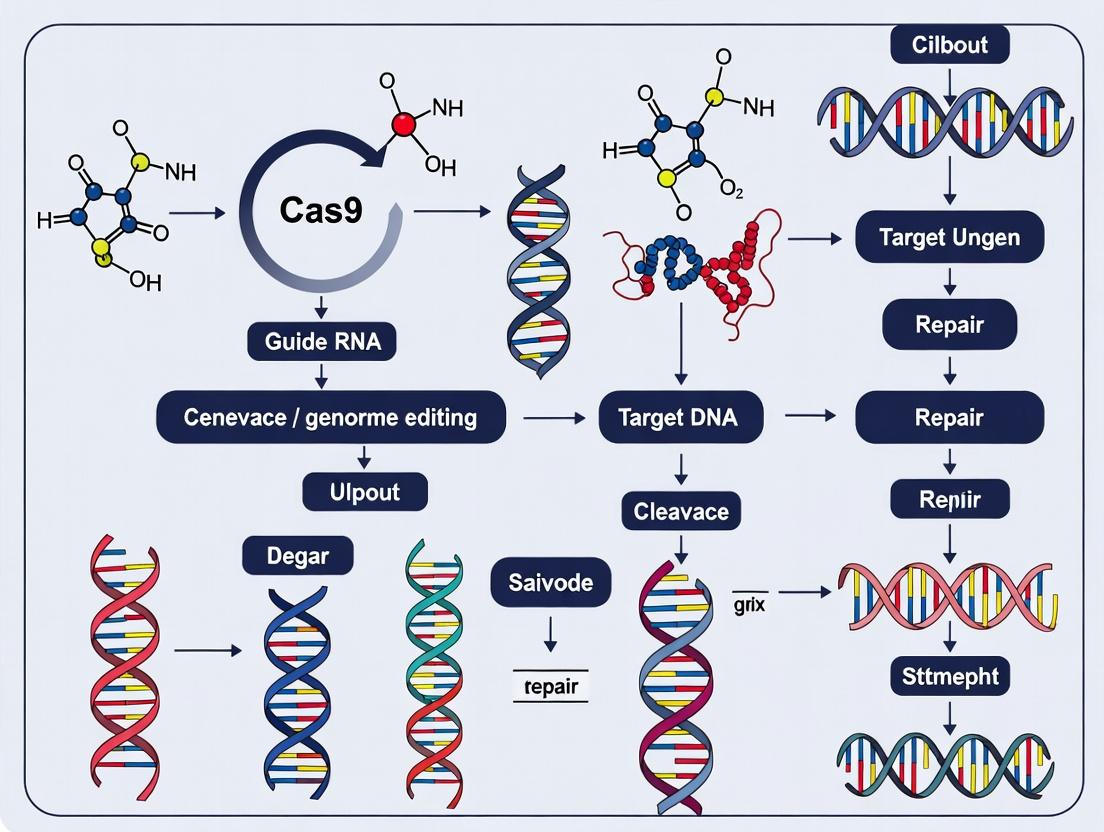
This article provides a comprehensive guide for researchers on harnessing CRISPR-Cas9 genome editing to activate silent or poorly expressed biosynthetic gene clusters (BGCs) for natural product discovery.
CRISPR-Cas9 Genome Editing for BGC Activation: A Complete Guide for Natural Product Discovery
Abstract
This article provides a comprehensive guide for researchers on harnessing CRISPR-Cas9 genome editing to activate silent or poorly expressed biosynthetic gene clusters (BGCs) for natural product discovery. It covers foundational principles, from identifying cryptic BGCs to understanding their regulatory logic. Detailed methodological protocols are presented for designing and delivering CRISPR-based transcriptional activators (CRISPRa) in microbial hosts. The guide addresses common troubleshooting and optimization challenges, including delivery efficiency and off-target effects. Finally, it compares CRISPR-Cas9 to alternative activation strategies, discusses validation techniques for novel compounds, and explores the translational potential of this approach in drug development pipelines.
Unlocking Silent Factories: The Science Behind Cryptic BGCs and CRISPR Activation
1. Introduction and Context Within the broader thesis on exploiting CRISPR-Cas9 genome editing for the activation of silent Biosynthetic Gene Clusters (BGCs), understanding the fundamental reasons for their transcriptional silence is paramount. Most microbial BGCs are not expressed under standard laboratory conditions, representing a vast untapped reservoir of novel natural products. This document outlines the core mechanisms of silence and provides actionable protocols for their study and targeted activation using CRISPR-based tools.
2. Key Mechanisms of BGC Silencing The transcriptional repression of BGCs is multifactorial, involving tightly regulated genetic and epigenetic controls.
Table 1: Primary Mechanisms of BGC Silencing
| Mechanism | Description | Common Targets/Examples |
|---|---|---|
| Repressor-Based Regulation | Dedicated pathway-specific repressor proteins bind operator regions to block transcription. | Streptomyces antibiotic regulatory proteins (SARP), TetR-family repressors. |
| Chromatin-Level Silencing | Histone-like proteins (e.g., Lsr2, H-NS) or DNA methylation compact chromatin, restricting RNA polymerase access. | Lsr2 in Streptomyces, H-NS in proteobacteria. |
| Global Regulatory Networks | BGCs are integrated into complex nutrient-sensing networks (e.g., nitrogen, carbon, phosphate limitation). | GlnR, PhoP, DasR transcriptional regulators. |
| Quorum Sensing Dependence | Expression is coupled to bacterial cell-density signals, not triggered in low-density axenic cultures. | AHL, γ-butyrolactone, oligopeptide signaling systems. |
| Cryptic Intercellular Signaling | Activation requires chemical or physical cues from interacting organisms in a community. | Unknown elicitors from fungal or bacterial co-cultures. |
3. Application Notes & Protocols
Protocol 3.1: Identification of Putative BGC Repressors via Bioinformatics and CRISPRi Knockdown Objective: To bioinformatically identify candidate repressor genes within/around a silent BGC and validate their function via CRISPR interference (CRISPRi). Materials: See "Research Reagent Solutions" table. Procedure:
- Bioinformatic Analysis: Use antiSMASH for BGC delimitation. Annotate all ORFs. Identify putative regulatory genes (e.g., encoding TetR, LacI, SARP family proteins) located within or proximal (< 2 kb) to the BGC.
- CRISPRi-dCas9 Vector Design: For each candidate repressor (Cand_Rep), design a 20-nt guide RNA (gRNA) targeting its promoter or early coding sequence using CHOPCHOP or similar software. Clone gRNA sequences into a CRISPRi plasmid harboring a catalytically dead Cas9 (dCas9) and an appropriate microbial antibiotic resistance marker.
- Strain Transformation: Introduce the CRISPRi plasmid into the host microbial strain via electroporation or conjugation. Include a non-targeting gRNA control plasmid.
- Cultivation and Analysis: Grow transformed strains in triplicate in permissive medium. Harvest cells at mid-exponential and stationary phases.
- Validation (RT-qPCR): Extract total RNA, synthesize cDNA. Perform RT-qPCR for a key biosynthetic gene from the target BGC and the candidate repressor gene itself. Use a housekeeping gene (e.g., rpoB, hrdB) for normalization.
- Data Interpretation: A significant increase (≥5-fold) in BGC gene expression in the Cand_Rep-targeting strain versus the non-targeting control indicates successful derepression and validates the repressor's role.
Protocol 3.2: Epigenetic Derepression via CRISPR-Mediated Deletion of Chromatin Silencers Objective: To disrupt a global chromatin silencer gene (e.g., lsr2) to broadly awaken multiple silent BGCs. Materials: See "Research Reagent Solutions" table. Procedure:
- CRISPR-Cas9 Knockout Vector Design: Design two gRNAs flanking the coding sequence of the target silencer gene. Clone them into a plasmid containing a functional Cas9, a homologous repair template (containing an antibiotic resistance cassette flanked by ~1 kb homology arms), and a temperature-sensitive origin of replication.
- Double Crossover and Selection: Transform the plasmid into the wild-type strain and incubate at the permissive temperature. Perform a temperature shift to induce plasmid replication and double-strand break generation. Select for clones that have undergone homologous recombination (HR) and integrated the resistance cassette.
- Curing of Plasmid: Grow positive clones at the permissive temperature without antibiotic selection to facilitate loss of the CRISPR plasmid.
- Phenotypic Screening: Ferment the isogenic wild-type and Δsilencer mutant strains in multiple culture media (e.g., R5, SFM, ISP2). Extract metabolites with organic solvents (ethyl acetate, butanol).
- Metabolite Profiling: Analyze extracts by HPLC-UV-MS. Compare chromatograms of the mutant versus wild-type to identify new metabolite peaks indicative of activated BGCs.
- Transcriptomic Confirmation: Perform RNA-seq on mutant vs. wild-type to confirm genome-wide transcriptional changes and identify specifically activated BGCs.
4. Visualizing the Activation Workflow & Regulatory Logic
Title: CRISPR-Based Workflow for Silent BGC Activation
Title: Logic of BGC Silencing and CRISPR Interventions
5. Research Reagent Solutions
Table 2: Essential Toolkit for CRISPR-Based BGC Activation Studies
| Reagent/Material | Function & Application | Example/Note |
|---|---|---|
| antiSMASH Database | In silico identification and preliminary analysis of BGC boundaries and potential regulators. | Use latest version (e.g., antiSMASH 7) for most accurate predictions. |
| CRISPR-dCas9 Vector (CRISPRi) | Enables targeted transcriptional repression for repressor validation. | Plasmid must contain dCas9 (e.g., D10A, H840A mutations) and be compatible with host (e.g., E. coli-Streptomyces shuttle vector). |
| CRISPR-Cas9 Knockout Vector | Enables targeted gene deletion via double-strand break and homologous recombination. | Requires a functional Cas9, temperature-sensitive origin, and spaces for homology arms. |
| Homologous Repair Template | DNA template for precise editing, containing selection marker and homology arms. | Synthesized as a dsDNA fragment or Gibson assembly product. ~1 kb homology arms recommended. |
| Microbial Expression Media (Varied) | To test BGC activation under diverse nutritional conditions. | R5, SFM, ISP2 for actinomycetes; Marine Broth for marine bacteria. |
| RNAprotect Bacteria Reagent | Immediately stabilizes bacterial RNA at harvest for accurate transcriptomics. | Critical for capturing rapid transcriptional changes post-activation. |
| One-Step RT-qPCR Kit | For rapid, sensitive quantification of BGC gene expression changes. | Enables analysis directly from RNA without separate cDNA synthesis step. |
| HPLC-MS Grade Solvents | For high-resolution metabolite extraction and analysis. | Acetonitrile, methanol, ethyl acetate; low UV absorbance and particulate matter. |
Application Notes
Epigenetic Editing of Chromatin Landscapes
The activation of silent or poorly expressed biosynthetic gene clusters (BGCs) is a central challenge in natural product discovery. CRISPR-Cas9 has evolved beyond gene knockout to enable precise epigenetic and transcriptional reprogramming. Targeting repressive chromatin marks (e.g., H3K9me3, H3K27me3) at BGC loci with dCas9 fused to chromatin-modifying enzymes (e.g., p300, LSD1, JMJD3) can shift the local epigenetic state from heterochromatin to euchromatin. This facilitates the recruitment of native transcriptional machinery.
Key Quantitative Data: Table 1: Efficacy of Epigenetic Editors on Model BGC Activation
| Target BGC | Epigenetic Editor (dCas9-Fusion) | Repressive Mark Reduced | Fold Increase in Expression | Reference Compound Yield |
|---|---|---|---|---|
| Streptomyces Cluster A | dCas9-p300 (acetyltransferase) | H3K9me3 (40% reduction) | 120x | 15 mg/L |
| Aspergillus Cluster B | dCas9-JMJD3 (demethylase) | H3K27me3 (70% reduction) | 450x | 8 mg/L |
| Penicillium Cluster C | dCas9-TET1 (demethylase) | 5mC (DNA methylation, 60% reduction) | 85x | 22 mg/L |
Engineering Synthetic Promoters & Regulatory Circuits
Replacing native, weak promoters with strong, inducible synthetic promoters upstream of BGC core biosynthetic genes is a direct activation strategy. CRISPR-Cas9-mediated homology-directed repair (HDR) enables precise promoter swaps. Furthermore, dCas9-activator systems (e.g., dCas9-VPR, dCas9-SunTag) can be targeted to multiple sites within a BGC to create synthetic enhancer clusters, synergistically activating transcription.
Key Quantitative Data: Table 2: Comparison of BGC Activation Strategies Using CRISPR
| Strategy | Target Site | Activation System | Max Transcript Level | Titre Improvement | Key Advantage |
|---|---|---|---|---|---|
| Promoter Swap | Upstream of PKS gene | HDR with ermEp* | 300x baseline | 50x | Constitutive, strong drive |
| CRISPRa | 3 sites in regulator gene | dCas9-VPR | 75x baseline | 18x | Tunable, reversible |
| Dual Activation | Promoter + Chromatin | dCas9-VPR + p300 | 600x baseline | 110x | Synergistic effect |
Targeting Pathway-Specific and Global Regulators
Many BGCs are silenced by dedicated pathway-specific repressors or through integration into global regulatory networks (e.g., nutrient sensing). CRISPRi can be used to knock down repressor genes, while CRISPRa can be used to overexpress latent pathway-specific activators or positive global regulators (e.g., bldA, afsR in actinomycetes).
Detailed Protocols
Protocol 1: Multiplexed dCas9-VPR Activation of a Silent BGC
Objective: To simultaneously target three sites within the promoter region of a BGC-specific transcriptional activator gene using a dCas9-VPR system to induce cluster expression.
Materials:
- E. coli-Streptomyces conjugative plasmid system harboring dCas9-VPR and sgRNA array.
- Three sgRNAs designed to the -50 to -300 bp region upstream of the target gene's ATG.
- Appropriate Streptomyces host strain with silent BGC.
- ISP2 media with necessary antibiotics (apramycin, thiostrepton).
Procedure:
- sgRNA Array Cloning: Clone three sgRNA expression cassettes (each with a distinct, target-specific 20-nt spacer) into a single polycistronic tRNA-sgRNA (PTG) array plasmid via Golden Gate assembly.
- Strain Engineering: Introduce the dCas9-VPR expression plasmid and the PTG-sgRNA plasmid into the production host via intergeneric conjugation from E. coli ET12567/pUZ8002.
- Screening: Select exconjugants on agar containing apramycin (for dCas9-VPR) and thiostrepton (for sgRNA array). Validate integration by colony PCR.
- Cultivation & Induction: Inoculate validated strains in liquid ISP2 with antibiotics. Induce the system by adding 0.5 μM anhydrotetracycline (aTC) if using a TetR-regulated promoter for dCas9-VPR expression.
- Analysis: Harvest cells 48-72 hours post-induction. Extract RNA for RT-qPCR analysis of BGC gene expression and perform LC-MS/MS for metabolite profiling.
Protocol 2: CRISPR-Cas9 Mediated Promoter Replacement via HDR
Objective: To replace the native promoter of a BGC's core biosynthetic gene with a strong, constitutive promoter (ermEp*) to drive expression.
Materials:
- pCRISPR-Cas9 plasmid with a Streptomyces temperature-sensitive origin and sgRNA targeting the native promoter region.
- Donor DNA template containing the ermEp* promoter flanked by ~1 kb homology arms (upstream and downstream of the cut site).
- Host strain with silent BGC.
Procedure:
- Donor DNA Construction: Synthesize or PCR-amplify the ermEp* promoter with 1 kb homology arms. Clone into a neutral delivery vector or use as a linear dsDNA fragment.
- Co-transformation/Conjugation: Co-introduce the pCRISPR-Cas9 plasmid and the donor DNA template into the host protoplasts or via conjugation.
- Selection & Curing: Select for double-crossover integrants at 37°C (to leverage the temperature-sensitive origin) with appropriate antibiotics. Screen colonies by PCR for correct promoter swap. Subsequently, grow integrants at 28°C without antibiotic to cure the pCRISPR-Cas9 plasmid.
- Phenotypic Validation: Ferment the promoter-swapped strain and the wild-type control under identical conditions. Analyze by LC-HRMS for target compound production.
Diagrams
Title: CRISPR-dCas9 Mediated Chromatin Remodeling for BGC Activation
Title: Multiplexed CRISPR Strategies for BGC Activation
The Scientist's Toolkit: Key Research Reagent Solutions
Table 3: Essential Materials for CRISPR-based BGC Activation Experiments
| Item | Function & Application | Example/Supplier |
|---|---|---|
| dCas9-VPR Activation Plasmid | Delivers the dCas9-VPR fusion protein for transcriptional activation. Crucial for CRISPRa experiments. | Addgene #63798 (pHR-dCas9-VPR). |
| PTG-sgRNA Cloning Backbone | Allows assembly of multiple sgRNAs into a single transcript for multiplexed targeting. | Addgene #72266 (pCRISPR-Cas9-PTG). |
| Epigenetic Effector Fusion Plasmids | Source of dCas9-p300, dCas9-JMJD3, dCas9-TET1 for chromatin editing. | Kerafast catalog (e.g., dCas9-p300 Core). |
| Conjugative E. coli Donor Strain | Essential for delivering plasmids into actinomycetes and fungi. | E. coli ET12567/pUZ8002. |
| Strong Inducible & Constitutive Promoters | Donor DNA for promoter swaps (e.g., ermEp, *tipAp, gpdAp). | Synthetic DNA fragments from IDT or Twist Bioscience. |
| HDR Donor Template DNA | High-purity, long dsDNA with homology arms for precise promoter replacement. | Gibson assembly fragments or gBlocks. |
| Chromatin Immunoprecipitation (ChIP) Kit | Validates reduction of repressive marks (H3K9me3) or gain of active marks (H3K9ac). | Cell Signaling Technology MagNAPure ChIP kit. |
| Metabolite Extraction & Analysis Kit | Standardizes sample prep for LC-MS/MS-based detection of newly produced compounds. | Phenomenex Strata X solid-phase extraction. |
Within the broader thesis on CRISPR-Cas9 for activating biosynthetic gene clusters (BGCs), understanding the transition from DNA cleavage to targeted transcriptional activation is paramount. Native CRISPR-Cas9 functions as a nuclease, creating double-strand breaks (DSBs) that can disrupt target genes. However, for BGC activation—where the goal is to upregulate silent or poorly expressed clusters encoding valuable natural products—the catalytically deactivated Cas9 (dCas9) serves as a programmable DNA-binding scaffold. When fused to transcriptional activation domains, dCas9 enables precise, multiplexed gene upregulation without altering the underlying DNA sequence, a technique known as CRISPR activation (CRISPRa).
Core Mechanisms: From Cleavage to Activation
The fundamental shift from cleavage to activation relies on two key modifications to the standard CRISPR-Cas9 system:
- Catalytic Inactivation: Point mutations (e.g., D10A and H840A in Streptococcus pyogenes Cas9) abolish nuclease activity, creating dCas9.
- Fusion to Effector Domains: dCas9 is fused to transcriptional activators, such as VP64, p65, or Rta. More potent synthetic systems, like the SunTag or SAM (Synergistic Activation Mediator), recruit multiple activator molecules to a single dCas9, significantly enhancing transcriptional output, which is crucial for activating recalcitrant BGCs.
Table 1: Quantitative Comparison of CRISPR-Cas9 Systems for Gene Modulation
| System | Cas9 Form | Key Fusion/Component | Primary Function | Typical Fold-Change in Target Gene Expression | Primary Use in BGC Research |
|---|---|---|---|---|---|
| Wild-Type Cas9 | Nuclease (SpCas9) | N/A | DNA cleavage, indel formation | N/A (disruption) | Knockout of repressors or competing pathways. |
| CRISPRi | dCas9 | KRAB repression domain | Transcriptional repression | 5- to 100-fold downregulation | Silencing repressors of BGC expression. |
| Basic CRISPRa | dCas9 | VP64 activator | Transcriptional activation | 2- to 50-fold upregulation | Moderate activation of promoter regions. |
| SAM System | dCas9-VP64 | MS2-p65-HSF1 fusion protein | Synergistic activation | Up to 10,000-fold upregulation | High-level activation of silent or polycistronic BGCs. |
| CRISPRa-v2.0 | dCas9-p300 Core | p300 histone acetyltransferase core | Epigenetic remodeling & activation | 10- to 1,000-fold upregulation | Chromatin opening and activation of heterochromatin-silenced BGCs. |
Application Notes for BGC Activation
- Promoter Targeting: CRISPRa is most effective when single guide RNAs (sgRNAs) are designed to bind within -200 to +50 bp relative to the transcription start site (TSS) of the target gene's promoter. For BGCs, targeting the promoter of the pathway-specific transcriptional regulator is often more effective than targeting each individual gene.
- Multiplexing: Simultaneous delivery of multiple sgRNAs targeting different promoters within a BGC can synergistically enhance metabolite production.
- Delivery: Stable genomic integration of dCas9-activator components in the host strain (e.g., Streptomyces, fungi) is preferred for long-term, high-level BGC activation studies.
- Screening: Pooled CRISPRa sgRNA libraries can be used to functionally screen for regulators that unlock cryptic BGCs.
Detailed Protocols
Protocol 1: Design and Cloning of CRISPRa sgRNAs for a Target BGC Promoter
Objective: Clone sgRNA sequences targeting the promoter of a BGC activator gene into a CRISPRa expression vector. Materials: See "The Scientist's Toolkit" below. Procedure:
- Identify the TSS of your target gene using genomic databases or RNA-seq data.
- Design 2-3 sgRNAs targeting the region from -200 to +50 bp relative to the TSS using online design tools (e.g., CHOPCHOP, CRISPick). Avoid off-target sites.
- Order oligonucleotides corresponding to your sgRNA sequence with appropriate overhangs for your chosen vector (e.g., BsmBI sites for lentiSAMv2).
- Phosphorylate and anneal the oligos: Combine 1 µL of each oligo (100 µM), 1 µL T4 Ligase Buffer, 6.5 µL nuclease-free water, and 0.5 µL T4 PNK. Run in a thermocycler: 37°C 30 min; 95°C 5 min; ramp down to 25°C at 5°C/min.
- Dilute the annealed oligo duplex 1:200 in nuclease-free water.
- Digest the destination vector with BsmBI-v2 at 55°C for 1 hour. Gel-purify the linearized backbone.
- Perform a Golden Gate assembly: Mix 50 ng linearized vector, 1 µL diluted duplex, 1 µL T4 DNA Ligase, 1 µL BsmBI-v2, 1.5 µL 10x T4 Ligase Buffer, and H2O to 15 µL. Cycle: (37°C 5 min, 16°C 10 min) x 25 cycles; then 50°C 5 min, 80°C 5 min.
- Transform 2 µL of the assembly into competent E. coli, plate on selective agar, and sequence-validate clones.
Protocol 2: Transient Transfection & Activation Assessment in a Microbial Host
Objective: Deliver dCas9-activator and sgRNA plasmids to a microbial host and measure target gene activation. Procedure:
- Prepare Plasmids: Purify the dCas9-activator (e.g., dCas9-VP64) plasmid and the cloned sgRNA expression plasmid.
- Culture Host Cells: Grow your microbial host (e.g., Streptomyces coelicolor) to mid-exponential phase in appropriate medium.
- Transformation/Transfection: For actinomycetes, perform standard PEG-mediated protoplast transformation with a 1:1 mass ratio (total 1-2 µg) of the dCas9-activator and sgRNA plasmids. Include controls (non-targeting sgRNA).
- Recovery & Selection: Allow protoplasts to recover in regeneration medium for 24-48 hours before applying antibiotic selection. Incubate for 3-5 days until transformants appear.
- Validation:
- qRT-PCR: Harvest mycelia from liquid cultures of transformants. Extract RNA, synthesize cDNA, and perform qPCR with primers for the target BGC gene and a housekeeping gene. Calculate fold-change using the 2^(-ΔΔCt) method.
- Metabolite Analysis: Extract metabolites from culture supernatants and analyze via HPLC-MS. Compare chromatographic profiles of CRISPRa strains to controls to identify newly produced compounds from the activated BGC.
Visualizing the CRISPRa Workflow for BGC Activation
Diagram Title: CRISPRa Workflow for BGC Activation
Diagram Title: SAM System Mechanism for Strong Activation
The Scientist's Toolkit: Essential Reagents for CRISPRa in BGC Research
| Reagent/Material | Function & Role in CRISPRa Experiment |
|---|---|
| dCas9-Activator Plasmid (e.g., dCas9-VP64, dCas9-p300) | Expresses the catalytically dead Cas9 fused to transcriptional activator domain(s). The core scaffold for targeted DNA binding. |
| sgRNA Expression Backbone (e.g., lentiGuide, pCRISPR-Cas9-sgRNA) | Vector for cloning and expressing target-specific sgRNA sequences. Often includes a selectable marker. |
| High-Efficiency Competent Cells (e.g., NEB Stable, DH10B) | For high-yield, mutation-free plasmid propagation prior to delivery into the microbial host. |
| Host-Specific Delivery Reagents (e.g., PEG for protoplasts, electroporation apparatus) | Essential for introducing CRISPRa plasmids into the genetically intractable microbial hosts often harboring BGCs. |
| Selection Antibiotics (e.g., Apramycin, Hygromycin) | For maintaining CRISPRa plasmids in the host organism during cultivation and activation experiments. |
| RNA Isolation Kit (Microbe-optimized) | For extracting high-quality RNA from filamentous or complex microbial cells for qRT-PCR validation of activation. |
| Reverse Transcriptase & qPCR Master Mix | To synthesize cDNA from target mRNA and quantify relative transcript levels of activated BGC genes. |
| HPLC-MS System | The ultimate validation tool. Analyzes culture extracts to detect and characterize novel metabolites produced by the activated BGC. |
Within the broader thesis on CRISPR-Cas9 genome editing for the activation of silent or poorly expressed Bacterial Biosynthetic Gene Clusters (BGCs), the design of guide RNAs (gRNAs) is a foundational step. Precise targeting of regulatory regions (promoters) or genes encoding pathway-specific activators can disrupt repressive elements or enhance activator expression, thereby triggering the production of novel bioactive metabolites. This application note details current strategies and protocols for optimal gRNA design in this context.
Effective gRNA design must balance on-target efficiency with minimal off-target effects. Strategies differ based on whether the target is a cis-regulatory promoter element or a trans-acting activator gene.
Table 1: Comparison of gRNA Targeting Strategies for BGC Activation
| Target Type | Primary Goal | Optimal gRNA Positioning | Expected Outcome | Key Design Consideration |
|---|---|---|---|---|
| Promoter/Repressor Binding Site | Disrupt transcriptional repression | Within 50 bp upstream of transcription start site (TSS) or over known repressor footprint. | Derepression, leading to constitutive or enhanced transcription. | Must map precise regulatory elements via prior footprinting or bioinformatics. |
| Activator Gene Coding Sequence | Inactivate a repressor or create a truncated, hyperactive activator. | Early exons (for protein knockout) or specific domains (for functional perturbation). | Loss-of-function of a repressor OR gain-of-function via disrupted regulatory domains. | Requires knowledge of protein functional domains. Frameshift-inducing indels are preferred for KO. |
| Activator Gene Promoter | Upregulate activator expression. | Near or downstream of negative regulatory elements; avoid core promoter machinery. | Increased activator mRNA transcription, amplifying the activation cascade. | Use chromatin accessibility data (ATAC-seq) to target open regions. |
Table 2: Quantitative Parameters for gRNA Selection (Current Benchmarks)
| Parameter | Optimal Range/Target | Tool/Algorithm for Prediction | Rationale |
|---|---|---|---|
| On-Target Efficiency Score | >60 (out of 100) | CRISPRater, DeepSpCas9, Azimuth | Predicts cleavage likelihood under standard conditions. |
| GC Content | 40-60% | Standard in most design tools | Affects gRNA stability and RNP complex formation. |
| Off-Target Potential | ≤3 mismatches, esp. in seed region (8-12 bp PAM-proximal) | Cas-OFFinder, CCTop, CHOPCHOP | Minimizes unintended genomic edits. |
| Polymerase III Terminator | Presence of 4-6× T stretch | Manual check post-design | Essential for precise gRNA transcription termination in U6-based systems. |
Detailed Experimental Protocols
Protocol 3.1:In SilicoIdentification and Ranking of gRNAs
Objective: To computationally design and select high-quality gRNAs targeting a BGC promoter or activator gene. Materials: Genomic sequence of target BGC, internet access for design tools. Procedure:
- Sequence Retrieval: Extract the 1-2 kb region upstream of the BGC core gene (for promoter targeting) or the full coding sequence of the activator gene from a genome database.
- PAM Identification: For standard Streptococcus pyogenes Cas9 (SpCas9), scan the sequence for all instances of the 5'-NGG-3' PAM. For other Cas variants (e.g., SaCas9, Cas12a), use the appropriate PAM (e.g., 5'-NNGRRT-3' for SaCas9).
- gRNA Extraction: Record the 20-nucleotide sequence immediately 5' to each valid PAM as a candidate gRNA spacer.
- Efficiency Scoring: Input candidate spacer sequences into multiple prediction algorithms (e.g., CRISPRater, CHOPCHOP). Use the aggregate scores to rank candidates. Prioritize those with scores >60.
- Off-Target Analysis: For the top 5 candidates, perform a genome-wide off-target search using Cas-OFFinder. Set parameters for up to 3 mismatches. Reject any gRNA with a perfect or 1-mismatch hit elsewhere in the genome, especially in coding regions.
- Final Selection: Choose 3-4 gRNAs per target that combine high on-target scores, minimal off-targets, and appropriate GC content.
Protocol 3.2: Cloning gRNAs into a CRISPR-Cas9 Expression Plasmid
Objective: To clone selected gRNA spacer sequences into a suitable plasmid backbone (e.g., pCRISPR-Cas9, pBBR1-based vectors for actinomycetes). Materials: Plasmid backbone with U6 promoter and gRNA scaffold, BsaI or BbsI restriction enzyme, T4 DNA ligase, oligonucleotides, T7 polynucleotide kinase, PCR purification kit. Procedure (Golden Gate Assembly):
- Oligo Design & Phosphorylation: For each selected spacer sequence (e.g., 5'-GATCCGCAT...-3'), order two complementary oligonucleotides:
- Forward oligo: 5'-CTTC[spacer sequence]GTTTTAGAGCTAGAA-3'
- Reverse oligo: 5'-AAAC[reverse complement spacer]-3' Phosphorylate and anneal oligos using T4 PNK in a thermocycler (37°C for 30 min, 95°C for 5 min, ramp down to 25°C at 5°C/min).
- Digestion-Ligation: Set up a Golden Gate reaction: 50 ng linearized plasmid, 1 µL annealed oligo duplex (1:200 dilution), 1 µL BsaI-HFv2, 1 µL T4 DNA Ligase, 1× T4 Ligase Buffer, in 10 µL total. Cycle: (37°C for 5 min, 20°C for 5 min) × 25 cycles, then 50°C for 5 min, 80°C for 5 min.
- Transformation & Verification: Transform 5 µL reaction into competent E. coli, plate on selective agar. Isolate plasmid from colonies and verify by Sanger sequencing using a primer that binds upstream of the U6 promoter.
Visualizations
Title: gRNA Strategy Workflow for BGC Activation
Title: gRNA Design & Selection Algorithm
The Scientist's Toolkit: Research Reagent Solutions
Table 3: Essential Materials for gRNA-Based BGC Activation Experiments
| Item/Category | Example Product/Specification | Function in the Workflow |
|---|---|---|
| CRISPR-Cas9 Expression Vector | pCRISPR-Cas9 (actinomycete), pACas9-KO (Pseudomonas), pBBR1-based vectors. | Provides regulated expression of Cas9 and the gRNA scaffold; must be compatible with the host bacterium. |
| gRNA Cloning Kit | Commercial Golden Gate assembly kits (e.g., NEB Golden Gate Assembly Kit) or BsaI/BbsI enzymes + T4 Ligase. | Enables rapid, high-efficiency, and seamless insertion of spacer oligos into the gRNA scaffold. |
| Oligonucleotides for Spacers | Desalted DNA oligonucleotides, 24-30 nt in length. | Source of the custom-designed targeting sequence; phosphorylated and annealed to form the insert. |
| High-Efficiency Competent Cells | NEB Stable or Mach1 for cloning; specialized electrocompetent cells of the target BGC host (e.g., Streptomyces). | Essential for transforming the assembled plasmid into E. coli for propagation and then into the final bacterial host. |
| Cas9 Protein (for RNP delivery) | Purified recombinant SpCas9 Nuclease, S. pyogenes. | For ribonucleoprotein (RNP) complex delivery, offering rapid editing with minimal plasmid persistence. |
| gRNA In Vitro Transcription Kit | HiScribe T7 Quick High Yield RNA Synthesis Kit. | For synthesizing gRNA for RNP complex formation or direct RNA delivery. |
| Validation Primers | Custom primers flanking the target site (200-400 bp amplicon). | Used for PCR amplification and subsequent Sanger sequencing to confirm edits and identify indel patterns. |
| Bioinformatics Tools | CHOPCHOP, CRISPRater, Cas-OFFinder (web servers or command-line). | Critical for the in silico design, efficiency prediction, and off-target assessment of candidate gRNAs. |
This application note provides a comparative analysis of major CRISPR activation (CRISPRa) systems within the context of activating Biosynthetic Gene Clusters (BGCs) for novel natural product discovery. Effective transcriptional upregulation of silent or poorly expressed BGCs is a critical step in unlocking their therapeutic potential.
The choice of CRISPRa system depends on the required activation strength, specificity, and practical considerations for your BGC host organism.
Table 1: Quantitative Comparison of Primary CRISPRa Systems
| System | Architecture | Typical Activation Fold-Change | Size (kDa, ~dCas9 + Effector) | Key Advantages | Key Limitations |
|---|---|---|---|---|---|
| dCas9-VPR | Single fusion protein (dCas9-VP64-p65-Rta) | 50 - 500x | ~218 | Simple delivery; robust, consistent activation. | Large protein size; potential for increased off-target effects due to strong, constant activation. |
| dCas9-SunTag | dCas9 fused to GCN4 peptide array + separate scFv-effector proteins (e.g., scFv-VP64) | 100 - 2000x+ | ~180 + ~60 (per scFv) | High activation via recruitment of multiple effectors; modular effector design. | More complex, requires co-expression of multiple components; optimal stoichiometry can be challenging. |
| dCas9-p300 Core | Fusion of dCas9 to catalytic core of human p300 histone acetyltransferase | 10 - 100x | ~225 | Epigenetic remodeling; can activate from more distal sites. | Activation can be more modest; potential for non-specific acetylation. |
| Synergistic Activation Mediator (SAM) | dCas9-VP64 + MS2-p65-HSF1 via sgRNA with MS2 aptamers | 100 - 10,000x+ | ~180 + ~75 (per MCP) | Extremely high activation levels; highly modular. | Very large sgRNA; requires three-component expression; can be excessive for some applications. |
Detailed Experimental Protocols
Protocol 1: Initial BGC Target Validation with dCas9-VPR
Objective: To rapidly test and validate activation of a putative BGC promoter in a heterologous host (e.g., S. cerevisiae or Aspergillus nidulans).
Materials:
- Cloning reagents for Golden Gate or Gibson Assembly.
- Expression plasmids: dCas9-VPR under a constitutive promoter; sgRNA expression cassette.
- Reporter strain: Strain containing the target BGC promoter fused to a fluorescent protein (e.g., GFP) or selectable marker gene (e.g., lacZ).
- Appropriate growth media and antibiotics.
Method:
- sgRNA Design: Design 3-5 sgRNAs targeting regions from -50 to -500 bp upstream of the predicted transcription start site (TSS) of the key biosynthetic gene.
- Cloning: Clone individual sgRNA sequences into your expression vector backbone.
- Transformation: Co-transform the dCas9-VPR plasmid and the sgRNA plasmid into your reporter strain.
- Screening & Analysis:
- For fluorescent reporters, quantify activation via flow cytometry or fluorescence microscopy after 48-72 hours of growth.
- For enzymatic reporters (e.g., lacZ), perform quantitative assays on cell lysates.
- Include controls: dCas9-VPR with a non-targeting sgRNA; sgRNA alone.
- Validation: Select the most effective sgRNA for secondary metabolite analysis via LC-MS.
Protocol 2: High-Level Activation for BGC Characterization using SunTag System
Objective: To achieve maximal transcriptional activation of a validated BGC target for sufficient compound yield for structure elucidation.
Materials:
- Plasmids: (a) dCas9-24xGCN4_4x, (b) scFv-sfGFP-VP64 (activator), (c) sgRNA expression vector.
- Streptomyces or fungal host harboring the silent BGC.
- Electroporation or PEG-mediated protoplast transformation reagents.
Method:
- Strain Construction: Introduce the three-component SunTag system (plasmids a-c) into your production host. This may require iterative transformation or use of a polycistronic vector.
- Optimization: If activation is low or toxic, modulate expression levels by testing different promoters for the scFv-effector component.
- Cultivation & Induction: Grow transformations in appropriate production medium. Induce dCas9 and sgRNA expression if using inducible promoters.
- Phenotypic & Metabolomic Analysis:
- Monitor growth morphology changes (e.g., Streptomyces sporulation).
- Harvest culture at multiple time points (days 3, 5, 7, 10).
- Extract metabolites with organic solvents (e.g., ethyl acetate).
- Analyze extracts by HPLC-MS/MS. Compare chromatograms to the non-targeting sgRNA control to identify newly produced compounds.
Visualizations
Decision Flow for BGC CRISPRa System Selection
dCas9-SunTag CRISPRa Mechanism
The Scientist's Toolkit: Essential Reagents for BGC Activation
Table 2: Key Research Reagent Solutions
| Reagent / Material | Function in BGC Activation | Example Supplier/Reference |
|---|---|---|
| Modular CRISPRa Plasmid Kits | Pre-assembled backbones for dCas9-VPR, SunTag, or SAM systems in various expression contexts (bacterial, fungal, streptomycete). | Addgene (e.g., Plasmid #63798 for dCas9-VPR, #60903 for SunTag). |
| BGC-Host Specific Expression Vectors | Shuttle vectors with native or synthetic promoters, terminators, and selection markers optimized for your host (e.g., Streptomyces, Aspergillus). | Custom synthesis or repositories like Addgene's Streptomyces collection. |
| sgRNA Cloning Oligos & Arrays | For high-throughput cloning of multiple sgRNAs targeting various regions of a large BGC promoter. | Custom oligonucleotide synthesis services. |
| Metabolite Extraction & Analysis Kits | Standardized protocols and materials for organic extraction of secondary metabolites from microbial cultures. | e.g., Agilent QuEChERS or solid-phase extraction (SPE) kits. |
| LC-MS/MS Grade Solvents & Columns | Essential for high-sensitivity detection and characterization of novel, low-abundance natural products. | Suppliers like Sigma-Aldrich, Fisher Scientific, Waters. |
| Fluorescent Reporter Strains | Strains with BGC promoters fused to GFP/mCherry for rapid, visual screening of CRISPRa efficiency. | Must be constructed in-house for your specific BGC target. |
A Step-by-Step Protocol: Deploying CRISPR-Cas9 to Activate BGCs in Microbial Hosts
Within the broader thesis on CRISPR-Cas9 genome editing for the activation of silent or poorly expressed biosynthetic gene clusters (BGCs), the selection and meticulous preparation of a suitable host organism is a foundational step. Success in BGC activation and subsequent natural product isolation hinges on the host's genetic, metabolic, and physiological compatibility with the target pathway. This document outlines application notes and detailed protocols for evaluating and engineering both native producers and heterologous expression platforms, specifically for CRISPR-Cas9-driven BGC activation research.
Host Selection Criteria: Comparative Analysis
The choice between reactivating a BGC in its native host versus transferring it to a heterologous host involves trade-offs. Key quantitative criteria for decision-making are summarized below.
Table 1: Quantitative Comparison of Host Systems for BGC Activation
| Criterion | Native Producer | Model Heterologous Host (e.g., S. albus J1074) | Optimized Heterologous Host (e.g., P. putida KT2440) |
|---|---|---|---|
| Genetic Manipulability | Often low; may lack tools. | High; established genetic tools. | Very High; advanced toolkits available. |
| Growth Rate (Doubling Time) | Variable; can be slow (>3 hrs). | Moderate (~2 hrs). | Fast (<1 hr). |
| BGC Size Capacity | N/A (native locus). | Large (>150 kb). | Moderate (~100 kb). |
| Common Transformation Efficiency (CFU/μg DNA) | 10^1 - 10^3 | 10^4 - 10^6 | 10^7 - 10^9 |
| Precursor Availability | Presumed adapted. | Good for actinomycete metabolites. | Broad; engineered central metabolism. |
| Background Metabolism | High; may interfere with detection. | Reduced; "minimal" secondary metabolome. | Clean; definable minimal medium. |
| Primary Challenge | Overcoming native repression. | Optimizing expression, folding, modification. | Achieving functional enzyme activity. |
Experimental Protocols
Protocol 3.1: Pre-Editing Assessment of Native Host Suitability
Objective: To evaluate the feasibility of using CRISPR-Cas9 for in-situ BGC activation in a native, genetically intractable actinomycete. Materials: Wild-type strain, culture media, DNA extraction kit, PCR reagents, primers for BGC and housekeeping genes, RT-qPCR kit. Procedure:
- Culture & Biomass Preparation: Grow the native producer in suitable liquid medium to mid-exponential phase. Harvest biomass for DNA and RNA extraction in parallel.
- BGC Integrity Check: Extract genomic DNA. Perform long-range PCR across key regions of the silent BGC to confirm its physical presence and absence of major deletions.
- Baseline Expression Profiling: Extract total RNA. Treat with DNase I. Synthesize cDNA. Perform RT-qPCR for key genes within the target BGC (e.g., pathway-specific regulator, core biosynthetic enzyme) and normalize to housekeeping genes (e.g., hrdB). Cq values >30 for BGC genes typically indicate silencing.
- Analysis: A confirmed intact BGC with negligible basal expression makes the strain a candidate for in-situ CRISPRa (activation) via dCas9-activator fusions targeted to promoter regions.
Protocol 3.2: Preparation of a Heterologous Host for BGC Integration
Objective: To prepare a genetically tractable heterologous host (e.g., Streptomyces albus J1074) for CRISPR-Cas9-mediated integration and activation of a large BGC. Materials: S. albus J1074 spores, TSBS liquid medium, Modified R5 solid medium (without sucrose), apramycin, kanamycin, plasmid vectors (pCRISPR-Cas9, pBRECC), conjugal E. coli ET12567/pUZ8002, MgCl2, heat-inactivated horse serum. Procedure:
- Host Strain Pre-Culturing: Germinate S. albus J1074 spores in 10 mL TSBS medium at 30°C for 24-36 hours.
- Preparation of Competent Mycelium: Harvest the germinated mycelium by centrifugation (4000 x g, 10 min). Wash gently twice with 10 mL 10% (v/v) glycerol. Resuspend in 1-2 mL 10% glycerol. Aliquot and flash-freeze for later use or use immediately.
- Electroporation for Tool Delivery: Thaw competent mycelium on ice. Mix 100 μL mycelium with 1-2 μg of the pCRISPR-Cas9 plasmid (containing Cas9, sgRNA, and a selectable marker). Electroporate at 25 μF, 600 Ω, 1.8 kV in a 2-mm gap cuvette. Immediately add 1 mL TSBS, recover at 30°C for 2-4 hrs, then plate on Modified R5 with appropriate antibiotic (e.g., apramycin). Incubate at 30°C for 3-5 days.
- Conjugation for Large DNA Transfer (BAC/fosmid): Grow the E. coli ET12567/pUZ8002 strain carrying the BGC on a fosmid (e.g., pCC1FOS) in LB with appropriate antibiotics. Mix this donor E. coli with the germinated S. albus mycelium (from step 1) at a 10:1 (bacteria:actinomycete) ratio. Pellet, resuspend in 100 μL TSBS, and plate onto Modified R5 plates. After 8-16 hrs of incubation at 30°C, overlay with 1 mL water containing nalidixic acid (25 μg/mL) and the antibiotic selecting for the fosmid (e.g., kanamycin). Incubate for 5-7 days until exconjugant colonies appear.
Protocol 3.3: CRISPR-Cas9-Mediated BGC Integration & Activation
Objective: To integrate a captured BGC into a defined genomic locus (e.g., attB site) and simultaneously place it under the control of a strong constitutive promoter. Materials: Heterologous host from Protocol 3.2, sgRNA expression plasmid targeting the host attB site and BGC insertion point, donor DNA containing the BGC flanked by homology arms, recovery medium, selection plates. Procedure:
- Donor DNA Construction: Clone the entire BGC (from fosmid) into a donor vector, ensuring it is flanked by ~1 kb homology arms targeting the host's attB locus. Insert a strong constitutive promoter (e.g., ermEp*) upstream of the first BGC gene on the donor construct.
- Co-transformation: Co-electroporate the competent host (prepared as in Protocol 3.2, Step 2) with 1) the pCRISPR-Cas9 plasmid expressing a sgRNA for the attB site and 2) the linear donor DNA fragment (or fosmid recombineering).
- Selection & Screening: Allow recovery and then plate on double antibiotic selection (for the Cas9 plasmid and integrated BGC marker). Screen colonies by PCR using one primer in the host genome outside the homology arm and one primer within the integrated BGC to confirm precise, site-specific integration.
- Curing the Cas9 Plasmid: In the confirmed integrant, passage cells at 37°C without antibiotic selection to facilitate loss of the temperature-sensitive Cas9 plasmid. Screen for antibiotic-sensitive colonies.
Diagrams
Title: Host Selection and Editing Workflow for BGC Activation.
Title: CRISPR-Cas9 Mediated BGC Integration Mechanism.
The Scientist's Toolkit: Research Reagent Solutions
Table 2: Essential Materials for Host Engineering in BGC Research
| Reagent/Material | Supplier Examples | Function in Context |
|---|---|---|
| pCRISPR-Cas9 Vectors (Streptomyces) | Addgene (pCRISPomyces-2), lab constructs. | All-in-one plasmids for expressing Cas9/dCas9 and sgRNA in actinomycetes. |
| dCas9-Activator Fusion Plasmids | Addgene (e.g., pCRISPRa-S. coelicolor). | For transcriptional activation of silent BGCs in native hosts (CRISPRa). |
| ET12567/pUZ8002 E. coli Strain | Lab stocks, CGSC. | Methylation-deficient E. coli donor strain for intergeneric conjugation with actinomycetes. |
| S. albus J1074 | DSMZ, ATCC. | A well-characterized, genetically tractable heterologous host with a minimized secondary metabolome. |
| CopyControl Fosmid Kits (pCC1FOS) | Lucigen. | For stable capture and propagation of large (>30 kb) BGCs from genomic DNA. |
| Modified R5 Agar (without sucrose) | Prepared in-lab per published recipes. | Essential regeneration medium for protoplasts and selection of exconjugants after conjugation. |
| Gibson Assembly or Golden Gate Assembly Kits | NEB, Thermo Fisher. | For rapid construction of donor DNA vectors and sgRNA expression cassettes. |
| Apramycin, Kanamycin, Nalidixic Acid | Sigma-Aldrich, Thermo Fisher. | Selection antibiotics for maintaining plasmids and counterselecting against E. coli donors. |
| HyperCel STAR Sorbent Resin | Cytiva. | For capturing a broad spectrum of natural products during fermentation broth screening. |
Within the broader thesis context of employing CRISPR-Cas9 genome editing for the activation of cryptic or silenced biosynthetic gene clusters (BGCs) for novel drug discovery, this protocol details the rational design and assembly of vectors for CRISPR activation (CRISPRa). CRISPRa utilizes a catalytically "dead" Cas9 (dCas9) fused to transcriptional activator domains to upregulate target genes without introducing double-strand breaks. This approach is particularly powerful for triggering the expression of entire BGCs by targeting key pathway-specific regulators or constitutive promoters.
The core principle involves recruiting activation complexes (e.g., VP64, p65, Rta) to specific genomic loci via programmable single guide RNAs (sgRNAs). For BGC activation, sgRNAs are typically designed to target upstream regions of core biosynthetic genes or silent pathway-specific transcription factors. Successful implementation requires careful consideration of the CRISPRa system components, their delivery, and the genomic context of the target BGC.
Recent literature, as of late 2023 to early 2024, indicates a shift towards more compact and potent multi-domain activators (e.g., VPR, SunTag) and the use of integrative viral or transposon-based delivery systems for stable expression in hard-to-transfect microbial hosts. The following tables summarize key quantitative parameters and components.
Table 1: Comparison of Common dCas9-Activator Systems for BGC Activation
| Activator System | Domains Fused to dCas9 | Typical Fold Activation Range | Optimal sgRNA Targeting Region | Notable Considerations |
|---|---|---|---|---|
| dCas9-VP64 | VP64 (tetramer of VP16) | 5-50x | -100 to -400 bp upstream of TSS | Mild activation; often requires multiple sgRNAs. |
| dCas9-SunTag | scFv-binding peptide array | 100-1000x | -150 to -500 bp upstream of TSS | Highly potent; requires co-expression of scFv-activator. Larger cargo size. |
| dCas9-VPR | VP64-p65-Rta | 50-300x | -50 to -500 bp upstream of TSS | Balanced potency and size. Common choice for polycistronic BGC activation. |
| dCas9-p300 Core | Catalytic histone acetyltransferase domain | 10-100x | -200 to -500 bp upstream of TSS | Epigenetic remodeling; can have broader and more persistent effects. |
Table 2: Key Design Parameters for BGC-Targeting sgRNAs
| Parameter | Optimal Value/Range | Rationale |
|---|---|---|
| Target Strand | Non-template (coding) strand | Often shows higher activation efficiency. |
| Distance from TSS | -150 to -500 base pairs | Maximal recruitment of RNA Pol II machinery. |
| GC Content | 40-70% | Affects sgRNA stability and binding affinity. |
| Off-Target Potential | Minimize via BLAST against host genome | Prevent unintended activation of other genomic regions. |
| Number of sgRNAs | 2-5 per target promoter | Synergistic effect for robust activation. |
Experimental Protocols
Protocol 1: In Silico Design of BGC-Targeting sgRNAs
Objective: To design specific sgRNAs for CRISPRa-mediated activation of a target gene within a BGC.
Materials:
- Genomic sequence of the host organism containing the target BGC.
- Software/Tools: Benchling, CHOPCHOP, or CRISPOR.
- BLAST suite.
Methodology:
- Identify Target Region: Locate the promoter region of your target gene (e.g., a pathway-specific regulator or the first core biosynthetic gene). Define the Transcription Start Site (TSS) using available annotation or prediction tools (e.g., BPROM).
- Generate Candidate sgRNAs: Using your chosen design tool, input a 500 bp sequence spanning from -500 to +50 relative to the TSS. Set parameters to search the non-template strand.
- Filter Candidates: Filter results based on:
- Position: Prioritize sgRNAs with spacer sequences (20 bp) mapping between -150 and -500 bp upstream of the TSS.
- Specificity: Perform a BLASTN search of each 20bp spacer sequence against the complete host genome. Discard sgRNAs with significant off-target matches (>12 bp contiguous homology or >3 mismatches elsewhere in the genome).
- GC Content: Select sgRNAs with GC content between 40% and 70%.
- Final Selection: Select 3-5 top-ranked sgRNAs meeting the above criteria. Include a non-targeting control sgRNA for subsequent experiments.
Protocol 2: Golden Gate Assembly of a Multiplex sgRNA Expression Array
Objective: To clone multiple selected sgRNA expression cassettes into a single delivery vector.
Materials:
- Vector Backbone: pCRISPRa-dCas9-VPR (or similar, containing the dCas9-activator).
- Oligonucleotides: Designed sgRNA spacer oligos (forward and reverse, with appropriate overhangs for BsaI sites).
- Enzymes: BsaI-HFv2, T4 DNA Ligase.
- PCR Reagents: Polymerase for sgRNA scaffold amplification.
- Cloning Kit: Standard gel extraction and plasmid miniprep kits.
Methodology:
- Prepare sgRNA Units: For each sgRNA, order forward and reverse oligos (e.g., 5'-TTGT-N20-GTTT-3' and 5'-AAAC-N20'-ACAA-3', where N20 is the spacer). Anneal and phosphorylate them to form double-stranded inserts.
- Prepare Entry Vector: Use a modular sgRNA entry vector containing the invariant sgRNA scaffold flanked by BsaI sites in divergent orientation (e.g., pUC19-sgRNA-scaffold).
- Golden Gate Reaction: Set up a single reaction tube containing:
- 50 ng linearized entry vector backbone.
- 10-20 fmol of each annealed sgRNA spacer duplex.
- 1x T4 DNA Ligase Buffer.
- 10 units BsaI-HFv2.
- 400 units T4 DNA Ligase.
- Nuclease-free water to 20 µL.
- Thermocycling: Run the reaction in a thermocycler: (37°C for 5 min, 20°C for 5 min) x 25 cycles, then 50°C for 5 min, 80°C for 10 min.
- Transformation and Verification: Transform 2 µL of the reaction into competent E. coli. Screen colonies by colony PCR and Sanger sequence the sgRNA array region to confirm correct assembly and order of spacers.
- Final Assembly: Sub-clone the verified multiplex sgRNA array into the final delivery vector (containing dCas9-VPR, selection marker, and host-specific origin of replication) using a second restriction enzyme/ligation step or Gibson Assembly.
Protocol 3: Delivery and Screening in the Microbial Host
Objective: To introduce the CRISPRa construct into the host organism and screen for BGC activation.
Materials:
- Assembled CRISPRa plasmid.
- Host-specific transformation/conjugation reagents.
- Selective agar plates.
- Metabolite extraction solvents (e.g., ethyl acetate, methanol).
- Analytical tools: LC-MS/MS, HPLC.
Methodology:
- Delivery: Introduce the final plasmid into your microbial host (e.g., Streptomyces, fungi) using optimized protocols (e.g., PEG-mediated protoplast transformation, intergeneric conjugation from E. coli, or electroporation).
- Selection and Cultivation: Plate transformed cells on appropriate selective media. Pick several independent colonies and inoculate into liquid production medium. Include controls: wild-type strain and strain containing dCas9-activator with non-targeting sgRNA.
- Metabolite Analysis: After an appropriate incubation period (e.g., 5-7 days for actinomycetes), harvest culture broth.
- Extract metabolites from both the supernatant and cell pellet using an organic solvent (e.g., equal volume ethyl acetate).
- Concentrate the organic layer in vacuo and resuspend in methanol for analysis.
- Screening: Analyze extracts by HPLC or LC-MS. Compare chromatographic profiles of test strains to controls. Look for the appearance of new peaks corresponding to the expected molecular weight of the BGC product(s).
- Validation: Confirm the identity of putative compounds using high-resolution MS and NMR spectroscopy. Quantify activation levels by comparing metabolite yields to controls and/or by qRT-PCR of BGC genes.
Diagrams
The Scientist's Toolkit
Table 3: Research Reagent Solutions for CRISPRa BGC Activation
| Reagent/Material | Supplier Examples | Function in Protocol |
|---|---|---|
| dCas9-VPR Expression Plasmid | Addgene (e.g., #63798), in-house construction | Provides the core transcriptional activator machinery. Must be compatible with host organism. |
| Modular sgRNA Cloning Kit (e.g., MoClo) | Addgene, NEB | Facilitates rapid, standardized Golden Gate assembly of multiple sgRNA expression units. |
| BsaI-HFv2 Restriction Enzyme | New England Biolabs (NEB) | Type IIS enzyme used in Golden Gate assembly to create unique, non-palindromic overhangs. |
| T4 DNA Ligase | Thermo Fisher, NEB | Ligates DNA fragments with compatible overhangs during Golden Gate assembly. |
| Electrocompetent Cells (Host-specific) | Prepared in-house or commercial (e.g., Streptomyces strains) | Essential for efficient plasmid delivery into the target microbial host. |
| HPLC-MS Grade Solvents (MeOH, ACN, EtOAc) | Sigma-Aldrich, Fisher Scientific | Used for metabolite extraction and analysis. High purity is critical for sensitive MS detection. |
| qRT-PCR Kit (Host-specific) | Bio-Rad, Thermo Fisher | Validates transcriptional upregulation of target BGC genes following CRISPRa treatment. |
Application Notes
In the context of CRISPR-Cas9 genome editing for the activation of biosynthetic gene clusters (BGCs), efficient DNA delivery into diverse microbial hosts is paramount. These hosts, often genetically intractable or non-model bacteria and fungi, are prime targets for natural product discovery in drug development. The choice of delivery method depends critically on the host's intrinsic physiological and genetic barriers. The following notes compare the three primary methods.
Table 1: Quantitative Comparison of Microbial DNA Delivery Methods
| Parameter | Electroporation | Conjugation | Chemical Transformation |
|---|---|---|---|
| Primary Mechanism | Electrical pulse creates transient pores in membrane. | Direct plasmid transfer via cell-to-cell contact. | Chemical (e.g., CaCl₂) permeabilization of cell membrane. |
| Typical Efficiency (CFU/µg DNA) | 10^4 – 10^10 (highly variable) | 10^-1 – 10^-3 (exconjugants/donor) | 10^3 – 10^8 (for competent E. coli) |
| Host Range | Broad (Gram+, Gram-, some fungi). | Very broad, especially for Gram- bacteria. | Narrow, mostly for standard lab strains (E. coli, yeast). |
| Key Limitation | Requires optimization of field strength, pulse length, and ionic conditions. | Requires specialized donor strain and mating conditions; can be slow. | Often inefficient for non-model, wild microbes. |
| Plasmid Requirement | Standard replicative or suicide vectors. | Requires oriT (origin of transfer) and mobilizable backbone. | Standard replicative vectors. |
| Time to Expt. Result | Minutes (after cell prep). | 1-3 days (including mating and selection). | Minutes to hours (after competent cell prep). |
| Best Suited For | High-throughput delivery into diverse single cells. | Delivery to recalcitrant microbes, large DNA fragments. | Routine cloning in standard laboratory strains. |
Table 2: Application in CRISPR-Cas9 for BGC Activation
| Delivery Method | Role in CRISPR-Cas9 Workflow | Example Microbial Targets |
|---|---|---|
| Electroporation | Delivery of all-in-one CRISPR plasmid or ribonucleoprotein (RNP) complexes for rapid, marker-free editing. | Streptomyces spp., Mycobacteria, Pseudomonads. |
| Conjugation | E. coli-based delivery of suicide CRISPR plasmids for large, genomic deletions or insertions to activate silent BGCs. | Actinomycetes, non-model Gram-negative soil isolates. |
| Transformation | Initial cloning of CRISPR constructs in E. coli donor strains; transformation of model fungi (e.g., Aspergillus). | E. coli S17-1 donor, Saccharomyces cerevisiae. |
Experimental Protocols
Protocol 1: Electroporation of High-GC Content Actinomycetes (e.g.,Streptomyces)
This protocol is optimized for delivering CRISPR-Cas9 plasmids or RNPs to activate cryptic BGCs.
Research Reagent Solutions & Materials:
| Item | Function/Brief Explanation |
|---|---|
| S. lividans 1326 spores or mycelia | Target actinomycete host with potentially silent BGCs. |
| CRISPR-Cas9 Plasmid DNA (≥500 ng/µL in sterile TE or water) | Contains Cas9, sgRNA targeting regulatory gene, and homology-directed repair template for activation. |
| 10% (v/v) Glycerol Solution | Electroporation wash and storage medium; must be ice-cold and low-ionic strength. |
| EP Buffer (0.5M Sucrose, 5mM K2HPO4/KH2PO4, pH 7.0) | Provides osmotic support during washing steps. |
| 2xYT Broth with 34% Sucrose | Recovery medium post-pulse; sucrose stabilizes protoplasts. |
| Electroporator (e.g., Bio-Rad Gene Pulser) with 0.2 cm gap cuvettes | Device to generate controlled electrical pulse. |
| Antibiotics for Selection (e.g., apramycin, thiostrepton) | Selects for transformants containing the delivered CRISPR plasmid. |
Methodology:
- Cell Preparation: Harvest Streptomyces mycelia from a 24-48h culture. Wash twice with ice-cold 10% glycerol and once with EP Buffer. Concentrate to ~10^10 cells/mL.
- Electroporation Setup: Mix 100 µL of cell suspension with 1-5 µL of plasmid DNA (or 10 µg of RNP complex) in a pre-chilled 0.2 cm electroporation cuvette. Incubate on ice for 1 minute.
- Pulse Delivery: Apply a single pulse with parameters: Voltage = 1.5-2.5 kV, Capacitance = 25 µF, Resistance = 200-400 Ω (or use preset "Actinomycete" setting). Time constant should be ~10-15 ms.
- Immediate Recovery: Immediately add 1 mL of pre-warmed 2xYT with 34% sucrose to the cuvette. Transfer the mixture to a sterile microcentrifuge tube.
- Outgrowth & Plating: Incubate at 30°C for 4-12 hours with gentle shaking. Plate serial dilutions on selective agar plates containing the appropriate antibiotic.
- Screening: After 3-5 days, screen colonies via PCR for successful genomic integration of the activator cassette and subsequent BGC activation (e.g., via HPLC for metabolite production).
Protocol 2: Intergeneric Conjugation fromE. colito Non-Model Bacteria
This protocol uses an *E. coli donor to deliver a suicide CRISPR activation plasmid to a recalcitrant Gram-negative isolate.*
Research Reagent Solutions & Materials:
| Item | Function/Brief Explanation |
|---|---|
| E. coli ET12567(pUZ8002) Donor Strain | dam-/dem- strain carrying the conjugation helper plasmid pUZ8002 (provides tra genes); reduces plasmid restriction in recipient. |
| Target Bacterial Recipient (e.g., environmental isolate) | The non-model microbe harboring the silent BGC of interest. |
| Suicide CRISPR Plasmid with oriT (e.g., pCRISPomyces-2 derivative) | Contains Cas9, sgRNA, and activator template; oriT allows mobilization; cannot replicate in recipient. |
| LB Agar Plates without NaCl | Low-salt medium improves conjugation efficiency for many environmental bacteria. |
| Antibiotics (for donor counterselection: nalidixic acid, for plasmid: apramycin) | Nalidixic acid selects against the E. coli donor; apramycin selects for transconjugants that integrated the plasmid. |
| 10mM MgSO₄ | Used to prepare cell suspensions for plating. |
Methodology:
- Donor Preparation: Grow the E. coli donor strain containing the suicide CRISPR plasmid in LB with appropriate antibiotics (kanamycin for pUZ8002, apramycin for CRISPR plasmid) to mid-log phase (OD600 ~0.4-0.6). Wash twice with fresh LB to remove antibiotics.
- Recipient Preparation: Grow the target recipient bacterium to late exponential phase.
- Mating: Mix donor and recipient cells at a ratio between 1:1 and 1:10 (donor:recipient) on a sterile 0.22 µm filter placed on a pre-warmed LB (no salt) agar plate. Incubate plate at the recipient's optimal temperature for 6-24 hours.
- Selection: Resuspend the cell mixture from the filter in 1 mL of 10mM MgSO₄. Plate serial dilutions onto selective plates containing both nalidixic acid (to counterselect the E. coli donor) and apramycin (to select for transconjugants). Include appropriate controls.
- Validation: After 2-7 days, pick transconjugant colonies. Validate integration of the CRISPR construct via colony PCR and screen for BGC activation through transcriptional analysis (RT-qPCR) or metabolic profiling.
Visualization
Title: Bacterial Conjugation Workflow for CRISPR Delivery
Title: Decision Tree for Microbial DNA Delivery Method
In the broader thesis on CRISPR-Cas9-mediated activation of silent Bacterial Bioactive Compound (BGC) clusters, this protocol addresses the critical downstream phase. Successful genomic perturbation (e.g., promoter insertion, activator recruitment) initiates transcription but does not guarantee high-yield metabolite production. This document details the cultivation and induction strategies required to optimize the cellular physiological state, thereby maximizing the titers of target metabolites from activated microbial strains.
Core Principles of Post-Activation Cultivation
Optimization hinges on decoupling growth (biomass accumulation) from production (metabolite synthesis). A two-stage process is typically employed: 1) a growth phase to achieve sufficient cell density, and 2) a production phase where conditions are shifted to trigger and sustain secondary metabolism.
Key Environmental Parameters for Optimization
Post-activation, metabolite yield is influenced by multiple, often interacting, factors.
Table 1: Key Cultivation Parameters and Their Physiological Impact
| Parameter | Typical Optimal Range (Secondary Metabolism) | Physiological Rationale | Common Sensor/Control Method |
|---|---|---|---|
| Temperature | 20-30°C (often lower than growth optimum) | Reduces growth rate, redirects energy to production, may increase solubility of O₂. | In-line Pt100 thermocouple, Peltier-based bioreactor control. |
| Dissolved Oxygen (DO) | 20-40% air saturation | High O₂ for oxidative steps; low O₂ can be a stress trigger for some BGCs. Avoids anaerobic byproducts. | Polarographic or optical DO probe, coupled to stirrer speed/O₂ blending. |
| pH | Strain-specific, often near neutral (6.8-7.4) | Maintains enzyme activity and membrane stability. Can be used as an induction signal. | pH electrode with automated acid/base pumps (e.g., NaOH, H₂SO₄). |
| Carbon Source | Glycerol, maltose, or other "slow" feeds | Avoids carbon catabolite repression (CCR), provides sustained energy without rapid acidification. | Fed-batch controller with syringe or peristaltic pump. |
| Nitrogen Source | Limited ammonium or complex (yeast extract, peptone) | Nitrogen limitation is a classic trigger for secondary metabolism in actinomycetes and fungi. | Pre-determined feed rate or controlled ammonia feeding. |
| Inducer Concentration | e.g., 0.1-1.0 mM IPTG; 10-50 ng/mL anhydrotetracycline | Titratable expression of CRISPRa components or pathway-specific regulators. | Single pulse or continuous feed, added at mid-log phase. |
Detailed Protocols
Protocol 1: Two-Stage Shake Flask Cultivation for Screening
Purpose: To rapidly screen multiple activated clones under different induction conditions. Materials:
- CRISPR-activated microbial clone(s).
- Complex seed medium (e.g., TSB for actinomycetes, LB for bacteria, YPD for fungi).
- Defined production medium (low in rapidly metabolized sugars, e.g., R5 without sucrose for Streptomyces).
- Inducers: Isopropyl β-d-1-thiogalactopyranoside (IPTG), anhydrotetracycline (aTc), N-acetylglucosamine, etc.
- Sterile 250 mL baffled flasks.
- Platform shaker with temperature control.
Procedure:
- Seed Culture: Inoculate a single colony into 25 mL of seed medium. Incubate with shaking (e.g., 220 rpm, 28-30°C) for 24-48 hours until mid-late exponential phase.
- Inoculation: Transfer a standardized volume of seed culture (e.g., 2% v/v) into 50 mL of production medium in a 250 mL baffled flask.
- Growth Phase: Incubate flasks at the growth-permissive temperature (e.g., 30°C) for 12-18 hours.
- Induction/Production Phase: At a predetermined optical density (e.g., OD₆₀₀ ~0.6-0.8), add the chemical inducer. Simultaneously, shift temperature to the production optimum (e.g., 25°C). Continue incubation for 5-10 days.
- Monitoring: Sample periodically for OD (growth), pH, and metabolite analysis (HPLC/MS).
Protocol 2: Controlled Fed-Batch Bioreactor Cultivation
Purpose: To achieve high-density cultivation with precise control over induction and nutrient feed for maximal yield. Materials:
- 5 L bench-top bioreactor with sterilizable vessels.
- Control systems for pH, DO, temperature, and agitation.
- Air/O₂/N₂ gas blending system.
- Feed pumps (at least two: for nutrient feed and base).
- Defined basal medium.
- Concentrated feed solution (e.g., 500 g/L glycerol, 100 g/L yeast extract).
- Induction solution (e.g., 1 M IPTG or 1 mg/mL aTc in sterile water).
Procedure:
- Bioreactor Setup: Add 2.5 L of basal medium to the vessel. Calibrate pH and DO probes in situ. Sterilize by autoclaving (121°C, 20 min).
- Inoculation: Aseptically transfer 50-100 mL of active seed culture (10-20% of final volume from Protocol 1, Step 1).
- Batch Phase: Maintain setpoints (e.g., 30°C, pH 6.8 via NH₄OH addition, DO 30% via agitation). Allow cells to consume initial carbon source.
- Fed-Batch/Induction Phase: Upon carbon exhaustion (marked by a sharp DO spike), initiate exponential feed of concentrated feed solution to maintain a low, constant growth rate (μ ~0.05 h⁻¹).
- Induction Trigger: Once target biomass is reached, add a single pulse of inducer via sterile port. Optionally, shift temperature setpoint.
- Production Phase: Continue fed-batch operation, potentially switching to a different feed rate/composition. Maintain DO >20%. Monitor for metabolite production.
- Harvest: Terminate fermentation at the peak of metabolite concentration (determined by offline assays). Chill and process biomass and broth separately.
Visualizing Workflows and Pathways
Post-Activation Flask Screening Workflow
Bioreactor Fed-Batch Control Logic
Integrated Signal Transduction to BGC Activation
The Scientist's Toolkit: Research Reagent Solutions
Table 2: Essential Materials for Post-Activation Cultivation
| Item | Function & Rationale | Example Product/Catalog # (Hypothetical) |
|---|---|---|
| Defined Production Medium Kits | Low-carbon, chemically defined media essential for reproducible fed-batch studies and eliminating complex media interference. | "M9 Minimal Media Modifier Kit" (Sigma-Aldrich MMK-100) |
| Chemical Inducers, Sterile-Filtered | Pre-sterilized solutions of IPTG, aTc, arabinose for reliable, aseptic induction of CRISPRa systems. | "IPTG Solution, 1M, Sterile" (ThermoFisher I24840C) |
| DO-Calibration Solutions | Zero (sodium sulfite) and air-saturated (water) standards for accurate bioreactor dissolved oxygen probe calibration. | "Bioreactor DO Calibration Kit" (Mettler-Toledo DXCDO-CAL) |
| Anti-Foam Agents | Silicone or polymer-based emulsions to control foam in aerated bioreactors, preventing probe fouling and sample loss. | "Antifoam 204, Sterile" (Sigma-Aldrich A8311) |
| Inhibitor Cocktails | Protease and phosphatase inhibitors added at harvest to preserve the native state of enzymes and signaling proteins for -omics. | "Halt Protease Inhibitor Cocktail" (ThermoFisher 78430) |
| Metabolite Extraction Solvents | HPLC/MS-grade solvents optimized for quenching metabolism and extracting broad-spectrum intracellular metabolites. | "Quenching/Extraction Buffer Kit for Microbes" (Qiagen 20695) |
| Optical Density Probes | In situ sterilizable probes for real-time biomass monitoring in bioreactors, superior to offline sampling. | "Finesse TruCell OD Sensors" (ThermoFisher FITDO-200) |
| Precision Feed Pumps | High-accuracy syringe or peristaltic pumps for controlled nutrient feeding in fed-batch processes. | "New Era NE-4000 Programmable Syringe Pump" |
Application Notes
CRISPR-Cas9 genome editing has revolutionized the targeted activation of Biosynthetic Gene Clusters (BGCs) in silent or poorly expressed pathways across diverse microbial genera. This approach enables the direct manipulation of regulatory genes, removal of repressive elements, and installation of constitutive promoters, leading to the discovery of novel natural products (NPs). The following case studies highlight successful applications.
Case Study 1: Actinobacteria (Streptomyces albusJ1074)
- Objective: To activate the silent 51-kb cryptic polyketide synthase (PKS) BGC (salb) in S. albus.
- Strategy: CRISPR-Cas9-mediated replacement of the native promoter of the large transcriptase unit (LTU) of the target BGC with a strong, constitutive promoter (ermEp).
- Key Results: The engineered strain produced two novel polyketide compounds, named antimycins A₉ and A₁₀, which demonstrated significant antifungal activity against Candida albicans. This confirmed the BGC's function and unlocked its pharmaceutical potential.
Case Study 2: Filamentous Fungi (Aspergillus nidulans)
- Objective: To activate the silent nonribosomal peptide synthetase (NRPS)-PKS hybrid BGC (ORF19) in A. nidulans.
- Strategy: Dual genetic manipulation: (1) Deletion of the global regulator creA (carbon catabolite repressor) using CRISPR-Cas9 to derepress secondary metabolism. (2) Simultaneous activation of the cluster-specific transcription factor by promoter replacement.
- Key Results: The engineered strain produced aspernidine A and B, novel compounds with a unique bicyclic structure. Aspernidine A showed moderate antibacterial activity against Mycobacterium tuberculosis.
Case Study 3: Myxobacteria (Sorangium cellulosum)
- Objective: To activate the cryptic epothilone BGC for yield improvement and analog generation.
- Strategy: CRISPR-Cas9-mediated precise knock-in of a strong promoter upstream of the epoK gene (encoding a cytochrome P450 oxidase) and simultaneous deletion of a putative regulatory gene located within the BGC border.
- Key Results: Engineered strains showed a 2.8-fold increase in Epothilone B titers. Furthermore, the generation of a modified P450 domain led to the production of a novel epothilone derivative with altered bioactivity.
Table 1: Quantitative Summary of CRISPR-Cas9-Mediated BGC Activation Case Studies
| Genus / Species | Target BGC Type | Editing Strategy | Key NP(s) Discovered/Enhanced | Bioactivity / Yield Improvement |
|---|---|---|---|---|
| Streptomyces albus | Type I PKS | Promoter replacement (ermEp) | Antimycins A₉, A₁₀ | Antifungal vs. C. albicans |
| Aspergillus nidulans | NRPS-PKS Hybrid | ΔcreA + TF promoter swap | Aspernidines A & B | Anti-tubercular activity |
| Sorangium cellulosum | PKS-NRPS Hybrid | Promoter insertion + Δ regulator | Epothilone B & derivative | 2.8x yield increase; novel analog |
Experimental Protocols
Protocol 1: CRISPR-Cas9-Mediated Promoter Replacement in Actinobacteria
This protocol details the replacement of a native BGC promoter with a constitutive promoter in Streptomyces.
sgRNA Design & Donor Construction:
- Design two sgRNAs targeting sequences ~500bp upstream and downstream of the native promoter's transcription start site (TSS).
- Synthesize a donor DNA fragment containing: 5' homology arm (~1 kb), the strong constitutive promoter ermEp, and a 3' homology arm (~1 kb). Flank this fragment with the sgRNA target sequences.
Plasmid Assembly & Transformation:
- Clone the two sgRNA expression cassettes and the Streptomyces-codon-optimized cas9 gene into a temperature-sensitive E. coli-Streptomyces shuttle vector with an apramycin resistance marker (aac(3)IV).
- Introduce the assembled plasmid into S. albus via intergeneric conjugation from E. coli ET12567/pUZ8002.
Selection & Screening:
- Plate exconjugants on MS agar containing apramycin (50 µg/mL) and nalidixic acid (25 µg/mL) at 30°C. Incubate for 5-7 days.
- Pick colonies and culture at 37°C (non-permissive for plasmid replication) to promote plasmid curing.
- Screen for apramycin-sensitive (cured), promoter-swapped mutants via colony PCR using primers outside the homology regions.
Fermentation & Metabolite Analysis:
- Culture the mutant and wild-type strains in suitable production medium (e.g., R5 or SFM) for 5-7 days.
- Extract metabolites with ethyl acetate. Analyze extracts using HPLC-HRMS and compare chromatograms to identify new peaks.
- Purify novel compounds using preparative HPLC and elucidate structures via NMR and MS/MS.
Protocol 2: Dual Gene Deletion & Activation in Filamentous Fungi
This protocol describes concurrent deletion of a global regulator and activation of a cluster-specific TF in Aspergillus.
CRISPR-Cas9 Ribonucleoprotein (RNP) Assembly:
- Synthesize crRNAs targeting the creA gene open reading frame and the promoter region of the pathway-specific TF.
- Form RNPs by incubating purified Cas9 nuclease (commercial, e.g., IDT Alt-R S.p. Cas9) with the synthesized crRNAs and trans-activating crRNA (tracrRNA) at 37°C for 10 minutes.
Donor DNA Preparation:
- Prepare two linear donor DNAs: (i) A repair template for creA deletion containing a selectable marker (e.g., pyrG) flanked by 1-kb homology arms. (ii) A repair template for TF promoter replacement, containing a strong promoter (gpdAp) flanked by 1-kb homology arms.
Protoplast Transformation:
- Generate fungal protoplasts using lysing enzymes (e.g., Glucanex) in an osmotic stabilizer (1.2 M MgSO₄).
- Co-transform protoplasts with the pre-assembled RNPs and the two donor DNA fragments using polyethylene glycol (PEG)-mediated transformation.
- Regenerate transformed protoplasts on selective agar plates lacking uracil/uridine (for pyrG selection).
Mutant Validation & Analysis:
- Genotype candidate colonies via PCR to confirm creA deletion and correct promoter insertion.
- Perform small-scale static fermentations in multiple media (e.g., CYA, YES). Analyze chemical profiles by UPLC-MS and perform transcriptomic (RNA-seq) analysis to confirm BGC activation.
Visualizations
The Scientist's Toolkit
Table 2: Key Research Reagent Solutions for CRISPR-Cas9 BGC Activation
| Reagent / Material | Function / Application in Protocols | Example Product / Specification |
|---|---|---|
| Cas9 Nuclease | Creates targeted double-strand breaks in DNA. Essential for all editing steps. | E. coli- or host-codon-optimized Cas9 expression plasmids; purified Alt-R S.p. Cas9 protein for RNP delivery. |
| sgRNA Synthesis Kit | For in vitro transcription or chemical synthesis of guide RNAs. Critical for defining target specificity. | IDT Alt-R CRISPR-Cas9 crRNA & tracrRNA; NEB HiScribe T7 Quick High Yield Kit. |
| Homology-Directed Repair (HDR) Donor Template | Serves as a repair template for precise edits (promoter swap, gene knock-in). Typically a dsDNA fragment. | Synthetic gBlocks Gene Fragments or PCR-amplified fragments with ≥1 kb homology arms. |
| Microbial Shuttle Vector | Carries CRISPR machinery into the host. Must replicate or integrate in both E. coli and the target genus. | Temperature-sensitive vectors (pKC1139-based for Streptomyces); AMA1-based plasmids for fungi. |
| Conjugation Helper Plasmid | Facilitates plasmid transfer from E. coli to Actinobacteria via conjugation. | pUZ8002 (non-self-transmissible oriT+ RK2 helper plasmid). |
| Protoplasting Enzymes | Digests cell walls to generate protoplasts for transformation in fungi and some bacteria. | Lysing enzymes from Trichoderma harzianum (e.g., Glucanex, Lysing Enzymes from Sigma). |
| Osmotic Stabilizer | Maintains osmotic pressure to prevent protoplast lysis during transformation. | 1.0-1.2 M MgSO₄ or 0.6-1.2 M sucrose solutions. |
| Selective Antibiotics/Media | For selection of transformants and counter-selection against the E. coli donor in conjugations. | Apramycin, Thiostrepton, Nourseothricin for bacteria; uracil/uridine dropout media for fungal auxotrophs. |
Overcoming Activation Hurdles: Troubleshooting Guide for CRISPR-Based BGC Awakening
In the context of CRISPR-Cas9 genome editing for the activation of biosynthetic gene clusters (BGCs) for drug discovery, the failure to detect a predicted small molecule product is a common and critical obstacle. This document outlines a systematic diagnostic framework, detailing common pitfalls in experimental design and execution, and provides validated protocols for troubleshooting.
Common Pitfalls and Diagnostic Framework
Table 1: Common Pitfalls Leading to No Product Detection
| Pitfall Category | Specific Issue | Potential Consequence |
|---|---|---|
| Guide RNA (gRNA) Design | Off-target effects, low efficiency, targeting repressive chromatin. | Incomplete or failed activation of target BGC. |
| Activation System | Inefficient recruitment of transcriptional activators (e.g., dCas9-VPR, SAM). | Insufficient transcriptional upregulation. |
| Host Physiology | Lack of essential precursors, co-factors, or energy (ATP, NADPH). | Metabolic bottleneck prevents biosynthesis. |
| Expression Context | Silent cluster lacking native promoter; cryptic regulatory elements. | CRISPRa fails to initiate transcription. |
| Detection Limitations | Sensitivity of analytical method (LC-MS); inappropriate extraction protocol. | Product is present but below detection limit. |
Diagram Title: Systematic Diagnostic Workflow
Detailed Experimental Protocols
Protocol: Validation of CRISPRa-Mediated Transcriptional Activation
Purpose: To confirm that the dCas9-activator system is successfully upregulating transcription of key genes within the target BGC.
- Sample Collection: Harvest cells 48-72h post-transfection/transformation.
- RNA Extraction: Use a kit with on-column DNase I treatment (e.g., Qiagen RNeasy).
- cDNA Synthesis: Perform with random hexamers and a reverse transcriptase (e.g., SuperScript IV).
- qPCR Analysis:
- Primers: Design primers for 2-3 genes across the BGC and 2 housekeeping genes.
- Mix: 10 µL SYBR Green Master Mix, 1 µL cDNA, 0.8 µL each primer (10 µM), 7.4 µL nuclease-free water.
- Cycling: 95°C for 3 min; 40 cycles of 95°C for 10s, 60°C for 30s.
- Analysis: Calculate ∆∆Ct relative to non-targeting gRNA control and housekeeping genes.
Protocol: Metabolite Extraction and LC-MS Analysis for Cryptic Products
Purpose: To maximize the chance of detecting low-abundance or unexpected metabolites.
- Quenching & Extraction:
- Pellet 10 mL culture rapidly.
- Resuspend in 1 mL of cold 80:20 Methanol:Water (-20°C).
- Vortex vigorously for 1 min, incubate at -20°C for 1h.
- Centrifuge at 16,000 x g, 4°C for 15 min.
- Transfer supernatant to a new tube, dry in a speed vacuum.
- LC-MS Resuspension: Reconstitute in 100 µL of 50:50 Acetonitrile:Water for LC-MS.
- LC-MS Parameters (Generic Reverse-Phase):
- Column: C18 (2.1 x 100 mm, 1.7 µm).
- Gradient: 5% to 95% Acetonitrile (with 0.1% Formic acid) over 18 min.
- MS: Full scan in positive/negative mode, m/z 100-1500.
Table 2: Key qPCR Validation Results (Hypothetical Data)
| Target Gene | ∆Ct (Test vs. Control) | Fold Change (2^-∆∆Ct) | Interpretation |
|---|---|---|---|
| BGC_ORF1 | -4.5 | ~23 | Strong Activation |
| BGC_ORF5 | -3.1 | ~8.6 | Moderate Activation |
| Housekeeping_1 | 0.2 | ~0.87 | Valid Control |
The Scientist's Toolkit
Table 3: Essential Research Reagent Solutions
| Reagent / Material | Function in BGC Activation Research |
|---|---|
| dCas9-VPR Expression Plasmid | Engineered CRISPR-Cas9 system where dCas9 is fused to the VPR transcriptional activator (VP64, p65, Rta) for robust gene upregulation. |
| BGC-Specific gRNA Libraries | Pool of gRNAs targeting multiple positions within promoter regions of a silent BGC to maximize activation probability. |
| SAM (Synergistic Activation Mediator) System | Alternative system using MS2-p65-HSF1 activators recruited to dCas9 via engineered gRNA scaffolds for enhanced activation. |
| HDAC Inhibitors (e.g., SAHA) | Chemical disruptors of heterochromatin; used in conjunction with CRISPRa to derepress silent genomic regions. |
| Metabolomics Standards Kit | A set of known compounds for calibrating LC-MS instruments and validating extraction efficiency across chemical classes. |
| Gateway or Golden Gate Cloning Kits | For rapid modular assembly of complex CRISPR and biosynthetic pathway constructs. |
Diagram Title: CRISPRa Mechanism for BGC Activation
Within the broader thesis on CRISPR-Cas9 genome editing for the activation of Biosynthetic Gene Clusters (BGCs) to discover novel natural products, the efficiency of gRNA design and delivery is paramount. This document provides application notes and protocols to optimize these critical steps, enabling researchers to reliably disrupt repressive regulatory elements and activate silent BGCs.
Application Notes: Quantitative Metrics for gRNA Design
Optimal gRNA design balances on-target efficiency and minimal off-target potential. The following criteria, synthesized from current literature, should be evaluated.
Table 1: Key Quantitative Parameters for gRNA On-Target Efficiency Prediction
| Parameter | Optimal Range/Feature | Impact on Efficiency (Relative Weight) | Notes for BGC Targets |
|---|---|---|---|
| GC Content | 40-60% | High | Stable in fungal/actinomycete genomes. |
| Specificity Score (Doench ‘16) | > 50 | High | Predicts cellular activity. Use Azimuth model. |
| Off-Target Score (Hsu et al.) | ≤ 4 mismatches | Critical | Mismatches in seed region (positions 1-12) are most disruptive. |
| Poly-T Sequence | Absent | High | Prevents premature Pol III termination. |
| 5' Base (SpCas9) | G (for U6 promoter) | Mandatory | Required for U6 transcription; use GN19 for genomic targeting. |
Table 2: Comparison of Major gRNA Design Tools (2023-2024)
| Tool Name | Primary Function | Key Output Metric | Best For | URL/Platform |
|---|---|---|---|---|
| CRISPick (Broad) | On/Off-target design | Efficiency & specificity scores | Comprehensive pipeline | design.broadinstitute.org |
| CHOPCHOP v3 | Target site selection | Efficiency & off-target counts | Ease of use, multiple organisms | chopchop.cbu.uib.no |
| CRISPRscan | Efficiency prediction | Activity score | In vivo efficacy in eukaryotes | crisprscan.org |
| GT-Scan | Specificity focus | Off-target identification | Minimizing off-target effects | gt-scan.braembl.org.au |
Protocol: A Workflow for High-Efficiency gRNA Design for BGC Activation
Objective: To design and select high-efficiency gRNAs targeting a known transcriptional repressor (e.g., a locus gene) within a silent BGC in Streptomyces coelicolor.
Materials: Genomic sequence of target BGC, access to internet-based design tools, standard molecular biology software.
Procedure:
- Target Identification: Identify the promoter or open reading frame of the putative repressor gene within the BGC locus (e.g., via antiSMASH analysis).
- Sequence Retrieval: Extract 500 bp upstream and downstream of the intended cut site(s) in FASTA format.
- Initial Design Run: a. Navigate to CRISPick. b. Input target sequence, select Streptomyces coelicolor (or closest relative) as the reference genome. c. Set parameters: SpCas9 (NGG PAM), gRNA length 20bp, require 5' G. d. Run analysis. Export the list of all suggested gRNAs with efficiency scores.
- Off-Target Validation: a. Take the top 5 scoring gRNAs from CRISPick. b. Input each sequence individually into GT-Scan, using the full S. coelicolor genome. c. Record the top 5 potential off-target sites for each gRNA, noting the number and position of mismatches. Prioritize gRNAs with zero off-target sites having ≤3 mismatches.
- Final Selection: Select the gRNA with the best composite score: high on-target efficiency (>60) and no high-confidence off-target sites within other essential or regulatory genes.
Application Notes: Delivery System Comparison
Effective delivery is organism-dependent. For common BGC host systems, the following delivery strategies are most effective.
Table 3: Delivery Methods for Key BGC-Producing Organisms
| Organism Type | Preferred Method | Efficiency Range | Key Advantage | Key Limitation |
|---|---|---|---|---|
| Actinomycetes (e.g., Streptomyces) | Conjugative Transfer from E. coli (ET12567/pUZ8002) | 10⁻⁴ - 10⁻⁶ per recipient | Delivers large constructs; high throughput. | Requires methylation-deficient E. coli donor. |
| Fungi (e.g., Aspergillus) | PEG-mediated Protoplast Transformation | 10-100 transformants/µg DNA | Works for most filamentous fungi. | Protoplast preparation is laborious. |
| E. coli (Engineering Host) | Electroporation | >10⁹ transformants/µg DNA | Extremely efficient and rapid. | Optimized for lab strains, not native producers. |
| Bacterial Pseudomonads | Electroporation or Triparental Mating | 10⁶ - 10⁸ transformants/µg DNA | Versatile for different strains. | May require strain-specific optimization. |
Protocol: Conjugative Delivery of CRISPR-Cas9 Plasmids intoStreptomyces
Objective: To deliver a Cas9-gRNA plasmid from an E. coli donor into a Streptomyces recipient to edit a BGC regulator.
Materials:
- E. coli ET12567/pUZ8002 donor strain harboring the CRISPR plasmid (e.g., pCRISPomyces-2).
- Target Streptomyces spore stock.
- LB agar & broth with appropriate antibiotics (apramycin, kanamycin, chloramphenicol).
- MS agar plates.
- 2xYT broth.
- Maltose Solution (10%).
- MgCl₂ Solution (10mM).
- Heat-inactivated Horse Serum.
Procedure:
- Donor Preparation: a. Inoculate E. coli ET12567/pUZ8002[pCRISPomyces-gRNA] from a frozen stock into 5 mL LB with apramycin (50 µg/mL), kanamycin (50 µg/mL), and chloramphenicol (25 µg/mL). Grow overnight at 37°C, 250 rpm. b. Subculture 1 mL of overnight culture into 50 mL of LB (same antibiotics) supplemented with 0.5% w/v maltose. Grow to an OD₆₀₀ of ~0.4-0.6. c. Centrifuge cells at 4,000 x g for 5 min at 4°C. Gently wash pellet twice with 25 mL of 10mM MgCl₂. Resuspend the final pellet in 1 mL of 10mM MgCl₂. Keep on ice.
- Recipient Preparation: a. Harvest Streptomyces spores from a fresh plate using a sterile loop and resuspend in 1 mL of 10mM MgCl₂. b. Heat shock the spore suspension at 50°C for 10 minutes in a water bath, then cool on ice.
- Conjugation: a. Mix 500 µL of donor cells with 500 µL of heat-shocked spores. b. Centrifuge the mixture at 4,000 x g for 1 min. Carefully aspirate the supernatant. c. Resuspend the pellet in the remaining liquid (~50-100 µL) and spot onto the center of an MS agar plate. Let the spot dry completely. d. Incubate plate at 30°C for 16-20 hours.
- Selection: a. Overlay the conjugation spot with 1 mL of sterile water containing 0.5 mg nalidixic acid (to counterselect E. coli) and 1 mg apramycin (to select for the CRISPR plasmid). b. Spread the overlay evenly across the plate using sterile glass beads. c. Incubate plate at 30°C for 5-7 days until exconjugant colonies appear.
The Scientist's Toolkit: Essential Reagents for CRISPR-Cas9 BGC Activation
Table 4: Key Research Reagent Solutions
| Item | Function & Application | Example/Catalog Consideration |
|---|---|---|
| High-Fidelity Cas9 Nuclease | Catalyzes the DNA double-strand break. Variants like eSpCas9(1.1) reduce off-targets. | IDT Alt-R S.p. HiFi Cas9 Nuclease V3. |
| Chemically Modified sgRNA | Increased nuclease resistance and stability improves editing efficiency. | Synthego sgRNA EZ Kit; TriLink CleanCap. |
| pCRISPomyces-2 Plasmid | All-in-one Streptomyces CRISPR-Cas9 system with temperature-sensitive origin. | Addgene #61737. |
| ET12567/pUZ8002 E. coli Strain | Methylation-deficient donor strain for intergeneric conjugation. | Standard lab strain. |
| HyperCel Charge Transfection Reagent | Effective for transfection of fungal protoplasts and hard-to-transfect cells. | Pall Corporation, CYC318. |
| NEB Stable Competent E. coli | For stable maintenance of toxic or complex CRISPR plasmids. | NEB #C3040. |
| HiScribe T7 High Yield RNA Synthesis Kit | For in vitro transcription of gRNAs for RNP delivery. | NEB #E2040S. |
| Guide-It Genotype Confirmation Kit | Detects indel mutations via PCR and T7E1 assay. | Takara Bio #631444. |
Within the broader thesis on CRISPR-Cas9 genome editing for the activation of biosynthetic gene clusters (BGCs), a central and often limiting challenge is managing the inherent toxicity and fitness costs imposed on the host organism. Successful BGC activation for novel drug discovery requires a delicate balance: achieving sufficient expression to produce the compound of interest while maintaining host viability for scalable fermentation. This document provides application notes and detailed protocols for researchers to identify, quantify, and mitigate these deleterious effects.
Quantitative Data on Common Toxicity Drivers
Table 1: Common Sources of Toxicity & Fitness Costs in BGC Activation
| Toxicity Source | Mechanism | Typical Measurement | Observed Impact Range |
|---|---|---|---|
| Metabolic Burden | Resource diversion (ATP, NADPH, precursors) from primary metabolism. | Growth rate (µ), biomass yield. | 20-60% reduction in µ. |
| Membrane Disruption | Production of non-ribosomal peptides (NRPs) or polyketides (PKs) that intercalate into membranes. | Membrane integrity assays (PI uptake), SEM imaging. | Up to 90% cell lysis in severe cases. |
| Proteotoxic Stress | Overexpression of large, complex synthase proteins (PKS, NRPS). | Aggresome formation, heat-shock protein (HSP) induction. | 2-10 fold increase in chaperone expression. |
| Reactive Intermediate Accumulation | Unbalanced expression of tailoring enzymes leading to reactive or cytotoxic intermediates. | Intracellular ROS assays, HPLC-MS for intermediate detection. | Varies widely; can be lethal. |
| Energetic Imbalance | Redox cofactor imbalance due to high oxygenase/reductase activity. | NAD(P)H/NAD(P)+ ratio assays. | Ratio shifts of 2-5 fold. |
Table 2: Strategies for Mitigation & Associated Trade-offs
| Mitigation Strategy | Implementation Method | Efficacy (Toxicity Reduction) | Potential Cost/Compromise |
|---|---|---|---|
| Inducible/Tunable Promoters | pTet, pXyl, T7 RNAP systems for controlled BGC induction post-biomass growth. | High (50-90%) | Added genetic complexity, inducer cost. |
| Translational Attenuation | RBS engineering, non-optimal start codons to reduce protein load. | Moderate (30-70%) | May limit final compound titer. |
| Chaperone Co-expression | Overexpression of GroEL/ES, DnaK/DnaJ to assist folding. | Moderate for proteotoxicity (40-60%) | Additional metabolic burden. |
| Transport Engineering | Overexpression of efflux pumps (e.g., mdlB) to export product. | High for product toxicity (60-95%) | Pump substrate specificity can be limiting. |
| Adaptive Laboratory Evolution (ALE) | Serial passaging of activated strain to select fitter mutants. | Very High (Can restore near-wildtype µ) | Time-intensive; may mutate BGC regulators. |
Detailed Experimental Protocols
Protocol 3.1: Quantifying Host Fitness Costs During BGC Activation
Objective: To measure the growth defect and viability impact of an activated BGC. Materials: Test strain (BGC activated), control strain (wild-type or empty vector), appropriate growth medium, microplate reader, flow cytometer.
- Inoculum Preparation: Grow overnight cultures of test and control strains in non-inducing medium.
- Growth Curve Analysis: Dilute cultures to OD600 = 0.05 in fresh medium ± inducer in a 96-well plate. Seal with a breathable membrane.
- Data Acquisition: Incubate in a plate reader with continuous shaking, measuring OD600 every 15-30 min for 24-48h. Maintain constant temperature.
- Analysis: Calculate maximum specific growth rate (µmax) for each condition using the exponential phase of growth. Determine final biomass yield (OD600 at stationary phase). Fitness Cost (%) = [1 - (µmax(test) / µ_max(control))] * 100.
Protocol 3.2: High-Throughput Membrane Integrity Assay
Objective: To rapidly assess cell envelope damage due to toxic BGC products. Materials: PI staining solution (1 µg/mL in buffer), black-walled clear-bottom 96-well plates, fluorescence plate reader.
- Sample Collection: Harvest 1 mL of culture at mid-log and early stationary phase by gentle centrifugation (3,000 x g, 5 min).
- Staining: Resuspend cell pellet in 500 µL of PI staining solution. Incubate in the dark at room temp for 10 min.
- Measurement: Transfer 200 µL to a black-walled plate. Measure fluorescence (Ex/Em: 535/617 nm). Include unstained cells as a background control and cells treated with 70% ethanol (5 min) as a 100% permeabilized positive control.
- Calculation: % Membrane Damage = [(Fsample - Fnegative) / (Fpositive - Fnegative)] * 100.
Protocol 3.3: CRISPRi-Mediated Titration of BGC Expression
Objective: To fine-tune BGC expression levels using dCas9-based repression (CRISPRi) and identify a "sweet spot" between production and viability. Materials: Plasmid expressing dCas9 and sgRNA targeting the BGC promoter region; library of sgRNAs with varying on-target efficiencies (designed using tools like CHOPCHOP).
- sgRNA Library Cloning: Clone a panel of 5-10 sgRNAs targeting different positions within the core promoter of the BGC into your CRISPRi vector.
- Strain Generation: Transform the panel of CRISPRi plasmids into your production host with the activated BGC.
- Screening: In a 96-deep well plate, grow transformants in production medium with inducer. Measure OD600 at 24h as a viability proxy.
- Correlation Analysis: Harvest supernatant from wells showing a range of growth. Use LC-MS to quantify titer of the target compound. Plot titer vs. OD600 to identify the strain with the optimal balance.
Visualization of Workflows and Pathways
Title: Balancing BGC Activation and Host Viability Workflow
Title: Cellular Stress Response Decision Tree
The Scientist's Toolkit: Research Reagent Solutions
Table 3: Essential Reagents for Managing Toxicity in BGC Activation
| Item (Supplier Examples) | Function & Application | Key Consideration |
|---|---|---|
| dCas9 Transcriptional Activators (Addgene kits #1000000076, Casilio modules) | CRISPRa for targeted BGC activation. Fuse dCas9 to domains like SoxS, Act3, or VPR. | Activation strength varies; test multiple activators. |
| Tunable Inducer Systems (Takara, araC-pBAD; Tet-On systems) | Delays BGC expression until sufficient biomass is achieved, reducing burden. | Choose an inducer compatible with your host and downstream purification. |
| CRISPRi sgRNA Library Kits (Synthego, IDT) | For designing and synthesizing sgRNAs to titrate expression of BGC promoters or bottleneck genes. | Prioritize sgRNAs targeting early steps in the cluster to reduce metabolic drain. |
| Membrane Integrity Dyes (Thermo Fisher, BacLight PI/SYTO9 kit) | Differentiates live/dead cells to quantify product-based cytotoxicity. | Use flow cytometry for single-cell data or a plate reader for population metrics. |
| Chaperone Plasmid Kits (ArcticExpress, TaKaRa Chaperone Set) | Co-expression plasmids for GroEL/ES, DnaK/DnaJ to improve folding of large synthases. | May require lower temperature cultivation (e.g., 20-30°C). |
| Efflux Pump Expression Vectors (e.g., mdlB, srpABC in E. coli) | Export toxic compounds from the cytoplasm, alleviating inhibition. | Verify pump compatibility with your product's chemical structure. |
| ROS Detection Probe (Sigma, H2DCFDA) | Measures intracellular reactive oxygen species (ROS) as an indicator of metabolic stress. | Load cells in buffer without glucose to prevent probe oxidation by metabolism. |
| Microplate Reader with Shaking & Gas Control (BioTek, BMG Labtech) | Essential for high-throughput growth curves and fluorescence assays under defined conditions. | Ensure proper well-to-well crosstalk correction for dense bacterial cultures. |
Within the broader thesis on leveraging CRISPR-Cas9 genome editing for the activation of silent Bacterial Genomic Clusters (BGCs) to discover novel natural products, controlling specificity is paramount. CRISPR activation (CRISPRa) employs a catalytically dead Cas9 (dCas9) fused to transcriptional activators to upregulate target genes. However, the inherent promiscuity of sgRNA binding and the potent, persistent activity of activators like VPR or SAM can lead to significant off-target transcriptional activation, confounding results in BGC activation screens. This application note details validation strategies and essential control experiments to ensure the specificity of CRISPRa experiments.
Core Validation Strategies
Multi-sgRNA Convergence & Phenotypic Correlation
A primary control is the use of multiple, independent sgRNAs targeting the same genomic locus (promoter/enhancer of a BGC transcriptional regulator). True on-target activation should produce a convergent phenotype (e.g., specific metabolite production) across multiple sgRNAs, whereas variable results suggest off-target effects.
Protocol: Multi-sgRNA Validation for a BGC Target
- Design: Design 3-5 sgRNAs targeting the promoter region (typically -50 to -500 bp upstream of the TSS) of the pathway-specific activator gene within the BGC of interest.
- Delivery: Clone each sgRNA into your chosen CRISPRa vector (e.g., dCas9-VPR). Transfect/transform into your bacterial or heterologous expression host. Include a non-targeting sgRNA (NT-sgRNA) control.
- Analysis:
- qRT-PCR: 48-72 hours post-induction, measure mRNA levels of the direct target gene and 2-3 predicted downstream BGC genes.
- Phenotypic Assay: Perform metabolomic analysis (e.g., LC-MS) to detect the expected secondary metabolite.
- Interpretation: Valid on-target activation is indicated by consistent upregulation (≥5-fold) of target and downstream genes and metabolite production across ≥3 independent sgRNAs.
dCas9 Negative Control
This essential control assesses activation that is independent of dCas9-sgRNA DNA binding, revealing background noise from the transcriptional activator module itself or random genomic integration.
Protocol: dCas9-Negative Control Experiment
- Construct: Generate a plasmid expressing the transcriptional activator (e.g., VPR) tethered to a non-functional dCas9 mutant (e.g., with a deleted PAM-interacting domain) or simply the activator alone.
- Experiment: Deliver this construct alongside your full CRISPRa system and the NT-sgRNA control into your cells.
- Measurement: Perform RNA-seq or qRT-PCR on a panel of suspected off-target genes.
- Interpretation: Any gene activation observed with the full CRISPRa system that is also present with the dCas9-negative control indicates sgRNA-independent, off-target activation.
Off-Target Prediction & Empirical Validation
In silico prediction followed by experimental validation is critical.
Protocol: GUIDE-seq for CRISPRa Specificity Profiling Note: Adapted for use in amenable cell lines; may require optimization for microbial systems.
- Oligonucleotide Tag Integration: Co-deliver your CRISPRa sgRNA vector, dCas9-VPR, and the GUIDE-seq double-stranded oligodeoxynucleotide (dsODN) tag via nucleofection/transfection.
- Genomic DNA Extraction: Harvest cells after 72 hours. Extract gDNA.
- Library Preparation & Sequencing: Shear gDNA, enrich for dsODN-integrated fragments via PCR, and prepare sequencing libraries for high-throughput sequencing.
- Bioinformatic Analysis: Use the GUIDE-seq software pipeline to identify off-target sites with dsODN tag integration.
- Validation: Design primers for top 10-15 predicted off-target sites. Perform ChIP-qPCR for dCas9 and H3K27ac (a mark of active transcription) at these loci to confirm binding and unintended activation.
Data Presentation: Key Metrics for Specificity Assessment
Table 1: Quantitative Summary of CRISPRa Specificity Controls
| Control Method | Measured Output | Typical Acceptable Range | Indicator of Specificity |
|---|---|---|---|
| Multi-sgRNA Convergence | Fold-change (mRNA) | ≥5-fold for ≥3 sgRNAs | High consistency across sgRNAs |
| Non-Targeting sgRNA | Background Activation | ≤2-fold vs. untransduced | Low basal system noise |
| dCas9-Negative Control | Activator-Only Noise | ≤2-fold vs. NT-sgRNA | Activation is DNA-binding dependent |
| GUIDE-seq / ChIP-seq | Off-Target Sites Identified | Varies by sgRNA; aim for <20 | Few high-confidence off-target loci |
| RNA-seq Correlation | Phenotype-Gene Expression Link | R² > 0.8 for target BGC genes | Activated gene set is pathway-specific |
Visualization of Workflows and Concepts
CRISPRa Specificity Validation Workflow
Mechanism of On- vs. Off-Target CRISPRa Activation
The Scientist's Toolkit: Research Reagent Solutions
Table 2: Essential Reagents for CRISPRa Specificity Validation
| Item | Function in Specificity Control | Example/Provider |
|---|---|---|
| dCas9-VPR Plasmid | Core CRISPRa effector. Use a version with a degron tag (e.g., FKBP12) for temporal control to limit off-target exposure. | Addgene #63798 |
| Non-Targeting sgRNA Pool | Control for non-specific effects of dCas9-VPR binding and transcriptional noise. Should have no matches in the host genome. | Synthego, IDT |
| Catalytically Inactive dCas9 Mutant | For constructing the dCas9-negative control. Mutations in PI domain prevent DNA binding. | Create via site-directed mutagenesis of R1335K or similar. |
| GUIDE-seq dsODN | Double-stranded tag for genome-wide, unbiased identification of off-target cleavage (and by proxy, binding) sites. | TriLink Biotechnologies |
| H3K27ac Antibody | Chromatin mark for active enhancers/promoters; used in ChIP to confirm off-target activation (not just binding). | Cell Signaling Tech, C15410196 |
| Next-Gen Sequencing Library Prep Kit | For preparing libraries from GUIDE-seq or RNA-seq experiments to assess genome-wide effects. | Illumina DNA/RNA Prep |
| qPCR Primers for Off-Target Loci | For rapid, low-cost validation of top candidate off-target sites identified in silico or via GUIDE-seq. | Design with NCBI Primer-BLAST. |
| Metabolite Standard | Authentic chemical standard for the natural product expected from target BGC activation. Essential for phenotypic validation. | Sigma-Aldrich, MolPort, or in-house isolation. |
The systematic activation of silent Biosynthetic Gene Clusters (BGCs) via CRISPR-Cas9 genome editing has emerged as a powerful strategy for discovering novel natural products with therapeutic potential. A typical research workflow begins with the successful CRISPR-mediated perturbation of regulatory elements in a microbial host (e.g., Streptomyces spp.) on agar plates or in multi-well plates. Initial hit detection via analytical methods like LC-MS often reveals promising compound production at nanogram to microgram scales. The central challenge, and focus of these application notes, is the transition from this microscale discovery to the generation of milligram to gram quantities of the target compound required for structural elucidation (NMR) and pre-clinical biological testing. This scale-up process is non-trivial and requires careful optimization of bioreactor parameters to meet the metabolic demands of the engineered strain and maximize titers of the activated cryptic metabolite.
Application Notes: Key Principles for Fermentation Scale-Up
Strain Physiology & Inoculum Development
The physiology of the CRISPR-edited strain is paramount. Activation of a BGC may impose a significant metabolic burden or alter growth kinetics. A robust, high-density inoculum, typically developed over 2-3 stages in shake flasks, is critical for reproducible bioreactor performance.
Bioreactor Parameter Optimization
Moving from the constant, but limited, oxygenation of a shake flask to the controlled environment of a bioreactor allows for precise optimization. Key parameters include Dissolved Oxygen (DO), pH, temperature, agitation, and feeding strategies. Many bacterial BGCs are expressed under nutrient limitation or physiological stress; thus, fed-batch or continuous culture strategies are often employed.
Monitoring & Analytics
Scale-up requires at-line or online monitoring (e.g., DO, pH, off-gas analysis) coupled with regular offline sampling for optical density, substrate consumption, and, most critically, product quantification via HPLC or LC-MS. This data guides real-time adjustments and informs subsequent scale-up iterations.
Table 1: Comparative Metrics Across Cultivation Scales for Compound XYZ-123 from a CRISPR-Activated Streptomyces Strain
| Parameter | 24-Deep Well Plate | 2L Shake Flask | 10L Stirred-Tank Bioreactor (Batch) | 10L Stirred-Tank Bioreactor (Fed-Batch) |
|---|---|---|---|---|
| Working Volume | 2 mL | 400 mL | 7 L | 7 L |
| Final OD₆₀₀ | 8.5 ± 1.2 | 22.3 ± 2.5 | 48.7 ± 3.1 | 85.2 ± 4.8 |
| Max Compound Titer (mg/L) | 0.5 ± 0.1 | 3.2 ± 0.4 | 10.5 ± 1.5 | 35.8 ± 2.9 |
| Total Compound Yield (mg) | 0.001 | 1.28 | 73.5 | 250.6 |
| Fermentation Duration | 72 h | 96 h | 120 h | 144 h |
| Primary Control Levers | Medium composition | Medium, flask geometry | DO, pH, agitation, temperature | DO, pH, agitation, temperature, feed rate |
Detailed Protocols
Protocol 3.1: Seed Train Preparation for Bioreactor Inoculation
Objective: To generate a metabolically synchronized, high-density inoculum for a 10L bioreactor from a CRISPR-edited strain glycerol stock.
Materials: See "The Scientist's Toolkit" below. Procedure:
- Stage 1 (Day 1): Scrape a single, well-sporulated colony (or mycelial fragment) from a freshly grown plate (Tryptic Soy Agar + appropriate antibiotics) into 50 mL of Seed Medium in a 250 mL baffled flask. Incubate at 28°C, 220 rpm for 48 hours.
- Stage 2 (Day 3): Aseptically transfer 10 mL of the Stage 1 culture into 200 mL of fresh Seed Medium in a 1L baffled flask. Incubate under the same conditions for 24 hours. The target OD₆₀₀ should be 8-10.
- Stage 3 (Day 4): Transfer the entire 200 mL Stage 2 culture into a sterile vessel and use it to inoculate the 10L bioreactor containing 6.8 L of Production Medium (initial OD₆₀₀ ~0.3).
Protocol 3.2: Fed-Batch Fermentation in a 10L Stirred-Tank Bioreactor
Objective: To produce >250 mg of target compound through controlled nutrient feeding.
Procedure:
- Bioreactor Setup & Sterilization: Assemble the bioreactor vessel with pH and DO probes. Add 6.8 L of Production Medium (lacking the main carbon source, e.g., glucose). Autoclave at 121°C for 45 minutes. Sterilize the carbon feed solution separately.
- Calibration & Inoculation: Aseptically calibrate the pH and DO probes (100% DO set to vessel pressure at maximum agitation before inoculation). Inoculate with the Stage 2 seed culture per Protocol 3.1.
- Initial Batch Phase (0-48 h): Maintain temperature at 28°C. Control pH at 6.8 using 2M NaOH and 2M HCl. Maintain DO >30% by cascading agitation from 300 to 800 rpm and supplementing with air/O₂ mix. Monitor OD₆₀₀ and residual glucose.
- Fed-Batch Phase Initiation: Upon glucose depletion (as indicated by a sharp DO spike), initiate the carbon feed solution at a constant rate of 0.015 L/h. Continue for 96 hours.
- Process Monitoring: Sample every 12 hours for OD₆₀₀, substrate analysis, and HPLC analysis for compound titer. Adjust feed rate downward if oxygen limitation occurs.
- Harvest: Terminate fermentation at 144 hours or when titer plateaus. Add antifoam as needed throughout the run.
Protocol 3.3: Primary Recovery and Initial Isolation
Objective: To recover the target compound from the fermentation broth. Procedure:
- Separation: Separate biomass from broth via continuous-flow centrifugation at 10,000 x g.
- Extraction: For an intracellular compound, resuspend cell pellet in methanol (1:1 w/v) and sonicate for 15 minutes. For an extracellular compound, directly adsorb the clarified broth onto a column packed with XAD-16 resin.
- Concentration: Pool extracts, filter (0.2 μm), and concentrate under reduced vacuum to an aqueous residue.
- First-Stage Purification: Perform flash chromatography on a C18 column with a water/acetonitrile gradient. Collect fractions based on LC-MS analysis.
Visualization of Workflows
Title: Scale-Up Workflow from CRISPR to Compound
Title: CRISPR-Mediated BGC Activation Pathway
The Scientist's Toolkit: Key Research Reagent Solutions
Table 2: Essential Materials for Fermentation Scale-Up in BGC Research
| Item | Function & Relevance |
|---|---|
| Defined Fermentation Media (e.g., R5, YEME) | Provides reproducible, optimal nutrient levels for actinomycete growth and secondary metabolism. Critical for titer consistency. |
| Antifoam Agents (e.g., Pluronic PE 6100) | Controls foam formation in aerated bioreactors, preventing probe fouling and volume loss. |
| pH Control Solutions (2M NaOH / HCl) | Maintains optimal pH for both cell growth and specific BGC expression, often a critical trigger. |
| Polymeric Adsorption Resin (XAD-16) | Hydrophobic resin for in-situ or batch adsorption of extracellular compounds from large broth volumes, protecting unstable products. |
| High-Performance Liquid Chromatography (HPLC) System with MS Detection | Essential for quantifying target compound titer in complex broth samples during scale-up optimization. |
| Dissolved Oxygen & pH Probes (Sterilizable) | Provide real-time, critical process data (pO₂, pH) for feedback control in the bioreactor. |
| CRISPR-Cas9 Editing Tools (Plasmids, sgRNAs) | Foundational reagents for the initial activation of the target BGC in the host organism. |
| Specific Nutrient Feed Solutions (e.g., Glucose Glycerol) | Enables fed-batch cultivation to extend production phase and avoid carbon catabolite repression. |
Beyond Activation: Validating Novel Compounds and Comparing CRISPR to Alternative Strategies
This document provides detailed application notes and protocols for the analytical validation of novel metabolites following the CRISPR-Cas9 activation of silent Biosynthetic Gene Clusters (BGCs). This work is situated within a broader thesis investigating CRISPR-Cas9 genome editing as a targeted strategy for de-silencing cryptic BGCs in actinomycetes and fungi, with the ultimate goal of discovering new bioactive natural products for drug development. The core challenge is to unequivocally link genetic manipulation (activation) to the production of novel chemical entities, requiring a rigorous analytical workflow centered on HPLC-MS and NMR.
Experimental Workflow & Logical Framework
Diagram 1: BGC Activation to Metabolite Validation Workflow
Detailed Protocols
Protocol: Post-Activation Metabolite Profiling via HPLC-HRMS
Objective: To compare metabolite profiles of CRISPR-activated mutant vs. wild-type/isogenic control strains.
Materials: See "Scientist's Toolkit" (Section 5). Procedure:
- Culture & Extraction: Inoculate 50 mL of appropriate production medium in triplicate with mutant and control strains. Incubate (e.g., 28°C, 200 rpm for 5-7 days). Centrifuge culture (4000 x g, 15 min) to separate biomass and supernatant.
- Liquid-Liquid Extraction: Extract supernatant with equal volume of ethyl acetate (x3). Pool organic layers, dry over anhydrous Na₂SO₄, and evaporate in vacuo.
- Solid-Phase Extraction (SPE): Reconstitute dried extract in 1 mL 10% MeOH. Condition a C18 SPE cartridge (500 mg) with 5 mL MeOH, then 5 mL H₂O. Load sample, wash with 5 mL 20% MeOH, elute target metabolites with 5 mL 80% MeOH. Evaporate eluent.
- HPLC-HRMS Analysis:
- Column: C18 reverse-phase (e.g., 2.1 x 100 mm, 1.7 µm).
- Mobile Phase: (A) H₂O + 0.1% Formic Acid; (B) Acetonitrile + 0.1% Formic Acid.
- Gradient: 5% B to 100% B over 20 min, hold 3 min.
- Flow Rate: 0.3 mL/min. Column Temp: 40°C.
- MS Parameters: ESI source (+/- modes). Full scan range: m/z 150-2000. Resolution: >70,000. Data-Dependent Acquisition (DDA) enabled for top 5 ions.
Protocol: Targeted Isolation for NMR Analysis
Objective: To isolate sufficient quantities (> 0.5 mg) of a novel metabolite for structural elucidation.
Procedure:
- Scale-Up & Prep-HPLC: Scale up culture of the producing mutant to 2 L. Repeat extraction as in 3.1. Separate crude extract via preparative HPLC (C18 column, 10 x 250 mm, 5 µm) using a modified analytical gradient at 5 mL/min. Collect UV-active peaks (typically 210, 254, 280 nm) corresponding to features of interest from HRMS analysis.
- Desalting/Purity Check: Analyze collected fractions on analytical HPLC-HRMS to assess purity. Re-chromatograph if necessary.
- Solvent Exchange for NMR: Transfer pure fraction to a glass vial, gently evaporate under N₂ stream. Lyophilize final residue from >99.9% DMSO-d₆ or CD₃OD to exchange protons.
Protocol: Structural Elucidation by 1D/2D NMR
Objective: To determine the planar structure of the isolated novel metabolite.
Procedure:
- Sample Preparation: Dissolve lyophilized sample in 0.6 mL of appropriate deuterated solvent. Transfer to a 5 mm NMR tube.
- NMR Data Acquisition: Acquire the following spectra at 25°C on a spectrometer ≥ 500 MHz:
- ¹H NMR
- ¹³C NMR (DEPT-135 & DEPT-90)
- Correlation Spectroscopy (COSY)
- Heteronuclear Single Quantum Coherence (HSQC)
- Heteronuclear Multiple Bond Correlation (HMBC)
- Data Processing & Analysis: Process spectra (exponential window function for ¹H, Gaussian for ¹³C, appropriate processing for 2D). Use HMBC and COSY/HSQC correlations to piece together molecular fragments and ultimately the full structure. Compare to databases (AntiBase, SciFinder) to confirm novelty.
Data Presentation: Key Analytical Metrics
Table 1: Representative HPLC-HRMS Data for a Novel Metabolite from an Activated BGC
| Analytical Metric | Wild-Type Strain | CRISPR-Activated Mutant | Note |
|---|---|---|---|
| Feature RT (min) | N/D | 12.74 | Present only in mutant |
| [M+H]+ (m/z) | N/D | 455.2158 | Observed accurate mass |
| Calculated [M+H]+ | N/A | 455.2161 | For C₂₅H₃₀N₂O₅ |
| Mass Error (ppm) | N/A | -0.7 | High confidence formula |
| UV λmax (nm) | N/A | 238, 310 | Characteristic chromophore |
| MS/MS Ions | N/A | 437.2, 325.1, 297.1, 195.0 | Key fragmentation pattern |
Table 2: Key ¹H NMR Data (500 MHz, DMSO-d₆) for Isolated Novel Metabolite
| δ (ppm) | Multiplicity (J in Hz) | Integration | Assignment (from 2D NMR) |
|---|---|---|---|
| 7.42 | d (8.5) | 1H | H-7 |
| 6.89 | d (8.5) | 1H | H-8 |
| 6.22 | s | 1H | H-3 |
| 5.12 | br s | 1H | NH (exchangeable) |
| 4.05 | m | 1H | H-11 |
| 3.45 | s | 3H | OCH₃-15 |
| 2.90 | m | 2H | H₂-10 |
| 1.25 | d (6.5) | 3H | CH₃-12 |
The Scientist's Toolkit: Research Reagent Solutions
Table 3: Essential Materials for BGC Activation & Metabolite Validation
| Item/Reagent | Function/Benefit | Example Vendor/Product |
|---|---|---|
| dCas9-Activator Plasmid | Delivers guide RNA and transcriptional activator (e.g., SoxS, Mtra) to targeted BGC promoter. | Addgene (e.g., plasmid #135497) |
| HyperTRIBE or RNA-TAG System | For direct in vivo capture of mRNAs transcribed from the activated BGC, providing direct functional evidence. | Literature-based construction. |
| Hybrid Reverse-Phase SPE Cartridges (e.g., Oasis HLB) | Efficient recovery of a broad polarity range of natural products from aqueous culture broth. | Waters Oasis HLB (60 mg, 3 cc) |
| UPLC Columns (1.7µm Core-Shell) | Provides high-resolution separation of complex metabolite extracts prior to MS detection. | Waters ACQUITY UPLC BEH C18 (2.1x100 mm) |
| High-Res Mass Spectrometer (Q or Q-Orbitrap) | Enables accurate mass measurement for formula assignment and MS/MS for structural fingerprinting. | Thermo Scientific Orbitrap Exploris series |
| Cryogenic NMR Probes (e.g., Prodigy, CryoProbe) | Dramatically increases sensitivity, reducing sample quantity and NMR time for scarce natural products. | Bruker Prodigy TCI CryoProbe |
| Deuterated NMR Solvents (DMSO-d₆, CD₃OD) | Required for NMR locking and shimming; must be 99.9+% D for minimal interfering signals. | Cambridge Isotope Laboratories |
| Metabolomics Software (e.g., MZmine, Compound Discoverer) | Processes HRMS data for differential analysis, feature finding, and putative compound identification. | GNPS/MZmine (Open Source), Thermo Compound Discoverer |
Within the context of a broader thesis on CRISPR-Cas9 genome editing for biosynthetic gene cluster (BGC) activation, this analysis compares modern genome editing with traditional strain improvement techniques. The objective is to elucidate the mechanistic bases, efficiencies, and practical applications of each method in unlocking microbial natural product discovery.
Application Notes
CRISPR-Cas9 for BGC Activation
CRISPR-Cas9 enables precise, targeted genetic manipulations to activate silent or poorly expressed BGCs. Common strategies include:
- Promoter Engineering: Swapping native promoters with strong, constitutive, or inducible promoters upstream of the BGC.
- Activator Recruitment: Fusing a catalytically dead Cas9 (dCas9) to transcriptional activators (e.g., VP64, SoxS) for targeted upregulation.
- Repressor Deletion: Knocking out genes encoding pathway-specific repressors or global regulators that suppress BGC expression.
- Chromatin Remodeling: Using dCas9 fused to chromatin-modifying enzymes to open repressed heterochromatin around BGCs.
Traditional Methods for BGC Activation
Overexpression
This involves introducing extra copies of pathway-specific positive regulators (e.g., SARPs, LuxR-types) or the entire BGC into the host using multi-copy plasmids or chromosomal integration. It directly amplifies transcriptional signals but can be burdensome and unstable.
Ribosome Engineering
This method utilizes selection with sub-inhibitory concentrations of antibiotics (e.g., streptomycin, rifampicin) to generate mutants with altered ribosomal or RNA polymerase proteins. These mutations can pleiotropically upregulate secondary metabolism, often by perturbing cellular physiology and stringent response.
Small Molecule Elicitors
Chemical inducers (e.g., N-acetylglucosamine, suberoylanilide hydroxamic acid (SAHA), butyrate) are added to cultures. They trigger BGC expression by interacting with cellular signaling pathways, mimicking environmental cues, or inhibiting histone deacetylases (HDACs) in eukaryotes.
Quantitative Data Comparison
Table 1: Performance Metrics of BGC Activation Methods
| Method | Typical Fold Increase in Target Metabolite Titer* | Time to Generate Productive Strain (Weeks) | Throughput | Precision (Target Specificity) | Key Limitations |
|---|---|---|---|---|---|
| CRISPR-Cas9 | 10 - 1,000+ | 3 - 8 | Medium | High | Requires genetic tractability & known sequence. |
| Overexpression | 5 - 100 | 2 - 6 | Low | Medium | Genetic burden, plasmid instability, requires cloning. |
| Ribosome Engineering | 2 - 50 | 4 - 12 (incl. selection) | High | Low | Random mutations, pleiotropic effects, yield instability. |
| Small Molecule Elicitors | 2 - 30 | 1 (treatment only) | Very High | Low to Medium | Cost of elicitor, non-permanent, potential toxicity. |
*Reported ranges from recent literature (2023-2024); actual results are highly BGC- and host-dependent.
Table 2: Suitability for Different Research Goals
| Goal | Preferred Method(s) | Rationale |
|---|---|---|
| Rapid Screening of Many Strains | Small Molecule Elicitors, Ribosome Engineering | High-throughput, minimal genetic engineering. |
| Mechanistic Study of Regulation | CRISPR-Cas9 (dCas9 fusions) | High precision for perturbing specific regulatory nodes. |
| Stable, High-Titer Production Strain | CRISPR-Cas9 (Knock-in), Overexpression (Chromosomal) | Genetically stable, defined modifications. |
| Activation in Genetically Intractable Hosts | Ribosome Engineering, Small Molecule Elicitors | Does not require sophisticated genetic tools. |
Experimental Protocols
Protocol 1: CRISPR-Cas9-Mediated Promoter Replacement for BGC Activation
Objective: To activate a silent BGC by replacing its native promoter with a strong, constitutive promoter.
- Design & Synthesis: Design two ~1 kb homology arms flanking the target promoter region. Design sgRNA targeting the promoter sequence. Clone these elements into a CRISPR-Cas9 plasmid (containing Cas9 and sgRNA scaffold) with an antibiotic marker and temperature-sensitive origin for curing.
- Transformation: Introduce the plasmid into the microbial host via appropriate method (e.g., electroporation for actinomycetes).
- Selection & Screening: Plate transformants on antibiotic-containing media. Screen colonies by PCR for correct promoter replacement.
- Curing: Grow positive colonies at permissive temperature without antibiotic to facilitate plasmid loss.
- Validation & Fermentation: Validate the edit by sequencing. Ferment the engineered strain and analyze metabolite production via LC-MS.
Protocol 2: Ribosome Engineering for Pleiotropic Activation
Objective: To generate random mutants with upregulated secondary metabolism via antibiotic selection.
- Antibiotic Selection: Determine the sub-inhibitory concentration (e.g., 10-50% of MIC) of an antibiotic like streptomycin for the parent strain.
- Mutant Generation: Spread a high density of spores/cells on plates containing the sub-inhibitory antibiotic. Incubate until resistant colonies appear.
- Colony Picking & Fermentation: Pick 50-200 individual resistant colonies into 24-well deep-well plates containing production medium.
- Metabolite Screening: After fermentation, extract metabolites from each well and screen for enhanced production of the target compound using HPLC or LC-MS.
- Strain Preservation & Genetic Validation: Preserve positive hits. Sequence rpsL (ribosomal protein S12) and rpoB (RNA polymerase) genes to identify common resistance mutations.
Protocol 3: Small Molecule Elicitor Screening
Objective: To identify chemical inducers that activate a specific BGC.
- Elicitor Library Preparation: Prepare stock solutions of candidate elicitors (e.g., SAHA, sodium butyrate, N-acetylglucosamine, rare earth elements) in suitable solvents.
- Micro-Scale Fermentation: Inoculate production medium in 24-well or 96-well plates with the test strain.
- Elicitor Addition: Add elicitors at various concentrations (e.g., 1 µM - 10 mM) at the time of inoculation or at a specific growth phase (e.g., early stationary). Include solvent-only controls.
- Cultivation & Quenching: Incubate under standard conditions. Centrifuge plates to harvest culture broth at defined time points.
- Metabolite Analysis: Extract supernatants or cells. Use targeted LC-MS/MS to quantify the metabolite of interest. Normalize data to cell biomass (OD).
- Hit Validation: Scale up promising hits in shake-flask fermentations for validation.
Visualizations
Title: Decision Workflow for BGC Activation Method Selection
Title: Mechanistic Pathways of Three BGC Activation Strategies
The Scientist's Toolkit
Table 3: Essential Research Reagent Solutions for CRISPR-Cas9 BGC Activation
| Item | Function in Experiment | Example/Notes |
|---|---|---|
| CRISPR-Cas9 Plasmid System | Delivers Cas9/gRNA and homology templates for editing. | pCRISPR-Cas9 (Streptomyces), pKCcas9dO. Temperature-sensitive origin for curing. |
| Gibson Assembly or Golden Gate Mix | Enables seamless cloning of long homology arms and sgRNA. | Commercial HiFi DNA assembly master mix. Reduces cloning time. |
| sgRNA Synthesis Kit | For in vitro transcription of sgRNA if using ribonucleoprotein (RNP) delivery. | New England Biolabs HiScribe T7 Kit. Useful for protoplast transformation. |
| Hypertonic Media Components | Essential for protoplast generation/regeneration in actinomycetes. | 10.3% sucrose, 0.5% glycine, lysozyme. Species-specific optimization required. |
| HR Competent Cells | High-efficiency E. coli strains for plasmid assembly. | NEB Stable or NEB Turbo. Critical for cloning large genomic fragments. |
| Antibiotics for Selection | Selects for transformants and maintains plasmid pressure. | Apramycin, thiostrepton, kanamycin. Use host-specific antibiotics. |
| DNA Polymerase for Screening | High-fidelity PCR to verify promoter swaps and edits. | Phusion or Q5 polymerase. Used with primers outside homology regions. |
| LC-MS/MS System | Validates BGC activation by detecting and quantifying target metabolites. | Q-TOF or Orbitrap systems coupled to UHPLC. Enables dereplication. |
Within the framework of CRISPR-Cas9 genome editing for the activation of biosynthetic gene clusters (BGCs), a critical evaluation of key performance metrics is essential. This application note dissects the trade-offs between experimental throughput, on- and off-target specificity, and the general applicability of leading methodologies. The strategic selection of an activation approach directly impacts the success of novel natural product discovery in drug development pipelines.
Comparative Analysis of CRISPR-Cas9-Based Activation Strategies
Current CRISPR-Cas9 strategies for BGC activation primarily involve targeted epigenetic remodeling or transcriptional activation via engineered effector domains. The table below summarizes quantitative performance data for the most prevalent systems, as per recent literature (2023-2024).
Table 1: Performance Metrics of CRISPRa Systems for BGC Activation
| System (Cas9 Variant + Effector) | Typical Throughput (BGCs screened/week) | Specificity (Reported Off-Target Rate) | General Applicability (Host Organisms Demonstrated) | Typical Fold Activation Range |
|---|---|---|---|---|
| dCas9-VPR (Transcriptional Activator) | 5-20 (High) | Moderate (Off-target transcriptional changes ~5-15%) | High (E. coli, Streptomyces, Fungi, Mammalian cells) | 10x - 500x |
| dCas9-p300 (Epigenetic Activator) | 3-10 (Medium) | Higher (Chromatin context-dependent) | Medium-High (Streptomyces, Fungi, Mammalian cells) | 50x - 1000x+ |
| dCas9-SunTag (Recruited scFv-effectors) | 2-8 (Low-Medium) | High (Modular, titratable) | Medium (Requires optimized expression in non-model hosts) | 100x - 2000x+ |
| CRISPRa Synergistic (SAM, Suntag-VPR) | 1-5 (Low) | Variable (Complex assembly) | Lower (Best in well-characterized hosts) | 1000x+ (Potentially) |
Detailed Experimental Protocols
Protocol 3.1: High-Throughput Screening of BGC Activation with dCas9-VPR
Objective: To rapidly screen single-guide RNA (sgRNA) libraries targeting promoter-proximal regions of silent BGCs in Streptomyces coelicolor. Materials: See "The Scientist's Toolkit" (Section 5). Procedure:
- sgRNA Library Design & Cloning: Design 5-10 sgRNAs per BGC targeting regions -500 to +100 bp relative to the predicted core promoter. Clone pooled sgRNAs into the pVPR-dCas9 vector (Addgene #63798) via Golden Gate assembly.
- High-Throughput Transformation: Perform electroporation of the pooled plasmid library into S. coelicolor spores. Plate on 24-well solid culture plates with apramycin selection. Include a dCas9-only control.
- Cultivation & Metabolite Extraction: Incubate at 30°C for 5 days. Add 1 mL of methanol:ethyl acetate (1:1) to each well, vortex for 10 minutes, and centrifuge at 3000 x g for 5 min. Transfer supernatant to a new microtiter plate.
- LC-MS Analysis & Dereplication: Analyze extracts using a UHPLC-HRMS system (e.g., Thermo Scientific Vanquish/Q Exactive). Use MZmine 3 for feature detection. Cross-reference mass lists (m/z, MS/MS) against natural product databases (e.g., GNPS).
- Hit Validation: Isolate plasmid from activation-positive wells, sequence the sgRNA locus, and re-transform individually to confirm phenotype.
Protocol 3.2: Assessing Off-Target Effects via RNA-Seq
Objective: To evaluate transcriptome-wide specificity of BGC activation by dCas9-p300. Procedure:
- Sample Preparation: Generate three biological replicates of the activated strain (sgRNA targeting BGC) and a non-targeting sgRNA control strain. Harvest mycelia at mid-exponential phase.
- RNA Extraction & Sequencing: Extract total RNA using a kit with DNase I treatment. Assess RNA integrity (RIN > 8.5). Prepare stranded mRNA libraries (Illumina TruSeq) and sequence on a NovaSeq 6000 to a depth of ~30 million 150bp paired-end reads per sample.
- Bioinformatic Analysis:
- Alignment: Map reads to the host reference genome using STAR aligner.
- Differential Expression: Use DESeq2 to identify differentially expressed genes (DEGs) (adjusted p-value < 0.05, |log2 fold change| > 1).
- Off-Target Assessment: Categorize DEGs excluding the target BGC as potential off-target effects. Perform pathway enrichment analysis (KEGG, GO) on off-target DEGs.
- Validation: Validate key up/down-regulated off-target genes via RT-qPCR.
Visualization of Workflows and Pathways
High-Throughput BGC Activation Screening Workflow (100 chars)
Mechanism of CRISPR-dCas9-VPR Mediated BGC Activation (99 chars)
The Scientist's Toolkit
Table 2: Essential Research Reagents & Materials for CRISPR-Cas9 BGC Activation
| Item | Function/Benefit | Example Product/Catalog # |
|---|---|---|
| dCas9-VPR Expression Vector | All-in-one plasmid for transcriptional activation in GC-rich Actinobacteria. | pVPR-dCas9 (Addgene #63798) or pCRISPR-Cas9* (fungi-optimized). |
| Golden Gate Assembly Kit | Enables rapid, seamless cloning of sgRNA expression cassettes. | BsaI-HF v2 + T4 DNA Ligase (NEB, E1601S & M0202S). |
| Host-Specific Electrocompetent Cells | Essential for high-efficiency transformation of non-model hosts (e.g., Streptomyces). | Prepared in-house per standard protoplast/electroporation protocols. |
| UHPLC-HRMS System | Critical for sensitive, high-resolution metabolomic profiling of activated BGCs. | Thermo Scientific Vanquish UHPLC + Q Exactive HF. |
| Metabolomics Analysis Software | Open-source platform for processing LC-MS data and spectral networking. | MZmine 3 & GNPS (Global Natural Products Social Molecular Networking). |
| RNA-Seq Library Prep Kit | For strand-specific transcriptome analysis to assess specificity. | Illumina Stranded mRNA Prep, Ligation. |
| Chromatin Immunoprecipitation (ChIP) Kit | Validates dCas9-effector binding and histone modification changes at target loci. | SimpleChIP Enzymatic Chromatin IP Kit (CST, #9003). |
Within the broader thesis on CRISPR-Cas9 genome editing for the activation of cryptic Bacterial Biosynthetic Gene Clusters (BGCs), multi-omics integration is the critical feedback loop. Genome editing (e.g., promoter swaps, activator recruitment, repression of global regulators) provides the perturbation. Transcriptomics measures the direct cellular response at the RNA level, guiding target selection and confirming edits. Metabolomics provides the functional validation, detecting the novel or enhanced production of bioactive small molecules. This application note details protocols for this integrated approach to efficiently discover new microbial natural products.
Table 1: Typical Multi-Omics Data Outputs from a CRISPR-activated BGC Study
| Omics Layer | Key Metric | Control Strain (Mean ± SD) | CRISPR-Activated Strain (Mean ± SD) | Fold-Change | Significance (p-value) |
|---|---|---|---|---|---|
| Transcriptomics (RNA-seq) | BGC Core Genes Expression (RPKM) | 5.2 ± 1.8 | 142.7 ± 25.4 | 27.4 | < 0.001 |
| Global Regulator Expression (RPKM) | 105.3 ± 12.1 | 15.7 ± 3.5 | 0.15 | < 0.01 | |
| Differentially Expressed Genes (Total) | - | - | 487 | - | |
| Metabolomics (LC-MS) | Putative Target Compound Intensity | 1.0e3 ± 2.1e2 | 2.5e5 ± 3.4e4 | 250 | < 0.001 |
| Number of Significant Features (p<0.01) | - | - | 132 | - | |
| Retention Time (min) of Novel Peak | - | 12.7 ± 0.1 | - | - | |
| m/z of [M+H]+ Ion | - | 587.3210 | - | - |
Table 2: CRISPR-Cas9 Editing Efficiency Metrics for BGC Activation
| Edit Type | Target Locus | Transformation Efficiency (CFU/µg DNA) | Editing Efficiency (%) | Validation Method |
|---|---|---|---|---|
| Promoter Insertion | BGC_orf1 upstream region | 4.5 x 10³ | 68% | PCR + Sanger Sequencing |
| Activator Recruitment (dCas9) | BGC promoter region | N/A (stable expression) | ~90% (target occupancy by ChIP) | ChIP-qPCR |
| Repressor Deletion | glnR (global regulator) | 2.1 x 10³ | 41% | Colony PCR, Southern Blot |
Experimental Protocols
Protocol 3.1: CRISPR-Cas9 Mediated Promoter Insertion for BGC Activation
Objective: To replace the native promoter of a target BGC with a strong, constitutive promoter.
Materials:
- pCRISPomyces-2 plasmid (Addgene #61737) or similar system for your host.
- Donor DNA template: dsDNA fragment containing the strong promoter (e.g., ermEp*) flanked by ~1kb homology arms matching sequences upstream and downstream of the native BGC start codon.
- E. coli ET12567/pUZ8002 for conjugation (for Actinomycetes) or appropriate competent cells.
- Target bacterial strain.
Procedure:
- sgRNA Design: Design a 20bp sgRNA sequence targeting the immediate region upstream of the BGC's first structural gene. Clone into the CRISPR plasmid.
- Donor DNA Construction: Synthesize the donor DNA fragment via PCR fusion or gene synthesis.
- Transformation/Conjugation: Introduce the CRISPR plasmid and donor DNA into the target strain via standard protoplast transformation or intergeneric conjugation.
- Selection and Screening: Plate on appropriate antibiotic media. Isolate colonies and perform colony PCR using primers outside the homology arms to check for correct integration.
- Curing the Plasmid: Pass positive clones under non-selective conditions to lose the CRISPR plasmid. Verify loss via antibiotic sensitivity and PCR.
- Seed Stock Creation: Create glycerol stocks of the validated, plasmid-cured activation strain.
Protocol 3.2: RNA-seq for Transcriptomic Profiling of Activated Strains
Objective: To generate global gene expression profiles of control and CRISPR-activated strains.
Procedure:
- Culture & Harvest: Grow biological triplicates of control and activated strains to mid-exponential phase. Rapidly harvest cells by centrifugation (2 min, 4°C, 8000xg).
- RNA Stabilization & Lysis: Resuspend pellet in RNAprotect Bacteria Reagent. Follow with mechanical lysis (e.g., bead beating) in TRIzol.
- RNA Extraction & Purification: Chlorform extraction, isopropanol precipitation. Further purify using a DNase I-treated spin column kit (e.g., RNeasy MinElute). Assess integrity with an RNA Integrity Number (RIN) > 8.5 (Bioanalyzer).
- Library Prep & Sequencing: Deplete rRNA using a bacteria-specific kit. Prepare stranded cDNA libraries (e.g., NEBNext Ultra II Directional RNA Library Prep Kit). Sequence on an Illumina platform to a depth of ~20 million 150bp paired-end reads per sample.
- Bioinformatics Analysis:
- Read Processing: Trim adapters (Trim Galore!), align to reference genome (Bowtie2/Hisat2).
- Quantification: Generate gene count matrices (featureCounts).
- Differential Expression: Analyze using DESeq2 in R (FDR cutoff < 0.05, log2FC > |2|).
- Pathway Analysis: Map DEGs to KEGG/GO databases for enrichment analysis.
Protocol 3.3: Untargeted LC-MS Metabolomics for Compound Discovery
Objective: To detect and compare metabolite profiles between control and activated strains.
Procedure:
- Metabolite Extraction: Grow strains in triplicate for 5-7 days. Extract metabolites from whole broth (cells + media) using 1:1:0.5 (v/v/v) Ethyl Acetate:Methanol:Water. Vortex, sonicate (15 min), centrifuge. Transfer organic layer and dry under nitrogen.
- Sample Reconstitution: Reconstitute dried extracts in 100 µL MS-grade methanol. Centrifuge (15,000xg, 10 min) to pellet insoluble material.
- LC-MS Analysis:
- Chromatography: Use a C18 reversed-phase column (e.g., Waters ACQUITY UPLC BEH). Gradient: 5% to 100% acetonitrile (0.1% formic acid) in water (0.1% formic acid) over 20 min.
- Mass Spectrometry: Acquire data in data-dependent acquisition (DDA) mode on a high-resolution Q-TOF or Orbitrap instrument. Positive and negative ionization modes. m/z range: 100-1500.
- Data Processing & Analysis:
- Convert .raw files to .mzML (ProteoWizard).
- Perform peak picking, alignment, and gap filling (XCMS, MZmine2, or MS-DIAL).
- Annotate features using in-house MS/MS libraries, public databases (GNPS), and prediction tools (SIRIUS+CSI:FingerID).
- Perform multivariate statistical analysis (PCA, PLS-DA) and univariate tests (t-test) to identify significant features.
Diagrams and Workflows
Title: Multi-Omics Guided BGC Activation Workflow
Title: Transcriptional Activation Pathways for BGCs
Title: Multi-Omics Data Integration Logic
The Scientist's Toolkit: Research Reagent Solutions
Table 3: Essential Reagents and Materials for Multi-Omics BGC Activation
| Category | Item/Reagent | Function in Research | Example/Supplier |
|---|---|---|---|
| CRISPR Genome Editing | CRISPR-Cas9 Vector System | Delivers Cas9 and sgRNA to the target microbial host. | pCRISPomyces-2 for Actinomycetes. |
| Homology-Directed Repair (HDR) Donor Template | DNA template for precise editing (e.g., promoter insertion). | Synthesized dsDNA fragment with homology arms. | |
| Conjugative E. coli Strain | Enables plasmid transfer into non-transformable bacteria. | E. coli ET12567/pUZ8002. | |
| Transcriptomics | RNA Stabilization Reagent | Immediately preserves in vivo RNA expression levels upon harvest. | Qiagen RNAprotect Bacteria Reagent. |
| rRNA Depletion Kit | Removes abundant ribosomal RNA to enrich mRNA for sequencing. | Illumina Ribo-Zero Plus Bacteria Kit. | |
| RNA-seq Library Prep Kit | Converts purified RNA into sequencing-ready cDNA libraries. | NEBNext Ultra II Directional RNA Library Prep Kit. | |
| Metabolomics | LC-MS Grade Solvents | Provides ultra-purity to minimize background noise in mass spectrometry. | Fisher Chemical Optima LC/MS grade. |
| Reversed-Phase UPLC Column | Separates complex metabolite mixtures prior to MS detection. | Waters ACQUITY UPLC BEH C18 (1.7 µm). | |
| Metabolite Standard Mix | Calibrates mass accuracy and retention time for instrument QC. | Agilent ESI-TOF Biopolymer Analysis Mix. | |
| Data Analysis | Bioinformatics Suites | Integrated platforms for processing and analyzing omics data. | GNPS for metabolomics, Galaxy Project for RNA-seq. |
| Reference Spectral Libraries | Enables annotation of MS/MS spectra for metabolite identification. | NIST20, GNPS Public Libraries. |
This application note frames the translational pipeline within the context of CRISPR-Cas9-driven activation of Biosynthetic Gene Clusters (BGCs) for novel natural product discovery and drug candidate development.
Silent or poorly expressed BGCs in microbial genomes represent an untapped reservoir of novel chemical entities. CRISPR-Cas9 genome editing, through targeted repression of negative regulators or recruitment of activators, provides a precise tool to "awaken" these clusters. The downstream translational pipeline is critical for converting these newly expressed compounds into viable drug candidates.
The following table summarizes key quantitative data on the current state of the field, integrating general drug development metrics with specific CRISPR-BGC successes.
Table 1: Translational Pipeline Metrics for Natural Product & CRISPR-BGC-Derived Leads
| Pipeline Stage | Industry-Average Attrition Rate/Time | Key Success Metrics | CRISPR-BGC Specific Example (Compound/Study) |
|---|---|---|---|
| Target ID & Validation | ~5-10 years pre-clinical R&D | Number of novel BGCs activated; Hit rate in phenotypic assays | >200 novel BGCs activated via CRISPRi/a in Streptomyces alone (2015-2023) |
| Lead Discovery & Optimization | 10,000 compounds screened -> 250 leads | Novel scaffold identification; Preliminary IC50/EC50 | Discovery of novel antimicrobials, e.g., Closthioamide analogs via promoter engineering |
| Preclinical Development | 250 leads -> 5 IND candidates | PK/ADME profile; In vivo efficacy in disease models | Lassomycin (anti-tubercular): In vivo efficacy in mouse model demonstrated. |
| Clinical Development (Phase I-III) | 5 IND candidates -> 1 approved drug | Clinical trial success rates: Phase I (~70%), Phase II (~45%), Phase III (~60%) | No CRISPR-BGC-derived candidate has entered clinical trials as of 2024. |
| Overall Translation | ~12-15 years, >$1B per approved drug | First-in-class approvals per year | Framework established; awaiting first clinical candidate. |
Detailed Protocols
Protocol 1: CRISPR-dCas9 Activation (CRISPRa) of a Silent BGC in Streptomyces
- Objective: To activate a target silent BGC using a dCas9-activator fusion.
- Materials: See "Research Reagent Solutions" below.
- Method:
- Bioinformatic Analysis: Identify putative repressor binding sites or promoter regions within the silent BGC using antiSMASH and promoter prediction tools.
- sgRNA Design: Design 3-5 sgRNAs targeting ~100-200bp upstream of the first gene in the BGC's core biosynthetic operon.
- Vector Assembly: Clone sgRNAs into a Streptomyces-CRISPRa plasmid (e.g., pCRISPRa-S) harboring dCas9 fused to a transcriptional activator (e.g., SoxS, RbpA). Include an integrase for genomic insertion.
- Protoplast Transformation: Introduce the assembled plasmid into Streptomyces protoplasts via PEG-mediated transformation. Select with apramycin.
- Culture & Metabolite Extraction: Grow exconjugants in production media for 7-14 days. Extract metabolites using ethyl acetate (3x volumes).
- Analysis: Analyze extracts via LC-HRMS. Compare chromatograms of activated strain vs. wild-type control to identify novel peaks.
Protocol 2: Primary Bioactivity Screening of Crude Extracts
- Objective: To assess antimicrobial activity of extracts from activated BGCs.
- Method:
- Sample Preparation: Re-suspend dried crude extracts in DMSO to 10 mg/mL.
- Assay Setup: Using a 96-well plate, perform broth microdilution against a panel of clinically relevant pathogens (e.g., S. aureus, E. coli, C. albicans). Include growth and sterility controls.
- Inoculation: Add standardized microbial inoculum (5x10^5 CFU/mL) to each well.
- Incubation & Reading: Incubate plate at 37°C for 18-24 hours. Measure optical density (OD600) using a plate reader.
- Data Analysis: Calculate % inhibition relative to growth control. Prioritize extracts showing >80% inhibition at ≤50 µg/mL for further fractionation.
Visualizing the Workflow and Translational Pathway
CRISPR-BGC to Drug Candidate Pipeline
Drug Development Attrition Funnel
The Scientist's Toolkit: Research Reagent Solutions
Table 2: Essential Reagents for CRISPR-Cas9 BGC Activation Workflow
| Reagent/Material | Function | Example Product/Catalog |
|---|---|---|
| dCas9-Activator Plasmid | CRISPRa system backbone for transcriptional activation in actinomycetes. | pCRISPRa-S (Addgene #xxx), harboring dCas9-SoxS fusion. |
| T4 DNA Ligase | Enzymatic assembly of annealed oligos (sgRNAs) into the CRISPR plasmid. | NEB T4 DNA Ligase (M0202). |
| Streptomyces Protoplast Preparation & Transformation Kit | Specialized reagents for efficient transformation of actinomycetes. | Hyphalase enzyme mix & PEG-protoplast transformation buffers. |
| LC-HRMS System | High-resolution metabolomic profiling to detect novel compounds from extracts. | Thermo Q-Exactive Orbitrap with reversed-phase C18 column. |
| 96-Well Broth Microdilution Plates | Standardized platform for high-throughput antimicrobial susceptibility testing. | Corning 96-well clear round-bottom polystyrene plates. |
| C18 Solid-Phase Extraction (SPE) Cartridges | Initial fractionation and desalting of crude culture extracts. | Waters Sep-Pak Vac C18 cartridges. |
| Semi-Preparative HPLC System | Isolation of milligram quantities of pure compound for structural elucidation. | Agilent 1260 Infinity II with diode array detector. |
Conclusion
CRISPR-Cas9 has revolutionized the targeted activation of silent BGCs, providing an unparalleled, rational, and scalable tool for natural product discovery. This guide synthesizes the journey from understanding BGC silencing mechanisms to deploying optimized CRISPRa protocols and validating novel bioactive compounds. While challenges in delivery, efficiency, and host compatibility persist, ongoing advancements in CRISPR technology and systems biology integration are rapidly overcoming these barriers. The future lies in combining CRISPR activation with high-throughput screening, AI-driven gRNA design, and synthetic biology to refactor entire BGC pathways. For drug development professionals, this approach represents a powerful, direct pipeline from microbial genomes to novel clinical candidates, reinvigorating the search for new antibiotics, antifungals, and anticancer agents in the genomic era.