Choosing the Right Tool: A Comprehensive Guide to GC-MS vs. LC-MS for Natural Product Analysis in Modern Research
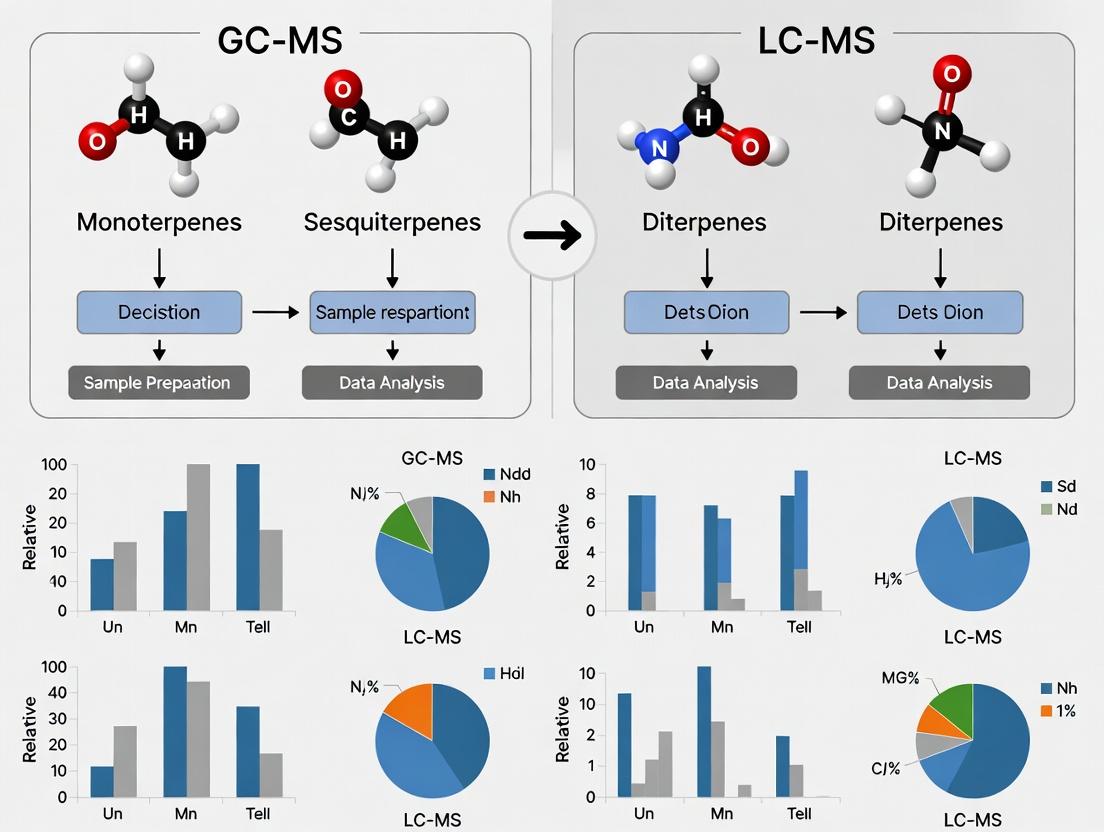
This definitive guide compares Gas Chromatography-Mass Spectrometry (GC-MS) and Liquid Chromatography-Mass Spectrometry (LC-MS) for the analysis of natural products.
Choosing the Right Tool: A Comprehensive Guide to GC-MS vs. LC-MS for Natural Product Analysis in Modern Research
Abstract
This definitive guide compares Gas Chromatography-Mass Spectrometry (GC-MS) and Liquid Chromatography-Mass Spectrometry (LC-MS) for the analysis of natural products. It addresses the core needs of researchers, scientists, and drug development professionals by exploring fundamental principles (Intent 1), detailing method selection for specific compound classes like alkaloids and terpenes (Intent 2), offering practical troubleshooting and workflow optimization strategies (Intent 3), and providing a direct, data-driven comparison of sensitivity, specificity, and validation requirements (Intent 4). The article synthesizes these insights to empower informed instrumental choice for discovery, characterization, and quantification in natural product research.
GC-MS and LC-MS Demystified: Core Principles for Natural Product Analysis
Within a thesis focused on the comparative analysis of GC-MS and LC-MS for natural product research, understanding the fundamental operational principles of each platform is paramount. These core technologies define their respective applications, strengths, and limitations in profiling complex mixtures from botanical, marine, or microbial sources.
Core Principles of Separation and Detection
Gas Chromatography-Mass Spectrometry (GC-MS) and Liquid Chromatography-Mass Spectrometry (LC-MS) share a common tandem architecture: a separation module (GC or LC) coupled to a mass spectrometric detector (MS). Their fundamental divergence lies in the physical state of the analyte during separation and the corresponding interface to the MS.
GC-MS is designed for volatile and thermally stable compounds. Separation occurs in a high-temperature oven where analytes, carried by an inert gas (e.g., He), partition between a gaseous mobile phase and a stationary phase coated on a capillary column. The eluting compounds must be vaporized without decomposition. The GC effluent, already in the gas phase, is directly introduced into the MS ion source.
LC-MS separates analytes in a liquid phase, making it suitable for non-volatile, polar, thermally labile, and high-molecular-weight compounds—a class encompassing most natural products (e.g., glycosides, peptides, polar alkaloids). Separation relies on differential interaction with a stationary phase and a liquid mobile phase (composed of water and organic solvents like methanol or acetonitrile) under high pressure. The central challenge is the efficient removal of the liquid solvent to introduce the analyte into the MS vacuum system, solved by specialized atmospheric pressure ionization (API) interfaces.
Key Quantitative Performance Metrics: Table 1: Comparative Performance Metrics of GC-MS and LC-MS Platforms
| Parameter | GC-MS | LC-MS (ESI/APCI) | Relevance to Natural Product Analysis |
|---|---|---|---|
| Mass Range | Typically < 700 Da | Up to and beyond 100,000 Da | LC-MS is essential for large NPs like saponins or peptides. |
| Analyte Polarity | Low to medium (derivatization extends range) | All polarities, from non-polar to highly polar ionic | LC-MS can natively analyze most NPs without chemical modification. |
| Thermal Stability Requirement | Mandatory | Not required | GC-MS unsuitable for thermolabile NPs (e.g., many terpenoids, glycosides). |
| Typical Sample Throughput | High (fast GC cycles) | Moderate to High (UPLC reduces time) | Both suitable for screening, but derivatization for GC adds time. |
| Detection Limit | ~pg to fg (for selective ion monitoring) | ~pg to fg (for MRM) | Both offer exceptional sensitivity for trace analysis. |
| Dynamic Range | ~10⁴ – 10⁵ | ~10⁴ – 10⁵ | Suitable for quantifying major and minor constituents in extracts. |
| Primary Identification | Electron Ionization (EI) spectral libraries | Tandem MS/MS (product ion scans) | GC-MS benefits from reproducible, searchable EI libraries. LC-MS relies on fragmentation patterns. |
Detailed Experimental Protocols
Protocol 1: GC-MS Analysis of Volatile Oils (e.g., Terpenes) Objective: To separate, detect, and identify volatile constituents in a plant essential oil. Materials: GC-MS system with EI source, non-polar capillary column (e.g., DB-5MS), helium carrier gas, autosampler vials, pure anhydrous sodium sulfate. Procedure:
- Sample Preparation: Dilute 10 µL of essential oil in 1 mL of GC-grade hexane. Dry over a small amount of anhydrous sodium sulfate to remove trace water. Transfer supernatant to a GC vial.
- GC Conditions:
- Injection: Split mode (split ratio 50:1), 1 µL, injector temp: 250°C.
- Oven Program: 50°C (hold 2 min), ramp at 10°C/min to 300°C (hold 5 min).
- Carrier Gas: Helium, constant flow at 1.0 mL/min.
- MS Conditions:
- Transfer Line Temp: 280°C.
- Ion Source (EI) Temp: 230°C.
- Electron Energy: 70 eV.
- Scan Range: m/z 40–500.
- Data Analysis: Compare acquired spectra against commercial (NIST, Wiley) and in-house libraries. Use retention indices on a homologous series of n-alkanes for confirmation.
Protocol 2: LC-MS/MS Analysis of Flavonoid Glycosides Objective: To separate and characterize polar, non-volatile flavonoid glycosides from a plant extract. Materials: UHPLC-MS/MS system with ESI source, C18 reversed-phase column (e.g., 2.1 x 100 mm, 1.7 µm), LC-MS grade water, acetonitrile, and formic acid. Procedure:
- Sample Preparation: Weigh 10 mg of dried extract. Solubilize in 1 mL of 50% methanol/water with sonication. Centrifuge at 14,000 rpm for 10 min. Filter supernatant through a 0.22 µm PTFE syringe filter into an LC vial.
- LC Conditions:
- Mobile Phase: A = 0.1% Formic acid in water; B = 0.1% Formic acid in acetonitrile.
- Gradient: 5% B to 95% B over 15 min, hold 2 min, re-equilibrate.
- Flow Rate: 0.4 mL/min. Column Temp: 40°C. Injection: 2 µL.
- MS Conditions (ESI Negative Ion Mode):
- Ion Source: Desolvation Temp: 350°C; Capillary Voltage: 2.5 kV.
- Detector Mode: Data-Dependent Acquisition (DDA). Full scan (m/z 150–1500) followed by MS/MS scans of the top 3 most intense ions.
- Collision Energy: Ramped (e.g., 20–40 eV).
- Data Analysis: Identify compounds based on [M-H]⁻ precursor ion, MS/MS fragmentation patterns (e.g., loss of glycoside moieties, retro-Diels-Alder), and comparison to authentic standards or literature data.
Instrumental Workflow Visualization
Title: GC-MS Analytical Workflow
Title: LC-MS Analytical Workflow
Title: GC-MS vs LC-MS Selection Logic
The Scientist's Toolkit: Key Reagent Solutions
Table 2: Essential Research Reagents for GC-MS and LC-MS Analysis of Natural Products
| Item | Function in Analysis | Specific Application Note |
|---|---|---|
| Derivatization Reagents (e.g., MSTFA, BSTFA) | Increases volatility and thermal stability of polar compounds (acids, sugars, alcohols) for GC-MS. | Essential for profiling non-volatile NPs like sugars or organic acids by GC-MS. |
| Retention Index Marker Mix (n-Alkanes, C8-C40) | Provides standardized retention times for compound identification in GC-MS independent of minor run condition shifts. | Critical for confirming terpene and fatty acid identities in complex essential oils. |
| LC-MS Grade Solvents (Water, MeOH, ACN) | Ultra-pure solvents minimize chemical noise and ion suppression in the ESI/APCI source. | Required for sensitive detection of trace metabolites; prevents column contamination. |
| Volatile Ion-Pairing/Modifier Acids (FA, TFA, AA) | Modifies mobile phase pH and improves chromatographic peak shape and ionization efficiency for acidic/basic NPs. | 0.1% Formic Acid is standard for positive-ion ESI; suppresses sodium adduct formation. |
| Isotopically Labeled Internal Standards (e.g., ¹³C, ²H) | Compensates for matrix effects and analyte loss during sample prep for accurate quantification in both GC-MS and LC-MS. | Used in targeted metabolomics for absolute quantification of specific NP classes. |
| Solid Phase Extraction (SPE) Cartridges (C18, Silica, NH2) | Pre-fractionates complex crude extracts to reduce matrix complexity and ion suppression before LC-MS/GC-MS. | Enriches minor NPs and removes interfering salts/chlorophyll for cleaner analysis. |
Thesis Context: Within the comparative framework of GC-MS versus LC-MS for natural product analysis, this application note focuses on the critical challenge of volatility. GC-MS offers superior resolution and sensitivity for volatile compounds but requires analytes to be thermally stable and volatile. Many natural products (e.g., acids, sugars, polyphenols) are polar, thermally labile, and non-volatile, creating a "volatility divide." Derivatization chemically modifies these analytes to make them amenable to GC-MS, thus bridging this divide and expanding the technique's utility in metabolomics and natural product profiling.
Application Notes
The Core Chemical Challenge: Polarity and Thermal Lability
GC-MS separation requires vaporization in the injector port (typically 150-300°C). Highly polar, multifunctional natural products (e.g., hydroxy acids, amino acids, glycosides) exhibit strong intermolecular forces (hydrogen bonding), leading to high boiling points, adsorption, and thermal degradation. This results in poor peak shape, low sensitivity, and ghost peaks. Derivatization blocks active polar groups (e.g., -OH, -COOH, -NH2), reducing polarity, increasing volatility and thermal stability, and improving chromatographic behavior and detector response.
Table 1: Impact of Common Derivatization Agents on Analyte Properties
| Derivatization Reagent | Target Functional Groups | Primary Reaction | Key Outcome for GC-MS |
|---|---|---|---|
| MSTFA (N-Methyl-N-(trimethylsilyl)trifluoroacetamide) | -OH, -COOH, -NH, -SH | Silylation | Replaces active H with TMS group; drastic volatility increase; sharp peaks. |
| BSTFA + 1% TMCS | -OH, -COOH, -NH, -SH | Silylation | TMCS acts as catalyst; standard for complex phenols and sugars. |
| Methoxyamine Hydrochloride | Carbonyl (C=O) | Oximation | Converts aldehydes/ketones to methoximes; prevents enolization; defines isomer number. |
| MBTFA (N-Methyl-bis(trifluoroacetamide)) | -OH, -NH2 | Acylation | Adds trifluoroacetyl group; excellent for amino acids; ECD/NCI sensitive. |
| PFBBr (Pentafluorobenzyl bromide) | -COOH | Esterification | Creates pentafluorobenzyl esters; high sensitivity in NCI-MS. |
Quantitative Advantages in Comparative Analysis
Recent studies comparing underivatized LC-MS to derivatized GC-MS for central carbon metabolites show complementary strengths.
Table 2: Performance Comparison for Selected Natural Product Classes (Representative Data)
| Analyte Class | Technique | Derivatization | Approx. LOD (ng/mL) | Key Advantage |
|---|---|---|---|---|
| Organic Acids (e.g., citric, succinic) | GC-MS | MSTFA | 0.5 - 2 | Superior separation of isomers; robust library matching. |
| LC-MS (ESI-) | None | 0.1 - 1 | Faster sample prep; good for labile compounds. | |
| Amino Acids | GC-MS | MBTFA | 1 - 5 | Excellent for low-mass, polar AA; compatible with chiral columns. |
| LC-MS (ESI+) | None | 0.5 - 3 | Direct analysis of intact peptides/proteins. | |
| Monosaccharides | GC-MS | Oxime + MSTFA | 5 - 10 | Resolves anomers; definitive identification. |
| LC-MS (HILIC) | None | 10 - 50 | Simpler workflow for oligo/poly-saccharides. | |
| Phytohormones (e.g., JA, SA) | GC-MS (EI) | Methylation/Diazomethane | 0.01 - 0.1 | High-reproducibility EI spectra; quantitative robustness. |
| LC-MS/MS (ESI) | None | 0.001 - 0.01 | Ultimate sensitivity for trace analysis. |
Experimental Protocols
Protocol 1: Two-Step Methoximation-Silylation for Polar Metabolite Profiling
This protocol is standardized for plant or microbial metabolome extracts.
I. Reagents & Materials:
- Methoxyamine hydrochloride (MeOX) solution: 20 mg/mL in anhydrous pyridine.
- Silylation reagent: MSTFA or BSTFA with 1% TMCS.
- Internal standard solution: e.g., Ribitol or Deuterated fatty acid mix in pyridine/methanol.
- Anhydrous pyridine.
- Glass vials: 2 mL with crimp-top caps and PTFE/silicone septa.
- Heating block or oven.
- Centrifuge and speed vacuum concentrator.
II. Procedure:
- Sample Preparation: Dry 50-100 µL of purified extract (post-methanol/chloroform/water extraction) in a glass vial using a speed vac.
- Methoximation: Add 50 µL of MeOX solution to the dried residue. Vortex vigorously for 30 sec. Incubate at 30°C for 90 min with occasional shaking.
- Silylation: Directly add 100 µL of MSTFA to the reaction mixture. Vortex for 30 sec. Incubate at 37°C for 30 min.
- Analysis: Centrifuge briefly. Transfer 80-100 µL of the clear supernatant to a GC-MS vial with insert. Analyze immediately or store at -20°C for <24h.
- GC-MS Conditions (Example):
- Column: DB-5MS (30 m x 0.25 mm, 0.25 µm)
- Inlet: 250°C, splitless mode (1 µL injection)
- Oven: 70°C (hold 2 min), ramp at 5°C/min to 300°C (hold 5 min)
- Carrier Gas: He, constant flow 1.2 mL/min
- MS Transfer Line: 280°C
- EI Source: 230°C, 70 eV
- Scan Range: m/z 50-600
Protocol 2: Pentafluorobenzyl (PFB) Ester Derivatization for Fatty Acids
Optimized for trace analysis using Negative Chemical Ionization (NCI) sensitivity.
I. Reagents & Materials:
- PFBBr (13% v/v) in acetonitrile.
- Catalyst: N,N-Diisopropylethylamine (DIPEA), 2% v/v in acetonitrile.
- Extraction Solvent: Hexane.
- Anhydrous sodium sulfate.
II. Procedure:
- Derivatization: To dried fatty acid extract, add 100 µL PFBBr solution and 50 µL DIPEA catalyst. Cap tightly.
- Reaction: Heat at 60°C for 45 min. Cool to room temperature.
- Clean-up: Add 500 µL of hexane and 1 mL of deionized water. Vortex for 1 min.
- Phase Separation: Centrifuge at 3000 rpm for 3 min. Transfer the upper hexane layer to a clean vial containing a small amount of anhydrous sodium sulfate.
- Analysis: Inject 1-2 µL of the clear hexane solution.
- GC-NCI-MS Conditions:
- Column: DB-1701 (15 m x 0.25 mm, 0.25 µm)
- Inlet: 220°C, splitless.
- Oven: 50°C to 250°C at 10°C/min.
- Reagent Gas: Methane, 2.0 mL/min.
- NCI Source: 150°C. Selective ion monitoring (SIM) of [M-PFB]⁻ ions.
Visualizations
Title: Bridging the Volatility Divide with Derivatization
Title: Standard Derivatization Workflow for GC-MS
The Scientist's Toolkit: Research Reagent Solutions
| Reagent / Material | Function & Rationale |
|---|---|
| MSTFA / BSTFA + 1% TMCS | "Workhorse" silylation reagents. Replace active hydrogens with trimethylsilyl groups, drastically increasing volatility for -OH, -COOH, -NH. TMCS catalyzes difficult reactions. |
| Anhydrous Pyridine | Common solvent for derivatization. Acts as both solvent and catalyst (base). MUST be anhydrous to prevent hydrolysis and deactivation of silylation reagents. |
| Methoxyamine Hydrochloride | Converts carbonyls (ketones, aldehydes) to methoximes. Prevents sugar ring tautomerization, locking anomers and reducing the number of chromatographic peaks for a single compound. |
| PFBBr (Pentafluorobenzyl Bromide) | Derivatizing agent for carboxylic acids. Forms esters highly amenable to Negative Chemical Ionization (NCI) MS, providing exceptional sensitivity for trace analysis (e.g., eicosanoids). |
| N-Methyl-N-tert-butyldimethylsilyl-trifluoroacetamide (MTBSTFA) | Forms tert-butyldimethylsilyl (TBDMS) derivatives. More stable to hydrolysis than TMS derivatives, beneficial for analytes prone to moisture degradation. |
| GC-MS Vials with PTFE/Silicone Septa | Essential for preventing sample loss and contamination. Septa must be temperature-resistant and non-reactive. Pre-slit septa reduce coring during injection. |
| Deuterated Internal Standards (e.g., D4-Succinic Acid) | Added at the beginning of extraction. Correct for losses during sample preparation and derivatization, enabling accurate quantitation via isotope dilution. |
Application Notes: LC-MS for Natural Product Profiling
The comparative analysis of Gas Chromatography-Mass Spectrometry (GC-MS) and Liquid Chromatography-Mass Spectrometry (LC-MS) for natural product research reveals distinct niches. GC-MS excels for volatile, thermally stable, and low to medium molecular weight compounds (typically < 500 Da). In contrast, LC-MS, particularly when paired with electrospray ionization (ESI) or atmospheric pressure chemical ionization (APCI), dominates the analysis of complex bioactive molecules due to its unparalleled ability to handle polar, thermally labile, and high molecular weight analytes without derivatization. This covers the vast chemical space of modern pharmacognosy, including alkaloids, glycosides, peptides, and polyphenols.
Key Quantitative Advantages of LC-MS in Bioactive Analysis:
Table 1: Operational Range Comparison: GC-MS vs. LC-MS for Natural Products
| Parameter | GC-MS (EI/CI) | LC-MS (ESI/APCI) |
|---|---|---|
| Polarity Range | Low to moderate (requires derivatization) | Very broad: non-polar to highly polar (ionic) |
| Mass Range (Da) | Typically ≤ 800-1000 | Routinely to 2000+; up to 100,000+ with TOF/Orbitrap |
| Thermal Lability | Requires thermal stability | No thermal stress; analyzes labile compounds natively |
| Sample Preparation | Often requires derivatization | Typically minimal; filtration/dilution often sufficient |
| Ionization Mode | Primarily Electron Impact (EI) | Flexible: Positive, Negative, or both |
Table 2: Representative Bioactive Classes Amenable to LC-MS Analysis
| Bioactive Class | Example Compounds | Typical Mass Range (Da) | Key Polarity Characteristic |
|---|---|---|---|
| Alkaloids | Berberine, Vinblastine | 300 - 800 | Basic, positively charged at low pH |
| Flavonoid Glycosides | Rutin, Hesperidin | 400 - 1200 | Highly polar due to sugar moieties |
| Saponins (Triterpenoid) | Ginsenosides, Aescin | 600 - 2000 | Amphiphilic (polar sugar + non-polar aglycone) |
| Peptides | Cyclosporin A, Glutathione | 300 - 1500+ | Polar, ionizable amino & carboxyl groups |
| Phenolic Acids | Chlorogenic acid, Ellagic acid | 150 - 500 | Acidic, negatively charged at high pH |
Detailed Experimental Protocols
Protocol 1: Untargeted Profiling of Polyphenols in Plant Extract
Objective: To comprehensively identify and semi-quantify polar polyphenols (e.g., flavonoids, phenolic acids) in a crude plant extract using LC-HRMS.
Research Reagent Solutions & Essential Materials: Table 3: Key Research Reagent Solutions
| Item | Function |
|---|---|
| Acetonitrile (LC-MS Grade) | Organic mobile phase; provides sharp peaks and efficient desolvation in ESI. |
| Formic Acid (0.1%, v/v) | Mobile phase additive; aids ionization in positive mode and improves peak shape for acids. |
| Ammonium Formate (5mM) | Volatile buffer; provides consistent ionization and adduct formation for quantitation. |
| Methanol (LC-MS Grade) | Extraction solvent; effective for a wide range of mid-to-high polarity phenolics. |
| Solid-Phase Extraction (SPE) Cartridge (C18) | For clean-up; removes non-polar interferences and salts. |
| Authentic Standard Mix | Contains reference compounds (e.g., quercetin, caffeic acid) for retention time alignment and validation. |
Methodology:
- Sample Preparation: Weigh 100 mg of dried, powdered plant material. Extract with 1.0 mL of 80% methanol/water (v/v) via sonication for 30 minutes. Centrifuge at 14,000 rpm for 10 min. Filter supernatant through a 0.22 µm PTFE syringe filter. Dilute 1:10 with initial mobile phase prior to injection.
- LC Conditions:
- Column: Polar-embedded C18 column (e.g., 2.1 x 100 mm, 1.7 µm).
- Mobile Phase: A) Water with 0.1% formic acid; B) Acetonitrile with 0.1% formic acid.
- Gradient: 5% B to 95% B over 25 min, hold 3 min, re-equilibrate.
- Flow Rate: 0.3 mL/min. Column Temp: 40°C. Injection Volume: 2 µL.
- MS Conditions (High-Resolution Q-TOF or Orbitrap):
- Ionization: ESI, Negative Ion Mode (optimal for phenolics).
- Mass Range: m/z 100-1500.
- Source Parameters: Capillary Voltage: 2500 V; Nebulizer Gas: 35 psi; Drying Gas: 10 L/min, 325°C.
- Data Acquisition: Data-Dependent Acquisition (DDA): Full MS scan (resolving power > 30,000) followed by MS/MS scans of top 5-10 most intense ions.
- Data Analysis: Process raw data using software (e.g., Compound Discoverer, MZmine). Perform peak picking, alignment, and component detection. Annotate compounds using accurate mass (< 5 ppm error), isotopic pattern, and MS/MS spectral matching against databases (e.g., GNPS, METLIN).
Protocol 2: Targeted Quantification of Alkaloids in Biological Fluid
Objective: To quantify specific, polar alkaloids (e.g., berberine, palmatine) in human plasma using LC-MS/MS (MRM) for pharmacokinetic studies.
Methodology:
- Sample Preparation (Protein Precipitation): Piperette 100 µL of plasma into a microcentrifuge tube. Add 300 µL of ice-cold acetonitrile containing internal standard (e.g., deuterated analog). Vortex vigorously for 1 min. Centrifuge at 14,000 rpm for 10 min at 4°C. Transfer 200 µL of supernatant to an autosampler vial, dilute with 100 µL of water, and mix.
- LC Conditions:
- Column: HILIC column (e.g., 2.1 x 100 mm, 1.8 µm) for retaining highly polar, basic alkaloids.
- Mobile Phase: A) 10mM Ammonium formate in water (pH 3.0); B) Acetonitrile.
- Gradient: 90% B to 50% B over 6 min, hold 1 min, re-equilibrate.
- Flow Rate: 0.4 mL/min. Column Temp: 35°C. Injection Volume: 5 µL.
- MS Conditions (Triple Quadrupole):
- Ionization: ESI, Positive Ion Mode.
- Operation: Multiple Reaction Monitoring (MRM). Optimize compound-specific parameters (precursor > product ion, collision energy).
- E.g., Berberine: m/z 336 → 320 (CE: 35 V); IS: m/z 341 → 325 (CE: 35 V).
- Source: Gas Temp: 300°C; Gas Flow: 10 L/min; Nebulizer: 45 psi; Capillary: 3500 V.
- Quantification: Generate a 6-point calibration curve in blank plasma matrix. Use internal standard method for peak area ratio (analyte/IS) vs. concentration. Apply linear regression with 1/x² weighting.
Mandatory Visualizations
Workflow for LC-MS Analysis of Bioactives
Analytical Scope: GC-MS vs. LC-MS
Electrospray Ionization Mechanism
In the context of natural product analysis, the choice between Gas Chromatography-Mass Spectrometry (GC-MS) and Liquid Chromatography-Mass Spectrometry (LC-MS) is fundamentally dictated by the analyte's properties and the required information. A critical component of this choice is the ionization source, which determines the type of mass spectra generated, the analytes amenable to analysis, and the resulting structural information. This application note, framed within a broader thesis on GC-MS vs. LC-MS for natural product research, provides a detailed comparison of Electron Ionization (EI) used in GC-MS with the two most common LC-MS sources: Electrospray Ionization (ESI) and Atmospheric Pressure Chemical Ionization (APCI). The focus is on practical implications for researchers and drug development professionals characterizing complex natural product mixtures.
Electron Ionization (EI) for GC-MS
EI is a hard, high-energy ionization technique performed under high vacuum (~10⁻⁵ to 10⁻⁶ torr). Analytes eluting from the GC column are bombarded with 70 eV electrons, causing extensive fragmentation. This produces highly reproducible, library-searchable mass spectra rich in structural fingerprints but typically with little to no molecular ion ([M]⁺•) for many compounds.
Electrospray Ionization (ESI) for LC-MS
ESI is a soft, atmospheric-pressure ionization technique. A high voltage is applied to a liquid eluent, creating a fine aerosol of charged droplets. Through solvent evaporation and droplet fission, gas-phase ions (commonly [M+H]⁺ or [M-H]⁻) are produced. It is ideal for polar, thermally labile, and high molecular weight compounds (e.g., peptides, glycosides) and readily couples with liquid chromatography.
Atmospheric Pressure Chemical Ionization (APCI) for LC-MS
APCI is also a soft, atmospheric-pressure technique. The LC eluent is nebulized and vaporized in a heated tube. A corona discharge needle then ionizes the solvent vapor, initiating gas-phase chemical reactions (e.g., proton transfer) that ultimately ionize the analyte. It is more suitable for less polar, low-to-medium molecular weight compounds that are thermally stable enough to survive the vaporization process.
Table 1: Core Characteristics Comparison
| Feature | Electron Ionization (EI) | Electrospray Ionization (ESI) | Atmospheric Pressure Chemical Ionization (APCI) |
|---|---|---|---|
| Ionization Environment | High Vacuum | Atmospheric Pressure | Atmospheric Pressure |
| Ionization Mechanism | High-energy electron bombardment | Charged droplet desolvation & ion evaporation | Gas-phase chemical ionization via corona discharge |
| Ionization Hardness | Hard (70 eV) | Soft | Soft |
| Typical Ions Formed | Radical cations ([M]⁺•), extensive fragments | Protonated/Deprotonated molecules ([M+H]⁺, [M-H]⁻), adducts | Protonated/Deprotonated molecules ([M+H]⁺, [M-H]⁻) |
| Mass Spectrum | Reproducible, library-searchable fragments | Primarily molecular ion information, some fragments with MS/MS | Primarily molecular ion information, some fragments with MS/MS |
| Analyte Polarity Suitability | Volatile, thermally stable, low MW (<1000 Da) | Polar, ionic, thermally labile, small to large MW (up to 1,000,000 Da) | Less polar, semi-volatile, thermally stable, low-to-medium MW (<2000 Da) |
| LC/GC Compatibility | GC only | LC (and direct infusion) | LC (and direct infusion) |
| Multi-charging | No | Yes (for large biomolecules) | Rarely |
Table 2: Quantitative Performance Metrics in Natural Product Analysis
| Parameter | EI (GC-MS) | ESI (LC-MS) | APCI (LC-MS) |
|---|---|---|---|
| Typical Linear Dynamic Range | 10³ - 10⁵ | 10³ - 10⁶ | 10³ - 10⁵ |
| Approx. Ionization Efficiency | High and consistent (for volatile analytes) | Varies widely (0.1% to >80%) | Moderate and more uniform than ESI |
| Susceptibility to Matrix Effects | Low (due to high vacuum) | Very High (ion suppression/enhancement) | Moderate (less than ESI) |
| Typical Flow Rate Range | 1-2 mL/min (He carrier) | 0.001-1 mL/min (optimal ~0.2-0.3 mL/min) | 0.2-2 mL/min |
| Sample Consumption | Low (ng) | Low to Moderate (ng-µg) | Low to Moderate (ng-µg) |
Application Notes for Natural Product Research
- EI (GC-MS): Best for profiling volatile secondary metabolites (terpenes, fatty acid methyl esters, alkaloids, essential oils). Its standardized spectral libraries enable rapid dereplication of known compounds. Limited to derivatized polar compounds (e.g., saponins, flavonoids as TMS derivatives).
- ESI (LC-MS): The workhorse for polar and high-MW natural products: glycosides (flavonoid, saponin), polar alkaloids, peptides, proteins. Tandem MS (MS/MS or MSⁿ) is essential for structural elucidation. Ideal for hyphenated techniques like LC-MS-SPE-NMR.
- APCI (LC-MS): Superior for less polar aglycones (after hydrolysis of glycosides), certain脂溶性vitamins, sterols, and low-polarity terpenoids. More robust than ESI for analytical-scale separations with normal-phase or pure organic mobile phases.
Detailed Experimental Protocols
Protocol: Profiling Essential Oils using GC-EI-MS
Objective: To identify volatile components in a plant essential oil extract. Materials: See "The Scientist's Toolkit" (Section 6). Procedure:
- Sample Preparation: Dilute 10 µL of essential oil in 1 mL of GC-MS grade hexane. Filter through a 0.22 µm PTFE syringe filter.
- GC Conditions:
- Column: Low-polarity 5% diphenyl / 95% dimethyl polysiloxane (30 m x 0.25 mm ID, 0.25 µm film).
- Injector: Split mode (split ratio 50:1), 250°C.
- Carrier Gas: Helium, constant flow 1.2 mL/min.
- Oven Program: 50°C hold 2 min, ramp 10°C/min to 300°C, hold 5 min.
- EI-MS Conditions:
- Ion Source Temp: 230°C
- Electron Energy: 70 eV
- Mass Scan Range: m/z 40-500
- Solvent Delay: 2.0 min
- Data Analysis: Compare acquired spectra against commercial (NIST, Wiley) and in-house natural product EI libraries. Use retention indices on a standard stationary phase for confirmation.
Protocol: Targeted Analysis of Flavonoid Glycosides using LC-ESI-MS/MS
Objective: To detect and characterize polar flavonoid glycosides in a crude plant extract. Materials: See "The Scientist's Toolkit" (Section 6). Procedure:
- Sample Preparation: Weigh 50 mg of dried, powdered plant material. Extract with 1 mL of 80% aqueous methanol via sonication (30 min). Centrifuge at 14,000 rpm for 10 min. Dilute supernatant 1:10 with mobile phase A, filter (0.22 µm PVDF).
- LC Conditions:
- Column: C18 reverse-phase (150 x 2.1 mm, 1.7 µm particle size).
- Mobile Phase A: 0.1% Formic acid in water.
- Mobile Phase B: 0.1% Formic acid in acetonitrile.
- Gradient: 5% B to 95% B over 25 min, hold 3 min.
- Flow Rate: 0.25 mL/min. Column Temp: 40°C.
- ESI-MS/MS Conditions:
- Ionization Mode: Negative ion ESI.
- Source Parameters: Capillary Voltage: 2.8 kV; Desolvation Temp: 350°C; Source Temp: 150°C; Cone Gas & Desolvation Gas: Nitrogen.
- Data Acquisition: Use Multiple Reaction Monitoring (MRM) for quantification of known flavonoids. For unknowns, perform full scan (m/z 150-1500) followed by data-dependent MS/MS on precursor ions.
- Data Analysis: Identify compounds by diagnostic neutral losses (e.g., 146 Da for deoxyhexose, 162 Da for hexose) and characteristic fragment ions of aglycone cores. Compare with authentic standards or literature MS/MS spectra.
Visualization of Workflow & Decision Pathways
Title: Ionization Source Selection Workflow for Natural Products
Title: Fundamental Ionization and Spectra Generation Pathways
The Scientist's Toolkit: Key Reagents & Materials
Table 3: Essential Research Reagent Solutions
| Item | Function in Analysis | Example Use Case |
|---|---|---|
| GC-MS Grade Solvents (Hexane, Methanol, Dichloromethane) | High purity solvents with low background for sample prep and dilution. Minimizes ghost peaks and source contamination. | Diluting essential oils for GC-EI-MS injection. |
| LC-MS Grade Solvents & Additives (Water, Acetonitrile, Methanol, Formic Acid) | Ultra-pure, low-ion content solvents and volatile additives for optimal ESI/APCI performance and chromatography. | Preparing mobile phases for LC-ESI-MS of flavonoids. |
| Derivatization Reagents (MSTFA, BSTFA, TMCS) | Silylation reagents that replace active hydrogens with TMS groups, increasing volatility and thermal stability for GC-EI-MS. | Derivatizing sugars or organic acids from natural products. |
| Stationary Phase for Retention Index (e.g., n-Alkane Mix C8-C40) | Standard mixture for calculating Kovats Retention Indices, a critical parameter for confirming compound identity in GC-EI-MS. | Adding to sample for precise retention time calibration. |
| ESI Tuning & Calibration Solution | Standard mixture of known ions across a mass range (e.g., sodium trifluoroacetate clusters) for instrument mass accuracy calibration and source optimization. | Daily tuning of LC-ESI-MS instrument. |
| Solid-Phase Extraction (SPE) Cartridges (C18, Diol, Mixed-Mode) | For sample clean-up, pre-concentration, and fractionation to reduce matrix effects and isolate compound classes. | Removing chlorophyll from plant extracts prior to LC-MS. |
Within the broader thesis evaluating GC-MS versus LC-MS for natural product analysis, this document provides critical application notes and protocols. The core thesis posits that the selection between these orthogonal techniques is not arbitrary but is fundamentally dictated by the physicochemical properties of the target compound class. LC-MS excels for semi-volatile to non-volatile, thermally labile, and high-molecular-weight compounds, while GC-MS is optimal for volatile, thermally stable, and low-to-medium molecular weight analytes. The following sections detail the empirical data, structured protocols, and workflows that underpin this decision-making framework.
Application Notes: Compound Class to Technique Mapping
Table 1: Primary Analytical Technique Selection Guide for Major Natural Product Classes
| Compound Class | Exemplars | Preferred Technique (Primary) | Key Rationale | Complementary Technique |
|---|---|---|---|---|
| Terpenes (Monoterpenes, Sesquiterpenes) | Menthol, Pinene, Farnesol | GC-MS | High volatility, thermal stability. Excellent match with GC elution. | LC-MS for oxidized/carboxylated derivatives. |
| Fatty Acids & Lipids | Palmitic acid, Linoleic acid, Triacylglycerols | Derivatized GC-MS / LC-MS | GC-MS for FAME analysis; LC-MS for intact phospholipids/triacylglycerols. | GC-MS for profiling; LC-MS for molecular species. |
| Alkaloids | Nicotine, Morphine, Caffeine | LC-MS | Polar, semi-volatile, often thermally labile. Requires soft ionization. | GC-MS for simple, volatile alkaloids (e.g., nicotine). |
| Phenolic Acids & Flavonoids | Caffeic acid, Quercetin, Rutin | LC-MS | Polar, non-volatile, glycosylated. Requires atmospheric pressure ionization. | GC-MS requires extensive derivatization. |
| Polyphenols (Tannins) | Proanthocyanidins, Ellagitannins | LC-MS | High MW, highly polar, and thermally unstable. GC not feasible. | MALDI-TOF for polymer distribution. |
| Polyketides | Doxorubicin, Lovastatin | LC-MS | Complex, labile structures. GC would cause decomposition. | |
| Peptides & Cyclotides | Cyclosporin A, Kalata B1 | LC-MS/MS | Non-volatile, polymeric. Requires ESI or APCI and tandem MS for sequencing. |
Table 2: Quantitative Performance Metrics for Key Instrument Setups (Hypothetical Data)
| Parameter | GC-MS (Quadrupole) | LC-MS (Q-TOF) | Notes |
|---|---|---|---|
| Mass Accuracy (RMS) | 0.1 Da (Unit Mass) | < 5 ppm | Q-TOF enables precise formula prediction. |
| Linear Dynamic Range | 10^4 – 10^5 | 10^3 – 10^4 | GC-MS often offers superior LDR for volatiles. |
| Typical Resolution (FWHM) | Unit Resolution | > 20,000 | High-res LC-MS separates isobaric compounds. |
| Analysis Time per Sample | 15-30 min | 20-40 min | Depends on gradient/column. |
| Sample Throughput (Auto) | High | Moderate-High | GC can be faster due to shorter column re-equilibration. |
Experimental Protocols
Protocol 1: GC-MS Analysis of Essential Oil Terpenes Title: Profiling of Volatile Terpenes in Plant Material by HS-SPME-GC-MS. Principle: Headspace Solid-Phase Microextraction (HS-SPME) captures volatile organics, followed by separation on a non-polar column and electron ionization (EI) for library-searchable fragmentation. Workflow:
- Sample Prep: Homogenize 100 mg fresh plant tissue. Place in 20 mL HS vial with 1 mL saturated NaCl solution. Add internal standard (e.g., 10 µL of 10 ppm ethyl caprate).
- HS-SPME: Incubate vial at 60°C for 10 min with agitation. Expose a 50/30 µm DVB/CAR/PDMS fiber to the headspace for 30 min at 60°C.
- GC-MS Injection: Desorb fiber in GC inlet at 250°C for 5 min in splitless mode.
- Chromatography: Use a 30m x 0.25mm ID, 0.25µm film thickness Rxi-5Sil MS column. Oven program: 40°C (hold 3 min), ramp at 5°C/min to 250°C, hold 5 min.
- MS Detection: EI source at 70 eV. Ion source temp: 230°C. Scan range: m/z 40-400. Solvent delay: 2 min.
- Data Analysis: Identify compounds using NIST library match (similarity > 85%) and relative quantification against the internal standard.
Protocol 2: LC-MS/MS Analysis of Flavonoids Title: Targeted Quantification of Glycosylated Flavonoids in Crude Extract by RP-LC-ESI-MS/MS. Principle: Reverse-phase chromatography separates flavonoids by hydrophobicity, followed by electrospray ionization (ESI) and multiple reaction monitoring (MRM) for sensitive, specific quantification. Workflow:
- Extraction: Sonicate 50 mg dried powder in 5 mL of 70% methanol/water (v/v) with 0.1% formic acid for 30 min. Centrifuge at 10,000 x g for 10 min. Filter supernatant through a 0.22 µm PVDF syringe filter.
- LC Conditions: Column: C18 (150 x 2.1 mm, 2.6 µm). Temp: 40°C. Flow: 0.3 mL/min. Mobile Phase A: 0.1% Formic acid in water. B: 0.1% Formic acid in acetonitrile.
- Gradient: 0 min: 5% B; 0-20 min: 5% → 95% B; 20-23 min: hold 95% B; 23-25 min: 95% → 5% B; equilibrate for 5 min.
- MS/MS Conditions: Ionization: ESI negative mode. Source parameters: Capillary voltage -3.0 kV, source temp 150°C, desolvation temp 500°C, desolvation gas flow 800 L/hr.
- MRM Setup: For Quercetin-3-O-glucoside: Precursor [M-H]⁻ m/z 463.1 → product m/z 300.0 (collision energy: 25 eV). Optimize for each target analyte using standard solutions.
- Quantification: Use a 5-point external calibration curve for each target compound.
Visualization
Diagram 1: Decision Workflow for GC-MS vs LC-MS in Natural Product Analysis
Diagram 2: Comparative Analytical Workflow from Sample to ID
The Scientist's Toolkit: Key Research Reagent Solutions
Table 3: Essential Materials for Featured Protocols
| Item Name | Function/Benefit | Example Supplier/Product |
|---|---|---|
| DVB/CAR/PDMS SPME Fiber | For headspace sampling of volatile terpenes. Balanced for C3-C20 range. | Supelco (57328-U) |
| Rxi-5Sil MS GC Column | Low-bleed, non-polar phase for optimal separation of hydrocarbons/terpenes. | Restek (13623) |
| NIST Mass Spectral Library | Essential for compound identification from GC-EI-MS data. | NIST/EPA/NIH 2023 |
| C18 UHPLC Column (2.6 µm) | Provides high-resolution separation of flavonoids/phenolics with low backpressure. | Phenomenex Kinetex |
| LC-MS Grade Solvents (MeCN, MeOH, FA) | Minimize background ions, ensure reproducibility and instrument longevity. | Honeywell, Fisher Optima |
| Deuterated Internal Standards | For accurate quantification in both GC-MS and LC-MS via isotope dilution. | Cambridge Isotope Labs |
| Quercetin-3-O-glucoside Std | Certified reference material for calibration in flavonoid LC-MS/MS. | Sigma-Aldrich (Q4951) |
| PVDF Syringe Filter (0.22 µm) | Particulate removal for LC-MS sample preparation without analyte loss. | Millipore (SLGV033RS) |
Method Selection in Action: Applying GC-MS and LC-MS to Specific Natural Products
For the analysis of volatile and semi-volatile natural products, such as terpenes and essential oils, Gas Chromatography-Mass Spectrometry (GC-MS) remains the unequivocal analytical gold standard. This position is firmly established within the broader methodological debate comparing GC-MS and Liquid Chromatography-Mass Spectrometry (LC-MS). While LC-MS excels for non-volatile, polar, and thermally labile compounds (e.g., flavonoids, glycosides, peptides), GC-MS offers unparalleled resolution, sensitivity, and library match reliability for volatile chemical spaces. The intrinsic volatility and thermal stability of mono- and sesquiterpenoids make them perfectly suited for GC separation. The robust electron ionization (EI) at 70 eV generates highly reproducible mass spectra, enabling confident identification against extensive commercial spectral libraries—a critical advantage LC-MS often lacks due to variable fragmentation. This document provides detailed application notes and protocols highlighting the specific power of GC-MS in this domain.
Application Note: Comprehensive Profiling of Cannabis Sativa Terpenes
Objective: To quantitatively profile the complex terpene and terpenoid fraction in Cannabis sativa extracts for chemotypic characterization and quality control.
Experimental Protocol:
Sample Preparation:
- Weigh 100 mg of homogenized, dry plant material.
- Add 1 mL of analytical-grade hexane or a 9:1 (v/v) pentane:diethyl ether mixture as an extraction solvent.
- Spike with 50 µL of internal standard solution (e.g., 0.1 mg/mL nonane or tridecane in solvent).
- Sonicate for 15 minutes at 25°C.
- Centrifuge at 10,000 x g for 5 minutes.
- Transfer 800 µL of the supernatant to a GC vial with a low-volume insert.
GC-MS Instrument Parameters:
- GC System: Agilent 8890 or equivalent.
- Column: Low-polarity stationary phase (e.g., DB-5MS, 30 m x 0.25 mm ID, 0.25 µm film thickness).
- Oven Program: 40°C (hold 2 min), ramp at 5°C/min to 150°C, then at 10°C/min to 280°C (hold 5 min). Total run: 38.5 min.
- Injection: Split mode (split ratio 10:1), 250°C injection port temperature, 1 µL injection volume.
- Carrier Gas: Helium, constant flow at 1.0 mL/min.
- MS System: Agilent 5977B or equivalent single quadrupole.
- Ion Source: Electron Ionization (EI), 70 eV.
- Transfer Line Temp: 280°C.
- Source Temp: 230°C.
- Quadrupole Temp: 150°C.
- Acquisition Mode: Scan (m/z 40-400), with optional SIM for high-sensitivity quantification of target compounds.
Data Analysis:
- Identify compounds by deconvolution of overlapping peaks (e.g., AMDIS software) and matching against the NIST 2020 Mass Spectral Library (with retention index libraries such as FFNSC).
- Quantify using the internal standard method, generating calibration curves (typically 1-100 µg/mL) for key terpenes (α-pinene, β-myrcene, limonene, linalool, β-caryophyllene).
Table 1: Representative Quantitative Data for Cannabis Terpenes (n=3)
| Compound | Retention Time (min) | Retention Index (Calc.) | Mean Concentration (mg/g) | % RSD | Primary Quantifier Ion (m/z) |
|---|---|---|---|---|---|
| α-Pinene | 7.2 | 932 | 1.45 | 2.1 | 93 |
| β-Myrcene | 9.8 | 988 | 4.32 | 3.4 | 93 |
| d-Limonene | 12.5 | 1028 | 0.89 | 1.8 | 68 |
| Linalool | 15.9 | 1098 | 0.52 | 4.2 | 71 |
| β-Caryophyllene | 26.3 | 1418 | 2.18 | 2.7 | 133 |
Protocol: Essential Oil Authentication and Adulteration Detection
Objective: To detect adulteration in commercially sourced lavender (Lavandula angustifolia) essential oil using enantioselective GC-MS.
Experimental Protocol:
Sample Dilution: Dilute 10 µL of pure or suspect essential oil in 1 mL of dichloromethane. Add internal standard (menthyl acetate, 0.05% v/v).
Enantioselective GC-MS Parameters:
- Column: Chiral selective phase (e.g., CycloSil-B, 30 m x 0.25 mm ID, 0.25 µm film).
- Oven Program: 50°C (hold 5 min), ramp at 2°C/min to 220°C (hold 10 min). Total run: 100 min.
- Injection: Splitless (60 sec purge time), 220°C.
- Carrier Gas: Helium, constant pressure at 10 psi.
- MS Acquisition: Scan m/z 50-350.
Data Interpretation: Authentic lavender oil shows a characteristic enantiomeric ratio of (3R)-(-)-linalool to (3S)-(+)-linalool, typically > 80% (R) enantiomer. A near-racemic mixture indicates adulteration with synthetic linalool.
Table 2: Key Diagnostic Enantiomeric Ratios for Essential Oil Authentication
| Essential Oil | Key Chiral Marker | Authentic Enantiomeric Ratio (Major:Minor) | Adulteration Indicator |
|---|---|---|---|
| Lavender | Linalool | >80% (R)-(-) | Racemic (~50:50) mixture |
| Peppermint | Menthol | >95% (1R,2S,5R)-(+) | Presence of (1S,2R,5S)-(-) isomer |
| Lemon | Limonene | >98% (R)-(+) | Presence of (S)-(-) isomer |
Visualized Workflows
GC-MS Analysis Workflow for Terpenes
GC-MS vs. LC-MS Selection Logic
The Scientist's Toolkit: Key Research Reagent Solutions
Table 3: Essential Materials for Terpene & Essential Oil GC-MS Analysis
| Item | Function & Rationale |
|---|---|
| DB-5MS or Equivalent Capillary Column | Standard low-polarity (5% phenyl) phase offering optimal resolution for terpene hydrocarbons and oxygenated derivatives. |
| Deactivated Liner with Glass Wool | Promotes vaporization of liquid sample and traps non-volatile residues, protecting the column. |
| C7-C30 Saturated Alkane Standard Mix | For calculating experimental Retention Indices (RI), a critical parameter for compound identification orthogonal to mass spectra. |
| NIST/Adams/Wiley Mass Spectral Libraries | Commercial EI libraries containing 100,000s of spectra; essential for reliable tentative identification. |
| Solid-Phase Microextraction (SPME) Fibers (e.g., DVB/CAR/PDMS) | For solvent-less headspace sampling of volatile emissions from live plants or intact products. |
| Chiral GC Columns (e.g., CycloSil-B, γ-DEX) | Stationary phases containing cyclodextrins; separate enantiomers for authentication and studying chiral biosynthesis. |
| Internal Standards (e.g., Alkanes, Alkyl Benzenes) | Compounds not found naturally in samples, added at known concentration to correct for injection volume and instrument variability. |
| Retention Index Calibration Software (e.g., AMDIS, ChromaTOF) | Automates RI calculation and library filtering, drastically improving identification confidence. |
Within the broader thesis comparing GC-MS and LC-MS for natural product analysis, this document focuses on the application of Liquid Chromatography-Mass Spectrometry (LC-MS) for the targeted analysis of three critical classes of polar secondary metabolites: alkaloids, flavonoids, and saponins. LC-MS is often the superior choice for these thermally labile and non-volatile compounds, eliminating the need for derivatization required in GC-MS and enabling direct analysis of complex biological matrices.
Comparative Analytical Figures of Merit for LC-MS of Natural Products
Table 1: Typical LC-MS Performance Metrics for Key Metabolite Classes
| Metabolite Class | Example Compound | Linear Range (ng/mL) | LOD (ng/mL) | LOQ (ng/mL) | Intra-day RSD (%) | Preferred Ionization Mode |
|---|---|---|---|---|---|---|
| Alkaloids | Berberine | 1 - 500 | 0.3 | 1.0 | 2.5 | ESI+ |
| Flavonoids | Quercetin | 5 - 1000 | 1.5 | 5.0 | 3.2 | ESI- |
| Saponins | Ginsenoside Rb1 | 10 - 2000 | 3.0 | 10.0 | 4.1 | ESI- (or ESI+ for ammonium adducts) |
Table 2: LC-MS vs. GC-MS Suitability for Polar Metabolites (Thesis Context)
| Parameter | LC-MS (for polar metabolites) | GC-MS (for polar metabolites) |
|---|---|---|
| Sample Preparation | Minimal; often extraction & dilution | Requires derivatization (e.g., silylation) |
| Analyte Volatility | Not required | Must be volatile or made volatile |
| Analyte Thermal Stability | Tolerates labile compounds | May decompose if thermolabile |
| Typical Analysis Time | 10-30 min per run | 30-60 min (incl. derivatization) |
| Ideal for | Intact glycosides, ionic alkaloids, saponins | Volatile aglycones, fatty acids, terpenes after derivatization |
Detailed Experimental Protocols
Protocol 2.1: Comprehensive Extraction of Polar Metabolites from Plant Tissue
Objective: To simultaneously extract alkaloids, flavonoids, and saponins from dried plant powder. Materials: Lyophilized plant material (100 mg), 80% aqueous methanol (v/v) with 0.1% formic acid, ultrasonic bath, centrifuge, vacuum concentrator. Procedure:
- Homogenize 100 mg of dried powder with 1 mL of 80% methanol/0.1% formic acid.
- Sonicate the mixture in an ultrasonic bath at 25°C for 30 minutes.
- Centrifuge at 14,000 x g for 15 minutes at 4°C.
- Carefully collect the supernatant.
- Re-extract the pellet with 0.5 mL of fresh solvent, repeat sonication and centrifugation.
- Pool the supernatants and concentrate under a gentle stream of nitrogen or using a vacuum concentrator to near dryness.
- Reconstitute the residue in 200 µL of initial LC mobile phase (e.g., 95% water, 5% acetonitrile, 0.1% formic acid).
- Filter through a 0.22 µm PTFE or nylon syringe filter prior to LC-MS injection.
Protocol 2.2: LC-MS/MS Method for Targeted Quantification
Objective: To separate and quantify a panel of standard alkaloids, flavonoids, and saponins. Chromatography:
- Column: C18 reversed-phase column (100 x 2.1 mm, 1.7 µm particle size).
- Mobile Phase A: Water with 0.1% formic acid.
- Mobile Phase B: Acetonitrile with 0.1% formic acid.
- Gradient: 5% B to 95% B over 18 minutes, hold 2 min, re-equilibrate for 5 min.
- Flow Rate: 0.3 mL/min. Column Temperature: 40°C. Injection Volume: 5 µL. Mass Spectrometry (Triple Quadrupole):
- Ion Source: Electrospray Ionization (ESI), positive mode for alkaloids, negative for flavonoids/saponins (or polarity switching).
- Source Parameters: Capillary Voltage: 3.0 kV (ESI+), 2.5 kV (ESI-); Desolvation Temp: 350°C; Source Temp: 150°C.
- Data Acquisition: Multiple Reaction Monitoring (MRM). Optimize compound-specific parameters (precursor ion, product ion, collision energy) using standard solutions.
Visualizations
LC-MS Analysis Workflow for Polar Metabolites
Thesis Context: GC-MS vs LC-MS for NPs
The Scientist's Toolkit: Key Research Reagents & Materials
Table 3: Essential Reagents and Materials for LC-MS Metabolite Analysis
| Item | Function/Benefit | Example/Note |
|---|---|---|
| Hypergrade LC-MS Solvents (MeCN, MeOH, H2O) | Minimize background ions, ensure signal stability and reproducibility. | Use solvents with ≤ 0.0001% non-volatile residue. |
| High-Purity Formic Acid/Ammonium Acetate | Common volatile mobile phase additives for pH control and ionization efficiency. | Formic acid for positive mode; ammonium acetate/format for both modes. |
| UHPLC C18 Column (1.7-2.7 µm) | Provides high-resolution separation of complex polar metabolite mixtures. | e.g., 100-150 mm length, 2.1 mm ID, with polar-embedded groups for better retention. |
| Solid Phase Extraction (SPE) Cartridges | For sample clean-up and pre-concentration of specific metabolite classes. | Mixed-mode (C18/SCX) for alkaloids; polymeric reversed-phase for flavonoids. |
| Stable Isotope-Labeled Internal Standards | Critical for accurate quantification, corrects for matrix effects and recovery losses. | e.g., d3-Berberine, 13C-Quercetin. |
| PTFE or Nylon Syringe Filters (0.22 µm) | Removes particulate matter to protect LC column and instrument. | Low extractable, non-adsorbent material is key. |
| Certified Reference Standards | Essential for compound identification (RT, MS/MS spectrum) and calibration. | Purchase from accredited suppliers with ≥95% purity. |
Within the broader thesis on GC-MS versus LC-MS for natural product analysis, a clear limitation emerges: neither standalone technique is universally sufficient for complex matrices. GC-MS excels for volatile and thermally stable compounds but fails for non-volatile, polar, or thermally labile molecules. LC-MS addresses this gap but struggles with isomer separation and lacks universal, robust spectral libraries. Hybrid and multidimensional approaches, specifically LC-GC-MS and Heart-Cutting 2D-GC-MS (LC-GC×GC-MS), are therefore critical for comprehensive analysis, enabling the detailed characterization of intricate natural product mixtures such as essential oils, bioactive extracts, and metabolomics samples.
Application Notes
1.1. Application: Comprehensive Profiling of Citrus Essential Oils Citrus oils contain hundreds of compounds including volatile terpenes (GC-amenable) and oxygenated derivatives, as well as non-volatile antioxidants like polymethoxylated flavones (LC-amenable). A standalone GC-MS analysis misses key polar bioactives, while LC-MS cannot resolve the complex hydrocarbon terpene profile.
- Hybrid Solution: An LC-GC-MS workflow is employed. The initial LC step prefractionates the crude oil, separating non-volatile flavones (collected for offline analysis or LC-MS) from the volatile fraction. The volatile heart-cut from the LC eluent is transferred online to the GC-MS via a programmed temperature vaporizing (PTV) injector for detailed separation and identification of terpenes, esters, and aldehydes.
- Outcome: This provides a complete compositional map, linking known GC-MS volatile biomarkers with LC-identified polar antioxidants in a single analytical run, crucial for authenticity and bioactivity studies.
1.2. Application: Isomer-Specific Analysis of Phytocannabinoids Cannabis extracts contain acidic cannabinoids (e.g., THCA, CBDA), their neutral decarboxylated forms (e.g., THC, CBD), and numerous isomers and analogs. These are challenging due to similar masses (LC-MS co-elution) and structures (GC separation difficulty).
- Hybrid Solution: Heart-Cutting 2D-GC-MS (GC-GC-MS) is ideal. The first dimension (¹D) GC column (non-polar) provides a primary separation. A specific retention time window containing co-eluting isomers (e.g., Δ9-THC and Δ8-THC) is heart-cut and transferred via a Dean's Switch or modulator to a second dimension (²D) column (mid-polar). The ²D column provides orthogonal separation based on polarity.
- Outcome: Isomers are resolved, and MS identification is unambiguous. Quantitative data for individual isomers, critical for pharmacological profiling, is obtained.
Table 1: Quantitative Comparison of Techniques for Natural Product Analysis
| Parameter | Standard GC-MS | Standard LC-MS (RP) | LC-GC-MS (Hybrid) | Heart-Cut 2D-GC-MS |
|---|---|---|---|---|
| Analyte Coverage | Volatile, thermally stable | Polar, non-volatile, thermally labile | Broad (Volatile + Non-volatile) | Very Broad within volatiles |
| Isomer Separation | Moderate | Poor | Moderate (depends on GC phase) | Excellent (2D Orthogonality) |
| Sensitivity | High (Universal EI) | Variable (ESI+/ESI-) | High for volatiles | High |
| Structural ID | Excellent (EI libraries) | Good (MS/MS required) | Combined EI & MS/MS | Excellent (EI libraries) |
| Throughput | High | High | Moderate | Low-Moderate |
| Best For | Terpenes, fatty acids, sterols | Glycosides, peptides, polyphenols | Whole extracts, prefractionation | Complex volatiles, petrochem, fragrances |
Experimental Protocols
2.1. Detailed Protocol: Online LC-GC-MS for Plant Extract Profiling
- Objective: To separate and identify both polar (e.g., phenolic acids) and volatile (e.g., monoterpenes) components in a rosemary extract.
- Materials: LC system with UV detector, autosampler, switching valve, PTV-equipped GC-MS, transfer line.
- Procedure:
- LC Separation: Inject 10 µL of methanolic rosemary extract onto a C18 column (150 x 2.1 mm, 3.5 µm). Use a gradient of water (0.1% formic acid) and acetonitrile. Monitor at 280 nm and 330 nm.
- Heart-Cut Definition: Using the valve, define the cut time for the volatile fraction (early eluting, 2.5-4.5 min). The late-eluting polar fraction (5-15 min) can be collected separately for direct LC-MS/MS analysis.
- LC-GC Transfer: The heart-cut eluent is directed to the PTV injector. The PTV is held in solvent vent mode (vent flow: 100 mL/min, vent pressure: 15 psi, 40°C) to evaporate the LC solvent (water/acetonitrile).
- Volatile Transfer & GC-MS Analysis: After venting (typically 1-2 min), the PTV is ballistically heated (e.g., 12°C/s to 280°C) to transfer trapped volatiles onto the GC column. GC-MS analysis proceeds with a standard temperature program (e.g., 40°C hold 2 min, 10°C/min to 300°C). Use EI at 70 eV and scan m/z 40-500.
- Data Analysis: Deconvolute GC-MS data using AMDIS or similar. Identify compounds using NIST/Wiley libraries. Correlate LC-UV polar fraction chromatogram with LC-MS/MS data from the separate injection.
2.2. Detailed Protocol: Heart-Cut 2D-GC-MS for Essential Oil Isomers
- Objective: To resolve and quantify positional isomers of menthol in peppermint oil.
- Materials: 2D-GC-MS system equipped with a Dean's Switch or flow-based modulator, two GC columns of different selectivity, MSD.
- Procedure:
- System Configuration: Install a non-polar ¹D column (e.g., DB-5ms, 30m x 0.25mm, 0.25µm) and a polar ²D column (e.g., DB-FFAP, 5m x 0.25mm, 0.25µm). Connect via the heart-cut device.
- ¹D Separation & Heart-Cut: Inject 1 µL of diluted oil in split mode. Start the ¹D oven program (e.g., 60°C to 250°C at 3°C/min). Monitor the total ion chromatogram (TIC). Activate the Dean's Switch to cut the effluent containing the menthol/isomenthol/neomenthol cluster (determined from standards, e.g., 34.2 - 34.8 min) to the ²D column.
- ²D Separation & MS Detection: The heart-cut band is focused at the head of the ²D column (held isothermally at 60°C during cut). Immediately after the cut, start a fast temperature program on the ²D oven (e.g., 60°C to 220°C at 20°C/min). The MS acquires data continuously.
- Data Analysis: Generate a 2D chromatogram (¹D retention time vs. ²D retention time). Use MS library searching on the purified ²D peaks for isomer identification. Use extracted ion chromatograms for precise quantification.
Visualization
Diagram 1: Online LC-GC-MS Workflow
Diagram 2: Heart-Cut 2D-GC-MS Principle
The Scientist's Toolkit: Key Research Reagent Solutions
| Item | Function & Role in Hybrid Analysis |
|---|---|
| PTV Injector Liner (e.g., packed with Carbofrit or glass wool) | Essential for LC-GC-MS. Traps volatiles during LC solvent venting, then releases them upon thermal desorption to the GC column. |
| Deans Switch or Flow-Based Modulator | The core hardware for heart-cutting. Precisely diverts a selected segment of effluent from the 1D to the 2D GC column. |
| Orthogonal GC Columns (e.g., DB-5ms & DB-17ms/DB-FFAP) | For 2D-GC. Select columns with different stationary phases (non-polar vs. mid/polar) to maximize orthogonality and separation power. |
| LC-MS Grade Solvents with Modifiers (0.1% Formic Acid) | Critical for reproducible LC prefractionation in LC-GC-MS. Modifiers enhance separation of polar compounds but must be compatible with PTV venting. |
| Retention Time Locking (RTL) Standards | Mixtures of alkanes or other standards. Used to maintain absolute retention times across runs in GC, vital for defining reproducible heart-cut windows. |
| Programmable Multimode Inlet (PMI) | Advanced version of PTV. Offers more precise control over temperature, pressure, and flow during the multiple stages of LC-GC transfer, improving reproducibility. |
High-Resolution Mass Spectrometry (HRMS) for Untargeted Metabolomics and Dereplication
Within the broader thesis comparing GC-MS and LC-MS for natural product analysis, High-Resolution Mass Spectrometry (HRMS) emerges as a critical, orthogonal technology that enhances both platforms. While GC-MS offers superior chromatographic resolution for volatile and derivatized compounds, LC-HRMS provides direct analysis of a broader range of polar, thermolabile, and high molecular weight natural products. The primary advantage of HRMS in this context is its ability to provide exact mass measurements, enabling the determination of elemental compositions. This is indispensable for untargeted metabolomics, which aims to comprehensively profile all measurable metabolites in a biological system, and for dereplication, the rapid identification of known compounds to prioritize novel entities in drug discovery.
Key Principles and Data Acquisition Strategies
HRMS instruments, such as Time-of-Flight (TOF), Orbitrap, and Fourier Transform Ion Cyclotron Resonance (FT-ICR) mass analyzers, achieve high mass accuracy (typically < 5 ppm, often < 1 ppm) and high resolution (> 20,000 FWHM). This allows for the discrimination of isobaric ions and the prediction of molecular formulae.
Data Acquisition Modes:
- Full-Scan MS: Provides accurate mass of molecular ions and in-source fragments.
- Data-Dependent Acquisition (DDA): Selects the most intense ions from a full scan for tandem MS (MS/MS) fragmentation, providing structural information.
- Data-Independent Acquisition (DIA): Fragments all ions within sequential, wide mass windows, generating comprehensive MS/MS data without ion selection bias.
Application Notes: Untargeted Metabolomics
The untargeted metabolomics workflow involves sample preparation, data acquisition via LC/GC-HRMS, data processing (peak picking, alignment, normalization), statistical analysis, and compound annotation.
Untargeted Metabolomics HRMS Workflow
Quantitative Performance Comparison: GC-MS vs. LC-HRMS
Table 1: Typical Performance Metrics in Natural Product Analysis
| Parameter | GC-MS (Quadrupole or Low-Res MS) | LC-HRMS (Orbitrap/Q-TOF) | Advantage for Untargeted Metabolomics |
|---|---|---|---|
| Mass Accuracy | 0.1 - 0.5 Da (Unit Mass) | < 5 ppm (Often < 1 ppm) | LC-HRMS: Enables precise formula prediction. |
| Mass Resolution | 1,000 - 4,000 FWHM | 25,000 - 500,000 FWHM | LC-HRMS: Separates isobars, reduces spectral overlap. |
| Dynamic Range | 10^3 - 10^5 | 10^3 - 10^5 | Comparable. |
| Structural Info | EI spectra (reproducible libraries) | MS/MS (CID, HCD); variable | GC-MS: Robust libraries. LC-HRMS: More structural detail for unknowns. |
| Ideal Compound Class | Volatile, thermally stable, derivatized metabolites | Polar, non-volatile, thermolabile, large molecules | Complementary: Use both for full coverage. |
| Annotation Confidence | High (Library Match) | Moderate-High (Exact Mass, MS/MS, Libraries) | GC-MS: Higher confidence for knowns. |
Detailed Experimental Protocols
Protocol: LC-HRMS Untargeted Profiling of Plant Extracts
Objective: To comprehensively profile metabolites in a natural product extract.
Materials: See "The Scientist's Toolkit" below. Procedure:
- Extraction: Weigh 50 mg of dried, powdered plant material. Add 1 mL of cold methanol:water (80:20, v/v) with 0.1% formic acid. Sonicate for 15 min in an ice bath. Centrifuge at 14,000 x g for 10 min at 4°C. Transfer supernatant to a clean vial.
- LC-HRMS Analysis:
- Column: C18 (e.g., 2.1 x 100 mm, 1.7 μm).
- Mobile Phase: A) Water + 0.1% Formic Acid; B) Acetonitrile + 0.1% Formic Acid.
- Gradient: 5% B to 95% B over 18 min, hold 2 min, re-equilibrate.
- Flow Rate: 0.4 mL/min. Temperature: 40°C.
- HRMS: Full scan positive/negative ESI mode, 100-1500 m/z, resolution > 70,000. Top 5-10 DDA for MS/MS.
- Quality Control (QC): Pool aliquots of all samples to create a QC. Inject QC at start of run and periodically throughout.
Protocol: HRMS-Based Dereplication
Objective: Rapidly identify known compounds in an active fraction to focus on novel leads.
Procedure:
- Acquire high-resolution MS and MS/MS data of the active fraction as in Protocol 4.1.
- Process data to generate a list of detected exact masses (adducts: [M+H]⁺, [M+Na]⁺, [M-H]⁻).
- Query exact masses against in-house or commercial natural product databases (e.g., UNPD, NPASS, DNP) with a mass tolerance of ±5 ppm.
- For candidate matches, compare experimental MS/MS spectra with reference spectra in databases (e.g., GNPS, MassBank).
- Prioritize compounds without database matches for further purification and characterization.
Dereplication Strategy and Pathway
HRMS Dereplication Decision Pathway
The Scientist's Toolkit: Key Reagent Solutions & Materials
Table 2: Essential Materials for HRMS-Based Metabolomics & Dereplication
| Item | Function & Specification | Example/Brand |
|---|---|---|
| HRMS Instrument | Provides high mass accuracy and resolution for exact mass measurement and formula assignment. | Orbitrap Exploris, Q-TOF (Agilent, Waters), FT-ICR. |
| UPLC/HPLC System | Provides high-resolution chromatographic separation prior to MS detection. Essential for complex mixtures. | Vanquish, Nexera, Acquity. |
| C18 Reverse-Phase Column | Standard column for separating a wide range of semi-polar to non-polar metabolites in LC-MS. | Waters Acquity BEH C18 (1.7 μm). |
| MS-Grade Solvents | Low UV absorbance and minimal chemical background for sensitive HRMS detection. | Acetonitrile, Methanol, Water (LC-MS grade). |
| Mass Calibration Solution | Ensures the HRMS instrument maintains sub-ppm mass accuracy during analysis. | Pierce LTQ Velos ESI Positive/Negative Ion Calibration Solution. |
| Quality Control Material | A pooled sample or standardized extract used to monitor system stability and performance. | NIST SRM 1950 (Metabolites in Human Plasma) or in-house pooled QC. |
| Database/Software Subscription | Enables query of exact masses and MS/MS spectra for compound annotation. | GNPS (public), Compound Discoverer, UNPD, MZmine. |
| Solid Phase Extraction (SPE) Cartridges | For clean-up and fractionation of complex natural product extracts prior to HRMS. | Strata, Oasis HLB or C18 phases. |
Within the context of natural product analysis research, a central thesis explores the comparative advantages of Gas Chromatography-Mass Spectrometry (GC-MS) and Liquid Chromatography-Mass Spectrometry (LC-MS). This discussion is framed by the evolution of quantitative workflows from measuring single biomarkers to complex, multi-component assays. GC-MS traditionally excels for volatile and thermally stable compounds, while LC-MS dominates in the analysis of polar, thermally labile, and high molecular weight natural products. The choice profoundly impacts the design, validation, and application of quantitative methods in drug discovery from natural sources.
Application Notes
Note 1: Targeted Single Biomarker Quantification
Targeted quantification of a specific phytochemical (e.g., berberine from Berberis species) serves as a foundational workflow. It requires a stable isotope-labeled internal standard (SIL-IS) for optimal accuracy. LC-MS/MS operating in Selected Reaction Monitoring (SRM) mode is typically employed due to the compound's polarity and low volatility.
Key Quantitative Data: Table 1: Typical Method Performance Data for Single Biomarker (Berberine) Assay
| Parameter | Value | Acceptability Criterion |
|---|---|---|
| Linear Range | 1-500 ng/mL | R² > 0.99 |
| Lower Limit of Quantification (LLOQ) | 1 ng/mL | CV <20%, Accuracy 80-120% |
| Intra-day Accuracy | 97-103% | 85-115% |
| Intra-day Precision (CV%) | < 8% | < 15% |
| Extraction Recovery | 95 ± 5% | Consistent and high |
Note 2: Multi-Component Panel for Metabolic Pathways
Modern natural product research often quantifies panels of compounds from interconnected biosynthetic pathways (e.g., phenolic acids, flavonoids, and terpenoids from a plant extract). This requires careful optimization of chromatography to separate isomers and a mass spectrometer capable of rapid MS/MS switching. LC-QTRAP systems are frequently used for such multi-component assays.
Key Quantitative Data: Table 2: Comparison of GC-MS vs. LC-MS for Multi-Component Natural Product Assay
| Aspect | GC-MS (after derivatization) | LC-MS/MS (reverse-phase) |
|---|---|---|
| Analytes Covered | Volatile oils, fatty acids, steroids, alkaloids (after derivatization). | Polar compounds, glycosides, peptides, most alkaloids. |
| Sample Prep Complexity | Often requires derivatization (e.g., silylation). | Simpler (extraction, filtration). |
| Chromatographic Resolution | Very high for complex volatile mixtures. | High; highly tunable with different column chemistries. |
| Sensitivity (LLOQ) | High (fg-pg on column) for many volatiles. | High (pg on column) for targeted analytes. |
| Throughput | Slower run times; derivatization adds time. | Faster run times; amenable to high-throughput. |
| Ideal for Thesis Context | Best for secondary metabolites that are volatile or can be made volatile. | Best for broadest range of NPs, especially thermo-labile and polar molecules. |
Note 3: Untargeted Metabolomics for Biomarker Discovery
The initial discovery phase for novel biomarkers involves untargeted profiling. High-resolution mass spectrometry (HRMS) coupled with LC or GC is used. LC-HRMS (e.g., Q-TOF, Orbitrap) is generally more comprehensive for natural product extracts, capturing a wider range of chemical space without derivatization.
Experimental Protocols
Protocol 1: LC-MS/MS Quantification of a Single Alkaloid Biomarker
Title: Quantitative Analysis of Berberine in Berberis Extract using LC-MS/MS with SIL Internal Standard.
Principle: A stable isotope-labeled berberine (e.g., berberine-d6) is added to the sample prior to extraction to correct for matrix effects and losses. Analytes are separated by reversed-phase chromatography, ionized by ESI+, and detected by SRM.
Materials: The Scientist's Toolkit: Key Reagents & Materials
| Item | Function |
|---|---|
| Authentic Berberine Standard | Primary reference for calibration. |
| Berberine-d6 (SIL-IS) | Internal standard for quantification; corrects for variability. |
| Methanol (LC-MS Grade) | Extraction solvent and mobile phase component. |
| Acetonitrile (LC-MS Grade) | Protein precipitation agent and mobile phase component. |
| Formic Acid (LC-MS Grade) | Mobile phase additive to improve protonation in ESI+. |
| Solid-Phase Extraction (SPE) Cartridge (C18) | Clean-up to remove interfering matrix components. |
| UPLC C18 Column (1.7µm, 2.1x100mm) | Provides high-resolution separation. |
Procedure:
- Sample Preparation: Weigh 50 mg of powdered plant material. Spike with 50 µL of berberine-d6 working solution (100 ng/mL). Sonicate with 1 mL of 80% methanol for 30 min. Centrifuge at 14,000 x g for 10 min. Pass supernatant through a pre-conditioned C18 SPE cartridge. Elute with 1 mL methanol, evaporate under nitrogen, and reconstitute in 200 µL of initial mobile phase.
- Calibration Standards: Prepare a series of berberine standards (1-500 ng/mL) in matrix-matched solvent, each containing the same concentration of berberine-d6.
- LC Conditions: Column: C18 (1.7µm, 2.1 x 100 mm); Temp: 40°C. Mobile Phase A: 0.1% Formic acid in water; B: 0.1% Formic acid in acetonitrile. Gradient: 5% B to 95% B over 8 min. Flow: 0.3 mL/min.
- MS Conditions: Ion Source: ESI+; Capillary Voltage: 3.0 kV; Source Temp: 150°C; Desolvation Temp: 500°C. SRM Transitions: Berberine: 336→320 (quantifier), 336→292; Berberine-d6: 342→326.
- Data Analysis: Plot peak area ratio (analyte/IS) vs. concentration. Apply 1/x² weighted linear regression. Calculate concentrations in unknowns from the calibration curve.
Protocol 2: GC-MS Metabolite Profiling of Volatile Terpenes
Title: Profiling of Monoterpenes and Sesquiterpenes in Essential Oils using GC-MS.
Principle: Volatile compounds are separated on an apolar GC column and ionized by electron impact (EI). Quantification is semi-quantitative based on total ion current (TIC) or using a single internal standard (e.g., tetradecane).
Procedure:
- Sample Preparation: Dilute 10 µL of essential oil in 1 mL of hexane. Add 10 µL of internal standard solution (tetradecane, 1 mg/mL in hexane).
- GC Conditions: Column: 5% Phenyl / 95% Dimethylpolysiloxane (30m x 0.25mm, 0.25µm). Oven Program: 50°C hold 2 min, ramp 10°C/min to 280°C, hold 5 min. Injector Temp: 250°C (split mode, 50:1).
- MS Conditions: Ion Source: EI (70 eV); Source Temp: 230°C; Quadrupole Temp: 150°C; Scan Range: m/z 40-450.
- Data Analysis: Identify compounds using NIST library matching. For relative quantification, report peak area of each analyte relative to the internal standard peak area.
Visualized Workflows & Relationships
Title: Decision Workflow: GC-MS vs LC-MS for Natural Product Analysis
Title: Core Components of Quantitative MS Workflows
Solving Common Challenges: Optimization Strategies for GC-MS and LC-MS Workflows
Overcoming Matrix Effects and Ion Suppression in LC-MS Analysis
Within a broader thesis comparing GC-MS and LC-MS for natural product analysis, a pivotal challenge for LC-MS is its susceptibility to matrix effects (ME) and ion suppression/enhancement. Unlike GC-MS, which often employs clean derivatization and high-temperature separation, LC-MS analyzes compounds in their native state, making the ionization process vulnerable to co-eluting matrix components from complex natural product extracts. This application note details current strategies and protocols to identify, quantify, and overcome these effects to ensure quantitative accuracy and method robustness in pharmaceutical and natural product research.
Quantifying and Assessing Matrix Effects
Matrix effects are typically quantified using the following formula: ME (%) = [(Peak Area in Presence of Matrix) / (Peak Area in Neat Solvent) - 1] × 100% A value of 0% indicates no effect, negative values indicate suppression, and positive values indicate enhancement. The following table summarizes common assessment approaches and their outcomes from recent studies:
Table 1: Quantitative Assessment Methods for Matrix Effects in LC-MS
| Method | Protocol Summary | Typical Output Metrics | Advantage |
|---|---|---|---|
| Post-Column Infusion | Continuous infusion of analyte post-column into the MS while injecting blank matrix extract. | Visual profile of ion suppression/enhancement across chromatographic run time. | Identifies regions of suppression; non-quantitative. |
| Post-Extraction Spiking | Compare analyte response in neat solution vs. response when spiked into extracted blank matrix. | Calculated ME (%) for each analyte. | Measures net effect on ionization efficiency. |
| Standard Addition | Spike known analyte concentrations at multiple levels into different aliquots of a sample with unknown concentration. | Linear regression plot; slope used to calculate true concentration. | Compensates for ME without needing a pristine blank matrix. |
Detailed Experimental Protocols
Protocol 1: Post-Extraction Spiking for ME Quantification
Objective: To calculate the absolute matrix effect for target analytes in a natural product extract.
- Prepare Solutions:
- Neat Standards: Prepare analyte standards at low, mid, and high concentrations in mobile phase.
- Blank Matrix: Process representative control matrix (e.g., plant material without target analytes) through the entire sample preparation workflow.
- Spike Samples:
- Aliquot the final processed blank matrix extract.
- Spike with analyte standards to match the low, mid, and high concentration levels. These are the post-extraction spike (PES) samples.
- Prepare Controls:
- Prepare equivalent concentration standards in pure mobile phase (neat solutions).
- LC-MS Analysis:
- Analyze all PES samples and neat standards in triplicate in a single batch.
- Calculation:
- For each concentration level:
ME (%) = [(Mean Peak Area of PES) / (Mean Peak Area of Neat Standard) - 1] × 100.
- For each concentration level:
Protocol 2: Method Development for Minimizing ME via Chromatography
Objective: To separate analytes from early-eluting ionic matrix components.
- Gradient Scouting: Perform an initial steep gradient (e.g., 5-95% organic in 10 min) to identify the region where most matrix components elute (typically early).
- Gradient Optimization: Implement a gradient delay or hold at the initial weak mobile phase composition (e.g., hold at 5% organic for 2-3 minutes) to allow early eluting salts and polar interferences to pass through the column before the analytes.
- Analytic Elution Window: Program the gradient so that target analytes elute in a "clean" region, verified via post-column infusion (Protocol 1), with a higher organic modifier percentage (e.g., 40-80%).
- Column Selection: Test different stationary phases (e.g., C18, phenyl-hexyl, HILIC). For polar natural products, a HILIC column can be used to retain and separate polar analytes from non-polar matrix interferences.
Protocol 3: Implementing Stable Isotope-Labeled Internal Standards (SIL-IS)
Objective: To correct for matrix effects and recovery losses during quantification.
- SIL-IS Selection: Acquire isotopically labeled versions of each analyte (e.g., ¹³C, ²H, ¹⁵N). The ideal SIL-IS co-elutes chromatographically with the native analyte but is distinguished by mass.
- Addition Point: Add a consistent, known amount of the SIL-IS mixture to every sample (unknowns, calibrators, QCs) prior to any sample preparation step.
- LC-MS/MS Analysis: Use Multiple Reaction Monitoring (MRM). Monitor a unique transition for the native analyte and a corresponding unique transition for the SIL-IS.
- Quantification: Construct a calibration curve using the ratio of the native analyte peak area to the SIL-IS peak area against the known concentration. The SIL-IS compensates for ionization suppression and variable extraction recovery.
Visualization of Key Workflows
Diagram 1: LC-MS Workflow and Matrix Effect Introduction Points (79 chars)
Diagram 2: Strategy for Diagnosing and Overcoming Matrix Effects (74 chars)
The Scientist's Toolkit: Essential Research Reagents & Materials
Table 2: Key Reagent Solutions for Mitigating Matrix Effects
| Item | Function & Rationale |
|---|---|
| Stable Isotope-Labeled Internal Standards (SIL-IS) | Ideal internal standard; identical chemical behavior compensates for both recovery loss and ion suppression. |
| Analog Internal Standards | Used if SIL-IS is unavailable; structural similarity provides partial compensation for ME. |
| Solid Phase Extraction (SPE) Cartridges (e.g., C18, HLB, Ion-Exchange) | Selective cleanup to remove phospholipids, salts, and polar interferences prior to LC-MS. |
| Liquid-Liquid Extraction (LLE) Solvents (e.g., MTBE, Ethyl Acetate) | Removes non-polar matrix components and proteins. |
| Matrix-Matched Calibration Standards | Calibrators prepared in processed blank matrix to mimic suppression in real samples. |
| Post-Column Infusion T-Valve & Syringe Pump | Essential hardware setup for performing the post-column infusion experiment. |
| LC Columns with Different Selectivity (C18, PFP, HILIC) | To alter analyte-matrix co-elution by changing retention mechanisms. |
Managing Column Bleed and Thermal Degradation in GC-MS
Within the broader analytical framework of a thesis comparing GC-MS and LC-MS for natural product analysis, maintaining system integrity in GC-MS is paramount. LC-MS often excels for polar, thermally labile compounds, but GC-MS remains superior for volatile and semi-volatile analytes due to its high resolution and sensitive detection. However, two critical technical challenges—column bleed and thermal degradation—can severely compromise data quality, leading to elevated baselines, ghost peaks, and the loss of critical analytes. This application note details protocols for identifying, quantifying, and mitigating these issues to ensure robust and reproducible results in natural product profiling.
Understanding and Quantifying Column Bleed
Column bleed is the continuous, temperature-dependent elution of stationary phase degradation products. It increases background ions, raising baseline noise and interfering with trace analysis.
Protocol 1: Measuring Column Bleed
Objective: To establish a baseline bleed profile for a new column and monitor its increase over time.
Materials:
- GC-MS system with mass spectrometer.
- Tested column (e.g., 5% phenyl polysilphenylene-siloxane, 30m x 0.25mm x 0.25µm).
- High-purity helium carrier gas (≥99.999%).
- Data acquisition software.
Methodology:
- Install the column, ensuring leak-free connections.
- Set the carrier gas flow to 1.0 mL/min (constant flow mode).
- Program the GC oven: Hold at 50°C for 1 min, then ramp at 10°C/min to the column's upper temperature limit (e.g., 325°C or 350°C), and hold for 10-30 minutes.
- Set the MS transfer line and ion source temperatures according to the column's maximum.
- Operate the MS in scan mode (e.g., m/z 50-650). Do not inject any sample.
- Acquire the data. The total ion chromatogram (TIC) represents the bleed profile.
- Extract characteristic bleed ions (e.g., m/z 207, 281, 355 for common polysiloxane phases) to create extracted ion chromatograms (EICs). The abundance of these ions, particularly at the upper temperature hold, quantifies bleed.
Data Analysis:
- Baseline Bleed Level (BBL): Measure the average TIC signal (in pA or counts) during the final isothermal hold for a new column.
- Bleed Rate Increase: Track BBL over column lifetime. A sudden increase often indicates phase degradation or contamination.
Table 1: Characteristic Column Bleed Ions for Common Stationary Phases
| Stationary Phase Type | Characteristic Ions (m/z) | Primary Source |
|---|---|---|
| Polydimethylsiloxane (100% PDMS) | 207, 281, 355, 429 | Cyclic siloxane oligomers |
| 5% Phenyl Polydimethylsiloxane | 207, 281, 355 | Cyclic methylphenyl siloxanes |
| Polyethylene Glycol (WAX) | 31, 45, 73, 103 | Ethoxylate fragments |
| Trifluoropropylpolysiloxane | 129, 169, 220, 269 | CF3-containing fragments |
Identifying and Preventing Thermal Degradation
Thermal degradation refers to the decomposition of analytes in the hot inlet or column, leading to poor peak shape, decreased response, and the formation of decomposition artifacts. This is a critical limitation for many thermally sensitive natural products (e.g., certain glycosides, terpenoids, alkaloids) where LC-MS may be the preferred alternative.
Protocol 2: Diagnostic Test for Thermal Degradation
Objective: To determine if an analyte is degrading in the GC system.
Materials:
- Standard of the target analyte.
- Derivatization reagents (e.g., MSTFA for silylation).
- Cool On-Column (COC) inlet or PTV inlet (if available).
Methodology (Comparative Analysis):
- Prepare two identical standard solutions.
- Method A (Hot Split/Splitless): Inject 1 µL via a standard split/splitless inlet at 250°C.
- Method B (Cold On-Column/PTV): Inject 1 µL via a COC inlet or a PTV inlet in solvent vent mode with a low initial temperature (e.g., 50°C).
- Use the same column, oven program, and MS conditions for both runs.
- Compare chromatograms and mass spectra.
Interpretation:
- Increased Peak Tailing/Broadening (Method A): Suggests active sites or degradation in the inlet.
- Additional Peaks/Changed Spectrum (Method A): Direct evidence of decomposition products.
- Higher Response for Target Analyte (Method B): Confirms thermal lability. If degradation is severe, LC-MS analysis should be prioritized for that compound class.
Mitigation Strategies and Best Practices
A proactive approach combines instrumental optimization and routine maintenance.
Protocol 3: Routine Maintenance to Minimize Bleed & Degradation
- Inlet Liner and Seal Maintenance: Replace the inlet liner, septa, and gold seals regularly (every 100-150 injections or per signs of peak shape deterioration).
- Column Conditioning: After installation or trimming, condition the column by programming from low temperature to the maximum isothermal temperature limit, holding for 10-60 minutes, with the MS detector OFF and the column effluent vented to atmosphere.
- Proper Column Installation: Ensure correct column length in the inlet (as per manufacturer) and proper positioning in the MS ion source.
- Oven Temperature Optimization: Use the lowest practical final oven temperature and shortest possible hold times. Employ temperature programming instead of isothermal runs at high temperatures.
- Guard Column/Retention Gap: Use a 1-5m deactivated fused silica guard column to trap non-volatile residues and protect the analytical column.
The Scientist's Toolkit: Key Research Reagent Solutions
| Item | Function & Relevance |
|---|---|
| Deactivated Inlet Liners | Glass wool or fritted liners promote vaporization and trap non-volatile matrix components from natural product extracts, protecting the column. |
| High-Purity Carrier Gas Traps | Hydrocarbon, oxygen, and moisture traps maintain gas purity, preventing stationary phase oxidation and degradation. |
| Derivatization Reagents (e.g., MSTFA, BSTFA) | Convert polar, thermally labile functional groups (e.g., -OH, -COOH) into volatile, stable derivatives (e.g., TMS esters) for successful GC-MS analysis. |
| Deactivated Fused Silica Retention Gap | A short, uncoated pre-column installed before the analytical column. Protects the coated column from contamination and allows for solvent focusing. |
| MS Performance Standard (e.g., PFTBA) | Used for mass calibration and daily system performance checks, ensuring detection sensitivity is maintained for trace analysis. |
| Column Bleed Standard Mixture | A commercial mix of hydrocarbons eluting at specific temperatures to evaluate column performance and bleed levels under standardized conditions. |
Visualizing the Diagnostic Workflow
Diagram Title: GC-MS Problem Diagnosis: Bleed vs. Degradation
Application Notes
Within the broader thesis evaluating GC-MS versus LC-MS for natural product analysis, optimizing derivatization is the critical factor that unlocks GC-MS's potential. LC-MS excels for polar, thermally labile compounds but can struggle with isomer differentiation and requires costly instrumentation. GC-MS offers superior chromatographic resolution, sensitive universal detection (e.g., FID), and robust spectral libraries but mandates the volatilization of analytes. For the vast array of polar, non-volatile natural products (e.g., sugars, phenolics, organic acids, amino acids), chemical derivatization is a prerequisite. The core challenge is not merely to derivative, but to achieve it with maximal efficiency (complete conversion, minimal byproducts) and reproducibility (low inter- and intra-batch variability), which directly translates to quantitative accuracy and reliable database matching.
Two primary derivatization classes dominate: silylation (e.g., MSTFA, BSTFA+TMCS) and alkylation/acylation (e.g., methylation with BF3-MeOH, acetylation with acetic anhydride). The choice depends on analyte functional groups and stability. Recent advances focus on microwave-assisted derivatization, which drastically reduces reaction time from hours to minutes, and the use of alternative catalysts to improve selectivity for challenging matrices. This note provides a comparative data summary and optimized, detailed protocols for key reactions.
Table 1: Comparative Performance of Common Derivatization Reagents
| Reagent (Abbreviation) | Target Functional Groups | Reaction Conditions | Typical Time | Key Advantages | Key Drawbacks |
|---|---|---|---|---|---|
| N-Methyl-N-(trimethylsilyl)trifluoroacetamide (MSTFA) | -OH, -COOH, -NH, -SH | 70-80°C, anhydrous | 20-40 min | Powerful, versatile, single product often | Moisture sensitive, volatile derivatives |
| N,O-Bis(trimethylsilyl)trifluoroacetamide + TMCS (BSTFA+1% TMCS) | -OH, -COOH, -NH | 70-80°C, anhydrous | 20-40 min | TMCS acts as catalyst, robust for sugars | Moisture sensitive |
| BF₃ in Methanol (BF3-MeOH, 14%) | -COOH (to methyl esters) | 60-80°C | 10-15 min | Specific for carboxyl groups, fast | Corrosive, toxic, not for -OH/-NH |
| Pyridine + Acetic Anhydride (1:1) | -OH, -NH (to acetyl esters/amides) | Room Temp - 60°C | 30-60 min | Mild conditions, stable derivatives | Pyridine odor, may require cleanup |
Table 2: Quantitative Impact of Derivatization Optimization on Recoveries
| Analytic Class (Example) | Non-Optimized Protocol (Avg. % Recovery ± %RSD) | Optimized Protocol (Avg. % Recovery ± %RSD) | Key Optimization Parameter |
|---|---|---|---|
| Organic Acids (Citric Acid) | 72 ± 15% | 99 ± 3% | Use of 20 μL pyridine as solvent/catalyst with MSTFA; 40min at 75°C |
| Monosaccharides (Glucose) | 65 ± 12% (multiple peaks) | 95 ± 4% (single peak) | Oximation with methoxyamine HCl (2h) prior to silylation with BSTFA+TMCS |
| Phenolic Acids (Gallic Acid) | 81 ± 8% | 98 ± 2% | Microwave-assisted derivatization (100W, 5 min) with BSTFA |
| Amino Acids (Alanine) | 78 ± 10% | 97 ± 3% | Use of tert-butyldimethylsilyl (TBDMS) reagent for higher stability |
Detailed Experimental Protocols
Protocol A: Standard Silylation for Polyfunctional Natural Products (e.g., Sugars, Acids) Objective: To fully derivative polar compounds containing hydroxyl and carboxyl groups for GC-MS analysis.
- Sample Preparation: Dry 100 μL of your purified natural product extract or standard solution (in a suitable solvent like methanol/water) completely in a 2 mL GC vial under a gentle stream of nitrogen or in a vacuum concentrator.
- Oximation (For Reducing Sugars): To the dried residue, add 50 μL of methoxyamine hydrochloride in pyridine (20 mg/mL). Cap tightly, vortex for 30 seconds, and incubate at 70°C for 90 minutes. This step prevents ring formation and yields a single derivative per sugar.
- Silylation: Directly add 100 μL of MSTFA (or BSTFA with 1% TMCS) to the cooled vial. Vortex for 1 minute.
- Reaction: Incubate the mixture at 75°C for 40 minutes. Vortex briefly at the 20-minute mark.
- Completion & Injection: Allow to cool to room temperature. The solution is now ready for direct GC-MS injection (typically 1 μL, splitless mode). Centrifuge briefly if any particulate is present.
Protocol B: Microwave-Assisted Rapid Derivatization for High-Throughput Screening Objective: To significantly reduce derivatization time for phenolic acids and flavonoids.
- Sample Prep: Dry down sample in a dedicated microwave-safe vial.
- Reagent Addition: Add 50 μL of pyridine followed by 100 μL of BSTFA (with 1% TMCS).
- Microwave Reaction: Cap the vial securely. Place in a microwave reactor equipped with precise temperature control. Run the program: 100W, ramp to 70°C over 1 min, hold at 70°C for 4 minutes.
- Cooling: Allow the vial to cool to room temperature inside the microwave cavity for ~2 minutes.
- Transfer & Analysis: Transfer the derivatized solution to a standard GC vial insert. Inject 1 μL into the GC-MS.
The Scientist's Toolkit: Key Reagent Solutions
| Item | Function & Rationale |
|---|---|
| MSTFA | Silyl donor; replaces active H with -Si(CH₃)₃, imparting volatility and thermal stability. |
| TMCS (Chlorotrimethylsilane) | Catalyst; enhances silylation power, especially for sterically hindered groups. |
| Methoxyamine Hydrochloride | Oximation reagent; converts carbonyls (aldehydes/ketones) to methoximes, preventing tautomerization. |
| Anhydrous Pyridine | Solvent & catalyst; absorbs HCl byproduct, maintains anhydrous, basic conditions crucial for silylation. |
| BF₃-Methanol (14% w/w) | Methylation reagent; specifically converts carboxylic acids to methyl esters via acid-catalyzed esterification. |
| tert-Butyldimethylsilyl (TBDMS) Reagents | Bulkier silyl group; forms derivatives with higher mass and often better stability for MS fragmentation. |
Visualizations
Title: General Silylation Workflow for GC-MS
Title: Reagent Selection Logic Tree
Mobile Phase and Column Chemistry Selection for LC-MS Method Development
This application note details a critical pillar of a comprehensive thesis comparing Gas Chromatography-Mass Spectrometry (GC-MS) and Liquid Chromatography-Mass Spectrometry (LC-MS) for natural product analysis. While GC-MS excels for volatile, thermally stable compounds, LC-MS is indispensable for analyzing the vast majority of non-volatile, thermally labile, and polar secondary metabolites (e.g., alkaloids, glycosides, polyphenols). The core advantage of LC-MS lies in its versatility, governed by the synergistic selection of mobile phase composition and stationary phase chemistry. This protocol provides a systematic framework for this selection process to achieve optimal separation, ionization efficiency, and detection sensitivity in LC-MS.
Critical Mobile Phase Considerations for LC-MS
The mobile phase must facilitate chromatographic separation and be compatible with MS detection, primarily through efficient ionization and vaporization in the source.
2.1. Mobile Phase Components:
- Water: The primary weak solvent in reversed-phase LC (RPLC).
- Organic Modifiers: Acetonitrile (MeCN) and Methanol (MeOH) are primary choices. MeCN generally offers lower viscosity, better efficiency, and superior electrospray ionization (ESI) response due to easier droplet desolvation.
- Volatile Buffers & Additives: Essential for controlling pH and ionic strength to modulate selectivity and analyte charge state. Must be volatile to prevent ion source contamination.
- Acids: Formic Acid (0.1%), Acetic Acid (0.1-1%)
- Bases: Ammonium Hydroxide, Ammonium Bicarbonate (pH ~8-10)
- Buffers: Ammonium Formate (e.g., 2-10 mM, pH 3-4), Ammonium Acetate (e.g., 2-10 mM, pH 4.5-5.5)
- Ion-Pairing Reagents (Use with Caution): Trifluoroacetic Acid (TFA) can suppress ionization; use at low concentrations (<0.1%) or substitute with Formic Acid. Alternatives like Fluoroformic Acid or Hexafluoroisopropanol offer less suppression.
2.2. Quantitative Impact of Mobile Phase on MS Signal
Table 1: Impact of Common Mobile Phase Additives on ESI-MS Signal Intensity
| Additive | Typical Concentration | Primary Role | Impact on ESI Signal (vs. No Additive) | Notes |
|---|---|---|---|---|
| Formic Acid | 0.1% (v/v) | Protonation for [+ESI] | +20% to +200% for basic compounds | Standard for positive mode; can suppress [-]ESI. |
| Ammonium Formate | 5-10 mM | pH/buffer capacity | Stabilizes signal (±10%) | Volatile; suitable for both ion modes. |
| Trifluoroacetic Acid (TFA) | 0.05-0.1% (v/v) | Strong ion-pairing agent, improves peak shape | -50% to -80% (severe suppression) | Use post-column make-up flow or substitute if possible. |
| Ammonium Acetate | 5-20 mM | pH/buffer capacity | Stabilizes signal (±15%) | Can enhance adduct formation ([M+NH₄]⁺). |
| Ammonium Hydroxide | 0.1-0.2% (v/v) | Deprotonation for [-ESI] | +50% to +150% for acidic compounds | Standard for negative mode. |
Column Chemistry Selection Guide
The stationary phase dictates the primary separation mechanism.
3.1. Reversed-Phase (RPLC) – Most Common for LC-MS:
- C18 (Octadecylsilane): Universal choice for moderate to non-polar analytes.
- C8 (Octylsilane) / Phenyl-Hexyl: Slightly less retentive than C18; alternative selectivity.
- Polar-Embedded (e.g., Amide C18): Improves retention of polar compounds; beneficial for HILIC-like applications.
- Charged Surface Hybrid (CSH): Provides slight surface charge at low pH, improving peak shape for basic compounds.
3.2. Other Selectivity Mechanisms:
- HILIC (Hydrophilic Interaction): For very polar/ionic compounds. Uses water-miscible organics (MeCN) with aqueous buffer.
- Mixed-Mode: Combines reversed-phase, ion-exchange, and/or HILIC interactions.
- Superficially Porous Particles (SPP, "Core-Shell"): Offer efficiency similar to sub-2μm fully porous particles at lower backpressure.
Table 2: Column Chemistry Selection for Natural Product Classes
| Natural Product Class | Example Compounds | Recommended Primary Column | Recommended Mobile Phase (Example) | Alternative Column |
|---|---|---|---|---|
| Flavonoids | Quercetin, Rutin | C18 (Polar-Embedded) | Water/MeCN + 0.1% Formic Acid | HILIC (Silica) |
| Alkaloids | Caffeine, Nicotine | C18 (CSH technology) | Water/MeOH + 10mM Ammonium Formate (pH 4) | HILIC (Amide) |
| Terpenoids | Artemisinin, Ginsenosides | C18 or C8 | Water/MeCN + 5mM Ammonium Acetate | - |
| Phenolic Acids | Gallic acid, Caffeic acid | C18 or HILIC | For RPLC: Water/MeCN + 0.1% Formic Acid. For HILIC: MeCN/Buffer (pH 4.5) | Mixed-Mode Anion Exchange |
Detailed Experimental Protocol: Method Scouting
Protocol 4.1: Systematic Screening of Mobile Phase/Column Combinations
Objective: To rapidly identify the optimal combination of column chemistry and mobile phase pH for separating a complex natural product extract.
Materials (The Scientist's Toolkit):
Table 3: Research Reagent Solutions & Essential Materials
| Item | Function/Description |
|---|---|
| UHPLC/HPLC System | Capable of binary or quaternary mixing and stable low flow rates (e.g., 0.2-0.6 mL/min). |
| Mass Spectrometer | ESI source, preferably triple quadrupole or Q-TOF. |
| Column Oven | For maintaining stable column temperature (e.g., 30-40°C). |
| Columns (50-100mm x 2.1mm, sub-2μm or SPP): | 1. Standard C18, 2. Polar-Embedded C18, 3. Charged Surface Hybrid (CSH) C18, 4. HILIC (e.g., Amide). |
| Mobile Phase Aqueous Components: | 1. Water + 0.1% Formic Acid (low pH), 2. Water + 10mM Ammonium Formate, pH 3.5, 3. Water + 10mM Ammonium Bicarbonate, pH 8.0. |
| Mobile Phase Organic Components: | LC-MS Grade Acetonitrile and Methanol. |
| Natural Product Extract Standard | Certified reference mixture or in-house prepared crude extract of known composition. |
| Autosampler Vials & Inserts | Low adsorption, certified for LC-MS. |
Procedure:
- System Preparation: Flush and equilibrate the LC system with starting mobile phase conditions (e.g., 95% Aqueous / 5% Organic).
- Column Screening Setup: Install the first column (e.g., Standard C18). Set column temperature to 35°C.
- Mobile Phase Scouting Run:
- Gradient: 5% to 95% Organic over 10 minutes, hold 2 min, re-equilibrate for 3 min. Flow rate: 0.4 mL/min.
- Perform three sequential injections of the standard extract, changing only the aqueous buffer: a. Injection 1: Aqueous = Water + 0.1% Formic Acid. b. Injection 2: Aqueous = 10mM Ammonium Formate, pH 3.5. c. Injection 3: Aqueous = 10mM Ammonium Bicarbonate, pH 8.0.
- Keep organic modifier constant (e.g., MeCN).
- Data Acquisition: Operate MS in broad-range scanning mode (e.g., m/z 100-1500). Use both positive and negative ESI modes.
- Iterate: Repeat Step 3 for each column in the screening set (Polar-Embedded C18, CSH C18, HILIC). Note: For HILIC, start gradient at high organic (e.g., 95% MeCN).
- Data Analysis: Evaluate total ion chromatograms (TIC) and extracted ion chromatograms (XIC) for key analytes. Criteria: Peak capacity, resolution of critical pairs, signal-to-noise ratio, peak shape (asymmetry factor), and overall detection coverage.
Visualization: LC-MS Method Development Workflow
Diagram 1: LC-MS Method Development Decision Workflow
Diagram 2: ESI Process: Mobile Phase to Gas-Phase Ions
Application Notes: GC-MS vs. LC-MS in Natural Product Analysis
Within a comprehensive thesis comparing GC-MS and LC-MS for natural product (NP) research, a critical yet often underappreciated component is the post-acquisition data processing pipeline. The choice of platform dictates the specific challenges encountered in transforming raw spectral data into reliable compound identifications. The table below summarizes the core data processing challenges and their prevalence across the two techniques.
Table 1: Comparative Data Processing Pitfalls in GC-MS and LC-MS for NP Analysis
| Processing Stage | GC-MS Pitfalls | LC-MS Pitfalls | Primary Impact on NP Research |
|---|---|---|---|
| Deconvolution | Co-elution of isomers & matrix components; reliance on clean, sharp peaks. | Complex adduct formation ([M+H]⁺, [M+Na]⁺, [M+NH₄]⁺); in-source fragmentation; higher background chemical noise. | False purity assessment; incorrect spectral representation for library matching. |
| Library Matching | High dependence on EI fragmentation consistency; limited commercially available NP libraries. | Variable fragmentation (CID, HCD) based on instrument & energy; severe lack of universal MS/MS libraries for NPs. | High false-negative rate for unknown or novel NPs; over-reliance on precursor m/z only. |
| Compound ID Confidence | High confidence when EI spectrum and RI match; challenges with isobaric terpenes/flavonoids. | Isomeric discrimination difficult (e.g., glycoside isomers); requires orthogonal data (e.g., NMR); annotation vs. identification confusion. | Misidentification leads to erroneous bioactivity assignments and wasted downstream research. |
Detailed Experimental Protocols
Protocol 1: LC-MS/MS Data-Dependent Acquisition (DDA) with Critical Deconvolution Steps for Crude Extracts
Objective: To generate clean MS/MS spectra for library matching from complex LC-MS data of a plant extract.
Materials: Crude NP extract, LC-MS/MS system (Q-TOF or Orbitrap), C18 reversed-phase column, data processing software (e.g., MZmine, MS-DIAL).
Procedure:
- LC Separation: Inject sample. Use a 15-30 min gradient (e.g., 5-95% methanol in water, 0.1% formic acid). Flow rate: 0.3 mL/min.
- MS Data Acquisition:
- Full Scan: m/z 100-1500, resolution > 30,000.
- DDA MS/MS: Isolate top 10 ions per cycle. Use dynamic exclusion (15 s). Apply stepped collision energy (e.g., 20, 40, 60 eV).
- Raw Data Deconvolution (MZmine 3 Workflow):
- Mass Detection: Set noise level for MS1 and MS2 data.
- Chromatogram Building: Set m/z tolerance (e.g., 0.005 Da or 5 ppm).
- Deconvolution: Use the "Local Minimum Search" algorithm.
- Critical Parameters: Chrom. threshold: 80%; Search minimum in RT range: 0.2 min; Min absolute height: 1E4.
- This step distinguishes co-eluting adducts ([M+H]⁺, [M+Na]⁺) and isotopes from separate compounds.
- Isotopic Peak Grouping: Recognize [M], [M+1], [M+2] peaks.
- Adduct & Complex Search: Annotate features as [M+H]⁺, [M+Na]⁺, [M+NH₄]⁺, [M+K]⁺, [2M+H]⁺.
- Alignment & Gap Filling: For multi-sample analysis.
- Export: Export deconvoluted peak list (with associated MS/MS spectra) as .mgf file for library matching.
Protocol 2: GC-MS Deconvolution and Retention Index (RI) Calibration for Volatile NP Analysis
Objective: To accurately resolve and identify components in a complex essential oil mixture.
Materials: Essential oil sample, GC-MS with non-polar column (e.g., DB-5), alkane standard mix (C8-C40), data processing software (e.g., AMDIS, ChromaTOF).
Procedure:
- RI Calibration Run: Inject alkane standard mixture under identical GC conditions as samples. Record retention times (RT).
- Sample Run: Inject 1 µL of diluted essential oil. Use split injection (50:1). Oven program: 50°C (2 min) to 300°C at 10°C/min.
- AMDIS-Based Deconvolution:
- Load sample data file.
- Set Deconvolution Parameters: Component width = 12; Adjacent peak subtraction = 2; Sensitivity = medium; Resolution = low.
- Set RI Library: Input the RI calibration table from Step 1.
- Perform Deconvolution: Software analyzes each mass channel, separates co-eluting peaks, and creates "pure" component spectra.
- Library Search with RI Filtering:
- Search deconvoluted spectra against commercial (NIST) and in-house NP EI libraries.
- Apply RI Filter: Restrict matches to those with a library RI value within ±10 index units of the calculated sample RI.
- Accept Match: Require match factor > 800 (out of 1000) and visual inspection of spectral fit.
Visualizations
Title: NP ID Workflow & Pitfalls
Title: GC-MS vs LC-MS ID Confidence Factors
The Scientist's Toolkit: Key Research Reagent Solutions
Table 2: Essential Materials for Mitigating Data Processing Pitfalls
| Item | Function & Rationale |
|---|---|
| Homologous Alkane Standard Mix (C8-C40) | Essential for calculating Kovats Retention Index (RI) in GC-MS. Provides a stable, universal reference system for compound identification, reducing false positives from library matching on spectrum alone. |
| Analytical Grade Derivatization Reagents (e.g., MSTFA, BSTFA) | For GC-MS analysis of non-volatile NPs (acids, sugars). Converts polar compounds to volatile trimethylsilyl derivatives, enabling analysis and search against derivatized compound libraries. |
| MS-Compatible Mobile Phase Additives (Optima LC/MS Grade) | High-purity solvents and volatile buffers (ammonium formate, formic acid) minimize ion suppression and background noise in LC-MS, improving deconvolution and feature detection accuracy. |
| Retention Time Calibration Mix (LC-MS) | A cocktail of stable, known compounds spanning a range of polarities. Used to monitor and correct for system RT drift across long batches, ensuring alignment and reliable library matching. |
| In-House Spectral Library | A curated, institution-specific library of MS/MS or EI spectra from authenticated NP standards. The most critical tool for reliable identification, bridging the gap between commercial libraries and novel NPs. |
| QC Reference Matrix Extract | A well-characterized, complex natural extract (e.g., green tea, citrus). Injected at intervals throughout the batch to monitor system stability, detection sensitivity, and data processing reproducibility. |
Head-to-Head Comparison: Sensitivity, Specificity, and Validation of GC-MS vs. LC-MS
Direct Comparison of Limits of Detection (LOD) and Quantification (LOQ)
The selection of an appropriate analytical platform is a cornerstone of natural product research and drug discovery. Within the broader thesis comparing Gas Chromatography-Mass Spectrometry (GC-MS) and Liquid Chromatography-Mass Spectrometry (LC-MS), the evaluation of method sensitivity through the Limit of Detection (LOD) and Limit of Quantification (LOQ) is critical. LOD defines the lowest analyte concentration reliably detectable, while LOQ is the lowest concentration that can be quantified with acceptable precision and accuracy. For complex natural product matrices—containing alkaloids, flavonoids, terpenoids, and others—these parameters dictate the platform's ability to identify novel compounds or quantify known bioactive molecules at trace levels. GC-MS, ideal for volatile and thermally stable compounds, often achieves exceptional sensitivity for its amenable analytes. LC-MS, particularly with electrospray ionization (ESI), offers broader applicability for polar, thermally labile, and high-molecular-weight compounds typical in natural extracts. A direct comparison of LOD/LOQ between these techniques must consider analyte chemistry, ionization efficiency, matrix effects, and instrumental configuration.
Quantitative Data Comparison: GC-MS vs. LC-MS for Select Natural Products
The following tables summarize LOD and LOQ values from recent literature (2022-2024) for representative natural product classes analyzed by both GC-MS and LC-MS platforms.
Table 1: Comparison for Terpenoids and Essential Oil Components
| Analytic (Class) | Matrix | Technique (Ionization) | LOD | LOQ | Reference Key |
|---|---|---|---|---|---|
| Limonene (Monoterpene) | Lemon Oil | GC-MS (EI) | 0.02 µg/mL | 0.05 µg/mL | Lee et al., 2023 |
| LC-MS (APCI) | 0.10 µg/mL | 0.33 µg/mL | |||
| β-Caryophyllene (Sesquiterpene) | Cannabis | GC-MS (EI) | 0.05 ng/mg | 0.15 ng/mg | Sharma et al., 2022 |
| LC-MS/MS (ESI) | 0.20 ng/mg | 0.66 ng/mg | |||
| Artemisinin (Sesquiterpene lactone) | Artemisia annua | GC-MS (EI, derivatized) | 5.0 ng/g | 15 ng/g | Chen & Wang, 2024 |
| UHPLC-MS/MS (ESI) | 0.5 ng/g | 1.5 ng/g |
Table 2: Comparison for Alkaloids and Phenolics
| Analytic (Class) | Matrix | Technique (Ionization) | LOD | LOQ | Reference Key |
|---|---|---|---|---|---|
| Nicotine (Alkaloid) | Tobacco | GC-MS (EI) | 0.1 pg/µL | 0.3 pg/µL | Martinez et al., 2023 |
| HPLC-MS (ESI) | 2.0 pg/µL | 6.7 pg/µL | |||
| Berberine (Isoquinoline Alkaloid) | Berberis root | GC-MS (EI, derivatized) | 10 ng/mL | 30 ng/mL | Okafor et al., 2023 |
| UHPLC-MS/MS (ESI) | 0.05 ng/mL | 0.17 ng/mL | |||
| Quercetin (Flavonol) | Onion Extract | GC-MS (EI, silylated) | 0.8 µM | 2.5 µM | Silva et al., 2022 |
| HPLC-DAD-MS (ESI) | 0.05 µM | 0.15 µM |
Key Trend: LC-MS/MS consistently shows superior (lower) LOD/LOQ for polar, non-volatile, and thermally labile compounds like artemisinin, berberine, and quercetin, especially when derivatization for GC-MS adds complexity. GC-MS maintains an advantage for small, volatile organics like monoterpenes and nicotine in their native form.
Experimental Protocols for LOD/LOQ Determination
Protocol 3.1: Standard ICH Q2(R1) / Signal-to-Noise Method (For LC-MS/GC-MS)
Application: Suitable for chromatographic techniques where a baseline noise measurement is feasible.
- Preparation: Prepare a series of analyte standard solutions at concentrations near the expected detection limit.
- Chromatographic Analysis: Inject each solution (minimum n=5) and record the chromatogram.
- Signal & Noise Measurement:
- Measure the peak height (H) of the analyte.
- Visually estimate the peak-to-peak noise (N) over a representative baseline region (typically 20x peak width) adjacent to the analyte retention time.
- Calculation:
- LOD: The concentration yielding a Signal-to-Noise (S/N) ratio of 3:1. LOD = (3 x C) / (H/N), where C is the concentration of the injected standard.
- LOQ: The concentration yielding an S/N ratio of 10:1. LOQ = (10 x C) / (H/N).
- Verification: Independently prepare and analyze samples at the calculated LOD and LOQ to confirm performance.
Protocol 3.2: Calibration Curve / Standard Deviation of Response and Slope Method (For Quantitative Validation)
Application: Preferred method for formal method validation, using statistical parameters from a linear calibration curve.
- Calibration Standards: Prepare a minimum of six concentration levels across the expected range, including one near the predicted LOD/LOQ.
- Analysis: Analyze each standard in triplicate. Plot analyte response (e.g., peak area) vs. concentration.
- Linear Regression: Perform regression analysis to obtain the slope (S) of the calibration curve and the standard deviation of the y-intercept residuals (σ).
- Calculation:
- LOD = 3.3 * (σ / S)
- LOQ = 10 * (σ / S)
- Acceptance Criteria: The determined LOQ level should demonstrate precision (RSD ≤ 20%) and accuracy (80-120%).
Protocol 3.3: Protocol for Comparative LOD Study: GC-MS vs. LC-MS for a Model Natural Product (e.g., Curcumin)
- Standard & Sample Prep:
- Prepare a primary stock solution of curcumin in appropriate solvent (e.g., methanol for LC-MS, derivatize with BSTFA for GC-MS).
- Serially dilute to create a calibration set from 100 pg/µL to 1 fg/µL.
- GC-MS Analysis (Derivatized):
- Column: 30m x 0.25mm, 0.25µm film thickness 5% phenyl polysiloxane.
- Injection: 1µL, splitless at 280°C.
- Oven Program: 80°C (2 min), ramp 15°C/min to 300°C (5 min).
- MS: EI source at 70 eV, SIM mode for characteristic ions (e.g., m/z 308, 217).
- LC-MS/MS Analysis (Underivatized):
- Column: C18, 100 x 2.1mm, 1.7µm.
- Mobile Phase: (A) Water 0.1% Formic Acid, (B) Acetonitrile 0.1% Formic Acid. Gradient: 5-95% B over 10 min.
- MS/MS: ESI negative mode. MRM transition: 367 → 217 (quantifier), 367 → 173 (qualifier).
- Data Analysis:
- Generate calibration curves for both datasets.
- Apply Protocol 3.2 to calculate LOD and LOQ for each technique.
- Compare sensitivity, linear dynamic range, and matrix effect susceptibility by spiking into a blank plant extract.
Visualizations: Workflows and Decision Pathways
Title: Decision & Experimental Workflow for LOD/LOQ Comparison
Title: Key Factors Influencing LOD and LOQ
The Scientist's Toolkit: Essential Reagents & Materials
Table 3: Key Research Reagent Solutions for LOD/LOQ Studies in Natural Product Analysis
| Item | Function & Relevance to LOD/LOQ | Example Product/Chemical |
|---|---|---|
| High-Purity Analytical Standards | Certified reference materials are essential for accurate calibration curve generation, directly determining the reliability of calculated LOD/LOQ. | USP Reference Standards, Sigma-Aldrich CRMs. |
| LC-MS Grade Solvents | Minimize background chemical noise and ion suppression in the MS source, crucial for achieving low S/N ratios. | Methanol, Acetonitrile, Water (LC-MS grade). |
| Derivatization Reagents (for GC-MS) | Enhance volatility and thermal stability of polar compounds, enabling their analysis and potentially improving sensitivity. | N,O-Bis(trimethylsilyl)trifluoroacetamide (BSTFA), MSTFA. |
| Solid-Phase Extraction (SPE) Kits | Clean-up complex natural product extracts to reduce matrix effects, a major contributor to poor LOD/LOQ. | C18, HLB, Ion Exchange cartridges. |
| Stable Isotope-Labeled Internal Standards (SIL-IS) | Correct for analyte loss during preparation and matrix effects during ionization, improving quantification precision at low levels (LOQ). | 13C- or 2H-labeled analogs of target analytes. |
| Tuning & Calibration Solutions (MS-Specific) | Ensure instrument is operating at optimal sensitivity and mass accuracy before LOD/LOQ experiments. | PFTBA for GC-MS, ESI Tuning Mix for LC-MS. |
| Inert Liner & Deactivated Vials | Prevent analyte adsorption for trace-level analysis, especially critical in GC-MS. | Deactivated glass inserts, silanized vials. |
Application Notes
Within a thesis contrasting GC-MS and LC-MS for natural product (NP) analysis, the concepts of specificity and selectivity are paramount. Specificity refers to the method's ability to distinguish the target analyte from all other substances, while selectivity describes its ability to differentiate the analyte from closely related compounds (isomers, homologs). Chromatography provides selectivity through compound separation, while mass spectrometry (MS) provides specificity through mass detection and fragmentation.
GC-MS excels for volatile, thermally stable, and low-to-medium molecular weight NPs (e.g., essential oils, fatty acids, steroids, alkaloids). Its high chromatographic resolution on capillary columns combined with reproducible electron ionization (EI) spectra offers exceptional selectivity and library-searchable specificity. LC-MS (typically reversed-phase) is indispensable for non-volatile, polar, and thermally labile NPs (e.g., glycosides, peptides, polyphenols, saponins). Soft ionization techniques like Electrospray Ionization (ESI) provide molecular ion specificity and enable the analysis of high-mass compounds, but require tandem MS (MS/MS) for structural elucidation.
Table 1: Comparative Quantitative Metrics for GC-MS vs. LC-MS in NP Analysis
| Parameter | GC-MS (EI) | LC-MS/MS (ESI, Reversed-Phase) |
|---|---|---|
| Mass Accuracy (ppm) | 5-50 (Quadrupole), <3 (HR-TOF) | 1-5 (Q-TOF, Orbitrap) |
| Linear Dynamic Range | 10^3 - 10^5 | 10^3 - 10^6 |
| Typical Resolution (R) | 5,000 - 60,000 (TOF) | 20,000 - 500,000 (HRMS) |
| Chromatographic Peak Capacity | 100 - 1000 | 50 - 500 |
| Limit of Detection (LOD) | Low pg - ng on-column | Low fg - pg on-column (SRM) |
Protocols
Protocol 1: GC-MS Analysis of Essential Oil Terpenoids. Objective: Identify and quantify monoterpenes and sesquiterpenes in a citrus peel extract.
- Sample Prep: Hydro-distill 100 g of fresh peel. Dilute 10 µL of essential oil in 1 mL of hexane (HPLC grade).
- GC Conditions: Column: 30 m x 0.25 mm, 0.25 µm film thickness, 5% phenyl polysiloxane. Oven: 50°C (hold 2 min), ramp 5°C/min to 280°C (hold 10 min). Inlet: 250°C, split mode (20:1). Carrier: He, 1.2 mL/min constant flow.
- MS Conditions: Ionization: EI, 70 eV. Source Temp: 230°C. Quadrupole: 150°C. Scan Range: m/z 40-400. Solvent Delay: 2.5 min.
- Data Analysis: Deconvolute peaks using AMDIS. Identify compounds via NIST library match (similarity index >85%) and comparison of experimental Kovats Retention Index (RI) with literature RI on comparable phases. Quantify using an internal standard (e.g., tridecane, 10 µg/mL).
Protocol 2: LC-MS/MS Analysis of Flavonoid Glycosides in Plant Extract. Objective: Targeted quantification of rutin and quercitrin in a Ginkgo biloba leaf extract.
- Sample Prep: Sonicate 50 mg of dried, powdered leaf in 5 mL of 70% methanol/water for 30 min. Centrifuge (10,000 x g, 10 min). Filter supernatant through 0.22 µm PVDF syringe filter.
- LC Conditions: Column: C18, 100 x 2.1 mm, 1.7 µm. Oven: 40°C. Flow: 0.3 mL/min. Mobile Phase: A = 0.1% Formic acid in H2O, B = 0.1% Formic acid in Acetonitrile. Gradient: 5% B to 40% B over 12 min.
- MS/MS Conditions: Ionization: ESI, Negative mode. Source: Capillary Voltage 2.8 kV, Desolvation Temp 350°C. Detection: MRM. For Rutin: Precursor m/z 609→300 (CE 35 eV). For Quercitrin: m/z 447→300 (CE 30 eV). Dwell: 100 ms per transition.
- Quantification: Prepare calibration curves (0.1-100 ng/µL) for each analyte. Use stable isotope-labeled internal standards (e.g., quercetin-d3) if available.
The Scientist's Toolkit: Key Research Reagent Solutions
| Item | Function in NP Analysis |
|---|---|
| C18 Solid-Phase Extraction (SPE) Cartridges | Clean-up and pre-concentration of semi-polar NPs from complex crude extracts. |
| Silylation Derivatization Reagents (e.g., MSTFA) | For GC-MS: Increases volatility and thermal stability of polar NPs (e.g., sugars, acids). |
| Stable Isotope-Labeled Internal Standards (e.g., ^13C, ^15N) | Enables accurate quantification by compensating for matrix effects and recovery losses in LC-MS/MS. |
| UPLC-grade Solvents with Additives (e.g., 0.1% FA) | Provides high-purity mobile phases to minimize background noise and enhance ionization in LC-MS. |
| Retention Index Marker Kits (e.g., n-Alkane series for GC) | Allows calculation of Kovats RI for compound identification independent of small retention time shifts. |
Visualization
Workflow Decision: GC-MS vs. LC-MS for NP Analysis
Specificity and Selectivity Synergy
In the context of a thesis comparing Gas Chromatography-Mass Spectrometry (GC-MS) and Liquid Chromatography-Mass Spectrometry (LC-MS) for natural product analysis, rigorous method validation is paramount. This document outlines application notes and detailed protocols for validating analytical methods, focusing on four critical parameters: linearity, precision, accuracy, and robustness. These parameters ensure data reliability for research and drug development from complex matrices like plant extracts.
Linearity
Linearity assesses the method's ability to produce results directly proportional to analyte concentration within a specified range.
Protocol for Linearity Evaluation (LC-MS/MS for Alkaloid Analysis):
- Stock Solution: Prepare a 1 mg/mL stock of the target alkaloid (e.g., berberine) in methanol.
- Calibration Standards: Serially dilute to obtain at least six non-zero concentrations spanning the expected range (e.g., 1-500 ng/mL).
- Analysis: Inject each standard in triplicate via LC-MS/MS. Record the peak area.
- Data Analysis: Plot mean peak area vs. concentration. Perform linear regression. The correlation coefficient (R²) should be ≥0.990. Calculate % residual for each standard.
Table 1: Example Linearity Data for Berberine via LC-MS
| Concentration (ng/mL) | Mean Peak Area | Residual (%) |
|---|---|---|
| 1 | 12540 | -2.1 |
| 10 | 128500 | 1.3 |
| 50 | 645800 | 0.8 |
| 100 | 1291200 | -0.5 |
| 250 | 3220000 | 1.1 |
| 500 | 6485000 | -0.6 |
Regression: y = 12950x + 1500; R² = 0.9992
Precision
Precision evaluates the closeness of agreement between a series of measurements under stipulated conditions, encompassing repeatability (intra-day) and intermediate precision (inter-day, inter-analyst).
Protocol for Precision Evaluation (GC-MS for Terpene Analysis):
- Sample Prep: Spike a blank plant matrix with α-pinene at Low, Medium, and High QC levels (e.g., 10, 100, 200 ng/mL). Prepare six replicates per level.
- Repeatability: Analyze all six replicates of each level in a single sequence by one analyst on one day.
- Intermediate Precision: Repeat the entire study on a different day with a different analyst and a different instrument of the same model.
- Data Analysis: Calculate the mean, standard deviation (SD), and relative standard deviation (%RSD) for each level. Acceptability criteria: %RSD typically ≤5% for LC/GC-MS assays.
Table 2: Precision Data for α-Pinene via GC-MS (n=6)
| QC Level | Nominal Conc. (ng/mL) | Repeatability (%RSD) | Intermediate Precision (%RSD) |
|---|---|---|---|
| Low | 10 | 4.2 | 5.8 |
| Medium | 100 | 3.1 | 4.5 |
| High | 200 | 2.7 | 3.9 |
Accuracy
Accuracy (expressed as %Recovery) measures the closeness of the test result to the true value, often assessed using spiked matrix samples or certified reference materials (CRMs).
Protocol for Accuracy/Recovery (LC-MS for Flavonoid Analysis):
- Preparation:
- Unspiked Matrix: Prepare replicates of the natural product matrix (e.g., Ginkgo biloba extract).
- Spiked Matrix: Spike known amounts of target analytes (e.g., quercetin, kaempferol) into the matrix at three levels (80%, 100%, 120% of target).
- Neat Solution: Prepare equivalent standard concentrations in solvent (no matrix).
- Analysis: Analyze all samples in replicates (n=3 per level).
- Calculation: %Recovery = (Found conc. in spiked matrix – Found conc. in unspiked matrix) / Added conc. * 100.
Table 3: Accuracy (%Recovery) for Flavonoids in Spiked Extract via LC-Orbitrap MS
| Analytic | Spiking Level | % Recovery | Mean %RSD |
|---|---|---|---|
| Quercetin | 80% | 98.5 | 3.2 |
| 100% | 101.2 | 2.8 | |
| 120% | 99.8 | 2.5 | |
| Kaempferol | 80% | 97.8 | 3.5 |
| 100% | 102.1 | 3.1 | |
| 120% | 100.5 | 2.9 |
Robustness
Robustness tests the method's capacity to remain unaffected by small, deliberate variations in method parameters (e.g., column temp, flow rate, mobile phase pH).
Protocol for Robustness Testing (LC-MS Method for Saponins):
- Define Variations: Select critical parameters and their normal and varied values (e.g., Flow Rate: 0.29, 0.30, 0.31 mL/min; Column Temp: 34, 35, 36°C; pH: 2.9, 3.0, 3.1).
- Experimental Design: Use a one-factor-at-a-time (OFAT) or fractional factorial design. Prepare system suitability samples containing key saponins.
- Execution: Perform analysis under each varied condition.
- Evaluation: Monitor critical system suitability criteria: retention time, peak area, resolution, and tailing factor. The method is robust if all criteria remain within predefined limits under all variations.
Table 4: Robustness Test Results for LC-MS Saponin Assay
| Varied Parameter | Condition | Retention Time %RSD | Peak Area %RSD | Resolution (Critical Pair) |
|---|---|---|---|---|
| Flow Rate (mL/min) | 0.29 | 1.5 | 2.1 | 2.5 |
| 0.30 | 1.2 | 1.8 | 2.6 | |
| 0.31 | 1.8 | 2.3 | 2.4 | |
| Column Temp (°C) | 34 | 2.1 | 2.5 | 2.3 |
| 35 | 1.2 | 1.8 | 2.6 | |
| 36 | 1.9 | 2.2 | 2.4 | |
| Mobile Phase pH | 2.9 | 3.5 | 4.1 | 2.1 |
| 3.0 | 1.2 | 1.8 | 2.6 | |
| 3.1 | 2.8 | 3.2 | 2.3 |
Comparative Workflow: GC-MS vs. LC-MS Method Validation
Diagram 1: Method Validation Workflow for GC-MS vs. LC-MS
Critical Considerations for GC-MS vs. LC-MS in Natural Product Validation
- Linearity Range: GC-MS may have a narrower linear range for underivatized compounds due to volatility constraints.
- Accuracy Challenges: LC-MS is prone to matrix effects (ion suppression/enhancement) that must be investigated using post-column infusion or matrix-matched standards. GC-MS is less susceptible but can have adsorption issues.
- Robustness Parameters: Critical parameters differ: LC-MS focuses on ionization source settings and mobile phase additives; GC-MS focuses on inlet temperature and GC temperature gradient.
The Scientist's Toolkit: Research Reagent Solutions
Table 5: Essential Materials for Natural Product Method Validation
| Item | Function in Validation | Example Application |
|---|---|---|
| Certified Reference Materials (CRMs) | Provide a traceable standard for accuracy assessment. | USP grade curcumin for validating a turmeric extract assay. |
| Stable Isotope-Labeled Internal Standards (SIL-IS) | Compensate for matrix effects and variability in sample prep/ionization, crucial for LC-MS/MS accuracy/precision. | ¹³C₆-quercetin for flavonoid quantification. |
| Derivatization Reagents (e.g., MSTFA, BSTFA) | Increase volatility and thermal stability of polar compounds for GC-MS analysis. | Silylation of sugars or organic acids in plant extracts. |
| Matrix-Matched Calibration Standards | Prepared in blank matrix to correct for matrix-induced chromatographic effects, vital for accuracy in both LC/GC-MS. | Calibration curves for alkaloids prepared in alkaloid-free plant extract. |
| System Suitability Test Mix | A standard solution of known compounds to verify instrument performance (resolution, peak shape, sensitivity) before validation runs. | Mix of parabens or fatty acid methyl esters for LC or GC. |
| High-Purity Solvents & Additives (LC-MS Grade) | Minimize background noise, adduct formation, and source contamination, ensuring sensitivity and robust baseline. | Optima LC-MS grade water, acetonitrile, and formic acid. |
| Solid-Phase Extraction (SPE) Cartridges | Clean-up complex natural product matrices to reduce interferences and ion suppression in LC-MS. | C18 or Mixed-Mode cartridges for purifying phenolic acids. |
This application note provides a structured framework for conducting a comprehensive cost-benefit analysis (CBA) for mass spectrometry platforms within a natural product analysis research setting. The analysis is framed within a thesis comparing Gas Chromatography-Mass Spectrometry (GC-MS) and Liquid Chromatography-Mass Spectrometry (LC-MS). The objective is to equip researchers and laboratory managers with the protocols and tools to make financially informed, scientifically sound decisions for their specific project needs and institutional constraints. All data and pricing are based on current market surveys and vendor quotations as of the last quarter of 2024.
The following tables summarize the key cost components. Prices are estimated ranges for mid-tier research-grade instruments and standard consumables in a US/EU market context. High-throughput or niche application costs can be significantly higher.
Table 1: Capital Investment & Initial Setup (One-Time Costs)
| Cost Component | GC-MS (Low-Resolution) | LC-MS (Single Quadrupole) | LC-MS (High-Resolution Q-TOF) | Notes |
|---|---|---|---|---|
| Instrument Purchase | $70,000 - $120,000 | $100,000 - $180,000 | $250,000 - $500,000 | Includes basic data system. HRAM commands premium. |
| Installation & Validation | $5,000 - $10,000 | $8,000 - $15,000 | $15,000 - $30,000 | Site prep, IQ/OQ/PQ, initial calibration. |
| Essential Startup Kits | $3,000 - $7,000 | $5,000 - $10,000 | $8,000 - $15,000 | Columns, liners, capillaries, tuning mix, ESI/AESI probes. |
| Total Initial Outlay | $78,000 - $137,000 | $113,000 - $205,000 | $273,000 - $545,000 | Significant variance based on configuration/negotiation. |
Table 2: Recurring Annual Operational Costs (Per Instrument)
| Cost Component | GC-MS Estimate (Annual) | LC-MS Estimate (Annual) | Key Consumables/Activities |
|---|---|---|---|
| Consumables | $8,000 - $15,000 | $12,000 - $25,000 | Columns, liners, septa, vials, solvents, LC columns, ESI capillaries, membranes. |
| Service Contract | $12,000 - $20,000 | $18,000 - $30,000 | Typically 10-15% of instrument purchase price. Critical for uptime. |
| Calibration Gases/Std. | $1,000 - $2,000 | $500 - $1,000 | PFTBA for GC-MS, tuning/calibration solutions for LC-MS. |
| Labor (Operator) | $75,000 - $100,000 | $75,000 - $100,000 | FTE cost; highly variable by region and seniority. |
| Utilities & Overhead | $2,000 - $4,000 | $3,000 - $6,000 | Carrier/aux gas (He/N₂), high-purity nitrogen for LC-MS, power, climate control. |
| Total Recurring Cost | $98,000 - $141,000 | $108,500 - $162,000 | Labor is the dominant, often overlooked, factor. |
Table 3: Cost-Per-Sample Estimate (Operational)
| Analysis Type | GC-MS Sample Cost | LC-MS (Low-Res) Sample Cost | LC-MS (HRAM) Sample Cost | Assumptions |
|---|---|---|---|---|
| Routine Targeted Screen | $15 - $30 | $20 - $40 | $40 - $80 | Includes amortized instrument cost, consumables, labor. 500 samples/year. |
| Untargeted Metabolomics | $30 - $60 | $40 - $80 | $50 - $100 | Higher data processing labor and column wear. Complex samples. |
| Isolate/Pure Compound ID | $10 - $25 | $15 - $30 | $25 - $50 | Simple prep, focused analysis. |
Experimental Protocols for Comparative Analysis
Protocol 3.1: Side-by-Side Instrument Comparison for Volatile and Semi-Volatile Natural Products
Objective: To empirically determine the analytical and cost efficacy of GC-MS vs. LC-MS for a defined set of terpenes and alkaloids. Materials: Standard mixtures of limonene, menthol, caffeine, and scopolamine; derivatization agents (e.g., MSTFA); methanol, acetonitrile (LC-MS grade); hexane (GC grade); autosampler vials. Instrumentation: GC-MS (Agilent 7890B/5977B) with HP-5ms column; LC-MS (e.g., Agilent 1260/6470) with C18 column.
Sample Preparation:
- Prepare identical stock solutions of each analyte in appropriate solvent.
- For GC-MS: Create a non-derivatized aliquot and a second aliquot derivatized per vendor protocol (e.g., 50 µL sample + 50 µL MSTFA, 30 min at 60°C).
- For LC-MS: Prepare serial dilutions in starting mobile phase.
Sequence Run:
- Program both instruments to run the same sequence of blanks, calibration standards (5 points), and QC samples.
- GC-MS Method: Inlet: 250°C; Oven: 50°C (hold 1 min) to 300°C at 15°C/min; Carrier: He, 1 mL/min constant flow; MS Scan: 50-550 m/z.
- LC-MS Method: Column: 2.1 x 50 mm, 1.8 µm; Flow: 0.4 mL/min; Gradient: 5-95% B in 10 min (A=Water/0.1% FA, B=ACN/0.1% FA); ESI Positive Mode, Scan 100-1000 m/z.
Data Analysis & Cost Tracking:
- Quantify sensitivity (LOD/LOQ), peak shape, and run time.
- Log consumables used: column meters, solvent mL, vial count, gas pressure drop.
- Document hands-on and data processing time per sample.
Protocol 3.2: Long-Term Cost Tracking for a Natural Product Discovery Project
Objective: To capture the true total cost of ownership (TCO) over a 12-month research cycle. Materials: Laboratory Information Management System (LIMS) or detailed electronic logbook; purchase orders; instrument usage logs.
Establish Baselines:
- Record initial capital costs from Table 1.
- Document service contract details and coverage.
Monthly Tracking:
- Consumables: Dedicate a log for each instrument. Record date of use, batch #, and quantity for every column, liner, solvent bottle, gas cylinder, and vial box.
- Instrument Time: Use the scheduler to log hours of operation, separating "active analysis" from "standby/conditioning."
- Labor: Implement a time-tracking code for method development, sample prep, instrument operation, troubleshooting, and data analysis specific to each platform.
- Downtime: Log any instrument failure, maintenance events, and duration.
Quarterly Synthesis:
- Tally all consumable costs from purchase records.
- Allocate labor costs based on time-tracking data.
- Calculate a running "cost per operational hour" and "cost per sample."
Decision Workflow and Cost-Benefit Logic
Title: Platform Selection Decision Tree for Natural Product Analysis
The Scientist's Toolkit: Key Research Reagent Solutions
| Item | Primary Function in Analysis | GC-MS Specificity | LC-MS Specificity |
|---|---|---|---|
| Derivatization Reagents (e.g., MSTFA, BSTFA) | Increases volatility and thermal stability of polar compounds (acids, sugars) for GC-MS analysis. | Critical for many NP classes. | Rarely used. |
| Retention Index Standards (e.g., Alkane Mixes) | Provides standardized retention times for compound identification in GC-MS across methods/labs. | Essential for library matching. | Not applicable. |
| ESI Tuning & Calibration Solutions | Ensures mass accuracy and sensitivity optimization in LC-MS. Contains known ions across mass range. | Not used. | Essential for performance verification. |
| High-Purity Gases (He, N₂) | GC-MS: Carrier gas (He). LC-MS: Desolvation and nebulizer gas (N₂). Purity is critical for sensitivity. | Ultra-high purity He (>99.999%). | High-purity N₂ generator or cylinders. |
| LC-MS Grade Solvents (Water, ACN, MeOH) | Mobile phase components. Minimal ionizable impurities prevent background noise and ion suppression. | Not typically used. | Mandatory; significant cost factor. |
| SPE Cartridges (C18, Si, NH₂) | Sample clean-up and pre-concentration of natural product extracts to reduce matrix effects. | Used for some prep methods. | Extensively used for complex extracts. |
A pivotal question in the broader thesis comparing GC-MS and LC-MS for natural product analysis is whether the two techniques provide complementary or redundant information when applied to the same complex sample. This case study directly addresses that question by analyzing a standardized Ginkgo biloba leaf extract—a well-characterized mixture containing flavonoids, terpene lactones, and phenolic acids—with both GC-MS and LC-MS platforms.
Experimental Protocols
Protocol 1: GC-MS Analysis of Ginkgo biloba Extract
- Sample Preparation (Derivatization): Weigh 50 mg of dried extract. Add 1.0 mL of pyridine and 100 µL of N,O-Bis(trimethylsilyl)trifluoroacetamide (BSTFA) with 1% trimethylchlorosilane (TMCS). Heat at 70°C for 45 minutes. Cool and dilute with 1 mL hexane prior to injection.
- GC Conditions:
- Column: Agilent HP-5ms (30 m × 0.25 mm, 0.25 µm film thickness).
- Oven Program: 80°C (hold 2 min), ramp to 300°C at 10°C/min, hold 10 min.
- Carrier Gas: Helium, constant flow 1.2 mL/min.
- Injector: Split mode (10:1), 250°C.
- MS Conditions:
- Ion Source: Electron Ionization (EI) at 70 eV.
- Source Temperature: 230°C.
- Quadrupole Temperature: 150°C.
- Scan Range: m/z 50-650.
- Solvent Delay: 4.5 min.
Protocol 2: LC-MS Analysis of Ginkgo biloba Extract
- Sample Preparation: Weigh 25 mg of dried extract. Dissolve in 5 mL of 80:20 Methanol:Water with 0.1% Formic Acid. Sonicate for 15 minutes. Centrifuge at 13,000 rpm for 10 minutes. Filter supernatant through a 0.22 µm PTFE membrane syringe filter.
- LC Conditions:
- Column: Waters ACQUITY UPLC BEH C18 (100 mm × 2.1 mm, 1.7 µm).
- Mobile Phase: A = 0.1% Formic Acid in Water, B = 0.1% Formic Acid in Acetonitrile.
- Gradient: 5% B to 95% B over 22 min, hold 3 min.
- Flow Rate: 0.3 mL/min. Column Temp: 40°C. Injection Volume: 2 µL.
- MS Conditions:
- Ionization: Electrospray Ionization (ESI), negative ion mode.
- Capillary Voltage: 2.5 kV. Source Temp: 120°C. Desolvation Temp: 350°C.
- Cone Gas: 50 L/hr. Desolvation Gas: 600 L/hr (N₂).
- Scan Mode: Full scan from m/z 100 to 1200. Data-Dependent Acquisition (DDA) for MS/MS.
Results and Data Presentation
Table 1: Comparison of Key Metrics from GC-MS and LC-MS Analysis
| Metric | GC-MS (Derivatized) | LC-MS (ESI-) |
|---|---|---|
| Total Features Detected | 127 | 89 |
| Confidently Identified Compounds | 43 | 36 |
| Key Compound Classes Detected | Terpene lactones (ginkgolides, bilobalide), organic acids, sugars | Flavonoid glycosides, aglycones, phenolic acids |
| Primary Ginkgolide (Quant.) | Ginkgolide A: 1.2 mg/g ± 0.1 | Ginkgolide A: Not detected |
| Key Flavonoid (Quant.) | Not detected | Quercetin-3-O-rutinoside: 12.5 mg/g ± 0.8 |
| Sample Throughput | ~45 min/sample | ~30 min/sample |
| Sample Prep Complexity | High (requires derivatization) | Low (dissolve and filter) |
Table 2: Complementary Compound Identification
| Compound Name | Class | Detected by GC-MS? | Detected by LC-MS? | Reason for Selectivity |
|---|---|---|---|---|
| Bilobalide | Terpene lactone | Yes | No | Non-polar, volatile after derivatization; poor ionization in ESI- |
| Rutin | Flavonoid glycoside | No | Yes | Too polar/thermolabile for GC; excellent for LC-ESI |
| Quercetin aglycone | Flavonoid aglycone | Yes (derivatized) | Yes | GC after silylation; LC via direct analysis |
| Shikimic Acid | Organic acid | Yes (derivatized) | No (below LOD) | Easily derivatized; very polar for reversed-phase LC |
Visualized Workflow and Logical Relationships
Diagram Title: Complementary Analysis Workflow for Natural Products
The Scientist's Toolkit: Key Research Reagent Solutions
| Item | Function in Analysis |
|---|---|
| N,O-Bis(trimethylsilyl)trifluoroacetamide (BSTFA) with 1% TMCS | Derivatization reagent for GC-MS; adds trimethylsilyl groups to polar -OH and -COOH, increasing volatility and thermal stability. |
| HybridSPE-Phospholipid Removal Cartridges | For LC-MS sample prep; removes phospholipids and other matrix interferences from crude plant extracts, reducing ion suppression. |
| UPLC/MS Grade Solvents (MeOH, ACN, Water) | Essential for LC-MS to minimize background noise, reduce system contamination, and ensure reproducible ionization. |
| Retention Index Marker Standard Mix (Alkanes C8-C40 for GC) | Allows calculation of Kovats Retention Indices (RI) in GC-MS, aiding in compound identification by standardizing retention times. |
| Mass Spectrometry-Compatible Buffers (e.g., Ammonium Formate/Acetate) | Provide controlled pH and ionic strength in LC mobile phase for optimal chromatographic separation and stable electrospray ionization. |
| Deuterated Internal Standards (e.g., Quercetin-d₃) | Used in quantitative assays for both techniques to correct for analyte loss during preparation and instrument variability. |
Conclusion
The choice between GC-MS and LC-MS is not a matter of superiority, but of strategic alignment with the physicochemical properties of the target natural products and the research objectives. GC-MS remains the gold standard for volatile and thermally stable compounds (e.g., mono-/sesquiterpenes), offering superb library matchability and robust quantification. LC-MS, conversely, is indispensable for thermolabile, polar, and high-molecular-weight compounds (e.g., glycosides, peptides), providing unparalleled flexibility and sensitivity for complex biological matrices. Future directions point toward increased integration of these platforms, leveraging LC for prefractionation and GC-MS for definitive identification, and the growing adoption of high-resolution and tandem MS for structural elucidation. For biomedical research, this synergy accelerates drug discovery from natural sources, enabling comprehensive metabolomic profiling, precise biomarker validation, and the development of robust quality control methods for herbal medicines and nutraceuticals, ultimately bridging traditional knowledge with modern analytical rigor.