AI-Powered In Silico Strategies: Revolutionizing Natural Product-Based Drug Discovery
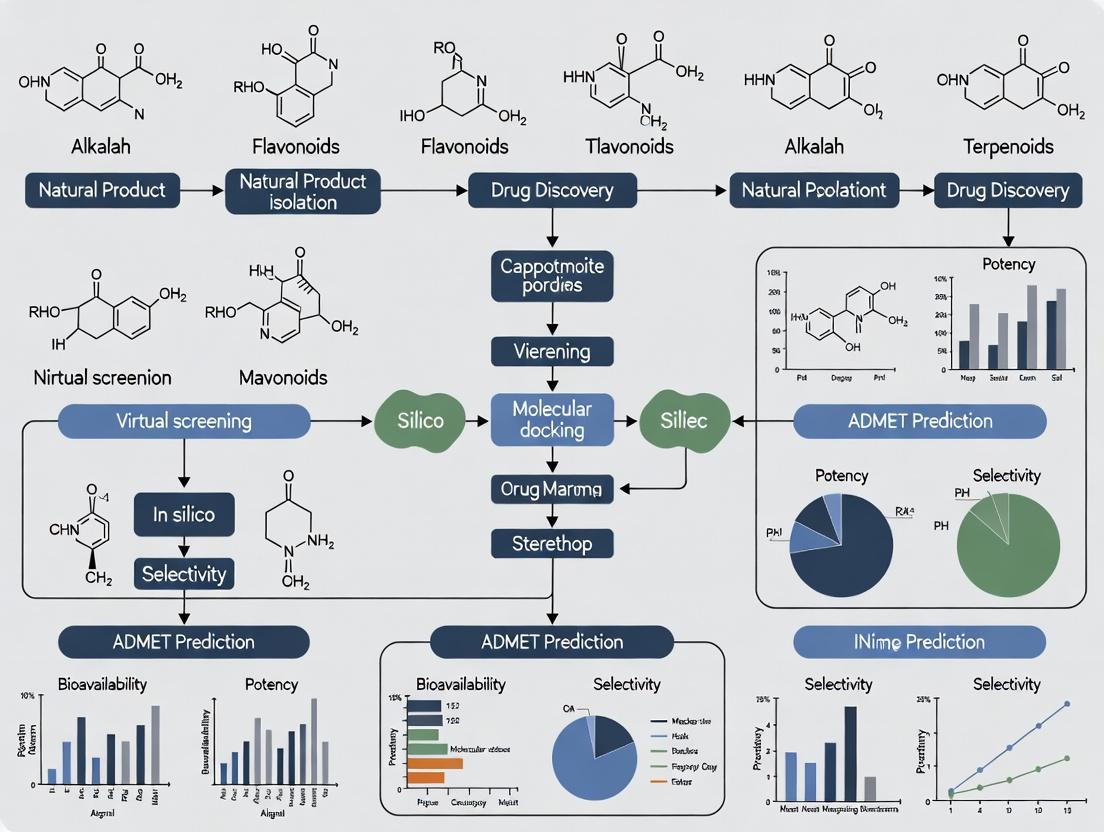
This article provides a comprehensive guide to in silico methods for accelerating natural product-based drug discovery, tailored for researchers and development professionals.
AI-Powered In Silico Strategies: Revolutionizing Natural Product-Based Drug Discovery
Abstract
This article provides a comprehensive guide to in silico methods for accelerating natural product-based drug discovery, tailored for researchers and development professionals. It explores the foundational rationale for using computational approaches to overcome the unique challenges of natural products, such as structural complexity and data scarcity. The article details a suite of methodological applications, from virtual screening and machine learning to ADMET prediction and network pharmacology. It addresses common troubleshooting issues, including data quality and model interpretability, and outlines strategies for optimization. Finally, it examines validation frameworks and comparative analyses against experimental data, synthesizing key takeaways into a forward-looking perspective on integrating computational precision with biological insight for more efficient therapeutic development[citation:2][citation:3][citation:4].
The Computational Imperative: Why In Silico Methods Are Transforming Natural Product Discovery
The Historical Significance and Modern Challenges of Natural Products in Drug Discovery
Natural products (NPs) have been the cornerstone of pharmacotherapy for millennia, providing a vast array of structurally complex and biologically active compounds. This application note, framed within a thesis on in silico methods for NP-based drug discovery, details the enduring historical significance, contemporary challenges, and modern integrated protocols that combine computational and experimental approaches to harness NPs in drug development.
Historical Significance & Modern Revival: A Quantitative Perspective
Natural products continue to play a dominant role in modern medicine, particularly in anti-infective and anti-cancer therapies. Recent analyses of drug approvals underscore their ongoing relevance.
Table 1: Natural Product-Derived Drug Approvals (2019-2023)
| Therapeutic Area | Total New Drug Approvals | NP-Derived Approvals | Percentage (%) |
|---|---|---|---|
| Anti-infectives | 42 | 15 | 35.7 |
| Anticancer Agents | 87 | 22 | 25.3 |
| All Others | 188 | 11 | 5.9 |
| Total (All Areas) | 317 | 48 | 15.1 |
Data Source: Consolidated from recent FDA/EMA approval lists and review articles (2020-2024).
Core Challenges in Modern NP Drug Discovery
- Supply & Resupply: Sustainable sourcing of rare biological material.
- Structural Complexity: Difficulty in de novo synthesis and derivatization.
- Dereplication: Rapid identification of known compounds to avoid redundancy.
- Low Yields: Isolation of sufficient quantities for full biological testing.
IntegratedIn Silico& Experimental Protocols
Protocol 3.1:In Silico-Guided NP Prioritization and Dereplication
Objective: To computationally prioritize extracts or fractions and identify known NPs prior to costly isolation.
Materials & Workflow:
- Input: Crude extract LC-MS/MS data in .mzML format.
- Software Tools: GNPS (Global Natural Products Social Molecular Networking), SIRIUS for molecular formula prediction, and the NPASS database for bioactivity predictions.
- Process:
- Upload MS/MS data to GNPS to create a molecular network.
- Use feature-based molecular networking to cluster related spectra.
- Annotate nodes by matching spectra against GNPS libraries (e.g., GNPS, NIST).
- For unannotated nodes, use SIRIUS to predict molecular formula and structure.
- Query predicted structures against in-house or commercial NP databases (e.g., COCONUT, NPASS) for virtual bioactivity screening.
- Output: A prioritized list of unknown nodes with predicted bioactivities for targeted isolation.
Protocol 3.2: Target Fishing and Pathway Analysis for Novel NPs
Objective: To predict the potential protein targets and affected signaling pathways of a computationally or isolated novel NP structure.
Materials & Workflow:
- Input: 2D/3D chemical structure (SDF/MOL2 file).
- Software Tools: SwissTargetPrediction, PASS Online, or the SEA server for target prediction. Use KEGG or Reactome for pathway enrichment.
- Process:
- Submit the NP structure to multiple target prediction servers.
- Compile consensus predicted targets (e.g., targets predicted by ≥2 servers).
- Perform pathway enrichment analysis on the consensus target set using DAVID or Enrichr.
- Build a protein-protein interaction network (e.g., via STRINGdb) to identify hub targets.
- Output: A ranked list of high-probability macromolecular targets and associated disease pathways for experimental validation.
Visualization of Integrated Workflows
Diagram 1: Integrated In Silico-Experimental NP Discovery Pipeline
Diagram 2: In Silico Target Prediction & Pathway Mapping Workflow
The Scientist's Toolkit: Key Research Reagent Solutions
Table 2: Essential Materials for Integrated NP Research
| Item / Reagent | Function / Application |
|---|---|
| LC-MS Grade Solvents | High-purity solvents for reproducible UHPLC-MS/MS analysis and compound isolation. |
| Sephadex LH-20 | Size-exclusion chromatography medium for gentle desalting and fractionation of crude NP extracts. |
| Deuterated NMR Solvents | Essential for structure elucidation of novel NPs (e.g., DMSO-d6, CD3OD, CDCl3). |
| Cryoprobe for NMR | Increases sensitivity, enabling structure determination from microgram quantities of NP. |
| HTS Assay Kits | Validated biochemical or cell-based kits for rapid in vitro validation of predicted bioactivity. |
| Open-Access MS/MS Libraries | Reference spectral databases (e.g., GNPS, MassBank) for NP dereplication. |
| Cloud Computing Credits | For running computationally intensive tasks like molecular docking or machine learning-based predictions. |
| In-house NP Extract Library | A characterized, diverse physical library of pre-fractionated extracts for high-throughput screening. |
Unique Chemical and Pharmacological Characteristics of Natural Compounds
Natural products (NPs) are a cornerstone of modern pharmacotherapy, with a significant proportion of approved small-molecule drugs being derived directly or indirectly from natural sources [1]. Their unique value stems from evolutionary selection for bioactivity, resulting in unparalleled structural diversity, complex molecular architectures (including high stereochemical complexity), and privileged scaffolds capable of modulating challenging targets like protein-protein interactions [2] [3]. However, this same complexity presents formidable challenges for traditional drug discovery pipelines, including difficult isolation, synthetic inaccessibility, and unpredictable pharmacokinetics [4].
In silico methodologies have emerged as a critical framework for navigating these challenges, enabling the systematic exploration of natural chemical space within a broader thesis on computational drug discovery. These methods transform the NP discovery process by allowing for the virtual screening of immense compound libraries, predictive modeling of pharmacokinetic properties, and mechanistic simulation of bioactivity before any physical compound is sourced or synthesized [5] [6]. This paradigm leverages cheminformatics, machine learning (ML), and molecular modeling to de-risk and accelerate the translation of unique natural compound characteristics into viable therapeutic leads [7] [8].
A successful in silico campaign begins with access to high-quality, well-annotated data and the appropriate computational tools. Specialized databases and software suites form the essential infrastructure for this research.
2.1 Key Natural Product Databases Critical to any computational study is the selection of a suitable natural product database. These repositories vary in scope, annotation depth, and accessibility, influencing the virtual screening strategy [5].
Table 1: Select Natural Product Databases for In Silico Screening
| Database Name | Key Features | Primary Utility in Screening | Reference/Link |
|---|---|---|---|
| SuperNatural Database | Contains ~50,000 purchasable compounds with 3D structures and pre-computed conformers. Links to supplier information. | Ligand-based virtual screening (LBVS) using similarity searches and ready-to-dock 3D conformers. | [2] |
| Natural Product Atlas (NPA) | A curated database of microbial natural products focused on structural diversity. | LBVS and chemical space exploration for novel microbial-derived scaffolds. | [7] |
| ChEMBL | A large-scale database of bioactive molecules with drug-like properties, containing extensive bioactivity data. | Building ligand-based ML models and extracting known actives/inactives for target classes. | [8] |
| COCONUT (Compound Combination-Oriented NP Database) | Focuses on natural products and their combinations, with unified terminology. | Studying synergistic effects and network pharmacology of compound mixtures. | [9] |
2.2 The Scientist's Toolkit: Essential Software and Platforms The experimental workflow is supported by a suite of specialized software and platforms, each addressing a specific computational task.
Table 2: Research Reagent Solutions: Key Software Tools for In Silico NP Discovery
| Tool/Platform Name | Category | Primary Function | Application in NP Research |
|---|---|---|---|
| RDKit | Cheminformatics | An open-source toolkit for cheminformatics, including fingerprint generation, descriptor calculation, and molecular operations. | Standard for processing NP structures, calculating molecular descriptors, and generating fingerprints for ML [7] [8]. |
| RosettaVS / OpenVS Platform | Structure-Based Virtual Screening (SBVS) | A physics-based docking and virtual screening platform that models receptor flexibility. | High-accuracy docking and screening of ultra-large libraries against protein targets [6]. |
| PyRx (AutoDock Vina) | Molecular Docking | A graphical interface for automated molecular docking using the AutoDock Vina engine. | Accessible docking for binding pose prediction and affinity estimation of NP candidates [10]. |
| TAME-VS Platform | Machine Learning / LBVS | A target-driven ML platform that uses homology and known bioactivity data to train custom classifiers. | Hit identification for novel targets with limited known NP ligands [8]. |
| Gaussian | Quantum Mechanics | Software for electronic structure modeling, including Density Functional Theory (DFT) calculations. | Computing electronic properties, reactivity indices, and optimizing geometries of NPs [4] [10]. |
| GROMACS / AMBER | Molecular Dynamics (MD) | Software suites for performing all-atom MD simulations. | Assessing stability of NP-protein complexes, calculating binding free energies, and simulating conformational dynamics [10]. |
Diagram Title: In Silico NP Discovery Workflow from Target to Hit List
Core Methodologies and Application Protocols
This section provides detailed, executable protocols for key in silico experiments in natural product research.
3.1 Protocol: Machine Learning-Based Virtual Screening for Novel Inhibitors This protocol outlines a ligand-based virtual screening (LBVS) approach using machine learning to identify novel natural product inhibitors for a given protein target, based on methodologies from successful case studies [7] [8].
Objective: To train a binary classifier capable of distinguishing active from inactive compounds against a specific target and apply it to screen a natural product database.
Materials & Input:
- Bioactivity Data: A dataset of known active and inactive compounds for the target (e.g., from ChEMBL [8]). Activity is typically defined by an IC50/Ki cutoff (e.g., ≤ 1 μM for active [7]).
- NP Library: A database of natural product structures in SMILES format (e.g., Natural Product Atlas [7]).
- Software: Python environment with RDKit, scikit-learn, imbalanced-learn, and pandas libraries.
Procedure:
- Data Curation and Labeling:
- Retrieve bioactivity data from public databases using the target's UniProt ID.
- Apply a consistent activity threshold to label compounds as 'active' or 'inactive'. Remove duplicates.
- Critical Note: Address class imbalance (typically many more inactives) using techniques like the Synthetic Minority Oversampling Technique (SMOTE) [7].
- Feature Engineering (Vectorization):
- Model Training and Validation:
- Split the labeled dataset into training (70%) and hold-out test (30%) sets, ensuring representative clusters of active compounds are in the test set [7].
- Train multiple ML classifiers (e.g., Random Forest, Support Vector Machine, Neural Network). Optimize hyperparameters via grid or random search with cross-validation.
- Select the best model based on performance metrics (e.g., precision, AUC-ROC) on the cross-validated training set.
- Virtual Screening and Hit Prioritization:
- Apply the trained model to predict the probability of activity for each compound in the NP library.
- Rank NPs by the prediction score and select top candidates.
- Apply additional filters: assess drug-likeness (e.g., Lipinski's Rule of Five), screen for Pan-Assay Interference Compounds (PAINS), and evaluate chemical novelty [7].
- Applicability Domain Assessment:
- Perform Principal Component Analysis (PCA) on the combined training and NP library feature sets.
- Define the model's applicability domain (e.g., a convex hull around training data). Flag or deprioritize NPs falling outside this domain, as predictions for them are less reliable [7].
3.2 Protocol: Integrated Structure-Based Evaluation of NP Pharmacokinetics and Dynamics This protocol describes a multi-stage in silico evaluation of promising NP hits, integrating ADMET prediction, molecular docking, and dynamics simulations, as exemplified in recent studies [10].
Objective: To comprehensively evaluate the binding mode, stability, and drug-like properties of a prioritized natural product hit.
Materials & Input:
- NP Hit: 3D chemical structure file (e.g., .mol2, .sdf).
- Protein Target: High-resolution 3D structure from crystallography or homology modeling (e.g., .pdb file).
- Software: ADMET prediction tools (e.g., SwissADME, pkCSM), docking software (e.g., PyRx, AutoDock Vina), MD software (e.g., GROMACS), and quantum chemistry software (e.g., Gaussian).
Procedure: Part A: ADMET and Toxicity Profiling
- Use online platforms like SwissADME to predict key physicochemical (LogP, TPSA) and pharmacokinetic (GI absorption, CYP inhibition) parameters.
- Employ toxicity prediction tools to assess alerts for mutagenicity, hepatotoxicity, and other endpoints. Consider both top-down (e.g., QSAR models trained on large toxicity datasets) and bottom-up (e.g., molecular docking against toxicity-related proteins like hERG) approaches [9].
Part B: Molecular Docking and Binding Pose Analysis
- Prepare the protein: remove water, add hydrogen atoms, assign charges (e.g., using AutoDockTools).
- Prepare the ligand: optimize geometry, assign rotatable bonds.
- Define the binding site grid based on known active site residues.
- Perform docking simulations (≥ 50 runs) to generate multiple binding poses. Select the pose with the most favorable binding energy and biologically plausible interactions (e.g., hydrogen bonds, hydrophobic contacts).
Part C: Molecular Dynamics Simulation for Complex Stability
- Set up the system: place the protein-ligand complex in a solvation box (e.g., TIP3P water), add ions to neutralize charge.
- Energy minimization: remove steric clashes using steepest descent/conjugate gradient algorithms.
- Equilibration: perform short simulations under NVT and NPT ensembles to stabilize temperature and pressure.
- Production run: execute an unrestrained MD simulation (recommended ≥ 100 ns [10]).
- Trajectory analysis:
- Calculate the Root Mean Square Deviation (RMSD) of the protein backbone and ligand to assess overall complex stability.
- Calculate the Root Mean Square Fluctuation (RMSF) to determine residual flexibility.
- Compute the Radius of Gyration (Rg) to monitor protein compactness.
- Monitor intermolecular hydrogen bonds throughout the simulation to evaluate interaction persistence [10].
Part D: Electronic Structure Analysis (Optional, for Mechanism)
- For the isolated ligand or key ligand-protein fragments, perform Density Functional Theory (DFT) calculations (e.g., using Gaussian at the B3LYP/6-311+G* level [4]).
- Analyze frontier molecular orbitals (HOMO-LUMO) to predict reactivity and nucleophilic/electrophilic sites that may be involved in metabolism or target interaction.
Diagram Title: Multi-Stage In Silico NP Lead Validation Funnel
Validation and Case Studies in Therapeutic Areas
The efficacy of in silico protocols is demonstrated through their application in identifying leads for challenging diseases.
4.1 Case Study: Targeting HIV-1 Integrase with Machine Learning A study demonstrated the use of an ML-based LBVS pipeline to discover novel natural product inhibitors of HIV-1 Integrase (IN) [7]. Researchers trained a Random Forest model on 7,165 compounds with known IN activity from BindingDB. After addressing class imbalance, the model was used to screen the Natural Product Atlas. The workflow successfully identified NP candidates predicted to be active, which were subsequently clustered to ensure chemical diversity. This approach showcases how ML can leverage existing bioactivity data to efficiently mine NP space for anti-infective leads.
4.2 Case Study: Discovery of Colon Cancer Therapeutics from Annona muricata A comprehensive in silico evaluation of phytochemicals from soursop leaves for colon cancer treatment provides a prototypical example of an integrated protocol [10]. After initial GC-MS identification and drug-likeness filtering, seven top compounds were selected. Molecular docking against the DNA mismatch repair protein MLH1 revealed superior binding affinities compared to the standard drug 5-fluorouracil. Subsequent ADMET predictions indicated favorable pharmacokinetics and low toxicity. Crucially, 100 ns molecular dynamics simulations confirmed the stability of the NP-protein complexes, as evidenced by low RMSD and stable hydrogen bonding patterns for hits like alpha-tocopherol. This end-to-end study validates the protocol's ability to prioritize stable, drug-like NPs for experimental testing.
Table 3: Performance of Select In Silico Methods in NP Research
| Method Category | Specific Tool/Approach | Reported Performance Metric | Application Context |
|---|---|---|---|
| Structure-Based VS | RosettaVS (VSH mode) | Enrichment Factor at 1% (EF1%) = 16.72; Top performer on CASF2016 benchmark [6]. | General virtual screening accuracy. |
| Machine Learning (LBVS) | Random Forest Classifier | Used to screen NP Atlas for HIV-1 IN inhibitors; model trained on BindingDB data [7]. | Identification of novel anti-HIV natural products. |
| Molecular Dynamics | 100 ns MD Simulation (GROMACS/AMBER) | Stable complex RMSD (< 0.3 nm) and persistent H-bonds demonstrated for alpha-tocopherol-MLH1 [10]. | Validation of binding stability for cancer-related target. |
| ADMET Prediction | QSAR and PBPK Modeling | Applied to overcome challenges of NP instability, solubility, and first-pass metabolism prediction [4]. | Early-stage pharmacokinetic profiling. |
4.3 Emerging Framework: Target-Driven Machine Learning Screening The TAME-VS platform represents an advanced, automated framework for hit identification [8]. Starting with a single protein target ID, it performs homology-based target expansion, retrieves relevant bioactivity data from ChEMBL, trains bespoke ML models, and screens custom compound libraries. This modular platform is particularly valuable for novel targets with few known NP ligands, as it leverages information from homologous proteins. Its public availability increases accessibility to advanced ML-enabled VS for the research community.
In silico methods provide an indispensable, multidisciplinary framework for elucidating and leveraging the unique chemical and pharmacological characteristics of natural compounds. By integrating cheminformatics, machine learning, and molecular modeling, researchers can systematically navigate NP complexity—from virtual screening of billions of compounds to predicting metabolic fate and simulating target engagement dynamics.
The future of this field lies in enhancing the accuracy of predictability and the depth of integration. Key directions include: 1) Developing NP-specific predictive models for ADMET and toxicity to overcome biases in models trained primarily on synthetic molecules [4] [9]; 2) Advancing hybrid screening protocols that seamlessly combine ligand- and structure-based methods with active learning to explore ultra-large chemical spaces [6] [8]; and 3) Embracing systems pharmacology approaches to model polypharmacology and synergistic effects characteristic of many natural extracts [9] [1]. As databases grow and algorithms evolve, in silico strategies will become even more central, transforming natural product discovery into a more predictable, efficient, and mechanism-driven endeavor.
The pharmaceutical industry faces a persistent productivity crisis, often described by Eroom's Law—the observation that the number of new drugs approved per billion US dollars spent on R&D has halved roughly every nine years [11]. The traditional drug development paradigm is characterized by excessive costs, averaging $2.6 billion per approved drug, protracted timelines of 10-15 years, and catastrophic attrition rates, with approximately 90% of candidates failing in clinical trials [11] [12]. This model is especially challenging for natural product (NP)-based drug discovery, where promising bioactive compounds face additional hurdles such as complex isolation, limited availability, chemical instability, and undefined pharmacokinetics [4] [1].
In silico methodologies, powered by artificial intelligence (AI) and advanced computational modeling, are emerging as core disruptive drivers to reverse this trend. By integrating computational intelligence across the entire pipeline—from target identification to clinical trial design—these tools offer a strategic framework to accelerate timelines, drastically reduce costs, and mitigate high attrition rates by failing early and cheaply [11] [13]. This shift is being catalyzed by regulatory evolution, notably the U.S. FDA's 2025 decision to phase out mandatory animal testing for many drug types, affirming in silico evidence as a credible pillar of biomedical research [13].
Within the specific context of NP research, in silico methods address unique constraints. They enable the virtual screening of vast, structurally diverse chemical spaces without the need for physical compound isolation, predict ADME (Absorption, Distribution, Metabolism, Excretion) properties to flag pharmacokinetic liabilities early, and leverage generative AI to design optimized NP-inspired analogs [4] [14] [1]. This document details the application notes and experimental protocols that operationalize these in silico drivers, providing a practical guide for integrating computational acceleration into NP-based drug discovery workflows.
Quantitative Impact: The Data SupportingIn SilicoAcceleration
The integration of AI and in silico tools directly targets the core inefficiencies of drug development. The following tables summarize key performance metrics comparing traditional and AI-augmented approaches, and the phase-specific attrition where in silico prediction can have maximum impact.
Table 1: Comparative Analysis of Traditional vs. AI-Augmented Drug Discovery Metrics
| Performance Metric | Traditional Approach | AI-Augmented / In Silico Approach | Data Source & Notes |
|---|---|---|---|
| Average Cost per Approved Drug | ~$2.6 billion [11] | Potential for significant reduction; early failure of unsuitable candidates saves late-stage costs. | [11] Cost avoided by predictive toxicology & ADME. |
| Discovery to Phase I Timeline | ~5 years [15] | 18-24 months (e.g., Insilico Medicine's IPF candidate) [15]. | [15] Generative AI can compress early stages. |
| Clinical Trial Success Rate | ~10% (overall) [12] | Aim to increase via better candidate selection and patient stratification. | [11] [12] Target of AI is to improve this rate. |
| Typical Hit Rate from HTS | ~2.5% [12] | Greatly enhanced by virtual screening of larger, virtual chemical libraries (e.g., >10³³ molecules) [11]. | [12] AI pre-filters candidates for physical testing. |
| Lead Optimization Cycle Efficiency | Industry standard baseline. | Reported ~70% faster design cycles requiring 10x fewer synthesized compounds [15]. | [15] Data from Exscientia's AI-driven platform. |
Table 2: Major Causes of Clinical Attrition and Corresponding *In Silico Mitigation Strategies*
| Development Phase | Approximate Attrition Rate | Primary Cause of Failure | In Silico Mitigation Strategy |
|---|---|---|---|
| Preclinical | Not quantified (high) | Poor pharmacokinetics (ADME), toxicity [11]. | Predictive ADME/Tox models (e.g., QSAR, PBPK) [4] [13]. |
| Phase I | ~37% [11] | Human safety, adverse reactions [11]. | Improved preclinical toxicity prediction using digital twins & organ-on-chip models [13]. |
| Phase II | ~70% [11] | Lack of efficacy in patients [11]. | Target validation via AI/omics; patient stratification biomarkers; in silico efficacy models [11] [14]. |
| Phase III | ~42% [11] | Insufficient efficacy vs. standard of care, safety in larger population [11]. | Synthetic control arms, trial simulation, and digital twin forecasting [13]. |
FoundationalIn SilicoMethodologies: Application Notes
Predictive ADME/Tox Profiling for Natural Products
Application Note: Early prediction of pharmacokinetic and safety profiles is critical to avoid late-stage attrition [4]. NPs often possess complex scaffolds that violate traditional drug-likeness rules (e.g., Lipinski’s Rule of Five), making experimental ADME testing challenging due to low solubility, chemical instability, or scarce material [4]. In silico tools provide a viable first pass.
- Tools & Techniques: Utilize a combination of:
- Quantum Mechanics (QM) Calculations: To assess chemical reactivity and metabolic susceptibility. For example, studying the regioselectivity of CYP450 metabolism for compounds like estrone [4].
- Quantitative Structure-Activity Relationship (QSAR) Models: To predict properties like permeability, solubility, and hepatic metabolic stability.
- Physiologically Based Pharmacokinetic (PBPK) Modeling: To simulate compound concentration-time profiles in tissues and plasma, informing first-in-human dosing [4].
- Specialized Platforms: ADMETlab, ProTox-3.0, and DeepTox for toxicity endpoint prediction [13].
Considerations: Predictions are only as good as the training data. The unique chemical space of NPs may fall outside the applicability domain of models trained predominantly on synthetic molecules. Cross-validation with sparse experimental data for NPs is essential.
Virtual Screening and AI-Powered Hit Identification
Application Note: Replacing or prioritizing expensive high-throughput screening (HTS) with virtual screening allows exploration of vastly larger chemical spaces, including virtual NP libraries and de novo generated structures [11] [1].
- Ligand-Based Approaches: Used when the structure of the target is unknown but active ligands are known. Techniques include pharmacophore modeling and molecular similarity searching.
- Structure-Based Approaches: Used when a 3D target structure (experimental or homology-modeled) is available.
- Molecular Docking: Predicts the binding pose and affinity of a small molecule within a target binding site. Crucial for understanding NP-target interactions [1].
- Molecular Dynamics (MD) Simulations: Assesses the stability of the ligand-target complex and calculates binding free energies with higher accuracy than static docking [4] [1].
- AI-Enhanced Screening: Graph Neural Networks (GNNs) and other deep learning models can screen billions of virtual compounds in silico, learning complex structure-activity relationships to prioritize synthesis [14] [12].
Generative AI for Lead Optimization and Novel Design
Application Note: Beyond screening, generative AI models can design novel, optimized NP analogs with desired properties.
- Model Architectures:
- Generative Adversarial Networks (GANs): A generator network creates new molecular structures, while a discriminator network evaluates their authenticity, driving the generation of realistic molecules [11].
- Variational Autoencoders (VAEs): Encode molecules into a latent space where interpolation and optimization can generate novel structures with specific property profiles [11].
- Transformers: Adapted from natural language processing, they treat molecular structures as "sentences" to generate novel sequences [14].
- Workflow: The AI is conditioned on a multi-parameter Target Product Profile (e.g., potency on target, selectivity over antitargets, predicted ADME properties). It then generates novel molecular structures that maximize this profile, enabling a rapid design-make-test-analyze cycle [15].
AI-Driven Lead Optimization Cycle [11] [15]
Network Pharmacology for Complex Mechanism Prediction
Application Note: NPs, especially herbal extracts, often exert therapeutic effects through polypharmacology—modulating multiple targets simultaneously. Network pharmacology provides a systems-level view.
- Methodology: Constructs multi-layered networks linking:
- NP compounds to their predicted protein targets.
- Protein targets to associated biological pathways.
- Pathways to disease phenotypes.
- Outcome: Identifies key target nodes and synergistic effects, moving beyond a single "magic bullet" target to a holistic mechanism of action, which can be validated experimentally [14] [1].
Detailed Experimental Protocols
Protocol 1:In SilicoADME and Toxicity Prediction Pipeline for a Novel Natural Product
Objective: To computationally profile the pharmacokinetic and safety liabilities of a newly isolated or designed NP prior to resource-intensive experimental assays.
Materials (The Scientist's Toolkit):
- Hardware: Standard high-performance computing cluster or workstation.
- Software: Commercial suites (e.g., Schrödinger's Small Molecule Drug Discovery Suite, MOE) or open-source tools (OpenBabel, RDKit, AutoDock Vina).
- Compound Structure: 2D or 3D chemical structure file (e.g., .sdf, .mol2) of the NP.
- Prediction Platforms: Access to web servers like SwissADME [4], ProTox-3.0 [13], or ADMETlab [13].
Procedure:
- Structure Preparation:
- Convert the NP structure to a 3D format.
- Perform conformational search and geometry optimization using molecular mechanics (MMFF94) or semi-empirical (PM6) methods [4].
- Output the lowest energy conformer for subsequent analysis.
- Physicochemical Property Prediction:
- Calculate key descriptors: Molecular weight, logP (lipophilicity), topological polar surface area (TPSA), hydrogen bond donors/acceptors.
- Assess compliance with drug-likeness rules (e.g., Lipinski, Veber).
- ADME Prediction:
- Absorption: Predict Caco-2 permeability or human intestinal absorption using QSAR models.
- Metabolism: Predict sites of metabolism (e.g., via CYP450) using reactivity models from QM or machine learning. Identify potential for being a substrate or inhibitor of major CYP enzymes [4].
- Excretion: Predict renal clearance or likelihood of being a P-glycoprotein substrate.
- Toxicity Prediction:
- Run predictions for mutagenicity (Ames test), carcinogenicity, hepatotoxicity, and cardiotoxicity (hERG channel inhibition) using platforms like ProTox-3.0 [13].
- Data Integration & Risk Assessment:
- Compile all predictions into a risk scorecard.
- Flag severe liabilities (e.g., predicted hERG inhibition, mutagenicity, or poor permeability). A compound with multiple severe flags may be deprioritized.
Protocol 2: AI-Enhanced Virtual Screening of a Natural Product Library Against a Novel Target
Objective: To identify potential hit compounds from a large virtual NP library for a disease target with a known 3D structure.
Materials:
- Target Structure: High-resolution X-ray crystal structure or a high-confidence AlphaFold2 model of the target protein. Prepare the structure by adding hydrogens, assigning bond orders, and optimizing side-chain orientations.
- Compound Library: A database of 3D NP structures in a suitable format (e.g., multi-molecule .sdf file). Libraries can be sourced from ZINC, COCONUT, or proprietary collections.
- Software: Docking software (e.g., Glide, GOLD, AutoDock); AI/ML screening platform (e.g., from Atomwise or using a custom GNN model) [15] [12].
Procedure:
- Target Preparation:
- Define the binding site (from co-crystallized ligand or literature).
- Generate grid files for docking centered on the binding site.
- Ligand Library Preparation:
- Standardize structures: remove salts, generate tautomers, and protonate at physiological pH.
- Perform a conformational search for each ligand.
- Hierarchical Screening: a. Ultra-Fast Filtering (Optional): Use a trained Graph Neural Network classifier to score all library compounds for likely activity, rapidly filtering from millions to hundreds of thousands [12]. b. High-Throughput Docking: Dock the top candidates from (a) or the entire prepared library into the target binding site. Rank compounds by docking score (e.g., GlideScore, binding energy). c. Interaction Analysis & Clustering: Visually inspect top-ranked poses for key interactions (hydrogen bonds, hydrophobic contacts). Cluster results to ensure chemical diversity among hits. d. Refinement with Molecular Dynamics: Subject the best 10-20 complexes to short (50-100 ns) MD simulations in explicit solvent to assess binding stability and calculate more accurate binding free energies (e.g., via MM-PBSA/GBSA) [1].
- Hit Selection & Prioritization:
- Integrate scores from docking, MD, and in silico ADMET predictions (from Protocol 1).
- Select 5-10 chemically diverse, synthetically tractable hits with favorable predicted profiles for in vitro experimental validation.
Hierarchical AI & Physics-Based Virtual Screening Workflow [1] [12]
The Scientist's Toolkit: Essential Research Reagent Solutions
Table 3: Key Computational Tools and Resources for In Silico NP Drug Discovery
| Tool/Resource Name | Category | Primary Function | Access / Example |
|---|---|---|---|
| AlphaFold2 | Protein Structure Prediction | Predicts highly accurate 3D protein structures from amino acid sequences, invaluable for targets without experimental structures. | DeepMind; EMBL-EBI repository. |
| Schrödinger Suite | Comprehensive Drug Discovery Platform | Integrates solutions for molecular modeling, simulation, and prediction (Glide for docking, Desmond for MD, QikProp for ADME). | Commercial platform [15]. |
| RDKit | Cheminformatics Toolkit | Open-source library for cheminformatics and machine learning, used for molecule manipulation, descriptor calculation, and model building. | Open source (rdkit.org). |
| SwissADME | Web-based ADME Prediction | Free tool for fast prediction of key pharmacokinetic properties and drug-likeness. | Web server [4]. |
| ProTox-3.0 | Web-based Toxicity Prediction | Predicts various toxicity endpoints, including organ toxicity, toxicity pathways, and molecular targets. | Web server [13]. |
| Pharma.AI (Insilico Medicine) | End-to-End AI Platform | Generative AI platform for target discovery (PandaOmics), molecule generation (Chemistry42), and clinical trial prediction (InClinico). | Commercial platform [15] [16]. |
| Exscientia AI Platform | AI-Driven Design Platform | Integrates generative AI with automated synthesis and testing for closed-loop optimization. | Commercial platform [15]. |
| COCONUT | Natural Product Database | A comprehensive, freely accessible database of NP structures for virtual screening library building. | Web database. |
Future Directions and Integration into the Broader Thesis
The trajectory of in silico methods points toward even deeper integration and sophistication, shaping the broader thesis on NP drug discovery:
- The Rise of Digital Twins and In Silico Trials: The creation of virtual patient populations that mirror real-world heterogeneity will enable clinical trial simulation. This allows for optimizing trial design, predicting outcomes, and serving as synthetic control arms, dramatically reducing the scale, cost, and risk of human trials [13]. For NPs with complex mechanisms, digital twins can model systems-level effects.
- Federated Learning and Data Collaboration: To overcome the "small data" problem common in NP research, federated learning allows AI models to be trained on distributed, proprietary datasets (e.g., from different pharmaceutical companies or herbarium collections) without sharing the raw data, improving model robustness [11] [14].
- Explainable AI (XAI) for Mechanistic Insight: Next-generation models will not only make predictions but also provide interpretable explanations for why a compound is predicted to be active or toxic. This is crucial for building scientific trust and generating novel mechanistic hypotheses for experimental validation [14] [12].
- Regulatory Adoption as a Primary Evidence Source: As evidenced by the FDA's evolving stance, Model-Informed Drug Development (MIDD) submissions incorporating in silico evidence will become standard. The community must develop standardized validation frameworks to ensure the credibility and reproducibility of computational models used for regulatory decision-making [13].
In conclusion, in silico methodologies are the foundational core drivers addressing the existential challenges of cost, time, and attrition in drug discovery. Their application to the rich but challenging domain of natural products is not merely additive but transformative. By adopting the protocols and frameworks outlined here, researchers can systematically harness these tools to accelerate the journey of NPs from traditional remedies to optimized, globally relevant medicines, thereby validating the central thesis of computational revolution in this field.
The modern paradigm of natural product (NP)-based drug discovery is fundamentally integrated with in silico methodologies. Computational approaches enable the efficient mining, dereplication, bioactivity prediction, and target identification for NPs, accelerating the transition from compound discovery to lead candidate. This document provides detailed application notes and experimental protocols for leveraging key databases and resources within this workflow.
Core Database Compendium: Classification and Quantitative Analysis
The following tables summarize the primary databases, their content scope, and key quantitative metrics essential for research planning.
Table 1: Comprehensive Natural Product Chemical & Spectral Databases
| Database Name | Primary Content | Total Entries (Approx.) | Key Features | Access Model |
|---|---|---|---|---|
| COCONUT (COlleCtion of Open Natural prodUcTs) | NP structures, predicted properties | ~450,000 unique NPs | Open-access, no redundancy, includes predicted molecular descriptors. | Free, Web/Download |
| NPASS (Natural Product Activity and Species Source) | NPs, species source, target activities | ~35,000 NPs, ~300,000 activity entries | Quantitative activity data (IC50, Ki, EC50) against biological targets. | Free, Web/Download |
| LOTUS (The Natural Products Occurrence Database) | NPs, occurrence in biological organisms | ~700,000 curated occurrences | Links structures to organism names via Wikidata, emphasizes provenance. | Free, Web/API |
| GNPS (Global Natural Products Social Molecular Networking) | MS/MS spectral data, molecular networks | Millions of community spectra | Community-contributed spectral library, molecular networking tools. | Free, Web/Cloud |
| PubChem | Compounds, bioassays, literature | Over 1 million NPs/subset | Extensive bioassay data, links to PubMed, vendor information. | Free, Web/API |
| CMAUP (Collective Molecular Activities of Useful Plants) | NPs from medicinal plants, target activities | ~47,000 NPs, 26,000 targets | Annotated with gene targets, pathways, and associated diseases. | Free, Download |
Table 2: Specialized Target Prediction & ADMET Databases
| Database Name | Application Focus | Data Type | Utility in NP Discovery | |
|---|---|---|---|---|
| SuperNatural 3.0 | NP target prediction & analogues | ~500,000 compounds with predicted targets | Facilitates virtual screening and polypharmacology studies. | Free, Web |
| Seaweed Metabolite Database | Marine NP chemistry & bioactivity | ~800 compounds from seaweeds | Specialized resource for marine biodiscovery. | Free, Web |
| ADMETlab 3.0 | In silico ADMET prediction | Web-based prediction platform | Evaluates drug-likeness, toxicity, and pharmacokinetics of NP hits. | Free, Web/API |
Detailed Application Notes & Experimental Protocols
Protocol 3.1: Integrated Workflow for NP Dereplication and Prioritization
Objective: To efficiently identify known compounds and prioritize novel NPs with potential bioactivity from a crude extract using in silico tools.
Research Reagent Solutions & Essential Materials:
- LC-HRMS/MS System: For generating high-resolution mass and fragmentation spectra of the sample.
- Crude Natural Product Extract: Fractionated or unfractionated.
- GNPS Account: For spectral data submission and networking.
- Local Installation of SIRIUS/CSI:FingerID: For in-depth structure annotation.
- Software: MZmine 3 (for LC-MS data processing), Cytoscape (for network visualization).
Step-by-Step Protocol:
Data Acquisition:
- Analyze the NP extract via LC-HRMS/MS in data-dependent acquisition (DDA) mode.
- Export raw data in an open format (e.g., .mzML).
Data Pre-processing with MZmine 3:
- Import the .mzML file.
- Perform mass detection, chromatogram building, deconvolution, and isotopic peak grouping.
- Align peaks across samples (if multiple).
- Export the feature table (containing m/z, RT, and MS/MS spectra) as a .mgf file for GNPS.
Molecular Networking on GNPS:
- Upload the .mgf file to the GNPS workspace (https://gnps.ucsd.edu).
- Create a molecular network using the standard workflow. Set parameters: Precursor Ion Mass Tolerance (0.02 Da), Fragment Ion Tolerance (0.02 Da).
- Execute the job. Visualize the resulting network in the browser or Cytoscape.
- Dereplication: Nodes (clusters) colored by spectral matches to library entries (e.g., GNPS, NIST) indicate known compounds.
In-Depth Annotation of Novel Clusters:
- For nodes without library matches, export the representative MS/MS spectrum.
- Process this spectrum through the SIRIUS software (local install):
- Input m/z and MS/MS data.
- Run SIRIUS to predict molecular formula and CSI:FingerID for structural class prediction.
- Cross-reference predicted structures with databases like COCONUT via their SMILES.
Bioactivity & Target Prioritization:
- For novel or prioritized structures, generate canonical SMILES.
- Input SMILES into SuperNatural 3.0 or NPASS to predict potential protein targets or retrieve analogues with known activities.
- Use ADMETlab 3.0 to assess the pharmacokinetic and toxicity profile.
- Prioritize NPs with favorable predicted activity against a disease-relevant target and acceptable ADMET properties for in vitro validation.
Diagram Title: NP Dereplication & Prioritization Workflow
Protocol 3.2:In SilicoTarget Fishing and Pathway Analysis for a Novel NP
Objective: To predict the protein targets and affected signaling pathways of a purified, structurally elucidated novel natural product.
Research Reagent Solutions & Essential Materials:
- Validated NP Structure: Canonical SMILES or 3D SDF file of the pure compound.
- Target Prediction Servers: SuperNatural 3.0, SwissTargetPrediction, PharmMapper.
- Pathway Analysis Tools: KEGG, Reactome, STRING database.
- Visualization Software: Cytoscape with appropriate plugins.
Step-by-Step Protocol:
Structure Preparation:
- Generate the low-energy 3D conformer of the NP using cheminformatics software (e.g., Open Babel, RDKit). Save as .mol2 or .sdf.
Consensus Target Prediction:
- Submit the NP's SMILES string to SwissTargetPrediction and SuperNatural 3.0.
- For a 3D pharmacophore approach, submit the 3D structure to PharmMapper.
- Compile all predicted targets (Gene Symbols) from the three servers. Assign a confidence score based on the consensus (e.g., targets predicted by ≥2 tools).
Pathway Enrichment Analysis:
- Take the list of high-confidence target genes and submit to the KEGG Pathway or Reactome over-representation analysis tool.
- Use a significance cutoff (e.g., p-value < 0.05, FDR corrected). Identify the top 5-10 enriched pathways relevant to the disease of interest (e.g., "PI3K-Akt signaling pathway", "Apoptosis").
Protein-Protein Interaction (PPI) Network Construction:
- Input the target genes into the STRING database (https://string-db.org) to retrieve known and predicted interactions.
- Set a high confidence score (e.g., > 0.7). Download the network file (.tsv or .xgmml).
Integrated Network Visualization & Hypothesis Generation:
- Import the PPI network into Cytoscape.
- Overlay the results of the pathway enrichment analysis by coloring nodes (proteins) according to their membership in key pathways.
- The resulting network visually contextualizes the polypharmacology of the NP, highlighting central hub targets and the interplay between affected pathways. This forms a testable hypothesis for downstream experimental validation.
Diagram Title: In Silico Target Fishing & Pathway Analysis Protocol
The In Silico Toolkit: Core Methods and Their Practical Applications in NP Workflows
The integration of structure-based computational methods has fundamentally reshaped the landscape of drug discovery, offering a powerful strategy to harness the therapeutic potential of natural products. Natural compounds, derived from plants, marine organisms, and microorganisms, are renowned for their immense structural diversity and historical success as drug leads; approximately two-thirds of modern small-molecule drugs have origins related to natural products [1]. However, their development is hampered by challenges such as limited availability, complex purification processes, and a scarcity of robust bioactivity data [1] [4]. In silico approaches—encompassing molecular docking, molecular dynamics (MD) simulations, and homology modeling—provide a cost-effective and efficient solution, enabling the virtual screening, optimization, and mechanistic analysis of natural compounds long before resource-intensive laboratory work begins [17].
These computational techniques are embedded within the broader paradigm of Computer-Aided Drug Design (CADD), which aims to reduce the high attrition rates and exorbitant costs (averaging $1.8 billion per approved drug) associated with traditional discovery pipelines [17]. By leveraging the three-dimensional structures of biological targets, researchers can prioritize the most promising natural product hits for experimental validation, thereby accelerating the development of new therapies for diseases such as cancer, viral infections, and inflammatory disorders [18] [19]. This article details the application notes, protocols, and essential toolkits for deploying these critical in silico methods in natural product-based drug discovery research.
Comparative Analysis of Core Structure-Based Methods
The selection of an appropriate in silico method depends on the research question, the availability of structural data, and the desired balance between computational speed and predictive accuracy. The following table summarizes the primary applications, strengths, and limitations of molecular docking, molecular dynamics, and homology modeling within the context of natural product research.
Table: Comparative Analysis of Core Structure-Based Methods for Natural Product Research
| Method | Primary Applications | Key Strengths | Key Limitations | Typical Output |
|---|---|---|---|---|
| Molecular Docking | Virtual screening of compound libraries, prediction of ligand binding pose and affinity [20] [21]. | High throughput; rapid scoring of thousands of compounds; identifies potential binding modes and key interactions [22]. | Static view of binding; limited account for protein flexibility and solvation effects; scoring function inaccuracies [22]. | Ranked list of compounds by binding energy (kcal/mol); 3D visualization of ligand-receptor complexes. |
| Molecular Dynamics (MD) | Assessment of binding stability, analysis of conformational changes, calculation of binding free energies (MM/GBSA/PBSA) [20] [18]. | Accounts for full flexibility and dynamics of the system; provides time-evolved insight into interactions and stability [23]. | Computationally expensive; limited timescale (nanoseconds to microseconds); requires significant expertise [22]. | Trajectory files for analysis; metrics like RMSD, RMSF, Rg; quantitative binding free energy estimates (ΔG). |
| Homology Modeling | Prediction of 3D protein structure when experimental structures are unavailable [1] [18]. | Enables structure-based studies for novel targets; cost-effective alternative to experimental determination [17]. | Model quality depends on template sequence identity and alignment accuracy; errors can propagate to downstream steps [22]. | Predicted 3D atomic coordinates of the target protein; model quality scores (e.g., DOPE score, Ramachandran plot). |
Detailed Experimental Protocols and Application Notes
Integrated Workflow for Identifying Natural Product Inhibitors
A standard, multi-step computational pipeline for natural product discovery integrates the three core methods, often supplemented with machine learning and ADMET (Absorption, Distribution, Metabolism, Excretion, Toxicity) profiling [20] [18]. The following diagram illustrates this synergistic workflow.
Protocol 1: Homology Modeling for Target Structure Preparation
When an experimental structure for the target protein is unavailable from the Protein Data Bank (PDB), homology modeling is employed [18].
- Step 1 – Template Identification & Alignment: Retrieve the target protein's amino acid sequence from a database like UniProt. Use tools like BLAST or HMMER against the PDB to identify suitable template structures with high sequence identity (>30-40%) and resolution (<2.5 Å). Perform a multiple sequence alignment between the target and template[s [18].
- Step 2 – Model Generation: Use specialized software such as MODELLER to generate multiple 3D models of the target protein [18]. The software uses spatial restraints derived from the template to build the unknown structure.
- Step 3 – Model Selection & Validation: Select the best model using intrinsic scoring functions like the Discrete Optimized Protein Energy (DOPE) score [18]. Critically validate the model using:
- Stereo-chemical quality: Analyze the Ramachandran plot (e.g., via PROCHECK) to ensure >90% of residues are in favored/allowed regions [18].
- Statistical potential scores: Use tools like Verify3D or ProSA-web to assess the overall fold compatibility.
- Step 4 – Binding Site Preparation: For docking, prepare the modeled structure by adding hydrogen atoms, assigning partial charges, and defining the binding site (often based on the template's ligand location or computational prediction) [20].
Protocol 2: Molecular Docking and Virtual Screening
This protocol is used to screen large libraries of natural compounds (e.g., from ZINC or specialized natural product databases) against a prepared protein target [20] [18].
- Step 1 – Library Preparation: Download or curate a database of natural compounds in a standard format (e.g., SDF). Filter compounds based on basic drug-likeness rules (e.g., Lipinski's Rule of Five) using tools like FAF-Drugs4 [20]. Convert the remaining compounds into the required format for docking (e.g., PDBQT for AutoDock Vina) after adding polar hydrogens and charges.
- Step 2 – Receptor and Grid Preparation: Prepare the protein structure (from PDB or homology model) by removing water molecules and co-crystallized ligands, adding hydrogens, and assigning charges [20] [21]. Define a 3D grid box centered on the binding site of interest. The box size should be large enough to accommodate ligand movement (e.g., 40x40x40 ų).
- Step 3 – Docking Validation (Critical): Perform a re-docking experiment. Extract the native co-crystallized ligand from the experimental structure (if available) and dock it back into the binding site. A successful validation is indicated by a low root-mean-square deviation (RMSD < 2.0 Å) between the docked pose and the original crystal pose [20].
- Step 4 – High-Throughput Virtual Screening: Run the docking simulation for all compounds in the prepared library using software like AutoDock Vina or Glide. Use a lower exhaustiveness setting for the initial screen to save time, then re-dock the top hits (e.g., top 10%) with higher precision [20].
- Step 5 – Pose Analysis and Induced-Fit Docking (IFD): Visually inspect the top-scoring complexes using molecular visualization software (PyMOL, Chimera). Analyze key interactions (hydrogen bonds, hydrophobic contacts). For promising leads, perform IFD to account for side-chain flexibility in the binding site, which can optimize the binding pose and provide a more accurate affinity estimate [20].
Protocol 3: Molecular Dynamics Simulation and Binding Free Energy Calculation
MD simulations are used to evaluate the stability of the docked complexes and calculate more rigorous binding free energies [20] [18].
- Step 1 – System Setup: Use a tool like the CHARMM-GUI or GROMACS
pdb2gmxto solvate the protein-ligand complex in a water box (e.g., TIP3P model). Add ions (e.g., Na⁺, Cl⁻) to neutralize the system's charge and simulate physiological ion concentration. Assign force field parameters (e.g., CHARMM36, AMBER ff19SB) to the protein and small molecule. Ligand parameters can be generated using tools like CGenFF or antechamber [23]. - Step 2 – Energy Minimization and Equilibration: Minimize the energy of the system to remove steric clashes. Then, perform a two-step equilibration in the NVT (constant Number, Volume, Temperature) and NPT (constant Number, Pressure, Temperature) ensembles to stabilize the temperature (e.g., 310 K) and pressure (1 bar) of the system [23].
- Step 3 – Production MD Run: Run the final, unrestrained simulation. For assessing binding stability, a simulation length of 100-200 nanoseconds is often considered sufficient [20] [18]. Save the atomic coordinates (trajectory) at regular intervals (e.g., every 10-100 picoseconds).
- Step 4 – Trajectory Analysis:
- Stability: Calculate the Root Mean Square Deviation (RMSD) of the protein backbone and the ligand to assess the overall stability of the complex.
- Flexibility: Calculate the Root Mean Square Fluctuation (RMSF) of protein residues to identify flexible regions.
- Interactions: Monitor the persistence of key hydrogen bonds and hydrophobic contacts throughout the simulation.
- Step 5 – Binding Free Energy Calculation: Use the Molecular Mechanics/Generalized Born Surface Area (MM/GBSA) or Poisson-Boltzmann Surface Area (MM/PBSA) method on frames extracted from the stable part of the MD trajectory. This method provides a more accurate estimate of binding affinity than docking scores alone [20] [18]. The result is a calculated ΔGbind in kcal/mol, which can be used to rank final candidates.
The Scientist's Toolkit: Essential Research Reagent Solutions
Successful execution of the protocols above relies on a suite of specialized software tools and databases. The following table details these essential digital "reagents."
Table: Key Software and Database Resources for Structure-Based Natural Product Discovery
| Category | Tool/Database Name | Primary Function | Application Note |
|---|---|---|---|
| Protein Structure Database | Protein Data Bank (PDB) [22] [20] | Repository of experimentally determined 3D structures of proteins and nucleic acids. | The primary source for retrieving target structures or templates for homology modeling. Quality metrics (resolution) must be evaluated [22]. |
| Natural Product Libraries | ZINC Natural Product Subset [18], African Natural Products Databases [20] | Curated collections of purchasable or annotated natural product compounds in ready-to-dock formats. | Provides the chemical starting points for virtual screening. Libraries should be filtered for drug-likeness before use [20]. |
| Bioactivity Data | ChEMBL [22], PubChem [21] | Public repositories of bioactive molecules and their assay results (e.g., IC₅₀, Ki). | Used for model validation, training machine learning classifiers, or benchmarking docking protocols. |
| Homology Modeling | MODELLER [18] | Software for comparative protein structure modeling by satisfaction of spatial restraints. | Standard tool for generating 3D models from sequence alignments. Requires a template structure. |
| Molecular Docking | AutoDock Vina [20] [18], Glide | Programs for performing virtual screening and predicting ligand binding poses and affinities. | Vina is widely used for its speed and accuracy. Glide (Schrödinger) offers high-performance commercial-grade docking. |
| Molecular Dynamics | GROMACS [23], AMBER, NAMD | Software suites for performing all-atom MD simulations. | GROMACS is open-source and highly optimized for performance on CPUs and GPUs. Essential for stability analysis. |
| Visualization & Analysis | PyMOL [20] [21], UCSF Chimera | Molecular graphics systems for visualizing structures, trajectories, and interaction analyses. | Critical for preparing structures, analyzing docking poses, and creating publication-quality figures. |
| ADMET Prediction | SwissADME [4], pkCSM | Web servers for predicting pharmacokinetic, drug-likeness, and toxicity properties from chemical structure. | Used to filter virtual screening hits or prioritize leads based on predicted absorption and safety profiles [18]. |
Structure-based in silico methods have become indispensable for advancing natural product-based drug discovery. By integrating molecular docking, homology modeling, and molecular dynamics simulations, researchers can efficiently navigate vast chemical space, identify promising bioactive compounds, and gain deep mechanistic insights at the atomic level. This integrated approach, as demonstrated in recent studies targeting KRAS(G12C) and βIII-tubulin, significantly de-risks and accelerates the early stages of the drug discovery pipeline [20] [18].
Future advancements lie in enhancing the accuracy and scalability of these methods. Key challenges include improving scoring functions to better predict binding affinities, incorporating full receptor flexibility more efficiently, and accurately simulating the complex role of water molecules in binding [22]. Furthermore, the integration of machine learning with traditional physics-based methods is a rapidly growing frontier. ML can enhance virtual screening accuracy, predict ADMET properties with greater reliability, and even guide the de novo design of natural product-inspired analogs [22] [18]. As computational power grows and algorithms become more sophisticated, the synergy between in silico predictions and experimental validation will continue to drive the successful discovery of novel therapeutics from nature's chemical repertoire.
Application Notes
Within the framework of a thesis on in silico methods for natural product (NP)-based drug discovery, ligand-based approaches are indispensable for elucidating structure-activity relationships (SAR) when the 3D structure of the biological target is unknown. These methods leverage known bioactive molecules to predict and design new candidates.
1. Quantitative Structure-Activity Relationship (QSAR): QSAR models correlate molecular descriptors (quantitative representations of chemical structure) with biological activity. For NPs, this helps prioritize derivatives or analogs for synthesis. Recent AI-driven QSAR utilizes deep neural networks (DNNs) to automatically extract relevant features from molecular graphs or SMILES strings, surpassing traditional methods like Partial Least Squares (PLS) in predictive accuracy for complex datasets.
2. Pharmacophore Modeling: A pharmacophore model abstracts the essential steric and electronic features necessary for molecular recognition. In NP research, it can be derived from a set of active compounds to screen virtual libraries for novel scaffolds that share the same feature arrangement, enabling scaffold hopping from complex NPs to synthetically tractable leads.
3. Machine Learning (ML) Integration: ML unifies and enhances these methods. Ensemble methods (Random Forest, Gradient Boosting) improve QSAR robustness. Deep learning architectures, such as graph convolutional networks (GCNs), simultaneously learn from molecular structure and associated bioactivity data, enabling highly predictive models that can guide the optimization of NP-derived hits.
Table 1: Comparison of Key Ligand-Based & AI-Driven Methods
| Method | Primary Input | Key Output | Typical Algorithm (Current) | Application in NP Discovery |
|---|---|---|---|---|
| 2D/3D QSAR | Molecular descriptors (e.g., logP, MW, topological indices) | Predictive model (pIC50, pKi) | PLS, Support Vector Machine (SVM), Random Forest | Predicting activity of semi-synthetic NP analogs |
| Pharmacophore Modeling | Aligned set of active ligands (and sometimes inactive) | 3D arrangement of chemical features (HBA, HBD, hydrophobic, charged) | HipHop, Common Feature Approach, DeepPharmaco (GCN-based) | Virtual screening for novel chemotypes mimicking NP binding |
| Deep Learning QSAR | Molecular graphs or SMILES strings | Activity/Property prediction with confidence estimation | Graph Neural Network (GNN), Transformer | De novo design of NP-inspired molecules with optimized properties |
Protocols
Protocol 1: Developing a Robust QSAR Model for Natural Product Derivatives Objective: To build a predictive QSAR model for the inhibition of a target enzyme (e.g., SARS-CoV-2 Mpro) using a dataset of coumarin derivatives.
- Dataset Curation: Collect a minimum of 50 compounds with consistent experimental pIC50 values. Apply rigorous curation: remove duplicates, standardize structures, and check for errors using software like RDKit or OpenBabel.
- Descriptor Calculation & Diversity Analysis: Calculate a comprehensive set of 2D and 3D molecular descriptors (e.g., using Dragon software or Mordred package). Perform Principal Component Analysis (PCA) to visualize chemical space coverage.
- Data Splitting: Split data into training (70-80%) and test (20-30%) sets using a clustering-based method (e.g., Kennard-Stone) to ensure representativeness.
- Feature Selection: Apply genetic algorithm or Boruta method to select the most relevant, non-redundant descriptors from the training set to avoid overfitting.
- Model Building & Validation: Train multiple algorithms (SVM, Random Forest, Gradient Boosting). Validate using 5-fold cross-validation on the training set. Assess the final model on the external test set. Report key metrics: R², Q², RMSE.
Protocol 2: Generation and Validation of a Ligand-Based Pharmacophore Model Objective: To create a pharmacophore hypothesis from known active flavonoids for virtual screening.
- Ligand Preparation: Select 10-15 diverse, highly active flavonoids. Prepare their 3D structures: generate likely tautomers and protonation states at physiological pH (pH 7.4). Perform conformational sampling for each molecule.
- Common Feature Pharmacophore Generation: Use software like Discovery Studio or PHASE. Input the multiple conformers of the active compounds. Run the "Common Feature Pharmacophore Generation" protocol to identify conserved chemical features (e.g., two hydrogen bond acceptors, one hydrophobic aromatic region, one ring aromatic feature).
- Hypothesis Scoring & Selection: Evaluate generated hypotheses based on ranking scores (e.g., fit value, survival score). Select the top-ranked hypothesis.
- Model Validation: Use a decoy set containing known actives and inactives. Screen this set using the pharmacophore model as a query. Calculate enrichment factors (EF) and area under the ROC curve (AUC-ROC) to validate model discriminative power.
Protocol 3: Implementing a Graph Neural Network for Activity Prediction Objective: To train a GNN model to predict antibacterial activity of terpenoid compounds.
- Graph Representation: Represent each terpenoid molecule as a graph: atoms as nodes (featurized with atomic number, degree, hybridization) and bonds as edges (featurized with bond type, conjugation).
- Model Architecture: Implement a GNN using a framework like PyTorch Geometric. The architecture should include:
- Three Message Passing layers (e.g., GCNConv, GINConv) to aggregate neighbor information.
- A global mean pooling layer to generate a single molecular fingerprint.
- Two fully connected (dense) layers leading to a single output node (predicted pMIC).
- Training Loop: Use Mean Squared Error (MSE) as the loss function and the Adam optimizer. Train for 500 epochs with a learning rate of 0.001. Employ early stopping based on validation loss.
- Evaluation: Apply the trained model to a held-out test set. Report standard regression metrics and visualize predictions vs. experimental values.
Ligand-Based & AI Drug Discovery Workflow
GNN for Molecular Property Prediction
The Scientist's Toolkit: Research Reagent Solutions
Table 2: Essential Software & Tools for Ligand-Based & AI-Driven Discovery
| Item | Category | Primary Function in Protocols |
|---|---|---|
| RDKit | Open-Source Cheminformatics | Protocol 1, 3: Molecule standardization, descriptor calculation, and molecular graph generation for ML. |
| PyTorch Geometric | Deep Learning Library | Protocol 3: Provides built-in modules and layers for easy implementation of Graph Neural Networks (GNNs). |
| Schrödinger Suite (Phase) | Commercial Software | Protocol 2: Pharmacophore model generation, refinement, and virtual screening. |
| MOE (Molecular Operating Environment) | Commercial Software | Protocol 1, 2: Integrated platform for QSAR, pharmacophore modeling, and conformational analysis. |
| KNIME Analytics Platform | Data Analytics/Workflow | Protocol 1, 3: Visual workflow construction for data preprocessing, model training, and integration of cheminformatics nodes. |
| PubChem | Public Database | Source of bioactivity data for model training and decoy sets for pharmacophore validation. |
| ZINC20 | Public Database | Source of commercially available compounds for virtual screening using generated pharmacophore or QSAR models. |
Application Notes: Integrating In Silico ADME/Tox in Natural Product Research
Within the broader thesis that in silico methods are indispensable for streamlining and de-risking natural product-based drug discovery, this document provides practical protocols for early-stage pharmacokinetic and toxicological profiling. Natural compounds present unique challenges, including complex stereochemistry, scaffold novelty, and frequent promiscuity against targets and metabolizing enzymes. The following notes and protocols outline a validated workflow to prioritize lead compounds and guide synthetic optimization.
Key Quantitative Predictions and Benchmarks: A consolidated summary of common endpoints and typical acceptance thresholds used for virtual screening is provided below.
Table 1: Key ADME/Tox Parameters and Ideal Profiles for Oral Drugs
| Parameter | Prediction Method (Example) | Ideal Range/Profile for Oral Drugs | Rationale |
|---|---|---|---|
| Lipophilicity | Calculated LogP (cLogP, XLogP3) | < 5 | High lipophilicity links to poor solubility, increased metabolic clearance, and promiscuity. |
| Water Solubility | ESOL Method | > -6 log(mol/L) | Essential for gastrointestinal absorption. |
| Human Intestinal Absorption (HIA) | QSAR Model | > 80% (High) | Predicts fraction absorbed in the gut. |
| Blood-Brain Barrier (BBB) Penetration | BOILED-Egg Model | CNS: Yes; Peripheral: No | Target-dependent. Rule-of-thumb for CNS-active compounds. |
| CYP450 Inhibition | Structural Ligand-Based (e.g., CYP3A4, 2D6) | Low probability for major isoforms | Avoids drug-drug interaction liabilities. |
| Hepatotoxicity | QSAR Model (e.g., DILI) | Low probability | Mitigates risk of drug-induced liver injury. |
| Cardiotoxicity (hERG) | Pharmacophore/QSAR Model | pIC50 < 5 | Avoids blockage of hERG potassium channel, linked to TdP arrhythmia. |
| AMES Mutagenicity | Statistical-based (e.g., Benigni/Bossa rules) | Negative | Screens for potential DNA-reactive mutagenic compounds. |
| Pan-Assay Interference (PAINS) | Structural Alerts Filtering | No alerts | Flags compounds with promiscuous, non-specific bioactivity. |
| Pharmacokinetic Volume (VDss) | Machine Learning (e.g., OLS-based) | ~0.7 L/kg | Predicts distribution. High VD may indicate extensive tissue binding. |
| Clearance (CL) | In Vitro-in Vivo Extrapolation (IVIVE) | Low to Moderate | Predicts rate of drug elimination from the body. |
| Half-life (T1/2) | Calculated from CL & VD | > 3 hours for QD dosing | Influences dosing frequency. |
Table 2: Representative In Silico Toolkits & Platforms (2024)
| Platform/Tool | Type | Primary ADME/Tox Use | Access Model |
|---|---|---|---|
| SwissADME | Web Suite | ADME profiling, BOILED-Egg, bioavailability radar | Free, Web-based |
| pkCSM | Web Tool | ADME/Tox prediction (broad endpoints) | Free, Web-based |
| ProTox-3.0 | Web Tool | Compound toxicity (hepatotoxicity, ecotoxicity, etc.) | Free, Web-based |
| admetSAR 2.0 | Web Database/Server | Comprehensive ADMET prediction with large dataset | Free, Web-based |
| Schrödinger QikProp | Software Module | Physicochemical & ADME prediction within Maestro | Commercial |
| Simcyp Simulator | PBPK Platform | Population-based PBPK modeling for clinical translation | Commercial |
| Mozilla Molecule | Python Library | Calculates molecular descriptors for ML workflows | Open Source |
| KNIME Analytics | Workflow Platform | Custom in silico ADME/Tox pipeline creation | Freemium/Commercial |
Experimental Protocol: Integrated In Silico ADME/Tox Profiling Workflow
Protocol Title: Multi-Platform Virtual Screening for Natural Compound ADME/Tox Profiling.
Objective: To computationally predict the pharmacokinetic and safety profiles of a library of natural compounds prior to in vitro or in vivo testing.
I. Compound Preparation & Curation
- Input: Compile SMILES strings or 2D/3D structures of natural compounds (e.g., from NPASS, PubChem).
- Standardization: Use a cheminformatics toolkit (e.g., RDKit, OpenBabel) to:
- Neutralize structures.
- Remove salts and solvents.
- Generate canonical tautomers and stereo-enumerations where applicable.
- Minimize energy using a molecular mechanics force field (e.g., MMFF94).
- Format Output: Save the curated library in a common format (e.g., .sdf, .mol2) for subsequent analysis.
II. Physicochemical & ADME Property Prediction
- Primary Screening (SwissADME):
- Upload the prepared .sdf file or input SMILES list to the SwissADME server (http://www.swissadme.ch).
- Execute the analysis. Key outputs include: Lipophilicity (LogP, LogD), solubility, pharmacokinetics (GI absorption, BBB permeant), drug-likeness (Lipinski, Ghose, Veber rules), and medicinal chemistry friendliness.
- Visualization: Analyze the Bioavailability Radar chart. A compound must have all six parameters (LIPO, SIZE, POLAR, INSOLU, INSATU, FLEX) within the pink area to be considered drug-like.
- Secondary Pharmacokinetics (pkCSM):
- Input the same SMILES strings into the pkCSM server (https://biosig.lab.uq.edu.au/pkcsm/).
- Extract predictions for: Caco-2 permeability, VDss, CL, T1/2, and fraction unbound in plasma.
III. Toxicity & Safety Profiling
- Structural Alerts (SwissADME): Review the "Pan-Assay Interference Compounds (PAINS)" and "Brenk/Structural Alerts" filters from the SwissADME results. Flag any compounds with alerts.
- Toxicological Endpoints (ProTox-3.0):
- Navigate to the ProTox-3.0 server (https://tox.charite.de/protox3/).
- Input SMILES strings individually or as a batch.
- Record predictions for: Hepatotoxicity, AMES mutagenicity, hERG inhibition, carcinogenicity, and cytotoxicity (LD50).
- Examine the predicted toxicity pathways and molecular targets where available.
IV. Data Integration & Decision Making
- Consolidate Data: Compile all results from SwissADME, pkCSM, and ProTox-3.0 into a single spreadsheet.
- Apply Filters: Establish a multi-parameter filter based on your project needs. Example:
- Must have: No PAINS alerts, No Structural Alerts for mutagenicity, High GI absorption.
- Must meet at least 4 of 5: LogP < 4, TPSA < 140 Ų, MW < 500 g/mol, hERG inhibition probability < 0.3, Hepatotoxicity probability < 0.5.
- Visual Prioritization: Generate a scatter plot (e.g., LogP vs. TPSA, colored by Hepatotoxicity score) to identify promising compounds in desirable property space.
Visualizations
Title: In Silico ADME/Tox Screening Workflow
Title: Key ADME/Tox Pathways for an Oral Drug
The Scientist's Toolkit: Research Reagent Solutions
Table 3: Essential Resources for In Silico ADME/Tox Profiling
| Item/Resource | Function & Explanation | Example/Provider |
|---|---|---|
| Cheminformatics Suite | Libraries for automated molecule manipulation, descriptor calculation, and file format conversion. Essential for preparing compound libraries. | RDKit (Open Source), KNIME (Platform), Schrödinger Maestro (Commercial) |
| Molecular Descriptor Calculator | Generates numerical representations of molecular structures (e.g., LogP, TPSA, molecular weight) used as input for QSAR models. | Mordred, PaDEL-Descriptor, MOE Descriptors |
| Web-Based Prediction Servers | Freely accessible platforms that host pre-trained models for a wide array of ADME/Tox endpoints. Ideal for initial screening. | SwissADME, pkCSM, ProTox-3.0, admetSAR |
| Commercial ADMET Prediction Software | Integrated, high-performance software with validated models, advanced visualization, and customer support for industrial R&D. | Schrödinger QikProp, Simulations Plus ADMET Predictor, BIOVIA Discovery Studio |
| Toxicity Pathway Database | Curated databases linking compounds to toxic outcomes and molecular initiating events, aiding mechanistic interpretation. | Comparative Toxicogenomics Database (CTD), ToxCast, LINCS |
| Natural Product Database | Source of structurally diverse natural compound libraries in machine-readable formats for virtual screening. | NPASS, COCONUT, CMAUP, PubChem |
| High-Performance Computing (HPC) Cluster | Enables large-scale virtual screening of thousands of compounds against multiple complex models (e.g., molecular dynamics for CYP binding). | Local institutional clusters, Cloud computing (AWS, Azure) |
| Data Visualization Software | Tools to create interpretable plots (e.g., radar charts, scatter matrices) for multi-parameter optimization and team decision-making. | Spotfire, Tableau, Python (Matplotlib/Seaborn), R (ggplot2) |
The discovery of novel therapeutics from natural products (NPs) has long been hindered by the inherent complexity of these compounds. Traditional reductionist approaches, which focus on isolating single active ingredients against single targets, often fail to capture the synergistic therapeutic effects and polypharmacology that underlie the efficacy of traditional medicines [24] [25]. This gap necessitates a paradigm shift toward systems-level analysis and design. In silico methods, particularly the integration of network pharmacology (NP) and generative artificial intelligence (AI), represent this transformative shift, offering a holistic framework for deciphering complex bioactivity and accelerating the design of next-generation, natural product-inspired drugs [26] [27].
Network pharmacology provides the foundational systems biology framework. It moves beyond the "one drug, one target" model to map the complex interactions between multiple drug components, their protein targets, associated biological pathways, and disease phenotypes [24] [28]. This approach is uniquely suited to natural products and traditional herbal formulations, such as Traditional Chinese Medicine (TCM), which are characterized by a multi-component, multi-target, multi-pathway mode of action [26]. By constructing and analyzing these interaction networks, researchers can identify key bioactive compounds, predict their primary targets, and elucidate the integrated mechanisms through which they exert therapeutic effects, such as modulating central hubs in antioxidant (e.g., Nrf2/KEAP1/ARE) or inflammatory (e.g., NF-κB) pathways [28].
However, conventional NP faces significant limitations, including dependency on static databases, challenges in analyzing high-dimensional data, and limited predictive power for novel chemical entities [26] [25]. This is where generative AI acts as a powerful accelerant. Generative AI models, including Generative Adversarial Networks (GANs), Variational Autoencoders (VAEs), and diffusion models, learn the underlying rules of molecular structure and bioactivity from vast chemical datasets [27] [29]. They can then generate de novo molecular structures optimized for specific polypharmacological profiles—designing compounds that intentionally engage multiple targets identified as crucial by network analysis. This synergy creates a closed-loop, iterative discovery pipeline: NP identifies the key targets and desired multi-target profiles from natural product leads, and generative AI designs novel molecules to precisely fit those profiles, which are then virtually validated within the network models [26] [29].
This integration directly addresses the core challenges in NP-based drug discovery. It accelerates the translation of ethnopharmacological knowledge into testable hypotheses and novel chemical entities, provides a rational framework for optimizing traditional multi-herb formulations, and enables the exploration of vast chemical spaces beyond existing natural product libraries [24] [30]. The ultimate goal, framed within the broader thesis of advancing in silico methods, is to establish a more efficient, rational, and predictive pipeline that bridges traditional wisdom and modern precision drug design [25] [31].
Foundational Computational Toolkit
The integrated NP-AI workflow relies on a suite of specialized databases and software tools. The following table categorizes and describes the essential resources for constructing network models and training AI systems.
Table 1: Essential Computational Resources for NP-AI Integration
| Tool Category | Tool Name | Primary Function | Key Application in NP-AI Workflow |
|---|---|---|---|
| Compound & Target Databases | TCMSP [24], DrugBank [24] | Repository of natural compounds, drug molecules, and their associated targets. | Source for input molecules (natural products) and known drug-target interactions to build and validate networks. |
| Interaction & Pathway Databases | STRING [24], KEGG [28] | Databases of protein-protein interactions (PPIs) and curated biological pathways. | Used to build the protein-target interaction network and enrich network analysis with functional pathway information. |
| Network Visualization & Analysis | Cytoscape [24] | Open-source platform for visualizing, analyzing, and modeling molecular interaction networks. | Core tool for constructing "compound-target-pathway" networks, calculating topological parameters (degree, centrality), and identifying key hubs. |
| Generative AI Platforms | Exscientia's Centaur Chemist [15], Insilico Medicine's PandaOmics/Chemistry42 [15] | End-to-end AI platforms integrating target identification with generative chemistry. | Used for de novo molecular design guided by multi-target profiles derived from network pharmacology analysis. |
| Specialized AI Models | BoltzGen [32] | A generative AI model capable of creating novel protein-binding molecules (like peptides) from scratch. | Applied for designing binders against "undruggable" targets identified as critical nodes in a disease network. |
| Validation & Docking Tools | AutoDock Vina [24] | Molecular docking simulation software for predicting ligand-protein binding affinity. | Used for virtual validation of predicted compound-target interactions from the network and for assessing AI-generated molecules. |
Integrated NP-AI Experimental Protocol
This protocol outlines a standardized workflow for applying integrated network pharmacology and generative AI to natural product-based drug discovery. The process is cyclical, where insights from each phase feed into the next for iterative refinement.
Phase 1: Network Construction & Mechanistic Deconvolution
- Input Definition: Select a natural product of interest (e.g., a single phytochemical like Scopoletin or a complex formula like Maxing Shigan Decoction) [24]. Define the disease context (e.g., non-small cell lung cancer, inflammatory disease).
- Compound Screening & Target Prediction: Query databases (TCMSP, DrugBank) to identify the chemical constituents of the input. Use ADMET filters to prioritize drug-like compounds. Predict potential protein targets for each compound using similarity-based or AI-powered target prediction tools.
- Network Modeling: Construct two core networks using Cytoscape [24]:
- Compound-Target (C-T) Network: Nodes represent compounds and predicted targets; edges represent predicted interactions.
- Protein-Protein Interaction (PPI) Network: Use targets from the C-T network as seeds to query the STRING database for known interactions. Merge this with the C-T network to create a comprehensive Compound-Target-Pathway (C-T-P) network.
- Topological & Enrichment Analysis: Analyze the merged network to identify key nodes. Calculate topological parameters (degree, betweenness centrality). Proteins with high degree and centrality are considered hub targets critical to the network's integrity. Perform pathway enrichment analysis (via KEGG [28]) on the target set to identify significantly perturbed biological pathways (e.g., PI3K-Akt, MAPK signaling).
- Virtual Validation: Perform molecular docking (using AutoDock Vina [24]) of the key natural compounds against the hub targets to computationally validate binding affinity and pose.
Phase 2: Generative AI-Driven Molecular Design
- Design Brief Formulation: Translate the NP findings into a quantitative design brief for the AI. This includes:
- Primary Targets: 2-3 hub targets identified from network analysis.
- Activity Profile: Desired activity (agonist/antagonist) and potency range for each target.
- ADMET Constraints: Filters for solubility, permeability, metabolic stability, and lack of toxicity.
- Chemical Inspirations: The structures of the active natural product compounds identified in Phase 1.
- Model Training/Selection: Employ a generative AI model (e.g., a GAN or VAE [27] [29]). If using a transfer learning approach, pre-train the model on a large general chemical library (e.g., ZINC) and fine-tune it on a focused set of known modulators for the target pathways.
- De Novo Generation: The AI generates novel molecular structures that satisfy the multi-constraint design brief. For instance, it may generate a novel scaffold that hybridizes features from two different natural product inspirations to better engage multiple targets [25].
- In Silico Screening & Prioritization: The generated library (often thousands of molecules) is screened using rapid QSAR/QSPR models to predict activity against the primary targets and ADMET properties. The top-ranked candidates are selected for further analysis.
Phase 3: Validation & Iterative Learning
- Network-Based Validation: Re-integrate the top AI-generated molecules into the original C-T-P network model. Predict their potential off-target effects and impacts on the broader disease network to assess therapeutic specificity and potential toxicity.
- Experimental Validation: Synthesize the top 5-10 prioritized AI-generated compounds. Validate their biological activity through in vitro assays (e.g., binding assays, cell-based functional assays on relevant disease models). This step closes the loop and provides ground-truth data [28].
- Model Refinement: Use the experimental results (both successes and failures) as new labeled data to retrain and improve the generative AI model, enhancing its predictive accuracy for the next design cycle [26].
Application Notes: Focus on Signaling Pathways
A prime application of NP-AI integration is the targeted modulation of complex, disease-relevant signaling pathways. Network analysis consistently reveals that natural products with antioxidant and anti-inflammatory effects converge on a limited set of central regulatory pathways, despite diverse chemical origins [28]. This convergence provides a clear strategic focus for generative AI design.
Key Pathway Targets:
- Antioxidant Response: The Nrf2/KEAP1/ARE pathway is the most frequently validated mechanism. Natural products activate Nrf2, leading to the transcription of antioxidant and cytoprotective genes. Network models identify upstream modulators (like PI3K/Akt and MAPK) and downstream effectors of Nrf2 as key targets [28].
- Inflammatory Response: The NF-κB and MAPK pathways are central hubs. Natural compounds often inhibit IκB kinase (IKK) or MAPK cascades, preventing the nuclear translocation of NF-κB and the production of pro-inflammatory cytokines (TNF-α, IL-6) [28].
- Cell Survival & Proliferation: The PI3K/Akt/mTOR pathway is a critical node in cancer and metabolic diseases. Network pharmacology of herbal formulas often shows multi-component inhibition across this cascade [24].
AI Design Strategy for Pathway Modulation: The goal is not to inhibit a single protein with maximal potency, but to achieve a balanced multi-target modulation profile across a pathway to enhance efficacy and reduce resistance. For example, an AI model can be tasked with designing a molecule that:
- Weakly inhibits 2-3 key nodes in a pathway (e.g., IKKβ and JNK within the inflammatory network) rather than potently inhibiting one.
- Activates a protective node (e.g., Keap1 inhibitor to activate Nrf2) while simultaneously inhibiting a damaging one.
- Incorporates chemical motifs from known natural product modulators of these targets (e.g., phenolic structures for antioxidant activity) into a novel, optimized scaffold.
The Scientist's Toolkit: Essential Research Reagents & Materials
Transitioning from in silico predictions to in vitro and in vivo validation requires a carefully selected suite of reagents and materials. This toolkit is aligned with the multi-target, pathway-focused strategies identified through NP-AI analysis.
Table 2: Essential Research Reagents for Validating NP-AI Predictions
| Category | Reagent/Material | Function in Validation | Example Application |
|---|---|---|---|
| Cellular Models | Primary cells or immortalized cell lines relevant to the disease (e.g., A549 lung cells, RAW 264.7 macrophages). | Provide a biological system to test compound efficacy, toxicity, and mechanism of action. | Measuring the inhibition of LPS-induced TNF-α secretion in macrophages to validate anti-inflammatory predictions [28]. |
| Pathway Reporters | Luciferase reporter gene assays for pathways like NF-κB, ARE, or STAT. | Quantitatively measure the modulation of specific signaling pathways by test compounds. | Confirming that an AI-designed molecule activates the ARE reporter, indicating Nrf2 pathway engagement [28]. |
| Protein Detection | Antibodies for Western Blot/ELISA against target proteins (e.g., p-IκBα, Nrf2, HO-1, p-Akt). | Detect changes in protein expression, phosphorylation, or localization in response to treatment. | Verifying that a compound inhibits NF-κB by preventing IκBα degradation and p65 nuclear translocation. |
| Key Assay Kits | Cellular viability/toxicity kits (MTT, CellTiter-Glo). ROS detection kits (DCFDA). Cytokine ELISA kits (TNF-α, IL-6). | Assess cytotoxicity, antioxidant activity, and functional anti-inflammatory effects. | Ensuring generated compounds are non-toxic at effective doses and reduce ROS levels in a model of oxidative stress. |
| Positive Controls | Known pathway modulators (e.g., Sulforaphane for Nrf2, BAY 11-7082 for NF-κB, LY294002 for PI3K). | Serve as benchmarks to validate assay performance and compare the potency/efficacy of novel AI-generated compounds. | Comparing the ARE activation potency of a new molecule to the natural product sulforaphane. |
Challenges and Future Perspectives
Despite its promise, the integrated NP-AI approach faces significant hurdles. Data quality and standardization remain critical issues; the chemical and pharmacological data for many natural products are incomplete or inconsistent, leading to "garbage in, garbage out" scenarios [25]. The interpretability ("black box") problem of complex AI models can hinder scientific acceptance and make it difficult to extract rational design rules [26]. Furthermore, the validation bottleneck is simply shifted, not eliminated: the high cost and time of synthesizing and testing AI-generated molecules persist [15] [30].
Future progress depends on several key developments. First, creating curated, high-quality datasets linking natural product structures to standardized biological activity and ADMET data is paramount. Second, advancing Explainable AI (XAI) techniques, such as SHAP or LIME, will be crucial for making AI design decisions transparent and building trust among researchers [26]. Third, the rise of automated and closed-loop laboratories, where AI directly controls robotic synthesis and screening platforms, promises to drastically accelerate the validation cycle [15] [30]. Finally, as the field matures, developing regulatory frameworks for evaluating AI-designed drugs will be essential for clinical translation [15].
In conclusion, the strategic integration of network pharmacology and generative AI forms a powerful, synergistic framework for modern natural product drug discovery. By combining NP's systems-level mechanistic understanding with AI's generative power, this approach moves beyond serendipity toward the rational, accelerated design of novel, multi-target therapeutics inspired by nature's complexity.
Navigating Computational Challenges: Optimization Strategies for Reliable NP Predictions
Addressing Data Scarcity, Imbalance, and Quality Issues in Natural Product Datasets
The application of in silico methods—including machine learning (ML), molecular docking, and dynamics simulations—has become indispensable for accelerating natural product (NP)-based drug discovery [14]. These computational approaches enable the prediction of bioactivity, absorption, distribution, metabolism, and excretion (ADME) properties, and mechanisms of action without the immediate need for costly and time-consuming physical samples [4] [33]. However, the effectiveness of these models is fundamentally constrained by the quality, volume, and balance of the underlying chemical and biological data [1].
NP datasets are plagued by three interconnected issues: scarcity, imbalance, and variable quality. Scarcity arises because, despite the vast diversity of NPs, only a fraction have been isolated, characterized, and tested. For instance, while approximately 250,000 natural compounds are known, experimental data for properties like solubility or binding affinity is available for only about 10% of them [1]. Imbalance is prevalent in biological activity datasets, where confirmed active compounds (the minority class) are overwhelmingly outnumbered by inactive or untested compounds (the majority class). This leads to models that are biased toward predicting inactivity, failing to identify promising leads [14]. Quality issues stem from inconsistent experimental protocols, incomplete annotation (e.g., missing stereochemistry), and the presence of noise or errors in data aggregated from diverse literature sources [34].
This article provides detailed application notes and protocols designed to overcome these data challenges. Framed within a broader thesis on in silico drug discovery, the presented methodologies aim to construct robust, reliable, and predictive computational models that can effectively leverage the unique therapeutic potential of natural products.
Quantitative Landscape of NP Data Challenges
The following tables summarize the core dimensions of data challenges and the performance of common mitigation strategies as reported in recent literature.
Table 1: Characterization of Data Challenges in Natural Product Research
| Challenge Dimension | Typical Manifestation in NP Research | Quantitative Impact / Example | Primary Consequence for ML Models |
|---|---|---|---|
| Scarcity | Limited high-quality experimental data for ADME, toxicity, or target-specific activity. | Only ~25,000 NPs have commercially available samples or well-documented properties [1]. | Models suffer from high variance, poor generalizability, and overfitting. |
| Imbalance | Extremely skewed distribution between active and inactive classes in bioactivity datasets. | In a typical run-to-failure predictive maintenance dataset, only 0.0035% of readings were failure events [35]. Analogous ratios are common in NP hit-finding. | High accuracy masks poor recall for the minority (active) class; models fail to identify true positives. |
| Quality & Inconsistency | Non-standardized annotation, missing chiral information, aggregation from heterogeneous sources. | A study on data preprocessing found that raw data typically contains 0.01% - 5% missing values and numerous inconsistencies before cleaning [35] [34]. | Introduces noise, reduces model performance, and compromises the reproducibility of findings. |
Table 2: Performance of Data Handling Techniques Across Domains
| Technique Category | Specific Method | Reported Performance Gain | Application Context |
|---|---|---|---|
| Synthetic Data Generation | Generative Adversarial Networks (GANs) | Improved ANN accuracy from ~70% to 88.98% on an imbalanced predictive maintenance task [35]. | Generating synthetic molecular data or augmenting scarce biological readouts. |
| Imbalance Correction | Synthetic Minority Oversampling Technique (SMOTE) | Effectively balances class distribution; superior to simple duplication [36]. | Preprocessing bioactivity datasets before classification model training. |
| Imbalance Correction | Balanced Bagging Classifier | Reduces bias toward the majority class by design; often paired with Decision Trees or RF [36]. | Building robust classifiers directly on imbalanced NP activity data. |
| Feature Extraction/Reduction | Long Short-Term Memory (LSTM) Networks | Effective for extracting temporal features from sequential data (e.g., time-series sensor data) [35]. | Modeling complex, non-linear relationships in spectral or time-course bioassay data. |
| Ensemble Models | Random Forest (RF) | Achieved 74.15% accuracy on augmented data; widely used for classification in food authenticity and NP studies [35] [37]. | Virtual screening and property prediction due to robustness to noise. |
Detailed Experimental Protocols
Protocol 1: Augmenting Scarce NP Data Using Generative Adversarial Networks (GANs)
- Objective: To generate synthetic, chemically plausible natural product-like molecular structures or associated biological data to augment small training datasets.
- Rationale: GANs train a generator to create synthetic data and a discriminator to distinguish real from synthetic data adversarially. Upon convergence, the generator produces data statistically similar to the real, scarce dataset [35].
- Materials: Python with libraries:
RDKit(cheminformatics),TensorFloworPyTorch(deep learning),NumPy. - Procedure:
- Data Preparation: Curate a small dataset of NP molecular structures (e.g., SMILES strings) or molecular descriptors. Standardize structures using
RDKit(neutralize charges, remove salts, explicit hydrogens). - Representation: Convert SMILES strings into a numerical representation suitable for neural networks (e.g., one-hot encoded vectors, continuous-valued descriptors like ECFP4 fingerprints).
- Model Architecture:
- Generator: A neural network that takes random noise (latent vector) as input and outputs a synthetic molecular representation.
- Discriminator: A binary classifier neural network that takes a molecular representation (real or synthetic) and outputs the probability of it being real.
- Adversarial Training: a. Train the Discriminator on a batch of real data (label=1) and a batch of generated data from the Generator (label=0). b. Train the Generator to fool the Discriminator by maximizing the Discriminator's error on generated data. c. Iterate until equilibrium is reached (Discriminator cannot distinguish real from synthetic better than chance).
- Synthetic Data Generation: Use the trained Generator to produce the desired volume of synthetic data.
- Validation: Use chemical validity checks (e.g., percentage of valid SMILES) and assess the distributional similarity of key physicochemical properties (e.g., molecular weight, logP) between real and synthetic sets using statistical tests (e.g., Kolmogorov-Smirnov test).
- Data Preparation: Curate a small dataset of NP molecular structures (e.g., SMILES strings) or molecular descriptors. Standardize structures using
Protocol 2: Correcting Class Imbalance in Bioactivity Data
- Objective: To preprocess a highly imbalanced dataset where active NPs are rare, ensuring the ML model learns effectively from both classes.
- Rationale: Traditional oversampling (duplication) leads to overfitting. SMOTE creates new synthetic minority samples by interpolating between existing ones in feature space [36].
- Materials: Python with
imbalanced-learn(imblearn) andscikit-learnlibraries. - Procedure (SMOTE):
- Feature Engineering: Encode each NP compound using informative features (e.g., molecular fingerprints, descriptors). Label each compound as "Active" (1) or "Inactive" (0).
- Train-Test Split: Split data into training and test sets before applying SMOTE to avoid data leakage. Preserve the original imbalance in the test set for realistic evaluation.
- Apply SMOTE: On the training set only, instantiate the
SMOTEsampler (e.g.,SMOTE(sampling_strategy='minority', random_state=42)). Thesampling_strategyparameter defines the desired ratio of minority to majority class. - Resample: Use
fit_resample(X_train, y_train)to generate a new, balanced training set (X_train_resampled, y_train_resampled). - Model Training & Evaluation: Train your classifier (e.g., Random Forest) on the resampled training set. Evaluate on the original, untouched test set using metrics appropriate for imbalance: Precision, Recall, F1-score, and Area Under the ROC Curve (AUC-ROC), not just accuracy [36].
Protocol 3: Standardized Cheminformatic Preprocessing for Data Quality
- Objective: To clean, standardize, and curate raw NP structural data from public or proprietary databases into a consistent, high-quality format for modeling.
- Rationale: Inconsistent data leads to unreliable models. A rigorous, automated preprocessing pipeline ensures reproducibility and model robustness [34].
- Materials:
RDKitorOpenBabelcheminformatics toolkits. - Procedure:
- Descriptor Calculation: Calculate a standardized set of physicochemical descriptors (e.g., MW, logP, HBD, HBA, TPSA) and molecular fingerprints (e.g., Morgan fingerprints) for all standardized compounds.
Workflow and Pathway Visualizations
Diagram 1: NP Data Handling Workflow
Diagram 2: Imbalance Correction Protocol
The Scientist's Toolkit: Essential Research Reagents & Solutions
Table 3: Key Computational Reagents for Addressing NP Data Challenges
| Tool/Reagent | Type | Primary Function in Protocol | Key Consideration |
|---|---|---|---|
| Generative Adversarial Network (GAN) | Deep Learning Model | Generates synthetic, plausible NP structures or data features to mitigate scarcity [35]. | Requires careful tuning to avoid "mode collapse" and ensure chemical validity of outputs. |
| SMOTE (imbalanced-learn) | Python Library/Algorithm | Creates synthetic samples for the minority class by interpolation to correct imbalance [36]. | May cause over-generalization if minority class clusters are not well-defined. |
| RDKit | Cheminformatics Toolkit | Performs essential preprocessing: SMILES parsing, stereochemistry detection, standardization, descriptor calculation [34] [1]. | The cornerstone for ensuring structural data quality and consistency. |
| Molecular Fingerprints (e.g., ECFP4) | Data Representation | Encodes molecular structure into a fixed-length bit vector for ML model consumption. | Choice of fingerprint type and length can significantly impact model performance. |
| BalancedBaggingClassifier (imbalanced-learn) | Ensemble ML Model | A meta-estimator that fits base classifiers on random under-sampled subsets of data to maintain balance [36]. | Effective for directly training on imbalanced data without separate resampling step. |
| PubChem / ChEMBL / NP Atlas | Public Databases | Sources of experimental bioactivity and compound data for building initial datasets [1] [33]. | Data is heterogeneous and requires rigorous curation via Protocol 3. |
Integration with theIn SilicoDrug Discovery Pipeline
The protocols described are not isolated steps but integral components of a cohesive in silico discovery workflow. A high-quality, balanced dataset produced through these methods directly feeds into and enhances downstream computational tasks:
- Virtual Screening: A balanced activity dataset trains more accurate classifiers to prioritize true active NPs from ultra-large virtual libraries [14] [33].
- ADME/Tox Prediction: Augmented and curated physicochemical data improves the reliability of quantitative structure-property relationship (QSPR) models for predicting pharmacokinetics and toxicity [4].
- Network Pharmacology & Multi-Target Analysis: Standardized compound data enables the robust construction of herb-ingredient-target-pathway networks, providing insights into synergistic effects [14] [1].
The ultimate goal is to create a virtuous cycle of prediction and validation. Computational models built on robust data identify high-probability candidates for in vitro testing. The results from these experimental validations are then fed back into the database, further enriching its quality and volume, and enabling iterative model refinement.
Addressing data scarcity, imbalance, and quality is a prerequisite for realizing the full potential of AI and in silico methods in NP drug discovery. The application notes and detailed protocols provided here offer a practical roadmap for researchers to build more reliable and predictive models.
Future advancements in this field will likely focus on:
- Explainable AI (XAI): Developing interpretable models that not only predict but also explain why an NP is predicted to be active, enhancing trust and guiding synthesis [37].
- Multi-omics Integration: Using advanced ML to fuse NP chemical data with genomic, proteomic, and metabolomic readouts for a systems-level understanding of mechanism [37] [14].
- Prospective Validation and Standardization: Establishing benchmark datasets and community-wide challenges to objectively compare methods, and developing standardized "minimum information" guidelines for reporting NP data to improve interoperability [14].
By systematically tackling these foundational data challenges, the research community can significantly de-risk and accelerate the translation of nature's chemical diversity into novel therapeutics.
Improving Model Interpretability and Overcoming the 'Black Box' Problem in AI Predictions
The integration of Artificial Intelligence (AI) and machine learning has ushered in a transformative era for natural product-based drug discovery, enabling the rapid screening of vast chemical libraries and the prediction of complex bioactivities [38]. However, the advanced deep learning models that deliver superior predictive power often operate as "black boxes"—their internal decision-making processes are opaque and difficult for even their developers to interpret [39]. This lack of transparency poses a significant challenge in a field where understanding the why behind a prediction is as critical as the prediction itself. In high-stakes pharmaceutical research, decisions informed by AI can directly influence patient safety and guide multi-million dollar development pathways. Consequently, the inability to explain a model's rationale erodes trust, hinders the identification of model biases or errors, and complicates regulatory approval [40] [41].
Explainable AI (XAI) has thus evolved from a technical novelty to an operational necessity. The global XAI market is projected to grow from $8.1 billion in 2024 to $20.74 billion by 2029, reflecting a compound annual growth rate of over 20% [42]. This growth is driven by regulatory pressures, such as the European Union's AI Act, and a fundamental need within sectors like healthcare to build trustworthy, accountable systems [42] [41]. For drug discovery researchers, XAI provides the tools to peer inside the black box, validating AI-proposed natural product leads, generating mechanistic hypotheses, and ultimately accelerating the development of safer, more effective therapies.
Quantitative Landscape of XAI in Pharmaceutical Research
The adoption of explainable artificial intelligence in drug research has seen exponential growth, moving from a niche interest to a mainstream methodological focus. The following tables synthesize key quantitative trends and global contributions in this field.
Table 1: Growth of the Explainable AI (XAI) Market and Its Impact in Healthcare
| Metric | Value | Significance & Source |
|---|---|---|
| 2025 XAI Market Projection | $9.77 billion | Indicates rapid adoption and significant economic investment in transparent AI solutions [42]. |
| Projected 2029 XAI Market Size | $20.74 billion | Reflects a sustained CAGR of 20.6%, underscoring long-term industry commitment [42]. |
| Increase in Clinical Trust with XAI | Up to 30% | Explaining AI models in medical imaging can increase clinician trust in diagnoses, a critical factor for adoption [42]. |
| Companies Prioritizing AI (2025) | 83% | Highlights that AI is a top strategic priority, making explainability a cornerstone for responsible implementation [42]. |
Table 2: Bibliometric Analysis of XAI in Drug Research (2002-2024) [40]
| Analysis Dimension | Key Finding | Implication for Drug Discovery |
|---|---|---|
| Annual Publication Trend | Pre-2018: <5 pubs/year; 2022-2024: >100 pubs/year on average. | Field has transitioned from early exploration to a period of explosive, sustained growth. |
| Geographic Leadership (Total Publications) | 1. China (212); 2. USA (145); 3. Germany (48). | Research is globally distributed, with strong activity in Asia, North America, and Europe. |
| Research Quality (TC/TP Ratio) | Leaders: Switzerland (33.95), Germany (31.06), Thailand (26.74). | High citation impact per paper from several countries indicates influential methodological advances. |
| Primary Research Directions | Chemical, Biological, and Traditional Chinese Medicine (TCM) drug discovery. | XAI applications are diversifying across the major pillars of pharmaceutical science. |
Core XAI Methodologies: From Global to Local Explanations
Explainability in AI is not a monolithic concept but encompasses techniques that provide insights at different levels of a model's operation. Understanding the spectrum from intrinsic to post-hoc explainability is crucial for selecting the right tool.
- Intrinsic Interpretability vs. Post-hoc Explainability: Simple models like linear regression or shallow decision trees are intrinsically interpretable; their structure directly reveals the relationship between input features and the output. In contrast, post-hoc explainability techniques are applied after a complex model (e.g., a deep neural network) has made a prediction to approximate and explain its reasoning [42].
- Global vs. Local Explanations:
- Global Explainability aims to describe the overall behavior of the model across the entire dataset. It answers the question: "What are the most important features driving all the model's predictions?" Techniques include feature importance scores from tree-based models or global surrogate models that approximate a black-box model with an interpretable one.
- Local Explainability focuses on explaining an individual prediction. It answers: "Why did the model make this specific prediction for this specific instance?" Prominent methods include LIME (Local Interpretable Model-agnostic Explanations), which perturbs a single data point and observes changes in the prediction to fit a local interpretable model, and SHAP (Shapley Additive exPlanations), which uses concepts from game theory to attribute the prediction outcome fairly to each input feature [40].
The choice between these approaches depends on the research question. For instance, identifying which molecular descriptors are globally most predictive of kinase inhibition informs library design, while understanding why a specific natural product conjugate was flagged as toxic aids in lead optimization.
Application Notes & Experimental Protocols forIn SilicoDiscovery
This section provides a detailed, actionable protocol integrating XAI into a computational workflow for discovering natural product-based kinase inhibitors, exemplified by targeting the ROS1 kinase domain—a relevant target in lung adenocarcinoma [43].
Integrated Workflow for Explainable, AI-Driven Discovery
The following diagram outlines a comprehensive and iterative in silico pipeline, from library construction to experimental validation, with XAI principles embedded at critical stages to ensure interpretability and build scientific confidence.
Protocol: Virtual Screening and Explainable Triage for Kinase Inhibitors
Objective: To identify and prioritize natural product-derived compounds as potential inhibitors of the ROS1 kinase domain using a transparent, multi-stage computational pipeline.
Materials (Research Reagent Solutions):
- Target Structure: Reconstructed 3D structure of the wild-type and mutant (G2032R) ROS1 kinase domain (e.g., from PDB ID 3ZBF, completed with ColabFold) [43].
- Compound Library: A focused library of 4,800 virtual compounds, each composed of two amino acids linked to one nucleobase (e.g., Cytosine-Proline-Tryptophan) in SMILES format [43].
- Reference Ligands: Known active ligands for benchmarking (e.g., Crizotinib from PDB 3ZBF, AstraZeneca ligands from 7Z5W/7Z5X) [43].
- Software Tools: RDKit (for fingerprinting), AutoDock Vina or CB-Dock2 (for docking), PyMOL/AutoDockTools (for visualization and preparation), SHAP or LIME libraries (for explainability), GROMACS/AMBER (for MD simulations) [43] [40].
Procedure:
Library Preparation and Initial AI Screening:
- Generate 166-bit MACCS molecular fingerprints for all library compounds and reference ligands using the RDKit library [43].
- Calculate the Tanimoto similarity coefficient between each library compound and the reference active ligands. The coefficient is defined as ( T = Nc / (Na + Nb - Nc) ), where ( Nc ) is the number of common features, and ( Na ), ( N_b ) are the total features in molecules A and B, respectively [43].
- XAI Integration: Apply a global explainability method (e.g., analysis of feature importance in the fingerprint) to understand which structural features are most associated with similarity to known actives. This informs the rationale for the initial shortlist (e.g., top 50 compounds, LIG1-LIG50).
Molecular Docking and Binding Pose Analysis:
- Prepare the protein structure (protonate at pH 7.4, add missing hydrogens) and the ligand structures (generate 3D conformers, minimize energy using a force field like MMFF94s) [43].
- Define the docking grid centered on the known ATP-binding site of ROS1. Perform docking simulations with high exhaustiveness to ensure comprehensive sampling.
- Rank compounds based on calculated binding affinity (e.g., Vina score in kcal/mol).
Explainable Post-Docking Triage (Critical XAI Step):
- Do not rely on docking score alone. Use a local explainability method like SHAP to analyze the docking predictions for the top candidates.
- For each high-scoring compound, a SHAP analysis can reveal which specific atoms, functional groups, or intermolecular interactions (e.g., a hydrogen bond with Met2029, a pi-stack with Phe170) contribute most positively or negatively to the predicted binding affinity. This moves the selection criteria from a "black box" score to a chemically interpretable profile.
- Visually inspect the docking poses of candidates with favorable SHAP explanations to confirm the predicted interactions.
Molecular Dynamics (MD) Simulation for Stability Assessment:
- Select 2-3 top-explained candidates for rigorous MD simulation (e.g., 400 ns total simulation time per system) [43].
- Embed the protein-ligand complex in a solvated lipid bilayer or water box, add ions to neutralize the system, and minimize energy.
- Run the simulation under physiological conditions (310 K, 1 atm), monitoring root-mean-square deviation (RMSD) of the ligand and key binding site residues to assess stability.
Binding Free Energy Calculation and Decomposition:
- Use the MD trajectories to calculate the binding free energy (ΔG_bind) via methods like MM-PBSA or MM-GBSA.
- Perform energy decomposition to quantify the contribution of individual protein residues to the binding. This provides a physically grounded, interpretable metric that directly validates or refutes the interactions hypothesized by the SHAP analysis in Step 3.
Interpretation: A promising candidate (like the study's LIG48) will demonstrate not only a favorable docking score and stable MD trajectory but, crucially, a coherent explanatory narrative. The XAI-derived hypothesis (e.g., "this hydroxyl group forms a persistent hydrogen bond with Asp169") should be confirmed by the energy decomposition analysis. This convergence of explainable AI and physics-based simulation builds robust confidence in the virtual hit before costly experimental validation.
Biological Context: The ROS1 Signaling Pathway
To fully appreciate the implications of an AI-predicted ROS1 inhibitor, understanding the target's role in cellular signaling and oncogenesis is essential. The following diagram illustrates the key pathway.
Protocol: ExplainableIn SilicoADME/Tox Prediction for Natural Products
Objective: To predict the pharmacokinetic and safety profiles of AI-prioritized natural product leads using interpretable computational models.
Background: Natural products often possess complex scaffolds that can lead to unpredictable Absorption, Distribution, Metabolism, Excretion, and Toxicity (ADME/T) properties. In silico tools are vital for early, cost-effective screening [4].
Materials:
- Compound Structures: 3D optimized structures of lead candidates.
- Software/Tools: QSAR modeling software (e.g., tools from the OpenBabel package), PBPK simulation platforms (e.g., GastroPlus, Simcyp), quantum mechanics software (e.g., for calculating HOMO-LUMO gap as a reactivity/toxicity indicator) [43] [4].
Procedure:
Quantum Chemical Calculation for Reactivity/Toxicity Estimate:
- Perform geometry optimization and orbital calculation for the lead compound using a method like Density Functional Theory (DFT) at the B3LYP/6-31G* level.
- Calculate the energy difference between the Highest Occupied and Lowest Unoccupied Molecular Orbitals (HOMO-LUMO gap). A larger gap suggests lower chemical reactivity and potentially lower toxicity, providing a quantum-mechanical explanation for a compound's stability [43].
Interpretable QSAR Modeling for ADME Endpoints:
- Instead of using a deep neural network as a black-box predictor, employ intrinsically interpretable models like Multiple Linear Regression (MLR) or Decision Trees for predicting specific properties (e.g., logP for lipophilicity, logS for solubility).
- The model output directly shows which molecular descriptors (e.g., number of hydrogen bond donors, polar surface area) are driving the prediction and their quantitative contribution, offering clear guidance for medicinal chemistry optimization.
Physiologically Based Pharmacokinetic (PBPK) Modeling:
- Develop a minimal PBPK model incorporating key ADME parameters (e.g., permeability, metabolic clearance rates) predicted in step 2.
- XAI Integration: Run global sensitivity analysis on the PBPK model to identify which input parameters (e.g., metabolic rate constant, plasma protein binding) have the greatest influence on key outputs like peak plasma concentration (Cmax) or area under the curve (AUC). This explains the dominant factors controlling the compound's predicted in vivo behavior.
Interpretation: This protocol generates not just ADME/T predictions but also explanations. For instance, it can state: "The predicted high hepatic clearance is primarily driven by the compound's low HOMO-LUMO gap (high reactivity) and the presence of a phenolic moiety, as identified by the QSAR model's decision rule." This allows chemists to rationally modify the scaffold to replace the phenol, thereby directly addressing the predicted liability.
Regulatory and Best Practice Framework
The drive for explainability is increasingly codified in global regulations and professional best practices, which researchers must navigate.
- Regulatory Landscape: The European Union's AI Act mandates strict transparency and risk-assessment requirements for high-risk AI systems, which include those intended for pharmaceutical and medical use [41]. While specific FDA guidelines for AI in drug discovery are evolving, the principles of demonstrating "model credibility" through interpretability and rigorous validation are aligned with existing requirements for scientific justification [40] [41].
- Validation and Documentation: A best practice is the "Explainability Dossier." For any AI model used in the discovery pipeline, this supplementary documentation should include: the model's intended use and limitations; the choice of XAI technique and its rationale; example explanations for correct and erroneous predictions; and an assessment of potential biases in the training data that could affect interpretations.
- Visualization and Communication: Adhere to data visualization best practices that promote clarity and accessibility. Use color palettes with sufficient contrast (following WCAG guidelines) and avoid red-green color schemes to accommodate color vision deficiencies [44] [45]. In diagrams explaining model decisions, use visual cues like saliency maps (for image-based data) or highlighted molecular substructures (for chemical data) to directly link explanations to the input features.
Table 3: Key Research Reagent Solutions for Explainable In Silico Discovery
| Tool / Resource Category | Specific Examples | Function in the Workflow | Source / Reference |
|---|---|---|---|
| Cheminformatics & Fingerprinting | RDKit, MACCS Keys, Morgan Fingerprints | Encode molecular structures into numerical vectors for AI model training and similarity search. | [43] |
| Molecular Docking | AutoDock Vina, CB-Dock2, Glide | Predict the binding pose and affinity of a small molecule within a protein's active site. | [43] |
| Explainable AI (XAI) Libraries | SHAP, LIME, ELI5, Captum | Generate post-hoc explanations for predictions made by complex ML models. | [40] |
| Molecular Dynamics Simulation | GROMACS, AMBER, NAMD | Simulate the physical movement of atoms over time to assess complex stability and calculate binding energies. | [43] |
| Quantum Mechanics Calculation | Gaussian, ORCA, PSI4 | Calculate electronic properties, orbital energies, and reaction pathways for stability/toxicity insight. | [43] [4] |
| ADME/T Prediction Platforms | SwissADME, pkCSM, ADMET Predictor | Provide web-based or licensed software for predicting pharmacokinetic and toxicity properties. | [4] |
| Protein Structure Modeling | ColabFold, AlphaFold2, MODELLER | Predict or complete the 3D structure of target proteins when experimental data is missing or incomplete. | [43] |
Managing Computational Costs and Selecting Appropriate Tools for Specific Tasks
In natural product-based drug discovery, in silico methods are indispensable for navigating the chemical and biological complexity of natural compounds. However, the computational landscape is fragmented, with tools ranging from low-cost, targeted applications to expensive, high-performance simulations. Effective management of computational resources and strategic tool selection are critical for maintaining research feasibility and accelerating the path from discovery to development. This protocol provides a framework for cost-aware computational experimentation.
Quantitative Comparison of Computational Tools & Platforms
Table 1: Comparative Analysis of Key In Silico Platforms for Natural Product Research
| Tool Category | Specific Tool/Platform | Typical Use Case in NP Discovery | Approx. Cost (Annual, USD) | Computational Demand | Key Strength | Primary Limitation |
|---|---|---|---|---|---|---|
| Molecular Docking | AutoDock Vina | Virtual screening of NP libraries against protein targets. | Free (Open Source) | Medium (CPU-intensive) | Speed, accuracy for rigid docking. | Limited conformational flexibility handling. |
| Glide (Schrödinger) | High-accuracy docking & scoring for lead optimization. | $10,000 - $30,000 (commercial license) | High (GPU-accelerated) | Superior scoring functions, precision. | High cost, steep learning curve. | |
| Molecular Dynamics | GROMACS | Studying NP-target binding dynamics & stability. | Free (Open Source) | Very High (HPC cluster) | Extremely scalable, well-documented. | Requires significant technical expertise. |
| NAMD/CHARMM | Membrane protein-NP interactions, all-atom simulations. | Free for academia / Paid for commercial | Very High (HPC cluster) | Excellent force fields for biomolecules. | Complex setup, resource-heavy. | |
| Pharmacophore Modeling | LigandScout | Create 3D pharmacophores from NP-active site complexes. | ~$5,000 - $15,000 | Low-Medium | Intuitive GUI, high-quality models. | Commercial software cost. |
| PharmaGist (Web Server) | Ligand-based pharmacophore alignment of NP actives. | Free | Low | Server-based, no installation. | Limited customization, server queues. | |
| ADMET Prediction | SwissADME | Rapid, web-based prediction of NP pharmacokinetics. | Free | Low | User-friendly, comprehensive parameters. | Less accurate for novel scaffolds. |
| ADMET Predictor (Simulations Plus) | Robust QSAR-based ADMET profiling for lead NPs. | $20,000+ | Low-Medium | High accuracy, extensive model database. | Very high licensing cost. | |
| Quantum Mechanics | Gaussian | Calculating electronic properties for NP reactivity. | ~$2,000 - $8,000 (base commercial) | Extremely High (HPC) | Gold standard for QM calculations. | Prohibitively expensive for large systems. |
| ORCA | DFT calculations on NP metal complexes or reaction mechanisms. | Free for academics | Extremely High (HPC) | Powerful, specialized functionals. | Command-line only, complex input. |
Detailed Experimental Protocols
Protocol 3.1: Cost-Effective Virtual Screening Workflow for NP Hit Identification
Objective: To identify potential natural product hits against a disease target using a tiered, resource-optimized approach.
Materials & Computational Tools:
- Target Protein: Prepared 3D structure (e.g., from PDB: 1ABC).
- NP Library: ZINC15 Natural Products subset (or in-house database).
- Software: AutoDock Vina (open-source), PyMOL (visualization), RDKit (filtering).
- Hardware: Multi-core CPU workstation (16+ cores recommended).
Procedure:
- Library Pre-processing & Filtering (Cost: Low):
- Download the NP subset from ZINC15 or prepare your library in SDF format.
- Using RDKit (Python script), filter compounds using Lipinski's Rule of Five and a molecular weight cutoff (<500 Da) to focus on drug-like NPs.
- Convert filtered compounds to PDBQT format using MGLTools (provided with AutoDock).
Protein Preparation (Cost: Low):
- Remove water molecules and heteroatoms not part of the active site using PyMOL.
- Add polar hydrogens and assign Kollman charges using MGLTools.
- Define a grid box encompassing the binding site of interest, noting coordinates (centerx, centery, centerz, sizex, sizey, sizez).
Batch Docking with AutoDock Vina (Cost: Medium):
- Write a batch script to sequentially dock each NP ligand. Example command:
vina --receptor protein.pdbqt --ligand ligand.pdbqt --config config.txt --out docked_ligand.pdbqt --log log.txt - Utilize all available CPU cores by running multiple instances in parallel on different ligand batches.
- Collect binding affinity scores (in kcal/mol) from all output log files.
- Write a batch script to sequentially dock each NP ligand. Example command:
Post-docking Analysis & Prioritization (Cost: Low):
- Rank all docked NPs by binding affinity.
- Visually inspect the top 50-100 poses in PyMOL for key interactions (H-bonds, pi-stacking, hydrophobic contacts).
- Apply a consensus score by cross-referencing with predictions from a free web server (e.g., SwissTargetPrediction) for target plausibility.
- Output: A prioritized list of 10-20 NP candidates for in vitro validation.
Protocol 3.2: Balancing Fidelity and Cost in NP-Target Binding Stability Assessment
Objective: To evaluate the stability of a NP-protein complex using a short, targeted MD simulation, avoiding prohibitive multi-microsecond runs.
Materials & Computational Tools:
- Initial Structure: NP-protein docked pose (from Protocol 3.1).
- Software: GROMACS (open-source), CHARMM36 or AMBER ff14SB/GAFF force fields.
- Hardware: Access to a High-Performance Computing (HPC) cluster with GPU nodes.
- Cloud Option: Consider spot/transient instances on AWS EC2 or Google Cloud Platform for cost savings on variable workloads.
Procedure:
- System Building & Solvation (Pre-processing):
- Use
pdb2gmxto assign force field parameters to the protein. - Parameterize the NP using the CGenFF server (for CHARMM) or
antechamber(for AMBER). - Solvate the complex in a cubic water box (e.g., TIP3P water model) with a 1.0 nm margin.
- Add ions (
genion) to neutralize system charge and achieve physiological salt concentration (~0.15 M NaCl).
- Use
Equilibration with Resource Constraints (Cost: Medium-High):
- Perform energy minimization (steepest descent, 5000 steps) to remove steric clashes.
- Execute a two-step equilibration on a limited number of CPU cores: a. NVT ensemble (constant Number, Volume, Temperature): 100 ps, position restraints on protein and NP. b. NPT ensemble (constant Number, Pressure, Temperature): 100 ps, same restraints.
Production Simulation (Cost Managed by Scale):
- Launch the final, unrestrained production run. To manage cost, limit the simulation to 50-100 ns. This is often sufficient to assess initial stability and capture major conformational adjustments.
- Utilize GPU acceleration (if available on HPC/cloud) to drastically improve performance (often 3-5x faster than CPU-only).
- Monitor job efficiency (ns/day) to estimate future project costs and timelines.
Analysis of Key Stability Metrics:
- Calculate the Root Mean Square Deviation (RMSD) of the protein backbone and the NP to assess overall stability.
- Compute the Root Mean Square Fluctuation (RMSF) to identify flexible regions.
- Measure specific intermolecular distances (e.g., key H-bonds) over time to quantify interaction persistence.
- Output: A stability profile confirming or refuting the docking pose, guiding decisions on whether to proceed with expensive synthesis or more extensive simulation.
Visualizations
Workflow for Cost-Aware In Silico NP Screening
Decision Logic for Tool Selection
The Scientist's Toolkit: Research Reagent Solutions
Table 2: Essential Computational "Reagents" for NP Drug Discovery
| Item | Function in In Silico Experiments | Example/Note |
|---|---|---|
| Force Field Parameters | Defines the potential energy functions for atoms in MD simulations, critical for accurate behavior. | CHARMM36 for proteins/lipids, GAFF for small molecules (NPs). Must be validated for novel NP scaffolds. |
| Solvation Model | Simulates the aqueous environment surrounding the NP-protein complex. | TIP3P or SPC/E water models. Implicit solvent models (e.g., GBSA) can reduce cost for initial scans. |
| Ligand Library | The curated set of natural product structures for virtual screening. | Public: ZINC15 NP subset, COCONUT. Private: In-house extracts digitized as SDF files. Quality control is essential. |
| Target Structure | The 3D atomic coordinates of the biological target (protein, nucleic acid). | From PDB (experimental) or AlphaFold2 DB (predicted). Requires careful preparation (protonation, loop modeling). |
| Scoring Function | Algorithm to predict binding affinity from a docking pose or simulation snapshot. | Knowledge-based, empirical, or force field-based. Using consensus scores from multiple functions improves reliability. |
| Quantum Chemical Basis Set | Mathematical functions describing electron orbitals in QM calculations; determines accuracy/cost. | Pople basis sets (e.g., 6-31G*) for organic NPs. Larger sets (cc-pVTZ) increase accuracy and computational expense. |
The pursuit of novel therapeutics derived from natural products is undergoing a significant renaissance, driven by advances in computational power and in silico methodologies [46]. Historically, natural products have been a prolific source of drug leads, with approximately two-thirds of modern small-molecule drugs tracing their origin to natural compounds [1]. However, their discovery and development present unique challenges, including limited material availability, structural complexity, and the presence of pan-assay interference compounds (PAINS) [1] [4]. In silico workflows offer a powerful solution to these bottlenecks by enabling the rapid, cost-effective exploration of natural product chemical space without the immediate need for physical isolation [1] [4].
This article details a modern, integrated computational workflow that spans from the initial virtual screening (VS) of ultra-large libraries to the optimization of lead compounds. Framed within a thesis on in silico methods for natural product-based drug discovery, the protocols emphasize strategies to address the distinct physicochemical profiles of natural compounds—such as greater oxygen content, more chiral centers, and different solubility profiles compared to synthetic libraries [4] [46]. By leveraging a hybrid of physics-based and machine learning (ML) approaches, this workflow aims to systematically transform natural product-inspired hypotheses into optimized lead candidates with a high probability of clinical success.
Core Quantitative Benchmarks and Performance Metrics
A critical foundation for any in silico workflow is the establishment of performance benchmarks. The following table summarizes key quantitative metrics and recent performance data from state-of-the-art tools and protocols relevant to natural product discovery.
Table 1: Performance Benchmarks for Key In Silico Workflow Components
| Workflow Stage | Metric | Reported Performance | Tool/Method (Source) | Implication for Natural Products |
|---|---|---|---|---|
| Virtual Screening | Hit Rate (Traditional VS) | 1-2% [47] | Conventional docking & scoring | Low efficiency necessitates screening larger, more diverse libraries. |
| Virtual Screening | Hit Rate (Modern VS) | Up to 44% for specific targets [6] | AI-accelerated platform (OpenVS) [6] | Enables practical screening of billions of compounds, uncovering rare chemotypes. |
| Virtual Screening | Enrichment Factor (EF1%) | 16.72 [6] | RosettaGenFF-VS scoring function [6] | Superior early enrichment helps prioritize scarce natural product derivatives for testing. |
| Pose Prediction | Success within 2Å RMSD | Outperforms other physics-based methods [6] | RosettaVS with receptor flexibility [6] | Accurate pose prediction is crucial for understanding complex natural product-target interactions. |
| Affinity Prediction | Mean Unsigned Error (MUE) | Reduced vs. single methods [48] | Hybrid QuanSA & FEP+ model [48] | Improved affinity prediction for diverse, complex scaffolds typical of natural products. |
| Hit-to-Lead | Potency Improvement | >4,500-fold over initial hit [49] | Deep graph networks for analog generation [49] | Accelerates optimization of often low-potency initial natural product hits. |
Detailed Experimental Protocols and Application Notes
Protocol 1: Structure-Based Virtual Screening of Ultra-Large Libraries
This protocol is designed for the initial identification of hits from ultra-large (multi-billion compound) libraries, such as Enamine REAL, with an emphasis on efficiency and accuracy [6] [47].
Target Preparation:
- Source Structure: Obtain a high-resolution protein structure via X-ray crystallography or Cryo-EM. For novel targets, use AlphaFold2/3 models with caution, applying post-modeling refinement to side chains and loops to improve accuracy for docking [48].
- Protonation State Assignment: Use a tool like PROPKA or H++ to calculate residue-specific pKa values at physiological pH (typically 7.4). Manually inspect and adjust the protonation states of key binding site residues (e.g., His, Asp, Glu) based on hydrogen-bonding networks [50].
- Active Site Water: Critically analyze crystallographic water molecules. Retain waters that form bridging hydrogen bonds between the protein and a known ligand; displaceable waters should be removed [50].
- Receptor Grid Generation: Define the binding site using the coordinates of a co-crystallized ligand or site prediction tools. Generate a docking grid that encompasses the entire binding pocket with a margin of at least 10 Å.
Library Preprocessing:
- Filtering: Apply basic physicochemical filters (e.g., molecular weight 200-600 Da, LogP -2 to 5) to remove undesirable compounds. For natural product-focused libraries, consider relaxed Rule-of-Five criteria to accommodate larger, more polar compounds [4] [46].
- Ligand Preparation: Generate plausible tautomers, stereoisomers, and protonation states for each compound at pH 7.4 (±2.0). Use energy minimization to correct geometric distortions.
Active Learning-Guided Docking:
- Initial Sampling: Dock a randomly selected subset (e.g., 0.1%) of the library using a fast docking mode (e.g., Glide SP or RosettaVS VSX) [6] [47].
- Model Training: Use the docking scores and molecular descriptors (fingerprints, 3D pharmacophores) of this subset to train a machine learning model (e.g., a random forest or graph neural network) to predict docking scores [6] [47].
- Iterative Enrichment: The ML model screens the entire library, ranking compounds by predicted score. A new batch of top-ranked, diverse compounds is selected for actual docking, and the results are used to retrain the model. Repeat for 5-10 cycles.
- Final High-Precision Docking: Perform a full, high-precision docking calculation (e.g., Glide XP, RosettaVS VSH) on the top 50,000 - 100,000 compounds from the active learning process [47].
Protocol 2: Hybrid Ligand- and Structure-Based Hit Validation
To mitigate the limitations of any single method and increase confidence in virtual hits, employ a parallel consensus strategy [48].
- Structure-Based Shortlisting: From Protocol 1, select the top 1,000-5,000 compounds based on docking score and visual inspection of binding poses for key interaction formation.
- Ligand-Based Parallel Screening:
- Pharmacophore Modeling: If known active ligands exist, create a 3D pharmacophore model based on their common interaction features (hydrogen bond donors/acceptors, hydrophobic regions, aromatic rings).
- Similarity Screening: Screen the shortlisted compounds against the pharmacophore model and calculate 2D/3D similarity (e.g., Tanimoto coefficient, shape overlay) to known actives using tools like ROCS [48].
- Consensus Ranking: Integrate the rankings from structure-based docking and ligand-based similarity using a consensus method. A multiplicative rank product or a normalized average score often works well [48]. Prioritize compounds that rank highly in both independent assessments.
- Interaction Analysis: Manually inspect the predicted binding modes of the top 50-100 consensus hits. Verify the formation of crucial interactions and assess the novelty of the chemotype compared to known binders.
Protocol 3:In SilicoADME Profiling and Lead Optimization Cycle
Prioritize hits with not only potency but also favorable drug-like properties, a critical step for natural products which may have suboptimal ADME [4].
Initial In Silico ADME/T Profiling:
- Use robust QSAR-based tools (e.g., SwissADME, pkCSM) to predict key properties for the top hits: aqueous solubility, Caco-2 permeability, human liver microsomal stability, CYP450 inhibition profiles (2D6, 3A4), and hERG channel inhibition [4] [49].
- Filter out compounds with red-flag properties (e.g., poor solubility <10 µg/mL, high predicted hERG inhibition, potent CYP3A4 inhibition).
Free Energy Perturbation (FEP)-Guided Optimization:
- System Setup: For 2-3 promising hit chemotypes, build alchemical transformation pathways to designed analogs (e.g., adding/changing a substituent). Use the best-docked pose of the hit as the initial structure. Fully solvate and equilibrate the system.
- FEP Calculation: Run absolute (AB-FEP) or relative (RB-FEP) binding free energy calculations using an integrated platform like Schrödinger's FEP+ or OpenFE. Each transformation typically requires 10-20 ns of aggregate sampling per lambda window [47] [51].
- Analysis: The calculated ΔΔG_bind predicts the potency change for each analog. Synthesize and test the top 10-15 predicted compounds to validate the FEP model.
Multi-Parameter Optimization (MPO):
- Develop a project-specific MPO scoring function that weights predicted potency (from FEP or docking), key ADME properties (e.g., solubility, permeability), and synthetic accessibility.
- Use this MPO score to rank all designed analogs and guide the next cycle of design. This ensures a balanced optimization of the entire profile, not just potency [48] [51].
Diagram 1: Integrated VS to Lead Optimization Workflow - A cyclical workflow integrating AI-accelerated screening, hybrid validation, and FEP-driven design.
The Scientist's Toolkit: Essential Research Reagent Solutions
Table 2: Key Software and Database Tools for the Workflow
| Tool Name | Type | Primary Function in Workflow | Application to Natural Products |
|---|---|---|---|
| RosettaVS / OpenVS Platform [6] | Software Suite | AI-accelerated, high-accuracy virtual screening of ultra-large libraries. | Models receptor flexibility critical for accommodating complex natural product scaffolds. |
| Schrödinger Suite (Glide, FEP+) [47] | Software Suite | High-precision docking, absolute binding free energy calculations. | AB-FEP+ accurately ranks diverse chemotypes without a reference, ideal for novel NP scaffolds. |
| AlphaFold2/3 [48] | Database/Server | Provides high-quality protein structure predictions for targets lacking experimental structures. | Enables structure-based discovery for novel targets from NP-relevant organisms. |
| SwissADME [49] | Web Server | Rapid prediction of key physicochemical, pharmacokinetic, and drug-like properties. | Useful for initial triage of NP-like compounds with atypical property spaces. |
| BIOPEP-UWM [1] | Database/Server | Identifies and characterizes bioactive peptides from protein sequences. | Directly applicable to discovering bioactive peptide natural products. |
| Enamine REAL / GENERight | Commercial Database | Source of ultra-large, readily synthesizable virtual compound libraries. | Can be filtered for "NP-likeness" or used to generate NP-inspired virtual libraries. |
| CETSA [49] | Experimental Assay | Measures cellular target engagement and thermal stability shift. | Critical for validating in silico predictions in a physiologically relevant cellular context for NPs. |
Current Trends and Future Outlook
The field is moving toward fully integrated, AI-driven platforms that compress discovery timelines. Key trends defining 2025 include:
- AI as a Foundational Platform: Machine learning is no longer just a screening aid but is integrated across the pipeline—from predicting natural product biosynthetic gene clusters to guiding synthetic routes for optimized analogs [49].
- Functionally Relevant Validation: There is a growing emphasis on coupling in silico predictions with cell-based target engagement assays like CETSA. This provides crucial validation that a compound engages the intended target in a live cellular environment, bridging the gap between computation and biology [49].
- Hybrid Methods as Standard Practice: The combination of ligand-based and structure-based methods, as detailed in Protocol 2, is becoming standard for increasing confidence and success rates. Consensus approaches effectively cancel out the individual errors of each method [48].
- Democratization through Open-Source Tools: The development of high-performance, open-source platforms like OpenVS makes state-of-the-art virtual screening accessible to academic and non-profit researchers, which is vital for natural product discovery often pursued in these settings [6].
In conclusion, a modern, best-practice workflow for natural product-based drug discovery leverages the scale of ultra-large library screening, the accuracy of hybrid validation and free-energy calculations, and the predictive power of in silico ADME profiling. By adopting this integrated, iterative, and computationally rigorous approach, researchers can more efficiently navigate the unique challenges of natural product chemistry and accelerate the development of novel therapeutics.
From Prediction to Proof: Validating and Benchmarking In Silico Results for NP Leads
The discovery of therapeutics from natural products (NPs) is entering a revitalized phase, driven by technological advances that address historical bottlenecks in screening and development [46] [52]. This renewal is critically dependent on robust frameworks that strategically integrate in silico, in vitro, and in vivo methods. This application note details a structured experimental validation framework designed for NP-based drug discovery. It provides specific protocols for transitioning from computational hits to biologically validated leads, emphasizing the dereplication of pan-assay interference compounds (PAINS), the use of prefractionated libraries for high-throughput screening (HTS), and the essential iterative feedback between assay tiers. By formalizing this tripartite integration, the framework aims to enhance the efficiency, predictability, and success rate of translating NP-inspired computational predictions into viable therapeutic candidates.
Natural products have historically been a prolific source of drugs, particularly in areas like oncology and infectious diseases [46]. Their inherent structural complexity and biodiversity offer unique, biologically pre-validated scaffolds not commonly found in synthetic libraries [1]. However, NP drug discovery faces distinct challenges: the chemical complexity of crude extracts, the presence of nuisance compounds, limited availability of rare materials, and difficulties in characterizing absorption, distribution, metabolism, and excretion (ADME) properties [4] [53] [54].
In silico methods have emerged as powerful tools to navigate this complexity early in the discovery pipeline. Computational approaches can predict bioactivity, optimize lead structures, model ADME properties, and perform virtual screening of vast digital libraries, all before consuming precious physical material [4] [1]. However, computational predictions are only hypotheses. Their true value is realized through rigorous experimental validation, creating a cycle where in vitro and in vivo data refine computational models, which in turn design better experiments.
This document outlines a practical framework and associated protocols for this essential integration. It is situated within a broader thesis on advancing in silico methods for NP research, positing that the ultimate measure of computational tool efficacy is its ability to generate accurate, testable predictions that accelerate experimental discovery.
The Integrated Validation Framework: A Tiered Workflow
The proposed framework operates on a tiered, gate-based principle designed to triage and validate hits efficiently. It begins with computational filtering of virtual or physical NP libraries, progresses through increasingly complex in vitro assays, and culminates in targeted in vivo studies for the most promising leads. Each stage incorporates specific checks (e.g., for PAINS, cytotoxicity, pharmacokinetics) to de-risk subsequent investment.
Core Workflow Logic:
- In Silico Triage & Prioritization: Virtual screening, ADMET prediction, and PAINS filtering applied to digital NP libraries or metadata from physical repositories (e.g., NCI Natural Product Repository) [53] [55].
- In Vitro Primary Screening: Testing of prioritized physical samples (crude extracts or prefractionated libraries) in target-based or phenotypic HTS assays [53] [54].
- In Vitro Secondary Validation & Mechanism: Confirmatory dose-response assays, counter-screening against interference, and initial mechanistic studies (e.g., cellular pathway analysis, target engagement).
- In Vivo Efficacy & PK/PD: Assessment of bioavailability, efficacy, and preliminary safety in disease-relevant animal models to establish proof-of-concept.
Diagram 1: Integrated In Silico-In Vitro-In Vivo Validation Workflow.
Detailed Application Notes & Protocols
Protocol: Generation of a Prefractionated NP Library for HTS
Background: Screening crude natural product extracts directly in HTS campaigns is problematic due to mixture complexity, compound interference, and solubility issues [53]. Prefractionation simplifies extracts into smaller, well-defined subfractions, concentrating minor metabolites, removing common interferents (e.g., tannins), and creating HTS-amenable samples [53] [46].
Objective: To generate a prefractionated library from crude NP extracts using solid-phase extraction (SPE) for use in target-based HTS campaigns.
Materials:
- Crude NP extracts (organic or aqueous)
- Automated positive pressure SPE (ppSPE) workstation (custom or commercial)
- SPE cartridges (e.g., diol, C8, or C4 stationary phases) [53]
- Elution solvents: Hexane, Ethyl Acetate (EtOAc), Methanol (MeOH), Water
- 2D-barcoded collection tubes
- Automated weighing station
- Lyophilizer
Procedure:
- Sample Preparation: Dissolve 200-250 mg of organic extract in 4.5 mL of MeOH/EtOAc/MTBE (6:3:1 v/v). For aqueous extracts, dissolve 400-1000 mg in ultrapure water [53].
- Dry Loading: Adsorb the dissolved sample onto a sterile cotton plug. Freeze-dry the cotton plug to create a dry, homogeneous sample matrix. This prevents frit clogging during automated loading [53].
- SPE Stationary Phase Selection: Pack SPE cartridges with a suitable stationary phase (e.g., diol phase is recommended for broad polarity separation of NP metabolites). Pre-condition the cartridge according to manufacturer protocols.
- Automated Fractionation: Load the dried cotton plug cartridge onto the ppSPE workstation. Elute sequentially with solvents of increasing polarity (e.g., Hexane → EtOAc → MeOH → Water) under controlled positive pressure (<10 mL/min) to prevent adsorbent cracking [53].
- Collection & Tracking: Collect eluates into 2D-barcoded 10 mL tubes. This allows for unambiguous tracking of each fraction from collection through screening and data analysis.
- Drying & Weighing: Lyophilize or evaporate fractions to dryness. Use an automated weighing station to record the mass of each dry fraction. This enables screening at a normalized concentration (e.g., µg/mL).
- Library Formatting: Reconstitute fractions in DMSO or assay buffer and dispense into 384-well master plates for storage and HTS distribution.
Key Application Note: The NCI Program for Natural Product Discovery (NPNPD) uses this ppSPE approach to create a publicly accessible library of >1 million fractions, demonstrating the scalability of this protocol for large-scale discovery [53].
Protocol:In VitroBioassay with Metabolic Activation for ADME Insight
Background: A major limitation of in vitro bioassays is the lack of ADME characteristics, as test compounds are not subjected to metabolic processing [54]. This can lead to false positives (compounds activated by metabolism) or false negatives (compounds deactivated by metabolism).
Objective: To incorporate a metabolic activation system (e.g., S9 liver homogenate) into a cell-based or biochemical in vitro assay to better approximate in vivo conditions.
Materials:
- Test compounds (pure NPs or active fractions)
- Assay reagents (substrate, cofactors, detection system)
- Rat or human liver S9 fraction
- NADPH-regenerating system (e.g., NADP+, glucose-6-phosphate, glucose-6-phosphate dehydrogenase)
- Control compounds: known pro-drug (positive control) and direct-acting agent (negative control)
Procedure:
- Metabolic Pre-incubation: In a separate plate, mix the test compound with liver S9 fraction (final concentration ~0.1-1 mg protein/mL) and the NADPH-regenerating system in appropriate buffer (e.g., phosphate buffer, pH 7.4). Include controls: vehicle control, S9 control (no NADPH), and compound control (no S9).
- Incubation: Incubate the metabolic pre-incubation plate at 37°C with gentle shaking for a predetermined time (e.g., 30-90 minutes) to allow Phase I metabolism to occur.
- Reaction Termination & Dilution: Terminate the metabolic reaction by adding an equal volume of ice-cold acetonitrile or methanol to precipitate proteins. Centrifuge to pellet debris.
- Bioassay Addition: Transfer a calculated aliquot of the supernatant (containing the parent compound and its metabolites) directly into the assay plate containing cells or the enzymatic reaction mixture. Ensure the final concentration of organic solvent is compatible with the bioassay (typically <1%).
- Assay Execution: Proceed with the standard bioassay protocol (incubation, detection, readout).
- Data Interpretation: Compare the bioactivity of the test compound with and without metabolic activation. A significant increase in activity post-activation suggests a pro-drug mechanism. A loss of activity suggests metabolic deactivation.
Key Application Note: This method, aligned with OECD guideline no. 471, is crucial for NP research where many compounds may be glycosides or esters that require hydrolysis for activity [54].
Protocol:In VivoEfficacy Testing of an NP-Derived Anticancer Lead
Background: Following in vitro validation, promising leads require proof-of-concept testing in a live organism to assess efficacy, tolerability, and preliminary pharmacokinetics.
Objective: To evaluate the antitumor efficacy of an NP-derived lead compound in a standard subcutaneous xenograft mouse model.
Materials:
- Immunocompromised mice (e.g., NOD/SCID or athymic nude)
- Human cancer cell line (relevant to hypothesized mechanism)
- Test compound (GMP-grade or highly purified)
- Vehicle for compound formulation (e.g., saline with 10% DMSO and 10% Cremophor EL)
- Calipers, digital scale
- Equipment for compound administration (e.g., oral gavage needles, microinjection pumps for IV)
Procedure:
- Tumor Inoculation: Harvest log-phase cancer cells, resuspend in Matrigel/PBS mixture, and implant subcutaneously (e.g., 5 x 10^6 cells) into the flank of each mouse.
- Randomization & Dosing: Once tumors reach a palpable size (~100 mm³), randomize mice into treatment groups (n=8-10): Vehicle control, positive control (standard chemo), and 2-3 dose levels of the test compound. Begin treatment via the intended route (oral, intraperitoneal, intravenous).
- Monitoring: Measure tumor dimensions with calipers 2-3 times per week. Calculate tumor volume using the formula: V = (length x width²)/2. Monitor mouse body weight and general health daily as a measure of toxicity.
- Pharmacokinetic Sampling (Optional Terminal): At the end of the study (or at a pre-defined time-point in a separate PK cohort), collect blood via cardiac puncture. Process to plasma and analyze compound levels using LC-MS/MS to estimate exposure (AUC, Cmax, half-life).
- Endpoint & Analysis: Euthanize mice at a predefined endpoint (e.g., tumor volume >1500 mm³ or day 28). Excise and weigh tumors. Perform statistical analysis (e.g., repeated measures ANOVA for tumor growth, student's t-test for final tumor weight) to determine significant efficacy.
- Tissue Analysis: Fix tumors in formalin for histopathological analysis (H&E staining, immunohistochemistry for apoptosis or proliferation markers) to confirm mechanism of action in vivo.
Key Application Note: The choice of model (xenograft, syngeneic, PDX) and route of administration should be informed by the in vitro mechanism and the compound's predicted physicochemical/ADME properties from earlier in silico and in vitro stages [4].
Data Presentation & Validation Metrics
Effective data integration across the in silico-in vitro-in vivo continuum requires standardized metrics.
Key Performance Metrics Across Assay Tiers
Table 1: Summary of Key Validation Metrics Across the Integrated Framework.
| Validation Tier | Primary Metrics | Success Criteria | Typical NP-Specific Challenges |
|---|---|---|---|
| In Silico | Docking score (kcal/mol), predicted IC50, PAINS alerts, QED score, predicted LogP, CYP inhibition profile [4] [1] [55]. | High affinity score, favorable ADMET profile, no PAINS substructures, drug-like properties. | NP scaffolds often violate Lipinski's Rule of 5; PAINS filters may flag legitimate NP chemotypes [4]. |
| In Vitro (Primary) | % Inhibition/Activation at screening concentration (e.g., 10 µM), Z'-factor of assay (>0.5) [54]. | >50% activity in target assay, robust assay performance (Z'>0.5), inactivity in interference counter-screen. | Extract complexity causing assay interference; low concentration of active constituent [53] [54]. |
| In Vitro (Secondary) | IC50/EC50, Selectivity Index (vs. related targets or cytotoxicity), mechanism (e.g., Ki, binding kinetics). | Potency <10 µM, SI >10, confirmed target engagement. | Isolating sufficient pure compound for full dose-response; identifying true molecular target. |
| In Vivo (PK) | AUC(0-t), Cmax, Tmax, T1/2, bioavailability (F%), volume of distribution (Vd) [4]. | Adequate exposure relative to in vitro IC50, acceptable half-life for dosing regimen. | Poor solubility or rapid metabolism of NP leads limiting exposure [4]. |
| In Vivo (Efficacy) | Tumor Growth Inhibition (TGI%), change in disease biomarker, maximum tolerated dose (MTD), body weight change. | TGI >50% at tolerated dose, statistically significant vs. control (p<0.05). | Translating in vitro potency to in vivo efficacy due to PK limitations. |
The Scientist's Toolkit: Essential Reagents & Platforms
Table 2: Essential Research Reagent Solutions for NP Validation.
| Category | Item/Platform | Function in Validation Framework | Key Considerations for NPs |
|---|---|---|---|
| Compound Source | Prefractionated NP Libraries (e.g., NPNPD) [53] | Provides HTS-ready, semi-purified samples that increase hit confidence and simplify dereplication. | Libraries should be annotated with source organism and extraction method. |
| In Silico Tools | Molecular Docking Software (AutoDock, Glide); ADMET Predictors (SwissADME, pkCSM) [4] [1] | Predicts binding affinity and pharmacokinetic properties to prioritize virtual hits and guide chemical optimization. | Use scoring functions and parameters validated or adjusted for NP-like chemical space. |
| In Vitro Assay Systems | Metabolic Activation Systems (S9 fraction, hepatocytes) [54]; Reporter Gene Assays; High-Content Imaging Systems | Adds metabolic context to in vitro data; enables phenotypic and mechanistic screening. | S9 incubation conditions must be optimized to avoid non-specific NP degradation. |
| Analytical & Dereplication | HPLC-HRMS/MS; SPE Stationary Phases (Diol, C8) [53] | Rapid chemical profiling and dereplication of active fractions to avoid rediscovery of known compounds. | HRMS databases specific for natural products (e.g., GNPS) are essential [46]. |
| In Vivo Models | Patient-Derived Xenograft (PDX) Models; Transgenic Disease Models. | Provides clinically relevant context for efficacy and PK/PD studies. | NP bioavailability can vary significantly; formulation optimization is often critical. |
Pathway Analysis & Mechanistic Integration
Integrating mechanistic data from in vitro assays back into the computational framework is a powerful feedback loop. For example, a hit from an NF-κB reporter assay can trigger a computational pathway analysis to predict upstream targets and network effects.
Diagram 2: Integrating In Vitro Hits with Cellular Pathway Analysis.
The declining productivity of purely synthetic drug discovery pipelines has catalyzed a "New Golden Age" for natural products, fueled by advanced analytics, genomics, and computational power [46] [52]. To fully realize this potential, a disciplined, integrated validation framework is non-negotiable. The protocols and application notes detailed herein provide a concrete roadmap for executing this integration.
The core tenet is that in silico methods are not a replacement for experiment, but a guide that makes experimentation more efficient and intelligent. Conversely, high-quality in vitro and in vivo data are the essential fuel that improves the predictive accuracy of computational models. By adopting this iterative, tripartite framework, researchers can systematically de-risk NP-based drug discovery, accelerating the translation of nature's complex chemical innovations into the next generation of therapeutics.
The integration of in silico methods into natural product-based drug discovery represents a paradigm shift, offering strategies to overcome traditional bottlenecks of cost, time, and material scarcity [4]. This analysis provides a comparative assessment of the predictive performance of key computational methodologies, including gene expression forecasting, ADME (Absorption, Distribution, Metabolism, Excretion) property prediction, epigenetic site identification, and immune receptor interaction mapping [56] [4] [57]. Benchmarks reveal that while advanced machine learning and deep learning models frequently outperform traditional baselines, their efficacy is highly contingent on data quality, feature selection, and rigorous validation frameworks designed to prevent overfitting [56] [57] [58]. The findings underscore the critical need for standardized benchmarking platforms and holistic, systems biology approaches to fully realize the potential of computational tools in de-risking and accelerating the development of natural product-derived therapeutics [56] [15] [59].
Natural products are a cornerstone of therapeutic discovery but present unique challenges, including structural complexity, limited availability, and undefined mechanisms of action [4] [1]. In silico methods have emerged as indispensable tools for navigating this complexity, enabling the prediction of bioactivity, pharmacokinetics, and safety profiles prior to costly and labor-intensive experimental work [4] [49]. The transition from legacy, reductionist computational tools—focused on singular tasks like molecular docking—toward modern, holistic artificial intelligence (AI) platforms marks a significant evolution [59]. These advanced platforms aim to construct comprehensive representations of biology by integrating multimodal data (e.g., genomics, proteomics, phenomics, and clinical records) to uncover novel targets and optimize lead compounds [15] [59]. This analysis critically evaluates the predictive performance of diverse computational methods, framing the discussion within the context of constructing robust, translatable workflows for natural product-based drug discovery.
Comparative Performance Analysis of Key Methodologies
The predictive performance of computational methods varies significantly across different biological and chemical prediction tasks. The tables below provide a quantitative comparison of methods in two distinct domains: epigenetic site prediction and immune receptor-epitope binding.
Table 1: Performance Comparison of Selected Computational Models for 4mC Methylation Site Prediction [57]
| Model Name | Core Methodology | Reported Accuracy | Key Strengths | Primary Limitations |
|---|---|---|---|---|
| 4mCpred-EL | Ensemble Learning (RF, SVM, etc.) | ~0.89 (Mouse) | First genome-wide predictor for mouse; robust ensemble approach. | Species-specific; may not generalize well. |
| Deep4mcPred | ResNet + BiLSTM + Attention | High (varies by dataset) | Captures long-range sequence dependencies via deep architecture. | Computationally intensive; requires large training sets. |
| iDNA4mC | SVM with chemical property features | Foundational benchmark | Pioneering model; interpretable features. | Outperformed by newer, more complex models. |
| MultiScale-CNN-4mCPred | Multi-scale Convolutional Neural Network | Excellent on benchmark datasets | Effective at capturing multi-level sequence patterns. | Performance can drop on cross-species data. |
| 4mCBERT | Transformer-based (BERT architecture) | State-of-the-art on many tasks | Learns rich contextual sequence representations. | Very high computational resource requirements. |
Table 2: Benchmark Performance of TCR-Epitope Prediction Models (CDR3β-only) on Seen vs. Unseen Epitopes [58]
| Model Name | AUPRC (Seen Epitopes) | AUPRC (Unseen Epitopes) | Key Feature | Generalizability Note |
|---|---|---|---|---|
| ATM-TCR | 0.70 | Not Specified | Achieved best trade-off between precision and recall. | Performance significantly drops on unseen epitopes (common trend). |
| TEIM | 0.68 | Not Specified | High precision. | Exhibited low recall (~0.2), missing many true binders. |
| TEPCAM | 0.67 | Not Specified | Competitive performance on seen data. | Generalization challenge persists. |
| epiTCR | Lower Precision (~0.5) | Not Specified | High recall (>0.8). | Aggressive strategy leads to many false positives. |
| General Trend | Higher | Substantially Lower | Models using only CDR3β sequence data. | Highlight a critical limitation in the field. |
A critical insight from comprehensive benchmarking is the common failure of models to generalize to unseen conditions. For instance, in expression forecasting, methods often fail to outperform simple baselines when predicting outcomes for entirely novel genetic perturbations [56]. Similarly, TCR-epitope prediction models experience a substantial performance decline when applied to epitopes not present in the training set [58]. This underscores the importance of benchmark design that strictly separates training and test sets at the level of the biological entity (e.g., perturbation, epitope) rather than random data splits, to avoid over-optimistic performance estimates [56] [58].
Detailed Application Notes & Protocols
Application Note 1: Predicting ADME Properties of Natural Compounds
- Objective: To computationally predict the pharmacokinetic profile of a natural compound candidate, focusing on absorption and metabolic stability, to prioritize compounds for in vitro testing [4].
- Background: Natural compounds often possess suboptimal ADME properties, leading to high attrition rates. In silico prediction provides a cost-effective filtering tool [4] [1]. Methods range from quantitative structure-activity relationship (QSAR) models to quantum mechanics (QM) calculations for specific interactions, such as with Cytochrome P450 enzymes [4].
- Protocol Workflow:
- Structure Preparation: Obtain or draw the 2D/3D molecular structure of the natural compound. Optimize geometry using molecular mechanics (MM) or semi-empirical methods (e.g., PM6) [4].
- Descriptor Calculation: Use software like MOE or Chemaxon to compute molecular descriptors (e.g., logP, molecular weight, polar surface area, number of hydrogen bond donors/acceptors) [4] [60].
- Model Application:
- Apply pre-built QSAR models available in platforms like StarDrop or SwissADME to predict properties like Caco-2 permeability, plasma protein binding, and metabolic liability [4] [60].
- For detailed metabolic site prediction, employ QM/MM simulations to model the interaction between the compound and the active site of a CYP450 enzyme (e.g., CYP3A4) to estimate reactivity and regioselectivity [4].
- Data Integration & Prioritization: Compile predictions into a unified profile. Score and rank compounds against desired ADME criteria (e.g., high intestinal absorption, low CYP3A4 inhibition) to select leads for experimental validation [4].
Application Note 2: Benchmarking a Novel Expression Forecasting Method
- Objective: To rigorously evaluate the performance of a new gene regulatory network (GRN)-based method for forecasting transcriptional changes after genetic perturbation [56].
- Background: Expression forecasting aims to predict transcriptome-wide effects of perturbations like gene knockdowns. The PEREGGRN benchmarking platform provides a standardized framework for evaluation using diverse, large-scale perturbation datasets [56].
- Protocol Workflow:
- Benchmark Setup: Utilize the PEREGGRN framework. Select relevant perturbation datasets (e.g., from human cell lines) that match the method's intended application [56].
- Data Splitting: Implement a strict "unseen perturbation" split, where no perturbation condition (e.g., knockdown of a specific gene) appears in both training and test sets. This tests true predictive power for novel interventions [56].
- Method Execution & Baseline Comparison: Run the novel method and standard baseline predictors (e.g., simple mean/median expression models) on the test set. Follow platform guidelines to handle the directly targeted gene appropriately (e.g., setting its expression to zero for knockouts) [56].
- Performance Quantification: Calculate multiple metrics: Mean Absolute Error (MAE) for overall accuracy, Spearman correlation for ranking, and direction-of-change accuracy for differentially expressed genes. Compare results against baselines across all datasets to identify contexts where the method succeeds or fails [56].
ADME Prediction Workflow for Natural Compounds
Experimental Protocols for Method Validation
- Resource Acquisition: Download the PEREGGRN software and the curated dataset bundle containing 11 perturbation transcriptomics datasets.
- Configuration:
- Format the novel prediction method's code into a container (e.g., Docker) for compatibility with the GGRN engine.
- Select evaluation metrics (e.g., MAE, Spearman correlation, top-100 DE gene accuracy).
- Define the data split protocol (e.g.,
unseen_perturbation).
- Execution:
- Run the benchmarking pipeline, which will train and test the method on each specified dataset.
- The pipeline automatically excludes samples where a gene is directly perturbed when training the model to predict that gene's expression.
- Analysis:
- Aggregate performance results across all datasets.
- Compare the distribution of performance metrics (e.g., via box plots) against built-in baseline methods (mean/median predictors, random networks).
- Identify dataset characteristics (e.g., cell type, perturbation scale) associated with high or low predictive performance.
- Data Curation:
- Collect positive TCR-epitope binding pairs from public databases (e.g., VDJdb, McPAS-TCR).
- Critically, construct negative (non-binding) pairs using antigen-specific (AS) negatives from unrelated epitope contexts, as patient-sourced (PS) or healthy-sourced (HS) negatives can introduce confounding factors and inflate performance metrics [58].
- Use CD-HIT to remove similar TCR sequences between training and test sets to prevent data leakage.
- Test Set Design:
- Create separate test sets for "seen epitope" (epitopes present in training) and "unseen epitope" (novel epitopes) scenarios.
- Ensure all TCRs in the test set are absent from the training data.
- Model Training & Evaluation:
- Retrain all candidate models (e.g., ATM-TCR, TEIM) on the same standardized training set to ensure a fair comparison.
- Evaluate models on both seen and unseen epitope test sets.
- Primary Metric: Use Area Under the Precision-Recall Curve (AUPRC), as it is more informative than accuracy for imbalanced datasets. Report precision, recall, and F1-score at a defined threshold [58].
TCR-Epitope Model Benchmarking Protocol
The Scientist's Toolkit: Essential Research Reagent Solutions
Table 3: Key Software, Databases, and Platforms for Computational Drug Discovery
| Tool/Resource Name | Type | Primary Function in Natural Product Research | Key Consideration |
|---|---|---|---|
| PEREGGRN (w/ GGRN) [56] | Benchmarking Platform | Standardized evaluation of expression forecasting methods for genetic perturbations. | Enables fair comparison and identifies method strengths/weaknesses. |
| SwissADME [4] [49] | Web Tool / Software | Predicts key ADME and drug-likeness parameters from molecular structure. | Freely accessible; useful for initial triaging of natural compound libraries. |
| MOE (Molecular Operating Environment) [60] | Comprehensive Software Suite | Integrates molecular modeling, docking, simulation, and QSAR for structure-based design. | Industry-standard; requires a license but offers all-in-one capabilities. |
| Schrödinger Platform [15] [60] | Physics-Based Simulation Suite | Performs high-accuracy molecular dynamics and free energy perturbation (FEP) calculations. | Resource-intensive; used for lead optimization and binding affinity prediction. |
| MethSMRT [57] | Database | Curated repository of DNA 6mA and 4mC methylation data from SMRT sequencing. | Essential for training and testing epigenetic modification prediction models. |
| VDJdb [58] | Database | Public repository of TCR sequences with known antigen specificity. | Core resource for developing and validating TCR-epitope prediction models. |
| Pharma.AI (Insilico Medicine) [15] [59] | AI Drug Discovery Platform | End-to-end platform for target discovery (PandaOmics) and generative chemistry (Chemistry42). | Exemplifies the holistic, multi-modal AI approach to discovery. |
| Recursion OS [15] [59] | AI Drug Discovery Platform | Maps biological relationships using phenomics and genomics data from its wet-lab infrastructure. | Represents a closed-loop, data-generating and hypothesis-testing system. |
Future Directions & Integrative Perspectives
The trajectory of computational methods is decisively moving toward integrated, holistic platforms that combine multi-scale data with iterative experimental validation [15] [59]. Future advancements will depend on several key factors:
- Bridging the Generality Gap: A paramount challenge is improving model generalizability to unseen biological entities (e.g., new epitopes, novel compound scaffolds) [58]. Solutions include the development of cross-species and transfer learning frameworks, as well as rigorous benchmarking that penalizes overfitting [56] [57].
- From Reductionism to Holism: Leading AI platforms (e.g., Insilico’s Pharma.AI, Recursion OS) demonstrate the power of moving beyond single-target models to systems-level representations. For natural products, this means integrating network pharmacology to predict multi-target effects and synergistic actions within complex mixtures [14] [59].
- Closing the Loop with Validation: Computational predictions must be seamlessly linked to experimental validation. Technologies like Cellular Thermal Shift Assay (CETSA) for confirming target engagement in cells exemplify the critical experiments needed to ground in silico hypotheses in biological reality [49]. The future lies in tight, iterative Design-Make-Test-Analyze (DMTA) cycles powered by AI and automated experimentation [15] [60].
Evolution of Computational Drug Discovery Tools
The quest for novel therapeutic agents continues to lean heavily on natural products (NPs) and their derivatives, which have historically been the source of a significant proportion of approved drugs [61]. However, traditional NP discovery is hampered by labor-intensive processes, structural complexity, and low yields [61]. This thesis posits that in silico methods, particularly artificial intelligence (AI) and machine learning (ML), are transformative tools that can systematically overcome these bottlenecks. By enabling the virtual screening, activity prediction, and rational design of NP-derived candidates, AI integration de-risks and accelerates the early discovery pipeline [14] [62]. This document presents detailed application notes and experimental protocols rooted in published success stories, providing a practical framework for employing these computational strategies within a broader NP-based drug discovery research program.
Case Studies of AI andIn SilicoPrioritization
Case Study 1: AI-Powered Indexing for Novel Antibacterial Natural Products
Background: Addressing the critical need for new antibacterial agents, researchers developed a ligand-based in silico prediction model to index NPs for antibacterial bioactivity [63].
AI/Computational Methodology:
- Algorithm: Iterative Stochastic Elimination (ISE), an optimization algorithm for efficient multi-dimensional space searching [63].
- Training Data: A model was constructed using 628 known antibacterial drugs (active domain) and 2,892 NPs presumed inactive (inactive domain) [63].
- Descriptor Calculation: Molecular descriptors (e.g., molecular weight, logP, H-bond donors/acceptors) were calculated using Molecular Operating Environment (MOE) software [63].
- Model Performance: The model achieved an area under the curve (AUC) of 0.957 and an enrichment factor of 72, capturing 72% of known antibacterial drugs in the top 1% of a virtual screening rank [63].
Outcome & Validation: The model prioritized ten high-scoring NP candidates. Subsequent literature validation confirmed that two of these (caffeine and ricinine) have documented antibacterial activity, while the remaining eight represent novel candidates for experimental testing [63].
Table 1: Performance Metrics of the Antibacterial NP Indexing Model [63]
| Metric | Value | Interpretation |
|---|---|---|
| Area Under Curve (AUC) | 0.957 | Indicates excellent model discriminative power. |
| Enrichment Factor (EF) | 72 | High efficiency in concentrating actives early in the ranked list. |
| Active Set Size | 628 compounds | Known antibacterial drugs for training. |
| Inactive Set Size | 2,892 compounds | Natural products for model contrast. |
Case Study 2: Multi-StageIn SilicoPipeline for Anti-Colon Cancer Candidates fromAnnona muricata
Background: This study employed a sequential computational pipeline to identify and prioritize phytochemicals from soursop (Annona muricata) leaves for colon cancer treatment [10].
AI/Computational Workflow:
- Compound Identification: 52 phytochemicals were identified via Gas Chromatography-Mass Spectrometry (GC-MS) [10].
- Drug-Likeness Filtering: Application of Lipinski’s Rule of Five refined the list to 14 drug-like candidates [10].
- Molecular Docking: Docking against a colon cancer target (e.g., MLH1 protein) using PyRx software prioritized seven compounds with superior binding affinities compared to the standard drug 5-fluorouracil [10].
- ADMET & Electronic Property Prediction: Pharmacokinetic and toxicity profiles were evaluated, and electronic characteristics were analyzed via Density Functional Theory (DFT) [10].
- Molecular Dynamics (MD) Simulation: 100 ns MD simulations confirmed the stability of the drug-protein complexes based on RMSD, radius of gyration, and hydrogen bonding analysis [10].
Outcome & Validation: The multi-parameter study identified alpha-tocopherol as a top candidate with stable binding, favorable ADMET properties, and better computational binding affinity than 5-fluorouracil, nominating it for future in vitro and in vivo experimental validation [10].
Table 2: Key Computational Results for Top *Annona muricata Candidate (Alpha-Tocopherol) vs. Control [10]*
| Analysis Parameter | Alpha-Tocopherol (Candidate) | 5-Fluorouracil (Standard Control) | Implication |
|---|---|---|---|
| Molecular Docking Score | Superior (more negative) binding affinity | Reference score | Stronger predicted interaction with target. |
| ADMET Profile | Favorable (non-toxic, non-carcinogenic) | Known profile | Promising pharmacokinetics and safety. |
| MD Simulation Stability (RMSD) | Low and stable fluctuations over 100 ns | N/A (provided as reference in study) | Stable complex formation under dynamic conditions. |
| Drug-Likeness (Lipinski's Rule) | Compliant | Compliant | High probability of oral bioavailability. |
Detailed Experimental Protocols forIn SilicoPrioritization
Protocol: Ligand-Based Virtual Screening for Bioactivity Prediction
Objective: To screen a digital library of natural product structures for a specific biological activity (e.g., antibacterial, anticancer) using a pre-trained machine learning model [63].
Materials & Software:
- Chemical Database: Library of NP structures in SMILES or SDF format (e.g., from AnalytiCon Discovery, NPASS) [63].
- Software: Cheminformatics suite (e.g., MOE, RDKit) for descriptor calculation; Python/R environment with ML libraries (scikit-learn); ISE or similar optimization algorithm code [63].
- Model: A pre-trained classifier (e.g., ISE model, Random Forest) validated for the target bioactivity [63].
Procedure:
- Database Curation: Standardize the NP database: remove salts, neutralize charges, generate canonical tautomers, and optimize 3D geometries [63].
- Descriptor Generation: Calculate a consistent set of molecular descriptors (e.g., 2D/3D physicochemical properties) for all database compounds using the same parameters as the training phase [63].
- Model Application: Load the pre-trained model. Input the descriptor matrix of the NP database to generate prediction scores or class labels (active/inactive) for each compound.
- Result Prioritization: Rank the NP database based on the prediction scores (e.g., probability of being active). Apply a threshold to select the top-ranked candidates (e.g., top 1-5%) for further study [63].
- Visual Inspection: Examine the chemical structures of top hits for novelty, scaffold diversity, and potential synthetic feasibility.
Protocol: Structure-Based Hit Identification and Optimization for a Cancer Target
Objective: To identify and computationally validate NP-derived hits against a specific protein target (e.g., MLH1 for colon cancer) using docking, ADMET prediction, and molecular dynamics [10].
Materials & Software:
- Target Preparation: Protein Data Bank (PDB) structure of the target, prepared using software like UCSF Chimera or Schrödinger's Protein Preparation Wizard (remove water, add hydrogens, assign charges) [10].
- Ligand Library: 3D structures of NP candidates (e.g., from GC-MS identification, filtered for drug-likeness) [10].
- Software: Docking suite (AutoDock Vina, GOLD, Schrödinger Glide); ADMET prediction platform (SwissADME, pkCSM); MD simulation package (GROMACS, AMBER) [10].
Procedure:
- Target & Ligand Preparation: Prepare the protein target by defining the binding site grid. Prepare NP ligands by energy minimization and conformational search.
- Molecular Docking: Perform flexible or rigid docking of the NP library into the target's binding site. Record binding poses and affinity scores (kcal/mol) [10].
- Post-Docking Analysis: Cluster docking poses. Visually inspect top-scoring complexes for key intermolecular interactions (hydrogen bonds, hydrophobic contacts).
- ADMET Profiling: Subject the top docking hits to in silico ADMET prediction to filter out compounds with poor pharmacokinetic or toxicological profiles [10].
- Molecular Dynamics Simulation: For 1-2 top-ranked compounds, set up and run an all-atom MD simulation (e.g., 100 ns in explicit solvent). Analyze trajectories for complex stability (RMSD), binding mode consistency (RMSF), and interaction persistence (hydrogen bond occupancy) [10].
- Hit Confirmation: Integrate scores from docking, ADMET, and MD stability to select 2-3 top-tier candidates for in vitro experimental validation.
Logical Workflow and Pathway Diagrams
Diagram 1: Integrated AI and In Silico Workflow for NP Discovery.
Diagram 2: Case Study: Multi-Stage In Silico Pipeline for Colon Cancer.
Table 3: Key Research Reagent Solutions for AI-Driven NP Discovery
| Category & Item | Function in Research | Example/Note |
|---|---|---|
| Computational Databases | ||
| NP-Specific Chemical Libraries | Provide curated, structurally diverse digital NP collections for virtual screening. | AnalytiCon Discovery NP library [63]; NPASS database. |
| Protein Target Structures | Provide 3D atomic coordinates for structure-based design and docking. | RCSB Protein Data Bank (PDB). |
| Bioactivity Databases | Supply data for training AI/ML models to predict NP activity. | ChEMBL, PubChem BioAssay. |
| Software & AI Tools | ||
| Cheminformatics Platforms | Calculate molecular descriptors, handle chemical data, and apply basic QSAR models. | MOE [63], RDKit (open-source). |
| Molecular Docking Suites | Predict binding pose and affinity of NP ligands to protein targets. | AutoDock Vina, Schrödinger Glide, GOLD [10]. |
| Machine Learning Frameworks | Develop and deploy custom AI models for property and activity prediction. | Scikit-learn, PyTorch, TensorFlow. |
| Validation & Analysis | ||
| ADMET Prediction Tools | Estimate absorption, distribution, metabolism, excretion, and toxicity profiles in silico. | SwissADME, pkCSM [10]. |
| Molecular Dynamics Software | Simulate the dynamic behavior of NP-target complexes to assess stability. | GROMACS, AMBER [10]. |
| Standardized Protocols | ||
| Pre-Step Analysis Checklists | Guide systematic phytochemical identification and selection before in silico study. | SAPPHIRE guideline [64]. |
Market Landscape and Quantitative Growth Metrics
The integration of artificial intelligence (AI) and sophisticated informatics into drug discovery has catalyzed the emergence of a dynamic market for integrated discovery platforms. These platforms, delivered primarily through cloud-based Software-as-a-Service (SaaS) and Drug Discovery as a Service (DDaaS) models, are experiencing rapid growth driven by the need to reduce R&D costs, accelerate timelines, and tackle increasingly complex diseases [65] [66].
Table 1: Market Size and Growth Projections for Key Platform Segments
| Market Segment | 2024/2025 Baseline Size | Projected Size by 2030/2034 | Forecast Period CAGR | Key Driver |
|---|---|---|---|---|
| AI in Drug Discovery [67] | USD 6.93 billion (2025) | USD 16.52 billion (2034) | 10.10% (2025-2034) | Accelerated target ID, molecule design |
| Drug Discovery Informatics [68] | USD 3.48 billion (2024) | USD 5.97 billion (2030) | 9.40% (2024-2030) | Management of complex multi-omic data |
| In-Silico Drug Discovery [69] | USD 4.17 billion (2025) | USD 10.73 billion (2034) | 11.09% (2025-2034) | Cost-effective computational R&D |
| Drug Discovery SaaS Platforms [65] | Not Specified | Reaching hundreds of millions (2034) | Not Specified | Scalable, subscription-based access |
| Drug Discovery as a Service (DDaaS) [66] | USD 21.3 billion (2024) | USD 79.82 billion (2034) | 14.17% (2025-2034) | Outsourced, tech-enabled integrated services |
The dominance of SaaS deployment models, holding a 75% share of the drug discovery SaaS platform market, underscores a structural shift toward cloud-based, collaborative R&D [65]. This model provides the scalable computational power necessary for data-intensive tasks like virtual screening and molecular dynamics simulations. Therapeutically, oncology is the dominant segment, accounting for 35-40% of the SaaS and DDaaS markets, due to the high unmet need and complexity of cancer targets [65] [66]. However, the infectious diseases segment is projected to be the fastest-growing application, highlighting the demand for rapid-response platforms in pandemic preparedness [65].
Geographically, North America leads in adoption, holding 39-56% of the market share across AI, in-silico, and SaaS segments, supported by major technology providers, high R&D investment, and a robust biopharma ecosystem [67] [65] [69]. The Asia-Pacific region is identified as the fastest-growing market, with strong double-digit CAGRs driven by increasing R&D spending, supportive digital policies, and growing collaborations between biotech startups and global cloud providers [67] [65].
Table 2: Dominant and Fastest-Growing Segments Within Integrated Platforms
| Segmentation Category | Dominant Segment (Market Share) | Fastest-Growing Segment | Primary Reason for Growth |
|---|---|---|---|
| Therapeutic Area [65] [66] | Oncology (~35-40%) | Infectious Diseases | Post-pandemic focus on rapid pathogen response & drug repurposing |
| End User [65] [66] | Pharmaceutical Companies (~55%) | Academic & Research Institutes | Democratization of tools, affordable access to HPC for translational research |
| Technology Type [66] | High Throughput Screening (HTS) (~35%) | AI & Machine Learning | Predictive modeling for target ID, toxicity, and molecule optimization |
| Service Type (DDaaS) [66] | Lead Optimization (~30%) | Computational Drug Discovery | Need to screen large virtual libraries & optimize drug properties in silico |
| Deployment Mode [65] | Cloud-Based SaaS (~75%) | Hybrid Deployment | Balance between cloud scalability and on-premise data security for sensitive data |
Core In-Silico Methodologies: Application Notes and Protocols for Natural Products
The renewed interest in natural products (NPs) as drug leads—historically the source of a majority of approved small-molecule therapeutics—faces inherent challenges: structural complexity, limited availability of pure compounds, and labor-intensive experimental screening [46]. Integrated discovery platforms overcome these hurdles by deploying a suite of in silico methods early in the discovery workflow, efficiently prioritizing NPs with favorable drug-like properties and therapeutic potential [70] [1].
Protocol: Virtual Screening and Molecular Docking for NP Target Engagement
Objective: To computationally identify and rank potential bioactive NPs from a virtual library by predicting their binding affinity and mode of interaction with a defined protein target.
Background: Molecular docking simulates the binding of a small molecule (ligand) to a protein’s active site. For NPs, where isolates may be scarce, docking allows the prioritization of compounds for costly experimental validation [1] [71].
Materials & Software:
- Target Protein Structure: A 3D crystal structure from the Protein Data Bank (PDB) or a high-quality homology model [1].
- Ligand Library: 3D chemical structures of NPs in a suitable format (e.g., SDF, MOL2). Sources include the ZINC database, NP-specific databases, or in-house collections.
- Docking Software: Commercial (Schrödinger Maestro, MOE) or open-source (AutoDock Vina, UCSF DOCK).
- Computer Hardware: Multi-core CPU/GPU workstation or access to a high-performance computing (HPC) cluster.
Procedure:
- Target Preparation:
- Load the protein PDB file. Remove water molecules and co-crystallized ligands not essential for binding.
- Add hydrogen atoms, assign correct protonation states for amino acid residues (e.g., histidine), and optimize hydrogen bonding networks.
- Define the binding site using coordinates from a native ligand or a predicted active site.
- Ligand Library Preparation:
- Generate plausible 3D conformations for each NP.
- Minimize the energy of each structure using molecular mechanics force fields.
- Assign appropriate atomic charges (e.g., Gasteiger charges).
- Molecular Docking Execution:
- Configure the docking parameters (search algorithm, scoring function, number of poses).
- Execute the docking simulation for each ligand against the prepared target.
- Post-Docking Analysis:
- Rank NP candidates based on the docking score (estimated binding free energy in kcal/mol).
- Visually inspect the top-ranked poses for key interactions: hydrogen bonds, pi-pi stacking, hydrophobic contacts.
- Cluster similar binding poses to identify consensus binding modes.
Validation: The protocol should be validated by re-docking a known native ligand from a co-crystal structure and confirming the software can reproduce the experimental binding pose (Root Mean Square Deviation, RMSD < 2.0 Å).
Protocol: Predictive ADME/Tox Profiling Using QSAR and Machine Learning Models
Objective: To predict the Absorption, Distribution, Metabolism, Excretion, and Toxicity (ADME/T) properties of prioritized NP hits in silico, filtering out compounds with poor pharmacokinetic or safety profiles.
Background: Over 40% of drug candidates fail due to poor ADME/T properties [70]. NPs are particularly prone to issues like poor solubility, metabolic instability, or toxicity. In silico prediction provides a rapid, cost-effective filter before in vitro testing [70] [71].
Materials & Software:
- Compound Set: 2D or 3D structures of the NPs (e.g., in SMILES format).
- Prediction Platforms: Specialized ADME/T software (e.g., Schrödinger QikProp, Simulations Plus ADMET Predictor, OpenADMET).
- Descriptor Calculation Tools: To generate molecular fingerprints or physicochemical descriptors.
Procedure:
- Descriptor Generation:
- Calculate a set of molecular descriptors for each NP. These may include:
- Physicochemical: Molecular weight, LogP (lipophilicity), topological polar surface area (TPSA), number of hydrogen bond donors/acceptors.
- Quantum Chemical: HOMO/LUMO energies, partial atomic charges [71].
- Structural Fingerprints: MACCS keys, ECFP4 fingerprints.
- Calculate a set of molecular descriptors for each NP. These may include:
- Model Application for Prediction:
- Input the NP structures or their calculated descriptors into validated QSAR or machine learning models for key ADME/T endpoints:
- Absorption: Predicted Caco-2 permeability, human intestinal absorption.
- Distribution: Blood-brain barrier penetration, plasma protein binding.
- Metabolism: Likelihood of being a substrate for major Cytochrome P450 enzymes (e.g., CYP3A4) [71].
- Toxicity: Ames test mutagenicity, hERG channel inhibition risk.
- Input the NP structures or their calculated descriptors into validated QSAR or machine learning models for key ADME/T endpoints:
- Data Integration and Filtering:
- Compile predictions into a structured table.
- Apply predefined property filters (e.g., "Lipinski's Rule of Five" as a soft guideline, TPSA < 140 Ų for good oral bioavailability) to identify NPs with a higher probability of drug-like behavior [46].
- Flag compounds with severe predicted toxicity or metabolic instability for lower priority or structural modification.
Interpretation Notes: In silico ADME predictions are probabilistic. They are excellent for prioritization and hazard identification but must be followed by in vitro experimental validation (e.g., microsomal stability assays, cytotoxicity screening) before proceeding further [70].
Diagram Title: In-Silico Workflow for Natural Product-Based Drug Discovery
Advanced Applications: Network Pharmacology and Multi-Scale Modeling for NPs
Beyond single-target docking, integrated platforms enable systems-level approaches like network pharmacology, which maps the complex interactions between NPs, multiple protein targets, and disease pathways [1]. This is crucial for understanding the polypharmacology of many NPs.
Protocol Outline: Network Pharmacology Analysis for NP Mechanism of Action
- Target Prediction: Use reverse docking or target prediction tools (e.g., SwissTargetPrediction) to identify a panel of potential protein targets for the NP of interest.
- Network Construction: Integrate the predicted targets into a protein-protein interaction (PPI) network using databases like STRING. Overlay this with disease-associated genes from OMIM or DisGeNET.
- Topological Analysis: Calculate network parameters (degree, betweenness centrality) to identify key hub targets that are crucial to the network's stability.
- Pathway Enrichment: Perform functional enrichment analysis (using GO, KEGG) to identify biological pathways significantly perturbed by the NP's target portfolio.
- Validation: Correlate the enriched pathways with known therapeutic effects of the NP or design in vitro experiments to validate modulation of the central hub targets.
For advanced pharmacokinetic prediction, Physiologically Based Pharmacokinetic (PBPK) modeling can be employed. PBPK models simulate drug concentration-time profiles in tissues by incorporating species-specific physiological parameters, compound physicochemical properties, and in vitro metabolic data [70]. While complex, SaaS platforms are making PBPK more accessible for predicting human dose and drug-drug interaction risks for NP-derived leads.
The Scientist's Toolkit for NP-Based Discovery
Table 3: Essential Research Reagent and Software Solutions
| Category | Item/Resource | Primary Function in NP Research |
|---|---|---|
| Computational Tools & Databases | Protein Data Bank (PDB) [1] | Repository for 3D protein structures essential for molecular docking and target modeling. |
| ZINC / NPASS Databases | Curated libraries of commercially available and natural product compounds for virtual screening. | |
| SwissADME / pkCSM (Web Tools) | Free platforms for predicting key ADME and pharmacokinetic properties of small molecules. | |
| BIOPEP-UWM [1] | Specialized resource for the analysis and prediction of bioactive peptides. | |
| Experimental Reagents & Assays | Recombinant Human Enzymes (e.g., CYPs) | For in vitro metabolism studies to validate in silico metabolic stability predictions. |
| Caco-2 Cell Line | Standard in vitro model for predicting intestinal absorption and permeability of NPs. | |
| hERG Inhibition Assay Kit | Critical safety pharmacology test to assess cardiac toxicity risk predicted by models. | |
| Liver Microsomes (Human/Rat) | For conducting intrinsic clearance assays to measure metabolic stability. | |
| Platform & Infrastructure | Cloud HPC Access (e.g., AWS, Google Cloud) | Provides scalable computing power for resource-intensive simulations (MD, QM). |
| Integrated SaaS Platform (e.g., for data mgmt.) | Centralizes chemical, biological, and assay data from disparate sources for analysis [68]. |
Diagram Title: Multi-Target Signaling Network for a Natural Product (e.g., Curcumin)
Future Outlook and Strategic Directions
The convergence of generative AI, automated lab robotics, and high-quality biological data is defining the next generation of integrated platforms. Generative models can design novel NP-inspired compounds with optimized properties, while automation closes the loop by synthesizing and testing predicted compounds at scale [67] [72]. Key for NP research will be improving the depth and accessibility of specialized NP databases to train more accurate AI models [1] [46]. Furthermore, overcoming data silos and interoperability challenges remains critical for leveraging multi-omic data to its full potential in NP discovery [68]. As these platforms mature, they will transform NP-based drug discovery from a slow, resource-intensive process into a data-driven, hypothesis-generating engine, firmly embedding in silico methods at the core of future therapeutic innovation.
Conclusion
In silico methods have evolved from supportive tools to central engines driving natural product-based drug discovery, directly addressing the field's historic challenges of complexity, scarcity, and inefficiency[citation:2][citation:3]. The integration of foundational computational biology with advanced AI and machine learning creates a powerful, iterative pipeline that prioritizes candidates with higher predicted efficacy and developability[citation:1][citation:4]. Success hinges on navigating methodological challenges through robust data curation, model optimization, and, crucially, rigorous experimental validation to bridge the digital-biological gap[citation:2][citation:9]. Looking ahead, the convergence of generative AI, ultra-large virtual screening, digital twins, and multi-omics data promises a future where in silico platforms not only predict but also intelligently design novel, effective, and safe natural product-inspired therapeutics[citation:4][citation:6][citation:7]. For researchers, embracing this integrated, computationally guided paradigm is no longer optional but essential for translating the vast potential of nature's chemistry into the next generation of breakthrough medicines.
References
- 1. In Silico strategies for drug discovery: optimizing natural ... [https://link.springer.com/article/10.1007/s44371-025-00201-3]
- 2. a searchable database of available natural compounds [https://pmc.ncbi.nlm.nih.gov/articles/PMC1347494/]
- 3. Comprehensive report on biochemical, pharmacological, and ... [https://pubs.rsc.org/en/content/articlehtml/2025/pm/d4pm00331d]
- 4. In Silico ADME Methods Used in the Evaluation of Natural ... [https://pmc.ncbi.nlm.nih.gov/articles/PMC12389637/]
- 5. Natural product databases for drug discovery [https://www.sciencedirect.com/science/article/pii/S2773216924000163]
- 6. An artificial intelligence accelerated virtual screening ... [https://www.nature.com/articles/s41467-024-52061-7]
- 7. A machine learning-based virtual screening for natural ... [https://www.frontiersin.org/journals/drug-discovery/articles/10.3389/fddsv.2022.954911/full]
- 8. Target-driven machine learning-enabled virtual screening ... [https://pmc.ncbi.nlm.nih.gov/articles/PMC10040869/]
- 9. Computational approaches to predict the toxicity of ... [https://pmc.ncbi.nlm.nih.gov/articles/PMC11811359/]
- 10. Identification and in silico evaluation of natural compounds ... [https://www.nature.com/articles/s41598-025-30151-w]
- 11. End to end drug discovery: Revolutionizing 2025 [https://lifebit.ai/blog/end-to-end-drug-discovery/]
- 12. AI-Driven Drug Discovery: A Comprehensive Review - PMC [https://pmc.ncbi.nlm.nih.gov/articles/PMC12177741/]
- 13. In Silico Research Is Rewriting the Rules of Drug Development [https://pmc.ncbi.nlm.nih.gov/articles/PMC12070237/]
- 14. Artificial intelligence for natural product drug discovery and ... [https://www.sciencedirect.com/science/article/pii/S2666521225001206]
- 15. Leading AI-Driven Drug Discovery Platforms [https://www.sciencedirect.com/science/article/abs/pii/S0031699725075118]
- 16. Insilico Medicine: Main [https://insilico.com/]
- 17. In silico methods and tools for drug discovery [https://www.sciencedirect.com/science/article/abs/pii/S0010482521006454]
- 18. Structure based drug design and machine learning ... [https://www.nature.com/articles/s41598-025-17708-5]
- 19. Enhancing drug discovery through structure-based design ... [https://www.frontiersin.org/journals/drug-discovery/articles/10.3389/fddsv.2025.1632015/full]
- 20. Molecular screening of natural compounds targeting KRAS ... [https://pmc.ncbi.nlm.nih.gov/articles/PMC12512771/]
- 21. Molecular Docking Study of Natural Compounds Targeting ... [https://www.mdpi.com/2673-9992/34/1/3]
- 22. Navigating structure-based drug discovery with emerging ... [https://www.nature.com/articles/s44386-025-00031-4]
- 23. Free energy calculations for protein design [https://chemrxiv.org/engage/chemrxiv/article-details/6825057950018ac7c53507eb]
- 24. Leveraging network pharmacology for drug discovery [https://www.sciencedirect.com/science/article/pii/S259009862500017X]
- 25. Trends and Pitfalls in the Progress of Network Pharmacology ... [https://pmc.ncbi.nlm.nih.gov/articles/PMC12030339/]
- 26. AI driven network pharmacology: Multi-scale mechanisms of ... [https://pmc.ncbi.nlm.nih.gov/articles/PMC12663848/]
- 27. Generative AI for the Design of Molecules [https://pubmed.ncbi.nlm.nih.gov/41253282/]
- 28. Network Pharmacology as a Tool to Investigate the ... [https://pubmed.ncbi.nlm.nih.gov/40724927/]
- 29. Integrating artificial intelligence into small molecule ... [https://www.nature.com/articles/s44386-025-00029-y]
- 30. AI-Powered Molecular Innovation: Breakthroughs and ... [https://www.mantellassociates.com/ai-powered-molecular-innovation-breakthroughs-and-2025-growth/]
- 31. In Silico Pharmacology [https://link.springer.com/journal/40203]
- 32. MIT scientists debut a generative AI model that could ... [https://news.mit.edu/2025/mit-scientists-debut-generative-ai-model-that-could-create-molecules-addressing-hard-to-treat-diseases-1125]
- 33. Potential Benefits of In Silico Methods: A Promising ... [https://www.mdpi.com/1424-8247/18/3/419]
- 34. Mastering All About Data Preprocessing in 2025 (overview ... [https://timespro.com/blog/what-is-data-processing-know-the-importance-and-best-practices]
- 35. Strategies for overcoming data , scarcity , and feature... imbalance [https://www.nature.com/articles/s41598-024-59958-9?error=cookies_not_supported&code=76bde41c-4196-4a9c-a7e3-b169f7cafe5a]
- 36. How to Handle Imbalanced Data ? [https://www.analyticsvidhya.com/blog/2021/06/5-techniques-to-handle-imbalanced-data-for-a-classification-problem/]
- 37. AI-Powered Advances in Data Handling for Enhanced ... [https://pmc.ncbi.nlm.nih.gov/articles/PMC12523821/]
- 38. The future of pharmaceuticals: Artificial intelligence in drug ... [https://www.sciencedirect.com/science/article/pii/S2095177925000656]
- 39. Understanding Black Box AI: Challenges and Solutions [https://www.ewsolutions.com/understanding-black-box-ai/]
- 40. Explainable Artificial Intelligence in the Field of Drug Research [https://pmc.ncbi.nlm.nih.gov/articles/PMC12129466/]
- 41. Decoding Black Box AI: The Global Push for Explainability ... [https://trendsresearch.org/insight/decoding-black-box-ai-the-global-push-for-explainability-and-transparency/?srsltid=AfmBOopQqpjZ7poM7_c-VwPp8ySOCVHZdsKSp0oii2ltSML0ShHloAe2]
- 42. Mastering Explainable AI in 2025: A Beginner's Guide to ... [https://superagi.com/mastering-explainable-ai-in-2025-a-beginners-guide-to-transparent-and-interpretable-models/]
- 43. In silico design of natural-based structures as drug ... [https://www.nature.com/articles/s41598-025-22234-5]
- 44. Understanding Success Criterion 1.4.3: Contrast (Minimum) [https://www.w3.org/WAI/WCAG21/Understanding/contrast-minimum.html]
- 45. Using Color Effectively in Scientific Figures - Blog [https://sayostudio.com/using-color-effectively-in-scientific-figures/]
- 46. Natural products in drug discovery: advances and ... [https://www.nature.com/articles/s41573-020-00114-z]
- 47. Dramatically improving hit rates with a modern virtual ... [https://www.schrodinger.com/life-science/learn/white-papers/dramatically-improving-hit-rates-modern-virtual-screening-workflow/]
- 48. Combining Ligand- and Structure-Based Methods for More ... [https://www.genengnews.com/topics/drug-discovery/combining-ligand-and-structure-based-methods-for-more-effective-virtual-screening/]
- 49. Top 5 Drug Discovery Trends 2025 Driving Breakthroughs [https://www.pelagobio.com/cetsa-drug-discovery-resources/blog/drug-discovery-trends-2025/]
- 50. Practical Considerations in Virtual Screening and Molecular ... [https://pmc.ncbi.nlm.nih.gov/articles/PMC7173576/]
- 51. Navigating Lead Optimization in Drug Discovery - Cresset Group [https://cresset-group.com/postprocessing-scoring-metrics-2/]
- 52. A New Golden Age of Natural Products Drug Discovery - PMC [https://pmc.ncbi.nlm.nih.gov/articles/PMC5070666/]
- 53. NCI Program for Natural Product Discovery - PubMed Central [https://pmc.ncbi.nlm.nih.gov/articles/PMC8130845/]
- 54. Use of in vitro bioassays for assessing botanicals [https://www.sciencedirect.com/science/article/abs/pii/S0958166913006344]
- 55. In silico methods for drug-target interaction prediction [https://www.sciencedirect.com/science/article/pii/S2667237525002206]
- 56. A comparison of computational methods for expression ... [https://genomebiology.biomedcentral.com/articles/10.1186/s13059-025-03840-y]
- 57. A comprehensive review of computational methods for ... [https://www.sciencedirect.com/science/article/abs/pii/S0141813025087781]
- 58. Assessment of computational methods in predicting TCR– ... [https://www.nature.com/articles/s41592-025-02910-0]
- 59. Beyond Legacy Tools: Defining Modern AI Drug Discovery ... [https://www.biopharmatrend.com/business-intelligence/what-is-ai-drug-discovery/]
- 60. Top Drug Discovery Software Solutions to Watch in 2025 [https://www.deepmirror.ai/post/top-drug-discovery-software-solutions-to-watch-in-2025]
- 61. Artificial Intelligence in Natural Product Drug Discovery [https://pmc.ncbi.nlm.nih.gov/articles/PMC11874025/]
- 62. Natural Products with Artificial Intelligence: A Revolution in ... [https://ijrpas.com/HTMLPaper.aspx?Journal=International%20Journal%20of%20Research%20in%20Pharmacy%20and%20Allied%20Science;PID=2025-4-1-5]
- 63. Capturing antibacterial natural products with in silico ... [https://pmc.ncbi.nlm.nih.gov/articles/PMC6059704/]
- 64. SAPPHIRE: Gupta and Jachak guideline for a Pre-Step ... [https://www.sciencedirect.com/science/article/pii/S2667031325000922]
- 65. Drug Discovery Saas Platforms Market Growth and ... [https://www.globenewswire.com/news-release/2025/10/13/3165688/0/en/Drug-Discovery-Saas-Platforms-Market-Growth-and-Competitive-Landscape-Insight-Towards-Healthcare.html]
- 66. Drug Discovery as a Service Market 2025 Rises at 14.17% ... [https://www.towardshealthcare.com/insights/drug-discovery-as-a-service-market-sizing]
- 67. Artificial Intelligence (AI) in Drug Discovery Market Size ... [https://www.biospace.com/press-releases/artificial-intelligence-ai-in-drug-discovery-market-size-expected-to-reach-usd-16-52-billion-by-2034]
- 68. Drug Discovery Informatics Market Research Report 2025 [https://finance.yahoo.com/news/drug-discovery-informatics-market-research-115900694.html]
- 69. In-silico Drug Discovery Market Size to Hit USD 10.73 ... [https://www.precedenceresearch.com/in-silico-drug-discovery-market]
- 70. In Silico ADME Methods Used in the Evaluation of Natural ... [https://pubmed.ncbi.nlm.nih.gov/40871023/]
- 71. In Silico ADME Methods Used in the Evaluation of Natural ... [https://www.mdpi.com/1999-4923/17/8/1002]
- 72. AI For Scientific Discovery Market Growth Analysis [https://www.technavio.com/report/ai-for-scientific-discovery-market-industry-analysis]