AI-Powered Drug-Target Interaction Prediction in Herbal Medicine: Methods, Validation, and Future Roadmap
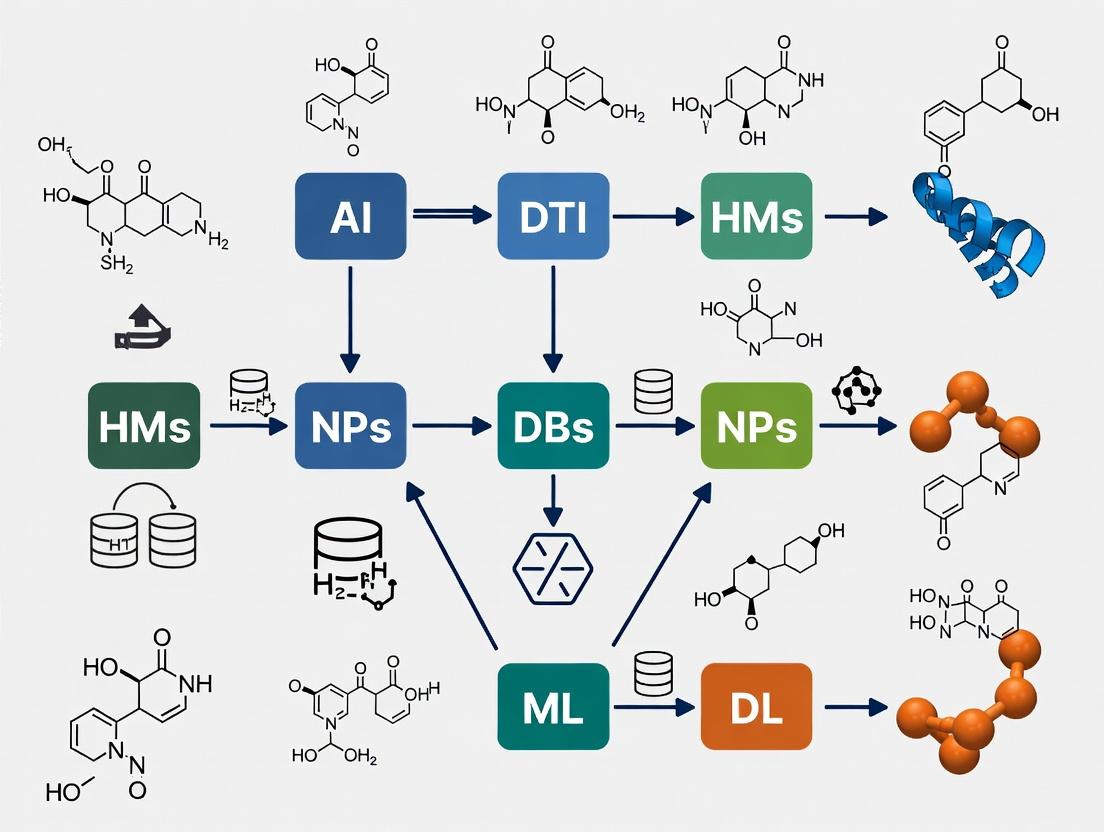
This article provides a comprehensive analysis of artificial intelligence (AI) applications in predicting drug-target interactions for herbal medicines.
AI-Powered Drug-Target Interaction Prediction in Herbal Medicine: Methods, Validation, and Future Roadmap
Abstract
This article provides a comprehensive analysis of artificial intelligence (AI) applications in predicting drug-target interactions for herbal medicines. It addresses the foundational need for computational approaches to decipher the complex 'multi-component, multi-target' nature of herbal formulas, reviews advanced methodological frameworks including graph neural networks and knowledge graphs, examines critical challenges related to data quality and model interpretability, and evaluates current validation paradigms and comparative performance of AI tools. Aimed at researchers and drug development professionals, the synthesis offers a roadmap for the rigorous, clinically relevant, and ethically sound integration of AI into herbal pharmacology research, bridging traditional knowledge with modern computational science.
The Imperative for AI in Herbal Pharmacology: Deciphering Complexity and Defining the Landscape
The systematic investigation of herbal medicine (HM) for modern drug discovery presents a fundamental scientific challenge: deconvoluting the therapeutic effects of complex mixtures containing dozens to hundreds of bioactive phytochemicals, each with the potential to interact with multiple biological targets and pathways [1]. This multi-component, multi-target, and multi-pathway nature stands in stark contrast to the conventional "one drug, one target" paradigm, making traditional pharmacological methods inadequate for elucidating mechanisms of action [2]. The core challenge, therefore, is to develop robust, reproducible, and scalable methodologies to bridge this gap—from characterizing the complex chemical space of herbs to identifying precise molecular targets and elucidating integrated network pharmacology.
Artificial Intelligence (AI) emerges as a pivotal force in addressing this challenge. By leveraging machine learning (ML) and deep learning (DL) models, researchers can integrate and analyze vast, heterogeneous datasets—including phytochemical structures, pharmacokinetic properties, protein-protein interaction networks, and multi-omics data—to predict biologically relevant drug-target interactions (DTIs) with high accuracy [3]. This computational guide details a validated, integrative workflow that synergizes bioinformatics screening, AI-powered prediction, and experimental validation to transform herbal medicine from an empirical practice into a source of precisely characterized, target-driven therapeutic leads.
Methodological Framework: Computational and AI-Driven Pipelines
A successful transition from herbs to targets requires a multi-stage pipeline. The following sections detail the core computational and experimental methodologies, with summarized protocols presented in Table 1.
Table 1: Core Methodological Pipelines for Target Identification from Herbal Medicine
| Stage | Primary Objective | Key Tools & Techniques | Output & Success Criteria |
|---|---|---|---|
| 1. Compound Sourcing & Characterization | Establish a comprehensive, chemically accurate library of herbal constituents. | Bibliometric analysis, database mining (TCMSP, PubChem), text mining, high-resolution metabolomics [1] [4]. | A curated database of compounds with associated structures (e.g., SDF, SMILES formats). |
| 2. Pharmacokinetic & Bioactivity Screening | Filter compounds for favorable drug-like properties and potential bioavailability. | In silico models: PreOB (Oral Bioavailability), PreDL (Drug-Likeness), SwissADME [1] [5]. | A refined list of "active components" (e.g., OB ≥ 30%, DL ≥ 0.18) [1]. |
| 3. Target Prediction & Prioritization | Identify putative protein targets for the active compounds. | AI/ML Models: SysDT, drugCIPHER-CS, CA-HACO-LF; Similarity-based and network-based methods [1] [2] [3]. | A list of predicted protein targets with associated interaction scores or likelihoods. |
| 4. Network & Enrichment Analysis | Place predicted targets in biological context and identify key pathways. | Bioinformatics: Cytoscape for C-T/P networks; GO & KEGG enrichment (clusterProfiler, ShinyGO); PPI analysis (STRING) [1] [5]. | Identification of hub genes and significantly enriched signaling pathways (e.g., PI3K-Akt, MAPK). |
| 5. Computational Validation | Assess the structural feasibility of predicted compound-target binding. | Molecular docking (Glide, AutoDock), Molecular Dynamics (MD) simulations (Desmond, GROMACS), binding free energy calculations (MM/GBSA) [1] [5]. | Docking scores, stable MD trajectories, and calculated binding affirms key interactions. |
| 6. Experimental Validation | Biologically confirm predicted interactions and efficacy. | In vitro assays (binding, cell viability), in vivo disease models (e.g., CHD rat model), multi-omics validation (metabolomics) [2] [4]. | Dose-dependent biological activity confirming the predicted mechanism. |
AI and Machine Learning Models for Target Prediction
AI models are essential for scalable target prediction. They generally fall into three categories, each with strengths for herbal medicine research [3]:
- Similarity-based methods infer interactions based on the principle that chemically similar compounds share targets. They are interpretable but can miss interactions for structurally novel phytochemicals [3].
- Network-based methods leverage biological networks (e.g., protein-protein interaction) to predict targets within a functional context, capturing indirect relationships but relying on network completeness [2] [3].
- Hybrid ML/DL methods integrate diverse data (chemical, genomic, phenotypic) for superior predictive performance. For example, the Context-Aware Hybrid Ant Colony Optimized Logistic Forest (CA-HACO-LF) model uses optimized feature selection and classification for DTI prediction [6]. The SysDT model combines Random Forest and Support Vector Machine algorithms, requiring thresholds (e.g., RF ≥ 0.8, SVM ≥ 0.7) to define a high-confidence interaction [1].
Experimental Validation Protocols
Computational predictions require rigorous biological validation. Two key protocol summaries are provided below.
Protocol A: In Vivo Validation for Cardiovascular Herbal Formula This protocol validates targets for an herbal formula (e.g., Qishenkeli, QSKL) in a coronary heart disease (CHD) model [2].
- Animal Model Induction: Anesthetize Sprague-Dawley rats and perform left thoracotomy. Ligate the left anterior descending coronary artery to induce myocardial infarction. Sham controls undergo surgery without ligation.
- Treatment Administration: Post-operation, randomly assign animals to model, control, and treatment (e.g., QSKL at 508 mg/kg/day) groups. Administer treatment via daily oral gavage for 28 days.
- Functional Assessment: Perform echocardiography before sacrifice to measure left ventricular function parameters (e.g., ejection fraction, fractional shortening).
- Sample Collection & Analysis: Collect serum via abdominal aorta puncture. Use ELISA or similar assays to measure levels of target pathway biomarkers (e.g., renin, angiotensin II for the RAAS pathway).
- Outcome: A statistically significant improvement in functional parameters and modulation of predicted biomarkers in the treatment group validates the formula's activity on the predicted targets [2].
Protocol B: Multi-Omics Validation via Metabolomics This protocol uses metabolomics to decode active components and targets by observing systemic metabolic changes [4].
- Study Design: Administer the herbal extract or compound to animal models or cell cultures. Include control and disease model groups.
- Sample Collection: Collect biofluids (serum, urine) or tissue homogenates at multiple time points.
- Metabolite Profiling: Analyze samples using high-throughput platforms like UPLC-Q-TOF/MS or GC-MS to generate comprehensive metabolic profiles.
- Data Analysis: Use multivariate statistical analysis (PCA, OPLS-DA) to identify differentially expressed metabolites between groups. Map these metabolites to biological pathways via KEGG.
- Integration & Target Inference: Overlay the disrupted metabolic pathways with computationally predicted target networks. The convergence points, where predicted protein targets regulate the perturbed metabolic pathways, provide high-confidence candidates for further mechanistic validation [4].
The Scientist's Toolkit: Essential Research Reagents and Materials
Critical reagents and their functions for key experiments in this field are listed below.
Table 2: Essential Research Reagent Solutions for Herbal Medicine Target Research
| Reagent/Material | Primary Function | Application Context |
|---|---|---|
| OPLS4 Force Field | Energy minimization and optimization of molecular structures. | Protein and ligand preparation for molecular docking and dynamics simulations [5]. |
| Tetrazolium-based Assay (e.g., MTT, CCK-8) | Measures cell metabolic activity as a proxy for viability/proliferation. | In vitro validation of compound efficacy against cancer or other cell lines. |
| LigandPrep Software | Generates accurate, low-energy 3D structures with correct ionization and tautomeric states for small molecules. | Essential pre-processing step for molecular docking studies [5]. |
| Desmond Molecular Dynamics System | Simulates the dynamic behavior of protein-ligand complexes over time in a solvated system. | Validates docking pose stability and calculates binding free energy (MM/GBSA) [5]. |
| Cytoscape Software | Visualizes and analyzes complex biological networks (e.g., compound-target-pathway). | Network pharmacology analysis and identification of hub genes [1] [5]. |
| SwissADME Web Tool | Predicts key pharmacokinetic parameters and drug-likeness. | Initial computational screening of herbal compounds for oral bioavailability [5]. |
| R clusterProfiler Package | Performs statistical analysis and visualization of functional profiles for genes. | Gene Ontology (GO) and KEGG pathway enrichment analysis [1]. |
| String Database | Retrieves known and predicted protein-protein interactions. | Constructing PPI networks to contextualize predicted herbal targets [5]. |
Integrated Workflow: From Herbs to Validated Targets
The complete, iterative workflow for translating multi-component herbs to molecular targets integrates all previously described stages. AI acts as the connecting thread, enhancing each step with predictive power and data integration capabilities [3] [7].
Diagram 1: AI-Integrated Workflow from Herbs to Validated Targets (Max width: 760px)
Case Study Application & Key Signaling Pathways
A practical application of this workflow identified therapeutic mechanisms for herbal medicines in prostate cancer (PCa). Bioinformatics analysis of differentially expressed genes in PCa patients versus predicted herbal targets revealed five hub genes (CCNA2, CDK2, CTH, DPP4, SRC). Network and enrichment analysis further integrated these into four core signaling pathways: PI3K-Akt, MAPK, p53, and the cell cycle [1]. These pathways, central to cancer progression, illustrate how herbal compounds can exert a coordinated multi-target effect, as visualized in Diagram 2.
Diagram 2: Herbal Medicine Action on Key Cancer Signaling Pathways (Max width: 760px)
Conceptual Framework of the Core Challenge
The fundamental challenge in herbal medicine research is navigating the high complexity of both the herbal input and the biological system. This is conceptually framed as a problem of mapping a high-dimensional chemical space onto a high-dimensional biological space, where AI serves as the essential tool for pattern recognition, prediction, and data reduction.
Diagram 3: Conceptual Framework of the Core Research Challenge (Max width: 760px)
The path from multi-component herbs to molecular targets is being fundamentally reshaped by AI and integrative computational workflows. The methodology outlined—combining systematic compound screening, AI-driven target prediction, network pharmacology, and multi-scale validation—provides a robust template for demystifying herbal medicine's mechanisms. Future progress hinges on improving the quality and standardization of herbal compound databases [7], developing more interpretable (explainable) AI models that provide mechanistic insights alongside predictions [3], and fostering closer collaboration between computational scientists and experimental biologists to iteratively refine and validate predictions. This structured, data-driven approach promises to unlock the full therapeutic potential of herbal medicine, transforming it from a traditional practice into a cornerstone of next-generation, network-based precision drug discovery.
The discovery and validation of novel therapeutic targets represent the foundational, and often most formidable, stage in the drug development pipeline. In the context of herbal medicine research, this challenge is amplified by the inherent complexity of phytochemical mixtures, multi-target mechanisms, and the historical reliance on empirical observation rather than molecular-level deconstruction [3] [8]. Traditional experimental paradigms for target discovery are characterized by serial, labor-intensive processes that contribute to unsustainable costs and protracted timelines, creating a significant bottleneck that slows the translation of traditional knowledge into evidence-based, precision therapies [9] [10].
This document provides a technical examination of this bottleneck, quantifying its impact, detailing the core experimental methodologies, and framing the transformative potential of artificial intelligence (AI) for drug-target interaction (DTI) prediction. By integrating AI-driven computational models, the field is poised to transition from a high-cost, low-efficiency paradigm to one of accelerated, rational discovery, particularly for the unique challenges presented by multi-compound herbal formulations [11] [6].
Quantifying the Bottleneck: Time and Cost Analyses
The financial and temporal burdens of traditional drug discovery are well-documented, with oncology serving as a critical case study due to the complexity of disease mechanisms and high clinical attrition rates [9]. The following tables summarize the core quantitative metrics that define the bottleneck.
Table 1: Traditional vs. AI-Augmented Drug Discovery Timelines
| Development Phase | Traditional Timeline | AI-Augmented Timeline | Key Activities & Notes |
|---|---|---|---|
| Target Identification & Validation | 2-5 years | 6-12 months | AI integrates multi-omics data & literature mining for rapid hypothesis generation [9] [11]. |
| Lead Compound Discovery | 3-6 years | 1-2 years | AI enables in silico screening and generative chemistry for novel molecular design [9] [6]. |
| Preclinical Development | 1-2 years | ~1 year | AI improves PK/PD and toxicity prediction, optimizing candidate selection [3]. |
| Clinical Trials (Phases I-III) | 6-7 years | 5-6 years (potential optimization) | AI aids in patient stratification, biomarker discovery, and trial design [9]. |
| Total Timeline | ~12-15 years | ~8-10 years | AI's major impact is in compressing early research stages [9] [11]. |
Table 2: Economic Burden of Traditional Drug Discovery
| Cost Category | Estimated Cost (USD) | Description & Contributing Factors |
|---|---|---|
| Average Total Cost per Approved Drug | ~$2.4 billion | Median cost increased ~20% from 2013-2022, reflecting growing complexity [11]. |
| Early-Stage R&D (Preclinical) | High proportion of total cost | Includes target discovery, HTS, lead optimization. High attrition rate makes this phase particularly costly [10]. |
| Clinical Trial Expenses | Often exceeds $1 billion | Patient recruitment, monitoring, and lengthy trial durations are major cost drivers [9]. |
| Cost of Failure (Attrition) | Extremely high | ~90% of oncology drug candidates fail in clinical development, amortizing their cost to successful drugs [9]. |
| AI Implementation (Initial Investment) | Significant but offsetting | Costs for computational infrastructure, data curation, and expertise are offset by reduced experimental cycles and failure rates [6]. |
Core Experimental Methodologies and Protocols
The traditional target discovery workflow is a multi-stage process reliant on extensive laboratory experimentation. The protocols below outline the standard approaches that contribute to the time and cost metrics detailed above.
Target Identification & Hypothesis Generation
- Objective: To identify a biomolecule (e.g., protein, gene) whose modulation is expected to have a therapeutic effect.
- Classical Protocol:
- Disease Association Studies: Employ genome-wide association studies (GWAS), transcriptomics (RNA-seq), and proteomics to identify genes/proteins differentially expressed in diseased versus healthy tissues [9].
- Functional Genomics: Use CRISPR-Cas9 or RNA interference (RNAi) screens to systematically knock out or knock down genes in disease models and assess impact on cell viability or phenotype [11].
- Literature & Pathway Analysis: Manual curation of scientific literature to construct disease-relevant signaling pathways and identify potential key nodes for intervention [10].
- Bottlenecks: Low-throughput, expensive functional screens; manual literature review is slow and incomplete; difficulty in distinguishing driver targets from passenger phenomena.
High-Throughput Screening (HTS) & Hit Identification
- Objective: To experimentally test hundreds of thousands to millions of compounds for activity against a validated target.
- Classical Protocol:
- Assay Development: Develop a robust biochemical (e.g., enzyme activity) or cell-based (e.g., reporter gene) assay that quantifies target modulation. This can take 3-6 months to optimize for HTS robustness [10].
- Library Screening: Screen a diverse chemical library (often >1 million compounds) using automated liquid handling and detection systems. Throughput can reach 100,000 compounds per day [10].
- Hit Triage: Apply statistical thresholds to identify "hits" (e.g., compounds showing >50% inhibition at 10 µM). Confirm hits in dose-response experiments to determine potency (IC50/EC50).
- Bottlenecks: Extremely high reagent and infrastructure costs; high false-positive/negative rates; "needle-in-a-haystack" approach yields many non-drug-like hits requiring extensive optimization [10].
Lead Optimization & Validation
- Objective: To transform a confirmed hit into a "lead" compound with improved potency, selectivity, and drug-like properties.
- Classical Protocol:
- Medicinal Chemistry Cycles: Synthesize analog series around the hit's chemical scaffold. This is an iterative process of synthesis -> testing -> analysis (SAR).
- In vitro ADME-Tox Profiling: Assess permeability (Caco-2), metabolic stability (microsomes), cytochrome P450 inhibition, and early cytotoxicity.
- Target Engagement & Phenotypic Validation: Use techniques like cellular thermal shift assay (CETSA) or surface plasmon resonance (SPR) to confirm direct target binding. Test in more complex disease models (e.g., 3D co-culture, patient-derived organoids) [10].
- Bottlenecks: Each synthesis-test cycle can take weeks to months; poor pharmacokinetic properties often discovered late, leading to dead ends; requires extensive specialized expertise in chemistry and biology.
AI as a Disruptive Solution: Frameworks for Herbal Medicine
AI, particularly machine learning (ML), deep learning (DL), and large language models (LLMs), provides a suite of tools to address each segment of the traditional bottleneck. In herbal medicine research, these tools are adapted to handle multi-component, multi-target complexity [3] [8].
1. AI for Enhanced Target Discovery in Complex Systems:
- Network Pharmacology & Multi-Omics Integration: AI algorithms can integrate transcriptomic, proteomic, and metabolomic data from cells treated with herbal extracts to reverse-engineer their mechanism of action. This identifies not just single targets, but perturbed networks and key hub targets [3] [8].
- Literature Mining with Biomedical LLMs: Domain-specific LLMs like BioBERT and BioGPT can process vast volumes of historical and modern scientific text, including traditional medicine treatises and modern phytochemistry papers, to extract latent relationships between herbs, compounds, and diseases [11] [8].
2. Predicting Polypharmacology & Drug-Herb Interactions:
- Multi-Target DTI Prediction: Unlike single-target synthetic drugs, herbal compounds often exhibit polypharmacology. Graph neural networks (GNNs) and other DL models can predict interactions between multiple phytochemicals and a panel of potential protein targets simultaneously, mapping a "footprint" of bioactivity [3] [6].
- Safety and Interaction Risk Assessment: AI models trained on chemical structures and known adverse events can predict potential herb-drug interactions (HDIs), particularly risks like drug-induced liver injury (DILI) or modulation of drug-metabolizing enzymes (e.g., CYP450) [3] [8].
3. Virtual Screening & In Silico Validation for Herbal Constituents:
- Structure-Based Virtual Screening: When a 3D protein structure is available (experimentally or via AlphaFold2), molecular docking simulations powered by AI scoring functions can prioritize which herbal constituents are most likely to bind from a library of thousands [11] [6].
- Generative Chemistry for Analog Design: If a promising herbal-derived scaffold is identified but has suboptimal properties, generative AI models can design novel analog structures with improved potency, selectivity, and pharmacokinetic profiles [9] [6].
Visualizing Workflows and Pathways
The following diagrams, generated using DOT language, illustrate the core concepts and workflows described.
Diagram 1: The Traditional Target Discovery Bottleneck This diagram visualizes the sequential, time-intensive stages of traditional drug target discovery, highlighting the phases where time and cost accumulate most significantly.
Diagram 2: AI-Augmented Workflow for Herbal Target Discovery This diagram shows how AI models integrate diverse data sources specific to herbal medicine to generate multiple, prioritized hypotheses for experimental validation.
Diagram 3: Example Signaling Pathway with Herbal Intervention Points This diagram maps a simplified inflammatory (NF-κB) pathway, highlighting key proteins that are common targets for anti-inflammatory herbal constituents and demonstrating the multi-target potential of such compounds.
The Scientist's Toolkit: Essential Research Reagents & Solutions
Table 3: Key Research Reagent Solutions for Target Discovery
| Reagent / Material Category | Specific Examples | Primary Function in Target Discovery |
|---|---|---|
| Recombinant Proteins | Purified human kinases, GPCRs, disease-associated enzymes. | Serve as the direct target in biochemical HTS assays for hit finding [12] [10]. |
| Cell-Based Assay Systems | Reporter gene cell lines (e.g., NF-κB luciferase), isogenic disease cell pairs, primary patient-derived cells. | Enable functional, phenotypic screening in a more biologically relevant context [9] [10]. |
| Chemical Libraries | Diverse small-molecule collections, fragment libraries, natural product-derived libraries. | Source of potential hit compounds for screening campaigns [10]. |
| Affinity-Based Probes | Biotinylated or photoaffinity-labeled small molecules, activity-based protein profiling (ABPP) probes. | Used for target deconvolution—identifying the protein targets of an active but uncharacterized herbal compound [11]. |
| CRISPR Screening Libraries | Genome-wide or pathway-focused sgRNA libraries. | For functional genomic screens to identify genes essential for cell survival or disease phenotype (target identification/validation) [11]. |
| Antibodies & Detection Kits | Phospho-specific antibodies, ELISA kits, TR-FRET/AlphaLISA detection systems. | Critical for developing sensitive and specific assays to measure target modulation or downstream signaling events [10]. |
| AI-Ready Datasets & Software | Curated herb-compound-target databases (e.g., TCMSP), protein-ligand affinity data, AI model platforms (PandaOmics, Chemistry42). | Provide the structured, high-quality data necessary to train and deploy predictive AI models for herbal research [11] [6] [8]. |
The traditional bottleneck in experimental target discovery, characterized by exorbitant costs and decade-long timelines, is no longer a tenable constraint, especially for the nuanced field of herbal medicine [11] [13]. The integration of AI and computational prediction into the research workflow represents a paradigm shift. By front-loading the discovery process with intelligent prioritization—of targets, of herbal constituents, and of polypharmacological networks—AI drastically reduces the empirical search space [6] [8].
The future of herbal medicine research lies in a hybrid, iterative model. AI-generated predictions guide focused, high-value experimental validation. The results from these wet-lab experiments then feed back to refine and retrain the AI models, creating a virtuous cycle of increasing accuracy and efficiency [3] [8]. This synergy between computational prediction and experimental validation is key to overcoming the historical bottlenecks, ultimately enabling the precise, personalized, and evidence-based application of traditional herbal wisdom in modern therapeutic regimes [13].
The Core Challenge: From Herbal Complexity to Computational Prediction
The global paradigm in drug discovery is shifting, with traditional, complementary, and integrative medicine (TCIM) used in 170 countries and serving billions of people [14] [15]. This widespread use is anchored in millennia of observational evidence and holistic practice. However, the scientific validation and integration of herbal medicines into modern pharmacopeia face a fundamental challenge: the mismatch between holistic complexity and reductionist analysis. Herbal products are inherently multicomponent systems, where a single plant may contain hundreds of bioactive phytochemicals acting on multiple biological targets simultaneously [3]. This polypharmacology, while potentially the source of efficacy and synergistic benefits, creates immense analytical hurdles.
The primary obstacle in predicting Drug-Herb Interactions (DHIs) or discovering novel drug candidates from herbs is the "multi-unknown" problem: unknown active constituents, unknown protein targets, and unknown interaction mechanisms [3]. This is compounded by variability in plant composition due to genetics, geography, and processing methods. Consequently, the traditional high-throughput screening paradigm, designed for single-compound libraries against single targets, is often inefficient and ill-suited for herbal medicine research [16].
This is where Artificial Intelligence (AI) serves as a critical bridge. By applying machine learning (ML) and deep learning (DL) to vast, integrated datasets, AI can decode complex patterns and predict drug-target interactions (DTIs) within the phytochemical milieu [17] [18]. The thesis of this whitepaper is that AI-driven bioinformatics transforms herbal medicine from an empirical practice into a data-driven discovery engine. It enables the predictive mapping of traditional knowledge onto modern biological pathways, accelerating the identification of safe, synergistic, and efficacious multi-target therapies while providing mechanistic insights that respect the holistic foundations of these ancient systems.
Foundational Infrastructure: Data Integration from Ancient Texts to Omics
The efficacy of any AI model is contingent on the quality, quantity, and diversity of its training data. Integrating traditional medicine with bioinformatics requires constructing a unified data infrastructure that harmonizes historical knowledge with contemporary molecular data.
Digitizing Traditional Knowledge: Global efforts are underway to preserve and structure ancestral knowledge. The cornerstone is the WHO Traditional Medicine Global Library (TMGL), launching in December 2025, which will be the world's most comprehensive digital repository for TCIM [19]. By mid-2025, it had already integrated over 1.5 million records, including evidence maps, journals, and clinical policies [19]. Initiatives like India's Traditional Knowledge Digital Library (TKDL) use AI to protect this knowledge from biopiracy while making it available for research [15]. For computational research, this textual and clinical knowledge must be converted into structured data. This involves natural language processing (NLP) to extract entities like herb names, formulas, indications, and preparation methods from classical texts and modern literature, linking them to standardized biomedical ontologies.
Multi-Omics Characterization of Herbs: Modern analytics provide the molecular lexicon for traditional concepts. A systems biology approach is essential:
- Genomics/Transcriptomics: Sequencing the genomes of medicinal plants (e.g., Salvia miltiorrhiza, Artemisia annua) identifies genes involved in the biosynthesis of key secondary metabolites [20].
- Metabolomics: Techniques like LC-MS and GC-MS provide the most direct readout of the chemical composition of an herbal extract, identifying and quantifying hundreds of phytochemicals simultaneously [21].
- Proteomics & Network Pharmacology: This involves identifying the protein targets of herbal compounds in human cells. When combined with bioinformatics, it allows for the construction of "herb-target-pathway-disease" networks, offering a systems-level view of mechanism [3].
Table 1: Core Multi-Omics Data Types for Herbal Medicine Research
| Data Type | Description | Role in AI-Driven Discovery | Example Sources/Tools |
|---|---|---|---|
| Cheminformatics | Chemical structures, properties (e.g., SMILES strings, molecular fingerprints). | Enables similarity search, ADMET prediction, and virtual screening. | PubChem, ChEMBL, RDKit [18]. |
| Genomics | Whole genome sequences of medicinal plants. | Identifies biosynthetic gene clusters for key metabolites. | NCBI, PlantGDB [20]. |
| Metabolomics | Comprehensive profiles of small-molecule metabolites in plant or patient samples. | Provides the definitive chemical profile of an herb; links composition to effect. | GNPS, MetaboAnalyst [21]. |
| Proteomics | Large-scale study of protein expression and interaction. | Identifies potential protein targets of herbal compounds in human biology. | UniProt, STRING database [18]. |
| Pharmacological | Known drug-target interactions, pathway data, adverse event reports. | Provides ground truth for training DTI prediction models. | DrugBank, BindingDB, KEGG [18]. |
- Creating Interoperable Knowledge Graphs: The ultimate goal is to integrate the above data types into a dynamic knowledge graph. In this graph, nodes represent entities (e.g., "Curcumin," "CYP3A4," "Inflammation," Curcuma longa"), and edges represent their relationships (e.g., "inhibits," "treats," "contains") [3] [18]. AI can then traverse this graph to generate novel hypotheses, such as predicting which compounds in a novel herb might interact with a specific disease-associated protein network.
AI Methodologies for Drug-Target Interaction Prediction in Herbal Medicine
AI transforms the integrated data into predictive insights. For herbal medicine, DTI prediction models must handle the unique challenges of polypharmacy and data sparsity. Current methodologies form a hierarchical toolkit.
Similarity-Based Methods: These foundational approaches operate on the principle that chemically similar compounds likely share biological targets. For an herbal compound, its molecular fingerprint is compared against large libraries of known drugs (e.g., DrugBank) to find neighbors. While interpretable and fast, these methods struggle with "activity cliffs" (where small chemical changes cause large biological effects) and are less effective for novel, structurally unique natural products [3] [18].
Network-Based & Knowledge Graph Methods: These methods excel at capturing the systemic, multi-target nature of herbs. By constructing a heterogeneous network connecting herbs, compounds, proteins, pathways, and diseases, predictions can be made via graph inference algorithms. For example, if two herbs share multiple compounds that target a cluster of proteins in a cancer pathway, a novel herb with similar compounds can be predicted to affect that pathway [3]. Graph Neural Networks (GNNs) are particularly powerful for learning embeddings from such network structures [18].
Deep Learning & Hybrid Models: This represents the state-of-the-art, using complex architectures to learn high-level features directly from raw data.
- Structure-Based Models: With the advent of AlphaFold, which predicts protein 3D structures with high accuracy, molecular docking simulations can be performed in silico at scale [17] [22]. DL models can then predict binding affinity from the docked poses or even directly from 3D structural data.
- Multimodal & Hybrid Models: The most robust models fuse multiple data types. For instance, a model might take a compound's SMILES string (chemical structure), a protein's amino acid sequence (biological function), and known side-effect profiles (phenotypic data) as concurrent inputs. Transformer-based architectures and attention mechanisms are increasingly used to weigh the importance of different features and data modalities [18].
Table 2: AI/ML Approaches for Herb-Target Interaction Prediction
| Method Category | Key Algorithms | Strengths for Herbal Research | Key Limitations |
|---|---|---|---|
| Similarity-Based | Molecular fingerprint similarity, Euclidean distance. | Simple, interpretable, fast screening. | Fails for novel scaffolds; ignores polypharmacology. |
| Network-Based | Random walk, graph inference, Network Propagation. | Captures system-level effects; predicts indirect relationships. | Dependent on completeness of underlying network data. |
| Classical ML | SVM, Random Forest, Gradient Boosting. | Effective with well-curated feature vectors (e.g., chemical descriptors). | Requires manual feature engineering; may not capture deep patterns. |
| Deep Learning | Graph Neural Networks (GNNs), Transformers, CNNs. | Learns features automatically; excels with multimodal data (sequence, structure). | High computational cost; requires large datasets; "black box" interpretability. |
| Generative AI | Generative Adversarial Networks (GANs), VAEs. | Can design novel, drug-like molecules inspired by natural product scaffolds. | Risk of generating unrealistic or unsynthesizable molecules. |
From Prediction to Validation: Experimental Workflows and Protocols
AI predictions are hypotheses that require rigorous experimental validation. A closed-loop, iterative pipeline ensures that computational insights inform and are refined by laboratory science.
Protocol 1: In Silico Screening & Prioritization
- Input Preparation: From the knowledge graph, extract all unique phytochemicals from a herb of interest (e.g., 500 compounds). Retrieve 3D structures from PubChem or generate them using tools like CORINA. For a disease of interest (e.g., Alzheimer's), compile a relevant target set (e.g., AChE, BACE1, NMDA receptor) using AlphaFold-predicted or PDB structures.
- Virtual Screening: Perform high-throughput molecular docking using software like AutoDock Vina or Glide. Use an ensemble docking approach to account for protein flexibility.
- AI-Powered Affinity Prediction: Feed the docking poses and compound/target features into a pre-trained DTA (Drug-Target Affinity) model (e.g., DeepDTA, GraphDTA) [22] to obtain a more accurate binding score.
- ADMET & Synergy Prediction: Filter top hits through AI models predicting pharmacokinetic properties (absorption, distribution, metabolism, excretion, toxicity) and assess potential multi-target synergy using network-based scores.
- Output: A prioritized list of 10-20 lead phytochemicals with predicted targets, binding affinities, and favorable ADMET profiles for experimental testing.
Protocol 2: In Vitro Validation of Multi-Target Effects
- Compound Acquisition: Source the top-priority pure phytochemicals from commercial suppliers or isolate them from the authenticated plant material using preparative HPLC.
- Target-Based Assays: For each predicted primary target, perform a confirmatory biochemical assay (e.g., enzyme inhibition assay for AChE).
- Cell-Based Phenotypic Screening: To capture polypharmacology, use relevant cell lines (e.g., neuronal SH-SY5Y cells for Alzheimer's) treated with the compound. Employ high-content imaging or omics readouts.
- Mechanistic Confirmation: For hits from phenotypic screens, use techniques like Cellular Thermal Shift Assay (CETSA) or drug affinity responsive target stability (DARTS) to confirm direct physical engagement with the AI-predicted protein targets in a cellular context.
- Data Feedback: The experimentally validated (or invalidated) interactions are fed back into the knowledge graph as new ground-truth labels, retraining and improving the AI models.
- The Scientist's Toolkit: Essential Research Reagent Solutions*
*Table 3: Key Research Reagents & Platforms for AI-Guided Herbal Research
Category Item/Platform Function in Workflow Key Characteristics Bioinformatics AlphaFold Suite Provides high-accuracy 3D protein structures for structure-based virtual screening. Essential for targets without crystal structures [17] [22]. Cheminformatics RDKit Open-source toolkit for cheminformatics; used to generate molecular descriptors and fingerprints from SMILES. Enables featurization of phytochemicals for ML models [18]. Multi-Omics LC-MS/MS System Workhorse for untargeted metabolomics; profiles the complete small-molecule composition of herbal extracts. Generates critical input data for linking chemistry to bioactivity [21]. Functional Genomics CRISPR-Cas9 Screening Kit Validates AI-predicted novel targets by creating knockouts in cell lines and observing phenotypic changes. Establishes causal relationships, not just correlations [20]. AI Platform Insilico Medicine PandaOmics / DeepMind AlphaFold Integrated AI platforms for target discovery, biomarker identification, and multi-omics analysis. Provides end-to-end computational discovery environments [17] [22].
Case Studies and Translational Impact
The translational power of this integrative approach is moving from concept to clinical reality.
Case Study: AI-Deciphered Mechanisms of Known Herb-Drug Interactions. St. John's Wort (Hypericum perforatum) is notorious for its interactions with drugs like warfarin and cyclosporine, but the exact multi-compound, multi-mechanism nature was complex. AI models integrating chemoinformatic, metabolomic (induction of CYP enzymes), and pharmacodynamic (serotonin modulation) data have successfully deconvoluted its effects. They clarified how hyperforin causes initial inhibition followed by long-term induction of CYP3A4 and P-glycoprotein, providing a systems-level explanation for its clinical interaction profile [3]. This demonstrates AI's power in retrospective mechanistic elucidation.
Case Study: AI-Driven Discovery of Novel Therapeutics from Herbs. A forward-looking application is de novo discovery. For example, AI platforms have been used to screen virtual libraries of natural product-inspired compounds against novel targets (e.g., TNIK for fibrosis) identified by AI from genomic data. Insilico Medicine's AI-discovered drug for idiopathic pulmonary fibrosis (INS018_055) entered clinical trials in a notably short timeframe [17] [22]. While not exclusively derived from an herb, this pipeline is directly applicable: an herb's phytochemicals can serve as the seed structures for generative AI to design optimized, novel drug candidates that retain desired multi-target profiles while improving drug-like properties.
Broader Impact on Drug Development: The integration addresses key bottlenecks. It provides a rational framework for herbal drug repurposing and synergistic formulation design (e.g., identifying optimal herb pairs in Traditional Chinese Medicine formulas) [21]. By predicting and mitigating DHIs early, it enhances patient safety in an era of increasing concurrent use of herbs and pharmaceuticals [3].
Ethical, Cultural, and Data Sovereignty Frameworks
The application of AI to traditional knowledge carries significant ethical obligations. The WHO/ITU/WIPO technical brief explicitly warns against AI becoming a tool for "automated biopiracy"—the systematic mining and patenting of traditional knowledge without consent or benefit-sharing [15].
- Indigenous Data Sovereignty (IDSov): A core principle is that data derived from Indigenous and local community knowledge must be governed by the communities themselves. This includes control over how knowledge is collected, used, stored, and who benefits from its commercialization [14] [15].
- Ethical AI Development Guidelines:
- Free, Prior, and Informed Consent (FPIC): Must be obtained from traditional knowledge holders before data digitization and use in AI training sets.
- Benefit-Sharing Agreements: Legal frameworks, such as the 2024 WIPO Treaty on Intellectual Property, Genetic Resources and Associated Traditional Knowledge, must underpin partnerships to ensure fair and equitable sharing of monetary and non-monetary benefits [14] [15].
- Co-Design with Practitioners: AI tools should be developed in collaboration with traditional medicine practitioners to ensure they address real-world needs and respect epistemic frameworks.
- Transparency & Explainability (XAI): Models should be as interpretable as possible to build trust and allow practitioners to understand the basis of predictions [3].
Future Trajectory and Strategic Recommendations
The field is evolving rapidly. Future directions include the integration of quantum chemistry simulations for ultra-precise binding energy calculations, the use of large language models (LLMs) to better mine unstructured historical texts, and the application of federated learning to train AI models on distributed, sensitive traditional knowledge databases without centralizing the data [18].
Strategic recommendations for research institutions and consortia are:
- Invest in Foundational Data Resources: Support the expansion and curation of platforms like the WHO TMGL and TKDLs, with strict adherence to IDSov principles.
- Develop and Benchmark Specialized AI Models: Foster the creation of open-source AI models specifically pretrained on natural product chemistry and traditional medicine data.
- Establish Standardized Experimental Protocols: Create consensus protocols for generating omics data from herbal specimens and for validating AI-predicted multi-target interactions.
- Create Interdisciplinary Training Programs: Cultivate a new generation of scientists fluent in both bioinformatics/AI and the cultural, historical, and ethical dimensions of traditional medicine.
In conclusion, AI acts as the essential translational bridge, converting the deep, complex wisdom of traditional medicine into a format that modern computational biology can interrogate and expand upon. This synergy does not seek to reduce traditional medicine to single targets but to understand its holistic efficacy through a modern, systemic lens. The responsible and ethical integration of these fields holds the promise of unlocking a vast, previously inaccessible reservoir of safe and effective therapeutic strategies for the future of global health.
The investigation of herbal medicines, particularly within systems like Traditional Chinese Medicine (TCM), is fundamentally challenged by their multi-component, multi-target, and multi-pathway nature [23]. This holistic therapeutic strategy contrasts sharply with the conventional single-target drug discovery paradigm, necessitating innovative analytical frameworks. Network pharmacology (NP) emerged as a critical bridge, offering a systems-level view by modeling the complex networks connecting herbal compounds, biological targets, and disease pathways [23]. However, traditional NP approaches are often limited by static analysis, high-dimensional data noise, and difficulties in capturing dynamic, cross-scale biological mechanisms [23].
The integration of Artificial Intelligence (AI)—encompassing machine learning (ML), deep learning (DL), and graph neural networks (GNNs)—has catalyzed a transformative shift. AI-driven network pharmacology (AI-NP) now enables the systematic decoding of herbal medicine's actions from molecular interactions to patient-level efficacy [23]. Concurrently, AI has become indispensable for a critical translational challenge: predicting and assessing the safety profiles of herbal medicines and their interactions with conventional drugs [3]. This article provides an in-depth technical guide to these current applications, framing them within the overarching thesis that AI-powered drug-target interaction (DTI) prediction is the cornerstone for modernizing and validating herbal medicine research, ultimately ensuring its efficacy and safety.
Evolution and Enhancement: From Network Pharmacology to AI-Driven Analysis
Network pharmacology provides the foundational conceptual model for studying polypharmacology in herbal medicine. Its core premise is the construction and analysis of interconnected networks, typically a "compound-target-pathway-disease" network, to elucidate systemic mechanisms [23].
Table 1: Comparative Analysis of Traditional and AI-Driven Network Pharmacology
| Comparison Dimension | Traditional Network Pharmacology | AI-Driven Network Pharmacology (AI-NP) | Key Advancement |
|---|---|---|---|
| Data Acquisition & Integration | Relies on fragmented public databases (e.g., TCMSP) and literature mining; slow updates [23]. | Integrates multimodal, high-dimensional data (omics, clinical records, real-world evidence) dynamically [23] [24]. | AI enables deep fusion of heterogeneous data, creating a richer, more current knowledge foundation. |
| Algorithmic Core | Based on statistics, topology analysis, and expert-driven correlation networks [23]. | Utilizes ML, DL, and GNNs to autonomously identify latent, non-linear patterns [23] [18]. | Shift from experience-driven to data-driven discovery, significantly enhancing predictive power. |
| Model Interpretability | Generally high, as networks are built on known relationships [23]. | Often low ("black-box"); addressed by Explainable AI (XAI) tools like SHAP and LIME [23] [3]. | Trade-off between predictive performance and transparency; XAI is critical for building scientific trust. |
| Computational Scalability | Manual or semi-automated curation; low efficiency for large-scale networks [23]. | High-throughput, parallel computing suitable for massive biological networks [23]. | Enables analysis at a scale that matches the complexity of herbal formulations and human biology. |
| Temporal Dynamics | Predominantly static analysis of interactions [23]. | Capable of modeling dynamic and time-series data to capture pathway activation and feedback loops [23]. | Moves from a snapshot to a movie-like understanding of pharmacological action. |
AI-NP addresses the critical limitations of its predecessor. For instance, GNNs excel at directly operating on the graph-structured data inherent to biological networks, learning meaningful representations of compounds and targets within their interaction context [23] [18]. Furthermore, AI facilitates multi-scale mechanism analysis, integrating insights from molecular, cellular, tissue, and patient levels to form a coherent explanatory model [23].
Core AI Methodologies for Drug-Target Interaction Prediction in Herbal Medicine
Predicting interactions between herbal compounds and protein targets is the central computational task. AI methodologies have evolved to handle the unique challenges of herbal data, including mixture complexity, sparse labeled data, and the need to model polypharmacology.
1. Data Types and Representation: The predictive performance of AI models hinges on input data representation. For herbal medicine research, this involves multi-modal data:
- Drug/Chemical Representation: Simplified Molecular Input Line Entry System (SMILES) strings, molecular fingerprints (e.g., ECFP), or 2D/3D molecular graphs [18] [24].
- Target Representation: Protein amino acid sequences, structural data (e.g., from AlphaFold), or gene ontology annotations [18].
- Interaction Data: Known DTIs from databases like BindingDB, STITCH, or specialized TCM databases (e.g., TCMSP, TCMID) [18] [24].
- Omics Data: Transcriptomic, proteomic, and metabolomic profiles are integrated to contextualize targets within disease pathways [25] [24].
2. Algorithmic Approaches:
- Similarity-Based Methods: Infer interactions based on chemical or genomic similarity. While interpretable, they struggle with novel, structurally unique natural products [3].
- Network-Based Methods: Leverage protein-protein interaction (PPI) networks or heterogeneous knowledge graphs. They can predict indirect interactions but depend on network completeness [3] [26].
- Machine & Deep Learning: These are the most impactful approaches. Models range from classic classifiers (e.g., Random Forests, SVMs) to advanced architectures:
- Graph Neural Networks (GNNs): Naturally model the graph structure of molecules and biological networks, becoming the state-of-the-art for DTI prediction [23] [18].
- Transformer Models: Process sequential data (SMILES, protein sequences) using self-attention mechanisms, capturing long-range dependencies effectively [18].
- Multimodal Fusion Models: Integrate multiple data types (e.g., chemical structure, gene expression, clinical outcomes) to improve prediction robustness and biological relevance [24].
Table 2: Common Public Data Resources for AI-Driven Herbal Medicine Research
| Data Type | Resource Name | Primary Content | Application in Herbal Research |
|---|---|---|---|
| Herbal Compounds | TCMSP, TCMID | Chemical compounds, ADMET properties, targets from TCM herbs [23] [24]. | Source of herbal metabolite structures and putative targets for model training. |
| General DTIs | BindingDB, STITCH, DrugBank | Experimentally validated drug-target interactions [18]. | Ground truth data for training and validating predictive models. |
| Omics Data | TCGA, GEO, Human Proteome Map | Genomic, transcriptomic, and proteomic data from diseases and treatments [25] [26] [24]. | For contextualizing targets and constructing disease-specific networks. |
| Protein Data | UniProt, PDB, AlphaFold DB | Protein sequences, functions, and 3D structures [18]. | For target representation and structure-based prediction. |
| Clinical & Phenotypic | FAERS, ClinicalTrials.gov | Adverse event reports and clinical trial results [27] [3]. | For safety signal detection and validating predicted interactions. |
3. Experimental Workflow for AI-Based DTI Prediction: A standard protocol for building a DTI prediction model for herbal compounds involves:
- Data Curation and Preprocessing: Collect positive (known interacting) and negative (non-interacting) pairs of herbal compounds and human targets. Negative sampling must be done carefully to avoid bias [18]. Standardize compound representations (e.g., convert SMILES to fingerprints) and protein representations (e.g., encode sequences).
- Feature Engineering/Selection: For ML models, extract relevant features (e.g., molecular descriptors, protein sequence features). DL models often perform automatic feature learning from raw data.
- Model Selection and Training: Split data into training, validation, and test sets. Choose an appropriate model architecture (e.g., GNN, Transformer). Train the model to minimize a loss function (e.g., binary cross-entropy for classification).
- Validation and Interpretation: Evaluate performance using metrics like AUC-ROC, precision, recall, and F1-score on the held-out test set. Use XAI methods to interpret predictions and identify which molecular features drove the decision [3].
- Experimental Prioritization and Validation: The model's output is a ranked list of novel, high-probability DTIs. These predictions must be prioritized for in vitro validation (e.g., binding assays, functional cellular assays) and later in vivo studies [28] [22].
AI-NP Workflow for Herbal DTI Prediction
Application Frontier: AI in Safety Assessment and Drug-Herb Interaction Prediction
A paramount application of AI-predicted DTIs is in the proactive assessment of safety risks, particularly for drug-herb interactions (DHIs). DHIs, which can be pharmacokinetic (PK) or pharmacodynamic (PD), pose significant clinical challenges due to the complexity of herbal mixtures [3].
1. AI Models for DHI Prediction: AI models integrate diverse data to predict DHIs:
- PK-DHI Prediction: Models are trained on data involving key metabolic enzymes (e.g., CYP450 isoforms) and transporters (e.g., P-glycoprotein). Features include chemical inhibitors/inducers of these proteins and herb constituent profiles [3]. For example, models can predict St. John's Wort's induction of CYP3A4 and P-gp, leading to reduced plasma levels of co-administered drugs [3].
- PD-DHI Prediction: Models analyze target affinity profiles of both drug and herb constituents. If an herb compound targets the same pathway (synergistically or antagonistically) or an off-target linked to adverse events, a PD interaction is flagged [27] [3]. Network-based models are particularly useful here for mapping compounds onto shared disease or adverse event pathways.
2. A Structured Safety Assessment Framework Enhanced by AI: A science-based methodology for combination safety risk assessment provides a robust framework that can be augmented with AI [27]. The steps include:
- Step 1: Gather Information: Compile all known safety, pharmacological, and omics data for each herbal product and conventional drug involved. AI can automate the mining and synthesis of this information from literature and databases.
- Step 2: Review Overlapping & Non-Overlapping Components: Systematically compare the profiles. AI excels here by performing high-dimensional comparison of target sets, pathway enrichments, and adverse event signatures.
- Step 3: Predict Combined Risk Profile: Use AI models to simulate the network perturbations caused by the combination. Predict novel, emergent risks not obvious from single-agent profiles by analyzing network topology (e.g., cascade effects, pathway crosstalk) [27] [26].
AI-Augmented Safety Assessment Framework
3. Case Study: Predicting Interactions with St. John's Wort (SJW): SJW, containing hyperforin and hypericin, is a classic example of complex DHI mechanisms [3].
- AI Analysis: A multimodal AI model would integrate SJW's chemical data, known effects on CYP enzymes/P-gp (PK), and its serotonergic activity (PD).
- Prediction: For a patient taking warfarin (metabolized by CYP2C9), the model would predict a PK interaction: SJW induces CYP2C9, potentially reducing warfarin efficacy. For a patient taking an SSRI, the model would predict a PD interaction: combined serotonergic action increases the risk of serotonin syndrome.
- Validation: These AI-driven hypotheses are supported by clinical reports, demonstrating the model's translational relevance [3].
Mechanisms of Drug-Herb Interactions (St. John's Wort Example)
Table 3: Research Reagent Solutions for Experimental Validation
| Reagent/Tool Category | Specific Example | Function in Validation | Key Consideration |
|---|---|---|---|
| Target Protein | Recombinant human enzymes (e.g., CYP450 isoforms), purified receptor proteins. | In vitro binding (SPR, thermal shift) and enzyme activity assays to confirm direct DTI [22]. | Ensure protein activity and correct post-translational modifications. |
| Cellular Assay Systems | Engineered cell lines (e.g., with reporter genes, overexpressed targets), primary hepatocytes. | Functional validation of target modulation (e.g., luciferase assay, Ca2+ flux), cytotoxicity (MTT), and transporter assays [28]. | Choose cell lines relevant to the target's native tissue and disease context. |
| Omics Profiling Kits | RNA-Seq, phospho-proteomic, or metabolomic profiling kits. | To confirm predicted pathway alterations and polypharmacology post-treatment [25] [24]. | Requires robust bioinformatics support for data analysis. |
| Chemical Standards | Certified reference standards of predicted active herbal compounds. | For use as positive controls in assays and to ensure experimental reproducibility [28]. | Purity and provenance are critical; batch-to-batch variability in herbs is a major challenge. |
| AI & Software Tools | RDKit (cheminformatics), DeepChem (DL), GNN libraries (PyTorch Geometric, DGL). | For building in-house prediction models, processing chemical structures, and generating features [18]. | Requires significant computational expertise and infrastructure. |
Detailed Experimental Protocol for In Vitro Validation of AI-Predicted Herbal DTIs:
Objective: To validate the binding and functional interaction between a predicted herbal compound (H) and its target protein (T). Materials:
- Recombinant human target protein (T).
- Purified herbal compound (H) and a known positive control inhibitor/activator.
- Appropriate assay buffer and substrates.
- Microplate reader or other suitable detector. Method:
- Binding Affinity Assay (e.g., Surface Plasmon Resonance - SPR):
- Immobilize protein T on a sensor chip.
- Flow compound H at a range of concentrations over the chip.
- Measure the association and dissociation rates in real-time to calculate the equilibrium dissociation constant (KD).
- Interpretation: A dose-dependent binding signal with a calculable KD confirms the direct physical interaction predicted by the AI model.
- Functional Enzyme Inhibition/Activation Assay:
- In a microplate, mix protein T with its natural substrate in reaction buffer.
- Pre-incubate T with varying concentrations of compound H or controls.
- Initiate the reaction and monitor product formation spectrophotometrically or fluorometrically over time.
- Calculate the half-maximal inhibitory/effective concentration (IC50/EC50).
- Interpretation: A concentration-dependent change in enzyme activity confirms the compound's functional effect on the target, supporting the AI prediction's biological relevance.
- Cellular Functional Validation:
- Culture a cell line expressing target T.
- Treat cells with compound H across a concentration range.
- Measure downstream effects: e.g., phosphorylation status (via western blot), reporter gene activity, or cytokine release (via ELISA).
- Interpretation: Cellular activity confirms the interaction in a more physiologically relevant environment, accounting for membrane permeability and cellular metabolism.
The integration of AI with network pharmacology has fundamentally advanced the study of herbal medicines, transitioning it from a descriptive to a predictive and mechanistic science. AI-driven DTI prediction serves as the critical engine, powering both the elucidation of complex therapeutic mechanisms and the proactive assessment of safety risks. This dual application is essential for bridging the gap between traditional herbal knowledge and modern evidence-based medicine.
Future progress hinges on addressing several challenges: improving the interpretability of complex AI models to foster trust among researchers and clinicians [23] [3]; creating standardized, high-quality datasets for herbal compounds to mitigate data sparsity and variability [28] [24]; and developing dynamic, multi-scale models that can predict temporal and dose-dependent effects of herbal mixtures [23]. As AI methodologies continue to evolve—incorporating generative AI for novel herb-inspired molecule design, large language models for mining unstructured data, and digital twins for personalized simulation—their role in validating, optimizing, and safely delivering the therapeutic potential of herbal medicine will only become more profound.
引言:AI在中药靶点发现中的机遇与核心挑战
中医药(Traditional Chinese Medicine, TCM)采用多成分、多靶点的整体干预策略来治疗复杂疾病,这与现代西方医学的“单一药物-单一靶点”范式形成鲜明对比 [29]。这种整体观虽具优势,但也导致其活性代谢物、治疗靶点及协同作用机制极难阐明 [30]。人工智能(AI),特别是机器学习(ML)和深度学习(DL),凭借其强大的数据分析和非线性建模能力,为系统解析中药的复杂药理提供了革命性工具,正在推动中医药向精准医学和数据驱动研究的方向转型 [30] [31]。
AI在中药研究中的应用覆盖了从靶点预测、活性成分筛选到方剂优化的全链条 [31]。网络药理学通过构建“药物-靶点-疾病”多层次网络,为理解中药的多靶点效应提供了框架 [29]。而大语言模型(LLM)和图神经网络(GNN)等先进AI技术,能够整合海量多模态数据(如基因组学、文献、临床数据),挖掘潜在模式,从而显著提升靶点识别和机制阐释的能力 [29]。
然而,将AI成功应用于中药靶点发现,正面临三大相互关联的核心壁垒:数据异质性、小数据集和新兴的监管路径。这些壁垒深深植根于中医药本身的知识体系特性和现代研发的监管环境中。本技术指南将深入剖析这些挑战,并提供基于当前最新技术发展的解决方案与实验方案。
核心壁垒深度剖析
数据异质性:多源异构数据的整合困境
数据异质性是阻碍AI模型训练与泛化的首要挑战。它主要体现在数据来源、结构和语义三个层面。
来源与结构异质性:中药研究数据分散于古籍文献、现代科研论文、电子病历、不同组学平台以及各机构私有数据库中 [31]。这些数据格式不一,包括非结构化的文本(如古籍描述)、半结构化的临床记录、结构化的分子数据以及图像(如舌象、脉象图) [31]。例如,中药的命名存在古今差异(如“山药”又称“薯蓣”),缺乏统一标准,导致数据整合困难 [31]。
语义与理论隔阂:中医药的核心概念(如“气”、“阴阳”、“经络”)具有抽象性和整体性,缺乏与现代生物学直接对应的量化指标 [31]。现有AI算法多基于西方还原论科学体系开发,难以理解和模拟中医“辨证论治”中动态、个性化的复杂逻辑关系 [31]。这造成了AI算法与中医药理论之间的“文化隔阂” [31]。
多模态融合挑战:中医诊疗中高达70%的信息为非文本数据(如舌象、脉象),而现有AI对多模态数据的处理与融合能力仍显不足 [31]。早期融合、中期融合和晚期融合等策略虽被提出,但如何有效整合异质数据以形成统一且富含语义的特征表示,仍是待解难题 [30]。
表1:中医药研究中的数据异质性主要表现与影响
| 异质性维度 | 具体表现 | 对AI模型的影响 |
|---|---|---|
| 来源与格式 | 古籍文本、现代文献、电子病历、组学数据、影像数据并存;格式不统一 [31]。 | 数据清洗与预处理成本高昂,需要复杂的ETL(提取、转换、加载)流程。 |
| 语义与术语 | 古今药名差异大;中医抽象概念(如“气虚”)缺乏标准化量化定义 [31]。 | 导致特征工程困难,模型难以学习有效表征,易产生偏差。 |
| 理论体系 | 中医强调整体观和辨证论治,与现代生物医学的还原论范式不同 [31]。 | 通用AI模型难以直接应用,需要开发“文化适配”的新型算法 [31]。 |
| 数据模态 | 文本、图像(舌诊、面诊)、时序信号(脉诊)、结构化数据混合 [31]。 | 要求模型具备多模态融合能力,技术复杂度高,且缺乏高质量标注数据。 |
小数据集:高质量标注数据的稀缺性
与化学药或生物药相比,针对特定中药复方或活性成分的高通量实验数据规模有限,这直接制约了数据驱动型AI模型的性能。
标注成本与专家依赖:中药数据的标注高度依赖于领域专家(如老中医、中药药理学家),但专家资源稀缺,且标注过程主观性强、效率低下,导致高质量标注数据集的构建极其困难和昂贵 [31]。
数据碎片化与孤岛:有价值的中医药数据广泛分布于不同的医疗机构、科研院所和企业中,由于缺乏统一的数据标准和共享机制,形成了大量的“数据孤岛” [31]。临床数据的完整性也因机构间采集标准不一而受到影响 [31]。
小样本下的模型风险:在有限的数据集上训练复杂的深度学习模型,极易导致过拟合,即模型完美记忆训练数据但泛化到新样本的能力很差 [30]。此外,数据偏差可能被放大,使得模型预测结果不可靠。
新兴监管路径:标准、伦理与验证框架的缺失
AI驱动中药研发的监管环境尚处于萌芽阶段,构成了产品转化和临床应用的“隐形门槛” [31]。
标准化体系不完善:中医药在术语、诊断标准、疗效评价等方面尚未形成广泛接受的国际标准 [31]。这使得基于AI开发的诊断工具或疗效预测模型缺乏一致的评估基准,难以获得监管机构的认可。
伦理与数据治理挑战:中医药数据包含大量患者隐私和传统知识,其采集、使用和共享涉及严峻的伦理与数据安全问题 [31]。目前,关于医疗数据的所有权、授权流程等核心问题的法律法规尚不健全 [31]。
模型验证与责任界定困难:现有的药品和医疗器械监管框架难以完全适应AI驱动的研发新模式 [31]。当AI辅助诊断或靶点预测出现错误时,责任应由开发者、使用者还是算法本身承担,目前界定模糊 [31]。监管机构对AI模型作为医疗设备软件的临床验证要求(例如,需要前瞻性临床试验证明其有效性和安全性)对于许多研究型AI工具而言是一个高昂的壁垒。
表2:AI在天然产物/中药发现中的关键挑战与解决方案一览 [32]
| 挑战类别 | 具体问题 | * proposed 解决方案* |
|---|---|---|
| 数据质量 | 数据来源混乱,标注信息不全,缺乏标准化。 | 建立MI-AI-NP(最小信息AI天然产物)数据标准,强制要求收录来源、化学指纹图谱、伦理声明等 [32]。 |
| 模型泛化 | 对训练集外的新植物属或结构预测性能骤降。 | 采用动态验证机制(如滚动测试集)、引入合成生物学约束、建立跨实验室基准测试 [32]。 |
| 临床转化 | 体外活性与体内疗效脱节,转化成功率低。 | 构建微生理系统数字孪生(如类器官模型),开发基于患者分子特征的智能分组算法 [32]。 |
| 监管适配 | 现有框架滞后,审批路径不明确。 | 建议建立AI模型分级认证制度,制定动态验证标准,探索监管沙盒机制 [32]。 |
技术策略与实验方案
面对上述壁垒,研究人员正在开发一系列创新的技术策略和实验方案。
应对数据异质性与小样本的技术
- 多模态融合策略:采用中期或晚期融合架构,分别处理不同模态数据(如文本、图像、分子图),再在特征层或决策层进行整合,以保留各模态特异性并挖掘关联性 [30]。
- 小样本与自监督学习:利用迁移学习,将在大型通用化学或生物数据集(如ChEMBL、PubMed)上预训练的模型,迁移到中药小数据集上进行微调 [31]。自监督学习(如MolE)可在无标注数据上预训练模型学习分子的一般表示,再用于下游预测任务 [32]。
- 知识图谱与LLM增强:构建整合了中药成分、靶点、通路、疾病和古籍知识的大型知识图谱,为模型提供丰富的先验知识 [29]。利用大语言模型(LLM)的语义理解能力,深度挖掘古籍文献和现代文献中的隐性知识,生成可计算的结构化假设 [29]。
前沿实验协议与验证方法
1. PDGrapher:基于图神经网络的系统药理学模型
- 实验设计:该模型旨在识别能逆转细胞疾病状态的基因或药物靶点 [33]。
- 核心方法:构建一个包含基因、蛋白质及其相互作用的细胞信号网络图。使用治疗前后的大量细胞转录组等数据训练图神经网络(GNN),使其学习从疾病状态到健康状态的动态转换规律 [33]。
- 验证流程:在训练中刻意排除已知有效药物靶点的数据,然后在独立的癌症数据集上测试。模型成功预测了已知靶点(如KDR)和新的潜在靶点(如TOP2A),并通过与临床前研究证据对比进行验证 [33]。
- 性能:在未见过的数据中,对正确靶点的预测排名比其他方法高35%,计算速度快25倍 [33]。
2. DrugCLIP:超高通量虚拟筛选引擎的验证实验
- 实验设计:验证AI模型从大型化合物库中筛选特定蛋白靶点抑制剂的有效性 [34]。
- 核心方法:采用对比学习技术,将蛋白质口袋和小分子共同编码到同一向量空间,使具有强结合力的分子在空间上聚集。将筛选任务转化为高效的向量近邻搜索 [34]。
- 验证案例:
- 性能指标:日处理能力达31万亿次蛋白-配体打分,较传统对接方法提升百万倍 [34]。
研究试剂与关键技术工具包
表3:中药AI靶点发现关键研究试剂与工具
| 类别 | 名称/示例 | 功能描述 | 应用场景/实验 |
|---|---|---|---|
| 计算模型与平台 | DrugCLIP [34] | AI驱动的超高通量虚拟筛选引擎,将对接问题转为向量检索,实现毫秒级分子打分。 | 针对已知或AlphaFold预测的蛋白结构,从上亿分子库中快速筛选先导化合物 [34]。 |
| PDGrapher [33] | 基于图神经网络的系统药理学模型,预测能逆转细胞疾病状态的基因或靶点组合。 | 识别复杂疾病(如癌症)的新型治疗靶点及联合用药策略 [33]。 | |
| PandaOmics (Insilico Medicine) [35] [36] | 集成多组学、专利和临床数据的AI靶点发现平台。 | 生成新的疾病靶点假设,并评估其新颖性和可成药性。 | |
| 数据资源与数据库 | 中医药专用知识图谱 | 结构化整合中药成分、靶点、疾病、方剂和古籍知识的数据库。 | 为AI模型提供先验知识,辅助网络药理学分析和机制解释 [29]。 |
| 人类蛋白组筛选数据库 [34] | 基于DrugCLIP构建,覆盖约1万个人类蛋白靶点、5亿小分子的筛选结果数据库。 | 为科研人员提供预先计算好的蛋白-配体相互作用数据,加速早期发现。 | |
| 实验验证试剂与工具 | 表面等离子共振 (SPR) | 实时、无标记测量生物分子间相互作用亲和力的技术。 | 验证AI预测的化合物与靶蛋白的结合能力(如验证DrugCLIP筛选结果) [34]。 |
| 同位素配体转运实验 | 用于测定转运蛋白(如NET)抑制剂活性的经典方法。 | 验证针对特定转运蛋白靶点的抑制剂功效(IC50测定) [34]。 | |
| 冷冻电镜 (Cryo-EM) | 用于解析大分子(如膜蛋白)与药物配体复合物的高分辨率结构。 | 从结构生物学角度确认AI筛选化合物的结合模式与机制 [34]。 |
未来展望与跨学科路径
突破当前壁垒需要技术、法规和人才的多维度协同创新。
技术架构升级:未来AI平台将向多模态深度融合和可解释性增强方向发展。通过注意力机制等可视化技术,使AI的决策过程对研究人员更透明 [32]。开发真正融合中医整体观(如将“阴阳五行”学说关系网络化)的新型算法模型,是解决“文化隔阂”的根本路径 [31]。
监管科学创新:业界和监管机构需共同推动建立适应AI特性的动态监管框架。这可能包括AI模型的分级分类管理、基于风险的验证要求,以及设立“监管沙盒”允许在可控环境下进行真实世界数据积累和性能评估 [31] [32]。
复合型人才培养:中医药的AI创新亟需既精通中医理论和现代药理学,又掌握数据科学与AI技术的复合型人才 [31]。改革教育体系,设立交叉学科专业,是支撑领域长远发展的基石。
综上所述,AI为解析中药的复杂性并加速其现代化研发带来了前所未有的机遇。然而,数据异质性、小数据集和新兴监管路径构成了必须系统应对的核心挑战。通过采用多模态融合、小样本学习等先进AI策略,结合严谨的湿实验验证,并积极推动监管框架和人才体系的建设,我们有望逐步突破这些壁垒,最终实现AI在中医药创新中的全面、可靠和负责任的应用。
Advanced AI Frameworks in Action: From Graph Neural Networks to Predictive Models
The integration of artificial intelligence (AI) into pharmaceutical research heralds a transformative era for drug discovery, particularly within the complex domain of herbal medicine. The process of identifying and validating interactions between drug compounds and their biological targets (DTI) is a foundational, yet bottleneck, step. Traditional experimental methods are prohibitively time-consuming and expensive, struggling to scale against the vast combinatorial space of herbal phytochemicals and human proteome targets [37]. This challenge is acutely felt in herbal medicine research, where natural products are not single entities but complex mixtures of numerous bioactive constituents, each with potentially multiple targets and synergistic or antagonistic effects [38].
This whitepaper posits that graph-based AI approaches, specifically knowledge graphs (KGs) and heterogeneous network embedding models, provide the essential computational framework to overcome these hurdles. By representing drugs, targets, diseases, and their multifaceted relationships as interconnected networks, these methods move beyond simplistic pairwise prediction. They enable a systems-level understanding crucial for herbal medicine, where the therapeutic effect often arises from network pharmacology—multiple compounds modulating multiple targets within a biological network [38]. Framing DTI prediction within this graph paradigm allows researchers to reason over biological pathways, infer novel interactions through relational logic, and embed prior knowledge from diverse sources into predictive models. The subsequent sections provide an in-depth technical guide to constructing these knowledge graphs, implementing state-of-the-art embedding techniques like heterogeneous graph neural networks, and validating predictions within the rigorous context of herbal medicine research.
Foundational Concepts and Constructs
Knowledge Graphs (KGs) for Biomedical Integration
A biomedical knowledge graph is a structured, semantic network that integrates entities (nodes) and their relationships (edges) from disparate data sources. In the context of herbal medicine, a comprehensive KG unifies:
- Entities: Herbal compounds (e.g., berberine, curcumin), purified natural products, protein targets, genes, diseases (e.g., Type II Diabetes, Rheumatoid Arthritis), biological pathways, side effects, and anatomical concepts.
- Relationships: Compound-bindsTo-Protein, compound-treats-Disease, protein-participatesIn-Pathway, protein-associatedWith-Disease, herb-contains-Compound.
KGs are built by harmonizing data from curated databases (DrugBank, ChEMBL, TCMSP), biomedical ontologies (Gene Ontology, Disease Ontology), and scientific literature via relation extraction [38] [39]. The resulting graph is a rich, queryable repository of mechanistic knowledge that supports tasks like hypothesis generation and logical inference for novel DTI prediction.
Heterogeneous Information Networks (HINs) and Embedding
A Heterogeneous Information Network is a special type of graph containing multiple node and edge types. A DTI HIN typically includes node types for Drugs, Proteins, Diseases, and Side Effects, interconnected by various relation types (e.g., drug-drug similarity, protein-protein interaction, drug-disease indication) [40] [41]. The core challenge is to learn meaningful, low-dimensional vector representations (embeddings) for each node that encapsulate both its attributes and its topological context within the HIN.
Heterogeneous Network Embedding techniques, such as meta-path-based models and heterogeneous graph neural networks (HGNNs), solve this. They propagate and aggregate features across different node and edge types, transforming the complex graph structure into a continuous vector space. In this space, geometric relationships (e.g., proximity) reflect biological relationships, enabling efficient similarity calculation and link prediction for unknown drug-target pairs [41] [37].
The Critical Challenge of Data Imbalance and "Cold Start"
A pervasive issue in training DTI prediction models is extreme class imbalance. Known, validated DTIs (positive samples) are vastly outnumbered by unknown pairs (treated as negative samples), often at ratios exceeding 1:100 [40]. Naively training on such data biases models towards predicting "no interaction." Furthermore, the "cold-start" problem refers to the inability to make predictions for new herbs or compounds entirely absent from the training graph, a common scenario in novel herbal research [37]. Advanced graph methods address these through techniques like contrastive learning with adaptive negative sampling and inductive learning frameworks that can generate embeddings for unseen nodes based on their features [40] [37].
Table 1: Benchmark Performance of Advanced Graph-Based DTI Models
| Model | Core Architecture | Key Innovation | Reported AUC | Reported AUPR | Strength for Herbal Medicine |
|---|---|---|---|---|---|
| GHCDTI [40] | HGNN with Graph Wavelet Transform | Multi-scale feature extraction & contrastive learning | 0.966 ± 0.016 | 0.888 ± 0.018 | Captures dynamic protein conformations; robust to imbalance. |
| Hetero-KGraphDTI [37] | GCN with Knowledge Regularization | Integrates ontological knowledge as regularization | 0.98 (avg) | 0.89 (avg) | Enhances biological plausibility of predictions. |
| DrugMAN [39] | GAT with Mutual Attention | Fuses multiple drug/protein networks via attention | Best in cold-start | Best in cold-start | Superior generalization to novel entities. |
| DHGT-DTI [41] | GraphSAGE & Graph Transformer | Dual-view (local neighbor & global meta-path) learning | State-of-the-art | State-of-the-art | Comprehensively captures network structure. |
| ComplEx (on NP-KG) [38] | KG Embedding | Tensor factorization for relational learning | Top performer in intrinsic eval. | N/A | Effective for inferring complex interaction types in KGs. |
Technical Methodology: From Graph Construction to Prediction
Workflow for Herbal Medicine DTI Prediction
The end-to-end pipeline for applying graph-based AI to herbal DTI prediction involves sequential stages from data integration to experimental validation. The following diagram outlines this generalized workflow.
Detailed Experimental Protocols
Protocol 1: Construction of a Natural Product-Focused Knowledge Graph (NP-KG) [38]
- Data Source Curation:
- Collect raw data from: a) OBO Foundry Ontologies (e.g., Gene Ontology, ChEBI) for entity typing and hierarchy, b) Open Databases (e.g., DrugBank, PubChem) for known interactions, c) Full-text scientific articles for natural product pharmacokinetics and pharmacology.
- For herbal constituents, extract compounds from authoritative monographs (e.g., EMA Herbal Monographs) and the Global Substance Registration System (G-SRS).
- Graph Assembly using PheKnowLator:
- Employ the PheKnowLator (Phenotype Knowledge Translator) workflow.
- Parse ontology files to create hierarchical node sets.
- Map database records and literature-extracted relations to ontology terms.
- Define custom relations (e.g.,
'contains_constituent') to link herb entities to their compound nodes. - Output a directed, labeled, property graph (e.g., in RDF/Neo4j format).
- Pre-processing for Embedding:
- Convert the graph into a set of triples: (headentity, relation, tailentity).
- Collapse multiple edges between the same node pair into a single, unique edge type.
- Split triples into training, validation, and test sets (e.g., 80/10/10), ensuring no data leakage across splits.
Protocol 2: Training a Heterogeneous Graph Neural Network (HGNN) Model [40] [41]
- Node Feature Initialization:
- Drug/Compound Nodes: Encode using extended-connectivity fingerprints (ECFP4) or pre-trained molecular transformers.
- Protein/Target Nodes: Encode using amino acid sequence embeddings (e.g., from ESM-2) or physicochemical property vectors.
- Disease/Side Effect Nodes: Use ontology-derived feature vectors or bag-of-words from descriptive text.
- Heterogeneous Graph Convolution:
- Implement a Heterogeneous Graph Convolutional Network (HGCN) or Heterogeneous Graph Attention Network (HGAT).
- For each node type, define a type-specific transformation matrix.
- Perform neighborhood aggregation: For a target node, aggregate messages from its neighboring compound, disease, and other protein nodes. The aggregation is relation-aware, meaning messages passed via a
'binds'edge are weighted differently than via a'participates_in'edge. - Use a multi-head attention mechanism to dynamically weigh the importance of different neighbors.
- Multi-View Learning and Contrastive Loss:
- Generate two views of the graph: a topological view (via HGCN) and a feature view (via graph wavelet transform for multi-scale features) [40].
- For the same node, maximize agreement between its embeddings from the two views using a contrastive loss function (e.g., InfoNCE).
- This self-supervised step improves robustness and representation quality, especially for imbalanced data.
- Link Prediction Head & Training:
- Take the final embeddings of a drug node
d_iand a target nodet_j. - Compute an interaction score via a decoder, such as a bilinear decoder:
score = σ(d_i^T * M_r * t_j), whereM_ris a learnable relation-specific matrix, andσis the sigmoid function. - Train the model end-to-end using binary cross-entropy loss, with a strategically sampled negative set (e.g., negative samples are compounds and proteins not known to interact but within plausible biological distance in the graph) [37].
- Take the final embeddings of a drug node
Protocol 3: Extrinsic Validation using a Gold-Standard Herbal DTI Dataset
- Benchmark Dataset Compilation [38]:
- Extract known herb/compound-target interactions from specialized resources: NatMed Pro, NaPDI Database, Stockley’s Herbal Medicines Interactions.
- Manually curate and unify entries, resolving conflicts based on level of evidence (e.g., clinical trial > in vitro study).
- Map all herb and target names to standard identifiers (e.g., PubChem CID, UniProt ID) to align with the constructed KG.
- Evaluation Procedure:
- Hold out a portion of the gold-standard interactions as the test set.
- Use the trained model to predict scores for all possible herb/compound-target pairs in the test set.
- Calculate standard metrics: Area Under the ROC Curve (AUC-ROC), Area Under the Precision-Recall Curve (AUPRC) (more informative for imbalanced data), and Recall@k.
- Case Study Analysis:
- Select a high-ranking, novel prediction for a well-studied herb (e.g., Salvia miltiorrhiza for cardiovascular targets).
- Perform in silico validation via molecular docking simulation to assess binding pose and affinity.
- Design in vitro validation using a binding assay (e.g., surface plasmon resonance) or a functional cellular assay to confirm biological activity.
Table 2: The Scientist's Toolkit: Essential Resources for Herbal DTI Graph Research
| Category | Resource Name | Description & Function in Research |
|---|---|---|
| Knowledge Bases & Databases | DrugBank [39] | Comprehensive database containing drug, target, and interaction information, essential for building benchmark sets. |
| TCMSP, HIT | Traditional Chinese Medicine specific databases providing herb-compound-target relationships. | |
| ChEMBL, BindingDB [40] [39] | Curated databases of bioactive molecules with quantitative binding data, used for positive DTI labels. | |
| Gene Ontology (GO) [37] | Provides standardized functional annotations for proteins, used for node features and relational inference. | |
| Software & Libraries | PyTorch Geometric (PyG), Deep Graph Library (DGL) | Libraries for implementing Graph Neural Networks, including heterogeneous graph models. |
| PheKnowLator [38] | Automated workflow for constructing large-scale, ontology-aware biomedical knowledge graphs. | |
| RDKit | Open-source cheminformatics toolkit for computing molecular descriptors and fingerprints. | |
| Computational Tools | DOT (Graphviz) | Language for specifying graph diagrams, used for visualizing network architectures and pathways. |
| AutoDock Vina, GROMACS | Molecular docking and dynamics simulation software for in silico validation of predicted interactions. |
Advanced Architectures: HTINet2 and Beyond
Building upon foundational HGNNs, next-generation architectures like HTINet2 (Hypothetical Heterogeneous Temporal Interaction Network) incorporate additional dimensions of complexity critical for pharmacology.
- Temporal Dynamics: Drug effects and protein expression are time-dependent. HTINet2-inspired models can incorporate temporal edges (e.g.,
'inhibits_after_4h') or use sequential models to capture how interaction probabilities change over time, modeling processes like metabolic activation. - Multi-Modal Fusion: State-of-the-art models fuse the topological information from the HIN with molecular graphs (atom-bond structure) and 3D protein structure graphs (residue-level interactions) [40]. This is achieved through cross-modal attention mechanisms, where features from a compound's molecular graph are aligned with features from its target's binding pocket graph.
- Explainability: Moving beyond "black-box" predictions, advanced models integrate attention weights and graph saliency maps. This allows researchers to interpret which sub-structures of an herbal compound or which domains of a protein were most influential in the prediction, providing actionable mechanistic hypotheses [37].
The diagram below illustrates the conceptual architecture of such an advanced, multi-modal heterogeneous network model designed for comprehensive DTI prediction.
Graph-based approaches, through the synthesis of knowledge graphs and heterogeneous network embedding, offer a powerful and biologically intuitive paradigm for deconvoluting the complex pharmacopeia of herbal medicine. By transitioning from single-target to multi-target, network-based prediction, these methods align perfectly with the holistic principles of herbal therapy. As demonstrated, frameworks like GHCDTI, Hetero-KGraphDTI, and the conceptual HTINet2 architecture achieve state-of-the-art predictive performance by effectively integrating multi-scale, multi-modal data while mitigating challenges like imbalance and cold-start.
The future of this field lies in several key directions: First, the development of dynamic, temporal KGs that can model the pharmacokinetic and pharmacodynamic phases of herbal medicine action over time. Second, a greater emphasis on explainable AI (XAI) to ensure predictions are not only accurate but also transparent and trustworthy for guiding laboratory experiments. Finally, the creation of open, community-standard benchmark datasets specifically for herbal medicine DTI will be crucial for fair comparison and accelerated progress. By continuing to refine these graph-based AI methodologies, researchers can systematically unlock the vast therapeutic potential of herbal compounds, accelerating the journey from traditional knowledge to validated, precision phytomedicines.
The discovery and development of novel therapeutics from herbal medicine represent a promising frontier for addressing complex diseases. However, this field is characterized by profound complexity: traditional formulations are multi-compound mixtures that interact with biological systems through polypharmacology and synergistic effects [28]. Conventional drug discovery is already a high-cost, lengthy process with a failure rate exceeding 90% [42], and these challenges are magnified in herbal research due to chemical complexity and a lack of standardized data [43] [28].
Artificial Intelligence (AI), particularly supervised deep learning, offers a transformative pathway. By learning patterns from high-dimensional chemical and biological data, these models can predict drug-target interactions (DTIs) and drug-drug interactions (DDIs), which are critical for efficacy and safety assessment [44] [45]. The integration of Graph Neural Networks (GNNs), which natively model molecules as graphs of atoms and bonds, has been a significant advance [43]. More recently, Residual Graph Convolutional Networks (R-GCNs) have emerged to solve key limitations in deep GNNs, such as over-smoothing and information loss, enabling more accurate modeling of complex herbal compound interactions [46] [47]. This technical guide details the core architectures of supervised models and R-GCNs, framing them within the specific computational and experimental pipeline for AI-aided drug-target interaction prediction in herbal medicine research.
Supervised Learning Foundations for Drug-Target Interaction Prediction
Supervised learning forms the backbone of modern predictive tasks in drug discovery, where algorithms learn a mapping function from input data (e.g., molecular structures) to known output labels (e.g., binding affinity or interaction probability) [48]. In the context of herbal medicine, the primary task is DTI prediction, which involves identifying and characterizing the binding relationships between bioactive herbal compounds and protein targets.
Core Algorithmic Paradigms and Evolution: The evolution of DTI prediction models has progressed from classical machine learning to sophisticated deep learning architectures. Early in silico methods relied on molecular docking and ligand-based approaches like QSAR, which were limited by their dependence on protein 3D structures and linear assumptions [45]. The advent of machine learning introduced non-linear, data-driven models. Pioneering works like KronRLS (a kernel-based method) and SimBoost (a gradient boosting model) framed DTI as a regression task using similarity matrices derived from chemical and genomic data [45].
The current state-of-the-art is dominated by deep learning, which automates feature extraction. Key architectures include:
- Convolutional Neural Networks (CNNs): Applied to molecular representations like graphs or fingerprints to capture local structural features.
- Recurrent Neural Networks (RNNs): Process sequential data such as SMILES strings or protein sequences.
- Graph Neural Networks (GNNs): The most natural fit for molecular data, treating atoms as nodes and bonds as edges to learn directly from graph structure [43]. Recent innovations integrate attention mechanisms (e.g., MT-DTI) to highlight critical substructures or residues involved in binding, and multimodal learning to fuse diverse data types (e.g., protein sequences, molecular graphs, and literature text) [45].
Experimental Protocol for Supervised DTI Model Development: A robust experimental protocol for developing a supervised DTI prediction model involves several critical, iterative phases [44] [45].
- Problem Formulation & Data Curation: Define the specific prediction task (e.g., binary interaction or binding affinity regression). Assemble datasets from sources like ChEMBL or STITCH. For herbal medicine, this involves curating compounds from specific herbs and their putative targets, often derived from network pharmacology studies [28].
- Data Preprocessing & Splitting: Standardize molecular representations (e.g., convert SMILES to graphs). Split data into training, validation, and test sets. A rigorous "cold-start" evaluation—where drugs or targets in the test set are unseen during training—is essential to assess generalizability to novel herbal compounds [45].
- Model Selection & Training: Choose an architecture (e.g., GNN). Train the model by minimizing a loss function (e.g., binary cross-entropy) using an optimizer like Adam. Employ cross-validation on the training set to tune hyperparameters.
- Evaluation & Validation: Evaluate the model on the held-out test set using metrics such as AUC-ROC, AUPRC (especially for imbalanced data), and precision-recall [44]. External validation with a completely independent dataset is the gold standard for proving utility.
- Interpretation & Deployment: Use interpretability tools (e.g., attention weights, saliency maps) to extract biologically plausible insights (e.g., identifying a key flavonoid substructure responsible for binding). The model can then be deployed for virtual screening of herbal compound libraries.
Quantitative Performance of Representative DTI Models: Table 1: Performance Comparison of Select DTI Prediction Models.
| Model | Architecture Type | Key Innovation | Reported Performance (AUC-ROC) | Primary Data Used |
|---|---|---|---|---|
| KronRLS [45] | Kernel-based ML | Kronecker product similarity | ~0.90 (varies by dataset) | Drug chem, target sequence |
| SimBoost [45] | Gradient Boosting | Non-linear regression with confidence intervals | >0.92 (varies by dataset) | Similarity matrices, neighbor features |
| DeepDTA [45] | CNN | End-to-end learning from SMILES & sequences | ~0.95 (on KIBA dataset) | SMILES strings, protein sequences |
| GraphDTA [45] | GNN | Molecular graph as direct input | Superior to DeepDTA on benchmarks | Molecular graphs, protein sequences |
| BridgeDPI [45] | Network-based ML | Guilt-by-association in heterogeneous network | High performance in cold-target setting | Drug/target networks, interactions |
| DGAT (for TCM) [43] | Graph Attention Network | Dual-graph for herbal compatibility | Outperforms GCN, Weave, MPNN | TCM compound graphs, compatibility rules |
Residual Graph Convolutional Networks (R-GCNs): Architecture and Herbal Medicine Applications
While standard GNNs are powerful, stacking multiple layers to capture broader molecular context leads to the over-smoothing problem, where node features become indistinguishable, and information loss, where critical granular details from earlier layers are diluted [46] [47]. Residual Graph Convolutional Networks directly address these limitations.
Core Architectural Innovations: The fundamental innovation of R-GCNs is the integration of skip connections—a pathway that allows data to bypass one or more graph convolutional layers. This creates shortcuts for gradient flow during backpropagation, mitigating vanishing gradients and enabling the training of much deeper networks [46] [47].
- Internal/Intra-layer Residual Connections: These connections skip aggregation and projection operations within a single layer or between adjacent layers. They help preserve finer, localized features (e.g., specific functional groups like a catechol in a flavonoid) that might be "washed out" by repeated neighborhood aggregation [46].
- External/Inter-layer Residual Connections: These connections feed the output of a much earlier layer directly into a later layer. This is crucial for maintaining the identity of initial node features and ensuring that high-level representations retain traceability to the original atomic attributes [47]. In herbal medicine DTI prediction, these mechanisms allow the model to simultaneously capture broad, system-level interaction patterns (e.g., overall molecular shape complementarity) and precise, localized chemical determinants of binding (e.g., a hydrogen-bond donor site) [43] [28].
Advanced R-GCN Variants for Herbal Complexity: To handle the unique challenges of herbal formulations, advanced R-GCN architectures have been proposed:
- Dual Graph Attention Networks (DGAT): As applied to Traditional Chinese Medicine (TCM), DGAT constructs a dual-graph system. One graph models the intra-molecular structure of individual herbal compounds, while a separate graph models the inter-molecular interactions between different compounds in a formulation. Residual connections within each graph pathway ensure feature preservation, while an attention mechanism dynamically weights the importance of different compounds and their interactions, crucial for modeling TCM compatibility rules like "mutual antagonism" [43].
- R-GCN with Subgraph Attention Pooling: This variant addresses the graph classification/embedding task. After residual convolutional layers extract features, a hierarchical pooling operation coarsens the graph. An attention mechanism on subgraphs ensures that critical substructures (e.g., a glycosylated moiety essential for bioavailability) are retained in the final graph-level representation used for interaction prediction [47].
Integrated Experimental Workflow for Herbal Medicine DTI
A comprehensive, AI-integrated experimental workflow for herbal medicine DTI prediction bridges computational modeling with pharmacological validation [28] [45]. This pipeline is cyclical, where experimental results continuously refine the AI models.
Key Phase Protocols:
- Phase 1: Multi-Omics Data Curation: Construct a knowledge graph integrating: 1) Chemical Data: Herbal compound structures (from TCMSP, HERB), standardized to graphs. 2) Biological Data: Protein targets (from UniProt), disease associations, and known DTIs (from ChEMBL). 3) Herbal Specific Data: Formulation rules (e.g., "incompatible herbs" [43]), and pharmacokinetic properties (Oral Bioavailability, Drug-likeness). Tools like AlphaFold generate predicted 3D structures for targets lacking them [45].
- Phase 2: Model Training & Cold-Start Validation: Train the R-GCN/DGAT model on known interactions. Implement a strict cold-start evaluation: split data so that entire herbs or protein targets are absent during training. This tests the model's ability to predict for novel herbal medicines, a critical requirement for real-world discovery [45].
- Phase 3: Virtual Screening & Mechanistic Interpretation: Apply the trained model to screen a virtual library of herbal compounds (e.g., all constituents from a selected herb). Rank candidates by predicted binding affinity or interaction probability. Use the model's attention weights to interpret predictions, identifying which molecular substructures and which protein domains are deemed critical for the interaction.
- Phase 4 & 5: Experimental-Cybernetic Loop: Top-ranked virtual hits move into in vitro validation (e.g., affinity testing, functional assays). Crucially, the results—both positive and negative—are fed back into the dataset. This iterative loop continuously enlarges the high-quality training data, allowing the model to learn from its mistakes and progressively improve its predictive accuracy for subsequent screening cycles [28].
Table 2: Key Research Reagent Solutions for AI-Driven Herbal DTI Research.
| Category | Resource/Tool | Primary Function & Relevance | Key Features for Herbal Research |
|---|---|---|---|
| Databases | TCMSP, HERB, TCMID | Curated repositories of herbal compounds, targets, and associated pharmacology. | Provide ADME (Absorption, Distribution, Metabolism, Excretion) properties (e.g., OB, DL) for pre-filtering compounds [43]. |
| ChEMBL, BindingDB | Large-scale bioactivity databases for known drug-target interactions. | Serve as source of positive/negative interaction pairs for training and benchmarking models. | |
| UniProt, AlphaFold DB | Protein sequence, function, and 3D structure databases. | AlphaFold DB offers high-accuracy predicted structures for targets lacking experimental data, critical for structure-based models [45]. | |
| Software & Libraries | RDKit, DeepChem | Open-source cheminformatics toolkits. | Convert SMILES to molecular graphs, calculate fingerprints, and provide interfaces for deep learning models. |
| PyTorch Geometric (PyG), DGL | Library for deep learning on graphs. | Implement GCN, GAT, and custom R-GCN layers efficiently. Essential for building DGAT architectures [43]. | |
| AutoDock Vina, Schrödinger Suite | Molecular docking and simulation software. | Used for generating initial interaction data or as a complementary physics-based method to validate AI predictions. | |
| Experimental Validation | Surface Plasmon Resonance (SPR) | Label-free technique for measuring binding affinity (KD). | Gold-standard for validating DTI predictions in real-time. |
| Cellular Thermal Shift Assay (CETSA) | Assess target engagement in a cellular context. | Confirms that predicted interactions occur inside living cells, relevant for complex herbal extracts [28]. | |
| High-Content Screening (HCS) | Imaging-based phenotypic screening in cells. | Evaluates functional consequences of predicted interactions (e.g., changes in signaling pathways). |
The integration of supervised deep learning, particularly R-GCNs, with herbal medicine research is rapidly evolving. Future directions focus on enhancing accuracy, interpretability, and translational impact. Multimodal Foundation Models pre-trained on massive biomedical corpora will enable better representation learning for rare herbal compounds [45]. Generative R-GCNs could design novel, synthetically accessible derivatives of natural products with optimized properties [28] [44]. Furthermore, causality-aware models that move beyond correlation to infer causal relationships between compound structure and biological effect will be crucial for understanding true synergy in herbal formulations [28].
The principal challenges remain: the scarcity and noise of high-quality herbal bioactivity data, the biological complexity of polypharmacology and synergy, and the imperative for rigorous experimental validation [28] [45]. Overcoming these requires close collaboration between AI researchers, herbal pharmacologists, and medicinal chemists. By building robust, interpretable R-GCN models within a disciplined experimental cybernetic loop, researchers can systematically decode the therapeutic potential of herbal medicine, accelerating the discovery of novel, safe, and effective multi-target therapies.
The convergence of artificial intelligence (AI) with Traditional Chinese Medicine (TCM) research represents a transformative frontier in drug discovery and development. TCM, with its millennia of empirical knowledge, operates on principles of holism, syndrome differentiation, and multi-component, multi-target therapies. However, its modernization and integration into global healthcare systems are hampered by challenges in standardizing clinical evidence and elucidating complex mechanisms of action [49]. This whitepaper frames the technical integration of TCM knowledge within the broader thesis of AI for drug-target interaction (DTI) prediction, proposing a pathway to scientifically validate and leverage herbal medicine.
Conventional drug discovery is often a linear, target-centric process ill-suited for TCM's network-based pharmacology [50]. AI, particularly machine learning (ML), deep learning (DL), and network-based methods, offers tools to decode this complexity. By embedding structured TCM properties—such as herbal formulae, syndrome patterns, and clinical outcomes—with modern molecular data, AI models can predict interactions between herbal constituents and biological targets [3]. This approach accelerates the identification of active compounds, clarifies synergistic mechanisms, and ultimately builds a predictive, evidence-based bridge between traditional knowledge and contemporary pharmacotherapy [51] [18].
Foundational Data: Integrating TCM Knowledge with Biomedical Data
Building robust AI models for TCM requires the creation of unified, multi-modal data repositories. This integration links the traditional characterization of herbs and syndromes with contemporary molecular and clinical datasets.
The predictive modeling ecosystem is built on several interconnected data types, as shown in the table below.
Table 1: Core Data Types for AI-Driven TCM Research
| Data Category | Description & TCM Relevance | Example Sources |
|---|---|---|
| TCM Formulae & Herbs | Prescription compositions, herbal properties (nature, flavor, meridian tropism), processing methods, and dosage. Essential for capturing TCM's combinatorial logic. | TCMID, TCMSP, HIT, proprietary classical texts databases. |
| Chemical Constituents | Isolated compounds from herbs, with structures and physicochemical properties. The molecular basis for bioactivity. | TCMSP, PubChem [52], ChEMBL [52], HERB. |
| Molecular Targets | Proteins, genes, and pathways implicated in diseases or modulated by compounds. Links herbs to biological mechanisms. | DrugBank [52], UniProt, OMIM [52], KEGG [52], TTD. |
| Clinical & Syndromic Data | Patient symptoms, tongue/pulse diagnosis, syndrome patterns (e.g., "Qi deficiency"), and treatment outcomes. Captures TCM's personalized approach. | Electronic health records, structured clinical trial data [49], patient registries. |
| Biological Networks | Protein-protein interactions, gene regulatory networks, and metabolic pathways. Provides context for multi-target actions. | STRING [52], BioGRID [52], HPRD [52]. |
| Pharmacokinetic/ Toxicological Data | Data on absorption, distribution, metabolism, excretion (ADME), and toxicity of herbal compounds. Critical for safety prediction. | ADMETlab, Toxin-Toxin-Target (T3) DB. |
The Challenge of Data Standardization and Feature Engineering
A primary obstacle is the heterogeneity and inconsistent structuring of TCM data. Ancient texts use descriptive, qualitative language, while modern bioinformatics requires quantitative, machine-readable features [50]. Key engineering tasks include:
- Syndrome Vectorization: Transforming descriptive TCM syndromes (e.g., "Liver Qi Stagnation") into feature vectors using symptoms, tongue signs, and modern biomarkers [49] [51].
- Herb and Formula Representation: Encoding herbs via their chemical constituent profiles, functional properties, or embeddings learned from large prescription corpora using natural language processing (NLP) [51].
- Multi-Scale Data Alignment: Establishing credible links between herbal prescriptions, patient syndrome profiles, and molecular omics data (genomics, proteomics) to create end-to-end predictive models [28].
Methodological Framework: AI and Network Pharmacology
The analysis follows a structured workflow that combines network pharmacology—a method intrinsically aligned with TCM's systems thinking—with advanced AI modeling for prediction and discovery [52].
Experimental Protocol: Network Pharmacology for TCM Mechanism Elucidation
This protocol details a standard methodology for investigating a TCM formula's mechanism of action [52] [53].
Formula and Compound Identification:
- Select the TCM formula of interest (e.g., Yin Qiao San for wind-heat exterior syndrome [49]).
- Retrieve all chemical constituents for each herb in the formula from TCM databases (e.g., TCMSP, HERB). Apply drug-likeness (e.g., OB ≥ 30%, DL ≥ 0.18) and bioavailability filters to screen for potential bioactive compounds.
Target Prediction and Collection:
- Predict potential protein targets for the filtered compounds using reverse docking platforms (e.g., PharmMapper), similarity-based methods, or literature mining.
- Collect known disease-related targets from genetic (OMIM, DisGeNET) and pathway (KEGG) databases for the condition being treated (e.g., influenza).
Network Construction and Analysis:
- Construct a "Herb-Compound-Target-Pathway" network using visualization software (e.g., Cytoscape). The network nodes represent herbs, compounds, targets, and pathways; edges represent interactions between them.
- Perform topological analysis to identify key network nodes (hubs) with high degree, betweenness centrality, or closeness centrality. These often represent crucial compounds or targets driving the formula's effect.
- Conduct pathway enrichment analysis (using tools like DAVID or clusterProfiler) on the common targets to identify significantly perturbed biological pathways (e.g., cytokine signaling, T cell activation).
Experimental Validation:
- Validate predictions using in vitro assays (e.g., testing key compound effects on target protein activity in cell lines) or in vivo animal models of the disease.
- Employ multi-omics techniques (transcriptomics, proteomics) on treated samples to confirm the modulation of predicted pathways [28].
AI Model Architectures for DTI Prediction in TCM
AI models enhance the network pharmacology pipeline by enabling quantitative prediction of novel interactions and affinities [3] [18].
Table 2: AI/ML Approaches for TCM Drug-Target Interaction Prediction
| Model Category | Key Algorithms | Application in TCM Research | Strengths | Limitations |
|---|---|---|---|---|
| Similarity-Based | Nearest Neighbors, Matrix Factorization. | Inferring interactions for novel herbs based on chemical or therapeutic similarity to known drugs. | Simple, interpretable. | Performance depends on data density; misses novel mechanisms [3]. |
| Feature-Based ML | Random Forest, Support Vector Machines (SVM). | Classifying herb-target pairs using features from chemical, genomic, and network data. | Handles diverse feature sets; good with smaller data. | Requires manual feature engineering; may not capture complex relational data [51] [18]. |
| Deep Learning (DL) | Graph Neural Networks (GNNs), Transformers, CNNs. | Learning directly from molecular graphs (SMILES), protein sequences, or heterogeneous knowledge graphs. | Captures complex, non-linear relationships; superior with large data. | "Black-box" nature; requires large datasets and computational power [3] [28]. |
| Network-Based & KG | Graph Embedding, Meta-path Analysis. | Reasoning over large knowledge graphs linking herbs, compounds, targets, diseases, and syndromes. | Excellent for modeling TCM's multi-relational context; reveals indirect connections. | Graph construction is complex; performance depends on KG completeness [52] [18]. |
A critical challenge is sample imbalance, where known interactions are vastly outnumbered by unknown pairs. Techniques like positive-unlabeled learning, synthetic minority over-sampling, and rigorous cross-validation are essential to develop robust models [18].
The Scientist's Toolkit: Research Reagent Solutions
Conducting AI-enhanced TCM research requires a suite of specialized databases, software tools, and experimental materials.
Table 3: Essential Research Toolkit for AI-Driven TCM Pharmacology
| Tool Category | Item / Resource Name | Function and Role in Research |
|---|---|---|
| Databases | TCMSP, HERB, TCMID | Provide curated data on herbs, chemical constituents, targets, and associated diseases. The foundation for building research hypotheses. |
| PubChem, ChEMBL | Offer standardized chemical structures, properties, and bioactivity data for herbal compounds. | |
| DrugBank, UniProt, KEGG | Deliver authoritative information on drug targets, protein functions, and biological pathways for mechanistic interpretation. | |
| Software & AI Tools | Cytoscape | Network visualization and analysis software essential for constructing and interpreting herb-compound-target networks [52]. |
| RDKit | Open-source cheminformatics toolkit for manipulating chemical structures, calculating molecular descriptors, and generating fingerprints for ML. | |
| Deep Learning Frameworks (PyTorch, TensorFlow) | Platforms for building, training, and deploying custom DL models (e.g., GNNs) for DTI prediction. | |
| AlphaFold2/3 | Provides highly accurate protein structure predictions, enabling structure-based virtual screening of herbal compounds [18]. | |
| Experimental Materials | Standardized Herbal Extracts & Compound Libraries | Physically validated materials for in vitro and in vivo experimental validation of AI predictions. Critical for translational research. |
| Disease-Specific Cell Lines & Animal Models | Experimental systems to test the efficacy and mechanism of predicted herb-target interactions (e.g., tumor-bearing mice for cancer TCM research [53]). | |
| Multi-omics Assay Kits (Transcriptomics, Proteomics) | Tools to generate molecular evidence confirming that a TCM treatment modulates the predicted biological pathways [28]. |
Validation: From Computational Prediction to Clinical Evidence
The ultimate test of an AI-predicted TCM mechanism is its validation across biological scales and clinical relevance.
Multi-Scale Experimental Validation Framework
Predictions must be verified through a tiered experimental cascade:
- In Vitro Biochemical/Cellular Assays: Validate direct binding or functional modulation of a predicted target by a herbal compound (e.g., enzyme inhibition assay, receptor binding assay).
- In Vivo Pharmacological Studies: Demonstrate efficacy and safety in animal disease models. For example, validate that an AI-predicted herbal combination reduces tumor growth in mice and modulates the tumor immune microenvironment as anticipated [53].
- Systems-Level Omics Validation: Use transcriptomics or proteomics to confirm that treatment with the TCM formula leads to measurable changes in the predicted signaling pathways (e.g., downregulation of pro-inflammatory cytokine pathways) [28].
Integrating Real-World Clinical Data
Clinical validation faces the unique challenge of TCM's personalized treatment principles, which conflict with the standardized design of conventional randomized controlled trials (RCTs) [49]. AI can help bridge this gap:
- Pragmatic Clinical Trials (PCTs): AI models can aid in the design of PCTs by identifying patient subgroups most likely to respond to a specific TCM syndrome-based treatment, facilitating "randomization based on patient preferences" [49].
- Real-World Evidence (RWE) Analysis: NLP techniques can structure information from TCM clinical records, linking syndrome patterns, prescriptions, and outcomes. AI can then mine this RWE to generate hypotheses on efficacy and discover novel herb-drug interactions [3] [51].
- Biomarker Discovery for Syndromes: ML can analyze clinical multi-omics data to identify molecular biomarkers that objectively define TCM syndromes, creating a measurable bridge between traditional diagnosis and modern pathophysiology [49].
Embedding TCM properties and clinical data into AI-driven DTI prediction frameworks offers a powerful strategy for modernizing herbal medicine research. This synthesis allows researchers to generate testable hypotheses from ancient knowledge, uncover systemic mechanisms, and prioritize leads for developing evidence-based botanical drugs.
Future progress depends on overcoming key challenges:
- Developing High-Quality, Standardized Data Ecosystems: Creating FAIR (Findable, Accessible, Interoperable, Reusable) data repositories that seamlessly link TCM concepts with biomedical ontologies.
- Advancing Explainable AI (XAI): Creating models that not only predict but also provide interpretable explanations for their predictions (e.g., which herb compounds are driving a network effect), which is crucial for scientific acceptance and clinical trust [3].
- Embracing Generative AI and Large Language Models (LLMs): Utilizing LLMs to mine historical texts and modern literature at scale, while generative models can design novel herbal formula derivatives or optimized compound combinations for validation [51] [28].
- Fostering Interdisciplinary Collaboration: Successful implementation requires sustained collaboration among TCM practitioners, data scientists, molecular biologists, and clinical researchers to ensure models are biologically grounded and clinically relevant.
By systematically leveraging traditional knowledge through modern computational lenses, this field holds the promise of delivering novel, safe, and effective multi-target therapies derived from TCM, contributing significantly to global drug discovery and personalized healthcare.
The concurrent use of herbal medicinal products and conventional pharmaceuticals represents a significant and growing challenge in clinical practice and drug development. It is estimated that approximately 60-80% of the global population relies on traditional herbal remedies, often alongside modern pharmacological treatments [54] [55]. This widespread use raises critical safety concerns due to potential herb-drug interactions (HDIs), which can lead to reduced therapeutic efficacy, adverse drug reactions (ADRs), or toxicities [3] [56]. In oncology, where patients frequently use herbal adjuncts, a real-world study found that 45.4% of herbal medicine users were at risk of HDI, with nearly a quarter of patients in one cohort experiencing a clinically identified interaction [57]. Despite this prevalence, HDIs remain markedly understudied compared to drug-drug interactions, primarily due to the inherent complexity of herbal products—characterized by multi-constituent compositions, batch-to-batch variability, and poorly characterized pharmacokinetic (PK) and pharmacodynamic (PD) profiles [3].
Artificial Intelligence (AI) has emerged as a transformative tool capable of addressing these complexities. By integrating and analyzing large-scale, multimodal data—from chemical structures and omics profiles to real-world pharmacovigilance reports—AI models can uncover latent patterns and predict potential interactions with a speed and scale unattainable by traditional experimental methods alone [28] [18]. This whitepaper, framed within a broader thesis on AI for drug-target interaction prediction in herbal medicine research, provides an in-depth technical guide. It details the core PK/PD mechanisms underpinning HDIs, surveys cutting-edge AI methodologies for their prediction, outlines experimental protocols for validation, and discusses the pathway for clinical integration, aiming to equip researchers and drug development professionals with the knowledge to advance this critical field.
Mechanistic Foundations: PK and PD Pathways of Herb-Drug Interactions
Herb-drug interactions are mediated through pharmacokinetic (affecting the concentration of a drug at its site of action) and pharmacodynamic (affecting the drug's biochemical and physiological effects) mechanisms. AI models must be grounded in these biological principles to generate mechanistically interpretable and clinically actionable predictions.
Pharmacokinetic (PK) Mechanisms primarily involve the modulation of drug metabolism and transport, directly influencing systemic exposure [3] [57].
- Enzyme Inhibition/Induction: Bioactive herbal constituents can directly inhibit or induce key drug-metabolizing enzymes. The most prominent are Cytochrome P450 (CYP) isoforms (e.g., CYP3A4, CYP2C9, CYP2D6). For instance, St. John's Wort's hyperforin is a potent inducer of CYP3A4 and P-glycoprotein, significantly reducing plasma concentrations of substrates like cyclosporine, digoxin, and some antiretrovirals [3] [55]. Conversely, compounds in grapefruit juice (e.g., furanocoumarins) potently inhibit intestinal CYP3A4, leading to dangerous increases in the bioavailability of drugs like simvastatin, with AUC increases reported from 85% to over 300% [54].
- Transporter Modulation: Herbs can also affect the activity of membrane transporters like P-glycoprotein (P-gp), breast cancer resistance protein (BCRP), and organic anion-transporting polypeptides (OATPs). This alters the absorption, distribution, and excretion of co-administered drugs [3].
Pharmacodynamic (PD) Mechanisms involve direct effects on biological targets, leading to additive, synergistic, or antagonistic therapeutic or adverse outcomes [56] [57].
- Receptor-based Synergy/Antagonism: Constituents may bind to the same receptor as a conventional drug. For example, the combination of St. John's Wort with prescription serotonin reuptake inhibitors (SSRIs) poses a well-documented risk of serotonin syndrome—a potentially life-threatening condition—due to additive serotonergic activity [56].
- Multitarget and Pathway Effects: Herbal medicines, with their multitude of active compounds, often exhibit polypharmacology. This can be exploited therapeutically, as seen in oncology where compounds like curcumin or vicenin-2 synergize with chemotherapeutic agents by simultaneously inhibiting complementary pathways such as JAK/STAT3, PI3K/AKT, or epithelial-mesenchymal transition (EMT), thereby enhancing anticancer efficacy and potentially overcoming drug resistance [57].
- Physiological System Interactions: Herbs can modulate broader physiological systems, such as blood coagulation or electrolyte balance. The concomitant use of anticoagulants (e.g., warfarin) with herbs like ginkgo, garlic, or ginseng increases the risk of bleeding due to additive antiplatelet effects [56] [55]. Similarly, licorice can induce hypokalemia, potentiating the arrhythmic risk of drugs like digoxin [56].
The following diagram synthesizes these primary PK and PD interaction pathways, illustrating how herbal constituents interface with a conventional drug's journey from administration to effect.
Diagram: Core PK and PD Pathways in Herb-Drug Interactions. This schematic illustrates how herbal constituents (yellow) can interact with a conventional drug (blue) along its pharmacokinetic (green) pathway—by modulating enzymes and transporters—and at its pharmacodynamic (red) site of action—through synergy, antagonism, or system-level effects—to alter the final clinical outcome.
Quantitative Data on Common and High-Risk Herb-Drug Interactions
The clinical significance of an HDI is often gauged by the magnitude of change in pharmacokinetic parameters or the severity of documented adverse outcomes. The table below summarizes evidence-graded examples of high-risk HDIs [56] [57] [54].
Table: Evidence-Graded Examples of Clinically Significant Herb-Drug Interactions
| Herbal Product | Conventional Drug | Interaction Effect | Proposed Mechanism | Evidence Level & Clinical Context |
|---|---|---|---|---|
| St. John's Wort (Hypericum perforatum) | Cyclosporine, Tacrolimus, Irinotecan | Marked decrease in drug plasma concentration (AUC ↓ >50%), leading to therapeutic failure [3] [54]. | Induction of CYP3A4 and P-glycoprotein [3]. | Strong (CEBM Level 2-3). Critical in transplant and cancer therapy [56]. |
| St. John's Wort | SSRIs/SNRIs (e.g., Sertraline, Venlafaxine) | Increased risk of serotonin syndrome [56]. | Additive serotonergic activity (synergistic PD effect) [56]. | Moderate (CEBM Level 3). Potentially life-threatening [56]. |
| Grapefruit Juice | Simvastatin, Nisoldipine, Saquinavir | Substantial increase in drug AUC (85% to >300%), raising toxicity risk (myopathy, hypotension) [54]. | Inhibition of intestinal CYP3A4 [3] [54]. | Strong. Classic example of enzyme inhibition; dose separation is ineffective [54]. |
| Ginkgo Biloba | Warfarin, Aspirin | Increased risk of bleeding events [56] [55]. | Additive antiplatelet/anticoagulant effect (PD synergy) [57]. | Moderate (CEBM Level 3-4). Significant concern in patients on antithrombotics [56]. |
| Licorice (Glycyrrhiza glabra) | Digoxin, Diuretics, Corticosteroids | Potentiation of drug effect; Hypokalemia increasing digoxin toxicity risk, fluid retention [56] [55]. | Mineralocorticoid-like effects (PD system interaction) [56]. | Moderate (CEBM Level 4). Particularly risky in cardiac and hypertensive patients [56]. |
| Ephedra | Stimulants, Theophylline | Increased risk of tachycardia, hypertension, and arrhythmias [56]. | Additive sympathomimetic effects (PD synergy) [56]. | Strong (CEBM Level 2-3). Sale banned/restricted in many countries due to risks [56]. |
| Curcuma/Turmeric (Curcuma longa) | Doxorubicin | Synergistic tumor suppression; Potential reduction in cardiotoxicity [57]. | Multi-target modulation of inflammation, apoptosis, and drug-resistance pathways (PD synergy) [57]. | Emerging Preclinical. Illustrates potential beneficial HDIs in oncology [57]. |
AI Methodologies for Predicting Herb-Drug Interactions
The prediction of HDIs using AI is a specialized application of drug-target interaction (DTI) prediction, complicated by the "herb" entity's multi-component nature. Modern AI frameworks address this by integrating diverse data modalities into unified models [18] [22].
Core Data Types and Representation
Effective AI models are built on structured, high-quality data. Key data types include:
- Chemical Data: Represented via Simplified Molecular Input Line Entry System (SMILES), molecular fingerprints, or graph representations for both drug molecules and isolated herbal constituents [18].
- Biological Data: Protein sequences (FASTA), 3D structures (from PDB or AlphaFold), gene ontology, and pathway information for targets (enzymes, transporters, receptors) [18].
- Heterogeneous Network Data: Knowledge graphs linking herbs, constituents, targets, diseases, and side effects, often constructed from databases like DrugBank, UniProt, and TCM-specific repositories [58] [18].
- Interaction Evidence: Labeled HDI data from clinical reports, scientific literature, and curated databases (e.g., DIDB, Stockley's) [58] [59]. A significant challenge is the extreme sparsity and imbalance of positive HDI labels compared to the vast space of unknown pairs [18].
AI Model Architectures and Workflows
A typical AI-driven HDI prediction pipeline integrates several advanced techniques, as visualized in the following workflow.
Diagram: AI Workflow for HDI Prediction. The process integrates multi-modal data (blue) through specialized feature representation and model architectures (green)—including knowledge graphs, deep neural networks, and NLP—to generate predictions, risk rankings, and mechanistic insights (red) for experimental validation.
Key Methodological Approaches:
- Knowledge Graph Embedding and Graph Neural Networks (GNNs): These are particularly suited for HDI prediction due to their ability to model relational data. A knowledge graph is constructed with nodes representing herbs, constituents, drugs, proteins, and diseases, and edges representing relationships (e.g., "contains," "inhibits," "treats") [18]. Models like TransE, R-GCN, or CompGCN learn low-dimensional embeddings for these entities. Predictions are made by scoring the plausibility of a new link (e.g., between an herb and a drug) based on these embeddings, effectively inferring interactions through multi-hop network paths [3] [18].
- Deep Learning on Structured Data: For pairs with defined chemical and biological features, deep neural networks (DNNs) or convolutional neural networks (CNNs) can be trained. Inputs are fused representations of a drug's molecular fingerprint and a target protein's sequence or graph features. For herbs, a common strategy is to represent them as a set or graph of their known active constituents and use models capable of handling set-based inputs [28] [22].
- Natural Language Processing (NLP) and Large Language Models (LLMs): NLP techniques are crucial for automating evidence extraction from the vast, unstructured text of scientific literature and case reports [58]. Named Entity Recognition (NER) models identify herbs and drugs, while relation extraction models categorize interactions. Emerging applications use LLMs to synthesize information and generate hypotheses about potential interaction mechanisms [28] [18].
- Explainable AI (XAI): Given the safety-critical nature of HDI predictions, model interpretability is essential. Techniques like attention mechanisms, layer-wise relevance propagation, or SHAP values can highlight which herb constituents, molecular substructures, or biological pathways most contributed to a prediction, providing a mechanistic rationale for experimental follow-up [3] [56].
Experimental Validation: From AI Prediction to Biological Confirmation
AI predictions are hypotheses that require rigorous experimental validation. A tiered approach progresses from high-throughput in vitro screening to targeted in vivo studies.
In Vitro Screening Protocols
Table: Key Research Reagent Solutions for In Vitro HDI Screening
| Reagent / Assay System | Function in HDI Validation | Key Readouts & Applications |
|---|---|---|
| Recombinant CYP Enzymes (e.g., CYP3A4, 2D6) | Direct assessment of herbal extract/constituent-mediated enzyme inhibition or induction. | IC₅₀ (inhibition constant); Ki (inhibition constant); T₍½₎ (half-life for time-dependent inhibition). |
| Transfected Cell Lines (e.g., Caco-2, MDCK-MDR1) | Evaluation of herbal effects on specific transporters (P-gp, BCRP, OATPs). | Apparent permeability (Papp); Efflux ratio; Uptake studies with fluorescent substrates. |
| Human Liver Microsomes (HLMs) / Hepatocytes | Holistic assessment of metabolic stability and metabolite formation for a drug in the presence of an herb. | Intrinsic clearance (CLint); Metabolic stability (% parent remaining); Metabolite profiling (LC-MS). |
| Target-based Biochemical Assays (e.g., kinase, receptor binding) | Testing for direct PD interactions at a specific protein target. | Inhibition/Activation %; IC₅₀/EC₅₀; Binding affinity (Kd). |
| Phenotypic Cell-Based Assays (e.g., cancer, primary cell co-cultures) | Assessment of synergistic/antagonistic effects on complex biological phenotypes (viability, apoptosis). | Cell viability (CTG, MTT); Apoptosis markers (caspase-3); Combination Index (CI) via Chou-Talalay method. |
| High-Content Screening (HCS) Imaging | Multiparametric analysis of cellular morphology and biomarker expression in response to combinations. | Nuclear intensity, cytoskeletal organization, biomarker co-localization; Used for mechanistic deconvolution. |
Detailed Protocol for a Core Experiment: CYP450 Inhibition Assay
- Objective: To determine if a standardized herbal extract inhibits a major CYP enzyme (e.g., CYP3A4).
- Materials: Recombinant CYP3A4 enzyme, NADPH regeneration system, fluorogenic or LC-MS compatible probe substrate (e.g., midazolam or DBF), test herbal extract, positive control inhibitor (e.g., ketoconazole), reaction buffer.
- Procedure:
- Prepare incubation mixtures containing enzyme, probe substrate (at Km concentration), and a range of herbal extract concentrations (e.g., 0.1–100 µg/mL) in buffer.
- Pre-incubate for 5 min at 37°C.
- Initiate reactions by adding NADPH.
- Terminate reactions at predetermined time points (e.g., 15, 30 min) with stop solution (e.g., acetonitrile with internal standard).
- Quantify metabolite formation using LC-MS/MS.
- Data Analysis: Calculate % inhibition relative to vehicle control. Plot inhibition vs. log[concentration] to determine IC₅₀. Compare to clinical thresholds (e.g., [I]/IC₅₀ > 0.1 suggests potential in vivo risk) [3].
In Vivo and Translational Validation
For high-priority predictions, in vivo studies in rodent models are conducted to assess systemic PK changes or PD outcomes.
- PK Interaction Study: Animals are dosed with the drug alone and in combination with the herb. Serial blood sampling is performed to generate concentration-time profiles. Key PK parameters (AUC, Cmax, t½) are compared using statistical methods (e.g., ANOVA). A significant change (e.g., AUC increase >2-fold) confirms a PK interaction [57] [54].
- PD/ Efficacy-Toxicity Study: In disease models (e.g., xenograft for cancer), animals receive drug, herb, or combination. Endpoints include tumor volume, survival, and toxicity markers (e.g., serum enzymes, histopathology). The Combination Index (CI) is calculated to quantify synergy (CI<1), additivity (CI=1), or antagonism (CI>1) [57].
Integration, Challenges, and Future Directions
Building the Data Foundation: HDI Databases
The performance of AI models is contingent on the quality of underlying data. Several databases curate HDI information, each with different strengths and coverage [58] [59].
- University of Washington Drug Interaction Database (DIDB): A comprehensive, manually curated resource focusing on in vitro and clinical PK interaction data, including a significant herbal section [58].
- Stockley's Herbal Medicines Interactions: An evidence-based resource providing practical clinical management advice and severity ratings for HDIs [59].
- PHYDGI Database: A newer initiative structuring HDI data with grading scales for evidence quality and interaction strength based on AUC changes, designed for integration into clinical decision support systems [54]. A major ongoing challenge is the lack of standardization in reporting herbal composition and experimental conditions, which hinders data aggregation and model training [58]. The application of NLP and AI for automated data extraction from literature is seen as a critical solution to this bottleneck [28] [58].
Clinical Integration and Primary Healthcare Challenges
Translating AI predictions into clinical practice faces significant hurdles. In primary healthcare settings, key challenges include low patient disclosure rates of herbal use (only 23-37% of users inform their physician), combined with limited HDI knowledge among providers [55]. AI tools must therefore be integrated into clinical workflows as decision support aids—for example, within electronic health record (EHR) systems to flag potential risks during prescribing [54] [55]. The future lies in developing real-time screening tools that are accessible to community pharmacists and primary care physicians, coupled with patient education initiatives to improve disclosure [55] [59].
The Future: Multi-Omics Integration and Generative AI
The next frontier involves deeper biological integration and generative design.
- Multi-Omics and Digital Twins: Future AI models will incorporate systems biology data—transcriptomics, proteomics, and metabolomics—from patients or advanced in vitro models (e.g., organ-on-a-chip) exposed to herb-drug combinations. This will enable the construction of "digital twin" models for simulating individual patient responses and identifying biomarker signatures of interaction risk [28].
- Generative AI for De-risking and Design: Generative models can be used to design novel herbal formulations with minimized interaction profiles by optimizing constituent ratios, or to design new chemical entities inspired by herbal scaffolds but engineered for better selectivity and PK properties [28] [22].
Diagram: Future Integrated AI Framework for HDI Management. This envisioned system is built on a robust data foundation (blue) and a hybrid AI engine (yellow) that performs predictive, generative, and explanatory tasks. It outputs actionable tools for clinicians (green) and generates testable hypotheses for validation in advanced experimental systems (red), creating a closed-loop learning ecosystem.
Predicting herb-drug interactions is a complex, multidisciplinary challenge at the intersection of traditional medicine, clinical pharmacology, and data science. Integrating a deep understanding of PK/PD mechanisms with advanced AI methodologies—from knowledge graphs and deep learning to NLP—creates a powerful paradigm for proactively identifying and mitigating HDI risks. While challenges in data standardization, model interpretability, and clinical integration persist, the rapid evolution of AI, coupled with tiered experimental validation frameworks, promises to transform this field. The ultimate goal is the development of intelligent, accessible systems that safeguard patients while unlocking the therapeutic potential of synergistic herb-drug combinations, paving the way for a more holistic and precise approach to pharmacotherapy.
The integration of artificial intelligence into pharmacological research represents a paradigm shift, particularly for complex fields like herbal medicine. The central challenge in predicting drug-target interactions (DTI) and drug-herb interactions (DHI) lies in managing vast, heterogeneous, and often non-standardized biomedical data [3] [18]. Herbal medicines, with their multicomponent nature, variable composition, and diverse biological activities, exacerbate this challenge, making traditional computational methods insufficient [3].
This whitepaper posits that large language models (LLMs) are foundational tools for overcoming the data curation and standardization bottlenecks in AI-driven herbal medicine research. By leveraging their advanced natural language understanding and generation capabilities, LLMs can transform unstructured text from diverse sources—including biomedical literature, clinical reports, and legacy databases—into structured, interoperable knowledge. This curated knowledge base is critical for building robust, generalizable AI models capable of accurately predicting interactions between conventional drugs and the complex phytochemical mixtures found in herbal products [60]. Framed within the broader thesis of AI for drug-target interaction prediction, this document provides a technical guide to implementing LLMs for the specific tasks of knowledge standardization and curation, which are prerequisites for reliable predictive modeling in herbal pharmacology.
Technical Foundations of LLMs for Biomedical Data
Large Language Models are transformer-based neural networks pretrained on massive text corpora. Their application to biomedical knowledge processing hinges on several key capabilities: in-context learning (ICL), which allows them to perform new tasks with minimal examples; semantic understanding, which enables them to grasp complex biomedical concepts and relationships; and structured output generation, which is essential for converting text into standardized formats [61] [62].
In the context of drug interaction research, specialized LLM architectures and strategies have emerged. Protein Language Models (PLMs) and Genomic Language Models (GLMs) are trained on biological sequences (e.g., amino acid or nucleotide strings), learning evolutionary and functional patterns that are invaluable for understanding target structures [63]. For interaction prediction, methods like DDI-JUDGE utilize a novel ICL prompt paradigm, selecting high-similarity samples as prompts to guide the model in predicting drug-drug interactions, demonstrating superior performance in both zero-shot and few-shot settings [61]. Furthermore, hybrid approaches integrate LLMs with other neural architectures; for example, using an LLM to extract features from drug SMILES strings and then processing these features with a Variational Graph Autoencoder (VGAE) to predict herbal medicine-drug interactions [60]. These technical foundations enable LLMs to act as powerful processors and unifiers of disparate biomedical information.
Table 1: Performance of LLM-Based Models in Drug Interaction Prediction
| Model Name | Primary Task | Key LLM Integration | Reported Performance (AUC/AUPR) | Learning Setting |
|---|---|---|---|---|
| DDI-JUDGE [61] | Drug-Drug Interaction (DDI) Prediction | ICL Prompting with GPT-4 as Discriminator | 0.788 / 0.801 | Few-Shot |
| DDI-JUDGE [61] | Drug-Drug Interaction (DDI) Prediction | ICL Prompting with GPT-4 as Discriminator | 0.642 / 0.629 | Zero-Shot |
| LLM-VGAE Hybrid [60] | Herbal Medicine-Drug Interaction (HDI) Prediction | LLM for SMILES feature extraction | Reported as superior to baselines | Not Specified |
Methodology: LLM-Powered Data Curation Pipeline
Creating high-quality, machine-actionable knowledge for herbal pharmacology requires a systematic data curation pipeline. This process transforms raw, unstructured data into a clean, deduplicated, and formatted corpus suitable for training predictive models or populating knowledge graphs [64].
A. Pipeline Architecture and Workflow The curation pipeline involves sequential stages of processing, often accelerated using frameworks like NVIDIA NeMo Curator for large-scale data [64]. The workflow begins with data acquisition from sources such as PubMed, specialized herb compound databases, clinical trial repositories, and legacy datasets. The core technical stages include:
- Preliminary Cleaning & Language Identification: Fixing Unicode errors and separating text by language is a crucial first step for subsequent language-specific filtering [64].
- Heuristic Filtering: Applying rule-based metrics to remove low-quality content (e.g., documents that are too short, have excessive boilerplate, or show unnatural n-gram repetition) [64].
- Deduplication: A multi-stage process critical for preventing model overfitting.
- Exact Deduplication: Removes identical documents using hashing [64].
- Fuzzy Deduplication: Uses MinHash and Locality-Sensitive Hashing (LSH) to identify near-duplicates with minor variations [64].
- Semantic Deduplication: Employs embedding models and clustering (e.g., k-means) to identify and remove conceptually similar content, even if phrased differently [64].
- Model-Based Quality Filtering: Deploys classifiers (from efficient n-gram models to more sophisticated BERT-style models or LLMs) to filter content based on quality, domain relevance, and safety. For sensitive data, PII Redaction is performed to remove personally identifiable information [64].
- Task Decontamination: Ensures evaluation integrity by scrubbing the training corpus of data that appears in downstream test sets [64].
- Blending and Shuffling: Finalizes the dataset by combining curated data from multiple sources and randomizing the order to ensure balanced training [64].
B. Automated Knowledge Extraction and Summarization For ongoing curation from literature, LLMs can be deployed in automated pipelines. A typical system uses a search component to find relevant articles, a web scraper to extract content, and an LLM component with a structured output schema to summarize and extract key entities (e.g., herb name, compound, target, interaction effect) into a consistent JSON format [62]. This automates the population of structured knowledge bases directly from textual sources.
Diagram 1: LLM-Powered Knowledge Curation Workflow (Max 760px)
Table 2: Experimental Protocol for Building a Herbal Pharmacology Curation Pipeline
| Stage | Objective | Tools/Models | Key Parameters & Metrics |
|---|---|---|---|
| Data Collection | Aggregate raw text from diverse sources. | Common Crawl, PubMed APIs, Web Scrapers [64]. | Volume (TB), Source Diversity. |
| Heuristic Filtering | Remove blatantly low-quality text. | Custom rules (word count, symbol ratio, boilerplate) [64]. | Filtering rate, Precision/Recall of junk removal. |
| Deduplication | Eliminate redundant content to prevent bias. | MinHash+LSH (Fuzzy), Sentence Transformers + K-Means (Semantic) [64]. | Jaccard Similarity Threshold, Cosine Similarity Threshold. |
| Quality & Relevance Classification | Retain high-quality, domain-relevant text. | Fine-tuned BERT or fastText classifier [64]. | Classification accuracy (Precision/Recall for relevant class). |
| Structured Extraction | Convert relevant text to structured knowledge. | LLM (e.g., GPT-4) with JSON output schema [62]. | Schema adherence rate, Entity extraction F1-score. |
Knowledge Standardization and Ontological Alignment
Curated data must be standardized to be FAIR (Findable, Accessible, Interoperable, Reusable). LLMs play a crucial role in mapping disparate terminologies to controlled vocabularies and ontologies, such as the Disease Ontology (DO) or Uberon Multi-Species Anatomy Ontology (UBERON) [65].
A. Metadata Standardization Protocol The process involves correcting field names and values in legacy metadata to adhere to community standards. An experiment on NCBI BioSample records for lung cancer demonstrated the efficacy of this approach [65].
- Input: A legacy metadata record (e.g.,
"tissue": "lung cancer"). - LLM Prompting:
- Zero-shot: The LLM is asked to correct the record based on general knowledge (e.g., "Ensure field names and values make sense") [65].
- Knowledge-Augmented: The LLM is provided with a structured metadata template (e.g., from the CEDAR Workbench) defining allowed fields and ontological restrictions [65].
- Output: A corrected record (e.g.,
"disease": "lung cancer", "tissue": "lung epithelium (UBERON:0002048)").
B. Performance and Validation The aforementioned experiment showed that GPT-4 alone improved adherence accuracy from a baseline of 79% to 80%. When augmented with the CEDAR template knowledge base, adherence improved significantly to 97% [65]. This underscores a critical best practice: LLMs achieve high accuracy in standardization tasks primarily when integrated with or guided by structured knowledge bases, rather than operating purely on their implicit knowledge [65].
C. Application to Herbal Medicine This methodology directly applies to herbal knowledge bases. LLMs can standardize:
- Herb Names: Mapping common names, misspellings, and synonyms to canonical identifiers (e.g., from Traditional Chinese Medicine (TCM) databases).
- Compound Identification: Linking colloquial or chemical names to standard SMILES notations or PubChem IDs.
- Interaction Outcomes: Categorizing free-text descriptions of effects (e.g., "induces metabolism") to standardized pharmacokinetic (PK) or pharmacodynamic (PD) interaction codes [3].
Experimental Validation: Application to Herbal Medicine-Drug Interaction Prediction
The ultimate test of curated and standardized knowledge is its performance in downstream predictive tasks. Recent studies validate the integration of LLMs into pipelines for Herbal Medicine-Drug Interaction (HDI) prediction.
A. Hybrid LLM-Graph Model Framework One validated model employs a multi-stage architecture [60]:
- LLM-based Feature Extraction: An LLM processes the SMILES string of a conventional drug to generate a high-quality, context-aware molecular representation vector.
- Herbal Medicine Encoding: One-hot encoding is applied to the multi-constituent profile of an herbal medicine to create a interpretable feature vector.
- Graph Reconstruction & Prediction: A Variational Graph Autoencoder (VGAE) reconstructs a graph linking herbs and drugs, using the LLM-derived and one-hot features to predict unknown interactions. The model specifically adjusts for node degree imbalance to prevent bias from well-connected entities [60].
Diagram 2: Hybrid LLM-Graph Model for HDI Prediction (Max 760px)
B. In-Context Learning for DDI/HOI Prediction The DDI-JUDGE framework provides a transferable protocol for interaction prediction tasks [61].
- Exemplar Retrieval: For a given drug pair query, retrieve the k most similar known interaction and non-interaction pairs from a curated knowledge base using cosine similarity.
- ICL Prompt Construction: Structure the prompt with task instructions, relevant factors to consider (e.g., metabolic pathways), and the retrieved positive/negative examples.
- Ensemble Judging: Query multiple LLMs (e.g., Claude, GPT, Llama) and use a superior LLM (e.g., GPT-4) as a "judge" discriminator to evaluate the relevance and confidence of each prediction, aggregating them into a final, robust output [61].
Diagram 3: ICL & Judging Framework for Interaction Prediction (Max 760px)
Table 3: Experimental Protocol for Validating an HDI Prediction Model
| Phase | Action | Dataset & Splits | Evaluation Metrics |
|---|---|---|---|
| Data Preparation | Apply curation & standardization pipeline to raw HDI data. | Legacy literature, TCM databases. Adhere to FAIR principles. | Completeness, Consistency, Ontological coverage. |
| Model Training | Train hybrid LLM-VGAE model on known interactions [60]. | Split: 70% Train, 15% Validation, 15% Test. Use stratified sampling. | Training loss, Validation AUC. |
| Evaluation | Benchmark against baseline models (e.g., pure GNN, SVM). | Hold-out test set. Perform cross-validation. | AUC-ROC, AUC-PR, F1-Score, Precision/Recall. |
| Mechanistic Analysis | Use LLM to interpret model predictions via generated reasoning. | Case studies on high-confidence predictions. | Explanatory accuracy, Biological plausibility. |
Implementing the methodologies described requires a suite of tools and resources.
Table 4: Research Reagent Solutions for LLM-Powered Knowledge Curation
| Item / Resource | Category | Function in Research | Exemplars / Notes |
|---|---|---|---|
| Pretrained LLMs | Core Model | Provide foundational language understanding and generation for extraction, summarization, and standardization. | GPT-4 [61] [65], Claude 3.5 [61], Llama 3 [61], open-source biomedical variants (e.g., BioBERT). |
| Curated Interaction Databases | Gold-Standard Data | Serve as ground truth for training predictive models and as exemplars for in-context learning prompts. | DrugBank, NCBI BioSample [65], TCM-specific databases (@SPID [60]), proprietary pharma datasets. |
| Structured Output API | Engineering Tool | Constrains LLM outputs to precise JSON schemas, enabling reliable automated knowledge graph population. | OpenAI's Structured Outputs API [62], Instill VDP pipeline tools [62]. |
| Metadata Standardization Platform | Knowledge Base | Provides machine-actionable templates and ontologies to guide LLMs in correcting and standardizing metadata. | CEDAR Workbench templates [65], NCBI Data Dictionary. |
| High-Performance Curation Software | Data Processing Tool | Accelerates large-scale data cleaning, deduplication, and filtering for pretraining corpus creation. | NVIDIA NeMo Curator [64]. |
| Graph Neural Network Library | Modeling Framework | Implements the downstream predictive model (e.g., VGAE) that consumes LLM-extracted features. | PyTorch Geometric (PyG), Deep Graph Library (DGL). |
| LLM Circuit Analysis Tools | Interpretability Tool | Allows researchers to probe internal model mechanisms, enhancing trust and debugging predictions. | Attribution graph methods as used for Claude 3.5 Haiku [66]. |
Navigating the Pitfalls: Data, Bias, and Practical Implementation Challenges
The integration of artificial intelligence (AI) into herbal medicine research represents a paradigm shift, offering unprecedented capabilities for predicting drug-target interactions (DTIs) and uncovering the complex pharmacology of multi-compound remedies [3]. The efficacy of these AI models, however, is fundamentally constrained by the quality, scope, and structure of the underlying data. Herbal compounds present unique challenges: they are complex mixtures with variable composition, often characterized by incomplete pharmacological profiles and scattered across non-standardized literature and databases [3]. This creates a significant bottleneck where advanced AI methodologies are applied to underdeveloped data ecosystems.
This whitepaper addresses the core challenge of data scarcity and quality in the context of building herbal compound databases for AI-driven DTI prediction. We frame database curation not as a preliminary step but as the foundational scientific discipline that determines the success or failure of subsequent computational analyses. By examining current resources, detailing rigorous curation protocols, and outlining integrative AI strategies, this guide provides researchers and drug development professionals with a roadmap for constructing robust, FAIR (Findable, Accessible, Interoperable, Reusable) data assets capable of powering the next generation of herbal medicine discovery.
The development of AI models for herbal DTI prediction is hampered by systemic data issues. The primary challenge is inherent scarcity; high-quality, experimentally validated interaction data for herbal compounds is limited compared to conventional pharmaceuticals [58]. Furthermore, the available data is marked by profound heterogeneity. Information is dispersed across diverse sources—from classical texts and ethnobotanical records to modern pharmacological journals—using inconsistent terminologies, units, and reporting standards [67]. The multi-component nature of herbs adds another layer of complexity, as interactions may arise from a single compound, a combination of compounds, or the whole extract, making data modeling exceptionally difficult [3].
A survey of existing databases reveals a fragmented landscape with varying focuses, as summarized in Table 1. Some resources prioritize breadth of botanical coverage, while others focus on chemical constituents or specific interaction types.
Table 1: Overview of Selected Herbal Medicinal Compound Databases
| Database Name | Primary Focus | Key Data Contents | Notable Features & Limitations |
|---|---|---|---|
| HERB [67] | Systems pharmacology for TCM | 7,263 herbs, 49,258 ingredients, targets, diseases, drugs | Integrates multi-source data; provides network analysis tools. |
| TarNet [68] | Plant-compound-target relationships | 894 plants, 12,187 compounds, 10,763 potential targets | Manually curated compound-target links from literature mining. |
| UW Drug Interaction Database (DIDB) [58] | Clinical drug interaction data | In vitro & clinical data on drug interactions, including herbals | High-quality, manually curated clinical data; subscription-based. |
| SuperTCM [67] | Integrative TCM information | 6,516 herbs, 55,772 ingredients, targets, pathways | Links chemical data with multi-lingual plant nomenclature. |
| Phytochemdb [67] | Phytochemical properties | 528 plants, 8,093 phytochemicals with properties | Focus on chemical descriptors and predicted ADMET properties. |
Despite these resources, critical gaps remain. Many databases suffer from infrequent updates due to the high cost and labor intensity of manual curation [58]. There is also a lack of standardized formats for reporting herbal interaction data, which severely limits interoperability and the ability to aggregate datasets for machine learning [58]. The problem is cyclical: data scarcity limits AI model performance, and the lack of sophisticated models hinders the efficient mining and validation of new data from the literature.
Foundational Curation Protocols: From Literature to Structured Data
Overcoming data scarcity requires disciplined, multi-stage curation protocols to transform unstructured information into computable knowledge. The following workflow details a replicable methodology.
1. Source Identification and Acquisition: The process begins with a comprehensive gathering of relevant information from both digital repositories (e.g., PubMed, SciFinder, specialized ethnobotanical archives) and physical texts that may require digitization [68]. For literature mining, search strategies must account for the diverse synonyms of herbal medicines (e.g., Latin binomials, common names, local names) and interaction terminology [67].
2. Information Extraction and Annotation: This is the most labor-intensive phase. Named Entity Recognition (NER) is used to automatically identify key entities such as herb names, chemical compounds, protein targets, and diseases within text [58]. These entities must then be mapped to standardized identifiers (e.g., PubChem CID for compounds, UniProt ID for proteins, UMLS CUI for medical concepts) to ensure consistency [58]. Critically, the context and evidence of interactions must be captured. This includes the type of study (in silico, in vitro, in vivo, clinical), experimental conditions, dosage, observed effect (e.g., inhibition, induction, synergy), and a measure of reliability or confidence [58].
3. Data Standardization and Integration: Extracted data is structured into a unified schema. A proposed minimum data schema for an herbal DTI entry includes:
- Herb Identifier: Linked to a taxonomic authority.
- Compound Identifier: Linked to a chemical database (e.g., PubChem).
- Target Identifier: Linked to a genomic/proteomic database (e.g., UniProt).
- Interaction Evidence: Type, effect, value (e.g., IC50, Ki), and units.
- Source Reference: DOI or permanent identifier to the original study.
- Confidence Score: Based on study type, methodology, and reporting quality.
Diagram: Herbal Compound Database Curation Workflow
4. Quality Assurance and Curation: Automated extraction must be followed by expert manual review to correct errors and assign confidence scores [58]. Implementing crowdsourcing or community annotation models, with oversight from domain experts, can help scale this process. Data provenance must be meticulously recorded to ensure traceability and allow for future re-evaluation.
Integrating AI to Augment and Scale Curation
AI is not only the end-user of curated databases but also a powerful tool to accelerate the curation process itself, creating a virtuous cycle of data improvement.
1. Natural Language Processing (NLP) for Automated Mining: Advanced NLP models can be trained to go beyond simple entity recognition. They can parse full sentences to extract the specific nature of an interaction (e.g., "compound A inhibits enzyme B"), the experimental model, and the quantitative results [58]. Transformer-based models fine-tuned on biomedical corpora are particularly effective for this task.
2. Knowledge Graph Construction: Disparate data points can be integrated into a unified knowledge graph. In this graph, nodes represent entities (herbs, compounds, targets, diseases, pathways), and edges represent relationships (contains, inhibits, treats, associates_with). This structure is ideal for AI, as it captures the complex, multi-relational nature of herbal medicine and enables sophisticated graph-based learning algorithms for link prediction (i.e., predicting new DTIs) [3] [18].
3. Predictive Modeling for Data Prioritization: AI models can prioritize the literature most likely to contain high-value DTI information for human curators. Furthermore, computational predictions from validated in silico models (e.g., docking scores, similarity-based inferences) can be incorporated into the database as hypothetical interactions with appropriate confidence labels, guiding experimental validation [18].
Diagram: AI-Enhanced Data Curation and Modeling Cycle
Experimental Validation Protocols for Database Entries
For a database to be truly valuable for drug development, its entries must be linked to robust experimental evidence. Table 2 outlines a tiered experimental framework for validating herb-drug or compound-target interactions, progressing from computational to clinical studies.
Table 2: Tiered Experimental Protocols for Validating Herbal Interactions
| Tier | Protocol Objective | Key Methodologies | Outcome Measures & Relevance to DB |
|---|---|---|---|
| Tier 1: In Silico Screening | Prioritize compounds/targets for experimental testing. | Molecular docking, pharmacophore modeling, QSAR, network pharmacology analysis [18]. | Predictive binding scores & interaction probabilities; annotated as in silico evidence. |
| Tier 2: In Vitro Confirmation | Provide biochemical/cellular evidence of interaction. | Enzyme inhibition assays (CYP450, etc.), cell-based transporter assays (P-gp, OATP), reporter gene assays, target binding assays (SPR) [3]. | IC50, Ki, EC50 values; mechanism of action; annotated as in vitro evidence. |
| Tier 3: Ex Vivo / In Vivo PK/PD | Assess interaction in physiological systems. | Pharmacokinetic studies in animal models: measure changes in drug plasma concentration (AUC, Cmax, Tmax). Pharmacodynamic studies: measure synergistic/antagonistic effects [3]. | PK parameters; potency/efficacy shifts; annotated as in vivo (pre-clinical) evidence. |
| Tier 4: Clinical Evidence | Confirm relevance in humans. | Controlled clinical trials, pharmacokinetic studies in healthy volunteers or patients, well-documented case reports [58]. | Clinical PK/PD parameters, incidence of ADRs; annotated as clinical evidence (highest confidence). |
A critical best practice is the systematic reporting of negative data. Documenting compounds or herbs that show no significant interaction in well-designed experiments is equally valuable for AI models, as it helps balance datasets and reduce prediction bias [18].
Building and utilizing high-quality herbal compound databases requires a suite of specialized tools and resources. The following toolkit, summarized in Table 3, is essential for researchers in this field.
Table 3: Research Reagent Solutions for Database Curation and DTI Prediction
| Tool/Resource Category | Specific Item | Function & Application |
|---|---|---|
| Cheminformatics & Standardization | RDKit, Open Babel, PubChemPy | Process chemical structures (SMILES, SDF), calculate molecular descriptors, and standardize compound identifiers for database integration [18]. |
| Bioinformatics & Target Data | UniProt API, KEGG API, MyGene.info | Retrieve authoritative, up-to-date information on protein targets, genes, and biological pathways to annotate database entries accurately. |
| Literature Mining & NLP | spaCy (Biomedical models), BioBERT, SUPP.AI platform | Automate the extraction of herb, compound, target, and interaction data from scientific literature at scale [58] [8]. |
| Data Integration & Workflow | KNIME, Apache Airflow, Python (Pandas, NumPy) | Create reproducible data pipelines for cleaning, transforming, and integrating data from multiple sources into a cohesive database schema. |
| AI/ML Modeling Frameworks | PyTorch, TensorFlow, Deep Graph Library (DGL), scikit-learn | Develop and train machine learning and deep learning models (e.g., GNNs, Transformers) for DTI prediction using the curated database [18]. |
| Knowledge Graph Platforms | Neo4j, Amazon Neptune, Apache Jena | Store, manage, and query complex relational data as a graph, enabling sophisticated network analyses and reasoning [3]. |
The path to reliable AI-driven discovery in herbal medicine is paved with high-quality data. Addressing scarcity and heterogeneity requires a dual commitment: to rigorous, standardized manual curation and to the strategic deployment of AI-assisted curation technologies. The future lies in developing federated, interoperable databases that adhere to common standards, allowing for seamless data exchange and aggregation across institutions and research communities [15].
This endeavor must be guided by strong ethical and governance frameworks. Principles of Indigenous Data Sovereignty (IDSov) and Free, Prior, and Informed Consent (FPIC) are paramount when curating knowledge derived from traditional medical systems [15]. Furthermore, benefit-sharing models must be established to ensure that communities contributing their knowledge are recognized and rewarded [8].
By investing in the foundational science of data curation, the research community can unlock the full potential of AI. This will accelerate the transformation of traditional herbal knowledge into rigorously validated, personalized therapeutic strategies, bridging centuries-old wisdom with cutting-edge computational science for global health advancement.
Mitigating Bias and Ensuring Equity in Model Development and Deployment
The application of Artificial Intelligence (AI) to predict drug-target interactions (DTI) in herbal medicine research represents a frontier in drug discovery, promising to decode the polypharmacological effects of complex natural products [8] [69]. However, this field inherits and amplifies profound challenges related to bias and inequity. AI models are increasingly deployed across the drug development continuum, from target identification to clinical trial design [70]. Their predictive power is contingent on the data they are trained on, and when this data is biased, the models systematically produce skewed or unfair outcomes, a paradigm often summarized as "bias in, bias out" [71].
In the specific context of herbal medicine, biases manifest uniquely and are compounded by several factors. First, data scarcity and fragmentation: Traditional knowledge is often orally transmitted or recorded in non-standardized formats across diverse languages and cultural contexts, leading to significant gaps in digitized, structured data [8] [69]. Second, chemical and biological bias: Publicly available bioactivity databases like ChEMBL or BindingDB are heavily skewed toward synthetic, small-molecule drugs and well-studied protein targets from Western pharmaceutical research [72]. This creates a severe class imbalance and representation bias against phytochemicals and traditional medicine targets [72]. Third, sociocultural and epistemic bias: The development of AI tools is frequently dominated by perspectives and expertise from conventional biomedicine, which may overlook or inadequately model the holistic, systems-based principles of traditional medical systems [73] [8].
Failure to mitigate these biases risks perpetuating and accelerating healthcare disparities. It can lead to AI-driven research that systematically undervalues traditional knowledge, produces models ineffective for diverse patient populations, and ultimately results in therapies that are less safe or efficacious for underrepresented groups [73] [71]. This technical guide provides a comprehensive framework for researchers and drug development professionals to identify, mitigate, and audit bias throughout the AI lifecycle for DTI prediction in herbal medicine.
Bias in AI is a systematic deviation that produces unfair outcomes for defined groups. In healthcare AI, it is any unfair difference in predictions for different populations that leads to disparate care delivery [71]. These biases are not monolithic but arise from interconnected sources throughout the model lifecycle.
Table 1: Taxonomy of Bias in Herbal Medicine DTI Prediction
| Bias Category | Source | Manifestation in Herbal DTI Research | Primary Impact |
|---|---|---|---|
| Data Bias [71] [74] | Training data collection, sampling, labeling. | Overrepresentation of synthetic compounds; underrepresentation of phytochemicals and traditional protein targets; missing data on herb-drug interactions [72] [8]. | Models perform poorly on novel herbal compounds; fails to predict interactions relevant to traditional medicine. |
| Representation Bias [73] [71] | Non-representative sampling of the problem space. | Datasets built from Western clinical trials underrepresent genetic, physiological, and lifestyle diversity of global populations using traditional medicines [73]. | Predicted therapies may have unknown efficacy/toxicity in non-represented populations. |
| Label Bias [72] | Flawed or inconsistent ground truth. | Using arbitrary binding affinity thresholds to create binary interaction labels; mislabeling "unknown" interactions as "negative" [72]. | Introduces noise and error, confounding model learning. |
| Algorithmic Bias [71] | Model architecture and objective function design. | Using models that assume additive effects in polypharmacology, contradicting synergistic principles of herbal formulations [69]. | Misrepresents the therapeutic mechanism of complex herbal mixtures. |
| Human & Systemic Bias [73] [71] | Developer assumptions and historical inequities. | Prioritizing targets and disease areas with high commercial return over neglected diseases prevalent in communities relying on traditional medicine [75]. | Directs research away from global health equity needs. |
A core technical challenge is the class imbalance problem. In DTI datasets, verified positive interactions are vastly outnumbered by negative or unlabeled pairs. A study using the BindingDB dataset highlighted this, where a model trained on imbalanced data becomes biased toward the majority (negative) class, severely hampering its ability to correctly identify true interactions—the primary goal of drug repurposing and discovery [72].
Technical Framework for Bias Mitigation Across the AI Lifecycle
Mitigation must be a continuous, integrated process, not a one-time correction. The following framework outlines phased strategies.
Phase 1: Pre-Processing & Data-Centric Mitigation
The goal is to create a more representative and balanced foundational dataset.
- Data Auditing and Curation: Before training, audit datasets for demographic (e.g., population origin of biological samples) and chemical diversity. For herbal medicine, proactively integrate data from traditional medicine databases, ethnopharmacological repositories, and literature mining of non-English sources [8] [69].
- Advanced Sampling to Address Class Imbalance: Move beyond simple random undersampling, which discards valuable data. Implement informed techniques:
- Ensemble-Based Sampling: Train multiple deep learning models where each base learner uses the full set of positive samples but a different, randomly undersampled subset of negative samples. This preserves information while reducing majority-class bias [72].
- Synthetic Data Generation: Use Generative Adversarial Networks (GANs) or Variational Autoencoders (VAEs) to generate novel, synthetically feasible molecular structures that mimic underrepresented phytochemical classes, enriching the feature space [76].
- Feature Engineering for Equity: Develop and incorporate features relevant to traditional medicine, such as descriptors for plant ontology, traditional use categories, and network pharmacology pathways, ensuring the model can "reason" within the appropriate paradigm [69].
Phase 2: In-Processing & Algorithmic Mitigation
Strategies are applied during model training to enforce fairness.
- Fairness-Aware Objective Functions: Modify the loss function to include fairness constraints. For example, penalize disparities in performance metrics (like recall) across different demographic groups inferred from associated data metadata [71].
- Adversarial Debiasing: Train a primary model to predict DTI while simultaneously training an adversarial network to predict the protected attribute (e.g., data source type: synthetic/herbal). The primary model is tuned to maximize DTI prediction accuracy while minimizing the adversarial model's ability to guess the attribute, forcing it to learn features invariant to that bias [71].
- Explainable AI (XAI) Integration: Employ XAI techniques like SHAP or LIME not just post-hoc, but during training. This allows developers to identify if the model is relying on spurious, biased correlations for its predictions and adjust accordingly [77].
Phase 3: Post-Processing & Validation Mitigation
Actions taken after model training to correct outputs.
- Bias-Sliced Performance Validation: Do not rely on aggregate performance metrics. Systematically evaluate model performance (precision, recall, F1) on slices of data defined by chemical scaffolds, plant families, or associated population groups. This reveals hidden biases [72] [71].
- Threshold Adjustment: Calibrate prediction decision thresholds independently for different data subgroups to equalize performance metrics like false negative rates across groups [71].
- Experimental Bridging: The most critical step for herbal medicine AI is experimental validation. Computational predictions, especially from balanced or mitigated models, must be confirmed through in vitro assays (e.g., binding assays, cell-based activity tests) on the novel herbal compound-target pairs identified. This closes the loop and provides a ground truth for further model refinement [72].
Table 2: Summary of Key Bias Mitigation Strategies and Their Application
| Stage | Strategy | Technical Description | Application in Herbal DTI |
|---|---|---|---|
| Pre-Processing | Ensemble Learning with RUS [72] | Trains multiple models on balanced subsets of majority class. | Mitigates bias from overabundance of synthetic compound data. |
| Pre-Processing | Generative AI (VGAN-DTI) [76] | Uses VAEs/GANs to generate novel, balanced molecular features. | Enhances chemical space coverage for underrepresented phytochemicals. |
| In-Processing | Adversarial Debiasing [71] | Adversarial network removes correlation to protected variable. | Prevents model from basing predictions on biased data sources. |
| In-Processing | Fairness Constraints [71] | Adds fairness penalty to loss function during training. | Ensures equitable performance across different plant families/traditions. |
| Post-Processing | Bias-Sliced Validation [72] [71] | Disaggregates model performance by data subgroups. | Audits model for hidden biases against specific herbal traditions. |
| Post-Processing | In Vitro Experimental Validation [72] | Bench-top assay of top AI-predicted interactions. | Provides critical, unbiased ground truth for novel predictions. |
Diagram 1: Integrated Workflow for Bias Identification and Mitigation in Herbal DTI AI.
Experimental Protocols for Validation and Bridging
A proposed experimental protocol to validate an AI model for herbal DTI prediction and mitigate class imbalance bias is detailed below [72].
Protocol Title: Experimental Validation of AI-Predicted Herbal Compound-Target Interactions.
Objective: To empirically test the binding affinity of herbal compound-target pairs predicted by a bias-mitigated ensemble AI model, thereby establishing a ground-truth bridge for computational predictions.
Materials:
- Test Compounds: Top 20 herbal phytochemicals predicted by the AI model to interact with a selected target protein (e.g., SARS-CoV-2 Spike protein). Obtain from commercial suppliers or through isolation.
- Control Compounds: Known positive control (strong binder) and negative control (non-binder) for the target.
- Target Protein: Purified recombinant protein.
- Assay Kit: Validated biochemical binding assay kit (e.g., Surface Plasmon Resonance (SPR) or Fluorescence Polarization (FP)).
Procedure:
- AI Model Prediction:
- Train an ensemble deep learning model using the framework from [72]. Input features: ECFP fingerprints for compounds and PSC descriptors for the target.
- For training, use a curated dataset (e.g., from BindingDB) and apply random undersampling (RUS) on the negative class for each base learner.
- Output a ranked list of predicted herbal compounds for the target.
- In Vitro Binding Assay (SPR Example):
- Immobilize the target protein on an SPR sensor chip.
- Prepare serial dilutions of each test and control compound in running buffer.
- Inject compound solutions over the chip surface at a constant flow rate.
- Record the association and dissociation phases in real-time to obtain sensorgrams.
- Fit the sensorgram data to a 1:1 binding model to calculate the equilibrium dissociation constant (Kd) for each compound.
- Data Analysis:
- Classify a test compound as a true positive (TP) if its experimental Kd < 100 nM (or a predefined threshold).
- Compare the hit rate (TP / Total Tested) from the AI-predicted list against the expected hit rate from a random screening library.
- Perform statistical analysis (e.g., Fisher's exact test) to determine if the AI model's enrichment is significant.
Expected Outcome: The bias-mitigated ensemble model is expected to yield a significantly higher experimental hit rate compared to an unbalanced model, demonstrating that addressing class imbalance reduces bias toward the negative class and results in more accurate, actionable predictions for herbal compounds [72].
Diagram 2: Experimental Protocol for Validating a Bias-Mitigated Ensemble DTI Model.
Regulatory Compliance and Ethical Governance
The regulatory landscape for AI in drug development is evolving rapidly, with significant implications for bias and equity.
- The European Medicines Agency (EMA) has adopted a structured, risk-tiered approach. Its 2024 Reflection Paper mandates rigorous assessment of data representativeness, strategies to address class imbalances, and mitigation of discrimination risks for "high patient risk" or "high regulatory impact" AI applications [70]. For clinical trials, it prohibits incremental learning, requiring frozen, documented models and prospective performance testing [70]. This directly impacts the development of DTI models intended to support clinical-stage programs.
- The U.S. Food and Drug Administration (FDA) currently employs a more flexible, case-specific model, encouraging innovation through individualized assessment [70]. However, this can create uncertainty regarding expectations for bias mitigation.
- The EU AI Act classifies AI systems used in safety-critical components of drug development as high-risk, mandating rigorous risk management, data governance, and transparency—including detailed documentation of steps taken to mitigate bias [70] [77].
An effective ethical governance framework extends beyond compliance. It should be built on principles of autonomy, justice, non-maleficence, and beneficence [75]. For herbal medicine research, this necessitates:
- Respecting Traditional Knowledge Sovereignty: Engaging indigenous and traditional knowledge holders as partners, not just data sources, following frameworks like Collective Benefit, Authority to Control, Responsibility, and Ethics (CARE) [69].
- Promoting Equity in Benefit-Sharing: Ensuring communities contributing knowledge or data to AI development share in the resulting scientific and commercial benefits.
- Ensuring Transparency and Explainability: Making model limitations and potential biases clear to all stakeholders, from researchers to eventual patients [77].
Diagram 3: Regulatory and Ethical Compliance Framework for Herbal DTI AI.
Table 3: Research Reagent Solutions for Equitable Herbal DTI AI
| Tool/Resource Category | Specific Examples & Functions | Role in Mitigating Bias |
|---|---|---|
| Curated & Diverse Datasets | BindingDB [72], ChEMBL: Provide experimental bioactivity data. TCMSP, TCMID, CMAUP: Traditional Chinese Medicine-specific databases with compounds, targets, diseases. NAPRALERT: Ethnobotanical and natural product activity database. | Foundation for building more chemically and biologically diverse training sets. Critical for representing herbal chemical space. |
| Data Standardization & Ontologies | Unified Medical Language System (UMLS): Integrates biomedical vocabularies. Plant Ontology (PO): Standard terms for plant structures/growth. Traditional Medicine pattern ontologies (e.g., for TCM syndromes). | Enables linking disparate data sources (herbal vs. biomedical), improving interoperability and reducing semantic bias. |
| Bias Auditing & Fairness Libraries | AI Fairness 360 (AIF360) (IBM), Fairlearn (Microsoft): Open-source toolkits with metrics and algorithms for detecting and mitigating bias. | Provides standardized metrics (e.g., demographic parity, equalized odds) to quantify bias across data slices. |
| Explainable AI (XAI) Tools | SHAP (SHapley Additive exPlanations), LIME (Local Interpretable Model-agnostic Explanations): Explain individual predictions. Counterfactual Explanation Generators. | Uncover which features (e.g., a specific molecular substructure) drive a prediction, revealing reliance on spurious correlations [77]. |
| Generative AI Models | VGAN-DTI Framework [76]: Integrates VAEs and GANs for molecular generation. Molecular Transformer models. | Generates novel, synthetically feasible phytochemical-like structures to balance training data and explore underrepresented chemical space. |
| Experimental Validation Assays | Surface Plasmon Resonance (SPR), Fluorescence Polarization (FP), Cell-Based Reporter Assays. | Provides the critical, unbiased ground truth for computational predictions, closing the validation loop and refining models [72]. |
Mitigating bias and ensuring equity in AI models for herbal drug-target interaction prediction is not an optional optimization but a fundamental requirement for scientific validity, regulatory compliance, and ethical responsibility. The inherent data imbalances and representational gaps in this field demand a proactive, lifecycle approach—integrating rigorous data audits, advanced algorithmic debiasing techniques like ensemble learning and adversarial training, and, most crucially, robust experimental validation. By adhering to emerging regulatory frameworks from the EMA and EU AI Act, and by grounding work in ethical principles that respect traditional knowledge sovereignty, researchers can develop AI tools that truly advance equitable and effective drug discovery from the world's medicinal flora.
The integration of Artificial Intelligence (AI) into drug discovery represents a paradigm shift, offering unprecedented capabilities to analyze complex biological data. This is particularly transformative for the field of herbal medicine research, where the prediction of drug-target interactions (DTIs) involves navigating a landscape of extreme complexity. Herbal products are not single entities but complex mixtures of numerous bioactive phytochemicals, each with multipotent and often poorly characterized pharmacological profiles [3]. This multicomponent nature, combined with batch-to-batch variability and gaps in standardized pharmacokinetic data, makes traditional experimental approaches for interaction prediction both time-consuming and insufficient [3].
AI and machine learning (ML) models promise to integrate these disparate, high-dimensional datasets—from cheminformatics and genomics to clinical reports—to predict novel DTIs and elucidate underlying mechanisms [3]. However, the very power of these models, particularly deep neural networks, often renders them opaque "black boxes" [78]. In high-stakes domains like healthcare, this opacity is a fundamental barrier to adoption. Clinicians and researchers require not just a prediction, but an understanding of the why: Which phytochemicals are predicted to interact? Through which metabolic pathways (e.g., CYP450 inhibition) or target proteins is the effect mediated? [3] Without credible, intuitive explanations, trust in the model's output remains elusive, hindering its utility for guiding experimental validation or clinical decision-making [79] [80].
This document addresses the critical explainability gap in AI for herbal medicine research. It moves beyond abstract calls for transparency to provide a technical guide for evaluating, implementing, and validating Explainable AI (XAI) methods specifically within the context of DTI prediction. We argue that bridging this gap is not merely a technical challenge but a prerequisite for building clinical trust and translating computational predictions into actionable scientific insights and safer therapeutic strategies.
Defining the Gap: Trust, Reliance, and Performance in Clinical AI
The pursuit of explainability is often driven by the assumption that explanations automatically foster trust, leading to appropriate reliance and improved human performance. Recent empirical studies in clinical settings, however, reveal a more nuanced and sometimes counterintuitive reality [79].
A pivotal study on AI-assisted gestational age estimation demonstrated that while model predictions significantly improved clinician accuracy (reducing mean absolute error from 23.5 to 15.7 days), the addition of visual explanations did not yield a statistically significant further improvement (14.3 days) [79]. More critically, the impact of explanations varied dramatically across individual clinicians. For some, explanations enhanced performance; for others, performance degraded [79]. This variability was not predictable by conventional factors like years of experience but was correlated with the clinician's subjective assessment of the explanation's helpfulness [79].
This underscores a key distinction: Trust is an attitude, while reliance is a behavior [79]. Explanations may increase a user's confidence without materially changing how they use the model. The ultimate goal is appropriate reliance—where the clinician relies on the model when it is correct and overrules it when it is erroneous [79]. As noted in critical commentary, poorly designed or interpreted XAI can ironically lead to misplaced trust, where plausible-sounding explanations provide a false sense of security or are incorrectly given causal interpretation, potentially leading to confirmation bias [81].
Table 1: Clinical Impact of Predictions vs. Explanations (Adapted from [79])
| Study Stage | Information Provided to Clinician | Mean Absolute Error (MAE) in Days | Key Observation |
|---|---|---|---|
| Stage 1: Baseline | Ultrasound image only | 23.5 (±4.3) | Baseline clinician performance. |
| Stage 2: Prediction | Image + Model Prediction | 15.7 (±6.6) | Significant performance improvement. |
| Stage 3: Explanation | Image + Prediction + XAI Explanation | 14.3 (±4.2) | Non-significant additional improvement; high individual variability. |
These findings are directly relevant to herbal medicine DTI prediction. A model might accurately predict an interaction between St. John's Wort and a blood thinner. An explanation highlighting "hyperforin" and "CYP2C9" is far more actionable for a researcher than a saliency map on a molecular graph. It bridges the gap from prediction to mechanistic hypothesis, enabling targeted in vitro validation. Therefore, the choice and evaluation of XAI must be driven by the specific cognitive task of the end-user—whether it is to generate a testable biological hypothesis, assess clinical risk, or understand model limitations [78].
Technical Evaluation of XAI Methods: A Framework for Quantitative Comparison
Selecting an appropriate XAI technique is critical, as the performance and reliability of explanations are highly method-dependent [82]. A structured, quantitative evaluation framework is essential for moving beyond qualitative appeals to usefulness. Research proposes a multi-metric approach to benchmark XAI methods, categorizing evaluation into key dimensions such as fidelity, stability, and complexity [78].
- Fidelity: Measures how accurately the explanation approximates the true model's predictions in the local region (for local methods) or globally. High fidelity is non-negotiable; an explanation that does not reflect the model's logic is misleading [78].
- Stability: Assesses the consistency of explanations for similar inputs. An unstable method that generates wildly different explanations for nearly identical compounds undermines trust [78].
- Complexity: For rule-based or feature-attribution methods, this measures the conciseness of the explanation (e.g., number of features or rule length). Parsimonious explanations are generally more interpretable [78].
A robust quantitative technique for evaluating feature-attribution methods is perturbation analysis [82]. This involves systematically altering input features (e.g., removing or modifying a functional group in a molecular structure) and observing the change in the model's prediction. An effective explanation should identify features whose perturbation causes significant prediction shifts. The selection of the perturbation magnitude is crucial and can be optimized using concepts like information entropy to ensure reliable analysis [82].
Table 2: Quantitative Comparison of Common XAI Method Categories [82] [78]
| XAI Category | Example Methods | Key Strengths | Key Limitations | Suitability for Herbal DTI |
|---|---|---|---|---|
| Feature Attribution | SHAP, LIME, Integrated Gradients | Model-agnostic; provides local, quantitative feature importance scores. | Explanations can be unstable; may lack global consistency; requires careful perturbation design. | High. Can rank contribution of molecular descriptors or substructures to a prediction. |
| Rule-Based | RuleFit, Anchors | Produces human-readable "if-then" rules; good global interpretability. | Rules can become complex with high-dimensional data; may have lower fidelity to complex models. | Moderate. Good for deriving high-level, categorical rules from structured data (e.g., "IF inhibits CYP3A4 AND contains flavonoid..."). |
| Prototype-Based | ProtoPNets | Provides case-based reasoning (e.g., "this compound is active because it is similar to known active compound X"). | Intuitive but requires representative training prototypes; explanations can be vague. | High. Directly links predictions to known bioactive phytochemicals or herb-drug pairs. |
| Saliency Maps | Grad-CAM, Layer-wise Relevance Propagation | Visualizes important regions in input space (e.g., key atoms in a molecule image). | Only shows "where," not "what"; prone to noise and artifacts; less intuitive for non-image data. | Low-Moderate. Potentially useful for visualizing attention in graph neural networks representing molecules. |
The following diagram illustrates the workflow for the perturbation analysis method, a key quantitative approach for evaluating feature-attribution XAI techniques [82].
Experimental Protocols for Validating XAI in Herbal DTI Research
Translating XAI from a computational exercise to a tool that builds clinical trust requires rigorous, domain-specific validation. Below are detailed protocols for two critical types of experiments: human-in-the-loop clinical validation and computational perturbation analysis.
Protocol: Three-Stage Human Reader Study for DHI Risk Assessment
This protocol adapts the methodology from [79] to the context of Drug-Herb Interaction (DHI) prediction.
Objective: To evaluate the impact of an XAI-augmented DHI prediction model on the accuracy, reliance, and confidence of clinical pharmacologists or herbal medicine specialists.
Materials:
- Dataset: A curated set of 60-100 real or simulated patient cases involving concurrent use of a conventional drug and an herbal supplement. Cases should have a verified interaction status (positive or negative) and relevant patient data (medication list, comorbidities, liver/kidney function) [3].
- Model: A pre-trained DHI prediction model capable of outputting both a risk score (e.g., probability of interaction) and an explanation (e.g., top predicted interacting phytochemicals and affected pathways like "CYP3A4 inhibition").
- Participants: 10-15 domain experts (clinical pharmacologists, pharmacists with herbal medicine training).
Procedure:
- Stage 1 - Baseline: Participants review each patient case without AI assistance and provide: (a) Binary judgment (Interaction Risk: Yes/No), (b) Confidence level (1-5 scale), (c) Brief rationale.
- Stage 2 - Prediction Only: Participants review the same cases (in a randomized order) and are shown the model's binary prediction and risk score. They again provide their judgment, confidence, and rationale.
- Stage 3 - Prediction + Explanation: Participants review the cases a final time and are shown the model's prediction, risk score, and XAI explanation. They provide the same outputs.
Outcome Measures & Analysis:
- Performance: Change in diagnostic accuracy (F1-score, AUROC) and mean absolute error (if scoring risk) across stages.
- Appropriate Reliance: Categorize each case decision as appropriate reliance (expert agrees with a correct model or disagrees with an incorrect model), over-reliance (expert agrees with an incorrect model), or under-reliance (expert disagrees with a correct model) [79].
- Subjective Trust: Pre- and post-study questionnaires measuring trust in the system and perceived utility of explanations.
Protocol: Perturbation Analysis for Evaluating Feature Attribution XAI
This protocol is based on the quantitative comparison method detailed in [82].
Objective: To quantitatively assess the fidelity and stability of feature-attribution XAI methods (e.g., SHAP, LIME) applied to a graph neural network (GNN) model for DTI prediction.
Materials:
- Model: A trained GNN model that predicts interaction from molecular graphs of drugs and herbal compounds.
- XAI Methods: Two or more feature-attribution methods to compare (e.g., SHAP, GNNExplainer).
- Test Set: A held-out set of drug-herb pairs with known interaction status.
Procedure:
- Baseline Prediction: For a test sample (drug-herb pair), obtain the model's baseline prediction score.
- Generate Explanations: Apply each XAI method to obtain an importance score for each node/atom or substructure in the input molecular graphs.
- Systematic Perturbation: For each input graph, iteratively "remove" the top-K most important features identified by the XAI. Removal can be simulated by masking the feature or replacing it with a neutral value. The perturbation value (degree of masking) should be chosen based on information entropy to maximize sensitivity [82].
- Measure Prediction Shift: Feed the perturbed graph back into the model and record the change in prediction score (ΔP). A large ΔP for features deemed important supports the explanation's fidelity.
- Stability Check: Repeat steps 2-4 for structurally similar compounds in the test set. Calculate the variance in the feature importance rankings assigned to the common substructures.
Outcome Measures:
- Fidelity Metric: Area Under the Perturbation Curve (AUPC). Plots ΔP against the percentage of features removed (ranked by importance). A steeper curve indicates higher fidelity [82].
- Stability Metric: Jaccard Index or Rank-Biased Overlap (RBO) of top important features across similar compounds.
Implementation: Integrating XAI into the Herbal DTI Research Workflow
For AI to be effectively leveraged in herbal medicine research, XAI must be integrated into a cohesive, pragmatic workflow. This workflow moves from data integration and model training to explanation generation and, crucially, experimental triage and validation. The following diagram outlines this AI-augmented research pipeline.
A central challenge in predicting herb-drug interactions is the complex, multi-target pharmacology involved. St. John's Wort (SJW), a classic example, demonstrates how a single herb modulates multiple pharmacokinetic and pharmacodynamic pathways [3]. The following diagram maps this specific signaling network to illustrate the type of mechanistic insight XAI should aim to elucidate.
To operationalize this workflow, researchers require access to specific computational and experimental resources.
Table 3: Research Reagent Solutions for XAI-Enhanced Herbal DTI Research
| Tool/Reagent Category | Specific Examples & Resources | Primary Function in Workflow |
|---|---|---|
| Cheminformatics & Molecular Databases | PubChem, ChEMBL, TCMSP, HIT, CMAUP | Provides standardized molecular descriptors, structures, and known bioactivity data for herbal phytochemicals and drugs. Essential for model input featurization [3]. |
| ADME/Tox Prediction & Pathway Databases | SwissADME, SuperCYPDD, DrugBank, KEGG, Reactome | Offers data on Absorption, Distribution, Metabolism, Excretion (ADME) properties and curated signaling pathways. Critical for grounding predictions in biological mechanisms [3]. |
| AI/ML Modeling Frameworks | TensorFlow, PyTorch, DeepChem, scikit-learn | Libraries for building and training DTI prediction models, including graph neural networks and ensemble methods [80]. |
| XAI Software Libraries | SHAP, Lime, Captum, Anchor, RuleFit | Provides off-the-shelf implementations of explanation algorithms to be applied to trained models [78] [80]. |
| Experimental Validation Assay Kits | Recombinant CYP450 enzyme assay kits (e.g., for CYP3A4), Caco-2 cell assays for P-gp transport. | Enables targeted in vitro validation of XAI-generated mechanistic hypotheses (e.g., "Compound X inhibits CYP3A4") [3]. |
| Network Visualization & Analysis Tools | Cytoscape, Gephi, NetworkX | Allows for the visualization and analysis of complex herb-target-pathway networks generated or explained by AI models [3]. |
Closing the explainability gap requires concerted effort on multiple fronts. Future research must focus on developing domain-aware XAI methods that incorporate biological constraints (e.g., pharmacophore models, metabolic rules) to generate not just statistically sound but also biologically plausible explanations. Furthermore, the field needs to establish standardized benchmarking datasets and metrics specific to DTI prediction, allowing for the fair comparison of XAI techniques [82] [78].
Most importantly, the loop between explanation and validation must be tightened. The ultimate validation of an XAI system is not merely a high fidelity score, but its demonstrated ability to accelerate the generation of correct scientific insights. This involves designing prospective studies where XAI-generated hypotheses are the primary drivers for experimental design, leading to the discovery of novel, validated interactions or mechanisms.
In conclusion, moving beyond the "black box" in herbal medicine AI is not an optional enhancement but a fundamental requirement for building translatable, trustworthy science. By rigorously evaluating XAI methods, embedding them into robust research workflows, and grounding their outputs in experimental biology, we can bridge the explainability gap. This will transform AI from an inscrutable predictor into a collaborative partner that augments human expertise, fosters genuine clinical trust, and unlocks the complex therapeutic potential of herbal medicines.
This technical guide examines the critical challenge of variability in herbal medicine research and its implications for artificial intelligence (AI)-driven drug-target interaction (DTI) prediction. The inherent batch-to-batch differences in botanical products—stemming from geographical, climatic, and processing factors—directly compromise the reproducibility of pharmacological findings and the reliability of predictive computational models [83] [84]. We present an integrated framework that combines advanced analytical chemistry, robust statistical quality control, and context-aware AI models to standardize input data and enhance prediction accuracy. By implementing multivariate analysis of chromatographic fingerprints, novel statistical metrics for batch consistency, and AI architectures capable of correcting for technical variability, researchers can transform variability from a source of noise into a quantifiable parameter. This approach is essential for advancing herbal medicine from traditional practice into a reproducible, data-driven component of modern pharmaceutical development, ultimately enabling the discovery of novel multi-target therapies with well-characterized efficacy and safety profiles.
The integration of herbal medicine into modern drug discovery presents a unique paradox: its greatest strength—the synergistic, multi-target action of complex phytochemical mixtures—is also the source of its most significant scientific challenge: inconsistent reproducibility [85]. Unlike synthetic drugs with defined single-molecule structures, botanical products are intrinsically variable. The chemical profile of an herb is a dynamic fingerprint influenced by a multitude of factors, including the genotype of the plant, soil composition, climate, harvest time, post-harvest processing, and storage conditions [83] [86]. This results in substantial batch-to-batch variability in both raw materials and finished products [84].
For AI models tasked with predicting drug-target interactions, this variability introduces confounding noise that can obscure true biological signals. Models trained on data from one batch may fail to generalize to another, leading to inaccurate predictions of efficacy, toxicity, or herb-drug interactions [43]. Consequently, managing this real-world variability is not merely a quality control issue for manufacturing; it is a foundational data preprocessing requirement for any credible computational pharmacology research on herbal medicines [85].
This guide details a dual-pathway strategy to address this challenge: 1) the implementation of robust analytical and statistical protocols to measure, control, and standardize herbal material quality, and 2) the development and application of AI models that are explicitly designed to account for or correct this variability in their predictive architecture.
Core Analytical & Statistical Methodologies for Quantifying Variability
The first pillar of managing variability is its precise measurement. This requires moving beyond the assay of single marker compounds to a holistic, multivariate characterization of the herbal product.
Chromatographic Fingerprinting and Multivariate Statistical Process Control
Chromatographic fingerprinting, endorsed by regulatory bodies like the WHO and FDA, is the cornerstone for characterizing complex herbal mixtures [83]. It provides a comprehensive profile where the pattern of peaks is indicative of the chemical composition. The critical advancement lies in applying Multivariate Statistical Process Control (MSPC) to this fingerprint data, treating the production of herbal medicine as an industrial process that must be held within statistical control limits.
A seminal study on Shenmai injection demonstrated this approach using High-Performance Liquid Chromatography (HPLC) data from 272 historical production batches [83]. The methodology transforms fingerprint data into a controlled, quantitative workflow:
Table 1: Workflow for Multivariate Batch Consistency Evaluation [83]
| Step | Process | Tool/Action | Purpose |
|---|---|---|---|
| 1. Data Acquisition | Generate chemical profiles for N batches. | HPLC or LC-MS with standardized protocols. | Create the foundational data matrix (N x K peaks). |
| 2. Data Preprocessing | Standardize and weight peak data. | Mean-centering, scaling, and variability-based weighting. | Ensure each peak contributes appropriately to the model, emphasizing high-variability markers. |
| 3. Model Building | Establish a model of "common-cause" variation. | Principal Component Analysis (PCA) on preprocessed data. | Define the multivariate space that encapsulates normal batch-to-batch variation. |
| 4. Statistical Control | Monitor new batches against the model. | Hotelling's T² (monitors within-model variation) and DModX (Distance to Model, monitors residual variation). | Quantitatively determine if a new batch's fingerprint is consistent with historical norms. |
This MSPC framework provides a statistically rigorous alternative to simple fingerprint similarity analysis, offering objective control limits for quality consistency [83] [84].
Advanced Statistical Metrics for Inter-Batch Comparison
While PCA score plots visually group similar batches, a quantitative statistical metric is needed to formally test for significant differences between groups of batches (e.g., batches from different geographic origins). Recent research has developed the F*-statistic, an adaptation of the traditional ANOVA F-statistic for use in PCA space [84].
The method involves projecting fingerprint data (e.g., from ATR-FTIR spectroscopy) into PCA dimensions and then calculating the F-statistic to compare the means of different batch groups within this reduced, relevant space. A calculated F value below the critical threshold indicates no statistically significant difference between the batch groups, providing a powerful, objective criterion for quality equivalence [84].
Table 2: Comparison of Batch Consistency Evaluation Methods
| Method | Description | Advantages | Limitations |
|---|---|---|---|
| Similarity Analysis | Compares fingerprint correlation/cosine to a reference. | Simple, widely used, mandated in some guidelines. | Subjective threshold; over-weighted by major peaks; single reference is insufficient [83]. |
| PCA Visualization | Projects data into 2D/3D score plots for visual clustering. | Intuitive, reveals natural groupings and outliers. | Qualitative and subjective; no quantitative measure of difference between groups [84]. |
| Multivariate SPC (Hotelling T²/DModX) | Models historical batch data to set statistical control limits. | Objective, quantitative, process-oriented, good for ongoing quality control [83]. | Requires large historical dataset; model must be periodically updated. |
| F*-statistic | Quantifies difference between groups of batches in PCA space. | Provides a formal statistical test (p-value) for batch equivalence; objective [84]. | Relatively new method; requires understanding of derived statistical metrics. |
AI Model Integration: Correcting Variability for Enhanced Prediction
With standardized analytical inputs, AI models can be engineered to better handle residual variability. The frontier lies in developing models that either learn invariant representations or directly correct for batch effects.
Network-Based Herb-Target Prediction (HTINet)
A key innovation is bypassing incomplete chemical data by predicting herb-target interactions directly from phenotypic data. The Herb-Target Interaction Network (HTINet) method constructs a heterogeneous network linking herbs, symptoms, diseases, drugs, and proteins [87]. It uses network embedding (node2vec) to learn low-dimensional feature vectors for herbs and targets that capture their topological context across this network. Supervised learning models (e.g., Random Forest, SVM) are then trained on these vectors to predict new interactions.
Experimental Protocol for HTINet Implementation [87]:
- Data Aggregation: Compile relationships from public databases: herb-target (HIT), herb-efficacy (Chinese Pharmacopoeia), drug-indication (SIDER), disease-symptom (MalaCards), drug-target (DrugBank), and protein-protein interactions (STRING).
- Network Construction: Build a unified graph with herbs, symptoms, diseases, drugs, and proteins as nodes. Establish edges based on the aggregated relationships (e.g., "herb-treats-symptom," "protein-interacts-with-protein").
- Feature Learning: Apply the node2vec algorithm to the network to generate a continuous feature vector for each herb and protein node. This step encodes the network's structural context into a machine-readable format.
- Model Training & Validation: Form a labeled dataset of known herb-target pairs. Use the learned feature vectors as input to train a classifier (e.g., Random Forest) to distinguish between interacting and non-interacting pairs. Validate performance via cross-validation and against independent literature sources.
Batch-Effect Correction in Molecular Data
The concept of "batch-effect correction," fundamental in genomics, is directly applicable to herbal informatics. When integrating chemical or bioactivity data from multiple studies, technical variation (batch effect) must be separated from true biological signal.
Order-Preserving Monotonic Deep Learning: A state-of-the-art approach uses a monotonic deep learning network to correct batch effects in single-cell RNA-seq data while preserving a critical feature: the relative order of gene expression levels within each batch [88]. This "order-preserving" feature is crucial for maintaining accurate differential expression patterns. The model uses a loss function based on weighted Maximum Mean Discrepancy (MMD) to align the distribution of cells from different batches in a shared latent space, guided by initial cluster assignments. This method outperforms others in preserving inter-gene correlations and differential expression consistency post-correction [88].
Systematic Correction Protocol (NASA GeneLab Framework): A robust pipeline for selecting the optimal correction method involves [89]:
- Identify Batch Sources: Use PCA on the combined dataset to identify primary technical sources of variation (e.g., library preparation method, sequencing mission).
- Apply Candidate Methods: Correct the data using various algorithms (e.g., ComBat, ComBat-seq, Empirical Bayes).
- Quantitative Evaluation: Score each method using multiple metrics: BatchQC (for distribution skew/kurtosis), dispersion separability criterion, and correlation of log-fold changes before/after correction.
- Optimal Method Selection: Employ a geometric scoring approach to rank method/batch-variable pairs and select the best correction strategy for the specific dataset.
Graph-Based AI for Herb-Herb Interaction Prediction
Predicting interactions between herbal components is vital for safety and understanding synergy. A Dual Graph Attention Network (DGAT) model has been developed specifically for TCM drug-drug interaction (TCMDDI) prediction [43]. It represents each herbal molecule as a graph (atoms as nodes, bonds as edges). The "dual" architecture processes two molecular graphs simultaneously through graph attention layers, using a multi-head attention mechanism to identify key functional groups and their interactions. This spatial-structure-aware model significantly outperforms traditional methods in predicting adverse and synergistic interactions between herbal compounds [43].
Diagram 1: Integrated framework for managing variability and enabling AI prediction.
The Scientist's Toolkit: Essential Research Reagent Solutions
Implementing this integrated framework requires a combination of advanced analytical tools, bioinformatics software, and curated data resources.
Table 3: Key Research Reagent & Resource Toolkit
| Category | Item/Resource | Function & Role in Managing Variability | Example/Reference |
|---|---|---|---|
| Analytical Standards | Certified Reference Standards (CRS) for marker compounds. | Provides the baseline for quantifying specific, known active constituents in fingerprinting, essential for calibration and method validation. | Ginsenosides Rg1, Re, Rb1 for Shenmai injection analysis [83]. |
| Chromatographic Systems | UHPLC/HPLC systems with PDA/DAD or QToF-MS detectors. | Generates the high-resolution chemical fingerprint data that forms the primary data layer for variability assessment. | Agilent 1200 HPLC system with photodiode array detector [83]. |
| Statistical Software | Multivariate analysis software (SIMCA, JMP, R packages). | Performs PCA, builds statistical process control models, and calculates advanced metrics (F*-statistic) to quantify batch consistency. | R packages: ropls, qcc; used in MSPC and novel F* methods [83] [84]. |
| Batch-Effect Correction Tools | Bioinformatics packages for data integration. | Corrects for technical variation when combining datasets from different sources, preserving biological signal. | R packages: sva (ComBat), MBatch; Custom monotonic deep learning models [88] [89]. |
| AI/ML Libraries | Deep learning and network analysis frameworks. | Builds and trains predictive models for target interaction and herb-herb synergy/toxicity. | Python: PyTorch, TensorFlow, DGL/PyG for GNNs (e.g., DGAT model) [87] [43]. |
| Curated Databases | Specialized herb-compound-target databases. | Provides the structured, labeled data necessary for training and validating AI prediction models. | HIT (Herb-Target), TCMID, TCMSP, HIT 2.0 databases [87]. |
The path to credible, reproducible AI-driven drug discovery from herbal medicines is contingent upon a rigorous, two-stage confrontation with real-world variability. First, chemical variability must be systematically measured and controlled using advanced analytical fingerprints coupled with multivariate statistical models. This transforms qualitative botanical descriptions into standardized, quantitative data streams. Second, this standardized data must feed into a new generation of context-aware AI models—such as heterogeneous network learners, batch-effect-correcting deep neural networks, and graph attention models—that are architecturally designed to account for residual variance and extract robust biological signals.
The integration of these disciplines—analytical chemistry, chemometrics, and artificial intelligence—creates a virtuous cycle. Better-controlled input data leads to more reliable and generalizable AI predictions. These predictions, in turn, can guide the identification of critical quality attributes (CQAs) that most impact bioactivity, refining the focus of analytical quality control. By adopting this integrated framework, researchers and drug developers can unlock the immense therapeutic potential of herbal medicines with the scientific rigor and predictive power required by modern pharmaceutical science.
Diagram 2: The iterative cycle of data standardization and AI model refinement.
The integration of Artificial Intelligence (AI) into drug development represents a paradigm shift, promising to compress decade-long timelines and reduce the prohibitive costs associated with traditional methods [70]. This transformation is acutely relevant in the niche field of herbal medicine research, where the prediction of drug-target interactions (DTIs) for complex phytochemical mixtures presents unique challenges and opportunities. Unlike single-molecule drugs, herbal compounds involve multicomponent synergies, variable compositions, and sparse pharmacokinetic data, making AI-powered prediction tools both essential and particularly fraught with uncertainty [90].
The acceleration of discovery, however, introduces profound regulatory and ethical questions. AI models can function as "black boxes", obscuring the rationale behind critical predictions that may affect patient safety [70]. Furthermore, the deployment of AI in clinical decision-making—from trial design to pharmacovigilance—raises issues of algorithmic bias, data integrity, and accountability [91]. Regulatory agencies worldwide are grappling with balancing the promotion of innovation with the imperative of protecting public health. This whitepaper provides an in-depth analysis of the evolving regulatory frameworks, ethical principles, and technical protocols essential for aligning responsible AI with the rigorous demands of modern drug development, with a focused lens on herbal medicine research.
The Global Regulatory Landscape: A Comparative Analysis
Regulatory approaches to AI in drug development are converging on risk-based principles but diverge significantly in implementation, creating a complex environment for global research and development [70].
2.1 United States: The FDA's Adaptive, Context-Driven Model The U.S. Food and Drug Administration (FDA) has adopted a flexible, product-specific approach. The Center for Drug Evaluation and Research (CDER) has received over 800 submissions involving AI components since 2016, with a marked increase from 2 in 2018 to 248 INDs in 2024 [92]. The FDA's strategy is articulated in its 2025 draft guidance, "Considerations for the Use of Artificial Intelligence to Support Regulatory Decision-Making for Drug and Biological Products" [93] [91]. Its core innovation is a seven-step credibility assessment framework centered on the "Context of Use" (COU), which defines the specific role and scope of an AI model in addressing a regulatory question [91]. This model emphasizes iterative engagement with sponsors through established pathways (e.g., the Model-Informed Drug Development Program) rather than imposing one-size-fits-all rules [92].
2.2 European Union: The EMA's Structured, Risk-Tiered Approach The European Medicines Agency (EMA) has instituted a more structured, ex-ante regulatory architecture. Its 2024 Reflection Paper establishes a system focused on 'high patient risk' and 'high regulatory impact' applications [70]. For clinical development, it mandates frozen and documented models, prohibits incremental learning during trials, and requires extensive documentation of data provenance and representativeness [70]. This framework aligns with the broader EU AI Act, which classifies many medical AI systems as high-risk, imposing stringent pre-market conformity assessments [94]. The EMA encourages early dialogue via its Innovation Task Force but within a clearly defined, rule-bound system [70].
2.3 Global Harmonization and Divergence A key trend is the effort toward international regulatory alignment. Forums like the Pharmaceutical Inspection Co-operation Scheme (PIC/S) GCP Expert Circle aim to harmonize inspection standards across 56 authorities [92]. Furthermore, the updated ICH E6(R3) guidelines for Good Clinical Practice, effective January 2025, emphasize "Quality by Design" and risk-proportionality, principles that naturally extend to the oversight of AI tools in trials [92]. However, significant divergence remains. The U.S. approach is seen as fostering innovation at the potential cost of predictability, while the EU model offers clearer ex-ante rules but may create higher compliance burdens, especially for small and medium-sized enterprises (SMEs) [70]. Japan’s PMDA has introduced a Post-Approval Change Management Protocol (PACMP) for AI software, allowing for predefined, risk-mitigated algorithm updates post-approval—a model of dynamic regulation others may follow [91].
Table 1: Comparative Analysis of Key Regulatory Frameworks for AI in Drug Development
| Agency/Region | Core Regulatory Document | Guiding Philosophy | Key Requirements | Primary Engagement Pathway |
|---|---|---|---|---|
| U.S. FDA | Draft Guidance (2025): Considerations for the Use of AI... [93] [91] | Adaptive, context-driven, risk-based regulation [92] [91] | Credibility assessment based on Context of Use (COU); Documentation of model development & validation [91] | Pre-submission meetings; MIDD, RWE, CITD meeting programs [92] |
| EU EMA | Reflection Paper on AI in Medicinal Product Lifecycle (2024) [70] [91] | Structured, risk-tiered, precautionary principle [70] | Risk-based classification; Frozen models in trials; Extensive data traceability & bias mitigation [70] | Scientific Advice; Qualification of Novel Methodologies; Innovation Task Force (ITF) [70] |
| International | ICH E6(R3) Good Clinical Practice Guidelines (2025) [92] | Quality by Design, Risk Proportionality [92] | Building quality into trial systems; Oversight commensurate with risks to participant safety & data integrity [92] | Integrated within clinical trial design and operational oversight. |
Ethical Foundations and Implementation Challenges
Beyond compliance, responsible AI requires adherence to core ethical principles. These are critical in herbal medicine research, where data scarcity can amplify biases and the natural product origin can lead to unfounded assumptions of safety.
3.1 Core Ethical Principles
- Transparency and Explainability: There is a regulatory preference for interpretable models. For "black-box" models, agencies require post-hoc explainability techniques (e.g., SHAP, LIME) and comprehensive documentation to build trust and enable error diagnosis [70] [91].
- Fairness and Bias Mitigation: AI models can perpetuate biases in training data. Regulatory frameworks mandate an assessment of data representativeness and strategies to address class imbalances, ensuring predictions are valid across diverse populations [70] [90]. This is paramount when translating phytochemical research from traditional ethnobotanical contexts to global patient populations.
- Human-Centricity and Oversight: Both FDA and EMA guidelines insist on meaningful human oversight. AI should be a tool to augment, not replace, expert judgment. The American Hospital Association emphasizes that clinicians must remain "in the decision loop" for tools impacting care [95].
- Accountability and Robustness: Clear lines of accountability must be established for AI-driven decisions. This involves rigorous validation, uncertainty quantification, and lifecycle monitoring to manage model drift and ensure ongoing performance [91] [94].
3.2 Specific Challenges in Herbal Medicine AI Research Applying these principles to herbal DTI prediction involves unique hurdles:
- Data Scarcity and Heterogeneity: High-quality, labeled data on herb-target interactions is limited. Data is often fragmented across traditional knowledge systems, in vitro studies, and disparate clinical reports, complicating model training [90].
- Multicomponent Complexity: Predicting interactions for a single phytochemical is challenging; predicting the net effect of a whole extract with synergistic or antagonistic compounds is exponentially more complex [90].
- Standardization and Validation: Variability in plant sourcing, processing, and preparation leads to chemical inconsistency, making it difficult to generate standardized datasets for reproducible AI model training and validation [90].
Technical Framework for AI in Herbal Drug-Target Interaction Prediction
A responsible and regulatory-aligned AI workflow for herbal DTI prediction requires a structured, document-rich pipeline.
4.1 Data Sourcing and Curation Protocol The foundation of any credible AI model is its data. For herbal DTI, a multimodal data integration strategy is essential.
- Data Aggregation: Collect data from structured databases (e.g., BindingDB for affinities, UniProt for protein sequences, PubChem for phytochemical structures) and unstructured sources (ethnopharmacological literature, clinical case reports) [18] [90].
- Standardization: Convert all chemical data to a standard representation (e.g., SMILES for compounds, FASTA for protein sequences). For herbal extracts, create representative constituent profiles.
- Curation for Bias Mitigation: Actively audit datasets for demographic and chemical diversity. For example, ensure models are trained on data encompassing a wide range of human genetic polymorphisms in metabolic enzymes (e.g., CYP450 family) that are crucial for herb-drug interaction predictions [90].
- Documentation: Maintain a provenance trail for all data, detailing sources, transformation steps, and any assumptions made (e.g., selecting marker compounds for an herbal extract). This is a direct requirement of EMA guidelines [70].
4.2 Model Development and Validation Methodology The choice and validation of the AI model must be justified by the COU.
- Model Selection: For DTI prediction, graph neural networks (GNNs) are effective as they can directly model molecular structures. Transformer-based models show promise in integrating sequential (protein) and structural (compound) data [18] [96]. For complex herb-level predictions, multi-task learning or knowledge graph embedding models can integrate compound-target, target-pathway, and pathway-disease relationships [90].
- Experimental Validation Protocol: In silico predictions must be followed by experimental validation.
- Virtual Screening & Prioritization: Use the trained AI model to screen a library of phytochemicals or herbal constituents against a target of interest (e.g., a kinase implicated in inflammation).
- In Vitro Affinity Assay: Perform a biochemical assay (e.g., fluorescence polarization, surface plasmon resonance) to measure binding affinity (Kd) for top predicted hits.
- Functional Cellular Assay: Confirm biological activity in a cell-based model (e.g., reporter gene assay, enzyme activity assay) to ensure the interaction has a functional consequence.
- Iterative Model Refinement: Use the results from steps 2 and 3 as new labeled data to retrain and improve the AI model, closing the loop between prediction and experimentation [96].
Diagram: Integrated AI-Driven Workflow for Herbal DTI Prediction and Validation. This flowchart outlines the responsible, iterative pipeline from data curation to experimental validation, essential for regulatory credibility.
Table 2: The Scientist's Toolkit for AI-Driven Herbal DTI Research
| Tool/Resource Category | Specific Examples | Function in Herbal DTI Research | Relevance to Regulatory Compliance |
|---|---|---|---|
| Public Data Repositories | BindingDB [18], ChEMBL, UniProt [18], PubChem [18], TCMSP | Provide standardized chemical, protein, and interaction data for model training and benchmarking. | Source documentation is required for data provenance [70]. |
| Cheminformatics Tools | RDKit [18], Open Babel, DeepChem | Generate molecular descriptors, fingerprints, and handle SMILES/FASTA conversions for data preprocessing. | Ensures standardized, reproducible input data formatting. |
| AI/ML Frameworks | PyTorch, TensorFlow, Deep Graph Library (DGL) | Provide environments to build, train, and validate complex models like GNNs and Transformers. | Enables detailed documentation of model architecture and training protocols [91]. |
| Explainability Libraries | SHAP, Captum, LIME | Post-hoc analysis of model predictions to identify influential molecular features or substructures. | Directly addresses transparency and explainability requirements for "black-box" models [70] [91]. |
| Experimental Validation Kits | ADP-Glo Kinase Assay, SPR chips (Biacore), Cellular reporter assays | Provide standardized in vitro and cellular methods to biologically validate AI-predicted interactions. | Generates the empirical evidence required to establish model credibility and support regulatory submissions [96]. |
A Practical Roadmap for Regulatory Compliance and Ethical Integration
For research teams, navigating this landscape requires a proactive, documented strategy.
5.1 Pre-Development: Strategic Planning
- Define the Context of Use (COU) Precisely: Clearly state if the model is for early-stage hypothesis generation (lower risk) or to inform a primary clinical trial endpoint (higher risk) [91].
- Conduct a Preliminary Risk Assessment: Classify the application based on patient risk and regulatory impact, following EMA and FDA risk-based principles [70] [92].
- Engage Regulators Early: For high-impact COUs, utilize FDA's Complex Innovative Trial Design meeting program or EMA's Scientific Advice procedure to gain alignment on development and validation plans before major resources are committed [70] [92].
5.2 During Development: Documentation and Validation
- Implement "Quality by Design": Build documentation, version control, and validation checkpoints into the AI development lifecycle from the start, mirroring ICH E6(R3) principles [92].
- Freeze Models for Clinical Use: If an AI model's output will be used to support a regulatory submission (e.g., patient stratification in a trial), use a locked, versioned model and archive its training data, code, and parameters [70].
- Generate Multi-faceted Validation Evidence: Move beyond basic accuracy metrics. Provide evidence of robustness (to noisy data), fairness (across subpopulations), and uncertainty estimates for predictions [91] [94].
5.3 Post-Deployment: Monitoring and Lifecycle Management
- Plan for Continuous Monitoring: For AI tools used in post-market safety monitoring, establish procedures to detect model drift and performance decay [91].
- Establish a Change Control Protocol: Define a pre-authorized plan for model updates (akin to Japan's PACMP), detailing the retraining data, performance thresholds, and re-validation steps to facilitate streamlined regulatory reviews for iterative improvements [91].
Diagram: Regulatory Compliance Roadmap for AI in Drug Development. This diagram visualizes the staged, proactive pathway from project conception through post-market monitoring.
The future of AI in medicine, particularly in complex fields like herbal pharmacology, depends on a tripartite foundation of robust science, adaptive but rigorous regulation, and unwavering ethical commitment. Regulatory frameworks are rapidly evolving from the FDA's context-driven adaptability to the EMA's structured risk-tiering, with a clear international push for harmonization through principles like Quality by Design and risk-proportionality [92].
For researchers, success will hinge on proactive engagement with regulatory expectations, embedding compliance and ethics into the technical workflow from the first line of code. By prioritizing transparency, fairness, and human oversight, and by embracing the unique challenges of herbal data, the scientific community can harness AI not only to unlock the vast potential of natural products but to do so in a way that earns public trust, meets regulatory standards, and ultimately delivers safe and effective therapies to patients in need. The goal is not to constrain innovation with excessive regulation but to build the guardrails that allow it to proceed at full speed, safely and ethically [97].
Benchmarks, Validation, and Tool Comparison: Establishing Credibility for Clinical Translation
The application of Artificial Intelligence (AI) for predicting drug-target interactions (DTIs) represents a paradigm shift in elucidating the therapeutic mechanisms of herbal medicines [96]. Natural products from plants are characterized by extraordinary chemical diversity and multi-target activity, presenting both a rich resource for drug discovery and a significant challenge for systematic analysis [98]. AI models that can accurately predict how these complex phytochemical ensembles interact with biological targets are essential for transforming traditional herbal knowledge into evidence-based, modern therapeutics [99].
However, the accuracy of these models is not merely an academic metric; it is the foundation for reliable hypothesis generation, efficient resource allocation in laboratory validation, and ultimately, clinical success [45]. In the high-stakes context of drug discovery—where the average cost exceeds $2.3 billion and development spans 10–15 years—inaccurate AI predictions can lead research down prohibitively expensive dead ends [45]. This guide provides a technical framework for researchers and drug development professionals to rigorously evaluate, benchmark, and interpret the accuracy of AI models designed for DTI prediction in herbal medicine research, ensuring computational insights are robust, reproducible, and translatable to real-world therapeutic outcomes.
Foundational Metrics for AI Model Evaluation
Evaluating AI models requires a suite of metrics tailored to the specific prediction task. For DTI prediction, tasks are primarily divided into classification (predicting whether an interaction exists) and regression (predicting the strength of an interaction) [45]. The choice and interpretation of these metrics are critical, especially when dealing with the inherent imbalances and complexities of biological datasets [100] [101].
Metrics for Classification Tasks
Binary classification models answer a yes/no question: does a specific herbal compound interact with a target protein? Standard accuracy (correct predictions / total predictions) can be misleading, particularly when true interactions (positive cases) are rare in the dataset [100]. A model that simply labels all pairs as "no interaction" could achieve high accuracy while being useless for discovery [101].
Therefore, a comprehensive view is built from a confusion matrix, which breaks down predictions into True Positives (TP), False Positives (FP), True Negatives (TN), and False Negatives (FN) [100]. From this, key derived metrics provide nuanced insight:
- Precision (TP / (TP + FP)): Measures the reliability of a positive prediction. High precision means when the model predicts an interaction, it is likely correct. This is crucial for prioritizing compounds for costly experimental validation.
- Recall or Sensitivity (TP / (TP + FN)): Measures the model's ability to find all actual interactions. High recall ensures fewer true interactions are missed.
- F1-Score: The harmonic mean of precision and recall, providing a single balanced metric when seeking a trade-off between the two [100].
- Area Under the Receiver Operating Characteristic Curve (AUC-ROC): Evaluates the model's performance across all possible classification thresholds. The ROC curve plots the True Positive Rate (recall) against the False Positive Rate at various thresholds. An AUC-ROC near 1.0 indicates excellent model discrimination [100].
Table 1: Key Performance Metrics for DTI Classification Models
| Metric | Formula | Interpretation in Herbal DTI Context | Preferred Value |
|---|---|---|---|
| Accuracy | (TP+TN) / Total | Overall correctness; can be skewed by class imbalance. | High, but interpret with caution. |
| Precision | TP / (TP+FP) | Reliability of predicted herbal compound-target pairs. | High (minimizes wasted validation effort). |
| Recall (Sensitivity) | TP / (TP+FN) | Ability to find all true interactions from herbal libraries. | High (minimizes missed discoveries). |
| F1-Score | 2 * (Precision*Recall) / (Precision+Recall) | Balanced measure for precision-recall trade-off. | High. |
| AUC-ROC | Area under ROC curve | Overall discriminatory power across thresholds. | Close to 1.0. |
Metrics for Regression Tasks
For predicting binding affinity (e.g., Kd, Ki, IC50), regression metrics quantify the difference between predicted and experimental values [45].
- Mean Absolute Error (MAE): The average absolute difference between predictions and true values. It is easily interpretable in the units of the affinity measurement.
- Mean Squared Error (MSE): The average of squared differences. It penalizes larger errors more heavily than MAE.
- Coefficient of Determination (R²): Indicates the proportion of variance in the experimental data that is explained by the model. An R² of 1 indicates perfect prediction, while 0 indicates the model performs no better than predicting the mean [100].
Table 2: Key Performance Metrics for DTI Regression (Binding Affinity) Models
| Metric | Formula (Conceptual) | Interpretation in Herbal DTI Context | Preferred Value |
|---|---|---|---|
| Mean Absolute Error (MAE) | mean(|ytrue - ypred|) |
Average error in affinity prediction. | Close to 0. |
| Mean Squared Error (MSE) | mean((ytrue - ypred)²) |
Average squared error; sensitive to outliers. | Close to 0. |
| R-squared (R²) | 1 - (SSres / SStot) | Fraction of affinity variance explained by model. | Close to 1.0. |
Benchmarking AI Models: Protocols and Real-World Performance
Benchmarking requires standardized experimental protocols on agreed-upon datasets to ensure fair comparisons. A critical consideration is the cold-start problem, which evaluates a model's ability to predict interactions for novel herbal compounds or targets not seen during training—a common scenario in discovery [102] [45].
Experimental Protocols for Benchmarking
Robust benchmarking involves structured data splitting strategies:
- Warm Start (Random Split): Drugs and targets are randomly assigned to training and test sets. This tests general performance but is less realistic for discovery.
- Drug Cold Start: All interactions for specific drugs are held out from training. Tests the model's ability to predict for novel herbal compounds.
- Target Cold Start: All interactions for specific targets are held out. Tests the ability to predict for novel targets [102] [45].
State-of-the-art models like DTIAM employ self-supervised pre-training on large, unlabeled molecular graph and protein sequence datasets to learn robust representations before fine-tuning on labeled DTI data. This approach has shown substantial performance improvements, particularly in challenging cold-start scenarios [102].
Table 3: Benchmark Performance of AI Models for DTI Prediction
| Model | Core Approach | Key Strength | Reported Performance (Example) |
|---|---|---|---|
| DTIAM [102] | Self-supervised pre-training on molecular graphs & protein sequences. | Excels in cold-start prediction for novel drugs/targets. | Outperformed baselines in cold-start AUC-ROC. |
| DeepDTA [45] | CNN on SMILES strings & protein sequences. | Early deep learning model for binding affinity (DTA). | Good performance on warm-start benchmarks. |
| Molecular Docking [45] | Structure-based simulation of binding. | Provides mechanistic insight and binding pose. | Performance highly dependent on 3D structure quality. |
| Network-Based (e.g., DTINet) [45] | Integrates heterogeneous biological networks. | Leverages "guilt-by-association" for new predictions. | Effective with sparse known interaction data. |
From Benchmark to Validation: The Essential Experimental Bridge
Computational predictions must be validated experimentally. A standard pipeline involves:
- AI Prediction: Screening a virtual library of herbal compounds against a target.
- In Vitro Validation: Testing top-ranked compounds in biochemical assays (e.g., enzyme inhibition) or biophysical assays (e.g., surface plasmon resonance to measure binding affinity).
- In Vivo & Clinical Validation: Assessing efficacy and safety in biological model systems and, ultimately, human trials [96].
For instance, the AI-discovered drug INS018_055 (for idiopathic pulmonary fibrosis) progressed from target identification and molecule generation to Phase II clinical trials in approximately three years, demonstrating the accelerated pipeline enabled by accurate AI [96]. In herbal medicine research, network pharmacology models predicting mechanisms for prostate cancer treatment have been successfully validated in both in vitro cell models and in vivo animal models [99].
Specialized Considerations for Herbal Medicine Research
Evaluating AI models for herbal DTI prediction introduces unique complexities beyond standard benchmarks.
Data Challenges: Herbal compounds often lack the high-quality, curated bioactivity data available for synthetic drugs. Data is sparse, noisy, and scattered across traditional knowledge sources and modern literature [103] [99]. Models must handle multi-component synergy, where the therapeutic effect arises from several compounds acting in concert, not a single molecule [99].
Beyond Binary Metrics: For herbal medicine, the interpretability of a model is as crucial as its accuracy. Understanding why a prediction was made (e.g., which molecular substructure is inferred to interact with a protein binding site) builds trust and provides actionable biological insight [102] [45]. Furthermore, the ultimate metric is translational success—the ability of AI-predicted interactions to yield validated biological activity in lab experiments and positive clinical outcomes [96].
The Scientist's Toolkit: Research Reagent Solutions
The following reagents and tools are essential for the development and experimental validation of AI-driven herbal DTI predictions.
Table 4: Essential Research Toolkit for AI-Driven Herbal DTI Discovery
| Reagent / Tool | Function in Workflow | Key Application in Herbal DTI Research |
|---|---|---|
| Standardized Herbal Extract Libraries [103] | Provides consistent, chemically characterized starting material for screening. | Ensures reproducibility in generating bioactivity data for AI model training and validation. |
| LC-MS / NMR Platforms [98] | Identifies and quantifies individual compounds within complex herbal mixtures. | Provides precise chemical input data for AI models and validates compound purity after isolation. |
| Recombinant Protein & Enzyme Assay Kits | Enables high-throughput in vitro testing of predicted interactions. | Validates AI predictions of herbal compound binding and functional modulation for specific targets. |
| Cell-Based Phenotypic Screening Assays | Measures complex biological responses (e.g., cell viability, reporter gene activation). | Tests AI predictions of herbal compound effects in a more physiologically relevant system, capturing synergy. |
| AI/ML Platforms (e.g., Deep Intelligent Pharma, Insilico Medicine) [104] | Provides integrated software for target prediction, virtual screening, and molecule optimization. | Accelerates the identification of bioactive herbal compounds and their putative targets. |
Accurately evaluating AI models for herbal drug-target interaction prediction requires moving beyond single, generic metrics. Researchers must adopt a multi-faceted strategy that combines standard classification and regression metrics with rigorous cold-start benchmarking protocols and, ultimately, experimental validation. As AI models become more sophisticated—integrating self-supervised learning, network pharmacology, and explainable AI—the frameworks for evaluating their accuracy must similarly evolve. By adhering to rigorous evaluation standards, the field can ensure that AI fulfills its potential as a transformative tool for unlocking the scientific basis and therapeutic value of herbal medicines.
Appendix: Workflow Diagrams
Diagram 1: Herbal DTI AI Prediction & Validation Workflow. This diagram outlines the integrated pipeline from herbal material to drug candidate, highlighting the role of AI prediction and essential validation stages [102] [98] [96].
Diagram 2: AI Model Evaluation & Iteration Framework. This diagram visualizes the continuous cycle of model evaluation, error analysis, and targeted improvement, which is critical for developing robust predictive tools [100] [45] [101].
The application of Artificial Intelligence (AI) to predict interactions between herbal compounds and biological targets represents a transformative shift in natural product research [28]. By leveraging machine learning (ML) and deep learning (DL) on complex chemical and biological datasets, AI models can efficiently screen vast herbal libraries, identify potential bioactive constituents, and propose mechanisms of action, significantly accelerating the early discovery pipeline [18] [50]. However, the ultimate value and translational potential of these in silico predictions are contingent upon rigorous experimental validation in vitro and, subsequently, in vivo [28]. This guide details a systematic, technical framework for bridging this critical gap, moving from computational hits to biologically verified leads within the specific context of herbal medicine research, which is characterized by multi-component mixtures and complex pharmacology [3].
Foundational Computational Models and Data
Core AI Approaches for Interaction Prediction
AI models for drug-target interaction (DTI) or herb-target interaction prediction generally tackle the problem as a classification (interaction yes/no) or regression (predicting binding affinity) task [18]. The models are trained on known interaction pairs and learn to generalize to novel compound-target pairs.
- Traditional Machine Learning Models: Utilize engineered features (e.g., molecular fingerprints, protein descriptors). Examples include Random Forest (RF) and Support Vector Machines (SVM) [50].
- Deep Learning Models: Automatically learn hierarchical feature representations from raw data.
- Graph Neural Networks (GNNs): Excellently model herbal compounds and protein structures as graphs (atoms as nodes, bonds as edges), capturing critical topological information for interaction prediction [105].
- Transformers & Language Models: Process Simplified Molecular Input Line Entry System (SMILES) strings or protein sequences as "text," learning semantic relationships predictive of interaction [18]. Large Language Models (LLMs) are also being applied to analyze biomedical literature for target hypothesis generation [105].
- Network Pharmacology & Knowledge Graphs: Construct heterogeneous networks linking herbs, compounds, targets, diseases, and pathways. Inference algorithms on these graphs can predict novel interactions and elucidate multi-target, multi-pathway mechanisms central to herbal medicine [3] [28].
High-quality, curated data is the foundation of reliable AI models. For herbal medicine research, this involves integrating data from multiple, often disparate, sources.
Table 1: Key Public Data Resources for Herbal Compound-Target Research
| Data Type | Resource Name | Key Description & Relevance | Primary Use Case |
|---|---|---|---|
| Herbal Compound Structures | PubChem [18] | Largest repository of chemical structures and properties for pure compounds, including many phytochemicals. | Source of SMILES strings and 3D structures for model input. |
| Protein Sequences & Structures | UniProt [18], RCSB PDB [18] | Authoritative sources for protein sequence/functional data and 3D structural data, respectively. | Provides target sequence (FASTA) and structural (PDB) information. |
| Known Interactions | BindingDB [18], ChEMBL | Databases of measured binding affinities between drug-like molecules and protein targets. | Gold-standard labels for training and testing DTI models. |
| Herb-Drug Interaction Evidence | DIDB [58], SUPP.AI [58] | Manually curated (DIDB) or NLP-extracted (SUPP.AI) evidence on herb-drug interactions from literature. | Provides real-world pharmacological context for validation prioritization. |
| Traditional Medicine Systems | TCMID, TCMSP | Specialized databases cataloging herbs, compounds, targets, and associated diseases in Traditional Chinese Medicine. | Domain-specific knowledge for network construction and hypothesis generation [50]. |
A major challenge is the "data imbalance" problem, where known positive interactions are vastly outnumbered by unknown (typically treated as negative) pairs [18]. Furthermore, herbal extracts' variability due to source, processing, and preparation adds noise [3] [56]. AI models must be designed and evaluated with these constraints in mind.
A Framework for Experimental Validation
Following an AI-predicted interaction, a tiered experimental cascade is recommended to confirm and characterize the activity.
In Vitro Validation Workflow
Figure: Tiered Experimental Validation Workflow for AI-Predicted Herb-Target Interactions
3.1.1 Primary Screening: Biochemical/Binding Assays The first step is a direct test of the predicted physical interaction.
- Purpose: Confirm binding between the purified herbal compound (or standardized extract) and the recombinant target protein.
- Key Protocols:
- Surface Plasmon Resonance (SPR): Provides real-time, label-free kinetic data (association/dissociation rates) and affinity (KD). Immobilize the target protein on a sensor chip and flow compounds over it.
- Fluorescence Polarization (FP) / Time-Resolved FRET (TR-FRET): Homogeneous assays ideal for high-throughput screening. Measure change in fluorescence polarization or energy transfer upon compound binding to a tagged target.
- Differential Scanning Fluorimetry (Thermal Shift Assay): Monitors protein thermal stabilization upon ligand binding, indicating direct interaction.
- Outcome: Quantitative binding constants (e.g., KD, IC50). A successful result validates the core AI prediction.
3.1.2 Secondary Confirmation: Cell-Based Phenotypic Assays This step confirms the functional consequence of the interaction in a more biologically relevant context.
- Purpose: Determine if compound binding modulates target function and elicits the expected cellular phenotype.
- Key Protocols:
- Reporter Gene Assays: For targets like nuclear receptors or transcription factors. Transfert cells with a reporter construct (e.g., luciferase) under the control of a responsive element.
- Cell Viability/Proliferation Assays (e.g., MTT, CellTiter-Glo): For targets involved in oncology or cytoprotection.
- High-Content Imaging: Assesss complex phenotypic changes (e.g., neurite outgrowth, mitochondrial morphology, receptor internalization) in response to treatment.
- Outcome: Functional potency (EC50) and efficacy. This step is crucial for filtering out compounds that bind but are functionally inert.
3.1.3 Mechanistic Investigation: Target Engagement and Pathway Analysis After confirming activity, probe the mechanism of action and downstream effects.
- Purpose: Verify target modulation in cells and map the resulting signaling and pathway alterations.
- Key Protocols:
- Cellular Thermal Shift Assay (CETSA): Demonstrates target engagement in intact cells by measuring ligand-induced thermal stabilization of the native target protein [28].
- Western Blot / Phospho-Proteomics: Detect changes in target protein levels, phosphorylation status, or cleavage.
- RNA-Seq / Transcriptomics: Profile genome-wide expression changes to confirm expected pathway modulation and identify off-target effects [28].
- Outcome: A detailed map of the compound's mechanism, connecting target engagement to phenotypic outcome.
Table 2: Metrics for Validating AI Model Predictions Experimentally
| Validation Tier | Key Experimental Readout | Success Metric | Interpretation for AI Model |
|---|---|---|---|
| Primary (Binding) | Dissociation Constant (KD), Inhibition Constant (IC50) | KD < 10 µM (or relevant threshold); Dose-response confirmed. | Confirms model's ability to predict physical interaction. |
| Secondary (Cellular) | Half-maximal Effective Concentration (EC50), % Efficacy vs. control | EC50 < 10 µM; Statistically significant efficacy. | Confirms model's ability to predict functionally relevant interactions. |
| Mechanistic (Pathway) | Pathway enrichment significance (p-value, FDR), Target engagement (CETSA shift) | Expected pathway significantly altered (p<0.05); Significant thermal shift. | Validates the hypothesized biological mechanism inferred by the model. |
The Scientist's Toolkit: Essential Research Reagents
Table 3: Research Reagent Solutions for Experimental Validation
| Reagent / Material | Function in Validation | Key Considerations for Herbal Research |
|---|---|---|
| Purified Recombinant Target Protein | Essential substrate for primary biochemical/binding assays (SPR, FP). | Ensure functional activity and correct post-translational modifications if needed. |
| Standardized Herbal Extract or Pure Phytochemical | The test agent. High purity is critical for attributing activity. | Source from reputable suppliers (e.g., ChromaDex, Sigma). Document chemical fingerprint (HPLC). |
| Cell Line with Endogenous or Overexpressed Target | Required for cellular and mechanistic assays. | Choose a physiologically relevant lineage. Isogenic control lines (knockout/knockdown) are gold-standard for specificity. |
| Pathway-Specific Reporter Constructs | Enable functional readout of target modulation in cells. | Select reporters responsive to the specific target (e.g., NF-κB, ARE, SRE). |
| Antibodies for Target & Pathway Proteins | For CETSA, Western blot, and immunofluorescence-based mechanistic studies. | Validate specificity for the intended target protein in the chosen cell model. |
| LC-MS/MS Instrumentation | For analyzing compound purity, stability in assay buffer, and early metabolic stability. | Crucial for confirming the identity and integrity of complex natural products during testing. |
Case Studies and Translational Outcomes
Real-world examples demonstrate the feasibility of this in silico to in vitro pipeline.
- AI-Driven Design and Validation of Biologics: Insilico Medicine's platform, featuring generative AI and graph neural networks, designed novel peptide targeting GLP-1R. From over 5,000 in silico generated molecules, 20 were selected for synthesis and testing. Of these, 14 showed biological activity, with 3 achieving highly potent single-digit nanomolar activity, demonstrating a high validation success rate [105].
- Network Pharmacology Predicting Herb-Syndome Connections: AI and network analysis have been used to deconstruct traditional herbal formulas (e.g., Lianhua Qingwen for COVID-19) by predicting which herbal compounds are likely to hit key targets involved in viral entry or cytokine storm, forming testable hypotheses for in vitro antiviral or anti-inflammatory assays [50].
- Predicting Pharmacodynamic Herb-Drug Interactions (PD-DHIs): AI models integrating chemoinformatic and pharmacological data can predict PD-DHIs, such as the risk of serotonin syndrome from combining St. John's Wort with SSRIs. These predictions are grounded in the in vitro mechanistic understanding of constituent compounds (e.g., hyperforin) on serotonin reuptake transporters and metabolic enzymes [3] [56].
Future Directions and Integration
The future of AI-predicted interaction validation lies in tighter integration and more sophisticated systems.
- Closed-Loop Discovery Systems: Experimental results, especially negative data, should be fed back to continuously retrain and improve AI models, creating an iterative "AI-design → synthesis → test → feedback" cycle [105].
- Rise of Complex In Vitro Models: Validation will increasingly move from simple cell lines to 3D organoids, spheroids, and organ-on-a-chip microphysiological systems. These models better capture human tissue complexity and the multi-target effects of herbs, providing more translational in vitro data [28].
- Explainable AI (XAI) for Mechanistic Insight: Developing XAI methods is crucial to move beyond black-box predictions. Understanding why the model predicts an interaction (e.g., which molecular features are decisive) provides a mechanistic hypothesis that can be directly tested experimentally [3] [56].
- Addressing Herbal Complexity: Advanced AI models and validation protocols must evolve to handle polypharmacology (multiple targets) and the synergistic effects of herbal mixtures, rather than just single compound-target pairs [3] [28].
Figure: Future Integrated AI-Experimental Discovery Cycle
The experimental validation of AI-predicted interactions is the critical linchpin for realizing the promise of AI in herbal medicine research. By adopting a structured, tiered validation framework—from biochemical confirmation to mechanistic de-risking—resivers can robustly assess in silico predictions, generate high-quality data, and accelerate the development of novel, evidence-based herbal therapeutics. As AI models and experimental platforms grow more sophisticated, this synergistic approach is poised to systematically unlock the vast, untapped potential within the world's herbal pharmacopeia.
Comparative Analysis of Web Servers and Prediction Tools for Herbal Targets
The integration of herbal medicine into modern therapeutic paradigms presents a unique challenge and opportunity for drug discovery. Unlike single-entity pharmaceutical drugs, herbal products are complex mixtures of bioactive compounds that often exert therapeutic effects through synergistic, multi-target mechanisms [3]. This "multiple ingredients, multiple targets" characteristic complicates the traditional experimental elucidation of mechanisms of action, making conventional wet-lab approaches time-consuming, costly, and inefficient for de novo exploration [106] [22].
Artificial Intelligence (AI) and computational prediction tools have emerged as transformative forces in this domain. By analyzing large-scale biological, chemical, and pharmacological data, these tools can predict interactions between herbal compounds and protein targets, thereby accelerating hypothesis generation, reducing costly trial-and-error experimentation, and providing mechanistic insights [3] [18]. This technical guide provides a comparative analysis of available web servers, databases, and computational platforms designed for herbal target prediction. It is framed within the broader thesis that AI-driven drug-target interaction (DTI) prediction is pivotal for unlocking the systematic, evidence-based potential of herbal medicine, bridging traditional knowledge with modern pharmaceutical development [107].
Comparative Analysis of Web Servers, Databases, and Platforms
The landscape of tools for herbal target prediction can be categorized into curated databases, specialized web servers, and advanced computational platforms. The following tables provide a structured comparison of their key features, methodologies, and applications.
Table 1: Comparison of Specialized Herbal Target Databases and Web Servers
| Tool Name | Primary Focus & Description | Key Data & Coverage | Access Method & Key Features | Best Use Case |
|---|---|---|---|---|
| HIT (Herb Ingredients’ Targets) [108] | A fully curated database linking herbal active ingredients to their protein targets. | 5,208 entries covering 586 herbal compounds from >1,300 herbs and 1,301 protein targets (221 direct targets). Derived from >3,250 literature sources [108]. | Web interface. Keyword/similarity search. Compound structure (MOL/SDF) or protein sequence (BLAST) search. Cross-linked to TTD, DrugBank, KEGG [108]. | Validating known herb-compound-target relationships and finding preliminary target information for specific ingredients. |
| CANDI (Cannabis-derived compound Analysis and Network Discovery Interface) [107] | A web server for predicting molecular targets and pathways of cannabis-based therapeutics and formulations. | Built on 97 initially curated cannabis compounds (cannabinoids, terpenes, flavonoids) and later expanded [107]. | User-friendly web interface (http://candi.dokhlab.org). Accepts user-specified formulations. Utilizes the DRIFT deep learning model for target prediction and maps targets to Reactome pathways [107]. | Exploring the multi-target "entourage effect" of cannabis formulations and identifying associated therapeutic pathways. |
| HTINet (Herb-Target Interaction Network) [109] | A network integration pipeline for herb-target prediction based on symptom-related heterogeneous networks. | Focuses on topological properties from multi-layered networks (herbs, symptoms, proteins). | Network embedding (learning low-dimensional feature vectors) followed by supervised learning. Not a public web server as described [109]. | A novel computational methodology for predicting novel herb-target interactions using network medicine principles. |
Table 2: Comparison of General Computational Docking & Virtual Screening Platforms Applicable to Herbal Research
| Tool Name | Core Methodology | Performance & Benchmarking | Scalability & Key Advantage | Application in Herbal Screening |
|---|---|---|---|---|
| AutoDock Vina [106] [110] | A widely used, open-source program for molecular docking and binding affinity scoring. | Standard tool for reverse docking and virtual screening in herb studies [106] [110]. Performance is solid but slightly lower than top commercial tools [111]. | Fast execution suitable for screening hundreds to thousands of compounds. Easy to integrate into custom pipelines [110]. | The de facto standard for academic herb-target virtual screening studies (e.g., screening 621 compounds against 21 targets) [110]. |
| RosettaVS / OpenVS Platform [111] | A state-of-the-art, physics-based virtual screening method within an AI-accelerated open-source platform (OpenVS). | Outperformed other methods on CASF2016 benchmark: Top 1% Enrichment Factor (EF1%) of 16.72 [111]. Achieved 14-44% experimental hit rates in ultra-large library screens [111]. | Designed for screening multi-billion compound libraries. Uses active learning to triage compounds. High-performance computing (HPC) parallelization completes screens in <7 days [111]. | Screening ultra-large chemical or natural product libraries against a target of interest. Modeling full receptor flexibility is critical for accurate herbal compound docking. |
| TarFisDock, idTarget [106] | Reverse docking servers that screen a single ligand against a database of protein cavities. | Useful for initial target exploration but can be limited by cavity database size and computing time thresholds [106]. | Publicly accessible web servers for reverse docking tasks. | Preliminary, large-scale identification of potential protein targets for a single, isolated herbal ingredient. |
Experimental Protocols for Herb-Target Prediction and Validation
The predictive output of computational tools requires rigorous experimental validation. Below is a detailed protocol integrating computational prediction with subsequent experimental verification, synthesizing methodologies from the reviewed literature.
This protocol describes a high-throughput pipeline combining pharmacophore comparison, reverse docking, and molecular dynamics (MD) simulation for large-scale target identification of herbal ingredients.
A. Data Preparation and Pre-screening
- Ligand Preparation: Obtain the 3D chemical structure of the herbal ingredient (e.g., acteoside, quercetin) in MOL2 or PDBQT format. Optimize geometry and assign correct protonation states.
- Target Protein Database: Prepare a database of protein structures (e.g., from the PDB) for reverse docking. The pipeline in [106] used a local database for high-throughput screening.
- Pharmacophore Comparison (Optional Pre-filter): Rapidly compare the ligand's pharmacophore features against a library of known ligand-protein complexes to prioritize protein targets with similar binding patterns.
B. High-Throughput Reverse Docking
- Docking Execution: Use a docking program like AutoDock Vina to perform "blind docking" of the single herbal ingredient against every protein in the prepared database. The study in [106] preset a large pocket size to sample the entire protein surface.
- Pose Generation & Scoring: Generate multiple binding poses (e.g., 20 conformations) for each protein-ligand pair. Rank all predictions based on the computed binding affinity score (e.g., Vina score in kcal/mol).
- Threshold Filtering: Apply a binding energy threshold to filter high-confidence targets. For example, [106] used a Vina score threshold of -8.5 kcal/mol to refine predicted lists, yielding 38, 20, and 19 high-affinity targets for acteoside, quercetin, and EGCG, respectively.
C. Binding Mode Validation and Refinement
- Binding Mode Comparison: For top-ranked targets, retrieve known ligand-protein complexes (if available) from the PDB. Superimpose the docked herbal ingredient pose with the native ligand's pose to check for consistency in binding pocket and orientation [106].
- Molecular Dynamics (MD) Simulation:
- System Setup: Solvate the top predicted protein-ligand complexes in a water box, add ions to neutralize charge.
- Simulation Run: Perform all-atom MD simulations (e.g., 100 ns using GROMACS) to assess complex stability.
- Energetic Analysis: Use methods like MM-PBSA/GBSA (e.g.,
g_mmpbsa) on trajectory frames to calculate binding free energy. Stable complexes with favorable free energy (e.g., -264.1 kJ/mol for acteoside-NOS2 [106]) provide higher-confidence predictions.
D. Network Pharmacology Analysis
- Target Annotation: Annotate the final list of high-confidence predicted targets with gene ontology terms and KEGG pathways.
- Network Construction: Build a herb-compound-target-pathway network to visualize the potential multi-target mechanism of action (MOA) of the herbal ingredient.
This protocol is designed for studying multi-herb formulas, such as Danggui Beimu Kushen Wan (DBKW), using molecular docking against disease-specific targets.
A. Compound and Target Library Curation
- Herbal Compound Collection: Compile a comprehensive list of chemical constituents from the herbs in the formula from literature and databases. Remove duplicates and compounds with unknown structures [110]. (e.g., 621 compounds from DBKW).
- Disease Target Identification:
- Literature Mining: Extract putative targets from studies on the formula or related diseases [110].
- Approved Drug Targets: Collect known drug targets for the disease (e.g., prostate cancer) from DrugBank [110].
- Database Cross-referencing: Cross-check candidate targets against a disease-associated target database (e.g., Open Targets) [110].
- PPI Network Filtering: Input candidate targets into a Protein-Protein Interaction (PPI) network analysis tool (e.g., STRING). Filter out unconnected targets to focus on biologically relevant, interconnected modules [110].
B. High-Throughput Molecular Docking
- Preparation: Convert all compounds and target proteins (focusing on binding sites) to appropriate formats for docking (e.g., PDBQT for AutoDock Vina).
- Automated Docking Screen: Use an automated tool like PyRx to execute batch docking of all compounds against all selected targets [110].
- Result Aggregation: Compile all docking scores into a matrix for analysis.
C. Hit Identification and Analysis
- Selective Tight-Binding Analysis: Identify compounds that show strong binding affinity (low docking score) to specific targets. The DBKW study found a small number of compounds selectively binding to key targets [110].
- Network Construction: Create a compound-target network visualizing the multi-target, multi-component nature of the formula. Top-binding compounds can be prioritized for further study [110].
- Pathway Mapping: Perform KEGG pathway enrichment analysis on the final target set to hypothesize the therapeutic pathways (e.g., cancer pathways) modulated by the herbal formula [110].
Visualization of Workflows and AI Integration
The following diagrams, generated using Graphviz DOT language, illustrate the core workflows and integration points for AI in herbal target prediction.
Diagram 1: Integrated Computational-Experimental Workflow for Herb-Target Identification
Diagram 2: AI-Driven Prediction Integration in Herbal Drug Discovery
The Scientist's Toolkit: Essential Research Reagent Solutions
This table details key software, databases, and computational resources essential for conducting herb-target prediction research.
Table 3: Essential Toolkit for Herb-Target Prediction Research
| Category | Tool/Reagent | Primary Function | Key Application in Herbal Research | Access/Reference |
|---|---|---|---|---|
| Core Databases | HIT Database | Provides curated, experimentally supported herb ingredient-target links. | Foundation for validating predictions and understanding known pharmacology [108]. | Web server [108]. |
| CANDI Server | Predicts targets and pathways for cannabis compounds/formulations. | Studying the entourage effect and rational design of cannabis-based therapeutics [107]. | Web server [107]. | |
| Docking & Screening Software | AutoDock Vina | Performs molecular docking to predict binding poses and affinities. | The standard tool for reverse docking and virtual screening of herbal compound libraries [106] [110]. | Open-source [106]. |
| RosettaVS (OpenVS) | High-performance, flexible-backbone virtual screening for ultra-large libraries. | Screening billions of compounds; accurate pose prediction for challenging, flexible herbal ligands [111]. | Open-source platform [111]. | |
| AI/ML Frameworks & Models | DRIFT Model | Deep learning model using attention-based networks to predict compound-target interactions. | Backend prediction engine for target identification, as used in CANDI [107]. | Research model [107]. |
| HTINet | Network embedding pipeline for herb-target prediction using symptom associations. | Novel methodology for predicting interactions from heterogeneous biological network data [109]. | Research pipeline [109]. | |
| Supporting Tools & Libraries | MarvinSketch | Chemical structure drawing and editing tool. | Used for drawing query compounds for similarity searches in databases like HIT [108]. | Commercial/Free tool [108]. |
| RDKit | Open-source cheminformatics toolkit. | Processing compound structures (SMILES), generating fingerprints, and calculating similarities for ML [18]. | Open-source library. | |
| STRING Database | Database of known and predicted protein-protein interactions. | Filtering and understanding the biological context of predicted target sets via PPI network analysis [110]. | Public web resource. | |
| Validation & Analysis | GROMACS | Software for molecular dynamics simulations. | Refining docked poses and calculating binding free energies for top predictions [106]. | Open-source package. |
| KEGG/Reactome | Pathway database resources. | Mapping predicted targets to biological pathways to infer mechanism of action [108] [107] [110]. | Public databases. |
The integration of artificial intelligence (AI) into precision oncology promises to revolutionize cancer care by tailoring treatments to individual molecular profiles [112]. A critical, yet underexplored, frontier within this domain is the prediction and validation of herb-anticancer drug interactions (HDIs). The widespread use of herbal products among oncology patients—driven by the desire for holistic care—creates a pressing need to understand these complex interactions [113] [114]. Unlike conventional drug-drug interactions, HDIs are complicated by the multicomponent nature of herbs, variability in their composition, and limited pharmacological data [3].
AI, particularly machine learning (ML) and deep learning (DL), offers a transformative approach to this challenge. By analyzing large-scale datasets encompassing chemical structures, omics profiles, pharmacological pathways, and real-world clinical reports, AI models can uncover patterns and predict potential interactions that elude traditional analysis [112] [3]. However, the ultimate value of these computational predictions hinges on rigorous, multi-faceted validation. This guide details the core methodologies, experimental protocols, and integrative frameworks necessary to translate AI-generated HDI hypotheses into clinically actionable knowledge, framed within the broader thesis of advancing AI for reliable drug-target interaction prediction in herbal medicine research.
Robust AI model development and validation require high-quality, multimodal data. Key sources include pharmacovigilance databases, structured HDI databases, and outputs from preclinical experiments.
2.1 Real-World Clinical Data from Pharmacovigilance Analysis of the World Health Organization's VigiBase reveals the clinical scale of HDI concerns. A study extracting reports for ten common herbs and anticancer drugs (ATC classes L01, L02B) yielded initial data, as summarized below [113].
Table 1: Analysis of Herb-Anticancer Drug Interaction Reports in VigiBase [113]
| Data Curation Stage | Number of Individual Case Safety Reports (ICSRs) | Key Findings & Notes |
|---|---|---|
| Initial Extraction | 1,057 | Reports involved at least one ACD and one of 10 target herbs. |
| After First Screening (Complete Reports) | 134 | Excluded reports with >5 therapeutic lines (polypharmacy) or insufficient ADR description. |
| Rationalizable ICSRs (Mechanism Proposed) | 51 | 8% of ADRs were life-threatening; 5% potentially avoidable with published information. |
| Most Frequently Implicated Herbs | Viscum album (Mistletoe): 750 ICSRs; Silybum marianum (Milk Thistle) | Together involved in half of rationalizable reports. |
| Reporter Profile | Physician (56%), Other Health Professional (22%), Pharmacist (8%), Consumer (10%) | Reporting quality did not correlate with professional status. |
2.2 Structured HDI Databases for Model Training Several databases curate HDI evidence, each with different scopes and strengths. Their development is labor-intensive, relying on manual extraction from literature and case reports [54] [58].
Table 2: Overview of Key Herb-Drug Interaction Databases [54] [58]
| Database Name | Type / Availability | Key Features & Scope | Update Frequency |
|---|---|---|---|
| PHYDGI | Commercial (France, expanding) | Graded evidence (0-4) and PK interaction strength (based on AUC change). Includes French pharmacovigilance data. | Annual [54] |
| University of Washington Drug Interaction Database (DIDB) | Commercial Subscription | Largest curated collection of in vitro and clinical human data on drug interactions, including herbals. | Continuous [58] |
| Stockley’s Herbal Medicines Interactions (SHMI) | Commercial (Book/Online) | Monograph-based, focused on major herbs. Provides mechanistic and clinical management advice. | Periodic Editions [58] |
| Natural Medicines Comprehensive Database (NMCD) | Commercial Subscription | Broad coverage of dietary supplements, herbs; includes interaction checkers. | Daily [58] |
These databases provide the labeled datasets necessary for training and benchmarking AI models. However, inconsistencies in risk classification and coverage gaps highlight the need for AI-driven data integration and novel prediction [58].
AI Model Architectures for HDI Prediction
The choice of AI model is dictated by the data type and the specific prediction task. The following table categorizes primary AI approaches relevant to HDI research.
Table 3: AI/ML Model Types for Herb-Drug Interaction Prediction [112] [3]
| Model Category | Example Algorithms | Typical Application in HDI | Strengths | Limitations |
|---|---|---|---|---|
| Classical Machine Learning | Random Forest, Support Vector Machines, Logistic Regression | Predicting ADR risk from structured tabular data (e.g., compound properties, patient demographics). | Interpretable, effective with smaller, structured datasets. | Limited ability to process raw, unstructured data (e.g., text, images). |
| Deep Learning (DL) | Convolutional Neural Networks (CNNs), Recurrent Neural Networks (RNNs), Graph Neural Networks (GNNs) | Analyzing histopathology slides for toxicity; processing molecular structures as graphs; sequential data from EHRs. | Excels with high-dimensional, complex data (images, sequences, graphs). | Requires large datasets; can be a "black box" (low interpretability). |
| Natural Language Processing (NLP) & Large Language Models (LLMs) | Transformer-based models (e.g., GPT-4, BERT) | Mining interaction evidence from unstructured text (case reports, literature); powering autonomous AI agents for clinical decision support. | Can understand and generate human language; agents can use tools for multistep reasoning [115]. | Risk of generating plausible but incorrect "hallucinations"; requires careful grounding in evidence. |
| Network-Based Methods | Network inference, Knowledge Graph Embeddings | Integrating multi-omics data to identify shared pathways; predicting indirect interactions via biological networks. | Captures system-level biology and indirect relationships. | Dependent on the completeness and quality of underlying biological networks. |
A promising development is the autonomous AI agent, which combines an LLM with specialized tools. For instance, an agent equipped with GPT-4 can use vision models to analyze tumor slides, search PubMed for latest evidence, query databases like OncoKB, and perform calculations to assess tumor progression, thereby creating a integrated workflow for personalized oncology decision-making [115]. Such an architecture is ideal for validating HDI predictions by gathering and synthesizing multimodal evidence.
Experimental Validation Protocols
AI predictions of HDIs must be validated through a hierarchical experimental cascade, from in silico docking to clinical studies.
4.1 In Vitro Pharmacokinetic Validation Protocol Objective: To experimentally confirm AI-predicted interactions involving cytochrome P450 (CYP) enzymes or drug transporters like P-glycoprotein (P-gp). Detailed Methodology:
- Compound Preparation: Prepare standardized extracts and purified suspected active constituents of the herbal product. Use relevant anticancer drugs as substrates (e.g., docetaxel for CYP3A4, doxorubicin for P-gp).
- Cell-Based Assay:
- Use engineered cell lines (e.g., Caco-2 for absorption, transfected insect or mammalian cells overexpressing specific CYP isoforms or transporters).
- Pre-incubate cells with the herbal compound/extract at clinically relevant concentrations for a period (e.g., 24-72 hours for induction studies).
- Administer the fluorescent or radio-labeled anticancer drug substrate.
- Measure substrate accumulation (for transporter inhibition) or metabolite formation (for CYP activity) using LC-MS/MS or fluorescence detection.
- Microsomal Assay:
- Incimate human liver microsomes with the drug substrate and the herbal constituent.
- Use selective chemical inhibitors as positive controls (e.g., ketoconazole for CYP3A4).
- Quantify the rate of parent drug depletion or metabolite formation to calculate enzyme kinetic parameters (Km, Vmax, IC50). Data Analysis: Determine the mode and potency of interaction (e.g., reversible inhibition, time-dependent inhibition, induction). Compare results to AI model predictions of binding affinity or functional modulation [3].
4.2 In Vivo Pharmacodynamic Validation Protocol Objective: To validate AI-predicted synergistic or antagonistic effects on tumor growth and survival in animal models. Detailed Methodology:
- Animal Model: Establish xenograft models by implanting human cancer cells into immunodeficient mice.
- Treatment Groups: Include:
- Vehicle control
- Anticancer drug alone (at a sub-optimal or standard dose)
- Herbal extract alone
- Combination therapy (herbal extract + anticancer drug)
- Positive control (if applicable).
- Dosing Regimen: Base herbal dosing on human equivalent doses. Administer treatments according to predicted PK interaction (e.g., pre-dose herb if induction is suspected).
- Endpoint Measurement:
- Monitor tumor volume bi-weekly.
- Assess animal body weight and signs of toxicity.
- Terminate study and harvest tumors for molecular analysis (e.g., Western blot for pathway proteins, TUNEL assay for apoptosis).
- Statistical Analysis: Compare tumor growth curves and final weights. Use combination index (CI) analysis (Chou-Talalay method) to determine if the interaction is additive, synergistic, or antagonistic [113] [3].
4.3 Clinical Validation via Pharmacovigilance and EHR Analysis Objective: To seek evidence for AI-predicted HDIs in real-world patient data. Detailed Methodology:
- Cohort Definition: Using EHR data, identify cancer patients prescribed a specific anticancer drug.
- Exposure Identification: Use NLP tools to scan clinical notes for mentions of herbal product use (e.g., "turmeric," "green tea extract") within a defined time window relative to drug administration.
- Outcome Identification: Identify suspected ADRs (e.g., neutropenia, hepatotoxicity) via lab values, diagnostic codes, or clinician notes.
- Causal Inference: Perform propensity score matching to control for confounders (age, comorbidities, other medications). Compare ADR incidence rates between exposed (herb + drug) and unexposed (drug only) cohorts.
- Causality Assessment: Apply standardized scales (e.g., Naranjo Scale) to individual case reports sourced from pharmacovigilance databases like VigiBase [113]. Validation Benchmark: An AI prediction is considered clinically validated if a statistically significant association is found in the EHR analysis or if multiple credible case reports with high causality scores are identified.
Diagram 1: Multi-Tiered AI HDI Prediction Validation Workflow (Max Width: 760px).
The Scientist's Toolkit: Essential Research Reagent Solutions
Table 4: Key Research Reagent Solutions for HDI Experimental Validation
| Category | Item / Reagent | Function in HDI Research |
|---|---|---|
| Biological Assay Systems | Recombinant CYP450 Enzymes (e.g., CYP3A4, 2C9), Transfected Cell Lines (e.g., MDCK-MDR1 for P-gp), Human Liver Microsomes (HLM), Primary Hepatocytes. | In vitro systems to study metabolism, enzyme inhibition/induction, and transporter-mediated interactions. |
| Analytical Standards | Certified Reference Standards of Anticancer Drugs (e.g., Paclitaxel, Irinotecan), Phytochemical Standards (e.g., Curcumin, Silibinin). | Essential for quantitative analysis (LC-MS/MS) to measure drug and metabolite concentrations in bioassays and plasma. |
| In Vivo Models | Immunodeficient Mice (e.g., NOD-scid, NSG), Patient-Derived Xenograft (PDX) Models. | Preclinical models to study the pharmacodynamic outcome and toxicity of combination therapy. |
| Software & Databases | Molecular Docking Software (AutoDock, Schrodinger), PK/PD Modeling Software (Phoenix WinNonlin), Access to DIDB or PHYDGI [54] [58]. | For initial in silico screening, modeling interaction kinetics, and accessing curated interaction data for training/validation. |
| AI/ML Tools | Deep Learning Frameworks (PyTorch, TensorFlow), Cheminformatics Libraries (RDKit), NLP Toolkits (spaCy) for mining literature. | Building and training custom AI prediction models and extracting unstructured information from text sources. |
Case Study: St. John's Wort and Irinotecan - An AI Validation Pipeline
Prediction: An AI model integrating chemical and transcriptomic data predicts that St. John's Wort (SJW), via its constituent hyperforin, induces CYP3A4 and P-glycoprotein (P-gp), leading to reduced systemic exposure and efficacy of irinotecan (metabolized by CYP3A4, transported by P-gp).
Validation Journey:
- In Vitro Confirmation: Experiments in human hepatocytes confirm that hyperforin increases CYP3A4 activity and P-gp expression. Caco-2 assays show decreased intracellular accumulation of irinotecan.
- In Vivo Correlation: A murine xenograft study shows significantly reduced tumor suppression when irinotecan is co-administered with SJW extract compared to irinotecan alone, aligning with predicted efficacy loss.
- Clinical Evidence Scrutiny: An autonomous AI agent [115] is tasked with finding clinical evidence. It queries PubMed using NLP, finding case reports describing sub-therapeutic irinotecan levels in patients taking SJW. It then analyzes EHR data from a linked oncology registry, identifying a cohort with a higher rate of disease progression on irinotecan who had documented SJW use.
- Conclusion: The multi-tiered evidence validates the AI prediction. The validated interaction is encoded into a clinical decision support system with a "high-risk" alert, warning against co-administration.
Diagram 2: Validated PK Interaction: SJW Reduces Irinotecan Exposure (Max Width: 760px).
The validation of AI-predicted herb-anticancer drug interactions demands a convergent methodology, integrating computational biology, experimental pharmacology, and clinical informatics. As demonstrated, moving from an AI-generated hypothesis to a clinically actionable insight requires traversing a structured pathway of in vitro, in vivo, and real-world evidence validation.
The future of this field lies in several key advancements:
- Autonomous AI Agents: The development of AI systems that can autonomously design and execute validation workflows—by scheduling experiments, analyzing results, and updating knowledge graphs—will dramatically accelerate the validation cycle [115].
- Standardized Data Reporting: Implementing standardized formats and unique concept identifiers (CUIs) for HDI data in literature is crucial for training more accurate AI models and enabling automated evidence extraction [58].
- Patient-Centric Predictive Models: Future AI models must integrate patient-specific factors such as pharmacogenomics, gut microbiome composition, and liver function to move from population-level predictions to personalized HDI risk assessment [3].
By adhering to rigorous, multi-modal validation protocols, researchers can transform AI from a promising predictive tool into a reliable cornerstone of safe, integrative oncology practice, ultimately fulfilling the core thesis of building trustworthy AI systems for complex interaction prediction in natural product research.
The integration of Artificial Intelligence (AI) into drug discovery represents a paradigm shift, offering tools to navigate the immense complexity of biological systems and chemical space with unprecedented speed. This is particularly transformative for herbal medicine research, where the therapeutic potential lies not in single molecules but in complex mixtures of natural products acting on multiple targets [28]. The core thesis of modern computational pharmacology posits that AI-driven prediction of drug-target interactions (DTIs) can deconvolute these synergistic mechanisms and accelerate the development of standardized, evidence-based herbal therapies. However, a significant gap persists between computational predictions and tangible patient benefits. The journey from an in silico prediction to a validated clinical outcome is fraught with biological complexity and technical challenges [96].
This whitepaper provides a technical guide for researchers aiming to bridge this gap. It details frameworks for designing robust validation pipelines that rigorously assess the clinical relevance of AI-predicted interactions, with a focused application on multi-target, multi-component herbal formulations. The ultimate goal is to translate computational hits into mechanistically understood, safe, and effective therapies, thereby integrating traditional herbal knowledge into the mainstream of precision medicine [90].
Foundational AI Methodologies for Drug-Target Interaction Prediction
AI models for DTI prediction leverage diverse data modalities to infer relationships between chemical structures and biological targets. The choice of model architecture is dictated by the nature of the available data and the specific prediction task.
- Graph Neural Networks (GNNs): GNNs are exceptionally suited for herbal medicine research as they natively operate on graph-structured data. They can directly model a molecule's atomic structure (atoms as nodes, bonds as edges) or larger-scale networks (e.g., herb-ingredient-target-pathway graphs). GNNs learn to aggregate information from a node's neighbors, enabling the prediction of properties for novel phytochemicals or the identification of key targets within a biological network [28] [96].
- Context-Aware Hybrid Models: These models address the limitation of "black-box" predictions by incorporating contextual biological or pharmacological knowledge. For instance, the Context-Aware Hybrid Ant Colony Optimized Logistic Forest (CA-HACO-LF) model combines an ant colony optimization algorithm for intelligent feature selection with a logistic forest classifier. It enhances predictions by using context-aware learning from textual data (like research literature) and semantic similarity metrics (e.g., N-grams, Cosine Similarity) to understand the relevance of drug descriptions to specific targets [6].
- Knowledge Graph Embeddings: Knowledge graphs integrate heterogeneous data—compounds, proteins, diseases, pathways, side-effects—into a unified network. AI models learn continuous vector representations (embeddings) for each entity, allowing them to infer missing links (e.g., a new interaction between a herbal compound and a protein). This approach is powerful for drug repurposing and uncovering polypharmacological effects of herbal mixtures [116] [117].
- Large Language Models (LLMs) and Protein Language Models: Trained on vast corpora of scientific text or protein sequences, these models are beginning to standardize herbal prescription data, extract latent knowledge from literature, and predict protein function or structure directly from sequence data, aiding in target identification for novel phytochemicals [28].
Table 1: Performance Comparison of AI Models for Drug-Target Interaction Prediction
| Model Type | Key Strength | Typical Application in Herbal Research | Reported Accuracy/Performance |
|---|---|---|---|
| Graph Neural Network (GNN) | Learns directly from molecular graph structure; captures spatial relationships. | Predicting activity of novel phytochemical isomers; network pharmacology analysis. | Varies by task; FP-GNN models show high efficacy in target inhibition prediction [6]. |
| Context-Aware Hybrid (CA-HACO-LF) | Integrates semantic feature extraction with optimized biological feature selection. | Prioritizing herbal compounds for a specific disease context from literature and chemoinformatic data. | Accuracy: 0.986, superior F1 Score, AUC-ROC on benchmark datasets [6]. |
| Knowledge Graph Embedding | Integrates multi-modal data (genes, diseases, pathways) for relational inference. | Predicting novel multi-target mechanisms and potential side-effects of herbal formulas. | Enables high-recall discovery of novel interactions beyond structural similarity [116] [117]. |
| Deep Learning (CNN/RNN) | Processes sequential data (SMILES strings, protein sequences) or image-like data. | Predicting binding affinity from compound structure and protein sequence (Drug-Target Affinity, DTA). | Models like DoubleSG-DTA show consistent outperformance in DTA prediction tasks [6]. |
Strategic Experimental Validation: FromIn SilicotoIn Vivo
A clinically relevant validation pipeline is a multi-stage, iterative process designed to test and refine computational predictions with increasing biological complexity.
3.1 In Vitro Biochemical and Cellular Validation This first experimental gate confirms the direct, mechanistic interaction predicted by AI.
- Protocol for Target-Based Binding Assays:
- Recombinant Protein Assay: Express and purify the recombinant human target protein (e.g., kinase, receptor domain). Use a fluorescence polarization (FP) or time-resolved fluorescence resonance energy transfer (TR-FRET) binding assay to measure the direct interaction between the purified protein and the fluorescently labeled native ligand in the presence of the predicted herbal compound [96].
- Enzymatic Activity Assay: For enzyme targets (e.g., CYP450s, kinases), use a colorimetric or luminescent substrate turnover assay. Pre-incubate the enzyme with a range of concentrations of the purified herbal compound, then add the substrate. Measure the inhibition of product formation (IC₅₀) to confirm functional modulation [90].
- Protocol for Cellular Phenotypic Screening:
- Cell Line Engineering: Use a reporter cell line (e.g., luciferase under a pathway-specific response element) or a target knockout line created via CRISPR-Cas9.
- Treatment and Readout: Treat engineered and wild-type cells with the herbal extract or its predicted active constituent. Measure reporter activity, downstream phosphorylation via western blot, or transcriptional changes via RT-qPCR.
- Rescue Experiment: In the knockout model, transiently re-express the target protein. Restoration of the compound's effect confirms target engagement and on-pathway activity [28].
3.2 Ex Vivo and In Vivo Pharmacological Validation This stage assesses compound behavior in physiologically complex systems.
- Protocol for Pharmacokinetic (PK) and Metabolite Profiling:
- ADME Assays: Use Caco-2 cell monolayers to predict intestinal absorption. Employ human liver microsomes (HLMs) or hepatocytes to measure metabolic stability and identify major metabolites via LC-MS/MS [90].
- Rodent PK Study: Administer a standardized dose of the herbal compound to rodents (IV and PO). Collect serial blood samples, quantify parent compound and metabolites using LC-MS/MS, and calculate key PK parameters (Cmax, Tmax, AUC, t½, bioavailability) [96].
- Protocol for Efficacy in Disease Models:
- Animal Model Selection: Choose a genetically engineered, xenograft, or chemically induced model that best recapitulates the human disease pathophysiology.
- Dosing Regimen: Base the dose on PK data from the rodent study to achieve relevant exposure. Include vehicle and standard-of-care control groups.
- Endpoint Analysis: Measure disease-relevant endpoints (tumor volume, plaque load, behavioral score). At study termination, harvest tissues for histopathology and biomarker analysis (e.g., cytokine levels, target protein phosphorylation) to link efficacy to the predicted mechanism [28].
Diagram 1: AI Validation Pipeline from Prediction to Clinical Correlation (Width: 760px)
Correlating Predictions with Clinical Outcomes: The Ultimate Benchmark
The final step in assessing clinical relevance involves linking AI-derived hypotheses to real-world patient data.
- Retrospective Analysis with Real-World Data (RWD): Apply Natural Language Processing (NLP) to mine electronic health records (EHRs) and pharmacovigilance databases (e.g., FAERS). The objective is to identify associations between patient-reported use of specific herbal products (e.g., St. John's Wort) and clinical outcomes (e.g., reduced efficacy of warfarin, incidence of serotonin syndrome), thereby validating predicted PK or PD interactions [90] [117].
- Biomarker-Driven Clinical Studies: In prospective or interventional studies, use multi-omics profiling (transcriptomics, proteomics, metabolomics) on patient biospecimens (blood, tissue). The goal is to determine if administration of the AI-predicted herbal therapy induces a molecular signature that reverses the disease-associated signature or engages the predicted target pathways, creating a measurable bridge between mechanism and clinical response [28].
- Network Pharmacology Correlation Analysis: Construct a herb-ingredient-target-disease network from prediction results. Use public clinical genomics databases (e.g., The Cancer Genome Atlas) to assess whether the expression levels of the predicted target network correlate with patient survival, disease severity, or response to conventional therapy, providing orthogonal evidence for the target's clinical importance [28] [116].
Diagram 2: Integrated Framework for AI Prediction & Clinical Validation (Width: 760px)
The Scientist's Toolkit: Essential Research Reagents & Platforms
Table 2: Key Research Reagent Solutions for Experimental Validation
| Reagent/Platform | Function in Validation Pipeline | Key Application in Herbal Research |
|---|---|---|
| Recombinant Human Proteins | Provide pure, consistent targets for primary binding and enzymatic activity assays. | Testing direct binding of isolated herbal constituents to targets like kinases, CYP450 enzymes, or receptors [96]. |
| Reporter Gene Cell Lines | Enable measurement of pathway-specific cellular activity (e.g., luciferase, GFP). | Verifying if an herbal extract modulates a predicted signaling pathway (e.g., NF-κB, Nrf2) [28]. |
| CRISPR-Cas9 Edited Isogenic Cell Lines | Allow genetic knockout or knock-in of predicted targets to establish causal relationships. | Conducting "rescue" experiments to confirm on-target effects of herbal compounds [28]. |
| Human Liver Microsomes (HLMs) / Hepatocytes | Model human Phase I/II drug metabolism. | Predicting herbal compound metabolism, identifying active/toxic metabolites, and assessing CYP450 inhibition/induction risk [90]. |
| Caco-2 Cell Monolayers | Model the human intestinal epithelial barrier for absorption studies. | Predicting oral bioavailability of key active constituents from an herbal formulation [90]. |
| Multi-Omics Profiling Platforms (RNA-Seq, LC-MS/MS Proteomics/Metabolomics) | Generate global molecular signatures from treated cells, tissues, or patient samples. | Uncovering unexpected mechanisms, verifying predicted pathway modulation, and identifying pharmacodynamic biomarkers for clinical translation [28] [116]. |
Persistent Challenges and Future Directions
Despite promising advances, significant hurdles remain in fully bridging computational predictions with patient outcomes in herbal medicine.
- Data Quality and Standardization: Herbal research suffers from small, imbalanced datasets, inconsistent botanical authentication, and batch-to-batch variability in extracts. Solutions like the Minimal Information for AI on Natural Product Metadata initiative are needed to standardize data reporting [28].
- Model Interpretability and Bias: The "black-box" nature of complex AI models limits trust and mechanistic understanding. Integrating Explainable AI (XAI) techniques and uncertainty quantification is critical to understand model predictions and their applicability domain [117].
- Biological Complexity: AI models often struggle with the polypharmacology of herbal mixtures and off-target liability. Future integration of micro-physiological systems (organ-on-a-chip) and their digital twins will provide more realistic platforms for validating multi-target, systems-level predictions [28].
- Regulatory and Translational Gaps: A clear pathway for the regulatory acceptance of AI-derived evidence for complex herbal products is lacking. Developing provenance-aware pharmacovigilance frameworks and engaging with agencies like the FDA and EMA on evolving regulatory expectations will be essential for clinical adoption [28] [90].
The convergence of AI and experimental biology holds the key to unlocking the systematic, evidence-based potential of herbal medicine. By adhering to rigorous, multi-tiered validation protocols that relentlessly tether in silico predictions to in vitro, in vivo, and ultimately clinical data, researchers can transform heuristic discoveries into reliable therapies, ensuring that computational predictions yield genuine clinical relevance.
Conclusion
The integration of AI into drug-target interaction prediction for herbal medicine represents a transformative frontier, offering powerful tools to decode ancient pharmacopeias with modern computational precision. Success hinges on moving beyond isolated algorithm development to foster interdisciplinary collaboration among data scientists, pharmacologists, and traditional medicine experts. Future progress requires the creation of high-quality, standardized, and culturally informed datasets, rigorous prospective validation in relevant disease models, and adherence to evolving ethical and regulatory frameworks for clinical application. By addressing the challenges of data quality, model interpretability, and clinical translation outlined in this review, AI can evolve from a promising predictive tool into a cornerstone for the evidence-based, personalized, and safe integration of herbal medicines into global healthcare systems.
References
- 1. Systematic investigation of the mechanism of herbal ... [https://pmc.ncbi.nlm.nih.gov/articles/PMC10008508/]
- 2. Drug Target Prediction Based on the Herbs Components [https://pmc.ncbi.nlm.nih.gov/articles/PMC3310183/]
- 3. Artificial Intelligence Models and Tools for the Assessment of ... [https://pmc.ncbi.nlm.nih.gov/articles/PMC11944892/]
- 4. Decoding active compounds and molecular targets of ... [https://www.sciencedirect.com/science/article/abs/pii/S0045206823007514]
- 5. Deciphering the multi-scale mechanism of herbal ... [https://www.nature.com/articles/s41598-024-75059-z]
- 6. AI-driven drug discovery using a context-aware hybrid ... [https://www.nature.com/articles/s41598-025-19593-4]
- 7. A review based on machine learning and deep learning [https://www.sciencedirect.com/science/article/pii/S2667142525000685]
- 8. Artificial intelligence in traditional medicine: evidence, ... [https://www.frontiersin.org/journals/artificial-intelligence/articles/10.3389/frai.2025.1659338/full]
- 9. Artificial Intelligence in Cancer Drug Discovery in 2025 - OncoDaily [https://oncodaily.com/oncolibrary/artificial-intelligence-in-cancer-drug-discovery]
- 10. Overcoming Bottlenecks in Drug Discovery - Drug Discovery World (DDW) [https://www.ddw-online.com/overcoming-bottlenecks-in-drug-discovery-1686-201010/]
- 11. Frontiers | Application of artificial intelligence large language models in drug target discovery [https://www.frontiersin.org/journals/pharmacology/articles/10.3389/fphar.2025.1597351/full]
- 12. Target 2035 | Structural Genomics Consortium [https://www.thesgc.org/target2035]
- 13. Review Herbal medicine in the modern age: The era of ... [https://www.sciencedirect.com/science/article/abs/pii/S2095496425001323]
- 14. Traditional medicine and its contributions to science, health ... [https://pmc.ncbi.nlm.nih.gov/articles/PMC12578528/]
- 15. WHO, ITU, WIPO showcase a new report on AI use in ... [https://www.who.int/news/item/11-07-2025-who--itu--wipo-showcase-a-new-report-on-ai-use-in-traditional-medicine]
- 16. Informatics and Computational Methods in Natural Product ... [https://pmc.ncbi.nlm.nih.gov/articles/PMC6503039/]
- 17. Transformative Role of Artificial Intelligence in Drug ... [https://pmc.ncbi.nlm.nih.gov/articles/PMC12406033/]
- 18. Application of Artificial Intelligence In Drug-target ... [https://www.nature.com/articles/s44385-024-00003-9]
- 19. WHO Traditional Medicine Global Library to launch in 2025 [https://www.who.int/news/item/25-09-2025-traditional-medicine-global-library-to-launch-in-2025]
- 20. AI-Assisted Bioinformatics and Functional Genomics ... [https://www.frontiersin.org/research-topics/70277/ai-assisted-bioinformatics-and-functional-genomics-technologies-in-medicinal-plants]
- 21. Advances and prospects of the integration of multi-omics ... [https://www.sciencedirect.com/science/article/pii/S2589377725000989]
- 22. Progress of AI-Driven Drug–Target Interaction Prediction ... [https://www.mdpi.com/1422-0067/26/20/10037]
- 23. AI driven network pharmacology: Multi-scale mechanisms of ... [https://pmc.ncbi.nlm.nih.gov/articles/PMC12663848/]
- 24. Artificial intelligence in traditional Chinese medicine [https://www.frontiersin.org/journals/pharmacology/articles/10.3389/fphar.2025.1541509/full]
- 25. Advances in drug discovery based on network ... [https://www.sciencedirect.com/science/article/pii/S1573412924000033]
- 26. Integrated Network Pharmacology Approach for Drug ... [https://www.mdpi.com/2072-6694/14/8/2043]
- 27. A Science-Based Methodology Framework for the ... [https://pmc.ncbi.nlm.nih.gov/articles/PMC10205853/]
- 28. Artificial intelligence for natural product drug discovery and ... [https://www.sciencedirect.com/science/article/pii/S2666521225001206]
- 29. 清华大学李梢团队探究网络药理学结合大语言模型在中药 ... [https://news.qq.com/rain/a/20250627A09BUQ00]
- 30. AI赋能中医药:探索人工智能在传统医学中的革命性应用原创 [https://blog.csdn.net/2401_84495872/article/details/148562906]
- 31. 中医药行业迈向高质量发展的必由之路(先进制造视野第9期 ... [https://m.sohu.com/a/958127291_378413?scm=10001.325_13-325_13.0.0.5_32]
- 32. 综述:用于天然产物药物发现与开发的人工智能:现状 [https://www.ebiotrade.com/newsf/2025-11/20251127103407382.htm]
- 33. 总编辑圈点丨通过学习如何逆转细胞疾病状态,AI模型精准 ... [https://www.stdaily.com/web/gdxw/2025-09/19/content_403755.html]
- 34. DrugCLIP:AI驱动超高通量虚拟筛选引擎,开启后AlphaFold ... [https://air.tsinghua.edu.cn/info/1007/2434.htm]
- 35. 终极指南– 2025年最佳AI药物靶点预测工具 [https://www.dip-ai.com/use-cases/zh-Hans/the-best-AI-drug-target-prediction]
- 36. 2025,如何理解AI制药 [https://www.phirda.com/artilce_38600.html?module=trackingCodeGenerator]
- 37. Enhancing drug-target interaction prediction with graph ... [https://www.frontiersin.org/journals/bioinformatics/articles/10.3389/fbinf.2025.1649337/full]
- 38. Predicting Natural Product-Drug Interactions with ... [https://pmc.ncbi.nlm.nih.gov/articles/PMC12150722/]
- 39. Drug–target interaction prediction by integrating ... [https://bmcbioinformatics.biomedcentral.com/articles/10.1186/s12859-024-05976-3]
- 40. Heterogeneous network drug-target interaction prediction ... [https://www.nature.com/articles/s41598-025-16098-y]
- 41. DHGT-DTI: Advancing drug-target interaction prediction ... [https://www.sciencedirect.com/science/article/pii/S2095177925001534]
- 42. Machine learning in preclinical drug discovery [https://www.nature.com/articles/s41589-024-01679-1]
- 43. Drug-drug interaction prediction of traditional Chinese ... [https://www.nature.com/articles/s41598-025-00725-9]
- 44. Artificial Intelligence (AI) Applications in Drug Discovery and ... [https://pmc.ncbi.nlm.nih.gov/articles/PMC11510778/]
- 45. In silico methods for drug-target interaction prediction - PMC [https://pmc.ncbi.nlm.nih.gov/articles/PMC12570315/]
- 46. Remaining useful life prediction using graph convolutional ... [https://www.sciencedirect.com/science/article/pii/S0951832023006907]
- 47. Residual Convolutional Graph Neural Network with ... [https://www.sciopen.com/article/10.26599/TST.2021.9010058]
- 48. Supervised machine learning in drug discovery and ... [https://www.sciencedirect.com/science/article/pii/S2666827024000525]
- 49. Challenges in Traditional Chinese Medicine Clinical Trials [https://pmc.ncbi.nlm.nih.gov/articles/PMC12262083/]
- 50. Integrating artificial intelligence into the modernization of ... [https://www.frontiersin.org/journals/pharmacology/articles/10.3389/fphar.2024.1181183/full]
- 51. A review of recent artificial intelligence for traditional medicine [https://pmc.ncbi.nlm.nih.gov/articles/PMC12143335/]
- 52. Applications of Network Pharmacology in Traditional ... [https://pmc.ncbi.nlm.nih.gov/articles/PMC7042531/]
- 53. Advances in Molecular Mechanisms for Traditional ... [https://www.frontiersin.org/journals/pharmacology/articles/10.3389/fphar.2020.01009/full]
- 54. Building a Phytotherapy Drug-Interaction Database: PHYDGI [https://synapse-medicine.com/blog/blogpost/herb-drug-interactions-database-phydgi]
- 55. Drug–herb interactions: a challenge and clinical concern in ... [https://pmc.ncbi.nlm.nih.gov/articles/PMC12634587/]
- 56. Pharmacoepidemiological Data on Drug–Herb Interactions [https://www.mdpi.com/2813-0618/4/4/22]
- 57. Herb-drug interactions in oncology: pharmacodynamic ... [https://pmc.ncbi.nlm.nih.gov/articles/PMC12232703/]
- 58. Overview of Current Herb–Drug Interaction Databases [https://www.sciencedirect.com/science/article/abs/pii/S0090955624007190]
- 59. resources to support answering questions – SPS [https://www.sps.nhs.uk/articles/herbal-interactions-resources-to-support-answering-questions/]
- 60. Enhancing Herbal Medicine-Drug Interaction Prediction ... [https://pubmed.ncbi.nlm.nih.gov/40193268/]
- 61. Improving drug-drug interaction prediction via in-context ... [https://www.frontiersin.org/journals/pharmacology/articles/10.3389/fphar.2025.1589788/full]
- 62. Building an LLM-Powered Knowledge Curation System [https://dev.to/anni_in_tech/building-an-llm-powered-knowledge-curation-system-26nd]
- 63. Large language models for biological sequence analysis in ... [https://www.sciencedirect.com/science/article/pii/S259005362500134X]
- 64. Mastering LLM Techniques: Text Data Processing [https://developer.nvidia.com/blog/mastering-llm-techniques-data-preprocessing/]
- 65. Structured Knowledge Base Enhances Effective Use of ... [https://pmc.ncbi.nlm.nih.gov/articles/PMC12099408/]
- 66. On the Biology of a Large Language Model [https://transformer-circuits.pub/2025/attribution-graphs/biology.html]
- 67. New approaches in developing medicinal herbs databases [https://pmc.ncbi.nlm.nih.gov/articles/PMC9830469/]
- 68. TarNet: An Evidence-Based Database for Natural Medicine Research | PLOS One [https://journals.plos.org/plosone/article?id=10.1371/journal.pone.0157222]
- 69. Reimagining Ethnopharmacology with Generative AI [https://www.sciencedirect.com/science/article/pii/S104366182500427X]
- 70. The future of AI regulation in drug development: a comparative ... [https://pmc.ncbi.nlm.nih.gov/articles/PMC12598624/]
- 71. Bias recognition and mitigation strategies in artificial ... [https://www.nature.com/articles/s41746-025-01503-7]
- 72. Mitigating Real-World Bias of Drug-Target Interaction ... [https://pmc.ncbi.nlm.nih.gov/articles/PMC9100109/]
- 73. Health Equity and Ethical Considerations in Using Artificial ... [https://pmc.ncbi.nlm.nih.gov/articles/PMC11364282/]
- 74. Ethical and Bias Considerations in Artificial Intelligence ... [https://www.sciencedirect.com/science/article/pii/S0893395224002667]
- 75. Exploring the ethical issues posed by AI and big data ... [https://pmc.ncbi.nlm.nih.gov/articles/PMC12581208/]
- 76. A generative framework for enhancing drug target ... [https://www.nature.com/articles/s41598-025-01589-9]
- 77. Making sense of AI: bias, trust and transparency in pharma ... [https://www.drugtargetreview.com/article/183358/making-sense-of-ai-bias-trust-and-transparency-in-pharma-rd/]
- 78. eXplainable artificial intelligence-Eval: A framework for ... [https://pmc.ncbi.nlm.nih.gov/articles/PMC12480807/]
- 79. The human factor in explainable artificial intelligence [https://www.nature.com/articles/s41746-025-02023-0]
- 80. integrating explainable AI (XAI) with machine learning ... [https://pmc.ncbi.nlm.nih.gov/articles/PMC12465982/]
- 81. In humble defense of unexplainable black box prediction ... [https://www.sciencedirect.com/science/article/pii/S0895435625003464]
- 82. Quantitative comparison of explainable artificial ... [https://www.sciencedirect.com/science/article/pii/S0149197025000034]
- 83. Batch-to-Batch Quality Consistency Evaluation of Botanical ... [https://pmc.ncbi.nlm.nih.gov/articles/PMC3665986/]
- 84. A new strategy based on PCA for inter-batches quality ... [https://www.sciencedirect.com/science/article/abs/pii/S073170852200259X]
- 85. Optimizing Herbal Drug Use through Multivariable ... [https://www.sciencedirect.com/science/article/pii/S2667031325001782]
- 86. Plant-derived natural products for drug discovery [https://pmc.ncbi.nlm.nih.gov/articles/PMC9579558/]
- 87. Herb Target Prediction Based on Representation Learning of ... [https://pmc.ncbi.nlm.nih.gov/articles/PMC6396098/]
- 88. An order-preserving batch-effect correction method based ... [https://pmc.ncbi.nlm.nih.gov/articles/PMC12207412/]
- 89. Batch effect correction methods for NASA GeneLab ... [https://www.frontiersin.org/journals/astronomy-and-space-sciences/articles/10.3389/fspas.2023.1200132/full]
- 90. Artificial Intelligence Models and Tools for the Assessment ... [https://www.mdpi.com/1424-8247/18/3/282]
- 91. Regulating the Use of AI in Drug Development: Legal ... [https://www.fdli.org/2025/07/regulating-the-use-of-ai-in-drug-development-legal-challenges-and-compliance-strategies/]
- 92. SCDM 2025 Regulatory Town Hall: Aligning Global ... [https://clinicalresearch.io/blog/scdm-2025-regulatory-town-hall-aligning-global-standards-for-ich-e6r3-and-artificial-intelligence/]
- 93. Artificial Intelligence for Drug Development [https://www.fda.gov/about-fda/center-drug-evaluation-and-research-cder/artificial-intelligence-drug-development]
- 94. AI Medical Devices: 2025 Status, Regulation & Challenges [https://intuitionlabs.ai/articles/ai-medical-devices-regulation-2025]
- 95. AHA Responds to OSTP Request on AI Policies for Health ... [https://www.aha.org/lettercomment/2025-10-27-aha-responds-ostp-request-ai-policies-health-care]
- 96. Progress of AI-Driven Drug–Target Interaction Prediction and ... [https://pmc.ncbi.nlm.nih.gov/articles/PMC12563295/]
- 97. Fixing the Rules for AI-Driven Drug Discovery [https://news.northeastern.edu/2025/11/19/ai-drug-discovery-regulations-research/]
- 98. Natural products in drug discovery: advances and ... [https://www.nature.com/articles/s41573-020-00114-z]
- 99. Evaluating current status of network pharmacology for ... [https://www.sciencedirect.com/science/article/pii/S2090123224006180]
- 100. AI Model Evaluation: Metrics, Visualization and Performance [https://dzone.com/articles/ai-evaluation-metrics-performance]
- 101. How AI Accuracy Is Measured: A Practical Guide [https://galileo.ai/blog/understanding-accuracy-in-ai]
- 102. DTIAM: a unified framework for predicting drug-target ... [https://www.nature.com/articles/s41467-025-57828-0]
- 103. Advancing herbal medicine: enhancing product quality and ... [https://pmc.ncbi.nlm.nih.gov/articles/PMC10561302/]
- 104. The best AI drug target prediction tools of 2025 [https://www.dip-ai.com/use-cases/en/the-best-AI-drug-target-prediction]
- 105. Insilico Pharma.AI fall launch recap: Understand latest AI ... [https://insilico.com/tpost/003kiu5pv1-insilico-pharmaai-fall-launch-recap-unde]
- 106. Large-Scale Target Identification of Herbal Medicine Using ... [https://pmc.ncbi.nlm.nih.gov/articles/PMC6648299/]
- 107. CANDI: a web server for predicting molecular targets and ... [https://jcannabisresearch.biomedcentral.com/articles/10.1186/s42238-025-00268-w]
- 108. HIT: linking herbal active ingredients to targets - PMC [https://pmc.ncbi.nlm.nih.gov/articles/PMC3013727/]
- 109. Herb Target Prediction Based on Representation Learning ... [https://www.sciencedirect.com/science/article/pii/S200103701830151X]
- 110. Herb-target virtual screening and network pharmacology ... [https://www.nature.com/articles/s41598-021-86141-1]
- 111. An artificial intelligence accelerated virtual screening ... [https://www.nature.com/articles/s41467-024-52061-7]
- 112. Hallmarks of artificial intelligence contributions to precision ... [https://pmc.ncbi.nlm.nih.gov/articles/PMC11957836/]
- 113. Herb-anticancer drug interactions in real life based on ... [https://www.nature.com/articles/s41598-022-17704-z]
- 114. Herb-antitumour drug interaction risks [https://pubmed.ncbi.nlm.nih.gov/39137966/]
- 115. Development and validation of an autonomous artificial ... [https://www.nature.com/articles/s43018-025-00991-6]
- 116. Drug-Target Interactions, Mechanisms of Action, and ... [https://www.frontiersin.org/research-topics/66640/advancing-drug-discovery-with-ai-drug-target-interactions-mechanisms-of-action-and-screening/magazine]
- 117. A comprehensive landscape of AI applications in broad ... [https://link.springer.com/article/10.1186/s13321-025-01093-2]