Advanced Dereplication Strategies in Natural Product Research: Accelerating Drug Discovery
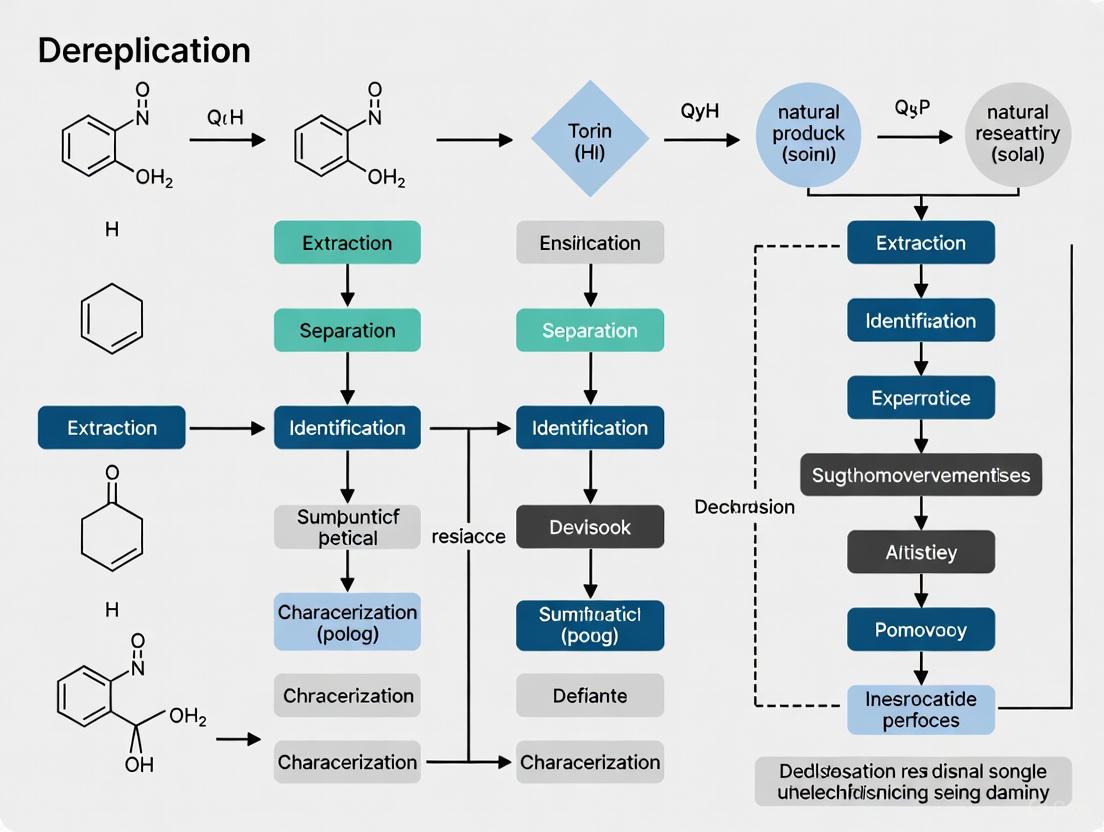
This article provides a comprehensive overview of modern dereplication strategies essential for natural product researchers and drug development professionals.
Advanced Dereplication Strategies in Natural Product Research: Accelerating Drug Discovery
Abstract
This article provides a comprehensive overview of modern dereplication strategies essential for natural product researchers and drug development professionals. It explores the foundational concept of dereplication as a process for the rapid identification of known compounds, details cutting-edge methodological workflows incorporating hyphenated analytical techniques, genomics, and synthetic biology, and addresses key challenges in troubleshooting and optimization. Furthermore, it examines validation protocols and comparative analyses of different approaches, synthesizing how these integrated strategies effectively eliminate rediscovery bottlenecks, prioritize novel chemotypes, and streamline the path from natural extract to promising lead compound.
What is Dereplication? Core Concepts and Evolutionary Workflows
In the field of natural products (NP) research, dereplication represents a critical strategic process for the early identification of known compounds in complex biological extracts, thereby preventing the costly and time-consuming re-isolation of already characterized molecules [1]. This methodology has evolved from simple comparative techniques into a sophisticated multidisciplinary approach that integrates advanced analytical technologies with bioinformatics. The core challenge driving dereplication development stems from the expensive and time-consuming nature of the NP discovery process, which faces major hurdles in dereplication and structure elucidation, particularly the determination of the absolute configuration of metabolites with stereogenic centers [1]. Historically, NP discovery has been plagued by the frequent rediscovery of known compounds, necessitating a paradigm shift toward faster, more efficient identification methods.
The fundamental principle of dereplication involves using minimal crude material to rapidly identify known metabolites through comparison with reference data, allowing researchers to prioritize novel compounds for further investigation [2] [3]. This process has become increasingly important as the exploration of natural bioresources—both terrestrial and marine—has expanded, revealing an immense chemical diversity that requires efficient navigation. Modern dereplication now comprehensively focuses on recent technological and instrumental advances that alleviate these obstacles, paving the way for accelerating NP discovery toward diverse biotechnological applications [1]. The development of innovative approaches in the fields of screening methods, metabolomics, genomics, metagenomics, proteomics, combinatorial biosynthesis, synthetic biology, expression systems, and bioinformatics continues to unravel natural products with unique structural and biological properties for numerous biotechnological purposes [1].
The Technological Revolution in Dereplication Strategies
From Classic Physicochemical Separation to Modern Metabolomics
The journey of dereplication methodologies has transitioned from basic techniques to highly sophisticated technologic integration. Initially, dereplication relied heavily on chromatographic separation coupled with UV-Vis profiling and comparative analysis against standard compounds [2]. These earlier approaches utilized orthogonal physicochemical characteristics such as chromatographic retention times, molecular weight, and biological properties to confirm metabolic identification [3]. While effective for simpler mixtures, these methods faced limitations in dealing with complex biological samples exhibiting large concentration ranges and insufficient chromatographic resolution.
The paradigm shift toward modern metabolomics-based dereplication began with the recognition that crude extracts represent complex mixtures of metabolites whose chemical profiles can be efficiently mapped using hyphenated techniques [2]. This evolution has positioned dereplication as an essential component of plant metabolomics studies, with current approaches leveraging the powerful combination of high-resolution mass spectrometry (HR-MS) and nuclear magnetic resonance (NMR) spectroscopy to establish comprehensive chemical profiles of biological extracts [2] [4]. The links between metabolome evolution during optimization and processing factors can now be identified through metabolomics, allowing researchers to efficiently establish cultivation and production processes while maintaining or enhancing synthesis of desired compounds [2].
Integration of Omics Technologies and Bioinformatics
The contemporary dereplication landscape has been revolutionized by the integration of multiple omics technologies and advanced bioinformatics platforms. Metabolomics now allows for the simultaneous analysis of thousands of metabolites, providing a systems-level understanding of the chemical composition of biological samples [2]. When combined with genomics and metagenomics, this approach enables researchers to link biosynthetic gene clusters (BGCs) to their metabolic products, offering powerful predictive capabilities for novel compound discovery [1] [5].
The development of comprehensive natural product databases has been equally transformative, with resources such as AntiMarin, MarinLit, NPASS, Dictionary of Natural Products (DNP), GNPS, and NIST providing extensive reference data for comparative analysis [1] [2] [6]. The NPASS database alone now includes 204,023 natural products, 48,940 organisms, 8764 targets, and over 1 million experimental activity records, demonstrating the massive scale of information available for dereplication efforts [6]. These databases, combined with bioinformatics tools like MZmine and SIEVE for differential analysis, have created an ecosystem where putative identifications can be made with increasing confidence [2] [4].
Table 1: Key Analytical Techniques in Modern Dereplication Workflows
| Technique Category | Specific Technologies | Primary Applications in Dereplication | Key Advantages |
|---|---|---|---|
| Separation Methods | LC-MS, GC-MS, LC-NMR | Compound separation, retention time indexing, preliminary identification | High resolution, reproducibility, compatibility with various detection methods |
| Mass Spectrometry | HR-MS, MS/MS, FT-MS, GC-TOF-MS | Molecular weight determination, structural fragmentation, formula prediction | High sensitivity, resolution, and ability to interface with separation techniques |
| Spectroscopy | NMR (1D, 2D), CD, VCD | Stereochemical analysis, definitive structure elucidation, absolute configuration | Provides definitive structural information, including relative and absolute configuration |
| Bioinformatics | Molecular networking, GNPS, CASE, AI/ML | Data mining, pattern recognition, database searching, structural prediction | High-throughput capability, ability to handle large datasets, predictive power |
Core Methodologies and Workflows in Modern Dereplication
Liquid Chromatography-Mass Spectrometry (LC-MS) Approaches
Liquid chromatography coupled with mass spectrometry has emerged as a cornerstone technology in modern dereplication pipelines. The fundamental principle involves chromatographic separation of complex mixtures followed by mass analysis of individual components. Recent advances have focused on improving both resolution and throughput, with ultra-high-performance liquid chromatography (UHPLC) systems providing superior separation efficiency combined with high-resolution mass spectrometers offering precise mass measurements (<5 ppm error) for accurate molecular formula assignment [7].
The development of in-house mass spectral libraries has proven particularly valuable for targeted dereplication campaigns. A recent innovative approach involved creating a specialized MS/MS library for 31 commonly occurring natural products from different classes using LC-ESI-MS/MS [7]. This methodology employed a pooling strategy based on log P values and exact masses to minimize co-elution and the presence of isomers in the same pool, significantly reducing analysis time and cost compared to individual compound analysis [7]. The MS/MS features of each compound were acquired using [M + H]+ and/or [M + Na]+ adducts across a range of collision energies (10-40 eV), creating a comprehensive spectral database that enabled rapid dereplication and validation of compounds in various food and plant sample extracts [7].
Metabolomics and Multivariate Data Analysis in Dereplication
The integration of metabolomics into dereplication strategies has introduced powerful pattern recognition capabilities that transcend simple compound identification. This approach treats the entire metabolite profile as a data-rich source of information that can be processed using multivariate data analysis (MVDA) to identify statistically significant differences between sample groups [4]. The typical workflow involves liquid chromatography-high resolution Fourier transform mass spectrometry (LC-HRFTMS) analysis followed by data processing using platforms like MZmine for peak detection, peak deconvolution, isotope grouping, noise removal, and peak alignment to correct deviations in retention time [4].
The processed data is then subjected to both unsupervised methods such as principal component analysis (PCA) and supervised methods including partial least squares (PLS) and orthogonal partial least squares (OPLS) to visualize separations between groups and identify features responsible for these distinctions [4]. In a practical application investigating the antitrypanosomal activity of British bluebells (Hyacinthoides non-scripta), this approach successfully linked bioactivity to the accumulation of high molecular weight compounds matched with saponin glycosides, while triterpenoids and steroids occurred in inactive extracts [4]. The OPLS-DA loading S-plot was specifically used to predict bioactive metabolites from anti-trypanosomal active fractions, enabling targeted isolation work [4].
Molecular Networking and Bioinformatics-Driven Dereplication
Molecular networking has emerged as one of the most transformative approaches in modern dereplication, operating on the principle that structurally related compounds exhibit similar fragmentation patterns under identical ionization conditions [4]. This methodology, particularly as implemented in the Global Natural Products Social Molecular Networking (GNPS) platform, enables the visualization of complex metabolite datasets as networks where nodes represent consensus MS/MS spectra and edges reflect spectral similarities [1] [4]. The resultant network displays clusters of interconnected nodes with compounds of higher similarity, often showing relatively high cosine scores, allowing for the efficient annotation of both known and structurally related novel compounds [4].
The power of molecular networking lies in its ability to contextualize unknown compounds within clusters of known metabolites, facilitating chemical annotations even in the absence of exact database matches. When applied to the British bluebells study, molecular networking helped identify similarities in fragmentation patterns between an isolated saponin glycoside and a putatively identified active metabolite, leading to the targeted isolation of a norlanostane-type saponin glycoside with 98.9% antitrypanosomal inhibition at 20 µM [4]. This integration of metabolomics and bioactivity-guided approaches represents the cutting edge of modern NP discovery.
Diagram 1: Modern Dereplication Workflow integrating multiple analytical and bioinformatics approaches for efficient natural product identification.
Essential Protocols for Contemporary Dereplication
Protocol: LC-MS/MS Library Construction for Targeted Dereplication
Objective: Create a specialized in-house MS/MS library for rapid dereplication of common natural product classes.
Materials and Reagents:
- Reference standards of target compounds (purity 97-98%)
- LC-MS grade solvents: Methanol, acetonitrile, water
- Mobile phase additive: Formic acid (0.1%)
- LC-MS system: UHPLC coupled to high-resolution mass spectrometer with ESI source
- Data processing software: Vendor-specific and open-source platforms (MZmine, GNPS)
Procedure:
- Sample Pooling Strategy: Group reference standards into pools based on log P values and exact masses to minimize co-elution and presence of isomers.
- LC-MS Analysis:
- Column: C18 reversed-phase (e.g., 75 mm, id 3.0 mm, particle size 5 μm)
- Mobile phase: A: 0.1% formic acid in water; B: acetonitrile
- Gradient: 10-100% B over 30 minutes, hold at 100% B for 5 minutes
- Flow rate: 300 μL/min
- Injection volume: 1-5 μL
- MS Data Acquisition:
- Ionization mode: Positive and negative ESI
- Mass range: 100-2000 m/z
- Resolution: >30,000
- Collision energies: Use stepped energy (10, 20, 30, 40 eV) and average (25.5-62 eV) for comprehensive fragmentation
- Library Construction:
- Record retention time, observed masses, error (ppm), molecular formula, and MS/MS spectra
- Include data for both [M + H]+ and [M + Na]+ adducts where applicable
- Submit data to public repositories (e.g., MetaboLights) for community access
Validation: Test the developed library against complex plant extracts to verify identification confidence and refine parameters as needed [7].
Protocol: GC-TOF-MS with Advanced Deconvolution for Volatile Metabolites
Objective: Implement improved metabolite identification in complex plant extracts using GC-TOF-MS with complementary deconvolution algorithms.
Materials and Reagents:
- Derivatization reagents: O-methylhydroxylamine hydrochloride, MSTFA with 1% TMCS, pyridine
- Internal standards: FAME mixture (C8-C30)
- GC-MS system: Agilent 7890A GC-5975C MSD or equivalent
- Column: DB5-MS+10m Duraguard Capillary Column (30 m × 250 μm × 0.25 μm)
- Software: AMDIS, RAMSY, NIST database
Procedure:
- Sample Preparation:
- Perform two-step derivatization: methoximation (30°C, 90 min) followed by trimethylsilylation (37°C, 30 min)
- Add FAME mixture for retention time index calibration
- GC-MS Analysis:
- Injection: Split injection (1.0 μL at 100.0°C, 1.0 min)
- Temperature program: Optimize for compound volatility range
- Mass detection: Electron ionization (70 eV), mass range 50-600 m/z
- Data Deconvolution:
- Apply factorial design of experiments to determine optimal AMDIS configuration
- Use developed heuristic factor (CDF, compound detection factor) to decrease false-positive rates
- Implement RAMSY as complementary deconvolution for peaks with substantial overlap to recover low-intensity co-eluted ions
- Compound Identification:
- Match deconvoluted spectra against NIST and other standard libraries
- Utilize linear retention indices as orthogonal identification parameter
Application: This protocol has been successfully applied to plant species from Solanaceae, Chrysobalanaceae, and Euphorbiaceae families, demonstrating enhanced identification of non-targeted plant metabolites [3].
Table 2: Essential Research Reagent Solutions for Dereplication Protocols
| Reagent/Category | Specific Examples | Function in Dereplication | Protocol Applications |
|---|---|---|---|
| Chromatography Solvents | Methanol, acetonitrile, water (LC-MS grade) | Mobile phase components, sample reconstitution | LC-MS/MS library construction, metabolomic profiling |
| Derivatization Reagents | O-methylhydroxylamine HCl, MSTFA + 1% TMCS | Volatilization of metabolites for GC-MS analysis | GC-TOF-MS analysis of non-volatile compounds |
| Ionization Additives | Formic acid, ammonium acetate, ammonium formate | Enhancement of ionization efficiency in MS | LC-MS method optimization for different compound classes |
| Mass Calibration Standards | Sodium formate, FAME mixtures | Instrument calibration and retention time indexing | Daily MS performance verification, RI calibration in GC-MS |
| Reference Standards | Commercial natural products (e.g., quercetin, catechin) | Library building, retention time confirmation | In-house MS/MS library construction and validation |
Advanced Applications and Future Perspectives
Emerging Technologies Reshaping Dereplication
The future of dereplication is being shaped by several transformative technologies that promise to further accelerate natural product discovery. Affinity selection mass spectrometry (AS-MS) has emerged as a powerful high-throughput screening approach for identifying ligands from natural product libraries in a label-free, non-functional assay [8]. This technique interrogates non-covalent target-ligand complexes and discloses binders solely by mass spectrometry data, providing conditions for chemical annotation of identified ligands [8]. Different assay modes include solution-based methods (ultrafiltration, size exclusion chromatography) and immobilized target approaches (ligand-fishing, affinity capture MS), each with distinct advantages for specific applications [8].
Artificial intelligence and machine learning are increasingly being integrated into dereplication pipelines, enabling predictive analysis of complex datasets that surpasses traditional computational methods. These approaches are particularly valuable for connecting biosynthetic gene clusters to their metabolic products, predicting chemical structures from spectral data, and prioritizing compounds for isolation based on predicted novelty and bioactivity [1] [5]. The development of tools like DeepBGC and AntiSMASH for genome mining, combined with platforms like GNPS for mass spectral analysis, creates an ecosystem where in silico predictions guide laboratory efforts with increasing accuracy [5].
Diagram 2: Affinity Selection Mass Spectrometry (AS-MS) Workflow for target-based screening of natural product libraries.
Integration with Sustainable Drug Discovery
Modern dereplication strategies are increasingly aligned with sustainable drug discovery paradigms that emphasize environmental responsibility and resource efficiency [5]. The integration of dereplication with approaches such as waste valorization, microbial fermentation, and green extraction technologies creates a framework where natural product research contributes to circular bioeconomy principles [5]. Advances in food bioscience including foodomics, combined with pharmacognosy and ethnobotanical wisdom, ensure that traditional knowledge informs contemporary discovery efforts while sustainable practices mitigate environmental impacts associated with traditional sourcing methods [5].
The future of dereplication in natural product research will likely see increased automation and integration of multiple technological platforms, creating unified pipelines that seamlessly connect genomic information with metabolic outputs and biological activities. As these methodologies continue to evolve, they will further reduce the time and resources required to identify novel bioactive compounds, ensuring that natural products remain at the forefront of drug discovery and development in the era of personalized medicine and sustainable therapeutics.
The Critical Role in Natural Product Screening and Drug Discovery Pipelines
In modern drug discovery, natural products (NPs) remain an indispensable source of novel therapeutic agents, with approximately one-third of the world's top-selling drugs being natural products or their derivatives [9]. However, the immense chemical diversity present in biological extracts presents a significant challenge: the frequent rediscovery of known compounds during screening programs. Dereplication, defined as "the process of quickly identifying known chemotypes" [10], has thus become a critical discipline within natural product research. This proactive strategy enables researchers to prioritize novel bioactive compounds early in the discovery pipeline, conserving substantial resources and accelerating the identification of truly new chemical entities. By integrating advanced analytical technologies with bioinformatics, contemporary dereplication has evolved beyond simple compound identification to become a comprehensive approach for navigating chemical and biological space in the quest for innovative therapeutics.
Current Dereplication Strategies and Quantitative Frameworks
Evolving Dereplication Workflows
Modern dereplication encompasses several distinct workflows tailored to different research objectives. Analysis of the literature from 1990 to 2014 reveals five principal approaches [10]: (1) Untargeted workflows for rapid identification of major compounds regardless of chemical class; (2) Bioactivity-guided fractionation support to accelerate the isolation of active principles; (3) Metabolomic studies for untargeted chemical profiling of natural extract collections; (4) Targeted identification of predetermined metabolite classes; and (5) Gene-sequence analyses for taxonomic identification of microbial strains. Each strategy employs specialized analytical techniques and bioinformatic tools to address specific challenges in natural product screening.
Quantitative Analysis of Bioactivity
A critical aspect of dereplication involves tracking bioactivity throughout the purification process to ensure preservation of therapeutic potential. A novel quantitative framework for assessing total bioactivity enables researchers to determine how much of a crude extract's original bioactivity is maintained through sequential purification steps [11]. This methodology addresses fundamental questions about whether activity loss results from material loss, compound degradation, or disruption of synergistic interactions between compounds in complex mixtures.
Table 1: Quantitative Analysis of Total Bioactivity During Purification
| Purification Stage | Total Bioactivity Retention | Potential Causes of Variation |
|---|---|---|
| Crude Ethanolic Extract | Reference (100%) | Baseline established |
| Sequential Extracts | Slightly less than sum of activities per gram | Partial separation of complementary compounds |
| HPLC-purified Fractions | Full retention despite material loss | Additive rather than synergistic principles |
Research on Backhousia myrtifolia (Grey Myrtle) demonstrates that while crude ethanolic extracts sometimes retain slightly more bioactivity than the sum of all sequential extracts per gram of starting material, HPLC purification typically retains total bioactivity despite substantial material loss, suggesting predominantly additive effects rather than synergy [11].
Emerging Tools and Strategic Integration
Recent advances (2018-2024) have significantly expanded the dereplication toolbox beyond traditional bioassay-guided fractionation followed by nuclear magnetic resonance (NMR) and mass spectrometry (MS) analysis [12]. Contemporary approaches integrate (bio)chemometric analysis with high-throughput screening and computational mining of screening data to prioritize compounds for full structure elucidation. These methodologies provide unprecedented efficiency in identifying bioactive natural products from complex matrices while maintaining high confidence in compound identification [12].
Table 2: Current and Emerging Dereplication Tools and Their Applications
| Methodology | Key Features | Research Applications |
|---|---|---|
| Traditional BGF with NMR/MS | Foundation approach; structure elucidation | Identification of novel bioactive compounds |
| (Bio)chemometric Analysis | Statistical correlation of chemical and biological data | Prioritization of active compounds in complex mixtures |
| Data Mining of HTS Results | Reveals natural product chemical motifs for target classes | Design of new chemical templates for drug targets |
| High-Throughput Screening | Automated isolation; single-shot screening data | Large-scale assessment of compound libraries |
| AI and Bioinformatics | Predictive models; database mining | Accelerated novelty assessment and target identification |
Innovative data-mining approaches applied to high-throughput screening (HTS) data are particularly valuable for uncovering hidden structure-activity relationships. For instance, analysis of the GlaxoSmithKline natural-products set using both descriptor-based clustering and hierarchical chemical core identification has successfully revealed structural scaffolds with significant activity against discrete drug target classes, including 7TM receptors, ion channels, protein kinases, hydrolases, and oxidoreductases [13].
Experimental Protocols for Effective Dereplication
Comprehensive Dereplication Workflow
The following step-by-step protocol integrates traditional and emerging approaches for effective dereplication in natural product screening:
Step 1: Sample Preparation and Fractionation
- Prepare crude extracts using standardized extraction protocols (e.g., ethanolic extraction) [11]
- Perform prefractionation using solid-phase extraction or liquid-liquid partitioning
- Employ automated systems for high-throughput sample processing when possible [10]
Step 2: High-Throughput Screening and Bioassay
- Conduct target-based or phenotypic assays relevant to therapeutic areas
- Implement quantitative PCR for inflammation-related gene expression when assessing anti-inflammatory activity [14]
- Generate dose-response curves for active samples to determine potency [14]
Step 3: Rapid Chemical Analysis
- Analyze active samples using UHPLC-MS with photodiode array detection
- Acquire high-resolution mass spectrometry data for accurate molecular formula assignment
- Record UV-Vis spectra for preliminary compound classification [10]
Step 4: Database Mining and Chemoinformatic Analysis
- Interrogate natural product databases (e.g., DNP, MarinLit, AntiBase) with HR-MS and UV data
- Apply tandem MS spectral matching against reference libraries when available
- Utilize chemical clustering approaches to identify structural relationships [13]
Step 5: Advanced Structural Elucidation
- Isplicate promising novel compounds using semi-preparative HPLC
- Conduct comprehensive NMR experiments (1H, 13C, 2D experiments) for full structure determination
- Apply microcryoprobe technology for mass-limited samples when necessary
Step 6: Bioactivity Validation and Mechanism Studies
- Confirm biological activity of purified compounds using orthogonal assays
- Perform target identification studies for highly active novel compounds
- Assess synergy/additivity effects in reconstructed compound mixtures [11]
In Vivo Screening and Data Analysis Protocols
For natural products demonstrating promising in vitro activity, the following in vivo screening protocol provides a framework for therapeutic assessment:
Experimental Design
- Select disease-relevant animal models (e.g., xenograft models for anti-cancer activity) [14]
- Implement appropriate sample sizes with control and treatment groups
- Define administration routes based on compound physicochemical properties
Dosage and Formulation Considerations
- Conduct dose-response studies to establish therapeutic windows
- Consider nanocarrier systems (e.g., liposomes) to enhance bioavailability when needed [14]
- Monitor plasma concentrations using HPLC for pharmacokinetic analysis [14]
Data Collection and Quantitative Analysis
- Employ multiple assessment methods (behavioral, biochemical, histopathological)
- Apply longitudinal analysis for chronic disease models to monitor disease progression [14]
- Utilize standardized protocols for consistent data collection across experiments [15]
Statistical Analysis Framework
- Implement ANOVA and regression analysis for dose-response relationships [14]
- Apply survival analysis and Kaplan-Meier curves for therapeutic efficacy assessment [14]
- Use multivariate analysis to account for age, sex, and housing conditions [14]
- Perform correlation analysis between compound concentration and biomarker levels [14]
Essential Research Reagent Solutions
Successful dereplication requires specialized reagents and materials to support analytical and biological assessment. The following table outlines key resources for establishing an effective dereplication pipeline:
Table 3: Essential Research Reagents and Materials for Dereplication Studies
| Reagent/Material | Specification | Research Application |
|---|---|---|
| UHPLC-MS System | High-resolution mass accuracy; photodiode array detector | Compound separation and preliminary identification |
| NMR Spectroscopy | High-field instrument with cryoprobe technology | Structural elucidation of purified compounds |
| Bioassay Kits | Target-specific (kinase, protease, receptor assays) | High-throughput biological activity screening |
| Chemical Databases | Commercial and proprietary natural product databases | Rapid comparison of known compounds |
| Fraction Collection | Automated system compatible with multiple detection methods | Bioactivity-guided fractionation |
| Cell-Based Assay Systems | Reporter gene assays; phenotypic screening platforms | Mechanism of action studies |
| Reference Standards | Authentic natural product compounds | Chromatographic alignment and confirmation |
Integrated Workflow Visualization
Figure 1: Integrated Dereplication and Drug Discovery Workflow. This strategy efficiently distinguishes novel bioactive natural products from known compounds early in the discovery pipeline.
Dereplication represents a critical strategic component in modern natural product-based drug discovery, effectively addressing the fundamental challenge of chemical redundancy in biological source materials. By implementing the integrated protocols and workflows outlined in this application note, research teams can significantly accelerate the identification of novel bioactive compounds while minimizing resource expenditure on known chemical entities. The continuing evolution of dereplication—particularly through incorporation of artificial intelligence, advanced data mining strategies, and improved bioinformatic capabilities [16]—promises to further enhance its critical role in unlocking the therapeutic potential embedded in natural product diversity. As these methodologies become increasingly sophisticated and accessible, they will undoubtedly catalyze the discovery and development of new therapeutic agents from nature's chemical treasury.
Dereplication, defined as "the process of quickly identifying known chemotypes" [17], represents a critical first step in natural product (NP) research pipelines. By rapidly recognizing previously characterized compounds in crude extracts, researchers can prioritize novel bioactive molecules for isolation, thereby conserving resources and accelerating discovery timelines [17] [18]. Since the term's formal introduction in 1990, dereplication methodologies have evolved substantially from simple chromatographic comparisons to sophisticated multi-technique workflows integrating advanced analytics, genomics, and bioinformatics [17] [19]. This evolution has produced five distinct dereplication workflows, each characterized by unique starting materials, analytical techniques, and primary objectives [17] [19]. This application note details these five established workflows, providing structured experimental protocols and resources to facilitate their implementation in modern NP drug discovery programs.
The Five Dereplication Workflows: Principles and Applications
The development of dereplication strategies over the past three decades can be categorized into five distinct workflows, each designed to address specific challenges in natural product research [17].
Table 1: Core Characteristics of the Five Dereplication Workflows
| Workflow | Primary Objective | Typical Starting Material | Key Analytical Techniques |
|---|---|---|---|
| 1. Rapid Identification of Major Compounds | Untargeted profiling of principal constituents in a single sample [17]. | Single natural extract [17]. | LC-MS, LC-UV, Database matching [17]. |
| 2. Bioactivity-Guided Fractionation Acceleration | Identifying the bioactive principle in a fractionation pipeline [17] [18]. | Bioactive crude extract or pre-fractionated sample [17]. | Bioassay, LC-MS, LC-NMR, Micro-fractionation [17] [20]. |
| 3. Untargeted Chemical Profiling | Comparative metabolomic analysis across extensive extract collections [17]. | Collection of natural extracts [17]. | UHPLC-HRMS, Molecular Networking, Multivariate analysis [1] [17]. |
| 4. Targeted Compound-Class Identification | Screening for a predetermined, specific class of metabolites [17]. | Natural extracts suspected to contain the class [17]. | Targeted LC-MS/MS, NMR, Class-specific databases [17]. |
| 5. Microbial Taxonomic Identification | Classification of microbial strains via genetic sequence analysis [17]. | Microbial strain (culture or DNA) [17]. | Gene sequencing (16S rRNA), Genome Mining [1] [17]. |
The following diagram illustrates the logical relationships and decision pathways between these five core dereplication workflows.
Experimental Protocols for Key Workflows
Protocol 1: Rapid Identification of Major Compounds via UHPLC-HRMS
This protocol is designed for the untargeted profiling of major constituents in a single natural extract, facilitating the quick recognition of known compounds [17].
Materials & Reagents:
- Crude natural extract (e.g., from microbial fermentation or plant tissue)
- HPLC-grade solvents: Water, Methanol, Acetonitrile
- Formic Acid
- UHPLC system coupled to a High-Resolution Mass Spectrometer (e.g., Q-TOF or Orbitrap)
- Analytical reversed-phase UHPLC column (e.g., C18, 1.7µm, 2.1 x 100 mm)
Procedure:
- Sample Preparation: Dissolve the crude extract in an appropriate solvent (e.g., methanol or methanol-water mixture) to a concentration of approximately 1 mg/mL. Centrifuge to remove particulate matter.
- Chromatographic Separation:
- Mobile Phase: A: Water + 0.1% Formic Acid; B: Acetonitrile + 0.1% Formic Acid.
- Gradient: Employ a linear gradient from 5% B to 100% B over 15-20 minutes.
- Flow Rate: 0.4 mL/min.
- Injection Volume: 1-5 µL.
- Mass Spectrometric Detection:
- Acquire data in both positive and negative ionization modes.
- Set mass resolution to >25,000 for accurate mass measurement.
- Use data-dependent acquisition (DDA) to fragment the most intense ions.
- Data Processing and Dereplication:
- Extract accurate mass and MS/MS spectra for all major chromatographic peaks.
- Query the obtained data against natural product databases (e.g., GNPS, LOTUS) and in-house spectral libraries.
- Use software tools (e.g., molecular networking on GNPS) to visualize related compound families and identify known clusters.
Protocol 2: Accelerating Bioactivity-Guided Fractionation with Micro-Fractionation
This protocol integrates chemical analysis directly with bioactivity screening to pinpoint the active compound(s) during fractionation, thus avoiding the isolation of known bioactive compounds [17] [20].
Materials & Reagents:
- Bioactive crude extract
- HPLC-grade solvents
- Analytical or semi-preparative HPLC system
- 96-well microtiter plates
- LC-MS system
- Evaporator (for solvent removal from plates)
Procedure:
- LC-Based Micro-Fractionation:
- Inject the bioactive extract onto an analytical or semi-preparative HPLC column.
- At the column outlet, collect the eluent into a 96-well plate at a fixed time interval (e.g., every 15-30 seconds), creating a library of microfractions.
- Parallelized Analysis:
- Chemical Analysis: Transfer a small aliquot from each well to a dedicated "daughter plate" for LC-MS analysis. This creates a chemical profile (retention time, mass) for each microfraction.
- Biological Screening: Evaporate the solvent from the main plate and subject the dried residues to the relevant bioassay.
- Data Correlation:
- Correlate the bioactivity results from the bioassay plate with the chemical profiles from the LC-MS daughter plate.
- The microfraction(s) showing activity will contain the bioactive compound(s). The corresponding LC-MS data is immediately used for dereplication against databases to determine if the active is novel or known.
Protocol 3: Untargeted Metabolomic Profiling of Extract Collections
This protocol uses high-throughput metabolomics to compare large sets of extracts, identifying chemical patterns and prioritizing samples containing unique metabolomes [1] [17].
Materials & Reagents:
- Collection of natural extracts (e.g., from multiple microbial strains, plant accessions)
- UHPLC-HRMS system
- Quality Control (QC) sample (pooled mixture of all extracts)
- Data analysis software (e.g., XCMS Online, MetaboAnalyst, GNPS)
Procedure:
- Standardized Data Acquisition:
- Analyze all extracts in the collection in a randomized run order using a consistent UHPLC-HRMS method.
- Inject QC samples periodically throughout the analytical batch to monitor instrument stability.
- Data Preprocessing:
- Use computational tools (e.g., XCMS, MZmine) for peak detection, alignment, and integration across all samples. This creates a data matrix of features (retention time + m/z) and their intensities.
- Multivariate Analysis and Dereplication:
- Perform statistical analysis (e.g., PCA, OPLS-DA) on the data matrix to identify features that discriminate between sample groups.
- Export the MS/MS data for the discriminating features and process them through the GNPS platform for molecular networking and database matching.
- This workflow allows for the simultaneous dereplication of known molecules and the detection of unique, potentially novel molecular families.
Table 2: Key Research Reagent Solutions for Dereplication Workflows
| Category | Item | Function/Application |
|---|---|---|
| Chromatography | Diaion HP-20 Resin [21] | A poly-benzyl resin for liquid-solid phase extraction of metabolites from aqueous fermentation broths. |
| C18 UHPLC Column [21] | Standard reversed-phase column for high-resolution separation of complex natural extracts. | |
| Solvents | Ethyl Acetate (EtOAc) [21] | Common organic solvent for liquid-liquid extraction of medium-polarity compounds. |
| LC-MS Grade Solvents [1] | High-purity water, acetonitrile, and methanol for MS-based analysis to minimize background interference. | |
| Databases & Software | GNPS (Global Natural Products Social Molecular Networking) [1] [22] | Open-access platform for community-wide sharing of MS/MS spectra and molecular networking. |
| LOTUS Initiative [19] | A freely available resource providing comprehensive structural and taxonomic data on natural products. | |
| DEREP-NP [19] | A database designed for rapid dereplication using combined MS and NMR data. | |
| Analytical Standards | In-House Compound Library [18] [20] | A curated collection of known natural product standards for chromatographic and spectral comparison. |
The five dereplication workflows detailed herein provide a structured framework for navigating the complexity of natural product discovery. From the rapid profiling of single extracts to the integration of genomics in strain identification, these methodologies have become indispensable for improving the efficiency of lead compound identification. The continuous development of analytical technologies, public databases, and bioinformatic tools promises to further refine these workflows, solidifying dereplication's central role in bridging the gap between natural biodiversity and the development of novel therapeutics.
The discovery of novel bioactive compounds from natural sources is perpetually hampered by a significant bottleneck: the frequent rediscovery of known substances during the screening of complex extracts. This process, termed dereplication, is defined as "a process of quickly identifying known chemotypes" early in the discovery pipeline to focus resources on the isolation and characterization of truly novel entities [10]. The inherent chemical complexity of natural product extracts, combined with the vast number of already characterized compounds, makes this a critical challenge for researchers, scientists, and drug development professionals [23] [24]. This Application Note details the primary bottlenecks in dereplication and provides structured protocols and workflows to overcome them, thereby enhancing the efficiency of natural product research.
Key Bottlenecks in Dereplication
The process of dereplication faces several interconnected challenges that can stall discovery efforts if not properly managed.
Inherent Complexity and Variability of Natural Extracts
Botanical dietary supplements and other natural product sources are intrinsically complex mixtures. This complexity arises from a wide array of factors, including the presence of numerous primary and secondary metabolites, which can number in the hundreds or even thousands within a single extract [23] [25]. This variability is influenced by the plant part used, geographical origin, altitude, climate, and time of harvest, leading to substantial differences in chemical composition between batches that are nominally the same [23]. Furthermore, the proprietary and unique manufacturing processes used by different companies can introduce additional variability, making reproducibility between studies a significant challenge [23].
Analytical and Technological Limitations
The reliable identification of known compounds within these complex mixtures demands sophisticated analytical techniques. Without them, researchers risk spending considerable time and resources isolating compounds only to find they are already known. Key limitations include:
- Separation Resolution: Inadequate chromatographic separation can fail to resolve critical compounds, leading to misidentification.
- Detection Sensitivity and Specificity: A lack of high-sensitivity, high-resolution detectors can prevent the detection of minor constituents or the accurate determination of elemental composition.
- Data Processing Bottlenecks: The vast datasets generated by modern instrumentation require robust software and algorithms for efficient processing and interpretation [10] [25].
Data Integration and Interpretation Challenges
Modern dereplication extends beyond simple comparison to reference standards; it involves the integration of multiple data streams, including high-resolution mass spectrometry (HR-MS) and nuclear magnetic resonance (NMR) data, and their correlation with massive chemical and biological databases [10] [2]. The inability to seamlessly cross-reference spectral data with existing literature and database entries represents a major hurdle. This is compounded by the need for specialized expertise to interpret the complex data and validate identifications [22].
Table 1: Key Bottlenecks and Their Impact on Natural Product Discovery
| Bottleneck Category | Specific Challenge | Impact on Research |
|---|---|---|
| Sample Complexity | High degree of chemical variability in source material | Compromises reproducibility and generalizability of findings [23] |
| Presence of numerous structurally similar analogues | Complicates isolation and identification of novel chemotypes | |
| Analytical Limitations | Insufficient resolution of separation techniques (e.g., LC, GC) | Fails to resolve critical compounds, leading to misidentification [25] |
| Lack of high-sensitivity, high-resolution detectors | Inability to detect minor constituents or determine accurate mass | |
| Data Management | Inefficient data processing workflows for large datasets | Slows down the identification process and introduces errors [10] |
| Difficulty integrating multiple data types (e.g., MS, NMR) | Prevents a comprehensive and confident identification [2] |
Integrated Dereplication Workflow
To systematically address these bottlenecks, an integrated workflow that combines advanced analytical technologies with robust data mining strategies is essential. The following diagram and subsequent sections detail this multi-stage process.
Figure 1: Integrated analytical and computational workflow for efficient dereplication of natural extracts. The process leverages complementary techniques to rapidly prioritize novel compounds for isolation.
Detailed Experimental Protocols
Protocol 1: LC-HRMS/MS Profiling for Dereplication
Principle: This protocol uses Ultra-High-Performance Liquid Chromatography coupled to High-Resolution Tandem Mass Spectrometry (UHPLC-HRMS/MS) to separate the components of a complex natural extract and provide accurate mass and fragmentation data for their identification [25].
Materials:
- UHPLC System: Equipped with a binary pump, autosampler, and column oven.
- Mass Spectrometer: High-resolution instrument such as Q-TOF, Orbitrap, or FT-ICR MS.
- Analytical Column: Reversed-phase C18 column (e.g., 100 x 2.1 mm, 1.7-1.8 μm particle size).
- Solvents: LC-MS grade water, acetonitrile, and methanol.
- Additive: LC-MS grade formic acid or ammonium formate/acetate.
Procedure:
- Sample Preparation:
- Weigh 10 mg of the dried crude extract.
- Dissolve in 1 mL of a suitable solvent (e.g., methanol or water/methanol mixture).
- Vortex for 1 minute and centrifuge at 14,000 x g for 10 minutes to pellet insoluble debris.
- Transfer the supernatant to an LC vial for analysis.
Chromatographic Separation:
- Column Temperature: 40 °C
- Injection Volume: 1-5 μL
- Mobile Phase:
- A: 0.1% Formic acid in water
- B: 0.1% Formic acid in acetonitrile
- Gradient Elution:
- 0 min: 5% B
- 1 min: 5% B
- 15 min: 95% B
- 17 min: 95% B
- 17.1 min: 5% B
- 20 min: 5% B (for column re-equilibration)
- Flow Rate: 0.3 - 0.4 mL/min
Mass Spectrometric Detection:
- Ionization Mode: Electrospray Ionization (ESI) in both positive and negative modes.
- Full Scan Parameters:
- Resolution: > 60,000 (FWHM at m/z 200)
- Scan Range: m/z 100 - 1500
- Data-Dependent MS/MS (dd-MS²) Parameters:
- Resolution: > 15,000
- Top N: 5-10 most intense ions per scan cycle
- Isolation Window: 1.0 - 2.0 m/z
- Stepped Normalized Collision Energy (NCE): 20, 40, 60 eV
Protocol 2: Database Mining and In Silico Annotation
Principle: This protocol uses specialized software to process the raw LC-HRMS/MS data and query chemical databases to assign putative structures to the detected features, thereby identifying known compounds [10] [22].
Materials:
- Raw LC-HRMS/MS data files (.raw, .d, etc.)
- Bioinformatics Software: Such as MZmine, XCMS, MS-DIAL, or commercial equivalents.
- Natural Product Databases: Such as AntiBase, MarinLit, COCONUT, GNPS, PubChem, and ChemSpider.
Procedure:
- Data Pre-processing:
- Import raw data into the bioinformatics software.
- Perform peak picking to detect chromatographic features.
- Deisotope the data to group isotopic peaks.
- Align features across multiple samples if applicable.
- Annotate adducts and in-source fragments (e.g., [M+H]+, [M+Na]+, [M-H]-).
- Deconvolute the data to group features (MS1 and associated MS2 spectra) originating from the same compound.
- Export a feature table with m/z, retention time, and associated MS/MS spectra.
- Database Query and Annotation:
- Spectral Library Search:
- Submit the acquired MS/MS spectra to the Global Natural Products Social Molecular Networking (GNPS) platform or other spectral libraries.
- A cosine score > 0.7 is typically considered a good match for a putative annotation [22].
- In Silico Fragmentation:
- For features with no spectral library match, use tools like CSI:FingerID or SIRIUS to predict molecular formula and structures based on fragmentation trees.
- Molecular Networking:
- Upload the data to GNPS to create a molecular network. Clusters of related nodes visually represent compound families, allowing for analogue discovery and tentative identification based on structural similarity to known compounds in the network.
- Spectral Library Search:
The Scientist's Toolkit: Research Reagent Solutions
Successful dereplication relies on a suite of analytical tools and reagents. The following table details essential components of the dereplication pipeline.
Table 2: Essential Research Reagents and Tools for Dereplication
| Tool/Reagent | Function in Dereplication | Key Characteristics |
|---|---|---|
| UHPLC System | High-resolution chromatographic separation of complex extracts. | Capable of withstanding pressures >1000 bar; uses sub-2μm particles for high efficiency [25]. |
| HRMS Mass Analyzer (Orbitrap, Q-TOF) | Provides accurate mass measurement for elemental composition determination and MS/MS structural elucidation. | High mass accuracy (< 5 ppm), high resolution (>60,000), and fast acquisition rates [22] [25]. |
| Natural Product Databases (e.g., AntiBase, GNPS) | Digital libraries for comparing acquired spectral data against known compounds. | Contain mass spectral, NMR, and physicochemical data for thousands of natural products [10] [2]. |
| Dereplication Software (e.g., MZmine) | Processes raw LC-MS data for feature detection, alignment, and annotation prior to database search. | Open-source or commercial; handles large datasets and integrates with online platforms [2]. |
| NMR Spectroscopy | Provides definitive structural elucidation for novel compounds or to confirm ambiguous MS-based annotations. | Can be coupled directly to LC (LC-NMR-MS) for online analysis of mixtures [10] [25]. |
Quantitative Analysis of Bioactivity During Purification
A critical question during bioactivity-guided fractionation is whether the total bioactivity of the crude extract is preserved, lost due to degradation, or diminished due to the loss of synergistic effects. A novel formula allows for the quantitative tracking of total bioactivity throughout the purification process [11].
Formula for Total Bioactivity (Total BA): The total bioactivity in a sample can be calculated as: Total BA = (1 / IC₅₀) x Mass of Sample Where IC₅₀ is the concentration of the sample that inhibits 50% of the biological activity in a standardized assay.
Application: This formula was applied to the discovery of anti-inflammatory compounds from Backhousia myrtifolia. The results demonstrated that the total bioactivity was largely retained through the HPLC purification process, indicating an additive rather than a synergistic principle in the crude extract [11]. This type of quantitative analysis is vital for ensuring that purification efforts are not inadvertently discarding or degrading the active components.
Table 3: Example Data Structure for Tracking Total Bioactivity During Purification
| Purification Stage | Sample Mass (mg) | IC₅₀ (μg/mL) | Total Bioactivity (BA Units) | % Recovery of Total BA |
|---|---|---|---|---|
| Crude Ethanolic Extract | 1000 | 25.0 | 40.0 | (Reference = 100%) |
| Ethyl Acetate Partition | 350 | 15.5 | 22.6 | 56.5% |
| Final Purified Fraction | 5 | 5.0 | 1.0 | 2.5% |
| Sum of All Fractions | - | - | 38.5 | 96.3% |
Overcoming the bottleneck of rediscovery is paramount for accelerating innovation in natural product-based drug discovery. This requires a paradigm shift from traditional bioassay-guided fractionation to a hypothesis-driven approach centered on early and efficient dereplication. By implementing the integrated workflows and detailed protocols outlined in this Application Note—which combine the power of UHPLC-HRMS/MS, advanced data mining tools, molecular networking, and quantitative bioactivity tracking—researchers can significantly enhance their efficiency. This strategy allows for the rapid elimination of known compounds and the intelligent prioritization of novel chemotypes, ensuring that valuable resources are dedicated to the discovery and development of truly new bioactive entities.
Cutting-Edge Tools and Techniques: From LC-MS to Synthetic Biology
In the field of natural product research, dereplication represents the critical process of rapidly identifying known compounds in complex biological mixtures to prioritize novel entities for isolation. The integration of separation technologies with spectroscopic detection techniques, collectively termed hyphenated techniques, has revolutionized this process by providing powerful analytical platforms that combine separation efficiency with sophisticated structural elucidation capabilities. These techniques, primarily liquid chromatography-high resolution mass spectrometry (LC-HRMS) and liquid chromatography-nuclear magnetic resonance (LC-NMR), enable researchers to overcome traditional bottlenecks in natural product discovery [26].
The fundamental principle underlying hyphenated techniques involves the online coupling of chromatographic separation with information-rich spectroscopic detection. This synergy allows for the continuous analysis of eluting compounds without the need for manual fractionation, significantly reducing analysis time and enabling the characterization of unstable metabolites. Hirschfeld first coined the term "hyphenation" to describe the online combination of a separation technique with one or more spectroscopic detection techniques [26]. Today, these systems have evolved to include multiple hyphenations such as LC-PDA-MS and LC-NMR-MS, providing complementary data streams that deliver unprecedented insights into complex metabolomes [26] [27].
Within the context of natural product research, these advanced analytical platforms have transformed dereplication strategies by allowing for the early identification of known compounds directly in crude extracts. This prevents the redundant isolation of previously characterized metabolites and accelerates the discovery of novel bioactive compounds. The non-destructive nature of NMR detection, combined with the sensitivity and selectivity of MS, creates an ideal framework for comprehensive metabolite profiling [27].
Theoretical Foundations and Technical Considerations
Liquid Chromatography-High Resolution Mass Spectrometry (LC-HRMS)
LC-HRMS combines the superior separation capabilities of liquid chromatography with the exact mass measurement capabilities of high-resolution mass spectrometry, creating one of the most powerful tools in modern metabolomics [28]. The separation component (LC) resolves complex mixtures into individual components, while the HRMS detector provides accurate mass measurements with mass errors typically below 5 ppm, enabling the determination of elemental compositions with high confidence [28] [29]. The most common HRMS analyzers used in natural product research include Quadrupole-Time of Flight (Q-TOF) and Orbitrap (OT) instruments, valued for their high specificity, resolution, and low exact mass deviation [28].
The electrospray ionization (ESI) and atmospheric pressure chemical ionization (APCI) interfaces serve as the critical link between the LC and MS components, efficiently converting liquid-phase analytes into gas-phase ions [26]. ESI is particularly well-suited for the analysis of polar compounds, including most secondary metabolites, while APCI offers advantages for less polar compounds. The "soft" ionization nature of these techniques predominantly generates molecular ion species with minimal fragmentation, preserving information about the intact molecule [26]. For additional structural information, tandem mass spectrometry (MS/MS) induces fragmentation through collision-induced dissociation, providing diagnostic fragments that reveal structural features [28] [26].
The application of LC-HRMS in untargeted metabolomics generates massive three-dimensional datasets, where metabolites are characterized by mass-to-charge ratio (m/z), chromatographic retention time (RT), and signal intensity [28]. The high resolution and mass accuracy provided by modern HRMS instruments are essential for distinguishing between isobaric compounds and calculating putative molecular formulas, significantly enhancing the confidence of metabolite identification [28] [29].
Liquid Chromatography-Nuclear Magnetic Resonance (LC-NMR)
LC-NMR represents the most structurally informative hyphenated technique, capable of generating atom-to-atom connectivity maps and distinguishing between highly similar molecules, including isomers [27]. While less sensitive than MS, NMR provides unparalleled structural information through a non-destructive detection process that preserves samples for subsequent analyses [30] [27]. The technique operates in either on-flow mode (continuous spectra acquisition as mobile phase travels through the system) or stop-flow mode (halting the LC pump to maintain a compound of interest in the NMR flow cell for extended acquisition) [27].
The primary technical challenge in LC-NMR involves effective solvent suppression, as the protonated solvents used in conventional LC create immense signals that can obscure metabolite signals of interest [30] [27]. Advanced solvent suppression techniques such as WATERGATE, excitation sculpting, and WET sequences have been developed to mitigate this issue, allowing for the detection of analyte signals even when using protonated solvents [30] [27]. The development of cryogenically cooled flow probes has dramatically improved sensitivity by reducing electronic noise, providing 3-4 times the sensitivity of conventional probes and enabling the analysis of mass-limited natural products [27].
Diffusion Ordered Spectroscopy (DOSY) NMR
DOSY NMR, while not exclusively a hyphenated technique, provides a valuable virtual separation dimension by differentiating compounds based on their diffusion coefficients, which correlate with molecular size and shape [30]. In the context of complex mixture analysis, DOSY takes advantage of the significant differences in molecular weights between small molecule metabolites and macromolecules to separate these groups along a diffusion dimension [30]. This technique is particularly valuable for the analysis of crude extracts, as it can resolve signals from different molecules without physical separation, providing insights into molecular aggregation and interactions [30].
Experimental Protocols
LC-HRMS Protocol for Untargeted Metabolomics
Table 1: LC-HRMS Instrumentation Parameters for Untargeted Metabolomics
| Parameter | Specification | Notes |
|---|---|---|
| Chromatography System | UHPLC with C18 column (100 × 2.1 mm, 1.7-1.9 μm) | Suitable for most natural product applications |
| Mobile Phase | A: Water with 0.1% formic acid; B: Acetonitrile with 0.1% formic acid | Acid modifier improves peak shape |
| Gradient Program | 5-100% B over 15-30 minutes | Optimize for specific sample types |
| Flow Rate | 0.3-0.4 mL/min | Balance between separation efficiency and backpressure |
| Mass Spectrometer | Q-TOF or Orbitrap mass analyzer | Resolution >35,000 FWHM |
| Ionization Mode | ESI positive and/or negative mode | Run both modes for comprehensive coverage |
| Mass Range | m/z 50-1500 | Covers most secondary metabolites |
| Collision Energy | 10-40 eV for MS/MS | Ramped energy for fragmentation optimization |
Sample Preparation Protocol:
- Extraction: Prepare crude extracts using accelerated solvent extraction (ASE) or maceration with appropriate solvents (e.g., ethanol, methanol, or hydroalcoholic mixtures) [28] [3]. For fungal-infected plant material, include healthy controls for comparative analysis [29].
- Pre-concentration: Evaporate extracts under reduced pressure and reconstitute in injection solvent compatible with LC mobile phase.
- Quality Control: Prepare pooled quality control (QC) samples by combining equal aliquots of all samples to monitor system stability [28].
Data Acquisition Protocol:
- Chromatographic Separation: Inject 2-10 μL of sample (concentration dependent on source material) and separate using optimized gradient elution.
- Mass Spectrometric Detection: Acquire data in data-dependent acquisition (DDA) mode, where the top N most intense ions from each MS1 scan are selected for MS/MS fragmentation [28] [29].
- System Calibration: Calibrate mass axis daily using standard reference compounds to maintain mass accuracy below 5 ppm [28].
Data Processing Workflow:
- Peak Picking and Deconvolution: Use software tools (e.g., XCMS, MS-DIAL, MZmine) to detect features across samples based on m/z, RT, and intensity [28].
- Alignment: Correct for minor retention time shifts across samples.
- Annotation: Query detected features against natural product databases (e.g., GNPS, Dictionary of Natural Products) using accurate mass and MS/MS spectra [29].
LC-NMR Protocol for Structural Elucidation
Table 2: LC-NMR Instrumentation Parameters for Metabolite Identification
| Parameter | Specification | Notes |
|---|---|---|
| NMR Magnet Strength | 500-600 MHz | Higher fields (800-900 MHz) provide enhanced sensitivity |
| NMR Probe Type | Cryogenically cooled flow probe | 3-4x sensitivity improvement over conventional probes |
| LC Flow Rate | 0.5-1.0 mL/min | Compatible with standard HPLC systems |
| Detection Volume | 30-120 μL | Balance between sensitivity and chromatographic resolution |
| Solvent System | Deuterated solvents preferred (e.g., ACN-d₃, D₂O) | Minimizes solvent suppression requirements |
| Acquisition Time | 15 min - several hours per peak | Stop-flow mode for extended acquisition |
| Pulse Sequence | 1D NOESY with presaturation | Effective water suppression for aqueous systems |
System Configuration Protocol:
- LC-NMR-MS Setup: Incorporate a post-column splitter directing 5% of flow to MS and 95% to NMR, enabling simultaneous MS and NMR data acquisition [27].
- Solvent Selection: Where possible, use deuterated solvents for NMR compatibility, though advanced solvent suppression techniques enable the use of protonated solvents [27].
- Trigger Configuration: Set MS or UV-based triggers for automated stop-flow experiments when compounds of interest elute [27].
Data Acquisition Protocol:
- On-flow Screening: Initially perform on-flow ¹H-NMR analysis to identify regions of interest in the chromatogram.
- Stop-flow Experiments: When a compound of interest is detected (via MS or UV trigger), halt the LC flow to position the peak in the NMR flow cell for extended analysis.
- Extended Acquisition: Collect 1D and 2D NMR experiments (COSY, HSQC, HMBC) as needed for structural elucidation, with acquisition times ranging from minutes to hours depending on concentration [27].
Data Interpretation Protocol:
- Simultaneous Analysis: Correlate NMR chemical shifts with MS-derived molecular formula and fragmentation patterns.
- Structure Verification: Confirm proposed structures by comparing with literature data or authentic standards when available.
Applications in Natural Product Dereplication
Case Study: Dereplication of Orchidaceae Metabolites
A recent investigation into the metabolic profiling of Orchidaceae species demonstrates the power of LC-HRMS in dereplication strategies. The study analyzed twenty ethanolic plant extracts from Vanda and Cattleya genera using LC-HRMS/MS-based untargeted metabolomics combined with chemometric methods to discriminate ions that differentiate healthy and fungal-infected plant samples [29]. Through this approach, fifty-three metabolites were rapidly annotated using spectral library matching and in silico fragmentation tools, revealing a diverse array of secondary metabolites including flavonoids, phenolic acids, chromones, stilbenoids, and tannins [29].
The metabolomic profiling demonstrated significant variation in polyphenol production between healthy and fungal-infected plants, suggesting these constituents are associated with biochemical defense responses. Particularly, the study identified the dynamic synthesis of stilbenoids in fungal-infected plants, while a tricin derivative flavonoid and loliolide terpenoid were exclusively detected in healthy plant samples, highlighting their potential as antifungal metabolites [29]. This case study exemplifies how modern LC-HRMS platforms, combined with state-of-the-art data analysis tools, can rapidly fingerprint medicinal plants and accelerate the discovery of new bioactive leads.
Advanced Dereplication Using GC-MS and Molecular Networking
While LC-based techniques dominate contemporary metabolomics, GC-MS remains a powerful tool for the analysis of volatile and semi-volatile metabolites. A recent study developed an improved dereplication method using GC-TOF MS combined with the Ratio Analysis of Mass Spectrometry (RAMSY) deconvolution algorithm as a complementary approach to traditional AMDIS deconvolution [3]. This protocol enabled more reliable identification of plant metabolites in complex extracts from Solanaceae, Chrysobalanaceae, and Euphorbiaceae species by recovering low-intensity co-eluted ions that standard deconvolution methods missed [3].
The integration of these deconvolution approaches significantly reduced false-positive identifications, a common challenge in GC-MS-based metabolomics where co-elution can lead to misidentification. The implementation of a factorial design to optimize AMDIS parameters, followed by RAMSY analysis as a digital filter, created a robust workflow for metabolite identification that leverages the extensive electron ionization (EI) spectral libraries available for GC-MS [3]. This approach demonstrates how advanced data processing algorithms can enhance the value of established analytical platforms in natural product dereplication.
Table 3: Key Research Reagent Solutions for Hyphenated Techniques
| Reagent/Category | Function/Application | Examples/Specifications |
|---|---|---|
| Deuterated Solvents | NMR-compatible mobile phases | D₂O, ACN-d₃, Methanol-d₄ |
| Ion Pairing Reagents | Improve chromatographic separation | Formic acid, Ammonium formate |
| Derivatization Reagents | Enhance volatility for GC-MS | MSTFA, MOX (Methoxamine hydrochloride) |
| Mass Calibration Standards | Instrument calibration | Sodium formate, ESI Tuning Mix |
| NMR Reference Standards | Chemical shift calibration | TSP, DSS, DFTMP |
| Spectral Libraries | Metabolite identification | GNPS, NIST, HMDB, Dictionary of Natural Products |
| Solid Phase Extraction | Sample clean-up | C18, Silica, Ion-exchange cartridges |
Integrated Workflow and Future Perspectives
The ultimate power of hyphenated techniques in natural product dereplication emerges from their integration into complementary analytical workflows. A fully integrated LC-NMR-MS system represents the pinnacle of this approach, combining the separation power of LC with the structural elucidation capabilities of NMR and the sensitivity of MS in a single platform [27]. In such systems, the MS data provides initial molecular formula and fragment information, guiding subsequent NMR experiments toward the most promising unknowns, thereby optimizing the use of valuable NMR instrument time [27].
The future development of hyphenated techniques will likely focus on enhancing sensitivity through technological improvements such as microcoil NMR probes and mass spectrometry instruments with increasingly higher resolution and faster acquisition rates [30]. Additionally, the integration of advanced data mining tools, such as molecular networking and in silico fragmentation prediction, will further accelerate the dereplication process by enabling more confident annotation of known compounds and faster prioritization of novel entities [29].
As these technologies continue to evolve, their application in natural product research will undoubtedly expand, pushing the boundaries of metabolome coverage and enhancing our ability to discover novel bioactive compounds from complex biological matrices. The ongoing refinement of hyphenated techniques ensures they will remain indispensable tools in the natural product researcher's arsenal, continuing to transform dereplication strategies and accelerate drug discovery from natural sources.
Dereplication represents a critical, early stage in natural product (NP) research, aimed at the rapid identification of known compounds within complex biological extracts. By avoiding the redundant rediscovery of known molecules, dereplication streamlines the pipeline, allowing researchers to focus resources on the discovery of novel bioactive entities [31]. In modern NP discovery, this process is increasingly powered by bioinformatics tools and databases that leverage high-throughput analytical data. The integration of molecular networking and in-silico screening has transformed dereplication from a manual, time-consuming task into a high-throughput, data-driven strategy [32]. This protocol details the practical application of these computational approaches, framing them within the essential workflow of contemporary natural product research.
Key Concepts and Definitions
- Dereplication: The process of identifying known compounds in a natural product extract at an early stage to prioritize novel compounds for isolation [31].
- Molecular Networking: A computational mass spectrometry method that organizes MS/MS spectra based on chemical similarity, visually clustering related molecules and enabling the annotation of unknown compounds through known relatives [33].
- In-Silico Screening: The use of computational tools to predict the identity, properties, or bioactivity of a molecule by comparing its analytical data (e.g., MS, NMR) against virtual databases.
- GNPS (Global Natural Products Social Molecular Networking): A public online platform that serves as a mass spectrometry data repository and provides tools for community-wide natural product discovery [34] [35].
Experimental Protocols & Application Notes
Protocol 1: Molecular Networking for Dereplication via GNPS
This protocol describes the use of the GNPS platform to create molecular networks for the dereplication of complex mixtures [33] [34].
1. Sample Preparation and Data Acquisition:
- Prepare natural product extracts using standard extraction procedures (e.g., ethanolic extraction as in [36]).
- Analyze samples using Liquid Chromatography coupled to Tandem Mass Spectrometry (LC-MS/MS) in data-dependent acquisition mode. High mass accuracy instruments (e.g., Q-TOF or Orbitrap) are recommended.
2. Data Preprocessing:
- Convert raw MS data into an open format (e.g., .mzXML or .mzML).
- Use feature detection and alignment software such as MZmine [37] to extract mass spectral features (retention time, m/z, and intensity).
3. Molecular Network Construction on GNPS:
- Upload the processed MS/MS data file to the GNPS website (http://gnps.ucsd.edu) [35].
- Set key parameters for network creation as shown in the table below.
- Submit the job. GNPS will generate a molecular network where each node represents an MS/MS spectrum, and edges connect spectra with high similarity.
Table 1: Key Parameters for GNPS Molecular Networking
| Parameter | Recommended Setting | Function |
|---|---|---|
| Precursor Ion Mass Tolerance | 0.02 Da | Mass accuracy window for aligning precursor ions. |
| Fragment Ion Mass Tolerance | 0.02 Da | Mass accuracy window for matching fragment ions. |
| Minimum Cosine Score | 0.7 | Similarity threshold for connecting two spectra. |
| Minimum Matched Fragment Ions | 6 | Minimum number of shared fragments required for a connection. |
| Network TopK | 10 | Limits the number of connections per node to the top 10 matches. |
| Maximum Connected Component Size | 100 | Prevents formation of overly large, uninformative clusters. |
4. Network Interpretation and Dereplication:
- Examine the resulting network for clusters of nodes (molecular families). Spectra within a cluster often share a core scaffold.
- Use the built-in spectral library search in GNPS to automatically annotate nodes by matching experimental spectra to reference spectra in public libraries.
- For unannotated nodes, propagate putative identifications from known nodes within the same cluster, leveraging the principle that structurally similar compounds generate similar MS/MS spectra [33].
The following workflow diagram illustrates this process:
Protocol 2: In-Silico Database Screening with DEREPLICATOR+
For targeted dereplication of specific compound classes, especially peptidic natural products (PNPs) and polyketides, database search tools like DEREPLICATOR+ are highly effective [34] [38].
1. Input Data Preparation:
- Input data are MS/MS spectra in .msp or .mzXML format. High-quality, high-resolution MS/MS spectra yield the best results.
2. Database Selection and Search:
- DEREPLICATOR+ can search against diverse metabolite databases, including the Dictionary of Natural Products (DNP) and AntiMarin [34].
- The algorithm works by:
- i. Converting chemical structures of database compounds into fragmentation graphs.
- ii. Annotating the experimental MS/MS spectrum against these theoretical fragmentation graphs.
- iii. Scoring the Metabolite-Spectrum Matches (MSMs) and evaluating their statistical significance to control the False Discovery Rate (FDR) [34].
3. Interpretation of Results:
- Results are typically filtered at a specific FDR (e.g., 1% FDR). A lower FDR corresponds to a higher confidence in the identifications.
- The output lists identified compounds, their scores, and the number of matched spectra.
Table 2: Representative DEREPLICATOR+ Results from an Actinomyces Dataset
| Identified Compound | Compound Class | DEREPLICATOR+ Score | Confidence Level (FDR) |
|---|---|---|---|
| Chalcomycin | Polyketide | 19 | 0% |
| Actinomycin D | Peptide | 22 | 0% |
| Germicidin | Polyketide | 16 | 0% |
| Geosmin | Terpene | 14 | 0% |
| Cyclo-(L-Pro-L-Tyr) | Dipeptide | 11 | 0% |
Adapted from data in [34]
Advanced Strategy: Integrated Workflow for Coriander Extract
A practical example from the literature demonstrates the power of combining these techniques. A study on Coriandrum sativum (coriander) ethanolic extract (CSEE) successfully integrated experimental and in-silico methods for comprehensive analysis [36].
1. Chemical Profiling:
- The extract was analyzed by UPLC/DAD-ESI/HRMS/MS, leading to the identification of nitrogenated compounds (e.g., adenine, adenosine), isocoumarins (e.g., coriandrin, dihydrocoriandrin), and flavonoids (e.g., rutin) [36].
2. In-Silico Property Prediction:
- Identified compounds were subjected to in-silico ADME (Absorption, Distribution, Metabolism, and Excretion) prediction using the SwissADME platform.
- Key findings showed that the major compounds obeyed Lipinski's "Rule of Five," suggesting good potential for oral pharmacokinetic activity [36].
3. Biological Activity Correlation:
- The CSEE demonstrated cytotoxic activity in neuroblastoma cells, promoting apoptosis. The integrated workflow provided a chemical basis for this observed bioactivity [36].
The following diagram illustrates this multi-faceted approach:
Successful implementation of these protocols relies on a suite of bioinformatics tools and databases.
Table 3: Key Resources for Molecular Networking and In-Silico Screening
| Resource Name | Type | Primary Function in Dereplication | Access |
|---|---|---|---|
| GNPS [34] [35] | Web Platform | Molecular networking, spectral library search, and community data analysis. | Freely accessible online |
| DEREPLICATOR+ [34] | Algorithm | Dereplicates diverse NP classes (peptides, polyketides, terpenes) by searching MS/MS data against structure databases. | Integrated into GNPS |
| SNAP-MS [39] | Algorithm | Annotates molecular networks using formula distributions and structural similarity, without need for reference spectra. | Freely available (web) |
| Dictionary of Natural Products (DNP) [34] [37] | Database | Comprehensive curated database of known natural products used as a reference for structure and property data. | Commercial / Subscription |
| MZmine [37] | Software Suite | Open-source platform for processing raw MS data, including feature detection, alignment, and visualization. | Freely downloadable |
| SwissADME [36] | Web Tool | Predicts pharmacokinetic properties and drug-likeness of candidate molecules from their chemical structure. | Freely accessible online |
Affinity Selection Mass Spectrometry (AS-MS) for High-Throughput Ligand Identification
Affinity Selection Mass Spectrometry (AS-MS) has emerged as a powerful, label-free, high-throughput screening (HTS) methodology for identifying bioactive ligands from complex natural product libraries. This technique is indispensable within modern dereplication strategies, enabling the rapid recognition of known compounds early in the screening process to focus resources on novel discoveries [8] [20]. AS-MS directly interrogates non-covalent target-ligand complexes, disclosing binders solely through mass spectrometry. This provides a significant advantage by identifying multiple ligands with different mechanisms of action—including orthosteric and allosteric binders—against a single biological target in a single assay [8]. This application note details standardized protocols and practical considerations for implementing AS-MS in natural product research.
AS-MS Assay Workflows and Principles
The core AS-MS assay, regardless of specific format, is built upon four major stages: static incubation, separation of bound from unbound compounds, dissociation of ligands from the target, and mass spectrometric identification [8]. A key initial decision involves selecting the appropriate assay model based on the target and library characteristics.
- Static Incubation: The target protein is incubated with the natural product library. Equilibrium time must be investigated and is influenced by both the target and the library. To minimize competition effects, the target is typically used in molar excess relative to the small molecules in the library [8].
- Separation: Non-binding mixture components are removed. The specific method depends on the selected assay mode (e.g., size exclusion, filtration).
- Dissociation: Ligands are released from the target-ligand complex. For in-solution assays, protein denaturation with organic solvents is common. For immobilized targets, gentler methods like pH change or competitive displacement can be used to allow target recycling [8].
- Identification: Released ligands are analyzed by LC-MS. Data processing and curation, using proprietary or open-source software, leads to ligand identification via affinity or index ratios calculated from control experiments [8].
The diversity of terminology used for AS-MS (e.g., ultrafiltration, ligand-fishing, affinity capture MS) can complicate literature searches, but the underlying principles remain consistent across these notations [8].
Workflow Diagram
The following diagram illustrates the generalized AS-MS workflow, showing the parallel paths for solution-based and immobilized target methods.
Key AS-MS Methodologies and Protocols
Solution-Based AS-MS: Ultrafiltration Protocol
Ultrafiltration separates molecules based on size, using membranes designed to retain molecules with molecular weights between 500 and 500,000 Da, making it ideal for retaining protein-ligand complexes while allowing unbound small molecules to pass through [8].
Detailed Experimental Protocol:
Incubation:
- Prepare the target protein (e.g., 5-lipoxygenase) in a suitable buffer (e.g., phosphate-buffered saline) at a low micromolar concentration.
- Incubate the protein with the natural product extract or compound library at optimal concentrations for detecting high-affinity ligands. Use a molar excess of target protein over small molecules to avoid competition [8].
- Allow the mixture to reach binding equilibrium (typically 30-60 minutes at room temperature or 4°C; time requires optimization).
Separation:
- Transfer the incubation mixture to an ultrafiltration device equipped with a suitable molecular weight cut-off (MWCO) membrane (e.g., 10-50 kDa, depending on the target size).
- Apply centrifugal force, vacuum, or pressure to separate the filtrate (unbound compounds) from the retentate (target-ligand complexes). Carefully control filtration rate and pressure to avoid membrane damage [8].
- Wash the retentate multiple times with buffer to remove non-specifically bound compounds.
Dissociation:
- Dissociate ligands from the target protein by adding a denaturing organic solvent mixture (e.g., methanol or acetonitrile containing 1% formic acid) to the retentate [8].
- If protein reuse is desired, employ non-denaturing conditions such as a pH shift or competitive displacement with a high-affinity ligand [8].
Analysis:
- Recover the dissociated ligands in the solvent.
- Inject into an LC-MS system for separation and analysis.
- Identify potential ligands by comparing MS data from the experimental sample to control samples (e.g., target-free incubations) to calculate affinity ratios [8].
Application Example: This protocol was applied to discover 5-lipoxygenase (5-LOX) ligands from an Inonotus obliquus extract, leading to the identification of botulin, lanosterol, and quercetin as potential inhibitors, which were subsequently validated by molecular docking [8].
Immobilized Target AS-MS: Ligand Fishing Protocol
Ligand fishing uses a biological target immobilized on a solid support (e.g., magnetic beads, resin) to capture binding partners from a complex mixture [8].
Detailed Experimental Protocol:
Target Immobilization:
- Select a solid support (e.g., magnetic microbeads, functionalized sepharose, paper).
- Immobilize the purified target protein onto the support following manufacturer's protocols, ensuring optimal orientation and retention of native conformation.
Ligand Fishing:
- Incubate the immobilized target with the natural product library in a binding-compatible buffer with gentle agitation.
- After incubation, use a magnetic rack or centrifugation to separate the beads from the solution.
- Wash the beads extensively with buffer to remove unbound and weakly associated compounds.
Elution:
- Elute specifically bound ligands using a mild denaturant, a pH shift, or organic solvent (e.g., 20-50% acetonitrile) that does not permanently denature the immobilized target, allowing for potential recycling [8].
- Alternatively, use competitive elution with a known high-affinity ligand.
Analysis:
- Analyze the eluate by LC-MS.
- Process data using software to identify bound ligands, often leveraging molecular networking and fragmentation spectra for annotation in natural product libraries [8].
The Scientist's Toolkit: Essential Research Reagents and Solutions
Successful implementation of AS-MS requires specific reagents, tools, and software. The following table catalogues essential components for establishing an AS-MS screening platform.
Table 1: Key Research Reagent Solutions for AS-MS Screening
| Item | Function & Application in AS-MS |
|---|---|
| Ultrafiltration Devices (MWCO membranes) | Separation of target-ligand complexes from unbound compounds in solution-based assays [8]. |
| Functionalized Magnetic Beads | Solid support for target immobilization in ligand fishing assays, enabling easy separation via magnetic racks [8]. |
| Liquid Chromatography-High-Resolution Mass Spectrometry (LC-HRMS) | Core instrumentation for separating and detecting dissociated ligands with high mass accuracy; critical for analyzing complex mixtures [8] [40]. |
| AS-MS Data Processing Software (e.g., Biologics Explorer, Protein Metrics Byos) | Deconvolution of complex MS data, automated peak identification, and annotation of biotransformations or bound ligands [40]. |
| Dereplication Databases (e.g., DNP, UNPD, ChemSpider) | Databases used to query molecular formulas of hits against known natural products to prevent re-discovery of known compounds [41]. |
| In-silico Fragmentation Tools (e.g., CSI:FingerID, MS-FINDER) | Software for predicting MS/MS spectra of candidate structures, enabling ranking and preliminary identification of unknown hits [41]. |
Data Analysis and Dereplication Strategy
The identification of ligands from synthetic libraries is relatively straightforward, as MS data can be directly correlated to defined structures. In contrast, analyzing hits from natural product libraries requires a more sophisticated, multi-step dereplication strategy to annotate known compounds and prioritize novel ones [8] [41] [20].
Dereplication Workflow
The following diagram outlines the logical sequence for dereplicating and identifying natural product ligands discovered via AS-MS.
Quantitative Data from AS-MS Screening
The following table summarizes exemplary data from an AS-MS screening campaign, illustrating typical outcomes and the quantitative follow-up required for validation.
Table 2: Exemplary Data from AS-MS Screening of a Natural Product Library against 5-Lipoxygenase (5-LOX) [8]
| Identified Ligand | Molecular Formula | Experimental m/z | Affinity Ratio (vs. Control) | Apparent K_d (μM) | Subsequent Validation Method |
|---|---|---|---|---|---|
| Botulin | C30H50O2 | 442.3807 | 8.5 | 2.1 | Molecular Docking |
| Lanosterol | C30H50O | 426.3858 | 6.2 | 5.8 | Molecular Docking |
| Quercetin | C15H10O7 | 302.0427 | 9.1 | 1.5 | Molecular Docking |
Affinity Selection Mass Spectrometry represents a powerful and versatile platform for accelerating drug discovery from natural sources. Its label-free nature and ability to directly detect binders, irrespective of their functional activity, make it particularly suitable for probing historically "undruggable" targets [42]. By integrating robust experimental protocols—whether solution-based ultrafiltration or immobilized ligand fishing—with a rigorous downstream dereplication pipeline, researchers can efficiently navigate the chemical complexity of natural product extracts. This integrated approach minimizes redundant rediscovery and maximizes the likelihood of identifying novel bioactive scaffolds, solidifying AS-MS as a cornerstone technology in modern natural product-based lead discovery.
Genome Mining and Heterologous Expression for Targeted Discovery
In natural product research, the process of dereplication—the rapid identification of known compounds in biological samples—is crucial for prioritizing novel bioactive molecules and avoiding the rediscovery of known entities [10]. Historically, this has been achieved through analytical techniques such as Liquid Chromatography-Mass Spectrometry (LC-MS) and Nuclear Magnetic Resonance (NMR) spectroscopy [2]. However, the advent of widespread genome sequencing has given rise to a powerful, proactive dereplication strategy: genome mining. This approach involves the bioinformatic identification of biosynthetic gene clusters (BGCs) in genomic data, predicting the chemical potential of an organism before cultivation [43]. When integrated with heterologous expression—the activation of these BGCs in optimized surrogate production hosts—this pipeline forms a robust platform for the targeted discovery of specialized metabolites, directly addressing the central challenge of dereplication by focusing efforts on genetically novel pathways [44].
Genome Mining: Principles and Workflows
Genome mining leverages the fact that in most organisms, genes responsible for the biosynthesis of a specialized metabolite are physically clustered in the genome into Biosynthetic Gene Clusters (BGCs) [43]. The primary goal is to identify these BGCs in silico and predict the chemical structures of their products.
Key Bioinformatics Tools and Databases
Effective genome mining relies on specialized computational tools and reference databases, summarized in the table below.
Table 1: Key Bioinformatics Resources for Genome Mining
| Resource Name | Type | Primary Function | Application in Dereplication |
|---|---|---|---|
| antiSMASH [44] | Bioinformatics Tool | Prediction and analysis of BGCs in genomic sequences. | Identifies putative BGCs and compares them against known clusters to highlight novelty. |
| Antibase [2] | Database | Library of microbial secondary metabolites and their data. | Used as a reference to cross-check predicted compounds against known molecules. |
| MarinLit [2] | Database | Specialist database for marine natural products. | Dereplicates compounds predicted from marine organism genomes. |
| MZmine [2] | Software Tool | Data processing for mass spectrometry-based metabolomics. | Aligns experimental LC-MS data with genomic predictions for validation. |
Experimental Protocol: In Silico BGC Identification
Objective: To identify and prioritize novel BGCs from a sequenced microbial genome. Materials: Genome sequence file (e.g., FASTA format); computer with internet access or local installation of bioinformatics software.
- Data Acquisition: Obtain a high-quality genome sequence of the target organism via whole-genome sequencing. Assemble the sequence and annotate the genes.
- BGC Prediction: Submit the annotated genome to the antiSMASH web server or run it locally [44]. The tool will identify genomic regions enriched with biosynthetic genes (e.g., for polyketide synthases (PKS), non-ribosomal peptide synthetases (NRPS), terpenes, etc.).
- Dereplication Analysis: For each BGC identified by antiSMASH, examine the "KnownClusterBlast" or "MIBiG" comparison output. This step determines if the BGC is identical or highly similar to ones encoding known compounds [43].
- Prioritization: Prioritize BGCs that show low similarity to known clusters, exhibit unique domain architectures, or are predicted to produce novel chemical scaffolds for downstream experimental work.
The following diagram illustrates the core logical workflow of integrated genome mining and heterologous expression.
Heterologous Expression: Principles and Platforms
Many BGCs identified via genome mining are "cryptic" (not expressed under laboratory conditions) or are found in organisms that are difficult to cultivate. Heterologous expression circumvents these issues by transferring the BGC into a genetically tractable surrogate host, or chassis, for activation and production [44].
The Micro-HEP Platform: A Case Study
The Microbial Heterologous Expression Platform (Micro-HEP) represents an advanced, integrated system for this purpose [44]. Its key advantage over traditional systems (e.g., E. coli ET12567/pUZ8002) is superior stability when handling BGCs with repetitive sequences and the use of orthogonal recombinase systems for efficient, multi-copy integration.
Table 2: Research Reagent Solutions for Heterologous Expression
| Reagent / Material | Function | Example/Description |
|---|---|---|
| Chassis Strain | Surrogate production host. | Streptomyces coelicolor A3(2)-2023: A genetically minimized strain with deleted endogenous BGCs to reduce background interference [44]. |
| Recombineering System | Enables precise genetic manipulation in E. coli. | Redα/Redβ/Redγ system: Mediates homologous recombination using short homology arms for cloning and engineering BGCs [44]. |
| RMCE Cassettes | Enables precise, multi-copy integration of BGCs into the chassis genome. | Modular cassettes (e.g., Cre-lox, Vika-vox, Dre-rox, phiBT1-attP) that allow stable, site-specific integration without plasmid backbone insertion [44]. |
| Conjugative Transfer System | Facilitates transfer of large DNA constructs from E. coli to Streptomyces. | Engineered E. coli strains containing an origin of transfer (oriT) and the necessary Tra proteins for conjugation [44]. |
Experimental Protocol: BGC Activation via Micro-HEP
Objective: To clone, transfer, and express a prioritized BGC in the S. coelicolor chassis strain. Materials: Bacterial strains (Donor E. coli, Recipient S. coelicolor A3(2)-2023); plasmids; appropriate culture media; antibiotics.
BGC Capture & Engineering:
- Clone the target BGC from genomic DNA into an appropriate vector using a method such as Transformation-Associated Recombination (TAR) or ExoCET [44].
- Introduce the cloned BGC into a specialized E. coli donor strain harboring the inducible Redαβγ recombineering system and a temperature-sensitive plasmid with a toxic ccdB gene for counterselection.
- Use two-step Red recombination to markerlessly insert an RMCE cassette (containing oriT, an integrase gene, and the corresponding RTS) into the BGC-containing plasmid [44].
Conjugative Transfer:
- Induce the Tra proteins in the donor E. coli strain to initiate conjugation.
- Mix the donor E. coli with spores of the S. coelicolor A3(2)-2023 chassis strain on solid media to allow for conjugative transfer of the BGC plasmid.
RMCE Integration & Screening:
- After conjugation, screen for exconjugants that have successfully integrated the BGC into their chromosome via RMCE. This results in a clean integration without the plasmid backbone.
- For yield enhancement, screen for strains where multiple copies of the BGC have been integrated [44].
Fermentation & Metabolite Analysis:
- Cultivate positive exconjugants in a suitable production medium (e.g., GYM or M1 medium) [44].
- Extract the culture broth and mycelia with organic solvents.
- Analyze the extracts using LC-HRMS to detect the production of the target compound, comparing the chromatograms to those of the wild-type and chassis strains [2] [20].
The following workflow details the specific steps and components of the Micro-HEP platform.
Concluding Remarks
The synergy of genome mining and heterologous expression presents a paradigm shift in natural product discovery and dereplication. This proactive strategy moves the dereplication bottleneck from the late-stage analytical chemistry phase to the initial genomic screening phase, dramatically increasing the efficiency of discovering novel bioactive compounds. Platforms like Micro-HEP, coupled with ever-expanding genomic databases and more sophisticated bioinformatic predictions, are paving the way for systematically unlocking the vast, untapped chemical potential encoded in microbial, plant, and fungal genomes [43] [44]. This integrated approach ensures that natural product research continues to be a vital source of new leads for drug development and other applications.
Integrating Metabolomics and Genomics for Comprehensive Pathway Analysis
The discovery of natural products (NPs) has been revolutionized by the shift from traditional bioactivity-guided fractionation to data-driven approaches leveraging genomics and metabolomics [45]. Historically, the dereplication process—the rapid identification of known compounds in complex mixtures—was essential to avoid rediscovering known molecules and to focus efforts on novel chemotypes [10] [17]. Today, integrated omics strategies provide researchers with powerful pipelines for the simultaneous identification of expressed secondary metabolites and their biosynthetic machinery, enabling targeted exploration of uncharted chemical space [45] [46]. This Application Note details practical protocols for integrating metabolomic and genomic data to accelerate natural product discovery within a comprehensive dereplication strategy, providing researchers with standardized methodologies for confident metabolite annotation and pathway elucidation.
Background
The Dereplication Concept in Modern Natural Product Research
Dereplication, initially defined in 1990 as "a process of quickly identifying known chemotypes," has evolved into multiple distinct workflows [10] [17]. In contemporary practice, it can serve as an untargeted workflow for rapid identification of major compounds, accelerate bioactivity-guided fractionation, enable chemical profiling of extract collections, facilitate targeted identification of specific metabolite classes, or support taxonomic identification of microbial strains through gene-sequence analysis [10]. The fundamental goal remains constant: to efficiently prioritize novel compounds for isolation and characterization by quickly eliminating known entities from consideration.
Genomic and Metabolomic Foundations
In the context of natural product research, genomics involves profiling natural product-producing organisms to identify secondary metabolite biosynthetic gene clusters (BGCs) and their biosynthetic potential, while metabolomics focuses on evaluating the chemical profiles of these organisms to determine which secondary metabolite products are actually expressed [45]. The integration of these datasets creates a powerful framework for linking metabolites to their biosynthetic origins, thereby addressing a central challenge in the field [45] [47].
Table 1: Core Omics Technologies for Natural Product Discovery
| Technology Type | Key Applications | Representative Tools/Platforms |
|---|---|---|
| Genomics | BGC identification and annotation | antiSMASH, PRISM, DeepBGC [45] [46] |
| Metabolomics | Metabolite profiling and annotation | GNPS, MetaboLights, Metabolomics Workbench [47] |
| Integrated Platforms | Connecting genomic and metabolomic data | Paired Omics Data Platform (PoDP) [47] |
Integrated Workflow for Pathway Analysis
The following section outlines a standardized workflow for integrating metabolomic and genomic data to elucidate natural product biosynthetic pathways. This pipeline incorporates dereplication strategies at critical points to ensure efficient resource allocation.
The pathway analysis workflow consists of six major stages that guide the researcher from sample preparation through to final compound identification and pathway validation. Each stage incorporates specific quality control measures and decision points to optimize the discovery process.
Genomic Data Acquisition and BGC Identification
Protocol 3.2.1: Genome Sequencing and Assembly for BGC Discovery
Objective: Obtain high-quality genome sequences capable of revealing complete biosynthetic gene clusters for natural product biosynthesis.
Materials:
- Microbial strains or plant tissue samples
- DNA extraction kits (e.g., CTAB for plants, enzymatic lysis for microbes)
- Pacific Biosciences (PacBio) or Oxford Nanopore sequencing platforms
- High-performance computing resources for assembly
Procedure:
- Extract high-molecular-weight DNA using standardized protocols appropriate for your source material.
- Prepare sequencing libraries according to manufacturer specifications. For BGC analysis, prioritize long-read technologies (PacBio HiFi or Oxford Nanopore) to span repetitive regions often found in BGCs [46].
- Sequence to appropriate coverage (typically >50x for long-read technologies).
- Assemble reads into contigs using specialized assemblers (e.g., Canu, Flye).
- Assess assembly quality using metrics such as N50 and completeness.
- Annotate assembled genomes using automated pipelines (e.g., Prokka for bacteria, Funannotate for fungi).
- Identify BGCs using antiSMASH (for bacteria/fungi) or plantiSMASH (for plants) with default parameters [45] [48].
Troubleshooting:
- Fragmented BGCs: Utilize hybrid assembly approaches combining long and short reads.
- Misassemblies: Verify assembly quality through alignment to reference genomes if available.
Protocol 3.2.2: BGC Annotation and Prioritization
Objective: Annotate and prioritize BGCs based on novelty and potential to produce interesting metabolites.
Materials:
- AntiSMASH output files
- MIBiG database for reference BGCs
- Custom scripts for comparative analysis
Procedure:
- Upload antiSMASH results to the antiSMASH database for comparative analysis.
- Compare identified BGCs against the MIBiG database to identify known clusters.
- Prioritize BGCs with low similarity to known clusters or those containing unusual domain architectures.
- For known BGCs, utilize dereplication strategies to avoid rediscovery [10].
- Generate hypotheses about potential metabolite structures based on BGC content.
Metabolomic Data Acquisition and Dereplication
Protocol 3.3.1: Metabolite Extraction and LC-MS/MS Analysis
Objective: Generate comprehensive metabolite profiles from biological samples for correlation with genomic data.
Materials:
- Lyophilized microbial cultures or plant extracts
- LC-MS grade solvents (methanol, acetonitrile, water)
- UHPLC system coupled to high-resolution mass spectrometer (Orbitrap, QTOF)
- C18 reversed-phase column (e.g., 100 × 2.1 mm, 1.7-1.9 μm)
Procedure:
- Extract metabolites using appropriate solvent systems (e.g., 80% methanol for polar metabolites, ethyl acetate for less polar compounds).
- Centrifuge extracts and filter through 0.22 μm membranes prior to analysis.
- Separate metabolites using UHPLC with binary solvent gradient (typically water/acetonitrile + 0.1% formic acid).
- Acquire data in data-dependent acquisition (DDA) mode, collecting both MS1 and MS/MS spectra.
- Include quality control samples (pooled quality controls) throughout the run sequence.
- Convert raw data to open formats (mzML, mzXML) for downstream processing.
Troubleshooting:
- Ion suppression: Optimize extraction protocols and LC gradients for specific metabolite classes.
- Poor fragmentation: Adjust collision energies or utilize multiple fragmentation techniques.
Protocol 3.3.2: Metabolite Dereplication using Molecular Networking
Objective: Rapidly identify known metabolites and cluster related molecules to prioritize novel compounds.
Materials:
- LC-MS/MS data in mzML format
- GNPS platform access
- Spectral libraries (GNPS, MassBank, NIST)
Procedure:
- Upload MS/MS data to the GNPS platform.
- Perform molecular networking using standard parameters (cosine score >0.7, minimum matched peaks 6).
- Annotate nodes in molecular networks by searching against spectral libraries.
- Identify known metabolites and their structural analogs through network topology.
- Prioritize unannotated nodes or those with low similarity to known compounds for further investigation [2] [47].
- For advanced dereplication, utilize tools like MS2LDA for substructure discovery.
Table 2: Key Analytical Technologies for Metabolite Dereplication
| Technology | Application | Key Features | Dereplication Role |
|---|---|---|---|
| LC-HRMS/MS | Metabolite separation and detection | High resolution, accurate mass, fragmentation data | Primary tool for metabolite characterization [2] |
| Molecular Networking | Visualizing metabolite relationships | Groups related molecules by spectral similarity | Rapid identification of compound families [47] |
| NMR Spectroscopy | Structural elucidation | Provides atomic connectivity information | Confirms structures of prioritized unknowns [10] |
| Ion Mobility MS | Isomer separation | Adds collision cross-section as separation dimension | Differentiates isobaric compounds [49] |
Data Integration and Correlation
Protocol 3.4.1: Linking Metabolites to BGCs through Metabologenomics
Objective: Correlate expressed metabolites with their predicted biosynthetic gene clusters.
Materials:
- Annotated BGC data from genomic analysis
- Processed metabolomic data with feature tables
- PoDP platform access for data registration
Procedure:
- Cultivate source organisms under multiple conditions to modulate metabolite expression.
- Analyze differential metabolite production in relation to BGC expression data (if transcriptomics available).
- Utilize pattern-based correlation to link metabolite features with specific BGCs.
- For modular natural products (NRPS, PKS), compare predicted substrate specificities with observed metabolite structures.
- Register validated links between BGCs and metabolites in the Paired Omics Data Platform (PoDP) to contribute to community resources [47].
- Employ tools like peptidogenomics for ribosomally synthesized and post-translationally modified peptides (RiPPs).
Protocol 3.4.2: Refining Metabolome Complexity with NP-PRESS
Objective: Remove irrelevant chemical features to focus on true secondary metabolites.
Materials:
- Raw LC-MS data in mzML format
- NP-PRESS pipeline installation
- Reference media component data
Procedure:
- Process raw data through FUNEL algorithm to eliminate features derived from culture media and abiotic processes.
- Apply simRank analysis to further remove features related to cellular degradation products.
- Compare resulting refined metabolome with BGC predictions.
- Prioritize metabolite features that correlate with cryptic BGCs [50].
The Scientist's Toolkit: Essential Research Reagents and Platforms
Successful implementation of integrated metabolomic and genomic strategies requires access to specialized computational tools, databases, and analytical resources. The following table summarizes key resources that form the core infrastructure for contemporary natural product discovery pipelines.
Table 3: Essential Research Resources for Integrated Omics Studies
| Resource Category | Specific Tools/Platforms | Primary Function | Access Information |
|---|---|---|---|
| Genome Mining | antiSMASH, PRISM, DeepBGC | BGC identification and prediction | https://antismash.secondarymetabolites.org/ [45] [46] |
| Metabolomics Analysis | GNPS, MZmine, MS-DIAL | MS data processing, molecular networking | https://gnps.ucsd.edu [2] [47] |
| Spectral Libraries | GNPS Libraries, MassBank, NIST | Metabolite identification by spectral matching | https://gnps.ucsd.edu [47] |
| Integrated Platforms | Paired Omics Data Platform (PoDP) | Connecting genomic and metabolomic datasets | https://pairedomicsdata.bioinformatics.nl/ [47] |
| BGC Databases | MIBiG, IMG/ABC | Reference database of known BGCs | https://mibig.secondarymetabolites.org/ [47] |
Case Study: Integrated Discovery of Depsipeptides from an Anaerobic Bacterium
To illustrate the practical application of these protocols, we present a summarized case study demonstrating the discovery of novel depsipeptides using integrated omics approaches.
Background: Analysis of the anaerobic bacterium Wukongibacter baidiensis M2B1 revealed significant gaps between its biosynthetic potential and observed metabolome.
Application of Protocols:
- Genomic sequencing (Protocol 3.2.1) identified multiple cryptic BGCs.
- Metabolomic profiling (Protocol 3.3.1) detected numerous secondary metabolites.
- NP-PRESS pipeline (Protocol 3.4.2) removed interfering features and highlighted a cluster of unknown metabolites.
- Integration of genomic and metabolomic data (Protocol 3.4.1) correlated a hybrid PKS-NRPS cluster with the metabolite cluster.
- Targeted isolation yielded a new family of depsipeptides, named baidienmycins, with potent antimicrobial and anticancer activities [50].
Outcome: This case demonstrates how integrated omics approaches coupled with advanced dereplication can efficiently guide the discovery of novel bioactive natural products, even from metabolically complex sources.
The integration of metabolomics and genomics represents a paradigm shift in natural product research, moving the field from serendipitous discovery to targeted, data-driven mining of chemical diversity [46]. The protocols outlined in this Application Note provide a standardized framework for implementing these powerful approaches within a comprehensive dereplication strategy. By systematically linking expressed metabolites to their genetic blueprints, researchers can efficiently prioritize novel chemical entities for isolation and characterization, significantly accelerating the natural product discovery pipeline. As these technologies continue to evolve, community initiatives such as the Paired Omics Data Platform will play an increasingly important role in aggregating and connecting diverse datasets, enabling larger-scale correlations and deeper insights into nature's biosynthetic potential [47].
Solving Dereplication Challenges: Novelty Focus and Data Integration
In natural product research, the initial stage of drug discovery is often hampered by the constant re-isolation of known compounds, a process that consumes significant time and resources [51]. Dereplication, the practice of efficiently identifying known compounds within complex mixtures, is crucial for steering efforts toward the discovery of novel chemical scaffolds [7]. However, traditional dereplication strategies, while powerful, primarily prevent rediscovery and offer limited means to proactively prioritize structural novelty [51].
A transformative shift is occurring with the development of analytical strategies that go beyond simple identification. Techniques such as Relative Mass Defect (RMD) analysis are now enabling researchers to screen for compounds that possess chemical features inconsistent with known compound classes, thereby flagging them as high-priority candidates for isolation [51]. This protocol details the application of RMD analysis, a method that leverages high-resolution mass spectrometry to systematically uncover new natural product scaffolds at the beginning of the discovery workflow, thus streamlining the path to novel therapeutic leads.
Background & Principle of RMD Analysis
The mass defect of an element or molecule is defined as the difference between its nominal mass (rounded to the nearest integer) and its exact monoisotopic mass (based on the most abundant isotopes) [51]. This difference arises from variations in nuclear binding energy between elements. For example, while carbon-12 (^12^C) is defined to have an exact mass of 12.0000 Da and a mass defect of zero, hydrogen has an absolute mass defect of +7.83 ppm, nitrogen +3.07 ppm, and oxygen -5.09 ppm [51].
The Relative Mass Defect (RMD) normalizes this absolute mass defect to the ionic mass, providing a value that is characteristic of a compound's class due to the specific hydrogen content typical of different natural product families [51]. The RMD value in parts per million (ppm) is calculated by the equation:
RMD (ppm) = (Absolute Mass Defect / Exact m/z) × 10^6 [51]
This principle enables the inference of an unknown compound's class directly from its high-resolution MS data. When the ancillary data (such as UV and MS/MS spectra) of an unknown cluster are incongruent with the compound class suggested by its RMD value, it indicates a high probability that the metabolite possesses a new skeletal structure [51]. This incongruence is the cornerstone of using RMD analysis for novelty prioritization.
Workflow for Novel Scaffold Discovery Using RMD
The following diagram illustrates the integrated workflow for prioritizing novel natural product scaffolds, combining molecular networking with RMD analysis:
Figure 1: Integrated workflow for novelty prioritization using molecular networking and RMD analysis.
Protocol: RMD-Assisted Prioritization
Objective: To identify and prioritize microbial metabolites with a high potential for structural novelty by integrating molecular networking with relative mass defect analysis.
Experimental Steps:
Sample Preparation and Data Acquisition:
- Culture microbial strains in appropriate fermentation media (e.g., ISP1, ISP2 broth) [51].
- Extract metabolites using organic solvents like ethyl acetate and n-BuOH.
- Resuspend dried extracts in methanol for analysis.
- Analyze samples using Ultra-High-Performance Liquid Chromatography coupled to High-Resolution Mass Spectrometry (UHPLC-HRMS). Acquire data in both positive and negative ionization modes.
Molecular Networking and Dereplication:
- Process raw LC-MS data with software such as MZmine 2 to detect features (ions) and perform peak alignment [51].
- Export the processed feature list to the GNPS (Global Natural Products Social Molecular Networking) web platform.
- Generate a molecular network. The resulting nodes (compounds) and clusters (structurally related compounds) will be visualized.
- Annotate nodes where possible by matching MS/MS spectra against reference libraries in GNPS.
Candidate Cluster Selection:
- From the molecular network, apply the following filters to select promising clusters [51]:
- Condition A: Clusters that are not annotated by GNPS.
- Condition B: Clusters containing five or more nodes, suggesting the presence of analog series.
- Condition C: Clusters unique to a specific microbial genus.
- From the molecular network, apply the following filters to select promising clusters [51]:
RMD Calculation and Class Assignment:
- For the selected unannotated cluster, calculate the average RMD value for its nodes using the formula in Section 2.
- Plot the RMD values of known compounds from databases (e.g., Natural Products Atlas) against their molecular weight to create a reference scatter plot for the genus being studied [51].
- Overlay the average RMD value of the target cluster onto this reference plot to infer its most probable compound class based on hydrogen content.
Incongruence Analysis for Novelty Prioritization:
- Examine the UV spectrum of the target compound. Look for the absence of characteristic chromophores of the inferred class (e.g., lack of absorbance at 200–230 nm for peptide bonds, or 250–350 nm for aromatic amino acids, would contradict an oligopeptide assignment) [51].
- Interrogate the MS/MS spectrum for fragment ions inconsistent with the inferred class (e.g., absence of peptide fragment ions).
- If the UV and MS/MS data are incongruent with the class suggested by the RMD value, the cluster is flagged as a high-priority target containing potentially novel scaffolds.
Case Study: Discovery of the Brasiliencins
The application of this protocol led to the discovery of the brasiliencin macrolides from a desert-derived Nocardia brasiliensis strain [51].
- Initial Clustering: An unannotated cluster (Cluster 1) was identified from the molecular network of Nocardia extracts. It contained multiple nodes and was unique to the genus.
- RMD Inference: The cluster's average molecular weight was ~700 Da with an average RMD of 557 ppm. When plotted against a reference, this RMD value was typical for oligopeptides from Nocardia.
- Incongruence Identified: The MS/MS spectra of Cluster 1 members lacked any peptide-type fragment ions. Furthermore, the UV spectrum showed no absorbance in the regions characteristic of peptide bonds or aromatic amino acids. This strong incongruence suggested a non-peptidic, novel scaffold.
- Isolation and Elucidation: Target isolation yielded brasiliencin A, a new 18-membered macrolide with the molecular formula C~39~H~62~O~13~ [51]. The structure was fully elucidated using NMR spectroscopy, quantum chemical calculations, and electronic circular dichroism.
- Expanding the Family: Using Absolute Mass Defect Filtering (AMDF) based on the core structure of brasiliencin A, 29 additional analogs were detected, leading to the isolation of brasiliencins B–D [51].
- Bioactivity: Brasiliencin A exhibited potent activity against Mycobacterium smegmatis (MIC = 31.3 nM), significantly stronger than brasiliencin B, which differs at a single stereocenter, highlighting the importance of structure on function [51].
The Scientist's Toolkit: Essential Reagents & Software
Table 1: Key research reagents and software solutions for RMD analysis.
| Category | Item / Software | Specific Function in the Workflow |
|---|---|---|
| Culture & Extraction | ISP1 / ISP2 Media | Standardized fermentation media for actinobacteria cultivation [51]. |
| Ethyl Acetate, n-BuOH | Organic solvents for broad-spectrum metabolite extraction from culture broth [51]. | |
| LC-HRMS | UHPLC System | High-resolution chromatographic separation of complex metabolite mixtures. |
| Q-TOF or Orbitrap Mass Spectrometer | Provides high-accuracy m/z data essential for calculating exact mass and mass defect [51]. | |
| Data Analysis | MZmine 2 (Open Source) | Raw LC-MS data processing, feature detection, and peak alignment before molecular networking [51]. |
| GNPS Platform | Web-based environment for molecular networking, database matching, and community resource sharing [51]. | |
| NPClassifier / Natural Products Atlas | Provides structural class and taxonomic data for known compounds to build RMD reference plots [51]. | |
| Structure Elucidation | NMR Spectroscopy | Determines planar structure and relative configuration of isolated compounds [51]. |
| Quantum Chemical Calculations | Used for ROE distance, 13C NMR chemical shift, and ECD calculations to confirm 3D structure and absolute configuration [51]. |
Quantitative Data & Analysis Parameters
Successful implementation of this workflow relies on precise instrumentation and well-defined parameters. The following table summarizes key quantitative data and typical values from the case study.
Table 2: Key experimental parameters and mass spectrometry data from the RMD case study.
| Parameter | Value / Specification | Context / Purpose |
|---|---|---|
| Mass Accuracy | < 5 ppm (e.g., Δ = +0.88 ppm for Brasiliencin A) | Essential for confident molecular formula assignment and accurate RMD calculation [51]. |
| Brasiliencin A Formula | C~39~H~62~O~13~ | Determined from HRMS m/z 737.4124 [M-H]⁻ [51]. |
| Brasiliencin A RMD | ~557 ppm (for cluster) | Value was consistent with oligopeptides, but structure was a macrolide, demonstrating the novelty flag [51]. |
| Antibacterial Activity (MIC) | 31.3 nM (Brasiliencin A vs. M. smegmatis) | Demonstrates the potent bioactivity achievable with novel scaffolds discovered via this method [51]. |
| Molecular Network Nodes | 3446 nodes, 456 clusters | Example scale of data generated from analyzing six actinobacterial strains [51]. |
The integration of RMD analysis with classical molecular networking creates a powerful, proactive strategy for prioritizing novelty in natural product discovery. By identifying incongruence between predicted compound class and experimental spectral data, this method efficiently flags candidate molecules with new scaffolds early in the workflow, as demonstrated by the discovery of the bioactive brasiliencin macrolides. This approach effectively addresses the critical challenge of dereplication—not just by avoiding the known, but by systematically targeting the unknown—and can be readily adopted and integrated with other emerging computational and AI-driven tools to further accelerate drug discovery from natural sources.
In natural product research, dereplication is the critical process of rapidly identifying known compounds within complex mixtures to prioritize novel entities for discovery. While traditional dereplication successfully identifies planar structures, a significant challenge remains: the precise determination of stereochemistry and absolute configuration (AC). This advanced tier of dereplication is paramount because the biological activity, pharmacokinetics, and safety profiles of chiral natural products are often exquisitely dependent on their three-dimensional orientation [52] [53]. The failure to establish AC early in the discovery pipeline can lead to the redundant isolation of previously described stereoisomers or, more critically, the overlooking of compounds whose true bioactivity is masked or altered by the presence of inactive enantiomers.
This application note details advanced protocols designed to integrate stereochemical analysis directly into the dereplication workflow. We focus on practical methodologies that combine chiroptical spectroscopy, computational chemistry, and chromatographic techniques to unambiguously assign absolute configuration, thereby accelerating the discovery of genuinely novel bioactive natural products.
Theoretical Framework: The Critical Role of Stereochemistry
Chiral molecules exist as enantiomers—non-superimposable mirror images. In the context of natural products, these enantiomers can exhibit vastly different interactions in biological systems. A well-known example is thalidomide, where one enantiomer provided the desired therapeutic effect while the other caused teratogenic effects [53]. This underscores that the "identity" of a natural product is not fully defined by its constitutional formula alone but also by its specific three-dimensional configuration.
The primary challenge in dereplication is that many analytical techniques, such as standard mass spectrometry, cannot distinguish between enantiomers. Therefore, specialized strategies are required to probe stereochemistry. The most successful approaches are based on exposing the chiral molecule to another chiral environment or polarized light and interpreting the resulting interactions or spectral outputs [52] [54].
Core Experimental Protocols
Protocol 1: Absolute Configuration Determination via Electronic Circular Dichroism (ECD) and TDDFT Calculation
This protocol is highly effective for determining the AC of chiral natural products with distinct chromophores.
Principle: A chiral molecule absorbs left and right circularly polarized light to different extents, producing an ECD spectrum. The experimental ECD spectrum of the isolated compound is compared to spectra theoretically calculated for its possible stereoisomers using Time-Dependent Density Functional Theory (TDDFT). A match between the experimental and calculated spectra assigns the AC [54].
Detailed Methodology:
Sample Preparation:
- Isolation: Purify the target compound to homogeneity (>95% purity) using preparative HPLC or SFC.
- Solvent Selection: Dissolve the compound in a suitable spectroscopic-grade solvent (e.g., methanol, acetonitrile). Record the UV-Vis spectrum to determine the absorption maxima.
Experimental ECD Data Acquisition:
- Instrumentation: Use a spectropolarimeter.
- Parameters: Typically, use a 0.1 cm pathlength cell, a concentration that yields an absorbance of <1.5 in the region of interest (often 0.5-1 mg/mL), a bandwidth of 1 nm, and a scan speed of 50-100 nm/min.
- Measurement: Acquire the ECD spectrum in the range of 180-400 nm. Average multiple scans (3-5) to improve the signal-to-noise ratio. Subtract the solvent baseline.
Computational ECD Calculation via TDDFT:
- Conformational Analysis: Perform a systematic conformational search using molecular mechanics (e.g., MMFF94 force field) or semi-empirical methods (e.g., AM1, PM3) to identify all low-energy conformers (typically within a 3 kcal/mol window).
- Geometry Optimization: Optimize the geometries of the identified low-energy conformers using Density Functional Theory (DFT) at the B3LYP/6-31G* level or higher.
- ECD Calculation: Calculate the excitation energies and rotatory strengths for each optimized conformer using TDDFT at the same level (e.g., B3LYP/6-31G*). The use of a polarizable continuum model (PCM) to simulate the solvent is recommended.
- Spectrum Simulation: Generate a Boltzmann-weighted average ECD spectrum from the calculated data of all low-energy conformers. Simulate the spectrum by applying a Gaussian function with a half-bandwidth (σ) of 0.2-0.3 eV.
Data Interpretation:
- Compare the sign and magnitude of the Cotton effects in the experimental ECD spectrum with the simulated spectra for all possible stereoisomers.
- The configuration whose calculated spectrum best matches the experimental one is assigned as the correct AC [54].
Protocol 2: Stereochemical Analysis via J-Based Configuration Analysis (JBCA) for Flexible Systems
For flexible natural products, particularly acyclic or macrocyclic polyketides with multiple chiral centers, relative configuration can be determined using JBCA.
Principle: This NMR-based method utilizes heteronuclear coupling constants (2JH,C and 3JH,C), which exhibit a Karplus-like relationship with dihedral angles, to determine the relative configuration of adjacent stereogenic centers [55].
Detailed Methodology:
Sample Preparation: Dissolve a pure sample (1-5 mg) in an appropriate deuterated solvent.
NMR Data Acquisition:
- Acquire standard 1D
1Hand13CNMR spectra. - Acquire 2D NMR spectra essential for measuring coupling constants, especially:
- Heteronuclear Multiple Bond Correlation (HMBC): For measuring
3JH,Cvalues. - Adequately optimized
1H-13CHSQC / HMBC: Specific pulse sequences may be needed to extract preciseJ-couplings.
- Heteronuclear Multiple Bond Correlation (HMBC): For measuring
- Acquire standard 1D
Data Analysis and Interpretation:
- Assign all
1Hand13Csignals of the molecule. - Extract the
3JH,H,2JH,C, and3JH,Cvalues for the protons and carbons around the stereogenic centers of interest. - Compare the experimental coupling constant values with the established dependencies for 1,2- and 1,3-related stereocenters (See Table 1). This allows for the discrimination between threo and erythro relative configurations in many systems [55].
- The relative configuration is often used in conjunction with AC determination from a single site (e.g., via Mosher's method) to assign the full stereochemistry of a molecule.
- Assign all
Table 1: Key Coupling Constants for J-Based Configuration Analysis (JBCA)
| System Type | Stereochemical Relationship | Key NMR Parameters | Characteristic Values for Stereochemistry |
|---|---|---|---|
| 1,2 (e.g., 2,3-disubstituted butane) | threo | 3JH,H, 3JH,C |
Moderate 3JH,H; diagnostic 3JH,C patterns [55] |
| 1,2 (e.g., 2,3-disubstituted butane) | erythro | 3JH,H, 3JH,C |
Moderate 3JH,H; diagnostic 3JH,C patterns distinct from threo [55] |
| 1,3 (Alternating) | Variable | 3JH,H, 2,3JH,C |
Dependent on the dihedral angles between the methine and methylene carbons [55] |
Protocol 3: High-Throughput Chiral Chromatographic Screening
This protocol is used to rapidly determine the enantiomeric purity and, by comparison with standards, the identity of chiral compounds in a mixture.
Principle: Chiral Stationary Phases (CSPs) form transient diastereomeric complexes with enantiomers, leading to differential retention and separation. Screening multiple CSPs and mobile phases maximizes the chance of resolving enantiomers [52].
Detailed Methodology:
Sample Preparation: A crude or semi-pure extract can be used. For initial screening, a concentration of ~0.1-1 mg/mL is suitable.
Instrumentation: Use a UHPLC or SFC system equipped with a photodiode array (PDA) detector and, if available, a mass spectrometer (MS).
Tiered Screening Strategy:
- Tier 1 Screening: Begin with a panel of 3-5 CSPs with complementary separation mechanisms (e.g., polysaccharide-based, brush-type, macrocyclic glycopeptide). Use standard mobile phase conditions (e.g., for SFC: CO2 with 5-40% methanol or ethanol modifier; for HPLC: hexane/isopropanol or methanol/water with additives).
- Analysis: If separation is observed (peak doubling or shoulder), the compound is chiral. The elution order can be determined by spiking with an available enantiopure standard.
- Tier 2 Screening: If Tier 1 fails, screen a broader set of CSPs or modify the mobile phase composition, temperature, and additives (e.g., acids or bases) [52].
Data Interpretation:
- A single peak indicates either an enantiomerically pure compound or a failed separation.
- Two peaks confirm the presence of a racemic mixture or enantiomeric enrichment.
- Matching the retention time and UV/MS spectrum to a known standard provides a definitive identity, including stereochemistry.
Integrated Workflow Visualization
The following diagram illustrates how these protocols are integrated into a coherent dereplication strategy that efficiently tackles stereochemistry.
Advanced Dereplication Workflow for Stereochemistry
The Scientist's Toolkit: Essential Reagents & Databases
Table 2: Key Research Reagent Solutions for Advanced Dereplication
| Item | Function / Application | Examples & Notes |
|---|---|---|
| Chiral Derivatizing Agents | Converts enantiomers into diastereomers for analysis by NMR or chromatography. | Mosher's acid chloride (MTPA); Chiral solvating agents (e.g., TRISPHAT) [55]. |
| Chiral Stationary Phases (CSPs) | HPLC/SFC columns for enantiomer separation. | Polysaccharide-based (Chiralpak, Chiralcel); Brush-type (Pirkle); Macrocyclic glycopeptides (Vancomycin) [52]. |
| Chiroptical Spectroscopy Standards | Calibrate ECD and ORD spectrometers. | Ammonium d-10-camphorsulfonate (for ECD). |
| Quantum Chemistry Software | Perform TDDFT calculations for ECD and OR prediction. | Gaussian, ORCA, Spartan [54]. |
| Specialized Natural Product Databases | Cross-reference spectral and structural data, including stereochemistry. | MarinLit (marine), AntiBase (microbial), Dictionary of Natural Products [2] [31]. |
Integrating advanced stereochemical analysis into the dereplication pipeline is no longer optional but a necessity for efficient natural product discovery in the modern era. The protocols outlined herein—leveraging the power of computational ECD, sophisticated NMR analysis like JBCA, and high-throughput chiral chromatography—provide a robust framework for confidently assigning absolute configuration. By adopting this multi-technique approach, researchers can effectively eliminate known stereoisomers from their discovery efforts and dedicate valuable resources to the isolation and characterization of truly novel chiral natural products with potential therapeutic value.
In the field of natural product research, dereplication is defined as "a process of quickly identifying known chemotypes" to prioritize novel compounds for discovery [10]. The efficiency of this process is critically dependent on two foundational pillars: high-throughput automation to rapidly process large sample volumes and sophisticated data management to transform analytical results into actionable knowledge. The integration of these domains accelerates the entire research pipeline, from initial sample extraction to the final identification of lead compounds, ensuring that resources are focused on the most promising, novel entities. This Application Note details protocols and strategies for implementing these optimized workflows within the specific context of natural product dereplication.
The Integrated Workflow: From Automation to Insight
The modern dereplication process is a continuous cycle of data generation and analysis. The diagram below illustrates the core workflow, integrating both automated laboratory processes and data management systems to efficiently identify known compounds and prioritize novel ones.
Technological Solutions for Workflow Optimization
The following table summarizes the key technologies that enable the integrated workflow, detailing their primary functions and specific benefits for dereplication.
Table 1: Technology Solutions for Dereplication Workflow Optimization
| Technology | Primary Function | Role in Dereplication | Example Systems |
|---|---|---|---|
| Laboratory InformationManagement System (LIMS) | Tracks and manages lab samples and associated data [56]. | Provides a centralized database for all raw and processed analytical data, ensuring data integrity and findability. | Matrix Gemini LIMS, BIOVIA LIMS, SampleManager LIMS [56]. |
| Electronic Lab Notebook (ELN) | Documents research, manages data, and enables collaboration [56]. | Digital record of experimental protocols, observations, and results; facilitates seamless data sharing among team members. | LabWare ELN, Revvity Signals BioELN [56] [57]. |
| AI & Knowledge Graphs | Structures multimodal, scattered data into a machine-readable network of interconnected concepts [58] [59]. | Enables "natural product anticipation" by connecting patterns in genomics, metabolomics, and bioactivity to identify novel compounds and their pathways. | Experimental Natural Products Knowledge Graph (ENPKG), LOTUS initiative on Wikidata [58] [59]. |
| Automated Evolution &Screening Platforms | Provides an industrial-grade, automated environment for continuous experimentation [60]. | Drives high-throughput screening of natural product libraries or engineered biosynthetic pathways for desired bioactivities. | iAutoEvoLab [60]. |
Detailed Experimental Protocols
Protocol 1: Automated High-Throughput Screening for Dereplication
This protocol leverages automation to rapidly process and analyze large libraries of natural product extracts.
1. Objective: To efficiently screen a large collection of natural product extracts against a biological target, rapidly identifying active samples and initiating their dereplication.
2. Materials
- Research Reagent Solutions: See Table 2 in Section 5.
- Equipment: iAutoEvoLab or similar automated screening platform [60], multi-channel pipettes, liquid handling robots, UHPLC-MS system.
3. Procedure
- Step 1: Sample Preparation.
- Reconstitute natural product extracts in appropriate solvents (e.g., DMSO) using liquid handling robots to create a standardized screening library.
- Dispense samples into 384-well assay plates.
Step 2: Automated Bioactivity Screening.
Step 3: Parallel Chemical Profiling.
- Immediately after assay plate reading, use an integrated UHPLC-MS system to acquire chemical data (e.g., MS/MS fragmentation data) from each active well.
Step 4: Data Stream Integration.
Protocol 2: AI-Enhanced Dereplication via Knowledge Graph Integration
This protocol outlines the data analysis workflow for identifying known compounds and flagging novelty using advanced data structures.
1. Objective: To use a structured knowledge graph to rapidly dereplicate known compounds in active samples and highlight those with high novelty potential.
2. Materials
- Software: A configured instance of a knowledge graph (e.g., based on the ENPKG model) [58], bioinformatics tools for MS/MS data processing, access to public databases (e.g., LOTUS on Wikidata).
3. Procedure
- Step 1: Data Curation and Upload.
- From the LIMS/ELN, export the MS/MS data and associated metadata for the active samples identified in Protocol 1.
- Ensure data is formatted according to FAIR principles (Findable, Accessible, Interoperable, Reusable) [57].
Step 2: Knowledge Graph Querying.
- Input the acquired MS/MS fragmentation patterns into the knowledge graph.
- The graph will traverse connections between nodes representing:
- Tandem MS spectra of known natural products.
- Biosynthetic gene clusters (BGCs) from genomic data.
- Reported bioactivities from scientific literature.
- The output is a list of putative identifications for compounds in the sample, ranked by spectral similarity and supported by other data modalities [58] [59].
Step 3: Novelty Assessment and Prioritization.
- Known Compounds: Matches with high confidence are quickly dereplicated, and no further work is prioritized.
- Novel Compounds: Samples with no strong match in the knowledge graph, or which show an association with an uncharacterized BGC, are flagged as high-priority targets for isolation and full structure elucidation.
The Scientist's Toolkit: Research Reagent Solutions
Table 2: Essential Research Reagents and Materials for Dereplication Workflows
| Item | Function / Explanation | Application in Protocol |
|---|---|---|
| Phytochemical Analytical Standards | High-purity reference compounds used to verify identity, retention time, and concentration of phytochemicals via LC/GC-MS [61]. | Critical for calibrating instruments and confirming the identity of dereplicated known compounds. |
| qNMR Reference Standards | Certified materials for Quantitative NMR, used for determining analyte concentration and purity without the need for identical reference materials [62]. | Used in the final stages for purity assessment and precise quantification of isolated novel compounds. |
| Stable Isotope-Labeled Internal Standards | Compounds with incorporated stable isotopes (e.g., ^13^C, ^15^N) used for mass spectrometry-based quantification. | Added to samples to correct for losses during preparation and matrix effects in MS analysis, improving quantification accuracy. |
| Cell Painting Assay Kits | Fluorescent dye kits for multiplexed labeling of cellular organelles, enabling high-content phenotypic screening [57]. | Used in Protocol 1, Step 2, to generate rich morphological profiles for bioactivity screening. |
Overcoming Limitations in MS Databases and Spectral Libraries
A primary bottleneck in natural product research is the frequent re-discovery of known compounds, a process known as dereplication. While mass spectrometry (MS) is a powerful tool for analyzing complex mixtures, its effectiveness is often limited by the constraints of existing spectral libraries. These libraries suffer from incomplete coverage, instrumental variability, and an inability to handle the vast chemical diversity of natural products [63]. Overcoming these limitations is critical for accelerating the discovery of novel bioactive compounds. This application note details advanced strategies and practical protocols designed to enhance dereplication efficiency, enabling researchers to focus their isolation efforts on truly novel chemotypes.
The Core Challenge: Limitations in Current MS Libraries
Traditional dereplication strategies that rely on simple spectral matching against reference libraries are fraught with challenges. Public MS/MS spectral libraries such as those in GNPS, NIST, and MassBank have low coverage of the known natural product space, meaning many compounds simply lack reference spectra for comparison [34] [39]. Furthermore, MS/MS fragmentation patterns can vary significantly between different instrument types, manufacturers, and even acquisition parameters, leading to inconsistent matches and potential misidentifications [64] [39]. Finally, the sheer number of isobaric compounds—different structures sharing the same molecular formula—makes definitive identification based on mass data alone nearly impossible [63]. For instance, a single molecular formula could correspond to hundreds of known flavonoids, making database searches return countless unprioritized candidates [63].
Strategy 1: Creating In-House Spectral Libraries
Principle: Developing a customized, high-resolution tandem mass spectral library for a targeted set of natural products provides a reliable, internally consistent resource for rapid dereplication [7].
Detailed Protocol:
Compound Selection and Pooling:
LC-ESI-MS/MS Analysis:
- Chromatography: Use a reversed-phase UHPLC system with a C18 column and a water-methanol mobile phase gradient, adding a volatile acid like formic acid to improve ionization.
- Mass Spectrometry: Operate the ESI source in positive ionization mode. Acquire data in data-dependent acquisition (DDA) mode.
- Fragmentation: For each pool, collect MS/MS spectra of the
[M+H]+and/or[M+Na]+adducts. Use a range of collision energies (e.g., 10, 20, 30, 40 eV, and an average of 25.5–62 eV) to capture comprehensive fragmentation patterns [7].
Library Construction:
- For each standard, compile the following data into an in-house library: compound name, molecular formula, calculated and observed exact mass (with < 5 ppm error), retention time, adduct type, and all acquired MS/MS spectra [7].
- Submit the complete dataset to a public repository like MetaboLights (e.g., MTBLS9587) to enhance reproducibility and community resource sharing [7].
The workflow for creating and applying an in-house library is summarized in the diagram below.
Strategy 2: Leveraging Molecular Networking and Annotation Tools
Principle: Molecular networking (MN) groups MS/MS spectra based on spectral similarity, which correlates with structural similarity. This allows for the propagation of annotations within a network, enabling the identification of both known and novel compounds within a compound family, even without a direct spectral library match [64].
Detailed Protocol:
Data Acquisition and Preprocessing:
- Analyze complex natural product extracts using LC-MS/MS in DDA mode.
- Convert raw data into open formats (.mzXML, .mzML, or .MGF) using tools like MSConvert to prepare for analysis on the Global Natural Products Social Molecular Networking (GNPS) platform [64].
Molecular Networking and Annotation:
- Classical Molecular Networking: Upload the converted files to the GNPS website. The platform constructs a network where each node represents a consensus MS/MS spectrum, and edges connect spectra with high similarity [64]. Annotations from library spectra can be propagated to connected nodes in the network.
- Feature-Based Molecular Networking (FBMN): For higher accuracy, process data through tools like MZmine or OpenMS before GNPS to align chromatographic peaks and incorporate retention time, which helps distinguish between isomeric compounds [64].
- Advanced Annotation Algorithms: Use integrated in-silico tools to annotate nodes lacking library matches.
- DEREPLICATOR+: This algorithm uses fragmentation graphs to dereplicate not just peptides but also polyketides, terpenes, benzenoids, and alkaloids directly from MS/MS data against structure databases, identifying an order of magnitude more natural products than previous tools [34].
- SNAP-MS: This tool annotates entire molecular families (subnetworks) by matching the distribution of molecular formulae in a network to the unique formula distributions of known compound families in databases like the Natural Products Atlas, without requiring MS/MS reference spectra [39].
The integrated workflow for using these advanced computational tools is illustrated below.
Strategy 3: Rational Library Minimization
Principle: Large screening libraries contain significant chemical redundancy. Using MS/MS data to create a minimal subset that maximizes scaffold diversity drastically reduces screening time and cost while increasing bioassay hit rates by removing redundant chemistries [65].
Detailed Protocol:
- Profile Entire Library: Acquire LC-MS/MS data for all extracts in the natural product library (e.g., 1,439 fungal extracts) [65].
- Create a Molecular Network: Process the data through GNPS to group MS/MS spectra into molecular families or "scaffolds" based on fragmentation similarity [65].
- Iterative Library Design: Use custom R code to select extracts for the rational minimal library.
- The algorithm first selects the extract with the greatest number of unique scaffolds.
- It then iteratively adds the extract that contributes the most new scaffolds not already present in the growing rational library.
- This continues until a pre-defined percentage of the total scaffold diversity (e.g., 80% or 100%) is captured [65].
Table 1: Performance of a Rationally Minimized Fungal Extract Library
| Metric | Full Library (1,439 extracts) | 80% Diversity Library (50 extracts) | 100% Diversity Library (216 extracts) |
|---|---|---|---|
| Scaffold Diversity | 100% (Baseline) | 80% | 100% |
| Bioassay Hit Rate: Plasmodium falciparum | 11.3% | 22.0% | 15.7% |
| Bioassay Hit Rate: Trichomonas vaginalis | 7.6% | 18.0% | 12.5% |
| Bioassay Hit Rate: Neuraminidase | 2.6% | 8.0% | 5.1% |
| Retention of Bioactivity-Correlated Features | 10 features (Baseline) | 8 features retained | 10 features retained |
Data adapted from a study demonstrating library minimization [65].
Table 2: Key Resources for Advanced Natural Product Dereplication
| Resource Name | Type | Primary Function in Dereplication |
|---|---|---|
| Global Natural Products Social (GNPS) | Web Platform | Central hub for performing molecular networking, spectral library search, and accessing a vast repository of community-contributed MS/MS spectra [64] [34]. |
| Natural Products Atlas | Database | A comprehensive collection of known microbial natural product structures and their reported origins, used for formula-based annotation [39]. |
| DEREPLICATOR+ | Algorithm | Dereplicates diverse classes of natural products (peptides, polyketides, terpenes) by matching MS/MS data to structural databases via fragmentation graphs [34]. |
| SNAP-MS | Algorithm | Annotates molecular networking subnetworks by matching molecular formula distributions to known compound families, without requiring MS/MS reference spectra [39]. |
| Feature-Based Molecular Networking (FBMN) | Workflow | An advanced MN method that incorporates aligned chromatographic feature data, improving accuracy by resolving isomers and reducing noise [64]. |
| In-House MS/MS Library | Custom Database | A curated collection of MS/MS spectra from analyzed reference standards, providing highly reliable, instrument-specific annotations for targeted compounds [7]. |
The limitations of mass spectrometry databases and spectral libraries are no longer insurmountable obstacles in natural product research. By integrating the strategies outlined—constructing in-house libraries, leveraging the power of molecular networking and annotation algorithms like DEREPLICATOR+ and SNAP-MS, and rationally designing screening libraries—researchers can achieve unprecedented efficiency in dereplication. These protocols empower scientists to swiftly distinguish known compounds from novel chemical entities, focus isolation efforts on promising leads, and ultimately accelerate the pace of drug discovery from natural sources.
Evaluating Strategy Efficacy: Case Studies and Performance Metrics
This application note details a case study on the successful discovery of brasiliencin macrolides, a series of new 18-membered macrolides with significant antibacterial activity. The study validates an innovative dereplication strategy that integrates relative mass defect (RMD) analysis with molecular networking to prioritize structurally novel compounds in the early discovery phase. We provide comprehensive experimental data, detailed methodologies, and visual workflows to guide researchers in implementing this approach for accelerating natural product discovery.
The field of natural product research faces a significant challenge in efficiently differentiating novel compounds from known substances—a process known as dereplication. Conventional methods often prioritize compounds based on spectral similarities to known entities, potentially overlooking scaffolds with substantial structural novelty [51].
This case study validates a RMD-assisted dereplication approach applied to a desert-derived bacterial strain library. The methodology successfully led to the discovery of brasiliencin A (1), a new 18-membered macrolide from Nocardia brasiliensis, alongside three additional analogs (brasiliencins B–D) [51]. Brasiliencin A demonstrated remarkable activity against Mycobacterium smegmatis (MIC = 31.3 nM), significantly surpassing the activity of brasiliencin B, which differs at a single stereocenter [51].
Experimental Data and Results
Key Discovery Metrics
Table 1: Summary of Brasiliencin Discovery and Characterization
| Parameter | Result | Experimental Method |
|---|---|---|
| Producing Organism | Nocardia brasiliensis | 16S rRNA sequencing |
| Novel Compounds | 4 (Brasiliencins A-D) | HRMS, NMR, Quantum Chemical Calculations |
| Molecular Formula (1) | C~39~H~62~O~13~ | HRESIMS (m/z 737.4124 [M-H]⁻) |
| Core Structure | 18-membered macrolide | 1D/2D NMR (COSY, HSQC, HMBC) |
| Potency (Brasiliencin A) | MIC = 31.3 nM (M. smegmatis) | Broth microdilution assay |
| Analog Detection | 29 analogs detected | Absolute Mass Defect Filtering (AMDF) |
| Stereochemistry | Fully elucidated | ROE, ¹³C NMR calc., ECD |
Biological Activity Profile
Table 2: Comparative Antibacterial Activity of Brasiliencins
| Compound | M. smegmatis MIC (nM) | S. australis MIC (μM) | Key Structural Feature |
|---|---|---|---|
| Brasiliencin A | 31.3 | 7.81 | Original configuration |
| Brasiliencin B | 1000 | 62.5 | Varied stereocenter |
| Standard Drug | Varies by protocol | Varies by protocol | Control reference |
Experimental Protocols
RMD-Assisted Dereplication Workflow
Principle: Relative mass defect (RMD) normalizes the mass defect to the ionic mass, calculated as RMD (ppm) = (MD/m/z) × 10⁶. Each compound class has a characteristic hydrogen content, allowing class prediction from RMD values [51].
Procedure:
- Microbial Cultivation & Extraction
- Culture actinobacterial strains in three fermentation media (ISP1, ISP2 broth, 10% Actinomycete Isolation Agar) for 1 week [51].
- Extract metabolites with ethyl acetate and n-BuOH.
- Resuspend dried fractions in MeOH for LC-MS analysis.
LC-HRMS Data Acquisition
- Analyze samples using UHPLC-HRMS.
- Operate mass spectrometer in positive/negative ionization mode with data-dependent MS/MS acquisition.
Data Pre-processing with MZmine 2
- Perform peak detection, chromatogram building, and deisotoping.
- Export feature lists (m/z, RT, intensity) for downstream analysis.
Molecular Networking on GNPS
- Create molecular networks using the GNPS platform with standard parameters.
- Visualize results in Cytoscape; identify unannotated clusters.
RMD Analysis and Target Prioritization
- Calculate RMD values for database compounds and unknown clusters.
- Plot RMD vs. molecular weight for reference.
- Prioritize clusters meeting these criteria:
- Not annotated against spectral libraries.
- Contain ≥5 nodes (suggesting analog series).
- Unique to specific genus.
- Show incongruence between RMD-predicted class and MS/MS/UV data.
Structure Elucidation of Brasiliencin A
1. Purification
- Use bioactivity-guided fractionation (M. smegmatis bioassay).
- Employ sequential chromatographic methods: vacuum liquid chromatography (VLC), flash chromatography, and semi-preparative HPLC.
2. Planar Structure Determination
- Acquire 1H, 13C, edited-HSQC, COSY, and HMBC NMR spectra.
- Identify four methyl groups, four methoxy groups, two carbonyl carbons, six olefinic carbons, seven methylene groups, 15 methines (nine oxygenated), and one quaternary carbon from NMR data [51].
- Establish 18-membered macrolide structure via COSY and HMBC correlations.
3. Stereochemical Assignment
- Record ROESY spectrum for proton-proton spatial proximity.
- Perform quantum chemical 13C NMR chemical shift calculations and compare with experimental data (DP4 probability analysis).
- Calculate theoretical ECD spectra and compare with experimental CD data for absolute configuration.
Genome Mining and Analog Detection
1. Genome Sequencing and Analysis
- Sequence whole genome of Nocardia brasiliensis using Illumina platform.
- Assemble reads and annotate using antiSMASH for BGC identification.
2. Absolute Mass Defect Filtering (AMDF)
- Calculate absolute mass defects for plausible biosynthetic products based on core structure.
- Screen HRMS data for ions matching theoretical mass defects (within 5 ppm error).
- This approach enabled detection of 29 brasiliencin analogs [51].
Visual Workflows and Pathways
RMD-Assisted Dereplication Strategy
Brasiliencin Biosynthetic Pathway Proposal
The Scientist's Toolkit: Research Reagent Solutions
Table 3: Essential Research Reagents and Materials
| Reagent/Resource | Function/Application | Specific Example/Note |
|---|---|---|
| ISP Media (1 & 2) | Actinobacterial fermentation | Standard microbial growth conditions [51] |
| Ethyl Acetate/n-BuOH | Metabolite extraction | Sequential extraction of organic compounds [51] |
| UHPLC-HRMS System | Metabolite separation & detection | High-resolution mass accuracy for formula prediction [51] |
| MZmine 2 | MS data preprocessing | Open-source platform for peak detection/alignment [51] |
| GNPS Platform | Molecular networking & dereplication | Creates molecular families based on MS/MS similarity [51] |
| NPClassifier | Natural product classification | Annotates compound class & taxonomy [51] |
| Absolute Mass Defect Filtering | Analog detection | Finds related compounds based on mass defect similarity [51] |
| Cytoscape | Network visualization | Interactive visualization of molecular networks [51] |
This validated case study demonstrates that integrating RMD analysis with molecular networking creates a powerful dereplication strategy that actively prioritizes structural novelty in natural product discovery. The successful discovery of the potent brasiliencin macrolides from Nocardia brasiliensis provides a compelling validation of this methodology.
The detailed protocols and workflows presented herein offer researchers a replicable framework for implementing this approach in their own discovery pipelines, potentially accelerating the identification of novel bioactive compounds from complex biological extracts.
Dereplication, a critical early-stage process in natural product discovery, rapidly identifies known compounds in complex biological extracts to prioritize novel leads and avoid redundant rediscovery [66]. The efficiency of modern drug discovery from natural sources hinges on robust dereplication strategies, which have been revolutionized by advances in two principal analytical techniques: Mass Spectrometry (MS) and Nuclear Magnetic Resonance (NMR) spectroscopy [66] [67]. Current workflows integrate these techniques with extensive natural product databases and spectral libraries, allowing for the rapid annotation of bioactive secondary metabolites [66]. The evolution of these methods is largely driven by the availability of large commercial and public databases and significant improvements in analytical instrumentation and software [66]. This application note provides a detailed comparative analysis of MS-based and NMR-based dereplication workflows, offering structured protocols and resource guidance to help researchers select and implement the most appropriate strategy for their specific research context in natural product research.
Comparative Workflow Analysis
While both MS and NMR aim to accelerate the identification of known compounds, their underlying principles, data outputs, and ideal applications differ significantly. The following workflows delineate the standard procedures for each technique.
MS-Based Dereplication Workflow
Mass spectrometry excels in high-throughput screening due to its superior sensitivity, making it the predominant technique in dereplication [68] [67]. A typical LC-MS/MS dereplication protocol is outlined below.
Protocol: LC-ESI-MS/MS Dereplication of Plant Phytochemicals [7]
1. Sample Preparation:
- Extract Preparation: Prepare a 1 mg/mL solution of the crude plant extract in a suitable solvent (e.g., methanol).
- Pooling Strategy (Optional): For analyzing multiple standards, group compounds by log P values and exact mass to minimize co-elution and isomer interference [7].
2. Liquid Chromatography:
- Column: Reversed-phase C18 column (e.g., 2.1 x 100 mm, 1.8 μm).
- Mobile Phase: (A) Water with 0.1% formic acid; (B) Acetonitrile with 0.1% formic acid.
- Gradient: Optimize for compound class, e.g., 5-95% B over 15 minutes.
- Flow Rate: 0.3 mL/min.
- Injection Volume: 2-5 μL.
3. Mass Spectrometry:
- Ionization: Electrospray Ionization (ESI), positive mode.
- Mass Analyzer: High-Resolution Mass Spectrometer (e.g., Q-TOF or Orbitrap).
- Data Acquisition:
- Full Scan MS: m/z range 100-1500, resolution >30,000.
- Data-Dependent MS/MS: Select top 5-10 most intense ions for fragmentation.
- Collision Energies: Use a range of energies (e.g., 10, 20, 30, 40 eV) to generate comprehensive fragmentograms [7].
4. Data Processing and Dereplication:
- Feature Detection: Extract molecular features (retention time, m/z, intensity).
- Adduct Identification: Annotate common adducts like [M+H]⁺ and [M+Na]⁺.
- Database Query: Search accurate mass (<5 ppm error) and MS/MS spectra against databases (e.g., GNPS, NIST, MassBank, or in-house libraries) [7].
- Validation: Confirm identity by comparing retention time and fragmentation pattern with an authentic standard, if available.
NMR-Based Dereplication Workflow
NMR spectroscopy provides unparalleled structural insight, making it indispensable for differentiating isomers and elucidating novel structures, particularly as a complementary tool to MS [68] [67].
Protocol: NMR-Based Dereplication of Fungal Metabolites using MADByTE [68]
1. Sample Preparation and Fractionation:
- Partial Purification: Subject the crude fungal extract to solid-phase extraction or low-resolution liquid-liquid chromatography to reduce complexity and enhance detection of minor components [68] [69].
- NMR Sample Preparation: Dissolve ~1-5 mg of the pre-fractionated sample in 600 μL of deuterated solvent (e.g., DMSO-d₆ or CD₃OD). Add 0.1-1 mM TSP (3-(trimethylsilyl)propionic-2,2,3,3-d4 acid sodium salt) as an internal chemical shift reference and quantitation standard.
2. NMR Data Acquisition:
- 1D ¹H NMR: Acquire with water suppression (e.g., CPMG pulse sequence). Parameters: 16-128 transients, spectral width of 12-16 ppm, recycle delay (D1) of 1-2 seconds for screening, or >5×T1 for quantitation [70].
- 2D ¹H-¹³C HSQC: For ¹H-¹³C correlation via one-bond J-couplings.
- 2D TOCSY: For establishing proton-proton connectivity within spin systems.
- Optional 2D HMBC: For detecting long-range ¹H-¹³C couplings, crucial for establishing connectivity through quaternary carbons.
3. Data Processing and Analysis with MADByTE:
- Processing: Fourier transform, phase, and baseline correct all spectra. Reference the ¹H dimension to TSP at 0.0 ppm.
- Peak Picking: Generate peak lists from HSQC and TOCSY spectra.
- MADByTE Input: Load peak lists into the MADByTE platform.
- Network Generation: MADByTE integrates HSQC connectivity with TOCSY spin systems to define scaffold substructures.
- Dereplication: Compare the sample's spin system network against a database of pure compound standards to predict compound classes (e.g., Resorcylic Acid Lactones) [68].
Technical Comparison and Data Analysis
The choice between MS and NMR is informed by their complementary technical profiles. The table below provides a quantitative and qualitative comparison of the two techniques.
Table 1: Comparative Analysis of MS and NMR Dereplication Workflows
| Parameter | MS-Based Workflow | NMR-Based Workflow |
|---|---|---|
| Primary Role | High-throughput screening, rapid annotation [68] | Structural elucidation, isomer differentiation, class discovery [68] [67] |
| Sensitivity | High (picogram-femtogram) [67] | Moderate (microgram-nanogram) [67] |
| Analytical Speed | Fast (minutes per sample) | Slower (minutes to hours per experiment) [68] |
| Quantitation | Requires internal standards; less directly quantitative [70] | Inherently quantitative (universal detector) [70] [67] |
| Key Databases | GNPS, NIST, MassBank, mzCloud, in-house libraries [7] | HMDB, BMRB, MixONat, in-house libraries [67] [71] |
| Differentiation of Isomers | Limited, relies on chromatography or distinct fragments [68] | Excellent, via distinct J-couplings and chemical shifts [68] [71] |
| Sample Throughput | High | Medium to Low |
| Ionization/Detection Dependence | Yes; matrix effects and ionization efficiency can cause bias [68] [67] | No; independent of ionization, detects all NMR-active nuclei [68] |
| Ideal Application | Rapid screening of large extract libraries for known targets | In-depth analysis of prioritized samples, novel scaffold identification, isomer resolution [68] [69] |
The Scientist's Toolkit: Essential Research Reagents and Materials
Successful implementation of dereplication workflows requires specific reagents and materials. The following table lists key resources for the protocols described in this note.
Table 2: Essential Research Reagents and Materials
| Item | Function/Description | Example/Citation |
|---|---|---|
| High-Resolution Mass Spectrometer | Accurately measures mass and fragments molecules for identification. | Q-TOF, Orbitrap, QTrap instruments [7] |
| NMR Spectrometer | Provides atomic-level structural information via magnetic nuclei properties. | Bruker Avance III (e.g., 800 MHz with cryoprobe) [70] |
| Deuterated Solvents | Required for NMR spectroscopy to provide a field lock signal. | DMSO-d₆, CD₃OD, D₂O [68] [70] |
| Internal Standard (NMR) | Provides a reference peak for chemical shift and quantitation. | TSP (TSP-d₄ in D₂O) [70] |
| LC-MS Grade Solvents | Ensure minimal background interference in LC-MS analysis. | Methanol, Acetonitrile with 0.1% Formic Acid [7] |
| Dereplication Software | Platforms for automated spectral matching and data analysis. | MS: GNPS [7]; NMR: MADByTE [68], MixONat [71] |
| Solid-Phase Extraction (SPE) Cartridges | For preliminary fractionation of crude extracts to reduce complexity. | C18 or mixed-mode sorbents [68] [71] |
MS and NMR are not competing but complementary pillars of modern dereplication [68] [67]. MS provides unparalleled speed and sensitivity for high-throughput screening, while NMR delivers definitive structural insight for resolving ambiguities and characterizing novel scaffolds. The most efficient natural product discovery pipelines strategically integrate both techniques: using MS to rapidly triage large numbers of extracts and employing NMR for in-depth analysis of prioritized hits [68] [69]. Emerging trends, including the use of AI-powered data analysis tools [72] [73], the development of larger and more specialized NMR databases [71], and the closer integration of metabolomics with genomics [69], are pushing the boundaries of dereplication. By leveraging the strengths of both MS and NMR as outlined in this application note, researchers can significantly accelerate the discovery of novel bioactive natural products.
Dereplication, the process of rapidly identifying known compounds within complex mixtures, is a critical first step in natural product (NP) research to avoid re-isolating known entities and to prioritize novel leads [34] [74]. The efficiency of modern dereplication pipelines is heavily reliant on the performance of computational tools and spectral databases. This application note provides a structured benchmark of three cornerstone resources in the field: the Global Natural Products Social Molecular Network (GNPS) platform, the AntiMarin chemical database, and the MarinLit database. Framed within a broader thesis on advancing dereplication strategies, this evaluation synthesizes quantitative data and delineates detailed protocols to guide researchers in selecting and deploying these tools effectively for drug discovery campaigns.
The following table summarizes the core characteristics and published performance metrics of GNPS, AntiMarin, and MarinLit.
Table 1: Key Features and Performance Benchmarks of Dereplication Tools
| Tool / Database Name | Primary Function & Type | Reported Scale / Content | Key Performance Findings | Primary Citation |
|---|---|---|---|---|
| GNPS | Web-based platform for MS/MS spectral networking and analysis. | Over 1 billion tandem mass spectra repository. | Illuminates 41% of known Peptidic Natural Product (PNP) families; enables variant discovery. | [75] |
| AntiMarin | Database of chemical structures of microbial metabolites. | 60,908 compounds (29,491 unique structures). | Served as search database for DEREPLICATOR+, identifying 488 unique compounds at 1% FDR in a benchmark study. | [34] |
| MarinLit | Specialized database dedicated to marine natural products. | Over 28,000 reported compounds. | A core curated resource for marine NP research; cited as a key database for dereplication. | [76] |
Detailed Experimental Protocols
Protocol: GNPS Molecular Networking and Dereplication
This protocol outlines the procedure for using GNPS to dereplicate crude extracts via molecular networking and database search, based on established workflows [75] [74].
I. Sample Preparation and LC-MS/MS Analysis
- Extraction: Prepare a crude extract from your biological source (e.g., microbial culture or plant tissue). For microbial extracts, use a solvent mixture such as methanol/water/formic acid (49:49:2, v/v/v) [74].
- LC-MS/MS Analysis: Analyze the extract using reversed-phase liquid chromatography coupled to tandem mass spectrometry.
- Instrumentation: Use a UPLC system coupled to a high-resolution mass spectrometer (e.g., Q-TOF) [74].
- Acquisition Mode: Acquire data in Data-Dependent Acquisition (DDA) mode to obtain MS/MS spectra for the most intense ions. Alternatively, Data-Independent Acquisition (DIA/SWATH) can be used for comprehensive fragmentation data [74].
II. Data Pre-processing and Submission to GNPS
- File Conversion: Convert raw mass spectrometry data files (.d) to the open .mzXML or .mzML format using tools like MSConvert (ProteoWizard) [74].
- GNPS Submission: Upload the converted files to the GNPS website (https://gnps.ucsd.edu) [35].
- Parameter Settings: Configure the analysis parameters:
III. Dereplication Analysis
- Molecular Networking: Execute the "Molecular Networking" job. GNPS will generate a spectral network where nodes (spectra) are connected based on similarity, visually grouping related metabolites [75] [74].
- Library Search: Within the same workflow, run the "Library Search" against GNPS's spectral libraries. Annotations are propagated across the network, facilitating the identification of both known compounds and their unannotated variants [75] [35].
The following diagram illustrates the core GNPS dereplication workflow and its underlying logic for annotating known compounds and discovering variants.
Protocol: Database Dereplication with DEREPLICATOR+ and AntiMarin
This protocol describes the use of the DEREPLICATOR+ algorithm in conjunction with the AntiMarin database for high-throughput dereplication of diverse metabolite classes [34].
I. Dataset and Database Preparation
- Spectral Dataset: Compile a set of MS/MS spectra in .mzXML or .mgf format from your experimental samples.
- Database Download: Obtain the AntiMarin database (or other structured metabolite databases).
II. DEREPLICATOR+ Execution
- Algorithm Input: Provide the spectral dataset and the AntiMarin database as inputs to DEREPLICATOR+.
- Fragmentation Graph Construction: The algorithm constructs fragmentation graphs from the chemical structures of metabolites in the database [34].
- Metabolite-Spectrum Match (MSM) Scoring: DEREPLICATOR+ annotates the experimental spectra against the theoretical fragmentation graphs and scores the matches [34].
- Statistical Validation: Compute the statistical significance (p-value) of MSMs and control the False Discovery Rate (FDR). A score threshold of 9 corresponds to ~0% FDR in benchmarked studies [34].
III. Result Analysis
- Identification Filter: Filter results at a desired FDR (e.g., 1% FDR, corresponding to a score threshold of 6 in one study [34]).
- Variant Expansion: Use integrated molecular networking to expand identifications and discover structural variants of the dereplicated compounds.
Table 2: Key Reagents, Databases, and Software for Dereplication Workflows
| Item Name | Function / Application | Usage Context in Dereplication |
|---|---|---|
| AntiMarin Database | A structured database of microbial metabolites. | Used as a reference database for searching MS/MS spectra against known microbial natural products [34]. |
| MarinLit Database | A curated database dedicated to marine natural products. | Essential for dereplicating compounds derived from marine organisms [76]. |
| GNPS Platform | Public mass spectrometry ecosystem for spectral networking and library search. | Core platform for community-wide sharing of spectra, dereplication via library matching, and discovery of new variants via molecular networking [75] [35]. |
| DEREPLICATOR+ | Algorithm for identifying peptidic natural products, polyketides, terpenes, and other classes. | Searches MS/MS spectra against databases like AntiMarin to annotate known compounds and their variants, enabling high-throughput dereplication [34]. |
| VarQuest | Algorithm for modification-tolerant identification of peptidic natural products. | Specifically designed to find variants of known PNPs even when the unmodified parent is absent from the dataset, addressing a key limitation of spectral networks [75]. |
| UPLC-Q-TOF MS | Ultra-High Performance Liquid Chromatography coupled to Quadrupole Time-of-Flight Mass Spectrometry. | The analytical instrumentation used to generate high-resolution MS and MS/MS data from crude extracts, which is the primary input for dereplication pipelines [74]. |
| MSConvert | Open-source file conversion software (part of ProteoWizard). | Converts proprietary mass spectrometer data files into open formats (.mzXML, .mzML) required for analysis on platforms like GNPS [74]. |
This application note provides a benchmark for three central resources in natural product research. GNPS excels as a dynamic, community-driven platform for spectral networking and the detection of new variants, having illuminated a significant portion of known PNP families [75]. AntiMarin serves as a comprehensive structural database for microbial metabolites, whose utility is powerfully unlocked by dereplication algorithms like DEREPLICATOR+, enabling the high-confidence identification of hundreds of compounds from complex extracts [34]. MarinLit remains the authoritative curated resource for marine-sourced compounds [76]. A modern, robust dereplication strategy within a drug discovery pipeline should leverage the synergistic use of these tools, combining the spectral networking power of GNPS with the curated structural knowledge of AntiMarin and MarinLit to efficiently distinguish known compounds from promising novel leads.
Within natural product research, the process of lead identification has been historically bottlenecked by the re-isolation and re-characterization of known compounds, consuming invaluable time and resources. Dereplication, the practice of rapidly identifying known compounds early in the discovery pipeline, is a critical strategy to overcome this hurdle [7]. This application note provides a detailed protocol and quantitative assessment of a modern dereplication strategy that leverages Liquid Chromatography–tandem Mass Spectrometry (LC–MS/MS) and molecular networking to achieve significant efficiency gains in lead identification. By implementing this workflow, research groups can streamline the discovery of novel bioactive molecules, thereby accelerating drug development projects focused on natural products.
Quantitative Efficiency Analysis
The implementation of a structured dereplication strategy directly translates into measurable savings in both time and laboratory resources. The following table summarizes the key efficiency gains quantified through the application of the described protocol.
Table 1: Quantitative Efficiency Gains in Lead Dereplication
| Aspect | Traditional Isolation Workflow | LC–MS/MS Dereplication Workflow | Efficiency Gain |
|---|---|---|---|
| Time per Sample | Several days to weeks for isolation and characterization | A few hours for analysis and data processing [7] | Reduction of >80% in process time |
| Number of Standards | Required for each compound for comparison | A single set of pooled standards used for 31 compounds [7] | Reduction in reagent cost and preparation time |
| Compound Annotation | Manual, sequential comparison | Automated, simultaneous annotation of 51 compounds from a single extract [74] | Exponential increase in annotation throughput |
| Data Complexity | Challenging manual interpretation of trace compounds | Molecular networking simplifies identification of known and related compounds [74] | Enhanced accuracy and deeper data insights |
Experimental Protocol
This section provides a step-by-step methodology for a dereplication protocol designed for efficiency, based on established procedures with enhancements for scalability [7] [74].
Sample Preparation
- Homogenization: Weigh 50 mg of the dried plant material (e.g., Sophora flavescens root) and grind it to a fine powder using a ball mill, ensuring it passes through a 0.1 mm sieve.
- Extraction: Transfer the powder to a centrifuge tube. Add 10 mL of a solvent mixture of methanol/water/formic acid (49:49:2, v/v/v).
- Sonication: Sonicate the mixture for 60 minutes at room temperature.
- Clarification: Centrifuge at 10,000 × g for 10 minutes. Carefully collect the supernatant.
- Repeat Extraction: Repeat the extraction twice on the residue and pool the supernatants.
- Concentration: Evaporate the combined supernatant to dryness under a gentle stream of nitrogen.
- Reconstitution: Reconstitute the dried extract in 5 mL of a H2O/ACN (95:5, v/v) solution to achieve a final concentration of 10 mg/mL relative to the original powder.
- Filtration: Filter the solution through a 0.22 μm polytetrafluoroethylene (PTFE) membrane syringe filter into an LC vial prior to analysis.
Instrumental Analysis
The analysis is performed on a system comprising UPLC coupled to a high-resolution mass spectrometer (e.g., Q-TOF).
Chromatography:
- Column: C18 column (e.g., 2.1 × 150 mm, 1.8 μm).
- Mobile Phase: A) 8.0 mmol/L ammonium acetate in water; B) Acetonitrile.
- Flow Rate: 0.300 mL/min.
- Gradient: 3-5% B (0-3 min), 5% B (3-5 min), 5-15% B (5-8 min), 15-60% B (8-12 min), 60-98% B (12-20 min), 98% B (20-21 min).
- Column Temperature: 40 °C.
- Injection Volume: 2.0 μL.
Mass Spectrometry:
- Ionization Mode: Electrospray Ionization (ESI), positive mode.
- Ion Source Voltage: +5.5 kV.
- Source Temperature: 550 °C.
- Gas Settings: Nebulizing Gas (55 psi), Auxiliary Gas (55 psi), Curtain Gas (35 psi).
- TOF Scan Range: m/z 100–2000.
Data Acquisition:
- Data-Dependent Acquisition (DDA): Acquire MS/MS spectra for the top 4 most intense ions per cycle. Set collision energy to 50 eV with a 10 eV spread.
- Data-Independent Acquisition (DIA): Use Sequential Window Acquisition of all Theoretical Mass Spectra (SWATH). Isolate precursor ions in 50 Da windows across m/z 100-1000 and fragment with 50 eV collision energy.
Data Processing and Dereplication Workflow
- Raw Data Conversion: Convert raw data files (.d) to open formats (.mzML) using software like MSConvert (ProteoWizard).
- Molecular Networking (for DIA/DDA Data):
- For DIA data, use MS-DIAL software for deconvolution to extract pseudo-MS/MS spectra.
- For DDA data, process with MZmine for feature detection, chromatogram building, and alignment.
- Upload the resulting spectral file (.mgf) and feature table to the Global Natural Products Social Molecular Networking (GNPS) platform.
- Create a molecular network using the standard GNPS workflow. Set the minimum cosine score for spectral similarity to 0.7 and minimum matched fragment ions to 6.
- Database Annotation: Annotate nodes in the network by searching against GNPS spectral libraries and other public databases (e.g., NIST, HMDB).
- Validation: Confirm annotations by comparing retention times and fragmentation patterns with authentic standards, if available.
Workflow and Pathway Visualization
The following diagrams, created with Graphviz using the specified color palette and contrast rules, illustrate the core experimental workflow and conceptual framework of molecular networking.
Dereplication Workflow
Molecular Networking Concept
Research Reagent Solutions
The successful implementation of this dereplication protocol relies on a set of key reagents and materials. The following table details these essential components and their functions.
Table 2: Essential Research Reagents and Materials for LC–MS/MS Dereplication
| Reagent/Material | Function/Application | Notes |
|---|---|---|
| Methanol, Acetonitrile (ACN) | Chromatographic mobile phase components; extraction solvents. | Use LC-MS grade to minimize background noise and ion suppression. |
| Formic Acid | Mobile phase additive; improves chromatographic peak shape and ionization efficiency in positive ESI mode. | Typical concentration: 0.1% (v/v). |
| Ammonium Acetate | Provides buffering capacity in the mobile phase for improved retention time stability. | Used in aqueous mobile phase (e.g., 8 mmol/L) [74]. |
| Analytical Standards | Used for validation and calibration; enables confident annotation by matching RT and MS/MS. | Pooling strategy based on log P minimizes co-elution [7]. |
| C18 UPLC Column | Stationary phase for the reverse-phase chromatographic separation of complex natural product extracts. | e.g., 2.1 x 150 mm, 1.8 μm particle size [74]. |
| PTFE Syringe Filter | Clarification of the final sample solution by removing particulate matter to protect the LC system and column. | Pore size: 0.22 μm. |
The integrated dereplication protocol outlined in this application note provides a robust framework for achieving substantial time and resource savings in lead identification from natural products. The quantitative data demonstrates a reduction in process time by over 80% and a significant decrease in the consumption of analytical standards [7]. The synergy of DDA and DIA LC–MS/MS, coupled with automated molecular networking on platforms like GNPS, allows research scientists to efficiently discriminate novel compounds from known entities in complex mixtures [74]. By adopting this workflow, drug development professionals can reallocate valuable resources toward the isolation and characterization of truly novel lead compounds, thereby accelerating the entire drug discovery pipeline.
Conclusion
Modern dereplication has evolved into a sophisticated, multi-faceted discipline that strategically integrates analytical chemistry, genomics, bioinformatics, and synthetic biology to dramatically accelerate natural product discovery. The synergy of high-resolution mass spectrometry, advanced NMR techniques, and computational tools like molecular networking has created powerful pipelines that efficiently distinguish known compounds from novel chemotypes. Looking forward, the integration of artificial intelligence and machine learning for predictive analysis, alongside continued developments in synthetic biology for pathway engineering, promises to further transform the field. These advancements will not only enhance the efficiency of identifying new drug leads from nature's vast chemical repertoire but will also pave the way for a more sustainable and knowledge-driven approach to drug discovery, ultimately enriching the pipeline for biomedical and clinical research.
References
- 1. Advanced Methods for Natural Products Discovery: Bioactivity ... [https://pmc.ncbi.nlm.nih.gov/articles/PMC10222211/]
- 2. Metabolomics and dereplication strategies in natural ... [https://pubmed.ncbi.nlm.nih.gov/23963915/]
- 3. Dereplication of Natural Products Using GC-TOF Mass ... [https://www.frontiersin.org/journals/molecular-biosciences/articles/10.3389/fmolb.2016.00059/full]
- 4. Application of metabolomics and molecular networking in ... [https://www.nature.com/articles/s41598-019-38940-w]
- 5. Revitalizing natural products for sustainable drug Discovery [https://www.sciencedirect.com/science/article/abs/pii/S2352554125001809]
- 6. NPASS database update 2026 [https://pubmed.ncbi.nlm.nih.gov/41243954/]
- 7. Rapid Dereplication of Bioactive Compounds in Plant and ... [https://pmc.ncbi.nlm.nih.gov/articles/PMC12380011/]
- 8. Affinity selection mass spectrometry (AS-MS) for ... [https://www.frontiersin.org/journals/natural-products/articles/10.3389/fntpr.2025.1562501/full]
- 9. or Not? How to Natural for Products ... | SpringerLink Screen Natural [https://link.springer.com/protocol/10.1385/1-59259-180-9:153]
- 10. Dereplication strategies in natural product research [https://link.springer.com/article/10.1007/s11101-015-9448-7]
- 11. A Method and Formula for the Quantitative Analysis of ... [https://pubmed.ncbi.nlm.nih.gov/37047821/]
- 12. Current and emerging tools and strategies for the ... [https://pubmed.ncbi.nlm.nih.gov/39291767/]
- 13. Mining Natural-Products Screening Data for Target-Class ... [https://www.sciencedirect.com/science/article/pii/S2472555222073683]
- 14. Quantitative Data Analysis for In Vivo Screening [https://www.phdassistance.com/academy/quantitative-data-analysis-in-vivo-screening/]
- 15. A guideline for reporting experimental protocols in life sciences [https://pmc.ncbi.nlm.nih.gov/articles/PMC5978404/]
- 16. The latest advances with natural in products and... drug discovery [https://pubmed.ncbi.nlm.nih.gov/40391763/]
- 17. Dereplication strategies in natural product research [https://hal.science/hal-01995008]
- 18. Dereplication - an overview [https://www.sciencedirect.com/topics/biochemistry-genetics-and-molecular-biology/dereplication]
- 19. [PDF] Dereplication strategies in natural product research [https://www.semanticscholar.org/paper/Dereplication-strategies-in-natural-product-How-and-Hubert-Nuzillard/18eb928c520299b33a1f76d104b486806994b361]
- 20. Dereplication of microbial extracts and related analytical ... [https://www.nature.com/articles/ja201412]
- 21. Qualitative and Quantitative Comparison of Liquid ... [https://www.mdpi.com/2076-3417/11/21/10241]
- 22. Natural products in drug discovery: advances and ... [https://www.nature.com/articles/s41573-020-00114-z]
- 23. Perspectives and Challenges Associated with Botanical ... [https://pmc.ncbi.nlm.nih.gov/articles/PMC6087675/]
- 24. Discovery and resupply of pharmacologically active plant ... [https://pmc.ncbi.nlm.nih.gov/articles/PMC4748402/]
- 25. Recent developments in qualitative and quantitative ... [https://www.sciencedirect.com/science/article/abs/pii/S0731708512004931]
- 26. Introduction to hyphenated techniques and their ... [https://pmc.ncbi.nlm.nih.gov/articles/PMC3658024/]
- 27. Fully Integrated Analysis of Metabolites, Impurities, and ... [https://www.spectroscopyonline.com/view/fully-integrated-analysis-metabolites-impurities-and-degradants-using-lc-nmr-ms]
- 28. Chromatography hyphenated to high resolution mass ... [https://www.sciencedirect.com/science/article/abs/pii/S0165993620303903]
- 29. LC-HRMS/MS-Based Metabolomics Approaches Applied to ... [https://pmc.ncbi.nlm.nih.gov/articles/PMC9692279/]
- 30. Advances in NMR-based biofluid analysis and metabolite ... [https://pmc.ncbi.nlm.nih.gov/articles/PMC4720135/]
- 31. Streamlining Natural Research with Product Dereplication [https://www.numberanalytics.com/blog/streamlining-natural-product-research-with-dereplication]
- 32. Advanced Methods for Natural Products Discovery [https://www.mdpi.com/1660-3397/21/5/308]
- 33. Molecular networking as a dereplication strategy - PubMed - NIH [https://pubmed.ncbi.nlm.nih.gov/24025162/]
- 34. Dereplication of microbial metabolites through database ... [https://www.nature.com/articles/s41467-018-06082-8]
- 35. GNPS - Analyze, Connect, and Network with your Mass ... [https://gnps.ucsd.edu/]
- 36. Molecular Dereplication and In Vitro and In Silico ... [https://pmc.ncbi.nlm.nih.gov/articles/PMC9457718/]
- 37. Metabolomics and Dereplication in Strategies Natural Products [https://link.springer.com/protocol/10.1007/978-1-62703-577-4_17]
- 38. Dereplication of peptidic natural products through database ... [https://pubmed.ncbi.nlm.nih.gov/27820803/]
- 39. Annotation of natural product compound families using ... [https://www.nature.com/articles/s41467-022-35734-z]
- 40. Streamlined High-Throughput Data Analysis Workflow for ... [https://pmc.ncbi.nlm.nih.gov/articles/PMC11948178/]
- 41. Strategies for dereplication of natural compounds using ... [https://pmc.ncbi.nlm.nih.gov/articles/PMC5720153/]
- 42. Development and application of a customized online ... [https://www.sciencedirect.com/science/article/pii/S2472630325000871]
- 43. Mining genomes to illuminate the specialized chemistry of life [https://pmc.ncbi.nlm.nih.gov/articles/PMC8364890/]
- 44. A highly efficient heterologous expression platform to facilitate ... [https://pmc.ncbi.nlm.nih.gov/articles/PMC12076808/]
- 45. Metabolomics and Genomics in Natural Products Research [https://pmc.ncbi.nlm.nih.gov/articles/PMC8691422/]
- 46. The Deep Mining Era: Genomic, Metabolomic, and ... [https://pubmed.ncbi.nlm.nih.gov/40710486/]
- 47. A community resource for paired genomic and ... [https://www.nature.com/articles/s41589-020-00724-z]
- 48. Omics strategies for plant natural product biosynthesis [https://www.maxapress.com/article/id/68477d20fa6c5854b3e1f387]
- 49. Metabolism and bioavailability aspects of natural products of ... [https://pubs.rsc.org/en/content/articlehtml/2025/np/d5np00022j]
- 50. A two-stage metabolome refining pipeline for natural ... [https://www.sciencedirect.com/science/article/pii/S2405805X25000067]
- 51. A Systematic Approach to Discover New Natural Product Scaffolds ... [https://pmc.ncbi.nlm.nih.gov/articles/PMC11862952/]
- 52. Chiral chromatography method screening strategies [https://www.sciencedirect.com/science/article/abs/pii/S0021967321000029]
- 53. Predictive design of crystallographic chiral separation [https://www.nature.com/articles/s41467-025-62825-4]
- 54. Determination of Absolute Configuration of Natural Products [https://pmc.ncbi.nlm.nih.gov/articles/PMC3983998/]
- 55. Configurational assignments of type-I polyketide synthase ... [https://pubs.rsc.org/en/content/articlehtml/2025/np/d4np00061g]
- 56. Data Management Practices [https://www.biopharminternational.com/view/data-management-practices]
- 57. Cutting-edge tools keep pace with drug discovery's data ... [https://www.nature.com/articles/d42473-023-00003-0]
- 58. Empowering natural product science with AI - PubMed Central [https://pmc.ncbi.nlm.nih.gov/articles/PMC11327853/]
- 59. Empowering natural product science with AI - RSC Publishing [https://pubs.rsc.org/en/content/articlehtml/2025/np/d4np00008k]
- 60. iAutoEvoLab as an all-in-one laboratory for programmable ... [https://www.nature.com/articles/s44286-025-00305-8]
- 61. Phytochemical Analytical Standards for Accurate Data [https://www.iroatech.com/blog/why-phytochemical-analytical-standards-are-vital-for-accurate-data-analysis/]
- 62. Universal quantitative NMR analysis of complex natural ... [https://www.sciencedirect.com/science/article/abs/pii/S0958166913006289]
- 63. Mass Spectrometry for Natural Products Research [https://www.chromatographyonline.com/view/mass-spectrometry-natural-products-research-challenges-pitfalls-and-opportunities]
- 64. Molecular networking: An efficient tool for discovering and ... [https://www.sciencedirect.com/science/article/abs/pii/S0731708525000822]
- 65. Rationally minimizing natural product libraries using mass ... [https://pmc.ncbi.nlm.nih.gov/articles/PMC11915828/]
- 66. Natural Products Dereplication: Databases and Analytical ... [https://pubmed.ncbi.nlm.nih.gov/39101983/]
- 67. On the part that NMR should play in mass spectrometry ... [https://www.frontiersin.org/journals/natural-products/articles/10.3389/fntpr.2024.1359151/full]
- 68. Dereplication of Fungal Metabolites by NMR-Based ... - PMC [https://pmc.ncbi.nlm.nih.gov/articles/PMC8957573/]
- 69. Exploring microbial natural products through NMR-based ... [https://pubs.rsc.org/en/content/articlelanding/2025/np/d4np00065j]
- 70. NMR-Guided Mass Spectrometry for Absolute Quantitation ... [https://pmc.ncbi.nlm.nih.gov/articles/PMC6260976/]
- 71. Pioneering NMR-based dereplication for identifying novel ... [https://www.sciencedirect.com/science/article/abs/pii/S0039914024016862]
- 72. Toward a unified pipeline for natural product discovery [https://pubs.rsc.org/en/content/articlelanding/2025/np/d5np00041f]
- 73. The application and perspective of NMR and MS based ... [https://www.sciopen.com/article/10.26599/FSHW.2024.9250003]
- 74. Dereplication of secondary metabolites from Sophora ... [https://www.nature.com/articles/s41598-025-94958-3]
- 75. Increased diversity of peptidic natural products revealed by ... [https://pmc.ncbi.nlm.nih.gov/articles/PMC5951390/]
- 76. Computational Methodologies in the Exploration of Marine ... [https://www.mdpi.com/1660-3397/16/7/236]