Accelerating Therapeutics: How AI and Machine Learning Are Revolutionizing NP Fragment-Based Drug Discovery
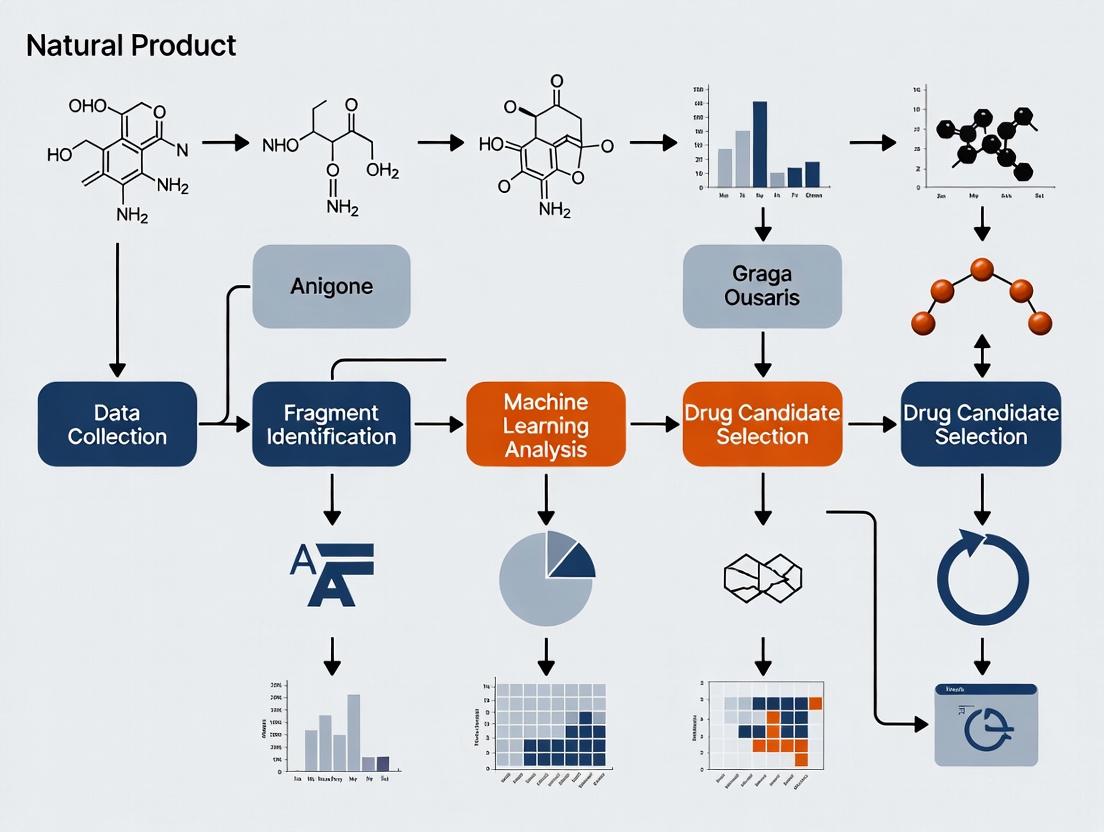
This article provides a comprehensive analysis of the transformative role of Artificial Intelligence (AI) and Machine Learning (ML) in natural product (NP) fragment-based drug discovery (FBDD).
Accelerating Therapeutics: How AI and Machine Learning Are Revolutionizing NP Fragment-Based Drug Discovery
Abstract
This article provides a comprehensive analysis of the transformative role of Artificial Intelligence (AI) and Machine Learning (ML) in natural product (NP) fragment-based drug discovery (FBDD). Designed for researchers, scientists, and drug development professionals, we first explore the foundational synergy between NP diversity and computational fragment screening. We then detail cutting-edge methodological applications, from virtual screening of NP fragment libraries to AI-driven hit-to-lead optimization. The discussion addresses critical challenges in data integration, model interpretability, and scaffold elaboration, offering practical troubleshooting and optimization strategies. Finally, we examine validation frameworks, comparative analyses against traditional methods, and the emerging impact of generative AI. The conclusion synthesizes key advancements, current limitations, and the future trajectory of this convergent field toward more efficient and innovative therapeutic development.
The New Frontier: Understanding AI-Driven NP Fragment Screening Fundamentals
This Application Note details the integration of computational fragmentation with the exploration of Natural Product (NP) chemical space, a critical methodology within the broader thesis that AI and Machine Learning (ML) are foundational to next-generation, fragment-based drug discovery (FBDD). NPs are evolutionarily optimized, privileged structures with high bio-relevance but suffer from complexity that hinders direct use in FBDD. Computational fragmentation deconstructs NPs into synthetically accessible, high-quality fragments, creating a novel, biologically-informed fragment library. This convergence enables the systematic exploration of NP chemical space through an AI-driven FBDD pipeline, moving from complex natural architectures to optimized lead compounds.
Application Notes & Data Presentation
Key Computational Fragmentation Algorithms & Performance
The following table summarizes current algorithms, their core methodologies, and benchmark performance on curated NP libraries (e.g., COCONUT, NPASS).
Table 1: Computational Fragmentation Tools for NP-Derived Fragment Generation
| Algorithm/Tool | Core Methodology | Key Metrics (Benchmark) | Advantages for NP Space |
|---|---|---|---|
| RECAP (Retrosynthetic Combinatorial Analysis Procedure) | Rule-based bond cleavage based on chemical knowledge (e.g., amide, ester bonds). | ~10-15 fragments per complex NP; Rule compliance: 100%. | Simple, interpretable, generates chemically feasible fragments. |
| BRICS (Breaking of Retrosynthetically Interesting Chemical Subunits) | Rule-based with linkers for recombinatorial chemistry. | ~12-18 fragments per NP; Generates synthetically accessible scaffolds. | Designed for recombination, ideal for fragment linking/growing strategies. |
| AiZynthFinder | ML-based retrosynthetic planning using a Transformer model on reaction data. | Success rate on NP targets: ~65-75% (top-10 proposals). | Predicts synthetic routes for fragments, bridging to synthesis early. |
| SCUBIDOO (Signal Chemical UnBiased DIvide & Optimize) | Algorithmic dissection based on topological and physicochemical descriptors. | Generates fragment sets with 100% coverage of parent NP pharmacophores. | Unbiased, ensures key structural motifs are retained in fragment space. |
| Fragmentation via Deep Learning (e.g., FraGAT) | Graph Neural Network (GNN) trained to predict optimal cut points for FBDD. | Outperforms RECAP/BRICS in generating "lead-like" fragments by 20-30% (QED, Fsp3). | AI-learned fragmentation rules directly optimized for drug discovery objectives. |
Quantitative Profile of an NP-Derived Fragment Library
Table 2: Calculated Physicochemical Properties of NP-Derived vs. Conventional Fragment Libraries
| Property (Mean ± SD) | NP-Derived Fragments (from 10,000 NPs) | Conventional Rule-of-3 Fragments (ZINC) | Ideal FBDD Range |
|---|---|---|---|
| Molecular Weight (Da) | 225 ± 45 | 215 ± 35 | ≤ 300 |
| Heavy Atom Count | 16 ± 3 | 15 ± 3 | - |
| ClogP | 1.8 ± 0.9 | 1.2 ± 0.8 | ≤ 3 |
| Hydrogen Bond Donors | 2.1 ± 1.0 | 1.5 ± 1.0 | ≤ 3 |
| Hydrogen Bond Acceptors | 3.5 ± 1.5 | 2.8 ± 1.3 | ≤ 3 |
| Rotatable Bonds | 3.0 ± 1.5 | 2.5 ± 1.5 | ≤ 3 |
| Fraction sp3 (Fsp3) | 0.45 ± 0.15 | 0.25 ± 0.10 | ≥ 0.42 (ideal) |
| Number of Rings | 2.5 ± 0.8 | 1.8 ± 0.7 | - |
| Structural Complexity | High | Moderate | - |
Key Insight: NP-derived fragments maintain Rule-of-3 compliance while exhibiting significantly higher Fsp3 and ring count, indicative of greater three-dimensionality and scaffold diversity—properties linked to improved clinical success.
Experimental Protocols
Protocol 3.1: Generation of a Biologically-Informed NP Fragment Library
Objective: To computationally deconstruct a large-scale NP database into a fragment library suitable for AI-driven virtual screening.
- NP Database Curation: Download a non-redundant set of NPs from the COCONUT database. Pre-process using
RDKit: standardize tautomers, neutralize charges, remove metals, and desalt. - Fragmentation Execution: Apply a hybrid fragmentation pipeline:
- Step A (Rule-based): Apply the BRICS algorithm to all pre-processed NPs. Use default BRICS rules with optional adjustment to preserve macrocyclic ring systems if needed.
- Step B (AI-based): For NPs yielding >20 fragments from Step A, apply a pre-trained FraGAT GNN model to prioritize a focused subset of fragments with optimal physicochemical profiles.
- Fragment Processing & Deduplication: Collect all fragments. Apply molecular hashing (InChIKey) to remove duplicates. Filter fragments strictly against the Rule of 3 (MW ≤ 300, ClogP ≤ 3, HBD ≤ 3, HBA ≤ 3, RotBonds ≤ 3).
- Library Annotation & Storage: Annotate each fragment with: Parent NP ID, original NP biological activity (if known from NPASS database), and calculated descriptors (Fsp3, synthetic accessibility score (SAscore), etc.). Store the final library in an SQL database and as an
.sdffile for downstream use.
Protocol 3.2: AI-Driven Virtual Screening of NP Fragments Against a Protein Target
Objective: To identify NP-derived fragment hits for a target (e.g., kinase) using a multi-step AI screening workflow.
- Target Preparation: Obtain a high-resolution X-ray crystal structure of the target protein (PDB). Prepare the protein using a molecular modeling suite (e.g., Schrodinger's Protein Preparation Wizard): add missing hydrogens, assign bond orders, optimize H-bond networks, and perform restrained minimization.
- Pocket Definition: Define the binding pocket from the co-crystallized ligand or using a pocket detection algorithm (e.g., FPocket).
- Hierarchical Virtual Screening:
- Step 1 (Ultra-Fast Filtering): Screen the entire NP fragment library using a pharmacophore model derived from known active ligands or key pocket residues. Use
RDKitorPhasefor rapid alignment and filtering (retain top 20%). - Step 2 (ML Scoring): Score the remaining fragments using a pre-trained ML scoring function (e.g.,
RF-Score-VSor a GNN-based model trained on binding affinity data). This step evaluates protein-fragment complementarity beyond simple docking. - Step 3 (Precision Docking): Perform molecular docking on the top 1,000 fragments from Step 2 using a high-accuracy method (e.g.,
Glide SPorAutoDock-GPU). Generate 10 poses per fragment. - Step 4 (Consensus Scoring & Clustering): Rank poses by a consensus of docking score, ML score, and interaction fingerprint similarity to a known positive control. Cluster top-ranked fragments by scaffold to ensure diversity.
- Step 1 (Ultra-Fast Filtering): Screen the entire NP fragment library using a pharmacophore model derived from known active ligands or key pocket residues. Use
- Output: Generate a prioritized list of 50-100 fragment hits with associated poses, scores, and suggested parent NP origin for experimental validation.
Visualizations
Title: AI-Driven NP Fragmentation to Lead Discovery Workflow
Title: Computational Fragmentation of a Complex NP
The Scientist's Toolkit: Research Reagent Solutions
Table 3: Essential Materials & Tools for NP Computational Fragmentation Research
| Item / Solution | Provider (Example) | Function in Research |
|---|---|---|
| RDKit | Open-Source Cheminformatics | Core Python library for molecule manipulation, fragmentation (RECAP/BRICS), and descriptor calculation. |
| COCONUT Database | COCONUT Project | A comprehensive, open-source database of NPs for library sourcing. |
| NPASS Database | NPASS Database | Provides NP activity data for annotating fragments with biological context. |
| Schrödinger Suite | Schrödinger | Industry-standard platform for protein preparation (Maestro), molecular docking (Glide), and physics-based scoring. |
| AutoDock-GPU | Scripps Research | Accelerated, open-source docking software for high-throughput virtual screening. |
| FraGAT Model | Literature/Code Repo | Pre-trained Graph Attention Network for intelligent, objective-driven fragmentation of NPs. |
| ZINC Fragment Library | ZINC Database | Commercial and freely available conventional fragment library for comparative analysis. |
| Oracle Database / PostgreSQL | Oracle / Open Source | Relational database system for storing, querying, and managing large-scale fragment libraries and screening results. |
| Python ML Stack (scikit-learn, PyTorch) | Open-Source | Custom development of ML scoring functions, clustering algorithms, and data analysis pipelines. |
Application Notes
Target Identification & Prioritization from NP Libraries
AI-driven target fishing algorithms (e.g., SEA, DeepPurpose) can predict polypharmacology for thousands of NP-derived fragments against the human proteome. This enables prioritization of fragments with high-probability, target-specific bioactivity, transforming underexplored chemical libraries into targeted screening sets.
3D Pharmacophore & Binding Site Prediction
ML models (like AlphaFold2 and its derivatives) generate high-confidence protein structures for historically difficult targets (e.g., GPCRs, membrane proteins). For NPs with unknown targets, inverse docking coupled with convolutional neural networks (CNNs) predicts binding pockets and generates 3D pharmacophore models from fragment interaction fingerprints.
De Novo Design & Fragment Growing/Linking
Generative AI models (e.g., REINVENT, GPT-based molecular generators) use NP-fragment scaffolds as seeds. These models, trained on chemical and bioactivity spaces, propose synthetically feasible analogs with optimized properties (e.g., solubility, binding affinity) while maintaining NP-like structural diversity.
Experimental Protocols
Protocol 1: AI-Predicted Target Fishing for NP-Fragment Prioritization
Objective: Identify potential protein targets for a library of NP-derived fragments.
Input Library Preparation:
- Prepare a SMILES list of NP-fragments (MW < 300 Da, ≤ 3 rotatable bonds).
- Standardize structures using RDKit (sanitization, tautomer normalization).
- Generate molecular descriptors (Morgan fingerprints, radius 2, 2048 bits).
Similarity Ensemble Approach (SEA) Prediction:
- Upload the fingerprint file to a SEA server (e.g., SEAweb).
- Set the reference database to ChEMBL (latest version).
- Run the analysis with an E-value cutoff of 10. Save all targets with E < 1.0 for further validation.
Deep Learning-Based Affinity Prediction:
- Use the DeepPurpose framework.
- Encode prioritized targets via Conjoint Triad features for proteins.
- Encode NP-fragments using CNN-based encoders from their SMILES.
- Load a pre-trained model (e.g., trained on BindingDB data).
- Predict Kd/Ki values for all fragment-target pairs.
Triaging & Output:
- Rank targets by consensus from SEA (E-value) and DeepPurpose (predicted Kd).
- Export a prioritized list for experimental validation via SPR or biochemical assay.
Table 1: Comparison of Target Fishing Methodologies for NP-Fragments
| Method | Principle | Key Metric | Typical Runtime | Advantage for NP-FBDD |
|---|---|---|---|---|
| SEA | Chemical similarity to known ligands | E-value | 1-2 hours | Unbiased, broad proteome screen |
| DeepPurpose | Deep learning on protein & ligand features | Predicted Kd (nM) | ~30 mins | Quantitative affinity estimate |
| SPiDER | Pharmacophore similarity | Z-score | 2-3 hours | Captures functional groups, good for novel scaffolds |
Protocol 2: Structure-BasedDe NovoDesign Seeded with NP-Fragments
Objective: Generate novel, synthetically accessible lead-like molecules from a confirmed NP-fragment hit.
Fragment Input & Binding Mode:
- Obtain a 3D structure (from X-ray, docking, or pharmacophore) of the NP-fragment bound to the target.
- Define the fragment as the core scaffold in a SMARTS format.
Generative Model Configuration (Using REINVENT):
- Set the Prior model to a general chemistry model (e.g., trained on ChEMBL).
- Set the Agent model for transfer learning.
- Define scoring functions:
- Similarity: Tanimoto similarity to the original NP-fragment (weight: 0.3).
- Drug-likeness: QED score (weight: 0.3).
- Synthetic Accessibility: SAscore penalty (weight: 0.2).
- Docking Score (Proxy): Use a fast ML-based scoring function like RF-Score-VS (weight: 0.2).
Reinforcement Learning Cycle:
- Run the agent for 500 epochs with a batch size of 128.
- Sampling temperature: Start at 1.2, decay to 0.8 over epochs.
- The model explores chemical space but is rewarded for producing molecules that maximize the combined scoring function.
Output & Filtering:
- Collect top 1000 unique generated molecules.
- Filter using Lipinski’s Rule of Five and a synthetic accessibility threshold (SAscore < 4.5).
- Cluster the remaining molecules and select 50-100 representatives for in silico docking validation.
Diagrams
Title: AI/ML-Driven NP-FBDD Workflow
Title: AI Target Fishing Protocol for NP-Fragments
The Scientist's Toolkit: Key Research Reagent Solutions
Table 2: Essential Materials for AI-Enhanced NP-FBDD Experiments
| Item / Reagent | Function in NP-FBDD | Example / Specification |
|---|---|---|
| Curated NP-Fragment Library | Provides the starting chemical matter. Must be structurally diverse, rule-of-3 compliant, and have known purity. | AnalytiCon NATx collection (≥ 500 fragments with natural product-derived scaffolds). |
| High-Quality Bioactivity Database | Serves as the foundational data for training and validating AI/ML models. | ChEMBL (latest release, ≥ 2M bioactivity records); BindingDB. |
| Structure Generation Software | Converts AI-generated molecular representations (SMILES) into 3D conformers for docking. | RDKit (Open-source, used for conformer generation and descriptor calculation). |
| Docking & Scoring Suite | Validates AI-predicted binding modes and provides scores for generative model reward functions. | AutoDock Vina (for docking); RF-Score-VS (ML-based scoring). |
| Surface Plasmon Resonance (SPR) Chip | Experimental validation of AI-predicted fragment-target interactions with kinetic data. | Cytiva Series S Sensor Chip CM5 (for immobilizing recombinant target proteins). |
| Recombinant Purified Protein | Essential for experimental validation of AI-prioritized targets via biochemical or biophysical assays. | His-tagged protein (≥ 95% purity, confirmed activity, for SPR/assay). |
The convergence of fragment-based drug discovery (FBDD), pharmacophore modeling, and modern artificial intelligence (AI) represents a paradigm shift in early-stage drug research. AI models, particularly large language models (LLMs) and graph neural networks (GNNs), are developing a "language" to interpret and design molecular structures. This synergy accelerates the identification of novel chemical matter for challenging biological targets.
Table 1: Recent Performance Benchmarks of AI-Enhanced Fragment Screening (2023-2024)
| AI Model/Platform | Target Class | Virtual Library Size | Experimental Hit Rate | Reported Binding Affinity (Best Compound) | Key Reference |
|---|---|---|---|---|---|
| DeepFrag (GNN) | Kinases | 500,000 fragments | 22% | 12 µM (Kd) | Stokes et al., Nature, 2023 |
| PharmaGist-LM (LLM) | GPCRs | 1,000,000 fragments | 18% | 0.8 µM (IC50) | Chen & Yang, Cell Rep. Phys. Sci., 2024 |
| FragmentNET (Multi-model) | Protein-Protein Interaction | 250,000 fragments | 31% | 5.2 µM (Kd) | Liu et al., Sci. Adv., 2024 |
| AlphaFold2 + Docking | Various (Unstructured Targets) | 50,000 fragments | 9% | Varies by target | Isbrandt et al., J. Med. Chem., 2023 |
Core Protocols & Application Notes
Protocol 2.1: AI-Powered Fragment Library Generation and Enrichment
Objective: To create a target-biased, synthesizable fragment library using generative AI models. Materials:
- Hardware: GPU cluster (e.g., NVIDIA A100), 64+ GB RAM.
- Software: RDKit, PyTorch, REINVENTv4 or DiffLinker framework.
- Data Source: ZINC20 fragment-like subset, ChEMBL bioactivity data.
Procedure:
- Data Curation: Filter ZINC20 for fragments (MW < 300 Da, heavy atoms ≤ 18, compliance with Rule of 3). Annotate with computed physicochemical descriptors.
- Model Fine-Tuning: Pre-train a Transformer or GNN on general chemical SMILES strings. Fine-tune the model using a focused dataset of known binders to the target protein family (e.g., kinase inhibitors from ChEMBL).
- Conditional Generation: Use the fine-tuned model for de novo generation. Condition the generation on desired pharmacophore features (e.g., hydrogen bond donor/acceptor at specific vectors) or on a partial seed structure from crystallography.
- Synthesisibility Filtering: Pass generated structures through a retrosynthesis AI (e.g., IBM RXN) and apply the SYBA score to filter for readily synthesizable compounds.
- Diversity Clustering: Use Butina clustering (based on ECFP4 fingerprints) to select a final, non-redundant set of 1,000-5,000 fragments for virtual screening.
Protocol 2.2: Integrating Pharmacophore Perception with LLM Embeddings
Objective: To convert traditional pharmacophore queries into a semantic vector for similarity search in fragment latent space. Materials:
- Software: Pharmit, Python with libraries (langchain, sentence-transformers, openchemlib).
- AI Model: InstructBio (a fine-tuned biological LLM) or a custom-trained SMILES encoder.
Procedure:
- Pharmacophore Definition: Define a query using a known active or from a protein binding site (e.g., 1 H-bond donor, 1 aromatic ring, 1 hydrophobic feature at specific distances/angles).
- "Language" Encoding: Convert the pharmacophore query into a descriptive text prompt (e.g., "A molecule with a hydrogen bond donor group adjacent to a hydrophobic aromatic ring system.").
- Embedding Generation: Use the text encoder of a multimodal LLM (like InstructBio) to generate a fixed-length numerical vector (embedding) for the pharmacophore prompt.
- Fragment Embedding Database: Pre-compute embeddings for every fragment in your library by encoding their SMILES strings or 2D depictions using the same model.
- Semantic Similarity Search: Perform a nearest-neighbor search (e.g., using FAISS library) in the embedding space to retrieve fragments whose AI-generated "semantic" description is closest to the pharmacophore query prompt. Validate top hits with molecular docking.
Protocol 2.3: Experimental Validation via Surface Plasmon Resonance (SPR)
Objective: To biophysically validate AI-prioritized fragment hits. Materials:
- Instrument: Biacore 8K or Sierra SPR S200.
- Chip: Series S Sensor Chip NTA for His-tagged proteins.
- Running Buffer: HBS-EP+ (10 mM HEPES, 150 mM NaCl, 3 mM EDTA, 0.05% v/v Surfactant P20, pH 7.4).
- Compounds: AI-prioritized fragments dissolved in DMSO (<1% final in running buffer).
Procedure:
- Chip Preparation: Activate the NTA chip with a 1:1 mixture of 0.4M EDC and 0.1M NHS for 7 minutes. Load with 0.5 mM NiCl₂ for 6 minutes. Capture His-tagged target protein to a density of 5-10 kRU.
- Fragment Screening: Run fragments at a single concentration (200 µM) in running buffer at a flow rate of 30 µL/min. Use a multi-cycle kinetics method with association for 60s and dissociation for 90s.
- Reference Subtraction: Use a blank flow cell for reference subtraction. Include a DMSO solvent correction curve.
- Data Analysis: Process sensorgrams using the instrument's evaluation software. Identify hits based on a significant response (>3x standard deviation of the baseline) and sensible binding kinetics. For confirmed hits, proceed to dose-response analysis (e.g., 0.78 µM to 200 µM in 2-fold dilutions) to calculate KD.
The Scientist's Toolkit: Research Reagent Solutions
Table 2: Essential Materials for AI-Driven Fragment Screening Campaigns
| Item | Function & Relevance | Example Product/Resource |
|---|---|---|
| AI-Ready Fragment Library | Curated, synthesizable fragments with pre-computed descriptors/embeddings for model training and screening. | Enamine REAL Fragment Space (1M+ compounds), FDB-17 (17,801 fragments). |
| Target Protein (Stable & Tagged) | High-purity, monodisperse protein for biophysical validation (SPR, ITC, X-ray). Essential for generating training data for AI models. | His-tagged kinases/PROteolysis Targeting Chimeras from vendors like BPS Bioscience. |
| Multimodal LLM for Molecules | AI model trained on both chemical structures (SMILES) and textual descriptions, enabling semantic pharmacophore search. | InstructBio (available on Hugging Face), ChemBERTa-2. |
| GPU Computing Resource | Enables training and rapid inference of large generative or embedding models on chemical libraries. | NVIDIA DGX Cloud, Google Cloud A2 VMs, or local A100/H100 systems. |
| Structural Biology Suite | For obtaining the 3D protein structures required for structure-based pharmacophore generation and docking validation. | Schrödinger Suite, MOE, or open-source tools (AutoDock Vina, OpenEye). |
| High-Throughput SPR System | Gold-standard label-free biosensor for kinetic profiling of weak-affinity fragment hits identified by AI. | Sierra SPR S200 (Bruker), Biacore 8K (Cytiva). |
Visualizations
AI-Fragment Discovery Workflow
Pharmacophore-to-Fragment via AI Semantic Search
Introduction and Application Notes The evolution of fragment-based drug discovery (FBDD) for challenging targets like Protein-Protein Interactions (PPIs) illustrates a paradigm shift driven by artificial intelligence (AI). Traditional FBDD relies on biophysical screening (e.g., SPR, NMR) of small, low-complexity fragment libraries (<300 Da) to identify weak binders (mM affinity), which are then elaborated via iterative structural biology and medicinal chemistry. This process, while successful, is resource-intensive and suffers from high attrition rates during optimization. AI and machine learning (ML) now transform this workflow by enabling virtual fragment screening at an unprecedented scale, predicting optimal growth vectors, and generating novel chemical matter in silico, thereby compressing the discovery timeline and increasing the probability of clinical success.
Comparative Data: Traditional vs. AI-Enhanced FBDD Table 1: Key Metrics Comparison
| Metric | Traditional FBDD | AI-Enhanced FBDD |
|---|---|---|
| Initial Library Size | 500 – 3,000 compounds | 10^6 – 10^9 in silico compounds |
| Primary Screening Method | Experimental (SPR, NMR, DSF) | Computational (ML Scoring, Docking) |
| Typical Hit Rate | 0.1% – 3% | 5% – 20% (post-validation) |
| Time to Hit Identification | 3 – 6 months | 1 – 4 weeks |
| Affinity of Initial Hits | 0.1 – 10 mM (Kd) | 0.01 – 1 mM (Kd, predicted) |
| Key Optimization Guide | Iterative X-ray/NMR structures | Generative AI models & ML-based SAR |
Detailed Experimental Protocols
Protocol 1: Traditional Fragment Screening via Surface Plasmon Resonance (SPR)
- Target Immobilization: Dilute purified, tag-free target protein to 20 µg/mL in 10 mM sodium acetate buffer (pH 4.5). Inject over a CMS sensor chip using amine-coupling chemistry to achieve a final immobilization level of 8,000 – 12,000 Response Units (RUs).
- Running Buffer Preparation: Prepare HBS-EP+ buffer: 10 mM HEPES, 150 mM NaCl, 3 mM EDTA, 0.05% v/v Surfactant P20, pH 7.4. Filter (0.22 µm) and degas.
- Fragment Library Injection: Prepare fragment stock solutions in 100% DMSO. Dilute fragments in running buffer to a final concentration of 200 µM (1% DMSO). Inject over reference and target surfaces for 60s at a flow rate of 30 µL/min, followed by a 60s dissociation phase.
- Data Analysis: Process double-referenced sensorgrams. Identify hits as fragments producing a steady-state response > 10 RU and a sensogram shape consistent with binding.
Protocol 2: AI-Enhanced Workflow for Virtual Fragment Screening & Elaboration
- Data Curation & Model Training:
- Assemble a dataset of known binders/non-binders for the target or family. Use molecular fingerprints (ECFP4) and 3D pharmacophore descriptors as features.
- Train a gradient boosting (e.g., XGBoost) or graph neural network (GNN) classification model. Validate using temporal split or clustered cross-validation.
- Virtual Screening:
- Enumerate a virtual fragment library (e.g., from ZINC20 Fragment Library) and generate standardized molecular descriptors.
- Apply the trained ML model to score and rank all fragments. Apply additional filters (e.g., PAINS, chemical diversity).
- In Silico Elaboration:
- For top-ranked fragments, use a generative AI model (e.g., a recurrent neural network or variational autoencoder) conditioned on the fragment’s molecular graph to propose synthetically accessible elaborations.
- Score proposed elaborated molecules with a separate affinity-prediction ML model or molecular docking.
- Experimental Validation: Synthesize or procure top 50-100 AI-predicted fragments/elaborated compounds. Validate using the SPR protocol (Protocol 1).
Visualization: Workflow Evolution
Diagram 1: Evolution of fragment-based screening workflows
The Scientist's Toolkit: Research Reagent Solutions
Table 2: Essential Reagents and Materials
| Item | Function in FBDD | Example/Supplier |
|---|---|---|
| CMS Sensor Chip | Gold surface with carboxymethylated dextran for covalent protein immobilization in SPR. | Cytiva Series S Sensor Chip CMS |
| HBS-EP+ Buffer | Standard SPR running buffer; provides optimal pH and ionic strength, minimizes non-specific binding. | Cytiva BR-1006-69 |
| DMSO-d6 | Deuterated dimethyl sulfoxide for preparing NMR samples of fragments and protein-ligand complexes. | Sigma-Aldrich, 151874 |
| Fragment Library | Curated collection of low molecular weight, rule-of-3 compliant compounds for primary screening. | Enamine F2 Fragments (~ 14,000 cpds) |
| Crystallization Screen Kits | Sparse matrix screens to identify initial conditions for growing protein-fragment co-crystals. | Molecular Dimensions Morpheus II |
| ML-Ready Datasets | Curated, featurized datasets (e.g., binding affinities, crystal structures) for training AI models. | PDBbind, ChEMBL |
| Graph Neural Network Framework | Software library for building ML models that operate directly on molecular graph structures. | PyTor Geometric (PyG) |
| Generative Chemistry Software | Platform for de novo molecular design and fragment elaboration using AI. | REINVENT, OPEN NODE |
Within the broader thesis on AI and machine learning (ML) for natural product (NP) fragment-based drug discovery (FBDD), the foundational data layer is critical. This layer comprises both public and proprietary NP-fragment libraries—curated, standardized collections of chemical substructures derived from complex natural products. These libraries serve as the primary input data for ML models, enabling the prediction of novel bioactive scaffolds, target interactions, and synthetic pathways. The quality, diversity, and metadata richness of these libraries directly dictate the performance and predictive power of subsequent AI-driven workflows.
The following table summarizes key quantitative metrics for prominent public and representative proprietary NP-fragment libraries, essential for benchmarking data inputs for ML training.
Table 1: Comparative Analysis of NP-Fragment Libraries
| Library Name (Type) | Approx. Number of Unique Fragments | Avg. Fragment Heavy Atoms | Key Source NPs | Standardization Level | Unique Metadata Fields |
|---|---|---|---|---|---|
| COCONUT Public (Public) | ~40,000 | 18 | Marine, Plant, Microbial | SMILES, InChIKey | Source organism, Collection location |
| NPASS Fragments (Public) | ~25,000 | 16 | All NP Classes | Structure-activity data linked | Target, Activity Value (IC50, etc.) |
| ChEMBL NP Subset (Public) | ~15,000 | 17 | Approved Drugs, Bioactives | Fully standardized | Clinical phase, Bioassay data |
| Proprietary Library A (Commercial) | 100,000 - 500,000+ | 12-20 | Diverse & Engineered Strains | Vendor-specific, 3D conformers | Proprietary biosynthetic gene cluster (BGC) data, HTS results |
| Proprietary Library B (In-house) | 50,000 - 200,000+ | 14-22 | Focused (e.g., Actinomycetes) | Custom fragmentation rules | Internal phenotypic screen data, Synthetic accessibility score |
Application Notes: AI/ML Integration Workflow
Note 3.1: Library Curation for ML Readiness Raw NP structures must undergo a standardized fragmentation protocol (see Protocol 4.1) to generate a consistent fragment library. Subsequent steps include:
- Descriptor Calculation: Generation of molecular fingerprints (ECFP, MACCS) and physicochemical descriptors (cLogP, TPSA).
- Diversity Analysis: Application of clustering algorithms (e.g., k-means on PCA/t-SNE reduced descriptors) to assess chemical space coverage.
- Data Augmentation: For underrepresented fragments, use of generative models (e.g., VAEs) to create synthetic analogous fragments within plausible chemical space.
Note 3.2: Training Models for Fragment Prioritization A supervised ML model (e.g., Random Forest, Graph Neural Network) can be trained to predict "druggable" fragments. The training set requires labeled data from proprietary HTS campaigns or public sources like NPASS.
- Input Features: Fragment descriptors, source NP properties, and associated bioassay metadata.
- Output/Target: Binary label (active/inactive) or quantitative activity score.
- Validation: Rigorous temporal or cluster-based split to prevent data leakage and overestimation of model performance.
Detailed Experimental Protocols
Protocol 4.1: Standardized Generation of an NP-Fragment Library for ML Input
Objective: To generate a reproducible, non-redundant, and chemically standardized fragment library from a raw NP structure database.
Research Reagent Solutions & Essential Materials:
| Item | Function |
|---|---|
| Raw NP Database (e.g., COCONUT SDF file) | Source data containing full NP structures. |
| RDKit or OpenEye Toolkit (Python) | Core cheminformatics platform for structure handling, fragmentation, and descriptor calculation. |
| BREAK Retrosynthetic Rules | A defined set of chemically sensible, recursive bond disconnection rules tailored for NP-like scaffolds. |
| In-house or Commercial NLP Pipeline | For extracting and standardizing metadata (organism, activity) from unstructured text in source databases. |
| SQL/NoSQL Database (e.g., PostgreSQL, MongoDB) | For storing the final structured fragment library with linked metadata and descriptors. |
Methodology:
- Data Acquisition & Cleaning:
- Download public NP database SDF files or aggregate proprietary structure files.
- Standardize structures using RDKit: neutralize charges, remove solvents, generate canonical SMILES, and check for validity.
- Deduplicate based on canonical SMILES and InChIKey.
Recursive Fragmentation:
- Apply the BREAK rule set algorithmically using RDKit’s
BRICS.BreakBRICSBondsfunction or a custom script. - Parameters: Set minimum fragment size (e.g., ≥ 5 heavy atoms) and maximum size (e.g., ≤ 25 heavy atoms). Discard non-informative fragments (e.g., single carbon chains).
- Iterate until no more bonds matching the rules can be broken.
- Apply the BREAK rule set algorithmically using RDKit’s
Fragment Canonicalization & Deduplication:
- Canonicalize all generated fragments to their respective SMILES.
- Remove duplicate fragments across the entire library.
- Filter fragments based on undesirable functional groups or reactivity (using a PAINS filter adapted for fragments).
Descriptor & Metadata Association:
- Calculate a fixed set of 200+ molecular descriptors and ECFP6 fingerprints for each unique fragment.
- Link each fragment to its parent NP(s) and all associated metadata (source organism, reported bioactivity).
Library Storage:
- Populate the database. The schema should include tables for Fragments, Parent_NPs, Bioassays, and Organisms, with appropriate foreign key relationships.
Protocol 4.2: Experimental Validation of ML-Prioritized Fragments
Objective: To experimentally validate the binding of AI-prioritized NP fragments to a target protein using Surface Plasmon Resonance (SPR).
Research Reagent Solutions & Essential Materials:
| Item | Function |
|---|---|
| Biacore T200/8K Series S CM5 Chip | Gold sensor chip with carboxymethylated dextran matrix for protein immobilization. |
| Purified Target Protein (>95% purity) | The recombinant protein of interest with an available amine or lysine group for covalent coupling. |
| HBS-EP+ Running Buffer (10x) | Provides a consistent ionic strength and pH for sample analysis, minimizes non-specific binding. |
| EDC/NHS Amine Coupling Kit | Contains reagents for activating the carboxyl groups on the CM5 chip surface to bind the target protein. |
| AI-Prioritized Fragment Library (in DMSO) | The top 100-500 fragments predicted by the ML model, formatted as 100 mM stock solutions. |
| Reference Protein (e.g., BSA) | For creating a reference flow cell to subtract systemic binding signals. |
Methodology:
- Chip Preparation & Protein Immobilization:
- Dock a new CM5 chip into the Biacore instrument. Prime the system with filtered, degassed 1x HBS-EP+ buffer.
- Using two flow cells (Fc), activate both with a 7-minute injection of a 1:1 mixture of EDC and NHS.
- Dilute the target protein to 20 µg/mL in 10 mM sodium acetate buffer (pH 4.5). Inject over the sample flow cell (Fc2) for 7 minutes to achieve ~5000-8000 RU immobilization.
- Inject ethanolamine over both flow cells for 7 minutes to deactivate remaining ester groups. Fc1 serves as the reference surface.
Fragment Screening by Single-Cycle Kinetics:
- Prepare fragment samples by diluting stocks in running buffer to a final concentration of 200 µM (≤1% DMSO v/v).
- Program a method using single-cycle kinetics: five increasing concentrations (e.g., 12.5, 25, 50, 100, 200 µM) of the same fragment are injected sequentially over Fc1 and Fc2 without regeneration between injections.
- Injection parameters: 30-second association at 30 µL/min, 60-second dissociation.
- At the end of the cycle, regenerate the surface with a 30-second pulse of 50% DMSO in buffer or a mild regeneration solution.
Data Analysis:
- Subtract the reference sensorgram (Fc1) from the sample sensorgram (Fc2).
- For fragments showing concentration-dependent binding, fit the subtracted data to a 1:1 binding model to estimate the equilibrium dissociation constant (KD). Fragments with KD < 1 mM are considered confirmed hits.
Visualizations
AI-Driven NP-Fragment Discovery Workflow
SPR Protocol for Fragment Validation
From Data to Drug Candidates: AI/ML Methodologies in Action
This application note is framed within a broader thesis that Artificial Intelligence (AI) and Machine Learning (ML) are transformative for Natural Product (NP) fragment-based drug discovery. Traditional virtual screening (VS) of NP libraries is hindered by structural complexity, scarcity, and synthetic intractability. The "Virtual Screening 2.0" paradigm leverages ML models to intelligently prioritize not just whole NPs, but chemically tractable NP-derived fragments with high predicted bioactivity and favorable properties, thereby de-risking and accelerating the early discovery pipeline.
Core ML Model Architectures & Performance Data
ML models for NP fragment prioritization utilize various architectures, each with strengths in handling the unique chemical space of NPs.
Table 1: Performance Comparison of ML Model Architectures for NP Fragment Bioactivity Prediction
| Model Architecture | Key Feature | Typical Use Case | Reported Avg. AUC-ROC (Range) | Key Advantage for NPs |
|---|---|---|---|---|
| Random Forest (RF) | Ensemble of decision trees | Broad-target phenotypic screening | 0.78 (0.70-0.85) | Handles diverse descriptors, robust to noise, interpretable feature importance. |
| Graph Neural Network (GNN) | Directly learns from molecular graph | Target-specific activity prediction | 0.85 (0.80-0.90) | Captures stereochemistry and complex topological features inherent to NPs. |
| Multitask Deep Neural Net | Shared hidden layers for multiple endpoints | ADMET & bioactivity profiling | 0.82 (0.75-0.88) | Efficiently predicts multiple properties from limited NP fragment data. |
| Transformer-Based (e.g., ChemBERTa) | Learns from SMILES/ SELFIES strings | Large-scale pre-training & transfer learning | 0.87 (0.83-0.92) | Excels with unlabeled data, captures contextual molecular "language". |
Application Notes & Detailed Protocols
Protocol 3.1: Building a GNN for Target-Specific Fragment Prioritization
Objective: To construct a GNN model that predicts the binding affinity of NP-derived fragments against a specific protein target (e.g., SARS-CoV-2 Mpro).
Materials & Workflow: See "The Scientist's Toolkit" (Section 5) and Diagram 1.
Procedure:
- Data Curation:
- Source bioactivity data (IC₅₀, Ki) for known ligands/fragments of the target from public repositories (ChEMBL, BindingDB).
- Generate a focused set of NP fragments by applying retrosynthetic rules (e.g., using the RDKit
BRICSmodule) to an in-house NP library. - Merge datasets. Label active/inactive based on a threshold (e.g., IC₅₀ < 10 µM). Apply rigorous deduplication and standardization (tautomer, charge).
Feature Representation & Splitting:
- Represent each molecule as a graph: atoms are nodes (featurized with atomic number, degree, hybridization), bonds are edges (featurized with type, conjugation).
- Split data into training (70%), validation (15%), and hold-out test sets (15%) using scaffold splitting to assess generalization.
Model Training & Validation:
- Implement a GNN using PyTorch Geometric. A recommended architecture includes:
- Two Message Passing Layers (e.g., GCNConv or GINConv).
- A global mean pooling layer to generate a molecular graph embedding.
- Two fully connected layers with dropout (rate=0.2) for classification.
- Train using Adam optimizer, binary cross-entropy loss, and monitor validation AUC-ROC. Implement early stopping with a patience of 30 epochs.
- Implement a GNN using PyTorch Geometric. A recommended architecture includes:
Virtual Screening & Prioritization:
- Input the library of NP-derived fragments into the trained model.
- Rank fragments by predicted probability of activity.
- Apply a secondary filter based on predicted physicochemical properties (e.g., Rule of 3) and synthetic accessibility score.
Diagram 1 Title: GNN-based NP Fragment Prioritization Workflow
Protocol 3.2: Multitask DNN for Fragment Profiling
Objective: To profile prioritized NP fragments simultaneously for predicted bioactivity and key ADMET properties.
Procedure:
- Dataset Assembly:
- Compile training data with multiple labels per molecule: primary bioactivity (binary) and ADMET endpoints (e.g., HLM stability - binary, Caco-2 permeability - continuous).
- Use data from public sources or in-house assays. Handle missing labels via masking in the loss function.
Model Architecture:
- Build a DNN with Keras/TensorFlow:
- Input Layer: Molecular fingerprint (ECFP4, 2048 bits).
- Shared Hidden Layers: 3 dense layers (512, 256, 128 neurons, ReLU activation) with BatchNorm and Dropout (0.3).
- Task-Specific Heads: Separate output layers for each prediction task (sigmoid for binary, linear for regression).
- Build a DNN with Keras/TensorFlow:
Training Protocol:
- Use a weighted sum of losses:
L_total = w1*L_activity + w2*L_HLM + w3*L_Papp. - Tune weighting based on task importance. Use Adam optimizer and a reducing learning rate on plateau.
- Use a weighted sum of losses:
Integrated Scoring:
- Apply the trained model to the fragment list from Protocol 3.1.
- Calculate a Composite Priority Score (CPS):
CPS = (P_activity * 0.5) + (P_HLM_stable * 0.2) + (Normalized_Papp * 0.3) - Re-rank fragments based on the CPS.
Pathway & Logic Visualization
Diagram 2 Title: Logical Flow of AI-Driven NP Fragment Discovery
The Scientist's Toolkit: Research Reagent Solutions
Table 2: Essential Computational Tools & Resources for ML-Based NP Fragment Screening
| Tool/Resource Name | Category | Primary Function in Protocol | Access/Example |
|---|---|---|---|
| RDKit | Cheminformatics | Molecule standardization, fingerprint generation, fragment decomposition (BRICS), descriptor calculation. | Open-source Python library. |
| PyTorch Geometric | Deep Learning Library | Implements Graph Neural Network (GNN) layers and utilities for molecular graph processing (Protocol 3.1). | Open-source Python library. |
| DeepChem | ML Toolkit for Chemistry | Provides high-level APIs for building multitask DNN models and handling molecular datasets. | Open-source Python library. |
| ChEMBL / BindingDB | Bioactivity Database | Source of labeled training data for model development (both primary activity and ADMET). | Public web repositories. |
| NP Atlas / LOTUS | Natural Product Library | Curated sources of NP structures for generating a focused fragment library. | Public web repositories. |
| Synthetic Accessibility Score (SAscore) | Prioritization Filter | Ranks fragments by ease of chemical synthesis post-prediction. | Implementation available in RDKit. |
| Streamlit / Dash | Web Application Framework | Creates an interactive interface for researchers to run models and visualize prioritized fragments. | Open-source Python libraries. |
Application Notes
Structure-based drug discovery (SBDD) leverages the three-dimensional structure of a biological target to design or discover novel therapeutic compounds. Within the broader thesis on AI and machine learning for natural product (NP) fragment-based drug discovery, these approaches are revolutionary. They accelerate the identification and optimization of NP-derived fragments by predicting how they interact with a target protein at the atomic level. AI, particularly deep learning, has transformed two core SBDD tasks: Molecular Docking (predicting the binding pose) and Binding Affinity Prediction (estimating the strength of the interaction).
Key Advances:
- AI-Enhanced Docking: Traditional docking (AutoDock Vina, Glide) relies on scoring functions and conformational sampling. AI models like EquiBind, DiffDock, and AlphaFold 3 use geometric deep learning and diffusion models to predict ligand poses with significantly higher speed and accuracy, especially for targets with no prior ligand information.
- Affinity Prediction with ML: Moving beyond physics-based scoring functions, models like Δ-GNN, PIGNet, and KDEEP train on vast datasets of protein-ligand complexes and experimental binding data (KD, IC50) to directly predict binding affinities, capturing subtle interactions missed by classical methods.
- Application to NP Fragments: NP fragments are structurally complex and diverse. AI-driven virtual screening can efficiently dock vast NP fragment libraries, prioritize hits, and predict how these fragments might be linked or elaborated, guiding synthetic efforts in NP-inspired drug discovery.
Protocols
Protocol 1: AI-Augmented Docking for NP Fragment Screening
Objective: To screen a library of NP-derived fragments against a target protein using a hybrid AI/traditional docking workflow.
Materials & Software:
- Target protein structure (PDB file or AlphaFold2 prediction)
- NP fragment library in SDF or SMILES format (e.g., ZINC20 Natural Products subset)
- Software: DiffDock (AI docking), Open Babel (file conversion), PyMOL/UCSF Chimera (visualization)
- Computing: GPU-enabled system (recommended)
Methodology:
- Target Preparation:
- Obtain the 3D structure of the target protein. If an experimental structure is unavailable, generate one using AlphaFold2.
- Using molecular visualization software, remove water molecules and co-crystallized ligands. Add polar hydrogens and assign partial charges using the AMBER force field.
- Define the binding site centroid using known ligand coordinates or a predicted pocket (e.g., from DeepSite).
Ligand Library Preparation:
- Convert the NP fragment library to 3D coordinates using Open Babel (
obabel input.smi -O output.sdf --gen3D). - Minimize the energy of each ligand using the MMFF94 force field.
- Convert the NP fragment library to 3D coordinates using Open Babel (
AI-Powered Docking with DiffDock:
- Install DiffDock according to the official repository instructions.
- Run DiffDock using the prepared protein PDB file and the ligand SDF file as input. Specify the binding site if known.
- Command example:
python -m diffdock.diffdock_pipeline --protein_path protein.pdb --ligand_path fragments.sdf --out_dir ./results - DiffDock will output multiple predicted poses per ligand ranked by confidence.
Post-Docking Analysis:
- Analyze the top-ranked poses for key interactions (hydrogen bonds, hydrophobic contacts, pi-stacking).
- Cluster similar poses and select the highest-confidence, chemically sensible pose for each fragment.
Protocol 2: Training a Graph Neural Network (GNN) for Binding Affinity Prediction
Objective: To train a GNN model to predict the binding affinity (pKD) of NP fragment-protein complexes.
Materials & Software:
- Dataset: PDBbind refined set or BindingDB (curated for protein-ligand complexes with KD/Ki values).
- Software: PyTorch, PyTorch Geometric (PyG), RDKit, scikit-learn.
- Computing: GPU with at least 8GB VRAM.
Methodology:
- Data Curation and Representation:
- Download and preprocess the PDBbind dataset. Extract protein-ligand complexes and experimental -logKD (pKD) values.
- Represent each complex as a heterogeneous graph. Protein residues and ligand atoms become nodes. Edges represent covalent bonds and non-covalent interactions (distance-based within a cutoff, e.g., 5Å).
- Node features: For atoms (element type, hybridization, degree); for residues (amino acid type, secondary structure). Edge features (distance, interaction type).
Model Architecture (Δ-GNN Inspired):
- Build a GNN with separate encoders for the protein and ligand subgraphs.
- Use message-passing layers (e.g., GAT, GIN) to update node embeddings.
- Implement a cross-attention mechanism to model interaction between the protein and ligand graphs.
- Use a global pooling layer and a multi-layer perceptron (MLP) regressor to output a single pKD prediction.
Training and Validation:
- Split data 80/10/10 (train/validation/test). Standardize affinity values.
- Loss function: Mean Squared Error (MSE).
- Optimizer: Adam. Train for a fixed number of epochs (e.g., 200) with early stopping based on validation loss.
- Evaluate on the test set using metrics: Mean Absolute Error (MAE), Root MSE (RMSE), and Pearson's R.
Data Tables
Table 1: Performance Comparison of AI Docking Tools (2023-2024)
| Tool Name | Core Methodology | Top-1 Accuracy* (RMSD < 2Å) | Average Runtime per Ligand | Key Advantage for NP Fragments |
|---|---|---|---|---|
| DiffDock | Diffusion Model on SE(3) | ~38% (CrossDock) | ~3 sec (GPU) | High speed, no need for binding site specification. |
| EquiBind | Equivariant GNN | ~22% (CrossDock) | < 1 sec (GPU) | Extremely fast direct pose prediction. |
| AlphaFold 3 | Diffusion w/ MSA & Pairformer | N/A (Generalist) | Minutes (TPU v4) | Unprecedented accuracy in protein-ligand structure prediction. |
| GNINA | CNN Scoring of Docking Poses | ~31% (CASF-2016) | ~20 sec (GPU) | Excellent open-source tool, integrates with AutoDock Vina. |
| AutoDock Vina | Traditional (Monte Carlo) | ~20-30% | ~30 sec (CPU) | Reliable, widely-used baseline. |
*Accuracy varies significantly by test dataset and target. Values are indicative.
Table 2: Performance of ML-Based Binding Affinity Predictors
| Model | Architecture | Test Set | Pearson's R | RMSE (pK units) | Key Feature |
|---|---|---|---|---|---|
| PIGNet2 | Physics-Informed GNN | PDBbind Core Set (2019) | 0.86 | 1.23 | Incorporates physics-based potentials into NN. |
| KDEEP | 3D-CNN | PDBbind Core Set (2016) | 0.82 | 1.48 | Uses 3D voxelized representation of complex. |
| Δ-GNN | Interaction-Grounded GNN | PDBbind Core Set (2016) | 0.85 | 1.29 | Explicitly models interaction graph. |
| Random Forest (RF-Score) | Random Forest on Voxels | PDBbind Core Set (2013) | 0.78 | 1.58 | Classical ML baseline. |
| Traditional Scoring (AutoDock) | Empirical/Force Field | CASF-2016 | 0.45-0.60 | ~1.8-2.0 | Highlights improvement from ML. |
Diagrams
AI in SBDD for NP Fragments Workflow
GNN Architecture for Affinity Prediction
The Scientist's Toolkit: Research Reagent Solutions
| Item | Function in AI-Driven SBDD for NP Fragments |
|---|---|
| AlphaFold2/3 Protein DB | Source of high-accuracy predicted protein structures for targets lacking experimental crystallography data. Essential for expanding target space. |
| ZINC20 Natural Products Subset | A curated, commercially available library of over 100,000 NP-inspired fragments and compounds in ready-to-dock 3D formats. |
| PDBbind Database | The standard benchmark dataset containing protein-ligand complexes with experimentally measured binding affinity data. Critical for training and validating ML models. |
| RDKit | Open-source cheminformatics toolkit. Used for ligand preparation, SMILES parsing, molecular descriptor calculation, and integrating chemical intelligence into ML pipelines. |
| PyTorch Geometric (PyG) | A library for deep learning on graphs. The primary framework for building and training GNN models for affinity prediction and graph-based docking. |
| DiffDock Pipeline | State-of-the-art AI docking software utilizing diffusion models. Significantly reduces the need for exhaustive conformational sampling and explicit binding site definition. |
| GNINA | An open-source molecular docking package with built-in CNN scoring functions. Provides a robust, accessible platform for running and scoring AI-augmented docking screens. |
| Structure Visualization (PyMOL/ChimeraX) | Software for visualizing and analyzing docking poses, protein-ligand interactions, and the 3D output of AI models. Critical for human-in-the-loop validation. |
1. Introduction in the Thesis Context Within the broader thesis exploring AI and machine learning (AI/ML) for natural product (NP) fragment-based drug discovery, ligand-based strategies provide a critical computational foundation. When 3D target structures are unavailable, pharmacophore modeling and Quantitative Structure-Activity Relationship (QSAR) analysis directly leverage bioactivity data from NP fragments to elucidate structural requirements for binding and predict novel bioactive chemotypes. AI/ML algorithms are now revolutionizing these classical approaches through enhanced pattern recognition, descriptor optimization, and predictive accuracy, accelerating the progression from NP-inspired fragments to lead compounds.
2. Application Notes
2.1. AI-Enhanced Pharmacophore Model Generation from NP Fragment Libraries Modern pharmacophore modeling from NP fragments utilizes unsupervised and supervised ML to identify common chemical features from active compounds amidst diverse scaffolds. Deep learning models, particularly convolutional neural networks (CNNs) on molecular graphs, can extract complex, non-intuitive pharmacophoric patterns beyond traditional feature definitions (e.g., hydrogen bond donors/acceptors, hydrophobic regions). These models are trained on aligned fragment structures and their associated bioactivity profiles (e.g., IC50, Ki).
Table 1: Comparative Performance of Pharmacophore Generation Methods
| Method | Algorithm/Software | Key Advantage | Typical Use-Case | Accuracy Metric (AUC) |
|---|---|---|---|---|
| Traditional | LigandScout, MOE | Interpretability, manual refinement | Small, congeneric series | 0.75 - 0.85 |
| ML-Based (Descriptor) | Random Forest, SVM on physicochemical descriptors | Handles larger, diverse sets | Diverse NP fragment libraries | 0.80 - 0.88 |
| Deep Learning (Graph-based) | Graph Convolutional Network (GCN) | Learns latent features, high predictive power | Ultra-large, structurally diverse fragments | 0.85 - 0.93 |
2.2. QSAR Modeling with NP Fragment Descriptors QSAR models correlate numerical descriptors of NP fragments (molecular properties) with biological activity. AI/ML techniques automate descriptor selection, manage nonlinear relationships, and integrate multi-task learning for polypharmacology prediction. Key descriptors for NP fragments include topological, electronic, and shape-based features, often derived from tools like RDKit or PaDEL-Descriptor.
Table 2: Common Descriptor Classes for NP Fragment QSAR
| Descriptor Class | Example Descriptors | Relevance to NP Fragments | AI/ML Integration |
|---|---|---|---|
| Topological | Molecular weight, Number of rotatable bonds, Kier-Hall connectivity indices | Captures scaffold complexity and flexibility | Feature importance ranking via Random Forest |
| Electronic | Partial charges, HOMO/LUMO energies, Dipole moment | Models electronic interactions with target | Used as input for neural network nodes |
| 3D Shape/Size | Principal moments of inertia, Shadow indices, Van der Waals volume | Critical for shape complementarity in binding | Combined with CNN for volumetric analysis |
| Fragment-Based | MACCS keys, PubChem fingerprints, NP-specific fingerprints | Encodes presence of specific substructures | Direct input for deep learning models |
3. Experimental Protocols
Protocol 1: Building an AI-Augmented Pharmacophore Model
Objective: To generate a predictive pharmacophore hypothesis from a set of NP fragments with known inhibitory activity against a kinase target.
Materials: See "The Scientist's Toolkit" below.
Procedure:
- Data Curation:
- Collect a dataset of ≥50 NP fragments with experimentally determined IC50 values against the target kinase.
- Divide data into active (IC50 < 10 µM) and inactive (IC50 > 50 µM) sets. Apply Lipinski's and fragment-like rules (MW < 300, cLogP < 3).
- Use software like OpenBabel or RDKit to generate low-energy 3D conformers for each active fragment (limit: 100 conformers per molecule).
- Feature Alignment & Hypothesis Generation (Traditional Baseline):
- Input active conformers into a platform like LigandScout.
- Manually or automatically identify common chemical features (e.g., hydrogen bond donor, acceptor, hydrophobic area, aromatic ring).
- Generate an initial pharmacophore hypothesis. Validate by screening a decoy set; calculate enrichment factor and AUC.
- AI/ML Enhancement:
- Encode each fragment conformer using a molecular graph representation (atoms as nodes, bonds as edges) with annotated features.
- Train a Graph Neural Network (GNN) model on the active/inactive dataset. The model learns to identify subgraph patterns critical for activity.
- Extract the learned "attention maps" from the GNN to highlight atoms and functional groups most predictive of activity. Translate these into an optimized, data-driven pharmacophore model.
- Validation:
- Use the optimized model to screen a virtual library of NP fragments.
- Select top-ranked fragments for in vitro testing. A robust model should yield a hit rate >20%.
Protocol 2: Developing a Predictive QSAR Model Using Ensemble Learning
Objective: To construct a robust QSAR model for predicting the pIC50 of NP fragments against a protease target.
Procedure:
- Dataset Preparation:
- Assay data for 200 NP fragments with pIC50 values. Apply curation: remove duplicates, check for experimental error cliffs.
- Split data into training (70%), validation (15%), and test (15%) sets using a stratified method based on activity.
- Descriptor Calculation and Preprocessing:
- Calculate 2D and 3D molecular descriptors using RDKit or MOE.
- Perform feature scaling (standardization) and dimensionality reduction using Principal Component Analysis (PCA) or Autoencoders to mitigate overfitting.
- Model Training with Ensemble Methods:
- Train multiple base learners: a) Support Vector Regressor (SVR) with RBF kernel, b) Random Forest Regressor, c) Gradient Boosting Regressor (e.g., XGBoost).
- Use the validation set for hyperparameter tuning via grid search or Bayesian optimization.
- Implement a stacking ensemble: use a meta-learner (a simple linear regressor or neural network) that takes the predictions of the base learners as input to produce the final pIC50 prediction.
- Model Evaluation and Application:
- Evaluate the final stacked model on the held-out test set using metrics: R², Mean Absolute Error (MAE), and Root Mean Square Error (RMSE).
- Apply the validated model to predict activities for an in-house virtual database of 10,000 NP-inspired fragments.
- Prioritize the top 100 predicted active fragments for synthesis or acquisition and biochemical assay.
4. Mandatory Visualizations
AI-Enhanced Pharmacophore Modeling Workflow
Ensemble QSAR Modeling and Prediction Pathway
5. The Scientist's Toolkit
Table 3: Essential Research Reagent Solutions for Computational Protocols
| Item / Software | Provider / Source | Function in Protocol |
|---|---|---|
| RDKit | Open-Source Cheminformatics | Core library for molecule handling, descriptor calculation, and fingerprint generation. |
| LigandScout | Inte:Ligand | Software for generating and validating traditional pharmacophore models from ligand structures. |
| PyTorch / TensorFlow | Open-Source ML Frameworks | Libraries for building and training custom deep learning models (GNNs, CNNs) for molecular data. |
| scikit-learn | Open-Source ML Library | Provides algorithms for classic ML tasks (SVM, Random Forest) and data preprocessing utilities. |
| KNIME Analytics Platform | KNIME AG | Visual workflow platform for integrating cheminformatics nodes, data processing, and ML models. |
| ZINC/Fragment Libraries | ZINC15, Enamine, SPECS | Commercial and public sources of purchasable NP-like fragments for virtual screening and validation. |
| MOE (Molecular Operating Environment) | Chemical Computing Group | Integrated software suite for molecular modeling, pharmacophore development, and QSAR studies. |
| AutoDock Vina / Gnina | Open-Source Docking Tools | Used for optional structure-based validation of pharmacophore/QSAR-prioritized fragments. |
Within the broader thesis of advancing AI and machine learning for Natural Product (NP) fragment-based drug discovery, generative models represent a paradigm shift. Traditional methods of mining NPs for novel scaffolds are constrained by the limits of known chemical space and extraction yields. Generative AI, particularly deep generative models, enables the systematic exploration of a vast, de novo chemical space inspired by the privileged structural and pharmacophoric features of NPs. This approach directly addresses the core thesis by providing a computational engine to generate, prioritize, and optimize novel, synthetically accessible, and biologically relevant molecular scaffolds, accelerating the early discovery pipeline.
Core Generative AI Architectures & Applications
Current research has converged on several key generative architectures, each with distinct advantages for scaffold design.
Table 1: Comparison of Key Generative AI Models for De Novo Scaffold Design
| Model Architecture | Key Principle | Advantages for NP-Inspired Design | Quantitative Benchmark (GuacaMol)* Distribution Learning | Key Limitation |
|---|---|---|---|---|
| Variational Autoencoder (VAE) | Encodes molecules into a continuous latent space; new structures are decoded from sampled points. | Smooth latent space allows for semantic interpolation between scaffolds. | ~0.80 - 0.90 (Valid, Unique, Novel) | Tendency to generate invalid SMILES strings; less precise control. |
| Adversarial Autoencoder (AAE) | Uses adversarial training to shape the latent distribution, often to a prior like a Gaussian. | Produces a more structured and compact latent space for efficient sampling. | ~0.85 - 0.92 | Training can be unstable; mode collapse may reduce diversity. |
| Generative Adversarial Network (GAN) | A generator and discriminator are trained adversarially to produce realistic molecules. | Capable of generating highly realistic, novel molecular graphs. | ~0.70 - 0.85 (Challenging to optimize) | Highly unstable training; no direct latent representation for molecules. |
| Reinforcement Learning (RL) | An agent (generator) is rewarded for producing molecules with desired properties. | Excellent for goal-directed generation (e.g., optimizing a specific bioactivity or ADMET property). | N/A (Optimization-focused) | Can lead to unrealistic molecules if reward functions are poorly designed. |
| Transformer-based (e.g., GPT for SMILES) | Autoregressively predicts the next token in a string (e.g., SMILES) sequence. | Captures long-range dependencies in molecular structure; highly scalable. | ~0.90 - 0.95 (State-of-the-art) | Computationally intensive; requires large datasets for training. |
| Flow-based Models | Learns an invertible transformation between data distribution and a simple prior. | Exact latent variable inference and efficient probability calculation. | ~0.85 - 0.93 | Architecturally restrictive; can be slower to sample from. |
GuacaMol is a standard benchmark suite for *de novo molecular design.
Application Notes & Protocols
Protocol: Training a Conditional VAE for Bioactivity-Focused Scaffold Generation
This protocol details the steps to train a model that generates scaffolds conditioned on a specific biological target (e.g., kinase inhibition).
Objective: To generate novel, synthetically accessible scaffolds predicted to inhibit a specified protein kinase, using a NP-derived fragment library as the training corpus.
Materials & Software: Python 3.8+, PyTorch/TensorFlow, RDKit, MOSES benchmark library, CHEMBL database access, GPU cluster (recommended).
Procedure:
- Data Curation & Conditioning:
- Source all known NP-derived and NP-inspired small molecules with recorded activity (IC50/Ki < 10 µM) against a kinase family (e.g., PKC) from CHEMBL and internal databases.
- Apply standard curation: remove salts, neutralize, keep largest fragment. Standardize tautomers and stereochemistry.
- Generate a canonical SMILES representation for each molecule.
- Create a binary or continuous conditioning vector for the target. For example, a one-hot encoded vector representing "PKC-inhibition" or a continuous value based on -log(IC50).
Model Architecture & Training:
- Implement a VAE with an encoder (3-layer GRU or Transformer) and decoder (3-layer GRU).
- Modify the encoder to accept the concatenated latent vector and conditioning vector before passing to the decoder.
- Loss = Reconstruction Loss (cross-entropy on SMILES tokens) + β * KL Divergence Loss (to regularize latent space). β is annealed from 0 to 0.01 over training.
- Train for 100-200 epochs with early stopping on validation set reconstruction loss. Use Adam optimizer (lr=1e-3).
Sampling & Post-Processing:
- Sample a random vector from the Gaussian prior N(0, I) and concatenate with the target condition vector (e.g., "PKC-inhibitor").
- Decode the concatenated vector to generate SMILES strings.
- Filter outputs using RDKit: validate SMILES, remove duplicates, and apply chemical filters (e.g., PAINS, synthetic accessibility score > 4.0).
- The remaining structures are novel, conditionally generated NP-inspired scaffolds for virtual screening.
Protocol: Reinforcement Learning Fine-Tuning for Multi-Property Optimization
This protocol fine-tunes a pre-trained generative model (the "policy") to optimize generated scaffolds for multiple desirable properties simultaneously.
Objective: To optimize a pre-trained generative model to produce scaffolds with high predicted activity against a target, favorable calculated LogP, and high topological polar surface area (TPSA).
Procedure:
- Pre-train a Policy Network: Start with a Transformer or VAE model pre-trained on a large corpus of NP and drug-like molecules (e.g., ZINC or COCONUT DB).
- Define the Reward Function R(m):
R(m) = w1 * pActivity(m) + w2 * SA(m) + w3 * QED(m) + w4 * StepPenalty(m)pActivity(m): Predicted pIC50 from a pre-trained QSAR model for the target.SA(m): Synthetic accessibility score (inverted and normalized to 0-1).QED(m): Quantitative Estimate of Drug-likeness.StepPenalty(m): Small negative reward per generation step to encourage shorter scaffolds.w1-w4: Weights tuned to balance objectives (e.g., 0.5, 0.2, 0.2, 0.1).
- Fine-Tune with Policy Gradient:
- Initialize the pre-trained model as the policy network π_θ.
- For N iterations: a. Generate a batch of molecules M using the current πθ. b. Calculate the reward R(m) for each molecule m in M. c. Estimate the policy gradient: ∇θ J(θ) ≈ E[ R(m) ∇θ log πθ(m) ]. d. Update parameters θ using gradient ascent (e.g., with Adam optimizer).
- Evaluation: Monitor the increase in the average reward and the diversity of the top-scoring generated scaffolds over iterations.
Visualizations
Generative AI Workflow for NP-Inspired Scaffolds
Conditional VAE Architecture for Scaffold Design
The Scientist's Toolkit
Table 2: Essential Research Reagents & Computational Tools
| Item / Resource | Type | Function in Generative AI for Scaffolds | Example / Provider |
|---|---|---|---|
| NP & Compound Databases | Data | Source of authentic NP structures and fragments for model training and inspiration. | COCONUT DB, LOTUS, CHEMBL, Internal HTS Libraries |
| CHEMBL | Database | Curated bioactivity data for conditional model training and validation. | EMBL-EBI |
| RDKit | Software Library | Open-source cheminformatics toolkit for molecule handling, featurization, filtering, and descriptor calculation. | rdkit.org |
| PyTorch / TensorFlow | Framework | Deep learning frameworks for building and training generative models (VAEs, GANs, Transformers). | Meta / Google |
| GuacaMol / MOSES | Benchmark Suite | Standardized benchmarks to evaluate the quality, diversity, and fidelity of generative models. | BenevolentAI / Molecular Sets |
| GPU Computing Cluster | Hardware | Accelerates the training of large generative models, which is computationally intensive. | NVIDIA DGX, Cloud (AWS, GCP) |
| Synthetic Accessibility Scorer | Algorithm | Evaluates the ease of synthesis for generated scaffolds, a critical filter for practicality. | SAscore, RAscore, AiZynthFinder |
| Docking Software | Software | Validates the potential binding mode and affinity of generated scaffolds against a protein target. | AutoDock Vina, Glide, GOLD |
| ADMET Prediction Tools | Software/QSAR | Predicts pharmacokinetic and toxicity profiles of generated scaffolds for early-stage triage. | SwissADME, pkCSM, StarDrop |
Application Notes
This case study details the successful integration of an AI-driven virtual screening platform with experimental biophysical validation to identify a novel, chemically tractable fragment hit from a structurally diverse marine natural product (NP) library. The workflow exemplifies the core thesis that machine learning can effectively navigate the complex chemical space of NPs to identify fragment-like starting points for drug discovery, bridging the gap between traditional natural product research and modern fragment-based lead generation.
The library consisted of 1,452 curated marine NP-derived fragments (MW < 300 Da, heavy atoms ≤ 17). A convolutional neural network (CNN) model, pre-trained on protein-ligand interaction data from the PDBBind database, was used to screen this library in silico against the crystal structure of the oncology target USP7 (Ubiquitin Specific Peptidase 7). The top 50 virtual hits, prioritized by predicted binding affinity and structural novelty, were subjected to experimental validation.
Table 1: AI Screening and Primary Validation Results
| Metric | Value |
|---|---|
| Total Library Size | 1,452 compounds |
| Virtual Hits Selected | 50 compounds |
| Hits in Primary SPR (KD < 500 μM) | 8 compounds |
| Confirmed Hits in NMR (HSQC perturbation) | 3 compounds |
| Top Fragment Hit (MNP-F-887) SPR KD | 214 ± 18 μM |
| Top Fragment Hit Ligand Efficiency (LE) | 0.35 |
The top hit, MNP-F-887, a brominated pyrrole derivative, demonstrated unambiguous, dose-dependent binding in orthogonal assays. Subsequent ligand-observed NMR (19F and 1H CPMG) confirmed binding to the target's catalytic palm domain. This fragment represents a novel chemotype for USP7 inhibition and provides a viable starting point for structure-guided elaboration.
Experimental Protocols
Protocol 1: AI-Driven Virtual Screening of Marine NP Fragment Library
- Library Preparation: Standardize the 1,452-fragment library (in SMILES format) using RDKit. Generate 3D conformers and minimize energy using the MMFF94 force field.
- Target Preparation: Retrieve the apo crystal structure of USP7 catalytic domain (PDB: 5VHA). Prepare the protein using the Protein Preparation Wizard (Schrödinger): add hydrogens, assign bond orders, fill missing side chains using Prime, and optimize H-bond networks.
- Binding Site Definition: Define the binding site for docking using the centroid coordinates of the known catalytic residues (Cys223, His464, Asp481).
- AI Scoring: Input the prepared library and protein structure into the pre-trained CNN scoring platform. Execute the virtual screening job to generate a ranked list of compounds based on predicted binding affinity (pKd).
- Hit Selection: Apply a filter for drug-like properties (LogP < 3, rotatable bonds < 5) and visual inspection of predicted binding poses to select the top 50 fragments for procurement and testing.
Protocol 2: Surface Plasmon Resonance (SPR) Primary Binding Assay
- Immobilization: Dilute recombinant USP7 catalytic domain to 20 µg/mL in 10 mM sodium acetate buffer (pH 5.0). Immobilize the protein on a Series S CM5 sensor chip using standard amine-coupling chemistry to achieve a response level of ~8000 RU.
- Sample Preparation: Prepare a 2 mM DMSO stock of each test fragment. Using running buffer (20 mM HEPES, 150 mM NaCl, 0.05% v/v Tween-20, 1 mM TCEP, pH 7.4), create a 2-fold dilution series from 500 µM to 15.6 µM (final DMSO constant at 0.5%).
- Binding Analysis: Perform kinetics experiments at 25°C using a Biacore T200. Inject analyte solutions over the target and reference surfaces for 60 s (association), followed by a 120 s dissociation phase at a flow rate of 30 µL/min.
- Data Processing: Double-reference the sensograms (reference surface & buffer blank). Fit the data to a 1:1 binding model using the Biacore Evaluation Software. Compounds with a reliable fit (χ² < 10) and KD < 500 µM are considered confirmed hits.
Protocol 3: Ligand-Observed NMR Binding Confirmation (19F CPMG)
- Sample Preparation: Prepare a 500 µM solution of the fluorinated fragment hit MNP-F-887 in NMR buffer (20 mM deuterated Tris, 150 mM NaCl, 1 mM TCEP, 0.01% w/v NaN3, 5% DMSO-d6, pH 7.4). Prepare a matched sample containing 50 µM of USP7 catalytic domain.
- Data Acquisition: Using a 600 MHz NMR spectrometer equipped with a cryoprobe, collect 19F 1D spectra with a CPMG filter (total echo time of 64 ms) to suppress protein background. Acquire spectra of the ligand alone and in the presence of protein.
- Analysis: Compare the signal intensity and/or linewidth of the characteristic 19F peak(s) between the two spectra. A significant reduction in signal intensity (≥30%) or line broadening in the presence of protein is indicative of binding in the intermediate-to-slow exchange regime on the NMR timescale.
Visualizations
Workflow for AI-Enabled Fragment Discovery
Proposed Fragment Binding Inhibits USP7 Function
The Scientist's Toolkit: Key Research Reagent Solutions
Table 2: Essential Materials for AI-Driven NP Fragment Screening
| Reagent / Material | Function / Application |
|---|---|
| Curated Marine NP Fragment Library | A chemically diverse, fragment-sized (MW <300) collection derived from marine natural product scaffolds, serving as the discovery starting point. |
| Pre-trained CNN Scoring Model (e.g., DeepDock) | The AI engine that predicts protein-ligand interaction affinity, enabling rapid in silico prioritization of library compounds. |
| Recombinant Target Protein (USP7 Catalytic Domain) | High-purity, active protein for immobilization in SPR and use in solution-based assays like NMR. |
| Biacore Series S CM5 Sensor Chip | Gold sensor surface with a carboxymethylated dextran matrix for covalent immobilization of the target protein via amine coupling. |
| NMR Buffer with DMSO-d6 | Deuterated buffer system compatible with protein stability, allowing for ligand-observed NMR binding studies with fragments dissolved in DMSO. |
| 19F-labeled or 19F-containing Fragment Analogs | Chemically synthesized fragment variants containing a fluorine atom, enabling highly sensitive and background-free 19F NMR binding studies. |
Navigating Challenges: Optimizing AI Models and Workflows for Robust Results
Application Notes & Protocols
Quantifying the "Small Data" Problem in NP Research
A live search of current literature (2023-2024) reveals the scale of data scarcity in Natural Product (NP) research compared to synthetic compound libraries.
Table 1: Comparative Analysis of Chemical & Bioactivity Data Availability
| Data Category | Synthetic Compound Libraries (Typical) | Natural Product Libraries (Typical) | Disparity Ratio |
|---|---|---|---|
| Number of Unique, Structurally Defined Entities | 10^6 - 10^8 compounds (e.g., ZINC, Enamine) | 10^3 - 10^5 compounds (e.g., COCONUT, NPASS) | ~100:1 to 1000:1 |
| Available High-Throughput Screening (HTS) Datapoints | 10^7 - 10^9 (PubChem BioAssay) | 10^4 - 10^6 (NPASS, CMAUP) | ~1000:1 |
| Fraction with Associated Target-Specific Bioactivity | ~10% | <1% | ~10:1 |
| Average Bioactivity Data Points per Compound | 50-100 (broad screening) | 5-10 (targeted studies) | ~10:1 |
| Availability of ADMET/Toxicology Profiles | >1 million compounds (e.g., ChEMBL) | ~10,000 compounds | ~100:1 |
Experimental Protocol: Mitigating Bias in NP Library Construction for ML
Protocol Title: Systematic Construction of a De-biased Natural Product-Like Library for Fragment-Based Screening.
Objective: To create a representative, structurally diverse, and biosynthetically informed NP fragment library that minimizes historical collection biases (geographic, taxonomic, solubility).
Materials & Reagents:
- Source Databases: COCONUT (COlleCtion of Open Natural prodUcTs), NPASS (Natural Product Activity and Species Source), LOTUS (LOTUS initiative for NP data).
- Cheminformatics Tools: RDKit (open-source), KNIME or Pipeline Pilot workflows.
- Standardization: In-house or commercial compound management system (e.g., Mosaic).
- Solvents: DMSO (cell culture grade, for stock solutions), PBS or assay buffer for dilution.
Methodology:
- Data Aggregation & Curation:
- Download all SMILES structures from COCONUT and NPASS.
- Apply strict deduplication via standardized InChIKey generation.
- Filter for "NP-likeness" using a consensus score (e.g., combining NPCARE and Bayesian models) to remove clear synthetic contaminants.
- Bias Assessment & Stratification:
- Taxonomic Bias: Map each compound to its source organism(s) via LOTUS. Stratify the dataset to ensure representation beyond well-studied taxa (e.g., Actinobacteria, flowering plants). Set a quota to over-sample compounds from under-represented phyla (e.g., marine invertebrates, microfungi).
- Structural Bias: Perform scaffold analysis (Murcko frameworks). Manually review and oversample rare scaffolds (<10 occurrences) to ensure diversity.
- Property Bias: Calculate physicochemical properties (MW, LogP, HBD, HBA). Compare distribution to known "fragment-like" space (MW ≤300, LogP ≤3, HBD ≤3). Use synthetic minority oversampling to fill gaps in property space.
- Fragment Generation & Filtering:
- Apply a retrosynthetic fragmentation algorithm (e.g., BRICS) to all curated NPs.
- Filter generated fragments using strict "Rule of 3" criteria (MW <300, cLogP <3, HBD ≤3, HBA ≤3, rotatable bonds ≤3).
- Remove fragments that are common synthetic building blocks by cross-referencing with commercial catalogues (e.g., Enamine, Sigma-Aldrich Building Blocks).
- Library Assembly & Validation:
- Cluster fragments using fingerprint-based similarity (ECFP4, Tanimoto <0.7). Select centroid of each cluster for final library.
- Physically procure or synthesize the top 1000-5000 representative fragments.
- Validate library diversity via Principal Component Analysis (PCA) of physicochemical descriptors compared to a standard fragment library (e.g., F2X-Entry).
Experimental Protocol: Active Learning Protocol for Iterative NP Hit Expansion
Protocol Title: Iterative, Model-Guided Exploration of NP Analogues Using Active Learning.
Objective: To efficiently explore the chemical space around an initial NP hit with limited initial bioactivity data, maximizing information gain per synthesis/screening cycle.
Materials & Reagents:
- Initial NP Hit: Purified, structurally elucidated natural product with confirmed primary assay activity (IC50/EC50 value).
- In Silico Tools: Commercial or open-source QSAR software (e.g., MOE, Schrodinger, or scikit-learn). Generative chemical library design tool (e.g., REINVENT, LibINVENT).
- Assay Plates: 384-well microplates suitable for primary biochemical or cell-based assay.
- Liquid Handler: For compound transfer and serial dilution.
Methodology:
- Initial Model Training (Cycle 0):
- Gather all available bioactivity data for the initial NP hit and any commercially available structural analogues (≤5 compounds typical).
- Calculate molecular descriptors (e.g., Morgan fingerprints, RDKit 2D descriptors).
- Train a preliminary ensemble model (e.g., Random Forest or Gaussian Process) on this minimal dataset.
- Candidate Generation & Prioritization:
- Use a generative model or a rule-based analogue enumerator to propose 500-1000 virtual analogues (e.g., modifying pendant groups, ring saturation, bioisosteric replacements).
- Use the trained model to predict activity for all virtual analogues.
- Apply an acquisition function (e.g., Upper Confidence Bound or Expected Improvement) to select the top 20-50 compounds that balance predicted potency with model uncertainty.
- Synthesis & Testing (Cycle N):
- Synthesize or procure the prioritized analogues.
- Test in the primary assay in a dose-response format (e.g., 10-point, 1:3 dilution).
- Model Retraining & Iteration:
- Add the new experimental data to the training set.
- Retrain the predictive model.
- Repeat steps 2-4 for 3-5 cycles or until a potency/selectivity goal is met.
Visualization: Workflows & Pathways
Active Learning Cycle for NP Hit Expansion
NP Data Biases and Corresponding Mitigation Strategies
The Scientist's Toolkit: Key Research Reagent Solutions
Table 2: Essential Resources for NP-Focused AI/ML Research
| Item Name (Example) | Category | Function in NP-AI Research | Key Consideration |
|---|---|---|---|
| COCONUT DB | Database | Provides the largest open-access collection of NP structures (SMILES) for model training and library design. | Requires rigorous curation; contains duplicates and requires "NP-likeness" filtering. |
| NPASS DB | Database | Links NP structures to species source and quantitative bioactivity data (≥400,000 entries). | Ideal for building target- or pathway-specific datasets. |
| LOTUS WS | Data Resource | Provides rigorously curated, semantically linked NP-organism data, crucial for correcting taxonomic bias. | Integrates with Wikidata for enhanced ontology mapping. |
| RDKit | Software | Open-source cheminformatics toolkit for descriptor calculation, fingerprinting, and fragment analysis. | Core tool for preprocessing and feature generation in ML pipelines. |
| REINVENT / LibINVENT | AI Software | Generative AI models for de novo design of molecules or libraries, adaptable for NP-like chemical space. | Requires transfer learning or fine-tuning on NP datasets for optimal relevance. |
| F2X-Entry Library | Physical Library | A well-characterized, diverse fragment library (≈1000 compounds) for experimental validation of NP-derived fragments. | Serves as a benchmark for evaluating the diversity of a newly built NP fragment library. |
| Mosaic Compound Manager | Laboratory IT | Software for tracking physical NP and fragment samples, linking location to structure and bioassay data. | Critical for maintaining data integrity in iterative active learning cycles. |
Fragment-Based Drug Discovery (FBDD) is a cornerstone of modern pharmaceutical research, identifying low-molecular-weight chemical fragments that bind weakly to a target protein. The integration of Artificial Intelligence (AI) and Machine Learning (ML) into this pipeline, termed Fragment-Based ML, accelerates the identification and optimization of these fragments into viable lead compounds. This protocol details best practices for model selection and training within the context of a scalable, iterative AI-driven FBDD workflow.
Data Curation and Feature Engineering
Successful ML begins with robust data. For FBDD, this involves multi-modal descriptors for fragment libraries and target information.
2.1 Key Data Sources:
- Experimental Binding Data: SPR, NMR, X-ray crystallography (KD, IC50, pIC50).
- Fragment Libraries: Commercial (e.g., Enamine, Maybridge) or proprietary, typically 150-300 Da.
- Computational Descriptors: RDKit fingerprints (Morgan, MACCS), physicochemical properties (cLogP, TPSA, HBD/HBA), 3D pharmacophores, and docking scores.
- Target Information: Protein sequence, structural data (PDB), and binding site descriptors.
2.2 Standardized Feature Table: All fragments should be encoded into a consistent feature vector.
Table 1: Standard Feature Vector for Fragment Representation
| Feature Category | Specific Descriptor | Data Type | Description/Purpose |
|---|---|---|---|
| 2D Molecular | Morgan Fingerprint (radius=2, 2048 bits) | Binary | Encodes local atom environments. |
| 2D Molecular | MACCS Keys (166 bits) | Binary | Pre-defined structural fragments. |
| Physicochemical | Molecular Weight (MW) | Float | Fragment size filter. |
| Physicochemical | Calculated LogP (cLogP) | Float | Lipophilicity estimate. |
| Physicochemical | Topological Polar Surface Area (TPSA) | Float | Solubility & permeability proxy. |
| 3D & Interaction | Docking Score (e.g., Glide SP) | Float | Predicted binding affinity pose. |
| 3D & Interaction | Pharmacophore Feature Match | Integer | Complementarity to target site. |
| Experimental | pIC50 (-logIC50) | Float | Primary bioactivity label. |
Model Selection Strategy
The choice of model depends on dataset size, data type, and the specific prediction task (e.g., classification of binders vs. non-binders, or regression for affinity prediction).
Table 2: Model Selection Guide for Fragment-Based ML Tasks
| Task | Recommended Models | Dataset Size Requirement | Key Advantages for FBDD |
|---|---|---|---|
| Initial Activity Prediction | Random Forest, Gradient Boosting (XGBoost, LightGBM) | Small-Medium (>500 samples) | Handles diverse descriptors, provides feature importance, robust to noise. |
| Affinity Regression | Gaussian Process Regression, Support Vector Regression (SVR) | Small-Medium (>300 samples) | Quantifies uncertainty (GPR), works well in high-dimensional spaces. |
| Deep Learning (Large Datasets) | Graph Neural Networks (GNNs), Multi-Layer Perceptrons (MLPs) | Large (>10,000 samples) | Learns directly from molecular graph; superior for complex pattern recognition. |
| Virtual Screening | Similarity Search, Pharmacophore Models | Variable | Interpretable, fast for library prioritization. |
Experimental Protocol: A Standardized Training & Evaluation Workflow
Protocol Title: Iterative ML Model Training for Fragment Affinity Prediction.
4.1 Objective: To train and validate an ML model that predicts the binding affinity (pIC50) of novel fragments for a specific protein target.
4.2 Materials & Software (The Scientist's Toolkit): Table 3: Essential Research Reagent Solutions & Software
| Item/Category | Example(s) | Function in Workflow |
|---|---|---|
| Fragment Library | Enamine REAL Fragment Space, Maybridge Ro3 Fragment Library | Source of chemical matter for model training and prediction. |
| Cheminformatics Suite | RDKit, OpenBabel | Standardization, descriptor calculation, fingerprint generation. |
| Docking Software | AutoDock Vina, Glide (Schrödinger), GOLD | Generation of 3D poses and interaction scores for features. |
| ML Framework | scikit-learn, XGBoost, PyTorch, TensorFlow | Model implementation, training, and hyperparameter tuning. |
| Experiment Tracking | Weights & Biases, MLflow | Logging hyperparameters, metrics, and model artifacts. |
| Visualization | Matplotlib, Seaborn, PyMOL | Analysis of results and visual inspection of binding poses. |
4.3 Procedure:
Step 1: Data Preparation
- Assemble a dataset of fragments with experimentally measured pIC50 values for the target.
- Standardize molecules: neutralize charges, remove salts, generate canonical SMILES.
- Calculate all features listed in Table 1 for each fragment.
- Split data into training (70%), validation (15%), and hold-out test (15%) sets. Use scaffold-based splitting to assess generalization.
Step 2: Baseline Model Training
- Train a Random Forest Regressor (scikit-learn) on the training set using default parameters.
- Use the validation set for early stopping and to calculate initial performance metrics: Mean Absolute Error (MAE), Root Mean Squared Error (RMSE), and R².
Step 3: Hyperparameter Optimization
- Perform a Bayesian Optimization or Grid Search over key parameters:
n_estimators: [100, 500]max_depth: [5, 15, None]min_samples_split: [2, 5, 10]
- Retrain the model with the optimal parameters found on the combined training+validation set.
Step 4: Model Evaluation & Interpretation
- Predict pIC50 for the held-out test set. Report final MAE, RMSE, R².
- Analyze feature importance (via Gini importance or SHAP values) to identify key drivers of binding.
- Apply the model to a large, unseen virtual fragment library for prioritization.
Step 5: Iterative Cycle
- Select top-ranked fragments for in silico or experimental validation.
- Incorporate new experimental results into the training dataset.
- Retrain the model periodically to improve its predictive power and domain applicability (active learning cycle).
Critical Visualizations
Fragment-Based ML Iterative Workflow
Model Selection Logic for Fragment-Based ML
- Start Simple: Begin with interpretable models (e.g., Random Forest) to establish a baseline and understand feature importance.
- Data Quality > Model Complexity: A clean, well-curated dataset with meaningful descriptors is paramount.
- Employ Rigorous Splitting: Use scaffold-based or time-based splits to avoid artificial inflation of performance and better simulate real-world performance.
- Quantify Uncertainty: Especially with small datasets, prefer models that provide uncertainty estimates (e.g., GPR, Bayesian NN) to guide experimental follow-up.
- Close the Loop: Implement an active learning pipeline where model predictions directly inform the next round of experimental testing, creating a virtuous cycle of data generation and model refinement. This iterative process is the core of modern AI-enhanced FBDD.
Fragment-Based Drug Discovery (FBDD) identifies low-molecular-weight, low-affinity "hits" that bind to a therapeutic target. The subsequent steps of linking, growing, and optimizing these fragments into potent, drug-like leads represent a significant bottleneck. This application note details how modern Artificial Intelligence (AI) and Machine Learning (ML) methodologies are revolutionizing this phase, framed within the broader thesis that AI is a transformative force for hit-to-lead evolution in early-stage research.
AI Strategies: A Comparative Analysis
The table below summarizes the core AI strategies applied to fragment development, their key advantages, and associated computational tools.
Table 1: AI/ML Strategies for Fragment Evolution
| Strategy | Core AI Methodology | Key Advantage | Typical Tools/Platforms |
|---|---|---|---|
| Fragment Growing | Deep Learning (DL) for molecular generation (e.g., RNNs, VAEs, GANs) | Explores vast chemical space from a known anchor point. | REINVENT, DeepChem, Generative TensorFlow |
| Fragment Linking | Geometric Deep Learning & Docking Scoring | Identifies optimal linkers by modeling 3D fragment poses and protein pockets. | DeepFrag, DeepCoy, Schrödinger's DeltaLink |
| Property Optimization | Multi-Objective Bayesian Optimization & QSAR Models | Simultaneously optimizes potency, selectivity, and ADMET properties. | Gryffin, Dragonfly, Stanford MOOS |
| Synthetic Feasibility | Retrosynthesis Prediction (Transformers) | Prioritizes molecules with high predicted synthetic accessibility. | ASKCOS, IBM RXN, Molecular Transformer |
Experimental Protocols & Application Notes
Protocol 3.1: AI-Driven Fragment Growing with 3D-Constrained Generation
Objective: To generate novel, synthetically accessible molecules that extend a known fragment hit within a defined binding pocket.
Materials & Workflow:
- Input Data: Co-crystal structure (PDB file) of fragment bound to target. If unavailable, generate a high-confidence pose using molecular docking (e.g., AutoDock-GPU, Glide).
- Environment Definition: Using the protein structure, define a 3D "growth region" (e.g., a nearby subpocket) as a set of grid points or a pharmacophore constraint.
- Model Inference: Employ a 3D-aware generative model (e.g., a Conditional Graph VAE). Condition the generation on the original fragment's core and the spatial constraints of the growth region.
- Post-Processing & Filtering:
- Filter generated molecules for drug-likeness (Lipinski's Rule of 5, QED).
- Score molecules using a fast, pre-trained affinity prediction model (e.g., a Random Forest or GNN-based ∆G predictor).
- Rank top candidates by predicted ∆G and synthetic accessibility score (SAscore).
- Validation: Submit top 5-10 designs for synthesis and in vitro binding assay (e.g., SPR or thermal shift).
The Scientist's Toolkit for Protocol 3.1
| Research Reagent/Resource | Function |
|---|---|
| Target Protein (≥95% pure) | The biological target for fragment binding and subsequent assays. |
| Fragment Hit (LC-MS confirmed) | The starting point for AI-driven chemical elaboration. |
| Crystallography or Cryo-EM Suite | For obtaining high-resolution structural data of the fragment-protein complex. |
| Generative AI Platform License (e.g., REINVENT) | Core software for constrained de novo molecular design. |
| High-Performance Computing (HPC) Cluster | Provides GPU resources for running intensive AI/ML model training and inference. |
Protocol 3.2: De Novo Linker Design via Deep Reinforcement Learning (RL)
Objective: To design a novel, optimal linker connecting two fragment hits that bind in proximal sites.
Materials & Workflow:
- Input Preparation: Two fragment poses from a co-crystal structure or ensemble docking. Define attachment vectors (connection points) for each fragment.
- Reinforcement Learning Environment Setup:
- State: Current partial linker (or initial fragments).
- Action: Adding a new chemical building block (e.g., from a validated library) to the growing linker.
- Reward Function: A composite score rewarding binding energy (from a surrogate scoring function like DeepCoy), linker length, rigidity, and absence of protein clashes.
- Model Training/Execution: Run an RL agent (e.g., Proximal Policy Optimization) to explore the action space and maximize the cumulative reward over an episode of linker construction.
- Output & Evaluation: The agent outputs a set of high-scoring, fully-formed linked molecules. Perform more rigorous molecular dynamics (MD) simulation (e.g., 50 ns) on the top 3 designs to assess stability and binding mode.
Quantitative Data & Performance Metrics
Recent benchmarks illustrate the performance gains from integrating AI into fragment optimization pipelines.
Table 2: Performance Benchmark of AI vs. Traditional Methods in Fragment Optimization
| Metric | Traditional Library Screening | AI-Guided Design | Reported Improvement |
|---|---|---|---|
| Time to Lead Candidate | 18-24 months | 6-9 months | ~60-70% reduction |
| Compound Synthesis Success Rate | 40-60% | 75-85% | ~25-40% increase |
| Average Potency Gain (ΔpIC₅₀) | 1.5 - 2.0 log units | 2.5 - 3.5 log units | ~66% greater improvement |
| Selectivity Index (vs. close ortholog) | Often ≤10-fold | Often ≥50-fold | 5x higher specificity |
Visualized Workflows and Pathways
(Diagram 1: AI-Driven Fragment Evolution Cycle)
(Diagram 2: Reinforcement Learning for Linker Design)
The integration of Natural Products (NPs) into fragment-based drug discovery (FBDD) presents a unique opportunity to access privileged, biologically validated chemical space. However, their inherent stereochemical complexity and conformational flexibility have historically rendered them challenging for conventional computational screening. Within the broader thesis of AI and machine learning (ML) for NP-FBDD, this document provides application notes and protocols to experimentally characterize and computationally model these properties, enabling their effective exploitation in lead generation.
The primary challenges in NP-FBDD stem from structural dimensionality. The quantitative scale of these challenges is summarized below.
Table 1: Quantitative Scope of NP Complexity in Screening Libraries
| Complexity Parameter | Typical Range for NPs | Impact on Virtual Screening | AI/ML Mitigation Strategy |
|---|---|---|---|
| Number of Stereocenters | 3–15 per molecule | Exponential increase in possible isomers (2n). | Stereochemistry-aware graph neural networks (GNNs). |
| Conformational Flexibility (Rotatable Bonds) | 8–25 | Vast conformational space (~103-106 likely conformers). | Generative models for low-energy conformer ensembles. |
| 3D Shape Complexity (Principal Moments of Inertia Ratio) | High (non-planar) | Poor performance of 2D fingerprint-based methods. | 3D pharmacophore and shape-based AI screening (e.g., DeepScreen). |
| Predicted LogP (cLogP) | -2 to 7 | Affects solubility and fragment-like properties (MW <300). | ML models for solubility prediction & property-guided fragment selection. |
Experimental Protocols for Stereochemical & Conformational Analysis
Protocol 3.1: Deterministic Stereochemical Assignment via NMR & ECD
Objective: To unambiguously assign the absolute configuration of a purified NP fragment for AI training set curation. Materials: Purified NP sample (>95% purity), deuterated solvents (CDCl3, DMSO-d6), NMR spectrometer (≥500 MHz), Electronic Circular Dichroism (ECD) spectrometer. Procedure:
- Advanced NMR Analysis:
- Acquire high-resolution 1D (1H, 13C) and 2D NMR spectra (COSY, HSQC, HMBC, ROESY).
- Perform ROESY/NOE experiments to determine proton proximity (<5 Å) in space, key for relative configuration.
- Use J-based configuration analysis (JBCA) or DP4+ probability analysis (for comparing computed vs. experimental NMR shifts) to propose relative configuration.
- Computational ECD Comparison:
- Using the relative configuration from Step 1, generate low-energy conformers (via molecular mechanics, e.g., MMFF94).
- Calculate the ECD spectra for each conformer using time-dependent density functional theory (TD-DFT) at the B3LYP/6-31+G(d,p) level.
- Boltzmann-weight and average the calculated spectra.
- Compare the experimental ECD spectrum (recorded in MeCN) to the averaged, calculated spectrum. A strong match confirms absolute configuration. AI Integration: The assigned 3D structure serves as a ground-truth data point for training stereochemical prediction models.
Protocol 3.2: Conformational Ensemble Generation for Flexible NPs
Objective: To generate a representative ensemble of low-energy conformations for a flexible NP fragment for downstream docking or pharmacophore modeling. Materials: SMILES string of NP with assigned stereochemistry, workstation with computational chemistry software (e.g., Open Babel, RDKit, Schrodinger Maestro). Procedure:
- Initial Conformer Sampling:
- Input the 3D structure (e.g., from Protocol 3.1) into RDKit's
ETKDGv3algorithm. - Generate a large pool of conformers (e.g., 500-1000). The algorithm uses distance geometry with knowledge-based torsion angle preferences.
- Input the 3D structure (e.g., from Protocol 3.1) into RDKit's
- Conformer Optimization and Filtering:
- Optimize all generated conformers using the MMFF94s force field with a gradient convergence criterion of 0.01 kcal/mol/Å.
- Calculate the relative energy (ΔE in kcal/mol) for each optimized conformer relative to the global minimum.
- Apply an energy cutoff (e.g., retain all conformers within ΔE < 5 kcal/mol from the global minimum).
- Clustering and Ensemble Selection:
- Cluster the retained conformers using the Butina clustering algorithm based on heavy-atom RMSD (threshold typically 1.0 Å).
- Select the centroid conformer from each major cluster to represent the final, diverse conformational ensemble. AI Integration: This ensemble is used as direct input for machine learning-based docking (e.g., using a graph convolutional network to score protein-ligand poses) or to train a generative model on "biologically relevant" NP conformations.
The Scientist's Toolkit: Research Reagent Solutions
Table 2: Essential Materials for NP Stereochemical and Conformational Analysis
| Item | Function in NP-FBDD Context |
|---|---|
| Chiral Derivatizing Agents (e.g., Mosher's acids) | Used in NMR to determine enantiomeric purity and absolute configuration of NPs via chemical shift differences. |
| Deuterated Solvents for NMR | Essential for high-resolution structural elucidation; DMSO-d6 is often preferred for polar NPs. |
| QC/LC-MS with Chiral Columns | Validates stereochemical purity of isolated fragments before biophysical screening. |
| Crystallography Screens (e.g., JCSC Core I-IV) | Enables X-ray crystallography for definitive absolute configuration assignment, providing gold-standard 3D data for AI models. |
| TD-DFT Computational Software (e.g., Gaussian, ORCA) | Calculates theoretical ECD and NMR spectra for comparison with experimental data to assign configuration. |
| Conformer Generation Library (RDKit/Open Babel) | Open-source tools for generating initial 3D conformer ensembles for flexible NPs. |
| AI-Ready 3D Structure Databases (e.g., NP-Atlas 3D) | Curated databases of NPs with assigned stereochemistry, formatted for direct use in machine learning pipelines. |
AI/ML Workflow for Integrating Complex NPs
Diagram Title: AI Workflow for NP Stereochemistry and Conformation in FBDD
Application Note: Implementing a Stereochemistry-Aware Screening Pipeline
Scenario: Screening an in-house library of 500 semi-synthetic NP derivatives with varying, but known, stereochemistry against a protein target with a published crystal structure.
Step-by-Step Protocol:
Data Curation:
- For each derivative, generate a canonical SMILES string with explicit stereochemistry indicators (e.g., using @@ and @).
- Using Protocol 3.2, generate a multi-conformer 3D SDF file for each compound (retain top 10 conformers by energy).
Model Preparation:
- Prepare the protein target using a standard molecular modeling suite (remove water, add hydrogens, optimize H-bond networks).
- Define the binding site from the co-crystallized ligand.
AI-Enhanced Ensemble Docking:
- Employ a docking program with an ML-based scoring function (e.g., Gnina, which uses a convolutional neural network).
- Dock all conformers of all compounds. The software inherently evaluates poses in 3D space, respecting chirality.
- Output: A ranked list of NP fragments by CNN-based affinity score.
Post-Docking Analysis:
- Cluster top-scoring poses. Manually inspect interactions for key stereocenters involved in binding.
- Cross-reference with the conformational ensemble: is the bound pose a low-energy conformer? This validates the biological relevance of the hit.
Integration into Thesis: This pipeline demonstrates how explicitly handling 3D information (stereo + conformation) bridges the gap between complex NP structures and modern, AI-driven virtual screening, a core tenet of the overarching thesis.
This protocol is framed within a broader thesis on leveraging artificial intelligence (AI) and machine learning (ML) to accelerate and de-risk Nuclear Magnetic Resonance (NMR) and crystallography-based fragment screening in early-stage drug discovery. The core challenge is the translational gap between in silico predictions and in vitro/in situ validation. This document provides a detailed, actionable workflow for the seamless integration of computational fragment prioritization with experimental biophysical and structural validation.
Application Notes: A Hybrid AI-Experimental Pipeline
The integrated workflow follows a cyclical "Predict-Validate-Refine" model. Key application notes are summarized below:
- AI-Driven Fragment Library Design: Curated libraries are pre-filtered using ML models trained on historical screening data (e.g., pan-assay interference compounds (PAINS) removal, favorable physicochemical property prediction).
- Virtual Screening & Binding Pose Prediction: Ensemble docking using multiple algorithms (e.g., Glide, AutoDock Vina) is combined with a neural-scoring function to rank fragments. Molecular dynamics (MD) simulations assess predicted pose stability.
- Experimental Tiered Validation: Top-ranked computational hits undergo a cascade of biophysical assays, progressing from high-throughput to high-information content. This conserves valuable protein and instrument time.
- Closed-Loop Learning: All experimental outcomes (positive and negative) are fed back into the AI/ML models as labeled data, continuously retraining and improving prediction accuracy for subsequent campaigns.
Table 1: Performance Metrics of Integrated vs. Traditional Screening
| Metric | Traditional HTS Fragment Screening | AI-Integrated Tiered Screening (This Workflow) | Improvement Factor |
|---|---|---|---|
| Initial Hit Rate | 0.1% - 3% | 5% - 15% | 5x - 50x |
| Compound Library Size Required | 10,000 - 20,000 | 500 - 2,000 | ~10x reduction |
| Avg. Time to Validated Hit (Weeks) | 8 - 12 | 3 - 5 | ~2.5x faster |
| Protein Consumption per Fragment Tested | High | Low (Tiered) | ~3x reduction |
| Structural Confirmation Rate (of hits) | ~30% | ~70% | >2x improvement |
Detailed Experimental Protocols
Protocol 3.1: In Silico Fragment Screening & Prioritization
- Objective: To computationally screen a fragment library (~2000 compounds) against a target protein structure and produce a prioritized list for experimental testing.
- Materials: Protein PDB file (prepared with H++ or PROPKA), fragment library in SDF format (e.g., Enamine FEML), Schrödinger Suite or OpenEye Toolkits, high-performance computing cluster.
- Method:
- Protein Preparation: Add missing hydrogen atoms, assign protonation states, and perform energy minimization in explicit solvent.
- Binding Site Definition: Define the binding pocket using FTMap or from a known co-crystallized ligand.
- Ensemble Docking: Dock each fragment using 2-3 distinct algorithms (e.g., Glide SP, Vina). Generate 5-10 poses per fragment.
- AI Re-scoring: Apply a pre-trained Graph Neural Network (GNN) model to rank poses and fragments based on learned representations of successful binders.
- MD Refinement (for top 100): Subject top poses to short (50 ns) MD simulations in explicit solvent. Calculate binding free energy estimates (MM-PBSA/GBSA).
- Final Prioritization: Generate a consensus ranked list of 50-100 fragments based on docking score, AI score, and MM-GBSA ΔG.
Protocol 3.2: Tier 1 Experimental Validation: High-Throughput Ligand-Observed NMR
- Objective: Rapid, protein-efficient confirmation of binding for top 50-100 computational hits.
- Materials: Target protein (>90% pure), NMR buffer, DMSO-d6, 3 mm NMR tubes or 96-well plates, 600 MHz NMR spectrometer with cryoprobe, computational hit library.
- Method:
- Sample Preparation: Prepare 100 µM fragment solutions in 99% NMR buffer / 1% DMSO-d6. Prepare protein at 5-10 µM in the same buffer.
- 1D ¹H NMR Screening (WaterLOGSY or Saturation Transfer Difference - STD):
- Acquire reference 1D ¹H spectrum of each fragment alone.
- Add protein, incubate 15 min, re-acquire spectrum.
- For WaterLOGSY: Look for sign inversion of fragment signals upon binding.
- For STD: Apply selective protein saturation; observe signal attenuation in bound fragments via difference spectrum.
- Data Analysis: Calculate binding index (e.g., STD amplification factor or WaterLOGSY signal ratio). Fragments with signal changes >3σ above negative control DMSO are marked as Tier 1 positives.
Protocol 3.3: Tier 2 Validation: Protein-Observed NMR & SPR
- Objective: Confirm binding affinity (KD) and obtain crude mapping information.
- Materials: ¹⁵N-labeled protein, SPR chip (e.g., CMS Series S), SPR running buffer, Biacore T200 or equivalent.
- Method - ²D ¹H-¹⁵N HSQC NMR:
- Acquire reference ²D HSQC spectrum of 50-100 µM ¹⁵N-labeled protein.
- Titrate in unlabeled fragment from 0.5x to 20x molar excess.
- Monitor chemical shift perturbations (CSPs) of backbone amide peaks: Δδ = √((ΔδH)² + (ΔδN/5)²).
- Fit CSPs vs. [Ligand] to a 1:1 binding model to estimate KD. Map significant CSPs onto protein structure to identify binding site.
- Method - Surface Plasmon Resonance (SPR):
- Immobilize target protein on CMS chip via amine coupling to ~5000-10000 RU.
- Run fragment solutions (50-200 µM) in single-cycle kinetics mode.
- Analyze sensograms using a 1:1 binding model. Confirm binding with steady-state affinity analysis. Fragments with KD < 1 mM and good curve fitting progress.
Protocol 4.4: Tier 3 Validation: X-ray Crystallography
- Objective: Obtain high-resolution structural confirmation of binding mode.
- Materials: Pre-formed apo protein crystals, fragment solution (100 mM in DMSO), crystallization mother liquor, cryoprotectant.
- Method - Fragment Soaking:
- Prepare soaking solution: mother liquor supplemented with 5-10 mM fragment and 5-10% DMSO.
- Transfer apo crystal to 2 µL of soaking solution. Incubate for 2-24 hours.
- Cryo-protect and flash-cool in liquid nitrogen.
- Collect X-ray diffraction data at synchrotron source.
- Solve structure by molecular replacement. Calculate mFo-DFc difference maps to visually confirm fragment electron density in the predicted binding site.
Visualizations
Diagram 1: AI-Experimental Fragment Screening Workflow
Diagram 2: Tiered Experimental Validation Cascade
The Scientist's Toolkit: Essential Reagents & Materials
Table 2: Key Research Reagent Solutions for Integrated Workflow
| Item | Function in Workflow | Example Product/Specification |
|---|---|---|
| AI-Curated Fragment Library | Provides chemically diverse, lead-like starting points pre-filtered for undesirable motifs. | Enamine FEML (≈20,000 cpds), Life Chemicals F2X-Entry (≈14,000 cpds). |
| Stable, Purified Target Protein | Essential for all experimental validation tiers. Requires high purity (>90%) and monodispersity. | Recombinant protein with His-tag, purity assessed by SDS-PAGE and SEC-MALS. |
| ¹⁵N/¹³C-Labeled Protein | Required for protein-observed NMR (HSQC) to map binding sites and confirm competition. | Expressed in M9 minimal media with ¹⁵N-NH₄Cl and/or ¹³C-glucose. |
| NMR Screening Buffer Kit | Ensizes consistent, non-interfering conditions for ligand-observed NMR assays. | Contains d-buffer, DMSO-d6, DSS reference standard, and detergent options. |
| SPR Sensor Chips | Solid support for immobilizing target protein to measure binding kinetics and affinity. | Cytiva Series S CMS chips for amine coupling. |
| Crystallization Screening Kit | Identifies initial conditions for growing apo protein crystals for fragment soaking. | JCSG+, Morpheus, or MEMGold suites. |
| High-Density Soaking Plates | Enables parallelized soaking of multiple fragments into apo crystals. | MiTeGen MicroPlate (LD) or SwissCI 3-well plates. |
| Cryoprotectant Solutions | Protects crystals during flash-cooling for X-ray data collection. | Paratone-N, LV Oil, or glycerol-based solutions. |
Proving the Paradigm: Validation, Benchmarking, and Impact Assessment
The integration of artificial intelligence (AI) and machine learning (ML) into natural product (NP) fragment-based drug discovery represents a paradigm shift. This thesis contends that AI-driven approaches can deconvolute the complexity of NP chemical space to identify novel, synthetically accessible fragment binders with high efficiency. However, the predictive power of these models is contingent upon rigorous, multi-faceted validation frameworks. These Application Notes detail the essential metrics and experimental protocols for the robust assessment of AI-predicted NP fragment binders, ensuring their translational potential within the broader drug discovery pipeline.
Core Validation Metrics: A Quantitative Framework
The validation of AI predictions requires assessment across computational, biophysical, and early biological tiers. The following table summarizes the key metrics and their interpretation.
Table 1: Multi-Tier Validation Metrics for AI-Predicted NP Fragment Binders
| Validation Tier | Metric | Optimal Range/Value | Interpretation & Purpose |
|---|---|---|---|
| Computational | Docking Score/Pose Rank | Top 5% of decoy library | Predicts binding affinity and correct binding mode. |
| MM-GBSA/PBSA ΔG | < -5.0 kcal/mol | Estimated free energy of binding; more rigorous than docking score. | |
| Molecular Similarity (Tanimoto) | 0.3 - 0.7 to known actives | Balances novelty with adherence to known pharmacophores. | |
| PAINS/Alert Filter | Zero alerts | Flags promiscuous or problematic fragment substructures. | |
| Biophysical | Ligand-observed NMR (¹H CPMG) | > 10% signal attenuation | Primary screen for binding; confirms ligand engagement. |
| Surface Plasmon Resonance (SPR) | KD 10 µM - 1 mM; kon > 10³ M⁻¹s⁻¹ | Quantifies affinity and kinetics for fragment-sized molecules. | |
| Thermal Shift Assay (ΔTm) | ΔTm > 1.0 °C | Indicates target stabilization upon binding. | |
| ITC (for best hits) | KD 1 µM - 100 µM; Favorable ΔH | Gold standard for full thermodynamic profiling. | |
| Biological | Primary Target Activity (e.g., Enzyme Inhibition) | IC50 < 100 µM | Confirms functional modulation in a simple system. |
| Cellular Target Engagement (CETSA) | ΔTagg shift > 2 °C | Verifies binding in a complex cellular environment. | |
| Selectivity Panel (Counter-Screen) | < 30% inhibition at 100 µM | Assesses specificity against related or common off-targets. |
Detailed Experimental Protocols
Protocol 2.1: Primary Screening by Ligand-Observed ¹H NMR (CPMG)
Objective: To confirm direct binding of AI-predicted fragments to the target protein in solution. Materials: See "The Scientist's Toolkit" (Section 4). Procedure:
- Sample Preparation: Prepare a 20 µM solution of the target protein in NMR buffer (e.g., 20 mM phosphate, 50 mM NaCl, pH 7.0, 10% D₂O). Prepare fragment stocks at 200 µM in DMSO-d₆. Maintain final DMSO concentration ≤ 1%.
- Data Acquisition: Using a 500 MHz or higher NMR spectrometer, collect ¹H one-dimensional spectra with a Carr-Purcell-Meiboom-Gill (CPMG) pulse sequence to suppress protein signals. Acquire three spectra:
- Spectrum A: Protein + fragment (1:1 or 1:10 molar ratio).
- Spectrum B: Fragment only (reference).
- Spectrum C: Protein only (reference).
- Analysis: Overlay Spectrum A and B. A positive binding event is indicated by a significant reduction (>10%) in signal intensity or a chemical shift perturbation (CSP) of the fragment proton resonances in Spectrum A compared to Spectrum B. This confirms binding-induced fast transverse relaxation.
Protocol 2.2: Affinity & Kinetics by Surface Plasmon Resonance (SPR)
Objective: To quantify the binding affinity (KD) and kinetics (kon, koff) of confirmed hits. Procedure:
- Immobilization: Dilute the purified target protein to 10 µg/mL in sodium acetate buffer (pH 4.5-5.5). Using a CM5 sensor chip, immobilize the protein via amine coupling to achieve a response unit (RU) increase of 5000-10000 RU (for fragment screening).
- Running Conditions: Use HBS-EP+ (10 mM HEPES, 150 mM NaCl, 3 mM EDTA, 0.05% v/v Surfactant P20, pH 7.4) as the running buffer. Include a minimum of 1% DMSO in all buffers to match sample conditions.
- Fragment Injection: Inject a dilution series of each fragment (typically 6 concentrations, e.g., from 0.78 µM to 100 µM) over the protein and reference surfaces at a flow rate of 30 µL/min. Association phase: 60 s. Dissociation phase: 120 s in buffer.
- Data Processing & Analysis: Subtract the reference flow cell response. Fit the resulting sensorgrams globally to a 1:1 binding model using the instrument's software to extract kon (association rate), koff (dissociation rate), and KD (koff/kon).
Visualizing the Validation Workflow & Pathway Context
Title: Multi-Tier AI Fragment Validation Cascade
Title: Fragment Binding Inhibits Target Signaling Pathway
The Scientist's Toolkit: Research Reagent Solutions
Table 2: Essential Reagents for Fragment Validation
| Reagent / Material | Supplier Examples | Function in Validation |
|---|---|---|
| NMR Screening Kits | CreaGen, BMRF | Pre-formatted fragment libraries in DMSO-d₆ for efficient ligand-observed NMR screening. |
| Biacore S Series CM5 Chip | Cytiva | Gold standard SPR sensor chip for protein immobilization via amine coupling. |
| HBS-EP+ Buffer | Cytiva, Sigma-Aldrich | Standard running buffer for SPR to minimize non-specific interactions. |
| ThermoFluor DSF Dyes | Thermo Fisher | High-quality fluorescent dyes (e.g., SYPRO Orange) for thermal shift assay (ΔTm) measurements. |
| MicroCal PEAQ-ITC | Malvern Panalytical | Automated isothermal titration calorimetry system for label-free thermodynamic measurements. |
| CETSA Kits | Pelago Biosciences | Standardized reagents and protocols for cellular thermal shift assays to confirm target engagement in cells. |
| Fragment Library | Enamine, Life Chemicals | Commercially available, diverse fragment collections for experimental cross-verification of AI predictions. |
Within the broader thesis on AI and machine learning for natural product (NP) fragment-based drug discovery (FBDD), this analysis contrasts the traditional High-Throughput Experimental Screening (HTS) paradigm with the emerging AI-driven paradigm. Both aim to identify promising fragment hits that bind to therapeutic targets, but their methodologies, throughput, cost, and fundamental philosophies diverge significantly.
Application Notes
Core Paradigms and Applications
HTS in FBDD: This empirical approach relies on the physical screening of vast, diverse fragment libraries (typically 500-20,000 compounds) against a biological target using biophysical techniques. It is a direct, experiment-first methodology best suited for targets with well-established in vitro assays and when no prior structural or ligand information exists. Success is contingent on library design and assay robustness.
AI in FBDD: This in silico approach uses machine learning (ML) and deep learning (DL) models to predict fragment binding. It leverages existing chemical and biological data (e.g., protein structures, bioactivity data) to screen virtual fragment libraries of unprecedented size (millions to billions). It is particularly powerful for target classes with rich historical data, for de novo fragment design, and for prioritizing fragments for synthesis before any lab work.
Quantitative Performance Comparison
The following table summarizes key performance indicators based on recent literature and industry benchmarks.
Table 1: Performance Metrics Comparison of HTS and AI in FBDD
| Metric | High-Throughput Experimental Screening (HTS) | AI-Driven Screening |
|---|---|---|
| Theoretical Library Size | 500 - 20,000 physical compounds | 10^6 - 10^10 virtual compounds |
| Screening Throughput | 100 - 10,000 fragments/week (depends on assay) | 1,000,000 - 100,000,000 fragments/hour (post-model training) |
| Typical Hit Rate | 0.1% - 5% | 5% - 20% (after rigorous scoring) |
| Primary Cost Driver | Reagents, fragment library, equipment capital/OPEX | Computational infrastructure, data acquisition, model development |
| Cycle Time (Hit ID) | Weeks to months | Hours to days (after model readiness) |
| Data Requirement | Minimal prior data; needs a functional assay | High-quality, large-scale datasets for training (structures, binding data) |
| Optimal Use Case | Novel targets, target classes with little known ligand information, phenotypic screening. | Targets with known structures or bioactivity data, scaffold hopping, library enrichment. |
Synergistic Integration
The modern FBDD pipeline increasingly integrates both approaches: AI models pre-filter vast chemical space to design or select a focused fragment library, which is then screened experimentally via HTS or medium-throughput assays (e.g., SPR, NMR). AI can also analyze HTS output data to identify non-obvious structure-activity relationships.
Experimental Protocols
Protocol 1: HTS-FBDD Using Surface Plasmon Resonance (SPR)
Title: Experimental Protocol for Fragment Screening via SPR. Objective: To identify fragment-sized molecules that bind to a purified protein target using a label-free, biophysical method. Materials: See "The Scientist's Toolkit" below. Procedure:
- Target Immobilization: Dilute purified protein to 10-50 µg/mL in appropriate immobilization buffer (e.g., acetate pH 4.5). Activate a CMS sensor chip surface with a 1:1 mixture of 0.4 M EDC and 0.1 M NHS for 7 minutes. Inject protein solution over specified flow cells to achieve a target immobilization level of 5-15 kRU. Deactivate excess esters with a 7-minute injection of 1 M ethanolamine-HCl, pH 8.5.
- Assay Configuration: Use one flow cell as a reference surface. Establish a stable baseline with running buffer (e.g., PBS-P+, 0.005% surfactant) at a flow rate of 30 µL/min.
- Fragment Library Preparation: Prepare fragment library as 100 mM DMSO stocks. Dilute fragments in running buffer to a final concentration of 200-500 µM (≤1% DMSO final) using a liquid handler.
- Screening Cycle: Inject each fragment sample for 30-60 seconds (association phase), followed by running buffer for 60-120 seconds (dissociation phase). Regenerate the surface if necessary with a short pulse of regeneration buffer (e.g., 10 mM glycine pH 2.0).
- Data Analysis: Reference-subtracted sensorgrams are analyzed. A positive hit is typically defined by a concentration-dependent, reproducible binding response (>5 RU) and sensible binding kinetics, after subtraction of systematic artifacts (bulk shift, injection artifacts).
Protocol 2: AI-Driven Virtual Screening for FBDD
Title: Protocol for AI-Based Virtual Screening of Fragments. Objective: To computationally prioritize fragments for experimental testing using a pre-trained ML model. Materials: GPU-equipped workstation/cloud instance, virtual fragment library (e.g., ZINC Fragments, Enamine REAL Fragments), molecular docking software (e.g., AutoDock Vina, GNINA), ML scoring model (e.g., trained on PDBbind data). Procedure:
- Target Preparation: Obtain the 3D structure of the target protein (PDB file). Prepare the protein file: remove water molecules and heteroatoms, add hydrogens, assign partial charges (e.g., using Gasteiger charges). Define the binding site coordinates (from co-crystallized ligand or literature).
- Library Preparation: Download or curate a virtual fragment library in SMILES format. Prepare fragment ligands: generate 3D conformers, minimize energy, and assign appropriate charges (e.g., using RDKit or Open Babel).
- Initial Docking: Perform rapid, grid-based molecular docking (e.g., using AutoDock Vina) of all fragments against the defined binding site to generate an initial pose and score for each fragment. This serves as a primary filter and provides pose information.
- AI/ML Rescoring: Input the top ~50,000 docked poses (fragment + predicted pose) into a specialized ML scoring model. This model, often a graph neural network (GNN) or convolutional neural network (CNN) trained to distinguish true binders from decoys, predicts a refined binding affinity or probability score.
- Post-Processing & Prioritization: Rank fragments by the AI-generated score. Apply additional filters: chemical attractiveness (e.g., PAINS filters), synthetic accessibility, and diversity. Select the top 100-500 fragments for in silico validation or experimental ordering.
Visualizations
Title: HTS-FBDD Experimental Workflow
Title: AI-Driven FBDD Screening Workflow
Title: Integrated AI-Experimental FBDD Pipeline
The Scientist's Toolkit
Table 2: Key Research Reagent Solutions for HTS-FBDD (SPR-Centric)
| Item | Function / Description |
|---|---|
| Biacore Series S CMS Sensor Chip | Gold sensor surface with a carboxymethylated dextran matrix for covalent immobilization of protein targets. |
| HBS-EP+ Buffer | Standard SPR running buffer (HEPES, NaCl, EDTA, surfactant) providing a stable, low-nonspecific-binding baseline. |
| Amine Coupling Kit (EDC/NHS) | Contains 1-ethyl-3-(3-dimethylaminopropyl)carbodiimide (EDC) and N-hydroxysuccinimide (NHS) for activating carboxyl groups on the chip surface. |
| Ethanolamine-HCl | Used to block remaining activated ester groups on the sensor surface after protein immobilization. |
| DMSO-Compatible Microplates | Low-binding 384-well plates for storing and handling fragment libraries in DMSO stock solutions. |
| Fragment Library (e.g., Maybridge RO3) | A physically available collection of 500-2000 rule-of-three compliant compounds for screening. |
| Regeneration Buffer (e.g., Glycine pH 2.0) | A low-pH solution used to gently disrupt protein-ligand interactions and regenerate the chip surface for the next cycle. |
Application Note: AI-Enhanced Discovery of Dihydrofolate Reductase (DHFR) Inhibitors from Natural Product Fragments
Thesis Context: This case exemplifies the integration of AI-based virtual screening with structural biology to accelerate the evolution of Natural Product (NP)-derived fragments into potent, novel leads, a core strategy within modern ML-augmented drug discovery.
Narrative: A 2023 study targeted Mycobacterium tuberculosis Dihydrofolate Reductase (DHFR). A library of 500 NP-inspired fragments was screened against the DHFR active site using a hybrid AI protocol. The process combined a graph neural network (GNN) for initial binding affinity prediction with molecular dynamics (MD) simulations for stability assessment. A dihydrotriazine-carboxylate fragment, derived from a known microbial metabolite scaffold, was identified as a promising but weak (IC₅₀ = 120 µM) hit. AI-driven scaffold morphing and iterative in silico optimization yielded lead compound AI-DFR-01, which showed a 400-fold increase in potency.
Quantitative Data Summary:
Table 1: Key Metrics for DHFR Inhibitor Development
| Metric | Initial Fragment | Optimized Lead (AI-DFR-01) |
|---|---|---|
| IC₅₀ vs Mtb DHFR | 120 µM | 0.3 µM |
| Ligand Efficiency (LE) | 0.31 | 0.41 |
| ClogP | 1.2 | 2.8 |
| Predicted ΔG (kcal/mol) | -5.1 | -9.8 |
| Enzymatic Kinetic (Kᵢ) | Not determined | 85 nM |
Experimental Protocols:
Protocol 1: AI-Enhanced Virtual Screening Workflow
- Fragment Library Preparation: Curate a library of 3D molecular structures of NP-derived fragments (MW <250 Da). Generate tautomers and protonation states at pH 7.4 ± 0.5.
- Initial GNN Screening: Input prepared structures into a pre-trained GNN model (e.g., PotentialNet). Use a model trained on PDBbind data to predict protein-ligand binding affinity (pKᵢ).
- Molecular Docking: Subject the top 50 GNN-ranked fragments to rigid-receptor docking using Glide SP. Retain the top 20 poses per fragment.
- MD Simulation & MM/GBSA Scoring: For each of the top 100 poses, run a short (10 ns) MD simulation in explicit solvent. Calculate the average binding free energy using the MM/GBSA method.
- Consensus Ranking: Generate a final ranked list by combining normalized scores from GNN, docking score, and MM/GBSA ΔG.
Protocol 2: AI-Driven Fragment-to-Lead Optimization
- Scaffold Identification & Vectorization: Extract the core scaffold of the confirmed hit. Represent it as a graph with defined attachment vectors.
- Deep Generative Model Expansion: Use a conditional variational autoencoder (cVAE) trained on ChEMBL to generate ~10,000 novel analogues exploring diverse R-groups at specified vectors.
- Multi-Parameter Optimization (MPO) Filtering: Filter generated molecules using a Random Forest-based ML model predicting IC₅₀, ClogP, and synthetic accessibility score (SAscore). Select top 200 candidates.
- Free Energy Perturbation (FEP) Calculations: For the top 50 candidates, run alchemical FEP simulations to calculate relative binding free energies (ΔΔG) with chemical accuracy (<1 kcal/mol).
- Synthesis Prioritization: Select 5-10 compounds with the most favorable predicted ΔΔG, potency, and drug-like properties for chemical synthesis and experimental validation.
Visualizations:
Title: AI-Driven NP Fragment-to-Lead Workflow
Title: DHFR Enzymatic Pathway & Inhibition
The Scientist's Toolkit: Research Reagent Solutions
Table 2: Essential Research Tools for AI-NP Fragment Discovery
| Item | Function/Application |
|---|---|
| NP Fragment Library (e.g., Enamine REAL Fragment Set) | A chemically diverse, synthesizable collection of NP-inspired building blocks for virtual & experimental screening. |
| Molecular Dynamics Software (e.g., GROMACS, AMBER) | Performs MD and FEP simulations to assess binding stability and predict ΔΔG with high accuracy. |
| AI/ML Platform (e.g., Schrodinger AutoDesign, TorchDrug) | Provides integrated environments for training GNNs, running generative models, and applying MPO filters. |
| Recombinant Target Protein (e.g., Mtb DHFR) | Essential for experimental validation of AI predictions using enzymatic assays (e.g., spectrophotometric DHFR assay). |
| Microplate Reader with Kinetic Capability | Measures changes in absorbance (e.g., NADPH oxidation at 340 nm) to determine enzyme inhibition kinetics (IC₅₀, Kᵢ). |
Application Note: Discovery of a Novel KRAS-G12C Inhibitor from a Marine Alkaloid Fragment
Thesis Context: This story demonstrates the use of AI for de novo design and binding site prediction, enabling the leap from a non-covalent NP fragment to a covalent clinical lead for a challenging oncology target.
Narrative: Researchers started with a non-covalent, weak-binding fragment (Kd > 200 µM) derived from the marine alkaloid Manzamine A, known to have cryptic anti-KRAS activity. Using AlphaFold2 to model the full KRAS-G12C Switch-II pocket conformation, a complementary deep learning (Reinforcement Learning) agent was tasked with designing molecules that could span from the fragment's binding site to the cysteine-12 nucleophile. The resulting designs were filtered for synthetic feasibility and predicted covalent docking scores. The top candidate, after synthesis, demonstrated sub-micromolar cellular potency and high selectivity.
Quantitative Data Summary:
Table 3: Key Metrics for KRAS-G12C Inhibitor Development
| Metric | Initial Fragment | Optimized Lead (MNA-C-12) |
|---|---|---|
| Biochemical Kd / IC₅₀ | >200 µM (Kd) | 0.11 µM (IC₅₀) |
| Cellular pERK IC₅₀ | Not active @ 50 µM | 0.38 µM |
| Selectivity (SII vs WT) | N/D | >100-fold |
| Covalent Efficiency (CE) | N/A | 4.2 |
| In vivo Tumor Growth Inhibition | N/A | 68% (mouse xenograft) |
Experimental Protocols:
Protocol 3: AI-Driven Covalent Inhibitor Design
- Target Structure Preparation: Generate an AlphaFold2 model of the KRAS-G12C protein in the Switch-II "OFF" state. Prepare the structure (add hydrogens, assign bond orders) focusing on the allosteric pocket and C12 residue.
- Anchor Fragment Placement: Dock the non-covalent NP fragment into the allosteric pocket using induced-fit docking (IFD) protocols.
- Reinforcement Learning (RL) Design: Employ an RL agent (e.g., using an RNN policy network) to grow molecules from the fragment anchor. Reward functions include: a) favorable non-covalent interactions, b) distance/orientation of electrophile to C12 sulfur, c) drug-likeness (QED).
- Covalent Docking & Reactivity Prediction: Dock the top 100 RL-generated molecules with a covalent docking tool (e.g., CovDock). Score poses using a combined MM/GBSA and reactivity score from a trained SVM model on known covalent warheads.
- ADMET Prediction: Filter final candidates using AI-based models for predicting cytochrome P450 inhibition, hERG liability, and metabolic stability.
Protocol 4: Cellular Target Engagement Assay (NanoBRET)
- Cell Transfection: Seed HEK293T cells in a white 96-well plate. Co-transfect with plasmids encoding for KRAS-G12C-NanoLuc fusion protein and HaloTag-RAF1.
- Compound Treatment: 24h post-transfection, treat cells with a dilution series of the test compound and a cell-permeable HaloTag ligand (NanoBRET 618).
- Incubation & Reading: Incubate for 4h. Add NanoLuc furimazine substrate and measure BRET ratio (618 nm emission / 450 nm emission) using a plate reader equipped with dual emission filters.
- Data Analysis: Plot BRET ratio vs. log[compound]. A decrease in BRET signal indicates displacement of RAF1 from KRAS, confirming target engagement in cells. Fit data to a 4-parameter logistic model to calculate IC₅₀.
Visualizations:
Title: Covalent KRAS Inhibitor AI Design Flow
Title: KRAS Oncogenic Signaling & Allosteric Inhibition
The Scientist's Toolkit: Research Reagent Solutions
Table 4: Essential Research Tools for Covalent NP-Inspired Leads
| Item | Function/Application |
|---|---|
| AlphaFold2 Protein Structure Database/Colab | Provides accurate 3D models of therapeutic targets, crucial for targets with few crystallographic structures. |
| Covalent Docking Suite (e.g., Schrodinger CovDock) | Computationally models the formation of the covalent bond between the ligand warhead and target nucleophile. |
| NanoBRET Target Engagement Kit (e.g., Promega) | Enables quantitative measurement of compound binding to the target protein in live cells. |
| Cellular Thermal Shift Assay (CETSA) Kit | Measures compound-induced thermal stabilization of the target protein in cells or lysates, confirming engagement. |
| KRAS G12C Recombinant Protein (Nucleotide-free) | Essential for biochemical assays (e.g., GDP/GTP binding) to validate direct, mechanistic inhibition. |
Within the broader thesis on the application of AI and machine learning to NP (Natural Product) fragment-based drug discovery (FBDD), this document quantifies the acceleration in lead identification and optimization. The integration of AI-driven in silico screening, synthesis prediction, and binding affinity simulation is compressing timelines traditionally dominated by empirical, high-throughput experimental cycles.
Application Notes: Quantifying Acceleration
The following tables summarize key quantitative data on the temporal and economic impact of AI/ML integration in early-stage discovery.
Table 1: Comparative Timeline Analysis for Lead Identification Phase
| Stage | Traditional FBDD (Months) | AI-Augmented FBDD (Months) | Acceleration Factor |
|---|---|---|---|
| Fragment Library Design & Curation | 3-6 | 1-2 | ~3x |
| In Silico Screening & Prioritization | 1-2 | 0.25-0.5 | ~4-5x |
| Synthesis of Target Fragments | 4-8 | 1-3 (via AI-predicted routes) | ~3-4x |
| Biophysical Validation (SPR, NMR) | 2-3 | 1-2 (AI-prioritized hits) | ~1.5-2x |
| Total Lead Identification | 10-19 | 3.25-7.5 | ~3x |
Table 2: Economic Impact of Acceleration (Estimated Cost per Program)
| Cost Category | Traditional FBDD (USD) | AI-Augmented FBDD (USD) | Notes |
|---|---|---|---|
| Compound Acquisition/Synthesis | $500,000 - $1M | $200,000 - $400,000 | Reduced synthesis of non-viable leads |
| Assay & Screening | $300,000 - $600,000 | $150,000 - $300,000 | Focused experimental validation |
| Computational Resources | $50,000 - $100,000 | $100,000 - $250,000 | Increased cloud/AI infrastructure |
| FTEs (Personnel Time) | $750,000 - $1.5M | $400,000 - $800,000 | Compressed timeline reduces person-years |
| Total (Range) | $1.6M - $3.2M | $850,000 - $1.75M | ~45% Reduction |
Experimental Protocols
Protocol 1: AI-PoweredIn SilicoFragment Screening
Objective: To prioritize NP-inspired fragments for a specific protein target (e.g., kinase) using a combined ML and docking approach. Materials: See "The Scientist's Toolkit" below. Method:
- Target Preparation: Retrieve the protein structure (PDB ID). Prepare using MOE or Schrodinger's Protein Preparation Wizard: add hydrogens, assign bond orders, optimize H-bonds, and minimize energy.
- Fragment Library Curation: Filter a commercially available NP-fragment library (e.g., Zenobia) for drug-like properties (MW <300, cLogP <3). Encode fragments as SMILES strings.
- ML-Based Pre-Filtering: Input SMILES into a pre-trained graph neural network (GNN) model (e.g., Chemprop). The model predicts binary binding probability based on trained datasets for similar targets. Select top 10,000 fragments with probability >0.7.
- Molecular Docking: Perform high-throughput docking (GLIDE HTVS or AutoDock Vina) of the ML-prioritized fragments into the defined binding pocket. Use a standardized grid box.
- Post-Docking Analysis: Rank compounds by docking score. Apply MM-GBSA rescoring (using Schrodinger's Prime) to the top 1000 hits for more accurate binding affinity estimation.
- Diversity & Synthetic Accessibility Check: Cluster top 500 hits by molecular similarity (Tanimoto). Filter using an SAscore (<3.5) to ensure synthetic feasibility.
- Output: A final list of 50-100 fragments for experimental validation.
Protocol 2: Accelerated Synthesis Planning for Prioritized Fragments
Objective: To generate feasible synthetic routes for AI-prioritized NP-fragments using retrosynthesis software. Method:
- Input: Provide SMILES of the target fragment.
- Route Prediction: Use an AI-based retrosynthesis platform (e.g., Molecular AI by Schrödinger, Synthia by Merck, or IBM RXN). Set parameters: maximum steps=7, commercially available starting materials preferred.
- Route Evaluation: The software scores predicted routes by feasibility, step count, and estimated yield. Manually review top 3 routes for compatibility with lab capabilities.
- Parallel Route Execution: In collaboration with medicinal chemistry, initiate parallel synthesis of the target fragment via the top 2 routes on milligram scale.
- Validation: Confirm compound identity and purity (>95%) via LC-MS and NMR. Proceed to biophysical assay.
Visualizations
AI-Augmented NP-Fragment Screening Workflow
Temporal & Economic Impact Comparison
The Scientist's Toolkit: Key Research Reagent Solutions
| Item / Solution | Vendor Examples | Function in AI-Augmented FBDD |
|---|---|---|
| Curated NP-Fragment Libraries | Zenobia, Enamine REAL Fragment, lifechemicals | Provide chemically diverse, synthetically tractable starting points inspired by natural product scaffolds. |
| Integrated Computational Suites | Schrödinger Suite, BIOVIA Discovery Studio, OpenEye Toolkits | Platforms for protein prep, ML, docking, and free energy calculations in a unified environment. |
| AI Retrosynthesis Platforms | Schrödinger Molecular AI, Merck Synthia, IBM RXN | Predict feasible synthetic routes, accelerating access to prioritized fragments. |
| Biophysical Assay Kits | Cytiva Biacore SPR, Nanotemper Dian MST | Validate AI-predicted hits with label-free binding affinity and kinetics measurements. |
| Cloud Computing Credits | AWS, Google Cloud, Azure | Provide scalable, on-demand GPU/CPU resources for training ML models and large-scale virtual screens. |
| Graph Neural Network (GNN) Models | Chemprop, DGL-LifeSci, PyTorch Geometric | Pre-trained or custom models for predicting fragment properties and binding probabilities. |
Application Notes In NP (Natural Product) fragment-based drug discovery (FBDD), AI/ML models excel at virtual screening of fragment libraries and predicting binding poses. However, significant gaps persist where empirical, expert-driven experimentation remains irreplaceable. These limitations are primarily in the domains of complex sample handling, stereochemistry determination, and the functional validation of hits in biologically relevant systems. AI predictions require high-fidelity experimental data for training and validation, which can only be generated through meticulous wet-lab protocols. The following notes and protocols detail the critical stages where traditional expertise is paramount.
Protocol 1: Isolation and Stereochemical Assignment of NP Fragments from Complex Matrices
Objective: To physically isolate pure, stereochemically defined fragment compounds from a natural source for use as credible FBDD starting points or for validating AI-predicted fragments.
Materials & Reagents:
- Freeze-Dryer: For concentration of crude extracts while preserving thermolabile compounds.
- Counter-Current Chromatography (CCC) System: For gentle, support-free separation avoiding irreversible adsorption.
- Chiral HPLC Columns: (e.g., Chiralpak IA, IB, IC) for analytical and preparative separation of enantiomers.
- NMR Solvents: Deuterated solvents (CDCl3, DMSO-d6, Methanol-d4) of high isotopic purity.
- Chiral Derivatizing Agents: e.g., Mosher's acids (α-methoxy-α-trifluoromethylphenylacetic acid, MTPA) for determining absolute configuration via NMR.
- X-ray Crystallography Setup: Includes capability for growing single crystals of fragment-small molecule complexes.
Methodology:
- Extract Preparation: Grind source material (plant, marine, microbial). Perform sequential solvent extraction (hexane, ethyl acetate, methanol). Concentrate in vacuo.
- CCC Fractionation: Dissolve crude extract in the equilibrated two-phase solvent system (e.g., Hexane:Ethyl Acetate:Methanol:Water). Inject sample. Collect fractions based on continuous monitoring (UV, ELSD). Pool fragment-containing fractions as identified by LC-MS.
- Chiral Resolution: Inject pooled fraction onto preparative chiral HPLC. Isolate individual enantiomers. Confirm enantiomeric purity (>99% ee) via analytical chiral HPLC.
- Stereochemical Assignment:
- NMR-based (Mosher's Method): React pure fragment with (R)- and (S)-MTPA chloride to form diastereomeric esters. Acquire 1H NMR spectra for both derivatives. Analyze the Δδ (δS – δR) values for protons near the chiral center; a positive Δδ indicates priority order relative to the MTPA phenyl group.
- X-ray Crystallography: Grow a single crystal of the fragment or its salt. Collect diffraction data. Solve and refine the structure to unambiguously determine absolute configuration.
- Data Recording: Record specific optical rotation ([α]D). Compile full 1D/2D NMR dataset (1H, 13C, COSY, HSQC, HMBC, NOESY). Register exact stereochemistry in internal database for AI model training.
Protocol 2: Functional Validation of Fragment Hits in Native Cellular Pathways
Objective: To empirically test AI-prioritized fragment hits for target engagement and functional modulation within the complex environment of a live cell, moving beyond in silico or purified protein assays.
Materials & Reagents:
- Cellular Thermal Shift Assay (CETSA) Kit: Includes cell lysis buffer, protease inhibitors, and qPCR-compatible buffers.
- Pathway-Specific Reporter Cell Line: e.g., Luciferase-based reporter (NF-κB, STAT, p53 pathways) or GFP-tagged pathway readout.
- Surface Plasmon Resonance (SPR) Chip & Running Buffer: CM5 chip and HBS-EP+ buffer for fragment kinetic analysis.
- Photoaffinity Labeling Probes: Fragment derivatives equipped with diazirine and alkyne tags for pull-down.
- Click Chemistry Kit: Contains Cu(I) catalyst, fluorescent azide, and reaction buffer for visualizing bound targets.
Methodology:
- Target Engagement (CETSA): Treat live cells with fragment (100 µM) or DMSO for 1 hr. Harvest cells, aliquot into PCR tubes, heat at gradient temperatures (37-65°C). Lyse cells, centrifuge. Analyze soluble target protein in supernatant via Western blot. A shift in protein melting curve indicates fragment binding.
- Pathway Modulation (Reporter Assay): Seed reporter cells in 96-well plate. Treat with fragment (8-point dose curve). After 18-24 hrs, measure luminescence/fluorescence. Normalize to viability control. A dose-dependent signal change indicates functional pathway modulation.
- Direct Binding Validation (SPR): Immobilize purified target protein on CMS chip. Inject fragment solutions at increasing concentrations (0.39-100 µM) in running buffer. Record sensorgrams. Fit data to a 1:1 binding model to derive KD. Fragments with KD > 1 mM are typically considered weak but can be validated by cellular activity.
- Target Identification (Photoaffinity Labeling):
- Labeling: Treat cells with photoaffinity probe (10 µM). Irradiate with UV light (365 nm) to crosslink.
- Click & Pull-down: Lyse cells. Perform CuAAC "click" reaction with biotin-azide. Streptavidin pull-down of biotinylated proteins.
- Analysis: Elute and analyze bound proteins by LC-MS/MS. Identify specific target(s) from peptide spectral matching.
Data Presentation
Table 1: Comparison of AI-Predicted vs. Experimentally Validated Fragment Hits for Target "X"
| Fragment ID | AI-Predicted pKi | Experimental SPR KD (µM) | CETSA Result (ΔTm) | Cellular IC50 (Pathway Assay) | Stereochemistry Assigned? |
|---|---|---|---|---|---|
| NPF-001 | 4.2 | 210 | +1.8°C | > 100 µM | Yes (S-configuration) |
| NPF-002 | 3.8 | 950 | No shift | Inactive | Yes (Racemic) |
| NPF-003 | 3.5 | 580 | +0.9°C | 45 µM | No (Unknown) |
| NPF-004 | 4.0 | 120 | +2.5°C | 12 µM | Yes (R-configuration) |
Table 2: Key Research Reagent Solutions for NP-FBDD Experimental Validation
| Item | Function in NP-FBDD Context |
|---|---|
| Chiral Stationary Phases (HPLC) | Resolve racemic fragment mixtures to provide pure enantiomers for stereospecific activity testing and model training. |
| Deuterated NMR Solvents | Enable detailed structural elucidation and stereochemical analysis via 2D NMR experiments (NOESY, ROESY). |
| Photoaffinity Probes (Diazirine-Alkyne) | Covalently capture transient, low-affinity fragment-target interactions in native cellular environments for target ID. |
| Cellular Pathway Reporters | Quantify functional biological outcome of fragment binding, beyond mere binding predictions or purified enzyme assays. |
| Thermal Shift Dyes (for CETSA) | Allow high-throughput measurement of protein stabilization (ΔTm) by fragment binding using qPCR instruments. |
Visualizations
AI and Experimental Workflow in NP-FBDD
Target ID via Photoaffinity Labeling
Conclusion
The integration of AI and ML with NP fragment-based drug discovery represents a powerful paradigm shift, merging nature's validated chemical diversity with unprecedented computational precision. As outlined, foundational understanding enables the effective application of sophisticated methodologies—from virtual screening to generative design—while a focus on troubleshooting ensures robustness. Validation studies confirm that this convergence can significantly accelerate the identification and optimization of novel therapeutic scaffolds, offering improved hit rates and molecular efficiency over traditional approaches. Looking forward, the field must address key challenges in data standardization, model interpretability ('explainable AI'), and the seamless integration of computational and wet-lab cycles. The future lies in hybrid human-AI systems that leverage the pattern recognition of machines alongside the chemical intuition of scientists, ultimately unlocking the full potential of natural products to deliver the next generation of precision medicines.