The Quinolizine Quest
Quinolizines—nitrogen-rich, multi-ringed molecular architectures—are the hidden scaffolds of life-saving drugs. Found in natural products like yohimbine (for erectile dysfunction) and reserpine (historically used for hypertension), these structures orchestrate biological activity through their unique 3D shapes. Yet synthesizing them has long frustrated chemists. Their intricate fused rings demand laborious, low-yielding multi-step sequences. Enter cascade reactions: chemical dominoes that collapse complex ring formations into single, elegant steps. This article explores how modern chemistry leverages cascades to build quinolizine libraries, accelerating drug discovery from nature's blueprint 3 4 .
Quinolizine Core Structure
The nitrogen-rich fused ring system that forms the basis of many bioactive compounds.

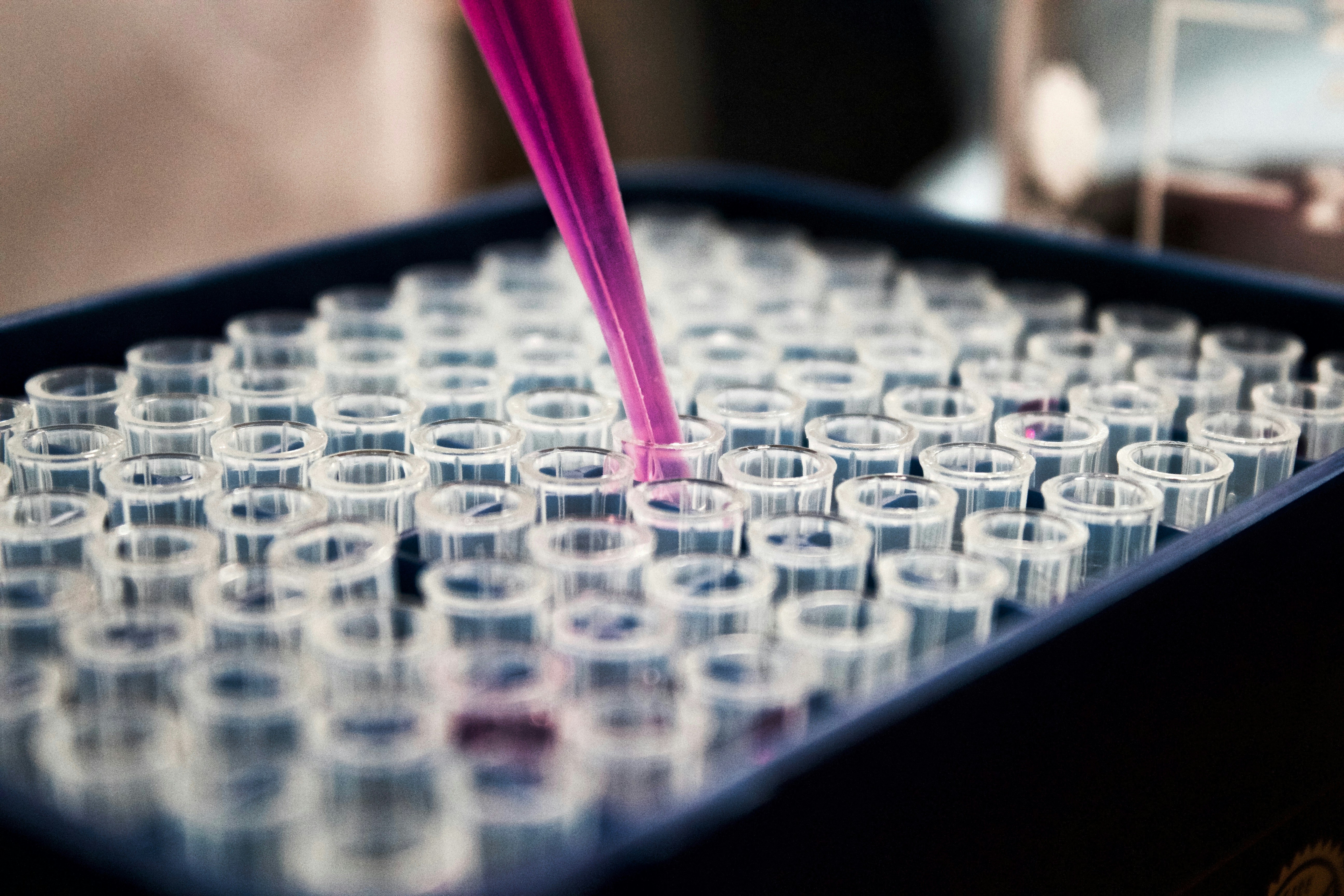
Cascade Reaction Setup
Modern lab equipment enables precise control of cascade reaction conditions.
The Blueprint: Quinolizines & Cascade Chemistry
What Makes Quinolizines Special?
Quinolizines belong to the "privileged scaffolds" family—molecular frameworks evolutionarily predisposed to bind biological targets. Their rigid polycyclic structures, blending 6-membered rings with nitrogen bridges, enable precise interactions with proteins. For example:
- Anticancer agents like camptothecin derivatives exploit their planar topology to intercalate DNA.
- Neuroactive compounds such as yohimbine selectively target adrenergic receptors 3 5 .
However, traditional synthesis is inefficient. Building each ring sequentially requires protection/deprotection steps, toxic reagents, and generates waste. Yields plummet as rings strain against each other—especially in 3D-fused variants 1 .
Cascade Reactions: Nature's Efficiency, Amplified
Cascade reactions mimic biosynthesis. Multiple bond-forming events occur autonomously in one pot, driven by reactive intermediates that "spring-load" each step. Key advantages:
- Atom economy: Minimal byproducts; reactants incorporate directly into the final structure.
- Stereocontrol: Intermediates guide 3D geometry, avoiding costly separation of isomers.
- Rapid complexity: 3+ rings form in minutes under optimized conditions 1 .
For quinolizines, two cascade strategies dominate:
- Dearomative Cycloadditions: Aromatic quinolines (cheap feedstocks) lose ring stability when photoexcited, enabling alkene partners to "stitch" new 3D rings onto them 1 .
- Electrocyclization/Metal-Carbene Cascades: Alkynes act as linchpins, rearranging into carbene intermediates that forge bridged or spiro-fused rings 7 .
| Parameter | Traditional Approach | Cascade Approach |
|---|---|---|
| Steps to scaffold | 8–12 steps | 1–3 steps |
| Diastereoselectivity | Moderate (60–80% d.r.) | High (>90% d.r.) |
| Yield per step | 40–70% | 60–97% |
| Key Innovation | None | Energy transfer, photocatalysis |
Spotlight: A Landmark Cascade Experiment
The Mission
In 2022, researchers achieved a breakthrough: fusing 6-5-4-3 rings onto quinoline in one cascade. The goal was accessing hybrid 2D/3D scaffolds like those in diabetes drug MK-8886—structures previously deemed "unmakeable" 1 .
Methodology: Photocatalysis in Action
The reaction leveraged light-driven energy transfer (EnT) to trigger sequential ring formations:
Step 1: Substrate Cocktail
- 6-Chloroquinoline (0.2 mmol)
- 2-Chloropropene (alkene partner, 3 equiv)
- Ir-photocatalyst [Ir(dF(CF3)ppy)₂(dtbbpy)]PF₆ (2 mol%)
- Acidic solvent HFIP (1.5 mL)
Step 2: Photoinitiation
- Irradiated with blue LEDs (450 nm, 24 h, 25°C)
- Photocatalyst absorbs light, transfers energy to quinoline, exciting it to a triplet state.
Step 3: Cascade Unfolds
- Dearomative [2+2] cycloaddition: Excited quinoline attacks 2-chloropropene, forming a strained 4-membered ring.
- C–Cl Homolysis: Second energy transfer cleaves C–Cl bond, generating radical pair.
- Cyclopropanation: Radicals recombine, forging a 3-membered ring with two quaternary centers 1 .
| Catalyst | Solvent | Additive | Yield (%) | d.r. |
|---|---|---|---|---|
| None | HFIP | – | 0 | – |
| AuPPh₃Cl | Toluene | – | 31 | 85:15 |
| CuTc | HFIP | – | 96 | 92:8 |
| Ag₃PO₄ | HFIP | TEBA | 80* | >95:5 |
Results & Significance
The reaction delivered the tetracyclic product in 96% yield with 92:8 diastereoselectivity. Key outcomes:
- Detected intermediates (vinylpyridine) via NMR confirmed the mechanism.
- Diastereocontrol surpassed prior methods, crucial for drug efficacy.
- Scope expansion: 30+ substrates, including thiophene/indole hybrids, formed fused pentacycles 1 7 .
"This cascade bypasses reactivity cliffs plaguing photochemical [2+2] cycloadditions of aromatics." — Nature Catalysis Study 1
Why It Matters: This protocol unlocked gram-scale synthesis of strained quinolizines in days, not months. The products' sp³-rich cores improve drug solubility—addressing a key bottleneck in CNS drug development 1 3 .
The Scientist's Toolkit
Cascade reactions demand precision-tuned reagents. Here's the essential arsenal:
| Reagent | Function | Innovation |
|---|---|---|
| HFIP solvent | Stabilizes radicals, enhances acidity | Prevents undesired rearrangements |
| Ir(dF(CF3)ppy)₂(dtbbpy)PF₆ | Energy-transfer photocatalyst | Tunes redox potentials for quinoline excitation |
| CuTc (Copper(I) thiophenecarboxylate) | Catalyzes C–H/C–C cleavage | Enables ring expansion to 7-membered systems |
| TEBA (Triethylbenzylammonium chloride) | Phase-transfer catalyst for Ag systems | Accelerates nucleophilic ring-opening |
| Genipin (from Gardenia) | Biocatalytic crosslinker | Builds quinolizine-amino acid hybrids |
Beyond Chemistry
Enzymatic cascades are rising stars. For example:
- Prenyltransferases (AtaPT) add lipophilic tails via C–C bonds, boosting membrane permeability 6 .
- C-Glycosyltransferases install sugars onto quinolizines, mimicking natural products like nigakinone 6 .

Reagent Structures
Key catalysts and solvents used in quinolizine cascade reactions.
Enzymatic Cascades
Biological catalysts expanding the scope of quinolizine synthesis.
Conclusion: From Scaffolds to Solutions
Cascade reactions transform quinolizine synthesis from artisanal craft to automated assembly. By collapsing 8-step syntheses into single operations, they democratize access to nature's most complex architectures. The future lies in merging chemical and enzymatic cascades—as seen in genihistidine synthesis, where histidine and plant-derived genipin form anticancer hybrids 4 6 . As libraries of these "molecular origami" structures grow, so does our chance to discover the next blockbuster drug—inspired by nature, built by cascades.
"Cascades represent the ultimate pot economy: one flask, multiple rings, infinite possibilities." — Frontiers in Chemistry Review