Metabolite Identification in Natural Products: Advanced Strategies for Drug Discovery and Biomedical Research
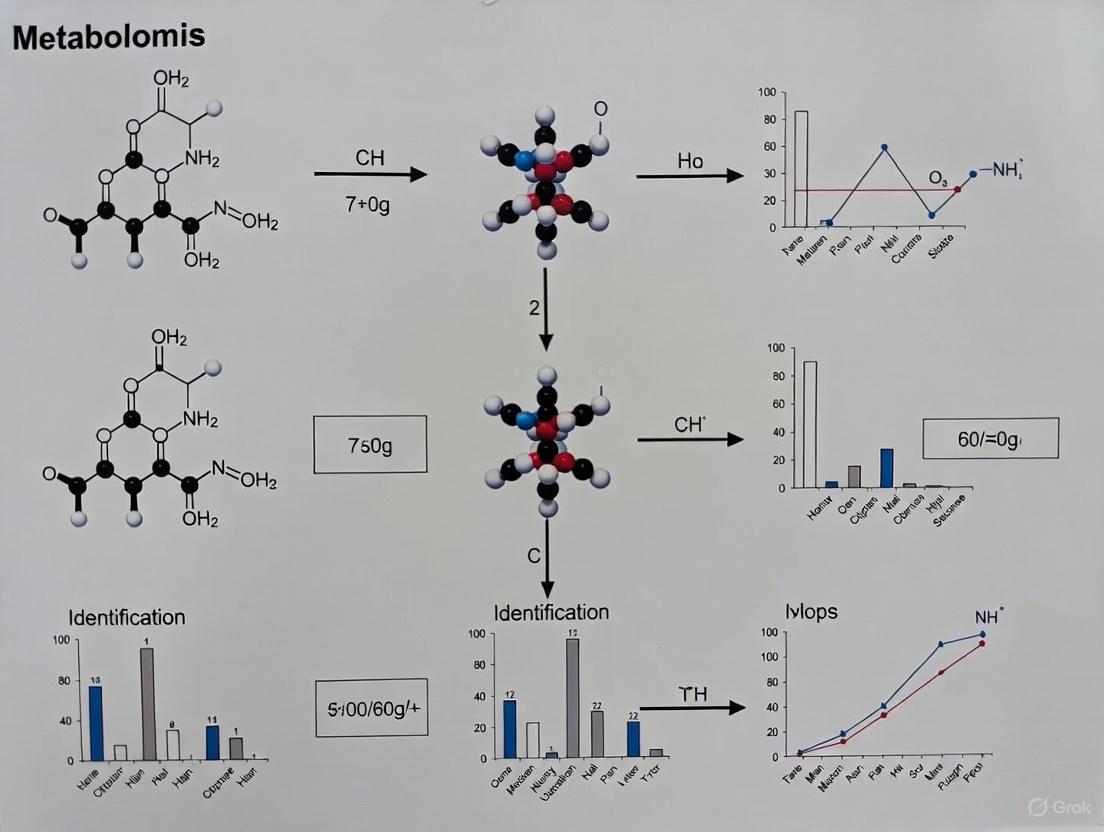
This comprehensive review explores the transformative role of metabolomics in identifying bioactive compounds within natural products for drug discovery.
Metabolite Identification in Natural Products: Advanced Strategies for Drug Discovery and Biomedical Research
Abstract
This comprehensive review explores the transformative role of metabolomics in identifying bioactive compounds within natural products for drug discovery. It covers foundational concepts, advanced methodological approaches including GC-MS and LC-MS platforms, and critical troubleshooting strategies for complex data analysis. The article provides a comparative analysis of targeted versus untargeted metabolomics, examining validation studies and clinical applications. Designed for researchers, scientists, and drug development professionals, this resource synthesizes current trends, technological innovations, and practical frameworks to enhance metabolite identification efficiency and accelerate natural product-based therapeutic development.
The Essential Role of Metabolomics in Natural Product Research
Defining Metabolomics and Its Significance in Natural Product Analysis
Metabolomics is the scientific study of chemical processes involving metabolites, the small molecule substrates, intermediates, and products of cell metabolism [1]. It represents the systematic study of the unique chemical fingerprints that specific cellular processes leave behind, providing a direct "functional readout of the physiological state" of an organism [1]. The metabolome, which refers to the complete set of small-molecule metabolites (typically <1.5 kDa) found within a biological sample, is highly dynamic, changing from second to second [1]. Metabolomics captures terminal alterations of endogenous metabolites downstream of the genome and proteome, making it particularly valuable for understanding the biochemical status of living systems [2] [3].
The significance of metabolomics lies in its position as the most downstream of the omics technologies, reflecting the ultimate response of biological systems to genetic, environmental, and therapeutic influences [3]. While the genome can reveal what could happen, and the transcriptome and proteome what appears to be happening, the metabolome reveals what has happened and what is happening, providing insight into the current physiological state [1].
Metabolomics in Natural Products Research
The study of natural products has been revolutionized by metabolomics technologies, which provide powerful tools for analyzing the complex chemical compositions of natural extracts [4]. Plant-derived natural products have long been considered valuable sources of lead compounds for drug development, with many modern medications originating from or being inspired by natural compounds [4]. Unlike the classical approach to natural product research, which often faces challenges such as degradation of bioactive compounds during isolation and loss of important biological information during activity-guided fractionation, metabolomics offers an improved expedited route for drug discovery [4].
Metabolomics enables researchers to study the relationship between the entire metabolome of natural-derived remedies and their biological effects, providing broader insights into biochemical status and gene functions [4]. This approach is particularly valuable for understanding synergistic effects between multiple components in natural extracts, which may explain why whole extracts sometimes demonstrate better therapeutic effects than single-compound remedies, as practiced in traditional medicine [4]. For example, studies have shown synergistic effects between various plant extracts and doxorubicin in cancer treatment, and between catechin and resveratrol as antioxidants [4].
Key Applications in Natural Product Analysis
Metabolic Profiling of Natural Products: Metabolomics has been employed to study the in vitro and in vivo metabolism of natural compounds, providing comprehensive metabolic maps that reveal biotransformation pathways and potential active metabolites [2]. For instance, studies on osthole, dehydrodiisoeugenol, and myrislignan have identified numerous metabolites, some with enhanced biological activity compared to the parent compounds [2].
Pharmacological Activity Assessment: Metabolomics technology combined with disease models in animals has been used to determine the pharmacological effects of natural compounds and extracts. For example, research on osthole and nutmeg extracts has revealed their effects on metabolic pathways and potential mechanisms of action [2].
Toxicity Evaluation: Metabolomics serves as a powerful technology for investigating xenobiotics-induced toxicity, including the hepatotoxicity of compounds like triptolide [2]. This application is crucial for natural products, as some bioactive compounds may have adverse effects despite their therapeutic potential.
Quality Control of Herbal Medicines: Pattern recognition and classification algorithms have enabled the implementation of metabolomics as an effective tool for the quality control of herbal medicinal products, ensuring consistency and standardization [4].
Analytical Platforms and Methodologies
Sample Preparation Protocols
Sample preparation is a critical step in metabolomics that significantly affects the reliability of results [4]. The process must minimize biologically irrelevant changes resulting from sample processing, as improper handling is the most likely source of bias in metabolomic studies [4].
Plant Material Harvesting and Extraction Protocol:
Harvesting: Rapidly freeze fresh plant samples using dry ice or liquid nitrogen to prevent enzyme-induced metabolic changes [4]. Remove unwanted components such as soil particles before collection. For short-term storage (few days up to two weeks), keep samples in liquid nitrogen, dry ice, or a -80°C freezer [4].
Processing: Prior to extraction, process harvested samples through lyophilization, cell lysis, and/or grinding, depending on the biological material [4]. Report conditions related to cultivation parameters, collected tissue type, seasonality, developmental stage, harvesting time, and sample processing, as metabolites are greatly affected by such parameters [4].
Extraction: Use appropriate solvent systems based on the chemical diversity of target metabolites. No single extraction protocol can capture the entire metabolome due to the diverse chemistry of metabolites [4]. Common approaches include:
- Liquid-liquid fractionation: Provides significant simplification compared to single extraction methods [4]. The classic 'Folch' and 'Bligh and Dyer' methods utilize chloroform/methanol mixtures in different proportions [4]. Methyl tert-butyl ether (MTBE) serves as a cleaner and safer alternative to chloroform for liquid-liquid extraction [4].
- Solvent selection: Polar and semi-polar metabolites can be extracted with hydrophilic solvents such as hydro-alcoholic solutions, while lipids require more hydrophobic solvents [4].
- Deproteinization: Include this step to remove proteins that can severely affect instrument accuracy, precision, and lifetime [4].
Metabolite-Protein Interaction Protocol:
This protocol identifies small-molecule metabolite ligands interacting with proteins through immunoprecipitation and mass spectrometry analysis [5].
Step 1: Preparation of immunocomplexes:
Step 2: Metabolite extraction:
Instrumental Analysis Techniques
Multiple analytical platforms are employed in metabolomics studies, each with distinct advantages and limitations:
Liquid Chromatography-Mass Spectrometry (LC-MS): Among the most widely used platforms due to ease of sample preparation and high sensitivity [2]. LC-MS is particularly valuable for natural product studies because it can detect a broad range of metabolites without requiring derivatization [2].
Gas Chromatography-Mass Spectrometry (GC-MS): Provides high separation efficiency and reproducibility, particularly suitable for volatile compounds or those that can be made volatile through derivatization [6]. FragmentAlign is a specialized tool for GC-MS data alignment and annotation [6].
Nuclear Magnetic Resonance (NMR) Spectroscopy: A nondestructive method that provides structural information and enables metabolite identification without prior separation [7]. Although generally less sensitive than MS-based methods, NMR offers advantages in quantitative analysis and structure elucidation [7].
Capillary Electrophoresis-Mass Spectrometry (CE-MS): Particularly useful for polar and ionic metabolites, offering high separation efficiency with minimal sample requirements [6]. SpiceHit is a high-throughput metabolite identification tool designed for CE-MS analysis [6].
Data Processing and Metabolite Identification
Metabolite identification remains one of the most challenging aspects of metabolomics experiments [4]. A typical workflow includes:
- Preprocessing: Using tools like XCMS, MzMine2, and PowerGet for feature detection, alignment, and annotation of metabolite peaks [1] [6].
- Statistical Analysis: Applying multivariate statistical methods such as Principal Component Analysis (PCA) and Orthogonal Projections to Latent Structures-Discriminant Analysis (OPLS-DA) to identify significant metabolic differences between sample groups [2].
- Metabolite Annotation: Leveraging spectral databases including METLIN, Human Metabolome Database (HMDB), MassBank, and KNApSAcK for metabolite identification [1] [6].
- Pathway Analysis: Using databases such as KEGG, BioCyc, and Reactome to visualize metabolites in the context of biochemical pathways [6].
Key Databases and Bioinformatics Tools
The analysis of metabolomics data relies heavily on specialized databases and bioinformatics tools. Major resources include:
Table 1: Key Metabolomics Databases and Their Applications
| Database/Tool | Type | Key Features | Application in Natural Products |
|---|---|---|---|
| METLIN [1] | Tandem MS Database | >960,000 molecular standards with MS/MS data at multiple collision energies | Metabolite identification and characterization in complex natural extracts |
| Human Metabolome Database (HMDB) [1] | Metabolite Database | ~220,945 metabolite entries with chemical, clinical, and biochemical data | Reference for metabolite identification in natural product metabolism studies |
| KOMICS [6] | Web Portal | Tools for preprocessing, mining, visualization, and publication of metabolomics data | Comprehensive analysis workflow for natural product metabolomics |
| MassBase [6] | Raw Data Repository | 43,959 binary raw datasets | Reference data for comparative analysis of natural product samples |
| Quantitative Metabolomics Database (QMDB) [8] | Quantitative Database | Reference ranges for >620 metabolites in human plasma from healthy individuals | Normal range comparison for natural product intervention studies |
Case Studies: Metabolomics Applications in Natural Products
Metabolic Profiling of Osthole
Osthole, a bioactive compound from Angelica pubescens and Cnidium moonieri, demonstrates therapeutic effects on hyperglycemia, non-alcohol fatty liver disease, and cancers [2]. A UPLC-ESI-QTOFMS-based metabolomics study revealed 41 osthole metabolites in vitro and in vivo, with 23 being novel metabolites [2]. CYP enzyme screening showed that CYP3A4 and CYP3A5 were the primary enzymes responsible for osthole metabolism [2]. The major metabolic pathways included hydroxylation, hydrogenation, demethylation, dehydrogenation, glucuronidation, and sulfation [2].
This comprehensive metabolic mapping provides crucial information for understanding osthole's bioavailability, potential drug interactions, and mechanism of action, highlighting how metabolomics can elucidate the complex biotransformation of natural products.
Investigating Nutmeg's Effects on Colon Cancer
Nutmeg, the seed of Myristica fragrans, has traditionally been used for gastrointestinal disorders [2]. Metabolomics approaches have been employed to study its potential protective effects against colon cancer. Through UPLC-ESI-QTOFMS analysis of serum from treated animals, researchers identified specific metabolic changes induced by nutmeg extract, providing insights into its mechanism of action [2].
These studies demonstrate how metabolomics can bridge traditional knowledge and modern scientific validation, offering mechanistic explanations for the therapeutic effects of natural products that have been used empirically for centuries.
Research Reagent Solutions for Metabolomics
Table 2: Essential Research Reagents and Platforms for Metabolomics Studies
| Reagent/Platform | Function | Application in Natural Product Analysis |
|---|---|---|
| MxP Quant 500 XL [8] | Quantitative metabolic profiling of lipids and small molecules | Comprehensive analysis of natural product effects on metabolic pathways |
| AbsoluteIDQ p400 HR [8] | High-resolution targeted metabolomics profiling | Precise quantification of specific metabolite classes affected by natural products |
| LC-MS Grade Solvents (Methanol, Acetonitrile) [5] | Mobile phase components for chromatographic separation | Essential for reproducible separation of natural product metabolites |
| Immunoprecipitation Buffers [5] | Protein-metabolite interaction studies | Investigation of direct targets of bioactive natural compounds |
| Solid Phase Extraction (SPE) Cartridges [7] | Sample clean-up and metabolite concentration | Purification of natural product metabolites prior to analysis |
NMR-Based Metabolite Identification Protocol
For comprehensive structural elucidation of unknown metabolites, NMR spectroscopy provides invaluable information. The following protocol outlines a systematic approach for identifying unknown metabolites using NMR-based techniques [7]:
Workflow for Unknown Metabolite Identification:
Step 1: Statistical Spectroscopic Analysis
- Apply Statistical Total Correlation Spectroscopy (STOCSY) to identify correlations between spectral signals [7].
- Use Subset Optimization by Reference Matching (STORM) and Resolution-Enhanced (RED)-STORM to identify other signals in NMR spectra belonging to the same molecule [7].
- These steps require basic MATLAB skills and can be completed in 2-3 days for simpler identification cases [7].
Step 2: Two-Dimensional NMR Experiments
Step 3: Hyphenated Techniques and Separation
Step 4: Database Query and Validation
This multi-platform system provides efficient and cost-effective metabolite identification, offering increased chemical space coverage of the metabolome and resulting in more accurate assignment of biomarkers discovered in metabolic phenotyping studies [7].
Metabolomics has emerged as an indispensable platform for natural product research, providing comprehensive insights into the complex chemical profiles of natural extracts and their biological effects. By enabling simultaneous analysis of hundreds to thousands of metabolites, metabolomics approaches have transformed natural product drug discovery, moving beyond single-compound isolation to understanding synergistic interactions and system-wide responses. The integration of advanced analytical technologies, particularly LC-MS and NMR spectroscopy, with sophisticated bioinformatics tools has created powerful workflows for metabolite identification, metabolic pathway analysis, and biochemical mechanism elucidation.
As metabolomics technologies continue to evolve, with improvements in sensitivity, resolution, and computational capabilities, their application in natural product research will undoubtedly expand. This will lead to more efficient discovery of bioactive compounds, better understanding of traditional medicines, and accelerated development of natural product-based therapeutics. The standardized protocols, databases, and analytical frameworks outlined in this article provide researchers with essential tools to harness the power of metabolomics in exploring the vast chemical diversity and therapeutic potential of natural products.
Why Natural Products Remain Crucial for Modern Drug Discovery
Natural Products (NPs) have served as a cornerstone of medicinal therapy for centuries and continue to be an indispensable source of novel therapeutic agents in the modern drug discovery landscape. The structural complexity, chemical diversity, and evolutionary-optimized biological activity of NPs make them unparalleled as starting points for drug development [9] [10]. Current research demonstrates that NPs and their derivatives constitute a significant proportion of newly approved drugs, particularly in challenging therapeutic areas such as oncology and infectious diseases [9] [11]. The integration of advanced metabolomics technologies with cutting-edge computational and synthetic biology approaches has revitalized NP-based discovery, addressing historical challenges of compound rediscovery, low yield, and complex identification [12] [13]. This article examines the contemporary methodologies and strategic frameworks that position NPs as crucial components in tackling unmet medical needs in modern therapeutics.
Analytical Platforms for Metabolite Identification in Natural Products Research
The comprehensive analysis of NP metabolomes requires sophisticated analytical platforms that provide complementary data on metabolite structure, quantity, and biological activity. The two primary workhorses in this field are Mass Spectrometry (MS) and Nuclear Magnetic Resonance (NMR) spectroscopy, each offering distinct advantages and limitations that make them ideally suited for different aspects of metabolite analysis [14] [4].
Table 1: Comparison of Primary Analytical Platforms for NP Metabolomics
| Platform | Key Strengths | Limitations | Ideal Applications |
|---|---|---|---|
| Mass Spectrometry (MS) | High sensitivity (LOD); Can detect hundreds of metabolites; Compatibility with separation techniques (LC, GC) [14] | Destructive analysis; Putative identification may lead to misidentifications; Requires chromatography for complex mixtures [14] [4] | High-throughput profiling; Targeted quantification; Biomarker discovery [15] [13] |
| Nuclear Magnetic Resonance (NMR) | Non-destructive; Provides direct structural information and simultaneous quantification; Excellent reproducibility; No chromatography needed [14] | Lower sensitivity (µM range); Signal overlap in complex mixtures; High instrument costs [14] | Structure elucidation of novel compounds; Isotopic tracing studies; Isomer differentiation [14] [4] |
| Hyphenated Techniques (e.g., GC-MS, LC-MS) | Combines separation power with detection; Enhanced compound identification; Semi-quantitative capabilities [15] [13] | Complex data analysis; Longer run times; Method development required [13] | Comprehensive metabolome coverage; Analysis of volatile (GC-MS) and non-volatile (LC-MS) compounds [15] [4] |
The synergy between these platforms is crucial for a comprehensive metabolomics workflow. NMR excels in de novo structure elucidation and detecting unexpected metabolites, while MS platforms provide the sensitivity needed for comprehensive coverage of the metabolome, including low-abundance secondary metabolites with potent bioactivities [14] [4]. The emerging integration of machine learning with these analytical data streams is further enhancing the speed and accuracy of metabolite identification, creating a powerful pipeline for modern NP research [13].
Protocol: NMR-Based Metabolomics for Plant Natural Product Screening
The following protocol provides a standardized workflow for NMR-based metabolomic analysis of plant natural products, from experimental design to metabolite identification [14] [4].
Sample Preparation and Experimental Design
- Experimental Design: A minimum of 3-5 biological replicates per condition is recommended to ensure statistical robustness. Factors such as plant age, tissue type, seasonality, and environmental conditions must be standardized and documented, as they significantly influence metabolite composition [14] [4].
- Sample Collection and Quenching: Fresh plant tissue (50-100 mg) should be snap-frozen immediately upon harvest using liquid nitrogen to halt enzymatic activity and preserve metabolic profiles. Storage should be at -80°C until extraction [4].
- Metabolite Extraction: Employ a two-step liquid-liquid extraction for comprehensive coverage. Grind the frozen tissue to a fine powder under liquid nitrogen. Add a pre-cooled solvent system of methanol:water:chloroform (2.5:1:1 ratio). Vortex vigorously for 1 minute and incubate on ice for 10 minutes. Centrifuge at 14,000 × g for 15 minutes at 4°C. The upper polar phase (methanol/water) containing primary metabolites and polar natural products is collected. The lower organic phase can be reserved for lipid analysis. Dry the polar phase under a gentle nitrogen stream and store at -80°C [4].
NMR Data Acquisition and Processing
- Sample Preparation for NMR: Reconstitute the dried polar extract in 600 µL of deuterated phosphate buffer (100 mM, pD 7.4) containing 0.05% w/w TSP-d4 (sodium 3-trimethylsilylpropionate-2,2,3,3-d4) as a chemical shift reference and quantification standard [14].
- 1D ¹H NMR Acquisition: Acquire spectra on a high-field NMR spectrometer (≥500 MHz) at 298 K. Key acquisition parameters include: a spectral width of 20 ppm, relaxation delay of 2-3 seconds, 90° pulse angle, and 64-128 transients. Pre-saturation (e.g., NOESYPRESAT pulse sequence) is used for water suppression [14].
- Data Preprocessing: Process the Free Induction Decay (FID) by applying exponential line broadening (0.3 Hz), followed by Fourier transformation. Manually phase and baseline correct the spectrum. Calibrate the chemical shift scale to TSP at 0.0 ppm. The spectrum is then segmented into bins (e.g., 0.01 ppm buckets) for multivariate data analysis [14].
Data Analysis and Metabolite Identification
- Multivariate Data Analysis: Import the binned data into chemometric software (e.g., SIMCA). Perform unsupervised pattern recognition using Principal Component Analysis (PCA) to identify intrinsic clustering and outliers. Use supervised methods like Projections to Latent Structures-Discriminant Analysis (PLS-DA) to maximize separation between pre-defined sample groups and identify metabolite signals responsible for the discrimination [14] [4].
- Metabolite Identification: Statistically significant spectral bins (loadings) from PLS-DA models are traced back to the original NMR spectrum. Query these chemical shifts against public NMR databases for natural products, such as HMDB, and literature references. Confirmation of key metabolites should be done by spiking with authentic standards or through further 2D NMR experiments (e.g., ¹H-¹³C HSQC, HMBC) on the same sample [14] [4].
Diagram 1: NMR-based metabolomics workflow for natural product screening.
Case Study: AI-Driven Discovery and Engineering of Bioactive Monoterpene Indole Alkaloids
The application of integrated technologies is exemplified in the work of Biomia, a synthetic biology company focusing on central nervous system (CNS) disorders. Their platform combines AI-assisted drug design with engineered biomanufacturing to overcome traditional bottlenecks in NP drug discovery [12].
Challenge: Monoterpene indole alkaloids (MIAs), such as alstonine, demonstrate promising therapeutic potential for conditions like schizophrenia but are not feasible drug candidates due to minute concentrations in plants (extraction yields <0.001%) and complex chemical structures that prohibit scalable chemical synthesis [12].
Solution & Workflow:
- AI-Assisted Bioprospecting: Biomia's discovery engine uses neural networks and machine learning trained on datasets linking molecular fingerprints of natural products to pharmacological properties. This AI logic identifies "privileged chemical scaffolds" with a high likelihood of therapeutic success from complex natural extracts used in traditional medicine [12].
- Engineered Biosynthesis in Yeast: The DNA "assembly lines" encoding the enzymatic pathways for MIA biosynthesis are copied from plants and inserted into the genome of baker's yeast (Saccharomyces cerevisiae). The company uses predictive models to optimize the design of these engineered pathways for high-yield production of the target medicinal candidates [12].
- Fermentation and Lead Optimization: The best-performing engineered yeast strains are cultivated in bioreactors using scalable fermentation processes. The AI models then suggest structural modifications to the produced natural products to further optimize pharmacological properties, such as brain bioavailability and target engagement, creating superior drug candidates inspired by the natural starting point [12].
Outcome: This integrated approach has demonstrated translational efficacy. For their mental health program, alstonine produced via yeast fermentation showed a reduction in schizophrenia-like symptoms in rodent models. Furthermore, optimized lead molecules derived from other MIAs have proven superior to the natural product in models of acute and post-surgical pain, validating the platform's ability to create novel, clinically relevant therapeutics [12].
Table 2: Research Reagent Solutions for NP Metabolomics
| Reagent / Material | Function / Application | Key Considerations |
|---|---|---|
| Deuterated Solvents (e.g., D₂O, CD₃OD) | Solvent for NMR spectroscopy; provides a stable lock signal [14] | High isotopic purity (>99.8%) required; choice affects chemical shifts [14] |
| Internal Standards (TSP-d4, DSS) | Chemical shift reference (0.0 ppm) and quantitative standard in NMR [14] | Must be inert and not interact with sample components [14] |
| Methyl tert-butyl ether (MTBE) | Safer alternative to chloroform for liquid-liquid extraction of lipids and semi-polar metabolites [4] | Forms upper phase during extraction; better safety profile [4] |
| LC-MS Grade Solvents | Mobile phase for LC-MS; minimizes ion suppression and background noise [13] | Low UV cutoff for HPLC-UV; high purity for sensitive MS detection [13] |
| U/HPLC Columns (C18, HILIC) | Stationary phases for chromatographic separation prior to MS analysis [4] [13] | C18 for mid-to-non-polar compounds; HILIC for polar metabolites [4] |
| Engineered Yeast Strains | Microbial chassis for bioproduction of complex NPs (e.g., MIAs, vinblastine) [12] | Genetically modified with plant-derived biosynthetic pathways [12] |
Natural products remain a vital and irreplaceable component of the modern drug discovery arsenal. Their inherent structural and chemical diversity, evolutionarily optimized for biological interaction, provides a unique and rich source of molecular inspiration that synthetic libraries cannot yet match. The field has been transformed by technological advances, moving beyond simple extraction and isolation to a sophisticated, integrated paradigm. The synergy of advanced analytical techniques like NMR and MS, powerful AI-driven in-silico discovery tools, and engineered biosynthesis platforms is successfully overcoming historical limitations. This modern framework, which links comprehensive metabolomic profiling with target identification and scalable production, ensures that natural products will continue to be a crucial source of novel therapeutic leads for addressing complex and unmet medical challenges now and in the future.
Key Challenges in Traditional Natural Product Research
Natural products (NPs) derived from plants, marine organisms, and fungi represent an invaluable resource for modern drug discovery, contributing to approximately half of all approved therapeutics [16]. However, traditional research approaches face significant challenges in translating this chemical diversity into clinically viable compounds. The inherent complexity of natural metabolomes, combined with technological limitations in analysis and identification, creates substantial bottlenecks in the discovery pipeline [17] [4]. This document examines these core challenges within the context of modern metabolomics, providing detailed protocols and analytical frameworks to advance metabolite identification and characterization in natural product research.
The transition from classical bioassay-guided fractionation to metabolomics-driven approaches represents a paradigm shift in natural product research [4]. Unlike traditional methods that often lead to the rediscovery of known compounds or the loss of synergistic effects, metabolomics enables comprehensive qualitative and quantitative analysis of entire metabolomes, preserving crucial biological information that may be lost during isolation processes [4]. This application note details the specific methodological challenges and provides standardized protocols to enhance reproducibility, efficiency, and accuracy in natural product discovery.
Key Challenges in Natural Product Research
Traditional natural product research encounters multiple interconnected challenges that hinder efficient discovery and development. The table below summarizes these primary obstacles, their implications for research, and current approaches to address them.
Table 1: Core Challenges in Traditional Natural Product Research
| Challenge | Impact on Research | Current Mitigation Approaches |
|---|---|---|
| Metabolomic Complexity | MS data contains >90% irrelevant features (abiotic contaminants, biotic processed compounds) that obscure target metabolites [17] | NP-PRESS pipeline using FUNEL and simRank algorithms for dual-stage filtering [17] |
| Sample Preparation Variability | metabolite stability affected by collection, extraction, storage methods; leads to irreproducible results [4] | Standardized protocols following Metabolomics Standards Initiative; rapid freezing in liquid nitrogen [4] |
| Structural Elucidation Difficulties | incomplete characterization of novel compounds; limited ability to identify stereochemistry and minor components [18] | Hyphenated techniques (LC-MS-NMR); multiple NMR experiments (COSY, HSQC, HMBC) [18] |
| Bioactivity Assessment Limitations | loss of synergistic effects when isolating single compounds; degradation during purification [4] | Metabolomic correlation of spectral fingerprints with biological activity [4] |
| Scale-Up and Supply Issues | insufficient quantities of bioactive compounds for development; supply chain vulnerabilities [19] | Green extraction techniques; supercritical fluid chromatography for preparative applications [18] |
Analytical and Technological Challenges
The comprehensive analysis of natural products requires sophisticated analytical platforms, as no single technology can capture the full chemical diversity present in natural extracts [4]. Mass spectrometry (MS) and nuclear magnetic resonance (NMR) spectroscopy serve as cornerstone technologies, yet both face significant limitations when applied to complex natural mixtures.
Chromatographic separation coupled with various detection methods provides the foundation for natural product analysis. Supercritical fluid chromatography (SFC) has emerged as a powerful complementary technique to traditional HPLC/UPLC, offering short analysis times, unique selectivity, low operating costs, and environmental benefits [18]. SFC has expanded from its initial applications with nonpolar compounds to now include more polar natural products such as triterpene saponins and ginkgolides, with one study demonstrating baseline separation of bilobalide and four ginkgolides within 9 minutes [18].
Hyphenated techniques such as LC-NMR and LC-MS-NMR have developed into valuable tools for natural product analysis, enabling rapid overview of major components and structure assignment of minor compounds without isolation [18]. However, unambiguous structure determination of novel compounds often requires information from multiple analytical methods, especially MS, and complete structure elucidation with stereochemical information remains challenging [18].
Experimental Protocols for Metabolite Identification
NP-PRESS Pipeline for Metabolome Refining
The NP-PRESS (Natural Product Prioritization pipeline using REference Species with two-Stage metabolome refining) pipeline addresses the critical challenge of irrelevant MS features that obscure genuine secondary metabolites [17]. This protocol utilizes a two-stage approach to filter out abiotic and biotic interfering signals while prioritizing potential natural product candidates.
Table 2: Research Reagent Solutions for NP-PRESS Implementation
| Reagent/Equipment | Specification | Function in Protocol |
|---|---|---|
| HR-MS/MS System | High-resolution mass spectrometer with ESI/APCI source | Detection and fragmentation of metabolite features |
| Chromatography System | UHPLC or SFC capability | Compound separation prior to MS analysis |
| Reference Strains | Genetically similar with low BGC identity | Source of biotic compounds for comparative filtering |
| Extraction Solvents | Methyl tert-butyl ether (MTBE), methanol, chloroform | Comprehensive metabolite extraction with minimal protein interference |
| Database Resources | COCONUT, NPAtlas, GNPS | Dereplication and identification of known compounds |
Stage 1: MS1-Based Dereplication with FUNEL Algorithm
Sample Preparation:
- Culture Preparation: Grow target and reference strains under identical conditions. Select reference strains via genomic two-dimensional synteny analysis combined with AntiSMASH analysis to ensure high genetic similarity yet low biosynthetic gene cluster (BGC) identity [17].
- Blank Preparation: Process medium without microbial inoculation alongside samples to identify abiotic signals.
- Uniform Extraction: Apply identical extraction procedures (recommended: MTBE/methanol/water system) to target, reference, and blank samples [4].
- MS Data Acquisition: Analyze all samples using standardized HR-MS parameters with quality controls.
FUNEL Algorithm Execution:
- Feature Detection: Process raw MS data using the centWave algorithm via XCMS modules to detect MS1 features [17].
- Annotation: Identify isotopes, adducts, and fragments using CAMERA with context-based algorithm supplementation.
- Alignment: Align features across target, reference, and blank samples.
- Filtering: Remove features present in blank (abiotic) and reference strains (biotic processed compounds).
- Database Matching: Search remaining features against natural product databases (COCONUT, NPAtlas) using deduced exact masses.
Stage 2: MS2-Based Structural Similarity Assessment with simRank
MS2 Data Acquisition:
- Targeted MS2: Acquire fragmentation spectra for prioritized features from Stage 1.
- Untargeted MS2: Collect comprehensive MS2 data for control samples.
simRank Analysis:
- Spectral Processing: Convert MS2 spectra to peak lists ranked by intensity.
- Similarity Scoring: Calculate simRank scores between target and control spectra using a peak-matching algorithm that does not rely on absolute intensities, enhancing robustness against experimental variability [17].
- Network Construction: Visualize relationships between MS2 spectra using simRank-Network on NPCompass platform.
- Final Prioritization: Export candidates with minimal similarity to control compounds for downstream isolation and characterization.
NP-PRESS Metabolome Refining Pipeline
Comprehensive Metabolomics Workflow for Plant Natural Products
This protocol addresses the unique challenges in plant natural product research, where extracts may contain hundreds to thousands of metabolites with diverse chemistries and concentrations [4].
Sample Collection and Preparation
Harvesting:
- Collect plant material uniformly and rapidly to prevent enzymatic metabolic changes
- Immediately freeze samples in liquid nitrogen or dry ice
- Remove soil particles and other contaminants before processing
- Store samples at -80°C for short-term preservation (few days to two weeks)
Sample Processing:
- Lyophilize frozen samples to preserve labile metabolites
- Grind material to fine powder under cryogenic conditions using mortar and pestle or mechanical grinder with liquid nitrogen cooling
- Use 1-100 mg of tissue per sample with minimum 3-5 biological replicates
Comprehensive Metabolite Extraction
Two-Step Extraction Protocol:
- Polar Metabolites: Extract 50 mg powdered tissue with 1 mL methanol:water (4:1, v/v) with 10 seconds vortexing, 10 minutes ultrasonication at 4°C, and centrifugation at 14,000 × g for 15 minutes
- Nonpolar Metabolites: Re-extract pellet with 1 mL methyl tert-butyl ether:methanol (3:1, v/v) using same protocol
- Pooling: Combine supernatants from both extractions or analyze separately for specialized profiling
Quality Control:
- Include process blanks (extraction without sample) to identify background contamination
- Use quality control samples (pooled from all samples) for instrument performance monitoring
- Add internal standards prior to extraction to assess recovery and analytical variation
Multiplatform Analytical Profiling
LC-MS Analysis:
- Column: Reversed-phase C18 (e.g., 2.1 × 100 mm, 1.7 μm)
- Mobile Phase: A) water with 0.1% formic acid; B) acetonitrile with 0.1% formic acid
- Gradient: 5-100% B over 25 minutes, hold at 100% B for 5 minutes
- Flow Rate: 0.3 mL/min
- MS: ESI positive and negative mode, mass range 50-1500 m/z, data-dependent MS/MS
GC-MS Analysis:
- Derivatization: Incubate 50 μL extract with 20 μL methoxyamine hydrochloride (20 mg/mL in pyridine) for 90 minutes at 30°C, then add 80 μL MSTFA with 1% TMCS for 30 minutes at 37°C
- Column: DB-5MS (30 m × 0.25 mm, 0.25 μm)
- Temperature Program: 60°C (1 min), 10°C/min to 325°C, hold 10 minutes
- MS: Electron ionization at 70 eV, mass range 50-600 m/z
NMR Analysis:
- Sample Preparation: Lyophilize 500 μL extract and reconstitute in 600 μL D₂O containing 0.01% TSP
- Experiments: ¹H NMR with water suppression, ¹³C NMR, and 2D experiments (COSY, HSQC, HMBC) for structure elucidation
- Parameters: 600 MHz, 256 scans, 5 mm BBI probe at 298K
Data Analysis and Integration
Metabolomic Data Processing
The enormous datasets generated by multiplatform analysis require sophisticated bioinformatics tools for meaningful interpretation [4].
MS Data Preprocessing:
- Convert raw data to open formats (mzML, mzXML)
- Perform peak detection, alignment, and integration using XCMS, MZmine, or MS-DIAL
- Annotate isotopes, adducts, and in-source fragments
- Generate feature tables with mass, retention time, and intensity information
Multivariate Statistical Analysis:
- Apply principal component analysis (PCA) for unsupervised pattern recognition
- Use partial least squares-discriminant analysis (PLS-DA) for supervised classification
- Identify significantly different features using univariate statistics (t-tests, ANOVA) with multiple testing correction
- Correlate metabolite abundance with biological activity or other phenotypic data
Metabolite Identification:
- Search MS/MS spectra against reference databases (GNPS, MassBank, HMDB)
- Predict molecular formulas using accurate mass and isotopic patterns
- Utilize in silico fragmentation tools (CFM-ID, CSI:FingerID) for novel compounds
- Validate identifications with authentic standards when available
Metabolomic Data Analysis Workflow
Traditional natural product research faces substantial challenges in metabolomic complexity, analytical limitations, and bioactivity assessment that hinder efficient discovery of novel therapeutic compounds. The integration of modern metabolomics approaches, including the NP-PRESS pipeline for metabolome refining and comprehensive multiplatform analytical strategies, provides powerful solutions to these longstanding problems. By implementing standardized protocols for sample preparation, data acquisition, and computational analysis, researchers can significantly enhance the efficiency and success rate of natural product discovery.
Future developments in instrumental sensitivity, computational power, and bioinformatics tools will continue to advance the field. Particularly promising are the expanding applications of SFC, microprobe NMR technologies, and integrated screening approaches that combine metabolomic analysis with biological activity assessment. Through the adoption of these refined methodologies, the natural products research community can more effectively leverage nature's chemical diversity to address pressing human health challenges, including neurodegenerative diseases, cancer, and antimicrobial resistance [16] [17].
The Paradigm Shift from Single-Compound to Systems Biology Approaches
The study of natural products for drug discovery has traditionally been dominated by a reductionist approach—the systematic isolation and testing of individual compounds to identify bioactive constituents. While this method has yielded successful therapeutics like taxol, artemisinin, and vinblastine, it possesses significant limitations, including bias toward abundant compounds and the potential loss of synergistic effects [20] [21]. The inherent complexity of natural extracts, often composed of hundreds to thousands of metabolites, means that bioactivity frequently results from synergistic interactions between multiple components rather than a single compound [4]. This realization, coupled with advancements in analytical technologies, has catalyzed a paradigm shift toward systems biology approaches that investigate natural products as complex systems [22] [23].
Systems biology represents an interdisciplinary field that applies computational and mathematical methods to study complex interactions within biological systems, standing in stark contrast to traditional reductionist biology [23] [20]. In the context of natural products research, this holistic approach integrates multiple "omics" technologies—genomics, transcriptomics, proteomics, and metabolomics—to obtain a comprehensive understanding of how natural extracts influence biological systems [22] [20]. Metabolomics, defined as "the study of global metabolite profiles in a system (cell, tissue, or organism) under a given set of conditions," has emerged as a particularly powerful platform technology for systems biology applications in natural products research [22]. By capturing the complex metabolite composition of natural extracts and correlating it with biological activity, metabolomics provides a powerful framework for understanding the mechanistic basis of traditional medicines and accelerating drug discovery [4].
Core Methodologies: Integrated Analytical and Computational Workflows
Advanced Sample Preparation and Metabolite Extraction
A critical challenge in metabolomics is the diverse chemical nature of metabolites, which prevents comprehensive extraction using a single solvent system [24] [4]. Traditional approaches require multiple aliquots of the same sample for different extraction procedures, increasing handling time and requiring larger sample amounts. Modern protocols address this limitation through multi-phase extraction methods that enable simultaneous recovery of diverse compound classes from a single sample aliquot [24].
Table 1: Comprehensive Single-Step Extraction Protocol for Multi-Omics Analysis
| Component | Extraction Solvent | Target Compounds | Compatible Analyses |
|---|---|---|---|
| Lipids | MTBE phase (upper phase) | Polar lipids, neutral lipids, phospholipids | UPLC-MS lipidomics |
| Polar metabolites | Methanol/water phase (lower phase) | Sugars, amino acids, organic acids, secondary metabolites | GC-MS, LC-MS metabolomics |
| Proteins | Solid interphase | Enzymes, structural proteins | Proteomics (e.g., tryptic digest LC-MS/MS) |
| Polysaccharides | Solid interphase | Starch, cell wall polymers | Spectrophotometric assays |
The methyl tert-butyl ether (MTBE)-based extraction method represents a significant advancement over traditional chloroform-based methods (e.g., Folch and Bligh & Dyer) [24] [4]. This protocol is scalable, reproducible, and provides several key advantages:
- Safety and convenience: MTBE serves as a cleaner and safer alternative to chloroform with decreased density, leading to better phase separation [24]
- Comprehensive coverage: Enables simultaneous analysis of lipids, polar metabolites, proteins, and cell wall polymers from minimal sample material (as little as 25 mg) [24]
- High throughput compatibility: Can be performed in microcentrifuge tubes with typical processing of 50-100 samples per day [24]
- Analytical flexibility: Extracted fractions are compatible with common analytical platforms including NMR, GC-MS, and LC-MS systems [24]
The experimental workflow involves homogenizing tissue in pre-cooled MTBE:methanol (3:1) solvent, followed by vortexing, shaking, and sonication. Phase separation is induced by adding methanol:water (1:3) solution, with centrifugation yielding a stable pellet at the bottom of the tube and two distinct liquid phases [24]. This method has been demonstrated to enable annotation of >200 lipid compounds, >100 primary metabolites, >50 secondary metabolites, and >2000 proteins from a single 25 mg sample of Arabidopsis thaliana leaves [24].
Analytical Platforms for Metabolite Profiling
No single analytical platform can capture the entire metabolome due to the extreme chemical diversity of metabolites [4]. Modern natural products research therefore employs complementary analytical technologies, each with distinct strengths and applications:
- Liquid Chromatography-Mass Spectrometry (LC-MS): Ideal for semi-polar secondary metabolites, lipids, and thermally unstable compounds. Reversed-phase chromatography with C8 or C18 columns provides excellent separation of diverse metabolite classes [24] [4]
- Gas Chromatography-Mass Spectrometry (GC-MS): Best suited for volatile compounds and those made volatile through derivatization (e.g., amino acids, organic acids, sugars) [25] [6]
- Capillary Electrophoresis-Mass Spectrometry (CE-MS): Particularly effective for polar and charged metabolites, often used in complementary analysis with LC-MS [6]
- Nuclear Magnetic Resonance (NMR) Spectroscopy: Provides structural elucidation capabilities and enables absolute quantification without the need for reference standards [4]
High-resolution mass spectrometry systems, particularly Orbitrap and time-of-flight (TOF) instruments, have become preferred for untargeted metabolomics due to their high mass accuracy and sensitivity, which facilitate putative identification of unknown metabolites [24] [6].
Data Processing and Biochemometric Analysis
The integration of biological activity data with chemical profiling data represents a central challenge in natural products research. Biochemometrics—the multivariate analysis of combined biological and chemical datasets—has emerged as a powerful solution to this challenge [21]. Several computational approaches have been developed and refined for this purpose:
Table 2: Comparison of Biochemometric Data Analysis Approaches
| Method | Underlying Principle | Applications in Natural Products | Advantages | Limitations |
|---|---|---|---|---|
| Partial Least Squares (PLS) | Decomposes spectral data into latent variables that maximize covariance with bioactivity | Identifying bioactive metabolites from marine sponges [21] | Directly models relationship between chemical and activity data | Large variance variables may mask important low variance correlates |
| S-Plot | Combines covariance and correlation from OPLS models into a single visualization | Discovery of immunomodulatory compounds from Phaleria nisidai [21] | Visual identification of significantly correlated variables | Can yield false positives; difficult interpretation with many variables |
| Selectivity Ratio | Ratio of explained to residual variance after target projection | Identification of antimicrobial compounds from fungal extracts [21] | Single metric for variable discrimination; handles multiple components effectively | Requires careful model validation |
The selectivity ratio approach has demonstrated particular utility for identifying bioactive compounds in complex mixtures. In a comparative study of fungal extracts, this method successfully identified altersetin (MIC 0.23 μg/mL) from Alternaria sp. and macrosphelide A (MIC 75 μg/mL) from Pyrenochaeta sp. as antibacterial constituents, outperforming PLS and S-plot approaches [21]. The selectivity ratio provides a quantitative measure of each chemical variable's power to distinguish between bioactive and non-bioactive samples, enabling prioritization of ions most likely responsible for observed biological effects [21].
Case Studies: Systems Biology in Action
Predicting Drug Similarities and Differences via Systems Pharmacology
A systems biology approach was successfully employed to predict shared and differential effects of cardiovascular drugs (fenofibrate, rosuvastatin, and the LXR activator T0901317) in a mouse model of atherosclerosis [26]. The methodology combined chemical structure-based prediction (searching parent compounds and metabolites against databases of known bioactivities) with transcriptomics data from short-term intervention studies [26]. Ontology enrichment analysis revealed that while the three compounds shared effects on "Lipid metabolism" and "Immune response" pathways, each drug primarily affected distinct biological processes, explaining their differential effects on atherosclerosis development [26]. Fenofibrate, predicted to be most efficacious in inhibiting early atherosclerotic processes, demonstrated the strongest effect on early lesion development in experimental validation [26]. This approach provides mechanistic rationales for both intended and off-target drug effects, facilitating better understanding of therapeutic actions and the design of combination therapies.
Biochemometrics-Enabled Discovery of Antimicrobial Fungal Metabolites
The power of biochemometrics for natural products research was demonstrated in a study of two endophytic fungi (Alternaria sp. and Pyrenochaeta sp.) with antimicrobial activity against Staphylococcus aureus [21]. Researchers performed untargeted UPLC-HRMS analysis of crude extracts and subsequent fractions, generating 472 unique metabolite ions. Integrating this chemical data with antibacterial activity measurements enabled statistical modeling to identify ions correlating with bioactivity [21]. The selectivity ratio method proved most effective, correctly identifying altersetin from Alternaria sp. (MIC 0.23 μg/mL) and macrosphelide A from Pyrenochaeta sp. (MIC 75 μg/mL) as the bioactive constituents [21]. This approach overcame the limitation of traditional bioassay-guided fractionation, which often biases isolation toward abundant rather than bioactive components.
Platform Technologies for Metabolomics Data Analysis
The increasing complexity of metabolomics data has driven the development of specialized bioinformatics platforms and databases. The Kazusa Metabolomics Portal (KOMICS) represents one such comprehensive resource, providing tools for preprocessing, mining, visualization, and publication of metabolomics data [6]. Key components include:
- PowerGet and FragmentAlign: Tools for manual curation of peak alignment results from LC-high-resolution-MS and GC-MS data, respectively [6]
- MassBase: One of the largest repositories of metabolomics raw data [6]
- Metabolonote: A metadata-specific wiki-based database that functions as a hub for web resources related to researchers' work [6]
- KaPPA-View: A pathway database for visualizing integrated metabolome and transcriptome data [6]
Such platforms address the critical challenges of metabolite annotation and data dissemination that have historically limited the comparability and reproducibility of metabolomics studies [6].
Table 3: Key Research Reagents and Computational Tools for Systems Biology in Natural Products Research
| Category | Specific Resource | Application/Function | Key Features |
|---|---|---|---|
| Extraction Solvents | Methyl tert-butyl ether (MTBE) | Liquid-liquid extraction of lipids, metabolites, proteins | Safer alternative to chloroform; better phase separation [24] |
| Internal Standards | Corticosterone, ampicillin, 13C-sorbitol | Quality control and normalization for UPLC-MS and GC-MS | Enable cross-sample quantitative comparison [24] |
| Chromatography Columns | Reversed Phase BEH C8 column (100 mm × 2.1 mm, 1.7 μm) | UPLC separation of lipid classes | High-resolution separation compatible with mass spectrometry [24] |
| Metabolomics Databases | MassBase, METLIN, HMDB | Metabolite identification via spectral matching | Reference mass spectra for annotation of unknown metabolites [6] |
| Pathway Databases | KEGG, BioCyc, Reactome | Metabolic pathway mapping and visualization | Contextualize metabolites within biological systems [6] |
| Data Analysis Platforms | KOMICS, Metabox 2.0, XCMS | Preprocessing, normalization, and statistical analysis | Handle large, complex metabolomics datasets [25] [6] |
The paradigm shift from single-compound to systems biology approaches represents a fundamental transformation in natural products research. By integrating multiple omics technologies, advanced computational methods, and sophisticated statistical approaches, researchers can now investigate natural products as complex systems rather than mere collections of individual compounds [23] [20]. This holistic perspective enables the identification of synergistic interactions, the discovery of bioactive compounds that would be overlooked by reductionist approaches, and the development of mechanistic rationales for traditional medicines [4] [21].
The future of natural products research will be increasingly driven by continued advancements in analytical technologies, computational power, and data integration methodologies. As systems biology platforms mature, they promise to enhance the efficiency of drug discovery, decrease development costs, and ultimately deliver more effective therapeutics that target the complex network nature of human diseases [23] [20]. For natural products researchers, embracing these systems-level approaches provides an unprecedented opportunity to decode the complex chemical language of nature and harness its full therapeutic potential.
Major Classes of Bioactive Metabolites in Plant and Microbial Systems
Bioactive metabolites are low molecular weight compounds (typically < 3,000 Da) produced by living organisms that exhibit diverse biological activities and pharmacological effects [27]. These compounds are categorized into primary metabolites, which are essential for growth and development (e.g., polysaccharides, proteins, nucleic acids, and fatty acids), and secondary (or specialized) metabolites, which are non-essential but crucial for survival, defense, and environmental interactions [14] [27]. In natural products research, secondary metabolites represent the most significant source of bioactive compounds for drug discovery and development, with renowned examples including taxol from Taxus brevifolia, vinblastine from Catharanthus roseus, and doxorubicin from Streptomyces peucetius [4].
The biosynthetic pathways for these specialized metabolites originate from core metabolic processes and diverge into four principal routes: the acetate, shikimate, mevalonate, and methylerythritol phosphate pathways, which subsequently give rise to the vast structural diversity observed in natural products [14]. In plant systems, these compounds demonstrate tissue-specific accumulation patterns, as evidenced in sesame (Sesamum indicum L.), where distinct metabolic profiles are observed across leaves, flowers, carpels, and seeds [28].
Major Classes and Distribution
Key Metabolite Classes in Plants and Microbes
Table 1: Major Classes of Bioactive Metabolites and Their Sources
| Metabolite Class | Primary Sources | Key Examples | Notable Bioactivities |
|---|---|---|---|
| Phenolic Acids | Plants (various tissues) [28] | Acteoside, Verbascoside, Chlorogenic Acid [28] | Antioxidant, Anti-inflammatory |
| Flavonoids | Plants (predominantly flowers) [28] | Apigenin, Quercetin, Pedaliin [28] | Pigmentation, UV protection, Health-promoting effects |
| Lignans | Plants (principally seeds) [28] | Sesamin, Sesamolin, Sesaminol [28] | Antioxidant, Neuroprotective, Phytostrogenic |
| Terpenoids | Plants, Microbes [14] | Various mono-, di-, and triterpenes | Antimicrobial, Anti-inflammatory, Anticancer |
| Alkaloids | Plants [28] | Various nitrogen-containing compounds | Neurotoxicity, Psychoactivity, Pharmaceutical uses |
| Quinones | Plants (e.g., leaves) [28] | Benzoquinone derivatives | Antimicrobial, Antitumor |
| Specialized Peptides | Microbes (Bacteria, Actinomycetes) [27] | β-Lactams, Cyclic Peptides | Antibiotic (e.g., penicillin) |
| Macrolactones | Microbes (Actinomycetes, Fungi) [27] | Macrolides, Ansamycins | Antibiotic, Antifungal (e.g., erythromycin) |
| Sugar Derivatives | Microbes [27] | Aminoglycosides | Antibiotic (e.g., streptomycin) |
Tissue-Specific and Species-Specific Distribution
Metabolite accumulation is highly regulated and often specific to particular tissues, organs, or species. A comprehensive metabolomic study of sesame revealed that:
- Flavonoids predominantly accumulate in flowers, contributing to pigmentation and defense [28].
- Lignans, such as sesamin and sesamolin, are primarily detected in seeds [28].
- Amino acids, derivatives, and lipids were identified predominantly in fresh seeds, followed by flowers [28].
- Leaves accumulated diverse compounds, including quinones, coumarins, tannins, vitamins, terpenoids, and bioactive phenolic acids like acteoside and verbascoside [28].
In microbial systems, the distribution of bioactive compounds varies significantly across taxonomic groups:
- Actinomycetes are prolific producers, with 70-75% of their metabolites exhibiting antibacterial or antifungal activities, and 30% showing antitumor properties [27].
- Fungi (including ascomycetes and basidiomycetes) produce 38% of all known microbial metabolites, with a high proportion (72% for microscopic fungi) displaying bioactivities beyond antimicrobial effects, such as bioregulation [27].
- Other Sources: Bioactive compounds have also been isolated from algae, lichens, vascular plants, and various marine animals (Porifera, Mollusca, Cnidaria, etc.) [27].
Analytical Protocols for Metabolite Identification
Metabolomics provides a powerful, high-throughput approach for the comprehensive analysis of metabolites in complex biological samples, enabling dereplication, biomarker discovery, and the investigation of gene-metabolite interactions [4] [28] [29]. The standard workflow encompasses study design, sample collection, preparation, data acquisition, and multivariate data analysis.
Sample Collection and Preparation
Proper sample handling is critical to preserve the metabolic profile and ensure reliable results.
- Harvesting: Rapid freezing of fresh samples using liquid nitrogen or dry ice is essential to quench enzymatic activity and prevent metabolic changes [4] [14].
- Replication: A minimum of 3-5 biological replicates per condition is recommended [4].
- Storage: For short-term storage (few days to two weeks), samples should be kept at -80°C [4].
- Extraction: No single solvent can capture the entire metabolome due to the vast chemical diversity of metabolites [4]. Efficient extraction often requires a two-step liquid-liquid fractionation approach.
- Polar Metabolites: Hydro-alcoholic solutions (e.g., methanol/water mixtures) [4].
- Lipophilic Metabolites: Hydrophobic solvents such as chloroform or methyl tert-butyl ether (MTBE) [4].
- Classic protocols like Folch (chloroform:methanol 2:1 v/v) or Bligh & Dyer are commonly employed and often include a deproteinization step to remove interfering proteins [4].
Instrumental Analysis and Data Acquisition
Two major analytical platforms, Mass Spectrometry (MS) and Nuclear Magnetic Resonance (NMR) spectroscopy, are used complementarily in metabolomics [14].
Figure 1: General workflow for metabolomics-based natural product discovery, integrating MS and NMR platforms.
Mass Spectrometry (MS) Protocols
MS offers high sensitivity, enabling the detection of hundreds to thousands of metabolites in a single sample [14]. It is typically coupled with separation techniques.
- Liquid Chromatography-MS (LC-MS): Ideal for semi-polar and non-volatile compounds. Reversed-phase C18 columns are standard for separating secondary metabolites [4] [28].
- Gas Chromatography-MS (GC-MS): Best suited for volatile compounds or those that can be made volatile through derivatization (e.g., fatty acids, organic acids, sugars) [4].
- Data Acquisition: Electrospray Ionization (ESI) in both positive and negative modes is recommended to increase competitive ionization and broaden the range of detectable metabolites [28]. Multiple Reaction Monitoring (MRM) in tandem MS is used for highly sensitive and selective quantification [28].
Application Note: A widely targeted metabolomics study of sesame tissues using UPLC-MS/MS (ESI +ve and -ve modes) identified and quantified 776 metabolites, revealing tissue-specific accumulation patterns [28].
Nuclear Magnetic Resonance (NMR) Spectroscopy Protocols
NMR is a non-destructive technique that allows for simultaneous metabolite identification and absolute quantification without the need for extensive sample preparation or chromatographic separation [14]. Its main advantages include high reproducibility and the ability to differentiate between isomers.
- Sample Preparation: Extracts are typically dissolved in a deuterated solvent (e.g., D₂O, CD₃OD, DMSO-d₆). A buffered solution is often used to maintain a consistent pH, which prevents chemical shift drift [14].
- Data Acquisition: ¹H NMR is the most common experiment due to the high natural abundance of protons and fast acquisition times (a few minutes per sample) [14].
- Key Pulse Sequences:
- 1D NOESY-presat: Excellent for suppressing the large water signal in biofluids and plant extracts [14].
- J-resolved (JRES) spectroscopy: Helps decouple chemical shift from J-coupling, simplifying crowded spectra [14].
- ²D ¹H-¹H COSY / ¹H-¹³C HSQC: Used for structural elucidation and signal assignment in complex mixtures [14].
- Key Pulse Sequences:
Data Processing and Metabolite Identification
The raw data generated by MS and NMR instruments require processing and statistical analysis to extract biologically relevant information.
- Data Preprocessing: This includes noise reduction, peak picking, alignment, and normalization. The goal is to create a data matrix of features (peaks) versus samples [4].
- Multivariate Data Analysis:
- Unsupervised Methods: Principal Component Analysis (PCA) is used to visualize inherent clustering and detect outliers [28].
- Supervised Methods: Partial Least Squares-Discriminant Analysis (PLS-DA) or Orthogonal PLS-DA (OPLS-DA) are used to identify metabolites that are significantly different between sample groups [4] [28].
- Metabolite Identification:
- MS Data: Relies on comparing accurate mass, MS/MS fragmentation patterns, and retention times against authentic standards or spectral libraries (e.g., GNPS, MetWare Database) [4] [28].
- NMR Data: Identification is achieved by comparing chemical shifts and coupling constants with public (e.g., HMDB, BMRB) or commercial databases [14].
The Scientist's Toolkit: Essential Research Reagents and Materials
Table 2: Key Reagents and Materials for Metabolomics Workflows
| Item | Function/Application | Examples/Specifications |
|---|---|---|
| Deuterated Solvents | Solvent for NMR spectroscopy to provide a lock signal. | D₂O, CD₃OD, DMSO-d₆ [14] |
| LC-MS Grade Solvents | Mobile phase for LC-MS; high purity minimizes background noise and ion suppression. | Methanol, Acetonitrile, Water [4] |
| Solid Phase Extraction (SPE) Cartridges | Clean-up and pre-concentration of samples prior to analysis. | C18, HILIC, Ion Exchange phases [4] |
| Derivatization Reagents | To volatilize metabolites for GC-MS analysis. | MSTFA (N-Methyl-N-(trimethylsilyl)trifluoroacetamide), Methoxyamine [4] |
| NMR Buffer | To maintain constant pH in NMR samples, ensuring reproducible chemical shifts. | Phosphate Buffer (e.g., 100 mM, pD 7.4) [14] |
| Chemical Shift Reference | Provides a reference point for chemical shift calibration in NMR. | TSP (Trimethylsilylpropanoic acid) for Dâ‚‚O, TMS (Tetramethylsilane) for organic solvents [14] |
| Internal Standards | For quantification and monitoring of instrumental performance in MS. | Stable isotope-labeled compounds (e.g., ¹³C, ¹âµN) [4] |
| Spectral Databases | For putative identification of metabolites by matching spectral data. | GNPS, HMDB, BMRB, MetWare Database [4] [28] [14] |
| Diethyl acetyl aspartate | Diethyl Acetyl Aspartate|N-Acetyl-L-aspartate Derivative | Diethyl acetyl aspartate is a derivative of the neurometabolite N-acetylaspartate (NAA). This product is for research use only and is not intended for personal use. |
| 1-Ethynylnaphthalene | 1-Ethynylnaphthalene, CAS:15727-65-8, MF:C12H8, MW:152.19 g/mol | Chemical Reagent |
Figure 2: Complementary strengths of NMR and MS platforms in metabolomic analysis.
Advanced Analytical Platforms and Workflow Strategies
Metabolomics, the comprehensive quantitative and qualitative analysis of small molecule metabolites, has become an indispensable tool in natural products research. It provides a direct readout of biochemical activity and physiological status, bridging the gap between genotype and phenotype [30]. In the context of natural product discovery, metabolomics offers a strategic approach to navigate the vast chemical diversity of biological sources, accelerating the identification of novel bioactive compounds while avoiding the re-isolation of known molecules through efficient dereplication strategies [31] [32].
The inherent complexity of natural extracts, containing thousands of metabolites with diverse physicochemical properties and extensive concentration ranges, presents significant analytical challenges [30]. This protocol details a comprehensive workflow that addresses these challenges through optimized sample preparation, advanced analytical techniques, and sophisticated data analysis, specifically framed within natural product research for drug discovery applications.
Experimental Design and Workflow
A successful metabolomics study requires careful planning at each step to ensure generated data is both meaningful and reproducible. The overall process can be divided into distinct phases, from initial sample collection through final biological interpretation, as visualized below.
Figure 1: Overall metabolomics workflow for natural products research, from sample collection to biological insight.
Sample Collection and Quenching
The initial sampling process is critical for capturing a biologically representative metabolic state. Effective metabolism quenching is essential to rapidly suppress endogenous enzymatic activity and prevent alterations in the metabolic profile.
- Cold Methanol Quenching: Widely used for its ability to rapidly halt metabolic activity within seconds. Methanol's miscibility with water, low freezing point, and low viscosity make it superior to other organic solvents for this purpose [30].
- Considerations: Some cell types (e.g., bacteria) are sensitive to osmotic changes and may experience membrane rupture during quenching, potentially altering internal metabolite concentrations [30].
- Alternative Methods: pH quenching using high alkali (KOH, NaOH) or strong acids (perchloric, hydrochloric, or trichloroacetic acid) can also be effective [30].
Sample Preparation and Extraction
Proper sample preparation is crucial for comprehensive metabolite extraction while minimizing introduced artifacts. The choice of extraction method depends on the sample matrix and the classes of metabolites targeted.
Table 1: Common biological samples in metabolomics studies and their considerations
| Sample Type | Key Characteristics | Preparation Considerations |
|---|---|---|
| Plasma/Serum | Most commonly used biofluids; metabolite concentrations can vary between them [30] | Use of anticoagulants (e.g., EDTA, heparin) for plasma; clotting time for serum; differences in centrifugation processes [30] |
| Urine | Less complex protein content; generally requires minimal preparation | Often used without extensive preprocessing; normalization for dilution effects (e.g., creatinine) [33] |
| Cells & Tissues | Rich in intracellular metabolites; requires robust disruption | Rapid quenching essential; mechanical homogenization often needed; distinction between endometabolome and exometabolome [30] |
| Plant Materials | High chemical diversity; often contain interfering compounds | Extensive grinding; may require specialized cleanup steps for pigments and polyphenols [31] |
For comprehensive coverage of polar metabolites, an extraction solvent composed of acetonitrile:methanol:formic acid (74.9:24.9:0.2, v/v/v) effectively extracts hydrophilic compounds from the sample matrix [33]. The inclusion of stable isotope-labeled internal standards (e.g., l-Phenylalanine-d8 and l-Valine-d8) at this stage enables quality control monitoring throughout the analytical process [33].
Instrumental Analysis
Chromatographic Separation
Given the extensive physicochemical diversity of metabolites in natural products, multiple chromatographic techniques are often required for comprehensive coverage.
Hydrophilic Interaction Liquid Chromatography (HILIC) is particularly valuable for separating polar metabolites that are poorly retained in reversed-phase systems. A typical HILIC method uses:
- Mobile Phase A: 0.1% formic acid, 10 mM ammonium formate in water [33]
- Mobile Phase B: 0.1% formic acid in acetonitrile [33]
- Stationary Phase: Waters Atlantis HILIC Silica column or equivalent [33]
Reversed-Phase Liquid Chromatography (RP-LC) complements HILIC for less polar metabolites. The adoption of ultra-high performance LC (UHPLC) with sub-2-µm fully porous particles or sub-3-µm superficially porous particles provides significant improvements in resolution and throughput compared to traditional HPLC [30].
Gas Chromatography (GC) offers high resolution for volatile and semi-volatile compounds. Samples typically require derivatization (e.g., methoximation and silylation) to increase volatility and thermal stability [31].
Mass Spectrometry Detection
High-resolution mass spectrometry has become the cornerstone of modern metabolomics due to its superior sensitivity, mass accuracy, and ability to handle complex samples [30].
- Orbitrap Technology: Provides high mass accuracy (< 5 ppm) and resolution (≥ 140,000 FWHM), enabling confident formula assignment [33] [34].
- Q-TOF Systems: Offer fast acquisition rates and good mass accuracy, suitable for capturing rapid metabolic changes [31].
- Data-Dependent Acquisition (DDA): Automatically selects abundant ions for fragmentation, generating MS/MS spectra for structural elucidation [35].
- Data-Independent Acquisition (DIA): Fragments all ions within specific mass windows, providing comprehensive MS/MS coverage without intensity bias [30].
Table 2: Comparison of mass spectrometry platforms for metabolomics
| Platform | Key Strengths | Ideal Applications |
|---|---|---|
| Orbitrap | Ultra-high resolution; excellent mass stability; high mass accuracy | Untargeted discovery; complex mixture analysis; structural elucidation [33] [30] |
| Q-TOF | Fast acquisition; good mass accuracy; high dynamic range | Large sample sets; rapid metabolic profiling [31] |
| GC-MS (TOF) | Highly reproducible fragmentation; extensive library matching | Volatile compounds; metabolomics requiring high chromatographic resolution [31] |
For natural products research, LC-HRMS/MS has emerged as the most widely used platform due to its ability to analyze a broad range of metabolites without derivatization and its superior sensitivity for detecting low-abundance specialized metabolites [30] [35].
Data Processing and Metabolite Identification
Data Preprocessing
Raw instrument data requires extensive processing to extract meaningful biological information. Key steps include:
- Peak Detection and Alignment: Software tools like XCMS, MZmine, and MS-DIAL detect chromatographic features across multiple samples [34].
- Peak Deconvolution: Advanced algorithms such as AMDIS (Automated Mass Spectral Deconvolution and Identification System) and RAMSY (Ratio Analysis of Mass Spectrometry) separate co-eluting compounds, which is particularly crucial for complex natural extracts [31].
- Normalization: Corrects for technical variations using internal standards, sample weight, or total ion count [34].
Metabolite Annotation and Identification
Confident metabolite identification remains the most significant challenge in metabolomics. A tiered approach is recommended:
- Level 1: Confirmed Structure: Matching against authentic standards using retention time and MS/MS spectrum [35].
- Level 2: Probable Structure: Characteristic MS/MS spectrum and/or physicochemical property matched to databases [35].
- Level 3: Tentative Candidate: Matched by molecular formula and/or spectral similarity to databases [35].
- Level 4: Unknown Compound: Distinguished by chromatographic and spectral data but uncharacterized [35].
Dereplication strategies are essential in natural products research to avoid re-isolation of known compounds. This involves comparing acquired spectral data with natural product databases such as Chapman and Hall's Dictionary of Natural Products, METLIN, PubChem, NAPRALERT, and others [31] [32].
Integrated Genomics-Metabolomics Approaches
The integration of genomics and metabolomics has emerged as a powerful strategy for linking metabolites to their biosynthetic pathways in natural product research.
Figure 2: Integrated genomics-metabolomics approach for natural product discovery.
Genome Mining utilizes computational tools like antiSMASH, PRISM, and SMURF to identify biosynthetic gene clusters (BGCs) in sequenced genomes [32]. These algorithms use profile Hidden Markov Models (pHMMs) to detect genetic regions encoding signature biosynthetic genes, enabling prediction of an organism's metabolic potential [32].
Correlation of BGC expression with metabolite abundance patterns allows researchers to prioritize unexplored chemical space and confidently connect metabolites to their biosynthetic origins [32].
The Scientist's Toolkit
Research Reagent Solutions
Table 3: Essential reagents and materials for metabolomics studies
| Reagent/Material | Function | Application Notes |
|---|---|---|
| LC-MS Grade Solvents | High-purity solvents minimize background interference and ion suppression | Essential for mobile phase preparation and sample extraction [33] |
| Stable Isotope-Labeled Internal Standards | Monitor analytical performance and correct for technical variation | Examples: l-Phenylalanine-d8, l-Valine-d8; added prior to extraction [33] |
| Derivatization Reagents | Increase volatility and thermal stability of metabolites for GC-MS analysis | Common reagents: MSTFA+1% TMCS for silylation; O-methylhydroxylamine hydrochloride for methoximation [31] |
| Retention Index Markers | Enable normalization of retention times across samples | FAME (Fatty Acid Methyl Ester) mixtures commonly used for GC-MS [31] |
| Solid Phase Extraction (SPE) | Cleanup and fractionation of complex samples | Reduces matrix effects and concentrates analytes of interest [30] |
| 1-Aminobenzotriazole | 1-Aminobenzotriazole, CAS:1614-12-6, MF:C6H6N4, MW:134.14 g/mol | Chemical Reagent |
| (R)-(-)-1,2-Diaminopropane sulfate | (R)-(-)-1,2-Diaminopropane sulfate, CAS:144118-44-5, MF:C3H12N2O4S, MW:172.21 g/mol | Chemical Reagent |
Computational Tools and Databases
Table 4: Key software and databases for metabolomics data analysis
| Tool/Database | Function | Application in Natural Products |
|---|---|---|
| antiSMASH | Identifies biosynthetic gene clusters in genomic data | Predicts secondary metabolite potential of organisms [32] |
| GNPS | Community-wide platform for MS/MS spectral analysis | Molecular networking to visualize chemical relationships [35] |
| MetaboAnalyst | Statistical analysis and functional interpretation | Pathway analysis and biomarker discovery [34] |
| MZmine | Open-source platform for LC-MS data processing | Feature detection, alignment, and deconvolution [34] |
| Dictionary of Natural Products | Comprehensive database of characterized natural products | Essential for dereplication of known compounds [31] |
Applications in Natural Products Research
The comprehensive workflow described herein enables several key applications in natural product discovery and development:
- Biomarker Discovery: Identification of metabolic signatures associated with biological activity or therapeutic efficacy [30].
- Chemical Ecology: Understanding the role of specialized metabolites in organism-environment interactions [32].
- Drug Discovery: Accelerated identification of novel bioactive compounds from natural sources through integrated omics approaches [32] [35].
- Quality Control: Authentication and standardization of natural product-derived medicines through metabolic profiling [35].
This protocol has outlined a comprehensive metabolomics workflow specifically tailored for natural products research, from sample preparation to biological insight. The integration of advanced analytical platforms with sophisticated computational tools has transformed natural product discovery, enabling researchers to efficiently navigate complex chemical spaces and prioritize novel bioactive compounds. As metabolomics technologies continue to evolve, with improvements in sensitivity, resolution, and computational integration, they will undoubtedly play an increasingly central role in unlocking the therapeutic potential of natural products for drug development.
In the field of metabolomics, particularly within natural products research, the reliability of metabolite identification and quantification is fundamentally dependent on the initial steps of sample preparation [4]. The complex matrices of biological samples, such as plant extracts, serum, and urine, contain thousands of metabolites alongside interfering compounds that can obscure analytical results [2] [36]. Effective sample preparation is therefore critical for isolating metabolites of interest, reducing matrix effects, and enhancing the sensitivity and accuracy of subsequent analytical techniques like liquid chromatography-mass spectrometry (LC-MS) [37] [4]. Without robust and reproducible sample preparation, the vast biological information contained within the metabolome remains inaccessible, hindering discoveries in drug development and natural products research [4] [36].
This article focuses on two cornerstone techniques in metabolomic sample preparation: liquid-liquid extraction (LLE) and derivatization. LLE leverages the differential solubility of metabolites in immiscible solvents to achieve a clean separation from the sample matrix [37] [38]. When applied within a metabolomics workflow, it allows for the simultaneous extraction of a wide range of metabolites, which is essential for unbiased profiling [4]. Derivatization, a complementary technique, involves chemically modifying metabolites to improve their detectability and performance in analytical systems [37]. Together, these methods form a powerful combination for researchers and drug development professionals seeking to unlock the chemical diversity of natural products and understand their roles in biological systems [2] [36].
Fundamental Principles of Liquid-Liquid Extraction
Liquid-liquid extraction is a separation technique that partitions compounds between two immiscible liquids, typically an aqueous phase and an organic solvent phase [38]. The fundamental principle is based on the Nernst distribution law, which states that a solute will distribute itself between two immiscible solvents in a constant ratio of concentrations at a given temperature and pressure [37]. This ratio is known as the partition coefficient (K) and is expressed as:
K = Corg / Caq
Where Corg is the concentration of the solute in the organic phase and Caq is its concentration in the aqueous phase at equilibrium [37]. A high K value indicates a greater affinity of the solute for the organic phase, facilitating its extraction. The efficiency of the extraction process is often described by the distribution ratio (D), which accounts for the total concentration of all forms of the solute in each phase, making it particularly relevant for ionizable compounds whose partitioning is pH-dependent [38].
The selection of an appropriate organic solvent is paramount and is primarily governed by its polarity, immiscibility with water, and selectivity for the target metabolites [37]. As a general rule, non-polar (hydrophobic) compounds tend to partition into organic solvents like chloroform, methyl tert-butyl ether (MTBE), or ethyl acetate, while polar (hydrolytic) compounds remain in the aqueous phase [37] [4] [38]. The pH of the aqueous phase is a powerful tool for manipulating the extraction of ionizable acids and bases. Acidic drugs, which are unionized under acidic conditions, are efficiently extracted from acidified matrices. Conversely, basic drugs are best extracted from basified matrices, typically at a pH 1–2 units above their pKa values [37]. This principle allows for selective extraction and cleanup, such as the preliminary removal of interfering compounds by discarding an initial organic extract, or the use of back-extraction to transfer an analyte from the organic phase into a new aqueous layer by adjusting the pH to re-ionize it [37].
Table 1: Common Organic Solvents and Their Properties in LLE
| Solvent | Polarity Index | Common Applications in Metabolomics | Safety and Environmental Notes |
|---|---|---|---|
| Chloroform | 4.1 | Classic component of Folch/Bligh & Dyer methods for lipids and polar metabolites [4]. | Toxic, requires careful handling and disposal. |
| Methyl tert-butyl Ether (MTBE) | 2.5 | Safer alternative to chloroform; used for metabolite and lipid recovery from diverse samples [4]. | Flammable, but less toxic than chloroform. |
| Diethyl Ether | 2.9 | Extraction of non-polar compounds. | Highly flammable, forms peroxides. |
| Ethyl Acetate | 4.4 | Extraction of medium-polarity compounds; often used for natural products [37]. | Flammable, relatively low toxicity. |
| Dichloromethane | 3.1 | Used in dual extraction protocols for polar metabolites and lipids [37]. | Suspected carcinogen. |
| Hexane | 0.1 | Extraction of very non-polar lipids and waxes. | Highly flammable, toxic. |
For highly polar ionic metabolites that are difficult to extract with conventional solvents, ion-pair extraction can be employed. This technique involves adding an ion-pair reagent, bearing a charge opposite to the target analyte, to form a neutral complex that is readily extractable into an organic solvent [37]. Common ion-pair reagents for basic analytes include alkylsulfonic acids, while tetraalkylammonium salts are used for acidic analytes [37]. This method is particularly useful for compounds like penicillins, amino acids, and quaternary ammonium compounds [37].
Advanced LLE Protocols in Metabolomics
Standard LLE Protocol for Broad Metabolite Profiling
The following protocol is adapted from modern metabolomics practices for the simultaneous extraction of a broad range of metabolites from a solid plant or tissue sample [4].
Title: Dual-Extraction of Polar Metabolites and Lipids from Plant Tissue.
Principle: This method uses a mixture of methanol, MTBE, and water to partition the metabolome into a polar (lower) phase enriched with hydrophilic metabolites and a non-polar (upper) phase enriched with lipids [4].
Materials and Reagents:
- Pre-cooled methanol
- Methyl tert-butyl ether (MTBE)
- Mass spectrometry-grade water
- Liquid nitrogen
- Ceramic beads or a mechanical homogenizer
- Centrifuge and compatible tubes
- Vortex mixer
Procedure:
- Sample Harvesting and Homogenization: Rapidly freeze the plant tissue (e.g., 10–100 mg) in liquid nitrogen to quench metabolic activity [4]. Grind the tissue to a fine powder under liquid nitrogen using a mortar and pestle or a bead-based homogenizer.
- Initial Extraction: Transfer the powdered tissue to a centrifuge tube. Add 300 µL of methanol and 1 mL of MTBE.
- Vortexing and Sonication: Vortex the mixture vigorously for 10 seconds. Sonicate in an ice-water bath for 10 minutes to facilitate metabolite release.
- Phase Partitioning: Add 250 µL of mass spectrometry-grade water to induce phase separation. Vortex again for 20 seconds.
- Centrifugation: Centrifuge at 14,000 × g for 10 minutes at 4°C. This will result in a two-phase system: a non-polar upper phase (MTBE, containing lipids) and a polar lower phase (methanol/water, containing hydrophilic metabolites).
- Collection: Carefully collect both phases separately into clean vials.
- Storage: Evaporate the solvents under a gentle stream of nitrogen or in a vacuum concentrator. Reconstitute the dried extracts in appropriate solvents for analysis and store at -80°C until LC-MS or GC-MS analysis.
Specialized LLE Techniques
Dispersive Liquid-Liquid Microextraction (DLLME) DLLME is a miniaturized, efficient version of LLE that significantly reduces solvent consumption [37] [38]. In this method, a mixture of a high-density extraction solvent (e.g., 1-butyl-3-methylimidazolium hexafluorophosphate) and a disperser solvent (e.g., acetonitrile) is rapidly injected into an aqueous sample. This forms a cloudy solution with a vast surface area between the two phases, enabling rapid and efficient extraction of analytes. After centrifugation, the sedimented organic phase is collected for analysis [37]. This technique has been successfully applied for the extraction of neurotransmitters like glycine, GABA, and glutamic acid from human urine [37].
Ultrasound-Assisted Ionic Liquid DLLME (UA-IL-DLLME) This advanced technique combines the advantages of DLLME with the unique properties of ionic liquids and the mechanical energy of ultrasound. Ultrasound irradiation enhances the mass transfer of analytes and accelerates the extraction process. A study by Zhou et al. used UA-IL-DLLME followed by LC-MS for the sensitive analysis of neurotransmitters in urine samples from patients with dementia, demonstrating its applicability in clinical metabolomics [37].
Table 2: Comparison of LLE Techniques for Metabolomics
| Technique | Principle | Advantages | Limitations | Typical Applications |
|---|---|---|---|---|
| Classic LLE | Partitioning between immiscible aqueous and organic phases in a separatory funnel or tube [37]. | Simple, predictable, low cost, uses basic equipment [37]. | High solvent consumption, time-consuming, emulsion formation [37] [38]. | General sample cleanup; extraction from urine, plasma [37]. |
| DLLME / UA-IL-DLLME | A disperser solvent helps form fine droplets of extraction solvent in the aqueous sample [37]. | Fast, high efficiency, minimal solvent use, easy operation [37]. | Requires optimization of multiple parameters (solvent types, volumes) [37]. | Pre-concentration of trace analytes in biofluids; targeted metabolomics [37]. |
| Supported Liquid Extraction (SLE) | The aqueous sample is absorbed onto a diatomaceous earth sorbent, and an organic solvent is passed through to elute analytes [38]. | No emulsion formation, amenable to automation, high reproducibility, reduced manual labor [38]. | Cost of SLE plates/tubes. | Ideal for high-throughput labs processing many samples (e.g., in 96-well plate format) [38]. |
Derivatization in Metabolomics
Principles and Rationale
Derivatization is the process of chemically modifying a metabolite to alter its physical and chemical properties to make it more amenable to analysis [37]. In the context of metabolomics, the primary goals of derivatization are:
- Enhancing Detectability: To introduce moieties that improve detection, for instance, by adding chromophores or fluorophores for UV/FLU detection or groups that increase ionization efficiency in MS [37].
- Improving Chromatographic Behavior: To reduce the polarity of metabolites, thereby decreasing peak tailing and increasing volatility and thermal stability for Gas Chromatography (GC) analysis [37].
- Enabling Extraction: In some cases, derivatization is necessary to release analytes from their binding sites or to make them extractable by LLE [37]. A classic example is the chelation of the antineoplastic agent cisplatin with diethyldithiocarbamate before HPLC-UV analysis [37].
Common Derivatization Strategies
The choice of derivatization reagent depends on the functional groups present on the target metabolites and the analytical platform being used.
- Silylation: This is the most common derivatization method for GC-MS. Reagents like N-methyl-N-(trimethylsilyl)trifluoroacetamide (MSTFA) replace active hydrogens (e.g., in -OH, -COOH, -NH groups) with an alkylsilyl group, making the metabolite more volatile and less polar.
- Acylation: This process targets amines, hydroxyls, and thiols, reducing the polarity of these groups and improving chromatographic peak shape.
- Alkylation: Often used for organic acids and phosphates, alkylation esters the carboxylic acid group, which reduces its polarity and enhances its mass spectrometric response.
Table 3: Common Derivatization Reagents and Their Applications
| Reagent Type | Target Functional Groups | Main Effect | Typical Application in Metabolomics |
|---|---|---|---|
| MSTFA (Silylation) | -OH, -COOH, -NHâ‚‚ | Increases volatility for GC-MS; reduces adsorption. | Comprehensive profiling of organic acids, sugars, amino acids. |
| MTBSTFA (Silylation) | -OH, -COOH, -NHâ‚‚ | Forms more stable derivatives than MSTFA; resistant to moisture. | Targeted analysis of specific metabolite classes. |
| PFBBr (Acylation/Alkylation) | -COOH | Creates electron-capturing derivatives for enhanced sensitivity in GC-ECD or negative-mode GC-MS. | Analysis of fatty acids and organic acids. |
| DEEH (Chelation) | Metal centers | Forms an extractable complex with metal-containing drugs. | Extraction and analysis of cisplatin and similar compounds [37]. |
Integrated Workflow and The Scientist's Toolkit
The true power of these techniques is realized when they are integrated into a coherent metabolomics workflow. The following diagram illustrates the logical relationship between sample preparation, analysis, and data interpretation in the context of natural products research.
Integrated Metabolomics Workflow for Natural Products
The Scientist's Toolkit: Essential Research Reagent Solutions
Table 4: Key Reagents and Materials for LLE and Derivatization
| Item | Function/Application | Example Specifics |
|---|---|---|
| Methyl tert-Butyl Ether (MTBE) | A safer, cleaner alternative to chloroform for liquid-liquid extraction of lipids and metabolites [4]. | Used in modern MTBE/Methanol/Water extraction protocols. |
| Ionic Liquids (e.g., [C4MIM][PF6]) | Serve as "green" extraction solvents in techniques like UA-IL-DLLME for efficient extraction of polar neurotransmitters [37]. | 1-Butyl-3-methylimidazolium hexafluorophosphate. |
| Ion-Pair Reagents | Allows extraction of highly polar ionic species by forming neutral ion-pairs [37]. | Tetrabutylammonium salts for acids; alkanesulfonates for bases. |
| Silylation Reagents (MSTFA) | The primary derivatization method for GC-MS metabolomics, increases metabolite volatility [37]. | N-Methyl-N-(trimethylsilyl)trifluoroacetamide. |
| Buffers (Phosphate, Acetate) | Control pH during LLE to manipulate the ionization state of acids/bases for selective extraction [37]. | Adjust pH 1-2 units above/below pKa for basic/acidic compounds. |
| Supported Liquid Extraction (SLE) Plates | A solid-phase format that mimics LLE, offering automation, reproducibility, and no emulsions [38]. | Available in 96-well format for high-throughput labs. |
| Tafenoquine Succinate | Tafenoquine Succinate, CAS:106635-81-8, MF:C28H34F3N3O7, MW:581.6 g/mol | Chemical Reagent |
| Endotoxin inhibitor | Endotoxin inhibitor, MF:C55H97N15O12S2, MW:1224.6 g/mol | Chemical Reagent |
Metabolomics, the comprehensive analysis of small molecules in biological systems, is a technology-driven discipline that plays a crucial role in natural products research [39]. The selection of appropriate analytical platforms is fundamental to successfully identifying and characterizing metabolites derived from natural sources, which often exhibit immense chemical diversity [40] [41]. Among the most prominent techniques used in this field are Gas Chromatography-Mass Spectrometry (GC-MS), Liquid Chromatography-Mass Spectrometry (LC-MS), and Nuclear Magnetic Resonance (NMR) Spectroscopy [42] [39]. Each platform offers distinct advantages and limitations, making their selection highly dependent on the specific research objectives, sample characteristics, and analytical requirements [39]. This application note provides a detailed comparison of these three core analytical platforms, focusing on their applications in metabolomics and metabolite identification within natural products research, and offers structured protocols to guide researchers in their experimental design.
Platform Comparison and Selection Criteria
The choice between GC-MS, LC-MS, and NMR spectroscopy requires careful consideration of multiple performance parameters. Each technique occupies a specific niche in the analytical landscape, with capabilities that complement the others in a comprehensive metabolomics workflow [43].
Table 1: Technical Comparison of GC-MS, LC-MS, and NMR Platforms in Metabolomics
| Parameter | GC-MS | LC-MS | NMR |
|---|---|---|---|
| Typical Sensitivity | 10â»Â¹Â² mol [44] | 10â»Â¹âµ mol [44] | 10â»â¶ mol [44] |
| Sample Preparation | Often requires derivatization for non-volatile compounds [44] | Minimal preparation; direct analysis often possible [40] | Minimal preparation; non-destructive [42] [39] |
| Metabolite Coverage | Volatile compounds, derivatives of sugars, organic acids, fatty acids [44] | Broad range: lipids, amino acids, flavonoids, anthocyanins, and more [44] | Sugars, organic acids, alcohols, polar compounds; ~50-200 metabolites per sample [42] [45] [39] |
| Quantitation | Relative quantitation possible | Relative quantitation common; requires internal standards for absolute | Excellent quantitative capabilities (qNMR) without need for internal standards [45] [39] |
| Reproducibility | Good, though derivatization can introduce variability | Moderate; can suffer from ion suppression and matrix effects [39] | Excellent; highly robust and reproducible across laboratories [45] [39] |
| Key Strengths | Robust compound identification with universal EI libraries [41] | High sensitivity and broad metabolite coverage [40] [46] [44] | Non-destructive, provides direct structural information, ideal for isotope tracing [45] [39] [43] |
| Main Limitations | Limited to volatile or derivatizable compounds; thermal degradation possible [44] | Database comprehensiveness; ion suppression possible [39] [44] | Lower sensitivity compared to MS techniques [42] [39] [43] |
Table 2: Application-Based Platform Selection Guide for Natural Products Research
| Research Objective | Recommended Platform | Rationale |
|---|---|---|
| Untargeted Metabolite Profiling | LC-MS (primary), GC-MS (volatiles) | Broadest metabolite coverage with high sensitivity; ideal for discovering novel compounds [40] [41] |
| Targeted Analysis of Known Compounds | GC-MS or LC-MS | Superior sensitivity and selectivity for specific metabolite classes [39] |
| Absolute Quantitation | NMR (qNMR) | Inherently quantitative without need for compound-specific standards [45] [39] |
| Structural Elucidation of Unknowns | NMR (essential), with LC-MS/MS | Provides atomic-level connectivity and stereochemistry information [43] |
| Metabolic Flux Analysis | NMR (SIRM) | Excellent for stable isotope tracing and determining pathway fluxes [45] |
| Intact Tissue Analysis | NMR (HR-MAS) | Non-destructive analysis of native tissue specimens [45] [39] |
| Dereplication of Known Compounds | LC-MS/MS with GNPS | Efficient comparison against extensive spectral libraries [41] |
Detailed Platform Methodologies
GC-MS Platform
Experimental Workflow
The following workflow outlines the key steps in GC-MS-based metabolomic analysis of natural products:
Protocol: GC-MS Analysis of Plant Extracts
Research Reagent Solutions:
- Derivatization Reagents: MSTFA (N-Methyl-N-(trimethylsilyl)trifluoroacetamide) for silylation
- Internal Standards: Stable isotope-labeled compounds (e.g., ¹³C-succinic acid)
- Extraction Solvents: Methanol, chloroform, water mixtures
- GC Columns: Mid-polarity stationary phase (e.g., 5% phenyl polysiloxane)
Procedure:
- Sample Preparation: Homogenize 50-100 mg of plant material in 1 mL of methanol:water (4:1, v/v) at 4°C. Sonicate for 15 minutes, then centrifuge at 14,000 × g for 15 minutes. Transfer supernatant for derivatization.
- Derivatization: Dry 100 μL of extract under nitrogen flow. Add 50 μL of methoxyamine hydrochloride (20 mg/mL in pyridine) and incubate at 30°C for 90 minutes with shaking. Then add 100 μL of MSTFA and incubate at 37°C for 30 minutes.
- GC-MS Analysis:
- Column: 30 m × 0.25 mm ID, 0.25 μm film thickness
- Temperature Program: 60°C (1 min hold), ramp to 325°C at 10°C/min, final hold 10 min
- Carrier Gas: Helium, constant flow 1.0 mL/min
- Injection: 1 μL splitless mode at 250°C
- Ionization: Electron Impact (EI) at 70 eV
- Mass Range: m/z 50-600
- Data Processing: Use AMDIS for deconvolution and NIST library for compound identification.
LC-MS Platform
Experimental Workflow
The following workflow outlines the key steps in LC-MS-based metabolomic analysis of natural products:
Protocol: Untargeted LC-MS Metabolomics for Bioactive Compound Discovery
Research Reagent Solutions:
- Extraction Solvents: Methanol, acetonitrile, water with formic acid or ammonium acetate
- LC Columns: C18 for reversed-phase, HILIC for polar metabolites
- Ionization Additives: Formic acid (0.1%) for positive mode, ammonium acetate for negative mode
- Quality Controls: Pooled quality control (QC) samples from all experimental extracts
Procedure:
- Sample Preparation: For plant material, use dichloromethane/methanol/water (3:3:2) extraction. Quench metabolism rapidly using cold methanol (-40°C). Centrifuge and collect supernatant [47].
- LC-MS Analysis:
- System: UHPLC coupled to Q-TOF or Orbitrap mass spectrometer
- Column: C18 column (100 × 2.1 mm, 1.7 μm) for reversed-phase; HILIC for polar compounds
- Gradient: 5-95% acetonitrile in water (0.1% formic acid) over 20 minutes
- Flow Rate: 0.3 mL/min, column temperature 40°C
- Ionization: ESI positive and negative modes
- Mass Range: m/z 50-1500 with high resolution (>30,000)
- MS/MS Acquisition: Data-dependent acquisition (DDA) with collision energies 20-40 eV.
- Data Processing:
NMR Spectroscopy Platform
Experimental Workflow
The following workflow outlines the key steps in NMR-based metabolomic analysis of natural products:
Protocol: NMR-Based Metabolite Profiling and Structural Elucidation
Research Reagent Solutions:
- Deuterated Solvents: D₂O, CD₃OD, DMSO-d6 for sample preparation
- Chemical Shift References: TSP (3-(trimethylsilyl)propionic acid) for aqueous samples, TMS for organic solvents
- Buffer Systems: Phosphate buffer in Dâ‚‚O (pH 7.4) for biological samples
- NMR Tubes: Standard 5 mm or 3 mm tubes for limited samples
Procedure:
- Sample Preparation: For plant extracts, dissolve 2-5 mg of material in 600 μL of deuterated solvent. For biofluids, mix 400 μL of sample with 200 μL of D₂O containing 0.1% TSP. Centrifuge to remove particulates [45] [47].
- 1D ¹H NMR Acquisition:
- Spectrometer: 600 MHz or higher field strength
- Probe: Cryoprobe for enhanced sensitivity when available
- Pulse Sequence: NOESY-presat or CPMG for water suppression
- Parameters: 64-256 transients, spectral width 12-16 ppm, acquisition time 2-3 seconds, relaxation delay 1-2 seconds
- Temperature: 298K
- 2D NMR for Structural Elucidation:
- ¹H-¹H TOCSY: Mixing time 80 ms for through-bond correlations
- ¹H-¹³C HSQC: For direct heteronuclear correlations
- ¹H-¹³C HMBC: For long-range heteronuclear correlations
- Data Processing:
- Apply exponential multiplication (line broadening 0.3-1.0 Hz)
- Perform Fourier transformation, phase and baseline correction
- Reference to TSP at 0.0 ppm
- Use Chenomx NMR Suite or similar software for metabolite identification and quantitation
Integrated Approaches and Concluding Recommendations
For comprehensive natural products research, a multi-platform approach that leverages the complementary strengths of GC-MS, LC-MS, and NMR spectroscopy provides the most powerful solution [39] [43]. LC-MS excels in initial untargeted profiling and detection of low-abundance metabolites, GC-MS offers robust quantification of volatile and derivatizable compounds, while NMR provides unambiguous structural elucidation and absolute quantification [42] [40] [45].
The integration of these platforms is particularly valuable in addressing the complex challenges of metabolite identification in natural products. As demonstrated in studies of Annona crassiflora, MS-based platforms can rapidly identify potential bioactive compounds, while NMR is essential for definitive structural confirmation, especially for novel compounds or isomeric mixtures [43] [41]. Furthermore, NMR's unique capabilities in stable isotope resolved metabolomics (SIRM) make it invaluable for studying metabolic fluxes and pathways in natural product biosynthesis and mechanism of action [45].
When designing metabolomics studies for natural products research, consider beginning with LC-MS for broad metabolite coverage, employing GC-MS for targeted analysis of specific metabolite classes, and utilizing NMR for definitive structural elucidation and quantification of key biomarkers. This integrated approach maximizes the strengths of each platform while mitigating their individual limitations, providing a comprehensive understanding of the complex metabolic profiles found in natural products.
Dereplication represents a critical early stage in the discovery of novel bioactive compounds from natural sources. It is the process of rapidly identifying known compounds within complex biological extracts to prioritize resources for the isolation of novel entities [48] [49]. In the context of modern metabolomics, which aims to comprehensively profile the entire set of metabolites in a biological system, dereplication is indispensable for functional genomics and the search for new pharmacologically active compounds [48]. The paradigm has shifted from traditional bioactivity-guided isolation, often leading to the re-isolation of known compounds, to a more efficient approach that uses advanced analytical tools and data mining to obtain partial or full structure information about potentially "all" specialized metabolites before isolation [35]. This holistic perspective, powered by high-resolution metabolite profiling, allows researchers to map natural extracts at an unprecedented level of precision, thereby accelerating the drug discovery pipeline [35].
Key Dereplication Strategies and Instrumentation
The core of modern dereplication lies in the strategic combination of separation science, high-resolution mass spectrometry (HRMS), nuclear magnetic resonance (NMR) spectroscopy, and sophisticated data analysis tools [35]. These techniques are often used in tandem to provide complementary data for confident metabolite annotation.
High-Resolution Mass Spectrometry (HRMS) and Liquid Chromatography Coupling
Liquid chromatography coupled to high-resolution mass spectrometry (LC-HRMS) is a cornerstone technique for dereplication [48] [35]. It provides several critical pieces of information for compound identification:
- Accurate Mass: Delivers the precise molecular weight, enabling the calculation of potential elemental compositions [35].
- Fragmentation Patterns: Tandem MS/MS spectra provide structural fingerprints based on fragmentation pathways [35].
- Chromatographic Retention: Retention time (RT) or retention order adds an orthogonal dimension for separating and identifying isomers [50].
The high resolution and mass accuracy of instruments like Fourier Transform mass spectrometers (LC-HRFTMS) are crucial for distinguishing between isobaric compounds and increasing confidence in putative identifications [48] [49].
Nuclear Magnetic Resonance (NMR) Spectroscopy
NMR spectroscopy is another powerful tool, providing definitive structural information that can confirm the identity of a known compound or elucidate a novel structure [35]. While historically used for the full structure elucidation of pure compounds, its role in dereplication has evolved. High-resolution NMR analysis of crude or partially purified extracts can establish a chemical profile and identify major constituents, thus guiding the isolation process [48] [49]. The combination of LC-MS and NMR data from natural extracts is key for "as confident as possible" metabolite annotation [35].
The Role of Retention Data in Distinguishing Isomers
A significant challenge in dereplication is the presence of isomers—different compounds with the same molecular formula and similar MS/MS spectra. Retention data provides an orthogonal method for their separation. While absolute retention times (RTs) are notoriously difficult to replicate across different laboratories and chromatographic methods, the retention order of analytes is more reproducible [50]. The recently developed ROASMI (Retention-Order-Assisted Small-Molecule Identification) model leverages this principle. By coupling data-driven molecular representation with mechanistic insights, ROASMI reliably predicts retention order across diverse chromatographic systems, proving particularly valuable for annotating peaks with uninformative MS/MS spectra and distinguishing coexisting isomers [50].
Data Analysis and Chemometrics
The vast datasets generated by LC-HRMS and NMR require specialized software for processing and interpretation. Tools like MZmine and SIEVE are used to perform differential analysis of sample populations, find significant features, and align peaks across multiple samples [48] [49]. These software packages help in finding expressed biomarkers between different parameter variables, which is essential for identifying bioactive compounds in a complex metabolomic background [48].
Table 1: Key Software Tools for Metabolomics Data Analysis in Dereplication
| Software/Tool | Primary Function | Application in Dereplication |
|---|---|---|
| MZmine [48] | Modular framework for MS data processing | Processing, visualizing, and analyzing mass spectrometry-based molecular profile data. |
| SIEVE [48] | Differential analysis software | Comparing sample populations to find significant expressed features and biomarkers. |
| MetaboAnalyst (Functional Analysis Module) [51] | Statistical and functional analysis of metabolomics data | Performing pathway analysis via algorithms like mummichog directly from MS peak lists, bypassing the need for full metabolite identification. |
| ROASMI [50] | Retention order prediction | Assisting in small molecule identification and isomer distinction by predicting replicable retention orders. |
Experimental Protocols
This section provides a detailed methodology for a standard dereplication workflow using LC-HRMS and data analysis.
Protocol: Dereplication of a Crude Natural Extract via LC-HRMS and In-Silico Database Search
1. Sample Preparation
- Extraction: Extract the natural material (e.g., plant, microbial culture) using a suitable solvent system (e.g., methanol, ethyl acetate) to capture a broad range of secondary metabolites.
- Filtration and Concentration: Filter the extract through a 0.22 µm membrane filter to remove particulate matter. Concentrate the filtrate under reduced pressure or a nitrogen stream.
- Reconstitution: Reconstitute the dried extract in an appropriate LC-MS compatible solvent (e.g., methanol) to a known concentration (e.g., 1 mg/mL). Centrifuge at high speed (e.g., 14,000 × g) to remove any insoluble residues before injection.
2. LC-HRMS Data Acquisition
- Liquid Chromatography:
- Column: Use a reversed-phase C18 column (e.g., 2.1 x 100 mm, 1.7 µm particle size).
- Mobile Phase: A) Water with 0.1% formic acid; B) Acetonitrile with 0.1% formic acid.
- Gradient: Employ a linear gradient from 5% B to 100% B over 20-30 minutes.
- Flow Rate: 0.3 mL/min.
- Column Temperature: 40 °C.
- High-Resolution Mass Spectrometry:
- Ionization: Use electrospray ionization (ESI) in both positive and negative ion modes.
- Mass Analyzer: Operate in data-dependent acquisition (DDA) mode. A full MS1 scan (e.g., m/z 100-1500) at a high resolution (e.g., >70,000) is followed by MS/MS fragmentation of the most intense ions.
- Collision Energy: Apply a stepped collision energy (e.g., 20, 40 eV) to generate informative fragment spectra.
3. Data Processing and Dereplication
- Peak Picking and Alignment: Process the raw LC-HRMS data using software like MZmine or XCMS. Perform peak detection, deisotoping, alignment, and gap filling to create a feature table containing m/z, retention time, and intensity for each peak [48].
- Database Searching:
- Step 1: Accurate Mass Search. Use the measured accurate mass from the MS1 scan to search in-house or online natural product databases (e.g., AntiBase, MarinLit, Dictionary of Natural Products) [48] [49]. Apply a tight mass tolerance (e.g., < 5 ppm).
- Step 2: MS/MS Spectral Matching. For features with MS/MS data, compare the experimental fragmentation pattern against spectral libraries (e.g., GNPS, MassBank) to propose structural matches [35].
- Step 3: Retention Order Validation. If available, use a tool like ROASMI to check if the retention order of candidate compounds matches the predicted order, adding confidence to the identification, especially for isomeric compounds [50].
4. Confirmation
- For a definitive identification, the putative hit should be confirmed by comparison with an authentic standard, analyzing it under identical LC-MS conditions to match both retention time and MS/MS spectrum [35].
Protocol: Utilizing the Mummichog Algorithm for Functional Analysis from Untargeted MS Peaks
The mummichog algorithm, implemented in platforms like MetaboAnalyst, bypasses the need for explicit metabolite identification to predict pathway-level activity directly from LC-MS peak lists [51].
1. Input Data Preparation
- Format the data as a text file with either two columns (m/z features and p-values from a statistical test) or three columns (m/z, p-value, and t-score or fold-change) [51].
- Ensure the data is from a high-resolution MS instrument (e.g., Orbitrap, FT-MS).
2. Analysis in MetaboAnalyst
- Data Upload: Use the
Read.PeakListDatafunction to upload the peak list file. - Parameter Setting:
- Specify the instrument type and ion mode (positive/negative).
- Set the p-value cutoff (e.g., p < 0.05) to define significantly enriched m/z features using
SetMummichogPval[51].
- Execution: Set the algorithm to "mummichog" using
SetPeakEnrichMethodand run the pathway analysis withPerformPSEA[51].
3. Interpretation of Results
- The output consists of a table of enriched pathways, including the number of hits, raw p-values, and adjusted p-values.
- This allows researchers to infer which biological pathways are potentially active in their system without identifying every single metabolite, providing a functional context for the dereplication study [51].
The Scientist's Toolkit: Essential Research Reagents and Materials
Table 2: Key Reagents, Software, and Databases for Dereplication Workflows
| Item Name | Type | Function in Dereplication |
|---|---|---|
| AntiBase / MarinLit [48] | Database | Specialized databases for microbial/secondary metabolites (Antibase) and marine natural products (MarinLit); used for searching known compounds by mass and spectral data. |
| MZmine [48] | Software | Open-source platform for processing, visualizing, and analyzing mass spectrometry-based molecular profile data from crude extracts. |
| Repositories (MetaboLights, Metabolome Workbench) [50] | Database | Public repositories for depositing and accessing raw and processed metabolomics data, used for finding reference datasets. |
| ROASMI Reference Set [50] | Data | A curated set of retention time data and molecular structures used to train or retrain the ROASMI model for predicting analyte retention order. |
| LC-HRMS Solvents | Reagent | High-purity, MS-grade solvents (e.g., water, acetonitrile, methanol) and additives (e.g., formic acid) for chromatographic separation and mass spectrometric analysis. |
| N-(3-aminophenyl)sulfamide | N-(3-aminophenyl)sulfamide, CAS:145878-34-8, MF:C6H9N3O2S, MW:187.22 g/mol | Chemical Reagent |
| Azoxybacilin | Azoxybacilin, CAS:157998-96-4, MF:C5H11N3O3, MW:161.16 g/mol | Chemical Reagent |
Workflow and Pathway Diagrams
The following diagram illustrates the logical workflow of an integrated dereplication strategy, incorporating the key techniques and strategies discussed.
The synergy of LC-MS/MS, NMR, and in-silico tools creates a powerful pipeline for natural product research. This multi-faceted approach, centered on robust dereplication strategies, is fundamental for accelerating the efficient discovery of novel bioactive molecules in the modern metabolomics era [48] [35] [50].
Data Processing and Metabolite Identification Using Spectral Libraries
In natural products research, the comprehensive identification of metabolites is paramount for discovering novel biomolecules with potential pharmaceutical, cosmetic, and nutraceutical applications [36]. The complexity and chemical diversity inherent in natural extracts present a significant analytical challenge, as traditional targeted methods can overlook novel or unexpected compounds [52]. Untargeted metabolomics has therefore emerged as a powerful approach for systematic analysis, enabling the unbiased detection of a wide array of small molecules [53]. The success of this strategy hinges critically on robust data processing and confident metabolite identification, processes heavily reliant on specialized bioinformatics and spectral libraries [53].
The central challenge in untargeted metabolomics is the confident annotation of spectral features obtained from analytical platforms like mass spectrometry (MS) and nuclear magnetic resonance (NMR) [54]. Despite technological advancements, typically fewer than 20% of detected spectral features are confidently identified in most studies [54]. This identification gap stems from the vast number of biologically relevant metabolites and the limitations of existing spectral databases, which contain only a fraction of these compounds [54]. This application note details standardized protocols for data processing and metabolite identification using spectral libraries, providing researchers in natural products with a structured framework to enhance the accuracy, throughput, and confidence of their metabolomic annotations.
Experimental Protocols
Sample Preparation and Analytical Acquisition
The initial phase of any metabolomics study requires careful sample preparation to ensure a comprehensive and reproducible analysis of the metabolome.
- Sample Requirements: The protocol can accommodate diverse sample types relevant to natural products research, including plant tissues, microbial cultures, and biological fluids. For liquid samples (e.g., fermentation broths), a volume of 50–200 µL is typically required. For solid samples (e.g., plant tissue), 10–50 mg is sufficient. All samples should be stored at -80°C prior to analysis to preserve metabolite integrity [52].
- Metabolite Extraction: To achieve broad metabolome coverage, a biphasic extraction system is recommended. Add a mixture of methanol, water, and chloroform (e.g., in a ratio of 2:1:1) to the sample, followed by vigorous vortexing and centrifugation. This process separates polar metabolites (in the methanol/water layer) from non-polar lipids (in the chloroform layer), allowing for comprehensive profiling [52].
- Chemical Derivatization (for GC-MS/MS): For Gas Chromatography tandem Mass Spectrometry (GC-MS/MS) analysis, chemically derivatize the extracted metabolites to enhance their volatility and thermal stability. A common protocol involves methoximation (using MOX reagent) followed by silylation (using MSTFA or BSTFA). This step is crucial for analyzing polar metabolite classes like sugars, amino acids, and organic acids [52].
- Instrumental Analysis: Data acquisition can be performed on multiple platforms.
- GC-MS/MS: Utilize an Agilent GC system coupled to a Triple Quadrupole or Time-of-Flight (TOF) mass spectrometer. Electron Ionization (EI) is used in full scan and MRM (Multiple Reaction Monitoring) modes. This platform is ideal for volatile and thermally stable metabolites [52].
- LC-MS/MS: For a broader range of metabolites, including polar and non-polar compounds, use an Ultra-High-Performance Liquid Chromatography (UHPLC) system coupled to a high-resolution tandem mass spectrometer (HRMS). This platform offers high sensitivity and is the most widely used for untargeted profiling [54].
Data Processing Workflow
Raw data from MS instruments must be processed to extract meaningful spectral features before identification can begin. The following steps should be performed using specialized bioinformatics software.
- Peak Detection and Deconvolution: The software algorithm identifies peaks within the chromatogram and deconvolutes overlapping signals to isolate the mass spectrum for each individual compound [52].
- Feature Alignment: Across multiple sample runs, the software aligns corresponding features (defined by a specific mass-to-charge ratio and retention time) to ensure consistent comparison between samples [53].
- Quantification: The intensity of each feature is measured, typically based on the area under the chromatographic peak, to provide relative abundance data for statistical analysis [55].
Metabolite Identification via Spectral Library Matching
The core of metabolite annotation involves comparing experimental spectra against curated spectral libraries.
- Database Search: Query the processed experimental MS/MS spectra against public and commercial spectral libraries. Key databases include:
- NIST: A comprehensive general mass spectral library [52] [54].
- MassBank: A public repository of mass spectrometry data [54].
- HMDB: The Human Metabolome Database, focused on metabolites of human biological significance [54].
- METLIN: A large-scale database of metabolite mass spectral data [54].
- Fiehn Library: A library specialized for metabolomics, often used with GC-MS data [52].
- Spectral Matching: The software calculates a similarity score (e.g., dot product) between the experimental spectrum and reference spectra in the database. A higher score indicates a more confident match [52] [53].
- Annotation Confidence Scoring: Assign a level of confidence to each identification based on the Metabolomics Standards Initiative (MSI) guidelines [54]. The table below outlines the common confidence levels.
Table 1: Confidence Levels for Metabolite Identification according to Metabolomics Standards Initiative (MSI) Guidelines
| Confidence Level | Description | Required Evidence |
|---|---|---|
| Level 1 | Confidently Identified | Match to authentic chemical standard using two or more orthogonal properties (e.g., RT, MS/MS, NMR) [54]. |
| Level 2 | Putatively Annotated | Spectral similarity to a library spectrum, without standard confirmation [54]. |
| Level 3 | Putatively Characterized | Belonging to a known chemical class based on spectral characteristics (e.g., molecular family) [54]. |
| Level 4 | Unknown | Unidentified feature that can be distinguished based on spectral data [54]. |
The Scientist's Toolkit: Research Reagent Solutions
The following table details essential reagents, materials, and software used in the protocols described above.
Table 2: Essential Research Reagents and Materials for Metabolite Identification Workflows
| Item Name | Function/Application |
|---|---|
| MSTFA (N-Methyl-N-(trimethylsilyl)trifluoroacetamide) | A common silylation derivatization agent for GC-MS analysis; enhances volatility of polar metabolites like organic acids and sugars [52]. |
| Deuterated Solvents (e.g., D₂O, CD₃OD) | Used for preparing samples for NMR analysis; allows for solvent signal locking and provides a deuterium signal for instrument stabilization [54]. |
| Internal Standards (e.g., deuterated compounds) | Added during sample preparation to correct for variability in extraction, derivatization, and instrument analysis; crucial for accurate quantification [52]. |
| Solid Phase Extraction (SPE) Cartridges | Used in integrated platforms (e.g., LC-SPE-NMR) to trap, purify, and concentrate metabolites of interest from a chromatographic run for subsequent NMR analysis [54]. |
| Spectral Library Subscriptions (e.g., NIST, HMDB) | Commercial or public databases of reference mass spectra; essential for metabolite identification by spectral matching [52] [54]. |
| Bioinformatics Software (e.g., MS-DIAL, XCMS) | Software packages designed for processing raw metabolomics data; perform peak picking, alignment, and statistical analysis [53]. |
| Suc-Ala-Leu-Pro-Phe-AMC | Suc-Ala-Leu-Pro-Phe-AMC, MF:C37H45N5O9, MW:703.8 g/mol |
| Triptoquinone A | Triptoquinone A|Novel Interleukin-1 Inhibitor |
Comparative Analysis of Metabolomics Platforms
Choosing the appropriate analytical platform is critical for addressing specific research questions in natural products. The table below summarizes the key characteristics of common metabolomics technologies.
Table 3: Comparison of Key Metabolomics Analytical Platforms
| Feature | GC-MS/MS | LC-MS (Triple Quad) | HRMS (e.g., TOF, Orbitrap) |
|---|---|---|---|
| Ideal For | Volatile, thermally stable metabolites (fatty acids, alcohols) [52] | Polar metabolites (amino acids, organic acids); targeted quantification [52] | Broad untargeted profiling; novel metabolite discovery [52] |
| Sensitivity | High for volatile metabolites [52] | Very high, especially for targeted MRM assays [52] | Ultra-high for trace metabolites with accurate mass [52] |
| Metabolite Coverage | Focused on volatile and semi-volatile molecules [52] | Best for polar, water-soluble metabolites [52] | Very high coverage across polar and non-polar metabolites [52] |
| Quantification | Accurate with internal standards [52] | Highly accurate in MRM mode [52] | Excellent for both known and unknown metabolites [52] |
| Sample Preparation | Requires derivatization for many metabolites [52] | Minimal preparation; protein precipitation is common [52] | Minimal preparation; protein precipitation is common [52] |
Workflow and Pathway Visualization
The following diagram illustrates the integrated workflow for data processing and metabolite identification, from sample preparation to confident annotation.
Metabolite Identification Workflow
The structured application of the protocols and workflows detailed in this document enables researchers to navigate the complexities of metabolite identification with greater confidence and efficiency. By adhering to standardized sample preparation, rigorous data processing, and a tiered system for spectral matching and confirmation, the rate of confident metabolite identification in natural products research can be significantly improved. As the field advances, the integration of orthogonal technologies such as NMR and MicroED into mainstream metabolomics platforms promises to further close the identification gap, accelerating the discovery of novel biomolecules from nature's vast chemical repertoire [54].
In the field of natural products research, the complexity of metabolite composition presents a significant challenge for drug discovery. Classical approaches often fail to capture the synergistic effects of multiple metabolites and can result in the loss of important biological information during activity-guided fractionation [4]. Multi-omics integration has emerged as a powerful paradigm that combines metabolomics with other molecular disciplines—including genomics, transcriptomics, proteomics, and epigenomics—to provide a systems-level view of biological mechanisms [56] [57]. This approach is particularly valuable for identifying bioactive compounds in plant natural products, where therapeutic effects often arise from complex interactions among numerous metabolites rather than single compounds [4]. By implementing integrated multi-omics strategies, researchers can simultaneously analyze thousands of metabolites from crude natural extracts while contextualizing them within broader biological pathways, thereby accelerating the identification of novel drug candidates and enabling more effective quality control of phytomedicines [4].
Multi-Omics Workflow for Natural Products Drug Discovery
The following diagram illustrates the integrated experimental and computational workflow for multi-omics approaches in natural product drug discovery.
Multi-Omics Workflow in Natural Products Research
This integrated workflow demonstrates how multiple data layers are combined to identify bioactive compounds from natural products, with emphasis on maintaining sample integrity throughout processing and leveraging computational methods for pattern recognition and bioactivity prediction [4] [56].
Sample Preparation Protocols
Proper sample preparation is crucial for reliable multi-omics results, as minor variations in collection, extraction, or storage can significantly alter the metabolome profile [4]. The following protocols outline standardized methods for preparing plant natural product samples for multi-omics analysis.
Sample Collection and Preservation
- Plant Material Harvesting: Collect 100-500 mg of plant tissue (root, leaf, or stem) from a minimum of 5-8 biological replicates per condition. Immediately freeze samples in liquid nitrogen to halt enzymatic activity and preserve metabolic profiles [4].
- Material Processing: Lyophilize frozen samples for 24-48 hours until completely dry. Homogenize using a pre-chilled mortar and pestle or a laboratory mill to create a fine powder. Store at -80°C in airtight containers if extraction cannot be performed immediately [4].
- Quality Assessment: Document cultivation parameters, tissue type, seasonality, developmental stage, and harvesting time, as these factors significantly influence metabolite composition [4].
Metabolite Extraction Methods
Dual Extraction Protocol (Polar & Non-Polar Metabolites):
- Weigh 20 mg of lyophilized plant powder into a 2 mL microcentrifuge tube.
- Add 1 mL of pre-chilled methanol:methyl tert-butyl ether (MTBE):water (1.5:2:1.2 v/v/v) solution [4].
- Vortex vigorously for 30 seconds, then sonicate in an ice-water bath for 15 minutes.
- Centrifuge at 14,000 × g for 10 minutes at 4°C to separate phases.
- Carefully collect both upper (MTBE-rich, non-polar) and lower (methanol-water-rich, polar) phases into separate tubes.
- Dry under nitrogen stream and store at -80°C until analysis [4].
Liquid Chromatography-Mass Spectrometry (LC-MS) Optimization:
- For LC-MS analysis, reconstitute dried extracts in 100 μL of appropriate mobile phase (e.g., water:acetonitrile, 95:5 for polar metabolites; isopropanol:acetonitrile, 90:10 for lipids).
- Centrifuge at 15,000 × g for 5 minutes to remove particulates.
- Transfer supernatant to LC vials for analysis [4].
Table 1: Metabolite Extraction Solvent Systems for Different Compound Classes
| Target Compound Class | Extraction Solvent System | Ratio (v/v/v) | Application in Multi-Omics |
|---|---|---|---|
| Broad-Range Metabolites | Methanol:MTBE:Water | 1.5:2:1.2 | Comprehensive metabolome coverage for untargeted studies [4] |
| Polar Metabolites | Methanol:Water | 4:1 | Primary metabolism, amino acids, sugars, organic acids [4] |
| Lipids | Chloroform:Methanol:Water | 2:2:1.8 | Lipidomics, membrane composition, signaling lipids [4] |
| Secondary Metabolites | Ethanol:Water | 7:3 | Flavonoids, alkaloids, phenolic compounds [4] |
Multi-Omics Data Acquisition and Integration
Effective multi-omics studies require coordinated data generation across multiple analytical platforms, followed by sophisticated computational integration to extract biologically meaningful patterns.
Analytical Platform Specifications
Metabolomics Profiling:
- LC-MS Conditions: Use reversed-phase C18 column (100 × 2.1 mm, 1.8 μm) with water (0.1% formic acid) and acetonitrile (0.1% formic acid) mobile phases. Apply gradient elution from 5% to 95% acetonitrile over 20 minutes. Use electrospray ionization in both positive and negative modes with mass range m/z 50-1500 [4].
- NMR Spectroscopy: Conduct 1D 1H NMR experiments at 600 MHz using cryoprobes. Prepare samples in 3 mm NMR tubes with 200 μL deuterated solvent (e.g., CD3OD or D2O) containing 0.01% TMS as internal standard [4].
Transcriptomics and Proteomics:
- RNA Sequencing: Extract total RNA using silica-column based kits. Prepare libraries with poly-A selection for mRNA enrichment. Sequence on Illumina platform to generate 30-50 million paired-end reads per sample [56].
- Proteomics Analysis: Digest proteins with trypsin and desalt peptides. Analyze using nanoLC-MS/MS with data-independent acquisition (DIA) for comprehensive protein quantification [57].
Data Integration and AI-Driven Analysis
The relationship between different omics layers and the AI integration process can be visualized as follows:
Multi-Omics Data Integration Framework
Data Preprocessing Pipeline:
- Perform peak detection, alignment, and normalization for metabolomics data using XCMS or similar algorithms.
- Conduct background correction and normalization for transcriptomics data with tools like DESeq2.
- Apply imputation methods to address missing values without introducing bias [4].
- Implement batch effect correction using ratio-based scaling or combat methods [57].
Multi-Omics Integration Methods:
- Multivariate Statistical Analysis: Use Principal Component Analysis (PCA) and Orthogonal Projections to Latent Structures (OPLS) to identify key variables driving separation between sample groups [4].
- Network-Based Integration: Construct correlation networks to identify connections between metabolites, genes, and proteins using tools like GNPS and MetGem for natural products [4].
- AI-Driven Pattern Recognition: Implement machine learning models (random forests, support vector machines) to classify samples and identify features predictive of bioactivity [56] [57].
- Pathway Analysis: Integrate significantly altered features into metabolic pathways using KEGG and PlantCyc databases to identify perturbed biological processes [4].
Table 2: Multi-Omics Data Types and Their Contributions to Natural Products Research
| Omics Layer | Analytical Platforms | Information Provided | Role in Natural Products Discovery |
|---|---|---|---|
| Genomics | NGS, WGS | Genetic blueprint, SNP variations | Identify biosynthetic gene clusters for secondary metabolites [57] |
| Transcriptomics | RNA-Seq, Microarrays | Gene expression patterns | Reveal regulatory responses to natural product treatments [56] [57] |
| Proteomics | LC-MS/MS, 2D-GE | Protein expression and modifications | Identify molecular targets and signaling pathway alterations [57] |
| Metabolomics | LC/GC-MS, NMR | Metabolic phenotype, endpoint measurements | Direct compound identification and biomarker discovery [4] [58] |
| Epigenomics | ChIP-Seq, Bisulfite Seq | Regulatory modifications | Understand long-term effects of natural product interventions [56] |
The Scientist's Toolkit: Essential Research Reagents and Materials
Successful implementation of multi-omics approaches requires specific reagents and computational tools. The following table details essential components for establishing integrated workflows in natural products drug discovery.
Table 3: Essential Research Reagents and Computational Tools for Multi-Omics Studies
| Category | Item/Solution | Specifications | Application in Workflow |
|---|---|---|---|
| Sample Preparation | Methyl tert-butyl ether (MTBE) | HPLC grade, ≥99.9% purity | Lipid extraction and dual-phase metabolite separation [4] |
| Deuterated solvents (CD3OD, D2O) | 99.8% D, containing TMS reference | NMR spectroscopy for metabolite identification and quantification [4] | |
| Liquid nitrogen | Nâ‚‚, liquid phase | Immediate sample freezing to preserve metabolic profiles [4] | |
| Chromatography | LC-MS grade solvents | Water, methanol, acetonitrile with 0.1% formic acid | Mobile phase preparation for high-resolution mass spectrometry [4] |
| C18 reversed-phase columns | 100-150 mm × 2.1 mm, 1.7-1.8 μm particle size | UHPLC separation of complex natural product extracts [4] | |
| Computational Tools | GNPS (Global Natural Products Social Molecular Networking) | Cloud-based platform | Molecular networking and metabolite annotation using MS/MS data [4] |
| MetGem | Open-source software | Visualization of MS/MS similarity networks for natural products [4] | |
| XCMS Online | Web-based platform | LC-MS data processing, peak detection, and alignment [4] | |
| AI/ML Platforms | IntelliGenes | AI-based analytics platform | Multi-omics data integration and biomarker discovery [56] |
| PhenAID | AI-powered phenotypic screening platform | Integration of cell morphology with omics data [56] | |
| ExPDrug | Predictive modeling platform | Drug response prediction from multi-omics data [56] | |
| Chrymutasin C | Chrymutasin C | Chrymutasin C is a glycosidic antitumor antibiotic for research. This product is for Research Use Only (RUO). Not for human or diagnostic use. | Bench Chemicals |
| 2-(2,3-Dimethylphenoxy)propanohydrazide | 2-(2,3-Dimethylphenoxy)propanohydrazide|For Research | 2-(2,3-Dimethylphenoxy)propanohydrazide is a chemical reagent for research applications. This product is for Research Use Only (RUO). Not for human or veterinary use. | Bench Chemicals |
Applications and Case Studies in Natural Products Research
Integrated multi-omics approaches have demonstrated significant success in identifying bioactive compounds from natural sources and elucidating their mechanisms of action.
Bioactive Compound Discovery
- Synergistic Effect Analysis: Multi-omics approaches have revealed synergistic relationships between natural product components, such as the enhanced antioxidant effects observed when catechin and resveratrol are combined, explaining why whole extracts sometimes show better therapeutic effects than single compounds [4].
- Mechanism of Action Elucidation: In studies of Apocynaceae plants combined with antibiotics against Acinetobacter baumannii, integrated transcriptomics and metabolomics identified key pathway alterations that explained the enhanced antibacterial activity [4].
- Drug Repurposing Applications: The DeepCE model successfully predicted gene expression changes induced by novel chemicals, enabling high-throughput phenotypic screening for COVID-19 and generating lead compounds consistent with clinical evidence through integration of phenotypic and omics data [56].
Quality Control and Standardization
- Biological Fingerprinting: Metabolomics combined with chemometrics provides biological fingerprinting of natural extracts, enabling quality control of herbal medicinal products beyond simple chemical standardization [4].
- Pharmacological Standardization: Pattern recognition algorithms allow implementation of metabolomics as an effective tool for the quality control of herbal medicinal products by correlating specific metabolite patterns with biological activity [4].
Integration of metabolomics with other omics platforms represents a transformative approach in natural products drug discovery. By providing a comprehensive systems-level view of biological responses, these multi-omics strategies enable researchers to decode the complex relationships between multiple metabolites and their collective biological activities. The protocols outlined in this application note provide a framework for implementing these powerful approaches, from standardized sample preparation to AI-driven data integration. As multi-omics technologies continue to evolve alongside advanced computational methods, they offer unprecedented opportunities to unlock the full therapeutic potential of natural products while addressing longstanding challenges in standardization and efficacy validation.
Solving Complex Analytical Challenges in Metabolite Identification
Advanced Spectral Deconvolution for Co-eluting Compounds
In the field of metabolomics and natural products research, the comprehensive identification of metabolites is often hampered by the analytical challenge of chromatographic co-elution, where two or more compounds with similar physicochemical properties fail to separate [59]. This phenomenon is particularly prevalent in complex biological samples such as plant extracts, which may contain thousands of metabolites with diverse structures and concentration ranges [60]. Spectral deconvolution technologies provide powerful computational solutions to this problem by mathematically resolving overlapping signals, thereby enabling accurate compound identification and quantification without requiring complete physical separation [61].
The imperative for robust deconvolution strategies is underscored by the goals of modern natural products research, where the rapid dereplication of known compounds is essential for prioritizing novel bioactive metabolites for drug development [60]. Without these advanced computational approaches, researchers risk misidentifying compounds, overlooking potentially valuable drug leads, or unnecessarily re-isolating known entities. This application note details established and emerging spectral deconvolution methodologies, providing structured protocols and practical resources to support their implementation in metabolomics workflows focused on natural product discovery.
Core Deconvolution Technologies and Mechanisms
Established Algorithmic Approaches
Table 1: Fundamental Spectral Deconvolution Algorithms and Characteristics
| Algorithm Name | Underlying Principle | Typical Chromatography Coupling | Primary Application Context |
|---|---|---|---|
| AMDIS (Automated Mass Spectral Deconvolution and Identification System) | Empirical peak modeling based on shape and spectral information; uses heuristic factors to reduce false positives [60]. | GC-MS [60] [61] | Targeted and untargeted plant metabolomics; dereplication [60]. |
| MCR-ALS (Multivariate Curve Resolution - Alternating Least Squares) | Resolution of complex mixtures into pure component profiles using bilinear models and alternating least squares optimization [62]. | GC×GC-MS, LC-MS [62] | Analysis of complex extracts (e.g., Cannabis sativa); resolving co-elutions in comprehensive 2D chromatography [62]. |
| RAMSY (Ratio Analysis of Mass Spectrometry) | Statistical approach identifying components via comparison of MS peak intensities within non-resolved chromatographic peaks [60]. | GC-MS [60] | Complementary deconvolution for heavily co-eluted peaks; recovery of low-intensity ions [60]. |
| FPCA (Functional Principal Component Analysis) | Represents peaks via functional components that explain the greatest variance across multiple samples, enabling implicit separation [59]. | LC-UV, LC-Fluorescence, CE [59] | Large multifactorial studies; preserves inter-sample variability for statistical analysis [59]. |
| Clustering-based Methods | Groups convolved chromatographic fragments from multiple samples based on peak shape similarity to separate components [59]. | LC-UV, LC-Fluorescence, CE [59] | Large datasets; separation of overlapping peaks for subsequent comparative analysis [59]. |
Complementary and Emerging Techniques
Beyond the core algorithms, several advanced mathematical approaches enhance deconvolution capabilities. Curve fitting techniques, which often employ the Exponentially Modified Gaussian (EMG) function, are used to model and subtract individual peak profiles from overlapping signals [59] [63]. Wavelet transforms offer a powerful recursive method for peak detection and denoising, proving particularly effective for resolving peaks in signals with significant noise [59] [63].
The field is increasingly incorporating machine learning-based methods. Deep learning networks, such as Convolutional Neural Networks (CNNs), can be trained to recognize and correct spectral artifacts like noise and baseline distortions, while Support Vector Machines (SVMs) can classify spectra as artifact-free or contaminated [63]. Furthermore, Bayesian methods provide a probabilistic framework for quantifying uncertainty in spectral data, contributing to more reliable artifact identification and correction [63].
Detailed Experimental Protocols
Protocol 1: GC-MS Dereplication Using Combined AMDIS and RAMSY
This protocol describes a method for identifying plant metabolites in complex extracts by leveraging the complementary strengths of AMDIS and RAMSY deconvolution, significantly reducing false-positive identifications [60].
Sample Preparation
- Plant Material: Separate plant material into leaves and stems. Dry at room temperature and grind using a Wiley mill [60].
- Extraction: Perform pressurized solvent extraction (e.g., using a Dionex ASE system). Use 0.5 g of dry ground plant material with ~60 mL of ethanol at 60°C and 1500 psi for 15 minutes. Dry the resulting extract using a vacuum evaporator [60].
- Derivatization: To enable GC-MS analysis, first dissolve the dry extract in pyridine and react with methoxyamine hydrochloride. Subsequently, perform silylation using MSTFA (N-methyl-N-trifluoroacetamide) with 1% TMCS (trimethylchlorosilane) [60].
Instrumental Analysis
- GC-MS Configuration: Analyze derivatives using a Gas Chromatograph coupled to a Time-of-Flight Mass Spectrometer (GC-TOF MS) [60].
- Chromatography: Employ a suitable capillary GC column (e.g., 30 m x 0.25 mm i.d., 0.25 µm film thickness). Use helium as the carrier gas at a constant flow rate of 1.0 mL/min. Implement a temperature gradient program suitable for metabolite separation, for instance: initial temperature 60°C (held for 1 min), ramped to 300°C at 10°C/min, with a final hold time of 10 min [60].
- Mass Spectrometry: Acquire mass spectra using electron ionization (EI) at 70 eV. Set the ion source temperature to 230°C. Acquire data in full-scan mode over a mass range of m/z 50-600 at an acquisition rate of at least 5 spectra/second [60].
Data Deconvolution and Analysis
- AMDIS Optimization:
- Begin by optimizing AMDIS deconvolution parameters using a factorial design of experiments. Key parameters to optimize include component width, adjacent peak subtraction, and resolution threshold [60].
- Process the raw data files with the optimized AMDIS method.
- Apply a heuristic Compound Detection Factor (CDF) to the AMDIS results to systematically reduce false-positive identifications [60].
- RAMSY as Complementary Filter:
- For peaks exhibiting substantial co-elution that AMDIS could not fully resolve (indicated by low match factors or missing metabolites), apply the RAMSY algorithm [60].
- RAMSY facilitates the recovery of low-intensity, co-eluted ions by statistically comparing MS peak intensities within the non-resolved chromatographic peak [60].
- Metabolite Identification:
- Compare the deconvoluted mass spectra from both AMDIS and RAMSY against standard mass spectral libraries such as the National Institute of Standards and Technology (NIST) library, the Agilent Fiehn GC-MS Metabolomics RTL library, or the Golm Metabolome Database (GMD) [60].
- Use Linear Retention Indices (LRI) as orthogonal information to confirm metabolite identifications [60].
Protocol 2: LC-UV/FL Peak Separation via Clustering or FPCA for Large Datasets
This protocol is designed for resolving co-eluting peaks from large sets of chromatograms (e.g., from population studies or time-series experiments) using clustering or Functional Principal Component Analysis (FPCA), which are implemented after standard pre-processing steps [59].
Data Pre-processing
- Normalization: Normalize the raw signal intensities from all chromatograms by the mass of the sample used in the analysis [59].
- Baseline Correction: Remove the baseline drift from each chromatogram using an appropriate algorithm (e.g., asymmetric least squares) [59].
- Retention Time Alignment: Apply a retention time alignment algorithm (e.g., correlation optimized warping or dynamic time warping) to correct for retention time shifts between different runs [59].
- Peak Detection: Perform peak detection on the aligned, baseline-corrected chromatograms to identify regions of interest containing peaks, including those that are overlapping [59].
Peak Separation via Clustering (Method 1)
- Extract Peak Regions: For each detected peak region across all chromatograms, extract the chromatographic trace [59].
- Hierarchical Clustering: Apply hierarchical clustering to the extracted, convolved peak fragments. Use a suitable similarity metric (e.g., Euclidean distance or correlation) to group peaks based on the shape of their elution profile [59].
- Bootstrap Validation: Perform bootstrap resampling (e.g., 1000 samples) to assess the stability and validity of the formed clusters [59].
- Define Pure Components: The resulting clusters correspond to the individual, previously co-eluting compounds. Integrate the area under the curve for the peaks in each cluster for subsequent quantitative analysis [59].
Peak Separation via FPCA (Method 2)
- Functional Representation: Model the set of chromatograms for the overlapping peak region using a basis function system, such as 6 B-spline functions of order 3 [59].
- Perform FPCA: Apply Functional Principal Component Analysis to the functional representation of the peak. The resulting principal components represent the dominant modes of variation in shape across the samples, which often correspond to the elution profiles of individual compounds [59].
- Resolve Components: The scores from the FPCA are used as optimal, multi-dimensional representations of the relative concentrations or contributions of the resolved components in each sample. This method highlights peaks with different areas between experimental groups, which is crucial for comparative metabolomics [59].
The Scientist's Toolkit: Essential Research Reagents and Materials
Table 2: Key Research Reagent Solutions for Spectral Deconvolution Studies
| Item Name | Specifications / Examples | Primary Function in Workflow |
|---|---|---|
| Derivatization Reagents | MSTFA (with 1% TMCS), O-methylhydroxylamine hydrochloride, pyridine (silylation grade) [60]. | Volatilization and thermostability of polar metabolites for robust GC-MS analysis [60]. |
| Internal Standards | Deuterated mystric acids mix (d27), FAME mixture (C8-C30), TSP (trimethylsilylpropionic acid-d4) [60] [64]. | Quality control; retention time indexing (LRI); quantification accuracy [60]. |
| Chromatography Columns | Anion & Cation exchange columns (PolyLC) for TICC [65]; Capillary GC columns; HPLC/UHPLC columns (C18, etc.) [59]. | Physical separation of compounds; reduction of mixture complexity prior to deconvolution [59] [65]. |
| Protein Lysates & Bioextracts | HeLa cell cytosolic/nuclear extracts; E. coli and S. cerevisiae whole cell protein extracts [65]. | Representative biological matrices for studying drug-target interactions (e.g., in TICC) [65]. |
| Reference Spectral Libraries | NIST, Fiehn RTL, GOLM Metabolome Database (GMD), METLIN, MoNA [60]. | Gold-standard references for metabolite identification post-deconvolution [60]. |
| Software & Algorithms | AMDIS, RAMSY, MCR-ALS, PeakFit, in-house scripts for FPCA/Clustering [60] [59] [62]. | Core computational engines for performing spectral deconvolution [60] [59] [62]. |
| Coniferaldehyde | Coniferaldehyde, CAS:20649-42-7, MF:C10H10O3, MW:178.18 g/mol | Chemical Reagent |
| Methyl Gallate | Methyl Gallate, CAS:99-24-1, MF:C8H8O5, MW:184.15 g/mol | Chemical Reagent |
Application in Natural Products Research: Case Studies
Dereplication of Plant Metabolites
In a study focused on the dereplication of metabolites from plant families including Solanaceae, Chrysobalanaceae, and Euphorbiaceae, the combination of optimized AMDIS with RAMSY deconvolution proved superior to either method alone [60]. The empirical AMDIS method, even after optimization, failed to fully deconvolute all GC peaks, leading to low match factor values and missing metabolites. The subsequent application of RAMSY as a complementary method to heavily co-eluted peaks resulted in the recovery of low-intensity ions that were otherwise lost, attesting to the ability of this combined approach as an improved dereplication method for complex plant extracts [60]. This strategy effectively avoids the time-consuming re-isolation of known natural products.
Resolution of Cannabis Sativa Components
Comprehensive Two-Dimensional Gas Chromatography (GC×GC/MS) analysis of Cannabis sativa extracts reveals a highly complex sample where complete chromatographic resolution of all terpenes and cannabinoids is challenging [62]. MCR-ALS was successfully applied to resolve four co-eluting areas in the sesquiterpene region and one in the cannabinoid region [62]. The pure mass spectral profiles obtained for each resolved component through MCR-ALS allowed for confident identification by comparison with theoretical mass spectra. Furthermore, the relative concentrations of the resolved peaks served as a reliable basis for the classification of the different Cannabis samples studied [62].
Monitoring Drug-Protein Interactions
The Target Identification by Chromatographic Co-elution (TICC) method provides a unique label-free approach for monitoring the interactions of small molecule drugs with proteins in complex biological mixtures [65]. This method is based on detecting a characteristic shift in the chromatographic retention time of a compound upon binding to a protein target. Subsequent correlative proteomic analysis (LC-MS/MS) of the drug-bound protein fractions is performed to identify the candidate targets [65]. TICC has been demonstrated to detect known drug-protein interactions and was used to uncover novel putative targets for an anti-fungal agent and a dopamine receptor agonist, showcasing its utility in drug discovery and mechanism-of-action studies [65].
Quality Control and Batch Effect Correction in Large-Scale Studies
In the context of metabolomics and natural products research, the objective of a large-scale study is often the holistic, hypothesis-free analysis of as many metabolites as possible within a sample [66]. However, the analytical process, typically utilizing liquid chromatography-mass spectrometry (LC-MS), is inevitably affected by batch effects—unwanted technical variations caused by differences in reagent batches, instrument types, operators, or collaborating labs [67] [68]. These non-biological systematic biases can mask true biological signals, challenge the reproducibility of findings, and significantly hamper the integration of data collected across different studies or over extended periods [69]. For research aimed at discovering bioactive compounds from natural products or identifying robust biomarkers, effective quality control (QC) and batch-effect correction are therefore not merely optional preprocessing steps but are fundamental to ensuring data quality and reliability.
Understanding Batch Effects and Quality Control in Metabolomics
The journey from sample collection to data acquisition in metabolomics is fraught with potential sources of technical variation. The long-term nature of large-scale studies means that data generation can span several days, months, or even years, involving multiple batches and experimental conditions [67]. Minor changes in sample collection, extraction, or storage can greatly affect metabolite stability due to the fast enzymatic turnover rate, making proper handling paramount to avoid biologically-irrelevant changes [4]. Furthermore, the complex chemistry and diverse nature of metabolites mean that no single analytical platform or extraction protocol can capture the entire metabolome, introducing another layer of technical variability [4] [70].
The Role of Quality Control Samples
A robust QC procedure is essential for monitoring the precision of the analytical process in untargeted metabolomics [66]. QC samples, typically pools of all study samples, are analyzed repeatedly throughout the analytical run. They serve two primary purposes:
- Monitoring Performance: They allow for the tracking of signal drift, noise, and other instrumental performance metrics over time.
- Correcting Data: They provide a basis for post-acquisition correction algorithms to model and remove unwanted technical variance.
The use of QC samples is considered a cornerstone of reliable metabolomics, and their importance in large-scale MS-driven studies is well-established [66].
Current Strategies for Batch Effect Correction
Leveraging both real-world and simulated data, recent benchmarking studies have provided objective insights into the selection of batch-effect correction algorithms (BECAs). The performance of these algorithms can be evaluated using feature-based metrics, such as the coefficient of variation (CV) within technical replicates, and sample-based metrics, such as the signal-to-noise ratio (SNR) in differentiating known sample groups [67].
Table 1: Overview of Common Batch-Effect Correction Algorithms
| Algorithm Name | Underlying Principle | Key Strength | Applicable Data Level |
|---|---|---|---|
| Combat | Empirical Bayesian method to modify mean shift across batches [67]. | Effectively adjusts for discrete batch effects [67]. | Precursor, Peptide, Protein |
| Ratio | Scaling by ratios of study samples to concurrently profiled reference samples [67]. | Highly effective when batch effects are confounded with biological groups; superior prediction performance in large-scale studies [67]. | Precursor, Peptide, Protein |
| WaveICA 2.0 | Multi-scale wavelet decomposition to remove batch effects using the injection order trend [67] [68]. | Does not require prior batch label information; effective at removing intensity drift [68]. | Precursor |
| RUV-III-C | Linear regression to estimate and remove unwanted variation in raw intensities [67]. | Models unwanted variation directly from the data. | Precursor, Peptide, Protein |
| PARSEC | A post-acquisition strategy combining batch-wise standardization and mixed modeling [69]. | Enhances data comparability across studies without the need for long-term quality controls [69]. | Processed Data Matrix |
| Median Centering | Normalization based on medians within each batch [67]. | Simple and widely used. | Precursor, Peptide, Protein |
Application Note: A Protocol for Robust Metabolomic Data Integration
The following protocol details a comprehensive workflow for quality control and batch-effect correction, designed for large-scale untargeted metabolomics studies within natural product research.
Detailed Experimental Protocol
Step 1: Sample Preparation and QC Design
- Sample Collection: Harvest plant or natural product material uniformly and rapidly. For plant tissues, immediately freeze using liquid nitrogen to halt enzymatic activity and preserve metabolic profiles [4]. A minimum of 3–5 biological replicates per condition is recommended.
- Sample Extraction: Employ a two-step liquid-liquid extraction to cover a broad range of metabolites. For instance, use a methyl tert-butyl ether (MTBE)/methanol/water system, which separates lipids (in the MTBE layer) from polar metabolites (in the methanol/water layer) [4]. This provides significant simplification compared to single-step extraction.
- QC Sample Preparation: Create a pooled QC sample by combining equal aliquots from all individual study samples. This QC pool should be prepared in the same way as the analytical samples.
Step 2: LC-MS Data Acquisition
- Injection Sequence: Analyze samples in a randomized run order to avoid confounding biological effects with instrumental drift. The pooled QC sample should be injected:
- At the beginning of the sequence to condition the system.
- Regularly throughout the analytical batch (e.g., every 4-6 study samples).
- At the end of the sequence.
- Instrumentation: Utilize a high-resolution LC-MS platform. Reverse-phase liquid chromatography (RPLC) coupled with electrospray ionization (ESI) and a time-of-flight (TOF) mass spectrometer is a common and versatile configuration for detecting a diverse range of natural products [70].
Step 3: Data Preprocessing and QC Assessment
- Feature Detection: Use software tools (e.g., XCMS, MS-DIAL) for peak picking, alignment, and integration. The result is a data matrix of features (defined by m/z and retention time) with corresponding intensities across all samples.
- Initial QC Check: Perform a Principal Component Analysis (PCA) on the entire data matrix, coloring samples by type (study sample vs. QC). A tight clustering of the QC samples indicates good analytical stability. Significant drift of QCs along a principal component (often PC1) suggests a strong batch or drift effect that needs correction.
Step 4: Batch-Effect Correction Using the PARSEC Strategy
This protocol details the application of the PARSEC (Post-Acquisition Correction Strategy) method, which is designed to improve comparability across studies [69].
- Combined Data Extraction: If integrating multiple studies or cohorts, combine the raw data from the different datasets into a single data matrix.
- Standardization: Apply a batch-wise standardization. This typically involves scaling the data within each batch to a common reference, such as the median of the QC samples within that batch.
- Mixed Modeling: Use a linear mixed model to account for and remove both batch effects and group effects while preserving the biological variability of interest. The model can be structured as:
Feature Intensity ~ Fixed_Effect(Biological Group) + Random_Effect(Batch) + Error - Filtering: Filter out features that show poor analytical quality in the QC samples. A common metric is the relative standard deviation (RSD or CV); features with an RSD > 20-30% in the QC samples are typically removed as they are considered too variable for reliable quantification.
The Scientist's Toolkit: Research Reagent Solutions
Table 2: Essential Materials for Metabolomics QC and Batch Correction
| Item Name | Function/Application | Specific Example/Note |
|---|---|---|
| Pooled Quality Control (QC) Sample | Monitors analytical performance and signal drift throughout the run; serves as a basis for correction algorithms. | Prepared from a homogeneous pool of all study samples; analyzed repeatedly in the sequence [66]. |
| Universal Reference Materials | Provides a constant standard for ratio-based batch correction across multiple studies or labs. | Used in the "Ratio" algorithm; can be commercial standard mixes or a custom-pooled natural product extract [67]. |
| Liquid Nitrogen | Rapidly halts metabolic activity during sample harvesting to preserve the in-vivo metabolome. | Essential for stabilizing plant and tissue samples immediately after collection [4]. |
| Methyl Tert-Butyl Ether (MTBE) | A safer, cleaner solvent for liquid-liquid extraction, facilitating broad metabolite coverage. | Used in multi-solvent extraction systems to separate lipids from polar metabolites [4]. |
| Chromatography Columns (e.g., HILIC, RPLC) | Separates complex metabolite mixtures prior to MS detection, reducing ion suppression. | Column choice (e.g., HILIC for polar, RPLC for non-polar metabolites) dictates metabolite coverage [70]. |
The integration of rigorous quality control and sophisticated batch-effect correction is paramount for the success of large-scale metabolomic studies, especially in natural products research where the chemical complexity is immense. The presented protocol and application notes highlight that the field is moving towards post-acquisition strategies like PARSEC [69] and improved algorithms like WaveICA 2.0 [68], which enhance data comparability and scalability without solely relying on long-term QC samples. Furthermore, evidence from proteomics suggests that the level at which correction is applied is critical, with protein-level correction proving more robust—a finding that may be analogous to applying correction at the metabolite level rather than at the raw feature level in metabolomics [67].
For researchers in drug discovery, adopting these practices means that the biological information initially masked by unwanted technical variability can be revealed, leading to more reliable biomarker identification and a more accurate assessment of the synergistic effects of bioactive compounds in natural extracts [4]. As metabolomics continues to evolve into a more precise and quantitative science, the commitment to robust QC and effective batch-effect correction will be a key determinant in translating complex metabolomic data into meaningful biological insights and therapeutic breakthroughs.
Data Normalization and Preprocessing Techniques
In the context of metabolomics and metabolite identification in natural products research, data normalization and preprocessing represent foundational steps that bridge the gap between raw analytical data and biologically meaningful results. Metabolomics has emerged as a powerful tool for the comprehensive analysis of small molecules in biological systems, enabling the discovery of bioactive compounds from complex natural matrices such as plant extracts, algae, and resinous substances [71] [4]. The complexity of natural products research stems from the extensive chemical diversity of secondary metabolites, which often exist in synergism and exhibit vast dynamic ranges in concentration [71]. Without proper data preprocessing, technical variations can obscure true biological signals, leading to inaccurate interpretations and potentially missed discoveries in drug development pipelines.
The fundamental challenge in metabolomics data analysis arises from multiple sources of variation. Biological samples contain hundreds to thousands of metabolites with order-of-magnitude concentration differences, where highly abundant metabolites are not necessarily more biologically important [72]. Technical artifacts introduced during sample collection, preparation, and analytical measurements further complicate data interpretation. These include instrument drift, batch effects, column aging in chromatography, matrix effects, and variations in sample preparation [73] [72]. Data preprocessing aims to mitigate these unwanted technical variations while preserving and enhancing the biological signals of interest, ultimately ensuring that statistical analyses yield reliable, reproducible results that can effectively guide drug discovery efforts [73] [74].
Analytical Platforms and Their Preprocessing Requirements
The choice of data preprocessing strategies in metabolomics is intrinsically linked to the analytical platform employed for data acquisition. The most common platforms in natural products research include mass spectrometry (MS) coupled with various separation techniques, and nuclear magnetic resonance (NMR) spectroscopy, each presenting distinct challenges and requirements for data preprocessing [75].
Mass Spectrometry-Based Platforms
Mass spectrometry, particularly when coupled with liquid chromatography (LC-MS) or gas chromatography (GC-MS), offers high sensitivity and broad coverage of metabolites [71] [73]. MS-based platforms generate raw data as three-dimensional structures containing mass-to-charge ratios (m/z), chromatographic retention time (RT), and intensity counts [73]. The preprocessing of MS data typically involves multiple steps: (1) denoising and baseline correction to minimize instrumental noise using techniques like asymmetric least squares (ALS) with B-splines; (2) peak alignment to correct for retention time shifts caused by factors such as column aging or temperature fluctuations; (3) peak picking (detection) to identify genuine metabolite signals; (4) merging peaks across samples; and (5) creating a data matrix for statistical analysis [73]. The resulting feature table represents a two-dimensional matrix with samples as rows and metabolite peak areas or intensities as columns, characterized by m/z and retention time pairs [73].
NMR Spectroscopy Platforms
NMR spectroscopy provides a highly reproducible and quantitative approach for metabolite analysis, requiring minimal sample preparation [75]. However, NMR spectra are susceptible to signal shifts caused by variations in pH, salt concentration, and temperature [72]. Preprocessing of NMR data typically includes baseline correction, spectral binning (bucket integration) to compensate for small shifts, peak alignment, and peak detection [73] [72]. Binning approaches, such as equidistant binning with an optimized bin size of 0.01 ppm, help mitigate chemical shift variations while preserving metabolic information [72]. Unlike MS-based methods, NMR preprocessing focuses more on correcting positional displacements of signals along the chemical shift axis while maintaining quantitative reliability.
Data Preprocessing Workflow
The journey from raw analytical data to a normalized dataset ready for statistical analysis follows a structured workflow with distinct stages. The following diagram illustrates the comprehensive preprocessing pipeline for metabolomics data:
Handling Missing Values and Outliers
Missing values are common in metabolomics datasets, primarily resulting from metabolites falling below the instrument's detection limit in some samples or being removed as outliers during quality control procedures [76]. The approach to handling missing values significantly impacts downstream analyses, particularly for machine learning applications. Several strategies exist for missing value imputation:
- Fill with zeros: Simple but may introduce bias [76]
- Probabilistic models: Such as Amelia imputation, which uses expectation-maximization [76]
- Sampling-based methods: Drawing values from similar samples, shown to prevent overfitting and improve training convergence [76]
- Mass Action Ratios (MARs): Utilizing biochemical relationships between metabolites [76]
Recent evaluations suggest that sampling-based methods (Sampling and MARs) generally outperform traditional approaches for classification tasks using deep learning, providing faster training convergence and reduced overfitting [76].
Outlier detection and management are equally crucial, as extreme values can skew normalization and statistical analysis. Visualization techniques like rank-ordering plots can help identify problematic plates or samples before normalization [77]. The Threshold Intensity Quantization (TrIQ) algorithm offers a robust approach for managing outliers in mass spectrometry imaging data by setting an upper intensity limit and rescaling the dynamic range, thus improving contrast and facilitating region-of-interest detection [78].
Data Normalization Methods
Normalization aims to remove unwanted technical variations while preserving biological signals, making samples comparable across different batches, instruments, or experimental conditions [75]. The choice of normalization method depends on the data characteristics, analytical platform, and research question.
Sample-Based Normalization Methods
Sample-based normalization methods operate under the assumption that most samples share common properties that should be equalized across the dataset.
Table 1: Sample-Based Normalization Methods
| Method | Principle | Advantages | Limitations |
|---|---|---|---|
| Sum Normalization | Scales total peak area to a fixed value | Simple, ensures consistent total abundance | Sensitive to outliers, assumes uniform distribution [75] |
| Median Normalization | Adjusts based on median intensity | Robust against outliers | Assumes median represents central tendency [75] |
| Probabilistic Quotient Normalization (PQN) | Uses probabilistic models to remove technical biases | Enhances data stability and reproducibility | Requires assumptions about data distribution [75] [72] |
| Quantile Normalization | Forces all samples to have identical distributions | Effective for removing technical variations | Assumes only small number of measures differ [79] [72] |
| Interquartile Mean (IQM) Normalization | Uses mean of middle 50% of data | Resistant to outliers, simple implementation | May remove biologically relevant extremes [77] |
Variable-Based Normalization Methods
Variable-based methods transform the variance structure of the data, addressing the heteroscedasticity often observed in metabolomic datasets.
Table 2: Variable-Based Normalization Methods
| Method | Principle | Advantages | Limitations |
|---|---|---|---|
| Auto Scaling (Z-score) | Centers to zero mean and unit variance | Standardizes distribution, facilitates outlier detection | Assumes normal distribution [75] [72] |
| Pareto Scaling | Similar to Z-score but uses square root of SD | Compromises between UV and Pareto | Does not completely remove variance dependence [72] |
| Range Scaling | Linear transformation to [0,1] range | Simple, preserves relative relationships | Sensitive to outliers [75] |
| Variance Stabilization Normalization (VSN) | Stabilizes variance across intensity range | Effective for high-throughput data | Requires complex statistical methods [75] |
| Log Transformation | Applies logarithmic function | Addresses heteroscedasticity, normalizes distributions | Cannot handle zero or negative values [76] |
Advanced and Platform-Specific Methods
Recent methodological advances have introduced sophisticated normalization approaches tailored to specific analytical challenges:
- Remove Unwanted Variation - Random (RUV-random): Incorporates random factors to account for unknown batch effects and technical variations [75]
- Quality Control - Support Vector Regression (QC-SVR): Uses support vector regression to model and correct technical variations and batch effects [75]
- EigenMS: Corrects systematic biases in mass spectrometry data by utilizing shared information between samples [75]
- Cubic-Spline Normalization: Originally developed for DNA microarray data, performs well for NMR-based metabolomics by fitting smooth curves to normalize data [72]
For NMR-based metabolomic analysis, methods originally developed for DNA microarray analysis, particularly Quantile and Cubic-Spline Normalization, have demonstrated superior performance in reducing bias, accurately detecting fold changes, and classifying samples [72].
Experimental Protocols
Protocol 1: Comprehensive MS Data Preprocessing
This protocol outlines a standardized workflow for preprocessing liquid chromatography-mass spectrometry (LC-MS) data from natural product extracts.
Materials and Reagents:
- Raw LC-MS data in open formats (e.g., mzML, mzXML)
- Computational environment (R, Python, or specialized software)
- Quality control samples (pooled quality control samples)
Procedure:
- Data Conversion and Import: Convert vendor-specific files to open formats using tools like ProteoWizard MSConvert [73].
- Peak Detection and Deconvolution: Apply algorithms such as centroiding or wavelet transforms to identify chromatographic peaks. For GC-MS data, use deconvolution methods to separate co-eluting compounds [73].
- Retention Time Alignment: Correct for retention time shifts using correlation optimization warping (COW) or dynamic time warping algorithms [73].
- Component Grouping: Group related peaks across samples using m/z and retention time windows (typical tolerances: ±0.3 m/z, ±0.5 min) [73].
- Missing Value Imputation: Apply sampling-based imputation by drawing values from the empirical distribution of similar samples [76].
- Normalization: Implement probabilistic quotient normalization (PQN) using the following steps:
- Quality Assessment: Verify normalization effectiveness using PCA plots and correlation analysis of QC samples.
Troubleshooting:
- If systematic batch effects persist after normalization, apply ComBat or similar batch correction methods
- If heteroscedasticity remains, apply log or power transformations
Protocol 2: NMR Data Preprocessing and Normalization
This protocol describes the preprocessing workflow for NMR-based metabolomic data from complex natural product mixtures.
Materials and Reagents:
- Raw 1D 1H NMR spectra (free induction decays)
- Processing software (Bruker TopSpin, Chenomx, or similar)
- Reference compound (e.g., TSP at 0.75% w/v in D2O)
- Phosphate buffer (0.1 mol/L, pH 7.4)
Procedure:
- Sample Preparation: Mix 400 μL biological sample with 200 μL phosphate buffer and 50 μL D2O containing TSP reference [72].
- Spectral Acquisition: Acquire 1D 1H NMR spectra using NOESY-presat pulse sequence for water suppression [72].
- Initial Processing:
- Apply Fourier transformation with appropriate line-broadening (typically 0.3-1.0 Hz)
- Perform phase correction manually or using automated algorithms
- Reference spectra to TSP signal at 0.0 ppm [72]
- Spectral Binning: Implement equidistant binning (0.01 ppm bins) across spectral regions 9.5-6.5 ppm and 4.5-0.5 ppm, excluding water (4.7-5.0 ppm) and urea regions [72].
- Baseline Correction: Apply polynomial fitting or spline-based methods to correct baseline distortions [72].
- Normalization: Perform quantile normalization:
- Sort spectral intensities for each sample
- Replace each intensity with the mean value of corresponding ranks across all samples
- Reconstruct spectra with normalized values [72]
- Data Export: Export normalized data matrix for statistical analysis.
Validation:
- Assess normalization quality by examining distribution of peak intensities across samples
- Verify that QC samples cluster tightly in PCA score plots
The Scientist's Toolkit
Successful implementation of metabolomics data preprocessing requires both computational tools and practical laboratory resources. The following table outlines essential research reagent solutions and computational tools for metabolomics data preprocessing:
Table 3: Essential Research Reagent Solutions and Computational Tools
| Category | Item | Function/Application |
|---|---|---|
| Analytical Standards | Deuterated NMR solvents (D2O) | Provides lock signal for NMR spectroscopy [72] |
| Internal standards (TSP, DSS) | Chemical shift referencing and quantification in NMR [72] | |
| Stable isotope-labeled compounds | Internal standards for MS quantification [75] | |
| Sample Preparation | Methyl tert-butyl ether (MTBE) | Cleaner alternative to chloroform for lipid extraction [4] |
| Methanol:water mixtures | Extraction of polar metabolites [4] | |
| Phosphate buffers (pH 7.4) | Maintains consistent pH for NMR analysis [72] | |
| Computational Tools | XCMS, MZmine | Open-source platforms for MS data preprocessing [71] |
| Batman | Specialized tool for NMR data processing [73] | |
| MetaboAnalyst | Web-based platform for comprehensive metabolomics analysis [73] | |
| Quality Control | Pooled quality control samples | Monitoring instrument performance and normalization efficacy [76] |
| Standard reference materials | Quality assurance and cross-laboratory comparisons [75] |
Normalization Impact on Statistical Analysis and Biological Interpretation
The choice of normalization strategy profoundly impacts subsequent statistical analyses and biological conclusions in natural products research. Different normalization methods can yield substantially different results when applied to the same dataset, potentially altering the identification of significantly changing metabolites [79].
The relationship between preprocessing choices and their impact on data interpretation can be visualized as follows:
Studies systematically evaluating normalization methods have demonstrated that preprocessing choices affect multiple aspects of data analysis. For classification tasks, fold-change transformation followed by projection consistently outperforms other normalization approaches, particularly for deep learning applications [76]. In the context of gene expression data (with parallels to metabolomics), quantile normalization can significantly alter biological interpretation by equilibrating all ranks across samples, which may remove biologically relevant covariance patterns [79].
For natural products research, where the goal is often to identify subtle changes in metabolite profiles between treated and untreated samples, or to discover novel bioactive compounds, variance-stabilizing normalization methods like VSN or log transformation followed by standardization have shown particular utility [76] [72]. These approaches help address the heteroscedasticity commonly observed in omics data, where the variance of metabolites often correlates with their mean abundance [72].
Data normalization and preprocessing constitute critical steps in metabolomics studies of natural products, directly influencing the reliability and biological relevance of research findings. The complex chemistry of natural product extracts, combined with technical variations introduced during sample preparation and analysis, necessitates robust preprocessing pipelines tailored to specific analytical platforms and research objectives. As metabolomics continues to evolve as an indispensable tool in drug discovery from natural sources, adhering to standardized preprocessing protocols and selecting appropriate normalization methods will remain essential for extracting meaningful biological insights from complex metabolic datasets. The implementation of rigorous preprocessing workflows, as outlined in this article, provides researchers with a solid foundation for metabolite identification, biomarker discovery, and the unraveling of synergistic interactions in complex natural matrices.
Handling Missing Values and Outlier Detection
In the context of metabolomics and the identification of bioactive compounds from natural products, the analytical process from sample preparation to data analysis is fraught with challenges that can compromise data integrity. Missing values and outliers are particularly prevalent in datasets generated by high-throughput mass spectrometry and NMR platforms [4] [80]. In natural products research, where the goal is often to identify novel chemical entities with potential pharmaceutical applications from complex extracts, these data imperfections can obscure crucial biomarkers or lead to false discoveries [4] [32]. The following application notes provide structured protocols and quantitative comparisons for addressing these challenges, ensuring that research conclusions are based on reliable and accurate metabolomic data.
Understanding the Data Challenges in Metabolomics
In metabolomics studies, approximately 10% to 40% of values can be missing from the data matrix [80]. These missing values originate from diverse technical and biological sources, including metabolite concentrations falling below the detection limit, instrument errors, signal overlapping, or the genuine biological absence of a metabolite in certain samples [80] [81]. The nature of these missing values falls into three primary categories:
- Missing Completely at Random (MCAR): The missingness is unrelated to any observed or unobserved variables, typically resulting from technical errors such as sample processing mistakes or instrument malfunctions [80].
- Missing at Random (MAR): The probability of a value being missing may depend on other observed variables but not on the unobserved (missing) value itself [81].
- Missing Not at Random (MNAR): The missingness is related to the unobserved value itself, such as when a metabolite's concentration is below the detection limit [80] [81]. In natural products research, this frequently occurs when comparing extracts from different plant varieties or microbial strains where certain metabolites are uniquely present or absent [4].
Table 1: Classification and Characteristics of Missing Values in Metabolomics
| Type | Abbreviation | Primary Cause | Prevalence in Metabolomics |
|---|---|---|---|
| Missing Completely at Random | MCAR | Technical errors, sample mishandling | Less common |
| Missing at Random | MAR | Dependence on other observed variables | Moderate |
| Missing Not at Random | MNAR | Concentrations below detection limit | Most common [81] |
Origins and Impact of Outliers
Outliers in metabolomics data can arise from analytical inconsistencies, experimental variations, biological anomalies, or measurement inaccuracies [82] [83]. Unlike traditional "rowwise" outliers where entire observations are flagged, modern approaches recognize "cellwise" outliers where only specific variable values within an observation may be anomalous [82]. In the context of natural products research, outliers can be particularly informative as they may represent rare bioactive compounds or unique chemical signatures of therapeutic interest [82] [32]. However, undetected outliers can severely distort statistical analyses, leading to inaccurate biomarker identification and flawed biological interpretations [83].
Experimental Protocols for Handling Missing Values
Protocol 1: Data Preprocessing and Assessment
Purpose: To prepare metabolomics data for imputation and evaluate the patterns of missingness.
Materials:
- Raw metabolomics data matrix (samples × metabolites)
- R statistical software environment
- NAguideR package [81] or MetaboAnalyst platform [84]
Procedure:
- Data Import and Filtering: Load the raw data matrix, typically in CSV or TSV format. Remove metabolites with excessive missingness (e.g., >20% missing values) if preliminary analysis indicates they cannot be reliably imputed [85].
- Missingness Pattern Assessment: Generate a missingness heatmap to visualize patterns across samples and metabolites. This helps identify whether missing values cluster by experimental groups or metabolite classes [81].
- Correlation Structure Evaluation: Calculate Pearson's pairwise-complete correlation matrix to identify interrelationships between metabolites. For each incomplete metabolite, select up to 10 complete metabolites with the highest absolute correlations to serve as auxiliary metabolites for subsequent imputation procedures [85].
- Data Partitioning: Separate endogenous metabolites, unannotated metabolites, and xenobiotics, as they may require different imputation strategies [85].
Protocol 2: Implementation of Imputation Methods
Purpose: To apply and evaluate different imputation techniques for replacing missing values.
Materials:
- Preprocessed metabolomics data from Protocol 1
- R packages: impute (for kNN), MICE, missForest, pcaMethods [85] [80] [81]
Table 2: Comparison of Missing Value Imputation Methods for Metabolomics Data
| Method | Mechanism | Best For | Advantages | Limitations |
|---|---|---|---|---|
| kNN-obs-sel [85] | Uses auxiliary correlated metabolites to find k-nearest neighbors | Medium to large datasets (n > 50) | Maintains data structure, relatively fast | Performance depends on correlation strength |
| MICE-pmm [85] | Multiple imputation using chained equations and predictive mean matching | Larger datasets (n > 50) | Produces multiple imputed datasets, handles uncertainty | Computationally intensive for large datasets |
| Random Forest [81] | Machine learning approach using multiple decision trees | Both MAR and MNAR | High accuracy, handles complex interactions | Very slow with large datasets |
| BPCA [81] | Bayesian Principal Component Analysis | General purpose | Good accuracy, handles noise | Moderate speed |
| SVD-based [81] | Singular Value Decomposition with low-rank estimation | Large datasets | Best balance of accuracy and speed | Linear assumptions |
| Kernel-weighted LSA [80] | Kernel weight function with least square approximation | Datasets with outliers | Robust to outliers, simultaneous handling of missing values and outliers | Complex implementation |
Procedure:
- Method Selection: Choose appropriate imputation methods based on dataset size, missingness mechanism, and computational resources. For general purposes, MICE-pmm or kNN-obs-sel are recommended [85].
- Parameter Optimization: For kNN-obs-sel, optimize the k parameter (number of neighbors) through cross-validation. For MICE-pmm, set appropriate number of iterations and imputations (typically 5-10 imputed datasets) [85].
- Implementation: Execute the selected imputation algorithm. For datasets containing xenobiotics, consider imputing these to zero when their absence is biologically meaningful (e.g., medications not taken by all subjects) [85].
- Validation: Use internal validation measures such as normalised root mean square error (NRMSE) for quantitative assessment when a complete reference dataset is available [80] [81].
The following workflow diagram illustrates the comprehensive process for handling missing values in metabolomics studies:
Experimental Protocols for Outlier Detection
Protocol 3: Cellwise Outlier Detection Using Cell-rPLR
Purpose: To identify outliers in individual cells of the data matrix rather than entire observations.
Materials:
- Normalized metabolomics data matrix
- R software with custom functions for cell-rPLR algorithm [82]
Procedure:
- Data Preparation: Arrange the data matrix with samples as rows and metabolites as columns. Group samples by biological condition (e.g., control vs. treatment) [82].
- Pairwise Log Ratios Calculation: For each pair of variables (j,k), compute the log ratios of their observations: ln(xâ‚â±¼/xâ‚â‚–), ln(xâ‚‚â±¼/xâ‚‚â‚–), ..., ln(xₙⱼ/xₙₖ) [82].
- Robust Centering and Scaling: Center and scale the log ratios using the majority group (typically the largest group). Compute robust center using Tukey's biweight function and scale using Median Absolute Deviation (MAD) [82].
- Outlyingness Calculation: Apply an outlyingness function to the centered and scaled pairwise log ratios. Aggregate appropriate outlyingness values to obtain final outlyingness information for each cell [82].
- Visualization and Interpretation: Generate diagnostic plots to visualize cellwise outliers. Investigate biological significance of identified outliers, as they may represent valuable biomarkers in natural products research [82].
Protocol 4: Robust Differential Metabolite Identification
Purpose: To identify differentially abundant metabolites while accounting for potential outliers.
Materials:
- Complete metabolomics data (after imputation)
- R package for robust volcano plot (Rvolcano) [83]
Procedure:
- Kernel-Weighted Statistics: For each metabolite, compute kernel-weighted averages and variances for each experimental group instead of classical means and variances. This approach assigns smaller weights to outlying observations [83].
- Robust Fold Change Calculation: Calculate fold change values using kernel-weighted group averages instead of classical means [83].
- Robust T-Test: Perform modified t-tests using kernel-weighted averages and variances to generate p-values resistant to outlier influence [83].
- Volcano Plot Construction: Create a robust volcano plot with logâ‚‚(fold change) on the X-axis and -logâ‚â‚€(p-value) from the robust t-test on the Y-axis [83].
- Differential Metabolite Identification: Apply appropriate thresholds (e.g., |logâ‚‚(fold change)| > 1 and p-value < 0.05) to identify significantly differential metabolites while controlling for multiple comparisons using Bonferroni correction [83].
The following workflow illustrates the integrated process for handling both missing values and outliers in metabolomics studies:
Table 3: Essential Research Reagents and Computational Tools for Metabolomics Data Quality Control
| Category | Item/Software | Function/Purpose | Application Context |
|---|---|---|---|
| Statistical Software | R Statistical Environment | Primary platform for data analysis and implementation of algorithms | All stages of data processing and analysis [85] [83] [80] |
| Imputation Packages | MICE, impute, missForest, pcaMethods | Implementation of various imputation algorithms | Handling missing values in metabolomics data [85] [81] |
| Outlier Detection | Custom R functions for cell-rPLR | Identification of cellwise outliers in metabolomics data | Quality control and biomarker identification [82] |
| Differential Analysis | Rvolcano package | Robust identification of differential metabolites in presence of outliers | Biomarker discovery in natural products research [83] |
| Metabolomics Platforms | MetaboAnalyst | Web-based platform for comprehensive metabolomics analysis | Statistical analysis, biomarker analysis, pathway analysis [84] |
| Data Visualization | Tableau with colorblind-friendly palettes | Creation of accessible visualizations for data interpretation | Reporting and publication of research findings [86] [87] |
Concluding Remarks
Proper handling of missing values and outliers is essential for generating reliable results in metabolomics studies of natural products. The protocols outlined herein provide a standardized approach for addressing these data quality issues, with particular emphasis on methods that demonstrate robust performance in the presence of anomalies. By implementing these carefully validated procedures, researchers in natural products drug discovery can enhance their confidence in identified biomarkers and novel chemical entities, ultimately accelerating the development of nature-inspired therapeutics.
Optimizing Deconvolution Parameters with AMDIS and RAMSY
In the field of metabolomics and natural products research, the identification of metabolites within complex biological extracts presents a significant analytical challenge [60]. These samples contain hundreds to thousands of metabolites with a vast dynamic concentration range, often leading to co-eluting compounds during chromatographic separation [4]. Dereplication—the rapid process of identifying known compounds in complex mixtures—is crucial for avoiding the re-isolation of known natural products and accelerating the discovery of novel bioactive molecules [60] [48].
Gas Chromatography-Mass Spectrometry (GC-MS) is a cornerstone technique for analyzing semi-volatile metabolites, but its effectiveness is limited when two or more molecules overlap chromatographically [60]. Deconvolution algorithms are essential for separating these co-eluting signals and extracting pure mass spectra for reliable identification [60]. This application note details a robust methodology that combines the established power of the Automated Mass Spectral Deconvolution and Identification System (AMDIS) with the complementary statistical approach of Ratio Analysis of Mass Spectrometry (RAMSY) to achieve superior metabolite identification in complex plant extracts [60] [88].
The Deconvolution Workflow: AMDIS and RAMSY as Complementary Tools
The following diagram illustrates the integrated deconvolution and identification workflow utilizing both AMDIS and RAMSY.
Automated Mass Spectral Deconvolution and Identification System (AMDIS)
AMDIS is the most widely used deconvolution tool for GC-MS data [60]. It operates by analyzing the chromatographic peak shape and mass spectral information to separate co-eluting components, thereby recovering pure compound spectra for library matching [89] [90]. Its efficacy, however, is highly dependent on the correct configuration of its empirical parameters [60]. Indiscriminate use can generate 70–80% false assignments [60].
Key AMDIS Parameters for Optimization
Critical parameters in AMDIS that require careful tuning for metabolomic applications are summarized in the table below.
Table 1: Key AMDIS Deconvolution Parameters and Their Impact on Metabolite Identification
| Parameter | Function | Recommended Settings | Impact on Results |
|---|---|---|---|
| Component Width | Sets the expected number of scans across a peak. | 12 (default); Increase for strongly tailing peaks [90]. | A value that is too low will split single peaks; too high can merge closely eluting compounds. |
| Sensitivity | Sets the minimum signal-to-noise (S/N) for peak detection. | Very Low to Very High [90]. | Higher sensitivity finds more low-abundance components but may increase noise detection [89]. |
| Resolution | Determines how close two ion profiles can be and still be seen as distinct. | Low, Medium, High [90]. | Higher resolution improves separation of closely eluting peaks but may require stronger signals. |
| Adjacent Peak Subtraction | Allows explicit subtraction of nearby peaks during deconvolution. | One (default) [90]. | Improves deconvolution of heavily co-eluted targets; "None" is faster, "Two" is for extreme cases. |
| Shape Requirements | Sets how strictly the model must fit the peak shape. | Low, Medium, High [90]. | Lower requirements help with noisy data but may allow more false positives. |
Leveraging Retention Index Data
For compounds with highly similar mass spectra, such as terpenes or TMS-derivatives, using retention index (RI) data is critical for confident identification [90]. AMDIS can use a calibration file (*.cal) generated from a mixture of linear hydrocarbons (e.g., C8-C24). The RI penalty system reduces the spectral match factor if the difference between the measured and library RI exceeds a user-defined window, with the penalty strength (Weak, Average, Strong, Very Strong, Infinite) controlling the strictness [90].
Ratio Analysis of Mass Spectrometry (RAMSY)
RAMSY is a statistical deconvolution algorithm that serves as a powerful complement to AMDIS [60]. It facilitates compound identification by comparing MS peak-intensity ratios across different samples to resolve non-separated chromatographic peaks [60] [88]. While AMDIS is model-based, RAMSY's different mathematical approach allows it to recover low-intensity co-eluted ions that AMDIS may miss, leading to more complete metabolic profiles [60].
Experimental Protocol for an Optimized Dereplication Workflow
This protocol outlines the steps for implementing the combined AMDIS/RAMSY strategy, as developed for the analysis of plant species from Solanaceae, Chrysobalanaceae, and Euphorbiaceae families [60].
Sample Preparation and Data Acquisition
- Collection and Extraction: Harvest plant material (e.g., leaves, stems) and rapidly freeze using liquid nitrogen to halt enzymatic activity [4]. Lyophilize and grind the material. Perform extraction using a pressurized solvent system (e.g., Dionex ASE) with ethanol at 60°C for 15 minutes [60] [88].
- Derivatization: Dry the ethanolic extracts under vacuum. Subject an aliquot to methoximation (using O-methylhydroxylamine hydrochloride in pyridine) followed by silylation (using MSTFA with 1% TMCS) to make metabolites volatile for GC-MS analysis [60].
- GC-TOF MS Analysis: Analyze the derivatized samples using a Gas Chromatograph coupled to a Time-of-Flight Mass Spectrometer. A standard temperature ramp should be used. Concurrently, run a standard mixture of linear hydrocarbons (C8-C30) under identical conditions for later Retention Index calibration [60].
Optimized AMDIS Analysis with Factorial Design
- RI Calibration: In AMDIS, load the data file from the hydrocarbon standard. Set the analysis type to "RI Calibration/Performance," select the appropriate calibration standards library (.csl), and generate a calibration file (.cal) [90].
- Parameter Optimization via Design of Experiments (DoE): To systematically find the best AMDIS configuration, employ a factorial design of experiments [60] [88]. Test different combinations of deconvolution parameters (Component Width, Sensitivity, Resolution, etc.) on a representative data file.
- Analysis and Filtering: Analyze your sample data files using the optimized parameters with the analysis type set to "Use Retention Index Data." Apply a heuristic Compound Detection Factor (CDF) to the AMDIS results to automatically decrease the false-positive rate [60].
Complementary RAMSY Analysis
- Target Problematic Peaks: Apply the RAMSY algorithm specifically to chromatographic peaks that exhibit substantial overlap and were poorly deconvoluted by AMDIS, as indicated by low match factors or missing target metabolites [60].
- Integrate Results: Use the purified mass spectra recovered by RAMSY for a second round of library searching in AMDIS or your standard MS database. This step recovers identifications that the initial AMDIS pass failed to make [60] [88].
The Scientist's Toolkit: Essential Reagents and Software
Table 2: Key Research Reagent Solutions for GC-MS Based Metabolomics
| Item | Function / Application |
|---|---|
| O-methylhydroxylamine hydrochloride | Methoximation reagent; protects carbonyl groups and reduces tautomerization during derivatization [60]. |
| N-Methyl-N-(trimethylsilyl)trifluoroacetamide (MSTFA) with 1% TMCS | Silylation reagent; replaces active hydrogens (e.g., in -OH, -COOH, -NH groups) with a trimethylsilyl group, increasing volatility [60]. |
| Fiehn GC/MS Metabolomics Standards Kit | Contains Fatty Acid Methyl Esters (FAMEs) for Retention Index calibration and internal standards [60]. |
| AMDIS Software | Free software from NIST for deconvoluting GC-MS data and identifying components via library matching [89] [60]. |
| RAMSY Algorithm | A deconvolution tool based on ratio analysis of mass spectrometry, used to improve identification where AMDIS struggles [60] [88]. |
| NIST Mass Spectral Database | Comprehensive library of electron ionization (EI) mass spectra for compound identification [60]. |
The synergy between an empirically optimized AMDIS and the complementary RAMSY deconvolution algorithm provides a markedly improved method for the non-targeted identification of plant metabolites [60]. This workflow directly addresses the critical challenge of chromatographic co-elution in complex natural extracts. By systematically optimizing parameters and applying a two-tiered deconvolution strategy, researchers can significantly enhance the reliability and comprehensiveness of their metabolomic profiles, thereby accelerating the dereplication process and streamlining the discovery of novel natural products with pharmacological potential.
Computational Tools for Enhanced Metabolite Identification Accuracy
In natural products research, the accurate identification of metabolites within complex biological extracts is a fundamental yet formidable challenge. The classical approach of bioactivity-guided fractionation often leads to the re-isolation of known compounds, creating a significant discovery bottleneck [32]. Modern metabolomics now leverages sophisticated computational tools that integrate genomic and metabolomic data to streamline this process, offering a powerful strategy to prioritize novel chemical entities for further investigation [32] [41]. This Application Note details the practical integration of these computational tools into metabolomics workflows, providing validated protocols to enhance the accuracy and efficiency of metabolite identification, a core component of targeted natural product discovery.
The Computational Toolbox for Metabolite Identification
A typical workflow for enhanced metabolite identification relies on a suite of complementary software tools and databases, each serving a specific function from data preprocessing to final annotation.
Table 1: Essential Computational Tools for Metabolite Identification
| Tool Name | Type | Primary Function | Application Context |
|---|---|---|---|
| Proteome2Metabolome (P2M) | Standalone Tool | Links protein identifiers to potential metabolites, focusing the candidate search space [91]. | Prioritizing metabolites based on genomic potential. |
| Global Natural Products Social Molecular Networking (GNPS) | Web Platform | Facilitates mass spectrometry data sharing and performs molecular networking based on MS/MS spectral similarity [41]. | Dereplication and discovery of related compounds. |
| MetaboAnalyst | Web Platform | Statistical analysis platform for identifying features that differentiate sample groups (e.g., active vs. inactive) using LC-MS data [41]. | Biomarker discovery and identification of bioactive compounds. |
| KOMICS Portal | Web Portal | Hosts various tools for preprocessing, mining, and visualization of metabolomics data [6]. | General metabolomics data processing and analysis. |
| antiSMASH | Web Platform/Standalone | Identifies Biosynthetic Gene Clusters (BGCs) in genomic data, predicting the organism's biosynthetic potential [32]. | Genome mining for novel natural products. |
| Human Metabolome Database (HMDB) | Database | Curated database of metabolite data, including MS and NMR spectra, for reference [92]. | Metabolite spectral matching and annotation. |
The following workflow diagram illustrates the logical relationship and sequence of applying these tools in an integrated analysis.
Detailed Experimental Protocols
Protocol 1: Integrating P2M for Genomically-Informed Metabolite Identification
This protocol uses the Proteome2Metabolome (P2M) tool to generate a biologically relevant list of candidate metabolites from protein data, thereby reducing the chemical search space and improving identification accuracy [91].
- Step 1: Input Preparation. Compile a list of protein identifiers (e.g., from UniProt) for the organism of interest. These identifiers should be derived from genomic or transcriptomic data [91].
- Step 2: P2M Execution. Run P2M via its command-line interface using the prepared list of protein identifiers. The tool queries external biochemical databases to find reactions linked to these proteins and generates a list of associated metabolites [91].
- Step 3: Output Interpretation. The P2M output will contain both complete and partial chemical structures (e.g., SMILES strings). Users can choose to export this list and can further expand partial structures into fully defined compounds by querying external databases [91].
- Step 4: Database Curation. Format the P2M-derived metabolite list into a custom database file (e.g., .csv or .msp format). This custom database is now tailored to the specific organism being studied.
- Step 5: Targeted MS/MS Search. Search experimental MS/MS data acquired from the biological sample against this custom database. The search will be more efficient and less prone to misidentification, as it is restricted to compounds the organism is genetically encoded to produce [91].
Protocol 2: Molecular Networking with GNPS for Dereplication and Novelty Detection
This protocol uses the GNPS platform to organize complex MS/MS data and identify both known and novel compounds, which is critical for avoiding the re-isolation of common natural products [41].
- Step 1: Data Acquisition. Analyze the natural product extract using LC-MS/MS in data-dependent acquisition (DDA) mode to collect fragmentation spectra for the most abundant ions [93].
- Step 2: Data Conversion and Submission. Convert the raw MS data to the open .mzXML format using a tool like MSConvert. Upload these files to the GNPS website (http://gnps.ucsd.edu).
- Step 3: Molecular Networking Job Submission. On GNPS, set up a molecular networking job. Key parameters include:
- Precursor Ion Mass Tolerance: 0.02 Da
- Fragment Ion Mass Tolerance: 0.02 Da
- Minimum Cosine Score for Network Edges: 0.7
- Minimum Number of Matched Fragment Ions: 6
- Step 4: Result Analysis. Inspect the resulting molecular network. Clusters of nodes (metabolites) represent structurally related molecules. The integrated spectral libraries on GNPS will automatically annotate nodes where known compounds are detected. Nodes without annotations are candidates for novel compounds [41].
- Step 5: Bioactivity Correlation. If bioactivity data is available (e.g., from fraction bioassays), this information can be overlaid on the network. Metabolites clustered closely with active compounds become high-priority targets for isolation [41].
Protocol 3: Statistical Workflow for Identifying Bioactive Metabolites
This protocol, adapted from a study on Annona crassiflora, uses MetaboAnalyst to pinpoint metabolites responsible for observed biological activity by comparing the chemical profiles of active versus inactive samples [41].
- Step 1: Sample Preparation and Data Collection. Generate a set of fractions from a natural product extract. Test these fractions for bioactivity (e.g., larvicidal assay) and classify them as "Active" or "Inactive." Acquire LC-MS (MS1) data for all fractions.
- Step 2: Data Preprocessing with MzMine. Use MzMine software to process the .mzXML files. Steps include:
- Chromatogram building
- Peak detection
- Deisotoping
- Alignment of peaks across all samples
- Export of a peak intensity table (.csv format) with features defined by m/z and retention time.
- Step 3: Statistical Analysis in MetaboAnalyst. Upload the peak table to MetaboAnalyst. Perform:
- Unsupervised Analysis: Principal Component Analysis (PCA) to observe natural clustering.
- Supervised Analysis: Partial Least Squares - Discriminant Analysis (PLS-DA) or similar to pinpoint features most responsible for separating "Active" from "Inactive" groups.
- Step 4: Feature Annotation. The top-ranked features from the supervised model are the primary candidates for the bioactive compounds. Obtain accurate masses and, if possible, collect MS/MS data for these specific features to propose identifications via database searching [41].
The Scientist's Toolkit: Essential Research Reagents & Materials
Table 2: Key Research Reagent Solutions for Metabolomics Workflows
| Item | Function/Benefit | Example/Specification |
|---|---|---|
| RM 8231 Frozen Human Plasma | Quality control material for method validation. Allows for inter-laboratory comparison and assessment of analytical performance [94]. | Pooled human plasma from different phenotypes (e.g., diabetic, hypertriglyceridemic) [94]. |
| LC-MS Grade Solvents | High-purity solvents for sample preparation and mobile phases. Minimize background noise and ion suppression in MS analysis. | Methanol, Acetonitrile, Water, Isopropanol. |
| Stable Isotope-Labeled Internal Standards | Enable absolute quantitation and correct for matrix effects and instrument variability during MS analysis. | 13C- or 2H-labeled amino acids, fatty acids, or other pathway intermediates. |
| Solid-Phase Extraction (SPE) Cartridges | Fractionate complex natural extracts to reduce complexity and unbalance metabolite concentrations for better detection. | Diol, C18, or mixed-mode sorbents [41]. |
| Chemical Derivatization Reagents | Enhance detection of low-abundance or poorly ionizing metabolites, particularly for GC-MS analysis. | MSTFA (N-Methyl-N-(trimethylsilyl)trifluoroacetamide) for silylation. |
| Authentic Chemical Standards | Required for the final confirmation of metabolite identity by matching retention time and MS/MS spectrum [93]. | Commercially available pure compounds. |
Advanced Concepts: Quantifying Identification Confidence
A critical advancement in the field is the move towards more rigorous assessment of identification confidence. The concept of "identification probability" (PID) has been proposed as an automatable and transferable metric. It is defined as PID = 1/N, where N is the number of compounds in a reference database that match the experimental data within defined measurement tolerances (e.g., mass accuracy, retention time) [95]. This metric directly quantifies the ambiguity of an identification. For example, an identification based solely on accurate mass that matches 5 compounds in a database has a PID of 0.2, indicating low confidence. Incorporating an orthogonal property like retention time or a fragmentation spectrum that distinguishes it from these 5 matches would reduce N to 1, raising PID to 1.0 and indicating high confidence [95].
The following diagram summarizes the strategic path from raw data to high-confidence identifications, integrating the tools and concepts discussed.
The integration of computational tools like P2M, GNPS, and MetaboAnalyst into metabolomics workflows represents a paradigm shift in natural products research. The protocols outlined herein provide a concrete roadmap for leveraging genomic context, statistical correlation, and spectral networking to move beyond traditional, serendipitous discovery. By adopting these strategies and embracing rigorous confidence metrics like identification probability, researchers can systematically target the most promising and novel chemical entities, dramatically accelerating the pace of discovery in drug development from natural sources.
Clinical Validation and Comparative Analysis of Metabolomics Approaches
Within the framework of metabolomics and metabolite identification in natural products research, the selection of an analytical strategy is paramount. The choice between targeted and untargeted metabolomics fundamentally influences the depth and breadth of metabolic information that can be obtained, each offering distinct advantages in sensitivity, specificity, and application [96]. The metabolome, representing the complete set of small molecules within a biological system, is the final downstream product of the genome and proteome, providing a dynamic snapshot of the physiological state of a cell, tissue, or organism [96] [97]. This is particularly relevant in natural products research, where organisms have evolved sophisticated enzymatic machinery to produce a stunning diversity of secondary metabolites, which often serve as invaluable sources for pharmaceutical drugs like antibiotics and anti-inflammaries [32].
Historically, the natural products discovery field relied on traditional activity-guided approaches. However, a significant shift has occurred towards leveraging metabolomics and genomics datasets to explore uncharted chemical space, enabling the prioritization of chemical structures for discovery and the confident linking of metabolites to their biosynthetic pathways [32]. In this context, understanding the capabilities and limitations of targeted and untargeted metabolomics is critical for effectively harnessing their power in drug development and natural product characterization.
Core Principles and Comparative Analysis
Targeted Metabolomics
Targeted metabolomics is a hypothesis-driven approach that focuses on the precise identification and absolute quantification of a predefined set of metabolites, often chosen based on their established relevance to a specific biological process, disease state, or pathway [96] [97]. This method relies heavily on prior knowledge of the metabolites of interest.
Key Characteristics:
- Focus: Detailed quantitative analysis of selected metabolites [96].
- Quantification: Utilizes authentic isotope-labeled internal standards (AILIS) and calibration curves to achieve absolute quantification, reporting concentrations in definitive units such as nmol/L or µg/mL [98].
- Data Analysis: Relatively straightforward, involving the comparison of known metabolite levels across sample groups with advanced statistical methods to validate findings [96].
Untargeted Metabolomics
In contrast, untargeted metabolomics is a hypothesis-generating approach intended for comprehensive analysis. It aims to detect as many metabolites as possible in a sample without bias, including unknown chemical compounds, thereby providing a global overview of the metabolome [96] [99].
Key Characteristics:
- Focus: Discovery and hypothesis generation through comprehensive metabolite profiling [96].
- Quantification: Provides relative quantification (e.g., fold changes) between samples, as absolute quantification is challenging due to the lack of standards for all detected compounds [98].
- Data Analysis: Complex and requires sophisticated computational tools for peak detection, alignment, and identification, often employing multivariate statistical techniques [96] [100].
Direct Comparison of Sensitivity and Specificity
The core differences between these approaches are most evident in their sensitivity and specificity, which directly dictate their appropriate applications.
Table 1: Comprehensive Comparison of Targeted and Untargeted Metabolomics
| Aspect | Targeted Metabolomics | Untargeted Metabolomics |
|---|---|---|
| Scope & Focus | Focused on a predefined set of metabolites based on prior knowledge [96]. | Aims to capture a broad spectrum of metabolites without prior knowledge [96]. |
| Sensitivity | High sensitivity for targeted metabolites, capable of detecting low-abundance compounds within the predefined list [96] [98]. | Variable sensitivity; achieves broad coverage, but sensitivity for any single metabolite may be lower than a targeted assay [96] [98]. |
| Specificity | High specificity for metabolites of interest, minimizing interference from other compounds [96] [98]. | Lower specificity for individual metabolites due to broad coverage, making precise identification challenging [96] [98]. |
| Quantification | Absolute quantification [98]. | Relative quantification [98]. |
| Reproducibility | High, due to well-defined analytical parameters and internal standards [98]. | Moderate to good, but can be challenged by data complexity and variability in identification [98]. |
| Ideal Application | Hypothesis testing, biomarker validation, clinical diagnostics, and pathway analysis [96] [97]. | Exploratory studies, novel biomarker and metabolite discovery, and systems biology [96] [99]. |
The following workflow diagram illustrates the fundamental procedural differences between targeted and untargeted metabolomics approaches:
Experimental Protocols
Detailed and reproducible protocols are the foundation of robust metabolomics studies. The following sections provide methodologies for both untargeted and targeted workflows.
Protocol for Untargeted Metabolomics in Natural Product Analysis
This protocol is adapted from methodologies used to characterize the metabolite landscape of diverse Bovis calculus sources, a task relevant to natural product authentication and profiling [101].
1. Sample Collection and Quenching
- Collect samples (e.g., cells, tissue, or natural product material) using sterile techniques to avoid contamination. For natural products, ensure representative sampling [102] [101].
- Immediately quench metabolism to preserve the metabolic state. This is critical for metabolically active systems. Methods include:
- Store samples at -80°C until extraction.
2. Comprehensive Metabolite Extraction
- Employ a biphasic liquid-liquid extraction system to capture a wide range of metabolite polarities.
- Common protocol: Use the methanol/chloroform/water system. Add samples to a cold mixture of methanol and chloroform (e.g., 2:1 ratio) [102].
- Vortex vigorously and centrifuge to separate phases.
- The upper polar phase (methanol/water) contains polar metabolites.
- The lower organic phase (chloroform) contains non-polar lipids [102].
- Collect both phases separately for a comprehensive analysis or choose the phase relevant to the research question.
3. Data Acquisition via High-Resolution Mass Spectrometry
- Reconstitute dried extracts in solvents compatible with the analytical platform.
- Instrumentation: Utilize Ultra-High-Performance Liquid Chromatography coupled to a High-Resolution Mass Spectrometer (UHPLC-HRMS), such as a Q-TOF instrument [101].
- Chromatography: Use reversed-phase or HILIC columns to separate metabolites based on hydrophobicity or polarity, respectively.
- Mass Spectrometry: Acquire data in full-scan MS¹ mode to obtain accurate mass measurements for all ions. Follow with Data-Dependent Acquisition (DDA) to collect MS/MS fragmentation spectra for the most abundant ions, which aids in identification [100].
4. Data Processing and Metabolite Annotation
- Process raw data using software tools (e.g., AntDAS, XCMS) for feature detection, peak alignment, and retention time correction [101] [99].
- Metabolite Annotation:
- Match accurate mass and MS/MS spectra against reference databases (e.g., MassBank, HMDB).
- Note that without an authentic chemical standard, identifications are considered annotations with varying levels of confidence [100].
- Use chemometric methods like Principal Component Analysis (PCA) and Orthogonal Projections to Latent Structures-Discriminant Analysis (OPLS-DA) to identify differential features between sample groups [96] [101].
Protocol for Targeted Metabolomics for Absolute Quantification
This protocol focuses on the precise quantification of a predefined set of metabolites, such as amino acids or lipids, using LC-MS/MS, and is ideal for validating biomarkers discovered in untargeted screens [97].
1. Sample Preparation and Spiking of Internal Standards
- Prepare samples (e.g., plasma, tissue homogenate, natural product extract) in a manner optimized for the target metabolites.
- Critical Step: At the beginning of extraction, add a known amount of authentic isotope-labeled internal standards (AILIS) for each target metabolite. AILIS are chemically identical to the analyte but contain stable isotopes (e.g., ¹³C, ¹âµN). They correct for losses during sample preparation and matrix effects during ionization, enabling absolute quantification [97] [98].
2. Optimized Metabolite Extraction
- Perform extraction procedures tailored to the chemical properties of the target metabolites. For example:
3. Data Acquisition via LC-MS/MS with Multiple Reaction Monitoring (MRM)
- Instrumentation: Use a triple quadrupole (QQQ) mass spectrometer coupled to an LC system [97] [103].
- Chromatography: Optimize LC conditions (e.g., HILIC for polar compounds, reversed-phase for lipids) to separate the target metabolites.
- Mass Spectrometry:
- The first quadrupole (Q1) is set to filter the specific precursor ion (m/z) of a target metabolite.
- The second quadrupole (Q2) acts as a collision cell, fragmenting the precursor ion.
- The third quadrupole (Q3) filters a specific, characteristic product ion fragment.
- This specific precursor-product ion pair is called a "transition" and is monitored for a defined retention window [97].
- This MRM mode provides exceptionally high specificity and sensitivity by effectively filtering out chemical noise.
4. Data Analysis and Absolute Quantification
- Integrate the peak areas for both the endogenous metabolite and its corresponding AILIS.
- Use a calibration curve, generated from analyte standards of known concentration, to translate the instrument response (often the ratio of analyte peak area to AILIS peak area) into an absolute concentration [97].
The relationship between the untargeted and targeted workflows, and their connection to the broader research process, can be summarized as follows:
The Scientist's Toolkit: Essential Reagents and Materials
Successful metabolomics studies rely on a suite of specialized reagents and analytical tools. The following table details key solutions and their critical functions in the workflow.
Table 2: Essential Research Reagent Solutions for Metabolomics
| Reagent/Material | Function | Application Notes |
|---|---|---|
| Authentic Isotope-Labeled Internal Standards (AILIS) | Gold standard for absolute quantification; corrects for analyte loss and ion suppression by mirroring the chemical behavior of the target metabolite [98]. | Critical for targeted metabolomics. Using non-authentic standards can lead to spurious correlations and inaccurate quantification [98]. |
| Methanol, Chloroform, Water | Solvents for biphasic liquid-liquid extraction, enabling simultaneous extraction of polar (methanol/water phase) and non-polar (chloroform phase) metabolites [102]. | The classic Folch or Bligh & Dyer methods. Solvent ratios can be adjusted to optimize recovery of specific metabolite classes [102]. |
| Methyl-tert-butyl ether (MTBE) | A non-polar solvent with high affinity for lipids, used for extracting lipophilic metabolites from biological samples [102]. | Often used as an alternative to chloroform for lipidomics. Forms a distinct upper organic phase with methanol/water. |
| Quality Control (QC) Samples | A pooled sample created by combining a small volume of every sample in the study. Injected repeatedly throughout the analytical run to monitor instrument stability and data reproducibility [102]. | Essential for both untargeted and targeted studies. In untargeted LC-MS, the tight clustering of QC samples in a PCA plot is a key indicator of data quality [101]. |
| Multiple Reaction Monitoring (MRM) Transitions | A mass spectrometric method that monitors a specific precursor ion and a specific product ion fragment, providing extremely high analytical specificity and sensitivity [97]. | The cornerstone of targeted metabolomics on triple quadrupole instruments. Requires pre-defined knowledge of metabolite fragmentation patterns. |
The comparison between targeted and untargeted metabolomics reveals that neither approach is superior; rather, they are complementary. The choice hinges squarely on the research objective. Untargeted metabolomics, with its broad, hypothesis-generating capability, is exceptionally powerful for discovering novel metabolites and unexpected biochemical relationships in complex natural products [32] [101]. However, this breadth comes at the cost of lower sensitivity and specificity for individual compounds and the challenge of metabolite identification.
In contrast, targeted metabolomics excels in hypothesis testing, offering high sensitivity, specificity, and absolute quantification for a predefined set of metabolites. This makes it indispensable for validating biomarkers, conducting pathway analysis, and developing clinical assays where precision and reproducibility are non-negotiable [97] [98]. For researchers in natural products and drug development, a synergistic strategy is often most effective: employing untargeted methods to illuminate new areas of interest within the vast "dark matter" of metabolism, and then applying targeted approaches to validate and precisely quantify these findings, thereby bridging the gap between discovery and application.
Within natural products research, clinical validation studies are essential for translating metabolite discoveries into clinically applicable diagnostics. Metabolomics, defined as the comprehensive profiling and quantification of low-molecular-weight molecules in biological systems, captures the functional readout of physiology, pathophysiological processes, and response to therapeutic interventions [104]. This metabolic phenotype, or "metabotype," reflects the interplay of genetics, environment, diet, and gut microbiome, making it exceptionally suited for diagnostic applications [104]. Pharmacometabolomics, an emerging branch, leverages pre-treatment metabolomic data to predict individual variations in drug efficacy, metabolism, and adverse drug reactions, thereby playing a pivotal role in stratifying patients and optimizing therapeutic strategies derived from natural products [104]. This document outlines the application notes and protocols for assessing the diagnostic performance of metabolite biomarkers within this context.
Diagnostic Performance Metrics for Metabolite Biomarkers
The evaluation of a metabolite biomarker's ability to distinguish between health and disease states relies on a standard set of statistical parameters. The following table summarizes these key diagnostic performance metrics, which are derived from the cross-tabulation of the biomarker's predicted classification against the true, clinically confirmed diagnosis.
Table 1: Key Metrics for Assessing Diagnostic Performance of Metabolite Biomarkers
| Metric | Formula | Interpretation | Application in Metabolomics |
|---|---|---|---|
| Sensitivity | True Positives / (True Positives + False Negatives) | The proportion of true positive cases correctly identified by the test. High sensitivity is critical for ruling out disease. | Essential for detecting true disease states using metabolic signatures from natural product interventions [104]. |
| Specificity | True Negatives / (True Negatives + False Positives) | The proportion of true negative cases correctly identified by the test. High specificity is critical for ruling in disease. | Reduces false positives by ensuring the metabolic biomarker is specific to the target pathology and not general inflammation [105]. |
| Positive Predictive Value (PPV) | True Positives / (True Positives + False Positives) | The probability that a subject with a positive test result actually has the disease. | Informs on the reliability of a positive metabolomic finding within a specific patient population. |
| Negative Predictive Value (NPV) | True Negatives / (True Negatives + False Negatives) | The probability that a subject with a negative test result truly does not have the disease. | Indicates the reliability of a metabolomic test to exclude disease. |
| Area Under the Curve (AUC) | Area under the Receiver Operating Characteristic (ROC) curve | A measure of the overall discriminative power of a biomarker. An AUC of 1.0 represents perfect classification, while 0.5 represents no discriminative power. | A gold-standard metric for evaluating the performance of multivariate metabolic classifiers in clinical validation studies [105]. |
Statistical results, including those in tables, should be presented with point estimates (e.g., mean, proportion) accompanied by their measures of distribution (standard deviation, quartiles) and confidence intervals to convey precision. P-values should be reported to three decimal places to allow for accurate assessment of statistical significance [106].
Experimental Protocols for Metabolite Identification and Validation
Robust experimental protocols are the foundation of reliable metabolomic data. The following sections detail methodologies for two primary analytical platforms used in natural product research.
Protocol: NMR-Based Metabolite Identification in Plant Extracts
Nuclear Magnetic Resonance (NMR) spectroscopy is a non-destructive technique prized for its ability to provide simultaneous metabolite identification and structural elucidation, which is particularly valuable for discovering novel natural products [14].
3.1.1 Sample Collection and Preparation
- Collection: Plant material should be flash-frozen in liquid nitrogen immediately upon collection to quench metabolic activity. The samples should then be lyophilized (freeze-dried) to preserve labile metabolites.
- Extraction: Homogenize 50-100 mg of lyophilized tissue using a ball mill. For a broad metabolite profile, extract using a deuterated phosphate buffer (e.g., 700 µL of ( KH2PO4 ) buffer in ( D_2O ), pH 6.0, containing 0.001% Trimethylsilylpropanoic acid (TSP) as an internal chemical shift reference and standard).
- Centrifugation: Centrifuge the homogenate at high speed (e.g., 14,000 × g for 20 min at 4°C) to pellet insoluble debris.
- Loading: Transfer 600 µL of the resulting supernatant into a standard 5 mm NMR tube for analysis [14].
3.1.2 NMR Data Acquisition
- Instrumentation: Perform experiments on a high-field NMR spectrometer (e.g., 500 MHz or higher).
- Key Pulse Sequences:
- 1D ( ^1H ) NMR: The primary experiment for metabolic profiling. Use a water suppression pulse sequence (e.g., presat or NOESY-presat) to mitigate the large water signal. Recommended parameters: 64 scans, spectral width of 20 ppm, acquisition time of 4 seconds, and relaxation delay of 1-4 seconds.
- 2D ( ^1H )-( ^13C ) HSQC (Heteronuclear Single Quantum Coherence): Used to correlate proton and carbon chemical shifts, providing critical information for identifying specific molecular structures and differentiating isomers, a key strength of NMR in natural product discovery [14].
- Data Preprocessing: Apply Fourier transformation, phase correction, and baseline correction to all spectra. Reference the spectra to the internal TSP signal (δ 0.0 ppm). Use binning (e.g., 0.01 ppm buckets) or peak picking/integration for subsequent multivariate statistical analysis.
Protocol: LC-MS Based Biomarker Discovery and Validation
Liquid Chromatography-Mass Spectrometry (LC-MS) offers high sensitivity and broad metabolome coverage, making it the workhorse for biomarker discovery and validation.
3.2.1 Sample Preparation (Serum/Plasma)
- Deproteinization: Thaw serum or plasma samples on ice. Precipitate proteins by adding 300 µL of cold methanol to 100 µL of sample.
- Mixing and Incubation: Vortex the mixture vigorously for 30 seconds and incubate at -20°C for one hour.
- Centrifugation: Centrifuge at 14,000 × g for 15 minutes at 4°C to pellet precipitated proteins.
- Collection: Carefully transfer the clear supernatant to a new vial for LC-MS analysis. A quality control (QC) sample should be prepared by pooling a small aliquot from each sample and analyzed intermittently throughout the batch to monitor instrument stability [105].
3.2.2 LC-MS Data Acquisition and Analysis
- Chromatography:
- Reversed-Phase (RP) LC: Ideal for nonpolar metabolites (e.g., lipids, nonpolar natural products). Use a C18 column (e.g., 2.1 x 100 mm, 1.8 µm) with a water/acetonitrile gradient containing 0.1% formic acid.
- HILIC (Hydrophilic Interaction Liquid Chromatography): Essential for polar metabolites (e.g., sugars, amino acids, organic acids). Use a dedicated HILIC column with a water/acetonitrile gradient and volatile ammonium salts [105].
- Mass Spectrometry:
- Untargeted Analysis: Use a high-resolution mass analyzer (e.g., Quadrupole Time-of-Flight (Q-TOF)) for hypothesis-generating discovery. Data is acquired in full-scan mode over a broad mass range (e.g., m/z 50-1000).
- Targeted Validation: Use a triple quadrupole (QQQ) mass spectrometer for sensitive and quantitative validation of candidate biomarkers. Data is acquired in Multiple Reaction Monitoring (MRM) mode [105].
- Data Processing and Metabolite Annotation:
- Use software (e.g., XCMS, MS-DIAL) for peak picking, alignment, and normalization.
- Perform multivariate statistical analysis (e.g., PCA, PLS-DA) to identify significant features.
- Annotate significant features by matching their accurate mass, isotopic pattern, and MS/MS fragmentation spectra against databases such as HMDB, MassBank, or in-house libraries of natural products [105].
- Chromatography:
Workflow and Pathway Visualizations
The following diagram illustrates the generalized workflow for a clinical metabolomics study, from hypothesis to biological interpretation.
Pharmacometabolomics in Drug Development
This diagram outlines the specific role of pharmacometabolomics in informing and refining the drug development pipeline.
The Scientist's Toolkit: Essential Research Reagents and Materials
Successful execution of metabolomics protocols requires specific, high-quality reagents and materials. The following table details key items and their functions.
Table 2: Essential Research Reagents and Materials for Metabolomics
| Category | Item | Function / Application |
|---|---|---|
| Solvents & Standards | Deuterated Solvents (e.g., D₂O, CD₃OD) | Provides a signal-free lock and field-frequency stabilization for NMR spectroscopy [14]. |
| LC-MS Grade Solvents (Water, Acetonitrile, Methanol) | Minimizes chemical noise and ion suppression during mass spectrometric analysis, ensuring high-quality data [105]. | |
| Internal Standards (TSP, DSS for NMR; isotope-labeled metabolites for MS) | Serves as a reference for chemical shift (NMR) or for signal normalization and quantitative correction (MS) [14] [105]. | |
| Chromatography | Reversed-Phase (C18) & HILIC UHPLC Columns | Provides high-resolution separation of complex metabolite mixtures based on hydrophobicity or polarity, respectively [105]. |
| Sample Preparation | Solid Phase Extraction (SPE) Cartridges | Purifies and pre-concentrates samples, removing salts and proteins to reduce matrix effects and enhance sensitivity. |
| Protein Precipitation Reagents (e.g., Methanol, Acetonitrile) | Removes proteins from biofluids like plasma/serum to prevent column fouling and ion suppression in MS [105]. | |
| Data Analysis | Metabolic Databases (HMDB, METLIN, Plant-Specific DBs) | Used for putative annotation of metabolites by matching accurate mass, MS/MS spectra, and/or NMR chemical shifts [14] [105]. |
| Chemometric Software (e.g., SIMCA-P, MetaboAnalyst) | Enables multivariate statistical analysis (PCA, PLS-DA, OPLS-DA) for identifying significant metabolic patterns and biomarkers. |
Natural products (NPs) and their structural analogues have historically been a major source of new pharmacotherapies, particularly for cancer and infectious diseases [107]. The intricate chemical diversity of plant-derived secondary metabolites presents both an opportunity and a challenge for drug discovery. Traditional bioassay-guided fractionation, while successful, often faces pitfalls such as the loss of synergistic effects present in whole extracts and the degradation of bioactive compounds during isolation [4]. Within this framework, metabolomics has emerged as a transformative approach, enabling the comprehensive qualitative and quantitative analysis of the entire metabolome of natural-derived remedies [4]. By integrating advanced analytical platforms like liquid chromatography-mass spectrometry (LC-MS) and nuclear magnetic resonance (NMR) with multivariate data analysis, metabolomics provides a powerful tool for linking complex spectral fingerprints to biological activity, thereby accelerating the identification of lead compounds [4] [107]. This application note details successful case studies and standardized protocols that leverage metabolomics for efficient natural product drug discovery.
Case Study 1: Anti-inflammatory Lignan fromHelicobacter pyloriInfection
A 2025 study investigated the efficacy of Saucerneol D, a lignan found in Saururus chinensis, against Helicobacter pylori [108]. The research demonstrated that this natural compound significantly suppresses bacterial growth and the expression of key virulence factors, positioning it as a promising therapeutic agent.
Table 1: Quantitative Summary of Saucerneol D's Effects on H. pylori Virulence Factors
| Target/Virulence Factor | Effect of Saucerneol D | Significance / Proposed Mechanism |
|---|---|---|
| Bacterial Replication | Suppressed | Downregulation of dnaN and polA gene expression [108] |
| CagA Secretion | Reduced | Downregulation of Type IV Secretion System (T4SS) proteins [108] |
| Urease Activity | Inhibited | Reduced ammonia production, compromising bacterial survival in acidic stomach environment [108] |
| Motility | Potentially Reduced | Decreased expression of the flaB gene [108] |
| Cell Adhesion | Potentially Impaired | Reduced expression of the sabA gene [108] |
Detailed Experimental Protocol
2.2.1 Plant Material Extraction and Compound Isolation
- Extraction: Dried and powdered Saururus chinensis aerial parts are extracted using accelerated solvent extraction or maceration with a 70% ethanol-water solution (v/v) at room temperature for 24 hours [4] [109].
- Fractionation: The crude extract is concentrated under reduced pressure and subsequently fractionated using liquid-liquid partitioning with solvents of increasing polarity (e.g., hexane, ethyl acetate, n-butanol) [109].
- Isolation: Bioassay-guided fractionation is performed. The active fraction is subjected to preparative high-performance liquid chromatography (HPLC) utilizing a C18 column and a gradient mobile phase of water-acetonitrile with 0.1% formic acid to isolate pure Saucerneol D [4] [109].
2.2.2 In Vitro Anti-H. pylori Assays
- Bacterial Culture: H. pylori strains are cultured on Brucella agar plates supplemented with 10% horse blood under microaerophilic conditions at 37°C for 48-72 hours [108].
- Growth Inhibition Assay: The minimum inhibitory concentration (MIC) of Saucerneol D is determined using a broth microdilution method according to CLSI guidelines. Bacterial viability is assessed via OD600 measurements or resazurin reduction assays [108].
- Virulence Factor Analysis: After treatment with Saucerneol D at sub-MIC concentrations, bacterial cells are harvested.
- Gene Expression: RNA is extracted, reverse-transcribed to cDNA, and the expression levels of dnaN, polA, flaB, and sabA are quantified using real-time PCR (qPCR) [108].
- Protein Analysis: The expression of CagA and urease proteins is evaluated by Western blotting using specific antibodies [108].
- Urease Activity: A colorimetric assay based on phenol red is used to measure ammonia production, indicated by a change in pH [108].
Saucerneol D Inhibits H. pylori Mechanisms
Case Study 2: Cardioprotective Compounds fromCinnamomum migao
A study on Cinnamomum migao H.W. Li employed a metabolomics approach to identify active constituents responsible for its anti-myocardial fibrosis effects [108]. The research combined UPLC-Q-TOF-MS analysis with network pharmacology and experimental validation to demonstrate that the ethanol-water extract (MG-EWE) and its key constituents, Laurolitsine and Hecogenin, inhibit cardiac fibroblast transdifferentiation and IL-6 production via the ADRB2/JNK/c-Jun signaling axis.
Table 2: Key Findings from Cinnamomum migao Metabolomic Study
| Analysis Parameter | Result | Implication |
|---|---|---|
| Compounds Identified | 173 via UPLC-Q-TOF-MS [108] | Highlights extensive phytochemical diversity |
| Core Constituents | 14 (including Laurolitsine & Hecogenin) [108] | Pinpoints potential bioactive agents |
| Key Signaling Pathway | ADRB2/JNK/c-Jun [108] | Elucidates molecular mechanism of action |
| Key In Vitro Outcome | Suppression of ISO-induced CF proliferation, migration, hydroxyproline synthesis, and IL-6 production [108] | Confers anti-fibrotic and anti-inflammatory activity |
Detailed Metabolomics and Experimental Protocol
3.2.1 Metabolomic Profiling and Compound Identification
- Sample Preparation: Plant material is lyophilized and ground to a fine powder. A 100 mg aliquot is extracted with 1 mL of a 80:20 methanol-water solution containing internal standards. The mixture is vortexed, sonicated for 15 minutes, and centrifuged. The supernatant is carefully collected for analysis [4].
- UPLC-Q-TOF-MS Analysis:
- Chromatography: Separation is performed on a reversed-phase C18 column (e.g., 2.1 x 100 mm, 1.7 µm) maintained at 40°C. The mobile phase consists of (A) 0.1% formic acid in water and (B) 0.1% formic acid in acetonitrile. A linear gradient from 5% to 95% B over 25 minutes is used with a flow rate of 0.3 mL/min [108] [4].
- Mass Spectrometry: Data is acquired in positive and negative electrospray ionization (ESI) modes. The Q-TOF mass spectrometer is operated with a capillary voltage of 3.0 kV, source temperature of 120°C, and desolvation temperature of 350°C. The data is collected in full-scan mode from m/z 50 to 1200 with a scan time of 0.2 seconds [4].
- Data Processing and Metabolite Identification: Raw data is processed using software (e.g., Progenesis QI, XCMS Online) for peak picking, alignment, and normalization. Compounds are annotated by matching accurate mass and isotopic pattern against databases such as HMDB, MassBank, and GNPS, with confirmation using authentic standards where available [4] [107].
3.2.2 Network Pharmacology and In Vitro Validation
- Network Analysis: The annotated compound list is used to construct a compound-target network. Targets are predicted using public databases (e.g., SwissTargetPrediction), and the resulting network is analyzed to identify key hubs and enriched pathways (e.g., ADRB2/JNK pathway) [108].
- Cell-based Assays:
- Cardiac Fibroblast (CF) Culture: Primary rat CFs are isolated and cultured in DMEM with 10% FBS. Cells are pre-treated with MG-EWE, Laurolitsine, or Hecogenin for 2 hours before stimulation with isoproterenol (ISO) to induce fibrotic responses [108].
- Proliferation & Migration: Cell proliferation is assessed via MTT assay. Migration is evaluated using a scratch-wound assay, measuring wound closure over 24-48 hours [108].
- Biochemical and Protein Analysis: Hydroxyproline content, a marker of collagen synthesis, is quantified colorimetrically. The expression of p-ADRB2, p-JNK, p-c-Jun, and IL-6 is measured by Western blotting [108].
Metabolomics for Natural Product Discovery
The Scientist's Toolkit: Essential Reagent Solutions
Table 3: Key Research Reagents for Natural Product Metabolomics and Screening
| Reagent / Material | Function / Application |
|---|---|
| Methanol, LC-MS Grade | Primary solvent for metabolome extraction from plant and microbial sources; minimizes ion suppression in MS [4]. |
| Deuterated Solvents (e.g., D₂O, CD₃OD) | Essential for NMR spectroscopy, providing a field frequency lock and enabling structural elucidation of novel compounds [4] [107]. |
| Mass Spectrometry Standards | Instrument calibration and quality control (e.g., leucine enkephalin for TOF-MS lock mass) to ensure mass accuracy and reproducibility [4]. |
| Cell Culture Media & FBS | Maintenance and expansion of in vitro cell models (e.g., cardiac fibroblasts, cancer cell lines) for bioactivity screening [108]. |
| Primary Antibodies | Detection of specific proteins and phosphorylation states (e.g., p-JNK, IL-6) in Western blotting to study mechanism of action [108]. |
| qPCR Master Mix & Primers | Quantitative analysis of gene expression changes (e.g., virulence genes, cytokine mRNA) in response to natural product treatment [108]. |
| Solid Phase Extraction (SPE) Cartridges | Clean-up and pre-fractionation of complex natural extracts prior to HPLC or LC-MS to reduce matrix effects [4] [109]. |
| Chromatography Columns (HPLC, UPLC) | High-resolution separation of complex natural extracts for compound isolation and purification [4] [109]. |
Integrated Discovery Workflow and Concluding Protocol
The following diagram and protocol summarize the modern, metabolomics-driven pipeline for natural product drug discovery, integrating the methodologies from the presented case studies.
Integrated NP Discovery Workflow
Comprehensive Protocol for Metabolomics-Guided Natural Product Discovery
Step 1: Strategic Source Selection and Sample Preparation
- Select biological source material (plant, marine, microbial) based on ethnobotanical data or biodiversity screening.
- Immediately freeze fresh samples in liquid nitrogen to halt enzymatic activity and preserve metabolic integrity. Lyophilize and homogenize the material into a fine powder [4].
- For comprehensive metabolome coverage, perform a biphasic extraction. Weigh 50-100 mg of powder and add 1 mL of a pre-cooled methyl tert-butyl ether (MTBE)/methanol/water (4:1.5:1, v/v/v) mixture. Vortex vigorously, sonicate for 15 minutes in an ice bath, and centrifuge at 14,000 × g for 15 minutes at 4°C. This separates the lipophilic (upper MTBE phase) and hydrophilic (lower methanol-water phase) metabolites [4]. Collect both phases and dry under a gentle nitrogen stream or vacuum concentrator.
Step 2: High-Resolution Metabolomic Profiling
- Reconstitute the dried extracts in an appropriate solvent for the analytical platform (e.g., methanol for LC-MS).
- LC-MS Analysis: Utilize UPLC or HPLC coupled to a high-resolution mass spectrometer (e.g., Q-TOF). Employ a reversed-phase C18 column and a water-acetonitrile gradient with 0.1% formic acid. Acquire data in data-dependent acquisition (DDA) mode to obtain both MS1 and MS2 fragmentation data [4] [107].
- NMR Analysis: For structural insight, reconstitute samples in deuterated solvent. Conduct 1D and 2D NMR experiments (e.g., ¹H, ¹³C, COSY, HSQC, HMBC) to obtain detailed structural information and quantify major metabolites [4].
Step 3: Data Analysis, Dereplication, and Target Prediction
- Process raw LC-MS data using computational platforms like MZmine, or XCMS for peak detection, alignment, and integration. For NMR data, use tools like Chenomx for profiling and quantification.
- Dereplication: Employ molecular networking via the GNPS platform to rapidly compare MS2 spectra against public libraries and identify known compounds, thus avoiding re-isolation of common metabolites [4] [107].
- Bioinformatics & AI Integration: Input the annotated metabolite list into target prediction servers (e.g., SwissTargetPrediction, STITCH). Use machine learning models to predict bioactivity and prioritize compounds for isolation based on their predicted targets and novelty [110].
Step 4: Targeted Isolation and Biological Validation
- Scale up the extraction from the original source material. Use bioassay-guided fractionation, where the activity of each fraction is tested in relevant models (e.g., antimicrobial, anti-proliferative).
- Ispure compounds from active fractions using semi-preparative or preparative HPLC.
- Validate the bioactivity of pure compounds in dose-response experiments. Elucidate the mechanism of action using techniques such as Western blotting (to analyze signaling pathways), qPCR (for gene expression), and siRNA knockdown (to confirm target involvement) [108].
Biomarker Discovery and Validation for Therapeutic Monitoring
Biomarker discovery and validation are critical components of modern therapeutic development, particularly within the context of natural products research. Metabolomics, defined as the comprehensive quantification and identification of small-molecule metabolites in biological systems, has emerged as a powerful tool for identifying sensitive and robust biomarkers [111]. These biomarkers serve as objective indicators of cellular or organismal processes, providing valuable information for disease diagnosis, prognosis, classification, drug screening, and treatment monitoring [99]. The metabolome represents the most proximal correlate to phenotypic expression, offering a close reflection of physiological states and their alterations in response to disease interventions [111] [99]. In natural products research, where complex mixtures present significant analytical challenges, metabolomics approaches enable researchers to elucidate biochemical changes, understand disease pathology, and identify potential therapeutic targets [111] [21].
Mass spectrometry-based metabolomics has become indispensable for discovering small-molecule metabolic signatures that provide valuable insights into metabolic targets [111]. This technology has revolutionized our ability to analyze physiological or pathological states by investigating changes in endogenous small-molecule metabolites and their associated metabolic pathways in biological samples [111]. The integration of advanced computational tools with metabolomics data has further enhanced our capacity to identify and validate biomarkers for clinical application, bridging the gap between traditional natural products research and contemporary precision medicine [112] [99].
Metabolomics Platforms and Technologies for Biomarker Discovery
Analytical Platforms in Metabolomics
Metabolomics employs two primary analytical approaches: untargeted and targeted analysis. Untargeted metabolomics represents a comprehensive approach that measures all detectable metabolites in a sample without bias, including unknown chemical compounds [99]. This hypothesis-generating strategy is particularly valuable for novel biomarker discovery, though it faces challenges in compound identification and categorization [99]. In contrast, targeted metabolomics focuses on quantifying chemically known and annotated metabolites, typically using standardized libraries and reference materials [99]. This approach provides more precise quantification of specific metabolic pathways but offers limited scope for novel discoveries.
The core analytical technologies in metabolomics include mass spectrometry (MS) and nuclear magnetic resonance (NMR) spectroscopy [99]. MS platforms often couple with separation techniques such as liquid chromatography (LC-MS), gas chromatography (GC-MS), or capillary electrophoresis (CE-MS) to enhance metabolite resolution and detection [99] [111]. Each technology presents distinct advantages in accuracy, sensitivity, reproducibility, and resolution, with LC-MS emerging as the most popular platform due to its sensitivity to thermally unstable, non-volatile substances [111]. Recent advancements in high-throughput MS-based imaging technologies have further expanded our capability to visualize, quantify, and spatially resolve small metabolite molecules, providing new insights into complex communication networks within biological systems [111].
Table 1: Key Analytical Platforms in Metabolomics
| Platform | Approach | Key Features | Applications in Biomarker Discovery |
|---|---|---|---|
| LC-MS | Targeted & Untargeted | Sensitive to non-volatile compounds; broad metabolite coverage | Comprehensive profiling; novel biomarker identification |
| GC-MS | Primarily targeted | Excellent for volatile compounds; requires derivation | Metabolic pathway analysis; known metabolite quantification |
| NMR | Untargeted | Non-destructive; highly reproducible | Structural elucidation; in vivo metabolic monitoring |
| CE-MS | Targeted & Untargeted | High resolution for ionic compounds | Polar metabolite analysis; complementary to LC-MS |
| MS Imaging | Spatial metabolomics | Visualizes metabolite distribution in tissues | Tissue-specific biomarker discovery; drug distribution studies |
Experimental Design and Sample Preparation
Robust experimental design is fundamental to successful biomarker discovery, requiring careful consideration of confounding factors, sample size, and validation strategies [99]. Sample collection and preparation protocols must be standardized to minimize technical variability, with particular attention to pre-analytical conditions that can significantly influence metabolomic profiles [113]. Research has identified numerous quality markers affected by sample handling, including lysophospholipids, dipeptides, fatty acids, succinic acid, amino acids, glucose, and uric acid [113].
Automated sample processing systems have been developed to enhance reproducibility in large-scale studies. For blood plasma analysis, automated liquid-handling systems can perform deproteinization, filtration, and dilution in 96-well plates, significantly improving throughput and consistency [113]. A recommended protocol involves transferring plasma samples to a 96-well collection plate, adding methanol containing 0.1% formic acid (1:3 sample:solvent ratio), mixing for 5 minutes, ultrasonic homogenization for 5 minutes, centrifugation at 6,440×g for 20 minutes at 4°C, and filtration through protein precipitation plates [113]. Implementing quality control samples, including study quality controls (SQC) and dilution quality controls (dQC), throughout the analytical sequence is essential for monitoring technical performance and enabling data normalization [113].
Statistical Approaches for Biomarker Discovery
Data Preprocessing and Normalization
Metabolomics data present unique statistical challenges due to high variable dimensionality, strong intercorrelation between metabolites, substantial technical noise, and significant data missingness [99]. Appropriate preprocessing is essential to extract meaningful biological signals from these complex datasets. Missing value management represents a critical first step, with modern approaches classifying missingness as completely random (MCAR), random (MAR), or non-random (MNAR) [99]. Specialized tools like the MetabImpute R package can assess missingness patterns and apply appropriate imputation strategies, with traditional cut-offs for metabolite filtering typically ranging from 20-50% missingness [99].
Normalization protocols are necessary to compensate for intra- and inter-batch technical variations, particularly in large-scale studies [113]. Metabolomics data typically exhibit right-skewed distributions and heteroscedasticity, making log-transformation a common approach to correct skewness [99]. Additional normalization techniques based on aligning medians or quantiles are crucial for eliminating between-sample variation, with quality control-based approaches demonstrating significant reduction in technical variance [113] [99]. The implementation of these normalization strategies is particularly important when integrating data from multiple analytical batches or studies.
Multivariate Statistical Analysis
Multivariate analysis (MVA) represents a powerful approach for biomarker discovery as it incorporates all variables simultaneously and assesses the complex relationships among them [99]. Unlike univariate methods that examine metabolites individually, MVA captures system-level changes that often characterize biological states. Principal component analysis (PCA), an unsupervised technique, identifies independent components in the data based on linear combinations of correlated features [99] [21]. While PCA serves limited direct purpose in biomarker discovery due to its unsupervised nature, it is valuable for quality control to screen for outlier data points and visualize overall data structure [99].
Supervised multivariate methods are particularly powerful for biomarker discovery. Partial least squares (PLS) regression decomposes the spectral dataset into uncorrelated latent variables that maximize covariance between independent variables (spectral data) and a dependent variable (biological activity or phenotype) [21]. Extension to orthogonal PLS (OPLS) facilitates interpretation by separating predictive variation from structured noise [21]. The S-plot combines modeled covariance and correlation from OPLS in a scatter plot, allowing visual identification of spectral variables that strongly correlate with biological activity [21]. For enhanced specificity, the selectivity ratio method calculates the ratio between explained (predictive) and residual (uncorrelated) variance of spectral variables, providing a quantitative measure of each variable's power to distinguish biological states [21]. Research has demonstrated that biochemometric analysis incorporating the selectivity ratio performs effectively in identifying bioactive ions from complex mixtures early in the fractionation process [21].
Table 2: Statistical Methods for Biomarker Discovery in Metabolomics
| Method | Type | Key Features | Applications in Natural Products |
|---|---|---|---|
| Principal Component Analysis (PCA) | Unsupervised | Identifies inherent data structure; outlier detection | Quality control; sample clustering; data overview |
| Partial Least Squares (PLS) | Supervised | Maximizes covariance between X and Y variables | Correlating metabolite profiles with bioactivity |
| S-Plot | Visualization | Combines covariance and correlation from OPLS | Visual identification of bioactive metabolites |
| Selectivity Ratio | Quantitative | Ratio of explained to residual variance | Prioritizing biomarkers with high predictive power |
| Random Forest & AdaBoost | Classification | Machine learning for pattern recognition | Sample classification; biomarker validation |
Biomarker Validation and Application
Validation Strategies
Rigorous validation is essential to translate putative biomarkers from discovery to clinical application. The validation process entails both technical validation (assaying performance characteristics) and biological validation (confirming association with the biological state) [99]. Technical validation includes assessment of specificity, sensitivity, repeatability, and clinical usefulness [99]. For biological validation, both in vitro and in vivo research followed by clinical trials in human cohorts are typically required [99].
Bioaffinity-based techniques have emerged as powerful tools for validating target engagement of potential bioactive compounds from natural products [114]. These methods leverage the specific binding between macromolecular targets and potential ligand molecules, including affinity chromatography, biological chromatography, affinity electrophoresis, magnetic separation screening, and spectral methods such as fluorescence polarization and surface plasmon resonance [114]. Unlike function-based approaches, affinity-based screening does not require separating every component of a complex mixture, instead focusing specifically on target-ligand interactions [114]. Cell membrane chromatography (CMC), first proposed by He et al. in 1996, has proven particularly effective for screening active components interacting with specific receptors in natural products [114]. This method utilizes cell membrane stationary phases (CMSP) prepared by immobilizing cell membranes containing specific receptors on silica carriers packed into chromatography columns [114].
Application to Natural Products Research
The integration of metabolomics with biomarker discovery has particular significance in natural products research, where complex mixtures present substantial analytical challenges. Traditional bioassay-guided fractionation, while historically effective, tends to be biased toward abundant rather than bioactive mixture components and risks losing activity due to irreversible binding or degradation during separation [21]. Biochemometrics—the statistical integration of biological and chemical datasets—represents a promising approach to overcome these limitations [21].
A proof-of-concept study demonstrated this approach using endophytic fungi extracts with antimicrobial activity against Staphylococcus aureus [21]. Untargeted metabolomic analysis using UPLC-HRMS identified 472 marker ions, which were correlated with bioactivity data using selectivity ratio analysis [21]. This biochemometric approach successfully identified altersetin and macrosphelide A as antibacterial constituents, demonstrating the power of integrating multiple stages of fractionation and bioassay data into a single analysis [21].
Similarly, research on Pollen Typhae (PT) and its carbonized products established a metabolomics strategy coupled with chemometrics to screen combinatorial quality markers [115]. Using UHPLC-Q-TOF/MS metabolomics and chemometric models including random forest and AdaBoost, researchers identified five combinatorial markers (isorhamnetin-3-O-(2G-α-L-rhamnosyl)-rutinoside, isorhamnetin-3-O-neohesperidoside, astragalin, kaempferol, and umbelliferone) that enabled precise quality evaluation and discrimination of crude and processed PT [115]. This approach provides a framework for biomarker-guided screening of natural products, facilitating the identification of compounds with therapeutic potential based on their association with validated biomarkers [116].
Research Reagent Solutions
Table 3: Essential Research Reagents and Platforms for Biomarker Discovery
| Category | Specific Tools/Reagents | Function in Biomarker Research |
|---|---|---|
| Analytical Platforms | UHPLC-QTOF/MS, LC-FTMS, GC-MS, NMR | Metabolite separation, detection, and quantification |
| Chromatography Columns | C18 reverse-phase, HILIC, Cell membrane stationary phase (CMSP) | Compound separation based on chemical properties or bioaffinity |
| Bioaffinity Tools | Cell membrane chromatography, immobilized enzyme reactors, affinity ultrafiltration | Target-based screening of bioactive compounds from complex mixtures |
| Chemical Standards | Stable isotope-labeled internal standards, chemical reference compounds | Metabolite identification and quantification |
| Sample Preparation | 96-well protein precipitation plates, solid-phase extraction cartridges | High-throughput sample clean-up and metabolite extraction |
| Data Analysis Software | MetaboAnalyst, HMDB, KEGG, METLIN | Metabolite identification, pathway analysis, and biostatistics |
Workflow and Pathway Visualizations
Biomarker Discovery Workflow
Statistical Analysis Pathway
Integration with Functional Genomics for Variant Interpretation
The identification of bioactive metabolites from natural products represents a promising frontier in drug discovery. However, the complex chemistry and low abundance of many secondary metabolites present significant analytical challenges [4]. Metabolomics has emerged as a powerful tool for comprehensively analyzing thousands of metabolites from crude natural extracts, enabling researchers to correlate metabolic profiles with biological activity without requiring complete isolation of every compound [4]. When this approach is integrated with functional genomics—a field that describes gene and protein functions and interactions through genome-wide approaches—it creates a powerful framework for understanding how genetic variations influence metabolite production and bioactivity [117]. This integration is particularly valuable for moving beyond correlative observations to establish causal relationships between genetic variants and metabolically mediated phenotypic effects, ultimately accelerating the identification of lead compounds from natural sources for pharmaceutical development [4] [118].
Background
Metabolomics in Natural Products Research
Unlike classical natural product research that relies on activity-guided fractionation, metabolomics provides a comprehensive qualitative and quantitative analysis of all metabolites present in a biological system [4]. This approach preserves biological information that might be lost during traditional isolation processes and can reveal synergistic effects between multiple bioactive components that account for the therapeutic efficacy observed in whole extracts used in traditional medicine [4]. Advanced analytical platforms including liquid chromatography-mass spectrometry (LC-MS), gas chromatography-mass spectrometry (GC-MS), and nuclear magnetic resonance (NMR) spectroscopy generate complex datasets that require sophisticated bioinformatics tools for meaningful interpretation [4].
Functional Genomics Fundamentals
Functional genomics attempts to describe gene and protein functions and interactions using a genome-wide approach, focusing on dynamic aspects such as gene transcription, translation, regulation of gene expression, and protein-protein interactions [117]. This field utilizes high-throughput methods rather than traditional "candidate-gene" approaches to understand how genomic information translates into biological function [117]. Key technologies include DNA accessibility assays (ATAC-seq), DNA-protein interaction mapping (ChIP-seq), transcriptome analysis (RNA-seq), and massively parallel reporter assays (MPRAs) that systematically test the functional activity of genomic elements [117] [119].
Integration Rationale
The integration of functional genomics with metabolomics creates a powerful synergistic relationship for variant interpretation. While metabolomics can identify metabolic signatures associated with bioactivity, functional genomics provides the mechanistic understanding of how genetic variants regulate these metabolic pathways. This integration is particularly valuable in natural products research, where it can help identify genetic variants that influence the production of bioactive metabolites, elucidate biosynthetic pathways, and understand how genetic variation affects therapeutic responses to natural extracts [4] [118].
Key Functional Genomics Technologies for Variant Interpretation
Genomic and Epigenomic Profiling
Understanding the regulatory landscape of genomes is essential for interpreting non-coding variants that may influence metabolite production:
ATAC-seq (Assay for Transposase-Accessible Chromatin using Sequencing) identifies open chromatin regions indicative of regulatory activity. The protocol involves using transposases to fragment accessible chromatin regions, followed by sequencing to map these regions genome-wide. The number of cells used is critical, as too few cells may cause excessive digestion while too many may result in insufficient fragmentation [119].
ChIP-seq (Chromatin Immunoprecipitation followed by Sequencing) maps protein-DNA interactions, including transcription factor binding and histone modifications. Improvements to this protocol have increased resolution while reducing cell number requirements. Antibody specificity is crucial for generating high-quality data [119].
DNA Methylation Analysis can be performed through bisulfite sequencing, which converts unmethylated cytosine to uracil, allowing single-nucleotide resolution of methylation status. Minimizing DNA degradation during bisulfite treatment is essential to prevent fragmentation that hampers PCR amplification [119].
Transcriptomic Approaches
RNA-seq enables quantitative profiling of transcriptional output by sequencing cDNA libraries derived from RNA. This allows reconstruction of full-length transcripts and quantification of gene expression levels, providing insights into how genetic variants influence gene regulation in response to natural products [119].
CAGE (Cap Analysis Gene Expression) specifically sequences the 5' end of transcripts to identify transcription start sites and promoter regions. Unlike standard RNA-seq that often uses oligo-dT primers, CAGE employs random oligonucleotide primers, enabling profiling of both poly(A)+ and poly(A)- transcripts, including certain long non-coding RNAs [119].
Single-Cell RNA-seq allows analysis of transcriptomes at individual cell resolution, revealing cellular heterogeneity in responses to natural products that might be masked in bulk analyses. Specialized packages like Seurat enable clustering of cells based on expression profiles [118].
High-Throughput Functional Validation
CRISPR-Based Screening enables systematic perturbation of genes to identify those essential for specific metabolic responses or biosynthetic pathways. The technology uses guide RNAs to direct Cas9 nuclease to specific genomic sites, creating targeted mutations [119]. For non-coding regions, catalytically inactive Cas9 (dCas9) fused to repressor or activator domains can modulate gene expression without altering DNA sequence [119].
Massively Parallel Reporter Assays (MPRAs) test the cis-regulatory activity of thousands of DNA sequences in parallel. These assays typically involve cloning regulatory elements upstream of a minimal promoter driving a reporter gene, allowing high-throughput assessment of how sequence variants affect regulatory function [117].
Deep Mutational Scanning systematically tests the functional consequences of protein variants by creating comprehensive mutation libraries and assessing their effects using high-throughput functional assays. This approach can reveal how genetic variants influence enzyme function in metabolic pathways [117].
Experimental Protocols
Integrated Multi-Omic Workflow for Natural Product Research
Sample Preparation Protocol
Plant Material Collection and Processing
- Collect plant material (1-100 mg tissue) with minimum 3-5 biological replicates per condition
- Immediately freeze samples in liquid nitrogen to prevent enzymatic degradation
- Process samples through lyophilization, cell lysis, and grinding as appropriate
- Document cultivation parameters, tissue type, seasonality, and developmental stage as these factors significantly influence metabolite composition [4]
Metabolite Extraction
- Use liquid-liquid fractionation with methyl tert-butyl ether (MTBE) as a safer alternative to chloroform
- Employ solvent mixtures for comprehensive metabolite coverage (e.g., methanol/water for polar metabolites, MTBE for lipids)
- Include deproteinization step to remove proteins that can interfere with analytical instruments [4]
Quality Control
- Follow Metabolomics Standards Initiative (MSI) guidelines for experimental design, sample extraction, and data analysis
- Implement proper storage conditions (-80°C) to maintain metabolite stability [4]
Functional Genomics Assay Protocols
ATAC-seq for Chromatin Accessibility Profiling
- Cell Preparation: Isolate 50,000-100,000 viable cells from treated and control conditions
- Transposition: Treat nuclei with Tn5 transposase (37°C for 30 minutes) to simultaneously fragment and tag accessible DNA regions
- DNA Purification: Clean up transposed DNA using standard PCR purification kits
- Library Amplification: Amplify libraries with 10-12 PCR cycles using barcoded primers
- Sequencing: Perform paired-end sequencing (2×75 bp) on Illumina platforms
- Quality Control: Ensure proper fragment size distribution (periodicity ~200 bp) indicating nucleosomal patterning [119]
RNA-seq for Transcriptome Analysis
- RNA Extraction: Isolate total RNA using column-based methods with DNase treatment
- Quality Assessment: Verify RNA integrity (RIN > 8.0) using Bioanalyzer or similar systems
- Library Preparation: Use poly(A) selection for mRNA enrichment or ribosomal RNA depletion for total RNA
- cDNA Synthesis: Generate cDNA using reverse transcriptase with random hexamers and/or oligo-dT primers
- Library Amplification: Amplify libraries incorporating unique dual indices
- Sequencing: Sequence on Illumina platforms (minimum 20-30 million reads per sample for standard differential expression)
- Bioinformatic Processing: Use FastQC for quality control, STAR or HISAT2 for alignment, and featureCounts for quantification [118] [119]
ChIP-seq for Protein-DNA Interactions
- Cross-linking: Treat cells with 1% formaldehyde for 10 minutes at room temperature
- Cell Lysis: Lyse cells and isolate nuclei
- Chromatin Shearing: Sonicate chromatin to 200-500 bp fragments
- Immunoprecipitation: Incubate with validated antibody (overnight, 4°C) and recover complexes with protein A/G beads
- Reverse Cross-linking: Incubate at 65°C overnight with proteinase K treatment
- DNA Purification: Recover DNA using column-based purification
- Library Preparation and Sequencing: Prepare libraries using standard methods and sequence on Illumina platforms [119]
Data Integration and Analysis Pipeline
Data Presentation
Table 1: Functional Genomics Technologies for Variant Interpretation in Metabolomics Research
| Technology | Application | Key Outputs | Considerations for Natural Products Research |
|---|---|---|---|
| ATAC-seq [119] | Chromatin accessibility profiling | Open chromatin regions, candidate regulatory elements | Cell number critical (50,000-100,000 cells); identifies regulatory variants affecting metabolic pathways |
| RNA-seq [119] | Transcriptome analysis | Gene expression levels, alternative splicing, novel transcripts | Can reveal how natural products alter gene expression; requires 20-30M reads per sample for differential expression |
| ChIP-seq [119] | Protein-DNA interactions | Transcription factor binding, histone modifications | Antibody specificity is crucial; identifies direct transcriptional regulators of metabolic genes |
| Single-Cell RNA-seq [118] | Cellular heterogeneity | Cell-type specific expression profiles | Reveals subpopulation responses to natural products; requires specialized analysis (Seurat, etc.) |
| CRISPR Screens [119] | Functional validation | Essential genes for metabolic responses | Enables systematic identification of genes required for bioactivity of natural products |
| MPRAs [117] | Regulatory element testing | Functional impact of non-coding variants | High-throughput assessment of how variants affect regulatory function in metabolic contexts |
Computational Tools for Data Analysis
Table 2: Bioinformatics Tools for Integrated Analysis of Functional Genomics and Metabolomics Data
| Analysis Type | Tools | Function | Application Context |
|---|---|---|---|
| Sequence Analysis [118] | FastQC, Bowtie2, BWA, GATK | Quality control, alignment, variant calling | Processing raw sequencing data; identifying genetic variants |
| Transcriptomics [118] | STAR, HISAT2, DESeq2, Seurat | RNA-seq alignment, differential expression, single-cell analysis | Quantifying gene expression changes in response to natural products |
| Epigenomics [118] | MACS2, HMMRATAC, MEME | Peak calling, motif discovery, regulatory element identification | Mapping chromatin features that regulate metabolic pathways |
| Pathway Analysis [118] | KEGG, Ensembl, Cytoscape | Pathway mapping, network visualization | Integrating genomic and metabolomic data into biological pathways |
| Multi-Omic Integration [118] | EpiMix, MOFA, mixOmics | Data integration across platforms | Identifying correlations between genomic variants and metabolic features |
Key Research Reagent Solutions
Table 3: Essential Research Reagents and Materials for Integrated Functional Genomics and Metabolomics Studies
| Reagent/Material | Function | Application Notes |
|---|---|---|
| Tn5 Transposase [119] | Fragments and tags accessible chromatin | Critical for ATAC-seq; commercial preparations ensure consistent activity |
| Cross-linking Agents (Formaldehyde) [119] | Preserves protein-DNA interactions | Essential for ChIP-seq; concentration and timing affect results |
| Bisulfite Conversion Reagents [119] | Converts unmethylated cytosine to uracil | Enables DNA methylation analysis; requires careful control to prevent DNA degradation |
| CRISPR/Cas9 Components [119] | Targeted genome editing | Guide RNAs and Cas9 enzyme for functional validation of variants |
| Chromatin Immunoprecipitation Antibodies [119] | Enrichment of specific protein-DNA complexes | Specificity validated for target proteins (histone modifications, transcription factors) |
| Metabolite Extraction Solvents (MTBE, Methanol) [4] | Comprehensive metabolite extraction | MTBE preferred over chloroform for safety; solvent mixtures cover diverse metabolites |
| LC-MS/Gradient Materials [4] | Metabolite separation and detection | Reverse-phase columns for broad metabolite coverage; quality solvents reduce background noise |
Applications in Natural Products Research
Identifying Causal Variants in Biosynthetic Pathways
Functional genomics approaches can pinpoint genetic variants that influence the production of bioactive metabolites in medicinal plants. By integrating ATAC-seq to identify accessible regulatory regions, RNA-seq to measure gene expression, and metabolomic profiling to quantify metabolites, researchers can establish causal relationships between genetic variants and metabolic traits [118]. For example, this integrated approach could identify promoter variants that regulate the expression of key enzymes in benzylisoquinoline alkaloid biosynthesis in Papavar somniferum or terpenoid indole alkaloid pathways in Catharanthus roseus [4].
Understanding Bioactivity Mechanisms
The combination of functional genomics and metabolomics can elucidate the mechanisms underlying the bioactivity of natural extracts. CRISPR-based screens can identify host genes essential for the activity of natural products, while RNA-seq can reveal transcriptional responses to treatment [119]. When correlated with metabolic profiles, this integrated approach can distinguish which metabolites in complex mixtures are responsible for observed biological effects and through what molecular mechanisms they act [4]. This is particularly valuable for understanding synergistic effects between multiple compounds that may be lost when isolating individual components [4].
Accelerating Drug Discovery from Natural Products
Functional genomics provides a powerful framework for prioritizing natural products with therapeutic potential. By employing high-throughput genomic perturbation screens combined with metabolomic profiling, researchers can efficiently identify natural extracts that modulate specific disease-relevant pathways [118]. For instance, integrated profiling of natural product libraries against cancer cell line panels with comprehensive genomic characterization can reveal compounds with selective activity against specific genetic backgrounds, enabling more targeted drug development efforts [118].
Challenges and Future Directions
Data Integration and Computational Challenges
The integration of functional genomics and metabolomics data presents significant computational challenges. Handling massive genomic datasets requires robust infrastructure including high-performance computing and cloud-based platforms [118]. Integrating heterogeneous data types from different experimental conditions and platforms remains difficult due to lack of standardized formats and metadata [118]. Machine learning approaches are being developed to harmonize diverse datasets and enable more accurate multi-omics analyses, but further methodological development is needed [118].
Technical Limitations
Current functional genomics methods have several technical limitations. Short-read sequencing technologies may miss complex genomic regions and structural variants, though long-read sequencing is gradually addressing this limitation [119]. Single-cell multi-omics methods that simultaneously measure genomic, epigenomic, transcriptomic, and metabolomic features from the same cells are still in development but hold great promise for understanding cellular heterogeneity in responses to natural products [119].
Emerging Technologies
Future advances in functional genomics will further enhance variant interpretation in natural products research. Spatial transcriptomics and metabolomics technologies are beginning to provide tissue context for molecular measurements, which is particularly relevant for plant materials where metabolite production is often tissue-specific [118]. Multiplexed CRISPR screens with single-cell readouts (Perturb-seq) enable high-resolution functional assessment of genetic variants in relevant cellular models [117]. Additionally, improved AI models for predicting variant effects and integrating multi-omics data will continue to enhance our ability to identify causal variants influencing metabolite production and bioactivity [120] [118].
Market Trends and Future Commercial Applications in Precision Medicine
Precision medicine represents a transformative approach to healthcare, moving away from a "one-size-fits-all" model to one where medical treatment is tailored to the individual characteristics of each patient. This approach considers factors including genetics, lifestyle, environment, and metabolic profile to develop highly targeted diagnostic, therapeutic, and preventive strategies [121] [122]. The global precision medicine market, valued between USD 102.93 billion and USD 119.03 billion in 2025, is projected to experience substantial growth, reaching USD 220.68 billion to USD 470.53 billion by 2032-2034, with a compound annual growth rate (CAGR) of 11.5% to 16.5% [123] [124]. In the United States, the market is similarly robust, with an estimated value of USD 58.09 billion in 2025 and a projected expansion to USD 232.49 billion by 2034, growing at a CAGR of 16.66% [122]. This remarkable growth is fueled by technological advancements in genomics, increasing prevalence of chronic diseases, and growing investments in research and development.
Table 1: Global Precision Medicine Market Size and Projections
| Metric | 2025 Estimate | 2032-2035 Projection | CAGR |
|---|---|---|---|
| Market Size | USD 102.93 Bn - USD 119.03 Bn [123] [124] | USD 220.68 Bn - USD 470.53 Bn [123] [124] | 11.5% - 16.5% [123] [124] |
Within this evolving landscape, metabolomics—the comprehensive study of small molecule metabolites in biological systems—has emerged as a crucial scientific discipline. Metabolomics provides a dynamic, functional readout of the body's physiological state at a given point in time, reflecting the complex interactions between an individual's genome, environment, lifestyle, and gut microbiome [58] [121]. This "White Paper, Community Perspective" from the metabolomics research community strongly advocates for the integration of metabolomics data into precision medicine initiatives, stating it provides "an extremely valuable layer of data that compliments and informs other data" [121] [125]. The application of metabolomics is particularly relevant in natural products research, where it aids in decoding the biosynthesis of bioactive plant compounds and enables the identification of novel therapeutic agents [15] [14].
Market Dynamics and Key Trends
Growth Drivers and Market Restraints
The precision medicine market is propelled by several powerful forces. Technological advancements in next-generation sequencing (NGS), bioinformatics, and data analytics are making personalized diagnostic and treatment options more accessible and effective [123] [124]. The rising prevalence of chronic diseases, such as cancer, diabetes, and cardiovascular conditions, is creating an urgent need for more targeted and effective therapeutic strategies. For instance, the American Cancer Society reported an estimated 1.9 million new cancer cases in the U.S. in 2022, highlighting the critical demand for precision oncology solutions [122]. Furthermore, increasing investments in research and development from both public and private sectors are accelerating innovation, with significant funding directed toward genomic initiatives and biomarker discovery [124] [122].
Despite the promising growth trajectory, the market faces significant challenges. The high cost associated with developing and implementing personalized therapies, including advanced genomic testing and data analysis, can limit widespread adoption [123] [126]. Complex data integration and analysis present another major hurdle, as precision medicine requires managing and interpreting massive datasets from diverse sources including genomics, metabolomics, and clinical records [123]. Data privacy concerns and evolving regulatory frameworks for genetic information also pose restraints on market expansion [122]. Additionally, turnaround time for data analysis—sometimes exceeding 26 hours—remains a critical barrier for acute care applications [126].
Regional Landscape and Application Analysis
North America has established itself as the dominant region in the precision medicine market, anticipated to hold a 48.3% share of the global market in 2025 [123]. This leadership position is reinforced by a well-defined regulatory environment, strong presence of pharmaceutical and biotechnology companies, and significant government initiatives such as the Precision Medicine Initiative in the U.S. [121] [122]. The Asia Pacific region is poised to be the fastest-growing market, driven by large patient pools, improving healthcare infrastructure, government investments in genomics, and the cost advantages of conducting clinical trials in countries like China and India [123] [124] [126].
Table 2: Precision Medicine Market Analysis by Application and Technology (2024-2025)
| Segment | Dominant Sub-Segment | Market Share / Key Insight |
|---|---|---|
| Application | Oncology | 38.6% of market share in 2025 [123] |
| Technology | Genomics & Gene Sequencing | 32.3% of market share in 2025 [123] |
| End User | Biopharmaceutical Companies | 38.7% of market share in 2025 [123] |
Oncology remains the most prominent application area for precision medicine, contributing the highest market share at 38.6% in 2025 [123]. Precision oncology utilizes a patient's genetic makeup and tumor characteristics to identify targeted therapies, minimizing trial-and-error and exposing patients only to treatments likely to be effective [123] [126]. Advancements in genomic profiling technologies, next-generation sequencing, and computational analytics are stimulating the development of personalized cancer treatments, with companion diagnostics playing an increasingly important role in clinical practice [123].
The Integral Role of Metabolomics in Precision Medicine
Metabolomics as a Functional Readout of Health and Disease
Metabolomics occupies a unique position among the 'omics' sciences because the metabolome provides a quantifiable readout of the biochemical state of an organism, capturing influences that go beyond the genome [121]. As noted in the community white paper on metabolomics and precision medicine, "a person's metabolic state provides a close representation of that individual's overall health status" [121]. This metabolic state reflects what has been encoded by the genome and subsequently modified by diet, environmental factors, drug therapy, and the gut microbiome [121] [125]. Unlike the static genome, the metabolome is highly dynamic, changing rapidly in response to physiological, pathological, and environmental stimuli, thereby offering real-time insights into health and disease processes.
The clinical potential of metabolic profiling is substantial. Future metabolic signatures are expected to provide predictive, prognostic, diagnostic, and surrogate markers for diverse disease states; inform underlying molecular mechanisms of diseases; allow for sub-classification of diseases and stratification of patients based on affected metabolic pathways; and reveal biomarkers for drug response phenotypes (pharmacometabolomics) [121]. The metabolome thus serves as a functional bridge between an individual's genetic predisposition and their manifested phenotype, making it particularly valuable for precision medicine initiatives [127] [121].
Pharmacometabolomics and Drug Response Monitoring
Pharmacometabolomics—the application of metabolomics to predict individual responses to drug therapies—represents one of the most promising clinical applications of metabolomics in precision medicine [127] [121]. Research supported by the National Institutes of Health (NIH) through the Pharmacometabolomics Research Network and its partnership with the Pharmacogenomics Research Network has demonstrated how a patient's metabolic profile (metabotype) at baseline, during treatment, and post-treatment can inform about treatment outcomes and variations in responsiveness to drugs including statins, antidepressants, antihypertensives, and antiplatelet therapies [121] [125]. These studies illustrate how metabolomics data can complement and inform genetic data in defining the ethnic, sex, and gender bases for variation in treatment responses, showing how pharmacometabolomics and pharmacogenomics are complementary tools for precision medicine [121].
Metabolite Identification and Analysis in Natural Products Research
Analytical Platforms for Metabolomics
Metabolomics relies on two principal analytical technologies: mass spectrometry (MS) and nuclear magnetic resonance (NMR) spectroscopy [58] [14]. These techniques are often used in combination due to their complementary capabilities. MS, particularly when coupled with separation techniques like gas chromatography (GC) or liquid chromatography (LC), offers high sensitivity and the ability to detect hundreds of metabolites in a single sample [15] [14]. However, MS analysis is destructive, and metabolite identification is often only putative, which may lead to misidentifications [14]. NMR spectroscopy, while less sensitive than MS, is non-destructive, highly reproducible, and allows for simultaneous identification and quantification of metabolites without the need for extensive sample preparation [14]. NMR has particular strength in structural elucidation of unknown compounds and isomer differentiation, making it exceptionally valuable for natural product research where novel metabolites are frequently encountered [14].
Diagram: Metabolomics Workflow for Natural Products
Experimental Protocol: GC-MS-Based Metabolite Profiling
The following protocol outlines a comprehensive approach for profiling primary metabolites from plant-derived natural products using gas chromatography-mass spectrometry (GC-MS), a widely used method in metabolomics studies [15].
1. Sample Collection and Preparation:
- Collect plant material (leaves, roots, or specialized tissues) and immediately flash-freeze in liquid nitrogen to preserve metabolic state [15] [14].
- Lyophilize the frozen material and homogenize to a fine powder using a ball mill or mortar and pestle.
- Weigh approximately 100 mg of powdered material for metabolite extraction.
2. Metabolite Extraction:
- Add 1.0 mL of pre-cooled methanol:water (3:1, v/v) extraction solvent to the powdered plant material.
- Vortex vigorously for 30 seconds and sonicate in an ice-water bath for 15 minutes.
- Centrifuge at 14,000 × g for 15 minutes at 4°C.
- Transfer the supernatant to a new tube and evaporate under a gentle nitrogen stream.
- Reconstitute the dried extract in 50 μL of methoxyamine hydrochloride in pyridine (20 mg/mL) and incubate at 37°C for 90 minutes with shaking.
3. Chemical Derivatization:
- Add 50 μL of N-methyl-N-(trimethylsilyl)trifluoroacetamide (MSTFA) with 1% trimethylchlorosilane (TMCS) to the methoximated samples.
- Incubate at 37°C for 30 minutes to form trimethylsilyl derivatives.
- Transfer the derivatized sample to a GC-MS vial for analysis.
4. GC-MS Analysis:
- Utilize a GC system equipped with a 30 m DB-5MS capillary column (0.25 mm i.d., 0.25 μm film thickness) coupled to a mass spectrometer.
- Inject 1 μL of sample in splitless mode with helium as carrier gas at a constant flow rate of 1.0 mL/min.
- Use the following temperature program: initial temperature 60°C (held for 1 minute), ramp to 325°C at 10°C/min, final hold for 10 minutes.
- Set the ion source temperature to 230°C and the transfer line temperature to 280°C.
- Acquire mass spectra in electron impact (EI) mode at 70 eV with a mass range of m/z 50-600.
5. Data Processing and Metabolite Identification:
- Process raw data using software such as MetAlign or XCMS for peak detection, alignment, and normalization [15].
- Identify metabolites by comparing mass spectra and retention indices with authentic standards in commercial databases (e.g., NIST, Golm Metabolome Database).
- Apply multivariate statistical analysis (principal component analysis, partial least squares-discriminant analysis) to identify differentially abundant metabolites between sample groups.
Experimental Protocol: NMR-Based Metabolite Profiling
For natural products research where novel compound discovery is paramount, NMR spectroscopy offers distinct advantages for structural elucidation [14].
1. Sample Preparation for NMR:
- Extract ~50 mg of lyophilized plant powder with 1 mL of deuterated phosphate buffer (100 mM, pD 7.4) and deuterated methanol (3:1 v/v).
- Vortex for 1 minute and sonicate for 15 minutes in an ice bath.
- Centrifuge at 14,000 × g for 15 minutes at 4°C.
- Transfer 600 μL of the supernatant to a 5 mm NMR tube.
2. NMR Data Acquisition:
- Acquire 1H NMR spectra at 25°C using a NMR spectrometer operating at 500 MHz or higher.
- Collect data with the following parameters: spectral width of 20 ppm, relaxation delay of 2 seconds, acquisition time of 3 seconds, and 128 transients.
- Include a presaturation sequence for water suppression.
- For metabolite identification, acquire two-dimensional NMR experiments including 1H-1H COSY, 1H-13C HSQC, and HMBC as needed.
3. NMR Data Processing and Analysis:
- Process FIDs by applying exponential line broadening of 0.3 Hz before Fourier transformation.
- Manually correct phase and baseline for all spectra.
- Reference spectra to internal standard (TSP at 0.0 ppm) or residual solvent peak.
- Bucket the spectra into bins of 0.04 ppm and normalize to total intensity for multivariate analysis.
- Identify metabolites using public (HMDB, BMRB) and commercial databases, and when necessary, conduct full structural elucidation through 2D NMR experiments.
Table 3: Research Reagent Solutions for Metabolomics
| Reagent / Material | Function / Application |
|---|---|
| Methanol (Deuterated) | Extraction solvent; NMR solvent for lipid-soluble metabolites [14] |
| Deuterated Phosphate Buffer | Aqueous extraction solvent for NMR; maintains physiological pH for metabolite stability [14] |
| Methoxyamine Hydrochloride | Protection of carbonyl groups during derivatization for GC-MS analysis [15] |
| N-Methyl-N-(trimethylsilyl)trifluoroacetamide (MSTFA) | Silylation derivatization agent for GC-MS; enhances volatility and detectability [15] |
| Tetramethylsilane (TMS) | Internal chemical shift reference standard for NMR spectroscopy [14] |
| DB-5MS Capillary Column | Standard GC stationary phase for separation of complex metabolite mixtures [15] |
Future Perspectives and Commercial Applications
Emerging Opportunities and Strategic Directions
The future commercial landscape of precision medicine is being shaped by several emerging trends and opportunities. Targeted gene therapy represents a frontier area with immense commercial potential, as genome sequencing becomes an integral component of developing personalized treatment choices [124]. The expansion into emerging markets in Asia, Latin America, and the Middle East offers significant growth potential, as these regions develop regulatory frameworks for genetic testing and witness increasing healthcare investments [124] [126]. Furthermore, collaboration and partnerships across the value chain between biopharmaceutical companies, diagnostic firms, and technology providers are accelerating market entry and innovation [124].
The integration of artificial intelligence (AI) and machine learning (ML) in precision medicine represents another transformative opportunity [122]. These technologies enable rapid analysis of vast volumes of patient data to develop individualized and targeted therapies. AI/ML algorithms can predict novel medication effectiveness, identify potential therapeutic targets, assist in clinical trial patient selection, and discover patterns that human researchers might miss, ultimately leading to more precise diagnoses and potent therapies [122]. Companies like PYC Therapeutics have already begun partnerships with Google Cloud to leverage AI platforms for novel drug development [122].
Diagram: Data Integration Driving Commercial Applications
Metabolomics in Natural Product-Based Drug Discovery
In the context of natural products research, metabolomics enables a systematic approach to drug discovery by providing powerful tools for screening and identifying bioactive compounds from complex plant extracts [15] [14]. The comprehensive metabolic profiling capabilities of both GC-MS and NMR allow researchers to rapidly characterize the chemical composition of natural product libraries and correlate specific metabolic signatures with biological activity [14]. This approach is particularly valuable for understanding the synergistic effects of multiple compounds in traditional medicine preparations, where therapeutic benefits may arise from complex metabolite interactions rather than single compounds [14].
Metabolomics also facilitates the study of how environmental factors influence the production of specialized metabolites in medicinal plants [14]. By analyzing the metabolic responses of plants to different growth conditions, stressors, or elicitors, researchers can optimize cultivation practices to enhance the yield of desired bioactive compounds [14]. This application has significant commercial implications for ensuring consistent quality and potency of natural product-derived medicines, addressing a key challenge in their standardization and regulatory approval [14].
The precision medicine market represents a paradigm shift in healthcare, moving from reactive, population-based approaches to proactive, individualized strategies. With substantial market growth projected over the coming decade, driven by advancements in genomics, data analytics, and biomarker discovery, precision medicine is poised to transform clinical practice, particularly in oncology and chronic disease management. Within this evolving landscape, metabolomics serves as a crucial enabling technology, providing dynamic, functional insights into health and disease that complement genomic information. The experimental protocols and methodologies outlined for both GC-MS and NMR-based metabolite profiling provide researchers with robust tools for natural product investigation and drug discovery. As precision medicine continues to evolve, the integration of comprehensive metabolic phenotyping into large-scale healthcare initiatives will be essential for realizing the full potential of personalized healthcare and delivering on the promise of truly individualized treatment strategies.
Conclusion
Metabolomics has fundamentally transformed the approach to natural product research, moving beyond traditional single-compound isolation to comprehensive metabolic profiling. The integration of advanced analytical platforms, sophisticated computational tools, and robust validation frameworks has significantly accelerated metabolite identification and biomarker discovery. As the field evolves, emerging trends including the integration of machine learning, multi-omics data integration, and single-cell metabolomics promise to further enhance our understanding of natural product bioactivity. The growing commercial market for metabolomics, projected to reach $7.99 billion by 2029, underscores its expanding role in personalized medicine and drug development. Future research should focus on improving metabolite annotation standards, developing more comprehensive spectral libraries, and establishing standardized protocols for clinical translation, ultimately unlocking the full therapeutic potential of natural products through sophisticated metabolomic approaches.
References
- 1. - Wikipedia Metabolomics [https://en.wikipedia.org/wiki/Metabolomics]
- 2. of Application in the Study of Metabolomics Natural Products [https://link.springer.com/article/10.1007/s13659-018-0175-9]
- 3. sciencedirect.com/topics/medicine-and-dentistry/ metabolomics [https://www.sciencedirect.com/topics/medicine-and-dentistry/metabolomics]
- 4. in the Context of Plant Metabolomics Research... Natural Products [https://pmc.ncbi.nlm.nih.gov/articles/PMC7023240/]
- 5. for rapid Protocols of small-molecule identification ... metabolite [https://pmc.ncbi.nlm.nih.gov/articles/PMC11585684/]
- 6. Tools and Databases of the KOMICS Web Portal for Preprocessing, ... [https://ncbi.nlm.nih.gov/sites/ppmc/articles/PMC4052814]
- 7. unknown Identifying using... | Nature metabolites Protocols [https://www.nature.com/articles/s41596-020-0343-3?error=cookies_not_supported]
- 8. Quantitative metabolomics database (QMDB) - biocrates life sciences gmbh [https://biocrates.com/quantitative-metabolomics-database/]
- 9. The latest advances with natural in products and... drug discovery [https://pubmed.ncbi.nlm.nih.gov/40391763/]
- 10. Drug Discovery and Development - PMC [https://pmc.ncbi.nlm.nih.gov/articles/PMC10900213/]
- 11. CIMB | Special Issue : Applications of Natural and Pseudo- Natural ... [https://www.mdpi.com/journal/cimb/topical_collections/1V6D29J00P]
- 12. ’s Most Promising Bioactives to Speed Up Evidence-Based... Nature [https://www.bio-itworld.com/news/2025/08/19/nature-s-most-promising-bioactives-to-speed-up-evidence-based-drug-discovery]
- 13. From 2015 to 2023: How Machine Learning Aids Natural Product Analysis | Chemistry Africa [https://link.springer.com/article/10.1007/s42250-024-01154-3]
- 14. Frontiers | NMR-based plant metabolomics : a step-by-step... protocols [https://www.frontiersin.org/journals/natural-products/articles/10.3389/fntpr.2024.1414506/full]
- 15. and Profiling of Primary Identification ... | SpringerLink Metabolites [https://link.springer.com/protocol/10.1007/978-1-0716-4350-1_8]
- 16. Frontiers | Natural in neurodegenerative diseases: recent... products [https://www.frontiersin.org/journals/pharmacology/articles/10.3389/fphar.2025.1529194/full]
- 17. A two-stage metabolome refining pipeline for natural products discovery - PMC [https://pmc.ncbi.nlm.nih.gov/articles/PMC11916717/]
- 18. Natural Product Analysis - an overview | ScienceDirect Topics [https://www.sciencedirect.com/topics/chemistry/natural-product-analysis]
- 19. & Opportunities | WholeFoods Magazine 2025 Challenges [https://www.wholefoodsmagazine.com/articles/17359-2025-challenges-and-opportunities]
- 20. A Systems Approach to Biology | PDF Natural Products Research [https://www.slideshare.net/slideshow/a-systems-biology-approach-to-natural-products-research/48164689]
- 21. Biochemometrics for Natural Products Research: Comparison of Data Analysis Approaches and Application to Identification of Bioactive Compounds - PMC [https://pmc.ncbi.nlm.nih.gov/articles/PMC5135737/]
- 22. reviewed: a new "omics" platform technology for... Metabolomics [https://pubmed.ncbi.nlm.nih.gov/16378385/]
- 23. Frontiers | Systems biology platform for efficient development and translation of multitargeted therapeutics [https://www.frontiersin.org/journals/systems-biology/articles/10.3389/fsysb.2023.1229532/full]
- 24. : a fast, comprehensive and reproducible one-step extraction... Protocol [https://plantmethods.biomedcentral.com/articles/10.1186/s13007-016-0146-2]
- 25. Data processing solutions to render metabolomics more quantitative: case studies in food and clinical metabolomics using Metabox 2.0 - PMC [https://pmc.ncbi.nlm.nih.gov/articles/PMC10941642/]
- 26. A Systems Strategy for Predicting Similarities and Differences... Biology [https://pmc.ncbi.nlm.nih.gov/articles/PMC3163556/]
- 27. Bioactive Microbial Metabolites [https://www.news-medical.net/life-sciences/Bioactive-Microbial-Metabolites.aspx]
- 28. metabolomics analysis of different sesame... Comparative [https://bmcplantbiol.biomedcentral.com/articles/10.1186/s12870-021-03132-0]
- 29. Metabolomics Tools for Natural Product Discovery: Methods and Protocols | SpringerLink [https://link.springer.com/book/10.1007/978-1-62703-577-4]
- 30. From Complexity to Clarity: Expanding Metabolome Coverage With... [https://pmc.ncbi.nlm.nih.gov/articles/PMC11836935/]
- 31. Frontiers | Dereplication of Natural Using GC-TOF Mass... Products [https://www.frontiersin.org/journals/molecular-biosciences/articles/10.3389/fmolb.2016.00059/full]
- 32. Metabolomics and Genomics in Natural ... Products Research [https://pmc.ncbi.nlm.nih.gov/articles/PMC8691422/]
- 33. A Protocol for Untargeted Metabolomic Analysis: From Sample... [https://pmc.ncbi.nlm.nih.gov/articles/PMC9284939/]
- 34. A Protocol for Untargeted Metabolomic Analysis: From... | SpringerLink [https://link.springer.com/protocol/10.1007/978-1-0716-1266-8_27]
- 35. (PDF) Accelerating Metabolite in Identification ... Natural Product [https://scispace.com/papers/accelerating-metabolite-identification-in-natural-product-1gw5nwflnh]
- 36. of Applications to the Discovery of Biomolecules from... Metabolomics [https://www.frontiersin.org/research-topics/30538/applications-of-metabolomics-to-the-discovery-of-biomolecules-from-natural-products/magazine]
- 37. sciencedirect.com/topics/immunology-and-microbiology/ liquid - liquid ... [https://www.sciencedirect.com/topics/immunology-and-microbiology/liquid-liquid-extraction]
- 38. The Liquid - Liquid Guide | Phenomenex Extraction [https://www.phenomenex.com/knowledge-center/spe-knowledge-center/overview-of-liquid-liquid-extraction-in-sample-preparation]
- 39. NMR Spectroscopy for Metabolomics Research - PMC [https://pmc.ncbi.nlm.nih.gov/articles/PMC6680826/]
- 40. of Application in the Study of Metabolomics - PMC Natural Products [https://pmc.ncbi.nlm.nih.gov/articles/PMC6102178/]
- 41. Mass spectrometry-based metabolomics approach in the isolation of bioactive natural products | Scientific Reports [https://www.nature.com/articles/s41598-020-58046-y]
- 42. for NMR Spectroscopy Metabolomics Research [https://pubmed.ncbi.nlm.nih.gov/31252628/]
- 43. Frontiers | On the part that NMR should play in mass spectrometry ... [https://www.frontiersin.org/journals/natural-products/articles/10.3389/fntpr.2024.1359151/full]
- 44. - LC VS MS - GC : What's the Difference -MetwareBio MS [https://www.metwarebio.com/lc-ms-vs-gc-ms-whats-the-difference/]
- 45. Frontiers | Studying Metabolism by NMR-Based Metabolomics [https://www.frontiersin.org/journals/molecular-biosciences/articles/10.3389/fmolb.2022.882487/full]
- 46. Understanding LC/MS-Based Metabolomics: A Detailed Reference for Natural Product Analysis - PubMed [https://pubmed.ncbi.nlm.nih.gov/39474988/?fc=None&ff=20241030143602&v=2.18.0.post9+e462414]
- 47. Analytical methodology for metabolomics study of adherent... [https://link.springer.com/article/10.1007/s00216-015-9047-x]
- 48. and Metabolomics in dereplication strategies natural products [https://pubmed.ncbi.nlm.nih.gov/23963915/]
- 49. and Metabolomics in Dereplication Strategies Natural Products [https://link.springer.com/protocol/10.1007/978-1-62703-577-4_17]
- 50. ROASMI: accelerating small molecule identification by repurposing... [https://jcheminf.biomedcentral.com/articles/10.1186/s13321-025-00968-8]
- 51. Functional Analysis of Global Metabolomics [https://www.metaboanalyst.ca/resources/vignettes/Functional_Analysis_global_metabolomics.html]
- 52. GC-MS/MS Un-targeted Metabolomics - Creative Proteomics [https://www.creative-proteomics.com/services/gc-msms-un-targeted-metabolomics.htm]
- 53. Navigating common pitfalls in metabolite and... | CoLab identification [https://colab.ws/articles/10.1007%2Fs11306-024-02167-2]
- 54. Frontiers | Recent Developments Toward Integrated Metabolomics... [https://www.frontiersin.org/journals/molecular-biosciences/articles/10.3389/fmolb.2021.720955/full]
- 55. Statistical data - PMC presentation [https://pmc.ncbi.nlm.nih.gov/articles/PMC5453888/]
- 56. The Future of Drug : Discovery Phenotypic Data with... Integrating [https://ardigen.com/the-future-of-drug-discovery-integrating-phenotypic-data-with-omics-and-ai/]
- 57. Making Data Work: How AI and Multi - Omics Are... Integration [https://ai.northeastern.edu/news/making-data-work]
- 58. - Latest Metabolomics and news | research Nature [https://www.nature.com/subjects/metabolomics?error=cookies_not_supported&code=0a338ce0-8909-442c-bfff-2e1bc94c6a71]
- 59. Separation of Chromatographic Co-Eluted Compounds by Clustering and by Functional Data Analysis - PMC [https://pmc.ncbi.nlm.nih.gov/articles/PMC8065729/]
- 60. Dereplication of Natural Using GC-TOF Mass Spectrometry... Products [https://pmc.ncbi.nlm.nih.gov/articles/PMC5044510/]
- 61. Spectral Deconvolution [https://www.elementlabsolutions.com/uk/chromatography-blog/post/spectral-deconvolution]
- 62. Resolution of co-eluting compounds of Cannabis Sativa in comprehensive two-dimensional gas chromatography/mass spectrometry detection with Multivariate Curve Resolution-Alternating Least Squares - PubMed [https://pubmed.ncbi.nlm.nih.gov/24607138/]
- 63. Techniques for Advanced Artifact Correction Spectral [https://www.numberanalytics.com/blog/advanced-techniques-spectral-artifact-correction]
- 64. Tutorial 1: Basic Metabolomics Data Analysis Workflow [https://cimcb.github.io/MetabWorkflowTutorial/Tutorial1.html]
- 65. Target Identification by Chromatographic Co-elution: Monitoring of Drug-Protein Interactions without Immobilization or Chemical Derivatization - PMC [https://www.ncbi.nlm.nih.gov/pmc/articles/PMC3394955/]
- 66. and Validation Issues in LC-MS Quality Control Metabolomics [https://experiments.springernature.com/articles/10.1007/978-1-4939-7643-0_2?error=cookies_not_supported&code=93611ff9-cf78-4861-b882-be358060bfb7]
- 67. Protein-level batch - effect ... | correction Communications Nature [https://www.nature.com/articles/s41467-025-64718-y?error=cookies_not_supported&code=65014dd1-7d5a-4ea8-bf0c-a7f02a997002]
- 68. WaveICA 2.0: a novel batch removal effect for untargeted... method [https://link.springer.com/article/10.1007/s11306-021-01839-7]
- 69. Improving metabolomics data comparability without long term quality... [https://pubmed.ncbi.nlm.nih.gov/41241476/]
- 70. The Utility of Metabolomics in Natural Product and Biomarker Characterization - PMC [https://pmc.ncbi.nlm.nih.gov/articles/PMC4475408/]
- 71. Metabolomics applied to the discovery of new bioactive pharmaceuticals in complex matrices - ScienceDirect [https://www.sciencedirect.com/science/article/abs/pii/B9780323910996000062]
- 72. State-of-the art data methods improve NMR-based... normalization [https://link.springer.com/article/10.1007/s11306-011-0350-z]
- 73. Pretreating and normalizing for statistical... metabolomics data [https://pmc.ncbi.nlm.nih.gov/articles/PMC10827599/]
- 74. Preprocessing and Pretreatment of Metabolomics Data for Statistical Analysis - PubMed [https://pubmed.ncbi.nlm.nih.gov/28132179/]
- 75. Methods - Creative Proteomics Metabolomics Data Normalization [https://metabolomics.creative-proteomics.com/resource/metabolomics-data-normalization-methods.htm]
- 76. A Comprehensive Evaluation of Metabolomics Data Preprocessing Methods for Deep Learning - PMC [https://pmc.ncbi.nlm.nih.gov/articles/PMC8948616/]
- 77. Rank ordering plate data facilitates data visualization and normalization in high throughput screening - PMC [https://pmc.ncbi.nlm.nih.gov/articles/PMC4318693/]
- 78. Contrast optimization of mass spectrometry imaging (MSI) data visualization by threshold intensity quantization (TrIQ) - PMC [https://www.ncbi.nlm.nih.gov/pmc/articles/PMC8205298/]
- 79. Effect of Normalization on Statistical and Biological Interpretation of Gene Expression Profiles - PMC [https://www.ncbi.nlm.nih.gov/pmc/articles/PMC3668151/]
- 80. Kernel weighted least square approach for imputing ... missing values [https://www.nature.com/articles/s41598-021-90654-0?error=cookies_not_supported&code=9dc7bf68-f97d-4d2f-965a-7d556fbfcc73]
- 81. How to Deal with Missing : Proteomics Values Methods Imputation [https://bigomics.ch/blog/imputation-of-missing-values-in-proteomics/]
- 82. Cellwise outlier and biomarker identification in... detection [https://pmc.ncbi.nlm.nih.gov/articles/PMC7063692/]
- 83. volcano plot: identification of differential metabolites in the... Robust [https://bmcbioinformatics.biomedcentral.com/articles/10.1186/s12859-018-2117-2]
- 84. MetaboAnalyst [https://www.metaboanalyst.ca/]
- 85. A Workflow for Missing of Untargeted... Values Imputation [https://pmc.ncbi.nlm.nih.gov/articles/PMC7761057/]
- 86. 5 Tips on Designing Colorblind-Friendly Visualizations [https://www.tableau.com/blog/examining-data-viz-rules-dont-use-red-green-together]
- 87. A Guide to Colorblind-Friendly Visualizations – Data Column | Institute for Advanced Analytics [https://datacolumn.iaa.ncsu.edu/blog/2022/09/16/a-guide-to-colorblind-friendly-visualizations/]
- 88. (PDF) Dereplication of Natural Products Using GC-TOF Mass... [https://www.academia.edu/32166727/Dereplication_of_Natural_Products_Using_GC_TOF_Mass_Spectrometry_Improved_Metabolite_Identification_by_Spectral_Deconvolution_Ratio_Analysis]
- 89. — Setting Up and Running a Deconvolution and Target... AMDIS [https://www.sepscience.com/ms-solutions-21-amdis-setting-up-and-running-a-deconvolution-and-target-analysis-part-3-7278]
- 90. – Setting Up and Running a AMDIS and Target... Deconvolution [https://www.sepscience.com/ms-solutions-22-amdis-setting-up-and-running-a-deconvolution-and-target-analysis-part-2-7279]
- 91. Advancing Metabolite with P2M Identification - Simple Science Tool [https://scisimple.com/en/articles/2025-10-16-advancing-metabolite-identification-with-p2m-tool--a9ny2g6]
- 92. Human Metabolome Database [https://www.hmdb.ca/]
- 93. Metabolite identification and quantitation in LC-MS/MS-based metabolomics - PMC [https://www.ncbi.nlm.nih.gov/pmc/articles/PMC3278153/]
- 94. Assuring the Accuracy of Metabolite Measurement and Identification [https://www.nist.gov/news-events/news/2025/03/assuring-accuracy-metabolite-measurement-and-identification]
- 95. Introducing ‘ identification probability’ for automated and... | PNNL [https://www.pnnl.gov/publications/introducing-identification-probability-automated-and-transferable-assessment]
- 96. - Creative Proteomics Targeted vs Untargeted Metabolomics [https://metabolomics.creative-proteomics.com/resource/comparative-analysis-targeted-vs-untargeted-metabolomics.htm]
- 97. Targeted Metabolomics - PMC [https://pmc.ncbi.nlm.nih.gov/articles/PMC3334318/]
- 98. Which metabolomics strategy should you choose? - BEVITAL AS [https://bevital.no/which-metabolomics-strategy-should-you-choose/]
- 99. Statistical methods and resources for biomarker discovery using metabolomics | BMC Bioinformatics | Full Text [https://bmcbioinformatics.biomedcentral.com/articles/10.1186/s12859-023-05383-0]
- 100. Untargeted metabolomics strategies – Challenges and Emerging Directions - PMC [https://pmc.ncbi.nlm.nih.gov/articles/PMC5110944/]
- 101. Characterization of metabolite landscape discrimination four Bovis calculus sources by untargeted metabolomics combined with chemometric - ScienceDirect [https://www.sciencedirect.com/science/article/abs/pii/S0026265X24014334]
- 102. Mass-spectrometry based metabolomics: an overview of workflows, strategies, data analysis and applications | Proteome Science | Full Text [https://proteomesci.biomedcentral.com/articles/10.1186/s12953-025-00241-8]
- 103. Widely- Targeted vs Untargeted vs targeted Metabolomics [https://www.metwarebio.com/targeted-vs-untargeted-metabolomics/]
- 104. Metabolomics and Pharmacometabolomics: Advancing Precision Medicine in Drug Discovery and Development [https://www.mdpi.com/2218-1989/15/11/750]
- 105. Metabolomics in drug research and development: The recent advances in technologies and applications - PMC [https://pmc.ncbi.nlm.nih.gov/articles/PMC10465962/]
- 106. The principles of presenting statistical results: Table - PMC [https://pmc.ncbi.nlm.nih.gov/articles/PMC8024217/]
- 107. Natural products in drug discovery: advances and opportunities | Nature Reviews Drug Discovery [https://www.nature.com/articles/s41573-020-00114-z]
- 108. CIMB | Special Issue : Applications of Natural and Pseudo- Natural ... [https://www.mdpi.com/journal/cimb/special_issues/1V6D29J00P]
- 109. Experimental Protocols in Phytochemistry and Natural Products: An Ever-Evolving Challenge | SpringerLink [https://link.springer.com/chapter/10.1007/978-981-99-1284-1_10]
- 110. of artificial intelligence in bioprospecting for Application ... natural [https://link.springer.com/article/10.1186/s44398-025-00004-7]
- 111. Metabolomics for Clinical Biomarker Discovery and Therapeutic Target Identification [https://www.mdpi.com/1420-3049/29/10/2198]
- 112. Frontiers | Editorial: Omics in endocrinology: from biomarker ... [https://www.frontiersin.org/journals/molecular-biosciences/articles/10.3389/fmolb.2025.1567250/full]
- 113. Establishment of Protocols for Global Metabolomics by LC-MS for Biomarker Discovery | PLOS One [https://journals.plos.org/plosone/article?id=10.1371/journal.pone.0160555]
- 114. Recent advances in screening active components from natural products based on bioaffinity techniques - PMC [https://pmc.ncbi.nlm.nih.gov/articles/PMC7606101/]
- 115. Frontiers | Screening of Combinatorial Quality Markers for Natural ... [https://www.frontiersin.org/journals/pharmacology/articles/10.3389/fphar.2018.00691/full]
- 116. Uncovering the therapeutic potential of natural products with biomarker-guided screening - PubMed [https://pubmed.ncbi.nlm.nih.gov/20432189/]
- 117. Functional genomics - Wikipedia [https://en.wikipedia.org/wiki/Functional_genomics]
- 118. and Bioinformatics... - Biostatistics.ca Functional Genomics [https://www.biostatistics.ca/functional-genomics-and-bioinformatics-applications-challenges-and-case-studies/]
- 119. Recent advances in functional genome analysis - PMC [https://www.ncbi.nlm.nih.gov/pmc/articles/PMC6305211/]
- 120. of Deep Learning Annotations with Integration ... Functional Genomics [https://www.medrxiv.org/content/10.1101/2025.03.07.25323578v1.article-info]
- 121. Metabolomics enables precision medicine: “A White Paper, Community Perspective†| Metabolomics [https://link.springer.com/article/10.1007/s11306-016-1094-6]
- 122. U.S. Precision Medicine Market Size to Reach USD 232.49 Bn by 2034 [https://www.precedenceresearch.com/us-precision-medicine-market]
- 123. Precision Medicine Market Share & Opportunities 2025-2032 [https://www.coherentmarketinsights.com/market-insight/precision-medicine-market-145]
- 124. Precision Medicine Market Size to Hit USD 470.53 Bn by 2034 [https://www.precedenceresearch.com/precision-medicine-market]
- 125. Metabolomics enables precision medicine: "A White Paper, Community Perspective" - PubMed [https://pubmed.ncbi.nlm.nih.gov/27642271/]
- 126. Precision Medicine Market Size, Share & Growth Forecast 2035 [https://www.researchnester.com/reports/precision-medicine-market/6315]
- 127. Emerging applications of metabolomics in drug discovery and precision medicine | Nature Reviews Drug Discovery [https://www.nature.com/articles/nrd.2016.32]